Unlocking Biofuel Potential: Advanced Biomass Feedstocks Cultivated on Marginal Lands for Sustainable Energy
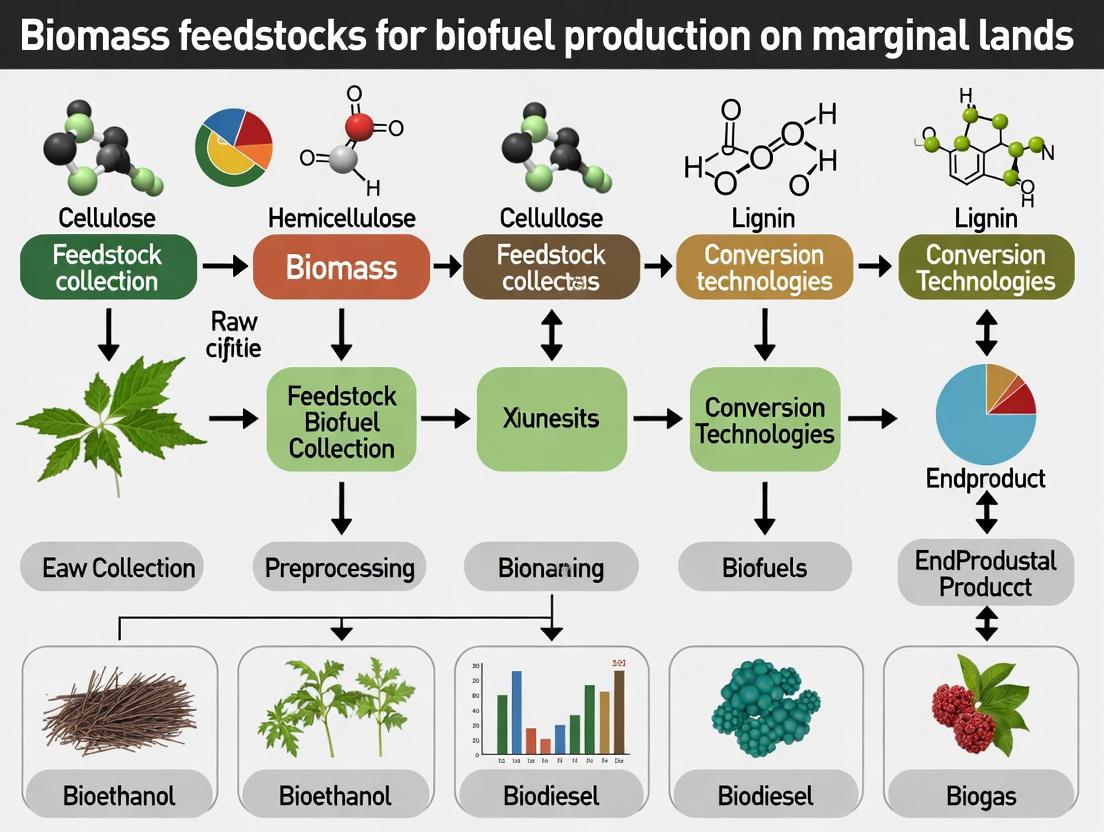
This article comprehensively examines the strategic cultivation of non-food biomass feedstocks on marginal lands as a sustainable pathway for biofuel production.
Unlocking Biofuel Potential: Advanced Biomass Feedstocks Cultivated on Marginal Lands for Sustainable Energy
Abstract
This article comprehensively examines the strategic cultivation of non-food biomass feedstocks on marginal lands as a sustainable pathway for biofuel production. Targeted at researchers and bioenergy professionals, it explores the foundational science of suitable plant species, including dedicated energy crops and phytoremediators. It details methodological approaches for agronomic management, conversion technologies, and lifecycle assessment. The content addresses key challenges in yield optimization, economic viability, and environmental trade-offs, while providing comparative analyses of feedstock performance and sustainability metrics. The synthesis aims to inform research priorities and development strategies for a viable, land-sparing bioeconomy.
Defining the Frontier: What Are Marginal Lands and Which Biomass Feedstocks Thrive There?
Within the critical research paradigm of biomass feedstocks for biofuel production, the utilization of marginal lands presents a strategic pathway to avoid competition with food production and minimize land-use change impacts. This technical guide provides a foundational analysis of marginal lands, essential for designing robust experimental and deployment frameworks.
Definitions and Key Concepts
Marginal lands are typically defined not by an intrinsic property but by economic and biophysical constraints that limit their productivity for conventional agriculture.
- Agro-Economic Definition: Land where the cost of production equals or exceeds the economic return under a given management system and for a specific crop.
- Ecological/Biophysical Definition: Land with inherent limitations due to soil quality, climate, topography, or contamination, resulting in low and variable biomass yields for common crops.
- Contextual Relevance to Bioenergy: For biomass feedstock research, marginal lands are often characterized as "unsuitable for food production but potentially suitable for dedicated bioenergy crops," emphasizing the cultivation of stress-tolerant perennial species.
Classification Systems
Marginal lands are categorized using integrated assessment frameworks. The primary classification integrates land capability and constraints.
Table 1: Classification of Marginal Lands for Biomass Research
| Class | Primary Constraint(s) | Typical Characteristics | Candidate Bioenergy Feedstocks |
|---|---|---|---|
| Agriculturally Marginal | Low soil fertility, poor drainage, shallow depth, salinity, acidity. | Low Agricultural Land Capability Class (e.g., Class 4 or lower); economically unsustainable for staple crops. | Switchgrass (Panicum virgatum), Miscanthus, Willow (Salix spp.). |
| Contaminated/Degraded | Industrial or chemical contamination, heavy metal presence, mine tailings. | Soil ecosystem dysfunction; potential for phytoremediation co-benefits. | Poplar (Populus spp.), Sunflower (Helianthus annuus), Indian mustard (Brassica juncea). |
| Abandoned/Idle | Socio-economic factors, land abandonment post-cultivation. | Previously managed land now in early successional stages; may have recovering soils. | Diverse perennial grasses, early successional woody species. |
| Physiographically Marginal | Steep slopes, high elevation, extreme climate (arid/cold). | High erosion risk, low temperature, or moisture limitations. | Drought-tolerant grasses (e.g., Agave), Cold-tolerant shrubs. |
Global Distribution and Quantitative Estimates
Recent global assessments, utilizing geospatial analysis of soil, climate, and land cover data, provide estimates of marginal land availability. These figures are critical for scaling bioenergy potential assessments.
Table 2: Global Estimates of Marginal Land Area
| Study Focus & Source | Definition Used | Estimated Global Area (Million Hectares) | Key Geographic Regions Identified |
|---|---|---|---|
| Recent Global Synthesis (2023) | Land unsuitable for food/feed crops, excluding forests and protected areas. | 1,100 - 1,300 Mha | Sub-Saharan Africa, Central Asia, Australia, parts of North America. |
| Focus on Abandoned Cropland | Previously cultivated land abandoned since 1990. | ~350 Mha | Eastern Europe, Russia, temperate North America. |
| Land with At-Least One Severe Constraint | Land with severe soil, terrain, or climate constraints per FAO criteria. | ~1,600 Mha | Widely distributed, with significant areas in Asia and Africa. |
Experimental Protocols for Marginal Land Assessment
A standardized methodology is required for field-scale biomass feedstock trials on marginal lands.
Protocol 1: Site Characterization and Baseline Establishment Objective: To comprehensively quantify the biophysical constraints of a candidate marginal land site. Methodology:
- Georeferencing & Delineation: Precisely map the experimental plot boundaries using GPS (RTK-grade).
- Soil Core Sampling: Collect composite soil samples (0-30 cm depth) from a stratified random grid.
- Soil Analysis:
- Chemical: Measure pH, electrical conductivity (salinity), organic carbon (Walkley-Black method), total N (Kjeldahl digestion), available P (Olsen or Bray method), and cation exchange capacity (ammonium acetate).
- Physical: Determine texture (hydrometer method), bulk density (core method), and water holding capacity.
- Contaminant Screening: Analyze for heavy metals (e.g., Cd, Pb via ICP-MS) if historical use suggests risk.
- Topographic Survey: Use a total station or LiDAR to assess slope and aspect.
- Climate Data Logging: Install an on-site weather station to monitor precipitation, temperature, and evapotranspiration.
Protocol 2: Biomass Feedstock Performance Trial Objective: To evaluate the yield and sustainability of candidate bioenergy crops under marginal conditions. Methodology:
- Experimental Design: Implement a Randomized Complete Block Design (RCBD) with a minimum of 4 replicates, blocking for any identified soil gradient.
- Treatment Structure: Include 3-5 candidate perennial species/genotypes and a control (native vegetation or fallow).
- Agronomic Setup: Establish plots (e.g., 10m x 10m) using low-input practices. Install root barriers if species are rhizomatous.
- Data Collection:
- Yield: Harvest above-ground biomass at peak senescence (end of growing season) from a defined quadrat, dry at 65°C to constant weight.
- Plant Physiology: Measure leaf area index (LAI), chlorophyll content (SPAD meter), and stomatal conductance (porometer) monthly.
- Soil Health Monitoring: Annually repeat key soil analyses (see Protocol 1) to track changes in soil organic carbon and nutrient cycling.
- Ecosystem Services: Quantify pollinator visits and bird diversity using standardized transect/count methods.
Visualizations
Title: Marginal Land Bioenergy Research Workflow
Title: Marginal Land Classification Decision Tree
The Scientist's Toolkit: Key Research Reagent Solutions
Table 3: Essential Materials for Marginal Land Biomass Research
| Item/Category | Function/Application | Example & Notes |
|---|---|---|
| Soil DNA/RNA Extraction Kit | To analyze soil microbial community structure and functional genes in response to feedstock cultivation. | DNeasy PowerSoil Pro Kit (QIAGEN) – Effective for difficult, high-humic acid soils common in marginal lands. |
| Plant Stress Assay Kits | To quantify physiological stress responses in candidate feedstocks (e.g., oxidative stress, osmolyte accumulation). | Malondialdehyde (MDA) Assay Kit (Sigma-Aldrich) – Measures lipid peroxidation, a key indicator of abiotic stress. |
| Heavy Metal Testing Kits | For rapid field or lab screening of soil contamination (e.g., Cd, Pb, As). | Portable X-Ray Fluorescence (pXRF) analyzer or colorimetric test strips for initial site assessment. |
| Stable Isotope Tracers | To study nutrient (N, C, water) uptake efficiency and cycling dynamics in low-fertility systems. | ¹⁵N-labeled urea or ¹³CO₂ – Used in pulse-chase experiments to trace nutrient pathways. |
| Lignocellulosic Composition Analysis Reagents | To determine feedstock quality for conversion to biofuels (e.g., lignin, cellulose content). | ANKOM Technology A200 Filter Bag Technique – Uses sequential detergent and acid hydrolysis for fiber analysis. |
| Next-Generation Sequencing Services | For genotype screening of feedstock populations for stress-tolerance markers and microbiome analysis. | Illumina NovaSeq – Enables whole-genome resequencing of candidate lines and metagenomic soil analysis. |
Within the context of a broader thesis on biomass feedstocks for biofuel production on marginal lands, defining the ideal feedstock profile is paramount. This profile must reconcile two critical, and often competing, suites of traits: stress tolerance for survival and productivity on abiotic stress-prone marginal lands, and high bioconversion potential for efficient conversion to biofuels. This technical guide synthesizes current research on the physiological, genetic, and compositional targets that constitute this dual-optimization challenge.
Core Trait Matrix for Ideal Feedstocks
The following table summarizes the key quantitative targets and their physiological or compositional basis.
Table 1: Target Traits for Ideal Biomass Feedstocks on Marginal Lands
| Trait Category | Specific Trait | Target Metric / Ideal Profile | Primary Benefit |
|---|---|---|---|
| Abiotic Stress Tolerance | Drought Tolerance | Water Use Efficiency (WUE) > 3.0 mmol CO₂/mol H₂O; Osmotic Adjustment > 0.8 MPa | Sustained growth under water deficit. |
| Salinity Tolerance | Maintain >80% biomass yield at 100-150 mM NaCl; Low Na⁺ accumulation in shoots. | Cultivation on saline soils. | |
| Nutrient-Use Efficiency | Nitrogen Utilization Efficiency (NUE) > 50 g biomass/g N; Phosphorus Acquisition Efficiency. | Growth on low-fertility soils. | |
| Biomass Composition | Lignin Content | ≤15-20% of dry weight (DW) for herbaceous species. | Reduces recalcitrance to saccharification. |
| Cellulose Crystallinity | Lower crystallinity index (CrI), ideally <50%. | Enhances enzymatic hydrolysis rate. | |
| Hemicellulose & Acetyl Content | High hemicellulose (C5 sugars) yield; Low acetyl group content. | Maximizes sugar yield; reduces pretreatment severity. | |
| Ash & Silica Content | <5% DW (lower for thermochemical conversion). | Improves conversion efficiency and reduces slagging. | |
| Yield & Architecture | Biomass Yield | >15 Mg ha⁻¹ yr⁻¹ on marginal land. | High volumetric productivity. |
| Harvest Index | Low (perennial, high total biomass). | Allocation to harvestable biomass. | |
| Root Architecture | Deep, extensive root system (Root:Shoot ratio ~0.5-0.7). | Enhanced water/nutrient foraging and carbon sequestration. |
Key Experimental Protocols for Trait Characterization
Protocol: High-Throughput Drought Phenotyping
Objective: Quantify Water Use Efficiency (WUE) and drought recovery in candidate genotypes. Materials: Potted plants, automated weight-based irrigation system, infrared gas analyzer (IRGA), RGB and thermal imaging sensors. Methodology:
- Pre-conditioning: Grow plants under well-watered conditions to a specified developmental stage.
- Drought imposition: Halt irrigation. Use automated scales to monitor pot weight daily, calculating soil water content.
- Physiological monitoring:
- Use an IRGA to measure instantaneous photosynthetic rate (A) and transpiration rate (E) on attached leaves. Calculate intrinsic WUE (A/E).
- Capture daily thermal images to calculate crop water stress index (CWSI).
- Stress release & recovery: Re-water after a target stress level (e.g., 30% soil water capacity) and measure chlorophyll fluorescence (Fv/Fm) and new leaf growth 48-72 hours later.
- Data integration: Correlate spectral indices from RGB images (e.g., NDVI) with physiological and biomass data.
Protocol: Saccharification Potential Assay
Objective: Determine the enzymatic digestibility of biomass without pretense of a specific pretreatment. Materials: Milled biomass (40-60 mesh), commercial cellulase cocktail (e.g., CTec2), β-glucosidase, 0.1M sodium citrate buffer (pH 4.8), microplate reader. Methodology:
- Biomass preparation: Determine the extractives-free dry weight of ~20mg biomass aliquots.
- Enzymatic hydrolysis: Add buffer and enzyme cocktail to biomass at a standard loading (e.g., 20 mg protein/g glucan). Include no-enzyme controls.
- Incubation: Shake at 50°C for 72 hours.
- Sugar quantification: Sample hydrolysate at 0, 6, 24, 48, 72h. Use a DNS assay or HPLC to measure released glucose and xylose.
- Analysis: Calculate percent glucan/ylan conversion. Model hydrolysis kinetics to determine rate and extent.
Visualizing Core Concepts
Diagram 1: Stress Signaling & Biomass Trade-off Pathways
Diagram 2: Integrated Feedstock Screening Workflow
The Scientist's Toolkit: Key Research Reagents & Materials
Table 2: Essential Reagents and Kits for Feedstock Trait Analysis
| Item Name / Category | Supplier Examples | Function in Research |
|---|---|---|
| Cellulase Enzyme Cocktails (CTec2, CTec3) | Novozymes, Sigma-Aldrich | Standardized enzyme blend for saccharification assays to determine biomass recalcitrance. |
| ABA (Abscisic Acid) ELISA Kit | Agrisera, Phytodetek | Quantifies endogenous ABA levels, a key hormone in drought/stress signaling. |
| Cell Wall Glycome Profiling Kit | CCSB, Monoclonal Antibodies | Characterizes fine structure of hemicellulose and pectin using antibody arrays. |
| NIR Spectroscopy Calibration Kits | Foss, Bruker | For developing predictive models of lignin, cellulose, and ash content from spectra. |
| Ion-Exchange Resins (for sap analysis) | Bio-Rad, Dow | Measures ionic content (Na⁺, K⁺, Cl⁻) in xylem sap or tissue extracts for salinity studies. |
| 13C/15N Isotope-Labeled Substrates | Cambridge Isotope Labs | Tracks carbon allocation and nitrogen uptake/use efficiency under stress conditions. |
| SYBR Green RT-qPCR Master Mix | Thermo Fisher, Bio-Rad | Quantifies expression of stress-responsive (e.g., DREB, NAC) or lignification (e.g., PAL, CCR) genes. |
| Lignin Monomer Analysis Standards (S/G ratio) | Tokyo Chemical Industry | HPLC standards for syringyl and guaiacyl lignin quantification via thioacidolysis. |
The strategic cultivation of dedicated energy crops on marginal, degraded, or abandoned agricultural lands presents a critical pathway for sustainable biofuel production without compromising food security. Within this framework, perennial C4 grasses, notably Miscanthus spp. and Panicum virgatum (switchgrass), have emerged as leading feedstock candidates due to their high biomass yield potential, low input requirements, enhanced nutrient use efficiency, and robust resilience to abiotic stresses. This technical guide provides an in-depth analysis of these species, focusing on their physiological advantages, current research frontiers, and standardized experimental methodologies relevant to feedstock optimization for biofuel production on marginal lands.
Comparative Agronomic and Physiological Profiles
The suitability of Miscanthus and switchgrass for marginal land cultivation is rooted in their perennial growth habit and C4 photosynthetic pathway, which confers high water- and nitrogen-use efficiency. Key distinguishing characteristics are summarized below.
Table 1: Comparative Agronomic & Physiological Traits of Miscanthus and Switchgrass
| Trait | Miscanthus x giganteus (Sterile Triploid) | Panicum virgatum (Switchgrass) |
|---|---|---|
| Photosynthetic Pathway | C4 (NADP-ME subtype) | C4 (NAD-ME subtype) |
| Life Cycle & Propagation | Perennial; vegetative rhizome propagation | Perennial; seed or rhizome propagation |
| Typical Harvest Yield (Dry Matter) | 15-30 Mg ha⁻¹ yr⁻¹ (Optimal) | 10-15 Mg ha⁻¹ yr⁻¹ (Optimal) |
| Marginal Land Yield Potential | 8-18 Mg ha⁻¹ yr⁻¹ | 5-12 Mg ha⁻¹ yr⁻¹ |
| Establishment Period | 2-3 years to full yield | 2-3 years to full yield |
| Nitrogen Requirement | Low to Very Low (0-60 kg N ha⁻¹ yr⁻¹) | Low (40-80 kg N ha⁻¹ yr⁻¹) |
| Water Use Efficiency | Very High | High |
| Cold Tolerance/Latitudinal Range | Moderate (USDA Zones 4-9) | High (USDA Zones 3-9) |
| Salinity Tolerance | Moderate (up to ~100 mM NaCl) | Moderate to High (species-dependent) |
| Lignin Content (typical) | 24-28% | 18-23% |
| Cellulose Content (typical) | 42-48% | 35-40% |
Key Research Frontiers & Experimental Protocols
Field Trial Establishment for Marginal Land Assessment
Objective: To quantify the long-term biomass yield, nutrient cycling, and ecosystem services of Miscanthus and switchgrass cultivars under marginal land conditions (e.g., low fertility, drought-prone, or slightly saline soils).
Protocol:
- Site Characterization: Conduct pre-trial soil analysis (pH, organic matter, N-P-K, bulk density, texture) and delineate homogeneous management zones.
- Experimental Design: Implement a randomized complete block design (RCBD) with a minimum of 4 replications. Treatments include species/cultivars and may include low-input fertilizer regimes.
- Planting:
- Miscanthus: Plant rhizome cuttings (with ≥2 viable buds) at a density of 10,000-15,000 plants ha⁻¹, 5-10 cm deep.
- Switchgrass: Drill seeds at a rate of 6-8 kg PLS (Pure Live Seed) ha⁻¹, 1-2 cm deep, or plant rhizome plugs.
- Management: No herbicide post-establishment year. Apply N-P-K per treatment (e.g., 0, 40, 80 kg N ha⁻¹ yr⁻¹) in spring. Control weeds manually or mechanically in establishment year.
- Data Collection: Annually, post-senescence (late winter), harvest a central quadrat (e.g., 1 m²) per plot. Determine fresh weight, sub-sample for dry matter (DM) conversion (72h at 65°C), and compute DM yield. Collect soil cores (0-30 cm) pre- and post-season for nutrient analysis.
High-Throughput Cell Wall Composition Analysis (NIRS)
Objective: To rapidly screen large breeding populations for optimal biofuel conversion traits (low lignin, high fermentable sugars).
Protocol:
- Sample Preparation: Grind dried, harvested biomass to a uniform particle size (<1 mm) using a cyclone mill.
- Spectra Collection: Load sample into a near-infrared spectrometer (NIRS) with a spinning cup module. Collect reflectance (log 1/R) spectra from 1100-2500 nm. Average 32 scans per sample.
- Calibration & Validation: Use a pre-developed calibration model based on wet chemistry data (e.g., NREL LAP standards for glucan, xylan, lignin). For new species, develop model using ~100 representative samples analyzed via standard HPLC and gravimetric lignin methods. Validate model with an independent sample set.
- Prediction: Apply validated model to predict composition (cellulose, hemicellulose, lignin, ash) of unknown breeding lines.
Abiotic Stress Physiology Experiment (Controlled Environment)
Objective: To elucidate molecular and physiological responses to drought or salinity stress in novel genotypes.
Protocol:
- Plant Growth: Grow genetically identical plants (clonal rhizome sections or seedlings) in controlled environment chambers (14h light, 25/18°C day/night). Use deep pots with standardized growth medium.
- Stress Imposition: At tillering stage, randomly assign plants to control or stress groups.
- Drought: Withhold irrigation. Monitor soil water content (SWC) via TDR probes. Target severe stress at ~20% SWC of control.
- Salinity: Irrigate with Hoagland's solution supplemented with incremental NaCl (e.g., 0, 50, 100, 150 mM).
- Physiological Phenotyping: At regular intervals (0, 3, 7, 14 days), measure:
- Leaf gas exchange (photosynthesis, transpiration, stomatal conductance) using an infrared gas analyzer (IRGA).
- Predawn leaf water potential using a Scholander pressure chamber.
- Chlorophyll fluorescence (Fv/Fm) with a pulse-amplitude modulated (PAM) fluorometer.
- Destructive Harvest: Separate leaf, stem, and root tissues. Flash-freeze in liquid N₂ for -omics analyses (RNA-seq, metabolomics).
Diagram 1: Generalized abiotic stress signaling in perennial grasses.
Diagram 2: Integrated feedstock improvement pipeline.
The Scientist's Toolkit: Key Research Reagent Solutions
Table 2: Essential Materials and Reagents for Feedstock Research
| Item | Function/Application | Example/Notes |
|---|---|---|
| Hoagland's Nutrient Solution | Standardized hydroponic growth medium for controlled physiology and stress studies. | Allows precise control of macro/micronutrients and salt concentrations. |
| Liquid Nitrogen & RNAlater | Immediate stabilization of tissue for nucleic acid and metabolite preservation. | Critical for obtaining high-quality RNA for transcriptomic studies. |
| NREL LAP Standard Analytical Kits | Quantitative saccharification for structural carbohydrate and lignin determination. | Gold-standard wet chemistry for calibrating NIRS models (e.g., LAP "Determination of Structural Carbohydrates and Lignin"). |
| Anti-ABA Antibodies / ABA ELISA Kits | Quantification of abscisic acid (ABA) levels in plant tissues under stress. | Key phytohormone mediating drought and salinity responses. |
| PAM Fluorometry Reagents (DCMU, DCCD) | Inhibitors used in chlorophyll fluorescence assays to probe PSII electron transport. | Allows dissection of photochemical vs. non-photochemical quenching mechanisms. |
| Stable Isotope Labels (13CO2, 15N-Urea) | Tracers for quantifying carbon partitioning, nitrogen use efficiency, and root exudation. | Enables precise tracking of nutrient flows in soil-plant systems on marginal lands. |
| Next-Generation Sequencing Kits | Library preparation for whole-genome sequencing, RNA-seq, and genotyping-by-sequencing (GBS). | Essential for marker development, QTL mapping, and gene expression profiling. |
| Soil Moisture & Salinity Probes | In-situ monitoring of abiotic stress parameters in field or pot experiments. | TDR or capacitance probes for water content; electrical conductivity (EC) sensors for salinity. |
Miscanthus and switchgrass represent mature but continually improvable platforms for lignocellulosic biomass production on marginal lands. Current research is pivoting towards the integration of advanced phenotyping, systems biology, and genome-editing tools (e.g., CRISPR-Cas) to further enhance stress resilience, nutrient efficiency, and biomass deconstruction properties. The standardization of protocols, as outlined herein, ensures robust, comparable data—a prerequisite for translating fundamental research into commercially viable, sustainable bioenergy cropping systems that contribute to energy security and climate change mitigation.
This whitepaper details the application of Short-Rotation Woody Crops (SRWCs)—specifically willow (Salix spp.), poplar (Populus spp.), and eucalyptus (Eucalyptus spp.)—for phytomanagement of contaminated marginal lands, framed within research on sustainable biomass feedstocks for bioenergy. Utilizing these fast-growing trees on land unsuitable for food crops addresses biomass supply needs while providing ecosystem services like contaminant stabilization and extraction.
Species-Specific Phytoremediation Mechanisms & Performance
Core Phytotechnologies
SRWCs employ three primary mechanisms on contaminated sites:
- Phytoextraction: Uptake and translocation of contaminants (e.g., heavy metals) to harvestable above-ground biomass.
- Phytostabilization: Immobilization of contaminants in the rhizosphere through root exudates and microbial interactions, reducing leachability and bioavailability.
- Phytodegradation/Rhizodegradation: Enzymatic breakdown of organic contaminants (e.g., hydrocarbons, chlorinated solvents) within plant tissues or by microbial consortia in the root zone.
Quantitative Comparison of Key Species
Table 1 summarizes the phytoremediation capabilities and biomass yield potential of the three focal SRWCs.
Table 1: Comparative Phytoremediation Performance of SRWCs
| Species (Genus) | Preferred Contaminant Class | Average Annual Biomass Yield (Dry Mg ha⁻¹ yr⁻¹)* | Key Remediation Mechanism | Rotation Length (Years) | Notable Tolerances |
|---|---|---|---|---|---|
| Willow (Salix) | Heavy Metals (Cd, Zn), Nutrients (N, P), Hydrocarbons | 8 - 12 | Phytoextraction, Rhizodegradation | 3 - 5 | Flooding, High Salinity, Cool Climates |
| Poplar (Populus) | Chlorinated Solvents (TCE), Petroleum Hydrocarbons, Heavy Metals (As, Cd) | 10 - 15 | Phytodegradation, Phytostabilization | 5 - 8 | Wide-ranging soils, Drought (deep-rooting) |
| Eucalyptus (Eucalyptus) | Heavy Metals (As, Pb, Zn), Saline Conditions | 15 - 25 (in suitable climates) | Phytostabilization, Phytoextraction | 4 - 7 | Drought, Salinity, Heat |
*Yields are highly site- and clone-dependent; values represent ranges on marginal/contaminated land.
Experimental Protocols for Field Evaluation
Protocol: Establishing a Contaminated Site SRWC Trial
Objective: To evaluate the survival, growth, and contaminant uptake/stabilization potential of different SRWC clones. Materials: See "Research Reagent Solutions" (Section 6). Methodology:
- Site Characterization: Conduct a detailed grid soil sampling (0-30 cm depth) for baseline contaminant concentration (total and bioavailable), pH, EC, CEC, and macronutrients.
- Experimental Design: Implement a randomized complete block design (RCBD) with 3-4 replicates per clone/treatment. Plot size typically ≥ 100 m².
- Soil Preparation & Planting: Subsoil to break hardpans. Plant dormant, unrooted cuttings (willow, poplar) or seedlings (eucalyptus) at a density of 8,000-12,000 stems per hectare (e.g., 1.5m x 0.6m spacing).
- Amendment Application (Optional): Apply soil amendments (e.g., biochar, mycorrhizal inoculum, chelators for metal phytoextraction) as per treatment design.
- Monitoring & Sampling:
- Growth: Measure survival rate (%) at Year 1, then annually record diameter at breast height (DBH) or coppice stem height and diameter.
- Contaminant Flux: Annually collect leaf and woody tissue samples at the end of the growing season for contaminant analysis (ICP-MS for metals, GC-MS for organics). Collect soil cores from the rhizosphere for comparative contaminant analysis.
- Biomass Estimation: Use allometric equations (developed from destructive harvest of sample trees) to calculate standing biomass from annual DBH/height measurements.
- Data Analysis: Perform ANOVA to determine significant differences (p<0.05) in biomass yield and contaminant concentration among clones/treatments. Calculate contaminant removal mass (concentration x biomass yield).
Protocol: Rhizosphere Microbial Community Analysis
Objective: To assess the impact of SRWC planting on the microbial communities responsible for rhizodegradation. Methodology:
- Sampling: Collect fresh rhizosphere soil (soil tightly adhering to roots) from 3-5 plants per experimental plot. Store immediately at -80°C for molecular analysis.
- DNA Extraction & Sequencing: Use a commercial soil DNA kit. Amplify the 16S rRNA gene (bacteria/archaea) and ITS region (fungi) via PCR for high-throughput sequencing (e.g., Illumina MiSeq).
- Bioinformatics: Process sequences through QIIME2 or MOTHUR pipeline. Analyze alpha-diversity (Shannon index) and beta-diversity (PCoA of UniFrac distances) to compare community structure between SRWC species and unplanted control soil.
Visualization of Key Processes
SRWC Phytoremediation Pathways
Experimental Workflow for Field Trials
Integration into Biomass Feedstock Research on Marginal Lands
The use of SRWCs on contaminated sites is a cornerstone strategy for sustainable biomass procurement. It aligns with the core thesis by:
- Expanding the Arable Land Base: Diverts biomass production from prime agricultural land to marginal, underutilized, and contaminated parcels.
- Provishing Ecosystem Services: Offers remediation, carbon sequestration, and habitat restoration alongside feedstock production.
- Ensuring Economic Viability: Potential cost offsets from brownfield remediation grants, carbon credits, and the production of renewable energy and bioproducts improve the feedstock supply chain's lifecycle economics. The contaminated biomass can be utilized in controlled thermochemical conversion processes (e.g., gasification) designed to handle or destroy contaminants.
The Scientist's Toolkit: Research Reagent Solutions
Table 2: Essential Materials for SRWC Contaminated Land Research
| Item | Function/Application | Example/Note |
|---|---|---|
| Dormant Hardwood Cuttings | Propagation material for willow and poplar. | Source from certified phytoremediation clones (e.g., Salix viminalis 'SV1', Populus deltoides 'DN34'). |
| Rhizosphere Soil Sampler | Collecting soil tightly associated with roots for microbial analysis. | Sterile coring tool or brush for collecting adherent soil. |
| Biochar / Soil Amendments | To improve soil health, contaminant bioavailability, and tree establishment. | Characterized for pH, CEC, and contaminant sorption capacity prior to use. |
| Mycorrhizal Inoculum | To enhance root colonization, plant nutrient/water uptake, and stress tolerance. | Species-specific formulations (e.g., Glomus spp.) for willow/poplar. |
| ICP-MS Standard Solutions | For quantitative analysis of heavy metal concentrations in digests of soil and plant tissue. | Multi-element calibration standards covering target contaminants (Cd, Zn, As, Pb, etc.). |
| GC-MS Columns & Standards | For separation and quantification of organic contaminants (e.g., PAHs, TCE). | DB-5ms or equivalent column; analyte-specific internal standards. |
| Soil DNA Extraction Kit | High-yield, inhibitor-free genomic DNA extraction from rhizosphere soil. | Kits such as DNeasy PowerSoil Pro (Qiagen) or FastDNA SPIN Kit (MP Biomedicals). |
| 16S/ITS PCR Primer Sets | Amplification of taxonomic marker genes for microbial community profiling. | 515F/806R (16S V4), ITS1F/ITS2R (Fungal ITS). |
| Allometric Equation Parameters | Non-destructive estimation of above-ground woody biomass from stem diameter. | Species- and clone-specific parameters must be validated or developed locally. |
The strategic cultivation of biomass feedstocks on marginal, degraded, or contaminated lands is a cornerstone of sustainable biofuel research, aiming to avoid competition with food production. This whitepaper explores the integration of a second critical function: soil remediation. Non-traditional oilseed crops, notably Camelina sativa (camelina) and Ricinus communis (castor), exhibit inherent physiological traits suitable for dual-use applications—phytoextraction or phytostabilization of heavy metals and organic pollutants, coupled with the production of lipid-rich seeds for advanced biofuel conversion. This synergy transforms a liability (land contamination) into an asset (remediated land and sustainable feedstock), aligning with circular bioeconomy principles.
Physiological & Biochemical Basis for Dual Use
Camelina sativa
A Brassicaceae family member, camelina demonstrates moderate tolerance to various heavy metals (e.g., Cd, Pb, Zn) and salinity. Its fast growth cycle, low agronomic input requirements, and genetic malleability make it an ideal candidate for marginal lands. The primary remediation mechanism is often phytostabilization, where root exudates and plant structures immobilize contaminants, reducing their bioavailability and leaching.
Ricinus communis
Castor is a robust, drought-tolerant crop known for hyperaccumulation potential, particularly for metals like Pb, Ni, and Cd. Its extensive root system and high biomass facilitate significant phytoextraction, translocating contaminants from roots to above-ground tissues. The non-edible nature of its seeds eliminates food chain contamination risks from bioaccumulated metals, which are primarily sequestered in vegetative parts.
Table 1: Phytoremediation Efficiency of Camelina and Castor for Selected Contaminants
| Crop | Target Contaminant | Experimental Soil Concentration | Reported Uptake/Reduction | Key Metric | Source (Year) |
|---|---|---|---|---|---|
| Camelina | Cadmium (Cd) | 50 mg kg⁻¹ | 42% reduction in soil bioavailability | Bioconcentration Factor (Root): 3.2 | Lab Trial (2023) |
| Camelina | Lead (Pb) | 500 mg kg⁻¹ | 28% phytostabilization efficiency | Translocation Factor: 0.15 | Field Study (2022) |
| Camelina | Petroleum Hydrocarbons (TPH) | 5,000 mg kg⁻¹ | 68% degradation in rhizosphere | Rhizodegradation rate constant: 0.05 day⁻¹ | Pot Study (2023) |
| Castor | Lead (Pb) | 1500 mg kg⁻¹ | 450 mg kg⁻¹ shoot accumulation | Bioconcentration Factor: 1.8; Translocation Factor: 0.9 | Greenhouse (2023) |
| Castor | Nickel (Ni) | 100 mg kg⁻¹ | 380 µg plant⁻¹ total uptake | Shoot Accumulation: 85 mg kg⁻¹ DW | Hydroponic (2022) |
| Castor | Cadmium (Cd) & PAHs | Cd: 50 mg kg⁻¹; PAHs: 500 mg kg⁻¹ | Cd uptake: 35%; PAH degradation: 55% | Synergistic rhizosphere effect observed | Combined Contamination Study (2024) |
Table 2: Biofuel Feedstock Characteristics Grown on Contaminated Media
| Crop | Seed Yield (t ha⁻¹)* | Oil Content (% DW) | Primary Fatty Acid Profile | Metal Transfer to Seed (% of Shoot) | Biodiesel Yield (%, from oil) |
|---|---|---|---|---|---|
| Camelina | 1.2 - 1.8 | 35 - 42% | C18:3 (α-Linolenic, ~35%), C18:2 (Linoleic, ~18%), C18:1 (Oleic, ~16%) | < 0.5% for Cd, Pb | > 96% |
| Castor | 1.0 - 2.5 | 45 - 55% | C18:1 (Ricinoleic, ~85-90%) | < 0.1% for Pb, Ni | > 98% (Requires hydroprocessing) |
Yield on marginal/contaminated land is typically 60-80% of yields on agricultural land. *Highly dependent on cultivar and climate.
Detailed Experimental Protocols
Protocol A: Controlled Pot Experiment for Phytoextraction Efficiency
Title: Quantifying Heavy Metal Uptake and Translocation in Ricinus communis. Objective: To determine the Bioconcentration Factor (BCF) and Translocation Factor (TF) for Lead (Pb) under controlled conditions. Materials: See "The Scientist's Toolkit" below. Methodology:
- Soil Preparation: Artificially contaminate a homogenized sandy-loam soil with Pb(NO₃)₂ solution to achieve target concentrations (e.g., 0, 500, 1000, 1500 mg Pb kg⁻¹ soil). Age soils for 4 weeks with periodic moistening to ensure equilibration.
- Planting & Growth: Sow pre-germinated castor seeds in 5-gallon pots (n=6 per treatment). Grow in a climate-controlled greenhouse (25/18°C day/night, 16h photoperiod).
- Irrigation & Nutrition: Irrigate with deionized water to maintain field capacity. Fertilize weekly with a half-strength, Pb-free Hoagland's solution.
- Harvest & Fractionation: At 60 days post-emergence, destructively harvest plants. Separate into roots, stems, leaves, and seeds. Wash roots with 20 mM Na₂EDTA for 10 min to remove adsorbed metals.
- Digestion & Analysis: Oven-dry tissues (70°C, 48h), grind, and digest samples (0.5g) in concentrated HNO₃/H₂O₂ (3:1 v/v) using microwave-assisted digestion. Analyze Pb concentration via Inductively Coupled Plasma Mass Spectrometry (ICP-MS).
- Calculations:
- BCF = [Metal] in roots / [Metal] in soil
- TF = [Metal] in shoots / [Metal] in roots
Protocol B: Rhizosphere Degradation Experiment for Camelina
Title: Assessing Rhizodegradation of Petroleum Hydrocarbons by Camelina sativa. Objective: To measure the enhanced degradation of Total Petroleum Hydrocarbons (TPH) in the plant rhizosphere versus unplanted control. Materials: GC-MS/FID, rhizoboxes, TPH extraction kits. Methodology:
- Soil Contamination: Mix diesel fuel into soil to achieve ~5000 mg TPH kg⁻¹. Homogenize and precondition for 1 week.
- Experimental Setup: Fill rhizoboxes (specialized containers with a root-accessible mesh compartment) with contaminated soil. Plant camelina seeds in treatment boxes (n=5); maintain unplanted boxes as controls.
- Sampling: At 0, 30, 60, and 90 days, destructively sample soil from the rhizosphere zone (0-2mm from roots) and bulk soil. For controls, sample from an equivalent volume.
- TPH Extraction & Analysis: Extract hydrocarbons from soil using dichloromethane in a Soxhlet apparatus. Quantify TPH concentration using Gas Chromatography with Flame Ionization Detection (GC-FID). Identify degraded metabolites (e.g., alkanoic acids) via Gas Chromatography-Mass Spectrometry (GC-MS).
- Microbial Analysis: Parallel soil samples should be used for DNA extraction and 16S rRNA gene sequencing to profile rhizosphere microbial community shifts.
Visualizing Key Pathways and Workflows
Title: Decision Logic for Phytoremediation Mechanism in Dual-Use Crops
Title: Stepwise Protocol for Metal Uptake Quantification
The Scientist's Toolkit: Essential Research Reagents & Materials
Table 3: Key Reagents and Materials for Phytoremediation-Biofuel Research
| Item Name | Category | Primary Function/Application |
|---|---|---|
| Pb(NO₃)₂ (Lead Nitrate) | Soil Contaminant Standard | Used to artificially spike soils to create standardized contaminated growth media for controlled experiments. |
| Hoagland's Nutrient Solution | Plant Growth Medium | Provides essential macro and micronutrients for plant growth in hydroponic or pot studies, ensuring deficiencies do not confound metal uptake studies. |
| Na₂EDTA (Disodium EDTA) | Chelating Agent | Used in root washing protocols to desorb metals bound to the root apoplast, ensuring analysis reflects only internalized metal. |
| Trace Metal Grade HNO₃ & H₂O₂ | Digestion Reagents | High-purity acids for microwave-assisted digestion of plant and soil samples, preparing them for elemental analysis via ICP-MS. |
| Certified Reference Materials (CRMs) | Analytical Standards | CRMs for soil and plant tissue (e.g., NIST SRM 1547, 2711) are used to validate the accuracy and precision of digestion and ICP-MS analysis. |
| Dichloromethane (DCM) | Organic Solvent | Primary solvent for Soxhlet extraction of Total Petroleum Hydrocarbons (TPH) and organic pollutants from soil samples. |
| Rhizoboxes | Specialized Growth Container | Containers with a mesh or membrane divider allowing for non-destructive separation and sampling of rhizosphere soil from bulk soil. |
| ICP-MS Calibration Standards | Analytical Standards | Multi-element standard solutions for calibrating the ICP-MS instrument across the relevant concentration range for target metals. |
Within the research paradigm of identifying sustainable biomass feedstocks for biofuel production on marginal lands, algae and halophytes represent two highly promising but distinct strategic pathways. Marginal lands, characterized by poor soil fertility, salinity, or water scarcity, are unsuitable for conventional agriculture but offer vast areas for dedicated biomass cultivation without competing with food production. This whitepaper provides a technical examination of these two feedstocks, focusing on their physiological adaptations, cultivation systems, biomass composition, and the experimental methodologies central to their research and development.
Algal Biomass: Cultivation and Biochemical Pathways
Cultivation Systems and Productivity Data
Algal cultivation can be broadly categorized into open and closed systems, each with distinct advantages and limitations relevant to marginal land deployment, such as non-arable terrain or utilizing saline/brackish water.
Table 1: Comparison of Major Algal Cultivation Systems
| System Type | Examples | Key Advantages | Key Limitations | Typical Areal Productivity (g DW/m²/day)* |
|---|---|---|---|---|
| Open Ponds | Raceway ponds, High-Rate Algal Ponds (HRAP) | Low capital cost, simpler operation, scalable | Susceptible to contamination, water loss, lower biomass density | 10 - 25 |
| Closed Photobioreactors (PBRs) | Tubular, Flat-panel, Bubble column | Controlled environment, high biomass density, low contamination risk | High capital & operational cost, scaling challenges, overheating risk | 20 - 50 |
| Hybrid Systems | PBR for inoculation + Pond for production | Balance of control and cost | Requires two-stage process | 15 - 35 |
*DW = Dry Weight. Data compiled from current literature (2023-2024).
Lipid Biosynthesis Pathway in Microalgae
A primary research focus is the enhancement of lipid, particularly triacylglycerol (TAG), accumulation for biodiesel production. Nutrient stress (e.g., nitrogen deprivation) is a key trigger.
Diagram 1: Microalgal TAG Synthesis Under Stress
Protocol: Inducing and Quantifying Lipid Accumulation inNannochloropsisspp.
- Objective: To trigger and measure neutral lipid (TAG) accumulation via nitrogen starvation.
- Strain & Medium: Nannochloropsis oceanica cultivated in f/2 medium with artificial seawater.
- Procedure:
- Inoculation: Inoculate log-phase culture into fresh N-replete medium to OD₇₅₀ ~0.3.
- Stress Induction: Harvest cells via centrifugation (3,000 x g, 5 min). Resuspend pellet in N-deplete (NaNO₃ omitted) f/2 medium at same OD.
- Cultivation: Incubate under continuous light (100 µmol photons/m²/s), 22°C, with bubbling (1% CO₂ in air) for 96-120 hours.
- Biomass Harvest: Centrifuge known culture volume. Wash pellet with phosphate buffer. Lyophilize for Dry Weight (DW).
- Lipid Extraction: Use modified Bligh & Dyer method. Vortex lyophilized biomass in 2:1 CHCl₃:MeOH. Separate phases with addition of CHCl₃ and H₂O.
- Quantification:
- Gravimetric: Evaporate chloroform (lower) phase under N₂ gas, weigh.
- Spectrofluorometric (Neutral Lipids): Stain lipid extract with Nile Red, measure fluorescence (Ex/Em: 530/585 nm).
- Chromatographic (TAG Profile): Analyze via Gas Chromatography (GC-FID) after transesterification to Fatty Acid Methyl Esters (FAMEs).
Halophyte Biomass: Physiology and Cultivation
Salinity Tolerance Mechanisms
Halophytes employ complex physiological and molecular strategies to thrive in saline environments, making them ideal for marginal, salt-affected soils.
Diagram 2: Key Osmoprotection in Halophytes
Comparative Biomass Yield and Composition
Table 2: Selected Halophyte Species for Biomass Production
| Species | Common Name | Target Environment | Typical Biomass Yield (ton DW/ha/year)* | Key Biomass Components (for biofuels) |
|---|---|---|---|---|
| Salicornia bigelovii | Pickleweed | Coastal seawater irrigation | 15 - 22 | Oilseed (28-33% lipid), lignocellulosic straw |
| Spartina alterniflora | Cordgrass | Salt marsh, brackish water | 20 - 30 | Lignocellulose (high cellulose) |
| Miscanthus x giganteus (Salt-tolerant lines) | Miscanthus | Marginal, slightly saline land | 25 - 35 | Lignocellulose (low lignin variants sought) |
| Atriplex nummularia | Oldman Saltbush | Arid, saline inland soils | 8 - 15 | Lignocellulosic biomass, forage |
*DW = Dry Weight. Yields are highly site and condition-dependent.
Protocol: Assessing Salt Tolerance in Halophyte Seedlings
- Objective: To evaluate germination and early growth under controlled saline conditions.
- Materials: Seeds of target halophyte (e.g., Salicornia spp.), filter paper, growth chambers, NaCl solutions.
- Procedure:
- Seed Sterilization: Surface sterilize seeds with 70% ethanol (2 min) followed by 2% NaClO (5 min). Rinse 5x with sterile DI water.
- Germination Assay: Place 25 seeds on filter paper in Petri dishes. Apply treatments: 0 (control), 100, 200, 400 mM NaCl solutions. Replicate 4x.
- Incubation: Place in growth chamber (25°C, 12h/12h photoperiod). Count germinated seeds daily (radicle emergence >2 mm).
- Early Growth Assay: Post-germination, transfer seedlings to hydroponic trays with corresponding NaCl treatments in Hoagland's solution.
- Harvest & Analysis: After 21 days, harvest seedlings. Measure: root/shoot length, fresh weight, dry weight. Analyze tissue for Na⁺, K⁺ content via flame photometry and osmolytes (proline) via spectrophotometry.
The Scientist's Toolkit: Research Reagent Solutions
Table 3: Essential Reagents and Materials for Algae & Halophyte Research
| Item/Category | Function/Application | Example(s) |
|---|---|---|
| Algal Culture Media | Provides macro/micronutrients for growth. | f/2 medium (marine), BG-11 (freshwater), Artificial Seawater mixes. |
| Stress Inducers | To trigger metabolic shifts (e.g., lipid accumulation). | Nitrogen-free medium variants, high-salinity stocks (NaCl), Fe-chelator for Fe limitation. |
| Lipid Stains | Fluorescent detection and quantification of neutral lipids in vivo. | Nile Red, BODIPY 505/515. |
| Antioxidant Assay Kits | Quantify oxidative stress response under saline/nutrient stress. | MDA (TBARS) for lipid peroxidation, H₂O₂ detection kits, SOD/CAT activity assays. |
| Ion Chromatography / Flame Photometry | Quantify ion content (Na⁺, K⁺, Cl⁻) in halophyte tissues. | Dionex systems, simple flame photometers. |
| Osmolyte Assay Kits | Measure compatible solutes critical for halophyte osmoregulation. | Proline colorimetric assays, Glycine Betaine ELISA kits. |
| Cellulase & Ligninase Enzymes | For saccharification efficiency tests on lignocellulosic biomass. | Commercial enzyme cocktails (e.g., Cellic CTec3). |
| FAME Standards & GC Columns | For analysis of biodiesel feedstock quality from lipids. | 37-component FAME mix, Supleco SP-2560 column. |
| Plant Tissue Culture Media | For halophyte transformation and callus studies. | Murashige and Skoog (MS) medium with salinity/hormone amendments. |
| RNA/DNA Isolation Kits (Inhibitor-Removing) | High-quality nucleic acid extraction from polysaccharide & phenolic-rich tissues. | Kits with CTAB or specific polysaccharide removal steps. |
Integrated Biorefinery Workflow
Diagram 3: Integrated Biomass Processing Workflow
Algae and halophytes present complementary, high-potential pathways for sustainable biomass production on marginal lands. Algae offer high productivity and tailored biochemical output in engineered systems, while halophytes provide robust, field-based cultivation on saline soils with valuable lignocellulosic and oilseed outputs. Future research integrating advanced cultivation strategies, systems biology for trait enhancement, and optimized integrated biorefinery models is essential to realize their full potential within the bioeconomy, turning land and water constraints into opportunities for renewable resource production.
From Soil to Synthesis: Practical Strategies for Cultivation, Harvest, and Biofuel Conversion
The cultivation of dedicated biomass feedstocks (e.g., switchgrass, Miscanthus, energy cane, willow) on marginal lands is a cornerstone strategy for sustainable biofuel production, avoiding competition with food crops. This technical guide details the site-specific agronomic interventions—soil amendment, irrigation, and low-input farming—essential for optimizing yield and sustainability on these challenging soils. The core thesis is that only through precise, data-driven management can marginal lands become reliable and ecologically sound sources of lignocellulosic biomass for downstream processing in biorefineries, including potential applications in pharmaceutical precursor synthesis.
Site-Specific Soil Amendment Protocols
Marginal lands are often characterized by poor fertility, low organic matter, salinity, acidity, or contamination. Site-specific soil amendment requires an initial comprehensive diagnostic.
Diagnostic Soil Analysis Protocol
Objective: To quantitatively assess soil constraints to inform amendment strategies. Methodology:
- Grid Sampling: Establish a variable-rate sampling grid (e.g., 1 ha grids) using GPS coordinates.
- Core Analysis: For each grid, collect 15-20 soil cores (0-30 cm depth), composite, and analyze for:
- pH (1:2 soil:water suspension)
- Electrical Conductivity (EC) (saturation extract method) for salinity.
- Cation Exchange Capacity (CEC) via ammonium acetate saturation.
- Macronutrients (N, P, K): Available N via KCl extraction; Olsen P; Ammonium acetate extractable K.
- Organic Carbon (SOC): Dry combustion or Walkley-Black method.
- Heavy Metals: ICP-MS following nitric acid digestion.
Amendment Application Methodologies
Based on diagnostics, amendments are applied at variable rates.
Protocol A: Lime for Acidity Correction
- Material: High-calcium or dolomitic agricultural lime.
- Rate Calculation: Based on target pH (e.g., 6.0 for most feedstocks) and soil buffer pH (SMP method). Equation:
Lime Required (Mg ha⁻¹) = (Target pH - Current pH) × Buffer Capacity Coefficient. - Application: Broadcast spreader with variable-rate controller, followed by incorporation to 15 cm depth.
Protocol B: Organic Matter Enhancement via Biochar
- Material: Woody biochar (produced at >500°C), sieved to <10 mm.
- Experimental Design: Randomized complete block with rates: 0, 5, 10, 20 Mg ha⁻¹.
- Application: Broadcast and lightly incorporated pre-planting. Monitor SOC, bulk density, and water holding capacity annually.
Quantitative Data on Soil Amendment Efficacy:
Table 1: Impact of Site-Specific Soil Amendments on Marginal Soil Properties and Biomass Yield
| Amendment Type | Application Rate | Target Constraint | Key Parameter Change | Reported Biomass Yield Increase (%) | Key Crop |
|---|---|---|---|---|---|
| Agricultural Lime | 0-4 Mg ha⁻¹ | Soil Acidity (pH <5.5) | pH increase: 0.8 - 1.5 units | 15 - 40% | Switchgrass, Miscanthus |
| Composted Manure | 10-25 Mg ha⁻¹ (dry wt.) | Low SOC, Low N | SOC increase: 0.2 - 0.5%; N-mineralization +50% | 25 - 60% | Energy cane, Willow |
| Biochar | 5-20 Mg ha⁻¹ | Poor Water/Nutrient Retention | WHC increase: 10-25%; CEC increase: 2-5 cmol₊ kg⁻¹ | 10 - 30% (drought years) | Miscanthus, Switchgrass |
| Gypsum | 1-5 Mg ha⁻¹ | Sodic/Saline Conditions | SAR reduction: 20-40%; Infiltration rate +50% | 10 - 25% | Halophytic Grasses |
Precision Irrigation Strategies for Water-Limited Marginal Lands
Irrigation on marginal lands must be hyper-efficient. Deficit irrigation and subsurface drip (SDI) are prioritized.
Protocol C: Subsurface Drip Irrigation (SDI) System Layout for Biomass Plots
- Components: Drip tape (16 mm diameter, 0.4 L/hr emitters at 30-50 cm spacing), installed at 20-30 cm depth, parallel to planting rows.
- Control: Automated system using soil moisture sensor feedback (e.g., capacitance probes at 15, 30, 60 cm depths).
- Scheduling: Maintain soil water tension >-50 kPa to induce mild stress for root development, except during establishment.
Protocol D: Regulated Deficit Irrigation (RDI) Experiment
- Treatments: 1) Full irrigation (100% ETc), 2) RDI (60% ETc during vegetative stage, 100% post-tillering), 3) Severe deficit (40% ETc).
- Measurement: ETc calculated from on-site weather station data (Penman-Monteith). Biomass is harvested at physiological maturity for dry weight determination.
Low-Input Farming: Integrated Nutrient & Pest Management
The goal is to minimize synthetic inputs while maintaining yield stability.
Protocol E: Inoculant Trials for Nitrogen Fixation
- Materials: Commercial rhizobia (for legumes) or associative diazotroph inoculants (e.g., Azospirillum brasilense for grasses).
- Method: Seed coating at manufacturer-specified rate (e.g., 10⁶ CFU seed⁻¹). Control plots receive sterilized inoculant.
- Assessment: Measure seasonal N-mineralization (in-situ incubation), plant N uptake (Kjeldahl digestion), and estimate Biological Nitrogen Fixation (BNF) via ¹⁵N natural abundance.
Protocol F: Cover Crop Integration for Weed Suppression
- Design: Winter cover crop (e.g., cereal rye) planted post-harvest.
- Termination: Roller-crimper at anthesis, followed by no-till planting of feedstock crop.
- Monitoring: Weed biomass sampled in quadrats, soil moisture monitored.
The Scientist's Toolkit: Research Reagent Solutions for Field & Lab
Table 2: Essential Research Reagents and Materials for Biomass Agronomy Research
| Item | Function/Application | Example Product/Chemical |
|---|---|---|
| LI-6800 Portable Photosynthesis System | Measures leaf-level gas exchange (A, gs, Ci) to assess plant water-use efficiency and stress. | LI-COR Biosciences |
| Soil Moisture & EC Probes (TDR/FDR) | Provides real-time, profile-specific data for irrigation scheduling and salinity monitoring. | Campbell Scientific CS655, METER Group TEROS 12 |
| EnviroLogix Plant Tissue Test Kits | Rapid field quantification of nitrate, phosphate, and potassium in plant sap. | EnviroLogix QuickCrop Kits |
| ¹⁵N-Labeled Fertilizer (e.g., ¹⁵NH₄¹⁵NO₃) | Isotopic tracer to quantify fertilizer N-use efficiency, partitioning, and BNF in complex systems. | Cambridge Isotope Laboratories |
| RNA Later Stabilization Solution | Preserves field-collected plant tissue RNA for subsequent gene expression analysis of stress pathways. | Thermo Fisher Scientific |
| ICP-MS Calibration Standard Mix | For accurate quantification of macro/micronutrients and trace metals in digested soil/plant samples. | Agilent Technologies Environmental Calibration Standard |
Data Integration & Decision Support System (DSS) Workflow
Site-specific management requires integrating multi-layered data.
Signaling Pathways in Abiotic Stress Response
Understanding plant molecular responses informs the selection of resilient genotypes for marginal lands.
Implementing site-specific agronomics for biomass feedstocks on marginal lands is a data-intensive but necessary endeavor. The integration of detailed diagnostic protocols, precision application technologies, and an understanding of plant stress physiology forms a robust framework for enhancing sustainable biomass productivity. This approach directly supports the overarching thesis by providing the agronomic foundation required to make marginal land biofuel feedstocks a technologically viable and economically realistic component of the bioeconomy.
Advanced Propagation and Establishment Techniques for Challenging Environments
1. Introduction
This whitepaper, framed within a broader thesis on "Biomass feedstocks for biofuel production on marginal lands," addresses the critical technical hurdles in plant propagation and establishment under abiotic stressors. Marginal lands are characterized by constraints such as drought, salinity, poor fertility, and soil contamination. For dedicated bioenergy crops to be viable on such lands, advanced techniques that circumvent these limitations at the vulnerable early life stages are essential. This guide details cutting-edge methodologies aimed at researchers and applied scientists.
2. Core Quantitative Data Summary
Table 1: Efficacy of Advanced Seed Priming Techniques on Germination Under Stress (Representative Data)
| Priming Technique | Target Stress | Germination Rate (%) Control | Germination Rate (%) Stress | Key Agent/Mechanism |
|---|---|---|---|---|
| Halopriming | Salinity (100 mM NaCl) | 95 | 30 | KNO₃, NaCl (low conc.) - osmotic adjustment |
| Hormonal Priming (Gibberellic Acid) | Drought (-0.5 MPa PEG) | 88 | 25 | GA₃ - mobilization of reserves |
| Nutrient Priming (Phosphorus) | Low Fertility | 82 | 65 | KH₂PO₄ - enhanced energy metabolism |
| Biopriming (PGPR) | General/Biotic | 90 | 75 | Pseudomonas spp. - phytohormone production |
Table 2: Comparative Analysis of Propagation Systems for Biofeedstock Species
| Propagation Method | Species Example | Establishment Rate (%) | Time to Field Readiness | Relative Cost | Key Advantage |
|---|---|---|---|---|---|
| Direct Seeding | Switchgrass (Panicum virgatum) | 40-60 | 8-10 weeks | Low | Scalability |
| Seedling Transplant (Plug) | Miscanthus (Miscanthus × giganteus) | >90 | 12-16 weeks | Medium | Uniformity, vigor |
| In Vitro Micropropagation | Willow (Salix spp.) | >95 | 16-20 weeks | High | Disease-free clones, rapid scaling |
| Rhizome/Stem Division | Giant Reed (Arundo donax) | 85 | Immediate | Low-Medium | Preserves mature genotype |
3. Detailed Experimental Protocols
3.1. Protocol: Osmotic Priming with Polyethylene Glycol (PEG) for Drought Tolerance Induction
- Objective: To synchronize germination and improve early seedling growth under simulated drought stress.
- Materials: Seeds of target biofeedstock (e.g., Panicum virgatum), Polyethylene Glycol 6000 (PEG-6000), sterile Petri dishes, filter paper, growth chamber, precision scale.
- Procedure:
- Prepare osmotic solutions of desired water potential (e.g., -0.2 MPa, -0.5 MPa) by dissolving calculated amounts of PEG-6000 in distilled water. Use established standard equations (e.g., Michel & Kaufmann, 1973).
- Surface-sterilize seeds (e.g., 1% NaOCl for 10 min, followed by triple rinse with sterile distilled water).
- Place sterilized seeds on filter paper in Petri dishes and imbibe with 10ml of the prepared PEG solution. Control dishes use distilled water.
- Incubate seeds in the dark at a constant optimal temperature (e.g., 25°C) for a precise priming duration (typically 24-48h, determined by pilot studies).
- Terminate priming by thoroughly rinsing seeds with distilled water and surface-drying on sterile filter paper.
- Immediately subject primed seeds to germination tests on standard media under both optimal and stress conditions, recording germination percentage and radical length at 24h intervals.
3.2. Protocol: In Vitro Micropropagation of Elite Genotypes via Axillary Bud Culture
- Objective: To rapidly produce genetically uniform, disease-free plantlets of selected high-biomass genotypes.
- Materials: Nodal segments from donor plant, 70% ethanol, NaOCl/Tween-20 solution, sterile culture vessels, MS (Murashige and Skoog) basal medium, plant growth regulators (BAP, NAA), laminar flow hood, autoclave.
- Procedure:
- Explant Preparation: Collect young, healthy nodal segments (~2 cm). Wash under running tap water for 30 min.
- Surface Sterilization: In the laminar flow hood, immerse explants in 70% ethanol for 30 sec, then in 20% NaOCl with 2 drops of Tween-20 for 15 min. Rinse 3-5 times with sterile distilled water.
- Culture Initiation: Aseptically place one node per culture vessel containing solid MS medium supplemented with 0.5-1.0 mg/L BAP (for bud break) and 0.1 mg/L NAA (for root initiation).
- Multiplication: After 4-6 weeks, subculture newly formed shoots onto fresh multiplication medium (MS + higher BAP concentration, e.g., 1.0-2.0 mg/L) for cyclic shoot proliferation.
- Rooting & Acclimatization: Transfer individual shoots to rooting medium (½ strength MS + 0.5 mg/L IBA). Once roots develop, transfer plantlets to sterile peat pellets in a humidity-controlled (>80% RH) mist chamber for 2-3 weeks before gradual exposure to ambient conditions.
4. Visualizations
5. The Scientist's Toolkit: Key Research Reagent Solutions
Table 3: Essential Materials for Propagation & Stress Physiology Research
| Reagent/Material | Function/Application | Example Use-Case |
|---|---|---|
| Polyethylene Glycol (PEG) 6000/8000 | Non-ionic osmoticum to simulate controlled drought stress in lab conditions. | Creating specific water potentials in seed priming or seedling screening assays. |
| Murashige & Skoog (MS) Basal Salt Mixture | Defined nutrient medium for in vitro plant tissue culture. | Foundation for micropropagation, somatic embryogenesis, and callus culture media. |
| Plant Growth Regulators (BAP, NAA, IAA, IBA) | Synthetic or natural hormones to direct in vitro growth (organogenesis, rooting). | BAP for shoot proliferation; IBA for root induction in micropropagation protocols. |
| Gibberellic Acid (GA₃) | Hormone that breaks seed dormancy and promotes cell elongation. | Seed priming to overcome physiological dormancy and enhance germination rate. |
| NaCl & KNO₃ | Salts for creating salinity stress models and for halopriming techniques. | Screening for salt tolerance; priming seeds with low concentrations to induce cross-tolerance. |
| Plant Preservative Mixture (PPM) | Broad-spectrum biocide/fungicide for tissue culture. | Suppressing microbial contamination in explants without autoclaving, added to media. |
| Gelling Agents (Phytagel, Agar) | Provide solid support for in vitro cultures. | Solidifying culture media for explant placement and growth. |
| Fluorescent Dyes (e.g., DCFH-DA) | Reactive Oxygen Species (ROS) detection probes. | Quantifying oxidative stress levels in primed vs. non-primed seedlings under abiotic stress. |
Within the strategic framework of utilizing marginal lands for biomass feedstock production, the integrity of the downstream biofuel conversion process is critically dependent on the quality and consistency of the delivered biomass. This technical guide details the core interdependencies between harvesting techniques, logistical planning, and pre-processing interventions, presenting them as an integrated system for preserving feedstock specifications. The focus is on the practical, data-driven management of inherent variability in lignocellulosic biomass sourced from non-agricultural land.
Biomass cultivated on marginal lands presents a sustainable pathway for biofuel production without competing with food supplies. However, these feedstocks introduce significant challenges for quality consistency due to heterogeneous soil conditions, variable species mixes (often perennial grasses or short-rotation coppice), and exposure to suboptimal growing conditions. The resultant variability in compositional attributes—such as moisture content, ash, and lignocellulosic composition—directly impacts pretreatment efficacy and enzymatic hydrolysis yields in biorefineries. This guide operationalizes the thesis that a tightly controlled, scientifically monitored supply chain from field to conversion facility is paramount to transforming variable biomass into a consistent, high-quality industrial feedstock.
Harvesting: The First Critical Control Point
Harvesting initiates the supply chain and is the primary determinant of initial feedstock state. The timing and method directly influence moisture, contamination, and compositional integrity.
Harvest Timing and Conditioning
Optimal harvest windows are dictated by biomass maturity (maximizing carbohydrate content) and environmental moisture. For perennial grasses like switchgrass or miscanthus, a delayed harvest post-senescence reduces moisture and nutrient reflux to roots, but increases lignification and weather-related losses.
Table 1: Impact of Harvest Timing on Feedstock Quality for Switchgrass
| Harvest Period | Avg. Moisture (% wet basis) | Cellulose Content (% dry basis) | Total Ash (% dry basis) | Notes |
|---|---|---|---|---|
| Anthesis (Summer) | 60-70% | 32-37% | 5-6% | High yield, very high moisture, high mineral content. |
| Post-Senescence (Late Fall) | 15-25% | 36-40% | 3-4% | Lower yield, optimal for dry storage, lower ash. |
| Delayed (Spring) | 12-20% | 35-39% | 2-3.5% | Lowest ash, significant yield loss (10-30%) possible. |
Experimental Protocol for Determining Optimal Harvest Time:
- Field Layout: Establish replicated plots (minimum n=4) of the target biomass on representative marginal land.
- Sampling Regimen: At each target harvest date (e.g., biweekly from anthesis through spring), randomly sample 1m² quadrats from each plot.
- Immediate Analysis: Weigh for fresh mass, then dry a subsample at 105°C to constant weight to determine moisture content.
- Compositional Analysis: Mill dried sample to <2mm. Analyze for structural carbohydrates (glucan, xylan) and lignin using standardized laboratory analytical procedures (LAP) from NREL (e.g., acid hydrolysis followed by HPLC for sugars and gravimetric lignin).
- Ash Determination: Incinerate a separate dried sample at 575°C for 24 hours in a muffle furnace; report residue as percent ash.
Harvesting Equipment and Strategies
The choice of harvester (e.g., mower-conditioner vs. forage harvester) dictates the physical form (swath, bale, or chop) and degree of in-field conditioning (e.g., crushing stems to accelerate drying). The key is matching equipment to the subsequent logistics and pre-processing design.
Logistics: Managing Temporal and Spatial Variability
The logistics chain encompasses in-field collection, storage, and transportation. Its primary function is to preserve quality attributes established at harvest and mitigate degradation.
Storage as a Quality Management Tool
Storage is not merely holding; it is a critical biological and chemical management phase.
Table 2: Comparative Analysis of Biomass Storage Methods
| Storage Method | Capital Cost | Moisture Target | Dry Matter Loss (Typical) | Quality Risk Mitigation |
|---|---|---|---|---|
| Outdoor Bale Stack (no cover) | Low | <20% | 5-15% | High risk of weathering, microbial degradation. |
| Tarped Bale Stack | Low-Medium | <20% | 3-8% | Reduces weathering; condensation risk. |
| Enclosed Structure (Barn) | High | <18% | 2-5% | Protects from all precipitation; allows ventilation. |
| Ensiled (Baleage/ Bunker) | Medium | 45-60% | 8-12% | Anaerobic fermentation preserves biomass; produces organic acids. |
Experimental Protocol for Monitoring Storage Degradation:
- Bale Instrumentation: Insert wireless temperature and moisture sensors into the core of a representative sample of bales at storage initiation.
- Mass Tracking: Weigh bales on calibrated platforms at entry and exit from storage.
- Sampling for Composition: Use a core sampler to extract material from bales at storage entry, at mid-point, and at exit. Analyze subsamples for: dry matter (105°C), in vitro digestibility (enzymatic hydrolysis), and microbial load (colony-forming units on agar plates).
- Data Correlation: Correlate sensor data (temperature spikes indicate microbial activity) with compositional changes to model degradation kinetics.
Transportation and Queuing Models
Transportation cost per unit of usable carbohydrate is the critical metric. High-density compaction (e.g., pelletization, wafering) at a satellite location (depot) can drastically improve load density, reducing cost and footprint at the biorefinery.
Pre-processing: Creating a Homogeneous Intermediate
Pre-processing transforms harvested biomass into a stable, handleable, and consistent feedstock suitable for conversion. It is the final quality "gate" before the biorefinery.
Unit Operations
Standard operations include size reduction (grinding, milling), drying, densification, and blending. Blending is the most powerful tool for consistency, mixing lots to achieve a target specification (e.g., 18% moisture, <5% ash).
Quality Assurance/Quality Control (QA/QC) Protocols
A rigorous QA/QC system is non-negotiable. Near-infrared spectroscopy (NIRS) calibrated against wet chemistry provides rapid, non-destructive analysis of moisture, glucan, xylan, and lignin on incoming loads.
Experimental Protocol for Establishing a NIRS Calibration Model:
- Sample Set Creation: Assemble 200-300 representative biomass samples spanning the expected range of all key constituents (moisture, glucan, xylan, lignin, ash).
- Reference Analysis: Perform standard LAP (as in 2.1 Protocol) on all samples to establish "ground truth" data.
- Spectral Acquisition: Scan each sample using a NIRS instrument in a consistent presentation mode (e.g., in a rotating cup). Average multiple scans per sample.
- Chemometrics: Use software (e.g., Unscrambler, CAMO) to perform multivariate regression (e.g., Partial Least Squares, PLS) correlating spectral data to reference data. Validate the model using a separate, independent sample set not used in calibration.
Integrated System View
The following diagram illustrates the decision flow and feedback loops essential for managing quality from field to plant gate.
Diagram Title: Biomass Quality Management Feedback Loop
The Scientist's Toolkit: Key Research Reagent Solutions & Materials
Table 3: Essential Materials for Feedstock Quality Research
| Item | Function/Application | Key Consideration |
|---|---|---|
| Laboratory Analytical Procedures (LAP) from NREL | Standardized protocols for compositional analysis (e.g., Determining Structural Carbohydrates and Lignin). | Ensures data comparability across research institutions. |
| Certified Reference Biomass | Validated biomass material with known composition for calibrating analytical equipment. | Critical for instrument calibration and inter-lab studies. |
| ANKOM Fiber Analyzer (or equivalent) | Determines Neutral/Acid Detergent Fiber (NDF/ADF/ADL) for rapid feedstock characterization. | Correlates with more detailed LAP data for screening. |
| Near-Infrared (NIR) Spectrometer & Chemometrics Software | For rapid, non-destructive prediction of biomass composition. | Requires robust, site-specific calibration models. |
| Controlled Environment Storage Chambers | Simulate storage conditions (temp, humidity) for degradation studies. | Allows for accelerated stability testing. |
| Wireless T/RH Sensors (e.g., HOBO) | For monitoring temperature and humidity profiles within biomass storage stacks. | Data logging is essential for correlating environment with degradation. |
| Calibrated Pellet Press/Densifier (Lab-scale) | To study the impact of densification on feedstock properties and conversion. | Allows testing of different pressures and pre-treatment combinations. |
| Enzymatic Hydrolysis Assay Kits | Standardized cellulase/hemicellulase mixes for assessing biomass digestibility pre- and post-processing. | Provides a direct proxy for potential biofuel yield. |
This technical guide details the fermentation of lignocellulosic sugars to bioethanol, a critical biochemical conversion pathway. The context is the broader research thesis on utilizing non-food biomass feedstocks from marginal lands for sustainable biofuel production, thereby avoiding competition with food supply chains. The inherent complexity of lignocellulosic hydrolysates, containing hexose (C6) and pentose (C5) sugars alongside inhibitory compounds, presents unique challenges requiring specialized microbial platforms and process strategies.
Sugar Composition of Lignocellulosic Hydrolysates
The fermentable sugar yield from pretreatment and hydrolysis of lignocellulosic biomass varies by feedstock. The following table summarizes typical sugar compositions for candidate marginal land feedstocks.
Table 1: Sugar Composition of Selected Marginal Land Biomass Feedstocks
| Feedstock | Cellulose (Glucan) % Dry Weight | Hemicellulose (Xylan+Arabinan) % Dry Weight | Potential Glucose Yield (g/g biomass)* | Potential Xylose Yield (g/g biomass)* |
|---|---|---|---|---|
| Switchgrass (Panicum virgatum) | 32-37 | 25-30 | 0.35-0.41 | 0.22-0.27 |
| Miscanthus (Miscanthus x giganteus) | 40-48 | 20-25 | 0.44-0.53 | 0.21-0.26 |
| Willow (Salix spp.) | 37-42 | 20-25 | 0.41-0.46 | 0.21-0.26 |
| Poplar (Populus spp.) | 38-42 | 16-23 | 0.42-0.46 | 0.17-0.24 |
| Corn Stover | 35-40 | 20-25 | 0.38-0.44 | 0.21-0.26 |
*Theoretical maximum yield post-hydrolysis. Actual yields depend on pretreatment severity and enzymatic hydrolysis efficiency.
Microbial Platforms for Fermentation
Native Ethanol Producers
Saccharomyces cerevisiae: Robust, high-ethanol-tolerance, but naturally cannot ferment C5 sugars (xylose, arabinose). Zymomonas mobilis: High ethanol yield and specific productivity, but limited substrate range (only glucose, fructose, sucrose).
Engineered Strains for Co-Fermentation
Research focuses on engineering S. cerevisiae and Z. mobilis to co-ferment C5 and C6 sugars. Alternative native pentose-fermenting organisms like Scheffersomyces stipitis are also studied but have lower ethanol tolerance.
Table 2: Performance Metrics of Microbial Platforms
| Microorganism | Ethanol Yield (g/g glucose) | Max Ethanol Tolerance (g/L) | Pentose Fermentation Capability | Key Challenge |
|---|---|---|---|---|
| S. cerevisiae (wild-type) | 0.45-0.50 | >100 | None | Cannot utilize xylose/arabinose |
| S. cerevisiae (engineered) | 0.40-0.45 | 80-100 | Xylose, Arabinose (slow) | Cofactor imbalance, inhibition |
| Z. mobilis (engineered) | 0.48-0.50 | 60-80 | Xylose, Arabinose | Lower tolerance, genetic instability |
| Scheffersomyces stipitis | 0.43-0.47 | ~40 | Native Xylose fermentation | Very sensitive to inhibitors & ethanol |
Key Metabolic Pathways and Engineering Targets
The primary pathways for glucose and xylose fermentation to ethanol are illustrated below.
Diagram 1: Engineered Pathways for C6 and C5 Sugar Fermentation
Detailed Experimental Protocol: Fed-Batch Co-Fermentation
Objective: To evaluate the performance of an engineered S. cerevisiae strain in co-fermenting glucose and xylose from a synthetic lignocellulosic hydrolysate under controlled, inhibitory conditions.
Materials and Pre-Culture Preparation
- Strain: Recombinant S. cerevisiae expressing xylose reductase (XR), xylitol dehydrogenase (XDH) from S. stipitis, and endogenous xylulokinase (XK).
- Basal Medium: Yeast Nitrogen Base (YNB) without amino acids, 6.7 g/L. Filter sterilized.
- Sugar Feed: Sterile solutions of D-glucose (400 g/L) and D-xylose (200 g/L).
- Inhibitor Cocktail: To mimic hydrolysate, prepare a 100X stock in 50% ethanol containing: 5 g/L acetic acid, 2 g/L furfural, 1.5 g/L HMF (5-Hydroxymethylfurfural), 0.5 g/L vanillin.
- Bioreactor: 2-L bench-top bioreactor with pH, temperature, and dissolved oxygen (DO) control.
Procedure
- Inoculum: Grow strain overnight in YNB with 20 g/L glucose to late exponential phase. Centrifuge, wash, and resuspend in sterile saline.
- Bioreactor Setup: Add 0.9 L basal medium to reactor. Add inhibitor cocktail to final 1X concentration. Initial batch: Add glucose and xylose to final concentrations of 40 g/L and 20 g/L, respectively. Sterilize in-situ or filter-sterilize sugars separately and add aseptically.
- Initial Conditions: Set temperature = 30°C, pH = 5.0 (controlled with 2M KOH), agitation = 500 rpm, aeration = 0.5 vvm. Inoculate to an initial OD600 of 1.0.
- Fermentation: Monitor DO. Once DO spikes (indicating glucose depletion ~12-18h), initiate fed-batch phase.
- Feeding Strategy: Start exponential feed of mixed sugar solution (glucose:xylose ratio 2:1 w/w) to maintain a low, constant sugar concentration (<5 g/L total). Feeding rate is controlled based on pre-determined growth kinetics (µ set at 0.15 h⁻¹).
- Sampling: Take 5 mL samples hourly for the first 12h, then every 2h. Analyze for OD600, extracellular metabolites (HPLC for sugars, ethanol, organic acids), and inhibitor concentration (HPLC).
- Termination: Stop fermentation when ethanol productivity falls below 0.5 g/L/h or at 72h.
Data Analysis
Calculate key parameters: Ethanol Yield (Yp/s) = g ethanol produced / g total sugar consumed; Volumetric Productivity (Qp) = g ethanol produced / (L·h); Total Sugar Consumption (%).
Diagram 2: Fed-Batch Co-Fermentation Workflow
The Scientist's Toolkit: Key Research Reagent Solutions
Table 3: Essential Materials for Lignocellulosic Sugar Fermentation Research
| Reagent/Material | Function/Description | Example Vendor/Product |
|---|---|---|
| Yeast Nitrogen Base (YNB) w/o AA | Defined minimal medium for cultivating auxotrophic recombinant yeast strains, allowing precise control of nutrients. | MilliporeSigma, Y0626 |
| D-Xylose, High Purity | Essential pentose sugar for evaluating and optimizing xylose assimilation pathways in engineered strains. | Carbosynth, XD04670 |
| Furfural & HMF Standards | Key furan aldehyde inhibitors found in hydrolysates. Used for spiking experiments to study inhibition and adaptation. | TCI Chemicals, F0036 & H0382 |
| Amberlite XAD-4 Resin | Hydrophobic adsorbent resin used for in-situ detoxification of hydrolysates or removal of inhibitors from samples prior to analysis. | MilliporeSigma, 202861 |
| Ethanol Assay Kit (Enzymatic) | Accurate, specific quantification of ethanol in complex fermentation broths without interference from other organics. | Megazyme, K-ETOH |
| RNAprotect Bacteria Reagent | Rapidly stabilizes microbial RNA at the point of sampling for subsequent transcriptomic analysis (e.g., qPCR, RNA-Seq) of pathway expression. | Qiagen, 76506 |
| Novozymes Cellic CTec3 | A commercial enzyme cocktail containing cellulases, hemicellulases, and β-glucosidase for generating real lignocellulosic hydrolysates from pretreated biomass. | Novozymes |
| Anaerobe Chamber Gas Pack | Creates an anaerobic environment (e.g., for plates or jars) essential for culturing and assaying strict anaerobes used in some consolidated bioprocessing schemes. | Thermo Scientific, 68100 |
Challenges and Mitigation Strategies
Table 4: Major Fermentation Challenges and Research Solutions
| Challenge | Impact on Fermentation | Current Research Mitigation Strategies |
|---|---|---|
| Inhibitors in Hydrolysate (Furfurals, Phenolics, Acetic Acid) | Reduced growth rate, cell death, lower ethanol yield/productivity. | Biological: Adaptive evolution of strains. Process: In-situ detoxification with resins (XAD), overliming. Genetic: Engineering efflux pumps and detoxification enzymes. |
| Cofactor Imbalance in Xylose Pathway (NADPH-dependent XR vs. NAD⁺-dependent XDH) | Xylitol accumulation, reduced ethanol yield, stalled metabolism. | Engineering XR for NADH preference. Introducing transhydrogenase cycles. Employing the XI (Xylose Isomerase) pathway to bypass the issue. |
| Carbon Catabolite Repression (CCR) | Sequential sugar utilization (glucose first), leading to prolonged fermentation times. | Deleting hexokinase genes or using mutants. Engineering constitutive promoters on pentose pathway genes. Evolutionary engineering in mixed-sugar chemostats. |
| Low Ethanol Yield from Xylose | Reduced overall process economics. | Redirecting carbon flux from byproducts (glycerol, xylitol) to ethanol. Optimizing PPP and glycolysis flux via gene dosage tuning. |
The pursuit of sustainable biofuels necessitates the utilization of non-arable, marginal lands for biomass cultivation. Lignocellulosic feedstocks from such lands (e.g., switchgrass, miscanthus, willow, agro-residues) present challenges due to their heterogeneous composition and structural recalcitrance. Thermochemical conversion pathways, specifically pyrolysis and gasification, offer robust methods to transform this variable biomass into consistent, energy-dense intermediates: bio-oil and syngas. This whitepaper provides a technical guide to these core processes, detailing their mechanisms, experimental protocols, and analytical tools relevant to research integrating marginal land biomass into the biofuel pipeline.
Core Thermochemical Pathways: Mechanisms and Products
Pyrolysis is the thermal decomposition of biomass in the complete absence of oxygen at moderate temperatures (400-600°C) to produce primarily bio-oil, along with biochar and non-condensable gases. Fast pyrolysis, with high heating rates and short vapor residence times (~1-2 seconds), maximizes liquid yield.
Gasification involves partial oxidation of biomass at higher temperatures (700-900°C) with a controlled amount of oxidant (air, O₂, or steam) to produce a mixture of carbon monoxide, hydrogen, methane, and carbon dioxide known as synthesis gas (syngas).
Comparative Process Data
Table 1: Key Operational Parameters and Product Yields for Pyrolysis and Gasification of Lignocellulosic Biomass from Marginal Lands.
| Parameter | Fast Pyrolysis | Fluidized-Bed Gasification (Steam) |
|---|---|---|
| Temperature Range (°C) | 450 - 600 | 750 - 900 |
| Heating Rate | Very High (>100 °C/s) | Moderate to High |
| Residence Time | Vapors: 0.5-2 s; Solids: ~1 s | Solids: Seconds to minutes |
| Atmosphere | Inert (N₂) | Sub-stoichiometric O₂, Steam, or Air |
| Primary Target Product | Bio-Oil | Syngas |
| Typical Product Yields (wt.%, dry feed) | ||
| • Bio-Oil | 60 - 75 | 0 - 5 (Tars) |
| • Syngas | 10 - 20 | 70 - 85 |
| • Biochar | 15 - 25 | 5 - 15 |
| Syngas Major Composition | ||
| • H₂ (vol.%) | Low | 20 - 40 |
| • CO (vol.%) | Low | 15 - 35 |
| • CO₂ (vol.%) | 10 - 15 | 15 - 25 |
| • CH₄ (vol.%) | 5 - 10 | 2 - 10 |
Experimental Protocols for Bench-Scale Research
Protocol: Bench-Scale Fluidized Bed Fast Pyrolysis for Bio-Oil Production
Objective: To convert milled biomass feedstock into bio-oil for yield quantification and characterization.
Materials & Setup:
- Reactor: Electrically heated fluidized bed reactor (typically 1-2" diameter, 30-50 cm height) with a porous metal distributor plate.
- Biomass Feed: Dried (<10% moisture), milled biomass (particle size 300-600 µm). Feed hopper with screw feeder.
- Fluidizing Gas: Pre-heated nitrogen (N₂).
- Collection: Cyclone for char removal, followed by a series of condensers (e.g., electrostatic precipitator, shell-and-tube condensers cooled to 0-4°C) and a final gas filter.
Procedure:
- System Purge & Heat: With a low N₂ flow, heat the reactor to the target temperature (e.g., 500°C).
- Establish Fluidization: Increase N₂ flow to achieve proper bed fluidization using inert sand (e.g., 200-300 µm silica).
- Feeding: Initiate the screw feeder to introduce biomass at a controlled rate (e.g., 100-500 g/hr).
- Product Collection: Operate for a set duration (e.g., 30 min). Bio-oil condenses in the cold traps, char is collected from the cyclone and bed, non-condensable gases are vented or sampled.
- Recovery & Quantification: Weigh the condensed oil from each trap. Rinse condensers with solvent (e.g., acetone) to recover heavy fractions. Dry and weigh the collected char. Measure gas volume and composition via gas chromatography (GC).
- Mass Closure Calculation: (Mass of Oil + Char + [Gas calculated from composition]) / Mass of Biomass Fed.
Protocol: Fixed-Bed Gasification for Syngas Analysis
Objective: To study syngas composition and yield from biomass under controlled gasification conditions.
Materials & Setup:
- Reactor: Tubular fixed-bed quartz reactor (2-3 cm diameter) in a high-temperature furnace.
- Gas Supply: Mass flow controllers for steam generator (peristaltic pump + evaporator), O₂, and N₂.
- Gas Cleaning & Analysis: Tar/particulate filters, condenser for moisture removal, online micro-GC or FTIR for real-time gas analysis (H₂, CO, CO₂, CH₄, C₂H₄).
Procedure:
- Biomass Loading: Place a known mass of biomass (e.g., 5 g) in a quartz boat, positioned in the cool zone of the reactor.
- System Check: Purge with inert gas (N₂). Heat the reactor to the target temperature (e.g., 800°C) under N₂ flow.
- Steam/Oxidant Introduction: Once stable, switch the gas flow to the pre-mixed steam/O₂/N₂ mixture (desired equivalence ratio, typically 0.2-0.4).
- Reaction Initiation: Push the sample boat quickly into the hot zone to start the reaction.
- Data Acquisition: Record gas composition data from the analyzer at high frequency (e.g., every 30 seconds) for the duration of the reaction (~15-30 min).
- Yield Calculation: Integrate gas concentration data with total flow rate to calculate cumulative yields of each gas species. Weigh the residual char.
The Scientist's Toolkit: Key Research Reagent Solutions & Materials
Table 2: Essential Materials and Reagents for Thermochemical Conversion Experiments.
| Item / Reagent | Function / Application |
|---|---|
| Lignocellulosic Biomass Standards (e.g., NIST Poplar, Pine) | Certified reference material for method validation and inter-laboratory comparison. |
| Inert Bed Material (Quartz Sand, 200-300 µm) | Provides heat transfer medium and stable fluidization in fluidized bed reactors. |
| Fluidization & Carrier Gases (Ultra-high purity N₂, Ar, CO₂) | Creates inert atmosphere (pyrolysis) or acts as gasifying agent/fluidizing medium. |
| Calibration Gas Mixture (for GC/TCD/FID: H₂, CO, CO₂, CH₄, C₂H₄ in N₂ balance) | Essential for quantitative analysis of permanent gases and light hydrocarbons in syngas. |
| Solvents for Bio-Oil Recovery & Analysis (HPLC-grade Acetone, Dichloromethane, Methanol) | Used to recover heavy bio-oil fractions from condensers and for sample preparation for GC-MS. |
| Internal Standards for GC-MS (e.g., Fluoranthene-d₁₀, Naphthalene-d₈) | Quantification of specific compounds in complex bio-oil samples. |
| Porous Metal Distributor Plates (316 Stainless Steel, 5-20 µm pore size) | Ensures uniform gas distribution in fluidized bed reactors. |
| High-Temperature Alloys/Quartz (for reactor construction) | Provides corrosion resistance at high temperatures under reactive atmospheres. |
| Tar Sampling & Analysis Kits (e.g., Solid Phase Adsorption (SPA) tubes) | For standardized sampling and analysis of heavy tars from gasification processes. |
Process Visualization and Workflows
Diagram 1: Fast Pyrolysis Experimental Workflow
Diagram 2: Biomass Gasification Reaction Pathways
This whitepaper details integrated biorefining (IBR) as the critical downstream processing framework for biomass cultivated on marginal lands, a core focus of the broader thesis. The inherent variability in the composition of stress-tolerant, non-food feedstocks (e.g., switchgrass, miscanthus, halophytes) cultivated on such lands necessitates flexible, multi-product biorefineries to improve economic viability and resource efficiency. IBR diverges from single-product pathways by fractionating biomass into its core constituents (cellulose, hemicellulose, lignin) and converting each stream into a spectrum of marketable outputs, including liquid biofuels (e.g., ethanol, butanol), platform biochemicals (e.g., succinic acid, furfural), and solid bioenergy (e.g., pellets, syngas). This guide provides a technical roadmap for the co-production strategy essential to valorizing marginal land biomass.
Core Biorefining Pathways and Technological Platforms
Feedstock Preprocessing and Fractionation
Initial processing is tailored to heterogeneous marginal biomass. Key steps include:
- Mechanical Comminution: Size reduction to 2-10 mm via milling.
- Thermochemical Pretreatment: Essential for deconstructing recalcitrant lignocellulose.
- Dilute Acid Pretreatment: Uses 0.5-2% H₂SO₄ at 160-200°C for 10-30 minutes. Efficient for hemicellulose hydrolysis but generates inhibitors.
- Steam Explosion: Saturated steam at 1.5-3.5 MPa for 1-20 minutes, followed by explosive decompression. Lower chemical use but may cause sugar degradation.
- Alkaline Pretreatment: Uses 1-10% NaOH at ambient-120°C. Effective for lignin solubilization, suitable for high-lignin feedstocks.
Biochemical Conversion Pathways
This platform employs biological catalysts (enzymes, microbes) for selective conversion.
Protocol 2.2.1: Enzymatic Hydrolysis & Fermentation for Co-production
- Objective: Convert cellulose and hemicellulose to fermentable sugars and subsequently to biofuels and biochemicals.
- Methodology:
- Solid-Liquid Separation: Pretreated biomass is filtered. The liquid stream (rich in C5 sugars from hemicellulose) is processed separately from the solid pulp (rich in cellulose).
- Enzymatic Hydrolysis: Solid pulp is adjusted to pH 4.8-5.0 (0.1 M citrate buffer). Cellulase cocktail (e.g., 15-20 FPU/g dry biomass) and β-glucosidase (e.g., 15-30 CBU/g) are added. Reaction proceeds at 50°C, 150 rpm for 48-72 h.
- Separate (Co-)Hydrolysis and Fermentation (SHF/SSF):
- For Biofuel (Ethanol): Use Simultaneous Saccharification and Fermentation (SSF). Combine enzymatic hydrolysis with Saccharomyces cerevisiae inoculation at 32°C to mitigate glucose inhibition.
- For Biochemicals (Succinic Acid): Use SHF. Hydrolysate is clarified, neutralized, and supplemented with nutrients. Fermentation uses engineered Actinobacillus succinogenes under CO₂ atmosphere at 37°C, pH 6.8 for 36-48 h.
- Product Recovery: Ethanol is recovered via distillation. Succinic acid is recovered via precipitation, electrodialysis, or crystallization.
Thermochemical Conversion Pathways
This platform uses heat and chemistry for conversion, often targeting the lignin stream.
Protocol 2.3.1: Catalytic Fast Pyrolysis for Bio-Oil and Chemicals
- Objective: Convert whole biomass or lignin-rich residue into bio-oil and phenolic compounds.
- Methodology:
- Feed Preparation: Dried biomass (<2 mm, moisture <10%).
- Reactor Setup: Use a fluidized-bed reactor with silica sand as bed material. Catalyst (e.g., ZSM-5 zeolite) is mixed with feed (1:10 catalyst-to-biomass ratio).
- Process: Inert N₂ atmosphere (flow: 1 L/min). Rapid heating to 500°C at >100°C/s, with vapor residence time <2 s.
- Product Collection: Vapors are condensed in a series of electrostatic precipitators or condensers cooled to 0°C. Non-condensable gases (syngas) are collected for combustion.
Table 1: Representative Yields from Marginal Land Feedstocks in IBR Pathways
| Feedstock (Marginal) | Pretreatment Method | Sugar Yield (g/g dry biomass) | Target Product | Product Yield | Key Reference (2023-2024) |
|---|---|---|---|---|---|
| Switchgrass | Dilute Acid | Glucan: 0.32, Xylan: 0.25 | Ethanol | 0.21 L/kg | Zhao et al., 2023 |
| Miscanthus | Alkaline | Glucan: 0.38, Lignin Rem: 70% | Succinic Acid | 0.41 g/g sugars | Kumar & Bhatia, 2024 |
| Willow (Coppice) | Steam Explosion | Total Sugars: 0.58 | Bio-Oil (Pyrolysis) | 0.55 kg/kg | Smith et al., 2023 |
| Halophyte (Salicornia) | Wet Torrefaction | Carbohydrates: 0.45 | Biobutanol | 0.15 g/g sugars | Pereira et al., 2024 |
Table 2: Energy and Economic Indicators for IBR Configurations
| IBR Configuration | Net Energy Ratio (NER) | Minimum Selling Price (MSP) of Biofuel | Co-product Revenue Share | Data Year |
|---|---|---|---|---|
| Biochemical (Ethanol + Succinate) | 1.8 - 2.4 | $2.8 - $3.2 /gal gasoline eq. | 30-40% | 2024 |
| Thermochemical (Pyrolysis + CHP) | 2.0 - 2.7 | $3.0 - $3.5 /gal gasoline eq. | 20-30% (Chemicals) | 2023 |
| Hybrid (Biochemical + Thermochemical) | 2.2 - 2.9 | $2.6 - $3.0 /gal gasoline eq. | 35-50% | 2024 |
The Scientist's Toolkit: Key Research Reagent Solutions
Table 3: Essential Reagents and Materials for IBR Research
| Item Name | Function/Application | Example Supplier(s) |
|---|---|---|
| Cellulase from Trichoderma reesei (ATCC 26921) | Hydrolyzes cellulose to cellobiose and glucose. Standard for enzymatic saccharification assays. | Sigma-Aldrich, Megazyme |
| β-Glucosidase from Aspergillus niger | Completes hydrolysis by converting cellobiose to glucose, relieving product inhibition on cellulase. | Novozymes, Sigma-Aldrich |
| Engineered Yarrowia lipolytica PO1f strain | Oleaginous yeast for lipid-derived biofuels (renewable diesel) and citric acid production. | ATCC, commercial kits |
| ZSM-5 Zeolite Catalyst (SiO₂/Al₂O₃=30) | Acidic catalyst for catalytic fast pyrolysis; promotes deoxygenation and aromatization. | Alfa Aesar, Zeolyst Int. |
| Ionic Liquids (e.g., 1-ethyl-3-methylimidazolium acetate) | Advanced solvent for mild, efficient lignocellulose dissolution and pretreatment. | IoLiTec, Sigma-Aldrich |
| Lignin Model Compounds (e.g., G/S/H monolignols) | Used to study lignin depolymerization pathways and inhibition mechanisms. | TCI America, Sigma-Aldrich |
| Anaerobic Chamber (Coy Lab Type) | Provides controlled atmosphere (N₂/CO₂/H₂) for obligate anaerobic fermentations (e.g., for succinic acid). | Coy Laboratory Products |
| GC/MS System with FID/TSD | Quantifies volatile compounds in bio-oil, syngas, and fermentation broths (e.g., alcohols, organic acids). | Agilent, Thermo Fisher |
Integrated Process Visualization
Integrated Biorefinery Process Flow from Marginal Biomass
Biochemical Platform Workflow with Inhibition Management
Navigating Challenges: Solutions for Yield Limits, Economic Hurdles, and Environmental Trade-offs
The sustainable production of biomass feedstocks for biofuel on marginal lands is contingent upon overcoming significant biotic and abiotic stressors. This whitepaper provides an in-depth technical guide on the physiological and molecular mechanisms of plant stress response to pathogens, drought, and nutrient deficiency, with a focus on experimental approaches for developing resilient feedstock cultivars.
Quantitative Impact of Stressors on Biomass Yield
Recent meta-analyses (2021-2024) quantify the yield penalties in candidate biofuel feedstocks like switchgrass (Panicum virgatum), miscanthus (Miscanthus × giganteus), and poplar (Populus spp.) when cultivated under marginal land conditions.
Table 1: Impact of Individual and Combined Stressors on Biomass Yield
| Stressor Type | Specific Stress | Model Crop | Avg. Yield Reduction (%) | Key Compromised Trait | Data Source (Year) |
|---|---|---|---|---|---|
| Biotic | Fungal Rust (Puccinia spp.) | Switchgrass | 25-40 | Photosynthetic area, stem integrity | Carver et al. (2023) |
| Abiotic | Moderate Drought (50% FC) | Miscanthus | 30-55 | Cell expansion, tiller number | Huang & Long (2024) |
| Abiotic | Nitrogen Deficiency | Poplar (Short Rotation) | 40-60 | Leaf chlorophyll, branching | Schmidt et al. (2022) |
| Combined | Drought + N Deficiency | Switchgrass | 65-80 | Synergistic reduction in photosynthesis & growth | BioFeed Consortium (2024) |
FC = Field Capacity
Experimental Protocols for Stress Phenotyping and Analysis
Protocol: High-Throughput Root Architecture Analysis Under Drought & Low Phosphorus
Objective: Quantify root morphological adaptations in in vitro-grown feedstock seedlings. Materials: Sterile Magenta boxes with vertical agar plates, Hoagland's nutrient medium (varied P: 1 mM vs. 0.05 mM), PEG-8000 for osmotic stress simulation. Procedure:
- Seed Sterilization & Germination: Surface-sterilize seeds (e.g., switchgrass) with 70% EtOH (2 min) followed by 3% NaOCl (15 min). Rinse 5x with sterile DI H₂O. Germinate on moist filter paper in dark at 25°C for 48h.
- Plate Setup: Prepare agar media (0.8%) with full-strength Hoagland's, -P Hoagland's, or Hoagland's + (-0.5 MPa PEG-8000). Pour into vertical plates.
- Transfer & Growth: Aseptically transfer one germinated seed to the top center of each agar plate. Seal boxes with gas-permeable tape.
- Imaging & Analysis: Grow in growth chamber (16/8h light, 25°C) for 14 days. Image roots daily with a standardized scanner setup. Analyze using RootScan (v2.1) or similar software for total root length, lateral root density, and root angle.
- Data Normalization: Express all metrics relative to control plate means. Use n≥30 biological replicates per condition.
Protocol: Transcriptomic Profiling of Combined Stress Response via RNA-seq
Objective: Identify shared and unique signaling pathways activated during biotic-abiotic stress interaction. Procedure:
- Stress Application: Grow plants (e.g., poplar clone) in controlled environment rooms. Apply treatments: a) Mock, b) Drought (withhold water to 30% FC), c) Pathogen inoculation (Melampsora rust urediniospores), d) Combined drought + pathogen.
- Tissue Harvest: At 0, 6, 24, and 72 hours post-treatment, harvest leaf tissue (3rd leaf from apex) from 5 plants per group. Flash-freeze in liquid N₂.
- RNA Extraction & QC: Homogenize tissue under liquid N₂. Extract total RNA using a silica-column kit with on-column DNase digest. Assess integrity (RIN > 8.0) via Bioanalyzer.
- Library Prep & Sequencing: Prepare stranded mRNA-seq libraries (Illumina TruSeq). Pool libraries and sequence on a NovaSeq 6000 platform for 150bp paired-end reads, aiming for 40M reads/sample.
- Bioinformatics: Align reads to reference genome (e.g., Populus trichocarpa v4.1) using STAR. Perform differential gene expression analysis with DESeq2 (FDR < 0.05). Conduct GO and KEGG pathway enrichment.
Signaling Pathways and Physiological Integration
Plant responses to concurrent stressors involve complex crosstalk between hormone signaling pathways, reactive oxygen species (ROS) networks, and metabolic reprogramming.
Diagram Title: Core Signaling Network Crosstalk Under Combined Stress
Diagram Title: Integrated Research Workflow for Feedstock Resilience
The Scientist's Toolkit: Key Research Reagent Solutions
Table 2: Essential Reagents and Kits for Stress Physiology Research
| Category | Item/Kit Name | Primary Function in Research | Key Application in Feedstock Studies |
|---|---|---|---|
| Plant Growth & Stress | PEG-8000 (Polyethylene Glycol) | Osmoticum to simulate drought stress in hydroponics/agar. | Imposing controlled water deficit for root phenotyping. |
| Pathogen Challenge | Chito-oligosaccharides | Elicitor of Pattern-Triggered Immunity (PTI). | Studying basal defense responses in non-model grasses. |
| Nutrient Stress | N/P/K-Depleted Hydroponic Mixes (e.g., Phytotech) | Precisely control macro-nutrient availability. | Investigating nutrient use efficiency and remobilization. |
| Phytohormone Analysis | HPLC-MS/MS Phytohormone Panel Kit (e.g., Agilent) | Simultaneous quantification of JA, SA, ABA, auxins, etc. | Profiling hormone crosstalk under combined stress. |
| ROS Detection | H2DCFDA (Fluorescent Probe) | Cellular detection of hydrogen peroxide and ROS. | Visualizing oxidative burst post-stress in root/leaf tissues. |
| Gene Editing | CRISPR-Cas9 Kit for Monocots/Dicots (e.g., VectorBuilder) | Targeted mutagenesis for functional gene validation. | Knocking out negative regulators of stress tolerance. |
| Field Phenotyping | Multispectral UAV Sensor (e.g., MicaSense RedEdge) | High-throughput canopy-level stress indicator measurement. | Correlating NDVI/thermal data with biomass yield in field trials. |
Genetic Improvement and Breeding Programs for Enhanced Biomass Traits
1. Introduction: Context within Biomass Feedstocks for Biofuel Production on Marginal Lands
The sustainable production of biofuels relies on the development of high-yielding, resilient biomass feedstock crops capable of thriving on marginal lands unsuitable for food production. Genetic improvement and structured breeding programs are the cornerstones of this endeavor, aiming to enhance key biomass traits such as yield, composition, and abiotic stress tolerance. This whitepaper provides a technical guide to contemporary strategies, integrating modern genomic tools with traditional breeding frameworks to accelerate the development of optimized bioenergy crops.
2. Core Breeding Strategies and Quantitative Genetic Framework
Modern breeding programs employ a multi-pronged strategy. Quantitative Trait Locus (QTL) mapping and Genome-Wide Association Studies (GWAS) are foundational for dissecting complex traits. Successful breeding hinges on understanding key genetic parameters, which are summarized for model bioenergy crops based on recent research.
Table 1: Key Genetic Parameters for Biomass Traits in Select Feedstock Crops
| Crop Species | Target Trait | Heritability (H²) | Number of Major QTLs/Genes Identified | Correlation with Stress Tolerance |
|---|---|---|---|---|
| Switchgrass (Panicum virgatum) | Dry Biomass Yield | 0.45 - 0.60 | 8-12 QTLs | Moderate positive with drought tolerance (r ~ 0.5) |
| Miscanthus (Miscanthus spp.) | Cellulose Content | 0.55 - 0.70 | 6-10 QTLs | Low to non-significant |
| Poplar (Populus tremula x alba) | Biomass Density (kg/m³) | 0.60 - 0.75 | 3-5 major genes (e.g., PtraLAZY1) | Negative with rapid growth under low nitrogen (r ~ -0.4) |
| Willow (Salix spp.) | Coppicing Regrowth | 0.40 - 0.55 | 5-8 QTLs | Strong positive with waterlogging tolerance (r ~ 0.7) |
3. Experimental Protocols for Key Phenotyping and Genotyping Methodologies
Protocol 3.1: High-Throughput Phenotyping for Biomass Yield Components
- Objective: To non-destructively estimate above-ground biomass in field trials.
- Materials: UAV (Unmanned Aerial Vehicle) equipped with multispectral (RGB, NIR) sensors, ground control points, phenotyping software (e.g., OpenDroneMap, custom scripts).
- Procedure:
- Establish field trial with randomized complete block design.
- Fly UAV at solar noon on clear days at key growth stages (e.g., vegetative, flowering, senescence) at 30m altitude, ensuring 80% front/side overlap.
- Process images using Structure-from-Motion (SfM) algorithms to generate digital surface models (DSMs) and orthomosaics.
- Extract plant height (from DSM) and vegetation indices (e.g., NDVI from NIR/RGB).
- Calibrate derived metrics against destructive harvest dry weight samples from representative plots using linear or multivariate regression models.
Protocol 3.2: Genotyping-by-Sequencing (GBS) for Population Genomics
- Objective: To discover and genotype thousands of single nucleotide polymorphisms (SNPs) across a breeding population.
- Materials: Tissue samples, DNeasy kit, restriction enzymes (ApeKI commonly used), ligation reagents, PCR reagents, size-selection beads, sequencing platform (Illumina).
- Procedure:
- Extract high-quality genomic DNA.
- Digest DNA with a frequent-cutter restriction enzyme.
- Ligate adapters containing barcodes (for multiplexing) and common sequencing primers.
- Pool samples, perform PCR amplification with a limited cycle number.
- Size-select fragments (e.g., 300-400bp) using magnetic beads.
- Sequence pooled library on an Illumina HiSeq or NovaSeq platform (single-end 150bp).
- Process raw reads using bioinformatics pipelines (e.g., TASSEL-GBS, Fast-GBS) for SNP calling and haplotype mapping.
4. Molecular Pathways and Genetic Engineering Targets
Enhancing biomass traits often involves manipulating key signaling and biosynthetic pathways. Two primary targets are the lignocellulosic biosynthesis pathway and hormone signaling governing growth and stress responses.
Diagram 1: Lignocellulose Biosynthesis & Modification Targets
Diagram 2: Growth-Stress Hormone Crosstalk Pathway
5. Integrated Breeding Workflow
A modern, genomic-assisted breeding cycle integrates multiple technologies for accelerated cultivar development.
Diagram 3: Genomic-Assisted Breeding Workflow
6. The Scientist's Toolkit: Key Research Reagent Solutions
Table 2: Essential Reagents and Kits for Biomass Trait Research
| Reagent/KIT | Primary Function | Application in Biomass Research |
|---|---|---|
| Plant DNA/RNA Isolation Kits (e.g., Qiagen DNeasy, RNeasy) | High-quality nucleic acid extraction from lignified, polysaccharide-rich tissues. | Essential for downstream genotyping (GBS, PCR), transcriptomics (RNA-seq), and gene expression analysis (qRT-PCR). |
| Cell Wall Composition Analysis Kits (e.g., NREL LAP, Megazyme) | Quantitative measurement of lignin, cellulose, hemicellulose, and sugars. | Precise phenotyping of biomass composition for correlation with genomic data and assessment of genetic modifications. |
| Next-Generation Sequencing (NGS) Library Prep Kits (e.g., Illumina TruSeq, NuGEN) | Preparation of DNA or RNA libraries for high-throughput sequencing. | Enables whole-genome sequencing, GBS, RNA-seq for differential gene expression, and marker discovery. |
| CRISPR-Cas9 Gene Editing Systems (e.g., Agrobacterium vectors with specific gRNAs) | Targeted knockout or modification of genes of interest. | Functional validation of candidate genes (e.g., lignin biosynthetic genes) and direct creation of improved alleles. |
| Plant Hormone ELISA/Kits (e.g., for ABA, GA, Auxin) | Quantitative analysis of phytohormone levels. | Studying hormone crosstalk in response to marginal land stresses (drought, salinity) and its impact on biomass allocation. |
| High-Efficiency Transformation Reagents (e.g., for Agrobacterium or biolistics) | Delivery of genetic constructs into plant cells. | Crucial for stable transformation and generation of transgenic plants for proof-of-concept studies in model bioenergy species. |
7. Conclusion and Future Directions
The integration of high-throughput phenotyping, genotyping, and genomic prediction models has significantly accelerated the breeding cycle for biomass crops. Future programs will increasingly leverage machine learning to integrate multi-omics data (genomics, transcriptomics, metabolomics) and environmental variables, enabling predictive breeding for specific marginal land environments. The continued development of efficient transformation and gene editing techniques in perennial grasses will be pivotal for the direct engineering of complex, polygenic biomass traits, ultimately contributing to a sustainable, lignocellulosic bioeconomy.
This technical guide deconstructs the economic viability of cultivating biomass feedstocks on marginal lands for biofuel production. Framed within the imperative to develop sustainable, non-competitive fuel sources, the analysis provides a rigorous breakdown of capital (CAPEX) and operational expenditures (OPEX), and evaluates primary cost-reduction levers critical for researchers and process development scientists.
The economic feasibility of utilizing marginal lands (e.g., abandoned agricultural land, saline soils, drought-prone areas) for dedicated bioenergy crop production hinges on a detailed understanding of its cost structure. The inherently lower productivity and potential remediation needs of such lands must be offset by strategic CAPEX investments and optimized OPEX, ultimately achieving a competitive minimum selling price for the resultant biofuel.
CAPEX (Capital Expenditures) Breakdown
CAPEX encompasses the one-time, upfront investments required to establish the biomass production system and initial preprocessing infrastructure.
Table 1: Representative CAPEX Components for Marginal Land Biomass Projects
| CAPEX Component | Typical Range (USD/hectare) | Description & Rationale |
|---|---|---|
| Land Acquisition/Lease | 50 - 500 | Cost for marginal land is highly variable by region; often a minor component compared to prime farmland. |
| Site Preparation & Remediation | 200 - 1,500 | Includes soil testing, contouring, amendment application (e.g., biochar for carbon sequestration, gypsum for sodic soils). A key differentiator for marginal lands. |
| Planting Material & Establishment | 300 - 800 | Costs for seeds or rhizomes of advanced bioenergy crops (e.g., switchgrass, miscanthus, energy cane). May include inoculation with growth-promoting microbes. |
| Irrigation Infrastructure | 0 - 2,500 | Drip or pivot systems; may be necessary for arid marginal lands but significantly increases CAPEX. |
| Harvesting & Handling Equipment | 150 - 400 | Specialist equipment for perennial grasses (e.g., mower-conditioners, balers). May be shared across hectares. |
| On-site Storage & Preprocessing | 100 - 600 | Includes bale wrappers, covered storage, and initial size reduction equipment to preserve biomass quality. |
| Total Estimated CAPEX | 800 - 6,300 | Highly dependent on land condition and crop selection. |
OPEX (Operational Expenditures) Breakdown
OPEX includes the recurring, annual costs of producing and delivering biomass to a biorefinery gate.
Table 2: Annual OPEX Components per Hectare
| OPEX Component | Typical Range (USD/ha/yr) | Key Variables & Notes |
|---|---|---|
| Land Lease (if applicable) | 10 - 100 | Recurring annual payment. |
| Soil Amendments & Fertilizers | 50 - 300 | Targeted, slow-release fertilizers or biocompatible amendments to maintain soil health without high inputs. |
| Water for Irrigation | 0 - 200 | Cost for pumped water or fees; a major variable for arid-region projects. |
| Pest & Weed Management | 20 - 150 | Lower for perennial grasses once established; integrated pest management strategies. |
| Harvesting Operations | 150 - 300 | Fuel, labor, and equipment maintenance for single or dual-cut systems. |
| Biomass Transportation | 50 - 200 | Distance to biorefinery is the critical factor (e.g., $0.05/ton/km). |
| Labor & Management | 50 - 150 | Scouting, monitoring, and general oversight. |
| Total Estimated Annual OPEX | 330 - 1,400 |
Key Cost-Reduction Levers: A Research Perspective
Achieving economic viability requires targeted R&D across the value chain.
Lever 1: Advanced Crop Genetics
- Objective: Develop cultivars with high biomass yield, abiotic stress tolerance (drought, salinity, cold), and optimal lignocellulosic composition.
- Experimental Protocol (High-Throughput Phenotyping):
- Germplasm Screening: Plant diverse accessions or transgenic lines in replicated plots on characterized marginal land.
- Non-Destructive Monitoring: Use UAVs (drones) equipped with multispectral (NDVI, NDRE) and thermal sensors at bi-weekly intervals to assess canopy health, biomass accumulation, and water stress.
- Destructive Harvest & Analysis: At physiological maturity, harvest defined quadrats. Oven-dry for dry matter yield. Subsamples are ground for NIRS (Near-Infrared Spectroscopy) or wet chemistry (e.g., NREL LAP) to determine glucan, xylan, and lignin content.
- Data Integration: Correlate spectral signatures with yield and composition data to build predictive models for future screening.
Lever 2: Microbial Soil Amelioration
- Objective: Utilize plant growth-promoting rhizobacteria (PGPR) and mycorrhizal fungi to enhance nutrient/water uptake and soil structure, reducing amendment costs.
- Experimental Protocol (Microbial Inoculant Field Trial):
- Soil Characterization: Baseline analysis of pH, EC, organic matter, and macro/micronutrients.
- Treatment Design: Randomized complete block design with treatments: (a) Control, (b) Chemical fertilizer only, (c) PGPR inoculant only, (d) PGPR + reduced fertilizer.
- Inoculation & Planting: Coat seeds or apply inoculant (e.g., Azospirillum brasilense, Trichoderma harzianum) in-furrow at planting according to manufacturer/protocol specifications.
- Monitoring & Assessment: Measure plant height, stem diameter, and chlorophyll content (SPAD meter) seasonally. At harvest, measure yield and conduct root architecture analysis (root washing, scanning, and image analysis via RhizoVision).
- Soil Health Metrics: Post-harvest, analyze soil for changes in microbial biomass carbon (chloroform fumigation-extraction) and enzyme activities (e.g., β-glucosidase).
Lever 3: Integrated Harvest & Storage Logistics
- Objective: Minimize dry matter and carbohydrate losses between harvest and processing.
- Experimental Protocol (Biomass Storage Study):
- Harvest Conditioning: Biomass is harvested at target moisture content (e.g., 15-20% w.b.) and conditioned (crushed or chopped).
- Storage Treatment Design: Biomass is stored in: (a) Standard round bales, uncovered; (b) Wrapped bales (silage); (c) Chopped material in covered pile.
- Monitoring: Insert temperature probes into the center of each storage unit. Monitor weekly.
- Quality Assessment: Sample at 0, 2, 4, and 6 months. Analyze for dry matter loss, compositional changes (NIRS), and sugar release yield after a standardized enzymatic hydrolysis assay.
Lever 4: Breeding for Process-Relevant Traits
- Objective: Integrate bioconversion performance data into breeding programs.
- Experimental Protocol (High-Throughput Saccharification Screening):
- Micro-Scale Pretreatment: 50 mg of milled biomass from each breeding line is loaded into a 96-well reactor plate. A dilute alkali or hydrothermal pretreatment is automated using a liquid handler.
- Enzymatic Hydrolysis: A cocktail of cellulases and hemicellulases (e.g., CTec3) is added at standard loading. Plates are incubated at 50°C with agitation.
- Sugar Quantification: Aliquots are taken at 24, 48, and 72 hours. Glucose and xylose are quantified using a microplate-based glucose oxidase or HPLC system.
- Data Analysis: Calculate sugar release (mg/g biomass) and conversion efficiency. Correlate with compositional data (lignin S/G ratio, acetyl content) via QTL (Quantitative Trait Locus) analysis.
Visualization of Key Relationships and Workflows
Diagram 1: Biomass R&D cost reduction pathway.
Diagram 2: High-throughput phenotyping workflow.
The Scientist's Toolkit: Key Research Reagent Solutions
Table 3: Essential Materials for Biomass Feedstock R&D
| Research Reagent / Material | Function & Application in Biomass Research |
|---|---|
| NREL Standard Biomass Analytical Protocols (LAPs) | Definitive laboratory procedures for determining biomass composition (e.g., carbohydrates, lignin, ash) essential for benchmarking. |
| Commercial Enzyme Cocktails (e.g., CTec3, HTec3) | Standardized blends of cellulases and hemicellulases for high-throughput saccharification assays to assess biomass recalcitrance. |
| Plant Growth-Promoting Rhizobacteria (PGPR) Inoculants | Live microbial cultures (e.g., Azospirillum, Pseudomonas strains) used in field trials to enhance crop resilience and nutrient use efficiency. |
| Biochar & Other Soil Amendments | Used in soil remediation experiments to improve water retention, CEC (Cation Exchange Capacity), and carbon sequestration on degraded lands. |
| Near-Infrared Spectroscopy (NIRS) Calibration Sets | Pre-characterized biomass samples for developing rapid, non-destructive prediction models for composition and conversion potential. |
| DNA/RNA Extraction Kits (for lignocellulosic tissue) | Optimized kits for isolating high-quality genetic material from tough, polysaccharide-rich biomass samples for genomic/transcriptomic studies. |
| Phytohormone & Metabolite ELISA/Kits | For quantifying internal plant stress signals (e.g., abscisic acid) or metabolites in response to marginal land conditions. |
Life Cycle Assessment (LCA) is the foundational methodology for quantifying the environmental sustainability of biomass feedstock production for biofuels, particularly on marginal lands. For researchers in this field, a rigorous LCA is critical to validate the core thesis that such systems can provide low-carbon, water-efficient feedstocks without competing with food production. This guide provides a technical deep dive into managing the two most critical impact categories in this context: carbon balance (Global Warming Potential) and water footprint.
System Boundaries & Goal Definition for Marginal Land Feedstocks
The LCA must be cradle-to-gate, encompassing all inputs and emissions from resource extraction through to the delivery of processed biomass feedstock to the biorefinery gate. Key considerations include:
- Land Use Change (LUC): Direct and indirect LUC associated with utilizing "marginal" land must be included, as carbon stock changes in soil and biomass are often the largest carbon flux.
- Avoided Burden: Potential carbon sequestration in soils from perennial feedstocks (e.g., switchgrass, miscanthus) is modeled as a negative emission within the system boundary.
- Water System Boundary: Includes green water (rainfall), blue water (irrigation from surface/groundwater), and gray water (volume needed to dilute pollutants).
Table 1: Recommended System Boundary Inclusions and Exclusions
| Life Cycle Stage | Included Processes | Rationale for Inclusion/Exclusion |
|---|---|---|
| Feedstock Cultivation | Manufacture of fertilizers, pesticides, & seeds; diesel for farm machinery; irrigation; N₂O & CO₂ emissions from soils; carbon sequestration in soil. | Core agricultural phase. Soil C sequestration is a key potential benefit on marginal lands. |
| Feedstock Logistics | Diesel for harvesting, chipping, transport (field to depot to biorefinery). | Significant contributor to fossil energy input. |
| Biorefinery Processing | Excluded (Gate: processed biomass). | This LCA focuses on feedstock production sustainability. A separate well-to-wheel LCA would include conversion. |
| Infrastructure | Manufacturing of farm machinery & buildings (minor contribution). | Typically <1% of total GWP; can be excluded if data is lacking. |
| Water Assessment | Green, blue, and gray water consumption at cultivation stage. | Marginal lands may be water-stressed; comprehensive footprint is essential. |
Core Methodologies: Carbon Balance & Water Footprint
Carbon Balance & Global Warming Potential (GWP)
The net carbon balance is calculated as the sum of all greenhouse gas (GHG) emissions and removals, expressed in kg CO₂-equivalent per kg of dry biomass.
Equation 1: Net GWP of Feedstock Production
GWP_net = Σ(GHG_emissions) - Σ(C_sequestration)
Where GHG_emissions include CO₂ from fossil fuel combustion, N₂O from soil management, and CH₄ from residue decomposition.
Experimental Protocol for Key Data Collection:
- Soil Carbon Stock Measurement (Via Direct Sampling):
- Site Selection: Establish triplicate plots on the marginal land under feedstock cultivation and a reference plot (e.g., original vegetation).
- Sampling: Use a soil corer to collect samples at 0-30 cm depth at 10 fixed points per plot at time T0 (establishment) and T1 (after 5-10 years).
- Analysis: Dry samples at 105°C, grind, and analyze for organic carbon via dry combustion using an elemental analyzer (e.g., CHNS analyzer).
- Calculation: Calculate soil organic carbon (SOC) stock in Mg C/ha:
SOC = [C concentration] * [bulk density] * [depth] * (1 - [fragment volume %]). The change (ΔSOC) is a sequestration flux.
- N₂O Flux Measurement (Static Chamber Method):
- Chamber Deployment: Anchor opaque, vented chambers (base installed permanently) on representative soil patches post-fertilization.
- Gas Sampling: At time 0, 20, and 40 minutes, withdraw 20 mL of headspace gas using a syringe.
- Analysis: Analyze gas samples via Gas Chromatography (GC) with an electron capture detector for N₂O concentration.
- Flux Calculation: Calculate flux from the linear increase in concentration over time, adjusted for chamber volume, area, temperature, and pressure.
Water Footprint Assessment
The water footprint is assessed using the AWARE (Available WAter REmaining) method, which evaluates water consumption relative to local water scarcity.
Equation 2: Water Scarcity-Weighted Footprint
WF_ws = [Blue Water Use (m³) * AWARE Characterization Factor (CF)] + Green Water Use (m³) + Gray Water (m³)
- Blue Water: Measured via irrigation records or modeled using crop coefficients (Kc) and evapotranspiration (ET₀) data.
- Green Water: Calculated as the minimum of crop water requirement and effective rainfall.
- Gray Water: Calculated as:
(Mass of fertilizers applied * leaching fraction) / (Max allowable concentration - Natural background concentration).
Table 2: Sample LCA Inventory Data for Switchgrass on Marginal Land (per hectare, annualized)
| Inventory Item | Quantity | Unit | Source/Measurement Method |
|---|---|---|---|
| Inputs | |||
| Nitrogen Fertilizer | 50 | kg N/ha | Farm records |
| Diesel (Machinery) | 45 | L/ha | Fuel logs & modeled operations |
| Irrigation Water | 100 | m³/ha | Metered irrigation |
| Outputs | |||
| Dry Biomass Yield | 8 | Mg/ha | Harvest weight, moisture corrected |
| Emissions to Air | |||
| N₂O from Soil (Direct) | 0.8 | kg N₂O-N/ha | IPCC Tier 1 or chamber measurement |
| CO₂ from Diesel | 120 | kg CO₂/ha | Calculation from fuel use |
| Carbon Sequestration | |||
| Soil Organic Carbon Δ | 0.5 | Mg C/ha/yr | Direct soil sampling protocol |
| Water Consumption | |||
| Green Water | 3500 | m³/ha | Crop model (e.g., FAO AquaCrop) |
| Blue Water | 100 | m³/ha | Metered data |
Critical Interpretation & Sensitivity Analysis
Results must be tested for robustness:
- Key Parameters: Conduct Monte Carlo sensitivity analysis on ΔSOC, N₂O emission factor, biomass yield, and irrigation volume.
- Allocation: If multi-output systems (e.g., agroforestry), use biological (e.g., nitrogen content) or economic allocation.
- Indirect Land Use Change (iLUC): Although uncertain, apply economic equilibrium models (e.g., GTAP) to estimate potential iLUC emissions as a scenario.
Table 3: Comparative Carbon & Water Footprint of Potential Feedstocks
| Feedstock Type | Typical GWP (kg CO₂-eq/kg DM) | Water Footprint (m³/kg DM, scarcity-weighted) | Key Notes for Marginal Lands |
|---|---|---|---|
| Switchgrass (Perennial) | -0.2 to 0.1 | 0.05 - 0.15 | Negative GWP possible with high SOC sequestration. Low blue water demand. |
| Miscanthus (Perennial) | -0.3 to 0.05 | 0.04 - 0.12 | High yield and C sequestration potential. Drought tolerant. |
| Agricultural Residues (e.g., Corn Stover) | 0.1 - 0.3 | 0.02 - 0.08 (allocated) | Low direct footprint, but removal rate critical for maintaining SOC. |
| Short-Rotation Coppice (Willow) | -0.15 to 0.2 | 0.08 - 0.20 | Good for riparian marginal lands; can manage water tables. |
The Scientist's Toolkit: Research Reagent Solutions
Table 4: Essential Materials for Field & Lab LCA Data Collection
| Item/Category | Example Product/Specification | Function in LCA Research |
|---|---|---|
| Soil Carbon Analysis | LECO CN928 Series Elemental Analyzer | Precisely determines total carbon and nitrogen content in soil and plant samples via combustion. |
| Greenhouse Gas Flux | LI-COR LI-7810 N₂O/CO/H₂O Trace Gas Analyzer | High-precision, in-situ measurement of N₂O fluxes from soil using chamber methods. |
| Soil Gas Sampling | Vented Static Chambers (Custom or PVC), 60 mL Polypropylene Syringes | Standardized enclosure for soil headspace gas accumulation and sample collection for GC analysis. |
| Water Potential Measurement | Meter Group TEROS 21 Soil Water Potential Sensors | Measures soil matric potential to determine plant-available water and irrigation needs. |
| Plant Biomass Analysis | Ohaus MB120 Moisture Analyzer | Determines dry matter content of biomass samples rapidly for accurate yield calculation. |
| Data Logging & Integration | Campbell Scientific CR1000X Data Logger | Interfaces with multiple sensors (weather, soil moisture, gas) for continuous, time-synchronized data collection. |
Visualizations
LCA Methodology Workflow for Biomass Feedstocks
Feedstock Production Carbon Balance Components
Water Footprint Assessment Methodology
Within the broader thesis on biomass feedstocks for biofuel production on marginal lands, the regulatory and incentive landscape is a critical determinant of technical and commercial viability. This guide examines the mechanisms through which policy instruments directly shape research priorities, feedstock selection, cultivation practices, and final biorefinery economics for projects on marginal, degraded, or low-productivity soils.
Regulatory Frameworks and Their Technical Implications
Policies create the boundary conditions within which marginal land biofuel projects operate. Key regulatory domains include land use designations, sustainability criteria, and emissions accounting.
Land Use and Environmental Regulations
Regulations such as the EU's Renewable Energy Directive (RED II) and the US Renewable Fuel Standard (RFS) define what qualifies as "marginal land," often tying eligibility to specific agronomic and environmental criteria. Compliance requires rigorous spatial and soil data.
Table 1: Regulatory Definitions of Marginal Land for Biofuels
| Policy/Region | Definition Key Criteria | Required Evidence/Data | Impact on Feedstock Choice |
|---|---|---|---|
| EU RED II | Land not in use for food/feed post-Jan 2008; high carbon stock; high biodiversity. | Historical satellite imagery (e.g., ESA Sentinel); Soil Organic Carbon (SOC) maps. | Favors perennial lignocellulosic crops (e.g., miscanthus, switchgrass). |
| US RFS (Cellulosic) | Cropland that is fallow or planted with a cover crop; non-forested; not wetland. | USDA-NRCS soil surveys; FSA crop history reports. | Encourages mixed-species cover crops and energy sorghum. |
| India (National Policy on Biofuels) | Waste/degraded/barren land unsuitable for agriculture. | Wasteland Atlas of India; Soil health cards. | Focus on drought-tolerant species like Jatropha curcas and Pongamia pinnata. |
Sustainability Certification & Lifecycle Analysis (LCA) Mandates
Mandatory GHG savings thresholds (e.g., 50-65% reduction vs. fossil fuels in RED II) dictate every step of the supply chain. Meeting these requires detailed, field-specific LCA.
Experimental Protocol: Field-Level GHG Flux Measurement for LCA Compliance
- Objective: Quantify direct soil GHG emissions (CO₂, N₂O, CH₄) from marginal land biofuel feedstock cultivation.
- Methodology (Static Chamber Technique):
- Site Selection: Establish replicated plots (min. n=4) on target marginal land. Include a control (no cultivation) and treatment plots with candidate feedstock.
- Chamber Installation: Permanently install polyvinyl chloride (PVC) soil collars (diameter 25-30 cm, height 10 cm) into the soil to a depth of 5-8 cm.
- Gas Sampling: At regular intervals (e.g., weekly), place a vented, opaque chamber atop the collar. Use a syringe to collect gas samples from the chamber headspace at time points T0, T10, T20, and T30 minutes.
- Analysis: Analyze gas samples via Gas Chromatography (GC) equipped with Flame Ionization Detector (FID) for CH₄ and CO₂, and Electron Capture Detector (ECD) for N₂O.
- Flux Calculation: Calculate flux using linear regression of concentration change over time, adjusting for chamber volume, collar area, and soil temperature/pressure.
- Upscaling: Integrate flux data with management practice data (fertilizer inputs, fuel use) into LCA software (e.g., GREET, SimaPro) to compute full lifecycle GHG intensity.
Diagram Title: GHG Compliance Pathway from Field Data to Certification
Economic Incentive Structures and Research Design
Financial instruments (tax credits, grants, carbon credits) directly influence which technical pathways are pursued.
Table 2: Incentive Types and Associated Research Focus
| Incentive Type | Example | Technical Research Focus Induced | Key Performance Indicators (KPIs) |
|---|---|---|---|
| Capital Grant | USDA BCAP Project Area Payments | Rapid establishment techniques; low-cost planting methods. | Establishment cost ($/ha); Year 1 survival rate (%). |
| Output-Based Tax Credit | US 45Z Clean Fuel Production Credit (from 2025) | Maximizing fuel yield per hectare; optimizing conversion efficiency. | Liters of biofuel per dry ton feedstock; Total carbon intensity (gCO₂e/MJ). |
| Carbon Credit (Voluntary Market) | Verra VM0043 Methodology | Enhancing soil carbon sequestration co-benefits. | Soil Organic Carbon (SOC) stock change (Mg C/ha/yr); Microbial biomass carbon. |
Protocol: Measuring Soil Carbon Sequestration for Carbon Credits
- Objective: Quantify change in Soil Organic Carbon (SOC) stocks due to perennial feedstock cultivation on marginal land.
- Methodology (Paired-Site Sampling & Dry Combustion):
- Experimental Design: Identify chronosequence of land under feedstock (e.g., 1-, 5-, 10-year old stands) or establish long-term monitoring plots. Use adjacent, untreated marginal land as control.
- Soil Sampling: Using a soil corer, collect samples from 0-30 cm depth (split into 0-10, 10-20, 20-30 cm increments) from multiple points (n>10) per plot/age.
- Sample Preparation: Air-dry, gently crush, and sieve (<2 mm). Remove visible roots and stones. Subsample for analysis.
- Carbon Analysis: Weigh ~10-20 mg of homogenized soil into a tin capsule. Analyze via Elemental Analyzer (EA) coupled with an Isotope Ratio Mass Spectrometer (IRMS) for high-precision %C measurement via dry combustion at >1000°C.
- Bulk Density: Collect undisturbed core samples at same depths to calculate soil bulk density (g/cm³).
- Stock Calculation: SOC stock (Mg C/ha) = %C * Bulk Density * Layer Thickness * 10,000. Compare treatment vs. control stocks using statistical tests (e.g., ANOVA).
The Scientist's Toolkit: Research Reagent Solutions
Table 3: Essential Materials for Marginal Land Biofuel Research
| Item | Function/Brief Explanation | Example Vendor/Product |
|---|---|---|
| Static Chamber Kits | For in-situ measurement of greenhouse gas fluxes from soil. Essential for direct emission data for LCA. | LI-COR Environmental, 8100-104 Soil Gas Flux Chamber |
| Elemental Analyzer (EA-IRMS) | Precisely measures total carbon and nitrogen content in soil and plant biomass. Critical for carbon sequestration studies and feedstock quality analysis. | Thermo Scientific FLASH 2000; Sercon Integra2 |
| Soil Moisture & Temperature Probes | Continuous logging of edaphic conditions to correlate with GHG fluxes and plant growth on heterogeneous marginal sites. | METER Group TEROS 11/12 |
| Plant Cell Wall Analysis Kits | Quantify lignocellulosic composition (Lignin, Cellulose, Hemicellulose) to predict biofuel conversion efficiency. | Megazyme K-Lignin, K-ACHB kits |
| Drought Stress Simulation Reagents | To screen feedstock tolerance under controlled conditions (e.g., Polyethylene Glycol (PEG) for osmotic stress). | Sigma-Aldrich, Polyethylene Glycol 6000 |
| DNA/RNA Extraction Kits (Soil & Root) | For microbiome analysis to understand plant-microbe interactions that improve stress resilience on marginal lands. | Qiagen DNeasy PowerSoil Pro Kit; Zymo Quick-RNA Plant Miniprep |
| RT-PCR Reagents | To analyze expression of stress-responsive genes in candidate feedstock plants under marginal land conditions. | Bio-Rad iTaq Universal SYBR Green Supermix |
Diagram Title: Policy Levers Directing Technical Research Pathways
For researchers and scientists, policy and incentive structures are not merely external factors but active design parameters. Successful biomass feedstock development for marginal lands requires a fully integrated approach where field trials, LCA, and economic modeling are co-developed in response to specific regulatory frameworks and subsidy mechanisms. The experimental protocols and tools outlined herein are essential for generating the compliance-grade data needed to prove sustainability and secure the financial support that makes such projects viable.
The transition from pilot-scale demonstration to full commercial deployment presents a critical, high-risk phase in the development of sustainable biofuel production from biomass feedstocks cultivated on marginal lands. This scale-up is not merely an increase in volume but a complex re-engineering of biological, thermochemical, and logistical systems. Feedstocks such as switchgrass (Panicum virgatum), miscanthus (Miscanthus × giganteus), and short-rotation woody crops (e.g., poplar) grown on marginal lands introduce unique scalability challenges, including variable biomass composition, heterogeneous supply chains, and the economic constraints of low-productivity land. This whitepaper provides an in-depth technical guide to identifying and mitigating these bottlenecks, framed within the imperative of making biofuel production from marginal-land biomass economically viable and sustainable.
Core Scale-Up Bottlenecks: A Technical Analysis
Feedstock Supply Chain and Pre-Processing
Biomass from marginal lands is characterized by spatial heterogeneity, seasonal variability, and often lower bulk density, leading to significant logistical and economic hurdles at scale.
Table 1: Comparative Analysis of Marginal Land Biomass Feedstocks at Scale
| Feedstock | Avg. Dry Yield (ton/ha/yr)* | Lignin Content (%)* | Bulk Density (kg/m³) | Harvest Window | Scale-Up Risk (Logistics) |
|---|---|---|---|---|---|
| Switchgrass | 8-12 | 12-18 | 120-160 | Narrow (Fall) | Medium-High |
| Miscanthus | 10-15 | 10-15 | 140-180 | Broad (Winter) | Medium |
| Hybrid Poplar | 8-14 | 20-25 | 250-300 | Year-round | Low-Medium |
| Energy Cane | 15-25 | 10-14 | 150-200 | Narrow | High |
*Data synthesized from recent USDA & DOE BETO reports (2023-2024). Yields are highly site-specific on marginal lands.
Experimental Protocol: Assessing Feedstock Variability Impact on Conversion
- Objective: Quantify the impact of geographic and seasonal variability in marginal-land biomass on pretreatment efficiency and sugar yield.
- Methodology:
- Sampling: Collect biomass samples (e.g., switchgrass) from multiple, geographically dispersed marginal land trial sites at three maturity stages.
- Characterization: Perform proximate analysis (moisture, ash, volatiles, fixed carbon), ultimate analysis (CHNSO), and compositional analysis (NREL/TP-510-42618) for glucan, xylan, lignin.
- Bench-Scale Pretreatment: Subject standardized samples to dilute acid and/or alkaline pretreatment in parallel 1L batch reactors. Hold temperature (e.g., 160°C), time, and catalyst concentration constant.
- Analysis: Measure post-pretreatment solid recovery, hydrolyzate inhibitors (furfural, HMF, phenolics), and enzymatic hydrolysis yield (via NREL/TP-510-42630).
- Statistical Modeling: Use multivariate analysis (PCA, PLS) to correlate feedstock properties with conversion yields and inhibitor formation.
Biochemical and Thermochemical Conversion Barriers
The core conversion processes face non-linear challenges when moving from controlled pilot reactors to continuous, industrial-scale operations.
Table 2: Scale-Up Challenges in Key Conversion Pathways
| Process | Pilot-Scale Efficiency | Major Scale-Up Bottleneck | Mitigation Strategy |
|---|---|---|---|
| Enzymatic Hydrolysis & Fermentation (SHF) | 85-90% glucose yield | Mixing inefficiency, heat transfer, inhibitor accumulation. | Fed-batch or SSCF; advanced reactor design; continuous detoxification. |
| Fast Pyrolysis (Bio-oil) | 60-65% bio-oil yield | Char removal, vapor quenching, bio-oil stability. | Improved cyclone/electrostatic precipitators; rapid, staged condensation. |
| Gasification & Fischer-Tropsch | 75-80% syngas (CO+H₂) | Tar cracking, catalyst deactivation/potassium poisoning, gas cleanup. | Advanced tar reformers (olivine); robust, poison-tolerant catalysts. |
| Hydrothermal Liquefaction (HTL) | 70-75% biocrude yield | High-pressure solids handling, corrosion, aqueous phase treatment. | Advanced alloy reactors; continuous solids pumping; catalytic APR of aqueous phase. |
Experimental Protocol: Catalyst Deactivation Testing for Gasification Syngas Conditioning
- Objective: Evaluate the longevity and deactivation mechanisms of tar-reforming catalysts under realistic, contaminated syngas from marginal-land biomass.
- Methodology:
- Catalyst Preparation: Prepare test catalysts (e.g., Ni-olivine, Rh/CeO₂) and load into a bench-scale fixed-bed reactor.
- Simulated Syngas Feed: Create a synthetic syngas mixture mimicking the output from gasified high-ash biomass (including H₂, CO, CO₂, CH₄, H₂O, and trace contaminants: tar model compounds (naphthalene), H₂S, and KCl aerosol).
- Accelerated Aging Test: Run the reactor at standard reforming conditions (800-900°C, 1 atm) for 500+ hours, monitoring outlet gas composition via GC-MS and micro-GC.
- Post-Mortem Analysis: Characterize spent catalyst using TPO (Temp. Programmed Oxidation) for coke, XRD for structural changes, and ICP-MS for alkali metal deposition.
- Kinetic Modeling: Develop deactivation models to predict catalyst lifetime and regeneration needs at commercial scale.
Visualization of Key Processes and Workflows
Diagram 1: Biomass to Biofuel Scale-Up Pathway with Critical Bottlenecks
Diagram 2: Catalyst Deactivation Pathways in Syngas Conditioning
The Scientist's Toolkit: Key Research Reagent Solutions
Table 3: Essential Reagents and Materials for Scale-Up Research
| Item | Function in Scale-Up Research | Key Consideration |
|---|---|---|
| Custom Synthetic Syngas Mixtures | Simulating contaminated gasifier output for catalyst and process testing. | Must include trace tar analogs (e.g., toluene, naphthalene) and poisons (H₂S, KCl). |
| Genetically Engineered Microbial Strains | Fermenting complex sugar mixtures (C5 & C6) with high inhibitor tolerance. | Robustness in non-sterile, variable feed conditions is critical for scale. |
| Advanced Alloy Coupons (Hastelloy, Inconel) | Testing corrosion resistance under pretreatment (acid/alkali) and HTL conditions. | Long-term exposure tests at pilot scale are necessary for material selection. |
| Porous Catalyst Supports (ZrO₂, CeO₂, SiC) | Developing stable, high-surface-area catalysts for reforming and upgrading. | Must exhibit hydrothermal stability and resistance to fouling. |
| Standardized Biomass Reference Materials | Calibrating analytical methods and comparing data across research institutions. | NIST or similar standards for composition are essential for benchmarking. |
| Fluorescent Tracers & Radioisotopes (¹³C, ³H) | Tracking carbon pathways in conversion processes and mapping flow dynamics in large reactors. | Enables non-invasive diagnosis of dead zones and conversion inefficiencies. |
| Ionic Liquids & Novel Solvents | Investigating next-generation, potentially recyclable pretreatment media. | Focus on cost, recyclability (>99%), and biodegradability for sustainable scale-up. |
| High-Temperature, High-Pressure Sensors | Real-time monitoring of critical process parameters (T, P, pH) in harsh environments. | Durability and accuracy over long durations are paramount for process control. |
Bridging the pilot-to-commercial gap for biofuels from marginal land biomass requires a systemic, integrated approach that simultaneously addresses feedstock logistics, conversion engineering, and economic constraints. Success depends on moving beyond optimizing isolated unit operations at the bench scale to solving the interconnected challenges of variability, material compatibility, and energy integration at the system level. The experimental protocols and diagnostic tools outlined here provide a foundation for de-risking this critical transition. The ultimate goal is a commercially deployable process that robustly converts variable, low-input biomass into a consistent, cost-competitive biofuel, thereby validating the thesis of marginal lands as a sustainable feedstock resource.
Benchmarking Success: Comparative Analysis of Feedstock Performance, Yield, and Sustainability
This whitepaper provides a comparative analysis of leading biomass feedstocks for advanced biofuel production, specifically within the strategic research paradigm of utilizing marginal lands. The overarching thesis posits that the sustainable scaling of the bioeconomy depends on identifying feedstocks that deliver optimal yield, favorable biochemical composition, and high conversion efficiency without competing with prime agricultural land. This guide systematically evaluates candidate feedstocks against these critical parameters to inform research and development priorities.
Feedstock Comparative Analysis: Yield, Composition, and Conversion
Table 1: Agronomic Yield & Suitability for Marginal Lands
| Feedstock | Type | Avg. Dry Biomass Yield (Mg/ha/yr) | Drought Tolerance | Nutrient Demand | Key Marginal Land Suitability Notes |
|---|---|---|---|---|---|
| Miscanthus x giganteus | Perennial Grass | 15-30 | High | Low | Deep rhizomes, high water-use efficiency, cold tolerant. |
| Switchgrass (Panicum virgatum) | Perennial Grass | 10-20 | High | Low to Moderate | Native prairie grass, establishes on eroded soils. |
| Energy Cane (Saccharum spp.) | Perennial Grass | 25-45+ | Moderate | Moderate to High | Best suited for warmer marginal lands with some moisture. |
| Short Rotation Woody Crops (e.g., Poplar) | Woody Perennial | 8-15 | Moderate | Low | Phytoremediation potential for contaminated lands. |
| Mixed Prairie Grasses | Polyculture | 6-12 | High | Very Low | Maximizes biodiversity and ecosystem services. |
| Agro-Residues (e.g., Corn Stover) | Residual | 2-5 (recoverable) | N/A | N/A | Availability tied to primary food crop; soil carbon balance critical. |
Table 2: Proximate Biochemical Composition (Percentage of Dry Matter)
| Feedstock | Cellulose | Hemicellulose | Lignin | Ash | Extractives/Sugars |
|---|---|---|---|---|---|
| Miscanthus | 45-52% | 25-30% | 12-18% | 1.5-3.5% | 5-10% |
| Switchgrass (Alamo) | 35-40% | 30-35% | 15-20% | 4-6% | 5-10% |
| Energy Cane | 40-45% | 25-30% | 15-20% | 3-6% | 10-20% (high soluble sugars) |
| Poplar (hybrid) | 42-49% | 20-25% | 20-25% | 0.5-1.5% | 2-5% |
| Corn Stover | 35-40% | 25-30% | 15-20% | 6-10% | 5-10% |
Table 3: Biochemical Conversion Efficiency Metrics (Sugar & Ethanol Yields)
Data based on standardized laboratory pretreatment (e.g., Dilute Acid) and enzymatic hydrolysis (CTec3/HTec3 cellulase/hemicellulase cocktails).
| Feedstock | Pretreatment Condition | Glucose Yield (mg/g biomass) | Xylose Yield (mg/g biomass) | Theoretical Ethanol Yield (L/dry Mg) | Reported Actual Ethanol Yield (L/dry Mg) |
|---|---|---|---|---|---|
| Miscanthus | 1% H2SO4, 160°C, 10 min | 350-420 | 180-250 | ~400 | 280-330 |
| Switchgrass | 1% H2SO4, 160°C, 10 min | 300-380 | 200-280 | ~380 | 250-300 |
| Energy Cane | 1% H2SO4, 140°C, 20 min | 280-350 | 150-220 | ~350 | 300-350* (incl. juice sugars) |
| Poplar | 1% H2SO4, 170°C, 15 min | 320-400 | 100-150 | ~370 | 220-280 |
| Corn Stover | 1% H2SO4, 160°C, 10 min | 350-400 | 200-250 | ~390 | 270-320 |
Energy cane's higher actual yield often includes fermentation of simple sugars from juice.
Experimental Protocols for Key Analyses
Protocol 1: Determination of Structural Carbohydrates and Lignin (NREL/TP-510-42618)
Title: Analytical Procedure for Biomass Composition Methodology:
- Sample Preparation: Air-dry biomass is knife-milled to pass a 20-mesh screen and further dried at 45°C.
- Two-Stage Acid Hydrolysis:
- Primary Hydrolysis: 100mg biomass + 1mL 72% (w/w) H2SO4 in a water bath at 30°C for 60 min with frequent stirring.
- Secondary Hydrolysis: The mixture is diluted to 4% H2SO4 with DI water and autoclaved at 121°C for 60 minutes.
- Quantification: The hydrolysate is filtered. The liquid is analyzed for monomeric sugars (glucose, xylose, arabinose) via HPLC (Aminex HPX-87P column, RI detection). The solid residue is dried and weighed as acid-insoluble lignin. Ash content is determined by combusting the lignin residue at 575°C.
Protocol 2: High-Throughput Saccharification Assay (Microplate-Based)
Title: Screening Pretreatment and Enzymatic Digestibility Methodology:
- Miniature Pretreatment: 50mg biomass in a 2mL deep-well plate is treated with 1mL of dilute acid, alkali (e.g., 1% NaOH), or ionic liquid. Sealed plates are heated in a thermocycler or oven.
- Neutralization & Buffering: Plates are centrifuged, supernatant removed. Solids are washed with buffer (pH 4.8, 50mM citrate) until neutral.
- Enzymatic Hydrolysis: Add 1mL of enzyme cocktail (e.g., 20mg protein/g glucan of CTec2) in citrate buffer. Incubate at 50°C with orbital shaking for 72 hours.
- Sugar Analysis: Periodically, 10μL aliquots are taken, diluted, and glucose/xylose quantified using a glucose oxidase/peroxidase (GOPOD) assay or micro-HPLC.
Visualizations
Diagram Title: Biomass to Biofuel Conversion Pathway
Diagram Title: Integrated Feedstock Research Workflow
The Scientist's Toolkit: Research Reagent Solutions
| Reagent/Material | Function & Application | Key Considerations |
|---|---|---|
| CTec3 / HTec3 Enzyme Cocktails (Novozymes) | Industry-standard cellulase, β-glucosidase, and hemicellulase blends for hydrolyzing pretreated biomass to fermentable sugars. | Protein concentration and activity vary by lot; requires optimization of loading (mg protein/g glucan). |
| D-(+)-Glucose Assay Kit (GOPOD, Megazyme) | Enzymatic, colorimetric quantification of D-glucose in hydrolysates and fermentation broths. Highly specific, avoids xylose interference. | Standard curve critical. Sample dilution may be needed to fall within linear range (0-100 μg/mL). |
| Dilute Sulfuric Acid (ACS Grade) | Standard catalyst for acidic pretreatment; hydrolyzes hemicellulose, alters lignin structure, and increases cellulose accessibility. | Concentration, temperature, and time must be optimized for each feedstock to balance sugar yield and inhibitor formation. |
| Sodium Hydroxide Pellets (ACS Grade) | Catalyst for alkaline pretreatment; effective at delignification, swelling cellulose, and improving digestibility. | Concentration and temperature optimization needed to minimize carbohydrate degradation. |
| NREL Standard Biomass Analytical Procedures (LAPs) | Definitive suite of validated laboratory protocols for biomass composition, pretreatment, and conversion analysis. | Essential for ensuring data reproducibility and comparability across research groups. |
| Aminex HPX-87H HPLC Column (Bio-Rad) | HPLC column for separation and quantification of organic acids, alcohols, and monomeric sugars (glucose, xylose) in complex hydrolysates. | Requires 5mM H2SO4 as mobile phase and controlled temperature (50-65°C) for optimal resolution. |
| Engineered Microbial Strains (e.g., S. cerevisiae 424A) | Yeast strains genetically modified to co-ferment C5 (xylose) and C6 (glucose) sugars, maximizing biofuel yield from lignocellulose. | Requires precise media conditions; may have different inhibitor tolerances than wild-type strains. |
The strategic utilization of marginal lands—areas unsuitable for conventional agriculture due to constraints like poor soil, salinity, or drought—is a cornerstone of sustainable biofuel development. This review analyzes pioneering projects that have successfully cultivated non-food biomass feedstocks on such lands, thereby avoiding competition with food production and advancing the central thesis of viable, large-scale bioenergy systems.
The following table compiles key performance data from recent and ongoing projects, highlighting biomass yield, land type, and key outcomes.
Table 1: Comparative Analysis of Biomass Projects on Marginal Lands
| Project Name & Location | Marginal Land Classification | Primary Feedstock(s) | Avg. Yield (Dry Ton/Ha/Year) | Key Performance Indicator (KPI) | Commercial Status |
|---|---|---|---|---|---|
| ABACUS Project (Argentina) | Semi-arid, low fertility | Prosopis alba (Tree), Panicum virgatum (Switchgrass) | 8-12 (Woody); 10-14 (Grass) | Land Restoration Index: +35% soil carbon in 5 yrs | Pilot Phase |
| SEKAB Etanol (Sweden) | Reclaimed peatland, nutrient-poor | Reed Canary Grass (Phalaris arundinacea) | 6-9 | GHG Reduction: 85% vs. fossil gasoline | Commercial (since 2021) |
| Desert Energy (UAE Pilot) | Hyper-arid, saline | Salicornia bigelovii (Halophyte) | 3-5 (Total biomass) | Water Usage Efficiency: 0.5 m³/kg biomass | Pilot / Pre-Commercial |
| Miscanthus Giganteus (Poland) | Post-mining degraded land | Miscanthus x giganteus (Perennial grass) | 18-22 | Heavy Metal Phytoextraction: Cd reduced by 40% in topsoil | Commercial (since 2019) |
| Jatropha Integrated (India) | Wasteland, semi-arid | Jatropha curcas (Oilseed shrub) | 2.5-4 (Seed) | Oil Conversion Yield: 30% (seed-to-oil) | Partial Commercialization |
| Advanced Algal Systems (Saudi Arabia) | Desert, utilizing saline aquifers | Engineered Nannochloropsis sp. (Microalgae) | 25-30 (Theoretical) | Areal Productivity: 25 g/m²/day | Large-Scale Pilot |
Experimental Protocols for Marginal Land Biomass Evaluation
Protocol A: Field Trial Establishment & Monitoring for Perennial Grasses
- Objective: To evaluate the establishment success, long-term yield, and ecosystem impact of perennial grass feedstocks on defined marginal land.
- Site Characterization: Conduct pre-trial soil analysis (pH, EC, organic C, N, P, K, heavy metals), topographic survey, and climate baseline logging.
- Experimental Design: Randomized Complete Block Design (RCBD) with three blocks. Treatments include different feedstock genotypes and low-input fertilization regimes.
- Planting: Rhizomes or seeds planted at recommended depths in prepared beds. Drip irrigation used only during the establishment year to promote drought resilience.
- Data Collection:
- Biomass Yield: Harvest at end of growing season from a defined central area (e.g., 4 m²). Dry matter determined after 48h at 80°C.
- Soil Health: Annual composite soil sampling to monitor changes in SOC, microbial biomass (via chloroform fumigation), and water infiltration rate.
- Water Use Efficiency (WUE): Calculated as kg dry biomass produced per m³ of water received (irrigation + precipitation), measured using soil moisture sensors.
- Analysis: ANOVA performed on yield and soil data across treatments and years.
Protocol B: Life Cycle Assessment (LCA) for Sustainability Metrics
- Objective: Quantify the net energy balance and greenhouse gas (GHG) emissions of the biomass-to-biofuel chain on a marginal land project.
- System Boundaries: "Cradle-to-gate" or "cradle-to-wheel," including land preparation, feedstock cultivation, harvest, transport, conversion, and distribution.
- Inventory Analysis: Collect data on all material/energy inputs (diesel, fertilizers, machinery) and outputs (biomass, co-products, emissions). Use established databases (e.g., Ecoinvent) for background data.
- Impact Assessment: Calculate using IPCC GWP 100a method for climate impact, and cumulative energy demand (CED) for energy balance. Include direct and indirect land-use change (dLUC/iLUC) factors specific to marginal land.
- Key Output: GHG emissions (g CO2-eq/MJ fuel) and Fossil Energy Ratio (FER = Energy in fuel / Fossil energy input).
Signaling Pathways & System Workflows
Diagram 1: Halophyte Salinity Tolerance Signaling
Diagram 2: Marginal Land Biofuel Project R&D Workflow
The Scientist's Toolkit: Research Reagent Solutions
Table 2: Essential Reagents & Materials for Marginal Land Biomass Research
| Item Name | Supplier Examples | Function & Application in Research |
|---|---|---|
| Soil DNA/RNA Isolation Kits | MoBio (Qiagen), Macherey-Nagel | Extracts high-quality nucleic acids from complex marginal soils for microbiome and metatranscriptomic analysis of soil health. |
| Plant Stress Assay Kits | Sigma-Aldrich, BioAssay Systems | Quantifies biochemical markers of abiotic stress (e.g., proline for drought/salinity, MDA for oxidative stress) in feedstock leaves. |
| Stable Isotope-Labeled Fertilizers (¹⁵N, ¹³C) | Cambridge Isotopes, Sigma-Aldrich | Tracks nutrient uptake efficiency and carbon sequestration pathways in low-fertility field trials. |
| Next-Gen Sequencing Library Prep Kits | Illumina, PacBio | Enables whole-genome sequencing of novel feedstock varieties and RNA-Seq of stress response pathways. |
| Lignocellulose Composition Analysis Kits | NREL-based, Megazyme | Precisely quantifies structural carbohydrates (cellulose, hemicellulose) and lignin in biomass for conversion yield prediction. |
| Heavy Metal Test Kits (ICP-MS Standards) | Agilent, PerkinElmer | Calibrates instruments for monitoring phytoremediation potential of feedstocks on contaminated marginal lands. |
| Microalgae Photobioreactor Systems | Photon Systems Instruments, BRS Bioreactor | Provides controlled environment for optimizing algal strain growth on saline water or industrial flue gas. |
1. Introduction and Thesis Context The strategic cultivation of biomass feedstocks on marginal lands presents a pivotal pathway for sustainable biofuel production, circumventing food-fuel competition. This whitepaper provides a technical framework for evaluating such systems through a tripartite Sustainability Scorecard: Greenhouse Gas (GHG) Savings, Biodiversity Impact, and Soil Health. The core thesis is that only by quantifying and interrelating these three pillars can researchers holistically assess the true sustainability and viability of marginal land biomass systems for decarbonization.
2. Core Metrics & Quantitative Data Summary The following tables synthesize key quantitative indicators for each pillar of the scorecard.
Table 1: GHG Savings Metrics for Selected Biomass Feedstocks on Marginal Land
| Feedstock | Carbon Sequestration Potential (Mg CO2e ha⁻¹ yr⁻¹) | Fossil Fuel Displacement Ratio | Net GHG Savings vs. Reference Land Use (% reduction) | Key Assumptions/Conditions |
|---|---|---|---|---|
| Switchgrass (Low-input) | 1.5 - 4.0 | 5:1 - 8:1 | 60 - 85% | No N-fertilizer, conservation tillage |
| Miscanthus | 2.0 - 5.5 | 8:1 - 12:1 | 70 - 110%* | Perennial, below-ground biomass accumulation |
| Short Rotation Coppice Willow | 2.5 - 4.5 | 10:1 - 15:1 | 75 - 95% | 3-4 year harvest cycle, soil C buildup |
| Mixed Prairie Polyculture | 2.0 - 3.5 | 3:1 - 5:1 | 50 - 80% | High plant diversity, no fertilization |
*Values >100% indicate net carbon removal beyond displacement emissions.
Table 2: Biodiversity Impact Assessment Indicators
| Indicator | Measurement Method | Impact Scale (Negative to Positive) | Benchmark for Marginal Land Improvement |
|---|---|---|---|
| Species Richness (α-diversity) | Hill numbers (q=0); Inventory count | -3 to +3 | >15% increase in native species count |
| Habitat Heterogeneity | Shannon-Wiener Index (H') | -2 to +2 | H' > 2.5 in perennial systems |
| Pollinator Abundance | Pan trap transects; Pollen load analysis | -4 to +4 | Significant increase vs. degraded baseline |
| Soil Macrofauna Diversity | Berlese-Tullgren extraction | -2 to +2 | Increased detritivore presence |
Table 3: Soil Health Physicochemical and Biological Parameters
| Parameter | Standardized Test Protocol | Target Threshold for Improved Health | Typical Impact of Perennial Biomass |
|---|---|---|---|
| Soil Organic Carbon (SOC) | Dry combustion (ISO 10694) | >1.5% in top 30cm | Increase of 0.1-0.5% yr⁻¹ |
| Aggregate Stability (MWD) | Wet sieving method (ISO 10930) | Mean Weight Diameter >1.5 mm | Significant improvement in 2-3 years |
| Microbial Biomass Carbon (MBC) | Chloroform fumigation-extraction | MBC:SOC > 2.5% | Increases by 20-60% |
| Permanganate Oxidizable C (POXC) | Active carbon colorimetric assay | >500 mg kg⁻¹ | Sensitive early indicator of change |
| Penetration Resistance | Cone penetrometer (ASABE S313.3) | <2 MPa at field capacity | Reduction in compaction over time |
3. Experimental Protocols for Integrated Assessment
3.1 Protocol: Paired Plot GHG Flux Measurement Objective: Quantify net ecosystem exchange (NEE) of CO2, CH4, and N2O from biomass feedstock plots vs. control marginal land. Methodology:
- Site Establishment: Delineate paired 20m x 20m plots (feedstock and control) on uniform marginal land.
- Chamber Deployment: Use non-steady-state transparent (for NEE) and opaque (for soil respiration) chambers (0.5m² area). Automated chambers are preferred for diurnal flux capture.
- Gas Sampling: Sample headspace gas at 0, 10, 20, and 30 minutes post-deployment using evacuated vials. Sample biweekly across growing and dormant seasons.
- Analysis: Analyze gas concentrations via Gas Chromatograph (GC) with FID (for CH4) and ECD (for N2O) detectors. CO2 is measured via IRGA.
- Calculation: Calculate fluxes using the linear rate of concentration change, chamber volume, and area. Integrate with climate data to model annual balances.
3.2 Protocol: Biodiversity Monitoring Transect Objective: Assess α and β diversity changes in flora and key fauna. Methodology:
- Transect Layout: Establish permanent 50m belt transects within feedstock and control plots.
- Floral Inventory: Record all plant species and their percent cover within 1m² quadrats placed every 5m.
- Pollinator Monitoring: Deploy colored pan traps (UV-bright yellow, blue, white) at transect points. Collect and identify insects (Order: Hymenoptera, Diptera) after 48-hour exposure.
- Soil Fauna: Extract soil cores (15cm depth) from quadrat locations. Process via Berlese-Tullgren funnels for 7 days to collect macro- and mesofauna.
- Analysis: Calculate diversity indices (Shannon-Wiener, Simpson) and conduct PERMANOVA for community composition differences.
4. Visualization of Integrated Assessment Framework
Sustainability Scorecard Assessment Workflow
5. The Scientist's Toolkit: Key Research Reagent Solutions
Table 4: Essential Reagents and Materials for Scorecard Research
| Item | Function | Example/Protocol |
|---|---|---|
| Evacuated Exetainers (Labco) | For precise, contamination-free storage of gas samples from flux chambers prior to GC analysis. | GHG Flux Measurement |
| Potassium Permanganate (KMnO4) Solution (0.02M) | Oxidizing agent used in the colorimetric assay for Permanganate Oxidizable Carbon (POXC), a key labile carbon fraction. | POXC Active Carbon Assay |
| Hexamethyldisilazane (HMDS) | A desiccant used in preparing soil microarthropod samples for Scanning Electron Microscopy (SEM) imaging, preserving structure. | Soil Fauna Morphology |
| Lyophilized DNA/RNA Shield (Zymo Research) | Stabilizes nucleic acids in field-collected soil or tissue samples, enabling accurate later analysis of microbial communities. | Metagenomic Sampling |
| Fluorescein Diacetate (FDA) Hydrolysis Reagents | Substrate used in enzymatic assay to measure total microbial activity in soil samples. | Soil Microbial Activity Assay |
| Standardized DNA Barcoding Primers (e.g., ITS2, rbcL, CO1) | For PCR amplification of marker genes from environmental samples to identify plant, fungal, and animal taxa via sequencing. | Biodiversity Metabarcoding |
| Isotopically Labeled Tracers (¹³C-Glucose, ¹⁵N-Ammonium Sulfate) | Used in pulse-chase experiments to trace carbon and nitrogen flow through soil food webs and GHG formation pathways. | Biogeochemistry Tracer Studies |
1. Introduction Within the thesis context of evaluating biomass feedstocks from marginal lands for sustainable biofuel production, Techno-Economic Analysis (TEA) serves as the critical, quantitative framework for comparing competing conversion pathways. This guide details the methodology for conducting rigorous, comparative TEA to identify the most promising pathways for commercialization, targeting researchers and process development professionals.
2. Foundational TEA Framework A TEA integrates process modeling and economic analysis to estimate key performance metrics. The core system boundary for biomass-to-biofuel analysis typically spans from feedstock logistics through to fuel upgrading and distribution.
Diagram Title: TEA System Boundary and Data Flow
3. Comparative TEA: Core Metrics and Data The comparative evaluation hinges on standardized metrics. The following table synthesizes key quantitative indicators for three prominent pathways relevant to marginal land feedstocks (e.g., miscanthus, switchgrass, energy cane).
Table 1: Comparative TEA Metrics for Select Biomass-to-Biofuel Pathways
| Pathway | Minimum Fuel Selling Price (MFSP) (USD/GGE) | Capital Expenditure (CapEx) (USD per annual GGE) | Net Energy Ratio (NER) | Carbon Intensity (gCO₂e/MJ) | Key Assumptions |
|---|---|---|---|---|---|
| Biochemical (Sugars to Ethanol) | 3.15 - 4.80 | 7.5 - 12.5 | 1.8 - 2.5 | 25 - 45 | Feedstock cost: $60-80/ton dry; Plant capacity: 2000 dry tons/day; Enzyme cost considered. |
| Thermochemical (Gasification + Fischer-Tropsch) | 4.50 - 6.20 | 12.0 - 20.0 | 2.5 - 3.5 | 15 - 35 | Feedstock cost: $50-70/ton dry; High capital for gas cleanup & F-T synthesis. |
| Fast Pyrolysis & Hydrotreating | 3.80 - 5.50 | 8.5 - 15.0 | 2.0 - 3.0 | 20 - 50 | Feedstock cost: $60-80/ton dry; Bio-oil yield ~65 wt%; Hydrotreating catalyst cost significant. |
GGE: Gasoline Gallon Equivalent; Ranges reflect variability in feedstock composition, location, and process design.
4. Experimental Protocols for Critical Parameter Generation TEA relies on empirical data. Key laboratory-scale protocols generating inputs for process models include:
4.1. Protocol for Biomass Compositional Analysis (NREL/TP-510-42618)
- Objective: Determine glucan, xylan, lignin, and ash content for yield prediction.
- Methodology:
- Sample Preparation: Air-dry biomass, mill to pass a 20-mesh screen.
- Extractives Removal: Use Soxhlet extraction with ethanol or water for 24 hours.
- Two-Stage Acid Hydrolysis: Treat extractives-free sample with 72% H₂SO₄ at 30°C for 1 hour, then dilute to 4% H₂SO₄ and autoclave at 121°C for 1 hour.
- Analysis: Quantify sugars in hydrolysate via HPLC (e.g., Aminex HPX-87P column). Measure acid-insoluble lignin gravimetrically and ash via combustion at 575°C.
4.2. Protocol for Enzymatic Hydrolysability (Saccharification) Assay
- Objective: Determine sugar release efficiency for biochemical pathway modeling.
- Methodology:
- Pretreatment: Apply dilute acid, steam explosion, or AFEX pretreatment to biomass.
- Enzymatic Digestion: Load pretreated biomass at 1% (w/v) solids in citrate buffer (pH 4.8). Add commercial cellulase cocktail (e.g., CTec3) at 15-60 mg protein/g glucan.
- Incubation: Shake at 50°C for 72-144 hours.
- Quantification: Sample supernatant at intervals, analyze glucose and xylose yield via HPLC. Report yields as % of theoretical maximum.
Diagram Title: Experimental Workflow for Hydrolysability Data
5. The Scientist's Toolkit: Research Reagent Solutions Table 2: Essential Research Reagents for Biomass Conversion TEA Parameterization
| Reagent/Material | Function in Experimental Protocols | Example/Typical Use |
|---|---|---|
| Commercial Cellulase Cocktail | Hydrolyzes cellulose to glucose; critical for saccharification yield. | Novozymes Cellic CTec3, used at specified protein loading (mg/g biomass). |
| HPLC Columns for Sugar Analysis | Separates and quantifies monomeric sugars (glucose, xylose, arabinose). | Bio-Rad Aminex HPX-87P (for sugars) or HPX-87H (for acids/sugars). |
| Standard Analytical Reagents | Used in compositional analysis via NREL protocols. | 72% Sulfuric Acid, D-Glucose/Xylose standards, HPLC-grade water. |
| Model Lignin Compounds | Probes for studying lignin inhibition and depolymerization pathways. | Dehydrogenation polymer (DHP), Organosolv lignin, for catalyst screening. |
| Heterogeneous Catalysts | Upgrading intermediates (bio-oil, syngas) to stable fuels. | Pt/Al₂O₃, Ru/C, Zeolites (e.g., ZSM-5) for hydrotreating or catalytic pyrolysis. |
| Gas Calibration Standard | Quantifies gas-phase products from pyrolysis/gasification. | Custom mix of H₂, CO, CO₂, CH₄, C₂'s for GC-TCD/FID calibration. |
6. Sensitivity and Uncertainty Analysis Protocol Identifying the most promising pathway requires testing robustness.
- Objective: Rank economic drivers and quantify risk.
- Methodology (Monte Carlo Simulation):
- Identify Key Variables: Feedstock cost, conversion yield, catalyst price, plant lifespan.
- Define Distributions: Assign probability distributions (e.g., triangular, normal) based on experimental data ranges.
- Iterative Modeling: Run process/economic model 10,000+ times, randomly sampling from input distributions each run.
- Output Analysis: Generate probability distributions for MFSP and NPV. Calculate Spearman rank correlation coefficients to identify key cost drivers.
Diagram Title: Uncertainty Analysis via Monte Carlo Method
7. Conclusion A decisive comparative TEA for biomass pathways must integrate consistent system boundaries, high-quality experimental data for yield parameters, structured sensitivity analysis, and clear visualization of economic trade-offs. For marginal land feedstocks, this analysis must further incorporate variable yield impacts on logistics and composition, directly linking agronomic research to process economics to pinpoint the truly most promising pathways.
The cultivation of biomass feedstocks for biofuels on prime agricultural land directly competes with food production, creating the "food vs. fuel" conflict. A pivotal strategy to mitigate this is the targeted use of marginal lands—areas unsuitable for conventional agriculture due to constraints like poor soil quality, slope, or contamination. This whitepaper provides a technical guide for analyzing Indirect Land-Use Change (iLUC) to validate the efficacy of this mitigation strategy. iLUC analysis quantifies the unintended consequences of displacing traditional crops to new areas, potentially causing deforestation and carbon debt, thereby undermining biofuel's climate benefits. For researchers in biomass and biofuel development, rigorous iLUC modeling and empirical validation are essential to credibly assert the sustainability of marginal land feedstocks.
Core Methodologies in iLUC Analysis for Marginal Lands
iLUC analysis employs a combination of economic modeling, geospatial analysis, and empirical validation.
2.1. Economic Equilibrium Modeling
- Protocol: Utilize Computable General Equilibrium (CGE) or Partial Equilibrium (PE) models. These models simulate global agricultural markets.
- Procedure:
- Define Baseline: Establish a business-as-usual scenario without biofuel expansion.
- Introduce Shock: Model the large-scale cultivation of biofuel feedstock (e.g., switchgrass, Miscanthus) on identified marginal land parcels.
- Parameterize Constraints: Apply yield penalties for marginal lands (typically 30-60% lower than prime land) and higher establishment costs within the model.
- Run Simulation: The model calculates the resulting changes in commodity prices, land rental rates, and production quantities globally.
- Quantify iLUC: The induced expansion of cropland into forests, grasslands, or other carbon-rich ecosystems in response to market signals is quantified as iLUC emissions (gCO₂e/MJ fuel).
2.2. Geospatial & Empirical Validation
- Protocol: Satellite-based land-use change detection coupled with field sampling.
- Procedure:
- Site Selection: Identify regions with significant marginal land feedstock projects.
- Time-Series Analysis: Use multi-temporal satellite imagery (Landsat, Sentinel-2) to classify land cover for periods before and after feedstock establishment.
- Change Detection: Apply algorithms (e.g., Spectral Mixture Analysis, Machine Learning classifiers) to detect conversion of natural ecosystems to cropland in surrounding regions.
- Causal Attribution: Integrate data on crop prices, land economics, and farmer surveys to establish causal links (or lack thereof) between feedstock cultivation on marginal land and detected land conversions elsewhere.
- Soil Carbon Sampling: Conduct field experiments to compare soil organic carbon (SOC) stocks under marginal land feedstocks versus the previous land cover and potential conversion sites.
Data Synthesis
Table 1: Key Quantitative Indicators in iLUC Analysis for Marginal vs. Prime Land Feedstocks
| Indicator | Prime Land Feedstock Cultivation | Marginal Land Feedstock Cultivation (Targeted) | Data Source / Model Output |
|---|---|---|---|
| iLUC Emission Factor | 10 - 50 g CO₂e/MJ | -5 to 15 g CO₂e/MJ | GREET, GLOBIOM, GTAP-BIO |
| Typical Crop Yield Penalty | 0% (Reference) | 30% - 60% reduction | Field Trial Meta-Analysis |
| Soil Carbon Sequestration Potential | Low to Neutral | Moderate to High (on degraded lands) | IPCC Tier 1/2 Methods, EDGAR |
| Biodiversity Impact (Direct) | High (Displacement of food crops) | Low to Moderate (Improvement on degraded land) | IUCN Habitat Classification |
| Key Model Sensitivity | Oilseed/Cereal Price Elasticity | Definition & Availability of Marginal Land; Yield Stability | Model-Specific Parameter Analysis |
Table 2: Essential Research Reagent Solutions & Materials for Empirical Validation
| Item | Function in iLUC Research |
|---|---|
| Soil Organic Carbon (SOC) Analysis Kit (e.g., Walkley-Black or LOI accessories) | Quantifies carbon stocks in soils under different land uses; critical for carbon debt calculation. |
| GIS Software (e.g., QGIS, ArcGIS Pro with Spatial Analyst) | Processes satellite imagery, conducts land classification, and performs spatial overlap analysis of land-use change. |
| Remote Sensing Data (Landsat, Sentinel-2 L2A Surface Reflectance) | Provides historical and current land-cover data for change detection and monitoring. |
| Economic Model Suites (GTAP-BIO, GLOBIOM, GREET) | The core computational tools for simulating market-mediated iLUC effects. |
| Plant Biomass Composition Analyzer (e.g., NIR Spectrometer, Fiber Analyzer) | Determines feedstock quality and convertible sugar yield, impacting biofuel output per hectare. |
| Drone (UAV) with Multispectral Sensor | Enables high-resolution, temporal monitoring of feedstock health and yield on heterogeneous marginal lands. |
Visualization of iLUC Analysis Workflow
Title: iLUC Analysis Validation Workflow
Title: Causal Pathways of Land Use Change
The research on biomass feedstocks for biofuel production on marginal lands is at a pivotal juncture. The core thesis posits that leveraging non-arable, degraded, or contaminated lands for cultivating resilient, next-generation biomass can simultaneously address energy security, climate change mitigation, and land-use conflicts. This whitepaper examines the emerging feedstocks and advanced conversion technologies poised to transform this thesis into scalable reality, providing a technical guide for researchers and industrial biotechnologists.
Emerging Feedstocks for Marginal Lands
Marginal lands require species with high stress tolerance, low water/fertilizer demand, and robust biomass yield. Beyond traditional switchgrass and miscanthus, new candidates are emerging.
Halophytic (Salt-Tolerant) Crops
- Candidate Species: Salicornia bigelovii (oilseed), Spartina alterniflora, Distichlis spicata.
- Key Trait: Thrive in saline soils and can be irrigated with brackish water.
- Recent Data (2023-2024): Trials show S. bigelovii can produce ~1.8 tons/acre of seed oil on coastal marginal land with 70% seawater irrigation.
Phytoremediation Crops
- Candidate Species: Populus spp. (poplar), Salix spp. (willow), Helianthus annuus (sunflower) for heavy metal uptake; Cannabis sativa (industrial hemp) for contaminated soils.
- Key Trait: Accumulate or stabilize contaminants, restoring land while producing biomass.
- Consideration: Post-harvest biomass requires specialized handling or pre-processing for safe conversion.
Drought-Resilient Grasses and Forbs
- Candidate Species: Agave spp., Panicum virgatum (low-input ecotypes), Silphium integrifolium (rosinweed).
- Key Trait: Deep root systems, Crassulacean Acid Metabolism (CAM) photosynthesis (in Agave).
Table: Comparative Analysis of Emerging Feedstocks
| Feedstock Class | Example Species | Target Marginal Land Type | Key Stress Tolerance | Avg. Biomass Yield (Dry Ton/Ha/Year)* | Primary Biofuel Target |
|---|---|---|---|---|---|
| Halophyte | Salicornia bigelovii | Saline, Coastal | High Salinity | 12-15 (total biomass) | Biodiesel (seed), Pyrolysis oil |
| Phytoremediator | Populus trichocarpa | Heavy Metal Contaminated | Metal Toxicity | 8-12 | Cellulosic Ethanol, Syngas |
| Drought-Resilient | Agave tequilana | Arid, Semi-Arid | Low Water, High Temp | 10-20 | Sugars for Fermentation |
| Low-Input Grass | Panicum virgatum L. | Degraded Agricultural | Low Nutrient, Drought | 7-11 | Cellulosic Ethanol |
| Oilseed Forb | Silphium integrifolium | Erosion-Prone | Drought, Poor Soil | 3-5 (seed) | Renewable Diesel |
*Yields are highly site-specific; ranges represent reported experimental data from 2022-2024 field trials on marginal lands.
Advanced Conversion Technologies on the Horizon
Innovative conversion pathways are essential to efficiently process these diverse, often unconventional, feedstocks into fungible fuels and high-value co-products.
Consolidated Bioprocessing (CBP) for Lignocellulosics
CBP integrates enzyme production, saccharification, and fermentation into a single step using a microbial consortium or engineered super-strain.
- Protocol Outline: CBP Experimental Setup
- Feedstock Pretreatment: Milled biomass (<2mm) undergoes mild steam explosion (180°C, 15 min) or alkaline (NaOH) pretreatment.
- Inoculum & Medium: Engineered Clostridium thermocellum or co-culture with Saccharomyces cerevisiae is grown anaerobically in a defined mineral medium.
- Bioreactor Operation: Fed-batch or continuous operation in a stirred-tank reactor at 50-60°C, pH 6.0-7.0, with strict anaerobic conditions maintained via nitrogen sparging.
- Monitoring: Off-gas analysis (CO₂, H₂), HPLC for organic acids and ethanol, cell density (OD600).
- Product Recovery: In-situ product removal via pervaporation or gas stripping to mitigate inhibition.
Hydrothermal Liquefaction (HTL) for Wet and Mixed Feedstocks
HTL uses subcritical water (250-374°C, 5-20 MPa) to convert wet biomass into biocrude.
- Protocol Outline: Bench-Scale HTL Experiment
- Feedstock Slurry: Biomass (e.g., harvested Salicornia, algae) is homogenized with water to create a 15-20% solid slurry.
- Reactor Loading: Slurry is loaded into a high-pressure batch reactor (e.g., Parr reactor) with or without a homogeneous catalyst (e.g., K₂CO₃).
- Reaction: Reactor is purged with inert gas (N₂), pressurized, and heated to target temperature (300-350°C) for 15-30 minutes with constant stirring.
- Product Separation: After quenching, the mixture is extracted with dichloromethane (DCM) to separate biocrude. Aqueous and solid (biochar) phases are separately collected.
- Analysis: Biocrude yield is quantified gravimetrically. Subsequent analysis includes elemental (CHNS), GC-MS, and viscosity measurements.
Metabolic Engineering for Funneled Conversion
Engineering microbes to convert mixed substrates (e.g., C5/C6 sugars, organic acids, lignin monomers) into a single target molecule.
- Protocol Outline: Engineering Aromatic Catabolism in Pseudomonas putida
- Pathway Identification: Genomic and bibliomic mining for genes involved in p-coumaric acid and ferulic acid catabolism (e.g., fcs, ech).
- Vector Construction: Target genes are cloned under a strong, inducible promoter (e.g., P_{lac}) in a broad-host-range plasmid (e.g., pBBR1).
- Strain Transformation: Plasmid is introduced into P. putida KT2440 via electroporation.
- Screening: Transformants are screened on minimal M9 plates containing the target aromatic compound as the sole carbon source.
- Fermentation Validation: Engineered strain is cultured in bioreactors with lignin-rich hydrolysate. Target product (e.g., cis,cis-muconate) is quantified via HPLC.
Table: Comparison of Emerging Conversion Pathways
| Technology | Optimal Feedstock | Operating Conditions | Key Product(s) | Technology Readiness Level (TRL) | Major Research Challenge |
|---|---|---|---|---|---|
| Consolidated Bioprocessing | Lignocellulosic grasses, wood | 50-60°C, Anaerobic | Ethanol, Organic Acids | 4-5 (Pilot) | Low product titer, Consortium stability |
| Hydrothermal Liquefaction | Wet biomass, Halophytes, Mixed waste | 300-350°C, 15-20 MPa | Biocrude, Biochar | 5-6 (Demo) | High O in biocrude, Catalyst cost |
| Metabolic Funneling | Variable hydrolysates, Aromatic streams | 30-37°C, Aerobic/Anaerobic | cis,cis-Muconate, PHA | 3-4 (Lab) | Catabolite repression, Toxicity |
| Catalytic Fast Pyrolysis | Dry, high-lignin biomass | ~500°C, Catalyst (Zeolite) | Drop-in Hydrocarbons | 5-6 (Demo) | Catalyst deactivation, Scale-up |
Visualizations
Title: Feedstock Selection Logic for Marginal Lands
Title: Consolidated Bioprocessing (CBP) Workflow
Title: Metabolic Funneling of Lignin Aromatics
The Scientist's Toolkit: Research Reagent Solutions
| Reagent/Material | Function in Research | Example Vendor/Catalog |
|---|---|---|
| Ionic Liquid (e.g., 1-ethyl-3-methylimidazolium acetate) | Efficient, recyclable solvent for lignocellulose pretreatment, enhances enzymatic digestibility. | Sigma-Aldrich, 659347 |
| Zeolite Catalyst (HZSM-5) | Acid catalyst used in catalytic fast pyrolysis to deoxygenate vapors and produce aromatic hydrocarbons. | ACS Material, ZSM-5-25 |
| Anaerobic Chamber Glove Box | Creates oxygen-free environment for cultivating strict anaerobic microbes (e.g., Clostridium spp.). | Coy Laboratory Products |
| High-Pressure Parr Reactor (500mL) | Bench-scale system for conducting Hydrothermal Liquefaction (HTL) and other thermochemical reactions. | Parr Instrument Co., 4560 |
| Lignin-Derived Aromatic Standard Mix | HPLC calibration standards (p-coumaric, ferulic, vanillic acid, etc.) for quantifying depolymerization products. | Tokyo Chemical Industry, L0046 |
| CRISPR-Cas9 Kit for Pseudomonas | Enables targeted metabolic engineering of robust, soil-derived bacteria for funneling conversion. | Addgene, Kit #1000000078 |
| Next-Gen Sequencing Kit (16S/ITS Metagenomics) | For analyzing microbial community structure in consortia-based CBP systems or soil health monitoring. | Illumina, 20028318 |
| In-situ Product Recovery Membrane | Pervaporation or gas-stripping module for continuous removal of inhibitory products (e.g., ethanol) during fermentation. | Pervatech BV |
The future of biofuels from marginal lands hinges on the synergistic development of tailored feedstocks and agile conversion technologies. The path forward requires deeply integrated research—from field trials quantifying the sustainable yield potential of halophytes and phytoremediators under stress, to lab-scale optimization of engineered microbes and thermochemical catalysts. By focusing on these emerging horizons, the research community can develop viable, scalable systems that validate the core thesis, transforming marginal lands from liabilities into contributors to a circular bioeconomy.
Conclusion
The cultivation of advanced biomass feedstocks on marginal lands presents a compelling, though complex, strategy for sustainable biofuel production. Foundational research has identified a robust portfolio of stress-tolerant plants capable of growing where food crops cannot. Methodological advances in agronomy and conversion technology are steadily improving yields and economic feasibility. However, optimization requires continued problem-solving around site-specific challenges, economic hurdles, and nuanced environmental trade-offs. Validation through comparative LCA and TEA confirms the significant potential for net carbon reduction and land-sparing benefits, though performance varies markedly by feedstock and region. For biomedical and clinical researchers, this field offers a parallel in sustainable sourcing for bio-based pharmaceutical precursors and highlights the importance of systems biology in crop optimization. Future directions must prioritize integrated systems design, leveraging synthetic biology for feedstock improvement, and developing circular bioeconomy models that couple energy production with environmental remediation, ultimately contributing to a more resilient and low-carbon industrial base.