Unlocking Bioenergy: The Science of Lignocellulosic Biomass Composition and Bioconversion Potential
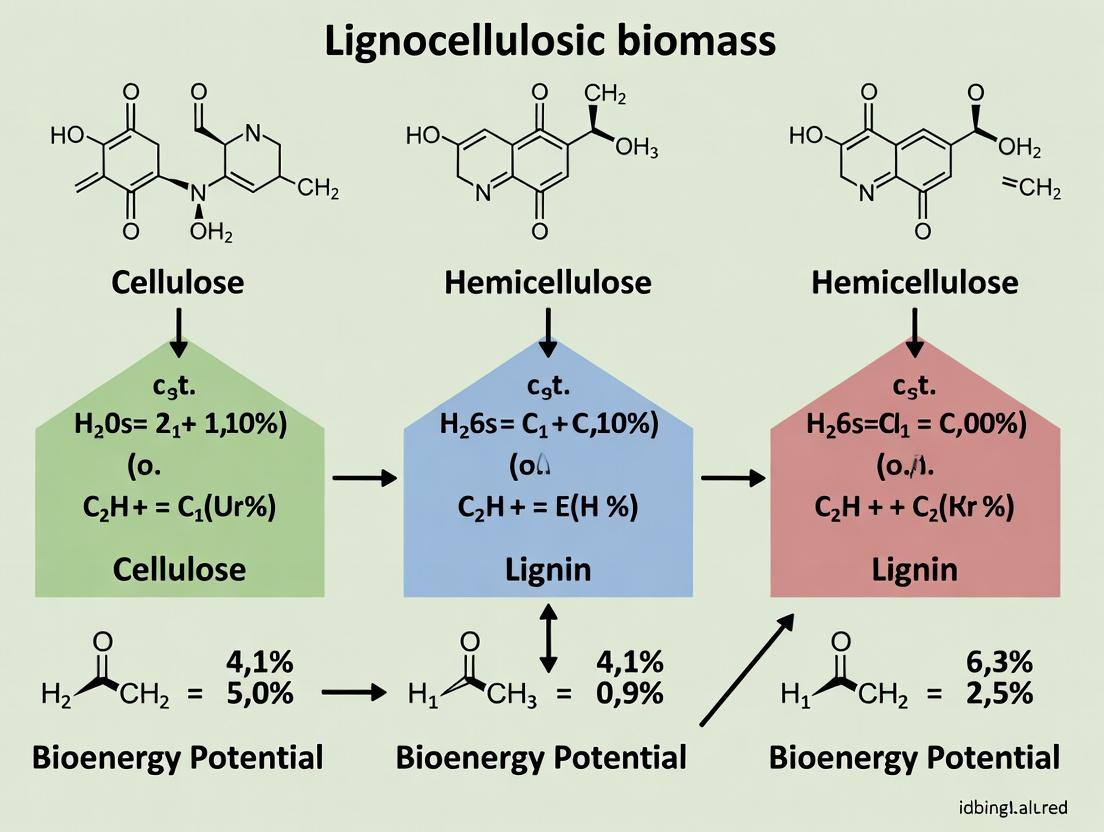
This article provides a comprehensive analysis of lignocellulosic biomass as a critical renewable resource for bioenergy and bio-based product development, tailored for researchers and drug development professionals.
Unlocking Bioenergy: The Science of Lignocellulosic Biomass Composition and Bioconversion Potential
Abstract
This article provides a comprehensive analysis of lignocellulosic biomass as a critical renewable resource for bioenergy and bio-based product development, tailored for researchers and drug development professionals. We explore the foundational structure of cellulose, hemicellulose, and lignin, detail cutting-edge methodological approaches for pretreatment and saccharification, address key bottlenecks in bioconversion efficiency, and validate strategies through comparative analyses of feedstocks and processes. The synthesis highlights the interdisciplinary potential of biomass valorization for sustainable energy and the production of high-value biochemicals with biomedical relevance.
Deconstructing Nature's Framework: An In-Depth Guide to Lignocellulosic Biomass Composition
This whitepaper provides an in-depth analysis of the three primary structural polymers in lignocellulosic biomass: cellulose, hemicellulose, and lignin. Understanding their composition, structure, and interactions is fundamental to a broader research thesis focused on optimizing the deconstruction and conversion of lignocellulosic feedstocks for advanced bioenergy and bioproduct applications. Efficient valorization of this renewable carbon source is critical for developing sustainable biorefineries and reducing reliance on fossil resources.
Composition and Quantitative Distribution
The relative proportions of the structural triad vary significantly between plant types, influencing biomass recalcitrance and processing strategies. The table below summarizes typical ranges.
Table 1: Composition of Major Lignocellulosic Feedstocks (% Dry Weight)
| Feedstock Type | Cellulose (%) | Hemicellulose (%) | Lignin (%) | Other (Ash, Extractives) (%) |
|---|---|---|---|---|
| Hardwood (e.g., Poplar) | 40-55 | 24-40 | 18-25 | 2-5 |
| Softwood (e.g., Pine) | 45-50 | 25-35 | 25-35 | 1-5 |
| Agricultural Residue (e.g., Corn Stover) | 35-45 | 20-30 | 15-20 | 10-20 |
| Herbaceous (e.g., Switchgrass) | 25-40 | 25-50 | 10-20 | 5-15 |
Structural and Functional Characteristics
Cellulose
A linear, crystalline homopolymer of D-glucose linked by β-(1→4)-glycosidic bonds. Chains form microfibrils via extensive intra- and intermolecular hydrogen bonding, providing tensile strength.
Hemicellulose
A heterogeneous, branched polymer of pentoses (xylose, arabinose), hexoses (mannose, glucose, galactose), and acidic sugars. It acts as a linkage between cellulose and lignin, providing structural cohesion. Xylans are dominant in hardwoods and grasses, while glucomannans are more prevalent in softwoods.
Lignin
A complex, amorphous, cross-linked aromatic polymer derived from three monolignol precursors (p-coumaryl, coniferyl, and sinapyl alcohols). It provides rigidity, hydrophobicity, and resistance to microbial degradation. The ratio of syringyl (S), guaiacyl (G), and p-hydroxyphenyl (H) units varies by source.
Table 2: Key Physicochemical Properties of the Structural Triad
| Polymer | Monomer Units | Linkage Type | Solubility in Water | Crystallinity | Primary Function |
|---|---|---|---|---|---|
| Cellulose | D-Glucose | β-(1→4)-glycosidic | Insoluble | High | Structural scaffold, strength |
| Hemicellulose | Xylose, Mannose, Glucose, etc. | β-(1→4) with varied branches | Partially soluble | Low/Amorphous | Matrix component, linkage |
| Lignin | Sinapyl, Coniferyl, p-Coumaryl alcohols | β-O-4, β-5, β-β, etc. | Insoluble | Amorphous | Encrustation, recalcitrance |
Experimental Protocols for Analysis
Protocol: Quantitative Determination of Structural Carbohydrates and Lignin (NREL/TP-510-42618)
This standard protocol from the National Renewable Energy Laboratory (NREL) is widely used for biomass compositional analysis.
1. Sample Preparation:
- Air-dry biomass is milled to pass a 20-mesh sieve.
- Extractives are removed using a Soxhlet apparatus with ethanol or water.
2. Acid Hydrolysis:
- Primary Hydrolysis: 300 mg of extractive-free biomass is treated with 3 mL of 72% (w/w) H₂SO₄ at 30°C for 60 min with frequent stirring.
- Secondary Hydrolysis: The mixture is diluted with 84 mL of deionized water (to 4% acid concentration) and autoclaved at 121°C for 60 minutes.
3. Quantification:
- Solid Residue: The post-hydrolysis solid residue is recovered by vacuum filtration, dried, and weighed as Acid-Insoluble Lignin (Klason Lignin).
- Acid-Soluble Lignin: The absorbance of the hydrolysis liquid is measured at 240 nm (for hardwoods/herbaceous) or 320 nm (for softwoods) using a spectrophotometer.
- Carbohydrates: The hydrolysate is analyzed by High-Performance Liquid Chromatography (HPLC) with a refractive index or pulsed amperometric detector to quantify monomeric sugars (glucose, xylose, etc.). Sugar concentrations are corrected for degradation products (e.g., furfural).
Protocol: Immunohistochemical Localization of Polymers
This protocol visualizes the spatial distribution of polymers in plant cell walls.
1. Tissue Sectioning:
- Embed fresh plant tissue in paraffin or resin (e.g., LR White).
- Section to 5-10 µm thickness using a microtome and mount on slides.
2. Immunolabeling:
- Deparaffinize/hydrate sections if needed. Apply blocking buffer (e.g., 3% BSA in PBS) for 30 min.
- Incubate with primary monoclonal antibodies (e.g., LM10 for unsubstituted xylan, LM15 for xyloglucan, CBM3a for crystalline cellulose) for 1-2 hours at room temperature.
- Wash and incubate with fluorescently conjugated secondary antibody (e.g., Alexa Fluor 488 anti-rat IgG) for 1 hour in darkness.
3. Imaging:
- Mount with an anti-fade medium. Image using a confocal laser scanning microscope with appropriate excitation/emission filters.
Reagent Toolkit for Lignocellulose Research
Table 3: Key Research Reagent Solutions
| Reagent/Material | Function/Application |
|---|---|
| 72% (w/w) Sulfuric Acid | Primary hydrolysis agent for breaking glycosidic bonds in polysaccharides. |
| HPLC Standards (Glucose, Xylose, etc.) | Calibration for accurate quantification of monomeric sugars in hydrolysates. |
| Monoclonal Antibody LM10 | Binds to unsubstituted or low-substituted xylan backbone for hemicellulose imaging. |
| Carbohydrate-Binding Module (CBM3a) | Probes surface-exposed crystalline cellulose. |
| Ionic Liquids (e.g., [C₂mim][OAc]) | Green solvent for pretreatment; disrupts hydrogen bonding and dissolves biomass. |
| Laccase & Peroxidase Enzymes | Used for lignin modification or depolymerization studies. |
| Cellulase Cocktail (e.g., CTec2) | Commercial enzyme mix for saccharification of cellulose to glucose. |
Visualizations: Pathways and Workflows
Diagram Title: Biomass Deconstruction to Biofuels Workflow
Diagram Title: Core Lignin Biosynthesis Pathway
Within the paradigm of lignocellulosic biomass composition and bioenergy potential research, the selection and characterization of feedstock sources represent a foundational challenge. The heterogeneous nature of lignocellulosic materials, derived from diverse agricultural, forestry, and dedicated energy crop systems, directly dictates the efficiency and economic viability of downstream conversion processes into biofuels, biochemicals, and biomaterials. This technical guide provides a detailed analysis of the compositional variability inherent to these three primary biomass categories, underscoring the critical link between source-specific traits and optimal biorefinery pathways.
Compositional Data & Variability
The chemical composition of lignocellulosic biomass is primarily defined by the relative proportions of cellulose, hemicellulose, and lignin, alongside secondary factors such as ash content, extractives, and acetyl groups. This composition is inherently variable, influenced by species, cultivar, harvesting time, geographical location, and pretreatment history. The following table summarizes the typical compositional ranges for key feedstock categories, as established by recent meta-analyses and primary research.
Table 1: Representative Compositional Ranges of Primary Lignocellulosic Feedstocks (% Dry Weight)
| Feedstock Category | Example Feedstocks | Cellulose | Hemicellulose | Lignin | Ash | Key Variability Factors |
|---|---|---|---|---|---|---|
| Agricultural Residues | Corn stover, Wheat straw, Rice husk | 35-45% | 20-30% | 15-20% | 3-15% | Crop type, harvest method, climate, soil nutrients |
| Forestry Waste | Softwood residues (pine, spruce), Hardwood residues (poplar, eucalyptus) | 40-50% | 20-30% | 25-35% | <1-5% | Tree species, tree part (bark, branch), forest management |
| Herbaceous Energy Crops | Switchgrass, Miscanthus, Reed canary grass | 35-45% | 25-35% | 15-25% | 2-8% | Genotype, harvest maturity, fertilizer application |
| Short-Rotation Woody Crops | Willow, Hybrid poplar | 40-50% | 20-30% | 20-30% | <1-3% | Clone, coppicing cycle, plantation density |
Detailed Methodologies for Compositional Analysis
Standardized protocols are essential for generating reproducible and comparable data on biomass composition.
Protocol: Determination of Structural Carbohydrates and Lignin
This protocol is an adaptation of the standard National Renewable Energy Laboratory (NREL) Laboratory Analytical Procedures (LAP) for biomass compositional analysis (e.g., NREL/TP-510-42618).
1. Materials & Reagents:
- Biomass Sample: Milled to pass a 20-mesh (0.84 mm) screen, dried to constant weight.
- 72% (w/w) Sulfuric Acid: Prepared analytically.
- Deionized Water.
- Autoclave or High-Temperature Reactor.
- High-Performance Liquid Chromatography (HPLC) system equipped with a refractive index (RI) or pulsed amperometric detector (PAD) and a suitable column (e.g., Bio-Rad Aminex HPX-87P for sugars).
- UV-Vis Spectrophotometer for acid-soluble lignin determination.
2. Procedure:
- Primary Hydrolysis: Precisely weigh 300 mg (± 10 mg) of biomass into a pressure tube. Add 3.0 mL of 72% H₂SO₄, stir vigorously, and incubate in a water bath at 30°C for 60 minutes, with intermittent stirring.
- Secondary Hydrolysis: Dilute the acid mixture with 84 mL deionized water to achieve a 4% acid concentration. Seal the tube and place it in an autoclave or oven at 121°C for 1 hour.
- Filtration & Separation: After cooling, vacuum filter the hydrolysate through a calibrated crucible. The solid residue is Acid-Insoluble Lignin (Klason Lignin). Wash the residue with hot water, dry at 105°C, and weigh.
- Analysis of Monomeric Sugars: The liquid filtrate is neutralized (e.g., with calcium carbonate) and filtered. The concentrations of monomeric sugars (glucose, xylose, arabinose, etc.) are quantified via HPLC. These values are corrected for degradation products (e.g., furfural, HMF) and used to back-calculate the original polymeric cellulose and hemicellulose content.
- Analysis of Acid-Soluble Lignin: The absorbance of the liquid filtrate at 240 nm or 320 nm is measured via UV-Vis to determine the acid-soluble lignin fraction.
- Ash Determination: A separate sample aliquot is combusted in a muffle furnace at 575°C until constant weight to determine ash content.
Protocol: High-Throughput Screening for Saccharification Potential
1. Materials & Reagents:
- Microtiter Plates (96-well).
- Automated Liquid Handling System.
- Multi-mode Plate Reader (for absorbance/fluorescence).
- Commercial Enzyme Cocktails (e.g., Cellic CTec3/HTec3, Novozymes).
- DNS Reagent (3,5-dinitrosalicylic acid) or glucose oxidase/peroxidase (GOPOD) assay kits for sugar quantification.
2. Procedure:
- Biomass Dispensing: Pre-weighed, milled biomass (1-5 mg) is dispensed into plate wells.
- Pretreatment: A dilute acid or alkaline pretreatment can be performed directly in the plate or on samples prior to plating.
- Enzymatic Hydrolysis: A standardized enzyme cocktail in a suitable buffer (e.g., sodium citrate, pH 4.8-5.0) is dispensed into each well. Plates are sealed and incubated at 50°C with orbital shaking for 72-144 hours.
- Sugar Quantification: Aliquots of hydrolysate are taken at specific time points. Reducing sugar release is quantified using the DNS assay (measuring absorbance at 540 nm), or glucose-specific release is measured via a GOPOD assay (absorbance at 510 nm). Data is used to generate saccharification kinetic profiles for different feedstocks.
Research Reagent Solutions & Essential Materials
Table 2: The Scientist's Toolkit for Lignocellulosic Biomass Analysis
| Item | Function & Relevance |
|---|---|
| NREL Standard Biomass Analytical Procedures (LAPs) | Gold-standard protocols ensuring data reproducibility and cross-study comparability. |
| Commercial Cellulolytic Enzyme Cocktails (e.g., Cellic CTec3) | Standardized, high-activity enzyme mixtures for saccharification assays, enabling consistent evaluation of biomass recalcitrance. |
| Monosaccharide Standards (Glucose, Xylose, Arabinose, etc.) | Essential for HPLC calibration to accurately quantify sugar release from hydrolysis. |
| Microcrystalline Cellulose (Avicel PH-101) | A pure, amorphous cellulose control substrate for benchmarking enzyme activity. |
| Lignin Model Compounds (e.g., Organosolv Lignin, Dehydrogenation Polymer - DHP) | Used to study lignin-enzyme interactions and inhibition mechanisms. |
| Neutral Detergent Fiber (NDF) / Acid Detergent Fiber (ADF) Reagents | Used in the Van Soest method for rapid, coarse fractionation of fiber components in forage and biomass samples. |
| Synergistic Surfactants (e.g., PEG 4000, Tween-80) | Used in hydrolysis assays to reduce non-productive enzyme binding to lignin, enhancing saccharification yield. |
Visualizing Feedstock Selection & Analysis Workflows
Diagram Title: Feedstock Selection to Saccharification Analysis Workflow
Diagram Title: Factors Influencing Biomass Composition and Yield
The efficient conversion of lignocellulosic biomass to biofuels and biochemicals is central to achieving a sustainable bioeconomy. The primary impediment to this conversion is the inherent recalcitrance of the plant cell wall—a complex, heterogeneous, and structurally robust composite matrix. This barrier resists deconstruction, necessitating intensive physicochemical and biological pretreatment steps that significantly impact the economic viability of biorefining. This whitepaper provides an in-depth technical analysis of the plant cell wall's compositional and structural basis for recalcitrance, framed within ongoing research to unlock bioenergy potential.
Compositional & Structural Basis of Recalcitrance
The lignocellulosic matrix is a three-dimensional network primarily composed of cellulose, hemicellulose, and lignin. Their interactions create a formidable barrier.
Quantitative Composition of Representative Biomass Feedstocks
Table 1: Composition of Key Lignocellulosic Feedstocks (%, dry weight basis)
| Feedstock | Cellulose | Hemicellulose | Lignin | Ash | Extractives |
|---|---|---|---|---|---|
| Corn Stover | 35-40 | 20-25 | 15-20 | 4-6 | 10-15 |
| Switchgrass | 30-35 | 25-30 | 15-20 | 3-5 | 5-10 |
| Poplar Wood | 40-45 | 20-25 | 20-25 | <1 | 2-5 |
| Sugarcane Bagasse | 40-45 | 25-30 | 20-25 | 3-6 | 5-10 |
| Spruce Softwood | 40-45 | 25-30 | 25-30 | <1 | 1-3 |
Key Factors Contributing to Recalcitrance
- Crystallinity of Cellulose: High crystallinity (Cellulose Iβ) limits enzyme accessibility.
- Lignin Content and Composition: Acts as a hydrophobic, covalent shield, particularly guaiacyl (G) units in softwoods confer higher resistance.
- Cross-Linking: Ester and ether linkages (e.g., ferulate cross-links in grasses) between lignin and hemicellulose (e.g., arabinoxylan) create a tight network.
- Pore Size and Accessibility: The macro- and microporosity of the biomass limits penetration of hydrolytic enzymes (>5-10 nm diameter).
Experimental Protocols for Analyzing Recalcitrance
Protocol: Compositional Analysis via NREL/TP-510-42618
Objective: Quantify structural carbohydrates and lignin in biomass. Method:
- Milling: Grind biomass to pass a 20-mesh (0.841 mm) screen.
- Extraction: Perform Soxhlet extraction with water and ethanol to remove non-structural extractives.
- Acid Hydrolysis: In two stages: a. Treat 300 mg of extractive-free biomass with 3 mL of 72% (w/w) H₂SO₄ at 30°C for 60 min with frequent stirring. b. Dilute to 4% (w/w) H₂SO₄ with deionized water and autoclave at 121°C for 60 min.
- Quantification: Filter the hydrolysate. Analyze the liquid for monosaccharides (e.g., via HPLC-RI/PAD) and acid-soluble lignin (via UV-Vis at 240 nm or 320 nm). Ash-free acid-insoluble lignin (Klason lignin) is determined by weighing the dried solid residue.
Protocol: Saccharification Assay for Recalcitrance Screening
Objective: Measure enzymatic digestibility as a direct metric of recalcitrance. Method:
- Biomass Preparation: Use extractive-free, milled biomass. Optional: Apply a standardized mild pretreatment (e.g., 0.5% dilute acid at 160°C for 10 min).
- Enzymatic Hydrolysis: In a 1 mL reaction (50 mM sodium citrate buffer, pH 4.8), incubate 1% (w/v) biomass substrate with a commercial cellulase cocktail (e.g., CTec3 at 15-20 mg protein/g glucan). Include 0.02% sodium azide to prevent microbial growth.
- Incubation: Shake (150 rpm) at 50°C for 72 hours.
- Analysis: Sample at 0, 3, 6, 24, 48, and 72h. Heat-inactivate enzymes (100°C, 10 min), centrifuge, and quantify released glucose via a glucose oxidase/peroxidase (GOPOD) assay or HPLC.
- Calculation: Report digestibility as % cellulose conversion = (glucose released * 0.9 / initial cellulose content) * 100.
Visualization of Deconstruction Pathways & Workflows
Diagram 1: Lignocellulose Deconstruction to Biofuels
Diagram 2: Recalcitrance Assessment Protocol
The Scientist's Toolkit: Research Reagent Solutions
Table 2: Essential Reagents and Materials for Recalcitrance Research
| Item Name | Supplier Examples (for reference) | Function in Research |
|---|---|---|
| CTec3/HTec3 Cellulase Cocktails | Novozymes | Industry-standard, multi-enzyme blends for hydrolyzing cellulose (CTec3) and hemicellulose (HTec3). Used in saccharification assays. |
| Monosaccharide Standards (Glucose, Xylose, etc.) | Sigma-Aldrich, Megazyme | HPLC calibration for accurate quantification of sugars released during hydrolysis or from compositional analysis. |
| Sugar Analysis Kit (GOPOD, DNS) | Megazyme, Sigma-Aldrich | Colorimetric, high-throughput measurement of reducing sugars (DNS) or specific glucose (GOPOD). |
| Anhydrous Sulfuric Acid (ACS Grade) | Various | Primary reagent for the strong acid hydrolysis step in compositional analysis (NREL protocol). |
| Microcrystalline Cellulose (Avicel PH-101) | Sigma-Aldrich | A model crystalline cellulose substrate for benchmarking enzyme activity and hydrolysis kinetics. |
| Model Lignin Compounds (Dehydrogenation Polymer - DHP) | Isolated in-lab or commercial (e.g., Kraft lignin) | Synthetic or isolated lignins used to study enzyme-lignin interactions and inhibition mechanisms. |
| Ionic Liquids (e.g., 1-ethyl-3-methylimidazolium acetate) | Sigma-Aldrich, IoLiTec | Advanced pretreatment solvents that effectively dissolve biomass and reduce cellulose crystallinity for mechanistic studies. |
| Solid-State NMR Probes (for Magic Angle Spinning) | Bruker, Agilent | Essential for non-destructive, atomic-level analysis of cellulose crystallinity and lignin-carbohydrate complex structure in native biomass. |
Within the broader thesis on lignocellulosic biomass composition and bioenergy potential, the precise quantification of cellulose crystallinity, lignin content, and the lignin monomeric S/G (syringyl/guaiacyl) ratio is fundamental. These metrics are critical determinants of biomass recalcitrance, influencing the efficiency of saccharification for biofuels and the valorization of lignin into high-value chemicals. This technical guide details current methodologies, protocols, and data interpretation for these key analytical pillars, serving researchers and scientists in bioenergy and biorefinery sectors.
Cellulose Crystallinity
Cellulose crystallinity refers to the proportion of crystalline cellulose relative to total (crystalline + amorphous) cellulose in a sample. A higher crystallinity index (CrI) typically correlates with increased recalcitrance to enzymatic hydrolysis.
Core Analytical Methods
| Method | Principle | Typical Output | Advantages | Limitations |
|---|---|---|---|---|
| X-ray Diffraction (XRD) | Diffraction of X-rays by crystalline planes. | Segal Crystallinity Index (CrI) | Standardized, widely accepted. | Does not account for amorphous contributions from non-cellulosic polysaccharides. |
| Solid-State ¹³C NMR | Chemical shift differences in crystalline vs. amorphous domains. | Peak deconvolution for crystallinity. | Provides detailed structural insights. | Expensive, requires expertise in spectral deconvolution. |
| Fourier-Transform Infrared (FTIR) | Absorbance ratio of crystalline-sensitive bands (e.g., 1429 cm⁻¹ / 893 cm⁻¹). | Lateral Order Index (LOI), Total Crystallinity Index (TCI). | Rapid, high-throughput potential. | Semi-quantitative, sensitive to moisture and impurities. |
Experimental Protocol: XRD-Based Segal Method
Protocol Title: Determination of Cellulose Crystallinity Index (CrI) via X-ray Diffraction.
Materials:
- Pulverized biomass sample (passed through 80-mesh sieve).
- Benchtop or high-resolution X-ray diffractometer.
- Sample holder.
Procedure:
- Sample Preparation: Dry biomass at 60°C for 24 hours. Pack powder uniformly into the sample holder to ensure a flat surface.
- Instrument Setup: Use Cu Kα radiation (λ = 1.5406 Å). Configure the scan range (2θ) from 5° to 40° with a step size of 0.02° and a counting time of 2 seconds per step.
- Data Acquisition: Run the scan and collect the diffractogram.
- Data Analysis:
- Identify the intensity of the 002 lattice peak (typically near 22.5° 2θ), denoted as I{002}.
- Identify the minimum intensity between the 002 and 110 peaks (the amorphous scatter, typically near 18° 2θ), denoted as I{am}.
- Calculate the CrI using the Segal equation: CrI (%) = [(I{002} - I{am}) / I_{002}] × 100
Lignin Content
Total lignin content is the sum of acid-insoluble (Klason) lignin and acid-soluble lignin.
Core Analytical Methods
| Method | Principle | Components Measured | Key Consideration |
|---|---|---|---|
| Klason Method (TAPPI T222) | Hydrolysis of carbohydrates with 72% H₂SO₄, gravimetric analysis of residue. | Acid-Insoluble Lignin (AIL). | Industry standard; overestimates if protein/ash is high. |
| Acetyl Bromide Method | Solubilization and spectrophotometric detection of lignin. | "Total" Lignin (rapid estimate). | Requires an extinction coefficient, which varies with biomass type. |
| Near-Infrared Spectroscopy (NIRS) | Calibration against primary methods using spectral libraries. | Rapid prediction of AIL, ASL. | Dependent on robust, sample-representative calibration models. |
Experimental Protocol: Klason Lignin & Acid-Soluble Lignin
Protocol Title: Gravimetric and Spectrophotometric Determination of Total Lignin Content.
Materials:
- 72% (w/w) Sulfuric acid.
- Controlled temperature water bath (20°C & 30°C) and reflux boiling apparatus.
- Crucibles (porosity P2).
- UV-Vis spectrophotometer.
Procedure: Part A: Acid-Insoluble (Klason) Lignin
- Primary Hydrolysis: Weigh 300 mg of extractive-free biomass into a test tube. Add 3.0 mL of cold 72% H₂SO₄. Stir vigorously, then place in a 20°C water bath for 2 hours, stirring every 15 minutes.
- Secondary Hydrolysis: Transfer the mixture to a flask with 84 mL of deionized water (final acid concentration ~4%). Reflux for 1 hour.
- Filtration & Drying: Filter the hydrolysate through a pre-weried, oven-dried P2 crucible. Wash the residue with hot water until pH neutral.
- Gravimetry: Dry the crucible with residue at 105°C to constant weight. Weigh to determine Acid-Insoluble Residue (AIR).
- Ash Correction: Ash the crucible at 575°C for 4 hours. Re-weigh.
- Calculation: AIL (%) = [(Weight{AIR} - Weight{Ash}) / Weight_{Sample}] × 100
Part B: Acid-Soluble Lignin (ASL)
- Collect the filtrate from Step A.3 and dilute appropriately (typically 1:100).
- Measure the UV absorbance at 205 nm (for hardwoods/agricultural residues) or 240 nm (for softwoods) against a 4% H₂SO₄ blank.
- Calculate ASL using the appropriate extinction coefficient (ε). For 205 nm, ε ≈ 110 L g⁻¹ cm⁻¹ is often used as a general value. ASL (%) = (Absorbance × Dilution Factor × Volume) / (ε × Pathlength × Weight_{Sample}) × 100 Total Lignin = AIL + ASL
Lignin S/G Ratio
The syringyl (S) to guaiacyl (G) ratio in lignin influences its chemical reactivity and potential for depolymerization.
Core Analytical Methods
| Method | Principle | Information Gained | Throughput |
|---|---|---|---|
| Thioacidolysis + GC-MS/FID | Ether cleavage to release monomeric S and G derivatives. | S/G ratio, absolute monomer yield. | Moderate; considered a gold standard. |
| Pyrolysis-GC-MS (Py-GC-MS) | Thermal degradation followed by separation/identification. | S/G ratio, H-unit detection, polysaccharide markers. | High. |
| 2D HSQC NMR | Direct structural analysis of lignin in solution. | S/G ratio, inter-unit linkages (β-O-4, β-5, β-β). | Low; provides the most comprehensive structural data. |
Experimental Protocol: Thioacidolysis for S/G Ratio
Protocol Title: Determination of Lignin S/G Ratio by Thioacidolysis and Gas Chromatography.
Materials:
- Reaction mixture: 2.5% (v/v) BF₃ etherate in dioxane/ethanethiol (82.5:10 v/v).
- Derivatization reagent: Pyridine and N,O-Bis(trimethylsilyl)trifluoroacetamide (BSTFA).
- Internal standard: Tetracosane (C24) in CH₂Cl₂.
- GC-MS/FID system with appropriate column (e.g., DB-5).
Procedure:
- Thioacidolysis Reaction: Weigh 5-10 mg of ball-milled, extractive-free biomass into a reaction vial. Add 5 mL of thioacidolysis reagent and 100 µL of internal standard solution. Heat at 100°C for 4 hours with occasional stirring.
- Work-up: Cool, add ~10 mL of 0.4 M aqueous sodium bicarbonate to quench. Extract the monomeric products with 3 x 10 mL of dichloromethane. Dry the combined organic phases over anhydrous Na₂SO₄ and evaporate to dryness.
- Derivatization: Redissolve the dry residue in 1 mL of pyridine and add 200 µL of BSTFA. Heat at 70°C for 30 minutes to form trimethylsilyl (TMS) derivatives.
- GC Analysis: Inject 1 µL into the GC. Use a temperature program (e.g., 150°C to 300°C at 3°C/min).
- Identification & Quantification: Identify S (syringyl) and G (guaiacyl) monomer peaks by comparison with standards and mass spectra. Integrate peak areas from FID chromatogram.
- Calculation: S/G Ratio = (Area{S-derivative} / Response FactorS) / (Area{G-derivative} / Response FactorG) (Response factors for S and G TMS-ethers are typically considered similar and close to 1.0 for FID).
Visualization
Biomass Analysis Pathways to Application
Klason Lignin Gravimetric Protocol
The Scientist's Toolkit: Research Reagent Solutions
| Item | Function in Analysis | Key Consideration |
|---|---|---|
| 72% Sulfuric Acid (H₂SO₄) | Primary hydrolyzing agent for carbohydrates in Klason lignin method. | Concentration must be precise; highly corrosive. |
| Ethanethiol & Boron Trifluoride Etherate (BF₃) | Core components of thioacidolysis reagent for cleaving β-O-4 ether bonds. | Ethanethiol is highly toxic and malodorous; use in fume hood. |
| Copper Kα X-ray Source (λ=1.5406 Å) | Standard radiation source for cellulose crystallinity XRD. | Wavelength must be known for crystallinity calculations. |
| N,O-Bis(trimethylsilyl)trifluoroacetamide (BSTFA) | Derivatizing agent for hydroxyl groups in thioacidolysis monomers for GC analysis. | Makes analytes volatile and thermally stable for GC. |
| Deuterated Solvents (DMSO-d₆, Pyridine-d₅) | Solvent for biomass dissolution for direct 2D HSQC NMR analysis. | Allows for direct structural elucidation without degradation. |
| Extractive-Free Ball-Milled Biomass | Standardized substrate for all compositional analyses. | Essential for reproducibility; removes interfering extractives and increases surface area. |
This whitepaper, framed within a broader thesis on lignocellulosic biomass composition and bioenergy potential, dissects the critical divergence between theoretical and practical bioenergy yields. For researchers, scientists, and professionals in related fields, understanding this gap is fundamental to advancing biomass conversion technologies, from biofuel production to platform chemicals for pharmaceutical applications. Theoretical yield represents the stoichiometric maximum obtainable from a substrate's chemical composition, while practical yield is constrained by a matrix of biological, physicochemical, and process engineering limitations.
Biomass Composition & Theoretical Yield Foundations
The theoretical bioenergy yield is calculated from the ultimate and proximate analysis of lignocellulosic biomass. The primary constituents—cellulose, hemicellulose, and lignin—dictate the maximum convertible products.
Table 1: Typical Composition and Theoretical Ethanol Yield of Selected Lignocellulosic Feedstocks
| Feedstock | Cellulose (% Dry Weight) | Hemicellulose (% Dry Weight) | Lignin (% Dry Weight) | Theoretical Ethanol Yield (L/kg Dry Biomass)* |
|---|---|---|---|---|
| Corn Stover | 35-40 | 20-25 | 15-20 | 0.28 - 0.33 |
| Switchgrass | 30-35 | 25-30 | 15-20 | 0.26 - 0.31 |
| Poplar Wood | 40-45 | 20-25 | 20-25 | 0.31 - 0.36 |
| Sugarcane Bagasse | 40-45 | 25-30 | 20-25 | 0.33 - 0.38 |
| Wheat Straw | 35-40 | 25-30 | 15-20 | 0.29 - 0.34 |
*Calculated assuming 100% conversion of cellulose/hemicellulose to glucan/xylan and subsequent fermentation to ethanol (theoretical max: 0.51 g ethanol/g glucose).
Key Limiting Factors & The Yield Gap
The practical yield is invariably lower due to multi-faceted limitations.
Table 2: Major Factors Contributing to the Theoretical vs. Practical Yield Gap
| Factor Category | Specific Limitation | Typical Impact on Yield |
|---|---|---|
| Biomass Recalcitrance | Crystalline cellulose structure, lignin-carbohydrate complexes | Reduces enzymatic hydrolysis efficiency by 30-50%. |
| Pretreatment Efficiency | Incomplete hemicellulose solubilization, inhibitor formation (furans, phenolics) | Can cause 10-40% loss of fermentable sugars and inhibit downstream fermentation. |
| Enzymatic Hydrolysis | Suboptimal enzyme loading, activity, and synergy; end-product inhibition | Conversion rates often plateau at 70-85% of theoretical cellulose digestibility. |
| Microbial Fermentation | Suboptimal C5 sugar utilization, ethanol toxicity, nutrient limitations | Actual fermentation efficiency typically reaches 75-90% of theoretical metabolic yield. |
| Process Integration | Sugar losses during transfer, microbial contamination, non-productive enzyme binding | Contributes to an overall process mass balance loss of 5-15%. |
Experimental Protocols for Yield Determination
Protocol: Determining Theoretical Ethanol Yield
- Compositional Analysis (NREL/TP-510-42618):
- Milling: Mill biomass to pass a 20-mesh (0.84 mm) screen.
- Extraction: Perform Soxhlet extraction with ethanol or water to remove non-structural components.
- Acid Hydrolysis: In two-stage acid hydrolysis (72% H₂SO₄ at 30°C, then 4% at 121°C), structural carbohydrates are hydrolyzed to monomeric sugars.
- Quantification: Analyze sugar monomers (glucose, xylose, arabinose) via High-Performance Liquid Chromatography (HPLC) with a refractive index detector (RID) or pulsed amperometric detection (PAD).
- Calculation: Theoretical Ethanol = (Glucose * 0.511) + (Xylose * 0.511). The factor 0.511 g ethanol/g sugar is derived from the stoichiometry of the Embden-Meyerhof-Parnas pathway.
Protocol: Measuring Practical Yield via Simultaneous Saccharification and Fermentation (SSF)
- Pretreatment: Load 1g (dry weight equivalent) of pretreated biomass (e.g., dilute acid, steam explosion) into a sterile serum vial or bioreactor.
- Buffer/Nutrient Addition: Add appropriate sterile buffer (e.g., citrate buffer, pH 4.8-5.0) and nutrients (yeast extract, peptone, (NH₄)₂HPO₄).
- Enzyme & Inoculum Addition: Add commercial cellulase cocktail (e.g., CTec3, 15-20 FPU/g cellulose) and pre-cultured ethanologenic organism (e.g., Saccharomyces cerevisiae or engineered Zymomonas mobilis, OD₆₀₀ ~10).
- Incubation: Incubate at 35-37°C with moderate agitation (150 rpm) for 96-144 hours under anaerobic conditions.
- Analysis: Sample periodically. Centrifuge samples, and analyze supernatant via HPLC for ethanol and residual sugars. Quantify glycerol and organic acids as byproducts.
- Calculation: Practical Ethanol Yield (Yp/s) = (Maximum Ethanol Titer g/L) / (Initial Total Potential Sugar g/L). Practical % of Theoretical = (Yp/s / 0.511) * 100.
Visualizing the Yield Determination Workflow
Diagram Title: Bioenergy Yield Determination Workflow
Key Biomass-to-Bioenergy Conversion Pathways
Diagram Title: Key Conversion Pathways and Yield Barriers
The Scientist's Toolkit: Research Reagent Solutions
Table 3: Essential Reagents and Materials for Bioenergy Yield Research
| Reagent/Material | Function/Brief Explanation |
|---|---|
| CTec3 / Cellic CTec3 (Novozymes) | A commercial cellulase enzyme cocktail containing exoglucanases, endoglucanases, β-glucosidase, and hemicellulase activity. Essential for hydrolyzing pretreated cellulose to glucose. |
| D-(+)-Glucose / D-(+)-Xylose (Sigma-Aldrich) | High-purity sugar standards for HPLC calibration. Critical for accurate quantification of sugar monomers from hydrolysis and fermentation broths. |
| Sulfuric Acid (H₂SO₄), 72% w/w | Primary reagent for the two-stage acid hydrolysis in the NREL compositional analysis protocol. Hydrolyzes structural polysaccharides. |
| Saccharomyces cerevisiae (e.g., ATCC 200062) | A robust, ethanologenic yeast strain. Commonly used in SSF experiments for fermenting C6 sugars. Engineered strains enable C5 fermentation. |
| Aminex HPX-87H Column (Bio-Rad) | A strong cation-exchange HPLC column (hydrogen form). The industry standard for separating and quantifying sugars, organic acids, and ethanol in biomass hydrolysates. |
| 2-Furaldehyde (Furfural) & 5-Hydroxymethylfurfural (HMF) Standards | Key inhibitor standards. Used to quantify concentration of fermentation inhibitors generated during pretreatment, which is critical for understanding yield limitations. |
| Yeast Extract & Peptone | Complex nitrogen and vitamin sources in fermentation media. Support robust microbial growth and metabolism, impacting practical yield. |
| Citrate Buffer (pH 4.8-5.0) | Maintains optimal pH for both enzymatic hydrolysis (cellulase activity) and yeast fermentation during SSF experiments. |
From Biomass to Biofuel: Advanced Methodologies for Pretreatment and Bioconversion
Within the broader thesis on lignocellulosic biomass composition and bioenergy potential, effective pretreatment is a critical first step. Lignocellulose, comprising cellulose (35-50%), hemicellulose (20-35%), and lignin (10-25%), forms a recalcitrant structure that impedes enzymatic saccharification. Pretreatment aims to disrupt this matrix, enhance enzyme accessibility, and improve yields of fermentable sugars for biofuel and biochemical production. This guide provides a comparative analysis of the three core pretreatment technology categories.
Core Pretreatment Technologies: Mechanisms and Protocols
Physical Pretreatment
Mechanism: Employs mechanical or radiation forces to reduce particle size, crystallinity, and degree of polymerization, primarily increasing surface area.
- Milling/Grinding: Uses ball, two-roll, or hammer mills.
- Extrusion: Subjects biomass to shearing and mixing under high temperature and pressure.
- Ultrasound & Microwave: Applies energy to disrupt cell walls via cavitation or internal heating.
Experimental Protocol: Ball Milling for Size Reduction
- Material: Air-dried biomass (e.g., wheat straw) sieved to a coarse initial size (e.g., 2-5 mm).
- Equipment: Planetary ball mill, stainless steel jars and balls.
- Procedure: Load jar with biomass (charge ratio: 1:10 biomass to ball weight). Set mill rotation speed (e.g., 300 rpm) and processing time (e.g., 30, 60, 120 minutes). Process under inert atmosphere if needed. Cool samples and sieve to determine particle size distribution.
- Analysis: Measure specific surface area (BET), crystallinity index (XRD), and subsequent enzymatic digestibility.
Chemical Pretreatment
Mechanism: Uses chemical agents to solubilize hemicellulose and/or lignin, drastically reducing recalcitrance.
- Acid Pretreatment (Dilute): Uses H₂SO₄ or HCl (0.5-2.5% w/w) at 120-210°C to hydrolyze hemicellulose.
- Alkali Pretreatment: Uses NaOH, Ca(OH)₂, or ammonia (0.5-15% w/w) at 25-120°C to remove lignin via saponification.
- Organosolv: Uses organic solvents (e.g., ethanol, acetic acid) with water and catalyst (acid/alkali) at 150-200°C to extract high-purity lignin.
Experimental Protocol: Dilute Acid Hydrolysis
- Material: Milled biomass (<2 mm).
- Reagent: 1% (v/v) H₂SO₄ solution.
- Procedure: Load biomass at 10% solid loading into a pressure reactor. Add acid solution. Heat to 160°C and maintain for 20 minutes with constant stirring. Rapidly cool reactor. Separate solid residue (cellulose-rich) from liquid hydrolysate (hemicellulose sugars and inhibitors) via filtration.
- Analysis: Quantify sugars (HPLC) and inhibitors (furfural, HMF) in liquid. Analyze solid composition (NREL/TP-510-42618) and enzymatic digestibility.
Biological Pretreatment
Mechanism: Employs lignin-degrading microorganisms (white-rot fungi, bacteria) and their enzyme systems (laccases, peroxidases) for selective, mild delignification.
- Fungal Pretreatment: Uses Phanerochaete chrysosporium, Ceriporiopsis subvermispora.
- Enzymatic Pretreatment: Direct application of lignin-modifying enzymes.
Experimental Protocol: Fungal Solid-State Fermentation
- Material: Biomass moistened to 65-75% moisture content.
- Microorganism: Ceriporiopsis subvermispora maintained on malt extract agar.
- Procedure: Inoculate sterilized biomass with fungal mycelial plugs. Incubate in solid-state bioreactors at 28°C for 14-28 days under controlled humidity (70-80%) and aerobic conditions. Monitor CO₂ evolution. Terminate by drying at 60°C to inactivate fungus.
- Analysis: Measure weight loss, lignin content (Klason method), and cellulose digestibility.
Comparative Data Analysis
Table 1: Comparative Performance of Pretreatment Technologies
| Parameter | Physical (Milling) | Chemical (Dilute Acid) | Biological (Fungal) |
|---|---|---|---|
| Primary Action | Size reduction, crystallinity decrease | Hemicellulose solubilization | Selective lignin degradation |
| Typical Conditions | Ambient Temp, High Energy | 160-180°C, Acid Catalyst | 25-30°C, Long Incubation |
| Processing Time | Minutes to Hours | Minutes to 1 Hour | Weeks |
| Lignin Removal | Low (<10%) | Low to Moderate (10-30%) | Moderate to High (20-50%) |
| Hemicellulose Removal | Very Low | High (>80%) | Low |
| Inhibitor Generation | None | High (Furfural, HMF, Acetic Acid) | Negligible |
| Energy/ Cost | Very High (Capital & Operational) | Moderate (Chemicals, Reactor Cost) | Low (Energy), Moderate (Time) |
| Enzymatic Digestibility Increase | Moderate (20-40% points) | High (40-70% points) | Low to Moderate (15-35% points) |
Table 2: Research Reagent Solutions Toolkit
| Item | Function in Pretreatment Research |
|---|---|
| Cellulase Enzyme Cocktail (e.g., CTec2) | Hydrolyzes pretreated cellulose to glucose for digestibility assays. |
| Dinitrosalicylic Acid (DNS) Reagent | Quantifies reducing sugar yield post-enzymatic hydrolysis. |
| Sulfuric Acid (72% w/w) | Primary reagent for compositional analysis (Klason lignin). |
| High-Performance Liquid Chromatography (HPLC) Standards | Quantifies monomeric sugars, organic acids, and fermentation inhibitors. |
| Lignin-Modifying Enzymes (Laccase, MnP) | Used in biological pretreatment studies to mimic fungal action. |
| NREL LAP Protocols | Standardized laboratory analytical procedures for biomass analysis. |
Visualized Workflows
Title: Pretreatment Technology Pathway to Sugars
Title: Dilute Acid Pretreatment & Analysis Workflow
Within the broader thesis on lignocellulosic biomass composition and bioenergy potential, the enzymatic deconstruction of plant cell walls is a pivotal research area. The complex, recalcitrant structure of lignocellulose necessitates a synergistic cocktail of enzymes. This technical guide details the core enzymatic strategies involving cellulases, hemicellulases, and the copper-dependent Lytic Polysaccharide Monooxygenases (LPMOs), which have revolutionized understanding of biomass conversion by introducing an oxidative mechanism to complement classical hydrolysis.
Core Enzyme Systems: Mechanisms and Synergies
Cellulases
Cellulases hydrolyze the β-1,4-glycosidic bonds in cellulose, primarily through a three-enzyme system.
- Endoglucanases (EGs): Act randomly on internal amorphous sites of cellulose chains, creating new chain ends.
- Cellobiohydrolases (CBHs or Exoglucanases): Processively cleave cellobiose units from reducing (CBH I) or non-reducing (CBH II) ends of cellulose chains.
- β-Glucosidases (BGLs): Hydrolyze cellobiose and short-chain oligosaccharides to glucose, relieving product inhibition on CBHs.
Hemicellulases
This diverse group targets heterogeneous hemicelluloses (e.g., xylan, mannan). Key enzymes include:
- Endoxylanase & Endomannanase: Cleave backbone chains.
- β-Xylosidase & β-Mannosidase: Act on oligomers.
- Accessory Enzymes (Debranching Enzymes): Remove side-chain substitutions (e.g., α-arabinofuranosidase, α-glucuronidase, acetyl xylan esterase).
Lytic Polysaccharide Monooxygenases (LPMOs)
LPMOs are copper-dependent enzymes that catalyze the oxidative cleavage of crystalline polysaccharides (cellulose, chitin, hemicellulose). They use an oxidative mechanism with an electron donor (e.g., ascorbate, lignin-derived compounds) and O2 or H2O2 to hydroxylate the C1 or C4 carbon, introducing a kink in the crystal lattice and creating oxidized chain ends (aldonic acids), which facilitates subsequent hydrolase action.
Table 1: Core Enzyme Classes in Lignocellulosic Biomass Deconstruction
| Enzyme Class | EC Number (Example) | Target Bond/Substrate | Primary Action | Key Product(s) |
|---|---|---|---|---|
| Endoglucanase (EG) | EC 3.2.1.4 | β-1,4-glycosidic (amorphous cellulose) | Random chain scission | Oligosaccharides, new chain ends |
| Cellobiohydrolase (CBH) | EC 3.2.1.91/176 | β-1,4-glycosidic (crystalline cellulose ends) | Processive exo-cleavage | Cellobiose |
| β-Glucosidase (BGL) | EC 3.2.1.21 | β-1,4-glycosidic (cellobiose/oligomers) | Terminal hydrolysis | Glucose |
| LPMO (AA9 family) | EC 1.14.99.54/56 | C1/C4 of cellulose chain | Oxidative cleavage | C1- or C4-oxidized oligosaccharides |
| Endoxylanase | EC 3.2.1.8 | β-1,4-glycosidic (xylan backbone) | Random backbone scission | Xylooligosaccharides |
| Acetyl Xylan Esterase | EC 3.1.1.72 | Ester bond (acetyl group on xylan) | Deacetylation | Acetic acid, deacetylated xylan |
Experimental Protocol: Assessing Synergistic Enzyme Action
Title: Quantitative Analysis of Enzymatic Synergy on Pretreated Biomass
Objective: To measure the synergistic degradation of a pretreated lignocellulosic substrate (e.g., dilute-acid pretreated corn stover) by cellulases, hemicellulases, and LPMOs.
Materials:
- Pretreated, washed, and compositionally characterized biomass (substrate).
- Purified enzyme components: Cellulase cocktail (e.g., Trichoderma reesei mix), LPMO (e.g., Thermoascus aurantiacus AA9), endoxylanase.
- Reaction buffer (e.g., 50 mM sodium acetate, pH 5.0).
- Essential co-factors: 1 mM ascorbic acid (electron donor for LPMO).
- Controls: No-enzyme, heat-inactivated enzyme.
- Microplate reader or HPLC for sugar analysis.
Methodology:
- Substrate Preparation: Dispense 1% (w/v) solid biomass load in reaction buffer into 2 mL microreaction tubes. Include triplicates.
- Enzyme Dosing: Prepare reaction mixtures:
- A: Cellulase only (e.g., 10 mg protein/g glucan).
- B: Cellulase + LPMO (e.g., 10 mg/g glucan + 1 mg/g glucan).
- C: Cellulase + LPMO + Endoxylanase (+1 mg/g glucan).
- D: LPMO only (+ ascorbate).
- Add ascorbate (1 mM final) to all LPMO-containing reactions.
- Hydrolysis: Incubate at 50°C with agitation (e.g., 1000 rpm) for 72 hours.
- Termination & Analysis: Heat samples to 100°C for 10 min to stop reaction. Centrifuge. Analyze supernatant for:
- Reducing sugars (DNS assay) for total activity.
- Glucose/Xylose (HPLC-RI or enzymatic assay) for specific product release.
- Oxidized products (HPAEC-PAD) to confirm LPMO activity.
- Data Calculation: Calculate synergy factor (SF):
- SF = (Sugar yield from combined enzymes) / (Sum of sugar yields from individual enzymes).
Visualization of Mechanisms and Workflow
Title: Synergistic Action of Biomass-Degrading Enzymes
Title: Hydrolysis Synergy Assay Workflow
The Scientist's Toolkit: Research Reagent Solutions
Table 2: Essential Reagents for Enzymatic Hydrolysis Research
| Reagent/Material | Function & Rationale | Example/Note |
|---|---|---|
| Pretreated Biomass Substrate | Standardized, compositionally-defined substrate (e.g., NREL AFEX-pretreated corn stover). Ensures reproducibility across labs. | Often obtained from biorefinery partners or prepared via standard pretreatment protocols. |
| Commercial Cellulase Cocktail | Benchmark hydrolytic preparation containing EG, CBH, and BG activities. Used as baseline for synergy studies. | Trichoderma reesei cellulase (e.g., Cellic CTec3, Sigma Aldrich). |
| Recombinant LPMO (AA9) | Purified enzyme for studying oxidative cleavage. Requires careful handling to avoid copper loss. | Often expressed in Pichia pastoris or Aspergillus; available from specialized enzyme suppliers. |
| Ascorbic Acid | Model reducing agent/electron donor for in vitro LPMO activation. Critical for LPMO activity in purified systems. | A common, inexpensive source of electrons; physiological donors may include lignin phenols. |
| HPAEC-PAD System | High-Performance Anion-Exchange Chromatography with Pulsed Amperometric Detection. Essential for separating and detecting native and oxidized sugar oligomers. | Gold standard for analyzing complex LPMO and hemicellulase products. |
| DNS Reagent | 3,5-Dinitrosalicylic acid reagent for colorimetric quantification of reducing sugar ends. Provides a rapid activity assay. | Does not detect oxidized ends from LPMO (C1 oxidation); measures total reducing capacity. |
| LPMO Activity Assay Kit | Commercial kit combining substrate, electron donor, and detection method for standardized LPMO activity screening. | Simplifies initial characterization; may use Amplex Red or chitin-based fluorescent substrates. |
| Oxygen Sensor Plates | Real-time monitoring of O2 consumption by LPMOs, confirming oxidative activity and kinetics. | Useful for distinguishing LPMO's peroxygenase vs. oxygenase activity. |
Within the broader research on lignocellulosic biomass composition and its bioenergy potential, the selection of microbial fermentation platforms is a critical determinant of process efficiency and economic viability. Lignocellulosic hydrolysates present a challenging environment for fermentation due to inhibitors (e.g., furans, phenolics), substrate complexity (C5 and C6 sugars), and variable composition. This whitepaper provides a technical comparison of native (wild-type) and engineered microbial strains for fermenting these hydrolysates, focusing on performance metrics, genetic manipulation strategies, and experimental protocols relevant to researchers in bioenergy and biomanufacturing.
Comparative Analysis: Native vs. Engineered Strains
Table 1: Key Performance Indicators (KPIs) for Fermentation of Lignocellulosic Hydrolysates
| KPI | Native Strains (e.g., S. cerevisiae, C. acetobutylicum) | Engineered Strains (e.g., S. cerevisiae XYZ, E. coli KO11) | Ideal Target (for Commercial Viability) |
|---|---|---|---|
| Titer (g/L) | Ethanol: 40-80; Butanol: 10-15 | Ethanol: 45-100; Butanol: 15-25 | >40 (Butanol: >20) |
| Yield (g/g sugar) | 0.40-0.48 (Ethanol) | 0.45-0.51 (Ethanol) | >0.48 (Theoretical Max: 0.51) |
| Productivity (g/L/h) | 0.5-4.0 | 1.0-8.0 | >2.5 |
| Inhibitor Tolerance | Moderate (species-dependent) | Enhanced via expression of efflux pumps, oxidoreductases | High (no lag phase at 1-2 g/L furfural) |
| Substrate Range | Primarily Glucose (C6) | C5 (Xylose, Arabinose) + C6 co-fermentation | Simultaneous C5/C6 utilization |
| Genetic Stability | High | Requires careful design (e.g., genomic integration) | >50 generations stable production |
| Downstream Processing Complexity | Low to Moderate | Can be higher if secreted proteins/additives present | Low |
Table 2: Common Genetic Modifications for Lignocellulosic Fermentation
| Engineering Goal | Target Pathway/Element | Example Modification | Resultant Phenotype |
|---|---|---|---|
| Expand Substrate Range | Xylose Assimilation | Integrate XYL1, XYL2, XKS1 genes into S. cerevisiae | Xylose fermentation at ~0.4 g/g yield |
| Enhance Inhibitor Tolerance | Detoxification & Stress Response | Overexpress ADH6 (reduces furfural to less toxic alcohol) | Reduced lag phase by 60% in presence of furfural |
| Redirect Carbon Flux | Product Synthesis Pathways | Knockout ldhA in E. coli; Overexpress adhE2 | Shift from lactate to ethanol (Yield increase ~20%) |
| Improve Secretion | Membrane Transport | Overexpress heterologous cellulase genes with secretion signals | Direct conversion of pretreated biomass; reduces enzyme loading |
Experimental Protocols
Protocol 1: High-Throughput Screening for Inhibitor Tolerance Objective: Identify engineered strains with improved growth in lignocellulosic hydrolysate. Materials: 96-well plates, synthetic hydrolysate medium (see Reagent Solutions), plate reader. Procedure:
- Prepare a gradient of hydrolysate (0%, 25%, 50%, 75%, 100% v/v) in defined medium in 96-well plates.
- Inoculate each well with a standardized inoculum (OD600 = 0.05) of test strains.
- Incubate at 30°C (or strain-specific temp) with continuous shaking in the plate reader.
- Monitor OD600 every 15 minutes for 48-72 hours.
- Calculate maximum growth rate (μmax) and lag phase duration for each strain/inhibitor condition. Data Analysis: Compare μmax and lag time relative to control (0% hydrolysate). Strains with <20% reduction in μmax and minimal lag extension at 75% hydrolysate are candidates.
Protocol 2: Fed-Batch Fermentation for Performance Validation Objective: Determine titer, yield, and productivity of selected strains in a bioreactor. Materials: 5L bioreactor, lignocellulosic hydrolysate (detoxified), pH and DO probes, offline HPLC. Procedure:
- Fill bioreactor with 2L of production medium containing 60% v/v hydrolysate.
- Calibrate pH (maintain at 5.5) and DO probes. Set temperature to 30°C.
- Inoculate with 10% v/v actively growing seed culture.
- Begin batch phase. Once initial sugars are depleted (<5 g/L), initiate fed-batch addition of concentrated hydrolysate feed.
- Maintain micro-aerobic conditions (DO ~5% saturation) for anaerobic products (e.g., ethanol).
- Take periodic samples (every 2-4 h) for OD, substrate (sugars), and product (ethanol/butanol) quantification via HPLC.
- Continue until productivity declines significantly (<10% of max). Data Analysis: Calculate final titer (g/L), overall yield (g product/g sugar consumed), and volumetric productivity (g/L/h) during the productive phase.
Diagrams
Diagram Title: Microbial Platform Selection Logic for Biomass Fermentation
Diagram Title: Engineered Xylose Assimilation Pathway in Yeast
The Scientist's Toolkit: Research Reagent Solutions
Table 3: Essential Materials for Strain Evaluation in Biomass Fermentation
| Reagent/Material | Function & Specification | Example Vendor/Product |
|---|---|---|
| Synthetic Lignocellulosic Hydrolysate | Mimics inhibitor composition (e.g., 2 g/L acetic acid, 0.5 g/L furfural, 0.2 g/L HMF) for reproducible screening. | Custom synthesis or Sigma-Aldrich (component mix) |
| Anaerobic Chamber/Workstation | Provides oxygen-free environment for cultivating strict anaerobes (e.g., Clostridia) or micro-aerobic fermentations. | Coy Laboratory Products |
| HPLC Columns | Separates and quantifies sugars, organic acids, and fermentation products (ethanol, butanol) in broth samples. | Bio-Rad Aminex HPX-87H (for acids/alcohols) |
| CRISPR/Cas9 Kit (Yeast/Bacteria) | For precise genome editing (knock-ins, knock-outs) to construct engineered strains. | IDT Alt-R CRISPR-Cas9 System; Yeast Toolkit (YTK) |
| RNA Protect Reagent | Immediately stabilizes microbial RNA at sampling for transcriptomics studies of stress response. | Qiagen RNAlater |
| Microplate Respiration Assay Kit | Measures metabolic activity/viability in high-throughput format under inhibitor stress. | Agilent Seahorse XFp Analyzer & Kits |
| Detoxification Resin | Pre-treatment of real hydrolysate to remove inhibitors for controlled experiments. | Sigma-Aldrich XAD-4 resin |
| Stable Isotope Tracers (13C-Glucose/Xylose) | Enables metabolic flux analysis (MFA) to quantify pathway activity in engineered strains. | Cambridge Isotope Laboratories |
The valorization of lignocellulosic biomass represents a cornerstone of sustainable biorefining, transitioning from sole bioenergy production towards integrated platforms yielding both biofuels and high-value biochemicals. This whitepaper, framed within a thesis on lignocellulosic composition and bioenergy potential, details technical pathways for co-production, maximizing feedstock utility and economic viability for researchers and bioprocess developers.
Lignocellulosic Composition & Fractionation Pathways
Lignocellulosic biomass primarily comprises cellulose (40-60%), hemicellulose (20-40%), and lignin (15-30%). Effective fractionation is critical for parallel processing streams.
Table 1: Typical Composition of Common Lignocellulosic Feedstocks
| Feedstock | Cellulose (% Dry Weight) | Hemicellulose (% Dry Weight) | Lignin (% Dry Weight) | Ash (%) |
|---|---|---|---|---|
| Corn Stover | 38-40 | 28-30 | 7-21 | 4-5 |
| Wheat Straw | 33-40 | 20-25 | 15-20 | 6-8 |
| Sugarcane Bagasse | 40-45 | 30-35 | 20-25 | 1-4 |
| Poplar Wood | 45-50 | 25-30 | 20-25 | <1 |
| Switchgrass | 30-35 | 25-30 | 15-20 | 5-6 |
Experimental Protocol 1: Two-Step Acid-Pretreatment and Fractionation
- Objective: Separate hemicellulose-derived sugars (C5) from cellulose and lignin.
- Method:
- Mild Acid Hydrolysis: Biomass is milled to 2mm particles. A 10% (w/v) slurry is treated with 1.5% (w/w) dilute H₂SO₄ at 150°C for 30 minutes in a pressurized reactor.
- Solid-Liquid Separation: The slurry is filtered. The liquid hydrolysate contains pentose sugars (xylose, arabinose) and inhibitors (furfural, HMF). This stream is neutralized with Ca(OH)₂ for biochemical production.
- Enzymatic Saccharification: The solid residue (cellulose and lignin) is washed and treated with a cellulase cocktail (e.g., CTec2, 15 FPU/g cellulose) in citrate buffer (pH 4.8) at 50°C for 72 hours.
- Final Separation: The slurry is filtered. The liquid contains glucose (C6 stream). The solid residue is mainly lignin.
Co-Production Pathways: Bioenergy and Biochemicals
Bioenergy Pathways
- Bioethanol: Fermentation of C6 and C5 sugars using engineered Saccharomyces cerevisiae or Zymomonas mobilis.
- Biogas: Anaerobic digestion of process residues and waste streams.
- Advanced Biofuels: Catalytic upgrading of lignin-derived pyrolysis oil or syngas fermentation.
High-Value Biochemical Pathways
- From C5 Stream (Hemicellulose): Furfural (platform chemical), xylitol (sweetener), succinic acid (polymer precursor).
- From C6 Stream (Cellulose): Glucaric acid (detergent builder), sorbitol (food additive), itaconic acid (monomer for resins).
- From Lignin Stream: Vanillin (flavor), phenolic resins, carbon fibers.
Experimental Protocol 2: Microbial Co-Production of Ethanol and Succinic Acid
- Objective: Utilize both C5 and C6 streams in a single bioreactor.
- Method:
- Strain: Use a co-culture of S. cerevisiae (engineered for ethanol from glucose) and Actinobacillus succinogenes (engineered for succinic acid from xylose).
- Medium: Combined hydrolysate (detoxified) supplemented with yeast extract, (NH₄)₂HPO₄, and MgCO₃ as a pH buffer and CO₂ source for succinogenesis.
- Bioreactor Conditions: Operate in a 5L stirred-tank bioreactor at 37°C, pH 6.8, 200 rpm, with N₂ sparging to maintain microaerobic conditions favoring both pathways.
- Monitoring: Sample periodically for HPLC analysis of sugars, ethanol, and organic acids.
- Separation: Post-fermentation, broth is centrifuged. Ethanol is recovered from supernatant via distillation. Succinic acid is recovered from the remaining broth via crystallization at low pH.
Visualized Integrated Biorefinery Workflow
Title: Integrated Biorefinery Co-Production Workflow
Key Metabolic Pathways for Biochemical Production
Title: Key Metabolic Pathways from Sugars to Biochemicals
The Scientist's Toolkit: Essential Research Reagents & Materials
Table 2: Key Research Reagent Solutions for Lignocellulosic Biorefining
| Item | Function/Brief Explanation | Typical Supplier/Example |
|---|---|---|
| CTec2/HTec2 Enzyme Cocktail | Multi-enzyme blend for synergistic hydrolysis of cellulose (CTec2) and hemicellulose (HTec2). Essential for saccharification. | Novozymes |
| Ionic Liquids (e.g., [Emim][OAc]) | Green solvent for efficient biomass pretreatment, dissolving lignin and cellulose with high recovery rates. | Sigma-Aldrich, IoLiTec |
| Solid Acid Catalysts (e.g., Zeolites) | Heterogeneous catalysts for hydrolyzing sugars or upgrading intermediates (e.g., furfural), enabling easier separation. | ACS Material, Alfa Aesar |
| Engineered Microbial Strains | S. cerevisiae (YRH 1347), E. coli (KO11+), A. succinogenes (130Z) engineered for co-utilization of C5/C6 sugars and product tolerance. | ATCC, DSMZ |
| Detoxification Resins (XAD-4) | Polymeric adsorbent for removing fermentation inhibitors (furfural, phenolics) from biomass hydrolysates. | Dow Chemical, Sigma-Aldrich |
| HPLC Columns (Aminex HPX-87H) | Standard column for analysis and quantification of sugars, organic acids, and alcohols in process streams. | Bio-Rad |
| Anaerobic Chamber Gloves/Bags | For creating and maintaining oxygen-free environments crucial for anaerobic fermentations (e.g., succinic acid production). | Coy Laboratory, Mitsubishi |
| Lignin Model Compounds (e.g., G/S/H dimers) | Well-defined compounds for studying lignin depolymerization mechanisms and catalyst screening. | TCI Chemicals, Sigma-Aldrich |
Research into lignocellulosic biomass composition and bioenergy potential has traditionally focused on fuels and bulk materials. However, a paradigm shift is emerging, viewing this renewable resource as a sophisticated chemical feedstock for high-value applications. This whitepaper details the technical pathways for converting lignocellulosic-derived platform chemicals into advanced pharmaceutical intermediates, aligning biomass valorization with precision synthetic chemistry.
Key Platform Chemicals and Quantitative Pathways
Platform chemicals derived from cellulose, hemicellulose, and lignin fractions offer distinct synthetic handles. The table below summarizes key metrics for primary candidates.
Table 1: Key Biomass-Derived Platform Chemicals for Pharma Synthesis
| Platform Chemical | Primary Biomass Source | Typical Yield from Biomass (%)* | Key Pharmaceutical Application | Advantage over Petrochemical Route |
|---|---|---|---|---|
| 5-Hydroxymethylfurfural (HMF) | Cellulose (C6 sugars) | 45-60 | Furan-based drug scaffolds, antioxidants | Chiral pool accessibility |
| Levulinic Acid | Cellulose (C6 sugars) | 50-70 | γ-Valerolactone (GVL) solvent, API intermediate | Low toxicity, versatile derivatization |
| Furfural | Hemicellulose (C5 sugars) | 60-75 | Tetrahydrofuran (THF), furan antibiotics | High atom economy in downstream steps |
| Syringol & Guaiacol | Lignin (S/G units) | 10-25 (from lignin oil) | Phenolic antioxidants, antimicrobial motifs | Built-in oxygenation, stereochemical complexity |
*Yields are highly process-dependent (e.g., catalyst, solvent, severity). Data compiled from recent literature (2023-2024).
Detailed Experimental Protocols
Protocol: Catalytic Conversion of Glucose to 5-Hydroxymethylfurfural (HMF)
Objective: To produce HMF from glucose using a biphasic reactor system for in-situ extraction, minimizing degradation.
Materials:
- D-Glucose (≥99.5%)
- Chromium (III) chloride hexahydrate (CrCl₃·6H₂O) catalyst
- 1-Butyl-3-methylimidazolium chloride ([BMIM]Cl) ionic liquid (dried)
- Methyl isobutyl ketone (MIBK) organic phase
- High-pressure Parr reactor with Teflon liner
- HPLC with UV/RI detectors
Procedure:
- Charge the Parr reactor liner with a mixture of 1.0 g glucose and 0.1 g CrCl₃·6H₂O in 9 g [BMIM]Cl.
- Add 30 mL of MIBK to create a biphasic system. Seal the reactor.
- Heat the reactor to 120°C with constant magnetic stirring (500 rpm) for 2 hours.
- Rapidly cool the reactor in an ice bath. Transfer the entire mixture to a separatory funnel.
- Separate the MIBK (top) layer containing HMF. Wash the ionic liquid phase twice with 10 mL fresh MIBK.
- Combine organic layers, dry over anhydrous MgSO₄, and concentrate in vacuo.
- Analyze product purity and yield via HPLC (Aminex HPX-87H column, 5 mM H₂SO₄ mobile phase, 0.6 mL/min, 60°C).
Protocol: Oxidative Depolymerization of Lignin to Syringol
Objective: To selectively produce syringol from Kraft lignin via catalytic oxidative depolymerization.
Materials:
- Softwood Kraft lignin
- Cobalt-Schiff base heterogeneous catalyst (Co-Salen@SiO₂)
- Hydrogen peroxide (30% w/w)
- Methanol solvent
- Batch reactor with reflux condenser
- GC-MS with DB-5 column
Procedure:
- Suspend 500 mg of Kraft lignin and 50 mg of Co-Salen@SiO₂ catalyst in 50 mL methanol in a round-bottom flask.
- Fit the flask with a reflux condenser and heat to 65°C with stirring.
- Add 5 mL of 30% H₂O₂ dropwise over 30 minutes using a syringe pump.
- Maintain reaction at 65°C for an additional 4 hours.
- Cool, filter to remove catalyst, and concentrate the filtrate under reduced pressure.
- Redissolve the residue in 5 mL dichloromethane. Wash with brine, dry over Na₂SO₄, and concentrate.
- Analyze monomer composition via GC-MS (syringol identified via comparison to authentic standard retention time and mass spectrum).
Visualization of Pathways and Workflows
Title: Catalytic Conversion of Biomass to HMF for Pharma
Title: Lignin to Phenolic Pharma Intermediates Pathway
The Scientist's Toolkit: Research Reagent Solutions
Table 2: Essential Reagents for Biomass-to-Pharma Research
| Reagent/Material | Function/Application | Key Consideration for Pharma Use |
|---|---|---|
| Ionic Liquids (e.g., [BMIM]Cl) | Solvent and catalyst for carbohydrate dehydration. | Ensure ultra-low halide and heavy metal residues for API compliance. |
| Heterogeneous Acid Catalysts (e.g., Nb₂O₅, Zeolites) | Hydrolysis and dehydration of sugars; recyclable. | Leaching tests (ICP-MS) are mandatory to confirm catalyst stability. |
| Biphasic Reaction Systems (MIBK/THF + H₂O) | In-situ extraction of reactive intermediates (HMF, furfural). | Use pharmaceutical-grade solvents. Optimize partition coefficients. |
| Reductive Catalysts (Pd/C, Ru/C under H₂) | Hydrodeoxygenation of lignin oils to cycloalkanes. | Catalyst poisoning by sulfur in biomass requires pre-cleaning steps. |
| Chiral Resolution Agents (e.g., Diels-Alder cycloaddition templates) | To impart stereochemistry from achiral platform molecules. | High enantiomeric excess (>99%) is critical for biological activity. |
| Continuous Flow Microreactors | To handle exothermic reactions and unstable intermediates. | Enables precise control over residence time, improving selectivity. |
Overcoming Recalcitrance: Troubleshooting Biomass Conversion Bottlenecks and Process Optimization
Identifying and Mitigating Inhibitors in Hydrolysates (Furan, Phenolics, Weak Acids)
The efficient conversion of lignocellulosic biomass to biofuels and biochemicals represents a cornerstone of sustainable energy strategies. However, the thermochemical and enzymatic pretreatment necessary to liberate fermentable sugars simultaneously generates a complex cocktail of microbial inhibitors in the resulting hydrolysate. These compounds—primarily furan derivatives (e.g., furfural, 5-hydroxymethylfurfural [5-HMF]), phenolic compounds (e.g., vanillin, syringaldehyde), and weak acids (e.g., acetic, formic, levulinic acid)—severely inhibit the metabolic activity of fermentative microorganisms like Saccharomyces cerevisiae and Escherichia coli, undermining process yields and economic viability. This guide provides a technical framework for the identification, quantification, and mitigation of these critical inhibitors, contextualized within advanced bioenergy research.
Inhibitor Classes: Mechanisms and Impact
Furans (Furfural & 5-HMF): Derived from pentose and hexose dehydration, they disrupt key enzymatic pathways, cause DNA damage, and deplete cellular redox cofactors (NAD(P)H) via their reduction to less toxic alcohols. Phenolic Compounds: Released from lignin degradation. They disrupt microbial cell membranes through a chaotropic effect, increasing fluidity and permeability, and inhibit membrane-bound enzymes. Weak Acids: Predominantly acetic acid from hemicellulose acetyl groups. In their undissociated form at low pH, they diffuse across the membrane, dissociating intracellularly, collapsing the proton gradient, and forcing the cell to expend ATP to expel protons.
Table 1: Common Inhibitors in Lignocellulosic Hydrolysates and Their Impacts
| Inhibitor Class | Exemplary Compounds | Primary Source | Key Inhibitory Mechanisms | Typical Concentration Range (g/L) |
|---|---|---|---|---|
| Furans | Furfural, 5-HMF | Sugar dehydration | Redox imbalance, enzyme inhibition, DNA damage | 0.5 – 5.0 |
| Phenolics | Vanillin, syringaldehyde, 4-hydroxybenzoic acid | Lignin degradation | Membrane disruption, protein inhibition | 0.1 – 3.0 |
| Weak Acids | Acetic acid, formic acid, levulinic acid | Hemicellulose, sugar degradation | Intracellular acidification, uncoupling | 1.0 – 10.0 (Acetic) |
Analytical Methods for Identification and Quantification
High-Performance Liquid Chromatography (HPLC)
- Protocol for Furan/Phenolic Analysis:
- Column: C18 reversed-phase column (e.g., 250 x 4.6 mm, 5 µm).
- Mobile Phase: Gradient elution with solvent A (0.1% v/v formic acid in water) and solvent B (acetonitrile). Gradient: 0-5 min, 5% B; 5-25 min, 5-60% B; 25-30 min, 60-100% B.
- Detection: Diode Array Detector (DAD). Furfural & 5-HMF at 280 nm; phenolics at 230-280 nm (specific λmax).
- Sample Prep: Hydrolysate filtered through 0.22 µm nylon membrane, acidified with formic acid (0.1% final concentration).
- Protocol for Organic Acid Analysis:
- Column: Hi-Plex H (300 x 7.7 mm) or equivalent ion-exchange column.
- Mobile Phase: 5 mM H₂SO₄, isocratic.
- Detection: Refractive Index Detector (RID) or DAD at 210 nm.
- Sample Prep: Filtration (0.22 µm) and dilution with mobile phase.
Gas Chromatography-Mass Spectrometry (GC-MS)
For comprehensive profiling of volatile and semi-volatile inhibitors.
- Protocol:
- Derivatization: Mix 100 µL sample with 50 µL pyridine and 100 µL BSTFA (N,O-Bis(trimethylsilyl)trifluoroacetamide). Heat at 70°C for 30 min.
- Column: HP-5MS capillary column (30 m x 0.25 mm, 0.25 µm).
- Temperature Program: 50°C (2 min), ramp 10°C/min to 280°C (5 min hold).
- Detection: Mass spectrometer in EI mode (70 eV), scan range 50-550 m/z. Identify compounds using NIST library.
Table 2: Comparison of Primary Analytical Techniques
| Technique | Target Inhibitor Class | Advantages | Detection Limit | Key Equipment/Reagent |
|---|---|---|---|---|
| HPLC-DAD | Furans, Phenolics, Aromatics | High sensitivity, quantitative, non-destructive | ~0.1 – 1.0 mg/L | C18 column, DAD, formic acid |
| HPLC-RID | Organic Acids (Acetic, Formic) | Universal detection, good for sugars/acids | ~10 – 50 mg/L | Ion-exchange column, RID, H₂SO₄ eluent |
| GC-MS | Volatile Furans, Phenolics, Acids | Gold-standard for identification, highly sensitive | ~0.01 – 0.1 mg/L | Capillary GC column, MS detector, derivatization agents |
Mitigation Strategies
Physical/Chemical Detoxification
- Overliming: Add Ca(OH)₂ to raise pH to 10.0, incubate at 30-60°C for 30-60 min, then re-neutralize with H₂SO₄. Precipitates phenolics and degrades furans.
- Activated Charcoal Adsorption: Add 1-5% (w/v) powdered activated charcoal to hydrolysate, stir at 45°C for 60 min, filter. Efficient for phenolics.
- Membrane Extraction: Use supported liquid membranes (e.g., with Aliquat 336) or nanofiltration to selectively remove inhibitors.
Biological Detoxification & Microbial Robustness
- Enzymatic Treatment: Use laccases (for phenolics) or specific oxidoreductases to degrade inhibitors.
- Protocol: Incubate hydrolysate with 1-10 U/mL laccase at pH 5.0, 30°C, 4-24h with mild aeration.
- Microbial Adaptation & Engineering: Evolve or engineer strains for tolerance.
- Adaptive Laboratory Evolution (ALE) Protocol: Serial transfer of culture (e.g., S. cerevisiae) in increasing concentrations of synthetic inhibitor cocktail or actual hydrolysate over 50-100 generations. Select for faster growth.
- Key Genetic Targets: Overexpress ADH6/7 (furan reduction), ATF1 (esterification of acids), membrane transporters (PDR12 for acids), and stress-responsive transcription factors (YAP1).
The Scientist's Toolkit: Key Research Reagent Solutions
Table 3: Essential Materials for Inhibitor Research
| Item | Function/Application | Example Product/Specification |
|---|---|---|
| Synthetic Inhibitor Mix | Standard for calibration & controlled inhibition studies | Custom mix of Furfural, 5-HMF, Vanillin, Acetic Acid, Syringaldehyde (≥98% purity) |
| HPLC Calibration Standards | Quantitative analysis | Certified reference materials for each inhibitor class in aqueous solution |
| Solid Phase Extraction (SPE) Cartridges | Sample clean-up and inhibitor concentration | C18 or polymeric sorbent cartridges (e.g., Strata-X, Oasis HLB) |
| Laccase Enzyme | Biological detoxification of phenolics | Trametes versicolor laccase, ≥0.5 U/mg |
| Yeast Synthetic Drop-out Media | For genetic studies & ALE | Customizable base for auxotrophic selection during strain engineering |
| Resazurin Cell Viability Assay Kit | Rapid assessment of inhibitor toxicity | Measures metabolic activity via fluorescence (Ex/Em 560/590 nm) |
| High-throughput Microplate Cultivation System | Parallel growth profiling under inhibition | 48- or 96-well plates with breathable seals, coupled with plate reader |
Visualized Workflows and Pathways
Inhibitor Analysis and Mitigation Workflow
Cellular Signaling and Response to Hydrolysate Inhibitors
Within the broader context of research into lignocellulosic biomass composition and its potential for bioenergy production, the development of efficient enzymatic hydrolysis processes is paramount. Lignocellulosic biomass, primarily composed of cellulose, hemicellulose, and lignin, presents a recalcitrant structure that necessitates a synergistic cocktail of enzymes for effective deconstruction into fermentable sugars. This technical guide examines the core principles of optimizing these enzyme cocktails, focusing on quantifying synergistic interactions, determining optimal enzyme loadings, and achieving cost-effectiveness for industrial-scale applications, including the production of bioenergy and bio-based precursors.
Core Components of an Effective Enzyme Cocktail
Effective cocktails for lignocellulosic biomass typically include enzymes targeting all major polysaccharide components:
- Cellulases: Hydrolyze cellulose to glucose. Core activities include:
- Endoglucanases (EG): Attack internal β-1,4-glycosidic bonds.
- Cellobiohydrolases (CBH I & II): Processively cleave cellulose chains from reducing and non-reducing ends, releasing cellobiose.
- β-glucosidases (BGL): Hydrolyze cellobiose to glucose, relieving product inhibition on CBHs.
- Hemicellulases: A diverse group depolymerizing hemicellulose (e.g., xylan, mannan). Key enzymes include endoxylanases, β-xylosidases, α-arabinofuranosidases, and acetyl xylan esterases.
- Auxiliary Activities (AAs): Formerly "accessory enzymes," these include lytic polysaccharide monooxygenases (LPMOs) that oxidatively cleave crystalline cellulose, significantly boosting cellulase activity.
- Lignin-Modifying Enzymes (LMEs): Such as laccases and peroxidases, which can modify lignin to enhance polysaccharide accessibility.
Quantifying Synergistic Effects
Synergy is the phenomenon where the combined activity of enzymes exceeds the sum of their individual activities. It is critical for reducing total protein loadings.
Synergy Metrics
Synergy can be quantified using the Degree of Synergy (DS):
DS = (Activity of Cocktail) / (Sum of Individual Enzyme Activities)
A DS > 1 indicates positive synergy. For cost modeling, the synergy factor is often applied to the effective activity per unit cost.
Key Synergistic Relationships
- Cellulase-Cellulase Synergy: EG creates new chain ends for CBH action; BGL relieves CBH inhibition.
- Cellulase-Hemicellulase Synergy: Hemicellulose removal exposes underlying cellulose microfibrils.
- Cellulase-LPMO Synergy: LPMOs create oxidation sites that serve as initiation points for classical cellulases.
Table 1: Example Synergy Data for Enzymatic Hydrolysis of Pretreated Corn Stover (24h)
| Enzyme Combination | Glucose Yield (%) | Xylose Yield (%) | Calculated DS |
|---|---|---|---|
| Cellulase (C) Only (10 mg/g glucan) | 35.2 | 8.1 | 1.00 |
| Hemicellulase (H) Only (5 mg/g glucan) | 2.5 | 40.3 | 1.00 |
| Cocktail A: C (10 mg/g) + H (5 mg/g) | 68.7 | 85.4 | 1.45 |
| Cocktail B: C (7 mg/g) + H (3 mg/g) + LPMO (1 mg/g) | 72.5 | 78.9 | 1.82 |
Experimental Protocol for Optimizing Loadings & Synergy
High-Throughput Microplate Assay for Screening
Objective: To rapidly screen multiple enzyme ratios and loadings on a model or pretreated substrate. Materials: 96-well plates, microplate shaker/incubator, substrate, enzyme stocks, DNS reagent or HPLC for sugar analysis. Method:
- Substrate Loading: Dispense a standardized slurry of pretreated biomass (e.g., 1% w/v total solids in appropriate buffer) into each well.
- Enzyme Formulation: Prepare serial dilutions of individual enzyme components. Use a liquid handling robot or multichannel pipette to create different combinations and total protein loadings (e.g., 5-30 mg/g glucan).
- Hydrolysis: Incubate plates at 50°C with shaking (e.g., 200 rpm) for 6-72 hours.
- Analysis: Terminate reactions by heating. Analyze supernatants for soluble sugar release (e.g., glucose, xylose) using a coupled glucose oxidase-peroxidase assay or HPLC.
- Data Modeling: Fit yield vs. loading data to a Michaelis-Menten-type model to identify the point of diminishing returns for each component.
Advanced Protocol: Surface Plasmon Resonance (SPR) for Binding Studies
Objective: To measure binding affinities (KD) and binding site competition between enzymes on the biomass surface. Method:
- Surface Preparation: Immobilize isolated cellulose or lignin polymers (or a thin layer of pretreated biomass) onto an SPR sensor chip.
- Binding Analysis: Flow individual enzymes or simple mixtures over the surface and monitor the resonance unit (RU) change in real-time.
- Competition Assay: Pre-bind a primary enzyme (e.g., a CBH), then flow a secondary enzyme (e.g., an LPMO). A lack of secondary binding suggests competition; enhanced binding suggests cooperation.
- Kinetics: Analyze association/dissociation curves to determine kinetic constants, informing cocktail design.
The Scientist's Toolkit: Key Research Reagent Solutions
Table 2: Essential Materials for Enzyme Cocktail Optimization Research
| Item | Function & Relevance |
|---|---|
| Commercial Cellulase Blends | Benchmark cocktails (e.g., Cellic CTec3, Accellerase) for comparison and as core components for augmentation. |
| Recombinant Enzyme Panels | Purified, individual glycosyl hydrolases (EG, CBH, BGL, xylanase) and LPMOs for mechanistic synergy studies. |
| Model & Native Substrates | Avicel (microcrystalline cellulose), beechwood xylan, and standardized pretreated biomasses (e.g., NREL's AFEX corn stover) for controlled and relevant testing. |
| Fluorescent Protein Conjugates | Enzymes tagged with FITC or other fluorophores for visualization of binding patterns and spatial localization on biomass via confocal microscopy. |
| Inhibitor Standards | Pure cellobiose, glucose, xylose for product inhibition studies; metallo-chelators (e.g., EDTA) for studying LPMOs. |
| Activity Assay Kits | Colorimetric/fluorometric kits for rapid, specific measurement of endoglucanase, β-glucosidase, or xylanase activities in complex mixtures. |
Cost-Effectiveness Analysis Framework
Optimization must balance performance with cost. The key metric is $ per kg of fermentable sugar released.
Cost Effectiveness Index (CEI) = (Total Sugar Released [kg]) / (Total Enzyme Cost [$])
Enzyme cost is a function of production titers, purification requirements, and formulation stability. Cocktail optimization aims to maximize the CEI by minimizing total protein loading while maintaining high yield, often through synergistic formulations that allow >30% reduction in loading.
Table 3: Simplified Cost-Effectiveness Comparison
| Cocktail Formulation | Total Protein Loading (mg/g glucan) | Final Sugar Yield (%) | Relative Enzyme Cost (per g protein) | Calculated CEI (Relative) |
|---|---|---|---|---|
| Benchmark Commercial Blend | 20 | 80 | 1.00 | 1.00 |
| Optimized Synergistic Cocktail | 12 | 82 | 1.15* | 1.42 |
| *Includes higher-cost LPMO component. |
Visualization of Concepts and Workflows
Diagram 1: Synergistic Action of a Multi-Enzyme Cocktail
Diagram 2: Enzyme Cocktail Optimization Workflow
Strategies for Enhancing Microbial Tolerance to Inhibitors and Products
Within a broader thesis on lignocellulosic biomass composition and bioenergy potential, a critical bottleneck persists: the microbial biocatalysts employed for fermentation are inhibited by compounds generated during biomass pretreatment and by their own metabolic products. Lignocellulosic hydrolysates contain a complex cocktail of inhibitory compounds such as furan derivatives (furfural, 5-hydroxymethylfurfural), weak acids (acetic, formic, levulinic), and phenolic compounds. Furthermore, end-products like ethanol, butanol, or organic acids compromise cell viability and productivity. Developing robust microbial strains with enhanced tolerance is therefore paramount for economically viable biorefineries. This whitepaper details contemporary strategies to engineer such tolerance, merging evolutionary, genomic, and metabolic engineering approaches.
Core Strategies and Mechanisms
Evolutionary Engineering and Adaptive Laboratory Evolution (ALE)
ALE applies long-term selective pressure under incrementally increasing concentrations of inhibitors or products, forcing microbes to acquire beneficial mutations.
Experimental Protocol: Adaptive Laboratory Evolution for Inhibitor Tolerance
- Strain & Medium: Start with a wild-type or base-engineered strain (e.g., Saccharomyces cerevisiae, Escherichia coli, Zymomonas mobilis). Use a defined minimal or hydrolysate-mimicking medium.
- Setup: Inoculate multiple (e.g., 5-10) parallel batch or serial transfer cultures in flasks or a multiplexed bioreactor system (e.g., BioLector).
- Selection Pressure: Begin with a sub-inhibitory concentration of the target stressor (e.g., 2 g/L furfural, 5% v/v ethanol). Monitor growth (OD600).
- Transfer Regime: Once cultures reach mid- to late-exponential phase, transfer a small aliquot (typically 1-10% v/v) into fresh medium with equal or slightly increased stressor concentration.
- Iteration: Continue transfers for 100s of generations. Periodically preserve evolved clones from each lineage at -80°C in glycerol stocks.
- Screening: Screen endpoint populations and isolated clones for improved growth rate, final biomass yield, or productivity under stress compared to the ancestor.
- Omics Analysis: Sequence genomes and transcriptomes of superior evolved clones to identify causative mutations and altered regulatory networks.
Table 1: Representative ALE Outcomes for Tolerance Enhancement
| Host Organism | Stress Condition | Generations | Key Outcome | Identified Mutations/Adaptations |
|---|---|---|---|---|
| S. cerevisiae | Lignocellulosic hydrolysate | ~200 | 3-fold increase in growth rate | Upregulation of ADH7 (NADPH-dependent alcohol dehydrogenase), mutations in SPT15 (TBP) altering transcription |
| E. coli | High acetate (8 g/L) | ~500 | Growth restoration | Mutations in acs (acetyl-CoA synthetase) and actP (acetate transporter) enhancing acetate assimilation |
| Clostridium thermocellum | High ethanol (40 g/L) | ~150 | 70% increase in ethanol titer | Mutations in redox-sensing transcriptional regulator rex, altering central metabolism |
Genetic and Metabolic Engineering
Rational engineering targets specific genes and pathways known to confer tolerance.
Key Targets:
- Efflux Pumps: Overexpression of native or heterologous efflux pumps (e.g., acrAB in E. coli) to actively export solvents like butanol.
- Detoxification Enzymes: Expression of oxidoreductases (e.g., furfural reductases) to convert furan inhibitors into less toxic alcohols.
- Membrane Engineering: Modulating fatty acid and phospholipid composition by overexpressing desaturase genes or cis-trans isomerases to maintain membrane fluidity under solvent stress.
- Stress Response Regulators: Engineering global regulators (e.g., rpoS in E. coli, MSN2/4 in S. cerevisiae) to constitutively activate general stress response pathways.
- Protectant Synthesis: Enhancing synthesis of compatible solutes (e.g., trehalose, betaine) via pathways like otsA/otsB.
Experimental Protocol: CRISPR-Cas Mediated Multiplex Tolerance Gene Integration
- Design: Select 3-5 target genes for overexpression (e.g., ADH7, ATO2, YAP1). Design gRNA expression cassettes targeting safe-harbor loci and donor DNA templates containing each gene with strong promoters and terminators.
- Assembly: Construct a plasmid expressing Cas9 and the array of gRNAs, or deliver Cas9 ribonucleoprotein complexes with multiple in vitro transcribed gRNAs.
- Transformation: Co-transform S. cerevisiae with the CRISPR components and the linear donor DNA fragments via lithium acetate/PEG method.
- Selection & Screening: Use auxotrophic or antibiotic selection. Screen colonies via colony PCR for correct integration at all loci.
- Validation: Assay tolerance in microplate growth assays with inhibitors/products and measure transcript levels (qRT-PCR) of integrated genes.
Table 2: Key Genetic Engineering Targets and Effects
| Engineering Target | Class | Function | Effect on Tolerance |
|---|---|---|---|
| acrAB-tolC (E. coli) | Efflux Pump | Tripartite drug/solvent efflux complex | Increased tolerance to n-butanol, furans |
| FLD1 (S. cerevisiae) | Oxidoreductase | Converts furfural to less toxic furfuryl alcohol | Detoxification of lignocellulosic hydrolysates |
| desA (Synechocystis) | Desaturase | Introduces unsaturated fatty acids into membranes | Enhanced ethanol and butanol tolerance in heterologous hosts |
| otsA (E. coli) | Biosynthesis | Trehalose-6-phosphate synthase | Accumulation of trehalose protects against osmotic/ethanol stress |
Omics-Guided Discovery and Systems Biology
Genomics, transcriptomics, proteomics, and metabolomics identify novel tolerance determinants.
Experimental Protocol: RNA-Seq for Transcriptome Analysis under Stress
- Culture & Stress: Grow biological triplicates of the strain to mid-exponential phase. Split culture, add inhibitor/product (e.g., 1.5 g/L HMF) to treated group, continue incubation for a defined period (e.g., 30 min). Harvest cells by rapid centrifugation.
- RNA Extraction: Use a hot acid-phenol method or commercial kit with on-column DNase I treatment. Assess RNA integrity (RIN > 8.5).
- Library Prep & Sequencing: Deplete rRNA. Prepare stranded cDNA libraries. Sequence on an Illumina platform to a depth of ~20-30 million reads per sample.
- Bioinformatics: Map reads to reference genome (e.g., HISAT2). Count reads per gene (featureCounts). Perform differential expression analysis (DESeq2). Use GO and KEGG enrichment tools.
- Validation: Confirm key differentially expressed genes via qRT-PCR.
Visualization of Key Pathways and Workflows
Title: Microbial Stress Response Signaling Pathway
Title: Adaptive Laboratory Evolution (ALE) Workflow
The Scientist's Toolkit: Research Reagent Solutions
Table 3: Essential Materials and Reagents for Tolerance Engineering
| Item Name | Supplier Examples | Function in Research |
|---|---|---|
| Yeast Extract-Peptone-Dextrose (YPD) Medium | Sigma-Aldrich, BD Difco | Standard rich medium for cultivation and propagation of S. cerevisiae and other yeasts. |
| M9 Minimal Salts Base | Thermo Fisher, Merck | Defined minimal medium for E. coli and other bacteria, essential for controlled ALE and metabolic studies. |
| SYTOX Green Nucleic Acid Stain | Invitrogen (Thermo Fisher) | Membrane-impermeant dye for flow cytometry assessment of cell viability under inhibitor stress. |
| Nextera XT DNA Library Prep Kit | Illumina | Prepares sequencing-ready libraries from genomic DNA for whole-genome sequencing of evolved strains. |
| Zymo Research Quick-RNA Fungal/Bacterial Kit | Zymo Research | Rapid, high-integrity total RNA isolation for transcriptomic studies (RNA-Seq, qRT-PCR). |
| CRISPR-Cas9 Plasmid (pCAS Series) | Addgene | Ready-to-use plasmids for CRISPR-Cas9 genome editing in various microbial hosts. |
| BioLector Microbioreactor System | m2p-labs | Enables parallel, online monitoring of growth (scattered light, pH, DO) in up to 48 cultures for ALE. |
| Microplate Assay: CellTiter-Glo | Promega | Luminescent assay for quantifying viable cells based on ATP content, used in inhibitor dose-response. |
| Authentic Standards (Furfural, HMF, etc.) | Sigma-Aldrich | High-purity chemical standards for HPLC/GC calibration to quantify inhibitors in hydrolysates. |
Process Integration for Reduced Energy and Chemical Input
Within the broader research thesis on lignocellulosic biomass composition and bioenergy potential, a central challenge is the economic and environmental sustainability of conversion processes. The inherent recalcitrance of biomass, primarily due to lignin content and cellulose crystallinity, traditionally demands significant energy and chemical inputs for pretreatment and hydrolysis. This whitepaper details a process integration (PI) framework, consolidating unit operations and optimizing mass-energy flows, to drastically reduce these inputs while maximizing product yield. The approach is pivotal for making lignocellulosic biorefineries viable for bioenergy and bio-based chemical production, including precursors for pharmaceutical applications.
Core Principles of Process Integration in Biorefining
PI applies a systems approach, moving beyond unit operation optimization to holistic resource management. Key strategies include:
- Heat Integration: Using Pinch Analysis to design heat exchanger networks, recovering excess heat from exothermic processes (e.g., fermentation) to supply endothermic ones (e.g., distillation).
- Mass Integration: Implementing water and solvent recycle loops, and cascading use of process streams. For example, alkali from a pretreatment step can be partially recovered and reused.
- Process Intensification: Combining steps like enzymatic hydrolysis and fermentation (Simultaneous Saccharification and Fermentation - SSF) to reduce vessel count, energy for heating/cooling, and inhibitor accumulation.
- Energy-Efficient Separations: Employing membrane filtration, adsorption, or advanced distillation to replace energy-intensive techniques.
Integrated Process Flows and Quantitative Analysis
The following table summarizes the comparative performance of a conventional vs. an integrated process for cellulosic ethanol production, based on recent pilot-scale studies.
Table 1: Comparative Analysis of Conventional vs. Integrated Biorefinery Processes
| Metric | Conventional Process (Separate Hydrolysis & Fermentation) | Integrated Process (SSF with Heat Integration & Water Recycle) | Reduction/Improvement | Source/Experimental Basis |
|---|---|---|---|---|
| Thermal Energy Demand (MJ/L EtOH) | 18.5 - 22.3 | 9.8 - 11.5 | ~48% | Pilot data, 2023 |
| Process Water Usage (L/L EtOH) | 12 - 15 | 5 - 7 | ~58% | Life-cycle assessment review, 2024 |
| Solid-to-Liquid Ratio in Pretreatment | 1:10 | 1:6 | 40% less water | High-gravity experimentation |
| Total Process Chemical Use (kg/kg biomass) | 0.15 - 0.20 | 0.08 - 0.11 | ~45% | Chemical recovery loop studies |
| Overall Ethanol Yield (% theoretical) | 68 - 75% | 82 - 88% | +12% yield | Integrated inhibitor removal |
Experimental Protocols for Key Integrated Unit Operations
Protocol: Integrated Mild Alkaline-Ozone Pretreatment with Solvent Recovery
Objective: To delignify biomass with reduced alkali loading and enable solvent recycle.
- Biomass Preparation: Mill corn stover to 2mm particle size. Dry at 45°C to constant weight.
- Pretreatment: Load 100g biomass into a pressurized reactor. Add 600mL of 0.5M NaOH solution (vs. conventional 1.0M). Impregnate for 30 min at 80°C.
- Ozone Integration: While maintaining temperature, introduce ozone gas (20 g/Nm³) at a flow rate of 2 L/min for 15 minutes to enhance lignin oxidation.
- Solid-Liquid Separation: Filter the slurry. Retain the liquid (black liquor).
- Solvent Recovery: Acidify the black liquor to pH 2.0 using H₂SO₄ to precipitate lignin. Filter to recover lignin solids. The filtrate is passed through an ion-exchange column to recover sodium ions, which are recycled as dilute NaOH for the next pretreatment batch.
- Analysis: Wash pretreated solids and analyze glucan/lignin content (NREL/TP-510-42618).
Protocol: Simultaneous Saccharification and Co-Fermentation (SSCF) with In-Situ Product Recovery
Objective: Combine hydrolysis and fermentation while removing ethanol to reduce end-product inhibition.
- Inoculum Preparation: Cultivate Zymomonas mobilis or engineered S. cerevisiae in a rich medium to mid-log phase.
- SSCF Setup: Load pretreated biomass at 20% solids consistency into a bioreactor. Add citrate buffer (pH 5.0), nutrient mix, and cellulase cocktail (15 FPU/g glucan). Inoculate with 10% v/v culture.
- Integrated Product Recovery: Connect the bioreactor headspace to a condenser chilled to -20°C, or integrate a perstraction module using a silicone membrane and vacuum on the permeate side to continuously remove ethanol.
- Conditions: Maintain at 35°C, 150 rpm for 96-120 hours.
- Monitoring: Sample periodically for HPLC analysis of sugars and ethanol.
Visualization of Integrated Workflows and Pathways
Title: Integrated Biorefinery Process Flow with Recycle
Title: Pinch Analysis for Fermentation Heat Recovery
The Scientist's Toolkit: Research Reagent Solutions
Table 2: Essential Research Reagents & Materials for Integrated Process Research
| Item | Function/Application | Key Consideration for Integration |
|---|---|---|
| Multi-Enzyme Cocktails (e.g., Cellic CTec3) | Synergistic hydrolysis of cellulose and hemicellulose. | Critical for high-solid SSCF; requires optimized dosing to balance cost and yield. |
| Engineered Microbial Strains (C5/C6 fermenting) | Co-ferment glucose and xylose to ethanol. | Must be robust to inhibitors (furans, phenolics) from integrated pretreatment. |
| Ionic Liquids (e.g., [Emim][OAc]) | Potent, recyclable solvent for biomass dissolution. | Key to integration: Closed-loop recovery and reuse is mandatory for economics. |
| Solid Acid Catalysts (e.g., Sulfonated Carbon) | Replace mineral acids in hydrolysis, enabling easier separation/reuse. | Reduces neutralization salt waste and allows catalyst regeneration. |
| Silicone Membrane Modules | For in-situ product removal via pervaporation/perstraction in SSCF. | Minimizes product inhibition, increases yield and volumetric productivity. |
| Lignin Precipitation Agents (Polyelectrolytes) | Aid in recovering lignin from black liquor for valorization. | Turns a waste stream into a co-product (e.g., for polymer/drug carrier synthesis). |
| Resin-based Detoxification Adsorbents | Remove fermentation inhibitors (e.g., HMF, furfural) from hydrolysates. | Enables robust fermentation in water-recycle configurations where inhibitors accumulate. |
Lifecycle Assessment (LCA) and Techno-Economic Analysis (TEA) as Optimization Tools
Within the critical research domain of lignocellulosic biomass valorization for bioenergy and bioproducts, achieving sustainable and economically viable processes is paramount. Two indispensable, complementary methodologies for system optimization are Lifecycle Assessment (LCA) and Techno-Economic Analysis (TEA). LCA provides a systematic, environmental impact quantification from cradle-to-grave, while TEA evaluates economic feasibility, identifying cost drivers and profitability thresholds. Their integrated application enables researchers and process developers to navigate the complex trade-offs between environmental sustainability and economic performance, ultimately guiding the optimization of biomass conversion pathways for maximum societal and commercial benefit.
Foundational Methodology
Lifecycle Assessment (LCA) Framework
LCA, standardized by ISO 14040/44, comprises four iterative phases.
- Goal and Scope Definition: Establishes the system boundaries, functional unit (e.g., 1 GJ of bioenergy, 1 kg of bio-succinic acid), and impact categories.
- Lifecycle Inventory (LCI): Compiles quantitative input/output data for all processes within the system boundary (e.g., biomass cultivation, transportation, pretreatment, conversion, waste management).
- Lifecycle Impact Assessment (LCIA): Translates LCI data into potential environmental impacts using characterization models (e.g., TRACI, ReCiPe). Common categories include Global Warming Potential (GWP), Acidification, Eutrophication, and Fossil Fuel Depletion.
- Interpretation: Analyzes results, checks sensitivity, and draws conclusions to support decision-making.
Techno-Economic Analysis (TEA) Framework
TEA is a structured methodology to assess the economic viability of a process at various development stages.
- Process Design and Modeling: A detailed process flow diagram (PFD) is developed, specifying all unit operations, material flows, and energy requirements.
- Capital Cost Estimation: Total Capital Investment (TCI) is estimated, including Fixed Capital Investment (FCI) for equipment, installation, and indirect costs.
- Operating Cost Estimation: Annual operating costs are calculated, covering raw materials (biomass, catalysts, enzymes), utilities, labor, maintenance, and overheads.
- Financial Analysis: Key metrics are calculated, such as Minimum Selling Price (MSP), Return on Investment (ROI), Net Present Value (NPV), and Internal Rate of Return (IRR), often using discounted cash flow analysis over a project lifetime (typically 20-30 years for bioenergy).
Integrated LCA/TEA Optimization in Biomass Research
The synergy of LCA and TEA is critical for identifying "sweet spots" where environmental and economic objectives align. For lignocellulosic biomass, this often involves optimizing key process parameters.
Key Process Parameters & Trade-offs
| Parameter | LCA Consideration | TEA Consideration | Typical Optimization Target |
|---|---|---|---|
| Pretreatment Severity | High severity may increase energy use (↑GWP) but improve yield. Potential inhibitor formation affects downstream efficiency. | Balances capital/operating cost of pretreatment reactor against downstream yield and enzyme/recovery costs. | Minimize combined environmental impact (e.g., GWP) and MSP through moderate severity maximizing sugar release. |
| Enzyme Loading | Enzyme production has significant environmental footprint. Higher loading reduces reaction time but increases impact. | Major operating cost driver. Optimization reduces cost per gallon of ethanol or kg of product. | Identify loading that achieves target conversion within acceptable time while minimizing overall cost and environmental burden. |
| Co-product Allocation | Method (mass, energy, economic, system expansion) drastically alters per-functional-unit impact results. | Co-product revenue (e.g., lignin for power, chemicals) is essential for positive economics. | Apply consistent allocation methods across LCA/TEA. System expansion often preferred for robust comparison to fossil benchmarks. |
Quantitative Data from Recent Analyses
Recent analyses of lignocellulosic ethanol pathways highlight the variability and progress in the field.
Table 1: Comparative LCA & TEA Results for Lignocellulosic Ethanol (Functional Unit: 1 GJ of Fuel Ethanol)
| Biomass Feedstock | Pretreatment Method | GWP (kg CO₂-eq/GJ) | Fossil Energy Use (MJ/GJ) | MSP of Ethanol (USD/GJ) | Key Cost Drivers (>20% of MSP) | Primary Data Source & Year |
|---|---|---|---|---|---|---|
| Corn Stover | Dilute Acid | 18 - 25 | 120 - 180 | 25 - 35 | Enzyme, Biomass, Capital Depreciation | NREL Process Design, 2023 |
| Wheat Straw | Steam Explosion | 15 - 22 | 110 - 160 | 28 - 38 | Biomass, NaOH for Pretreatment, Utilities | EU Commission JRC Report, 2022 |
| Miscanthus | Alkaline | 10 - 18 | 90 - 140 | 30 - 42 | Biomass (cultivation & transport), H₂O₂, Capital | Bioresource Technology, 2023 |
| Forest Residues | Organosolv | 12 - 20 | 100 - 150 | 35 - 50 | Solvent Recovery, Capital Intensity, Biomass Logistics | ACS Sustainable Chem. & Eng., 2024 |
Experimental Protocols for Integrated Analysis
Protocol: Generating Data for Integrated LCA/TEA of a Novel Pretreatment
This protocol outlines lab-scale experiments designed to generate the necessary efficiency and yield data for subsequent LCA/TEA modeling.
Objective: To determine the sugar yield, energy input, and chemical consumption of a novel oxidative pretreatment (e.g., using peracetic acid) on wheat straw.
Materials: (See Scientist's Toolkit below) Procedure:
- Biomass Preparation: Mill wheat straw to pass a 2-mm sieve. Determine moisture content (AOAC standard 934.01) and compositional analysis (NREL/TP-510-42618 for glucan, xylan, lignin, ash).
- Pretreatment: In a pressurized reactor, load biomass at 10% (w/v) solid loading with peracetic acid solution (concentration variable: 1-5% w/w on biomass). Heat to target temperature (80-120°C) for a residence time (30-120 min). Quench reactor, separate solid fraction via filtration, wash with DI water, and record mass.
- Enzymatic Hydrolysis: Perform hydrolysis on washed pretreated solids at 2% (w/v) consistency in 50 mM citrate buffer (pH 4.8) using a commercial cellulase cocktail (e.g., Cellic CTec3) at a loading of 10-30 mg protein/g glucan. Incubate at 50°C, 150 rpm for 72h. Sample at 0, 6, 24, 48, 72h for glucose and xylose analysis via HPLC.
- Data for Models:
- Yield: Calculate glucan/xylan-to-glucose/xylose conversion yield.
- Energy: Record electrical energy used by the reactor heater (kWh/kg biomass).
- Material Balance: Precisely account for all inputs (biomass, acid, water, NaOH for pH adjustment) and outputs (solids, liquid hydrolysate, potential inhibitors like furfural measured by HPLC).
- Scale-up for Modeling: Use yield and consumption data to simulate a conceptual commercial-scale process in modeling software (e.g., Aspen Plus). Use scale factors for energy integration and equipment sizing.
Protocol: Consequential LCA with System Expansion
Objective: To assess the net GHG impact of using wheat straw for bioethanol versus leaving it on field for soil carbon sequestration.
Procedure:
- Define System Boundaries: Include biomass removal, transport, conversion to ethanol, ethanol combustion, and the avoided production of gasoline. Expand the system to include the agricultural subsystem: the consequences of straw removal on soil organic carbon (SOC) and the need for supplemental fertilizer.
- Inventory for Expanded System: Collect data:
- Primary data from pretreatment/hydrolysis experiments for conversion efficiencies.
- Literature data for: SOC change factor per ton straw removed, N-P-K content of straw, manufacturing footprint of synthetic fertilizer.
- Background data for energy, chemicals, and transportation from commercial LCA databases (e.g., ecoinvent, GREET).
- Modeling: Use LCA software (e.g., OpenLCA, SimaPro). Model the biorefinery system. Then, add modules representing the avoided fertilizer production (due to nutrient loss from straw removal) and the foregone carbon sequestration (as CO₂ emissions from SOC loss). The net impact is: Biorefinery Footprint - Avoided Gasoline Footprint + Agricultural Consequence Footprint.
The Scientist's Toolkit: Research Reagent Solutions
Table 2: Essential Materials for Biomass Conversion Research
| Item | Function in LCA/TEA-Ready Experiments | Example Product/Source |
|---|---|---|
| Standardized Biomass | Provides consistent, comparable baseline for yield and conversion efficiency calculations crucial for both LCI and cost models. | NIST Reference Materials (e.g., Poplar, Corn Stover) |
| Commercial Cellulase/Cellulolytic Cocktail | Major cost and environmental impact driver. Using standard enzymes allows for cross-study comparison of hydrolysis efficiency. | Cellic CTec3 (Novozymes), Accellerase (DuPont) |
| Analytical Standards (for HPLC/GC) | Enables precise quantification of sugars (glucose, xylose, arabinose), platform chemicals (HMF, furfural), and inhibitors (acetic acid, phenolics) for mass balance closure. | Sigma-Aldrich, Restek |
| Solid/Liquid Separation Systems | Critical for evaluating pretreatment efficiency and simulating downstream process steps (filtration, washing) which impact energy and water use in LCA. | Pressure Filters, Centrifuges (e.g., from Sartorius, Thermo) |
| Process Modeling Software | Enables scale-up of lab data to conceptual process models for rigorous equipment sizing, energy integration, and cost estimation. | Aspen Plus, SuperPro Designer |
| LCA Database & Software | Provides background lifecycle inventory data for upstream (chemical production, electricity mix) and downstream processes. | ecoinvent database, OpenLCA software |
Visualization of Integrated Workflow
Diagram 1: Integrated LCA-TEA Workflow for Biomass Pathways
Diagram 2: LCA-TEA Trade-offs & Synergies in Process Optimization
Benchmarking Success: Validating and Comparing Feedstock Potential and Conversion Technologies
This whitepaper provides a comparative analysis of four major lignocellulosic biomass feedstocks within the context of advanced bioenergy and biochemical research. The composition of these feedstocks directly impacts their performance in conversion platforms such as biochemical and thermochemical processing, influencing yield, cost, and sustainability. Understanding the feedstock performance matrix is critical for researchers and development professionals optimizing pathways for biofuels, platform chemicals, and novel bioproducts.
Feedstock Composition & Properties
The chemical and structural composition of biomass dictates its recalcitrance and conversion efficiency. Key components include cellulose, hemicellulose, lignin, ash, and extractives.
Table 1: Proximate & Ultimate Analysis of Feedstocks
| Component/Property | Corn Stover | Switchgrass | Miscanthus | Woody Biomass (Poplar) |
|---|---|---|---|---|
| Cellulose (% dry basis) | 35-40 | 31-45 | 40-48 | 38-50 |
| Hemicellulose (% db) | 20-25 | 25-32 | 20-25 | 20-30 |
| Lignin (% db) | 15-20 | 12-20 | 15-25 | 20-27 |
| Ash Content (% db) | 4-7 | 3-6 | 1.5-4.5 | 0.5-2.5 |
| C (%) - Ultimate | 46-48 | 47-49 | 47-49 | 48-51 |
| H (%) - Ultimate | 5.5-6.0 | 5.5-6.2 | 5.5-6.0 | 5.8-6.2 |
| O (%) - Ultimate | 41-44 | 42-45 | 43-45 | 41-44 |
| N (%) - Ultimate | 0.5-1.0 | 0.4-0.8 | 0.3-0.6 | 0.1-0.5 |
| Higher Heating Value (MJ/kg) | 17.5-18.5 | 18.0-19.0 | 18.5-19.5 | 19.0-20.0 |
Table 2: Structural Sugar Composition of Hemicellulose (% of dry biomass)
| Sugar Monomer | Corn Stover | Switchgrass | Miscanthus | Woody Biomass |
|---|---|---|---|---|
| Xylose | 18-22 | 19-25 | 16-20 | 10-18 |
| Arabinose | 2-4 | 2-4 | 1-3 | 0.5-2 |
| Mannose | 0.5-1 | 0.5-1 | 0.5-1 | 2-5 |
| Galactose | 1-2 | 1-2 | 1-2 | 1-2 |
| Glucuronic Acid | 1-2 | 1-2 | 1-2 | 2-4 |
Experimental Protocols for Feedstock Analysis
Protocol: Determination of Structural Carbohydrates and Lignin (NREL/TP-510-42618)
Title: Two-Step Acid Hydrolysis for Compositional Analysis. Objective: Quantify cellulose, hemicellulose, and lignin content. Methodology:
- Milling & Drying: Biomass is milled to pass a 20-mesh screen and dried at 105°C overnight.
- Primary Hydrolysis: 300 mg of biomass is treated with 3 mL of 72% (w/w) H₂SO₄ at 30°C for 60 minutes with frequent stirring.
- Secondary Hydrolysis: The mixture is diluted to 4% H₂SO₄ with deionized water and autoclaved at 121°C for 60 minutes.
- Filtration: The hydrolysate is filtered through a sintered glass crucible. The solid residue is dried and weighed as acid-insoluble lignin (Klason lignin).
- Analysis: The liquid filtrate is analyzed via HPLC (e.g., Aminex HPX-87P column) for monomeric sugars (glucose, xylose, arabinose, etc.). Acid-soluble lignin is determined by UV spectrophotometry at 240 nm.
- Ash Correction: Ash content of the solid residue is determined by combustion at 575°C and subtracted from the Klason lignin value.
Protocol: Biomass Recalcitrance Assessment via Enzymatic Saccharification
Title: High-Throughput Enzymatic Digestibility Assay. Objective: Evaluate the sugar release potential after pretreatment. Methodology:
- Pretreatment: Biomass samples (e.g., 100 mg) are subjected to a standard pretreatment (e.g., dilute acid: 1% H₂SO₄, 160°C, 20 min; or alkaline: 2% NaOH, 121°C, 60 min). Washed and neutralized solids are collected.
- Enzymatic Hydrolysis: Pretreated solids are loaded into a 96-well plate. Sodium citrate buffer (50 mM, pH 4.8) is added. A commercial cellulase cocktail (e.g., CTec3, 20 mg protein/g glucan) and β-glucosidase (e.g., Novozyme 188, 10% v/v of cellulase) are added.
- Incubation: Plates are sealed and incubated in an orbital shaker at 50°C, 150 rpm for 72 hours.
- Analysis: Aliquots are taken at 0, 6, 24, 48, 72 h, centrifuged, and supernatant analyzed for glucose and xylose via a glucose oxidase assay or HPLC. Digestibility is expressed as % of theoretical sugar yield.
Visualization of Key Concepts
Title: Biochemical Conversion Workflow for Lignocellulosic Feedstocks
Title: Feedstock-Specific Conversion Pathway Decision Matrix
The Scientist's Toolkit: Research Reagent Solutions
Table 3: Essential Reagents & Materials for Biomass Performance Research
| Item Name & Common Supplier(s) | Function/Application in Research |
|---|---|
| CTec3/HTec3 Cellulase Cocktail (Novozymes) | Multi-enzyme blend for synergistic hydrolysis of cellulose and hemicellulose. Critical for saccharification yield assays. |
| Aminex HPX-87P/H Column (Bio-Rad) | HPLC column for precise separation and quantification of monomeric sugars (glucose, xylose, arabinose) in hydrolysates. |
| 2,2'-Bicinchoninic Acid (BCA) Assay Kit (Pierce) | Quantification of total protein content in enzyme cocktails to standardize loading on a protein mass basis. |
| NREL Standard Biomass Analytical Procedures (NREL) | Validated suite of laboratory analytical procedures (LAPs) for consistent biomass composition analysis. |
| D-(+)-Cellobiose & D-(+)-Xylose Standards (Sigma-Aldrich) | HPLC calibration standards for accurate quantification of hydrolysis products and inhibitors (e.g., furfural, HMF). |
| Soxhlet Extraction Apparatus (Kimble) | For exhaustive extraction of non-structural compounds (extractives) from biomass using solvents like ethanol or water. |
| Mettler Toledo TGA/DSC 3+ | Simultaneous thermogravimetric and calorimetric analysis to determine thermal decomposition profiles and ash content. |
| Zirconium Oxide Milling Jars & Balls (Retsch) | For efficient, contamination-free mechanical size reduction of tough biomass samples like woody feedstocks. |
This technical guide provides a comprehensive framework for validating conversion yields within a lignocellulosic biomass-to-bioenergy pipeline. Accurate quantification of glucose release (saccharification), ethanol fermentation titers, and resultant biogas potential is critical for assessing the economic and technical feasibility of biorefinery processes. This work is contextualized within a broader thesis on the relationship between lignocellulosic composition (cellulose, hemicellulose, lignin) and its ultimate bioenergy potential, providing researchers with standardized methodologies for cross-study comparison.
Table 1: Typical Conversion Yields from Major Lignocellulosic Feedstocks
| Feedstock | Glucan Content (%) | Theoretical Glucose Yield (g/g biomass) | Practical Glucose Yield (%) | Theoretical Ethanol Yield (L/kg biomass) | Reported Ethanol Titer (g/L) | Biogas Yield (mL CH4/g VS) |
|---|---|---|---|---|---|---|
| Corn Stover | 35-40 | 0.39-0.44 | 70-90 | 0.25-0.28 | 40-60 | 250-300 |
| Sugarcane Bagasse | 40-45 | 0.44-0.50 | 75-85 | 0.28-0.32 | 45-65 | 280-320 |
| Wheat Straw | 33-38 | 0.36-0.42 | 65-80 | 0.23-0.27 | 35-55 | 240-290 |
| Switchgrass | 30-37 | 0.33-0.41 | 60-75 | 0.21-0.26 | 30-50 | 220-280 |
| Pine Wood | 42-45 | 0.46-0.50 | 50-70 | 0.29-0.32 | 20-40 | 150-200 |
Data compiled from recent literature (2021-2024). Yields are highly dependent on pretreatment severity and enzymatic cocktail efficiency. VS = Volatile Solids.
Table 2: Impact of Common Pretreatments on Conversion Metrics
| Pretreatment Method | Glucose Yield Increase (%) | Inhibitor Formation (furfural, HMF) | Enzymatic Dose Reduction |
|---|---|---|---|
| Dilute Acid (H₂SO₄) | 60-80 | High | Moderate |
| Steam Explosion | 50-75 | Medium | Moderate |
| AFEX (Ammonia) | 40-70 | Low | High |
| Alkaline (NaOH) | 55-80 | Low | High |
| Organosolv | 70-90 | Medium-Low | High |
Experimental Protocols
Protocol for Quantifying Glucose Release (Saccharification Yield)
Objective: To determine the efficiency of enzymatic hydrolysis in releasing monomeric glucose from pretreated biomass. Materials: Pretreated biomass, commercial cellulase/hemicellulase cocktail (e.g., CTec3), sodium citrate buffer (pH 4.8), DNS reagent, glucose standard. Procedure:
- Slurry Preparation: Dispense biomass equivalent to 1% (w/v) glucan loading into 50 mL sodium citrate buffer in a serum vial.
- Enzymatic Hydrolysis: Add enzyme cocktail at standardized loading (e.g., 15-20 mg protein/g glucan). Incubate at 50°C, 150 rpm for 72 hours.
- Sampling: Withdraw 1 mL samples at 0, 3, 6, 12, 24, 48, 72h. Centrifuge immediately (10,000 x g, 5 min) to separate supernatant.
- Glucose Quantification: a. Use HPLC (Aminex HPX-87H column, 5 mM H₂SO₄ mobile phase, RID detector). b. Alternative Colorimetric Assay: Perform DNS assay. Mix 0.5 mL sample with 0.5 mL DNS reagent, boil for 10 min, cool, measure A540nm. Compare to glucose standard curve.
- Calculation: Glucose Yield (%) = (Glucose released (g) / Theoretical glucose from glucan in biomass (g)) x 100.
Protocol for Measuring Ethanol Titers (SHF vs SSF)
Objective: To quantify ethanol concentration from fermented hydrolysates using Separate Hydrolysis and Fermentation (SHF) or Simultaneous Saccharification and Fermentation (SSF). Materials: Saccharomyces cerevisiae (ethanologenic strain, e.g., D5A), YPD media, nutrients (yeast extract, peptone), antibiotics (cycloheximide to prevent contamination), GC-MS or HPLC system. SHF Procedure:
- Hydrolysate Preparation: Generate hydrolysate per Protocol 3.1. Adjust pH to 5.5, filter-sterilize (0.22 μm).
- Inoculum: Grow yeast overnight in YPD to OD600 ~10.
- Fermentation: Inoculate hydrolysate with 10% (v/v) inoculum in anaerobic flask. Incubate at 30°C, 100 rpm for 48-72h.
- Sampling: Take 1 mL samples periodically. Centrifuge, store supernatant at -20°C for analysis.
- Ethanol Quantification: Use GC-MS with isopropanol as internal standard, or HPLC (refractive index detector).
SSF Procedure: Combine biomass, enzymes, and yeast inoculum in a single step. Use pH 5.0 buffer. Monitor glucose and ethanol simultaneously to assess kinetics.
Protocol for Anaerobic Digestion & Biogas Potential
Objective: To determine the biochemical methane potential (BMP) of fermentation residues or whole biomass. Materials: Anaerobic sludge (inoculum), sealed serum bottles, N₂/CO₂ gas mix, NaOH solution for CO₂ scrubbing, pressure transducer or gas chromatograph. Procedure:
- Setup: In 160 mL serum bottle, add: a. Test substrate (e.g., spent fermentation solids, 1-2 g VS). b. Anaerobic inoculum (VS ratio of 1:2 substrate:inoculum). c. Anaerobic nutrient medium.
- Atmosphere: Flush headspace with N₂/CO₂ (70:30) for 5 min. Seal with butyl rubber stopper.
- Incubation: Place at 37°C in the dark. Include blank (inoculum only) and positive control (cellulose).
- Biogas Measurement: a. Manometric: Measure pressure increase using a manometer. Calculate gas volume using ideal gas law. b. Gas Composition: Periodically sample headspace with gas-tight syringe. Analyze CH₄ and CO₂ via GC with TCD.
- Calculation: BMP (mL CH₄/g VS added) = Cumulative CH₄ from test - Cumulative CH₄ from blank.
Visualizations
Bioenergy Conversion Workflow from Biomass
Biochemical Pathways in Biomass to Bioenergy Conversion
The Scientist's Toolkit: Research Reagent Solutions
Table 3: Essential Materials for Conversion Yield Validation
| Reagent/Material | Function & Specification | Key Considerations |
|---|---|---|
| CTec3 / Cellic Enzymes | Multi-enzyme cocktail for lignocellulose hydrolysis. Contains cellulases, hemicellulases, β-glucosidase. | Protein content standardization is critical for dose comparison. Store at 4°C. |
| DNS Reagent | Colorimetric assay for reducing sugars (glucose, xylose). Contains 3,5-dinitrosalicylic acid. | Must be prepared fresh; measure absorbance at 540 nm. |
| Aminex HPX-87H Column | HPLC column for organic acid, alcohol, and sugar separation. Cation-exchange resin. | Use 5-10 mM H₂SO₄ as mobile phase at 0.6 mL/min, 60°C. |
| S. cerevisiae D5A (ATCC 200062) | Robust ethanologenic yeast strain for hexose fermentation. | Maintain on YPD agar; add cycloheximide (2 mg/L) to hydrolysates to suppress contaminants. |
| Anaerobic Digestion Inoculum | Methanogenic sludge from operating digester. | Must be acclimated and pre-digested to reduce background gas. Characterize VS content. |
| Butyl Rubber Stoppers | For sealing serum bottles in BMP assays. | Use aluminum crimp seals; check for leaks with pressure test. |
| Gas Chromatograph with TCD | For quantifying CH₄, CO₂, H₂ in biogas. | Use Carboxen or Hayesep column. N₂ or Ar as carrier gas. Calibrate with standard gas mixtures. |
| Neutral Detergent Fiber (NDF) Assay Kit | For quantifying cellulose, hemicellulose, lignin (Van Soest method). | Essential for compositional analysis of raw and pretreated biomass. |
Within lignocellulosic biomass (LCB) composition and bioenergy potential research, sustainability is not a singular concept but a multi-parametric optimization problem. The transition from petroleum-based to biomass-based value chains—encompassing biofuels, biochemicals, and bioproducts—necessitates a rigorous, comparative assessment of environmental impacts. This whitepaper details the three pivotal sustainability metrics—Carbon Footprint, Water Use, and Land-Use Efficiency—providing a technical framework for their quantification, comparison, and integration in LCB research. These metrics are interdependent; optimizing one can adversely affect another, demanding a systems-level analysis intrinsic to advanced biorefinery design.
Core Metrics: Definitions and Methodological Frameworks
Carbon Footprint (Greenhouse Gas Emissions)
- Definition: The net sum of greenhouse gas (GHG) emissions, expressed as CO₂-equivalents (CO₂e), across the lifecycle of a bio-based product. This includes carbon sequestration during biomass growth and emissions from cultivation, harvest, transport, processing, and end-use.
- Key Protocol: Life Cycle Assessment (LCA) following ISO 14040/44 standards.
- Goal & Scope: Define functional unit (e.g., 1 MJ of biofuel, 1 kg of chemical). Set system boundaries (e.g., cradle-to-gate, cradle-to-grave). Declare allocation methods (e.g., energy, economic, mass-based) for multi-product biorefineries.
- Life Cycle Inventory (LCI): Collect primary data for all unit processes within boundaries. For LCB systems, critical data includes: N₂O emissions from soil, fertilizer manufacturing emissions, diesel use in farm machinery, biogas from wastewater treatment, process energy (heat & power) source and efficiency, and transportation distances.
- Impact Assessment: Calculate global warming potential (GWP) using characterization factors (e.g., IPCC AR6: CO₂=1, CH₄=27-30, N₂O=273). Apply biogenic carbon accounting, recognizing the temporal dynamics of carbon uptake and release.
- Interpretation: Conduct sensitivity analysis on key parameters (e.g., yield, enzyme loading, lignin valorization pathway).
Water Use
- Definition: The volumetric and qualitative impact of water consumption and pollution throughout the biomass value chain. Differentiated into:
- Water Consumption: Blue water (surface/groundwater) withdrawn and not returned.
- Water Stress: Consumption weighted by local water scarcity indices.
- Water Quality: Eutrophication potential from nutrient runoff.
- Key Protocol: Water Footprint Assessment (WFA) & LCA-based water impact methods.
- Inventory: Quantify irrigation water (blue), effective rainfall (green), and wastewater volume/composition.
- Impact Assessment: Apply the AWARE (Available WAter REmaining) method within LCA to assess water deprivation, calculated as m³ world-eq. This measures the relative available water remaining per area after meeting demand of humans and aquatic ecosystems.
- Localization: Water use impact is highly geographically specific. Precise spatial correlation of biomass cultivation sites with watershed-level stress indices is mandatory.
Land-Use Efficiency
- Definition: The product output per unit area of land per year. Encompasses both the productivity of biomass cultivation and the efficiency of its conversion.
- Key Protocol: Yield Assessment and Land Use Change (LUC) analysis.
- Biomass Yield: Measure annual dry matter yield (Mg/ha/yr) for candidate feedstocks (e.g., switchgrass, miscanthus, poplar, agricultural residues).
- Product Yield: Calculate final product output (e.g., liters of ethanol, kg of succinic acid) per Mg of dry biomass based on established conversion factors.
- Land Use Change (LUC): Model direct (dLUC) and indirect (iLUC) impacts. iLUC modeling uses economic equilibrium models to estimate GHG emissions from displacing previous land use (e.g., forest, pasture).
Quantitative Data Comparison
Table 1: Comparative Sustainability Metrics for Select Lignocellulosic Feedstocks & Pathways (Illustrative Data Based on Current Research)
| Feedstock & Primary Product | Carbon Footprint (g CO₂e/MJ) | Water Consumption (Liters/MJ) | Land-Use Efficiency (GJ/ha/yr) | Critical Notes |
|---|---|---|---|---|
| Corn Stover to Ethanol | 15 - 35 | 5 - 15 (primarily green) | 90 - 110 | Low GHG benefit sensitive to LUC and soil carbon loss. Water use is largely rainfed (green). |
| Miscanthus to Ethanol | -10 - 20 | 20 - 40 (primarily green) | 120 - 180 | Potential for negative emissions due to high soil C sequestration. High perennial yield. |
| Poplar (SRC) to Pyrolysis Oil | 10 - 30 | 25 - 50 (irrigation dependent) | 130 - 200 | Higher footprint if natural gas used for drying. Land efficiency high for woody biomass. |
| Wheat Straw to Lactic Acid | 20 - 50 | 2 - 10 | 70 - 100 (product-adjusted) | Footprint driven by pretreatment and separation energy. Very low irrigated water use. |
| Switchgrass to Biomethane | -5 - 25 | 10 - 30 | 80 - 150 | Negative footprint possible with carbon sequestration and avoided NG leakage. |
Table 2: Key Impact Factors and Data Sources for Metric Calculation
| Metric | Primary Impact Factor | Typical Data Source | Key Modeling Software/Tool |
|---|---|---|---|
| Carbon Footprint | N₂O soil emissions, Process energy source, Co-product allocation | IPCC Guidelines, GREET Database, Ecoinvent | OpenLCA, GaBi, SimaPro |
| Water Use | Irrigation requirements, Local water stress index, Wastewater treatment | FAO AquaStat, WaterGAP, AWARE database | OpenLCA with AWARE method |
| Land-Use Efficiency | Biomass dry matter yield, Conversion process yield | USDA-NASS, Field trial literature, Process simulation | GIS tools, ASPEN Plus/HYSYS |
Experimental Protocols for Key Cited Experiments
Protocol 1: Field-Level Measurement of Biomass Yield and Soil Carbon
- Objective: Determine annual dry biomass yield and monitor soil organic carbon (SOC) changes for LUC assessment.
- Method:
- Plot Design: Establish randomized complete block design (RCBD) with ≥4 replicates.
- Harvest: At physiological maturity, harvest above-ground biomass from a defined area (e.g., 1m² quadrat). Oven-dry at 60°C to constant weight. Record dry mass (Mg/ha).
- Soil Sampling: Using a soil corer, take samples (0-30 cm depth) from each plot at establishment and annually thereafter.
- SOC Analysis: Air-dry, sieve (<2mm), and grind samples. Analyze SOC via dry combustion using an elemental analyzer (e.g., CNS analyzer).
Protocol 2: Laboratory Measurement of Biochemical Conversion Yield
- Objective: Determine the theoretical and practical yield of fermentable sugars from pretreated LCB.
- Method:
- Compositional Analysis: Perform NREL/TP-510-42618 to determine glucan, xylan, lignin, and ash content of raw and pretreated biomass.
- Enzymatic Hydrolysis: Load pretreated biomass at 1% (w/v) solids in citrate buffer (pH 4.8) with commercial cellulase cocktail (e.g., CTec3, 15-20 FPU/g glucan). Incubate at 50°C, 150 rpm for 72h.
- Sugar Quantification: Centrifuge hydrolysate, filter (0.2 µm), and analyze glucose and xylose concentration via HPLC (Aminex HPX-87P column, 85°C, water eluent, RI detection).
- Calculation: Yield = (mg sugar released / mg potential sugar in biomass) * 100%.
Mandatory Visualizations
Title: LCB Bioconversion and Sustainability Metric Interactions
Title: Four-Phase Life Cycle Assessment Workflow
The Scientist's Toolkit: Research Reagent Solutions
Table 3: Essential Materials for LCB Sustainability Research
| Item/Category | Example Product/Source | Function in Research |
|---|---|---|
| Cellulolytic Enzyme Cocktail | CTec3, HTec3 (Novozymes) | Hydrolyzes cellulose/hemicellulose to fermentable sugars for yield determination. |
| Analytical Standards | NIST SRM 8492 (Sugars), 8494 (Organic Acids) | Calibration and validation for HPLC/RID/UV analysis of process streams. |
| Elemental Analyzer | Thermo Scientific FLASH 2000 | Quantifies carbon, nitrogen, sulfur content for biomass composition and soil C analysis. |
| LCA Database & Software | Ecoinvent, GREET, OpenLCA | Provides background emission factors and modeling platform for footprint calculation. |
| Soil Carbon Reference | International Humic Substances Society Standards | Quality control for soil organic carbon analytical methods. |
| Water Stress Database | AWARE Factors (UNEP/Quantis) | Provides regionalized characterization factors for water use impact assessment. |
The efficient deconstruction of recalcitrant lignocellulosic biomass—comprised of cellulose, hemicellulose, and lignin—is the central bottleneck in bioenergy and biochemical production. Lab-scale bioconversion pathways often fail to translate to industrially relevant conditions due to challenges in mixing, heat/mass transfer, inhibitor accumulation, and feedstock variability. This whitepaper examines pilot-scale validation data for three leading bioconversion pathways, providing a critical technical bridge between fundamental biomass composition research and scalable bioenergy solutions. Success at this scale is a pivotal thesis milestone, proving economic and technical feasibility.
Pilot-Scale Case Studies: Data & Comparative Analysis
Table 1: Comparative Summary of Validated Pilot-Scale Bioconversion Pathways
| Parameter | Case Study 1: Enzymatic Hydrolysis & Fermentation (SHF) | Case Study 2: Consolidated Bioprocessing (CBP) | Case Study 3: Hybrid Thermochemical-Biological |
|---|---|---|---|
| Core Pathway | Separate Hydrolysis and Fermentation | Consolidated Bioprocessing | Fast Pyrolysis & Bio-oil Upgrading |
| Feedstock | Pretreated Wheat Straw | Pretreated Corn Stover | Mixed Softwood |
| Pilot Scale | 10,000 L hydrolysis; 5,000 L fermentation | 5,000 L single-tank reactor | 20 kg/hr pyrolysis; 500 L bioconversion |
| Key Microbe/Enzyme | Trichoderma reesei cellulase + S. cerevisiae | Engineered Clostridium thermocellum | Pseudomonas putida KT2440 |
| Primary Product | Cellulosic Ethanol | n-Butanol | cis,cis-Muconic Acid |
| Titer Achieved | 52 g/L ethanol | 18 g/L n-butanol | 25 g/L muconate |
| Volumetric Productivity | 0.8 g/L/h | 0.3 g/L/h | 0.6 g/L/h |
| Total Carbohydrate Conversion | 78% | 85% | N/A (Utilizes pyrolytic sugars) |
| Key Pilot Challenge | Enzyme cost & inhibitor tolerance | Culture stability & phage susceptibility | Bio-oil toxicity & phase separation |
Detailed Experimental Protocols
Protocol 3.1: Pilot-Scale Separate Hydrolysis and Fermentation (SHF) for Ethanol
- Feedstock Preparation: Milled, steam-exploded wheat straw (20% solids loading) is conveyed to a 12,000-L pretreatment holding tank.
- Neutralization & Conditioning: Pretreated slurry is adjusted to pH 5.0 with automated NaOH addition and cooled to 48°C in a heat exchanger.
- Enzymatic Hydrolysis: Slurry is pumped into a 10,000-L stirred tank reactor (STR). Commercial cellulase cocktail (15 mg protein/g cellulose) is added. Hydrolysis proceeds for 72 hours with continuous low-shear agitation and temperature control.
- Solid-Liquid Separation: Hydrolysate is transferred to a centrifugal decanter to remove residual lignin-rich solids.
- Fermentation: Clarified hydrolysate is transferred to a 5,000-L STR fermenter, inoculated with 10% (v/v) of an adapted Saccharomyces cerevisiae strain. Fermentation runs at 32°C, pH 4.8 for 48 hours. Off-gas CO2 and ethanol are monitored via mass spectrometry.
- Product Recovery: Broth is sent to distillation and molecular sieve columns for ethanol dehydration.
Protocol 3.2: Pilot-Scale Consolidated Bioprocessing (CBP) for n-Butanol
- Inoculum Train: Engineered Clostridium thermocellum is revived from cryostock, scaled through 50 mL, 5 L, and 500 L anaerobic fermenters using rich medium.
- Reactor Inoculation: A 5,000-L STR, loaded with 15% (w/w) AFEX-pretreated corn stover, is sparged with N2/CO2 for 48 hours to ensure anaerobiosis. It is inoculated at 10% (v/v) from the final seed fermenter.
- CBP Operation: Bioreactor operates at 60°C, pH 6.8, with minimal agitation. Process runs in fed-batch mode, with supplemental nutrients added based on online Raman spectroscopy tracking of key metabolites.
- Monitoring: Butanol, acetate, lactate, and residual sugars are quantified hourly via online HPLC. Phage contamination is monitored via PCR of broth samples.
- Harvest: End-point broth is cooled and pumped to a cross-flow membrane system for initial cell and solids removal before product recovery via distillation.
Visualizing Pathways and Workflows
SHF Pilot Process Flow
CBP Microbial Pathway
The Scientist's Toolkit: Key Research Reagent Solutions
Table 2: Essential Reagents & Materials for Bioconversion Pilot Studies
| Item | Function & Application | Example/Critical Specification |
|---|---|---|
| Commercial Cellulase Cocktails | Hydrolyze cellulose to fermentable sugars. Benchmark for SHF processes. | CTec3 (Novozymes). Activity: ≥150 FBG/g. |
| Engineered Microbial Strains | CBP or fermentation workhorses. Must be robust, high-yielding, and scalable. | S. cerevisiae D5A (NREL), C. thermocellum AdhE2*. |
| Defined Synthetic Media | For consistent inoculum preparation and metabolic studies. Eliminates variability. | MTC (Modified Thermophilic Clostridium) Medium, defined mineral salts. |
| Inhibitor Standards (Analytical) | Quantify fermentation inhibitors (e.g., furans, phenolics) via HPLC/GC for hydrolysate characterization. | HMF, Furfural, Syringaldehyde, 4-HBA. Purity >98%. |
| Anaerobic Chamber/MonoGas System | Maintain strict anerobiosis for obligate anaerobic cultures (e.g., Clostridia). | Coy Lab chambers with N2/H2/CO2 mix. Pall Gas Purification systems. |
| Online Analytics Probes | Real-time monitoring of key parameters for process control. | pH, DO (dissolved oxygen), Raman spectrometer for metabolites. |
| Antifoam Agents | Control foam in aerated or vigorously agitated pilot-scale bioreactors. | Struktol J673A (silicone-based, compatible with downstream processing). |
| Membrane Filtration Units | Sterilization of media, cell separation, and product concentration. | 0.2 μm PES (polyethersulfone) cartridges, tangential flow filtration systems. |
The pursuit of sustainable, renewable feedstocks for bioenergy and biochemical production has long been centered on lignocellulosic biomass, comprising cellulose, hemicellulose, and lignin. While this research provides a critical foundation in understanding biomass recalcitrance, pretreatment, and saccharification, it also establishes a framework for evaluating emerging alternatives. This whitepaper examines the comparative potential of algal biomass and industrial waste streams, positioning them within the established paradigms of lignocellulosic biorefining. The analysis focuses on composition, conversion pathways, and integration potential for researchers and applied scientists.
Comparative Feedstock Analysis: Composition & Yield Potential
A quantitative comparison of key feedstock characteristics is essential for strategic research direction.
Table 1: Proximate Composition of Emerging vs. Traditional Feedstocks (Dry Weight Basis)
| Feedstock Type | Cellulose (%) | Hemicellulose (%) | Lignin (%) | Starch/Lipids (%) | Proteins (%) | Ash (%) | Reference Year |
|---|---|---|---|---|---|---|---|
| Switchgrass (Model Lignocellulose) | 32-40 | 25-30 | 17-20 | <5 | 3-6 | 4-6 | 2023 |
| Microalgae (Chlorella vulgaris) | 5-15 | 8-20 | 0-2 | 10-30 (Starch) | 40-60 | 6-10 | 2024 |
| Macroalgae (Saccharina latissima) | 30-45 (Alginate, Mannitol) | - | 0 | <5 | 7-15 | 25-40 | 2024 |
| Food Processing Waste (Citrus Peel) | 12-15 | 6-10 | 5-8 | 15-25 (Sugars) | 5-8 | 3-5 | 2023 |
| Waste Activated Sludge | 8-12 | - | - | 15-30 (Lipids) | 50-70 | 15-25 | 2024 |
Table 2: Theoretical Biofuel Yield Metrics
| Feedstock | Theoretical Ethanol Yield (L/ton) | Theoretical Biodiesel Yield (L/ton) | Biogas Yield (m³ CH₄/ton VS) | Key Conversion Barrier |
|---|---|---|---|---|
| Corn Stover | 280-330 | - | 200-250 | Lignin removal, enzyme cost |
| Chlorella sp. | 150-200 (from starch) | 80-120 (from lipids) | 300-400 | Cell wall disruption, high N-content |
| Brewery Spent Grain | 220-260 | - | 350-420 | High moisture, variable composition |
| Cheese Whey | - | - | 500-600 | Lactose inhibition, pre-treatment for AD |
Experimental Protocols for Feedstock Characterization & Conversion
Protocol: Sequential Fractionation for Compositional Analysis (Adapted from NREL/TP-5100-60938)
Objective: To quantitatively determine the structural carbohydrate, lignin, and ash content of algal and waste feedstocks, enabling direct comparison with lignocellulosic data.
Materials: Freeze-dried biomass sample, 72% (w/w) sulfuric acid, 4% (w/w) sulfuric acid, Ankom A200 fiber analyzer system (optional), HPLC system with refractive index detector (RID), Aminex HPX-87P column.
Procedure:
- Primary Hydrolysis: Weigh 300 mg of sample (in triplicate) into pressure tubes. Add 3.0 mL of 72% H₂SO₄. Incubate at 30°C for 60 minutes with intermittent vortexing.
- Secondary Hydrolysis: Dilute the acid to 4% concentration by adding 84 mL deionized water. Autoclave the tubes at 121°C for 60 minutes.
- Solid Residue Analysis (Klason Lignin): Cool the hydrolysis slurry and vacuum-filter through a pre-weighed ceramic filter crucible. Wash the solid residue with deionized water until neutral pH. Dry the crucible at 105°C overnight and weigh to determine acid-insoluble lignin.
- Liquid Filtrate Analysis (Monosaccharides): Adjust the pH of the filtrate to 5-6 using calcium carbonate. Filter through a 0.2 μm syringe filter. Analyze the supernatant via HPLC (HPX-87P column, 80°C, water eluent at 0.6 mL/min) to quantify glucose, xylose, galactose, etc.
- Ash Content: Incinerate a separate sample portion in a muffle furnace at 575°C for 4 hours.
Protocol: Two-Stage Anaerobic Co-Digestion of Industrial Waste with Algal Biomass
Objective: To enhance biogas production and process stability by co-digesting nitrogen-rich algal biomass with carbon-rich industrial waste.
Materials: Anaerobic digestate (inoculum), chopped algal biomass (Scenedesmus sp.), food waste slurry, 500 mL serum bottles, Anaerobic workstation (N₂/CO₂/H₂ atmosphere), Gas chromatograph with TCD, pH probe.
Procedure:
- Inoculum & Substrate Preparation: Sieve active anaerobic digestate (from wastewater plant) to remove large particles. Standardize volatile solids (VS) to 20 g/L. Prepare substrates to have a VS ratio of 70:30 (Industrial Waste:Algal Biomass).
- Bottle Setup: In 500 mL serum bottles, add 300 mL of inoculum and substrates to achieve a final organic loading rate of 3 g VS/L. Maintain a control with inoculum only. Adjust initial pH to 7.2 ± 0.1.
- Anaerobic Incubation: Flush each bottle headspace with N₂/CO₂ (70:30) for 2 minutes. Seal with butyl rubber septa and aluminum caps. Incubate at 37°C with continuous shaking at 120 rpm.
- Biogas Monitoring: Measure daily biogas production by water displacement or via a manometric system. Periodically sample headspace gas using a pressure-lock syringe for CH₄ and CO₂ analysis via GC-TCD.
- Kinetic Analysis: Model the cumulative methane production using the modified Gompertz equation to compare lag phase and maximum production rate between feedstocks.
Visualizing Conversion Pathways and Research Workflows
Diagram 1: Feedstock-Specific Conversion Pathways Map
Diagram 2: Integrated Feedstock Research Workflow
The Scientist's Toolkit: Key Research Reagent Solutions
Table 3: Essential Reagents and Materials for Feedstock Research
| Item Name & Supplier (Example) | Primary Function in Research | Application Context |
|---|---|---|
| Cellic CTec3/HTec3 (Novozymes) | Enzyme cocktail for synergistic hydrolysis of cellulose (CTec3) and hemicellulose (HTec3). | Standardized saccharification assays for any lignocellulosic or algal polysaccharide. |
| ANKOM A200 Fiber Analyzer | Automated system for determining neutral detergent fiber (NDF), acid detergent fiber (ADF), and acid detergent lignin (ADL). | Rapid proximate analysis of forage, waste, and algal biomass. |
| Phosphoric Acid-Swollen Cellulose (PASC) | Amorphous cellulose substrate with high enzymatic accessibility. | Benchmarking and comparing cellulase activity from different microbial sources. |
| N-Lauroylsarcosine Sodium Salt | Surfactant used for protein removal during algal lipid extraction. | Efficient separation of lipids from protein-rich microalgae biomass prior to transesterification. |
| Volatile Fatty Acid (VFA) Standard Mix (Sigma-Aldrich) | Calibration standard containing acetate, propionate, butyrate, etc. | Monitoring intermediate products in anaerobic digestion via HPLC or GC. |
| MetaToll Biocatalyst (Sigma-Aldrich) | Engineered E. coli whole-cell catalyst for aromatic compound production. | Converting lignin-derived monomers from pretreated waste into value-added chemicals. |
| Cation Exchange Resin (Amberlite IR120 H+) | Used for hydrolysate detoxification by removing fermentation inhibitors (e.g., furfural, HMF). | Pre-treatment of liquor from acidic biomass hydrolysis prior to microbial fermentation. |
Conclusion
The valorization of lignocellulosic biomass presents a complex yet solvable puzzle at the intersection of materials science, microbiology, and process engineering. A deep understanding of its compositional heterogeneity is the foundational key. While methodological advances in pretreatment and biocatalysis have significantly improved conversion efficiencies, persistent challenges in recalcitrance, inhibitor formation, and process economics require targeted troubleshooting. Validation through rigorous comparative and techno-economic analyses confirms that specific feedstocks and integrated biorefinery models hold the most immediate promise. For biomedical researchers, this field offers more than renewable energy; it provides a sustainable, biologically derived carbon source for synthesizing platform chemicals, drug precursors, and biodegradable materials. Future directions must focus on robust synthetic biology tools to engineer superior biocatalysts, develop circular bioeconomy models that minimize waste, and explore direct biological funneling of biomass components into specialty pharmaceuticals, thereby expanding the impact of bioenergy research into therapeutic innovation.