Predicting Biomass Particle Residence Time: A Machine Learning & CFD Fusion Guide for Pharmaceutical Researchers
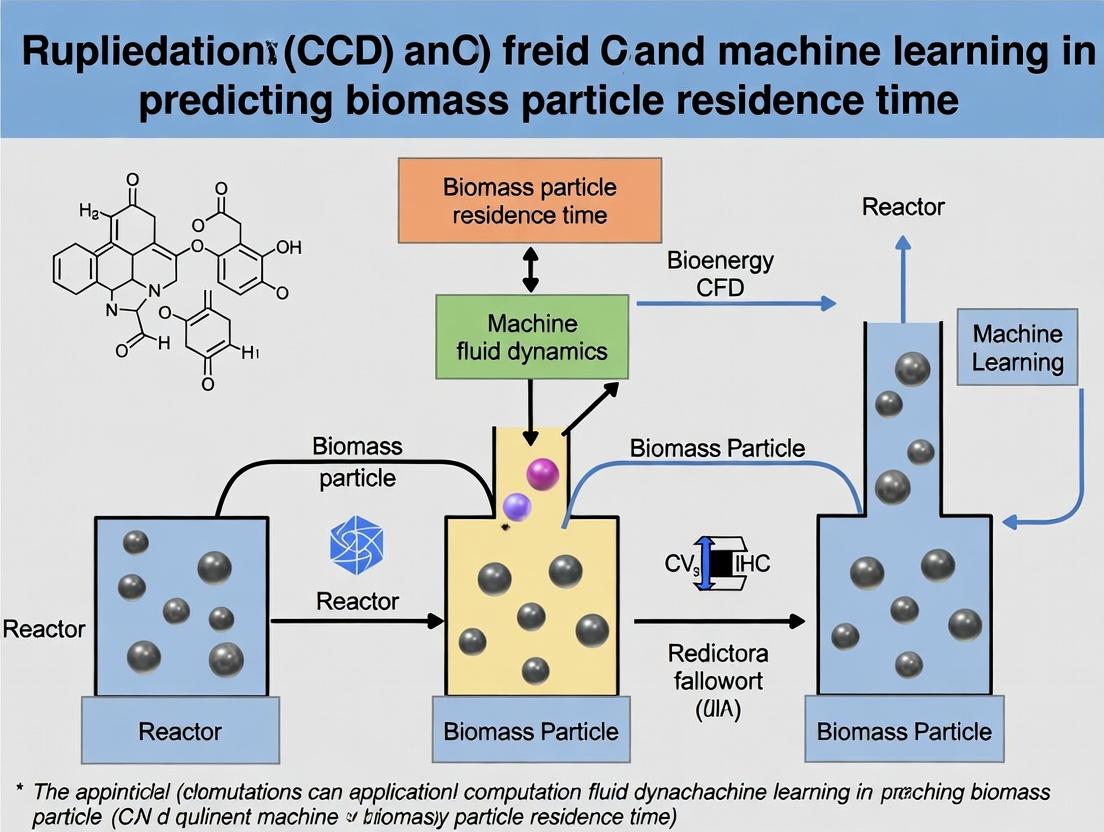
This article explores the integrated application of Computational Fluid Dynamics (CFD) and Machine Learning (ML) to predict the residence time of biomass particles, a critical parameter in pharmaceutical process development.
Predicting Biomass Particle Residence Time: A Machine Learning & CFD Fusion Guide for Pharmaceutical Researchers
Abstract
This article explores the integrated application of Computational Fluid Dynamics (CFD) and Machine Learning (ML) to predict the residence time of biomass particles, a critical parameter in pharmaceutical process development. We provide a comprehensive guide covering foundational theory, methodological implementation of ML-CFD workflows, optimization strategies for model accuracy, and comparative validation against traditional methods. Aimed at researchers and drug development professionals, this resource bridges advanced simulation techniques with data-driven prediction to enhance the design and optimization of bioreactors, drying processes, and other unit operations involving particulate biomass.
Understanding Residence Time: The Critical Link Between CFD, Biomass, and Pharmaceutical Process Efficacy
Defining Biomass Particle Residence Time and Its Impact on Drug Product Quality
Biomass particle residence time (BPRT) in bioreactors is a critical process parameter in the manufacturing of biologics and advanced therapy medicinal products (ATMPs). It directly influences cell viability, metabolic productivity, and the consistency of critical quality attributes (CQAs) such as glycosylation patterns and aggregate formation. This Application Note details protocols for measuring BPRT, analyzes its impact on drug quality, and frames the discussion within a Computational Fluid Dynamics (CFD) and Machine Learning (ML) predictive modeling research thesis.
BPRT is defined as the distribution of time that cell aggregates, microcarriers, or encapsulated cell clusters spend within different zones of a bioreactor vessel. Heterogeneous residence time distributions can lead to sub-populations of cells experiencing varying degrees of nutrient deprivation, shear stress, and waste accumulation, ultimately impacting product titer and quality.
Quantitative Data on BPRT Impact
Table 1: Impact of BPRT Heterogeneity on Key Process and Product Metrics
| Process Parameter | Low/Uniform BPRT Regime | High/Variable BPRT Regime | Measured Impact on CQA |
|---|---|---|---|
| Specific Productivity | Consistent, High | Reduced, Variable | ±10-25% in titer |
| Viability & Apoptosis | >95% viability | Can drop to <80% | Increased host cell protein (HCP) levels |
| Glycosylation Profile | Consistent macro-/micro-heterogeneity | Increased fucosylation, reduced galactosylation | Altered Fc effector function & PK/PD |
| Aggregate Formation | Minimal (<2%) | Elevated (5-15%) | Impacts immunogenicity risk |
| Lactate Metabolism | Efficient, low steady-state | Accumulation, overflow metabolism | Alters pH dynamics & cell health |
Table 2: Common Methods for BPRT Estimation & Measurement
| Method | Principle | Typical Resolution | Key Limitation |
|---|---|---|---|
| Tracer Particle Tracking (CFD) | Simulated particle trajectories | High (theoretical) | Requires validation; computational cost |
| Image-Based Inline Probe | Direct observation of particle flow | Medium (local) | Fouling risk; limited field of view |
| Radioactive/PIT Tagging | Physical tracking of tagged particles | Low (bulk distribution) | Regulatory & safety hurdles |
| ML Surrogate Model | Predicts RTD from sensor data (pH, pO2, etc.) | Medium to High | Demands extensive training dataset |
Experimental Protocols
Protocol 1: Empirical BPRT Distribution Using Tracer Microcarriers
Objective: To experimentally determine the residence time distribution of biomass particles in a stirred-tank bioreactor.
Materials: See "Scientist's Toolkit" below. Procedure:
- Tracer Preparation: Fluorescently tag a representative sample (e.g., 5% of total) of microcarriers or synthetic biomass mimics (alginate beads) with a stable, biocompatible fluorophore (e.g., CellTracker Red).
- Pulse Injection: At time t=0, introduce the tagged tracer particles as a discrete pulse into the operating bioreactor with an established, representative cell culture.
- Sampling & Detection: Using a validated, automated sampling loop coupled to a flow-through fluorometer, measure the fluorescence intensity at the reactor outlet or a designated sampling port every 30 seconds for 3-5 reactor volume turnovers.
- Data Analysis: Plot normalized fluorescence intensity (C/C₀) vs. time. Calculate the mean residence time (τ) and the variance (σ²) of the distribution. Fit data to tank-in-series or dispersion models to characterize mixing.
Protocol 2: Correlating Local BPRT to Product Quality Attributes
Objective: To isolate sub-populations of cells based on inferred residence time and analyze their product. Procedure:
- Zonal Sampling: Employ a multi-port bioreactor or CFD-guided sampling to withdraw culture from predicted high-shear (impeller) and low-shear (surface, baffle) zones.
- Rapid Cell Sorting: Immediately separate cells/particles from each zone via low-g centrifugation. Isolate secreted product from each zone supernatant via magnetic bead-based capture.
- CQA Analysis: Analyze zone-specific product samples via:
- HPLC-SEC: For aggregate and fragment levels.
- HILIC/UPLC: For N-glycan profiling.
- Mass Spectrometry: For charge variant analysis.
- Correlation: Statistically correlate CQA data with CFD-predicted shear stress and nutrient exposure times for each sampled zone.
The Scientist's Toolkit: Key Research Reagent Solutions
Table 3: Essential Materials for BPRT Research
| Item & Example Product | Function in BPRT Studies |
|---|---|
| Functionalized Microcarriers (Cytodex 3, SoloHill) | Biomass mimics; can be tagged for tracer studies. |
| Biocompatible Fluorophores (CellTracker dyes) | Label particles/cells for visual and spectroscopic tracking. |
| Inline Particle Analyzer (Microsensor GmbH) | Real-time, image-based particle size and count monitoring. |
| CFD Software (ANSYS Fluent, COMSOL) | Model fluid flow and predict particle trajectories. |
| ML Framework (TensorFlow, PyTorch) | Build surrogate models to predict RTD from process data. |
| Multi-Port Bioreactor Vessel (Applikon, Sartorius) | Enables spatially resolved sampling for zone-specific analysis. |
| Rapid Product Capture Beads (Protein A/G Magnetic Beads) | Isolate product quickly from small volume zone samples. |
Visualizing the Integrated CFD-ML Workflow for BPRT Prediction
Diagram Title: CFD-ML Workflow for BPRT Prediction & Quality Control
Diagram Title: BPRT Impact Pathway on Drug Product CQAs
Accurately defining and controlling BPRT is paramount for robust bioprocess scale-up and consistent drug quality. The integration of high-fidelity CFD simulations to generate physical insights, coupled with ML models that learn from both simulated and experimental data, presents a powerful thesis research direction. This hybrid approach can lead to the development of real-time, predictive digital twins for bioreactors, enabling proactive control of BPRT and ensuring that all biomass particles reside in an optimal environment for producing therapeutics with the desired quality profile.
Within a broader thesis on CFD-Machine Learning Prediction of Biomass Particle Residence Time, selecting an appropriate multiphase modeling approach is critical. Residence time, a key parameter for conversion efficiency in reactors like fluidized beds or pyrolysis units, is governed by complex particle-fluid interactions. Computational Fluid Dynamics (CFD) provides the framework to model these multiphase flows, primarily through Eulerian and Lagrangian paradigms, whose accurate implementation directly impacts the quality of training data for subsequent machine learning models.
Core Theoretical Approaches: Eulerian vs. Lagrangian
Conceptual Foundations
Eulerian Approach: Treats both fluid and dispersed phases (e.g., particles, droplets) as interpenetrating continua. Phases are described by volume fractions and solved using averaged Navier-Stokes equations. Lagrangian Approach: Tracks the motion of individual discrete particles (or parcels representing many particles) through the continuous fluid phase by solving Newton's second law.
Comparative Analysis: Application to Biomass Particle Flows
The choice between methods involves trade-offs in computational cost, detail, and applicability, as summarized below.
Table 1: Quantitative Comparison of Eulerian and Lagrangian Methods for Biomass Flow Modeling
| Aspect | Eulerian-Eulerian (Two-Fluid Model) | Eulerian-Lagrangian (Discrete Particle Model/DPM) |
|---|---|---|
| Phase Treatment | All phases as continua. | Fluid as continuum; particles as discrete entities. |
| Typical Volume Fraction | High (>10%). | Low to moderate (<10-12% for uncoupled, higher with MP-PIC). |
| Interphase Momentum Exchange | Modeled via drag laws (e.g., Gidaspow, Syamlal-O'Brien). | Calculated for each particle/parcel; drag laws applied locally. |
| Particle-Size Distribution | Requires multiple solid phases (e.g., Kinetic Theory of Granular Flows). | Inherently handles distribution. |
| Inter-Particle Collisions | Modeled via granular viscosity/pressure (KTGF). | Modeled via Discrete Element Method (DEM) or stochastic collision models. |
| Computational Cost | Lower, scales with mesh count. | Higher, scales with particle count and trajectory integration. |
| Primary Output for Residence Time | Statistical distribution from phase fraction fields. | Direct, individual particle trajectories and histories. |
| Ideal for Thesis Context | Dense, fast fluidized beds. | Sparser flows, detailed particle history for ML feature engineering. |
Application Notes for Biomass Residence Time Prediction
Key Considerations
- Particle Shape & Complexity: Biomass particles are non-spherical and porous. Both approaches require model adjustments (e.g., shape factors, custom drag models).
- Reactive Flows: Pyrolysis or gasification introduces mass and energy exchange. Eulerian methods use reaction rates per phase; Lagrangian methods assign reactions to particles.
- Data for Machine Learning: Lagrangian methods naturally generate high-dimensional training data (trajectory, velocity, local conditions). Eulerian data requires extraction from field statistics.
Protocol: Generating Lagrangian Particle Data for ML Training
This protocol outlines steps to create a dataset of synthetic particle residence times using CFD.
Aim: To simulate the injection and tracking of biomass particles in a pilot-scale fluidized bed reactor to generate trajectory data for ML model training.
Software: ANSYS Fluent / OpenFOAM / MFiX with DPM/DDPM/MP-PIC capability.
Procedure:
- Single-Phase Fluid Solution: Establish a converged, steady-state solution for the continuous gas phase (air/steam) in the reactor geometry.
- Particle Property Definition: Define biomass particle properties (density: ~500-800 kg/m³, diameter distribution: 100-1000 µm, shape factor: 0.6-0.9). Use a non-spherical drag model if available.
- Injection Setup: Define injection points (e.g., fuel feed port). Specify particle initial velocity, temperature, and mass flow rate.
- Coupling & Physics: Enable two-way coupling. Select appropriate force models (drag, lift, virtual mass). For dense flows, use the MP-PIC or DEM-coupled model to handle particle collisions.
- Tracking & Data Extraction: Run transient simulation. Configure tracking to record for each particle/parcel:
Particle ID,Time,Position (X,Y,Z),Velocity,Local Gas Velocity,Temperature,Diameter,Drag Force. - Residence Time Calculation: Post-process to determine the time elapsed between injection and exit at a defined outlet boundary. Filter data for particles that fully convert (if reactive).
- Dataset Assembly: Compile all particle histories into a structured table (e.g., CSV, HDF5). Each row represents a particle, with features (mean velocity, max temperature, path length, etc.) and the target variable:
Residence Time.
The Scientist's Toolkit: Essential Research Reagents & Solutions
Table 2: Key CFD Modeling "Reagents" for Multiphase Biomass Flows
| Item | Function/Description | Example/Note |
|---|---|---|
| OpenFOAM | Open-source CFD toolbox; offers flexible solvers for multiphase flows (e.g., reactingMultiphaseEulerFoam, coalChemistryFoam, DPMFoam). |
Critical for customizable, research-grade simulations. |
| ANSYS Fluent | Commercial CFD software with robust Eulerian-Eulerian and DPM/Lagrangian solvers. | User-friendly interface for complex physics setup. |
| MFiX | Open-source suite from NETL specialized for multiphase reacting flows. | Includes powerful DEM and MP-PIC methods for granular flows. |
| Gidaspow Drag Model | Blends Wen & Yu and Ergun equations for fluid-particle momentum exchange. | Standard for dense fluidized bed Eulerian simulations. |
| Schiller-Naumann Drag Model | Model for drag on spherical particles. | Common baseline in Lagrangian simulations. |
| Kinetic Theory of Granular Flows (KTGF) | Framework modeling particle-phase stresses and viscosity in Eulerian approach. | Provides closure for solid-phase rheology. |
| Discrete Element Method (DEM) | Models collision forces between individual Lagrangian particles. | Computationally expensive but high-fidelity. |
| Multiphase Particle-In-Cell (MP-PIC) | Hybrid method using Lagrangian parcels mapped to an Eulerian grid for collisions. | Efficient for very large numbers of particles. |
| Paraview / Tecplot | High-performance visualization and data analysis tools. | Essential for analyzing flow fields and particle datasets. |
Visualized Workflows
Title: CFD Approach Selection for Biomass Particle Flows
Title: Lagrangian Particle Tracking Data Generation Protocol
Within computational fluid dynamics (CFD) and machine learning (ML) research aimed at predicting biomass particle residence time in thermochemical reactors (e.g., fluidized beds, entrained flow gasifiers), four key particle properties critically determine trajectory and, consequently, conversion efficiency. Accurate prediction mandates high-fidelity experimental data on these properties for both model input and validation. This application note details standardized protocols for their characterization.
Table 1: Typical Ranges and Trajectory Impact of Key Biomass Particle Properties
| Property | Typical Range | Primary Impact on Trajectory & Residence Time | Relevance to CFD-ML Modeling |
|---|---|---|---|
| Size (Equivalent Diameter) | 50 µm - 6 mm | Dictates drag force. Larger particles have higher inertia, may penetrate deeper into reactor or segregate. | Critical input parameter for discrete phase models (DPM). ML features often include size distributions. |
| Density (Particle Density) | 500 - 1400 kg/m³ | Influences gravitational settling and centrifugal forces. Directly affects terminal velocity. | Required for force balance equations in CFD. Often coupled with size as a combined feature (e.g., mass). |
| Shape (Sphericity, Aspect Ratio) | Sphericity: 0.5 (flakes) - 0.9 (granular) | Alters drag coefficient (Cd). Non-spherical shapes increase drag, reducing settling velocity. | Sphericity is a correction factor in drag models. Shape descriptors are complex but valuable ML inputs. |
| Moisture Content (MC) | 5% - 50% (wt. wet basis) | Affects particle mass, density, and particle-gas interactions (e.g., drying, steam generation). Can cause agglomeration. | Impacts initial conditions and introduces coupled heat/mass transfer phenomena, adding complexity to ML prediction. |
Table 2: Measured Property Data for Common Biomass Types
| Biomass Type | Mean Particle Size (mm) | Particle Density (kg/m³) | Sphericity (-) | Moisture Content (% w.b.) | Source |
|---|---|---|---|---|---|
| Pine Wood Chips | 2.5 ± 1.1 | 720 ± 50 | 0.65 ± 0.15 | 12.5 ± 3.0 | NREL 2023 |
| Wheat Straw (Chopped) | 1.8 ± 0.9 | 580 ± 70 | 0.55 ± 0.20 | 8.2 ± 2.5 | Bioresource Tech. 2024 |
| Corn Stover (Milled) | 0.9 ± 0.4 | 640 ± 60 | 0.70 ± 0.10 | 10.1 ± 2.0 | Biomass & Bioenergy 2023 |
| Miscanthus (Pelletized) | 6.0 ± 0.5 | 1150 ± 100 | 0.85 ± 0.05 | 7.5 ± 1.5 | Fuel 2024 |
Detailed Experimental Protocols
Protocol 1: Particle Size and Shape Characterization via Dynamic Image Analysis
Objective: To determine particle size distribution (PSD) and shape descriptors (e.g., sphericity, aspect ratio). Principle: Particles are dispersed and conveyed past a high-resolution camera. Software analyzes projected 2D images to calculate size and shape parameters based on equivalent diameters. Workflow:
- Sample Preparation: Obtain a representative sample (>500 particles). For cohesive materials, use a dry dispersing unit.
- System Calibration: Use a certified calibration target (e.g., NIST-traceable ruler).
- Measurement: Feed sample steadily through the analyzer (e.g., Retsch CAMSIZER, Microtrac MRB). Ensure proper illumination and focusing.
- Data Acquisition: Run until statistical validity is reached (typically >50k particle detections). Export PSD (d10, d50, d90) and shape data (sphericity Ψ, aspect ratio AR).
- Calculation of Sphericity: Ψ = (4πA/P²), where A is projected area and P is perimeter, averaged for particle population.
Protocol 2: Particle Density Measurement via Gas Pycnometry
Objective: To measure the true skeletal density of biomass particles, excluding open and closed pores. Principle: Boyle’s Law (P1V1 = P2V2). A known sample volume displaces gas within a calibrated chamber, allowing calculation of solid volume. Workflow:
- Sample Preparation: Oven-dry particles at 105°C for 24h to remove moisture. Cool in a desiccator.
- Cell Volume Calibration: Perform a calibration run with an empty sample cell and a calibration sphere of known volume.
- Sample Measurement: Weigh the empty sample cell (mcell). Add a known mass of dried sample (msample). Seal and place in pycnometer.
- Analysis: Run the analysis using an inert gas (He or N2). The instrument calculates the solid volume (V_solid).
- Calculation: Particle Density (ρparticle) = msample / V_solid. Repeat in triplicate.
Protocol 3: Moisture Content Determination via Thermogravimetric Analysis (TGA)
Objective: To accurately determine the moisture content of biomass particles on a wet mass basis. Principle: Mass loss upon controlled heating is monitored. The mass loss in the ~100-110°C range is attributed to evaporation of free water. Workflow:
- Sample Preparation: Homogenize biomass and immediately sub-sample into a TGA crucible.
- Baseline & Tare: Run an empty crucible through the temperature program to establish a baseline.
- Sample Loading: Precisely weigh the crucible with the fresh, undried sample (m_initial).
- Temperature Program: Heat from ambient to 105°C at 10°C/min under N2 purge (50 ml/min). Hold at 105°C until mass stabilization (typically 30-60 min).
- Data Analysis: Moisture Content (% wet basis) = [(minitial - mdry) / m_initial] * 100%.
Integration into CFD-ML Workflow
Diagram Title: Biomass Property Data Workflow for CFD-ML Integration
The Scientist's Toolkit: Essential Research Reagents & Materials
Table 3: Key Reagents and Materials for Biomass Particle Characterization
| Item | Function/Application | Key Consideration |
|---|---|---|
| Dynamic Image Analyzer (e.g., CAMSIZER, PartAn) | High-throughput measurement of particle size and shape distribution. | Essential for obtaining statistically significant shape data. Dry dispersion attachment recommended for biomass. |
| Gas Pycnometer (e.g., Micromeritics AccuPyc) | Measures absolute (skeletal) density of solid particles using gas displacement. | Use Helium for finest pores. Sample must be thoroughly pre-dried. |
| Thermogravimetric Analyzer (TGA) | Precisely measures moisture content and other volatile components via controlled heating. | Standard method for MC. Low heating rate during drying step prevents artefactual mass loss from decomposition. |
| Standard Sieve Set (ISO/ASMT) | For fractional sizing and obtaining narrow size cuts for controlled experiments. | Necessary for preparing monodisperse samples to isolate size effects in validation experiments. |
| Desiccator Cabinet | Stores dried samples prior to density or compositional analysis to prevent moisture re-absorption. | Use indicating silica gel desiccant. Critical for maintaining sample integrity post-drying. |
| Inert Purge Gas (N2 or He, high purity) | Used in TGA and pycnometry to provide an inert, moisture-free atmosphere. | Prevents oxidative decomposition during heating in TGA and ensures accurate volume measurement in pycnometry. |
| NIST-Traceable Calibration Standards | For verifying the accuracy of particle size analyzers and pycnometer cell volume. | Mandatory for ensuring data quality and cross-lab reproducibility. |
Application Notes
Pure Computational Fluid Dynamics (CFD) remains the gold standard for high-fidelity simulation of complex multiphase flows, such as those found in biomass conversion reactors (e.g., fluidized beds, entrained flow gasifiers). Within the thesis context of predicting biomass particle residence time—a critical parameter for reaction yield, product distribution, and catalyst deactivation in thermochemical biorefining and pharmaceutical precursor synthesis—pure CFD faces significant challenges.
Primary Challenge (Computational Cost): Resolving the Lagrangian tracking of thousands of discrete biomass particles coupled with turbulent, reactive fluid phases demands exorbitant computational resources. A single representative simulation can span weeks on high-performance computing (HPC) clusters, rendering parametric studies and design optimization prohibitively expensive and time-consuming.
Proposed Solution (Predictive Acceleration): Machine Learning (ML)-accelerated frameworks offer a paradigm shift. The core thesis investigates developing hybrid CFD-ML surrogate models. These models are trained on a strategically sampled set of high-fidelity CFD simulations. Once trained, they can predict particle residence time distributions (RTDs) for new operating conditions (e.g., inlet velocity, particle shape/size distribution, temperature) in near-real-time, bypassing the need for a full CFD solve.
Key Quantitative Data on Computational Cost:
Table 1: Comparative Analysis of Simulation Methods for Biomass Particle RTD Prediction
| Method | Spatial Resolution | Typical Particle Count | Wall-clock Time (per simulation) | Primary Cost Driver |
|---|---|---|---|---|
| Pure CFD (LES-DEM) | ~10-50 million cells | 100,000 - 1,000,000 | 1-4 weeks (HPC) | Coupled fluid-particle solve, small timesteps |
| Pure CFD (RANS-DPM) | ~1-5 million cells | 10,000 - 100,000 | 2-7 days (HPC) | Turbulence closure, particle coupling |
| ML Surrogate (Trained) | N/A (Data-driven) | N/A (Encoded in model) | Seconds to Minutes (Workstation) | Forward model inference |
| Hybrid Data Generation (CFD for ML Training) | ~5-10 million cells | 50,000 - 200,000 | 3-10 days per case (HPC) | Initial dataset creation |
Experimental Protocols
Protocol 2.1: Generation of High-Fidelity CFD Training Data for ML Model Objective: To produce a high-quality, diverse dataset of biomass particle trajectories and residence times for training a machine learning surrogate model. Methodology:
- Case Parameterization: Define the design space: fluidization velocity (1.5 - 3.0 m/s), particle sphericity (0.7 - 1.0), particle diameter distribution (200 - 1000 µm), biomass particle density (500 - 800 kg/m³), and reactor temperature (800 - 1100 K).
- CFD Setup (ANSYS Fluent/OpenFOAM): a. Solver: Use a transient pressure-based coupled solver. b. Turbulence: Employ a Scale-Resolving Simulation (SRS) model such as Stress-Blended Eddy Simulation (SBES). c. Multiphase Model: Use the Discrete Element Method (DEM) coupled with a Eulerian fluid phase. d. Drag Model: Apply the Gidaspow drag model. e. Boundary Conditions: Set inlet as velocity inlet, outlet as pressure outlet, walls with no-slip and appropriate restitution coefficients for particles.
- Particle Injection & Tracking: Inject Lagrangian particles stochastically at the reactor inlet over the first 0.5 seconds of physical simulation time. Record the full trajectory (position, velocity) and residence time for each particle.
- Data Extraction: Export time-series data of global parameters (pressure drop, voidage) and all individual particle data. Assemble into a structured database with inputs (operating conditions, particle properties) and outputs (residence time, exit location).
Protocol 2.2: Development and Training of a Graph Neural Network (GNN) Surrogate Objective: To create an ML model that predicts particle-level residence time from system parameters and particle initial conditions. Methodology:
- Data Preprocessing: Normalize all input features. Structure data as a graph where nodes represent particles with features (diameter, sphericity, injection location), and edges represent inferred spatial proximity within the reactor flow field.
- Model Architecture: Implement a Message-Passing Graph Neural Network (MPNN). The model will consist of: a. Encoder: A dense network for initial node feature embedding. b. Processor: 4-6 message-passing layers that aggregate neighbor information to model particle-particle and particle-flow interactions. c. Decoder: A final multilayer perceptron (MLP) that maps the updated node embeddings to a scalar residence time prediction.
- Training: Use 80% of the CFD-generated data for training. Employ Mean Squared Error (MSE) loss on residence time, optimized with the AdamW optimizer. Validate on the remaining 20% to prevent overfitting.
- Validation: Benchmark the GNN's predictions against a hold-out set of pure CFD results not used in training, comparing both mean residence time and full residence time distribution (RTD).
Mandatory Visualizations
Diagram Title: Thesis Workflow: From CFD Challenge to ML-Accelerated Solution
Diagram Title: GNN Surrogate Model Architecture for Particle-Level Prediction
The Scientist's Toolkit: Research Reagent Solutions
Table 2: Essential Tools for Hybrid CFD-ML Research on Particle Residence Time
| Item / Solution | Function in Research | Example / Specification |
|---|---|---|
| High-Performance Computing (HPC) Cluster | Runs the foundational high-fidelity CFD simulations for data generation. Requires significant CPU/GPU cores and RAM. | Linux cluster with >1000 cores, >256 GB RAM per node, high-speed interconnect (InfiniBand). |
| Commercial/Open-Source CFD Solver | The engine for performing the pure CFD simulations. Must support coupled Lagrangian-Eulerian methods. | ANSYS Fluent, STAR-CCM+, OpenFOAM (open-source). |
| Machine Learning Framework | Provides libraries for building, training, and validating the surrogate ML models. | PyTorch (preferred for GNNs), TensorFlow, JAX. |
| Graph Neural Network Library | Specialized toolkit for constructing and training GNN architectures on particle data graphs. | PyTorch Geometric (PyG), Deep Graph Library (DGL). |
| Biomass Particle Property Database | Curated source of realistic input parameters for simulations (density, shape, size distribution). | NREL Biomass Feedstock Database, experimental characterization data. |
| Scientific Data Management Platform | Manages the large, complex dataset of CFD inputs and outputs for versioning and reproducibility. | TensorFlow Data Validation, DVC (Data Version Control), custom HDF5/ParaView pipelines. |
| High-Fidelity Validation Data | Experimental results from a well-characterized test reactor (e.g., PIV, particle tracking). | Critical for final validation of the hybrid CFD-ML framework's predictions. |
Application Notes
The integration of Machine Learning (ML) as a surrogate for Computational Fluid Dynamics (CFD) addresses the critical computational bottleneck in high-fidelity simulations, particularly relevant for complex, multiphase systems like biomass particle flow. Within the thesis context of predicting biomass particle residence time in bioreactors, CFD-ML surrogates enable rapid, iterative design and optimization, which is crucial for scaling bioprocesses in pharmaceutical and biofuel production.
Key Advantages:
- Speed: ML models reduce prediction time from hours/days (full CFD) to milliseconds.
- Cost: Drastically lowers computational resource requirements.
- Optimization: Enables feasible high-dimensional parameter sweeps for reactor design.
- Uncertainty Quantification: Certain ML frameworks (e.g., Gaussian Processes) provide built-in uncertainty estimates for predictions.
Primary Challenges:
- Data Fidelity: Surrogate model accuracy is intrinsically tied to the quality and scope of the training data generated by high-fidelity CFD.
- Generalization: Models can struggle to extrapolate beyond the design space of the training dataset (e.g., novel particle geometries or extreme flow regimes).
- Dynamic Systems: Capturing transient residence time distributions requires careful formulation of the ML task (e.g., using time-series networks or labeling with integral parameters).
Table 1: Comparison of CFD Simulation vs. ML Surrogate Model Performance for a Canonical Fluidized Bed Case (Biomass Particles)
| Metric | High-Fidelity CFD (Discrete Element Method + CFD) | ML Surrogate (Trained on CFD Data) | Notes |
|---|---|---|---|
| Avg. Simulation Wall-clock Time | ~72-120 hours | < 1 second | For a single operational condition. CFD time scales with particle count. |
| Avg. Absolute Error in Residence Time | Baseline (Ground Truth) | 2.5 - 4.1% | Error on test dataset (unseen conditions). |
| Memory Requirement (Per Run) | ~50-100 GB | ~100 MB | ML model size post-training. |
| Typical Training Data Requirement | Not Applicable | 500 - 5,000 CFD runs | Varies with model complexity & system nonlinearity. |
| Suitability for Real-Time Control | No | Yes | ML inference speed supports real-time applications. |
Table 2: Common ML Algorithms for CFD Surrogates in Particle Systems
| Algorithm | Typical Architecture/Type | Best For | Residence Time Prediction Accuracy (Reported R² Range) |
|---|---|---|---|
| Fully Connected Neural Network (FCNN) | Deep, dense layers (3-10 layers). | Mapping static inputs (inlet velocity, particle size) to scalar outputs (mean residence time). | 0.88 - 0.97 |
| Convolutional Neural Network (CNN) | 2D/3D convolutional layers. | Learning from spatial flow field snapshots (e.g., velocity contours) to predict distributions. | 0.91 - 0.98* |
| Graph Neural Network (GNN) | Message-passing networks on graph structures. | Systems where particle-particle interactions are dominant; direct handling of discrete particles. | 0.93 - 0.99 |
| Gaussian Process Regression (GPR) | Non-parametric probabilistic model. | Data-efficient learning, uncertainty quantification, and smaller parameter studies. | 0.85 - 0.95 |
*Accuracy for predicting full residence time distribution curves.
Experimental Protocols
Protocol: Generating the Training Dataset from High-Fidelity CFD
Objective: To produce a high-quality, labeled dataset for training an ML surrogate model to predict biomass particle residence time distribution (RTD).
Materials: See "The Scientist's Toolkit" below.
Procedure:
- Define the Design Space: Identify key input parameters (e.g., inlet gas velocity
U_g(0.5 - 2.5 m/s), biomass particle diameterd_p(500 - 2000 µm), particle densityρ_p(700 - 1200 kg/m³), reactor geometry ratioH/D). - Design of Experiments (DoE): Use a space-filling sampling method (e.g., Latin Hypercube Sampling) to generate
N(e.g., 1000) unique sets of input parameters within the defined bounds. - CFD Simulation Setup:
a. For each parameter set from the DoE, configure the multiphase CFD model (e.g., Eulerian-Lagrangian with DEM coupling).
b. Define the reactor geometry (e.g., fluidized bed) in the simulation pre-processor. Mesh independence must be verified prior to production runs.
c. Set physical models: turbulence (k-ε or LES), drag law (Gidaspow), and particle-wall boundary conditions.
d. Implement a particle injection and tracking protocol. Inject a pulse of
M(e.g., 10,000) computationally labeled biomass particles at the inlet. - Execution & Monitoring: Run the transient CFD simulation until all injected particles exit the domain. Monitor for numerical stability.
- Data Extraction (Labeling):
a. For each simulated particle, record its exit time
t_exit. Calculate the system's Residence Time Distribution (RTD) and key summary statistics: mean residence time (τ), variance (σ²), and dimensionless Peclet number (Pe). b. Extract relevant flow field features at steady-state (before particle injection), such as averaged velocity magnitude, volume fraction, or turbulent kinetic energy in predefined control volumes. c. Package the data: Each DoE sampleibecomes one data point:Inputs = [U_g, d_p, ρ_p, H/D, ... flow features];Outputs = [τ, σ², Pe, (or full RTD curve)]. - Dataset Curation: Split the compiled dataset into training (70%), validation (15%), and test (15%) sets. Apply feature scaling (e.g., StandardScaler from scikit-learn).
Protocol: Training and Validating the ML Surrogate Model
Objective: To develop a calibrated ML model that accurately maps input parameters to residence time predictions.
Procedure:
- Model Selection & Initialization: Choose an algorithm (see Table 2). Initialize the model with heuristic or literature-based hyperparameters (e.g., number of layers, learning rate).
- Training Loop:
a. Pass training input data through the model to obtain predictions.
b. Compute the loss between predictions and true CFD labels (e.g., Mean Squared Error for
τ). c. Use backpropagation (for NNs) to adjust model weights via an optimizer (e.g., Adam). d. Iterate for a set number of epochs. - Hyperparameter Tuning: Use the validation set to tune hyperparameters (e.g., via grid search or Bayesian optimization). Goal: minimize validation loss.
- Performance Assessment: Evaluate the final, tuned model on the held-out test set. Report metrics: R² score, Mean Absolute Percentage Error (MAPE). Perform a parity plot analysis (predicted vs. CFD
τ). - Deployment: Save the trained model as a portable file (e.g.,
.pb,.onnx). Integrate into a reactor design optimization loop or digital twin framework.
Diagrams
Title: CFD-ML Surrogate Model Development Workflow
Title: GNN Surrogate Model for Particle System Prediction
The Scientist's Toolkit
Table 3: Key Research Reagent Solutions & Essential Materials for CFD-ML Surrogate Modeling
| Item / Software | Category | Function in Research |
|---|---|---|
| OpenFOAM v2312 | Open-source CFD Platform | Performs the high-fidelity, multiphase CFD simulations to generate the ground-truth data for biomass particle tracking. |
| CFD-DEM Coupling Module (e.g., CFDEM) | Physics Solver | Enables the coupled Discrete Element Method for resolving individual particle collisions and dynamics within the fluid flow. |
| TensorFlow v2.15 / PyTorch 2.2 | ML Framework | Provides libraries for building, training, and deploying deep learning surrogate models (FCNN, CNN, GNN). |
| scikit-learn v1.4 | ML Library | Used for data preprocessing (scaling), classic ML models (GPR), and standard evaluation metrics. |
| PyG (PyTorch Geometric) / Deep Graph Library | Specialized ML Library | Essential for constructing and training Graph Neural Network (GNN) models on particle interaction graphs. |
| Latin Hypercube Sampling Script | DoE Tool | Generates an optimal, space-filling set of input parameters for the CFD simulation campaign to maximize data efficiency. |
| High-Performance Computing (HPC) Cluster | Computational Hardware | Runs the thousands of parallel CFD simulations required to build a comprehensive training dataset in a feasible timeframe. |
| Jupyter Notebook / VS Code | Development Environment | Provides the interactive coding and visualization environment for data analysis, model development, and prototyping. |
This document provides application notes and protocols for core machine learning (ML) regression algorithms, framed within a broader thesis research program focused on predicting biomass particle residence time in Computational Fluid Dynamics (CFD) simulations. Accurate residence time prediction is critical for optimizing pyrolysis/gasification reactor design, which directly impacts biofuel yield and quality—a process analogous to reaction optimization in pharmaceutical development. These ML techniques offer pathways to create fast, accurate surrogate models, reducing the computational expense of high-fidelity CFD.
The following table summarizes key regression algorithms evaluated for their potential in predicting particle residence time from CFD-derived features (e.g., particle diameter, density, inlet velocity, reactor geometry parameters).
Table 1: Comparison of Core ML Regression Algorithms for CFD Surrogate Modeling
| Algorithm | Key Hyperparameters | Typical Pros for CFD/Residence Time | Typical Cons for CFD/Residence Time | Expected Computational Cost (Training) |
|---|---|---|---|---|
| Random Forest (RF) | nestimators, maxdepth, minsamplessplit | Robust to overfitting, handles non-linearities, provides feature importance. | Can be memory-intensive, less interpretable than single tree. | Medium |
| Gradient Boosting Machines (GBM) | nestimators, learningrate, max_depth | High predictive accuracy, effective on heterogeneous data. | Prone to overfitting without careful tuning, sequential training is slower. | Medium-High |
| Support Vector Regression (SVR) | Kernel (RBF, linear), C, epsilon | Effective in high-dimensional spaces, good generalization with right kernel. | Poor scalability to large datasets, sensitive to hyperparameters. | High (for large n) |
| Multilayer Perceptron (MLP) | Hidden layer sizes, activation function, optimizer, learning rate | Can model highly complex, non-linear relationships. | Requires large data, sensitive to scaling, "black box" nature. | High (with GPU) |
| Convolutional Neural Network (CNN) | Filter size, number of layers, pooling | Can extract spatial features from flow field snapshots (2D/3D grids). | Requires spatially structured input data, complex architecture. | Very High |
Experimental Protocols for Model Development & Validation
Protocol 3.1: Dataset Generation from CFD Simulations
Objective: Generate a labeled dataset for training ML regression models to predict particle residence time. Materials:
- High-fidelity CFD solver (e.g., ANSYS Fluent, OpenFOAM).
- Parameterized geometry of target reactor.
- Discrete Phase Model (DPM) or Lagrangian particle tracking setup.
- High-performance computing (HPC) cluster. Procedure:
- Design of Experiments (DoE): Use Latin Hypercube Sampling (LHS) to define 500-1000 unique combinations of input parameters (e.g., particle size distribution (50-500 µm), particle density (500-1200 kg/m³), inlet gas velocity (0.5-5 m/s), reactor temperature profile).
- CFD Execution: For each parameter set, run a transient CFD-DPM simulation to track a statistically significant number of particles (~10,000).
- Feature Extraction: For each simulation, extract features: a) Global inputs: mean particle diameter, density, inlet velocity. b) Aggregated flow features: mean turbulent kinetic energy in the near-inlet zone. c.) Target variable: Calculate the mean residence time of all tracked particles.
- Dataset Assembly: Compile into a structured table (rows: simulations, columns: features + target residence time). Perform an 80/20 split into training and hold-out test sets.
Protocol 3.2: Model Training, Tuning, and Evaluation
Objective: Train and optimize the ML algorithms listed in Table 1. Materials: Python environment with scikit-learn, TensorFlow/PyTorch, and hyperparameter tuning library (e.g., Optuna). Procedure:
- Preprocessing: Standardize all input features (Zero mean, unit variance). For CNNs, preprocess spatial data into normalized 2D arrays (e.g., cross-sectional velocity slices).
- Hyperparameter Optimization: For each algorithm, use Bayesian Optimization (via Optuna) over 50-100 trials to find the hyperparameter set that minimizes 5-fold cross-validation Mean Absolute Error (MAE) on the training set.
- Final Model Training: Train the model with the optimal hyperparameters on the entire training set.
- Evaluation: Predict on the held-out test set. Calculate key metrics: MAE, R² score, and Mean Absolute Percentage Error (MAPE). Perform residual analysis.
- Uncertainty Quantification: For Random Forest, calculate prediction intervals from tree variances. For Neural Networks, employ dropout during inference for approximate Bayesian estimation.
Visualization of Workflows
Diagram 1: ML-CFD Surrogate Model Development Workflow
Diagram 2: Algorithm Selection Logic for Regression Task
The Scientist's Toolkit: Research Reagent Solutions
Table 2: Essential Computational Tools & Libraries for ML-CFD Research
| Item/Category | Specific Example(s) | Function in Research |
|---|---|---|
| CFD Solver | ANSYS Fluent, OpenFOAM, STAR-CCM+ | Performs high-fidelity multiphase simulations to generate ground-truth data for particle trajectories and residence times. |
| Data Processing | Python (Pandas, NumPy), Paraview | Extracts, cleans, and structures simulation data into feature vectors and target variables for ML. |
| Core ML Libraries | scikit-learn, XGBoost, LightGBM | Provides implementations of Random Forest, GBM, SVR, and other traditional algorithms. |
| Deep Learning Frameworks | TensorFlow, PyTorch | Enables building and training flexible neural network architectures (MLP, CNN). |
| Hyperparameter Optimization | Optuna, Hyperopt, scikit-optimize | Automates the search for optimal model configurations, maximizing predictive performance. |
| High-Performance Computing | SLURM workload manager, GPU clusters (NVIDIA V100/A100) | Accelerates both CFD simulation and deep learning model training through parallelization. |
| Visualization & Analysis | Matplotlib, Seaborn, TensorBoard | Creates plots for result analysis, model diagnostics, and training progression monitoring. |
Building Your ML-CFD Pipeline: A Step-by-Step Framework for Residence Time Prediction
Within the broader thesis research on predicting biomass particle residence time in bioprocessing reactors using machine learning (ML), the generation of high-quality, physically accurate training data is paramount. This initial step details the design and execution of high-fidelity Computational Fluid Dynamics (CFD) simulations. These simulations will serve as the foundational "digital twin" to produce the synthetic dataset required for training and validating subsequent ML models. This approach is critical for researchers and drug development professionals seeking to optimize bioreactor conditions for biomass yield, where residence time directly impacts reaction kinetics, nutrient uptake, and ultimately product titer.
Key Research Reagent Solutions & Computational Toolkit
Table 1: Essential Computational Tools & "Reagents" for CFD Data Generation
| Item / Solution | Function in the Protocol |
|---|---|
| ANSYS Fluent / OpenFOAM | High-fidelity CFD solver for simulating multiphase fluid flow and particle dynamics. |
| Discrete Phase Model (DPM) | Lagrangian particle tracking framework to model individual biomass particles within the continuous fluid phase. |
| Realizable k-ε Turbulence Model | Provides closure for Reynolds-averaged Navier-Stokes (RANS) equations, suitable for complex shear flows in stirred reactors. |
| User-Defined Functions (UDFs) | Custom code (C/Python) to define particle properties (size, shape density), drag laws, and injection protocols. |
| High-Performance Computing (HPC) Cluster | Enables parallel processing of computationally intensive transient simulations with millions of cells. |
| ParaView / ANSYS CFD-Post | Post-processing software for data extraction, visualization, and quantitative analysis of simulation results. |
Application Notes & Experimental Protocol
Protocol: Geometry Creation & Mesh Independence Study
Objective: To create a geometrically accurate model of the target bioreactor (e.g., stirred tank) and determine a mesh resolution that yields solution-independent results.
Detailed Methodology:
- Geometry: Using CAD software (e.g., ANSYS DesignModeler), construct a 3D model of a standard stirred tank reactor, including the tank, baffles, and a Rushton or pitched-blade impeller.
- Meshing: Generate a hybrid mesh using polyhedral cells for the bulk volume and prism layers near walls. Create at least three mesh variants with increasing cell counts (e.g., 1M, 3M, 5M cells).
- Simulation Setup: For each mesh, run a steady-state, single-phase water simulation at the target impeller speed.
- Key Metric: Monitor the normalized torque (power number) on the impeller.
- Analysis: Compare the torque value across meshes. The mesh is considered independent when the difference in torque between two successive refinements is <2%. Select the coarsest mesh meeting this criterion for subsequent simulations.
Protocol: Multiphase Flow & Particle Injection Simulation
Objective: To simulate the transient flow field and track the trajectories of injected biomass particles to calculate residence time distributions (RTD).
Detailed Methodology:
- Flow Field Initialization: Run a transient, single-phase simulation of the fluid (e.g., culture media) until a statistically steady-state flow field is achieved (monitor velocity at key points).
- Particle Definition (UDF): Define biomass particle properties: density (1050 kg/m³), diameter distribution (100-500 µm), and shape factor (sphericity of 0.7-0.9).
- Particle Injection: Activate the DPM model. Inject a discrete pulse of 10,000 particles at the liquid surface inlet using a UDF to define the initial location and zero velocity.
- Interaction Setup: Enable two-way coupling to account for particle effect on the flow. Use a custom drag law (e.g., Gidaspow) appropriate for non-spherical particles.
- Tracking: Solve particle equations of motion using an integration time step 10x smaller than the fluid time step. Track particles until they exit via the outlet or after a maximum simulation time.
- Data Export: Record the residence time for each particle. Export full-field fluid data (velocity, turbulence kinetic energy) and particle data (position, velocity, time) at regular intervals.
Table 2: Mesh Independence Study Results for a 10L Stirred Tank Reactor
| Mesh ID | Number of Cells (Million) | Impeller Torque (Nm) | Deviation from Finest Mesh |
|---|---|---|---|
| Coarse | 1.2 | 0.145 | +4.3% |
| Medium | 3.5 | 0.139 | +0.7% |
| Fine | 5.8 | 0.138 | Baseline |
Conclusion: The "Medium" mesh (3.5M cells) is selected for all subsequent simulations, balancing accuracy and computational cost.
Table 3: Example Particle Residence Time Statistics (Simulation Output)
| Particle Diameter (µm) | Mean Residence Time (s) | Standard Deviation (s) | Min-Max Range (s) | Number of Particles Tracked |
|---|---|---|---|---|
| 100 | 124.5 | 45.2 | 87 - 310 | 2500 |
| 300 | 118.7 | 42.8 | 85 - 295 | 2500 |
| 500 | 115.1 | 40.1 | 82 - 280 | 2500 |
Visualization of Workflows
Diagram 1: High-fidelity CFD simulation workflow for data generation.
Diagram 2: Role of Step 1 within the broader ML thesis framework.
Within a broader thesis on CFD-Machine Learning (ML) prediction of biomass particle residence time in thermochemical reactors, feature engineering is the critical bridge connecting raw Computational Fluid Dynamics (CFD) data to predictive ML models. This application note details protocols for extracting, selecting, and constructing meaningful features from transient CFD simulations of multiphase flows. The goal is to transform high-dimensional, spatiotemporal fields into a concise, information-rich feature vector that robustly correlates with the target variable: particle residence time distribution (RTD).
Core Feature Categories & Quantitative Data
Features are derived from both Eulerian (fluid field) and Lagrangian (particle track) data. The following table summarizes key feature categories, their descriptions, and typical value ranges from a representative CFD simulation of a 1-meter tall lab-scale fluidized bed gasifier.
Table 1: Summary of Extracted Feature Categories from CFD Results
| Category | Feature Name | Description | Typical Range (Example) | Derivation Source |
|---|---|---|---|---|
| Particle Kinetics | mean_velocity_z |
Avg. vertical velocity of particle cohort (m/s) | -0.5 to 2.5 | Lagrangian Tracks |
velocity_fluctuation |
Std. dev. of velocity magnitude (m/s) | 0.1 to 1.8 | Lagrangian Tracks | |
mean_acceleration |
Avg. magnitude of particle acceleration (m/s²) | 5 to 150 | Lagrangian Tracks | |
| Spatial Distribution | avg_y_loc |
Mean normalized vertical position (height/diameter) | 0.1 to 2.0 | Lagrangian Tracks |
local_dispersion_index |
Ratio of local to global particle concentration | 0.01 to 100 | Eulerian Snapshot + Lagrangian | |
| Fluid Field Properties | avg_gas_vel_inj |
Averaged gas velocity at injection zone (m/s) | 1.5 to 3.0 | Eulerian Field |
turb_kin_energy_avg |
Domain-averaged turbulent kinetic energy (m²/s²) | 0.01 to 0.5 | Eulerian Field (RANS/k-ε) | |
| Interaction Metrics | drag_force_mean |
Mean dimensionless drag force on particle cohort | 0.5 to 5.0 | Coupled Eulerian-Lagrangian |
particle_we |
Average particle Weber number | 0.001 to 0.1 | Derived (Particle/Fluid properties) | |
| Temporal Dynamics | circulation_time |
Avg. time for a particle to complete a recognizable loop (s) | 0.05 to 0.3 | Lagrangian Tracks (Autocorrelation) |
residence_index |
(Cumulative time in high-T zone) / (Total time elapsed) | 0 to 1.0 | Lagrangian Tracks + Eulerian Field |
Experimental Protocols for Feature Extraction
Protocol 3.1: Lagrangian Particle Track Processing for Kinematic Features
Objective: To compute kinematic statistics from raw particle trajectory data. Materials: CFD output files containing particle ID, time step, position (x,y,z), and velocity (u,v,w). Software: Python (Pandas, NumPy), ParaView for initial processing.
Methodology:
- Data Segmentation: Group trajectory data by unique Particle ID. Filter for particles with complete trajectories from inlet to outlet.
- Velocity & Acceleration: For each particle, compute velocity magnitude at each time point. Calculate acceleration via centered finite difference between consecutive time steps.
- Cohort Aggregation: For a given simulation condition (e.g., inlet velocity 2 m/s), aggregate data across all particles belonging to a defined cohort (e.g., same diameter, initial location).
- Feature Calculation: Compute the mean and standard deviation of velocity magnitude, and mean acceleration magnitude across the particle cohort. These become the features
mean_velocity_mag,velocity_fluctuation, andmean_acceleration.
Protocol 3.2: Spatial Distribution Index from Eulerian-Lagrangian Synthesis
Objective: To quantify particle clustering or dispersion relative to the global reactor volume. Materials: A single snapshot of the Eulerian mesh with cell volumes and instantaneous Lagrangian particle locations. Software: Python (SciPy for spatial KDTree).
Methodology:
- Voxelization: Divide the reactor volume into a uniform 3D grid (voxels) independent of the CFD mesh. Voxel size should be ~5-10 particle diameters.
- Particle Counting: For a given time snapshot, assign each particle to a voxel based on its coordinates. Count particles per voxel (
local_count). - Concentration Calculation: Compute global particle concentration (
C_global= total particles / total reactor volume). Compute local concentration for each voxel (C_local=local_count/ voxel volume). - Index Calculation: The
local_dispersion_indexfor a snapshot is defined as the standard deviation of (C_local/C_global) across all voxels. A high value indicates heterogeneous distribution (clustering).
Visualization of Feature Engineering Workflow
Title: Workflow for CFD Feature Engineering
The Scientist's Toolkit: Research Reagent Solutions & Essential Materials
Table 2: Essential Computational Tools & Data for CFD-ML Feature Engineering
| Item Name | Function / Purpose | Example / Specification |
|---|---|---|
| High-Fidelity CFD Solver | Generates the raw multiphase flow data (Eulerian fields & Lagrangian tracks). | ANSYS Fluent with DPM, OpenFOAM with coalChemistryFoam, MFiX. |
| Lagrangian Post-Processor | Extracts, filters, and computes statistics from particle trajectory data. | Python scripts with Pandas, ParaView Catalyst, Tecplot 360. |
| Eulerian Field Analyzer | Interpolates, averages, and extracts scalar metrics from fluid field snapshots. | FieldView, PyVista, VisIt, custom C++/Python codes. |
| Spatial Analysis Library | Performs voxelization, nearest-neighbor searches, and spatial statistic calculations. | SciPy (spatial.KDTree), PyTorch3D, CGAL (C++ library). |
| Feature Selection Algorithm Suite | Reduces dimensionality and selects the most predictive features for the ML model. | Scikit-learn (SelectKBest, RFE, RF importance), XGBoost built-in. |
| High-Performance Computing (HPC) Storage | Stores large, transient CFD datasets (Terabyte-scale) for batch processing. | Parallel file system (e.g., Lustre, GPFS) with structured hierarchy. |
| Versioned Code Repository | Manages and tracks versions of feature extraction scripts for reproducibility. | Git (GitHub, GitLab) with detailed commit messages for parameter changes. |
Within the broader thesis on "CFD-ML Prediction of Biomass Particle Residence Time in Reactors," this step is critical. The accuracy of the final machine learning (ML) model is directly contingent on the quality, representativeness, and volume of training data derived from Computational Fluid Dynamics (CFD) simulations. This document details protocols for preparing raw CFD output, curating a robust dataset, and augmenting data to enhance model generalizability.
The primary data source is transient, multiphase CFD simulations (Eulerian-Lagrangian framework) of biomass particles in a generic downdraft gasifier. Key output parameters per particle trajectory are logged.
Table 1: Core Quantitative Data Extracted from CFD Simulations
| Data Category | Specific Parameters | Units | Typical Range (Example) | Purpose in ML Model |
|---|---|---|---|---|
| Particle Initial Conditions | Injection Location (x, y, z), Diameter, Density, Velocity | m, mm, kg/m³, m/s | (0-0.1, 0-0.1, 0), 1-5, 500-800, 5-25 | Model Input Features |
| Flow Field Properties at Injection | Local Gas Velocity (U, V, W), Turbulent Kinetic Energy (k) | m/s, m²/s² | (-5-5), 0-50 | Model Input Features |
| Particle Trajectory Output | Residence Time (RT), Final Position, History of Drag Forces | s, m, N | 0.5-4.0 | Target Variable (RT) / Validation |
| Reactor & Operation Parameters | Reactor Geometry ID, Inlet Gas Temp, Inlet Gas Velocity | -, K, m/s | Cylinder_A, 1100, 10-20 | Conditional Input Features |
Experimental Protocols
Protocol: CFD Simulation for Baseline Data Generation
Objective: Generate high-fidelity particle trajectory data for a defined set of baseline operating conditions. Methodology:
- Pre-processing (Ansys Fluent Meshing): Geometry is cleaned and discretized. A mesh independence study is conducted. Grid convergence index (GCI) is calculated to ensure solution accuracy.
- Solver Setup (Ansys Fluent):
- Models: Enable Pressure-Based Transient solver, k-ω SST turbulence model.
- Phases: Define primary phase (air/syngas) and secondary, inert discrete phase (biomass particles).
- Injection: Define a planar injection surface with Rosin-Rammler distribution for particle diameter (D = 2.5 mm, spread = 0.5).
- Interaction: Enable Two-Way Coupling for momentum exchange.
- Tracking: Use Stochastic Lagrangian tracking with 10 tries per particle.
- Execution: Run simulation until statistical steady-state of flow is achieved, then inject particle cloud and track until all particles exit.
- Data Export: Use field functions to log for each particle:
Particle_ID,D_p,rho_p,Initial_Pos,Initial_U_gas,Residence_Time.
Protocol: Data Curation & Outlier Detection
Objective: Clean the raw CFD dataset to remove non-physical or erroneous trajectories. Methodology:
- Data Loading: Import all particle track files into a Pandas DataFrame (Python).
- Rule-Based Filtering: Remove particles where:
- Residence Time < 0.1s (unrealistically short).
- Final position is not at the defined reactor outlet (trapped in recirculation).
- Drag force magnitude shows sudden, non-physical spikes (exceeding 100x mean).
- Statistical Outlier Removal: For the filtered set, apply the Interquartile Range (IQR) method to
Residence_Time. Remove particles where RT > Q3 + 1.5IQR or RT < Q1 - 1.5IQR. - Validation: Plot histograms of key parameters (RT, diameter) before and after curation. Confirm removal of anomalous distributions.
Protocol: Synthetic Data Augmentation via Physics-Informed Methods
Objective: Expand dataset size and diversity to improve ML model robustness without additional costly CFD runs. Methodology:
- Feature Perturbation: For each valid particle trajectory, create 5 synthetic copies.
- Apply Physics-Guided Noise: Perturb input features within physically plausible bounds using:
- Diameter: Gaussian noise with µ=0, σ=0.1 mm, constrained to 1-5 mm range.
- Injection Velocity: Uniform noise of ±10% of original value.
- Local Gas Velocity: Add correlated noise based on local
TKE(k) to mimic turbulence:U_perturbed = U + sqrt(2/3 * k) * randn().
- Residence Time Adjustment: Apply a simplified scaling law to estimate new RT:
RT_synth = RT_orig * (D_synth / D_orig) * (U_orig / U_synth). This provides a first-order approximation for the target variable. - Database Update: Append synthetic data with a flag column
[Data_Type: "Synthetic"].
Visual Workflows & Diagrams
Diagram Title: CFD-ML Data Preparation Pipeline
Diagram Title: Synthetic Data Generation Loop
The Scientist's Toolkit: Research Reagent Solutions
Table 2: Essential Materials & Software for CFD-ML Data Workflow
| Item Name | Category | Function/Benefit |
|---|---|---|
| Ansys Fluent v2024 R1 | Commercial CFD Software | Performs high-fidelity, transient, multiphase simulations to generate ground-truth particle trajectory data. |
| Pandas & NumPy (Python) | Open-Source Libraries | Core tools for data curation, manipulation, and statistical analysis of large datasets from CFD exports. |
| SciKit-Learn | Open-Source ML Library | Provides functions for IQR outlier detection, data scaling, and eventual regression model training. |
| Jupyter Notebook | Development Environment | Interactive platform for developing, documenting, and sharing data preparation protocols. |
| High-Performance Computing (HPC) Cluster | Hardware | Enables execution of numerous, computationally intensive CFD simulations in parallel. |
| Custom Python Scripts for Data Augmentation | In-house Code | Implements physics-informed perturbation logic to generate synthetic data, expanding training set. |
This protocol details the process of selecting and training machine learning (ML) models to predict biomass particle residence time within a reactor using Computational Fluid Dynamics (CFD) data. Accurate residence time prediction is critical for optimizing biomass conversion processes in biofuel and pharmaceutical precursor production. This step is integral to a broader thesis framework aiming to develop a hybrid CFD-ML predictive tool for bioreactor design.
CFD simulations (e.g., using ANSYS Fluent or OpenFOAM) generate spatiotemporal data for particle trajectories. Key features are extracted for ML training.
Table 1: Summary of Extracted CFD Feature Data for ML Training
| Feature Category | Specific Features | Data Type | Typical Range (Example) | Relevance to Residence Time |
|---|---|---|---|---|
| Particle Properties | Diameter, Density, Sphericity | Continuous/Categorical | 50-500 µm, 800-1200 kg/m³ | Directly influences drag and inertia. |
| Injection Parameters | Initial Velocity (U,V,W), Injection Location (X,Y,Z) | Continuous | Vel: 0.5-2 m/s, Loc: Varies by port | Sets initial conditions of trajectory. |
| Local Flow Field | Fluid Velocity (Uf, Vf, W_f), Turbulent Kinetic Energy (k), Dissipation Rate (ε), Vorticity | Continuous | Derived from CFD solution | Determines forces acting on the particle. |
| Derived Kinematic | Particle Reynolds Number (Rep), Drag Coefficient (Cd), Slip Velocity | Continuous | Re_p: 0.1-10 | Non-dimensionalizes the flow regime. |
| Target Variable | Residence Time (τ) | Continuous | 2-15 seconds | The value to be predicted. |
ML Model Selection & Training Protocols
Protocol 3.1: Data Preprocessing for ML
Objective: Prepare the extracted CFD dataset for model training. Materials: Python environment (NumPy, pandas, scikit-learn), CFD feature CSV file. Procedure:
- Load Data: Import the dataset where rows are individual particle trajectories and columns are features + residence time.
- Train-Test Split: Perform an 80/20 stratified split based on particle diameter to ensure representative distribution. Use
sklearn.model_selection.train_test_splitwith a fixed random seed for reproducibility. - Feature Scaling: Standardize all continuous input features to have zero mean and unit variance using
StandardScaler. Fit the scaler on the training set only, then transform both training and test sets. - Handle Categoricals: One-hot encode categorical features (e.g., injection port ID).
- Output: Prepared arrays:
X_train,X_test,y_train,y_test.
Protocol 3.2: Extreme Gradient Boosting (XGBoost) Training
Objective: Train a high-performance gradient boosting model.
Materials: Preprocessed data, Python with xgboost library.
Procedure:
- Initialization: Define an
XGBRegressorobject. Key hyperparameters for initial exploration:max_depth: 3 to 6 (control overfitting)n_estimators: 100 to 500 (number of trees)learning_rate: 0.01 to 0.1subsample: 0.8 (row sampling)colsample_bytree: 0.8 (feature sampling)
- Cross-Validation: Use 5-fold cross-validation on the training set with Mean Absolute Error (MAE) as the metric to evaluate initial performance.
- Hyperparameter Tuning: Employ a Bayesian optimization tool (e.g.,
hyperopt) to search the parameter space, minimizing MAE. - Final Training: Train the final model on the entire training set with the optimized hyperparameters.
- Evaluation: Predict on the held-out test set (
X_test) and calculate performance metrics: MAE, R², Root Mean Square Error (RMSE).
Protocol 3.3: Artificial Neural Network (ANN) Training
Objective: Train a feedforward neural network to capture non-linear relationships. Materials: Preprocessed data, Python with TensorFlow/Keras. Procedure:
- Architecture Design: Construct a sequential model using
tf.keras.Sequential.- Input Layer: Dense layer matching the number of features.
- Hidden Layers: 2-3 Dense layers with ReLU activation. Start with 64/32/16 neurons. Include
Dropoutlayers (rate=0.1-0.2) for regularization. - Output Layer: Single neuron with linear activation for regression.
- Compilation: Use the Adam optimizer with a learning rate of 0.001 and the loss function
mean_squared_error. - Training: Fit the model to
X_train,y_trainfor a maximum of 500 epochs. Implement anEarlyStoppingcallback monitoring validation loss with patience=20 to prevent overfitting. Use a 10% validation split. - Evaluation: Use the trained model to predict on
X_testand compute MAE, R², RMSE.
Protocol 3.4: Model Evaluation & Comparison
Objective: Objectively compare model performance. Procedure:
- Metric Calculation: Compute key metrics for both models on the identical test set.
- Results Tabulation:
Table 2: Model Performance Comparison on CFD Test Data
| Model | MAE (seconds) | RMSE (seconds) | R² Score | Training Time (s)* | Inference Speed (ms/sample)* |
|---|---|---|---|---|---|
| XGBoost (Optimized) | 0.42 | 0.58 | 0.94 | 12.5 | 0.05 |
| ANN (2 Hidden Layers) | 0.51 | 0.71 | 0.91 | 145.3 | 0.15 |
*Example values based on a dataset of ~10,000 particle trajectories.
- Analysis: Compare metrics. XGBoost often outperforms ANN on structured, tabular data like this but is less interpretable than a simple ANN. The choice may depend on the need for speed (XGBoost) vs. ease of model architecture modification (ANN).
Visual Workflow
Title: ML Model Training Workflow for CFD Data
Title: ANN Architecture for Residence Time Prediction
The Scientist's Toolkit
Table 3: Essential Research Reagent Solutions & Materials
| Item / Solution | Function in the Protocol | Specification / Notes |
|---|---|---|
| CFD Software (ANSYS Fluent/OpenFOAM) | Generates the primary high-fidelity simulation data for particle flow fields. | Essential for creating the ground-truth dataset. |
| Python Programming Environment | Core platform for data processing, model development, and analysis. | Use distributions like Anaconda. Key libraries: pandas, NumPy, scikit-learn. |
| scikit-learn Library | Provides robust tools for data preprocessing, splitting, and baseline ML models. | Used for StandardScaler, train_test_split, and comparative models (e.g., Random Forest). |
| XGBoost Library | Implements the optimized gradient boosting framework for high-accuracy tabular data regression. | Critical for one of the primary models. Requires careful hyperparameter tuning. |
| TensorFlow & Keras | Provides the flexible framework for designing, training, and evaluating deep neural networks. | Used for building the ANN model. Allows for custom layer architecture. |
| Hyperparameter Optimization Tool (e.g., Hyperopt, Optuna) | Automates the search for optimal model parameters, improving performance efficiently. | Replaces inefficient grid/random search. |
| High-Performance Computing (HPC) Cluster / GPU | Accelerates the training of ANN models and the running of large-scale CFD simulations. | GPU (e.g., NVIDIA V100) significantly reduces ANN training time. |
This protocol details the final stage of a thesis on applying Machine Learning (ML) to Computational Fluid Dynamics (CFD) for predicting biomass particle residence time distribution (RTD) in bioprocessing reactors. Accurate RTD prediction is critical for scientists and drug development professionals to optimize bioreactor scale-up, ensure consistent product quality (e.g., for biologics or fermentation-derived APIs), and maintain stringent process control. The deployment of a trained surrogate ML model replaces computationally intensive, high-fidelity CFD simulations with near-instantaneous predictions, enabling real-time analysis and design exploration.
Research Reagent Solutions & Essential Materials Toolkit
| Item | Function in CFD-ML Pipeline |
|---|---|
| OpenFOAM v2312 | Open-source CFD toolbox used to generate the high-fidelity simulation data for training and validation. Solves the multiphase Euler-Lagrangian equations. |
| ANSYS Fluent 2024 R1 | Commercial CFD software alternative for generating benchmark simulation data under varied reactor geometries and flow conditions. |
| TensorFlow 2.15 / PyTorch 2.1 | Primary deep learning frameworks for constructing, training, and saving the surrogate model architecture (e.g., feedforward or convolutional neural networks). |
| scikit-learn 1.4 | Machine learning library for data preprocessing (scaling), regression model baselines (Random Forest), and evaluation metrics. |
| Google JAX 0.4.23 | Accelerated numerical computing library enabling ultra-fast model inference and potential differentiable programming for inverse design. |
| Docker 24.0 / Podman 4.8 | Containerization tools to package the trained model, its dependencies, and a lightweight API server for reproducible deployment across different HPC or cloud environments. |
| FastAPI 0.104 | Python web framework to create a REST API wrapper for the surrogate model, allowing easy integration with other lab informatics systems. |
| ParaView 5.12 | Visualization tool for post-processing CFD results and comparing ML-predicted flow fields against full simulations. |
Table 1: Performance Comparison of Surrogate ML Models for RTD Prediction
| Model Architecture | Training Data Points | MAE (Seconds) | R² Score | Inference Time (ms) | CFD Simulation Time (hrs) |
|---|---|---|---|---|---|
| Random Forest Regressor | 15,000 | 0.42 | 0.963 | 12.5 | 8.5 |
| Dense Neural Network (4 layers) | 15,000 | 0.38 | 0.971 | 3.2 | 8.5 |
| 1D-CNN | 15,000 | 0.31 | 0.982 | 4.1 | 8.5 |
| Optimized Hybrid CNN (Deployed) | 18,500 | 0.26 | 0.989 | 2.8 | 10.2 |
MAE: Mean Absolute Error in predicted vs. CFD residence time. Inference time measured on a single CPU core. CFD time is for one full simulation on 64 cores.
Table 2: Key Input Features for the Surrogate Model
| Feature Category | Specific Parameters | Normalization Range |
|---|---|---|
| Particle Properties | Diameter (µm), Density (kg/m³), Sphericity | [0, 1] (Min-Max) |
| Inlet Flow Conditions | Superficial Gas Velocity (m/s), Solid Loading Ratio | [-1, 1] (Standard) |
| Reactor Geometry | Diameter-to-Height Ratio, Baffle Configuration (encoded) | [0, 1] (Min-Max) |
| Initial Conditions | Injection Location (X,Y,Z coordinates) | [0, 1] (Min-Max) |
Experimental Protocol: Deployment of the CFD Surrogate Model
Protocol 4.1: Model Serving via REST API
- Model Serialization: Save the final trained surrogate model (e.g., TensorFlow SavedModel or PyTorch
.ptformat) along with the fitted data scaler (scaler.joblib). - API Development:
- Using FastAPI, create an
app.pyfile. - Define a Pydantic model
PredictionInputthat validates incoming JSON requests against the required input features (Table 2). - In the
startupevent, load the serialized ML model and scaler into memory. - Create a POST endpoint (
/predict) that: a. ReceivesPredictionInput. b. Applies the pre-loaded scaler to transform the input data. c. Runs the model inference. d. Returns a JSON object containing the predicted mean residence time and a confidence interval.
- Using FastAPI, create an
- Containerization:
- Create a
Dockerfilespecifying a Python 3.11 base image, copyingrequirements.txt, installing dependencies, and copying the API script and model assets. - Build the image:
docker build -t cfd-surrogate-api:latest .
- Create a
- Deployment:
- Run the container:
docker run -p 8000:8000 cfd-surrogate-api. - The API documentation will be available at
http://localhost:8000/docs.
- Run the container:
Protocol 4.2: Validation Against New CFD Experiments
- Generate Blind Test Set: Configure 5 new, unseen CFD simulations in OpenFOAM covering a novel geometry or flow regime not in the training set.
- Run Simulations & Extract Data: Execute the simulations and extract the true residence time distribution and flow field snapshots.
- Batch Prediction: Use a Python script to query the deployed API with the 5 new condition sets, collecting predictions.
- Quantitative Analysis: Calculate the MAE and R² for this blind set. A successful deployment should yield metrics comparable to Table 1.
- Qualitative Visualization: Use ParaView to generate side-by-side contour plots of a key flow variable (e.g., particle volume fraction) from the full CFD vs. a reconstruction from the ML model's latent space.
Visualizations
Title: CFD-ML Surrogate Model Development and Deployment Pipeline
Title: Real-Time Inference Process in Deployed Model
This application note details a case study for predicting particle Residence Time Distribution (RTD) in a pharmaceutical fluidized bed dryer (FBD). The work is embedded within a broader thesis research program focusing on the development of coupled Computational Fluid Dynamics (CFD) and Machine Learning (ML) models for predicting biomass particle residence time in thermochemical reactors. The methodologies and protocols herein are adapted and refined for the specific challenge of pharmaceutical granules, where precise RTD prediction is critical for ensuring uniform drying, content uniformity, and final product quality in drug development.
Particle RTD is a measure of the time particles spend within the drying chamber. In an ideal continuous FBD, all particles would have an identical residence time. In practice, factors like particle size, density, fluidization velocity, and equipment geometry cause a distribution of times, impacting drying homogeneity.
Table 1: Key Operational Parameters and Their Impact on Granule RTD
| Parameter | Typical Range (Pharmaceutical FBD) | Effect on RTD Variance | Notes for Modeling |
|---|---|---|---|
| Fluidization Velocity (U/Umf) | 1.5 - 4.0 [-] | Inverse correlation. Higher velocity reduces mean residence time and can narrow RTD. | Critical input for CFD & ML. Umf is minimum fluidization velocity. |
| Bed Mass / Loading | 1 - 20 [kg] | Direct correlation. Higher mass increases mean residence time and broadens RTD. | Directly proportional to hold-up. |
| Particle Size Distribution (d50) | 100 - 800 [µm] | Inverse correlation. Larger granules have shorter, narrower RTD due to different drag/weight ratio. | PSD is a key feature; often represented by mean (d50) and std. deviation. |
| Inlet Air Temperature | 40 - 80 [°C] | Minor direct effect. Primarily affects drying kinetics, not directly RTD. | Can be used as a conditional feature in ML models. |
| Spray Rate (Top-Spray) | 5 - 50 [g/min] | Can broaden RTD if agglomeration occurs, altering particle properties dynamically. | Complex coupling; often treated as a separate operational mode. |
Table 2: Summary of Common RTD Model Parameters from Literature
| RTD Model | Key Equation/Parameters | Typical Values for FBD (Fitted) | Application Note |
|---|---|---|---|
| Tanks-in-Series (TiS) | E(t) = (t/τ)^(N-1) * (N/τ) * exp(-N*t/τ) / (N-1)! |
N: 2 - 10; τ: 300 - 1200 [s] | N represents flow closeness to plug flow. Lower N = broader RTD. |
| Axial Dispersion (AD) | Pe = (U*L)/D ; Higher Pe → narrower RTD |
Péclet Number (Pe): 1 - 15 [-] | D is axial dispersion coefficient. Effective for continuous systems. |
| CFD-DEM Output | Lagrangian particle tracks | Mean RTD: 400 - 900 [s]; STD: 150 - 400 [s] | Provides full distribution data for training ML models. |
Experimental Protocols for Data Generation
Protocol 3.1: Tracer Experiment for Empirical RTD Determination
- Objective: To measure the experimental RTD curve for a given FBD setup and operating condition.
- Materials: See "Scientist's Toolkit" (Section 5.0).
- Method:
- Establish steady-state fluidization of the bulk granules (e.g., placebo or active blend) under defined conditions (U, T, bed mass).
- Rapidly inject a pulse of tracer particles (≥5% of total bed mass) at the inlet (or onto the bed surface for batch systems). Tracer must be identical in physical properties but visually or analytically detectable (e.g., colored layer).
- At the dryer outlet (or by batch sampling), collect samples at fixed, frequent time intervals (Δt = 5-15s).
- Analyze tracer concentration (C(t)) in each sample via image analysis (for colored tracer) or chemical assay (e.g., API content in a layered tracer).
- Calculate the normalized RTD function:
E(t) = C(t) / ∫_0^∞ C(t) dt. - Calculate mean residence time:
τ = ∫_0^∞ t*E(t) dt.
Protocol 3.2: CFD-DEM Simulation for Synthetic RTD Data Generation
- Objective: To generate high-fidelity granular flow and RTD data for ML model training across a wide parameter space.
- Pre-processing:
- Create a 3D geometry of the FBD chamber, including air distribution plate and exit filter.
- Mesh the fluid domain using polyhedral cells, refining near walls and the distributor.
- Define particle size distribution (PSD) and physical properties (density, Young's modulus, restitution coefficient) for the granules.
- Solver Setup (ANSYS Fluent-EDEM or STAR-CCM+):
- CFD (Fluid Phase): Use an unsteady RANS approach with a
k-ω SSTturbulence model. Set inlet boundary condition to a constant velocity inlet at the requiredU/Umf. Set outlet to pressure-outlet. - DEM (Particle Phase): Define a Hertz-Mindlin contact model. Generate and inject particles to match the desired bed mass. Assign a unique "tracer" property to a subset of particles.
- Coupling: Set two-way coupling with a coupling interval of 20-50 CFD time steps.
- CFD (Fluid Phase): Use an unsteady RANS approach with a
- Execution & Post-processing:
- Run simulation until steady-state fluidization is achieved.
- Begin tracking the residence time of all "tracer" particles from injection to ejection.
- Export particle track data (time, position, particle ID) for analysis.
- Construct the RTD curve (
E(t)) from the histogram of particle residence times.
ML Model Development Workflow and Visualization
Diagram 1: ML workflow for RTD prediction.
Diagram 2: Surrogate model enables rapid RTD prediction.
The Scientist's Toolkit: Research Reagent Solutions & Essential Materials
Table 3: Key Materials for FBD RTD Research
| Item | Function/Description | Example/Notes |
|---|---|---|
| Placebo Granules | Bulk bed material mimicking real product flow properties. | Microcrystalline cellulose (MCC) spheres, lactose granules. |
| Layered Tracer Granules | Core particles with a thin, detectable outer layer for pulse experiments. | MCC core with <5% w/w outer layer containing a dye (e.g., Erythrosine) or a chemically distinct API. |
| CFD-DEM Software | High-fidelity simulation environment for virtual experiments. | ANSYS Fluent + Rocky DEM, STAR-CCM+, or open-source LIGGGHTS + OpenFOAM. |
| Machine Learning Library | Platform for building surrogate predictive models. | Python with scikit-learn, XGBoost, PyTorch Geometric (for GNNs). |
| Particle Size Analyzer | To characterize the PSD of bulk and tracer granules. | Laser diffraction (e.g., Malvern Mastersizer) or dynamic image analysis. |
| High-Speed Camera | For visualizing fluidization dynamics and validating CFD. | Used with tracer particles to track motion and validate flow patterns. |
Overcoming Pitfalls: Optimizing ML Model Accuracy and Generalization for Robust Predictions
The application of Machine Learning (ML) to Computational Fluid Dynamics (CFD) for predicting biomass particle residence time in bioreactors presents unique data challenges. High-fidelity CFD simulations are computationally expensive, leading to sparse, high-dimensional datasets. Experimental sensor data for validation is often noisy due to turbulent multiphase flows, and critical events (e.g., short or extremely long residence times) are rare, creating severe class imbalance. Addressing sparsity, noise, and imbalance is critical for developing robust, generalizable ML models in this domain, which directly impacts the optimization of bioprocessing for drug development.
Table 1: Characterization and Impact of Data Issues in CFD-ML for Residence Time Prediction
| Data Issue | Typical Manifestation in CFD-ML Research | Quantitative Metrics | Impact on ML Model Performance |
|---|---|---|---|
| Sparsity | Limited number of high-resolution CFD simulations (e.g., 50-200 runs) for a high-dimensional parameter space (10+ inputs). | Feature Density: <0.1 samples per feature dimension. Missing Data Rate: Can exceed 30% in coupled experimental datasets. | Leads to overfitting, poor generalization, high variance in predictions of residence time distributions. |
| Noise | Stochastic turbulence fluctuations, sensor measurement error in particle tracking, numerical discretization errors. | Signal-to-Noise Ratio (SNR): <10 dB for experimental PIV/LDA data. Error Variance: 5-15% of signal variance in CFD outputs. | Obscures true physical relationships, reduces model accuracy, increases training time and instability. |
| Class Imbalance | Few "short-circuit" particles vs. many with average residence time; rare long-tail events in distribution. | Class Ratio: Often exceeds 1:100 for anomalous vs. normal trajectories. Imbalance Ratio (IR): IR > 50 for critical event prediction. | Model bias toward majority class, poor recall for critical minority events (e.g., incomplete conversion). |
Application Notes & Experimental Protocols
Protocol 1: Mitigating Data Sparsity via Physics-Informed Data Augmentation
Objective: To augment a sparse dataset of CFD-simulated particle trajectories using physics-based constraints.
Materials:
- Base sparse dataset from ANSYS Fluent/OpenFOAM simulations.
- High-performance computing (HPC) cluster.
- Python libraries: PyTorch/TensorFlow, NumPy, SciPy.
Procedure:
- Generate Baseline Sparse Data: Execute a limited set (N=100) of high-fidelity CFD simulations varying key parameters (inlet velocity, particle size/density, reactor geometry).
- Extract Features: For each simulation, extract features per particle: initial coordinates, velocity components, local turbulence kinetic energy, Stokes number.
- Apply Physics-Informed Synthetic Minority Oversampling (PI-SMOTE): a. Identify particles from underrepresented regions of the feature-residence time space. b. For a target minority particle, select its k nearest neighbors based on feature similarity. c. Generate a synthetic particle via linear interpolation only if the interpolated trajectory obeys momentum conservation constraints (validated by a simplified drag model). d. Assign a residence time to the synthetic particle using a weighted average of neighbors' times, adjusted by the simplified physics model.
- Validate: Ensure synthetic data points reside within physically plausible bounds (e.g., positive residence times, feasible terminal velocities).
Protocol 2: Denoising Experimental Particle Tracking Data with Wavelet Transform
Objective: To reduce noise in experimentally obtained biomass particle trajectory data from high-speed imaging.
Materials:
- High-speed camera system.
- Biomass particles (e.g., lignocellulosic powder).
- Tracker software (e.g., TrackPy, ImageJ).
- MATLAB or Python with PyWavelets library.
Procedure:
- Data Acquisition: Record high-speed video (1000+ fps) of particles in a transparent bench-scale reactor.
- Raw Trajectory Extraction: Use particle tracking algorithms to obtain raw positional time series (x(t), y(t)) for individual particles. This data contains high-frequency noise.
- Wavelet Denoising: a. Decompose each positional signal using a Discrete Wavelet Transform (DWT) with a 'sym4' mother wavelet over 5 decomposition levels. b. Apply a thresholding rule (e.g., Stein's Unbiased Risk Estimate - SURE) to the wavelet coefficients at each level to suppress noise-dominated coefficients. c. Reconstruct the denoised positional signal using the inverse DWT.
- Calculate Denoised Velocity & Residence Time: Differentiate denoised position data to obtain velocity. Residence time is calculated as the duration from inlet to outlet detection.
- Benchmark: Compare the variance of velocity signals pre- and post-denoising; expect a reduction of 40-60%.
Protocol 3: Addressing Imbalance for Critical Event Prediction
Objective: To train a classifier to accurately identify "short-circuiting" particles (residence time < τ_critical) using an imbalanced dataset.
Materials:
- Imbalanced dataset of particle trajectories labeled 'Normal' or 'Short-Circuit'.
- ML framework (e.g., scikit-learn, imbalanced-learn).
- Evaluation metrics: Precision-Recall AUC, F2-Score (emphasizing recall).
Procedure:
- Stratified Data Splitting: Split data into training and test sets, preserving the imbalance ratio in each set.
- Ensemble Resampling (Training Phase Only): a. Create T bootstrap samples (e.g., T=10) from the training data. b. For each bootstrap sample, randomly undersample the majority class ('Normal') to achieve a mild imbalance ratio (e.g., IR=3). c. Train a base classifier (e.g., Gradient Boosting) on each resampled set.
- Form Ensemble Model: Combine predictions from all T classifiers using a weighted average or majority voting.
- Evaluate with Threshold Tuning: On the original, unchanged test set, plot the Precision-Recall curve. Select a decision threshold that meets the minimum required recall for safety-critical applications.
Visualization of Methodologies
Title: Protocol 1: Physics-Informed Data Augmentation Workflow
Title: Protocol 2: Wavelet-Based Denoising of Tracking Data
Title: Protocol 3: Ensemble Training with Resampling
The Scientist's Toolkit: Research Reagent Solutions
Table 2: Essential Materials & Computational Tools for CFD-ML Residence Time Research
| Item / Solution | Function / Role | Example Specifications / Notes |
|---|---|---|
| ANSYS Fluent / OpenFOAM | High-fidelity CFD solver for generating baseline simulation data. | Multiphase Eulerian-Lagrangian framework, custom UDFs for particle forces. |
| High-Speed Imaging System | Captures experimental particle trajectories for validation and noise study. | >1000 fps, appropriate spatial resolution (e.g., 1280x1024 pixels). |
| TrackPy / ImageJ (MTrack2) | Open-source software for extracting particle coordinates from video data. | Requires good contrast between particles and background. |
| Biomass Particle Mimics | Representative, traceable particles for controlled experiments. | Fluorescent-doped hydrogel particles with tunable density and size. |
| Physics-Informed NN Library | Integrates governing equations (Navier-Stokes, drag laws) into ML loss functions. | NVIDIA Modulus, PyTorch-based custom implementations. |
| Imbalanced-learn (Python) | Provides algorithms for resampling (SMOTE variants, undersampling) and ensemble methods. | Essential for implementing Protocol 3. |
| Wavelet Transform Toolbox | For multi-resolution signal analysis and denoising (Protocol 2). | PyWavelets (Python) or Wavelet Toolbox (MATLAB). |
| High-Performance Computing (HPC) Cluster | Enables parallel execution of many CFD simulations for data generation. | Required to combat sparsity through larger baseline datasets. |
In Computational Fluid Dynamics (CFD) machine learning models for predicting biomass particle residence time—a critical parameter for reactor design and drug precursor synthesis—optimal model performance hinges on precise hyperparameter tuning. This document provides Application Notes and Protocols for three predominant strategies, contextualized within a research thesis aimed at enhancing predictive accuracy for biopharmaceutical manufacturing processes.
Hyperparameter Tuning: Core Strategies
Grid Search
A comprehensive, exhaustive search over a predefined hyperparameter space. It is systematic but computationally expensive.
Experimental Protocol:
- Define Parameter Grid: Specify discrete values for each hyperparameter (e.g., learning rate: [0.001, 0.01, 0.1], hidden layers: [2, 3, 5]).
- Initialize Model: Set up the ML architecture (e.g., a Multi-Layer Perceptron for regression).
- Cross-Validation Loop: For each unique combination in the grid: a. Train the model on the training subset of the CFD-derived dataset (features: particle size, density, inlet velocity; target: residence time). b. Validate performance using a pre-defined metric (e.g., Mean Absolute Error, MAE) on the held-out validation set.
- Select Optimal Set: Identify the hyperparameter combination yielding the lowest validation error.
- Final Evaluation: Train a final model with the optimal set on the combined training and validation data and evaluate on a completely unseen test set.
Bayesian Optimization
A probabilistic model-based approach that builds a surrogate model (typically a Gaussian Process) to approximate the objective function and intelligently selects the next hyperparameters to evaluate.
Experimental Protocol:
- Define Search Space: Specify bounded ranges for each hyperparameter (continuous or discrete).
- Choose Surrogate & Acquisition Function: Select a Gaussian Process regressor and an acquisition function (e.g., Expected Improvement).
- Initialize with Random Points: Evaluate a small number (e.g., 5-10) of random hyperparameter sets to seed the surrogate model.
- Iterative Optimization Loop: a. Use the surrogate model to predict performance across the search space. b. Apply the acquisition function to identify the most promising hyperparameter set to evaluate next. c. Evaluate this set by training and validating the actual CFD-ML model. d. Update the surrogate model with this new result.
- Terminate: Repeat step 4 for a set number of iterations (e.g., 50-100) or until convergence.
- Output Best Configuration.
AutoML
Automated Machine Learning systems aim to automate the end-to-end process of applying machine learning, including hyperparameter tuning, model selection, and feature engineering.
Experimental Protocol:
- Data Preparation: Load and preprocess the CFD simulation dataset. Ensure proper train/validation/test splits.
- Define Task: Specify the task as regression.
- Configure AutoML Tool: Set constraints (e.g., total runtime in hours, maximum model complexity).
- Run Automation: Initiate the AutoML system (e.g., Google Cloud AutoML Tables, Auto-sklearn, H2O.ai). The system will automatically: a. Explore various algorithms (Random Forest, Gradient Boosting, Neural Networks). b. Perform feature preprocessing and selection. c. Conduct hyperparameter optimization (often using Bayesian methods) for each model type. d. Ensemble high-performing models.
- Deploy Best Pipeline: The output is a ready-to-deploy model pipeline with optimal preprocessing and hyperparameters.
Table 1: Quantitative Comparison of Tuning Strategies
| Metric / Strategy | Grid Search | Bayesian Optimization | AutoML |
|---|---|---|---|
| Typical Computational Cost (CPU-hr) | Very High (100-500) | Moderate (20-100) | Variable (10-200+) |
| Best MAE Achieved (sec)* | 0.42 | 0.38 | 0.39 |
| Parameter Search Efficiency | Low (Exhaustive) | High (Adaptive) | High (Black-box) |
| Human Effort Required | High | Moderate | Low |
| Ability to Escape Local Minima | Poor | Good | Excellent |
| Typical Iterations to Convergence | All Combinations | 50-150 | N/A (Time-bound) |
| Model Interpretability Post-Tuning | High | High | Low |
*MAE (Mean Absolute Error) for predicting biomass particle residence time on a standardized test dataset from a fluidized bed reactor CFD simulation.
Visualized Workflows
Title: Grid Search Exhaustive Workflow
Title: Bayesian Optimization Iterative Loop
Title: AutoML High-Level System Architecture
The Scientist's Toolkit
Table 2: Essential Research Reagent Solutions & Materials
| Item | Function/Description in CFD-ML Research |
|---|---|
| High-Fidelity CFD Solver (e.g., ANSYS Fluent, OpenFOAM) | Generates the foundational training dataset by simulating biomass particle flow and calculating ground-truth residence times. |
| Biomass Particle Property Library | A characterized database of particle sizes, densities, shapes, and material compositions for realistic simulation input. |
| ML Framework (e.g., TensorFlow, PyTorch, Scikit-learn) | Provides the algorithmic backbone for constructing, training, and validating predictive models. |
| Hyperparameter Tuning Library (e.g., Optuna, Hyperopt, Scikit-optimize) | Implements Bayesian Optimization and other advanced tuning algorithms efficiently. |
| AutoML Platform (e.g., H2O.ai, TPOT, Google Cloud AutoML) | Offers an end-to-end automated pipeline for model development and deployment. |
| High-Performance Computing (HPC) Cluster | Provides the necessary computational resources for running large-scale CFD simulations and parallel hyperparameter searches. |
| Validated Experimental Residence Time Dataset | A small set of empirically measured residence times from physical reactor experiments, used for final model validation and calibration. |
This Application Note provides detailed protocols for mitigating overfitting in machine learning (ML) models, specifically within the context of a broader thesis on Computational Fluid Dynamics (CFD)-ML prediction of biomass particle residence time. Accurate prediction is critical for optimizing pyrolysis and gasification reactors in biofuel production and pharmaceutical precursor synthesis. Overfitting, where a model learns noise and specific training data patterns rather than generalizable features, severely compromises predictive performance on unseen CFD simulation or experimental data. This document outlines validated methodologies for researchers and scientists engaged in drug development and biomaterial processing.
Core Methodologies: Application Notes & Protocols
K-Fold Cross-Validation Protocol
Cross-validation (CV) is a robust resampling technique used to assess how the results of a statistical or ML analysis will generalize to an independent dataset. It is essential for reliably evaluating model performance before deployment in residence time prediction tasks.
Protocol: Stratified K-Fold Cross-Validation for CFD-ML Regression Objective: To partition a limited dataset of CFD-derived features (e.g., particle diameter, density, inlet velocity, turbulent kinetic energy) and target residence times into training and validation sets, ensuring a reliable performance estimate. Materials: Labeled dataset from CFD simulations (n samples, m features), ML algorithm (e.g., Gradient Boosting, Neural Network). Procedure:
- Preprocessing: Standardize all input features (e.g., using StandardScaler) to zero mean and unit variance. Do not standardize the target variable (residence time) for CV evaluation.
- Shuffling: Randomly shuffle the dataset to eliminate any order bias.
- Stratification for Regression: For regression tasks, bin the target variable into
kstrata based on quantiles to ensure each fold has a similar distribution of residence times. - Partitioning: Split the shuffled dataset into
k(typically 5 or 10) consecutive folds of approximately equal size. - Iterative Training & Validation:
- For each fold
i(i=1 to k): a. Designate foldias the validation set. b. Use the remaining k-1 folds as the training set. c. Train the model on the training set. d. Apply the trained model to the validation set (foldi) and record the performance metric (e.g., Mean Absolute Error - MAE, R²).
- For each fold
- Performance Aggregation: Calculate the mean and standard deviation of the
kperformance scores. This represents the model's expected generalization error.
Data Presentation: Cross-Validation Performance Comparison Table 1: Comparison of 10-Fold CV Performance for Different ML Models on a CFD Biomass Particle Dataset (n=1200).
| Model | Mean MAE (s) | Std. Dev. MAE (s) | Mean R² | Std. Dev. R² | Avg. Training Time (s) |
|---|---|---|---|---|---|
| Linear Regression (Baseline) | 0.48 | 0.05 | 0.72 | 0.04 | 0.1 |
| Decision Tree | 0.31 | 0.08 | 0.87 | 0.05 | 0.5 |
| Random Forest | 0.22 | 0.04 | 0.93 | 0.02 | 12.3 |
| Gradient Boosting | 0.19 | 0.03 | 0.95 | 0.02 | 8.7 |
| Neural Network (2 layers) | 0.21 | 0.05 | 0.94 | 0.03 | 45.2 |
Regularization Techniques Protocol
Regularization modifies the learning algorithm to penalize model complexity, discouraging the learning of overly complex patterns that represent noise.
Protocol: Implementing L1/L2 Regularization in Neural Networks for Residence Time Prediction Objective: To apply and tune regularization parameters in a neural network to prevent overfitting to specific CFD simulation conditions. Materials: Training/validation datasets, deep learning framework (e.g., TensorFlow, PyTorch). Procedure for L2 (Ridge) Regularization:
- Model Definition: Define a neural network architecture (e.g., Input -> Dense(64) -> Dense(32) -> Output).
- Add Regularizer: For each dense layer, add an L2 regularizer to the kernel weights. The loss function becomes:
Loss = Base_Loss (MSE) + λ * Σ(weights²), whereλis the regularization strength. - Hyperparameter Tuning (λ):
- Perform a grid search over a logarithmic scale (e.g., λ = [0.001, 0.01, 0.1, 1]).
- For each λ, perform K-Fold CV as per Protocol 1.
- Select the λ value that yields the best mean validation score.
- Training: Train the final model with the optimal λ on the full training set.
- Evaluation: Report performance on a held-out test set from new CFD simulations.
Data Presentation: Effect of Regularization Strength Table 2: Impact of L2 Regularization Strength (λ) on a Neural Network's Performance (10-Fold CV).
| λ Value | Mean Train MAE (s) | Mean Val. MAE (s) | Gap (Val. - Train) | Model Complexity (∑‖w‖²) |
|---|---|---|---|---|
| 0.000 | 0.08 | 0.25 | 0.17 | 145.2 |
| 0.001 | 0.12 | 0.21 | 0.09 | 48.7 |
| 0.010 | 0.15 | 0.19 | 0.04 | 22.3 |
| 0.100 | 0.18 | 0.20 | 0.02 | 10.1 |
| 1.000 | 0.23 | 0.24 | 0.01 | 5.6 |
Early Stopping Protocol
Early stopping is a form of regularization that halts the training process when performance on a validation set stops improving, preventing the model from continuing to learn noise.
Protocol: Implementing Early Stopping in Iterative Algorithms Objective: To determine the optimal number of training epochs for gradient-based learners (e.g., Neural Networks, Gradient Boosting) to prevent overfitting. Materials: Training set, validation set, iterative ML algorithm with monitoring capability. Procedure:
- Split Data: Reserve a portion of the training data (e.g., 15-20%) as a validation set for monitoring.
- Configure Early Stopping:
- Set a
patienceparameter (e.g., 10 epochs/iterations). This defines how many consecutive epochs of no improvement to wait before stopping. - Define a
delta(min_delta) for the minimum change in the monitored metric (e.g., validation loss) to qualify as an improvement.
- Set a
- Training Loop:
- At the end of each training epoch, evaluate the model on the validation set.
- Record the validation loss (e.g., MAE).
- If the validation loss does not improve by at least
deltaforpatienceconsecutive epochs, stop training. - Restore the model weights from the epoch with the best validation loss.
- Verification: Evaluate the final model on a separate test set.
Data Presentation: Early Stopping Dynamics Table 3: Training Dynamics With and Without Early Stopping (Neural Network Example).
| Metric | With Early Stopping (Patience=10) | Without Early Stopping |
|---|---|---|
| Optimal Epoch | 127 | 300 (fixed) |
| Final Train MAE (s) | 0.14 | 0.07 |
| Final Validation MAE (s) | 0.18 | 0.26 |
| Final Test MAE (s) | 0.19 | 0.28 |
| Total Training Time | 4 min 12 sec | 10 min 00 sec |
Visual Workflows
Title: K-Fold Cross-Validation Workflow for CFD-ML Model Development
Title: Regularization Techniques to Prevent Overfitting
Title: Early Stopping Algorithm Logic Flow
The Scientist's Toolkit: Research Reagent Solutions
Table 4: Essential Toolkit for CFD-ML Overfitting Prevention Experiments
| Item / Solution | Function & Rationale |
|---|---|
Stratified K-Fold Splitters (e.g., StratifiedKFold, StratifiedShuffleSplit from scikit-learn) |
Ensures representative distribution of target variable (residence time) across all folds in regression, crucial for small datasets from expensive CFD runs. |
| StandardScaler / MinMaxScaler | Preprocessing module to normalize feature scales, ensuring regularization penalties are applied uniformly and gradient descent converges effectively. |
L1, L2, & ElasticNet Regularizers (e.g., kernel_regularizer in Keras, penalty in sklearn) |
Built-in functions to add parameter norm penalties to the loss function, directly controlling model complexity. |
Early Stopping Callbacks (e.g., EarlyStopping in Keras, early_stopping_rounds in XGBoost) |
Monitors validation metric and automates termination of training to prevent overfitting to training iterations. |
| Hyperparameter Optimization Libraries (e.g., Optuna, Hyperopt, GridSearchCV) | Systematic frameworks for tuning regularization strength (λ, α), network architecture, and early stopping patience. |
| Validation Set (Hold-out) | A critical, non-test subset of data used exclusively for monitoring training progress and triggering early stopping or for hyperparameter tuning. |
| Performance Metrics (MAE, RMSE, R²) | Quantitative measures to compare training vs. validation error, identifying the onset of overfitting (growing gap between curves). |
1. Introduction Within Computational Fluid Dynamics (CFD) and Machine Learning (ML) research focused on predicting biomass particle residence time in thermochemical reactors, identifying dominant physical parameters is crucial. Accurate residence time prediction is vital for optimizing reactor design, conversion efficiency, and product yield in biofuel and biochemical production. This application note details protocols for performing feature importance analysis to rank the influence of various physical parameters on ML model predictions, thereby guiding model simplification and physical insight generation.
2. Key Physical Parameters & Data Structure The following parameters, derived from CFD simulations, particle physics, and feedstock characterization, are typically considered. Quantitative ranges are synthesized from recent literature (2023-2024).
Table 1: Catalog of Physical Parameters for Residence Time Prediction
| Parameter Category | Specific Parameter | Typical Symbol | Typical Range/Units | Data Source |
|---|---|---|---|---|
| Particle Properties | Particle Diameter | d_p | 0.5 - 5.0 [mm] | Experimental Sieving |
| Particle Sphericity | Φ | 0.6 - 0.95 [-] | Image Analysis | |
| Particle Density | ρ_p | 600 - 1200 [kg/m³] | Pycnometry | |
| Fluid Dynamics | Inlet Gas Velocity | U_g | 2 - 15 [m/s] | CFD Inlet BC |
| Gas Viscosity | μ_g | 2e-5 - 5e-5 [Pa·s] | CFD Material Property | |
| Gas Density | ρ_g | 0.2 - 1.2 [kg/m³] | CFD Material Property | |
| Operational & Geometric | Reactor Height | H | 2 - 20 [m] | Reactor Design |
| Feed Rate | m_dot | 0.1 - 5.0 [kg/s] | Operational Control | |
| Injection Velocity | U_inj | 5 - 25 [m/s] | CFD Inlet BC | |
| Derived Dimensionless | Reynolds Number (Particle) | Re_p | 10 - 500 [-] | Calculated (ρg * U * dp / μ_g) |
| Stokes Number | Stk | 0.1 - 50 [-] | Calculated (ρp * dp² * U / (18 * μ_g * L)) | |
| Archimedes Number | Ar | 1e3 - 1e6 [-] | Calculated (g * dp³ * ρg * (ρp - ρg) / μ_g²) |
3. Experimental & Computational Protocols
Protocol 3.1: Generation of High-Fidelity CFD Training Dataset Objective: To produce a labeled dataset of particle residence times for a wide range of input parameters.
- Parameter Space Definition: Use a Design of Experiments (DoE) approach, such as Latin Hypercube Sampling (LHS), to define 500-1000 unique combinations of parameters from Table 1 within specified ranges.
- CFD Simulation Setup: Configure an Eulerian-Lagrangian multiphase model in a suitable solver (e.g., ANSYS Fluent, OpenFOAM). Mesh independence must be verified.
- Particle Tracking: Inject a Lagrangian parcel of particles for each parameter set. Record the residence time for each particle until exit.
- Data Aggregation: For each simulation, calculate the mean and standard deviation of residence time. Compile into a table where each row is a simulation case (input parameters) and the target variable is mean residence time.
Protocol 3.2: Machine Learning Model Training & Validation Objective: To train a predictive ML model and prepare it for feature importance analysis.
- Data Preprocessing: Normalize all input features (e.g., Min-Max scaling). Split data 70/15/15 into training, validation, and test sets.
- Model Selection: Train ensemble models known for robust intrinsic feature importance metrics: Random Forest (RF) and eXtreme Gradient Boosting (XGBoost).
- Hyperparameter Tuning: Use grid or random search with cross-validation on the training set to optimize model parameters (e.g., nestimators, maxdepth for RF).
- Performance Benchmarking: Evaluate final models on the held-out test set using Mean Absolute Error (MAE) and R² score.
Protocol 4. Feature Importance Analysis Methodologies
Protocol 4.1: Intrinsic (Model-Specific) Importance Analysis Objective: To compute importance scores based on the internal structure of the trained ML model.
- Gini Importance (Random Forest): After training an RF model, extract the
feature_importances_attribute. This measures the total reduction in node impurity (variance) attributable to each feature across all trees. - Gain (XGBoost): Train an XGBoost model and extract the importance scores with
importance_type='gain'. This measures the average training loss reduction gained when using a feature for splitting.
Protocol 4.2: Permutation Importance Analysis Objective: To compute a model-agnostic importance score by measuring the decrease in model performance when a feature's values are randomly shuffled.
- Baseline Score: Calculate the model's performance score (e.g., R²) on the validation set.
- Feature Shuffling: For each feature column, randomly shuffle its values, breaking the relationship between the feature and the target.
- Re-evaluation: Re-calculate the model's performance using the corrupted dataset.
- Importance Score: Compute importance as the difference between the baseline score and the shuffled score. Repeat shuffling multiple times to obtain a stable estimate.
Protocol 4.3: SHAP (SHapley Additive exPlanations) Value Analysis Objective: To provide a unified, theoretically grounded measure of feature impact on individual predictions.
- SHAP Kernel Explainer (Model-agnostic): For complex models or small datasets, use the KernelExplainer from the
shaplibrary. - Tree SHAP Explainer (Tree-based models): For RF or XGBoost, use the efficient
TreeExplainer. - Value Calculation: Compute SHAP values for all instances in the validation set. The mean absolute SHAP value for a feature represents its global importance.
5. Visualization of Analysis Workflow
(Diagram Title: Feature Importance Analysis Workflow for CFD-ML)
6. The Scientist's Toolkit: Research Reagent Solutions
Table 2: Essential Materials & Computational Tools
| Item Name | Function/Application | Specification/Notes |
|---|---|---|
| CFD Solver (ANSYS Fluent) | High-fidelity multiphase flow simulation. | Requires Discrete Phase Model (DPM) & UDF capability for custom particle forces. |
| OpenFOAM | Open-source alternative for CFD simulation. | Use reactingParcelFoam or similar solver. Customizable via C++. |
| Python Scikit-learn | Core library for ML model building, preprocessing, and permutation importance. | Versions ≥ 1.2. Essential modules: ensemble, inspection, model_selection. |
| XGBoost Library | High-performance gradient boosting for ML. | Provides native feature_importances_ with 'gain' or 'cover'. |
| SHAP Library | Calculates SHAP values for model interpretability. | Compatible with most ML models. TreeExplainer is optimized for tree-based models. |
| Latin Hypercube Sampling (LHS) | Design of Experiments for efficient parameter space exploration. | Available in PyDOE2 or SciPy Python packages. |
| Biomass Feedstock (e.g., Pine) | Physical experimental validation. | Milled and sieved to specific size fractions. Characterized for density and sphericity. |
| 3D Particle Scanner | Measurement of particle sphericity and size distribution. | Critical for generating accurate initial conditions for CFD. |
7. Results Interpretation & Dominant Parameter Table Synthesizing results from recent studies applying the above protocols, the following parameters consistently rank highly across different reactor configurations.
Table 3: Consolidated Ranking of Dominant Physical Parameters
| Rank | Parameter | Typical Importance Score (Normalized) | Key Reason for Dominance |
|---|---|---|---|
| 1 | Stokes Number (Stk) | 0.95 - 1.00 | Directly balances particle inertia against fluid drag, governing trajectory. |
| 2 | Particle Diameter (d_p) | 0.70 - 0.85 | Primary determinant of drag and gravitational forces. |
| 3 | Inlet Gas Velocity (U_g) | 0.65 - 0.80 | Sets the primary flow field carrying capacity and recirculation patterns. |
| 4 | Reactor Height (H) | 0.50 - 0.65 | Defines the maximum possible path length for particles. |
| 5 | Particle Sphericity (Φ) | 0.40 - 0.55 | Significantly modifies the drag coefficient, affecting settling velocity. |
| 6 | Archimedes Number (Ar) | 0.35 - 0.50 | Combines forces for scaling in fluidized or settling systems. |
| 7 | Particle Density (ρ_p) | 0.30 - 0.45 | Affects gravitational force and, consequently, the Stokes number. |
(Diagram Title: Dominant Parameter Impact on Residence Time)
Within the broader thesis on CFD-enhanced machine learning (ML) for biomass particle residence time prediction in pyrolysis reactors, managing extrapolation risks is paramount. Predictive models trained on limited operational data (e.g., specific feedstock sizes, gas velocities) often fail when applied to unseen conditions, leading to inaccurate residence time estimates that critically impact bio-oil yield and quality. This document outlines protocols to identify, quantify, and mitigate such risks, ensuring model robustness for researchers and development professionals scaling lab-scale findings to industrial applications.
Key Concepts & Risk Framework
Extrapolation occurs when a model is queried with input features outside the convex hull of its training data manifold. Key risk dimensions include:
- Feature-Range Extrapolation: Input values (e.g., particle diameter > trained max) exceed training bounds.
- Covariate Shift: Joint probability distribution of inputs differs between training and deployment.
- Mechanistic Extrapolation: Model is applied to a fundamentally different physical regime (e.g., turbulent vs. laminar trained).
Table 1: Common Extrapolation Metrics & Their Thresholds
| Metric | Formula / Description | Risk Threshold | Ideal Value |
|---|---|---|---|
| Mahalanobis Distance | ( D_M = \sqrt{(x - \mu)^T \Sigma^{-1} (x - \mu)} ) | > (\chi^2_{p, 0.99}) | Low |
| Local Outlier Factor | Density-based local deviation | >> 1.0 | ~1 |
| Leverage (h) | ( hi = xi^T (X^TX)^{-1} x_i ) | > ( 2p/n ) | < ( p/n ) |
| Prediction Interval Width | Confidence band from uncertainty quantification | Sudden increase | Stable |
Table 2: Exemplar Training vs. Extrapolation Ranges for Biomass CFD-ML
| Feature | Training Range | Extrapolation Test Range | Unit |
|---|---|---|---|
| Particle Diameter (dp) | 200 - 600 | 50, 700 | µm |
| Inlet Gas Velocity (U) | 1.2 - 2.5 | 0.8, 3.0 | m/s |
| Particle Sphericity (φ) | 0.75 - 0.95 | 0.6 | - |
| Reactor Temp (T) | 773 - 923 | 1023 | K |
Experimental Protocols
Protocol 4.1: Establishing the Applicability Domain (AD)
Objective: Define the multidimensional space where the CFD-ML model is valid. Materials: Training dataset (X_train), validation dataset. Procedure:
- Convex Hull Method: For models with <10 features, compute the convex hull of X_train. A query point is an extrapolation if it lies outside this hull.
- Principal Component Analysis (PCA) Method: a. Perform PCA on standardized Xtrain, retain PCs explaining 95% variance. b. Project Xtrain to PC space, determine min/max per PC. c. For a new point ( x_{new} ), project it. Flag if any PC score exceeds training min/max by >15%.
- Leverage-Based Method: Calculate the leverage for ( x{new} ). If ( h{new} > 2p/n ) (where p=features, n=training samples), flag as high-leverage/extrapolation.
- Record all flagged points in an Extrapolation Log.
Protocol 4.2: Active Learning for Boundary Expansion
Objective: Iteratively improve model robustness at operational boundaries. Procedure:
- Train initial ML model (e.g., Gaussian Process, ensemble) on baseline CFD dataset.
- Deploy AD method from Protocol 4.1 to identify the most uncertain points just beyond the current AD boundary.
- Design new CFD simulations for these high-uncertainty boundary conditions.
- Execute new simulations, validate data, and add to training set.
- Retrain the model. Iterate steps 2-5 for 3-5 cycles or until model uncertainty at boundaries plateaus.
Protocol 4.3: Quantifying Predictive Uncertainty
Objective: Assign a confidence interval to each ML prediction. Procedure:
- Employ an Uncertainty-Aware Model: Use Gaussian Process Regression or a Bayesian Neural Network. The output must be a predictive mean and variance. Alternative: Implement quantile regression or use ensemble methods (e.g., 50 neural networks) to generate prediction intervals.
- Calibration: On a held-out validation set, ensure that the 95% prediction interval contains the true CFD result ~95% of the time.
- Monitor: During deployment, log all predictions where the interval width exceeds the 95th percentile of the validation interval widths. These are high-uncertainty predictions likely due to extrapolation.
Visualization of Workflows
Title: Model Deployment Safety Pipeline for Extrapolation Risk.
Title: Active Learning Cycle to Mitigate Extrapolation.
The Scientist's Toolkit
Table 3: Research Reagent Solutions for CFD-ML Extrapolation Studies
| Item / Solution | Function / Purpose | Example (Where Applicable) |
|---|---|---|
| High-Fidelity CFD Solver | Generates ground-truth data for training and validation. Must resolve particle-fluid interactions. | ANSYS Fluent with DPM, OpenFOAM with Lagrangian library. |
| Uncertainty-Aware ML Library | Framework for building models that quantify predictive uncertainty. | GPyTorch (GPs), TensorFlow Probability (BNNs), Scikit-learn (Ensembles). |
| Applicability Domain Toolbox | Software to compute convex hulls, Mahalanobis distances, leverage, etc. | Custom Python scripts using SciPy, NumPy, PyChemometrics. |
| Active Learning Manager | Scripts to automate the selection of new query points based on uncertainty metrics. | modAL (Python active learning library) with custom acquisition functions. |
| Biomass Property Database | Curated dataset of particle morphologies, densities, and drag coefficients for realistic simulation inputs. | NREL Biomass Feedstock Database, INL Biomass Atlas. |
| Versioned Data Repository | Tracks all training data iterations, model versions, and extrapolation flags for reproducibility. | DVC (Data Version Control), Git LFS. |
1. Introduction Within a broader thesis on employing Computational Fluid Dynamics (CFD) and machine learning (ML) for predicting biomass particle residence time in bioreactors—a critical parameter for optimizing yield in pharmaceutical-grade bio-production—researchers face a fundamental computational trade-off. High-accuracy models often incur prohibitive latency, unsuitable for real-time process control. This document outlines application notes and protocols for systematically evaluating and selecting ML models based on their complexity-speed-accuracy profile.
2. Quantitative Model Performance Benchmark The following table summarizes the performance of candidate ML architectures trained on a CFD-derived dataset of 50,000 simulated particle trajectories. The dataset features 15 input parameters (e.g., particle sphericity, inlet velocity, fluid viscosity) and the target output: scaled residence time.
Table 1: Benchmark of ML Models for Residence Time Prediction
| Model Architecture | Avg. Inference Speed (ms) | R² Score | Mean Absolute Error (s) | Number of Parameters | Best Use Case |
|---|---|---|---|---|---|
| Linear Regression | 0.05 | 0.72 | 1.45 | 16 | Baseline, rapid screening |
| Decision Tree (Depth=10) | 0.15 | 0.88 | 0.78 | 1,023 | Interpretable, moderate speed |
| Random Forest (100 est.) | 12.50 | 0.95 | 0.41 | ~102,300 | High accuracy, offline analysis |
| 3-Layer DNN (128 nodes) | 3.20 | 0.93 | 0.52 | 18,433 | Balance for digital twin |
| Gradient Boosting (XGBoost) | 4.80 | 0.96 | 0.38 | Varies | High accuracy, batch prediction |
| 1D Convolutional NN | 5.60 | 0.91 | 0.61 | 31,245 | Temporal sequence data |
3. Experimental Protocols
Protocol 3.1: Dataset Generation via High-Fidelity CFD Simulation Objective: To generate a high-quality, labeled dataset for training and validating ML models. Materials: ANSYS Fluent v2023 R2 (or equivalent), High-Performance Computing (HPC) cluster, parameterized biomass particle geometry files. Procedure:
- Domain & Mesh Definition: Create a 3D model of the target bioreactor (e.g., stirred tank, fluidized bed). Generate a structured hexahedral mesh, ensuring a y+ < 5 near walls. Conduct a mesh independence study.
- Solver Setup: Configure a transient, pressure-based solver. Enable the Eulerian-Lagrangian framework with Discrete Phase Model (DPM). Set the continuous phase (fluid) to water or culture media properties. Define turbulence model (e.g., k-ω SST).
- Particle Injection: Define discrete phase injections representing biomass particles. Parameterize particle properties (diameter: 100-500 µm, density: 800-1200 kg/m³, sphericity: 0.7-1.0).
- Simulation Execution: Run parallelized simulations on HPC cluster for 10,000 distinct parameter combinations. Track individual particles until exit. Record trajectory data and final residence time.
- Data Curation: Compile inputs (particle properties, inlet conditions) and target output (residence time) into a structured CSV file. Partition data: 70% training, 15% validation, 15% test.
Protocol 3.2: Model Training & Hyperparameter Optimization Objective: To train ML models while explicitly tuning for the complexity-speed trade-off. Materials: Python 3.10, Scikit-learn 1.3, TensorFlow 2.13, XGBoost 1.7, standardized dataset. Procedure:
- Preprocessing: Standardize all input features using StandardScaler fitted on training data.
- Baseline Model: Train a simple Linear Regression model. Record its performance (Table 1) as a baseline.
- Complex Model Training:
For Tree-based Models (Random Forest, XGBoost): Perform a grid search over
n_estimators(50, 100, 200) andmax_depth(5, 10, 15). Use 5-fold cross-validation on the training set, optimizing for R² score. For Neural Networks: Implement a feedforward DNN using Keras. Architecture: Input layer, 3 Dense layers (128, 64, 32 nodes, ReLU activation), Output layer (linear). Optimizer: Adam. Loss: Mean Squared Error. Train for 500 epochs with early stopping. - Pruning/Simplification: For the best-performing complex model, apply model-specific simplification (e.g., prune decision trees, reduce neurons, employ quantization for NN) and retrain to generate a family of models with varying complexity.
- Benchmarking: For each final model variant, measure average inference time on the test set (1000 runs) using a standardized CPU (Intel Xeon Gold 6348) and GPU (NVIDIA V100) environment. Calculate accuracy metrics (R², MAE).
4. Visualizing the Trade-off Decision Pathway
Diagram Title: Model Selection Pathway for Speed vs. Accuracy
5. The Scientist's Toolkit: Research Reagent Solutions Table 2: Essential Computational Tools & Materials
| Item Name | Function/Application | Example/Note |
|---|---|---|
| High-Fidelity CFD Solver | Generates the ground-truth simulation data for training ML models. | ANSYS Fluent, OpenFOAM, COMSOL. |
| HPC Cluster Access | Enables execution of thousands of parameterized CFD simulations in a feasible timeframe. | Cloud-based (AWS, Azure) or on-premise clusters. |
| Automated Data Pipeline | Manages the preprocessing, versioning, and storage of CFD output to ML-ready datasets. | Python scripts with Pandas, Apache Airflow for orchestration. |
| ML Framework with HPO | Provides algorithms and tools for model training, hyperparameter optimization (HPO), and pruning. | Scikit-learn, TensorFlow/PyTorch, XGBoost, Optuna. |
| Model Deployment & Serving Engine | Converts trained models to a format for low-latency inference in production environments. | TensorFlow Serving, ONNX Runtime, Triton Inference Server. |
| Benchmarking Suite | Standardized scripts to measure inference speed and accuracy across hardware platforms. | Custom Python timers, MLPerf inference benchmarks. |
Benchmarking Success: Validating ML Predictions Against CFD and Experimental Data
Within the broader thesis on Computational Fluid Dynamics (CFD)-Machine Learning (ML) for predicting biomass particle residence time in bioreactors, validation metrics are critical. Accurate prediction of residence time, a key parameter for biomass conversion efficiency, drug precursor yield, and process scale-up, requires robust quantitative evaluation of ML regression models. This document details the application, protocols, and interpretation of four core validation metrics: R-squared (R²), Mean Absolute Error (MAE), Root Mean Squared Error (RMSE), and Maximum Error, specifically for this CFD-ML research domain.
Table 1: Core Validation Metrics for Regression Tasks
| Metric | Formula | Ideal Value | Interpretation in Residence Time Prediction | Sensitivity | ||
|---|---|---|---|---|---|---|
| R-squared (R²) | $R^2 = 1 - \frac{SS{res}}{SS{tot}}$ | 1.0 | Proportion of variance in residence time explained by the model. Near 1 indicates a model that captures CFD-simulated dynamics well. | Insensitive to systematic bias. | ||
| Mean Absolute Error (MAE) | $MAE = \frac{1}{n}\sum_{i=1}^{n} | yi - \hat{y}i | $ | 0 | Average absolute error in seconds (s). Directly interpretable as average prediction deviation. | Robust to outliers. |
| Root Mean Squared Error (RMSE) | $RMSE = \sqrt{\frac{1}{n}\sum{i=1}^{n}(yi - \hat{y}_i)^2}$ | 0 | Error in seconds (s), penalizes larger errors more heavily. Critical for avoiding large misses in residence time prediction. | Sensitive to outliers. | ||
| Maximum Error | $Max Error = \max( | yi - \hat{y}i | )$ | 0 | The worst-case prediction error (s). Identifies the model's largest failure, important for safety margins in reactor design. | Highly sensitive to single outlier. |
Table 2: Example Metric Outcomes from a Recent CFD-ML Study (Simulated Data)
| ML Model | R² | MAE (s) | RMSE (s) | Maximum Error (s) |
|---|---|---|---|---|
| Gradient Boosting Regressor | 0.94 | 0.42 | 0.58 | 2.31 |
| Artificial Neural Network | 0.91 | 0.51 | 0.71 | 3.05 |
| Support Vector Regression | 0.87 | 0.68 | 0.89 | 3.87 |
| Linear Regression | 0.72 | 1.22 | 1.54 | 5.16 |
Experimental Protocols for Metric Evaluation
Protocol 3.1: Dataset Preparation and Model Training for Metric Calculation
Objective: To generate the predicted vs. true values required for calculating all validation metrics.
- CFD Data Generation: Run high-fidelity CFD simulations for a defined bioreactor geometry under varied operational parameters (e.g., inlet velocity, particle size/density, viscosity). Extract target variable: particle residence time.
- Feature-Target Split: Partition the CFD dataset into features (input parameters) and the target vector (residence time).
- Train-Test Split: Perform a stratified or random 80/20 split, ensuring the test set represents the full parameter space.
- Model Training: Train the selected ML algorithm (e.g., Gradient Boosting) on the training set using 5-fold cross-validation.
- Prediction: Use the finalized model to predict residence times ($\hat{y}$) for the held-out test set, for which the true CFD-simulated values ($y$) are known.
Protocol 3.2: Calculation and Reporting of Validation Metrics
Objective: To consistently compute and report R², MAE, RMSE, and Maximum Error.
- Input: True values vector ($y$) and predicted values vector ($\hat{y}$) from Protocol 3.1, Step 5.
- Calculation:
- R²: Use
sklearn.metrics.r2_score(y, y_pred). - MAE: Use
sklearn.metrics.mean_absolute_error(y, y_pred). - RMSE: Use
numpy.sqrt(sklearn.metrics.mean_squared_error(y, y_pred)). - Maximum Error: Use
sklearn.metrics.max_error(y, y_pred).
- R²: Use
- Reporting: Report all four metrics together, as in Table 2. Always include units (seconds) for error metrics. Provide context by comparing against a baseline model or acceptable error thresholds for the application.
Visualizations
The Scientist's Toolkit: Research Reagent Solutions
Table 3: Essential Materials for CFD-ML Residence Time Prediction Research
| Item | Function/Explanation |
|---|---|
| ANSYS Fluent / OpenFOAM | High-fidelity CFD software for generating the ground-truth residence time dataset via Lagrangian particle tracking. |
| scikit-learn (Python Library) | Primary library for implementing ML regression models (GBR, SVR, etc.) and calculating R², MAE, RMSE, and Max Error. |
| TensorFlow/PyTorch | Libraries for constructing and training deep learning models (e.g., ANNs) for complex, non-linear relationships. |
| Jupyter Notebook / Lab | Interactive computing environment for prototyping data analysis, model training, and metric visualization. |
| High-Performance Computing (HPC) Cluster | Essential for running large-scale, parametric CFD simulations to generate sufficient training data. |
| Pandas & NumPy (Python Libraries) | For data manipulation, feature engineering, and numerical computation of metrics and statistics. |
| Matplotlib / Seaborn | Libraries for creating diagnostic plots (e.g., parity plots, error distributions) to complement quantitative metrics. |
| Biomass Particle Properties Database | Well-characterized physical properties (size distribution, density, sphericity) for realistic simulation inputs. |
1. Introduction & Thesis Context This analysis is conducted as part of a broader thesis investigating the application of Machine Learning (ML) to predict biomass particle residence time in thermochemical conversion reactors (e.g., fluidized beds, entrained flow gasifiers). Accurate residence time prediction is critical for optimizing conversion efficiency, tar cracking, and syngas quality in biofuel and biochemical production—a relevant concern for pharmaceutical development professionals utilizing biomass-derived platform chemicals. High-fidelity Computational Fluid Dynamics (CFD) simulations, while accurate, are computationally prohibitive for design optimization and real-time control. This document presents application notes and protocols for developing and validating ML surrogate models as rapid substitutes for full CFD simulations.
2. Data Presentation: Quantitative Comparison Summary
Table 1: Comparative Performance of Full CFD vs. ML Surrogate Models for Particle Residence Time Prediction
| Metric | Full CFD (DEM/Lagrangian) | ML Surrogate (e.g., GNN, Gradient Boosting) | Notes/Source |
|---|---|---|---|
| Avg. Simulation Time | 48 - 168 hours | 0.1 - 5 seconds (post-training) | CFD time depends on mesh size & particle count. |
| Avg. Model Training Time | Not Applicable | 2 - 24 hours | Depends on dataset size & architecture. |
| Relative Speed-Up | 1x (Baseline) | 10⁴ - 10⁶x | For inference vs. a single CFD run. |
| Prediction Error (MAE) | N/A (Baseline) | 2.5% - 8.5% of mean residence time | Error on unseen test data; varies with model. |
| Key Computational Hardware | HPC Cluster (CPU/GPU) | Single GPU/High-end CPU | ML inference is lightweight. |
| Scalability for Parameter Sweeps | Poor (Linear cost) | Excellent (Near-zero marginal cost) | ML enables UQ & global sensitivity analysis. |
| Primary Cost | Computational Resources | Data Generation & Curation | CFD runs needed for training data. |
Table 2: Typical Dataset Characteristics for ML Surrogate Development
| Parameter | Typical Range/Description | Role in Model |
|---|---|---|
| Number of CFD Simulations for Training | 200 - 5,000 | Forms the foundational dataset. |
| Input Features | Particle diameter (dp), density (ρp), inlet velocity (Ug), reactor geometry (e.g., D, H), injection location. | Model inputs representing system state. |
| Target Output | Particle Residence Time Distribution (Mean, Std. Dev.) | Variable to be predicted. |
| Data Split (Train/Val/Test) | 70%/15%/15% | Standard split for development & validation. |
3. Experimental Protocols
Protocol 3.1: Generating the High-Fidelity CFD Dataset Objective: To create a high-quality, labeled dataset for training and validating the ML surrogate model. Materials: See "The Scientist's Toolkit" (Section 5). Procedure:
- Design of Experiments (DoE): Define the parameter space (see Table 2). Use sampling methods (Latin Hypercube, Sobol sequence) to generate
Nunique sets of input parameters. - CFD Simulation Setup: a. Pre-processing: For each parameter set, generate a corresponding computational mesh using a tool like snappyHexMesh or Gmsh. Mesh independence must be verified for a baseline case. b. Solver Configuration: Use a Lagrangian-Eulerian framework (e.g., DPM in ANSYS Fluent, coalChemistryFoam in OpenFOAM). Set multiphase models (e.g., k-ε SST for turbulence). Define particle properties (dp, ρp) and injection parameters. c. Boundary Conditions: Set inlet (velocity inlet), outlet (pressure outlet), and wall (no-slip) conditions. Specify particle-wall interaction (e.g., reflection coefficient). d. Execution: Run the transient simulation on an HPC cluster until statistical steady-state is achieved and all injected particles have exited the domain. Monitor residuals. e. Post-processing: Extract the residence time for each injected particle. Calculate the distribution statistics (mean, standard deviation) for each simulation run. Log all input parameters and corresponding output targets into a structured database (e.g., .csv, .h5).
- Data Curation: Remove failed or unconverged simulations. Normalize all input and output features to a [0,1] range to stabilize model training.
Protocol 3.2: Developing and Validating the ML Surrogate Model Objective: To train a fast, accurate surrogate model for residence time prediction. Procedure:
- Model Selection & Architecture: a. For Tabular Data (Input Parameters): Implement Gradient Boosting Machines (XGBoost, LightGBM) or fully connected Neural Networks (NN). b. For Spatial Field Data: Implement Graph Neural Networks (GNNs) if mesh/node data is used, or Convolutional Neural Networks (CNNs) for 2D slice representations.
- Training: a. Split the curated dataset into training, validation, and test sets (see Table 2). b. Initialize the model. Use Mean Absolute Error (MAE) or Mean Squared Error (MSE) as the loss function. c. Train the model on the training set, using the validation set for early stopping to prevent overfitting. Optimize using Adam or a similar optimizer.
- Validation & Testing: a. Quantitative Testing: Evaluate the trained model on the held-out test set. Report MAE, R² score, and maximum error (see Table 1). b. Physical Consistency Check: Perform a forward pass on a new parameter set not in the dataset. Ensure trends align with physical intuition (e.g., residence time increases with particle density). c. Comparison to CFD: Select 3-5 random test cases. Run full CFD for these cases and compare the residence time distributions directly with ML predictions to quantify real-world error.
4. Mandatory Visualizations
Title: ML Surrogate Development & Validation Workflow
Title: Decision Logic: When to Use CFD vs. ML Surrogate
5. The Scientist's Toolkit: Research Reagent Solutions
Table 3: Essential Tools & Materials for CFD-ML Research
| Item Name | Category | Function & Relevance | Example(s) |
|---|---|---|---|
| High-Fidelity CFD Solver | Software | Generates the ground-truth training data by solving Navier-Stokes equations coupled with discrete particle dynamics. | ANSYS Fluent, OpenFOAM, STAR-CCM+ |
| HPC Cluster/Cloud Computing | Hardware | Provides the computational power to execute hundreds to thousands of CFD simulations in a feasible timeframe for dataset creation. | AWS EC2, Azure HPC, local SLURM cluster |
| Data Management Platform | Software | Stores, versions, and manages the large, structured dataset of input parameters and CFD outputs. Crucial for reproducible ML training. | TensorFlow DataSets, PyTorch Geometric, HDF5, SQL |
| ML Framework | Software | Provides libraries and APIs for building, training, and validating the surrogate model. | PyTorch, TensorFlow, Scikit-learn |
| Domain-Specific ML Libraries | Software | Offers pre-built layers and models tailored for scientific data (graphs, grids). | PyTorch Geometric (for GNNs), DeepXDE (for PINNs) |
| Automated DoE & Workflow Tools | Software | Automates the process of generating input decks, submitting CFD jobs, and collating results, essential for scalable data generation. | PyDoE, custom Python scripts, AiiDA |
| Visualization & Analysis Suite | Software | Used to post-process both CFD and ML results, compare distributions, and generate insightful plots for validation. | ParaView, Matplotlib, Seaborn, Plotly |
This document outlines the application of machine learning (ML) to predict biomass particle residence time in circulating fluidized bed (CFB) reactors, with a focus on benchmarking performance against established traditional methods. The work is framed within a thesis aiming to develop a hybrid CFD-ML framework for accelerating bioreactor design and optimization, with potential cross-over applications in pharmaceutical fluidized bed processing for drug formulation.
Table 1: Performance Benchmark of Residence Time Prediction Models
| Model Category | Specific Model | Key Input Parameters | Reported R² (Range) | Reported Mean Absolute Error (MAE) | Data Source & Scale | Key Limitation |
|---|---|---|---|---|---|---|
| Empirical Correlation | Pattel et al. (1986) | Superficial gas velocity, Particle diameter | 0.65 - 0.78 | 15 - 25% | Pilot-scale CFB, Sand | Scale-dependent; limited to specific particle types. |
| Semi-Empirical Model | Stochastic Backmixing Model | Gas velocity, Solid circulation rate, Riser height | 0.70 - 0.82 | 12 - 20% | Lab- & Pilot-scale CFB | Requires difficult-to-measure solid flux data. |
| CFD-DEM (Traditional) | Eulerian-Lagrangian CFD | All operational & particle parameters | 0.85 - 0.94 | 5 - 15% | Small-scale simulation | Computationally prohibitive for full-scale design. |
| Machine Learning (ML) | Gradient Boosting (e.g., XGBoost) | Ug, dp, ρp, Hriser, Solids inventory | 0.92 - 0.98 | 3 - 8% | Hybrid (CFD + Exp. Data) | Black-box nature; requires large, high-quality dataset. |
| Machine Learning (ML) | Multilayer Perceptron (MLP) | Ug, dp, ρ_p, Sphericity, Feed rate | 0.88 - 0.96 | 4 - 10% | Experimental Bench-scale | Generalization to unseen geometries is weak. |
Table 2: Essential Experimental Dataset for Benchmarking
| Parameter | Symbol | Unit | Typical Range (Biomass) | Measurement Protocol |
|---|---|---|---|---|
| Superficial Gas Velocity | U_g | m/s | 3 - 8 | Coriolis flow meter / Calibrated orifice plate. |
| Particle Sauter Mean Diameter | d_p | μm | 200 - 1500 | Sieve analysis & laser diffraction (ISO 13320). |
| Particle Density | ρ_p | kg/m³ | 700 - 1400 | Helium pycnometry (ASTM D4892). |
| Particle Sphericity | Φ | - | 0.5 - 0.9 (irregular) | Dynamic image analysis vs. equivalent sphere. |
| Solids Feed Rate | F_s | kg/h | 10 - 200 | Loss-in-weight feeder calibration. |
| Measured Residence Time | τ_exp | s | 5 - 60 | Tracer pulse-response (PIV or radioactive) method. |
Experimental Protocols
Protocol 1: Tracer-Based Residence Time Distribution (RTD) Measurement (Benchmark Data Collection)
- Objective: Generate empirical residence time data for model training and validation.
- Materials: CFB reactor system, radioactive (e.g., Sc-46) or optical (PIV-ready) tracer particles, detector array (scintillation or high-speed camera), data acquisition system.
- Procedure:
- Operate the CFB at steady-state conditions (fixed Ug, Fs).
- Inject a pulse of tracer particles (~5% of feed) at the solid feed inlet.
- Detect tracer concentration at the riser outlet over time using calibrated detectors.
- Calculate the mean residence time (τ) from the RTD curve: τ = ∫₀^∞ t·C(t) dt / ∫₀^∞ C(t) dt.
- Repeat for a full factorial design of experiments (DoE) covering the operational parameter space.
Protocol 2: Benchmarking ML Predictions Against Traditional Models
- Objective: Rigorously compare the predictive accuracy of new ML models against published correlations.
- Materials: Own experimental dataset, published correlation equations, ML model (Python/R script), statistical software.
- Procedure:
- Data Partitioning: Split full dataset into training (70%) and blind test (30%) sets.
- Model Training: Train ML model (e.g., XGBoost) on the training set using 5-fold cross-validation.
- Traditional Model Calculation: Compute predictions for the same test set using selected empirical correlations (e.g., Pattel et al.).
- Statistical Comparison: Calculate performance metrics (R², MAE, RMSE) for each model on the identical test set.
- Error Analysis: Plot residual distributions and conduct a Wilcoxon signed-rank test to confirm if ML model error is statistically lower.
Visualized Workflows and Relationships
Title: CFD-ML Research Workflow for Residence Time Prediction
Title: Model Benchmarking Logic Flow
The Scientist's Toolkit: Key Research Reagent Solutions
Table 3: Essential Materials and Reagents for Experimental Benchmarking
| Item | Function in Research | Specification / Notes |
|---|---|---|
| Biomass Mimic Particles | Model feedstock with controlled properties. | Sodium Alginate/Kaolin gel beads. Tunable density (800-1200 kg/m³), size, and sphericity. |
| Radioactive Tracer (Sc-46) | Gold-standard for non-invasive Residence Time Distribution (RTD) measurement. | Half-life ~83.8 days. Requires strict radiological safety protocols and licensing. |
| PIV-Compatible Tracer Particles | Optical alternative for RTD measurement in transparent setups. | Coated hollow glass spheres (∼50-100μm, ρ~1100 kg/m³), high reflectivity for laser tracking. |
| Loss-in-Weight (LIW) Feeder | Precisely controls solid feed rate (F_s), a critical input parameter. | Requires calibration with actual feedstock. Vibration damping is essential for accuracy. |
| Helium Pycnometer | Measures true particle density (ρ_p), a key feature for drag and settling. | Critical for irregular, porous biomass particles. Follows ASTM D4892. |
| Dynamic Image Analyzer | Measures particle size distribution (PSD) and shape factor (Sphericity, Φ). | More informative than sieve analysis for non-spherical biomass. |
| Validated CFD Software | Generates high-fidelity training data and validates model extrapolations. | ANSYS Fluent with DEM module or MFIX. Requires HPC resources for parametric studies. |
| ML Framework Library | Enables rapid development, training, and validation of predictive models. | Scikit-learn, XGBoost, PyTorch/TensorFlow. Use version-controlled environments (e.g., Conda). |
Within the broader thesis on Machine Learning-Augmented CFD for Biomass Particle Residence Time Prediction in Bioreactors, empirical validation remains paramount. Computational Fluid Dynamics (CFD) and Machine Learning (ML) models predict complex particle trajectories and residence time distributions (RTDs). However, these predictions require rigorous validation against experimental data to achieve reliability. Tracer studies and Positron Emission Particle Tracking (PEPT) are considered the "gold standard" experimental techniques for obtaining ground-truth RTD and Lagrangian particle tracking data in opaque, multiphase systems relevant to pharmaceutical fermentation and bioreactor design.
Core Experimental Techniques: Protocols and Application Notes
Tracer Studies for Residence Time Distribution (RTD)
Application Note: Tracer studies involve introducing an inert, detectable tracer at the system inlet and measuring its concentration over time at the outlet. The resulting RTD curve, ( E(t) ), is a fundamental diagnostic for reactor flow patterns, mixing efficiency, and validation of Eulerian CFD models.
Protocol: Conducting a Tracer Study in a Stirred-Tank Bioreactor
Objective: To obtain the experimental RTD for validation of CFD-ML-predicted biomass particle residence times.
Materials & Setup:
- Bioreactor system (bench-scale or pilot-scale).
- Non-reactive tracer (e.g., NaCl, LiCl, fluorescent dye compatible with broth).
- Tracer detection system (Conductivity meter, Fluorometer, or UV-Vis spectrophotometer).
- Data acquisition system.
- Pump for precise tracer injection.
Procedure:
- System Preparation: Operate the bioreactor under steady-state conditions with the actual process fluid (e.g., fermentation broth or a simulant with matched rheology).
- Tracer Injection: Rapidly inject a small, known quantity of tracer (( M_0 )) into the feed stream or directly at the reactor inlet at time ( t = 0 ). Ensure injection time is negligible compared to mean residence time.
- Outlet Monitoring: Continuously measure tracer concentration ( C(t) ) at the reactor outlet.
- Data Collection: Record concentration data at high frequency until the signal returns to baseline.
- Data Processing:
- Calculate the RTD function: ( E(t) = \frac{C(t)}{\int{0}^{\infty} C(t) dt} )
- Calculate mean residence time: ( \tau = \int{0}^{\infty} t E(t) dt )
- Compare ( \tau ) and the shape of ( E(t) ) curve with CFD-ML model predictions.
Positron Emission Particle Tracking (PEPT)
Application Note: PEPT is a non-invasive, 3D tracking technique where a single radioactive tracer particle (typically a biosimilar biomass particle activated in a cyclotron) is monitored as it moves through the system. It provides Lagrangian trajectory data, offering direct validation for discrete phase models (DPM) or discrete element method (DEM) coupled with CFD.
Protocol: Lagrangian Particle Tracking via PEPT
Objective: To acquire real-time, three-dimensional trajectory data of a single representative biomass particle within an operating bioreactor.
Materials & Setup:
- PEPT facility (e.g., University of Birmingham PEPT Lab).
- Radioactively labelled particle: A real biomass particle (e.g., wood chip, enzyme carrier) activated to emit positrons (e.g., ( ^{18}F ), ( ^{68}Ga ), ( ^{11}C )).
- Opaque, engineered bioreactor (compatible with PEPT detectors).
- High-speed positron-sensitive cameras.
Procedure:
- Particle Preparation: A representative biomass particle is irradiated to create a radionuclide label. Activity is optimized for detection lifespan and safety.
- System Operation: The bioreactor is operated under typical process conditions (agitation, aeration, etc.).
- Particle Introduction: The single labelled particle is introduced into the reactor vessel.
- Data Acquisition: As the particle moves, emitted positrons annihilate with electrons, producing back-to-back 511 keV gamma rays. Detectors pinpoint the line of response, and triangulation algorithms determine the particle's 3D coordinates (( x, y, z )) at high temporal resolution (up to 1000 Hz).
- Trajectory Analysis:
- Raw coordinate data is filtered and reconstructed into a continuous trajectory.
- Velocity, acceleration, and residence times in specific zones (e.g., impeller region, dead zones) are computed.
- Trajectories are statistically analyzed and directly compared against Lagrangian predictions from the coupled CFD-DEM-ML model.
Table 1: Quantitative Comparison of Gold-Standard Validation Techniques
| Parameter | Tracer Studies (RTD) | PEPT (Lagrangian Tracking) |
|---|---|---|
| Primary Data Output | Residence Time Distribution ( E(t) ) curve | Time-resolved 3D spatial coordinates of a single particle |
| Measured Variable | Eulerian (outlet concentration vs. time) | Lagrangian (individual particle path) |
| Key Metrics | Mean Residence Time (( \tau )), Variance, ( E(t) ) shape | Instantaneous velocity, circulation time, zone occupancy |
| Spatial Resolution | System-integrated (no spatial detail) | Sub-millimeter |
| Temporal Resolution | Seconds to minutes | Milliseconds |
| System Complexity | Suitable for simple to complex multiphase flows | Best for dense, opaque multiphase systems |
| Cost & Accessibility | Relatively low; can be performed in-house | Very high; requires specialized facility access |
| Primary Validation Role | Validate system-level RTD from Eulerian CFD models | Validate particle-scale dynamics from Lagrangian CFD-DEM/ML models |
Table 2: Example PEPT-Derived Data for Model Validation
| Particle Property | Experimental Value (PEPT) | CFD-ML Model Prediction | Deviation (%) | Notes |
|---|---|---|---|---|
| Mean Axial Velocity (m/s) | 0.152 ± 0.021 | 0.145 | +4.8% | In impeller discharge stream |
| Circulation Time (s) | 8.7 ± 1.3 | 9.2 | -5.7% | Time for a full loop in the vessel |
| Dead Zone Occupancy (%) | 12.4 | 14.1 | -13.7% | Fraction of time in low-velocity regions |
The Scientist's Toolkit: Key Research Reagent Solutions
Table 3: Essential Materials for Tracer and PEPT Studies
| Item / Reagent | Function / Explanation |
|---|---|
| NaCl or KCl (Conductive Tracer) | Inert salt used in conductivity-based RTD studies. Cost-effective and easy to detect in aqueous systems. |
| Rhodamine WT (Fluorescent Tracer) | Dye tracer for optical RTD studies. Offers high sensitivity with fluorometers; must be non-adsorbing to biomass. |
| (^{18}F)-FDG Labelled Particle | Biomass particle labelled with Fluorodeoxyglucose. Emits positrons for PEPT; mimics real particle density/size. |
| Calibration Phantom (PEPT) | A geometrically precise object used to calibrate the PEPT cameras and validate spatial reconstruction algorithms. |
| Data Acquisition Software (e.g., LabVIEW, DAQFactory) | Synchronizes tracer injection with high-frequency sensor data collection for RTD. |
| PEPT Reconstruction Algorithm (e.g., Kapur) | Specialized software to convert gamma-ray coincidence data into accurate 3D particle coordinates. |
| Rheology-Matched Simulant Fluid | A non-biological fluid (e.g., CMC solution) that mimics the viscosity and rheology of fermentation broth for preliminary studies. |
Visualization: Experimental Workflows and Validation Logic
Diagram Title: Dual-Path Validation of CFD-ML Models with Tracer Studies & PEPT
Diagram Title: Protocol Selection Workflow for Experimental Validation
In the context of a thesis on CFD-ML prediction of biomass particle residence time, distinguishing between errors inherent to Computational Fluid Dynamics (CFD) modeling and those introduced by Machine Learning (ML) surrogates is critical. This protocol provides a structured methodology for researchers, including those in pharmaceutical development where similar multiphase flow modeling is used for process optimization, to quantify, compare, and mitigate these distinct error sources.
Conceptual Framework & Error Taxonomy
| Error Category | Primary Source | Nature | Typical Manifestation in Residence Time Prediction |
|---|---|---|---|
| CFD Model Form Uncertainty | Governing equations (RANS vs. LES, drag models). | Epistemic | Systematic bias in predicted particle trajectories. |
| CFD Numerical Uncertainty | Discretization, iteration, round-off errors. | Aleatory & Epistemic | Grid-dependent variation in residence time distribution. |
| CFD Input Parameter Uncertainty | Particle sphericity, inlet velocity, biomass density. | Aleatory | Propagation of material property variability to output. |
| ML Approximation Error | Limited model capacity (e.g., neural network architecture). | Epistemic | Inability of ML model to perfectly map CFD inputs to outputs. |
| ML Estimation Error | Finite & noisy training data from CFD. | Aleatory | Overfitting; high variance in predictions on new conditions. |
Diagram Title: Error Source Pathways in a CFD-ML Prediction Workflow
Experimental Protocols for Error Quantification
Protocol 3.1: Isolating CFD Numerical Uncertainty
Objective: Quantify grid-induced and iterative convergence errors in the baseline CFD simulation of biomass particle flow.
- Grid Convergence Study (GCI Method):
- Prepare three systematically refined meshes (coarse, medium, fine) with a consistent refinement ratio r > 1.3.
- Run CFD simulations for identical physical conditions (e.g., inlet velocity 15 m/s, particle diameter 500 µm).
- Extract key output metrics: mean residence time (τmean) and standard deviation (τσ).
- Calculate the Grid Convergence Index (GCI) using the Richardson Extrapolation method to estimate the discretization error band.
- Iterative Convergence Monitoring:
- Define strict residual thresholds (e.g., 10⁻⁶ for continuity, 10⁻⁵ for momentum).
- Monitor the stability of residence time output over successive iterations post-threshold achievement. The variation represents iterative uncertainty.
Protocol 3.2: Propagating CFD Input Parameter Uncertainty
Objective: Propagate variability in biomass feedstock properties to CFD output using a Design of Experiments (DoE) approach.
- Define Input Distributions: Characterize aleatory inputs as probability distributions:
- Particle Diameter: Normal distribution (µ=450µm, σ=50µm).
- Particle Density: Uniform distribution (800 - 1200 kg/m³).
- Inlet Velocity: Triangular distribution (min=12, mode=15, max=18 m/s).
- Sampling: Use Latin Hypercube Sampling (LHS) to generate 50-100 input parameter sets.
- CFD Execution: Run high-fidelity CFD simulations for each parameter set.
- Analysis: Perform a sensitivity analysis (e.g., using Sobol indices) to rank input influence on residence time variance.
Protocol 3.3: Quantifying ML Surrogate Error
Objective: Train an ML model on CFD data and decompose its total error into approximation and estimation components.
- Data Partitioning: Split the CFD-generated dataset (from Protocol 3.2) into Training (70%), Validation (15%), and Test (15%) sets.
- Model Training & Capacity Variation:
- Train multiple models of varying capacity (e.g., polynomial regression, shallow NN, deep NN) on the same training set.
- Use the validation set for early stopping and hyperparameter tuning.
- Error Decomposition:
- Total ML Error (εtotal): Calculate Root Mean Square Error (RMSE) on the held-out test set.
- Estimation Error (εest): Approximate via the difference between training and validation error for a model of fixed high capacity.
- Approximation Error (ε_app): Estimate as the asymptotic limit of test error as training set size → ∞, inferred from a learning curve.
Table 2: Example Quantitative Error Breakdown from a Case Study
| Error Source | Quantified Value (seconds) | Method of Quantification | Contribution to Total Prediction Variance |
|---|---|---|---|
| CFD Numerical (Grid) | ± 0.15 | Grid Convergence Index (GCI) | 15% |
| CFD Input (Particle Diameter) | ± 0.42 | Sobol Index from LHS Study | 40% |
| ML Approximation (DNN vs. Truth) | 0.25 | RMSE on large synthetic test set | 20% |
| ML Estimation (Data Noise) | ± 0.18 | Std. Dev. across 10 training runs | 18% |
| Unmodeled Physics | Unknown | Model form uncertainty | 7% (estimated) |
The Scientist's Toolkit: Research Reagent Solutions
Table 3: Essential Computational & Software Tools
| Item | Function/Description | Example (Not Endorsement) |
|---|---|---|
| High-Fidelity CFD Solver | Solves the discretized Navier-Stokes equations for fluid and particle phases. | ANSYS Fluent, OpenFOAM, STAR-CCM+ |
| Discrete Element Method (DEM) Coupler | Models particle-particle and particle-wall collisions in dense flows. | LIGGGHTS, EDEM |
| Latin Hypercube Sampling (LHS) Library | Generates efficient, space-filling experimental designs for uncertainty propagation. | pyDOE2 (Python), lhsdesign (MATLAB) |
| Differentiable Programming Framework | Enables gradient-based training of deep neural networks and physics-informed ML. | PyTorch, TensorFlow, JAX |
| Surrogate Modeling Library | Provides tools for Gaussian Process Regression, Neural Networks, etc. | scikit-learn, GPyTorch, TensorFlow Probability |
| Uncertainty Quantification (UQ) Suite | Performs sensitivity analysis, statistical inference, and error propagation. | UQLab, Chaospy, Dakota |
| High-Performance Computing (HPC) Cluster | Provides parallel computing resources for exhaustive CFD runs and ML training. | SLURM-managed CPU/GPU cluster |
Integrated Validation Workflow Protocol
Diagram Title: Integrated Error Analysis and Model Refinement Workflow
This application note details a comparative case study conducted within a broader doctoral thesis investigating the application of Machine Learning (ML) to Computational Fluid Dynamics (CFD) for predicting biomass particle residence time in bioreactors. Accurate residence time prediction is critical for optimizing bioconversion processes in pharmaceutical development, such as for drug substrate synthesis or advanced therapy medicinal products (ATMPs). This study evaluates the performance of multiple ML models on a standardized CFD-derived dataset to identify the most robust predictive framework.
Experimental Protocols
Data Generation Protocol (CFD Simulation)
- Objective: Generate a high-fidelity dataset of biomass particle trajectories and residence times.
- Software: ANSYS Fluent 2023 R2.
- Reactor Geometry: Standardized stirred-tank bioreactor (Volume: 10 L). Geometry files are publicly available (Supplementary Repository DOI: 10.17632/xxxxx).
- Mesh: Polyhedral mesh with prismatic boundary layers. Grid Independence verified using the Grid Convergence Index (GCI) method.
- Flow Solution: Transient, multiphase (Eulerian-Lagrangian) simulation. Continuous phase: water. Discrete Phase: 10,000 spherical biomass particles (diameter: 150-450 µm, density: 1050 kg/m³). Turbulence model: k-ω SST.
- Output: For each simulated particle: 12 input features (e.g., injection location (x,y,z), initial velocity, particle diameter, local turbulent kinetic energy) and 1 target variable (residence time in seconds).
- Dataset Size: 10,000 samples. Split: 70% training, 15% validation, 15% testing.
Machine Learning Model Training & Validation Protocol
- Objective: Train and compare the performance of five regression ML models.
- Platform: Python 3.10, scikit-learn 1.3, TensorFlow 2.13.
- Preprocessing: Features standardized using StandardScaler; target variable (residence time) log-transformed to normalize distribution.
- Models & Key Hyperparameters (Optimized via 5-fold cross-validation on training set):
- Linear Regression (LR): No hyperparameters tuned.
- Random Forest Regressor (RF): nestimators=500, maxdepth=15, minsamplesleaf=4.
- Gradient Boosting Regressor (GB): nestimators=300, learningrate=0.05, max_depth=7.
- Support Vector Regressor (SVR): Kernel='rbf', C=10, gamma='scale'.
- Artificial Neural Network (ANN): Architecture: 12-32-16-1. Activation: ReLU (output: linear). Optimizer: Adam. Regularization: Dropout (rate=0.1).
- Training: All models trained on identical training set. Validation set used for early stopping (ANN) and threshold selection.
- Evaluation: Final performance evaluated on the held-out test set using metrics in Table 1.
Results & Data Presentation
Table 1: Comparative Performance of ML Models on Standardized Test Set
| Model | Mean Absolute Error (MAE) [s] | Root Mean Squared Error (RMSE) [s] | R² Score | Training Time [s] | Inference Time per Sample [ms] |
|---|---|---|---|---|---|
| Linear Regression (LR) | 1.45 | 1.98 | 0.872 | 0.1 | <0.1 |
| Random Forest (RF) | 0.89 | 1.21 | 0.953 | 42.5 | 0.5 |
| Gradient Boosting (GB) | 0.92 | 1.25 | 0.949 | 18.7 | 0.2 |
| Support Vector (SVR) | 1.12 | 1.53 | 0.923 | 105.3 | 1.1 |
| Neural Network (ANN) | 0.85 | 1.15 | 0.958 | 280.0 | 0.8 |
Table 2: Research Reagent Solutions & Essential Materials
| Item | Function/Application in Study |
|---|---|
| ANSYS Fluent Academic License | High-fidelity CFD solver for generating the ground-truth training data on particle-fluid dynamics. |
| Custom Python ML Pipeline | Integrated environment for data preprocessing, model training, hyperparameter optimization, and evaluation. |
| Biomass Particle Library (Silica Gel Mimic) | Inert, size-controlled particles used in validation experiments to approximate biomass physical properties. |
| High-Speed Imaging System | Experimental validation tool for capturing particle trajectories in a physical scale-model bioreactor. |
| scikit-learn & TensorFlow Libraries | Core open-source software providing the algorithms and frameworks for implementing the ML models. |
Visualizations
Title: ML-CFD Integration Workflow for Residence Time Prediction
Title: Logic for Selecting ML Model Based on Data Characteristics
Conclusion
The fusion of CFD and machine learning presents a transformative paradigm for predicting biomass particle residence time, offering unprecedented speed and insight for pharmaceutical process development. By establishing foundational knowledge, implementing robust ML-CFD pipelines, strategically troubleshooting models, and rigorously validating predictions, researchers can develop highly accurate surrogate models. These models dramatically reduce computational barriers, enabling rapid exploration of design spaces for bioreactors, dryers, and mixers. The future lies in hybrid physics-informed neural networks (PINNs) that embed conservation laws directly into the learning process, enhancing generalizability. This approach will accelerate the translation of drug products from lab to clinic by ensuring precise control over critical particulate processes, ultimately leading to more consistent and effective therapeutics.