Optimizing the Future of Carbon Removal: Key Strategies and Pathways for BECCS Cost Reduction
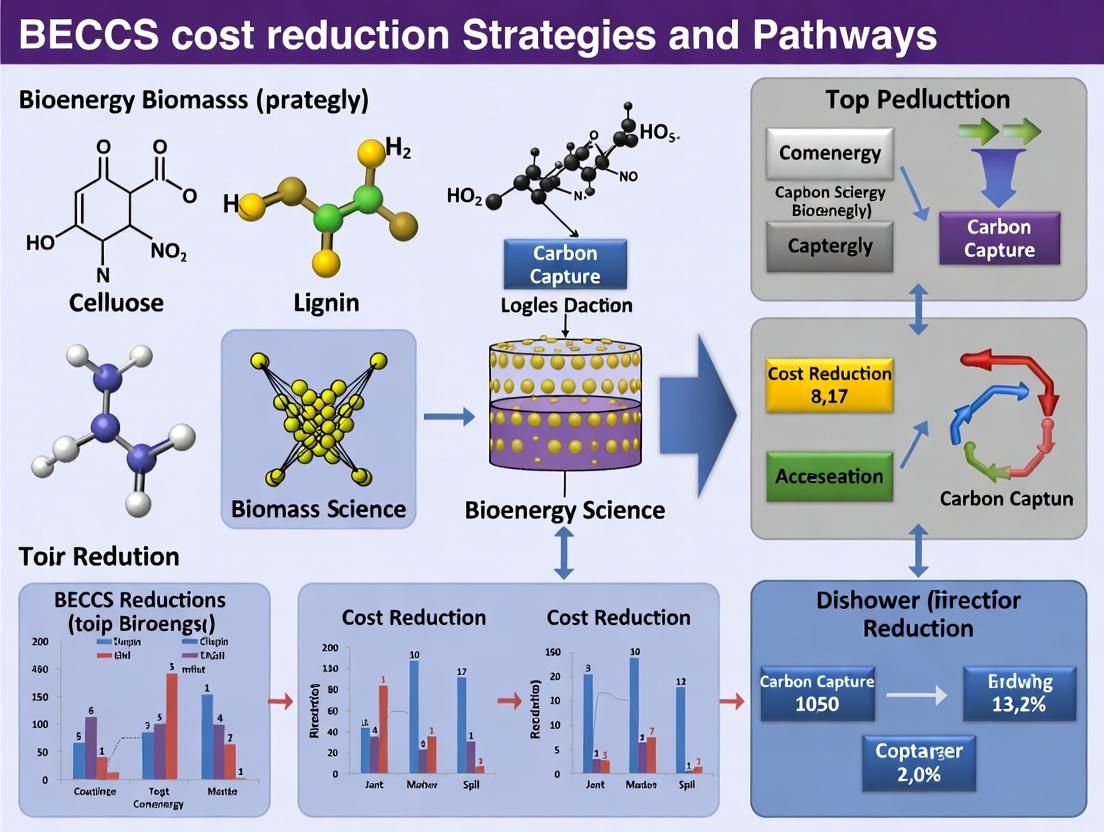
This article provides a comprehensive analysis of strategies to reduce the high costs of Bioenergy with Carbon Capture and Storage (BECCS), a critical negative emissions technology.
Optimizing the Future of Carbon Removal: Key Strategies and Pathways for BECCS Cost Reduction
Abstract
This article provides a comprehensive analysis of strategies to reduce the high costs of Bioenergy with Carbon Capture and Storage (BECCS), a critical negative emissions technology. It explores the foundational cost components and drivers, examines methodological innovations in biomass supply chains and capture processes, details troubleshooting for integration and scaling challenges, and validates approaches through comparative techno-economic analysis. Designed for researchers, policymakers, and engineers, it synthesizes current pathways to make BECCS a commercially viable and scalable solution for climate mitigation.
Decoding BECCS Economics: Understanding the Core Cost Drivers and Barriers
Welcome to the BECCS Technical Support Center. This resource is designed to support researchers and scientists conducting techno-economic analyses (TEA) and cost optimization experiments within the broader context of BECCS cost reduction pathway research. The following FAQs and guides address common experimental and analytical challenges.
FAQs & Troubleshooting Guides
Q1: Our TEA model shows disproportionately high CAPEX for biomass pre-processing. What are the primary cost drivers and how can we experimentally validate reduction strategies?
A: High CAPEX is often linked to drying and size reduction units. To validate reduction strategies:
- Issue: Moisture content >50% drastically increases dryer size and cost.
- Troubleshooting Protocol:
- Experiment: Conduct a feedstock blending study. Mix high-moisture energy crops (e.g., miscanthus) with low-moisture agricultural residues (e.g., straw).
- Method: Use a calibrated bench-scale dryer. Run batches with varying blend ratios (100/0, 70/30, 50/50).
- Measurement: Record energy input (kWh) per kg of water removed for each blend.
- Analysis: Model CAPEX impact using the derived specific energy consumption data. A reduction of 15% in drying energy can lead to a 8-12% CAPEX saving for the pre-processing line.
Q2: During OPEX simulation, CO₂ capture solvent degradation rates are exceeding baseline assumptions, inflating costs. How do we troubleshoot this in a lab-scale capture unit?
A: Solvent degradation is a major OPEX driver due to replacement costs and waste handling.
- Issue: Observed degradation rate >3 kg solvent/ton CO₂ captured.
- Troubleshooting Guide:
- Check Feedstock Contaminants: Analyze biomass flue gas for trace contaminants (SOₓ, NOₓ, organic acids) beyond typical levels. Use gas chromatography.
- Experimental Protocol - Oxidative Degradation Test:
- Setup: Use a continuous stirred-tank reactor (CSTR) simulating the absorber conditions (Temperature: 40-60°C).
- Procedure: Sparge a synthetic flue gas mix (with elevated O₂ and a suspected contaminant) through the solvent sample.
- Duration: Run for 200+ hours.
- Analysis: Periodically sample and measure total amine concentration via titration and quantify heat-stable salts via ion chromatography.
- Solution Path: If contaminants are high, propose and test a new flue gas washing protocol or a solvent additive (inhibitor) in the CSTR setup. Measure the new degradation rate.
Q3: How do we accurately allocate shared costs (e.g., feedstock handling) between the bioenergy and CCS portions in a fully integrated BECCS plant model?
A: Incorrect cost allocation skews CAPEX/OPEX understanding for each sub-process.
- Issue: Arbitrary 50/50 allocation distorts sensitivity analysis.
- Methodology:
- Activity-Based Costing Protocol: Map the material and energy flow through the integrated plant.
- Experiment/Data Requirement: Instrument a pilot plant or use high-fidelity process simulation (Aspen Plus, gPROMS) to track key metrics.
- Allocation Key: For shared infrastructure (like conveyors), allocate CAPEX based on mass throughput (% of total biomass vs. % of total captured CO₂ flow). For utilities (steam), allocate OPEX based on measured energy consumption by each section.
Quantitative Cost Data Summary
Table 1: Representative BECCS Cost Breakdown (Current Performance)
| Cost Component | Typical CAPEX Share | Typical OPEX Share | Key Drivers |
|---|---|---|---|
| Biomass Supply Chain | 15-25% | 30-50% | Feedstock cost, moisture, distance. |
| Bio-Conversion (BFB/CFB Boiler) | 35-45% | 20-30% | Plant scale, steam parameters. |
| CO₂ Capture (Absorption) | 20-30% | 15-25% | Solvent type, flue gas purity. |
| CO₂ Compression & Storage | 10-15% | 5-10% | Storage distance, pipeline diameter. |
Table 2: Impact of Selected Reduction Strategies on Cost Structure
| Reduction Strategy | Target Cost | Estimated CAPEX Δ | Estimated OPEX Δ | Experimental Validation Need |
|---|---|---|---|---|
| Feedstock Pre-Drying (Waste Heat) | OPEX | +5% (heat exchanger) | -12% (drying energy) | Heat integration efficiency trials. |
| Novel Solvent (e.g., CESAR-2) | OPEX/CAPEX | -8% (smaller units) | -10% (lower energy) | Long-term degradation testing. |
| Increased Plant Scale (>500 MWe) | CAPEX/OPEX | -15% (per kW) | -7% (per ton CO₂) | Engineering & procurement models. |
Experimental Protocol: Determining Optimal Capture Solvent Loading
Objective: Identify the amine concentration that minimizes the overall cost of electricity (COE) by balancing CAPEX (column size) and OPEX (regeneration energy).
- Materials: Prepare aqueous solutions of a benchmark amine (e.g., 30% MEA) and a novel solvent (e.g., 40% PZ/BMEA blend).
- Apparatus: Lab-scale absorption/desorption rig with packed columns, controlled gas mixers, temperature sensors, and energy metering.
- Procedure: a. For each solvent, set the absorber temperature to 40°C and the desorber to 120°C. b. Using a synthetic flue gas (15% CO₂, balance N₂), vary the liquid-to-gas (L/G) ratio. c. At each L/G ratio, measure CO₂ removal efficiency (%) and the specific reboiler duty (GJ/ton CO₂) at steady state. d. Correlate removal efficiency with required packing height (a proxy for column CAPEX).
- Data Integration: Plot specific reboiler duty (OPEX proxy) vs. required packing height (CAPEX proxy) for each solvent. The curve minimum indicates the cost-optimal operating point for that solvent.
Pathway & Workflow Diagrams
The Scientist's Toolkit: Research Reagent & Solutions
Table 3: Essential Materials for BECCS Cost-Performance Experiments
| Item | Function in Research | Example/Specification |
|---|---|---|
| Bench-Scale Absorption Rig | Simulates post-combustion capture to measure kinetics, loading, and energy use. | Units with packed column, solvent reboiler, and precision gas analyzers (CO₂, O₂). |
| Process Simulation Software | Models full-plant mass/energy balance and performs techno-economic analysis. | Aspen Plus, gPROMS, or open-source tools (DWSIM). |
| TEA Model Framework | Calculates LCOE, CAPEX, OPEX from experimental/process data. | NETL's BIT or IEA Bioenergy models, customized in Python/Excel. |
| Reference Solvents | Benchmark for evaluating novel solvent performance. | 30wt% Monoethanolamine (MEA), 40wt% Potassium Carbonate. |
| Synthetic Flue Gas Mixtures | Provides consistent, controllable gas stream for capture experiments. | Cylinders with 12-15% CO₂, balance N₂, with optional SO₂/NOx for degradation studies. |
| Ion Chromatography (IC) System | Quantifies solvent degradation products (anions, heat-stable salts). | Critical for OPEX analysis related to solvent make-up and waste. |
Technical Support Center: Feedstock & Pre-processing Troubleshooting
Frequently Asked Questions (FAQs)
Q1: Our sourced biomass shows high variability in moisture content (15-55%), causing inconsistent grinding yields and reactor plugging. What are the primary control points? A1: High variability stems from sourcing from multiple suppliers without standardized post-harvest protocols. Implement the following:
- Incoming QA/QC: Enforce a maximum acceptable moisture range (e.g., 10-25%) in supplier contracts. Use rapid, on-site NIR analyzers for every batch.
- Pre-processing SOP: Integrate a mandatory pre-drying step to a target moisture content (e.g., 12%) before size reduction. See Table 1 for energy cost implications.
- Supplier Scorecard: Develop a performance metric for suppliers based on moisture consistency, contamination levels, and ash content.
Q2: During pilot-scale torrefaction, we observe uneven product quality. What factors should we investigate? A2: Uneven torrefaction is typically a function of feedstock inhomogeneity or reactor conditions.
- Feedstock Prep: Ensure particle size is uniform (<2mm variance). A pre-screening step is mandatory.
- Reactor Parameters: Verify the uniformity of heat distribution and residence time. For a moving bed reactor, the bed depth and carrier gas flow rate are critical. Refer to Experimental Protocol 1.
- Real-time Monitoring: Install thermocouples at multiple points within the reaction zone to map temperature gradients.
Q3: Our logistics model for centralized pre-processing is cost-prohibitive. Are there alternative frameworks? A3: Yes, consider a decentralized "Hub-and-Spoke" or fully distributed pre-processing model. The optimal framework depends on feedstock density and transport radius. See Table 2 for a cost comparison of decentralized vs. centralized pre-processing of agricultural residues.
Q4: Alkali and alkaline earth metals (AAEM) in our herbaceous biomass are causing severe slagging and fouling in the gasifier. What pre-processing steps are most effective for removal? A4: AAEM removal is critical for BECCS system longevity. The most effective lab-scale method is leaching.
- Method: Dilute acid (e.g., 0.1M HNO₃) or hot water washing.
- Protocol: See Experimental Protocol 2.
- Trade-off: Washing increases cost, generates wastewater, and removes some organic material, reducing overall mass yield but increasing energy density and conversion efficiency.
Troubleshooting Guides
Issue: Low Bulk Density After Pre-processing
- Symptoms: High transport costs, inefficient storage, poor flow characteristics into conversion reactor.
- Potential Causes & Solutions:
- Cause 1: Inadequate densification (pelletizing/briquetting) pressure.
- Solution: Calibrate the pellet mill. Optimize pressure and temperature for your specific feedstock blend. Adding a small percentage (1-2%) of lignin or starch binder can improve durability.
- Cause 2: Feedstock is overly fibrous or has low inherent lignin.
- Solution: Consider steam explosion pre-treatment to partially break down fibers and enhance self-binding, or blend with a feedstock higher in lignin.
- Cause 1: Inadequate densification (pelletizing/briquetting) pressure.
Issue: Metal Contamination from Grinding/Size Reduction
- Symptoms: Elevated iron or chromium content in biomass ash, indicating wear from equipment.
- Potential Causes & Solutions:
- Cause: Wear of hammer mills or grinding blades.
- Solution: Implement a preventative maintenance schedule for replacement. Switch to ceramic-lined mills or hardened steel alloys for abrasive feedstocks (e.g., rice husk). Install an in-line magnetic separator post-grinding.
- Cause: Wear of hammer mills or grinding blades.
Issue: Microbial Degradation During Storage
- Symptoms: Dry matter loss, spontaneous heating, odor, reduced calorific value.
- Potential Causes & Solutions:
- Cause: Storage of biomass at high moisture content (>15%) in non-ventilated piles.
- Solution: Dry to <12% moisture before long-term storage. Use covered, ventilated silos. Monitor pile temperature. For research-scale storage, use sealed containers with inert gas (N₂) purge.
- Cause: Storage of biomass at high moisture content (>15%) in non-ventilated piles.
Data Presentation
Table 1: Energy Cost of Moisture Reduction for Common Feedstocks (Theoretical Calculation)
| Feedstock | Initial MC (%) | Target MC (%) | Energy Required (MJ/kg water evaporated) | Notes |
|---|---|---|---|---|
| Corn Stover | 30 | 15 | ~2.4 | Latent heat of vaporization ~2.26 MJ/kg + efficiency losses. |
| Pine Chips | 40 | 15 | ~2.4 | Higher initial moisture increases energy and time cost linearly. |
| Switchgrass | 25 | 12 | ~2.5 | Herbaceous biomass may require lower final MC for stable storage. |
MC: Moisture Content (wet basis). Assumes conventional convective drying at ~80% efficiency.
Table 2: Comparative Logistics Cost Model (Centralized vs. Decentralized)
| Cost Component | Centralized Pre-processing | Decentralized (Hub-&-Spoke) |
|---|---|---|
| Feedstock Transport | High (raw biomass, low density) | Medium (shorter hauls to local hub) |
| Pre-processing CapEx | High (single, large facility) | Medium (multiple smaller units) |
| Pre-processing OpEx | Low (economies of scale) | Medium (distributed labor, maintenance) |
| Product Transport | Low (dense, stable biochar/torrefied pellets) | Low/Medium (to central conversion plant) |
| Risk Profile | High (single point of failure) | Medium (distributed risk) |
| Best For | High-density feedstock zones | Dispersed, low-density feedstock regions |
Experimental Protocols
Experimental Protocol 1: Standardized Torrefaction Severity Test Objective: To produce torrefied biomass with a defined mass yield and energy densification ratio for downstream gasification experiments. Materials: Lignocellulosic biomass (grinded to 20-80 mesh), tubular furnace, N₂ cylinder, flow controllers, analytical balance, crucibles, desiccator. Method:
- Load 5.00g (±0.01g) of biomass into a tared crucible.
- Place crucible in the center of the tubular furnace.
- Purge the reactor with N₂ at 1 L/min for 10 minutes.
- Heat at 20°C/min to target temperature (e.g., 250, 275, 300°C) under 0.5 L/min N₂.
- Hold at target temperature for 30 minutes.
- Cool under N₂ flow to <50°C.
- Transfer crucible to desiccator, then weigh to determine mass yield.
- Calculate Energy Yield: Mass Yield (%) * (HHVtorrefied / HHVraw).
Experimental Protocol 2: Acid Washing for AAEM Removal Objective: To reduce slagging/fouling potential by leaching alkali metals from herbaceous biomass. Materials: Biomass sample, 0.1M Nitric Acid (HNO₃), deionized water, heated stir plate, filtration setup (Büchner funnel, filter paper), oven, ICP-OES analyzer (for validation). Method:
- Weigh 10.0g of dry, ground biomass into a 500mL flask.
- Add 200mL of 0.1M HNO₃.
- Heat at 60°C with stirring for 2 hours.
- Vacuum filter and rinse solids with 200mL DI water.
- Dry washed solids at 105°C overnight.
- Determine mass loss.
- (Optional) Ash the washed and unwashed samples at 575°C and analyze ash composition via ICP-OES to quantify AAEM reduction.
Diagrams
Diagram 1: BECCS Feedstock Pre-processing Decision Workflow
Diagram 2: Feedstock Properties to Conversion Performance Pathway
The Scientist's Toolkit: Research Reagent Solutions
| Item | Function in Feedstock Research |
|---|---|
| Near-Infrared (NIR) Analyzer | Rapid, non-destructive determination of biomass moisture, carbon, and nitrogen content for incoming QA/QC. |
| Tube Furnace w/ Gas Control | Essential for controlled pyrolysis, torrefaction, and gasification experiments under inert or reactive atmospheres. |
| Bomb Calorimeter | Measures the Higher Heating Value (HHV) of raw and processed biomass to calculate energy densification ratios. |
| Sieving Shaker & Mesh Stack | Standardizes particle size distribution post-milling, a critical variable for conversion kinetics. |
| ICP-OES/MS | Inductively Coupled Plasma analyzer for precise quantification of inorganic elements (AAEM) in biomass and ash. |
| TGA/DSC | Thermogravimetric Analyzer/Differential Scanning Calorimeter studies decomposition kinetics and thermal properties. |
| Mechanical Press w/ Heated Die | For lab-scale pellet/briquette production to study densification behavior and binding mechanisms. |
Technical Support Center: Troubleshooting & FAQs
Absorption-Based Systems (e.g., Amine Scrubbing)
Q1: During post-combustion capture from biomass flue gas, we observe rapid amine solvent degradation and foaming. What are the likely causes and corrective actions? A: Rapid degradation in BECCS contexts is often due to high oxygen content and the presence of organic acids (e.g., formic, acetic) from incomplete biomass combustion. Particulates (fly ash) can catalyze degradation.
- Troubleshooting Steps:
- Analyze Solvent: Test for heat-stable salts (HSS) concentration. A level >10% wt. indicates excessive acid gas ingress and oxidative degradation.
- Check Pretreatment: Verify efficiency of flue gas desulfurization (FGD) and particulate filtration units. Biomass flue gas may require more aggressive pretreatment than coal.
- Adjust Operations: Lower the reboiler temperature in the stripper (from ~120°C to 105-110°C) to reduce thermal degradation, though this increases steam cost. Increase solvent reclaiming frequency.
- Add Inhibitors: Consider adding oxidation inhibitors (e.g., sodium metavanadate) but assess impact on downstream processes.
Q2: The energy penalty for solvent regeneration is higher than projected, jeopardizing our cost reduction targets. How can we optimize? A: High regeneration energy is the primary cost driver. Optimization must be systemic.
- Protocol for Systematic Optimization:
- Instrumentation Audit: Calibrate all temperature, pressure, and flow sensors in the capture loop.
- Lean Loading Test: Measure the CO2 loading (mol CO2/mol amine) of the lean solvent entering the absorber. If too high (>0.15 for 30% MEA), the driving force for absorption is reduced. Increase stripper performance.
- Pinch Analysis: Perform a detailed pinch analysis of the lean/rich heat exchanger. A pinch point <5°C indicates suboptimal heat recovery. Consider installing a larger exchanger.
- Flue Gas Bypass Test: Experiment with sending a controlled fraction (5-15%) of untreated flue gas around the absorber to mix with cleaned gas, targeting a 90% overall capture rate. This can significantly reduce solvent flow and regeneration energy.
Experimental Protocol: Determining Optimal Stripper Pressure for a Novel Solvent
- Objective: Find the stripper operating pressure that minimizes the energy requirement (GJ/tonne CO2 captured) for a new proprietary solvent.
- Materials: Bench-scale absorption/desorption unit, solvent, synthetic flue gas (12% CO2, 8% O2, bal. N2), mass flow controllers, online CO2 analyzers, calorimeter.
- Method:
- Achieve steady-state capture at 1 bar absorber pressure with a fixed L/G ratio.
- Set stripper pressure to 1.5 bar. Record reboiler duty (via calorimeter), solvent circulation rate, and captured CO2 purity/rate for 1 hour.
- Repeat step 2 at stripper pressures of 1.8, 2.0, and 2.2 bar.
- Calculate specific reboiler duty (GJ/tonne CO2) for each condition. Plot pressure vs. energy duty.
Adsorption-Based Systems (e.g., PSA, VSA with Solid Sorbents)
Q3: Our biomass-derived activated carbon sorbent shows a >30% drop in CO2 working capacity within 100 cycles. What is the failure analysis protocol? A: This indicates sorbent fouling or structural degradation.
- Troubleshooting Guide:
- Performance Diagnostics: Measure N2 BET surface area and pore volume of fresh vs. cycled sorbent. A >20% reduction points to pore collapse or blockage.
- Thermogravimetric Analysis (TGA): Run a TGA-MS (mass spectrometry) under inert gas on the cycled sorbent. Look for weight loss events correlating to emissions of VOCs or tars, indicating pore fouling from biomass flue gas contaminants.
- X-ray Photoelectron Spectroscopy (XPS): Use XPS to analyze the surface chemistry. An increase in O/C ratio suggests oxidative degradation, while sulfur peaks indicate sulfate formation from SOx.
- Action: Enhance flue gas drying and VOC removal pre-adsorption. Consider implementing a periodic in-situ thermal regeneration protocol at a higher temperature (under inert gas) to drive off fouling agents.
Q4: How do we select between Pressure Swing Adsorption (PSA) and Temperature Swing Adsorption (TSA) for our pilot-scale BECCS unit? A: The choice hinges on kinetics, energy source, and scale.
- Decision Matrix:
| Criterion | PSA/VSA Recommendation | TSA Recommendation |
|---|---|---|
| Sorbent Kinetics | Fast-kinetic materials (zeolites, MOFs) | Slower-kinetic materials (supported amines) |
| Cycle Time | Short cycles (seconds-minutes) | Long cycles (hours) |
| Primary Energy | Electric (for compression/vacuum) | Low-grade steam or electric heating |
| Pilot Scale Focus | If studying rapid cycling & purity | If integrating with waste heat streams |
| Pressure Drop | Critical concern; use structured sorbents | Less critical; can use packed beds |
Biomass Oxy-Combustion Systems
Q5: We encounter unstable flame and elevated NOx in our oxy-biomass combustion test. How do we stabilize operation? A: Flame instability arises from differing combustion properties in O2/CO2 vs. O2/N2 atmospheres.
- Corrective Protocol:
- Flue Gas Recirculation (FGR) Tuning: Adjust the ratio of wet vs. dry recycled flue gas. Increasing wet FGR increases the H2O concentration, improving radiative heat transfer and stabilizing the flame. Target an O2 concentration of 28-30% in the oxidant stream.
- Oxygen Staging: Implement staged oxygen injection. Introduce 70-80% of the total O2 with the primary fuel carrier (recycled flue gas), and inject the remaining O2 downstream. This reduces peak flame temperature and suppresses thermal NOx.
- Burner Modification: Consult with the burner manufacturer to install a flue gas quarl or bluff body to enhance mixing and create a stable recirculation zone.
Q6: What is the detailed protocol for conducting a techno-economic analysis (TEA) to compare these capture pathways for our specific biomass feedstock? A: A standardized TEA protocol is essential for cross-technology comparison within a BECCS cost reduction thesis.
- Methodology for Integrated TEA:
- Define Base Case: Establish a 100 MWth biomass plant with no capture. Model its performance (efficiency, flue gas composition).
- Process Simulation: Use software (Aspen Plus, gPROMS) to model the integration of each capture technology (Absorption, Adsorption, Oxy-fuel).
- Energy Penalty Calculation: For each case, calculate the net plant efficiency penalty and the auxiliary load (parasitic power for fans, pumps, compressors, ASU).
- Capital Cost Estimation: Use equipment sizing from the simulation to apply factored estimates or vendor quotes. Include all balance of plant costs.
- Cost of Capture Calculation: Apply a consistent financial model (fixed charge factor, feedstock cost, labor). Calculate:
- $/tonne CO2 Avoided = [ (LCOE with capture - LCOE without capture) / (CO2 emission rate without capture - CO2 emission rate with capture) ]
- Sensitivity Analysis: Vary key parameters (±30%): biomass cost, capital cost, discount rate, capacity factor.
Table 1: Comparative Performance & Cost Indicators for Biomass-Fueled Capture Technologies (Thesis Research Context)
| Technology | Typical Capture Rate (%) | Energy Penalty (%-points of plant efficiency) | Estimated Capital Cost Increase (Relative to no capture) | Current Cost Range (USD/tonne CO2 avoided) | Key Cost Reduction Levers (for Thesis Focus) |
|---|---|---|---|---|---|
| Post-Combustion Absorption | 90-95 | 8-12 | 70-100% | 50-90 | Novel solvents (e.g., phase-change), waste heat integration, advanced process intensification. |
| Post-Combustion Adsorption | 85-90 | 6-10 | 60-90% | 45-80 | Development of biomass-tailored, moisture-tolerant sorbents; heat recovery between cycles; electrified temperature swings. |
| Oxy-Combustion | >95 | 7-11 | 80-120% | 55-85 | Advanced ASU (Ion Transport Membranes), optimized flue gas recycle to reduce ASU size, high-temperature materials. |
Experimental Workflow & Pathway Diagrams
Title: Absorption System Solvent Degradation Troubleshooting Pathway
Title: Techno-Economic Analysis Workflow for BECCS Pathways
The Scientist's Toolkit: Research Reagent & Material Solutions
Table 2: Essential Research Materials for Biomass Capture Experiments
| Material/Reagent | Function/Application | Key Considerations for BECCS Research |
|---|---|---|
| 30% Monoethanolamine (MEA) Solution | Benchmark solvent for absorption experiments. | High degradation with biomass flue gas; serves as a control for novel solvents. |
| Novel Phase-Change Solvent (e.g., DMX-1) | Low-energy solvent for absorption. | Test for fouling from organics; assess separation enthalpy in presence of O2. |
| Zeolite 13X | Benchmark adsorbent for PSA/VSA studies. | Test hydrothermal stability under humid biomass flue gas conditions. |
| Biomass-Derived Activated Carbon | Low-cost, sustainable adsorbent. | Characterize pore structure pre/post cycling; tailor for CO2/N2 selectivity. |
| Supported Amine Sorbent (e.g., PEI/Silica) | Solid sorbent for TSA cycles. | Monitor amine leaching under wet, acidic flue gas simulants. |
| Synthetic Flue Gas Mixture | Calibration and controlled experiments. | Must include representative impurities (O2, SO2, NOx, VOCs) from biomass. |
| Ion Transport Membrane (ITM) Material | Advanced O2 separation for oxy-fuel. | Research material stability under biomass-derived ash and alkali compounds. |
Technical Support Center
Troubleshooting Guides
Issue 1: High Viscosity Biomass Slurry Causing Pump Failures and Pipeline Blockages
- Problem: Transport of concentrated biomass feedstock for gasification or fermentation is halted due to frequent pump overloads and line blockages.
- Diagnosis: Check the solids content (% Total Solids) and particle size distribution. Slurries exceeding 25% TS with irregular, large particles (>2mm) are high risk. Monitor pressure differentials across pump inlets and filters.
- Solution: Implement a pre-processing step with a high-shear mixer and integrate a progressive cavity pump designed for high-viscosity, abrasive fluids. Install real-time pressure sensors with automated dilution valve controls to maintain optimal viscosity.
- Preventive Protocol: Conduct weekly rheology tests under simulated transport temperatures. Establish a maximum allowable viscosity threshold (e.g., 5000 cP at process temperature) for your specific pipeline geometry.
Issue 2: Unplanned CO₂ Boil-off During Intermediate Storage in Buffering Tanks
- Problem: Significant loss of captured, liquefied CO₂ from intermediate storage tanks before scheduled transport, reducing system mass balance efficiency.
- Diagnosis: Monitor tank pressure and external temperature fluctuations. Boil-off is typically caused by heat ingress. Check insulation integrity and vacuum levels in jacketed tanks.
- Solution: Perform an immediate thermal imaging scan of the tank exterior to identify insulation failures. For non-jacketed tanks, implement an automated vapor recovery and re-liquefaction unit on the tank's vent line. Review and optimize tank holding pressure set-points.
- Preventive Protocol: Calibrate tank level and pressure sensors monthly. Establish a daily log of ambient temperature vs. tank pressure rise. Install a passive thermal buffer system (e.g., shade structure) for tanks exposed to direct sunlight.
Issue 3: Microbial Contamination & Degradation During Wet Biomass Storage
- Problem: Loss of fermentable sugars and dry mass in stored biomass, altering the feedstock's chemical composition and lowering subsequent conversion yields.
- Diagnosis: Sample the biomass at storage entry and at regular intervals. Test for pH drop, increase in temperature, and presence of organic acids (e.g., lactic, acetic) via HPLC. Perform microbial plating.
- Solution: For short-term storage (<7 days), apply a certified organic acid-based preservative. For longer storage, switch to an anaerobic ensiling protocol with an airtight cover and lactic acid bacteria inoculant to stabilize the feedstock.
- Preventive Protocol: Standardize biomass moisture content to a target (e.g., 65-70%) before pile storage. Design storage pads with proper runoff collection to prevent leachate and cross-contamination.
Frequently Asked Questions (FAQs)
Q1: What is the most cost-effective method for transporting CO₂ over 250 km for a medium-scale (1 Mt/yr) BECCS project? A: Current research indicates that for distances between 250-500 km, compressed gaseous CO₂ transport via pipeline is most economical at this scale, despite high initial CAPEX. For distances beyond 500 km or without existing pipeline infrastructure, shipping liquefied CO₂ in insulated tankers becomes competitive. The crossover point is highly sensitive to terrain and right-of-way costs.
Q2: We are experiencing rapid corrosion in our CO₂ compression and drying unit. What are the likely impurities causing this, and how can we test for them? A: Trace impurities in the captured CO₂ stream, notably water (H2O), nitrogen oxides (NOx), sulfur oxides (SOx), and oxygen (O2), can form corrosive acids. Implement a continuous gas analyzer upstream of compression. A standard laboratory protocol involves trapping impurities in a cryogenic sampler and analyzing via GC-MS and ion chromatography. ASTM D7941 is a relevant standard for CO₂ analysis.
Q3: Can you recommend a standard lab-scale protocol to simulate and measure biomass degradation losses during storage? A: Yes. Use the following controlled-environment protocol:
- Preparation: Homogenize biomass sample (e.g., miscanthus, corn stover). Split into 5 identical 1kg subsamples.
- Storage Simulation: Place each subsample in an environmental chamber. Test different conditions (e.g., 25°C/60% RH, 35°C/80% RH, anaerobic, with/without inoculant).
- Monitoring: At days 0, 3, 7, 14, and 30, destructively sample one replicate per condition.
- Analysis: Measure dry mass loss, compositional analysis (via NREL/TP-510-42618), and calorific value.
- Data Modeling: Fit decay rates to an exponential model to predict large-scale losses.
Q4: What are the key permitting hurdles for constructing a CO₂ storage hub, and what data is required for the application? A: Primary permits involve pore space rights, environmental impact, and Class VI Well injection (US EPA/Equivalent). Required data includes: detailed geological characterization of the storage complex, reservoir simulation models predicting plume migration, groundwater monitoring plans, and a rigorous risk assessment addressing leakage pathways and remediation strategies.
Table 1: Comparative Cost Breakdown for CO₂ Transport Modes (USD/tonne CO₂)
| Transport Mode | Capacity | Distance | Capex Contribution | Opex Contribution | Total Estimated Cost | Key Cost Driver |
|---|---|---|---|---|---|---|
| Pipeline (Gaseous) | 1-5 Mt/yr | 250 km | 8-12 | 2-4 | 10-16 | Right-of-way, steel |
| Shipping (Liquefied) | 0.5-2 Mt/yr | 500 km | 4-8 | 8-15 | 12-23 | Liquefaction energy, port fees |
| Rail/Truck (Liquefied) | <0.5 Mt/yr | 150 km | 1-3 | 15-30 | 16-33 | Loading/unloading, fuel |
Table 2: Biomass Dry Matter Loss During Storage Under Different Conditions
| Storage Method | Duration (Months) | Avg. Temp. (°C) | Moisture Content (% wet basis) | Dry Matter Loss (%) | Key Degradation Mechanism |
|---|---|---|---|---|---|
| Open-air Pile | 6 | 15-25 | 25-35 | 12-25% | Aerobic microbial respiration |
| Enclosed Silo (Anaerobic) | 6 | 15-25 | 30-40 | 5-10% | Fermentation (controlled) |
| Baled & Covered | 9 | -5 to 20 | 15-18 | 8-15% | Weathering, fungal growth |
| Refrigerated Storage | 12 | 4 | 10 | 1-3% | Minimized microbial activity |
Experimental Protocols
Protocol: Accelerated Stress Test for Biomass Slurry Pipeline Flowability Objective: To determine the maximum solids loading and additive dosage for reliable pipeline transport. Materials: Biomass mill, viscometer (rotational), progressive cavity pump test rig, particle size analyzer, flow additives (e.g., guar gum, polyacrylamide). Methodology:
- Prepare biomass slurries at 15%, 20%, 25%, and 30% Total Solids (TS).
- For each TS level, prepare sub-batches with 0%, 0.1%, and 0.5% w/w flow additive.
- Measure initial viscosity and particle size distribution for each batch.
- Circulate each batch through a 10m closed-loop pipeline test rig (diameter: 2 inches) for 2 hours at a constant pump speed.
- Record pressure drop across the loop every 5 minutes. Inspect for settling or blockage post-test.
- Analyze the relationship between TS, additive dose, viscosity, and pressure stability.
Protocol: Quantifying CO₂ Loss from Small-Scale Storage Simulations Objective: To measure boil-off rates from liquefied CO₂ under different insulation conditions. Materials: 5L double-walled Dewar flasks, temperature data loggers, precision scale, vacuum pump, various insulation materials (aerogel, foam, vacuum). Methodology:
- Fill four identical Dewars with 2kg of liquefied CO₂ each.
- Treat each Dewar: (1) Control (existing jacket), (2) Added aerogel wrap, (3) Enhanced vacuum in jacket, (4) No vacuum (broken jacket simulation).
- Place each Dewar on a precision scale inside an environmental chamber held at 20°C.
- Log mass loss and internal/external temperatures every minute for 72 hours.
- Calculate daily boil-off rate as a percentage of initial mass. Correlate with temperature differential and insulation quality.
Diagrams
Title: BECCS Value Chain with Storage & Transport Cost Nodes
Title: Cost Reduction Pathways for Storage & Transport
The Scientist's Toolkit: Research Reagent Solutions
Table 3: Essential Materials for BECCS Storage & Transport Research
| Item | Function | Example Application/Note |
|---|---|---|
| Rotational Viscometer | Measures viscosity of non-Newtonian biomass slurries under shear. | Critical for determining pumpability and pipeline flow parameters. |
| Cryogenic Sampler | Traps and concentrates trace impurities from a CO₂ gas stream. | Enables precise quantification of SOx, NOx, VOCs for corrosion studies. |
| Gas Chromatograph-Mass Spectrometer (GC-MS) | Identifies and quantifies organic volatile compounds. | Analyzes off-gassing from stored biomass or impurities in CO₂. |
| Portable Thermal Imaging Camera | Visualizes temperature gradients on storage tanks and pipelines. | Diagnoses insulation failures and points of heat ingress. |
| Pressure Decay Leak Tester | Precisely measures minute gas leaks from sealed systems. | Validates the integrity of small-scale CO₂ storage vessel prototypes. |
| Anaerobic Chamber | Provides an oxygen-free environment for storage experiments. | For simulating and studying anaerobic ensiling of biomass feedstocks. |
| Geochemical Modeling Software (e.g., PHREEQC) | Models fluid-rock interactions in geological formations. | Predicts long-term behavior of injected CO₂ for storage site characterization. |
Technical Support Center: Troubleshooting BECCS Experimental & Modeling Setups
This support center provides targeted assistance for researchers and scientists working on Bioenergy with Carbon Capture and Storage (BECCS) cost reduction pathways. The FAQs and guides below address common technical and analytical challenges within the context of policy and financing landscape analysis.
Frequently Asked Questions (FAQs)
Q1: Our techno-economic model for a BECCS biorefinery shows dramatic cost sensitivity to biomass feedstock price. How can we accurately model policy-driven price supports or carbon credit mechanisms? A: This is a common modeling challenge. You must integrate a dynamic policy module. Use a two-step approach:
- Protocol: Establish a baseline model without policy. Then, create separate sub-modules for:
- Feedstock Subsidy: Apply as a percentage or fixed discount to your baseline feedstock cost input.
- Carbon Credit (e.g., 45Q): Model as a negative cost (revenue) based on the net captured and stored CO2. Ensure your model correctly calculates net carbon balance (biogenic CO2 captured minus emissions from energy/fuel use). The credit value should be triggered only upon verification of permanent storage.
- Data Input: Use the latest policy values. As of 2023-2024, key U.S. data points are:
Table 1: Key U.S. Policy Incentives for BECCS Modeling (2024)
| Policy Mechanism | Current Value | Eligibility Requirements | Key Modeling Variable |
|---|---|---|---|
| 45Q Tax Credit | $85/tonne (Secure Geologic Storage) | Commence construction by 2033, 12-year credit period | Net CO2 stored (tonnes/year) |
| Biomass Crop Assistance Program (BCAP) | Up to 75% cost-share for establishment | Approved project areas, perennial crops | Feedstock cost multiplier (0.25-1.0) |
| Renewable Fuel Standard (RFS) D3 RIN | Market-driven (~$3-$4/RIN) | Lifecycle GHG reduction >50% | Revenue per gallon of biofuel produced |
Q2: When conducting a Life Cycle Assessment (LCA) for BECCS, how should we account for "policy leakage" or indirect land-use change (iLUC) which financing entities are increasingly scrutinizing? A: iLUC modeling is critical for credibility. Follow this protocol:
- Methodology: Use an economic equilibrium model (e.g., GTAP-based) or apply region-specific iLUC factors from published literature.
- Experimental Protocol: a. Define your core system boundary (biomass cultivation to CO2 storage). b. Select a recognized iLUC model (e.g., AEZ-EF, GTAP-BIO-ADV) or consensus iLUC value from sources like the California Air Resources Board (CARB). c. Run two LCA scenarios: Scenario A (without iLUC) and Scenario B (with iLUC emissions added). d. Express results in gCO2e/MJ of bioenergy and net negative emissions. The difference highlights policy and financing risk.
Q3: Our financing case for a pilot project requires a clear risk matrix. What are the top technical risks funders highlight, and how can we mitigate them in our proposal? A: Funders prioritize de-risking key technical and regulatory hurdles. Address these in your proposal's risk register:
Table 2: Top Technical Risks in BECCS Financing & Mitigation Strategies
| Risk Category | Specific Risk | Recommended Mitigation for Researchers |
|---|---|---|
| Supply Chain | Biomass feedstock cost volatility | Present long-term contracts modeled with price caps; demonstrate multi-feedstock flexibility. |
| Capture Performance | Solvent degradation or sorbent capacity fade in real flue gas. | Include detailed pilot data on impurity tolerance (SOx, NOx) and regeneration cycles. |
| Storage & Monitoring | Uncertainty in CO2 injection permitting and long-term liability. | Partner with a well-characterized storage site operator; cite Class VI well permitting timelines. |
| Policy | Change or sunset of carbon credit policy. | Perform sensitivity analysis showing viability at 50-75% of current credit value. |
Essential Experimental Protocols
Protocol 1: Integrated Capture Efficiency & Cost Analysis for Novel Solvents/Sorbents Objective: To determine the capture cost ($/tonne CO2) of a novel material under simulated BECCS flue gas conditions, incorporating policy incentives.
- Setup: Use a fixed-bed or continuous flow reactor with synthetic flue gas (4-12% CO2, balance N2, with impurities).
- Procedure: a. Measure cyclic working capacity (kg CO2/kg sorbent) over 100+ cycles. b. Calculate energy penalty (MJ/kg CO2) for regeneration. c. Scale-up material and energy flows to a 100,000 tonne/year capture unit. d. Perform a CAPEX/OPEX analysis using tools like ASPEN Plus with cost correlations. e. Integrate Policy: Apply the 45Q credit as a revenue stream. The final metric is Levelized Cost of Capture (LCOC) after Policy Incentive.
- Key Formula: LCOC ($/tonne) = (Annualized CAPEX + OPEX - (Annual CO2 stored * Credit Value)) / Annual CO2 captured
Protocol 2: Policy Scenario Modeling for BECCS Deployment Pathways Objective: To model how different carbon price trajectories affect the optimal deployment scale and timing of BECCS.
- Setup: Use a systems dynamics or optimization model (e.g., in Python/R or commercial software).
- Procedure: a. Define baseline technology cost and learning rate. b. Input three policy scenarios: Baseline (current 45Q), Accelerated (45Q rising to $130/tonne by 2035), Withdrawn (45Q ends in 2033). c. Constrain model by biomass availability and storage site capacity. d. Run simulation from 2025-2050, optimizing for cumulative negative emissions. e. Output key metrics: deployment year-over-year, cumulative negative emissions, total subsidy required.
Visualization: BECCS Cost Reduction Pathways & Policy Levers
Title: Policy & Finance Impact on BECCS Cost Pathways
Title: BECCS Cost Research Experimental Workflow
The Scientist's Toolkit: Key Research Reagent Solutions
Table 3: Essential Materials & Tools for BECCS Cost-Pathway Research
| Item | Function in Research | Example/Supplier |
|---|---|---|
| Advanced Solvents/Sorbents | Core materials for CO2 capture; testing degradation and capacity under realistic conditions. | Aminosilicones (e.g., UCONN's SAILs), Metal-Organic Frameworks (MOFs) like Mg-MOF-74, Calcium-based looping sorbents. |
| Techno-Economic Modeling Software | To scale lab data to process plants and calculate detailed costs. | ASPEN Plus (process simulation), Python/R with teal or disc packages for custom TEA, GCAM for system-level integration. |
| Policy & Carbon Price Datasets | Critical inputs for financial and scenario modeling. | 45Q IRS Guidelines, World Bank Carbon Pricing Dashboard, EIA Annual Energy Outlook Scenarios. |
| Life Cycle Inventory (LCI) Databases | For conducting rigorous LCA to calculate net negative emissions. | GREET Network (Argonne National Lab), Ecoinvent, USDA Biofuels LCA Database. |
| Geospatial Data Platforms | To model biomass supply chains and CO2 storage site logistics. | USGS CO2 Storage Atlas, NREL Biofuels Atlas, ArcGIS/ QGIS with custom supply model scripts. |
Innovation in Action: Cutting-Edge Methods to Slash BECCS Expenses
Technical Support Center & FAQ
FAQ Section: Core Challenges in Biomass Logistics
Q1: Our harvested biomass moisture content is highly variable, leading to storage degradation and inconsistent pre-processing yields. What are the primary control points?
A1: Variability stems from field conditions, harvest timing, and initial handling. Key control points are:
- In-field Wilting: Allow 24-48 hours post-mowing for moisture reduction (target: 15-25% for baled systems).
- Real-Time Monitoring: Use near-infrared (NIR) sensors on harvesters and at facility intake.
- Dynamic Baling Protocols: Adjust bale density based on moisture readings. See Table 1 for moisture tolerances.
Q2: We are experiencing significant dry matter loss (>15%) during storage of baled feedstocks. What storage configurations minimize loss?
A2: Losses are due to microbial activity and weathering. Optimize by:
- Format: Chopped biomass in oxygen-limited silos has lower losses (8-12%) than outdoor bale stacks (15-25%).
- Covering: Impermeable plastic wrapping reduces losses by 50% compared to uncovered stacks.
- Site Preparation: A crushed rock pad with >1% slope reduces bottom spoilage.
Q3: Our transportation costs are exceeding model predictions. What routing and mode factors are most impactful for cost reduction?
A3: The key is integrating geospatial data (GIS) with biomass quality data.
- Mode Shift: For distances >80km, consider shifting from truck to rail or barge, reducing cost by 30-50%.
- Backhaul Optimization: Use empty return trips for nutrient (ash) recycling from facility to field.
- Densification: Deploy mobile pelletizers or briquetters at satellite storage yards to improve truck payload capacity by 2-3x.
Troubleshooting Guides
Issue T1: Rapid Equipment Wear in Pre-Processing (Size Reduction/Grinding)
- Symptoms: Throughput drops, power consumption rises, particle size specification fails.
- Likely Cause: Contamination with abrasive soil/sand (high ash content) or tramp metal.
- Diagnostic Steps:
- Measure ash content of incoming feedstock (ASTM E1755).
- Install and inspect metal detectors/magnets prior to primary grinder.
- Conduct a sieve analysis (ASABE S424.1) to check for oversized particles causing mill overload.
- Solution: Implement a staged cleaning process: scalping → magnetic separation → air classification. Review harvest practice to minimize soil inclusion.
Issue T2: Inconsistent Biomass Composition at Biorefinery In-Feed
- Symptoms: Fluctuations in conversion reactor performance (e.g., gasification syngas quality, enzymatic hydrolysis sugar yield).
- Root Cause: Blending of feedstocks from multiple sources with different chemical properties (e.g., lignin, carbohydrate content).
- Diagnostic Steps:
- Perform rapid NIR calibration for glucan/xylan/lignin on incoming loads.
- Create a Quality Index (QI) score for each load based on 3-5 key analytes.
- Solution: Implement a "Quality-Based Blending" protocol using a stacking/reclaiming system. Loads are stacked by QI score and then reclaimed in a controlled ratio to create a homogeneous in-feed stream.
Data Presentation
Table 1: Moisture Content Tolerance by Feedstock Format & Storage Method
| Feedstock Format | Optimal MC at Storage (%) | Max Tolerable MC (%) | Recommended Storage Method | Est. Dry Matter Loss (6 months) |
|---|---|---|---|---|
| Loose Chop | 15-20 | 25 | Silo (O2-limited) | 8-12% |
| Rectangular Bale | 12-18 | 22 | Wrapped, Indoors | 10-15% |
| Round Bale | 15-18 | 25 | Wrapped, Outdoor | 12-18% |
| Pellet | <10 | 12 | Covered, Ventilated | 1-3% |
Table 2: Transportation Cost Comparison for 500 Dry Tonnes/Day (100 km Radius)
| Transportation Mode | Required Fleet (# units) | Avg. Cost ($/dry tonne) | CO2e (kg/dry tonne) | Key Cost Driver |
|---|---|---|---|---|
| Truck (53-ft) | 50 | 22.50 | 8.5 | Fuel, Driver Labor |
| Rail (Hopper) | 2 trains | 15.80 | 3.2 | Terminal Loading/Unloading |
| Intermodal (Truck+Rail) | 20 trucks + 1 train | 18.20 | 5.1 | Transloading Equipment & Labor |
Experimental Protocols
Protocol P1: Determination of Optimal In-Field Wilting Time for Herbaceous Biomass
- Objective: To model the relationship between field residence time, moisture content, and harvestable dry matter yield.
- Methodology:
- Plot Design: Mow biomass (e.g., switchgrass) in replicated 10m x 10m plots.
- Treatment: Allow plots to wilt for 0, 24, 48, 72, and 96 hours post-mowing.
- Sampling: At each time point, collect three 1m² sub-samples from each plot.
- Analysis: Weigh fresh, then dry at 105°C for 24h to determine dry weight. Calculate moisture content (MC) and effective dry matter yield (accounting for leaf loss).
- Modeling: Fit a nonlinear decay model (MC = a * e^(-kt) + c) to predict time to target MC.
Protocol P2: Lifecycle Assessment (LCA) of Storage Configurations for BECCS
- Objective: Quantify the net carbon footprint of different biomass storage strategies within a BECCS pathway.
- Methodology:
- System Boundaries: Cradle-to-gate: from harvest to pre-processed biomass entering the gasifier/fermenter. Include CH4/CO2 emissions from decomposition.
- Inventory Analysis: For each configuration (e.g., wrapped bales, chopped silage), measure:
- Inputs: Diesel for handling, plastic for wrapping, electricity for fans.
- Outputs: Dry matter loss (as CO2), methane emissions (using gas flux chambers), leachate.
- Impact Assessment: Calculate Global Warming Potential (GWP-100) in kg CO2e per dry tonne of delivered biomass. Credit stored carbon in any applied biochar byproduct.
- Sensitivity Analysis: Vary key parameters (e.g., decay rate, fuel carbon intensity) to identify cost-carbon trade-offs.
Mandatory Visualizations
Title: Biomass Supply Chain Workflow & Control Points (76 chars)
Title: Pre-Processing Pathways to Enable Long-Distance Logistics (78 chars)
The Scientist's Toolkit: Key Research Reagent Solutions
| Item/Category | Example Product/Technique | Primary Function in SC Optimization Research |
|---|---|---|
| Portable NIR Spectrometer | ASD FieldSpec, or handheld units from vendors like Thermo Fisher. | Rapid, non-destructive field analysis of moisture, cellulose, hemicellulose, and lignin content for quality-based logistics. |
| Gas Flux Chamber System | LI-COR GHG Analyzer with custom static chambers. | Quantify methane (CH4) and carbon dioxide (CO2) emissions from biomass storage piles for LCA and decay modeling. |
| Biomass Decay Model | BioCOA Model (BioMass Composition & Oxidation Algorithm) or integrated in ASPEN Plus. |
Simulates dry matter loss and gas emissions during storage under varying temperature/moisture conditions. |
| Geospatial Analysis Software | ArcGIS Pro, QGIS with Network Analyst extension. | Optimizes harvest collection routes, location of satellite storage yards, and multimodal transport logistics. |
| Discrete Event Simulation (DES) | AnyLogic, Simio, or FlexSim software. | Models the entire supply chain as a dynamic system to identify bottlenecks (e.g., queue at pre-processing) and test "what-if" scenarios. |
| Standard Biomass Analytical Suites | NREL/TP-510-42618 (Biomass Compositional Analysis), ASABE Standards for particle size (S424) & density (S269). | Provides standardized data for feedstock specification, essential for reproducible techno-economic analysis (TEA). |
Technical Support Center: Troubleshooting & FAQs
This support center is designed for researchers and scientists implementing novel carbon capture systems within the context of BECCS (Bioenergy with Carbon Capture and Storage) cost-reduction pathways. The following guides address common experimental and operational challenges.
FAQs & Troubleshooting Guides
Q1: During solvent stability testing for a novel amino-siloxane absorbent, we observe rapid viscosity increase and fouling after 50 cycles. What are the likely causes and corrective actions?
A1: This is a common issue in advanced amine systems. Likely causes are (1) oxidative degradation due to trace oxygen in the feed gas, forming heat-stable salts and polymers, or (2) thermal degradation exceeding the solvent's operational window.
- Troubleshooting Protocol:
- Immediate Action: Analyze the foulant via FT-IR and LC-MS to identify degradation products (e.g., nitrosamines, carboxylic acids, amides).
- Corrective Steps:
- Install Guard Beds: Add an oxygen scavenger (e.g., sulfite-based) and particulate filter (<5 µm) on the inlet gas line.
- Optimize Stripper Temperature: Reduce reboiler temperature by 5-10°C and monitor degradation rate. The energy penalty trade-off must be calculated.
- Add Stabilizer: Introduce a polymerization inhibitor (e.g., p-methoxyphenol at 50-100 ppm) to the solvent blend.
- Validation Experiment: Conduct a controlled 100-cycle test in a bench-scale unit with the above modifications, measuring viscosity every 10 cycles and total organic carbon (TOC) in the blowdown.
Q2: Our metal-organic framework (MOF) sorbent, ADS-52, shows a 40% drop in CO₂ working capacity after 2 weeks of humid flue gas exposure in a fixed-bed reactor. How can we diagnose and mitigate hydrolytic instability?
A2: Capacity loss indicates potential hydrolysis of metal-ligand bonds. A systematic diagnostic is required.
- Diagnostic Protocol:
- Characterize Used Sorbent: Perform PXRD on the degraded sample. Loss of crystallinity confirms structural collapse. Perform BET surface area analysis; a >20% reduction indicates pore damage.
- Humidity Stress Test: Design an accelerated aging experiment. Expose fresh MOF samples to 30%, 60%, and 90% relative humidity (RH) at 50°C in a climate chamber. Measure CO₂ uptake (at 1 bar, 25°C) daily for one week to establish a degradation rate vs. RH correlation.
- Mitigation Strategy:
- Pre-Combustion Drying: If the MOF is irreversibly water-sensitive, implement a pre-dehydration step for the flue gas to lower RH to <30%.
- Hydrophobic Coating: Consider post-synthetic modification with hydrophobic agents (e.g., fluorinated silanes) via vapor-phase deposition to shield active sites.
Q3: When testing a facilitated transport membrane (FTM) with a mobile carrier (e.g., glycinate), we see a decline in flux over 72 hours, not recoverable with simple pressure cycling. What is the mechanism and how do we restore performance?
A3: This suggests carrier deactivation or leaching. The mobile carrier can react with minor flue gas components (SOₓ, NOₓ) or migrate from the membrane phase.
- Restoration Protocol:
- Leachate Analysis: Soak a used membrane sample in deionized water for 24h. Analyze the soak solution via ion chromatography for the carrier anion.
- Carrier Replenishment: Design a membrane housing that allows for an in-situ "carrier recharge". Prepare a 5% w/v solution of the carrier in the solvent phase (e.g., polyethylene glycol). Circulate this solution on the feed side of the membrane module at low pressure for 6 hours.
- System Modification: Install a pre-scrubber for SOₓ/NOₓ removal if not present. Consider switching to an immobile (bound) carrier species if leaching is confirmed.
Quantitative Performance Data: Recent Bench-Scale Studies
Table 1: Comparative Performance of Next-Generation Capture Solvents (2023-2024 Bench-Scale Data)
| Solvent/Sorbent Name | Type | CO₂ Uptake (mol/kg) | Regeneration Energy (GJ/tCO₂) | Degradation Rate (%/day) | Capital Cost Index* |
|---|---|---|---|---|---|
| MEA (Benchmark) | Aqueous Amine | 2.1 | 3.9 | 0.15 | 1.00 |
| NAS-21 | Amino-Siloxane | 3.4 | 2.2 | 0.08 | 0.85 |
| IL-CC-4 | Ionic Liquid | 1.8 | 2.8 | <0.01 | 1.30 |
| CA-Sorb-B | Calcium Looping | 8.5 (Theoretical) | 2.5-3.0 | N/A (Cyclic Attrition) | 0.90 |
Table 2: Advanced Solid Sorbent Performance in Rapid Thermal Swing Adsorption (RTSA)
| Material | Type | Cycle Time (min) | Working Capacity (mmol/g) | Purity (%) | Stability (Cycles) |
|---|---|---|---|---|---|
| Zeolite 13X | Benchmark | 30 | 2.0 | 95.5 | >10,000 |
| MOF-ADS-52 | Metal-Organic Framework | 6 | 3.8 | 99.0 | ~2,000 (Dry) |
| PEI/SBA-15 | Amine-Impregnated | 20 | 4.2 | 99.5 | 1,500 |
| MSC-30 | Moisture-Swing | 120 | 0.9 | 80.0 | 5,000 |
*Capital Cost Index relative to baseline MEA system, accounting for absorber size, heat exchanger area, and corrosion allowance.
Experimental Protocols
Protocol 1: Accelerated Solvent Oxidative Degradation Test (Amino-Based Systems) Objective: Quantify the oxidative degradation rate of a novel capture solvent under accelerated conditions. Materials: High-pressure Parr reactor (500 mL), O₂/N₂/CO₂ gas cylinders, analytical balance, GC-MS, Total Organic Carbon (TOC) analyzer. Procedure:
- Charge 300 mL of fresh solvent into the Parr reactor.
- Heat to the target stripper temperature (e.g., 120°C).
- Sparge with a gas mixture of 5% O₂, 15% CO₂, balance N₂ at 2 bar total pressure. Maintain constant stirring.
- Sample 5 mL of solvent daily for 7 days.
- Analyze samples for:
- Total Amine Content: By acid-base titration.
- Degradation Products: Via GC-MS for volatile species, HPLC for non-volatiles.
- TOC: In the liquid phase to track solvent loss.
- Calculate the daily degradation rate as % solvent converted to degradation products per day.
Protocol 2: Determination of Working Capacity in Rapid Thermal Swing Adsorption (RTSA) Objective: Measure the practical CO₂ adsorption capacity of a solid sorbent under cyclic conditions. Materials: Fixed-bed reactor (1 cm diameter), mass flow controllers, 10% CO₂/N₂ mix, thermocouples, online CO₂ analyzer (NDIR), water bath/oil bath for temperature swing. Procedure:
- Pack 5g of sorbent into the reactor. Activate at 120°C under N₂ for 2 hours.
- Adsorption: At 25°C, flow 100 mL/min of 10% CO₂/N₂ through the bed. Monitor outlet CO₂ concentration until breakthrough (C/C₀ = 0.95).
- Desorption: Immediately switch feed to pure N₂ and rapidly heat the bed to 90°C (or material-specific regeneration temp). Maintain flow until outlet CO₂ falls to <0.1%.
- Calculation: Integrate the breakthrough curve (adsorption) and desorption peak. Working capacity = (Total CO₂ adsorbed - CO₂ not desorbed) / mass of sorbent.
- Repeat for 100 cycles to assess stability.
Visualizations
The Scientist's Toolkit: Research Reagent Solutions
Table 3: Key Materials for Advanced Capture Research
| Item Name | Supplier Examples | Function in Experiment | Critical Parameters |
|---|---|---|---|
| Polyethylenimine (PEI), Branched | Sigma-Aldrich, Thermo Fisher | Amine source for impregnating porous supports (e.g., SBA-15) for solid sorbents. | Molecular weight (e.g., 800 Da), degree of branching, purity. |
| 1-Ethyl-3-methylimidazolium Acetate ([EMIM][Ac]) | IOLITEC, Solvionic | Ionic liquid baseline for studying physical/chemical absorption and tuning properties. | Water content (<1000 ppm), halide impurities, viscosity. |
| SBA-15 Mesoporous Silica | ACS Material, Sigma-Aldrich | High-surface-area support for amine impregnation or MOF growth. | Pore diameter (~8 nm), surface area (>600 m²/g), pore volume. |
| MOF-74 (Mg/Zn) Crystals | BASF, Strem Chemicals | Benchmark metal-organic framework for comparative adsorption studies. | Particle size, activation status, crystallinity (PXRD). |
| Oxygen Scavenger (Sodium Sulfite) | VWR, Fisher Chemical | Used in guard beds to protect amine solvents from oxidative degradation. | Purity, reactivity rate (for trace O2 removal). |
| Corrosion Inhibitor (Sodium Metavanadate) | Sigma-Aldrich | Added in ppm quantities to amine loops to protect steel infrastructure. | Concentration optimization, compatibility with solvent. |
| Perfluorinated Tributylamine (FC-43) | 3M, Fluorochem | Used as a stable, inert tracer gas for measuring gas holdup and flow patterns in pilot columns. | Purity, volatility, detector response (GC-ECD). |
Technical Support Center
Troubleshooting Guide
Issue 1: Reduced Syngas Quality from Gasifier
- Symptoms: Lower-than-expected H2 and CO concentrations, higher tar yields, unstable pressure.
- Potential Causes & Solutions:
- Cause: Biomass feedstock moisture content >20%.
- Solution: Implement a pre-drying protocol using low-grade waste heat from the CHP engine coolant loop (see Experimental Protocol 1).
- Cause: Gasification temperature deviation ±25°C from setpoint.
- Solution: Calibrate thermocouples and review heat integration from the CO2 compressor stage. Verify insulation integrity.
Issue 2: Solvent Degradation in CO2 Capture Unit
- Symptoms: Increased solvent viscosity, foaming, elevated amine emissions, reduced capture efficiency.
- Potential Causes & Solutions:
- Cause: Oxidative degradation due to excess O2 ingress from flue gas.
- Solution: Install and maintain oxygen scavengers (sodium sulfite) in solvent feed. Check flue gas damper seals.
- Cause: Thermal degradation from excessive stripper reboiler temperature.
- Solution: Optimize reboiler duty by integrating medium-grade heat (85-95°C) from the CHP exhaust recuperator, avoiding >120°C solvent temperature.
Issue 3: Suboptimal Power-to-Heat Ratio
- Symptoms: System fails to meet concurrent lab/plant heating and electrical load demands, reducing overall efficiency.
- Potential Causes & Solutions:
- Cause: Inflexible CHP dispatch strategy.
- Solution: Implement model predictive control (MPC) that prioritizes heat demand for capture unit, using electrical grid for residual power balance. Validate with Protocol 2.
Frequently Asked Questions (FAQs)
Q1: How can we quantify the efficiency gain from integrating the CO2 compressor waste heat into the biomass dryer? A1: The gain is measured by the Heat Utilization Factor (HUF). Calculate the ratio of thermal energy recovered from the compressor's intercooler and aftercooler stages to the total drying energy required. Our data shows a HUF of 0.65-0.78 can be achieved, reducing parasitic drying load by up to 35%.
Q2: What is the most common point of integration failure in a pilot-scale CHP BECCS system? A2: Data from recent deployments indicates the thermal oil loop that exchanges heat between the CHP exhaust and the capture unit's stripper reboiler is a critical node. Failures often involve viscosity breakdown of the oil or pump cavitation due to temperature swings. Regular oil analysis and maintaining a minimum flow rate are essential.
Q3: Which solvent shows the most promise for capture efficiency when using low-grade CHP heat (<100°C)? A3: Current research within cost-reduction pathways favors blended amine solvents like AMP/PZ (Aminoethylpiperazine/Piperazine). They offer faster kinetics and higher cyclic capacity at lower regeneration temperatures compared to standard MEA, aligning with CHP's moderate-grade heat profile.
Q4: How do we validate the net-negative carbon claim of our integrated system? A4: You must establish a full Life Cycle Assessment (LCA) boundary and measure key performance indicators (KPIs). Use the data and protocol in Table 1 and Experimental Protocol 3.
Data Presentation
Table 1: Key Performance Indicators for CHP BECCS Efficiency & Cost Assessment
| KPI | Formula / Measurement Method | Target Range for Cost Reduction | Typical Baseline (Non-integrated) |
|---|---|---|---|
| Overall System Efficiency (%) | (Net Power Output + Useful Heat Output) / (Biomass Energy Input + Auxiliary Energy) | > 85% | 70-75% |
| Heat Utilization Factor (HUF) | Useful Recovered Heat / Total Available Waste Heat | > 0.70 | 0.40-0.50 |
| Capture Energy Penalty (%) | (Power Output_without capture_ - Power Output_with capture_) / Power Output_without capture_ | < 15% | 20-25% |
| Levelized Cost of CO2 Removal (LCCR) | €/tonne CO2 | < 80 €/tonne | 100-150 €/tonne |
| Net Electrical Efficiency (%) | (Net Power to Grid) / (Biomass Energy Input) | > 25% | ~20% |
Table 2: Waste Heat Streams in a Typical CHP BECCS Plant
| Heat Source | Temperature Range (°C) | Potential Integration Point | Quality Grade |
|---|---|---|---|
| CHP Engine Jacket Coolant | 85 - 95 | Biomass pre-drying, building heat | Low |
| CHP Engine Exhaust | 350 - 450 | Thermal oil for stripper reboiler | Medium |
| CO2 Compressor Intercooler | 60 - 80 | Solvent pre-heating | Low |
| Flue Gas after Condenser | 40 - 55 | Make-up water heating | Very Low |
Experimental Protocols
Protocol 1: Quantifying Heat Synergy from Compressor to Dryer
- Objective: Measure the improvement in gasifier feed stock homogeneity and energy savings from using integrated waste heat for drying.
- Materials: Biomass sample, convective dryer with integrated heat exchanger, data loggers (T, RH), gasifier pilot unit.
- Method: a. Split biomass into two batches: one dried with integrated compressor waste heat (Test), one with grid electricity (Control). b. Dry both to 15% moisture content. Record energy input (kWh) and time. c. Feed batches sequentially into the gasifier under identical parameters. d. Measure syngas composition (via GC), tar content (via solid phase adsorption), and gasifier stability for each run.
- Analysis: Compare energy input for drying and syngas quality metrics. Calculate HUF for the Test batch.
Protocol 2: Dynamic Optimization of Power-to-Heat Ratio
- Objective: Develop a dispatch algorithm to maximize revenue or carbon removal under variable heat demand.
- Materials: CHP BECCS pilot with controllable loads, grid connection, real-time telemetry system, modeling software (e.g., MATLAB, Python).
- Method: a. Over a 72-hour period, vary the laboratory's thermal load (simulating capture unit demand) on a 4-hour cycle. b. Run two modes: (i) Heat-Following: CHP output adjusts to meet thermal demand, power is imported/exported. (ii) Power-Following: Standard operation. c. Record all fuel inputs, power imports/exports, heat outputs, and CO2 captured.
- Analysis: Calculate operational costs and net carbon balance for each mode. Use results to train an MPC algorithm.
Protocol 3: Validating Net-Negative Carbon Flux
- Objective: Empirically determine the net CO2 removal of the integrated system.
- Materials: Continuous emissions monitoring system (CEMS) for flue gas, biomass carbon content analyzer, high-precision CO2 flow meter at sequestration interface.
- Method: a. Perform a 24-hour steady-state operational run. b. Continuously measure: i) Carbon input (biomass flow rate x carbon content). ii) Carbon in flue gas pre/post-capture (CEMS). iii) Carbon being compressed for storage (flow meter). c. Account for system power import/export using grid emission factors.
- Analysis: Apply mass balance: Net CO2 Removed = (Biomass C - Flue Gas C Emitted) - (Grid Import Power * Emission Factor). Express result in kgCO2/MWh.
Mandatory Visualizations
Title: CHP BECCS Heat and Mass Integration Flow
Title: Dynamic Control of CHP Heat Dispatch to Processes
The Scientist's Toolkit: Research Reagent Solutions
Table 3: Key Materials for CHP BECCS Integration Research
| Item | Function in Experiment | Typical Specification / Note |
|---|---|---|
| Piperazine (PZ) / AMP Blend | Solvent for CO2 capture. Enables lower regeneration temperatures compatible with CHP heat. | 30 wt% total amine blend (e.g., 20% AMP/10% PZ). Purify >98% to reduce degradation. |
| Thermal Oil (Synthetic) | Heat transfer fluid between CHP exhaust and capture reboiler. Stable at high temps. | High flash point (>300°C), low viscosity variation. e.g., Dowtherm or Syltherm. |
| Solid Sorbent (e.g., Zeolite 13X) | Alternative to solvents for adsorption-based CO2 capture, suitable for lower temp waste heat. | Pellets with high crush strength for packed bed testing. |
| Oxygen Scavenger (Na2SO3) | Added to amine solvent to mitigate oxidative degradation from flue gas O2. | Reagent grade. Maintain 500-1000 ppm concentration in solvent tank. |
| Biomass Reference Material | Standardized feedstock for gasification experiments to ensure reproducibility. | Pre-dried, milled, and characterized (e.g., ENplus wood pellets). |
| Trace Contaminant Analyzer | Monitors SOx, NOx, and amine aerosols in flue gas pre/post-capture. | Critical for solvent lifetime and emissions studies. |
This technical support center provides resources for researchers and engineers working on Bioenergy with Carbon Capture and Storage (BECCS) pilot and demonstration projects. The guidance here is framed within our broader thesis that standardized, modular plant designs are a critical pathway to de-risk and reduce the capital expenditure (CAPEX) of BECCS, accelerating its commercial deployment.
FAQs & Troubleshooting Guides
Q1: During a biomass gasification run in our modular skid, we observe a rapid drop in syngas quality (increased tar, decreased H2/CO ratio). What are the primary troubleshooting steps? A: This is often linked to feedstock variability or temperature instability.
- Immediate Action: Check the moisture content of your current biomass batch. High moisture (>20%) severely impacts thermal conversion. Use a backup, pre-dried batch.
- System Check: Verify the calibration and function of thermocouples in the primary gasification zone. A ±50°C deviation from setpoint (typically 750-900°C) can cause tar cracking inefficiency.
- Protocol Reference: Follow the standardized "Modular Gasifier Performance Validation Protocol" (M-GPVP-002) for step-by-step diagnostics.
Q2: Our modular amine-based CO2 capture unit is experiencing higher-than-expected solvent degradation and foaming. What could be the cause? A: In modular systems designed for flexibility, this often points to inconsistent flue gas conditions from upstream.
- Investigate Upstream: Ensure the flue gas from your combustion or gasification module has passed through the prescribed particulate and SOx/NOx polishing filters. Trace O2 ingress (>3%) accelerates amine oxidation.
- Laboratory Test: Perform a quick "lean solvent analysis" as per protocol CAP-ANA-001 to measure heat stable salts (HSS). If HSS > 4% w/w, solvent reclamation is required.
- Design Context: This highlights the need for robust, standardized gas conditioning interfaces between modules to protect sensitive units like capture columns, a key CAPEX risk mitigation strategy.
Q3: How do we validate the "scalability" claim of a lab-scale absorption column to a pilot modular unit? A: Scaling relies on dimensionless number correlation. The key methodology is:
- Parameter Measurement: At lab scale, precisely measure the mass transfer coefficient (KGa), pressure drop (ΔP), and flooding point.
- Modeling: Use these parameters in a rate-based model (e.g., in Aspen Plus) keeping the internal column geometry (packing type, L/D ratio) identical.
- Pilot Validation: In the pilot module, run at the scaled volumetric flow rate and verify that KGa and ΔP scale within 15% of the model prediction. A deviation beyond this suggests flow maldistribution, a common modular scaling issue.
Q4: We are integrating a new biomass feedstock into our system. What is the required pre-experiment characterization? A: Feedstock flexibility is a benefit of modular design but requires strict pre-screening. Mandatory characterization data must be populated in the following table:
Table 1: Mandatory Biomass Feedstock Characterization Data for Modular BECCS Systems
| Parameter | Target Range for Fluidized Bed/Gasifier Systems | Analytical Standard | Impact on Module Operation |
|---|---|---|---|
| Moisture Content | < 20% (w.b.) | ASTM E871 | >20% causes temperature instability, syngas quenching. |
| Ash Content | < 5% (d.b.) | ASTM D1102 | >5% increases slagging/fouling, reactor shutdown frequency. |
| Ash Melting Temp | >1200°C | ASTM D1857 | Low temp causes bed agglomeration, module failure. |
| Higher Heating Value (HHV) | >17 MJ/kg | ASTM D5865 | Lower HV requires feed rate adjustment, impacts energy balance. |
| Particle Size Distribution | 80% within 0.5-2 mm | ASTM E828 | Off-spec causes feeding jams or uneven fluidization. |
Experimental Protocol: M-GPVP-002 - Modular Gasifier Performance Validation Purpose: To establish baseline performance and troubleshoot a modular gasification skid. Materials: See "Scientist's Toolkit" below. Method:
- Pre-start: Load pre-dried, sieved feedstock (see Table 1). Initiate inert N2 purge at 20 L/min for 5 minutes.
- Heating: Engage electric heaters to bring bed to 500°C. Switch fluidization gas to pre-heated air/steam mixture.
- Reaction: Raise temperature to setpoint (e.g., 850°C). Start feedstock screw feeder at calibrated rate.
- Data Collection: At steady-state (maintained ±10°C for 30 min), use online GC to sample syngas every 5 min for 1 hour. Record CO, H2, CO2, CH4, and O2 percentages.
- Tar Sampling: Follow EPA Conditional Method 0050 to capture and quantify tars via solid-phase adsorption.
- Analysis: Compare syngas LHV and tar concentration to design baselines. Deviations trigger feedstock re-analysis or temperature profile inspection.
The Scientist's Toolkit: Research Reagent Solutions
Table 2: Key Reagents & Materials for Modular BECCS Pilot Experiments
| Item | Function | Critical Specification |
|---|---|---|
| Structured Packing (Mellapak 250Y) | Provides surface area for gas-liquid contact in modular CO2 scrubbers. | Material: 316 Stainless Steel; Specific Area: 250 m²/m³ |
| 30 wt% MEA Solution | Benchmark solvent for amine-based CO2 capture studies. | Purity: >99%; Pre-loaded with <0.5% heat stable salts |
| Biomass Certified Reference Material (NIST 8495) | Calibrating feedstock analysis instruments (HHV, CHNS). | Certified HHV: 19.05 MJ/kg ± 0.15 |
| Online Micro-GC (e.g., Agilent 990) | Real-time syngas composition analysis for process control. | Detectors: TCD & FID; Analysis Cycle: < 3 minutes |
| Customizable Modular Skid Frame | Physical platform for integrating and reconfiguring unit operations. | Load Capacity: 5000 kg/m²; Connection Ports: Standardized ANSI flanges |
Pathway & Workflow Visualizations
BECCS Module Integration & Validation Workflow
CAPEX Risk in Capture Module Interfaces
Technical Support Center: Troubleshooting & FAQs for BECCS Researchers
This technical support center is designed to address common experimental challenges in utilizing agricultural (e.g., straw, husks, manure) and forestry (e.g., sawdust, bark, thinning residues) waste streams within Bioenergy with Carbon Capture and Storage (BECCS) pathways. The guidance is framed within a thesis focused on reducing BECCS costs through feedstock optimization and process integration.
Frequently Asked Questions (FAQs)
Q1: During pretreatment of woody biomass (e.g., pine sawdust), my enzymatic hydrolysis yields are consistently low (<40% glucose yield). What could be the cause? A: This is often due to recalcitrance from lignin and hemicellulose. Inadequate pretreatment severity fails to disrupt the lignocellulosic matrix. Ensure your pretreatment (e.g., dilute acid, steam explosion) parameters are optimized for your specific feedstock's lignin content. High lignin residues from forestry waste may require a harsher pretreatment or a secondary biological delignification step. Monitor and control inhibitor formation (furfurals, HMF, phenolics) which can also inhibit enzymes.
Q2: My fermentation process using hydrolysate from agricultural residues (e.g., corn stover) shows inhibited microbial growth. How can I mitigate this? A: Inhibitors from pretreatment are the likely cause. Implement a detoxification step post-hydrolysis. Common methods include: 1) Overliming (adjust pH to 10 with Ca(OH)₂, then to 5.5 with H₂SO₄), 2) Activated charcoal adsorption (1-2% w/v, 30°C, 1 hour), or 3) Enzymatic detoxification using laccases. Always run a control with synthetic glucose media to confirm inhibitor-related inhibition.
Q3: The ash content in my herbaceous biomass (e.g., wheat straw) is causing slagging and fouling in my gasification/pyrolysis experiments. How can I manage this? A: High alkali metal (K, Na) content in agricultural ash lowers the ash fusion temperature. Pre-treatment: Consider water leaching/washing of the raw biomass (solid-to-water ratio 1:10, 60°C, 30 mins) to remove alkalis. Additives: Blend with high-lignin forestry residues (e.g., bark) which have higher ash melting points, or use additives like kaolin or alumina during thermochemical conversion to capture problematic elements.
Q4: I am encountering high variability in the composition analysis of my biomass waste samples, even from the same source. How can I ensure reproducible experimental results? A: This is inherent to heterogeneous waste streams. Protocol Standardization: Follow NREL/TP-510-42620 for sample preparation. Key Steps: Air-dry biomass, mill to pass a 20-mesh screen, homogenize the entire batch via coning and quartering, and store in a desiccator. Run compositional analysis (e.g., NREL/TP-510-42618 for carbohydrates/lignin) in triplicate for each new batch. Normalize your experimental results per gram of glucan (for biochemical) or fixed carbon (for thermochemical) rather than raw biomass weight.
Q5: For carbon capture from fermentation or gasification off-gases using biomass-derived adsorbents, my capture capacity degrades rapidly over cycles. What are potential fixes? A: This indicates pore collapse or chemical degradation. For physical adsorbents (e.g., biochar): Ensure proper activation (steam/CO₂) to create a stable pore structure. For amine-functionalized sorbents: Leaching or oxidative degradation of amines is common. Optimize the grafting or impregnation protocol to enhance bonding to the biomass-derived silica or carbon support. Consider using blends of forestry (high C) and agricultural (high Si) ashes to create hybrid sorbent supports.
Experimental Protocols
Protocol 1: Standardized Biomass Compositional Analysis (Based on NREL LAPs) Objective: Determine the carbohydrate, lignin, and ash content of a biomass residual sample. Materials: Milled biomass, 72% w/w H₂SO₄, HPLC with refractive index detector (for sugars), UV-Vis spectrophotometer (for lignin), muffle furnace. Method:
- Extractives Removal: Soxhlet extract 5g biomass with ethanol for 24h. Dry.
- Acid Hydrolysis: Add 3mL 72% H₂SO₄ to 300mg extractive-free biomass in a vial. Incubate at 30°C for 1 hour with stirring. Dilute to 4% H₂SO₄ with DI water. Autoclave at 121°C for 1 hour.
- Analysis: Filter the hydrolysate. Liquid: Analyze for sugars (glucose, xylose) via HPLC. Solid Residue: Dry and weigh as acid-insoluble lignin. Ash a separate sample at 575°C for ash content. Data Normalization: Report all components as a percentage of the original, dry biomass weight.
Protocol 2: Two-Stage Fermentation for Inhibitor-Rich Hydrolysates Objective: Produce bioethanol from inhibitor-rich agricultural residue hydrolysate. Materials: Detoxified hydrolysate, Saccharomyces cerevisiae (robust strain like Ethanol Red), YPD media, fermenter. Method:
- Inoculum Prep: Grow yeast in synthetic media to mid-log phase.
- Adaptation: Centrifuge cells, resuspend in a 25:75 mix of hydrolysate:YPD. Incubate 6h.
- Main Fermentation: Transfer adapted cells to a bioreactor containing 100% hydrolysate supplemented with nutrients (0.5 g/L (NH₄)₂HPO₄, 0.025 g/L MgSO₄). Maintain at 30°C, pH 5.0.
- Monitoring: Sample every 6h for HPLC analysis of sugars and ethanol. Compare yield (g ethanol/g glucose) to a pure glucose control.
Research Reagent Solutions & Essential Materials
| Item | Function in BECCS Biomass Research |
|---|---|
| Cellulase Enzyme Cocktail (e.g., CTec3) | Hydrolyzes cellulose to fermentable glucose. Critical for biochemical conversion yield. |
| Robust Yeast Strain (e.g., S. cerevisiae Ethanol Red) | Tolerates inhibitors and high ethanol titers for reliable fermentation. |
| Laccase Enzyme | Breaks down phenolic inhibitors in hydrolysates and can modify lignin structure. |
| Kaolin Powder | Additive during thermochemical conversion to raise ash fusion temperature and reduce slagging. |
| Standard Lignin (e.g., Kraft lignin) | Used as a calibration standard for quantitative lignin analysis via UV-Vis or NMR. |
| Porous Silica Beads | Support material for amine functionalization to create solid sorbents for CO₂ capture from flue gas. |
| Ion Exchange Resins (Cation & Anion) | For detoxifying hydrolysates and analyzing inorganic ash components. |
Table 1: Typical Composition Range of Common Biomass Residuals (Dry Basis %)
| Biomass Type | Cellulose | Hemicellulose | Lignin | Ash |
|---|---|---|---|---|
| Corn Stover | 35-40% | 20-25% | 15-20% | 4-7% |
| Wheat Straw | 33-38% | 20-25% | 15-20% | 5-9% |
| Pine Sawdust | 40-45% | 20-25% | 25-30% | 0.2-0.8% |
| Rice Husk | 25-30% | 15-20% | 25-30% | 15-20% |
Table 2: Comparison of Pretreatment Methods for Forestry Residues
| Pretreatment Method | Optimal Conditions | Glucose Yield* | Inhibitor Generation | Cost Estimate |
|---|---|---|---|---|
| Dilute Acid | 1% H₂SO₄, 160°C, 10 min | 75-85% | High (Furfural, HMF) | Low |
| Steam Explosion | 200°C, 5 MPa, 7 min | 70-80% | Medium | Medium |
| Organosolv | 60% EtOH, 180°C, 60 min | 80-90% | Low | High |
*Post enzymatic hydrolysis of softwood.
Pathway & Workflow Visualizations
BECCS Biomass Experiment Decision Flow
Biomass Hydrolysate Detoxification Mechanisms
Navigating BECCS Challenges: Solutions for Technical and Economic Hurdles
Addressing Biomass Sustainability and Supply Chain Volatility
Technical Support Center: Troubleshooting Biomass Supply for BECCS Research
This technical support center is designed to assist researchers and scientists working on Bioenergy with Carbon Capture and Storage (BECCS) cost reduction strategies. It addresses practical, experimental challenges related to biomass feedstock variability and supply chain disruptions, which directly impact the reproducibility, cost, and scalability of BECCS pathways.
FAQs & Troubleshooting Guides
Q1: Our pretreatment efficiency for agricultural residue biomass has dropped significantly with a new batch, leading to inconsistent sugar yields. What could be the cause? A: This is a classic symptom of biomass feedstock variability. Key factors to investigate:
- Seasonal & Geographic Variance: The new batch likely has a different compositional profile (lignin, cellulose, hemicellulose ratios) due to harvest time, soil conditions, or cultivar.
- Contamination: In-field contamination (e.g., soil, rocks) or prior storage conditions can introduce inhibitory compounds or alter particle size distribution.
Troubleshooting Protocol:
- Immediate Analysis: Perform a rapid compositional analysis (e.g., NIR spectroscopy calibrated for your biomass type) to compare the new batch with your baseline stock. Check for ash content.
- Adjust Pretreatment: If lignin content is higher, consider incrementally increasing pretreatment severity (time, temperature, or catalyst concentration) in a small-scale reactor. Refer to Table 1 for tolerance ranges.
- Blending Strategy: Blend the new batch with a known, consistent feedstock (e.g., 50:50 ratio) to average out variability and ensure experimental continuity while you optimize parameters.
Q2: How can we mitigate supply chain volatility for dedicated energy crops (e.g., miscanthus, switchgrass) in multi-year experiments? A: Long-term experiments require a stable biomass baseline.
- Primary Strategy: Establish contracts with multiple growers in different geographic regions to diversify climate and logistics risk.
- Experimental Strategy: Create a large, homogenized "master stock" from a single harvest. Mill, blend, and store it under controlled, anhydrous conditions (e.g., vacuum-sealed, desiccated). Characterize this master stock thoroughly as your experimental baseline for all cost-modeling studies.
- Modeling Adjustment: Factor in a Feedstock Volatility Cost Surcharge of 10-15% in your techno-economic assessments (TEAs) to account for real-world price and quality fluctuations.
Q3: Our enzymatic hydrolysis conversion rates are unstable, affecting downstream bioenergy yield predictions. How do we isolate the issue between biomass variability and enzyme performance? A: Implement a controlled diagnostic experiment.
Diagnostic Experimental Protocol:
- Prepare Controls: Use a standard, pure substrate (e.g., Avicel PH-101 for cellulose, beechwood xylan for hemicellulose) and your characterized biomass "master stock" as controls.
- Run Parallel Hydrolyses: Set up parallel hydrolysis reactions (in triplicate) with the new variable biomass, the master stock, and the pure substrates.
- Analyze: Measure sugar release at 0, 2, 6, 12, 24, and 48 hours.
- Interpret:
- If sugar release is low only for the new biomass but normal for master stock and pure substrates, the issue is biomass-specific (likely inhibitory compounds or inaccessible structure).
- If sugar release is low across all samples, the issue is likely with the enzyme cocktail (activity, storage conditions) or hydrolysis conditions (pH, temperature drift).
Data Presentation
Table 1: Common Biomass Variability Factors & Experimental Mitigation Strategies
| Variability Factor | Impact on BECCS Experiments | Recommended Mitigation Protocol | Typical Data Range Observed |
|---|---|---|---|
| Moisture Content | Alters mass/energy balance; affects grinding & storage. | Oven-dry (105°C) to constant weight before use. Standardize reporting on a dry basis. | 8% (stored pellets) to 50% (fresh harvest). |
| Ash Content | Abrades equipment; may inhibit catalysts/enzymes. | Perform proximate analysis (ASTM E871). Consider pre-washing for high-ash batches (>5%). | 1-5% (woods) to 10-20% (rice husks, straw). |
| Lignin Content | Major barrier to enzymatic saccharification; reduces biofuel yield. | Adjust pretreatment severity (e.g., 0.5-2% H₂SO₄, 160-180°C, 10-30 min). | 18-25% (agricultural residues) to 27-33% (softwoods). |
| Particle Size Distribution | Impacts heat/mass transfer in pretreatment. | Sieve to specific fraction (e.g., 0.2-0.8 mm) after milling. Discard fines. | Target >70% uniformity in your experimental fraction. |
Table 2: Cost Impact of Supply Chain Volatility on BECCS Pathways (Modeled Data)
| Disruption Scenario | Impact on Feedstock Cost | Proposed Resilient Strategy | Estimated Cost Premium for Strategy |
|---|---|---|---|
| Single-Source Supplier Failure | +25% to +40% short-term | Multi-supplier contracts & regional diversification. | +5% to +8% (logistics overhead) |
| Seasonal Yield Shortfall (Drought) | +15% to +30% | Maintain a 60-day buffer inventory. | +3% to +6% (storage costs) |
| Quality Specification Breach | Rework cost: +10% of project value | Enhanced receiving inspection & rapid NIR testing. | +1% to +2% (QC investment) |
Experimental Protocols
Protocol 1: Rapid Assessment of Biomass Compositional Variability via NIR Spectroscopy
- Calibration: Use a pre-existing calibration model for your biomass family (e.g., Poaceae). If unavailable, develop one using at least 50 reference samples analyzed by standard wet chemistry (NREL/TP-510-42618).
- Sample Prep: Grind biomass to pass a 1-mm screen. Dry at 45°C for 24 hours. Present in a consistent, packed sample cup.
- Scanning: Acquire NIR spectra (e.g., 800-2500 nm) with 32 scans per sample. Use a quartz background reference.
- Prediction: Apply the calibration model to predict glucan, xylan, lignin, and ash content. Report values on a dry weight basis.
Protocol 2: Establishing a Homogenized, Long-Term Biomass Master Stock
- Sourcing: Procure a large quantity (≥6 months supply) from a single, well-characterized harvest lot.
- Pre-processing: Coarse grind, then use a rotary cone blender or similar industrial homogenizer for ≥30 minutes.
- Subdivision: Immediately subdivide into single-experiment aliquots (e.g., 1 kg) using a riffle splitter.
- Storage: Package aliquots in vacuum-sealed Mylar bags with oxygen and moisture scavengers. Store at -20°C (for maximum stability) or 4°C.
- Characterization: Perform full compositional analysis (ASTM standards) on 5 randomly selected aliquots to confirm homogeneity.
Visualizations
Title: Biomass Variability Troubleshooting Workflow for BECCS Research
Title: Biomass Supply Chain Risks & Mitigations for Stable BECCS Research
The Scientist's Toolkit: Key Research Reagent Solutions
| Item / Reagent | Function in Biomass Sustainability Research | Key Consideration for BECCS Cost Modeling |
|---|---|---|
| NIR Spectrometer & Calibration Models | Rapid, non-destructive prediction of biomass composition (glucan, lignin, ash). Essential for QC of incoming feedstock. | High upfront cost, but reduces assay time/cost and enables real-time blending decisions to minimize variability. |
| Standard Reference Biomasses (e.g., NIST Poplar, NREL Bagasse) | Certified materials for calibrating analytical methods and validating experimental protocols across labs. | Critical for reproducible research and benchmarking cost-performance across different BECCS pathways. |
| Enzyme Cocktails (e.g., Cellic CTec3, HTec3) | Standardized hydrolytic enzymes for saccharification assays. Provides a consistent baseline to isolate biomass effects. | Major cost driver. Experimental data on required dosage (mg/g biomass) with variable feedstocks directly feeds TEA models. |
| Homogenization Equipment (Rotary Cone Blender, Riffle Splitter) | Creates uniform, representative samples from heterogeneous biomass lots. Foundation for a reliable "master stock." | Capital expense, but eliminates "noise" in experimental data, leading to more accurate and confident cost projections. |
| Anaerobic Storage Solutions (Vacuum Bagger, Oxygen Scavengers) | Preserves biomass master stock composition over months/years, preventing oxidative degradation. | Operational cost that ensures long-term experiment reproducibility and protects valuable research time. |
Mitigating Corrosion and Fouling in Biomass-Fired Capture Systems
Technical Support Center: Troubleshooting & FAQs
This support center provides targeted guidance for operational challenges in biomass-fired carbon capture systems. The content is framed within the BECCS Cost Reduction Strategies and Pathways research thesis, focusing on practical solutions to mitigate corrosion and fouling—key cost drivers in CAPEX and OPEX.
Frequently Asked Questions (FAQs)
Q1: We are observing rapid thinning of superheater tubes in our biomass CFB boiler with post-combustion capture. The flue gas analysis shows high chlorine content. What is the primary mechanism and immediate action? A1: The primary mechanism is active oxidation due to alkali chlorides (e.g., KCl) depositing on tube surfaces. Chlorides react with protective oxide layers (Fe₂O₃, Cr₂O₃), forming volatile metal chlorides and destroying the passivation layer. Immediate actions include:
- Operational Tweak: Temporarily lower the superheater steam temperature if possible.
- Fuel Blend: Introduce a low-chlorine biomass (e.g., certain woody biomass) or a small percentage of coal fly ash to alter deposit chemistry.
- Sootblowing: Increase the frequency of sootblowing in affected zones, though this is a short-term measure.
Q2: In our pilot amine-based CO₂ capture unit downstream of a biomass boiler, we see excessive foaming, solvent degradation, and a sudden rise in reboiler duty. What could be the root cause? A2: This triad of symptoms strongly indicates fly ash and organic acid (e.g., formic, acetic) breakthrough from the boiler into the capture system. Particulates act as nucleation sites for foaming, while acidic aerosols neutralize the amine, forming heat-stable salts (HSS), increasing solvent viscosity and reboiler load.
- Troubleshooting Protocol: Immediately analyze solvent for:
- HSS Content (via titration, >2% w/w is critical).
- Particulate Load (filter and weigh a solvent sample).
- Metal Ion Content (Fe, K, Na via ICP-MS, indicating ash carryover).
- Corrective Action: Enhance flue gas pretreatment. Review and upgrade the Water Wash Section efficiency and consider installing a Brownian Diffusion Filter or an Optimized Wet Electrostatic Precipitator (WESP) upstream of the capture plant.
Q3: Our lab-scale reactor simulating deposit formation shows inconsistent results. What are the critical parameters to control for reproducible ash deposition studies? A3: Reproducibility requires strict control of:
- Gas Atmosphere: Exact O₂, H₂O, SO₂, and HCl concentrations.
- Particle Size & Feed Rate: Use a calibrated vibratory feeder and ensure biomass ash is sieved to a precise range (e.g., 0-20 µm).
- Surface Temperature: Control the probe temperature within ±5°C of the target.
- Exposure Time: Automated insertion/retraction is preferred.
- Refer to the standardized protocol in the Experimental Protocols section.
Q4: Which advanced coating shows the most promise for protecting air-cooled heat exchangers in the low-temperature economizer section from acidic dew point corrosion? A4: Based on recent field trials, amorphous silica-based composite coatings and high-density plasma-sprayed Inconel 625 show superior performance. The silica coating provides a non-porous barrier, while Inconel 625 offers both corrosion resistance and erosion protection. Choice depends on cost-tolerance.
| Coating Type | Avg. Corrosion Rate (µm/year) | Adhesion Strength (MPa) | Estimated Cost Factor |
|---|---|---|---|
| Epoxy-Phenolic | 150-200 | 15-20 | 1.0 (Baseline) |
| Fluoropolymer | 50-80 | 10-15 | 2.5 |
| Plasma-Sprayed Inconel 625 | <10 | >70 | 5.0 |
| Amorphous Silica Composite | <5 | 25-35 | 3.0 |
Experimental Protocols
Protocol 1: Laboratory-Scale Deposit Corrosivity Test (Crucible Method) Objective: To quantify the corrosivity of synthetic or real biomass ashes under controlled conditions. Methodology:
- Sample Preparation: Prepare a synthetic ash blend (K₂CO₃, KCl, CaSO₄, SiO₂) matching your fuel's composition or use real fly ash.
- Substrate: Cut coupons (e.g., low-alloy steel, Sanicro 28) to 15mm x 10mm x 2mm. Grind, polish to 1µm finish, clean, and dry.
- Deposit Loading: Mix ash with an inert binder (e.g., ethanol) to form a paste. Apply a uniform 5 mg/mm² layer on the coupon.
- Exposure: Place the coupon in a furnace with a controlled atmosphere (e.g., N₂-15% CO₂-5% O₂-500 ppm HCl-10% H₂O). Heat at 5°C/min to the target temperature (e.g., 550°C for superheater simulation).
- Duration: Hold for 24-168 hours.
- Post-Exposure: Carefully remove the deposit. Clean the coupon per ASTM G1 standard to remove corrosion products.
- Analysis: Weigh to determine metal loss (g/m²). Examine via SEM/EDS to characterize oxide scale and internal attack.
Protocol 2: Amine Solvent Analysis for Heat-Stable Salts (HSS) and Particulates Objective: To diagnose solvent degradation and contaminant ingress in a capture system. Methodology:
- A. HSS by Cation Exchange Titration:
- Filter 10 ml of solvent sample through a 0.2 µm syringe filter.
- Pass the filtrate through a strong cation exchange resin column (e.g., Dowex 50WX8, H+ form).
- Elute the displaced acids (HSS) with deionized water.
- Titrate the eluate with 0.01M NaOH to a pH 7.0 endpoint.
- Calculate total HSS as equivalents of monoacid per liter of solvent.
- B. Particulate Load by Gravimetric Analysis:
- Pre-weigh a 0.1 µm pore size membrane filter.
- Vacuum-filter a known volume (e.g., 100 ml) of well-shaken solvent.
- Dry the filter at 50°C for 24 hours in a desiccator.
- Re-weigh. Calculate particulate load in mg/L.
Mandatory Visualizations
Title: Alkali Chloride-Induced Active Oxidation Mechanism
Title: Contaminant Pathways & Mitigation in BECCS
The Scientist's Toolkit: Research Reagent Solutions
| Item Name / Solution | Function / Purpose | Typical Specification / Note |
|---|---|---|
| Synthetic Ash Blends | Simulate real biomass ash chemistry for controlled corrosion/fouling experiments. | High-purity K₂CO₃, KCl, CaSO₄, SiO₂. Custom ratios based on fuel analysis. |
| Heat-Stable Salt (HSS) Standards | Calibrate analytical methods for amine solvent degradation monitoring. | Sodium salts of oxalate, formate, acetate, glycolate, sulfite (1000 ppm solutions). |
| Amine Solvent (30 wt% MEA) | Baseline solvent for benchmarking novel, more resistant amines in capture trials. | High-purity Monoethanolamine, pre-mixed with inhibited water. |
| Cation Exchange Resin | For isolating HSS from amine solvent samples in titration analysis. | Dowex 50WX8 (H+ form), 100-200 mesh. |
| Corrosion Coupon Rack | Holds metal samples in flue gas duct for real-time corrosion rate measurement. | Custom alloy sets (SA213 T22, 304H, Sanicro 28). ASTM G4 compliant design. |
| Brownian Diffusion Filter (BDF) | Lab-scale device to remove sub-micron aerosols and alkali vapors from flue gas. | Sintered metal or ceramic membrane, 0.1-0.3 µm efficiency. |
| Electrochemical Impedance Spectroscopy (EIS) Kit | To study in-situ the protectiveness of oxide scales or coatings under deposits. | Potentiostat with high-temperature cell and tailored electrolyte. |
Technical Support Center: Troubleshooting Guides & FAQs
FAQ 1: Why does my biomass feedstock yield model show high spatial variability that impacts optimal plant location? Answer: High spatial variability often stems from inconsistent GIS data resolution or inaccurate biomass productivity algorithms. Ensure your geographic data layers (soil type, precipitation, land use) are aligned to the same spatial resolution (e.g., 1km² grid). Recalibrate the productivity model using local, validated yield data for the specific feedstock (e.g., miscanthus, switchgrass). A common fix is to apply a spatial smoothing function and cross-validate with ground-truth samples from at least 5% of the study area.
FAQ 2: How do I resolve errors in calculating transport costs between candidate plant sites and carbon storage basins? Answer: This error typically occurs when the network analysis uses simplified road/rail distances instead of real-world, weighted routes. In your GIS software, use the Network Analyst extension with custom impedance attributes (e.g., road type, slope, traffic). For pipeline cost calculations, verify that the terrain roughness and right-of-way cost layers are up-to-date. Always run a sensitivity analysis on transport cost parameters, as they significantly affect the location optimization result.
FAQ 3: What should I do when the location optimization model fails to converge on a Pareto front for the multi-objective problem (minimizing cost vs. maximizing carbon sequestration)? Answer: Non-convergence is frequently due to conflicting constraint definitions. First, check that your constraints (e.g., max feedstock transport distance, minimum storage site capacity) are physically realistic. Increase the population size and generation count in your genetic algorithm (GA) parameters. If using linear programming, relax some integer constraints initially. Standard protocol is to run the optimization 30 times with different random seeds to assess stability.
FAQ 4: My infrastructure suitability analysis excludes all viable sites. What is the likely cause? Answer: This is usually an over-restrictive buffering or classification error. Common issues include applying an incorrect buffer distance (e.g., 10km instead of 1km) from protected areas or misclassifying "brownfield" sites. Re-examine your Boolean overlay steps in the suitability analysis. Temporarily disable one constraint layer at a time to identify the culprit. Ensure all raster layers are using the same cell size and projection.
Data Presentation
Table 1: Comparative Analysis of Key Feedstock Parameters for Location Modeling
| Feedstock Type | Avg. Yield (Dry ton/ha/yr) | Harvest Window (Months) | Transport Density (kg/m³) | Pre-processing Cost ($/ton) | Carbon Content (kg C/kg dry matter) |
|---|---|---|---|---|---|
| Miscanthus | 12-18 | 3-4 | 180-220 | 12-18 | 0.47-0.49 |
| Switchgrass | 10-15 | 2-3 | 160-200 | 10-15 | 0.45-0.47 |
| Willow (SRC) | 8-12 | 4-6 | 250-300 | 15-22 | 0.48-0.50 |
| Forest Residues | 2-5 | 12 | 110-150 | 8-12 | 0.50-0.52 |
Table 2: Representative Cost Components for BECCS Facility Siting (2023-2024 Estimates)
| Cost Component | Low Estimate ($/t CO₂) | High Estimate ($/t CO₂) | Primary Geographic Driver |
|---|---|---|---|
| Feedstock Procurement & Transport | 15 | 40 | Regional yield, distance to source |
| CO₂ Capture & Compression | 35 | 70 | Plant scale, technology selection |
| CO₂ Transport (Pipeline) | 5 | 20 | Terrain, distance to storage |
| CO₂ Injection & Storage | 5 | 15 | Basin depth, permeability |
| Infrastructure & Grid Connection | 2 | 10 | Proximity to substation, road access |
Experimental Protocols
Protocol 1: Spatial Feedstock Availability Assessment
- Data Acquisition: Gather multi-year (min. 10 yrs) remote sensing data (e.g., MODIS NDVI), soil maps, and climate data for the target region.
- Yield Modeling: Implement a calibrated process-based model (e.g., DAYCENT) or a machine learning model (Random Forest) using the collected data to predict biomass yield at a high resolution (≤1km²).
- Availability Calibration: Apply land-use exclusion layers (urban, protected, water bodies). Subtract competing uses (e.g., agriculture, forestry) based on regional economic data.
- Uncertainty Analysis: Perform a Monte Carlo simulation (1000+ iterations) on key input variables (yield, land-use change) to produce confidence intervals for the available feedstock map.
Protocol 2: Multi-Criteria Site Suitability Analysis for Plant & Infrastructure
- Criteria Definition: Define and weight factors (e.g., proximity to feedstock [30% weight], proximity to storage basin [25%], proximity to grid/road [20%], land cost [15%], environmental impact [10%]) via expert elicitation or Analytical Hierarchy Process (AHP).
- Data Layer Standardization: Convert all vector and raster criteria layers to a common scale (0-1) using fuzzy or linear functions.
- Weighted Overlay: Execute the weighted sum overlay in a GIS platform (e.g., ArcGIS, QGIS) to generate a suitability index map.
- Validation: Compare the top 5% of suitable sites with existing industrial zones or known viable locations for face validity.
Protocol 3: Transport Network Cost Optimization
- Network Graph Construction: Model the transport network (road, rail, potential pipeline) as a graph with nodes (junctions, sites) and edges with attributes (distance, cost/unit, capacity).
- Cost Function Assignment: Assign a linear or non-linear cost function to each edge based on transport mode, terrain, and volume.
- Algorithm Application: Apply Dijkstra's algorithm (shortest path) or a minimum-cost flow algorithm to calculate the least-cost routes between all candidate plant locations and storage sites.
- Integration: Feed the resulting cost matrix into the overarching location optimization model (e.g., a mixed-integer linear program).
Diagrams
Title: BECCS Plant Location Optimization Workflow
Title: BECCS Value Chain & Cost Centers
The Scientist's Toolkit: Research Reagent Solutions
Table 3: Key Tools & Datasets for Location Optimization Research
| Item Name / Solution | Primary Function in Research | Example Source / Vendor |
|---|---|---|
| GIS Software (e.g., ArcGIS Pro, QGIS) | Platform for spatial data integration, analysis, and suitability mapping. | Esri, QGIS Development Team |
| Biomass Yield Model (e.g., DAYCENT, PRISM-ELM) | Predicts spatially explicit feedstock productivity based on biophysical parameters. | USDA-ARS, Community Land Model Team |
| Network Analysis Extension (e.g., ArcGIS ND) | Calculates least-cost transport routes and network service areas. | Esri |
| Optimization Solver (e.g., Gurobi, CPLEX) | Solves the mixed-integer linear programming (MILP) model for optimal site selection. | Gurobi Optimization, IBM |
| Geospatial Carbon Storage Atlas | Provides critical data on saline formation capacity, depth, and injectivity for site screening. | US DOE NETL, EU GeoCapacity |
| Techno-economic (TEA) Model Framework | Provides baseline cost functions for CAPEX and OPEX of capture, transport, and storage. | IEAGHG, NETL Bioenergy Models |
Managing Water Usage and Waste Streams in Integrated BECCS Plants
Technical Support Center: Troubleshooting & FAQs
FAQ 1: How can we mitigate membrane fouling in the water recycling subsystem of the BECCS process? Answer: Membrane fouling, primarily from organic compounds and inorganic scaling in bioenergy process water, reduces flux and increases energy costs. Implement a pre-treatment protocol using a multi-stage filtration and chemical cleaning-in-place (CIP) system.
- Experimental Protocol for Fouling Mitigation:
- Pre-filtration: Pass liquid waste stream through a 50µm stainless steel screen filter to remove large particulates.
- Coagulation-Flocculation: Adjust pH to 6.5-7.0 and add 50-100 mg/L of polyaluminum chloride (PACl) as a coagulant. Mix rapidly at 150 rpm for 2 minutes, then slowly at 30 rpm for 15 minutes.
- Settling: Allow flocs to settle for 45 minutes in a clarifier.
- Membrane Cleaning (CIP): For every 72 hours of operation, perform a CIP cycle. Circulate a 0.1M NaOH solution at 40°C for 60 minutes, followed by a 0.05M citric acid solution at 30°C for 30 minutes to remove organic and inorganic foulants, respectively.
- Flux Measurement: Record permeate flux (L/m²/h) before and after CIP to monitor restoration.
FAQ 2: What is the optimal catalyst and condition for treating recalcitrant organic pollutants in BECCS wastewater to reduce downstream toxicity? Answer: Advanced Oxidation Processes (AOPs), specifically heterogeneous Fenton-like catalysis using iron-based catalysts, are effective. A magnetite (Fe₃O₄) nanocomposite catalyst shows high activity and reusability.
- Experimental Protocol for Wastewater AOP Treatment:
- Catalyst Synthesis: Synthesize Fe₃O₄@SiO₂ nanoparticles via co-precipitation and sol-gel coating. Characterize using XRD and TEM.
- Reaction Setup: In a 1L batch reactor, add 500 mL of filtered wastewater (initial TOC measured). Adjust pH to 3.0 using H₂SO₄.
- Catalyst Loading: Add 0.5 g/L of the Fe₃O₄@SiO₂ catalyst.
- Oxidation Initiation: Add 10 mM of H₂O₂ (30% w/w) to initiate the Fenton-like reaction.
- Operation: Stir continuously at 200 rpm for 120 minutes at 25°C. Sample aliquots every 20 minutes.
- Analysis: Quench samples with sodium thiosulfate. Measure Total Organic Carbon (TOC) reduction and Chemical Oxygen Demand (COD) removal via standard methods. Monitor catalyst stability over 5 cycles.
FAQ 3: How do we balance process water recirculation with the risk of inhibitory compound accumulation that hinders biomass growth or fermentation in integrated biorefineries? Answer: Continuous monitoring and a controlled purge strategy are essential. Implement real-time analytics and establish thresholds for key inhibitors (e.g., acetate, furfural, phenolic compounds).
Table 1: Key Inhibitory Compounds in BECCS Process Water
Compound Typical Source in BECCS Inhibitory Threshold (approx.) Mitigation Strategy Acetic Acid Biomass pretreatment > 5 g/L Electrodialysis or anaerobic digestion removal. Furfural Acidic hydrolysis of hemicellulose > 2 g/L Over-liming detoxification or activated carbon adsorption. Phenolic Compounds Lignin degradation > 1 g/L Laccase enzyme treatment or polymer resin adsorption. Ammonia Nutrient/fertilizer runoff > 0.5 g/L Air stripping or nitrification-denitrification. Experimental Protocol for Inhibitor Monitoring & Control:
- Sampling: Automate hourly sampling from the bioreactor feed line.
- Analysis: Use High-Performance Liquid Chromatography (HPLC) with a refractive index (RI) and UV detector for quantification of organic acids, furans, and phenolics. Use an Aminex HPX-87H column with 5 mM H₂SO₄ as mobile phase at 0.6 mL/min, 60°C.
- Control Logic: Program the Distributed Control System (DCS) to trigger a 10-15% process water purge and replace with fresh make-up water when any inhibitor concentration exceeds 80% of its threshold (see Table 1). This balances water reuse with system health.
The Scientist's Toolkit: Key Research Reagent Solutions
- Table 2: Essential Materials for BECCS Water & Waste Stream Research
Item/Reagent Function in Experiment Polyaluminum Chloride (PACl) Coagulant for pre-treatment; aggregates colloidal particles for easier removal. Fe₃O₄@SiO₂ Nanoparticles Heterogeneous Fenton catalyst; degrades organic pollutants via hydroxyl radical generation. Aminex HPX-87H HPLC Column Standard column for separation and analysis of organic acids, alcohols, and sugars in aqueous samples. Laccase Enzyme (from Trametes versicolor) Oxidizes phenolic inhibitors in wastewater, reducing toxicity. Ion-Exchange Resins (e.g., Amberlite IRA-96) Selective removal of organic acids or inhibitory anions from process streams. TOC Analyzer Critical instrument for quantifying total organic carbon content, assessing contamination and treatment efficacy.
Diagram 1: BECCS Water Management & Treatment Workflow
Diagram 2: AOP Catalyst Reaction Pathway for Pollutant Degradation
Financing and Risk Mitigation Strategies for First-of-a-Kind Projects
Technical Support Center
Troubleshooting Guides & FAQs
This center provides support for researchers and scientists developing first-of-a-kind (FOAK) Bioenergy with Carbon Capture and Storage (BECCS) projects, focusing on the financial and risk-related "experiments" and analyses critical to advancing cost-reduction pathways.
FAQ 1: How do we quantitatively assess and compare the financial risk profile of different FOAK BECCS technology configurations?
- Issue: Uncertainty in capital and operational expenditure (CapEx/OpEx) for novel configurations leads to investor hesitation.
- Solution: Conduct a probabilistic financial model using Monte Carlo simulation. This integrates ranges for key cost drivers rather than single-point estimates.
- Experimental Protocol:
- Parameter Identification: Define stochastic variables (e.g., biomass feedstock cost volatility, capture solvent degradation rate, CO₂ transport distance).
- Define Distributions: Assign a probability distribution (e.g., triangular, normal, log-normal) to each variable based on pilot data or literature.
- Model Construction: Build a discounted cash flow (DCF) model in software (e.g., Python, R, @RISK). Link variables to CapEx/OpEx and revenue.
- Simulation: Run >10,000 iterations to generate a probability distribution for outcomes like Net Present Value (NPV) or Levelized Cost of Carbon (LCOC).
- Analysis: Calculate key risk metrics: probability of negative NPV, Value at Risk (VaR) at 95% confidence.
Table 1: Comparative Risk Output for Hypothetical BECCS Configurations
| Configuration | Mean LCOC ($/tCO₂) | 90% Confidence Interval ($/tCO₂) | Probability of LCOC < $120/tCO₂ | Key Risk Driver (Sensitivity Analysis) |
|---|---|---|---|---|
| Post-Combustion (Amine) | 145 | [110, 195] | 65% | Natural Gas Price, Capture Efficiency |
| Oxy-Combustion | 160 | [125, 220] | 45% | Oxygen Production Energy, Boiler CapEx |
| Direct Air Capture Integration | 210 | [150, 300] | 15% | DAC Module Cost, Renewable Energy PPA Price |
FAQ 2: What are the practical steps to structure a project finance SPV for a FOAK BECCS plant to mitigate technology performance risk?
- Issue: Lenders are unwilling to provide non-recourse debt for unproven technology due to performance shortfall risk.
- Solution: Implement a risk layering strategy within a Special Purpose Vehicle (SPV) legal structure.
- Experimental Protocol:
- SPV Establishment: Create a bankruptcy-remote SPV as the project borrower.
- Risk Allocation:
- Technology Provider: Wrap equipment with a performance guarantee (liquidated damages for missing capture rate/efficiency).
- Equity Sponsors: Provide subordinate debt or a reserve account to cover first losses.
- Offtaker: Secure a fixed-price CO₂ removal credit purchase agreement (CDRPA) with a minimum volume commitment.
- Government: Secure a grant or contingent loan to cover a specific risk layer (e.g., storage site characterization).
- Financial Close: Senior debt is drawn only after all risk mitigation layers are contractually in place.
Diagram Title: Risk Layering Structure in a FOAK BECCS SPV
FAQ 3: How can we design an experiment to validate a cost-reduction pathway for a novel capture solvent?
- Issue: Promising lab-scale solvent data does not translate to credible cost claims for financiers.
- Solution: Execute a Techno-Economic Analysis (TEA) coupled with a stage-gate funding plan.
- Experimental Protocol:
- Bench-Scale Testing (Gate 1): Determine kinetics, loading capacity, and degradation rate. Pass/fail: >20% improvement vs. benchmark.
- Process Modeling: Integrate lab data into Aspen Plus or similar software to model the full capture process. Optimize heat integration.
- Cost Estimation: Use modeled energy/ solvent make-up rates to estimate OpEx. Scale equipment for CapEx using factorial estimation.
- Pilot Plant Validation (Gate 2): Operate a >1000-hour continuous pilot with real flue gas. Validate model and update TEA.
- FOAK Cost Projection: Apply learning rates and nth-plant assumptions to project costs for a commercial-scale plant, providing a clear reduction pathway.
The Scientist's Toolkit: Research Reagent Solutions for BECCS FOAK Project Analysis
| Tool / Reagent | Function in the "Experiment" |
|---|---|
| Probabilistic Financial Software (e.g., @RISK, Palisade) | Integrates with spreadsheet models to perform Monte Carlo simulations, quantifying financial risk. |
| Process Simulation Software (e.g., Aspen Plus, gPROMS) | Models detailed mass/energy balances of novel BECCS processes for accurate cost estimation. |
| Project Finance Model Template | A standardized DCF model structure for evaluating project IRR and debt service coverage under scenarios. |
| Carbon Removal Purchase Agreement (CDRPA) Template | A legal contract framework guaranteeing future revenue, de-risking demand for financiers. |
| Lifecycle Assessment (LCA) Database (e.g., Ecoinvent) | Quantifies net-negative emissions and environmental co-benefits, critical for premium offtake agreements. |
Benchmarking BECCS: Validating Cost Pathways Against Alternatives
Technical Support Center: BECCS Cost Analysis & Experimental Troubleshooting
FAQs & Troubleshooting for BECCS Research and TEA Modeling
Q1: In our TEA model, the LCOC for our BECCS pathway is significantly lower than the benchmark range. What could be causing this discrepancy? A1: Common causes include: 1) Overly optimistic biomass feedstock cost assumptions. Verify local, delivered cost data from recent supplier quotes. 2) Underestimating the parasitic energy load for carbon capture. Recalibrate your solvent regeneration energy model using pilot plant data (e.g., from the DOE's Bioenergy Technologies Office reports). 3) Omitting costs for CO2 transport and secured geological storage. Incorporate a storage cost range of $5-$15/tCO2 based on site-specific factors.
Q2: Our laboratory-scale gasification for bioenergy carbon capture shows inconsistent syngas composition, affecting downstream capture efficiency. How can we stabilize the process? A2: This is often due to feedstock inhomogeneity. Implement a strict feedstock preprocessing protocol: 1) Dry biomass to <15% moisture content. 2) Mill and sieve to a uniform particle size (recommended: 0.5-2 mm). 3) Use a calibrated feeder with an inert (N2) purge to ensure consistent feed rate. Monitor with real-time gas analyzers (e.g., NDIR for CO2, GC for H2/CO) and log data.
Q3: When projecting cost reductions, what are the validated learning rates for BECCS components, and how should they be applied in a model? A3: Based on a 2023 meta-analysis in Joule, use the following component-specific learning rates cautiously for projections:
| BECCS Component | Applied Learning Rate (LR) | Source/Note |
|---|---|---|
| Biomass Gasification Island | 10% ± 5% (LR) | Derived from historical energy tech; high uncertainty. |
| Amine-based CO2 Capture | 15% ± 3% (LR) | Better characterized from fossil application spillovers. |
| CO2 Compression & Drying | 8% ± 2% (LR) | Mature technology, lower learning potential. |
| System Integration | 5% ± 4% (LR) | Cost reductions from optimized engineering. |
Apply LR for each cost component as: Future Cost = Current Cost × (Cumulative Capacity)^(-log2(1-LR)). Use global capacity projections from IEA Net Zero scenarios.
Q4: Our life-cycle assessment (LCA) integrated with TEA shows a net negative carbon removal, but the result is sensitive to the feedstock carbon neutrality assumption. How do we address this in our thesis? A4: You must perform a scenario analysis. Develop three explicit biomass carbon accounting cases in your model:
- Carbon Neutral (Baseline): Immediate biogenic carbon re-absorption.
- Delayed Carbon Debt: Use a 25-year carbon payback period model based on feedstock type (e.g., forest residues vs. energy crops).
- Full Land-Use Change (LUC): Incorporate IPCC-based LUC emission factors if applicable. Run your TEA/LCOC model under all three scenarios and report a range. This is a critical requirement for robust thesis research.
Summarized Quantitative Data: BECCS LCOC Benchmarks
Table 1: Current (2022-2024) vs. Projected (2030-2050) BECCS LCOC Benchmarks
| BECCS Configuration | Current LCOC (USD/tCO2) | Projected 2030 LCOC (USD/tCO2) | Key Cost Reduction Levers |
|---|---|---|---|
| Biomass Power (Post-combustion capture) | $120 - $220 | $80 - $150 | Lower CAPEX for capture, higher biomass-to-power efficiency. |
| Biomass CHP with CCS | $90 - $170 | $60 - $120 | System integration, premium for heat revenue. |
| Biohydrogen with CCS (Gasification) | $150 - $300 | $100 - $200 | Electrolyzer cost drop, gasifier optimization, H2 price. |
| Bioethanol with CCS (Fermentation) | $60 - $120 | $40 - $90 | Cheaper enzymes, advanced fermentation, low-capture energy. |
| Direct Air Capture (DAC) with Biomass | $250 - $500+ | $150 - $350 | Sorbent longevity, low-temperature heat integration. |
Sources: Integrated analysis from IEA (2023), IPCC AR6 (2022), and recent peer-reviewed TEA studies in *Applied Energy & Energy & Environmental Science.*
Experimental Protocols for Cited BECCS Research
Protocol 1: Determining the Specific Reboiler Duty (SRD) for Solvent-Based Capture from Bio-Syngas Objective: Measure the energy required for solvent regeneration to inform CAPEX/OPEX models. Methodology:
- Setup: Use a continuous bench-scale capture unit. Install calibrated mass flow controllers for synthetic syngas (40% CO2, 60% N2 by vol.). Packed column dimensions: 2 m height, 0.1 m diameter.
- Procedure: a. Circulate 30 wt% MEA solvent at 40°C through the absorber. Maintain gas flow at 5 L/min. b. Capture CO2 until solvent saturation (monitor via inlet/outlet gas analyzers). c. Pump rich solvent to the stripper. Apply controlled electrical heating to the reboiler. d. Measure the steady-state heat input (Q, in kW) using a wattmeter and the mass flow rate of stripped CO2 (ṁ, in kg/hr).
- Calculation: SRD (GJ/tCO2) = (Q × 3.6) / ṁ, where 3.6 converts kW to kJ/hr. Perform in triplicate. Troubleshooting: If SRD is >4.5 GJ/tCO2, check for excessive solvent degradation or poor stripper packing.
Protocol 2: Accelerated Stress Test for BECCS Cost-Benefit Model Inputs Objective: Evaluate the impact of policy and technological variables on LCOC. Methodography:
- Define Base Case Model: In your spreadsheet/TEA software (e.g., Python, Excel), input all parameters from Table 1 (mid-range values).
- Sensitivity Variables: Create adjustable cells for: Biomass Price ($/GJ), Capital Cost ($/kW), Discount Rate (%), Capacity Factor (%), CO2 Capture Rate (%).
- Monte Carlo Simulation: Assign a probability distribution (e.g., triangular, with min-likely-max from literature) to each variable. Run 10,000 iterations.
- Output Analysis: Identify which 3 variables contribute to >80% of the output LCOC variance. This directs thesis research towards the most impactful cost-reduction pathways.
Visualizations
Diagram 1: BECCS LCOC Sensitivity Analysis Workflow
Diagram 2: Integrated BECCS System & Cost Centers
The Scientist's Toolkit: Research Reagent Solutions
Table 2: Essential Materials for BECCS Experimental Research
| Item / Reagent | Function / Application | Example Vendor / Specification |
|---|---|---|
| 30% Monoethanolamine (MEA) Solution | Benchmark solvent for absorption-based CO2 capture studies. | Sigma-Aldrich, ≥99% purity, in aqueous solution. |
| Custom Syngas Calibration Mix | For calibrating analyzers in gasification experiments (e.g., 40% CO2, 30% H2, 30% CO). | Custom mix, certified, from Linde or Airgas. |
| Porous Hollow Fiber Membranes | For testing novel CO2 separation techniques (selectivity/permeability experiments). | Mitsubishi HIM-16 or similar research-grade modules. |
| Lignocellulosic Biomass Reference | Standardized feedstock (e.g., NIST Willow or Pine) for reproducible gasification trials. | NIST SRM 849x series or equivalent. |
| Catalyst (Ni-based reforming) | For catalyzing syngas reactions and improving H2 yield in gasification pathways. | Alfa Aesar, Ni/Al2O3, 60-80 wt% Ni. |
| TEA Modeling Software License | For constructing and solving detailed techno-economic models (e.g., Aspen Plus, GREET). | AspenTech, Argonne National Lab GREET. |
Troubleshooting Guide & FAQs
This support center addresses common experimental and modeling challenges in comparative BECCS/DACCS research within the context of a thesis on BECCS cost reduction strategies.
FAQs on Core Concepts & Data Interpretation
Q1: In our techno-economic model, how do we accurately allocate costs for BECCS between energy generation and carbon removal? A1: Use a consistent allocation method (e.g., exergy-based or market-value) and perform sensitivity analysis. A common approach is the Avoided Cost Method: Calculate the cost of the BECCS plant, subtract the cost of an equivalent biomass plant without CCS, and allocate the difference to CO₂ removal. Always state your chosen method explicitly in your thesis.
Q2: What is the primary cause of high capital cost variability in DACCS system models? A2: The key variables are sorbent/solvent regeneration energy and air contactor design. Solid sorbent systems (T-DAC) often have lower energy but higher material costs. Liquid solvent systems (L-DAC) have higher energy (heat) demands. Ensure your model uses current, vendor-specific data for contactor fan power, sorbent cycling capacity, and heat integration potential.
Q3: When comparing scalability, how do I quantify and model land-use constraints for BECCS? A3: Model land use as a hard constraint using GIS data. Key metrics are: Sustainable biomass yield (t/ha/year) and Carbon stock penalty from land conversion. Use the following protocol to create a land-use impact factor for your cost model.
Experimental Protocol: Life Cycle Assessment (LCA) for BECCS Supply Chain
Objective: To determine the net carbon removal and environmental footprint of a BECCS value chain. Methodology:
- Goal & Scope: Define functional unit (e.g., 1 ton of CO₂ removed from atmosphere and stored geologically). Set system boundaries from biomass cultivation to CO₂ injection.
- Inventory Analysis (LCI):
- Biomass Cultivation: Collect data on fertilizer use, diesel for machinery, direct land-use change emissions.
- Transport: Model distance, mode (truck, ship), and load factors.
- Conversion & CCS: Use plant-specific data for efficiency, chemical use, and CO₂ capture rate (typically 90-95%).
- Transport & Storage: Model pipeline energy and injection site monitoring emissions.
- Impact Assessment (LCIA): Calculate Carbon Payback Time and Net Removal Efficiency using IPCC GWP100 factors.
- Interpretation: Conduct uncertainty analysis via Monte Carlo simulation. The result is a carbon intensity (gCO₂e/kWh) and a net removal value (tCO₂ removed/t biomass).
Experimental Protocol: DACCS Sorbent Cycling Stability Test
Objective: To assess the degradation rate of a solid amine sorbent over multiple adsorption-desorption cycles, a key cost driver. Methodology:
- Apparatus: Fixed-bed reactor, mass flow controllers, humidifier, CO₂ analyzer, thermogravimetric analyzer (TGA).
- Procedure:
- Condition 1g of sorbent in reactor at 25°C under humidified air (400 ppm CO₂, 60% RH) for 30 mins (adsorption).
- Switch to pure N₂ and heat to 90-110°C for 30 mins (desorption).
- Measure CO₂ uptake via inlet/outlet concentration difference or TGA mass change.
- Repeat for 5,000+ cycles.
- Data Analysis: Plot CO₂ working capacity (mmol/g) vs. cycle number. Fit a decay curve (exponential or linear). Report the cycle number at which capacity drops to 80% of initial. This defines sorbent lifetime for cost models.
Table 1: Comparative Cost Ranges (2023-2024 Estimates)
| Technology | Capital Cost ($/tCO₂/yr capacity) | Operational Cost ($/tCO₂ removed) | Energy Requirement (GJ/tCO₂) | Current Capacity (MtCO₂/yr) |
|---|---|---|---|---|
| BECCS | 1,500 - 4,500 | 100 - 250 | 2 - 8 (for capture) | ~2 (operational) |
| DACCS (L-DAC) | 800 - 1,800 | 300 - 600 | 5 - 10 (mainly heat) | ~0.01 |
| DACCS (T-DAC) | 600 - 1,200 | 200 - 400 | 5 - 8 (mainly electricity) | <0.001 |
Table 2: Scalability Constraints & Resource Use
| Factor | BECCS | DACCS |
|---|---|---|
| Land (per MtCO₂/yr) | 40,000 - 600,000 ha | < 100 ha |
| Water (m³/tCO₂) | 1 - 100 (biomass growth) | 1 - 5 (for cooling, L-DAC) |
| Key Cost Reduction Lever | Feedstock logistics & gasifier efficiency | Sorbent lifetime & heat integration |
Visualizations
BECCS System Boundary & Workflow
Primary Cost Drivers for BECCS vs DACCS
The Scientist's Toolkit: Key Research Reagent Solutions
| Item | Function in BECCS/DACCS Research | Example/Supplier |
|---|---|---|
| 30% MEA Solution | Benchmark liquid solvent for CO₂ capture in BECCS or L-DAC simulations. Used in kinetic and corrosion studies. | Sigma-Aldrich, 248614 |
| Solid Amine Sorbent (e.g., PEI/SiO₂) | Model sorbent for T-DAC cycling stability and capacity experiments. | Prepared in-lab or custom from vendors like Porogen. |
| ⁴¹³C-Labeled CO₂ | Tracer gas for precise measurement of carbon flow in biological systems (BECCS crops) or capture efficiency tests. | Cambridge Isotope Laboratories, CLM-420 |
| Process Modeling Software (Aspen Plus/HYSYS) | For rigorous techno-economic modeling of integrated capture processes and heat integration. | Ansys, Siemens |
| Life Cycle Inventory Database (ecoinvent) | Provides background data for LCA on biomass supply chains, chemicals, and energy. | ecoinvent v3.9+ |
| Geochemical Modeling Code (PHREEQC) | Models long-term geochemical interactions of stored CO₂ with caprock and brine. | USGS |
Technical Support Center
Welcome to the BECCS Cost Research Support Center. This resource provides troubleshooting and FAQs for researchers and scientists conducting techno-economic analyses (TEA) and learning curve modeling for Bioenergy with Carbon Capture and Storage (BECCS). All content supports research on cost reduction strategies and pathways.
Frequently Asked Questions (FAQs) & Troubleshooting
Q1: My single-factor learning curve model for BECCS capital expenditure (CAPEX) is yielding improbably low cost projections for 2050. What could be wrong? A: This is often due to an over-optimistic learning rate (LR) assumption or ignoring cost floor effects. Verify your initial installed cost baseline and the learning rate source. For BECCS, a component-based approach is recommended. Break down the system (biomass supply, conversion, capture, transport, storage) and apply technology-specific LRs. Ensure you apply a cost floor (theoretical minimum cost) for each component to prevent unrealistic reductions. Recalibrate using recent pilot plant data.
Q2: How do I integrate RD&D funding effects into a multi-factor learning model? A: RD&D is a key driver for "learning-by-searching." Model it as an explicit variable that shifts the learning curve downward. In your equation, alongside cumulative capacity, include cumulative public RD&D investment. You will need to establish an elasticity coefficient for RD&D impact, often derived from historical analogs (e.g., solar PV, CCS). A common issue is double-counting if RD&D effects are already implicitly captured in your LR; use literature to de-correlate these factors.
Q3: My cost curve analysis shows negative cost for CO2 removed after 2040. Is this a valid result? A: A projected negative cost (i.e., profit) is typically a modeling artifact, not a realistic near-term projection for full-chain BECCS. It may arise from overestimating byproduct revenue (electricity, hydrogen) or underestimating biomass feedstock volatility. Revisit your revenue assumptions and apply stochastic analysis on fuel and carbon prices. The goal is to find the cost of carbon removal, not to assume high ancillary revenues. Adjust model to report a range, including high-probability outcomes where cost remains positive.
Q4: When calibrating the experience curve, what is the best proxy for "cumulative experience" for a nascent technology like BECCS? A: Direct global cumulative capacity (MW or MtCO2/yr) data is sparse. A troubleshooting step is to use a composite proxy: Cumulative Biomass CFB Boiler Capacity + Cumulative Industrial CCS Capacity. Use data from the Global CCS Institute and IEA. Ensure your units are consistent. For early-stage tech, "knowledge stocks" measured by patents or publications can be a supplementary proxy in two-factor models, but should not be used alone for cost projections.
Q5: How should I handle variability in biomass feedstock cost in my location-specific model? A: Feedstock cost is a major driver of LCOCD (Levelized Cost of Carbon Dioxide Removal). Do not use a static, global average. Implement a geographically explicit supply curve model. Common error: using today's feedstock price for 2050 projections. Instead, model competition for biomass resources and land-use change implications. Use scenario analysis: Low (waste residues), Medium (energy crops), High (competition with food) feedstock cost trajectories. The IPCC SR1.5 database provides useful ranges.
Summarized Quantitative Data
Table 1: Component-Level Learning Rates (LR) for BECCS Subsystems
| Subsystem | Technology Example | Applied Learning Rate (LR) | Source / Analog | Key Driver |
|---|---|---|---|---|
| Biomass Supply | Logistics, Preprocessing | 5-10% | Agricultural machinery | Economies of scale, automation |
| Bio-Conversion | CFB Boiler, Gasifier | 10-15% | Biomass power, Coal gasification | Scale, material science, modularization |
| CO2 Capture | Amine Scrubbing, Oxy-fuel | 15-20% | Natural gas processing, PCC pilots | RD&D, solvent efficiency, heat integration |
| CO2 Transport & Storage | Pipelines, Saline Injection | 10-12% | Enhanced Oil Recovery, CCS projects | Infrastructure roll-out, regulatory learning |
Table 2: Projected Cost Ranges for BECCS (Full Chain)
| Projection Year | Low Estimate ($/tCO2) | Central Estimate ($/tCO2) | High Estimate ($/tCO2) | Key Assumptions / Scenario |
|---|---|---|---|---|
| 2030 | 120 | 150 - 200 | 250 | First-of-a-kind plants, limited scale, current LRs. |
| 2050 | 50 | 80 - 120 | 150 | Aggressive deployment (~2 Gt/yr), sustained RD&D, high LR for capture. |
Experimental Protocols
Protocol 1: Calibrating a Two-Factor Learning Curve for BECCS Capture Cost
- Objective: Model future cost of amine-based capture unit as a function of cumulative experience and knowledge stock.
- Data Collection: Gather historical cost (CapEx $/kW) and capacity (MW) data for analogous chemical absorption processes (e.g., natural gas sweetening). Collect annual patent counts (USPTO, EPO) for "amine scrubbing" and "post-combustion capture."
- Model Formulation: Use equation: (Ct = C0 * (Xt)^{-\alpha} * (Kt)^{-\beta}), where (Ct) is unit cost at time t, (C0) is initial cost, (Xt) is cumulative capacity, (Kt) is cumulative patents, (\alpha) is learning-by-doing elasticity, (\beta) is learning-by-searching elasticity.
- Calibration: Perform multivariate regression on the logarithmic form of the equation using collected time-series data.
- Validation: Test calibrated (\alpha) and (\beta) by projecting cost for the most recent year and comparing to actual reported values from pilot plants (e.g., Drax BECCS).
- Projection: Apply calibrated model to future BECCS capacity deployment and RD&D scenarios to generate 2030/2050 cost estimates.
Protocol 2: Stochastic Analysis of LCOCD Using Monte Carlo Simulation
- Objective: Generate a probability distribution for BECCS cost in 2050, accounting for parameter uncertainties.
- Identify Key Variables: Define input variables with uncertainty: Biomass Price ($/GJ), Capital Cost ($/kW), Learning Rate (%), Discount Rate (%), Capacity Factor (%).
- Assign Probability Distributions: Fit distributions to each variable (e.g., Lognormal for costs, Triangular for LRs) based on literature meta-analysis.
- Model Setup: In a computational environment (Python/R), program your core LCOCD calculation. Embed the stochastic variables, drawing random values from their defined distributions for each simulation run.
- Run Simulation: Execute 10,000+ iterations of the model.
- Analysis: Plot results as a histogram and cumulative density function. Report key statistics: mean, median, 5th, and 95th percentile values for LCOCD.
Visualizations
Diagram 1: BECCS Cost Reduction Research Workflow
Diagram 2: Key Drivers in BECCS Learning Curve Model
The Scientist's Toolkit: Research Reagent Solutions
Table 3: Essential Materials for BECCS Techno-Economic Analysis
| Item / Solution | Function in Research | Specification / Note |
|---|---|---|
| IEA ETP & IPCC SR1.5 Databases | Provide benchmark cost data, deployment scenarios, and emission pathways for model calibration. | Use latest editions. Critical for establishing plausible future capacity trajectories. |
| GCAM, TIAM, MESSAGEix | Integrated Assessment Models (IAMs). Used to generate consistent socio-economic and policy scenarios for your cost model. | Open-source versions available. Outputs (e.g., carbon price, biomass demand) are model inputs. |
| Monte Carlo Simulation Software (Python/R + libraries) | Performs stochastic uncertainty and sensitivity analysis on your learning curve model. | Libraries: numpy, pandas, matplotlib in Python; tidyverse, ggplot2 in R. |
| Process Modeling Tool (Aspen Plus, gPROMS) | Simulates detailed mass/energy balances for novel BECCS configurations to generate CAPEX/OPEX data points. | Outputs feed into the learning curve model as initial cost (C0) estimates. |
| Geospatial Analysis Tool (ArcGIS, QGIS) | Models location-specific feedstock supply curves, transport costs, and storage site availability. | Essential for moving beyond global averages to regional cost projections. |
Technical Support Center
This support center addresses common technical and operational challenges in pilot and demonstration-scale BECCS (Bioenergy with Carbon Capture and Storage) facilities, framed within cost-reduction pathway research.
Troubleshooting Guides & FAQs
Q1: We are experiencing significant variability in the calorific value of our biomass feedstock, which disrupts our gasifier's steady-state operation and carbon conversion efficiency. What steps should we take?
A1: Inconsistent feedstock is a major contributor to CAPEX and OPEX overruns. Implement the following protocol:
- Pre-processing Protocol: Establish a standardized feedstock preparation workflow.
- Size Reduction: Use a two-stage shredder and hammer mill to achieve a uniform particle size of 2-4 mm.
- Drying: Employ a rotary dryer to reduce moisture content to a consistent 10-15% (w/w). Record energy input per kg of water removed.
- Densification: Process dried biomass into pellets using a ring-die pellet press to increase bulk density and improve flow characteristics.
- Real-time Monitoring: Install a near-infrared (NIR) spectrometer at the gasifier feed inlet to measure moisture and composition in real-time. Use this data to dynamically adjust the equivalence ratio (ER) in the gasifier.
Q2: Our amine-based CO₂ capture unit is experiencing rapid solvent degradation and high regeneration energy penalties, eroding cost savings. How can we mitigate this?
A2: Solvent management is critical for OPEX. Follow this diagnostic and mitigation guide:
- Identify Degradation Products:
- Protocol: Take a 100 mL solvent sample from the rich amine line. Perform Ion Chromatography (IC) to quantify concentrations of heat-stable salts (HSS) like formate, acetate, and oxalate. Compare to baseline (<2% total HSS).
- Mitigation Steps:
- Reclamation: Install a side-stream reclaimer unit (operating at 120-130°C under vacuum) to remove HSS and regenerate pure solvent.
- Additives: Introduce a validated antioxidant (e.g., sodium metavanadate) at 500-1000 ppm to inhibit oxidative degradation.
- Optimize Stripper Conditions: Adjust the reboiler temperature to the minimum required for your solvent (typically 110-120°C for 30 wt% MEA) to reduce thermal degradation.
Q3: Our integrated BECCS pilot's overall energy efficiency is 15% below the modeled target, primarily due to heat integration failures. What systematic analysis is required?
A3: Conduct a Pinch Analysis to optimize heat recovery.
- Data Collection Protocol: Over a 72-hour steady-state period, log temperatures, pressures, and flow rates at all major unit inlets and outlets (gasifier, syngas cooler, reformer, capture unit stripper).
- Construct Composite Curves: Plot all hot streams (cooling) and cold streams (heating) on temperature-enthalpy axes.
- Identify Targets: Determine the minimum hot utility (external heat required) and cold utility (cooling required). The point of closest approach (Pinch Point) dictates the heat exchanger network design.
- Retrofit Solution: Based on the analysis, install a cross-flow plate heat exchanger to recover waste heat from the syngas cooler (hot stream, ~300°C) to pre-heat boiler feed water for the amine stripper (cold stream).
Data Presentation: Key Economic & Performance Benchmarks from BECCS Pilots
Table 1: Comparative Performance & Cost Metrics from Recent BECCS Demonstrations
| Facility Scale & Tech Focus | Capital Cost (CAPEX) Intensity | Key Operational Cost (OPEX) Driver | Achieved CO₂ Capture Rate | Learning Rate (Cost Reduction per Doubling of Capacity) | Reference Year |
|---|---|---|---|---|---|
| Pilot: Biomass Gasification + Chemical Looping | ~$12,500 / tonne CO₂/yr | Oxygen Carrier Attrition & Replacement | 92% | 12% | 2023 |
| Demo: Waste-to-Energy + Amine Scrubbing | ~$4,800 / tonne CO₂/yr | Solvent Degradation & Waste Disposal | 89% | 9% | 2024 |
| Demo: Direct Air Capture + Biomass Combustion | ~$8,200 / tonne CO₂/yr | Fan Energy for Air Contactors | 95% (net negative) | 15% (early estimate) | 2023 |
| Target for Commercial Plant | <$1,200 / tonne CO₂/yr | Integrated Biomass Supply Chain | >90% | 10-15% (projected) | 2030 Target |
Table 2: Research Reagent & Essential Materials Toolkit
| Item | Function/Application | Key Consideration for Cost Reduction |
|---|---|---|
| Supported Amine Sorbents (e.g., PEI on SiO₂) | Solid adsorbent for temperature-swing CO₂ capture from dilute flue gas. | Research focuses on increasing amine loading and cycling stability to reduce replacement frequency. |
| Oxygen Carriers (e.g., Fe₂O₃ on Al₂O₃) | Metal oxide particles for chemical looping combustion/gasification. | Core research is on enhancing attrition resistance and redox cycling capacity to lower OPEX. |
| Hydrothermal Liquefaction (HTL) Catalyst (e.g., Na₂CO₃) | Catalyzes the conversion of wet biomass into biocrude in supercritical water. | Studies aim to optimize catalyst recovery/reuse and activity at lower temperatures. |
| Gasification Bed Material (Olivine, Al₂O₃) | Provides fluidization, can catalyze tar cracking. | In-situ activation and longevity studies are crucial to reduce material costs. |
| Anti-foaming Agents (e.g., silicone-based) | Suppresses foam in amine scrubbers to maintain efficiency. | Dose optimization and impact on solvent degradation are key research areas. |
Experimental Protocols
Protocol 1: Evaluating Oxygen Carrier Attrition Resistance (Relevant to Chemical Looping BECCS) Objective: Quantify the mechanical degradation rate of candidate oxygen carrier particles under simulated cycling conditions. Methodology:
- Sample Preparation: Sieve 100 g of oxygen carrier particles (e.g., Fe₂O₃/Al₂O₃) to a size fraction of 150-300 µm.
- Fluidized Bed Reactor Setup: Load particles into a lab-scale bubbling fluidized bed reactor. Connect to alternating gas streams: 90% N₂ / 10% H₂ (reducing, 5 min) and air (oxidizing, 5 min).
- Attrition Test: Maintain a gas velocity 3x the minimum fluidization velocity (Umf) for 100 continuous redox cycles. Use a high-efficiency cyclone followed by a filter to capture elutriated fines.
- Analysis: Weigh the collected fines after 20, 50, and 100 cycles. Calculate the Attrition Rate (AR) as: AR (%/h) = (Mass of fines collected / Initial mass of bed) / Total test time (h) x 100%.
Protocol 2: Accelerated Solvent Degradation Testing for Amine Scrubbing Objective: Assess the oxidative and thermal degradation propensity of novel solvent blends. Methodology:
- Degradation Reactor: Charge a 500 mL stainless-steel bubbler reactor with 300 mL of solvent (e.g., 5M PZ/AMP blend). Sparge with a simulated flue gas (12% CO₂, 5% O₂, balance N₂) at 1 L/min.
- Accelerated Conditions: Heat the reactor to 120°C using a sand bath to simulate stripper conditions. Maintain for 72-120 hours.
- Sampling & Analysis: Extract 5 mL samples every 24 hours.
- Analyze for total alkalinity via acid titration.
- Quantify specific degradation products (formate, acetate, nitrosamines) using Ion Chromatography (IC) and HPLC.
- Key Metric: Calculate the degradation rate as % loss of original alkalinity per day. Correlate with formation rates of toxic by-products.
Visualizations
Title: BECCS Cost Reduction via Systematic Pilot Plant Troubleshooting
Title: Key Heat Integration Points in a BECCS Plant for OPEX Reduction
The Role of Carbon Pricing and Credit Markets in Validating Cost-Competitive BECCS
Technical Support Center: Troubleshooting BECCS Cost & Validation Experiments
This support center provides technical guidance for researchers conducting experiments related to BECCS (Bioenergy with Carbon Capture and Storage) cost-reduction pathways and their validation under carbon pricing mechanisms.
FAQs & Troubleshooting Guides
Q1: In our techno-economic analysis (TEA), how do we accurately model the impact of volatile carbon credit prices on BECCS project NPV?
- Issue: Projected Net Present Value (NPV) shows high sensitivity, leading to inconclusive results for investment viability.
- Solution: Implement a stochastic discounted cash flow model. Do not use a static carbon price. Integrate historical voluntary carbon market (VCM) and compliance market price data to model price paths. Use Monte Carlo simulations to generate a probability distribution of NPV outcomes.
- Protocol:
- Data Collection: Gather time-series data for relevant carbon credit prices (e.g., EU ETS, CORSIA-eligible credits, VCM nature-based and tech-based removal credits) for the last 5-7 years.
- Model Setup: Build a project finance model with annual cash flows. Set feedstock, OPEX, CAPEX, and energy revenue as (semi-)fixed variables.
- Carbon Revenue Variable: Define the carbon revenue variable (price per tCO₂ * annual capture volume).
- Stochastic Integration: Use a tool like Python (
numpy,pandas) or @RISK to apply a geometric Brownian motion or mean-reverting model to the carbon price variable based on historical volatility. - Simulation: Run 10,000+ iterations to produce an NPV distribution. The result is not a single NPV but a range with confidence intervals (e.g., 90% probability NPV > $X).
Q2: Our LCA (Life Cycle Assessment) for a BECCS value chain is being criticized for carbon accounting assumptions. What are the critical system boundaries and co-product handling methods to ensure credibility for carbon markets?
- Issue: Carbon removal credits are contested due to ambiguous accounting of upstream emissions and co-product allocation.
- Solution: Adhere to the most stringent emerging protocols for carbon removal (e.g., ISO 14064, IPCC 2006 Guidelines, ICVCM Core Carbon Principles, specific Methodology Requirements for CDR). Apply system expansion (avoided burden) for co-products where possible.
- Protocol:
- Goal & Scope: Define the functional unit (e.g., 1 MWh net electricity delivered, or 1 tonne of CO₂ removed and stored). Declare a cradle-to-grave boundary.
- Inventory: Collect data on: a) Feedstock cultivation/collection (N₂O emissions, fertilizer, transport), b) Processing (energy use), c) Transportation, d) Conversion (biomass to energy efficiency), e) Capture rate (%), f) Compression & Transport, g) Geological Storage (monitoring, verification), h) Potential upstream land-use change emissions.
- Co-product Allocation: For processes with valuable co-products (e.g., biochar, heat), use system expansion as the primary method. Quantify the emissions displaced by substituting the co-product for a conventional product. If not feasible, use energy or mass-based allocation but justify thoroughly.
- Carbon Balance: Calculate: Net CO₂ Removed = (Biogenic CO₂ Captured & Stored) - (Total Lifecycle Fossil Emissions + Delayed Emissions from Land Use Change).
Q3: When benchmarking our novel solvent for post-combustion capture against amine-based systems, what key performance indicators (KPIs) should we measure to claim "cost-competitive," and how?
- Issue: Claims of superior performance are not translating to clear cost advantages in TEA models.
- Solution: Move beyond single-metric benchmarks (e.g., capture rate). Measure a integrated set of KPIs that directly feed into CAPEX and OPEX calculations.
- Protocol: Lab-Scale KPI Determination:
- Solvent Loading Capacity: Use a packed column apparatus. Measure moles of CO₂ absorbed per mole of solvent at equilibrium. Directly impacts solvent circulation rate, pump energy, and equipment size.
- Regeneration Energy: In a regeneration calorimeter, measure the specific heat requirement (GJ/tonne CO₂) to desorb CO₂. This is the largest OPEX component.
- Degradation Rate: Perform accelerated thermal/oxidative degradation tests. Measure loss of effective solvent over time. Impresents solvent make-up costs and waste handling.
- Corrosivity: Use corrosion coupons (e.g., carbon steel) in a controlled atmosphere with the solvent at operating temperature. Measure weight loss per year (mm/yr). Drives material costs (CAPEX).
- Kinetics: Use a wetted-wall column experiment to determine mass transfer coefficients. Influences absorber column height and capital cost.
Data Presentation: Carbon Market & BECCS Cost Benchmarks
Table 1: Comparative Carbon Credit Price Ranges & Mechanisms (2023-2024 Data)
| Credit / Mechanism Type | Approx. Price Range (per tCO₂e) | Relevance to BECCS Validation | Key Market Driver |
|---|---|---|---|
| EU ETS (Phase 4) | €65 - €95+ | Compliance, high price supports investment | Regulatory cap-and-trade |
| UK ETS | £40 - £60 | Compliance for UK projects | National decarbonization target |
| CORSIA-Eligible (Tech-based) | $1 - $10 | Aviation sector demand | International aviation offsetting |
| VCM: Nature-based Avoidance | $2 - $15 | Benchmark for low-cost alternatives | Corporate social responsibility |
| VCM: Tech-based Carbon Removal (CDR) | $100 - $300+ | Primary target for BECCS credits | Buyer willingness for durable removal |
| 45Q Tax Credit (US) | $85 (Geologic Storage) | Direct subsidy, reduces cost gap | Federal climate policy |
Table 2: Critical BECCS Cost Components & TEA Input Ranges
| Cost Component | Typical Range | Key Levers for Cost Reduction | Experimental Focus for Validation |
|---|---|---|---|
| Biomass Feedstock | $40 - $120 / dry tonne | Logistics, pre-processing, use of residues | Bulk density, moisture content, grindability tests |
| CAPEX (Bioenergy plant) | $2,500 - $4,500 / kW | Scale, technology (e.g., gasification) | Pilot plant efficiency & availability data |
| CAPEX (Capture unit) | $800 - $1,500 / tCO₂/yr | Solvent performance, integration | Solvent KPIs (see Protocol Q3) |
| OPEX (Capture energy) | 2.0 - 4.0 GJ / tCO₂ | Solvent regeneration energy | Calorimeter measurements (Lab-scale) |
| CO₂ Transport & Storage | $10 - $30 / tCO₂ | Scale, pipeline vs. ship, storage site | Geospatial analysis, reservoir modeling |
Experimental Visualization
Diagram 1: BECCS Cost Validation Pathway
Diagram 2: BECCS Carbon Accounting & Credit Issuance
The Scientist's Toolkit: Research Reagent Solutions
Table 3: Key Research Reagents & Materials for BECCS Experimentation
| Item | Function in BECCS Research | Example/Note |
|---|---|---|
| 30 wt% MEA (Monoethanolamine) Solution | Benchmark solvent for post-combustion CO₂ capture performance comparison. | Industry standard; baseline for regeneration energy & loading capacity tests. |
| Novel Solvent Blends (e.g., AMP, PZ, ILs) | Experimental capture agents aiming for lower energy penalty and degradation. | Test for kinetic rate, thermal stability, and corrosivity against steel coupons. |
| Packed Column Reactor (Lab-Scale) | Apparatus for measuring absorption kinetics and solvent loading capacity. | Typically glass, with controlled gas flow (N₂/CO₂ mix) and temperature bath. |
| Calorimeter (Micro-reaction) | Precisely measures heat of reaction/regeneration for solvent-CO₂ systems. | Critical for determining the dominant OPEX variable. |
| Gas Chromatograph (GC) / TOC Analyzer | Analyzes solvent purity, degradation products, and gas composition. | Monitors solvent breakdown (e.g., nitrosamine formation) and capture efficiency. |
| Carbon Steel Coupons (C1010) | Standardized samples for corrosion rate testing under process conditions. | Weight loss measurement pre- and post-exposure to solvent at high temp. |
| Process Modeling Software (Aspen Plus/HYSYS) | Simulates full BECCS process integration for scale-up TEA. | Uses lab-scale KPI data as input parameters for accurate CAPEX/OPEX estimation. |
| LCA Database (e.g., Ecoinvent) | Provides background emission factors for feedstock supply, energy use, etc. | Essential for credible carbon accounting and net removal calculation. |
Conclusion
Achieving cost-competitive BECCS requires a multi-faceted approach that addresses the entire value chain, from sustainable biomass logistics to efficient capture and secure storage. Foundational analysis reveals that feedstock and capital costs are primary targets, while methodological innovations in system integration and modular design offer tangible reduction pathways. Troubleshooting emphasizes the need to solve practical engineering and supply chain challenges. Finally, validation through rigorous techno-economic comparison shows that while BECCS faces competition from other CDR methods, its energy-producing potential and technological readiness position it uniquely. Future efforts must integrate policy support, continued R&D on capture processes, and scaled demonstration to realize the projected cost curves, making BECCS an indispensable tool for meeting global net-zero targets.