Ni-Dolomite Catalytic Sorbents for Advanced Hydrogen Production: Mechanisms, Applications, and Biorefinery Integration
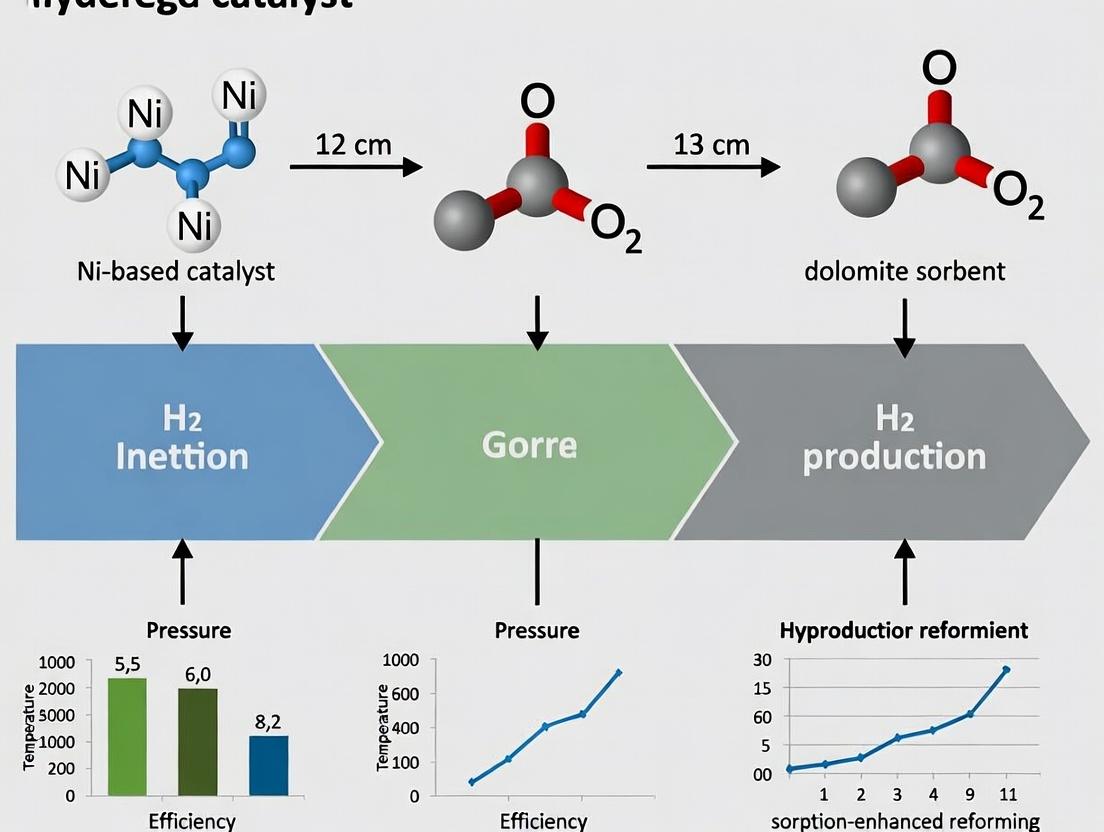
This article provides a comprehensive review of integrated Ni-based catalyst/dolomite sorbent systems for enhanced hydrogen production, primarily via sorption-enhanced steam methane reforming (SE-SMR).
Ni-Dolomite Catalytic Sorbents for Advanced Hydrogen Production: Mechanisms, Applications, and Biorefinery Integration
Abstract
This article provides a comprehensive review of integrated Ni-based catalyst/dolomite sorbent systems for enhanced hydrogen production, primarily via sorption-enhanced steam methane reforming (SE-SMR). Tailored for researchers and process development scientists, we explore the foundational chemistry of Ni catalysis and dolomite CO2 capture, detail synthesis and reactor design methodologies, address critical challenges like sintering and attrition, and present comparative analyses against alternative sorbents and catalysts. The discussion emphasizes the system's potential for high-purity, low-cost H2, relevant to sustainable fuel synthesis and pharmaceutical precursor manufacturing.
The Science Behind Ni/Dolomite Systems: Catalysis, Sorption, and Synergy for H2 Generation
Core Principles of Steam Methane Reforming (SMR) and the Role of Nickel Catalysts
Application Notes
Steam Methane Reforming (SMR) is the dominant industrial process for hydrogen and synthesis gas (syngas) production, accounting for approximately 95% of global H₂ output. Within the context of advanced Ni-based catalyst and dolomite sorbent research for integrated H₂ production with in-situ CO₂ capture, understanding the core principles and catalyst function is paramount.
Core Chemical Principles: The SMR process is described by two primary reversible, endothermic reactions:
- CH₄ + H₂O ⇌ CO + 3H₂ (ΔH°₂₉₈ = +206 kJ/mol) – Steam Reforming
- CO + H₂O ⇌ CO₂ + H₂ (ΔH°₂₉₈ = -41 kJ/mol) – Water-Gas Shift (WGS)
The overall strongly endothermic nature necessitates significant heat input, typically supplied in fired tubular reactors at temperatures between 800°C and 1000°C and pressures of 14-30 bar.
The Critical Role of Nickel Catalysts: Nickel is the catalyst of choice due to its high activity for C-C and C-H bond cleavage, relative abundance, and lower cost compared to noble metals (e.g., Pt, Rh). Its performance is intrinsically linked to:
- Dispersion: High surface area of active Ni⁰ sites.
- Support Interaction: Common supports (Al₂O₃, MgAl₂O₄) stabilize Ni particles and can influence reactivity via metal-support interactions.
- Promoters: Addition of elements like Ca, K, or Ce can enhance resistance to sintering and coking.
A key research challenge in the thesis context is integrating a Ni reforming catalyst with a CaO-based dolomite (CaMg(CO₃)₂) sorbent for sorption-enhanced SMR (SE-SMR). The sorbent, when calcined, removes CO₂ in-situ via carbonation (CaO + CO₂ → CaCO₃), driving the equilibrium of both reactions forward according to Le Chatelier’s principle. This allows for higher CH₄ conversion and H₂ purity at lower temperatures (~550-650°C), but places additional thermal and chemical stresses on the Ni catalyst, necessitating robust, integrated material design.
Primary Deactivation Mechanisms for Ni Catalysts in (SE-)SMR:
- Sintering: Agglomeration of Ni particles at high temperature (>600°C), reducing active surface area.
- Coking: Encapsulating carbon (whisker or graphitic) formation via methane decomposition (CH₄ → C + 2H₂) or the Boudouard reaction (2CO → C + CO₂). This is a major focus for integration with CO₂-sorbing dolomite, as the sorbent's presence can mitigate coking by lowering the local CO/CO₂ partial pressure.
- Sulfur Poisoning: Irreversible chemisorption of H₂S or other sulfur compounds on Ni sites.
Quantitative Data Summary
Table 1: Typical Industrial SMR Operating Parameters and Performance Metrics
| Parameter | Typical Range | SE-SMR Target Range (with Ni/Dolomite) | Notes |
|---|---|---|---|
| Temperature | 800°C - 1000°C | 550°C - 650°C | Lower temp in SE-SMR due to equilibrium shift. |
| Pressure | 14 bar - 30 bar | 1 bar - 20 bar | Pressure swing often used for sorbent regeneration. |
| Steam-to-Carbon (S/C) Molar Ratio | 2.5:1 - 4:1 | 3:1 - 5:1 | Higher S/C reduces coking but increases energy cost. |
| CH₄ Conversion | ~65% - 75% (at equilibrium, 30 bar, 900°C) | >95% (at lower temp, with CO₂ capture) | Enhanced by in-situ CO₂ removal. |
| H₂ Purity (Dry Basis) | 70% - 75% (remainder CO/CO₂) | >95% (dry basis) | Primary goal of SE-SMR process. |
| Ni Loading on Catalyst | 10 wt% - 25 wt% | 5 wt% - 15 wt% | Lower loadings possible in integrated materials. |
Table 2: Key Properties of Common SMR Catalyst Supports & Dolomite Sorbent
| Material | Primary Function | Key Property Relevant to Ni/Dolomite System | Typical Form |
|---|---|---|---|
| γ-Al₂O₃ | Catalyst Support | High surface area (>150 m²/g), acidity can promote coking. | Pellets, spheres |
| MgAl₂O₄ (Spinel) | Catalyst Support | High thermal stability, basicity reduces coking. | Pellets |
| Dolomite (CaMg(CO₃)₂) | CO₂ Sorbent | Source of CaO (upon calcination) for carbonation; MgO provides structural stability. | Crushed powder, pellets |
| Promoted Ni/Al₂O₃ | Reforming Catalyst | K or Ca promotion reduces coking. | Pellets with 10-20% Ni |
Experimental Protocols
Protocol 1: Preparation of a Promoted Ni/Dolomite Integrated Particle for SE-SMR
Objective: To synthesize a combined particle where Ni catalyst is dispersed on a pre-formed dolomite-derived sorbent material.
Materials (Research Reagent Solutions):
- Precursor Solutions: Aqueous solution of Nickel Nitrate Hexahydrate (Ni(NO₃)₂·6H₂O, 1.0M). Aqueous solution of Potassium Nitrate (KNO₃, 0.1M) as promoter.
- Sorbent Core: Calcined dolomite (CaO-MgO) powder (75-150 µm), prepared by calcining natural dolomite at 900°C for 2h in air.
- Equipment: Rotary evaporator, tube furnace, muffle furnace, ultrasonic bath, analytical balance.
Methodology:
- Wet Impregnation: Weigh 10.0 g of calcined dolomite powder. In a beaker, prepare an impregnation solution by mixing 12.5 mL of 1.0M Ni(NO₃)₂ solution and 1.25 mL of 0.1M KNO₃ solution (target: 10 wt% Ni, 0.1 wt% K on final solid).
- Loading: Add the dolomite powder to the solution under ultrasonic agitation for 15 minutes to ensure wetting. Transfer the slurry to a rotary evaporator.
- Drying: Remove water under reduced pressure at 80°C until a damp solid is obtained.
- Drying & Calcination: Transfer the solid to a crucible. Dry overnight at 120°C. Subsequently, calcine in a muffle furnace at 700°C for 3 hours under static air (ramp rate: 5°C/min) to decompose nitrates to oxides.
- Reduction: Prior to testing, reduce the integrated particle in-situ in the reactor under a flow of 20% H₂/N₂ at 650°C for 2 hours to convert NiO to active metallic Ni⁰.
Protocol 2: Catalytic Activity Test for SMR and SE-SMR in a Fixed-Bed Microreactor
Objective: To evaluate CH₄ conversion, H₂ yield, and stability of a Ni-based catalyst or integrated Ni/Dolomite material under SMR and SE-SMR conditions.
Materials (Research Reagent Solutions):
- Reaction Gases: CH₄ (99.99%), N₂ (99.999%), H₂ (99.999%), 20% H₂/N₂ mixture, 10% CO₂/He mixture (for TPD). High-purity deionized water for steam generation.
- Reactor System: Quartz or stainless-steel tubular microreactor (ID = 10 mm), temperature-controlled furnace, mass flow controllers, steam saturator/evaporator maintained at a set temperature to control H₂O partial pressure, downstream condenser, back-pressure regulator.
- Analytical: Online Gas Chromatograph (GC) equipped with TCD and FID detectors, and appropriate columns (e.g., HayeSep Q, MolSieve 5A).
Methodology:
- Reactor Loading: Place 200 mg of the reduced catalyst/sorbent material (sieved to 150-300 µm) in the center of the reactor tube using quartz wool plugs. Load inert quartz granules upstream/downstream for pre-heating and to minimize void volume.
- System Check: Pressure-test the system. Set the GC to analyze product gas every 8-10 minutes.
- SMR Baseline Test: Set reactor to 700°C, 10 bar. Flow a mixture of CH₄, N₂ (internal standard), and steam at S/C=3. Total GHSV ~15,000 h⁻¹. Monitor CH₄ conversion and H₂ yield for 6 hours until steady-state is reached. Record average values.
- SE-SMR Test (with integrated material): Set reactor to 600°C, 5 bar. Flow identical reactant mixture as in step 3. Monitor product composition. The in-situ CO₂ capture will manifest as a rapid increase in H₂ concentration (>90%) and near-zero CO₂ output at the reactor outlet initially.
- Breakthrough Monitoring: Continue the SE-SMR test. The CO₂ sorbent will eventually saturate, observed by a "breakthrough" curve where CO₂ and CO concentrations rise, and H₂ purity drops to SMR equilibrium levels. The time to breakthrough is a key metric for sorbent capacity under reaction conditions.
- Post-Reaction Analysis: Cool reactor under N₂. Perform Temperature-Programmed Oxidation (TPO) on spent material to quantify coke deposits (heating in 2% O₂/He to 900°C).
The Scientist's Toolkit: Key Research Reagents & Materials
Table 3: Essential Reagents for Ni-Catalyst SMR/SE-SMR Research
| Item | Function/Explanation |
|---|---|
| Nickel Nitrate Hexahydrate (Ni(NO₃)₂·6H₂O) | Standard, soluble precursor for Ni catalyst synthesis via impregnation. |
| Natural Dolomite (CaMg(CO₃)₂) | Source material for the CO₂ sorbent component; calcined to produce CaO-MgO. |
| γ-Alumina (γ-Al₂O₃) Support | High-surface-area reference support for conventional Ni catalyst studies. |
| Potassium Nitrate (KNO₃) | Common promoter precursor to enhance Ni catalyst resistance to coking. |
| Ultra-High Purity Gases (CH₄, H₂, N₂) | Essential for reproducible activity testing and catalyst reduction without poisoning. |
| Calibration Gas Mixture (H₂/CO/CO₂/CH₄/N₂) | Critical for accurate quantitative analysis of reactor effluent via GC. |
| Quartz Wool & Granules | Used for reactor packing, providing inert surfaces and securing catalyst bed. |
Diagrams
SMR vs SE-SMR Process Flow
Integrated Catalyst Sorbent Synthesis Workflow
Ni Catalyst Deactivation & Sorbent Interaction
This application note details the experimental protocols for utilizing natural dolomite as a CO2 sorbent in cyclic calcination-carbonation reactions. Within the broader thesis on Ni-based catalyst/dolomite sorbent hydrogen production research, dolomite serves a dual purpose: it acts as a pre-combustion CO2 capture medium in sorption-enhanced reforming processes and provides a stable, low-cost support for Ni catalysts, enhancing resistance to sintering and coke formation. The cyclical capacity of dolomite to capture and release CO2 is central to the efficiency and continuity of hydrogen production systems.
Table 1: Characteristics of Natural Dolomite Sorbents
| Property / Parameter | Typical Range / Value | Measurement Method | Notes |
|---|---|---|---|
| Initial CO2 Uptake Capacity | 0.40 - 0.52 g CO2/g sorbent | Thermogravimetric Analysis (TGA) | Highly dependent on calcination conditions. |
| Capacity after 20 cycles | 0.15 - 0.25 g CO2/g sorbent | TGA | Demonstrates decay; sintering & pore plugging are key factors. |
| Optimal Calcination Temp. | 850 - 950 °C | TGA/DSC | In CO2 or N2 atmosphere; lower temps in inert atmospheres. |
| Optimal Carbonation Temp. | 600 - 750 °C | TGA | Fast reaction-controlled phase occurs within first 5-10 minutes. |
| Particle Size (for testing) | 75 - 150 μm | Sieving | Compromise between kinetics and gas flow/pressure drop. |
| Surface Area (calcined) | 5 - 15 m²/g | BET Analysis | Lower than synthetic sorbents; morphology crucial. |
| Major Deactivation Cause | Sintering of MgO | XRD, SEM | MgO grains coalesce, reducing reactive surface area. |
Table 2: Performance in Cyclic Testing (Representative Data)
| Cycle Number | Carbonation Conversion (%) | Calcination Conditions | Atmosphere for Carbonation |
|---|---|---|---|
| 1 | 90 - 98 | 900°C, N2 | 15% CO2, balanced N2 |
| 10 | 60 - 75 | 900°C, N2 | 15% CO2, balanced N2 |
| 20 | 40 - 55 | 900°C, N2 | 15% CO2, balanced N2 |
| 10 (with steam) | 70 - 80 | 900°C, N2 | 15% CO2, 20% H2O, balanced N2 |
Experimental Protocols
Protocol 1: Preparation and Characterization of Dolomite Sorbent
Objective: To prepare natural dolomite for cyclic testing and characterize its physical and chemical properties.
- Crushing and Sieving: Mechanically crush raw dolomite rock and sieve to obtain the 75-150 μm fraction.
- Washing: Wash with deionized water to remove impurities and dust, then dry at 120°C for 12 hours.
- Initial Calcination: Calcine 2g of dried sample in a muffle furnace at 900°C for 2 hours under air to decompose carbonates and establish a baseline MgO-CaO structure.
- Characterization:
- BET Surface Area: Analyze calcined sample using N2 adsorption.
- XRD: Identify phases (MgO, CaO, CaCO3, inert components).
- SEM: Examine particle morphology and pore structure.
Protocol 2: Cyclic Calcination-Carbonation in a Thermogravimetric Analyzer (TGA)
Objective: To measure the cyclic CO2 capture capacity and decay kinetics of dolomite. Materials: Prepared dolomite (75-150 μm), high-purity N2, CO2, and air gases. Procedure:
- Load 10-20 mg of prepared dolomite into the TGA alumina crucible.
- Initial Calcination: Heat from room temperature to 900°C at 50°C/min under a pure N2 flow (100 mL/min). Hold for 10 minutes to ensure complete decomposition (CaMg(CO3)2 → CaO + MgO + 2CO2).
- Cooling for Carbonation: Cool to the target carbonation temperature (e.g., 650°C) under N2.
- Carbonation Step: Switch the gas to a mixture of 15% CO2 in N2 (total flow 100 mL/min). Maintain isothermal conditions for 20 minutes to allow carbonation (CaO + CO2 → CaCO3; MgO carbonates minimally under these conditions). Record the weight gain.
- Subsequent Calcination: Heat again to 900°C under N2 at 50°C/min and hold for 5 minutes to regenerate the sorbent.
- Repetition: Repeat steps 3-5 for the desired number of cycles (typically 20-50).
- Data Analysis: Calculate carbonation conversion for each cycle as: (actual weight gain / theoretical weight gain for complete CaO conversion) * 100%.
Protocol 3: Multi-Cycle Testing in a Fixed-Bed Reactor for Sorption-Enhanced Reforming Context
Objective: To evaluate dolomite performance under conditions relevant to H2 production with simulated syngas.
- Reactor Setup: Pack a quartz fixed-bed reactor with a mixture of 1g dolomite and 0.2g Ni/Al2O3 catalyst (diluted with inert quartz chips).
- Pre-reduction: Reduce the Ni catalyst at 700°C under 20% H2/N2 for 1 hour.
- Cycle Definition:
- Carbonation/Reforming Step: Feed a gas mixture of 15% CH4, 15% CO2, 20% H2O (steam), balanced N2 at 650°C for 15 minutes. Monitor outlet gases via mass spectrometry for high H2 and low CO2 concentrations.
- Calcination/Purging Step: Switch to pure N2 flow, raise temperature to 900°C, and hold for 10 minutes to release captured CO2.
- Monitoring: Track breakthrough curves for CO2 and H2 yield over multiple cycles to assess sorbent and catalyst stability.
The Scientist's Toolkit
Table 3: Essential Research Reagents and Materials
| Item | Function in Research | Typical Specification / Notes |
|---|---|---|
| Natural Dolomite | Primary CO2 sorbent. Source of CaO and MgO. | High-purity geological sample (>95% CaMg(CO3)2). |
| Ni/Al2O3 Catalyst | Catalyzes reforming reactions (e.g., steam methane reforming) for H2 production. | 10-15 wt% Ni, often promoted. |
| Thermogravimetric Analyzer (TGA) | Core instrument for precise measurement of weight changes during calcination/carbonation. | Must handle high temperatures (up to 1000°C) and corrosive gases. |
| Fixed-Bed Reactor System | Simulates process conditions for integrated sorbent-catalyst testing. | Quartz reactor tube, temperature-controlled furnace, mass flow controllers. |
| Gas Analyzers (MS or GC) | Quantifies product gas composition (H2, CO2, CH4, CO). | Essential for calculating yields and sorbent performance in reactive atmospheres. |
| High-Purity Gases (N2, CO2, H2, CH4) | Provide controlled reaction and purge atmospheres. | 99.999% purity to avoid side reactions and poisoning. |
| Steam Generator | Delivers precise amounts of steam for reforming reactions. | Syringe pump evaporator system. |
Visualization: Process Diagrams
Title: Dolomite Calcination-Carbonation Cycle for CO2 Capture
Title: Experimental Workflow for Dolomite Sorbent Evaluation
This Application Note details the operational principles and experimental protocols for Sorption-Enhanced Reforming (SER), a process intensification strategy central to our thesis on integrated Ni-based catalyst/dolomite sorbent systems for hydrogen production. SER combines catalytic steam methane reforming (SMR) with in-situ CO₂ capture using a solid sorbent, shifting reaction equilibria via Le Chatelier’s principle. This enables high-purity H₂ production at significantly lower temperatures (~500-650°C) than conventional SMR (>800°C), reducing energy demand and capital cost. The cyclic nature of SER—comprising reforming/sorption and sorbent regeneration steps—demands robust, multifunctional materials, the development of which is the core of our Ni/dolomite research.
Core Thermodynamic & Performance Data
Table 1: Key Thermodynamic & Performance Comparison: Conventional SMR vs. SER
| Parameter | Conventional SMR | Sorption-Enhanced Reforming (SER) | Notes/Source |
|---|---|---|---|
| Typical Operating Temperature | 800-950 °C | 500-650 °C | Enables use of cheaper materials. |
| Operating Pressure | 15-30 bar | 5-20 bar | Lower pressure favored for sorption. |
| Theoretical Equilibrium H₂ Purity (Dry Basis) | ~70-76% | >95% (can approach 98%) | At 600°C, 15 bar with full CO₂ capture. |
| Primary Reaction | CH₄ + H₂O ⇌ CO + 3H₂ (ΔH°= +206 kJ/mol) | CH₄ + 2H₂O + (Sorbent) → 4H₂ + (Sorbent·CO₂) | Sorbent removes CO₂, driving reaction forward. |
| Key Advantage | Established technology | High purity in single step, lower temp, pre-combustion CO₂ capture. | |
| Major Challenge | Multiple downstream units (WGS, PSA) required for purification. | Cyclic stability of sorbent, reactor design for cycling. | Focus of current research. |
Table 2: Characteristic Properties of Key Materials in Ni/Dolomite SER Systems
| Material | Primary Function | Typical Composition/Properties | Role in SER Process |
|---|---|---|---|
| Ni-based Catalyst | Activates C-H bonds in methane for reforming. | 10-20 wt% NiO on Al₂O₃, MgAl₂O₄, or CaO-based support. | Provides active sites for SMR and water-gas shift (WGS) reactions. |
| Calcined Dolomite (Sorbent) | In-situ CO₂ capture. | CaO-MgO (from CaMg(CO₃)₂); CaO is active phase. | Chemisorbs CO₂ as CaCO₃, shifting equilibrium. MgO provides structural stability. |
| Integrated Ni/Dolomite Particle | Combined catalysis & sorption. | NiO dispersed on dolomite-derived mixed oxide. | Enhances kinetics, reduces inter-particle mass transfer limitations. |
Detailed Experimental Protocols
Protocol 1: Synthesis of Integrated Ni/Dolomite Catalyst-Sorbent
Objective: Prepare a multifunctional particle with combined catalytic and CO₂ sorption capacity. Materials: Natural dolomite powder, Nickel(II) nitrate hexahydrate, Deionized water. Procedure:
- Dolomite Calcination: Place dolomite powder in a high-temperature furnace. Heat to 900°C under air flow (100 mL/min) for 2 hours to decompose CaMg(CO₃)₂ to a porous CaO-MgO mixture.
- Wet Impregnation: Prepare an aqueous solution of Ni(NO₃)₂·6H₂O with concentration calculated to yield 15 wt% NiO on the calcined support. Slowly add the calcined dolomite to the solution under continuous stirring.
- Aging: Stir the slurry at room temperature for 4 hours, then age without stirring for 12 hours.
- Drying: Evaporate water at 110°C in an oven for 12 hours.
- Final Calcination: Calcine the dried material at 700°C under air for 3 hours to decompose nickel nitrate to NiO.
Protocol 2: Fixed-Bed Reactor Testing for SER Cycles
Objective: Evaluate H₂ purity, methane conversion, and cyclic stability of the material. Materials: Synthesized Ni/dolomite particles, Fixed-bed tubular reactor system, Mass flow controllers, Steam generator, On-line gas chromatograph (GC). Procedure:
- Reactor Loading: Sieve material to 300-500 μm. Load 2.0 g into the reactor’s isothermal zone.
- In-situ Reduction: Heat to 650°C under N₂. Switch to 20% H₂/N₂ for 2 hours to reduce NiO to metallic Ni.
- SER (Reforming/Sorption) Step: Switch feeds to a mixture of CH₄, H₂O (steam), and N₂ (as internal standard) at a Steam-to-Carbon (S/C) ratio of 4.0. Maintain 600°C, 10 bar. Monitor effluent via GC every 5 min. Continue until H₂ purity drops below 90%, indicating sorbent saturation.
- Regeneration Step: Stop CH₄ flow. Switch to pure N₂ to purge reactants. Heat to 750-800°C under N₂ or a diluted CO₂ stream to calcine CaCO₃, releasing concentrated CO₂.
- Cycling: Repeat Steps 3-4 for >20 cycles to assess stability (conversion, sorbent capacity attrition).
Protocol 3: Post-Reaction Characterization (TPO & XRD)
Objective: Quantify carbon deposition and analyze phase composition. Materials: Thermogravimetric Analyzer (TGA), X-Ray Diffractometer. Procedure for Temperature-Programmed Oxidation (TPO):
- Recover spent catalyst-sorbent from reactor after testing.
- Load ~50 mg into TGA. Heat from room temperature to 900°C at 10°C/min in 5% O₂/He.
- Weight loss peaks between 400-700°C indicate combustion of different types of carbonaceous deposits. Procedure for X-Ray Diffraction (XRD):
- Grind sample finely. Load into XRD sample holder.
- Scan 2θ from 10° to 80°. Identify phases: Metallic Ni (44.5°, 51.8°), CaO (37.3°, 53.8°), CaCO₃ (29.4°), MgO (42.9°).
The Scientist's Toolkit: Key Research Reagent Solutions & Materials
Table 3: Essential Research Reagents & Materials for SER Experimentation
| Item | Function in SER Research |
|---|---|
| Nickel(II) Nitrate Hexahydrate | Standard precursor for depositing active Ni catalyst phase via impregnation. |
| Natural Dolomite (CaMg(CO₃)₂) | Economical, naturally occurring precursor for CaO-MgO CO₂ sorbent. |
| High-Purity Gases (CH₄, H₂, N₂, 5% O₂/He) | CH₄ for reforming, H₂ for catalyst reduction, N₂ as purge/internal standard, O₂/He for TPO analysis. |
| Alumina (Al₂O₃) Support | Common inert support for control experiments with separate catalyst & sorbent particles. |
| Thermogravimetric Analyzer (TGA) | Critical for measuring sorbent CO₂ uptake capacity, decomposition temperatures, and carbon deposition. |
| Fixed-Bed Tubular Reactor w/ On-line GC | Bench-scale system for evaluating SER process performance under pressure and temperature cycles. |
Process & Workflow Diagrams
SER Cyclic Process Flow
Thermodynamic Shift in SER vs SMR
Material Testing & Optimization Workflow
Thesis Context: Within a broader investigation of sorption-enhanced reforming for hydrogen production, this document details the application and protocols for preparing, testing, and characterizing Ni/Dolomite hybrid catalysts-sorbents. The focus is on leveraging the synergistic interface to achieve high, stable hydrogen yields through combined catalytic activity and in-situ CO₂ capture.
Protocol: Preparation of Ni-Impregnated Dolomite (Ni/Dolomite) Catalysts
Objective: To synthesize a hybrid material with Ni nanoparticles dispersed on a dolomite (CaMg(CO₃)₂) sorbent support.
Materials & Reagents:
- Dolomite Ore: Crushed and sieved to 150-300 µm. Pre-calcined at 900°C for 4h in air to convert to a mixed oxide (CaO-MgO) form.
- Nickel(II) Nitrate Hexahydrate (Ni(NO₃)₂·6H₂O): ≥97%, precursor for active Ni phase.
- Deionized Water: Solvent for impregnation.
Procedure:
- Support Preparation: Calcine raw dolomite in a muffle furnace. Ramp temperature at 10°C/min to 900°C, hold for 4 hours, then cool in a desiccator.
- Wet Impregnation: Dissolve an appropriate mass of Ni(NO₃)₂·6H₂O in deionized water to achieve a target Ni loading (e.g., 5-15 wt%). Add the calcined dolomite powder to the solution under continuous stirring.
- Drying: Stir the slurry at 80°C for 6 hours until most water evaporates. Subsequently, dry the wet solid in an oven at 110°C overnight.
- Calcination & Reduction: Calcine the dried material at 600°C for 2h in static air. Prior to reaction testing, reduce the catalyst in-situ in a flow of 20% H₂/Ar at 700°C for 1 hour.
Protocol: Activity & Stability Testing via Sorption-Enhanced Steam Methane Reforming (SE-SMR)
Objective: To evaluate hydrogen purity, yield, and stability of the Ni/Dolomite material under cyclic reaction-sorption and regeneration conditions.
Experimental Setup: Fixed-bed tubular reactor (Quartz or Inconel, ID = 10 mm), placed in a temperature-controlled furnace, with on-line gas analysis (GC/TCD).
Standard Test Conditions:
- Mass: 0.5 g catalyst-sorbent.
- Feed: CH₄:H₂O:N₂ = 1:3:1 molar ratio.
- Temperature: 650°C.
- Pressure: 1 atm.
- Gas Hourly Space Velocity (GHSV): 5000 h⁻¹.
- Sorption Phase: 30-minute reaction.
- Regeneration: Switch feed to 100% N₂, heat to 900°C, then introduce pure CO₂ or air for calcination.
Data Collection: Monitor effluent gas composition (H₂, CH₄, CO, CO₂) every 2-3 minutes via GC. Calculate key metrics per cycle.
Table 1: Performance Comparison of Ni/Dolomite vs. Reference Catalysts in SE-SMR at 650°C (Cycle 1)
| Material (10wt% Ni) | H₂ Purity (%) | CH₄ Conversion (%) | H₂ Yield (mol H₂/mol CH₄ fed) | CO₂ Capture Capacity (mmol CO₂/g) |
|---|---|---|---|---|
| Ni/Dolomite | 95.8 ± 0.5 | 92.5 ± 1.2 | 2.81 ± 0.04 | 8.2 ± 0.3 |
| Ni/γ-Al₂O₃ | 78.2 ± 1.0 | 88.1 ± 1.5 | 2.15 ± 0.05 | N/A |
| Physical Mix (Ni/Al₂O₃ + Dolomite) | 91.0 ± 0.8 | 90.3 ± 1.3 | 2.62 ± 0.05 | 7.8 ± 0.4 |
Table 2: Cyclic Stability of Ni/Dolomite (10 wt% Ni) over 20 Sorption-Regeneration Cycles
| Cycle Number | H₂ Purity (%) | H₂ Yield (mol/mol) | Residual Capacity (% of Cycle 1) |
|---|---|---|---|
| 1 | 95.8 | 2.81 | 100.0 |
| 5 | 95.1 | 2.78 | 97.5 |
| 10 | 94.3 | 2.73 | 92.8 |
| 15 | 93.5 | 2.70 | 89.1 |
| 20 | 92.9 | 2.67 | 86.4 |
The Scientist's Toolkit: Key Research Reagent Solutions & Materials
Table 3: Essential Materials for Ni/Dolomite SE-SMR Research
| Item | Function/Explanation |
|---|---|
| Dolomite (CaMg(CO₃)₂) | Natural, low-cost dual-function material. Provides MgO structural promoter and CaO for in-situ CO₂ sorption. |
| Nickel Nitrate Hexahydrate | Common Ni precursor for wet impregnation, offering good solubility and dispersion. |
| γ-Al₂O₃ Support (Reference) | Standard, high-surface-area inert support for comparative catalytic studies. |
| High-Temperature Alloy Reactor Tubes | Withstand harsh SE-SMR conditions (steam, high T) and cyclic calcination/oxidation. |
| On-line Micro-GC with TCD | Provides rapid, quantitative analysis of product gas composition (H₂, CO, CO₂, CH₄). |
| Thermogravimetric Analyzer (TGA) | Critical for measuring precise CO₂ sorption capacities and decomposition temperatures. |
Visualization of Key Concepts and Workflows
Title: Ni/Dolomite Catalyst Synthesis & Testing Workflow
Title: Synergistic Mechanism at Ni/Dolomite Interface
Within the context of Ni-based catalyst/dolomite sorbent research for hydrogen production via sorption-enhanced processes (e.g., SE-SMR), the interplay of key material properties dictates system performance. High surface area and tailored porosity in the dolomite (CaMg(CO₃)₂) sorbent facilitate CO₂ capture capacity and kinetics, while high Ni dispersion on a catalyst support (e.g., Al₂O₃) maximizes steam reforming activity and minimizes carbon deposition. This synergy enables in-situ CO₂ removal, shifting equilibrium for higher hydrogen yield and purity. The following protocols detail standardized methods for characterizing these critical properties.
Experimental Protocols
Protocol 1: N₂ Physisorption for Surface Area & Porosity
Objective: Determine BET surface area, pore volume, and pore size distribution of dolomite sorbent and catalyst support. Principle: Physical adsorption of N₂ gas at 77 K. Materials: Degassed powder sample, N₂ gas (99.999%), liquid N₂ bath, physisorption analyzer. Procedure:
- Degassing: Place ~0.2-0.5 g of sample in a glass cell. Degas at 300°C under vacuum for 6-12 hours to remove adsorbed contaminants.
- Analysis: Immerse sample cell in liquid N₂. Admit controlled doses of N₂ gas. Measure equilibrium pressure and volume adsorbed at each point.
- BET Calculation: Use adsorption data in the relative pressure (P/P₀) range of 0.05-0.30. Apply the BET equation to calculate specific surface area.
- Porosity: Total pore volume is taken as the liquid volume of N₂ adsorbed near P/P₀ = 0.99. Pore size distribution is calculated from the adsorption isotherm using the BJH or DFT method.
Protocol 2: H₂ Chemisorption for Ni Dispersion
Objective: Measure active Ni metal surface area, dispersion, and average crystallite size. Principle: Selective chemisorption of H₂ on reduced Ni⁰ sites. Materials: Reduced catalyst sample, H₂/Ar mixture (10% H₂), Argon (99.999%), TCD detector. Procedure:
- Reduction: Load ~0.1 g of catalyst. Flush with Ar. Heat to 500°C (10°C/min) under H₂/Ar flow (60 ml/min) for 2 hours. Cool to 40°C in Ar.
- Pulse Chemisorption: At 40°C, inject calibrated pulses of H₂/Ar mixture into the Ar carrier gas flowing over the sample. Measure unadsorbed H₂ via TCD.
- Calculation: Assume a H:Ni stoichiometry of 1:1. Ni dispersion (%) = (Number of surface Ni atoms / Total number of Ni atoms) × 100. Average crystallite size (nm) is estimated using a spherical model.
Protocol 3: Thermogravimetric Analysis (TGA) for Sorbent Capacity
Objective: Determine cyclic CO₂ capture capacity of dolomite sorbent. Principle: Measure weight change during carbonation (CO₂ uptake) and calcination (sorbent regeneration). Materials: Powdered dolomite, CO₂ (100%), N₂ (100%), TGA balance. Procedure:
- Calcination: Heat ~20 mg sample to 850°C at 20°C/min under N₂ (50 ml/min), hold for 10 min to decompose CaCO₃ to CaO.
- Carbonation: Cool to 650°C (typical carbonation temperature), switch gas to 100% CO₂ (50 ml/min), hold for 30 min. Record weight gain.
- Calculation: Sorbent capacity (g CO₂/g sorbent) = (Weight after carbonation - Weight after calcination) / (Weight after calcination). Perform multiple cycles to assess stability.
Table 1: Typical Property Ranges for Materials in SE-SMR Research
| Material | BET Surface Area (m²/g) | Pore Volume (cm³/g) | Ni Dispersion (%) | CO₂ Capacity (g/g) |
|---|---|---|---|---|
| Calcined Dolomite | 10 - 50 | 0.05 - 0.20 | N/A | 0.40 - 0.50 (1st cycle) |
| Ni/Al₂O₃ Catalyst | 100 - 250 | 0.25 - 0.50 | 3 - 12 (5-15 wt% Ni) | N/A |
| γ-Al₂O₃ Support | 150 - 300 | 0.40 - 0.80 | N/A | N/A |
Table 2: Interplay of Properties on SE-SMR Performance
| Key Property | Primary Impact on Process | Target Optimization |
|---|---|---|
| Dolomite Porosity | CO₂ diffusion & capture kinetics; stability over cycles | Hierarchical porosity (micro/meso). |
| Ni Dispersion | Methane conversion rate; resistance to coking | Use of structured supports & promoters. |
| Sorbent Capacity | Duration of high-purity H₂ production window; sorbent lifetime | Doping with Mg, Zr, etc. to resist sintering. |
Visualizations
Title: Synergy of Sorbent and Catalyst Properties
Title: Surface Area & Porosity Workflow
Title: Ni Dispersion Measurement Protocol
The Scientist's Toolkit
Table 3: Essential Research Reagents & Materials
| Item | Function in Research | Example/Note |
|---|---|---|
| Dolomite (CaMg(CO₃)₂) | Primary CO₂ sorbent material. | Natural or synthetic; purity >95%. |
| Nickel Nitrate (Ni(NO₃)₂·6H₂O) | Common Ni precursor for catalyst impregnation. | Aqueous solution for wet impregnation. |
| γ-Alumina (γ-Al₂O₃) | High-surface-area catalyst support. | Pellets or powder; 150-300 m²/g. |
| High-Purity Gases (H₂, N₂, CO₂, Ar) | For reaction, analysis, purge, and calibration. | 99.999% purity to avoid poisoning. |
| Liquid Nitrogen | Cryogen for N₂ physisorption analysis. | Maintains bath at 77 K. |
| Thermogravimetric Analyzer (TGA) | Measures sorbent capacity via weight change. | Allows precise temperature & gas control. |
| Chemisorption/Physisorption Analyzer | Quantifies surface area, porosity, metal dispersion. | Equipped with micropore & mesopore modules. |
| Tube Furnace with Quartz Reactor | For catalyst/sorbent pretreatment & reactivity testing. | With precise temperature controllers. |
Synthesizing and Deploying Ni-Dolomite Systems: From Lab-Scale to Pilot Reactors
This document provides detailed application notes and experimental protocols for three core synthesis techniques used in the development of integrated sorbent-catalysts. Within the broader thesis on "Advanced Ni-based Catalyst/Dolomite Sorbent Materials for Sorption-Enhanced Steam Methane Reforming (SE-SMR) for Hydrogen Production," these methods are critical for fabricating materials where a nickel catalyst and a calcium-based (dolomite) CO₂ sorbent are combined into a single, multifunctional particle. The choice of synthesis technique directly influences the material's texture, Ni dispersion, Ni-sorbent interaction, and ultimately, its cyclic stability and hydrogen purity.
Table 1: Comparative Analysis of Synthesis Techniques for Ni/Dolomite Materials
| Parameter | Wet Impregnation | Co-precipitation | Mechanical Mixing |
|---|---|---|---|
| Core Principle | Dispersion of active phase precursor onto pre-formed support. | Simultaneous precipitation of multiple precursors from a solution. | Physical blending of pre-synthesized catalyst and sorbent powders. |
| Ni-Dolomite Interaction | Moderate (surface coating). | High (atomic-level mixing, may form mixed phases). | Low (primarily inter-particle contact). |
| Ni Dispersion | Generally high, dependent on conditions. | Can be very high; uniform distribution. | Poor; depends on blend homogeneity. |
| Typical Porosity | Preserves support porosity; may cause pore blocking. | Creates its own porous structure. | Simple combination of parent material porosities. |
| Process Complexity | Low to Medium. | High (requires pH control, aging, washing). | Very Low. |
| Scalability | Excellent. | Challenging for large-scale uniform batches. | Excellent and cost-effective. |
| Key Challenge | Achieving uniform loading; potential for weak binding. | Reproducibility; washing away impurities (e.g., Na⁺, NO₃⁻). | Lack of strong integration, leading to rapid attrition and segregation. |
| Best for Thesis Context | Testing varied Ni loadings on a standard dolomite support. | Creating novel, intimately mixed phases for enhanced stability. | Initial proof-of-concept or baseline cyclic testing. |
Detailed Experimental Protocols
Protocol: Wet Impregnation for Ni/Dolomite Synthesis
Objective: To deposit a controlled amount of NiO onto pre-calcined dolomite granules.
Research Reagent Solutions & Key Materials:
- Pre-calcined Dolomite Support: (CaMg(CO₃)₂, calcined at 900°C for 2h to form CaO-MgO). Function: Provides the sorbent matrix and catalyst support.
- Nickel(II) Nitrate Hexahydrate (Ni(NO₃)₂·6H₂O): Function: The most common Ni precursor due to high solubility and clean decomposition.
- Deionized Water: Function: Solvent for the impregnation solution.
- Rotary Evaporator: Function: For controlled solvent removal to ensure uniform deposition.
Methodology:
- Support Preparation: Crush and sieve calcined dolomite to the desired particle size (e.g., 150-300 µm). Dry at 120°C for 12 hours.
- Solution Preparation: Dissolve the required mass of Ni(NO₃)₂·6H₂O in deionized water to achieve the target Ni loading (e.g., 10-15 wt.% NiO). Use the incipient wetness method: the solution volume should equal or slightly less than the total pore volume of the support.
- Impregnation: Add the solution dropwise to the dolomite support under continuous manual or mechanical stirring. Ensure all granules are uniformly wetted.
- Drying: Age the wet material at room temperature for 2-4 hours. Then, dry in an oven at 110°C for 12 hours.
- Calcination: Calcine the dried material in a muffle furnace at a heating rate of 5°C/min to 600°C and hold for 4 hours in static air to decompose the nitrate to NiO.
Protocol: Co-precipitation for Intimate Ni-Ca-Mg-O Composite Synthesis
Objective: To co-precipitate Ni, Ca, and Mg hydroxides/carbonates for an atomically integrated sorbent-catalyst.
Research Reagent Solutions & Key Materials:
- Metal Nitrate Precursors: Ni(NO₃)₂·6H₂O, Ca(NO₃)₂·4H₂O, Mg(NO₃)₂·6H₂O. Function: Provide metal cations. Chosen for solubility.
- Precipitating Agent: Sodium Carbonate (Na₂CO₃) or a mixed NaOH/Na₂CO₃ solution. Function: Provides CO₃²⁻/OH⁻ ions to induce precipitation.
- pH Meter & Controller: Function: Critical for controlling precipitation kinetics and phase purity.
- Centrifuge & Wash Solution (Ammonium Nitrate, NH₄NO₃): Function: For efficient solid-liquid separation and removal of sodium ions.
Methodology:
- Solution Preparation: Prepare a 1.0 M mixed metal nitrate solution with the desired Ni:Ca:Mg molar ratio (e.g., corresponding to 12 wt.% NiO on a dolomite base). Prepare a separate 1.0 M Na₂CO₃ solution.
- Precipitation: Simultaneously add both solutions dropwise into a beaker containing a low volume of deionized water under vigorous stirring. Maintain the pH constant at 10.0 ± 0.2 using a pH stat. Keep temperature at 60°C.
- Aging: Once addition is complete, continue stirring the slurry at 60°C for 18 hours (aging).
- Washing & Filtration: Filter the precipitate and wash repeatedly with hot deionized water (60°C) until the filtrate conductance is < 100 µS/cm. A final wash with dilute NH₄NO₃ solution can aid in Na⁺ removal.
- Drying & Calcination: Dry the filter cake at 110°C for 24 hours. Crush and sieve. Calcine at 700°C for 4 hours in air to form the mixed oxide phase.
Protocol: Mechanical Mixing for Baseline Comparison
Objective: To physically combine pre-formed NiO catalyst and calcined dolomite sorbent.
Research Reagent Solutions & Key Materials:
- Pre-synthesized NiO/Al₂O₅ Catalyst Powder: (e.g., commercial or lab-made via impregnation). Function: Provides the catalytic function.
- Pre-calcined Dolomite Powder: (CaO-MgO). Function: Provides the CO₂ sorption function.
- Mortar and Pestle or Ball Mill: Function: For achieving a homogeneous physical mixture.
Methodology:
- Component Preparation: Ensure both NiO catalyst and calcined dolomite are in powdered form (< 50 µm).
- Weighing: Weigh the two components to achieve the desired overall Ni loading (e.g., 10 wt.% NiO relative to total solid).
- Mixing: Combine the powders in a mortar and grind thoroughly for 30 minutes. For better homogeneity, use a low-energy ball mill (e.g., jar mill) for 2 hours without milling media or with a single large ball.
- Pelletization (Optional): The mixed powder can be pressed into pellets (e.g., at 5 tons for 2 min) and then crushed and sieved to the desired granule size for reactor testing.
Visualized Workflows & Relationships
Synthesis Route Decision & Evaluation Workflow
Co-precipitation Experimental Workflow
This document provides detailed application notes and experimental protocols for the evaluation of reactor configurations within a broader thesis research program focused on Ni-based catalyst/dolomite sorbent hydrogen production via Sorption-Enhanced Steam Methane Reforming (SE-SMR). The primary objective is to compare the performance, operational nuances, and suitability of Fixed-Bed (FB), Fluidized-Bed (FBR), and Dual-Bed (DB) reactor designs for the cyclic SE-SMR process, where in-situ CO₂ capture by dolomite shifts thermodynamic equilibrium, enabling high-purity H₂ production at lower temperatures.
Comparative Analysis of Reactor Configurations
The choice of reactor configuration critically impacts mass/heat transfer, solid management (sorbent/catalyst), cyclic stability, and overall process efficiency.
Table 1: Comparative Summary of Reactor Designs for SE-SMR
| Parameter | Fixed-Bed (FB) | Fluidized-Bed (FBR) | Dual-Bed (DB) |
|---|---|---|---|
| Flow Regime | Packed solid phase, gaseous reactants flow through. | Solid particles fluidized by upward gas flow. | Two interconnected reactors: reformer (FB/FBR) & regenerator (FB/FBR). |
| Heat Transfer | Moderate; potential for hot/cold spots. | Excellent; near-isothermal conditions. | Can be optimized separately for each reactor. |
| Mass Transfer | Diffusion-limited in packed particles. | Enhanced gas-solid contact; minimizes diffusion. | Dependent on individual bed design. |
| Solid Handling | Static; requires cyclic switching of entire reactor. | Dynamic; enables continuous solid circulation. | Solids (sorbent) may be transported or switched between beds. |
| Pressure Drop | High. | Moderate to low. | Varies; can be high if fixed-beds are used. |
| Cyclic Operation | Temporal (swing): React → Regenerate in same vessel. | Can be temporal or spatial (continuous circulation). | Spatial: Continuous separation of reaction zones. |
| Scale-Up Challenge | Managing thermal gradients and switching valves. | Solid attrition, erosion, and circulation control. | Complexity of dual-reactor integration and solid transfer. |
| Typical H₂ Purity (Dry Basis) | >95% achievable. | >95% achievable with good fluidization. | Often >98% due to precise zone separation. |
| Key Advantage | Simplicity of design, no solid transport. | Superior temperature uniformity, continuous operation potential. | Simultaneous continuous H₂ production and sorbent regeneration. |
Experimental Protocols for Reactor Performance Evaluation
Protocol 1: Preparation of Ni-based Catalyst/Dolomite Sorbent Composite Pellets
- Objective: Synthesize robust composite particles for FB and FBR testing.
- Materials: Nickel nitrate hexahydrate (Ni precursor), natural dolomite powder (CaMg(CO₃)₂), alumina binder (γ-Al₂O₃), deionized water.
- Procedure:
- Dolomite Calcination: Crush and sieve dolomite to 100-300 µm. Calcine at 900°C for 2 hours under air to produce CaO/MgO.
- Wet Impregnation: Dissolve stoichiometric Ni(NO₃)₂·6H₂O to achieve 10-15 wt% Ni loading. Impregnate calcined dolomite support.
- Aging & Drying: Age slurry for 12 hours, dry at 110°C for 12 hours.
- Pelletization & Calcination: Mix with 5% alumina binder, pelletize, and crush to desired particle size range (FB: 1-3 mm; FBR: 150-300 µm). Final calcination at 600°C for 4 hours.
- Quality Control: Measure Ni dispersion via H₂ chemisorption. Confirm sorbent capacity via Thermogravimetric Analysis (TGA).
Protocol 2: Bench-Scale Fixed-Bed Reactor SE-SMR Test
- Objective: Evaluate cyclic reaction/regeneration performance in a temporal mode.
- Reactor Setup: Stainless steel tube (ID: 1/2 inch), placed in a 3-zone furnace. Upstream mass flow controllers for gases (CH₄, H₂O/N₂, air). Downstream online gas analyzer (GC or MS).
- Procedure:
- Load 5-10 g of composite pellets into reactor (bed length-to-diameter ratio >5).
- Reduction: Reduce catalyst in-situ under 20% H₂/N₂ at 600°C for 2 hours.
- SE-SMR Cycle: (i) Reaction Step: Feed CH₄ and steam (S/C ratio = 3-4) at 550-650°C, 1-5 atm. Monitor H₂ purity and CH₄ conversion for ~20-30 mins until CO₂ breakthrough. (ii) Regeneration Step: Switch feed to air/N₂ or pure CO₂ at 700-850°C to calcine sorbent and burn off coke.
- Repeat cycle 50-100 times to assess stability.
- Data Analysis: Calculate time-averaged H₂ purity, CH₄ conversion, and sorbent working capacity (mol CO₂ captured / kg sorbent).
Protocol 3: Fluidized-Bed Reactor Hydrodynamics & Reaction Testing
- Objective: Determine minimum fluidization velocity (Umf) and assess SE-SMR performance under fluidized conditions.
- Setup: Quartz or stainless steel column with porous gas distributor. Differential pressure transducers to measure bed pressure drop vs. gas velocity.
- Procedure:
- Umf Determination: Load 50-100 g of composite particles (150-300 µm). Increase N₂ flow incrementally while recording ΔP. Umf is identified at the point where ΔP plateaus.
- SE-SMR in Bubbling Fluidization: Operate at ~2-3x Umf. Perform cyclic or continuous solid circulation tests if system allows. Feed conditions similar to Protocol 2.
- Attrition Test: Operate reactor with particles for 24-48 hours under reaction/regeneration cycles. Collect elutriated fines and measure particle size distribution of bed material post-test.
- Analysis: Relate gas velocity to bed expansion. Correlate attrition rate with changes in reactivity.
Protocol 4: Dual-Bed (Continuous) System Integration Test
- Objective: Demonstrate continuous H₂ production by coupling a reformer and a regenerator.
- Setup: Two interconnected reactors (e.g., two FB or a riser-reformer with FB-regenerator). Solid transfer system (e.g., loop-seals, valves). Independent temperature and feed control for each vessel.
- Procedure:
- Load fresh/composite sorbent-catalyst into the reformer.
- Continuous Operation: (i) Reformer operates at 600°C on CH₄/steam. (ii) Spent sorbent is continuously/pulsedly transported to the regenerator. (iii) Regenerator operates at 850°C on air, re-calcining sorbent. (iv) Regenerated sorbent is returned to reformer.
- Monitor steady-state H₂ purity from reformer and CO₂ concentration from regenerator exhaust.
- Analysis: Calculate continuous H₂ production rate, sorbent circulation rate, and overall energy balance.
Visualizations
Diagram 1: Core SE-SMR Process Flow with Reactor Links
Diagram 2: Fixed-Bed SE-SMR Cyclic Experimental Workflow
The Scientist's Toolkit: Key Research Reagent Solutions & Materials
Table 2: Essential Materials for Ni/Dolomite SE-SMR Research
| Material/Reagent | Specification / Grade | Primary Function in Experiment |
|---|---|---|
| Nickel Nitrate Hexahydrate | Ni(NO₃)₂·6H₂O, ACS Reagent, ≥98.5% | Precursor for active Ni metal phase on catalyst/sorbent composite. |
| Natural Dolomite | Powder, high-purity (≥95% CaMg(CO₃)₂) | Source of in-situ CO₂ sorbent (CaO) after calcination; also provides MgO structural promoter. |
| γ-Alumina (γ-Al₂O₃) | High-surface-area powder (>150 m²/g) | Binder for pellet integrity; also acts as catalyst support, stabilizing Ni particles. |
| High-Purity Gases | CH₄ (99.97%), H₂ (99.999%), N₂ (99.999%), Air (Zero grade), 10% CO₂ in N₂ | Feedstock (CH₄), reduction agent (H₂), inert carrier (N₂), regeneration agent (Air/CO₂). |
| Deionized Water | Resistivity >18 MΩ·cm | Solvent for impregnation; source of steam for reforming reaction. |
| Quartz Wool / Beads | High-temperature grade | Used for bed support and preheating zones in tubular reactors. |
| Reference Catalysts | e.g., Commercial Ni/Al₂O₃, Pt/Al₂O₃ | Benchmarks for comparing the activity and stability of synthesized composite materials. |
| Particle Size Standards | Certified silica or glass beads (75-300 µm) | For calibrating and validating fluidized-bed hydrodynamic measurements (Umf). |
Within the broader thesis on integrated Ni-based catalyst/dolomite sorbent systems for hydrogen production via sorption-enhanced reforming, the optimization of core process parameters is critical. These parameters—temperature, pressure, steam-to-carbon (S/C) ratio, and space velocity—directly govern reaction kinetics, thermodynamic equilibria (particularly for in-situ CO₂ removal by dolomite), catalyst activity, sorbent stability, and ultimately, hydrogen purity and yield. This application note provides detailed protocols and consolidated data for researchers aiming to optimize these parameters in experimental setups ranging from microreactors to pilot-scale units.
Key Parameter Definitions & Impact Analysis
Table 1: Operational Ranges and Effects of Key Process Parameters in Sorption-Enhanced Reforming Using Ni/Dolomite Systems
| Parameter | Typical Investigative Range | Primary Effect on Reaction | Optimal Range for Max H₂ Purity | Impact on Dolomite Sorbent |
|---|---|---|---|---|
| Temperature | 550°C – 700°C | ↑ Enhances reforming kinetics & methane conversion. ↑ Favors endothermic reforming. ↓ High T can degrade sorbent capacity. | 600°C – 650°C | Carbonation (CO₂ capture) is exothermic; optimal T balances kinetics & equilibrium. High T (>700°C) sinters sorbent. |
| Pressure | 1 – 20 bar | ↑ Favors methanation (undesired) at reformer conditions. ↓ Lower P favors higher H₂ yield thermodynamically. | 5 – 15 bar (often ambient for SE processes) | Higher pressure favors carbonation equilibrium, enhancing in-situ CO₂ removal. |
| S/C Ratio | 2.0 – 5.0 (mol/mol) | ↑ Excess steam drives reforming equilibrium, suppresses coke. ↑ Increases energy load. | 3.0 – 4.0 | Steam partial pressure critical for sorbent regeneration (calcination) in cyclic operations. |
| Space Velocity (GHSV) | 5,000 – 30,000 h⁻¹ | ↑ Shortens contact time, may reduce conversion. ↑ Increases throughput. ↓ Low GHSV may induce coking. | 10,000 – 20,000 h⁻¹ | Lower GHSV allows longer contact for effective CO₂ adsorption. Affects sorbent cycle duration. |
Table 2: Target Performance Metrics Based on Recent Literature (2023-2024)
| Optimized Condition (Example) | H₂ Purity (Dry Basis) | CH₄ Conversion | CO₂ Capture Efficiency | Reference System |
|---|---|---|---|---|
| 625°C, 5 bar, S/C=3.5, GHSV=15,000 h⁻¹ | 95-98% | >92% | >85% | Ni/Al₂O₃ on dolomite, fixed-bed |
| 600°C, 1 bar, S/C=4.0, GHSV=10,000 h⁻¹ | >99% | ~90% | >90% | Ni-CaO-alumina hybrid pellet |
| 650°C, 10 bar, S/C=3.0, GHSV=20,000 h⁻¹ | 93-96% | >94% | 75-80% | Dual-bed reactor, Ni catalyst + dolomite |
Detailed Experimental Protocols
Protocol 1: High-Throughput Screening of Temperature and S/C Ratio
Objective: To identify the synergistic effect of temperature and S/C ratio on hydrogen yield and sorbent carbonation in a single microreactor run.
Materials: See "The Scientist's Toolkit" below. Method:
- Catalyst/Sorbent Preparation: Load a well-mixed composite pellet of Ni-based catalyst and pre-calcined dolomite (1:2 mass ratio) into a tubular fixed-bed reactor (ID = 10 mm). Ensure bed height is consistent.
- System Pre-treatment: Reduce the catalyst under 50% H₂/N₂ at 500°C for 2 hours. Purge with inert gas.
- Parameter Programming: Using mass flow controllers and a steam generator, program a stepped experimental matrix:
- Hold pressure at 1 atm and GHSV at 10,000 h⁻¹.
- Start at T=550°C, S/C=2.0. Hold for 45 mins to reach steady-state.
- Measure product gas via online GC every 5 mins for the final 20 mins.
- Sequentially increase S/C to 3.0, 4.0, and 5.0, holding at each condition.
- Repeat the entire S/C sequence at 600°C and 650°C.
- Data Collection: Analyze for H₂, CH₄, CO, CO₂ concentrations. Calculate CH₄ conversion, H₂ yield, and approximate CO₂ capture (from CO₂ concentration depression).
- Post-run: Perform Temperature-Programmed Oxidation (TPO) on spent material to quantify coke deposition.
Protocol 2: Pressure and Space Velocity (GHSV) Optimization Cycle
Objective: To determine the pressure and contact time envelope for maximizing throughput while maintaining high purity.
Method:
- Reactor Setup: Use a high-pressure fixed-bed reactor system rated to 30 bar.
- Baseline: Set T=600°C, S/C=3.5. Stabilize system at P=1 bar, GHSV=5,000 h⁻¹.
- Pressure Ramp: Incrementally increase pressure to 5, 10, 15, and 20 bar. At each pressure, allow 1 hour for stabilization before taking triplicate GC samples over 30 minutes.
- GHSV Variation: At the pressure yielding the highest H₂ purity from step 3, sequentially increase GHSV to 10,000, 20,000, and 30,000 h⁻¹. Stabilize for 45 mins at each new flow rate before measurement.
- Sorbent Assessment: After the run, perform a controlled calcination (TGA or in-situ) to measure the weight loss attributable to captured CO₂ at each significant condition point, correlating it with the recorded CO₂ breakthrough times.
Diagrams
Diagram Title: Process Parameter Optimization Workflow
Diagram Title: Parameter Impact on Key Outputs
The Scientist's Toolkit
Table 3: Essential Research Reagents & Materials for Ni/Dolomite Sorption-Enhanced Reforming Studies
| Item | Typical Specification/Example | Primary Function in Optimization |
|---|---|---|
| Ni-based Catalyst | 10-15 wt% NiO on γ-Al₂O₅ or CaO-Al₂O₅ support | Active phase for steam reforming and water-gas shift reactions. |
| Dolomite Sorbent | Pre-calcined, particle size 150-300 µm. (CaMg(CO₃)₂ → CaO·MgO) | In-situ CO₂ removal via carbonation (CaO + CO₂ → CaCO₃), shifting equilibrium. |
| Steam Generator | High-precision syringe pump with vaporization chamber. | Delivers precise, pulsed, or continuous steam flow for accurate S/C ratio control. |
| Mass Flow Controllers (MFCs) | Multiple channels, for H₂, N₂, CH₄, calibration gases. | Precisely controls feed gas composition and total flow rate (GHSV). |
| High-T/P Reactor | Tubular fixed-bed, Inconel or SS316, rated >700°C & 30 bar. | Contains the catalyst/sorbent bed under optimized process conditions. |
| Online Gas Analyzer | Micro-GC or FTIR with TCD & FID detectors. | Provides real-time, quantitative analysis of H₂, CH₄, CO, CO₂ for yield/purity calc. |
| Thermogravimetric Analyzer (TGA) | High-pressure capable optional. | Quantifies sorbent CO₂ uptake capacity, coke deposition (via TPO), and stability over cycles. |
| Calibration Gas Mixture | Certified H₂/CO/CO₂/CH₄/N₂ blends. | Essential for accurate calibration of all gas analysis equipment. |
Within a thesis on "Advanced Ni-based Catalyst and Dolomite Sorbent Systems for Sorption-Enhanced Hydrogen Production via Steam Methane Reforming (SE-SMR)," the integration of CO₂ capture is paramount. This research focuses on comparing in-situ (integrated within the reactor) and ex-situ (separate, cyclic units) capture strategies using CaO-based sorbents like dolomite (CaMg(CO₃)₂). The operational strategy and cycle design directly impact sorbent stability, catalyst performance, and overall hydrogen purity and yield.
Application Notes: Comparative Operational Strategies
Table 1: In-Situ vs. Ex-Situ CO₂ Capture for SE-SMR
| Parameter | In-Situ Capture | Ex-Situ Capture |
|---|---|---|
| Process Configuration | Sorbent (dolomite) and catalyst (Ni/Al₂O₃) are physically mixed in a single reactor. | Sorbent and catalyst are housed in separate, interconnected reactors. |
| Primary Advantage | Simpler reactor design; continuous, simultaneous reaction and capture. | Independent optimization of reaction & regeneration conditions; mitigates sorbent-catalyst deactivation. |
| Primary Challenge | Synchronized deactivation; possible Ni sintering from high temp regeneration in reactive environment. | Complex system design & solid circulation logistics; potential for sorbent attrition. |
| Typical H₂ Purity (Dry Basis) | 95-99% (theoretical, per Le Chatelier's principle). | >95%, dependent on capture unit efficiency and cycling. |
| Sorbent Cycle Life | Often lower (≤50 cycles) due to harsh, combined conditions. | Potentially higher (≥100 cycles) with optimized, separate regeneration. |
| Key Design Focus | Composite material development (catalyst-sorbent). | Dual reactor cycle design & heat integration. |
| Thesis Relevance | Studies direct interaction and co-deactivation mechanisms. | Enables study of isolated Ni catalyst stability and dolomite sorbent cyclability. |
Table 2: Quantitative Performance Data from Recent Studies (2022-2024)
| Study Focus | Capture Mode | Sorbent | Catalyst | Max H₂ Purity | Cyclic Stability (Key Metric) |
|---|---|---|---|---|---|
| SE-SMR with doped sorbent | In-Situ | Zr-doped Dolomite | Ni/Al₂O₃ | 98.2% | 25% capacity loss after 20 cycles. |
| Dual-loop fluidized bed | Ex-Situ | Calcined Dolomite | Ni-Ce/Al₂O₃ | 96.5% | 90% of initial capacity retained after 100 cycles. |
| Chemical Looping SMR | Ex-Situ (implicit) | Synthetic CaO | NiO/NiAl₂O₄ | 99.0%* | Stable CO₂ capture for 50 redox cycles. |
| In-situ with structured composite | In-Situ | Dolomite-CaZrO₃ | Ni integrated | 97.8% | <10% decay over 30 cycles under severe conditions. |
*In chemical looping, high purity is achieved via inherent separation.
Experimental Protocols
Protocol 1: In-Situ SE-SMR Testing with Dolomite & Ni Catalyst Mixture
- Objective: Evaluate simultaneous methane reforming and CO₂ capture in a single fixed-bed reactor.
- Materials: Ni/Al₂O₃ catalyst (15-20 wt% Ni), calcined dolomite (CaO/MgO) sorbent (60-100 mesh), α-Al₂O₃ diluent, 50/50 vol% H₂/N₂ reduction gas, reaction gas (CH₄, H₂O, N₂).
- Procedure:
- Bed Preparation: Physically mix 1g catalyst with 5g sorbent (5:1 sorbent-to-catalyst weight ratio) and dilute with inert α-Al₂O₃. Load into a quartz tubular reactor (ID 10mm).
- Pre-treatment: Heat to 650°C under N₂ flow (100 mL/min). Reduce catalyst under 50 mL/min H₂/N₂ at 650°C for 2 hours.
- Reaction/Capture Step: Switch to reaction gas mixture (CH₄:H₂O:N₂ = 1:3:1 molar ratio). Maintain at 650°C, 1 atm, with total GHSV of 10,000 h⁻¹ for 30 minutes. Monitor effluent via online GC (TCD).
- Sorbent Regeneration: Switch to pure N₂, then increase temperature to 850-900°C under pure N₂ or a diluted CO₂ stream. Hold for 10-15 min to calcine sorbent (release CO₂).
- Cycling: Cool reactor to 650°C under N₂ and repeat steps 3-4 for ≥20 cycles.
- Analysis: Calculate H₂ purity, CH₄ conversion, and CO₂ capture capacity per cycle. Perform post-mortem XRD, BET, and SEM on spent materials.
Protocol 2: Ex-Situ Dual Reactor Cycling for Dolomite Sorbent Evaluation
- Objective: Assess cyclic CO₂ capture capacity and stability of dolomite sorbent under separate carbonation/calcination conditions.
- Materials: Calcined dolomite sorbent, simulated SE-SMR reformate gas (75% H₂, 20% CO₂, 5% CH₄, balanced with N₂), air or N₂ for regeneration.
- Procedure:
- Reactor Setup: Use two interconnected fluidized bed reactors or a switching fixed-bed system. Load 10g sorbent into the "carbonator" reactor.
- Carbonation Step: Pass the simulated reformate gas through the sorbent bed at 650°C, 1 atm, for 10-20 minutes or until CO₂ breakthrough >1%.
- Solid Transfer/Regeneration: In a fluidized system, continuously circulate sorbent to the "calciner." In a switching bed, isolate and heat the bed.
- Calcination Step: Expose sorbent to 850-900°C under 70% N₂ / 30% CO₂ (to moderate sintering) or air for 5-10 minutes for complete regeneration.
- Cycling: Return/switch regenerated sorbent for repeated carbonation. Cycle ≥100 times.
- Analysis: Use mass spectrometry or GC to quantify CO₂ in/out of carbonator. Calculate capture capacity (g CO₂/g sorbent) decay over cycles. Use TGA for parallel validation.
Diagrams (DOT Scripts)
Title: In-Situ vs Ex-Situ CO2 Capture Process Flow
Title: In-Situ Cycle Deactivation Pathways
The Scientist's Toolkit: Essential Research Reagents & Materials
Table 3: Key Research Reagent Solutions for SE-SMR with CO₂ Capture
| Item Name / Solution | Function / Explanation |
|---|---|
| Ni(NO₃)₂·6H₂O Solution | Precursor for wet impregnation to synthesize Ni/Al₂O₃ catalysts. Controls Ni loading and dispersion. |
| Calcined Dolomite (CaO/MgO) | Natural, cost-effective CO₂ sorbent. MgO matrix provides structural stability during cycling. |
| Alumina (γ-Al₂O₃) Support | High-surface-area support for Ni catalysts. Provides thermal stability and influences Ni particle size. |
| Simulated Reformate Gas | Standardized gas mixture (H₂, CO₂, CH₄, N₂) for ex-situ sorbent testing under realistic conditions. |
| Thermogravimetric Analyzer (TGA) | Critical instrument for measuring precise sorbent uptake (mg CO₂/g) and cycling stability under controlled atmospheres. |
| Online Gas Chromatograph (GC-TCD) | For real-time analysis of H₂, CH₄, CO, CO₂ concentrations in reactor effluent to calculate conversion and purity. |
| Dopant Solutions (e.g., ZrOCl₂, Na₂CO₃) | Used to modify dolomite sorbents via wet mixing to enhance cyclic stability and resistance to sintering. |
| N₂ / H₂ Reduction Gas Mixture | Standard pre-treatment gas for reducing oxidized Ni species to active metallic Ni before reaction. |
Integration with Biomass Gasification and Biorefinery Concepts for Sustainable H2
Application Notes: Integrated Process for H2-Rich Syngas Purification
The integration of biomass gasification with biorefinery concepts, utilizing in-bed catalytic tar reforming and in-situ CO2 capture, presents a promising route for sustainable hydrogen production. The core innovation lies in the use of a dual-function Ni-based catalyst and dolomite (CaMg(CO3)2) sorbent material. This system operates within a sorption-enhanced gasification/reforming process, where the water-gas shift (WGS) reaction is driven forward by the continuous removal of CO2, yielding a high-purity H2 stream directly from biomass-derived syngas.
Key Quantitative Performance Data:
Table 1: Performance of Ni/Dolomite Systems in Sorption-Enhanced Reforming
| Parameter | Ni/Dolomite (Mixed) | Ni on Dolomite Support | Dolomite Guard Bed | Reference Conditions |
|---|---|---|---|---|
| H2 Purity (dry vol.%) | 85-92% | 88-95% | 78-85% | 650-700°C, S/B=1.5-2.0 |
| CO2 Capture Capacity (g CO2/g sorbent) | 0.42-0.48 | N/A (catalytic) | 0.35-0.45 | Pre-breakthrough, 650°C |
| Tar Conversion Efficiency | >98.5% | >99% | ~40% | Toluene as model compound |
| Catalyst Stability | 48-72 h (sorbent saturation) | >200 h (with regeneration) | N/A | Continuous operation |
| WGS Enhancement (ΔH2 Yield) | +35-40% | +30-38% | +25-30% | Compared to inert bed |
Table 2: Typical Syngas Composition Before and After Integrated Process
| Component | Raw Syngas from Gasifier | After Ni/Dolomite Reactor | Target for Biorefinery Integration |
|---|---|---|---|
| H2 | 25-35% | 85-95% | >99% (after PSA) |
| CO | 20-30% | 2-5% | <1% |
| CO2 | 15-25% | 1-4% | Captured for use |
| CH4 | 8-12% | <1.5% | <0.5% |
| Tar (g/Nm³) | 5-15 | <0.1 | Negligible |
Experimental Protocols
Protocol 2.1: Synthesis of Ni-Impregnated Dolomite Sorbent-Catalyst
Objective: To prepare a dual-functional material with 8-12 wt.% NiO loading on calcined dolomite for combined catalytic reforming and CO2 capture.
Materials: See Scientist's Toolkit below. Procedure:
- Dolomite Calcination: Crush and sieve raw dolomite to 250-500 µm particles. Load into a fixed-bed reactor. Heat to 850°C under a pure N2 flow (200 mL/min) at 10°C/min. Hold for 4 hours to fully decompose CaMg(CO3)2 to a mixture of CaO, MgO, and CO2. Cool to room temperature under N2.
- Wet Impregnation: Prepare an aqueous solution of nickel(II) nitrate hexahydrate (Ni(NO3)2·6H2O) of precise molarity to achieve the target NiO loading (e.g., 10 wt.%). Slowly add the calcined dolomite support to the solution under continuous stirring (1:3 solid:liquid mass ratio). Stir for 6 hours at room temperature.
- Drying & Calcination: Separate the solid via filtration and dry overnight at 110°C. Subsequently, calcine the dried material in air at 600°C for 3 hours (heating rate 5°C/min) to decompose the nickel nitrate to NiO.
- Pelletization & Activation: Pelletize the powder, crush, and sieve to the desired particle size (e.g., 300-600 µm). Prior to reaction, reduce the NiO to active metallic Ni in a stream of 20% H2/N2 at 700°C for 2 hours.
Protocol 2.2: Sorption-Enhanced Reforming (SER) Experiment
Objective: To evaluate the integrated production of high-purity H2 from simulated biomass syngas using the synthesized Ni/dolomite material.
Materials: See Scientist's Toolkit below. Reactor Setup: A high-temperature, high-pressure fixed-bed tubular reactor (e.g., Inconel 600, 1" OD) equipped with mass flow controllers, a steam generator, a downstream condenser, and an online gas analyzer (NDIR for CO2, CO, CH4; TCD for H2). Procedure:
- Load 5.0 g of the reduced Ni/dolomite material into the reactor's isothermal zone. Seal and pressure-test the system.
- Purge with inert gas (N2) at 200 mL/min for 30 minutes.
- Heat the reactor to the target reaction temperature (e.g., 650°C) under N2 flow.
- Switch the feed to the simulated syngas mixture (e.g., 30% H2, 25% CO, 20% CO2, 10% CH4, balance N2) at a total gas flow of 500 mL/min. Simultaneously, introduce steam via the vaporizer to achieve a Steam-to-Carbon (S/C) ratio of 2.0.
- Start continuous data logging from the online gas analyzer. Monitor the effluent gas composition every 2 minutes.
- Continue the experiment until CO2 breakthrough is observed (typically indicated by a rapid increase in effluent CO2 concentration >5%).
- Terminate the steam and syngas feed. Switch to pure N2 to purge the system.
- For regeneration, heat the reactor to 850°C under a pure N2 flow for 15 minutes, then switch to a dilute CO2 or air flow to carefully re-calcine the dolomite and oxidize any carbon deposits.
Visualizations
Diagram 1: Integrated biomass to H2 and biorefinery process.
Diagram 2: Key chemical reactions in Ni/dolomite system.
The Scientist's Toolkit: Key Research Reagent Solutions & Materials
Table 3: Essential Materials for Ni/Dolomite H2 Production Research
| Material/Reagent | Function/Description | Typical Specification |
|---|---|---|
| Raw Dolomite (CaMg(CO3)2) | Core sorbent precursor. Source of CaO for CO2 capture and MgO for stability. | High purity (>95%), particle size 250-500 µm. |
| Nickel(II) Nitrate Hexahydrate | Precursor for the active Ni catalyst via impregnation and calcination. | ACS reagent grade, ≥98.5% purity. |
| Alumina Balls (Inert) | Used for pre-heating zones and bed support in fixed-bed reactors. | α-Al2O3, 3 mm diameter. |
| Simulated Syngas Cylinder | Standardized feed for reproducible reforming experiments. | Custom mix: H2, CO, CO2, CH4, N2 balance. |
| Deionized Water (for Steam) | Steam source for gasification, reforming, and WGS reactions. | HPLC or Millipore grade, 18.2 MΩ·cm resistivity. |
| Calibration Gas Standards | Critical for accurate quantification of online gas analyzers (GC, MS, NDIR). | Certified NIST-traceable mixtures for H2, CO, CO2, CH4. |
| Quartz Wool & Chips | Used for reactor packing to ensure good gas distribution and support catalyst bed. | High-temperature grade (up to 1100°C). |
| Model Tar Compound (e.g., Toluene) | Representative tar surrogate for evaluating catalytic cracking/reforming efficiency. | Anhydrous, 99.8% purity. |
Overcoming Deactivation: Strategies to Mitigate Sintering, Attrition, and Fouling in Ni-Dolomite Systems
Application Notes and Protocols
Within the context of Ni-based catalyst/dolomite sorbent research for hydrogen production via sorption-enhanced reforming processes, catalyst-sorbent deactivation is the primary limitation to long-term operational viability. Accurate identification of the dominant deactivation mode is critical for material regeneration strategy selection and next-generation material design.
Table 1: Characteristics and Quantification of Primary Deactivation Modes
| Deactivation Mode | Primary Evidence | Common Quantitative Metrics | Typical Onset Conditions |
|---|---|---|---|
| Ni Sintering | Increase in Ni particle size (>25% from fresh), loss of active surface area. | - Ni crystallite size via XRD Scherrer analysis (target: >20 nm indicates severe sintering). - H₂ chemisorption (decline >50% in dispersion). - TEM image analysis for particle size distribution. | T > 700°C, high steam partial pressure, reducing atmosphere. |
| Dolomite Attrition | Fines generation, pressure drop increase, loss of bed mass. | - Attrition index (% fines <45 μm after standardized test). - Crush strength measurement (decline >30% from fresh). - Particle Size Distribution (PSD) shift via sieving. | High gas velocity (>0.3 m/s), cyclic calcination-carbonation, mechanical stress. |
| Coke Formation | Visible carbon deposits, reactor/line blockage, reduced H₂ yield. | - TPO/TPO-MS peak temperature & area (amorphous: ~450°C, filamentous: ~550-650°C). - wt.% C via elemental analysis (>2% is significant). - Raman ID/IG ratio (graphitic vs. disordered carbon). | Low S/C ratio (<2), low temperature (<650°C), acidic catalyst sites. |
| Sulfur Poisoning | Rapid, irreversible activity drop, especially for reforming. | - S content via XPS or elemental analysis (>0.1 wt.% can be fatal). - Ni 2p XPS shift to higher binding energy. - Loss of methanation activity (probe reaction). | Trace H₂S in feed (>1 ppmv), low temperature favors adsorption. |
Experimental Protocols for Deactivation Analysis
Protocol A: Post-Operation Catalyst-Sorbent Characterization Workflow
- Sample Quenching & Passivation: After reaction, purge reactor with inert gas (N₂/Ar). Cool to <100°C. Introduce 1% O₂ in N₂ for 2 hours to passivate pyrophoric Ni.
- Macroscopic Inspection: Weigh spent material, note agglomeration, color changes, and fines.
- Bulk Analysis: Perform elemental analysis (CHNS) and XRD. Use XRD to calculate Ni crystallite size and identify CaO/CaCO₃ phases.
- Surface Analysis: Analyze a representative subset via:
- N₂ Physisorption: For BET surface area and pore volume.
- H₂ Chemisorption (for catalyst): Use pulsed or static volumetric method to determine active Ni surface area and dispersion.
- TPO (Temperature Programmed Oxidation): Heat sample in 5% O₂/He to 900°C at 10°C/min. Monitor CO₂ (m/z=44) and H₂O (m/z=18) to quantify and qualify coke.
- XPS (X-ray Photoelectron Spectroscopy): Analyze Ni 2p, Ca 2p, O 1s, C 1s, and S 2p regions to determine surface composition and chemical state.
- Morphological Analysis (SEM/TEM): Image particles for attrition signs and deposit Ni/ carbon nanostructures.
Protocol B: Accelerated Attrition Test for Dolomite Sorbents
- Objective: Quantify mechanical stability under simulated cyclic conditions.
- Equipment: ASTM standard rotating drum attrition apparatus or modified jet-cup rig.
- Procedure: Place 50.0 g of pre-calcined dolomite (500-710 μm sieve cut) in the drum. Rotate at 60 rpm for 30 minutes. Remove and sieve on a 45 μm sieve. Weigh the retained fraction.
- Calculation: Attrition Index (%) = [(Initial mass - Mass retained on 45 μm) / Initial mass] * 100.
- Interpretation: Index >5% indicates poor attrition resistance for cyclic operation.
Protocol C: Sulfur Poisoning and Regeneration Test
- Objective: Assess tolerance to H₂S and regenerability.
- Setup: Fixed-bed reactor with online MS or GC.
- Procedure:
- Reduce catalyst in 20% H₂/N₂ at 700°C for 2h.
- Establish baseline activity for steam methane reforming (SMR) at 650°C, S/C=3.
- Introduce 10 ppmv H₂S in the feed. Monitor CH₄ conversion drop until steady.
- Cut H₂S. Switch to regeneration feed (10% H₂O, 1% O₂ in N₂) at 750°C for 4h.
- Re-assess SMR activity under baseline conditions.
- Metrics: % of original activity recovered. Permanent activity loss indicates irreversible poisoning.
Diagrams
Diagram Title: Deactivation Mode Diagnostic Workflow
The Scientist's Toolkit: Key Research Reagent Solutions & Materials
Table 2: Essential Materials for Deactivation Studies
| Item | Function/Application | Critical Specification |
|---|---|---|
| Bench-Scale Fixed-Bed Reactor System | Simulate reforming conditions and collect time-resolved activity data. | Must have precise T control (<±1°C), mass flow controllers, and online GC/MS. |
| Temperature Programmed Oxidation (TPO) System | Quantify and characterize carbon deposits (coke). | Calibrated mass spectrometer (MS) for CO₂ detection is essential. |
| X-ray Diffractometer (XRD) | Determine Ni crystallite size (sintering) and dolomite/calcite phase changes. | High-temperature stage for in-situ studies is advantageous. |
| H₂ Chemisorption Analyzer | Measure active Ni surface area and dispersion. | Requires high-purity gases (H₂, Ar) and a precise volumetric or pulse system. |
| X-ray Photoelectron Spectrometer (XPS) | Identify surface chemical states, confirm sulfur poisoning, analyze coke type. | Must include ion sputtering for depth profiling. |
| Calibrated H₂S/N₂ Gas Cylinder | Introduce precise, low-concentration H₂S for poisoning studies. | Concentration range: 10-1000 ppmv in balance N₂, certified standard. |
| Standard Attrition Test Apparatus (e.g., Rotating Drum) | Quantify mechanical strength of dolomite sorbents. | Must comply with ASTM D5757 or equivalent standard method. |
| High-Resolution SEM/TEM | Visualize Ni particle growth, carbon filaments, and particle morphology. | EDX (Energy Dispersive X-ray) attachment for elemental mapping. |
Application Notes
Within the broader thesis on integrated Ni-catalyst/dolomite-sorbent systems for hydrogen production via sorption-enhanced processes (e.g., SE-SMR), Ni stability is the critical bottleneck. Deactivation via sintering and carbon coking compromises cyclic efficiency and process economics. These application notes detail strategies to mitigate these issues.
- Promoters (Mg, Ce): MgO acts as a structural and electronic promoter. It forms surface compounds (e.g., MgAl₂O₄, NiO-MgO solid solutions) that anchor Ni particles, suppressing sintering. CeO₂ is an oxygen storage/release promoter. Its redox cycling (Ce⁴⁺ Ce³⁺) gasifies surface carbon precursors (C* + O* → CO), mitigating coking.
- Supports (Al₂O₃): γ-Al₂O₃ is preferred for high surface area and acidity. However, strong metal-support interaction (SMSI) can be optimized. Modification with promoters (e.g., Mg, Ce) neutralizes strong acidic sites responsible for carbon formation and enhances SMSI to anchor Ni.
- Advanced Alloy Designs: Forming bimetallic Ni alloys (e.g., Ni-Fe, Ni-Sn, Ni-Co) alters surface geometry and electronic structure. Alloying can dilute surface Ni ensembles, making them too small for the carbon-forming Boudouard reaction or C-C coupling, thereby selectively enhancing carbon resistance.
Table 1: Quantitative Performance Comparison of Modified Ni Catalysts in Steam Methane Reforming (SMR) Conditions
| Catalyst Formulation | Ni Loading (wt%) | Test Conditions (T, P, GHSV) | Carbon Deposition (mg C/g cat·h) | Ni Crystallite Size after 100h (nm) | CH₄ Conversion at 700°C (%) | Key Stability Metric |
|---|---|---|---|---|---|---|
| Ni/γ-Al₂O₃ (Baseline) | 10 | 700°C, 1 atm, 20,000 h⁻¹ | 45.2 | 24.5 | 78 | Reference |
| Ni-Mg/γ-Al₂O₃ | 10 (Mg: 3 wt%) | 700°C, 1 atm, 20,000 h⁻¹ | 12.8 | 11.2 | 82 | Sintering resistance ↑ |
| Ni-Ce/γ-Al₂O₃ | 10 (Ce: 5 wt%) | 700°C, 1 atm, 20,000 h⁻¹ | 5.5 | 16.8 | 85 | Coking resistance ↑ |
| Ni-Fe/γ-Al₂O₃ (Alloy) | 8 (Fe: 2 wt%) | 700°C, 1 atm, 20,000 h⁻¹ | 3.1 | 13.5 | 80 | Ensemble size control |
| Ni/MgO-Al₂O₃ (Spinel) | 10 | 700°C, 1 atm, 20,000 h⁻¹ | 8.7 | 8.4 | 75 | Strong metal-support interaction |
Experimental Protocols
Protocol 2.1: Co-Impregnation Synthesis of Mg- or Ce-Promoted Ni/γ-Al₂O₃ Catalysts
- Materials: γ-Al₂O₃ support (calcined), Ni(NO₃)₂·6H₂O, Mg(NO₃)₂·6H₂O, Ce(NO₃)₃·6H₂O, deionized water.
- Procedure:
- Weigh γ-Al₂O₃ support (e.g., 10g) and dry at 120°C for 2h.
- Prepare an aqueous solution containing stoichiometric amounts of Ni nitrate and promoter (Mg or Ce) nitrate to achieve target loadings (e.g., 10 wt% Ni, 3 wt% Mg).
- Use the incipient wetness impregnation technique. Add the solution dropwise to the support under continuous stirring until complete absorption.
- Age the wet solid at room temperature for 4h, then dry at 110°C for 12h.
- Calcine in a muffle furnace at 500°C for 4h (ramp rate: 2°C/min) in static air.
- Reduce the calcined catalyst in-situ prior to reaction: heat to 700°C under 50% H₂/N₂ flow (50 ml/min) for 2h.
Protocol 2.2: Accelerated Coking Stability Test
- Materials: Reduced catalyst (from Protocol 2.1), fixed-bed reactor, gas feeds (CH₄, H₂O, N₂), thermogravimetric analyzer (TGA).
- Procedure:
- Load 100 mg of reduced catalyst into a fixed-bed quartz micro-reactor.
- Feed a mixture of CH₄:H₂O:N₂ = 3:4:3 (total flow 100 ml/min) at 700°C for 6h.
- Cool the reactor to room temperature under N₂.
- Transfer the spent catalyst to a TGA pan.
- Perform TGA in air (ramp to 900°C at 10°C/min). The weight loss between 300-700°C corresponds to burned carbon.
- Calculate carbon deposition rate as
(Weight Loss due to C) / (Catalyst Mass × Time on Stream).
Protocol 2.3: Post-Reaction Characterization for Sintering Analysis
- Materials: Spent catalyst, X-ray Diffractometer (XRD), Transmission Electron Microscope (TEM).
- Procedure:
- XRD Analysis: Grind the spent catalyst to a fine powder. Acquire XRD pattern (2θ range: 20-80°). Use the Scherrer equation on the Ni(111) diffraction peak (~44.5°) to estimate average Ni crystallite size. Compare with fresh reduced catalyst.
- TEM Analysis: Disperse catalyst powder in ethanol via sonication. Deposit on a copper grid. Acquire TEM images. Measure particle size distribution from >200 particles to determine the volume-surface mean diameter (dₛᵥ).
Visualizations
Diagram 1: Promoter Action Mechanisms on Ni Catalyst
Diagram 2: Workflow for Catalyst Synthesis & Stability Evaluation
The Scientist's Toolkit: Research Reagent Solutions
Table 2: Essential Materials for Ni Catalyst Stability Research
| Item | Function/Application | Key Notes |
|---|---|---|
| Nickel(II) Nitrate Hexahydrate | Standard Ni precursor for impregnation. Provides high solubility and clean decomposition to NiO. | Store in desiccator. Aqueous solutions can be acidic. |
| γ-Alumina (γ-Al₂O₃) Support | High-surface-area support (~150-200 m²/g). Provides anchor sites for Ni dispersion. | Pre-calcine to remove volatiles. Pore structure affects diffusion. |
| Magnesium Nitrate Hexahydrate | Precursor for MgO promoter. Enhances Ni dispersion and neutralizes support acidity. | Forms stable mixed oxides with Al₂O₃ upon calcination. |
| Cerium(III) Nitrate Hexahydrate | Precursor for CeO₂ promoter. Imparts redox functionality for carbon removal. | Calcination conditions critical for CeO₂ crystallite size. |
| Ultra-High Purity Gases (H₂, CH₄, N₂) | For reduction, reaction, and purge steps. Impurities (e.g., O₂, S) can poison catalysts. | Use in-line traps (e.g., oxygen/moisture, sulfur) for sensitive work. |
| Dolomite (CaMg(CO₃)₂) Sorbent | CO₂ acceptor in integrated SE-SMR process. Creates in-situ H₂ purity shift, influencing Ni stability. | Must be calcined to oxide form (CaO/MgO) prior to use. |
| Thermogravimetric Analyzer (TGA) | Quantifies carbon deposition (oxidative weight loss) and sorbent cyclic capacity. | Crucial for direct, quantitative stability metrics. |
This application note details protocols developed within a thesis on integrated Ni-based catalyst/dolomite sorbent systems for hydrogen production via sorption-enhanced reforming processes. A key challenge is the rapid decay in CO₂ capture capacity and mechanical strength of natural dolomite (CaMg(CO₃)₂) over multiple calcination-carbonation cycles. This document outlines three principal strategies—thermal pre-treatment, cationic doping, and composite development—to enhance dolomite's durability for sustained cyclic operation.
Key Research Reagent Solutions
Table 1: Essential Materials and Reagents
| Item | Function / Role in Research |
|---|---|
| Natural Dolomite (Powder, 50-100µm) | Core sorbent material; provides CaO for CO₂ capture and MgO for structural stability. |
| Nickel Nitrate Hexahydrate (Ni(NO₃)₂·6H₂O) | Precursor for Ni-based reforming catalyst synthesis via impregnation. |
| Dopant Salts (e.g., Al(NO₃)₃·9H₂O, ZrOCl₂·8H₂O) | Sources of trivalent/tetravalent cations (Al³⁺, Zr⁴⁺) for stabilizing dolomite structure. |
| Cerium(III) Acetate Hydrate | Redox-active dopant to modify sorbent surface properties. |
| α-Alumina (Al₂O₃) Powder | Inert, high-Tammann temperature binder for composite sorbents. |
| Polyvinyl Alcohol (PVA, Mw ~89,000-98,000) | Binder for granulation; aids in forming mechanically robust pellets. |
| High-Purity Gases (N₂, CO₂, Air, CH₄/H₂ Mix) | For pretreatment, calcination, carbonation, and reactor atmosphere control. |
Experimental Protocols
Protocol 3.1: Thermal Pre-treatment of Dolomite
Objective: To sinter dolomite under controlled conditions, inducing pore structure coarsening and increasing resistance to subsequent sintering during cyclic use.
- Preparation: Crush and sieve natural dolomite to 100-300 µm particle size.
- Pre-treatment: Load 5g into a high-temperature tube furnace under flowing N₂ (100 mL/min).
- Temperature Ramp: Heat from ambient to the target pre-treatment temperature (900°C, 1000°C, or 1100°C) at 10°C/min.
- Dwell Time: Maintain at the target temperature for 2 hours.
- Cooling: Cool to room temperature under N₂ flow. Store in a desiccator.
Protocol 3.2: Wet Impregnation Doping of Dolomite
Objective: To incorporate stabilizing cations (Al³⁺, Zr⁴⁺) into the dolomite matrix.
- Solution Preparation: Dissolve the required mass of dopant salt (e.g., Al(NO₃)₃·9H₂O) in deionized water to achieve a 5 wt% dopant oxide (Al₂O₃) loading on dolomite.
- Impregnation: Slowly add the aqueous solution to 10g of raw dolomite powder (100-300 µm) with constant stirring.
- Aging: Allow the slurry to age for 12 hours at room temperature.
- Drying: Dry at 110°C for 12 hours in a static air oven.
- Calcination: Calcine the dried powder at 800°C for 2 hours in air to decompose the nitrate and fix the dopant. Pelletize if required for subsequent testing.
Protocol 3.3: Preparation of Dolomite-Al₂O₃ Composite Pellets
Objective: To create mechanically robust composite pellets using an inert, refractory binder.
- Dry Mixing: Mechanically mix 70 wt% pre-calcined dolomite powder (from Protocol 3.1 or 3.2) with 30 wt% α-Al₂O₃ powder for 30 minutes.
- Binder Addition: Add a 5 wt% aqueous PVA solution (2% concentration) dropwise to the powder mixture while kneading to form a homogeneous, moldable paste.
- Pelletizing: Extrude the paste and form cylindrical pellets (approx. 3mm diameter x 3mm height) using a manual pellet press.
- Curing: Dry pellets at 110°C for 24 hours, then sinter in air at 900°C for 4 hours (heating rate: 3°C/min) to impart mechanical strength.
Protocol 3.4: Standard Cyclic Carbonation-Calcination Test
Objective: To evaluate the cyclic CO₂ capture performance and durability of modified dolomite sorbents.
- Apparatus: Thermogravimetric Analyzer (TGA) or fixed-bed micro-reactor.
- Sample Loading: Place 20-50 mg of sorbent (powder or crushed pellet) in the sample pan or reactor.
- Initial Calcination: Heat to 850°C under 100% N₂ (50 mL/min) and hold for 10 min to completely calcine (CaCO₃ → CaO + CO₂).
- Carbonation: Switch gas to 15% CO₂ in N₂ (total 50 mL/min) and lower temperature to 650°C. Hold for 15 min.
- Re-calcination: Switch back to pure N₂ and raise temperature to 850°C. Hold for 5 min.
- Cycling: Repeat steps 4 and 5 for a minimum of 20 cycles.
- Data Analysis: Calculate conversion, Xₙ = (mass gain in cycle n) / (theoretical max mass gain based on initial CaO content).
Data Presentation
Table 2: Comparison of Cyclic CO₂ Capture Performance (Conversion after N cycles)
| Sorbent Type | Pre-treatment Temp. (°C) | Dopant/Additive | Conversion X₁₀ (%) | Conversion X₂₀ (%) | Attrition Loss (wt%)* |
|---|---|---|---|---|---|
| Raw Dolomite | - | None | 52.3 | 18.7 | 12.5 |
| Thermally Treated | 1000 | None | 58.1 | 25.4 | 8.2 |
| Doped Dolomite | - | 5 wt% Al₂O₃ | 60.8 | 35.9 | 6.8 |
| Doped Dolomite | - | 3 wt% ZrO₂ | 55.6 | 32.1 | 7.5 |
| Composite Pellet | 1000 | 30 wt% Al₂O₃ | 48.5 | 41.2 | 1.2 |
*Measured after 1000 rotations in a friability tester (ASTM standard).
Visualizations
Title: Thermal Pre-treatment Workflow for Dolomite
Title: Mechanism of Doping for Dolomite Stabilization
Title: Composite Sorbent Pellet Fabrication Process
Title: Role of Sorbent Durability in the Integrated H₂ Production Thesis
Within the broader research on integrated Ni-based catalyst/dolomite sorbent systems for hydrogen production via sorption-enhanced reforming, the regeneration of the spent sorbent is a critical economic and operational factor. The dolomite (CaMg(CO₃)₂) sorbent captures CO₂ in-situ during reforming, but its capacity decays over multiple carbonation-calcination cycles. This application note details systematic protocols for optimizing calcination conditions—specifically temperature, duration, and atmosphere—to maximize the restoration of the sorbent’s CO₂ uptake capacity and stability, thereby extending the functional lifetime of the integrated system.
Key Research Reagent Solutions & Materials
Table 1: Essential Materials and Reagents for Regeneration Studies
| Item | Function/Justification |
|---|---|
| Spent Dolomite Sorbent | Material recovered after sorption-enhanced reforming cycles; primary substrate for regeneration studies. |
| High-Purity CO₂ (>99.9%) | For creating carbonation atmospheres to test post-regeneration sorbent capacity. |
| High-Purity N₂ or Air | Inert or oxidative calcination atmosphere; N₂ is standard for pure thermal regeneration. |
| Thermogravimetric Analyzer (TGA) | Core instrument for in-situ monitoring of weight changes during calcination and capacity testing cycles. |
| Tube Furnace with Gas Flow Control | For bulk regeneration experiments under controlled conditions. |
| X-ray Diffractometer (XRD) | For phase analysis (CaO, CaCO₃, MgO) to confirm decomposition and identify sintering or phase segregation. |
| BET Surface Area Analyzer | To quantify changes in sorbent morphology and porosity post-regeneration. |
Experimental Protocol: Systematic Calcination Optimization
Protocol: Thermogravimetric Analysis (TGA) for Regeneration Parameter Screening
Objective: To rapidly screen the effects of calcination temperature and time on the regenerative recovery of CO₂ sorption capacity.
Materials & Equipment: TGA, spent dolomite sorbent (crushed and sieved to 100-200 μm), high-purity N₂ and CO₂ gas cylinders.
Procedure:
- Load 10-20 mg of spent sorbent into the TGA alumina crucible.
- Purge with N₂ (50 mL/min) for 15 minutes.
- Calcination Step: Heat from ambient to the target temperature (e.g., 750°C, 800°C, 850°C, 900°C) at 20°C/min under N₂ (50 mL/min). Hold at the target temperature for a variable duration (t_calc: 10, 30, 60 minutes).
- Cool to the carbonation temperature (typically 650°C) under N₂.
- Carbonation Step: Switch gas to 50% CO₃ in N₂ (total flow 50 mL/min) for 30 minutes to test the regained sorption capacity. Monitor weight gain.
- Return to calcination conditions (e.g., 850°C in N₂) to complete the cycle.
- Repeat steps 3-6 for a minimum of 5 cycles to assess capacity decay. Repeat the entire protocol for each temperature/time combination.
Protocol: Bulk Regeneration and Characterization
Objective: To regenerate larger quantities of sorbent under optimal conditions identified by TGA for integrated reactor testing.
Materials & Equipment: Tube furnace with precise temperature control, mass flow controllers, quartz boat, spent sorbent (5-10 g), characterization suite (XRD, BET).
Procedure:
- Weigh a quartz boat and load with 5.0 g of spent sorbent. Record total weight.
- Place the boat in the center of the tube furnace.
- Seal the furnace and purge with N₂ at 200 mL/min for 20 minutes.
- Heat to the optimal calcination temperature (e.g., 850°C) at 10°C/min under N₂ (200 mL/min).
- Hold at temperature for the optimal duration (e.g., 30 minutes).
- Cool to room temperature under N₂ flow.
- Weigh the boat and sorbent to determine mass loss from carbonate decomposition.
- Collect a sample for characterization (XRD for phase purity, BET for surface area and pore volume).
- The regenerated sorbent is now ready for performance testing in a bench-scale reformer.
Data Presentation: Optimization Results
Table 2: Effect of Calcination Temperature on Sorbent Regeneration (Calcination in N₂ for 30 min, 5 cycles)
| Calcination Temp. (°C) | Initial Capacity Regained (wt% CO₂) | Capacity after 5 Cycles (wt% CO₂) | Final Surface Area (m²/g) |
|---|---|---|---|
| 750 | 78% | 65% | 12.5 |
| 800 | 92% | 80% | 15.8 |
| 850 | 96% | 88% | 18.2 |
| 900 | 95% | 75% | 9.5 |
Table 3: Effect of Calcination Atmosphere at 850°C for 30 min (5 cycles)
| Calcination Atmosphere | Initial Capacity Regained | Capacity after 5 Cycles | Key Phase (XRD) |
|---|---|---|---|
| 100% N₂ | 96% | 88% | CaO, MgO |
| 20% CO₂ in N₂ | 85% | 82% | CaO, MgO |
| 4% O₂ in N₂ (simulating air) | 98% | 85% | CaO, MgO |
| 100% CO₂ | 5% | N/A | CaCO₃, MgO |
Visualized Workflows and Pathways
Workflow for Sorbent Regeneration Study
Calcination Parameter Decision Logic
Sorbent Lifecycle in Ni-Catalyst System
Lifecycle Analysis and Economic Considerations for Commercial Viability
1. Introduction Within the broader thesis on developing a novel integrated process for hydrogen production via sorption-enhanced reforming using Ni-based catalysts and dolomite sorbents, this document provides critical application notes and protocols. The focus is on the experimental and analytical frameworks required to assess the technological lifecycle and economic viability, translating laboratory research into a commercially relevant process.
2. Research Reagent Solutions & Essential Materials
| Material/Reagent | Function in Ni/Dolomite H₂ Research |
|---|---|
| Nickel Nitrate Hexahydrate (Ni(NO₃)₂·6H₂O) | Precursor for synthesizing the active NiO phase on catalyst supports via impregnation. |
| γ-Alumina (Al₂O₃) Pellets/Powder | Common catalyst support; provides high surface area and stabilizes Ni particles. |
| Natural Dolomite (CaMg(CO₃)₂) | Raw sorbent material for in-situ CO₂ capture; sourced and calcined to form CaO/MgO. |
| Methane (CH₄) Gas (≥99.999%) | Primary reforming feedstock for hydrogen production. |
| Steam Generator / HPLC Grade Water | Source of high-purity steam for the steam methane reforming (SMR) reaction. |
| Thermogravimetric Analyzer (TGA) | Key instrument for simultaneous sorbent/catalyst reactivity and durability testing. |
| Bench-Scale Fixed-Bed Reactor System | Core experimental setup for integrated reforming and sorption studies under pressure. |
| Gas Chromatograph (GC) with TCD & FID | For precise, quantitative analysis of product stream (H₂, CO₂, CO, CH₄). |
3. Experimental Protocols
3.1. Protocol: Integrated Sorption-Enhanced Reforming (SER) Test Objective: To evaluate the performance and stability of the integrated Ni-based catalyst and calcined dolomite sorbent in a single reactor for high-purity H₂ production. Materials: Ni/γ-Al₂O₃ catalyst (15-20 wt% Ni), calcined dolomite (CaO/MgO), fixed-bed reactor system, mass flow controllers, steam generator, online GC, CH₄, N₂. Procedure:
- Loading: Physically mix catalyst and sorbent pellets (typical weight ratio 1:4 to 1:9) and load into the reactor's isothermal zone.
- Pre-treatment: Under N₂ flow (100 mL/min), heat to 500°C for 1 hour. Reduce catalyst by switching to 10% H₂/N₂ at 700°C for 2 hours.
- SER Cycle: Set reactor to target conditions (e.g., 550-650°C, 5-20 bar). Introduce a gaseous feed of CH₄ and steam (S/C molar ratio 3-4). Start online GC sampling at 5-minute intervals.
- Monitoring: Record H₂ purity (>95% expected initially) and CH₄ conversion until CO₂ breakthrough, indicating sorbent saturation.
- Sorbent Regeneration: Stop CH₃ flow. Increase temperature to 750-850°C under pure N₂ or steam to calcine the carbonated dolomite (CaCO₃ → CaO + CO₂).
- Repetition: Repeat steps 3-5 for a minimum of 20 cycles to assess durability.
3.2. Protocol: Accelerated Lifecycle Testing via TGA Objective: To rapidly assess the decay kinetics of sorbent CO₂ uptake capacity and catalyst coking resistance over multiple cycles. Materials: TGA, calcined dolomite powder, Ni/Al₂O₃ powder, gases: 20% CO₂/N₂ (carbonation), 100% N₂ (calcination), 5% CH₄/H₂ (coking test). Procedure:
- Sorbent Cycling: Load ~20 mg of calcined dolomite. Program TGA: (i) Heat to 650°C in N₂, (ii) Isotherm in 20% CO₂/N₂ for 15 min (carbonation), (iii) Heat to 850°C in N₂ for 10 min (calcination). Repeat for 50+ cycles.
- Catalyst Coking: Load ~20 mg of reduced catalyst. At reaction temperature (e.g., 600°C), expose to 5% CH₄/H₂ for 30-60 min. Weight gain indicates carbon deposition.
- Data Analysis: Calculate carbonation conversion (g CO₂ captured / g sorbent) and coke formation rate (g C / g catalyst·hr) per cycle. Plot versus cycle number.
4. Data Presentation: Key Performance and Economic Metrics
Table 1: Comparative Performance of Sorbent Materials
| Sorbent | Initial CO₂ Capacity (g CO₂/g) | Capacity after 20 Cycles (g CO₂/g) | Attrition Loss (%) | Relative Cost (USD/ton) |
|---|---|---|---|---|
| Natural Dolomite | 0.40 - 0.45 | 0.20 - 0.25 | 5-10 | 50 - 150 |
| Synthetic CaO/Al₂O₃ | 0.45 - 0.50 | 0.30 - 0.35 | 1-3 | 500 - 1,500 |
| Reference: Limestone | 0.42 - 0.46 | 0.15 - 0.20 | 8-15 | 30 - 100 |
Table 2: Techno-Economic Analysis (TEA) Key Inputs & Outputs
| Parameter | Base Case Value | Impact on H₂ Production Cost (USD/kg H₂) |
|---|---|---|
| Plant Capacity (kg H₂/day) | 100,000 | Scale decreases cost (0.5-1.0 USD/kg at 50k scale) |
| Ni Catalyst Lifetime (months) | 24 | <18 months increases cost by ~15% |
| Dolomite Sorbent Make-up Rate | 0.5 kg/kg H₂ | >1.0 kg/kg H₂ increases cost by ~20% |
| Sorbent/Catalyst Ratio | 5:1 | Higher ratio increases OPEX, lowers purification cost |
| Integrated SER H₂ Purity | 98% | Reduces downstream PSA capex/opex significantly |
| Estimated H₂ Production Cost | 2.8 - 3.5 USD/kg | (SMR + CCS benchmark: ~2.5 USD/kg) |
5. Diagrams
Ni/Dolomite H₂ Production Lifecycle
SER Reaction & Capture Pathway
TEA Cost Structure Flow
Benchmarking Performance: Ni-Dolomite vs. Alternative Catalysts and Sorbents for Hydrogen Purification
1. Introduction & Thesis Context Within the broader thesis on developing integrated Ni-based catalyst/dolomite sorbent systems for hydrogen (H₂) production via sorption-enhanced steam methane reforming (SE-SMR), rigorous and standardized evaluation of performance metrics is paramount. This document outlines detailed application notes and protocols for measuring the four cornerstone metrics: H₂ Purity, H₂ Yield, CO₂ Capture Capacity, and Cyclic Stability. These protocols are designed for researchers and scientists to ensure reproducibility and accurate cross-comparison of materials in the pursuit of efficient, low-carbon H₂ production.
2. Performance Metrics: Definitions and Calculation Protocols
Table 1: Core Performance Metrics Definitions and Formulae
| Metric | Definition | Standard Calculation Formula | Key Influencing Factors |
|---|---|---|---|
| H₂ Purity | Dry, inert-free volumetric concentration of H₂ in the product gas stream. | H₂ Purity (%) = (Volumetric flow of H₂) / (Total volumetric flow of dry product gas) * 100 |
Sorbent efficiency, reforming catalyst activity, steam-to-carbon ratio, operating pressure. |
| H₂ Yield | Moles of H₂ produced per mole of methane (CH₄) fed, indicating process efficiency. | H₂ Yield (mol H₂/mol CH₄ fed) = Total moles of H₂ produced / Moles of CH₄ fed |
CH₄ conversion, extent of water-gas shift reaction, sorbent capacity. |
| CO₂ Capture Capacity | Maximum amount of CO₂ chemisorbed by the dolomite sorbent under operating conditions. | Capacity (g CO₂/g sorbent) = (Mass of CO₂ captured) / (Initial mass of fresh sorbent) |
Sorbent morphology (surface area, porosity), operating temperature, carbonation kinetics. |
| Cyclic Stability | The retention of CO₂ capture capacity and physical integrity over repeated carbonation/calcination cycles. | Capacity Retention (%) = (Capacity at cycle N / Initial Capacity) * 100 |
Sintering resistance, attrition resistance, cyclic regeneration conditions. |
3. Experimental Protocols for Metric Evaluation
Protocol 3.1: Fixed-Bed Reactor Testing for Integrated Catalyst/Sorbent Objective: To simultaneously evaluate H₂ Purity, H₂ Yield, and initial CO₂ Capture Capacity in a single experiment. Materials: Fixed-bed tubular reactor, mass flow controllers, steam generator, condensate trap, online gas analyzer (GC-TCD), thermocouples, pressure regulators. Procedure:
- Loading: Physically mix Ni-based catalyst and dolomite sorbent pellets (typically 1:2 to 1:4 weight ratio) and load into the reactor's isothermal zone.
- Pre-treatment: Reduce catalyst in 20-50% H₂/N₂ at 500-600°C for 2 hours. Calcinate sorbent in pure N₂ or air at 850°C for 30 min.
- SE-SMR Reaction: Switch feed to reaction mixture (CH₄:H₂O:N₂ = 1:3:1 molar ratio). Maintain at 550-650°C and 1-5 atm.
- Data Acquisition: Use online GC to analyze dry product gas composition every 5-10 minutes. Continue until CO₂ breakthrough (>1% vol. in dry gas) is detected, marking sorbent saturation.
- Calculation: Compute H₂ Purity (average from steady-state period pre-breakthrough). Calculate H₂ Yield from integrated H₂ production vs. CH₄ fed. Determine CO₂ Capture Capacity via mass balance from integrated CO₂ in effluent post-breakthrough.
Protocol 3.2: Thermogravimetric Analysis (TGA) for Cyclic Capacity & Stability Objective: To precisely measure CO₂ Capture Capacity and Cyclic Stability of dolomite sorbent alone. Materials: High-temperature TGA with CO₂ and inert gas capabilities, crucible, powdered sorbent sample. Procedure:
- Baseline: Load 10-20 mg of fresh sorbent. Heat to calcination temperature (850°C) in 100% N₂ (50 mL/min) and hold for 10 min.
- Carbonation: Switch atmosphere to 20-50% CO₂/N₂ and lower temperature to carbonation condition (550-650°C). Hold for 20 min or until weight gain stabilizes.
- Regeneration: Return to calcination conditions (850°C, 100% N₂) for 10 min to release CO₂.
- Cycling: Repeat steps 2-3 for 10-100 cycles.
- Analysis: Record weight vs. time. Capacity = (Wcarb - Wcalc) / W_fresh. Plot Capacity Retention vs. Cycle Number.
4. The Scientist's Toolkit: Key Research Reagent Solutions
Table 2: Essential Materials for Ni/Dolomite SE-SMR Research
| Item | Function/Explanation |
|---|---|
| Nickel Nitrate Hexahydrate (Ni(NO₃)₂·6H₂O) | Standard precursor for impregnating Ni active phase onto catalyst supports (e.g., Al₂O₃). |
| Natural Dolomite (CaMg(CO₃)₂) | Raw, low-cost sorbent precursor. Requires calcination to form active CaO/MgO. |
| γ-Alumina (γ-Al₂O₃) Support | High-surface-area, porous support for dispersing Ni nanoparticles, enhancing catalytic activity. |
| Steam Generator | Provides precise and consistent steam feed, critical for maintaining the required H₂O:CH₄ ratio. |
| Online Gas Chromatograph (GC) with TCD & FID | For real-time, quantitative analysis of H₂, CH₄, CO, CO₂, and light hydrocarbons in the product stream. |
| High-Temperature Tubular Furnace Reactor | Enables operation at the severe conditions (up to 900°C) required for reforming and sorbent regeneration. |
| Thermogravimetric Analyzer (TGA) | Gold-standard instrument for accurate, time-resolved measurement of sorbent weight change during carbonation/calcination. |
5. Process and Analysis Visualization
Title: Fixed-Bed Reactor Testing Protocol
Title: Relationship Between Core Performance Metrics
Application Notes
Within the broader research context of developing integrated Ni-based catalyst/dolomite sorbent systems for hydrogen production via sorption-enhanced reforming processes, a comparative analysis of catalyst alternatives is critical. The primary trade-off centers on activity, selectivity, carbon resistance, cost, and stability under reaction and regeneration cycles. This document provides a structured comparison and associated protocols for evaluation.
Quantitative Performance Data Summary
Table 1: Comparative Catalyst Performance in Methane Steam Reforming (Representative Conditions: 500-700°C, 1 atm, S/C=3)
| Catalyst | Initial CH₄ Conv. (%) | H₂ Selectivity (%) | CO Selectivity (%) | Onset of Coking Temp. (°C) | Relative Cost Index |
|---|---|---|---|---|---|
| 1% Pt/Al₂O₃ | 92 | 99.5 | 0.5 | >550 | 10000 |
| 5% Ru/Al₂O₃ | 95 | 99.2 | 0.8 | >500 | 8000 |
| 15% NiO/Al₂O₃ | 88 | 97.5 | 2.5 | ~450 | 10 |
| 10% Co/Al₂O₃ | 82 | 96.0 | 4.0 | ~400 | 25 |
| 10% Fe/Al₂O₃ | 65 | 91.0 | 9.0 | >600 | 5 |
Table 2: Performance in Sorption-Enhanced Reforming (with in-situ CO₂ capture) at 550°C
| Catalyst | H₂ Purity (Dry Basis, %) | Effective H₂ Yield (mol/mol CH₄) | Cycles to 10% Performance Drop (with Dolomite) |
|---|---|---|---|
| Pt/Dolomite-Al₂O₃ | 98.5 | 3.8 | >100 |
| Ru/Dolomite-Al₂O₃ | 98.2 | 3.7 | >90 |
| Ni/Dolomite-Al₂O₃ | 97.0 | 3.6 | 50-70 |
| Co/Dolomite-Al₂O₃ | 95.5 | 3.3 | 30-50 |
| Fe/Dolomite-Al₂O₃ | 92.0 | 2.9 | >100 (but low activity) |
Experimental Protocols
Protocol 1: Standard Catalyst Testing for Steam Reforming Objective: Evaluate intrinsic catalytic activity, selectivity, and stability.
- Catalyst Preparation: Prepare 100mg of powdered catalyst (40-60 mesh). Reduce in-situ under 50 mL/min H₂ at 600°C for 2 hours.
- Reaction Conditions: Use a fixed-bed microreactor. Set temperature to 550°C, pressure to 1 atm.
- Feed Composition: Introduce a gas mixture of CH₄:H₂O:N₂ = 1:3:1 (molar ratio) with a total flow of 100 mL/min.
- Product Analysis: Analyze effluent gas using an online GC equipped with TCD and FID. Use a Carboxen-1010 PLOT column for separation.
- Data Calculation: Calculate conversion and selectivity based on carbon balance. Monitor for 24 hours to assess deactivation.
Protocol 2: Integrated Sorption-Enhanced Reforming (SER) Test Objective: Assess catalyst performance coupled with a dolomite (CaMg(CO₃)₂) sorbent for in-situ CO₂ removal.
- Bed Configuration: Physically mix 100mg of catalyst with 500mg of calcined dolomite sorbent (250-300 μm) to form a bifunctional bed.
- Pre-treatment: Calcine dolomite in air at 850°C for 2h. Reduce catalyst as in Protocol 1.
- SER Cycle: Under same feed as Protocol 1, run reaction at 550°C. Monitor H₂ concentration until it drops below 90%, indicating sorbent saturation.
- Regeneration: Switch to pure N₂, raise temperature to 700°C, then introduce 70% N₂/30% CO₂ to regenerate dolomite via calcination.
- Cyclic Stability: Repeat the reaction/regeneration cycle. Track H₂ yield and purity over multiple cycles.
Protocol 3: Post-Reaction Characterization for Coking Analysis Objective: Quantify and characterize carbon deposits.
- Temperature-Programmed Oxidation (TPO): After reaction, cool sample to 100°C in inert gas. Heat to 900°C at 10°C/min in 5% O₂/He flow.
- Analysis: Monitor CO₂ production via mass spectrometer (m/z=44). Peak temperature indicates carbon reactivity; area quantifies amount.
- Characterization: Use spent catalyst for SEM/EDS or Raman spectroscopy to visualize carbon nanostructures (e.g., filaments vs. encapsulating).
Visualizations
Title: Catalyst Selection Logic for SER
Title: SER Experimental Workflow Cycle
The Scientist's Toolkit: Key Research Reagent Solutions
Table 3: Essential Materials for Catalyst Comparison Studies
| Item | Function/Brief Explanation |
|---|---|
| γ-Al₂O₃ Support (High Purity) | High-surface-area, inert support for dispersing active metal phases. |
| Ni(NO₃)₂·6H₂O / Pt(NH₃)₄(NO₃)₂ / Ru(acac)₃ | Metal precursors for catalyst synthesis via impregnation. |
| Natural Dolomite (CaMg(CO₃)₂) | Low-cost, high-capacity CO₂ sorbent for in-situ removal. |
| Certified Calibration Gas Mixtures (H₂, CH₄, CO₂, CO) | Essential for accurate quantification in Gas Chromatography. |
| 5% O₂/He Mixture Gas Cylinder | Oxidizing atmosphere for Temperature-Programmed Oxidation (TPO) to study coke. |
| Carboxen-1010 PLOT GC Column | Specialized column for separating permanent gases and light hydrocarbons. |
Within the context of Ni/dolomite catalyst-sorbent systems for sorption-enhanced hydrogen production processes, the selection of the CO₂ capture agent is critical. This application note provides a comparative analysis of three prominent alternative sorbents: synthetic calcium oxide (CaO), lithium zirconates (Li₂ZrO₃), and hydrotalcites (layered double hydroxides). It details their performance metrics, operational protocols, and integration considerations for researchers optimizing reforming processes.
The following table summarizes key quantitative performance characteristics of the sorbents relevant to hydrogen production cycles involving Ni-based catalysts.
Table 1: Comparative Performance of Sorbents for CO₂ Capture in H₂ Production
| Property / Sorbent | Synthetic CaO | Lithium Zirconates (Li₂ZrO₃) | Hydrotalcites |
|---|---|---|---|
| Primary Capture Mechanism | Carbonation: CaO + CO₂ ⇌ CaCO₃ | Chemisorption: Li₂ZrO₃ + CO₂ ⇌ Li₂CO₃ + ZrO₂ | Adsorption on basic sites |
| Typical Operating Temp. Range (°C) | 600 - 750 | 450 - 600 | 300 - 500 |
| Theoretical CO₂ Capacity (wt%) | ~78.6 (for pure CaO) | ~28.7 (for pure Li₂ZrO₃) | 1 - 3 |
| Practical Cyclic Capacity (g CO₂/100g sorbent) | 20 - 40 (degrades with cycles) | 15 - 25 (stable) | 5 - 15 (stable) |
| Regeneration Temperature (°C) | 850 - 950 | > 700 | 400 - 550 |
| Kinetics | Fast initial, slows due to sintering | Moderate to fast | Fast at lower temperatures |
| Cyclic Stability | Poor (capacity decay due to sintering) | Excellent | Excellent |
| Major Deactivation Mode | Sintering, attrition | Contamination (H₂S), particle aging | Sintering at high T, steam stability |
| Compatibility with Ni/Dolomite | High (similar temp. range) | Moderate (may require temp. staging) | Low (optimal temp. mismatch) |
| Material Cost | Very Low | High | Moderate to High |
Detailed Experimental Protocols
Protocol 2.1: Sorbent Performance Testing in a Fixed-Bed Reactor
Objective: To evaluate the cyclic CO₂ capture capacity and kinetics of a sorbent under conditions simulating sorption-enhanced reforming. Materials: Synthetic CaO pellets, Li₂ZrO₃ powder, hydrotalcite granules, 5% Ni/dolomite catalyst, gas mixtures (H₂, CH₄, CO₂, H₂O, N₂), tubular fixed-bed reactor, mass flow controllers, steam generator, online gas analyzer (TCD/NDIR for CO₂), thermocouples, furnace. Procedure:
- Sorbent Preparation: Sieve each sorbent to 150-300 µm. For synthetic CaO, pre-calcine at 900°C for 2h in air to ensure complete oxidation.
- Reactor Loading: Load a 1:2 (wt/wt) physical mixture of Ni/dolomite catalyst and test sorbent into the isothermal zone of the reactor. Fill remaining space with inert quartz beads.
- Adsorption (Carbonation) Cycle:
- Heat the reactor to the target adsorption temperature (e.g., 650°C for CaO, 500°C for Li₂ZrO₃, 400°C for hydrotalcite) under N₂ flow (50 mL/min).
- Switch the feed to a simulated reformate gas: 30% H₂, 15% CO₂, 10% H₂O (balanced with N₂). Maintain a total GHSV of 5000 h⁻¹.
- Monitor the CO₂ concentration at the outlet via the gas analyzer until breakthrough (>2% CO₂), indicating sorbent saturation. Record the time and integrate the CO₂ captured.
- Regeneration (Calcination/Desorption) Cycle:
- Switch the feed to pure N₂ or a dilute O₂/N₂ mix (5% O₂) to oxidize any deposited carbon.
- Increase temperature to the sorbent-specific regeneration temperature (see Table 1) and hold for 20-30 minutes.
- Monitor until CO₂ concentration in effluent returns to baseline.
- Cycling: Repeat steps 3 and 4 for a minimum of 20 cycles.
- Data Analysis: Calculate the CO₂ uptake capacity (g CO₂/g sorbent) for each cycle from the breakthrough curves. Plot capacity versus cycle number to assess stability.
Protocol 2.2: Characterization of Sorbent Degradation
Objective: To identify mechanisms of cyclic capacity loss. Materials: Cycled sorbent samples from Protocol 2.1, Scanning Electron Microscope (SEM), X-Ray Diffractometer (XRD), Surface Area Analyzer (BET). Procedure:
- Sample Collection: Retrieve sorbent samples after cycles 1, 5, 10, and 20. Ensure samples are cooled in an inert atmosphere.
- BET Surface Area/Porosity:
- Degas samples at 200°C under vacuum for 6 hours.
- Perform N₂ adsorption/desorption isotherm analysis at 77 K.
- Calculate BET surface area, pore volume, and average pore size.
- Structural Analysis (XRD):
- Grind samples to a fine powder.
- Acquire XRD patterns from 10° to 80° (2θ) using Cu Kα radiation.
- Identify crystalline phases (e.g., CaO/CaCO₃, Li₂ZrO₃/Li₂CO₃/ZrO₂, hydrotalcite/decomposition products).
- Morphology (SEM):
- Coat samples with a thin conductive layer (e.g., Au/Pd).
- Obtain secondary electron images at various magnifications (1kX to 20kX) to observe particle sintering, cracking, or pore structure collapse.
- Correlation: Correlate the loss in capture capacity with decreases in surface area, pore volume, and changes in morphology/crystallinity.
Visualization: Sorbent Selection and Integration Workflow
Diagram Title: Sorbent Selection and Testing Workflow for H2 Production
The Scientist's Toolkit: Key Research Reagent Solutions
Table 2: Essential Materials for Sorbent-Catalyst Integration Studies
| Reagent/Material | Function/Description | Key Consideration for Research |
|---|---|---|
| Ni/Dolomite Catalyst Precursor | Provides catalytic activity for steam methane reforming (SMR) or water-gas shift (WGS) reactions. Dolomite (CaMg(CO₃)₂) itself offers some sorbent capacity. | Ensure consistent Ni loading (5-15 wt%) and calcination procedure for reproducible activity. |
| High-Purity Synthetic CaO | Benchmark high-temperature, high-capacity sorbent. Often doped with Mg, Al, or Ce to improve stability. | Source or synthesize with controlled porosity. Monitor sintering closely. |
| Lithium Zirconate Powder (Li₂ZrO₃) | Stable, moderate-temperature sorbent with good cyclability. | Sensitive to impurities like SO₂ and H₂S. May require in-house synthesis for doping studies (e.g., with Li₂SiO₃). |
| Commercial Hydrotalcite Sorbent | Layered Double Hydroxide (LDH) for low-temperature CO₂ capture. Often promoted with K₂CO₃. | Evaluate steam tolerance for reforming applications. Regeneration under mild conditions is a key advantage. |
| Simulated Reformate Gas Mix | Standardized gas mixture (H₂, CO₂, CH₄, CO, H₂O in N₂) to mimic reactor effluent for controlled sorbent testing. | Use precise mass flow controllers and a calibrated steam generator for accurate partial pressures. |
| Thermogravimetric Analyzer (TGA) | Instrument for precise, small-scale measurement of sorbent weight change during carbonation/calcination cycles. | Ideal for initial kinetic studies and stability screening before fixed-bed tests. |
| Nitrogen Physisorption Setup (BET) | Standard method for measuring specific surface area and pore size distribution of fresh and cycled sorbents. | Critical for linking capacity decay to morphological changes (sintering). |
Techno-Economic Analysis (TEA) vs. Conventional SMR with Amine Scrubbing
Application Notes
Within the broader research on integrated Ni-based catalyst and dolomite (CaMg(CO₃)₂) sorbent systems for hydrogen production via sorption-enhanced steam methane reforming (SE-SMR), conducting a rigorous Techno-Economic Analysis (TEA) is paramount. This analysis provides a critical comparative framework against conventional Steam Methane Reforming (SMR) paired with amine-based scrubbing for CO₂ capture. For researchers, particularly those in catalyst/sorbent development, TEA translates laboratory-scale performance metrics—such as enhanced methane conversion, hydrogen purity, and sorbent cyclability—into meaningful economic and sustainability indicators. This allows for the prioritization of R&D pathways that offer not only technical superiority but also commercial viability and a reduced carbon footprint in the context of the hydrogen economy.
Key Comparative Factors:
- Process Intensification: SE-SMR with a Ni/dolomite system combines reaction and separation in a single unit, potentially reducing capital cost and plant footprint compared to the sequential reaction (SMR reactor) and separation (amine scrubber) units of the conventional pathway.
- Energy Penalty: Conventional amine scrubbing imposes a significant energy penalty (typically 15-30% of plant output) for solvent regeneration. In-situ CO₂ capture by dolomite in SE-SMR may lower this penalty, but requires energy for sorbent regeneration (calcination).
- Catalyst/Sorbent Lifetime: The economic feasibility of SE-SMR is highly sensitive to the cyclic stability and attrition resistance of the integrated Ni/dolomite material, a core focus of materials research.
- Carbon Intensity: Both processes aim for low-carbon H₂. TEA must integrate carbon pricing or life-cycle analysis to compare the environmental economics of the two routes accurately.
Table 1: Key Performance Indicators (KPIs) for SMR Hydrogen Production Routes
| KPI | Conventional SMR with Amine Scrubbing | Sorption-Enhanced SMR (Ni/Dolomite) | Notes / Source |
|---|---|---|---|
| H₂ Purity (Dry Basis) | 99.5% - 99.99%+ | 95% - 99%+ (pre-PSA) | Amine system achieves high purity post-processing. SE-SMR can produce >95% H₂ directly from the reactor. |
| Methane Conversion | ~70-85% (per pass) | >95% (in-situ, per pass) | Le Chatelier's principle shift due to CO₂ removal. |
| Operating Temperature | SMR: 800-950°C; Shift: 200-450°C | 500-650°C | Lower temp in SE-SMR due to thermodynamic favorability; reduces heating costs. |
| CO₂ Capture Rate | 85-95% | >95% (in-situ) | Dependent on sorbent capacity and kinetics. |
| Energy Penalty for Capture | ~3.0-4.0 MJ/kg CO₂ | ~1.5-2.5 MJ/kg CO₂ (estimated) | Mainly for solvent regen. in amine vs. sorbent calcination in SE-SMR. |
| Capital Cost (Relative) | Baseline (1.0) | Estimated 0.8 - 0.9 | SE-SMR potential for reduction due to process intensification and fewer major units. |
| Levelized Cost of H₂ (LCOH) | $1.50 - $2.50 /kg H₂ (w/ capture) | Projected $1.30 - $2.20 /kg H₂ | Highly sensitive to fuel cost, capex, and sorbent/catalyst lifetime. |
Table 2: Key Material Properties for Ni/Dolomite System Research
| Material/Parameter | Target Value / Function | Relevance to TEA |
|---|---|---|
| Ni Loading on Dolomite | 5-15 wt.% | Optimizes catalytic activity vs. cost. Higher loading increases material cost. |
| Dolomite CO₂ Capacity | 0.4 - 0.6 g CO₂/g sorbent (initial) | Directly impacts reactor size, sorbent cycling frequency, and cost. |
| Sorbent Cyclability | >100 cycles with <20% capacity loss | Defines sorbent replacement rate and operational costs. Primary durability metric. |
| Attrition Resistance | Hardgrove Grindability Index (HGI) < 50 | Critical for fluidized/ moving bed reactor design and material makeup rate. |
| Calcination Temperature | 750-900°C (in CO₂) | Determines energy input for regeneration and material stability. |
Experimental Protocols
Protocol 1: Synthesis of Integrated Ni-based Catalyst on Dolomite Sorbent
- Objective: To prepare a multifunctional material for SE-SMR with uniform Ni dispersion on a dolomite support.
- Materials: Natural or synthetic dolomite (powder, 100-200 µm), Nickel(II) nitrate hexahydrate (Ni(NO₃)₂·6H₂O), Deionized water, Incipient Wetness Impregnation setup, Muffle furnace.
- Procedure:
- Dolomite Calcination & Pre-treatment: Place dolomite powder in a ceramic crucible. Heat in a muffle furnace at 900°C under air for 4 hours to decompose carbonates (CaMg(CO₃)₂ → CaO·MgO + 2CO₂). Cool in a desiccator.
- Solution Preparation: Dissolve a calculated mass of Ni(NO₃)₂·6H₂O in deionized water to achieve the desired Ni loading (e.g., 10 wt.%).
- Incipient Wetness Impregnation: Slowly add the Ni solution dropwise to the calcined dolomite powder with constant mixing until the point of incipient wetness (pores filled, no free liquid). Ensure homogeneity.
- Drying: Leave the impregnated material at ambient temperature for 2 hours, then dry in an oven at 110°C for 12 hours.
- Calcination (Activation): Heat the dried material in the muffle furnace at 500°C under air for 3 hours to decompose the nitrate to NiO.
- Reduction (Pre-activation - Optional): For pre-reduced catalysts, reduce the material in a tubular reactor under a 20% H₂/N₂ stream at 600°C for 2 hours. Passivate if storing.
- Characterization: BET surface area, XRD (NiO, CaO, MgO phases), H₂-TPR (reducibility), SEM-EDS (Ni distribution).
Protocol 2: Multi-Cyclic SE-SMR Performance Testing
- Objective: To evaluate the integrated material's hydrogen production performance, CO₂ capture capacity, and cyclability over repeated reforming/regeneration cycles.
- Materials: Synthesized Ni/dolomite material, Fixed-bed microreactor system with mass flow controllers, CH₄, H₂O (via syringe pump), N₂, CO₂, On-line gas analyzer (GC or MS), Temperature controllers.
- Procedure:
- Reactor Loading: Load 1.0 g of synthesized Ni/dolomite material into a quartz fixed-bed reactor.
- In-situ Reduction (if not pre-reduced): Purge with N₂, then heat to 600°C under a 50 mL/min flow of 20% H₂/N₂ for 2 hours.
- Sorption-Enhanced Reforming (SER) Cycle:
- Set reactor temperature to 550-650°C.
- Switch feed to a mixture of CH₄ (10 mL/min) and steam (H₂O/CH₄ molar ratio = 3-4) in an N₂ carrier gas.
- Monitor effluent gas composition (H₂, CH₄, CO, CO₂) continuously via GC.
- Continue until CO₂ breakthrough is detected (>1-2% in effluent), indicating sorbent saturation.
- Sorbent Regeneration (Calcination) Cycle:
- Switch feed to pure N₂ or a dilute CO₂ stream (to moderate calcination temperature).
- Increase reactor temperature to 750-900°C (depending on pCO₂).
- Maintain until the effluent CO₂ concentration returns to baseline, confirming complete sorbent regeneration.
- Cycling: Repeat steps 3 and 4 for a minimum of 20-50 cycles.
- Data Analysis: Calculate per-pass CH₄ conversion, H₂ yield, H₂ purity, and CO₂ uptake capacity per cycle. Plot capacity vs. cycle number to assess stability.
Visualizations
TEA Process Comparison Diagram
Ni/Dolomite SE-SMR Research Workflow
The Scientist's Toolkit: Research Reagent Solutions
Table 3: Essential Materials for Ni/Dolomite SE-SMR Research
| Item | Function / Relevance |
|---|---|
| Nickel(II) Nitrate Hexahydrate (Ni(NO₃)₂·6H₂O) | Precursor for Ni catalyst phase. High solubility allows for uniform dispersion via impregnation. |
| High-Purity Dolomite (CaMg(CO₃)₂) | Core sorbent/catalyst support. Natural vs. synthetic sources affect porosity, purity, and cost. |
| Gaseous Feeds (CH₄, H₂, N₂, CO₂, 5% H₂/Ar) | CH₄ for reforming, H₂ for catalyst reduction, N₂/CO₂ for purge/regeneration atmospheres, H₂/Ar for TPR characterization. |
| Steam Generation System (Syringe Pump + Vaporizer) | Precisely delivers controlled steam-to-carbon ratios for the reforming reaction. |
| Fixed-Bed Microreactor System with Quartz Liner | Bench-scale platform for testing material performance under controlled temperature and gas flow. |
| On-line Gas Chromatograph (GC) with TCD | Essential for real-time, quantitative analysis of product stream (H₂, CO, CO₂, CH₄). |
| Temperature-Programmed Reduction (TPR) Setup | Characterizes the reducibility of the NiO species on the support, critical for activation. |
| X-ray Diffractometer (XRD) | Identifies crystalline phases (CaO, MgO, CaCO₃, MgCO₃, NiO, Ni⁰) pre- and post-reaction. |
Recent Advancements and Patent Landscape in Integrated Sorbent-Catalyst Materials
Integrated sorbent-catalyst materials (ISCMs) represent a frontier in process intensification, particularly for hydrogen production via sorption-enhanced reforming. The patent landscape is rapidly evolving, focusing on Ni-based catalysts combined with CaO-based sorbents derived from natural minerals like dolomite.
Table 1: Recent Patents on Ni-Dolomite ISCMs for Hydrogen Production (2022-2024)
| Patent Number/Identifier | Assignee/Inventor | Key Innovation | Application Focus |
|---|---|---|---|
| WO2023127561A1 | University of Shanghai for Science & Technology | Core-shell structure with Ni-CaO-Ca12Al14O33 | Enhanced stability >100 cycles |
| US20230303234A1 | Georgia Tech Research Corporation | Zoned pellet with Ni catalyst region and dolomite sorbent region | Improved attrition resistance |
| EP4257121A1 | Technical University of Denmark (DTU) | Layered bed with functional gradation of Ni/dolomite ratios | Optimization of H2 yield (>95%) and sorbent utilization |
| CN115722264A | Institute of Process Engineering, CAS | Dopants (Mg, Zr) in dolomite-derived sorbent to reduce sintering | High-purity H2 (≥99%) production from biogas |
The primary thesis context is that integrating Ni (catalyst) with thermally pre-treated dolomite (CaO/MgO sorbent) into a single particle or structured unit enhances reaction kinetics for steam methane reforming (SMR) while in situ CO2 removal drives equilibrium towards high-purity H2, reducing energy penalty.
Application Notes
Application Note 1: Sorption-Enhanced Steam Methane Reforming (SE-SMR)
- Objective: Produce high-purity H2 in a single reactor using a Ni/dolomite ISCM.
- Principle: The integration couples the endothermic SMR (CH4 + H2O CO + 3H2) and water-gas shift (CO + H2O CO2 + H2) reactions, catalyzed by Ni, with the exothermic CO2 chemisorption by CaO (CaO + CO2 → CaCO3). This synergy shifts equilibria, allowing >95% H2 yield at lower temperatures (550-650°C) compared to conventional SMR (800-900°C).
- Advantage: Dramatically reduces the need for downstream separation units (PSA) and process steps.
Application Note 2: Enhanced Stability via Synthetic Architectures
- Challenge: Natural dolomite and Ni suffer from deactivation: dolomite sinters, and Ni sinters or cakes with CaCO3.
- Solution: Advanced ISCM designs from recent patents:
- Core-shell: Inert ceramic core (e.g., Al2O3) coated with a mixed layer of Ni and CaO, mitigating Ni sintering.
- Heterogeneous Zoning: Pellets with a Ni-rich zone and a separate dolomite-rich zone prevent physical masking of active sites.
- Structured Monoliths: Ni catalyst wash-coated on a cordierite monolith placed in series with a dolomite-sorbent-packed section within the same reactor housing.
Experimental Protocols
Protocol 1: Synthesis of Co-precipitated Ni-Dolomite ISCM Pellets
Objective: To fabricate a uniformly integrated pellet for SE-SMR testing.
Materials:
- Nickel(II) nitrate hexahydrate (Ni(NO3)2·6H2O)
- Natural dolomite powder (CaMg(CO3)2, <100 μm)
- Aluminum nitrate nonahydrate (Al(NO3)3·9H2O) – for stabilizer
- Urea (CO(NH2)2)
- Deionized water
- Hydraulic pellet press
Procedure:
- Dolomite Calcination: Calcine dolomite powder at 900°C for 2h under air to produce a mixture of CaO and MgO.
- Precursor Solution: Dissolve 0.5M Ni(NO3)2·6H2O and 0.1M Al(NO3)3·9H2O in 500 mL DI water. Add 2M urea. Finely grind the calcined dolomite and suspend it in this solution (target final solid: 60wt% dolomite-derived sorbent, 15wt% NiO, 25wt% Al2O3 stabilizer).
- Hydrothermal Co-precipitation: Heat the stirred suspension to 95°C and hold for 12h. The urea hydrolyzes, slowly increasing pH, causing simultaneous precipitation of Ni and Al species onto the dolomite particles.
- Filtration & Drying: Filter the slurry, wash with DI water, and dry at 110°C overnight.
- Pelletization & Calcination: Press the dried powder into 5mm diameter pellets at 5 tons pressure. Finally, calcine at 750°C for 4h to obtain the oxidic form (NiO/CaO-MgO/Al2O3).
Protocol 2: Cyclic SE-SMR Performance Testing
Objective: To evaluate H2 purity and stability of the ISCM over multiple reaction-regeneration cycles.
Materials:
- Synthesized ISCM pellets (Protocol 1)
- Fixed-bed tubular reactor (Inconel, 1/2" OD)
- Mass flow controllers (for CH4, H2O, N2)
- Online gas chromatograph (GC) with TCD
- Steam generator
- Furnace
Procedure:
- Reactor Loading: Place 5g of ISCM pellets in the reactor's isothermal zone.
- Ni Reduction: Heat to 650°C under 20% H2/N2 flow (100 mL/min) for 2h.
- Reaction Step (Sorption-Enhanced Reforming): Switch feeds. Introduce a mixture of CH4, H2O (Steam-to-Carbon ratio = 4), and N2 (internal standard) at GHSV = 5000 h⁻¹. Maintain at 600°C, 5 bar. Monitor outlet gas composition via GC every 5 min.
- Regeneration Step (Sorbent Calcination): Once CO2 breakthrough is detected (≈20-30 min), switch to pure N2, then heat to 850°C under pure N2 or a diluted air flow (5% O2/N2) to combust any coke and calcine CaCO3 back to CaO.
- Cycling: Repeat Steps 3 and 4 for >50 cycles. Calculate H2 purity (% dry basis) and sorbent CO2 capacity (g CO2/g sorbent) per cycle.
Table 2: Typical Quantitative Performance Data for Ni-Dolomite ISCMs
| Cycle Number | H2 Purity (% Dry Basis) | CO2 Capture Capacity (mol CO2/kg sorbent) | CH4 Conversion (%) | Operational Temperature |
|---|---|---|---|---|
| 1 | 98.5 | 8.5 | 95.2 | 600°C |
| 10 | 97.8 | 7.9 | 94.8 | 600°C |
| 25 | 95.1 | 6.5 | 92.1 | 600°C |
| 50 | 91.4 | 5.1 | 88.7 | 600°C |
Diagrams
Sorption-Enhanced Reforming Chemical Workflow
Synthesis Protocol for Ni-Dolomite ISCM Pellets
The Scientist's Toolkit: Key Research Reagent Solutions
Table 3: Essential Materials for Ni-Dolomite ISCM Research
| Reagent/Material | Function/Explanation |
|---|---|
| Natural Dolomite (CaMg(CO₃)₂) | Primary, low-cost source of the CaO-based CO₂ sorbent and MgO structural promoter. |
| Nickel(II) Nitrate Hexahydrate | Standard Ni precursor for catalyst synthesis, offering good solubility for impregnation/co-precipitation. |
| Aluminum Nitrate Nonahydrate | Source of Al³⁺ to form calcium aluminates (e.g., Ca₁₂Al₁₄O₃₃) upon calcination, which act as thermal stabilizers to prevent CaO sintering. |
| γ-Alumina (Al₂O₃) Powder | Common catalyst support material; used in physical mixtures or as a washcoat substrate for comparative studies. |
| Urea (CO(NH₂)₂) | Homogeneous precipitation agent. Hydrolyzes upon heating to release OH⁻ ions gradually, ensuring uniform precipitation of metal hydroxides. |
| Polyvinyl Alcohol (PVA) Binder | Used in pellet and extrudate formulation to provide green strength before calcination. |
| Certified Gas Mixtures (H₂, CH₄, CO₂, N₂) | For reactor calibration, catalyst reduction (H₂), reaction feeds (CH₄), and simulated process streams. |
| Helium & Argon Carrier Gases | Inert carriers for gas chromatography (GC) analysis of reaction products. |
Conclusion
Integrated Ni-based catalyst/dolomite sorbent systems represent a compelling route for efficient, lower-carbon hydrogen production, leveraging thermodynamic shifting via in-situ CO2 capture. While foundational science and pilot-scale applications demonstrate high H2 purity and potential cost benefits, long-term commercial deployment hinges on solving material durability challenges—specifically Ni sintering and dolomite attrition. Future research must focus on engineered, nanostructured composites with enhanced stability and tailored regeneration cycles. For biomedical and clinical research, this technology offers a pathway to sustainable, on-site H2 production for pharmaceutical synthesis, fuel cell-powered laboratories, and as a critical feedstock for hydrogenation reactions in drug manufacturing, aligning with green chemistry principles.