From Waste to Watts: Optimizing Anaerobic Digestion of Food Waste for Scalable Biogas Production
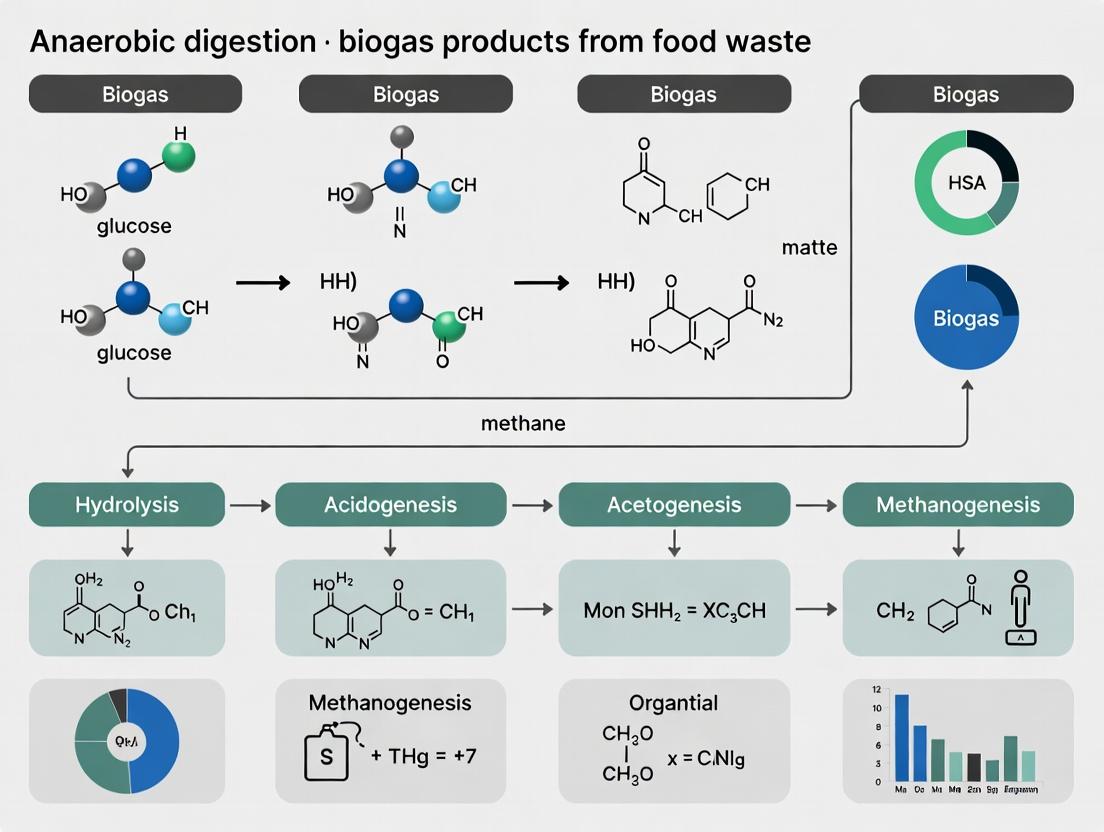
This article provides a comprehensive analysis of the anaerobic digestion (AD) process for converting food waste into biogas, specifically tailored for scientific researchers and development professionals.
From Waste to Watts: Optimizing Anaerobic Digestion of Food Waste for Scalable Biogas Production
Abstract
This article provides a comprehensive analysis of the anaerobic digestion (AD) process for converting food waste into biogas, specifically tailored for scientific researchers and development professionals. We explore the foundational microbiology and biochemistry, detail advanced methodologies for process monitoring and scale-up, address critical troubleshooting for process inhibition and instability, and validate performance through comparative analysis of pretreatment strategies and reactor configurations. The goal is to present a holistic, research-oriented framework for developing efficient, stable, and scalable AD systems that transform organic waste into renewable energy and valuable by-products.
The Science of Methanogenesis: Microbiology and Biochemistry of Food Waste Digestion
Within the thesis on optimizing biogas production from food waste, a rigorous understanding of the four core microbiological stages is paramount. These sequential and interdependent stages—hydrolysis, acidogenesis, acetogenesis, and methanogenesis—convert complex organic polymers in food waste into methane (CH₄) and carbon dioxide (CO₂). Imbalances in any stage lead to process instability and reduced yield. This document provides detailed application notes and experimental protocols to study and monitor these stages, targeting researchers in bioenergy and related bioprocess fields.
Detailed Stage Analysis & Quantitative Data
Table 1: Key Characteristics and Quantitative Parameters of the Four Anaerobic Digestion Stages
| Stage | Primary Function | Key Microbial Agents | Main Inputs | Main Outputs | Typical Optimal pH Range | Reaction Rate Constant (k)* | Free Energy Change (ΔG'°) |
|---|---|---|---|---|---|---|---|
| Hydrolysis | Breakdown of complex polymers to monomers | Extracellular enzymes (e.g., cellulases, amylases), hydrolytic bacteria (e.g., Clostridium, Bacteroides) | Carbohydrates, proteins, lipids | Sugars, amino acids, long-chain fatty acids | 5.5 - 7.0 | 0.1 - 0.3 d⁻¹ | Slightly endergonic |
| Acidogenesis | Fermentation of monomers to volatile fatty acids (VFAs) and alcohols | Acidogenic bacteria (e.g., Streptococcus, Escherichia) | Sugars, amino acids | Propionate, butyrate, acetate, lactate, ethanol, H₂, CO₂ | 5.0 - 6.5 | 0.5 - 1.5 d⁻¹ | Exergonic (-150 to -300 kJ/mol) |
| Acetogenesis | Conversion of VFAs/alcohols to acetate, H₂, and CO₂ | Acetogenic bacteria (e.g., Syntrophobacter, Syntrophomonas) | Propionate, butyrate, alcohols | Acetate, H₂, CO₂ | 6.0 - 7.5 | Sensitive to H₂ partial pressure | Often endergonic; requires syntrophy |
| Methanogenesis | Formation of methane from acetate or H₂/CO₂ | Methanogenic archaea (e.g., Methanosarcina, Methanobacterium) | Acetate, H₂, CO₂ | CH₄, CO₂, H₂O | 6.5 - 8.2 (Acetoclastic: 6.5-7.5, Hydrogenotrophic: 7.0-8.2) | 0.1 - 0.3 d⁻¹ (acetate) | Exergonic (e.g., Acetate: -31 kJ/mol, H₂/CO₂: -135 kJ/mol) |
Note: Reaction rates are highly dependent on temperature, substrate, and microbial community. Data compiled from current literature.
Table 2: Critical Inhibition Thresholds for Anaerobic Digestion of Food Waste
| Inhibitor | Critical Concentration (Food Waste Context) | Primary Stage Affected | Mitigation Strategy |
|---|---|---|---|
| Ammonia (NH₃-N) | 1500 - 3000 mg/L | Methanogenesis (Acetoclastic) | C:N ratio control, acclimation, co-digestion |
| Long-Chain Fatty Acids (LCFAs) | > 1000 mg/L | Hydrolysis/Acidogenesis & Methanogenesis | Pre-treatment, gradual feeding, adsorption |
| Sodium (Na⁺) | > 3500 mg/L | All stages (Osmotic stress) | Dilution, acclimation to salinity |
| Volatile Fatty Acids (VFA) | > 6000 mg/L as HAc | Methanogenesis (pH drop) | pH control, reduced organic loading rate |
| pH | < 6.2 or > 8.2 | Methanogenesis & Acetogenesis | Buffering (e.g., NaHCO₃ addition) |
Experimental Protocols
Protocol 1: Batch Assay for Stage-Specific Activity Measurement
Objective: To determine the specific metabolic activity of each AD stage in a food waste inoculum. Materials: Serum bottles (160 mL), rubber stoppers, aluminum crimps, anaerobic chamber, gas-tight syringes, substrate solutions (see Toolkit). Procedure:
- Inoculum Preparation: Sieve (2 mm) active food waste digestate. Pre-incubate for 5 days to deplete residual biodegradable matter.
- Bottle Setup: In triplicate, add 50 mL inoculum and 50 mL defined medium to each serum bottle.
- Stage-Specific Substrate Addition:
- Hydrolysis: Add 1g of microcrystalline cellulose or casein.
- Acidogenesis: Add 1g of glucose.
- Acetogenesis: Add 500 mg of propionic acid.
- Methanogenesis (Hydrogenotrophic): Sparge headspace with H₂:CO₂ (80:20).
- Methanogenesis (Acetoclastic): Add 500 mg of sodium acetate.
- Controls: Set up bottles with inoculum but no substrate (endogenous control).
- Incubation: Flush headspace with N₂:CO₂ (70:30), crimp seal, incubate at 37°C with agitation (100 rpm).
- Monitoring: Measure gas production (volume and composition via GC) and liquid samples (VFA via HPLC, pH) every 12-24 hours.
- Calculation: Activity = Maximum slope of product formation curve (mL CH₄/h or mg VFA/h) per gram of volatile suspended solids (VSS).
Protocol 2: Monitoring VFA Profile and Alkalinity for Process Stability
Objective: To track acidogenesis/acetogenesis balance and digester buffering capacity. Materials: HPLC system with UV/RI detector, centrifuge, 0.2 µm syringe filters, pH meter, titration setup. Procedure:
- Sample Collection: Collect 10 mL digestate daily. Centrifuge at 10,000xg for 10 min. Filter supernatant.
- VFA Analysis (HPLC):
- Column: Rezex ROA-Organic Acid H+ (8%), 300 x 7.8 mm.
- Mobile Phase: 0.005N H₂SO₄, isocratic, 0.6 mL/min.
- Detection: Refractive Index (RI) at 35°C.
- Quantify acetate, propionate, butyrate, iso-butyrate, valerate against external standards.
- Alkalinity Measurement (Titration Method):
- Titrate 10 mL filtered sample to pH 5.75 with 0.1N H₂SO₄ (Total Alkalinity, TA).
- Continue titration to pH 4.3 (Partial Alkalinity, PA).
- Calculate Intermediate Alkalinity (IA) = TA - PA. The IA/PA ratio is a key stability indicator; >0.3 suggests VFA accumulation.
Visualizations
Title: The Four Sequential Stages of Anaerobic Digestion
Title: Syntrophic Acetogenesis of Propionate
The Scientist's Toolkit: Research Reagent Solutions
Table 3: Essential Materials and Reagents for Anaerobic Digestion Research
| Item / Reagent | Function / Application | Key Notes for Food Waste Research |
|---|---|---|
| Anaerobic Chamber (Coy Lab, Vinyl) | Provides O₂-free environment for sensitive inoculum handling and setup. | Critical for working with strict anaerobes like methanogens. |
| Defined Mineral Medium (e.g., BASAL medium) | Supplies essential nutrients (N, P, S, trace metals, vitamins) while avoiding confounding organics. | Use for batch assays to isolate substrate effects. |
| Resazurin (Redox Indicator) | Visual indicator of anaerobic conditions (pink = oxidized, colorless = reduced). | Add at 1 mg/L to media to monitor redox status. |
| Sodium Sulfide (Na₂S·9H₂O) / Cysteine-HCl | Reducing agents to achieve and maintain low redox potential (< -300 mV). | Essential for methanogen growth medium. |
| Standard Gas Mixtures (e.g., CH₄/CO₂, H₂/CO₂, N₂/CO₂) | Calibration of gas chromatographs for precise biogas composition analysis. | Required for quantifying stage-specific gas production. |
| Volatile Fatty Acid (VFA) Standards (C2-C6) | Calibration for HPLC/GC analysis of acidogenesis/acetogenesis products. | Monitor key process indicators (e.g., propionate:acetate ratio). |
| Microcrystalline Cellulose / Casein / Glucose | Model polymeric and monomeric substrates for hydrolysis and acidogenesis assays. | Simulate carbohydrate/protein fractions of food waste. |
| Specific Inhibitors (e.g., 2-Bromoethanesulfonate (BES)) | Selective inhibition of methanogenesis to study upstream VFA accumulation. | Use in control experiments to uncouple stages. |
| Buffers (e.g., Sodium Bicarbonate, MOPS) | pH control in batch systems to prevent acid crash during high food waste loading. | Maintain pH in optimal range for sensitive acetogens/methanogens. |
Anaerobic Digestion (AD) is a microbial process converting organic matter, such as food waste, into biogas (methane and carbon dioxide). This process relies on a syntrophic consortium of distinct microbial groups operating in sequential stages: Hydrolysis, Acidogenesis, Acetogenesis, and Methanogenesis. The efficiency and stability of biogas production depend on the balanced interaction between hydrolytic, acidogenic, and acetogenic bacteria and methanogenic archaea. This article, framed within a thesis on AD for food waste valorization, details the functional roles, quantitative dynamics, and protocols for studying these key consortia.
Functional Roles & Quantitative Metrics
Table 1: Key Microbial Consortia in Anaerobic Digestion of Food Waste
| Microbial Group | Primary Function | Key Genera (Examples) | Typical Abundance in Stable Reactor (% of total community) | Optimal pH Range | Key Metabolic Products |
|---|---|---|---|---|---|
| Hydrolytic Bacteria | Break down complex polymers (cellulose, proteins, lipids) into monomers. | Clostridium, Bacteroides, Pseudomonas, Cellulomonas | 15-25% | 5.5-7.0 | Sugars, amino acids, fatty acids |
| Acidogenic Bacteria | Ferment monomers into volatile fatty acids (VFAs), alcohols, H₂, CO₂. | Streptococcus, Escherichia, Lactobacillus, Enterobacter | 20-30% | 5.5-6.5 | Acetate, Propionate, Butyrate, H₂ |
| Acetogenic Bacteria (Syntrophic) | Oxidize higher VFAs and alcohols to acetate, H₂, CO₂. Obligate syntrophs. | Syntrophomonas, Syntrophobacter, Pelotomaculum | 5-15% | 6.5-7.5 | Acetate, H₂, CO₂ |
| Methanogenic Archaea | Convert acetate, H₂/CO₂, and methylated compounds to CH₄. | Methanosaeta, Methanosarcina, Methanobacterium, Methanospirillum | 5-15% | 6.5-7.8 | Methane (CH₄) |
Table 2: Kinetic Parameters for Key Microbial Groups in Food Waste AD
| Parameter | Hydrolytic Bacteria | Acidogenic Bacteria | Acetogenic Bacteria | Methanogenic Archaea |
|---|---|---|---|---|
| Max. Specific Growth Rate (μmax, day⁻¹) | 0.5 - 2.0 | 1.0 - 4.0 | 0.1 - 0.5 | 0.1 - 0.8 |
| Yield Coefficient (Y, g VSS/g COD) | 0.10 - 0.20 | 0.05 - 0.15 | 0.02 - 0.06 | 0.03 - 0.08 |
| Half-Saturation Constant (Ks, mg/L) | 100-500 (as COD) | 50-200 (as glucose) | 10-50 (as Butyrate) | 5-50 (as Acetate) |
| Critical Inhibition Threshold (for VFAs, mg/L as HAc) | >8,000 | >10,000 | >200-500 | >50-200 |
Application Notes & Experimental Protocols
Protocol: Batch Assay for Hydrolytic & Acidogenic Activity
Objective: Quantify the hydrolytic and acidogenic potential of a food waste inoculum. Reagents & Materials:
- Synthetic food waste slurry (50 g/L COD, standardized composition).
- Anaerobic basal medium (see Toolkit).
- Serum bottles (160 mL).
- CO₂/N₂ (70:30) gas mix for purging.
- VFA analysis kit (HPLC or GC-FID).
Procedure:
- Prepare 100 mL of assay mixture in 160 mL serum bottles: 50% v/v inoculum, 50% synthetic food waste slurry in anaerobic basal medium.
- Purge headspace with CO₂/N₂ for 5 min to achieve anaerobic conditions.
- Seal with butyl rubber stoppers and aluminum crimps.
- Incubate at 37°C with shaking (100 rpm).
- Sample periodically (0, 6, 12, 24, 48 h). Analyze for: a) Soluble COD (sCOD) to track hydrolysis. b) VFA profile (Acetate, Propionate, Butyrate) via HPLC.
- Calculate hydrolysis rate (mg sCOD/g VS·h) and acidification degree (% of initial COD converted to VFAs).
Protocol: Specific Methanogenic Activity (SMA) Test
Objective: Determine the metabolic activity of methanogenic archaea using specific substrates. Reagents & Materials:
- Specific substrates: Sodium Acetate (for acetoclastic), H₂/CO₂ (80:20) gas (for hydrogenotrophic).
- Anaerobic sludge inoculum.
- Manometric system (e.g., AMPTS II) or glass syringes for gas measurement.
- Methane gas analyzer (GC-TCD).
Procedure:
- Distribute 50 mL of inoculum into 120 mL serum bottles. Add basal medium.
- For acetoclastic SMA: Add sodium acetate to a final concentration of 50 mM COD.
- For hydrogenotrophic SMA: Pressurize headspace with H₂/CO₂ to 1.5 atm after purging with N₂.
- Include control bottles with no substrate.
- Incubate at 37°C. Monitor biogas production and pressure increase.
- Measure methane content in the biogas periodically.
- Calculate SMA as mL CH₄ produced per gram of Volatile Suspended Solids (VSS) per day (mL CH₄/g VSS·d) during the linear production phase.
Protocol: 16S rRNA Amplicon Sequencing for Consortium Analysis
Objective: Profile the taxonomic composition of the AD microbial consortium. Materials:
- FastDNA Spin Kit for Soil.
- PCR reagents, primers for Archaea (e.g., Ar109F/Ar912R) and Bacteria (e.g., 341F/805R).
- Illumina MiSeq platform.
- Bioinformatics pipelines (QIIME2, Mothur).
Procedure:
- DNA Extraction: Extract total genomic DNA from 0.5g of digester sludge using the FastDNA Kit.
- PCR Amplification: Amplify the V3-V4 region of the 16S rRNA gene using barcoded primers.
- Library Prep & Sequencing: Pool purified amplicons in equimolar ratios. Sequence on an Illumina MiSeq (2x250 bp).
- Bioinformatics: Demultiplex sequences. Perform quality filtering, OTU clustering (97% similarity), and taxonomic assignment against Silva/GTDB databases.
- Analysis: Calculate alpha/beta diversity. Correlate relative abundances of key genera (from Table 1) with process parameters (e.g., VFA, CH₄ yield).
Visualization: Metabolic Pathways & Workflow
Diagram 1: Four-stage anaerobic digestion metabolic pathway.
Diagram 2: Integrated workflow for microbial process analysis.
The Scientist's Toolkit: Research Reagent Solutions
Table 3: Essential Reagents and Materials for AD Microbial Research
| Item | Function/Application | Key Considerations |
|---|---|---|
| Anaerobic Basal Medium | Provides essential minerals, vitamins, and reducing agents (e.g., Cysteine, Na₂S) to maintain strict anaerobic conditions for culturing. | Resazurin as redox indicator. Adjust pH to 7.0 ± 0.2. Sparge with N₂/CO₂ before use. |
| Volatile Fatty Acid (VFA) Mix Standard | Calibration standard for HPLC or GC analysis to quantify acetate, propionate, butyrate, etc. Critical for monitoring acidogenesis/acetogenesis. | Use at concentrations relevant to digester levels (10-5000 mg/L). Prepare fresh dilutions weekly. |
| 2-Bromoethanesulfonate (BES) | Specific inhibitor of methyl-coenzyme M reductase, selectively inhibiting methanogenic archaea. Used in activity tests to isolate bacterial steps. | Typical use concentration: 5-50 mM. Prepare anaerobically. |
| FastDNA Spin Kit for Soil | Optimized for efficient lysis of tough microbial cell walls (e.g., Gram-positives) in complex matrices like sludge. | Includes bead-beating step. Elute DNA in low-EDTA TE buffer for PCR compatibility. |
| Universal 16S rRNA Gene Primers (341F/805R) | Amplify the V3-V4 hypervariable region for Illumina sequencing of bacterial/archaeal communities. | Include sample-specific barcodes on forward primer. Validate with mock community controls. |
| Methane (CH₄) & Carbon Dioxide (CO₂) GC Standard Gas | Calibrate gas chromatograph (GC-TCD) for accurate biogas composition measurement. | Use certified mix (e.g., CH₄:CO₂:N₂ = 60:40:0 or similar). Monitor for cylinder depletion. |
| Specific Substrates (e.g., Sodium Butyrate, H₂/CO₂ gas) | Target-specific activity assays for acetogens (butyrate oxidizers) or hydrogenotrophic methanogens. | Use high-purity reagents. For H₂/CO₂, ensure secure gas-tight syringe transfers. |
Within the broader thesis on anaerobic digestion (AD) for biogas production from food waste, understanding the sequential biochemical pathways is paramount. Food waste is a complex mixture of polymers—primarily carbohydrates (e.g., starch, cellulose), proteins, and lipids. The AD process involves a microbial consortium executing a four-stage biochemical cascade to depolymerize and ultimately convert this organic matter into methane (CH4) and carbon dioxide (CO2). This application note details the pathways, current quantitative data, and provides protocols for key analytical experiments.
The Biochemical Pathway Cascade
The anaerobic digestion process is a continuum of four interdependent stages: Hydrolysis, Acidogenesis, Acetogenesis, and Methanogenesis.
Diagram 1: Anaerobic Digestion Biochemical Pathway Cascade
Recent research (2021-2024) provides key metrics for AD of source-segregated food waste under mesophilic conditions (35-37°C). Data are summarized for standard continuous stirred-tank reactor (CSTR) operation at ~20-30 days Hydraulic Retention Time (HRT).
Table 1: Performance Metrics for Food Waste Anaerobic Digestion
| Parameter | Typical Range | Optimal Value (Reported) | Key Influencing Factors |
|---|---|---|---|
| Organic Loading Rate (OLR) | 2.5 - 5.0 kg VS/m³·day | 4.0 kg VS/m³·day | Reactor design, feedstock pre-treatment |
| Methane Yield | 350 - 480 L CH4/kg VSadded | 450 L CH4/kg VSadded | Feedstock composition, C/N ratio |
| Methane Content | 55 - 65% | 60% | Process stability, pH |
| Volatile Solids (VS) Reduction | 75 - 85% | 80% | Hydrolysis efficiency, HRT |
| Primary VFA Composition (Acidogenesis) | Acetate (40-50%), Propionate (20-30%), Butyrate (15-25%) | - | Microbial community, H2 partial pressure |
Table 2: Critical Inhibitor Threshold Concentrations
| Inhibitor | Moderate Inhibition Range | Severe Inhibition Range | Mitigation Strategy |
|---|---|---|---|
| Total Ammonia Nitrogen (TAN) | 1.5 - 2.5 g/L | > 3.0 g/L | Co-digestion, pH control, acclimation |
| Long-Chain Fatty Acids (LCFAs) | 0.5 - 1.0 g/L | > 1.5 g/L | Pre-hydrolysis, step-feeding, adsorbents |
| Sodium (Na+) | 3.5 - 5.5 g/L | > 8.0 g/L | Dilution, acclimation with gradual increase |
Experimental Protocols
Protocol 4.1: Measuring Hydrolytic Enzyme Activity in Digester Sludge
Objective: Quantify the extracellular hydrolytic potential (amylase, protease, lipase) of the microbial consortium.
Materials: See Scientist's Toolkit. Procedure:
- Sample Collection: Aseptically collect 50 mL of mixed liquor from the active digester. Centrifuge at 4°C, 10,000 x g for 15 min. Retain the supernatant (crude enzyme extract).
- Substrate Preparation: Prepare 1% (w/v) solutions of specific substrates in appropriate buffers: soluble starch in phosphate buffer (pH 6.5) for amylase, casein in Tris-HCl (pH 7.5) for protease, and p-nitrophenyl palmitate in Tris-HCl (pH 8.0) for lipase.
- Reaction Setup: In a microplate or test tube, mix 100 µL of crude enzyme extract with 400 µL of substrate solution. Incubate at 37°C for 1 hour. Run a substrate blank (buffer instead of enzyme) and an enzyme control (buffer instead of substrate) concurrently.
- Detection & Quantification:
- Amylase: Stop reaction with DNS reagent, heat at 95°C for 10 min. Measure A540. Calculate activity (U/mL) based on maltose standard curve (1 U = 1 µmol maltose released/min).
- Protease: Add 500 µL of 10% TCA to stop reaction. Centrifuge. Measure A280 of supernatant against tyrosine standard.
- Lipase: Reaction directly produces yellow p-nitrophenol. Measure A410. Calculate using p-nitrophenol standard curve.
- Normalization: Express activity per gram of volatile solids (VS) in the original sample.
Diagram 2: Hydrolytic Enzyme Activity Assay Workflow
Protocol 4.2: Quantification of Metabolic Intermediates via HPLC
Objective: Profile VFAs (acetic, propionic, butyric acids) and alcohols to monitor acidogenesis/acetogenesis balance.
Materials: See Scientist's Toolkit. Procedure:
- Sample Preparation: Filter 2 mL of centrifuged (or acidified) digester supernatant through a 0.2 µm nylon syringe filter into an HPLC vial.
- HPLC System Setup:
- Column: Rezex ROA-Organic Acid H+ (8%) column or equivalent, maintained at 60°C.
- Mobile Phase: 5 mM H2SO4, isocratic.
- Flow Rate: 0.5 mL/min.
- Detector: Refractive Index Detector (RID), temperature 40°C.
- Run Time: 30 min.
- Calibration: Prepare a standard mix of target acids (acetic, propionic, butyric, valeric) and alcohols (ethanol, methanol) in concentrations from 0.05 to 5 g/L. Inject in triplicate.
- Analysis: Inject 20 µL of sample. Identify peaks by retention time, quantify by peak area integration relative to the calibration curve. Report concentrations in mg/L or mM.
Protocol 4.3: Determination of Methanogenic Pathway Activity via 13C-Stable Isotope Probing (SIP)
Objective: Distinguish between acetoclastic and hydrogenotrophic methanogenesis contributions.
Materials: 13C-labeled sodium acetate (2-13C) or sodium bicarbonate (13C); Gas Chromatograph-Combustion-Isotope Ratio Mass Spectrometer (GC-C-IRMS). Procedure:
- Microcosm Setup: In serum bottles, combine 50 mL of active digester inoculum with defined medium under anaerobic conditions.
- Labeled Substrate Addition: Add either 5 mM 2-13C-acetate (for acetoclastic) or 13C-bicarbonate under a H2/CO2 (80:20) headspace (for hydrogenotrophic). Set up controls with 12C substrates.
- Incubation: Incubate at 37°C with shaking. Monitor headspace pressure.
- Gas Sampling: Periodically sample headspace gas with a gas-tight syringe.
- GC-C-IRMS Analysis: Inject gas sample. The GC separates CH4 and CO2, which are combusted to CO2 and introduced to the IRMS to determine the 13C/12C ratio (δ13C) of the methane produced.
- Calculation: The fraction of methane derived from the labeled substrate is calculated based on the isotopic enrichment in the CH4 pool compared to controls.
The Scientist's Toolkit
Table 3: Key Research Reagent Solutions for AD Pathway Analysis
| Reagent/Material | Function & Application | Key Considerations |
|---|---|---|
| Anaerobic Chamber (Glove Box) | Provides O2-free environment (<1 ppm) for sensitive culture work and sample preparation. | Maintain with N2/H2 mix and palladium catalyst. |
| Defined Mineral Medium for Methanogens | Provides essential nutrients (macro/micronutrients, vitamins, reducing agents) for culturing syntrophs and methanogens. | Must include resazurin as redox indicator, cysteine or sulfide as reductant. |
| Volatile Fatty Acid (VFA) Standard Mix | Calibration standard for HPLC/RID analysis of acidogenesis products. | Typically includes C2-C6 acids. Prepare fresh monthly, store at 4°C. |
| 13C-Labeled Substrates (Acetate, Bicarbonate) | Tracer for determining carbon flow and quantifying specific methanogenic pathway activity via SIP. | High isotopic purity (>99 atom % 13C) required. Expensive, handle with care. |
| Specific Metabolic Inhibitors (e.g., 2-Bromoethanesulfonate (BES), Chloroform) | Selectively inhibit methanogens (BES) or acetoclastic methanogens (chloroform) to study pathway dynamics. | Use at low concentrations (5-20 mM for BES). Toxic. |
| DNA/RNA Shield & Preservation Buffer | Immediately stabilizes nucleic acids in digester samples for subsequent metagenomic/metatranscriptomic analysis of the microbial community. | Critical for capturing in situ activity; prevents degradation during storage. |
| Proteinase K & Lysozyme | For efficient cell lysis during nucleic acid or enzyme extraction from complex, polymer-rich digester samples. | Optimize concentration and incubation time for sludge matrix. |
Within the broader thesis on optimizing anaerobic digestion (AD) of food waste for enhanced biogas production, the meticulous control of Critical Process Parameters (CPPs) is paramount. These parameters—pH, alkalinity, temperature regime, and Hydraulic Retention Time (HRT)—directly govern microbial community dynamics, metabolic pathways, and process stability. This document provides detailed application notes and standardized protocols for researchers and scientists to systematically investigate and control these CPPs in lab-scale anaerobic digesters.
Table 1: Optimal Ranges and Impacts of Critical Process Parameters in Food Waste AD
| Parameter | Optimal Range (Mesophilic) | Optimal Range (Thermophilic) | Impact on Process | Inhibition Threshold |
|---|---|---|---|---|
| pH | 6.5 - 7.5 | 7.0 - 8.5 | Governs enzyme activity; low pH causes VFA accumulation & process failure. | <6.2 (acidification), >8.5 (ammonia toxicity) |
| Alkalinity | 2,000 - 5,000 mg/L as CaCO₃ | 3,500 - 6,000 mg/L as CaCO₃ | Buffering capacity against VFA-induced pH drop. | <1,000 mg/L (inadequate buffering) |
| Temperature | 35 ± 2°C | 55 ± 2°C | Determines microbial consortia & kinetics; thermophilic offers faster rates. | >40°C (mesophilic failure), <50°C (thermophilic failure) |
| HRT | 15 - 30 days | 10 - 20 days | Determines substrate-microbe contact time & wash-out risk. | < SRT (solids retention time) causes washout. |
Table 2: Typical Biogas Yield & Composition Relative to CPPs
| Condition | Biogas Yield (L/g VSadded) | Methane Content (%) | Key Risk |
|---|---|---|---|
| Optimal Mesophilic | 0.45 - 0.55 | 55-65 | Long HRT required. |
| Optimal Thermophilic | 0.50 - 0.60 | 50-60 | Higher ammonia inhibition risk. |
| Low pH (<6.2) | <0.20 | <40 | Process acidification, H₂ accumulation. |
| High HRT (>40 days) | Plateau or decrease | Slight increase | Reduced volumetric productivity. |
Experimental Protocols
Protocol 3.1: Continuous Monitoring & Adjustment of pH and Alkalinity
Objective: To maintain optimal pH and alkalinity in a continuous-flow AD reactor processing food waste. Materials: Lab-scale CSTR, pH probe & controller, peristaltic pumps, titration kit. Procedure:
- Calibrate pH probe daily using standard buffers (pH 4.0, 7.0, 10.0).
- Connect probe to controller linked to peristaltic pumps for 1M NaOH (for acid adjustment) or 1M HCl (for base adjustment).
- Set controller to maintain pH at 7.0 ± 0.1 (mesophilic) or 7.8 ± 0.1 (thermophilic).
- Daily Sampling & Alkalinity Measurement: Extract 10 mL digestate, centrifuge at 4000 rpm for 10 min.
- Titrate 5 mL supernatant potentiometrically with 0.1N H₂SO₄ to endpoints pH 5.75 (Partial Alkalinity, PA) and pH 4.3 (Total Alkalinity, TA).
- Calculate PA, TA, and the Intermediate Alkalinity (IA = TA - PA). The IA/PA ratio should be <0.3 for stable operation.
- If alkalinity drops below optimal range, supplement with sodium bicarbonate (NaHCO₃).
Protocol 3.2: Comparative Batch Assay: Mesophilic vs. Thermophilic Kinetics
Objective: To determine the biochemical methane potential (BMP) and hydrolysis rate constant at two temperature regimes. Materials: Serum bottles (500 mL), thermostatic water baths (35°C & 55°C), anaerobic hood, pressure transducers, food waste inoculum. Procedure:
- Prepare homogenized food waste substrate (TS ~10%). Characterize for VS, COD.
- In an anaerobic glove box, add 300 mg VS of substrate and 150 mg VS of acclimated inoculum to each serum bottle. Maintain a substrate-to-inoculum (S/I) ratio of 0.5 on a VS basis.
- Dilute to 400 mL with anaerobic medium, flush headspace with N₂/CO₂ (70:30), and seal.
- Incubate in duplicate at 35°C and 55°C.
- Monitor headspace pressure daily using calibrated pressure transducers. Convert pressure to biogas volume using the ideal gas law.
- Periodically sample biogas for composition analysis via GC-TCD.
- Model cumulative methane production data using a first-order kinetic model to determine the hydrolysis rate constant (k) for each temperature.
Protocol 3.3: HRT Step-Down Experiment for Wash-Out Determination
Objective: To identify the critical HRT leading to microbial wash-out and process failure. Materials: Continuously stirred tank reactor (CSTR) system, feed pumps, effluent vessel, data logger. Procedure:
- Start a 10L CSTR at a safe HRT (e.g., 30 days for mesophilic) with food waste. Achieve steady-state (consistent biogas yield & VFA <500 mg/L).
- Decrease HRT stepwise by 10% every 3 hydraulic retention times (e.g., from 30 to 27 days).
- At each steady-state, record: daily biogas production/methane content, pH, alkalinity, VFA concentration, and total suspended solids (TSS) in effluent.
- Continue step-down until signs of failure appear: VFA >2000 mg/L, pH drop unresponsive to buffering, decrease in methane yield >20%, or rapid decrease in effluent TSS indicating washout.
- The critical HRT is defined as the point preceding failure.
Diagrams
Anaerobic Digestion CPP Influence Pathway
Mesophilic vs Thermophilic Batch Assay Workflow
The Scientist's Toolkit
Table 3: Essential Research Reagent Solutions & Materials
| Item | Function/Description |
|---|---|
| Anaerobic Medium (Modified) | Provides essential nutrients (N, P, trace metals) and a reducing environment (using resazurin & cysteine) for obligate anaerobes. |
| Sodium Bicarbonate (NaHCO₃) Solution (1M) | Primary buffering agent to increase alkalinity and counteract VFA accumulation without harsh pH swings. |
| Volatile Fatty Acid (VFA) Standard Mix | GC calibration standard for quantifying acetic, propionic, butyric acids, etc., key indicators of process imbalance. |
| Methyl Red Indicator Solution | Used in simple titration for Partial Alkalinity determination (endpoint ~pH 5.75). |
| Pressurized Calibration Gas (CH₄/CO₂/N₂) | Essential for calibrating Gas Chromatograph (GC) with TCD/FID detectors for accurate biogas composition analysis. |
| Pandia or Similar Digestion Reagent | For COD analysis of solid food waste and digestate samples via spectrophotometric methods. |
| Inoculum from Acclimated Digester | Active microbial consortium pre-adapted to food waste, critical for starting batch or continuous experiments without lag. |
| Gas Bag (Tedlar or Similar) | For collecting and storing biogas samples from reactors for offline compositional analysis. |
| Cation Exchange Resin | Used to remove ammonium ions from digestate samples prior to VFA analysis by GC to prevent column damage. |
Within the broader thesis on optimizing anaerobic digestion (AD) for biogas production, characterizing feedstock is paramount. Food waste (FW) is a highly heterogeneous substrate. Its variable composition, C/N ratio, and biodegradability directly impact microbial consortia activity, process stability, methane yield, and digester performance. This document provides standardized application notes and protocols for researchers to systematically characterize FW, enabling predictive modeling and process control in AD systems.
Quantitative Characterization of Food Waste Variability
Table 1: Typical Composition and Properties of Food Waste Categories
| Food Waste Category | TS (%) | VS (% of TS) | Carbohydrates (%VS) | Lipids (%VS) | Proteins (%VS) | Typical C/N Ratio | BMP (m³ CH₄/kg VS) |
|---|---|---|---|---|---|---|---|
| Carbohydrate-Rich (e.g., bread, pasta) | 30-40 | 85-95 | 70-80 | 1-3 | 5-10 | 25-40 | 0.35 - 0.42 |
| Protein-Rich (e.g., meat, fish, dairy) | 20-35 | 80-90 | 10-30 | 10-40 | 30-60 | 3-15 | 0.45 - 0.60 |
| Lipid-Rich (e.g., oils, fats) | 85-100 | 95-100 | 0-5 | >90 | 0-5 | 5-10 | 0.70 - 1.00 |
| Fruit & Vegetable Scraps | 10-20 | 80-90 | 60-75 | 5-10 | 10-20 | 15-35 | 0.30 - 0.40 |
| Mixed Municipal FW | 20-40 | 80-95 | 40-60 | 10-30 | 15-25 | 14-20 | 0.40 - 0.50 |
TS: Total Solids, VS: Volatile Solids, BMP: Biochemical Methane Potential. Ranges are compiled from recent literature and database sources (2023-2024).
Table 2: Impact of C/N Ratio on Anaerobic Digestion Process Parameters
| C/N Ratio | Methane Yield | Process Stability (VFA/Alkalinity) | Ammonia Inhibition Risk | Recommended Co-substrate |
|---|---|---|---|---|
| < 15 | Suboptimal | Low (High VFA) | High | Carbon-rich (e.g., garden waste) |
| 15-25 | Optimal | High (Balanced) | Low | None typically required |
| 25-35 | Good | Moderate | Very Low | Nitrogen-rich (e.g., manure) |
| > 35 | Declining | Low (Low buffering) | Very Low | Nitrogen-rich (e.g., sewage sludge) |
Experimental Protocols
Protocol 1: Proximate Analysis for Composition Determination
Objective: Determine Total Solids (TS), Volatile Solids (VS), and Ash content.
Materials:
- Analytical balance (±0.0001 g)
- Drying oven (105±5°C)
- Muffle furnace (550±10°C)
- Porcelain crucibles
- Desiccator
Procedure:
- Weigh empty, clean crucible (W_crucible).
- Add approximately 10g of homogenized FW sample. Weigh crucible + wet sample (W_wet).
- Dry in oven at 105°C for 24 hours or until constant weight.
- Transfer to desiccator to cool. Weigh crucible + dry sample (W_dry).
- TS Calculation: TS (%) = [(Wdry - Wcrucible) / (Wwet - Wcrucible)] * 100.
- Place crucible with dry sample in muffle furnace at 550°C for 2 hours.
- Cool in desiccator. Weigh crucible + ash (W_ash).
- VS Calculation: VS (% of TS) = [(Wdry - Wash) / (Wdry - Wcrucible)] * 100.
- Ash Content: Ash (% of TS) = 100 - VS.
Protocol 2: Determination of Carbon-to-Nitrogen (C/N) Ratio
Objective: Quantify Total Carbon (TC) and Total Nitrogen (TN) for C/N calculation.
Materials:
- Elemental Analyzer (CHNS/O) OR Wet Chemistry Kit.
- For wet chemistry: Potassium dichromate (K₂Cr₂O₇) solution, Sulfuric acid (H₂SO₄), Kjeldahl apparatus.
- Homogenized, dried, and powdered FW sample.
Procedure (Elemental Analyzer - Preferred):
- Dry and grind sample to fine powder (< 0.2 mm).
- Weigh 2-5 mg of sample into a tin capsule.
- Insert into auto-sampler of elemental analyzer.
- Run combustion analysis (typically at 900-1000°C). Instrument software provides %C and %N.
- C/N Ratio Calculation: C/N = (%C / %N).
Procedure (Wet Chemistry - Alternative):
- For TC: Use Walkley-Black method (dichromate oxidation).
- For TN: Use Kjeldahl method (digestion, distillation, titration).
- Calculate ratio from obtained values.
Protocol 3: Biochemical Methane Potential (BMP) Assay for Biodegradability
Objective: Determine the ultimate methane yield of a FW sample under controlled conditions.
Materials:
- Serum bottles (100 mL to 500 mL working volume).
- Anaerobic inoculum from a stable digester.
- Substrate (FW sample) with known VS.
- Positive control (e.g., microcrystalline cellulose).
- Negative control (inoculum only).
- Manometric system (e.g., AMPTS II) or Water/Gas displacement system.
- Gas chromatograph (GC) with TCD for CH₄/CO₂ composition.
Procedure:
- Preparation: Add a calculated amount of substrate (e.g., 1 g VS) to serum bottles. Maintain substrate-to-inoculum (S/I) ratio of 0.5 (g VS/g VS).
- Baseline: Set up negative controls (inoculum only) and positive controls.
- Anaerobic Condition: Flush headspace with N₂/CO₂ gas mix (70:30) for 2 min.
- Incubation: Place bottles in a thermostatic shaker (37±1°C for mesophilic) for 30-60 days.
- Gas Measurement: Regularly measure total gas production (manometrically or by displacement).
- Gas Analysis: Periodically sample headspace gas via GC to determine CH₄ fraction.
- Calculation: Correct methane volume from test bottle by subtracting methane from negative control. Express as mL or L CH₄ per g VS added. Normalize positive control yield to validate inoculum activity.
Visualization Diagrams
Title: Food Waste Characterization Workflow for AD
Title: C/N Ratio Impact on Digestion Stability
The Scientist's Toolkit: Research Reagent Solutions
Table 3: Essential Reagents & Materials for FW Characterization
| Item | Function in Characterization | Typical Specification / Notes |
|---|---|---|
| Anaerobic Inoculum | Source of methanogenic microbes for BMP tests. Active, well-adapted sludge from a stable digester is crucial. | TS: 2-5%, VS >70% of TS. Pre-incubate to deplete residual biogas potential. |
| Microcrystalline Cellulose | Positive control substrate for BMP assays. Provides a known, degradable standard to validate inoculum activity. | BMP ~ 0.38-0.42 m³ CH₄/kg VS. Analytical grade. |
| N₂/CO₂ Gas Mixture | Creates anaerobic atmosphere in serum bottles for BMP assays. | Typical mix: 70% N₂ / 30% CO₂. Purity: >99.5%. |
| Elemental Analyzer Standards | Calibrate CHNS/O analyzer for accurate C and N quantification (e.g., acetanilide, BBOT). | Certified reference materials with known %C and %N. |
| Kjeldahl Catalysts & Acids | For wet chemistry TN determination via Kjeldahl method (digestion catalyst, H₂SO₄, NaOH for distillation). | Catalyst tablets (K₂SO₄ + CuSO₄·5H₂O + Se). Concentrated acids, analytical grade. |
| Gas Chromatograph Standards | Calibrate GC for CH₄ and CO₂ quantification in biogas (e.g., certified gas mixture). | Standard gas mix: CH₄, CO₂, N₂ at known concentrations (e.g., 60/40/0). |
| Chemical Oxygen Demand (COD) Reagents | Assess organic load and biodegradability (closed reflux method). | Dichromate digestion solution, Sulfuric acid reagent with Ag₂SO₄ catalyst. |
| pH & VFA Buffering Solutions | Monitor and adjust sample pH; analyze VFAs via GC or titration to assess acidification stage. | Standard buffers (pH 4, 7, 10); VFA standard mix (acetic, propionic, butyric acids). |
| Homogenization Bags/Blenders | Achieve representative sub-sampling by creating a homogeneous slurry from heterogeneous FW. | Stomacher bags with filters or high-torque laboratory blenders. |
Engineering the Process: From Lab-Scale Reactors to Pilot Systems
Application Notes: Reactor Selection for Food Waste Anaerobic Digestion
Selecting an appropriate reactor configuration is critical for optimizing biogas yield, process stability, and economic viability in food waste (FW) digestion. This selection is governed by substrate characteristics, desired organic loading rate (OLR), hydraulic retention time (HRT), and process intensification goals.
- Batch Reactors: Ideal for laboratory-scale research on FW biodegradability, inhibition kinetics, and inoculum acclimatization. Their simplicity allows for controlled studies of process parameters. However, discontinuous operation and low loading rates limit industrial application.
- Continuous Stirred-Tank Reactors (CSTR): The most common full-scale system for high-solids FW digestion. Continuous feeding and mixing provide uniform conditions, promoting steady-state operation and tolerance to variable feedstocks. Key challenges include solids washout at short HRTs and large reactor volumes.
- Plug Flow Reactors (PFR): Suitable for thickened FW slurries. The tubular configuration creates a concentration gradient, mimicking a series of batch reactions. This can enhance process efficiency and pathogen reduction but may suffer from mixing issues and scum formation.
- High-Rate Anaerobic Systems (UASB, AnMBR):
- Upflow Anaerobic Sludge Blanket (UASB): Designed for soluble, low-solids wastewater. It retains biomass via granular sludge formation, enabling very high OLRs at short HRTs. For FW, essential pretreatment (e.g., enzymatic hydrolysis, centrifugation) is required to remove particulates and lipids.
- Anaerobic Membrane Bioreactor (AnMBR): Combines biological digestion with membrane filtration (microfiltration/ultrafiltration). It completely decouples HRT from solids retention time (SRT), allowing high biomass concentration and OLRs while producing a clarified effluent. Crucial for overcoming challenges of FW such as salinity and long-chain fatty acids (LCFAs), but membrane fouling remains a primary operational concern.
Table 1: Comparative Performance of Reactors for Food Waste Digestion
| Reactor Type | Typical OLR (kg VS/m³·day) | Typical HRT (days) | Biogas Yield (m³/kg VSadded) | Key Advantages | Key Limitations |
|---|---|---|---|---|---|
| Batch | 1 - 3 | 20 - 40 | 0.45 - 0.55 | Simple, flexible, good for kinetics | Low capacity, uneven gas production |
| CSTR | 2 - 5 | 20 - 40 | 0.50 - 0.60 | Robust, handles solids, well-mixed | Large volume, risk of washout |
| Plug Flow | 3 - 6 | 15 - 30 | 0.52 - 0.62 | Efficient, no short-circuiting | Potential mixing/sedimentation issues |
| UASB | 5 - 15* | 0.5 - 2* | 0.55 - 0.65* | Very small footprint, high efficiency | Needs pretreated feed, granular stability |
| AnMBR | 5 - 12 | 10 - 30 | 0.58 - 0.70 | Excellent effluent, high biomass retention | Membrane fouling, high capital/operating cost |
Note: UASB data assumes effective pretreatment of FW. VS = Volatile Solids.
Experimental Protocols
Protocol 1: Biochemical Methane Potential (BMP) Assay using Batch Reactors Objective: To determine the ultimate methane yield and biodegradability of a specific food waste sample.
- Inoculum & Substrate Preparation: Collect active anaerobic digestate (e.g., from a CSTR). Sieve (<2 mm). Characterize TS/VS. Homogenize the FW sample, adjust particle size (<5 mm), and determine its TS/VS.
- Bottle Setup: Use serum bottles (500 mL to 1 L working volume). Create triplicate sets for:
- Test Bottles: Add inoculum (e.g., 300 mL) and FW substrate at a defined inoculum-to-substrate ratio (ISR of 2:1 on a VS basis).
- Control Bottles (Inoculum Blank): Add only inoculum.
- Positive Control: Add microcrystalline cellulose.
- Initial Conditions: Purge headspace with N₂/CO₂ (70:30) for 5 min to ensure anaerobiosis. Seal with butyl rubber stoppers and aluminum crimps. Incubate at mesophilic temperature (35±2°C) with gentle agitation (100 rpm).
- Monitoring: Measure biogas production and composition (CH₄/CO₂) daily or every other day using a manometer/pressure transducer and gas chromatograph (GC) until daily production is <1% of cumulative.
- Calculation: Subtract methane volume in blanks from test bottles. Report net cumulative methane yield normalized to VS added (L CH₄/kg VS).
Protocol 2: Start-up and Operation of a Laboratory-Scale CSTR for FW Objective: To establish a stable, continuously operating digester for FW.
- Reactor Setup: Use a jacketed glass/reactor vessel (5-20 L) with mechanical stirring, temperature control (35°C), feed inlet, digestate outlet, and gas collection port.
- Inoculation: Fill the reactor 50% with active inoculum. Begin semi-continuous feeding.
- Start-up Phase: Start at an OLR of 1.0 kg VS/m³·day with a 30-day HRT. Feed once or twice daily with a homogenized FW slurry (10-15% TS).
- Steady-State Operation: After 3 HRTs, increase OLR stepwise (e.g., by 0.5 kg VS/m³·day increments) while monitoring key parameters. Allow 2-3 HRTs between increments for system stabilization.
- Routine Analysis: Daily: Record feed volume, biogas production (wet-tip gas meter), and composition (GC). Bi-weekly: Analyze pH, total volatile fatty acids (VFAs), alkalinity, and TS/VS of effluent.
Protocol 3: Evaluation of Membrane Fouling in an AnMBR Treating FW Hydrolysate Objective: To assess fouling propensity and cleaning efficiency in an AnMBR system.
- System Configuration: Set up an external sidestream or submerged AnMBR configuration. The anaerobic bioreactor (CSTR) is coupled to a membrane module (flat-sheet or hollow-fiber, 0.04 µm pore size). Use a peristaltic pump for filtration.
- Feed Preparation: Pre-treat FW via enzymatic hydrolysis and solid-liquid separation. Use the soluble fraction as AnMBR feed.
- Operation: Operate the bioreactor at an SRT of 30 days and an HRT of 5 days. Maintain cross-flow velocity (for sidestream) or specific gas sparging rate (for submerged) at constant values.
- Fouling Monitoring: Record transmembrane pressure (TMP) continuously. Operate in constant flux mode. A rapid rise in TMP indicates fouling.
- Cleaning Protocol: When TMP reaches a critical threshold (e.g., 30 kPa), initiate a cleaning-in-place (CIP) cycle:
- Physical Cleaning: Backflush with permeate.
- Chemical Cleaning: Recirculate a 0.5% NaClO solution for 30 min, followed by a 0.2% citric acid solution for 30 min. Rinse thoroughly with permeate.
- Analysis: Calculate fouling rate (kPa/day). Analyze extracellular polymeric substances (EPS) and soluble microbial products (SMP) in the mixed liquor before and after cleaning.
Mandatory Visualization
Anaerobic Reactor Selection Decision Pathway
Experimental Workflow for Reactor Evaluation
The Scientist's Toolkit: Key Research Reagent Solutions
| Item | Function in Anaerobic Digestion Research |
|---|---|
| Anaerobic Basal Medium | Provides essential micronutrients (N, P, Co, Ni, Fe, etc.) for microbial growth in BMP tests and synthetic feed preparation. |
| Resazurin Indicator | A redox indicator (pink when oxidized, colorless when reduced) used to visually confirm anaerobic conditions in media and serum bottles. |
| VFA Standard Mix | A chromatographic standard (C2-C7 acids) for calibrating GC/FID/HPLC to quantify volatile fatty acids, key process stability indicators. |
| Carbonate Buffer (NaHCO₃) | Maintains pH and alkalinity in batch assays and continuous systems, crucial for buffering against VFA accumulation. |
| Gas Standard Mix | A certified mixture of CH₄, CO₂, and N₂ for calibrating gas chromatographs (TCD) for accurate biogas composition analysis. |
| Protease/Amylase/Lipase Enzymes | Used in pretreatment protocols to hydrolyze proteins, carbohydrates, and fats in FW, simulating or enhancing solubilization for high-rate systems. |
| EPS/SMP Extraction Kit | Provides standardized chemicals (e.g., cation exchange resin, formaldehyde) for extracting extracellular polymeric substances and soluble microbial products for fouling studies in AnMBRs. |
| 2-Bromoethanesulfonate (BES) | A specific inhibitor of methanogenic archaea. Used in control experiments to confirm the methanogenic pathway or isolate other microbial processes. |
Inoculum Selection and Acclimatization Strategies for Food Waste
Within the broader thesis on optimizing anaerobic digestion (AD) for biogas production from food waste, inoculum selection and acclimatization represent critical, rate-limiting steps. The microbial consortium's composition and metabolic fitness directly determine process stability, methanogenic efficiency, and resistance to inhibitors common in food waste, such as ammonia, volatile fatty acids (VFAs), and salts. This document provides detailed application notes and protocols for researchers to systematically select and acclimate inocula to enhance biogas yield and process robustness.
Inoculum Selection: Criteria and Comparative Analysis
The choice of inoculum source dictates the initial microbial diversity and functional potential. Key selection criteria include microbial community structure, historical substrate exposure, current activity, and practical availability.
Table 1: Quantitative Comparison of Common Inoculum Sources for Food Waste AD
| Inoculum Source | Typical Methanogenic Community | Specific Methanogenic Activity (mL CH₄/g VS·d) | Typical Acclimatization Time Needed for Food Waste | Key Advantages | Key Limitations |
|---|---|---|---|---|---|
| Anaerobic Digester (Wastewater Sludge) | Mixed; often Methanosaetaceae & Methanomicrobiales | 50-150 | 2-4 HRTs | Readily available, process-adapted | May lack hydrolytic specialists for solids |
| Agricultural Biogas Plant (Energy Crop/Waste) | Often Methanoculleus & Methanosarcina | 100-250 | 1-3 HRTs | High activity, robust to VFAs | Potential ammonia inhibition sensitivity |
| Rumen Fluid | Methanobrevibacter dominant | 200-400 (for specific substrates) | 3-6 HRTs | Excellent hydrolytic/acidogenic potential | Difficult to obtain in volume, strict anaerobiosis required |
| Food Waste Digester (Recirculated Sludge) | Highly specialized, acclimatized | 150-300 | 0-1 HRT | Optimal, already acclimatized | Not available for new start-ups, risk of inhibitor accumulation |
| Landfill Leachate | Diverse, often hydrogenotrophic | 20-80 | 4-8 HRTs | Extremely robust, tolerant to inhibitors | Low specific activity, may contain heavy metals |
Core Protocols
Protocol 3.1: Assessment of Inoculum Basal Activity
Objective: To determine the specific methanogenic activity (SMA) and baseline VFA profile of a candidate inoculum prior to acclimatization.
Materials:
- Inoculum sample (500 mL, degassed)
- Sodium acetate solution (50 g/L, as reference substrate)
- Synthetic food waste medium (see Table 2)
- Serum bottles (120 mL)
- N₂/CO₂ (70:30) gas mix for sparging
- Pressure transducers or water displacement setup
- GC-FID for VFA analysis
Procedure:
- Preparation: Sparge all liquids with N₂/CO₂ for 15 min to ensure anaerobiosis. Dispense 50 mL of inoculum into each serum bottle under a nitrogen stream.
- Setup: Create three sets (triplicates each):
- Set A (Endogenous): Inoculum only.
- Set B (Reference): Inoculum + 1.5 g COD equivalent of sodium acetate.
- Set C (Test): Inoculum + 1.5 g COD equivalent of synthetic food waste medium.
- Incubation: Flush headspace with N₂/CO₂, seal, and incubate at mesophilic (37°C) or thermophilic (55°C) conditions with agitation (100 rpm).
- Monitoring: Measure headspace pressure/biogas volume daily. Calculate cumulative methane production. Periodically sample for VFA (acetate, propionate, butyrate) analysis.
- Calculation: SMA (mL CH₄/g VS·d) is calculated from the linear phase of methane production in Set B, normalized to inoculum volatile solids (VS).
Protocol 3.2: Stepwise Acclimatization of Inoculum to Food Waste
Objective: To gradually adapt a selected inoculum to high-solid food waste, minimizing inhibition and enriching a robust microbial community.
Materials:
- Selected inoculum (e.g., from wastewater sludge)
- Pretreated food waste (macreated, <10 mm particle size, characterized for TS, VS, COD)
- Macro- and micronutrient solution
- pH buffer (e.g., sodium bicarbonate solution)
- Lab-scale continuous stirred-tank reactors (CSTRs) or sequential batch reactors (SBRs)
Procedure:
- Baseline Reactor Operation: Start a parent reactor (R0) with the selected inoculum at standard organic loading rate (OLR) for its native substrate.
- Feedstock Grading: Prepare food waste mixtures with inoculum's native substrate (e.g., primary sludge) at increasing ratios: 10:90, 25:75, 50:50, 75:25, 100:0 (food waste:sludge, based on VS).
- Step-Feeding: In a dedicated acclimatization reactor (R1), initiate feeding with the 10:90 mixture. Maintain a constant Hydraulic Retention Time (HRT, e.g., 20 days).
- Monitoring & Decision Points: Daily monitor biogas production/methane content, pH, and total VFAs. Proceed to the next feedstock ratio only when: pH is stable (6.8-7.6), VFA concentration is < 2000 mg/L and acetate/propionate ratio > 1.5, and methane yield is consistent for at least 3 HRTs.
- Troubleshooting: If VFAs accumulate (>4000 mg/L) or pH drops (<6.5), halt food waste addition, dilute the reactor content, or add bicarbonate buffer. Resume at a lower mixing ratio.
- Completion: The inoculum is considered fully acclimatized when a reactor fed 100% food waste operates stably for ≥ 3 HRTs with methane yield > 350 mL CH₄/g VSadded.
Diagram Title: Stepwise Inoculum Acclimatization Workflow
The Scientist's Toolkit: Key Research Reagent Solutions
Table 2: Essential Materials for Inoculum Selection & Acclimatization Experiments
| Item | Function/Application | Key Considerations |
|---|---|---|
| Standard Synthetic Food Waste Medium | Provides a reproducible, characterized substrate for activity tests and initial acclimatization steps. | Based on OECD/VSF protocols. Contains defined carbohydrates, proteins, lipids, and fibers. |
| Trace Element Solution (TES) | Supplies essential micronutrients (Co, Ni, Fe, Mo, Se, W) for robust methanogen growth, especially under high loading. | Critical during acclimatization to prevent micronutrient limitation. |
| Sodium Bicarbonate Buffer (1M Solution) | Maintains pH stability (7.0-7.6) in batch tests and during VFA accumulation phases in acclimatization. | Preferred over strong bases (NaOH) as it provides CO₂ for autotrophic methanogens. |
| Resazurin Indicator (0.1% w/v) | Redox potential indicator in culture media; pink = oxic, colorless = anoxic. | Visual confirmation of anaerobic conditions in bottles and reactors. |
| VFA Standard Mix (C2-C7) | Quantitative calibration for GC analysis of volatile fatty acids, key process stability indicators. | Includes acetate, propionate, butyrate, iso-butyrate, valerate, iso-valerate, caproate. |
| Molecular Biology Grade Water | Preparation of all media, standards, and buffers to avoid unknown ion inhibition of microbes. | Essential for sensitive activity assays and molecular community analysis. |
| DNA/RNA Shield & Preservation Buffer | Stabilizes microbial nucleic acids at point of sampling for subsequent community (16S rRNA) and functional gene (mcrA) analysis. | Allows correlation of process performance with microbial community shifts during acclimatization. |
Advanced Strategy: Targeted Bioaugmentation
Beyond passive acclimatization, targeted bioaugmentation introduces specific microbial strains or consortia to bolster weak points in the AD cascade (e.g., hydrolysis, acetogenesis, syntrophic VFA oxidation).
Protocol 5.1: Bioaugmentation with Syntrophic VFA-Oxidizing Cultures Objective: To recover a digester experiencing VFA (propionate/butyrate) inhibition.
Procedure:
- Source: Enrich syntrophic cultures from a healthy digester using propionate or butyrate as sole carbon source in a chemostat.
- Preparation: Grow the enrichment to high density (OD600 > 0.5) under strict anaerobic conditions.
- Dosage: Add the enrichment culture to the inhibited reactor at 5-10% (v/v) of the reactor's active volume.
- Post-Addition: Temporarily reduce OLR by 30-50%. Monitor VFA concentrations daily. Expect a lag period (2-5 days) followed by a sharp decrease in VFA concentration and recovery of methane production.
Diagram Title: Bioaugmentation Protocol for VFA Inhibition Recovery
Within the broader thesis on optimizing anaerobic digestion (AD) for biogas production from food waste, advanced process monitoring is critical. Key instability indicators like VFA accumulation, alkalinity imbalance, and methanogenic activity decline must be quantified precisely. This document provides detailed application notes and standardized protocols for three core analytical techniques essential for diagnosing AD process health and ensuring stable, high-yield biogas production.
Volatile Fatty Acids (VFA) Profiling
Application Notes
VFA profiling is a direct measure of intermediate products in the AD process. For food waste digesters, which are prone to rapid acidification, monitoring individual VFAs (acetic, propionic, butyric, etc.) is more informative than total VFA concentration. A rising propionate-to-acetate ratio is a particularly sensitive early warning of impending process imbalance.
Table 1: Typical VFA Concentrations and Interpretation in Food Waste Digesters
| Parameter | Stable Operation (mg/L as Acetic Acid) | Early Warning (mg/L) | Critical Imbalance (mg/L) | Key Implication |
|---|---|---|---|---|
| Total VFA | 50 - 300 | 300 - 600 | > 600 | Hydrolysis/Acidogenesis outpacing methanogenesis |
| Acetic Acid | 30 - 250 | 250 - 400 | > 400 | Direct precursor for methanogenesis; high levels indicate methanogen inhibition. |
| Propionic Acid | < 75 | 75 - 150 | > 150 | Sensitive indicator; accumulation suggests inhibition of syntrophic propionate oxidizers. |
| Butyric Acid | < 50 | 50 - 100 | > 100 | Indicates acidogenic shift. |
| Propionate:Acetate Ratio | < 0.3 | 0.3 - 0.6 | > 0.6 | Strong predictor of process failure. |
Detailed Protocol: VFA Analysis via Gas Chromatography (GC-FID)
Principle: VFAs in centrifuged and acidified digestate samples are separated on a capillary column and detected by a Flame Ionization Detector (FID).
Reagents & Materials:
- Centrifuge Tubes, 15 mL
- Microfuge Filters, 0.45 µm, hydrophilic PTFE
- Phosphoric Acid, 10% (v/v) solution
- Internal Standard Solution: 2-Ethylbutyric acid, 1000 mg/L in water.
- VFA Calibration Standards: Mixture of acetic, propionic, iso-butyric, butyric, iso-valeric, valeric, and caproic acids.
Procedure:
- Sample Preparation: Centrifuge 10 mL of digestate sample at 10,000 x g for 10 minutes.
- Filtration: Filter 1 mL of supernatant through a 0.45 µm syringe filter into a GC vial.
- Acidification & Internal Standard: Add 50 µL of 10% H₃PO₄ and 50 µL of internal standard solution (2-Ethylbutyric acid, 1000 mg/L) to the vial. Cap and mix thoroughly.
- GC-FID Analysis:
- Column: Polar capillary column (e.g., Nukol or FFAP), 30 m x 0.32 mm x 0.25 µm.
- Injector: 220°C, split mode (10:1).
- Oven Program: 80°C (hold 1 min), ramp at 10°C/min to 140°C, then 20°C/min to 220°C (hold 2 min).
- Detector (FID): 250°C.
- Carrier Gas: Helium, constant flow 1.5 mL/min.
- Quantification: Use a 5-point calibration curve (e.g., 50, 100, 250, 500, 1000 mg/L) for each VFA. Concentrations are calculated relative to the internal standard response.
Alkalinity Ratios (FOS/TAC)
Application Notes
The ratio of Volatile Organic Acids (FOS: Flüchtige Organische Säuren) to Total Inorganic Carbon (TAC: Totales Anorganisches Kohlenstoff) is a rapid, titration-based measure of buffer capacity. For food waste AD, maintaining an optimal FOS/TAC ratio is crucial to withstand VFA shocks. The method is fast, low-cost, and suitable for daily monitoring.
Table 2: Interpretation of FOS/TAC Ratio for Food Waste Digesters
| FOS/TAC Ratio | Process Status | Recommended Action |
|---|---|---|
| < 0.3 | Stable, high buffer capacity | None required. Optimal range. |
| 0.3 - 0.4 | Slightly unstable, decreasing alkalinity | Monitor closely, check VFA profile, consider alkalinity supplementation (e.g., NaHCO₃). |
| 0.4 - 0.5 | Unstable, risk of acidification | Immediate action required: reduce organic loading rate (OLR), add alkalinity. |
| > 0.5 | Critical, imminent acidification | High risk of process failure. Cease feeding, add significant alkalinity, consider inoculum addition. |
Detailed Protocol: FOS/TAC Titration
Principle: A two-step titration to pH 5.0 and pH 4.4 differentiates between bicarbonate alkalinity (TAC) and the alkalinity consumed by volatile acids (FOS).
Reagents & Materials:
- Sulfuric Acid (H₂SO₄), 0.1 N standard solution
- pH Meter, calibrated with buffers at pH 4.01 and 7.00
- Magnetic Stirrer
- Sample Vessel, 50-100 mL beaker
- Digestate Sample, centrifuged (10,000 x g, 10 min) or filtered.
Procedure:
- Sample Prep: Measure 10.0 mL of centrifuged/filtered digestate into a beaker. Place on magnetic stirrer.
- Step 1 - Titrate to pH 5.0: Immerse pH electrode. Titrate with 0.1 N H₂SO₄ under constant stirring until a stable pH of 5.0 is reached. Record the volume of acid used (V₁ in mL).
- Step 2 - Titrate to pH 4.4: Continue titrating with the same acid to a stable pH of 4.4. Record the total volume of acid used from the start (V₂ in mL).
- Calculation:
- TAC (as mg CaCO₃/L) = V₁ * 0.1 * (50,000 / Sample Volume in mL)
- FOS (as mg Acetic Acid/L) = (V₂ - V₁) * 0.1 * (60,000 / Sample Volume in mL)
- FOS/TAC Ratio = FOS (mg/L) / TAC (mg/L)
Specific Methanogenic Activity (SMA) Assays
Application Notes
SMA assays quantify the maximum methane production rate of the methanogenic consortium under defined substrate conditions. In food waste AD research, SMA is used to assess inoculum quality, monitor toxicity/inhibition, and evaluate acclimation to specific substrates (e.g., acetate, H₂/CO₂, propionate).
Table 3: Typical SMA Values for Different Substrates in Food Waste Digesters
| Substrate Tested | Typical SMA Range (mL CH₄ g VS⁻¹ day⁻¹) | Interpretation in Food Waste Context |
|---|---|---|
| Acetate | 200 - 500 | Indicates health of acetoclastic methanogens. Low activity is a major risk. |
| Hydrogen | 50 - 200 | Indicates health of hydrogenotrophic methanogens. Important for syntrophic stability. |
| Propionate* | 20 - 80 | Indirect measure; reflects health of syntrophic propionate-oxidizing bacteria coupled to hydrogenotrophs. Low value indicates sensitivity to overloading. |
| Endogenous | < 20 | Background activity from residual organics in inoculum. |
*Propionate SMA is slower due to the required syntrophic partnership.
Detailed Protocol: Manometric SMA Assay
Principle: Sludge samples are incubated with excess substrate in sealed serum bottles under controlled temperature. The pressure increase from biogas production (minus CO₂ absorbed by alkaline solution) is measured and converted to methane volume using the ideal gas law.
Reagents & Materials:
- Serum Bottles, 120 mL, with butyl rubber stoppers and aluminum crimps.
- Pressure Transducer, 0-2 bar, with needle attachment.
- Incubator, maintained at 35°C or 55°C (mesophilic/thermophilic).
- Anaerobic Inoculum (test sludge), pre-incubated to reduce endogenous activity.
- Substrate Solutions: Sodium Acetate (50 g/L), H₂/CO₂ (80/20) gas, Sodium Propionate (50 g/L). Prepared anaerobically.
- Alkaline Solution: NaOH, 2 M, for CO₂ absorption.
- Trace Element & Vitamin Solutions (for synthetic media if used).
Procedure:
- Bottle Preparation: For each test, add (to 120 mL serum bottle):
- Test Bottle: 0.5 g VS of inoculum, substrate (e.g., 2.5 g COD of acetate), basal anaerobic medium to 50 mL total volume.
- Control Bottle (Endogenous): Same as test but with no added substrate.
- Blank: Basal medium only, no inoculum or substrate.
- Headspace & Sealing: Flush headspace of each bottle with N₂/CO₂ (70/30) for 3 min to ensure anaerobiosis. Immediately seal with stopper and crimp.
- Incubation: Place bottles in an incubator (e.g., 35°C) on a shaker platform.
- Pressure Measurement: At regular intervals (e.g., 2, 4, 6, 8, 24 h), measure headspace pressure using the calibrated transducer. After each reading, release pressure to near-ambient by venting with a needle.
- Termination & CO₂ Absorption: At end of assay (when pressure increase slows), inject 5 mL of 2M NaOH into each bottle to absorb CO₂. Measure final pressure.
- Calculation:
- Net Pressure (ΔP): Corrected pressure from test bottle minus pressure from endogenous control.
- Methane Volume (V_CH4): Calculate using ideal gas law:
V_CH4 = (ΔP * V_headspace) / (R * T), where R is the gas constant. - SMA: Express as mL CH₄ produced per day per gram of Volatile Solids (VS) of inoculum:
SMA = (V_CH4 / t) / VS_inoculum, where t is time in days.
The Scientist's Toolkit: Essential Research Reagent Solutions
Table 4: Key Reagents and Materials for Advanced AD Monitoring
| Item | Function & Application | Key Consideration for Food Waste Research |
|---|---|---|
| GC-FID System with Polar Column (e.g., Nukol) | Separation and quantification of individual VFAs (C2-C6). | Essential for distinguishing propionate accumulation, a key failure indicator in carbohydrate-rich food waste digestion. |
| 2-Ethylbutyric Acid (Internal Standard) | Corrects for sample matrix effects and injection variability in GC analysis. | Must not co-elute with target VFAs. Provides robust quantification in complex digestate samples. |
| Standardized H₂SO₄ Titrant (0.1 N) | For FOS/TAC titration. Quantifies bicarbonate and volatile acid alkalinity. | Requires regular re-standardization. Provides rapid, low-cost process stability index. |
| Butyl Rubber Stoppers & Aluminum Seals | Creates gas-tight seal for SMA serum bottle assays. | Critical for accurate manometric pressure measurements. Must be pre-conditioned to prevent substrate adsorption. |
| Calibrated Pressure Transducer (0-2 bar) | Measures headspace pressure build-up in SMA assays. | High precision required (e.g., ±0.1 kPa). Enables conversion of pressure to methane gas volume. |
| Specific Substrates (NaAcetate, H₂/CO₂ gas, NaPropionate) | Targets specific microbial pathways in SMA tests (acetoclastic, hydrogenotrophic, syntrophic). | Use of food waste-relevant VFAs (acetate, propionate) yields activity data directly applicable to process optimization. |
| Anaerobic Basal Medium | Provides nutrients, vitamins, and reducing environment (using Na₂S·9H₂O or Cysteine-HCl) for SMA tests. | Ensures methanogens are not limited by nutrients, allowing true measurement of maximum activity. |
Diagrams of Protocols and Relationships
Title: VFA Analysis via GC-FID Workflow
Title: FOS/TAC Ratio Interpretation Pathway
Title: Specific Methanogenic Activity Assay Steps
Title: Integration of Advanced Monitoring Techniques for AD Diagnosis
Abstract Within the thesis framework of optimizing anaerobic digestion (AD) of food waste for enhanced biogas production, precise and automated monitoring of key process parameters is critical. This application note details the rationale, protocols, and implementation for the real-time monitoring of gas composition (CH₄, CO₂, H₂, H₂S), pH, and Oxidation-Reduction Potential (ORP) in lab- and pilot-scale digesters. These parameters serve as direct indicators of microbial consortium health, metabolic pathways, and process stability, enabling timely interventions and data-driven process control.
1.0 Introduction: Monitoring within the AD Metabolic Cascade Anaerobic digestion is a sequential microbial process (hydrolysis, acidogenesis, acetogenesis, methanogenesis) sensitive to environmental conditions. Real-time monitoring of the described parameters provides a window into this cascade:
- Gas Composition: The CH₄/CO₂ ratio is a primary indicator of methanogenic activity and process efficiency. Trace H₂ levels reflect the thermodynamic balance of syntrophic acetogenesis, while H₂S indicates sulfur-reducing bacterial activity.
- pH: Directly impacts microbial enzyme activity. A drop below 6.8 can inhibit methanogens, leading to volatile fatty acid (VFA) accumulation and process acidification.
- ORP: A comprehensive measure of the redox environment. Optimal methanogenesis occurs at ORP ranges between -300mV and -500mV. Positive shifts can indicate oxygen intrusion or VFA accumulation, disrupting strict anaerobic conditions.
Automated integration of these data streams allows for feedback control loops, such as automated base dosing for pH correction or feed-pump inhibition based on gas yield and composition.
2.0 Protocols for Integrated Real-Time Monitoring
2.1 Protocol A: Setup and Calibration of In-Line Monitoring Array Objective: To establish a calibrated, integrated sensor suite for a continuous-flow or batch anaerobic digester (5-100L working volume).
Materials & Equipment:
- Anaerobic digester with sample ports and gas outlet.
- In-line pH probe (e.g., gel-filled, triple-junction, rated for slurry/sludge).
- In-line ORP probe (platinum band electrode, Ag/AgCl reference).
- Multiparameter transmitter/controller for pH & ORP.
- Tunable Diode Laser Absorption Spectroscopy (TDLAS) or Non-Dispersive Infrared (NDIR) gas analyzer for CH₄, CO₂.
- Electrochemical or metal-oxide semiconductor (MOS) sensor for H₂S.
- Thermal Conductivity Detector (TCD) or miniature GC for H₂.
- Peristaltic pump for circulating digester liquid past sensors (if not immersion-style).
- Gas sampling pump, particulate filter, and gas dryer (if required).
- Data acquisition system (e.g., industrial PLC, LabVIEW, or custom Python/Raspberry Pi setup).
Procedure:
- Sensor Installation: Mount pH and ORP probes in a flow cell or dedicated immersion port. Ensure continuous liquid flow across probe membranes. Connect gas analyzer to the digester headspace via inert tubing (e.g., PTFE). Install a condensate trap.
- pH Calibration: Using standardized buffers (pH 4.01, 7.00, 10.01), perform a 2- or 3-point calibration following manufacturer instructions. Validate with a secondary buffer (pH 6.86).
- ORP Calibration: Use a quinhydrone-saturated pH 4.00 and pH 7.00 buffer solution. The measured ORP should be +268mV and +86mV at 25°C, respectively. Record the offset for standardization.
- Gas Analyzer Calibration: Use a certified calibration gas mixture (e.g., CH₄ 60%, CO₂ 40%, N₂ balance). Zero the instrument with 99.999% N₂. For H₂S and H₂, use appropriate low-range standard gases (e.g., 1000 ppm H₂S in N₂, 1% H₂ in N₂).
- System Integration: Connect all sensor outputs to the data acquisition system. Set a logging interval (e.g., every 5-15 minutes). Program alarms for threshold breaches (pH < 6.7, ORP > -250mV, CH₄ content < 50%).
2.2 Protocol B: Experimental Run with Perturbation & Response Monitoring Objective: To collect synchronized time-series data during a controlled process perturbation, linking parameter dynamics to digester performance.
Procedure:
- Baseline Operation: Operate the digester at steady-state (constant organic loading rate, temperature) for 3-5 hydraulic retention times (HRTs) while logging all parameters.
- Induce Perturbation: Implement a common stressor:
- Organic Overload: Increase the food waste slurry feed concentration by 50% for one feeding cycle.
- Inhibitor Spike: Introduce a pulse of ammonia (as NH₄Cl) or long-chain fatty acids.
- High-Frequency Monitoring: Increase data logging frequency to every 2-5 minutes for the 48 hours following perturbation.
- Correlative Analysis: Track the temporal sequence of parameter changes. Typically, a rise in H₂ and a drop in pH will precede a drop in CH₄ percentage and yield. ORP will trend positively.
- Control Action Test: Program an automated response (e.g., if pH < 6.8 for >30 minutes, activate peristaltic pump to add 1M NaHCO₃ solution). Document the system's efficacy in restoring parameters to baseline.
3.0 Data Presentation: Typical Parameter Ranges and Alarm Thresholds
Table 1: Operational Ranges and Alarm Thresholds for Key AD Parameters
| Parameter | Optimal Range | Warning Threshold | Critical Alarm Threshold | Primary Indication |
|---|---|---|---|---|
| CH₄ (%) | 55-70% | <50% | <45% | Methanogenic activity |
| CO₂ (%) | 30-45% | >50% | >55% | Process balance |
| H₂ (ppm) | 10-100 ppm | >200 ppm | >500 ppm | Syntrophic imbalance |
| H₂S (ppm) | <1000 ppm | >2000 ppm | >5000 ppm | Sulfate reduction / corrosion |
| pH | 6.8-7.4 | <6.8 or >7.6 | <6.5 or >7.8 | Microbial group inhibition |
| ORP (mV) | -300 to -500 | >-250 | >-200 | Redox state disruption |
Table 2: Example Time-Series Data Snippet During an Organic Overload Perturbation (t=0)
| Time (h) | pH | ORP (mV) | CH₄ (%) | H₂ (ppm) | VFA (mg/L)* |
|---|---|---|---|---|---|
| 0 | 7.2 | -350 | 62.1 | 45 | 1,200 |
| +6 | 7.0 | -320 | 61.5 | 180 | 2,850 |
| +12 | 6.8 | -280 | 58.3 | 420 | 5,100 |
| +18 | 6.6 | -210 | 51.7 | 580 | 7,900 |
| +24 | 6.5 | -180 | 48.2 | 610 | 9,200 |
*Off-line analysis, included for correlation.
4.0 Visualization: Process Monitoring and Control Logic
Title: Real-Time AD Monitoring and Automated Control Logic Workflow
Title: Parameter Response Cascade to a Digester Perturbation
5.0 The Scientist's Toolkit: Key Research Reagent Solutions & Materials
Table 3: Essential Reagents and Materials for AD Monitoring Studies
| Item | Function & Specification | Example Use Case |
|---|---|---|
| Certified Calibration Gas Cylinders | Pre-mixed gases at known concentrations for analyzer calibration. (e.g., 60% CH₄/40% CO₂; 1000ppm H₂S in N₂). | Daily or weekly validation of gas analyzer accuracy (Protocol A.4). |
| pH Buffer Solutions (NIST Traceable) | Highly accurate standards (pH 4.01, 7.00, 10.01) for probe calibration. | Essential for maintaining pH data integrity (Protocol A.2). |
| Quinhydrone Powder | Redox standard for ORP probe verification/calibration in pH 4.0 and 7.0 buffers. | Checking ORP probe performance and standardizing measurements (Protocol A.3). |
| Sodium Bicarbonate (1M Solution) | Alkaline buffering agent for pH control. | Prepared as a stock solution for automated dosing to counteract acidification (Protocol B.5). |
| Ammonium Chloride (NH₄Cl) | Source of ammoniacal nitrogen for inhibition studies. | Used to prepare stock solutions for inducing ammonia stress in perturbation experiments (Protocol B.2). |
| Inert Tubing (PTFE/PFA) | Chemically resistant, low-gas-permeability tubing for gas sample lines. | Prevents sample contamination and ensures representative gas transfer to analyzer. |
| Probe Cleaning Solutions | Mild acid (e.g., 0.1M HCl) and enzymatic cleaners for biofilm removal. | Routine maintenance of pH and ORP probes to ensure response time and accuracy. |
| Data Acquisition Software (e.g., LabVIEW, Python with PyModbus) | Platform for integrating sensor signals, logging data, and programming control logic. | Building the centralized monitoring and automation system (Protocol A.5). |
Application Notes
This document details critical scale-up parameters for transitioning anaerobic digestion (AD) of food waste from laboratory to pilot and commercial scale. The efficacy of biogas production is intrinsically linked to the homogeneity of the digestate, temperature control, and effective management of solids content.
Mixing Efficiency
Optimal mixing ensures uniform substrate concentration, temperature, and microbial population, preventing stratification and scum layer formation. Inadequate mixing leads to dead zones, reduced biogas yield, and potential acidification. At scale, mechanical mixing (e.g., axial/radial impellers) and biogas recirculation are common, each with distinct power inputs (P/V) and shear profiles impacting microbial consortia.
Table 1: Mixing Regimes and Performance Metrics
| Mixing Method | Typical Power Input (W/m³) | Volumetric Mass Transfer Coefficient (kLa, h⁻¹) | Shear Force | Recommended Scale |
|---|---|---|---|---|
| Mechanical Impeller | 10 - 50 | 5 - 20 | High | Pilot & Full (>10 m³) |
| Biogas Recirculation | 5 - 20 | 2 - 10 | Low | All scales |
| Liquid Recirculation | 15 - 40 | 8 - 25 | Medium | Pilot & Full |
| Static (Baffled) | N/A | < 2 | Very Low | Lab (<1 m³) |
Heat Transfer
Mesophilic (35-37°C) and thermophilic (50-55°C) operations require precise thermal management. Heat loss per unit volume decreases with increasing scale, but total heating demand rises. Jacketed vessels, internal heat exchangers, and external loop heaters are employed, with efficiency dictated by the overall heat transfer coefficient (U).
Table 2: Heat Transfer Systems and Coefficients
| Heating Method | Overall U (W/m²·K) | Fouling Risk | Control Precision | Energy Source |
|---|---|---|---|---|
| External Water Jacket | 50 - 150 | Low | Moderate | Hot water/Steam |
| Internal Coil | 100 - 300 | High | Good | Hot water |
| External Heat Exchanger | 200 - 500 | Medium | Excellent | Hot water/Steam |
Solids Handling
Food waste digestate is a high-solids, non-Newtonian fluid. Scale-up must address rheological changes to maintain pumpability and mixing. Total Solids (TS) content above 10% significantly increases viscosity, affecting power number (Np) for impellers.
Table 3: Solids Handling Parameters at Different Scales
| TS Content (%) | Apparent Viscosity (cP) | Recommended Pump Type | Mixing Power Increase Factor* |
|---|---|---|---|
| < 5% | 500 - 1,000 | Centrifugal | 1.0 (Baseline) |
| 5 - 10% | 1,000 - 5,000 | Progressive Cavity | 1.5 - 2.5 |
| 10 - 15% | 5,000 - 20,000 | Positive Displacement (Piston) | 3.0 - 5.0 |
| > 15% | >20,000 | Hydraulic Ram | >5.0 |
*Relative to a 5% TS broth.
Experimental Protocols
Protocol 1: Determining Scale-Dependent Mixing Time
Objective: To correlate mixing time (θ) with scale and power input for a non-Newtonian food waste digestate. Materials: See "Scientist's Toolkit" below. Method:
- Prepare a synthetic food waste digestate with 8% TS in vessels of 5 L (lab), 50 L (bench), and 500 L (pilot) working volume.
- Equip each vessel with a geometrically similar axial impeller (D/T = 0.4).
- At a fixed agitator speed (N), inject 10 mL of 1M KCl tracer at the top surface.
- Use conductivity probes placed at predetermined "dead zone" locations (bottom corner, near wall).
- Record conductivity until 95% homogeneity (C/C∞ = 0.95) is achieved at all probes. This is the mixing time (θ₉₅).
- Repeat for varying agitator speeds (RPM) to calculate Power Number (Np = P / (ρ N³ D⁵)).
- Plot dimensionless mixing number (Nθ) against Reynolds number (Re) for each scale.
Objective: To empirically determine the U-value for scale-up heating calculations. Method:
- Fill the pilot-scale reactor (e.g., 500 L) with water or digestate at known initial temperature (Tᵢ).
- Circulate hot water at a constant inlet temperature (Tₕ,in) and flow rate (ṁ) through the jacket.
- Record the bulk digestate temperature (T) and jacket outlet temperature (Tₕ,out) at 1-minute intervals.
- Continue until digestate temperature reaches steady state (T_f).
- Calculate U using the log-mean temperature difference (LMTD) method:
- Q = ṁ * Cpwater * (Tₕ,in - Tₕ,out) // Heat transferred
- ΔTlm = [(Tₕ,in - T) - (Tₕ,out - T)] / ln[(Tₕ,in - T) / (Tₕ,out - T)] // Driving force
- U = Q / (A * ΔT_lm) // A is heat transfer area of jacket
Protocol 3: Rheological Characterization for Solids Handling
Objective: To establish the rheological model (e.g., Power Law) of digestate for pump and mixer design. Method:
- Sample digestate at different TS levels (6%, 8%, 10%, 12%).
- Using a rotational viscometer with coaxial cylinder geometry, measure shear stress (τ) across a shear rate (γ̇) range of 1-100 s⁻¹.
- Fit data to the Power Law model: τ = K * γ̇ⁿ, where K is the consistency index and n is the flow behavior index.
- Calculate apparent viscosity: η_app = K * γ̇^(n-1).
- Use K and n values to size pumps and scale mixing power: P = K * N^(n+1) * D³ * (constant based on impeller type).
Diagrams
Title: Mixing Scale-Up Workflow
Title: Heat Transfer System Logic
The Scientist's Toolkit
Table 4: Key Research Reagent Solutions & Materials
| Item | Function/Description | Application in Protocol |
|---|---|---|
| Synthetic Food Waste Digestate | Standardized substrate with defined TS, VS, and nutrient profile. Reduces feedstock variability. | Protocols 1 & 3 |
| KCl Tracer Solution (1M) | Electrolyte tracer for mixing time studies via conductivity measurement. | Protocol 1 |
| Conductivity Probe & Data Logger | Measures local conductivity to determine homogenization time. | Protocol 1 |
| Torque Sensor (on Impeller Shaft) | Directly measures torque (τ) to calculate power input: P = 2πNτ. | Protocol 1 |
| Rotational Viscometer (with coaxial cylinders) | Measures shear stress vs. shear rate for non-Newtonian fluid characterization. | Protocol 3 |
| Positive Displacement Pump (Lab-scale) | Handles high-viscosity, high-solids slurries for feeding/recirculation. | Protocol 3 |
| In-line Temperature Sensors (PT100) | High-precision temperature monitoring for heat transfer calculations. | Protocol 2 |
| Data Acquisition (DAQ) System | Synchronizes data collection from multiple sensors (temp, conductivity, torque). | Protocols 1, 2 |
| pH & Alkalinity Buffers | For monitoring and maintaining digester stability alongside physical parameters. | All Protocols |
Diagnosing Instability and Enhancing Biogas Yield: A Problem-Solving Guide
1. Introduction and Context Within the broader thesis on optimizing anaerobic digestion (AD) of food waste for biogas production, process inhibition represents the most significant barrier to stable, high-yield operation. Food waste, characterized by high biodegradability and nitrogen content, predisposes the system to three primary inhibition mechanisms: ammonia toxicity, volatile fatty acid (VFA) accumulation, and sulfide inhibition. This document provides detailed application notes and protocols for identifying, quantifying, and mitigating these inhibitory phenomena in a research setting.
2. Quantitative Data Summary of Inhibition Thresholds
Table 1: Inhibition Thresholds for Key Inhibitors in Food Waste AD
| Inhibitor | Critical Threshold (Total) | Critical Threshold (Free) | Primary Mechanism | Affected Microbial Groups |
|---|---|---|---|---|
| Ammonia (NH₃ / NH₄⁺) | 1,700 – 5,000 mg N/L | 80 – 400 mg NH₃-N/L | Intracellular pH change, K⁺ deficiency, increased maintenance energy | Acetogens, Acetoclastic methanogens |
| Volatile Fatty Acids | Varies by type; Total VFA > 2,500 – 4,000 mg/L as Acetic | pH-dependent | Cytoplasmic acidification, uncoupling of internal transport | Acetogens, Methanogens |
| Sulfide (H₂S / HS⁻) | > 100 – 150 mg S/L | pH-dependent | Enzyme inhibition, precipitation of essential metals | All microbial groups, esp. Methanogens |
Table 2: Common Mitigation Strategies and Efficacy
| Strategy | Target Inhibitor | Typical Efficacy Range | Key Consideration for Food Waste AD |
|---|---|---|---|
| Co-digestion (e.g., with C-rich waste) | Ammonia, VFAs | 20-50% reduction in NH₃ | Optimizes C:N ratio to ~20-30:1 |
| Trace Element Addition (Fe, Co, Ni, Mo) | Sulfide, VFAs, Ammonia | Up to 40% H₂S reduction; Improved stability | Sequesters H₂S; essential co-factors for enzymes |
| Process Temperature Reduction (e.g., 55°C to 35°C) | Ammonia | 50-70% reduction in free NH₃ | Lowers free NH₃ fraction; may lower rate |
| pH Control & Alkali Addition | VFAs | Prevents acidification cascade | Can increase free NH₃ toxicity risk |
| Air/O₂ Micro-aeration | Sulfide | >90% H₂S removal from biogas | Risk of oxygen inhibition; requires precise control |
3. Experimental Protocols for Identification and Monitoring
Protocol 3.1: Comprehensive Inhibition Diagnostic Assay Objective: To determine the dominant inhibition mechanism in a lab-scale AD reactor treating food waste. Materials: See "The Scientist's Toolkit" below. Procedure:
- Sample Collection: Collect triplicate liquid samples (50 mL) from the reactor under steady-state and suspected inhibited conditions. Centrifuge at 10,000 x g for 15 min. Filter supernatant through 0.45 µm membrane.
- VFA Profile Analysis (GC-FID):
- Calibrate Gas Chromatograph (GC) with Flame Ionization Detector (FID) using standard solutions (C2–C7 acids).
- Acidify 2 mL filtered sample with 50 µL of 10% formic acid.
- Inject 1 µL. Quantify individual VFAs (acetic, propionic, butyric, etc.) via external standard curve. Express as mg/L.
- Ammonia Nitrogen Determination (Spectrophotometric):
- Use the salicylate-hypochlorite method.
- Prepare diluted sample (1:100 or 1:1000). Mix 2 mL sample, 2 mL salicylate reagent, and 2 mL hypochlorite reagent.
- Incubate at room temperature for 30 min. Measure absorbance at 655 nm.
- Calculate total ammonia nitrogen (TAN) from standard curve. Calculate free NH₃ using formula: [NH₃] = [TAN] / (1 + 10^(pKa - pH)), where pKa = 9.25 at 35°C.
- Total Sulfide Analysis (Colorimetric Methylene Blue):
- Add 0.5 mL filtered sample to 7.5 mL deionized water in a vial.
- Sequentially add 0.4 mL N,N-dimethyl-p-phenylenediamine sulfate solution (in 5M HCl) and 0.4 mL FeCl₃ solution (in 1M HCl).
- Cap and mix. After 20 min, measure absorbance at 670 nm. Quantify against sulfide standards.
- Specific Methanogenic Activity (SMA) Batch Test:
- Prepare 120 mL serum bottles with 50 mL basal medium, 25 mL active inoculum, and specific substrates: Acetate (for acetoclasts), H₂/CO₂ (for hydrogenotrophs), and Propionate/Butyrate (for syntrophs).
- Add 5 mL of reactor sample (test) or deionized water (control).
- Flush with N₂, incubate at process temperature on a shaker.
- Monitor biogas production and composition for 5-7 days. Calculate SMA as g COD-CH₄/g VSS/day. Inhibition is indicated by >25% reduction in SMA compared to control.
Protocol 3.2: Mitigation via Trace Element Supplementation Objective: To evaluate the efficacy of a trace element mix in alleviating inhibition. Procedure:
- Prepare stock solution of trace elements (Fe, Co, Ni, Mo, Se, W) as chlorides or nitrates.
- Set up triplicate batch reactors (500 mL) with inhibited reactor slurry.
- Dosing: Add trace element mix to treatment reactors to achieve desired concentration (e.g., Fe: 100-500 µM; Co, Ni: 1-10 µM). Maintain an untreated control.
- Monitor daily: Biogas volume/composition (via GC-TCD), pH, and VFAs.
- Run for minimum 3 hydraulic retention times (HRT). Compare cumulative methane yield, VFA degradation rates, and H₂S content in biogas between control and treated reactors.
4. Visualizations
Diagram 1: Logical flow for diagnosing primary inhibition in AD.
Diagram 2: Simplified AD pathway showing inhibition targets.
5. The Scientist's Toolkit: Key Research Reagent Solutions
Table 3: Essential Materials for Inhibition Studies
| Item / Reagent | Function & Rationale |
|---|---|
| Gas Chromatograph (GC) with FID & TCD | Quantification of VFA profiles (FID) and biogas composition (CH₄, CO₂, H₂, H₂S) (TCD). Essential for process monitoring. |
| Spectrophotometer & Test Kits (e.g., Hach, Spectroquant) | Rapid quantification of TAN, sulfide, phosphate, and COD. Enables high-frequency monitoring. |
| Trace Element Stock Solutions (FeCl₂·4H₂O, CoCl₂·6H₂O, NiCl₂·6H₂O, Na₂MoO₄·2H₂O) | Used in mitigation experiments to alleviate micronutrient deficiency and precipitate sulfide. |
| Standard Reference Materials (VFA Mix, Certified Biogas Mix, NH₄Cl standards) | Critical for accurate calibration of analytical instruments (GC, spectrophotometer). |
| Anaerobic Serum Bottles & Balch Tubes (120 mL, 500 mL) | For batch inhibition assays (SMA tests) and mitigation trials under strict anaerobic conditions. |
| pH & Redox (ORP) Probes (with anaerobic sleeves) | Online monitoring of pH and oxidation-reduction potential, early indicators of process imbalance. |
| Microbial DNA/RNA Extraction Kit (for complex matrices) | To analyze microbial community shifts (via qPCR, 16S rRNA sequencing) in response to inhibitors. |
| Specific Metabolic Inhibitors (e.g., 2-Bromoethanesulfonate (BES) for methanogens) | Used as positive controls in inhibition experiments to validate diagnostic assays. |
Managing Sodium and Long-Chain Fatty Acid (LCFA) Inhibition from Food Waste
Within the broader thesis on optimizing anaerobic digestion (AD) for biogas production from food waste, the co-inhibition by sodium (Na⁺) and long-chain fatty acids (LCFAs) represents a critical bottleneck. Food waste, characterized by high salinity (from processed foods) and lipid content, leads to the simultaneous release of inhibitory levels of Na⁺ and LCFAs during hydrolysis. This dual inhibition suppresses methanogenic activity, destabilizes microbial communities, and can lead to process failure. This document provides application notes and detailed protocols for researchers to study, mitigate, and manage this synergistic inhibition.
Table 1: Threshold Inhibitory Concentrations of Na⁺ and LCFAs in Food Waste AD
| Inhibitor | Mild Inhibition Concentration | Severe Inhibition Concentration | Critical Remarks |
|---|---|---|---|
| Sodium (Na⁺) | 3,500 – 5,500 mg/L | 8,000 – 12,000 mg/L | Toxicity is function of adaptation, other cations (K⁺, Ca²⁺), and osmolality. |
| LCFAs (as Oleate) | 500 – 1,000 mg/L | > 1,500 mg/L | Inhibition is adsorptive & depends on biomass concentration, sludge history. |
| Combined (Na⁺ + LCFA) | Lower than individual thresholds (e.g., 2,500 mg/L Na⁺ + 400 mg/L LCFA) | Strong synergistic effect observed. | Synergy disrupts cell membranes & impedes substrate uptake. |
Table 2: Mitigation Strategies and Efficacy
| Strategy | Target Inhibitor | Mechanism | Reported Efficacy (CH₄ Yield Improvement) | Key Considerations |
|---|---|---|---|---|
| Co-Digestion | Both (Dilution) | Reduces relative concentration of inhibitors. | 25-40% | Carbon/Nitrogen balance of co-substrate is critical. |
| Calcium Addition | LCFAs (Primarily) | Forms insoluble Ca-soaps, reducing bioavailable LCFA. | 30-50% | Excess Ca²⁺ can precipitate carbonates & cause scaling. |
| Biomass Adaptation | Both | Enriches inhibitor-tolerant consortia over serial transfers. | 20-35% | Time-intensive (weeks-months); may trade-off with ultimate activity. |
| Trace Element Addition | Both (Indirect) | Alleviates enzymatic bottlenecks & supports stress response. | 15-30% | Se, Co, Mo, Ni, Fe are crucial; require careful dosing. |
Experimental Protocols
Protocol 3.1: Batch Assay for Synergistic Inhibition Kinetics
Objective: To quantify the individual and combined inhibitory effects of Na⁺ and LCFAs (e.g., sodium oleate) on specific methanogenic activity (SMA).
Materials: See "Scientist's Toolkit" below.
Procedure:
- Inoculum Preparation: Collect active digestate from a food waste digester. Sieve (2 mm), pre-incubate at 35°C for 3 days to reduce residual biogas potential.
- Inhibitor Stock Solutions: Prepare sterile stock solutions: NaCl (100 g/L Na⁺) and sodium oleate (50 g/L). Sonicate oleate stock to disperse.
- Experimental Setup: Set up 120 mL serum bottles with:
- Group A: Varying Na⁺ (1000, 3000, 6000, 9000 mg/L).
- Group B: Varying Oleate (200, 500, 800, 1200 mg/L).
- Group C: Combined matrix (e.g., 3000 mg/L Na⁺ + 500 mg/L Oleate).
- Control: No added inhibitors.
- All bottles receive identical basal medium (macro/micronutrients, bicarbonate buffer), a standard acetate/propionate substrate, and 1 g VS of inoculum.
- Assay Execution: Flush headspace with N₂/CO₂ (70:30), seal, incubate at 35°C with shaking (100 rpm).
- Monitoring: Measure biogas production (pressure, composition via GC) hourly for the first 8h, then twice daily for 7 days.
- Analysis: Calculate SMA as g COD-CH₄/g VS-day. Model inhibition using modified non-competitive inhibition models.
Protocol 3.2: Calcium-BasedIn SituMitigation of LCFA Inhibition
Objective: To evaluate the optimal dosing of CaCl₂ for precipitating LCFAs and restoring methanogenesis.
Procedure:
- Set up inhibited reactors as in Protocol 3.1, Group B (800 mg/L Oleate) and Group C (combined inhibition).
- Calcium Dosing: Add CaCl₂ solutions to achieve Ca²⁺:LCFA molar ratios of 0.5:1, 1:1, 1.5:1, and 2:1. Include a no-Ca control.
- Monitor biogas production and composition as above.
- Endpoint Analysis: After 7 days, measure soluble COD, volatile fatty acids (VFAs), and total LCFAs in the liquid phase. Centrifuge samples and analyze supernatant via HPLC/GC-MS.
- Precipitate Analysis: Filter the digestate, dry the solid fraction, and use FTIR or GC-MS to confirm calcium soap (Ca-soap) formation.
The Scientist's Toolkit: Research Reagent Solutions
| Item | Function in Inhibition Studies | Example Product/Specification |
|---|---|---|
| Sodium Oleate | Model LCFA inhibitor; represents unsaturated C18 fatty acids common in food waste. | ≥99% purity (e.g., Sigma-Aldrich O7501). Prepare fresh, sonicated stock. |
| Specific Methanogenic Activity (SMA) Kit | Standardized substrate set (acetate, H₂/CO₂, propionate) to probe different methanogenic pathways. | Pre-mixed anoxic substrates and media salts. |
| Trace Element Solution | High-concentration stock of Fe, Co, Ni, Mo, Se, W to prevent nutrient limitation from salt-induced precipitation. | ATCC MD-TMS or equivalent. |
| Calcium Chloride (Anoxic) | Mitigation agent for LCFA precipitation. Must be prepared anoxically to prevent oxidation. | CaCl₂·2H₂O, dissolved in deoxygenated water under N₂. |
| Anaerobic Basal Medium | Provides essential nutrients without confounding ions. Phosphate buffer may be replaced by bicarbonate for high salinity studies. | ATCC 1972 MOD or DSMZ 141. |
| Headspace Gas Analyzer | For precise, frequent measurement of CH₄, CO₂, H₂ concentrations. Critical for kinetic studies. | Micro-GC (e.g., Agilent 490) or portable gas analyzer with high resolution. |
Visualization: Pathways and Workflows
Diagram 1: Synergistic Inhibition Pathway
Diagram 2: Mitigation Strategy Workflow
Within the broader thesis on anaerobic digestion (AD) of food waste, this document addresses the critical operational challenge of process instability due to nutrient imbalances and inhibitor accumulation. Co-digestion, the simultaneous digestion of two or more substrates, is a key strategy to optimize the Carbon-to-Nitrogen (C/N) ratio, provide essential trace elements, and dilute inhibitory compounds like ammonia and volatile fatty acids (VFAs). These Application Notes and Protocols provide a framework for researchers to design and evaluate co-digestion strategies using agricultural (e.g., livestock manure, crop residues) or municipal (e.g., sewage sludge, organic fraction of municipal solid waste) waste streams.
Key Quantitative Data on Co-substrate Characteristics
Table 1: Typical Biochemical Characteristics of Common Waste Streams for Co-digestion
| Substrate | Total Solids (TS) % | Volatile Solids (VS) % of TS | C/N Ratio | Specific Methane Yield (m³ CH₄/kg VS) | Key Inhibitors/Risks |
|---|---|---|---|---|---|
| Food Waste (FW) | 15-30 | 85-95 | 14-16 | 0.35 - 0.50 | Rapid acidification, VFA accumulation |
| Dairy Manure | 8-12 | 70-80 | 18-25 | 0.15 - 0.25 | High ammonia, fibers |
| Swine Manure | 5-9 | 75-85 | 6-10 | 0.20 - 0.30 | Very high ammonia, salts |
| Waste Activated Sludge | 2-5 | 60-75 | 5-8 | 0.15 - 0.22 | Low biodegradability, micropollutants |
| Corn Stover | 80-90 | 90-95 | 40-80 | 0.20 - 0.30 | Lignin, requires pretreatment |
| Grease Trap Waste | 30-95 | 85-99 | 10-20 | 0.80 - 1.00 | LCFA inhibition, foaming |
Table 2: Optimized Co-digestion Mixtures for Food Waste from Recent Studies
| Primary Substrate | Co-substrate | Optimal Mix Ratio (VS basis) | Resultant C/N | Methane Yield Increase vs. Mono | Key Benefit |
|---|---|---|---|---|---|
| Food Waste | Dairy Manure | 70:30 | ~22 | +18-25% | Balanced nutrients, buffering |
| Food Waste | Swine Manure | 80:20 | ~13 | +10-15% | Trace elements, dilution of inhibitors |
| Food Waste | Sewage Sludge | 75:25 | ~13 | +12-20% | Improved dewaterability, stable pH |
| Food Waste | Corn Stover | 60:40 | ~25-30 | +30-40%* | C/N balancing, *with pretreatment |
Experimental Protocols
Protocol 1: Biochemical Methane Potential (BMP) Assay for Co-digestion Formulation
Objective: To determine the synergistic effects and optimal mixing ratios of food waste with a candidate co-substrate.
Materials:
- Serum bottles (500 mL or 1 L working volume)
- Rubber septa and aluminum crimps
- Anaerobic inoculum (acclimated digestate)
- Substrates: Prepared food waste and co-substrate (e.g., manure, sludge)
- Gas-tight syringe (50-100 mL) or manometer
- Gas chromatograph (GC) for methane analysis
Procedure:
- Substrate Preparation: Homogenize and characterize raw substrates for TS, VS, and elemental composition. Prepare substrates to a consistent particle size (<2 mm).
- Experimental Design: Set up batch reactors in triplicate for each condition:
- Negative control (inoculum only).
- Positive control (cellulose or microcrystalline cellulose).
- Mono-digestion of food waste.
- Mono-digestion of co-substrate.
- Co-digestion mixtures at varying VS ratios (e.g., 90:10, 75:25, 50:50, 25:75 of FW:Co-substrate).
- Bottle Filling: Add inoculum to each bottle to achieve an inoculum-to-substrate ratio (ISR) of 2:1 (VS basis). Add substrates according to the designed ratios. Dilute with a defined mineral medium to maintain consistent working volume. Flush headspace with N₂/CO₂ (70:30) for 2 min to ensure anaerobic conditions.
- Incubation: Incubate bottles at mesophilic temperature (35±2°C) with continuous agitation (100 rpm).
- Monitoring: Periodically measure biogas production and pressure. Analyze gas composition (CH₄, CO₂) via GC. Monitor pH at start and end.
- Termination: The test ends when daily biogas production from the positive control is <1% of its cumulative production. Calculate BMP (mL CH₄/g VS added) for each condition.
Protocol 2: Continuous Stirred-Tank Reactor (CSTR) Operation for Co-digestion Performance Evaluation
Objective: To evaluate long-term stability, inhibitor tolerance, and microbial community shifts under continuous co-digestion conditions.
Materials:
- Laboratory-scale CSTR system (5-20 L) with heating jacket, mechanical stirrer, and gas collection.
- Peristaltic pumps for substrate feeding and digestate removal.
- pH, redox, and temperature probes with data logger.
- Automated gas meter (e.g., Ritter MilliGascounter).
- Equipment for VFA, alkalinity, NH₄⁺-N, and COD analysis.
Procedure:
- Reactor Startup: Fill the reactor with active inoculum (~80% of working volume). Begin feeding at a low organic loading rate (OLR, e.g., 1 g VS/L·d) with the selected optimal co-digestion mix from BMP tests.
- Acclimatization Phase: Operate the reactor at steady-state (consistent biogas yield, VFA < 2 g/L) for at least three hydraulic retention times (HRTs) at the initial OLR.
- OLR Increment Phase: Systematically increase the OLR (e.g., steps of 0.5 g VS/L·d) every 2 HRTs after achieving steady-state at the previous level. Monitor key stability indicators daily: biogas production/composition, pH, total VFA, VFA/Alkalinity ratio, and ammonium-N.
- Inhibition Challenge: Once at a target OLR (e.g., 3-4 g VS/L·d), simulate a stressor: spike the feed with extra lipids to induce LCFA inhibition, or increase the proportion of nitrogen-rich co-substrate to raise ammonia levels.
- Monitoring & Analysis: Record daily operational data. Perform detailed chemical analysis twice weekly. Sample biomass for microbial community analysis (16S rRNA gene sequencing) at each steady-state and during inhibition/recovery.
- Data Analysis: Determine process efficiency (VS destruction, methane yield), stability limits, and recovery capacity.
Visualizations
Diagram 1: Co-digestion Synergy Mechanism
Diagram 2: Co-digestion Experimental Workflow
The Scientist's Toolkit: Key Research Reagent Solutions
Table 3: Essential Analytical Kits and Reagents for Co-digestion Research
| Item Name/Kit | Function in Co-digestion Research | Key Parameters Measured |
|---|---|---|
| COD Test Kits (e.g., Hach, Spectroquant) | Quantifies organic load and treatment efficiency of mixed substrates. | Chemical Oxygen Demand (COD) |
| VFA Analysis Kit (GC or Colorimetric) | Critical for monitoring process stability; detects acidification early. | Acetic, Propionic, Butyric acids, etc. |
| Titration Alkalinity Kit (APHA 2320 B) | Measures buffering capacity, calculates VFA/Alkalinity ratio (key stability indicator). | Total & Partial Alkalinity |
| Ammonium Test Kits (e.g., Salicylate Method) | Monitors ammonia levels, crucial when using N-rich co-substrates like manure. | NH₄⁺-N concentration |
| Trace Element Solution (e.g., DSMZ 141) | Supplements deficient feedstocks (e.g., food waste) to support microbial growth. | Co, Ni, Fe, Mo, Se, W |
| Lipid/LCFA Extraction Solvents (Hexane, Chloroform) | For quantifying and studying the fate of inhibitory long-chain fatty acids. | Lipid/LCFA concentration |
| DNA/RNA Preservation & Extraction Kit (for sludge/manure) | Preserves and extracts nucleic acids from complex digestate for microbial analysis. | Microbial community DNA/RNA |
| Biogas Composition Standards (CH₄, CO₂, H₂S in N₂ balance) | Calibration for GC analysis of biogas quality from mixed feeds. | CH₄ %, CO₂ %, H₂S ppm |
Within the thesis framework of optimizing anaerobic digestion (AD) for biogas production from food waste, pretreatment is a critical upstream step. Food waste, comprising complex lignocellulosic and polymeric structures, exhibits inherent recalcitrance to microbial hydrolysis—the rate-limiting step in AD. Pretreatment technologies aim to disrupt this structural integrity, increase surface area, and solubilize organic matter, thereby accelerating hydrolysis and improving overall methane yield. This application note details contemporary thermal, mechanical, chemical, and biological methods, providing protocols and data for researchers.
Thermal Pretreatment
Application Note
Thermal pretreatment uses heat to break down lignocellulosic bonds, solubilize hemicellulose, and disrupt cell walls. For food waste, moderate temperatures (50-120°C) are often sufficient to enhance biodegradability without generating inhibitory compounds like furfurals or 5-HMF, which can form at higher temperatures (>160°C). This method is highly effective for pathogen reduction and improving sludge rheology.
Experimental Protocol: Low-Temperature Thermal Hydrolysis
Objective: To evaluate the effect of low-temperature thermal pretreatment on the hydrolytic efficiency and subsequent BMP (Biochemical Methane Potential) of source-segregated food waste.
Materials:
- Homogenized food waste (representative of municipal collection)
- Autoclave or pressurized thermal reactor
- pH meter
- Total Solids (TS) & Volatile Solids (VS) analysis kit
- BMP assay kit (e.g., pressure transducers, gas chromatograph)
- Centrifuge
Procedure:
- Sample Preparation: Homogenize food waste and sieve to <10 mm particle size. Determine baseline TS, VS, and pH.
- Pretreatment: Load 500g of waste into a reactor. Add distilled water if necessary to maintain a pumpable slurry (~10% TS).
- Treatment: Heat the reactor to the target temperature (e.g., 80°C, 100°C, 120°C) and maintain for 30 minutes under constant stirring.
- Cooling & Analysis: Rapidly cool the sample in an ice bath. Centrifuge (10,000 rpm, 15 min) to separate soluble and particulate fractions.
- Analytics: Analyze the supernatant for sCOD (soluble Chemical Oxygen Demand), VFAs (Volatile Fatty Acids), and carbohydrate content. Analyze the solid fraction for lignin, cellulose, and hemicellulose.
- BMP Test: Inoculate pretreated and raw waste samples with mesophilic digester inoculum in batch reactors. Monitor daily biogas production and composition (CH₄, CO₂) over 30 days.
Table 1: Impact of Thermal Pretreatment on Food Waste Characteristics and Methane Yield
| Pretreatment Condition | Solubilization Rate (sCOD/COD %) | Cellulose Crystallinity Reduction (%) | Maximum CH₄ Yield (mL CH₄/g VSadded) | Hydrolysis Rate Constant, k (day⁻¹) |
|---|---|---|---|---|
| Control (No Pretreatment) | 10-15% | 0% | 350 - 420 | 0.15 - 0.25 |
| 80°C, 30 min | 25-30% | 15-20% | 450 - 480 | 0.30 - 0.40 |
| 100°C, 30 min | 35-45% | 25-35% | 480 - 520 | 0.40 - 0.55 |
| 120°C, 30 min | 50-65% | 40-50% | 500 - 550* | 0.50 - 0.70 |
| 160°C, 30 min | 70-80% | 60-70% | 400 - 470 | 0.35 - 0.50 |
Potential for initial VFA accumulation. *Possible inhibition due to Maillard products/furan formation.*
Diagram: Thermal Pretreatment Workflow
Title: Thermal Pretreatment Pathways and Outcomes
Mechanical Pretreatment
Application Note
Mechanical methods, including milling, grinding, and high-pressure homogenization, physically reduce particle size and disrupt cellular structures. This increases the surface area accessible to hydrolytic enzymes. For food waste, which is often soft and moist, high-shear mixing or ultrasonic disintegration are particularly relevant.
Experimental Protocol: Ultrasonic Disintegration
Objective: To determine the optimal specific energy input for ultrasonic pretreatment to maximize solubilization of food waste organic matter.
Materials:
- Ultrasonic disintegrator (e.g., 20 kHz probe, 500-1000 W)
- Calorimeter for energy input measurement
- Particle size analyzer
- sCOD analysis kit.
Procedure:
- Sample Prep: Prepare a homogeneous food waste slurry (TS ~5%).
- Energy Calibration: Determine the actual power delivered to the sample using a calorimetric method: Power (W) = (dT/dt) * Cp * M, where dT/dt is the initial temperature slope, Cp is heat capacity of water, M is mass.
- Treatment: Subject 200mL aliquots to sonication at varying specific energy inputs (e.g., 5,000, 10,000, 20,000 kJ/kg TS). Use pulse cycles (e.g., 5s ON/5s OFF) to minimize heating.
- Analysis: Measure particle size distribution (D10, D50, D90), sCOD, and capillary suction time (CST) for dewaterability assessment post-pretreatment.
Table 2: Effect of Ultrasonic Specific Energy on Food Waste Properties
| Specific Energy Input (kJ/kg TS) | Mean Particle Size Reduction (%) | sCOD Increase (%) | CST Change (%) | Recommended for AD? |
|---|---|---|---|---|
| 0 (Control) | 0% | 0% | 0% | Yes |
| 5,000 | 25-35% | 40-60% | -10 to -20% | Yes (Optimal) |
| 10,000 | 40-55% | 80-120% | +5 to +15% | Yes (Monitor VFA) |
| 20,000 | 60-75% | 150-200% | +30 to +50% | Caution (Rapid acidification) |
Chemical Pretreatment
Application Note
Chemical pretreatments use acids, alkalis, or oxidative agents to degrade lignin and hemicellulose. For food waste, mild alkaline (e.g., NaOH) pretreatment is common to saponify lipids and break down lignocellulosic esters without severe inhibitor formation. Oxidants like hydrogen peroxide (Fenton's reagent) are also studied for advanced oxidation.
Experimental Protocol: Mild Alkaline Pretreatment
Objective: To optimize NaOH loading for enhancing the biodegradability of food waste with high lignocellulosic content (e.g., yard waste mix).
Materials:
- NaOH pellets
- pH stat or automatic titrator
- Lignin analysis kit (e.g., Klason method)
- VFA analysis kit (GC or HPLC).
Procedure:
- Dosing: Add NaOH to food waste slurry (TS ~8%) to achieve final concentrations of 1%, 3%, 5%, and 7% g NaOH/g TS.
- Reaction: Incubate at ambient temperature (25°C) for 24 hours with mild agitation.
- Neutralization: After treatment, adjust pH to ~7.0 using HCl. Note total salt addition.
- Analysis: Measure delignification percentage, sCOD, and initial VFA profile. Conduct BMP tests to assess any sodium inhibition at higher loadings.
Table 3: Alkaline Pretreatment Efficiency and Inhibition Thresholds
| NaOH Dose (% g/g TS) | Delignification (%) | Hemicellulose Solubilized (%) | Final Na⁺ Concentration (mg/L) | Observed Effect on Methanogens |
|---|---|---|---|---|
| 1% | 15-25% | 20-30% | 800 - 1,500 | Stimulatory |
| 3% | 40-55% | 50-65% | 2,500 - 4,000 | Neutral |
| 5% | 60-75% | 70-80% | 4,500 - 7,000 | Mild Inhibition (>5,000 mg/L) |
| 7% | >80% | >90% | >8,000 | Significant Inhibition |
Biological Pretreatment
Application Note
Biological pretreatment employs enzymes (cellulases, xylanases, lipases) or whole microorganisms (e.g., white-rot fungi) to selectively degrade polymers. For food waste, commercial enzymatic cocktails targeting starch, proteins, and lipids can be highly effective and operate under mild conditions, minimizing energy input and inhibitor generation.
Experimental Protocol: Enzymatic Hydrolysis Optimization
Objective: To screen and optimize a commercial hydrolytic enzyme cocktail for pre-hydrolysis of food waste prior to AD.
Materials:
- Commercial enzymes: Amylase, Protease, Lipase, Cellulase.
- Incubator/shaker
- DNS reagent for reducing sugar assay
- Bradford reagent for protein assay.
Procedure:
- Screening: Set up individual and combined enzyme reactions at recommended pH/temp (e.g., amylase at pH 6.5, 60°C; protease at pH 7.5, 50°C). Use an enzyme loading of 0.1% v/w of substrate.
- Hydrolysis: Incubate 100g of food waste slurry with enzymes for 4-8 hours.
- Kinetics: Sample hourly to measure release of reducing sugars (DNS method) and soluble proteins (Bradford method).
- Scale-up: Scale the optimal cocktail to a 1L batch, monitor hydrolysis over 12-24h, then blend with inoculum for BMP test.
Table 4: Efficacy of Specific Enzymes on Food Waste Components
| Enzyme Type | Target Substrate | Optimal Conditions | Rate of Product Release (mg/g VS·h) | Synergistic Partners |
|---|---|---|---|---|
| α-Amylase | Starch | pH 6.5, 60°C | 50 - 80 (as glucose) | Glucoamylase |
| Protease | Proteins | pH 7.5, 50°C | 20 - 40 (as amino N) | Peptidases |
| Lipase | Fats/Oils | pH 7.0, 40°C | 15 - 30 (as LCFA)* | -- |
| Cellulase | Cellulose | pH 5.0, 50°C | 10 - 20 (as glucose) | β-Glucosidase |
*LCFA: Long-Chain Fatty Acids; risk of inhibition if released too rapidly.
Diagram: Biological Pretreatment Synergy
Title: Enzymatic Synergy in Food Waste Hydrolysis
The Scientist's Toolkit: Research Reagent Solutions
Table 5: Essential Reagents and Materials for Pretreatment Research
| Item | Function/Application | Key Considerations |
|---|---|---|
| COD Digestion Vials | Quantifying chemical oxygen demand (total & soluble) to assess solubilization efficiency. | Use high-range vials (0-1500 mg/L or 0-15000 mg/L) for pretreated samples. |
| VFAs Standard Mix (C2-C6) | Gas Chromatography calibration for monitoring acidogenic products from hydrolysis. | Essential for detecting early-stage inhibition or imbalanced fermentation. |
| Commercial Enzyme Cocktails | Conducting controlled biological pretreatment studies (e.g., Cellic CTec, Stargen). | Specify activity units (FPU, CU); requires optimal pH/temp buffers. |
| Lignin Analysis Kit (Klason Method) | Quantifying acid-insoluble lignin to evaluate delignification efficiency of chemical pretreatments. | Involves concentrated sulfuric acid; requires fume hood and acid-resistant filters. |
| Particle Size Analyzer | Measuring particle size distribution before/after mechanical pretreatment (e.g., sonication, milling). | Laser diffraction or dynamic image analysis suitable for wet food waste slurries. |
| BMP Assay Kit | Standardized batch reactors (e.g., AMPTS II, Oxitop) for determining biochemical methane potential. | Includes inoculum, manometers, and NaOH for CO₂ absorption; ensures comparability. |
| Inhibitor Test Kits | Colorimetric/ELISA detection of pretreatment inhibitors (Furfural, 5-HMF, Phenolics). | Quick screening before committing to long-term BMP tests. |
Within the context of anaerobic digestion (AD) of food waste, the bioavailability of trace elements (TEs) is a critical factor governing microbial consortium stability, metabolic pathway efficiency, and ultimate methane yield. Food waste, while nutrient-rich, often presents an imbalanced micronutrient profile and high acidification potential, leading to volatile fatty acid (VFA) accumulation and process inhibition. Cobalt (Co), nickel (Ni), and iron (Fe) are co-factors for key enzymes in the syntrophic and methanogenic phases. Targeted supplementation of these TEs is a strategic approach to enhance process robustness and methane productivity.
Essential Functions and Mechanisms
Cobalt (Co): Central component of vitamin B12 (cobalamin), a coenzyme for methyltransferase enzymes in both acetoclastic (Methanosarcina) and hydrogenotrophic (Methanobrevibacter) methanogens. It is crucial for the final methanogenic step. Nickel (Ni): A constituent of the F430 cofactor in methyl-coenzyme M reductase (MCR), the terminal enzyme present in all methanogenic archaea, essential for the methane-forming reaction. Iron (Fe): Involved in ferredoxin and cytochrome systems, critical for electron transfer in acidogenic and syntrophic bacteria. It is a component of [FeFe]-hydrogenases, influencing interspecies hydrogen transfer.
Signaling and Metabolic Pathway Integration The supplementation of Co, Ni, and Fe influences the metabolic network of AD by activating enzymatic bottlenecks. The diagram below illustrates the integration points.
Diagram Title: Trace Element Roles in Anaerobic Digestion Pathway
Table 1: Impact of Trace Element Supplementation on Food Waste Anaerobic Digestion
| Trace Element & Form | Concentration Range Tested (mg/L) | Optimal Concentration (mg/L) | % Increase in CH4 Yield vs. Control | Key Microbial Shift Observed | Reference Year* |
|---|---|---|---|---|---|
| Cobalt (CoCl₂) | 0.05 - 5.0 | 0.5 - 1.0 | 15% - 35% | Increase in Methanosarcina spp. abundance | 2023 |
| Nickel (NiCl₂) | 0.1 - 2.0 | 0.3 - 0.8 | 10% - 25% | Enhanced hydrogenotrophic methanogens (Methanoculleus) | 2024 |
| Iron (FeCl₂/FeCl₃) | 10 - 250 | 50 - 100 (as Fe) | 20% - 40% | Prominent growth of syntrophic bacteria (Syntrophomonas) | 2023 |
| Co-Ni-Fe Cocktail | Variable molar ratios | Co:0.5, Ni:0.5, Fe:50 | 30% - 60% | Balanced consortium; suppression of Propionibacterium | 2024 |
*Based on live search of recent preprint and journal databases (2023-2024).
Experimental Protocols
Protocol 1: Batch Bioassay for Determining Trace Element Requirement
Objective: To rapidly assess the individual and synergistic effects of Co, Ni, and Fe on the methanogenic activity of a food waste inoculum.
Materials:
- Serum bottles (160 mL) with butyl rubber stoppers and aluminum seals.
- Anaerobic inoculum from a food waste digester.
- Synthetic food waste medium (based on OMSW composition).
- Stock solutions: 1000 mg/L CoCl₂·6H₂O, NiCl₂·6H₂O, FeCl₂·4H₂O (prepared anoxically).
- Anaerobic chamber (N₂/CO₂/H₂ atmosphere) or Hungate technique setup.
- Gas chromatograph (GC) with TCD/FID.
Procedure:
- Bottle Preparation: Inside an anaerobic chamber, add 50 mL of synthetic food waste medium and 25 mL of active inoculum to each serum bottle.
- TE Dosing: Spike bottles with trace element stock solutions to achieve desired final concentrations (e.g., 0, 0.5, 1.0 mg/L for Co/Ni; 0, 25, 50 mg/L for Fe). Use triplicates.
- Headspace: Flush headspace with 30:70 CO₂/N₂ gas mix for 2 min. Seal immediately.
- Incubation: Place bottles in a shaker incubator at 37°C (±1°C), 100 rpm.
- Monitoring: Measure biogas production daily via pressure transducer or syringe. Periodically analyze biogas composition (CH₄, CO₂) via GC.
- Analysis: At termination (after ~30 days or plateau), measure final VFA concentration (HPLC) and pH. Calculate cumulative methane yield.
Diagram Title: Batch Bioassay Protocol Workflow
Protocol 2: Continuous Stirred-Tank Reactor (CSTR) Supplementation Protocol
Objective: To evaluate the long-term stability and performance enhancement from continuous TE supplementation in a semi-continuous food waste digester.
Materials:
- Lab-scale CSTR (e.g., 5 L working volume) with temperature, pH, and stirring control.
- Peristaltic pumps for substrate feeding and effluent removal.
- Food waste slurry (characterized TS/VS, sieved <2mm).
- Trace element cocktail stock (concentrated, anoxic).
- Online biogas meter (e.g., Ritter drum-type gas counter) coupled to CH₄ sensor.
Procedure:
- Reactor Startup: Fill reactor with active inoculum and begin feeding with food waste slurry at a low organic loading rate (OLR, e.g., 1 g VS/L·d).
- Baseline Period: Operate for 3 hydraulic retention times (HRTs) without TE addition to establish baseline performance (CH₄ yield, VFA profile).
- Supplementation Period: Begin continuous co-feeding of TE cocktail directly into the feed line. A typical dose is 1 mL of concentrated stock per liter of feed. Suggested cocktail: Co (0.1 mg/L-feed), Ni (0.1 mg/L-feed), Fe (5 mg/L-feed).
- Monitoring: Record daily biogas volume and CH₄ content. Measure pH and total VFAs in effluent 3x/week. Monitor OLR progressively.
- Steady-State Evaluation: After at least 2 HRTs under supplementation, compare performance data (methane production rate, VS destruction) to baseline.
- Microbial Sampling: Take slurry samples for DNA extraction and 16S rRNA amplicon sequencing at baseline and steady-state.
The Scientist's Toolkit: Research Reagent Solutions
Table 2: Essential Materials and Reagents for TE Supplementation Studies
| Item Name & Typical Supplier | Function/Relevance in Protocol |
|---|---|
| Anaerobic Serum Bottles (Chemglass) | Provides sealed, anoxic environment for batch assays; allows pressure measurement. |
| Butyl Rubber Stoppers (Bellco Glass) | Maintains gas-tight seal, allows repeated sampling via syringe. |
| Trace Element Stock Solutions (Self-prepared) | Standardized, anoxic solutions of CoCl₂, NiCl₂, FeCl₂ for precise dosing. |
| OMSW Synthetic Medium (Custom) | Defined chemical composition mimicking food waste, eliminating feedstock variability. |
| Pressure Transducer (Omega Engineering) | Allows high-frequency, non-invasive measurement of biogas production in batch tests. |
| Micro-GC (e.g., Agilent 490) | Rapid, accurate analysis of biogas composition (CH₄, CO₂, H₂, H₂S). |
| HPLC System with RI/UV detector | Quantification of individual VFAs (acetate, propionate, butyrate) in digestate. |
| DNA Extraction Kit for Sludge (MoBio/Qiagen) | Robust cell lysis and purification of microbial DNA from complex digestate samples. |
| 16S/18S/ITS Sequencing Primers | For profiling archaeal and bacterial community dynamics in response to TE dosing. |
Benchmarking Performance: Evaluating Pretreatments, Reactors, and Co-substrates
Comparative Analysis of Pretreatment Efficacy on Methane Yield and Kinetics
1. Introduction and Thesis Context This application note details protocols for assessing the impact of various pretreatment methods on the anaerobic digestion (AD) of food waste. The work is situated within a broader thesis investigating process intensification strategies for biogas production. The objective is to provide standardized, comparative methodologies for evaluating pretreatment efficacy, focusing on quantitative metrics of methane yield and kinetic parameters.
2. Experimental Protocols
Protocol 2.1: Substrate Preparation & Pretreatment Methods Objective: To prepare homogeneous food waste samples and apply distinct pretreatment techniques.
- Sample Collection & Preparation: Collect representative municipal food waste. Manually remove inert materials. Blend to a particle size of 2-5 mm using a commercial food processor. Store aliquots at -20°C.
- Pretreatment Application: For each 100g (wet weight) aliquot, apply one of the following:
- Thermal (T): Autoclave at 121°C, 15 psi for 30 minutes.
- Thermo-Chemical (TC): Adjust pH to 10 using 2M NaOH, then autoclave as in T.
- Ultrasonic (US): Treat using a probe ultrasonicator (20 kHz, 400 W) for 10 minutes with a 50% duty cycle, keeping sample in an ice bath.
- Biological (B): Inoculate with a commercial hydrolytic enzyme cocktail (e.g., cellulase/amylase/protease mix) at 1% (w/w). Incubate at 50°C for 24 hours with mild agitation.
- Control (C): No pretreatment applied.
- Post-Pretreatment: Adjust all samples, including TC, to pH ~7.0 using 2M HCl or NaOH. Analyze for soluble chemical oxygen demand (SCOD), volatile fatty acids (VFA), and carbohydrates.
Protocol 2.2: Biochemical Methane Potential (BMP) Assay Objective: To determine the ultimate methane yield (B₀) and kinetics.
- Inoculum & Setup: Use actively digesting sludge from a mesophilic AD plant. Pre-incubate for 5 days to deplete residual biodegradable matter.
- Reactor Configuration: Use 500 mL serum bottles with a working volume of 300 mL. Maintain a substrate-to-inoculum (S/I) ratio of 0.5 (g VS substrate / g VS inoculum). Flush headspace with N₂:CO₂ (70:30) for 3 minutes to ensure anaerobic conditions.
- Controls: Set up blank reactors (inoculum only) and positive control reactors (microcrystalline cellulose).
- Incubation: Incubate in a shaker bath at 37±1°C for 30-45 days or until daily methane production is <1% of cumulative yield.
- Gas Measurement: Measure daily biogas production by water displacement or using a manometric system. Analyze biogas composition (CH₄, CO₂) via gas chromatography (GC-TCD) at least twice weekly.
Protocol 2.3: Kinetic Analysis Objective: To model and compare the kinetics of methane production.
- Data Preparation: Subtract the mean methane production of the blank reactors from that of the sample reactors. Express cumulative methane yield in mL CH₄ per g Volatile Solids (VS) added.
- Model Fitting: Fit the corrected cumulative methane production data to the first-order kinetic model:
B(t) = B₀ * (1 - exp(-k * t))where B(t) is cumulative methane at time t, B₀ is the ultimate methane potential, and k is the first-order rate constant (day⁻¹). - Statistical Analysis: Perform non-linear regression (e.g., using Levenberg-Marquardt algorithm) to determine B₀ and k for each pretreatment. Compare via analysis of variance (ANOVA).
3. Data Presentation
Table 1: Impact of Pretreatment on Substrate Characteristics and Methane Yield Kinetics
| Pretreatment Code | SCOD Increase (%)* | Lag Phase (days) | Ultimate Methane Yield, B₀ (mL CH₄/g VS) | Rate Constant, k (day⁻¹) | BMP Increase vs. Control (%) |
|---|---|---|---|---|---|
| Control (C) | 0 | 3.2 ± 0.4 | 352 ± 12 | 0.18 ± 0.02 | 0 |
| Thermal (T) | 25 ± 5 | 2.1 ± 0.3 | 398 ± 15 | 0.22 ± 0.03 | 13.1 |
| Thermo-Chemical (TC) | 185 ± 20 | 0.5 ± 0.2 | 435 ± 18 | 0.31 ± 0.04 | 23.6 |
| Ultrasonic (US) | 80 ± 15 | 1.8 ± 0.3 | 385 ± 14 | 0.26 ± 0.03 | 9.4 |
| Biological (B) | 65 ± 10 | 2.5 ± 0.3 | 410 ± 16 | 0.21 ± 0.02 | 16.5 |
*SCOD Increase: Percentage increase relative to Control after pretreatment.
4. Mandatory Visualization
Workflow for Pretreatment Efficacy Comparison
Data Analysis Pathway for Kinetic Parameters
5. The Scientist's Toolkit
Table 2: Key Research Reagent Solutions & Essential Materials
| Item | Function / Purpose | Example / Specification |
|---|---|---|
| Anaerobic Inoculum | Source of methanogenic and hydrolytic microbes. | Digested sludge from a mesophilic wastewater treatment plant. |
| Hydrolytic Enzyme Cocktail | Biological pretreatment to solubilize complex polymers. | Commercial mix of cellulase, amylase, and protease. |
| NaOH Solution (2M) | For pH adjustment in thermo-chemical pretreatment and neutralization. | Prepare with analytical-grade NaOH and degassed, deionized water. |
| Nutrient & Buffer Solution | Provides macro/micronutrients and maintains pH in BMP tests. | Standard solution per ISO 11734 or similar, containing N, P, trace metals, and bicarbonate buffer. |
| Gas Chromatograph (GC-TCD) | For precise quantification of methane (CH₄) and carbon dioxide (CO₂) in biogas. | Equipped with a Porapak Q column and Thermal Conductivity Detector. |
| Resazurin Indicator (0.1%) | Redox indicator to confirm anaerobic conditions in media. | Turns pink in presence of oxygen, colorless when anaerobic. |
| High-Purity Gases (N₂:CO₂, 70:30) | For creating and maintaining an anaerobic atmosphere in serum bottles. | Research grade, used for headspace flushing. |
| SCOD & VFA Test Kits | For rapid quantification of pretreatment efficiency (solubilization). | Spectrophotometric or titration-based commercial kits. |
Within the broader thesis on anaerobic digestion (AD) of food waste, the accurate quantification of process performance is paramount. This involves assessing the efficiency of organic matter conversion (VS Destruction), the quality and quantity of biogas produced (Methane Yield), and the overall process viability (Energy Balance). These metrics are critical for researchers and industrial professionals optimizing AD systems for renewable energy production and organic waste management.
Core Performance Metrics: Definitions and Current Data
The following table summarizes key performance indicators and typical reported values from recent research on food waste anaerobic digestion.
Table 1: Key Performance Metrics for Food Waste Anaerobic Digestion
| Metric | Formula / Definition | Typical Range for Food Waste | Influencing Factors |
|---|---|---|---|
| VS Destruction Rate | ((VS_in - VS_out) / VS_in) * 100% |
65% - 85% | Substrate composition, particle size, HRT, temperature, pre-treatment. |
| Specific Methane Yield (m³ CH₄/kg VS) | Total Methane Volume (m³) / VS Fed (kg) |
0.35 - 0.55 m³/kg VS | Substrate biodegradability, C/N ratio, inhibition (e.g., ammonia, VFAs), process type. |
| Volumetric Methane Productivity | Daily Methane Production (m³) / Reactor Volume (m³) |
0.5 - 2.5 m³/m³·d | Organic Loading Rate (OLR), reactor configuration, mixing efficiency. |
| Net Energy Balance (kWh/ton FW) | Energy Output (Methane) - Energy Input (Heating, Mixing, etc.) |
150 - 400 kWh/ton (Positive Net) | Scale of operation, heat recovery, process temperature, feedstock preprocessing energy. |
Table 2: Impact of Key Operational Parameters on Metrics (Recent Findings)
| Parameter | Effect on VS Destruction | Effect on Methane Yield | Optimum Range for Food Waste |
|---|---|---|---|
| Temperature (Mesophilic) | Increases with stable temperature | Maximized at stable 35-37°C | 35 - 37 °C |
| Organic Loading Rate (OLR) | Decreases above optimal OLR | Peaks at optimal OLR, decreases due to inhibition | 2 - 5 kg VS/m³·d (Wet) |
| Hydraulic Retention Time (HRT) | Increases with longer HRT up to a limit | Increases with HRT up to a limit | 20 - 40 days (CSTR) |
| C/N Ratio | Optimized at balanced ratio | Maximized at ~20-30:1 | 20 - 30 : 1 |
| Pre-treatment (Thermal) | Can increase by 5-15% | Can increase by 10-25% | 120-180°C, 30-60 min |
Experimental Protocols
Protocol 1: Determination of Volatile Solids (VS) Destruction Rate
Objective: To quantify the fraction of organic solids destroyed during anaerobic digestion. Materials: Analytical balance, muffle furnace, crucibles, desiccator, oven (105°C), dry samples of influent (feedstock) and effluent (digestate).
Procedure:
- Total Solids (TS) Analysis:
a. Weigh empty, clean crucible (Wcrucible).
b. Add ~10g of homogenized sample, record exact weight (Wwet).
c. Dry at 105°C for 24 hours.
d. Cool in a desiccator and weigh (W_dry).
e. Calculate TS (%) =
[(W_dry - W_crucible) / (W_wet - W_crucible)] * 100.
Volatile Solids (VS) Analysis: a. Place the dried crucible from Step 1d into a muffle furnace. b. Incinerate at 550°C for 2 hours. c. Cool in a desiccator and weigh (W_ashed). d. Calculate VS (% of TS) =
[(W_dry - W_ashed) / (W_dry - W_crucible)] * 100.VS Destruction Calculation: a. Measure VS concentration (g VS/kg) for both influent (
VS_in) and effluent (VS_out). b. Account for any volume reduction or mass flow differences. For a continuous stirred-tank reactor (CSTR) at steady state:VS Destruction (%) = [ (VS_in * Q_in) - (VS_out * Q_out) ] / (VS_in * Q_in) * 100Where Q = flow rate. For batch tests, use initial and final VS mass.
Protocol 2: Measurement of Specific Methane Yield (Batch Assay)
Objective: To determine the ultimate methane production potential of a food waste substrate. Materials: Automatic methane potential test system (AMPTS II) or water displacement setup, serum bottles (500 mL - 1 L), anaerobic sludge (inoculum), substrate (food waste), mesophilic water bath, gas bag, NaOH solution (3M) for CO₂ scrubbing (if using water displacement), data logger.
Procedure:
- Substrate & Inoculum Preparation: a. Characterize inoculum and substrate (TS/VS, pH). b. Use a substrate-to-inoculum ratio (S/I) of 0.5-1.0 g VS/g VS. c. Prepare a blank (inoculum only) and a positive control (e.g., microcrystalline cellulose).
Bottle Setup: a. Add inoculum and substrate to serum bottles in triplicate. b. Flush headspace with N₂/CO₂ (70:30) for 2 minutes to ensure anaerobic conditions. c. Seal bottles with butyl rubber stoppers and aluminum caps.
Incubation & Measurement: a. Place bottles in a water bath at 35±1°C with continuous gentle agitation. b. Connect bottles to a gas collection system (e.g., AMPTS with CO₂ trapping columns). c. Monitor daily methane production until gas production is negligible (<1% of cumulative for 3 consecutive days). d. For manual systems: Periodically measure total biogas volume by water displacement, and analyze CH₄ content via gas chromatography (GC). Cumulative methane = Σ(daily volumes * %CH₄).
Calculation:
Specific Methane Yield (m³ CH₄/kg VS_added) = (Cumulative CH₄ from Test - Cumulative CH₄ from Blank) / Mass of VS_substrate added
Protocol 3: Energy Balance Analysis for a Laboratory/Pilot-Scale AD System
Objective: To evaluate the net energy output of the AD process. Materials: Process flow diagram with all energy inputs/outputs, electricity meters, thermocouples, flow meters, calorific value data for methane (≈ 35.8 MJ/m³ or 9.97 kWh/m³).
Procedure:
- Define System Boundaries: (e.g., from feedstock reception to biogas end-use, excluding digestate handling).
- Quantify Energy Inputs (E_in):
a. Thermal Energy (kWh):
E_heat = V_water * Cp * ΔT / (3.6e6)for heating, or from heater power ratings and runtime. b. Electrical Energy (kWh):E_electric = Σ(Power of pump, mixer, controls * runtime). c. Feedstock Pre-processing Energy: Grinding, pumping, etc. - Quantify Energy Output (E_out):
a. Energy in Methane (kWh):
E_CH4 = Total Methane Volume (m³) * 9.97 (kWh/m³). b. (Optional) Account for waste heat recovery. - Calculate Energy Balance:
a.
Net Energy (kWh) = E_out - E_in. b.Energy Ratio = E_out / E_in. A ratio >1 indicates a net positive energy process.
Visualization Diagrams
Diagram Title: AD Performance Metrics Analysis Workflow
Diagram Title: Energy Balance System Boundaries
The Scientist's Toolkit: Essential Research Reagents & Materials
Table 3: Key Research Reagent Solutions for AD Performance Analysis
| Item/Category | Primary Function | Example/Notes |
|---|---|---|
| Inoculum | Provides microbial consortium for digestion. | Anaerobic sludge from a stable wastewater or digester plant. Must be acclimatized. |
| Trace Element Solution | Supplies essential micronutrients (Ni, Co, Mo, Se) for robust methanogenesis. | Prepared stock solutions according to standard recipes (e.g., BMT-3 solution). |
| Buffer Solution | Maintains pH stability, especially in high-rate or high-food-waste systems. | Sodium bicarbonate (NaHCO₃) or a phosphate buffer system. |
| Alkali for CO₂ Scrubbing | Purifies biogas for accurate methane volume measurement in batch tests. | 3M Sodium Hydroxide (NaOH) solution in water displacement setups. |
| Resazurin Indicator | Visual indicator of redox potential (anaerobic conditions). | Turns pink in presence of oxygen; colorless when anaerobic. |
| Gas Standard Mixture | Calibration of gas chromatograph for biogas composition. | Certified mixture of CH₄, CO₂, N₂, and H₂S at known concentrations. |
| Cellulose (Microcrystalline) | Positive control substrate for BMP assays. | Has a well-characterized methane yield (~350-400 L CH₄/kg VS). |
| Sulfide Inhibitor | Prevents H₂S interference in certain analytical methods. | Zinc chloride (ZnCl₂) solution to trap sulfides. |
| Volatile Fatty Acid (VFA) Standards | Calibration for HPLC/GC analysis of process intermediates. | Standard solutions of acetate, propionate, butyrate, etc. |
| Carrier Gas | For operation of Gas Chromatographs. | Ultra-high purity Helium (He) or Argon (Ar). |
Life Cycle Assessment (LCA) and Techno-Economic Analysis (TEA) Frameworks for AD Systems
This document provides detailed Application Notes and Protocols for implementing Life Cycle Assessment (LCA) and Techno-Economic Analysis (TEA) frameworks within a broader thesis research project focused on anaerobic digestion (AD) of food waste for biogas production. Integrating LCA and TEA is critical for evaluating both the environmental footprint and economic viability of proposed AD system designs, technologies, or operational modifications, ensuring research outcomes are scalable and sustainable.
Core Framework Definitions and Quantitative Benchmarks
Table 1: Key Metrics for LCA and TEA of Food Waste AD Systems
| Metric Category | Specific Metric | Typical Range (Food Waste AD) | Unit | Data Source (2023-2024) |
|---|---|---|---|---|
| Environmental (LCA) | Global Warming Potential (GWP) | -50 to 100 | kg CO₂-eq/tonne waste | Recent LCAs of dry AD systems |
| Energy Ratio (ER) | 2.5 - 5.0 | (Energy Out / Fossil Energy In) | Meta-analysis of biogas CHP systems | |
| Economic (TEA) | Capital Expenditure (CAPEX) | 1,500 - 4,000 | USD/(m³ digester volume) | Industry reports for medium-scale plants |
| Operating Expenditure (OPEX) | 15 - 40 | USD/tonne waste treated | ||
| Net Present Value (NPV) | Variable; sensitivity to policy | USD | Contingent on gate fees & incentives | |
| Process Performance | Specific Methane Yield | 350 - 450 | m³ CH₄/tonne VS added | Food waste mono-digestion data |
| Volatile Solids Reduction | 60 - 80 | % |
Experimental Protocols for Data Generation
Protocol 3.1: Generating Primary Data for LCA Inventory
Title: Determination of Methane Yield and Digestate Composition. Objective: To generate primary data on biogas production and digestate quality from food waste under defined conditions for the LCA inventory. Materials: Bench-scale anaerobic digester (e.g., 5L CSTR), gas collection system, gas chromatograph (GC-TCD), food waste substrate (homogenized), inoculum (adapted anaerobic sludge), pressure sensors. Procedure:
- Substrate Characterization: Determine TS, VS, pH, elemental (CHNS), and biochemical composition of the food waste.
- Digester Setup: Charge the reactor with inoculum (30% v/v) and substrate at a defined Organic Loading Rate (e.g., 2 g VS/L/day).
- Operation: Maintain mesophilic temperature (35±1°C) with continuous agitation. Operate in semi-continuous mode.
- Monitoring: Record daily biogas production volume (via wet tip gas meter or pressure-based methods). Analyze biogas composition (CH₄, CO₂) via GC-TCD twice weekly.
- Digestate Analysis: At the end of a steady-state period (≥3 hydraulic retention times), analyze digestate for nutrient content (N, P, K), residual VS, and potential contaminants.
- Data Recording: Tabulate daily methane yield (m³ CH₄/ kg VS destroyed) and digestate characteristics. These are direct inputs to the LCA model.
Protocol 3.2: Techno-Economic Data Collection for Baseline Scenario
Title: Capital and Operational Costing for a Pilot-Scale AD Plant. Objective: To establish a detailed cost inventory for a defined AD system processing 10,000 tonnes/year of food waste. Materials: Vendor quotations, engineering design documents, utility tariff schedules, labor cost data, chemical market prices. Procedure:
- System Boundary Definition: Define the plant flowchart (pre-treatment, digestion, gas upgrading, digestate handling).
- Capital Cost (CAPEX) Inventory: Itemize major equipment (digester tank, mixer, CHP unit, boiler, piping, control system). Obtain current quotes from ≥3 suppliers. Include installation (often 20-40% of equipment cost) and civil works.
- Operational Cost (OPEX) Inventory:
- Utilities: Calculate energy (kWh) and water (m³) consumption per tonne of waste.
- Chemicals: Dose for pH adjustment (e.g., NaOH, HCl).
- Labor: Estimate full-time equivalents (FTEs) for operation and maintenance.
- Maintenance: Assume 2-5% of CAPEX per annum.
- Waste Handling: Cost for disposing of rejected material or stabilized digestate.
- Revenue Stream Identification: Quantify biogas yield (from Protocol 3.1). Calculate revenue from electricity/heat sales (using feed-in tariffs) and gate fees for waste received. Estimate digestate fertilizer sales value.
- Financial Modeling: Compile data into a spreadsheet model to calculate NPV, Internal Rate of Return (IRR), and payback period, using a discount rate of 5-8%.
Visualization of Integrated LCA/TEA Workflow
Diagram Title: Integrated LCA and TEA Workflow for AD Research
The Scientist's Toolkit: Key Research Reagent Solutions
Table 2: Essential Materials and Reagents for AD Process & Analysis Research
| Item | Function/Brief Explanation | Example/Catalog Reference |
|---|---|---|
| Anaerobic Inoculum | Methanogen-rich starting culture for bench-scale digesters. Typically sourced from operational wastewater or digestate. | Adapted sludge from a municipal anaerobic digester. |
| Standard Gas Mixture | Calibration of Gas Chromatograph for precise CH₄, CO₂, H₂S, and N₂ quantification in biogas. | 60% CH₄, 40% CO₂ balance N₂, certified standard. |
| Volatile Fatty Acids (VFA) Kit | Spectrophotometric or HPLC assay for quantifying acetic, propionic, butyric acids, key intermediates/indicators of process stability. | Megazyme VFA assay kit (K-VFAHL) or similar. |
| Elemental Analyzer Consumables | For determining Carbon, Hydrogen, Nitrogen, Sulfur (CHNS) content in feedstock and digestate; critical for mass balances. | Tin capsules, helium carrier gas, oxygen, standards (e.g., acetanilide). |
| pH & Alkalinity Buffers/Reagents | For monitoring and controlling digester chemistry. Includes pH standards (4,7,10) and reagents for total/titrimetric alkalinity. | 0.1N H₂SO₄ for alkalinity titration. |
| Microbial DNA/RNA Kits | Extraction and purification of nucleic acids from digestate for molecular biology analysis of microbial community (qPCR, 16S rRNA sequencing). | DNeasy PowerSoil Pro Kit (QIAGEN) or similar for inhibitor-rich samples. |
| Process Simulation Software | Platform for integrated LCA/TEA modeling and scenario analysis. | OpenLCA, GREET, SuperPro Designer, Aspen Plus. |
This document provides application notes and protocols for the study of digestate management within the context of a broader thesis on anaerobic digestion (AD) of food waste for biogas production. The focus is on quantifying nutrient recovery potential while assessing associated environmental risks, particularly nitrogen and phosphorus fluxes, heavy metal content, and pathogen persistence. These protocols are designed for researchers, scientists, and professionals in related bioprocess fields.
Recent Data & Comparative Analysis
Data synthesized from recent literature (2023-2024) is summarized in the tables below.
Table 1: Typical Nutrient Composition of Food Waste Digestate (Post-Solid-Liquid Separation)
| Component | Liquid Fraction (mg/L, except pH) | Solid Fraction (%, Dry Basis) | Common Analysis Method |
|---|---|---|---|
| Total Nitrogen (TN) | 1,500 - 4,500 | 2.5 - 5.0 | Kjeldahl / Combustion |
| Ammonium-N (NH₄⁺-N) | 1,200 - 3,800 | 0.5 - 1.5 | Colorimetric / ISE |
| Total Phosphorus (TP) | 80 - 350 | 1.0 - 3.5 | ICP-OES / Colorimetric |
| Potassium (K) | 900 - 2,500 | 0.5 - 1.8 | ICP-OES / Flame AAS |
| pH | 7.8 - 9.0 | 7.5 - 8.5 | Potentiometric |
| Total Organic Carbon (TOC) | 3,000 - 10,000 | 25 - 40 | TOC Analyzer / Loss on Ignition |
Table 2: Environmental Impact Indicators for Unprocessed Digestate
| Impact Parameter | Typical Range | EU Directive 2019/1009 Limit for Fertilizer* | Primary Risk |
|---|---|---|---|
| Heavy Metals - Cadmium (Cd) | 0.1 - 1.5 mg/kg DM | 1.5 mg/kg P₂O₅ | Soil accumulation, toxicity |
| Heavy Metals - Copper (Cu) | 20 - 100 mg/kg DM | 300 mg/kg P₂O₅ | Phytotoxicity |
| Pathogens - E. coli | 10³ - 10⁶ CFU/g | 1000 CFU/g (absence in 25g for Salmonella) | Water contamination |
| Ammonia Volatilization Potential | 10-40% of NH₄⁺-N | n/a | Air pollution, N loss |
| Nitrate Leaching Potential | Medium-High | n/a | Groundwater pollution |
*Indicator values for context; specific product categories have precise limits.
Table 3: Nutrient Recovery Technologies - Performance & Efficiency (2024 Bench-Scale Data)
| Recovery Technology | Target Nutrient | Recovery Efficiency (%) | Purity of Output | Energy Demand (kWh/kg nutrient) |
|---|---|---|---|---|
| Struvite (MgNH₄PO₄) Precipitation | P, N | 85-95 (P), 5-20 (N) | >90% as struvite | 2.5 - 5.0 |
| Ammonia Stripping & Absorption | N | 80 - 98 | 10-20% NH₃ solution | 8 - 15 |
| Membrane Filtration (NF/RO) | N, P, K | 95 - 99 (retention) | Concentrated liquid fertilizer | 4 - 10 |
| Biochar Adsorption | P, NH₄⁺ | 70-85 (P), 60-80 (NH₄⁺) | Nutrient-laden biochar | 1 - 3 (for amendment) |
Experimental Protocols
Protocol 1: Quantifying Nutrient Speciation in Digestate
Objective: To determine the concentration of total and plant-available nutrients (N, P, K) and heavy metals in solid and liquid digestate fractions. Materials: Centrifuge, filtration setup (0.45 µm), ICP-OES, TOC analyzer, Kjeldahl apparatus, pH/ISE meter. Procedure:
- Sample Preparation: Homogenize raw digestate. Separate solid/liquid fractions via centrifugation at 4000xg for 15 mins. Filter supernatant through 0.45µm membrane.
- Total Nutrient Analysis:
- TN: Use high-temperature combustion (e.g., Dumas method) on solid sample or filtered liquid.
- TP/TK: Digest 0.5g solid or 10mL liquid with 10mL concentrated HNO₃ in a microwave digester. Analyze digestate via ICP-OES.
- Available Nutrient Analysis:
- NH₄⁺-N: Analyze filtered liquid directly using an ammonium ion-selective electrode or indophenol blue colorimetric method.
- Available P & K: Shake 5g solid digestate with 100mL 2% formic acid for 1h. Filter and analyze filtrate via ICP-OES.
- Heavy Metals: Use the same ICP-OES analysis from step 2b, targeting Cd, Cu, Zn, Pb, Ni.
Protocol 2: Struvite Precipitation for Phosphorus Recovery
Objective: To recover phosphorus and ammonium as crystalline struvite from the liquid digestate fraction. Materials: Magnetic stirrer, pH meter, 0.5M MgCl₂ solution, 1M NaOH solution, vacuum filtration setup, XRD for characterization. Procedure:
- Pre-Treatment: Filter liquid digestate through 0.45 µm to remove suspended solids.
- Baseline Analysis: Measure initial PO₄³⁻-P (ascorbic acid method) and NH₄⁺-N concentrations.
- Precipitation Reaction: In a 1L beaker, add 500mL filtered digestate. Under constant stirring, add MgCl₂ solution at a molar ratio of Mg:PO₄:NH₄ = 1.2:1:1. Adjust pH to 8.5-9.0 using NaOH solution.
- Crystallization: Stir at 100 rpm for 20 minutes, then allow to settle for 30 minutes.
- Harvesting: Vacuum-filter the slurry through filter paper (e.g., Whatman No. 40). Rinse crystals with deionized water.
- Analysis: Dry crystals at 40°C. Weigh to determine yield. Analyze crystal composition via X-ray Diffraction (XRD) and measure final P concentration in filtrate to calculate recovery efficiency.
Protocol 3: Assessment of Pathogen Inactivation Post-Treatment
Objective: To evaluate the efficacy of pasteurization or lime stabilization in reducing pathogen indicators. Materials: Autoclave or hot water bath, hydrated lime, colony counter, selective media (TBX for E. coli, BGA for Enterococcus). Procedure:
- Sample Inoculation (Optional): For spiked studies, inoculate 100g digestate with a known concentration (e.g., 10⁶ CFU/mL) of a non-virulent strain of E. coli.
- Treatment Application:
- Pasteurization: Heat 100g digestate sample to 70°C in a water bath, hold for 60 minutes.
- Lime Stabilization: Add 5% (w/w) Ca(OH)₂ to 100g digestate, mix thoroughly, and hold for 24h at room temperature.
- Microbial Enumeration: Serially dilute treated and untreated control samples in PBS. Plate 100µL of appropriate dilutions on TBX agar. Incubate at 44°C for 24h. Count colonies (green/blue).
- Calculation: Log reduction = log₁₀(CFU/g untreated) - log₁₀(CFU/g treated).
Visualization Diagrams
Title: Digestate Management: Recovery vs. Impact Pathways
Title: Struvite Precipitation Experimental Protocol
The Scientist's Toolkit: Key Research Reagent Solutions
Table 4: Essential Reagents and Materials for Digestate Analysis & Valorization Experiments
| Item | Function / Application | Key Considerations |
|---|---|---|
| Indophenol Blue Reagents | Colorimetric quantification of ammonium-nitrogen (NH₄⁺-N) in liquid samples. | Prepare fresh phenol-nitroprusside and alkaline hypochlorite solutions. |
| Ascorbic Acid / Molybdate Reagent | Colorimetric determination of orthophosphate (PO₄³⁻-P) via the phosphomolybdenum blue complex. | Acid concentration is critical for reaction. |
| MgCl₂·6H₂O (Crystalline) | Magnesium source for struvite precipitation experiments. | High purity (>99%) ensures minimal contamination of precipitates. |
| Certified Multi-Element ICP Standard | Calibration standard for quantifying total P, K, and heavy metals via ICP-OES. | Matrix-match standards with digestate samples (e.g., use 2% HNO₃). |
| Selective Agar Media (e.g., TBX, m-FC) | Enumeration of specific pathogen indicators (e.g., E. coli) from digestate. | Requires strict aseptic technique and appropriate incubation temperatures (44°C for TBX). |
| Cation Exchange Membranes (e.g., Nafion) | Used in advanced ammonia recovery setups or electrochemical nutrient capture. | Requires pre-conditioning in electrolyte. |
| Biochar (Specific surface area >300 m²/g) | Sorbent for nutrient recovery or contaminant immobilization studies. | Source material (e.g., wood, manure) and pyrolysis temperature greatly affect properties. |
| Microwave Digestion Tubes with HNO₃/H₂O₂ | Safe and efficient digestion of solid digestate for total elemental analysis. | Use pressure-controlled microwave systems and follow safety protocols for acids. |
This application note is framed within a broader thesis research on anaerobic digestion (AD) process optimization for biogas production from food waste. It provides a structured comparison of operational parameters, performance metrics, and scale-up challenges across laboratory, pilot, and commercial-scale facilities, serving as a guide for researchers and process development professionals.
Quantitative Data Comparison
Table 1: Comparative Operational Parameters and Performance Metrics (2023-2024 Data)
| Parameter | Laboratory Scale (≤10 L) | Pilot Scale (1-10 m³) | Commercial Scale (>1000 m³) |
|---|---|---|---|
| Typical Reactor Type | Batch, CSTR, BMP bottles | Semi-continuous CSTR, Plug-flow | Continuous CSTR, Multi-stage, Plug-flow |
| Avg. Organic Loading Rate (OLR) | 1.5 - 3.0 kg VS/m³/day | 2.5 - 4.5 kg VS/m³/day | 3.5 - 6.0 kg VS/m³/day |
| Hydraulic Retention Time (HRT) | 20-40 days | 25-35 days | 20-30 days |
| Avg. Biogas Yield | 450-550 L/kg VSadded | 400-500 L/kg VSadded | 350-480 L/kg VSadded |
| Methane Content | 55-65% | 55-60% | 50-60% |
| Process Temperature | Mesophilic (35±2°C) or Thermophilic (55±2°C) | Mesophilic (37±2°C) | Predominantly Mesophilic (37±2°C) |
| Primary Pretreatment | Mechanical, Chemical (NaOH), Thermal | Mechanical Pulping, Hydrothermal | Mechanical Separation, Pasteurization |
| Volatile Solids Reduction | 70-85% | 65-80% | 60-75% |
| Typical Monitoring Frequency | Daily (manual) | Hourly/Daily (automated sensors) | Continuous (fully automated SCADA) |
| Key Scale-Up Challenge | Representative feedstock, headspace effects | Mixing efficiency, heat distribution | Feedstock variability, logistics, digestate management |
Data synthesized from recent peer-reviewed literature and industry reports (2023-2024). VS = Volatile Solids.
Experimental Protocols
Protocol for Laboratory-Scale Biochemical Methane Potential (BMP) Assay
Purpose: To determine the ultimate methane yield and biodegradability of a food waste substrate.
Materials:
- Serum bottles (500 mL to 1 L working volume).
- Anaerobic inoculum (digested sludge from a stable mesophilic AD plant).
- Prepared food waste substrate (homogenized, characterized for TS/VS).
- Anaerobic chamber (N₂/CO₂ atmosphere) or gassing manifold.
- NaOH solution (3M) for CO₂ trapping.
- Gas-tight syringes or automated gas measurement system (e.g., respirometer).
- pH meter, balance, incubator.
Methodology:
- Substrate & Inoculum Preparation: Determine TS and VS of triplicate samples of both inoculum and substrate. Blend substrate to ≤1 mm particles.
- Bottle Setup: In serum bottles, add inoculum and substrate at a recommended inoculum-to-substrate ratio (ISR) of 2:1 on a VS basis. Include controls with inoculum only (blank) and a positive control (e.g., microcrystalline cellulose).
- Initial Conditions: Flush headspace with nitrogen gas for 2 minutes to ensure anaerobic conditions. Seal bottles with butyl rubber septa and aluminum crimps.
- Incubation: Place bottles in a mesophilic incubator (35±1°C) on a shaker table (100 rpm).
- Gas Measurement & Analysis: Periodically measure total gas pressure and composition. Use gas-tight syringes to sample headspace. Analyze CH₄ and CO₂ content via gas chromatography (GC-TCD) or use NaOH solution to scrub CO₂ and measure methane volumetrically.
- Calculation: Cumulate methane volumes over time, subtract blank values, and normalize to standard temperature and pressure (STP) and g VSadded. Report as mean ± standard deviation of triplicates.
Protocol for Pilot-Scale Semi-Continuous Reactor Operation
Purpose: To evaluate process stability, inhibition thresholds, and operational parameters under controlled, scaled-up conditions.
Materials:
- Pilot-scale CSTR reactor (e.g., 5 m³) with heating jacket, mechanical mixer, and feed/effluent ports.
- Substrate storage and feeding system (peristaltic or piston pump).
- Online sensors (pH, temperature, gas flow meter).
- Programmable Logic Controller (PLC) for automation.
- Lab equipment for daily monitoring (GC, COD kits, centrifuge).
Methodology:
- Start-up & Acclimation: Fill reactor with active inoculum (≈50% of volume). Begin feeding at a low OLR (e.g., 1.0 kg VS/m³/day). Gradually increase OLR over 3-5 hydraulic retention times (HRTs) until target OLR is reached.
- Daily Operation:
- Feeding: Withdraw a volume of digestate equal to the daily feed volume to maintain constant working volume. Add fresh, macerated substrate.
- Monitoring: Record daily biogas production (automated meter), temperature, and mixing schedule. Sample digestate 3x weekly for pH, volatile fatty acids (VFA), alkalinity, and ammonium-nitrogen (NH₄⁺-N).
- Analysis: Perform GC on biogas for CH₄/CO₂ ratio. Calculate specific gas production daily.
- Process Adjustment: Maintain a target VFA-to-alkalinity ratio <0.3. If ratio exceeds 0.4, reduce OLR or temporarily halt feeding. Adjust mixing intensity to avoid stratification but minimize energy input.
- Data Logging: Continuously log all sensor data via PLC. Correlate operational changes (OLR, mixing) with process stability indicators (VFA, gas yield).
Protocol for Commercial Plant Performance Audit
Purpose: To assess the efficiency, economic, and environmental performance of a full-scale facility.
Materials:
- Data historian access (SCADA system).
- Portable gas analyzer.
- Sampling equipment for feedstock, digestate, and biogas.
- Lab for full characterization (proximate/ultimate analysis, BMP, heavy metals).
Methodology:
- Pre-Audit Data Review: Collect 12 months of historical data on feedstock intake (tonnage, type), energy production (biogas, electricity, heat), digestate disposal, and chemical usage.
- Sampling Campaign: Conduct a intensive 7-day sampling period.
- Feedstock: Take daily composite samples from incoming loads. Characterize for TS, VS, COD, and C/N ratio.
- Digestate: Sample from reactor outlet daily. Analyze for TS, VS, NH₄⁺-N, phosphate, and residual BMP.
- Biogas: Continuously monitor CH₄, CO₂, H₂S, and O₂ using a calibrated portable analyzer, cross-checking with plant sensors.
- Mass & Energy Balance: Construct a detailed mass balance (Carbon, Nitrogen) and energy balance. Calculate key performance indicators (KPIs): biogas yield per ton of waste, electrical conversion efficiency, volatile solids destruction rate, and parasitic energy demand.
- Benchmarking: Compare calculated KPIs against industry benchmarks and the plant's design specifications. Identify bottlenecks (e.g., pre-treatment efficiency, mixing, CHP engine performance).
Diagrams
Title: Food Waste AD Process Scale-Up Pathway
Title: Key Monitoring Parameters by AD Scale
The Scientist's Toolkit: Key Research Reagent Solutions
Table 2: Essential Materials and Reagents for Food Waste AD Research
| Item | Primary Function | Application Scale |
|---|---|---|
| Anaerobic Inoculum (Digested Sludge) | Source of methanogenic and hydrolytic microbes essential for starting an AD process. Must be well-acclimated and active. | Lab, Pilot |
| Volatile Fatty Acid (VFA) Standards | Calibration for GC or HPLC analysis to quantify acetic, propionic, butyric acids, etc. Critical for monitoring process stability. | All Scales |
| Alkalinity Test Kits / Titration Solutions | To measure bicarbonate alkalinity and calculate the VFA/Alkalinity ratio, a key indicator of imbalance. | All Scales |
| Gas Chromatograph (GC-TCD/FID) | For precise, repeatable measurement of biogas composition (CH₄, CO₂, N₂, O₂) and liquid-phase VFAs. | All Scales |
| Microcrystalline Cellulose | Positive control substrate for BMP assays due to its high and reproducible biodegradability. | Lab |
| Sodium Hydroxide (NaOH) Pellets/Solution | For CO₂ scrubbing in manual biogas measurement, pH adjustment, and alkalinity titration. | All Scales |
| Trace Element Solution | Contains Ni, Co, Mo, Se, etc., to prevent micronutrient limitation during mono-digestion of food waste. | Pilot, Commercial |
| Buffer Solutions (pH 4, 7, 10) | For calibration of pH meters, which is critical as pH influences microbial community and reaction rates. | All Scales |
| Resazurin Indicator | Redox indicator in culture media to visually confirm anaerobic conditions (colorless = anaerobic). | Lab |
| DNA/RNA Extraction Kits (for microbiome) | To extract genetic material from digestate samples for microbial community analysis (16S rRNA sequencing). | Lab, Pilot |
Conclusion
Anaerobic digestion of food waste represents a robust, biotechnology-driven solution for waste valorization and renewable energy production, with direct parallels to controlled bioprocessing in pharmaceutical development. Successful implementation hinges on a deep understanding of the interdependent microbial consortia (Intent 1), precise engineering and monitoring (Intent 2), proactive management of inhibitory compounds (Intent 3), and rigorous, data-driven validation of system performance (Intent 4). For biomedical researchers, this process offers a model system for studying complex microbial communities and syntrophic relationships under stress. Future directions should focus on integrating advanced biomolecular tools (e.g., meta-omics) for microbial community engineering, developing real-time adaptive control systems using machine learning, and exploring the extraction of high-value biochemical precursors from digestate, thereby positioning AD not just as a waste treatment process, but as a platform biorefinery relevant to broader biomanufacturing goals.