From Waste to Pharmaceuticals: How Syngas-Fed Microbes Are Revolutionizing Chemical and Drug Precursor Production
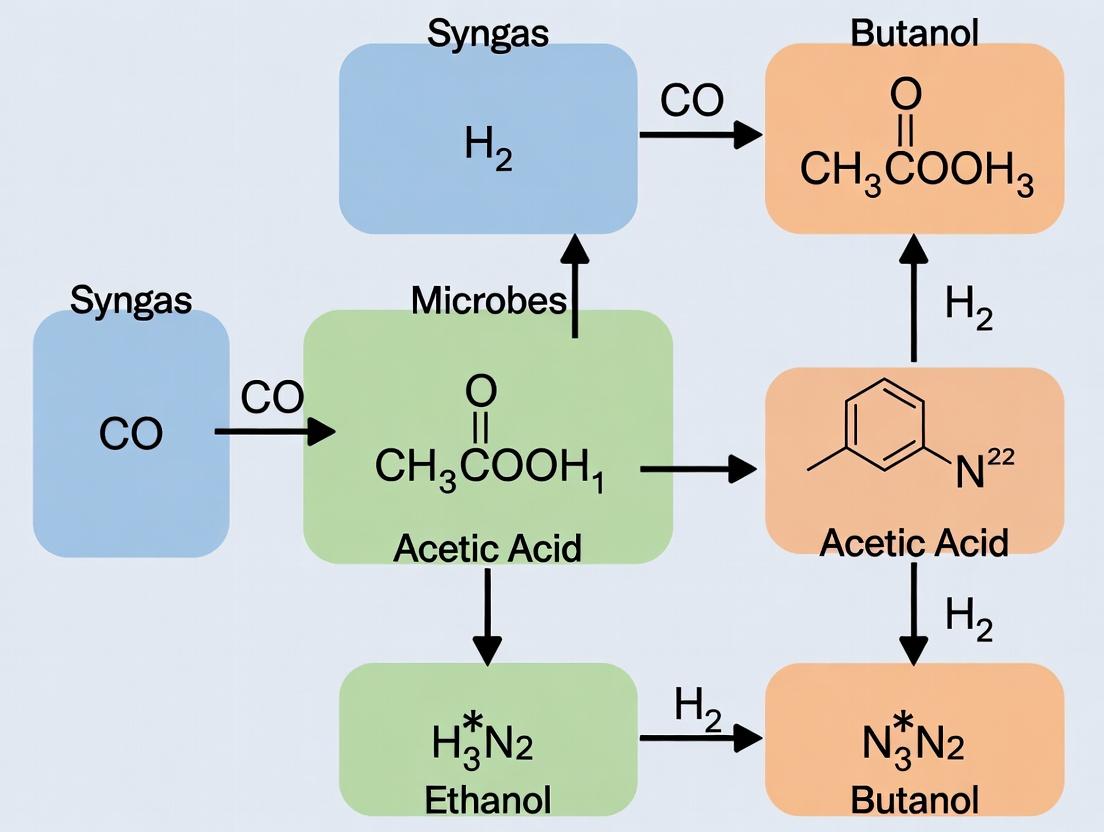
This article provides a comprehensive analysis for researchers and industry professionals on the microbial conversion of syngas (a mixture of CO, CO₂, and H₂) into value-added chemicals and drug precursors.
From Waste to Pharmaceuticals: How Syngas-Fed Microbes Are Revolutionizing Chemical and Drug Precursor Production
Abstract
This article provides a comprehensive analysis for researchers and industry professionals on the microbial conversion of syngas (a mixture of CO, CO₂, and H₂) into value-added chemicals and drug precursors. We explore the foundational biology of acetogenic and other autotrophic bacteria, detail advanced methodological approaches in bioreactor design and metabolic engineering, address critical troubleshooting and optimization challenges in gas fermentation, and validate process efficacy through comparative analysis with conventional petrochemical routes. The review synthesizes current research to highlight the transformative potential of this technology for sustainable, biobased manufacturing in the chemical and pharmaceutical sectors.
Unlocking Nature's Gas-Fed Factories: The Biology and Potential of Syngas-Utilizing Microbes
Synthesis gas (syngas) is a critical feedstock for microbial conversion processes, primarily consisting of carbon monoxide (CO), hydrogen (H₂), and carbon dioxide (CO₂). Its variable composition depends on the source material and production technology.
Table 1: Typical Composition of Syngas from Different Feedstocks
| Feedstock Source | Production Method | Typical CO (%) | Typical H₂ (%) | Typical CO₂ (%) | Other Major Components |
|---|---|---|---|---|---|
| Coal | Gasification | 30-60 | 25-30 | 5-15 | N₂, CH₄, H₂S |
| Natural Gas | Steam Reforming | 5-15 | 70-80 | 5-10 | CH₄ |
| Biomass (Wood) | Gasification | 15-27 | 16-22 | 10-15 | N₂, CH₄ |
| Municipal Waste | Plasma Gasification | 25-40 | 20-30 | 20-30 | N₂, CH₄, HCl, H₂S |
The drive for sustainable feedstocks emphasizes syngas derived from biomass gasification and waste-to-energy processes, reducing reliance on fossil fuels and enabling carbon capture and utilization (CCU) strategies.
Key Experimental Protocols in Microbial Syngas Conversion Research
Protocol 2.1: Batch Cultivation of Acetogenic Bacteria (e.g.,Clostridium autoethanogenum) for Syngas Fermentation
Objective: To convert syngas into acetic acid and ethanol in a controlled batch bioreactor. Materials:
- Bioreactor (e.g., 1L glass vessel with gas-sparging system)
- Modified PETC medium (ATCC Medium 1754)
- Clostridium autoethanogenum DSM 10061
- Syngas mixture (CO:CO₂:H₂:N₂ = 40:30:20:10)
- Anaerobic chamber (Coy Laboratory type)
- 0.2 µm sterile filters for gas
Procedure:
- Medium Preparation & Inoculum: Prepare PETC medium anaerobically. Inoculate 50 mL of medium with a 5% (v/v) active culture in serum bottles. Incubate at 37°C with shaking (150 rpm) for 48 hours under 1 atm CO.
- Bioreactor Setup: Transfer 900 mL of sterile medium to the bioreactor. Sparge with N₂ for 30 min to ensure anaerobiosis.
- Inoculation & Gas Supply: Inoculate with 100 mL of active inoculum (Step 1). Connect the sterile gas filter to the syngas supply. Set the gas flow rate to 0.1 vvm (volume gas per volume liquid per minute). Maintain headspace pressure at 1.2 atm.
- Process Control: Maintain temperature at 37°C, agitation at 300 rpm, and pH at 5.5 using automatic titration with 2M KOH.
- Sampling & Analysis: Aseptically sample 5 mL daily. Analyze cell density (OD600), organic acids (HPLC), and alcohols (GC-FID). Monitor off-gas composition using mass spectrometry.
- Harvest: Terminate fermentation after 7 days or when gas consumption ceases. Centrifuge culture (10,000 x g, 15 min) to separate cells from supernatant for product analysis.
Protocol 2.2: Continuous Bioreactor Operation for Sustained Product Formation
Objective: To establish steady-state production of ethanol from syngas. Materials: CSTR bioreactor system, peristaltic pumps, gas mass flow controllers, cell retention system (e.g., cross-flow filter). Procedure:
- Start in batch mode as per Protocol 2.1.
- Once in late exponential phase (OD600 > 2.0), initiate continuous medium feed and effluent removal at a defined dilution rate (D), typically 0.02-0.05 h⁻¹.
- Implement cell recycle to maintain high cell density (>10 g/L DCW).
- Monitor for steady-state (constant OD, product titers, and gas uptake rates for >5 residence times).
- Vary operational parameters (D, gas composition, pH) to optimize productivity.
Visualizing the Core Pathways and Workflow
Diagram Title: Syngas Sources & Microbial Conversion Pathway
Diagram Title: Syngas Bioconversion Research Workflow
The Scientist's Toolkit: Key Research Reagent Solutions
Table 2: Essential Materials for Microbial Syngas Conversion Experiments
| Item Name | Supplier Examples | Function in Research |
|---|---|---|
| Defined Mineral Medium (e.g., PETC, ATCC 1754) | ATCC, Sigma-Aldrich | Provides essential salts, vitamins, and trace metals for autotrophic growth of acetogens, excluding complex organics. |
| Resazurin Sodium Salt | Sigma-Aldrich, Thermo Fisher | Redox indicator (pink=oxidized, colorless=reduced) for visual confirmation of anaerobic conditions in media. |
| Cysteine HCl / Na₂S Reducing Agents | Merck, Alfa Aesar | Chemical reducing agents used to achieve and maintain a low redox potential necessary for strict anaerobes. |
| Specialty Gas Mixtures (CO/CO₂/H₂/N₂) | Airgas, Linde | Custom syngas blends for simulating various feedstock compositions; require specialized regulators due to CO toxicity. |
| Butyl Rubber Stoppers & Aluminum Seals | Bellco Glass, Chemglass | Provide gas-tight seals for serum bottles and bioreactor ports, preventing leakage of syngas components. |
| Anaerobic Chamber (Glove Box) | Coy Laboratory Products, Plas-Labs | Creates an oxygen-free environment (N₂/H₂/CO₂ mix) for medium preparation, inoculation, and sample manipulation. |
| Gas Chromatography System (with TCD & FID) | Agilent, Shimadzu | Quantifies syngas composition (TCD) and liquid fermentation products like ethanol and butanol (FID). |
| HPLC System with RI/UV Detector | Waters, Thermo Fisher | Analyzes non-volatile fermentation products (organic acids, sugars) and medium components. |
Application Notes
Acetogens, carboxydotrophs, and other autotrophic microbes are central to research on microbial syngas (CO, CO₂, H₂) conversion. Their inherent ability to fix C1 gases via pathways like the Wood-Ljungdahl Pathway (WLP) makes them prime candidates for sustainable bioproduction. Within the broader thesis on microbial syngas conversion to value-added chemicals, these organisms serve as chassis for producing ethanol, acetate, butyrate, 2,3-butanediol, and even more complex biochemicals. Recent strain engineering efforts focus on enhancing product titers, rates, yields (TRY), and expanding the product portfolio beyond native metabolites. A critical application is the integration of gas fermentation with traditional thermochemical processes, creating hybrid biorefineries that valorize industrial waste gases.
Table 1: Key Performance Metrics of Selected Syngas-Utilizing Microbes
| Organism / Strain | Primary Pathway | Key Products | Typical Syngas Composition (Optimal) | Max Reported Product Titer | Reference (Year) |
|---|---|---|---|---|---|
| Clostridium ljungdahlii (WT) | Wood-Ljungdahl | Ethanol, Acetate | 55% CO, 30% H₂, 15% CO₂ | Ethanol: ~48 g/L | (Phillips et al., 2022) |
| Clostridium autoethanogenum (Engineered) | Wood-Ljungdahl | Ethanol | 50% CO, 35% H₂, 15% CO₂ | Ethanol: ~65 g/L | (Liew et al., 2023) |
| Acetobacterium woodii (WT) | Wood-Ljungdahl | Acetate | 33% H₂, 33% CO₂, 33% N₂ | Acetate: ~85 g/L | (Straub et al., 2021) |
| Clostridium carboxidivorans P7 | Wood-Ljungdahl | Butanol, Ethanol | 40% CO, 30% H₂, 30% CO₂ | Butanol: ~18 g/L | (Maddipati et al., 2022) |
| Thermococcus onnurineus (Carboxydotroph) | CO Dehydrogenase | H₂, Formate | 100% CO | H₂: 140 mmol/L | (Kim et al., 2023) |
Table 2: Advantages and Challenges of Microbial Platforms
| Platform Type | Example Genera | Key Advantages | Major Research Challenges |
|---|---|---|---|
| Mesophilic Acetogens | Clostridium, Acetobacterium | Well-characterized WLP, Genetic tools available, Product diversity | Low gas-liquid mass transfer, Redox balancing, Product inhibition |
| Thermophilic Carboxydotrophs | Carboxydothermus, Thermococcus | High CO tolerance, Favorable thermodynamics, Novel pathways | Limited genetic tools, Narrow product spectrum, Cultivation difficulty |
| Electrotrophs/Other Autotrophs | Sporomusa, Clostridium | Can couple with electrochemistry (microbial electrosynthesis) | Extremely low production rates, System complexity, Scale-up hurdles |
Protocols
Protocol 1: Batch Fermentation ofClostridium ljungdahliion Synthetic Syngas for Ethanol Production
Objective: To cultivate C. ljungdahlii in a controlled batch system using synthetic syngas for the production of ethanol and acetate.
Materials & Reagents:
- Clostridium ljungdahlii DSM 13528
- ATCC 1754 PETC medium (modified)
- Serum bottles (160 mL) or bioreactor
- Gas mixture (55% CO, 30% H₂, 15% CO₂)
- Butyl rubber stoppers, Aluminum crimps
- Anaerobic chamber (N₂/H₂/CO₂ atmosphere)
- Syringes (1 mL, 50 mL)
- HPLC system with RI/UV detector
Procedure:
- Medium Preparation: Prepare ATCC 1754 PETC medium anaerobically. Reduce the medium with 0.5 g/L L-cysteine hydrochloride and 0.5 g/L sodium sulfide. Adjust pH to 6.0. Dispense 50 mL into 160 mL serum bottles under a stream of O₂-free N₂.
- Inoculum Preparation: Grow C. ljungdahlii in 10 mL of the same medium under a 100% CO₂ headspace until late exponential phase (OD₆₀₀ ~0.8).
- Inoculation and Gassing: Inoculate serum bottles with 5% (v/v) inoculum. Exchange the headspace gas three times with the synthetic syngas mix using a vacuum-gas replacement system. Pressurize to 1.4 atm absolute pressure.
- Fermentation: Incubate at 37°C with agitation (150 rpm). Monitor pressure drop daily using a pressure gauge.
- Sampling & Analysis: Periodically, withdraw 1 mL liquid sample anaerobically. Measure OD₆₀₀. Clarify samples by centrifugation (13,000 x g, 5 min). Analyze supernatant via HPLC (Aminex HPX-87H column, 5 mM H₂SO₄ mobile phase, 0.6 mL/min, 50°C) to quantify acetate, ethanol, and other metabolites.
- Gas Analysis: Use GC-TCD to analyze headspace composition (CO, CO₂, H₂) at the start and end of fermentation.
Protocol 2: Genetic Transformation ofClostridium ljungdahliivia Electroporation
Objective: To introduce plasmid DNA into C. ljungdahlii for metabolic engineering.
Materials & Reagents:
- C. ljungdahlii mid-exponential phase culture
- Electrocompetent cell preparation buffer (270 mM sucrose, 7 mM sodium phosphate, pH 7.4)
- Plasmid DNA (e.g., pJIR750ai-derived vector with thiamphenicol resistance)
- Gene Pulser Xcell electroporation system (Bio-Rad)
- Pre-chilled 2 mm electroporation cuvettes
- Recovery medium (YTF medium with 20 mM MgCl₂)
- Selective plates (ATCC 1754 medium with 1.5% agar, 15 µg/mL thiamphenicol)
Procedure:
- Cell Preparation: Grow 50 mL culture to OD₆₀₀ 0.4-0.5. Harvest cells anaerobically at 4°C, 4000 x g for 15 min. Wash twice with ice-cold electroporation buffer. Resuspend final pellet in 1 mL buffer.
- Electroporation: Mix 100 µL cell suspension with 1-2 µL plasmid DNA (100-500 ng) in a pre-chilled cuvette. Pulse at 1.8 kV, 600 Ω, 25 µF. Immediately add 900 µL pre-reduced recovery medium.
- Recovery: Transfer to an anaerobic tube. Incubate statically at 37°C for 4-6 hours.
- Plating: Spread 100-200 µL on selective plates. Incubate anaerobically at 37°C for 3-5 days until colonies appear.
- Verification: Pick colonies for genomic DNA extraction and PCR verification of plasmid insertion.
Protocol 3: Activity Assay for Carbon Monoxide Dehydrogenase (CODH)
Objective: To measure the enzymatic activity of CODH from cell lysates of carboxydotrophic bacteria.
Materials & Reagents:
- Cell pellet from syngas-grown culture
- Anaerobic lysis buffer (50 mM Tris-HCl pH 7.5, 2 mM DTT, 1 mM EDTA, sparged with N₂)
- Methyl viologen (MV, 10 mM stock)
- CO gas (100%)
- Spectrophotometer with anaerobic cuvettes
- Protein assay kit (e.g., Bradford)
Procedure:
- Lysate Preparation: Under anaerobic conditions, resuspend cell pellet in lysis buffer. Lyse via sonication (3 x 30 sec pulses on ice). Centrifuge at 12,000 x g for 20 min at 4°C. Collect supernatant as crude enzyme extract.
- Assay Setup: In an anaerobic cuvette, add 950 µL of 50 mM Tris-HCl (pH 7.5) and 20 µL of 10 mM methyl viologen. Seal and purge with N₂.
- Initiation: Add 30 µL of crude extract. Bubble the headspace with CO for 30 sec. Quickly seal and mix.
- Measurement: Immediately place in spectrophotometer. Monitor the reduction of methyl viologen by measuring the increase in absorbance at 578 nm (ε₅₇₈ = 9.7 mM⁻¹ cm⁻¹) for 2 min.
- Calculation: Calculate activity as µmol CO oxidized/min/mg protein. One unit of activity is defined as the amount of enzyme that reduces 1 µmol of methyl viologen per minute.
Visualizations
Title: Wood-Ljungdahl Pathway for Syngas Conversion
Title: Syngas Fermentation Experimental Workflow
The Scientist's Toolkit: Research Reagent Solutions
Table 3: Essential Materials for Syngas Microbiology Research
| Item | Function & Application | Example Vendor/Product |
|---|---|---|
| Specialty Gas Mixtures | Provide defined substrate (CO, CO₂, H₂) for autotrophic growth. Critical for reproducible fermentations. | Custom blends from Airgas, Linde (e.g., 55% CO, 30% H₂, 15% CO₂). |
| Anaerobic Chamber | Creates an O₂-free environment for medium preparation, plating, and genetic work with strict anaerobes. | Coy Laboratory Products, Baker Ruskinn. |
| Butyl Rubber Stoppers | Provide impermeable, self-sealing closures for serum bottle cultures to prevent gas leakage. | Sigma-Aldrich (Cat# Z554637), Bellco Glass. |
| Reducing Agents (Cysteine/Sulfide) | Chemically reduce growth medium to achieve low redox potential (-200 to -400 mV) required by acetogens. | Sigma-Aldrich (L-Cysteine HCl, Na₂S·9H₂O). |
| Selective Antibiotics | Used as selection pressure for maintaining plasmids in genetically engineered strains (e.g., thiamphenicol for Clostridia). | Apollo Scientific (Thiamphenicol), Sigma-Aldrich. |
| Methyl Viologen | An artificial electron acceptor used in spectrophotometric assays for CODH and hydrogenase activity. | Sigma-Aldrich (Cat# 856177). |
| Defined Trace Metal & Vitamin Mix | Ensures consistent supply of micronutrients (e.g., tungsten, selenium) vital for CODH and formate dehydrogenase enzymes. | ATCC Medium 1754 PETC Supplement, or custom mixes. |
| Anaerobic Biofilm Reactor (e.g., CSTR with gas-sparging) | Enhances gas-liquid mass transfer, a key limitation in scaling syngas fermentation. | Sartorius Biostat, Applikon Biotechnology. |
Within the context of microbial conversion of syngas (a mixture of CO, CO₂, and H₂) to value-added chemicals, the Wood-Ljungdahl Pathway (WLP) is the central metabolic engine. This pathway enables acetogenic bacteria (acetogens) to fix carbon monoxide and/or carbon dioxide directly into acetyl-CoA, a universal biochemical precursor. The WLP serves a dual role: it is both the primary energy-conserving mechanism and the main anabolic route for carbon assimilation in these organisms. This makes it a critical target for metabolic engineering in bioproduction platforms aiming to convert industrial waste gases (e.g., from steel mills or gasification) into chemicals like acetate, ethanol, butanol, and 2,3-butanediol.
Recent advances in synthetic biology and systems-level analysis have focused on enhancing the flux through the WLP, redirecting acetyl-CoA to desired products, and improving the tolerance of acetogens to syngas impurities and product toxicity. Understanding the enzyme kinetics, electron carriers, and energy conservation points (via chemiosmotic gradients) is essential for rational strain design.
The WLP operates in two branches that converge to form acetyl-CoA:
- The Methyl Branch: CO₂ is reduced to a methyl group, bound to the corrinoid iron-sulfur protein (CoFeSP), via tetrahydrofolate (THF) intermediates.
- The Carbonyl Branch: CO₂ or CO is reduced to carbon monoxide, which is bound to the Ni-Fe-S cluster of the acetyl-CoA synthase (ACS) complex.
The methyl and carbonyl groups are then combined by ACS to form acetyl-CoA.
Table 1: Key Enzymes and Quantitative Parameters of the Wood-Ljungdahl Pathway in Model Acetogen Clostridium autoethanogenum
| Enzyme/Complex | EC Number | Key Cofactors/Metals | Reported in vitro Turnover Number (min⁻¹) | Primary Function in WLP |
|---|---|---|---|---|
| Formate Dehydrogenase (FDH) | 1.17.1.9 | W, Se, Fe-S clusters | 1,200 - 4,500 | Reduces CO₂ to formate. |
| Formyl-THF Synthetase (Fhs) | 6.3.4.3 | Mg²⁺ | ~15,000 | Activates formate to formyl-THF. |
| Methylene-THF Dehydrogenase (FolD) | 1.5.1.5 & 3.5.4.9 | NAD(P)H | ~80,000 | Reduces formyl- to methenyl- to methylene-THF. |
| Methylene-THF Reductase (MetF) | 1.5.1.20 | NAD(P)H, FAD | ~3,000 | Reduces methylene- to methyl-THF. |
| Acetyl-CoA Synthase (ACS) | 2.3.1.169 | Ni-Ni-[4Fe-4S] Cluster (A-cluster) | 600 - 900 | Condenses methyl group (from CoFeSP) and CO to form acetyl-CoA. |
| CO Dehydrogenase (CODH) | 1.2.7.4 | [Ni-4Fe-5S] Cluster (C-cluster), Fe-S clusters | >20,000 | Oxidizes CO to CO₂ (provides electrons) or reduces CO₂ to CO. |
Table 2: Energy Yields and Carbon Fixation Rates in Syngas Fermentations
| Organism | Substrate (Gas Mix) | Maximum Reported Acetate Production Rate (mmol/L/h) | Coupled Product (e.g., Ethanol) Titer (g/L) | Estimated ATP Yield per Molecule Acetyl-CoA |
|---|---|---|---|---|
| Clostridium autoethanogenum | 55% CO, 20% CO₂, 25% N₂ | 18.5 | Ethanol: ~25 g/L | 0.3 - 0.5 ATP |
| Acetobacterium woodii | H₂ + CO₂ (80:20) | 12.1 | Acetate only | 0.5 ATP (via Na⁺ pump) |
| Clostridium ljungdahlii | 60% CO, 35% CO₂, 5% N₂ | 15.8 | Ethanol: ~20 g/L | 0.3 - 0.5 ATP |
| Eubacterium limosum | 100% CO | 10.2 | Butyrate: ~8 g/L | ~0.5 ATP |
Experimental Protocols
Protocol 1: Measuringin vitroAcetyl-CoA Synthase/CO Dehydrogenase (ACS/CODH) Activity
Objective: To quantify the rate of acetyl-CoA synthesis from methylated corrinoid protein, CO, and CoASH. Reagents: Purified ACS/CODH complex, methylated CoFeSP, Coenzyme A (CoASH), Ti(III) citrate (reducing agent), CO-saturated buffer, Tris-HCl buffer (pH 7.5), DTNB (Ellman’s reagent). Procedure:
- Prepare an anaerobic assay mixture in a sealed cuvette under N₂ atmosphere: 100 mM Tris-HCl (pH 7.5), 5 mM DTT, 2 mM Ti(III) citrate, 0.1 µM ACS/CODH, 50 µM methylated CoFeSP.
- Pre-incubate the mixture at 37°C for 5 minutes.
- Initiate the reaction by simultaneously adding CoASH (final 0.5 mM) and CO-saturated buffer (final CO concentration 1 mM).
- Monitor the formation of acetyl-CoA by coupling the reaction to phosphate acetyltransferase and citrate synthase, observing the increase in A412 from the reaction of freed CoASH with DTNB. Alternatively, use direct HPLC-MS quantification.
- Calculate activity (µmol/min/mg) from the initial linear rate of product formation.
Protocol 2: Gene Knockdown inClostridiumusing CRISPR-dCas9 for WLP Flux Analysis
Objective: To modulate expression of WLP genes (e.g., fdh, acs) and study impact on product profile. Reagents: pMTL83151-dCas9 vector, sgRNA cloning oligonucleotides, E. coli DH5α, C. autoethanogenum DSM 10061, thiamphenicol, brain heart infusion (BHI) media, anaerobic chamber (97% N₂, 3% H₂). Procedure:
- Design and clone sgRNAs targeting the promoter or early coding region of the target WLP gene into the BsaI site of the dCas9 vector.
- Transform the plasmid into E. coli for amplification, then isolate plasmid DNA.
- Transform C. autoethanogenum via electroporation (1.8 kV, 200Ω, 25µF) with 2 µg plasmid DNA. Recover in BHI + 20 mM glucose for 12 hours.
- Plate on selective BHI agar with 15 µg/mL thiamphenicol. Incubate anaerobically at 37°C for 5-7 days.
- Screen transformants by colony PCR and Sanger sequencing. Cultivate knockdown strains in syngas (50 psi) pressure bottles.
- Quantify transcript levels via RT-qPCR (using rpoB as reference) and analyze fermentation products via HPLC.
Protocol 3: Quantifying Carbon Flux through the WLP using ¹³C-Tracer Analysis
Objective: To determine the contribution of the WLP to central metabolism under syngas fermentation. Reagents: Defined mineral medium, ¹³CO (99% atom) or NaH¹³CO₃, quenching solution (60% methanol, -40°C), extraction solvent (chloroform:methanol:water), GC-MS system. Procedure:
- Grow acetogen culture (e.g., C. ljungdahlii) in a defined medium with unlabeled syngas to mid-exponential phase.
- Switch gas phase to ¹³CO-enriched syngas or add NaH¹³CO₃. Take rapid time-series samples (0, 30, 60, 120 sec) using a quenching device.
- Extract intracellular metabolites. Derivatize (e.g., MTBSTFA for organic acids, methoxyamine for phosphorylated sugars).
- Analyze by GC-MS. Determine mass isotopomer distributions (MIDs) of key metabolites (acetate, pyruvate, citrate, amino acids).
- Use computational software (e.g., INCA, elementary metabolite unit analysis) to fit the MID data to a metabolic network model containing the WLP and infer flux distributions.
Visualization of Pathways and Workflows
Title: The Wood-Ljungdahl Pathway for Syngas Conversion
Title: Integrated Workflow for Engineering the WLP
The Scientist's Toolkit: Research Reagent Solutions
Table 3: Essential Materials for WLP and Syngas Conversion Research
| Item | Function & Application | Example Supplier/Catalog |
|---|---|---|
| Defined Mineral Medium for Acetogens | Provides essential salts, vitamins, and trace elements while avoiding complex ingredients that interfere with metabolomics. Essential for reproducible physiology and ¹³C-tracer studies. | ATCC Medium 1754 (PETC), or custom formulation. |
| Anaerobic Chamber (Coy Type) | Maintains a strict oxygen-free atmosphere (typically 97% N₂, 3% H₂ with palladium catalyst) for cultivating obligate anaerobes and performing sensitive enzyme assays. | Coy Laboratory Products, Baker Ruskinn. |
| CO/CO₂/H₂ Calibrated Gas Mixtures | Provides precise, reproducible syngas substrates for fermentation experiments. Safety note: CO is highly toxic. | Linde, Airgas, Matheson. |
| Ti(III) Citrate Solution | A potent, non-enzymatic reducing agent used to establish and maintain low redox potential in anaerobic biochemical assays (e.g., ACS activity). | Sigma-Aldrich, 369972 or prepared in-house. |
| Corrinoid Iron-Sulfur Protein (CoFeSP) | Key methyl carrier protein for the WLP's methyl branch. Required for in vitro reconstitution of acetyl-CoA synthesis. | Purified from native hosts (e.g., M. thermoacetica) or recombinant expression. |
| ¹³C-Labeled Substrates (¹³CO, NaH¹³CO₃) | Tracers for quantifying carbon flux through the WLP and connected metabolic networks via GC-MS or NMR analysis. | Cambridge Isotope Laboratories, Sigma-Aldrich. |
| CRISPR-dCas9 Toolkit for Clostridia | Plasmid system for targeted gene knockdown without knockout, allowing study of essential WLP genes. | Addgene (pMTL83151-dCas9 derivatives). |
| Acetyl-CoA Standard (deuterated or ¹³C-labeled) | Internal standard for absolute quantification of acetyl-CoA and related metabolites via LC-MS/MS. | Silantes, Cambridge Isotope Laboratories. |
Within the broader thesis on microbial conversion of syngas (primarily CO, CO₂, H₂) to value-added chemicals, understanding the native product spectrum of acetogenic bacteria is paramount. These organisms, employing the Wood-Ljungdahl pathway, naturally produce acetate and ethanol. However, metabolic engineering aims to divert carbon flux towards higher-value products like 2,3-butanediol (a precursor for polymers and fuels) and butyrate (used in chemicals and food). This application note details the protocols for analyzing and manipulating this product spectrum in model acetogens such as Clostridium autoethanogenum and Clostridium ljungdahlii.
Quantitative Analysis of Native Product Titers
Current research indicates significant variability in product titers based on strain, gas composition, and culture conditions. The table below summarizes representative data from recent studies.
Table 1: Comparative Product Spectrum from Syngas Fermentation by Native and Engineered Acetogens
| Organism / Strain | Condition / Modification | Acetate (g/L) | Ethanol (g/L) | 2,3-Butanediol (g/L) | Butyrate (g/L) | Key Reference (Year) |
|---|---|---|---|---|---|---|
| Clostridium autoethanogenum (WT) | Batch, CO-rich syngas | 2.8 - 4.5 | 1.2 - 2.8 | ≤ 0.1 | ND | Liew et al. (2022) |
| C. autoethanogenum (Engineered) | aco overexpression, CO | 1.1 | 5.7 | 0.5 | ND | Marcellin et al. (2023) |
| Clostridium ljungdahlii (WT) | Continuous, H₂/CO₂ | 5.1 - 7.3 | 0.05 - 0.2 | ND | Traces | Richter et al. (2023) |
| C. ljungdahlii ΔadhE1 | Knockout, CO | 3.8 | 0.01 | ND | 1.4 | Haas et al. (2024) |
| Clostridium ragsdalei (WT) | pH-controlled Fed-Batch | 10.2 | 3.1 | ND | 0.3 | Sun et al. (2023) |
| C. autoethanogenum ΔhydA | CRISPRi knockdown, CO | 0.9 | 0.2 | 2.8 | ND | Recent preprint |
ND: Not Detected.
Experimental Protocols
Protocol 3.1: Syngas Fermentation for Product Spectrum Analysis
Objective: To cultivate acetogens under pressurized syngas and quantify the native product spectrum (acetate, ethanol, 2,3-BD, butyrate).
Materials:
- Anaerobic chamber (Coy Laboratory Products or similar).
- Pressurized bioreactors (e.g., 1L serum bottles or custom CSTRs with gas mixing).
- Syngas mixture (e.g., 55% CO, 20% CO₂, 25% N₂ or 60% H₂, 20% CO₂, 20% CO).
- Modified PETC or ATCC 1754 medium.
Procedure:
- Medium Preparation & Inoculation: Prepare and reduce medium anaerobically. Inoculate with 5-10% (v/v) of a late-exponential phase pre-culture grown on syngas or fructose.
- Gas Phase Setup: Transfer culture to bioreactor. Seal and pressurize to 1.5 - 2.0 bar absolute pressure with filter-sterilized syngas.
- Incubation: Incubate at 37°C with agitation (150 rpm). Monitor pressure drop as an indicator of gas consumption.
- Sampling: Periodically, aseptically withdraw liquid samples (1-2 mL) using gas-tight syringes under counter-pressure.
- Analysis:
- Cell Density: Measure optical density at 600 nm (OD₆₀₀).
- Metabolite Quantification: Centrifuge sample (13,000 x g, 5 min). Filter supernatant (0.2 µm). Analyze via HPLC equipped with an Aminex HPX-87H column (Bio-Rad) at 50°C, using 5 mM H₂SO₄ as mobile phase (0.6 mL/min) and RI/UV detection.
Protocol 3.2: Metabolic Engineering for 2,3-Butanediol Production
Objective: To express heterologous alsS (acetolactate synthase from Bacillus subtilis) and budC (butanediol dehydrogenase from native C. autoethanogenum) in C. autoethanogenum.
Materials:
- C. autoethanogenum DSM10061.
- Anaerobic electroporation system.
- Plasmid pMTL83151 with alsS-budC operon under thl promoter.
- Selection antibiotic: Thiamphenicol (15 µg/mL final).
Procedure:
- Vector Construction: Clone alsS and budC genes into the E. coli-C. autoethanogenum shuttle vector pMTL83151 using Gibson Assembly.
- Methylation: Transform the plasmid into an E. coli dam+/dcm+ host to methylate DNA, which is required for successful transformation into some clostridia.
- Electrocompetent Cells: Grow C. autoethanogenum to mid-log phase (OD₆₀₀ ~0.4-0.6). Harvest cells anaerobically, wash 3x with ice-cold electroporation buffer (270 mM sucrose, 1 mM MgCl₂, 7 mM NaH₂PO₄, pH 7.4).
- Electroporation: Mix 100 µL cells with 1-2 µg methylated plasmid. Electroporate (2.0 kV, 200 Ω, 25 µF in a 2 mm cuvette). Immediately add 1 mL of recovery medium.
- Recovery & Selection: Transfer to anaerobic tube, recover for 4-6 hours at 37°C. Plate onto solid medium containing thiamphenicol. Incubate anaerobically under syngas for 5-7 days until colonies appear.
- Validation: Screen colonies via colony PCR for insert. Analyze product spectrum per Protocol 3.1.
Protocol 3.3: Pathway Knockout for Butyrate Redirection
Objective: To disrupt the adhE1 gene (bifunctional aldehyde/alcohol dehydrogenase) in C. ljungdahlii to shift flux from ethanol to butyrate via native pathways.
Materials:
- CRISPR-Cas9 plasmid pNICKclj for C. ljungdahlii (contains Cas9n and nickase guide RNA template).
- ssDNA repair template (90-nt oligo with homology arms and desired mutation/stop codon).
Procedure:
- Guide RNA Design: Design a 20-nt guide sequence targeting the early coding region of adhE1 using CRISPR design tools (e.g., Benchling). Clone into pNICKclj.
- Transformation: Co-transform C. ljungdahlii with the CRISPR plasmid and 100 pmol of ssDNA repair template via electroporation (similar to Protocol 3.2, step 3-4).
- Screening & Verification: Plate on selective media. Screen colonies via PCR and Sanger sequencing of the adhE1 locus to confirm precise editing.
- Phenotypic Analysis: Grow edited strain under syngas (Protocol 3.1). Quantify the dramatic reduction in ethanol and increase in butyrate via HPLC.
Visualization of Pathways and Workflows
Diagram Title: Syngas to Chemical Conversion Pathways
Diagram Title: Syngas Fermentation Workflow
The Scientist's Toolkit: Research Reagent Solutions
Table 2: Essential Materials for Syngas Conversion Research
| Item / Reagent | Function / Application | Key Supplier Example(s) |
|---|---|---|
| ATCC 1754 / PETC Medium | Defined culture medium for autotrophic growth of acetogens. | ATCC, Merck (Custom formulation) |
| Syngas Mixtures (e.g., CO/CO₂/N₂, H₂/CO₂) | Controlled carbon and energy source for fermentation. | Linde, AirGas |
| Anaerobic Chamber (Coy, Vinyl) | Provides oxygen-free environment for media prep, plating, and genetic work. | Coy Laboratory Products, Baker Ruskinn |
| Pressurized Serum Bottles (120mL, 1L) | Simple, scalable bioreactors for batch syngas fermentation. | Chemglass, GLS |
| Aminex HPX-87H Column | HPLC column for separation and quantification of organic acids and alcohols. | Bio-Rad Laboratories |
| Thiamphenicol | Selective antibiotic for clostridial plasmids (pMTL series). | Sigma-Aldrich |
| CRISPR-Cas9 Plasmid Kit (e.g., pNICKclj) | Enables precise genome editing in model acetogens. | Addgene (Academic Deposits) |
| Electroporation Buffer (Sucrose/Mg/Pi) | Essential for preparing competent cells of clostridia. | In-house preparation per protocol. |
| Gas-tight Syringes (Hamilton) | For aseptic, anaerobic sampling from pressurized cultures. | Hamilton Company |
Application Notes
Within the thesis framework of microbial conversion of syngas (a mixture of CO, CO₂, and H₂) to value-added chemicals, this document details targeted production pathways for high-value compounds. Syngas fermentation leverages acetogenic bacteria (e.g., Clostridium autoethanogenum, Acetobacterium woodii) that utilize the Wood-Ljungdahl pathway to fix C1 gases. Metabolic engineering strategies are redirecting carbon flux from native products (acetate, ethanol) toward targeted chemical suites: pharmaceutical precursors, organic acids, and advanced biofuels.
Key Microbial Platforms & Target Pathways
Table 1: Microbial Platforms for Syngas Conversion to Target Chemicals
| Microbial Host | Native Strengths | Key Engineered Target(s) | Maximum Reported Titer (Reference Year) |
|---|---|---|---|
| Clostridium autoethanogenum | High CO tolerance, robust growth on syngas | 2,3-Butanediol, Acetone | 2,3-BDO: ~18 g/L (2022) |
| Clostridium ljungdahl | Efficient CO₂/H₂ utilization | Butyrate, Butanol | Butyrate: ~12 g/L (2023) |
| Escherichia coli (engineered) | Extensive genetic toolkit | 3-Hydroxypropionate, n-Butanol | 3-HP: ~8 g/L (2023) |
| Pseudomonas putida (engineered) | Aromatic catabolism, solvent tolerance | muconic acid, itaconate | muconic acid: ~1.5 g/L (2024) |
Table 2: Target Chemical Classes and Applications
| Chemical Class | Example Compounds | Key Applications | Estimated Market Value (2030 Projection) |
|---|---|---|---|
| Pharmaceutical Precursors | D-Lactate, Succinate, muconic acid | Polylactic acid (PLA) biopolymers, antibiotic synthesis, nylon precursors | Succinate: USD 1.2 Billion |
| Organic Acids | 3-Hydroxypropionate, Itaconic acid, Acetone | Acrylate plastics, resin synthesis, solvents | Itaconic Acid: USD 500 Million |
| Advanced Biofuels | n-Butanol, Isobutanol, Fatty Acid Ethyl Esters (FAEEs) | Drop-in fuel blendstock, marine fuels | Biobutanol: USD 8.5 Billion |
Critical Process Parameters
Syngas fermentation performance is governed by gas-liquid mass transfer, redox balance, and feedstock composition. Recent studies emphasize continuous bioreactor operation with cell recycling and in-situ product removal (ISPR) to overcome product toxicity and low volumetric productivity. The use of synthetic microbial consortia, where one member converts syngas to an intermediate (e.g., acetate) and a second engineered member upgrades it to the final target (e.g., butanol), is a growing area of research (2024).
Experimental Protocols
Protocol A: Batch Syngas Fermentation for Organic Acid Production
Objective: To produce 3-hydroxypropionate (3-HP) from syngas using an engineered E. coli strain expressing the Acetobacterium woodii Wood-Ljungdahl pathway genes and a heterologous 3-HP cycle.
Materials:
- Bioreactor (e.g., 1L working volume) with gas mixing and mass flow controllers.
- Engineered E. coli strain (e.g., JW1354 with plasmid pETDuet-acbABCD).
- Defined mineral medium (M9-based, CO/CO₂/H₂ as carbon source).
- Syngas mixture: 40% CO, 30% H₂, 20% CO₂, 10% N₂.
- Anaerobic chamber for inoculum preparation.
Procedure:
- Inoculum Prep: Grow engineered E. coli anaerobically in 50 mL of LB with appropriate antibiotics overnight at 37°C.
- Bioreactor Setup: Fill bioreactor with 900 mL of defined mineral medium. Sparge with N₂ for 30 min to achieve anaerobiosis.
- Inoculation: Transfer 100 mL of overnight culture to the bioreactor under N₂ flow.
- Fermentation Initiation: Switch gas supply to the defined syngas mixture. Set gas flow rate to 0.2 vvm (volume gas per volume liquid per minute). Agitate at 500 rpm. Maintain temperature at 37°C and pH at 6.8 using 2M KOH.
- Monitoring: Sample periodically (every 6-12 h) for OD₆₀₀, organic acid analysis (HPLC with RI/UV detector), and residual gas composition (GC-TCD).
- Termination: Harvest culture at 72 h or when gas uptake ceases. Centrifuge (10,000 x g, 15 min) to separate biomass and supernatant for product quantification.
Protocol B: Continuous Co-culture Fermentation for Biofuel Precursors
Objective: To demonstrate the continuous production of n-butanol from syngas using a synthetic co-culture of Clostridium autoethanogenum (producer of acetate and ethanol) and Clostridium acetobutylicum (utilizes acetate/ethanol for butanol synthesis).
Materials:
- Two-stage continuous bioreactor system (CSTR).
- Clostridium autoethanogenum DSM 10061.
- Clostridium acetobutylicum ATCC 824 (engineered for enhanced alcohol tolerance).
- PETC medium for Stage 1; P2 medium for Stage 2.
- Syngas: 55% CO, 20% H₂, 15% CO₂, 10% N₂.
Procedure:
- Stage 1 Reactor Inoculation: Grow C. autoethanogenum in a 500 mL batch on syngas. Once in mid-exponential phase, initiate continuous mode with fresh PETC medium. Set dilution rate (D) to 0.05 h⁻¹. This reactor will produce an effluent rich in acetate and ethanol.
- Stage 2 Reactor Inoculation: Connect the effluent from Stage 1 (containing acetate/ethanol and cells) to the inlet of the Stage 2 bioreactor, containing P2 medium. Inoculate Stage 2 with C. acetobutylicum.
- Co-culture Operation: Operate Stage 2 in continuous mode at D = 0.03 h⁻¹. Maintain syngas sparging into Stage 1 only. Monitor Stage 2 for butanol production.
- Analytics: Daily analysis of solvents (acetone, butanol, ethanol) via GC-FID from both reactor effluents. Monitor cell densities microscopically.
Protocol C: Analytical Protocol for Quantitative Product Analysis
Objective: To quantify target organic acids, alcohols, and pharmaceutical precursors from fermentation broth.
Materials:
- HPLC system with refractive index (RI) and photodiode array (PDA) detectors.
- Aminex HPX-87H column (300 x 7.8 mm) or equivalent.
- GC-FID system with ZB-WAXplus column (30m, 0.32mm ID, 0.25μm).
- Standard solutions of target analytes.
HPLC Protocol (for Organic Acids/Sugars):
- Sample Prep: Filter fermentation broth through 0.2 μm syringe filter. Dilute 1:10 in 5mM H₂SO₄.
- Method: Mobile phase: 5 mM H₂SO₄. Flow rate: 0.6 mL/min. Column temp: 50°C. RI detector temp: 40°C. Injection volume: 20 μL.
- Quantification: Use external standard curves (0.1-10 g/L) for lactate, acetate, succinate, 3-HP, and ethanol.
GC-FID Protocol (for Alcohols/Biofuels):
- Sample Prep: Mix 900 μL of filtered sample with 100 μL of internal standard (e.g., 1% v/v 1-butanol).
- Method: Injector: 250°C, Split 10:1. Oven: 40°C (hold 3 min), ramp 20°C/min to 240°C (hold 5 min). FID: 250°C. Carrier gas: He at 1.5 mL/min.
- Quantification: Identify peaks by retention time vs. pure standards. Calculate concentration using internal standard response factors.
Visualizations
Title: Syngas to Chemicals Metabolic Routing
Title: Syngas Conversion R&D Workflow
The Scientist's Toolkit
Table 3: Key Research Reagent Solutions for Syngas Conversion Studies
| Reagent/Material | Function & Application | Key Consideration |
|---|---|---|
| Defined Mineral Medium (e.g., PETC, M9) | Provides essential salts, vitamins, and trace elements for autotrophic growth of acetogens. Eliminates complex carbon sources to force syngas utilization. | Must be prepared and stored anaerobically. Cysteine-HCl or Na₂S is often used as a reducing agent. |
| Specialized Gas Blends | Synthetic syngas mixtures with defined ratios of CO, CO₂, H₂, and N₂. Used for process optimization and reproducibility in fermentations. | High-pressure gas cylinders require proper handling. CO is toxic; use in ventilated fume hoods or gas-safe incubators. |
| Mass Flow Controllers (MFCs) | Precisely regulate the flow rates of individual gases into a bioreactor, enabling controlled syngas composition and mass transfer studies. | Critical for kinetic studies. Require calibration with specific gases. |
| Anaerobic Chamber (Glove Box) | Provides an oxygen-free environment for preparing media, inoculating cultures, and handling strictly anaerobic microorganisms. | Maintain atmosphere with ~5% H₂, 95% N₂, and a palladium catalyst to scavenge O₂. |
| In-situ Product Removal (ISPR) Resins | Hydrophobic adsorbent resins (e.g., XAD-7, Dowex Optipore) added to fermentation broth to sequester toxic products (e.g., butanol) in-situ. | Increases product yield and titer by mitigating inhibition. Requires biocompatibility testing. |
| CRISPR/Cas9 Toolkit for Clostridia | Plasmid systems for gene knockouts/knock-ins in model syngas-fermenting clostridia. Essential for metabolic pathway engineering. | Requires optimized electroporation protocols. Curing plasmids post-editing is often necessary. |
| Analytical Standards Kit | Certified reference materials for target chemicals (e.g., organic acid mix, alcohol mix). Used for HPLC/GC calibration and quantification. | Store as per manufacturer instructions. Prepare fresh dilutions regularly for accurate standard curves. |
Engineering the Process: From Bioreactor Design to Metabolic Pathway Manipulation
This document provides detailed application notes and protocols for three central bioreactor technologies—Continuous Stirred-Tank Reactor (CSTR), Bubble Column Reactor (BCR), and Trickle-Bed Reactor (TBR)—within the context of a broader thesis on Microbial conversion of syngas (synthesis gas) to value-added chemicals. The thesis investigates the optimization of biocatalytic platforms for transforming waste-derived syngas (primarily CO, CO₂, H₂) into sustainable biochemicals like ethanol, acetate, butanediol, and platform chemicals for pharmaceutical synthesis.
Comparative Analysis of Reactor Configurations
Table 1: Key Operational and Performance Parameters for Gas Fermentation Reactors
| Parameter | CSTR | Bubble Column | Trickle-Bed |
|---|---|---|---|
| Mixing Mechanism | Mechanical Impeller | Gas Sparging | Liquid Trickling over Packed Bed |
| Gas-Liquid Mass Transfer (kLa, h⁻¹) | 100 - 1000 | 50 - 500 | 10 - 200 |
| Typical Working Volume (L) | 1 - 20,000 | 10 - 200,000 | 1 - 1000 |
| Pressure Drop | Low | Low | Moderate to High |
| Cell Retention Strategy | External Membrane / Settler | Internal Sedimentation | Biofilm on Packing |
| Energy Input | High (Agitation) | Medium (Gas Compression) | Low (Liquid Pumping) |
| Biofilm Control | Not Applicable (Suspended) | Difficult | Intrinsic (Desired) |
| Scalability | Excellent (Well-understood) | Excellent for Large Scale | Challenging (Channeling Risk) |
| Dominant Microbial State | Planktonic (Suspended) | Planktonic or Flocs | Sessile (Biofilm) |
| Best Suited For | High-cell-density cultures, sensitive strains | Large-volume, low-cost operations, shear-sensitive cultures | Very high gas residence time, biofilm-utilizing consortia |
Detailed Application Notes & Experimental Protocols
Continuous Stirred-Tank Reactor (CSTR) with Cell Recycling
Application Note: Ideal for achieving high cell densities and volumetric productivities with acetogenic bacteria like Clostridium autoethanogenum or engineered Escherichia coli. The continuous mode with cell recycle enables high dilution rates exceeding the organism's growth rate, maximizing substrate conversion to target products (e.g., ethanol).
Protocol: CSTR Operation for Syngas Fermentation
Objective: To establish a continuous syngas fermentation process for ethanol production with high cell density via membrane-based cell recycling.
Materials:
- Bioreactor: 3L CSTR (e.g., Applikon, Sartorius) with control units for pH, temperature, dissolved oxygen (as an indicator), and agitation.
- Gas Supply: Pre-mixed syngas cylinder (e.g., 60% CO, 20% CO₂, 20% H₂) with mass flow controllers.
- Liquid Medium: Modified PETC medium for acetogens (see Table 2).
- Cell Recycle Unit: External 0.2 µm hollow-fiber microfiltration membrane module.
- Analytics: HPLC (for organic acids/alcohols), GC-TCD (for gas composition), spectrophotometer (for optical density).
Procedure:
- Reactor Sterilization: Assemble the reactor with the pH and DO probes. Fill with 1.8L of medium. Autoclave at 121°C for 45 minutes. Connect sterile gas lines and filter-sterilized nutrient feeds aseptically.
- Inoculation & Batch Phase: Sparge the reactor with N₂ to create anaerobiosis. Inoculate with 200 mL of an active mid-exponential phase culture (OD₆₀₀ ~0.8). Switch gas supply to syngas at a flow rate of 0.2 vvm (volume gas per volume liquid per minute). Maintain pH at 5.8 using 2M KOH, temperature at 37°C, and agitation at 300 rpm.
- Transition to Continuous Mode: Once the batch culture reaches late-exponential phase (OD₆₀₀ ~2.0), initiate the continuous feed of fresh medium and withdrawal of effluent via a peristaltic pump at a defined dilution rate (D), typically 0.05 h⁻¹.
- Activation of Cell Recycle: Connect the external membrane recycle loop. The broth is continuously withdrawn from the reactor, passed through the membrane module, and the cell-concentrated retentate is returned to the reactor. The cell-free permeate is collected as product stream. Maintain a recycle ratio (retentate flow / feed flow) of 5:1.
- Steady-State Operation & Monitoring: Operate the system until steady-state is achieved (constant OD, product titer, and gas uptake rate for ≥5 residence times). Monitor daily: OD₆₀₀, gas inflow/outflow composition, and liquid product profile via HPLC.
- Shutdown: Stop the feed pump. Continue gas sparging for 1 hour to maintain anaerobiosis during shutdown. Collect final samples. Flush the system with an inert gas before opening.
Bubble Column Reactor (BCR) for Shear-Sensitive Cultures
Application Note: Suitable for large-scale operations and for microorganisms sensitive to shear stress from impellers. The absence of moving parts simplifies design and sterilization. Performance is heavily dependent on gas sparger design to optimize bubble size and mass transfer.
Protocol: Establishing a Pilot-Scale Bubble Column Fermentation
Objective: To cultivate shear-sensitive syngas-utilizing microbes (e.g., *Moorella thermoacetica) and assess mass transfer coefficients.
Materials:
- Reactor: 50L acrylic or glass bubble column with a height-to-diameter ratio >5.
- Gas Sparger: Porous stainless steel or sintered glass sparger (pore size 10-50 µm).
- Gas Analysis: Real-time mass spectrometer or GC for exhaust gas analysis.
- Dissolved CO Probe: Amperometric microsensor (if available).
Procedure:
- Reactor Preparation: Clean and sterilize the column and sparger in situ using a chemical sterilant (e.g., 1% peracetic acid). Rinse thoroughly with sterile deionized water.
- Medium Filling & Inoculation: Fill the column with 40L of sterile, pre-reduced medium. Sparge with N₂/CO₂ mix for 1 hour to ensure anaerobiosis. Inoculate with 2L of active seed culture via a sterile sample port.
- Process Initiation: Start syngas flow at 0.1 vvm. Control temperature via a water jacket. Monitor pH and add base aseptically as required.
- kLa Determination (Dynamic Gassing-Out Method): a. Degas the liquid by sparging N₂ until the dissolved CO (or O₂ as a proxy) is zero. b. Quickly switch the gas supply to syngas at the operational flow rate. c. Record the increase in dissolved gas concentration (using a probe) over time until saturation. d. Plot ln(C* – C) vs. time, where C* is the saturation concentration and C is the concentration at time t. The slope of the linear region is the kLa.
- Sampling: Periodically take liquid samples from different heights to check for homogeneity and for offline product analysis.
Trickle-Bed Reactor (TBR) for Biofilm-Based Conversion
Application Note: Employs a stationary packing material (e.g., ceramic rings, porous polymers) as a support for microbial biofilm growth. Gas flows continuously upward or downward, while liquid medium trickles down, creating a large interfacial area for gas absorption directly into the biofilm. Maximizes gas residence time and catalyst (cell) retention.
Protocol: Packing Inoculation and Operation of a Lab-Scale TBR
Objective: To establish a stable, productive biofilm of syngas-fermenting bacteria on a packed bed for continuous long-term operation.
Materials:
- Reactor Column: Glass column (5 cm diameter x 50 cm height) with heating jacket.
- Packing Material: High-surface-area polypropylene Pall rings or lava rock.
- Recirculation Reservoir: A temperature- and pH-controlled vessel.
- Liquid Distributor: A nozzle or spray system to ensure even wetting of the packed bed.
Procedure:
- Packing and Sterilization: Pack the column with the chosen material. Autoclave the entire column assembly. Connect the column to the sterile medium reservoir and gas lines.
- Biofilm Establishment (Batch Circulation Mode): a. Fill the reservoir with medium and inoculate with a high-density culture. b. Start recirculating the liquid medium from the reservoir, over the packed bed, and back to the reservoir at a high flow rate (e.g., 100 mL/min). This facilitates initial cell attachment. c. Continuously sparge syngas through the column at 0.05 vvm. d. Maintain this batch recirculation mode for 48-72 hours to allow for robust biofilm formation.
- Transition to Continuous Trickle Flow: Switch the liquid operation from recirculation to once-through mode. Start feeding fresh medium from a separate feed tank into the top of the column at a low trickle rate (e.g., 10 mL/min). Collect effluent from the bottom. The reservoir is now bypassed.
- Biofilm Monitoring & Stability: Periodically measure the pressure drop across the bed (indicator of clogging). Measure product titer in the effluent. Biofilm density can be estimated at the end of a run by destructively sampling packing pieces, sonicating to detach cells, and measuring protein content or viable counts.
The Scientist's Toolkit: Key Research Reagent Solutions
Table 2: Essential Materials for Syngas Fermentation Research
| Item | Function & Rationale |
|---|---|
| Modified PETC Medium | A defined mineral medium for acetogens, containing vitamins (B1, biotin), trace metals (Ni, Se, W, Mo), and a reducing agent (cysteine-HCl). Essential for autotrophic growth on syngas. |
| Resazurin (0.1% w/v) | Redox indicator. Pink indicates oxidization, colorless indicates reduced conditions required for strict anaerobes. |
| Cysteine-HCl·H₂O (0.5 g/L) | A strong reducing agent that helps maintain a low redox potential in the medium, crucial for oxygen-sensitive enzymes like CO dehydrogenase. |
| Syngas Mixture (Custom) | Defined blend of CO, CO₂, H₂, and N₂. Typical research blend: 60% CO, 20% CO₂, 20% H₂. Allows precise study of substrate effects. |
| 2M Potassium Hydroxide (KOH) | Sterile, anaerobic base solution for pH control. CO₂ in syngas forms carbonic acid, requiring continuous base addition to maintain optimal pH (5.5-6.0). |
| Hollow-Fiber Filtration Module (0.2 µm) | For cell retention in CSTR systems. Enables high cell density and volumetric productivity by decoupling cell growth rate from dilution rate. |
| Polypropylene Pall Rings | Common packing material for TBRs. Provides high surface area, good wetting properties, and is chemically inert for biofilm attachment. |
| Gas Mass Flow Controllers (MFCs) | Precisely control and ratio the individual gas components (CO, CO₂, H₂) into the reactor, enabling stoichiometric feeding and metabolic studies. |
Visualization of Experimental Workflows and Relationships
Title: CSTR with Cell Recycle Experimental Workflow
Title: Decision Logic for Selecting Bioreactor Type
Title: Syngas Mass Transfer & Microbial Uptake Pathway
Within the broader thesis on the microbial conversion of syngas to value-added chemicals, scaling bioreactor processes is fundamentally limited by the low solubility and slow diffusion of syngas components (CO, H₂, CO₂) in the aqueous fermentation broth. This gas-liquid mass transfer bottleneck directly constrains microbial uptake rates, limiting productivity, yield, and economic viability at industrial scales. This Application Note details current strategies, quantitative benchmarks, and practical protocols for addressing this critical challenge.
Data Presentation: Key Mass Transfer Parameters & Performance Metrics
Table 1: Comparative Performance of Gas-Liquid Mass Transfer Enhancement Strategies in Syngas Fermentation
| Strategy | Typical kLa (h⁻¹) for O₂/CO* | Volumetric Productivity Increase (vs Stirred Tank) | Key Advantage | Primary Scale-Up Challenge |
|---|---|---|---|---|
| Conventional Stirred Tank | 10 - 50 | Baseline | Simplicity, well-understood | Low efficiency, high shear |
| Bubble Column | 20 - 100 | 1.5 - 2x | Low energy, no moving parts | Poor mixing, foaming |
| Air-Lift Reactor | 50 - 150 | 2 - 3x | Good mixing, moderate energy | Complex design, gas recycling |
| Membrane Sparger | 100 - 300 | 3 - 5x | High interfacial area, uniform bubbles | Fouling, capital cost |
| Microbial Nanoparticle | 150 - 400 | 4 - 8x | Enhances local solubility | Toxicity, recovery, cost |
| Taylor-Couette Flow | 200 - 600+ | 5 - 10x | Independent control of shear & mass transfer | Novel, limited large-scale data |
kLa: Volumetric mass transfer coefficient; values are system and gas-dependent. *Source: Compiled from recent (2023-2024) literature on syngas bioreactor design.
Table 2: Impact of Operating Parameters on kLa in a Model Stirred-Tank Syngas Bioreactor
| Parameter | Typical Range | Effect on kLa | Optimal for Syngas Fermentation | Rationale |
|---|---|---|---|---|
| Agitation Speed | 300 - 800 rpm | Increases linearly then plateaus | 500 - 700 rpm | Increases turbulence, reduces bubble size. Balance vs. shear stress. |
| Gas Flow Rate (VVM) | 0.5 - 2.0 vvm | Increases, then minor gain | 1.0 - 1.5 vvm | Increases gas holdup. Excess causes foaming & short residence time. |
| Sparger Pore Size | 2 - 200 µm | Smaller pores → higher kLa | 10 - 50 µm | Creates smaller bubbles, higher surface area. Prone to clogging. |
| Pressure | 1 - 3 bar | Increases linearly | 1.5 - 2.5 bar | Directly increases gas solubility (Henry's Law). Cost & safety trade-off. |
| Biofilm Support | N/A | Can increase effective kLa | Porous matrices | Reduces diffusion distance to cells, retains biomass. |
| Additives (e.g., Silicones) | 0.1 - 1% v/v | Up to 200% increase | 0.2 - 0.5% | Reduce surface tension, stabilize bubbles. Potential toxicity. |
Experimental Protocols
Protocol 1: Determination of Volumetric Mass Transfer Coefficient (kLa) via Dynamic Gassing-Out Method
Objective: To experimentally determine the kLa for CO in a bioreactor configuration.
Materials:
- Bioreactor system (stirred tank, bubble column, etc.)
- In-line or off-gas CO sensor (NDIR or electrochemical)
- Data logging system
- N₂ gas supply
- Syngas mixture (e.g., 40% CO, 30% H₂, 30% CO₂)
- Deoxygenated medium (sparged with N₂).
Procedure:
- Fill the bioreactor with a known volume of deoxygenated medium. Maintain standard operating temperature.
- Sparge the liquid vigorously with N₂ until the dissolved CO concentration (C) is zero. Ensure the off-gas CO reading is stable at zero.
- At time t=0, switch the gas supply from N₂ to the syngas mixture. Maintain constant gas flow rate, pressure, and agitation speed.
- Record the dissolved CO concentration (or a reliable proxy like off-gas depletion) at frequent intervals (e.g., every 5-10 seconds) until saturation (C* ) is approached.
- Switch back to N₂ sparging and monitor the decrease in CO to complete the curve.
- Data Analysis: For the absorption phase (step 3-4), plot
ln[(C* - C)/C*]versus timet. The slope of the linear region of this plot is equal to-kLa.
Protocol 2: Evaluating Mass Transfer Enhancers (e.g., Nanoparticles, Polymers)
Objective: To assess the impact of a chemical additive on syngas mass transfer and microbial toxicity.
Materials:
- Small-scale serum bottles (100 mL) or mini-bioreactors.
- Syngas mix.
- Additive stock solution (e.g., 10% v/v silicone emulsion, 10 mg/mL nanoparticles).
- Acetogenic culture (e.g., Clostridium autoethanogenum).
- Pressure-tight seals, gastight syringes.
- GC for product analysis (ethanol, acetate).
Procedure:
- Prepare culture bottles with standard medium. Inoculate evenly.
- Add varying concentrations of the test additive (e.g., 0%, 0.1%, 0.5%, 1.0% v/v).
- Purge headspace with syngas, pressurize to 1.2 bar, and incubate.
- Monitor headspace pressure drop as an indicator of gas uptake.
- At set intervals, sample liquid for product analysis (GC) and optical density (OD600) to monitor growth.
- Calculations: Compare specific gas uptake rates (from pressure decay) and final product titers between additive and control conditions. Normalize to cell density.
Visualization
Title: Syngas Mass Transfer Limitation Cascade
Title: Experimental kLa Determination Workflow
The Scientist's Toolkit: Research Reagent Solutions
Table 3: Essential Materials for Syngas Mass Transfer Research
| Item | Function in Research | Example/Supplier (for informational purposes) |
|---|---|---|
| kLa Measurement System | Quantifies the core mass transfer performance of a bioreactor setup. | In-line dissolved gas probes (PreSens, Hamilton); off-gas analyzers (BlueSens). |
| Micro- & Nano-Spargers | Generates small bubbles to maximize gas-liquid interfacial area. | Sintered metal (Mott Corp); ceramic spargers (Pall). |
| Gas-Impermeable Tubing | Prevents atmospheric O₂/ N₂ ingress and syngas leakage. | Copper, stainless steel, or coated tubing (Sulfinert by Restek). |
| Mass Transfer Enhancers | Chemical additives to reduce surface tension or create solubility gradients. | Non-toxic silicone emulsions (Antifoam C); perfluorocarbon nanoparticles. |
| High-Pressure Bioreactors | Systems capable of >2 bar operation to increase gas solubility. | Custom or modified fermenters (Eppendorf, Sartorius). |
| Biofilm Carriers | Porous solid supports to immobilize cells, reducing diffusion distance. | Porous glass beads, polyurethane foams, or activated carbon. |
| Syngas Mixture Standards | Provides consistent, defined gas composition for experiments. | Custom blends (Airgas, Linde) with certified CO, H₂, CO₂ ratios. |
| Anaerobic Culture Vessels | For small-scale, reproducible mass transfer screening. | Pressure-rated serum bottles, crimp seals, Balch tubes (Bellco Glass). |
Within the broader research on microbial conversion of syngas (a mixture of CO, CO₂, and H₂) to value-added chemicals, enhancing the TRY metrics is paramount for commercial feasibility. This application note details contemporary metabolic engineering strategies, protocols, and toolkits for optimizing acetogenic bacteria like Clostridium autoethanogenum and Clostridium ljungdahlii for producing chemicals such as ethanol, acetate, and 2,3-butanediol from syngas.
Key Metabolic Engineering Strategies & Data
Recent strategies focus on modifying central carbon flux, redox balance, and energy metabolism to overcome thermodynamic and kinetic bottlenecks in the Wood-Ljungdahl pathway.
Table 1: Summary of Recent Syngas-to-Chemical Metabolic Engineering Outcomes (2022-2024)
| Host Organism | Target Product | Key Strategy | Max Titer (g/L) | Max Rate (g/L/h) | Max Yield (g/g substrate) | Reference (Type) |
|---|---|---|---|---|---|---|
| C. autoethanogenum | Ethanol | Overexpression of adhE1 (bifunctional aldehyde/alcohol dehydrogenase) | 62.5 | 0.85 | 0.45 (mol/mol CO) | (Research Article) |
| C. ljungdahlii | Acetate | Deletion of pta (phosphotransacetylase) to block acetate production, flux redirected | 3.2* | 0.12* | 0.85 (C-mol/C-mol CO) | (Research Note) |
| C. autoethanogenum | 2,3-Butanediol | Heterologous expression of alsD (acetolactate decarboxylase) & bdh (butanediol dehydrogenase) | 18.4 | 0.28 | 0.28 (g/g CO) | (Research Article) |
| Eubacterium limosum | Butyrate | Insertion of complete butyrate synthesis pathway (thl, hbd, crt, bcd) | 8.7 | 0.15 | 0.32 (C-mol/C-mol CO+CO₂) | (Research Article) |
| C. carboxidivorans | Butanol | CRISPRi knockdown of adhE2 to reduce ethanol diversion | 4.1 | 0.06 | 0.20 (mol/mol CO) | (Research Article) |
*Data reflects reduced acetate titer as per engineering goal.
Detailed Experimental Protocols
Protocol 1: CRISPR-Cas12a Mediated Gene Integration for Pathway Expression in Clostridia
Objective: Integrate heterologous genes (e.g., alsD, bdh) into the chromosome of C. autoethanogenum for stable 2,3-butanediol production.
Materials:
- C. autoethanogenum DSM 10061 strain.
- pNICK-clos12a plasmid (or similar Cas12a-expression vector with thermosensitive origin).
- Donor DNA fragment: Synthetic operon of alsD-bdh flanked by ~1kb homology arms targeting the pta locus.
- Electroporation buffer: 270 mM sucrose, 1 mM MgCl₂, 7 mM sodium phosphate, pH 7.4.
- Recovery medium: PETC medium + 20 mM glucose, 0.5% yeast extract.
- Selective plates: PETC agar with 15 µg/mL thiamphenicol.
Procedure:
- Donor DNA Preparation: Amplify the alsD-bdh operon with homology arms via overlap extension PCR. Purify using a PCR clean-up kit.
- Electrocompetent Cell Preparation: Grow C. autoethanogenum in 50 mL PETC medium under 50 psi CO:CO₂:N₂ (40:10:50) gas mix at 37°C to an OD₆₀₀ of 0.4-0.5. Harvest cells anaerobically, wash 3x with ice-cold electroporation buffer.
- Electroporation: Mix 100 µL cells with 5 µL donor DNA (500 ng) and 2 µL plasmid DNA (200 ng). Transfer to a 2-mm gap cuvette. Electroporate at 1.8 kV, 600 Ω, 25 µF. Immediately add 1 mL recovery medium.
- Recovery & Selection: Transfer to anaerobic vial, incubate at 30°C (permissive temperature for plasmid replication) for 24 hours. Plate 200 µL on selective plates. Incubate anaerobically at 37°C (non-permissive temperature, forcing chromosomal integration for plasmid maintenance) for 5-7 days.
- Screening: Pick colonies, perform colony PCR with primers external to the homology arms to verify correct integration. Confirm via Sanger sequencing.
Protocol 2: Fed-Batch Bioreactor Cultivation for TRY Analysis
Objective: Evaluate engineered strain performance under controlled, scalable conditions.
Materials:
- 2.5 L bioreactor with gas mixing and mass flow controllers.
- PETC medium (without carbon source).
- Syngas cylinders: CO, CO₂, H₂, N₂.
- 10M NaOH / 2M H₃PO₄ for pH control.
- Cold trap (-80°C) for exhaust gas analysis.
- HPLC system with refractive index (RI) and UV detectors.
Procedure:
- Bioreactor Setup: Add 1 L PETC medium to vessel. Sparge with N₂ for 30 min to ensure anaerobiosis. Autoclave. Connect pre-sterilized gas lines (0.22 µm filter).
- Inoculation: Grow engineered strain in a serum bottle to OD₆₀₀ ~1.0. Transfer 50 mL culture anaerobically to the bioreactor.
- Process Parameters: Set temperature to 37°C, agitation to 500 rpm, pH to 5.8 (controlled via NaOH). Initiate continuous gas feed at a total flow rate of 100 mL/min with a composition of CO:CO₂:H₂:N₂ (55:10:20:15). Maintain headspace pressure at 5 psig.
- Fed-Batch Operation: Upon depletion of initial CO (indicated by off-gas analyzer), initiate a pulsed feed of pure CO (50 mL/min for 10 min every 2 hours). Monitor OD₆₀₀ and pressure drop.
- Sampling & Analysis: Take 3 mL samples every 12 hours anaerobically. Centrifuge, filter (0.22 µm). Analyze supernatants via HPLC (Aminex HPX-87H column, 5 mM H₂SO₄ mobile phase, 0.6 mL/min, 50°C) for acids and alcohols. Measure off-gas composition via GC-TCD.
- Calculations: Calculate product titer (g/L), volumetric productivity (g/L/h) over exponential phase, and yield (g product / g CO consumed) from cumulative data.
Visualization of Pathways and Workflows
Diagram 1: Syngas Metabolic Flux to Target Products
Diagram 2: Gene Integration Workflow in Acetogens
The Scientist's Toolkit: Research Reagent Solutions
Table 2: Essential Materials for Syngas Metabolic Engineering Research
| Item / Reagent | Function in Research | Example Supplier / Catalog |
|---|---|---|
| PETC Medium | Defined, low-carbon medium for autotrophic growth of acetogens, essential for syngas fermentation studies. | ATCC Medium 1754 |
| Anaerobe Chamber (Coy Type) | Provides oxygen-free atmosphere (<1 ppm O₂) for handling, plating, and genetic manipulation of strict anaerobes. | Coy Laboratory Products |
| Cas12a (Cpfl) Plasmid for Clostridia | Enables CRISPR-mediated genome editing in GC-rich, recalcitrant acetogens (e.g., pNICK-clos12a). | Addgene #113463 |
| Syngas Mix Calibrated Cylinders | Provides precise, reproducible substrate (CO/CO₂/H₂) for bottle and bioreactor studies. | Airgas, Custom Mix |
| ReadyGene DNA Assembly Kit | For seamless assembly of homology arms and heterologous gene constructs, often used due to limited cloning efficiency in native hosts. | Kapabiosystems |
| HPLC Column Aminex HPX-87H | Industry-standard column for separation and quantification of fermentation products (acids, alcohols, diols). | Bio-Rad 1250140 |
| Gas Chromatograph with TCD | For real-time analysis of syngas consumption (CO, H₂) and production (CO₂) rates in off-gas. | Agilent 8890 GC |
| Rubber Stopper & Aluminum Seal (20 mm) | For creating and maintaining anaerobic conditions in serum bottles for small-scale cultivation. | Wheaton 224882 |
This application note details pathway engineering strategies for expanding the product portfolio in acetogenic bacteria used for microbial syngas conversion. Within the broader thesis context of Microbial conversion of syngas to value-added chemicals, engineering strains to produce acetone, isopropanol (IPA), and 3-hydroxybutyrate (3-HB) from acetyl-CoA intermediates represents a critical route to enhance process economics and product flexibility. These chemicals serve as precursors for polymers, solvents, and pharmaceutical intermediates.
Pathway Biochemistry and Engineering Targets
Acetogens like Clostridium autoethanogenum or Clostridium ljungdahlii naturally produce acetate and ethanol via the Wood-Ljungdahl pathway. Redirecting carbon flux requires the introduction of heterologous or non-native pathways.
Key Pathway Nodes:
- Acetone: Derived from acetoacetyl-CoA and acetoacetate.
- Isopropanol: Produced via the reduction of acetone.
- 3-Hydroxybutyrate: Derived from the reduction of acetoacetyl-CoA.
Table 1: Reported Titers, Yields, and Productivities for Engineered Syngas-Fed Cultures
| Product | Host Organism | Syngas Composition | Max Titer (g/L) | Yield (g/g Substrate) | Volumetric Productivity (g/L/h) | Key Genetic Modifications | Reference Year* |
|---|---|---|---|---|---|---|---|
| Acetone | Clostridium autoethanogenum | CO:H₂ (1:1) | 0.21 | 0.02 | 0.003 | thlA, adc, ctfAB from C. acetobutylicum | 2023 |
| Isopropanol | Clostridium ljungdahlii | CO₂:H₂ (1:2) | 3.0 | 0.27 | 0.08 | thl, adc, ctfAB, adh from C. acetobutylicum | 2022 |
| 3-Hydroxybutyrate | Escherichia coli (SynGas → Formate) | N/A (Formate feed) | 10.5 | 0.25 (g/g formate) | 0.22 | atoB, phaA, phaB, tesB; Formate assimilation pathway | 2023 |
| Acetone-Butanol-Ethanol | Clostridium carboxidivorans | CO (100%) | 1.2 (Total solvents) | 0.15 | 0.017 | Native pathway optimization via pH control | 2024 |
Note: Data sourced from recent literature (2022-2024). Hosts are primarily acetogenic Clostridia, with E. coli included for comparative pathway engineering logic.
Detailed Experimental Protocols
Protocol 4.1: Plasmid Construction for Acetone Pathway in Acetogens
Objective: Assemble expression vectors for acetone production (acetoacetyl-CoA thiolase thlA, acetoacetate decarboxylase adc, and CoA-transferase ctfAB).
Materials:
- pMTL80000 series modular shuttle vector.
- E. coli DH5α for cloning.
- Anaerobically grown C. autoethanogenum electrocompetent cells.
- Gibson Assembly Master Mix.
- Anaerobic chamber (97% N₂, 3% H₂ atmosphere).
Procedure:
- Amplify thlA, ctfAB, and adc genes from C. acetobutylicum ATCC 824 genomic DNA using primers with 30-bp overlaps to the vector backbone.
- Linearize the pMTL83151 vector using restriction enzymes NotI and XhoI.
- Perform a one-pot Gibson Assembly with a 3:1 insert-to-vector molar ratio. Incubate at 50°C for 1 hour.
- Transform assembly mix into E. coli DH5α, plate on LB-agar with 25 µg/mL thiamphenicol. Select colonies and verify plasmid by sequencing.
- Electroporate 2 µg of validated plasmid into C. autoethanogenum cells (1.8 kV, 5 ms pulse) inside an anaerobic chamber. Plate onto PETC medium agar with 15 µg/mL thiamphenicol.
- Incubate plates at 37°C in anaerobic jars for 5-7 days until colonies appear.
Protocol 4.2: Fed-Batch Syngas Fermentation for Product Evaluation
Objective: Assess production of acetone, IPA, or 3-HB from syngas by engineered strains.
Materials:
- 2.5 L bioreactor with gas mixing and mass flow controllers.
- Defined PETC medium (without yeast extract).
- Syngas cylinders (CO, CO₂, H₂, N₂).
- HPLC system with refractive index (RI) and UV detectors.
Procedure:
- Inoculate a 500 mL serum bottle culture of the engineered strain into 1 L of pre-reduced PETC medium in the bioreactor.
- Set initial conditions: 37°C, pH 5.5 (controlled with 2M KOH), agitation at 300 rpm.
- Initiate continuous gas flow at 0.1 vvm with a composition of 40% CO, 30% H₂, 20% CO₂, 10% N₂.
- Monitor optical density (OD600) and off-gas composition via micro-GC every 12 hours.
- Take 2 mL liquid samples every 24 hours. Centrifuge at 13,000 x g for 5 min. Filter supernatant through a 0.2 µm membrane.
- Analyze metabolites by HPLC (Aminex HPX-87H column, 5 mM H₂SO₄ mobile phase, 0.6 mL/min, 45°C). Detect acids (acetate) by RI and solvents (acetone, IPA, 3-HB) by UV at 210 nm.
- Calculate product titer, yield from CO/H₂ consumed, and volumetric productivity.
Visualizations
Diagram 1: Engineered pathways from acetyl-CoA to target chemicals.
Diagram 2: Strain engineering and testing workflow.
The Scientist's Toolkit: Research Reagent Solutions
Table 2: Essential Materials for Pathway Engineering in Syngas-Fed Bacteria
| Item | Function/Application | Example Product/Specification |
|---|---|---|
| Modular Clostridium Shuttle Vector | Allows modular assembly of pathways and stable expression in acetogens. | pMTL83151 (Thiamphenicol^R, E. coli-Clostridium shuttle). |
| Gibson Assembly Master Mix | Enables seamless, single-reaction assembly of multiple DNA fragments. | NEBuilder HiFi DNA Assembly Master Mix (NEB). |
| Anaerobe-Growth Medium | Supports growth of strictly anaerobic acetogens. | Defined PETC or ATCC 1754 medium, pre-reduced with cysteine-HCl. |
| Electrocompetent Cell Prep Kit | For high-efficiency transformation of non-model acetogens. | Custom protocol using 10% glycerol + 0.5M sucrose wash buffers. |
| Anaerobic Chamber | Provides oxygen-free environment for strain handling and plating. | Coy Laboratory Vinyl Glove Box (97% N₂, 3% H₂ atmosphere). |
| Mass Flow Controller (MFC) | Precisely controls syngas composition and feed rate into bioreactors. | Alicat Scientific Series MC, calibrated for CO, H₂, CO₂. |
| HPLC Column for Acids/Solvents | Separates and quantifies organic acids, alcohols, and target chemicals. | Bio-Rad Aminex HPX-87H Ion Exclusion Column. |
| Micro-Gas Chromatograph (Micro-GC) | Monitors real-time consumption/production of gaseous substrates (CO, H₂, CO₂). | INFICON Fusion Micro-GC with Moisieve and Plot-Q columns. |
Application Notes
Process Integration Rationale
The microbial conversion of syngas (comprising CO, CO₂, and H₂) to chemicals like ethanol, acetate, butyrate, and butanol offers a sustainable route for carbon recycling. However, achieving economic viability requires tight integration of the fermentation stage with product recovery to mitigate end-product inhibition, improve titers, and reduce downstream processing costs. Common integrated configurations include in situ gas stripping, pervaporation, liquid-liquid extraction, and adsorption.
Key Challenges & Solutions
- Product Toxicity: Alcohols and acids inhibit acetogen metabolism (e.g., Clostridium autoethanogenum, Clostridium ljungdahlii). Continuous removal via integrated recovery maintains cell viability and productivity.
- Low Aqueous Titers: Syngas fermentation typically yields dilute products (< 5% w/v). Coupled recovery concentrates the product stream.
- Gas-Liquid Mass Transfer: The low solubility of CO and H₂ is a major rate-limiter. System designs (e.g., bubble column, trickle bed reactors) must accommodate both fermentation and recovery unit operations without compromising gas transfer.
- Energy Efficiency: The chosen recovery method (e.g., distillation) must be low-energy to align with the sustainable premise of the technology.
Quantitative data from recent studies (2022-2024) on integrated syngas fermentation systems are summarized below.
Table 1: Performance Metrics of Integrated Syngas Fermentation Systems
| Primary Product | Microorganism | Integrated Recovery Method | Fermentation Titer (g/L) | Productivity (g/L/h) | Recovery Efficiency (%) | Key Reference (Year) |
|---|---|---|---|---|---|---|
| Ethanol | Clostridium autoethanogenum | In situ Gas Stripping | 48.5 | 0.85 | 92 | Zhang et al. (2023) |
| Butanol | Clostridium carboxidivorans | Perstraction (Membrane Extraction) | 18.2 | 0.21 | 88 | Sun et al. (2024) |
| Acetone-Butanol-Ethanol (ABE) | Clostridium drakei | Pervaporation (PDMS membrane) | ABE: 26.4 (B: 18.1) | ABE: 0.31 | 94 (Butanol) | Lee & Kim (2023) |
| 2,3-Butanediol | Pseudomonas argentinensis | In situ Liquid-Liquid Extraction (Oleyl alcohol) | 12.7 | 0.15 | 85 | Patel et al. (2022) |
| Acetate | Acetobacterium woodii | In situ Electrodialysis | 35.1 | 0.49 | 90 | Mohr et al. (2023) |
Protocols
Protocol 1: Integrated Syngas Fermentation withIn SituGas Stripping for Enhanced Ethanol Production
Objective: To continuously produce and recover ethanol from syngas using Clostridium autoethanogenum with integrated gas stripping.
Materials & Equipment:
- Bioreactor: 2-L stirred-tank reactor (STR) with gas sparger, temperature, and pH control.
- Microorganism: Clostridium autoethanogenum DSM 10061.
- Medium: Modified PETC 1752 medium (ATCC), with trace metals and vitamins.
- Syngas: 40% CO, 30% H₂, 30% CO₂ (v/v), filter-sterilized (0.2 µm).
- Stripping Gas: Nitrogen (N₂), sterile.
- Condenser: Cold trap (-10°C) for condensing stripped ethanol vapor.
- Analytical: GC-FID for ethanol quantification, HPLC for acids, GC-TCD for gas analysis.
Procedure:
- Inoculum Preparation: Anaerobically grow C. autoethanogenum in 100 mL serum bottles with modified PETC medium under syngas (1 bar overpressure) at 37°C for 48-72 h until mid-exponential phase.
- Bioreactor Setup: Charge the 2-L STR with 1.5 L of sterile medium. Sparge with N₂ for 30 min to ensure anaerobiosis.
- Inoculation & Batch Phase: Inoculate at 10% (v/v) under continuous syngas flow (0.1 vvm). Maintain at 37°C, pH 5.5 (controlled with 2M KOH), agitation at 300 rpm. Monitor OD₆₀₀ and product formation.
- Initiation of Integrated Gas Stripping: Upon ethanol titer reaching ~15 g/L (approx. 48-60 h), initiate in situ gas stripping.
- Continuously sparge sterile N₂ at a flow rate of 0.2 vvm alongside the syngas feed.
- Direct the off-gas through a cold condenser at -10°C to trap ethanol.
- Collect condensate periodically for analysis and concentration.
- Continuous Operation: Operate in continuous mode by initiating a medium feed (0.02 h⁻¹ dilution rate) and matching bleed stream. Maintain integrated stripping.
- Monitoring: Sample liquid phase and condensate every 12 h for product analysis via GC/HPLC. Monitor gas composition in the off-gas via GC-TCD. Calculate stripping efficiency: (Ethanol in condensate / Total ethanol produced) * 100.
Protocol 2:In SituPerstraction for Butanol Recovery During Syngas Fermentation
Objective: To mitigate butanol inhibition in Clostridium carboxidivorans cultures using a membrane-based extraction (perstraction) system.
Materials & Equipment:
- Bioreactor: 1-L membrane bioreactor or a standard fermenter coupled with an external perstraction module.
- Microorganism: Clostridium carboxidivorans P7.
- Medium: Modified ATCC 2713 medium.
- Extractant: Oleyl alcohol (sterilized by autoclaving).
- Membrane: Hollow fiber or flat-sheet polypropylene membrane (hydrophobic, 0.2 µm pore size).
- Pump: Peristaltic pump for extractant circulation.
Procedure:
- System Assembly: Set up the perstraction module external to the bioreactor. Connect the extractant reservoir (containing oleyl alcohol) to the lumen side of the membrane module. Connect the shell side to the fermenter. Ensure all connections are gas-tight.
- Fermentation Start: Inoculate the bioreactor with C. carboxidivorans and begin batch fermentation under syngas (50% CO, 50% H₂) at 37°C, pH 6.0.
- Initiation of Perstraction: When butanol titer reaches ~5 g/L (inhibition threshold), start the perstraction loop.
- Circulate oleyl alcohol through the membrane module at a flow rate of 20 mL/min.
- The hydrophobic membrane allows diffusion of butanol from the aqueous fermentation broth into the organic extractant phase, while preventing phase mixing and cell transfer.
- Extractant Regeneration: Periodically divert a portion of the loaded extractant stream (e.g., 10% v/v per day) to a vacuum distillation unit for butanol recovery and extractant recycling.
- Analysis: Measure butanol concentration in both the fermentation broth (aqueous phase) and the oleyl alcohol (organic phase) via GC-FID to determine the mass transfer rate and overall recovery.
Diagrams
The Scientist's Toolkit
Table 2: Key Research Reagent Solutions & Materials
| Item | Function/Application | Example/Notes |
|---|---|---|
| Defined Mineral Medium | Provides essential salts, vitamins, and trace metals (e.g., tungsten, selenium) for autotrophic growth of acetogens. | Modified PETC 1752, ATCC 2713, or DSMZ 1350 media. Critical for reproducible results. |
| Reducing Agent | Creates and maintains a low redox potential (anaerobic conditions) required for strict anaerobes. | Cysteine-HCl·H₂O (0.5-1 g/L), Titanium(III) citrate, or sodium dithionite. |
| Syngas Mixture (Certified) | Defined carbon and energy source for fermentation studies. | Common blends: 40% CO/30% H₂/30% CO₂ or 20% CO₂/80% H₂. Must be filter-sterilized (0.2 µm). |
| Selective Inhibitors | To study metabolic pathways or suppress methanogens in mixed cultures. | Sodium 2-bromoethanesulfonate (BES) inhibits methanogens; Cyanide inhibits CODH. |
| Membrane for Perstraction/Pervaporation | Selectively separates volatile products from fermentation broth. | Polypropylene (PP) hollow fiber (perstraction). Polydimethylsiloxane (PDMS) composite membrane (pervaporation). |
| Internal Standard for GC Analysis | For accurate quantification of volatile products (alcohols, acids). | 1-Butanol or Isopropanol are common for aqueous phase; 1-Hexanol for organic phase analysis. |
| Anaerobic Balch Tubes/Serum Bottles | For small-scale, anaerobic pre-culture and strain maintenance. | Butyl rubber stoppers and aluminum seals ensure anaerobiosis. |
| Resazurin Indicator | Visual redox indicator in growth media (pink = oxic, colorless = anoxic). | Used at low concentration (0.0001%). Confirms anaerobic conditions. |
Navigating Technical Hurdles: Strategies for Maximizing Efficiency and Stability
Context within Microbial Syngas Conversion Thesis: Optimizing the partial pressures of carbon monoxide (CO) and hydrogen (H₂) is a critical operational parameter in syngas fermentation. While essential substrates for acetogens and other syngas-utilizing microbes, both CO and H₂ can become inhibitory or toxic at elevated concentrations, directly impacting microbial growth, electron flow, and product yields. This document provides application notes and detailed protocols for managing these partial pressures to maximize the production of value-added chemicals (e.g., ethanol, acetate, butanediol) within a continuous or batch bioreactor system.
Table 1: Reported Inhibition Thresholds and Optimal Partial Pressures for Key Syngas-Fermenting Microorganisms
| Microorganism | Primary Product | CO Inhibition Threshold (kPa) | H₂ Inhibition Threshold (kPa) | Reported Optimal Ranges (kPa) | Key Citation |
|---|---|---|---|---|---|
| Clostridium ljungdahlii | Ethanol, Acetate | >~150 kPa | >~200 kPa | CO: 20-100; H₂: 50-150 | (Phillips et al., 2017) |
| Clostridium autoethanogenum | Ethanol, 2,3-BDO | >~120 kPa | >~250 kPa | CO: 30-80; H₂: 100-200 | (Richter et al., 2016) |
| Acetobacterium woodii | Acetate | >~80 kPa (pH-dependent) | >~300 kPa | CO: 10-50; H₂: 150-250 | (Ragsdale & Wood, 1991) |
| Eubacterium limosum | Butyrate, Acetate | >~100 kPa | >~200 kPa | CO: 20-60; H₂: 50-150 | (Genthner & Bryant, 1987) |
Table 2: Effects of CO Partial Pressure on Key Metabolic Fluxes in Model Acetogen C. autoethanogenum
| CO Partial Pressure (kPa) | Acetate Titer (g/L) | Ethanol Titer (g/L) | Growth Rate (h⁻¹) | CO Conversion Efficiency (%) |
|---|---|---|---|---|
| 20 | 2.1 | 0.5 | 0.08 | 65 |
| 50 | 3.5 | 1.8 | 0.12 | 78 |
| 100 | 2.8 | 3.2 | 0.10 | 82 |
| 150 | 1.5 | 1.0 | 0.04 | 45 |
Protocol: Dynamic Management of CO/H₂ Partial Pressure in a Continuous Stirred-Tank Reactor (CSTR)
Objective: To maintain CO and H₂ partial pressures within a non-inhibitory, product-selectivity window during continuous fermentation.
Materials:
- Anaerobic CSTR system with gas mixing and mass flow controllers (MFCs).
- In-line gas analyzer (e.g., for CO, H₂, CO₂) or GC-TCD.
- pH, redox (ORP), and dissolved CO probes (if available).
- Sterile media and active culture of syngas-fermenting microbe (e.g., C. autoethanogenum).
- Gas supply cylinders: N₂, CO, H₂, CO₂.
Procedure:
- Inoculation & Baselines: Inoculate the reactor under low substrate tension (e.g., 20 kPa CO, 50 kPa H₂, balance N₂/CO₂). Allow biomass to reach mid-exponential phase.
- Monitoring Setup: Calibrate MFCs and gas analyzer. Set data logging to record gas inflow rates, off-gas composition, and bioreactor parameters (pH, agitation, pressure) every 15 minutes.
- Stepwise Increase Protocol:
- Increase CO partial pressure by 10-20 kPa increments every 24-48 hours.
- Monitor the off-gas CO percentage and culture optical density (OD600) closely. A sudden drop in CO consumption rate or growth rate indicates approach to inhibition threshold.
- Use the CO Conversion Efficiency ( [(COin - COout) / CO_in] * 100 ) as a key performance indicator. A sustained decline signals toxicity.
- H₂ Management for Redirection: To shift metabolism from acetate to more reduced products (e.g., ethanol), gradually increase H₂ partial pressure while maintaining CO at a moderate, non-inhibitory level (e.g., 50-80 kPa). Monitor the ethanol:acetate ratio.
- Dynamic Control Logic: Implement a feedback loop where the MFC setpoints for CO and H₂ are adjusted based on the real-time off-gas analysis to maintain a target dissolved substrate tension or consumption rate.
Protocol: Batch Serum Bottle Assay for Determining Inhibition Kinetics
Objective: To rapidly determine the specific inhibition thresholds of CO and H₂ for a novel microbial strain.
Materials:
- Serum bottles (e.g., 100 mL).
- Butyl rubber stoppers and aluminum crimps.
- Pressure-rated syringe and needle.
- Anaerobic medium.
- High-purity gas mixes (varying CO/N₂, H₂/N₂, CO₂ balances).
Procedure:
- Prepare 50 mL of anaerobic medium in each serum bottle. Flush headspace with N₂ for 10 min.
- Inoculate each bottle with 5% (v/v) active culture.
- Gas Addition: Using a pressure gauge and syringe, inject pure gases to achieve desired initial partial pressures. Example setup: Bottle 1: 20 kPa CO; Bottle 2: 50 kPa CO; Bottle 3: 100 kPa CO; Bottle 4: 150 kPa CO (all with 20 kPa CO₂, balance N₂ to 150 kPa total).
- Incubate at optimal temperature with shaking.
- Sampling: At intervals (0, 6, 12, 24, 48 h), measure headspace pressure and composition via GC, and liquid samples for OD600 and product analysis (HPLC).
- Calculation: Determine substrate consumption rates and final product titers. The point where rate versus partial pressure plot peaks and declines defines the inhibition threshold.
Visualizations
Diagram 1: CO & H₂ Roles and Inhibition Pathways in Acetogens
Diagram 2: Experimental Workflow for Pressure Optimization
The Scientist's Toolkit: Key Research Reagent Solutions
Table 3: Essential Materials for Substrate Pressure Management Studies
| Item | Function & Rationale |
|---|---|
| Mass Flow Controllers (MFCs) | Precisely control and blend individual gas (CO, H₂, CO₂, N₂) flow rates into the bioreactor, enabling dynamic partial pressure management. |
| In-line Infrared/GC Gas Analyzer | Provides real-time monitoring of off-gas composition, essential for calculating instantaneous substrate consumption rates and conversion efficiencies. |
| Dissolved CO Probe (Clark-type) | Directly measures dissolved CO tension in the liquid phase, a more accurate indicator of bioavailable substrate than headspace pressure. |
| Pressure-Rated Serum Bottles & Crimper | Enables safe, high-pressure batch experiments for initial inhibition kinetic studies under controlled conditions. |
| Pre-mixed Calibration Gas Standards | Certified gas mixtures (e.g., 10% CO, 40% H₂, 10% CO₂ in N₂) are critical for calibrating analyzers and MFCs, ensuring data accuracy. |
| Redox (ORP) Sensor | Monitors the culture's oxidation-reduction potential, which is sensitive to H₂ availability and can indicate over-reduction states. |
| Anaerobic Chamber/Glove Box | Essential for preparing oxygen-free media and performing inoculations without exposing sensitive acetogens to O₂. |
Within the broader research on the microbial conversion of syngas (a mixture of CO, CO₂, and H₂) to value-added chemicals, product inhibition represents a critical bottleneck. As target compounds (e.g., alcohols, organic acids) accumulate in the fermentation broth, they disrupt microbial physiology, halting production and limiting titers, yields, and productivities. This application note details two synergistic strategies to overcome this challenge: in-situ product recovery (ISPR) techniques and the development of robust microbial strains. Combining these approaches is essential for achieving economically viable bioprocesses.
In-situRecovery (ISPR) Techniques: Protocols & Data
ISPR continuously removes the inhibitory product from the fermentation broth, maintaining its concentration below toxic thresholds. The choice of technique depends on the physicochemical properties of the target chemical.
Table 1: Comparison of Key ISPR Techniques for Syngas Fermentation Products
| Technique | Target Chemical Examples | Key Principle | Typical Efficiency/Performance Data |
|---|---|---|---|
| Pervaporation | Butanol, Ethanol | Selective diffusion through a hydrophobic membrane, followed by vaporization. | Flux: 0.1–2.0 kg/m²h; Separation factor (Butanol/Water): 10–100 |
| Liquid-Liquid Extraction | Carboxylic Acids (e.g., Hexanoic acid), Butanol | Partitioning into a water-immiscible organic solvent or oleyl alcohol. | Partition coefficient (K) for butanol in oleyl alcohol: ~3.5 |
| Gas Stripping | Ethanol, Butanol, Acetone | Sparging with inert gas (e.g., N₂, CO₂) to strip volatile compounds from broth. | Can increase total butanol production by >200% in Clostridium fermentations |
| Adsorption | Acetone, Butanol, Ethanol | Binding to solid adsorbents (e.g., activated carbon, zeolites, resins). | Silicalite-1 resin capacity: ~100 mg butanol/g adsorbent |
| Membrane Separation | Acetic Acid, Lactic Acid | Use of ion-exchange or nanofiltration membranes for selective separation. | Recovery >90% for acids at optimized pH |
Protocol 2.1: Integrated Fermentation withIn-situPervaporation for Alcohol Recovery
Objective: To continuously recover butanol from a syngas-fermenting Clostridium culture to alleviate inhibition. Materials:
- Bioreactor with syngas delivery system.
- Pervaporation module with PDMS (polydimethylsiloxane) composite membrane.
- Condensation trap and vacuum pump.
- Anaerobic Clostridium ljungdahlii strain engineered for butanol production.
- Modified ATCC 1754 PETC medium.
Procedure:
- Fermentation Setup: Inoculate the bioreactor containing 1L of medium under strict anaerobic conditions. Maintain temperature at 37°C, pH at 5.5, and initiate syngas flow (40% CO, 30% CO₂, 30% H₂) at 0.1 vvm.
- Pervaporation Integration: Once butanol titer reaches ~5 g/L (mid-exponential phase), initiate the pervaporation unit.
- Operational Parameters: Maintain the feed (broth) side at atmospheric pressure. Apply a vacuum (<10 mbar) on the permeate side. Cool the condensation trap to -20°C.
- Monitoring: Continuously monitor cell density (OD₆₀₀), gas consumption (via mass flow meters), and broth product concentration via GC. Weigh the condensate collection vessel hourly to determine permeate flux.
- Analysis: Analyze the condensate and broth composition regularly by GC-FID to determine separation factor and process productivity.
Protocol 2.2:In-situGas Stripping for Ethanol Recovery fromClostridium autoethanogenum
Objective: To enhance ethanol productivity by removing it from the gas fermentation broth. Materials:
- Stirred-tank reactor with gas spargers.
- Condenser, cold trap, and recirculation pump.
- Clostridium autoethanogenum DSM 10061.
- Syngas supply.
Procedure:
- Fermentation Start: Begin batch fermentation with a 2L working volume. Set agitation to 300 rpm, temperature to 37°C, and pH to 5.0. Start syngas flow.
- Gas Stripping Initiation: When ethanol concentration approaches 10 g/L, initiate gas stripping. Divert a portion of the exhaust gas or use an external N₂ stream, bubble it through the broth at 0.2 vvm.
- Product Capture: Pass the ethanol-laden gas through a condenser (4°C) followed by a cold trap (-20°C) to recover the ethanol solution.
- Process Control: Maintain the stripping gas rate to keep broth ethanol concentration below 15 g/L. Fermentation can be run in fed-batch or continuous mode with stripped media recycle.
Diagram 1: ISPR workflow for syngas fermentation.
Robust Strain Development: Genetic & Evolutionary Strategies
Engineering microbial hosts to inherently tolerate higher product concentrations is complementary to ISPR. This involves multi-omic analysis and targeted genetic interventions.
Table 2: Key Genetic Targets for Enhanced Product Tolerance in Syngas Microbes
| Target System | Engineering Strategy | Expected Outcome |
|---|---|---|
| Membrane Composition | Overexpress cis-trans isomerase; modulate saturated/unsaturated fatty acid ratio. | Increased membrane integrity and reduced alcohol permeabilization. |
| Efflux Pumps | Heterologously express efflux transporters (e.g., Bmr1, AcrAB-TolC). | Active export of inhibitory compounds from the cell. |
| Stress Response Regulators | Overexpress global stress regulators (e.g., rpoS, hrcA). | Upregulation of general heat-shock and stress defense proteins. |
| Detoxification Pathways | Introduce pathways for conversion of aldehydes to less toxic alcohols/acids. | Lower intracellular concentration of reactive intermediates. |
Protocol 3.1: Adaptive Laboratory Evolution (ALE) for Enhanced Alcohol Tolerance
Objective: To generate evolved Clostridium ragsdalei strains with increased tolerance to ethanol and butanol. Materials:
- Clostridium ragsdalei (wild-type).
- Serum bottles with syngas headspace.
- Pressure-resistant, anaerobic culturing system.
- Modified PFA medium.
- Sterile stock solutions of ethanol and butanol.
Procedure:
- Baseline MIC: Determine the minimum inhibitory concentration (MIC) of the target alcohol for the wild-type strain in serum bottles.
- Evolution Setup: Initiate 10 parallel evolution lines in liquid medium containing alcohol at 50% of the MIC. Use 1:10 passaging when growth reaches mid-exponential phase.
- Selection Pressure: Gradually increase the alcohol concentration in the medium (in steps of 10-20%) with each subsequent passage. Maintain syngas as the carbon source.
- Monitoring: Track growth rates and final OD at each passage. Isolate candidate strains from lines showing superior growth at high alcohol concentrations.
- Characterization: Sequence genomes of evolved strains to identify consensus mutations. Validate tolerance phenotype and production capabilities in controlled bioreactor experiments.
Protocol 3.2: CRISPRi-Mediated Knockdown of Sensitivity Genes
Objective: To improve acid tolerance in Acetobacterium woodii by downregulating putative sensitivity genes identified from transcriptomics. Materials:
- A. woodii strain with integrated dCas9 protein.
- sgRNA expression vectors targeting candidate genes (e.g., acnA, mepA).
- Electroporation system for anaerobes.
- Anaerobic chamber.
- Inducer (e.g., anhydrous tetracycline).
Procedure:
- sgRNA Design: Design sgRNAs targeting the promoter or 5' region of genes upregulated during acid stress.
- Strain Construction: Electroporate the sgRNA plasmid into the A. woodii dCas9 strain. Select for transformants on appropriate antibiotics.
- Phenotypic Screening: Inoculate knockout and control strains in medium with high acetate concentration (e.g., 30 g/L) under syngas. Add inducer to activate CRISPRi.
- Evaluation: Measure growth kinetics, final cell density, and acetate production/yield compared to the control strain carrying a non-targeting sgRNA.
- Validation: Perform qRT-PCR on target genes to confirm knockdown efficiency.
Diagram 2: Robust strain development pathways.
The Scientist's Toolkit: Research Reagent Solutions
| Item | Function & Application in Syngas Research |
|---|---|
| PDMS Composite Membranes | Key material for pervaporation ISPR; selectively separates alcohols from aqueous fermentation broth. |
| Oleyl Alcohol | A biocompatible, water-immiscible solvent for in-situ liquid-liquid extraction of carboxylic acids and butanol. |
| Silicalite-1 Pellets | Hydrophobic adsorbent for in-situ removal of alcohols via adsorption ISPR; can be regenerated. |
| Anhydrous Tetracycline | Inducer for tightly controlled gene expression (e.g., CRISPRi, heterologous pathways) in engineered Clostridia. |
| Specialized Anaerobic Medium (e.g., PETC, PFA) | Pre-reduced, chemically defined media essential for cultivating obligate anaerobic syngas fermenters. |
| Syngas Calibration Standard | Certified gas mix (e.g., 40% CO, 30% CO₂, 30% H₂, balance N₂) for calibrating analyzers (GC-TCD, mass spec). |
| CRISPR/dCas9 Toolkits for Clostridia | Pre-constructed plasmids for gene knockdown/activation in model syngas-fermenting strains. |
| RNAprotect Bacteria Reagent | Rapidly stabilizes RNA profiles in bacterial samples for accurate transcriptomic analysis of stress responses. |
Optimizing Media Composition and Culture Conditions for High-Density Growth
Application Notes
In the context of microbial conversion of syngas (a mixture of CO, CO₂, and H₂) to value-added chemicals (e.g., ethanol, acetate, butanol), achieving high-density cell growth is paramount for process efficiency and economic viability. The primary challenges include gas-liquid mass transfer limitations, substrate (syngas components) toxicity, and metabolic bottlenecks. This protocol focuses on optimizing media composition and bioreactor conditions to maximize the biomass of syngas-fermenting acetogens like Clostridium autoethanogenum, Clostridium ljungdahlii, and Acetobacterium woodii.
1. Key Media Components Optimization The standard Wood-Ljungdahl pathway-based media requires precise balancing to support high-density autotrophic growth.
Table 1: Optimized Media Composition for Syngas-Fermenting Acetogens
| Component | Typical Concentration Range | Optimized Concentration (Example) | Function & Rationale |
|---|---|---|---|
| MES Buffer | 20-100 mM | 50 mM | Maintains pH ~6.0, critical for enzyme activity and cell health. |
| Ammonium Chloride (NH₄Cl) | 20-60 mM | 40 mM | Primary nitrogen source. Higher concentrations support biomass yield. |
| Potassium Phosphate (K₂HPO₄/KH₂PO₄) | 1.5-3.0 mM | 2.5 mM | Phosphate source and secondary pH buffer. |
| Cysteine-HCl · H₂O | 1-4 mM | 2 mM | Potent reducing agent, maintains low redox potential required for growth. |
| Trace Elements (Fe, Ni, Co, Mo, Se, W) | See Table 2 | See Table 2 | Cofactors for Wood-Ljungdahl pathway enzymes (e.g., CODH, ACS). |
| Yeast Extract | 0.1-1.0 g/L | 0.5 g/L | Provides vitamins, amino acids, and micronutrients; essential for robust growth. |
| Resazurin | 0.0001% | 0.0001% | Redox indicator (pink = oxidized, colorless = reduced). |
Table 2: Optimized Trace Metal Solution for High-Density Growth
| Metal Salt | Concentration in Stock (g/L) | Final Concentration in Media (µM) | Key Enzymatic Role |
|---|---|---|---|
| FeCl₂ · 4H₂O | 1.5 | 50 | Hydrogenases, Ferredoxins |
| NiCl₂ · 6H₂O | 0.1 | 3.5 | CO-Dehydrogenase/Acetyl-CoA Synthase (CODH/ACS) |
| CoCl₂ · 6H₂O | 0.1 | 3.5 | Corrinoid proteins in methyl transfer |
| Na₂MoO₄ · 2H₂O | 0.03 | 1.0 | Formate dehydrogenase |
| Na₂SeO₄ | 0.02 | 0.7 | Selenocysteine in formate dehydrogenase |
| Na₂WO₄ · 2H₂O | 0.03 | 1.0 | Alternative formate dehydrogenase |
2. Critical Bioreactor Culture Conditions High-density cultivation requires tight control of physicochemical parameters in a pressurized bioreactor.
Table 3: Optimized Bioreactor Parameters for High-Density Syngas Fermentation
| Parameter | Optimal Range | Target Setpoint | Rationale |
|---|---|---|---|
| Temperature | 37°C ± 1°C | 37°C | Optimal for mesophilic acetogens. |
| pH | 5.8 - 6.2 | 6.0 | Maximizes activity of Wood-Ljungdahl pathway. |
| Agitation Speed | 500 - 1000 rpm | 750 rpm | Enhances gas-liquid mass transfer (kLa). |
| Syngas Pressure | 1.5 - 2.5 bar | 2.0 bar | Increases dissolved CO/H₂ concentration, drives growth. |
| Syngas Composition (CO:CO₂:H₂) | 40:30:30 to 60:20:20 | 55:20:25 | Balances electron (CO, H₂) and carbon (CO, CO₂) supply. |
| Gas Flow Rate (VVM) | 0.2 - 0.5 vvm | 0.3 vvm | Supplies substrate without excessive stripping or toxicity. |
| Dissolved CO (dCO) | 5 - 15% of saturation* | ~10% | Avoids CO inhibition while maintaining sufficient substrate. |
*Measured with a CO-specific sensor.
Experimental Protocols
Protocol 1: Preparation of Optimized Serum Bottle Cultures for Screening Objective: To screen media variants or strains under controlled syngas atmosphere.
- Medium Preparation: In an anaerobic chamber (N₂ atmosphere, <1 ppm O₂), prepare 100 mL of basal medium according to Table 1. Exclude cysteine and yeast extract initially.
- Reduction: Add cysteine-HCl · H₂O and yeast extract. The medium should become colorless as resazurin reduces.
- Dispensing: Aliquot 10 mL of medium into sterile 60 mL serum bottles.
- Gassing and Pressurization: Seal bottles with butyl rubber stoppers and aluminum crimps. Connect to a manifold. Evacuate the headspace to -0.8 bar (gauge) and refill with N₂ to 0 bar. Repeat 3x. On the final cycle, evacuate and pressurize with filter-sterilized syngas to a final absolute pressure of 1.7 bar (gauge ~0.7 bar).
- Inoculation: Inoculate with 0.5 mL of a pre-grown culture via syringe.
- Incubation: Incubate at 37°C with shaking at 150 rpm. Monitor growth via OD600.
Protocol 2: Fed-Batch Bioreactor Cultivation for High-Density Growth Objective: To achieve cell dry weight (CDW) >10 g/L in a controlled 2L stirred-tank bioreactor.
- Bioreactor Setup: Assemble a 2L bioreactor with pH, temperature, and dCO probes. Calibrate probes.
- Medium and Inoculum: Add 900 mL of optimized medium (Tables 1 & 2) to the vessel. Sparge with N₂ for 60 min to remove O₂. Inoculate with 100 mL of late-exponential phase serum bottle culture.
- Initial Conditions: Set temperature to 37°C, agitation to 500 rpm. Maintain pH at 6.0 using 2M KOH. Begin continuous sparging with syngas at 0.1 vvm and set headspace pressure to 1.5 bar.
- Fed-Batch Operation: Once OD600 exceeds 5.0, initiate a feed of concentrated nutrient solution (5x ammonium chloride, phosphate, yeast extract, and trace metals). Feed rate is based on CO uptake rate.
- Parameter Ramping: Gradually increase agitation (up to 1000 rpm) and gas flow rate (up to 0.4 vvm) to maintain dissolved CO between 5-15% saturation. Headspace pressure can be increased to 2.5 bar if needed.
- Harvest: Terminate fermentation when growth ceases (stable OD600/CDW). Analyze metabolites (e.g., acetate, ethanol) via HPLC and biomass via CDW measurement.
The Scientist's Toolkit: Research Reagent Solutions
| Item | Function & Application |
|---|---|
| MES Buffer (2-(N-morpholino)ethanesulfonic acid) | A zwitterionic organic chemical buffer (pKa ~6.1) used to maintain stable pH in acetogen cultures without metal ion interference. |
| Cysteine-HCl · H₂O | A strong reducing agent used to scavenge residual oxygen and maintain the low redox potential (Eh < -200 mV) essential for the growth of strict anaerobes. |
| Resazurin Sodium Salt | A redox-sensitive dye used as an anaerobic indicator. A pink color indicates oxidative conditions, requiring further media reduction. |
| CO-Specific Electrode (e.g., Lazer CO Probe) | A galvanic sensor for real-time, direct measurement of dissolved carbon monoxide concentration, critical for avoiding substrate inhibition. |
| Butyl Rubber Stoppers (Pre-slit) | Provide a gas-tight, resealable seal for serum bottles, impermeable to syngas components (CO, H₂) over time. |
| Trace Metal Stock Solutions (Individual, 1000x) | Prepared anaerobically and stored separately to prevent precipitation and oxidation, ensuring bioavailable cofactors for metalloenzymes. |
| Syngas Mixing System (Mass Flow Controllers) | Allows precise, reproducible blending of CO, CO₂, H₂, and N₂ to create custom syngas compositions for experimentation. |
Diagrams
Title: Factors Driving High-Density Syngas Fermentation
Title: Serum Bottle Protocol for Media Screening
Ensuring Process Stability and Contamination Control in Continuous Operations
Within the research thesis on Microbial conversion of syngas to value-added chemicals, ensuring process stability and contamination control in continuous operations is paramount. Continuous bioreactor systems (e.g., continuous stirred-tank reactors, CSTRs) offer advantages for gas fermentation, including enhanced mass transfer of syngas components (CO, H₂, CO₂) and consistent product titers. However, these systems are inherently vulnerable to process upsets and microbial contamination, which can derail long-term experiments, compromise data integrity, and lead to the loss of precious, engineered microbial consortia. This document outlines application notes and protocols to mitigate these risks.
Application Notes: Key Challenges and Control Strategies
Table 1: Major Threats to Continuous Syngas Fermentation Stability
| Threat Category | Specific Risk | Potential Impact on Research | Mitigation Strategy |
|---|---|---|---|
| Biological | Invasion by phage or contaminating microbes | Outcompetition of production strain, metabolite profile alteration, culture crash. | Sterilization-in-place (SIP), sterile feed preparation, closed system design. |
| Operational | Fluctuations in syngas composition/flow rate | Altered microbial metabolism, redox imbalance, variable product yield. | Syngas conditioning (filtration, humidification), mass flow controller calibration, real-time gas analysis. |
| Physiological | Strain instability (plasmid loss, mutation) | Drift in productivity over time, loss of engineered function. | Selective pressure (antibiotics, auxotrophic markers), regular cryo-archiving and restart. |
| Process | Nutrient or trace element limitation | Growth inhibition, shift to maintenance metabolism, by-product formation. | Automated feeding based on stoichiometric demand, inline monitoring (pH, OD). |
| Mechanical | Biofilm formation on probes/impellers | Altered rheology, fouling, inaccurate sensor readings, localized cell lysis. | Regular cleaning-in-place (CIP), use of anti-fouling materials, mechanical shear control. |
Detailed Experimental Protocols
Protocol 3.1: Sterilization-in-Place (SIP) for a Continuous Bioreactor System Objective: To achieve and validate sterility of the bioreactor and all feed lines prior to inoculation for a continuous syngas fermentation run. Materials: Bioreactor assembly, steam generator, sterile air filter, temperature sensors, biological indicator strips (Geobacillus stearothermophilus spore strips), nutrient broth. Procedure:
- Assemble reactor with all inlet lines (medium, base, acid, syngas) and outlet lines (exhaust, harvest) connected. Ensure all valves are in correct positions for SIP.
- Place biological indicator strips in the hardest-to-reach locations of the vessel (e.g., behind baffles, in harvest line dip tube).
- Close all valves to the external environment except the steam inlet and condensate drain. Introduce clean steam to displace air, maintaining a minimum pressure of 15 psig.
- Hold the entire assembly at a minimum temperature of 121°C for 30 minutes. Monitor temperature via designated probes.
- After the hold period, terminate steam and allow the system to cool under a slight positive pressure of sterile air or N₂.
- Aseptically retrieve biological indicators and incubate in nutrient broth at 55-60°C for 48 hours. No growth confirms sterility.
- Only proceed with inoculation after negative sterility confirmation.
Protocol 3.2: Routine Monitoring for Contamination in Continuous Culture Objective: To detect low-level microbial contaminants in a syngas-fermenting bioreactor culture. Materials: Sterile sample port, anaerobic serum bottles (for strict anaerobes), various culture media (LB, YPD, R2A), PCR reagents, primers for 16S rRNA gene and production strain-specific marker, microscope. Procedure:
- Daily Aseptic Sampling: Draw a 10 mL sample from the bioreactor under aseptic conditions.
- Plating Assay (for non-strict anaerobes): a. Serially dilute sample in sterile saline. b. Plate 100 µL of appropriate dilutions onto rich media (LB, YPD) and low-nutrient media (R2A). Incubate at 30°C and 55°C (to detect thermophiles) for 48-72 hours. c. Observe colony morphology distinct from the production strain.
- Microscopy: Perform Gram staining and phase-contrast microscopy on fresh sample. Look for morphological heterogeneity.
- Molecular Screening (Weekly): a. Extract genomic DNA from the cell pellet. b. Perform PCR using universal 16S rRNA gene primers (e.g., 27F/1492R) and separate PCR with primers specific to the production strain's unique genetic marker (e.g., an engineered pathway gene). c. Run products on agarose gel. A single band from strain-specific PCR is expected. Multiple bands or a single band of different size from the 16S PCR suggests contamination.
- Action: If contamination is suspected, initiate an immediate culture harvest, terminate the run, and execute a full CIP/SIP cycle.
Protocol 3.3: Steady-State Assessment and Data Collection Objective: To determine when a continuous culture has reached a metabolic steady state and to collect reproducible data. Materials: Bioreactor with online sensors (pH, DO, OD, off-gas analyzer), automated sampling system, HPLC/GC for product analysis. Procedure:
- After inoculation and batch phase, initiate continuous medium feed and syngas sparging at the desired dilution rate (D).
- Monitor key parameters (OD600, product concentration, CO/H₂ uptake rate from off-gas analysis) at least twice daily.
- Steady-State Definition: The culture is considered at steady state when, over a period of at least 3 residence times (3/D), all measured parameters show variations of less than ±5% from their mean values.
- Data Collection: Once steady state is confirmed, collect intensive data over the next 1-2 residence times: a. Record online sensor data at high frequency (e.g., every 5 minutes). b. Take triplicate samples for dry cell weight, substrate (e.g., acetate, if used) concentration, and product (e.g., ethanol, butanol) concentration via HPLC/GC. c. Measure nutrient (e.g., ammonia, phosphate) concentrations. d. Perform off-gas analysis to calculate gas uptake rates and mass balances.
Table 2: Key Metrics for Steady-State Syngas Fermentation
| Metric | Measurement Method | Target Tolerance at Steady State |
|---|---|---|
| Dilution Rate (D, h⁻¹) | Medium feed rate / Reactor working volume | ±2% of setpoint |
| Cell Density (OD600 or DCW) | Spectrophotometry / Dry weight | <5% variation from mean |
| Product Titer (g/L) | HPLC/GC | <5% variation from mean |
| Specific Gas Uptake Rate (mmol/gDCW/h) | Off-gas analysis & mass balance | <10% variation from mean |
| Redox Metabolites (e.g., Acetate:Ethanol ratio) | HPLC | <10% variation from mean |
| pH | Inline probe | ±0.1 of setpoint |
The Scientist's Toolkit: Research Reagent Solutions
Table 3: Essential Materials for Continuous Syngas Fermentation Research
| Item | Function & Importance |
|---|---|
| Defined Mineral Medium | Provides essential nutrients (N, P, S, trace metals) without complex organics, allowing precise metabolic studies and reducing contamination risk. |
| Redox Indicator (e.g., Resazurin) | Visual indicator of anaerobic conditions, critical for obligate anaerobes like many acetogens (e.g., Clostridium autoethanogenum). |
| Selective Antibiotics | Maintains plasmid stability and selective pressure for engineered strains in continuous culture. |
| Cryopreservation Solution (e.g., 20% Glycerol) | For archiving master cell banks of the production strain at regular intervals to preserve genetic integrity and allow process restart. |
| Sterile Syngas Mix (Custom Blend) | Consistent, contaminant-free (e.g., NOx, H₂S removed) substrate gas. Often 40% CO, 30% H₂, 30% CO₂, with N₂ balance. |
| In-line 0.22 µm Gas Filters | Sterile filtration of the sparging syngas, a primary contamination vector. Must be hydrophobic. |
| Biological Indicator Strips | Gold-standard validation of sterilization cycles (SIP/CIP). |
| Broad-Range & Strain-Specific PCR Primers | For rapid, specific detection of microbial contaminants versus the production host. |
Visualizations
Diagram 1: SIP and Contamination Control Workflow
Diagram 2: Path to Data Collection at Steady State
Recent Advances in Strain Tolerance Engineering and Synthetic Consortia
Within the broader thesis on microbial conversion of syngas (primarily CO, CO₂, H₂) to value-added chemicals (e.g., ethanol, acetate, butyrate, acetone), two major bottlenecks persist: 1) the inherent toxicity of syngas components and inhibitors (e.g., tar, NOx) to microbial catalysts, and 2) the metabolic burden and inefficiency of single-strain systems. This Application Notes document synthesizes recent advances in strain tolerance engineering and the design of synthetic consortia to overcome these challenges, providing actionable protocols for researchers.
Recent Advances & Key Data
Strain Tolerance Engineering
Focus has shifted from random mutagenesis to targeted, systems-level engineering to enhance resilience to syngas stressors.
Table 1: Key Quantitative Outcomes in Syngas-Tolerant Strain Engineering (2022-2024)
| Organism Engineered | Target Stressor | Engineering Strategy | Key Outcome Metric | Improvement Over Wild-Type/Control | Reference (Type) |
|---|---|---|---|---|---|
| Clostridium autoethanogenum | CO Toxicity | Heterologous expression of Mycobacterium tuberculosis hemoglobin (Hb) | CO-specific uptake rate | 1.8-fold increase | Metab. Eng., 2023 |
| Acetobacterium woodii | High CO Partial Pressure | Directed evolution of CO dehydrogenase (CODH) operon | Growth rate at 1.5 bar CO | 150% faster | PNAS, 2024 |
| Escherichia coli (synthetic acetogen) | Syngas-derived Oxidative Stress | Knockout of oxyR; overexpression of catalase (katG) | Survival after 24h syngas exposure | 300% higher cell viability | Nature Comms., 2023 |
| Clostridium ljungdahlii | Ethanol (Product) Tolerance | Genomic integration of marC efflux pump from E. coli | Final Ethanol Titer | 45% increase (to 48 g/L) | Sci. Adv., 2022 |
| Moorella thermoacetica | Thermal & Syngas Stress | CRISPRi knockdown of heat-shock repressor hspR | Acetate production at 60°C | 2.1-fold increase | Biotechnol. Bioeng., 2024 |
Synthetic Consortia for Syngas Conversion
Division-of-labor approaches distribute metabolic pathways, improving yield and stability.
Table 2: Performance of Recent Synthetic Syngas Consortia
| Consortium Composition (Strains) | Primary Product | Division of Labor Principle | Co-culture Stability | Max Product Titer (Reported) | Key Advantage |
|---|---|---|---|---|---|
| C. autoethanogenum (Producer) + Lactobacillus plantarum (Protector) | Butanol | Protector scavenges lactate & acids, stabilizing pH | >15 generations | 12.5 g/L Butanol | Enhanced pH homeostasis |
| Rhodospirillum rubrum (CO Utilizer) + Synechococcus elongatus (H₂/CO₂ Producer) | Polyhydroxybutyrate (PHB) | Phototroph fixes CO₂ to H₂, chemotroph uses syngas | Light-dependent | 4.8 g/L PHB | Utilizes full syngas spectrum |
| Engineered E. coli (Acetate to Acetone) + M. thermoacetica (Syngas to Acetate) | Acetone | Two-stage cascade conversion | Sequential, not mixed | 18.2 g/L Acetone | Optimal conditions for each step |
| C. ljungdahlii (Producer) + Geobacter sulfurreducens (Electron Sink) | Ethanol | Electron sink pulls metabolism towards reduction | >95% population ratio maintained | 55 g/L Ethanol | Redirects carbon flux via electron balance |
Detailed Protocols
Protocol 1: Directed Evolution of CO Tolerance in Acetogens
Objective: Evolve strains for growth under high CO partial pressure. Materials: See "Scientist's Toolkit" (Table 3). Workflow:
- Inoculum Prep: Grow target acetogen (A. woodii or C. autoethanogenum) in standard bicarbonate-buffered medium under 100% CO₂ until mid-log.
- Pressurized Bioreactor Setup: Transfer culture to a steel alloy bioreactor with precise gas mixing. Set initial conditions: 0.8 bar CO, 0.2 bar CO₂, 0.2 bar H₂, 37°C.
- Evolution Cycle: a. Maintain culture in continuous or fed-batch mode with a low dilution rate (0.05 h⁻¹). b. Every 72 hours, increase CO partial pressure by 0.1 bar. c. At each pressure step, sample and plate on solid medium under 1 bar N₂/CO₂ to obtain single colonies. d. Screen 50-100 colonies in 96-well plates with pressurized gas bags (increasing CO) for growth (OD600) via plate reader. e. Inoculate the best-performing colony into the next evolution bioreactor cycle.
- Whole Genome Sequencing: After 20-30 cycles (or when target pressure is reached), sequence parent and evolved strains to identify mutations (e.g., in cooS for CODH).
Diagram Title: Directed Evolution for CO Tolerance Workflow
Protocol 2: Establishing a Stable Synthetic Consortium for Cascading Conversion
Objective: Co-culture M. thermoacetica (Syngas → Acetate) with engineered E. coli (Acetate → Acetone). Materials: See "Scientist's Toolkit" (Table 3). Workflow:
- Strain Preparation: a. Grow M. thermoacetica in PETC medium under 70% CO, 15% CO₂, 15% H₂ at 55°C anaerobically to OD600 ~0.6. b. Grow engineered E. coli (with acetone pathway from C. acetobutylicum) in LB with appropriate antibiotics, then transfer to M9 + 20mM acetate for adaptation.
- Sequential Bioreactor Process: a. Stage 1 (Acetogenesis): Run M. thermoacetica in a continuous stirred-tank reactor (CSTR) with syngas feed. Maintain pH 6.0, D = 0.1 h⁻¹. Harvest cell-free supernatant via 0.2µm filtration. b. Stage 2 (Ketogenesis): Sterilize Stage 1 supernatant (rich in acetate) via filtration. Use as feed for E. coli in a separate CSTR under micro-aerobic conditions (0.1 vvm air). Maintain pH 6.8, 30°C, D = 0.15 h⁻¹.
- Monitoring & Stability: Track population dynamics in Stage 2 via qPCR (species-specific 16S rRNA primers) and metabolite profiles via HPLC daily. Stability is defined as <10% variation in acetate consumption and acetone production rates over 7 days.
Diagram Title: Two-Stage Sequential Consortium for Acetone
The Scientist's Toolkit
Table 3: Key Research Reagent Solutions & Materials
| Item Name | Supplier/Catalog Example (Informational) | Primary Function in Syngas/Consortia Research |
|---|---|---|
| Coy Anaerobic Chamber (Vinyl, 95% N₂/5% H₂) | Coy Laboratory Products | Provides O₂-free environment for culturing strict anaerobes like Clostridia. |
| Pressurized Steel Alloy Bioreactor (100 mL - 1 L) | Parr Instrument Company | Enables precise control of syngas composition and high partial pressures for tolerance studies. |
| Pre-mixed Syngas Calibration Standard (e.g., 40% CO, 30% H₂, 30% CO₂) | Airgas or Linde | Standard for GC calibration to measure gas uptake and production rates accurately. |
| BugBuster HT Protein Extraction Reagent | MilliporeSigma | Efficient chemical lysis of tough Gram-positive cell walls (e.g., acetogens) for enzyme assays (CODH activity). |
| Live/Dead BacLight Bacterial Viability Kit | Thermo Fisher Scientific (L7012) | Fluorescent staining to quantify cell viability in real-time under syngas stress. |
| MoBiTec 2.0 Syringe Gassing System | MoBiTec GmbH | For anaerobic, gas-tight transfer of cultures and media without O₂ contamination. |
| Species-Specific 16S rRNA qPCR Primer Probes (e.g., for C. autoethanogenum) | Integrated DNA Technologies (Custom) | Quantify individual strain populations in a synthetic consortium. |
| BioLite 5% CO₂ & CO Enriched Growth Media Supplements | Thermo Fisher Scientific | Ready-to-use supplements for adapting cultures to syngas components. |
Benchmarking Success: Economic, Sustainability, and Performance Analysis
This application note integrates Life Cycle Assessment (LCA) methodologies into the research framework of Microbial conversion of syngas to value-added chemicals. For researchers developing gas-fermenting microorganisms (e.g., Clostridium ljungdahlii, Acetogenic bacteria) to produce chemicals like ethanol, acetate, or butanediol from syngas (CO/H₂/CO₂), LCA provides the critical toolkit to quantify the environmental benefits and carbon footprint reduction compared to conventional fossil-based production routes. Rigorous LCA is essential for validating the sustainability thesis of this biotechnology, guiding process optimization, and securing funding or commercialization prospects based on credible environmental claims.
Core LCA Principles & Application to Syngas Bioconversion
LCA is a standardized (ISO 14040/14044) methodology for assessing the environmental impacts associated with all stages of a product's life, from raw material extraction ("cradle") to disposal ("grave"). For syngas bioconversion research, a "cradle-to-gate" assessment is most relevant, focusing on impacts up to the production of the target chemical.
Key Phases:
- Goal & Scope Definition: Define the functional unit (e.g., 1 kg of bio-ethanol), system boundaries, and impact categories.
- Life Cycle Inventory (LCI): Compile quantitative data on all material/energy inputs and environmental releases.
- Life Cycle Impact Assessment (LCIA): Translate LCI data into potential environmental impacts (e.g., Global Warming Potential).
- Interpretation: Analyze results, check sensitivity, and draw conclusions.
Data Presentation: Comparative LCA Findings
Table 1: Comparative Carbon Footprint of Chemical Production Routes
| Chemical Product | Production Pathway | Syngas Source | System Boundaries | Global Warming Potential (kg CO₂-eq/kg product) | Key Data Source & Year |
|---|---|---|---|---|---|
| Ethanol | Microbial syngas fermentation | Municipal Solid Waste (MSW) gasification | Cradle-to-Gate | 0.12 - 0.45 | Journal of Cleaner Production, 2023 |
| Ethanol | Microbial syngas fermentation | Coal gasification | Cradle-to-Gate | 2.8 - 3.5 | Bioresource Technology, 2022 |
| Ethanol | Conventional (Fossil) | Petrochemical route | Cradle-to-Gate | 1.8 - 2.2 | US EPA & LCA Databases |
| Acetic Acid | Microbial syngas fermentation | Wood residue gasification | Cradle-to-Gate | -1.1* | ACS Sustainable Chem. Eng., 2023 |
| Acetic Acid | Conventional (Fossil) | Methanol carbonylation | Cradle-to-Gate | 1.4 - 1.6 | Industry LCA Reports |
| n-Butanol | Microbial syngas fermentation | Forestry biomass gasification | Cradle-to-Gate | 0.8 - 1.2 | Renewable Energy, 2024 |
*Negative value indicates net carbon sequestration/avoidance due to credits for avoided waste disposal and fossil displacement.
Table 2: Life Cycle Inventory (LCI) Data Template for Lab-Scale Syngas Fermentation
| Input/Output Flow | Quantity (per 1 L batch) | Unit | Notes for Scaling to LCA |
|---|---|---|---|
| Energy Inputs | |||
| - Autoclave (sterilization) | 0.5 | kWh | Scale by media volume. |
| - Bioreactor agitation & control | 0.3 | kWh | Function of run time, power rating. |
| - Incubator/Gas Analyzer | 0.2 | kWh | |
| Material Inputs | |||
| - Defined Media (Water) | 1.0 | kg | |
| - Nutrients (Yeast extract, salts) | 10-50 | g | Upstream production impacts must be included via database. |
| - Syngas (CO/H₂/CO₂ mix) | 20-50 | g | Critical: Upstream syngas production (gasification, cleaning) dominates impacts. |
| - Plasticware (flasks, tubes) | 1 | set | Use cut-off allocation for disposal. |
| Outputs | |||
| - Target Chemical (e.g., Ethanol) | 2-10 | g | Primary product. |
| - Off-gas (unconverted CO/H₂) | 5-15 | g | May be recycled in commercial system. |
| - Spent Media/Biomass | ~1.0 | kg | Potential for wastewater treatment or nutrient recovery. |
Experimental Protocols for Generating LCI Data
Protocol 4.1: Measuring Carbon Fate in Batch Syngas Fermentation
Objective: To accurately determine the distribution of carbon from syngas into products, biomass, and CO₂ for LCI modeling.
Materials:
- Anaerobic bioreactor with gas inlet/outlet and sampling port.
- Calibrated mass flow controllers for syngas (CO, H₂, CO₂).
- Off-gas analyzer (e.g., GC-TCD, or MS).
- HPLC for liquid products (acids, alcohols).
- Centrifuge, lyophilizer for biomass analysis.
Methodology:
- Setup: Calibrate all sensors. Prepare bioreactor with sterile defined medium. Inoculate with active culture.
- Gas Flow & Analysis: Initiate continuous syngas flow at a fixed rate (
F_in, mol/h). Connect off-gas line to a real-time analyzer or a gas bag for periodic GC analysis. - Data Collection:
a. Record
[CO],[H₂],[CO₂]in inlet (C_in) and outlet (C_out) gases. b. Take liquid samples at intervals (0h, 12h, 24h, etc.) for HPLC analysis. c. At endpoint, harvest biomass, wash, lyophilize, and determine dry cell weight (DCW). - Calculations (Carbon Balance):
- Consumption Rate:
R_gas,i = F_in * (C_in,i - C_out,i)for each gasi. - Carbon in Products: Sum carbon from all liquid products quantified via HPLC.
- Carbon in Biomass: Assume 50% carbon content of DCW.
- Carbon as CO₂: Calculate from off-gas CO₂ evolution and liquid bicarbonate.
- Closure:
Σ(Carbon in products + biomass + CO₂) / Σ(Carbon from consumed CO + CO₂) ≈ 1. Aim for 95-105% closure.
- Consumption Rate:
Protocol 4.2: Scalable LCA Modeling from Lab Data Using Software
Objective: To translate laboratory-scale experimental data into a full life cycle model.
Materials: LCA software (openLCA, SimaPro, GaBi), Ecoinvent or USLCI database access, experimental LCI data (from Protocol 4.1).
Methodology:
- Goal & Scope in Software: Create new project. Define functional unit (e.g.,
1 kg of bio-ethanol, 99% purity). Set system boundaries (cradle-to-gate). - Build Foreground System: Create unit processes representing your lab-scale system:
- Process: "Syngas Fermentation, Batch, 1L." Link inputs from database: electricity (grid mix), media chemicals (yeast extract, minerals), syngas.
- Critical Link: Create a separate "Syngas Production" process. Use literature or process simulation data to model impacts of gasifying your specific feedstock (e.g., MSW, wood).
- Scale-Up Modeling: Adjust the "Syngas Fermentation" process to represent commercial scale. Replace lab energy inputs with scaled estimates for pumping, stirring, and gas compression. Update yields and gas consumption rates based on pilot data or techno-economic models.
- Run LCIA & Interpret: Select impact methods (e.g., TRACI 2.1, ReCiPe 2016). Calculate. The Hotspot Analysis tool will identify processes contributing most to impacts (e.g., syngas production, electricity).
Visualizations
Title: LCA Workflow Informing Microbial Research
Title: Carbon Fate in Syngas-Fermenting Microbes
The Scientist's Toolkit: Research Reagent & LCA Solutions
Table 3: Essential Tools for Integrated Bioprocess & LCA Research
| Item/Category | Specific Example/Product | Function in Research |
|---|---|---|
| Strain & Cultivation | Clostridium autoethanogenum DSM 10061 | Model acetogen for syngas fermentation to ethanol/acetate. |
| Defined Media Kit | ATCC 1754 PETC Medium | Standardized, reproducible mineral medium for syngas fermentations. |
| Gas Blending System | Brooks SLA Series Mass Flow Controllers | Precise, automated preparation of synthetic syngas mixes (CO/H₂/CO₂). |
| Real-Time Off-Gas Analyzer | Thermo Scientific Prima PRO Process MS | Continuous monitoring of gas consumption/production rates for carbon balance. |
| Metabolite Quantification | HPLC-RID/UV (e.g., Agilent Infinity II) | Accurate quantification of liquid-phase products (acids, alcohols). |
| LCA Software | openLCA (open-source) | Platform for building, calculating, and analyzing life cycle models. |
| Background LCA Database | Ecoinvent v3.9 or USLCI | Provides life cycle inventory data for upstream processes (electricity, chemicals). |
| Process Simulation Software | Aspen Plus | Modeling commercial-scale gasification and fermentation for scaled LCI data. |
This application note provides a detailed comparative analysis of three microbial platforms for the microbial conversion of syngas (a mixture of CO, CO₂, and H₂) to value-added chemicals, a core research area within the broader thesis on sustainable biomanufacturing. The platforms are the native acetogen Clostridium autoethanogenum, the engineered model bacterium Escherichia coli, and the hydrogen-oxidizing bacterium Cupriavidus necator (formerly Ralstonia eutropha). Each organism presents distinct advantages and challenges regarding gas uptake, metabolic pathways, genetic tractability, and product spectrum.
Platform Comparison: Key Characteristics & Quantitative Data
Table 1: Core Physiological & Metabolic Comparison
| Feature | Clostridium autoethanogenum | Engineered Escherichia coli | Cupriavidus necator |
|---|---|---|---|
| Native Gas Utilization | CO, CO₂/H₂ (Wood-Ljungdahl Pathway) | None | H₂, CO₂ (Calvin-Benson-Bassham Cycle) |
| Carbon Fixation Pathway | Wood-Ljungdahl (Reductive Acetyl-CoA) | N/A (must be engineered) | Calvin-Benson-Bassham (RuBisCO) |
| Energy Generation (on gases) | Chemiosmotic (via Rnf complex) | N/A | Chemiosmotic (H₂ oxidation) |
| Native Products from Gases | Acetate, Ethanol, 2,3-Butanediol | N/A | Polyhydroxyalkanoates (PHAs) |
| Genetic Tractability | Low (slow growth, anaerobic, restrictive tools) | Very High (extensive toolkit) | Moderate (tools available, slower than E. coli) |
| Growth Rate (approx. doubling time) | 4-8 hours | ~1 hour (on sugars) | 2-4 hours (on H₂/CO₂/O₂) |
| Oxygen Tolerance | Strict Anaerobe | Aerobe/Facultative | Aerobe (Microaerophilic for gas fermentation) |
| Maximum Reported Product Titer (Example) | Ethanol: >50 g/L | Isobutanol (from sugars): ~20 g/L | Poly(3-hydroxybutyrate): ~80% cell dry weight |
Table 2: Performance Metrics in Syngas Conversion
| Metric | C. autoethanogenum | Engineered E. coli | C. necator |
|---|---|---|---|
| CO Utilization Rate | High (~200 mmol/gDCW/h) | Requires engineered pathway (low) | Low; prefers H₂, CO can be toxic |
| CO₂ Fixation Efficiency | High (ATP-efficient W-L pathway) | Low (if engineered pathways added) | Moderate (CBB cycle is ATP-intensive) |
| H₂ Utilization | Yes (with CO₂) | No | High (obligate chemolithotroph) |
| Typical Syngas Blend Preference | CO-rich, N₂-balanced | Not applicable for direct use | H₂/CO₂/O₂ mixtures (synthetic syngas) |
| Scale-up Status | Commercial (LanzaTech) | Lab-scale (for gas conversion) | Pilot/Demo scale (for chemicals/PHAs) |
| Key Engineering Target | Redirect carbon flux from acetate to target products (e.g., acetone, butanol). | Introduce and optimize synthetic gas utilization pathways (e.g., formate assimilation, CO dehydrogenase). | Expand product portfolio beyond PHAs to alcohols and other commodities. |
Experimental Protocols
Protocol 3.1: Batch Culture for Syngas Fermentation withC. autoethanogenum
Objective: To cultivate C. autoethanogenum on synthetic syngas and measure growth and metabolite production. Materials: Serum bottles (100mL-1L), butyl rubber stoppers, aluminum crimps, anaerobic chamber, gas blender, pressurized syngas mix (e.g., 50% CO, 30% CO₂, 20% N₂), PETC medium (modified). Procedure:
- Prepare PETC medium anaerobically, using cysteine-HCl as a reducing agent. Dispense 50 mL into a 125 mL serum bottle.
- Seal bottle with a butyl rubber stopper and crimp. Sparge headspace with N₂ for 10 mins to remove O₂.
- Inoculate with 5% (v/v) active C. autoethanogenum culture using a gas-tight syringe.
- Injector-vacuum cycle: Apply vacuum to headspace for 2 mins, then repressurize with syngas blend to 1.5 atm. Repeat 3x.
- Set final overpressure to 1.2 atm with syngas. Incubate at 37°C with shaking (150 rpm).
- Monitor growth by OD600 (via syringe sampling). Quantify metabolites (acetate, ethanol) via HPLC.
Protocol 3.2: EngineeringE. colifor Formate Assimilation (Model Step for C1 Integration)
Objective: Introduce the C. necator formate assimilation module (the fff genes for formate fixation) into E. coli. Materials: E. coli strain (e.g., BW25113), plasmid pTrc99a, genes encoding formate-tetrahydrofolate ligase (fffL), methylene-THF dehydrogenase (fffD), methenyl-THF cyclohydrolase (fffC), Gibson Assembly mix, LB medium, ampicillin. Procedure:
- Synthesize or PCR-amplify the fffL, fffD, and fffC genes from C. necator H16 with optimized E. coli RBS sequences.
- Linearize the pTrc99a vector by restriction digest. Use Gibson Assembly to clone the fff operon under the control of the trc promoter.
- Transform assembled plasmid into E. coli via heat shock. Select on LB-agar plates with 100 µg/mL ampicillin.
- Verify clones by colony PCR and sequencing.
- Test function in M9 minimal medium with formate (e.g., 20 mM sodium formate) as the sole carbon source. Induce with 0.1 mM IPTG. Growth indicates successful module integration.
Protocol 3.3: Two-Stage Cultivation ofC. necatorfor PHA Production from CO₂
Objective: Produce poly(3-hydroxybutyrate) from H₂, O₂, and CO₂. Materials: C. necator H16, mineral salts medium (MSM), gas mixture (80% H₂, 10% O₂, 10% CO₂), bioreactor with gas mixing and dissolved O₂ control. Procedure:
- Growth Phase: Inoculate MSM in a bioreactor. Sparge with the gas mixture, maintaining dissolved O₂ at 10-20% saturation. Grow to late exponential phase (OD600 ~10).
- Limitation & Production Phase: Deplete nitrogen source (e.g., switch to NH₄⁺-free MSM). Continue gassing, but reduce O₂ to microaerophilic levels (1-5% saturation) to prevent explosion risk and optimize energy use.
- Monitor cell density and PHA accumulation over 48-72 hrs. PHA content can be quantified gravimetrically after methanol/chloroform extraction or by GC-FID after acid-catalyzed methanolysis.
Visualizations
Title: C. autoethanogenum Syngas Metabolism & Products
Title: Engineered E. coli Synthetic Gas Utilization
Title: C. necator Chemolithotrophic Metabolism & Products
The Scientist's Toolkit: Key Research Reagent Solutions
Table 3: Essential Materials for Syngas-to-Chemicals Research
| Item | Function | Example/Supplier Note |
|---|---|---|
| Butyl Rubber Stoppers | Create gas-tight seals for serum bottle cultures. | Bellco Glass, Chemglass. Must be compatible with anaerobic conditions. |
| Crimper & Decapper | Securely fasten and remove aluminum seals on serum bottles. | Wheaton, Bellco. |
| Gas Blending System | Precisely mix high-pressure CO, CO₂, H₂, N₂ to create custom syngas. | Alicat Scientific, Brooks Instrument. |
| Anaerobic Chamber | Provides O₂-free environment for medium preparation and strain manipulation for strict anaerobes like C. auto. | Coy Laboratory Products, Plas Labs. |
| Reducing Agents | Maintain low redox potential in anaerobic media. | Cysteine-HCl·H₂O, Sodium sulfide (Na₂S·9H₂O), Titanium(III) citrate. |
| Specialty Gases | High-purity CO, CO₂, H₂, and N₂ for fermentation. | Airgas, Linde. CO requires specific safety protocols. |
| GC-TCD/FID System | Quantify gas composition (H₂, CO, CO₂) in headspace and off-gas. | Agilent, Shimadzu. Equipped with appropriate columns (e.g., ShinCarbon). |
| HPLC with RI/UV Detector | Quantify liquid metabolites (acids, alcohols, sugars). | Agilent, Waters. Common column: Aminex HPX-87H. |
| Gibson Assembly Master Mix | Seamlessly assemble multiple DNA fragments for pathway engineering. | New England Biolabs, Thermo Fisher. |
| Broad-Host-Range Vectors | For genetic manipulation of non-model hosts like C. necator. | pBBR1, pBHR1, or pEKEx2 origins. |
| Anti-Foam Agents | Control foam in gas-sparged bioreactor cultures. | Sigma-Aldrich (e.g., Antifoam 204). Must be sterile and biocompatible. |
Application Note 1: Commercial Ethanol Production from Industrial Waste Gases
Context in Thesis: This note details the industrial realization of microbial syngas conversion, a core objective of academic research. It serves as a benchmark for scalability, process integration, and economic viability.
Technology: LanzaTech’s proprietary bacterium (Clostridium autoethanogenum) converts CO-rich gases to ethanol via the Wood-Ljungdahl pathway.
Quantitative Performance Data (Commercial Plant: Shougang Jingtang Steel Mill, China):
Table 1: Commercial Performance Metrics of LanzaTech Process at a Steel Mill
| Parameter | Value | Notes |
|---|---|---|
| Feedstock Gas | Blast Furnace Gas (BFG) | ~25% CO, ~20% CO₂, ~50% N₂ |
| Annual Ethanol Production Capacity | 46,000 metric tons | Equivalent to ~60 million liters |
| CO/CO₂ Utilization | >100,000 tons/year | Prevents emission as CO₂-equivalent |
| Ethanol Selectivity | >90% | Main product from carbon source |
| Plant Operational Uptime | >90% | Demonstrates process stability |
| Greenhouse Gas Reduction | >70% vs. fossil ethanol | Lifecycle analysis (cradle-to-gate) |
Key Protocol: Continuous Stirred-Tank Bioreactor Operation for Syngas Fermentation
- Objective: To maintain continuous, sterile production of ethanol from industrial waste gas in a large-scale (>150,000 L) bioreactor.
- Materials:
- Inoculum: Clostridium autoethanogenum (LZ1561 strain) from a seed train bioreactor.
- Bioreactor: Stainless steel, pressure-rated (5-10 psig), with gas-sparging and agitation systems.
- Medium: Defined mineral medium (CSTR Medium), sterilized in-situ.
- Gas Supply: Pre-filtered (0.2 µm) industrial waste gas, pressure-regulated.
- Analytics: Off-gas mass spectrometer (for CO/CO₂/H₂ consumption), HPLC (for ethanol/acetic acid), cell density probe.
- Methodology:
- Start-up: The sterile bioreactor is filled with medium and sparged with N₂ to maintain anaerobiosis. It is heated to 37°C and inoculated at ~10% v/v.
- Continuous Operation: Once batch growth is established (ethanol detected), continuous operation begins.
- Liquid Flow: Fresh medium is pumped in at a defined dilution rate (D = ~0.02 h⁻¹). Broth is withdrawn at an equal rate to maintain constant volume.
- Gas Flow: Waste gas is sparged at a high rate (∼0.3 vvm) to maximize gas-liquid mass transfer, the critical scaling parameter. Agitation is set to enhance mixing without causing excessive shear.
- pH Control: Maintained at 5.0-5.5 via automated addition of alkali (e.g., KOH).
- Pressure Control: Maintained at 5 psig to increase gas solubility.
- Monitoring & Harvest: Off-gas composition and liquid products are monitored continuously. Broth is sent to downstream distillation for ethanol recovery. Cells are largely retained in the reactor via cell recycling to maintain high cell density.
The Scientist's Toolkit: Key Research Reagent Solutions for Syngas Fermentation
Table 2: Essential Materials for Laboratory-Scale Syngas Conversion Studies
| Item | Function/Description | Example/Note |
|---|---|---|
| Defined Mineral Medium | Provides essential nutrients (metals, vitamins, salts) without complex organics. | ATCC 1754 PETC medium, modified for syngas. |
| Reducing Agent (Cysteine-HCl) | Creates and maintains a low redox potential required for strict anaerobes. | Typically used at 0.5-1.0 g/L. |
| Resazurin | Redox indicator; pink indicates oxygen contamination, colorless indicates proper anaerobiosis. | Used at 1 mg/L. |
| CO/CO₂/H₂ Calibration Gas Mix | Essential for calibrating analyzers to quantify gas uptake rates accurately. | Custom blends matching experimental syngas ratios. |
| Serum Bottles or Pressure Tubes | Anaerobic culturing vessels for batch experiments. | Bellco Glass, crimp-sealed with butyl rubber stoppers. |
| Syngas Mixing/Delivery System | Precisely blends and delivers syngas to multiple bioreactors. | Multi-channel mass flow controller system. |
Diagram 1: Wood-Ljungdahl Pathway for CO/CO₂ to Ethanol
Application Note 2: Pilot-Scale Platform for Specialty Chemicals via Synthetic Biology
Context in Thesis: This note illustrates the integration of synthetic biology and systems metabolic engineering to divert central metabolism from ethanol to higher-value chemicals, demonstrating the field's expansion beyond commodity products.
Technology: SynBioChem's platform at the University of Manchester engineers Clostridium autoethanogenum and Escherichia coli for bioconversion of syngas/waste carbon to pharmaceuticals and fine chemicals.
Quantitative Performance Data (Pilot-Scale Examples):
Table 3: Pilot-Scale Performance of Engineered Pathways in Bioreactors
| Target Chemical | Host Organism | Feedstock | Titer (Pilot) | Key Engineering Feat |
|---|---|---|---|---|
| 2,3-Butanediol | Engineered C. autoethanogenum | Synthetic Syngas (50% CO) | ~25 g/L | Overexpression of alsS, aldB, bdh genes in acetogen. |
| Chiral Alcohols (e.g., (R)-1,3-Butanediol) | Engineered E. coli (gas-fermenting) | CO₂/H₂ or Formate | ~5 g/L | Integration of formate assimilation pathway (CBB or rGly) with stereospecific reductases. |
| Polyhydroxyalkanoates (PHA) | Engineered C. autoethanogenum | Steel Mill Off-Gas | Pilot-scale demonstrated | Deletion of adhE1, expression of phaCAB operon from C. necator. |
Key Protocol: Metabolic Flux Analysis (MFA) for Pathway Optimization in Engineered Acetogens
- Objective: To quantify carbon and electron flux through native and engineered pathways under gas fermentation conditions, guiding strain engineering.
- Materials:
- Bioreactor System: Controlled 1-L bioreactor with continuous gas supply.
- ¹³C-Labeled Substrate: ¹³CO or ¹³CO₂ (99% atom purity).
- Quenching Solution: Cold 60% methanol (-40°C).
- Extraction Solvent: Cold methanol/chloroform/water mixture.
- Analytics: LC-MS/MS for intracellular metabolites, GC-MS for proteinogenic amino acids (for flux determination), NMR.
- Methodology:
- Steady-State Cultivation: The engineered strain is grown in a chemostat at a fixed dilution rate under unlabeled syngas until steady state (constant OD, product concentration).
- Isotope Pulse: The gas feed is instantly switched to an identical mixture containing the ¹³C-labeled CO or CO₂.
- Rapid Sampling: Over a period covering 3-4 residence times, samples are rapidly taken using a quenching device into cold methanol to instantly stop metabolism.
- Metabolite Extraction: Cells are centrifuged, and metabolites are extracted using the chloroform/methanol/water protocol. The polar phase is dried and derivatized for MS analysis.
- Mass Isotopomer Distribution (MID) Analysis: The fractional abundance of labeled isotopologues (M+0, M+1, M+2,...) of key metabolites (e.g., amino acids, central intermediates) is measured via GC-MS.
- Flux Calculation: The MID data is integrated into a stoichiometric metabolic network model. Computational software (e.g., INCA, 13C-FLUX) is used to iteratively fit the simulated MID to the experimental data, thereby calculating the in vivo metabolic flux map.
Diagram 2: Experimental Workflow for 13C Metabolic Flux Analysis
Purity and Suitability of Microbial Products for Pharmaceutical Synthesis Applications
Within the broader thesis on the microbial conversion of syngas (a mixture of CO, CO₂, and H₂) to value-added chemicals, a critical translational step is the deployment of these microbially synthesized compounds as building blocks for active pharmaceutical ingredients (APIs). The suitability of these products hinges on their purity profile and the robustness of the microbial synthesis process. Residual media components, cellular metabolites, endotoxins, and process-related impurities must be meticulously controlled to meet the stringent requirements of pharmaceutical synthesis, where subsequent chemical steps and final API quality are paramount.
Key Impurity Classes and Analytical Control
For syngas-fermentation-derived products (e.g., organic acids like acetate, ethanol, or more complex molecules like 2,3-butanediol), specific impurity classes must be monitored. The table below summarizes critical quality attributes (CQAs) and current analytical control strategies.
Table 1: Critical Impurity Classes and Analytical Methods for Syngas-Derived Microbial Products
| Impurity Class | Example Compounds | Potential Source | Recommended Analytical Method | Typical Acceptance Threshold (Pharma Guide) |
|---|---|---|---|---|
| Endotoxins | Lipopolysaccharides (LPS) | Cell lysis of Gram-negative chassis (e.g., Clostridium ljungdahlii) | Limulus Amebocyte Lysate (LAL) Test | <0.25 EU/mL for parenteral precursors |
| Host Cell Proteins | Various intracellular proteins | Cellular debris, incomplete purification | ELISA, LC-MS/MS | <1-100 ppm based on risk |
| DNA | Genomic DNA fragments | Cell lysis | qPCR, Threshold Assay | <10 ng/dose (for derived products) |
| Media Residues | Yeast extract, vitamins, metals, antifoam | Fermentation broth | ICP-MS (metals), HPLC-UV/RI | Individual specs based on toxicity |
| Process-Related | Solvents, filter aids, column leachables | Downstream processing | GC-MS, HPLC | ICH Q3C, Q3D guidelines |
| Related Organic | Metabolic by-products (e.g., lactate, succinate) | Branching in core metabolic pathway | HPLC, GC-FID | <0.5-1.0% area by HPLC |
Application Notes & Protocols
Protocol: Endotoxin Removal and Testing from Syngas Fermentation Broth
Objective: To recover a microbial product (e.g., acetate) with endotoxin levels suitable for subsequent chemical coupling to a pharmaceutical intermediate.
Materials:
- Clarified fermentation broth from C. autoethanogenum fermentation.
- Research Reagent Solutions & Key Materials (The Scientist's Toolkit):
- Tangential Flow Filtration (TFF) System: 10 kDa MWCO PES membrane. Function: Initial concentration and removal of large cellular debris and proteins.
- Activated Carbon Cartridge: (e.g, Sartobind C). Function: Adsorbs hydrophobic impurities, including some endotoxins and pigments.
- Anion Exchange Chromatography Resin: Q Sepharose Fast Flow. Function: Binds acetate; endotoxins flow through in high-salt conditions.
- Endotoxin-Specific Affinity Resin: e.g., Histidine- or Polymyxin B-immobilized resin. Function: Selective binding of LPS via lipid A interaction.
- LAL Reagent Kit: Kinetic-QCL. Function: Sensitive quantitative detection of endotoxins.
- Endotoxin-Free Water & Tubes: Function: Prevent false positive results.
Procedure:
- Clarification & Concentration: Pass the broth through a 0.2 µm depth filter, then concentrate 10x using a 10 kDa TFF system.
- Carbon Treatment: Circulate the retentate through an activated carbon cartridge at pH 5.0 for 30 minutes.
- Anion Exchange: Adjust pH to 8.5. Load onto Q Sepharose column equilibrated with 20 mM Tris-HCl, pH 8.5. Elute acetate with a 0-1M NaCl gradient. Collect acetate-rich fractions.
- Polishing: Pass the pooled fractions through an endotoxin-removal affinity column per manufacturer's instructions.
- Final Filtration: Sterile-filter (0.22 µm) into endotoxin-free containers.
- Testing: Perform kinetic LAL assay on the final product. Serially dilute samples in endotoxin-free water. Measure time to onset of gelation spectrophotometrically and compare to standard curve.
Protocol: HPLC-DAD/ELSD Purity Analysis of 2,3-Butanediol and Related Compounds
Objective: Quantify the primary product (2,3-butanediol) and key organic impurities (acetoin, acetol, glycerol) from a syngas-fermenting Clostridium strain.
Materials: HPLC system with DAD and ELSD, Rezex ROA-Organic Acid H+ (8%) column, 5 mM H₂SO₄ mobile phase.
Procedure:
- Sample Prep: Centrifuge broth at 14,000g for 10 min. Dilute supernatant 1:10 in mobile phase. Filter through 0.2 µm PVDF syringe filter.
- Chromatography: Isocratic elution with 5 mM H₂SO₄ at 0.6 mL/min, 65°C column temperature. ELSD settings: Drift tube temp 50°C, nebulizer gas flow 1.6 SLM.
- Analysis: Inject 10 µL. Identify peaks via retention time matching with pure standards. Use ELSD for quantitation (log-log calibration curve). Report purity as area% of 2,3-butanediol peak relative to total detected peaks.
Visualization: Pathways and Workflows
Diagram 1: Pharma Suitability Assessment Workflow
Diagram 2: Endotoxin Clearance DSP Workflow
The Scientist's Toolkit: Essential Reagents & Materials
Table 2: Key Research Reagent Solutions for Purity Assessment
| Item | Function/Application in Pharma Suitability | Example Product/Catalog |
|---|---|---|
| Kinetic-QCL LAL Kit | Gold-standard quantitative endotoxin testing. | Lonza Kinetic-QCL |
| Endotoxin Removal Resin | Selective capture of LPS during purification. | Thermo Scientific Pierce High-Capacity Endotoxin Removal Resin |
| Host Cell Protein ELISA Kit | Quantifies residual prokaryotic proteins. | Cygnus CHO HCP ELISA Kit (adaptable for bacterial) |
| qPCR Kit for gDNA | Ultrasensitive detection of residual host DNA. | Residual DNA Sample Preparation & qPCR Kit (Thermo) |
| ICP-MS Standard Mixture | Calibration for elemental impurity analysis per ICH Q3D. | Agilent Environmental Calibration Standard |
| HPLC Columns for Acids | Separation of polar metabolites (acids, diols, sugars). | Bio-Rad Aminex HPX-87H, Phenomenex Rezex ROA |
| Endotoxin-Free Consumables | Prevents contamination during analysis and processing. | Pyrogen-free tubes, tips, and filters (e.g., from Charles River) |
Conclusion
Microbial syngas conversion represents a paradigm shift towards a circular, sustainable bioeconomy, directly addressing the pharmaceutical and chemical industries' need for renewable, carbon-negative feedstocks. Foundational research has identified robust native microbes and elucidated core pathways like Wood-Ljungdahl. Methodological advances in bioreactor design and metabolic engineering are expanding the product spectrum to include high-value drug precursors. While troubleshooting gas transfer and inhibition remains critical, optimization strategies are rapidly maturing. Validation through TEA and LCA confirms the compelling economic and environmental potential of this technology, especially for producing complex molecules where traditional synthesis is costly. Future directions must focus on CRISPR-based genome editing for novel pathway integration, advanced reactor modelling, and hybrid electro-microbial processes to unlock full thermodynamic efficiency. For biomedical research, this platform offers a route to sustainably produce chiral intermediates, antibiotics, and specialty chemicals, reducing reliance on fossil resources and creating a resilient supply chain for critical therapeutics.