From Waste to Lifesaver: Advanced HEFA-SPK Production for Biomedical Applications from Lipid Waste Streams
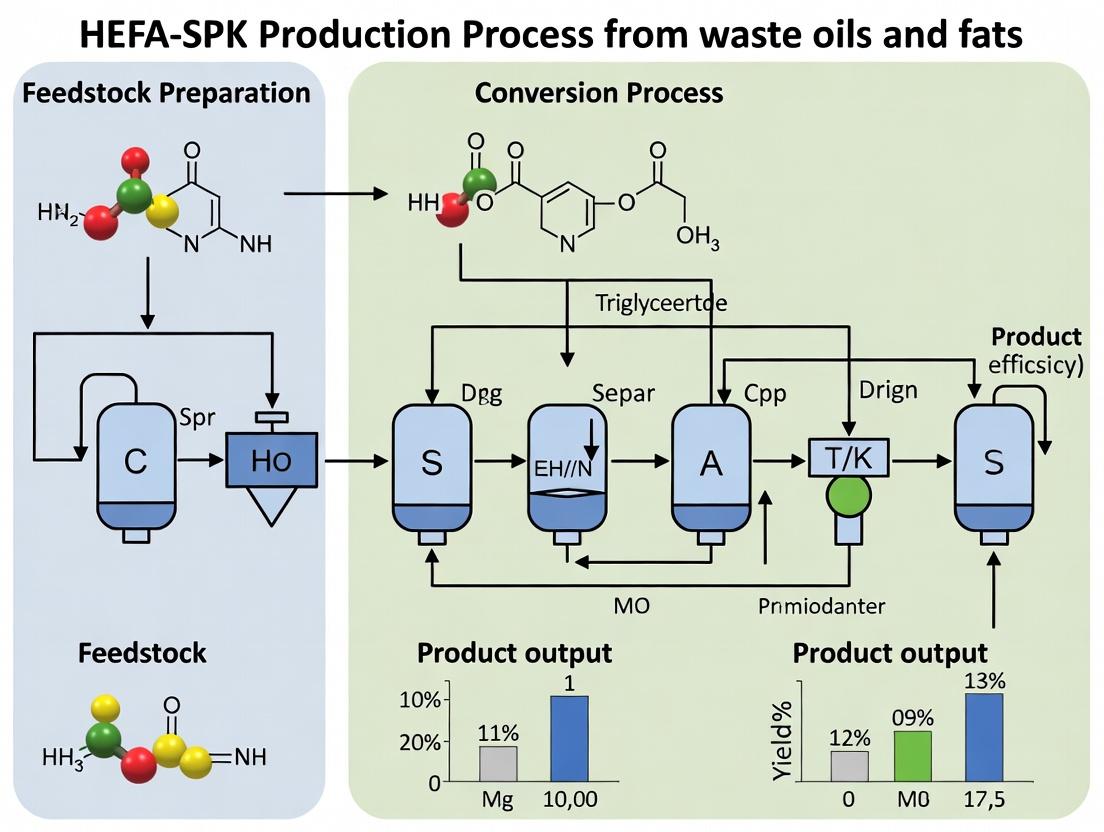
This article provides a comprehensive technical review of Hydroprocessed Esters and Fatty Acids-Synthetic Paraffinic Kerosene (HEFA-SPK) production from waste oils and fats, targeting researchers, scientists, and drug development professionals.
From Waste to Lifesaver: Advanced HEFA-SPK Production for Biomedical Applications from Lipid Waste Streams
Abstract
This article provides a comprehensive technical review of Hydroprocessed Esters and Fatty Acids-Synthetic Paraffinic Kerosene (HEFA-SPK) production from waste oils and fats, targeting researchers, scientists, and drug development professionals. We explore the foundational chemistry and rationale for using lipid waste as a bio-feedstock. The core focus details current, scalable production methodologies, catalyst systems, and reactor designs for high-purity SPK. Practical sections address critical challenges in feedstock variability, process contamination, and optimization strategies for yield and purity. Finally, we validate the process through comparative analysis of final product specifications against pharmaceutical-grade standards, evaluating its suitability for critical biomedical applications such as drug formulation, nanoparticle synthesis, and sterile manufacturing. This synthesis aims to bridge sustainable chemistry with stringent biomedical material requirements.
Waste Lipid Valorization: The Chemistry and Rationale Behind HEFA-SPK as a Biomedical Feedstock
Hydroprocessed Esters and Fatty Acids-Synthetic Paraffinic Kerosene (HEFA-SPK) is a sustainable aviation fuel (SAF) derived from the catalytic hydroprocessing of waste lipids, such as used cooking oil, animal fats, and non-edible plant oils. Within the broader thesis on optimizing HEFA-SPK production from waste feedstocks, this application note examines its refined chemical profile for potential biomedical applications. The high purity, biocompatibility potential, and structural characteristics of its primary components make certain HEFA-SPK fractions candidates for advanced drug delivery systems and medical device coatings.
Chemical Composition and Key Properties
HEFA-SPK is primarily composed of linear and branched alkanes (paraffins) in the C8-C16 range, resulting from the hydrodeoxygenation, decarboxylation, and isomerization of triglycerides and free fatty acids. Key properties relevant to biomedical use are summarized below.
Table 1: Typical Composition and Properties of HEFA-SPK for Biomedical Screening
| Property/Category | Typical Specification / Composition | Biomedical Relevance |
|---|---|---|
| Primary Components | >99% iso- and n-alkanes (C8-C16) | High chemical purity reduces cytotoxic risk. |
| Aromatics Content | <0.1% | Minimal aromatic compounds enhance biocompatibility. |
| Sulfur Content | <1 ppm | Negligible sulfur prevents catalyst poisoning in synthesis and toxicological concerns. |
| Oxygenates | Not detected | Absence of alcohols, acids, or esters ensures stability and inertness. |
| Average Molecular Weight | ~160-220 g/mol | Suitable for penetration and carrier formulation. |
| Density @ 15°C | 730-770 kg/m³ | Consistent physical property for formulation. |
| Viscosity @ -20°C | <8 mm²/s | Influences injectability and spray characteristics for coatings. |
| Biobased Carbon Content | >99% (ASTM D6866) | Renewable origin aligns with green chemistry principles in pharma. |
Application Notes: Biomedical Potential
- Drug Delivery Solvent/Carrier: The lipophilic nature of C10-C14 alkanes can solubilize poorly water-soluble active pharmaceutical ingredients (APIs). Their metabolic inertness may provide sustained release profiles.
- Medical Device Coating Matrix: HEFA-SPK's purity and film-forming ability can serve as a base matrix for implantable device coatings, potentially carrying antimicrobial or anti-proliferative agents.
- Cell Culture Applications: Ultra-purified fractions may be investigated as an overlay for preventing evaporation in microfluidic cell culture systems, given their sterility and non-reactivity.
Experimental Protocols
Protocol 1: Fractional Distillation of HEFA-SPK for Biomedical Grade Isolation Objective: To isolate narrow alkane fractions (e.g., C10-C12, C12-C14) from bulk HEFA-SPK. Materials: HEFA-SPK bulk sample, laboratory fractional distillation apparatus, temperature controller, round-bottom flasks, inert gas (N₂) supply. Procedure:
- Load 1000 mL of HEFA-SPK into the distillation pot.
- Under a constant N₂ purge, begin heating. Use a high reflux ratio (e.g., 10:1).
- Collect the fraction boiling between 175°C and 210°C (C12-C14 predominant).
- Immediately transfer the fraction to a sealed, nitrogen-flushed vial to prevent oxidation.
- Analyze the collected fraction by GC-MS (see Protocol 2) to verify chain length distribution.
Protocol 2: GC-MS Analysis for Compositional Verification Objective: To characterize the alkane distribution and confirm the absence of impurities. Materials: Distilled HEFA-SPK fraction, Gas Chromatograph-Mass Spectrometer (GC-MS), non-polar capillary column (e.g., DB-1ms), hexane (HPLC grade), syringe filters (0.22 µm). Procedure:
- Dilute the sample 1:100 in hexane and filter.
- GC Conditions: Injector 250°C, split ratio 50:1. Oven program: 50°C for 2 min, ramp 10°C/min to 300°C, hold 5 min. Carrier gas: He, 1 mL/min constant flow.
- MS Conditions: Ion source 230°C, quadrupole 150°C, electron ionization at 70 eV, scan range m/z 40-550.
- Identify peaks using an n-alkane standard ladder and NIST library. Quantify relative percentages via peak area normalization.
Protocol 3: In Vitro Cytotoxicity Screening (MTT Assay) Objective: To assess the baseline cytotoxicity of a HEFA-SPK fraction using mammalian cell lines. Materials: L929 fibroblast cells, DMEM culture medium, fetal bovine serum (FBS), penicillin-streptomycin, HEFA-SPK fraction (sterile-filtered), DMSO, MTT reagent, 96-well plate, microplate reader. Procedure:
- Seed L929 cells at 5,000 cells/well in 100 µL complete medium. Incubate (37°C, 5% CO₂) for 24 h.
- Prepare test solutions by emulsifying the HEFA-SPK fraction in culture medium (e.g., 10-1000 µg/mL) using a sonicator. Include a vehicle control (0.1% DMSO) and medium-only control.
- Aspirate medium from wells and add 100 µL of each test solution. Incubate for 24 h.
- Add 10 µL of MTT solution (5 mg/mL) per well. Incubate for 4 h.
- Carefully aspirate the medium and solubilize formed formazan crystals with 100 µL DMSO.
- Shake the plate and measure absorbance at 570 nm with a reference at 650 nm.
- Calculate cell viability (%) relative to the vehicle control.
Visualizations
Diagram 1: From Waste Oil to Biomedical HEFA-SPK Fraction
Diagram 2: In Vitro Cytotoxicity Assessment Workflow
The Scientist's Toolkit: Research Reagent Solutions
Table 2: Essential Materials for HEFA-SPK Biomedical Evaluation
| Item | Function / Relevance |
|---|---|
| HEFA-SPK Bulk Sample | The primary material, produced via hydroprocessing of waste lipids. Must be fully characterized. |
| High-Efficiency Fractional Distillation System | To isolate specific, narrow alkane cuts (C10-C14) for reproducible biomedical testing. |
| GC-MS with Non-Polar Column | For definitive compositional analysis, verifying alkane distribution and absence of impurities. |
| Sterile Syringe Filters (0.22 µm PTFE) | For aseptic preparation of HEFA-SPK emulsions for cell culture assays. |
| L929 Fibroblast Cell Line | A standard murine fibroblast line recommended by ISO 10993 for biocompatibility screening. |
| MTT Assay Kit | A colorimetric assay to measure mitochondrial activity as a proxy for cell viability and cytotoxicity. |
| Sonicator (Probe Type) | To create stable, fine emulsions of hydrophobic HEFA-SPK fractions in aqueous cell culture medium. |
| Inert Atmosphere Glove Box | For handling and sub-sampling HEFA-SPK without oxidation or contamination prior to experiments. |
1. Introduction & Application Notes Within the thesis framework of advancing Hydroprocessed Esters and Fatty Acids-Synthetic Paraffinic Kerosene (HEFA-SPK) production, the utilization of waste oils and fats (WOF) as a feedstock presents a compelling, multi-faceted advantage over refined vegetable oils. This note details the sustainability metrics, supply chain considerations, and cost drivers that define WOF as a superior research and development pathway for sustainable aviation fuel (SAF).
1.1 Sustainability Advantages The primary sustainability benefit is the significant reduction in life cycle greenhouse gas (GHG) emissions. WOF are classified as residues or by-products, and their use avoids the direct land-use changes and agricultural inputs associated with purpose-grown oil crops.
Table 1: Comparative Life Cycle GHG Emissions (gCO₂e/MJ)
| Feedstock Category | Typical GHG Emission Reduction vs. Fossil Jet Fuel | Key Determining Factors |
|---|---|---|
| Waste Oils & Fats (e.g., UCO, Tallow) | 80% - 90% | Collection efficiency, pretreatment energy, transportation distance |
| Conventional Vegetable Oils (e.g., Soy, Palm) | 40% - 60% | Direct/Indirect Land Use Change (ILUC), fertilizer use, processing |
| Fossil Jet Fuel (Baseline) | 0% (89 gCO₂e/MJ) | - |
Source: ICAO, 2023; U.S. DOE GREET Model, 2024.
1.2 Supply Chain & Logistical Considerations The WOF supply chain is decentralized and distinct. Key feedstocks include Used Cooking Oil (UCO), animal fats (tallow, poultry fat), and non-edible industrial residues. Securing consistent, high-volume supply requires robust collection and pretreatment infrastructure to manage variable quality (high Free Fatty Acid (FFA) content, impurities). This presents both a challenge and an opportunity for supply chain innovation, reducing competition with food markets compared to first-generation biofuels.
1.3 Cost Structure Analysis While feedstock acquisition costs for WOF can be volatile and region-dependent, they are generally competitive. The total economic advantage is realized when considering the avoided carbon pricing costs and potential premiums for low-carbon fuels.
Table 2: Simplified Feedstock Cost Comparison (2023-2024 Average)
| Feedstock Type | Approximate Cost per Metric Ton (USD) | Notes |
|---|---|---|
| Used Cooking Oil (UCO) | $800 - $1,200 | Highly dependent on regional collection networks & purity. |
| Animal Tallow (Yellow Grease) | $600 - $900 | Price linked to feed and livestock markets. |
| Crude Palm Oil | $900 - $1,100 | Subject to commodity volatility and sustainability tariffs. |
| Soybean Oil | $1,200 - $1,400 | Directly competes with food sector. |
Source: USDA Oilseeds Report, 2024; Industry Reports.
2. Experimental Protocols for HEFA-SPK Research from WOF
Protocol 2.1: Feedstock Characterization and Pretreatment Validation
Objective: To determine the physicochemical properties of a WOF sample and standardize its pretreatment for hydroprocessing. Materials: See "Research Reagent Solutions" below. Methodology:
- Characterization:
- Acid Value (AV) & FFA%: Titrate 1g of oil sample dissolved in neutralized ethanol/isopropanol with 0.1M KOH using phenolphthalein. Calculate AV (mg KOH/g) and convert to %FFA (as oleic acid).
- Water Content: Perform Karl Fischer coulometric titration.
- Impurity Analysis: Filter a known mass through a 1.6 µm glass fiber filter. Ash and measure solid particulate content gravimetrically.
- Fatty Acid Profile: Derivatize oil to Fatty Acid Methyl Esters (FAMEs) and analyze by GC-MS.
- Pretreatment (Two-Stage):
- Stage 1 - Dehydration & Filtration: Heat oil to 110°C under mild vacuum (100 mbar) for 1 hour to remove water. Hot-filter through a series of filters down to 10 µm.
- Stage 2 - Esterification (for High-FFA Feed): For feeds with >5% FFA, conduct acid-catalyzed esterification. React preheated oil with methanol (6:1 molar ratio to FFA) and 1 wt% H₂SO₄ at 65°C for 2 hours. Separate glycerol phase. Neutralize catalyst and dry the esterified oil product.
- Quality Control: Re-analyze AV and water content of pretreated oil. Target: AV < 0.5 mg KOH/g, water < 500 ppm.
Protocol 2.2: Catalytic Hydroprocessing (Bench-Scale) for HEFA-SPK Production
Objective: To convert pretreated WOF into paraffinic hydrocarbons via catalytic hydrodeoxygenation (HDO) and hydroisomerization. Reactor Setup: Fixed-bed, down-flow, continuous tubular reactor (SS316, 12" length, 0.5" ID) with separate heating zones. Methodology:
- Catalyst Loading: Load reactor with two catalyst beds. Upper bed: 5g NiMo/Al₂O₃ (HDO catalyst). Lower bed: 3g Pt/SAPO-11 (isomerization catalyst). Dilute beds with inert silicon carbide.
- Catalyst Activation: Reduce HDO catalyst under H₂ flow (100 sccm) at 350°C for 4 hours. Isomerization catalyst is activated in-situ under process conditions.
- Reaction Process:
- Pump pretreated WOF at 0.1 mL/min with co-fed H₂ (1000 sccm, 500 psig system pressure).
- Set HDO zone temperature to 350-370°C. Set isomerization zone temperature to 300-330°C.
- Maintain a constant Liquid Hourly Space Velocity (LHSV) of 1.0 h⁻¹.
- Collect liquid product in a cooled high-pressure separator.
- Product Workup: Separate liquid product into an aqueous phase (discard) and an organic hydrocarbon phase. Distill the organic phase to collect the C9-C16 fraction simulating SPK.
3. Visualization: Experimental Workflow & Pathways
Title: WOF to HEFA-SPK Experimental Workflow
Title: Catalytic Reaction Pathways in HEFA Production
4. The Scientist's Toolkit: Research Reagent Solutions
Table 3: Essential Materials for HEFA-SPK Research from WOF
| Item / Reagent | Function / Application | Specification Notes |
|---|---|---|
| WOF Samples | Primary research feedstock. | UCO, yellow/white tallow, poultry fat. Characterize variability. |
| NiMo/Al₂O₃ Catalyst | Hydrodeoxygenation (HDO) catalyst. | Removes O as H₂O via hydrogenation. Bench-scale extrudates or powder. |
| Pt/SAPO-11 Catalyst | Hydroisomerization catalyst. | Branches n-paraffins to improve cold flow properties of SPK. |
| High-Pressure Tubular Reactor | Continuous hydroprocessing. | Must be H₂-rated (e.g., SS316), with independent temperature zones. |
| Karl Fischer Titrator | Precise water content measurement in oils. | Critical for pretreatment QC. Coulometric method for trace water. |
| GC-MS System | Fatty acid profile analysis & product distribution. | Equipped with DB-WAX or similar column for FAME analysis. |
| Methanol & H₂SO₄ | Esterification reagents for high-FFA pretreatment. | Converts FFAs to methyl esters to protect base HDO catalyst. |
Within the broader research thesis on Hydroprocessed Esters and Fatty Acids (HEFA) Sustainable Aviation Fuel (SAF) production, the characterization of waste lipid feedstocks is paramount. The HEFA-SPK pathway, certified under ASTM D7566 Annex A2, requires precise understanding of feedstock variability to ensure consistent fuel yield and quality. This application note provides detailed protocols for the analysis of Used Cooking Oil (UCO), tallow, grease (yellow and brown), and other non-food lipids (e.g., algal oils, DCO) to support their optimization within the HEFA process.
Feedstock Characterization Data & Comparison
Key quantitative parameters influencing HEFA hydroprocessing include Free Fatty Acid (FFA) content, moisture, impurities (INS), fatty acid profile, and oxidative stability. The following table synthesizes typical data ranges for primary waste feedstocks.
Table 1: Comparative Analysis of Waste Lipid Feedstocks for HEFA-SPK
| Parameter | UCO | Tallow (Rendered) | Yellow Grease | Brown Grease | Non-Food Algal Oil | Distillers Corn Oil (DCO) |
|---|---|---|---|---|---|---|
| FFA (%) | 2-7 | <5 | 5-20 | 20-100 | <5 | 5-15 |
| Moisture (%) | 0.5-2 | 0.5-1.5 | 1-5 | 5-50 | <0.5 | 1-3 |
| INS (Impurities) (%) | 1-3 | <1 | 2-10 | 10-40 | <0.5 | 2-8 |
| Iodine Value (g I₂/100g) | 100-130 | 35-45 | 50-80 | 60-85 | 120-180 | 115-130 |
| Saturated Fats (%) | 25-35 | 45-55 | 35-45 | 30-40 | 20-40 | 15-20 |
| Oxidative Stability (h @ 110°C) | 2-8 | >20 | 5-15 | <5 | 1-10 | 4-10 |
| Typical HEFA Yield (Vol.%) | 75-85 | 80-90 | 70-85 | 60-75 | 70-80 | 75-82 |
Data compiled from recent industry reports (UCO Coalition 2023, NREL TEA 2024) and scientific literature. Ranges are indicative and subject to batch variability.
Application Notes & Detailed Protocols
Protocol A: Standardized Pre-Treatment and FFA Analysis
Objective: Quantify FFA content and prepare feedstock for downstream catalytic hydroprocessing.
Materials:
- Dried, homogenized feedstock sample (50 g)
- Anhydrous ethanol, phenolphthalein indicator
- 0.1N KOH in ethanol, standardized
- Separation funnel, oven (105°C), desiccator
- Titration apparatus (manual or auto)
Procedure:
- Drying: Weigh 5g of sample (W₁) into a clean beaker. Dry at 105°C for 1 hour. Cool in a desiccator and re-weigh (W₂). Calculate moisture: % Moisture = [(W₁ - W₂) / W₁] * 100.
- Titration: Dissolve 1g of dried sample (accurately weighed) in 50 mL hot anhydrous ethanol. Add 2-3 drops of phenolphthalein.
- Titrate with standardized 0.1N KOH solution to a persistent pink endpoint (Vₓₒₕ mL).
- Calculation: % FFA (as Oleic Acid) = (Vₓₒₕ * N * 282) / (10 * Sample Weight (g)). Where N = normality of KOH, 282 = MW of oleic acid.
Protocol B: Comprehensive Fatty Acid Profile via GC-FAME
Objective: Determine fatty acid methyl ester (FAME) distribution to predict HEFA-SPK cold flow properties and hydrogen demand.
Materials:
- GC system with FID detector and polar capillary column (e.g., BPX-70)
- Methylation reagent: 2% H₂SO₄ in methanol
- Internal standard: C17:0 methyl ester (heneicosanoic acid)
- Hexane, anhydrous sodium sulfate
- Centrifuge, vortex mixer
Procedure:
- Transesterification: Weigh ~100 mg of dried oil into a vial. Add 1 mL of internal standard solution (1 mg/mL in hexane). Add 2 mL of 2% H₂SO₄ in methanol.
- Vortex for 30s, incubate at 70°C for 1 hour. Cool to room temperature.
- Add 1 mL of hexane and 1 mL of distilled water. Vortex and centrifuge to separate layers.
- Recover the upper hexane layer containing FAMEs. Dry over anhydrous sodium sulfate.
- GC Analysis: Inject 1 µL into GC. Use temperature program: 150°C hold 2 min, ramp 5°C/min to 220°C, hold 10 min.
- Identify peaks by comparison with FAME standards. Quantify using internal standard method.
Protocol C: Determination of Insoluble Impurities (INS)
Objective: Quantify solid impurities that can deactivate hydroprocessing catalysts.
Materials:
- Glass microfiber filters (1.6 µm pore size)
- Solvent: Hexane or petroleum ether
- Soxhlet extraction apparatus or vacuum filtration setup
- Oven (105°C), desiccator
Procedure:
- Filtration: Weigh a dry filter paper (W_filt). Heat 10g of feedstock to 60°C to liquefy.
- Dilute with 100 mL warm solvent. Vacuum-filter through the pre-weighed filter.
- Washing: Rinse the filter cake with 50 mL warm solvent until eluent is clear.
- Drying: Place filter with solids in an oven at 105°C for 1 hour. Cool in a desiccator.
- Weighing: Weigh the dried filter + solids (W_final).
- Calculation: % INS = [(Wfinal - Wfilt) / Sample Weight] * 100.
Visualizations
Diagram 1: HEFA Feedstock Analysis Workflow
Diagram 2: Key Feedstock Properties Impact on HEFA Process
The Scientist's Toolkit: Essential Research Reagent Solutions
Table 2: Key Research Reagents & Materials for Feedstock Analysis
| Reagent/Material | Function in Analysis | Key Consideration for HEFA Research |
|---|---|---|
| Standardized KOH in Ethanol (0.1N) | Titrant for precise FFA quantification. | Anhydrous conditions critical; FFA level dictates pre-treatment necessity. |
| FAME Reference Standards (C8-C24) | Calibration and identification for GC-FAME profiling. | Essential for predicting cetane number and cold point of final SPK. |
| Deuterated Internal Standards (e.g., D₅-glycerol trioleate) | Quantification of triglycerides & products in complex matrices via NMR or LC-MS. | For tracking conversion efficiency and side reactions during hydroprocessing. |
| Inductively Coupled Plasma Mass Spectrometry (ICP-MS) Calibration Standards | Detection of trace metals (Na, K, Ca, P, Mg). | Metals poison hydrotreating catalysts; must be <1 ppm. |
| Solid-Phase Extraction (SPE) Cartridges (Silica, Aminopropyl) | Clean-up of oxidized lipids and polar impurities prior to analysis. | Removes secondary oxidation products that complicate FAME analysis. |
| Stable Isotope-Labeled Fatty Acids (¹³C) | Tracers for studying reaction pathways and kinetics in model hydroprocessing. | Enables detailed mechanistic studies of deoxygenation, isomerization, cracking. |
| Porous Metal Oxide Sorbents (e.g., Al₂O₃, SiO₂) | Laboratory-scale pre-treatment to adsorb impurities. | Models industrial guard bed performance for INS and metal removal. |
Application Notes: Pathways in HEFA-SPK Production
Within the thesis on Hydroprocessed Esters and Fatty Acids (HEFA) Synthetic Paraffinic Kerosene (SPK) production from waste oils and fats, the core hydroprocessing unit is paramount. It transforms biogenic triglycerides and free fatty acids into linear, branched, and cracked paraffins meeting jet fuel specifications (ASTM D7566). The reactions occur over supported metal sulfide (e.g., NiMo, CoMo) or noble metal catalysts under high hydrogen pressure (35-100 bar) and moderate temperature (250-400°C).
1. Deoxygenation (DOx): The primary pathway removing oxygen. It proceeds via two main routes:
- Hydrodeoxygenation (HDO): C17H35COOH (stearic acid) + H2 → C18H38 (n-octadecane) + 2H2O. Favors n-paraffin yield, preserving the original carbon chain length.
- Decarboxylation/Decarbonylation (DCO/DCO2): C17H35COOH (stearic acid) + H2 → C17H36 (n-heptadecane) + CO/CO2 + H2O. Reduces carbon chain length by one, consumes less hydrogen, but produces light gases (COx).
2. Isomerization: Critical for meeting cold flow properties (Jet A-1 freeze point ≤ -47°C). Acidic sites on the catalyst (e.g., zeolite, acidic alumina) facilitate the rearrangement of linear n-paraffins into iso-paraffins (mono- and multi-branched). Excessive isomerization can reduce cetane number and energy density.
3. Cracking: Undesired in excess, but mild cracking is necessary to adjust the product distribution into the jet fuel boiling range (C8-C16). Strong acid sites catalyze the cleavage of C-C bonds in long-chain paraffins, producing lighter gases (C1-C4), naphtha (C5-C10), and the target kerosene-range molecules.
Balance is Key: Optimizing catalyst formulation (metal-acid site balance) and process conditions (T, P, LHSV, H2/oil ratio) is essential to maximize jet-range iso-paraffin yield while minimizing over-cracking, coke formation, and hydrogen consumption.
Table 1: Typical Product Yield Distribution from Waste Cooking Oil Hydroprocessing*
| Feedstock | Catalyst System | Conditions (T, P) | n-Paraffins (wt%) | iso-Paraffins (wt%) | Cracking (C8-C16) Yield (wt%) | Jet Fuel Selectivity | Reference Year |
|---|---|---|---|---|---|---|---|
| Waste Cooking Oil | NiMo/γ-Al2O3 | 360°C, 60 bar | ~45% | ~15% | ~55% | Medium | 2021 |
| Waste Cooking Oil | Pt/SAPO-11 | 380°C, 40 bar | ~10% | ~65% | ~78% | High | 2022 |
| Tallow | CoMo/γ-Al2O3-Zeolite | 350°C, 80 bar | ~25% | ~50% | ~70% | High | 2023 |
| Palm Fatty Acid Distillate | NiMo/Al2O3-HY | 370°C, 70 bar | ~20% | ~55% | ~65% | High | 2023 |
*Data synthesized from recent literature. Selectivity refers to the fraction of converted feed within the jet fuel boiling range.
Table 2: Key Fuel Property Outcomes from Optimized Hydroprocessing
| Property | ASTM D7566 Limit | Typical HEFA-SPK Value | Primary Governing Reaction |
|---|---|---|---|
| Freeze Point | ≤ -47°C | -50°C to -60°C | Isomerization |
| Cetane Number | ≥ 40 | 58-70 | Deoxygenation (chain length) |
| Density (15°C) | 775-840 kg/m³ | 730-770 kg/m³ | Cracking / Isomerization |
| Aromatics (vol%) | ≤ 0.5 | ≤ 0.1 | Full Saturation (Hydrogenation) |
Experimental Protocols
Protocol 1: Catalytic Hydroprocessing of Pre-Treated Waste Oil in a Bench-Scale Batch Reactor
Objective: To evaluate the activity and selectivity of a bifunctional catalyst (e.g., Pt/HY) for the conversion of hydrodeoxygenated waste oil into isomerized jet-range paraffins.
Materials: See "The Scientist's Toolkit" below.
Method:
- Feedstock Preparation: Load 10.0 g of pre-hydrogenated waste oil (acid value < 0.1 mg KOH/g) into the reactor liner.
- Catalyst Loading: Add 1.0 g of pre-sulfided or reduced catalyst (Pt/HY, 150-250 µm mesh) to the feed. Seal the reactor.
- System Purge: Purge the reactor three times with N2 (20 bar) to remove air, then purge three times with H2.
- Reaction: Pressurize the reactor to 40 bar H2 at room temperature. Heat to the target temperature (e.g., 340°C) with vigorous stirring (1000 rpm). Maintain for 4-6 hours.
- Quenching: After reaction time, rapidly cool the reactor to <50°C using an internal cooling coil.
- Product Recovery: Slowly vent gases through a cold trap (condensable liquids) into a gas bag for later GC analysis. Recover the liquid product from the reactor liner.
- Analysis: Weigh liquid product. Analyze by Simulated Distillation (ASTM D2887) for boiling point distribution, and GC-MS for hydrocarbon speciation (n/iso-paraffins). Analyze gas by GC-TCD for CO, CO2, C1-C4.
Protocol 2: Analysis of Hydrocarbon Distribution via Comprehensive Two-Dimensional Gas Chromatography (GC×GC)
Objective: To achieve detailed speciation of n-paraffins, iso-paraffins, and naphthenes in the liquid product.
Method:
- Sample Preparation: Dilute liquid product 1:100 (v/v) in carbon disulfide or n-heptane.
- Instrument Setup:
- Primary Column: Rxi-1ms (100% dimethyl polysiloxane), 30 m, 0.25 mm ID, 0.25 µm film.
- Secondary Column: Rxi-17 (50% phenyl polysiloxane), 2 m, 0.15 mm ID, 0.10 µm film.
- Modulator Period: 6 seconds.
- Oven Program: 45°C (2 min) to 250°C at 3°C/min.
- Detector: Flame Ionization Detector (FID), 250°C.
- Calibration: Inject a known paraffin standard (C8-C20 n-paraffins, branched alkanes) to establish retention index maps.
- Data Processing: Use GC×GC software to generate color contour plots. Identify compound groups based on ordered patterns: n-paraffins (lowest 2D retention), iso-paraffins (intermediate), cyclic compounds (highest 2D retention). Quantify via relative response factors.
Visualizations
Diagram 1: HEFA-SPK Hydroprocessing Reaction Pathway
Diagram 2: Batch Hydroprocessing Experiment Workflow
The Scientist's Toolkit
Table 3: Essential Research Reagent Solutions & Materials
| Item | Function in HEFA Research |
|---|---|
| NiMo/γ-Al2O3 Catalyst | Standard sulfided catalyst for high HDO activity; baseline for deoxygenation studies. |
| Pt or Pd on SAPO-11/ZSM-22 | Bifunctional catalyst with shape-selective acidity; paramount for selective isomerization to high-quality jet fuel. |
| Sulfiding Agent (Dimethyl Disulfide - DMDS) | In-situ source of H2S to create and maintain active metal sulfide phases on CoMo/NiMo catalysts. |
| Hydrogenated Waste Oil Feedstock | Pre-treated feed with low FFA and impurities (S, N); ensures consistent evaluation of catalyst performance. |
| n-Paraffin Calibration Mix (C8-C40) | Essential standard for GC and GC×GC quantification of hydrocarbon products. |
| High-Pressure Batch/Tubular Reactor | Bench-scale system capable of operating at >100 bar and 400°C for simulating industrial conditions. |
| GC×GC-FID/TOF-MS System | Advanced analytical instrument for resolving complex hydrocarbon mixtures into n-paraffins, iso-paraffins, and naphthenes. |
| Online Micro-GC (TCD) | For real-time monitoring and quantification of light gas products (H2, CO, CO2, C1-C5) during reaction. |
Within HEFA-SPK (Hydroprocessed Esters and Fatty Acids-Synthetic Paraffinic Kerosene) production research, the utilization of waste oils and fats introduces complex contaminant profiles. This document establishes that the analytical and purification standards applied must meet or exceed pharmaceutical benchmarks to ensure fuel safety, catalyst longevity, and system reliability. Contaminants of concern include residual metals, oxidation products, sterols, and organic halides, which can act as poisons in downstream processes or form harmful combustion by-products.
The broader thesis on HEFA-SPK from waste feedstocks posits that economic viability is intrinsically tied to product purity. Waste oils and fats—used cooking oil (UCO), tallow, grease—contain heteroatoms (S, N, O, P), trace metals (Na, K, Ca, Mg), and organic impurities not found in virgin oils. Pharmaceutical purity standards provide a rigorous framework for defining, measuring, and controlling these species at parts-per-million (ppm) or parts-per-billion (ppb) levels, which is critical for the advanced catalytic hydroprocessing required for SPK production.
Critical Impurity Profiles & Pharmaceutical Benchmarks
Pharmaceutical standards, particularly ICH Q3 guidelines, define strict limits for residual solvents, elemental impurities, and foreign substances. Translated to waste-derived HEFA-SPK intermediates, these benchmarks are essential for protecting sensitive hydrotreating and hydroisomerization catalysts.
Table 1: Key Impurity Classes and Required Benchmarks
| Impurity Class | Common Source in Waste Oils | Pharmaceutical Standard Analog | Target Limit in Pre-Treated Feed | Rationale for SPK Process |
|---|---|---|---|---|
| Group I Metals (Na, K) | Soaps, washing residues | ICH Q3D Elemental Impurities | < 1 ppm | Catalyst deactivation, bed fouling. |
| Group II Metals (Ca, Mg) | Animal tissues, additives | ICH Q3D Elemental Impurities | < 1 ppm | Forms insoluble deposits, reduces reactor efficiency. |
| Phosphorus | Degradation of phospholipids | Residual Solvent/Impurity Limits | < 2 ppm | Permanent poison for hydrotreating catalysts. |
| Halogens (Cl, Br) | Bleaching agents, pesticides | ICH Q3D (Class 1/2) | < 1 ppm | Corrosion, acid formation, catalyst poisoning. |
| Polycyclic Aromatics | Pyrolysis from overheating | ICH M7 Genotoxic Impurities | < 10 ppb | Soot precursors, affect combustion quality. |
| Peroxides & Aldehydes | Oil oxidation | Residual Solvent Limits | < 10 ppm (as O) | Polymerize to form gums, foul pre-heaters. |
| Sterols & Diterpenes | Biological origin | Foreign Substance Limits | < 100 ppm | Can crack to aromatics under hydroprocessing. |
Experimental Protocols for Impurity Assessment
Protocol 3.1: ICP-MS for Trace Metal Analysis (Following ICH Q3D)
Objective: Quantify elemental impurities (Na, K, Ca, Mg, P, metals) at ppb levels in pre-processed waste oil feedstocks. Materials: Inductively Coupled Plasma Mass Spectrometer (ICP-MS), microwave digestion system, high-purity nitric acid, internal standards (Sc, Ge, Rh, Ir), certified elemental standard solutions. Procedure:
- Sample Digestion: Accurately weigh ~0.2g of filtered oil sample into a digestion vessel. Add 5 mL of trace metal-grade nitric acid. Perform microwave digestion using a ramped temperature program (to 200°C over 20 min, hold for 15 min).
- Preparation: Cool, transfer digestate to a 50 mL volumetric flask, and dilute to mark with Type I water. Prepare a blank identically.
- Calibration: Prepare a calibration curve (0, 1, 10, 100, 500 ppb) in 5% HNO₃ matrix using a multi-element standard. Include internal standards (1-10 ppb) in all samples, blanks, and standards.
- Analysis: Introduce samples to ICP-MS. Use collision/reaction cell gas (He or H₂) to mitigate polyatomic interferences. Quantify against the calibration curve with internal standard correction for drift.
- Validation: Analyze a certified reference material (e.g., NIST 1547 Peach Leaves) alongside samples to ensure accuracy.
Protocol 3.2: Determination of Organic Halogens by Microcoulometric Titration
Objective: Measure total organic chlorine/bromine content. Materials: Microcoulometric titrator with pyrolysis furnace, boat samplers, titration cell, argon/oxygen gas. Procedure:
- System Calibration: Inject known quantities (e.g., 2-10 µg Cl) of standard (e.g., chlorobenzene in hydrocarbon solvent) into the pyrolysis furnace (inlet 800°C, furnace 1000°C). Determine the titration cell recovery efficiency (must be >90%).
- Sample Analysis: Weigh oil sample (10-50 mg, depending on expected Cl) into a sample boat. Introduce into the pyrolysis furnace under Ar/O₂ stream. Organic halogens are pyrolyzed to hydrogen halides, which are titrated coulometrically in the aqueous cell.
- Calculation: Total halogen content (as Cl) is calculated from the integrated charge passed, using Faraday's constant and sample weight.
Protocol 3.3: Accelerated Oxidation Stability Test (Rancimat Method)
Objective: Assess the presence of oxidation precursors and stability. Materials: Rancimat apparatus (e.g., Metrohm 743), air flow system, conductivity measurement cell, heating block. Procedure:
- Setup: Clean all glassware. Fill the conductivity cell with 50 mL of ultrapure water. Weigh 3.00 ± 0.01 g of oil sample into the reaction vessel.
- Conditions: Set air flow to 20 L/h and heating block temperature to 120°C (or 110°C for more stable samples). Start air flow and heating simultaneously.
- Measurement: Monitor the conductivity of the water trapping volatile acids (primarily formic). The instrument records the induction period (IP) in hours—the point of rapid increase in conductivity.
- Analysis: A shorter IP indicates higher levels of peroxides, aldehydes, or other oxidation-sensitive compounds.
Visualization of Analysis & Control Workflow
Diagram Title: SPK Feedstock Purity Control Workflow
Diagram Title: Impurity Impact & Required Analytical Control
The Scientist's Toolkit: Research Reagent Solutions
Table 2: Essential Materials for Pharmaceutical-Grade SPK Purity Analysis
| Item | Function in Research | Specification / Rationale |
|---|---|---|
| ICP-MS Multi-Element Calibration Standard | Quantification of trace metals (Na, K, Ca, Mg, Fe, Ni, V, etc.). | Certified reference standard in 5% HNO₃. Covers wide dynamic range (ppb-ppm). Required for ICH Q3D alignment. |
| Certified Reference Material (CRM) - Oil Matrix | Quality control and method validation for elemental analysis. | e.g., NIST 1634c (Residual Oil Fuel) or similar. Ensures accuracy of digestion and analysis protocols. |
| High-Purity Acids for Digestion | Sample preparation for ICP-MS. | Trace metal-grade HNO₃ and HCl. Minimizes background contamination from reagents. |
| Microcoulometric Titration Standards | Calibration for total organic halogens. | Certified chlorobenzene or hexachlorobenzene standards in suitable solvent. |
| Rancimat Calibration Oil | Verification of oxidation stability apparatus performance. | Oil with certified induction period (e.g., triolein). Ensures inter-laboratory reproducibility. |
| Solid Phase Extraction (SPE) Cartridges | Pre-analytical cleanup for sterol/diterpene or PAH analysis. | Silica, Florisil, or NH₂ phases. Removes interfering matrix components prior to HPLC/GC analysis. |
| Stable Isotope-Labeled Internal Standards | For accurate LC-MS/MS quantification of specific contaminants. | e.g., ¹³C-labeled PAHs or sterols. Compensates for matrix effects and recovery losses. |
| HPLC Columns for Polar Impurities | Separation of oxidation products, antioxidants, polar contaminants. | C18, phenyl-hexyl, or HILIC columns with sub-2µm particles for high resolution. |
| Gas Standards for GC Detectors | Calibration of sulfur (SCD), nitrogen (NCD) chemiluminescence detectors. | Certified blends of dibenzothiophene (for S) and quinoline (for N) in hydrocarbon solvent. |
| Pharmaceutical Solvent Residual Mix | GC-MS calibration for monitoring process solvent carry-over. | USP/EP Class 1/2 solvent mix. Critical if solvents are used in pre-treatment steps. |
Adopting pharmaceutical purity benchmarks is not an academic exercise but a practical necessity for the advancement of waste-derived HEFA-SPK technology. The protocols and controls outlined herein provide a roadmap for researchers to de-risk the catalytic conversion process, ensure consistent fuel quality that meets ASTM D7566 Annex A6 specifications, and ultimately support the commercialization of sustainable aviation fuel (SAF). The thesis that waste-to-fuel pathways are viable rests fundamentally on the ability to measure and control impurities to pharmaceutical-grade stringency.
Scalable Synthesis: Step-by-Step HEFA-SPK Production Process for High-Purity Output
Within the HEFA-SPK (Hydroprocessed Esters and Fatty Acids-Synthetic Paraffinic Kerosene) production pathway, the pre-treatment of waste oils and fats is a critical determinant of catalyst longevity, conversion efficiency, and final fuel quality. Feedstocks such as waste cooking oil (WCO), animal fats, and trap greases contain impurities including water, solids, free fatty acids (FFAs), phospholipids, and inorganic elements (Na, K, Ca, Mg, P, S). These compounds can cause saponification, poisoning of hydroprocessing catalysts, and increased operational costs. This document details a tripartite pre-treatment protocol—Filtration, Dehydration, and Catalytic Purification—designed to produce specification-ready feedstock for the hydroprocessing stage.
Filtration Protocol: Removal of Particulate Matter
Objective: To remove suspended solids, food residues, and insoluble impurities to prevent reactor clogging and downstream equipment abrasion.
Detailed Protocol:
- Primary Screening: Pass the raw waste oil through a stainless-steel mesh screen (100 – 500 μm) to remove large particulate matter.
- Cartridge Filtration: Heat the oil to 60°C ± 5°C to reduce viscosity. Pump the oil through a series of progressively finer filter cartridges (e.g., 50 μm → 10 μm). Maintain pressure below 3 bar to avoid filter rupture.
- Disposal: Replace filter cartridges upon reaching a differential pressure of 2 bar. Dispose of solid waste as per laboratory biohazard protocols.
Key Parameters:
- Temperature: 60°C
- Max Pressure: 3 bar
- Final Particle Size Cut-off: ≤ 10 μm
Dehydration Protocol: Removal of Free and Emulsified Water
Objective: To reduce water content to below 500 ppm to prevent hydrolysis, saponification, and deactivation of acid catalysts in subsequent steps.
Detailed Protocol:
- Gravitational Settling: Store filtered oil in a conical settling tank at 70°C for 4-6 hours. Decant the separated water layer from the bottom valve.
- Vacuum Drying: Transfer the oil to a rotary evaporator or a vacuum drying oven. Apply a vacuum of 50-100 mbar and maintain a temperature of 90-105°C for 1-2 hours. Agitate gently if using a rotary evaporator.
- Verification: Measure final water content using Karl Fischer coulometric titration.
Key Parameters:
- Settling Temp/Time: 70°C / 4-6 h
- Drying Temp/Vacuum: 100°C / 50 mbar
- Target Water Content: < 500 ppm
Catalytic Purification Protocol: Esterification & Adsorption
Objective: To reduce Free Fatty Acid (FFA) content via esterification and remove trace metals/phosphorus via adsorption, producing a refined oil suitable for hydrodeoxygenation (HDO).
Detailed Protocol: A. Acid-Catalyzed Esterification (for high-FFA feedstocks >2%)
- Charge the dehydrated oil to a stirred batch reactor equipped with a condenser and heating mantle.
- Add methanol (molar ratio 6:1 methanol to FFA) and concentrated sulfuric acid (1-2 wt% of oil) as catalyst.
- React at 65°C ± 5°C with constant stirring (300 rpm) for 2 hours.
- Allow the mixture to separate in a separatory funnel. Drain the lower glycerol/alcohol/acid layer.
- Recover the upper ester-rich oil layer and wash with warm deionized water (10% v/v) until neutral pH.
B. Adsorptive Purification
- Heat the esterified/washed oil to 90°C.
- Add 2 wt% of a blended adsorbent (e.g., 1:1 ratio of Magnesol D-SOL [for soaps/PLs] and Silica gel [for metals, phosphorus]).
- Stir at 90°C for 30 minutes under atmospheric pressure.
- Filter the hot mixture through a Büchner funnel with Whatman No. 1 filter paper to remove spent adsorbent.
Key Parameters:
- Esterification Temp/Time: 65°C / 2 h
- Adsorbent Dosage: 2 wt%
- Adsorption Temp/Time: 90°C / 30 min
Table 1: Impurity Reduction Across Pre-Treatment Stages (Representative Data)
| Impurity Parameter | Raw WCO | Post-Filtration & Dehydration | Post-Catalytic Purification | Target for HDO |
|---|---|---|---|---|
| Water Content (ppm) | 2,000 - 5,000 | < 500 | < 200 | < 500 |
| Solid Impurities (μm) | >100 | ≤ 10 | ≤ 10 | ≤ 25 |
| Free Fatty Acid (FFA) % | 2 - 7 | 2 - 7 | < 0.5 | < 2 |
| Phosphorus (ppm) | 10 - 50 | 10 - 50 | < 1 | < 10 |
| Metals (Na+K, ppm) | 20 - 100 | 15 - 80 | < 5 | < 10 |
Table 2: Research Reagent Solutions Toolkit
| Item | Function in Pre-Treatment | Specification/Example |
|---|---|---|
| Cartridge Filter Housings | Sequential removal of fine particulates. | Polypropylene, rated for 10 μm final filtration. |
| Karl Fischer Reagent | Coulometric titration for precise water quantification. | HYDRANAL or equivalent, with sealed vial technique. |
| Sulfuric Acid (H₂SO₄) | Homogeneous acid catalyst for FFA esterification. | 95-98% reagent grade, used at 1-2 wt% of oil. |
| Methanol (Anhydrous) | Reactant for esterification of FFAs to methyl esters. | ≥99.8% purity, 6:1 molar ratio to FFA. |
| Magnesol D-SOL | Adsorbent for soaps, phospholipids, and oxidation products. | Magnesium silicate powder, food-grade. |
| High-Purity Silica Gel | Adsorbent for polar impurities, trace metals, and phosphorus. | 60-100 mesh, activated at 150°C before use. |
| pH Indicator Strips | Monitoring wash water pH during neutralization step. | Range pH 0-14. |
Process Visualization
Diagram 1: Feedstock pretreatment workflow for HEFA-SPK
Diagram 2: Impurity-specific removal mechanisms
The production of Hydroprocessed Esters and Fatty Acids-Synthesized Paraffinic Kerosene (HEFA-SPK) from waste oils and fats involves two critical catalytic steps: hydrotreating (HDT) to remove oxygen, sulfur, and nitrogen, and hydroisomerization (ISO) to improve cold-flow properties. The efficiency and selectivity of these processes are governed by catalyst design. This note details recent advances in NiMo/CoMo hydrotreating and Pt/SAPO-11 isomerization catalysts, providing protocols for their evaluation within a HEFA-SPK research workflow.
Advanced Hydrotreating Catalysts (NiMo, CoMo)
Recent advances focus on enhancing metal dispersion, optimizing support acidity, and using chelating agents. Phosphorus promotion and the use of mesoporous supports like SBA-15 or γ-Al₂O₃-TiO₂ composites improve deoxygenation activity and inhibit coke formation.
Table 1: Performance of Advanced HDT Catalysts in Waste Oil Deoxygenation
| Catalyst Formulation | Support | Test Conditions (Temp, P_H₂) | DOD* (%) | C15-C18 n-Paraffin Selectivity (%) | Key Improvement |
|---|---|---|---|---|---|
| NiMoP (12 wt% NiO, 20 wt% MoO₃) | γ-Al₂O₃-TiO₂ (15% TiO₂) | 350°C, 50 bar | 99.5 | 88 | TiO₂ enhances metal-support interaction, reduces cracking. |
| CoMo (4 wt% CoO, 16 wt% MoO₃) | Phosphated SBA-15 | 340°C, 40 bar | 98.7 | 92 | Mesoporosity favors diffusion of large triglyceride molecules. |
| NiMo with Citric Acid | γ-Al₂O₃ | 330°C, 50 bar | 99.1 | 85 | Chelating agent improves sulfidation degree, boosts HDO pathway. |
*DOD: Deoxygenation Degree
Advanced Isomerization Catalysts
Isomerization catalysts balance bifunctional activity (metal sites for hydrogenation/dehydrogenation and acid sites for branching). Advances involve hierarchical Pt/SAPO-11, silicoaluminophosphate (SAPO) molecular sieves with tailored acidity, and the introduction of secondary mesoporosity.
Table 2: Performance of Advanced ISO Catalysts in n-Paraffin Branching
| Catalyst Formulation | Si/Al or Si/(Al+P) Ratio | Pt Loading (wt%) | Test Conditions (Temp, P_H₂, WHSV) | i-Paraffin Yield (%) | Cloud Point Drop (°C)* | Key Improvement |
|---|---|---|---|---|---|---|
| Pt/Hierarchical SAPO-11 | 0.15 | 0.5 | 320°C, 30 bar, 1.5 h⁻¹ | 78 | -45 | Hierarchical pores reduce diffusion limitation, minimize cracking. |
| Pt/SAPO-41 | 0.10 | 0.5 | 340°C, 35 bar, 1.0 h⁻¹ | 75 | -42 | One-dimensional 10-ring pores favor selective mono-branching. |
| Pt/(Mg)-SAPO-11 | 0.20 (Mg-modified) | 0.3 | 310°C, 30 bar, 2.0 h⁻¹ | 81 | -48 | Mg moderation of strong acid sites reduces coke yield by 15%. |
*From pure n-C18 feed.
Experimental Protocols
Protocol 1: Catalyst Preparation (NiMoP/γ-Al₂O₃-TiO₂)
Objective: Synthesize a phosphorus-promoted NiMo catalyst on a mixed oxide support.
- Support Synthesis: Prepare a γ-Al₂O₃-TiO₂ composite via co-precipitation. Dissolve aluminum isopropoxide and titanium isopropoxide in a 9:1 molar ratio in isopropanol. Add to an aqueous solution of NH₄OH (pH 9-10) under vigorous stirring. Age the precipitate for 24h, filter, wash, dry at 110°C for 12h, and calcine at 550°C for 4h.
- Wet Co-Impregnation: Dissolve ammonium heptamolybdate tetrahydrate, nickel nitrate hexahydrate, and phosphoric acid in deionized water (Mo:Ni:P molar ratio = 1:0.5:0.3). Add the γ-Al₂O₃-TiO₂ support to the solution. Stir for 4h at room temperature.
- Drying & Calcination: Dry the impregnated catalyst at 110°C overnight. Calcine in a muffle furnace at 450°C for 4h (ramp rate: 2°C/min) under static air.
Protocol 2: Hydrotreating Activity Test (Deoxygenation)
Objective: Evaluate catalyst performance in converting waste cooking oil to n-paraffins.
- Catalyst Activation: Load 5g of catalyst (20-40 mesh) into a fixed-bed tubular reactor. Pre-sulfide with a 3 wt% CS₂ in cyclohexane solution at 320°C and 30 bar H₂ for 4h (LHSV = 2 h⁻¹).
- Reaction Procedure: Switch feed to pre-filtered waste cooking oil. Set conditions: T = 340°C, P = 50 bar, LHSV = 1.0 h⁻¹, H₂/Oil ratio = 600 Nm³/m³. Maintain for 24h to reach steady state.
- Product Analysis: Collect liquid products in a cold trap. Analyze by:
- GC-FID: For hydrocarbon distribution (SIMDIS method).
- GC-MS: For identification of oxygenates.
- Elemental Analysis: For O, S, N content.
- DOD Calculation: DOD(%) = [(Oinfeed - Oinproduct) / Oinfeed] * 100.
Protocol 3: Isomerization Activity Test
Objective: Assess branching performance of Pt/SAPO-11 on n-octadecane.
- Catalyst Pre-treatment: Load 2g of Pt/SAPO-11 catalyst. Reduce in situ under pure H₂ flow (100 mL/min) at 400°C for 2h (ramp 3°C/min).
- Reaction Procedure: Use n-C18 as model compound. Set conditions: T = 320°C, P = 30 bar, WHSV = 1.5 h⁻¹, H₂/n-C18 molar ratio = 20. Run for 6h.
- Product Analysis: Analyze liquid effluent by GC-MS equipped with a non-polar column (e.g., HP-1) to separate iso- and n-paraffins. Calculate:
- Conversion (%): (n-C18in - n-C18out)/n-C18_in * 100.
- Isomer Selectivity (%): (i-C18 yield / n-C18 converted) * 100.
- Measure cloud point of product via ASTM D5773.
Visualization: HEFA-SPK Catalytic Workflow
Diagram Title: HEFA-SPK Two-Stage Catalytic Process Flow
Diagram Title: Research Methodology Loop for Catalyst Optimization
The Scientist's Toolkit: Key Research Reagent Solutions
| Item/Chemical | Function in HEFA-SPK Catalyst Research |
|---|---|
| Ammonium Heptamolybdate | Precursor for MoO₃ active phase on HDT catalysts. |
| Nickel Nitrate Hexahydrate | Precursor for NiO promoter on NiMo catalysts. |
| Cobalt Nitrate Hexahydrate | Precursor for CoO promoter on CoMo catalysts. |
| Phosphoric Acid (85%) | Promoter for HDT catalysts; improves metal dispersion and activity. |
| Pseudoboehmite (γ-AlOOH) | Standard precursor for γ-Al₂O₃ catalyst support. |
| Tetraethyl Orthosilicate (TEOS) | Silicon source for synthesizing SAPO-11 molecular sieves. |
| Phosphoric Acid (85%) | Phosphorus source for SAPO-11 synthesis. |
| Di-n-propylamine (DPA) | Structure-directing agent (template) for SAPO-11 synthesis. |
| Platinum Tetraammine Chloride | Precursor for Pt impregnation on isomerization catalysts. |
| Dimethyl Disulfide (DMDS) | Common sulfiding agent for activating HDT catalysts in situ. |
| n-Octadecane (C18) | Model compound for isomerization catalyst screening tests. |
| CS₂ in Cyclohexane (3 wt%) | Standard solution for ex-situ sulfidation of HDT catalysts. |
Within the broader thesis on Hydroprocessed Esters and Fatty Acids (HEFA) Synthetic Paraffinic Kerosene (SPK) production from waste oils and fats, reactor design and operational parameter optimization are critical determinants of process efficiency, catalyst longevity, and fuel yield. This application note details protocols for optimizing the hydroprocessing step, focusing on temperature, pressure, and hydrogen flow to maximize alkane yield and isomerization while minimizing cracking.
The primary hydroprocessing reactor conditions directly influence deoxygenation (HDO, Decarboxylation/Decarbonylation) and subsequent isomerization/cracking reactions.
Table 1: Typical Operating Ranges and Effects of Key Process Parameters
| Parameter | Typical Range | Primary Effect on HEFA Process | Optimal Target for Max Jet Yield |
|---|---|---|---|
| Temperature | 300-400°C | ↑ Temp: ↑ Deoxygenation rate, ↑ Isomerization, ↑ Cracking. | 350-370°C (Balance isomerization vs. cracking) |
| Pressure | 30-100 bar | ↑ Pressure: ↑ H2 partial pressure, ↑ HDO route favorability, ↓ Coke formation. | 50-70 bar (For waste feedstocks with high FFA) |
| H2 Flow Rate (LHSV) | 1.0-4.0 h⁻¹ | ↑ Flow: ↑ H2 availability, ↑ Heat removal. ↓ Flow: ↑ Residence time, ↑ cracking. | 1.5-2.0 h⁻¹ (Optimized for catalyst contact time) |
| H2/Oil Ratio (v/v) | 1000-2000 Nm³/m³ | ↑ Ratio: ↑ H2 partial pressure, impedes coke. Excess increases OPEX. | 1200-1500 Nm³/m³ |
Table 2: Experimental Data from Parametric Study (Model Feed: Waste Cooking Oil)
| Run | Temp (°C) | Pressure (bar) | H2:Oil (Nm³/m³) | C15-C18 Yield (wt%) | Iso/n-Paraffin Ratio | Notes |
|---|---|---|---|---|---|---|
| 1 | 330 | 50 | 1000 | 78.5 | 0.8 | Low isomerization |
| 2 | 350 | 50 | 1200 | 85.2 | 2.1 | Optimal Jet Yield |
| 3 | 370 | 50 | 1200 | 82.1 | 3.5 | Increased cracking |
| 4 | 350 | 70 | 1200 | 86.7 | 2.0 | Higher HDO, similar isomerization |
| 5 | 350 | 50 | 800 | 80.1 | 1.9 | Slight coke formation noted |
Experimental Protocols
Protocol 3.1: Parametric Screening for HEFA-SPK Production
Objective: To determine the effect of temperature, pressure, and H2 flow on yield and product distribution. Materials: See "Scientist's Toolkit" below. Method:
- Feedstock Pretreatment: Filter waste oil/fat through a 5µm sintered metal filter. Pre-dry at 120°C under vacuum (<10 mbar) for 2 hours to reduce water content to <500 ppm.
- Catalyst Loading & Reduction: Load 10.0 g of Pt/SAPO-11 or NiMo/γ-Al2O3 catalyst (250-500 µm sieve fraction) into a fixed-bed reactor tube. Dilute with equal volume of inert silicon carbide. Purge system with N2 at 200 mL/min for 30 min. Reduce catalyst under H2 flow (100 mL/min) by ramping temperature from ambient to 400°C at 2°C/min, hold for 6 hours.
- Parameter Variation: Set base conditions (e.g., 350°C, 50 bar, LHSV=1.5 h⁻¹, H2/Oil=1200). Conduct runs varying one parameter at a time (e.g., Temperature: 330, 350, 370, 390°C). Allow 24 hours at each condition for steady-state.
- Product Collection & Analysis: Collect liquid product in a high-pressure condenser at 10°C. Analyze daily samples by:
- Simulated Distillation (ASTM D2887): To determine boiling range distribution.
- GC-MS: For hydrocarbon speciation (n-paraffins, iso-paraffins) and residual oxygenates.
- Total Acid Number (TAN) (ASTM D664): To assess deoxygenation completion.
- Data Normalization: Report yields as weight percent of hydrocarbon product in the C8-C16 (jet) and C17-C24 (diesel) ranges relative to total feed input.
Protocol 3.2: Catalyst Stability Test under Optimized Conditions
Objective: To assess deactivation rate over 500 hours under optimized parameters. Method:
- Establish optimized conditions from Protocol 3.1 (e.g., 350°C, 60 bar, LHSV=1.8 h⁻¹).
- Run continuous operation for 500 hours, sampling liquid product every 24 hours.
- Monitor:
- Conversion: Via GC-FID tracking of C18:1 methyl ester (feed marker).
- Selectivity: Calculate ratio of (iso-C15 + iso-C17)/(n-C15 + n-C17) from GC-MS data.
- Pressure Drop: Record axial pressure drop across catalyst bed daily.
- Perform Temperature-Programmed Oxidation (TPO) on spent catalyst to quantify coke deposit.
Process Workflow and Parameter Interaction Diagrams
Diagram Title: HEFA-SPK Simplified Process Flow with Key Parameters
Diagram Title: Parameter Impact Pathway on HEFA Catalysis & Product
The Scientist's Toolkit: Key Research Reagent Solutions
Table 3: Essential Materials for HEFA Process Parameter Research
| Item / Reagent | Function in Experiment | Key Specification / Note |
|---|---|---|
| Pt/SAPO-11 Catalyst | Bifunctional catalyst for hydrodeoxygenation & isomerization. High selectivity to iso-paraffins. | Pt loading: 0.5-1.0 wt%. Critical for jet fuel production. |
| NiMo/Al2O3 Catalyst | Robust hydrotreating catalyst for deoxygenation (favors HDO). High activity for S, O removal. | Pre-sulfided form required for activity. Used in first stage. |
| Waste Cooking Oil Feedstock | Model reactant. Must be characterized for FFA%, water%, and impurities. | Pre-treatment per Protocol 3.1 is mandatory for reproducibility. |
| High-Purity H2 Gas (≥99.999%) | Reactant and purge gas. Essential for maintaining catalyst activity and pressure. | Use in-line oxygen/moisture traps to protect catalyst. |
| n-Dodecane / n-Hexadecane | GC internal standards and solvent for calibrating hydrocarbon yields. | Chromatographic grade (>99.9%). |
| Silicon Carbide (SiC) Granules | Inert diluent for fixed-bed reactors. Improves flow distribution and heat transfer. | 250-500 µm mesh, acid-washed. |
| On-line GC with FID/TCD | For real-time analysis of gas products (CO, CO2, CH4, C1-C4) and light hydrocarbons. | Enables kinetic studies and mass balance closure. |
1.0 Introduction & Thesis Context Within the broader research on producing Hydroprocessed Esters and Fatty Acids-Synthetic Paraffinic Kerosene (HEFA-SPK) from waste oils and fats, the isolation of the kerosene-range cut is a critical downstream purification step. Following hydrodeoxygenation and hydrocracking, the reactor effluent contains a spectrum of hydrocarbons (n-paraffins, iso-paraffins, cycloparaffins). This application note details the protocols for fractionation via distillation and subsequent hydrofinishing to produce a finished SPK fraction meeting ASTM D7566 Annex A2 specifications for aviation turbine fuel.
2.0 Key Process Data Summary
Table 1: Typical HEFA Hydrocracker Effluent Composition (Pre-Fractionation)
| Component Class | Boiling Range (°C) | Approx. Wt.% | Key Characteristics |
|---|---|---|---|
| Light Naphtha | < 80 | 5-15% | C5-C6, High volatility, unsuitable for jet |
| Heavy Naphtha | 80 - 150 | 10-20% | C7-C10, Can be used for renewable gasoline |
| Target Kerosene | 150 - 250 | 50-70% | C9-C16, Primary SPK cut |
| Light Gas Oil | 250 - 350 | 5-15% | C16-C20, Can be recycled or hydrocracked further |
Table 2: Target SPK Specifications (ASTM D7566 Annex A2)
| Property | Test Method | Specification Limit | Target for Hydrofinishing Output |
|---|---|---|---|
| Density @ 15°C (kg/m³) | ASTM D4052 | 730-770 | 750 |
| Freezing Point (°C), max | ASTM D5972, D7153 | -40 | -50 to -60 |
| Flash Point (°C), min | ASTM D56/D93 | 38 | 45-55 |
| Aromatics (vol%), max | ASTM D6379 | 0.5 | <0.1 |
| Total Sulfur (mg/kg), max | ASTM D5453 | 15 | <1 |
3.0 Experimental Protocols
Protocol 3.1: Laboratory-Scale Fractionation of HEFA Effluent Objective: To isolate the C9-C16 kerosene-range cut (150-250°C) from hydroprocessed product. Materials: Short-path distillation apparatus (e.g., Kugelrohr), vacuum pump, receiving flasks, thermocouples, crude HEFA product. Procedure:
- Setup: Assemble the short-path distillation unit. Ensure all connections are vacuum-tight. Attach three pre-weighed receiving flasks.
- Loading: Charge 500 mL of hydroprocessed HEFA product into the feed flask.
- Atmosphere Control: Apply vacuum to the system to achieve a pressure of 0.1-1.0 mbar to lower boiling points and prevent thermal degradation.
- Fraction Collection: a. Light Ends (<150°C): Gradually heat the feed flask. Collect all distillate until the head temperature reaches 150°C. Weigh flask. b. Kerosene Cut (150-250°C): Continue heating, carefully increasing temperature. Collect the distillate in a fresh flask while the head temperature is between 150-250°C. This is the raw SPK cut. Weigh to determine yield. c. Residue (>250°C): Cool and recover the residue from the feed flask. Weigh.
- Analysis: Submit the raw SPK cut (150-250°C) for simulated distillation (ASTM D2887) to verify cut points and for hydrofinishing.
Protocol 3.2: Catalytic Hydrofinishing of Raw SPK Cut Objective: To saturate trace olefins and remove residual heteroatoms (S, O, N) to improve thermal stability and meet specs. Materials: Fixed-bed trickle-phase reactor, back-pressure regulator, mass flow controllers, HPLC pump, temperature-controlled furnace. Catalyst: Pd/Pt on alumina or sulfided NiMo. Reagent Solutions: 5% H2S in H2 gas (for sulfided catalyst activation), Ultra-high purity H2 gas, n-hexane (for catalyst wetting). Procedure:
- Catalyst Loading & Activation: Load 50 mL of catalyst into the reactor tube. For sulfided catalysts (NiMo), activate by heating to 320°C under a flow of 5% H2S/H2 (100 mL/min) for 4 hours. For noble metal catalysts, reduce under pure H2 at 250°C for 2 hours.
- System Pressurization: Set reactor pressure to 30-60 bar using the back-pressure regulator. Establish H2 flow at 100-200 mL/min.
- Reaction: Pre-heat reactor to 180-220°C. Initiate feed of raw SPK cut via HPLC pump at a Liquid Hourly Space Velocity (LHSV) of 1.0 h⁻¹ (50 mL/h).
- Product Collection & Phase Separation: Allow system to stabilize for 3 residence times. Collect liquid product in a cooled, high-pressure separator. Separate dissolved H2 gas.
- Stripping: Strip dissolved light ends and H2S (if any) from the product by purging with nitrogen at 80°C for 30 minutes.
- Analysis: Analyze finished product for aromatics (ASTM D6379), sulfur (ASTM D5453), freezing point, and density.
4.0 Visualizations
Diagram Title: HEFA-SPK Isolation & Finishing Workflow
Diagram Title: Hydrofinishing Surface Reaction Mechanism
5.0 The Scientist's Toolkit: Essential Research Reagents & Materials
| Item/Reagent | Function in Protocol | Critical Specification/Note |
|---|---|---|
| Short-Path Distillation Apparatus | Isolates kerosene cut via boiling point under high vacuum. | Must achieve vacuum <1 mbar to prevent thermal cracking. |
| Fixed-Bed Trickle Reactor System | Provides controlled environment for catalytic hydrofinishing. | Must be rated for high-pressure H2 service (e.g., >100 bar). |
| Pd/Pt on Alumina Catalyst | Hydrofinishing catalyst; hydrogenates olefins, deoxygenates. | High metal dispersion for low aromatics. Pyrophoric when reduced. |
| Sulfided NiMo/Al2O3 Catalyst | Alternative hydrofinishing catalyst. | Requires in-situ sulfidation; effective for residual S/O removal. |
| 5% H2S in H2 Gas Cylinder | Catalyst sulfiding agent for activating NiMo catalysts. | Extremely toxic. Use in dedicated fume hood with H2S sensors. |
| High-Purity Hydrogen (≥99.999%) | Reactant and purge gas. | Essential to prevent catalyst poisoning by CO or other impurities. |
| Simulated Distillation GC (ASTM D2887) | Verifies distillation curve and cut points of fractions. | Calibrated with C5-C44 n-alkane standards. |
| Sulfur Analyzer (UV Fluorescence, ASTM D5453) | Measures ultra-low sulfur content in finished SPK. | Detection limit must be <0.1 mg/kg for specification compliance. |
The research into producing Hydroprocessed Esters and Fatty Acids-Synthetic Paraffinic Kerosene (HEFA-SPK) from waste oils and fats is not solely an aviation biofuel endeavor. It establishes a foundational platform for generating highly defined, sustainable hydrocarbon fractions. These fractions, particularly the linear and branched alkanes (C10-C18), present a novel and renewable chemical feedstock for advanced pharmaceutical manufacturing. This application note details protocols for leveraging HEFA-SPK-derived synthetic paraffinic kerosenes (SPK) in critical downstream pharmaceutical applications: as novel solvents for drug formulation, in the synthesis of lipid nanoparticles (LNPs), and within aseptic manufacturing environments. The shift from petrogenic to waste-derived SPK enhances supply chain sustainability and can offer superior purity and consistency profiles.
Application Note 1: SPK as a Novel Solvent for Drug Compound Dissolution and Crystallization
Background: SPK fractions demonstrate excellent properties as non-polar, aprotic solvents. Their narrow carbon number distribution, low aromatic content, and high purity make them suitable for dissolving hydrophobic Active Pharmaceutical Ingredients (APIs) during processing and for use in crystallization protocols to control polymorph formation.
Quantitative Data: Solvent Properties of SPK (C12-C14 Fraction) vs. Common Solvents
Table 1: Comparative Solvent Properties for Pharmaceutical Applications
| Property | SPK (C12-C14) | n-Heptane | Cyclohexane | Toluene | Relevance to Pharma |
|---|---|---|---|---|---|
| Dielectric Constant | ~1.9 | 1.9 | 2.0 | 2.4 | Indicates non-polarity, suitable for hydrophobic APIs. |
| Boiling Point Range (°C) | 210-250 | 98 | 81 | 111 | Higher BP allows for higher temp. reactions/recrystallizations. |
| Aromatic Content (%) | <0.01% | 0% | 0% | ~100% | Reduced toxicity and mutagenicity concerns. |
| Residue on Evaporation | <1 mg/L | Variable | Variable | Variable | High purity ensures minimal API contamination. |
| Kauri-Butanol Value | ~25 | 27 | 58 | 105 | Measures solvent power; lower values indicate aliphatic character. |
| Source Sustainability | High (Waste-derived) | Low (Petro) | Low (Petro) | Low (Petro) | Reduces environmental footprint. |
Protocol 1.1: API Recrystallization Using SPK for Polymorph Control
Objective: To recrystallize Compound X (a model hydrophobic API) using SPK as the primary solvent to yield the thermodynamically stable Form I polymorph.
Materials (Research Reagent Solutions):
- SPK Solvent (C12-C14): Primary crystallization solvent. Its consistent alkane profile promotes uniform crystal growth.
- Compound X (API): Target hydrophobic drug compound.
- Co-solvent (Ethyl Acetate): Aids in initial dissolution of API due to limited solubility in cold SPK.
- Class II Recrystallization Vessel: 500 mL, with mechanical stirring and temperature probe.
- 0.2 µm PTFE Membrane Filter: For sterile filtration of the hot solution in aseptic processing.
- Controlled Rate Cooling Oven: Programmable for precise cooling ramps (e.g., 0.1°C/min).
Methodology:
- Dissolution: Charge 300 mL of SPK (C12-C14) and 100 mL of ethyl acetate into the recrystallization vessel. Heat to 70°C under gentle stirring. Gradually add 15.0 g of Compound X until complete dissolution is achieved.
- Hot Filtration (Aseptic Step): For aseptic processing, filter the hot solution through a pre-warmed 0.2 µm PTFE membrane filter into a sterile crystallization vessel.
- Seeding: Cool the solution to 50°C, 5°C above the anticipated saturation point. Introduce 50 mg of pre-characterized Form I seed crystals.
- Controlled Crystallization: Initiate a linear cooling profile from 50°C to 10°C at a rate of 0.2°C per hour. Maintain agitation at 150 rpm.
- Isolation: Once at 10°C, hold for 2 hours. Isolate crystals by vacuum filtration using a Buchner funnel.
- Washing and Drying: Wash the cake with 50 mL of cold, pure SPK (4°C). Transfer crystals to a vacuum drying oven and dry at 30°C under reduced pressure (<10 mbar) for 24 hours.
- Characterization: Analyze polymorphic form by PXRD and purity by HPLC.
Application Note 2: SPK in Lipid Nanoparticle (LNP) Synthesis
Background: LNPs for nucleic acid delivery require precise organic phases. SPK can serve as a solvent for hydrophobic lipid components (e.g., cholesterol, phospholipids) or as a non-solvent in nanoprecipitation techniques. Its predictable properties enable reproducible particle size and polydispersity control.
Protocol 2.1: Microfluidic Synthesis of mRNA-LNPs Using SPK as a Lipid Solvent Component
Objective: To formulate mRNA-loaded LNPs using a microfluidic mixer, where SPK is used to adjust the viscosity and polarity of the organic phase containing ionizable lipid, DSPC, cholesterol, and DMG-PEG.
Materials (Research Reagent Solutions):
- Lipid Stock in SPK/Ethanol Blend: Ionizable lipid, DSPC, cholesterol, DMG-PEG (50:10:38.5:1.5 molar ratio) dissolved in a 3:7 (v/v) blend of SPK (C10-C12) and absolute ethanol.
- mRNA in Citrate Buffer: 0.1 mg/mL mRNA in 10 mM citrate buffer (pH 4.0).
- Microfluidic Device (NanoAssemblr-type): With staggered herringbone mixer architecture.
- Tangential Flow Filtration (TFF) System: For buffer exchange and concentration.
- Dynamic Light Scattering (DLS) Instrument: For measuring particle size (PDI) and zeta potential.
Methodology:
- Organic Phase Preparation: Dissolve the lipid mixture at a total lipid concentration of 12.5 mM in the SPK/Ethanol (3:7) blend. Ensure complete dissolution by gentle warming and vortexing.
- Aqueous Phase Preparation: Dilute the mRNA stock in citrate buffer to the target concentration.
- Microfluidic Mixing: Load the organic and aqueous phases into separate syringes. Set the total flow rate (TFR) to 12 mL/min and the flow rate ratio (FRR, aqueous:organic) to 3:1. Initiate mixing at room temperature.
- Collection and Dilution: Collect the crude LNP suspension in a vessel containing 5x its volume of 1x PBS (pH 7.4) to immediately quench mixing and raise pH.
- Buffer Exchange & Concentration: Concentrate and dialyze the LNP suspension against 1x PBS (pH 7.4) using a TFF system with a 100 kDa molecular weight cut-off membrane.
- Sterile Filtration: Pass the final concentrate through a sterile 0.22 µm PES syringe filter.
- Analysis: Determine particle size, PDI, and zeta potential via DLS. Assess mRNA encapsulation efficiency using a Ribogreen assay.
Quantitative Data: LNP Characteristics with SPK-Containing Organic Phase
Table 2: Impact of SPK in Organic Phase on LNP Attributes
| Organic Phase Composition | Mean Particle Size (nm) | Polydispersity Index (PDI) | Encapsulation Efficiency (%) | Observations |
|---|---|---|---|---|
| Ethanol Only | 85 ± 3 | 0.08 ± 0.02 | 95 ± 2 | Standard benchmark. |
| SPK (C10-C12) / Ethanol (3:7) | 78 ± 2 | 0.05 ± 0.01 | 97 ± 1 | Improved size homogeneity, slightly smaller size. |
| SPK (C14-C16) / Ethanol (3:7) | 102 ± 5 | 0.15 ± 0.03 | 92 ± 3 | Larger, more heterogeneous particles. |
Application Note 3: SPK in Aseptic Manufacturing Processes
Background: In aseptic filling and cleaning, high-purity SPK is an effective agent for lubricating primary contact equipment, removing silicone oil residues from prefilled syringes, or as a component in sterile cleaning-in-place (CIP) protocols for hydrocarbon-soluble contaminants.
Protocol 3.1: De-siliconization of Pre-filled Syringe Barrels Using SPK
Objective: To effectively remove silicone oil lubrication from glass pre-filled syringe barrels using SPK as a rinse solvent prior to aseptic filling with an aqueous drug product, minimizing particle generation.
Materials (Research Reagent Solutions):
- Ultra-Pure SPK (C13-C15): Filtered through 0.1 µm membrane and sterilized by autoclaving (121°C, 15 min). Low viscosity ensures efficient silicone removal.
- Silicone-Coated Glass Syringes: 1 mL long pre-filled syringe barrels.
- Ultrasonic Bath: For enhanced cleaning.
- Sterile Nitrogen Gun: For solvent evaporation and drying.
- Laser Particle Counter: For quantifying residual particles in rinse effluent.
Methodology:
- Rinse Setup: Mount syringe barrels in a rack within a Class A laminar flow hood.
- Primary SPK Rinse: Using a sterile dispensing system, flush each barrel with 5 mL of sterile SPK. Collect the effluent.
- Ultrasonic Agitation: Submerge the rack of SPK-filled syringes in an ultrasonic bath (40 kHz) for 60 seconds.
- Secondary Rinse: Flush each barrel with an additional 3 mL of sterile SPK.
- Drying: Immediately dry the internal lumen of each syringe using a stream of sterile, filtered nitrogen (0.2 µm filter) for 30 seconds.
- Particle Analysis: Analyze the collected effluent from Step 2 via laser particle counting to quantify silicone oil removal (particles >1 µm and >10 µm).
- Verification: Proceed with standard WFI rinse and sterilization prior to filling.
Visualizations
HEFA-SPK Downstream Applications Workflow
LNP Synthesis Using SPK Organic Phase
The Scientist's Toolkit: Key Research Reagent Solutions
Table 3: Essential Materials for Featured Applications
| Item | Function/Relevance | Example Specification/Note |
|---|---|---|
| HEFA-SPK C12-C14 Fraction | Primary solvent for API crystallization. Defined alkane profile ensures reproducible crystal growth kinetics. | Boiling range: 210-250°C, Aromatics: <0.01%, residue: <1 mg/L. |
| Ionizable Lipid (e.g., DLin-MC3-DMA) | Key structural/functional component of LNPs for nucleic acid encapsulation and endosomal release. | Store under inert atmosphere at -20°C. |
| DSPC (1,2-distearoyl-sn-glycero-3-phosphocholine) | Helper phospholipid in LNPs; contributes to bilayer structure and stability. | >99% purity, store at -20°C. |
| DMG-PEG 2000 | PEG-lipid for LNP surface stabilization, controls pharmacokinetics. | Critical for in vivo circulation time. |
| Sterile SPK (0.1 µm filtered) | Agent for cleaning/de-siliconization in aseptic processing. Must be non-pyrogenic and sterile. | Validate sterility (Membrane Filtration) and bacterial endotoxins (LAL test). |
| Controlled Rate Cooling Oven | Enables precise polymorph control during API crystallization from SPK. | Programmable cooling rates <0.1°C/min. |
| Microfluidic Mixer (NanoAssemblr) | Enables reproducible, scalable LNP formation via rapid mixing of SPK/organic and aqueous phases. | Syringe pumps for precise flow rate control. |
| Tangential Flow Filtration (TFF) Cassette | For buffer exchange, concentration, and purification of LNPs post-formulation. | 100 kDa MWCO, polyethersulfone membrane. |
Overcoming Impurities and Inefficiencies: Troubleshooting HEFA-SPK Production from Complex Feedstocks
Within the research thesis on Hydroprocessed Esters and Fatty Acids (HEFA) Sustainable Aviation Fuel (SAF) production from waste lipids, managing feedstock variability is the primary technical barrier to consistent yield and catalyst longevity. Waste oils and fats (e.g., used cooking oil (UCO), animal fats, trap greases) exhibit significant batch-to-batch fluctuations in Free Fatty Acid (FFA) content, moisture, and contaminants (e.g., phospholipids, sulfur, chlorine, metals). These impurities deactivate hydroprocessing catalysts (e.g., NiMo, CoMo, Pt/Pd on acidic supports) via coking, poisoning, and sintering. This document provides application notes and standardized protocols for characterizing key variability parameters and implementing pretreatment contingencies to ensure a consistent, upgradeable feedstock for HEFA-SPK synthesis.
Quantitative Characterization of Variability
Live search data indicates typical ranges for common waste feedstocks:
Table 1: Variability Ranges in Waste Lipid Feedstocks
| Impurity Parameter | Used Cooking Oil (UCO) | Animal Fats (Tallow) | Trap Grease | Acceptable Limit for HEFA |
|---|---|---|---|---|
| Free Fatty Acid (FFA) | 1-7% (as oleic acid) | 2-10% (as oleic acid) | 15-40%+ (as oleic acid) | < 2% (pre-treated) |
| Moisture | 0.1-1.5% | 0.5-2.0% | 10-50%+ | < 0.5% |
| Phosphorus | 5-50 ppm | 10-100 ppm | 20-200 ppm | < 5 ppm |
| Sulfur | 5-30 ppm | 5-50 ppm | 10-100 ppm | < 10 ppm |
| Chlorine (as NaCl) | 20-100 ppm | 50-200 ppm | 50-500 ppm | < 5 ppm |
| Metals (Na, K, Ca, Mg) | 10-100 ppm | 5-50 ppm | 50-1000 ppm | < 5 ppm total |
Detailed Experimental Protocols for Characterization
Protocol 3.1: Titrimetric Determination of FFA and Acid Value
Principle: FFAs are titrated with standardized potassium hydroxide (KOH) solution using phenolphthalein as an indicator. Reagents: 0.1M KOH in ethanol, phenolphthalein (1% in ethanol), neutral ethanol. Procedure:
- Accurately weigh ~2g of sample (W) into a 250 mL conical flask.
- Add 50 mL of neutral ethanol and 2-3 drops of phenolphthalein indicator. Swirl to dissolve.
- Titrate with 0.1M KOH solution until a faint pink color persists for 15 seconds. Record volume used (V).
- Calculation: Acid Value (mg KOH/g) = (V × M × 56.1) / W FFA (% as Oleic Acid) = (V × M × 282.5) / (10 × W) Where M is molarity of KOH.
Protocol 3.2: Karl Fischer Coulometric Titration for Moisture
Principle: Coulometric KF titration generates iodine in situ via electrolysis, reacting stoichiometrically with water. Procedure:
- Calibrate the coulometric KF titrator with certified water standards (e.g., 1 mg H₂O/g standard).
- Inject 0.5-1.0g of accurately weighed oil sample into the sealed titration cell containing anolyte.
- Initiate titration. The instrument automatically measures the total charge (coulombs) used to generate iodine and calculates water content.
- Report result as % (w/w) moisture.
Protocol 3.3: ICP-OES Analysis for Metals, Phosphorus, and Sulfur
Principle: Sample is digested, and the solution is atomized in an argon plasma. Element-specific emission lines are quantified. Procedure:
- Microwave Digestion: Weigh 0.5g sample into digestion vessel. Add 8 mL concentrated HNO₃ and 2 mL H₂O₂. Digest using a stepped program (e.g., ramp to 200°C over 15 min, hold for 20 min).
- Cool, transfer digestate, and dilute to 50 mL with deionized water.
- Analyze using ICP-OES with external calibration standards. Key wavelengths: P 213.618 nm, S 181.975 nm, Na 589.592 nm, Ca 317.933 nm.
- Report results in parts per million (ppm, µg/g).
Pretreatment Contingency Workflows
Diagram 1: Decision Logic for Feedstock Pretreatment Pathway
Detailed Pretreatment Protocols
Protocol 5.1: Acid-Catalyzed Esterification for High-FFA Feedstocks
Objective: Reduce FFA content to <2% via conversion to fatty acid methyl esters (FAME). Reagents: Methanol (anhydrous), concentrated H₂SO₄ (catalyst). Procedure:
- In a 1L batch reactor equipped with condenser, stirrer, and heating, charge 500g high-FFA oil.
- Add methanol (20-25 wt% of oil) and H₂SO₄ (1-3 wt% of oil).
- React at 60-65°C with vigorous stirring for 4-6 hours.
- Separate glycerol/methanol phase. Wash the ester phase with warm water, then dry (see Protocol 5.2).
- Verify FFA content via Protocol 3.1.
Protocol 5.2: Vacuum Drying for Moisture Removal
Objective: Reduce moisture to <0.5% w/w. Procedure:
- Place up to 1 kg of oil in a rotary evaporator flask.
- Heat to 110°C under vacuum (<50 mbar or 40 Torr) with slow rotation for 60-90 minutes.
- Cool under nitrogen atmosphere.
- Verify moisture content via Protocol 3.2.
Protocol 5.3: Integrated Acid Degumming & Bleaching
Objective: Remove phospholipids, trace metals, and soaps. Reagents: Phosphoric acid (85 wt%), citric acid, activated bleaching clay (e.g., Tonsil). Procedure:
- Heat oil to 70°C in a jacketed reactor. Add 0.1-0.5 wt% phosphoric acid (50% solution) with high shear mixing for 15 min.
- Add 2-5 wt% hot deionized water, mix for 20 min, then centrifuge to separate hydrated gum phase.
- Heat degummed oil to 100°C under vacuum to reduce moisture to <0.3%.
- Add 1-3 wt% activated bleaching clay. Maintain at 100°C under vacuum (<100 mbar) for 30 min with stirring.
- Filter through a press filter to remove clay. Analyze filtrate via ICP-OES (Protocol 3.3).
The Scientist's Toolkit: Key Research Reagent Solutions
Table 2: Essential Materials for Feedstock Variability Management
| Reagent/Material | Function/Application | Key Notes |
|---|---|---|
| Potassium Hydroxide (KOH), 0.1M in Ethanol | Titrant for FFA/Acid Value determination. | Must be standardized weekly. Use anhydrous ethanol. |
| Karl Fischer Coulometric Reagent (Anolyte/Catholyte) | For precise moisture determination. | Hyranal or equivalent. Keep sealed from atmosphere. |
| Nitric Acid (HNO₃), TraceMetal Grade | For sample digestion prior to ICP-OES. | Minimizes background metal contamination. |
| Multi-Element ICP Calibration Standard | Quantitative analysis of P, S, Na, K, Ca, Mg, etc. | 1000 ppm stock in 5% HNO₃. |
| Concentrated Sulfuric Acid (H₂SO₄) | Catalyst for FFA esterification. | 95-98% purity. |
| Activated Bleaching Clay (e.g., Tonsil 219 FF) | Adsorbs phospholipids, pigments, soaps, and metal ions. | High surface area (>250 m²/g). |
| Phosphoric Acid (H₃PO₄), 85% | Chelating agent for hydratable/non-hydratable gums. | Forms insoluble metal phosphate complexes. |
| C18 Solid-Phase Extraction (SPE) Cartridges | Rapid clean-up of lipids for analytical screening. | Removes polar contaminants before GC analysis. |
Within the research thesis on Hydroprocessed Esters and Fatty Acids-Synthetic Paraffinic Kerosene (HEFA-SPK) production from waste oils and fats, catalyst longevity is a primary economic determinant. Waste feedstocks inherently contain contaminants—sulfur (S), nitrogen (N), and metals (sodium (Na), calcium (Ca), phosphorus (P))—which poison hydroprocessing catalysts (e.g., NiMo/Al₂O₃, CoMo/Al₂O₃). This document provides application notes and experimental protocols for studying and mitigating these poisoning effects.
Quantitative Data on Catalyst Poisoning
Table 1: Common Poisoning Agents in Waste Oils/Fats and Their Effects
| Contaminant | Typical Conc. in Waste Feed (ppm) | Primary Poisoning Mechanism | Critical Threshold on Catalyst (wt%) | Observed Activity Loss (%) |
|---|---|---|---|---|
| Sulfur (S) | 50-500 | Competitive adsorption on metal sites, stable sulfide formation | >2.0 | 40-70 (Hydrodeoxygenation) |
| Nitrogen (N) | 20-200 | Strong chemisorption on acid sites, quaternary N compounds | >0.5 | 50-80 (Acid-catalyzed reactions) |
| Sodium (Na) | 10-100 | Reacts with alumina support, forms NaAlO₂, destroys pore structure | >0.3 | Permanent pore collapse |
| Calcium (Ca) | 5-50 | Deposits as CaCO₃/CaO, pore plugging, mechanical blockage | >0.4 | 60-90 (Diffusion limited) |
| Phosphorus (P) | 10-150 | Forms phosphate clusters, blocks active sites, reacts with support | >0.6 | 50-75 |
Table 2: Mitigation Strategy Efficacy
| Mitigation Method | Target Contaminant(s) | Estimated Cost Increase (%) | Catalyst Life Extension Factor |
|---|---|---|---|
| Adsorptive Pretreatment (Silica/Alumina) | Na, Ca, P | 8-12 | 1.8-2.5 |
| Acid Washing (Citric/Phosphoric) | Na, Ca | 5-10 | 1.5-2.0 |
| Mild Hydrotreating Guard Bed | S, N | 15-20 | 2.0-3.0 |
| Catalyst Doping (Mg, Zr) | P, S | 10-15 | 1.7-2.2 |
Experimental Protocols
Protocol 3.1: Simulated Poisoning and Catalyst Deactivation Testing
Objective: To quantitatively assess the impact of individual contaminants on hydrodeoxygenation (HDO) activity. Materials:
- Model compound: Methyl palmitate (C₁₇H₃₄O₂) in n-hexadecane.
- Catalyst: Presulfided NiMo/γ-Al₂O₃ (1.6 mm extrudates).
- Poisoning agents: Dibenzothiophene (S), quinoline (N), sodium oleate (Na), calcium stearate (Ca), tributyl phosphate (P).
- High-pressure fixed-bed reactor system with online GC.
Procedure:
- Catalyst Loading: Load 5.0 g of catalyst (sieved to 250-300 µm) into isothermal zone of reactor. Dilute with inert SiC.
- Baseline Activity: At standard HEFA conditions (350°C, 50 bar H₂, LHSV 2.0 h⁻¹), feed pure model compound (2 wt% in carrier). Measure conversion and selectivity to n-pentadecane (C₁₅) via GC-FID at 4 h intervals until steady state (typically 24 h). Record as X₀.
- Poison Introduction: Spike the model feed with a precise concentration of a single poisoning agent (e.g., 200 ppm S from dibenzothiophene).
- Monitoring: Maintain operation, sampling effluent every 8 h. Calculate relative activity (X/X₀).
- Shutdown & Analysis: After 120 h on poisoned feed, cool under H₂, purge with N₂. Recover catalyst for characterisation (BET, XRD, XPS, TPO).
- Repeat for each contaminant and for combinations.
Protocol 3.2: Adsorptive Pretreatment of Waste Oil Feedstock
Objective: To reduce metal (Na, Ca) and P content via a fixed-bed guard reactor. Materials:
- Guard adsorbent: Macroporous silica-alumina (SiO₂-Al₂O₃, 3-5 mm beads, 200 m²/g).
- Raw waste cooking oil.
- Glass column (2 cm ID, 30 cm length), peristaltic pump.
Procedure:
- Guard Bed Preparation: Pack column with 50 g adsorbent. Dry at 120°C under N₂ purge (50 mL/min) for 2 h.
- Conditioning: Pass pre-heated (80°C) n-hexane at 5 mL/min for 1 h.
- Pretreatment: Heat waste oil to 60°C to reduce viscosity. Pump oil through the guard bed at a weight hourly space velocity (WHSV) of 1.0 h⁻¹. Collect effluent.
- Analysis: Analyze influent and effluent via ICP-OES for Na, Ca, and P content. Continue until effluent concentration exceeds 5 ppm for any target metal (breakthrough).
- Regeneration (optional): Elute with 1M citric acid solution, then water, followed by drying at 120°C.
Visualization
Title: HEFA-SPK Process Flow with Mitigation
Title: Contaminant-Specific Poisoning Pathways
The Scientist's Toolkit: Research Reagent Solutions
Table 3: Essential Materials for Poisoning Studies
| Item | Function/Application | Example Product/Specification |
|---|---|---|
| Model Bio-Oil Feed | Simulates waste oil without matrix variability. | Methyl palmitate (≥99%), Methyl oleate (≥99%) in n-hexadecane. |
| Poisoning Agent Standards | Precise introduction of contaminants. | Dibenzothiophene (S), Quinoline (N), Sodium Oleate (Na), Calcium Stearate (Ca), Tributyl phosphate (P) - High purity (≥97%). |
| Guard Adsorbent | Pretreatment to remove metals and P. | Macroporous SiO₂-Al₂O₃, high surface area (>300 m²/g), 3-5 mm beads. |
| Reference Hydrotreating Catalyst | Baseline for deactivation studies. | Presulfided NiMo/Al₂O₃ or CoMo/Al₂O₃, 1.5-2.0 mm extrudates. |
| ICP-OES Calibration Standards | Quantitative analysis of metals in feed and catalysts. | Multi-element standard solution for Na, Ca, P, Ni, Mo, S (1000 µg/mL in dilute HNO₃). |
| Temperature-Programmed Oxidation (TPO) System | Quantify coke deposition on spent catalysts. | Micromeritics ChemiSorb with mass spectrometer or TC detector. |
| Surface Area & Porosimetry Analyzer | Monitor changes in catalyst texture due to poisoning. | Nitrogen physisorption apparatus (BET, BJH methods). |
The production of Hydroprocessed Esters and Fatty Acids-Synthesized Paraffinic Kerosene (HEFA-SPK) from waste oils and fats represents a cornerstone of sustainable aviation fuel (SAF) development. The core chemical process involves hydrodeoxygenation (HDO) and hydrocracking/hydroisomerization of triglycerides and free fatty acids into linear (n-) and branched (iso-) paraffins within the kerosene range (C8-C16). A central thesis in this field posits that achieving optimal process economics and fuel performance requires a fundamental trade-off: maximizing hydrocarbon yield versus ensuring acceptable cold flow properties (e.g., freezing point, cloud point).
- n-Paraffins are the primary, high-cetane products of HDO. They offer high yield and energy density but possess poor cold flow properties due to their high melting points.
- iso-Paraffins are formed via subsequent hydroisomerization. They exhibit excellent cold flow properties but are associated with yield loss due to overcracking to lighter gases (C1-C4) and potentially slightly lower energy density.
This application note details protocols and analytical frameworks for systematically studying and optimizing this critical balance, providing researchers with methodologies to tailor catalyst systems and process conditions for targeted fuel specifications.
Core Quantitative Data & Performance Trade-offs
The following table summarizes typical yield and property data based on recent research into hydroprocessing of waste lipids over bifunctional (metal-acid) catalysts (e.g., Pt/Pd on SAPO-11, ZSM-22).
Table 1: Impact of Process Severity on Product Distribution and Properties
| Parameter | Low Severity (High Yield Focus) | High Severity (Cold Flow Focus) | Test Method |
|---|---|---|---|
| Reactor Temp. (°C) | 280-320 | 340-380 | - |
| LHSV (h⁻¹) | 1.0-1.5 | 0.5-0.8 | - |
| H₂ Pressure (bar) | 30-50 | 50-80 | - |
| n-Paraffin Content (wt%) | 60-80% | 10-30% | GC-MS (SIMDIS) |
| iso-Paraffin Content (wt%) | 20-40% | 70-90% | GC-MS (SIMDIS) |
| Total Liquid Yield (C5+, wt%) | 85-92% | 75-85% | ASTM D7169 |
| Cracking Gas (C1-C4, wt%) | 3-8% | 10-20% | GC-TCD |
| Freezing Point (°C) | -5 to +5 | -50 to -60 | ASTM D5972, D7153 |
| Cloud Point (°C) | -3 to +8 | <-65 | ASTM D5773 |
| Cetane Number | 75-85 | 65-75 | ASTM D613/D8183 |
Table 2: Catalyst Selection Impact on Selectivity
| Catalyst Type (Support) | Primary Pore Structure | iso/n-Selectivity | Cracking Tendency | Typical Max. iso-Yield |
|---|---|---|---|---|
| Pt/SAPO-11 | 10-ring, 1D | High | Medium | ~85% |
| Pt/ZSM-22 | 10-ring, 1D | High | Medium-High | ~80% |
| Pt/ZSM-23 | 10-ring, 1D | Very High | High | ~82% |
| Pt/USY | 3D, Large Pore | Low | Very High | ~40% |
| Pt/SiO₂-Al₂O₃ | Amorphous Mesopore | Medium | Medium | ~70% |
Detailed Experimental Protocols
Protocol 3.1: Microactivity Testing for HEFA Catalysts
Objective: To evaluate the activity, selectivity, and deactivation of bifunctional catalysts in the hydroprocessing of model compounds (e.g., stearic acid) or pre-treated waste oil.
Materials: See "Scientist's Toolkit" (Section 6). Procedure:
- Catalyst Loading: Load 0.5-1.0 g of sieved catalyst (150-300 µm) into a tubular fixed-bed reactor (ID: 6-10 mm). Dilute with inert SiC to ensure proper flow dynamics and temperature profile.
- In-Situ Activation: Purge system with N₂ (50 mL/min). Raise temperature to 120°C at 5°C/min and hold for 1h. Switch to H₂ flow (100 mL/min). Increase temperature to the reduction temperature (e.g., 350°C for Pt, 450°C for NiMo) at 5°C/min and hold for 2-4 hours under H₂.
- Reaction: Cool to reaction start temperature (e.g., 280°C). Adjust system to target pressure (e.g., 50 bar) with H₂. Introduce liquid feed (e.g., 10 wt% stearic acid in n-hexadecane) via HPLC pump at desired Liquid Hourly Space Velocity (LHSV). Maintain gas-to-liquid ratio (e.g., 1000 NL/L).
- Product Sampling: Allow 6-12 hours for system stabilization. Collect liquid products in a high-pressure cooled separator at 4-6 hour intervals. Analyze immediately or store under N₂ at -20°C.
- Analysis: Quantify liquid yield gravimetrically. Analyze composition via GC-FID/MS (SIMDIS mode). Quantify gases (C1-C5) via online GC-TCD.
- Data Calculation:
- Conversion (%) = (1 - [Mass of feed carbon in liquid product] / [Mass of carbon in feed]) * 100.
- Selectivity to iso-Paraffins (%) = (Mass of iso-paraffins C8-C16 / Mass of all C5+ products) * 100.
- Yield (%) = Conversion * Selectivity.
Protocol 3.2: Determination of Cold Flow Properties
Objective: To characterize the low-temperature performance of synthesized HEFA-SPK samples.
A. Freezing Point Measurement (ASTM D5972/D7153 - Automated Phase Transition)
- Sample Prep: Ensure sample is dry and particulate-free. Filter if necessary.
- Instrument Calibration: Calibrate automated freezing point analyzer using high-purity hydrocarbon standards (e.g., n-dodecane, known freezing point).
- Measurement: Transfer 1-2 mL of sample to a clean, dry test chamber. The instrument will automatically cool the sample while monitoring its optical or thermal profile. The freezing point is recorded as the temperature at which a crystalline phase is first detected upon cooling.
- Replication: Perform minimum triplicate runs. Report the average.
B. Cloud Point Measurement (ASTM D5773 - Automated Optical Detection)
- Sample & Calibration: As per Step A.1 & A.2.
- Measurement: The instrument cools the sample at a specified rate while a light beam passes through it. The cloud point is the temperature at which a specified decrease in light transmittance is detected due to wax crystal formation.
- Replication: Perform minimum triplicate runs. Report the average.
Visualization: Process Pathways and Decision Logic
Diagram Title: HEFA Process Pathway & Optimization Trade-Off
Diagram Title: Catalyst & Condition Selection Logic
The Scientist's Toolkit: Key Research Reagent Solutions
Table 3: Essential Materials for HEFA Catalysis Research
| Item | Function & Relevance in HEFA Research | Example/Specification |
|---|---|---|
| Bifunctional Catalyst | Provides metal sites (hydrogenation/dehydrogenation) and acid sites (isomerization, cracking). Core of the yield/CFP trade-off. | Pt (0.5-1 wt%) on SAPO-11, ZSM-22; NiMo on Al₂O₃-SAPO-11 composite. |
| Model Feedstock | Simplifies reaction network studies, removes impurities for fundamental catalyst screening. | Stearic Acid (C18:0), Triolein, Methyl Laurate. >99% purity. |
| Pre-treated Waste Oil | Realistic feed for applied performance testing. Requires pre-treatment to remove FFAs, metals, and solids. | Used Cooking Oil (UCO) hydrotreated to remove S, N, O. |
| Internal Standard (GC) | Enables accurate quantitative analysis of liquid product distributions. | n-Heptadecane (C17) or n-Dodecane (C12), depending on cut. |
| Hydrogen Gas | Reactant for HDO, hydroisomerization, and hydrocracking. High purity critical. | Ultra High Purity H₂ (>99.999%), with in-line oxygen/moisture traps. |
| Calibration Mix (GC) | For identification and quantification of gas and liquid phase products. | C3-C20 n/iso-paraffin mix, C1-C5 alkane gas mix. |
| Cold Flow Standards | For calibration and validation of ASTM methods for freezing/cloud point. | Certified n-Paraffin standards with known freezing points. |
| High-Pressure Reactor System | Bench-scale system for simulating industrial process conditions (T, P). | Fixed-bed microreactor (PID Eng.), 100-500 bar, up to 450°C. |
Energy and Hydrogen Consumption Reduction Strategies
Within the thesis research on Hydroprocessed Esters and Fatty Acids (HEFA) Synthetic Paraffinic Kerosene (SPK) production from waste oils and fats, optimizing energy and hydrogen consumption is critical for economic viability and environmental sustainability. This document provides detailed application notes and protocols for key experimental strategies aimed at reducing process severity and hydrogen demand.
Table 1: Comparative Impact of Pre-Treatment Strategies on Downstream Hydrogen Demand
| Strategy | Target Feedstock Impurity | Typical Reduction in H₂ Consumption (vs. Baseline) | Key Mechanism | Reference Year |
|---|---|---|---|---|
| Adsorptive Deoxygenation | Free Fatty Acids (FFA), Oxygenates | 15-25% | Direct removal of O atoms, reducing decarboxylation/decarbonylation need | 2023 |
| Low-Temperature Thermal Cracking | Polymers, Triglycerides | 10-20% | Pre-cracking of large molecules lowers hydroprocessing severity | 2024 |
| Selective Catalytic Esterification | FFA to FAME | 8-15% | Converts corrosive FFA to less O-rich esters | 2022 |
| Metallic Catalyst Pre-Hydrogenation | Dienes, Aldehydes | 5-12% | Saturates reactive species, prevents coke formation | 2023 |
Table 2: Catalyst Innovations for Hydrogen Efficiency in HEFA-SPK
| Catalyst System | Primary Function | Reported H₂ Consumption (wt.% of feed) | Energy Reduction in Reactor Section | Key Advantage |
|---|---|---|---|---|
| Pt/SAPO-11 on Al₂O₃ | Selective Deoxygenation & Isomerization | ~2.8% | 15-20% | High n-paraffin selectivity, lower cracking |
| Ni-Mo Sulfided on Titania | Hydrodeoxygenation (HDO) | ~3.5% | 10-15% | Favors HDO over Decarb, preserving yield |
| Co-doped Mo₂C | Non-sulfided HDO | ~3.1% | 12-18% | Avoids H₂S use, active at lower pressure |
| Pt/ZrO₂-TiO₂ | Tandem HDO-Isomerization | ~3.0% | 18-25% | Single-step process, reduces separate unit ops |
Experimental Protocols
Protocol 3.1: Adsorptive Pre-Treatment for Oxygenate Removal Objective: Reduce oxygen content in waste oil feed using solid adsorbents to lower downstream hydroprocessing H₂ demand. Materials: Waste cooking oil, Magnesium Silicate (Florisil), Activated Alumina, 500 mL Fixed-Bed Reactor, Thermo-couples. Procedure:
- Feed Characterization: Determine initial FFA and water content via titration and Karl Fischer.
- Adsorbent Activation: Heat Magnesium Silicate to 250°C under N₂ flow (50 mL/min) for 12 hours.
- Packed-Bed Operation: Pack activated adsorbent into reactor (20 cm bed height). Maintain bed temperature at 80°C.
- Continuous Treatment: Pump waste oil feedstock at LHSV of 2.0 h⁻¹. Collect effluent at timed intervals.
- Efficacy Assessment: Analyze treated oil for O-content via elemental analysis. Calculate theoretical H₂ savings based on O-removal using stoichiometry: Removed O (mol) ≈ H₂ saved (mol).
Protocol 3.2: Evaluating Bifunctional Catalysts for Tandem HDO-Isomerization Objective: Test single-step conversion to iso-paraffins, reducing separate exothermic hydrotreating and isomerization steps. Materials: Pre-treated waste oil, Bifunctional Catalyst (e.g., Pt/SAPO-11), High-Pressure Parr Reactor (500 mL), GC-MS, H₂ supply. Procedure:
- Catalyst Loading: Charge 5.0 g catalyst into reactor basket. Activate in situ under H₂ (50 bar) at 300°C for 4h.
- Reaction Setup: Load 100 g pre-treated oil. Purge system with H₂ three times. Pressurize to 30 bar H₂ at room temperature.
- Process Execution: Heat to target temperature (320-360°C) with stirring at 1000 rpm. Maintain pressure constant via H₂ reservoir. Monitor H₂ uptake via mass flow meter.
- Product Analysis: After 4h, cool rapidly. Separate liquid product. Analyze by GC-MS for hydrocarbon distribution (n-/iso-paraffins) and residual oxygenates.
- Calculation: Determine H₂ consumption from flow data. Compare yield and H₂ use against two-stage sequential process baseline.
Visualizations
Diagram Title: HEFA-SPK Energy Reduction Workflow
Diagram Title: Catalytic Pathways for Hydrogen Efficiency
The Scientist's Toolkit: Research Reagent Solutions
Table 3: Essential Materials for HEFA Hydrogen Reduction Research
| Item | Function in Research | Example/Supplier |
|---|---|---|
| Florisil (Magnesium Silicate) | Adsorptive pre-treatment to remove polar oxygenates and FFAs from crude feed, directly reducing O-load. | Sigma-Aldrich 46385 |
| Pt/SAPO-11 Bifunctional Catalyst | Core catalyst for tandem hydrodeoxygenation and isomerization, enabling lower severity single-step conversion. | Alfa Aesar (Custom synthesis) |
| High-Pressure Parr Reactor w/ Mass Flow Meter | Bench-scale system for precise measurement of real-time hydrogen consumption under process conditions. | Parr Instrument Series 4560 |
| Sulfided Ni-Mo/Al₂O₃ Reference Catalyst | Standard catalyst for benchmarking HDO performance and H₂ consumption against novel systems. | ACS Materials LLC |
| Elemental Analyzer (CHNS/O) | Critical for quantifying oxygen removal efficiency in pre-treated feeds and final products. | PerkinElmer 2400 Series |
| GC-MS with Simulated Distillation | For detailed hydrocarbon type (n-/iso-) analysis and boiling point distribution of SPK product. | Agilent 8890/5977B |
Application Notes
Within the context of a thesis on Hydroprocessed Esters and Fatty Acids (HEFA) Synthetic Paraffinic Kerosene (SPK) production from waste oils and fats, stringent in-process analytical quality control (QC) is critical. The inherent variability of waste feedstocks necessitates real-time monitoring to ensure process efficiency, catalyst longevity, and final fuel specification compliance. This document outlines the application of real-time analytical techniques for tracking key impurities and hydrocarbon chain length distribution during HEFA-SPK production.
The hydroprocessing of waste lipids involves deoxygenation (hydrodeoxygenation, decarboxylation) and isomerization/hydrocracking steps. Key impurities of concern include:
- Oxygenates: Residual fatty acids, alcohols, and glycerides indicating incomplete deoxygenation.
- Heteroatoms: Sulfur (S) and nitrogen (N) compounds from degraded proteins in waste feedstocks.
- Unsaturation: Olefins affecting thermal stability.
- Aromatics: Undesirable for aviation fuel smoke point.
Simultaneously, the chain length distribution (typically targeting C9-C18 for jet fuel) must be controlled to meet freeze point and distillation curve specifications.
Real-time monitoring via inline or at-line spectroscopic techniques replaces lag-time associated with offline GC analysis, enabling immediate process adjustments.
Data Presentation: Key Analytical Targets and Methods
Table 1: Key Impurities and Monitoring Techniques
| Impurity Class | Target Compound/Group | Impact on HEFA-SPK | Primary Real-Time Technique | Typical Acceptable In-Process Limit |
|---|---|---|---|---|
| Oxygenates | Carboxylic Acids, Esters, Glycerols | Acid value, corrosion, instability | FTIR (Inline) | < 0.5 wt% total O |
| Heteroatoms | Sulfur, Nitrogen Compounds | Catalyst poisoning, emissions | XRF (At-line) | S < 10 ppm, N < 5 ppm |
| Unsaturation | Olefins (C=C) | Polymerization, deposits | NIR / Raman (Inline) | Iodine Value < 2.0 g I₂/100g |
| Aromatics | Mono-/Poly-cyclic Aromatics | Smoke point, particulate emissions | UV-Vis (At-line) | < 0.5 wt% (pre-isomerization) |
Table 2: Chain Length Distribution Monitoring
| Analytical Technique | Measurement Principle | Speed | Key Output for CLD | Application Point |
|---|---|---|---|---|
| Gas Chromatography (GC-FID) | Offline reference method | Slow (~60 min) | Detailed carbon number (C8-C20) wt% | Final product & periodic validation |
| Near-Infrared (NIR) | C-H overtone/vibration bands | Fast (< 2 min) | Predictive models for C9-C15, C16-C18 groups | Reactor effluent stream |
| Raman Spectroscopy | C-C/C-H skeletal vibrations | Fast (< 1 min) | Branching index, iso/n-paraffin ratio, avg. chain length | Isomerization reactor outlet |
Experimental Protocols
Protocol 1: Inline FTIR Monitoring for Oxygenates
- Objective: Quantify residual oxygenates (e.g., carboxylic acids) in the hydrodeoxygenation reactor liquid effluent.
- Equipment: Inline FTIR spectrometer with high-pressure, high-temperature flow cell (ZnSe windows), 4 cm⁻¹ resolution.
- Method:
- Calibrate using synthetically doped SPK samples with known concentrations of model compounds (e.g., stearic acid, triolein) spanning 0.05-2.0 wt% oxygen.
- Develop PLS (Partial Least Squares) regression models for the spectral regions: 1710 cm⁻¹ (C=O stretch) and 3400 cm⁻¹ (O-H stretch).
- Install the flow cell in a bypass loop from the main reactor effluent line. Maintain cell at 150°C and 30 bar.
- Continuously collect spectra every 30 seconds. Apply the calibrated PLS model to report real-time total oxygenate concentration.
- Validate model accuracy every 8 hours with an at-line GC-MS oxygenates method.
Protocol 2: At-Line Micro-GC for Light Gas and n-Paraffin Distribution
- Objective: Rapid determination of C1-C6 light gases and C7-C18 n-paraffin distribution from isomerization reactor product.
- Equipment: Modular micro-Gas Chromatograph (µGC) with TCD and FID detectors, MSSA and OV-1 columns.
- Method:
- Install a heated sample vaporizer upstream of the µGC for liquid sample introduction.
- Automate liquid sampling from the process stream every 15 minutes using a syringe sampler.
- Inject 0.1 µL vaporized sample. Method parameters: Oven 80°C (hold 1 min) to 180°C @ 30°C/min, carrier gas He.
- Quantify C1-C6 gases (CH₄, C₂H₆, C₃H₈) on the TCD using external standard curves.
- Quantify C7-C18 n-paraffins on the FID using a normalized area% method, validated against ASTM D2887.
- Calculate weight percentage of iso-paraffins by difference from total liquid product.
Mandatory Visualizations
Real-Time HEFA-SPK QC Monitoring & Control Workflow
Decision Logic for Chain Length Distribution Control
The Scientist's Toolkit: Research Reagent Solutions & Essential Materials
Table 3: Essential Materials for HEFA-SPK Analytical QC Development
| Item | Function in HEFA-SPK Analytical QC |
|---|---|
| Certified Hydrocarbon Standards (C8-C20 n-paraffins, iso-paraffins, olefins) | Calibration of GC, µGC for accurate chain length and group-type identification and quantification. |
| Model Impurity Compounds (Stearic acid, Triolein, Dibenzothiophene, Indole) | Spiking agents for creating calibration curves for FTIR, NIR, Raman, XRF to quantify specific impurities. |
| Stable Isotope-Labeled Internal Standards (e.g., d₃⁴-hexadecane) | For advanced GC-MS methods to correct for sample loss and matrix effects in trace impurity analysis. |
| PLS Chemometrics Software (e.g., OPUS, Unscrambler, in-house Python/R scripts) | To develop and validate predictive models from spectroscopic data (NIR, Raman) for real-time property prediction. |
| High-T/P Inline Flow Cell (with ZnSe or Sapphire windows) | Enables direct, real-time spectroscopic analysis of process streams under reactor conditions (up to 300°C, 100 bar). |
| Waste Feedstock Simulant Blends | Representative, stable mixtures of used cooking oil, tallow, and trap grease for controlled method development. |
Benchmarking Quality: Validating Waste-Derived HEFA-SPK Against Pharmaceutical Excipient Standards
Within a thesis investigating Hydroprocessed Esters and Fatty Acids (HEFA) Synthetic Paraffinic Kerosene (SPK) production from waste oils and fats, rigorous analytical characterization is paramount. HEFA-SPK is a leading sustainable aviation fuel (SAF) pathway. This application note details protocols for analyzing feedstocks (waste oils/fats), intermediate products, and final HEFA-SPK fuel using Gas Chromatography-Mass Spectrometry (GC-MS), Nuclear Magnetic Resonance (NMR) spectroscopy, and key physicochemical tests. These methods validate chemical conversion, assess fuel purity and composition, and ensure compliance with international standards like ASTM D7566.
Application Notes
GC-MS for Fatty Acid Profile and Hydrocarbon Distribution
Application: GC-MS is critical for profiling the fatty acid methyl ester (FAME) composition of feedstocks and the n-paraffin/iso-paraffin/cyclic hydrocarbon distribution in final HEFA-SPK. Waste feedstock variability (e.g., used cooking oil vs. animal fat) directly impacts hydroprocessing severity and yield.
Key Quantitative Data: Table 1: Representative GC-MS Data for HEFA-SPK from Waste Cooking Oil
| Compound Class | Carbon Range | Percentage (%) in HEFA-SPK (Typical) | ASTM D7566 Annex A2.3 Requirement |
|---|---|---|---|
| n-Paraffins | C8-C16 | 75-85 | Not Specified (Distribution Limits) |
| iso-Paraffins | C8-C16 | 15-25 | Not Specified (Distribution Limits) |
| Cycloparaffins | C8-C16 | < 1.0 | Max 15% total naphthenes |
| Aromatics | - | < 0.5 | Max 0.5% (vol) |
| Total Sulfur | - | < 1 ppm | Max 15 ppm |
NMR Spectroscopy for Structural Elucidation
Application: ¹H and ¹³C NMR provide quantitative and qualitative data on functional group conversion. ¹H NMR tracks the disappearance of olefinic protons (from unsaturated fats) and glycerol backbone protons (from triglycerides) in feedstocks, and the appearance of methyl/methylene groups in paraffins. ¹³C NMR characterizes branching in iso-paraffins.
Key Quantitative Data: Table 2: Key ¹H NMR Chemical Shifts in HEFA Process Streams
| Sample Type | Functional Group | Chemical Shift (δ, ppm) | Observation in HEFA Process |
|---|---|---|---|
| Waste Oil Feedstock | -CH=CH- (olefinic) | 5.2-5.4 | Disappears post-hydrotreating |
| -CH2-OCOR (glycerol) | 4.1-4.3 | Disappears post-hydrotreating | |
| Intermediate Product | -O-CH3 (methoxy) | ~3.7 | Present if analyzed as FAME |
| Final HEFA-SPK | -CH3 (terminal) | 0.8-0.9 | Dominant signal |
| -CH2- (methylene) | 1.2-1.3 | Dominant signal |
Physicochemical Property Profiling
Application: Essential for meeting fuel specifications. Key properties include freezing point (critical for aviation), density, viscosity, and heat of combustion. Table 3: Critical Physicochemical Properties of HEFA-SPK
| Property | Test Method (ASTM) | Typical HEFA-SPK Value | ASTM D7566 Requirement |
|---|---|---|---|
| Freezing Point (°C) | D2386 / D5972 | -50 to -60 | Max -40 (Jet A) / -47 (Jet A-1) |
| Density at 15°C (kg/m³) | D4052 | 730-770 | 730-770 (Jet A/A-1) |
| Viscosity at -20°C (mm²/s) | D445 | 3.0-4.5 | Max 8.0 |
| Net Heat of Combustion (MJ/kg) | D4809 | >43.0 | Min 42.8 |
| Flash Point (°C) | D56 / D3828 | >38 | Min 38 |
Detailed Experimental Protocols
Protocol 1: GC-MS Analysis of HEFA-SPK Hydrocarbon Distribution
Objective: Quantify n-paraffin, iso-paraffin, and cycloparaffin distribution. Materials: HEFA-SPK sample (~50 mg/mL in dichloromethane), nonane internal standard, DB-5MS or equivalent column (30 m x 0.25 mm x 0.25 µm). Procedure:
- Sample Prep: Accurately weigh 50 ± 0.1 mg of HEFA-SPK into a 1 mL volumetric flask. Add 10 µL of 10 mg/mL nonane in DCM as internal standard. Dilute to mark with dichloromethane (DCM). Filter through a 0.22 µm PTFE syringe filter.
- GC-MS Conditions:
- Injector: 280°C, split ratio 50:1, injection volume 1 µL.
- Oven Program: 50°C (hold 2 min), ramp 10°C/min to 320°C (hold 10 min).
- Carrier Gas: Helium, constant flow 1.2 mL/min.
- MS Transfer Line: 280°C.
- Ion Source: EI at 70 eV, 230°C.
- Scan Range: m/z 40-550.
- Data Analysis: Identify compounds using NIST library. Use internal standard calibration with certified n-paraffin standards (C8-C20) for quantification. Report normalized mass percentages.
Protocol 2: ¹H NMR Analysis of Feedstock and Product
Objective: Monitor conversion of triglycerides to hydrocarbons. Materials: Deuterated chloroform (CDCl₃), NMR tube, waste oil feedstock, HEFA-SPK product. Procedure:
- Sample Prep: Dissolve ~20 mg of sample in 0.7 mL of CDCl₃. Transfer to a clean 5 mm NMR tube.
- NMR Acquisition:
- Instrument: 400 MHz or higher.
- Probe: 5 mm broadband observe (BBO).
- Pulse Sequence: Single 90° pulse experiment with pre-saturation for solvent suppression (if needed).
- Parameters: Spectral width 20 ppm, center 5 ppm, acquisition time 4 s, relaxation delay 5 s, 32 scans.
- Temperature: 25°C.
- Data Processing: Apply Fourier transform, phase correction, and baseline correction. Reference TMS signal to 0.0 ppm. Integrate relevant signal regions (e.g., olefinic 5.2-5.4 ppm, methyl 0.8-0.9 ppm). Calculate relative molar percentages from integral ratios.
Protocol 3: Determination of Freezing Point (ASTM D2386 - Manual Method)
Objective: Measure the temperature at which crystals disappear upon warming (freezing point). Materials: Freezing point apparatus (vacuum-jacketed test jar, stirrer, cooling bath), thermometer, methanol/dry ice or mechanical chiller. Procedure:
- Setup: Fill the cooling bath to appropriate level with methanol. Add dry ice to cool to at least -70°C. Ensure test jar is clean and dry.
- Measurement: Transfer 25 mL of HEFA-SPF sample into the test jar. Insert stirrer and thermometer. Suspend the assembly in the cooling bath.
- Cooling: Stir the sample continuously. Record the temperature every 15 seconds as it falls.
- Observation: Watch for the first formation of hydrocarbon crystals. Continue stirring. The temperature will rise as latent heat is released. Record the highest steady temperature reached after this rise. This is the freezing point.
- Repeat: Perform analysis in duplicate. Report the average if within 0.5°C.
Visualizations
Diagram Title: HEFA-SPK Analytical Characterization Workflow
Diagram Title: Simplified HEFA-SPK Production Pathway
The Scientist's Toolkit: Key Research Reagent Solutions
Table 4: Essential Materials for HEFA-SPK Characterization
| Item | Function in Characterization | Example / Specification |
|---|---|---|
| Deuterated Chloroform (CDCl₃) | Solvent for NMR analysis, provides lock signal. | 99.8% D, stabilized with silver foil. |
| n-Paraffin Calibration Mix | Quantitative external standard for GC-MS hydrocarbon distribution. | C8-C20 even & odd carbon paraffins, certified reference material. |
| Fatty Acid Methyl Ester (FAME) Mix | Calibration standard for feedstock GC-MS analysis. | 37-component FAME mix, C4-C24. |
| Dichloromethane (HPLC/GC Grade) | Solvent for sample dilution in GC-MS; low UV cutoff for HPLC. | ≥99.9%, residue-free. |
| Syringe Filters (PTFE, 0.22 µm) | Removal of particulate matter from samples prior to GC-MS/HPLC injection. | 13 mm or 25 mm diameter, non-sterile. |
| NMR Internal Standard (TMS) | Chemical shift reference for ¹H and ¹³C NMR (0.0 ppm). | Tetramethylsilane, 1% v/v in CDCl₃. |
| Freezing Point Calibration Fluid | Verification of ASTM D2386 apparatus and procedure. | n-Heptane (Freezing Pt: -90.6°C) or certified standard. |
| Isomerization Catalyst (Reference) | Control material for studying hydroprocessing efficiency. | Pt/SAPO-11 or Pt/ZSM-22 catalysts. |
This application note supports a broader thesis investigating the optimization of Hydroprocessed Esters and Fatty Acids (HEFA)-Synthetic Paraffinic Kerosene (SPK) production from waste oils and fats. The primary objective is to provide researchers with a comparative technical analysis against conventional and alternative aviation fuels, detailing key performance metrics, experimental protocols for validation, and essential research tools.
Quantitative Data Comparison: Fuel Properties
Table 1: Comparative Physicochemical Properties of Aviation Fuels
| Property | Petroleum Jet A/A-1 | HEFA-SPK (ASTM D7566 Annex A2) | FT-SPK (Fischer-Tropsch) | Typical Test Method |
|---|---|---|---|---|
| Aromatics (vol%) | 8-25% | <0.5% | <0.5% | ASTM D6379 |
| Sulfur (ppm, max) | 3000 | <15 | <15 | ASTM D4294 |
| Net Heat of Combustion (MJ/kg, min) | 42.8 | ~44.0 | ~44.1 | ASTM D3338/D4809 |
| Density @ 15°C (kg/m³) | 775-840 | 730-770 | 730-770 | ASTM D4052 |
| Freezing Point (°C, max) | -40 / -47 | < -50 | < -50 | ASTM D5972/D7153 |
| Hydrogen Content (mass%) | ~13.8 | ~15.1 | ~15.1 | ASTM D3343/D7171 |
| Specific Energy (MJ/kg) | ~43.3 | ~44.5 | ~44.6 | Derived |
| Energy Density (MJ/L) | ~34.8 | ~33.5 | ~33.5 | Calculated |
Table 2: Sustainability & Production Metrics
| Metric | Petroleum Kerosene | HEFA-SPK (Waste Feedstock) | FT-SPK (Biomass) |
|---|---|---|---|
| Life Cycle GHG Reduction* | Baseline | 50-90% | 70-95% |
| Feedstock Availability | High | Moderate | Moderate-High |
| Technology Readiness Level (TRL) | 9 | 8-9 | 8-9 |
| Max Blend Allowance (ASTM D7566) | 100% | 50% | 50% |
| Typical Production Cost (USD/GJ) | 10-20 | 20-35 | 25-40 |
*Compared to petroleum baseline. Data sources: IATA, FAA, recent literature (2023-2024).
Experimental Protocols for Comparative Analysis
Protocol 3.1: Determination of Fuel Composition via GC-MS/HPLC
Objective: Quantify hydrocarbon classes (n-paraffins, iso-paraffins, cycloparaffins, aromatics) and trace contaminants. Materials:
- Agilent 8890 GC / 5977B MSD or equivalent.
- HP-PONA column (50 m x 0.20 mm x 0.5 µm).
- Reference standards (n-alkanes C8-C20, iso-alkanes, aromatics mix).
- HPLC-PDA/RI system for oxygenate detection (pre-treatment verification).
Procedure:
- Dilute fuel sample 1:100 in n-heptane (HPLC grade).
- GC-MS Conditions: Injector 250°C, split ratio 200:1, 1 µL injection. Oven: 35°C (hold 5 min), ramp 3°C/min to 240°C (hold 20 min). Carrier: He, 1.0 mL/min constant flow.
- MS Conditions: Ion source 230°C, quad 150°C, scan range 30-550 m/z.
- Identify components via NIST library and external calibration curves for quantification.
- For oxygenates, use HPLC with C18 column, 85:15 MeOH:H₂O mobile phase, PDA detector (210 nm).
Protocol 3.2: Measurement of Net Heat of Combustion (NHOC)
Objective: Precisely determine the specific energy content per ASTM D4809. Materials:
- IKA C2000 Basic bomb calorimeter or Parr 6400.
- Benzoic acid calibration standards.
- Crucibles, firing wire, oxygen (99.5% purity).
- Deionized water.
Procedure:
- Calibrate calorimeter using certified benzoic acid (1.0g pellet) following manufacturer's SOP.
- Weigh fuel sample (~0.5g) into pre-weighed platinum crucible.
- Assemble bomb: Place crucible in holder, attach firing wire. Pipette 1.0 mL DI water into bomb base. Fill with oxygen to 30 atm.
- Submerge bomb in calorimeter jacket filled with 2000g DI water. Start stirring.
- Initiate combustion, record temperature rise (∆T) with 0.001°C resolution.
- Calculate NHOC: NHOC (MJ/kg) = [ (∆T * Calorimeter Energy Equivalent) - (Firing Wire & Acid Corrections) ] / Mass of Sample. Report average of triplicate runs.
Protocol 3.3: Compatibility & Material Swell Testing (ASTM D7216)
Objective: Assess elastomer compatibility for aircraft fuel system components. Materials:
- Standard test coupons: Nitrile rubber (NBR), Fluorocarbon (FKM), Epichlorohydrin (ECO).
- Controlled temperature oven (±0.5°C).
- Analytical balance (±0.1 mg).
- Glass jars with sealed lids.
Procedure:
- Measure initial dimensions and mass of three replicate elastomer coupons.
- Immerse coupons in 30 mL of test fuel (HEFA-SPK, Jet A, or blend) in sealed glass jars.
- Condition jars in oven at 40°C (±2°C) for 168 hours (7 days).
- Remove coupons, blot lightly to remove surface liquid, and immediately measure mass and volume (via fluid displacement).
- Calculate percentage change in mass and volume. Report mean and standard deviation.
Visualizations
Diagram 1: HEFA-SPK Production Workflow
Diagram 2: Fuel Property Comparison Logic
The Scientist's Toolkit: Key Research Reagent Solutions
Table 3: Essential Materials for HEFA-SPK Research
| Item / Reagent | Function / Application | Example Supplier / Specification |
|---|---|---|
| Waste Feedstock Standards | Certified reference for FFA, water, MIU content. Essential for process yield studies. | NIST SRM 3257 (Used Cooking Oil), CONTRALO Standards. |
| Hydrotreating Catalysts | Deoxygenation and hydrodeoxygenation (HDO) in bench-scale reactors. | NiMo/Al₂O₃, CoMo/Al₂O₃, Pt/SAPO-11, Pt/ZSM-22. (e.g., Clariant, Albemarle, UOP). |
| Hydroisomerization Catalysts | Selective branching of long-chain n-paraffins to improve cold flow. | Pt/Pd on acidic supports (zeolite Beta, SAPO-11, ZSM-22). |
| GC Calibration Mixes | Quantification of hydrocarbon groups and contaminants (S, O). | Restek "Jet Fuel PARAhna" mix, Supelco ASTM D2887 n-alkane standard. |
| Elastomer Test Coupons | Standardized materials for compatibility/swell testing per ASTM. | ASTM D7216 compliant NBR, FKM, ECO sheets (e.g., ARDL kits). |
| Bomb Calorimeter Standards | Calibration for accurate Net Heat of Combustion (NHOC) measurement. | NIST-traceable benzoic acid pellets (e.g., Parr 45E). |
| Synthetic Fuel Standards | Blending and analytical control samples. | NREL FT-SPK reference fuel, Sasol IPK. |
| Oxygenate Standards | Detection of residual alcohols, acids, esters post-hydroprocessing. | Certified mixes of C1-C18 fatty alcohols, methyl esters, fatty acids (e.g., Sigma-Aldrich). |
Application Notes
Within the research thesis on Hydroprocessed Esters and Fatty Acids-Synthetic Paraffinic Kerosene (HEFA-SPK) production from waste oils and fats, rigorous purity and safety validation is paramount. The hydroprocessing and deoxygenation steps utilize heterogeneous catalysts (e.g., NiMo, CoMo, Pt, Pd on Al₂O₃ or zeolite supports), which can leach metals into the final fuel. Furthermore, the targeted paraffinic product must be virtually free of aromatic hydrocarbons (per ASTM D7566 Annex A2 specifications) and have controlled olefin content to ensure thermal stability and meet jet fuel standards. This document outlines the critical analytical protocols for quantifying these key contaminants.
I. Quantitative Data Summary
Table 1: Specification Limits for HEFA-SPK Contaminants (ASTM D7566 Annex A2)
| Contaminant Class | Target Specification | Analytical Method Reference |
|---|---|---|
| Total Aromatics (vol%) | ≤ 0.5% | ASTM D6379 / D8267 |
| Olefins (vol%) | Report (Typically ≤ 1.0%) | ASTM D1319 / D7754 |
| Residual Catalysts (Metals) | ≤ 0.1 ppm w/w each (Ni, Mo, Co, Pt, Pd) | ASTM D7111 / ASTM D7691 |
Table 2: Typical Detection Limits for Key Analytical Techniques
| Technique | Analyte Class | Limit of Detection (LOD) | Applicable Protocol |
|---|---|---|---|
| ICP-MS (Inductively Coupled Plasma Mass Spectrometry) | Metals (Ni, Mo, Co, Pt, Pd) | < 0.005 ppb (in solution) | Protocol 1 |
| GCxGC-TOFMS (Comprehensive 2D Gas Chromatography - Time of Flight MS) | Trace Aromatics, Olefins, Heteroatom Species | Low ppb range for individual species | Protocol 2 |
| SFC-UV (Supercritical Fluid Chromatography with UV Detection) | Total Aromatics & Olefins | ~0.01% by volume | ASTM D8267 |
II. Experimental Protocols
Protocol 1: Determination of Residual Catalyst Metals by ICP-MS Objective: Quantify trace levels of Ni, Mo, Co, Pt, and Pd in final HEFA-SPK product. Principle: The sample is decomposed by microwave-assisted acid digestion, converting analytes into aqueous ionic species for analysis via ICP-MS, which offers exceptional sensitivity and multi-element capability. Materials: High-purity nitric acid (HNO₃, 67-69%), hydrogen peroxide (H₂O₂, 30%), ultrapure water (18.2 MΩ·cm), internal standard solution (e.g., Rh, Sc, Ge), single-element calibration standards. Procedure:
- Sample Preparation: Accurately weigh ~0.5 g of HEFA-SPK sample into a clean PTFE microwave digestion vessel.
- Acid Digestion: Add 8 mL of concentrated HNO₃ and 2 mL of H₂O₂ to the vessel. Cap and digest using a microwave system with a ramped temperature program (e.g., to 200°C over 20 min, hold for 15 min). Cool completely.
- Dilution: Quantitatively transfer the digestate to a 50 mL volumetric flask. Dilute to mark with ultrapure water. Prepare a method blank and matrix-spiked samples concurrently.
- ICP-MS Analysis: Calibrate the ICP-MS using a series of multi-element standard solutions (e.g., 0.1, 1, 10, 100 ppb) prepared in 2% HNO₃. Include the internal standard (e.g., 10 ppb Rh) online for drift correction.
- Data Analysis: Analyze the diluted sample digest. Report results in ppb (ng/g) or ppm (µg/g) by weight, corrected for dilution factor and sample mass.
Protocol 2: Speciation of Trace Aromatics and Olefins by GCxGC-TOFMS Objective: Identify and semi-quantify individual aromatic and olefinic hydrocarbon species in HEFA-SPK. Principle: Comprehensive two-dimensional gas chromatography (GCxGC) provides superior separation power over complex hydrocarbon matrices. Coupling to Time-of-Flight Mass Spectrometry (TOFMS) enables sensitive, untargeted screening and structural elucidation. Materials: High-purity solvent (e.g., carbon disulfide, CS₂), internal standard (e.g., deuterated toluene or naphthalene), standard mixture of C8-C16 aromatics/olefins, non-polar x polar GC column set (e.g., Rxi-1MS x Rxi-17Sil MS). Procedure:
- Sample Dilution: Dilute HEFA-SPK sample 1:10 (v/v) in CS₂. Spike with a known concentration of internal standard.
- GCxGC Conditions: Inject 1 µL in split mode (split ratio 50:1). Primary column oven program: 40°C (hold 2 min) to 300°C at 3°C/min. Modulator (cryogenic) offset: +15°C relative to primary oven; modulation period: 6 s. Secondary column run isocratic or with a similar temperature program offset.
- TOFMS Conditions: Ion source temperature: 230°C; electron energy: 70 eV; mass range: m/z 35-500; acquisition rate: 100 spectra/second.
- Data Processing: Use GCxGC-TOFMS software for peak finding, deconvolution, and library searching (NIST, EPA). Quantify target analytes (e.g., alkylbenzenes, indenes, naphthalenes) against the internal standard response.
III. Visualization
Diagram 1: HEFA-SPK Contaminant Analysis Workflow
Diagram 2: Key Analytical Technique Decision Logic
IV. The Scientist's Toolkit: Research Reagent Solutions
Table 3: Essential Materials for HEFA-SPK Purity Validation
| Item | Function / Purpose |
|---|---|
| ICP-MS Multi-Element Calibration Standard | Contains certified concentrations of target metals (Ni, Mo, Co, Pt, Pd) for instrument calibration and quantitative analysis. |
| High-Purity Acids (HNO₃, H₂O₂) | Used for the complete digestion and oxidation of the organic SPK matrix to release metal ions into aqueous solution. |
| Deuterated Internal Standards (d8-Toluene, d10-Naphthalene) | Added to hydrocarbon samples prior to GC analysis to correct for instrument variability and sample preparation losses. |
| Certified Aromatic & Olefin Standard Mix | A quantitative mixture of C8-C16 hydrocarbons for calibrating GC or SFC methods and identifying target contaminant species. |
| Non-Polar x Polar GC Column Set | The specific column combination for GCxGC providing orthogonal separation based on volatility (1st dimension) and polarity (2nd dimension). |
| Supercritical Fluid Chromatography (SFC) Grade CO₂ & Modifier | The mobile phase for SFC-UV analysis (ASTM D8267), offering rapid, high-resolution separation of saturates, olefins, and aromatics. |
The evaluation of novel solvents and carrier systems is critical for advanced drug formulation. Within the broader research thesis on producing Hydroprocessed Esters and Fatty Acids-Synthetic Paraffinic Kerosene (HEFA-SPK) from waste oils and fats, this application note details the assessment of key intermediary lipid-derived compounds (e.g., refined fatty acid esters, purified hydrocarbons) for their potential as pharmaceutical excipients or drug delivery vehicles. The transition from biofuel precursor to biomedical application mandates rigorous performance testing in standardized biomedical models to evaluate solvency for hydrophobic actives, physicochemical stability, and in vitro biocompatibility.
Application Notes: Key Assessment Criteria
2.1 Solvency Capacity Solvency power determines the compound's utility in solubilizing poorly water-soluble active pharmaceutical ingredients (APIs). High solvency can enhance drug loading and bioavailability.
2.2 Physical & Chemical Stability Stability under thermal, oxidative, and photolytic stress is essential for shelf-life and performance. Degradation products must be characterized for safety.
2.3 Biocompatibility Assessment Initial in vitro screening using standardized cell models predicts biological tolerance and identifies potential cytotoxicity, forming the basis for further development.
Table 1: Quantitative Benchmarks for Solvency and Stability
| Assessment Parameter | Test Method | Target Benchmark | Typical Value for HEFA-Related Esters |
|---|---|---|---|
| Solubility Parameter (δ) | Hansen Solubility Parameters | δ: 17-20 MPa¹⁄² | ~18.5 MPa¹⁄² |
| Log P (Octanol-Water) | Shake-flask/Chromatography | Log P > 4 (for lipophilic carriers) | 5.2 - 7.8 |
| Thermal Decomposition Onset | TGA (10°C/min, N₂) | > 200°C | 220 - 280°C |
| Oxidative Stability (IP) | Rancimat (110°C) | Induction Period > 6 hours | 8 - 15 hours |
| Hydrolytic Stability | pH 7.4 buffer, 37°C, 24h | < 5% hydrolysis | 1-3% hydrolysis |
Table 2: In Vitro Biocompatibility Benchmarking (ISO 10993-5)
| Cell Line | Assay | Exposure Time | Acceptance Criterion (Viability) | Test Article Concentration Range |
|---|---|---|---|---|
| NIH/3T3 (Fibroblast) | MTT Reduction | 24 hours | ≥ 70% relative to control | 0.1 - 1000 µg/mL |
| HepG2 (Hepatocyte) | PrestoBlue Resazurin | 48 hours | ≥ 80% relative to control | 0.1 - 500 µg/mL |
| THP-1 derived Macrophages | LDH Release | 24 hours | < 150% of control release | 1 - 200 µg/mL |
Experimental Protocols
Protocol 3.1: High-Throughput Solvency Screening for APIs Objective: To determine the saturation solubility of a model hydrophobic API (e.g., Curcumin, Fenofibrate) in candidate lipid solvents. Materials: Candidate solvent, API, anhydrous ethanol, 1.5 mL microtubes, thermomixer, 0.22 µm PTFE syringe filter, HPLC-DAD system.
- Prepare a stock solution of API in ethanol (e.g., 50 mg/mL).
- Aliquot 10 mg of candidate solvent into microtubes (n=3). Add increasing volumes of API stock to achieve predicted API excess.
- Vortex for 30s, then incubate at 37°C with agitation (750 rpm) for 24h.
- Centrifuge at 15,000 x g for 10 min. Carefully filter the supernatant.
- Dilute filtrate appropriately in mobile phase and quantify API concentration via validated HPLC (e.g., C18 column, acetonitrile/water gradient).
- Report solubility as mg API per mL solvent ± SD.
Protocol 3.2: Accelerated Oxidative Stability Assessment Objective: To determine the oxidation induction time (OIT) of purified lipid compounds. Materials: Candidate lipid, Rancimat or Oxidative Stability Instrument (OSI), disposable conductivity cells, clean dry air supply.
- Calibrate instrument according to manufacturer specifications.
- Accurately weigh 3.00 ± 0.01 g of sample into clean reaction vessels.
- Set instrument temperature to 110°C (or 120°C for more rapid screening). Set air flow to 20 L/h.
- Fill conductivity vessels with 60 mL deionized water.
- Start measurement. The instrument records the time until a sharp increase in conductivity (volatile acidic byproducts). This is the Induction Period (IP).
- Report IP in hours as mean of duplicate runs.
Protocol 3.3: Direct Contact Cytotoxicity Assay (MTT) Objective: To assess the cytotoxic potential of neat solvent compounds according to ISO 10993-5. Materials: NIH/3T3 cells, DMEM+10% FBS, 96-well tissue culture plates, test compounds, MTT reagent (5 mg/mL in PBS), DMSO, microplate reader.
- Seed cells at 1 x 10⁴ cells/well in 100 µL medium. Incubate (37°C, 5% CO₂) for 24h to form sub-confluent monolayers.
- Prepare test articles: For neat liquids, apply 10 µL directly to the center of the cell monolayer (n=6). Include vehicle and positive control (e.g., 0.1% Triton X-100) wells.
- Incubate cells with test article for 24 ± 0.5 hours.
- Carefully aspirate medium/test article. Add 100 µL of fresh medium containing 10% v/v MTT stock solution.
- Incubate for 2-4 hours. Gently remove MTT medium. Add 100 µL DMSO to solubilize formazan crystals.
- Agitate plate gently for 10 min. Measure absorbance at 570 nm, reference 650 nm.
- Calculate cell viability: % Viability = (Mean Absₜₑₛₜ / Mean Absᵥₑₕᵢcₗₑ) x 100.
The Scientist's Toolkit: Research Reagent Solutions
| Item | Function & Application |
|---|---|
| Caco-2 Cell Line | Human colon adenocarcinoma cells; model for intestinal epithelial permeability and absorption studies of formulated APIs. |
| Heparg Cells | Human hepatocyte-derived cell line; provides a metabolically competent model for hepatic clearance and toxicity screening. |
| PBS, pH 7.4 (without Ca²⁺/Mg²⁺) | Used for washing cells and preparing biocompatibility test article dilutions to avoid precipitation. |
| Resazurin Sodium Salt | Cell-permeable redox indicator (PrestoBlue, AlamarBlue); measures metabolic activity for long-term (48-72h) biocompatibility assays. |
| Lipid-Soluble Antioxidants (e.g., BHT, α-Tocopherol) | Used in stability protocols (at 0.01-0.1% w/w) to establish a baseline oxidative stability profile of the test compound. |
| Simulated Body Fluid (SBF) | Ion concentration similar to human blood plasma; used for assessing stability and degradation of materials under physiological conditions. |
| Transwell Permeable Supports | Polycarbonate membrane inserts for 24-well plates; used for transepithelial electrical resistance (TEER) and transport studies with lipid formulations. |
Visualizations
Figure 1: Decision workflow for lipid excipient assessment
Figure 2: Cytotoxicity mechanism and assay detection
Within the broader thesis on the production of Hydroprocessed Esters and Fatty Acids-Synthetic Paraffinic Kerosene (HEFA-SPK) from waste oils and fats, certain refined intermediates or co-products may possess physicochemical properties suitable for evaluation as novel pharmaceutical excipients. Excipients derived from novel, sustainable bio-based pathways, such as HEFA, require a rigorous and systematic regulatory strategy. This document outlines the application notes and experimental protocols necessary to align a candidate novel excipient with the United States Pharmacopeia (USP), European Pharmacopoeia (EP), and International Council for Harmonisation (ICH) quality guidelines, particularly ICH Q3C, Q3D, and Q6A.
Application Notes: Key Regulatory Alignment Considerations
A. Starting Material & Process Controls: The waste oil/fat source and the HEFA-SPK catalytic hydroprocessing conditions constitute Critical Process Parameters (CPPs). A well-defined control strategy is required to ensure batch-to-batch consistency of the excipient candidate.
B. Impurity Profiling: Per ICH Q3A, Q3B, Q3C, and Q3D, a comprehensive impurity profile is mandatory. For HEFA-derived materials, this includes:
- Residual Catalysts: Metals (e.g., Ni, Mo, Pt, Pd) from hydroprocessing catalysts.
- Process-Related Organics: Residual fatty acids, esters, alkanes of unintended chain lengths, and aromatic compounds.
- Elemental Impurities: As per ICH Q3D, classification of the excipient (Route of administration-dependent) and control of elemental impurities (e.g., Class 1: As, Cd, Hg, Pb; Class 2A: Co, Ni, V).
- Residual Solvents: Per ICH Q3C, identification and quantification of any Class 1, 2, or 3 solvents used in purification steps.
C. Quality Attribute Specification: Alignment with USP General Chapters and EP Monographs requires establishing stringent specifications for identity, assay, and purity. Key tests include:
- Physicochemical Properties: Hydrocarbon chain length distribution (GC), melting/congealing point, viscosity, specific gravity, and solubility.
- Functional Performance: Potentially as a sustained-release matrix or coating agent, requiring performance tests (e.g., drug release studies).
Table 1: Core ICH & Pharmacopoeial Guidelines for Novel Excipient Evaluation
| Guideline / Compendia | Code | Primary Focus | Key Requirement for HEFA-Derived Excipient |
|---|---|---|---|
| ICH Quality Guidance | Q6A | Specifications: Test Procedures & Acceptance Criteria | Establish identity, purity, strength, and analytical procedures. Justify specification limits based on development batches. |
| ICH Impurity Guidance | Q3A(R2) | Impurities in New Drug Substances (Qualification Thresholds) | Identify & report organic impurities > 0.10% (for Max. Daily Dose ≤2g/day). |
| ICH Impurity Guidance | Q3B(R2) | Impurities in New Drug Products | Define degradation products from drug-excipient interaction studies. |
| ICH Impurity Guidance | Q3C(R8) | Residual Solvents | Classify & limit solvents used in excipient synthesis/purification (e.g., hexane). |
| ICH Impurity Guidance | Q3D(R2) | Elemental Impurities | Risk assessment for 24 elements. Establish PDEs based on excipient's administration route. |
| USP General Chapter | <467> | Residual Solvents | Harmonized with ICH Q3C, provides analytical procedures. |
| USP General Chapter | <232> / <233> | Elemental Impurities | Procedures and limits for elemental impurities (aligned with ICH Q3D). |
| EP General Chapter | 2.4. / 5.20 | Residual Solvents / Elemental Impurities | Equivalent requirements to USP/ICH. |
Table 2: Example Specification Framework for a Candidate HEFA-Derived Excipient
| Quality Attribute | Test Method (USP/EP Reference) | Acceptance Criterion | Rationale / Guideline Reference |
|---|---|---|---|
| Identification | FT-IR Spectroscopy | Conforms to Reference Spectrum | USP <197>, EP 2.2.24 (Identity) |
| Chain Length Profile | Gas Chromatography (GC-FID) | C12-C18 ≥ 95.0% | Ensures chemical consistency (ICH Q6A) |
| Congealing Point | USP <651> / EP 2.2.14 | 40-50 °C | Defines physical state & stability |
| Heavy Metals (Legacy) | USP <231> Method II | ≤ 10 ppm | Initial screening (to be replaced by <232>/<233>) |
| Elemental Impurities | ICP-MS (USP <232>/<233>) | Ni ≤ 2.5 ppm, Pd ≤ 1 ppm | ICH Q3D (Oral PDEs), linked to catalyst residue |
| Residual Solvents | GC-HS (USP <467>) | Class 2 Solvents ≤ ICH limits | ICH Q3C (e.g., Hexane ≤ 290 ppm) |
| Microbial Enumeration | USP <61>, EP 2.6.12 | TAMC ≤ 10^3 CFU/g | General microbiological quality |
Experimental Protocols
Protocol 1: Comprehensive Impurity Profiling via GC-MS and ICP-MS
Objective: To identify and quantify organic and elemental impurities in a HEFA-derived excipient batch.
Materials: See The Scientist's Toolkit below.
Procedure: A. Sample Preparation (Organic Impurities):
- Accurately weigh 100 mg of excipient into a 10 mL volumetric flask.
- Dissolve and dilute to volume with high-purity dichloromethane (DCM).
- Filter solution through a 0.22 µm PTFE syringe filter into a GC vial.
B. GC-MS Analysis:
- Column: DB-5ms UI (30 m x 0.25 mm, 0.25 µm film).
- Oven Program: 50°C (hold 2 min), ramp 10°C/min to 320°C (hold 10 min).
- Injector: 280°C, split ratio 10:1.
- Carrier Gas: Helium, constant flow 1.2 mL/min.
- MS Detection: EI source (70 eV), scan range 40-550 m/z.
- Data Analysis: Identify unknown peaks via NIST library. Quantify against external standards of suspected impurities (e.g., specific fatty acid methyl esters, aromatic hydrocarbons).
C. Sample Preparation (Elemental Impurities - Closed-Vessel Digestion):
- Accurately weigh 0.5 g of excipient into a clean PTFE digestion vessel.
- Add 8 mL of concentrated nitric acid (HNO3, trace metal grade).
- Perform microwave digestion per manufacturer's protocol (e.g., ramp to 200°C over 15 min, hold for 20 min).
- After cooling, quantitatively transfer digestate to a 50 mL volumetric flask. Dilute to volume with 18.2 MΩ·cm water.
- Prepare a blank and spiked samples concurrently.
D. ICP-MS Analysis:
- Instrument Setup: Calibrate with multi-element standard across relevant range (e.g., 1-100 ppb).
- Internal Standards: Add Ge, Rh, In, Tb (10 ppb final) online to correct for matrix effects.
- Analysis: Analyze sample, blank, and spike. Monitor for ICH Q3D Class 1-3 elements, particularly catalyst metals (Ni, Mo, Pt, Pd).
- Calculation: Calculate concentration (µg/g) in original sample, applying dilution factors.
Protocol 2: Drug-Excipient Compatibility Study (Stress Testing)
Objective: To assess potential interactions between the novel HEFA-excipient and a model API under ICH Q1A stress conditions.
Procedure:
- Sample Preparation: Prepare binary mixtures (1:1 ratio by weight) of the excipient with model APIs (e.g., a protonated basic drug and an acidic drug). Include controls (pure API, pure excipient).
- Stress Conditions: Place samples in open glass vials under:
- Dry Heat: 60°C (±2°C) for 4 weeks.
- High Humidity: 25°C / 75% RH (±5% RH) for 4 weeks.
- Intense Light: ICH Q1B option 2 conditions for 1.2 million lux hours.
- Time Points: Withdraw samples at T=0, 2, and 4 weeks.
- Analysis: Analyze by stability-indicating HPLC for assay and degradation products. Compare results of mixtures to controls to identify any new peaks or accelerated degradation attributable to interaction.
Mandatory Visualizations
Regulatory Pathway for a Novel HEFA-Derived Excipient
Impurity & Compatibility Assessment Workflow
The Scientist's Toolkit: Key Research Reagent Solutions
| Item / Reagent | Function in Excipient Characterization | Critical Quality Parameter |
|---|---|---|
| GC-MS Grade Solvents (e.g., Dichloromethane, Hexane) | Sample preparation and dilution for organic impurity analysis (USP <467>, ICH Q3C). | Low UV absorbance, certified free of interfering contaminants. |
| Multi-Element ICP-MS Calibration Standard | Quantitative calibration for elemental impurity analysis per USP <232>/<233> (ICH Q3D). | Traceable certification (NIST), covering all ICH Q3D elements of concern. |
| Certified Reference Material (CRM) for GC (e.g., n-Alkane mix, FAMEs mix) | Identification and calibration for hydrocarbon chain length distribution. | Certified purity and composition. |
| High-Purity Acids for Digestion (e.g., HNO3, HCl) | Sample digestion for elemental analysis via ICP-MS. | Trace metal grade (e.g., ≤10 ppt for key metals). |
| HPLC Columns (C18, Polar-Embedded) | Analysis of drug-excipient compatibility mixtures and potential degradants. | Reproducible selectivity, stability at high pH if needed. |
| Forced Degradation Reagents (e.g., 0.1N HCl/NaOH, 3% H2O2) | Stress testing of excipient and drug-excipient mixtures for stability-indicating method validation. | ACS or higher grade. |
| Standard Microbiological Growth Media (TSA, SCDA) | Microbial enumeration tests per USP <61>/EP 2.6.12. | Ready-to-use, sterilized, performance tested. |
Conclusion
The production of HEFA-SPK from waste oils and fats presents a compelling convergence of circular bioeconomy principles and the stringent demands of biomedical research and manufacturing. Foundational exploration confirms the technical viability of diverse lipid waste streams, while advanced methodologies enable scalable synthesis of high-purity paraffinic kerosene. Addressing feedstock variability and process optimization is critical for consistent, cost-effective production. Ultimately, rigorous validation demonstrates that optimized waste-derived SPK can meet or exceed the purity and performance benchmarks of traditional materials, offering a sustainable, traceable, and potentially superior alternative for drug formulation, nanoparticle systems, and sterile processes. Future directions must focus on standardizing grades for specific biomedical applications, conducting long-term toxicological studies, and integrating green chemistry metrics to fully realize its potential in advancing sustainable pharmaceutical sciences.