From Policy to Practice: A Comprehensive Guide to Biomass SAF Commercialization Mechanisms for Aviation Decarbonization
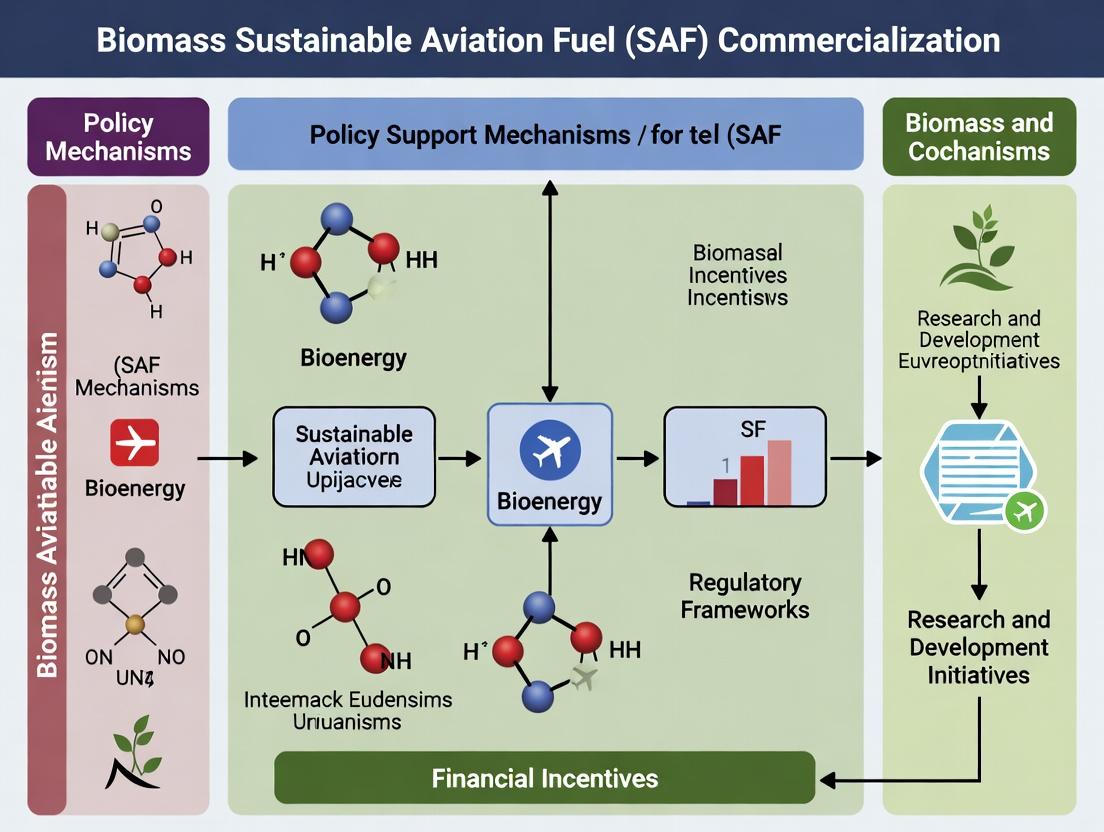
This article provides a detailed analysis of the policy mechanisms essential for commercializing Sustainable Aviation Fuel (SAF) derived from biomass.
From Policy to Practice: A Comprehensive Guide to Biomass SAF Commercialization Mechanisms for Aviation Decarbonization
Abstract
This article provides a detailed analysis of the policy mechanisms essential for commercializing Sustainable Aviation Fuel (SAF) derived from biomass. Tailored for policymakers, industry stakeholders, and energy researchers, it explores foundational concepts, applied methodologies, common implementation challenges, and comparative evaluations of global policy frameworks. The analysis synthesizes current data to outline a pathway for scaling biomass SAF from niche technology to a mainstream solution for reducing aviation's carbon footprint.
Understanding the Biomass SAF Landscape: Feedstocks, Pathways, and the Policy Imperative
Troubleshooting Guides and FAQs
Q1: During HEFA hydroprocessing, we observe rapid catalyst deactivation and excessive coke formation. What are the primary causes and mitigation strategies? A: Excessive coke is often due to impurities in the lipid feedstock (e.g., phospholipids, free fatty acids, alkali metals) or overly severe process conditions (high temperature, low hydrogen pressure).
- Mitigation: Implement rigorous feedstock pre-treatment: degumming to remove phospholipids, acid washing to remove metals, and mild esterification to reduce FFA content. Ensure hydrogen partial pressure is maintained above 50 bar and consider staged reactor systems with guard beds.
Q2: In Fischer-Tropsch synthesis for SAF, our catalyst shows a sudden shift in product selectivity toward methane (C1) and away from the desired C5-C20 range. What could cause this? A: This is typically a symptom of catalyst overheating or poisoning. Localized "hot spots" in the reactor can initiate methanation reactions. Common poisons for Co- or Fe-based FT catalysts include sulfur (>0.1 ppm in syngas) and ammonia.
- Troubleshooting: 1) Verify the integrity and calibration of reactor thermocouples. 2) Analyze cleaned syngas feed for sulfur compounds using gas chromatography with a sulfur chemiluminescence detector. 3) Check upstream gas cleaning units (e.g., ZnO beds for sulfur removal, acid gas wash) for breakthrough.
Q3: During Alcohol-to-Jet (ATJ) experiments, the dehydration step for isobutanol yields a high proportion of di-isobutylene instead of the desired mono-olefins. How can we optimize for linear olefin production? A: Di-isobutylene formation is a common side reaction from acid-catalyzed oligomerization. The issue lies in the strength and density of acid sites on the catalyst (e.g., gamma-alumina).
- Solution: Optimize catalyst selection and conditions. Use a milder solid acid catalyst or modify alumina by doping with alkali metals to reduce site strength. Lower the reactor temperature (aim for 300-350°C) and reduce residence time to favor dehydration over oligomerization.
Q4: For gasification-based pathways, our syngas fails to meet the H2:CO ratio (>2:1) required for efficient FT synthesis. What adjustments can we make? A: The H2:CO ratio is dependent on feedstock composition and gasification conditions.
- Protocol: 1) Introduce a Water-Gas Shift (WGS) reactor post-gasification and cleaning. Use an iron-chromium or cobalt-molybdenum catalyst at 200-400°C to convert CO and H2O to CO2 and H2, thus increasing the ratio. 2) Alternatively, consider steam reforming of a portion of the syngas or co-feeding a hydrogen-rich stream (e.g., from electrolysis). 3) Optimize the gasifier's steam-to-biomass ratio.
Key Conversion Pathways and Feedstock Data
Table 1: Primary Biomass SAF Conversion Pathways
| Pathway | Full Name | Key Process Steps | Target SAF Blendstock | Typical Carbon Efficiency |
|---|---|---|---|---|
| HEFA | Hydroprocessed Esters and Fatty Acids | Pretreatment, Deoxygenation/Hydrogenation, Isomerization/Cracking | HEFA-SPK (Synthetic Paraffinic Kerosene) | 65-80% |
| FT | Fischer-Tropsch | Gasification, Syngas Cleaning, FT Synthesis, Upgrading (Cracking, Isomerization) | FT-SPK, FT-SKA (with aromatics) | 25-50% (from biomass) |
| ATJ | Alcohol-to-Jet | Sugar Fermentation, Dehydration, Oligomerization, Hydrogenation | ATJ-SPK (from isobutanol) or ATJ-SPK (from ethanol) | 50-70% (from sugar/starch) |
| Pyrolysis/HTL | Pyrolysis or Hydrothermal Liquefaction | Thermal Depolymerization, Bio-Crude Upgrading (Hydrotreating, Hydrocracking) | CHJ (Catalytic Hydrothermolysis Jet) or FPJ (Fast Pyrolysis Jet) | 30-45% (Pyrolysis), 60-75% (HTL) |
Table 2: Biomass Feedstock Categories and Characteristics
| Feedstock Category | Examples | Key Advantage for SAF | Primary Challenge | Approximate Oil/Sugar Yield |
|---|---|---|---|---|
| Oil/Fat Crops | Camelina, Jatropha, Used Cooking Oil, Tallow | High energy density; direct fit for HEFA | Land-use competition (for crops); supply scalability | 40-60% oil (Camelina seed) |
| Lignocellulosic Biomass | Agricultural residues (corn stover), forest residues, energy grasses (switchgrass) | High potential yield; no food competition | Recalcitrant structure; requires preprocessing | N/A (yield via gasification/sugar) |
| Sugar/Starch Crops | Sugarcane, Corn, Sorghum | Fermentable to ATJ alcohols; established agronomy | Food vs. fuel debate; water/fertilizer input | 70-85 L ethanol/ton sugarcane |
| Wet Waste | Sewage sludge, Manure, Food Waste | Very low carbon footprint; waste diversion | Feedstock heterogeneity; collection logistics | Varies widely |
Experimental Protocol: Standardized HEFA Hydroprocessing for SAF
Objective: To convert lipid feedstocks (e.g., refined camelina oil) into HEFA-SPK compliant with ASTM D7566 Annex A2.
Materials & Reagents:
- Feedstock: 1000g of degummed, deacidified camelina oil.
- Catalyst: 50g of commercial NiMo/Al2O3 sulfided catalyst (e.g., for deoxygenation) and 30g of Pt/SAPO-11 (for isomerization/cracking).
- Gases: Ultra-high purity H2 (>99.99%), N2 for purging.
- Reactor System: Bench-scale continuous fixed-bed reactor system with two stages, high-pressure pumps, gas flow controllers, separators, and online GC.
Methodology:
- Catalyst Activation: Load sulfided NiMo catalyst into first reactor. Under N2 flow, heat to 300°C. Switch to H2 at 40 bar and 300°C for 4 hours.
- Deoxygenation/Hydrogenation: Pump oil at 1 mL/min with H2 co-feed (1000 NL/L oil) into first reactor. Maintain at 350-380°C and 50-70 bar. Collect liquid product via high-pressure separator.
- Isomerization/Cracking: Pump deoxygenated liquid into second reactor containing Pt/SAPO-11. Operate at 300-330°C and 30-50 bar with H2 co-feed.
- Fractionation: Distill the final product using a simulated distillation GC or short-path distillation to isolate the C8-C16 fraction (jet range).
- Analysis: Analyze for freezing point (ASTM D5972), density (ASTM D4052), and hydrocarbon composition (GC-MS) to confirm ASTM specifications.
The Scientist's Toolkit: Research Reagent Solutions
| Item | Function in SAF Research |
|---|---|
| Sulfided NiMo/Al2O3 Catalyst | Standard hydrotreating catalyst for deoxygenation and hydrogenation of lipids in HEFA pathways. |
| Co-based FT Catalyst (on Al2O3/SiO2 support) | Used in Fischer-Tropsch synthesis to catalyze the polymerization of syngas into long-chain hydrocarbons. |
| Pt/SAPO-11 Catalyst | Bifunctional catalyst (metal + acid sites) critical for isomerization and selective cracking to improve cold-flow properties of SAF. |
| Gamma-Alumina (γ-Al2O3) | Common porous support with acid sites used in dehydration (ATJ) and as a catalyst support. |
| ZSM-5 Zeolite | Shape-selective acid catalyst used in upgrading pyrolysis vapors or oligomerizing light olefins in ATJ. |
| Lignocellulolytic Enzyme Cocktail | Contains cellulases, hemicellulases for saccharification of lignocellulosic biomass to fermentable sugars for ATJ. |
| Model Compound (e.g., Oleic Acid, Guaiacol) | Representative pure compounds used to study specific reaction mechanisms (deoxygenation, demethoxylation) without feedstock complexity. |
Visualizations
Diagram 1: SAF Pathway-Feedstock Logical Flow
Diagram 2: HEFA Process Experimental Workflow
Technical Support Center: Troubleshooting Experimental Analysis
Frequently Asked Questions (FAQs)
Q1: During a Techno-Economic Analysis (TEA) of a novel biomass feedstock, my calculated Minimum Selling Price (MSP) for SAF is unrealistically low. What could be the error? A: This often stems from incomplete system boundary definition. Verify that your model includes all capital expenditures (CAPEX) for pre-processing facilities, catalyst regeneration/replacement costs, hydrogen consumption for hydroprocessing, and wastewater treatment. A common oversight is underestimating the cost of biomass logistics and feedstock variability, which impacts conversion yield.
Q2: My Life Cycle Assessment (LCA) shows higher greenhouse gas (GHG) emissions for my SAF pathway than conventional jet fuel. Which parameters should I re-examine? A: Focus on the system's energy integration and co-product allocation method. First, check the source of process heat and hydrogen. Grid electricity or natural gas-derived hydrogen can dominate the carbon footprint. Switch to modeling renewable energy sources. Second, re-evaluate your co-product allocation (e.g., using displacement/substitution method vs. energy-based allocation). Using the displacement method for high-value biochemical co-products can significantly improve the GHG profile.
Q3: Catalyst deactivation in the hydrodeoxygenation (HDO) step is far more rapid in my bench-scale reactor than literature suggests. How can I troubleshoot this? A: Rapid deactivation typically indicates feedstock impurities. Follow this protocol:
- Analyze Feedstock: Perform ultimate analysis (CHNOS) and ICP-MS on your bio-oil intermediate for alkali metals (Na, K), alkaline earth metals (Ca, Mg), and sulfur.
- Pre-Treatment: Implement a guard bed (e.g., silica, alumina) upstream of your main catalyst bed to adsorb impurities.
- Process Conditions: Ensure your partial pressure of H₂ is sufficiently high to prevent coking. Gradually increase temperature in your run to distinguish thermal coking from poisoning.
Q4: How do I accurately model the cost impact of policy mechanisms like tax credits in my TEA? A: Incorporate policies as negative cost inputs in your cash flow analysis. For example, the U.S. Inflation Reduction Act's 40B tax credit is a production credit. Structure it as an annual credit based on the model's SAF output volume and the credit's defined GHG reduction threshold. Sensitivity analysis is crucial—run scenarios with and without the credit, and with its potential phase-out.
Troubleshooting Guides
Issue: Inconsistent Yield During Biomass Fast Pyrolysis Optimization Symptoms: Variable bio-oil yield and quality between batches. Diagnostic Steps:
- Feedstock Control: Ensure biomass particle size is uniform (typically 1-2 mm). Use a sieve analyzer. Moisture content must be consistent (<10%); use an oven-drying protocol (105°C for 24 hours).
- Process Monitoring: Calibrate your reactor's temperature thermocouples. For fluidized beds, verify carrier gas (N₂) flow rate with a mass flow controller calibration.
- Condensation System: Check for bio-oil aerosol losses. Ensure your electrostatic precipitator or condensation train is maintained at the correct temperature (typically 0-4°C).
Issue: High Uncertainty in LCA for Novel Pathway Symptoms: Wide confidence intervals in GHG results, making policy qualification (e.g., for ICAO's CORSIA) uncertain. Resolution Protocol:
- Identify Hotspots: Perform a contribution analysis to find which unit processes contribute >80% of variance.
- Data Quality Assessment: For high-impact processes, replace generic database (e.g., Ecoinvent) data with primary data from your experiments (e.g., exact chemical and energy inputs for fermentation).
- Monte Carlo Simulation: Run a stochastic simulation (≥1000 iterations) assigning probability distributions (e.g., triangular distribution) to key parameters like crop yield, conversion efficiency, and natural gas leakage rate.
Table 1: Current Cost & GHG Comparison of Select SAF Pathways (2023-2024)
| Pathway (Feedstock) | Estimated MSP (USD/Gallon) | Conventional Jet Fuel Price (USD/Gallon) | Cost Gap (USD/Gallon) | Estimated GHG Reduction vs. Conventional* | Key Cost Drivers |
|---|---|---|---|---|---|
| HEFA (Used Cooking Oil) | $4.50 - $5.80 | $2.50 - $3.50 | ~$2.00 - $2.30 | 50-80% | Feedstock cost, H₂ consumption |
| FT (Forest Residues) | $5.50 - $7.50 | $2.50 - $3.50 | ~$3.00 - $4.00 | 70-95% | CAPEX (gasifier, FT reactor), biomass logistics |
| ATJ (Corn Stover) | $6.00 - $8.50 | $2.50 - $3.50 | ~$3.50 - $5.00 | 60-85% | Sugar release efficiency, fermentation yield |
| SIP (MSW) | $5.00 - $7.00 | $2.50 - $3.50 | ~$2.50 - $3.50 | 70-100% | Feedstock sorting, gas cleaning CAPEX |
| Conventional Jet A | $2.50 - $3.50 | - | - | 0% Baseline | Crude oil price, refining margin |
*Reduction includes lifecycle emissions. MSW = Municipal Solid Waste. Data synthesized from recent NREL, IEA, and industry reports.
Table 2: Impact of Selected U.S. Policy Mechanisms on SAF Cost Gap (Modeled)
| Policy Mechanism | Value | Direct Effect on MSP | Conditions & Limitations |
|---|---|---|---|
| IRA 40B Tax Credit | $1.25 - $1.75/gal | Reduces MSP by credit amount | Must achieve ≥50% GHG reduction. Value scales with GHG performance. |
| California LCFS Credit | ~$1.80 - $2.20/gal* | Effectively reduces MSP by credit revenue | Credit price fluctuates. Requires fuel pathway certification in CA. |
| IRA 45Q Tax Credit | $85/metric ton CO₂ stored | Reduces cost of CCS-integrated SAF pathways | Requires secure geologic storage. Can stack with 40B. |
| Blending Mandate (CORSIA, ReFuelEU) | N/A | Creates demand, enables premium price | Provides market certainty but not direct operational subsidy. |
*Approximate credit value per gallon of neat SAF in 2023. LCFS = Low Carbon Fuel Standard.
Experimental Protocols
Protocol 1: Catalytic Upgrading of Pyrolysis Vapors (Ex-Situ Catalytic Fast Pyrolysis) Objective: To produce deoxygenated bio-oil suitable for hydroprocessing into SAF. Materials: See Scientist's Toolkit below. Method:
- Feedstock Preparation: Reduce biomass to 1-2 mm particles using a mill. Dry at 105°C for 24h.
- Reactor Setup: Load 1.0 g of zeolite catalyst (e.g., ZSM-5) into a fixed-bed secondary reactor. Place primary pyrolysis reactor (fluidized bed or fixed bed) upstream.
- Process: Heat secondary catalyst bed to target temperature (450-550°C) under 100 sccm N₂. Heat primary reactor to 500°C. Introduce biomass at 0.5 g/min via syringe pump. Pyrolysis vapors are carried directly into the catalytic bed.
- Product Collection: Condense upgraded vapors in a chilled (0°C) collection vessel. Measure gas yield via online GC, liquid yield by mass, and solid coke on catalyst by TGA after run.
- Analysis: Analyze liquid product via GC-MS for hydrocarbon content and simulated distillation (SimDist) for boiling point distribution.
Protocol 2: Life Cycle Inventory (LCI) Data Generation for Fermentation Process Objective: To generate primary data for LCA on sugar consumption and chemical use. Method:
- Bench-Scale Fermentation: Conduct fermentation in a 5L bioreactor under optimized conditions for your microbe.
- Material Tracking: Precisely record all inputs: mass of sugars, ammonia, vitamins, acid/base for pH control, antifoam, and energy use (kWh for stirring, heating/cooling).
- Output Analysis: Quantify all outputs: mass of target alcohol, CO₂ emissions (via off-gas analyzer), biomass slurry, and wastewater.
- Allocation Preparation: If producing a co-product (e.g., animal feed from slurry), characterize its nutritional/energy content for subsequent allocation steps in the LCA model.
Visualizations
Title: How Policy Mechanisms Bridge the SAF Cost Gap to Enable Commercialization
Title: Integrated Workflow for SAF Pathway Research from Lab to Policy Analysis
The Scientist's Toolkit: Key Research Reagent Solutions
| Item | Function in SAF Research |
|---|---|
| Zeolite Catalyst (ZSM-5, Beta) | Used in catalytic fast pyrolysis to deoxygenate biomass vapors, promoting aromatic hydrocarbon formation. |
| Sulfided NiMo/Al₂O₃ Catalyst | Standard hydrotreating catalyst for bio-oil upgrading; removes oxygen as H₂O and saturates olefins. |
| Lignocellulosic Model Compound (e.g., Guaiacol, Cellulose) | Simplified feedstock for fundamental studies of reaction mechanisms and catalyst performance. |
| Microbial Strain (e.g., engineered yeast/bacteria) | For Alcohol-to-Jet (ATJ) pathways, converts sugars to isobutanol or farnesene. |
| GREET Model (Argonne National Lab) | The standard LCA software tool for modeling transportation fuels' energy use and emissions. |
| Aspen Plus/ChemCAD Software | Process simulation tools for designing and costing biorefinery concepts at scale (TEA). |
| ICP-MS Standard Solutions | For calibrating instruments to measure catalyst-poisoning trace metals in feedstocks and bio-oils. |
Biomass SAF Research Technical Support Center
This technical support center assists researchers in overcoming common experimental challenges in biomass-to-Sustainable Aviation Fuel (SAF) pathways, framed within policy mechanisms for SAF commercialization.
FAQs & Troubleshooting Guides
Q1: Why is my hydroprocessed esters and fatty acids (HEFA) yield lower than expected from lipid-rich biomass? A: Low yields often stem from feedstock contamination or suboptimal hydroprocessing conditions. Ensure biomass is pre-treated to remove phospholipids and alkali metals, which poison catalysts. Verify reactor H₂ partial pressure (typically 50-80 bar) and temperature (300-400°C). Monitor catalyst sulfidation state (Co-Mo or Ni-Mo) for deoxygenation activity.
Q2: How can I improve the selectivity for jet-range alkanes (C8-C16) in Fischer-Tropsch (FT) synthesis from biomass-derived syngas? A: Jet-range selectivity is controlled by the Anderson-Schulz-Flory distribution. To shift it, use a promoted cobalt catalyst (e.g., Co/Pt on TiO₂) at lower temperatures (200-220°C) and moderate pressures (20-30 bar). Incorporating a zeolite (e.g., ZSM-5) downstream for hydrocracking/isomerization can tailor the chain length.
Q3: My gasification syngas has high tar content, fouling downstream reactors. What are the mitigation steps? A: High tars indicate low gasification temperature or insufficient residence time. Optimize by:
- Increasing fluidized-bed gasifier temperature to >850°C.
- Using catalytic bed materials (dolomite, olivine).
- Installing a secondary catalytic tar reformer (Ni-based catalyst) at ~900°C.
- Ensuring proper biomass particle size (<2 mm) for uniform heating.
Q4: What are common causes of microbial lipid (for HEFA) fermentation inhibition, and how can I address them? A: Inhibition is typically caused by substrate-derived inhibitors (furfurals, phenolics from lignocellulosic hydrolysates) or metabolic by-products. Protocol: Detoxify hydrolysate via overliming (Ca(OH)₂ to pH 10, then re-neutralize) or use activated charcoal. Employ fed-batch fermentation with inhibitor-tolerant strains like Rhodococcus opacus to maintain low sugar and inhibitor concentrations.
Table 1: Comparative Performance of Biomass-to-SAF Pathways
| Pathway | Typical Carbon Efficiency (%) | Min. Fuel Selling Price (Current, $/GJ) | TRL (2024) | Key Policy Support Mechanism |
|---|---|---|---|---|
| HEFA | 75-85 | 25-35 | 8-9 (Commercial) | Blending Mandates, Tax Credits (45Z) |
| FT Biomass-to-Liquid | 35-50 | 30-45 | 7-8 (Demonstration) | Loan Guarantees, RD&D Grants |
| Alcohol-to-Jet (ATJ) | 40-55 | 35-50 | 6-7 (Pilot) | Price Guarantees, Off-take Agreements |
| Catalytic Pyrolysis & Upgrading | 25-40 | 40-60 | 5-6 (R&D) | Capital Cost Subsidies, CFPs |
Table 2: Common Catalyst Deactivation Modes & Solutions
| Deactivation Mode | Primary Cause | Diagnostic Test | Mitigation Protocol |
|---|---|---|---|
| Coke Deposition | Acid site polymerization, >500°C | TPO (Temp. Programmed Oxidation) | Periodic oxidative regeneration at 450°C in 2% O₂. |
| Sulfur Poisoning | Biomass S-compounds in feed | XPS Analysis | Use guard beds (ZnO), pre-sulfidation to tolerant state. |
| Sintering | High T, steam in reforming | BET Surface Area Measurement | Design catalysts with structural promoters (La, Zr). |
| Alkali Metal Poisoning | K/Na in biomass ash | ICP-MS of Spent Catalyst | Strict feedstock washing/leaching pre-treatment. |
Experimental Protocols
Protocol 1: Assessing Lignocellulosic Sugar Release for ATJ Feedstock Objective: Quantify fermentable sugar yield from pretreated agricultural residue (e.g., corn stover). Methodology:
- Pretreatment: Load 10g biomass (80 mesh) into reactor with 0.5% (v/v) H₂SO₄ at 160°C for 20 min (solid:liquid 1:10). Quench, filter, and wash solids to neutral pH.
- Enzymatic Hydrolysis: Treat 1g (dry equiv.) washed solid with 20 FPU/g cellulase (CTec2) and 10 CBU/g β-glucosidase in 50mM citrate buffer (pH 4.8) at 50°C, 150 rpm for 72h.
- Analysis: Sample hydrolysate, filter (0.22µm), and quantify glucose/xylose via HPLC (Aminex HPX-87P column, 85°C, water eluent).
Protocol 2: Hydroprocessing of Bio-Oils to SAF-Range Hydrocarbons Objective: Convert pyrolysis bio-oil to jet fuel via catalytic hydrodeoxygenation (HDO). Methodology:
- Catalyst Preparation: Reduce 1g of 10% Ni/SiO₂-ZrO₂ in a fixed-bed reactor under 100 sccm H₂ at 400°C for 2h.
- Reaction: Pump stabilized bio-oil (10 wt% in dodecane) at 2 mL/min with H₂ (1000 psi) over catalyst bed at 350°C. Maintain gas hourly space velocity (GHSV) of 1500 h⁻¹.
- Product Analysis: Collect liquid product in cold trap. Analyze by 2D GC (GC×GC-TOFMS) for hydrocarbon classes. Measure O content via elemental analysis.
Signaling & Workflow Diagrams
Title: Biomass SAF Production Workflow
Title: Policy Support for SAF Commercialization Logic
The Scientist's Toolkit: Research Reagent Solutions
Table 3: Essential Materials for Biomass SAF Catalysis Research
| Item | Function | Example & Rationale |
|---|---|---|
| Zeolite Catalyst (ZSM-5) | Catalytic cracking & aromatization of pyrolysis vapors. | Zeolyst CBV 3024E; high silica/alumina ratio for shape selectivity and hydrothermal stability. |
| Co-Promoted FT Catalyst | Converts syngas (H₂/CO) to long-chain hydrocarbons. | Co/Re/Al₂O₃ (commercial sample); Rhenium promoter enhances Co reducibility and chain growth probability. |
| Lipid-Producing Microbial Strain | Converts sugars to triacylglycerides for HEFA. | Rhodococcus opacus PD630; high lipid accumulation (>50% cell dry weight) on diverse carbon sources. |
| Lignin-Derived Model Compound | Simulates bio-oil HDO reactions. | Guaiacol (2-methoxyphenol); representative of lignin-derived phenolics for catalyst activity screening. |
| Sulfur-Tolerant Guard Bed Media | Removes trace S-compounds protecting noble metal catalysts. | Zinc Oxide (ZnO) pellets; chemisorbs H₂S to form ZnS, ensuring downstream catalyst integrity. |
| Certified SAF Reference Material | Analytical standard for fuel property validation. | NIST SRM 2770 "Sustainable Aviation Fuel"; for definitive GC-MS calibration and property testing. |
Technical Support Center: Troubleshooting Biomass SAF Research Experiments
This technical support center is designed for researchers and scientists working on experimental protocols for biomass-derived sustainable aviation fuel (SAF) within the policy-supported commercialization research framework. The FAQs address common experimental hurdles.
FAQs & Troubleshooting Guides
Q1: During hydroprocessing of bio-oils, we observe rapid catalyst deactivation (coking). What are the primary troubleshooting steps? A: Catalyst coking is often due to excessive oxygenates or high polymer content in the feed. Follow this protocol:
- Pre-Treatment Analysis: Quantify total acid number (TAN) and carbonyl content of your bio-oil feedstock (see Table 1).
- Staged Upgrading: Implement a mild low-temperature (200-250°C) stabilization step over a Ru/C or Pd/C catalyst to saturate reactive carbonyls before deep deoxygenation at higher temps (300-400°C).
- Process Adjustment: Increase H₂ partial pressure. For batch reactors, ensure initial H₂ pressure is ≥ 50 bar. For continuous flow, verify H₂ flow-to-oil ratio.
- Catalyst Selection: Switch to a catalyst with higher mesoporosity (e.g., ZSM-5 vs. microporous Zeolite Y) to reduce pore blockage.
Q2: Our lipid-to-hydrocarbon (HEFA pathway) yield is lower than theoretical. What factors should we investigate? A: Yield loss typically occurs during the catalytic deoxygenation (decarboxylation/decarbonylation) step.
- Feedstock Purity: Analyze your lipid feed (e.g., FAME, free fatty acids) for impurities (phosphorus, sulfur, alkali metals) via ICP-MS. These can poison catalysts.
- Reaction Pathway Optimization: Decarboxylation (producing CO₂) removes one carbon, reducing hydrocarbon yield versus hydrodeoxygenation (HDO, producing H₂O). Tune catalyst (e.g., Pd/C favors decarboxylation, while NiMo/Al₂O₃ favors HDO) and conditions (temperature, H₂ pressure) to favor HDO.
- Mass Balance: Ensure complete collection of volatile products (C1-C4 gases, water) for accurate carbon balance calculation.
Q3: How do we accurately measure and report the "Sustainable" aspect of our biomass feedstock in policy-focused research? A: You must establish a standardized Life Cycle Analysis (LCA) experimental protocol.
- System Boundaries: Define "cradle-to-grave" boundaries: biomass cultivation, harvest, transport, conversion, fuel combustion.
- Key Inventory Data: Quantify material/energy inputs (fertilizer, diesel) and outputs (N₂O emissions from soil) for biomass cultivation. Use controlled plot experiments with emission monitoring chambers.
- Carbon Stock Change: For lignocellulosic feedstocks, establish control plots to measure soil organic carbon (SOC) changes using core sampling and dry combustion analysis.
- Policy Alignment: Calculate GHG savings (%) per ISO 13065 and cross-reference against policy thresholds (e.g., ICAO's CORSIA, EU RED II).
Quantitative Data Summary
Table 1: Common Feedstock Impacts on Catalytic Upgrading
| Feedstock Type | Key Challenge | Typical Impurity Level | Mitigation Strategy |
|---|---|---|---|
| Lipids (Used Cooking Oil) | Catalyst Poisoning (P, S, Na) | P: 10-100 ppm; S: 5-50 ppm | Acid washing, Adsorption (SiO₂) |
| Fast Pyrolysis Bio-Oil | Catalyst Coking (High Oxygen) | O Content: 35-50 wt.% | Esterification, Aldol Condensation |
| Lignocellulosic Sugars | Low Carbon Yield | C6 Sugar Yield: ~50% biomass | Develop robust fermentation strains |
Table 2: Core GHG Calculation Metrics for Policy Compliance
| Metric | Standard Method | Typical Range for Biomass SAF | Policy Relevance |
|---|---|---|---|
| Lifecycle GHG Savings | ISO 13065 / GREET Model | 50-90% vs. Fossil Jet A1 | Must meet >50% for CORSIA, >65% for RED II |
| Indirect Land Use Change (iLUC) Risk | Economic Equilibrium Models | Low (Residues) to High (Energy Crops) | EU RED II caps high-iLUC feedstocks |
| Feedstock Carbon Intensity (gCO₂e/MJ) | LCA Inventory | Switchgrass: 5-15; UCO: 10-25 | Core input for savings calculation |
Experimental Protocol: Determining Catalyst Deactivation Profile in Continuous Flow Hydroprocessing
Objective: To quantify the deactivation rate of a catalyst during continuous hydroprocessing of stabilized bio-oil. Materials:
- Fixed-bed continuous flow reactor system (Hastelloy tube, 9.5 mm ID)
- Downstream gas/liquid separator
- Online GC for gas analysis
- HPLC for liquid product analysis
- Catalyst: 2.0g of NiMo/γ-Al₂O₃ (sized to 150-300 μm)
- Feed: Stabilized bio-oil (pre-hydrogenated) diluted 1:4 in dodecane. Methodology:
- Catalyst Reduction: Load catalyst. Purge with N₂. Heat to 350°C under 30 bar H₂ at 100 mL/min for 4 hours.
- Reaction Conditions: Set T=325°C, P=80 bar H₂, WHSV=1.0 h⁻¹.
- Sampling & Analysis: Collect liquid product every 2 hours for 24 hours. Analyze for:
- Total Deoxygenation (%): Via elemental (CHNS-O) analyzer.
- Product Distribution: GC-MS for hydrocarbons (C8-C18).
- Catalyst Activity Metric: Calculate yield of desired jet-range (C8-C16) hydrocarbons over time.
- Data Fitting: Plot Jet-Range Yield vs. Time-On-Stream (TOS). Fit to exponential decay model: Yield = A*exp(-kd * TOS) + C, where kd is the deactivation constant.
Mandatory Visualizations
Diagram 1: Biomass SAF Stakeholder Interaction Map
Diagram 2: Core SAF Research Workflow & Feedback
The Scientist's Toolkit: Research Reagent Solutions
Table 3: Essential Materials for Biomass SAF Catalytic Research
| Item | Function | Example Product/Catalog # |
|---|---|---|
| Mesoporous Catalyst Support (SiO₂, γ-Al₂O₃) | High surface area support for active metals; mesoporosity reduces pore blockage. | Sigma-Aldrich, 637246 (SiO₂, SBA-15) |
| Bimetallic Catalyst Precursors (NiMo, CoMo) | Active sites for hydrodeoxygenation (HDO) and hydrodesulfurization. | Strem Chemicals, 26-1400 (Ammonium tetrathiomolybdate) |
| Deoxygenation Model Compound (Dodecanoic Acid) | Pure compound for fundamental catalyst kinetics study, avoiding feedstock complexity. | Sigma-Aldrich, D3642 |
| Internal Standard for GC (Hexadecane) | Added to product mixtures for accurate quantitative gas chromatography analysis. | Sigma-Aldrich, H6703 |
| High-Pressure Batch Reactor (Parr) | Small-scale (100mL) system for initial catalyst screening and kinetic studies. | Parr Instrument, 4560 Mini Reactor |
| On-Line Micro-GC for Gas Analysis | Quantifies permanent gases (H₂, CO, CO₂, C1-C4) in real-time for mass balance. | Agilent 990 Micro-GC |
Policy Toolkit in Action: Implementing Effective Mechanisms for Market Uptake
Troubleshooting & FAQs for Policy-Aided Biomass SAF Research
Q1: Our techno-economic analysis (TEA) model shows negative NPV for a novel biomass-to-SAF pathway, even with current policy supports. How do we adjust parameters to reflect future policy stability? A: This is a common issue when modeling first-of-a-kind plants. The SAF Grand Challenge and ReFuelEU are volume-based mandates, not direct price supports. Your TEA should sensitize:
- Blending Target Compliance: Model credit (e.g., RINS in US, Union Database Certificates in EU) value as a function of the mandate-driven supply gap, not just current prices.
- Policy Phase-In: Input the escalating volumetric targets (see Table 1). A negative NPV today may turn positive as the mandate tightens and credit prices rise.
- Advanced Fuel Multipliers: ReFuelEU uses a 1.2x multiplier for biofuels from non-food biomass. Ensure your model applies this to the physical volume, effectively lowering the volumetric burden/cost for compliance for fuel purchasers.
Q2: We are testing a new catalytic hydrothermolysis (CH) process. How do we define "sustainable biomass" for compliance with both US and EU schemes in our feedstock protocol? A: You must establish a chain of custody and meet specific land-use criteria.
- US (Grand Challenge): Feedstock must demonstrate a 50% lifecycle GHG reduction vs. petroleum jet, per ICAO's CORSIA or modified GREET model. Use ASTM D6866 for biogenic carbon testing. Troubleshooting Tip: High GHG scores often come from upstream land-use change (LUC). Implement a feedstock tracing protocol from Day 1.
- EU (ReFuelEU): Feedstocks must comply with the Renewable Energy Directive (RED II) Annex IX. Use Part A listed feedstocks (e.g., agricultural residues, algae). Avoid Part B feedstocks (e.g., palm oil derivatives) which have sub-limits. Experimental Protocol: For solid biomass, document geolocation, and use a mass balance system certified by an approved voluntary scheme (e.g., ISCC, RSB).
Q3: Our hydroprocessed esters and fatty acids (HEFA) sample is failing the "aromatics content" spec for ASTM D7566. How can our lab-scale protocol adjust pre-treatment to address this? A: Low aromatics are critical for fuel certification. HEFA naturally lacks aromatics, which are needed for seal swell. The issue may be trace oxygenates or impurities.
- Experimental Protocol – Enhanced Hydrotreatment:
- Increase Hydrotreatment Severity: In your batch reactor, incrementally increase catalyst bed temperature (start +10°C) and hydrogen pressure (start +10 bar) during the deoxygenation step.
- Two-Stage Process: Implement a secondary, mild hydrocracking stage over a Pt/Pd catalyst to selectively generate alkylbenzenes.
- Post-Reaction Analysis: Use Simulated Distillation (ASTM D2887) and GC-MS (ASTM D2425) to monitor oxygenate removal and trace aromatic formation. Compare against a certified reference material.
Q4: How do we physically blend our research-derived SAF with conventional jet for testing, and what are the precise volumetric targets we should aim for? A: Follow ASTM D7566 Annexes for approved pathways. The blending mandate targets are policy-driven, not technical limits.
- Lab-Scale Blending Protocol:
- Use a calibrated, sealed glass vessel under inert atmosphere (N2 purge).
- The maximum technical blend limit for most synthesized paraffinic kerosenes (SPK) is 50% v/v (except for FT-SPK at 100%).
- For policy analysis, blend ratios should reflect the annual average obligation for airlines (see Table 1). Prepare 10%, 20%, 30% v/v blends to simulate compliance scenarios from 2025-2050.
- Test blends for key specs: freezing point (ASTM D5972), viscosity (ASTM D445), and flash point (ASTM D56).
Data Presentation: Key Policy Targets
Table 1: Comparative Volumetric Mandates: US SAF Grand Challenge vs. EU ReFuelEU
| Parameter | US SAF Grand Challenge | EU ReFuelEU Aviation |
|---|---|---|
| Core Target | 3 Billion Gallons/year by 2030100% of Aviation Fuel by 2050 | 6% SAF by 203020% SAF by 203534% SAF by 204070% SAF by 2050 |
| Sub-Target | Minimum 50% GHG reduction100% GHG reduction goal by 2050 | Sub-target for Synthetic Fuels (e-fuels):1.2% by 20305% by 203535% by 2050 |
| Advanced Feedstock Focus | Yes (for tax credits) | Yes (Annex IX Part A feedstocks encouraged) |
| Multiplier for Advanced | N/A (addressed via credits) | Yes (2.0x for e-fuels, 1.2x for advanced biofuels) |
| Compliance Mechanism | Blenders claim tax credits (40B/45Z) & generate RINs (D4/D5) | Fuel suppliers upload compliance data to Union Database; Obligated Parties (airlines) ensure uplift compliance. |
Experimental Protocols
Protocol 1: Lifecycle GHG Analysis for Policy Compliance Objective: Calculate the lifecycle GHG reduction percentage for a novel SAF pathway to assess eligibility under the Grand Challenge and ReFuelEU. Method:
- Define System Boundary: Use a "well-to-wake" (WTWa) boundary covering feedstock production, transport, fuel conversion, transportation, and combustion.
- Gather Data: For 1 MJ of SAF, compile energy/material inputs for each stage (e.g., fertilizer, H2, natural gas for process heat).
- Apply Models: For US, use the GREET model (Argonne National Laboratory). For EU, use the EC's Official Methodology (based on RED II).
- Calculate:
GHG Reduction (%) = [(EF_ref - EF_SAF) / EF_ref] * 100. Where EF_ref = 89 gCO2e/MJ (baseline petroleum jet). - Sensitivity: Run scenarios with different grid electricity sources (critical for electrolytic H2).
Protocol 2: Feedstock Sustainability Documentation for RED II Compliance Objective: Establish a verifiable chain of custody for lignocellulosic biomass. Method:
- Feedstock Sourcing: Source biomass (e.g., corn stover) from a defined plot. Record geolocation coordinates, harvest date, and previous land use (5+ years).
- Mass Balance Setup: Dedicate a sealed, labeled storage container for this batch. All mass in/out must be logged (Scale: analytical balance, ±0.01g).
- Sampling & Analysis: Take a representative sample (ASTM E725). Analyze for carbon content (ASTM D5373) and perform 14C analysis (ASTM D6866) to confirm biogenic origin.
- Documentation: Compile all logs, analysis certificates, and a land-use map into a dossier. This is required for certification under schemes like ISCC.
Mandatory Visualizations
Diagram 1: SAF Policy Compliance Logic for Researchers
Diagram 2: ReFuelEU Obligation Chain & Research Interface
The Scientist's Toolkit: Research Reagent Solutions
Table 2: Essential Materials for Biomass SAF Pathway R&D
| Item | Function & Relevance to Policy |
|---|---|
| Model Compound Mix(e.g., Cellobiose, Lignin Oligomers, Oleic Acid) | Represents key biomass components. Allows controlled study of conversion kinetics and catalyst deactivation, informing process efficiency for LCA. |
| Certified Reference Materials (CRMs)(e.g., n-Paraffin Mix for GC, Sulfur in Kerosene Standard) | Essential for calibrating analytical equipment (GC, HPLC) to ASTM methods. Ensures fuel property data is valid for certification submissions. |
| Heterogeneous Catalyst Library(e.g., Pt/Al2O3, NiMo, Zeolites like HZSM-5) | For testing hydrodeoxygenation (HDO), hydrocracking, and isomerization. Catalyst choice directly impacts yield, cold flow properties, and hydrogen consumption (key cost/GHG driver). |
| Sustainable Solvent Suite(e.g., 2-MethylTHF, Cyrene, Ethyl Lactate) | For biomass fractionation and product recovery. Solvent selection impacts process "greenness" and LCA score, relevant for GHG reduction mandates. |
| Lifecycle Inventory (LCI) Database Access(e.g., GREET, Ecoinvent) | Critical software/tool to calculate the GHG emissions of your novel pathway. The primary tool for proving compliance with the 50% reduction threshold. |
| Chain of Custody Documentation Kit(e.g., Sample tags, COC logbooks, GIS mapping tool) | To track feedstock from origin to lab. Foundational for proving sustainability and compliance with RED II feedstock restrictions. |
Technical Support Center: Troubleshooting for SAF Biomass Research Funding Applications
Frequently Asked Questions (FAQs)
Q1: Our lab's biomass pretreatment process is novel but not yet piloted at scale. Which financial incentive is most appropriate for our next capital project phase? A: For pre-pilot or first-of-a-kind demonstration scale, federal grants (e.g., DOE BETO, USDA) are the primary mechanism, as they are non-dilutive and designed for higher-risk research. Tax credits like 45Z require production and sale of fuel, making them unsuitable for purely capital experimental projects. Loan guarantees typically require a proven technology with a clear revenue path.
Q2: We are filing for a grant that requires matching funds. Can anticipated tax credits under the 45Z Clean Fuel Production Credit count towards our cost-share obligation? A: Generally, no. Most federal grant programs (e.g., DOE Financial Assistance Awards) explicitly prohibit the use of anticipated future tax credits as cost share. Cost share must be from non-federal sources and verifiable at the time of the award. Realized tax credits from previous years may be considered, but you must consult the specific Funding Opportunity Announcement (FOA) and legal counsel.
Q3: Our feedstock analysis experiment requires specific ASTM standard methods for lifecycle analysis (LCA) to qualify for 45Z. Where can we find the definitive protocol? A: The LCA methodology for 45Z is based on the GREET model (Greenhouse gases, Regulated Emissions, and Energy use in Technologies). You must use the latest 40B GREET model released by Argonne National Laboratory. The core experimental protocol is computational modeling based on your feedstock and process data inputs, not a wet-lab procedure.
Q4: We encountered a "techno-economic analysis (TEA) model inconsistency" error when applying for a loan guarantee. What specific data reconciliation steps are required? A: This common error arises from misalignment between your lab-scale experimental data and the engineering models used for the TEA. Follow this reconciliation protocol:
- Audit Input Assumptions: Isolate all input variables (e.g., catalyst loading, conversion yield, energy consumption) derived from your bench-scale experiments.
- Scale-Up Factor Documentation: For each variable, document the conservative scale-up factor applied and its peer-reviewed or pilot-data justification.
- Sensitivity Analysis Re-run: Re-execute the TEA model's sensitivity analysis focusing on the top 5 cost drivers, using the exact yield and purity ranges from your most recent triplicate experiments.
- Cross-Reference with Grant Reports: Ensure all cited performance data matches the final technical reports submitted for any previous related grants (e.g., DOE SBIR/STTR).
Q5: How do we document "commence construction" for the 45Z credit if our capital project is a modular, multi-phase research pilot plant? A: IRS Notice 2023-06 outlines two safe harbors: 1) Physical Work Test or 2) 5% Safe Harbor. For a modular research facility, the 5% Safe Harbor is often more manageable. You must:
- Capitalize 5% of the total project's eligible costs (as defined by the notice).
- Maintain a detailed, contemporaneous cost segregation study that isolates and tracks these expenditures specifically for the qualifying pilot plant module.
- Document vendor invoices, work orders, and lab procurement system records that tie the purchased assets directly to the SAF production process.
Table 1: Comparison of Primary Financial Incentives for SAF Research & Capital Projects
| Mechanism | Example Program | Max Value / Current Rate | Eligibility Phase | Repayment / Key Condition |
|---|---|---|---|---|
| Tax Credit | 45Z Clean Fuel Production Credit | $1.25/gallon (SAF) + bonus | Operational Facility selling fuel | Non-refundable; requires carbon intensity score via GREET |
| Tax Credit | 48C Investment Tax Credit | Up to 30% of qualified investment | Construction of clean energy facility | Credit against tax liability; application process required |
| Grant | DOE BETO Scale-Up & Pilot | $10M - $100M per award | Pilot, Demonstration, & First-of-a-Kind | Non-dilutive; no repayment; requires cost share |
| Grant | USDA HBIIP | Up to 50% of project costs | Infrastructure for higher-blend biofuels | Reimbursement-based; focused on infrastructure |
| Loan Guarantee | DOE LPO Title 17 | Billions in authority; up to 80% guarantee | Commercial-scale deployment | Must repay loan; requires significant equity & proven tech |
Experimental Protocol: Lifecycle Analysis (LCA) Modeling for 45Z Tax Credit Eligibility
Objective: To generate a carbon intensity (CI) score for your biomass-derived SAF pathway using the Argonne GREET model, a mandatory step for 45Z credit qualification.
Methodology:
- System Boundary Definition: Define the "well-to-wake" (WTW) boundary, encompassing feedstock production, transportation, fuel conversion, distribution, and combustion.
- Primary Data Collection:
- Feedstock: Collect data on biomass yield per acre, fertilizer/chemical inputs, land use changes, and preprocessing energy from field trials.
- Conversion: From bench/pilot experiments, record mass balances, energy balances (natural gas, electricity), catalyst/chemical consumption, and co-product yields (e.g., biochar, electricity) for the integrated biorefinery process.
- Transport: Log distances and modes for all material movements.
- GREET Model Integration:
- Download the latest 40B GREET model.
- Create a new pathway module or modify an existing one (e.g., "Biomass to Hydroprocessed Ester/FA").
- Input your primary experimental data into the corresponding spreadsheet tabs (e.g., "Biomass Supply," "Conversion").
- For upstream data (e.g., grid electricity CI, natural gas CI), use GREET default values consistent with the model year.
- Sensitivity & Uncertainty Analysis:
- Perform Monte Carlo simulations (±10% on key experimental variables like conversion yield) to generate a CI score range.
- Document all assumptions and data sources.
- Validation: Cross-check calculated intermediate values (e.g., BTU/gal of intermediate bio-oil) against published literature from analogous pathways.
Visualization: SAF Funding Pathway Logic
Diagram Title: Eligibility Flow for SAF Project Incentives
The Scientist's Toolkit: Research Reagent Solutions for Funding-Relevant Experiments
Table 2: Essential Materials for Key Biomass-to-SAF Pathway Experiments
| Reagent / Material | Supplier Examples | Function in Experiment | Critical for Incentive Application? |
|---|---|---|---|
| Lignocellulosic Biomass Standards | NIST (RM 8491), INW | Provides validated reference material for yield & composition analysis; ensures data reproducibility for grant reports & LCA. | Yes – Essential for defensible techno-economic analysis (TEA) and LCA in grant/loan apps. |
| Catalysts (e.g., Zeolite, Pt/Re) | Sigma-Aldrich, Alfa Aesar, Custom synthesis | Hydroprocessing, deoxygenation, and cracking during catalytic upgrading of bio-oils to hydrocarbons. | Yes – Loading, lifetime, and cost are top sensitivity variables in TEA models for loan guarantees. |
| ASTM D4054 Calibration Mixture | Agilent, Restek | Calibrates GC/FIDs for hydrocarbon analysis (ASTM D4054) of final SAF blend to meet ASTM D7566 spec. | Yes – Proof of fuel specification is required for 45Z credit and most demo-scale grants. |
| Isotopic Labeled Solvents (¹³C) | Cambridge Isotope Labs | Tracks carbon flow in conversion pathways; enables precise carbon balance closure for GREET LCA modeling. | Yes – Provides high-quality primary data for the LCA required by 45Z. |
| Process Modeling Software (Aspen Plus, CHEMCAD) | AspenTech, Chemstations | Builds rigorous process simulation models from bench data; generates mass/energy balances for TEA & LCA. | Yes – Industry-standard tool for generating the engineering data required in all major funding applications. |
Technical Support Center: Troubleshooting Guide & FAQs
This support center is designed for researchers, scientists, and biofuel professionals working on the commercialization of biomass-derived Sustainable Aviation Fuel (SAF). It addresses common technical and policy-related challenges encountered when aligning research with major carbon pricing and clean fuel standards.
Frequently Asked Questions (FAQs)
Q1: Our biomass SAF pathway achieves high greenhouse gas (GHG) reduction in our lab-scale analysis, but when we model it for CORSIA eligibility, the reduction plummets. What are the most common calculation errors? A: This typically stems from incomplete lifecycle assessment (LCA) boundary definition. CORSIA requires a full lifecycle analysis (ICAO's CORSIA Eligible Fuels LCA Methodology). Common pitfalls include:
- Omitting Indirect Land-Use Change (ILUC) values: CORSIA applies default ILUC risk factors to crop-based feedstocks. Even if your process is efficient, the ILUC factor can significantly impact the final carbon intensity (CI).
- Incorrect energy allocation: Misapplying energy allocation (vs. mass allocation) between SAF and co-products can distort the CI result.
- Using non-default feedstock pathways: For novel pathways (e.g., certain agricultural residues), you must apply for a new methodology approval from ICAO. Using an unapproved pathway model will cause rejection.
Q2: We are preparing data for a Low Carbon Fuel Standard (LCFS) credit application. Our fuel's Carbon Intensity (CI) score is favorable, but we are unsure about the "pathway" certification process. What are the critical experimental data points we must provide? A: LCFS programs (e.g., California, Canada) require a detailed Carbon Intensity (CI) pathway submission. Your experimental protocol must generate data for these key parameters:
- Feedstock Inputs: Exact biomass type, yield per hectare, transportation distance and mode, and pre-processing energy use.
- Conversion Process Efficiency: Detailed mass and energy balance for the entire conversion process (e.g., gasification+Fischer-Tropsch, hydroprocessing of esters).
- Co-product Handling: Empirical data on the type, quantity, and energy content of all co-products, essential for credit allocation.
- Process Fuel & Utilities: Precise measurement of all energy inputs (electricity, natural gas, hydrogen source) at the pilot scale.
Q3: How do "Clean Fuel Standards" (like Canada's CFS) differ from LCFS in terms of credit generation for novel biomass SAF? A: While similar, key differences impact research design:
- Credit Clawback Provision: Some CFS regimes have compliance periods where credits can be retired if the fuel's real-world CI is later found higher than reported. This places a premium on the durability and verifiability of your underlying experimental CI data.
- Credit Categories: Some standards create separate credit pools or credit multipliers for specific fuel types (e.g., aviation fuel). Your research should identify if your target fuel qualifies for such premium credits.
- Inter-jurisdictional recognition: Credits from one program (e.g., LCFS) may not be automatically recognized in another (e.g., CFS). Research aimed at multi-market commercialization must plan for separate, protocol-specific validation.
Q4: What are the top three reasons for delays in the approval of new fuel pathways under these programs? A:
- Insufficient or non-auditable data: Incomplete chain of custody for feedstock sustainability or gaps in verifiable mass/energy balance data.
- Incorrect application of a pre-approved pathway: Attempting to use a similar but not identical pathway (e.g., a different catalyst or pre-treatment) without justifying the deviation.
- Unresolved sustainability criteria: Inability to prove the biomass feedstock meets the program's land use, biodiversity, and soil carbon criteria through a certified tracking system.
Experimental Protocols for Policy Compliance
Protocol 1: Determining Lifecycle Carbon Intensity (CI) for LCFS/CFS Submission
Objective: To generate a complete, auditable CI value (gCO2e/MJ) for a novel biomass SAF pathway suitable for regulatory submission.
Methodology:
- Define System Boundaries: Use a "cradle-to-grave" model: feedstock production, harvest, transport, fuel production, distribution, and combustion.
- Feedstock Analysis: (a) Quantify carbon stock changes associated with feedstock cultivation (requires soil carbon data). (b) Precisely measure feedstock yield (tonnes/ha) and all agronomic inputs (fertilizer, diesel for equipment).
- Conversion Process Mass & Energy Balance: At the pilot or demonstration scale, conduct a continuous run (>500 hours). (a) Measure all input masses (biomass, water, catalysts, hydrogen). (b) Measure all output masses (SAF, diesel, naphtha, char, wastewater). (c) Instrument all energy inputs (electricity [grid-specific], natural gas, steam) and outputs.
- Co-product Allocation: Apply the program's prescribed allocation method (usually energy or market value). Document the rationale and collect supporting data on co-product energy content or market price.
- Emissions Calculation: Use the program's designated model (e.g., GREET for CA-LCFS, GHGenius for Canada CFS) to compile the inventory data and calculate the final CI. Perform sensitivity analysis on key parameters.
Protocol 2: Substantiating Sustainability Criteria for CORSIA Eligibility
Objective: To document compliance with CORSIA's sustainability criteria, focusing on land use and carbon stock.
Methodology:
- Geographic Mapping: Precisely map the location and boundaries of all land used for feedstock production for the past 10 years using GPS/GIS.
- Land Use Change (LUC) Assessment: Using historical satellite imagery (e.g., LANDSAT), document land use for the past 10 years. Prove the land was not converted from land with high carbon stock (e.g., wetlands, peatlands, primary forest) after January 2008.
- Soil Carbon Sampling: Establish a sampling plan across the production area. Take soil core samples (0-30 cm depth) at project start and at regular intervals (e.g., every 5 years). Analyze for soil organic carbon (SOC) using dry combustion analysis (e.g., ASTM D4373).
- Chain of Custody Documentation: Implement a certified book-and-claim or mass-balance tracking system. Every batch of feedstock and fuel must be accompanied by documentation tracing it back to the compliant land parcel.
Data Presentation: Key Carbon Pricing Program Comparison
Table 1: Core Attributes of Major SAF Policy Mechanisms
| Feature | CORSIA (Int'l Aviation) | LCFS (e.g., California) | Clean Fuel Standard (e.g., Canada) |
|---|---|---|---|
| Mechanism | Carbon offsetting & crediting system | Carbon intensity (CI) credit/debit market | Carbon intensity (CI) credit creation & trading |
| Credit Type | CORSIA Eligible Fuel (CEF) Emissions Unit | LCFS Credit (CI deficit) | Compliance Credit (CI reduction) |
| CI Model | ICAO Default LCA / Methodologies | GREET model (CA-specific) | GHGenius model (Canada-specific) |
| Key SAF Metric | Lifecycle GHG Reduction (%) | Carbon Intensity (gCO2e/MJ) | Carbon Intensity (gCO2e/MJ) |
| Sustainability Req. | Mandatory (3 Criteria + ILUC) | Mandatory for some feedstocks | Mandatory (Land use, biodiversity, etc.) |
| Credit Trading | Internationally (Aircraft Operators) | Mostly within state/province | Mostly within jurisdiction |
Table 2: Essential Experimental Data Requirements by Program
| Data Category | CORSIA Emphasis | LCFS/CFS Emphasis |
|---|---|---|
| Feedstock | ILUC risk category, Proof of sustainable land use | Cultivation inputs, Transport distance & mode |
| Conversion | Well-to-Wake GHG reduction % | Detailed mass/energy balance, H2 source & CI |
| Co-products | Treatment per ICAO methodology | Allocation method & supporting data |
| Validation | Certification by an ICAO-approved Scheme | Verification by program-accredited verifier |
Visualization: Research and Compliance Workflows
Title: Biomass SAF Research to Policy Compliance Workflow
Title: Carbon Intensity Calculation & Credit Generation Process
The Scientist's Toolkit: Research Reagent Solutions
Table 3: Essential Materials & Tools for Biomass SAF Compliance Research
| Item / Solution | Function in Research | Relevance to Policy Compliance |
|---|---|---|
| Certified Reference Materials (CRMs) | Calibrate analytical equipment (GC-MS, HPLC) for precise yield measurement of fuel and co-products. | Ensures accuracy of mass balance data submitted for CI calculation. |
| Sustainable Feedstock Traceability System | Tracks feedstock from origin to reactor (e.g., RFID, blockchain-based systems). | Provides auditable proof for CORSIA sustainability and LCFS/CFS chain of custody. |
| Process Mass Spectrometer (Gas Analyzer) | Real-time analysis of syngas (H2, CO, CO2) composition during gasification/F-T processes. | Provides critical data for conversion efficiency and carbon fate in LCA models. |
| High-Precision Bomb Calorimeter | Measures the higher heating value (HHV) of solid, liquid, and gaseous fuel samples. | Essential for calculating energy allocation to co-products and final fuel energy content. |
| Soil Carbon Analysis Kit | For field sampling and lab analysis of soil organic carbon (SOC) in feedstock plots. | Required to document soil carbon stock changes for sustainability criteria. |
| Regulatory LCA Software License | Access to official models (e.g., GREET, GHGenius, SimaPro with ICAO database). | Mandatory for performing the CI calculations accepted by the respective program. |
Troubleshooting Guide & FAQs
Q1: In our policy simulation modeling, the offtake agreement's volume guarantee fails to produce a significant investor response. What could be the issue? A: This is often due to an inadequate "bankability" assumption. Check these parameters:
- Creditworthiness of Offtaker: The model must differentiate between a AAA-rated airline and a startup. Incorporate a discount factor based on offtaker credit rating.
- Contract Duration: A 2-year agreement provides minimal de-risking versus a 10-year agreement. Ensure your duration variable is correctly weighted.
- Price Floor Mechanism: A simple fixed price is less effective than a formula with a defined floor. Verify that your price security algorithm is active.
Q2: When implementing a Book-and-Claim chain of custody model for a research pilot, how do we handle mass balance reconciliation errors? A: Reconciliation errors typically stem from temporal mismatch. Follow this protocol:
- Isolate the Transaction Batch: Identify all SAF certificates (RFNBO, sustainability attributes) claimed within a specific quarterly period.
- Audit the Logs: Cross-reference the "book" (physical SAF production and injection logs) with the "claim" (corporate retirement logs) using the certificate registry transaction IDs.
- Apply a Correction Factor: If a systemic error (e.g., constant 0.5% loss) is found, apply a verified correction factor to subsequent model batches and document the adjustment in the research log.
Q3: Our analysis shows corporate SAF certificates are not driving additional SAF production, contrary to thesis. What experimental variable did we miss? A: You likely missed the "Additionally" criterion. A certificate purchased from a pre-existing, compliance-mandated SAF plant does not drive new capacity. Refine your experiment to filter certificates based on project vintage, ensuring they originate from facilities whose financial close was contingent on that corporate procurement deal.
Q4: How do we quantify the "demand-pull" effect of a bundled offtake agreement for a novel biomass pathway (e.g., hydrothermal liquefaction)? A: Use a Controlled Policy Experiment methodology:
- Control Group: Model project finance for the HTL plant with only policy support (e.g., tax credits).
- Test Group: Model project finance adding a 10-year offtake from a strategic partner.
- Measure: Calculate the reduction in the Levelized Cost of SAF (LCOS) required for the project to achieve a target Equity IRR (e.g., 12%). The delta is the quantifiable demand-pull effect.
Experimental Protocols
Protocol 1: Simulating the Impact of Offtake Agreement Structures on WACC
Objective: To determine how different offtake agreement clauses affect the perceived risk and calculated Weighted Average Cost of Capital (WACC) for a biomass SAF project. Methodology:
- Define 3 agreement structures: (A) Fixed Price, (B) Floating Price + Floor, (C) Cost-Plus.
- Using a standard project finance model (e.g., in Python/R), hold all other variables constant (CAPEX, OPEX, capacity).
- For each structure, run a Monte Carlo simulation (10,000 iterations) varying feedstock cost and jet fuel market price.
- Derive a risk premium factor based on the volatility of annual project EBITDA in each scenario.
- Adjust the base WACC (e.g., 8%) by the risk premium factor to output a scenario-specific WACC.
Protocol 2: Tracing Certificate Flow in a Book-and-Claim System
Objective: To empirically verify the integrity and environmental attribute separation in a book-and-claim chain. Methodology:
- Setup: Establish three virtual nodes: Producer, Registry, Corporate Buyer.
- Intervention: The Producer generates 1,000 MJ of SAF and registers the corresponding environmental attributes (SAF Certificates) with the Registry.
- Action: The Corporate Buyer purchases and retires 500 MJ worth of certificates via the Registry.
- Measurement: Audit the Registry transaction log. The key metrics are:
- Attribute Integrity: Total certificates retired (500 MJ) must equal total certificates produced (1000 MJ) minus those still in registry (500 MJ).
- Geographical Delinking: Confirm the Corporate Buyer's claimed emission reduction is calculated without any physical fuel delivery data.
Data Presentation
Table 1: Comparative Analysis of Demand-Pull Policy Mechanisms
| Mechanism | Primary Lever | Key Metric | Typical Impact on Project Finance Risk | Data Source (Example) |
|---|---|---|---|---|
| Offtake Agreement | Revenue certainty | Contract Tenor, Price Floor | Can reduce equity risk premium by 2-5% | Industry deal database (e.g., BloombergNEF) |
| Book-and-Claim | Market liquidity & access | System-Wide Certificate Volume | Enables demand aggregation; indirect risk reduction | Registry public reports (e.g., RSB, ISCC) |
| Corporate SAF Certificates | Voluntary demand signaling | Premium Price ($/ton CO2e abated) | Provides marginal revenue uplift, supports niche pathways | Corporate sustainability reports |
Table 2: Reagent Solutions for Policy Modeling Experiments
| Research Reagent | Function in Experiment | Example Source / Specification |
|---|---|---|
| Project Finance Model Template | Base computational structure for running policy scenarios. | Open-source model (e.g., IEA Bioenergy Task 41 template), adapted in Excel or Python. |
| Monte Carlo Simulation Add-in | Introduces stochastic variability to key inputs (feedstock price, policy credit value). | @Risk for Excel, or Python libraries (NumPy, SciPy). |
| Lifecycle Assessment (LCA) Database | Provides GHG emission factors for "Additionally" calculation in certificate analysis. | GREET model (Argonne National Laboratory), EC-JRC database. |
| SAF Certificate Registry API Sandbox | Test environment for simulating certificate issuance, trading, and retirement. | Roundtable on Sustainable Biomaterials (RSB) or Sustainable Aviation Buyers Alliance (SABA) development environment. |
Visualizations
Demand-Pull Mechanism Pathways to Commercialization
Book-and-Claim System Decouples Physical & Attribute Flows
Navigating Policy Hurdles: Addressing Feedstock, Sustainability, and Scale-Up Challenges
Technical Support Center: Feedstock Sustainability & Certification Analysis
FAQs & Troubleshooting Guides
Q1: In our LCA model for biomass SAF, how do we accurately quantify and integrate Indirect Land-Use Change (ILUC) risk factors for different feedstock types? A: ILUC quantification requires a combination of economic modeling and emission factors. A common issue is using outdated or regionally mismatched factors. Use the latest version of the AEZ-EF (Agro-Ecological Zone Emission Factor) model or GTAP (Global Trade Analysis Project)-derived coefficients. Ensure your model differentiates between high and low ILUC-risk feedstocks as per the EU Renewable Energy Directive II (RED II). For example, waste oils have negligible ILUC risk, while commodity vegetable oils carry high risk. If your results show improbably low ILUC values, check that your economic equilibrium model includes all major land-use competitors and global trade linkages.
Q2: When preparing for RSB or ISCC certification of a novel advanced feedstock (e.g., algae, municipal solid waste), what is the most common point of failure in the initial audit? A: The most frequent failure point is incomplete chain of custody documentation and mass balance accounting. The system must trace the sustainable feedstock from its point of origin through all processing steps to the final SAF. Ensure your mass balance system is implemented and validated before the audit. All transactions must be recorded in a dedicated, auditable system (often a certified platform), and the physical flow must be plausibly demonstrated. Missing or inconsistent invoices/weighbridge tickets are typical critical non-conformities.
Q3: Our satellite-based land-use change analysis for a feedstock supply basin shows discrepancies with the certification scheme's required "no deforestation" timeline. How do we reconcile this? A: This often stems from differing spatial resolutions or classification algorithms. Certification schemes typically require proof of no conversion after a specific cut-off date (e.g., Jan 1, 2008 for RSB, Jan 1, 2020 for certain EU criteria). First, ensure your analysis uses the same baseline date and geolocation data (e.g., GPS plot points) as your submission. Use the highest resolution imagery available (e.g., Sentinel-2, Landsat). If discrepancies persist, engage with the certification body's technical helpdesk prior to formal submission, providing your methodology and evidence for a pre-assessment.
Q4: How do we handle the "additionality" criterion for waste and residue feedstocks in a GHG calculation? A: The key issue is correctly defining the counterfactual baseline. For waste/residues (e.g., used cooking oil, forest slash), you must demonstrate what would have happened to the material in the absence of its use for SAF. The default assumption in schemes like ISCC is often that it would have been left to decay, generating methane. Your GHG calculation must use the correct decay factors from standards like the IPCC Guidelines. If claiming a different counterfactual (e.g., it would have been burned for energy elsewhere), you must provide verifiable, evidence-based justification.
Q5: When modeling policy support scenarios, how do we parameterize the impact of certification premiums on feedstock supply curves? A: Model the certification requirement as a cost adder and a supply constraint. The cost adder includes direct certification costs (audits, fees) and indirect costs (changed management practices). The constraint reflects the limited availability of land/feedstock meeting the stringent sustainability criteria. Use historical price differentials for certified vs. non-certified commodities (e.g., palm oil) as a starting point. Incorporate elasticity factors that show how supply of certified feedstock may increase over time with investment, which can be influenced by policy guarantees.
Key Quantitative Data Tables
Table 1: Comparison of Major Sustainability Certification Schemes for SAF Feedstocks
| Feature | RSB (Roundtable on Sustainable Biomaterials) | ISCC (International Sustainability and Carbon Certification) |
|---|---|---|
| Governance | Multi-stakeholder (NGOs, Industry, Academia). | Industry-driven with EU recognition. |
| GHG Calculation | Requires >50% reduction vs. fossil baseline; includes ILUC via risk-based approach. | Compliant with EU RED II GHG thresholds; offers EU-certified methodologies. |
| ILUC Approach | "ILUC Risk" assessed via feedstock-specific risk categories (Low, Med, High). | "ILUC Risk" assessment per EU RED; certification for low-ILUC feedstocks. |
| Feedstock Scope | Very broad: crops, residues, algae, wastes, recycled carbon. | Broad: bio, circular, renewable feedstocks. |
| Chain of Custody | Physical Segregation, Mass Balance, Book & Claim. | Mass Balance, Identity Preserved. |
| Key Strength | Robust social & environmental principles, high credibility with NGOs. | Large market share in EU, efficient system for supply chains. |
Table 2: Typical GHG Savings and ILUC Risk Profiles of Select SAF Feedstocks
| Feedstock Category | Example | Fossil Fuel GHG Saving (w/o ILUC) | ILUC Risk Classification | Key Certification Considerations |
|---|---|---|---|---|
| Waste & Residues | Used Cooking Oil (UCO) | 85% - 90% | Negligible / Low | Proof of waste status, collection traceability. |
| Lignocellulosic | Agricultural Residues (e.g., corn stover) | 60% - 80% | Low to Moderate | Soil carbon & biodiversity impact assessment. |
| Dedicated Energy Crops | Perennial Grasses (e.g., switchgrass) | 50% - 70% | Low (on marginal land) | Land-use history proof, non-food crop status. |
| Oil Crops | Soybean Oil | 40% - 60%* | High | Must be certified as low-ILUC (e.g., yield increase). |
*Value can drop significantly or become negative when robust ILUC factors are included.
Experimental Protocols
Protocol 1: Conducting a High-Resolution Land-Use Change (LUC) Analysis for a Feedstock Supply Zone
Objective: To verify compliance with "no deforestation/no conversion" criteria for a specific feedstock supply area over a defined period. Methodology:
- Define Area of Interest (AOI): Geofence the supply region using GPS coordinates of farms/plantations or a regional boundary.
- Acquire Satellite Imagery: Source time-series cloud-free imagery from platforms like Google Earth Engine (Landsat 5-9, Sentinel-2) for the required historical period (e.g., 2008-Present).
- Pre-processing: Perform radiometric calibration, atmospheric correction, and cloud masking.
- Classification: Use a machine learning classifier (e.g., Random Forest, Support Vector Machine in software like QGIS or ENVI) to classify land cover types (e.g., forest, grassland, cropland, urban) for each time point.
- Change Detection: Apply a change detection algorithm (e.g., Spectral Angle Mapper, CCDC) to identify pixels where land cover has changed between time intervals.
- Ground-Truthing: Validate results with high-resolution aerial imagery (e.g., Planet Labs) or field survey data for critical change points.
- Report Generation: Map conversion hotspots and quantify area of change by land-cover type.
Protocol 2: GHG Life Cycle Assessment (LCA) with Integrated ILUC Risk Factor
Objective: To calculate the total GHG emissions of a SAF pathway, incorporating direct emissions and estimated ILUC emissions. Methodology:
- System Boundary: Define a "cradle-to-wake" boundary including feedstock production, processing, transport, conversion to SAF, combustion.
- Inventory Analysis (LCI): Collect primary data from the supply chain. Use secondary data from databases (e.g., Ecoinvent, GREET) for background processes.
- Direct GHG Calculation: Apply the standard LCA formula: Σ(Material/Energy Input * Emission Factor). Use IPCC AR6 GWP values.
- ILUC Integration: Option A (Emission Factor): Apply a conservative ILUC emission factor (e.g., from the CARB LCFS or EU RED II) to the feedstock based on its type and region. Option B (Economic Modeling): Use a simplified version of a partial equilibrium model (e.g., feed into results from GTAP-BIO) to estimate land-use change emissions specific to your project's scale and location.
- Sensitivity Analysis: Run the model with low, medium, and high ILUC factors to understand the range of possible outcomes.
- Certification Alignment: Format results according to the chosen scheme's requirements (e.g., RSB LCA Tool, ISCC GHG Tool).
Diagrams
Diagram 1: Feedstock Certification Audit Workflow
Diagram 2: ILUC Risk Assessment & GHG Impact Logic
The Scientist's Toolkit: Research Reagent Solutions
Table 3: Essential Tools for Feedstock Sustainability Research
| Item / Solution | Function in Research |
|---|---|
| GREET Model (Argonne National Lab) | The standard LCA software suite for transportation fuels. Used to model direct GHG emissions of SAF pathways. |
| Google Earth Engine | Cloud-based platform for planetary-scale geospatial analysis. Essential for land-use change and yield trend analysis. |
| QGIS with GRASS Plugins | Open-source GIS software for mapping supply sheds, analyzing spatial data, and processing satellite imagery. |
| RSB / ISCC GHG Calculation Tools | Scheme-specific Excel-based tools to format LCA results precisely for certification applications. |
| IPCC Emission Factor Database | Authoritative source for GHG emission factors of agricultural activities, land-use change, and waste management. |
| GTAP-BIO Model Data | Provides global economic parameters and baseline results for constructing simplified ILUC estimates. |
| Traceable Mass Balance Software (e.g., Chainpoint) | Platforms to digitally document and manage chain of custody data for audit readiness. |
Technical Support Center: Troubleshooting Biomass to SAF Conversion
FAQs & Troubleshooting Guides
Q1: During enzymatic hydrolysis of lignocellulosic biomass, we observe consistently low sugar yields despite optimal enzyme loading. What are the primary culprits and corrective actions?
- A: Low sugar yields often stem from feedstock recalcitrance or inhibitors. Key issues and fixes include:
- Incomplete Pretreatment: Ensure your pretreatment (e.g., steam explosion, dilute acid) severity factor (Combined Severity Factor - CSF) is calibrated for your feedstock. Re-optimize time, temperature, and catalyst concentration.
- Inhibitor Buildup: Pretreatment generates furans (furfural, HMF), phenolics, and organic acids. Protocol: Inhibitor Detection & Detoxification.
- Analysis: Use HPLC (Aminex HPX-87H column) to quantify furans and organic acids. Use Folin-Ciocalteu assay for total phenolics.
- Mitigation: Employ overlining (Ca(OH)₂) to pH 10, hold at 50°C for 1 hr, re-neutralize, and filter. Alternatively, use activated charcoal (1-5% w/v, 30°C, 1 hr).
- Non-Productive Enzyme Binding: Lignin binds cellulases irreversibly. Add proteinaceous or polymeric additives (e.g., bovine serum albumin at 0.1-0.5 g/g lignin or PEG 4000) to block lignin sites.
- A: Low sugar yields often stem from feedstock recalcitrance or inhibitors. Key issues and fixes include:
Q2: Our catalytic upgrading of bio-oils (hydrodeoxygenation - HDO) suffers from rapid catalyst deactivation (coking). How can we improve catalyst stability?
- A: Catalyst deactivation is common due to coke formation from reactive oxygenates.
- Operational Adjustment: Increase H₂ partial pressure (e.g., from 30 bar to 50-70 bar) to promote hydrogenation over condensation pathways. Implement a staged temperature protocol (lower initial temperature for unstable compounds).
- Catalyst Selection & Guard Beds: Use a bifunctional catalyst (e.g., Pt or Pd on a solid acid support like ZrO₂/TiO₂). Protocol: Catalyst Stability Test.
- Pack a fixed-bed reactor with catalyst (e.g., 5% Pt/Al₂O₃).
- Run under standard HDO conditions (e.g., 300°C, 50 bar H₂, WHSV = 1 h⁻¹).
- Monitor liquid product yield and oxygen content via CHNS/O analysis every 6 hours.
- A drop in yield >10% or oxygen increase >2 wt.% within 24 hours indicates poor stability. Consider a sulfided NiMo/Al₂O₃ catalyst for higher sulfur-containing feeds or a zeolite guard bed (HZSM-5) upstream to crack heavy molecules.
- A: Catalyst deactivation is common due to coke formation from reactive oxygenates.
Q3: In our fermentation process for SAF precursors (e.g., fatty acids, isoprenoids), we encounter unpredictable microbial contamination. What is a robust sterility assurance protocol?
- A: For non-sterile biorefining, use engineered microbiomes or extremophiles. For axenic cultures:
- Prevention Protocol: Implement a multi-barrier approach.
- Media Sterilization: Use in-line 0.2 µm sterilizing grade filters for all feed liquids. Heat-stable media components are autoclaved at 121°C for 30 minutes.
- Vessel Preparation: Clean with 1M NaOH, rinse with DI water, then sterilize empty bioreactor at 121°C for 45 minutes.
- Headspace Protection: Maintain positive pressure with sterile-filtered air/N₂. Use a sealed, O-ring sealed sampling port.
- Diagnosis: If cloudiness or pH drift occurs, aseptically sample and streak on LB agar (for bacteria) and YPD agar (for yeast). Incubate at 30°C and 37°C for 48 hours to identify contaminants.
- Prevention Protocol: Implement a multi-barrier approach.
- A: For non-sterile biorefining, use engineered microbiomes or extremophiles. For axenic cultures:
Data Presentation: Comparative Analysis of Pretreatment Methods for Herbaceous Biomass
| Pretreatment Method | Conditions (Typical) | Glucose Yield (% Theoretical) | Xylose Yield (% Theoretical) | Key Inhibitors Generated | Energy Intensity (Relative) |
|---|---|---|---|---|---|
| Dilute Acid | 160°C, 1% H₂SO₄, 10 min | 85-90% | 75-85% | Furfural, Acetic Acid | High |
| Steam Explosion | 200°C, 15 bar, 7 min | 80-88% | 70-80% | Phenolics, HMF | Medium |
| AFEX (Ammonia Fiber Expansion) | 100°C, 1:1 NH₃:biomass, 30 min | 90-95% | 85-95% | Minimal | Medium-High |
| Liquid Hot Water | 200°C, 20 bar, 15 min | 75-85% | 80-90% | Phenolics | Medium |
Experimental Protocol: Biomass Feedstock Compositional Analysis (NREL/TP-510-42618)
Title: Standard Biomass Compositional Analysis Workflow
Protocol Steps:
- Sample Preparation: Mill biomass to pass a 2 mm screen. Dry at 45°C to constant weight.
- Extractives Removal: Perform sequential extraction in a Soxhlet apparatus with ethanol for 24 hours, followed by hot water extraction at 90°C for 1 hour. Dry the residue.
- Acid Hydrolysis: Weigh 300 mg extractives-free biomass. Treat with 3 mL of 72% w/w H₂SO₄ at 30°C for 1 hour with stirring. Dilute to 4% H₂SO₄ with DI water and autoclave at 121°C for 1 hour.
- Filtration: Filter the hydrolysate through a pre-weighed crucible. Retain filtrate for sugar and soluble lignin analysis. Wash solid residue (Klason lignin) with DI water.
- Analysis:
- Sugars: Analyze filtrate via HPLC (Aminex HPX-87P column, 85°C, water mobile phase) for monomeric sugars. Correct for acid degradation.
- Acid Soluble Lignin (ASL): Measure filtrate absorbance at 240 nm (UV-Vis). Calculate ASL using an extinction coefficient (ε=25 L/g·cm for hardwood/herbaceous).
- Klason Lignin & Ash: Dry the solid residue at 105°C to constant weight (Klason lignin). Subsequently, ash in a muffle furnace at 575°C for 4+ hours.
The Scientist's Toolkit: Key Research Reagent Solutions for SAF Pathway Development
| Reagent/Material | Function/Application | Key Consideration |
|---|---|---|
| Cellulase Cocktail (e.g., CTec3) | Hydrolyzes cellulose to glucose. | Optimize loading (mg protein/g glucan); check for β-glucosidase activity to prevent cellobiose inhibition. |
| HZSM-5 Zeolite Catalyst | Catalytic fast pyrolysis (CFP) and vapor-phase upgrading; promotes deoxygenation. | SiO₂/Al₂O₃ ratio determines acidity and shape selectivity. Regenerate by calcination in air at 550°C. |
| Rhodosporidium toruloides Yeast Strain | Oleaginous yeast for lipid accumulation from lignocellulosic sugars. | Requires nitrogen limitation to trigger lipid production (>50% DCW). |
| Sulfided NiMo/Al₂O₃ Catalyst | Hydrodeoxygenation (HDO) of pyrolysis bio-oil or fatty acids. | Requires pre-sulfidation (e.g., with 3% H₂S/H₂) and continuous sulfur feed to maintain active sites. |
| Ionic Liquids (e.g., [C₂C₁im][OAc]) | Efficient solvent for lignocellulose dissolution and pretreatment. | High cost necessitates >99% recovery; can inhibit downstream enzymes/microbes if not removed. |
Diagram: Catalytic Upgrading Pathways to SAF
Title: Primary Catalytic Pathways for Biomass to SAF
Technical Support Center for Biomass SAF Research
Welcome, Researchers & Scientists. This center provides troubleshooting and FAQs for experiments within policy-driven biomass-to-Sustainable Aviation Fuel (SAF) commercialization research. Our goal is to support reproducible science that generates robust data for policymakers and investors.
FAQ & Troubleshooting Guide
Q1: Our catalytic fast pyrolysis (CFP) yields show high variability (>15% deviation) between batches using the same feedstock. What are the primary control points? A: Inconsistent yields often stem from feedstock heterogeneity or reactor condition drift. Implement this protocol:
- Feedstock Pre-Processing Protocol: Mill feedstock to 1-2 mm particle size. Dry at 105°C for 24 hours. Store in a desiccator. Analyze three random samples for proximate analysis (ASTM E870) to confirm consistency.
- Reactor Calibration Check: Before the run, perform a thermal calibration using an inert material (sand). The temperature gradient across the reactor bed should not vary by more than ±5°C. Confirm carrier gas (N₂) flow rate with a calibrated mass flow controller.
- Standardized Run Sheet: Document: (a) Feedstock mass (precision ±0.01g), (b) Exact reactor set temperature vs. two independent thermocouple readings, (c) Vapor residence time (calculated from flow rate and hot zone volume), (d) Condenser bath temperature.
Q2: When performing Life Cycle Analysis (LCA) for policy reporting, how do we handle uncertainty in feedstock transportation distances? A: This is a critical parameter for Greenhouse Gas (GHG) calculations. Use a scenario-based modeling approach.
- Methodology: Define three scenarios using geospatial data (e.g., USDA Forest Service data for forest residues).
- Base Case: Mean distance from identified feedstock stockpiles to the hypothetical biorefinery.
- Low-Impact Scenario: 25th percentile distance.
- High-Impact Scenario: 75th percentile distance.
- Sensitivity Analysis: Run your LCA model (using GREET or similar) for all three scenarios. The resulting range communicates risk to investors. Report all data as shown in Table 1.
Table 1: Example LCA GHG Output Sensitivity to Feedstock Transport Distance
| Scenario | Transport Distance (km) | Net GHG (gCO₂e/MJ SAF) | Delta vs. Base Case |
|---|---|---|---|
| Low-Impact | 50 | 24.5 | -3.1 |
| Base Case | 80 | 27.6 | 0.0 |
| High-Impact | 120 | 31.9 | +4.3 |
Q3: Our hydroprocessed esters and fatty acids (HEFA) pathway catalyst is deactivating rapidly. What are the first-line diagnostic tests? A: Rapid deactivation suggests poisoning or coking. Follow this diagnostic workflow:
Diagram Title: Catalyst Deactivation Diagnostic Workflow
Q4: How should we present techno-economic analysis (TEA) data to best inform policy on minimum fuel selling price (MFSP)? A: Present a clear breakdown of cost drivers under different policy scenarios. Use a standardized table format.
Table 2: TEA MFSP Sensitivity to Policy Mechanisms (Example for a 100 MGY Plant)
| Cost Component | Baseline ($/gal) | w/ Carbon Credit ($50/tCO₂e) | w/ Capital Grant (20%) | w/ Both Supports |
|---|---|---|---|---|
| Feedstock Cost | 1.85 | 1.85 | 1.85 | 1.85 |
| Fixed OpEx | 0.80 | 0.80 | 0.80 | 0.80 |
| Capital Depreciation | 1.20 | 1.20 | 0.96 | 0.96 |
| Total MFSP | 5.12 | 4.45 | 4.88 | 4.21 |
| Policy Impact | Base | -0.67 | -0.24 | -0.91 |
The Scientist's Toolkit: Key Research Reagent Solutions
Table 3: Essential Materials for Biomass SAF Catalytic Upgrading Experiments
| Item | Function & Rationale |
|---|---|
| ZSM-5 Catalyst (SiO₂/Al₂O₃=30) | Standard acid catalyst for catalytic fast pyrolysis; promotes deoxygenation and aromatization. Well-characterized for benchmark studies. |
| Sulfided NiMo/Al₂O₃ | Standard hydrotreating catalyst for HEFA and FT pathways. Essential for testing deoxygenation, denitrogenation, and desulfurization. |
| n-Dodecane | Common inert hydrocarbon solvent for carrying bio-oil model compounds (e.g., guaiacol) in continuous flow reactor studies. |
| ⁵¹³C-Labeled Lignin Model Compound (e.g., ⁵¹³C-guaiacol) | Tracer for mechanistic studies using GC-MS or NMR to track carbon flow during deoxygenation and understand reaction networks. |
| Certified Biogenic CO₂ Reference Gas | Critical for calibrating MS or IR sensors in real-time gas analysis during fermentation or gasification experiments to quantify carbon conversion. |
| ICP-MS Standard Solution Mix (For S, P, Na, K, Ca) | Used to quantify poison elements in feedstock, bio-oil, and spent catalysts via Inductively Coupled Plasma Mass Spectrometry. |
Experimental Protocol: Standardized Yield Calculation for Catalytic Upgrading
Title: Protocol for Determining Carbon Yield to SAF-Range Hydrocarbons.
Objective: To provide a reproducible method for calculating the key performance metric "Carbon Yield to C₉-C₁₆ Hydrocarbons" from a catalytic upgrading experiment.
Materials: Fixed-bed reactor, GC-FID, GC-TCD, calibrated gas flow meters, cold traps, inert carrier gas (He or N₂), internal standard (e.g., chlorobenzene for liquid, neon for gas).
Methodology:
- Mass Closure: Weigh all inputs (feedstock, catalyst) and outputs (liquid in trap, spent catalyst, gas bag, reactor coke determined by TGA).
- Liquid Analysis: Dilute liquid product with dichloromethane containing a known concentration of internal standard. Analyze by GC-FID. Identify and quantify all compounds against calibration curves. Sum the mass of all hydrocarbons in the C₉-C₁₆ range.
- Gas Analysis: Analyze gas bag contents via GC-TCD. Quantify C₁-C₄ hydrocarbons, CO, CO₂, H₂.
- Carbon Balance: Convert all quantified masses to molar carbon flows.
- Calculation:
- Carbon Yield (C₉-C₁₆) = (Moles of Carbon in C₉-C₁₆ Products) / (Moles of Carbon in Feedstock) × 100%.
Visualization of Protocol Workflow:
Diagram Title: Carbon Yield Calculation Protocol Workflow
Technical Support Center for Biomass SAF Research
Troubleshooting Guides & FAQs
FAQ Category 1: Co-processing Feedstock & Catalysis
- Q1: We are observing rapid catalyst deactivation during co-processing of pyrolysis oil with vacuum gas oil in our bench-scale unit. What are the primary culprits and mitigation strategies?
- A: Rapid deactivation is typically due to coking from unstable oxygenates or metal contamination (e.g., Na, K, Ca) in the bio-oil. First, analyze the feedstock for total acid number (TAN) and metal content.
- Protocol: Inductively Coupled Plasma (ICP) Analysis for Metals:
- Sample Prep: Digest 0.5g of pyrolysis oil in 10mL of concentrated nitric acid (HNO₃) using a microwave-assisted digestion system.
- Instrumentation: Use an ICP-OES or ICP-MS. Calibrate with standard solutions for Na, K, Ca, Mg, and P.
- Run: Introduce the digested, diluted sample. Compare emission intensities to the calibration curve.
- Mitigation: Implement strict feedstock pre-treatment (e.g., mild hydrotreating, esterification, or filtration). Consider using a guard bed (e.g., alumina, silica) upstream of the main catalyst. Adjust operating conditions: increase H₂ partial pressure and lower reactor temperature in the initial bed.
- Protocol: Inductively Coupled Plasma (ICP) Analysis for Metals:
- A: Rapid deactivation is typically due to coking from unstable oxygenates or metal contamination (e.g., Na, K, Ca) in the bio-oil. First, analyze the feedstock for total acid number (TAN) and metal content.
- Q2: Our lipid-to-hydrocarbon (HEFA) batch yields are consistently 5-7% below theoretical. Where are the losses occurring?
- A: Losses occur primarily during the decarboxylation/decarbonylation (deCOx) step or due to incomplete hydrodeoxygenation (HDO). Analyze your gaseous and aqueous phase products.
- Protocol: Analysis of Aqueous Phase for Glycerol & Oxygenates:
- Separation: Collect the aqueous phase from the reactor product separator.
- Derivatization: For GC analysis, derivatize 1mL of aqueous sample with N,O-Bis(trimethylsilyl)trifluoroacetamide (BSTFA) at 70°C for 30 minutes.
- Analysis: Inject into a GC-FID/MS equipped with a DB-5 column. Quantify glycerol, carboxylic acids (C1-C6), and other oxygenates against calibration standards.
- Protocol: Analysis of Aqueous Phase for Glycerol & Oxygenates:
- A: Losses occur primarily during the decarboxylation/decarbonylation (deCOx) step or due to incomplete hydrodeoxygenation (HDO). Analyze your gaseous and aqueous phase products.
FAQ Category 2: Biomass Supply Chain Logistics
- Q3: Our delivered cost of agricultural residue (e.g., corn stover) exceeds model predictions. What key logistical variables should we audit?
- A: Focus on harvest window, storage losses, and transportation density. Conduct a field-to-biorefinery gate audit.
Table 1: Supply Chain Cost Variance Analysis
| Cost Component | Model Assumption | Audit Measurement Protocol | Typical Variance Source |
|---|---|---|---|
| Harvest Yield | 3.5 dry tons/acre | Weigh wagons from 5+ representative 1-acre plots. Dry samples at 105°C to constant mass. | Residue rake/baler efficiency, moisture at harvest. |
| Storage Loss | 5% dry matter loss | Establish three 500-ton storage piles (tarped, untarped, ensiled). Core sample monthly for 6 months for dry mass and compositional analysis. | Biological degradation, precipitation, wind loss. |
| Transport Density | 10 lbs/ft³ for loose chop | Weigh 5 full truckloads, measure trailer volume, calculate achieved density. | Particle size distribution, compaction method. |
FAQ Category 3: Airport Hydration (Hydrogen Supply for SAF Synthesis)
- Q4: For on-site H₂ production via electrolysis, what water purity specifications are required to maintain PEM electrolyzer efficiency and lifetime?
- A: Impurities cause catalyst poisoning and membrane degradation. Strict purification is needed.
- Protocol: Incoming Water Quality Validation:
- Sample: Collect a 1L sample post-purification system, pre-electrolyzer.
- Analysis:
- Conductivity: Must be <0.1 µS/cm (ASTM D5464).
- Trace Metals: Use ICP-MS (as in Q1) targeting Fe, Ni, Cu, Cr, Na. Each should be <1 ppb.
- Silica: Use colorimetric molybdate method (Hach Method 8185). Target: <10 ppb.
- Protocol: Incoming Water Quality Validation:
- A: Impurities cause catalyst poisoning and membrane degradation. Strict purification is needed.
- Q5: How do we assess the compatibility of "green H₂" from different electrolyzer technologies with our downstream hydroprocessing unit?
- A: The key parameter is H₂ purity and the nature of contaminants (O₂, H₂O). Continuous monitoring is critical.
Table 2: Electrolyzer H₂ Output Specifications & Impact
| Electrolyzer Type | Typical H₂ Purity | Primary Contaminants | Downstream Impact & Mitigation |
|---|---|---|---|
| PEM | 99.99% (dry basis) | Oxygen (1000-4000 ppm), Water (saturated) | O₂ can oxidize catalyst. Install a catalytic deoxygenation bed (Pd-based) and a final desiccant dryer. |
| Alkaline | 99.5-99.8% | KOH aerosol, Water (saturated) | KOH poisons noble metal catalysts. Use a demister, water wash, and particle filter (<0.01 µm). |
The Scientist's Toolkit
Table 3: Research Reagent Solutions for Biomass SAF Catalysis Testing
| Reagent/Material | Function & Critical Specification |
|---|---|
| NiMo/Al₂O₃ Catalyst (Sulfided) | Standard hydrotreating catalyst for deoxygenation, denitrogenation. Requires pre-sulfidation (e.g., with dimethyldisulfide in H₂) to activate. |
| Pt/SAPO-11 Catalyst | Selective hydroisomerization catalyst for improving cold-flow properties (cloud point) of HEFA intermediates. Sensitivity to sulfur (<10 ppm) in feed. |
| Model Compound: Methyl Oleate | Pure (>99%) surrogate for triglyceride/lipid feeds in HEFA pathway hydrodeoxygenation (HDO) kinetic studies. |
| Model Compound: Guaiacol | Pure (>98%) lignin-derived surrogate for fast pyrolysis oil catalytic stabilization (hydrodeoxygenation) studies. |
| Sulfiding Agent: Dimethyldisulfide (DMDS) | Safe, liquid source of sulfur for ex-situ or in-situ sulfidation of CoMo, NiMo catalysts. Decomposes at ~230°C. |
| Internal Standard: Dodecane (for GC) | High-purity, inert hydrocarbon used for quantitative gas chromatography analysis of liquid hydrocarbon product yields. |
Experimental Workflow & Pathway Diagrams
Global Policy Benchmarking: What Works? Comparing US, EU, and Asian Approaches
Troubleshooting Guides & FAQs for SAF Research Projects
Q1: Our biomass pre-treatment yield for fermentable sugars has dropped by 15% after switching feedstocks to qualify for the IRA's "Sustainable Biomass" criteria. What are the primary troubleshooting steps?
A: This is a common issue when transitioning to advanced, waste-based feedstocks. Follow this protocol:
- Reagent Check: Verify the activity of your cellulase/hemicellulase cocktail using a standard Avicel substrate. Run a parallel control.
- Inhibitor Analysis: Use HPLC-MS to screen for fermentation inhibitors (e.g., furfural, HMF, phenolic compounds) in the pre-treatment hydrolysate. Concentrations above 1 g/L can significantly inhibit enzymes.
- Pre-treatment Optimization: Re-calibrate pre-treatment severity (e.g., temperature, residence time, acid concentration) for the new feedstock's lignin and hemicellulose content. A modified severity factor log(R₀) calculation is essential.
Q2: Our catalytic upgrading process (e.g., Hydroprocessing of Esters and Fatty Acids - HEFA) is experiencing rapid catalyst deactivation, impacting project economics critical for IRA tax credit (45Z) modeling. What could be the cause?
A: Catalyst deactivation in HEFA pathways often stems from:
- Poisoning: Heteroatoms (S, N) from biomass or impurities bind to active sites. Implement a stricter hydrotreating step upstream.
- Coking: Excessive polymerization on catalyst surface due to high unsaturated compound content or suboptimal H₂ partial pressure.
- Troubleshooting Protocol:
- Perform Temperature-Programmed Oxidation (TPO) on spent catalyst to quantify coke deposit.
- Conduct X-ray Photoelectron Spectroscopy (XPS) to identify surface contaminants (S, N, P).
- Adjust operating conditions: Increase H₂-to-feed ratio by 10-15% and consider a moderate temperature increase (5-10°C) to mitigate coking, ensuring it doesn't promote side reactions.
Q3: How do we accurately measure and document the Carbon Intensity (CI) score for our proposed SAF pathway to ensure eligibility for the IRA's 45Z tax credit?
A: You must implement a robust Life Cycle Analysis (LCA) experimental protocol.
- System Boundary: Use the GREET model (Argonne National Laboratory) as mandated by the IRA. Boundary is "well-to-wake."
- Data Collection Protocol:
- Feedstock: Document all energy inputs for cultivation, harvest, and transport. For waste feedstocks, allocate zero CI for upstream growth (per GREET).
- Conversion: Install real-time mass and energy flow meters (e.g., Coriolis flow meters, kilowatt-hour meters) on all major unit operations (pre-treatment, fermentation, upgrading).
- Co-products: Apply displacement (system expansion) method to allocate CI. Establish the exact chemical composition of co-products (e.g., lignin residue, naphtha) for accurate credit calculation.
Key Quantitative Data: IRA Provisions & SAF Project Impact
Table 1: Key IRA Tax Credit Provisions for SAF (as of 2023)
| Provision | Code | Value | Key Eligibility Criteria |
|---|---|---|---|
| Clean Fuel Production Credit | 45Z | $1.25/gallon (Base) + $0.01/gallon for each point CI < 50. Max: $1.75/gallon | Lifecycle GHG reduction > 50%. CI score must be certified via GREET model. |
| Sustainable Aviation Fuel Credit | 40B | $1.25-$1.75/gallon (Blender's Tax Credit) | Must achieve at least a 50% GHG reduction. Phased out after 2024, replaced by 45Z. |
| Investment Tax Credit | 48C / 45Q | Up to 30% investment credit / $85 per metric ton CO₂ sequestered | For carbon capture & storage equipment integrated into SAF biorefineries. |
| Advanced Energy Project Credit | 48C | $10 Billion in allocated credits | For retrofitting or building manufacturing facilities for clean fuels. |
Table 2: Reported Impact on SAF Project Pipeline (Post-IRA Announcement)
| Metric | Pre-IRA (Mid-2022) | Post-IRA (Latest Available) | Data Source |
|---|---|---|---|
| Total Announced US SAF Production Capacity | ~1.2 Billion Gallons/Year | ~3.5 Billion Gallons/Year | Industry Association Reports |
| Number of Publicly Announced SAF Projects | ~10 | ~40 | DOE BETO Portfolio |
| Average Project Size | ~80 Million Gallons/Year | ~120 Million Gallons/Year | Analyst Publications |
Experimental Protocols
Protocol 1: Determining Inhibitor Concentration in Biomass Hydrolysate via HPLC-MS Objective: Quantify microbial inhibitors to optimize fermentation yields for IRA CI score. Methodology:
- Prepare standard solutions of common inhibitors (furfural, 5-HMF, acetic acid, formic acid, vanillin, syringaldehyde).
- Filter hydrolysate sample through a 0.22 µm nylon membrane.
- Use an HPLC system equipped with a UV-Vis diode array detector and a C18 column. Mobile phase: 0.1% Formic acid in water (A) and acetonitrile (B). Gradient elution.
- For MS detection, use electrospray ionization (ESI) in negative mode for organic acids and aldehyde compounds.
- Quantify using external standard calibration curves.
Protocol 2: Catalyst Activity and Deactivation Analysis for Hydroprocessing Objective: Characterize catalyst performance for continuous operation required for commercial-scale IRA projects. Methodology:
- Bench-Scale Reactor: Use a fixed-bed tubular reactor with online GC analysis of products.
- Activity Test: Feed a model compound (e.g., oleic acid) mixed with sulfur-containing compound (e.g., dibenzothiophene) under standard conditions (T, P, LHSV).
- Deactivation Analysis:
- TPO: Pass 2% O₂ in He over spent catalyst while ramping temperature. Monitor CO₂ production via MS to profile coke burn-off.
- XPS: Mount spent catalyst pellet. Use Al Kα source. Analyze peaks for S 2p, N 1s, C 1s, and the active metal (e.g., Ni 2p, Mo 3d).
Visualizations
IRA Policy Levers Driving SAF R&D Focus
SAF Production Workflow with CI Measurement Points
The Scientist's Toolkit: Research Reagent Solutions
Table 3: Essential Materials for Biomass SAF Pathway Research
| Item / Reagent | Function / Role | Example Application in SAF Research |
|---|---|---|
| Cellulase & Hemicellulase Cocktail | Enzyme blend for hydrolyzing cellulose/hemicellulose into fermentable sugars (C6/C5). | Saccharification of agricultural residues (corn stover) for alcohol-to-jet pathway. |
| Genetically Modified Yeast (e.g., S. cerevisiae) | Engineered microorganism capable of fermenting both C6 and C5 sugars to ethanol or iso-butanol. | Maximizing carbon yield from heterogeneous biomass to improve process CI score. |
| Hydrotreating Catalyst (NiMo/Al₂O₃, CoMo/Al₂O₃) | Catalyzes deoxygenation, hydrodeoxygenation, and hydrocracking of bio-oils/fatty acids. | Upgrading lipid feedstocks to renewable diesel/SAF via HEFA pathway. |
| Zeolite Catalyst (e.g., HZSM-5) | Acidic catalyst for cracking and aromatization of oxygenated intermediates. | Catalytic fast pyrolysis or upgrading of fermented alcohols to hydrocarbons. |
| GREET Model Software | Lifecycle analysis tool to calculate Greenhouse Gas (GHG) and Carbon Intensity (CI) scores. | Mandatory for determining IRA tax credit eligibility and value (45Z). |
| Standard Inhibitor Mix (Furfural, HMF, etc.) | Analytical standard for quantifying fermentation inhibitors in biomass hydrolysate. | Troubleshooting low fermentation yields from pretreated feedstock. |
| Porous Polymer Adsorbents (e.g., XAD-4 Resin) | Used for detoxification of hydrolysate by adsorbing inhibitory phenolic compounds. | Pre-treatment step to improve microbial fermentation performance and titer. |
Troubleshooting Guides & FAQs for SAF Feedstock & Conversion Research
FAQ 1: Inconsistent Yields from Hydroprocessed Esters and Fatty Acids (HEFA) Pathway
- Q: Our HEFA experiments using waste lipid feedstocks show high variability in hydrocarbon yield and jet fuel fraction. What are the key process parameters to stabilize output?
- A: Variability often stems from feedstock impurities (FFA, water, sulfur) and inconsistent reactor conditions.
- Troubleshooting Steps:
- Pre-treatment Analysis: Rigorously characterize feedstock for Free Fatty Acid (FFA) content (<0.5% optimal), water (<500 ppm), and phospholipids. Implement acid pre-esterification for high-FFA feedstocks.
- Catalyst Deactivation: Monitor for sulfur and nitrogen poisoning of hydrotreating catalysts (e.g., NiMo/Al₂O₃). Implement a guard bed for impurity removal and track catalyst lifetime via fixed-bed reactor pressure drop.
- Parameter Control: Strictly control hydroprocessing temperature (300-400°C) and hydrogen pressure (50-150 bar). Use a Design of Experiments (DoE) approach to optimize for maximum iso-alkane yield in the jet range (C9-C15).
- Troubleshooting Steps:
FAQ 2: Low Carbon Conversion Efficiency in Gasification-Fischer-Tropsch (G-FT) Synthesis
- Q: Our syngas from biomass gasification has low H₂/CO ratio, leading to poor FT catalyst performance and high CO₂ selectivity. How can we improve this?
- A: This indicates suboptimal gasification or syngas conditioning.
- Troubleshooting Steps:
- Gasifier Audit: Ensure consistent biomass feedstock particle size (<2mm) and moisture content (<10%). Verify gasification agent (O₂, steam) injection rates and temperature uniformity.
- Syngas Conditioning: Integrate a water-gas-shift (WGS) reactor post-gasification to adjust H₂/CO ratio to ~2:1, optimal for cobalt-based FT catalysts.
- FT Reactor Management: For slurry-bed FT reactors, ensure uniform catalyst suspension and efficient wax separation to prevent blockages. Monitor temperature hotspots that promote methane formation.
- Troubleshooting Steps:
Experimental Protocol: Assessing SAF Blending Compatibility & Material Impact Objective: To evaluate the compatibility of a novel biomass-derived SAF (e.g., from Alcohol-to-Jet pathway) with conventional Jet A-1 and its impact on elastomer materials used in aircraft fuel systems. Methodology:
- Sample Preparation: Prepare blend ratios as per ReFuelEU phases (2% v/v, 5% v/v, 20% v/v). Use reference Jet A-1 and the candidate SAF. Condition elastomer specimens (e.g., nitrile rubber, fluorosilicon) in fuels for 168 hours at 40°C.
- Compatibility Testing:
- Thermal Stability: ASTM D3241 (JFTOT) to measure thermal oxidative deposits.
- Elastomer Testing: Measure volume swell, hardness change (Shore A), and tensile strength before/after immersion per ASTM D471.
- Cold Flow: Determine freezing point and viscosity at -20°C.
- Data Analysis: Compare results against ASTM D7566 (SAF specification) and OEM material qualification limits.
Key Data from ReFuelEU Aviation Mandate
| Parameter | 2025 | 2030 | 2035 | 2050 |
|---|---|---|---|---|
| Minimum SAF Share | 2% | 6% | 20% | 70% |
| Minimum RFNBO (e-fuel) Share | 0% | 1.2% | 5% | 35% |
| GHG Reduction vs. Fossil Jet A1 | At least 65% for bio-SAF | At least 65% for bio-SAF | At least 65% for bio-SAF | At least 65% for bio-SAF |
| SAF Pathway (ASTM D7566 Annex) | Max Blend Ratio % | Key Research Challenge |
|---|---|---|
| HEFA (Annex A2) | 50% | Sustainable feedstock scalability & cost. |
| FT-SPK (Annex A1) | 50% | Gasification efficiency & carbon utilization. |
| ATJ-SPK (Annex A5) | 50% | Competitive sustainable alcohol feedstock production. |
| CHJ (Annex A6) | 50% | Catalytic hydrothermolysis yield and catalyst longevity. |
The Scientist's Toolkit: Key Research Reagent Solutions
| Item / Reagent | Function in SAF Research |
|---|---|
| Co/Mo or Ni/Mo on Al₂O₃ | Hydrotreating catalyst for deoxygenation in HEFA pathway. |
| Cobalt-based FT Catalyst | Fischer-Tropsch synthesis for long-chain hydrocarbon production from syngas. |
| Zeolite Catalyst (e.g., ZSM-5) | Catalytic upgrading and cracking for ATJ and FT processes. |
| Model Compound Feedstocks | (e.g., oleic acid, guaiacol) for controlled studies of reaction mechanisms. |
| Certified Reference Jet A-1 | Baseline fuel for blending studies and compatibility testing. |
| ASTM D7566 Annex Test Kits | Standardized materials for testing fuel properties (flash point, density, acidity, etc.). |
Title: SAF Production & Certification Research Workflow
Title: Policy Mechanism Driving SAF Research
Technical Support Center: Biomass SAF Feedstock & Conversion Research
Troubleshooting Guides & FAQs
Q1: In our lignin depolymerization experiments for aromatic hydrocarbon SAF precursors, we observe excessive char formation instead of desired monomers. What are the primary troubleshooting steps?
A: Excessive re-polymerization to char is a common issue. Follow this protocol:
- Verify Catalyst System: For reductive depolymerization (e.g., using Ru/C), confirm the hydrogen pressure is maintained at 35-50 bar and temperature does not exceed 250°C for extended periods. Lower temperature to 200°C and run for 60 minutes.
- Check Solvent-to-Feed Ratio: Ensure a 20:1 mass ratio of methanol/water (7:3 v/v) solvent to lignin. Insufficient solvent promotes radical recombination.
- Implement Quenching: Prepare an ice-cold acetone bath. At reaction end, rapidly cool the reactor vessel (<5 min to 30°C) to terminate reactions.
- Analyze Char: Filter char and perform FT-IR. A strong broad peak at 1600 cm⁻¹ indicates polyaromatic structures, confirming re-polymerization.
Q2: When performing catalytic hydrodeoxygenation (HDO) of bio-oils on Pt/Al₂O₃, we experience rapid catalyst deactivation (within 12 hours). What is the likely cause and mitigation strategy?
A: Rapid deactivation is typically due to coke formation from unsaturated compounds or sulfur poisoning from feedstock.
- Pre-Treatment Analysis: Run GC-MS on your bio-oil feed. Quantify unsaturated carbonyls (e.g., furfural) and sulfur content. See Table 1 for thresholds.
- Feed Pre-Hydrogenation: Install a guard bed of NiMo/Al₂O₃ upstream of your main reactor. Condition at 180°C, 30 bar H₂ to saturate reactive unsaturates.
- Catalyst Regeneration Protocol: After deactivation, flow 2% O₂ in N₂ at 450°C for 2 hours to burn off coke, followed by H₂ reduction at 300°C for 1 hour. Monitor activity recovery; replace after 5 cycles if <80% recovery.
Q3: Our life cycle assessment (LCA) model for SAF from agricultural residues yields unexpectedly high GHG scores due to land use change (LUC). How should we adjust the system boundary?
A: High LUC values often stem from indirect effects. Adopt the "PAS 2050-1" modular approach:
- Define Core Module: Your direct process: residue collection → transport → conversion → SAF.
- Add Displaced Product Module: Credit for the energy/functions displaced by removing residues. Use the
GREETmodel's "avoided burden" method for nutrient replacement (fertilizer). - Apply Conservative LUC Factor: For Asian contexts, apply the IPCC (2019)
CMLcharacterization factor for "managed tropical forest" if residue removal impacts soil carbon. Input this as a separate, itemized negative emission in your model.
Table 1: Key Policy Targets & Research Metrics
| Jurisdiction | Policy Mechanism | Target | Supported Research Focus |
|---|---|---|---|
| Japan | SAF Mandate (Law) | 10% of airline fuel by 2030 | Alcohol-to-Jet (ATJ) from municipal solid waste, lignin utilization. |
| Singapore | Green Hub Framework (Funds) | 1-3% SAF uptake at Changi by 2026, ~50 MTpa sustainable fuels capacity by 2030. | Catalytic upgrading of used cooking oil (UCO) & hydrogenated esters and fatty acids (HEFA) optimization. |
| Research Threshold | Parameter | Optimal Range | Action Threshold |
| Bio-Oil Feed for HDO | Total Acid Number (TAN) | <15 mg KOH/g | If >20, pre-esterify. |
| Sulfur Content | <50 ppm | If >50 ppm, require hydrotreating. | |
| ATJ Process | Ethanol/Butanol Purity | >99.7% | Impurities cause oligomerization catalyst poisoning. |
Experimental Protocols
Protocol 1: Determination of Total Acid Number (TAN) in Bio-Oil Feedstock
- Objective: Quantify acidic compounds to assess corrosivity and pre-treatment need.
- Materials: Bio-oil sample, 0.1M KOH in ethanol, phenolphthalein indicator, titration apparatus.
- Method:
- Dissolve 1.0 g of bio-oil (
±0.001g) in 50 mL of neutralized ethanol. - Add 3 drops of phenolphthalein.
- Titrate with 0.1M KOH under continuous stirring until a persistent pale pink color (≥10 seconds).
- Calculate TAN = (V{KOH} * M{KOH} * 56.1) / mass of sample (mg KOH/g).
- Dissolve 1.0 g of bio-oil (
- Safety: Perform in fume hood. Wear gloves and eye protection.
Protocol 2: Catalyst Activity Test for HDO of Model Compound (Guaiacol)
- Objective: Evaluate initial activity and selectivity of a new catalyst (e.g., Pt/MoS₂).
- Materials: Batch reactor (100 mL), guaiacol, dodecane (solvent), catalyst, hydrogen gas.
- Method:
- Load reactor with 0.5 g guaiacol, 30 g dodecane, and 0.1 g catalyst (sieve fraction 150-200 µm).
- Purge system 3x with N₂, then pressurize with H₂ to 30 bar at room temperature.
- Heat to 300°C (
±2°C) with stirring at 750 rpm, maintain for 4 hours. - Cool, collect liquid, analyze via GC-FID. Calculate conversion and selectivity to cyclohexane.
Visualizations
Diagram Title: SAF Research Pathway from Policy to Product
Diagram Title: Hydrodeoxygenation Reaction Pathways and Byproducts
The Scientist's Toolkit: Research Reagent Solutions
| Reagent/Material | Supplier Examples | Function in SAF Research |
|---|---|---|
| Ru/C Catalyst (5% wt) | Sigma-Aldrich, Strem Chemicals | Reductive depolymerization of lignin; cleaves β-O-4 linkages under H₂. |
| Pt/Al₂O₃ Catalyst | Alfa Aesar, Johnson Matthey | Model catalyst for hydrodeoxygenation (HDO) of bio-oil model compounds. |
| Guaiacol (C₇H₈O₂) | TCI Chemicals, Merck | Lignin model compound for standardizing HDO catalyst activity tests. |
| n-Dodecane | Fisher Scientific | Common inert solvent for high-temperature catalytic reactions. |
| Microreactor System (Bench-top) | Parr Instruments, Büchi | Safe, controlled environment for high-pressure/temperature catalytic experiments. |
| GREET LCA Software | Argonne National Lab | Gold-standard tool for modeling GHG emissions of fuel pathways. |
| Sieves (150-212 µm) | Sigma-Aldrich | Standard particle size fraction for eliminating mass transfer effects in catalysis. |
Technical Support Center: Troubleshooting for Biomass SAF Research Experiments
Frequently Asked Questions (FAQs)
Q1: During techno-economic analysis (TEA), my model shows highly volatile minimum fuel selling price (MFSP) outcomes with small changes in feedstock cost. How can I stabilize my analysis? A: This sensitivity indicates high exposure to feedstock market fluctuations. Standardize your analysis using the following protocol:
- Apply Policy Scenarios: Model MFSP under three policy regimes: (1) Feedstock Cost-Sharing Grant (e.g., 30% subsidy), (2) Capital Expenditure (CapEx) Tax Credit (e.g., 50% for biorefinery construction), and (3) Output-based Incentive (e.g., $1.5 per gallon of SAF produced).
- Use a Fixed Baseline: Secure a baseline feedstock cost from a current, reliable source like the USDA's Agricultural Marketing Service data. As of 2023, average costs for relevant feedstocks were:
| Feedstock Type | Average Cost (2023 USD/ton) | Primary Source |
|---|---|---|
| Corn Stover | ~$85.00 | USDA Bioenergy Statistics |
| Forestry Residues | ~$75.00 | USFS Forest Inventory Data |
| Purpose-Grown Energy Crops (Miscanthus) | ~$110.00 | DOE BETO Peer-Reviewed Reports |
- Run Comparative Simulation: Calculate MFSP with and without each policy. The output-based incentive typically provides the most stable MFSP by directly offsetting production costs rather than upstream inputs.
Q2: My life cycle assessment (LCA) for greenhouse gas (GHG) reduction is yielding inconsistent results when accounting for land use change (LUC). What is the standard methodology? A: Inconsistency often stems from varying LUC models. Adopt the GREET (Greenhouse gases, Regulated Emissions, and Energy use in Technologies) model methodology, which is the benchmark for U.S. policy (e.g., IRA 45Z tax credit).
- Experimental Protocol:
- System Boundary: Use "well-to-wake" (cradle-to-grave).
- Carbon Stock Change: Apply the Carbon Debt Model. For land conversion, use the IPCC Tier 1 default soil organic carbon stocks by ecological zone.
- Allocation: Use energy allocation (preferred for SAF) or economic allocation as per ISO 14044:2006.
- Policy Test: Run your LCA twice: First under a no-policy scenario (market-driven LUC). Second, model a Low-Carbon Fuel Standard (LCFS) scenario with a sustainability constraint that prohibits direct land use change for feedstock cultivation. Compare the GHG scores (gCO2e/MJ).
Q3: How do I quantitatively model the impact of a loan guarantee on attracting private investment for a pilot-scale biorefinery? A: Model the reduction in the Weighted Average Cost of Capital (WACC). Use a Discounted Cash Flow (DCF) model.
- Methodology:
- Calculate the base WACC without policy:
WACC = (E/V * Re) + (D/V * Rd * (1-Tc)). - Apply a 90% DOE Title 17 loan guarantee. This significantly lowers the cost of debt (Rd) due to reduced risk for lenders.
- Recalculate WACC with the new, lower Rd.
- Input both WACCs into your DCF model for the pilot plant. The table below shows a typical impact:
- Calculate the base WACC without policy:
| Scenario | Cost of Debt (Rd) | Debt/Equity Ratio | WACC | NPV of Pilot Plant (5-year) |
|---|---|---|---|---|
| No Policy Support | 12% | 40/60 | 9.5% | -$12M |
| With 90% Loan Guarantee | 6% | 70/30* | 5.8% | +$4M |
*Note: Higher leverage is often feasible with a guarantee.
Research Reagent Solutions & Essential Materials
| Item Name / Solution | Function in Biomass SAF Research |
|---|---|
| Cellulase & Hemicellulase Enzyme Cocktails | Hydrolyzes lignocellulosic biomass (e.g., corn stover) into fermentable C5 & C6 sugars. Critical for biochemical pathway yield. |
| Sulfided CoMo/Al2O3 or NiMo/Al2O3 Catalyst | Standard hydroprocessing catalyst for deoxygenating bio-oils (from thermochemical pathways) into hydrocarbon fuels. |
| Microbial Strain (e.g., Rhodosporidium toruloides) | Oleaginous yeast used in lipid fermentation pathways; converts sugars to lipids for subsequent hydroprocessing. |
| ICP-MS Calibration Standards | For quantifying trace metal contaminants (K, Na, Ca) in intermediate bio-oils which can poison catalysts. |
| Lignin-Derived Model Compounds (e.g., Guaiacol) | Used in catalyst screening experiments to study reaction mechanisms and deactivation during upgrading. |
| ANPERT Database & GREET Model Software | Essential software tools for conducting life cycle inventory analysis and GHG modeling aligned with U.S. policy. |
Visualization: Policy Impact Analysis Workflow
Title: Workflow for Comparative Policy Analysis in SAF Research
Visualization: Biomass SAF Upgrading Pathways & Policy Levers
Title: SAF Production Pathways with Policy Intervention Points
Conclusion
The commercialization of biomass SAF is not a question of technical feasibility but of policy design and execution. A successful strategy requires a synergistic mix of mandates to create demand, financial incentives to bridge the cost gap, and robust sustainability governance to ensure environmental integrity. As evidenced by comparative analysis, policies like the US IRA's tax credits and the EU's blending mandates are proving effective in mobilizing capital. Future success hinges on enhancing policy stability to secure long-term investment, addressing feedstock sustainability at scale, and fostering greater international policy alignment to create a cohesive global market. The continued evolution of these mechanisms is critical for the aviation sector to meet its mid-century decarbonization goals.