From Biomass to Blue Skies: Integrated Biorefineries as the Engine for Sustainable Aviation Fuel Production
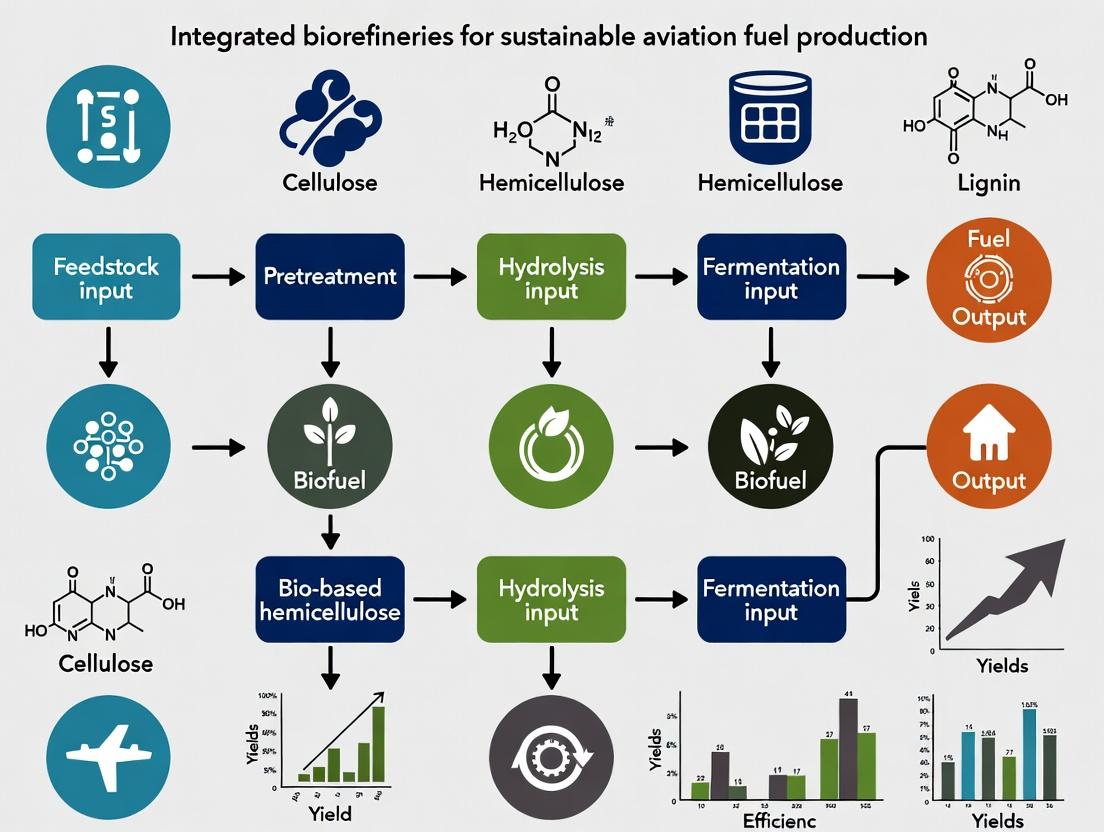
This article provides a comprehensive analysis of integrated biorefineries for sustainable aviation fuel (SAF) production, tailored for researchers and biotech professionals.
From Biomass to Blue Skies: Integrated Biorefineries as the Engine for Sustainable Aviation Fuel Production
Abstract
This article provides a comprehensive analysis of integrated biorefineries for sustainable aviation fuel (SAF) production, tailored for researchers and biotech professionals. It explores the foundational principles of biorefinery integration, detailing key platform pathways like Hydroprocessed Esters and Fatty Acids (HEFA), Fischer-Tropsch synthesis, and Alcohol-to-Jet (ATJ). The article examines methodological challenges in lignocellulosic biomass processing, pretreatment, and catalyst design, and offers solutions for optimizing yield, cost, and energy efficiency. A comparative validation of SAF against conventional fuels assesses lifecycle emissions, techno-economic viability, and compatibility with existing infrastructure. The synthesis underscores the critical role of integrated biorefining in achieving aviation decarbonization, highlighting future research priorities for scalability and commercial deployment.
The Biorefinery Blueprint: Core Principles and Feedstocks for Aviation Fuel Synthesis
Within a broader thesis on integrated biorefineries for sustainable aviation fuel (SAF) production, this article delineates the integrated biorefinery (IBR) model through detailed application notes and protocols. The IBR is defined as a processing facility that sustainably converts heterogeneous biomass into a spectrum of valuable products—fuels, power, and high-value chemicals—via the integration of multiple conversion technologies, maximizing resource efficiency and enabling a circular bioeconomy.
Application Note 1: Lignocellulosic Biomass Fractionation and Valorization
Objective: To detail a cascading valorization protocol for wheat straw, fractionating it into hemicellulose-derived xylitol, cellulose-rich pulp for enzymatic saccharification, and technical lignin for polymer applications, prior to funneling sugars to SAF precursors.
Quantitative Data Summary (Typical Yield Benchmarks): Table 1: Typical Mass Balance for Wheat Straw Fractionation (Per 1000 kg dry biomass)
| Component | Input Mass (kg) | Process Stream | Output Mass (kg) | Yield (%) | Primary Destination/Use |
|---|---|---|---|---|---|
| Cellulose | 380 | C6 Sugar Stream (Glucose) | 342 | 90% (of initial) | Fermentation to SAF Alcohols |
| Hemicellulose (xylan) | 280 | C5 Sugar Stream (Xylose) | 224 | 80% (of initial) | Catalytic Hydrogenation to Xylitol |
| Lignin | 180 | Technical Lignin | 144 | 80% (of initial) | Phenol-Formaldehyde Resins |
| Ash/Other | 160 | - | - | - | - |
Protocol 1.1: Two-Stage Acid-Catalyzed Organosolv Pretreatment
Materials:
- Wheat straw, milled to 2-mm particle size.
- Aqueous ethanol solution (60% v/v).
- Dilute sulfuric acid (0.1 M).
- Pressure reactor with temperature control.
- Filtration setup.
Methodology:
- Stage 1 (Hemicellulose Removal): Charge reactor with biomass and 60% ethanol containing 0.1 M H₂SO₄ (solid:liquid ratio 1:10 w/v). Heat to 160°C for 60 min with agitation.
- Filtration: Cool mixture and filter. Retain the liquid fraction (hemicellulose-rich hydrolyzate) for downstream xylose recovery and conversion to xylitol.
- Stage 2 (Delignification): Wash the solid residue with fresh 60% ethanol. Resuspend in 60% ethanol (no added acid) at a 1:8 ratio. Heat to 180°C for 90 min.
- Separation: Filter hot. The liquid fraction contains solubilized lignin. Precipitate lignin by adding 3 volumes of cold water, followed by filtration and drying. The solid residue is cellulose-rich pulp.
Protocol 1.2: Enzymatic Hydrolysis of Cellulose-Rich Pulp
Materials:
- Cellulase enzyme cocktail (e.g., CTec3, Novozymes).
- 50 mM sodium citrate buffer, pH 4.8.
- Shaking incubator.
Methodology:
- Adjust the solid loading of the washed pulp to 10% (w/v) in citrate buffer in a sealed flask.
- Add cellulase cocktail at a loading of 20 mg protein per g glucan.
- Incubate at 50°C with agitation (150 rpm) for 72 hours.
- Terminate hydrolysis by heating to 90°C for 10 min. Centrifuge to separate solids (residual lignin) from the C6 sugar-rich hydrolyzate.
Application Note 2: Catalytic Upgrading of Sugars to SAF Intermediates
Objective: To convert C6 sugars (glucose) into alcohol intermediates (e.g., isobutanol) suitable for catalytic upgrading to aliphatic alkanes (SAF range: C8-C16) via biological fermentation.
Protocol 2.1: Fermentation to Isobutanol using Engineered Saccharomyces cerevisiae
Materials:
- Engineered S. cerevisiae strain (e.g., harboring modified Ehrlich pathway).
- Defined fermentation medium (supplemented with C6 sugar hydrolyzate).
- Bioreactor with pH and dissolved oxygen control.
Methodology:
- Inoculum Prep: Grow engineered yeast overnight in rich medium (e.g., YPD). Harvest cells and inoculate into defined medium with 20 g/L glucose to an OD600 of 0.1.
- Fermentation: Scale up to a 2-L bioreactor. Feed with C6 sugar hydrolyzate to maintain sugar concentration below inhibitory levels (<50 g/L). Control pH at 5.5, temperature at 30°C, and maintain microaerobic conditions.
- Monitoring: Sample periodically to monitor sugar consumption and isobutanol production via HPLC.
- Recovery: Terminate fermentation at 96h or upon sugar depletion. Recover isobutanol via gas stripping or distillation.
Quantitative Data Summary (Typical Fermentation Metrics): Table 2: Performance Metrics for Isobutanol Production from C6 Sugars
| Metric | Value | Unit |
|---|---|---|
| Titer | 35-40 | g/L |
| Yield | 0.35-0.38 | g isobutanol / g glucose |
| Productivity | 0.4-0.45 | g/L/h |
| Carbon Efficiency | ~70 | % |
The Scientist's Toolkit: Key Research Reagent Solutions
Table 3: Essential Materials for IBR-SAF Research
| Item | Function/Application |
|---|---|
| CTec3 Cellulase Cocktail | Multi-enzyme blend for high-efficiency hydrolysis of cellulose to glucose. |
| Engineered S. cerevisiae (Isobutanol Pathway) | Robust microbial chassis for fermentative conversion of C5/C6 sugars to advanced alcohol biofuels. |
| Solid Acid Catalyst (e.g., Zeolite Beta) | Catalyzes dehydration, oligomerization, and hydrodeoxygenation reactions for alcohol-to-jet fuel upgrading. |
| Lignin-Depolymerization Catalyst (e.g., Ni/C) | Heterogeneous catalyst for reductive depolymerization of technical lignin into monophenolic compounds. |
| Anaerobic Chamber | Essential for working with strict anaerobic microorganisms used in syngas fermentation or chain elongation processes. |
Visualization of Key Concepts and Workflows
Integrated Biorefinery Circular Bioeconomy Concept
Lignocellulose to SAF via Biochemical Route
Engineered Isobutanol Biosynthesis Pathway in Yeast
This document provides detailed application notes and experimental protocols for four leading Sustainable Aviation Fuel (SAF) production pathways: Hydroprocessed Esters and Fatty Acids (HEFA), Fischer-Tropsch (FT), Alcohol-to-Jet (ATJ), and Catalytic Hydrothermolysis (CH). Within the broader thesis on Integrated Biorefineries for Sustainable Aviation Fuel Production Research, these pathways represent core technological platforms for the conversion of diverse biomass feedstocks into hydrocarbon fuels meeting ASTM D7566 specifications. Their integration into a multi-feedstock, multi-process biorefinery model is critical for maximizing yield, optimizing resource use, and improving economic viability.
Table 1: Key SAF Production Pathways - Comparative Metrics
| Pathway | Primary Feedstock | Core Process | Typical Carbon Efficiency | TRL (2024) | ASTM Standard | Key Advantage | Key Challenge |
|---|---|---|---|---|---|---|---|
| HEFA | Triglycerides (Oils, Fats) | Deoxygenation, Hydro-isomerization | 70-85% | 9 (Commercial) | D7566 Annex A2 | Commercial readiness, Simple process | Feedstock competition & cost |
| FT | Syngas (from biomass/gasification) | Catalytic polymerization | 35-50% (Biomass to Liquid) | 8 (First Commercial) | D7566 Annex A1 | Feedstock flexibility (e.g., MSW), High-quality fuel | High capital cost, Complex gas cleaning |
| ATJ | C2-C5 Alcohols (e.g., Ethanol, Isobutanol) | Dehydration, Oligomerization, Hydrogenation | 70-80% (Alcohol to Jet) | 7-8 (Demo/Commercial) | D7566 Annex A5 & A6 | Leverages existing bioethanol infrastructure | Alcohol purity requirements, Yield loss |
| Catalytic Hydrothermolysis (CH) | Triglycerides, Fatty Acids | High-pressure thermal hydrolysis, Hydrotreatment | 75-85% | 7-8 (Demo) | D7566 Annex A4 | Handles high FFA feedstocks (e.g., algae, tall oil) | High-pressure operation, Catalyst stability |
Table 2: Representative Product Distribution & Fuel Properties
| Parameter | HEFA-SPK | FT-SPK | ATJ-SPK (Isobutanol) | CH-SPK (CHJ) |
|---|---|---|---|---|
| Aromatics (% vol) | <0.5% | 0% | 0% (Synthetic) | 8-20% (Inherent) |
| Naphtha Co-Product | 5-15% | 10-25% | Minimal | 10-20% |
| Freeze Point (°C) | < -47 | < -60 | < -60 | < -40 |
| Energy Density (MJ/kg) | ~44 | ~44 | ~44 | ~44 |
| Blend Limit (with Jet A) | Up to 50% | Up to 50% | Up to 50% | Up to 50% |
Experimental Protocols & Detailed Methodologies
Protocol 3.1: HEFA Hydroprocessing Bench-Scale Experiment
Objective: Convert refined soybean oil to HEFA-SPK (Synthetic Paraffinic Kerosene). Materials: Fixed-bed tubular reactor (Hastelloy, 300mm L x 25mm ID), back-pressure regulator, HPLC pumps, H₂ mass flow controller, thermocouple, PID controller. Reagents: Refined soybean oil (food-grade), Sulfided NiMo/Al₂O₃ catalyst (1.5mm extrudates), Di-methyl disulfide (sulfiding agent), Hydrogen (99.99%), Nitrogen (99.99%). Procedure:
- Catalyst Loading & Activation: Load 50cc catalyst into reactor center, flanked by quartz wool. Purge system with N₂ at 200 sccm for 1 hour. Heat to 320°C under N₂ (2°C/min). Switch to 5% H₂S/H₂ mix at 30 bar, hold for 4 hours to sulfide catalyst. Cool to 150°C under H₂.
- Reaction: Set reactor to target conditions: 350-400°C, 40-80 bar H₂ pressure, LHSV 1.0 h⁻¹, H₂/Oil ratio 1000 Nl/l. Feed pre-heated oil (100°C) via HPLC pump. Allow 24 hours to reach steady-state.
- Product Collection & Separation: Collect liquid effluent in a high-pressure separator cooled to 5°C. Separate aqueous (light) and organic (heavy) phases. Degas organic phase and fractionate via simulated distillation (ASTM D2887) to isolate C9-C16 fraction (SPK).
- Analysis: Analyze SPK for composition (GC-MS), freeze point (ASTM D5972), density (ASTM D4052), and hydrogen content via elemental analysis.
Protocol 3.2: Biomass-to-Jet via FT Synthesis (Microreactor Screening)
Objective: Evaluate cobalt-based catalyst performance for Fischer-Tropsch Synthesis (FTS) to produce long-chain hydrocarbons. Materials: Stainless-steel micro-reactor (10mm ID), online micro-GC, gas blending system, mass flow controllers, condensers, hot trap (150°C), cold trap (0°C). Reagents: Co/Re/γ-Al₂O₃ catalyst (100-150 µm sieve fraction), Syngas mix (H₂/CO/Ar = 60/30/10), Calibration gas standards for H₂, CO, CO₂, CH₄, C2-C6. Procedure:
- Catalyst Reduction: Load 500mg catalyst diluted with SiC. Heat to 350°C (5°C/min) under H₂ at 20 bar, 50 sccm for 16 hours.
- FTS Reaction: Cool to 220°C, switch to syngas feed at 20 bar, GHSV 4000 h⁻¹. Maintain for 72+ hours. Condensable products collected in sequential hot/cold traps. Non-condensables analyzed online via micro-GC every 30 min.
- Product Workup: Weigh liquid (wax/oil) and aqueous products from traps daily. Combine and analyze via comprehensive GC×GC for hydrocarbon distribution.
- Data Processing: Calculate CO conversion, C5+ selectivity, and chain growth probability (α) using Anderson-Schulz-Flory distribution model from GC data.
Protocol 3.3: Alcohol-to-Jet (ATJ) from Isobutanol: Three-Step Conversion
Objective: Convert bio-derived isobutanol to ATJ-SPK via dehydration, oligomerization, and hydrogenation. Step A – Dehydration to Isobutylene: Feed >99.5% isobutanol over γ-alumina catalyst (250-300°C, 1-5 bar, LHSV 2 h⁻¹). Collect gaseous product, dry over molecular sieve. Confirm >95% isobutylene yield via GC-FID. Step B – Oligomerization: React dried isobutylene over acidic resin catalyst (e.g., Amberlyst-70) in a packed-bed reactor at 70-90°C, 20 bar. Control residence time to target C8 (dimer) and C12 (trimer) olefins. Recycle lighter fractions. Step C – Hydrogenation: Hydrogenate oligomerized liquid over Pd/Al₂O₃ catalyst at 180-220°C, 30-60 bar H₂, LHSV 1.5 h⁻¹. Product is a mixture of branched paraffins (iso-paraffins). Distill to recover C9-C16 cut as ATJ-SPK. Key Analysis: Measure olefin content pre-hydrogenation (ASTM D1159) and final SPK aromatics via supercritical fluid chromatography (ASTM D8474).
Protocol 3.4: Catalytic Hydrothermolysis (CH) Continuous Flow Test
Objective: Convert high-acid lipid feedstocks (e.g., crude algae oil) to hydrocarbons. Materials: High-pressure continuous stirred tank or plug flow reactor (Titanium or Hastelloy), preheater, high-pressure slurry pump, water HPLC pump, high-pressure liquid-gas separator. Reagents: Crude algae oil (FFA ~20%), Water (deionized), Homogeneous catalyst (e.g., K₂CO₃, 1-5 wt%), Hydrogen, Pd/C catalyst (for downstream hydrotreatment). Procedure:
- Reaction Mixture Preparation: Create an emulsion of algae oil, water (10-30% wt), and catalyst. Homogenize at 5000 rpm for 5 minutes.
- CH Reaction: Feed emulsion via slurry pump to reactor set at 400-450°C, 200-250 bar. Maintain residence time of 15-30 minutes. Effluent passes through a series of separators to remove gases (CO₂, light HCs) and aqueous phase.
- Hydrotreatment: The separated organic bio-crude phase is pumped to a fixed-bed hydrotreater (NiMo, 350°C, 100 bar) for deoxygenation and stabilization. Final product is fractionated to yield CH-SPK (CHJ).
Visualizations: Process Pathways & Workflows
Diagram 1: HEFA Process Block Flow
Diagram 2: Biomass-to-Jet FT Pathway
Diagram 3: ATJ Three-Step Conversion Workflow
Diagram 4: Catalytic Hydrothermolysis Process
The Scientist's Toolkit: Research Reagent Solutions
Table 3: Essential Research Materials & Reagents for SAF Pathway Experiments
| Item / Reagent | Primary Function / Application | Key Characteristics & Notes |
|---|---|---|
| Sulfided NiMo/Al₂O₃ Catalyst | Hydrodeoxygenation (HEFA, CH hydrotreatment) | Pre-sulfided form for immediate activity. Deoxygenates triglycerides/FFAs to n-paraffins. |
| Co/Re/γ-Al₂O₃ Catalyst | Fischer-Tropsch Synthesis | Cobalt active for long-chain paraffins. Rhenium promoter enhances reducibility & activity. |
| γ-Alumina (Acidic) | Dehydration in ATJ pathway | Converts alcohols (ethanol, isobutanol) to corresponding olefins. Requires thermal stability. |
| Amberlyst-70 (Solid Acid Resin) | Oligomerization in ATJ | Acidic catalyst for olefin dimerization/trimerization. Stable at moderate temperatures (<120°C). |
| Pd/Al₂O₃ Catalyst | Hydrogenation (ATJ, finishing) | Selectively hydrogenates olefins to paraffins. Critical for meeting jet fuel specifications. |
| Potassium Carbonate (K₂CO₃) | Homogeneous catalyst for CH | Promotes hydrolysis & reactions in aqueous phase. Must be recovered or neutralized. |
| Model Compound Feeds | Process mechanism studies | Methyl Oleate (HEFA), Syngas Calibration Mix (FT), Isobutanol >99.5% (ATJ). |
| High-Pressure Syngas Mix | FT microreactor studies | Certified H₂/CO/CO₂/Ar/N₂ blends at specific ratios. Requires high-pressure cylinders & regulators. |
| Certified Hydrocarbon Standards | GC-MS/FID calibration | For quantifying paraffins, iso-paraffins, olefins, aromatics in final SPK products. |
| Porous Silica-Alumina (e.g., Siralox) | Isomerization catalyst testing | Provides mild acidity for branching n-paraffins to improve freeze point of HEFA/FT-SPK. |
Application Notes: Feedstock Characterization & Pre-Treatment
The viability of an integrated biorefinery for Sustainable Aviation Fuel (SAF) production hinges on the efficient conversion of diverse, non-food feedstocks. Each feedstock class presents unique biochemical challenges that necessitate tailored pre-treatment and conversion protocols to maximize yield of intermediates suitable for hydroprocessing into SAF.
Table 1: Key Characteristics of Primary SAF Feedstocks
| Feedstock Category | Example Sources | Avg. Lipid/Carbohydrate Content | Key Pre-Treatment Challenge | Target SAF Intermediate |
|---|---|---|---|---|
| Lignocellulosic Biomass | Corn stover, switchgrass, miscanthus | 60-75% carbohydrates (cellulose/hemicellulose), 15-25% lignin | Recalcitrance; lignin barrier to hydrolysis | Fermentable C5/C6 sugars for Alcohol-to-Jet (ATJ) |
| Waste Oils & Fats | Used cooking oil (UCO), animal tallow, grease trap waste | >95% triglycerides, Free Fatty Acids (FFAs) | Heterogeneity; high FFA content deactivates base catalysts | Hydroprocessed Esters and Fatty Acids (HEFA) |
| Oil-Rich Microalgae | Nannochloropsis sp., Chlorella vulgaris | 20-50% triglycerides (strain & condition dependent) | Energy-intensive dewatering; robust cell walls | HEFA feedstock; potential for co-product extraction |
Table 2: Comparative Pre-Treatment Efficiency Data (Recent Bench-Scale Studies)
| Pre-Treatment Method (Feedstock) | Conditions | Sugar/Lipid Recovery Yield | Energy Input (MJ/kg feedstock) | Inhibitor Formation (e.g., furfural, HMF) |
|---|---|---|---|---|
| Dilute Acid Hydrolysis (Switchgrass) | 1% H₂SO₄, 160°C, 10 min | 85% hemicellulose sugars | 2.8 | High (requires detoxification) |
| Steam Explosion (Wheat straw) | 1.5 MPa, 200°C, 5 min | 75% cellulose accessible | 3.1 | Moderate |
| Enzymatic Saccharification (AFEX-pretreated biomass) | Cellulase cocktail, 50°C, 72h | >90% glucan conversion | 0.5 (enzyme production) | Negligible |
| In-situ Transesterification (Wet algae, 80% moisture) | H₂SO₄/MeOH, 90°C, 2h | >95% direct FAME yield | 4.5* | N/A |
| Two-Stage FFA/TAG Processing (High-FFA UCO) | 1. Esterification (H₂SO₄/MeOH), 2. Base Transesterification | >98% FAME yield | 1.2 | N/A |
*Includes dewatering energy.
Experimental Protocols
Protocol 2.1: Two-Stage Saccharification of Lignocellulosic Biomass for C5/C6 Sugar Recovery
Objective: To hydrolyze cellulose and hemicellulose from pre-treated biomass into monomeric sugars for subsequent fermentation to ATJ alcohols (e.g., isobutanol, ethanol).
Materials:
- Pre-treated lignocellulosic biomass (e.g., steam-exploded corn stover), milled to ≤2 mm.
- Commercial cellulase enzyme cocktail (e.g., Cellic CTec3).
- Hemicellulase enzyme supplement.
- Sodium citrate buffer (50 mM, pH 4.8).
- Sterile deionized water.
- Shaking incubator or bioreactor with temperature control.
- HPLC system with refractive index (RI) detector and suitable column (e.g., Bio-Rad Aminex HPX-87H).
Procedure:
- Slurry Preparation: In a sterile flask or bioreactor, prepare a 10% (w/v) solids loading of pre-treated biomass in sodium citrate buffer.
- Hemicellulose Hydrolysis: Adjust pH to 4.8 using NaOH or HCl. Add hemicellulase at 10 mg protein/g biomass. Incubate at 50°C with mild agitation (150 rpm) for 24 hours.
- Cellulose Hydrolysis: Add cellulase cocktail at a loading of 20 mg protein/g cellulose (theoretical). Maintain conditions at 50°C, pH 4.8.
- Monitoring: Sample periodically (e.g., 0, 6, 24, 48, 72h). Centrifuge samples (10,000 x g, 5 min) and filter supernatant (0.2 µm syringe filter).
- Analysis: Quantify glucose, xylose, arabinose, and inhibitor (furfural, HMF) concentrations via HPLC. Calculate hydrolysis yield.
- Detoxification (if required): Pass hydrolysate through an anion-exchange resin column or treat with activated charcoal to reduce inhibitor levels before fermentation.
Protocol 2.2: Hydroprocessing of Algal Lipid Extract to Renewable Diesel/SAF Blendstock
Objective: To catalytically deoxygenate and isomerize algal lipids (triglycerides) into a branched hydrocarbon mixture meeting the boiling point range of jet fuel.
Materials:
- Algal lipid extract (FAMEs or triglycerides).
- Bifunctional catalyst (e.g., Pt/SAPO-11, NiMo/γ-Al₂O₃).
- High-pressure Parr reactor (300 mL+).
- Hydrogen gas (≥99.99% purity).
- n-Hexane (HPLC grade).
- Gas Chromatograph with Flame Ionization Detector (GC-FID) and Simulated Distillation (SIMDIS) column.
Procedure:
- Reactor Loading: Charge the reactor with 50 g of algal lipid and 2.5 g of catalyst (5% w/w). Seal the reactor.
- Purging & Pressurization: Purge the reactor three times with H₂ to remove air. Pressurize with H₂ to 30 bar at room temperature.
- Reaction: Heat the reactor to the target temperature (e.g., 350°C for deoxygenation, 300°C for isomerization) with continuous stirring (750 rpm). Maintain H₂ pressure at 50 bar via constant supply. Run the reaction for 4 hours.
- Quenching & Separation: Cool the reactor rapidly in an ice bath. Carefully vent gases. Transfer the liquid product to a separation funnel. Rinse the reactor with n-hexane.
- Catalyst Removal: Filter the product-hexane mixture through a 0.45 µm PTFE filter to remove catalyst particles.
- Solvent Removal: Evaporate hexane under reduced pressure using a rotary evaporator.
- Product Analysis:
- GC-FID: Analyze for hydrocarbon distribution (n-paraffins, iso-paraffins, cyclics).
- GC-SIMDIS: Determine the boiling point curve and calculate yield in the jet fuel range (150-300°C).
- Calculations: Determine yield of liquid hydrocarbon product and selectivity to C8-C16 isomers.
Visualizations
Title: Integrated Biorefinery Feedstock Conversion Pathways to SAF
The Scientist's Toolkit: Key Research Reagent Solutions
Table 3: Essential Reagents & Materials for SAF Feedstock Research
| Item | Function & Specification | Example Application |
|---|---|---|
| CTec3 / HTec3 Enzyme Cocktails | Multi-component cellulase/hemicellulase blends for efficient saccharification of pre-treated biomass. | Protocol 2.1: Hydrolysis of cellulose to glucose. |
| Pt/SAPO-11 or NiMo/γ-Al₂O₃ Catalyst | Bifunctional catalyst providing metal sites (for hydrogenation/deoxygenation) and acid sites (for isomerization/cracking). | Protocol 2.2: Hydroprocessing of lipids to iso-paraffins. |
| Aminex HPX-87H HPLC Column | Ion-exchange column optimized for separation and quantification of sugars, acids, and fermentation inhibitors. | Analyzing hydrolysate composition (Protocol 2.1). |
| SIMDIS Capillary GC Column (e.g., DB-2887) | Specialized column for simulating petroleum distillation curves per ASTM D2887. | Determining jet fuel range yield from hydroprocessed oil (Protocol 2.2). |
| Lipid Extraction Solvent System (Chloroform:Methanol, 2:1 v/v) | Standard biphasic Folch method for total lipid extraction from wet algal biomass. | Quantitative recovery of algal triglycerides prior to hydroprocessing. |
| Anion Exchange Resin (e.g., Amberlite IRA-96) | Weakly basic resin for removal of inhibitory organic acids and phenolics from biomass hydrolysates. | Detoxification step prior to microbial fermentation in ATJ pathway. |
| High-Pressure Parr Reactor System (450°C, 200 bar rating) | Bench-scale batch reactor with precise temperature, pressure, and stirring control for catalytic reactions. | Conducting hydroprocessing (HDCJ, HEFA) experiments (Protocol 2.2). |
This application note details protocols for the enzymatic deconstruction of lignocellulosic biomass and subsequent conversion by engineered microbes, within the context of an integrated biorefinery for Sustainable Aviation Fuel (SAF) production. The focus is on generating hydrolysate streams optimized for oleaginous yeast or bacteria to synthesize lipid intermediates for hydroprocessing into drop-in SAF.
The integration of enzymatic hydrolysis and microbial conversion is critical for efficient sugar platform biorefineries. Pretreated lignocellulose (e.g., agricultural residues, energy crops) is hydrolyzed by tailor-made enzyme cocktails to release fermentable monosaccharides. Engineered microbial workhorses are then employed to convert these sugars, and potentially inhibitory compounds, into target molecules like fatty acids or isoprenoids. Key challenges include achieving high sugar yields at low enzyme loadings and engineering robust microbial strains tolerant to hydrolysate inhibitors.
Table 1: Performance Metrics of Commercial Enzyme Cocktails on Alkaline-Pretreated Corn Stover
| Enzyme Cocktail | Total Protein Loading (mg/g glucan) | Glucose Yield (%) | Xylose Yield (%) | Time to 90% Yield (h) | Optimal pH | Optimal Temp (°C) |
|---|---|---|---|---|---|---|
| Cellic CTec3 | 15 | 96.5 | 85.2 | 48 | 4.8-5.0 | 50 |
| Accellerase 1500 | 25 | 92.1 | 78.7 | 72 | 4.8-5.0 | 50 |
| Novozymes Cellic HTec3 | 20 (with CTec3) | [N/A - boosts xylose] | >90 | 72 | 5.0 | 50 |
Table 2: Engineered Microbial Strains for SAF Precursor Production
| Microbial Host | Primary Engineering Target | Key Product | Max Titer Reported (g/L) | Yield (g/g sugar) | Key Tolerance Feature |
|---|---|---|---|---|---|
| Yarrowia lipolytica | DGAT1 overexpression, ACL deletion | Triacylglycerides (TAG) | 90 | 0.22 | Acetate, phenolic tolerance |
| Rhodosporidium toruloides | Nitrogen starvation optimization | Microbial Oil | 65 | 0.28 | Native lignan degradation |
| Escherichia coli | Reverse beta-oxidation pathway, fadE knockout | Free Fatty Acids | 8.5 | 0.12 | Requires detoxified hydrolysate |
| Pseudomonas putida | Aryl-alcohol dehydrogenase expression | cis,cis-Muconic Acid (SAF precursor) | 50 | 0.35 | Native solvent/aromatic tolerance |
Experimental Protocols
Protocol 2.1: High-Solids Enzymatic Hydrolysis of Pretreated Biomass
Objective: To hydrolyze pretreated lignocellulosic biomass at high dry matter content to generate a concentrated sugar hydrolysate for fermentation.
Materials (Research Reagent Solutions):
- Substrate: Alkali-pretreated and washed corn stover (20% w/w total solids).
- Enzyme Cocktail: Cellic CTec3/HTec3 mix (9:1 ratio).
- Buffer: 1.0 M Sodium citrate buffer, pH 4.8.
- Antimicrobial: 0.005% (w/v) Sodium azide.
- Reaction Vessel: 250 mL baffled Erlenmeyer flask or bioreactor with tumbling/mixing capability.
Procedure:
- Weigh 60g of pretreated biomass (12g dry weight equivalent) into the reaction vessel.
- Add 46.8 mL of 50 mM sodium citrate buffer (pH 4.8) and 1.2 mL of sodium azide solution to inhibit microbial growth.
- Pre-mix the slurry using a spatula. Place the vessel in a temperature-controlled incubator shaker at 50°C, 150 rpm, for 1 hour for temperature and pH equilibration.
- Add enzyme cocktail to achieve a final total protein loading of 20 mg/g dry biomass (e.g., 240 mg protein for 12g dry weight). Use sterile water to bring the total reaction mass to 60g.
- Mix thoroughly. Maintain hydrolysis at 50°C with continuous agitation (e.g., in a bioreactor with helical stirring or in a shaker with tumbling).
- Sample at 0, 6, 24, 48, and 72 hours. Immediately centrifuge samples at 13,000 x g for 5 min to separate solids.
- Filter supernatant through a 0.22 µm syringe filter. Analyze filtrate for glucose, xylose, and inhibitor (furfural, HMF, phenolics) concentration via HPLC.
Protocol 2.2: Fed-Batch Fermentation of Hydrolysate by Oleaginous Yeast
Objective: To convert enzymatically derived sugars into intracellular lipids using an engineered oleaginous yeast strain.
Materials (Research Reagent Solutions):
- Microbe: Yarrowia lipolytica PO1f strain engineered with DGAT1 overexpression.
- Media: Synthetic complete (SC) medium for seed culture. Detoxified hydrolysate (see notes) supplemented with 5.0 g/L (NH4)2SO4, 1.7 g/L Yeast Nitrogen Base, and 1.0 g/L KH2PO4 as fermentation medium.
- Trace Elements: 1000x stock solution of MgSO4·7H2O, CaCl2, FeSO4·7H2O, ZnSO4·7H2O, CuSO4·5H2O.
- Bioreactor: 2L bench-top fermenter with DO and pH control.
Procedure:
- Hydrolysate Detoxification: Adjust hydrolysate pH to 10.0 with Ca(OH)2, stir for 1h, filter precipitate. Adjust pH back to 6.5 with H3PO4. Use activated charcoal (2% w/v, 60°C, 1h) for additional phenolic removal.
- Seed Culture: Inoculate a single colony into 50 mL SC medium in a 250 mL flask. Grow at 28°C, 250 rpm for 24-36 hours to late-log phase (OD600 ~15-20).
- Fermentation Setup: Charge the bioreactor with 1L of supplemented, detoxified hydrolysate medium. Sterilize in situ at 121°C for 20 min. Cool to 28°C. Add filter-sterilized trace elements.
- Inoculation & Batch Phase: Inoculate at 10% (v/v) from seed culture. Set initial conditions: 28°C, pH 6.0 (maintained with 2M NaOH/1M H2SO4), airflow 1 vvm, agitation 400 rpm to maintain DO >30%.
- Fed-Batch Phase: Upon depletion of initial carbon (marked by DO spike), initiate feeding of concentrated, sterile hydrolysate at a rate to maintain total sugar concentration <20 g/L.
- Nitrogen Limitation: Allow ammonium to deplete naturally to trigger lipid accumulation. Culture for 96-120 hours total.
- Harvest: Centrifuge cells at 8000 x g for 10 min. Wash with deionized water. Lyophilize cell pellets for lipid extraction via Folch method or direct transesterification for FAME analysis via GC-MS.
Mandatory Visualization
Diagram 1: SAF Precursor Bioproduction Workflow
Diagram 2: Metabolic Engineering for Lipid Overproduction
The Scientist's Toolkit
Table 3: Key Research Reagent Solutions for Enzymatic Hydrolysis & Microbial Conversion
| Item | Function & Explanation |
|---|---|
| Cellic CTec3 | Advanced commercial enzyme cocktail. Contains high-activity cellulases, β-glucosidases, and hemicellulases for efficient lignocellulose deconstruction. |
| Yarrowia lipolytica PO1f Kit | A genetically tractable, generally recognized as safe (GRAS) oleaginous yeast strain, often the baseline for metabolic engineering for lipid production. |
| Folch Reagent (Chloroform:MeOH 2:1) | Standard solvent mixture for total lipid extraction from microbial biomass, separating lipids into the organic phase. |
| MTT (3-(4,5-Dimethylthiazol-2-yl)-2,5-diphenyltetrazolium bromide) | Cell viability assay reagent. Used to rapidly assess microbial inhibitor tolerance in hydrolysates. |
| HPLC Columns (Aminex HPX-87H, Bio-Rad) | Standard column for analysis of sugars (glucose, xylose), organic acids, and fermentation inhibitors (furfural, HMF) in hydrolysates and broths. |
| Gas Chromatography (GC) System with FAME Column | Essential for analyzing fatty acid methyl ester (FAME) profiles from microbial lipids to determine suitability for SAF synthesis. |
| CRISPR/Cas9 Toolkits for Yeast/Bacteria | For precise genome editing (knockouts, knock-ins, promoter swaps) to engineer metabolic pathways in microbial hosts. |
Application Notes: Policy & Carbon Accounting Frameworks
Thesis Context: This document details the critical policy drivers and carbon accounting methodologies that underpin the economic viability and sustainability assessment of integrated biorefineries for Sustainable Aviation Fuel (SAF) production. Compliance with and optimization against these frameworks is essential for research direction and technology deployment.
Core Policy Instruments
- CORSIA (Carbon Offsetting and Reduction Scheme for International Aviation): A global market-based measure adopted by ICAO to stabilize net CO₂ emissions from international aviation at 2019 levels. It creates demand for SAF through the use of "CORSIA Eligible Fuels" and associated Emissions Unit Criteria.
- LCFS (Low Carbon Fuel Standard): A California (and other jurisdictions) regulation that reduces the carbon intensity (CI) of transportation fuels. It generates tradeable credits (LCFS credits) for fuels with a CI lower than the benchmark, providing a direct revenue stream for low-CI SAF.
- Net-Zero Targets: Corporate or national commitments to balance emitted greenhouse gases with removal from the atmosphere, often by 2050. These commitments drive long-term investment and offtake agreements for SAF.
Table 1: Key Quantitative Parameters of Major SAF Policy Drivers (2024-2025)
| Policy Driver | Governing Body | Current Phase/Target (2024-2025) | Credit/Cost Mechanism | SAF-Specific Relevance |
|---|---|---|---|---|
| CORSIA | International Civil Aviation Organization (ICAO) | Phase 1 (2024-2026): Voluntary. 2024 Sectoral Growth Factor (SGF) = 0.09. | Airlines purchase eligible emission units (e.g., from SAF) to offset emissions above 2019 baseline. | SAF must meet CORSIA Sustainability Criteria. Default lifecycle emissions savings: 60-100%. |
| CA-LCFS | California Air Resources Board (CARB) | CI Target for 2024: ~87.6 gCO₂e/MJ. CI Target for 2030: 72.2 gCO₂e/MJ. | Credit price: ~ $70-85/tonne CO₂e (Q1 2024). Generates ~$1.5-$2.5/gal credit for very low-CI SAF. | Direct financial incentive. Requires CARB-approved CI pathway using a certified model (e.g., GREET). |
| U.S. SAF Grand Challenge | U.S. Federal Government (Multi-Agency) | Goal: 3B gallons of SAF by 2030; 35B gallons by 2050. | Blender's Tax Credit (40B): $1.25-$1.75/gal (based on CI reduction). | Incentivizes CI reduction beyond 50%. Complementary to LCFS. |
| EU ReFuelEU Aviation | European Union | Sub-target for SAF: 6% of fuel uplift at EU airports by 2030. Minimum share for synthetic fuels (e-methanol): 1.2% by 2030. | Compliance via blending mandate. Penalties for non-compliance. | Obligates fuel suppliers. SAF must meet Renewable Energy Directive II (RED II) sustainability criteria. |
Table 2: Typical Carbon Intensity (CI) Scores for SAF Pathways (gCO₂e/MJ)
| Feedstock | Conversion Pathway | Approximate CI Score (GREET) | Notes for Integrated Biorefineries |
|---|---|---|---|
| Used Cooking Oil (UCO) | HEFA (Hydroprocessed Esters and Fatty Acids) | 15 - 35 | Low-CI benchmark. Supply-limited. |
| Corn Grain (with CCS) | Alcohol-to-Jet (ATJ) | 30 - 50 | Integration with Carbon Capture offers significant CI benefit. |
| Lignocellulosic Biomass (e.g., corn stover) | Gasification + Fischer-Tropsch (FT) | 15 - 40 | Highly dependent on feedstock logistics and gasifier efficiency. |
| Lignocellulosic Biomass | Pyrolysis + Upgrading | 25 - 50 | Co-product handling crucial for CI. Hydrogen source (green vs. grey) is key. |
| Sugars (Advanced) | ATJ / Direct Sugar to Hydrocarbon | 30 - 60 | Feedstock cultivation emissions are a major variable. |
| Petroleum Jet A-1 | Baseline | 89 - 95 | Reference value for CI reduction calculations. |
Experimental Protocols for Carbon Accounting & Fuel Analysis
Protocol 1: Lifecycle Assessment (LCA) Carbon Intensity Calculation for a Novel Integrated Biorefinery Pathway
Objective: To determine the CORSIA- and LCFS-compliant lifecycle Carbon Intensity (CI) of SAF produced from an integrated lignocellulosic biorefinery co-producing SAF and high-value biochemicals.
Methodology:
Goal & Scope Definition:
- Functional Unit: 1 Megajoule (MJ) of neat SAF (attydrous) meeting ASTM D7566 specification.
- System Boundary: Cradle-to-Wake (includes feedstock cultivation, collection, transport, biorefinery operation, fuel transport/distribution, and combustion).
- Allocation Method: Apply energy allocation (per CARB LCFS guidelines) or displacement (system expansion) for co-products (e.g., succinic acid, bio-power). Document rationale.
Lifecycle Inventory (LCI) Data Collection:
- Feedstock Production: Quantify fertilizer, pesticide, water, diesel use, and N₂O emissions per tonne of biomass delivered. Use field trial data.
- Biorefinery Process: Use pilot-scale or process simulation (Aspen Plus) data to collect mass and energy balances.
- Key inputs: Biomass, enzymes, catalysts, hydrogen (source tracked), process water, electricity (grid mix modeled).
- Key outputs: SAF, co-products, CO₂ emissions (biogenic and fossil), wastewater, waste streams.
- Fuel Combustion: Use standard emission factor for SAF combustion (e.g., ~73.8 gCO₂e/MJ, considering biogenic carbon).
CI Calculation using GREET Model:
- Utilize the latest Argonne GREET model (the CA-LCFS standard tool).
- Create a new feedstock and fuel pathway module within GREET.
- Input all LCI data into the corresponding modules (Feedstock, Fuel, Process).
- Apply selected allocation method in the co-product handling module.
- Execute the model to generate a full lifecycle CI (gCO₂e/MJ) for the SAF.
Sensitivity & Uncertainty Analysis:
- Vary key parameters (±20%): hydrogen CI, enzyme dosage, biomass yield, electricity grid CI.
- Perform Monte Carlo simulation (minimum 10,000 runs) to determine 95% confidence interval for the final CI value.
Protocol 2: Analytical Verification of SAF Blendstock Properties (ASTM D4054)
Objective: To ensure SAF blendstock from a novel integrated process meets critical ASTM D7566 annex specifications for blending with conventional jet fuel.
Materials & Workflow:
Title: SAF Blendstock Analytical Verification Workflow (Max 760px)
The Scientist's Toolkit: Key Research Reagent Solutions for Integrated Biorefinery & SAF Analysis
Table 3: Essential Research Materials for SAF Pathway Development
| Item / Reagent | Function in Research Context | Example / Specification Notes |
|---|---|---|
| Customized Enzymatic Cocktails | Hydrolysis of lignocellulosic biomass to fermentable sugars (C5/C6). Critical for yield and CI. | Cellulases, hemicellulases, accessory enzymes (e.g., from Novozymes, DuPont). Activity: ≥ 100 FPU/g. |
| Genetically Modified Microorganism | Fermentation of mixed sugars to alcohol or intermediate bio-oil. | Zymomonas mobilis or engineered S. cerevisiae for C5/C6 co-utilization. |
| Heterogeneous Catalyst (Deoxygenation) | Hydrodeoxygenation (HDO) of bio-oils to stable hydrocarbons. | Sulfided NiMo/Al₂O₃, Pt/Al₂O₃, or novel bimetallic catalysts. |
| Hydrogen (High-Purity, Source-Tracked) | For hydroprocessing reactions. CI of H₂ is a major LCA variable. | Use electrolyzer (green H₂) or steam methane reformer with CCS (blue H₂) for low-CI pathways. |
| Certified Reference Materials for GC | Quantification of hydrocarbons, aromatics, and impurities in final SAF. | n-Alkane standard mix (C8-C40), ASTM D7566 Annex-specific compound standards. |
| LCI Database Subscription | For background lifecycle inventory data (e.g., fertilizer production, grid electricity). | Ecoinvent, USLCI, or GREET embedded databases. Essential for rigorous CI calculation. |
| Process Modeling Software | Mass/energy balance simulation for LCI and techno-economic analysis (TEA). | Aspen Plus, SuperPro Designer, or open-source tools (e.g., DWSIM). |
Protocol 3: Catalytic Hydroprocessing of Bio-Oil to SAF-Range Hydrocarbons
Objective: To upgrade intermediate bio-oil from pyrolysis or hydrothermal liquefaction to a deoxygenated hydrocarbon mixture suitable for final hydroisomerization/distillation into SAF.
Detailed Methodology:
Reactor Setup:
- Use a fixed-bed, continuous-flow, down-flow tubular reactor (SS316, 1/2" OD).
- Pack reactor with catalyst (e.g., 5-10 mL of NiMo/γ-Al₂O₃, 60-80 mesh) diluted with inert SiC.
- Install thermocouples in a thermowell at the catalyst bed center.
- Connect to high-pressure syringe pump for bio-oil feed, H₂ mass flow controller, back-pressure regulator, and gas-liquid separator.
Catalyst Pre-treatment (Sulfidation):
- Pressurize reactor to 500 psig with H₂, flow at 100 mL/min.
- Heat to 200°C at 5°C/min.
- Switch H₂ flow to a 3% H₂S/H₂ mixture at 100 mL/min for 4 hours.
- Cool to reaction temperature under pure H₂.
Reaction Procedure:
- Set reaction temperature (300-400°C) and pressure (500-1500 psig).
- Establish H₂ flow rate (e.g., 500 L H₂/L bio-oil).
- Start bio-oil feed (e.g., 0.1-0.3 mL/min LHSV) using a pre-heated line.
- Maintain conditions for a minimum of 24 hours to assess stability.
- Collect liquid product in a chilled separator, weigh hourly to measure yield.
- Analyze gas stream by online micro-GC for light hydrocarbons (C1-C4), CO, CO₂.
Product Analysis & Deoxygenation Metrics:
- Water Content: Karl Fischer titration (ASTM D6304).
- Oxygen Content: Calculate via elemental analysis (CHNS-O) or by difference.
- Simulated Distillation: GC (ASTM D2887) to determine boiling range distribution.
- Key Metric: Target oxygen content < 1 wt.% and > 70% yield in the C8-C16 distillation cut.
Bridging the Lab to Sky: Processing, Catalysis, and Pilot-Scale Implementation
Within the research framework of integrated biorefineries for sustainable aviation fuel (SAF) production, overcoming lignocellulosic biomass recalcitrance is the primary bottleneck. Efficient pre-treatment and saccharification are critical to liberate fermentable sugars from cellulose and hemicellulose, which are subsequently converted to intermediates like alcohols and fatty acids for catalytic upgrading to SAF. This document provides application notes and detailed protocols for key methods in this field.
Application Notes: Comparative Analysis of Pre-treatment Technologies
The selection of a pre-treatment method directly impacts downstream enzymatic hydrolysis efficiency, inhibitor formation, and overall biorefinery economics. The following table summarizes the performance of leading pre-treatment technologies based on recent pilot-scale studies relevant to SAF feedstock processing.
Table 1: Comparative Performance of Biomass Pre-treatment Methods for SAF Feedstocks (e.g., Corn Stover, Switchgrass)
| Pre-treatment Method | Conditions (Typical) | Solid Recovery (%) | Glucose Yield Post-Sacch. (%) | Xylose Yield Post-Sacch. (%) | Key Inhibitors Generated | Scalability & Notes |
|---|---|---|---|---|---|---|
| Dilute Acid (H₂SO₄) | 160-180°C, 0.5-1.5% acid, 10-30 min | 55-65 | 85-92 | 75-85 | Furfural, HMF, acetic acid | High; Corrosion resistant reactors needed. |
| Steam Explosion | 180-220°C, 1-4 MPa, 5-15 min | 70-85 | 80-90 | 60-75 | Furfural, HMF, phenolic compounds | Very High; Combined physico-chemical action. |
| Alkaline (NaOH) | 60-120°C, 0.5-2% NaOH, 1-2 h | 65-80 | 70-85 | 50-65 | Minimal sugars loss; salts formation | Moderate; Effective for high-lignin feedstocks. |
| Liquid Hot Water | 180-220°C, pressure, 15 min | 70-80 | 75-88 | 70-82 | Lower inhibitors than acid | High; No chemicals, but high energy input. |
| Ionic Liquid ([C₂C₁im][OAc]) | 100-140°C, 3-6 h | 85-95 | 90-98 | 80-90 | Potential IL toxicity/cost | Low/Medium; Excellent efficacy but cost & recovery challenges. |
Experimental Protocols
Protocol 2.1: Dilute Acid Pre-treatment of Lignocellulosic Biomass
Objective: To solubilize hemicellulose and disrupt lignin structure, enhancing enzymatic accessibility to cellulose. Materials: Milled biomass (20 mesh), Dilute sulfuric acid (0.5-2% w/w), Parr reactor (or equivalent high-pressure vessel), Vacuum filtration setup, pH meter, NaOH. Procedure:
- Load: Charge 50 g (dry weight equivalent) of biomass into the reactor. Add dilute acid at a solid-to-liquid ratio of 1:10.
- React: Seal reactor, heat to target temperature (e.g., 160°C) with constant stirring. Maintain for prescribed residence time (e.g., 20 min).
- Quench & Recover: Rapidly cool reactor. Recover slurry and filter through a Büchner funnel to separate pre-treated solid from liquor.
- Wash & Neutralize: Wash solids with deionized water until filtrate is pH neutral. Adjust wash volume to record mass balance. Store solid fraction at 4°C for saccharification.
- Analysis: Analyze liquid fraction for sugar monomers (HPLC) and inhibitors (HPLC for furans). Determine solid composition (NREL/TP-510-42618).
Protocol 2.2: High-Solids Enzymatic Saccharification
Objective: To hydrolyze cellulose and residual hemicellulose in pre-treated biomass to monomeric sugars using a commercial enzyme cocktail. Materials: Pre-treated biomass, Commercial cellulase/hemicellulase cocktail (e.g., CTec3, HTec3), Sodium citrate buffer (50 mM, pH 4.8), Antibiotics (e.g., tetracycline, cycloheximide), 250 mL Erlenmeyer flasks, Shaking incubator. Procedure:
- Setup: Transfer pre-treated biomass equivalent to 10 g dry weight into a flask. Add sodium citrate buffer to achieve a final total solids loading of 15% (w/w).
- Dosing: Add enzyme cocktail at a loading of 20 mg protein per g glucan (or 0.2 mL CTec3/g dry biomass). Add antibiotics (40 µg/mL each) to prevent microbial growth.
- Hydrolyze: Incubate at 50°C with constant agitation at 150 rpm for 72-120 h.
- Sample: Withdraw 1 mL slurry periodically (e.g., 0, 3, 6, 12, 24, 48, 72 h). Centrifuge immediately (10,000 x g, 5 min).
- Analyze: Filter supernatant (0.2 µm) and analyze glucose, xylose, and cellobiose concentration via HPLC (Aminex HPX-87P column, 85°C, water mobile phase). Calculate sugar yields.
Visualizations
Title: Biomass Deconstruction Workflow for SAF
Title: Integrated Saccharification & Fermentation to SAF Precursors
The Scientist's Toolkit: Key Research Reagent Solutions
Table 2: Essential Materials for Biomass Deconstruction Research
| Item | Function & Application | Example Product/Catalog |
|---|---|---|
| Commercial Enzyme Cocktail | Multi-enzyme mixture for synergistic hydrolysis of cellulose/hemicellulose. Critical for saccharification assays. | Cellic CTec3 (Novozymes); Accelerase TRIO (DuPont) |
| Analytical Enzyme Kits | Quantification of key components in biomass and hydrolysates (e.g., lignin, sugars, inhibitors). | K-LIGNIN, K-ACHAR (Megazyme); D-Glucose Assay Kit (R-Biopharm) |
| Ionic Liquids | Highly effective pre-treatment solvents for lignin dissolution and cellulose swelling. Used in mechanistic studies. | 1-ethyl-3-methylimidazolium acetate ([C₂C₁im][OAc]) (Sigma-Aldrich) |
| HPLC Columns & Standards | Separation and quantification of sugar monomers, oligomers, and degradation products (furans, organic acids). | Aminex HPX-87H/P columns (Bio-Rad); Supleco sugar standards |
| Solid Load Simulators | High-torque, temperature-controlled bioreactors for accurate high-solids (>15%) saccharification/fermentation studies. | DASGIP Parallel Bioreactor System (Eppendorf) |
| Lignin Model Compounds | Used to study enzymatic or catalytic cleavage of lignin linkages (e.g., β-O-4) for valorization research. | Guaiacylglycerol-β-guaiacyl ether (GGGE) (TCI Chemicals) |
Application Notes & Protocols Framed within the thesis: "Integrated Biorefineries for Sustainable Aviation Fuel Production"
Catalytic Deoxygenation of Lipid Feedstocks via Hydrotreating
Application Note: Hydrotreating catalysis is critical for removing oxygen from bio-oils and lipid feedstocks (e.g., vegetable oils, algal lipids, tallow) to produce hydrocarbon intermediates (e.g., renewable diesel, n-paraffins) suitable for further upgrading to Sustainable Aviation Fuel (SAF). Deoxygenation proceeds primarily via three pathways: Hydrodeoxygenation (HDO), Decarboxylation (DCO₂), and Decarbonylation (DCO). The selectivity between these pathways determines carbon yield and hydrogen consumption, key economic factors for integrated biorefineries.
Key Quantitative Data Summary
Table 1: Performance of Common Hydrotreating Catalysts for Triglyceride Deoxygenation
| Catalyst Type | Support | Temp. (°C) | Pressure (bar H₂) | Main Pathway | C18 Yield (%) | Key Reference |
|---|---|---|---|---|---|---|
| Sulfided CoMo | Al₂O₃ | 300-350 | 20-50 | HDO | 75-85 | Kubička & Kaluža, 2010 |
| Sulfided NiMo | Al₂O₃ | 320-380 | 30-70 | HDO/DCO | 80-90 | Šimáček et al., 2011 |
| Pt | Al₂O₃ | 250-300 | 10-30 | DCO₂/DCO | 60-75 | Lestari et al., 2009 |
| Pd | C | 300 | 5-17 | DCO₂ | ~70 | Mäki-Arvela et al., 2007 |
| Ni | SiO₂ | 260-300 | 27 | DCO₂ | 65-80 | Morgan et al., 2012 |
Table 2: Typical Product Distribution from Oleic Acid Deoxygenation
| Condition | n-C18 (%) | n-C17 (%) | n-C18:C17 Ratio | Oxygen Removal (%) |
|---|---|---|---|---|
| H₂-rich, Sulfided NiMo (HDO) | 85 | 5 | 17:1 | >99 |
| H₂-lean, Pt/C (DCO₂/DCO) | 15 | 78 | ~0.2:1 | >99 |
Experimental Protocol: Batch Reactor Testing of Hydrodeoxygenation Catalysts
Objective: To evaluate the activity and selectivity of solid catalysts for the deoxygenation of model lipid compounds (e.g., oleic acid) under controlled conditions.
Materials & Equipment:
- High-pressure Parr batch reactor (e.g., 100 mL) with heating mantle and magnetic stirrer.
- Catalyst (e.g., 0.5g of pre-sulfided NiMo/γ-Al₂O₃, 150-250 µm sieved fraction).
- Substrate: 10.0 g of oleic acid (technical grade, >90%).
- Solvent: 30 mL of n-dodecane (anhydrous, >99%).
- Gas supply: H₂ (≥99.99%), N₂ (≥99.99%).
- Gas chromatograph (GC-FID) equipped with a DB-5HT or similar capillary column.
Procedure:
- Catalyst Loading: Weigh the catalyst and load it into the clean, dry reactor vessel.
- Substrate Addition: Add the oleic acid and n-dodecane solvent to the reactor.
- Reactor Sealing & Leak Test: Secure the reactor head. Purge the system three times with N₂ (pressurizing to 10 bar and venting). Conduct a final pressure leak test with N₂ at 30 bar for 15 minutes.
- H₂ Pressurization: Vent N₂. Purge three times with H₂. Pressurize with H₂ to the desired initial cold pressure (e.g., 30 bar at room temperature). Note: The final hot pressure will be higher.
- Reaction Initiation: Start vigorous stirring (e.g., 750 rpm) and begin heating to the target temperature (e.g., 350°C). Record "time zero" when the setpoint temperature is reached.
- Reaction Monitoring: Maintain temperature and pressure for the desired duration (e.g., 4 hours).
- Reactor Quenching: After the reaction time, cool the reactor rapidly in an ice-water bath to <50°C.
- Product Recovery: Slowly vent gaseous products (CO, CO₂, CH₄, H₂O, H₂) through a cold trap. Transfer the liquid reaction mixture to a vial. Rinse the reactor and catalyst with dichloromethane (3 x 10 mL) and combine with the product.
- Analysis: Filter the liquid to separate spent catalyst. Analyze the liquid product by GC-FID using an internal standard (e.g., methyl heptadecanoate) for quantitative determination of conversion and yields of n-C18, n-C17, and intermediates.
Upgrading of Lignocellulosic Derivatives via Zeolite Catalysis
Application Note: Zeolites (microporous aluminosilicates) are essential for upgrading oxygenated platform molecules (e.g., furans, light oxygenates from pyrolysis) into aromatic and olefinic hydrocarbons for SAF blending. ZSM-5 is the predominant catalyst, facilitating dehydration, oligomerization, cyclization, and deoxygenation reactions in a single step (Catalytic Fast Pyrolysis - CFP). The topology (pore size, dimensionality) and acidity (Si/Al ratio) of the zeolite are critical parameters governing product selectivity towards the desired aromatic hydrocarbon fraction (BTX) and catalyst lifetime.
Key Quantitative Data Summary
Table 3: Zeolite ZSM-5 Characteristics and Performance in Catalytic Fast Pyrolysis of Pine Wood
| Zeolite Property | Value / Type | Effect on Product Yield (Anhydrous Basis) | Reference |
|---|---|---|---|
| Si/Al Ratio | 30 | Organics: 16%, Aromatics: 14% | Carlson et al., 2011 |
| Si/Al Ratio | 60 | Organics: 18%, Aromatics: 16% | Carlson et al., 2011 |
| Crystal Size | Nano (~0.1 µm) | Higher olefin yield, slower deactivation | Mihalcik et al., 2011 |
| Crystal Size | Micro (~2 µm) | Higher aromatic yield, faster coking | Mihalcik et al., 2011 |
| Co-fed H₂ (atm) | 0 | Coke Yield: ~35% of carbon | Wang et al., 2014 |
| Co-fed H₂ (5 atm) | 5 | Coke Yield: ~15% of carbon | Wang et al., 2014 |
Table 4: Typical Aromatic Hydrocarbon Distribution from Glucose over HZSM-5
| Hydrocarbon Product | Average Carbon Yield (%) | Notes |
|---|---|---|
| Benzene | 5-10 | |
| Toluene | 15-25 | Major single product |
| Xylenes (o,m,p) | 10-20 | |
| Naphthalenes | 5-15 | Includes methylnaphthalenes |
| C9+ Aromatics | 10-20 | Heavier alkylbenzenes, indanes, etc. |
| Total Aromatics | 50-70 | Highly dependent on conditions and feed |
Experimental Protocol: Catalytic Fast Pyrolysis (CFP) in a Micropyrolyzer-GC/MS System
Objective: To rapidly screen zeolite catalysts for the conversion of biomass-derived oxygenates to aromatic hydrocarbons.
Materials & Equipment:
- Analytical pyrolyzer (e.g., CDS 5200, Pyroprobe) coupled directly to GC/MS.
- Quartz pyrolysis tubes with quartz wool.
- Catalyst: 1.0 mg of HZSM-5 (Si/Al=40, powdered, calcined at 550°C).
- Feedstock: 0.5 mg of cellulose or 1.0 µL of furfural/alcohol mixture.
- GC/MS system with appropriate column (e.g., DB-1701, HP-5ms).
- Microbalance.
Procedure:
- Sample Preparation: Weigh the precise amount of catalyst and place it in the center of a quartz tube. Place a small plug of quartz wool on one side of the catalyst bed.
- Feedstock Loading: For solid feeds (cellulose), weigh and place directly on top of the catalyst bed. For liquid feeds, inject onto the catalyst bed using a microsyringe and allow solvent to evaporate.
- Tube Loading: Insert the prepared quartz tube into the pyrolyzer filament assembly.
- System Purge: Ensure the GC carrier gas (He) flows through the pyrolyzer interface. The GC oven should be at the starting temperature for the method (e.g., 40°C).
- Pyrolysis/Catalysis: Initiate the pyrolyzer sequence. A typical method:
- Interface Temperature: 300°C (to vaporize products).
- Pyrolysis Temperature: 600°C (ramp rate: 1000°C/ms).
- Hold Time: 20 seconds.
- The vapors generated from the biomass/feed are swept directly through the in-situ catalyst bed and into the GC injector.
- Chromatographic Separation: Simultaneously start the GC/MS method. A common temperature program is: hold at 40°C for 2 min, ramp at 10°C/min to 280°C, hold for 5-10 min.
- Data Analysis: Identify compounds via MS library (NIST) and quantify major products (e.g., aromatics) using total ion chromatogram (TIC) peak areas, applying response factors if available. Report yields as carbon yield (%).
The Scientist's Toolkit: Key Research Reagent Solutions
Table 5: Essential Materials for Catalytic Upgrading Research in SAF Production
| Item / Reagent | Function / Application | Example Specifications |
|---|---|---|
| Sulfided NiMo/Al₂O₃ | Benchmark hydrotreating/deoxygenation catalyst. Promotes HDO. | ~3wt% NiO, ~15wt% MoO₃, ex-situ presulfided. |
| HZSM-5 Zeolite | Benchmark acidic, shape-selective catalyst for aromatization and cracking. | Si/Al ratio 23-40, powder (0.1-2 µm), ammonium form. |
| γ-Alumina (γ-Al₂O₃) | High-surface-area catalyst support for hydrotreating metals. | BET SA >200 m²/g, 1/16" extrudates or powder. |
| Oleic Acid | Model compound for lipid/lipid-based feedstock deoxygenation studies. | Purity >90% (technical) or >99% (analytical). |
| Furfural / 5-HMF | Model platform molecules from hemicellulose/cellulose for upgrading studies. | Purity >98%, stored under inert atmosphere. |
| n-Dodecane / Decalin | Common high-boiling, inert solvent for batch reactor catalysis. | Anhydrous, >99% purity. |
| Dimethyl Disulfide (DMDS) | Sulfiding agent for in-situ activation of hydrotreating catalysts. | Purity >98%. Highly toxic and malodorous. |
| Internal Standards (GC) | For quantitative analysis of complex product streams. | Methyl heptadecanoate, dodecane, hexadecane (>99%). |
| Quartz Wool | For holding catalyst/sample in fixed-bed and micropyrolysis reactors. | Acid washed, high purity. |
Visualization: Reaction Pathways & Experimental Workflows
Diagram 1: Lipid Deoxygenation Pathways to Hydrocarbons
Diagram 2: CFP Catalyst Screening Workflow
Diagram 3: Zeolite Upgrading of Oxygenates to Aromatics
Separation and Purification Technologies for Jet Fuel-Range Hydrocarbons
1. Introduction & Context within Integrated Biorefineries
The synthesis of Sustainable Aviation Fuel (SAF) within an integrated biorefinery involves the catalytic upgrading of bio-oils (e.g., via Fischer-Tropsch, Hydroprocessed Esters and Fatty Acids - HEFA, or Alcohol-to-Jet pathways) to produce complex hydrocarbon mixtures. The target output is a drop-in fuel meeting strict ASTM D7566 specifications, primarily within the jet fuel range (C8-C16 hydrocarbons, with a focus on C9-C15 iso-paraffins for superior cold-flow properties). The crude product from these upgrading units contains a broad spectrum of linear, branched, and cyclic hydrocarbons, as well as residual oxygenates and olefins. Therefore, advanced separation and purification technologies are critical downstream processing units to isolate the jet fuel-range fraction and ensure compliance with density, freezing point, flash point, and aromatic content standards. This document details application notes and protocols for key technologies in this domain.
2. Data Presentation: Comparison of Key Separation Technologies
Table 1: Quantitative Performance Comparison of Primary Separation Technologies
| Technology | Target Fraction/Compound | Typical Yield (%) | Purity/Selectivity Key Metric | Energy Intensity (Relative) | Key Advantage | Key Limitation |
|---|---|---|---|---|---|---|
| Fractional Distillation | C9-C16 Cut | 92-97 | Boiling Point Separation | High | High throughput, established scale | Poor separation of isomers, high energy |
| Adsorption (Zeolites) | n-Paraffins (for removal) | >95 | n-/iso- Selectivity >1000 | Medium | Excellent isomer separation, catalytic potential | Batch/cyclic operation, sorbent deactivation |
| Solvent Extraction | Aromatics (extraction/removal) | 85-92 | Aromatic/Aliphatic Distribution Coefficient: 2.5-4.0 | Medium-High | Can tailor solvent for specific compounds | Solvent recovery needed, potential contamination |
| Membrane Separation | Iso-/n- Paraffin Sorting | 70-85 | Separation Factor (α iso/n): 3-8 | Low | Low energy, continuous operation | Membrane fouling, lower single-pass yield |
| Crystallization (Urea Adduction) | n-Paraffins (for isolation) | 90-98 | n-Paraffin Purity >99% | Medium | Ultra-high purity for linear chains | Requires adduct decomposition, chemical waste |
3. Experimental Protocols
Protocol 3.1: Microscale Fractional Distillation for Simulated Biorefinery Output
Objective: To separate a synthetic Fischer-Tropsch wax hydroprocessing effluent into distinct hydrocarbon cuts, focusing on the jet fuel range (150-250°C).
Materials: Micro-distillation apparatus (e.g., ASTM D86 compliant micro setup), synthetic feed mixture (n-C8 to n-C20, 2-methyl alkanes), temperature probe, chilled condenser, receiving vials.
Procedure:
- Charge 50 mL of the synthetic hydrocarbon mixture into the distillation pot.
- Begin heating with a programmable controller, recording temperature at the distillation head.
- Collect fractions in pre-weighed vials at the following cut points: IBP-150°C (light ends), 150-190°C (light jet), 190-250°C (primary jet fuel range), 250-300°C (heavy fuel), and residue >300°C.
- Weigh each fraction to determine yield (wt%). Analyze each fraction by Gas Chromatography (GC-MS/FID) to determine hydrocarbon distribution.
- Critical Step: Maintain a steady distillation rate of 1-2 mL/min to ensure accurate boiling point correlation.
Protocol 3.2: Isomer Separation Using 5A Zeolite Adsorption
Objective: To selectively adsorb linear alkanes (n-paraffins) from an iso/n-alkane mixture, enriching the iso-paraffin content in the jet fuel fraction.
Materials: 5A Zeolite beads (activated at 350°C under vacuum), fixed-bed adsorption column (10 mm ID x 200 mm length), iso-octane/n-octane (50:50 v/v) model feed, helium carrier gas, Gas Chromatograph (GC) for on-line analysis.
Procedure:
- Pack the adsorption column with activated 5A zeolite. Condition the column under helium flow (20 mL/min) at 200°C for 1 hour.
- Cool the column to the adsorption temperature (180°C). Switch the inlet to a saturator containing the model feed, carried by helium at 10 mL/min.
- Monitor the column outlet via GC. The non-adsorbed iso-octane will break through first. Continue until the iso-octane concentration reaches 95% of the feed.
- Desorption/Regeneration: Switch feed back to pure helium and raise the column temperature to 300°C in a programmed manner. Collect the desorbed n-octane fraction. Calculate the separation factor (α) based on breakthrough curves.
- Data Recording: Record breakthrough time for iso-octane and n-octane. Calculate dynamic adsorption capacity for n-paraffins (mmol/g zeolite).
Protocol 3.3: Membrane-Based Pervaporation for Aromatic Content Adjustment
Objective: To use a polyimide-based membrane to reduce aromatic content in a simulated jet fuel to meet ASTM D7566 (<25% vol aromatics for some synthetic pathways).
Materials: Pervaporation test cell with active membrane area (25 cm²), polyimide dense-film membrane, synthetic jet fuel with 30% vol aromatics (e.g., n-dodecane + 1,2,4-trimethylbenzene), vacuum pump, liquid nitrogen cold trap.
Procedure:
- Mount and seal the membrane in the test cell. On the feed side, circulate the synthetic fuel at 60°C and 1 bar.
- Apply and maintain a vacuum (<5 mbar) on the permeate side. Condense the permeate vapor in a cold trap immersed in liquid nitrogen.
- Run the experiment for 6 hours, weighing the cold trap at 1-hour intervals to determine permeation flux (kg/m²·h).
- Analyze the composition of the collected permeate and the depleted feed (retentate) using GC.
- Calculate the membrane selectivity (αarom/alph) as [Yarom/Yalph] / [Xarom/X_alph], where Y and X are weight fractions in permeate and feed, respectively.
4. Visualization: Technology Selection & Integration Workflow
Title: SAF Purification Technology Selection Workflow
5. The Scientist's Toolkit: Research Reagent Solutions
Table 2: Essential Research Materials for Separation & Purification Studies
| Item / Reagent Solution | Function & Explanation |
|---|---|
| Synthetic Hydrocarbon Mixtures (e.g., n-alkanes C8-C20, iso-alkanes like 2-methylheptane, aromatics like trimethylbenzene) | Used as model feeds to simulate biorefinery streams, allowing controlled study of separation performance without bio-oil complexity. |
| Molecular Sieves (Zeolites 5A, 13X, Beta) | Microporous aluminosilicates used as adsorbents. 5A selectively adsorbs linear alkanes; 13X adsorbs aromatics; Beta can be used in catalytic isomerization. |
| Polymeric Membranes (e.g., Polyimide, PDMS, Mixed Matrix Membranes) | Selective barriers for pervaporation or pervaporative separation. Polyimide selectively permeates aromatics; PDMS is organophilic. |
| Deep Eutectic Solvents (DES) (e.g., Choline Chloride:Glycerol) | Emerging, tunable green solvents for extractive desulfurization or denitrogenation of model fuels, replacing hazardous solvents. |
| Urea & Thiourea Crystals | Form inclusion compounds (adducts) with linear hydrocarbons, used in crystallization protocols for isolating n-paraffins. |
| Activated Alumina (Brockmann I) | Polar adsorbent used in column chromatography to separate hydrocarbons by polarity, e.g., to remove residual polar oxygenates. |
| Internal Standards for GC (e.g., n-Dodecane-d26, Perylene-d12) | Deuterated or non-native hydrocarbons added in known quantities to samples for accurate quantitative analysis via GC-MS/FID. |
| Certified Reference Materials for ASTM Tests (e.g., for D7215 SimDis, D2425 NMR) | Essential for calibrating analytical equipment used to validate fuel properties post-separation against industry standards. |
Application Notes
Context in Sustainable Aviation Fuel (SAF) Production
Within an integrated biorefinery for SAF production, maximizing resource efficiency is non-negotiable for economic viability and sustainability mandates. The core strategy involves the synergistic integration of three streams: thermal energy (heat), electrical power, and material by-products. This integration moves beyond simple cogeneration to create a resilient system where waste streams from one process become feedstocks for another, thereby improving the overall carbon intensity score—a critical metric for SAF certification (e.g., ASTM D7566).
Key Synergistic Strategies
- Combined Heat and Power (CHP) from Gasification/Syngas: Gasification of lignocellulosic residues (e.g., lignin, harvest residues) produces syngas. This syngas can be combusted in a turbine or engine to generate electricity for the biorefinery grid, while the exhaust heat is captured for process heating (e.g., hydrothermal liquefaction reactors, distillation columns).
- Anaerobic Digestion of Aqueous By-Products: Wastewater streams rich in organic acids, glycerol (from lipid upgrading), or other soluble carbon from fermentation can be fed to an anaerobic digester. This produces biogas (CH₄, CO₂), which fuels the CHP unit, and digestate, which can be processed into fertilizer.
- Thermal Integration of Exothermic Processes: Highly exothermic processes like Fischer-Tropsch synthesis or hydroprocessing provide a significant heat source. This heat can be cascaded to lower-temperature requirements, such as pre-heating feedstocks, supplying heat for enzyme hydrolysis, or providing building climate control.
- By-Product Valorization Pathways: Solid by-products like lignin are not merely burned for heat. They can be converted to bio-based chemicals (e.g., phenols, benzene, toluene), activated carbon for water treatment within the facility, or carbon additives. This material synergy displaces fossil-based inputs and creates additional revenue.
Table 1: Energy and Mass Balance Metrics for Integrated Biorefinery Strategies (Theoretical Yields)
| Strategy | Primary Input | Main Product(s) | Energy Output (Theoretical) | Key By-Product | Synergistic Use |
|---|---|---|---|---|---|
| Lignin Gasification CHP | Dry Lignin (1 tonne) | Electricity: ~1,800 kWh, Heat: ~6-8 GJ | ~75% total efficiency | Ash (50-100 kg) | Mineral recovery for fertilizer |
| Anaerobic Digestion | Wastewater COD (1,000 kg) | Biogas (~400 m³ @ 60% CH₄) | ~2,400 kWh thermal equivalent | Digestate (wet) | Nutrient source for algae cultivation |
| FT Process Heat Recovery | FT Reactor Heat (10 MWₜₕ) | Recovered Heat: ~6-7 MWₜₕ | Up to 70% recovery | Low-pressure steam | Feedstock pre-heating, distillation |
| Glycerol Valorization | Crude Glycerol (1 tonne) | Hydrogen (via reforming): ~100 kg | ~16.8 GJ (HHV of H₂) | CO₂ stream | Capture for bioprocess pH control |
Table 2: Impact on SAF Production Carbon Intensity (CI) Reduction
| Integration Measure | Estimated CI Reduction (gCO₂e/MJ SAF) | Key Contributing Factor |
|---|---|---|
| Implementing advanced CHP | 12 - 18 | Displacement of grid electricity & fossil steam |
| Anaerobic Digestion of wastes | 5 - 10 | Avoided methane emissions, fossil fertilizer displacement |
| Full thermal pinching & cascading | 8 - 12 | Reduced natural gas consumption for process heat |
| By-product chemical production | 3 - 15 (context dependent) | Displacement of fossil-based chemicals, credits |
Experimental Protocols
Protocol: Bench-Scale Syngas Generation and CHP Simulation
Objective: To simulate and measure the energy recovery potential from lignocellulosic biorefinery residues via gasification.
Materials & Equipment:
- Fixed-bed gasification reactor system (tubular furnace, quartz reactor).
- Gas cleaning train (cyclone, condenser, tar trap with isopropanol, filter).
- Gas analysis: Online Micro-GC (for H₂, CO, CO₂, CH₄, C₂) or calibrated GC-TCD.
- Flow meters, thermocouples, data logger.
- Feedstock: Milled and dried lignin or herbaceous residue.
- Gasifying agent: Nitrogen (for pyrolysis) or air/steam mixture.
Procedure:
- Feedstock Preparation: Mill feedstock to ~1 mm particles. Dry at 105°C for 24h. Determine proximate and ultimate analysis.
- Reactor Setup: Load 100g of feedstock into the reactor. Seal and purge with N₂ (200 mL/min) for 15 min to establish an inert atmosphere.
- Gasification: Heat the reactor at 20°C/min to the target temperature (750-900°C). Introduce the gasifying agent (e.g., air at 0.2 ER). Maintain for 60 min.
- Gas Collection & Analysis: Pass product gas through the cleaning train. Collect tar-free gas in a sampling bag at 10-min intervals. Analyze immediately via GC.
- CHP Simulation: Calculate the Lower Heating Value (LHV) of the syngas from its composition. Using a standard ICE efficiency of 35% for power and 45% for heat recovery, calculate the potential electrical and thermal energy yield per kg of feedstock.
Protocol: Anaerobic Digestion of Fermentation Process Water
Objective: To determine biogas yield and kinetics from the high-COD wastewater generated during ABE (Acetone-Butanol-Ethanol) or similar fermentation for SAF precursors.
Materials & Equipment:
- Serum bottles (500 mL) as batch reactors.
- Anaerobic sludge (inoculum) from a wastewater treatment plant.
- Automated methane potential test system (AMPTS II) or water displacement setup.
- pH meter, COD digestion vials.
- Substrate: Filtered fermentation broth post-product recovery.
Procedure:
- Inoculum & Substrate Preparation: Degas inoculum under N₂ for 5 days to reduce background activity. Characterize substrate COD, pH, and VFA content.
- Reactor Setup: In triplicate, add 300 mL inoculum and substrate at an inoculum-to-substrate ratio (ISR) of 2:1 (on VS basis) to each serum bottle. Set up controls with inoculum only and substrate only. Adjust pH to 7.0 ± 0.2.
- Anaerobic Incubation: Flush headspace with N₂:CO₂ (70:30) for 2 min. Seal with butyl rubber stoppers and crimp. Incubate at 37°C with gentle agitation (100 rpm) for 30 days.
- Biogas Monitoring: Connect bottles to the AMPTS or a water displacement system. Record daily biogas volume. Periodically sample headspace for composition analysis via GC (CH₄, CO₂).
- Data Analysis: Calculate cumulative methane yield (mL CH₄/g COD added). Model kinetics using the Gompertz equation. Compare against positive control (microcrystalline cellulose).
Visualizations
Diagram Title: Integrated Biorefinery Resource Network
Diagram Title: Anaerobic Digestion Experimental Workflow
The Scientist's Toolkit
Table 3: Key Research Reagent Solutions & Materials
| Item | Function/Application in Integration Research | Typical Specification |
|---|---|---|
| Online Micro-Gas Chromatograph (Micro-GC) | Rapid, real-time analysis of syngas composition (H₂, CO, CO₂, CH₄, C₂) from gasification experiments. | Multi-channel with TCD, Moisieve & PLOT columns. |
| Automated Methane Potential Test System (AMPTS II) | Automated, high-throughput measurement of biogas volume and composition from anaerobic digestion assays. | Includes CO₂ absorption unit, flow cells, software. |
| Fixed-Bed Tubular Reactor System | Bench-scale simulation of thermochemical processes (gasification, pyrolysis) for residue valorization. | Quartz reactor, programmable furnace, gas feed system. |
| Gas Cleaning Train | Removes tars, particulates, and moisture from raw syngas prior to analysis or utilization. | Sequential: Cyclone, condenser, solvent trap, particulate filter. |
| COD Digestion Vials | For determining the Chemical Oxygen Demand of liquid waste streams, a key parameter for anaerobic digestion potential. | Pre-mixed, EPA-approved, range 0-1500 mg/L or higher. |
| Calorimeter (Bomb) | Measures the Higher Heating Value (HHV) of solid residues (lignin) and liquid/gas fuels. | Essential for energy balance calculations. |
| Process Simulation Software (Aspen Plus, SuperPro) | Models mass/energy integration, pinpoints synergies, and calculates key performance indicators (KPIs) like CI. | Includes extensive biorefinery component libraries. |
Application Notes: Comparative Analysis of Operational SAF Projects
The following table summarizes key quantitative data from current pilot and demonstration-scale SAF biorefineries, underscoring the technological diversity within the integrated biorefinery thesis.
Table 1: Comparative Analysis of Current Pilot and Demonstration-Scale SAF Biorefineries
| Project/Company | Location | Technology Pathway | Feedstock | Scale (Annual Capacity) | SAF Yield | Key Integration Feature | Operational Status (as of 2025) |
|---|---|---|---|---|---|---|---|
| LanzaJet Freedom Pines Fuels | Soperton, Georgia, USA | Alcohol-to-Jet (ATJ) via LanzaJet | Ethanol (from waste-based sources) | 10 million gallons | ~90% of alcohol-to-jet fraction | Integration of ethanol production from waste gases with ATJ catalysis. | Demonstration (Inaugurated Jan 2024) |
| Neste Singapore Expansion | Singapore | HEFA (Hydroprocessed Esters and Fatty Acids) | Used Cooking Oil, Animal Fat, Vegetable Oils | 1 million tons (total refinery) | ~700,000 tons of SAF (planned) | Co-processing with renewable diesel in a large-scale, integrated biorefinery. | Pilot/Demo for new processes. |
| Fulcrum BioEnergy Sierra Biorefinery | Reno, Nevada, USA | Fischer-Tropsch Synthesis (Gasification + FT) | Municipal Solid Waste (MSW) | ~11 million gallons (total fuels) | ~85% of FT product is syncrude for SAF | Integration of waste gasification, syngas cleanup, and FT synthesis. | Demonstration (Initial operations 2024) |
| Red Rock Biofuels | Lakeview, Oregon, USA | Fischer-Tropsch Synthesis | Forest residues, wood waste | ~15 million gallons (total renewable fuels) | Major fraction upgradable to SAF | Integrated woody biomass logistics, gasification, and FT fuel upgrading. | Demonstration (Construction completed, nearing commissioning) |
| Velocys Bayou Fuels | Natchez, Mississippi, USA (planned) | Fischer-Tropsch Synthesis | Woody biomass from forestry operations | 30 million gallons (total fuels) | High yield paraffinic syncrude for SAF | Planned integration with carbon capture and sequestration (BECCS). | Advanced Development/Pilot |
| SAF-1 (By Virent & Phillips 66) | Various pilot sites | Aqueous Phase Reforming & Catalytic Synthesis (BioForming) | Plant-based sugars (e.g., corn starch, sugarcane) | Pilot scale (< 100,000 gal) | High-purity bio-paraffins for jet blendstock | Integration of aqueous-phase sugar reforming with selective catalysis to targeted hydrocarbons. | Ongoing Pilot & Demo campaigns |
Experimental Protocols
Protocol 2.1: Catalytic Hydroprocessing of Bio-Oils (HEFA Pathway) for SAF Blendstock Production
Objective: To convert lipid feedstocks (e.g., hydrolyzed used cooking oil) into hydroprocessed esters and fatty acids (HEFA)-SPK meeting ASTM D7566 specifications. Materials: Hydrolyzed UCO (FFA >95%), NiMo/Al₂O₃ catalyst (sulfided), high-pressure batch reactor system, H₂ gas (≥99.99%), condensers, gas chromatograph with mass spectrometer (GC-MS), Simulated Distillation (SimDis) analyzer. Procedure:
- Feedstock Pretreatment: Filter feedstock to <10 µm. Dry at 120°C under vacuum for 2h to remove moisture.
- Catalyst Loading: Load 50g of presulfided NiMo/Al₂O₃ catalyst into the fixed-bed reactor zone. Condition with H₂ at 350°C, 30 bar, for 4h.
- Reaction: Pump feedstock at LHSV of 1.0 h⁻¹ into the reactor system under conditions: 300-350°C, 50-80 bar H₂ pressure. Maintain for 8-12h.
- Product Separation: Cool reactor effluent. Separate into gas (light ends, H₂S, H₂O), liquid organic (hydrocarbons), and aqueous phases in a high-pressure separator.
- Fractionation: Distill the liquid organic phase using a fractional distillation unit. Collect the fraction boiling between 150-250°C (approximate kerosene range).
- Analysis:
- Composition: Analyze via GC-MS for hydrocarbon distribution (n-paraffins, iso-paraffins, cycloparaffins).
- Cold Properties: Measure freezing point per ASTM D5972, viscosity per ASTM D445.
- SimDis: Confirm distillation curve per ASTM D2887.
- ASTM D7566 Annex A2 Tests: Confirm compliance for HEFA-SPK.
Protocol 2.2: Fischer-Tropsch Synthesis from Biomass-Derived Syngas
Objective: To demonstrate the conversion of cleaned syngas from biomass gasification into Fischer-Tropsch (FT) wax suitable for hydrocracking to SAF. Materials: Bench-scale fixed-bed FT reactor, Co-based FT catalyst (supported on Al₂O₃/SiO₂), simulated biomass-derived syngas (H₂/CO = 2.0 ± 0.1, with N₂ balance), mass flow controllers, hot trap (200°C), cold trap (0°C), online micro-GC. Procedure:
- Catalyst Activation: Reduce catalyst in situ under H₂ flow (2 NL/h/g-cat) at 350°C, 1 bar, for 12h.
- Syngas Conditioning: Mix H₂ and CO using mass flow controllers to achieve H₂/CO = 2.0. Include 10% N₂ as internal standard for conversion calculations.
- FT Reaction: Set reactor to 220°C, 20 bar. Introduce syngas at a Gas Hourly Space Velocity (GHSV) of 2000 h⁻¹. Start product collection.
- Product Collection: Heavy wax is collected in the hot trap. Lighter hydrocarbons and water condense in the cold trap. Non-condensable gases (C1-C4, unconverted syngas) are analyzed online.
- Online Analysis: Use micro-GC to analyze tail gas composition every 30 minutes. Calculate CO conversion: XCO = [1 - (COout/CO_in)] * 100%.
- Offline Analysis: Weigh liquid and wax products. Analyze wax via GC for carbon number distribution (C10-C80). Determine Anderson-Schulz-Flory (ASF) chain growth probability (α).
- SAF Precursor Isolation: Separate FT wax (C20+) for downstream hydrocracking/hydroisomerization Protocol 2.3.
Protocol 2.3: Hydrocracking and Hydroisomerization of FT Wax to SAF
Objective: To upgrade Fischer-Tropsch wax into synthetic paraffinic kerosene (FT-SPK) with optimal cold flow properties. Materials: FT Wax (from Protocol 2.2), Pt/SAPO-11 or Pt/ZSM-48 bifunctional catalyst, trickle-bed reactor, high-pressure H₂, GC with high-temperature SimDis. Procedure:
- Catalyst Drying: Dry catalyst at 150°C under N₂ for 2h.
- Reactor Setup: Load dried catalyst into an isothermal zone of the trickle-bed reactor.
- Reaction Conditions: Dissolve wax in n-hexane (10 wt%) for easier pumping. Operate at: 300-340°C, 30-50 bar H₂ pressure, LHSV 1.0-1.5 h⁻¹, H₂/oil ratio 1000 NL/L.
- Product Recovery: Separate liquid products into light ends (C4-), naphtha (C5-150°C), and SPK (150-250°C) via fractional distillation.
- Optimization Analysis: Vary temperature in 10°C increments. Analyze SPK fraction for:
- i/n-Paraffin Ratio: via GC-MS to determine degree of isomerization.
- Freezing Point: (ASTM D5972). Target: < -47°C.
- Cetane Number (estimated): via GC-derived correlation.
- Yield: Mass balance of SPK cut versus total liquid product.
Visualizations
SAF Production Pathways from Case Studies
Key Catalytic Reaction Steps in HEFA & FT-Upgrading
The Scientist's Toolkit: Research Reagent Solutions
Table 2: Essential Research Reagents & Materials for SAF Biorefinery Process Development
| Item | Function in SAF Research | Example/CAS/Specification |
|---|---|---|
| Sulfided Hydrotreating Catalyst | Catalyzes hydrodeoxygenation (HDO), hydrodecarbonylation/decarboxylation (HDC), and hydroisomerization of lipids. | NiMo/γ-Al₂O₃ or CoMo/γ-Al₂O₃, presulfided. (e.g., CAS 12612-43-0 analogs) |
| Cobalt-based FT Catalyst | Catalyzes the polymerization of syngas (CO+H₂) into long-chain hydrocarbons via Fischer-Tropsch synthesis. | 15-20% Co on TiO₂, SiO₂, or Al₂O₃ support, often promoted with Ru, Re. |
| Bifunctional Catalyst (Metal-Acid) | Provides metal site (for hydrogenation/dehydrogenation) and acid site (for isomerization/cracking) for upgrading wax to jet. | Pt (0.5-1.0 wt%) on SAPO-11, ZSM-48, or Beta Zeolite. |
| Model Lipid Compound | Used for fundamental catalyst screening and kinetic studies under controlled conditions. | Methyl oleate (CAS 112-62-9), Triolein (CAS 122-32-7), Stearic Acid (CAS 57-11-4). |
| Synthetic Syngas Mixture | Simulates gasifier output for FT catalyst testing without complex gas cleanup systems. | Custom mix: H₂/CO/CO₂/N₂ (e.g., 60/30/5/5 vol%), certified standard. |
| ASTM D7566 Annex Reference Fuels | Used as calibration standards and blending components for product qualification. | Certified HEFA-SPK, FT-SPK, or ATJ-SPK from qualified suppliers. |
| Porous Material Standards | For catalyst support characterization (surface area, pore size distribution). | NIST-certified silica, alumina reference materials. |
| Internal Standards for GC | Enables accurate quantification of hydrocarbon products in complex mixtures. | n-Dodecane (for liquids), n-Tetracosane (for wax), 1,3,5-Tri-tert-butylbenzene (for GC-MS). |
Overcoming Hurdles: Maximizing Yield, Efficiency, and Economic Viability
Addressing Feedback Inconsistency and Supply Chain Logistics
Application Notes and Protocols
1. Introduction Within integrated biorefineries for sustainable aviation fuel (SAF) production, feedstock inconsistency and logistical disruptions are primary bottlenecks. This document provides standardized protocols for feedstock characterization, preprocessing, and a resilient logistics framework, essential for maintaining consistent biochemical conversion yields and operational continuity.
2. Feedstock Characterization and Preprocessing Protocol This protocol standardizes the analysis and conditioning of lignocellulosic biomass (e.g., agricultural residues, energy crops) to create a consistent feedstock stream for saccharification and subsequent hydroprocessing.
2.1. Materials and Reagents
Table 1: Key Research Reagent Solutions for Feedstock Analysis
| Reagent/Material | Function |
|---|---|
| Neutral Detergent Fiber (NDF) Solution | Dissolves plant cell contents to isolate cell wall components (hemicellulose, cellulose, lignin). |
| Acid Detergent Fiber (ADF) Solution | Further dissolves hemicellulose within NDF residue to separate cellulose and lignin. |
| 72% (w/w) Sulfuric Acid | Hydrolyzes cellulose in ADF residue to quantify acid-insoluble lignin (Klason lignin). |
| NREL LAPs Standard Enzymes (Cellulase, β-glucosidase) | Standardized enzyme cocktails for quantifying enzymatic saccharification potential. |
| ANSI/ASABE S424.1 Sieve Set | For particle size distribution analysis post-size reduction. |
| Moisture Analyzer (e.g., halogen lamp-based) | Determines feedstock moisture content for mass balance and storage stability. |
2.2. Protocol: Comprehensive Feedstock Quality Analysis
Step 1: Sample Collection and Preparation
- Collect a minimum of 5 kg of biomass from 10 random points within a storage unit or shipment.
- Coarse grind the composite sample using a knife mill (e.g., with a 4-mm screen).
- Homogenize and split using a riffle divider. A portion is further ground to <1 mm for compositional analysis.
Step 2: Proximate and Compositional Analysis
- Moisture Content: Dry triplicate 1g samples at 105°C until constant weight (ASABE S358.2).
- Ash Content: Incinerate pre-dried samples in a muffle furnace at 575°C for 3 hours (NREL/TP-510-42622).
- Structural Carbohydrates and Lignin: Perform sequential detergent fiber analysis (Van Soest method) or use the NREL Laboratory Analytical Procedure (LAP) for quantitative acid hydrolysis.
- Extractives: Perform Soxhlet extraction with water followed by ethanol (NREL/TP-510-42619).
Table 2: Example Feedstock Composition Data Variability
| Feedstock Type | Glucan (% Dry Basis) | Xylan (% Dry Basis) | Acid-Insoluble Lignin (% Dry Basis) | Ash (% Dry Basis) |
|---|---|---|---|---|
| Corn Stover (Batch A) | 36.2 ± 1.5 | 21.8 ± 0.9 | 17.5 ± 1.2 | 5.1 ± 0.3 |
| Corn Stover (Batch B) | 33.1 ± 2.1 | 19.4 ± 1.3 | 20.3 ± 1.5 | 8.7 ± 0.6 |
| Switchgrass | 32.5 ± 1.8 | 20.1 ± 1.1 | 18.9 ± 1.0 | 4.5 ± 0.4 |
Step 3: Preprocessing and Blending Strategy
- Size Reduction: Pass feedstock through a hammer mill to achieve a target particle size distribution (e.g., 80% < 2mm).
- Blending: Use a double-cone blender to combine feedstock from different lots based on compositional data (Table 2) to achieve a target glucan content of ≥35% and ash content of ≤6%.
- Densification: Process blended material through a pellet mill to produce uniform pellets (Φ6mm), improving bulk density from ~80 kg/m³ to ~650 kg/m³ for logistics.
3. Experimental Protocol: Assessing Preprocessing Efficacy via Enzymatic Hydrolysis
3.1. Objective: Quantify the impact of blending and densification on sugar yield consistency.
3.2. Methodology:
- Substrate Preparation: Prepare 3 substrate types: (A) Unblended Corn Stover (Batch B), (B) Blended Feedstock (75% Batch A + 25% Batch B), (C) Pelletized Blended Feedstock.
- Enzymatic Hydrolysis: For each, load 1.0 g (dry weight equivalent) into a serum bottle. Add sodium citrate buffer (pH 4.8) and 0.02% sodium azide. Add cellulase at 15 FPU/g glucan and β-glucosidase at 30 CBU/g glucan.
- Incubation: Place bottles in a shaking incubator at 50°C, 150 rpm for 72 hours.
- Analysis: Sample at 0, 6, 24, 48, 72h. Filter samples and analyze hydrolysate for glucose and xylose via HPLC (Aminex HPX-87P column, 80°C, water mobile phase).
3.3. Data Presentation:
Table 3: Enzymatic Hydrolysis Glucose Yield at 72 Hours
| Substrate Type | Glucose Yield (mg/g dry feedstock) | Glucose Yield (% Theoretical Maximum) | Standard Deviation (n=4) |
|---|---|---|---|
| A: Unblended (Batch B) | 285 | 67.5% | ± 12.3 |
| B: Blended | 315 | 74.8% | ± 5.1 |
| C: Pelletized & Blended | 308 | 73.1% | ± 4.8 |
4. Supply Chain Logistics Decision Framework A robust logistics model must account for spatial, temporal, and quality variability.
4.1. Protocol for Logistics Node Analysis
- Data Collection: Geotag and record biomass yield, monthly availability, and average composition for regional feedstock sources.
- Network Optimization: Use Mixed-Integer Linear Programming (MILP) models to determine optimal locations for decentralized preprocessing depots (depots) based on a 50km collection radius.
- Inventory Policy: Implement a (s, S) inventory policy at the biorefinery gate, where an order is placed to restore feedstock inventory to level S when it falls to reorder point s, factoring in a 30-day safety stock.
Table 4: Key Logistics Metrics for Depot Model
| Metric | Unit | Centralized Model | Decentralized Depot Model |
|---|---|---|---|
| Average Transport Distance | km | 120 | 45 |
| Feedstock Cost Variability (CV) | % | 25 | 12 |
| Bulk Density at Transport | kg/m³ | 80 | 650 |
| Max Supply Disruption Risk | days | 60 | 14 |
Diagram Title: Integrated Feedstock Logistics and Quality Control Workflow
Diagram Title: Pathway from Raw Biomass to Consistent SAF
Mitigating Catalyst Deactivation and Fouling in Continuous Processes
Within integrated biorefineries for sustainable aviation fuel (SAF) production, continuous catalytic processes such as hydrodeoxygenation (HDO), hydrocracking, and Fischer-Tropsch synthesis are pivotal. These processes upgrade bio-oils and syngas into hydrocarbon fuels. However, catalyst deactivation and fouling via coking, sintering, poisoning, and ash deposition present major barriers to economic viability and operational stability. This application note details protocols and strategies to mitigate these issues, ensuring longer catalyst lifespan and consistent product yield in continuous SAF biorefinery operations.
Key Deactivation Mechanisms & Quantitative Data
Primary mechanisms observed in thermochemical biorefining processes are summarized below.
Table 1: Common Catalyst Deactivation Mechanisms in SAF Production
| Mechanism | Typical Causes in Biorefineries | Affected Processes | Rate of Activity Loss* |
|---|---|---|---|
| Coking/Fouling | Polymerization of unsaturated oxygenates (e.g., phenols, aldehydes) in bio-oil. | HDO, Catalytic Fast Pyrolysis | High (hours to days) |
| Poisoning | Inorganic elements (S, N, Cl) in feed; Alkali (K, Na) and alkaline earth (Ca) metals in biomass ash. | HDO, Hydrotreating, Reforming | Medium to High |
| Sintering | High exothermicity of reactions; Localized hot spots in fixed-bed reactors. | Fischer-Tropsch, Methanation | Low (months) |
| Abrasion/Attrition | High gas velocity in fluidized-bed reactors; Solid biomass particles. | Fluid Catalytic Cracking, Gasification | Variable |
| Phase Change | Reaction with support or feed components under hydrothermal conditions. | Aqueous Phase Reforming | Low |
*Rate is indicative and depends on feedstock, catalyst, and operating conditions.
Table 2: Mitigation Strategies and Reported Efficacy
| Strategy | Target Mechanism | Example Implementation | Reported Improvement |
|---|---|---|---|
| Guard Beds | Poisoning, Fouling | Activated alumina or cheap catalyst upstream of main bed. | Extended main catalyst life by 50-100% for high ash bio-oil. |
| Periodic Regeneration | Coking | Controlled oxidation with diluted O₂ at elevated T (e.g., 450°C). | Restores >95% of initial activity for HDO catalysts. |
| Catalyst Doping/Promotion | Sintering, Coking | Adding Ni to Co FT catalysts; Using ZrO₂ supports resistant to sintering. | Reduced coking rate by 60%; Maintained dispersion after 1000h. |
| Process Optimization | All, esp. Coking | Optimizing H₂ partial pressure (e.g., >80 bar) and temperature profile. | Reduced deactivation rate constant by an order of magnitude. |
| Structured Reactors | Fouling, Pressure Drop | Monolithic or foam catalysts with open channels. | Reduced pressure drop increase by 70% in viscous feed processing. |
Experimental Protocols
Protocol 1: Accelerated Coking and Regeneration Test for HDO Catalysts Objective: Evaluate the coking resistance of a Pt/Al₂O₃ catalyst and the efficacy of oxidative regeneration in a continuous microreactor setup.
- Reactor Setup: Load 0.5 g of catalyst (250-500 µm sieve fraction) into a stainless-steel fixed-bed tubular microreactor (ID = 6 mm). Place thermocouple at the catalyst bed center.
- Pre-treatment: Reduce catalyst in-situ under pure H₂ flow (50 mL/min) by heating to 400°C at 5°C/min and holding for 2 hours.
- Accelerated Coking Run: Switch feed to model bio-oil (20 wt% guaiacol in dodecane) at a WHSV of 4 h⁻¹. Co-feed H₂ at a H₂/Oil molar ratio of 50. Maintain pressure at 70 bar and temperature at 350°C. Run continuously for 24-48 hours.
- Activity Monitoring: Sample liquid product hourly. Analyze by GC-FID to track conversion of guaiacol and yield of deoxygenated products (e.g., cyclohexane).
- Oxidative Regeneration: Stop oil feed. Purge reactor with N₂ at 350°C. Introduce a flow of 2% O₂ in N₂ (50 mL/min). Heat to 450°C at 2°C/min and hold for 4 hours. Cool to reaction temperature in N₂.
- Post-Regeneration Activity Test: Repeat step 3 for 6 hours and compare conversion to initial activity.
Protocol 2: Guard Bed Efficacy Test for Alkali Metal Poisoning Objective: Assess the ability of a TiO₂ guard bed to capture potassium from a simulated biomass pyrolysis vapor stream.
- Guard Bed Preparation: Pack a separate upstream reactor zone (guard bed) with 2.0 g of porous TiO₂ pellets (1-2 mm). The main bed contains the primary catalyst (e.g., Zeolite ZSM-5).
- Feed Simulation: Create a vapor-phase feed containing model compounds (acetic acid, hydroxyacetone) and a known concentration of potassium acetate aerosol (simulating entrained ash).
- Continuous Exposure: Pass the simulated pyrolysis vapor through the guard bed + main bed system at 500°C and atmospheric pressure for 100 hours.
- Analysis: After the run, segment both guard bed and main catalyst. Analyze each segment via ICP-OES for K content.
- Control: Run identical experiment without guard bed, feeding directly to the main catalyst.
- Evaluation: Calculate K capture efficiency of guard bed and compare deactivation profiles of the main bed with and without the guard.
Protocol 3: In Situ H₂-TPR for Monitoring Metal Dispersion Post-Sintering Objective: Quantify the loss of active metal surface area in a Co-based Fischer-Tropsch catalyst after extended operation.
- Post-Reaction Catalyst Sampling: After a 500-hour FT run, cool reactor under inert flow. Passivate catalyst carefully with 1% O₂ in N₂.
- Sample Loading: Transfer 50 mg of used catalyst to a U-shaped quartz tube reactor for H₂-TPR analysis.
- TPR Procedure: Pre-treat in Ar at 150°C to remove physisorbed species. Cool to 50°C. Flowing gas to 5% H₂/Ar (30 mL/min). Program temperature to rise from 50°C to 800°C at 10°C/min while monitoring H₂ consumption via TCD.
- Data Interpretation: Compare the temperature and area of the reduction peaks (representing Co oxide species of varying size) to those of a fresh catalyst. A shift to higher reduction temperatures indicates larger, sintered Co particles.
Visualization
Title: Integrated Mitigation & Regeneration Workflow
Title: Poisoning Pathway & Mitigation Points
The Scientist's Toolkit
Table 3: Key Research Reagent Solutions for Deactivation Studies
| Item | Function in Experiment | Typical Specification / Example |
|---|---|---|
| Model Bio-Oil Compounds | Simulate real feed for controlled coking/poisoning studies. | Guaiacol, anisole, acetic acid, hydroxyacetone. |
| Potassium/Sodium Salts | Simulate alkali poisoning from biomass ash. | Potassium acetate, NaCl aerosols in vapor feed. |
| Diluted Oxygen Gas | Used for controlled oxidative regeneration of coked catalysts. | 2-5% O₂ in N₂ balance, high purity (>99.99%). |
| Porous Guard Bed Materials | Pre-treat feed to capture poisons and particulates. | Activated Al₂O₃, TiO₂, inexpensive zeolites. |
| Thermogravimetric Analyzer | Quantify coke deposition or ash content precisely. | TGA coupled with MS for evolved gas analysis. |
| Temperature-Programmed Setup | Characterize metal dispersion, acidity, and adsorbed poisons. | Equipped with TCD for H₂-TPR, NH₃-TPD, etc. |
| Online GC/MS System | Monitor real-time product composition and catalyst activity. | Capable of high-pressure sampling from reactor line. |
| Monolithic Catalyst Supports | Study fouling resistance and pressure drop in structured reactors. | Cordierite or Al₂O₃ washcoated monoliths. |
1. Introduction & Thesis Context Within integrated biorefineries for sustainable aviation fuel (SAF) production, optimizing energy and water intensity is critical for economic viability and environmental compliance. This document details application notes and protocols for assessing and reducing these intensities through process integration, targeting researchers and scientists in biochemical engineering and process development.
2. Quantitative Benchmarking of SAF Production Pathways Current data on energy and water consumption for key unit operations in prominent SAF pathways is summarized below.
Table 1: Energy and Water Intensity Benchmarks for SAF Production Pathways
| Process Pathway | Key Unit Operation | Energy Intensity (MJ/kg SAF) | Water Intensity (L/kg SAF) | Primary Source |
|---|---|---|---|---|
| Hydroprocessed Esters and Fatty Acids (HEFA) | Lipid Extraction & Purification | 8-12 | 150-300 | Recent LCA Reviews |
| Hydroprocessing & Isomerization | 15-20 | 20-50 (cooling) | Recent LCA Reviews | |
| Alcohol-to-Jet (ATJ) | Fermentation (e.g., Isobutanol) | 25-40 (incl. feedstock) | 400-800 (process water) | 2023 Pilot Data |
| Dehydration & Oligomerization | 12-18 | 30-60 | 2023 Pilot Data | |
| Gasification + FT | Biomass Gasification | 5-10 (energy input) | 50-100 (syngas quenching) | 2024 Modeling Studies |
| Fischer-Tropsch Synthesis | 20-30 | 100-200 (cooling) | 2024 Modeling Studies |
3. Protocols for Intensity Assessment and Reduction
Protocol 3.1: Pinch Analysis for Heat Integration Objective: To identify minimum hot and cold utility requirements for a biorefinery process flow diagram (PFD). Materials: Process flow data (stream mass flow, specific heat, start/end temperatures). Methodology:
- Data Extraction: For all process streams in the PFD, identify initial (Ts) and target (Tt) temperatures, heat capacity flow rate (CP).
- Shift Temperatures: Apply a minimum temperature approach (ΔTmin, e.g., 10°C). For hot streams: T* = T - ΔTmin/2. For cold streams: T* = T + ΔTmin/2.
- Construct Composite Curves: Plot the cumulative enthalpy of all hot streams and all cold streams against shifted temperature.
- Determine Targets: The overlap region represents maximum heat recovery. The residual heating and cooling demands are the utility targets.
- Network Design: Design a heat exchanger network (HEN) to approach these targets.
Protocol 3.2: Water Footprint Assessment using Water Pinch Analysis Objective: To minimize freshwater intake and wastewater generation. Materials: Data on water-using operations (contaminant load, max inlet/outlet concentrations, flow rate). Methodology:
- Define Operations: List all operations requiring water (e.g., extraction, washing, boiler feed).
- Characterize Streams: For each operation, define limiting inlet (Cin,max) and outlet (Cout,max) contaminant concentrations (e.g., COD, solids).
- Construct Concentration vs. Mass Load Diagram: Plot water-using operations as intervals.
- Construct Composite Curves: Plot cumulative contaminant load vs. cumulative water flow for demand and source streams.
- Targeting: Determine the minimum freshwater target (pinch point) and design a water network for internal reuse and regeneration.
4. Visualizations of Integration Strategies
Diagram Title: Energy Recovery via Wastewater Anaerobic Digestion
Diagram Title: Systematic Water Cascade & Recycling Network
5. The Scientist's Toolkit: Key Research Reagent Solutions
Table 2: Essential Materials for Process Intensity Research
| Item / Reagent | Function in Research Context |
|---|---|
| Process Modeling Software (e.g., Aspen Plus, SuperPro) | Simulates mass/energy balances, performs pinch analysis, and optimizes process integration. |
| Life Cycle Assessment (LCA) Database (e.g., Ecoinvent) | Provides background data for cradle-to-gate energy and water footprint calculations. |
| Online COD/TOC Analyzer | Rapidly quantifies chemical/biological oxygen demand in wastewater streams for pinch analysis. |
| Multi-Parameter Water Quality Sonde | Measures real-time pH, conductivity, turbidity in recycled water streams to monitor reuse quality. |
| Micro-Gas Chromatograph (μ-GC) | Analyzes biogas composition (CH4, CO2) from anaerobic digestion trials for energy recovery calculations. |
| High-Temperature Heat Transfer Fluid | Used in lab-scale thermal integration experiments to mimic industrial heat recovery loops. |
Application Notes
Co-Product Development for Enhanced Biorefinery Economics
The valorization of non-fuel streams is critical for improving the overall profitability and sustainability of integrated biorefineries for Sustainable Aviation Fuel (SAF). Co-products serve as essential cost reduction levers by diversifying revenue streams and improving resource utilization.
Key Co-Product Streams from Lignocellulosic SAF Biorefineries:
- Lignin: Aromatic polymer from plant cell walls. Can be converted into renewable phenolic resins, biobased carbon fibers, or used for on-site combined heat and power (CHP) generation.
- C5/C6 Sugar Syrups: Hemicellulose-derived sugars (e.g., xylose) not always optimal for hydrocarbon fuel production. Suitable for fermentation to biochemicals like succinic acid, furfural, or xylitol.
- Biogenic CO₂: Captured from fermentation or gasification processes. Can be utilized in algae cultivation, greenhouses, or for electrochemical synthesis of e-fuels.
- Anaerobic Digestate: Nutrient-rich residue from wastewater treatment. Can be processed into organic fertilizers.
Quantitative Impact Analysis: A techno-economic assessment (TEA) model for a hypothetical hardwood-to-SAF biorefinery (via alcohol-to-jet pathway) shows the following revenue contribution potential:
Table 1: Economic Impact of Co-Product Valorization
| Co-Product | Assumed Yield (per dry ton feedstock) | Estimated Market Price | Potential Revenue Contribution (% of total) |
|---|---|---|---|
| Lignin (for resins) | 250 kg | $0.60/kg | 15-20% |
| C5 Sugars (for xylitol) | 200 kg | $1.20/kg | 20-25% |
| Biogenic CO₂ (for sale) | 300 kg | $40/ton | 2-4% |
| Electricity (from lignin CHP) | 800 kWh | $0.07/kWh | 8-12% |
Data synthesized from recent NREL reports and market analyses (2023-2024).
Government Incentives and Policy Frameworks
Government incentives are pivotal de-risking mechanisms that directly improve the project internal rate of return (IRR) and enable capital-intensive scale-up. The U.S. Inflation Reduction Act (IRA) of 2022 and the EU's ReFuelEU Aviation initiative are key contemporary policy drivers.
Table 2: Key Government Incentives for SAF (U.S. Focus, 2024)
| Incentive Program | Mechanism | Current Value (2024) | Key Eligibility Criteria |
|---|---|---|---|
| IRA 45Z Clean Fuels Production Credit | Tax credit per gallon of SAF | $1.25 - $1.75/gallon | Lifecycle GHG reduction ≥ 50%. Adjusts with inflation. |
| IRA 45Q Carbon Oxide Sequestration Credit | Tax credit per metric ton of CO₂ sequestered | $85/metric ton (if secure geologic storage) | Applies to biogenic CO₂ captured and permanently stored. |
| U.S. DOE Loan Programs Office (LPO) | Low-interest debt financing for projects | Varies by project | Technologies must avoid, reduce, or sequester GHG emissions. |
| California LCFS (Low Carbon Fuel Standard) | Credit generation for low-carbon fuels | ~$80-100/metric ton CO₂e | Generates tradeable credits based on carbon intensity (CI) score. |
Scale-Up Economics and Learning Rates
Capital expenditure (CapEx) scaling follows a power-law relationship, while operational efficiency improves with cumulative production (learning-by-doing). For advanced hydroprocessed esters and fatty acids (HEFA) and alcohol-to-jet (ATJ) pathways, analysis indicates a scaling exponent (n) of approximately 0.6-0.7.
Table 3: Scale-Up Impact on SAF Minimum Fuel Selling Price (MFSP)
| Plant Capacity (MMGY SAF) | Estimated Specific CapEx ($/annual gallon) | Projected MFSP ($/gallon, pre-incentives) | Assumed Learning Rate |
|---|---|---|---|
| 10 (Demonstration) | $12 - $15 | $7.50 - $9.00 | Baseline |
| 50 (First Commercial) | $8 - $10 | $5.00 - $6.50 | 10% Cost reduction |
| 250 (Nth Plant) | $4 - $6 | $3.00 - $4.00 | 15% Cumulative cost reduction |
MMGY: Million Gallons per Year. Data derived from公开 TEA studies and industry announcements (2023-2024).
Experimental Protocols
Protocol 1: Assessing Co-Product Integration in a Catalytic Biorefinery Workflow
Objective: To experimentally evaluate the yield and purity of lignin and C5 sugar streams from a pilot-scale biomass pre-treatment process and assess their suitability for valorization.
Materials:
- Feedstock: Milled lignocellulosic biomass (e.g., corn stover, poplar).
- Reagents: Dilute sulfuric acid (1-3% w/w), NaOH, commercial cellulase/hemicellulase enzyme cocktails.
- Equipment: Pilot-scale continuous steam explosion reactor, solid-liquid separator, ultrafiltration system, HPLC, TGA, NMR.
Methodology:
- Pre-treatment: Feed biomass continuously into a steam explosion reactor at 160-180°C, 10-20 bar, with a residence time of 10-20 minutes. Inject dilute acid catalyst.
- Solid-Liquid Separation: Pass the slurry through a screw press to separate the solid cellulose-rich fraction (for enzymatic hydrolysis to C6 sugars) from the liquid hydrolysate.
- C5 Sugar Recovery: Condition the liquid hydrolysate (pH, temperature) and concentrate via vacuum evaporation. Recover precipitated oligomers/potential inhibitors. Analyze C5 sugar concentration and purity via HPLC.
- Lignin Extraction: Precipitate lignin from the remaining liquid stream by pH adjustment (lower to ~2-3 using H₂SO₄). Recover via centrifugation, wash, and dry. Characterize lignin purity (Klason method), molecular weight (GPC), and functional groups (²³P-NMR).
Protocol 2: Techno-Economic Modeling for Incentive Analysis
Objective: To model the impact of government incentives on the MFSP and IRR of a proposed SAF biorefinery.
Materials: Process simulation software (Aspen Plus, SuperPro Designer), TEA spreadsheet model, project financial assumptions.
Methodology:
- Baseline Model Development: Construct a process model for the chosen SAF pathway (e.g., Gasification + Fischer-Tropsch). Define mass/energy balances, equipment lists, and operating conditions.
- Cost Estimation: Apply factorial costing methods to estimate total installed CapEx. Estimate fixed and variable operating costs (OpEx).
- Financial Modeling: Input capital structure (debt/equity ratio), cost of capital, plant lifetime, and depreciation schedule into the financial model.
- Incentive Integration:
- 45Z Credit: Model as a direct reduction in operating cost per gallon of qualifying SAF.
- 45Q Credit: Model as additional revenue per ton of sequestered CO₂.
- LCFS Credits: Calculate carbon intensity (CI) using an approved model (e.g., GREET). Multiply CI reduction by credit price.
- Sensitivity Analysis: Perform Monte Carlo simulations on key variables (feedstock cost, incentive level, CapEx) to determine impact on MFSP and IRR.
Mandatory Visualizations
Co-Product Integration in a Lignocellulosic Biorefinery
Modeling Incentive Impact on SAF Economics
The Scientist's Toolkit: Research Reagent Solutions
Table 4: Essential Materials for Biorefinery Co-Product Research
| Item | Function/Application | Example/Notes |
|---|---|---|
| Commercial Cellulase Cocktail | Hydrolyzes cellulose to fermentable glucose. Critical for sugar yield assays. | CTec3, Cellic CTec2 (Novozymes). Activity varies; must be standardized. |
| HPLC Standards & Columns | Quantify sugar, organic acid, and inhibitor concentrations in process streams. | Bio-Rad Aminex HPX-87H column for organic acids/sugars. Use certified sugar standards. |
| Lignin Characterization Kits | Determine lignin content, purity, and functional groups. | Klason Lignin Analysis Kit (Megazyme). Includes sulfuric acid and crucibles. |
| Model Compound Catalysts | For testing valorization reactions (e.g., lignin depolymerization). | Ru/C, Pd/C, Zeolite catalysts (e.g., HZSM-5) for catalytic upgrading studies. |
| Anaerobic Fermentation Media | For cultivating microbes to convert C5 sugars to biochemicals. | Defined minimal media for S. cerevisiae or E. coli engineered for xylose assimilation. |
| Life Cycle Assessment (LCA) Database | To calculate Carbon Intensity (CI) scores for incentive programs. | GREET model (Argonne National Lab), Ecoinvent database. Essential for policy compliance modeling. |
Techno-Economic Analysis (TEA) and Sensitivity Analysis for Risk Mitigation
Application Notes: TEA and Sensitivity Analysis in SAF Biorefinery Research
1.0 Introduction Within integrated biorefinery research for sustainable aviation fuel (SAF) production, Techno-Economic Analysis (TEA) is the quantitative framework for evaluating process viability. It integrates process modeling, engineering design, and economic assessment to estimate key metrics like Minimum Fuel Selling Price (MFSP). Sensitivity Analysis is a critical, subsequent step that identifies parameters with the greatest influence on economic outcomes, thereby guiding research priorities and de-risking scale-up decisions.
2.0 Core Quantitative Metrics for SAF Biorefineries Table 1: Key Techno-Economic Metrics and Benchmarks for SAF Pathways
| Metric | Formula / Description | Typical Target for Commercial Viability (Current Research) |
|---|---|---|
| Minimum Fuel Selling Price (MFSP) | Price at which Net Present Value (NPV) = 0. | Competitive with conventional jet fuel + premiums; Target < $1.5-2.0/L |
| Capital Expenditure (CAPEX) | Total fixed capital investment for plant construction. | Highly pathway-dependent; Aim for < $5-10 per annual gallon of capacity. |
| Operating Expenditure (OPEX) | Annual costs of raw materials, utilities, labor, etc. | Often dominated by feedstock cost (>40% of MFSP). |
| Internal Rate of Return (IRR) | Discount rate that makes NPV = 0. | > 10-15% (hurdle rate for high-risk biorefineries). |
| Return on Investment (ROI) | (Net Annual Profit / Total Capital Investment) x 100. | > 15-20% over project lifetime. |
| Break-Even Point | Year when cumulative net cash flow turns positive. | < 10 years of plant operation. |
3.0 Experimental Protocol: Conducting a TEA for an Integrated SAF Biorefinery
Protocol 1: Techno-Economic Modeling Framework
Objective: To develop a process model and economic assessment for an integrated biorefinery converting lignocellulosic biomass (e.g., corn stover) to SAF via a hybrid biological/catalytic pathway (e.g., sugar to hydrocarbons via fermentation and hydrotreating).
Materials & Software:
- Process Simulation Software (Aspen Plus, SuperPro Designer)
- Economic Analysis Tool (Excel, Python/R with custom scripts)
- Published catalyst performance data, fermentation titers/yields, separation efficiencies.
- Equipment cost databases (e.g., NREL reports, vendor quotes).
Methodology:
- Process Design & Mass/Energy Balance:
- Define the complete block flow diagram: Pretreatment → Enzymatic Hydrolysis → Fermentation → Product Recovery → Catalytic Upgrading (Hydrotreating, Isomerization) → Product Separation.
- Using simulation software, model each unit operation with realistic conversion yields, efficiencies, and recycle streams. Establish the overall mass and energy balance for a defined feedstock input (e.g., 2000 dry metric tons/day).
Capital Cost Estimation (CAPEX):
- Size all major equipment (reactors, distillation columns, pumps, etc.) based on model outputs.
- Obtain purchased equipment costs (PEC) from vendor quotes or scaled correlations (e.g., using the six-tenths factor rule).
- Calculate total installed capital investment by applying Lang factors to PEC or using detailed factoring for direct and indirect costs.
Operating Cost Estimation (OPEX):
- Variable Costs: Calculate annual costs for feedstock, enzymes, catalysts, chemicals, and utilities from mass/energy balances and market prices.
- Fixed Costs: Estimate costs for labor, maintenance, insurance, and overheads as a percentage of CAPEX.
Financial Analysis:
- Assume a project lifetime (e.g., 30 years), construction period, and financing structure (debt/equity ratio).
- Apply depreciation (e.g., MACRS schedule) and corporate tax rate.
- Calculate annual net cash flow: Revenue (SAF, co-products) - OPEX - Taxes.
- Determine the MFSP by iteratively solving for the fuel price that yields an NPV of zero at the target discount rate (e.g., 10%).
4.0 Experimental Protocol: Global Sensitivity Analysis for Risk Mitigation
Protocol 2: Monte Carlo-Based Sensitivity Analysis
Objective: To identify and rank the impact of technical and economic uncertainties on MFSP, guiding R&D risk mitigation.
Materials & Software:
- Completed TEA base case model (from Protocol 1).
- Probabilistic analysis software (@RISK, Crystal Ball) or programming language (Python with NumPy, SciPy).
- Distributions for key input variables.
Methodology:
- Identify Key Uncertain Variables: Select 10-15 parameters with high uncertainty and significant potential impact. Examples: Feedstock Cost, CAPEX Estimate (+/- %), Fermentation Titer (g/L), Catalyst Lifetime (hours), Hydrogen Price, Discount Rate.
Define Probability Distributions: Assign a realistic distribution to each variable (e.g., Triangular distribution with min, likely, max values; Normal distribution with mean and std dev) based on experimental data ranges or literature.
Run Monte Carlo Simulation:
- For each simulation iteration (n=10,000+), randomly sample a value for each input variable from its defined distribution.
- Recalculate the MFSP using this new set of inputs.
Analyze Outputs:
- Generate a probability distribution for the MFSP (histogram, cumulative probability curve).
- Perform Regression Sensitivity Analysis: Calculate the rank-order correlation coefficients (Spearman's) between each input variable and the output MFSP.
- Tornado Chart: Create a chart visually displaying the range of MFSP variation caused by each input variable, ranked by impact.
5.0 Visualization of Analysis Workflow
TEA to Sensitivity Analysis Workflow
6.0 The Scientist's Toolkit: Key Research Reagent Solutions for TEA Validation
Table 2: Essential Materials & Data for Validating TEA Models
| Item / Solution | Function in TEA Context | Rationale |
|---|---|---|
| Bench-Scale Reactor Systems (e.g., Parr reactors, continuous flow rigs) | Generate critical kinetic and yield data for pretreatment, hydrolysis, and catalytic upgrading steps. | Provides real data for model parameters, moving beyond literature assumptions. |
| Analytical Standards (e.g., SAF hydrocarbon standards for GC-MS, sugar, lignin monomers) | Quantify product yields, titers, and purities from experimental runs. | Essential for accurate mass balance closure, a cornerstone of reliable TEA. |
| Heterogeneous Catalyst Libraries (e.g., Pt/γ-Al2O3, Zeolite-based, MoS2) | Test hydrodeoxygenation (HDO) and isomerization activity/selectivity under process-relevant conditions. | Catalyst lifetime and performance are top-tier sensitivity variables in MFSP. |
| High-Titer Microbial Strains (e.g., engineered S. cerevisiae or R. toruloides) | Produce intermediate molecules (e.g., farnesene, fatty acids) from biomass sugars. | Fermentation titer and rate directly impact bioreactor sizing and OPEX. |
| Process-Relevant Enzyme Cocktails (e.g., cellulase, hemicellulase blends) | Conduct hydrolysis experiments at realistic solid loadings. | Enzyme dosage and efficiency are major cost drivers in lignocellulosic conversion. |
| Techno-Economic Data Repositories (e.g., NREL Bioenergy TEA Reports, DOE BETO Peer Reviews) | Provide benchmark CAPEX/OPEX factors, nth-plant assumptions, and validated modeling approaches. | Ensures consistency and credibility of the analysis framework against field standards. |
Proving Performance: Lifecycle, Economics, and Fuel Qualification
1. Introduction & Context within Integrated Biorefineries Research This application note details protocols for conducting Lifecycle Assessment (LCA) of Sustainable Aviation Fuels (SAF) produced within integrated biorefinery frameworks. For a thesis on Integrated biorefineries for sustainable aviation fuel production research, LCA is the critical methodological tool to quantify greenhouse gas (GHG) savings and evaluate potential trade-offs in environmental impacts across the full value chain—from biomass feedstock cultivation to fuel combustion (well-to-wake, WtWa). Robust LCA is essential for validating the sustainability claims of novel biorefinery pathways and guiding process optimization.
2. Key LCA Findings and Data Summary Recent LCAs for prominent bio-SAF pathways, compliant with major sustainability standards like CORSIA and the EU Renewable Energy Directive (RED II), indicate significant GHG reductions compared to conventional jet fuel. The following table summarizes core quantitative findings for select pathways, highlighting the influence of feedstock and process choices.
Table 1: Comparative Well-to-Wake GHG Savings and Key Impact Indicators for Bio-SAF Pathways
| SAF Pathway (ASTM Code) | Typical Feedstock(s) | Average GHG Reduction vs. Fossil Jet A-1 | Key Co-Products | Critical LCA Hotspots |
|---|---|---|---|---|
| HEFA (Hydroprocessed Esters and Fatty Acids) (ASTM D7566 Annex A2) | Used Cooking Oil, Animal Fats, Vegetable Oils | 50%-80% | Renewable Diesel, Naphtha | Feedstock collection/transport, Hydrogen source |
| FT-SPK (Fischer-Tropsch Synthetic Paraffinic Kerosene) (ASTM D7566 Annex A1) | Lignocellulosic Biomass (e.g., agricultural residues, forestry waste) | 70%-95% | Electricity, Diesel, Chemicals | Biomass gasification energy demand, Capital infrastructure |
| ATJ-SPK (Alcohol-to-Jet Synthetic Paraffinic Kerosene) (ASTM D7566 Annex A5) | Sugarcane, Corn, Lignocellulosic Sugars (via ethanol/isobutanol) | 50%-75%* | Animal feed, Renewable Electricity | Feedstock cultivation (land use change), Fermentation energy |
| CHJ (Catalytic Hydrothermolysis Jet) (ASTM D7566 Annex A6) | Triglyceride-based Oils (e.g., carinata, soy) | 60%-85% | Renewable Diesel | Fertilizer use for crop feedstock, Hydrogen source |
*Highly dependent on feedstock source; lignocellulosic ATJ pathways achieve higher reductions.
3. Detailed Experimental Protocol: LCA Modeling for a Novel Integrated Biorefinery SAF Pathway
Protocol Title: Cradle-to-Grave Life Cycle Impact Assessment for an Integrated Lignocellulosic Biorefinery Co-producing SAF and Biochemicals.
Objective: To quantify the well-to-wake GHG emissions and select environmental impacts (e.g., freshwater eutrophication, land use) of a novel biorefinery process converting agricultural residue (e.g., corn stover) to SAF via a biochemical (e.g., ATJ) pathway while co-producing succinic acid.
3.1. Goal and Scope Definition Protocol
- Functional Unit: 1 Megajoule (MJ) of SAF delivered to the aircraft at the airport (lower heating value).
- System Boundaries: WtWa. Includes: biomass feedstock production (including upstream inputs), collection, and transport; biorefinery construction (infrastructure); biorefinery operation (pre-treatment, hydrolysis, fermentation, catalysis, upgrading, purification); SAF distribution and storage; and combustion in aircraft.
- Co-product Handling: Apply the substitution method (system expansion). Environmental burdens are allocated between SAF and co-product (succinic acid) based on the displacement credits for the fossil-based equivalent chemical (e.g., petroleum-derived succinic acid) and its associated processes.
- Impact Categories: Mandatory: Global Warming Potential (GWP100, IPCC AR6). Recommended: Fossil resource scarcity, Freshwater eutrophication, Land use, Water consumption.
3.2. Life Cycle Inventory (LCI) Data Collection Protocol
- Primary Data: Collect from pilot-scale biorefinery operations.
- Mass and Energy Balances: Obtain precise data for all input/output streams for the core process blocks (see Diagram 1).
- Material Inputs: Mass of feedstock, catalysts (e.g., zeolite, solid acid), enzymes, nutrients, process water.
- Energy Inputs: Direct measurements of steam, electricity, and process heat consumption (by source, e.g., natural gas boiler, biogas combustor).
- Outputs: Quantify yields of SAF, succinic acid, waste streams (e.g., lignin residue, wastewater), and direct air emissions (CH₄, N₂O, CO, NOx).
- Secondary Data: Source from reputable databases (e.g., Ecoinvent, GREET) for:
- Background processes (fertilizer production, grid electricity, natural gas).
- Transport and distribution.
- Aircraft fuel combustion emissions (CO₂, soot, water vapor).
3.3. Life Cycle Impact Assessment (LCIA) Calculation Protocol
- Model the system in LCA software (e.g., OpenLCA, GaBi).
- Link all inventory flows to the chosen LCIA methodology (e.g., ReCiPe 2016).
- Apply the substitution method to account for co-produced succinic acid.
- Calculate impact category results per functional unit.
- Perform contribution analysis to identify hotspots (e.g., % contribution of enzyme production, hydrogen generation, feedstock transport).
3.4. Sensitivity and Uncertainty Analysis Protocol
- Key Parameters: Vary critical inputs by ±20% to test robustness: biomass yield per hectare, enzyme dosage, SAF yield/conversion efficiency, source of process hydrogen (grey vs. green), and grid electricity carbon intensity.
- Monte Carlo Simulation: Conduct simulations (≥1000 iterations) using parameter distributions to quantify uncertainty in final GWP results.
4. Visualization of the LCA Workflow and System Boundaries
Diagram 1: Four Phase LCA Methodology Workflow
Diagram 2: Well-to-Wake System Boundary for Bio-SAF
5. The Scientist's Toolkit: Key Research Reagent & Data Solutions
Table 2: Essential Resources for Conducting Bio-SAF LCA Research
| Item / Solution | Function / Relevance in LCA | Example / Notes |
|---|---|---|
| LCA Modeling Software | Platform for building the process model, linking inventory data, and calculating impacts. | OpenLCA (open-source), GaBi, SimaPro. |
| Life Cycle Inventory (LCI) Database | Provides validated secondary data for background processes (e.g., chemicals, energy, transport). | Ecoinvent, GREET Database, USLCI. Essential for system completeness. |
| Biorefinery Process Simulation Software | Generates high-fidelity mass and energy balance data for novel pathways (primary data). | Aspen Plus, ChemCAD. Outputs feed directly into LCI. |
| Chemical & Enzyme Catalysts | Key process inputs. Their production LCI data is critical for accurate impact assessment. | Zeolite catalysts (upgrading), hydrolytic enzymes (cellulase). Track dosage and activity. |
| Sustainability Certification Guidelines | Define mandated LCA methodologies, system boundaries, and GHG calculation rules. | CORSIA Eligibility Criteria, EU RED II Annex V. Ensure regulatory relevance. |
| Land Use Change (LUC) Modeling Data | Assesses carbon stock impacts from direct/indirect land use change for crop-based feedstocks. | GIS data, IPCC carbon stock tiers. Critical for GWP of agricultural pathways. |
This application note is framed within a broader thesis on Integrated Biorefineries for Sustainable Aviation Fuel (SAF) Production Research. The core challenge in SAF integration is ensuring that synthesized fuels not only achieve sustainability goals but also meet stringent, non-negotiable technical specifications for aviation use. ASTM D1655 is the standard specification for conventional Jet A/A-1 fuel. ASTM D7566 is the standard specification for aviation turbine fuel containing synthesized hydrocarbons, which defines the permissible pathways and blending limits for SAF with conventional fuel. For an integrated biorefinery, the final blended fuel must satisfy all properties outlined in both specifications to be certified for use. This document provides a comparative analysis and detailed protocols for verifying compliance.
Key Property Comparison: ASTM D7566 vs. D1655
The following table summarizes the critical property limits from both specifications. SAF (as a blending component under D7566) and the final blend must meet D1655 requirements. Data is synthesized from the latest ASTM standards and supplementary guidelines.
Table 1: Comparison of Key Fuel Properties in ASTM D7566 and D1655
| Property | ASTM Test Method | ASTM D1655 (Jet A/A-1) Limit | ASTM D7566 (SAF Blend) Requirement | Notes for Biorefinery Research |
|---|---|---|---|---|
| Composition: Aromatics, vol% | D6379 / D1319 | 26.5% max | Must meet D1655 | Critical for elastomer swelling. Bio-SAF often low in aromatics, requiring monitoring. |
| Composition: Sulfur, max mass% | D4294 / D2622 | 0.30% max (0.0015% max for SCA) | Must meet D1655 | Biorefinery feedstocks (e.g., agricultural) can have variable S content. |
| Flash Point, °C | D56 / D3828 | 38° min | Must meet D1655 | Essential safety parameter. Heavier bio-blendstocks may elevate flash point. |
| Freezing Point, °C | D5972 / D7153 | Jet A: -40° maxJet A-1: -47° max | Must meet D1655 | One of the most challenging properties for SAF. Linear paraffins from HEFA/FT have high freezing points; iso-paraffins from ATJ are superior. |
| Density @ 15°C, kg/m³ | D4052 | 775-840 | Must meet D1655 | Energy content correlate. FT-SAF density can be low (~730), requiring blending to meet min limit. |
| Viscosity @ -20°C, mm²/s | D445 | 8.0 mm²/s max | Must meet D1655 | Affects low-temperature flow and atomization. High freezing point components increase viscosity. |
| Thermal Stability (JFTOT) | D3241 | Pressure drop ≤ 25 mm Hg; Tube deposit code ≤ 3 | Must meet D1655 | Tests fuel degradation under high temperature. Olefins or trace contaminants in SAF can cause failures. |
| Specific Energy (Net), MJ/kg | D4809 / D3338 | 42.8 min | Must meet D1655 | Directly related to aircraft range. Must be calculated for blends. |
| Distillation: T10-T50, °C | D86 / D7344 | Report | Must meet D1655 | Affects engine start and volatility. |
| Distillation: Final Boiling Point, °C | D86 / D7344 | 300° max | Must meet D1655 | High FBP can indicate heavy ends leading to coking. |
Experimental Protocols for Key Analyses
Protocol 3.1: Determination of Freezing Point (ASTM D5972/D7153)
Objective: To ensure the fuel meets the low-temperature fluidity requirements of D1655. Materials: Automated phase transition analyzer (e.g., Herzog CPA 4Z), dry ice or liquid nitrogen, isopropanol, Jet A-1 reference sample, SAF sample. Procedure:
- Calibration: Perform a two-point calibration using deionized water (0.0°C) and a certified hydrocarbon standard (e.g., -45.0°C).
- Sample Preparation: Filter approximately 30 mL of fuel sample through a qualitative filter paper to remove particulates.
- Analysis: Load 20 mL of filtered sample into a clean, dry test jar. Place jar in the analyzer.
- Cooling Cycle: Program the analyzer to cool the sample at a rate of 15°C ± 5°C per minute below its cloud point. The instrument optically detects the formation of solid crystals.
- Heating Cycle: Upon detection of crystals, the instrument warms the sample at 0.5°C ± 0.1°C per minute. The Freezing Point is recorded as the temperature at which the last crystal disappears during this warming phase.
- Verification: Analyze a D1655-certified Jet A-1 reference sample. The result must be within ±0.5°C of its certified value.
- Reporting: Report the average of two successive, reproducible determinations.
Protocol 3.2: Assessment of Thermal Stability (JFTOT - ASTM D3241)
Objective: To evaluate the thermal oxidative deposit and fouling tendency of the fuel under simulated engine conditions. Materials: JFTOT apparatus (e.g., Petrolab Series 340), aluminum or stainless-steel test tubes, final filter, temperature-controlled heater block, pressure gauge, HPLC-grade n-hexane. Procedure:
- System Preparation: Clean the test section with n-hexane and dry. Install a new final filter (0.8 µm porosity) in its holder.
- Test Tube Preparation: Weigh a clean test tube to the nearest 0.01 mg. Install it in the heater block.
- Conditioning: Purge the system with fuel at room temperature for 5 minutes. Set the heater to the test temperature (typically 260°C or 325°C for research).
- Test Run: Start the pump to maintain a flow rate of 3.0 mL/min. Pressurize the system to 500 psig (34.5 bar) with air. Maintain test conditions for 150 minutes (2.5 hours).
- Shutdown & Recovery: Turn off the heater and pump. Depressurize, disassemble, and carefully recover the test tube and final filter.
- Evaluation:
- Pressure Drop: Measure the differential pressure across the final filter.
- Tube Deposit Rating: Visually compare the deposit pattern on the test tube to ASTM Adjectival Rating Tubes (Code 1-4) under controlled light.
- Peak Height: Measure the maximum deposit thickness on the tube using a micrometer.
- Compliance: A sample passes if the pressure drop ≤ 25 mm Hg AND the tube code ≤ 3.
Protocol 3.3: Determination of Sulfur Content (UV Fluorescence - ASTM D5453)
Objective: To quantify total sulfur content to ensure compliance with D1655 limits. Materials: UV fluorescence sulfur analyzer, syringes, combustion boat samples, oxygen and argon gas, calibration standards (e.g., dibenzothiophene in toluene), sample splitter. Procedure:
- Calibration: Prepare a 5-point calibration curve (e.g., 0, 10, 50, 100, 500 mg/kg S) using certified standards. Inject each standard in triplicate.
- Sample Analysis: Homogenize the fuel sample. Using a micro-syringe, inject 5-20 µL of the sample (mass recorded) into the high-temperature combustion tube (≥1000°C) in an oxygen-rich atmosphere.
- Detection: All sulfur is oxidized to SO₂, which is then exposed to UV light. The excited SO₂ emits fluorescence proportional to the sulfur concentration.
- Calculation: The instrument software compares the sample signal to the calibration curve and reports sulfur content in mg/kg (ppm) by mass.
- Quality Control: Analyze a known control sample after every 10 unknown samples.
Visualization: SAF Qualification Workflow
Title: SAF Certification Compliance Workflow
The Scientist's Toolkit: Research Reagent Solutions
Table 2: Essential Materials for Fuel Property Analysis
| Item | Function in Research | Example/Supplier Note |
|---|---|---|
| Certified Reference Materials (CRMs) | Calibrating instruments for accurate, traceable measurements of sulfur, density, freezing point, etc. | NIST SRM 2296 (Sulfur in Kerosene), ASTM Type I/II Calibration Fuels. |
| JFTOT Test Tubes & Filters | The consumable surface for thermal stability deposit formation; critical for reproducibility. | Aluminum tubes (for standard tests) or stainless steel (for high-temp research); 0.8µm final filters. |
| Hydrocarbon Standards for GC | Characterizing detailed hydrocarbon composition (PIONA) and quantifying aromatics content. | n-Paraffin mix C8-C20, 1,2,4-Trimethylbenzene (aromatic standard), Supelco PIONA column. |
| Particulate Filters | Pre-filtering samples prior to analyses like freezing point or viscosity to remove debris. | 0.45µm PTFE membrane syringe filters. |
| Ultra-Low Sulfur Solvents | Cleaning analytical instruments without contamination; preparing dilutions. | HPLC-grade n-Hexane, Toluene (S < 1 ppm). |
| Cloud & Freeze Point Calibration Standards | Validating the performance of automated low-temperature analyzers. | Herzog CPA calibration set (e.g., Water 0.0°C, SpecFluid -45.0°C). |
| Density & Viscosity Standards | Calibrating densitometers and viscometers at relevant temperatures (15°C, -20°C). | Certified mineral oils of known viscosity; certified density beads or liquids. |
This application note is framed within a thesis on Integrated biorefineries for sustainable aviation fuel production research. It provides a structured techno-economic analysis (TEA) comparing integrated and stand-alone SAF production models. The focus is on generating reproducible, data-driven protocols for researchers and process development professionals to evaluate pathway viability, capital expenditure (CapEx), operational expenditure (OpEx), and minimum fuel selling price (MFSP).
The following tables consolidate quantitative data from recent TEA studies on prominent SAF pathways, primarily Hydroprocessed Esters and Fatty Acids (HEFA) and Fischer-Tropsch (FT) synthesis, under different operational models.
Table 1: Key Techno-Economic Metrics for Stand-Alone vs. Integrated SAF Models
| Metric | Stand-Alone HEFA Biorefinery | Integrated HEFA (with Existing Petroleum Refinery) | Stand-Alone FT Biorefinery (Biomass Gasification) | Integrated FT (with Coal/Power Plant) |
|---|---|---|---|---|
| Feedstock | Waste Fats, Oils, Greases (FOG) | FOG, Tall Oil | Forest Residues, Agricultural Waste | Biomass + Coal / Syngas Stream |
| SAF Capacity (MGY) | 10 - 50 | 20 - 100 | 10 - 30 | 50 - 200 |
| Total CapEx ($MM) | 200 - 500 | 150 - 400 (Retrofit) | 600 - 1,200 | 400 - 800 (Leveraged) |
| MFSP ($/Gallon) | 4.50 - 6.80 | 3.80 - 5.40 | 5.50 - 8.50 | 4.20 - 6.50 |
| OpEx ($/Gallon) | 2.80 - 4.20 | 2.20 - 3.50 | 3.50 - 5.80 | 2.80 - 4.50 |
| Carbon Intensity (gCO₂e/MJ) | 25 - 40 | 20 - 35 | 15 - 30 | 25 - 40 (w/o CCS) |
| Key Advantage | Independent Siting | Shared H₂, Utilities, Logistics | High Feedstock Flexibility | Lower Syngas Island Cost |
Table 2: Sensitivity Analysis of Critical Parameters on MFSP
| Parameter | Baseline Value | Change | Impact on MFSP (Stand-Alone) | Impact on MFSP (Integrated) |
|---|---|---|---|---|
| Feedstock Cost ($/dry ton) | 80 | +/- 30% | High (+/- 20-25%) | Moderate (+/- 15-20%) |
| Plant Capacity Factor (%) | 90 | -15% | High (+12-18%) | Lower (+8-12%) |
| Catalyst Cost ($/kg) | 50 | +50% | Low-Medium (+3-5%) | Low (+1-3%) |
| Cost of Hydrogen ($/kg) | 4.00 | +25% | High (+10-15%) for HEFA | Low (+2-5%) - Shared H₂ |
| Capital Expenditure | Baseline | +20% | Medium (+8-12%) | Low-Medium (+5-8%) |
Experimental Protocols for TEA Modeling
Protocol 3.1: Process Simulation and Mass/Energy Balance Objective: To establish the foundational material and energy flows for a chosen SAF pathway.
- Define System Boundary: Clearly delineate the process from feedstock reception to final fuel upgrading and storage.
- Select Simulation Platform: Utilize process simulation software (e.g., Aspen Plus, ChemCAD, SuperPro Designer).
- Model Unit Operations: Configure reactor models (e.g., hydrotreater, FT reactor), separation columns, and heat exchangers using validated kinetic and thermodynamic data.
- Specify Feedstock & Utilities: Define proximate/ultimate analysis of biomass or lipid profile of oils. Define utility specifications (e.g., steam pressure, cooling water temperature).
- Run Steady-State Simulation: Iterate until all mass and energy streams converge. Document yields of SAF, naphtha, diesel, and other co-products.
- Output: Generate a comprehensive stream table reporting flow rates, composition, temperature, and pressure for all major streams.
Protocol 3.2: Capital Cost Estimation (CapEx) Objective: To estimate the total fixed capital investment required.
- Equipment Sizing & Costing: Using simulation results, size major equipment (reactors, vessels, pumps, compressors). Obtain purchased equipment costs (PEC) from vendor quotes or databases (e.g., Richardson, Ulrich).
- Apply Installation Factors: Calculate installed equipment costs by multiplying PEC by appropriate Lang factors (typically 3-5 for chemical plants) or module factors.
- Account for Indirect Costs: Include costs for engineering, construction, legal, and contractor fees (typically 20-35% of direct costs).
- Calculate Total Capital Investment (TCI): Sum direct and indirect costs, plus working capital and land costs.
- Conduct Contingency Analysis: Add a project contingency (10-25%) based on technology readiness level (TRL).
Protocol 3.3: Operating Cost Estimation (OpEx) Objective: To estimate annual variable and fixed operating costs.
- Variable Costs: Calculate annual costs for:
- Feedstock (Price * Annual Consumption).
- Catalysts & Chemicals (Consumption rate * Price).
- Utilities (Electricity, Natural Gas, Water from simulation).
- Fixed Costs: Estimate annual costs for:
- Labor (Number of operators * wage).
- Maintenance (3-5% of Fixed Capital Investment).
- Insurance & Taxes (1-2% of Fixed Capital Investment).
- Overhead (50-70% of labor & maintenance).
- Co-Product Credits: Assign market value to non-SAF products (e.g., renewable naphtha, bio-LPG, electricity) and subtract from total OpEx.
Protocol 3.4: Financial Analysis & MFSP Calculation Objective: To determine the minimum selling price of SAF for a net present value (NPV) of zero.
- Define Financial Assumptions: Set project lifetime (20-30 years), internal rate of return (IRR) hurdle rate (8-12%), debt/equity ratio, and tax rate.
- Construct Cash Flow Model: Develop a discounted cash flow (DCF) model incorporating TCI, annual OpEx, revenues, depreciation (MACRS), and taxes.
- Calculate MFSP: Use the cash flow model and the "Goal Seek" function to solve for the uniform SAF price that results in an NPV of zero over the project lifetime.
- Perform Sensitivity & Monte Carlo Analysis: Vary key parameters (Table 2) to assess model robustness and identify major cost drivers.
Visualization of System Configurations & Analysis Workflow
Title: SAF Production Model Configurations
Title: TEA Workflow for SAF Production
The Scientist's Toolkit: Key Research Reagent Solutions & Materials
Table 3: Essential Materials for SAF Catalyst & Process Research
| Item / Reagent | Function in Research & Analysis |
|---|---|
| Pt/Al₂O₃, Pd/C, NiMo/Al₂O₃, CoMo/Al₂O₃ Catalysts | Benchmark hydrotreating/hydrodeoxygenation (HDO) catalysts for lipid and bio-oil upgrading to renewable diesel/SAF. |
| Co-based & Fe-based FT Catalysts (on SiO₂, Al₂O₃) | Core Fischer-Tropsch synthesis catalysts for converting syngas (H₂+CO) to long-chain hydrocarbons (wax) for SAF cracking. |
| Zeolite Catalysts (e.g., ZSM-5, SAPO-34) | For catalytic upgrading (cracking, isomerization, aromatization) of FT wax or other intermediates to meet SAF specifications. |
| Model Compounds (Oleic Acid, Stearic Acid, Guaiacol) | Representative molecules for studying reaction pathways, kinetics, and catalyst deactivation in HDO. |
| Syngas Calibration Mixtures (H₂/CO/CO₂/N₂) | Standard gases for calibrating analyzers and testing FT catalyst performance under controlled conditions. |
| Simulated Distillation GC (SimDis) | Analytical instrument for determining the boiling point distribution of synthetic crude and final fuel blends against ASTM D2887. |
| GC-MS with FI/CI Source | For detailed identification and quantification of oxygenates, hydrocarbons, and other species in liquid and gaseous products. |
| High-Pressure Parr Reactor Systems | Bench-scale batch reactors for screening catalyst activity and selectivity under relevant process conditions (T, P). |
| Continuous Fixed-Bed Microreactor Systems | For evaluating catalyst lifetime, deactivation, and steady-state performance with on-line product analysis. |
| TGA-DSC (Thermogravimetric Analysis) | For studying catalyst coke deposition, regeneration behavior, and feedstock composition/thermal properties. |
Comparative Analysis of Carbon Intensity Across Different SAF Pathways
Within the broader thesis on Integrated Biorefineries for Sustainable Aviation Fuel Production, understanding the carbon intensity (CI) of various SAF pathways is paramount. This analysis provides critical life-cycle assessment (LCA) data and standardized protocols for researchers to evaluate and compare the greenhouse gas (GHG) performance of emerging bio-refinery configurations. Accurate CI quantification is essential for validating the sustainability claims of SAF and guiding process development.
The following table summarizes the life-cycle carbon intensity (gCO₂e/MJ) for prominent SAF pathways, based on current LCA models (e.g., GREET, ICAO). Values represent well-to-wake emissions, including direct and indirect land-use change (LUC) where significant.
Table 1: Comparative Carbon Intensity of SAF Production Pathways
| SAF Pathway (ASTM Designation) | Typical Feedstock | Carbon Intensity (gCO₂e/MJ) (Without LUC) | Carbon Intensity (gCO₂e/MJ) (With iLUC) | Key Notes & System Boundaries |
|---|---|---|---|---|
| HEFA (ASTM D7566, Annex 2) | Used Cooking Oil, Tallow | 15 - 40 | 15 - 40 | Low CI due to waste origin. System includes feedstock collection, HVO, and upgrading. |
| FT-SPK/A (ASTM D7566, Annex 1) | Lignocellulosic Biomass (e.g., ag residues) | 10 - 35 | 25 - 60+ | High sensitivity to iLUC assumptions for energy crops. Includes gasification, FT synthesis. |
| ATJ-SPK (ASTM D7566, Annex 5) | Sugars/Starch (e.g., corn) | 50 - 85 | 70 - 120+ | High CI driven by agricultural inputs. iLUC impact is significant for food crops. |
| ATJ-SPK (ASTM D7566, Annex 5) | Lignocellulosic Sugars (e.g., corn stover) | 20 - 50 | 30 - 70 | Lower CI than sugar-based ATJ. Includes pre-treatment, hydrolysis, fermentation. |
| CHJ (ASTM D7566, Annex 6) | Vegetable Oils, Fatty Acids | 25 - 55 | 30 - 100+ | Catalytic hydro-thermolysis. CI varies with feedstock cultivation practices. |
| Power-to-Liquid (PtL) (Developing) | CO₂ (DAC) + Renewable H₂ | -5 - 20 | Not Applicable | Negative CI possible with DAC from air using renewable power. Boundaries: electricity source is critical. |
Application Notes & Experimental Protocols
Protocol: Life-Cycle Inventory (LCI) Compilation for CI Calculation
Objective: To compile a cradle-to-grave inventory of all material and energy flows for a given SAF pathway within an integrated biorefinery context. Materials: Process simulation software (e.g., Aspen Plus), LCA software (e.g., openLCA, GREET), literature data, pilot/lab-scale mass & energy balance reports. Methodology:
- Define Goal & Scope: Declare the functional unit (e.g., 1 MJ of delivered SAF), system boundaries (well-to-wake), and allocation methods (e.g., energy, market value).
- Inventory Data Collection:
- Feedstock Production: Quantify fertilizer, pesticide, water, fuel, and land use per ton of feedstock. Use region-specific agricultural models.
- Biorefinery Operations: Use process simulation to generate detailed mass/energy balances for the integrated pathway (e.g., pretreatment, hydrolysis, catalysis, upgrading).
- Co-product Handling: Apply defined allocation method to partition emissions between SAF and co-products (e.g., bio-naphtha, electricity).
- Transport & Distribution: Estimate distances and modes for feedstock and final fuel transport.
- Combustion: Use standard emission factor for aviation fuel combustion (e.g., ~73 gCO₂e/MJ).
- Data Aggregation: Input all flow data into LCA software. Ensure data quality, consistency, and temporal/geographical representativeness.
- Impact Assessment: Calculate GHG emissions using IPCC AR6 GWP100 factors. Output total gCO₂e per functional unit.
Protocol: Experimental Determination of Key Process Parameters for LCI
Objective: To obtain laboratory-scale data for conversion yields and energy demands for novel catalysts or fermentation organisms. Experiment: Catalytic Hydrodeoxygenation (HDO) of Bio-Oils.
- Reactor Setup: Fixed-bed, continuous-flow reactor system with upstream vaporizer.
- Procedure:
- Load catalyst (e.g., Pt/SiO₂-Al₂O₃) into reactor tube.
- Reduce catalyst under H₂ flow (e.g., 400°C, 2 hrs).
- Set reactor to target temperature (300-400°C) and pressure (30-100 bar).
- Pump bio-oil feedstock at a set weight hourly space velocity (WHSV).
- Maintain H₂ flow rate. Collect liquid product in a cooled separator.
- Analyze products via GC-MS and SimDist GC to determine hydrocarbon yield, oxygen content, and selectivity.
- Measure utilities (electricity for heaters, pumps) to estimate energy intensity.
Visualizations
Title: SAF Pathways & Relative Carbon Intensity
Title: LCA Workflow for SAF Carbon Intensity
The Scientist's Toolkit: Research Reagent & Material Solutions
Table 2: Key Reagents & Materials for SAF Pathway Research
| Item Name | Function/Application | Key Considerations for CI Analysis |
|---|---|---|
| HDO Catalysts (e.g., Pt, Mo, Ni-Mo on supports) | Hydrodeoxygenation of bio-oils in HEFA/CHJ pathways. | Determines yield, selectivity, and process severity (energy input). |
| FT Synthesis Catalysts (e.g., Co/Al₂O₃, Fe-based) | Converts syngas to liquid hydrocarbons in FT-SPK pathway. | Impacts product distribution (α-value) and required upgrading energy. |
| Lignocellulolytic Enzyme Cocktails (e.g., cellulase, xylanase) | Hydrolysis of pretreated biomass to fermentable sugars for ATJ. | Major cost and energy factor in biochemical conversion. Activity dictates loading. |
| Genetically Modified Yeast/ Bacteria Strains (e.g., for isobutanol, farnesene) | Ferments sugars to advanced alcohols/olefins for ATJ. | Defines sugar-to-hydrocarbon yield, titer, and rate, driving reactor size and energy. |
| Sorbent for Direct Air Capture (DAC) (e.g., amine-functionalized silica) | Captures CO₂ for PtL feedstock. | Regeneration energy is the dominant CI factor for the PtL pathway. |
| LCA Software & Databases (e.g., GREET, openLCA, Ecoinvent) | Models emissions and resource use across the life cycle. | Choice of database and methodology (e.g., allocation, iLUC model) critically influences results. |
Infrastructure Compatibility and Blend Wall Considerations for Airlines
Application Notes
Current Infrastructure Compatibility
Commercial aviation infrastructure, from refinery to wingtip, was engineered for petroleum-derived Jet A/A-1. The integration of Sustainable Aviation Fuel (SAF) presents compatibility challenges across this system. Key infrastructure nodes include: fuel production facilities, pipeline networks, airport hydrant systems, fuel trucks, and aircraft fuel systems. ASTM International standards D7566 (Annexes) and D1655 define the specifications for SAF as a "drop-in" fuel, requiring no modifications to existing infrastructure. The primary constraint is the maximum permitted blend ratio of synthesized paraffinic kerosene (SPK) or hydroprocessed esters and fatty acids (HEFA) with conventional jet fuel—the so-called "blend wall."
Table 1: Current ASTM D7566 Approved SAF Pathways and Blend Limits
| SAF Pathway | ASTM Annex | Maximum Blend Ratio with Conventional Jet A/A-1 | Key Feedstock Examples |
|---|---|---|---|
| Fischer-Tropsch (FT) Synthesized Paraffinic Kerosene | A | 50% | Biomass, municipal solid waste |
| Hydroprocessed Esters and Fatty Acids (HEFA) | A3 | 50% | Used cooking oil, animal fats, vegetable oils |
| Synthetic Iso-Paraffins (SIP) from Hydroprocessed Fermented Sugars | A5 | 10% | Sugarcane, corn sugar |
| Alcohol-to-Jet (ATJ) Synthesized Paraffinic Kerosene | A6 | 50% | Ethanol, iso-butanol |
| Catalytic Hydrothermolysis (CH) Jet Fuel | A7 | 50% | Plant oils, algae oils |
The Blend Wall: Definition and Implications
The "blend wall" refers to the regulatory and technical upper limit on the proportion of SAF that can be blended into the conventional fuel supply without risking incompatibility. The current de facto global blend wall is 50% for most approved pathways. This limit exists due to:
- Specification Properties: Concerns over elastomer swell/seal integrity, aromatic content (necessary for engine seal function), and material compatibility at higher concentrations.
- Certification Scope: Aircraft and engine OEMs have certified operations only up to the approved blend ratios. Exceeding these requires extensive, costly re-certification.
- Cold Flow and Density: SAF components have different distillation curves and can affect freeze point and density, which are critical for flight safety.
Table 2: Quantitative Property Comparison: 100% HEFA-SPK vs. Jet A/A-1 Spec
| Property | ASTM D1655 (Jet A) Specification | Typical 100% HEFA-SPK Value | Compatibility Note |
|---|---|---|---|
| Aromatics (vol%) | 8.0 - 25.0 | <0.5 | Critical Gap. Low aromatics can cause seal shrinkage and leakage. Additives or blending required. |
| Density @ 15°C (kg/m³) | 775 - 840 | 730 - 770 | At lower limit. Must be blended to meet spec. |
| Flash Point (°C) | Min. 38 | >50 | Compatible. |
| Freeze Point (°C) | Max. -40 (-47 for A-1) | <-60 | Excellent, improves cold flow. |
| Distillation End Point (°C) | Max. 300 | ~260 | Compatible. |
| Sulfur Content (mg/kg) | Max. 3000 | <1 | Compatible, reduces SOx emissions. |
Experimental Protocols for Compatibility Research
Protocol: Elastomer Compatibility & Seal Swell Test
Objective: To determine the volume change and hardness change of standard aviation fuel system elastomers when exposed to high-concentration SAF blends versus conventional Jet A1. Background: Essential for assessing the risk of leaks or component failure.
Materials (Research Reagent Solutions):
- Test Fuels: Neat SAF (e.g., HEFA-SPK), Conventional Jet A-1, 50/50 blend (reference), and experimental high-ratio blends (e.g., 70/30).
- Elastomer Coupons: Standardized O-ring materials (e.g., Nitrile (NBR), Fluorocarbon (FKM/Viton), Polysulfide seals).
- Control Fluid: ASTM Reference Fluid, as specified in ASTM D471.
- Analytical Balance: Precision ±0.1 mg.
- Hardness Durometer: Type A scale.
- Temperature-Controlled Oven: Maintainable at 40°C ± 2°C.
- Immersion Jars: Sealed, glass.
Methodology:
- Conditioning: Measure and record initial mass (M1) and hardness (H1) of each elastomer coupon. Condition in a controlled environment (23°C, 50% RH) for 24 hours.
- Immersion: Immerse test coupons in designated fuel samples within sealed jars. Ensure complete coverage. Prepare triplicates for each fuel-material combination.
- Incubation: Place jars in an oven at 40°C for 168 hours (7 days) to accelerate aging.
- Post-Test Measurement: Remove coupons, quickly blot dry with a lint-free cloth, and immediately measure final mass (M2) and hardness (H2).
- Calculation:
- Volume Change (%) = [(M2 - M1) / ρ_fuel] / Initial Volume * 100. (Initial volume derived from initial mass and material density).
- Hardness Change (Points) = H2 - H1.
- Analysis: Compare results against aerospace manufacturer specifications (typically max ±10-15% volume change). Data informs maximum permissible blend levels.
Protocol: Thermal Stability (JFTOT) Testing for High-Blend SAF
Objective: To evaluate the thermal oxidative deposition tendency of high-ratio SAF blends using the Jet Fuel Thermal Oxidation Tester (JFTOT), per ASTM D3241. Background: Predicts fuel performance in aircraft heat exchangers and fuel lines. Excessive deposition can lead to filter blockage and engine operability issues.
Materials (Research Reagent Solutions):
- JFTOT Apparatus: Compliant with ASTM D3241.
- Test Fuel: Filtered (0.8 µm) high-ratio SAF blend candidate (e.g., 80/20 HEFA/Jet A).
- Reference Fuel: Certified JFTOT check fuel.
- Test Tubes & Heater Elements: Disposable aluminum test tubes and standard heater elements.
- Differential Pressure Monitor: To measure filter blockage.
- Optical Microscope: For Tube Deposit Rating.
Methodology:
- System Preparation: Clean and assemble JFTOT as per manufacturer's procedure. Install a new test tube and heater element.
- Test Conditions: Set heater outlet temperature to the standard test temperature (typically 260°C) or a higher stress temperature (e.g., 280°C) for accelerated testing. Set fuel pressure to 3.5 MPa and flow rate to 3.0 mL/min.
- Test Run: Flush system with test fuel, then conduct the 150-minute test run under controlled, oxygen-limited conditions.
- Post-Test Analysis: a. Filter Pressure Drop: Record final differential pressure across the final filter. b. Tube Deposit Rating (TDR): Remove the test tube, cut it longitudinally, and visually compare the deposit pattern on the heater strip to ASTM standard color charts under a microscope. Assign a rating from 0 (worst) to 4 (best). c. Heater Deposit: Visually inspect the heater element for peeling or cracking.
- Pass/Fail Criteria: A passing result requires a final ΔP < 25 mmHg and a TDR ≥ 3.0. Failure indicates the blend may be unsuitable at the tested concentration under high-temperature conditions.
Visualizations
Diagram 1: SAF Infrastructure Pathway & Blend Wall
Diagram 2: Seal Swell Experimental Workflow
The Scientist's Toolkit: Key Research Reagent Solutions
Table 3: Essential Materials for SAF Compatibility Research
| Item | Function/Explanation | Example/Specification |
|---|---|---|
| Neat SAF Components | Pure, unconverted SAF from various pathways (HEFA, FT, ATJ). Serves as the base reagent for creating experimental blends. | Must be characterized for key properties (e.g., aromatics, distillation curve). |
| Certified Reference Jet A-1 | A well-characterized, conventional fuel baseline for blending and comparative experiments. | Certified to ASTM D1655, with known JFTOT, hydrogen content, and sulfur data. |
| Standard Elastomer Coupons | Test specimens of materials used in aircraft fuel systems. Essential for material compatibility studies. | Nitrile rubber (NBR), Fluorocarbon (FKM), Polyamide, per AMS or SAE standards. |
| ASTM JFTOT Apparatus | Standardized instrument for determining the thermal oxidative stability of aviation turbine fuels. | Compliant with ASTM D3241. Measures deposit formation under heated, flowing conditions. |
| Cold Flow Analyzer | Determines freeze point, viscosity, and cloud point. SAF can significantly alter cold flow properties. | Automated phase transition analyzer (e.g., CPA). |
| Gas Chromatograph (GC) with Mass Spec (MS) | For detailed hydrocarbon analysis (DHA) to quantify n-paraffins, iso-paraffins, aromatics, and naphthenes (PIANO). | Essential for verifying blend composition and identifying trace compounds. |
| Aromatics Standard Solutions | Calibration standards for quantifying aromatic hydrocarbon content, a critical blend wall parameter. | Certified reference materials for toluene, naphthalene, etc., in iso-octane. |
| Seal Swell Additives | Experimental aromatic or ester-based compounds used to investigate mitigation of seal shrinkage in high-blend SAF. | e.g., Di-tert-butylbenzene, dibutyl sebacate. |
Conclusion
Integrated biorefineries represent a transformative, multidisciplinary platform essential for decarbonizing aviation. This analysis demonstrates that success hinges on synergistic optimization across all intents: selecting the right feedstock-pathway combination (Foundational), advancing robust catalytic and separation processes (Methodological), solving scale-up and cost challenges through systems integration (Troubleshooting), and rigorously validating environmental and economic benefits (Comparative). For biomedical and bioprocessing researchers, the advanced fermentation, biocatalyst, and separation technologies developed for SAF have direct translational potential for pharmaceutical manufacturing, including complex molecule synthesis and waste stream valorization. Future directions must focus on next-generation feedstocks like municipal solid waste, revolutionary biocatalyst design, and dynamic process integration powered by AI to achieve price parity with conventional jet fuel. The path to sustainable aviation is not a single breakthrough but the integrated refinement of biology, chemistry, and engineering within the biorefinery framework.