Decoding the Life Cycle: A Comprehensive LCA of Lignocellulosic Biomass for Sustainable Aviation Fuel Production
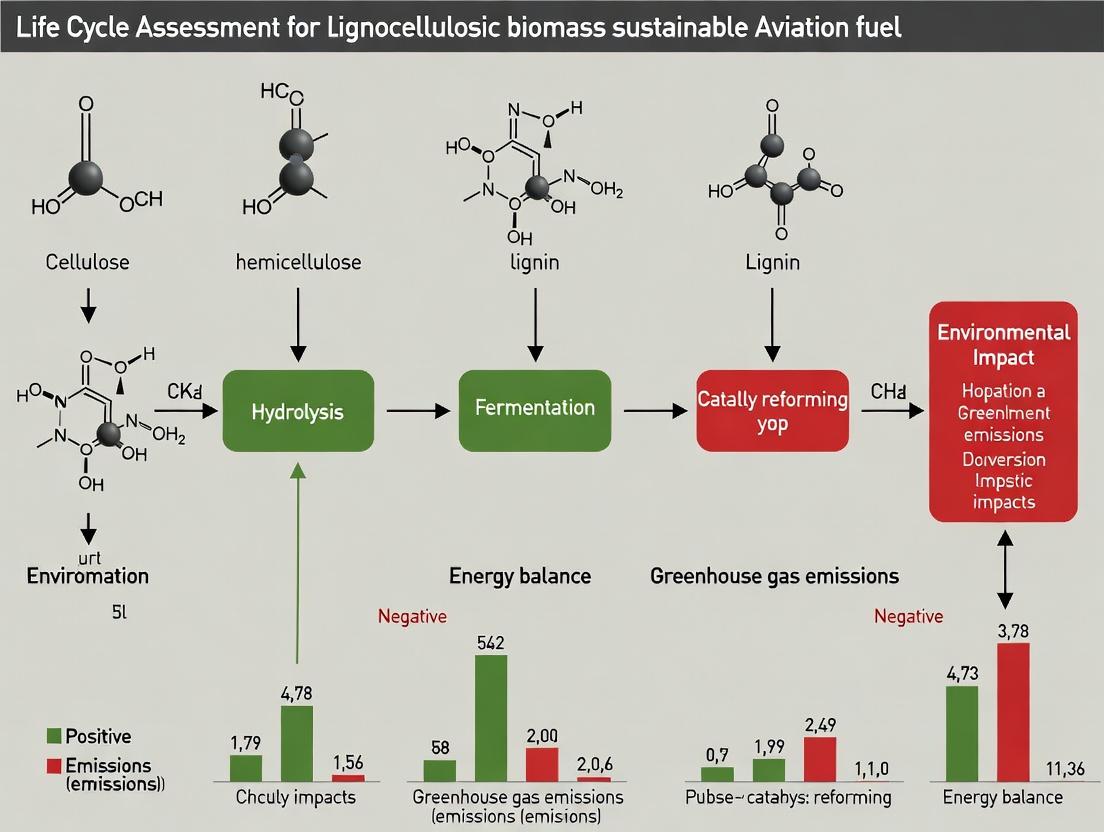
This article provides a systematic Life Cycle Assessment (LCA) of lignocellulosic biomass conversion to Sustainable Aviation Fuel (SAF), tailored for researchers and industry professionals.
Decoding the Life Cycle: A Comprehensive LCA of Lignocellulosic Biomass for Sustainable Aviation Fuel Production
Abstract
This article provides a systematic Life Cycle Assessment (LCA) of lignocellulosic biomass conversion to Sustainable Aviation Fuel (SAF), tailored for researchers and industry professionals. We explore the foundational rationale for using non-food biomass, detail the methodological frameworks (ISO 14040/44) and key conversion pathways like gasification-FT and pyrolysis. The analysis addresses critical challenges in system boundary definition, data variability, and hotspot identification, while comparing environmental performance against conventional jet fuel and alternative SAF feedstocks. The conclusion synthesizes pathways for optimizing biomass-to-SAF systems and discusses implications for achieving aviation sector decarbonization targets.
Why Lignocellulosic Biomass? The Scientific and Sustainability Imperative for SAF
Within the life cycle assessment (LCA) framework for sustainable aviation fuel (SAF) research, the definition of lignocellulosic biomass feedstock is a critical determinant of environmental and techno-economic outcomes. Feedstocks exist on a spectrum from low-input agricultural residues to high-yield dedicated energy crops, each with distinct implications for land use, conversion efficiency, and overall carbon intensity. This guide provides a technical comparison and experimental protocols for characterizing these feedstocks in the context of SAF production.
Feedstock Classification and Characteristics
Lignocellulosic biomass for SAF is primarily categorized by source and cultivation intent.
| Feedstock Category | Examples | Typical Lignin Content (% Dry Basis) | Typical Carbohydrate Content (% Dry Basis) | Average Yield (Dry Mg/ha/yr) | Key LCA Considerations |
|---|---|---|---|---|---|
| Agricultural Residues | Corn stover, Wheat straw, Rice husk | 15-20 | 65-75 (Cellulose+Hemicellulose) | 2-4 | Avoided emissions from residue management, soil carbon stock impact. |
| Dedicated Herbaceous Crops | Miscanthus, Switchgrass | 10-25 | 70-80 | 10-20 (varies with region) | Land-use change (direct/indirect), fertilizer input, perennial soil sequestration. |
| Dedicated Woody Crops | Poplar, Willow, Eucalyptus | 20-30 | 60-70 | 8-15 | Longer rotation periods, higher pretreatment severity required. |
| Forestry Residues | Thinnings, logging residues, sawdust | 25-30 | 55-65 | Variable | Harvesting logistics, biodiversity impact, collection efficiency. |
Core Analytical and Preprocessing Methodologies
Protocol: Compositional Analysis via NREL/TP-510-42618
Objective: Quantify structural carbohydrates, lignin, and ash in biomass. Procedure:
- Milling & Drying: Mill biomass to pass a 20-mesh screen. Dry at 45°C under vacuum until constant weight.
- Two-Stage Acid Hydrolysis: Weigh 300 mg of biomass into a pressure tube. Add 3.0 mL of 72% (w/w) H₂SO₄, incubate at 30°C for 60 min with agitation. Dilute to 4% (w/w) H₂SO₄ with deionized water (84 mL). Autoclave at 121°C for 60 min.
- Analysis: Filter the hydrolysate.
- Sugars: Analyze filtrate via HPLC (e.g., Aminex HPX-87P column) for monomeric sugars (glucose, xylose, arabinose, etc.).
- Acid-Insoluble Lignin (AIL): Dry and weigh the solid residue from filtration.
- Ash: Incinerate a separate sample at 575°C to constant weight.
- Calculation: Correct for sugar degradation (furfural, HMF) and hydrolyzed lignin in the filtrate.
Protocol: Biomass Pretreatment for Deconstruction
Objective: Reduce biomass recalcitrance and enhance enzymatic saccharification yield. Procedure (Dilute Acid Pretreatment):
- Load 10g (dry basis) of biomass into a 300-mL Parr reactor.
- Add dilute H₂SO₄ (0.5-2.0% w/w) at a 10:1 liquid-to-solid ratio.
- Seal reactor and heat to target temperature (140-180°C) for a residence time of 10-40 minutes.
- Rapidly cool the reactor. Separate the solid fraction (pretreated biomass) from the liquid hydrolysate via filtration.
- Wash solids with deionized water to neutral pH. Analyze solids for composition (per 3.1) and reserve for enzymatic hydrolysis.
Feedstock Selection Workflow for SAF Research
Diagram 1: Feedstock Assessment Workflow
Research Reagent Solutions Toolkit
| Reagent / Material | Function in Research | Key Consideration for LCA |
|---|---|---|
| Cellulase Enzymes (e.g., CTec3) | Hydrolyzes cellulose to glucose. Critical for saccharification yield. | Production method (fungal fermentation) contributes to process energy/cost. |
| Dilute Acid (H₂SO₄) | Catalyst for hemicellulose hydrolysis during pretreatment. | Corrosivity requires specialized reactors; neutralization creates waste gypsum. |
| Ionic Liquids (e.g., [Emim][OAc]) | Novel solvent for lignocellulose dissolution at mild conditions. | High cost, requires near-100% recycling for sustainability; toxicity assessment vital. |
| Lignin-Degrading Enzymes (e.g., Laccases) | Modifies or depolymerizes lignin to reduce inhibition. | Can improve overall carbon utilization but adds enzyme production burden. |
| Standard Reference Biomass (e.g., NIST Poplar) | Calibrates analytical instruments and validates experimental protocols. | Ensures comparability of data across different research labs for meta-LCA. |
| Anaerobic Digestion Sludge | Inoculum for studying methane potential from biorefinery wastewater. | Models waste-to-energy integration, affecting net energy balance of SAF process. |
LCA-Relevant Experimental Pathways
Diagram 2: Biomass to SAF Conversion Pathways
This whitepaper provides a technical guide to the experimental frameworks underpinning Sustainable Aviation Fuel (SAF) research, explicitly framed within the thesis context of the Life Cycle Assessment (LCA) of lignocellulosic biomass for SAF. Achieving aviation's net-zero goals by 2050, as mandated by the International Air Transport Association (IATA) and the International Civil Aviation Organization (ICAO), necessitates a rapid scale-up of SAF. Lignocellulosic biomass (e.g., agricultural residues, energy crops) represents a critical, non-food feedstock pathway. The core research challenge lies not only in optimizing fuel conversion but in rigorously quantifying the environmental impacts from cradle-to-grave, ensuring net reductions in greenhouse gas (GHG) emissions.
Quantitative Targets: Net-Zero and SAF
Table 1: Global Aviation Decarbonization Targets and SAF Mandates
| Organization/Initiative | Net-Zero CO2 Goal | 2030 SAF Target (Volume/Energy Share) | 2050 SAF Target (Volume/Energy Share) | Key Policy Lever |
|---|---|---|---|---|
| International Air Transport Association (IATA) | 2050 | 5.875% (17.5 Billion Liters) | ~65-70% of total fuel required | Aspirational industry target |
| International Civil Aviation Organization (ICAO) | 2050 (Aspirational) | 5% reduction in CO2 (CORSIA baseline) | N/A | Carbon Offsetting & Reduction Scheme (CORSIA) |
| U.S. (SAF Grand Challenge) | 2050 (Sector-Wide) | 3 Billion GAL/Yr | 35 Billion GAL/Yr (~100% of projected demand) | Tax credits (40B), grants, R&D |
| European Union (ReFuelEU Aviation) | 2050 | 6% (with sub-target for synthetic fuels) | 70% (with sub-target for synthetic fuels) | Blending mandate, fines for non-compliance |
| United Kingdom (SAF Mandate) | 2050 | 10% | 22% | Blending mandate, price supports |
Core Experimental Workflow for Lignocellulosic SAF LCA
The LCA of lignocellulosic SAF is an iterative process integrating laboratory, process engineering, and environmental impact modeling.
Diagram Title: Integrated LCA & Experimental Workflow for Lignocellulosic SAF
Detailed Experimental Protocols
Protocol A: Biomass Pretreatment & Saccharification Efficiency
- Objective: To optimize the release of fermentable sugars (C5 & C6) from lignocellulosic biomass (e.g., corn stover, switchgrass) with minimal inhibitor formation.
- Methodology:
- Milling & Sieving: Reduce biomass particle size to 0.5-2.0 mm using a knife mill. Sieve to ensure homogeneity.
- Dilute Acid Pretreatment: Load biomass into a pressurized reactor at a 10% (w/v) solid loading. Treat with 1-3% (w/w) H₂SO₄ at 140-180°C for 20-60 minutes under constant agitation.
- Neutralization & Washing: Cool reactor, recover slurry, and neutralize to pH 5.0-7.0 using Ca(OH)₂ or NaOH. Separate solid fraction (cellulose-lignin) from liquid hydrolysate (containing hemicellulose sugars and inhibitors) via vacuum filtration.
- Enzymatic Hydrolysis: Subject the washed solid fraction to enzymatic saccharification using a commercial cellulase cocktail (e.g., Cellic CTec3) at 50°C, pH 4.8, for 72 hours. Samples taken at 0, 6, 24, 48, 72h.
- Analysis: Quantify sugars (glucose, xylose, arabinose) and inhibitors (furfural, HMF, acetic acid) via HPLC with refractive index (RI) and photodiode array (PDA) detectors. Calculate sugar yield (% theoretical maximum).
Protocol B: Catalytic Upgrading to Hydroprocessed Esters and Fatty Acids (HEFA) Analogue via Catalytic Fast Pyrolysis (CFP) & Hydrotreating
- Objective: To convert whole biomass or lignin-rich residue into a deoxygenated hydrocarbon blendstock suitable for hydrotreating to SAF.
- Methodology:
- Catalyst Preparation: Load a zeolite catalyst (e.g., HZSM-5) into a fixed-bed microreactor. Activate under N₂ flow at 500°C for 2 hours.
- Catalytic Fast Pyrolysis: Feed pretreated biomass powder into the reactor at 550°C with a catalyst-to-biomass ratio of 5:1. Vapor residence time: 2 seconds. Carry vapors with inert gas.
- Vapor Condensation: Condense the produced vapors in a series of condensers cooled to 0°C to collect bio-oil. Collect non-condensable gases in a gas bag for GC analysis.
- Hydrotreating of Bio-Oil: Mix bio-oil with a sulfided CoMo/Al₂O₃ catalyst in a high-pressure batch reactor. Process under H₂ pressure (100 bar) at 350°C for 4 hours with constant stirring.
- Product Analysis: Analyze the hydrocarbon liquid product using Simulated Distillation (SimDis) GC to determine boiling point distribution against Jet-A specifications. Analyze composition via GC-MS. Determine oxygen content via elemental analysis.
The Scientist's Toolkit: Research Reagent Solutions
Table 2: Essential Materials for Lignocellulosic SAF Pathway Research
| Reagent / Material | Function in Research | Key Specification / Note |
|---|---|---|
| Lignocellulosic Biomass (Model Feedstock) | Standardized substrate for process development and LCA. | NIST RM 8490 (Poplar) or other well-characterized feedstocks (e.g., corn stover, pine). |
| Cellulolytic Enzyme Cocktail | Hydrolyzes cellulose to fermentable glucose. | Commercial blend (e.g., Novozymes Cellic CTec3, Genencor Accellerase). Activity measured in Filter Paper Units (FPU)/mL. |
| Zeolite Catalyst (HZSM-5) | Catalyzes deoxygenation and aromatization during CFP. | SiO₂/Al₂O₃ ratio critical for selectivity. Typical range: 30-80. |
| Sulfided Hydrotreating Catalyst | Removes oxygen as H₂O and saturates olefins to produce stable hydrocarbons. | CoMo/Al₂O₃ or NiMo/Al₂O₃, pre-sulfided. |
| Internal Standards for Analytics | Enables accurate quantification in complex matrices. | For GC: n-Alkanes (C7-C30). For HPLC: 5-HMF, Succinic acid. |
| Certified Reference Gases (for GC) | Calibration for life cycle inventory of process gases. | CO₂, CH₄, CO, H₂ in N₂ balance at certified concentrations. |
LCA Impact Assessment: Critical Data Tables
Table 3: Comparative Life Cycle GHG Emissions for Lignocellulosic SAF Pathways (gCO₂e/MJ)
| SAF Conversion Pathway | Feedstock | GHG Emissions (Well-to-Wake) | Fossil Jet-A Baseline | Key Data Sources & Notes |
|---|---|---|---|---|
| Alcohol-to-Jet (ATJ) | Corn Stover | 15.2 - 28.5 | 89 | GREET 2023 Model. Range depends on process energy source and hydrogen source. |
| Catalytic Fast Pyrolysis (CFP) | Forest Residues | 32.1 - 49.7 | 89 | Argonne National Lab (2022). Higher emissions often from H₂ demand and catalyst regeneration. |
| Gasification + Fischer-Tropsch (FT) | Switchgrass | 12.8 - 35.0 | 89 | ICAO (2022) LCA Database. Lowest potential, but highly sensitive to electricity grid carbon intensity. |
| Hydroprocessed Esters and Fatty Acids (HEFA) | Used Cooking Oil | 21.4 - 27.8 | 89 | EU RED II Default Value. Shown for contrast; highlights lignocellulosic challenge/opportunity. |
Table 4: Key LCA Inventory Data for 1 Tonne of Pretreated Corn Stover
| Inventory Flow | Quantity | Unit | To/From Technosphere/Biosphere |
|---|---|---|---|
| Inputs | |||
| Corn Stover (as harvested, dry) | 1.25 | Tonne | From nature (biogenic carbon) |
| Sulfuric Acid (for pretreatment) | 25 | kg | From technosphere (industrial process) |
| Process Electricity (grid mix) | 150 | kWh | From technosphere (regional grid) |
| Natural Gas (for steam) | 2.5 | GJ | From technosphere |
| Outputs | |||
| Pretreated Solids (to hydrolysis) | 1.00 | Tonne | To next process step |
| Sugar Stream (C5 & C6) | 320 | kg | To fermentation |
| Inhibitors (Furfural, HMF) | 8 | kg | To waste treatment/energy recovery |
The pursuit of Sustainable Aviation Fuel (SAF) mandates a paradigm shift from first-generation feedstocks. Non-edible, lignocellulosic biomass—including agricultural residues (e.g., corn stover, wheat straw), dedicated energy crops (e.g., miscanthus, switchgrass), and forestry wastes—presents a critical pathway. Its integration into SAF production is evaluated through a rigorous Life Cycle Assessment (LCA) framework, which quantifies environmental impacts from cradle-to-grave, ensuring net reductions in greenhouse gas (GHG) emissions without compromising food security or inducing indirect land-use change (iLUC).
Core Advantages: Technical and Sustainability Metrics
Lignocellulosic resources offer distinct advantages over edible feedstocks (e.g., sugarcane, corn) and fossil benchmarks. Key quantitative benefits are summarized below.
Table 1: Comparative Analysis of Feedstock Characteristics
| Parameter | Edible Feedstock (Corn Grain) | Non-Edible Lignocellulosic (Corn Stover) | Unit |
|---|---|---|---|
| Typical Glucose Yield | High (~80% of starch) | Moderate-High (~70-90% of cellulose post-pretreatment) | % of Theoretical |
| Lignin Content | Low (<5%) | High (15-30%) | % Dry Weight |
| Global Availability | ~1,200 million tons/year | ~1,000 billion tons/year (estimated total) | Tons/Year |
| GHG Reduction Potential (vs. Fossil Jet Fuel) | 40-60%* | 70-100%* | % |
| iLUC Risk | High | Negligible to Low | Qualitative |
| Typical Feedstock Cost | $150-$250 | $50-$100 | $/Dry Ton |
*Dependent on conversion pathway, supply chain, and LCA system boundaries. Data sourced from recent NREL, IEA Bioenergy, and peer-reviewed LCA studies (2023-2024).
Table 2: Key LCA Impact Categories for SAF Pathways
| Impact Category | Fossil Jet Fuel (Baseline) | HEFA-SAF (from Oil Crops) | FT-SAF (from Lignocellulosic Biomass) | Units (per MJ Fuel) |
|---|---|---|---|---|
| Global Warming Potential (GWP100) | 89 | 40-55 | 10-25 | g CO2-eq |
| Water Consumption | 0.05-0.1 | 0.5-1.5 | 0.1-0.4 | Liters |
| Land Use Change | Minimal | Significant | Minimal | Score |
Experimental Protocols: Key Methodologies in Lignocellulosic SAF Research
3.1. Standard Protocol for Compositional Analysis of Biomass (NREL/TP-510-42618)
- Objective: Quantify structural carbohydrates, lignin, and ash content.
- Materials: Milled biomass (≤1 mm), 72% (w/w) sulfuric acid, autoclave, HPLC system with refractive index detector (for sugars), UV-Vis spectrophotometer (for acid-soluble lignin).
- Procedure:
- Primary Hydrolysis: Precisely weigh 300 mg biomass. Add 3.0 mL 72% H2SO4, incubate at 30°C for 1 hour with periodic stirring.
- Secondary Hydrolysis: Dilute acid to 4% (w/w) with deionized water. Autoclave at 121°C for 1 hour.
- Filtration: Filter hydrolysate through a calibrated crucible. Retain filtrate for sugar and acid-soluble lignin analysis. Wash solid residue (Klason lignin) thoroughly.
- Analysis: Analyze filtrate via HPLC for monomeric sugars (glucose, xylose, arabinose). Determine acid-soluble lignin by UV absorbance at 320 nm. Dry and weigh solid residue to determine Klason lignin and ash content.
3.2. Protocol for Catalytic Fast Pyrolysis (CFP) Vapor Upgrading
- Objective: Convert pyrolytic vapors directly into hydrocarbon-rich vapors suitable for condensation into fuel precursors.
- Materials: Pyrolyzer unit (micro or bench-scale), zeolite catalyst (e.g., HZSM-5), quartz reactor, condensers, online GC-MS/FID.
- Procedure:
- System Setup: Load catalyst bed in a downstream fixed-bed reactor. Purge system with inert gas (N2).
- Pyrolysis & Upgrading: Feed milled biomass at a controlled rate (1-5 g/min) into the pyrolyzer (500°C). Sweep resulting vapors directly over the catalyst bed (450-550°C).
- Product Collection & Analysis: Condense upgraded vapors in a series of cold traps. Collect non-condensable gases in Tedlar bags. Analyze liquid (bio-oil) by GC-MS for aromatic hydrocarbons (BTX) and oxygenates. Analyze gas composition via online GC (CO, CO2, light alkenes).
Visualization of Key Processes
The Scientist's Toolkit: Key Research Reagent Solutions
Table 3: Essential Research Materials for Lignocellulosic Conversion Experiments
| Reagent/Material | Function/Application | Example Vendor/Product |
|---|---|---|
| Cellulolytic Enzyme Cocktail | Hydrolyzes cellulose to fermentable glucose. Critical for biochemical pathway yield assessment. | Novozymes Cellic CTec3, Genencor Accelerase TRIO |
| HZSM-5 Zeolite Catalyst | Acidic catalyst for deoxygenation and aromatization during catalytic fast pyrolysis (CFP). | ACS Material, Zeolyst International |
| Co-based Fischer-Tropsch Catalyst | Catalyzes polymerization of syngas (CO+H2) into long-chain hydrocarbons for FT-SAF. | Sigma-Aldrich, Alfa Aesar |
| Ionic Liquids (e.g., [C2mim][OAc]) | Advanced solvent for biomass pretreatment, effectively dissolving lignin and cellulose. | IoLiTec, Sigma-Aldrich |
| Deuterated Solvents (e.g., DMSO-d6) | NMR analysis of raw biomass, process intermediates, and final bio-oil composition. | Cambridge Isotope Laboratories |
| Lignin Model Compounds (e.g., Guaiacol) | Used as probe molecules to study reaction mechanisms and catalyst deactivation. | TCI Chemicals, Sigma-Aldrich |
| Syngas Calibration Mixture | Standard gas for calibrating analyzers during gasification and FT synthesis experiments. | Airgas, Linde |
| ANKOM Fiber Analyzer System | Rapid determination of Neutral Detergent Fiber (NDF), Acid Detergent Fiber (ADF), and lignin. | ANKOM Technology |
Life Cycle Assessment (LCA) is a systematic methodology for evaluating the environmental impacts of a product system throughout its life cycle. For the thesis "Life cycle assessment of lignocellulosic biomass for sustainable aviation fuel research," the foundational elements of Goal and Scope Definition and the Functional Unit are paramount. This guide details their application in Biomass-to-Sustainable Aviation Fuel (SAF) systems, targeting researchers and professionals in related scientific fields.
Goal Definition
The goal articulates the study's intended application, audience, and rationale. For biomass-to-SAF LCA, the goal must be precise.
Key Components
- Intended Application: To assess and compare the environmental footprint (e.g., GHG emissions, water use) of different lignocellulosic biomass feedstocks (e.g., agricultural residues, energy crops) and conversion pathways (e.g., gasification + Fischer-Tropsch, pyrolysis, ATJ) for SAF production.
- Decision Context: Supports R&D prioritization, policy formulation for aviation decarbonization, and certification under schemes like CORSIA.
- Target Audience: Researchers, fuel developers, policymakers, and environmental managers.
- Comparative Assertion: Results intended for public disclosure require critical review per ISO 14044.
Scope Definition
The scope defines the system boundaries, processes, and assumptions. A clearly defined scope ensures reproducibility and validity.
System Boundaries
The standard approach is "cradle-to-wake," encompassing all processes from resource extraction to fuel combustion.
Table 1: Typical System Boundaries for Biomass-to-SAF LCA
| Life Cycle Stage | Included Processes | Key Considerations for Biomass Systems |
|---|---|---|
| Feedstock & Pre-processing | Biomass cultivation/collection, harvesting, transportation, drying, size reduction, storage. | Allocation of burdens from multi-output systems (e.g., corn stover), soil carbon changes, direct/indirect land-use change (d/iLUC). |
| Fuel Production | Pretreatment, conversion (thermochemical/biochemical), upgrading, refining, purification. | Co-product handling (e.g., biochar, electricity), catalyst use, process energy source (biogenic vs. fossil). |
| Fuel Distribution & Storage | Transportation of SAF to airport, intermediate storage, blending with conventional jet fuel. | Mode and distance of transport, evaporative losses. |
| Fuel Use | Combustion in aircraft engine during flight. | Critical: CO2 from biogenic carbon is often considered net-zero, but non-CO2 climate forcings (e.g., contrails) may be excluded from standard LCA. |
| Infrastructure & Ancillary Materials | Capital equipment, chemicals, enzymes, solvents. | Often excluded in attributional LCA but may be significant for novel pathways. |
Data Requirements and Assumptions
- Temporal Coverage: Representative of near-commercial (2020-2030) technology readiness levels (TRL 6-8).
- Geographical Coverage: Must align with feedstock sourcing and production facility location.
- Allocation Procedures: For multi-output processes (e.g., biorefineries), system expansion (substitution) is preferred over mass/energy allocation per ISO standards.
Title: Cradle-to-Wake System Boundary for Biomass-to-SAF LCA
Functional Unit
The Functional Unit (FU) quantifies the performance of the system, enabling fair comparisons.
Defining the Functional Unit
For SAF, the FU must account for both the energy delivered and the distance traveled.
- Primary FU: 1 MegaJoule (MJ) of Sustainable Aviation Fuel (Lower Heating Value basis). This is the most common basis for GHG intensity calculations (e.g., gCO2e/MJ).
- Secondary/Additional FU: 1 passenger-kilometer (pkm) or 1 tonne-kilometer (tkm) of air transport service. This accounts for aircraft efficiency but adds complexity.
Table 2: Functional Unit Comparison for SAF LCA
| Functional Unit | Advantages | Disadvantages | Best Use Case |
|---|---|---|---|
| 1 MJ of Fuel (LHV) | Simple, directly tied to fuel production efficiency, standard for policy (CORSIA). | Does not account for differences in aircraft performance or load factors. | Comparing fuel production pathways upstream of aircraft use. |
| 1 pkm of transport service | Represents the final service, accounts for aircraft efficiency. | Requires additional data (aircraft type, load factor), can dilute differences between fuels. | Well-to-wake comparisons of alternative aviation solutions. |
Reference Flow
The reference flow is the amount of product needed to deliver the functional unit. For an FU of 1 MJ of SAF, the reference flow is the inverse of the process yield.
Example: If a gasification+Fischer-Tropsch process requires 5 kg of dry biomass to produce 1 MJ of SAF, the reference flow is 5 kg dry biomass / MJ SAF.
Experimental Protocols for Key LCA Data Generation
Protocol 1: Determining Biomass Feedstock Carbon Intensity
Objective: Quantify fossil and biogenic GHG emissions from feedstock production. Method:
- System Setup: Define cultivation region, crop type, and management practices.
- Data Collection: Gather primary data for inputs: diesel for machinery, synthetic N/P/K fertilizer (type and quantity), pesticides, irrigation energy.
- Soil Carbon Analysis: Use a dynamic model (e.g., IPCC Tier 2, DayCent) to estimate soil organic carbon stock changes over a 20-year period.
- Emission Calculation: Apply emission factors (e.g., from the GREET model or Ecoinvent database) to each input. For N2O from fertilizer, use a default factor of 0.01 kg N2O-N per kg N applied.
- Allocation: For residues (e.g., wheat straw), use system expansion: subtract emissions avoided by not producing the equivalent function (e.g., electricity from straw) from the main system burden.
Protocol 2: Measuring Conversion Process Yields
Objective: Obtain mass and energy balances for the SAF conversion pathway. Method:
- Bench/Pilot-scale Experiment: Operate the conversion system (e.g., gasifier, hydroprocessor) at steady state.
- Material Balance: Precisely measure mass inputs (dry biomass, catalysts, solvents) and outputs (raw SAF, co-products, wastewater, off-gas, solid residues) over a minimum 24-hour period.
- Energy Balance: Measure the LHV of all input and output streams using a bomb calorimeter. Measure all input steam, electricity, and process heat.
- Analysis: Calculate key metrics: SAF yield (mass% of dry biomass input), Carbon efficiency (% of biomass carbon in final SAF), and Net Energy Ratio (NER = Energy in SAF / Fossil energy input).
The Scientist's Toolkit: Research Reagent Solutions
Table 3: Essential Tools for Biomass-to-SAF LCA Research
| Item / Solution | Function in LCA Research |
|---|---|
| GREET Model (Argonne National Lab) | Premier software for transparent, reproducible fuel pathway LCA modeling. Includes extensive database for biomass systems. |
| SimaPro or OpenLCA Software | Professional LCA software for building detailed process models using commercial (Ecoinvent) and public databases. |
| Ecoinvent Database | Comprehensive life cycle inventory database providing background data for electricity, chemicals, and transport processes. |
| IPCC Emission Factor Database | Authoritative source for GHG emission factors, especially for agriculture, forestry, and land use. |
| Bomb Calorimeter | Instrument to determine the Higher Heating Value (HHV) and Lower Heating Value (LHV) of biomass and fuel samples. |
| Elemental Analyzer (CHNS/O) | Determines the carbon, hydrogen, nitrogen, sulfur, and oxygen content of feedstocks and products, critical for carbon balancing. |
| DayCent or CENTURY Model | Process-based biogeochemical models for predicting soil carbon dynamics under different biomass harvest scenarios. |
| CORSIA Eligible Fuels LCA Methodology | Official methodology document providing mandatory rules for SAF LCA if results are for CORSIA compliance. |
From Biomass to Barrel: LCA Methodologies and Conversion Pathways for SAF
Within the thesis on Life Cycle Assessment of Lignocellulosic Biomass for Sustainable Aviation Fuel Research, defining the system boundary is the critical first step that determines the scope, inventory, and ultimately the environmental impact results. For aviation fuels, two principal boundary paradigms exist: "Cradle-to-Wing" (CtW) and "Well-to-Wake" (WtW). This guide delineates their technical definitions, methodological implications, and applications in SAF research, with a focus on lignocellulosic feedstocks.
Defining the Approaches
- Cradle-to-Wing (CtW): This boundary assesses environmental impacts from the resource extraction ("cradle") of the feedstock (e.g., growing energy crops, collecting agricultural residues) up to the point where the fuel is loaded onto the aircraft and ready for combustion ("wing"). It excludes the aircraft's operational emissions during flight.
- Well-to-Wake (WtW): This is a comprehensive boundary that encompasses the full fuel lifecycle. It combines "Well-to-Tank" (WtT)—identical to CtW—and "Tank-to-Wake" (TtW). TtW covers the combustion of the fuel in the aircraft's engines and the associated climate impacts of the emissions at altitude.
Methodological Protocols & Data Inventory
The core experimental or modeling protocols for each stage within these boundaries are detailed below.
Well-to-Tank / Cradle-to-Wing Components
A. Feedstock Production & Logistics (Cradle/Well-to-Gate of Biorefinery)
- Protocol: Data is collected via field trials (for dedicated crops) or system modeling (for residues). Key metrics include: fertilizer/water inputs, diesel for farm machinery, soil carbon flux changes, and biomass yield per hectare. For residues, allocation procedures (mass, energy, economic) are critical to partition impacts from the primary crop.
- Inventory Data Example: Recent 2023 field data for switchgrass in the U.S. Midwest.
B. Fuel Conversion (Biorefinery Gate-to-Gate)
- Protocol: Based on process simulation models (e.g., Aspen Plus) scaled from pilot plant data. Mass and energy balances are established for the specific conversion pathway (e.g., Fischer-Tropsch, Alcohol-to-Jet). Co-product handling requires allocation or system expansion/substitution.
- Inventory Data Example: Simulation outputs for a lignocellulosic ethanol-to-jet (ATJ) process.
C. Fuel Distribution & Handling (Gate-to-Wing)
- Protocol: Linear modeling of transport (pipeline, truck, ship) distances and modes from biorefinery to airport hub. Includes energy for storage and conditioning.
Tank-to-Wake Component
- Protocol: Combustion emissions are calculated using established emission indices (grams of pollutant per kg of fuel burned) from engine test data. For CO₂, it is a direct function of fuel carbon content. For non-CO₂ climate effects (e.g., contrail formation, NOx-induced ozone), complex atmospheric chemistry models (e.g., Atmospheric Climate Impact models) are used, applying a Global Warming Potential (GWP) or Global Temperature Potential (GTP) metric over a chosen time horizon (e.g., 100 years).
Quantitative Data Comparison
Table 1: Comparative System Boundary Inclusions
| Life Cycle Stage | Cradle-to-Wing | Well-to-Wake |
|---|---|---|
| Feedstock Cultivation & Harvest | Yes | Yes |
| Feedstock Transport | Yes | Yes |
| Fuel Conversion Process | Yes | Yes |
| Co-product Management | Yes | Yes |
| Fuel Distribution to Airport | Yes | Yes |
| Fuel Combustion in Aircraft | No | Yes |
| Non-CO₂ Climate Impacts | No | Yes (Modeled) |
Table 2: Exemplary GHG Inventory (gCO₂e/MJ) for Lignocellulosic ATJ-SAF*
| Stage | Cradle-to-Wing Result | Well-to-Wake Result |
|---|---|---|
| Feedstock (Switchgrass) | 5.2 | 5.2 |
| Conversion (ATJ Process) | 18.7 | 18.7 |
| Distribution | 0.8 | 0.8 |
| Subtotal (WtT/CtW) | 24.7 | 24.7 |
| Combustion (CO₂ only) | 0.0 | 73.4 |
| Non-CO₂ Effects (GWP100) | 0.0 | 33.1 |
| Total (WtW) | 24.7 | 131.2 |
Note: Data synthesized from recent 2023-2024 literature and GREET model simulations. Values are illustrative.
Visualization of System Boundaries and Decision Flow
Diagram 1: LCA System Boundaries for SAF
Diagram 2: Boundary Selection Logic for Researchers
The Scientist's Toolkit: Key Research Reagent Solutions
Table 3: Essential Materials & Tools for LCA of Lignocellulosic SAF
| Item / Solution | Function in Research |
|---|---|
| GREET Model (Argonne National Lab) | Premier software for modeling energy use & emissions of vehicle/fuel cycles. Essential for WtW analysis. |
| SimaPro / OpenLCA | Professional LCA software for building detailed process models and conducting impact assessments. |
| Ecoinvent Database | Extensive life cycle inventory database for background processes (electricity, chemicals, transport). |
| CORSIA Eligible Fuels LCA Tool | ICAO-approved tool for calculating SAF emissions against the CORSIA benchmark. |
| Aspen Plus / ChemCAD | Process simulation software for rigorous modeling of thermochemical/biochemical conversion pathways. |
| IPCC GWP Factors | Official emission conversion factors (CO₂, CH₄, N₂O) for calculating CO₂-equivalent impacts. |
| Aviation Climate Model (ACM) | Specialized model for estimating non-CO₂ climate impacts from aviation (contrails, NOx). |
| GIS Software (e.g., ArcGIS) | For spatial analysis of feedstock availability, logistics, and land use change implications. |
This whitepaper provides a techno-environmental analysis of three primary thermochemical and biochemical conversion pathways for lignocellulosic biomass into Sustainable Aviation Fuel (SAF), contextualized within a Life Cycle Assessment (LCA) framework. The pathways—Gasification-Fischer-Tropsch (G-FT), Pyrolysis (with hydroprocessing), and Biochemical conversion (sugar to hydrocarbons)—represent the core technological routes for producing drop-in hydrocarbon fuels. The analysis is directed at researchers and process development professionals, with an emphasis on quantitative comparison, experimental protocols, and essential research tools.
Pathway Descriptions and Techno-Environmental Performance
Gasification-Fischer-Tropsch (G-FT)
Process Overview: Lignocellulosic biomass is first gasified at high temperatures (700-1500°C) with a controlled oxidant (air, O2, or steam) to produce syngas (a mixture of CO and H₂). The syngas is cleaned and conditioned to adjust the H₂:CO ratio before being catalytically converted via the Fischer-Tropsch synthesis into a spectrum of linear hydrocarbons (syncrude). This syncrude is subsequently upgraded via hydrocracking and hydroisomerization to produce SAF-range hydrocarbons (primarily iso-paraffins).
Key Environmental Considerations: The syngas cleaning stage is critical for removing tars and contaminants (e.g., H₂S) that poison FT catalysts. The overall system efficiency is heavily dependent on heat integration and the source of hydrogen for upgrading.
Pyrolysis (Fast Pyrolysis with Hydroprocessing)
Process Overview: Biomass undergoes fast pyrolysis at moderate temperatures (~500°C) in an inert atmosphere with very short residence times to maximize bio-oil yield (60-75 wt%). The raw bio-oil is highly acidic, unstable, and has high oxygen content. It is stabilized via mild hydrotreating and then fully deoxygenated via catalytic hydrodeoxygenation (HDO) to produce hydrocarbon "biocrude." This biocrude is co-processed in a conventional refinery's hydrocracker or separately upgraded to jet fuel.
Key Environmental Considerations: Bio-oil corrosivity and instability pose materials handling challenges. The hydrogen demand for HDO is significant, influencing the life cycle greenhouse gas (GHG) emissions based on the H₂ source.
Biochemical Conversion (Sugar to Hydrocarbons)
Process Overview: Biomass undergoes pretreatment (e.g., steam explosion, acid hydrolysis) and enzymatic saccharification to liberate C5 and C6 sugars. Microorganisms (engineered yeast or bacteria) ferment these sugars into intermediate molecules like fatty acids, isoprenoids, or alcohols (e.g., isobutanol). These intermediates are then chemically upgraded (via dehydration, oligomerization, and hydrogenation) to yield drop-in SAF, such as Alcohol-to-Jet (ATJ) or sugar-to-hydrocarbon pathways.
Key Environmental Considerations: Pretreatment efficiency and enzyme loading are major cost and environmental impact drivers. The carbon yield from sugar to fuel intermediate is a key performance metric.
Data synthesized from recent literature (2021-2024) and U.S. Department of Energy reports.
Table 1: Key Process Performance Indicators for SAF Pathways
| Parameter | Gasification-FT | Pyrolysis-HDO | Biochemical (ATJ) | Units |
|---|---|---|---|---|
| Typical Carbon Efficiency | 35-42% | 25-35% | 30-40% | % of biomass C in final fuel |
| SAF Yield (Dry Basis) | 25-30 | 15-25 | 20-28 | gal/ton biomass |
| H₂ Consumption | High (upgrading) | Very High (HDO) | Low-Medium (upgrading) | g H₂/g SAF |
| Typical Min. Fuel Selling Price (MFSP) | 4.5-6.0 | 3.8-5.5 | 4.0-6.5 | USD/GGE |
| Well-to-Wake GHG Reduction vs. Fossil Jet* | 70-95% | 60-85% | 60-80% | % |
| Major LCA Impact Hotspots | Syngas cleaning, FT catalyst, H₂ source | H₂ source for HDO, char management | Pretreatment chemicals, enzyme production, fermentation energy | - |
| Technology Readiness Level (TRL) | 7-8 | 6-7 | 6-8 | - |
Assumes sustainable biomass feedstock and renewable H₂ or low-carbon energy integration.
Table 2: Key Feedstock and Product Specifications
| Aspect | Gasification-FT | Pyrolysis | Biochemical |
|---|---|---|---|
| Feedstock Tolerance | High (mixed, heterogeneous) | Medium (low ash preferred) | Low (sugar/glucan content critical) |
| Primary SAF Product | Iso-paraffins, linear paraffins | Aromatics, cyclo-paraffins, iso-paraffins | Iso-paraffins (highly branched) |
| Fuel Blendstock Name | FT-SPK | HEFA-SPK (when co-processed) / Pyrolysis Oil SPK | ATJ-SPK / SIP-HDK |
| ASTM D7566 Annex | A2.1 | A1.7 (HEFA) / A6 (Pyrolysis) | A3 (ATJ) / A5 (SIP) |
Detailed Experimental Protocols for Core Process Steps
Protocol: Bench-Scale Catalytic Fischer-Tropsch Synthesis
Objective: To evaluate the activity and selectivity of Co- or Fe-based catalysts for syngas-to-hydrocarbons.
- Catalyst Loading: Reduce 1.0g of catalyst (e.g., 15%Co/0.1%Pt/Al₂O₃) in a fixed-bed reactor under H₂ flow (100 mL/min) at 350°C for 10 hours.
- Reaction Conditions: Switch to syngas feed (H₂:CO = 2:1, volumetric). Set pressure to 20 bar, temperature to 220°C, and gas hourly space velocity (GHSV) to 2000 h⁻¹.
- Product Collection: Use a two-stage condensation system. The first trap is heated to 100°C to collect heavy waxes, and the second is kept at 0°C to collect lighter liquids and water.
- Analysis: Analyze gas effluent via online GC-TCD/FID. Characterize liquid and wax products using GC-MS and Simulated Distillation (SIMDIS) per ASTM D2887.
Protocol: Fast Pyrolysis Bio-Oil Hydrodeoxygenation (HDO)
Objective: To assess the deoxygenation efficiency of a sulfided CoMo/Al₂O₃ catalyst.
- Feed Preparation: Stabilize raw bio-oil by adding 10 wt% methanol.
- Trickle-Bed Reactor Setup: Load 5.0g of catalyst in a downflow fixed-bed reactor. Pre-sulfidize the catalyst with 3% H₂S/H₂ at 320°C for 4 hours.
- Reaction: Pump stabilized bio-oil at 0.1 mL/min with co-fed H₂ (500 mL/min) at 350°C and 100 bar pressure.
- Product Separation: Separate the liquid product into an aqueous phase and an organic (biocrude) phase in a cooled high-pressure separator.
- Analysis: Measure biocrude yield. Determine elemental composition (CHNS/O) and calculate oxygen content. Analyze by 2D GC (GC×GC-TOFMS) for hydrocarbon speciation.
Protocol: Enzymatic Hydrolysis & Fermentation to Fatty Acids
Objective: To convert pretreated lignocellulosic slurry to microbial fatty acids using engineered Yarrowia lipolytica.
- Enzymatic Hydrolysis: Load pretreated biomass slurry (20% solids, w/w) into a bioreactor. Adjust pH to 5.0 with citrate buffer. Add commercial cellulase cocktail (15 mg protein/g glucan). Incubate at 50°C with agitation for 72 hours.
- Fermentation Setup: Centrifuge hydrolysate, filter-sterilize, and supplement with nitrogen and mineral nutrients. Inoculate with Y. lipolytica strain engineered for high lipid titer at OD600 = 0.5.
- Fermentation: Maintain at 30°C, pH 6.0, with microaerobic conditions (0.1 vvm air) for 120 hours.
- Analysis: Quantify sugar consumption via HPLC-RID. Extract fatty acids via Folch method and quantify as Fatty Acid Methyl Esters (FAMEs) via GC-FID.
Visualizations
Process Flow and LCA System Boundary Diagram
Title: SAF Production Pathways and LCA Boundary
Biochemical Conversion Signaling & Metabolic Pathway
Title: Microbial Metabolic Pathway to Hydrocarbons
The Scientist's Toolkit: Research Reagent Solutions
Table 3: Essential Materials and Reagents for Pathway Research
| Item / Solution | Function | Key Considerations for LCA-Relevant Research |
|---|---|---|
| Syngas Calibration Mix | Standard for GC calibration during G-FT experiments. Contains CO, CO₂, H₂, N₂, and C1-C4 hydrocarbons at known concentrations. | Enables accurate carbon tracking and mass balance closure, critical for LCA inventory data. |
| Sulfided Catalyst Precursors | e.g., (NH₄)₂MoS₄, Co(NO₃)₂ for in-situ generation of CoMoS active sites for HDO. | Essential for mimicking industrial hydrotreating conditions. Sourcing of metals is an LCA impact factor. |
| Commercial Cellulase Cocktails | Multi-enzyme mixtures (cellulases, hemicellulases, β-glucosidase) for saccharification. | Major cost and environmental impact driver. Activity (FPU/g) and dosage directly influence sugar yield and process economics. |
| Defined Fermentation Media | Synthetic media with precise concentrations of YNB, CSM, and specific carbon sources. | Allows for reproducible fermentation kinetics and accurate attribution of biochemical conversion yields, separating feedstock effects. |
| Internal Standards for GC×GC | e.g., Deuterated n-alkanes, perdeuterated PAHs for comprehensive hydrocarbon analysis. | Critical for quantifying complex product slates from pyrolysis and FT processes, enabling accurate fuel property prediction. |
| ICP-MS Calibration Standards | Multi-element standards for analyzing catalyst leachates and biomass ash composition. | Assessing trace metal contamination and catalyst longevity, which affect EHS (Environment, Health, Safety) and waste streams in LCA. |
The life cycle assessment (LCA) of lignocellulosic biomass for Sustainable Aviation Fuel (SAF) research is fundamentally data-driven. The environmental and economic sustainability of the entire value chain hinges on the quality and precision of inventory data collected at the initial stages: cultivation, harvesting, logistics, and pretreatment. This guide details the critical parameters, measurement protocols, and data structuring necessary to build a robust inventory for a cradle-to-biorefinier-gate LCA, ensuring that downstream conversion and fuel property analyses are built on a reliable foundation.
Core Inventory Data Tables
Table 1: Cultivation Phase Inventory Data
| Parameter Category | Specific Data Point | Unit | Measurement Frequency | LCA Relevance |
|---|---|---|---|---|
| Inputs | Synthetic Fertilizer (N, P₂O₅, K₂O) | kg/ha | Per application | Eutrophication, energy use |
| Organic Fertilizer (type, dry matter) | kg/ha | Per application | Carbon sequestration, nutrient cycling | |
| Herbicide/Pesticide (active ingredient) | kg/ha | Per application | Ecotoxicity, human health | |
| Irrigation Water | m³/ha | Growing season total | Water scarcity, energy for pumping | |
| Diesel for Farm Machinery | L/ha | Per operation | Fossil fuel depletion, GHG emissions | |
| Outputs | Biomass Yield (dry matter) | tonne/ha | At harvest | Feedstock availability, land use efficiency |
| Soil Organic Carbon Change | % or kg C/ha/yr | Annual | Carbon footprint, soil health | |
| Nutrient Runoff (estimated N, P) | kg/ha/yr | Modeled/Measured | Eutrophication potential |
Table 2: Harvesting & Logistics Inventory Data
| Parameter Category | Specific Data Point | Unit | Notes for LCA |
|---|---|---|---|
| Harvesting | Harvesting Method (e.g., mowing, baling) | - | Defines machinery set and efficiency |
| Field Drying Time (if applicable) | days | Impacts moisture content and fuel use | |
| Harvested Moisture Content | % wet basis | Critical for downstream mass/energy balance | |
| Harvesting Efficiency (Material Recovery) | % | Losses contribute to soil carbon. | |
| Transport (Primary) | Average Transport Distance to Storage | km | Contributes to transportation GHG. |
| Vehicle Type & Payload Capacity | tonne | Defines fuel intensity per tonne-km. | |
| Fuel Consumption (Diesel) | L/tonne-km | Core data for transportation emissions. | |
| Storage | Storage Method (e.g., covered, ensiled) | - | Impacts dry matter losses and quality. |
| Storage Duration | days | Affects inventory turnover and losses. | |
| Dry Matter Loss during Storage | % | Direct loss of usable feedstock. |
Table 3: Pretreatment Process Inventory Data
| Parameter Category | Specific Data Point | Unit | Example Values (Dilute Acid) |
|---|---|---|---|
| Process Inputs | Raw Biomass Feed Rate (dry basis) | kg/hr | 1000 |
| Chemical Catalyst (e.g., H₂SO₄) | kg/kg dry biomass | 0.01 - 0.05 | |
| Process Water Input | kg/kg dry biomass | 5 - 10 | |
| Steam / Process Energy | MJ/kg dry biomass | 1.5 - 3.0 | |
| Electricity for Grinding/Mixing | kWh/kg dry biomass | 0.05 - 0.15 | |
| Process Outputs | Pretreated Solids Yield | % of input | 75 - 85 |
| Solubilized Hemicellulose (as C5 sugars) | % of theoretical | > 80 | |
| Inhibitors Formed (Furfural, HMF) | g/L hydrolysate | 0.5 - 2.0 | |
| Wastewater Stream Chemical Demand | kg COD/L | High (requires treatment) |
Experimental Protocols for Key Data Acquisition
Protocol 1: Field Measurement of Biomass Yield and Moisture Content
- Sampling Design: Establish randomized sampling quadrats (e.g., 1m x 1m) in triplicate across the field.
- Harvest: Cut biomass within quadrats at ground level.
- Fresh Weight: Immediately weigh the biomass to obtain wet mass (M_wet).
- Dry Weight: Dry samples in a forced-air oven at 105°C until constant mass (≈24-48 hours). Record dry mass (M_dry).
- Calculation: Moisture Content (%) = [(Mwet - Mdry) / Mwet] * 100. Dry Matter Yield (tonne/ha) = (Mdry / Quadrat Area) * 10,000.
Protocol 2: Determination of Structural Carbohydrates and Lignin (NREL/TP-510-42618)
- Sample Preparation: Mill biomass to pass a 20-mesh screen. Extract with water and ethanol to remove non-structural components.
- Two-Stage Acid Hydrolysis:
- Primary Hydrolysis: Treat 300 mg of extractive-free sample with 3 mL of 72% (w/w) H₂SO₄ at 30°C for 60 min with frequent mixing.
- Secondary Hydrolysis: Dilute the mixture to 4% (w/w) H₂SO₄ with deionized water and autoclave at 121°C for 60 minutes.
- Analysis: Quantify the liberated monomeric sugars (glucose, xylose, arabinose) in the hydrolysate via High-Performance Liquid Chromatography (HPLC) with a refractive index detector. Acid-insoluble lignin is determined gravimetrically after filtration and drying.
Protocol 3: Measuring Pretreatment Severity
- Concept: Combine time (t, minutes), temperature (T, °C), and catalyst concentration into a single factor.
- Calculation: Use the Severity Factor (Log R₀).
- For Thermal/Autohydrolysis: Log R₀ = log [ t * exp((T - 100) / 14.75) ]
- For Acid-Catalyzed Processes: Combined Severity (CS) = log R₀ - pH. Where pH is that of the pretreatment slurry.
- Application: Correlate CS to metrics like glucan digestibility, xylan removal, and inhibitor formation.
Visualizing the Biomass-to-SAF Inventory Framework
Title: LCA Inventory Data Flow for Biomass to SAF
The Scientist's Toolkit: Key Research Reagent Solutions
| Item / Reagent | Function in Biomass Inventory & Pretreatment Research |
|---|---|
| NIST Standard Reference Materials (SRMs) | Certified biomass samples (e.g., poplar, switchgrass) for analytical method validation and cross-lab data comparability. |
| Enzymatic Assay Kits (e.g., Megazyme) | Precise quantification of starch, cellulose, and specific hemicelluloses (xylan, β-glucan) in feedstock samples. |
| Sigma-Aldrich Lignin Analysis Kit | Streamlined protocol for the quantitative determination of acid-insoluble (Klason) lignin. |
| HPLC Sugar Standards & Columns | High-purity sugar monomers (glucose, xylose, arabinose, etc.) and dedicated columns (e.g., Bio-Rad Aminex HPX-87P) for accurate hydrolysate analysis. |
| Inhibitor Standards (Furfural, HMF, Acids) | Certified reference materials for calibrating HPLC/GC analysis of pretreatment-derived inhibitors. |
| Controlled Environment Chambers (Percival) | For standardized cultivation studies of biomass crops under precise temperature, humidity, and light conditions. |
| Custom Pretreatment Reactors (Parr Instruments) | Bench-scale batch reactors capable of high temperature/pressure with precise logging for severity factor experiments. |
1. Introduction
This technical guide details the critical impact categories of Global Warming Potential (GWP), Water Use, and Land Use Change within the context of a Life Cycle Assessment (LCA) for lignocellulosic biomass-to-Sustainable Aviation Fuel (SAF) research. Accurate quantification of these impacts is essential for evaluating the true sustainability and net climate benefit of emerging SAF pathways, guiding R&D decisions, and informing policy.
2. Global Warming Potential (GWP) Assessment
GWP measures the radiative forcing of greenhouse gas (GHG) emissions over a specified time horizon (typically 100 years), relative to carbon dioxide. For lignocellulosic SAF, the carbon footprint is dominated by biogenic carbon dynamics, process energy sources, and indirect emissions.
2.1 Key Sources and Sinks
- Carbon Stock Change: Direct Land Use Change (dLUC) and Indirect Land Use Change (iLUC) can release soil and biomass carbon.
- Biogenic Carbon: Uptake during biomass growth and release during fuel combustion. This is often considered carbon-neutral but timing and system boundaries affect net accounting.
- Process Emissions: GHG releases from cultivation, harvesting, transportation, conversion (e.g., gasification, fermentation, hydroprocessing), and fuel combustion.
- Avoided Emissions: Credits for co-products displacing fossil-based equivalents (e.g., electricity, heat, chemicals).
2.2 Quantitative Data Summary (Representative Values)
Table 1: GWP Ranges for Lignocellulosic SAF Pathways (Well-to-Wake)
| Feedstock | Conversion Pathway | GWP (g CO₂-eq/MJ) | Key Notes | Primary Data Source |
|---|---|---|---|---|
| Agricultural Residues (e.g., corn stover) | Biochemical (Fermentation to Alcohol-to-Jet) | 15 - 40 | Highly sensitive to enzyme use, process energy integration, and LUC assumptions. | IEA Bioenergy (2023) |
| Dedicated Energy Crops (e.g., switchgrass) | Thermochemical (Gasification + Fischer-Tropsch) | 10 - 35 | Lower if grown on marginal lands without dLUC. iLUC modeling adds significant uncertainty. | US DOE GREET Model 2024 |
| Forest Residues | Thermochemical (Fast Pyrolysis + Hydroprocessing) | 5 - 25 | Low iLUC risk. Emissions heavily dependent on residue harvesting practices and transportation distance. | Wang et al., Env. Sci. & Tech., 2023 |
| Fossil Jet Fuel (Baseline) | Refining | ~94 | Baseline for comparison. | ICAO 2023 Report |
2.3 Experimental Protocol: Soil Carbon Stock Measurement (for dLUC)
- Objective: Quantify soil organic carbon (SOC) change due to feedstock cultivation.
- Methodology:
- Site Selection: Paired-site or chronosequence approach comparing native land (control) with land converted to energy crop cultivation (1, 5, 10 years after conversion).
- Sampling: Collect soil cores at 0-30 cm and 30-60 cm depths using a standardized soil auger. Minimum of 15 random samples per plot, composited by depth.
- Analysis: Dry, grind, and analyze composite samples via dry combustion using an elemental analyzer (e.g., CNS analyzer).
- Calculation: SOC stock (Mg C/ha) = Soil Bulk Density (g/cm³) * Depth (cm) * % Carbon * 100. Compare stocks between control and cultivated sites.
3. Water Use Assessment
Water use is evaluated as water consumption (not withdrawn) and its environmental impact, considering regional water scarcity.
3.1 Key Metrics
- Blue Water Consumption: Volume of surface/groundwater evaporated, incorporated into product, or otherwise not returned to the same catchment.
- Water Scarcity Footprint: Blue water consumption weighted by a regional Water Stress Index (WSI).
3.2 Quantitative Data Summary
Table 2: Water Consumption for Lignocellulosic Feedstock Production
| Feedstock | Blue Water Consumption (Liters/GJ of feedstock) | Critical Phase | WSI-Adjusted Impact (L water-eq/GJ) | Source |
|---|---|---|---|---|
| Switchgrass (rainfed) | 50 - 500 | Establishment phase | 100 - 1,000 (region-dependent) | Scown et al., Nature Sustainability, 2022 |
| Poplar (irrigated) | 1,000 - 5,000 | Active growth | 3,000 - 20,000+ (high in arid regions) | AWARE Method Database 2023 |
| Corn Stover (residue) | 5 - 50 (allocated) | Associated grain cultivation | 10 - 150 | Biofuels, Bioprod. Bioref., 2024 |
| Miscanthus (rainfed) | 30 - 300 | Low irrigation needs | 60 - 600 | EU JRC LCA Handbook Update |
3.3 Experimental Protocol: Evapotranspiration (ET) Measurement for Crop Water Use
- Objective: Determine crop water consumption via evapotranspiration.
- Methodology - Eddy Covariance Technique:
- Setup: Install an eddy covariance tower in the center of a homogeneous feedstock plot (fetch > 100x tower height).
- Instrumentation: Equip tower with a 3D sonic anemometer (measures wind velocity/sonic temperature) and an infrared gas analyzer (measures water vapor and CO₂ concentration) at same height.
- Data Collection: Sample data at 10-20 Hz continuously. Record ancillary data: net radiation, soil heat flux, soil moisture, precipitation.
- Processing: Apply coordinate rotations, frequency corrections, and WPL density corrections. Compute latent heat flux (λE) from covariance between vertical wind speed and water vapor density. ET = λE / λ (λ = latent heat of vaporization).
4. Land Use Change (LUC) Assessment
LUC assessment quantifies environmental impacts from transforming land for biomass production, including biogeochemical (e.g., GWP) and biophysical (e.g., albedo) effects.
4.1 Key Types
- Direct LUC (dLUC): Physical change in land cover (e.g., forest → cropland).
- Indirect LUC (iLUC): Market-mediated displacement of existing agricultural activity to new areas, causing unintended LUC elsewhere.
4.2 Quantitative Data Summary
Table 3: LUC Impact Factors for Common Transitions
| Land Conversion | Soil Carbon Loss (t CO₂-eq/ha) | Biophysical Forcing (Albedo Change Δα) | Modeling Approach for iLUC | Source/Model |
|---|---|---|---|---|
| Tropical Forest to Crop | 300 - 600+ | -0.15 (warming) | Economic Equilibrium Models (e.g., GTAP) | IPCC AR6 (2022) |
| Grassland to Energy Crop | 50 - 200 | -0.02 to -0.05 | Searchinger et al., Science, 2023 Update | |
| Marginal Cropland to Perennial Grass | -10 to +50 (sequestration) | +0.01 to +0.03 (cooling) | Consequential LCA frameworks | GCB Bioenergy, 2023 |
4.3 Experimental Protocol: Remote Sensing for dLUC Detection
- Objective: Map historical land cover change for a feedstock sourcing region.
- Methodology:
- Data Acquisition: Obtain Level-2 surface reflectance imagery from Landsat (30m) or Sentinel-2 (10-20m) for the region over 10-20 year period (cloud-free growing season images).
- Pre-processing: Perform atmospheric correction, cloud masking, and composite to annual best-pixel mosaics.
- Classification: Train a Random Forest or Support Vector Machine classifier using historical ground truth data. Classify images into land cover types (e.g., forest, grassland, cropland, urban).
- Change Detection: Perform post-classification comparison or use a time-series breakpoint detection algorithm (e.g., LandTrendr) to identify year and type of transition for each pixel.
5. The Scientist's Toolkit: Key Research Reagent Solutions & Materials
Table 4: Essential Reagents and Materials for LCA-Focused SAF Research
| Item | Function/Application | Example/Supplier |
|---|---|---|
| Elemental Analyzer | Quantification of carbon, nitrogen, sulfur content in biomass, soil, and process samples. | Thermo Scientific FLASH 2000, Elementar vario MICRO cube |
| LCI Database Software | Modeling life cycle inventory with pre-built background data (energy, chemicals, transportation). | SimaPro, openLCA, GaBi |
| Water Stress Index (WSI) Database | Regionalized assessment of water use impact. | AWARE method in LC-Impact, WULCA consensus data |
| Soil Gas Flux Chamber | Field measurement of GHG fluxes (CO₂, N₂O, CH₄) from soil under different feedstocks. | LI-COR 8100A/8150 Multiplexer, static chamber systems |
| Economic Equilibrium Model (GTAP) | Modeling iLUC effects through global trade analysis. | Global Trade Analysis Project database and model |
| Isotope-Labeled Substrates (¹³C, ²H) | Tracing carbon and hydrogen fate in conversion processes (e.g., fermentation, catalysis). | Cambridge Isotope Laboratories, Sigma-Aldrich |
| GIS Software with Time-Series Analysis | Processing satellite imagery for land use change detection and mapping. | Google Earth Engine, QGIS, ArcGIS Pro |
6. Visualization of Methodological Framework
Diagram 1: LCA Impact Assessment Framework for Lignocellulosic SAF (85 chars)
Diagram 2: Interactions Between GWP, Water, and Land Use (73 chars)
Navigating LCA Complexities: Identifying Hotspots and Strategies for Improvement
Within the framework of a Life Cycle Assessment (LCA) for Sustainable Aviation Fuel (SAF) derived from lignocellulosic biomass, feedstock variability represents a critical, often under-quantified, source of uncertainty. The yield and biochemical composition (cellulose, hemicellulose, lignin, ash) of feedstocks like switchgrass, miscanthus, corn stover, and short-rotation woody crops are intrinsically variable. This variability, driven by genetics, environment, and agronomic practices, propagates through the entire SAF conversion pathway—affecting pretreatment efficiency, enzymatic hydrolysis yields, fermentation titers, and ultimately, the life cycle greenhouse gas emissions and techno-economic viability. This guide addresses the characterization, quantification, and modeling of this variability to improve the robustness of LCA and process design.
The inherent variability in biomass systems creates significant data gaps that challenge deterministic LCA modeling.
Table 1: Primary Sources of Biomass Variability and Impact on SAF LCA
| Variability Source | Typical Range/Manifestation | Primary Data Gap | Impact on Downstream SAF Process |
|---|---|---|---|
| Genetic & Species | Cellulose: 35-50%; Hemicellulose: 20-35%; Lignin: 10-25% (dry basis) | Lack of high-throughput phenotyping data linking genotype to detailed composition under diverse environments. | Dictates pretreatment severity and enzyme cocktail requirements, influencing conversion yield and cost. |
| Agronomic & Environmental | Yield (Mg/ha/yr): Switchgrass 5-20; Miscanthus 10-40. Composition shifts with N-fertilization, harvest timing, and stress. | Sparse multi-location, multi-year datasets capturing the interaction of management, weather, and soil on both yield and composition. | Affects biomass logistics, upstream emissions, and compositional consistency entering the biorefinery. |
| Harvest & Storage | Moisture content: 15-60% (wet basis). Dry matter losses: 2-25%. Microbial degradation altering composition. | Quantification of dynamic compositional changes during ensiling or dry storage under different climates. | Influences storage losses, pretreatment chemistry, and mass/energy balance accuracy in LCA. |
| Analytical & Sampling | Standard method variance (e.g., NREL/TP-510-42618) can yield ±2-5% absolute in component analysis. | Standardized protocols for representative sampling of heterogeneous biomass lots are often not rigorously applied. | Introduces "noise" obscuring true biological/technical variability, leading to uncertainty in LCA inventory data. |
Experimental Protocols for Characterizing Variability
To fill these gaps, rigorous experimental methodologies are required.
Protocol 3.1: Multi-Location, Multi-Year Field Trial for Biomass Characterization
- Objective: To quantify genotype-by-environment (GxE) interactions on biomass yield and composition.
- Design: Randomized complete block design with 3-4 replications across 3-5 distinct geographical locations over 3+ years.
- Harvest: Harvest at physiological maturity or post-frost for perennial grasses. Subsample from a defined area (e.g., 1 m²) for yield.
- Sample Preparation: Air-dry to <10% moisture. Mill to pass a 2 mm screen. Homogenize thoroughly.
- Compositional Analysis: Follow NREL Laboratory Analytical Procedures (LAPs):
- Extractives: Use Soxhlet extraction with water followed by ethanol (NREL/TP-510-42619).
- Structural Carbohydrates and Lignin: Perform a two-stage acid hydrolysis (H2SO4) followed by HPLC for sugars and gravimetric analysis for acid-insoluble lignin (NREL/TP-510-42618).
- Data Analysis: Use Analysis of Variance (ANOVA) and linear mixed-effects models with location, year, and genotype as factors.
Protocol 3.2: Systematic Assessment of Storage-Induced Variability
- Objective: To monitor dynamic changes in biomass composition during storage.
- Design: Prepare biomass bales or chops at uniform moisture content (e.g., 15%, 30%, 50%). Store in triplicate mini-silos or bale stacks.
- Sampling: Core samples taken at intervals (0, 30, 90, 180 days). Sub-samples analyzed for:
- Dry Matter Loss: Measured by mass balance using inert markers.
- Fiber Composition: As per Protocol 3.1.
- Microbial Ecology: DNA sequencing (16S rRNA for bacteria, ITS for fungi) to correlate community shifts with degradation.
- Analysis: Time-series regression to model degradation kinetics.
Visualizing Data Flow and Uncertainty Propagation
A clear workflow for data handling is essential.
Diagram Title: Biomass Variability Data Integration into SAF LCA
The Scientist's Toolkit: Key Research Reagent Solutions
Table 2: Essential Reagents and Materials for Biomass Variability Research
| Item | Function/Description | Key Provider Examples |
|---|---|---|
| NIST Standard Reference Material (SRM) 8491 | Poplar biomass certified for extractives, carbohydrates, and lignin. Critical for validating analytical methods (NREL LAPs). | National Institute of Standards & Technology (NIST) |
| Custom Enzyme Cocktails (Cellulases, Hemicellulases) | For high-throughput saccharification assays to measure biomass recalcitrance and predict conversion yields. | Novozymes, Dupont, Megazyme |
| Stable Isotope-Labeled Tracers (e.g., ¹³CO₂) | Used in growth chamber studies to track carbon partitioning into different biomass components under stress. | Cambridge Isotope Laboratories |
| DNA/RNA Preservation & Extraction Kits for Environmental Samples | For microbial community analysis of stored biomass to link microbiome to degradation. | Qiagen, MoBio, Zymo Research |
| ANOVA & Monte Carlo Simulation Software | For statistical analysis of field trials and probabilistic modeling of variability in LCA. | JMP, R, @RISK, SimaPro |
| High-Throughput Pyrolyzer with GC/MS/FID | For rapid screening of biomass composition and quality via analytical pyrolysis (Py-GC/MS). | Frontier Labs, Agilent |
Mitigating Uncertainty: Strategies for Robust LCA
To produce credible SAF LCA results, researchers must move from point estimates to probabilistic modeling.
- Probabilistic LCA: Use Monte Carlo simulation to propagate variability in key input parameters (yield, composition, conversion yields) through the LCA model. Define parameter distributions (e.g., normal, log-normal, uniform) based on empirical data from Protocols 3.1 & 3.2.
- Global Sensitivity Analysis (GSA): Employ methods like Sobol indices to identify which sources of biomass variability contribute most to variance in the final LCA impact (e.g., GHG emissions). This prioritizes data collection efforts.
- Uncertainty-Conscious Design: Use variability data to design flexible, robust pretreatment and conversion processes that can handle a wider feedstock specification, albeit at a potential capital cost premium.
Diagram Title: Uncertainty Propagation in SAF LCA Model
Within the context of a Life Cycle Assessment (LCA) for lignocellulosic biomass-to-sustainable aviation fuel (SAF) research, a central methodological challenge arises: the allocation conundrum. Biorefineries, by design, convert a single feedstock (e.g., switchgrass, corn stover) into multiple valuable products, including SAF, bioelectricity, biochar, and biochemicals. Accurately assigning environmental burdens (e.g., GHG emissions, resource use) among these co-products is critical for determining the true sustainability profile of SAF. This guide details the technical approaches, protocols, and decision-making frameworks for managing allocation in such multi-product systems.
Core Allocation Methodologies
The choice of allocation method can drastically alter the LCA results for SAF. The following table summarizes the primary approaches, their applications, and key considerations.
Table 1: Core Allocation Methods for Multi-Product Biorefineries
| Method | Principle | Application Context | Key Advantages | Key Limitations |
|---|---|---|---|---|
| Physical Causality | Allocates based on a physical property (mass, energy, carbon content). | Co-products are similar in function and primary flow (e.g., different fuel fractions). | Objective, reproducible, minimizes subjective judgment. | Ignores economic drivers; can assign high burden to low-value, high-mass products (e.g., wastewater). |
| Economic Value | Allocates based on the relative market value (price) of co-products. | Co-products have distinct market values (e.g., SAF vs. biochar vs. electricity). | Reflects the economic driver for the process; burdens follow revenue. | Prices are volatile and geographically variable; can make LCA results unstable over time. |
| System Expansion | Avoids allocation by expanding system boundaries to include the displaced conventional product. | When a co-product functionally replaces a market commodity. | Conforms to ISO hierarchy preference; models actual market consequences. | Requires data on displaced product; complex and can lead to overly broad system boundaries. |
| Subdivision | Divides the unit process into sub-processes, allocating only where splits occur. | When discrete process steps can be identified for specific products. | Minimizes need for allocation by isolating flows. | Not always feasible due to highly integrated biorefinery operations. |
Experimental Protocols for Allocation Parameter Determination
Accurate allocation requires precise data. Below are detailed protocols for key experiments to generate allocation-relevant data.
Protocol: Determination of Product Mass and Energy Yields from a Catalytic Fast Pyrolysis (CFP) Bench-Scale Unit
Objective: To quantify the mass and energy output streams from a lignocellulosic biomass CFP process for use in physical allocation.
Materials:
- Bench-scale CFP reactor system with condensers and gas collection.
- Lignocellulosic feedstock (e.g., milled pine, < 2 mm particle size).
- Catalysts (e.g., HZSM-5, spent FCC catalyst).
- Analytical balance (± 0.0001 g).
- Gas chromatograph (GC) with TCD and FID.
- Bomb calorimeter.
- Tar collection filters.
Procedure:
- Feedstock Preparation: Dry feedstock at 105°C for 24 hours. Record exact mass (m_feed).
- Reactor Setup: Load catalyst into fixed-bed reactor zone. Heat reactor to 500°C under inert N2 flow (100 mL/min).
- Pyrolysis: Introduce precise feedstock mass at a rate of 1 g/min via auger feeder.
- Product Collection:
- Liquid (Bio-oil): Collect in condensers cooled to 0°C. Weigh total liquid (mliquid).
- Non-Condensable Gas: Collect in Tedlar bags over known time intervals. Analyze composition (CO, CO2, H2, C1-C4) via GC.
- Char/Coke: Recover solid residue from reactor and catalyst post-run. Weigh (mchar).
- Calculation: Close mass balance: mfeed = mliquid + m_char + Σ(mass of gas species). Calculate higher heating value (HHV) of bio-oil and char via bomb calorimetry.
- Output: Data table of mass yields (wt%) and energy distribution (% of feedstock HHV) across all co-products.
Protocol: Market Price Analysis for Economic Allocation
Objective: To establish a robust, time-averaged economic value for biorefinery co-products.
Procedure:
- Product Specification: Precisely define each co-product (e.g., SAF meeting ASTM D7566, Biochar with 80% carbon content, Grid Electricity).
- Price Source Identification: For commodities (electricity), use regional wholesale market data (e.g., EPA’s Emissions & Generation Resource Integrated Database (eGRID)). For emerging products (SAF, biochar), compile data from:
- Industry reports (IEA, BloombergNEF).
- Published offtake agreement prices.
- Government subsidy or credit values (e.g., U.S. IRS 45Z tax credit, LCFS credits).
- Time Series Collection: Collect monthly average prices for a representative 5-year period to buffer volatility.
- Normalization: Express all prices in constant dollars per MJ of energy content (for energy carriers) or per kg (for materials). Calculate the revenue share for each co-product: (Pricei * Massi) / Σ(Pricen * Massn).
Decision Workflow and System Modeling
The following diagram outlines the logical decision process for selecting an allocation approach within an LCA study for SAF.
Diagram 1: Allocation Method Decision Workflow
The Scientist's Toolkit: Research Reagent Solutions
Table 2: Essential Research Materials for Biorefinery Allocation Studies
| Item | Function in Allocation Context | Example/Specification |
|---|---|---|
| Standard Reference Biomass | Provides a consistent, well-characterized feedstock for yield experiments, enabling cross-study comparison. | NIST RM 8490 (Switchgrass) or NIST RM 8493 (Corn Stover). |
| Certified Gas Mixtures | Essential for calibrating GC systems to accurately quantify non-condensable gas yields (mass/energy). | Custom mixtures of H2, CO, CO2, CH4, C2H4, C2H6 in N2 balance. |
| Internal Standards for Bio-Oil Analysis | Allows for precise quantification of liquid product composition and energy density via GC-MS, HPLC, Calorimetry. | Deuterated phenols, acetic acid-D4, methyl heptadecanoate (for FAME derivatization). |
| Porous Materials & Catalysts | Standardized catalysts are required to generate reproducible product slates from thermochemical processes (e.g., CFP, HTL). | HZSM-5 (Si/Al=40), γ-Al2O3, Ruthenium on Carbon (5% Ru/C). |
| LCA Database Software & Licenses | Provides background life cycle inventory data for system expansion/substitution modeling (e.g., displaced grid electricity, natural gas). | Ecoinvent, GREET, USLCI database, and associated analysis software (SimaPro, openLCA, GaBi). |
1. Introduction Within the critical research on Life Cycle Assessment (LCA) of lignocellulosic biomass for Sustainable Aviation Fuel (SAF), sensitivity analysis (SA) is the pivotal statistical tool for identifying which input parameters most significantly influence the overall environmental footprint. This guide details technical methodologies for conducting robust sensitivity analyses, focusing on key drivers such as hydrogen source and process energy, to ensure reliable and actionable LCA results for researchers and development professionals.
2. Core Sensitivity Analysis Methods SA methods are categorized by their exploration of the input space and handling of interactions.
| Method | Approach | Key Outputs | Best For |
|---|---|---|---|
| One-at-a-Time (OAT) | Vary one parameter while holding others constant. | Local sensitivity measures. | Simple, initial screening. |
| Global (Variance-Based) | Vary all parameters simultaneously over their entire range. | Sobol' indices (Si, STi). | Capturing interaction effects and non-linearities. |
| Regression-Based | Perform multiple Monte Carlo runs, fit a regression model. | Standardized Regression Coefficients (SRCs). | Linear or mildly non-linear models. |
| Morris Screening | Compute elementary effects via a structured OAT sampling. | Mean (μ) and standard deviation (σ) of effects. | Ranking parameters in computationally expensive models. |
3. Quantitative Data from Recent LCA Studies on Lignocellulosic SAF The following table synthesizes key parameters and their ranges from recent literature, highlighting major contributors to variability in GHG emissions (g CO2-eq/MJ SAF).
| Parameter (Driver) | Typical Range/Options | Impact on GHG (Approx. Variation) | Source Notes |
|---|---|---|---|
| Hydrogen Source | Grid Electrolysis (EU mix) vs. Biomass Gasification vs. Wind-powered Electrolysis | -20 to +120 g CO2-eq/MJ | Single most sensitive parameter in hydroprocessing pathways (e.g., HEFA, ATJ). |
| Process Energy Source | Natural Gas vs. Lignin Combustion vs. Renewable Grid | -15 to +80 g CO2-eq/MJ | Dominates pretreatment and hydrolysis stages. |
| Biomass Yield | 4 - 16 dry ton/ha/year | ± 40 g CO2-eq/MJ | Affects land use change (direct/indirect) and feedstock logistics. |
| Allocation Method | Energy vs. Economic vs. Substitution (System Expansion) | ± 35 g CO2-eq/MJ | Methodological choice significantly alters co-product credit. |
| Catalyst Loading & Recovery | 1% - 5% w/w, with 0-95% recovery | ± 25 g CO2-eq/MJ | Key for acid/enzyme hydrolysis and upgrading stages. |
| Transport Distance | 50 - 500 km (biomass to biorefinery) | ± 10 g CO2-eq/MJ | Generally less sensitive than core process parameters. |
4. Experimental Protocol for Global Sensitivity Analysis in LCA This protocol outlines steps for a variance-based SA using Sobol' indices.
4.1. Define Input Parameters and Distributions: For each key driver (e.g., H2 production carbon intensity, process energy efficiency), define a probability distribution (e.g., uniform, triangular, normal) based on literature data and process modeling uncertainty.
4.2. Generate Sample Matrices: Use a sampling sequence (Sobol', Saltelli) to generate two independent sample matrices (A and B) of size N x k, where N is the base sample size (e.g., 1000) and k is the number of parameters.
4.3. Create Evaluation Matrices: Construct a set of matrices where all columns are from A except the i-th column, which is from B (AB_i).
4.4. Run LCA Model: Execute the LCA model (e.g., in openLCA, Brightway2, or custom script) for each row in matrices A, B, and all AB_i. The output is a vector of results (e.g., Total GHG emissions) for each run.
4.5. Calculate Sobol' Indices: Use the model outputs to compute:
- First-order index (Si): Measures the main effect of parameter i.
- Total-order index (STi): Measures the total effect of i, including all interactions.
Si = V[E(Y|Xi)] / V(Y)STi = E[V(Y|X~i)] / V(Y)Where V is variance, E is expectation, and X~i denotes all parameters except i.
4.6. Interpret Results: Parameters with high STi are the key drivers. Focus mitigation R&D efforts on reducing uncertainty and improving performance for these parameters.
5. Visualization of the SA Workflow and Key Drivers
Diagram 1: Global Sensitivity Analysis Workflow for LCA
Diagram 2: Key Drivers in Lignocellulosic SAF LCA
6. The Scientist's Toolkit: Essential Research Reagent Solutions & Materials
| Item/Reagent | Function in LCA/SAF Research Context |
|---|---|
| Brightway2 LCA Software | Open-source Python framework for building, managing, and calculating LCA models, essential for automating SA simulations. |
| SALib (Python Library) | Implements global sensitivity analysis methods (Sobol', Morris, etc.) for easy integration with LCA models. |
| Ecoinvent / USLCI Databases | Background life cycle inventory databases providing the core emission and resource data for unit processes. |
| Monte Carlo Simulation Add-on | Software module (e.g., in openLCA, SimaPro) to perform stochastic modeling and propagate parameter uncertainty. |
| High-Performance Computing (HPC) Cluster Access | Computational resource for running the thousands of LCA iterations required for robust global SA. |
| Chemical Process Modeling Software (Aspen Plus, ChemCAD) | To generate precise foreground inventory data for novel conversion pathways (e.g., yields, energy demands). |
1. Introduction: Context within Life Cycle Assessment (LCA) of Lignocellulosic SAF
The Life Cycle Assessment of lignocellulosic biomass for Sustainable Aviation Fuel (SAF) consistently identifies biorefinery operation as the phase with the highest potential for environmental impact reduction. Optimization is not merely economic but crucial for achieving net-negative carbon emissions. This technical guide details three interdependent optimization levers—Co-product Utilization, Integrated Biorefining, and Smart Logistics—that directly address key LCA impact categories: global warming potential (GWP), fossil resource scarcity, and land use. Their implementation is essential for transforming a conceptual SAF pathway into a commercially and environmentally viable system.
2. Co-product Utilization: Maximizing Value and Minimizing Waste
Co-product utilization transforms waste streams into revenue sources, dramatically improving the process economics and LCA profile by allocating impacts across multiple products.
2.1 Key Co-Product Streams from Lignocellulosic SAF Pathways
| Co-product Stream | Source Process (e.g., Biochemical) | Potential Application | Key LCA Impact Mitigated |
|---|---|---|---|
| Lignin-Rich Residual Solids | Post-hydrolysis solid residue | Combustion for steam/power, activated carbon, bio-based phenolic resins, carbon fiber precursor | Fossil resource scarcity, GWP (displaces fossil fuels/chemicals) |
| C5 Sugars (Xylose, Arabinose) | Hemicellulose hydrolysis | Fermentation to bio-based chemicals (e.g., furfural, xylitol), animal feed additives | Land use (increases output per biomass unit) |
| Spent Microorganism Biomass | Post-fermentation microbial cells | High-protein animal feed (Single Cell Protein - SCP), nutrient source for future fermentations | Eutrophication, fossil resource scarcity |
| Process Wastewater & Anaerobic Digestion (AD) Digestate | Fermentation, washing, cooling | Biogas production via AD, nutrient-rich fertilizer (after stabilization) | Eutrophication, GWP (methane capture) |
| Ash & Minerals | Combustion of lignin/solids | Soil amendment, construction materials | Waste generation, resource scarcity |
2.2 Experimental Protocol: Lignin Characterization for Valorization
Objective: To determine the physicochemical properties of lignin residue to guide valorization strategy (e.g., material vs. fuel use). Methodology:
- Sample Preparation: Dry lignin-rich solid from pilot-scale hydrolysis. Mill and sieve to <0.5 mm.
- Proximate Analysis (ASTM E870): Determine moisture, volatile matter, fixed carbon, and ash content.
- Calorific Value: Measure Higher Heating Value (HHV) using a bomb calorimeter (ASTM D5865).
- Functional Group Analysis: Employ Fourier-Transform Infrared Spectroscopy (FT-IR) to identify hydroxyl, carbonyl, and aromatic moieties.
- Molecular Weight Distribution: Use Gel Permeation Chromatography (GPC) with polystyrene standards to determine weight-average (Mw) and number-average (Mn) molecular weights.
- Thermogravimetric Analysis (TGA): Assess thermal decomposition profile (heating rate: 10°C/min under N2).
3. Integrated Biorefining: Process Intensification and Synergy
Integrated biorefining designs processes where the output of one unit directly feeds or enhances another, minimizing energy penalties and intermediate processing.
3.1 Core Integration Strategies
| Integration Strategy | Technical Description | LCA Benefit |
|---|---|---|
| Consolidated Bioprocessing (CBP) | Engineered microbial consortium or single strain that simultaneously produces cellulases, hydrolyzes biomass, and ferments sugars to SAF intermediates. | Reduces energy and water use by eliminating separate enzyme production and hydrolysis steps. |
| Catalytic Fast Pyrolysis (CFP) with Vapor-Phase Upgrading | Thermal decomposition of biomass followed by immediate catalytic deoxygenation of vapors to hydrocarbon blendstock. | Intensifies conversion in a single reactor loop, reducing thermal losses and improving carbon efficiency. |
| In-situ Product Recovery | Continuous removal of inhibitory products (e.g., ethanol, organic acids) from fermentation broth via pervaporation or adsorption. | Increases fermentation yield and rate, reducing reactor size and downstream separation energy. |
| Heat Integration via Pinch Analysis | Systematic design of heat exchanger networks to recover waste heat from exothermic processes (e.g., pyrolysis, hydrogenation) for endothermic ones (e.g., pretreatment, distillation). | Significantly reduces external steam demand, lowering GWP and fossil resource use. |
3.2 Diagram: Integrated Thermochemical Biorefinery Concept
4. Smart Logistics: Optimizing the Biomass-to-Biorefinery Pipeline
Logistics encompasses biomass harvesting, storage, pre-processing, and transportation. Smart logistics minimizes cost, energy use, and biomass degradation.
4.1 Quantitative Data: Impact of Biomass Format on Logistics
| Biomass Format | Bulk Density (kg/m³) | Typical Moisture Content (%) | Transport Efficiency (MJ/ton-km) | Key Storage Consideration |
|---|---|---|---|---|
| Loose Chopped | 60-80 | 15-50 | Low (High volume) | High risk of microbial degradation, moisture loss/gain |
| Baled (Rectangular) | 120-180 | 10-20 | Medium | Requires covered storage; slow drying |
| Baled (Round) | 90-120 | 10-25 | Medium | Can be stored outdoors; inner core spoilage risk |
| Pelletized | 600-750 | <10 | High (Optimal) | Stable for long-term storage; high production cost |
| Torrefied Pellet | 700-800 | <3 | Very High | Hydrophobic, grindable; high capex/energy input |
4.2 Experimental Protocol: Biomass Stability During Storage
Objective: To model dry matter loss (DML) and compositional change in baled biomass under varying conditions. Methodology:
- Bale Preparation: Create standardized mini-bales (e.g., 50 kg) of representative feedstock (e.g., switchgrass, corn stover).
- Moisture Adjustment: Condition bales to target moisture levels (e.g., 15%, 20%, 25% w.b.).
- Storage Simulation: Store bales in controlled environment chambers simulating different conditions:
- Condition A: 25°C, 60% RH (covered).
- Condition B: Cyclic 10-30°C, 50-80% RH (uncovered).
- Monitoring: Insert temperature probes into bale core. Monitor CO2 evolution as a proxy for microbial activity.
- Sampling & Analysis: At intervals (0, 1, 3, 6 months), destructively sample bales.
- Measure dry weight to calculate DML.
- Perform compositional analysis (NREL/TP-510-42618) for glucan, xylan, lignin content.
- Analyze for microbial load and spore formation.
5. The Scientist's Toolkit: Key Research Reagent Solutions
| Item/Category | Function in Lignocellulosic SAF Research | Example (for informational purposes) |
|---|---|---|
| Ionic Liquids | Advanced solvents for efficient, low-temperature biomass pretreatment by disrupting lignin-carbohydrate complexes. | 1-Ethyl-3-methylimidazolium acetate ([C2C1Im][OAc]) |
| Genetically Engineered Microbial Strains | Consolidated bioprocessing organisms or strains optimized for co-utilization of C5/C6 sugars and production of SAF-relevant hydrocarbons (e.g., farnesene, fatty alcohols). | S. cerevisiae engineered with xylose assimilation and oleaginous pathways. |
| Heterogeneous Catalysts | For hydrodeoxygenation (HDO) of pyrolysis oil or fermentation intermediates. Critical for improving yield and selectivity to alkanes. | Pt/SiO2-Al2O3, Mo2C/activated carbon. |
| Stable Isotope Tracers | Used in metabolic flux analysis (MFA) to map carbon pathways in engineered microbes, optimizing yield. | U-13C labeled glucose or xylose. |
| Lignin Model Compounds | Well-defined compounds (e.g., guaiacylglycerol-β-guaiacyl ether) to study lignin depolymerization mechanisms and catalyst screening. | Dimer and trimer compounds representing β-O-4 linkages. |
| Cellulolytic Enzyme Cocktails | Standardized mixtures for saccharification assays to evaluate pretreatment effectiveness and biomass recalcitrance. | Commercially available blends of endoglucanase, exoglucanase, β-glucosidase. |
| Analytical Standards for Bio-Oils | Certified reference materials for GC-MS/FID analysis of pyrolysis or catalytic oil composition. | Standard mix of aldehydes, ketones, furans, phenols, alkanes. |
6. Conclusion: Synergy for LCA Improvement
The three levers are not isolated. Smart logistics delivers consistent, high-quality biomass, enabling efficient integrated biorefining, which in turn generates valorizable co-product streams. This synergistic optimization directly improves the LCA of lignocellulosic SAF by increasing carbon efficiency, reducing fossil energy inputs, and creating circular economies. Future research must focus on techno-economic analysis (TEA) and dynamic LCA modeling that captures the interconnected benefits of these levers at commercial scale.
Benchmarking Performance: How Lignocellulosic SAF Stacks Up Against Alternatives
Within the broader thesis on the Life Cycle Assessment (LCA) of Lignocellulosic Biomass for Sustainable Aviation Fuel (SAF) Research, establishing a rigorous baseline is paramount. This document provides an in-depth technical comparison between the Greenhouse Gas (GHG) reduction potential of lignocellulosic SAF and the lifecycle emissions of conventional ASTM A1 jet fuel. The baseline serves as the critical reference point against which all experimental SAF pathways—such as Fischer-Tropsch (FT), Alcohol-to-Jet (ATJ), and Hydroprocessed Esters and Fatty Acids (HEFA) from biomass—are evaluated for climate mitigation efficacy.
Core Quantitative Data Comparison
Table 1: Lifecycle GHG Emissions Baseline (g CO2e/MJ)
Data sourced from recent LCA literature, ICAO CORSIA default values, and U.S. GREET Model (2023).
| Fuel Type / Pathway | Total LCA GHG (g CO2e/MJ) | Reduction vs. Baseline | Key Emission Stage Drivers |
|---|---|---|---|
| Conventional Jet Fuel (ASTM A1) Baseline | 89.0 | 0% | Crude extraction, refining, transport, combustion. |
| Fossil Baseline w/ CORSIA | 87.6 | 1.6% | CORSIA-defined 2018-2020 average. |
| FT-SAF (Lignocellulosic) | 15.4 - 39.7 | 55% - 83% | Biomass cultivation (N2O), H2 source, plant energy. |
| ATJ-SAF (Lignocellulosic) | 28.1 - 50.2 | 44% - 68% | Biomass logistics, fermentation efficiency, H2 source. |
| HEFA (UCO/Tallow) | 18.8 - 32.1 | 64% - 79% | Feedstock collection, hydrogenation H2 source. |
Table 2: Key Physical & Chemical Properties Comparison
| Property | ASTM D1655 (Jet A/A1) Specification | Typical FT-SAF Value | Typical HEFA-SAF Value | Test Method |
|---|---|---|---|---|
| Aromatics (vol %) | 8.0 - 25.0 | <0.5 | 0 - 5 | ASTM D6379 |
| Sulfur (mg/kg max) | 1000 | <1 | <1 | ASTM D4294 |
| Net Heat of Comb. (MJ/kg) | 42.8 (min) | 44.0 - 44.3 | 43.8 - 44.1 | ASTM D3338/D4809 |
| Freezing Point (°C max) | -40 / -47 | <-60 | <-50 | ASTM D5972/D7153 |
| Density @ 15°C (kg/m³) | 775 - 840 | 730 - 770 | 755 - 775 | ASTM D4052 |
Experimental Protocols for LCA & Fuel Testing
Protocol 1: "Cradle-to-Wake" Life Cycle Assessment (ISO 14040/44)
Objective: Quantify total GHG emissions per MJ of fuel energy. Methodology:
- Goal & Scope: Define functional unit (1 MJ of fuel delivered to aircraft), system boundaries (cradle-to-wake: feedstock to combustion).
- Inventory Analysis (LCI):
- For Baseline (ASTM A1): Collect data on crude recovery (~4.3 g CO2e/MJ), transport (~2.1), refining (~10.5), distribution (~1.2), and combustion (~73.0).
- For Lignocellulosic SAF: Collect data on biomass cultivation (including soil C, N2O), harvesting, feedstock transport, pretreatment (e.g., acid/enzymatic hydrolysis), conversion process (FT/ATJ), upgrading, H2 production, fuel distribution, and combustion (biogenic CO2 considered neutral in most frameworks).
- Impact Assessment (LCIA): Apply Global Warming Potential (GWP-100) factors from IPCC AR6. Allocate co-products using energy or market-value allocation.
- Interpretation: Conduct sensitivity analysis on key parameters (e.g., H2 source, electricity grid mix, land use change).
Protocol 2: Hydroprocessing & Catalytic Upgrading of Biocrudes
Objective: Convert lignocellulosic intermediates (e.g., pyrolysis oil, sugars) into ASTM-compliant hydrocarbons. Methodology:
- Feedstock Preparation: Lignocellulosic biomass (e.g., corn stover, switchgrass) is milled, dried, and subjected to pretreatment (e.g., dilute acid at 160°C for 30 min) and enzymatic hydrolysis to yield fermentable sugars for ATJ. For FT, biomass is gasified to syngas (H2+CO).
- Catalytic Reactor Setup: Use a fixed-bed, continuous-flow reactor (e.g., 316 SS, 300 mm length, 10 mm ID).
- Process Conditions: For HDO (Hydrodeoxygenation), load 5 mL of catalyst (e.g., NiMo/γ-Al2O3 or Pt/SiO2-Al2O3). Pressurize with H2 to 50-100 bar. Set temperature between 300-400°C. Introduce biocrude feed at WHSV of 0.5-2 h⁻¹.
- Product Analysis: Collect liquid product in a cold trap. Analyze using 2D-GC (GCxGC-TOFMS) for hydrocarbon speciation and Simulated Distillation (ASTM D7213) for boiling point distribution.
Visualizations
The Scientist's Toolkit: Key Research Reagent Solutions
Table 3: Essential Materials for LCA & Catalytic SAF Research
| Item / Reagent | Function / Application | Key Considerations |
|---|---|---|
| ISO 14040/44 LCA Software (e.g., OpenLCA, SimaPro, GaBi) | Models complex lifecycle inventory & impact assessment for GHG calculation. | Database selection (ecoinvent, GREET) is critical for accuracy. |
| Catalysts: NiMo/Al2O3, Pt/Al2O3-SiO2, Co/SiO2 | Hydrodeoxygenation (HDO), Hydrocracking, and Fischer-Tropsch synthesis. | Sulfur tolerance, deactivation mechanisms, and regeneration protocols must be studied. |
| Lignocellulosic Feedstock Standards (NIST) | Provides consistent, characterized biomass (e.g., poplar, pine) for comparative experiments. | Critical for reproducible pretreatment and conversion yield studies. |
| Analytical Standards for GC/MS, GCxGC (e.g., n-Alkane mix, SPE cartridges) | Quantification and speciation of hydrocarbons in complex SAF blends. | Enables precise measurement of aromatics, naphthenes, and iso-alkanes. |
| High-Pressure Reactor Systems (Batch/Autoclave, Continuous Flow) | Conducts hydroprocessing experiments under relevant industrial conditions (T, P). | Material compatibility (H2, corrosive intermediates), safety, and sampling are key. |
| Stable Isotope Tracers (13C, 2H) | Tracks carbon and hydrogen fate in catalytic pathways and in soil for LCA of biomass. | Essential for fundamental mechanism studies and accurate C sequestration modeling. |
This whitepaper provides a detailed technical comparison of primary feedstocks for Sustainable Aviation Fuel (SAF) production, framed within a comprehensive Life Cycle Assessment (LCA) research framework. The overarching thesis investigates the net environmental and technical viability of lignocellulosic biomass pathways. This document contrasts these emergent pathways with established Hydroprocessed Esters and Fatty Acids (HEFA) routes using oil crops and waste oils, providing researchers with the data and methodologies necessary for rigorous comparative analysis.
The conversion pathways for SAF production are fundamentally dictated by feedstock composition. Below are the core pathways.
Diagram 1: Primary SAF Conversion Pathways from Different Feedstocks
Table 1: Feedstock & Fuel Property Comparison
| Parameter | Lignocellulosic (via FT) | Oil Crops (HEFA) | Waste Oils (HEFA) |
|---|---|---|---|
| Typical Feedstock Yield (ton/ha/yr) | 8-16 (switchgrass) | 2.5-3.5 (soybean oil) | Not Applicable |
| Feedstock Oil/Lignocellulose Content | ~40-50% cellulose, ~20-30% lignin | ~18-20% oil (soybean) | ~100% FFA/TG |
| Typical SAF Yield (L/ton feedstock) | 90-150 (via gasification-FT) | ~270-300 | ~270-300 |
| ASTM D7566 Annex | Annex 1 (FT-SPK) / Annex 5 (ATJ-SPK) | Annex 2 (HEFA-SPK) | Annex 2 (HEFA-SPK) |
| Aromatics Content | Very low (<1%) | Very low (<1%) | Very low (<1%) |
| Net Carbon Intensity Reduction (vs. Petroleum Jet) | ~70-95%* | ~40-60%* | ~80-90%* |
*Highly dependent on LCA system boundaries, cultivation, and process energy sources.
Table 2: Key LCA Impact Indicators (Cradle-to-Wake)
| Impact Category | Lignocellulosic (FT) | Oil Crops (HEFA) | Waste Oils (HEFA) | Petroleum Jet A |
|---|---|---|---|---|
| GHG Emissions (gCO2e/MJ) | 10-25 | 30-50 | 10-20 | 89 |
| Land Use Change (LUC) Impact | Low to Negative (marginal land) | Very High (direct/indirect LUC) | Negligible | Low |
| Water Consumption (L/MJ) | 0.05-0.2 | 1.0-3.5 | ~0.05 | 0.05-0.1 |
| Eutrophication Potential (gPO4e/MJ) | Low | High (fertilizer runoff) | Very Low | Low |
Detailed Experimental Protocols for Key Analyses
Protocol 1: Feedstock Compositional Analysis (NREL/TP-510-42618)
- Objective: Quantify carbohydrates, lignin, and ash in lignocellulosic biomass.
- Method:
- Sample Preparation: Air-dry feedstock, mill to pass a 20-mesh screen.
- Extractives Removal: Soxhlet extraction with ethanol or water for 24h.
- Two-Stage Acid Hydrolysis: Treat 300mg extractive-free sample with 3mL 72% H2SO4 at 30°C for 1h. Dilute to 4% H2SO4 and autoclave at 121°C for 1h.
- Analysis: Quantify solubilized sugars (glucose, xylose) via HPLC. Filter and dry residual solid to determine acid-insoluble lignin. Ash determined by combustion at 575°C.
Protocol 2: Catalytic Hydroprocessing for HEFA-SPK (Micro-reactor Scale)
- Objective: Convert triglycerides/FFAs to linear paraffins.
- Method:
- Reactor Setup: Load 5g of sulfided NiMo/Al2O3 catalyst into a fixed-bed tubular micro-reactor.
- Feed Preparation: Mix oil feedstock with 0.5 wt% dimethyl disulfide (sulfur agent) to maintain catalyst activity.
- Reaction Conditions: Pressurize to 50 bar H2, heat to 350-400°C, set LHSV of 1.0 h⁻¹, H2/oil ratio of 1000 Nm³/m³.
- Product Collection: Collect liquid product after 6h time-on-stream, separate gases.
- Analysis: Analyze liquid via GC-MS for n-alkanes (C15-C18) and residual oxygenates. Determine yield and selectivity.
The Scientist's Toolkit: Key Research Reagent Solutions
Table 3: Essential Materials for SAF Feedstock Research
| Reagent/Material | Function/Application | Key Provider Examples |
|---|---|---|
| Cellulase & Hemicellulase Cocktails | Enzymatic hydrolysis of cellulose/hemicellulose to fermentable sugars. | Novozymes (Cellic CTec), Dupont, Megazyme |
| Sulfided Catalyst (NiMo/Al2O3, CoMo/Al2O3) | Catalytic hydrodeoxygenation, hydrotreating in HEFA pathways. | Sigma-Aldrich, Alfa Aesar, Johnson Matthey |
| Zeolite Catalysts (ZSM-5, SAPO-34) | Catalytic upgrading of pyrolysis vapors or light gases (ATJ, MTO). | Zeolyst International, ACS Material |
| Anaerobic Fermentation Strains | Genetically modified microorganisms for alcohol (ATJ) or lipid production. | ATCC (e.g., Clostridium ljungdahlii), specialized biotech labs. |
| Deuterated Solvents & Standards | Internal standards for quantitative NMR/GC-MS analysis of fuel blends. | Cambridge Isotope Laboratories, Sigma-Aldrich |
| LCA Software & Databases | Modeling environmental impacts (GHG, water, land use). | SimaPro (with Ecoinvent DB), GaBi, openLCA |
Diagram 2: LCA System Boundary for Comparative Feedstock Assessment
- Lignocellulosic: Requires overcoming biomass recalcitrance via cost-effective pretreatment and enzyme systems. Gasification-FT faces high capital intensity; biochemical routes seek higher carbon yield.
- Oil Crops (HEFA): Dominated by feedstock cost and severe sustainability constraints from land-use change. Research focuses on yield optimization and non-food oilseeds.
- Waste Oils (HEFA): Limited by feedstock availability, collection logistics, and quality variability (high FFA content requiring pre-treatment).
For LCA research, the choice between feedstocks presents a fundamental trade-off: lignocellulosic pathways offer superior long-term sustainability and GHG benefits but with higher technological risk, while waste HEFA offers immediate, but volumetrically constrained, reductions. Oil crop HEFA presents significant sustainability trade-offs despite technical maturity. Future research must integrate detailed techno-economic analysis (TEA) with spatially explicit LCA to guide scalable SAF production.
1. Introduction Within the critical research domain of Life cycle assessment of lignocellulosic biomass for sustainable aviation fuel research, comparing conversion technologies demands a harmonized Life Cycle Assessment (LCA) framework. Disparate modeling choices, system boundaries, and data sources can render direct comparisons invalid. This technical guide details methodologies for conducting a harmonized LCA to equitably assess major biochemical and thermochemical conversion pathways for lignocellulosic SAF production.
2. Core Conversion Pathways & Harmonization Levers Primary pathways include:
- Biochemical (BC): Enzymatic hydrolysis and fermentation of cellulose/hemicellulose to intermediates (e.g., alcohols, fatty acids) followed by upgrading (e.g., Alcohol-to-Jet).
- Thermochemical (TC): Gasification of biomass to syngas followed by Fischer-Tropsch synthesis (Gasification-FT) or pyrolysis to bio-oil followed by hydroprocessing (Pyrolysis-HDO). Harmonization must address: 1) Functional Unit, 2) System Boundaries, 3) Co-product Allocation, 4) Life Cycle Inventory (LCI) Data Quality, and 5) Impact Assessment Methods.
3. Harmonized LCA Experimental Protocol This protocol ensures comparative consistency.
3.1 Goal and Scope Definition
- Functional Unit: 1 MJ of SAF (Lower Heating Value) delivered for use in an aircraft.
- System Boundary: Cradle-to-grave, including biomass cultivation/harvesting, feedstock transport, pre-processing, conversion to SAF, fuel distribution, combustion, and infrastructure. Capital goods are included.
- Allocation Method: System expansion via displacement (preferred) is applied uniformly. Where not feasible, energy-based allocation is used consistently across all pathways.
3.2 Life Cycle Inventory (LCI) Compilation
- Feedstock: Use region-specific, averaged data for agricultural residues (e.g., corn stover, wheat straw). Key parameters: yield, carbon content, nutrient inputs (N, P, K), collection efficiency.
- Process Modeling: Utilize consistent simulation software (e.g., Aspen Plus) for all pathways with equivalent rigor. Key performance data must be sourced from recent peer-reviewed studies or operational pilot plants (post-2020).
- Data Harmonization Steps:
- Adjust all energy inputs to a common primary energy basis.
- Align background data (e.g., grid electricity, natural gas) to a single, recent database (e.g., ecoinvent v3.9 or USLCI 2023).
- Normalize all reported inputs/outputs per functional unit.
3.3 Impact Assessment Apply the latest IPCC GWP100 factors for climate impact. Complementary use of ReCiPe 2016 (Midpoint H) for broader impacts (e.g., freshwater eutrophication, land use) is recommended.
4. Quantitative Data Comparison (Harmonized) Table 1: Key Performance Indicators for SAF Conversion Pathways (Illustrative Harmonized Results)
| Pathway (Feedstock: Corn Stover) | Min. Fuel Selling Price (MFSP) [USD/GJ SAF] | GHG Reduction vs. Fossil Baseline [%] | Energy Return on Investment (EROI) | Key Process Efficiency [%] |
|---|---|---|---|---|
| Biochemical (ATJ) | 28 - 35 | 60 - 75% | 2.8 - 3.5 | Carbon Yield to Product: 25-30% |
| Gasification + FT | 30 - 40 | 70 - 85% | 3.0 - 4.0 | Carbon Efficiency: 35-45% |
| Fast Pyrolysis + HDO | 25 - 32 | 50 - 70% | 2.5 - 3.2 | Bio-oil to Fuel Yield: 65-75% |
Table 2: Critical Inventory Flows per 1 MJ SAF (Harmonized System Boundary)
| Inventory Flow | Biochemical (ATJ) | Gasification + FT | Pyrolysis + HDO |
|---|---|---|---|
| Biomass Input [kg] | 0.25 - 0.30 | 0.20 - 0.25 | 0.22 - 0.28 |
| Process Water [L] | 8 - 12 | 2 - 5 | 1 - 3 |
| Catalyst Consumption [g] (Cu/ZSM-5, Co-based, HZSM-5/Hydrotreating) | Low | Medium | High |
| Net Electricity [MJ] (Import/Export) | -0.1 (Export) | -0.2 (Export) | +0.05 (Import) |
5. The Scientist's Toolkit: Research Reagent Solutions Table 3: Key Reagents and Materials for Pathway-Specific Research
| Item | Function & Relevance to LCA |
|---|---|
| Ionic Liquids (e.g., [C2C1Im][OAc]) | Pretreatment solvent for biochemical pathways. LCA must account for high synthesis energy and recovery rate. |
| Genetically Modified Yeast (e.g., S. cerevisiae strain Y128) | Ferments C5/C6 sugars. Productivity (g/L/h) directly impacts reactor size and capital cost in LCI. |
| Co-based Fischer-Tropsch Catalyst (Co/Pt-Al2O3) | Core of Gasification-FT. Lifetime, cobalt loading, and regeneration cycles dictate environmental burden. |
| Zeolite Catalyst (HZSM-5) | Used in pyrolysis vapor upgrading or ATJ. Acidity and pore structure affect deactivation rate and yield. |
| Hydrotreating Catalyst (NiMo/Al2O3) | For pyrolysis oil stabilization. Sulfur leaching and hydrogen consumption are major LCI flows. |
| LCA Software (e.g., openLCA, SimaPro) | Platform for building harmonized models, managing inventory data, and conducting impact calculations. |
| High-Pressure Batch Reactor | Essential for experimental kinetics data for novel catalysts, informing scale-up and LCI. |
6. Visualized Workflows and Pathways
Harmonized LCA Workflow for SAF
SAF Conversion Pathways Overview
Within the broader thesis on the life cycle assessment (LCA) of lignocellulosic biomass for sustainable aviation fuel (SAF) research, validating environmental and sustainability claims is paramount. For researchers, scientists, and professionals in related fields, navigating the intricate frameworks of international certification schemes and regulatory compliance is a critical technical component. This guide delves into the core mechanisms of the Carbon Offsetting and Reduction Scheme for International Aviation (CORSIA) and the European Union’s Renewable Energy Directive II (RED II), detailing their methodologies, data requirements, and experimental implications for LCA research on lignocellulosic SAF.
Core Regulatory & Certification Frameworks
CORSIA, developed by the International Civil Aviation Organization (ICAO), aims to stabilize net CO₂ emissions from international aviation at 2019 levels. It mandates the use of SAF and carbon credits to offset emissions. CORSIA’s sustainability criteria, including a minimum 10% GHG reduction threshold compared to fossil jet fuel, rely on approved LCA methodologies.
RED II (Directive (EU) 2018/2001) sets binding renewable energy targets for the EU, including a 14% target for renewable energy in transport by 2030. It establishes detailed sustainability and GHG emission saving criteria for biofuels, including SAF, with a default GHG saving threshold of 65% for new installations from 2021.
Key Quantitative Criteria & Data Requirements
The following table summarizes the core quantitative criteria of both schemes relevant to LCA research.
Table 1: Key Quantitative Criteria of CORSIA vs. RED II for SAF
| Criterion | CORSIA (ICAO) | RED II (EU) |
|---|---|---|
| GHG Reduction Threshold | Minimum 10% reduction vs. fossil jet fuel reference (CORSIA baseline: 89 gCO₂e/MJ). | Minimum 65% saving for biofuels from new plants (post-2021). Fossil fuel comparator: 94 gCO₂e/MJ. |
| System Boundary | Cradle-to-grave (including ILUC risk assessed via a qualitative approach). | Cradle-to-grave (mandatory inclusion of ILUC factors for crop-based fuels; default values for waste/residues). |
| Default LCA Values | Provides default life cycle emissions values for eligible feedstocks and pathways via the ICAO document "CORSIA Eligible Fuels". | Provides detailed default and typical GHG emission values in Annex V and VI of the Directive. |
| Land Criteria | No conversion of land with high carbon stock, peatlands, or high biodiversity since 2009. | Strict no-go criteria for land with high carbon stock and high biodiversity. Additional "highly biodiverse grassland" criterion. |
| Chain of Custody | Mass balance chain of custody is required for certification. | Mass balance is the prescribed chain of custody method. |
Experimental Protocols for LCA Compliance Validation
Conducting an LCA to validate compliance requires rigorous, standardized protocols.
Protocol 3.1: Core GHG Emission Calculation (Cradle-to-Grave)
- Objective: Quantify total life cycle GHG emissions (E) of lignocellulosic SAF in gCO₂e per MJ of fuel energy.
- Methodology: Apply the calculation methodology specified in RED II Annex V and CORSIA's "CORSIA Methodology for Calculating Actual Life Cycle Emissions Values".
- System Definition: Define functional unit (1 MJ of aviation fuel), system boundaries, and allocation method (energy or mass allocation is typical for co-products).
- Data Inventory (Primary Data):
- Cultivation/Harvesting: Measure direct fuel/energy inputs, fertilizer application rates (N, P, K), and associated field emissions (N₂O from nitrogen). For residues, collect data on collection efficiency and soil carbon balance.
- Pre-processing & Conversion: Collect direct energy and material inputs for drying, torrefaction, pelletization, and conversion (e.g., Fischer-Tropsch, pyrolysis).
- Transport & Distribution: Log distances, modes, and fuel types for all transport steps.
- Data Inventory (Secondary Data): Use standardized emission factor databases (e.g., Ecoinvent, GREET) for upstream emissions of electricity, chemicals, and fuels used.
- Calculation: Apply the formula:
E = e_ec + e_td + e_p + e_ue + e_distr + e_ccs - e_ccu - e_scrp. Where components are emissions from extraction/cultivation, transport, processing, upstream, distribution, carbon capture, and credits for carbon capture/use and soil carbon. - GHG Saving Calculation: Calculate percentage saving:
((E_F - E_B) / E_F) * 100, where EF is the fossil fuel comparator (94 gCO₂e/MJ for RED II, 89 for CORSIA) and EB is the biofuel emission value.
Protocol 3.2: Land Sustainability Verification
- Objective: Provide auditable evidence that feedstock complies with land-related sustainability criteria.
- Methodology: A combination of geospatial analysis and documentary review.
- Temporal Benchmarking: Establish the land status as of January 2008 (for RED II) or 2009 (for CORSIA) using historical satellite imagery (e.g., Landsat, Sentinel) and land cover maps.
- Spatial Analysis: Using GIS software, overlay the feedstock production area with contemporary and historical maps of:
- High Carbon Stock areas (wetlands, continuous forest >1ha, peatlands).
- High Biodiversity areas (primary forests, protected areas, IUCN-designated areas).
- Evidence Compilation: Generate maps and analysis reports demonstrating no land use change violating criteria has occurred since the benchmark date. Supplement with land title deeds and farmer declarations.
The Scientist's Toolkit: Research Reagent Solutions
Table 2: Essential Materials for LCA & Compliance Research
| Item | Function in Research Context |
|---|---|
| LCA Software (e.g., openLCA, SimaPro, GaBi) | Provides the computational framework to model product systems, manage inventory data, and perform impact assessment calculations according to standardized methods. |
| Emission Factor Databases (e.g., Ecoinvent, GREET, EU EF DB) | Contain pre-calculated life cycle inventory data for thousands of background processes (electricity generation, chemical production, transport), ensuring consistency and completeness. |
| GIS Software (e.g., QGIS, ArcGIS) | Essential for conducting spatial analysis to verify land-related sustainability criteria through the analysis of historical and current land use/land cover data. |
| Proximal Soil Sensors (NIR, LIBS) | Enable rapid, in-field measurement of soil carbon content and nutrient levels, providing primary data for modeling soil carbon dynamics and agricultural input emissions. |
| Feedstock & Process Sample Biorepository | A standardized collection of physical samples (biomass, intermediate products, final fuel) from across the supply chain, enabling verification of properties and calibration of models. |
| Chain of Custody Tracking Software | Digital platforms (often blockchain-based) to log mass balance transactions, providing an immutable audit trail from feedstock origin to fuel blending, a core requirement for certification. |
Certification Workflow & Logical Pathways
Diagram 1: SAF Certification Compliance Workflow
Diagram 2: Pillars of Sustainability Claim Validation
Conclusion
Life Cycle Assessment is an indispensable tool for validating the environmental promise of lignocellulosic biomass for SAF. This analysis confirms its significant potential for reducing aviation's carbon footprint, especially when leveraging waste residues and optimized conversion pathways like gasification-FT. Key takeaways highlight the critical importance of system boundary definition, transparent allocation methods, and sourcing low-carbon process energy to maximize GHG savings. For researchers, future directions must focus on developing high-resolution, spatially explicit inventory data, advancing integrated biorefinery models for valorizing all biomass fractions, and conducting consequential LCAs to understand broader market and land-use implications. Successfully scaling lignocellulosic SAF will depend on continuous LCA-guided R&D to optimize sustainability outcomes and meet rigorous climate targets.