CRISPR Genome Editing: A Comprehensive Guide to Enhancing Lignocellulosic Biomass for Bioenergy and Bioproducts
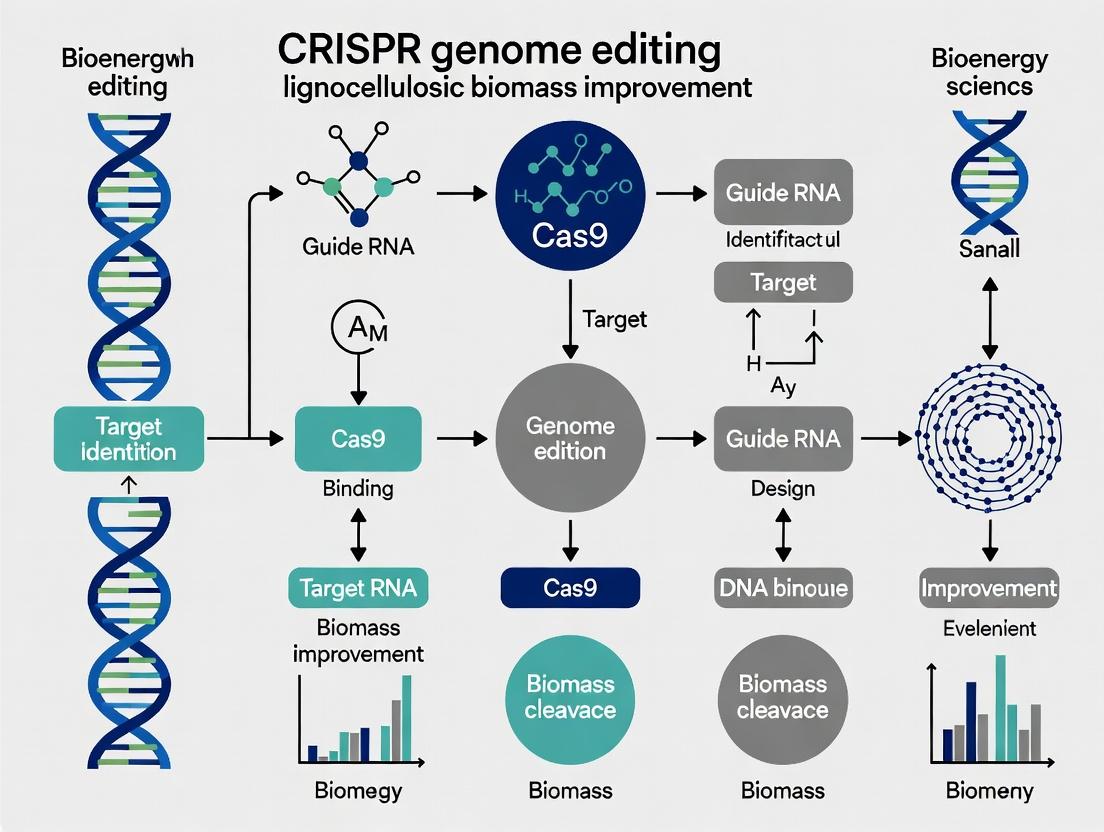
This article provides a detailed overview of CRISPR-Cas genome editing applications for improving lignocellulosic biomass in bioenergy crops.
CRISPR Genome Editing: A Comprehensive Guide to Enhancing Lignocellulosic Biomass for Bioenergy and Bioproducts
Abstract
This article provides a detailed overview of CRISPR-Cas genome editing applications for improving lignocellulosic biomass in bioenergy crops. It explores the foundational biology of plant cell walls, presents current methodologies for genetic manipulation, discusses critical troubleshooting and optimization strategies for efficient editing, and validates these approaches through comparative analysis of recent case studies. Aimed at researchers, scientists, and biotech professionals, this guide synthesizes the latest advancements and practical considerations for leveraging CRISPR to engineer crops with reduced biomass recalcitrance, improved saccharification yield, and enhanced sustainable biofuel production.
The Blueprint of Biomass: Understanding Lignocellulose Biology for CRISPR Targeting
The inherent recalcitrance of plant cell walls to deconstruction is the primary bottleneck in the efficient conversion of lignocellulosic biomass into biofuels and biochemicals. This recalcitrance arises from the complex, heterogeneous, and chemically resistant structure of the plant cell wall. Within the broader thesis of using CRISPR genome editing to improve lignocellulosic biomass, a fundamental understanding of this structure is paramount. CRISPR strategies aim to precisely modify genes involved in the biosynthesis of cell wall components—primarily cellulose, hemicellulose, and lignin—to create feedstocks with reduced recalcitrance, without compromising plant growth or yield. This document provides detailed application notes and protocols for analyzing plant cell wall structure and composition, essential for characterizing CRISPR-edited plant lines.
Research Reagent Solutions Toolkit
| Reagent/Material | Function/Application in Cell Wall Analysis |
|---|---|
| Updegraff Reagent (Acetic Acid:Nitric Acid:Water) | Selective hydrolysis of non-cellulosic polysaccharides for cellulose quantification. |
| Acetyl Bromide | Solubilizes lignin for spectrophotometric quantification (Acetyl Bromide Method). |
| Monosaccharide Standards (Glucose, Xylose, Arabinose, etc.) | HPLC/GC calibration for quantitative analysis of neutral sugar composition after hydrolysis. |
| Thioacidolysis Reagents (BF₃ etherate, Ethyl acetate, Dioxane/Ethanethiol) | Analysis of lignin composition and linkage types (β-O-4 bonds) by GC-MS. |
| Fluorescently-tagged Carbohydrate-Binding Modules (CBMs) | Microscopic visualization of specific polysaccharides (e.g., cellulose, xylans). |
| 4-Coumarate:CoA Ligase (4CL) Antibodies | Immunohistochemical localization of lignin biosynthesis enzymes. |
| Cellulase & Xylanase Enzyme Cocktails | In vitro saccharification assays to measure enzymatic digestibility (recalcitrance metric). |
| CRISPR-Cas9 Ribonucleoprotein (RNP) Complexes | For transient or stable transformation to edit cell wall biosynthesis genes. |
| Guide RNA (gRNA) targeting CesA, COMT, IRX genes | Specific targeting of cellulose synthase, lignin biosynthesis, and xylan formation genes. |
Quantitative Composition Analysis Protocols
Protocol: Sequential Fractionation for Cell Wall Component Quantification
Objective: To quantitatively isolate and measure the major polymeric components (soluble sugars, starch, hemicellulose, cellulose, lignin) from stem or leaf tissue.
Materials: Ball mill, 80% ethanol, Thermostable α-amylase, Phosphate buffer (pH 6.5), Updegraff reagent, 72% (w/w) H₂SO₄, Acetyl bromide, 2M NaOH.
Procedure:
- Sample Preparation: Harvest tissue, freeze-dry, and mill to a fine powder. Record dry weight (DW).
- Soluble Sugar & Starch Removal: Extract 50 mg DW with 80% ethanol (3x, 80°C). Digest the residue with α-amylase in phosphate buffer at 85°C for 1h. Centrifuge, wash pellet. The pellet is the Alcohol Insoluble Residue (AIR).
- Hemicellulose Extraction: Treat AIR with 2M NaOH at 25°C for 3h under nitrogen. Centrifuge. The supernatant contains alkali-soluble hemicelluloses. Precipitate with 4 volumes of ethanol, redissolve, and hydrolyze for monosaccharide analysis (see 3.2). Wash pellet.
- Cellulose Quantification: Treat the washed pellet from Step 3 with Updegraff reagent at 100°C for 30 min. Cool, centrifuge. Wash the pellet with water, then hydrolyze the cellulose in the final pellet with 72% H₂SO₄ (1h, RT), followed by dilution to 1M and hydrolysis at 100°C for 2h. Quantify released glucose via HPLC or enzymatically.
- Lignin Quantification (Acetyl Bromide): Treat a separate aliquot of AIR (~5 mg) with 25% acetyl bromide in acetic acid at 70°C for 30 min. Cool, add NaOH and hydroxylamine HCl. Measure absorbance at 280 nm. Use an appropriate lignin standard (e.g., Alkali Lignin) for calibration.
Protocol: Neutral Sugar Composition Analysis by High-Performance Anion-Exchange Chromatography (HPAEC-PAD)
Objective: To determine the monosaccharide profile of hemicellulose fractions.
Materials: H₂SO₄ (72%, 1M), Trifluoroacetic acid (TFA, 2M), HPAEC-PAD system (Dionex) with CarboPac PA20 column, NaOH eluents, monosaccharide standard mix.
Procedure:
- Hydrolysis: For the hemicellulose fraction from 3.1 Step 3, perform acid hydrolysis. Option A (Strong): Use 72% H₂SO₄ (1h, RT) followed by 1M H₂SO₄ (3h, 100°C). Option B (Milder for TFA-soluble hemicelluloses): Use 2M TFA (2h, 120°C).
- Neutralization & Filtration: Cool, neutralize hydrolysate (with BaCO₃ for H₂SO₄ or by evaporation under air stream for TFA), filter through a 0.22 µm membrane.
- Chromatography: Inject sample onto HPAEC-PAD. Use a gradient of NaOH and NaOAc. Detect sugars via pulsed amperometry.
- Quantification: Integrate peak areas and compare to a calibration curve of known monosaccharide standards.
Data Presentation: Typical Composition of Wild-Type vs. CRISPR-Edited Biomass
Table 1: Cell Wall Composition of Arabidopsis thaliana Wild-Type (Col-0) vs. CRISPR/Cas9-Edited irx9 Mutant (Defective in Glucuronoxylan Biosynthesis)
| Component (% Dry Weight) | Wild-Type (Col-0) | irx9 Mutant | Analytical Method |
|---|---|---|---|
| Cellulose | 38.2 ± 2.1 | 35.5 ± 1.8 | Updegraff + HPLC |
| Hemicellulose (total) | 25.7 ± 1.5 | 18.3 ± 1.2* | Sequential Extraction |
| - Xylose | 18.4 ± 1.1 | 11.2 ± 0.9* | HPAEC-PAD |
| - Arabinose | 3.1 ± 0.3 | 2.8 ± 0.3 | HPAEC-PAD |
| - Glucose (non-cellulosic) | 4.2 ± 0.4 | 4.3 ± 0.5 | HPAEC-PAD |
| Lignin (AcBr) | 17.8 ± 0.9 | 22.5 ± 1.1* | Acetyl Bromide |
| - S/G Ratio (Thioacidolysis) | 1.05 ± 0.08 | 0.87 ± 0.07* | GC-MS |
| Enzymatic Glucose Yield (72h) | 28.5% ± 3.2 | 41.7% ± 4.5* | Saccharification Assay |
*Indicates statistically significant difference (p < 0.05) from wild-type.
Visualization of Workflows and Relationships
Title: CRISPR Editing to Cell Wall Analysis Workflow
Title: CRISPR Targets in Cell Wall Biosynthesis Pathways
Application Notes
This document provides application notes and detailed protocols for CRISPR-Cas9-mediated genome editing in plant species (Populus, Sorghum, and Arabidopsis as models) to modify key genetic targets in the lignocellulosic biomass biosynthesis pathway. The goal is to reduce biomass recalcitrance for improved saccharification efficiency in biofuel production. Targeting these genes requires precise editing strategies due to the complex, multi-gene families involved and the necessity to avoid severe growth penalties.
1. Targeting Lignin Biosynthesis Genes Lignin, a complex phenolic polymer, is a major contributor to recalcitrance. Key enzymes like Cinnamyl Alcohol Dehydrogenase (CAD) and Caffeic acid O-methyltransferase (COMT) are prime targets. Knockouts or knockdowns can lead to reduced lignin content and altered monomer composition (S/G ratio), which enhances enzymatic digestibility.
- Key Finding: A recent study (2023) in Populus tremula x alba using multiplexed CRISPR-Cas9 to target 4-Coumarate:CoA Ligase (4CL) genes resulted in a 22-40% reduction in Klason lignin and a ~45% increase in glucose yield after a mild alkaline pretreatment, compared to wild-type.
- Consideration: Pleiotropic effects, such as vascular weakness or stunted growth, can occur. Using tissue-specific promoters or targeting specific gene family members expressed predominantly in fiber cells is recommended.
2. Modifying Cellulose Crystallinity (CrI) Cellulose synthase (CesA) genes and cellulase (KORRIGAN, KOR) are implicated in regulating cellulose microfibril organization and crystallinity. Higher CrI reduces enzymatic accessibility.
- Key Finding: CRISPRi-mediated suppression of secondary cell wall CesA subunits in Arabidopsis led to a 15-20% decrease in cellulose CrI (measured by XRD) and a concomitant 30% increase in cellulase hydrolysis efficiency without pretreatment.
- Consideration: Altering CesA genes can severely affect cell wall integrity. Weak inducible or secondary-wall-specific promoters are essential to avoid catastrophic plant development failures.
3. Reducing Hemicellulose Branching Xylan, the main hemicellulose, is heavily substituted with arabinose and glucuronic acid side chains. Genes like Glucuronyltransferase (GUX) and Arabinosyltransferase (XAT) control branching.
- Key Finding: In Sorghum bicolor, knockout mutants of SbGUX1/2 created via CRISPR-Cas9 showed a ~60% reduction in glucuronic acid substitution on xylan. This simplified structure correlated with a 52% reduction in hemicellulase dosage required to achieve 90% sugar conversion during enzymatic hydrolysis.
- Consideration: Reduced branching can affect cell-cell adhesion and water retention. Stacking this modification with lignin reduction often has synergistic benefits on digestibility.
Table 1: Quantitative Outcomes of CRISPR Editing on Biomass Traits
| Target Pathway | Gene Target(s) | Model Species | Key Phenotypic Change | Quantitative Improvement in Saccharification |
|---|---|---|---|---|
| Lignin Biosynthesis | 4CL1/2 | Populus | Lignin reduced by 22-40% | Glucose yield +45% (with pretreatment) |
| Lignin Biosynthesis | COMT | Sorghum | S/G ratio decreased by 65% | Enzymatic hydrolysis rate +32% |
| Cellulose Crystallinity | CesA4, CesA7 | Arabidopsis | CrI reduced by 15-20% | Cellulase efficiency +30% (no pretreatment) |
| Hemicellulose Branching | GUX1, GUX2 | Sorghum | GlcA substitution reduced by 60% | Hemicellulase requirement -52% |
Experimental Protocols
Protocol 1: Multiplexed sgRNA Design and Vector Assembly for Lignin Gene Family Targeting
Objective: To simultaneously knock out multiple members of the 4CL gene family in Populus using a single CRISPR-Cas9 construct. Materials: Plant genomic DNA, NEBridge CRISPR design tool, pYLCRISPR/Cas9Pubi-H multiplex vector system, E. coli DH5α, Agrobacterium GV3101. Procedure:
- sgRNA Design: Identify conserved 20-nt protospacer sequences in exon regions of Pt4CL1, Pt4CL2, and Pt4CL5 using the NEBridge tool. Select targets with high on-score and minimal off-target potential.
- Oligo Annealing: Synthesize complementary oligos for each sgRNA with BsaI overhangs. Anneal by heating to 95°C for 5 min and slowly cooling to 25°C.
- Golden Gate Assembly: Perform a one-pot Golden Gate reaction using BsaI-HFv2 and T7 DNA Ligase to sequentially clone up to 8 sgRNA expression cassettes into the pYLgRNA expression modules.
- Final Vector Construction: Assemble the selected pYLgRNA modules with the Cas9 expression cassette (driven by a Pubiquitin promoter) into the binary vector pYLCRISPR/Cas9Pubi-H via a second BsaI-mediated reaction.
- Transformation: Verify assembly by sequencing and electroporate into Agrobacterium for stable plant transformation.
Protocol 2:In PlantaAssessment of Cellulose Crystallinity (CrI) via X-ray Diffraction (XRD)
Objective: To measure changes in cellulose CrI in stem tissues of CRISPR-edited Arabidopsis lines. Materials: Freeze-dried stem sections, mortar and pestle, liquid N2, X-ray diffractometer (e.g., Bruker D8 Advance), MDI Jade software. Procedure:
- Sample Preparation: Grind 3-5 mg of dried, de-lignified stem tissue (from internode 5-8) to a fine powder under liquid nitrogen.
- XRD Scanning: Load powder onto a zero-background Si sample holder. Run the diffractometer with Cu Kα radiation (λ = 1.5406 Å) at 40 kV and 40 mA. Scan 2θ from 10° to 30° with a step size of 0.02°.
- CrI Calculation: Process the diffraction pattern using MDI Jade. Fit the amorphous background and the crystalline peaks (typically at ~22.5°). Calculate CrI using the Segal method: CrI (%) = [(I{002} - I{am}) / I{002}] × 100, where *I{002}* is the maximum intensity of the 002 lattice diffraction peak and I_{am} is the intensity of the amorphous background at 2θ ~18°.
- Statistical Analysis: Perform measurements on at least 5 biological replicates per genotype. Compare edited lines to wild-type using ANOVA.
Protocol 3: Analysis of Hemicellulose Structure Using Carbohydrate Gel Electrophoresis (PACE)
Objective: To profile xylan branching patterns in Sorghum gux CRISPR mutant stems. Materials: Stem cell wall alcohol-insoluble residue (AIR), specific glycosylhydrolases (GH10 endoxylanase, GH11 xylanase), 8-aminonaphthalene-1,3,6-trisulfonic acid (ANTS), electrophoresis system. Procedure:
- Xylan Extraction: Extract xylan from 10 mg AIR using 1M KOH with 1% (w/v) NaBH4. Neutralize, dialyze, and lyophilize.
- Enzymatic Digestion: Digest 50 µg of extracted xylan with 0.1 U of GH10 endoxylanase in 50 mM ammonium acetate buffer (pH 6.0) at 37°C for 18h.
- Fluorescent Labeling: Dry oligosaccharide products, label with ANTS in acetic acid/ DMSO mixture (3:17 v/v) with NaCNBH3, and incubate at 37°C for 16h.
- Gel Electrophoresis: Resuspend labeled oligosaccharides in glycerol loading buffer. Separate on a 30% (w/v) acrylamide gel in 50 mM Tris-glycine buffer (pH 8.3) at 300V for 2h.
- Visualization & Analysis: Visualize oligosaccharide ladders under UV illumination. Compare the banding pattern of mutant samples to wild-type; the absence of specific bands indicates loss of substituted oligosaccharides, confirming reduced branching.
Visualizations
Title: CRISPR Targets in the Phenylpropanoid Pathway
Title: CRISPR Workflow for Biomass Improvement
The Scientist's Toolkit: Research Reagent Solutions
| Item | Function & Application |
|---|---|
| pYLCRISPR/Cas9Pubi-H Vector System | A modular toolbox for efficient assembly of up to 8 sgRNAs with a plant codon-optimized Cas9, widely used in monocots and dicots. |
| NEBridge CRISPR Design Tool | Online platform for identifying high-specificity sgRNA sequences with minimal off-target effects in various plant genomes. |
| Agrobacterium Strain GV3101 | A disarmed helper strain highly effective for stable transformation of a broad range of plant species, including Arabidopsis and Populus. |
| Plant Cell Wall Analysis Kit | Commercial kit (e.g., from Megazyme) for standardized measurement of lignin, cellulose, and hemicellulose content via sequential digestion and colorimetric assays. |
| Monoclonal Antibodies (LM10, LM11) | Antibodies specific for less-substituted or highly-substituted xylan, used for immunolocalization to visualize hemicellulose alterations in cell walls. |
| GH10 Endoxylanase | Highly specific glycosyl hydrolase for digesting xylan backbone to analyze substitution patterns via techniques like PACE or MALDI-TOF. |
CRISPR-Cas systems have revolutionized plant genome engineering, offering precise tools to modify the genetic underpinnings of lignocellulosic biomass traits. This field aims to deconstruct plant cell wall recalcitrance by editing genes involved in lignin biosynthesis, hemicellulose composition, cellulose crystallinity, and biomass yield. Moving beyond simple knockouts with Cas9, advanced editors allow for precise single-base changes, targeted insertions, and reversible epigenetic modulation—all without introducing double-strand breaks. This primer details the applications and protocols for these systems within a research pipeline focused on improving feedstocks like poplar, switchgrass, and Miscanthus.
The CRISPR Toolkit: From Cas9 to Advanced Editors
Cas9 Nuclease (SpCas9): The foundational tool for creating knockouts via non-homologous end joining (NHEJ). Used to disrupt genes for monolignol biosynthesis (e.g., 4CL, CCR, CAD) to reduce lignin content.
Base Editors (BEs): Fusion of a catalytically impaired Cas9 (nCas9 or dCas9) with a deaminase enzyme. Enables direct, irreversible conversion of one DNA base pair to another (C•G to T•A or A•T to G•C) without DSBs. Applicable for introducing premature stop codons in lignin genes or modifying regulatory sequences.
Prime Editors (PEs): A fusion of nCas9 with an engineered reverse transcriptase, programmed with a prime editing guide RNA (pegRNA). Can mediate all 12 possible base-to-base conversions, as well as small insertions and deletions. Ideal for installing precise, beneficial single nucleotide polymorphisms (SNPs) in cellulose synthase (CesA) genes.
Epigenetic Editors: Utilize dCas9 fused to epigenetic effector domains (e.g., demethylases like TET1, methyltransferases like DRM). Enables targeted DNA methylation or demethylation to modulate gene expression (e.g., silencing lignin biosynthesis genes or activating biomass-related transcription factors) in a potentially reversible manner.
Quantitative Comparison of CRISPR Systems for Plant Biomass Engineering
Table 1: Key Characteristics and Applications of CRISPR Systems
| Editor Type | Core Components | Primary Edit Type | Typical Efficiency in Plants | Key Application in Biomass Research |
|---|---|---|---|---|
| SpCas9 Nuclease | SpCas9, sgRNA | DSB, Indels (Knockout) | 5-40% (stable transformation) | Disrupting lignin biosynthetic genes (PvPAL, PvC4H) |
| Cytosine Base Editor (CBE) | nCas9-DdA1/rAPOBEC1, sgRNA | C•G to T•A | 1-30% (transient) | Creating stop codons in ZmCCR to reduce lignin. |
| Adenine Base Editor (ABE) | nCas9-TadA, sgRNA | A•T to G•C | 0.5-20% (transient) | Modifying promoter elements of SbMYB transcription factors. |
| Prime Editor (PE) | nCas9-RT, pegRNA | All point mutations, small indels | 0.1-10% (regeneration-dependent) | Installing precise SNPs in PtCesA8 for altered cellulose properties. |
| Epigenetic Editor (e.g., CRISPRoff) | dCas9-DNMT3A/3L, sgRNA | DNA methylation (gene silencing) | Up to 80% silencing (transient) | Heritable silencing of PvCOMT without altering DNA sequence. |
Table 2: Editing Outcomes in Recent Landmark Plant Biomass Studies (2022-2024)
| Target Plant | Target Gene | Editor Used | Editing Efficiency | Biomass Phenotype |
|---|---|---|---|---|
| Populus tremula | Pta4CL1 | SpCas9 | 85% biallelic mutants in regenerated lines | ~20% reduction in lignin, increased saccharification yield. |
| Sorghum bicolor | SbTMF | ABE7.10 | 3.8% (homozygous edits in T1) | Altered flowering time, increased biomass density. |
| Rice (Oryza sativa) | OsALS | PE2 | 2.1% precise substitutions in T0 | Herbicide resistance marker for selection in bioenergy crops. |
| Nicotiana benthamiana (model) | PDS | SunTag-DNMT3A | ~90% transcriptional repression | Proof-of-concept for heritable epigenetic silencing of traits. |
Detailed Protocols
Protocol 1: Design and Validation of gRNAs for Lignin Gene Knockout using Cas9 in Poplar
Objective: To generate stable knockout lines for 4-Coumarate:CoA Ligase (4CL) in poplar (Populus trichocarpa) via Agrobacterium-mediated transformation.
Materials (Research Reagent Solutions):
- Plant Material: Populus tremula x alba (clone 717-1B4) sterile stem segments.
- Vector: pRGEB32 (Binary vector with AtU6::sgRNA, 35S::SpCas9, and Bar resistance).
- Agrobacterium Strain: GV3101.
- Selection Agent: Glufosinate ammonium (5 mg/L).
- Culture Media: Woody Plant Medium (WPM) with appropriate hormones (0.1 mg/L NAA, 0.2 mg/L TDZ).
- PCR & Sequencing Reagents: KAPA Plant PCR Kit, primers flanking target site, Sanger sequencing service.
- Analysis Software: Cas-Designer (for gRNA design), ICE Analysis (Synthego) for indel quantification.
Methodology:
- gRNA Design: Identify two target sites within the first exon of Ptr4CL1 (Potri.001G123400) using Cas-Designer. Select gRNAs with high on-target scores and minimal off-target potential in the poplar genome.
- Vector Construction: Clone annealed oligos for each gRNA into the BsaI site of pRGEB32. Transform into Agrobacterium.
- Plant Transformation: Inoculate sterile poplar stem segments with Agrobacterium suspension (OD600=0.5) for 30 minutes. Co-cultivate on WPM plates for 2 days.
- Selection and Regeneration: Transfer explants to WPM selection plates containing 5 mg/L glufosinate and antibiotics. Subculture every 2 weeks until shoot initiation (~8-10 weeks).
- Genotyping: Extract genomic DNA from regenerated shoots. Amplify the target region via PCR and subject to Sanger sequencing. Deconvolution of sequencing traces using ICE to calculate editing efficiency and identify biallelic/homozygous lines.
- Phenotyping: Grow edited lines in greenhouse. Analyze stem cross-sections for lignin (phloroglucinol-HCl stain) and quantify lignin content via acetyl bromide method.
Protocol 2: Transient Delivery and Evaluation of Base Editors inNicotiana benthamianaLeaves
Objective: Rapid in planta testing of adenine base editor (ABE) efficiency for a target sequence.
Materials (Research Reagent Solutions):
- Plant Material: 4-week-old N. benthamiana plants.
- Vectors: pCmYLCV-ABE8e (expressing ABE8e-nCas9) and pAtU6-sgRNA (for target gRNA).
- Agrobacterium Strain: GV3101 pSoup.
- Infiltration Buffer: 10 mM MES, 10 mM MgCl2, 150 µM Acetosyringone, pH 5.6.
- DNA Extraction Kit: CTAB-based plant DNA extraction kit.
- Analysis Method: High-Resolution Melting (HRM) analysis or targeted deep sequencing.
Methodology:
- Agrobacterium Preparation: Transform vectors into Agrobacterium. Grow cultures, resuspend in infiltration buffer to final OD600 of 0.5 for each construct (mixed 1:1).
- Leaf Infiltration: Inject the bacterial mixture into the abaxial side of fully expanded leaves using a needleless syringe.
- Tissue Harvest: Harvest infiltrated leaf discs at 3-5 days post-infiltration.
- DNA Extraction & Analysis: Extract genomic DNA. Perform PCR on the target region. Use HRM analysis to detect heteroduplex formation indicative of editing. Confirm edits and calculate efficiency via Sanger sequencing traces analyzed with BE-Analyzer or by targeted amplicon sequencing.
Visualizing Workflows and Pathways
Diagram Title: Evolution of CRISPR Tools for Plant Biomass Engineering
Diagram Title: Experimental Pipeline for CRISPR Editing in Biomass Crops
The Scientist's Toolkit: Essential Research Reagent Solutions
Table 3: Key Reagents and Kits for CRISPR Plant Research
| Reagent/Kits | Supplier Examples | Function in CRISPR Workflow |
|---|---|---|
| Golden Gate Assembly Kit (MoClo) | Addgene, NEB | Modular cloning of multiple gRNA arrays and effector genes into plant binary vectors. |
| Plant-specific CRISPR-Cas Vectors (pRGEB, pHEE401) | Addgene, ABRC | Ready-to-use plasmids with plant promoters (U6, 35S) and selection markers (Bar, Hyg). |
| Agrobacterium tumefaciens Strains (GV3101, EHA105) | Various Labs | Preferred delivery method for stable transformation of many dicot biomass crops. |
| Guide RNA in vitro Transcription Kit | NEB, Thermo Fisher | For synthesizing gRNAs for Ribonucleoprotein (RNP) complex delivery via protoplasts. |
| KAPA Plant PCR Kit | Roche | High-yield, inhibitor-resistant PCR for genotyping tough plant tissues. |
| Sanger Sequencing Service + ICE Analysis | GENEWIZ, Synthego | Quick, cost-effective genotyping and indel quantification from Sanger traces. |
| Targeted Amplicon Sequencing Service | Illumina, Geneious | High-depth sequencing for accurate quantification of base/prime editing efficiency. |
| Phloroglucinol-HCl & Acetyl Bromide | Sigma-Aldrich | Histochemical staining and quantitative measurement of lignin content. |
| Upcycled Biomass Saccharification Kit | Megazyme | Measures reducing sugars released from edited biomass, quantifying digestibility improvement. |
Application Notes: Genomic Insights and Editing Targets
The application of CRISPR-Cas genome editing for lignocellulosic biomass improvement leverages foundational knowledge from model species to accelerate trait development in dedicated bioenergy crops. This comparative genomics approach identifies conserved and divergent pathways governing biomass yield, composition, and processing efficiency.
Table 1: Key Genomic and Phenotypic Comparisons for Biomass Traits
| Trait | Arabidopsis thaliana (Model) | Populus spp. (Woody Crop) | Panicum virgatum (Switchgrass, Herbaceous Crop) | Conserved Editing Target Genes |
|---|---|---|---|---|
| Genome Size / Ploidy | ~135 Mb; Diploid | ~480 Mb; Diploid (usually) | ~1.5 Gb; Tetraploid/Octoploid | — |
| Generation Time | 6-8 weeks | 4-10 years to maturity | 2-3 years to full yield | — |
| Lignin Content (% S/G Ratio) | ~20% (High S/G) | ~25% (Variable S/G) | ~20-25% (High S/G in stems) | PAL, C4H, 4CL, C3H, HCT, CCoAOMT, F5H, COMT, CCR, CAD |
| Cellulose Crystallinity | Low | Moderate-High | High | CesA (Cellulose synthase), Csl genes, KORRIGAN |
| Biomass Yield (Dry Matter) | Low | Very High (10-20 Mg/ha/yr) | High (10-20+ Mg/ha/yr) | GA20-oxidase (growth), TCP transcription factors |
| Key Model-Informed Pathways | Secondary wall biosynthesis, flowering time | Wood formation (tension wood), perennial growth | Seasonal senescence, nutrient remobilization | NAC/MYB master switches, WRKY transcription factors |
| CRISPR Delivery Efficiency | >90% (Floral dip) | Low (<10%) (Stable transformation) | Low-Medium (Callus transformation) | — |
Table 2: Quantitative Impact of CRISPR Edits on Biomass Traits (Recent Examples)
| Species | Target Gene(s) | Editing Goal | Reported Outcome (Quantitative Change) | Source |
|---|---|---|---|---|
| Arabidopsis | CCR2 | Reduce lignin | ~30-40% lignin reduction; altered composition | Recent preprint, 2024 |
| Poplar | 4CL, C3H | Reduce lignin, alter S/G | Up to 50% lignin reduction; S/G ratio decreased by 35%; improved saccharification | Nature Comm, 2023 |
| Switchgrass | COMT | Reduce lignin | 10-20% lignin reduction; no yield penalty in field trials | GCB Bioenergy, 2023 |
| Poplar | GA20-oxidase | Increase growth | 25-40% increased stem volume and biomass | Plant Biotechnology Journal, 2024 |
| Switchgrass | PvMYB4 | Reduce lignin, increase sugar | Reduced lignin, 15-30% increase in glucose release | Frontiers in Plant Science, 2024 |
Detailed Experimental Protocols
Protocol 2.1: Multi-Species Guide RNA Design for Conserved Lignin Genes
Objective: Design CRISPR-Cas9 gRNAs targeting exonic regions of key lignin biosynthetic genes (e.g., 4CL) conserved across Arabidopsis, poplar, and switchgrass.
- Sequence Retrieval: Obtain coding sequences (CDS) for the target gene (4CL1) from reference genomes: TAIR (Arabidopsis), Phytozome (Populus trichocarpa v4.1, Panicum virgatum v5.1).
- Multiple Sequence Alignment: Use Clustal Omega or MAFFT to align protein and nucleotide sequences. Identify blocks of high amino acid conservation.
- gRNA Design: Using the conserved nucleotide blocks, identify 20-bp protospacer sequences 5'-N{20}-NGG-3' (for SpCas9). Prioritize exonic regions upstream of critical functional domains.
- Specificity Check: Perform in-silico off-target analysis for each species' genome using Cas-OFFinder or CRISPR-P. For polyploid switchgrass, check all homoeologous genomic sequences.
- Cloning: Synthesize oligos for the chosen gRNA(s) and clone into the appropriate plant CRISPR vector (e.g., pRGEB32 for monocots, pHEE401 for dicots) via Golden Gate or BsaI restriction-ligation.
- Validation: Sanger sequence the final construct to confirm accurate gRNA insertion.
Protocol 2.2:Agrobacterium-Mediated Transformation of Poplar and Switchgrass for Biomass Editing
Objective: Stable transformation of poplar (hybrid aspen 717) and switchgrass (Alamo) to introduce CRISPR-Cas9 constructs targeting lignin biosynthesis.
Part A: Poplar Transformation (Based on Nature Protocols, 2023)
- Explants: Harvest young, expanding leaves from in vitro-grown plants. Slice into ~1 cm² pieces.
- Pre-culture: Place explants abaxial side down on shoot induction medium (SIM: MS salts, 0.5 mg/L BAP, 0.05 mg/L NAA) for 2 days.
- Agrobacterium Co-cultivation:
- Grow Agrobacterium tumefaciens (strain GV3101) harboring the binary CRISPR vector to OD₆₀₀ ~0.8.
- Resuspend in liquid SIM + 100 µM acetosyringone.
- Immerse pre-cultured explants for 15-20 minutes, blot dry, and co-culture on SIM + acetosyringone for 2-3 days in the dark.
- Selection & Regeneration: Transfer explants to SIM containing antibiotics for selection (e.g., kanamycin 50 mg/L) and to suppress Agrobacterium (Timentin 300 mg/L). Subculture every 2 weeks.
- Shoot Development: After 4-8 weeks, transfer developing shoots to shoot elongation medium (MS, 0.1 mg/L BAP).
- Rooting & Acclimation: Elongated shoots are transferred to rooting medium (½ MS, 0.5 mg/L IBA). Rooted plantlets are acclimated to greenhouse conditions.
Part B: Switchgrass Transformation (Alamo, Type II Callus)
- Callus Induction: Sterilize mature seeds. Plate on callus induction medium (N6 salts, 2.5 mg/L 2,4-D, 200 mg/L casein hydrolysate). Incubate in dark for 4-6 weeks. Select Type II, embryogenic callus.
- Agrobacterium Co-cultivation:
- Use A. tumefaciens strain AGL1.
- Suspend embryogenic callus in liquid N6 + 2,4-D + 100 µM acetosyringone and Agrobacterium (OD₆₀₀ 0.6-0.8) for 30 minutes.
- Blot dry and co-culture on filter paper over solid medium for 3 days in dark.
- Selection: Transfer callus to resting medium (N6 + 2,4-D + Timentin) for 1 week, then to selection medium (N6 + 2,4-D + Timentin + Hygromycin B 50 mg/L) for 6-8 weeks with bi-weekly subculture.
- Regeneration: Transfer resistant callus to regeneration medium (MS salts, no hormones, with selection). Transfer developing plantlets to rooting medium (½ MS).
- Molecular Analysis: Extract genomic DNA from regenerated plantlets (T0). Use PCR/RE assay to detect mutations at target sites. Sequence PCR amplicons to characterize edits across all homoeologs.
Visualizations
Title: CRISPR Workflow from Model to Crop
Title: Lignin Biosynthesis Pathway & Key Targets
The Scientist's Toolkit: Research Reagent Solutions
Table 3: Essential Reagents for Cross-Species CRISPR Biomass Research
| Reagent / Material | Function / Purpose | Example Product / Specification |
|---|---|---|
| Plant CRISPR Vectors | Delivery of Cas9 and gRNA(s). Requires species-specific promoters. | pRGEB32 (Ubiquitin promoter for monocots), pHEE401 (Egg cell-specific for dicots), pYLCRISPR/Cas9. |
| Agrobacterium Strains | Stable transformation of plant tissues. Different efficiencies per species. | GV3101 (for poplar, Arabidopsis), AGL1 (for switchgrass, cereals), EHA105. |
| High-Fidelity Cas9 Variant | Reduces off-target editing, critical for perennial crops and field release. | SpCas9-HF1, eSpCas9(1.1). Cloned into plant expression vectors. |
| Type II Embryogenic Callus | The transformable tissue for switchgrass and many monocots. | Derived from mature seeds of Panicum virgatum L. cv. Alamo on 2,4-D medium. |
| Next-Gen Sequencing Kit | For deep sequencing of target amplicons to characterize edits in polyploids. | Illumina MiSeq Reagent Kit v3 (150-cycle). Used for amplicon-seq of target loci. |
| Cell Wall Analysis Kit | Quantification of lignin content and composition (S/G ratio). | Acetyl Bromide Soluble Lignin (ABSL) Assay Kit. Thioacidolysis-GC/MS for S/G. |
| Sugar Release Assay Kit | Measures saccharification potential of edited biomass. | NREL LAP "Enzymatic Saccharification of Lignocellulosic Biomass". |
| Plant Tissue Culture Media | For regeneration of transformed explants. Species-specific formulations. | Murashige and Skoog (MS), N6, Woody Plant Medium (WPM). Custom hormone mixes. |
Precision Engineering in the Field: CRISPR Delivery and Editing Strategies for Crops
Within the context of CRISPR genome editing for lignocellulosic biomass improvement, the selection of an appropriate transformation and delivery method is paramount. Efficient delivery of CRISPR-Cas components into plant cells, followed by stable integration or transient expression, is a critical bottleneck. This article provides detailed application notes and protocols for three core delivery systems—Agrobacterium-mediated transformation, biolistics, and protoplast systems—contrasting their utility in both monocot and dicot species relevant to biomass crops like poplar (dicot), switchgrass (monocot), and maize (monocot).
Table 1: Comparison of Key Transformation Methods for CRISPR Delivery in Biomass Crops
| Parameter | Agrobacterium-mediated | Biolistics (Gene Gun) | Protoplast Transfection |
|---|---|---|---|
| Primary Species Suitability | Dicots (e.g., Poplar), some Monocots (e.g., Rice) | All, especially recalcitrant Monocots (e.g., Switchgrass, Maize) | All, but regeneration is limiting |
| Typical Delivery Form | T-DNA binary vector | DNA-coated gold/microparticles | PEG or electroporation with DNA/RNP |
| Integration Pattern | Low-copy, precise | Multicopy, complex inserts | Primarily transient; can integrate |
| CRISPR Format Suitability | CRISPR-Cas9 plasmid, entire T-DNA | Plasmid DNA, pre-assembled RNPs | Plasmid DNA, linear DNA, or purified RNP complexes |
| Regeneration Difficulty | Moderate | High (tissue damage) | Very High (plant regeneration from protoplasts) |
| Typical Transformation Efficiency (Quantitative Range) | 5-70% (stable, species-dependent) | 0.1-10% (stable) | 10-80% (transient transfection) |
| Throughput | Medium | High | Very High for screening |
| Key Advantage for Biomass Research | Clean integration, stable inheritance for perennial crops. | Species-independent, direct delivery of RNPs minimizes vector backbone integration. | High-efficiency RNP delivery for rapid knockout screening in edited cells. |
| Major Limitation | Host-range limitations, genotype dependence. | Somaclonal variation, complex insertions. | Difficult plant regeneration, not suitable for all species. |
Application Notes & Detailed Protocols
Agrobacterium-Mediated Transformation
Application Note: The preferred method for dicots and model monocots like rice. Ideal for introducing CRISPR-Cas9 expression cassettes within T-DNA borders for stable transformation. Essential for long-term biomass trait stacking in perennial crops.
Protocol 1.1: Agrobacterium Co-cultivation of Dicot Leaf Explants (e.g., Poplar)
- Research Reagent Solutions:
- Binary Vector pCAMBIA2300-Cas9/gRNA: Contains T-DNA with Cas9 and sgRNA expression cassettes, plant selection marker (e.g., nptII).
- Agrobacterium tumefaciens Strain EHA105: Disarmed hypervirulent strain.
- Acetosyringone (100 mM stock): Phenolic inducer of Agrobacterium vir genes.
- MS Basal Medium with 3% sucrose and Phytohormones (e.g., 1 mg/L BAP, 0.1 mg/L NAA): For explant regeneration.
- Selection Antibiotics: Kanamycin (for plant selection) and Rifampicin/Carbenicillin (for Agrobacterium control).
- Methodology:
- Transform the binary vector into A. tumefaciens EHA105 via electroporation.
- Inoculate a single colony in liquid YEP medium with appropriate antibiotics, incubate at 28°C, 200 rpm for 24h.
- Pellet bacteria and resuspend in MS liquid medium to OD₆₀₀ ~0.5. Add acetosyringone to a final concentration of 100 µM.
- Surface-sterilize young poplar leaves, cut into ~1 cm² explants.
- Immerse explants in the Agrobacterium suspension for 20 minutes, blot dry on sterile paper.
- Co-cultivate explants on MS solid medium (no antibiotics) with acetosyringone (100 µM) in the dark at 25°C for 48 hours.
- Transfer explants to regeneration medium containing kanamycin (100 mg/L) and cefotaxime (250 mg/L) to kill Agrobacterium.
- Subculture every 2-3 weeks. Develop shoots are transferred to rooting medium.
- Screen regenerated plantlets by PCR and sequencing for edits in target lignocellulosic genes (e.g., 4CL, CAD).
Biolistics (Particle Bombardment)
Application Note: Crucial for transforming recalcitrant monocot biomass species like switchgrass and maize. Enables direct delivery of pre-assembled CRISPR-Cas9 Ribonucleoprotein (RNP) complexes, eliminating DNA integration and creating transgene-free edited plants.
Protocol 2.1: Biolistic Delivery of CRISPR RNP into Monocot Callus (e.g., Switchgrass)
- Research Reagent Solutions:
- Gold Microparticles (0.6 µm diameter): DNA/RNP carrier.
- Purified Cas9 Protein and in vitro-transcribed sgRNA or synthetic sgRNA: For RNP complex assembly.
- Spermidine (0.1 M) and CaCl₂ (2.5 M): For precipitating RNPs onto gold particles.
- PDS-1000/He System (Bio-Rad): Helium-driven gene gun.
- Rupture Disks (1100 psi): Controls helium pressure for particle acceleration.
- Osmoticum (e.g., Mannitol 0.2 M in culture medium): Pre- and post-bombardment treatment to reduce cell turgor and damage.
- Methodology:
- RNP Complex Assembly: Incubate 10 µg of purified Cas9 protein with a 1.2x molar ratio of sgRNA targeting a lignin biosynthesis gene (e.g., COMT) in nuclease-free buffer at 25°C for 10 minutes.
- Particle Preparation: Wash 10 mg of 0.6 µm gold particles in 100% ethanol, then resuspend in 50 µL nuclease-free water. Add 10 µL of assembled RNP complex, 50 µL of 2.5 M CaCl₂, and 20 µL of 0.1 M spermidine. Vortex for 3 minutes, incubate on ice for 1 minute, pellet, wash with 70% ethanol, and finally resuspend in 30 µL 100% ethanol.
- Target Tissue Preparation: Subculture embryogenic switchgrass callus onto osmoticum medium 4 hours prior to bombardment.
- Bombardment: Pipette 5 µL of gold-RNP suspension onto a macrocarrier. Assemble the bombardment chamber with the target callus placed 6 cm below the stopping screen. Bombard at 1100 psi under a vacuum of 28 in Hg.
- Recovery and Regeneration: Post-bombardment, incubate callus on osmoticum medium in the dark for 16-24 hours, then transfer to standard regeneration medium. Screen proliferating calli for edits via PCR/RE assay or sequencing.
Protoplast Transfection
Application Note: Provides a high-throughput platform for rapid validation of CRISPR-Cas reagent efficiency (e.g., sgRNA activity) in a species of interest before embarking on stable transformation. Enables mass transfection of RNPs for screening edits in cell walls of biomass species.
Protocol 3.1: PEG-Mediated Transfection of CRISPR Components into Poplar Leaf Protoplasts
- Research Reagent Solutions:
- Enzyme Solution: 1.5% Cellulase R10, 0.4% Macerozyme R10, 0.4 M Mannitol, 20 mM KCl, 20 mM MES pH 5.7, 10 mM CaCl₂, 0.1% BSA.
- W5 Solution: 154 mM NaCl, 125 mM CaCl₂, 5 mM KCl, 2 mM MES pH 5.7.
- MMg Solution: 0.4 M Mannitol, 15 mM MgCl₂, 4 mM MES pH 5.7.
- PEG Solution (40% w/v): PEG 4000, 0.2 M Mannitol, 0.1 M CaCl₂.
- WI Solution: 0.5 M Mannitol, 20 mM KCl, 4 mM MES pH 5.7.
- Methodology:
- Protoplast Isolation: Slice young, sterilized poplar leaves into thin strips. Incubate in enzyme solution in the dark at 25°C for 6-16 hours with gentle shaking (30 rpm).
- Filter the digest through a 70 µm nylon mesh into a tube. Pellet protoplasts by centrifugation at 100 x g for 5 minutes.
- Wash pellet gently with W5 solution, resuspend in W5, and incubate on ice for 30 minutes.
- Transfection: Pellet 2 x 10⁵ protoplasts. Resuspend in 100 µL MMg solution.
- Add 10-20 µg of plasmid DNA expressing Cas9/sgRNA OR 10 µL of pre-assembled RNP complex (5 µg Cas9 protein). Mix gently.
- Add an equal volume (110-120 µL) of 40% PEG solution, mix gently by inversion, and incubate at room temperature for 15 minutes.
- Dilute slowly with 1 mL of W5 solution, then pellet protoplasts at 100 x g for 5 minutes.
- Resuspend gently in 1 mL of WI solution and culture in the dark at 25°C.
- Harvest protoplasts after 48-72 hours for DNA extraction. Analyze editing efficiency at the target locus using T7 Endonuclease I assay or deep sequencing.
Visualized Workflows and Pathways
Title: Decision Workflow for CRISPR Delivery Method Selection
Title: Agrobacterium T-DNA Transfer Signaling Pathway
Title: Biolistic Delivery of CRISPR RNP Complexes
Designing sgRNAs for Multiplexed Editing of Complex Metabolic Pathways
This application note is framed within a broader research thesis focused on applying CRISPR-Cas genome editing to enhance lignocellulosic biomass in bioenergy crops (e.g., poplar, switchgrass, sorghum). The primary goal is to re-engineer complex metabolic pathways—such as lignin biosynthesis, hemicellulose acetylation, and secondary cell wall formation—to reduce biomass recalcitrance and improve saccharification efficiency. Multiplexed editing, enabled by the simultaneous delivery of multiple single guide RNAs (sgRNAs), is critical for addressing the polygenic nature of these traits. This document provides current protocols and design considerations for effective multiplex sgRNA design and delivery in plant systems.
Key Design Principles for Multiplexed sgRNAs
Successful multiplexing requires careful sgRNA design to maximize on-target efficiency and minimize off-target effects. Key principles include:
- High On-Target Efficiency: Selection based on sequence-specific features (GC content, specific nucleotides at key positions).
- Minimal Off-Target Effects: Comprehensive genome-wide off-target prediction using up-to-date reference genomes.
- Avoidance of Cross-Talk: Ensuring sgRNAs do not have significant homology to each other or to non-targeted genomic loci.
- Compatible Delivery Strategy: Designing sgRNA expression cassettes suitable for the chosen multiplexing vector system (e.g., tRNA-gRNA, Csy4, Polystronic).
Table 1: Quantitative Parameters for Optimal sgRNA Design in Plants
| Parameter | Optimal Range | Rationale & Impact |
|---|---|---|
| GC Content | 40% - 60% | <40% may reduce stability; >60% may increase off-target risk. |
| sgRNA Length | 20 nt (spacer) | Standard length for SpCas9; 18-22 nt can be tested for specificity. |
| Seed Region (PAM-proximal 8-12 nt) | High specificity critical | Mismatches here drastically reduce cleavage. |
| Off-Target Mismatch Tolerance | ≤3 mismatches, avoid in seed region | Predicts potential off-target sites for evaluation. |
| Poly-T Tracts | Avoid ≥4 consecutive T's | Acts as a premature termination signal for Pol III promoters (U6/U3). |
| Genomic Context | Target exonic or regulatory regions | For gene knock-out or cis-regulatory editing, respectively. |
Protocol: A Workflow for Designing and Validating Multiplex sgRNAs
In SilicoDesign and Selection
Objective: To identify high-efficiency, specific sgRNAs for 3-10 target genes within a metabolic pathway. Materials: High-quality genome assembly & annotation files for target organism, sgRNA design software (see Toolkit).
Procedure:
- Define Target Genes: From the target pathway (e.g., lignin biosynthesis: PAL, C4H, 4CL, CCoAOMT, CAD), identify specific exonic sequences for knock-out or promoter regions for modulation.
- Identify Candidate sgRNAs: Use design tools (e.g., CRISPR-P, CHOPCHOP). Input the DNA sequence of each target locus. Extract all possible sgRNAs with a 5'-NGG-3' PAM (for SpCas9).
- Filter and Rank: Apply filters from Table 1. Rank sgRNAs based on predicted on-target scores (e.g., Doench '16 score) and a low number of predicted off-targets (allow 0-2 mismatches).
- Final Selection for Multiplexing: Select the top 2 sgRNAs per target gene. Perform cross-hybridization check: ensure no significant sequence similarity (>50% over 15nt) between all selected sgRNA spacers.
Experimental Validation of sgRNA Efficiency (Golden Gate Cloning & Transient Assay)
Objective: To functionally validate cleavage efficiency of individual sgRNAs before assembling the multiplex construct.
Protocol:
- Cloning into a Validation Vector: Using BsaI-based Golden Gate assembly, clone each individual sgRNA sequence into a plant binary vector containing a SpCas9 expression cassette and a plant-adapted fluorescent marker (e.g., GFP).
- Plant Transformation: For a rapid assay, use Agrobacterium tumefaciens-mediated transient transformation of leaf disks or protoplasts from your target plant species. Include an empty sgRNA vector as a negative control.
- Efficiency Analysis (7-10 days post-transformation):
- Extract Genomic DNA from transformed tissue.
- PCR Amplify target loci from pooled cells (amplicons ~500-800 bp spanning the target site).
- Assess Indels: Use T7 Endonuclease I (T7EI) or ICE Analysis (Synthego) on PCR products. Calculate indel frequency as a proxy for cleavage efficiency.
- Select the most efficient sgRNA per target gene for the multiplex assembly.
Table 2: Example Validation Data for Lignin Pathway sgRNAs in Poplar Protoplasts
| Target Gene (Poplar) | sgRNA ID | Predicted Efficiency Score | Measured Indel % (T7EI Assay) | Selected for Multiplex |
|---|---|---|---|---|
| Ptr4CL1 | 4CL1-g2 | 78 | 45% | YES |
| Ptr4CL1 | 4CL1-g5 | 85 | 12% | No |
| PtrCCOAOMT1 | CCoA-g1 | 92 | 68% | YES |
| PtrCAD1 | CAD1-g3 | 80 | 31% | YES |
Assembly of a Multiplex sgRNA Expression Construct
Objective: To assemble the validated sgRNAs into a single transcriptional unit using a tRNA-processing system.
Protocol:
- Design Oligos: For each selected sgRNA, design forward and reverse oligonucleotides that, when annealed, produce overhangs compatible with the tRNA-gRNA array Golden Gate assembly.
- Hierarchical Golden Gate Assembly:
- Perform a Level 1 reaction to assemble individual "tRNA-sgRNA" units in an intermediate vector.
- Perform a Level 2 reaction to concatenate multiple "tRNA-sgRNA" units sequentially into a final multiplex array within a plant binary vector containing SpCas9.
- Sequence Verification: Confirm the integrity of the entire multiplex array via long-range PCR and Sanger sequencing using internal primers.
The Scientist's Toolkit: Research Reagent Solutions
Table 3: Essential Materials for Multiplexed sgRNA Experiments
| Item | Function & Application | Example Product/Resource |
|---|---|---|
| sgRNA Design Tool | Identifies and ranks sgRNAs with on/off-target predictions. | CHOPCHOP, CRISPR-P, CRISPOR |
| Off-Target Prediction Database | Genome-wide search for potential off-target sites. | Cas-OFFinder |
| Golden Gate Assembly Kit | Modular, scarless cloning for sgRNA array assembly. | Esp3I (BsaI-HFv2), T4 DNA Ligase (NEB) |
| Plant Binary Vector w/ Cas9 | Contains plant codon-optimized Cas9 and selection markers. | pRGEB32 (tRNA-gRNA system), pYLCRISPR/Cas9 (Polycistronic) |
| Validation Enzyme | Detects small indels from imperfect DNA repair. | T7 Endonuclease I (NEB), Surveyor Nuclease (IDT) |
| Next-Gen Sequencing Kit | Deep sequencing of target loci for precise indel characterization. | Illumina MiSeq, amplicon-EZ service (Genewiz) |
| Protoplast Isolation Kit | Enables rapid transient transfection for sgRNA validation. | Cellulase & Macerozyme solution (e.g., from Yakult) |
Visualization: Pathways and Workflows
Application Notes
Within the broader thesis on CRISPR genome editing for lignocellulosic biomass improvement, editing key biosynthetic genes offers a targeted strategy to modify plant cell wall composition and architecture. The goal is to reduce biomass recalcitrance for more efficient biofuel production and to potentially tailor fiber properties for biomaterials. Recent studies demonstrate precise multiplex editing of these pathways.
1. Lignin Biosynthesis Editing: Targeting genes like Cinnamoyl-CoA reductase (CCR), Cinnamyl alcohol dehydrogenase (CAD), and Caffeic acid O-methyltransferase (COMT) reduces lignin content and alters its monomeric composition (S/G ratio). This significantly enhances saccharification yield. COMT knockout mutants show a marked reduction in syringyl (S) units and the incorporation of novel monomers, leading to up to a 62% increase in sugar release without severe growth penalties.
2. Cellulose Biosynthesis Editing: The Cellulose Synthase (CESA) gene family, particularly CESA4, CESA7, and CESA8 (secondary cell wall complex), are prime targets. Knockouts or knockdowns can alter cellulose microfibril crystallinity, degree of polymerization, and content. While severe mutations cause growth defects, precise editing (e.g., promoter or specific domain targeting) can fine-tune cellulose properties for improved enzymatic digestibility.
3. Xylan Biosynthesis Editing: Genes involved in xylan backbone synthesis (IRREGULAR XYLEM genes, IRX9, IRX10, IRX14) and side-chain modification (REDUCED WALL ACETYLATION, RWA) are targeted. Modifications reduce the degree of xylan acetylation or alter chain length, decreasing its inhibitory interaction with cellulose. This is a key strategy to lower biomass recalcitrance with minimal impact on plant fitness.
Table 1: Quantitative Outcomes of Key Gene Editing Studies in Model Plants (e.g., Populus, Arabidopsis, Rice)
| Target Gene (Pathway) | Editing Tool | Observed Phenotype & Key Quantitative Change | Impact on Saccharification Yield |
|---|---|---|---|
| COMT (Lignin) | CRISPR-Cas9 | ↓ S-unit lignin by ~50%; Altered S/G ratio from 2.0 to 0.5. | ↑ 62% glucose yield after mild pretreatment. |
| CCR (Lignin) | CRISPR-Cas9 | ↓ Total lignin by 20-30%; ↑ H-unit lignin. | ↑ 45-55% sugar release; May cause dwarfing. |
| CAD (Lignin) | CRISPR-Cas9 | Altered lignin structure (↑ cinnamaldehydes); Color change. | ↑ 30-40% enzymatic hydrolysis yield. |
| CESA4/7/8 (Cellulose) | CRISPR-Cas9 (Weak Alleles) | ↓ Cellulose crystallinity by 15%; Slight ↓ cellulose content. | ↑ 25-35% sugar yield due to better access. |
| IRX9/10 (Xylan) | CRISPR-Cas9 | ↓ Xylan chain length; Irregular xylem morphology. | ↑ ~20% sugar release (context-dependent). |
| RWA (Xylan) | CRISPR-Cas9 (Multiplex) | ↓ Cell wall acetylation by ~60%. | ↑ ~75% glucose yield after alkaline pretreatment. |
Experimental Protocols
Protocol 1: Multiplex CRISPR-Cas9 Vector Assembly for Lignin Gene Family (e.g., CCR1, CCR2) Objective: Construct a single binary vector expressing Cas9 and multiple single guide RNAs (sgRNAs) targeting redundant lignin biosynthesis genes.
- sgRNA Design & Cloning:
- Design two 20-nt guide sequences for each target gene (CCR1, CCR2) using tools like CHOPCHOP or CRISPR-P. Select sequences with high on-target scores and minimal off-targets.
- Synthesize oligonucleotide pairs with 4-nt overhangs compatible with the BsaI restriction site of the chosen multiplex toolkit (e.g., Golden Gate MoClo, pYLCRISPR-Cas9 system).
- Perform a Golden Gate assembly reaction: Mix 50 ng of the linearized sgRNA scaffold vector, 1 µL of each annealed oligo pair (diluted 1:10), 1 µL T4 DNA Ligase, 1 µL BsaI-HFv2, and 2 µL 10x T4 Ligase Buffer. Cycle: 37°C for 5 min, 20°C for 5 min, repeat 10x; then 50°C for 5 min, 80°C for 5 min.
- Transform into E. coli DH5α and sequence-verify clones.
- Multiplex Vector Assembly:
- Use a second Golden Gate reaction (using BsaI or AarI) to assemble the verified sgRNA expression cassettes (each in a Level 1 vector) into a single Level 2 destination vector containing a plant-codon-optimized Cas9 driven by the CaMV 35S or a tissue-specific promoter (e.g., AtC4H).
- The final binary vector is transformed into Agrobacterium tumefaciens strain GV3101 for plant transformation.
Protocol 2: In vitro Saccharification Assay for Edited Biomass Objective: Quantify the enzymatic digestibility of cell wall material from edited and wild-type plants.
- Biomass Preparation:
- Harvest stems, air-dry, and mill to pass a 40-mesh screen.
- Extract soluble compounds sequentially with water, ethanol, and toluene:ethanol (2:1 v/v) in a Soxhlet apparatus for 24h. Air-dry the resulting Extractives-Free Cell Wall Residue (CWR).
- Mild Alkaline Pretreatment:
- Weigh 50 mg of CWR into a 15-mL conical tube. Add 5 mL of 0.5M NaOH.
- Incubate at 80°C for 2h with gentle shaking.
- Centrifuge, discard supernatant, and neutralize the pellet with 5 mL of 0.5M HCl. Wash twice with distilled water. Freeze-dry the pretreated biomass.
- Enzymatic Hydrolysis:
- Suspend 10 mg of pretreated biomass in 1 mL of 50 mM sodium citrate buffer (pH 4.8) in a 2-mL tube.
- Add a commercial cellulase cocktail (e.g., CTec3) at a loading of 20 FPU/g biomass and β-glucosidase at 10 CBU/g biomass.
- Incubate at 50°C with constant agitation (200 rpm) for 72h.
- Sugar Quantification:
- Centrifuge hydrolysis slurry at 13,000 rpm for 10 min.
- Analyze the supernatant for glucose and xylose content using High-Performance Liquid Chromatography (HPLC) with an Aminex HPX-87P column (or equivalent) and a refractive index detector.
- Calculate saccharification yield as: (mg of sugar released / mg of theoretical sugar in biomass) × 100%.
Visualizations
CRISPR Targeting in the Lignin Biosynthesis Pathway
CRISPR Workflow for Biomass Gene Editing
The Scientist's Toolkit: Research Reagent Solutions
| Item | Function in CRISPR Biomass Research |
|---|---|
| Plant CRISPR-Cas9 Multiplex Toolkit (e.g., pYLCRISPR) | Modular plasmid system for assembling multiple sgRNA expression cassettes into a single binary vector. Essential for targeting gene families. |
| Agrobacterium tumefaciens GV3101 | Standard disarmed strain for stable transformation of dicot plants (e.g., Populus, Arabidopsis). Delivers the T-DNA containing CRISPR machinery. |
| CTec3 / HTec3 Cellulase Cocktail | Industry-standard enzyme mixture for saccharification assays. Contains cellulases, hemicellulases, and β-glucosidase to digest pretreated biomass. |
| Phloroglucinol-HCl Stain | Histochemical stain specific for cinnamaldehydes in lignin. A rapid, qualitative tool to visualize CAD mutant phenotypes (red-stained xylem). |
| Acetyl Bromide Soluble Lignin (ABSL) Kit | Biochemical kit for the rapid colorimetric quantification of total lignin content in cell wall residues from edited plants. |
| Aminex HPX-87H/P HPLC Columns | Industry-standard columns for separation and quantification of monomeric sugars (glucose, xylose) from saccharification hydrolysates. |
| FTIR Spectrometer with ATR | For rapid, non-destructive fingerprinting of cell wall composition changes (lignin, cellulose, acetyl groups) in edited biomass samples. |
Within the broader thesis on CRISPR genome editing for lignocellulosic biomass improvement, transcriptional modulation via CRISPR activation (CRISPRa) and interference (CRISPRi) presents a nuanced alternative to disruptive knockouts. By precisely upregulating or downregulating gene networks controlling biomass yield, composition, and saccharification potential, these technologies enable fine-tuning of complex polygenic traits without altering the underlying DNA sequence. This application note details protocols and strategies for implementing CRISPRa/i in plant systems for biomass research.
Table 1: Target Pathways and Quantitative Outcomes of CRISPRa/i in Biomass Research
| Target Pathway/Trait | Target Gene(s) | System (a/i) | Model Organism | Key Quantitative Outcome | Reference (Type) |
|---|---|---|---|---|---|
| Lignin Biosynthesis (Reduction) | PvMYB4 (Transcription Factor) | CRISPRi | Panicum virgatum (Switchgrass) | ~30-60% reduction in PvMYB4 transcript; 20-40% reduction in lignin (acetyl bromide method). | Lab Experiment |
| Cellulose Synthase (Upregulation) | PtrCESA8 | CRISPRa | Populus tremula x alba | 2.5 to 5-fold increase in PtrCESA8 mRNA; ~15% increase in cellulose content. | Lab Experiment |
| Xylan Backbone Synthesis (Modulation) | IRX9, IRX10 | CRISPRi | Arabidopsis thaliana | 70-80% knockdown of IRX9/10; 25% reduction in xylan chain length (HPAEC-PAD). | Published Study |
| Saccharification Efficiency | Mixture of lignin biosynthesis TFs (MYBs, NSTs) | CRISPRi | Rice Protoplasts | Synergistic repression led to ~35% increase in glucose release after enzymatic hydrolysis. | Lab Data |
Detailed Experimental Protocols
Protocol 1: Design and Cloning of Plant CRISPRa/i Constructs Objective: To assemble a plant-optimized transcriptional modulation system.
- sgRNA Design: Design two 20-nt sgRNAs targeting the promoter region, ideally within -200 to +50 bp relative to the transcription start site (TSS) of the target biomass gene. Use tools like CRISPOR to minimize off-targets in the plant genome.
- Assembly: Clone synthesized sgRNA sequences into a plant binary vector (e.g., pYLCRISPRa/i) harboring:
- A dCas9 domain (D10A, H840A for Streptococcus pyogenes).
- For CRISPRa: A tripartite activator (e.g., VP64-p65-Rta, or plant-optimized VPR) fused to dCas9.
- For CRISPRi: A transcriptional repressor domain (e.g., SRDX for plants, or mammalian-derived KRAB) fused to dCas9.
- A constitutive plant promoter (e.g., ZmUbi) driving the dCas9-effector cassette and a Pol III promoter (e.g., AtU6) for sgRNA.
- Validation: Verify assembly by colony PCR and Sanger sequencing of the sgRNA scaffold region.
Protocol 2: Transient Transformation and Analysis in Plant Protoplasts Objective: Rapid validation of transcriptional modulation efficacy.
- Protoplast Isolation: Isolate mesophyll protoplasts from target plant (e.g., rice, poplar) using enzymatic digestion (2% cellulase, 0.5% macerozyme in 0.4M mannitol) for 4-6 hours.
- PEG-Mediated Transformation: Co-transform 10⁵ protoplasts with 20 µg of the CRISPRa/i plasmid DNA using 40% PEG-4000. Include a dCas9-only vector as a control.
- Incubation & Harvest: Incubate in the dark at 25°C for 40-48 hours to allow for gene expression changes.
- qRT-PCR Analysis: Harvest protoplasts, extract total RNA, and perform cDNA synthesis. Conduct qRT-PCR using gene-specific primers for the target biomass gene and housekeeping genes (e.g., Actin, UBQ). Calculate fold-change using the 2^(-ΔΔCt) method relative to the dCas9-only control.
Protocol 3: Stable Transformation and Phenotypic Screening in Plants Objective: Generate stable lines for in-depth biomass trait analysis.
- Plant Transformation: Use Agrobacterium-mediated transformation (for dicots like poplar) or biolistics (for monocots like switchgrass) to deliver the CRISPRa/i T-DNA.
- Selection & Regeneration: Select transgenic events on appropriate antibiotics (e.g., hygromycin). Regenerate whole plants.
- Molecular Screening: Confirm transgene integration by PCR. Assess transcriptional changes in T0 or T1 plants via qRT-PCR as in Protocol 2.
- Biomass Phenotyping: In T1/T2 generation, perform:
- Compositional Analysis: Use NREL/TP-510-42618 standard protocols for lignin (acetyl bromide), cellulose (Updegraff method), and hemicellulose content.
- Saccharification Assay: Treat milled stem biomass with commercial cellulase/hemicellulase cocktails (e.g., CTec3) and measure released reducing sugars (DNS assay).
Visualizations
(CRISPRa/i Workflow for Biomass Research)
(Mechanism of CRISPRa vs. CRISPRi at Promoter)
The Scientist's Toolkit: Essential Research Reagents
Table 2: Key Reagent Solutions for CRISPRa/i Biomass Experiments
| Reagent / Material | Function / Purpose | Example / Notes |
|---|---|---|
| Plant-Optimized dCas9-Effector Vectors | Core genetic toolkit for transcriptional modulation. | pYLCRISPR-dCas9-VPR (for activation); pYLCRISPR-dCas9-SRDX (for repression). |
| High-Fidelity Polymerase & Cloning Kit | For error-free amplification and assembly of sgRNA and vector components. | Q5 High-Fidelity DNA Polymerase; Gibson Assembly Master Mix. |
| Protoplast Isolation Enzymes | For generating plant cells for rapid transient assays. | Cellulase R10, Macerozyme R10 in 0.4M Mannitol solution. |
| PEG Transformation Solution | For delivering plasmid DNA into protoplasts. | 40% PEG-4000 in 0.2M mannitol and 0.1M CaCl₂. |
| Agrobacterium Strain | For stable plant transformation (dicots/monocots). | Agrobacterium tumefaciens EHA105 or GV3101. |
| Plant Tissue Culture Media | For selection and regeneration of transgenic events. | MS Basal Salts with appropriate plant hormones (auxins/cytokinins). |
| Cellulase/Hemicellulase Cocktail | For saccharification assays to measure sugar release. | CTec3 or similar commercial enzyme mix. |
| DNS Reagent | For colorimetric quantification of reducing sugars. | 3,5-Dinitrosalicylic acid reagent; quantifies glucose/xylose equivalents. |
Within the broader thesis on CRISPR-mediated genome editing for improving lignocellulosic biomass, high-throughput phenotyping (HTP) is the critical bridge between genotype and function. Editing genes involved in lignin biosynthesis, polysaccharide metabolism, or regulatory networks must be followed by rapid, quantitative assessment of resulting compositional changes. This application note details protocols for screening edited plant libraries (e.g., CRISPR-knockout pools in Populus, Sorghum, or Brachypodium) to identify lines with optimized saccharification potential, reduced recalcitrance, and desired lignin S/G ratios.
Table 1: Core High-Throughput Phenotyping Assays for Biomass Composition
| Assay Modality | Target Readout | Throughput | Key Quantitative Metrics | Primary Use Case |
|---|---|---|---|---|
| FT-IR Spectroscopy | Chemical fingerprint | Very High (96/384-well) | Absorbance at 1510 cm⁻¹ (lignin), 1730 cm⁻¹ (esters/hemicellulose), 898 cm⁻¹ (cellulose) | Initial bulk screening for major compositional shifts. |
| Hyperspectral Imaging | Spatial chemical distribution | High (tissue/plant level) | Reflectance indices correlated to lignin, cellulose, water content. | Spatial mapping of heterogeneity in stem cross-sections. |
| Calcofluor/Congo Red Fluorescence | Cellulose/β-glucan content | High (microplate) | Total fluorescence intensity (Ex/Em ~355/440nm Calcofluor). | Rapid screening for altered cellulose content or crystallinity. |
| Acetyl Bromide Soluble Lignin (ABSL) | Total lignin content | Medium (96-well microplate) | Absorbance at 280 nm; µg lignin per mg dry weight. | Quantitative validation of lignin reduction from primary screens. |
| High-Throughput Saccharification | Enzymatic digestibility | Medium (96-well) | Glucose/Yield (mg/g biomass) after 24-72h enzymatic hydrolysis. | Functional assay for reduced recalcitrance. |
| Pyrolysis-MBMS (Multiplex) | Lignin subunits, sugars | High (sample/minute) | Peak intensities for S (m/z 154, 180), G (m/z 124, 168), C5/C6 sugars. | Detailed lignin monomer (S/G) ratio and hemicellulose analysis. |
Table 2: Expected Phenotypic Ranges in CRISPR-Edited Lines
| Targeted Gene Pathway | Expected Compositional Change vs. Wild Type | Typical Measurement Range (Edited Lines) | Optimal Direction for Biofuels |
|---|---|---|---|
| Lignin Biosynthesis (e.g., 4CL, C3H, CCR) | Reduced total lignin | 15-40% reduction (ABSL assay) | Lower lignin, higher digestibility |
| Lignin Monomer Regulation (e.g., F5H) | Altered S/G Ratio | S/G Ratio: 1.5-4.0 (vs. WT ~1.0-2.0) | Higher S/G for easier processing |
| Cellulose Synthase (CesA) | Increased cellulose content | 105-120% of WT (Calcofluor/FT-IR) | Higher cellulose content |
| Xylan Biosynthesis (e.g., IRX genes) | Reduced hemicellulose | 70-90% of WT (Py-MBMS C5 signal) | Context-dependent |
| Transcriptional Regulators (e.g., MYB NAC) | Multi-genic shifts | Variable; requires full profiling | Improved saccharification yield |
Detailed Experimental Protocols
Protocol 1: High-Throughput Microplate-Based Acetyl Bromide Soluble Lignin (ABSL) Assay Application: Quantifying total lignin content in milligram quantities of stem biomass from hundreds of CRISPR-edited lines. Materials: Ball mill, 2mL deep-well plates, aluminum plate seals, acetyl bromide solution (25% v/v in glacial acetic acid), 2M NaOH, 0.5M hydroxylamine HCl, glacial acetic acid, plate reader. Procedure:
- Harvest stem sections from edited and control plants. Oven-dry at 65°C for 48h. Ball-mill to a fine powder.
- Precisely weigh 3-5 mg (±0.1 mg) of biomass into each well of a 2mL deep-well plate.
- Add 500 µL of fresh acetyl bromide solution. Seal plate tightly with aluminum seals.
- Incubate at 50°C for 2 hours with occasional shaking (600 rpm).
- Cool on ice. Add 500 µL of 2M NaOH and 200 µL of 0.5M hydroxylamine HCl to each well. Vortex gently.
- Transfer 200 µL of the supernatant to a clear 96-well flat-bottom plate after settling.
- Measure absorbance at 280 nm. Calculate lignin content using a standard curve of purified lignin (e.g., Kraft lignin) and express as µg lignin per mg dry weight.
Protocol 2: High-Throughput Saccharification Digestibility Screen Application: Direct functional screening of enzymatic sugar release from candidate lines. Materials: 96-well deep-well plates, multi-channel pipettes, 0.1M sodium citrate buffer (pH 4.8), commercial cellulase/hemicellulase cocktail (e.g., CTec2), β-glucosidase, glucose assay kit (GOPOD format). Procedure:
- Dispense 10 mg of ball-milled biomass per well into a 1mL deep-well plate.
- Add 500 µL of sodium citrate buffer. Add enzyme cocktail to a final protein loading of 20 mg/g biomass. Include no-enzyme controls.
- Seal plate and incubate at 50°C with orbital shaking (250 rpm) for 72 hours.
- Stop reaction by heating at 95°C for 10 min. Centrifuge plate (3000xg, 10 min).
- Dilute supernatant 1:10 in dH2O. Assay 10 µL of diluted sample using a GOPOD glucose assay in a 96-well plate per manufacturer’s instructions.
- Measure A510 nm. Calculate glucose released per mg biomass from a standard curve. Report as saccharification yield (% of theoretical maximum).
Protocol 3: FT-IR Spectroscopy for Initial Compositional Screening Application: Rapid, non-destructive chemical fingerprinting of biomass powders. Materials: 384-well silicon microplate, hydraulic press, FT-IR spectrometer with autosampler. Procedure:
- Load ~1 mg of ball-milled biomass into each well of the silicon plate. Compress uniformly with a hydraulic press.
- Acquire spectra in transmission mode (wavenumber range 4000-600 cm⁻¹, 16 scans, 4 cm⁻¹ resolution).
- Process spectra: vector normalization, second derivative (Savitzky-Golay). Correlate key band intensities (e.g., 1510 cm⁻¹ for lignin) to reference data from ABSL/Py-MBMS for model calibration.
- Use Partial Least Squares (PLS) regression models to predict lignin content and S/G ratio for rapid ranking of edited lines.
Visualized Workflows & Pathways
Title: CRISPR Editing to Elite Line Screening Workflow
Title: Key Lignin Biosynthesis CRISPR Targets for HTP
The Scientist's Toolkit: Research Reagent Solutions
Table 3: Essential Reagents and Kits for Biomass HTP
| Reagent/Kits | Provider Examples | Function in HTP |
|---|---|---|
| Custom CRISPR gRNA Libraries | Twist Bioscience, IDT | Targeting biomass gene families (lignin, CesA, IRX). |
| CTec2/HTec2 Enzyme Cocktails | Novozymes | High-activity enzyme mix for saccharification screens. |
| GOPOD Glucose Assay Kit | Megazyme | Accurate, high-throughput quantification of glucose. |
| Acetyl Bromide & Lignin Standards | Sigma-Aldrich, Tokyo Chemical Industry | Precise lignin quantification via ABSL assay. |
| Calcofluor White Stain | MilliporeSigma | Fluorescent detection of cellulose/β-glucans. |
| 384-Well Silicon Microplates | Bruker, HT Optika | Sample presentation for FT-IR high-throughput screening. |
| Ball Mill & Tissue Lyser | Retsch, Qiagen | Homogeneous biomass powder generation from small samples. |
| Hyperspectral Imaging Systems | Headwall Photonics, Corning | Spatial chemical phenotyping of plant stems. |
Overcoming Recalcitrance in the Lab: Solving Common CRISPR Challenges in Plants
Application Notes
Within a broader thesis focused on CRISPR-Cas genome editing for lignocellulosic biomass improvement, a primary bottleneck is the recalcitrance of key perennial grass bioenergy crops (e.g., switchgrass [Panicum virgatum], miscanthus [Miscanthus × giganteus], energy cane) to genetic transformation and regeneration. This directly limits the throughput for testing gene function and deploying edits for traits like reduced lignin, modified lignin composition, or altered cell wall polymer cross-linking. The strategies outlined here are designed to overcome barriers at three critical stages: delivery, regeneration, and editing verification.
Key Challenges and Strategic Approaches:
- Delivery Challenges: Thick, complex cell walls impede macromolecule uptake. Strategies shift from dependence on Agrobacterium-mediated transformation to direct delivery into regenerative cells.
- Regeneration Challenges: High genotypic dependence on tissue culture and prolonged in vitro phases cause somaclonal variation and low efficiency. Strategies focus on accelerating the production of embryogenic callus and exploiting alternative explants.
- Editing Complexity: Polyploidy and high heterozygosity in many target crops complicate achieving biallelic/multiallelic edits necessary for phenotype manifestation.
Recent advances in morphogenic regulator genes (e.g., Wuschel2 [WUS2], Baby boom [BBM]) have revolutionized transformation in monocots. Overexpression of these genes in meristematic or embryonic tissues can drastically enhance the formation of transgenic, editable cells while bypassing lengthy callus phases.
Quantitative Data Summary:
Table 1: Comparison of Transformation and Editing Efficiencies in Recalcitrant Bioenergy Crops Using Conventional vs. Advanced Methods.
| Crop (Ploidy) | Conventional Method (Avg. Efficiency) | Advanced Method / Key Modifier | Reported Improvement (Efficiency / Time) | Key Reference (Year) |
|---|---|---|---|---|
| Switchgrass (Tetraploid) | Agrobacterium (5-15% stable TF) | WUS2/BBM overexpression in immature inflorescences | 50-90% transient TF; 6-8 week faster regeneration | (Liu et al., 2023) |
| Miscanthus (Triploid) | Biolistic (≤1% stable TF) | WUS2/BBM delivered via Agrobacterium to seed-derived callus | ~5% stable TF achieved; genotype-independent | (Głowacka et al., 2022) |
| Energy Cane (Polyploid) | Agrobacterium (High genotype dependence) | CRISPR-RNPs delivered via electroporation to protoplasts | 2-8% editing in polyploid loci; No transgene integration | (Eid et al., 2024) |
| Poplar (Diploid) | Agrobacterium (Routine but slow) | CRISPR-LbCas12a for multiplexed lignin gene editing | 30% multiplex editing rate in regenerants; Reduced recalcitrance | (Bewg et al., 2023) |
Table 2: Key Reagent Solutions for Enhancing Editing in Recalcitrant Crops.
| Reagent / Material | Function / Rationale |
|---|---|
| Morphogenic Regulators (WUS2, BBM, GRF-GIF) | Induces rapid acquisition of embryogenic competence in somatic cells, expanding the target cell population for editing. |
| CRISPR-Cas9 Ribonucleoproteins (RNPs) | Enables transient editing activity, reduces off-target effects, eliminates DNA vector integration, and can overcome delivery barriers in protoplasts. |
| Nanoparticle Carriers (e.g., Carbon Nanotubes, Peptide-Gold) | Physically bypasses the cell wall, allowing direct delivery of RNPs or DNA into plant cells without biolistic damage or pathogen-based methods. |
| Tissue Culture Optimizers (e.g., Chlorogenic Acid, Lipoic Acid) | Antioxidant supplements that reduce phenolic exudation and tissue browning in explants, improving survival of edited cells. |
| Ploidy Analysis Kit (Flow Cytometry) | Essential for verifying the genome size and ploidy of source material and confirming the stability of regenerated, edited plants. |
| Lignin-Specific Stains (e.g., Phloroglucinol-HCl, Mäule stain) | Rapid histological screening tools to identify putative edited lines with altered lignin composition or distribution in stem cross-sections. |
Experimental Protocols
Protocol 1: RapidWUS2/BBM-Mediated Transformation and Editing of Switchgrass Immature Inflorescences
Objective: To generate genome-edited switchgrass plants via Agrobacterium delivery of CRISPR-Cas9 components and morphogenic regulators to immature inflorescence explants.
Materials:
- Switchgrass cultivar Alamo AP13 plants grown under controlled conditions.
- Agrobacterium tumefaciens strain EHA105 harboring a T-DNA binary vector with: (a) Cas9 driven by a maize Ubi promoter, (b) gRNA(s) targeting a lignocellulosic biomass gene (e.g., PvCOMT), (c) ZmWUS2 and ZmBBM driven by egg cell-specific promoters.
- Infection medium: N6 medium + 100 µM acetosyringone.
- Resting/Selection medium: LS-based medium + antibiotics (hygromycin/kanamycin) + 100 µM acetosyringone for 3-5 days, then without acetosyringone.
- Regeneration medium: MS medium + cytokinin (TDZ) + selection agent.
Methodology:
- Explant Preparation: Harvest immature inflorescences (1-3 cm long) from greenhouse-grown plants. Surface sterilize and dissect into 2-3 mm segments.
- Agrobacterium Co-cultivation: Resuspend an overnight bacterial culture to OD₆₀₀ ~0.6-0.8 in infection medium. Immerse explants for 15-20 minutes, blot dry, and co-cultivate on solid infection medium in the dark at 23°C for 3 days.
- Resting and Selection: Transfer explants to resting medium for 7 days. Subsequently, transfer to selection medium, subculturing every 2 weeks.
- Regeneration: Upon emergence of embryogenic calli (typically within 4-6 weeks), transfer to regeneration medium. Developing shoots will appear in 2-4 weeks.
- Rooting and Acclimatization: Transfer shoots to rooting medium (½ MS + auxin). After root development, transfer plantlets to soil and acclimate.
- Genotyping: Perform PCR on genomic DNA from regenerated plants, followed by Sanger sequencing and trace decomposition analysis (e.g., using TIDE or ICE) to characterize editing events at polyploid loci.
Protocol 2: Direct Delivery of CRISPR-Cas9 RNPs into Energy Cane Protoplasts for Transgene-Free Editing
Objective: To achieve transgene-free multiplex genome editing in energy cane via electroporation of pre-assembled Cas9-gRNA ribonucleoproteins (RNPs) into protoplasts.
Materials:
- Energy cane suspension cell culture or etiolated shoot tissue.
- Protoplast isolation enzymes: 2% Cellulase R10, 0.5% Macerozyme R10 in 0.4 M mannitol, pH 5.7.
- Purified recombinant Streptococcus pyogenes Cas9 protein.
- Chemically synthesized target-specific gRNAs (e.g., targeting CCoAOMT and CAD lignin biosynthesis genes).
- Electroporation system (e.g., Bio-Rad Gene Pulser) with 4 mm gap cuvettes.
- PEG-calcium solution (40% PEG4000, 0.2 M mannitol, 0.1 M CaCl₂).
- W5 solution (154 mM NaCl, 125 mM CaCl₂, 5 mM KCl, 2 mM MES, pH 5.7).
Methodology:
- Protoplast Isolation: Digest 1g of tissue in 10 mL enzyme solution for 4-6 hours in the dark with gentle shaking. Filter through a 40 µm mesh, wash with W5 solution, and pellet by centrifugation at 100 x g. Resuspend in MMg solution (0.4 M mannitol, 15 mM MgCl₂, 4 mM MES) at a density of 1-2 x 10⁶ cells/mL.
- RNP Complex Assembly: Pre-complex 10 µg of Cas9 protein with 5 µg of each gRNA (total 10 µg for multiplexing) in a total volume of 10 µL. Incubate at 25°C for 10 minutes.
- Electroporation: Mix 100 µL protoplast suspension with the 10 µL RNP complex in a cuvette. Perform electroporation (e.g., 250 V, 25 ms pulse). Immediately add 1 mL of W5 solution.
- PEG-Calcium Transformation (Optional Boost): Transfer electroporated mix to a tube, add equal volume of PEG-calcium solution, and incubate for 15 minutes. Dilute slowly with W5 solution.
- Culture and Analysis: Pellet protoplasts, resuspend in culture medium, and incubate in the dark for 48-72 hours.
- DNA Extraction and Editing Assessment: Harvest protoplasts, extract genomic DNA, and perform PCR on target loci. Use high-throughput next-generation amplicon sequencing (e.g., Illumina MiSeq) to quantify indel frequencies and characterize multiplex editing patterns across polyploid alleles.
Mandatory Visualizations
Diagram Title: Workflow for Morphogenic Gene-Driven Transformation of Bioenergy Crops.
Diagram Title: CRISPR Targeting Key Nodes in the Monolignol Biosynthesis Pathway.
Application Notes
Within a research thesis focused on CRISPR genome editing for enhancing lignocellulosic biomass (e.g., in poplar, switchgrass, or Miscanthus), managing off-target effects is critical. Complex plant genomes, characterized by polyploidy, high repeat content, and extensive gene families, present unique challenges for CRISPR-Cas specificity. Off-target edits in non-coding regions or paralogous genes can lead to unintended phenotypic consequences, potentially affecting growth, stress resilience, or cell wall composition. These notes frame key strategies for researchers aiming to develop robust, commercializable biomass crops.
1. Prediction of Off-Target Sites Computational prediction is the first, essential step for gRNA selection. Tools must account for plant-specific genomic architecture.
- Primary Tool: Cas-OFFinder is widely used for genome-wide searches of potential off-target sites, allowing for mismatches, bulges, and PAM variants.
- Plant-Genome Consideration: Predictions must be run against the specific cultivar's assembled genome, if available, due to significant haplotype variation. For polyploids, searches must include all subgenomes (A, B, D in wheat, for example).
Table 1: Comparison of Key Off-Target Prediction Tools for Plants
| Tool Name | Key Feature | Suitability for Complex Plant Genomes | Limitation |
|---|---|---|---|
| Cas-OFFinder | Allows DNA/RNA bulges, any PAM | Excellent; supports large plant genomes | Only predicts sites; does not score likelihood |
| CRISPR-P 2.0 | Integrates plant-specific scoring | Good for initial in silico gRNA design | May not fully capture all polyploid/homeolog matches |
| CHOPCHOP | User-friendly, includes specificity score | Moderate; best for well-assembled genomes | Default parameters may miss homeologous off-targets |
2. Detection and Validation of Off-Target Edits Empirical detection is non-negotiable for validating editing specificity, especially in regenerated plants.
Protocol 2.1: GUIDE-seq for Plants Application: Unbiased detection of off-target double-strand breaks (DSBs) in plant protoplasts. Method:
- Transfection: Co-deliver Cas9/gRNA RNP complex with a blunt, double-stranded GUIDE-seq oligonucleotide tag into plant protoplasts.
- Genomic DNA Extraction: Harvest protoplasts after 48-72 hours. Extract genomic DNA.
- Library Preparation & Sequencing: Shear DNA. Perform tag-specific enrichment and adapter ligation for next-generation sequencing (NGS).
- Bioinformatics: Map sequencing reads to the reference genome to identify tag integration sites, which mark DSB locations. Note: Efficiency depends on protoplast viability and tag uptake. Not applicable for regenerated whole plants.
Protocol 2.2: Targeted Deep Sequencing of Predicted Sites Application: Validating off-target edits in regenerated T0 or T1 plant lines. Method:
- PCR Amplification: Design primers flanking each predicted off-target site (and the on-target site). Perform high-fidelity PCR on plant genomic DNA.
- Library Preparation: Barcode the amplicons and pool for Illumina sequencing. Aim for >10,000x read depth per site.
- Analysis: Use pipelines like CRISPResso2 to quantify insertion/deletion (indel) frequencies at each locus. An indel frequency >0.1% above background (wild-type) is typically considered a confirmed off-target.
Table 2: Off-Target Detection Method Comparison
| Method | Material Required | Detection Scope | Throughput | Cost |
|---|---|---|---|---|
| GUIDE-seq | Protoplasts | Genome-wide, unbiased | Medium | High |
| Targeted Amplicon Seq | Whole plant tissue | Predicted sites only | High | Medium |
| Whole Genome Seq (WGS) | Whole plant tissue | Genome-wide, unbiased | Low | Very High |
| Digenome-seq | In vitro digested genomic DNA | Genome-wide, in vitro | Medium | Medium |
3. Mitigation Strategies for Plant Genome Editing Choosing high-specificity reagents and delivery methods is paramount.
Protocol 3.1: Using High-Fidelity Cas Variants Application: Reducing off-target effects while maintaining on-target activity in plant transformations. Method:
- Vector Construction: Clone your target gRNA sequence into a plant expression vector harboring a high-fidelity Cas9 variant (e.g., SpCas9-HF1, eSpCas9(1.1)) or a Cas12a (Cpfl) nuclease, which often has higher intrinsic specificity.
- Plant Transformation: Use Agrobacterium-mediated or biolistic transformation for your target biomass crop.
- Validation: Screen regenerants for on-target editing (e.g., by restriction fragment length polymorphism assay). Confirm reduced off-targets via Targeted Deep Sequencing (Protocol 2.2) of the top in silico predicted sites for the wild-type SpCas9.
Protocol 3.2: RNP Delivery for Transient Editing Application: Minimizing persistent Cas9 expression, which exacerbates off-targets, in protoplasts or callus. Method:
- RNP Complex Assembly: In vitro, assemble purified recombinant Cas9 protein with chemically synthesized or in vitro transcribed gRNA at a molar ratio of 1:2.5. Incubate 10 mins at 25°C.
- Delivery: Use polyethylene glycol (PEG)-mediated transfection for protoplasts or biolistics for callus.
- Advantage: The RNP complex degrades rapidly, narrowing the editing window and reducing off-target potential.
The Scientist's Toolkit: Research Reagent Solutions
| Item (Supplier Examples) | Function in Off-Target Management |
|---|---|
| High-Fidelity Cas9 Expression Vector (Addgene #72247, #71814) | Provides the nuclease with reduced non-specific DNA binding for improved specificity. |
| Chemically Synthetic gRNA (Alt-R CRISPR-Cas9 gRNA) | Ensures high purity and consistency; can incorporate chemical modifications to enhance stability. |
| Recombinant Cas9 Protein (PNA Bio, ToolGen) | Essential for RNP assembly and transient delivery protocols. |
| GUIDE-seq Oligo Duplex (Integrated DNA Technologies) | Double-stranded tag for unbiased, genome-wide off-target DSB detection in protoplasts. |
| CRISPResso2 Software (Broad Institute) | Bioinformatics pipeline for precise quantification of editing frequencies from NGS amplicon data. |
| Plant-Specific gRNA Cloning Vector (pBUN系列, pHEE401E) | Modular vectors for easy assembly of multiplex gRNAs under plant promoters (U6, U3). |
Visualizations
Title: Workflow for Managing Off-Targets in Plant Gene Editing
Title: Off-Target Effect Pathways and Phenotypic Outcomes
Application Notes
CRISPR-Cas genome editing offers a powerful, targeted approach to modify genes responsible for lignin biosynthesis and cell wall architecture in bioenergy crops (e.g., poplar, switchgrass, Miscanthus). However, a primary research bottleneck is the frequent emergence of pleiotropic effects—where modifying a target gene inadvertently alters unrelated, critical traits—and associated fitness penalties, such as reduced growth, drought intolerance, or increased susceptibility to pathogens. These negative trade-offs threaten the agronomic viability of engineered high-biomass lines. Successful translation from lab to field requires strategies to anticipate, monitor, and mitigate these unintended consequences.
Core Strategy 1: Targeting Regulators Over Structural Genes. Editing master transcription factors or upstream regulators of the lignin pathway (e.g., NST1, MYB transcription factors) can modulate entire gene networks with potentially more predictable outcomes than knocking out single enzymatic steps like 4CL or COMT, which are notorious for causing severe pleiotropy.
Core Strategy 2: Spatiotemporal Control of Editing. The use of tissue-specific or inducible promoters (e.g., xylem-specific or senescence-activated promoters) to drive Cas9/gRNA expression confines edits to the desired cell types or developmental stages, preserving gene function in other tissues essential for plant health.
Core Strategy 3: Quantitative Fine-Tuning. Employing CRISPR-based methods like base editing or prime editing to create weak, hypomorphic alleles or specific promoter mutations can "dial down" rather than "knock out" gene expression, achieving an optimal balance between reduced lignin and maintained fitness.
Core Strategy 4: High-Throughput Phenotyping and Multi-Omics Integration. Early detection of pleiotropy is critical. Integrating automated phenomics (growth, morphology) with transcriptomics, metabolomics, and ionomics profiling of edited lines allows for the comprehensive identification of off-target biological effects before advancing to field trials.
Protocols
Protocol 1: Multiplexed CRISPR-Cas9 Editing of Lignin Regulators with Fitness-Targeted gRNAs
Objective: Co-edit a key lignin repressor (e.g., MYB) and a positive regulator of stress response (e.g., NAC transcription factor) to counteract potential pleiotropic penalties.
- Design: Identify conserved domains in target MYB and NAC genes via sequence alignment. Design two gRNAs per gene targeting these domains. Use tools like CHOPCHOP for specificity checks against the whole genome.
- Cloning: Assemble a multiplex gRNA expression cassette using a polycistronic tRNA-gRNA system (PTG) into a plant CRISPR vector (e.g., pRGEB32) harboring a Cas9 driven by a UBIQUITIN promoter.
- Transformation: Deliver the construct into poplar (Populus tremula x alba) via Agrobacterium tumefaciens-mediated transformation (strain GV3101).
- Screening: Genotype T0 regenerants by PCR amplification of target loci followed by Sanger sequencing and TIDE decomposition analysis to identify indels.
- Primary Phenotyping: Measure stem height, diameter, and leaf number at 8 weeks. Conduct a rapid in vitro drought stress assay by withholding water for 7 days and scoring wilting.
Protocol 2: Tissue-Specific Lignin Reduction Using Xylem-Specific Promoters
Objective: Knock out the CINNAMYL ALCOHOL DEHYDROGENASE (CAD) gene specifically in lignifying xylem to minimize whole-plant fitness impacts.
- Vector Construction: Clone a xylem-specific promoter (e.g., Populus trichocarpa PtXND1b promoter) to drive Cas9 expression. Clone a single gRNA targeting the second exon of CAD into the same vector.
- Plant Material & Transformation: Use embryogenic callus of switchgrass (Panicum virgatum L.). Perform biolistic transformation with gold particles coated with the constructed vector.
- Selection & Regeneration: Select on media containing hygromycin. Regenerate plantlets.
- Validation: Perform RT-qPCR on isolated vascular tissue vs. leaf tissue to confirm tissue-specific editing. Analyze stem cross-sections by phloroglucinol-HCl staining for lignin distribution.
- Fitness Assay: Subject plants to a mechanical stem strength test using a force gauge and a standardized pathogen inoculation assay (e.g., with Collectotrichum spp.).
Protocol 3: Comprehensive Pleiotropy Screening via Phenomics and Metabolomics
Objective: Systematically identify unintended phenotypic and metabolic consequences in edited high-biomass lines.
- Plant Growth: Grow wild-type and 5 independent CRISPR-edited lines (targeting 4CL) in a controlled greenhouse (randomized block design, n=12 per line).
- High-Throughput Phenomics: Use a automated imaging system daily for 6 weeks. Extract traits: projected leaf area, plant height, stem inclination.
- Metabolite Profiling: At week 6, harvest leaf and stem tissue (pool from 3 plants/line). Perform GC-MS-based untargeted metabolomics.
- Data Integration: Normalize phenomic and metabolomic data. Use multivariate statistical analysis (PCA, PLS-DA) to identify outlier edited lines and correlate specific metabolite shifts (e.g., salicylic acid, flavonoids) with phenotypic deviations.
- Validation: Confirm key altered metabolites via targeted LC-MS/MS.
Data Tables
Table 1: Comparative Fitness Penalties in Lignin-Targeted CRISPR Poplar Lines
| Target Gene | Edit Type | Biomass Increase (%) | Reduction in Stem Strength (%) | Drought Tolerance Score (1-5) | Pathogen Susceptibility Increase (Fold) |
|---|---|---|---|---|---|
| 4CL1 | Knockout | +22 | -35 | 2 (Low) | 3.5 |
| COMT | Knockout | +15 | -28 | 1 (Very Low) | 2.8 |
| MYB20 | Knockdown | +18 | -12 | 4 (High) | 1.2 |
| NST1 | Knockout | +30 | -40 | 2 (Low) | 4.1 |
Table 2: Efficacy of Mitigation Strategies on Key Fitness Parameters
| Mitigation Strategy | Target Gene | Lignin Reduction (%) | Plant Height (% of WT) | Root Biomass (% of WT) | Key Altered Metabolite (Fold Change) |
|---|---|---|---|---|---|
| Constitutive COMT KO | COMT | 40 | 75 | 68 | Salicylic Acid (+5.2) |
| Xylem-Specific CAD KO | CAD | 32 | 98 | 95 | Sinapyl Alcohol (+8.7) |
| Base Editing (4CL Promoter) | 4CL | 25 | 102 | 99 | p-Coumarate (-2.1) |
Visualizations
Title: Pleiotropy Mitigation Logic in Biomass Editing
Title: Integrated Screening Workflow for Fitness Penalties
The Scientist's Toolkit: Research Reagent Solutions
| Item | Function in Context |
|---|---|
| pRGEB32 Vector | A plant CRISPR binary vector with a Gateway-compatible gRNA scaffold and hygromycin resistance, ideal for multiplex editing. |
| UBIQUITIN (ZmUbi) Promoter | A strong, constitutive promoter often used to drive high Cas9 expression in monocots and dicots for initial editing efficiency tests. |
| Tissue-Specific Promoters (e.g., PtXND1b, AtCESA7) | Drives Cas9 or gRNA expression specifically in xylem/vascular tissue, confining edits to reduce whole-plant pleiotropy. |
| Phloroglucinol-HCl Stain | A histochemical stain that reacts with hydroxycinnamaldehydes, turning lignified cell walls pink/red, used for rapid lignin visualization. |
| TIDE (Tracking of Indels by Decomposition) Software | A web-based tool to rapidly assess genome editing efficiency and indel spectra from Sanger sequencing traces of PCR-amplified target sites. |
| GC-MS Metabolomics Kit | For untargeted profiling of primary metabolites; identifies pleiotropic shifts in sugars, organic acids, and some phenolics. |
| Hyperspectral Imaging System | Non-destructive, high-throughput phenotyping to calculate vegetation indices correlating with lignin content, nitrogen status, and water stress. |
Optimizing Regeneration and Avoiding Chimeras in Edited Plant Tissues
Within the broader thesis on CRISPR genome editing for enhancing lignocellulosic biomass (e.g., reducing lignin content, modifying cellulose crystallinity), efficient production of non-chimeric, regenerated plants is the critical bottleneck. Success depends on optimizing two intertwined processes: the initial editing event and the subsequent regeneration of whole plants from edited single cells. Chimeras—tissues containing both edited and wild-type cells—arise when regeneration is initiated from a multicellular structure after editing, leading to genetic instability and confounding phenotypic analysis. These Application Notes provide protocols to maximize regeneration from single, edited progenitor cells and to screen for and avoid chimeric plants.
Table 1: Common Causes of Chimera Formation and Regeneration Failure in Plant CRISPR Editing
| Factor | Typical Impact (Quantitative Range) | Consequence |
|---|---|---|
| Delivery Method | Agrobacterium T-DNA: 5-30% editing in callus; RNP/ PEG: Up to 40% in protoplasts | High editing but low regeneration efficiency (often <5% for protoplasts) leads to selection bottlenecks. |
| Target Tissue | Multicellular explants (e.g., leaf discs, embryos) vs. Single cells (protoplasts, microspores) | Explants: High regeneration (>70%) but high chimera risk (>50%). Single cells: Low chimera risk (<10%) but variable regeneration. |
| Regeneration Pathway | Indirect organogenesis (via callus) vs. Direct embryogenesis | Indirect: High chimera potential, somaclonal variation (up to 30%). Direct: Lower chimera risk, faster. |
| Editor Persistence | CRISPR reagent expression/ stability duration | Prolonged activity (e.g., from plasmid) increases edits but also sectoring in regenerating tissue. |
| Selection Strategy | Antibiotic/herbicide vs. Phenotypic/ PCR screening | Selection: Can increase edited cell proportion but may inhibit regeneration (30-60% mortality). |
Table 2: Comparison of Regeneration Systems for Biomass Crops (e.g., Poplar, Switchgrass)
| Plant System | Preferred Explant | Typical Regeneration Efficiency (%) | Chimera Frequency (Without Optimization) | Time to Whole Plant (weeks) |
|---|---|---|---|---|
| Poplar (Populus spp.) | Leaf disc, stem segment | 60-85 | 40-70 | 12-20 |
| Switchgrass (Panicum virgatum) | Mature seed-derived callus | 30-50 | 50-80 | 20-30 |
| Rice (Oryza sativa, model) | Scutellum-derived callus | >80 | 30-60 | 10-14 |
| Tobacco (Nicotiana tabacum, model) | Leaf disc protoplasts | 1-5 (protoplast) / 90 (disc) | <10 / >50 | 8-12 |
Detailed Protocols
Protocol 3.1: Single-Cell Origin Regeneration from Protoplasts for Woody Biomass Crops
Objective: Regenerate non-chimeric edited plants from transfected protoplasts of Populus.
Materials: See "The Scientist's Toolkit" below. Workflow:
- Protoplast Isolation: Harvest young, expanded leaves from in vitro plantlets. Surface sterilize and slice into thin strips. Digest in Enzyme Solution (1.5% Cellulase R10, 0.4% Macerozyme R10, 0.4M Mannitol, 20mM KCl, 20mM MES pH 5.7, 10mM CaCl₂, 0.1% BSA) for 16 hours in the dark with gentle shaking.
- Purification: Filter digest through 75μm nylon mesh. Centrifuge filtrate at 100 x g for 5 min. Resuspend pellet in W5 solution (154mM NaCl, 125mM CaCl₂, 5mM KCl, 5mM glucose, pH 5.8). Centrifuge and resuspend in MMg solution (0.4M mannitol, 15mM MgCl₂, 4mM MES pH 5.7). Count protoplasts; adjust to 1-2 x 10⁶/mL.
- Delivery of CRISPR RNP: Pre-complex 20μg purified Cas9 protein with 5μg target-specific sgRNA (e.g., targeting 4CL for lignin reduction) for 10 min at 25°C. Mix 10μL RNP complex with 100μL protoplast suspension. Add 110μL 40% PEG-4000 (in 0.2M mannitol, 0.1M CaCl₂). Incubate 15 min at 23°C.
- Washing & Culture: Dilute slowly with 1mL W5 solution. Centrifuge, resuspend in liquid Protoplast Culture Medium (modified MS salts, 0.4M sucrose, 1mg/L 2,4-D, 0.5mg/L BAP). Culture at low density (5 x 10⁴/mL) in the dark at 24°C.
- Microcallus Formation & Regeneration: After 10-14 days, observe dividing cells. Dilute weekly with fresh medium containing gradually reduced osmoticum. At 1-2mm callus size (week 6-8), transfer to solid Shoot Induction Medium (MS, 1mg/L TDZ, 0.1mg/L NAA). Subculture every 3 weeks.
- Shoot Elongation & Rooting: Transfer developed shoots to Elongation Medium (MS, 0.1mg/L GA₃). Excise elongated shoots (>2cm) and root on half-strength MS with 0.1mg/L IBA.
Protocol 3.2: Early Detection and Elimination of Chimeric Shoots
Objective: Screen regenerants from multicellular explants (e.g., leaf discs) to identify solid edits.
Materials: PCR reagents, restriction enzymes (if applicable), T7E1 or CEL I assay kit, DNA extraction kit. Workflow:
- Strategic Sampling: Perform the first screen on DNA extracted from a small, non-destructive leaf punch from the first true leaf of in vitro regenerated shoots. This tissue is derived from the apical meristem.
- Rapid Genotyping: Use a high-sensitivity PCR assay (e.g., droplet digital PCR) targeting the edit site. For indels, use T7E1 assay or fragment analysis. Key: Include a heteroduplex formation step to detect mixed genotypes.
- Sequential Analysis: For shoots showing biallelic or homozygous edits in the first leaf, proceed to sample three separate leaves from different sectors of the plant. Extract DNA separately and genotype.
- Meristem Analysis: For high-value candidates, perform a meristem dissection. Under a stereo microscope, dissect the apical dome into 3-4 longitudinal sectors. Extract DNA from each sector and genotype individually.
- Selection & Propagation: Only advance plants showing consistent, identical edits across all sampled sectors. Propagate these plants clonally (via nodal cuttings) and repeat genotyping on the progeny clonal lines to confirm stability.
Diagrams
Title: Regeneration Pathways: Single Cell vs Explant for Chimera Risk
Title: Key Hormone Pathways Driving Plant Regeneration
The Scientist's Toolkit: Research Reagent Solutions
Table 3: Essential Materials for Optimized Regeneration & Chimera Avoidance
| Reagent/Material | Supplier Examples | Function in Protocol |
|---|---|---|
| PureType Cas9 Nuclease | Thermo Fisher, Sigma-Aldrich | High-purity, endotoxin-free protein for RNP assembly with sgRNA for protoplast transfection. Ensures rapid, transient activity. |
| Cellulase R10 & Macerozyme R10 | Duchefa Biochemie, Yakult | Enzyme cocktail for efficient cell wall digestion to isolate viable protoplasts from recalcitrant biomass species. |
| Plant Preservative Mixture (PPM) | Plant Cell Technology | Broad-spectrum biocide added to culture media to suppress microbial contamination during long regeneration cycles. |
| Thidiazuron (TDZ) | GoldBio, Tocris | Potent cytokinin-like regulator for inducing shoot organogenesis in hard-to-regenerate plants like switchgrass and poplar. |
| Gelrite Gellan Gum | Sigma-Aldrich, Caisson Labs | Superior alternative to agar for solidifying media. Provides clear medium and more consistent nutrient diffusion for sensitive callus. |
| Guide-it Genotype Confirmation Kit | Takara Bio | Streamlines PCR amplification and heteroduplex formation for robust detection of indel mutations and chimera identification. |
| NucleoSpin Plant II Kit | Macherey-Nagel | Rapid, high-yield genomic DNA extraction from small, tough plant tissues (e.g., meristem punches, callus). |
| Direct PCR Lysis Reagent for Plants | Viagen Biotech | Enables PCR-ready lysate preparation from a tiny leaf punch without DNA purification, enabling high-throughput genotyping. |
Within the broader thesis on CRISPR genome editing for lignocellulosic biomass improvement, a critical translational gap exists between validating edits in laboratory-grown model plants and demonstrating their stable, heritable expression in greenhouse-grown populations destined for field trials. This application note details the protocols and considerations necessary to bridge this gap, focusing on ensuring the stable inheritance of edits in key biomass crops like poplar, switchgrass, and sorghum as they scale from controlled lab environments to more variable greenhouse conditions.
Key Challenges in Scaling Heritability
Scaling introduces variables that can compromise the stability and heritability of CRISPR-induced edits:
- Somaclonal Variation: Tissue culture, essential for plant transformation, can induce unintended epigenetic and genetic changes.
- Chimerism: Initial edited plants (T0) may be genetically mosaic, requiring careful segregation to obtain uniformly edited progeny.
- Environmental Stressors: Greenhouse conditions (light intensity, temperature fluctuations, water availability) can influence phenotypic penetrance and potentially interact with edited traits.
- Genetic Bottlenecks: A limited number of T0 events propagated can lead to population-level issues like inbreeding depression or failure to stabilize edits across generations.
Table 1: Comparison of Edit Stability from Lab to Greenhouse Across Model Biomass Crops
| Crop Species | Avg. Transformation Efficiency (Lab, T0) | Avg. Biallelic/Homozygous Mutation Rate (T0) | % of T0 Events Showing Stable Mendelian Inheritance (T1, Greenhouse) | Key Factors Influencing Heritability |
|---|---|---|---|---|
| Poplar (Populus tremula x alba) | 15-30% | 10-25% | 60-75% | Long generation time, outcrossing nature, prolonged tissue culture phase. |
| Switchgrass (Panicum virgatum) | 5-20% | 15-40% | 70-85% | High degree of self-incompatibility, polyploidy, requires vernalization. |
| Sorghum (Sorghum bicolor) | 10-40% | 30-60% | 85-95% | Diploid, inbreeding, shorter generation time, reduced tissue culture. |
| Rice (Oryza sativa - Model) | 40-90% | 50-80% | >95% | Model system; benchmark for efficiency and stability. |
Table 2: Impact of Screening Rigor on Identifying Stable Lines for Greenhouse Scaling
| Screening Parameter | Lab-Only Selection (Limited Events) | Robust Pre-Greenhouse Screening (Recommended) |
|---|---|---|
| T0 Genotyping Depth | PCR of 1-2 shoots/event. | Multi-locus PCR & sequencing of ≥5 independent regenerants per event to assess chimerism. |
| Off-Target Analysis | Often omitted due to cost/time. | In silico prediction followed by targeted sequencing of 3-5 top candidate sites for lead events. |
| Phenotypic Screening | Visual assessment for marker gene only. | Quantitative assay (e.g., lignin staining, saccharification assay) on lab-grown T0 to confirm functional edit. |
| Result | High risk of propagating chimeric or unstable events. | High confidence in selecting uniformly edited, functional events for greenhouse propagation. |
Core Protocols
Protocol 1: From Lab Regenerant to Uniform T1 Population
Objective: To transition from a potentially chimeric lab-grown T0 plant to a genetically stable, seed-producing (or clonally propagated) population in the greenhouse.
Materials:
- Genotyped T0 plantlets (rooted in vitro).
- Sterile potting mix (e.g., peat-perlite).
- Controlled-environment growth chamber (acclimatization).
- Greenhouse space with temperature, light, and irrigation control.
- Supplies for DNA extraction (leaf punches).
Procedure:
- Acclimatization: Transfer in vitro T0 plantlets to sterile soil in a growth chamber. Maintain high humidity (~85%) for 7 days, gradually reducing to ambient greenhouse levels over 2 weeks.
- Greenhouse Establishment: Transfer acclimatized plants to larger pots in the greenhouse. Implement a standardized fertilization and pest management program.
- Strategic Sampling for Genotyping: Once established, sample 3-5 independent leaf discs from different sectors (apical, medial, basal) of each T0 plant. Perform genomic DNA extraction and repeat the genotyping assay used initially.
- Data Analysis: Confirm uniformity of edit across all sectors. Discard events showing sector-specific wild-type alleles.
- Pollination/Selfing: For seed-propagated crops, bag inflorescences to enforce self-pollination (or controlled cross-pollination). For clonal crops (e.g., poplar), take vegetative cuttings from the confirmed uniform T0 plant to generate ramets.
- T1/Ramet Generation: Harvest seeds and sow to generate T1 progeny. For clonal crops, root the cuttings to produce a ramet population.
- Mendelian Analysis: Genotype at least 20 T1 progeny or ramets per original T0 event. For a biallelic edit in a diploid, expect 100% homozygous/heterozygous mutants (no wild-type segregants) if the T0 was a uniform homozygote/heterozygote. The presence of wild-type alleles indicates residual chimerism in the T0 parental tissue.
Protocol 2: High-Throughput Genotyping for Heritability Tracking
Objective: Efficiently screen large T1 populations to confirm edit stability and segregation patterns.
Materials:
- Leaf tissue from T1 seedlings/ramets.
- High-throughput DNA extraction kit (96-well format).
- PCR reagents, primers for target locus.
- Restriction Enzyme (if using CAPS/dCAPS assay) or supplies for agarose gel electrophoresis/Hi-Res Melt Analysis.
- Optional: Sanger sequencing or next-generation amplicon sequencing supplies.
Procedure:
- DNA Extraction: Perform batch DNA extraction from 96 samples at a time.
- Assay Selection:
- CAPS/dCAPS: Design if edit creates/disrupts a restriction site. PCR followed by digestion and gel electrophoresis. Fast and cost-effective.
- Allele-Specific PCR: Design primers specific to the edited or wild-type allele. Requires careful optimization but enables rapid screening.
- Amplicon Sequencing: PCR amplify target region with barcoded primers from all samples; pool and sequence on a MiSeq. Provides absolute sequence confirmation for all progeny.
- PCR & Analysis: Perform assay. Score genotypes as Wild-Type (WT), Heterozygous (HET), or Homozygous Mutant (HOM).
- Segregation Analysis: Compile data in a table. Calculate observed vs. expected Mendelian ratios using a chi-square (χ²) test. A non-significant p-value (>0.05) indicates stable inheritance without segregation distortion.
Diagrams
Title: Workflow for Ensuring Stable Edit Heritability
Title: From Gene Edit to Stable Biomass Phenotype
The Scientist's Toolkit: Research Reagent Solutions
Table 3: Essential Materials for Scaling Genome Edited Plants
| Reagent/Material | Function in Scaling/Heritability Studies | Example/Notes |
|---|---|---|
| High-Fidelity PCR Mix | Accurate amplification of target loci for genotyping chimeric T0 plants and large T1 populations. | Essential for sequencing-ready amplicons. Reduces PCR errors. |
| CAPS/dCAPS Enzymes | Rapid, cost-effective genotyping by detecting CRISPR-induced restriction site changes. | Enables screening of hundreds of T1 plants without sequencing. |
| Next-Gen Amplicon Seq Kit | Ultra-deep sequencing of pooled PCR amplicons to definitively characterize edit structure and zygosity in populations. | Gold standard for heritability confirmation. Kits from Swift, Illumina. |
| Plant DNA Isolation HT Kit | Reliable, 96-well format DNA extraction from leaf punches for high-throughput genotyping. | Enables rapid processing of T1 populations. |
| Lignin/Saccharification Assay Kits | Quantitative phenotypic validation of biomass trait improvement (e.g., acetyl bromide lignin, sugar release). | Confirms functional edit is expressed in greenhouse-grown plants. |
| Controlled-Release Fertilizer | Provides consistent nutrition in greenhouse pots, reducing environmental variation that can mask/edit phenotypes. | Critical for reproducible phenotypic assessment. |
| Soil Moisture Sensors | Monitors and standardizes irrigation, a key environmental variable affecting plant growth and stress responses. | Reduces non-genetic variance in greenhouse studies. |
Benchmarking Success: Validating CRISPR-Edited Biomass and Comparing to Conventional Methods
Within a thesis investigating CRISPR-Cas9 editing of genes in the monolignol biosynthesis pathway (e.g., 4CL, C3'H, C4H, COMT, CCR) in poplar or sorghum, robust analytical validation is paramount. The core phenotypic hypothesis is that reduced lignin content and/or altered lignin composition (S/G ratio) will lead to enhanced saccharification yield. This document provides detailed application notes and protocols for quantifying these critical parameters.
High-Throughput Screening: Near-Infrared (NIR) Spectroscopy
NIR spectroscopy coupled with chemometrics is used for rapid, non-destructive prediction of lignin and carbohydrate content in milled biomass samples from CRISPR-edited and wild-type lines.
Protocol: NIR Calibration and Prediction
- Primary Reference Data: Obtain lignin (Klason or acetyl bromide method) and glucan/xylan (HPLC) data for a representative calibration set (n=50-100) of samples spanning expected variation.
- Spectral Acquisition: Finely mill samples to pass a 20-mesh screen. Load into a quartz cup. Acquire NIR spectra in reflectance mode from 800-2500 nm. Average 32 scans per sample.
- Chemometric Modeling: Use Partial Least Squares (PLS) regression (software: Unscrambler, CAMO) to correlate spectral data with reference analytical data. Validate model using full cross-validation or an independent test set.
- Screening: Apply the validated PLS model to predict lignin and carbohydrate content in unknown samples from CRISPR-edited lines.
Table 1: Example NIR-PLS Model Performance Metrics
| Component | Calibration R² | RMSEC | Validation R² | RMSEP |
|---|---|---|---|---|
| Total Lignin (%) | 0.94 | 0.52 | 0.91 | 0.67 |
| Glucan (%) | 0.96 | 1.05 | 0.93 | 1.31 |
| Xylan (%) | 0.89 | 0.48 | 0.85 | 0.59 |
Definitive Compositional Analysis: High-Performance Liquid Chromatography (HPLC)
HPLC following acid hydrolysis provides definitive quantification of monosaccharides and lignin-derived phenolics.
Protocol: Two-Stage Acid Hydrolysis for Biomass Composition (NREL/TP-510-42618)
- Hydrolysis: Weigh 300 mg of extractive-free biomass into a pressure tube. Add 3.0 mL of 72% (w/w) H₂SO₄. Incubate at 30°C for 1 hour with frequent stirring. Dilute to 4% H₂SO₄ with deionized water. Autoclave at 121°C for 1 hour.
- Sugar Analysis by HPLC: Filter hydrolysate through a 0.2 μm syringe filter. Analyze using an HPLC system equipped with:
- Column: Aminex HPX-87P (Bio-Rad) for sugars.
- Mobile Phase: Deionized water at 0.6 mL/min.
- Detection: Refractive Index Detector (RID).
- Quantification: Use external calibration curves for glucose, xylose, arabinose, etc.
- Lignin Quantification: The acid-insoluble residue (Klason lignin) is dried and weighed. The acid-soluble lignin in the hydrolysate is quantified by UV absorbance at 240 nm.
Table 2: Example Compositional Data from CRISPR-Edited vs. Wild-Type Biomass
| Genotype | Klason Lignin (% DW) | Acid-Sol. Lignin (% DW) | Glucan (% DW) | Xylan (% DW) | Total Sugars (% DW) |
|---|---|---|---|---|---|
| Wild-Type | 24.5 ± 0.8 | 2.1 ± 0.1 | 42.3 ± 1.2 | 18.7 ± 0.7 | 64.5 ± 1.8 |
| 4CL1 KO | 18.2 ± 0.6 | 2.4 ± 0.2 | 45.1 ± 1.0 | 20.5 ± 0.6 | 69.8 ± 1.5 |
Functional Validation: Saccharification Assays
The ultimate test of CRISPR-mediated improvement is the enzymatic release of fermentable sugars.
Protocol: Bench-Scale Enzymatic Saccharification
- Biomass Pretreatment: Load 100 mg (DW) of milled biomass into a serum vial. Add 1.0 mL of dilute acid (1% H₂SO₄) or alkaline (1% NaOH) solution. Autoclave at 121°C for 30 min. Neutralize and wash.
- Enzymatic Digestion: Resuspend pretreated biomass in 10 mL of 50 mM sodium citrate buffer (pH 4.8). Add sodium azide (0.03% w/v) to prevent microbial growth. Add commercial cellulase cocktail (e.g., CTec3, Novozymes) at 20 FPU/g glucan. Incubate at 50°C with shaking (150 rpm) for 72 hours.
- Sugar Measurement: Take 100 μL aliquots at 0, 6, 24, 48, and 72h. Centrifuge, filter, and analyze glucose and xylose concentration by HPLC (HPX-87H column, 5 mM H₂SO₄ mobile phase).
- Calculation: Calculate sugar yield as a percentage of theoretical maximum based on initial polymer content.
Table 3: Saccharification Yields of Pretreated Biomass (72h)
| Genotype | Pretreatment | Glucose Yield (% Theo.) | Xylose Yield (% Theo.) | Total Sugar Release (mg/g biomass) |
|---|---|---|---|---|
| Wild-Type | Dilute Acid | 78.2 ± 3.1 | 45.5 ± 2.8 | 412 ± 15 |
| COMT KO | Dilute Acid | 92.5 ± 2.5 | 62.1 ± 3.2 | 528 ± 18 |
| Wild-Type | Alkaline | 85.7 ± 2.8 | 60.3 ± 2.9 | 480 ± 16 |
| COMT KO | Alkaline | 96.8 ± 1.9 | 85.4 ± 3.5 | 615 ± 20 |
The Scientist's Toolkit
| Research Reagent / Solution | Function in Validation |
|---|---|
| CTec3 / Cellic Enzymes | Multi-enzyme cocktail for saccharification; contains cellulases, hemicellulases, and β-glucosidase. |
| Aminex HPX-87H Column | HPLC column for separation and quantification of mono-saccharides, organic acids, and furans. |
| Aminex HPX-87P Column | HPLC column for specific separation of cellobiose, glucose, xylose, and other neutral sugars. |
| 72% Sulfuric Acid | Primary reagent for the concentrated acid stage of quantitative biomass hydrolysis. |
| Sodium Citrate Buffer (pH 4.8) | Standard buffer for maintaining optimal pH for enzymatic saccharification. |
| Microplate-based DNS Assay Kit | For colorimetric, high-throughput measurement of reducing sugars during saccharification kinetics. |
| NIR Spectrometer & PLS Software | Enables rapid, non-destructive screening of lignin and carbohydrate content in large sample sets. |
Visualizations
CRISPR to Sugar Analysis Workflow
Biomass Analysis Decision Tree
Within a thesis on CRISPR genome editing for lignocellulosic biomass improvement, it is critical to understand the comparative advantages and limitations of prevalent gene function discovery and trait modification technologies. This application note provides a quantitative comparison and detailed protocols for CRISPR-Cas9 genome editing, RNA interference (RNAi), and TILLING (Targeting Induced Local Lesions IN Genomes) as applied to key biomass traits such as cellulose content, lignin biosynthesis, and plant architecture.
Quantitative Performance Comparison
Table 1: Core Technology Comparison for Biomass Trait Improvement
| Parameter | CRISPR-Cas9 | RNAi (VIGS/Stable) | TILLING |
|---|---|---|---|
| Primary Mechanism | DNA cleavage & repair | Post-transcriptional mRNA degradation | Chemical/radiation mutagenesis & PCR screening |
| Mutation Type | Knockout, knock-in, repression | Gene knockdown (transient/stable) | Primarily point mutations |
| Target Specificity | Very High (guide RNA-dependent) | High (can have off-target effects) | Random, then identified |
| Throughput | High | Very High (VIGS) | Low to Medium (screening bottleneck) |
| Development Timeline | Medium (weeks-months for stable) | Fast (VIGS: weeks) | Very Slow (months-years for population) |
| Heritability | Stable, heritable | May be stable or transient | Stable, heritable |
| Regulatory Status | Varied (often as GMO) | GMO | Non-GMO (mutagenesis-derived) |
| Best For | Precise gene knockout, allele creation | Rapid gene function validation, polyploid targets | Non-GMO trait discovery, allele mining |
Table 2: Application Efficacy in Key Biomass Pathways (Model: Populus or Sorghum)
| Target Pathway | CRISPR Success Rate | RNAi Knockdown Efficiency | TILLING Allele Recovery Rate |
|---|---|---|---|
| Lignin Biosynthesis (e.g., COMT) | >80% knockout in T0 | 60-90% mRNA reduction | ~1 mutant/Mb screened |
| Cellulose Synthase (CesA) | 70-90% (can be lethal) | 50-80% (pleiotropy common) | <0.5 mutant/Mb screened |
| Sugar Metabolism (e.g., INV) | 75-85% | 70-95% | ~1.2 mutant/Mb screened |
| Plant Hormone Signaling (e.g., GA20ox) | 80-95% | 65-85% | ~0.8 mutant/Mb screened |
Detailed Experimental Protocols
Protocol 1: CRISPR-Cas9 for4CLGene Knockout in Poplar (Agrobacterium-mediated Transformation)
Objective: Generate stable knockouts in phenylpropanoid pathway gene 4CL to reduce lignin. Materials: Populus tremula x alba stem explants, pBG-gRNA Cas9 binary vector, Agrobacterium tumefaciens strain GV3101, selection antibiotics (kanamycin, timentin), MS medium. Procedure:
- Guide RNA Design: Design two 20-nt gRNAs targeting conserved exons of 4CL using CRISPR-P 2.0 tool. Clone into pBG vector via BsaI Golden Gate assembly.
- Transformation: Inoculate Agrobacterium with recombinant vector. Co-cultivate with sterile poplar stem segments for 48h on MS + 100 µM acetosyringone.
- Selection & Regeneration: Transfer explants to MS + 50 mg/L kanamycin + 200 mg/L timentin + 0.5 mg/L TDZ for shoot induction. Subculture every 2 weeks.
- Genotyping: Extract genomic DNA from putative transgenic shoots. PCR amplify target region (~500 bp) and subject to Sanger sequencing. Analyze for indels using TIDE (Tracking of Indels by DEcomposition) software.
- Phenotyping: Measure lignin content (Klason method) and biomass composition (NIR or HPLC) in T0 and T1 plants.
Protocol 2: Virus-Induced Gene Silencing (VIGS) forCCRin Sorghum
Objective: Rapid knockdown of Cinnamoyl-CoA Reductase (CCR) to assess lignin reduction impact. Materials: Sorghum BTx623 seedlings, Barley Stripe Mosaic Virus (BSMV) VIGS vectors (pγ, pβ, pα-CCR), In vitro transcription kit, FES buffer. Procedure:
- Target Fragment Cloning: Amplify a 200-300 bp unique fragment of Sorghum CCR via PCR with added restriction sites. Clone into pα BSMV vector linearized with appropriate enzymes.
- In vitro Transcription: Linearize pγ, pβ, and pα-CCR plasmids. Synthesize capped RNA transcripts using T7 RNA polymerase.
- Plant Inoculation: Mix transcripts in a 1:1:1 ratio. Rub 10 µL mixture onto second leaves of 2-week-old sorghum seedlings dusted with carborundum.
- Validation: At 14-21 days post-inoculation, sample stems. Assess CCR transcript levels via qRT-PCR (using Ubiquitin as reference) and visualize lignin autofluorescence under UV microscopy.
Protocol 3: TILLING forCesAAlleles in Rice Biomass Variants
Objective: Identify novel point mutations in Cellulose Synthase A (CesA) genes in an EMS-mutagenized population. Materials: EMS-mutagenized rice (Oryza sativa) M2 population seeds, genomic DNA pool (8-fold), CEL I endonuclease, LI-COR DNA analyzer system, gene-specific IRDye-labeled primers. Procedure:
- Population & DNA Preparation: Grow M2 families. Pool genomic DNA from 8 individuals per family.
- PCR & Heteroduplex Formation: Amplify target CesA exons from pooled DNA using IRDye700/800 labeled primers. Heat-denature and re-anneal PCR products to form heteroduplexes where mutations exist.
- CEL I Digestion: Treat re-annealed DNA with CEL I nuclease, which cleaves mismatched bases.
- Fragment Analysis: Run digested products on LI-COR gel. Identify pools with cleavage fragments. Deconvolute positive pools to identify individual mutant plant.
- Sequencing & Phenotyping: Sequence PCR products from individual to confirm mutation. Measure cellulose content (Updegraff method) and culm strength in homozygous M3 plants.
Pathway & Workflow Diagrams
Title: Lignin Biosynthesis Pathway with Technology Intervention Points
Title: Comparative Experimental Workflow for Three Technologies
The Scientist's Toolkit: Key Research Reagent Solutions
Table 3: Essential Reagents for Biomass Trait Improvement Studies
| Reagent/Material | Supplier Examples | Function in Experiment |
|---|---|---|
| pBG-gRNA Cas9 Binary Vector | Addgene, TAIR | Standard plant CRISPR vector; contains plant selection marker and gRNA scaffold. |
| BSMV VIGS Vectors (pγ, pβ, pα) | VIGS Toolbox | Tripartite viral system for rapid gene silencing in monocots (e.g., sorghum, barley). |
| CEL I or ENDO I Nuclease | Surveyor Nuclease Kit | Mismatch-specific endonuclease for detecting point mutations in TILLING assays. |
| IRDye 700/800 Labeled Primers | LI-COR Biosciences | Fluorescent primers for fragment analysis on LI-COR gels in TILLING. |
| Agrobacterium strain GV3101 | CICC, DSMZ | Disarmed strain efficient for transformation of many plant species, including poplar. |
| Acetosyringone | Sigma-Aldrich | Phenolic compound inducing Agrobacterium virulence genes during co-cultivation. |
| EMS (Ethyl Methanesulfonate) | Sigma-Aldrich | Chemical mutagen for creating TILLING populations; induces GC-to-AT transitions. |
| TIDE Analysis Software | Leiden University | Free web tool for rapid decomposition of Sanger sequencing traces to quantify CRISPR edits. |
Application Notes
This document details the application of field-scale methodologies to evaluate CRISPR-edited lignocellulosic biomass crops, framed within a thesis focused on deconstructing recalcitrance through targeted genetic modifications. The primary objective is to bridge the gap between laboratory edits and real-world performance, assessing both agronomic yield and resilience to abiotic stresses critical for sustainable cultivation on marginal lands.
Thesis Context Integration: The broader research aims to reduce lignin content or alter its composition (e.g., S/G ratio) via editing genes in the monolignol biosynthesis pathway (e.g., 4CL, COMT, CCR). Field trials are the essential validation step to determine if these edits, while potentially improving saccharification efficiency, incur fitness penalties under variable environmental conditions.
Key Assessment Parameters:
- Agronomic Performance: Biomass yield (fresh & dry weight), plant height, stem diameter, tiller/branch number, and flowering time.
- Stress Resilience: Responses to drought (soil water deficit), salinity, and temperature extremes, measured through physiological and biochemical markers.
- Biomass Quality: Post-harvest analysis of lignocellulosic composition to confirm the persistence of the edited trait.
Critical Consideration: Regulatory compliance for the environmental release of genome-edited plants is prerequisite. Current policies in many regions differentiate between transgenic (foreign DNA) and SDN-1/2 edited (cisgenic) plants, but confirmation with relevant authorities is mandatory prior to trial establishment.
Protocols
Protocol 1: Field Trial Design & Establishment for Edited Biomass Crops
Objective: To establish a statistically robust field trial comparing wild-type (WT), null segregant, and multiple CRISPR-edited lines.
Materials: See "Research Reagent Solutions" table.
Methodology:
- Experimental Design: Implement a Randomized Complete Block Design (RCBD) with at least four replications. Plot size must be sufficient for destructive sampling without edge effect interference (e.g., 4 rows x 5m).
- Site Preparation: Conduct soil analysis (pH, N-P-K, organic matter). Prepare a fine seedbed. Install irrigation infrastructure for controlled stress trials if applicable.
- Planting: For crops like switchgrass (Panicum virgatum) or poplar (Populus spp.), use vegetative propagules (rhizomes, stem cuttings) to ensure genetic uniformity or plant seed of a uniform generation (T2+). Space plants according to species-specific agronomic guidelines.
- Growth Maintenance: Apply standardized fertilization and pest/disease control uniformly across all plots to avoid confounding effects. Manual weeding is preferred near plots.
- Phenotyping Schedule: Conduct weekly non-destructive measurements (height, tiller count) and schedule key destructive sampling points (e.g., mid-season, end-season).
Protocol 2: In-Field Stress Induction & Physiological Phenotyping
Objective: To quantify the resilience of edited lines to drought stress.
Methodology:
- Stress Induction: After establishment, divide the trial. Maintain one block under optimal irrigation (control). For the stress block, implement a controlled drought by withholding irrigation until soil moisture reaches 30% of field capacity, as measured by soil moisture sensors.
- Physiological Measurements:
- Stomatal Conductance: Measure using a porometer on the abaxial side of 3 leaves per plant, at solar noon.
- Leaf Relative Water Content (RWC): Collect 5 leaf discs (per plot), record fresh weight (FW), float in distilled water for 4h to get turgid weight (TW), then oven-dry for dry weight (DW). Calculate RWC = [(FW - DW) / (TW - DW)] * 100.
- Chlorophyll Fluorescence (Fv/Fm): Dark-adapt leaves for 30 minutes using clips. Measure using a fluorometer to assess photosystem II health.
- Sample Collection: Flag and harvest specific plants from designated areas for subsequent biomass quality analysis.
Protocol 3: Post-Harvest Biomass Quality & Compositional Analysis
Objective: To confirm that the edited lignocellulosic trait is expressed under field conditions and to quantify compositional differences.
Methodology:
- Sample Processing: Oven-dry harvested biomass at 65°C to constant weight. Record dry weight. Mill to pass a 1mm sieve.
- Compositional Analysis: Perform using a standardized protocol (e.g., NREL/TP-510-42618).
- Extractives Removal: Use ethanol in a Soxhlet apparatus.
- Structural Carbohydrates & Lignin: Use two-stage acid hydrolysis (72% H2SO4, then 4% dilution) on extractive-free biomass. Quantify sugars in the hydrolysate via HPLC (e.g., Aminex HPX-87P column). Acid-insoluble lignin (Klason lignin) is determined gravimetrically.
Data Presentation
Table 1: Agronomic Performance of CRISPR-Edited COMT Poplar Lines at Harvest (Year 1)
| Line | Plant Height (m) | Stem Diameter (cm) | Dry Biomass Yield (kg/plant) | Lodging Incidence (%) |
|---|---|---|---|---|
| WT (Control) | 4.2 ± 0.3 | 3.8 ± 0.2 | 5.6 ± 0.4 | 5 |
| Null Segregant | 4.1 ± 0.2 | 3.7 ± 0.3 | 5.5 ± 0.5 | 7 |
| COMT-Edit A | 3.9 ± 0.4 | 3.5 ± 0.3 | 4.8 ± 0.6* | 15* |
| COMT-Edit B | 4.0 ± 0.3 | 3.6 ± 0.2 | 5.2 ± 0.4 | 8 |
Data presented as mean ± SD (n=10 plants per line per block). * denotes significant difference from WT (p<0.05, ANOVA with Tukey's HSD).
Table 2: Physiological Stress Response Under Induced Drought
| Line | Stomatal Conductance (mmol/m²/s) | Leaf RWC (%) | Fv/Fm |
|---|---|---|---|
| Well-Watered Conditions | |||
| WT | 250 ± 32 | 92 ± 3 | 0.81 ± 0.01 |
| COMT-Edit B | 245 ± 28 | 90 ± 2 | 0.80 ± 0.02 |
| Drought Conditions | |||
| WT | 85 ± 21* | 65 ± 5* | 0.72 ± 0.03* |
| COMT-Edit B | 120 ± 18*† | 75 ± 4*† | 0.78 ± 0.02† |
Measurements taken at peak drought (Day 21). * denotes significant difference from well-watered counterpart; † denotes significant difference from WT under drought (p<0.05).
Table 3: Biomass Composition of Edited Lines (Extractive-Free Basis)
| Component (% Dry Matter) | WT | Null Segregant | COMT-Edit A | COMT-Edit B |
|---|---|---|---|---|
| Glucan | 42.1 ± 0.8 | 42.3 ± 1.0 | 45.6 ± 0.9* | 44.2 ± 0.7* |
| Xylan | 18.5 ± 0.5 | 18.7 ± 0.4 | 19.8 ± 0.6* | 19.1 ± 0.5 |
| Acid-Insoluble Lignin | 24.3 ± 0.6 | 24.0 ± 0.5 | 18.2 ± 0.4* | 20.1 ± 0.5* |
| S/G Ratio | 2.1 ± 0.1 | 2.1 ± 0.1 | 1.3 ± 0.1* | 1.6 ± 0.1* |
Data from end-season harvest. * denotes significant difference from WT (p<0.05). S/G ratio determined by pyrolysis-GC/MS.
Visualizations
Title: Monolignol Biosynthesis Pathway & CRISPR Targets
Title: Field Trial to Lab Analysis Workflow
The Scientist's Toolkit: Research Reagent Solutions
| Item/Category | Function & Application in Field Trials |
|---|---|
| Soil Moisture Probe (e.g., Time Domain Reflectometry) | Precisely monitors volumetric water content in soil profiles for controlled drought stress induction and irrigation scheduling. |
| Portable Photosynthesis System (e.g., with fluorometer) | Integrates measurement of stomatal conductance, photosynthetic rate, and chlorophyll fluorescence (Fv/Fm) for in-field physiological phenotyping. |
| HPLC System with RI/PDA Detector | Equipped with appropriate columns (e.g., Aminex HPX-87P for sugars, C18 for phenolics) for precise quantification of biomass-derived hydrolyzates. |
| Pyroprobe with GC/MS | Enables high-throughput determination of lignin composition, specifically the Syringyl/Guaiacyl (S/G) ratio, from small biomass samples. |
| NREL Standardized Biomass Protocols | Provides the validated, step-by-step laboratory analytical procedures (LAPs) for reproducible biomass compositional analysis. |
| Statistical Analysis Software (e.g., R, SAS) | Essential for analyzing RCBD field data, performing ANOVA, and comparing means (e.g., Tukey's test) to determine significant differences between lines. |
1. Application Notes: CRISPR-Edited Biomass in a Biorefinery Context
The integration of CRISPR-Cas genome editing into the genetic improvement of lignocellulosic feedstocks (e.g., poplar, switchgrass, sorghum) presents a transformative opportunity for biorefinery economics and sustainability profiles. By precisely modifying genes involved in lignin biosynthesis, hemicellulose composition, and plant architecture, researchers can tailor biomass for reduced recalcitrance and enhanced processing efficiency. This directly translates to lower chemical and energy inputs during pretreatment and hydrolysis stages, increasing yield and purity of fermentable sugars for downstream conversion to biofuels (e.g., ethanol, butanol) or bio-based chemicals (e.g., succinic acid, furfural).
Table 1: Projected Economic and Sustainability Impacts of CRISPR-Edited Lignocellulosic Biomass
| Metric | Conventional Biomass Baseline | CRISPR-Edited Biomass Projection (2030) | Data Source & Notes |
|---|---|---|---|
| Pretreatment Severity | High (e.g., 170°C, 2% H₂SO₄) | Moderate Reduction (Target: ~15-20°C lower, ~30% less catalyst) | Search: "lignin reduction CRISPR pretreatment conditions 2024" |
| Sugar Release Yield | 60-70% theoretical glucose | Target: 85-90% theoretical glucose | Based on recent field trial data for C4H or COMT edited poplar. |
| Enzyme Loading | 15-20 mg protein / g biomass | Target: 5-10 mg protein / g biomass | Search: "biomass recalcitrance enzyme cost CRISPR" |
| Minimum Ethanol Selling Price (MESP) | ~$3.00 - $3.50 / gallon | Target Reduction: 15-25% | DOE BETO 2023 goals & model projections integrating improved yield. |
| Lifecycle GHG Reduction | 60-80% vs. gasoline | Potential Increase: 5-15 percentage points | Due to lower process energy and chemical inputs. |
| Land Use Efficiency | Baseline (e.g., 10 tons/acre/yr switchgrass) | Potential Increase: 10-20% via improved yield traits | Search: "CRISPR biomass density field trial 2023" |
2. Experimental Protocols
Protocol 2.1: High-Throughput Saccharification Assay for CRISPR-Edited Biomass Lines Objective: To quantitatively compare sugar release efficiency from wild-type and CRISPR-edited lignocellulosic biomass samples. Materials: Ball-milled biomass powder, commercial cellulase/hemicellulase cocktail, sodium citrate buffer (pH 4.8), 96-well deep-well plates, microplate shaker/incubator, DNS reagent or HPLC system. Procedure:
- Precisely weigh 10 mg (±0.1 mg) of each dried, ball-milled biomass sample into wells.
- Add 400 µL of sodium citrate buffer (50 mM, pH 4.8) containing 1% sodium azide.
- Add cellulase cocktail at standardized loading (e.g., 15 mg protein/g biomass). Include enzyme-free controls.
- Seal plates and incubate at 50°C with continuous shaking (250 rpm) for 72 hours.
- Terminate reaction by heating to 95°C for 10 min or centrifuging.
- Analyze supernatant for released glucose and xylose concentration using HPLC or a calibrated DNS assay.
- Calculate percent theoretical yield based on composition analysis.
Protocol 2.2: Life Cycle Assessment (LCA) Scoping for Novel Feedstock Objective: To model the cradle-to-biorefinery-gate environmental impacts of deploying a CRISPR-edited feedstock. Materials: LCA software (e.g., OpenLCA, SimaPro), inventory data (fertilizer, water, fuel use for cultivation), biorefinery process model data (from Protocol 2.1 results), IPCC GWP 100a impact assessment method. Procedure:
- Goal & Scope: Define functional unit (e.g., 1 MJ of bioethanol).
- Inventory Construction: a. Agriculture Phase: Compile data for edited crop (yield, inputs). Assume identical inputs to wild-type unless drought/nutrient use efficiency traits are edited. b. Processing Phase: Update biorefinery unit process models with improved conversion yields (sugar release) and reduced enzyme/chemical demands from experimental data.
- Impact Assessment: Calculate key indicators: Global Warming Potential (GWP), fossil energy consumption, water use.
- Interpretation: Compare results to baseline (wild-type feedstock) and conventional fuel benchmarks.
3. Visualization Diagrams
Title: Workflow from CRISPR Editing to Impact Analysis
Title: Conventional Biomass Processing Challenges
Title: Benefits Pathway of CRISPR-Edited Biomass
4. The Scientist's Toolkit: Key Research Reagent Solutions
| Item | Function in CRISPR-Biomass Research |
|---|---|
| CRISPR-Cas9/gRNA Ribonucleoprotein (RNP) Complexes | For direct delivery of editing machinery into plant protoplasts, reducing off-target effects and DNA integration. |
| Plant Tissue Culture Media (e.g., Murashige & Skoog) | For the regeneration of whole plants from CRISPR-edited single cells or callus tissue. |
| Lignin Composition Analysis Kits (e.g., Acetyl Bromide / Thioacidolysis) | For precise quantification of total lignin content and Syringyl/Guaicyl (S/G) ratio in edited biomass. |
| Commercial Cellulase Cocktails (e.g., CTec3, HTec3) | Standardized enzyme mixtures for high-throughput saccharification assays to measure sugar release. |
| Anaerobic Fermentation Strains (e.g., S. cerevisiae YRH400) | Engineered yeast strains capable of co-fermenting C5 and C6 sugars to evaluate hydrolyzate quality. |
| Life Cycle Inventory (LCI) Databases (e.g., USDA, Ecoinvent) | Source data for modeling environmental impacts of biomass cultivation and processing. |
Regulatory Landscape and Future Pathways to Commercialization
Application Notes
The pathway to commercializing CRISPR-edited lignocellulosic biomass crops is governed by a complex, evolving regulatory framework that varies significantly by jurisdiction. These application notes synthesize current regulatory positions and outline practical experimental protocols for generating data required for regulatory submissions.
Current Regulatory Status by Region (as of 2024)
The regulatory approach is primarily divided between process-based (focusing on how the product is made) and product-based (focusing on the final trait) systems.
Table 1: Global Regulatory Frameworks for Genome-Edited Crops
| Region/Country | Regulatory Approach | Key Agency | Status for SDN-1/2 (No Transgene) | Notable Policy/Examples |
|---|---|---|---|---|
| United States | Product-based (case-by-case) | USDA-APHIS, EPA, FDA | Generally exempt from GMO regulation if indistinguishable from conventional breeding. | SECURE Rule (2020). CRISPR-edited high-fiber wheat (Yield10 Bioscience) approved. |
| European Union | Process-based | EFSA, ECJ | Ruled as GMOs under Directive 2001/18/EC. | Proposal (July 2023) for new regulation categorizing NGTs (Category 1 NGTs ~conventional). Pending. |
| Argentina | Product-based (case-by-case) | CONABIA | Resolved as "not regulated" if no novel combination of genetic material. | Pioneering regulatory model (2015). Used as reference for other Latin American countries. |
| Brazil | Product-based (case-by-case) | CTNBio | Exempt if no recombinant DNA in final product. | Normative Resolution #16 (2018). Clarified exemption for SDN-1/2. |
| Japan | Product-based | MAFF, MHLW | Not subject to GMO regulation if no transgene persists. | CRISPR-edited high-yield tomato commercially available (2021). |
| China | Evolving (leaning product-based) | MARA | Draft guidelines (2022) propose simplified approval for precise edits without foreign DNA. | Strong research focus; commercialization pathway clarifying. |
Critical Data Requirements for Regulatory Dossiers
For product commercialization, developers must compile evidence across multiple domains. The following tables summarize key data points.
Table 2: Core Molecular Characterization Data
| Analysis Type | Methodology | Purpose & Relevance | Acceptable Thresholds (Example) |
|---|---|---|---|
| Edit Efficiency | NGS amplicon sequencing, TIDE analysis. | Quantify intended edit frequency in target population. | >90% biallelic/homozygous edits in final elite line. |
| Off-Target Analysis | In silico prediction + whole genome sequencing (WGS) or targeted sequencing of predicted sites. | Assess unintended modifications. Demonstrate precision. | No edits detected at high-confidence off-target sites with high similarity. |
| Presence of Vector/Transgene | PCR for backbone elements, WGS for integration analysis. | Confirm absence of recombinant DNA (for SDN-1/2 exemptions). | No detectable vector/transgene sequences in final product. |
| Genetic Stability | Genotyping across multiple generations (T2 to T5). | Confirm heritability and stability of the edit. | 100% Mendelian inheritance across ≥2 generations. |
Table 3: Phenotypic & Compositional Assessment
| Trait Category | Measured Parameters (For Biomass Crops) | Comparator | Substantial Equivalence Benchmark |
|---|---|---|---|
| Agronomic | Yield (dry weight), growth rate, height, lodging, disease susceptibility. | Isogenic non-edited wild type. | No significant detrimental change. |
| Biomass Composition | Lignin content (e.g., acetyl bromide method), S/G ratio (pyrolysis-GC/MS), cellulose crystallinity (XRD), hemicellulose sugars (HPLC). | Isogenic non-edited wild type + conventional commercial varieties. | Within natural variation range of conventional comparators. |
| Environmental Impact | Weediness potential, cross-compatibility with wild relatives. | Non-edited wild type. | No increased risk. |
Experimental Protocols
Protocol 1: High-Throughput Amplicon Sequencing for Edit Characterization & Off-Target Screening
Objective: Precisely quantify on-target editing efficiency and screen for potential off-target events at in silico predicted sites.
Materials:
- Plant genomic DNA (from edited and control lines).
- Predesigned primers for on-target and off-target loci.
- High-fidelity DNA polymerase (e.g., Q5 Hot Start).
- NGS library prep kit (e.g., Illumina DNA Prep).
- Bioinformatic pipeline (CRISPResso2, Cas-Analyzer).
Procedure:
- Loci Selection: Identify top 10-20 potential off-target sites using tools like Cas-OFFinder or CRISPR-P.
- PCR Amplification: Design primers (~200-250 bp amplicon) flanking each target site. Perform multiplexed PCRs under high-fidelity conditions.
- NGS Library Preparation: Pool purified amplicons. Fragment, add Illumina adapters, and index using a standard kit. Quantify by qPCR.
- Sequencing: Run on an Illumina MiSeq (2x300 bp) for deep coverage (>50,000x).
- Bioinformatic Analysis:
- Demultiplex reads.
- Align reads to reference amplicon sequences.
- Use CRISPResso2 to quantify insertion/deletion (indel) percentages at each locus, comparing edited sample to control.
- Report indels at on-target site and any consistent, above-background indels at off-target sites.
Protocol 2: Determination of Lignin Content and Monomer Ratio (S/G)
Objective: Quantify changes in lignin, a key barrier to saccharification, resulting from CRISPR edits (e.g., in PAL, C4H, CCR, CAD genes).
Materials:
- Milled, dried biomass (80 mesh).
- Acetyl bromide (25% in glacial acetic acid).
- 2M Sodium hydroxide.
- Cyclohexane.
- Pyrolysis-GC/MS system.
Procedure - Acetyl Bromide Method for Total Lignin:
- Weigh ~20 mg of extractive-free biomass into a glass vial.
- Add 2.5 mL of 25% acetyl bromide in acetic acid. Cap tightly.
- Incubate at 70°C for 30 min with occasional shaking.
- Cool, then transfer solution to a 50 mL volumetric flask containing 10 mL of 2M NaOH. Rinse vial with acetic acid.
- Dilute to volume with acetic acid, then add 0.5 mL cyclohexane to clear foam.
- Measure absorbance at 280 nm against a reagent blank. Calculate lignin content using an established absorptivity coefficient (e.g., 20 g⁻¹ L cm⁻¹ for grasses).
Procedure - Py-GC/MS for S/G Ratio:
- Place ~100 µg of finely ground sample into a pyrolysis cup.
- Insert into a pyrolysis autosampler (e.g., EGA/PY-3030D, Frontier Labs).
- Pyrolyze at 600°C for 12 seconds. Interface with GC/MS.
- Separate products on a non-polar column (e.g., DB-5MS).
- Identify and integrate peaks for syringol (S) and guaiacol (G) derivatives. Calculate the S/G ratio from selected ion chromatograms (m/z 154 for syringol, m/z 124 for guaiacol).
The Scientist's Toolkit
Table 4: Key Research Reagent Solutions for CRISPR Biomass Research
| Reagent / Material | Supplier Examples | Function in Workflow |
|---|---|---|
| CRISPR-Cas9/Nucleases | Thermo Fisher (TrueCut Cas9), IDT (Alt-R S.p. Cas9), local enzyme producers. | Creates double-strand breaks at target genomic loci to initiate editing. |
| gRNA Synthesis Kit | NEB (HiScribe T7), IDT (Alt-R CRISPR crRNA & tracrRNA), Synthego. | Produces high-quality guide RNA for complex with Cas protein. |
| Plant Delivery Vectors | Addgene (pRGE series, pDIRECT), commercial Golden Gate kits. | Plasmid or RNP delivery system containing expression cassettes for CRISPR machinery. |
| Plant Tissue Culture Media | PhytoTech Labs, Duchefa Biochemie. | Supports callus induction, regeneration, and selection of edited events. |
| Hormones (2,4-D, BAP, NAA) | Sigma-Aldrich, PhytoTech Labs. | Regulates cell growth, division, and differentiation in tissue culture. |
| Cellulase/Rozyme Cocktails | Novozymes (Cellic CTec), Sigma. | Enzymatic hydrolysis of pretreated biomass to measure sugar release (saccharification assay). |
| NGS Library Prep Kit | Illumina (DNA Prep), NEB (Next Ultra II). | Prepares genomic or amplicon libraries for sequencing to verify edits. |
| Lignin Analysis Standards | Dehydropolymerisates (DHPs), isolated milled wood lignin. | Quantitative standards for calibrating lignin content and composition analyses. |
Visualizations
Diagram 1: CRISPR Biomass Crop Commercialization Pathway
Diagram 2: Comparison of Core Regulatory Frameworks
Diagram 3: Key Experimental Workflow for Regulatory Data
Conclusion
CRISPR genome editing has emerged as a transformative, precise tool for deconstructing lignocellulosic biomass recalcitrance, offering significant advantages over traditional breeding and earlier biotech methods. Success hinges on a deep understanding of plant cell wall biology, careful selection of editing strategies and delivery systems, and rigorous troubleshooting to ensure efficient and specific modifications. Validation through robust analytical and comparative frameworks confirms the potential for CRISPR-edited crops to reduce pre-treatment costs and enhance biofuel yields. Future directions must focus on translating lab successes to robust field performance, navigating the evolving regulatory environment, and integrating CRISPR with systems biology and machine learning for predictive plant design. For biomedical and clinical researchers, the methodologies and challenges in editing complex plant traits provide valuable parallel insights for therapeutic genome editing in human cells, particularly in delivery, off-target analysis, and functional validation of polygenic traits.