Breaking the Scale Barrier: Innovative Solutions for BECCS Scalability in Climate Mitigation
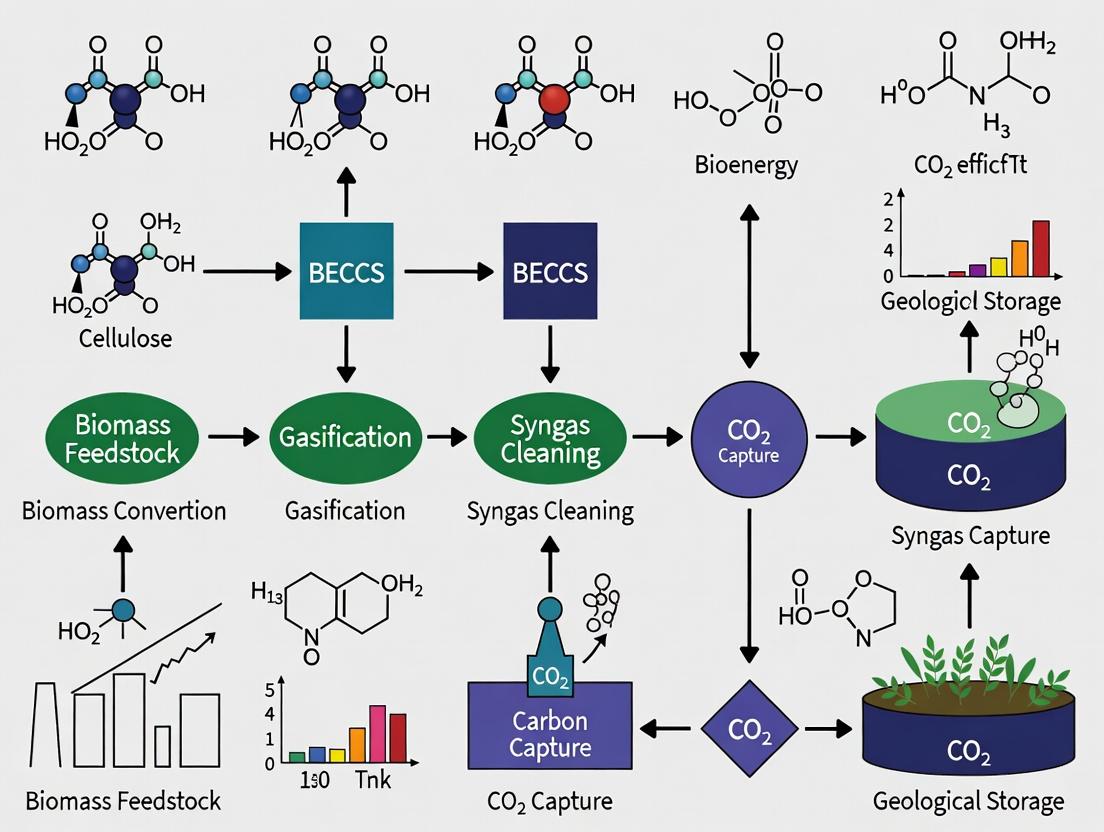
Bioenergy with Carbon Capture and Storage (BECCS) is a critical negative emissions technology in IPCC climate pathways, yet significant scalability constraints threaten its deployment at gigatonne scale.
Breaking the Scale Barrier: Innovative Solutions for BECCS Scalability in Climate Mitigation
Abstract
Bioenergy with Carbon Capture and Storage (BECCS) is a critical negative emissions technology in IPCC climate pathways, yet significant scalability constraints threaten its deployment at gigatonne scale. This article examines the foundational, methodological, and optimization challenges limiting BECCS, including biomass sustainability, supply chain logistics, high costs, and public acceptance. We analyze current technological solutions, policy frameworks, and validation methods, providing researchers and climate professionals with a comprehensive roadmap for overcoming these barriers and enabling BECCS to fulfill its potential in global decarbonization strategies.
Understanding the Core Challenges: What's Limiting BECCS at Gigatonne Scale?
Welcome to the BECCS Scalability Technical Support Center. This resource is designed for researchers and professionals investigating the scalability constraints of Bioenergy with Carbon Capture and Storage (BECCS) within integrated assessment and climate models. Find troubleshooting guides, FAQs, and experimental protocols to support your computational and empirical research.
Frequently Asked Questions & Troubleshooting
Q1: My integrated assessment model (IAM) shows unrealistic BECCS deployment levels exceeding 10 Gt CO2/yr by 2050. What constraints might I be missing? A: Many IAMs historically underestimated constraints. Ensure your model incorporates:
- Land-Use Competition: Implement dynamic feedback between bioenergy crop area, food prices, and deforestation emissions.
- Geospatial CCS Suitability: Limit storage capacity to geologically verified, proximate saline formations, not theoretical global totals.
- Infrastructure Ramp-Rates: Apply annual build-rate limits for both biomass supply chains and CO2 pipeline networks.
Q2: How do I parameterize sustainable biomass feedstock supply in my scenario? A: Move beyond a single "biomass potential" scalar. Structure your supply curve using the following categories, ensuring integration with land-use modules:
| Feedstock Category | Estimated Global Annual Potential (EJ/yr) | Key Sustainability Constraints to Model |
|---|---|---|
| Residues & Wastes | ~50-150 EJ | Competing uses (soil health, bio-materials), collection logistics cost. |
| Dedicated Energy Crops | Varies Widely (0-300+ EJ) | Direct/indirect land-use change (LUC/iLUC) emissions, water use, biodiversity impact. |
| Forest Management | ~30-60 EJ | Sustainable harvest rates, carbon debt repayment time. |
Source: Compiled from recent (2020-2024) IEA Bioenergy, IPCC AR6, and peer-reviewed literature analyses.
Q3: My techno-economic analysis (TEA) for BECCS yields negative costs, but real-world projects stall. What non-cost barriers should my research address? A: The "at scale" barrier is often socio-technical. Design experiments to quantify:
- Policy & Risk: Model impacts of inconsistent carbon pricing vs. guaranteed offtake agreements.
- Public Acceptance: Incorporate siting risk multipliers for CO2 transport and storage infrastructure.
- Supply Chain Maturity: Apply learning rates only after accounting for upfront capital mobilization risk.
Experimental Protocols for Scalability Research
Protocol 1: Quantifying the Land-Use Change (LUC) Carbon Debt of BECCS Feedstock Cultivation Objective: To empirically measure the net CO2 flux from converting native ecosystem to bioenergy cropland. Methodology:
- Site Selection: Identify paired sites: native ecosystem (control) and adjacent land recently converted (1-5 years) to candidate bioenergy crop (e.g., switchgrass, miscanthus).
- Carbon Stock Measurement:
- Above-Ground Biomass: Use allometric equations based on destructive sampling or LiDAR.
- Soil Carbon: Take core samples (0-100 cm depth) at systematic grid points. Analyze Soil Organic Carbon (SOC) via dry combustion.
- Litter & Dead Wood: Collect and weigh all non-living biomass in quadrats.
- Net Flux Calculation: Calculate carbon stock difference (converted - native). Express as CO2-equivalent debt. Monitor annually until the new system's carbon stock matches or exceeds the baseline (debt repayment time).
Protocol 2: Geospatial Mapping of BECCS "Sweet Spots" Objective: To identify high-potential, low-cost locations for BECCS deployment by overlaying key spatial datasets. Methodology:
- Data Layer Acquisition:
- Biomass feedstock production locations (from agricultural models or remote sensing).
- Geological CO2 storage capacity and proximity to infrastructure.
- Water stress indices.
- Protected area and biodiversity priority maps.
- Overlay Analysis: Use GIS software (e.g., QGIS, ArcGIS) to perform a multi-criteria suitability analysis. Assign weights to criteria (e.g., storage proximity weighted highest).
- Output: Generate a global/regional map with suitability scores. Calculate cumulative capacity from "high-suitability" areas only for input into models.
Visualizations
Title: Scalability Constraints Filter for BECCS in Models
Title: Empirical Data to Model Parameter Workflow
The Scientist's Toolkit: Key Research Reagent Solutions
| Item | Function in BECCS Scalability Research |
|---|---|
| Integrated Assessment Model (IAM) | Platform to simulate energy, economy, land-use, and climate interactions; tests BECCS deployment scenarios. (e.g., GCAM, MESSAGEix, REMIND) |
| Life Cycle Assessment (LCA) Database | Provides emissions factors for background processes (e.g., fertilizer manufacture, transport). (e.g., Ecoinvent, GREET) |
| Geographic Information System (GIS) | Analyzes and visualizes spatial constraints (biomass yield, storage basins, water stress). (e.g., ArcGIS, QGIS) |
| Soil Organic Carbon Analyzer | Quantifies carbon stocks in soils pre- and post-land conversion; critical for LUC debt. (e.g., Dry Combustion Analyzer) |
| Process-Based Crop Model | Projects biomass yield under future climate scenarios on marginal/degraded land. (e.g., LPJmL, Agro-IBIS) |
Technical Support Center: BECCS Feedstock & Land-Use Analysis
FAQs & Troubleshooting Guides
Q1: My geospatial analysis of marginal land for biomass cultivation shows inconsistent yield projections. What are the primary sources of error? A: Inconsistent yields often stem from soil carbon data variability or resolution mismatches. Use the harmonized global soil dataset (SoilGrids 250m) and align all spatial layers to the same projection (e.g., WGS84). Re-run your analysis using the standardized protocol below.
Q2: How do I resolve conflicts between "food-crop" and "energy-crop" land-use classifications in my LCA model?
A: This indicates a system boundary issue. Implement the dynamic iLUC (indirect Land Use Change) assessment protocol. Use the GTAP-BIO economic model outputs as baseline coefficients. See Table 1 for key reconciliation parameters.
Q3: My feedstock sustainability score (FSS) calculation for miscanthus is returning anomalous values outside the 0-1 range. How do I correct this? A: Check the normalization of your input variables. Ensure each of the seven indicators (e.g., soil erosion factor, water stress index) is normalized to a [0,1] scale before applying the weighted sum. Use the recalculator tool provided in the protocol.
Q4: When modeling BECCS supply chains, my transport emissions are disproportionately high compared to literature values. What is the likely cause? A: You are likely using default transport distances. Integrate the facility location-allocation model (FLAM) to optimize collection radius. Pre-process feedstock density maps using a 50km grid. The optimal radius for herbaceous feedstocks is typically 80-100km.
Q5: My soil carbon sequestration measurement from experimental plots has high variance, obscuring the impact of different perennial grasses. What sampling strategy should I use? A: High variance is common. Implement a nested sampling design with core sampling at 0-30cm and 30-60cm depths, repeated at 0, 12, and 24 months. Increase your sample size to n≥15 per treatment plot. Use a fixed-volume corer to avoid compaction bias.
Experimental Protocols
Protocol EP-01: Dynamic iLUC Factor Integration for Life Cycle Assessment
- Objective: Quantify indirect land-use change emissions attributable to dedicated biomass feedstock expansion.
- Materials: Economic model output data (e.g., from GTAP-BIO), regional land transition matrices, carbon stock datasets (IPCC Tier 1 or higher).
- Method:
a. Define the biomass expansion scenario (crop type, hectare, region).
b. Input scenario into the calibrated economic equilibrium model to obtain projected land displacement by type (e.g., forest, pasture).
c. For each displaced land type
i, calculate the carbon debt:C_debt_i = (C_stock_original_i - C_stock_new_bioenergy_crop) * Area_i. d. Sum carbon debt across all displaced land typesi. e. Allocate this total carbon debt over a 30-year amortization period to derive an annual iLUC emission factor (g CO₂e/MJ). f. Add this factor to the direct lifecycle emissions of the bioenergy pathway.
Protocol EP-02: Field Measurement of Soil Organic Carbon (SOC) Sequestration under Perennial Grasses
- Objective: Accurately measure change in SOC stocks following conversion from reference land use to biomass cultivation.
- Materials: Steel soil corer (fixed volume, 5cm diameter), drying oven, elemental analyzer, GPS, sieves (2mm), polyethylene bags.
- Method:
a. Establish a sampling grid within both the treatment (energy crop) and control (reference land) plots. Mark permanent sampling points.
b. At Time
T0(pre-establishment or immediately after), collect soil cores at 0-30cm and 30-60cm depths atn=15random points per plot. c. Process samples: air-dry, sieve to 2mm, remove visible organic debris, grind. d. Determine SOC concentration via dry combustion (Elemental Analyzer). e. Calculate SOC stock:SOC_stock (Mg/ha) = SOC_conc (g/g) * Bulk_density (g/cm³) * Depth (cm) * 100. f. Repeat steps b-e atT1(e.g., 12 months) andT2(e.g., 24 months) at the same georeferenced points. g. Calculate sequestration rate:ΔSOC = (SOC_stock_Tx - SOC_stock_T0) / Time_period.
Data Tables
Table 1: Key Parameters for Reconciling Food & Feedstock Land Use in Modeling
| Parameter | Description | Typical Range/Value | Source Model |
|---|---|---|---|
| Crop Yield Elasticity | Responsiveness of yield to price change for land competition. | 0.1 - 0.3 (varies by crop/region) | GTAP-BIO, IMPACT |
| Land Transformation Matrix | Probability of land transitioning from type A to B. | Region-specific | GLM, LandSHIFT |
| Carbon Stock Reference (Forest) | Above & belowground biomass carbon. | 40 - 200 Mg C/ha (IPCC Tier 1) | IPCC Guidelines, FAO |
| iLUC Amortization Period | Years over which carbon debt is distributed. | 20 - 30 years | EU Renewable Energy Directive |
Table 2: Comparative Analysis of Lignocellulosic Feedstock Sustainability Indicators
| Feedstock | Avg. Yield (Mg DM/ha/yr) | Water Stress Index (0-1)* | Soil Erosion Factor (vs. bare soil)* | SOC Sequestration Potential (Mg C/ha/yr) | FSS Range* |
|---|---|---|---|---|---|
| Miscanthus | 10-15 (temperate) | 0.4-0.6 | 0.1-0.3 | 0.5 - 1.5 | 0.65-0.80 |
| Switchgrass | 8-12 (temperate) | 0.3-0.5 | 0.2-0.4 | 0.3 - 1.0 | 0.70-0.85 |
| Short Rotation Coppice (Willow) | 8-10 (boreal/temp) | 0.5-0.7 | 0.1-0.2 | 0.8 - 2.0 | 0.60-0.75 |
| Agricultural Residues (e.g., Corn Stover) | 2-4 (ratio to grain) | 0.1 (allocated) | 0.8-1.0 (if over-removed) | -0.2 - 0.0 | 0.40-0.60 |
*Lower is better. Positive values indicate sequestration. *Feedstock Sustainability Score (0-1, higher is better).
Diagrams
The Scientist's Toolkit: Research Reagent Solutions
| Item | Function in BECCS Feedstock Research |
|---|---|
| Fixed-Volume Soil Corer | Ensures accurate, uncompacted soil samples for bulk density and carbon content analysis. |
| Elemental Analyzer (CN/S) | Precisely measures carbon and nitrogen content in soil and plant tissue via dry combustion. |
| Geographic Information System (GIS) Software (e.g., QGIS, ArcGIS) | For spatial analysis of land use, yield maps, and resource constraints. |
| Life Cycle Assessment (LCA) Software (e.g., openLCA, GaBi) | Models the environmental impacts of bioenergy supply chains, integrating iLUC factors. |
| Dynamic Global Vegetation Model (DGVM) (e.g, LPJmL, ORCHIDEE) | Projects long-term biomass yield and carbon cycles under climate scenarios. |
| Economic Equilibrium Model (e.g., GTAP-BIO) | Assesses market-mediated indirect land-use change impacts. |
| Near-Infrared (NIR) Spectrometer | For rapid, non-destructive estimation of lignocellulosic composition (cellulose, hemicellulose, lignin). |
Technical Support Center: Troubleshooting BECCS Integration & Analysis
FAQ: Core Technical Issues
Q1: During a pilot-scale amine-based CO₂ capture experiment integrated with a biomass boiler, we observe a rapid increase in solvent viscosity and a drop in capture efficiency. What is the likely cause and solution? A: This is a classic symptom of solvent degradation due to oxidative degradation, exacerbated by the presence of oxygen and impurities (e.g., SOx, NOx) in the flue gas from biomass combustion, which is often more variable than from fossil sources.
- Troubleshooting Protocol:
- Immediate Analysis: Test solvent samples for heat stable salts (HSS) concentration and total acid number.
- Flue Gas Pre-treatment Check: Verify the efficiency of your particulate filter and wet scrubber. Measure SO₂ and O₂ levels entering the absorber column.
- Solvent Management: Implement a continuous solvent reclamation process (e.g., vacuum distillation) to remove HSS. Consider adding an antioxidant (e.g., sodium metavanadate) to the solvent formulation.
- Preventive Maintenance: Increase the pre-treatment severity. For experimental consistency, use a synthetic, standardized flue gas mixture during initial bench-scale trials to isolate the biomass-specific impurity effects.
Q2: Our techno-economic assessment (TEA) model shows extreme sensitivity to biomass moisture content, drastically altering the net energy output. How can we stabilize this input parameter experimentally? A: Biomass feedstock variability is a primary economic and energetic hurdle. You must control and measure this parameter rigorously.
- Experimental Protocol for Feedstock Standardization:
- Pre-processing: Establish a dedicated drying protocol. Pass all biomass through a rotary drum dryer set to a consistent moisture content target (e.g., 15% w.b.).
- Monitoring: Use a real-time moisture analyzer (e.g., NIR-based) on the feedstock conveyor pre-combustion.
- Data Integration: Feed real-time moisture data into your process mass and energy balance calculations. Your TEA should run scenarios with a ±5% deviation from your controlled baseline.
- Key Reagent/Material: Standardized Biomass Pellets. Use commercially available, characterized pellets (with certificate of analysis for moisture, ash, HHV) as your experimental control to benchmark your variable local feedstock against.
Q3: When calculating the Energy Penalty of a BECCS add-on, what are the critical boundary conditions for the system, and how do I avoid double-counting? A: The energy penalty must isolate the parasitic load of the CCS chain from the base energy conversion plant.
- Methodology for Consistent Calculation:
- Define Base Case: System = Biomass plant without capture. Output = Net electrical/thermal energy (Ebase).
- Define BECCS Case: System = Same plant + capture + compression units. Output = Net energy (EBECCS).
- Calculation: Energy Penalty (%) = [(Ebase - EBECCS) / E_base] * 100.
- Key Boundary: All ancillary loads for capture (solvent pumps, fans, stripper reboiler heat) and compression (compressor power) must be allocated to the BECCS case. The heat for solvent regeneration must be drawn from the plant steam cycle, reducing power output.
- Common Pitfall: Do not separately account for the energy content of the captured CO₂ itself; the penalty reflects the energy cost of capturing and compressing it.
Visualization: BECCS Process Integration & Energy Penalty Logic
Title: BECCS Process Flow & Energy Penalty Calculation Logic
The Scientist's Toolkit: Key Research Reagent Solutions
| Item / Reagent | Function in BECCS Scalability Research |
|---|---|
| 30 wt% Monoethanolamine (MEA) Solution | Benchmark solvent for CO₂ capture experiments. Used to establish baseline kinetics, loading capacity, and degradation rates. |
| Sodium Metavanadate | Antioxidant additive to amine solvents to mitigate oxidative degradation, a key factor in operational costs. |
| Certified Biomass Reference Materials | Pellets with standardized proximate/ultimate analysis. Critical for controlled experiments isolating process variables from feedstock variability. |
| Synthetic Flue Gas Mixtures | Cylinders with precise CO₂/N₂/O₂/SO2 blends. Allows study of capture performance without complex combustion set-ups. |
| Ion Chromatography (IC) System | For quantifying heat stable salts (formate, acetate, nitrate) in degraded solvent samples, informing reclamation needs. |
| Process Mass Spectrometer | For real-time analysis of gas streams (CO2, O2, SO2), essential for calculating instantaneous capture rates and solvent performance. |
Quantitative Data Summary: BECCS Techno-Economic Benchmarks
Table 1: Representative Capital & Operational Cost Ranges for BECCS Pathways (Post-2020 Literature)
| BECCS Configuration | Capital Cost ($/kW) | Energy Penalty Range | Levelized Cost of CO₂ Removed ($/tCO₂) |
|---|---|---|---|
| Post-Combustion (Amine) on Biomass Boiler | 2,800 - 4,500 | 20% - 30% | 120 - 250 |
| Biomass Integrated Gasification CCUS (BIGCC) | 4,500 - 7,000 | 15% - 25% | 150 - 300 |
| Bioethanol Fermentation with Capture | 500 - 1,200 (add-on) | 8% - 15% | 50 - 120 |
Table 2: Impact of Key Parameters on Economic Viability
| Parameter | Favorable Direction | Effect on Cost of CO₂ Removed | Experimental Control Method |
|---|---|---|---|
| Biomass Feedstock Cost ($/GJ) | Decrease | Decrease | Use waste residues; pre-process to reduce moisture. |
| Plant Capacity Factor (%) | Increase | Decrease | Design for flexible feedstock; robust solvent management. |
| Capture Efficiency (%) | Increase (beyond ~90%) | Can Increase | Optimize between energy penalty and marginal capture gain. |
| Solvent Degradation Rate | Decrease | Decrease | Use inhibitors, improved pre-treatment, reclamation. |
Technical Support Center: BECCS Experimental Systems
Troubleshooting Guides & FAQs
Q1: During our pilot-scale bioenergy carbon capture experiment, we are observing inconsistent CO₂ purity levels (>95% target) in the output stream fed to the simulated transport line. What are the primary contaminants and how can we stabilize the process?
A: Inconsistent purity is often due to water vapor carryover or residual flue gas components (N₂, O₂). Implement a three-step protocol:
- Verify Desiccant Bed Saturation: Replace or regenerate the adsorbent (e.g., 3Å molecular sieves) in the pre-compression drying unit. Standard protocol: Heat to 200°C under a vacuum of <0.1 bar for 4 hours.
- Analyze Feed Gas Composition: Use real-time Gas Chromatography (GC) with TCD detector at the absorber outlet. See Table 1 for common contaminants.
- Calibrate Solvent Regeneration: For amine-based capture, ensure the stripper reboiler temperature is maintained at 120°C ±2°C. Temperature deviation directly impacts residual water and solvent vapor in the product stream.
Q2: Our lab is modeling pipeline transport of dense-phase CO₂. We are encountering anomalous pressure drop simulations when introducing impurities based on real capture unit data. What is the acceptable impurity threshold for pipeline specifications?
A: Your simulation aligns with a key infrastructure gap. Impurities drastically alter the phase envelope and hydraulic behavior. Current industry specifications are summarized in Table 2. For BECCS-specific streams, focus on H₂O and NOx limits to prevent corrosion. The recommended experimental protocol is to use a high-pressure view cell to visually observe phase changes in your CO₂/impurity mixture at simulated pipeline conditions (90-150 bar, 10-40°C).
Q3: When planning a column experiment for mineral trapping in saline aquifers, what core parameters should we replicate, and what are common failure points in permeability?
A: Key parameters are reservoir temperature (35-80°C), pressure (>100 bar), and brine salinity (1-5 mol/kg NaCl). Common failure points include:
- Secondary Mineral Clogging: Rapid precipitation of carbonates (e.g., calcite) near the injection point can clog pore throats.
- Protocol: Conduct a batch reactor experiment first to kinetically constrain the primary reactive minerals (e.g., forsterite, anorthite) in your core sample. Use XRD analysis pre- and post-experiment.
- Solution: Model and experiment with lower CO₂ injection rates or pulsed injection to allow dissolution fronts to propagate without clogging.
Data Presentation
Table 1: Common CO₂ Stream Contaminants from BECCS Processes
| Contaminant | Typical Source in BECCS | Impact on Transport & Storage | Target Purity Threshold |
|---|---|---|---|
| Water (H₂O) | Flue gas, solvent carryover | Corrosion, hydrate formation | <500 ppm |
| Nitrogen (N₂) | Incomplete separation | Increases compression work, alters phase behavior | <4 mol% |
| Oxygen (O₂) | Incomplete separation | Accelerates pipeline corrosion | <1000 ppm |
| SOₓ & NOₓ | Biomass combustion | Forms acids with H₂O, causes corrosion & injectivity issues | <100 ppm total |
Table 2: Current CO₂ Transport Pipeline Impurity Specifications
| Specification Source | Max H₂O | Max N₂ | Max O₂ | Max Total Inerts (N₂+O₂+Ar) | Key Rationale |
|---|---|---|---|---|---|
| DIN/EN 12213 | 500 ppm | 4 mol% | 1000 ppm | 4 mol% | Prevent 2-phase flow, corrosion |
| ISO 27913:2016 | 500 ppm | 4 mol% | 1000 ppm | 4 mol% | Safety & material integrity |
| US Enhanced Oil Recovery (Typical) | 600 ppm | 4 mol% | 10 ppm | 4-5 mol% | Optimize miscibility & flow |
Experimental Protocols
Protocol 1: Determining the Corrosivity of Impure CO₂ Streams under Pipeline Conditions
- Objective: Measure corrosion rate of pipeline-grade steel (X65) in dense-phase CO₂ with controlled impurities.
- Materials: High-pressure autoclave, X65 steel coupons, HPLC pumps for H₂O injection, mass flow controllers for gases.
- Method:
- Polish and weigh six 1cm² X65 coupons.
- Load coupons into autoclave. Purge system with pure CO₂ for 5 minutes.
- Pressurize to 100 bar with CO₂ mixture (e.g., 97% CO₂, 2.5% N₂, 0.5% O₂).
- Inject deionized water to achieve 500 ppmv H₂O saturation.
- Heat to 40°C and maintain for 168 hours (1 week).
- Depressurize, retrieve coupons, clean per ASTM G1-03, and reweigh.
- Calculate mass loss and corrosion rate (mm/year) for each coupon. Compare to pure CO₂ control.
Protocol 2: Core Flooding Experiment for Saline Aquifer Injectivity Assessment
- Objective: Quantify changes in permeability of a sandstone core during supercritical CO₂ injection in the presence of synthetic brine.
- Materials: Hydrostatic core holder, syringe pumps (for brine & CO₂), confining pressure system, back-pressure regulator, synthetic brine (1M NaCl), Berea sandstone core.
- Method:
- Saturate a 1" diameter, 3" long core with synthetic brine under vacuum for 24 hours.
- Load core into holder, apply confining pressure (250 bar).
- Establish brine flow at 0.5 ml/min, measure initial permeability (Darcy's Law).
- Heat system to 60°C.
- Initiate supercritical CO₂ injection (at 150 bar) at 0.2 ml/min in a drainage cycle for 10 pore volumes (PVs).
- Switch to brine injection (imbibition) for 5 PVs.
- Repeat steps 5 & 6 for three cycles.
- Measure brine permeability after each cycle. Perform post-experiment µ-CT imaging to map pore structure changes.
Diagrams
Title: BECCS CO₂ Purity Troubleshooting Workflow
Title: Core Flood Test Protocol for Injectivity
The Scientist's Toolkit: Research Reagent Solutions
| Item | Function in BECCS Transport/Storage Research |
|---|---|
| 3Å Molecular Sieves | Desiccant for removing water vapor from CO₂ streams to prevent corrosion and hydrate formation. |
| X65 Steel Coupons | Standard pipeline material samples for corrosion testing under impure CO₂ conditions. |
| High-Pressure View Cell | Visual observation chamber for studying phase behavior of CO₂/impurity mixtures at pipeline conditions. |
| Berea Sandstone Core | Well-characterized, porous sedimentary rock used as a model substrate for saline aquifer injection experiments. |
| Synthetic Brine (1-5M NaCl) | Aqueous solution replicating the ionic strength and composition of deep saline formation waters. |
| Amino Solvent (e.g., 30 wt% MEA) | Benchmark chemical absorbent for CO₂ capture; used to study solvent carryover impacts. |
| Back-Pressure Regulator (BPR) | Critical device for maintaining precise, stable pressure during core flooding or flow loop experiments. |
Technical Support Center: BECCS Scalability Constraints Research
This support center provides troubleshooting guidance for common experimental, modeling, and analytical challenges encountered in BECCS (Bioenergy with Carbon Capture and Storage) scalability research, with a focus on intersecting geopolitical and social constraints.
FAQs & Troubleshooting Guides
Q1: Our integrated assessment model (IAM) shows high BECCS deployment, but stakeholder feedback indicates severe local opposition. How do we reconcile this data disparity? A: This is a classic "top-down vs. bottom-up" perception gap.
- Troubleshooting Step 1: Audit your IAM's socio-political parameters. Most default IAMs use simplified cost curves and do not adequately parameterize social license to operate (SLO) or justice constraints.
- Step 2: Implement a geospatial cross-reference. Layer your model's projected deployment map with GIS data on:
- Protected areas & land rights: Indigenous territories, community-managed lands.
- Historical fossil fuel dependence: Regions with high employment in extractive industries may show resistance or support based on just transition concerns.
- Water stress indices: BECCS feedstock cultivation can exacerbate local water scarcity.
Q2: How can we quantitatively assess "policy uncertainty" as a constraint in our techno-economic analysis (TEA)? A: Policy uncertainty is a risk multiplier affecting investment and innovation. Integrate it via sensitivity analysis and Monte Carlo simulations.
- Protocol: Policy Risk Factor Integration
- Identify Key Policy Levers: Carbon price, renewable fuel credits, CCS tax credits, land-use zoning laws.
- Assign Probability Distributions: For each lever, define a range (e.g., carbon price from $20 to $150/ton CO₂) and a likelihood distribution based on historical policy volatility analysis.
- Run Monte Carlo Simulations: Run your TEA model (e.g., in @RISK or Python) over 10,000+ iterations, each time drawing a random value for each policy lever from its defined distribution.
- Output Analysis: The result is a probability distribution of your output metric (e.g., Levelized Cost of Carbon Removal). The variance (width) of this distribution quantifies the impact of policy uncertainty.
Q3: Our life cycle assessment (LCA) yields net-negative emissions, but a justice-focused review criticized it for omitting localized air pollution impacts. What is the standard protocol for integrating environmental justice (EJ) into BECCS LCA? A: Traditional LCA uses globalized impact categories (e.g., GWP). EJ requires spatially explicit (high-resolution) inventory and impact assessment.
- Protocol: Spatially-Explicit LCA for EJ Assessment
- Inventory with Location Data: For every unit process in your BECCS supply chain (fertilizer production, feedstock transport, combustion, etc.), record the precise geographic location or proxy (e.g., county, grid region).
- Use High-Resolution Impact Models: Employ tools like the US EPA's TRACI 2.1 or ReCiPe at the regionalized level. Link emission locations to localized midpoint impact factors (e.g., particulate matter formation potential per kg of PM2.5 emitted in that specific airshed).
- Cross-Reference with Demographic Data: Overlay resulting impact "hotspots" with demographic data (using tools like EJSCREEN) to identify if burdens fall disproportionately on disadvantaged communities.
- Report Disaggregated Results: Present results not just as a single global "human health" score, but as maps or tables showing burden distribution.
Quantitative Data Summary
Table 1: Public Perception of BECCS from Recent Global Surveys (2022-2024)
| Region / Study Sample | Awareness Level | General Support | Top Concern | Highest Support Condition |
|---|---|---|---|---|
| EU Citizens (n=10,000) | Low (15%) | Conditional (45%) | Land-use competition with food | If using waste biomass & domestic storage |
| US General Public (n=2,500) | Very Low (8%) | Conditional (38%) | Cost to taxpayers | If paired with strong industrial emission reductions |
| Brazilian Agri-Community (n=800) | Medium (41%) | Opposed (62%) | Land tenure & displacement | Not supported as a primary climate solution |
| Global Climate Policymakers (n=350) | High (92%) | Supportive (78%) | Scalability & infrastructure delays | With international certification & leakage monitoring |
Table 2: Impact of Policy Uncertainty on Key BECCS Financial Metrics (Sensitivity Analysis)
| Policy Variable | Baseline Value | Uncertainty Range (±) | Impact on NPV (Median ± StDev) | Impact on Cost of CDR (Median ± StDev) |
|---|---|---|---|---|
| Carbon Price | $100/t CO₂ | 60% | +$45M ± $120M | -$15 ± $40 /t CO₂ |
| CCS Tax Credit (45Q) | $85/t CO₂ | 40% | +$30M ± $85M | -$10 ± $28 /t CO₂ |
| Biomass Sustainability Mandate | None | Binary (Pass/Fail) | -$15M to -$180M | +$5 to +$60 /t CO₂ |
| Cross-Border CO₂ Transport Agreement | No | Binary (Yes/No) | +$2M ± $75M | -$1 ± $25 /t CO₂ |
Mandatory Visualizations
Title: Geopolitical & Social Constraints Impact on BECCS Scalability
Title: Modeling Policy & Social Uncertainty in BECCS
The Scientist's Toolkit: Key Research Reagent Solutions
Table 3: Essential Materials & Tools for BECCS Constraints Research
| Item | Function in Research | Example / Specification |
|---|---|---|
| Integrated Assessment Model (IAM) | Projects global/regional BECCS deployment under climate pathways. Often lacks social detail. | MESSAGEix-GLOBIOM, GCAM (with custom land-use modules). |
| Spatially-Explicit LCA Database | Provides regionalized lifecycle inventory data for EJ analysis. | ecoinvent v3+ (with regionalized datasets), USDA CLUZ for land use. |
| Geographic Information System (GIS) | Layers bioresource potential, infrastructure, and socio-economic data for siting analysis. | QGIS, ArcGIS with EJSCREEN or CES 3.0 data layers. |
| Stakeholder Engagement Platform | Facilitates deliberative mapping, surveys, and workshops to gauge perception. | Pol.is, ThoughtExchange for large-scale opinion clustering. |
| Monte Carlo Simulation Add-in | Integrates with Excel or Python to model variable uncertainty. | @RISK, Python (NumPy/SciPy) for custom probabilistic modeling. |
| Policy Database | Tracks historical and current climate/energy/land policies for volatility analysis. | IEA Policies Database, Climate Change Laws of the World. |
Building Scalable Systems: Methodologies and Technologies for Expansion
Technical Support Center: Troubleshooting & FAQs
This support center is designed to assist researchers working on advanced BECCS (Bioenergy with Carbon Capture and Storage) feedstocks, within the context of overcoming scalability constraints. The following Q&As address common experimental and process challenges.
FAQ: Algae Cultivation & Processing
Q1: Our photobioreactor (PBR) algae cultures are experiencing a rapid drop in pH, followed by culture crash. What is the cause and solution? A: This is typically caused by excessive CO2 injection or heterotrophic bacterial overgrowth consuming organic acids.
- Troubleshooting Steps:
- Monitor & Adjust: Install a real-time pH probe and link it to a solenoid valve on your CO2 supply line. Setpoint should be pH 7.5-8.5 for most strains.
- Sterility Check: Aseptically inoculate a fresh BG-11 (or equivalent) agar plate from the crashed culture. Bacterial colonies indicate contamination. Re-initiate culture from a verified axenic stock.
- Protocol Enhancement: Implement a routine medium exchange (10-25% daily) in continuous systems to remove extracellular metabolites.
Q2: Lipid extraction yield from our harvested algal biomass is consistently below theoretical values. How can we optimize? A: Low yields often stem from inefficient cell wall disruption or solvent choice.
- Troubleshooting Steps:
- Pre-treatment: Implement a mechanical disruption step prior to solvent addition. Test and compare:
- Bead milling: (Protocol: Resuspend biomass paste in solvent, use 0.5mm glass beads, homogenize at 4°C for 5x 1min cycles with 1min cooling).
- Ultrasonication: (Protocol: Use a probe sonicator at 60% amplitude, 5s pulse on/10s pulse off, for 5 minutes on ice).
- Solvent System: Switch from a single solvent (e.g., hexane) to a binary system (e.g., Hexane:Ethanol 2:1 v/v) to better access polar lipids.
- Pre-treatment: Implement a mechanical disruption step prior to solvent addition. Test and compare:
FAQ: Waste Biomass Pre-processing
Q3: During enzymatic hydrolysis of agricultural waste (e.g., corn stover), we observe poor sugar conversion despite high enzyme loading. What's wrong? A: This indicates likely inhibition from pre-treatment by-products (furfurals, phenolics, acetic acid) or insufficient pre-treatment severity.
- Troubleshooting Steps:
- Analyze Pre-treatment Liquor: Use HPLC to quantify inhibitors. If levels are high (>1g/L furfurals, >5g/L acetic acid), employ a detoxification step (e.g., overliming with Ca(OH)2 to pH 10, then adjust back to 5.0).
- Assess Biomass Composition: Perform an NDF/ADF analysis or TAPPI standard test. If lignin content remains >25%, increase pre-treatment severity (e.g., increase temperature by 10°C or retention time by 5 minutes).
- Enzyme Absorption Test: Follow NREL LAP TP-510-42628 to measure cellulose accessibility.
Q4: Our gasification of municipal solid waste (MSW) syngas has high tar content, fouling downstream equipment. How to mitigate? A: Tar formation is a function of temperature, gasifier design, and feedstock uniformity.
- Troubleshooting Steps:
- Increase Temperature: Ensure gasification zone operates stably above 800°C. Tars crack efficiently above 950°C.
- Feedstock Preparation: Improve feedstock sorting and shredding to achieve a more homogeneous particle size (<2cm).
- In-bed Catalysis: Mix 5-10% wt. of dolomite (CaMg(CO3)2) or olivine sand with the feedstock bed to catalytically crack tars.
FAQ: Integrated System Modeling & LCA
Q5: Our integrated land-use model shows paradoxical carbon debt when switching from fallow land to energy grass cultivation. How is this possible? A: This "carbon debt" arises from modeled soil organic carbon (SOC) loss upon land-use change and initial cultivation emissions.
- Troubleshooting Steps:
- Validate SOC Model Parameters: Calibrate your CENTURY or RothC model with local soil data. Default parameters may overestimate loss.
- Include Full Carbon Flux: Ensure your model accounts for:
- Below-ground biomass (root) carbon accumulation.
- Annual carbon sequestration rate of the mature crop.
- Compare scenarios in the table below.
Q6: Life Cycle Assessment (LCA) results for our algae-BECCS pathway show higher fossil energy demand than the system produces. What are the key sensitivities? A: This indicates an energy-intensive process is dominating. Conduct a sensitivity analysis.
- Troubleshooting Steps:
- Isolate High-Impact Processes: Model energy demand for each stage: PBR mixing/CO2 injection, harvesting (centrifugation), drying, and lipid extraction.
- Target Reduction: Replace centrifugation with low-energy flocculation (e.g., using chitosan). Utilize waste heat for drying. Data from a typical analysis is summarized in the table below.
Data Presentation
Table 1: Comparative Carbon Budget for Land-Use Change Scenarios (Modeled over 30 years)
| Scenario | Initial SOC Loss (t CO2e/ha) | Annual Crop Sequestration (t CO2e/ha/yr) | Net Carbon Payback Time (years) | Net Cumulative Sequestration at Year 30 (t CO2e/ha) |
|---|---|---|---|---|
| Fallow Land (Baseline) | 0 | 0.2 | N/A | 6 |
| Switchgrass Cultivation | 15 | 3.5 | 4.5 | 90 |
| Miscanthus x giganteus | 18 | 6.0 | 3.2 | 162 |
| Short Rotation Coppice Willow | 10 | 2.8 | 3.8 | 74 |
Table 2: Energy Demand Sensitivity Analysis for Algae-to-Biofuel Pathways (per 1 kg biomass)
| Process Stage | Baseline (MJ/kg) | With Optimization (MJ/kg) | Key Intervention |
|---|---|---|---|
| Cultivation (Mixing, CO2) | 8.5 | 5.0 | Optimized bubble column PBR design |
| Harvesting (Centrifugation) | 12.0 | 1.5 | Switch to chitosan flocculation + belt filtration |
| Dewatering/Drying | 25.0 | 8.0 | Utilize waste heat from adjacent process |
| Lipid Extraction (Hexane) | 4.0 | 3.5 | Switch to wet extraction using ethanol |
| Total | 49.5 | 18.0 |
Experimental Protocols
Protocol 1: Standardized Biochemical Methane Potential (BMP) Assay for Waste Biomass
Purpose: To determine the ultimate anaerobic biodegradability and methane yield of a feedstock.
- Inoculum & Substrate Preparation: Collect anaerobic digester sludge as inoculum. Sieve (<1mm). Prepare substrate to a particle size of <0.5mm. Determine total solids (TS) and volatile solids (VS) of both.
- Bottle Setup: Use 500 mL serum bottles. Add inoculum (200 mL, 2 g VS/L). Add substrate at an inoculum-to-substrate VS ratio of 2:1. Include control bottles with inoculum only (blank) and cellulose (positive control). Adjust pH to 7.0 ± 0.2.
- Anaerobic Incubation: Flush headspace with N2:CO2 (70:30) for 2 min. Seal with butyl rubber stoppers and aluminum crimps. Incubate at 35°C ± 2°C with mild agitation (100 rpm) for 30-60 days.
- Gas Measurement: Measure biogas pressure daily using a manometer. Sample gas via syringe for CH4 composition analysis via GC-TCD. Calculate cumulative CH4 production at STP, subtract blank values, and report as mL CH4 per g VS of substrate added.
Protocol 2: High-Throughput Screening of Algal Strains for Growth under Flue Gas Conditions
Purpose: To identify strains tolerant to simulated industrial flue gas (high CO2, NOx, SOx traces).
- Simulated Flue Gas Medium: Prepare modified BG-11 medium. Sparge with a custom gas mix (15% CO2, 85% N2, with 100 ppm NO and 50 ppm SO2 added) for 30 min to lower pH to ~6.0. Filter sterilize.
- Inoculation & Cultivation: In a 96-well deep-well plate, add 1.8 mL of medium per well. Inoculate each well with 200 μL of a log-phase culture of different algal strains (n=3 per strain). Seal plate with a breathable membrane.
- Growth Conditions & Monitoring: Place plate in a multivariable plate shaker-incubator set to 25°C, 120 rpm, with continuous light at 150 μmol photons m⁻² s⁻¹. Monitor growth daily via optical density at 750 nm (OD750) for 7-10 days.
- Endpoint Analysis: On final day, measure pH, filter biomass for dry weight, and analyze lipid content via Nile Red fluorescence assay.
Diagrams
Algal Lipid Synthesis & Carbon Flux
Waste Biomass to BECCS Workflow
The Scientist's Toolkit: Research Reagent Solutions
| Item | Function & Rationale |
|---|---|
| Chitosan (from shrimp shells, >75% deacetylated) | A natural, cationic biopolymer used for low-energy flocculation and harvesting of microalgae by neutralizing negative cell surface charges. |
| Dolomite (CaMg(CO3)2, 100 mesh powder) | A low-cost, in-bed catalyst for fluidized bed gasifiers; promotes tar cracking and reforms methane, improving syngas quality. |
| Cellic CTec3 (Novozymes) | A commercial enzyme cocktail containing advanced cellulases, β-glucosidases, and hemicellulases for efficient hydrolysis of pre-treated lignocellulosic biomass. |
| Nile Red (9-Diethylamino-5H-benzo[α]phenoxazine-5-one) | A lipophilic fluorescent dye used for rapid, in-situ quantification of neutral lipids within algal cells via fluorescence spectrometry/microscopy. |
| ANKOM RF Gas Production System | An automated system for high-throughput biochemical methane potential (BMP) testing, using pressure sensors to continuously monitor biogas from multiple samples. |
| LI-COR LI-6800 Portable Photosynthesis System | Measures photosynthetic parameters (e.g., net CO2 assimilation, stomatal conductance) in plants/grasses under field conditions for growth model validation. |
| BG-11 Medium (Modified, without nitrogen) | A standard freshwater nutrient medium used for cyanobacteria and microalgae cultivation; nitrogen-free formulation induces lipid accumulation for biofuel studies. |
| RothC-26.3 Model Software | A widely-used model for simulating turnover of organic carbon in non-waterlogged soils, essential for predicting SOC changes in land-use scenarios. |
Technical Support Center
Troubleshooting Guides & FAQs
FAQ Category 1: Novel Solvents (e.g., Biphasic, Ionic Liquids, Deep Eutectic Solvents)
Q1: Our amino acid-based solvent system is showing a dramatic increase in viscosity after several absorption-desorption cycles, reducing mass transfer. What is the cause and solution? A: This is a common issue due to oxidative degradation of the organic base (e.g., DMAPA) and polymerization reactions, forming heat-stable salts (HSS) and oligomers.
- Diagnosis: Run ion chromatography on the degraded solvent. Look for peaks corresponding to formate, acetate, and oxalate. A color change to yellow/brown is also indicative.
- Solution:
- Prevention: Maintain oxygen concentration in flue gas below 50 ppm. Use an oxygen scavenger (e.g., sodium sulfite) in the wash system.
- Reclamation: Implement a side-stream reclamation process. Pass 5-10% of the solvent stream through an ion-exchange resin bed (e.g., strong acid cation resin) to remove HSS. Monitor pH and total alkalinity weekly.
- Solvent Make-up: Plan for a 2-5% solvent replacement rate per 1000 hours of operation to maintain performance.
Q2: We are experiencing phase instability in our water-lean, biphasic solvent. The system fails to separate into two distinct phases upon heating. A: Phase separation temperature is sensitive to water content and CO₂ loading.
- Diagnosis: Measure the water content (Karl Fischer titration) and CO₂ loading (BaCl₂ precipitation method) of the rich solvent.
- Solution: Adjust the water content. For a typical DEMEA/1-Propanol system, the optimal range is 15-25 wt% water. If water content is too low, add deionized water in 1% increments. If the CO₂ loading is too high (>1.2 mol CO₂ /mol amine), extend the desorption time or increase the reboiler temperature by 5-10°C to achieve more complete regeneration.
FAQ Category 2: Novel Sorbents (e.g., MOFs, Amine-Functionalized Silicas, Polymer/Sorbent Hybrids)
Q3: The CO₂ adsorption capacity of our amine-impregnated silica sorbent has dropped by over 40% after 50 temperature-swing cycles. A: This indicates amine leaching or degradation.
- Diagnosis: Run Thermogravimetric Analysis (TGA) on fresh and used sorbent. A shift in the amine decomposition peak or a change in weight loss profile confirms degradation. Collect condensate from the desorption step and test for amine presence via FTIR.
- Solution:
- Synthesis Protocol Adjustment: Switch from impregnation to grafting (e.g., use (3-aminopropyl)triethoxysilane). This forms covalent bonds, reducing leaching.
- Operational Adjustment: Ensure the desorption step uses dry, inert gas (e.g., N₂) instead of steam if the sorbent is not hydrothermally stable. Keep desorption temperature below the amine's decomposition point (typically <120°C for PEI).
- Sorbent Enhancement: Use a porous polymer scaffold (e.g., PVAm) as a support instead of silica for improved moisture stability.
Q4: Our MOF-303 column is showing excessive pressure drop during fluidized bed testing. A: This is likely due to attrition and formation of fine particles.
- Diagnosis: Sieve the used sorbent. An increase in sub-100 micron fraction confirms attrition.
- Solution:
- Pelletization: Form the MOF powder into binderless pellets or extrudes using a specialized press (> 50 MPa pressure). This improves mechanical strength.
- Coating: Apply a thin, hydrophobic polymer coating (e.g., polydimethylsiloxane) via chemical vapor deposition to toughen the outer surface without blocking pores.
- Process Control: Reduce gas velocity and implement a more gradual cycling frequency to minimize particle-on-particle impact.
FAQ Category 3: Oxy-Combustion for BECCS
Q5: Our pilot oxy-combustion boiler is experiencing erratic flame stability and increased NOx readings. A: This is caused by impurities (Ar, N₂) buildup in the recycled flue gas (RFG) loop and incorrect O₂ injection.
- Diagnosis: Continuously monitor the composition of the RFG. An inert (Ar+N₂) concentration above 35% is problematic. Check the O₂ injection lance position and swirl configuration.
- Solution:
- Purge Control: Increase the continuous purge rate from the RFG loop from ~1% to 2-3% of total flow to control inerts. Condense and compress the purged stream for storage.
- O₂ Staging: Implement staged oxygen injection. Use 70% of O₂ in the primary burner and 30% through secondary lances to create a more stable, distributed combustion zone.
- Flame Monitoring: Install a high-speed UV/IR flame detector and link it to an automated O₂ flow controller for real-time adjustment.
Q6: We are detecting significant SO₃ formation and acid dew point corrosion in the flue gas condensing heat exchanger of our oxy-combustion system. A: In oxy-combustion, SO₂ is more readily oxidized to SO₃ due to higher local oxygen partial pressures and the catalytic effect of Fe₂O₃ on boiler tubes.
- Diagnosis: Measure SO₃ concentration using controlled condensation method (ASTM D3226-11).
- Solution:
- Sorbent Injection: Inject powdered magnesium hydroxide (Mg(OH)₂) upstream of the heat exchanger. It reacts with SO₃ to form stable MgSO₄.
- Material Upgrade: Line the condensing heat exchanger with corrosion-resistant alloys (e.g., Inconel 625 or high-silicon stainless steel).
- Temperature Management: Keep the heat exchanger tube wall temperature above the acid dew point (which can be >150°C in oxy-firing) until after the SO₃ has been removed.
Data Presentation
Table 1: Performance Comparison of Novel Solvents for Post-Combustion Capture
| Solvent System | Absorption Rate (mol CO₂/L/min) | Regeneration Energy (GJ/t CO₂) | Cyclic Capacity (mol CO₂/kg solvent) | Degradation Rate (%/1000h) | Key Challenge |
|---|---|---|---|---|---|
| 30% MEA (Benchmark) | 0.85 | 3.9 | 2.1 | 3.5 | High energy, oxidative degradation |
| 5M PZ + AMP (Biphasic) | 1.42 | 2.4 | 4.3 | 1.8 | Solid precipitation, corrosion |
| [P66614][2-CNpyr] (IL) | 0.12 | 2.1 | 1.8 | <0.5 | High viscosity, slow kinetics, cost |
| ChCl:Urea (2:1) (DES) | 0.31 | 2.8 | 2.9 | 2.2 | High water volatility, long-term stability |
Table 2: Characteristics of Advanced Sorbents for Direct Air Capture (DAC) Integration
| Sorbent Material (Structure) | Capacity (mol CO₂/kg) @ 400 ppm | Regeneration T (°C) | Selectivity (CO₂/N₂) | Stability (Cycles) | Production Cost ($/kg) |
|---|---|---|---|---|---|
| PEI-Impregnated SBA-15 | 2.5 | 80-100 | >500 | ~1,000 | ~50 |
| Mg-MOF-74 | 5.1 | 80 | 200 | >10,000 | ~300 |
| SIFSIX-3-Ni | 3.8 | 60 | >10,000 | 5,000 | ~150 |
| Amino-Grafted Cellulose | 1.7 | 70 | 300 | ~2,500 | ~20 |
Experimental Protocols
Protocol 1: Evaluation of Solvent Oxidative Degradation
- Objective: Quantify the formation of heat-stable salts (HSS) and loss of total alkalinity in an amine solvent under accelerated oxidative conditions.
- Materials: 250 mL gas-washing bottle, heated water bath, gas flowmeters, compressed air/O₂/N₂, 500 mL of 5M test solvent (e.g., MEA, PZ), ion chromatograph.
- Method:
- Load 200 mL of fresh solvent into the gas-washing bottle. Place in a bath at 55°C.
- Sparge with a gas mixture of 98% N₂ + 2% O₂ at a rate of 100 mL/min. Maintain for 120 hours.
- At 0h, 24h, 72h, and 120h, extract a 5 mL sample.
- Analyze each sample: a) Measure total alkalinity by titrating with 0.1M HCl to pH 4.5. b) Filter and inject into IC to quantify formate, acetate, oxalate, and glycolate anions.
- Analysis: Plot total alkalinity and total HSS concentration vs. time. The slope indicates degradation rate.
Protocol 2: Determination of Sorbent Working Capacity in a Fixed Bed
- Objective: Measure the dynamic CO₂ adsorption and desorption capacity of a solid sorbent under realistic temperature-swing conditions.
- Materials: Fixed-bed reactor (10 mm ID x 200 mm length), tubular furnace, mass flow controllers, 10 g of pelletized sorbent, 1% CO₂ in N₂, pure N₂, online CO₂ analyzer (NDIR).
- Method:
- Pack sorbent into the reactor. Activate at 120°C under N₂ (50 mL/min) for 2 hours.
- Cool to adsorption temperature (25-40°C). Switch gas to 1% CO₂/N₂ at 100 mL/min. Record CO₂ breakthrough curve until outlet equals inlet concentration.
- Switch back to N₂ purge at 50 mL/min for 15 min to remove interstitial CO₂.
- Heat the furnace to the desorption temperature (80-110°C) under 50 mL/min N₂. Collect data until CO₂ concentration in effluent returns to baseline.
- Analysis: Integrate the area above the breakthrough curve (adsorption) and the area under the desorption peak. Calculate capacity in mol CO₂/kg sorbent.
Visualizations
Diagram 1: Oxy-Combustion Process for BECCS
Diagram 2: Primary Amine Solvent Degradation Pathway
The Scientist's Toolkit: Research Reagent Solutions
Table 3: Essential Materials for Novel Solvent & Sorbent Research
| Item & Example Product | Function in BECCS Research |
|---|---|
| Amino Silane Coupling Agent(3-Aminopropyl)triethoxysilane (APTES) | Graft amine functional groups onto silica/metal oxide supports for stable, leach-resistant solid sorbents. |
| Polymeric AminePolyethylenimine (PEI), Branched, MW ~800 | High-density amine source for impregnation into porous supports for DAC and dilute capture applications. |
| Ionic Liquid Precursor1-Butyl-3-methylimidazolium chloride ([BMIM]Cl) | Base for synthesizing task-specific ionic liquids with tunable properties for CO₂ capture. |
| Deep Eutectic Solvent ComponentsCholine Chloride & Ethylene Glycol | Form low-cost, biodegradable solvents with high CO₂ solubility and low volatility. |
| MOF Synthesis Linker2,5-Dihydroxyterephthalic acid (DOBDC) | Chelating linker used to synthesize high-capacity, magnesium-based MOFs (e.g., Mg-MOF-74). |
| Oxygen ScavengerSodium Sulfite (Na2SO3), Reagent Grade | Added to solvent wash systems to remove trace O₂ from flue gas, mitigating solvent oxidative degradation. |
| Corrosion InhibitorSodium Metavanadate (NaVO3) | Forms a protective layer on steel, protecting pilot plant piping and columns from amine solvent corrosion. |
| Analytical Sorbent for GCCarboxen-1010 PLOT Column | Used in gas chromatographs for precise separation and quantification of CO₂, N₂, O₂, and light impurities. |
Technical Support Center: Biomass Supply Chain Modeling
Frequently Asked Questions (FAQs) & Troubleshooting
Q1: My geographic information system (GIS) model for biomass feedstock locations is yielding unrealistic transport distances. What could be the issue?
- A: This is often caused by incorrect network impedance settings. Ensure your road network layer includes accurate attributes for road type (e.g., highway, secondary, tertiary) and that you have applied appropriate speed limits or cost functions (e.g., $/km for trucks) to each segment. Verify that preprocessing facility locations are correctly geocoded. Common errors include using straight-line distance instead of network-constrained routing.
Q2: How do I calibrate the moisture content decay function in my dynamic inventory model for roadside biomass storage?
- A: Calibration requires local empirical data. Establish a controlled experiment (see Protocol 1). Key parameters to fit are the initial decay rate constant (k) and its dependence on local average precipitation and temperature. Use non-linear regression (e.g., Levenberg-Marquardt algorithm) to fit your experimental data to a first-order exponential decay model: MC(t) = MC₀ + (MC_eq - MC₀) * (1 - e^{-kt}), where *MC_eq is the equilibrium moisture content.
Q3: My mixed-integer linear programming (MILP) model for facility location becomes computationally intractable with high-resolution data. What are my options?
- A: Implement a two-stage heuristic. First, use clustering algorithms (e.g., k-means based on biomass density and coordinates) to aggregate feedstock points into "super-nodes." Solve the MILP on this aggregated network. Second, use the solution to fix the facility location variables and solve a detailed routing model on the full dataset. Also, examine and tighten the "Big M" constraints in your formulation.
Q4: What is the best way to model biomass quality degradation (e.g., carbohydrate loss) for BECCS feedstock specifications?
- A: Implement a quality-adjusted tonnage metric. Develop a degradation index (DI) based on key parameters (see Table 2). The model should minimize total cost per unit of usable carbohydrate, not per wet ton. This requires integrating experimental degradation kinetics (see Protocol 2) into your spatial-temporal inventory model.
Experimental Protocols
Protocol 1: Field-Based Measurement of Biomass Moisture Content Decay Objective: To quantify moisture loss and dry matter degradation of chipped biomass in open storage. Methodology:
- Sample Preparation: Collect representative biomass (e.g., corn stover, Miscanthus) and chip to a target particle size (e.g., 25 mm).
- Pile Construction: Establish multiple replicate piles (min. n=3) of standardized dimensions (e.g., 3m x 3m x 2m) at a field site.
- Instrumentation: Insert temperature and humidity probes at the pile's core and periphery. Install a rain gauge.
- Sampling Schedule: At days 0, 3, 7, 14, 30, and 60, collect 3 sub-samples from each pile (core, mid, surface).
- Lab Analysis: Weigh samples (wet weight), dry in an oven at 105°C for 24 hours, and re-weigh (dry weight). Calculate moisture content: MC (%) = [(Wet Wt. - Dry Wt.) / Wet Wt.] * 100.
- Advanced Analysis: For a subset, perform compositional analysis (e.g., NREL/TP-510-42618) to track glucan and xylan loss.
Protocol 2: Laboratory Simulation of Transport-Induced Biomass Degradation Objective: To model the effect of continuous vibration and airflow on biomass particle size distribution and dust generation. Methodology:
- Setup: Use a custom-designed or repurposed vibrating conveyor table. Place a standardized biomass sample (e.g., 5 kg of dried chips) in a ventilated container on the table.
- Stress Application: Subject samples to vibrational frequencies (e.g., 5-15 Hz) and durations (0-180 minutes) simulating truck transport over varying road qualities.
- Analysis: At set intervals, remove the sample. Sieve using a stacked sieve shaker (e.g., 8", 4", 2", 1", 0.5" sieves) for 10 minutes. Weigh the mass retained on each sieve.
- Data Processing: Calculate the change in mean particle size and the percentage of "fines" generated (<0.5 mm). Fit the data to a comminution model.
Table 1: Comparative Transport Cost Factors for Biomass Feedstocks
| Feedstock Type | Average Density (kg/m³, baled) | Typical Moisture Content at Harvest (%) | Dry Matter Loss Rate in Storage (%/month) | Estimated Transport Cost ($/dry ton/km) |
|---|---|---|---|---|
| Corn Stover | 140-180 | 15-25 | 1.5 - 3.0 | 0.12 - 0.18 |
| Miscanthus | 160-200 | 50-60 | 0.5 - 1.5 | 0.14 - 0.20 |
| Willow Chips | 250-300 | 45-55 | 2.0 - 4.0 | 0.10 - 0.15 |
| Forest Residues | 220-280 | 30-50 | 2.5 - 5.0 | 0.13 - 0.19 |
Table 2: Biomass Quality Degradation Parameters for BECCS Modeling
| Quality Metric | Initial Value (Fresh) | Value after 60-day Storage | Analytical Method (NREL Standard) | Impact on Conversion Yield |
|---|---|---|---|---|
| Glucan Content | 36.5% | 33.1% | TP-510-42618 | Direct linear correlation |
| Ash Content | 5.2% | 7.8% | TP-510-42622 | Inhibits pyrolysis/process |
| Fines (<3mm) | 8% | 22% | Sieve analysis (ASABE S424.1) | Increases handling loss |
Visualizations
Title: Biomass Supply Chain Optimization Modeling Workflow
Title: Biomass Quality Degradation Experimental Protocol
The Scientist's Toolkit: Research Reagent Solutions
| Item | Function in Biomass Supply Chain Research |
|---|---|
| GIS Software (e.g., QGIS, ArcGIS Pro) | For spatial analysis of feedstock availability, road network modeling, and optimal location-allocation studies. |
| Optimization Solver (e.g., Gurobi, CPLEX) | A computational engine to solve large-scale MILP and LP models for network design and routing. |
| Programmatic Environment (Python/R) | For scripting data pipelines, connecting GIS outputs to optimization models, and performing statistical analysis of degradation data. |
| Standardized Biomass Analytical Protocols (NREL LAPs) | Essential for generating consistent, comparable data on biomass composition, moisture, and ash content. |
| Controlled Climate Chambers | To simulate specific temperature and humidity conditions for accelerated shelf-life and degradation studies. |
| Particle Size Analyzer / Sieve Shaker | To quantify changes in particle size distribution due to handling, storage, and transport simulation. |
| Precision Moisture Analyzer | For rapid and accurate measurement of moisture content in biomass samples during experiments. |
Technical Support Center: Troubleshooting BECCS Policy & Market Experimentation
Frequently Asked Questions (FAQs)
Q1: In our modeled carbon pricing scenario, BECCS remains financially non-viable despite a high carbon price. What are the primary checkpoints? A1: First, verify the integration of the biomass feedstock cost curve and its volatility into your model. Second, confirm that the model includes transport and storage (T&SG) cost adders specific to your project's geography, which are often underestimated. Third, ensure the carbon price is applied as a slippage-adjusted effective price, not the nominal headline price. A common error is omitting the opportunity cost of biomass used in competing sectors.
Q2: Our Contracts for Difference (CfD) financial model shows high sensitivity to a single variable. Which parameter requires the most rigorous calibration? A2: The strike price calibration against the projected EUA (EU Allowance) price trajectory is the most critical. You must use a stochastic model for EUA prices, not a static forecast. Use a Monte Carlo simulation with at least 10,000 iterations, incorporating policy shock variables from recent EU Fit for 55 packages. The reference price mechanism (e.g., average vs. spot) in your CfD draft will drastically alter outcomes.
Q3: When simulating a certification scheme for biomass sustainability, how do we resolve data gaps in soil carbon stock change (ΔC) for indirect land-use change (iLUC) calculations? A3: Implement a tiered hybrid approach. For regions with >80% data coverage, use the IPCC Tier 2 method with country-specific emission factors. For data-poor regions, integrate a conservative Tier 1 fallback value with a 30% risk premium buffer into your life-cycle assessment (LCA). We recommend coupling this with remote sensing data (using NDVI time-series analysis) to proxy ΔC, as per the latest methodology from the Roundtable on Sustainable Biomaterials (RSB).
Q4: Our agent-based model (ABM) for market adoption of BECCS shows unrealistic cliff-edge behavior. How can we improve the transition logic? A4: This often stems from an oversimplified investment decision function. Replace binary payback-period thresholds with a probabilistic investment function incorporating: a) a gradient of risk aversion profiles across agent types, b) access to capital constraints modeled as a dynamic hurdle rate, and c) a "policy signal confidence" variable that increments only after consecutive periods of stable policy. Tune these parameters using historical data from analogous technology deployments (e.g., wind/solar CfD auctions).
Table 1: Comparative Analysis of Carbon Price Impact on BECCS LCOE
| Carbon Price Mechanism | Price Level (€/tCO₂) | Baseline BECCS LCOE (€/MWh) | Effective Support (€/MWh) | Breakeven Biomass Cost (€/GJ) |
|---|---|---|---|---|
| EU ETS (Average 2023-25) | 75 | 125 | 32 | 8.5 |
| National Carbon Tax (e.g., Sweden) | 115 | 125 | 48 | 10.1 |
| Hypothetical Sectoral Floor Price | 100 | 125 | 41 | 9.4 |
| CORSIA (Aviation Offset, 2024) | 8 | 125 | <5 | 2.1 |
Table 2: Key Parameters for CfD Strike Price Modeling
| Parameter | Description | Recommended Data Source | Typical Range for BECCS |
|---|---|---|---|
| WACC (Weighted Avg. Cost of Capital) | Project finance discount rate | Bloomberg NEF, Project Fin. Reports | 7-12% |
| Capacity Factor | Net operational efficiency | NETL Bioenergy Database | 70-85% |
| Capital Expenditure (CAPEX) | Overnight build cost per kW | IEAGHG 2023 Report, BECCS Updates | €4,500 - €6,500/kW |
| EUA Price Volatility (σ) | Annualized std. dev. of returns | ICE Futures Europe Historical Data | 35-50% |
| Construction Period Risk Premium | Added cost due to delay risk | Country-specific infrastructure indices | 1.5-3.0% adder to WACC |
Experimental Protocols
Protocol 1: Calibrating an Agent-Based Model (ABM) for BECCS Policy Adoption Objective: To simulate the rate of BECCS facility deployment under a hybrid carbon pricing and CfD regime. Methodology:
- Agent Definition: Define three agent classes: Independent Power Producers (IPPs), Industrial Emitters, and Investor Consortiums. Assign each agent attributes: risk tolerance (low/med/high), capital availability, and policy trust index (0-1).
- Policy Environment Module: Program a stochastic carbon price path using a mean-reverting model (Ornstein-Uhlenbeck process). Calibrate it to 5 years of historical EUA futures data.
- Decision Engine: For each simulation time step (quarterly), each agent calculates a Net Policy Benefit Score (NPBS).
NPBS = (CfD Top-up + Carbon Price Revenue) * Policy Trust Index - Perceived Risk Cost - Investment Trigger: An agent initiates a project if its NPBS exceeds its dynamically calculated hurdle rate for three consecutive periods.
- Validation: Run the model 1000 times. Compare the aggregate deployment curve (MW per year) against historical deployment curves for offshore wind under the UK CfD scheme, using the Kolmogorov-Smirnov test for distribution similarity (target p-value > 0.1).
Protocol 2: Life-Cycle Assessment (LCA) for Biomass Certification Objective: To quantify the net carbon removal of a BECCS value chain for certification under the ISO 14044:2006 standard. Methodology:
- System Boundary: Define a cradle-to-grave boundary: biomass cultivation, harvest, transport, pre-processing, conversion (BECCS plant), CO2 transport, and geological storage.
- Data Collection: Use primary data for transport distances and plant efficiency. For soil carbon change (ΔC) and iLUC, use the
CARBONmodel with regional GIS data on land cover change. - Allocation: Apply system expansion (avoided burden) for co-products (e.g., excess heat, bio-char). Do not use mass or energy allocation.
- Uncertainty Analysis: Perform a Monte Carlo simulation (10,000 runs) for the five most sensitive parameters: biomass yield, ΔC, conversion efficiency, methane leakage from supply chain, and forest management practice factor.
- Reporting: Report the net carbon dioxide removal (CDR) in tCO₂eq per TJ of biomass, with a 90% confidence interval. This is the key metric for issuance of removal credits.
Diagrams
Diagram 1: BECCS Policy Support Evaluation Logic
Diagram 2: BECCS Certification LCA Workflow
The Scientist's Toolkit: Research Reagent Solutions
Table 3: Essential Tools for BECCS Policy & Market Analysis
| Item/Category | Function/Description | Example Source/Product |
|---|---|---|
| Integrated Assessment Model (IAM) | Projects long-term energy system & carbon price pathways under different policy scenarios. | MESSAGEix-BECCS, GCAM |
| Life Cycle Inventory (LCI) Database | Provides emission factors for biomass cultivation, processing, and transport for LCA. | Ecoinvent 3.9, USDA GREET Model |
| Financial Modeling Software | Builds stochastic discounted cash flow (DCF) models for project finance under CfDs. | @RISK for Excel, Python (NumPy, pandas) |
| Agent-Based Modeling Platform | Simulates market dynamics and investment decisions of heterogeneous actors. | NetLogo, AnyLogic |
| Geospatial Analysis Tool | Analyzes biomass supply curves, transport networks, and iLUC impacts. | ArcGIS Pro, QGIS with GRASS |
| Policy Database | Tracks current and proposed carbon pricing, subsidy, and certification rules. | ICAP Carbon Pricing Database, OECD Policy Instruments |
Technical Support Center: Troubleshooting Guides & FAQs
Context: This support center is part of a thesis research project investigating scalability constraints and integrated solutions for Bioenergy with Carbon Capture and Storage (BECCS). The following addresses common technical challenges encountered when coupling BECCS with Direct Air Capture (DAC), renewable energy sources, and industrial process streams.
Frequently Asked Questions (FAQ)
Q1: Our integrated BECCS-DAC pilot is experiencing intermittent solvent degradation (e.g., in amine-based capture). What are the primary destabilizing factors and mitigation protocols?
A: Intermittency from coupled renewables and fluctuating industrial heat sources are common culprits. The primary factors are:
- Thermal Cycling: Rapid temperature swings from variable renewable heat degrade chemical solvents.
- Oxidative Degradation: Excess oxygen from biomass flue gas or air contact accelerates amine breakdown.
- Contaminant Ingress: Particulates, SOx, or NOx from industrial process integration foul the system.
- Mitigation Protocol: Implement a buffering thermal energy storage (TES) unit and a robust gas pre-treatment train.
- Experimental Method: Set up a continuous solvent testing loop. Expose a standardized amine solution (e.g., 30 wt% MEA) to controlled thermal cycles (40-120°C) and synthetic flue gas with varying O2 (5-15%). Sample hourly for 72 hours. Analyze total alkalinity loss and formate/nitrate formation via ion chromatography. Compare degradation rates with and without a sacrificial antioxidant (e.g., sodium sulfite at 0.1 wt%).
Q2: When coupling wind/solar to a DAC unit's auxiliary systems, we face grid instability and power quality issues (voltage sags, harmonics). How is this quantified and resolved?
A: This is a power electronics integration challenge. The issue is quantified by measuring the Power Quality Index (PQI) and Total Harmonic Distortion (THD) at the point of common coupling (PCC).
- Troubleshooting Guide:
- Monitor: Use a power quality analyzer at the PCC for 7 days. Log voltage, frequency, and current THD.
- Identify: Correlate THD spikes (>5% IEEE Std. 519) with the start/stop of DAC compressors or fan arrays.
- Resolve: Install an active power filter (APF) or a unified power quality conditioner (UPQC). Size the device based on the measured reactive power deficit and harmonic spectrum. A rule-of-thumb is to oversize the APF capacity by 25% relative to the peak non-linear load measured.
Q3: In a system where industrial waste heat (e.g., from cement kilns) supplements BECCS reboiler duty, how do we manage variable heat quality and its impact on capture efficiency (ɳ_capture)?
A: Variable temperature and flow of waste heat lead to unstable stripper reboiler operation, causing fluctuations in solvent regeneration and CO2 production rate.
- Experimental Protocol for Characterization:
- Setup: Install a plate heat exchanger between the waste heat stream and a secondary thermal oil loop feeding the reboiler.
- Instrumentation: Fit temperature (T1, T2), pressure (P1), and mass flow (F1) sensors on both sides of the primary exchanger.
- Method: Over a 24-hour industrial cycle, record data at 1-minute intervals. Calculate available thermal power: Qdot = F1 * Cp * (T1in - T1_out).
- Correlation: Simultaneously measure the CO2 production rate (via gas flow meter). Plot ɳcapture (kg CO2/MJth) against Qdot and T1in. This reveals the minimum stable operating threshold for your specific integration.
Q4: What are the key material compatibility concerns when using shared CO2 compression and pipeline infrastructure between BECCS and DAC outputs?
A: Impurity profiles differ. BECCS-derived CO2 may contain trace O2, SO2, and NOx, while DAC-derived CO2 has high O2 and N2. Key concerns are enhanced pipeline corrosion and non-compliance with transport standards (e.g., DNV GL RP J202).
- Pre-injection Testing Protocol:
- Blending Analysis: In a high-pressure autoclave, create blended CO2 streams mimicking different BECCS:DAC ratios (e.g., 100:0, 70:30, 50:50, 0:100).
- Material Exposure: Suspend coupons of pipeline steel (e.g., X65) in the saturated vapor phase with 100 ppmv H2O added.
- Accelerated Test: Pressurize to 100 bar, cycle temperature (25-50°C) over 500 hours.
- Analysis: Measure corrosion rate via mass loss (ASTM G1) and surface pitting depth (profilometry). Cross-reference impurity levels against established corrosion models.
Table 1: Comparative Solvent Degradation Under Integrated System Stressors
| Stressor Condition | Solvent Type | Degradation Rate (%/hr) | Key Degradants Identified | Recommended Mitigation |
|---|---|---|---|---|
| Thermal Cycling (40-120°C) | MEA (30 wt%) | 0.15 | Formate, Acetate, Oxalate | Buffered TES; Temp. ramp limit <5°C/min |
| High O2 (10%) in Flue Gas | MEA (30 wt%) | 0.25 | Formate, Nitrate, HEI | Antioxidant (Na2SO3) dosing; Improved O2 stripping |
| SO2 Contamination (10 ppm) | PZ (40 wt%) | 0.08 | Sulfate, Thiosulfate | Enhanced pre-scrubbing (Alkaline wash) |
| Stable Renewable Heat | KS-1 (AMP-based) | 0.03 | Trace Formate | None required |
Table 2: Power Quality Metrics Before/After Integration of Active Filter
| Metric (at PCC) | Coupled System (Before) | With 500 kVA APF (After) | Industry Standard (IEEE 519) |
|---|---|---|---|
| Voltage THD (%) | 8.2 | 2.1 | <5% |
| Current THD (%) | 25.5 | 3.8 | <5% |
| Voltage Sag Events (/week) | 15 | 2 | N/A |
| Power Factor (avg) | 0.78 | 0.98 | >0.95 |
Experimental Protocols
Protocol 1: Determining Minimum Stable Waste Heat Duty for BECCS Stripper Objective: To define the threshold of variable industrial waste heat supply required to maintain >90% CO2 capture efficiency.
- Apparatus: Pilot-scale stripper column (packed bed), thermal oil heating loop with controllable heater, plate heat exchanger, industrial waste heat simulator (programmable furnace), data acquisition system (DAS).
- Procedure: a. Load the stripper with rich solvent from a standardized absorption run. b. Initiate thermal oil flow. Set waste heat simulator to provide a constant 150°C, 50 kW for 1 hour (baseline). c. Gradually decrease the simulator's output temperature and flow in 5% increments every 30 minutes, recording T, P, flow throughout. d. Continuously measure the CO2 stream exiting the stripper condenser using a calibrated mass flow meter. e. Calculate capture efficiency for each step relative to the baseline rich solvent loading.
- Analysis: Plot capture efficiency vs. supplied thermal power (kW). The inflection point where efficiency drops below 90% defines the minimum stable duty.
Protocol 2: Accelerated Corrosion Testing for Blended CO2 Streams Objective: To evaluate corrosion rates of pipeline materials under blended BECCS/DAC CO2 impurities.
- Apparatus: High-pressure, high-temperature autoclave with gas mixing system, material coupon racks, gas chromatography system, precision balance.
- Procedure: a. Prepare and polish steel coupons (API X65), measure initial mass and surface profile. b. Place coupons in autoclave. Create desired gas blend (e.g., 98% CO2, 1.8% N2, 0.2% O2, 100 ppmv H2O, 10 ppmv SO2 for BECCS-dominant blend). c. Pressurize to 80 bar and heat to 40°C. Maintain for 168 hours (1 week). d. Depressurize, retrieve coupons, clean per ASTM G1, and measure final mass. e. Analyze surface pitting using optical profilometry.
- Analysis: Corrosion rate (mm/year) = (K * ΔW) / (A * T * D), where K=8.76e4, ΔW=mass loss (g), A=area (cm²), T=time (hr), D=density (g/cm³). Compare rates across blend ratios.
Diagrams
Integrated System Troubleshooting Workflow
Hybrid BECCS-DAC Material & Energy Flows
The Scientist's Toolkit: Research Reagent & Material Solutions
| Item Name | Function in Integrated System Research | Key Consideration for Scalability |
|---|---|---|
| Advanced Amine Solvents (e.g., KS-2, CANSOLV) | High-performance CO2 capture with lower degradation rates under thermal stress. | Cost vs. longevity trade-off in variable operation. |
| Sacrificial Antioxidants (Sodium Sulfite, ADA-500) | Mitigates oxidative solvent degradation in oxygen-rich flue gas or DAC contactor streams. | Consumption rate adds to operational cost; requires dosing control. |
| Corrosion Inhibitor Cocktails (e.g., filming amines) | Protects shared compression and pipeline infrastructure from blended-stream impurities. | Must not foul downstream processes or affect CO2 purity for storage. |
| Thermal Energy Storage Medium (Molten Salt, High-temp Oil) | Buffers intermittent heat supply from renewables/industry, ensuring stable stripper operation. | Energy density and temperature range must match process requirements. |
| Structured Packing Material (Mellapak 250.Y) | Provides gas-liquid contact in absorbers/ strippers with low pressure drop. | Fouling resistance is critical with real flue gases; cleaning protocols needed. |
| Gas Permeation Membranes (Polyimide-based) | Pre-treatment step to adjust CO2 concentration or remove impurities before capture. | Selectivity and flux under variable feed conditions determine system size. |
| Sorbent Materials (Solid DAC e.g., Aminosilica) | Alternative capture medium for DAC branch, often coupled with low-grade heat. | Cyclic capacity and attrition rate under rapid adsorption/desorption cycles. |
| Power Quality Analyzer (Fluke 435 Series II) | Diagnoses harmonic distortion and instability at renewable-conventional grid coupling point. | Essential for sizing mitigation equipment (APF, UPS) in pilot plants. |
Overcoming Implementation Hurdles: Troubleshooting and Process Optimization
Technical Support Center
Welcome to the BECCS Feedstock Analysis Technical Support Hub. This center addresses common experimental challenges in characterizing and pre-processing biomass feedstocks for Bioenergy with Carbon Capture and Storage (BECCS) systems, a critical area for scalability research.
Troubleshooting Guides & FAQs
Q1: Our lignocellulosic feedstock analysis shows inconsistent cellulose content between batches from the same supplier, leading to variable sugar yields. What could be the cause and how can we standardize our protocol? A: Seasonal variability (harvest time, rainfall, soil conditions) directly impacts the cellulose:lignin:hemicellulose ratio. To mitigate this, implement a standardized pre-screening protocol.
- Action: 1) Use NIR spectroscopy for rapid, non-destructive composition analysis on each batch. 2) For each new batch, run a full compositional analysis (see Protocol 1 below) to establish a baseline. 3) Blend batches to achieve a consistent compositional profile before processing.
Q2: During biomass size reduction, we experience equipment clogging and excessive energy use. The feedstock moisture content seems to vary widely. What is the optimal preprocessing step? A: High and variable moisture content is a primary cause. You must actively control moisture before comminution.
- Action: Integrate a forced-air drying step to bring all feedstock batches to a uniform moisture content (e.g., 10-15% w.b.). Monitor with a moisture meter. Use a two-stage grinding process: coarse shredding followed by fine milling, which is more energy-efficient for heterogeneous biomass.
Q3: Our enzymatic hydrolysis efficiency is unpredictable despite using a consistent enzyme cocktail. We suspect feedstock quality inhibitors are the variable. How can we diagnose and address this? A: Seasonal and storage conditions can lead to variable levels of extractives (e.g., phenolics, terpenes) that inhibit enzymes.
- Action: 1) Perform a solvent extractives test (see Protocol 2). 2) Correlate extractives content with hydrolysis yield. 3) If inhibition is confirmed, introduce a mild pre-washing step (water or dilute ethanol) to remove inhibitors prior to hydrolysis.
Q4: For our ash content analysis, results are inconsistent, affecting our slagging/fouling predictions for combustion. What procedural detail might we be missing? A: Incomplete ashing due to low temperature or insufficient time is common, especially for feedstocks with high alkali content.
- Action: Follow a graded temperature protocol in the muffle furnace: ramp to 250°C for 30 minutes to volatilize organics slowly, then increase to 575±25°C for a minimum of 3 hours or until constant mass is achieved. Ensure samples are fully oxidized (white/gray ash) before weighing.
Detailed Experimental Protocols
Protocol 1: Standard Biomass Compositional Analysis (NREL/TP-510-42618 adapted) Objective: Quantify structural carbohydrates, lignin, and ash in lignocellulosic biomass. Methodology:
- Sample Prep: Mill biomass to pass a 20-mesh screen. Dry at 45°C until constant weight.
- Extractives Removal: Use a Soxhlet apparatus with ethanol for 24 hours. Air-dry the residual biomass.
- Acid Hydrolysis: Treat 300 mg of extractive-free biomass with 3 mL of 72% H₂SO₄ at 30°C for 1 hour with frequent stirring. Dilute to 4% H₂SO₃ with DI water and autoclave at 121°C for 1 hour.
- Analysis: Filter the hydrolysate. Analyze liquid for monosaccharides (HPLC). Weigh the solid residue as Acid-Insoluble Lignin (Klason Lignin). Determine ash content of the lignin fraction.
Protocol 2: Solvent Extractives Analysis for Inhibitor Screening Objective: Quantify non-structural compounds that may inhibit downstream processes. Methodology:
- Weigh 5g of dry, milled biomass (W_sample) into a cellulose thimble.
- Perform Soxhlet extraction for 6-8 cycles/hour for 24 hours using a suitable solvent (e.g., water for salts, ethanol for organics).
- Evaporate the solvent from the extract using a rotary evaporator.
- Dry the remaining extractives in an oven at 105°C to constant weight and weigh (W_extractives).
- Calculation: Extractives (%) = (Wextractives / Wsample) * 100.
Data Presentation
Table 1: Impact of Seasonal Harvest on Key Feedstock Parameters
| Feedstock (Miscanthus) | Harvest Season | Avg. Cellulose (%) | Avg. Lignin (%) | Avg. Moisture (%) | Extractives (%) | Predicted Glucose Yield (g/g biomass) |
|---|---|---|---|---|---|---|
| Batch A | Early Autumn | 45.2 | 18.1 | 15.5 | 3.2 | 0.41 |
| Batch B | Late Winter | 38.7 | 22.4 | 22.8 | 5.1 | 0.32 |
| Variability (Δ) | - | -6.5 | +4.3 | +7.3 | +1.9 | -0.09 |
Table 2: Efficacy of Preprocessing Mitigation Strategies
| Mitigation Strategy | Energy Penalty (kWh/ton) | Composition Variability (σ Cellulose) | Hydrolysis Yield Consistency (RSD) | Notes |
|---|---|---|---|---|
| No Blending/Control | 0 | 4.8 | 18.5% | High output risk |
| Batch Blending | +15 | 1.2 | 6.2% | Requires storage silos |
| Pre-Washing | +30 | 1.5 | 5.8% | Also reduces inhibitors |
| Targeted Drying | +25 | 2.1 | 8.1% | Critical for combustion |
Visualizations
Diagram 1: Feedstock QA/QC Experimental Workflow
Diagram 2: Inhibitor Impact on Enzymatic Hydrolysis Pathway
The Scientist's Toolkit: Research Reagent Solutions
| Item | Function/Application in Feedstock Analysis |
|---|---|
| Soxhlet Extraction Apparatus | For standardized removal of non-structural extractives and inhibitors from biomass prior to compositional analysis. |
| Near-Infrared (NIR) Spectrometer | For rapid, non-destructive prediction of cellulose, hemicellulose, and lignin content; essential for batch-to-batch screening. |
| Refractometric Moisture Meter | For fast, accurate determination of feedstock moisture content critical for preprocessing and storage decisions. |
| Analytical Sieve Shaker & Mesh Kits | For achieving uniform particle size distribution after milling, ensuring reproducibility in downstream reactions. |
| Enzymatic Hydrolysis Assay Kits | Standardized kits (e.g., for DNS assay of reducing sugars) to reliably measure saccharification efficiency across feedstock samples. |
| Ash Crucibles (Porcelain/Platinum) | For high-temperature determination of inorganic ash content, a key parameter for thermochemical conversion pathways. |
Technical Support Center: BECCS Process Troubleshooting
Disclaimer: The following troubleshooting guides and FAQs are framed within the research context of addressing scalability constraints in Bioenergy with Carbon Capture and Storage (BECCS). These protocols are intended for use by researchers, scientists, and process development professionals.
Troubleshooting Guide: Common BECCS Process Integration Issues
Issue 1: High Regeneration Energy Penalty in Solvent-Based Capture Unit
- Symptoms: Steam demand from the power plant or bio-boiler exceeds 4.0 MJ/kg CO₂ captured, leading to a net power output drop >20%.
- Possible Causes & Solutions:
- Cause A: Lean solvent loading is too high. Check: Analyze solvent composition via titration. Fix: Increase stripper pressure or optimize lean/rich heat exchanger approach temperature.
- Cause B: Inadequate heat integration. Check: Perform a Pinch Analysis on the overall plant. Fix: Re-route low-grade heat from flue gas cooling or compressor intercooling to the stripper reboiler duty.
- Cause C: Solvent degradation. Check: Test for heat-stable salts and dissolved metals. Fix: Implement reclaiming unit or adjust solvent makeup rate.
Issue 2: Flue Gas Inlet Temperature Instability
- Symptoms: Fluctuations in absorber column temperature profile, leading to reduced capture efficiency and solvent carryover.
- Possible Causes & Solutions:
- Cause A: Biomass feedstock variability affecting boiler output. Check: Monitor feedstock LHV and moisture content. Fix: Implement feedstock blending and pre-drying protocols.
- Cause B: Poor performance of Direct Contact Cooler (DCC). Check: Measure water makeup rate and nozzle pressure drop. Fix: Clean nozzles, optimize water recirculation rate, and control pH to prevent scaling.
Issue 3: High-Pressure Drop Across Solids Handling System
- Symptoms: Increased energy consumption of biomass feeding system or ash transport.
- Possible Causes & Solutions:
- Cause A: Biomass particle size out of specification. Check: Sieve analysis of milled feedstock. Fix: Calibrate or maintain grinding/milling equipment.
- Cause B: Moisture-induced agglomeration in pre-processing. Check: Monitor moisture after dryer. Fix: Optimize dryer temperature and residence time; consider additive agents.
Frequently Asked Questions (FAQs)
Q1: What is the typical range for the energy penalty in a first-generation amine-based BECCS system, and what are the key optimization targets? A: Based on current pilot-scale studies, the regeneration energy penalty for 30 wt% MEA systems typically ranges from 3.7 to 4.5 MJ/kg CO₂. The key targets for integration are:
- Reduce steam extraction quality/quantity via advanced solvents (e.g., phase-change, biphasic).
- Utilize waste heat from other plant sections (e.g., flue gas condensation latent heat).
- Integrate heat pumps to upgrade low-grade heat for the stripper.
Q2: How can I experimentally determine the optimal pinch point for my integrated BECCS pilot plant? A: Follow this protocol:
- Data Collection: For all hot (e.g., flue gas, stripper condenser) and cold (e.g., boiler feed water, lean solvent) streams, collect reliable data on:
- Supply and target temperatures (°C).
- Heat capacity flow rates (kW/°C).
- Enthalpy changes.
- Construct Composite Curves: Plot the combined hot streams and cold streams on a Temperature-Enthalpy diagram.
- Identify the Pinch: The point of minimum temperature difference (ΔTmin) between the curves is the pinch. A typical initial target ΔTmin for BECCS is 10-15°C.
- Design Network: Place heat exchangers to transfer heat across the pinch only when unavoidable. Always heat streams above the pinch with hot utilities and cool streams below the pinch with cold utilities.
Q3: What are common analytical methods for monitoring solvent health in continuous BECCS operation? A: Key methods include:
- Total Inorganic Carbon (TIC) Analyzer: For quantifying carbonate/bicarbonate formation.
- Ion Chromatography (IC): For quantifying anions (formate, acetate, oxalate, chloride, sulfate) from degradation.
- Gas Chromatography (GC): For quantifying solvent concentration and volatile degradation products.
- Acid-Base Titration: For determining lean/rich loading.
Q4: What are effective strategies for handling the variability of biomass-derived flue gas composition? A: Implement a robust Process Control System (PCS) with the following:
- Feed-Forward Control: Use real-time biomass analysis (NIR) to predict flue gas CO₂ concentration and adjust solvent circulation rate preemptively.
- Adaptive pH Control: Use in-line pH probes in the absorber sump to adjust make-up solvent flow.
- Buffer Tank: Install a buffer tank for lean solvent to dampen fluctuations before the absorber.
Table 1: Comparative Energy Penalty of CO₂ Capture Solvents
| Solvent Type | Regeneration Energy (MJ/kg CO₂) | Relative Corrosivity | Development Stage | Key Advantage |
|---|---|---|---|---|
| 30% MEA (Benchmark) | 3.7 - 4.5 | High | Commercial | High capture rate, well-understood |
| PZ/Promoted MEA | 2.8 - 3.5 | Medium-High | Pilot/Demo | Faster kinetics, lower energy |
| AMP/PZ blends | 3.0 - 3.8 | Medium | Pilot | Higher loading, lower degradation |
| ILs (e.g., [P66614][Triz]) | 2.5 - 3.2* | Low | Lab/Pilot | Very low volatility, tunable |
| Biphasic Solvents | 2.2 - 2.8* | Medium | Lab/Pilot | Energy-saving via phase separation |
*Theoretical or small-scale experimental values.
Table 2: Heat Integration Potential in a Model 100 MWe BECCS Plant
| Waste Heat Source | Temperature Range (°C) | Potential Use | Estimated Recovery (MWth) |
|---|---|---|---|
| Flue Gas (Post-absorber) | 45 - 60 | Biomass pre-drying, building heat | 8 - 12 |
| Stripper Condenser | 70 - 90 | Boiler feed water pre-heating | 5 - 8 |
| CO₂ Compressor Intercoolers | 40 - 120 | Lean solvent pre-heating | 3 - 5 |
| Ash Cooler | 80 - 200 | Combustion air pre-heating | 2 - 4 |
Experimental Protocol: Measuring Solvent Degradation under Real Flue Gas Conditions
Objective: To quantify the thermal and oxidative degradation rate of a novel capture solvent when exposed to biomass-derived flue gas.
Materials:
- Bench-scale bubbling reactor with gas sparger.
- Synthetic or real biomass flue gas (CO₂, O₂, N₂, with trace SOx/NOx).
- Solvent sample (e.g., 5M blended amine).
- Condenser and gas wash bottles.
- Heating mantle with precise temperature control (±1°C).
- IC, GC, TIC analyzer.
Procedure:
- Setup: Charge 500 mL of fresh solvent into the reactor. Connect the flue gas cylinder to the sparger via mass flow controllers. Connect the outlet gas to a condenser (to recover vapors) and then to vent.
- Conditioning: Heat the solvent to the target absorption temperature (e.g., 40°C) under N₂ purge.
- Degradation Run: Switch the gas to the synthetic flue gas mixture (e.g., 12% CO₂, 5% O₂, balance N₂, with 50 ppm SO₂). Begin heating to the target regeneration temperature (e.g., 120°C). Maintain a constant gas flow rate (e.g., 1 L/min).
- Sampling: At set intervals (0h, 24h, 48h, 96h, 168h), extract a 5 mL liquid sample. Filter (0.2 µm) and divide for analysis: IC for anions, GC for solvent/volatiles, titration for loading.
- Analysis: Plot concentration of solvent and major degradation products (formate, acetate, etc.) vs. time. Calculate degradation rate (mol/L/hr).
BECCS Heat Integration Optimization Workflow
Diagram Title: BECCS Heat Integration Workflow Using Pinch Analysis
Key Amine Degradation Pathways in BECCS
Diagram Title: Primary Amine Degradation Pathways Under BECCS Conditions
The Scientist's Toolkit: Research Reagent & Material Solutions
Table 3: Essential Materials for BECCS Solvent & Process Research
| Item | Function/Application | Key Consideration for Scalability |
|---|---|---|
| Bench-Scale Absorption/Stripper Unit | Simulate continuous capture process for solvent screening. | Must handle trace impurities (SOx, NOx, fly ash) representative of real biomass flue gas. |
| Synthetic Flue Gas Mixtures (CO₂, O₂, N₂, SO₂, NO) | Provide controlled, reproducible gas feed for degradation studies. | Purity and precise concentration control are critical for kinetic modeling. |
| Ion Chromatography (IC) System | Quantify anionic degradation products (formate, acetate, oxalate). | Requires robust calibration and sample preparation to handle complex amine matrices. |
| Total Inorganic Carbon (TIC) Analyzer | Measure carbonate/bicarbonate content in solvent, indicating CO₂ loading. | High-temperature combustion module needed for non-volatile carbonates in degraded samples. |
| Corrosion Coupons (C1018, SS304) | Evaluate material compatibility of new solvents under process conditions. | Testing must include both lean and rich solvent phases at stripper temperatures. |
| Low-Grade Heat Source Simulator (e.g., precision oil bath) | Test the efficiency of heat integration strategies for stripper duty. | Must accurately deliver heat at temperatures from 70°C to 120°C. |
| Process Modeling Software (e.g., Aspen Plus, gPROMS) | Perform Pinch Analysis and optimize process integration flowsheets. | Requires accurate thermodynamic packages for novel solvent mixtures. |
Technical Support Center: Troubleshooting BECCS Process Integration Experiments
This support center addresses common experimental and modeling challenges encountered in research aimed at scaling Bioenergy with Carbon Capture and Storage (BECCS) through learning curves, modular design, and economies of scale.
FAQ & Troubleshooting Guides
Q1: Our lab-scale biomass gasification unit shows high variability in syngas composition, which disrupts downstream carbon capture experiments. How can we stabilize output? A: This is a common scale-down issue. First, ensure feedstock preprocessing (drying, sizing) is strictly standardized. Implement a real-time gas analyzer (e.g., FTIR) and create a feedback loop to adjust the gasifier's equivalence ratio. For immediate troubleshooting, refer to Protocol 1: Standardized Feedstock Preparation and Gasifier Calibration.
Q2: When modeling cost reduction via learning curves for solvent-based carbon capture, what are typical learning rates (LR) to use, and why do our estimates deviate from literature? A: Learning rates are technology-specific. Using outdated or generic LRs is a frequent error. See Table 1 for current estimates. Deviations often arise from improperly defined capacity doublings; ensure you use cumulative global installed capacity, not local or temporal capacity. Use Protocol 2 for correct learning curve parameterization.
Q3: We are designing a modular amine scrubbing unit. Our bench-scale absorber column shows excessive pressure drop and solvent carryover. What are the key design parameters to adjust? A: This points to issues in modular scaling rules. Primary parameters are packing material type/size, gas superficial velocity, and liquid-to-gas ratio. Scale-down often requires smaller packing than a linear geometric scale suggests. Follow Protocol 3 for Modular Absorber Hydrodynamic Validation.
Q4: How do capital cost (CAPEX) reductions from economies of scale typically correlate with plant capacity for a full BECCS chain? Our pilot plant data does not match the "six-tenths rule." A: The rule (Cost₂/Cost₁ = (Capacity₂/Capacity₁)^0.6) is a generic approximation. BECCS integrates disparate systems (bioenergy & CCS) with different scaling exponents. Disaggregate your analysis. See Table 2 for component-specific scaling exponents (n). Mismatches often occur due to balance-of-plant costs not scaling proportionally.
Experimental Protocols
Protocol 1: Standardized Feedstock Preparation and Gasifier Calibration for Syngas Stability
- Feedstock Milling: Process biomass feedstock through a knife mill fitted with a 2 mm sieve. Screen particles to ensure 90% are between 0.5-1.5 mm.
- Drying: Dry screened biomass in a forced-air oven at 105°C for 24 hours to achieve moisture content <10% (w/w). Store in a desiccator.
- Gasifier Calibration: Operate the fluidized-bed gasifier at 850°C with an inert sand bed. Introduce dried feedstock at a constant feed rate (e.g., 1 kg/hr) while adjusting the air flow to maintain an equivalence ratio (ER) of 0.25.
- Measurement: Sample syngas every 15 minutes via a heated line to a gas chromatograph (GC) or FTIR. Continue until five consecutive samples show <5% relative deviation in key components (H₂, CO, CO₂).
- Documentation: Record the stable operating parameters (feed rate, air flow, bed temperature, pressure drop) as the baseline for all subsequent experiments.
Protocol 2: Parameterizing Learning Curves for Carbon Capture Technologies
- Data Collection: Gather historical data on cumulative installed capacity (in MtCO₂/yr captured) and unit cost ($/tCO₂) for the specific technology (e.g., amine scrubbing, oxy-combustion) from industry reports and peer-reviewed literature.
- Linear Regression: Transform the data into a log-log plot: log(Cost) vs. log(Cumulative Capacity).
- Calculate Learning Rate (LR): Perform linear regression. The slope of the line is the progress ratio (PR). Compute LR as: LR = 1 - 2^slope.
- Validation: Cross-validate the calculated LR with technology roadmaps (e.g., IEA, GCCSI). A typical range for first-of-a-kind CCS is 5-15%. Values outside this range warrant re-checking capacity data boundaries.
Protocol 3: Modular Absorber Column Hydrodynamic Validation
- Cold-Flow Setup: Construct a transparent column (e.g., acrylic) packed with the intended modular packing material (e.g, structured packing). Use air and water as surrogate fluids.
- Flooding Point Determination: At a constant liquid flow rate (L), gradually increase the gas flow rate (G). Measure pressure drop across the packing.
- Data Recording: Record the point where pressure drop increases sharply and liquid holdup becomes visible (flooding point). Also note the onset of loading.
- Design Operating Point: Set the target operational G/L ratio at 50-75% of the flooding point velocity. This ensures operational headroom.
- Scale Correlation: Compare the flooding point data with predictions from generalized pressure drop correlation (GPDC) charts. Adjust packing size or column diameter if the deviation exceeds 20%.
Data Tables
Table 1: Estimated Learning Rates (LR) for Key BECCS Components
| Technology Component | Typical Learning Rate (LR) Range | Key Driver of Cost Reduction |
|---|---|---|
| Biomass Gasification (IGCC) | 8% - 12% | Design standardization, improved refractory life |
| Amine-based Capture | 10% - 15% | Solvent formulation, heat integration, modular skidding |
| Direct Air Capture (DAC) | 15% - 20% | Sorbent manufacturing automation, modular fabrication |
| CO₂ Transport Pipeline | 2% - 5% | Automated welding, right-of-way optimization |
Table 2: Scaling Exponents (n) for BECCS Subsystem Cost Scaling (Cost ∝ Capacity^n)
| System Component | Scaling Exponent (n) | Notes & Constraints |
|---|---|---|
| Biomass Preprocessing Plant | 0.70 - 0.85 | High fixed costs for material handling limit scale benefits. |
| Gasification / Boiler Island | 0.65 - 0.75 | Follows classic power plant scaling for pressure vessels. |
| CO₂ Absorption Column | 0.60 - 0.70 | Approximates "six-tenths rule" for cylindrical vessels. |
| Solvent Regeneration System | 0.70 - 0.80 | Heat exchanger and reboiler costs scale moderately. |
| CO₂ Compression & Drying | 0.80 - 0.90 | Multi-stage compressors have significant linear cost elements. |
Visualizations
Title: Three Core Pathways for Reducing BECCS Costs
Title: Modular vs. Scale-Up Design Workflow for BECCS
The Scientist's Toolkit: Research Reagent Solutions
| Item | Function in BECCS Scalability Research |
|---|---|
| Structured Ceramic Packing | Provides high surface area for gas-liquid contact in modular absorber columns; enables predictable hydrodynamics for scale-up. |
| Advanced Amine Solvent (e.g., Piperazine) | High-capacity, low-degradation solvent for CO₂ capture; key for improving energy efficiency in learning curve studies. |
| Certified Reference Biomass | Standardized feedstock (e.g., switchgrass, pine) with known proximate/ultimate analysis; critical for reproducible gasification experiments. |
| Gas Calibration Mixture | Certified blend of H₂, CO, CO₂, CH₄, N₂ for calibrating analyzers (GC, FTIR); essential for accurate mass balance closure. |
| Process Modeling Software (e.g., Aspen Plus) | Flowsheet simulator for techno-economic analysis (TEA); used to model cost impacts of scaling exponents and modular integration. |
| Corrosion Coupons (Carbon Steel, Stainless Steel) | Inserted into pilot systems to measure degradation rates under real flue gas; data informs material costs and plant lifetime. |
Technical Support Center
FAQs & Troubleshooting for LCA in BECCS Scalability Research
Q1: During the Goal and Scope phase for a BECCS system LCA, how do I define the functional unit to properly compare water and biodiversity impacts across different biomass feedstocks? A: The functional unit must capture the core service of the BECCS system. For scalability studies, use "1 tonne of CO2 removed from the atmosphere and permanently stored." This ensures direct comparison between systems using, for example, switchgrass versus forestry residues. Avoid mass- or energy-based units (e.g., 1 tonne of biomass) as they obscure the net carbon removal efficiency, which is central to BECCS.
Q2: My Life Cycle Inventory (LCI) for water use is yielding inconsistent results. What are the critical data sources and common pitfalls? A: Inconsistencies often arise from spatial and temporal variability. Use the following table for reliable data sources and key checks:
| Data Category | Recommended Source | Common Pitfall & Solution |
|---|---|---|
| Irrigation Water | FAO AQUASTAT, peer-reviewed agro-ecological studies | Pitfall: Using national averages. Solution: Use watershed-specific data aligned with biomass cultivation sites. |
| Process Water | Industry reports, pilot plant data, techno-economic models | Pitfall: Overlooking water for solvent regeneration in capture units. Solution: Include all ancillary process demands from detailed engineering models. |
| Water Stress Index | WULCA AWARE method, WRI Aqueduct tool | Pitfall: Applying a global average characterization factor. Solution: Apply spatially explicit factors to your inventory flows. |
Q3: How can I model biodiversity impacts in LCA for biomass cultivation, given the lack of consensus methods? A: A tiered approach is recommended for BECCS research:
- Tier 1 (Screening): Use land use change (LUC) data (ha/yr) and apply generic characterization factors like those in the ReCiPe method (PDF - Potentially Disappeared Fraction of species).
- Tier 2 (Site-specific): For critical comparisons, integrate spatially explicit models. Follow this protocol:
- Step 1: Georeference the biomass sourcing area.
- Step 2: Overlay with high-resolution land cover and conservation priority maps (e.g., IBAT for Key Biodiversity Areas).
- Step 3: Calculate fragmentation metrics (e.g., mean patch size) using GIS software for the scenario vs. a baseline.
- Step 4: Express impact as "potential habitat loss weighted by species richness or threat status."
Q4: When I integrate LCA results into BECCS scalability models, the water-biodiversity trade-off is unclear. How should I visualize this? A: Create a multi-criteria decision plot. Use the diagram below as a conceptual workflow to structure your analysis.
LCA Trade-off Analysis Workflow
Q5: What are the essential reagents and tools for conducting a high-resolution spatial LCA for BECCS? A: The following toolkit is essential for moving beyond generic assessments.
Research Reagent Solutions for Spatial LCA
| Item/Category | Function in BECCS LCA | Example/Tool |
|---|---|---|
| Spatial Inventory Data | Provides geolocated flows of biomass, water, and emissions. | NASA SEDAC, EuroStat GISCO, USGS EarthExplorer |
| Land Use Change Matrix | Tracks transitions between land cover types for biodiversity assessment. | GIS-based change analysis using Copernicus Land Monitoring. |
| Characterization Factors (Water) | Converts water consumption to impacts on human/ecosystem health. | AWARE factors from the WULCA consensus model. |
| Characterization Factors (Biodiv.) | Converts land occupation/transformation to potential species loss. | ReCiPe or LC-IMPACT factors (global/regional). |
| LCA Software with GIS link | Manages data and performs calculations with spatial differentiation. | openLCA with GIS plugins, Brightway2 with Geopandas. |
| Biophysical Crop Model | Estimates biomass yield and water demand under specific conditions. | APSIM, LPJmL, or site-calibrated agro-ecological models. |
Q6: The Midpoint vs. Endpoint impact choice for biodiversity is confusing. Which is more relevant for BECCS policy support? A: For BECCS scalability, use both in sequence. Midpoint indicators (e.g., PDF) are more certain and show where damage occurs. Endpoint indicators (e.g., species loss/yr) are more interpretable for policy. The relationship is shown below.
Biodiversity Impact Pathway for LCA
Technical Support Center: Troubleshooting BECCS Scalability Experiments
This support center addresses common regulatory and experimental hurdles in BECCS (Bioenergy with Carbon Capture and Storage) scalability research, framed within a thesis on overcoming systemic constraints.
FAQs & Troubleshooting Guides
Q1: Our pilot BECCS project's Environmental Impact Assessment (EIA) was flagged for incomplete groundwater risk modeling. What specific data and protocols are required for resubmission? A1: Regulatory bodies typically require probabilistic risk assessments for geochemical interactions. You must model the long-term fate of co-injected impurities (e.g., NOx, SOx) from biomass combustion.
- Protocol: Follow the "NETL Best Practice Guidelines for Geologic Storage Site Screening" (2023). The core experiment involves batch reactor simulations.
- Prepare Synthetic Brine: Replicate target storage zone hydrogeochemistry (see Table 1 for standard compositions).
- Introduce Impurities: In an autoclave reactor, combine brine with a simulated flue gas mixture (CO2 with < 2% SO2/NOx) at reservoir P/T conditions.
- Monitor: Use inline ICP-MS for metal leaching and pH probes over a minimum 500-hour period to establish reaction kinetics.
- Model: Input kinetic data into TOUGHREACT or PHREEQC software to run 1,000-year predictive simulations.
Q2: We are denied a "Class VI" well permit for CO2 injection due to insufficient "Area of Review" (AoR) modeling. What is the correct workflow for dynamic AoR delineation? A2: Static modeling is often insufficient. You must demonstrate a dynamic, time-variant AoR that accounts for fluid displacement and pressure front migration.
- Protocol: Dynamic AoR Modeling for Class VI Permit.
- Data Acquisition: Integrate core sample data (permeability, porosity), downhole geophysical logs, and seismic surveys to build a 3D geologic model.
- Simulation Setup: Using a simulator like Eclipse CO2STORE or NUFT, define the injection well, target rate (e.g., 1 Mt CO2/year), and a 50-year simulation period.
- Define Monitoring Domains: Model must output the extent of the CO2 plume and the pressure front (typically defined as a >0.01 psi increase from baseline).
- Calibration: History-match the model with any available pump test data from the characterization well.
- Delineation: The AoR is the union of the plume and pressure front extents over the injection lifetime and a post-injection 50-year period.
Q3: Our biomass feedstock sourcing is challenged under the "Renewable Fuel Standard" (RFS) for potentially inducing indirect land-use change (iLUC). How can we experimentally validate carbon neutrality? A3: You must move beyond default attribution and provide spatially explicit, project-level lifecycle assessment (LCA).
- Protocol: Project-Specific iLUC Analysis for Biomass Feedstock.
- Define Control: Use satellite imagery (Landsat, Sentinel-2) to establish a 10-year land-use history baseline for your sourcing region.
- Establish Counterfactual: Model the likely land-use scenario without your project demand using economic equilibrium models (e.g., GTAP-BIO framework).
- Quantify Carbon Debt: Measure soil organic carbon (SOC) in paired plots—your supplier's land vs. the counterfactual land-use. Use dry combustion analysis on core samples (0-30 cm depth).
- Calculate Payback Time: Integrate SOC loss/gain with your project's fossil fuel displacement data. The payback period must be < the project's operational life.
Data Presentation
Table 1: Representative Synthetic Brine Compositions for Geochemical Reactivity Tests
| Ion/Parameter | Deep Saline Formation (mmol/kg H2O) | Depleted Gas Reservoir (mmol/kg H2O) | Protocol Reference |
|---|---|---|---|
| Na+ | 2500 | 850 | NETL 2023-ACP |
| Ca2+ | 250 | 45 | NETL 2023-ACP |
| Cl- | 4250 | 950 | NETL 2023-ACP |
| SO4(2-) | 15 | 5 | NETL 2023-ACP |
| pH (initial) | 6.8 | 7.2 | - |
| TDS (mg/L) | ~200,000 | ~65,000 | - |
Table 2: Common BECCS Regulatory Permits & Typical Processing Timelines
| Permit/Authorization | Key Agency (U.S. Example) | Critical Data Requirement | Typical Review Timeline (2024 Estimate) |
|---|---|---|---|
| Class VI Well (UIC) | EPA (or Primed State) | Dynamic AoR Model, Financial Responsibility | 24-36 months |
| GHG Reporting (Subpart RR) | EPA | MMV Plan, Baseline Leakage Data | 6-12 months |
| Pipeline Siting (CO2) | FERC / State PUC | PHMSA Safety Analysis, Right-of-Way | 18-30 months |
| Biomass Sustainability | USDA / State DEQ | iLUC Analysis, Soil Carbon Audit | 8-16 months |
The Scientist's Toolkit: Research Reagent Solutions
Table 3: Essential Materials for BECCS Scalability & Regulatory Experiments
| Item | Function | Example/Supplier |
|---|---|---|
| Autoclave Batch Reactor | Simulates high-pressure, high-temperature reservoir conditions for geochemical testing. | Parr Instrument Company Series 4500. |
| Portable FTIR Gas Analyzer | Real-time measurement of CO2, CH4, SO2, NOx concentrations for MMV (Monitoring, Measurement, Verification) validation. | Thermo Scientific GasIQ. |
| Soil Carbon Analyzer | Precisely measures soil organic carbon (SOC) content via dry combustion for feedstock sustainability audits. | LECO CNS928 Series. |
| Geochemical Modeling Software | Predicts long-term fluid-rock interactions and wellbore integrity for permit applications. | Schlumberger PHREEQC, USGS TOUGHREACT. |
| Reservoir Simulation Software | Models CO2 plume migration, pressure front, and AoR for Class VI permit submission. | Schlumberger Eclipse CO2STORE. |
Experimental Workflow Diagrams
BECCS Regulatory Permitting Process Flow
Regulatory Constraints on BECCS Value Chain
Benchmarking Progress: Validating Performance and Comparing Alternative Pathways
Technical Support Center
Troubleshooting Guides & FAQs
FAQ 1: Biomass Feedstock Variability Q: Our carbon accounting results show high variance between experimental runs, even with the same BECCS process. We suspect biomass feedstock inconsistency is the cause. How can we isolate and quantify this variable? A: Feedstock variability in elemental composition (C, H, O) and moisture content directly impacts the CO₂ capture yield and the net carbon balance. Implement the following protocol:
- Pre-Processing Protocol: For each batch, mill and homogenize a 1 kg representative sample. Divide into sub-samples for proximate/ultimate analysis and experimental use.
- Parallel Analysis: Run triplicate gasification/combustion experiments with the characterized feedstock alongside a control feedstock (e.g., purified cellulose) using a calibrated bench-scale reactor.
- Data Normalization: Measure the CO₂ concentration in the flue gas using NDIR spectroscopy. Normalize all yield data to a dry, ash-free basis using the results from the ultimate analysis.
- Variance Attribution: Use Analysis of Covariance (ANCOVA) with feedstock carbon content and moisture as covariates to quantify their contribution to variance in net carbon yield.
FAQ 2: CO₂ Capture Solvent Degradation Q: We observe a continuous decline in CO₂ absorption efficiency of our amine-based solvent over 10 operational cycles in our integrated bench-scale system. How do we verify if this is due to solvent degradation or contaminant carryover? A: This requires distinguishing chemical degradation from physical contamination.
- Diagnostic Protocol:
- Sample Collection: Collect 50 mL solvent samples at cycles 1, 5, and 10 from the absorber unit.
- Ion Chromatography (IC) Analysis: Quantify concentrations of heat-stable salts (e.g., formate, acetate, oxalate, sulfate, chloride). A progressive increase indicates oxidative or thermal degradation.
- FTIR Spectroscopy: Scan for new peaks in the 1500-1700 cm⁻¹ range, indicating carbamate polymer formation or other degradation products.
- Total Inorganic Carbon (TIC) Analysis: Filter a sub-sample (0.2 µm filter). Measure TIC in the filtrate vs. the unfiltered sample. A significant difference suggests particulate (fly ash) contamination.
- Corrective Action: Based on results:
- High Heat-Stable Salts: Install an upstream guard bed for SOx/NOx and consider an antioxidant additive.
- Particulate Contamination: Review and enhance biomass pre-combustion cleaning and flue gas particulate filtration specifications.
FAQ 3: Uncertainty in Net Negative Carbon Calculation Q: Our life cycle assessment (LCA) model for the BECCS chain shows a wide uncertainty band, making it difficult to claim a definitive net negative carbon balance. Which parameters contribute most, and how can we reduce uncertainty? A: The greatest uncertainties typically lie in upstream biomass carbon accounting and long-term geological storage monitoring.
- Sensitivity Analysis Protocol: Run a Monte Carlo simulation (≥10,000 iterations) on your LCA model, varying key parameters within their documented uncertainty ranges (see table below).
- Targeted Parameter Refinement: The results will identify the top 3 contributors to variance. For these, initiate focused experiments:
- If Biomass Carbon Debt is top: Implement field trials with controlled fertilization and harvesting regimes, using soil core sampling and allometric growth modeling to refine the biogenic carbon flux model.
- If Storage Site Leakage is top: Review the baseline monitoring data for the proposed geological site. Advocate for the deployment of additional surface (eddy covariance towers) and subsurface (pressure monitoring, tracer tests) MRV technologies.
Data Summary Tables
Table 1: Key Uncertainty Parameters for BECCS LCA Modeling
| Parameter | Typical Uncertainty Range (±) | Primary Data Source for Refinement |
|---|---|---|
| Biomass Carbon Stock Change (tC/ha/yr) | 20-50% | Field sampling, remote sensing (LiDAR) |
| Indirect Land Use Change (ILUC) Factor | 10-200% (highly variable) | Economic equilibrium models, historical land use data |
| CO₂ Capture Rate (%) | 1-3% | Continuous emission monitoring system (CEMS) |
| CO₂ Transport & Injection Loss (%) | 0.5-2% | Pipeline flow meters, wellhead sensors |
| Geological Storage permanence (>100 yrs) | 0.001-0.1% yr⁻¹ leakage | Seismic monitoring, atmospheric monitoring networks |
Table 2: Research Reagent Solutions Toolkit
| Item | Function/Application | Key Consideration for BECCS MRV |
|---|---|---|
| ¹³C-Labeled Biomass | Tracer for distinguishing biogenic vs. fossil CO₂ in flue gas and storage plumes. | Critical for validating carbon fate in integrated experiments. |
| Stable Isotope Analyser | Measures δ¹³C signatures in gas samples for tracer studies. | Requires high precision (<0.1‰) for effective tracing. |
| Amine-Based Solvents (e.g., MEA, PZ) | Benchmark for post-combustion CO₂ capture efficiency tests. | Monitor for heat-stable salt formation as degradation metric. |
| Solid Sorbents (e.g., MOFs, Zeolites) | Alternative capture materials for performance benchmarking. | Test cyclic stability under realistic flue gas conditions. |
| Geochemical Tracers (e.g., SF₆, perfluorocarbons) | Injected with CO₂ stream for storage site leak detection and plume tracking. | Must be inert, detectable at very low concentrations (ppt). |
Experimental Protocols
Protocol: Integrated Bench-Scale BECCS Performance Validation Objective: To determine the end-to-end carbon removal efficiency of a specified biomass feedstock coupled with a selected capture technology. Methodology:
- Feedstock Preparation & Characterization: Dry feedstock to constant mass at 105°C. Determine moisture content. Perform ultimate analysis (ASTM D5373) for C, H, N, S, O content.
- Controlled Conversion: Use a fluidized bed gasifier or tube furnace under an inert (N₂) or oxidative atmosphere. Maintain precise temperature control (±5°C). Record mass loss.
- Flue Gas Analysis: Direct the syngas/flue gas through a series of real-time analyzers: NDIR for CO₂, paramagnetic for O₂, FTIR for CO, CH₄, NOx, SOx. Calibrate analyzers daily with certified standard gases.
- CO₂ Capture Unit: Channel a slipstream of flue gas into the capture unit (e.g., packed column absorber with solvent, fixed bed with sorbent). Monitor inlet and outlet CO₂ concentration continuously.
- Carbon Accounting: Calculate:
- Carbon Input (Ci): = Biomass mass * Carbon fraction (from ultimate analysis).
- Captured Carbon (Cc): = ∫(CO₂in - CO₂out) dt over experiment duration.
- Process Carbon Efficiency (η): = (Cc / Ci) * 100%.
- Net Carbon Balance: = Ci (biogenic) - Cc - Carbon emitted from auxiliary energy use (fossil-based).
Visualizations
Technical Support Center: Troubleshooting Guides & FAQs
This support center is designed for researchers conducting comparative Life Cycle Assessments (LCAs) of Negative Emission Technologies (NETs), within the context of investigating BECCS scalability constraints and solutions. The guides address common computational, methodological, and data issues.
FAQs & Troubleshooting
Q1: How do I handle spatial and temporal variability in biomass feedstock data for BECCS models?
- Issue: Inconsistent carbon neutrality assumptions and highly variable N₂O emissions from cultivation.
- Solution:
- Regionalize your inventory: Use regionalized life cycle inventory (LCI) databases (e.g., ecoinvent v3.8+ with regional subsets). Do not apply global averages.
- Apply dynamic biomass carbon modeling: Use tools like the IPCC Tier 3 method or dynamic vegetation models (e.g., LPJ-GUESS) to simulate carbon debt and payback periods for specific feedstocks and regions.
- Conduct Monte Carlo analysis: Parameterize key variables (yield, soil N₂O emission factor, transport distance) with probability distributions (lognormal for emission factors, uniform for distances) and run >10,000 iterations to quantify uncertainty.
- Protocol (Dynamic Carbon Accounting):
- Step 1: Define the spatial boundary (e.g., 50km radius from the BECCS plant) and temporal boundary (e.g., 30 years).
- Step 2: Obtain regional time-series data for land use history, soil carbon, and agricultural practices.
- Step 3: Input data into a model like the Cool Farm Tool or a customized RothC model to compute net carbon flux from biomass cultivation.
- Step 4: Integrate the resulting carbon flux curve as a time-dependent input into your LCA software (openLCA, Brightway2).
Q2: My LCA results for Direct Air Capture (DAC) show extreme sensitivity to the energy source. How do I benchmark this fairly against BECCS?
- Issue: DAC systems are energy vectors; using grid averages leads to non-comparable results.
- Solution: Implement a multi-scenario, system expansion approach.
- Scenario Definition: Model each NET (BECCS, DAC, Enhanced Weathering) under two energy futures: (a) Current Grid Mix, and (b) Decarbonized Grid (e.g., >80% wind/solar/nuclear).
- System Boundary Expansion: For the energy-intensive DAC process, expand the boundary to include the construction of the marginal energy supply system. Use consequential LCI databases.
- Benchmarking Metric: Calculate the carbon removal efficiency (CRE): [Net CO₂ Removed (GWP₁₀₀)] / [Cumulative Primary Energy Demand (MJ)]. Compare this ratio across technologies and scenarios.
- Protocol (Carbon Removal Efficiency Calculation):
- Step 1: Run LCA for each NET scenario to obtain
GWP_total(includes upstream, operational, and downstream emissions) andPED_total(Primary Energy Demand). - Step 2: Calculate gross CO₂ captured (
C_capt). - Step 3: Compute Net CO₂ Removed =
C_capt-GWP_total. - Step 4: Compute CRE =
Net CO₂ Removed/PED_total. Unit: kg CO₂-eq / MJ.
- Step 1: Run LCA for each NET scenario to obtain
Q3: What are the critical system boundaries and functional units for comparing Enhanced Weathering with engineered NETs?
- Issue: Enhanced Weathering (EW) operates over century-scale with diffuse boundaries, making 1:1 comparison difficult.
- Solution: Adopt a two-tier functional unit and a proxy for completion.
- Functional Unit 1 (Intent): "Management of 1 tonne of CO₂ equivalent removed from the atmosphere and stored for >10,000 years."
- Functional Unit 2 (Action): "Application of 1 tonne of comminuted (crushed) silicate rock (e.g., olivine, basalt) with a specific surface area of >1.5 m²/g."
- Proxy Boundary: Set the analysis period to 100 years. Model the carbonation reaction kinetics using the Schuiling and de Boer equation. Critical: Include energy for crushing/grinding to the target surface area and logistics of global transport (the largest impact factor).
- Protocol (EW Carbonation Kinetics Modeling for LCI):
- Step 1: Obtain the mineral-specific dissolution rate constant (
k, mol/m²/s) from laboratory data (e.g., olivine at 10°C, pH 4-5). - Step 2: Calculate the total reactive surface area:
Surface Area = Mass_rock * Specific_Surface_Area. - Step 3: Use a simplified kinetic model:
CO₂_sequestered(t) = Surface Area * k * t * Stoichiometric_Factor. Assume constant conditions. - Step 4: Input the
CO₂_sequestered(100 years)value as a negative emission in your LCA model, offsetting the impacts of mining, crushing, and spreading.
- Step 1: Obtain the mineral-specific dissolution rate constant (
Comparative Data Summary Tables
Table 1: Key LCA Impact Indicators (Mid-Point, per t CO₂ Removed)
| NET Technology | GWP₁₀₀ (kg CO₂-eq) | Freshwater Eutrophication (kg P-eq) | Land Use (m²a crop eq) | Primary Energy Demand (GJ) |
|---|---|---|---|---|
| BECCS (Forest Residue) | -580 to -880 | 0.001 - 0.005 | 2 - 8 | 1.5 - 3.0 |
| BECCS (Energy Crop) | -510 to -750 | 0.005 - 0.03 | 150 - 500 | 2.0 - 4.0 |
| DAC (Liquid, Nat. Gas) | -180 to -850 | 0.002 - 0.01 | 0.1 - 0.5 | 5 - 12 |
| DAC (Solid, Low-Carbon Grid) | -750 to -950 | 0.01 - 0.05 | 0.5 - 2 | 4 - 8 |
| Enhanced Weathering | -400 to -700 | 0.05 - 0.3 (runoff) | N/A | 0.5 - 2 (crushing & transport) |
Table 2: Scalability Constraints & Data Quality Indicators
| Technology | Key Scalability Constraint | Critical Data Gap | Data Quality (Pedigree Matrix Score) |
|---|---|---|---|
| BECCS | Sustainable Biomass Supply & Land Competition | Regionalized soil N₂O & SOC change factors | 2.5 (Fair) - Requires more site data |
| DAC | Ultra-Low-Carbon Energy & Heat Integration | Long-term stability of sorbents/solvents | 3.0 (Good) - Pilot plant data exists |
| EW | Logistics, Reaction Rate Verification | Field-scale verification of carbonation rates | 1.5 (Poor) - Heavy reliance on theory |
Research Reagent Solutions & Essential Materials
| Item/Category | Example Product/Supplier | Function in NETs LCA Research |
|---|---|---|
| LCA Software | openLCA, Brightway2, GaBi, SimaPro | Core platform for modeling inventory & impacts. |
| Life Cycle Inventory DB | ecoinvent, USLCI, GREET | Source of background process data (energy, chemicals, transport). |
| Biogeochemical Model | DayCent, RothC, COMSOL Multiphysics | Models soil carbon dynamics (BECCS) or in-situ mineral weathering (EW). |
| Uncertainty Analysis Tool | Monte Carlo in brightway2, @RISK | Quantifies parameter uncertainty and variability. |
| High-Purity Silicate Standard | NIST SRM 2709 (San Joaquin Soil) | Calibration standard for EW laboratory kinetic experiments. |
| CO₂ Sorbent Material | Lewatit VP OC 1065 (DAC) | Reference material for testing DAC adsorption capacity & degradation. |
| Isotopic Tracer | ¹³C-Labeled CO₂ | Tracing carbon flow in BECCS cultivation or DAC capture experiments. |
Visualizations
Diagram 1: NETs LCA Comparative Workflow
Diagram 2: BECCS Carbon Flow & Key Constraints
Technical Support Center: BECCS Scalability Research
Frequently Asked Questions (FAQs)
Q1: Our IAM scenario run is showing an over-reliance on BECCS for late-century CO2 removal, making the 1.5°C target seem artificially cheap. What are the key parameter sensitivities we should test to stress-test this result? A: Key sensitivities to test include: 1) The maximum sustainable biomass supply (often constrained by land-use change emissions and food security), 2) The cost and energy penalty of the CCS component, 3) The technology diffusion rate and social acceptance, 4) The carbon neutrality assumption of biomass (accounting for supply-chain emissions and temporal carbon debt). Varying these parameters within plausible ranges can reveal the fragility of pathways and highlight the need for complementary CDR options.
Q2: How do we reconcile differences in BECCS deployment projections between high-resolution process-based models and broader IAMs in our meta-analysis? A: This is a common integration challenge. Process models offer detailed techno-economic and biophysical constraints (e.g., soil carbon dynamics, specific capture efficiencies), while IAMs optimize for economic least-cost pathways at a global scale. To reconcile, use process-model outputs (e.g., cost curves, land-use efficiency) to inform and constrain the parameter priors in your IAM framework. Create a harmonized table comparing key input assumptions (see Table 1).
Q3: We are encountering high uncertainty in net-negative emission calculations due to variable life-cycle assessment (LCA) boundaries for BECCS systems. What is the recommended standardized LCA protocol? A: Adhere to the ISO 14040/14044 standards and follow the specific guidance for CDR systems, such as the "CCS LCA Guidelines" from the Zero Emissions Platform and the "Methodology for Carbon Removal" from the GHG Protocol development. The critical protocol steps are:
- Goal & Scope: Define a functional unit (e.g., 1 ton of CO2 removed from atmosphere and permanently stored).
- System Boundary: Must be cradle-to-grave, including: biomass cultivation (fertilizer, land-use change), transport, conversion process, CO2 capture, compression, transport, and permanent geological storage. Include indirect impacts.
- Inventory Analysis: Collect data for all material/energy flows within the boundary.
- Impact Assessment: Calculate Global Warming Potential (GWP-100), clearly separating biogenic and fossil carbon flows.
Q4: Our biomass feedstock analysis for BECCS is yielding conflicting results on water stress and soil carbon depletion. What experimental or modeling approach can validate sustainable yield? A: Implement a coupled experimental-modeling validation protocol:
- Field Experiment: Establish long-term monitoring plots for candidate feedstocks (e.g., Miscanthus, switchgrass).
- Measure: Above/below-ground biomass yield, soil organic carbon (SOC) at 0-30cm and 30-100cm depths (using elemental analysis), soil moisture, nutrient leaching, and water table levels.
- Model Calibration: Use these multi-year data to calibrate a process-based biogeochemical model (e.g., DayCent, Agro-IBIS).
- Scenario Projection: Run the calibrated model under future climate scenarios to project sustainable yields and environmental impacts at scale.
Q5: When modeling BECCS in power or industrial settings, how do we accurately parameterize the dynamic between energy penalty for capture and overall system efficiency? A: The relationship is governed by the specific capture technology (e.g., amine scrubbing, oxy-combustion). A detailed methodology for a steam plant with post-combustion capture:
- Baseline Plant Model: Define base-case fuel input, gross power output, and net efficiency without capture.
- Capture Integration: Model the steam extraction for solvent regeneration (for amine systems) or the air separation unit for oxy-combustion.
- Parameter Sweep: Systematically vary the capture rate (%) and calculate the resulting:
- Reboiler duty (GJ/ton CO2)
- Auxiliary power load (for CO2 compression)
- Net power output and efficiency penalty.
- Regression Analysis: Fit a curve to establish the mathematical function between capture rate and efficiency penalty for your specific plant design.
Troubleshooting Guides
Issue: IAM produces "knife-edge" scenarios where climate targets fail immediately if BECCS availability is capped below a certain threshold.
- Check: The availability and cost of other mitigation options (e.g., renewables, energy efficiency, other CDR like DAC).
- Solution: Introduce a more elastic supply curve for other CDR options. Model technological learning for alternatives to avoid "putting all eggs in one basket." Re-run scenarios with diversified CDR portfolios.
Issue: Significant variation in reported carbon capture rates (e.g., 85% vs. 95%) from pilot BECCS facilities leads to large outcome variances in our analysis.
- Check: The measurement protocol for capture rate. Is it measured at the stack (avoiding dilution) and over a continuous, long-term period?
- Solution: Standardize by using the "IPCC Tier 3" methodology for emission factors from stationary combustion. In your model, run a Monte Carlo simulation with a probability distribution (e.g., triangular: min 85%, mode 90%, max 95%) for capture rate to quantify outcome uncertainty.
Issue: Discrepancy between theoretical and realized CO2 storage capacity estimates in geological site screening for BECCS projects.
- Check: The difference between theoretical, effective, and matched capacity. Theoretical capacity is based on total pore volume; effective capacity applies a recovery factor; matched capacity considers proximity to biomass sources.
- Solution: Use the following workflow for site assessment:
- Data Gathering: Seismic surveys, well logs, core samples.
- Dynamic Modeling: Simulate CO2 injection using reservoir simulation software (e.g., TOUGH2, CMG) to estimate pressure fronts and plume migration.
- Risk Analysis: Model potential leakage pathways (faults, legacy wells).
Data Presentation
Table 1: Comparison of BECCS Assumptions in Key IPCC AR6 Illustrative Pathways (SSPs)
| Pathway / Model | Cumulative BECCS CO2 Removal (2020-2100) GtCO2 | Peak Annual Removal Rate (GtCO2/yr) | Primary Biomass Feedstock | Assumed Avg. Capture Efficiency | Key Cost Assumption (USD/tCO2) |
|---|---|---|---|---|---|
| SSP1-1.9 (LED) | ~400 | ~8.5 | Residues & 2nd Gen Crops | 90% | Medium-High (with constraints) |
| SSP2-4.5 | ~250 | ~5.0 | Mix of 1st & 2nd Gen | 85% | Low-Medium |
| SSP5-8.5 (Baseline) | N/A (Limited Deployment) | < 1.0 | N/A | N/A | N/A |
| High CDR Overshoot | ~800 | ~15.0 | Dedicated Crops & Forestry | 95% | Low (optimistic tech) |
Table 2: Research Reagent Solutions for BECCS Scalability Experiments
| Item | Function | Example / Specification |
|---|---|---|
| Soil Carbon Analysis Kit | Quantifies Soil Organic Carbon (SOC) for land-use impact studies. | Dry combustion elemental analyzer (CHNS-O). Requires certified reference soils. |
| Amine-Based Solvent (Bench Scale) | For testing CO2 capture efficiency & degradation rates. | 30 wt% Monoethanolamine (MEA) solution. Requires corrosion inhibitor additives. |
| Porous Media Simulant | Represents geological storage rock in lab-scale injection experiments. | Berea sandstone cores or synthetic SiO2 packs with defined porosity/permeability. |
| Life Cycle Inventory (LCI) Database | Provides emission factors for biomass supply chain modeling. | Ecoinvent v3.9 or Agribalyse, with region-specific data. |
| Biomass Cellulose Standard | Calibrates feedstock composition analysis for conversion yield models. | Avicel PH-101, analytical standard. |
Visualizations
Diagram 1: BECCS System LCA Boundary
Diagram 2: IAM Scenario Analysis Workflow for BECCS
Technical Support Center: Troubleshooting BECCS Pilot-Scale Experiments
Context: This support center provides guidance for researchers conducting experiments related to Bioenergy with Carbon Capture and Storage (BECCS) scalability. The FAQs and protocols are framed within the critical constraints identified from major pilot and demonstration projects, such as Drax (UK) and the Illinois Basin – Decatur Project (US), to accelerate viable solution development.
Frequently Asked Questions (FAQs)
Q1: Our pilot gasifier is experiencing rapid slagging and fouling when switching to a new herbaceous biomass feedstock. What are the primary culprits and mitigation strategies based on operational data? A: This is a common issue linked to alkali metals (K, Na) and alkaline earth metals (Ca) in biomass. High concentrations lower ash fusion temperatures, causing sticky deposits. Refer to the feedstock pre-treatment protocol below. Data from the Drax BECCS pilot highlights the impact of feedstock blending.
Q2: During amine-based CO₂ capture from a biomass-derived flue gas stream, we observe rapid solvent degradation and high viscosity increase. What contaminants should we prioritize, and what analytical methods are required? A: Biomass flue gas contains contaminants like SOₓ, NOₓ, oxygen, and volatile organic compounds not typically found at similar levels in coal flue gas. These lead to heat-stable salt formation and oxidative degradation. Implement the flue gas pretreatment and solvent monitoring protocol. Lessons from the Illinois Industrial CCS project underscore the necessity of robust gas cleaning.
Q3: Our life cycle assessment (LCA) for a pilot BECCS value chain shows a higher carbon footprint than anticipated. Which system boundaries and data inputs are most sensitive? A: The net carbon balance is highly sensitive to: 1) Biomass feedstock origin and associated indirect land-use change (iLUC) values, 2) Energy penalty of capture process, and 3) Transport and storage monitoring emissions. Use the data in Table 1 for benchmarking.
Q4: Injectivity decline is observed in our laboratory-scale sandstone core flooding experiment simulating CO₂ storage with impurities. What is the likely mechanism? A: Biomass-sourced CO₂ streams often have higher concentrations of co-captived gases (e.g., N₂, O₂, Ar). These can alter the brine's geochemistry and precipitation kinetics. Follow the core flooding protocol. Data from the Decatur project confirms the importance of understanding impurity impacts on reservoir integrity.
Table 1: Key Performance Data from BECCS Pilot & Demo Projects
| Project Name (Location) | Capture Technology | Scale (tCO₂/day) | Capture Rate (%) | Reported Energy Penalty | Key Constraint Identified |
|---|---|---|---|---|---|
| Drax BECCS Pilot (UK) | Amine-based (C-Capture) | 1 | >90% | Not Fully Disclosed | Solvent stability with biomass flue gas, feedstock variability |
| Illinois Indus. CCS (USA) | Amine-based | Up to 1000 | ~90% | 15-20% of plant output | Pipeline specifications, impurity limits for storage |
| Rotterdam BECCS Pilot (NL) | Oxy-fuel combustion | Pilot Scale | >90% | High (ASU demand) | Capital cost, biomass pre-processing for oxy-firing |
| Typical Target for Commercial | Various | 3000+ | >95% | <15% | Integration, sustainable biomass, public acceptance |
Table 2: Critical Biomass Feedstock Properties Impacting BECCS
| Feedstock Type | Ash Content (% dry) | Alkali Index (kg/GJ)* | Chlorine Content (% dry) | Mitigation Strategy |
|---|---|---|---|---|
| Woody Biomass (e.g., Pine) | 0.5-1.5 | Low (<0.1) | <0.05 | May require minimal pre-treatment |
| Herbaceous (e.g., Miscanthus) | 2-6 | High (0.3-0.8) | 0.1-0.5 | Washing, leaching, blending with woody |
| Agricultural Residue (e.g., Straw) | 4-9 | Very High (0.5-1.5) | 0.2-1.0 | Torrefaction, additive use (e.g., Kaolin) |
| *Alkali Index = (kg K₂O + kg Na₂O) / GJ fuel. High index indicates high fouling/slagging propensity. |
Detailed Experimental Protocols
Protocol 1: Feedstock Pre-Treatment and Ash Behavior Analysis
- Objective: To reduce slagging/fouling by leaching alkali metals from herbaceous biomass.
- Methodology:
- Sample Preparation: Mill feedstock to <2mm. Perform proximate and ultimate analysis.
- Leaching: Use deionized water at a 10:1 liquid-to-solid ratio. Agitate at 25°C for 60 minutes. Filter and dry the solid fraction at 105°C.
- Ash Analysis: Perform inductively coupled plasma optical emission spectrometry (ICP-OES) on raw and leached biomass ash to quantify K, Na, Ca, Mg.
- Ash Fusion Test: Determine ash melting temperatures (oxidizing atmosphere) for both samples using a standard ash fusion furnace.
- Expected Outcome: Leached sample will show >50% reduction in alkali content and a significant increase in ash deformation temperature.
Protocol 2: Amine Solvent Degradation under Simulated Biomass Flue Gas
- Objective: To quantify solvent degradation rates with typical biomass flue gas impurities.
- Methodology:
- Setup: Use a 300 mL stainless steel bubbling reactor heated to 120°C.
- Gas Mix: Simulate flue gas: 12% CO₂, 8% O₂, 200 ppm SO₂, 100 ppm NO₂, balance N₂.
- Procedure: Load 150 mL of 30 wt% MEA solution. Bubble gas mix at 1 L/min for 5 days. Take 2 mL samples daily.
- Analysis: Quantify MEA concentration via gas chromatography (GC). Measure heat-stable salts via ion chromatography (IC). Track viscosity change with a viscometer.
- Expected Outcome: Significant MEA loss and heat-stable salt accumulation will occur, highlighting the need for effective flue gas pretreatment (e.g., advanced SOₓ/NOₓ scrubbing).
Visualizations
Diagram 1: BECCS Pilot Project Development Workflow
Diagram 2: Key Solvent Degradation Pathways in Amine-Based Capture
The Scientist's Toolkit: Research Reagent Solutions
| Item | Function in BECCS Scalability Research |
|---|---|
| Inductively Coupled Plasma Optical Emission Spectrometer (ICP-OES) | Quantifies trace metal concentrations (K, Na, Ca, etc.) in biomass and ash samples to predict slagging/fouling behavior. |
| Ion Chromatograph (IC) | Measures anions (e.g., chloride, sulfate, nitrate) and cations in solvents and process water, critical for tracking solvent degradation and corrosion. |
| High-Pressure/Temperature Reactor (Autoclave) | Simulates geochemical reactions during CO₂ storage with impurities by performing core flooding or brine-rock interaction experiments. |
| Gas Chromatograph with Mass Spectrometer (GC-MS) | Identifies and quantifies volatile degradation products in amine solvents and trace gases in captured CO₂ streams. |
| Thermogravimetric Analyzer (TGA) coupled with Differential Scanning Calorimetry (DSC) | Analyzes biomass combustion characteristics, capture sorbent performance, and catalyst deactivation profiles. |
| Particle Image Velocimetry (PIV) System | Visualizes and measures flow dynamics and particle behavior in fluidized bed gasifiers or oxy-fuel combustors at pilot scale. |
Technical Support Center: BECCS Experimentation & Scalability Research
FAQs & Troubleshooting Guides
Q1: Our laboratory-scale biochar-BECCS column experiment shows inconsistent CO2 adsorption yields. What are the primary troubleshooting steps? A: Inconsistent yields often stem from feedstock variability or moisture control. Follow this protocol:
- Standardize Feedstock: Use a certified, homogenized biomass source (e.g., switchgrass pellets, ENPlus A1 wood pellets). Grind and sieve to a uniform particle size (e.g., 500-1000 µm).
- Pre-dry Protocol: Oven-dry all feedstock at 105°C for 24 hours before pyrolysis.
- Calibrate Pyrolysis Unit: Verify temperature gradients using multiple thermocouples. For slow pyrolysis, ensure a ramp rate of 10°C/min to a hold at 550°C for 60 minutes under N2 flow (1 L/min).
- Validate Gas Analysis: Calbrate your NDIR CO2 sensor daily using standard reference gases (e.g., 500 ppm, 5000 ppm CO2 in N2).
Q2: When modeling scalability constraints, how do we accurately parameterize soil-carbon feedbacks for different BECCS deployment regions? A: Integrate dynamic soil models with high-resolution spatial data.
- Methodology: Use the ECOSSE model or the DayCent module within the GCAM framework.
- Input Data Requirement: Compile regional data layers for: Initial Soil Organic Carbon (from SoilGrids), historical land use (HYDE), clay content, and projected climate (CMIP6). Parameterize carbon saturation deficits.
- Troubleshoot: If model outputs show extreme C loss, verify the "land-use change prior" initialization. Incorrect pre-conversion carbon stocks are a common error.
Q3: Our life cycle assessment (LCA) of a DACCS+BECCS hybrid system shows higher net energy demand than published studies. Where could the discrepancy arise? A: Discrepancies typically originate in system boundaries and energy accounting.
- Audit Boundaries: Ensure you include indirect energy for solvent/amine production (for DAC) and fertilizer/manufacturing for biomass cultivation (for BECCS).
- Energy Allocation: For waste biomass, apply substitution/subdivision methods per ISO 14044:2006, not mass-based allocation.
- Protocol for Comparison: Recalculate a benchmark study (e.g., NAS 2019) using your same assumptions to identify the source of the divergence.
Experimental Protocols
Protocol 1: Quantifying the Water-Energy-Carbon Nexus for BECCS Feedstock Cultivation. Objective: To measure the water footprint and associated energy penalty for irrigation across potential biomass portfolios. Method:
- Site Selection: Establish 4x4m plots for candidate feedstocks (Miscanthus x giganteus, Switchgrass, Short Rotation Coppice Willow).
- Instrumentation: Install soil moisture sensors (TDR probes) at 15cm, 30cm, and 60cm depths. Use a calibrated meteorological station.
- Irrigation Regime: Apply water to maintain 80% field capacity. Record irrigation volume weekly.
- Energy Calculation: Calculate pumping energy: E = (V * ρ * g * h) / (3.6e6 * η), where V=water volume (m³), ρ=density, h=pump head (m), η=pump efficiency (0.7).
- Biomass Yield: Harvest at end of growing season, dry, and weigh. Report as Mg dry matter per hectare per year.
Protocol 2: Accelerated Stability Testing for Mineralized CO2 in Enhanced Weathering. Objective: To assess the long-term stability of carbonates formed via atmospheric CO2 reaction with crushed silicate rocks. Method:
- Material Preparation: Mill basalt and dunite to 75-150 µm. Wash with deionized water. Dry.
- Carbonation Reactor: Use a 2L Parr batch reactor. Load with 200g rock, 1L deionized water. Pressurize with 10 bar CO2. Heat to 100°C. Stir at 500 rpm for 14 days.
- Analysis: Filter slurry. Dry solid residue. Quantify carbonate content using a UIC Coulometrics CO2 coulometer. Perform XRD to identify carbonate mineral phases.
- Leaching Test: Subject carbonated product to a modified TCLP test (US EPA Method 1311) using acetic acid at pH 3.2 to assess re-release potential.
Data Presentation
Table 1: Scalability and Co-benefit Indicators for Selected NETs
| Negative Emission Technology (NET) | Technical Scalability Potential (GtCO2/yr by 2050)* | Water Footprint (m³/tCO2 removed)* | Energy Penalty (GJ/tCO2 removed)* | Primary Co-benefit |
|---|---|---|---|---|
| BECCS (Dedicated Biomass) | 0.5 - 5.0 | 50 - 500 | 1.5 - 4.5 | Renewable Energy Production |
| Direct Air Capture (DACCS) | 2.0 - 7.0 | 1 - 10 (Cooling) | 5.0 - 12.0 | Siting Flexibility |
| Enhanced Weathering | 2.0 - 4.0 | 100 - 1000 | 0.3 - 1.5 (Grinding) | Soil Amendment, Improved Crop Yields |
| Afforestation/Reforestation | 1.5 - 3.5 | Varies by Region | < 0.1 (Planting) | Biodiversity, Erosion Control |
Sources: IPCC AR6 (2022), National Academies of Sciences (2019), & recent literature review. Ranges reflect major uncertainties and scenario dependencies.
Table 2: Key Research Reagent Solutions for BECCS Scalability Experiments
| Reagent / Material | Function in Experiment | Example Supplier / Specification |
|---|---|---|
| 13C-Labeled CO2 Gas | Tracer for quantifying carbon sequestration pathways and fate in soil-plant systems. | Cambridge Isotope Laboratories (CLM-4202) |
| Li-Cor LI-6800 Portable Photosynthesis System | Measures leaf-level gas exchange to model biomass yield under elevated CO2. | LI-COR Biosciences |
| Picarro G2201-i Isotope Analyzer | High-precision measurement of δ13C in soil respiration to partition BECCS-derived carbon. | Picarro, Inc. |
| Standard Reference Biomass | Homogenized, characterized biomass for reproducible pyrolysis and gasification tests. | NIST RM 8493 (Switchgrass) |
| Zeolite 13X Adsorbent | Reference material for comparing CO2 capture capacity of biochar or DAC sorbents. | Sigma-Aldrich (688363) |
| Custom Soil Microbial Array (GeoChip) | Functional gene analysis to assess soil microbial community response to biochar amendments. | Glomics, Inc. |
Visualizations
BECCS Process Integration & Co-benefit Pathways
BECCS Scalability Constraint Research Workflow
Conclusion
Achieving gigatonne-scale BECCS deployment requires a multi-faceted approach that addresses its interconnected constraints. Foundational challenges of sustainable biomass and infrastructure must be solved through methodological advances in supply chains and capture technology, coupled with robust policy. Optimization efforts must continuously drive down costs and environmental impacts, while rigorous validation ensures credibility and enables fair comparison with other negative emissions strategies. The path forward is not reliant on a single breakthrough but on the synchronized development of technology, policy, and markets. For climate researchers and professionals, the imperative is to move beyond theoretical potential and focus on integrated systems analysis, pilot-scale validation, and the design of politically and socially viable deployment frameworks that can translate BECCS from a model assumption into a operational reality within the critical coming decade.