Biomass SAF vs. Hydrogen Aircraft: A Comprehensive Emissions Reduction Analysis for Aviation Decarbonization
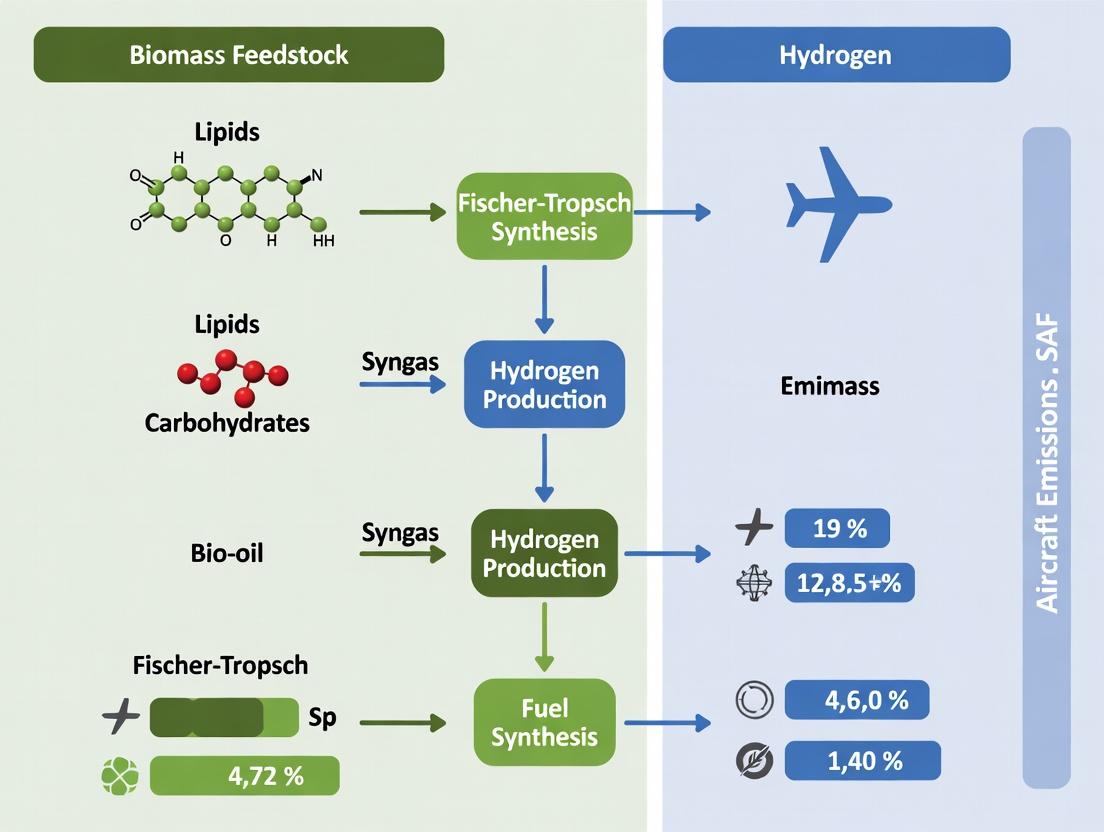
This article provides a comparative analysis of two leading pathways for deep aviation decarbonization: biomass-derived Sustainable Aviation Fuel (SAF) and hydrogen-powered aircraft.
Biomass SAF vs. Hydrogen Aircraft: A Comprehensive Emissions Reduction Analysis for Aviation Decarbonization
Abstract
This article provides a comparative analysis of two leading pathways for deep aviation decarbonization: biomass-derived Sustainable Aviation Fuel (SAF) and hydrogen-powered aircraft. Targeting researchers, scientists, and development professionals, it explores the foundational science, methodological frameworks for lifecycle assessment, key optimization challenges, and comparative validation of emissions profiles. The scope encompasses technical mechanisms, feedstock and production pathways (e.g., HEFA, FT, PtL), hydrogen propulsion technologies (fuel cell vs. combustion), system-level lifecycle analysis (LCA) boundaries, and a critical evaluation of their relative CO2 and non-CO2 climate impacts, scalability, and integration timelines for the aerospace and energy sectors.
Understanding the Core Technologies: Biomass SAF and Hydrogen Aviation Explained
Comparative Analysis: Biomass SAF vs. Hydrogen Aircraft Research Pathways
This guide provides an objective comparison of two primary technological pathways for aviation decarbonization: Biomass-derived Sustainable Aviation Fuel (SAF) and Hydrogen-powered aircraft. The analysis is framed within the thesis of achieving net-zero emissions, comparing the emission reduction potential, technological maturity, and research challenges of each pathway.
Emissions Reduction & Performance Comparison
The following table summarizes key performance metrics based on recent lifecycle assessment (LCA) studies and experimental engine test data.
Table 1: Comparative Performance Metrics: Biomass SAF vs. Hydrogen Propulsion
| Metric | Biomass SAF (HEFA Pathway) | Hydrogen (Combustion) | Hydrogen (Fuel Cell) | Conventional Jet A-1 |
|---|---|---|---|---|
| Well-to-Wake CO₂e Reduction (%) | 50-85%* | 50-75% (if green H₂) | 75-90% (if green H₂) | Baseline (0%) |
| Non-CO₂ Climate Forcing | Contrails similar to Jet A; Soot reduction up to 50% | Significantly reduced soot; High H₂O emission may increase contrail cirrus | Zero in-flight emissions (only H₂O & heat) | Baseline |
| Technology Readiness Level (TRL) | 8-9 (Commercial use, approved blends) | 4-6 (Technology demonstration) | 3-5 (Lab & prototype testing) | 9 (Fully mature) |
| Energy Density (MJ/kg) | ~44 | ~120 (LH₂) | ~120 (LH₂, but system efficiency differs) | ~43 |
| Volumetric Energy (MJ/L) | ~35 | ~8 (LH₂, requires cryogenic tanks) | ~8 (LH₂, requires cryogenic tanks) | ~34 |
| Critical Research Challenge | Sustainable feedstock scaling, land-use change, cost | Cryogenic tank design & weight, combustion NOx, airport infrastructure | Fuel cell power density, thermal management, system integration | N/A |
*Highly dependent on feedstock and land-use change accounting.
Experimental Protocols & Methodologies
Protocol A: Lifecycle Assessment (LCA) for Emissions Comparison
- Objective: Quantify and compare Well-to-Wake (WTW) greenhouse gas emissions.
- Method:
- System Boundaries: Define "Well-to-Wake" (feedstock production, fuel processing, transportation, combustion).
- Inventory Analysis: Collect data for each stage (e.g., H₂ production via electrolysis, biomass cultivation, fertilizer use).
- Impact Assessment: Apply global warming potential (GWP) factors (e.g., IPCC AR6) to emissions (CO₂, CH₄, N₂O).
- Allocation: For biomass SAF, use energy or economic allocation methods for co-products.
- Sensitivity Analysis: Test key variables (e.g., electricity carbon intensity for H₂, feedstock yield).
- Data Source: GREET model (ANL) simulations, EU RED II default values, peer-reviewed LCA studies.
Protocol B: Combustion Characteristics & Emissions Testing
- Objective: Measure in-flight emission indices (EI) for soot, NOx, and unburned hydrocarbons.
- Method:
- Test Rig: Use a single-sector or full annular combustor rig at simulated cruise conditions.
- Fuel Delivery: For SAF: Standard liquid fuel injectors. For H₂: Adapt for gaseous or cryogenic liquid injection.
- Measurement:
- Gas Analysis: Extract gas sample via quartz microprobe; analyze via FTIR and chemiluminescence for NOx, CO, H₂O.
- Soot Measurement: Use laser-induced incandescence (LII) or filter smoke number (FSN).
- Comparison: Compare EIs at identical combustor inlet temperature & pressure for Jet A-1, 100% SAF, and H₂.
Visualization of Research Pathways
Diagram 1: Aviation Decarbonization Technology Pathways
Diagram 2: Combustion & Emissions Test Workflow
The Scientist's Toolkit: Research Reagent Solutions
Table 2: Essential Materials for Aviation Fuel Research
| Reagent/Material | Function in Research | Key Supplier Examples |
|---|---|---|
| HEFA-SPK Reference Fuel | Benchmark for chemical & physical property testing; used in combustion experiments as a standardized SAF. | Neste, World Energy, UOP |
| Certified Jet A-1 Reference | Baseline fuel for all comparative performance and emissions testing. | Haltermann Carless, Chevron |
| High-Purity Hydrogen (≥99.99%) | For fuel cell stack testing and hydrogen combustion experiments in rigs. | Linde, Air Liquide, Air Products |
| Catalyst Libraries (e.g., Pt/C, Ni-Mo/Al₂O₃) | For screening catalytic pathways in novel SAF production (e.g., e-fuels) or H₂ production. | Sigma-Aldrich, Johnson Matthey, Umicore |
| Gas Calibration Standards | Calibration of FTIR, GC, and chemiluminescence detectors for precise NOx, CO, CO₂, UHC measurement. | Restek, National Institute of Standards and Technology (NIST) |
| Soot Reference Materials | Calibration of LII and FSN equipment for quantifying particulate matter emissions. | NIST Standard Reference Materials (SRM) |
| Cryogenic Tank Composite Materials | Samples for testing hydrogen permeation, mechanical strength, and thermal performance. | Toray Industries, Hexcel, Solvay |
| Fuel Cell Membrane Electrode Assemblies (MEAs) | Core component for testing proton exchange membrane (PEM) fuel cell performance and durability. | Gore, Johnson Matthey, 3M |
This guide compares the performance of biomass-derived Sustainable Aviation Fuels (SAF) within the critical research framework of aviation emissions reduction. The primary thesis contrasts the near-to-mid-term, scalable potential of biomass SAF with the long-term, high-potential but infrastructure-intensive pathway of hydrogen-powered aircraft. Biomass SAF offers a drop-in fuel solution, directly comparable to conventional Jet A-1, enabling immediate lifecycle emissions reductions.
Feedstock Comparison
Feedstocks are categorized by type and sustainability attributes.
| Feedstock Category | Specific Examples | Key Properties (Avg.) | Advantages for SAF | Research Challenges |
|---|---|---|---|---|
| Oil/Fat-based | Used Cooking Oil (UCO), Tallow, Camelina, Jatropha | High lipid content (>40% for crops) | High HEFA yield; waste streams reduce ILUC* risk | Feedstock availability & consistency |
| Lignocellulosic | Agricultural residues (e.g., corn stover), forestry waste, energy crops (e.g., switchgrass) | High cellulose/hemicellulose content | High abundance; low/no ILUC risk; FT & ATJ feedstock | Complex pretreatment required |
| Sugar/Starch-based | Sugar cane, corn | High fermentable sugar content | Efficient fermentation to alcohol for ATJ | Direct competition with food supply (1st gen) |
| Novel | Algae, municipal solid waste | Algae: high oil yield per acre | Very high theoretical yield; use of non-arable land | High cultivation costs; scale-up challenges |
*ILUC: Indirect Land Use Change
Conversion Pathways & Comparative Performance
| Pathway | Full Name | Primary Feedstock | Core Process | Key Experimental Fuel Property Results (vs. Jet A-1) |
|---|---|---|---|---|
| HEFA | Hydroprocessed Esters and Fatty Acids | Oils & Fats | Hydrodeoxygenation, isomerization, cracking | Lower aromatic content (~8% vs. 18-22%); Higher cetane number; Nearly identical energy density (43.5 MJ/kg); Excellent freeze point (<-47°C). |
| FT-SPK | Fischer-Tropsch Synthetic Paraffinic Kerosene | Lignocellulosic Biomass | Gasification, FT synthesis, upgrading | Near-zero aromatics (<0.5%); High cetane; Excellent thermal stability; Slightly lower density (0.76 vs. 0.81 kg/L); Requires aromatics blending. |
| ATJ | Alcohol-to-Jet | Sugar, Starch, or Lignocellulosic (via alcohol) | Dehydration, oligomerization, hydrogenation | Very low sulfur; High smoke point; Can have lower volumetric energy density; Blending limit ~50% without additives. |
Experimental Protocol: Fuel Property Testing
- Method: ASTM D4054 - Standard Practice for Evaluation of New Aviation Turbine Fuels and Fuel Additives.
- Protocol Detail: Candidate SAF is blended with conventional fuel at prescribed ratios (e.g., 50/50). Tests are conducted per:
- Smoke Point: ASTM D1322. Measures flame radiation.
- Freeze Point: ASTM D2386. Determines temperature of fuel crystallization.
- Density: ASTM D4052. Critical for aircraft range calculation.
- Aromatic Content: ASTM D6379 (HPLC). Assesses elastomer swelling and combustion soot.
- Thermal Stability: ASTM D3241 (JFTOT). Measures fuel deposit formation under heat stress.
- Control: Pure conventional Jet A-1 (ASTM D1655).
- Data Analysis: Results are compared to ASTM D7566 (Standard Specification for Aviation Turbine Fuel Containing Synthesized Hydrocarbons) annex limits for each pathway.
Diagram Title: Primary Biomass SAF Conversion Pathways to Drop-in Fuel
Emissions Reduction: Biomass SAF vs. Hydrogen Research
This data frames biomass SAF within the broader emissions thesis.
| Parameter | Conventional Jet A-1 | Biomass SAF (HEFA, FT, ATJ) | Hydrogen Aircraft (Liquid H2) | Experimental/Calculation Basis |
|---|---|---|---|---|
| Well-to-Wake CO₂e Reduction | Baseline (89 gCO₂e/MJ) | 70-95%* | 50-90% (WTW, if from renewables) | Per CORSIA lifecycle assessment. *Depends on H2 production method. |
| Non-CO₂ Climate Effects | High (soot, sulfate, NOx-induced contrails) | Reduced (lower soot from near-zero aromatics) | Near-zero (no carbon, but H2O emissions may affect contrails) | Measured in engine tests (ECLIF/NDMAX campaigns). |
| Technology Readiness Level (TRL) | 9 (Mature) | 8-9 (Commercial deployment) | 4-6 (Prototype/demonstration) | FAA/NASA TRL scale assessment. |
| Infrastructure Compatibility | Full | High (Drop-in, uses existing infrastructure) | Very Low (Requires全新 storage, transport, & aircraft) | Comparative systems analysis. |
Experimental Protocol: Lifecycle Assessment (LCA)
- Method: ISO 14040/14044 LCA standards, following CORSIA* methodology.
- System Boundary: Well-to-Wake (WTWa) - includes feedstock production, transport, fuel production, combustion.
- Data Inventory: Primary data from pilot plants for SAF; literature data for hydrogen pathways (e.g., electrolysis efficiency).
- Impact Assessment: Global Warming Potential (GWP100) is the key metric.
- Sensitivity Analysis: Conducted on critical parameters (e.g., feedstock yield, hydrogen production electricity source). *CORSIA: Carbon Offsetting and Reduction Scheme for International Aviation.
Diagram Title: Biomass SAF vs. Hydrogen Pathways in Emissions Reduction Thesis
The Scientist's Toolkit: Key Research Reagents & Materials
Essential materials for conducting biomass SAF fuel property and emissions research.
| Item Name | Function in Research | Example/Standard |
|---|---|---|
| ASTM D1655 Jet A-1 | Baseline control fuel for all comparative experiments. | Commercially sourced reference fuel. |
| ASTM D7566 Annex Fuels | Certified reference SAF samples for pathway validation (HEFA-SPK, FT-SPK, ATJ-SPK). | Obtained from pilot plants or specialty chemical suppliers. |
| JFTOT Apparatus | Standard instrument for testing thermal oxidative stability of aviation fuels (ASTM D3241). | Alcor JFTOT System. |
| GC-MS/FID System | For detailed hydrocarbon analysis (DHA, ASTM D6379) to quantify aromatic and n-paraffin content. | Agilent 8890 GC with FID/MS. |
| Smoke Point Lamp | Measures the smoke point of aviation turbine fuels (ASTM D1322). | Herzog SP-510C. |
| Constant Volume Combustion Chamber | Fundamental device to study spray combustion, soot formation, and ignition properties of alternative fuels. | Cambustion NGD, etc. |
| Lifecycle Inventory Database | Software and datasets for conducting GHG emissions LCA (e.g., GREET, SimaPro). | Argonne GREET Model, Ecoinvent database. |
| Certified Reference Gases | For calibrating analyzers measuring CO2, CO, NOx, and unburned hydrocarbons in engine exhaust. | NIST-traceable calibration gas mixtures. |
Introduction Within the critical research framework for aviation decarbonization, hydrogen-powered aircraft represent a zero-carbon-at-point-of-use alternative to sustainable aviation fuels (SAF), including those derived from biomass. This guide objectively compares the two primary hydrogen propulsion technologies—fuel cell electric and direct hydrogen combustion—and details the significant storage challenges. Performance is evaluated against key operational parameters relevant to researchers and developers in the field.
Propulsion Model Comparison: Fuel Cell Electric vs. Direct Combustion
Hydrogen propulsion bifurcates into two fundamentally distinct architectures. The fuel cell electric model converts hydrogen to electricity via an electrochemical cell to power an electric motor. The direct combustion model, often in a modified gas turbine, burns hydrogen similarly to conventional jet fuel.
Table 1: Propulsion Model Performance Comparison
| Performance Parameter | Hydrogen Fuel Cell Electric | Hydrogen Direct Combustion | Benchmark: Conventional Turbofan (Jet-A) | Key Experimental Source & Protocol |
|---|---|---|---|---|
| Propulsive Efficiency | High (~40-50% system efficiency). Electric motors maintain high efficiency across thrust settings. | Moderate (~35-45% engine efficiency). Similar to advanced gas turbines, limited by thermodynamic cycle. | Moderate (~35-40% engine efficiency). | Ground test data from the DLR HY4 demonstrator (fuel cell) and Rolls-Royce AE2100 hydrogen combustor tests. Protocol: Direct shaft power (fuel cell/motor) or thrust measurement (combustion) versus lower heating value (LHV) energy input of hydrogen. |
| In-flight Emissions | Zero CO₂, NOx, particulates, or sulfur oxides. Only water vapor. | Zero CO₂ & particulates. High NOx potential due to high flame temp. Can be mitigated via lean-burn injectors. | High CO₂, NOx, particulates, sulfur oxides. | Combustor rig testing (e.g., Airbus ZEROe combustor prototypes). Protocol: Emissions sampled from exhaust stream analyzed via gas chromatography (GC) and chemiluminescence detection for NOx. |
| Technology Readiness (TRL) | TRL 5-6 for small regional aircraft. Scaling for larger aircraft requires major power density advances. | TRL 4-5. Ground tests of full engine combustors successful. Requires full engine integration and flight test. | TRL 9 (Fully mature). | Assessment based on public disclosures from Clean Aviation JU and NASA HyTEC project reviews. |
| Thermal Management | Critical Challenge. Fuel cell stack and power electronics require substantial cooling systems, adding weight and complexity. | Less challenging than fuel cell. Heat is inherent in the exhaust stream, though combustor walls require active cooling. | Managed via engine oil and air systems. | Thermal cycle testing in environmental chambers. Protocol: Instrumenting stack/combustor with thermocouples to map heat rejection requirements under load profiles. |
| Thrust / Power Density | Lower. Current systems (~2-3 kW/kg) must compete with gas turbines (~5-10 kW/kg). Major barrier to scaling. | Higher. Leverages existing high-thrust-density gas turbine core; modified fuel injectors and controls. | High (mature technology). | Component bench testing. Protocol: Measuring net power/thrust output and dividing by the dry mass of the propulsion system (including all balance-of-plant). |
| Noise Profile | Significantly lower. High-frequency noise from electronics/compressors; no low-frequency combustion roar. | Comparable to conventional jet engine core noise. Possibly altered combustor tonals. | High. | Acoustic testing in anechoic chambers. Protocol: Microphone array measurements during static engine runs across power settings. |
Hydrogen Storage: The Paramount Challenge
For aviation, storage is the critical mass driver. The volumetric energy density of liquid hydrogen (LH₂) is only about 1/4 that of Jet-A, even though its gravimetric energy density is ~3x higher.
Table 2: Hydrogen Storage Method Comparison for Aviation
| Storage Method | Gravimetric Energy Density (MJ/kg) | Volumetric Energy Density (MJ/L) | Key Technical Hurdles | Experimental Assessment Focus |
|---|---|---|---|---|
| Cryogenic Liquid (LH₂) | ~120-141 (LHV) | ~8-10 (requires 20K temp, 1 bar) | Boil-off management, tank insulation (cryogenic, vacuum-jacketed), tank geometry (non-cylindrical for airframe integration), safety venting. | Cryogenic cycle testing. Protocol: Measuring boil-off rates in insulated tanks under simulated flight thermal cycling and vibration profiles. |
| Compressed Gas (CGH₂) | ~120-141 (LHV) | ~4-6 (at 350-700 bar) | Extremely low volumetric density leads to disproportionately large, heavy tanks. Unsuitable for all but smallest aircraft. | Burst pressure and fatigue testing of composite overwrapped pressure vessels (COPVs). |
| Solid-State (e.g., Hydrides) | < 10 | Varies | Very low gravimetric density, slow absorption/desorption kinetics, thermal management during fueling/defueling. | Sieverts apparatus testing. Protocol: Measuring hydrogen absorption/desorption kinetics and capacity under controlled temperature/pressure cycles. |
The Scientist's Toolkit: Research Reagent Solutions
| Item | Function in Hydrogen Aircraft Research |
|---|---|
| Proton Exchange Membrane (PEM) Fuel Cell Stack | Core of electric propulsion system. Converts hydrogen and oxygen to electricity, heat, and water. Performance metrics: power density, durability. |
| Lean-Burn Hydrogen Combustor Rig | Test article for studying flame stability, NOx formation, and combustor liner cooling in a direct combustion engine. |
| Autoclave / Cryostat | For testing composite liquid hydrogen tank materials under cryogenic temperatures and pressure cycles. |
| Gas Chromatograph (GC) with TCD & FID | To analyze gas composition (H₂ purity, possible contaminants) from storage systems and exhaust emissions (for combustion tests). |
| Chemiluminescence Analyzer | Specifically for quantifying NOx concentrations in combustor exhaust streams. |
| Sieverts Apparatus | For characterizing hydrogen absorption/desorption kinetics and capacity in solid-state storage materials. |
| High-Pressure Hydrogen Reservoir (700 bar) | Supplies hydrogen for direct combustion or fuel cell testing at representative aircraft system pressures. |
| Data Acquisition System (DAQ) with Cryogenic Thermocouples | For high-speed, synchronous recording of temperature, pressure, flow, and strain measurements across the test article. |
Experimental & Conceptual Visualization
Diagram 1: Hydrogen Propulsion System Architectures
Diagram 2: Hydrogen Storage Technology Trade-off Space
Conclusion In the thesis of aviation decarbonization, hydrogen aircraft present a divergent path from biomass SAF, offering the potential for true zero-carbon flight but introducing profound technical discontinuities. The fuel cell electric pathway promises high efficiency and zero NOx but faces severe power density and thermal hurdles. The direct combustion pathway leverages existing gas turbine knowledge but must solve high-pressure cryogenic storage and mitigate hydrogen-induced NOx. The storage challenge, dominated by cryogenic liquid systems, remains a primary research frontier impacting aircraft design, range, and economics. The selection between these models will be application-specific, dictating the future research agenda for this promising technology.
In the pursuit of decarbonizing aviation, the choice of emissions accounting framework critically influences the perceived efficacy of alternative fuels like biomass-derived Sustainable Aviation Fuel (SAF) and hydrogen. This comparison guide analyzes the "Well-to-Wake" (WTW) and "Tank-to-Wake" (TTW) paradigms, providing objective data and methodologies pertinent to researchers comparing biomass SAF and hydrogen propulsion systems.
Core Definitions and System Boundaries
Tank-to-Wake (TTW): Accounts for direct emissions from the aircraft during flight. This includes only the CO₂, H₂O, NOx, and other compounds released from the combustion of fuel in the aircraft's engines.
Well-to-Wake (WTW): Encompasses the full lifecycle emissions. It is the sum of:
- Well-to-Tank (WTT): All emissions from feedstock extraction, feedstock transport, fuel production, and fuel distribution to the aircraft.
- Tank-to-Wake (TTW): The direct aircraft emissions.
Quantitative Data Comparison
The carbon intensity of aviation fuels varies drastically based on the accounting boundary and production pathway. The table below summarizes key data from recent studies and lifecycle assessments (LCAs).
Table 1: Comparative Carbon Intensity of Aviation Energy Carriers (g CO₂e/MJ)
| Fuel / Pathway | TTW Emissions (g CO₂e/MJ) | WTW Emissions (g CO₂e/MJ) | Key Notes & Conditions |
|---|---|---|---|
| Conventional Jet A-1 | ~73.2 | ~87.5 - 94.0 | Baseline. WTW includes crude extraction, refining, and transport. |
| Biomass SAF (HEFA) | ~0 (biogenic) | 15 - 40 | WTW range depends on feedstock (used cooking oil, algae), land-use change (LUC), and process energy. |
| Biomass SAF (FT-SPK) | ~0 (biogenic) | 25 - 60 | Higher WTW variability due to gasification/F-T synthesis energy, feedstock type (forest residues, energy crops). |
| Hydrogen (Grey - from SMR) | 0 | ~110 - 140 | High WTW due to methane reforming. TTW is zero for direct combustion, but includes H₂O & NOx. |
| Hydrogen (Blue - SMR + CCS) | 0 | ~40 - 60 | Carbon Capture and Storage (CCS) efficiency is critical (~90% capture assumed). |
| Hydrogen (Green - Electrolysis) | 0 | ~5 - 30 | Entirely dependent on carbon intensity of electricity grid/renewable source. |
| Liquid Hydrogen (Cryogenic, Green H2) | 0 | ~25 - 50 | Includes significant energy penalty (~35-50% of H2 energy content) for liquefaction. |
Data synthesized from ICAO, EU RED II, IEA, and recent peer-reviewed LCAs (2023-2024). g CO₂e = grams of carbon dioxide equivalent.
Experimental Protocols for Lifecycle Assessment (LCA)
A robust comparison between biomass SAF and hydrogen requires standardized LCA methodologies.
Protocol 1: Well-to-Wake Greenhouse Gas Lifecycle Analysis (ISO 14040/14044 compliant)
- Goal & Scope Definition: Define functional unit (e.g., 1 MJ of energy delivered at aircraft engine), system boundaries (WTW), and impact categories (Global Warming Potential - GWP100).
- Lifecycle Inventory (LCI):
- Feedstock Phase: Collect data on feedstock cultivation/harvesting (for biomass) or primary energy source extraction (for H2). Include inputs like fertilizers, water, land use change emissions, and electricity.
- Fuel Production Phase: Model the conversion facility (e.g., Hydroprocessed Esters and Fatty Acids (HEFA) biorefinery, Fischer-Tropsch plant, Steam Methane Reformer (SMR), Electrolyzer). Account for all energy and material inputs, process emissions, and co-products (handled via system expansion or allocation).
- Distribution & Storage Phase: Model transport (pipeline, truck, ship) and energy-intensive storage (critical for cryogenic liquid H2).
- Combustion Phase: Use established emission factors for fuel combustion in a representative aircraft engine (e.g., APEX, ICAO databank). For H2, model NOx formation.
- Impact Assessment: Calculate total GHG emissions for each lifecycle stage using characterization factors (e.g., IPCC AR6).
- Interpretation & Sensitivity Analysis: Conduct uncertainty analysis on key parameters (e.g., feedstock yield, electricity carbon intensity, CCS rate).
Protocol 2: Combustion Emission Characterization (TTW Core)
- Test Rig Setup: Utilize a combustor rig or full-scale engine test stand capable of handling alternative fuels (SAF blends, H2).
- Fuel Specification: Precisely characterize fuel properties (SAF blend ratio, H2 purity).
- Operational Profile: Test across a standardized flight cycle (e.g., Landing-Takeoff (LTO) cycle, cruise conditions).
- Emission Sampling: Use extractive probing with Fourier-Transform Infrared (FTIR) spectroscopy for gaseous species (CO₂, H₂O, NOx, CO, unburnt hydrocarbons) and particle sampling systems for nvPM (non-volatile Particulate Matter) mass and number.
- Data Analysis: Report emissions indices (EI) in g/kg of fuel burned. For H₂, report H₂O and NOx EI.
Research Reagent Solutions & Essential Materials
Table 2: Key Research Tools for Emissions Assessment Studies
| Item | Function in Research |
|---|---|
| High-Fidelity LCA Software (e.g., GREET, SimaPro, GaBi) | Models complex supply chains, performs lifecycle inventory calculations, and impact assessments with built-in databases. |
| FTIR Spectrometer (Gas Analyzer) | Provides real-time, simultaneous measurement of multiple gaseous pollutant species from combustor/engine exhaust. |
| Scanning Mobility Particle Sizer (SMPS) | Measures the size distribution and number concentration of nanoparticles in exhaust, critical for nvPM analysis. |
| Carbon-14 Isotope Analysis | Differentiates fossil-based CO₂ from biogenic CO₂ in atmospheric or exhaust samples, validating SAF carbon neutrality claims. |
| Certified Reference Fuels (Jet A-1, CORSIA Compliant SAF) | Essential baseline and control fuels for ensuring experimental comparability across studies. |
| Cryogenic Storage & Handling System | Required for safe storage, transfer, and combustion testing of liquid hydrogen in research settings. |
| Process Modeling Software (e.g., Aspen HYSYS) | Used to simulate and optimize energy/material flows in fuel production pathways (SAF biorefinery, H2 plant) for WTT analysis. |
Visualizing System Boundaries and Pathways
Title: Lifecycle Emission Accounting Boundaries
Title: Fuel Production and Emission Nodes
Within the critical research thesis comparing emissions reduction potential between biomass-derived Sustainable Aviation Fuel (SAF) and hydrogen-powered aircraft, understanding the Technology Readiness Level (TRL) and projected deployment timelines is essential for prioritizing R&D investment and policy support. This guide objectively compares the two pathways based on current technological maturity and commercialization roadmaps.
Technology Readiness & Commercial Deployment Comparison
The following table synthesizes current TRL assessments, key technological challenges, and consensus estimates for commercial deployment for the two primary emission-reduction pathways for aviation.
Table 1: TRL & Commercial Roadmap Comparison for Aviation Decarbonization Pathways
| Metric | Biomass SAF (Hydroprocessed Esters and Fatty Acids - HEFA) | Hydrogen Aircraft (Liquid Hydrogen, Direct Combustion) | Hydrogen Aircraft (Fuel Cell Propulsion) |
|---|---|---|---|
| Current Max TRL | 9 (Commercial Deployment) | 5-6 (Technology Demonstration) | 5-6 (Technology Demonstration) |
| Deployment Timeline | Now (Blended, Limited Scale) | 2035-2040 (Short-Range) | 2035-2040 (Regional) |
| Key Development Stage | Scale-up & Feedstock Diversification | Cryogenic Tank & Engine Integration | High-Power Fuel Cell Systems & Thermal Management |
| Major Technical Hurdle | Sustainable feedstock availability & cost | Onboard liquid hydrogen storage (weight/volume) | Power density, system weight, and in-flight durability |
| Infrastructure Dependency | Moderate (Leverages existing with blending) | Extreme (New LH2 production, transport, airport storage) | Extreme (New LH2 production, transport, airport storage) |
| Recent Experimental Data Point | 100% SAF flight tests show >50% reduction in particulate emissions vs. conventional Jet A1 (NASA/AAFEX tests). | Airbus ZEROe demonstrator (A380) targeting LH2 tank & combustion tests in-flight by 2026. | Universal Hydrogen flight test (Dash-8) demonstrated ~1MW fuel cell powertrain for 15-min flight (2023). |
| Estimated CO2e Reduction Potential (WTW) | 70-90% vs. fossil jet (highly feedstock dependent) | ~75-90% if using green hydrogen | ~90-100% if using green hydrogen |
Experimental Protocols for Cited Key Data
1. Protocol: Measurement of Non-CO2 Emissions from 100% SAF Combustion (NASA AAFEX III)
- Objective: Quantify the change in particulate matter (soot) and other emissions from burning 100% HEFA-SAF versus conventional fuel.
- Methodology:
- Test Article: A CFM56-7B engine (used on 737s) mounted on a test stand.
- Fuels: Baseline: Jet A. Test: 100% HEFA-SAF.
- Procedure: The engine is run through a standardized throttle sweep (idle, climb, cruise power settings). An extensive sampling probe rake is placed in the exhaust plume.
- Measurement: Particles are sampled via an extractive probe, diluted with nitrogen to simulate atmospheric cooling, and characterized using a Scanning Mobility Particle Sizer (SMPS) and Single-Particle Soot Photometer (SP2) to determine particle number, mass, and size distribution.
- Data Analysis: Emissions indices (grams of pollutant per kilogram of fuel burned) are calculated for each power condition and compared between fuels.
2. Protocol: Integrated Flight Test of a Fuel Cell Powertrain for Regional Aircraft (Universal Hydrogen, 2023)
- Objective: Validate the performance of a megawatt-scale hydrogen fuel cell propulsion system under real flight conditions.
- Methodology:
- Test Platform: Modified De Havilland Canada Dash 8-300. One propeller powered by the original turboprop engine, the other by the experimental fuel cell powertrain.
- Hydrogen Source: Gaseous hydrogen stored in two Type IV composite tanks mounted in a modified aircraft pod.
- Power System: Hydrogen supplied to a Proton Exchange Membrane Fuel Cell (PEMFC) stack with a peak output of ~1MW. The DC output is conditioned and sent to an electric motor driving the propeller.
- Flight Test Profile: The aircraft performed taxi, takeoff, a 15-minute climb and cruise at 3,500 ft, followed by landing, primarily on fuel cell power.
- Data Collection: Real-time monitoring of fuel cell stack voltage/current, hydrogen flow rate, temperatures, and powertrain efficiency throughout the flight envelope.
Visualization: Development Pathways & Logical Workflow
Title: Comparative TRL Roadmaps for SAF and Hydrogen Aviation
Title: Core Experimental Protocol for Aviation Emission & Performance Testing
The Scientist's Toolkit: Key Research Reagent Solutions
Table 2: Essential Materials & Analytical Tools for Aviation Fuel and Propulsion Research
| Item / Reagent | Function in Research Context | Typical Specification / Example |
|---|---|---|
| HEFA-SAF Reference Fuel | Certified, homogeneous fuel sample for baseline combustion and emissions testing against experimental alternatives. | Must meet ASTM D7566 Annex 2 specification for HEFA-SPK. |
| Synthetic Jet A (Cannon) | Consistent, reproducible surrogate for conventional jet fuel for controlled laboratory experiments. | Aerosol-based flame tube or ignition delay studies. |
| High-Purity Hydrogen (≥99.97%) | Feedstock for fuel cell performance testing and catalyst studies, minimizing impurity-induced degradation. | Used in PEMFC single-cell and stack testing. |
| Type IV Composite Hydrogen Tank | Prototype system for testing cryogenic-compatible materials, permeation rates, and thermal performance. | Qualification testing for Liquid Hydrogen (LH2) storage. |
| Scanning Mobility Particle Sizer (SMPS) | Measures size distribution and number concentration of nano-scale particulate matter (soot) in engine exhaust. | Critical for quantifying non-CO2 climate impacts (e.g., contrail formation potential). |
| Single-Particle Soot Photometer (SP2) | Quantifies the refractory black carbon (rBC) mass of individual soot particles. | Used in tandem with SMPS for detailed particulate analysis. |
| Fourier Transform Infrared (FTIR) Spectrometer | Identifies and quantifies multiple gaseous emissions (CO2, H2O, NOx, CO, unburned hydrocarbons) in real-time from exhaust. | Provides comprehensive gas-phase emission indices. |
| Proton Exchange Membrane (PEM) | The core electrolyte medium in fuel cells, facilitating proton transport. Performance defines system efficiency. | Variants optimized for higher temperatures (~120°C) are under research for aviation. |
| Catalyst-Coated Membrane (CCM) | Integrated assembly of PEM and platinum-group metal catalysts (anode/cathode) for fuel cell testing. | Pt/C or PtCo/C catalysts are standard for Oxygen Reduction Reaction (ORR). |
Lifecycle Assessment (LCA) Methodologies: Measuring Emissions from Feedstock to Flight
Life Cycle Assessment (LCA) is the cornerstone of evaluating the environmental impacts of alternative aviation fuels, such as biomass-derived Sustainable Aviation Fuel (SAF) and hydrogen. A robust LCA relies on standardized frameworks and rigorous review to ensure credible comparisons for emissions reduction research. This guide compares the dominant LCA standards and protocols relevant to aviation fuels.
Comparison of Key LCA Standards and Guidelines
| Framework/Standard | Primary Scope & Focus | Critical Review Requirement | Key Provisions for Aviation Fuels | Experimental/Data Requirements |
|---|---|---|---|---|
| ISO 14040/14044 | Provides overarching principles, framework, and requirements for all LCA studies. | Mandatory for comparative assertions intended for public disclosure. | Defines mandatory stages: Goal & Scope, Inventory Analysis (LCI), Impact Assessment (LCIA), Interpretation. Sets system boundary rules. | Requires transparent documentation of all data sources, allocation procedures, and impact assessment methods used. |
| CORSIA LCA Methodology | Specifically for calculating life cycle emissions of aviation fuels under ICAO's Carbon Offsetting and Reduction Scheme. | Reviewed and established by ICAO Committee on Aviation Environmental Protection (CAEP). | Default life cycle emissions values for certified pathways (e.g., HEFA, ATJ). Methods for calculating actual emissions with sustainability criteria. | Requires chain of custody and compliance with sustainability criteria. Heavily relies on pre-approved fuel pathways. |
| ASTM D7566 Annexes | Standard specification for aviation turbine fuel containing synthesized hydrocarbons. | Reviewed by ASTM International Committee. | Each SAF production pathway (e.g., Annex A5 for HEFA, Annex A6 for FT) includes specific LCA requirements for compliance, often referencing ISO and CORSIA. | Defines fuel properties and composition. LCA data is required to show >50% reduction in lifecycle CO2 compared to petroleum jet. |
| GREET Model (Argonne) | A specific LCA tool (not a standard) widely used for transportation fuels. | Peer-reviewed model; users must conduct review for specific studies. | Detailed fuel cycle and vehicle cycle models. Includes direct and indirect effects for a wide array of biomass and hydrogen pathways. | Requires detailed feedstock, process energy, and logistics data. Provides transparent, publicly available inventory data. |
Experimental Protocol for Comparative LCA of Aviation Fuels
A credible comparative LCA of biomass SAF vs. hydrogen for aircraft emissions reduction must adhere to a rigorous protocol.
Goal and Scope Definition (ISO 14040):
- Objective: Quantify and compare the well-to-wake (WTW) greenhouse gas (GHG) emissions of a selected biomass SAF pathway (e.g., Hydroprocessed Esters and Fatty Acids - HEFA) and a hydrogen pathway (e.g., gaseous H2 from grid electrolysis).
- Functional Unit: 1 megajoule (MJ) of usable energy delivered to the aircraft engine (lower heating value basis).
- System Boundaries: Include all processes from feedstock extraction/production, fuel processing, transportation, storage, to combustion in flight (WTW).
Life Cycle Inventory (LCI) Analysis:
- Data Collection: Gather primary data from pilot plants or industrial partners for the foreground systems (fuel conversion processes). Use secondary data from peer-reviewed databases (e.g., Ecoinvent, GREET database) for background systems (electricity grid, fertilizer production, etc.).
- Key Data Points:
- Biomass SAF (HEFA): Oilseed cultivation yield, fertilizer inputs, hydrogen consumption for hydroprocessing, process energy, transportation distances.
- Hydrogen Aircraft: Electricity source mix for electrolysis, electrolyzer efficiency (kWh/kg H2), H2 liquefaction/compression energy, cryogenic tank mass, fuel cell or turbine efficiency in flight.
- Allocation: For biomass SAF with co-products (e.g., animal feed), apply system expansion or energy/mass allocation per ISO guidelines.
Life Cycle Impact Assessment (LCIA):
- Impact Category: Focus on Global Warming Potential (GWP) over a 100-year horizon (CO2-eq).
- Characterization Factors: Use latest IPCC factors (e.g., AR6). For hydrogen, include a characterization factor for hydrogen emissions (if any) and indirect effects of high-altitude water vapor for combustion scenarios.
Critical Review Process (ISO 14044):
- For public comparative assertions, an independent panel of three LCA experts must conduct a critical review.
- Review Scope: Verify compliance with ISO standards, appropriateness of methods, data quality, consistency, and transparency of reporting.
- Outcome: A formal review report and statement must be included in the final LCA publication.
Visualization: LCA Workflow and Review for Aviation Fuels
The Scientist's Toolkit: Key Research Reagent Solutions for LCA Modeling
| Tool/Reagent | Function in LCA Research |
|---|---|
| GREET Model Software | The primary simulation tool for modeling energy use and emissions of fuel cycles. Provides pre-built pathways for biomass and hydrogen. |
| Ecoinvent Database | A comprehensive life cycle inventory database providing background data for materials, energy, and processes. |
| IPCC Characterization Factors | Official set of metrics for converting emissions (e.g., CH4, N2O) into CO2-equivalents for the Global Warming Potential impact category. |
| CORSIA Eligible Fuels List & LCA Values | Reference for certified SAF pathways and their default emission values, serving as a benchmark for novel fuel research. |
| Aspen Plus / HYSYS | Process simulation software used to generate primary inventory data for novel fuel production pathways at scale. |
| GaBi LCA Software | Another major LCA modeling suite used for building detailed product system models and conducting impact assessments. |
Comparative Analysis of Emissions Reduction Pathways
Within the broader thesis comparing emissions reduction strategies for aviation, this guide objectively compares the performance of Biomass-derived Sustainable Aviation Fuel (SAF) against other alternative propulsion systems, with a focus on hydrogen-powered aircraft. The analysis centers on three critical domains: carbon uptake dynamics, Indirect Land Use Change (ILUC) risks, and net energy requirements for processing.
Carbon Uptake & Net Carbon Balance
This section compares the life-cycle carbon dioxide equivalent (CO₂e) emissions, accounting for biogenic carbon uptake during feedstock growth.
Table 1: Life-Cycle CO₂e Emissions Comparison (grams per Passenger-Kilometer)
| Fuel / Propulsion System | Feedstock / Production Pathway | Well-to-Wake CO₂e (gCO₂e/PKM) | Fossil CO₂e Component (gCO₂e/PKM) | Biogenic Uptake Credit (gCO₂e/PKM) | Net CO₂e (gCO₂e/PKM) |
|---|---|---|---|---|---|
| Biomass SAF (HEFA) | Used Cooking Oil | 25.1 | 12.5 | -12.6 | 12.5 |
| Biomass SAF (FT) | Forestry Residues | 18.9 | 10.2 | -8.7 | 10.2 |
| Biomass SAF (ATJ) | Corn Stover | 32.5 | 15.8 | -16.7 | 15.8 |
| Liquid Hydrogen | Green H2 (Solar Electrolysis) | 8.5 | 0.0 | N/A | 8.5 |
| Gaseous Hydrogen | Blue H2 (w/ CCS) | 35.2 | 10.5 | N/A | 35.2 |
| Conventional Jet A-1 | Crude Oil Refining | 115.0 | 115.0 | N/A | 115.0 |
Source: Compiled from latest ICAO CORSIA Default Life Cycle Assessment values, EU Renewable Energy Directive II Annex VI, and recent peer-reviewed LCA studies (2023-2024).
Experimental Protocol for Carbon Uptake Measurement:
- Method: Closed-Chamber Eddy Covariance Flux Measurement.
- Procedure: A control plot of SAF feedstock (e.g., Miscanthus) and a reference land plot are instrumented with infrared gas analyzers (IRGA) mounted on eddy covariance towers. Net Ecosystem Exchange (NEE) of CO₂ is calculated from high-frequency (10 Hz) measurements of vertical wind velocity and CO₂ molar density over a minimum 12-month period.
- Calculation: Biogenic carbon uptake = (Σ NEEcontrol) - (Σ NEEreference). This value is allocated per unit of biomass harvested for conversion.
Indirect Land Use Change (ILUC) Risk Assessment
ILUC risks represent a significant variable in the net climate benefit of biomass SAF. This section quantifies ILUC emissions factors.
Table 2: ILUC Risk & Land-Use Efficiency Comparison
| Fuel / Pathway | Typical Feedstock | ILUC Risk Rating (Qualitative) | ILUC Emission Factor (gCO₂e/MJ) | Land Area Efficiency (GJ/ha/yr) | Equivalent Passenger-Km/ha/yr (x1000) |
|---|---|---|---|---|---|
| Biomass SAF (HEFA) | Waste Oils & Fats | Very Low | 1.2 | N/A (waste stream) | N/A |
| Biomass SAF (FT/ATJ) | Dedicated Energy Crops | Medium-High | 24.5 | 110 - 150 | 1,500 - 2,000 |
| Biomass SAF (FT) | Agricultural/Forest Residues | Low | 6.8 | 80 - 100 | 1,100 - 1,400 |
| Liquid H2 Aircraft | Solar/Wind for Electrolysis | Very Low (Direct Land Use) | ~0.5 | 220 - 280 (for H2 production) | 3,000 - 3,800 |
Source: Analysis based on the GREET Model (ANL 2024), IMAGE model outputs, and recent meta-analyses of land use change carbon debt.
Experimental Protocol for ILUC Modeling (Economic Equilibrium Approach):
- Method: Computable General Equilibrium (CGE) modeling coupled with geographic information system (GIS) land cover data.
- Procedure:
- A baseline global economic and land-use scenario is established without biofuel demand shocks.
- A shock representing increased demand for a specific SAF feedstock is introduced into the model.
- The model solves for new equilibrium in agricultural markets, predicting land conversion (e.g., forest to cropland) in response to price signals.
- GIS databases assign carbon stocks to predicted land conversions. The CO₂ released from this conversion is the ILUC value.
- Key Assumptions: Global trade elasticity, yield improvement trends, and dietary shifts must be explicitly defined.
Processing Energy Intensity & Net Energy Balance
The energy required to convert biomass or produce hydrogen critically impacts overall system efficiency and emissions.
Table 3: Processing Energy Intensity and Net Energy Balance
| Fuel / Pathway | Feedstock Energy Density (GJ/tonne) | Conversion Process Energy (GJ/tonne product) | Net Energy Ratio (NER) | Process Energy Source (Typical) | GHG Impact of Process Energy (kgCO₂e/GJ fuel) |
|---|---|---|---|---|---|
| Biomass SAF (HEFA) | 37.0 | 2.5 (Hydroprocessing) | 0.93 | Natural Gas | 5.1 |
| Biomass SAF (FT) | 19.5 (dry biomass) | 12.8 (Gasification + Synthesis) | 0.60 | Auto-thermal (partial feed) | 18.4 |
| Biomass SAF (ATJ) | 17.0 (dry biomass) | 9.5 (Fermentation + Upgrading) | 0.64 | Natural Gas | 15.2 |
| Liquid H2 (Green) | N/A (Water + Electricity) | ~90 (Liquefaction, ~40% of LHV) | 0.70 - 0.75 | Renewable Electricity | ~0 (if renewable) |
| Gaseous H2 (Blue) | N/A (NG + Electricity) | ~15 (CCS energy penalty) | 0.78 | Natural Gas | 12.3 (excluding captured CO₂) |
Source: Data synthesized from U.S. Department of Energy BETO reports, IEA Hydrogen TCP, and recent process engineering analyses (2023). NER = Energy in final fuel / (Feedstock energy + Process energy).
Experimental Protocol for Process Energy Measurement (Bench Scale):
- Method: Continuous Flow Reactor with Calorimetric Analysis.
- Procedure: A bench-scale conversion reactor (e.g., fixed-bed hydrotreater, gasifier) is operated at steady state. All input streams (feedstock, hydrogen, carrier gases) and output streams (product, off-gas, water) are precisely metered. The Higher Heating Value (HHV) of all input and output streams is measured using a bomb calorimeter. The net process energy is calculated as: (Σ(HHVoutput * massflowoutput) - Σ(HHVinput * massflowinput)) / massflowproduct.
- Key Metrics: Thermal efficiency, catalyst lifetime, and utility (steam, electricity) consumption are logged per unit of fuel produced.
Visualizing the Biomass SAF Emission Modeling Framework
Title: Biomass SAF GHG Modeling Framework
Title: Biomass SAF vs. Green Hydrogen System Comparison
The Scientist's Toolkit: Key Research Reagent Solutions
Table 4: Essential Materials for Biomass SAF & Hydrogen Aviation Research
| Item Name / Solution | Function in Research | Example Application |
|---|---|---|
| Calibration Gas Standards (CO₂, CH₄, N₂O in N₂ balance) | Quantifying GHG emissions from combustion or process streams via GC or IRGA. | Measuring trace methane slip in FT synthesis or H2 turbine exhaust. |
| Stable Isotope-Labeled Compounds (¹³C-CO₂, D₂O) | Tracing carbon and hydrogen pathways through biological and chemical systems. | Verifying biogenic carbon in SAF via ¹⁴C analysis; tracking H₂O in electrolysis. |
| Catalyst Libraries (NiMo, CoMo, Zeolites, Pt/C) | Screening and optimizing key reactions: hydrodeoxygenation, Fischer-Tropsch, water-gas shift. | Improving yield and selectivity in HEFA and FT processes. |
| Lignocellulosic Biomass Reference Materials | Providing consistent, characterized feedstock for comparative conversion studies. | Standardizing enzymatic hydrolysis or pyrolysis experiments across labs. |
| High-Temperature Alloy Specimens | Testing material compatibility and degradation under SAF or hydrogen service conditions. | Evaluating hydrogen embrittlement in storage tanks or pipeline materials. |
| Life Cycle Inventory (LCI) Databases (e.g., Ecoinvent, GREET) | Supplying background data on energy and material flows for system-level LCA modeling. | Calculating the well-to-wake emissions for a novel SAF pathway. |
| Process Modeling Software (Aspen Plus, CHEMCAD) | Simulating mass/energy balances and conducting techno-economic analysis (TEA) of novel pathways. | Designing and optimizing a pilot-scale ATJ or liquefaction plant. |
Within the broader thesis comparing emissions reduction potential between biomass-derived Sustainable Aviation Fuel (SAF) and hydrogen-powered aircraft, this guide focuses on a critical upstream component: hydrogen production and distribution. The lifecycle emissions of hydrogen as an aircraft fuel are fundamentally dictated by its production pathway and the associated logistics. This comparison guide objectively evaluates the dominant production methods—grey, blue, and green hydrogen—and their distribution complexities, presenting key performance data on emissions, energy efficiency, and cost.
Comparative Analysis of Hydrogen Production Pathways
Table 1: Key Performance Indicators of Hydrogen Production Pathways
| Pathway | Production Method | Typical CO₂eq Emissions (kg CO₂eq/kg H₂) | Energy Efficiency (% LHV) | Current Estimated Production Cost (USD/kg) | Key Emissions Source |
|---|---|---|---|---|---|
| Grey Hydrogen | Steam Methane Reforming (SMR) without CCS | 10 - 14 | 70 - 75% | 1.0 - 2.0 | Process CO₂ from natural gas. |
| Blue Hydrogen | SMR with Carbon Capture & Storage (CCS) | 1.5 - 4.0 | 65 - 70% | 1.5 - 2.5 | Residual uncaptured process CO₂. |
| Green Hydrogen | Water Electrolysis using Renewable Power | ~0 (Operational) | 55 - 70% (System) | 3.0 - 7.5 | Embodied emissions in infrastructure. |
Table 2: Distribution Logistics Comparison for Gaseous (GH2) and Liquid (LH2) Hydrogen
| Logistics Parameter | Compressed Gaseous H₂ (GH2) | Cryogenic Liquid H₂ (LH2) | Notes |
|---|---|---|---|
| Energy Density (Volumetric) | Low | High (~3x GH2) | LH2 enables feasible aircraft range. |
| Boil-off Losses | Negligible | 0.3 - 3% per day | Critical for storage and transport duration. |
| Transport Mode Efficiency | Pipeline (preferred), Tube trailers | Cryogenic tanker trucks, ships | Pipelines require massive upfront investment. |
| Infrastructure Maturity | Limited dedicated H₂ networks | Specialized, exists at industrial scale | Both lack ubiquitous aviation-scale infrastructure. |
| Energy Penalty for Liquefaction | Not Applicable | 25 - 35% of H₂'s LHV | Major factor in LH2 well-to-tank efficiency. |
Experimental Protocols & Methodologies
Protocol for Life Cycle Assessment (LCA) of Production Pathways
- Objective: Quantify and compare the well-to-gate greenhouse gas emissions of grey, blue, and green hydrogen.
- System Boundaries: Include feedstock production (natural gas mining, renewable electricity generation), hydrogen production process (SMR, electrolyzer), and for blue hydrogen, CO₂ compression, transport, and storage. Exclude end-use combustion in aircraft.
- Data Collection: Use process simulation software (e.g., Aspen HYSYS) for mass/energy balances. Employ upstream emissions data from commercial LCA databases (e.g., Ecoinvent).
- Key Functional Unit: 1 kilogram of hydrogen at production gate, 99.97% purity.
- Calculation: Emissions are summed across all processes within the boundary. For blue H₂, the capture rate (typically 85-95%) is applied to the SMR process emissions.
Protocol for Measuring Liquefaction Energy Penalty
- Objective: Determine the specific energy consumption (SEC) for liquefying gaseous hydrogen.
- Equipment: Pre-cooling system, ortho-para convertor, multi-stage cryogenic refrigerator, liquid hydrogen storage dewar, high-precision energy meters.
- Procedure: Purified gaseous H₂ is fed into the liquefaction plant. The power input to each major compressor and cooling stage is meticulously measured over a stabilized operational period. The mass flow rate of the resulting liquid hydrogen is measured.
- Calculation: SEC (kWh/kg LH2) = Total Electrical Energy Input (kWh) / Mass of Liquid H₂ Produced (kg). This SEC is then compared to the Lower Heating Value (LHV) of hydrogen (33.3 kWh/kg).
Protocol for Boil-off Loss Measurement in LH2 Storage
- Objective: Characterize the daily evaporation rate of LH2 in a simulated aircraft fuel tank or storage vessel.
- Equipment: Cryogenic test tank with vacuum multilayer insulation, pressure and temperature sensors, vapor flow meter, data acquisition system.
- Procedure: The tank is filled to a specified capacity (e.g., 50%) with LH2. The system is sealed, and the tank is subjected to a controlled thermal environment. Pressure rise and vapor outflow are monitored over 7-14 days.
- Calculation: Boil-off Rate (% per day) = [Mass of H₂ vapor vented or measured (kg) / Initial LH2 mass (kg)] / Number of days * 100.
Visualization: Hydrogen Pathways & Logistics Workflow
Title: Lifecycle Pathways for Aviation Hydrogen
The Scientist's Toolkit: Research Reagent Solutions
Table 3: Essential Materials & Tools for Hydrogen Pathway Research
| Item | Function in Research |
|---|---|
| Process Simulation Software (e.g., Aspen HYSYS, Simulink) | Models mass/energy balances, efficiency, and emissions of SMR/electrolysis plants and CCS chains. |
| Life Cycle Inventory (LCI) Database (e.g., Ecoinvent, GREET) | Provides validated emissions data for upstream processes (electricity grids, natural gas supply). |
| High-Precision Gas Chromatograph (GC) with TCD | Analyzes gas stream composition (e.g., H₂ purity, CO₂ concentration for capture efficiency). |
| Cryogenic Reactor/Test System | Enables experimental study of liquefaction processes, catalyst performance, or boil-off dynamics. |
| Computational Fluid Dynamics (CFD) Software | Models hydrogen dispersion, combustion in turbines, and fluid dynamics in cryogenic tanks. |
| Pressure-Composition-Temperature (PCT) Analyzer | Characterizes hydrogen absorption/desorption in novel storage materials (e.g., metal hydrides). |
| Renewable Energy System Emulator | Provides a controllable electrical source to test electrolyzer integration with variable solar/wind input. |
Comparative Climate Impact Assessment: Biomass SAF vs. Hydrogen Aircraft
The pursuit of aviation decarbonization necessitates a holistic assessment of climate effects, extending beyond carbon dioxide (CO₂) emissions. Non-CO₂ forcings—particularly contrail cirrus, nitrogen oxides (NOx) reactions, and water vapor at altitude—can constitute a significant portion of aviation's net radiative forcing. This guide compares the performance of two leading alternative propulsion pathways, biomass-derived Sustainable Aviation Fuel (SAF) and hydrogen (H₂) combustion, in mitigating these non-CO₂ effects.
Comparative Radiative Forcing Impact Table
Table 1: Estimated Net Effective Radiative Forcing (ERF) Components for Different Aviation Fuels (in mW/m² per unit of energy). Data synthesized from recent literature and model studies (Lee et al., 2021; EUROCONTROL, 2023).
| Emission Component | Conventional Jet A-1 | 100% HEFA Biomass SAF | Liquid Hydrogen Combustion | Key Notes |
|---|---|---|---|---|
| CO₂ (Long-Term) | 101 | ~19 (-81%) | ~0 (Tank-to-Wake) | SAF assumes 80% lifecycle reduction. H₂ assumes green production. |
| Contrail Cirrus | 57.4 | 57.4 (No change) | ~12.9 (-78%) | H₂ reduces soot particles >99%, drastically cutting ice nuclei. |
| NOx Effects | 17.5 (Net) | 17.5 (Net) | Potentially higher | H₂ engines may increase NOx at cruise; net warming vs. cooling uncertain. |
| Water Vapor | 2.6 | 2.6 (No change) | ~6.2 (+138%) | H₂ combustion emits 2.6x more water vapor, a direct greenhouse gas at altitude. |
| Soot Aerosols | -8.1 (Cooling) | -8.1 (Cooling) | ~0 (Loss of cooling) | Removal of soot eliminates its reflective effect. |
| Estimated Total ERF | ~170 | ~88 (-48%) | ~19 to +35 | H₂ range depends on NOx and contrail trade-offs. SAF offers robust CO₂ reduction. |
Experimental Protocols for Non-CO₂ Effect Characterization
Protocol 1: Contrails Ice Nuclei (IN) Count Measurement for Alternative Fuels
- Objective: Quantify the number of ice-nucleating particles emitted per kg of fuel burned.
- Methodology:
- Engine Testing: Burn test fuels (Jet A-1, 100% HEFA-SAF, H₂) in a combustor rig or auxiliary power unit under simulated cruise conditions.
- Particle Sampling: Use an isokinetic sampling probe to extract exhaust, immediately diluting it in an aging chamber to simulate atmospheric mixing.
- Particle Analysis: Pass the conditioned aerosol through a Continuous Flow Diffusion Chamber (CFDC) to activate IN at defined super-saturation and temperature (-40°C). Use a Condensation Particle Counter (CPC) downstream to count activated ice crystals.
- Data Normalization: Report results as n-IN per kg fuel or per MJ of energy.
Protocol 2: Chemiluminescence & FTIR for Cruise NOx/Water Vapor Speciation
- Objective: Measure precise emission indices (EI) for NOx and H₂O from hydrogen and SAF combustion at altitude-relevant conditions.
- Methodology:
- High-Pressure Test Cell: Conduct experiments in an altitude simulation chamber capable of maintaining low pressure (~200 hPa) and temperature (-50°C).
- Online Gas Analysis:
- NO/NO₂: Use a heated chemiluminescence detector (CLD) with a photolytic converter for specific NO₂ detection.
- H₂O: Employ a Tunable Diode Laser Absorption Spectrometer (TDLAS) or Fourier-Transform Infrared (FTIR) spectrometer for direct, quantitative measurement in the exhaust plume.
- Background Subtraction: Continuously measure background cabin air and subtract to determine net emissions from combustion.
Visualization of Climate Impact Pathways
Research Reagent Solutions & Essential Materials
Table 2: Key Research Reagents and Materials for Non-CO₂ Aviation Experiments
| Item | Function / Relevance | Example Application |
|---|---|---|
| Certified HEFA-SAF Reference Fuel | Provides a standardized, pure hydrocarbon fuel with near-zero aromatics and sulfur for baseline comparison of soot and NOx production. | Contrail nucleation studies; Engine combustor efficiency tests. |
| Synthetic Ice Nuclei (e.g., Soot MIN90) | Calibrated, monodisperse soot particles used to calibrate ice nucleation chambers and validate measurement protocols. | Calibration of Continuous Flow Diffusion Chambers (CFDC). |
| NO/NO₂ Calibration Gas Standards | Certified concentration gas mixtures in N₂ balance for calibrating chemiluminescence detectors (CLD) and FTIR spectrometers. | Quantifying emission indices (EI) for NOx from novel combustors. |
| Tunable Diode Laser (TDL) for H₂O | High-precision, in-situ laser absorption spectrometer for measuring water vapor concentration in hot, fast-flowing exhaust. | Direct measurement of H₂O EI from hydrogen combustion. |
| Aerosol Particle Mass Analyzer (APM) | Classifies particles by their mass-to-charge ratio, enabling selection of specific soot particle sizes for ice nucleation studies. | Generating size-selected soot for fundamental IN studies. |
| Atmospheric Simulation Chamber | Large-volume, temperature/pressure-controlled chamber for simulating plume dispersion and chemical aging of exhaust. | Studying contrail evolution and secondary aerosol formation. |
In the comparative analysis of emissions reduction for biomass-derived Sustainable Aviation Fuel (SAF) versus hydrogen-powered aircraft, the choice of lifecycle assessment (LCA) data sources and tools is critical. This guide objectively compares three primary resources: Argonne National Laboratory's GREET model, ICAO's CORSIA default life cycle emissions values, and sector-specific LCA databases.
Tool & Database Comparison
Table 1: Core Functional Comparison
| Feature | GREET Model | ICAO CORSIA Defaults | Sector-Specific LCA DBs (e.g., Ecoinvent, GaBi) |
|---|---|---|---|
| Primary Purpose | Fuel & vehicle LCA calculator, scenario modeling. | Standardized emissions factors for CORSIA compliance. | Generic LCI databases for broad product/system assessment. |
| Geographic Scope | U.S.-focused, with some international fuel pathways. | Global, with country/region-specific default values. | Global, with regionalized datasets. |
| Update Frequency | Annual major updates. | Updated per CORSIA Technical Advisory Body reviews. | Varies (e.g., Ecoinvent ~3 years). |
| SAF Pathways | Extensive (e.g., HEFA, FT, ATJ, PtL). | Limited to eligible pathways per CORSIA. | Varies; often requires user modeling. |
| Hydrogen Pathways | Includes electrolysis, SMR, with CCS options. | Includes H2 via electrolysis and natural gas. | Contains unit processes for H2 production. |
| Transparency | Full model & assumptions publicly available. | Documentation for default values provided. | Transparency varies; commercial DBs may limit access. |
| Key Output | Well-to-Wake (WTW) GHG, criteria pollutants. | Life Cycle Emissions Value (kg CO2e/MJ). | Life Cycle Inventory (LCI) flows. |
Table 2: Experimental Data Relevance for Thesis
| Data Type | GREET Application | CORSIA Application | Sector DB Application |
|---|---|---|---|
| Biomass SAF WTW GHG (gCO2e/MJ) | HEFA: 25-50; FT: 15-40; PtL: -5 to 10* | HEFA Default: 54; FT: 50; ATJ: 51 | Provides LCI for foreground system modeling. |
| Hydrogen Aircraft WTW GHG (gCO2e/MJ fuel) | Grid Electrolysis: 120-250; Solar Electrolysis: 5-15* | Electrolysis (EU mix): ~150; Natural Gas: 100* | Contains electricity mix and H2 compression data. |
| Technology Readiness | Incorporated via efficiency parameters. | Not directly considered. | Not a primary feature. |
| Uncertainty Handling | Scenario & sensitivity analysis. | Fixed default values, uncertainty not quantified. | Statistical data quality indicators possible. |
| Illustrative values; subject to system boundaries and assumptions. |
Experimental Protocols for Comparative LCA
Protocol 1: Establishing WTW Boundaries for Aircraft Fuels
Objective: To calculate consistent Well-to-Wake GHG emissions for biomass SAF and hydrogen.
- Define Fuels: Select specific pathways (e.g., SAF: HEFA from used cooking oil; Hydrogen: Grid electrolysis).
- Set System Boundary: Use "cradle-to-grave" including feedstock production, fuel production/processing, transportation, storage, and combustion in aircraft.
- Functional Unit: Define as 1 Megajoule (MJ) of energy delivered to the aircraft (Lower Heating Value basis).
- Data Collection: For each stage, gather energy/material inputs and emission outputs.
- GREET: Use built-in parameters for U.S. context.
- CORSIA: Apply relevant default LCA values for fuel production stage.
- LCA Databases: Extract background system data (e.g., grid electricity, fertilizer production).
- Allocation: For co-products (e.g., animal feed from SAF production), apply energy or market-value allocation per ISO 14044. GREET provides multiple methods.
- Calculation: Sum emissions across all stages using global warming potentials (GWP-100 from IPCC AR6).
Protocol 2: Sensitivity Analysis for Key Parameters
Objective: To test the robustness of the emissions comparison between SAF and hydrogen pathways.
- Identify Key Variables: e.g., Grid carbon intensity for H2; biomass feedstock yield and land-use change (LUC) carbon penalty for SAF.
- Define Range: Set plausible min/max values from literature (e.g., grid intensity: 50-800 gCO2e/kWh).
- Model Variation: Run the LCA model (GREET preferred) for each fuel pathway, varying one parameter at a time.
- Analyze Crossover Points: Determine the conditions (e.g., grid intensity threshold) where hydrogen becomes lower-GHG than SAF or vice versa.
- Multi-Variable Analysis: Use tools like Monte Carlo simulation (available in advanced LCA software) to assess combined uncertainty.
Visualizing LCA Tool Integration & Data Flow
Diagram 1: LCA Tool Integration for Thesis Research
Diagram 2: Comparative LCA Workflow for SAF vs. Hydrogen
The Scientist's Toolkit: Research Reagent Solutions
Table 3: Essential Research Materials for LCA of Alternative Aviation Fuels
| Item / Solution | Function in Research | Example Source/Product |
|---|---|---|
| LCA Software | Core platform for modeling, calculation, and scenario analysis. | openLCA, SimaPro, GaBi Software. |
| GREET Model | Provides pre-defined, peer-reviewed parameters for U.S. fuel pathways. | Argonne National Laboratory GREET Suite. |
| CORSIA Eligible Fuels | Standardized LCA values for regulatory compliance benchmarking. | ICAO CORSIA Default LCA Values Documents. |
| Sector LCA Database | Supplies Life Cycle Inventory (LCI) data for background systems. | Ecoinvent, GaBi Professional Database, USLCI. |
| IPCC GWP Factors | Converts emissions of various GHGs to CO2-equivalents. | IPCC Assessment Reports (AR6 latest). |
| Biomass Feedstock Data | Provides yield, inputs, and land use change factors for SAF models. | USDA Reports, FAO STAT, Published LCAs. |
| Hydrogen Production Data | Supplies efficiency, energy use for electrolyzers and SMR plants. | IEA Hydrogen Reports, NREL H2A Tools. |
| Monte Carlo Simulation Tool | Performs uncertainty and sensitivity analysis. | Integrated in SimaPro, @RISK for Excel. |
| Aircraft Performance Data | Links fuel energy content to transport work (e.g., MJ/ASK). | ICAO DATABASE, manufacturer reports. |
Critical Challenges and Optimization Levers for Scaling Low-Emission Aviation
Introduction: Thesis Context This comparison guide is framed within a broader research thesis comparing emissions reduction pathways for aviation, specifically biomass-derived Sustainable Aviation Fuel (SAF) versus hydrogen-powered aircraft. The evaluation of biomass SAF is critical, as its potential to decarbonize existing fleets is weighed against fundamental challenges in sustainability, scalability, and cost.
Comparison Guide: Biomass SAF Conversion Pathways
| Pathway | Key Feedstock | Technology Readiness Level (TRL) | Approx. Cost (USD/Gallon) | Well-to-Wake CO2e Reduction vs. Fossil Jet | Key Scalability Limit |
|---|---|---|---|---|---|
| HEFA (Hydroprocessed Esters and Fatty Acids) | Used Cooking Oil, Animal Fats | 8-9 (Commercial) | $3.50 - $6.00 | 50-80% | Limited supply of waste oils/fats. |
| FT-SPK (Fischer-Tropsch Synthesis) | Lignocellulosic Biomass (e.g., crop residues, energy crops) | 7-8 (Demonstration) | $4.50 - $8.00 | 70-95% | High capital cost; biomass logistics & supply chain. |
| ATJ (Alcohol-to-Jet) | Sugars/Starch (e.g., corn) or Lignocellulosic Sugars | 6-7 (Pilot/Demo) | $4.00 - $7.50 | 65-85% | Competition with food/feed (for sugar/starch); cost of enzymatic hydrolysis (for lignocellulose). |
| PTF (Power-to-Liquid / e-SAF) | CO2 (from DAC or point source) + Green H2 | 4-6 (Lab/Pilot) | $6.00 - $12.00+ | ~90-100%* | Extremely high energy demand & cost of green hydrogen/ renewable electricity. |
*Includes atmospheric carbon cycle; reduction depends on energy source.
Experimental Data: Life Cycle Assessment (LCA) Comparison
Table 1: Selected LCA Results for Biomass SAF Pathways (Per MJ Fuel)
| Study & Pathway | Feedstock | Global Warming Potential (g CO2e/MJ) | Fossil Jet Baseline (g CO2e/MJ) | Land Use Change (LUC) Impact |
|---|---|---|---|---|
| Wang et al., 2023 (HEFA) | Used Cooking Oil | 15.2 | 88.0 | Negligible (waste) |
| Corporan et al., 2022 (FT-SPK) | Forest Residues | 22.8 | 88.0 | Low (residue) |
| Staples et al., 2021 (ATJ) | Corn Grain (with CCS) | 32.5 | 88.0 | Significant (Indirect LUC) |
| Schmidt et al., 2022 (PTF/e-SAF) | DAC + Solar H2 | 8.5 | 88.0 | Negligible |
Experimental Protocol for LCA (ISO 14040/44 Standard)
- Goal & Scope Definition: Define the functional unit (e.g., 1 MJ of fuel delivered to aircraft), system boundaries (well-to-wake: feedstock production to combustion), and impact categories.
- Life Cycle Inventory (LCI): Collect quantitative data on all energy and material inputs and environmental releases for each process step (feedstock cultivation/harvesting, transport, conversion, fuel distribution, combustion).
- Life Cycle Impact Assessment (LCIA): Convert LCI data into potential environmental impacts using characterization factors (e.g., CO2 equivalents for climate change).
- Interpretation: Analyze results to identify hotspots, assess data quality, and draw conclusions consistent with the defined scope.
Diagram: Biomass SAF Pathways & Emissions Boundaries
Title: Well-to-Wake LCA System Boundary for Biomass SAF
The Scientist's Toolkit: Key Research Reagent Solutions
Table 2: Essential Materials for Biomass SAF Research
| Reagent/Material | Supplier Examples | Function in Research |
|---|---|---|
| Cellulase & Hemicellulase Enzymes | Novozymes, DuPont, Megazyme | Catalyze the hydrolysis of lignocellulosic biomass into fermentable sugars for ATJ or fermentation pathways. |
| Hydrotreating Catalysts (NiMo, CoMo) | BASF, Clariant, UOP | Used in HEFA and FT upgrading to remove oxygen, saturate hydrocarbons, and improve fuel properties. |
| Zeolite Catalysts (e.g., ZSM-5) | Zeolyst International, Tosoh | Catalyze the deoxygenation and oligomerization of bio-oils or alcohols in ATJ and pyrolysis-upgrading pathways. |
| Syngas (H2/CO Mixture) | Airgas, Linde | Standardized gas mixture for studying Fischer-Tropsch synthesis kinetics and catalyst performance in FT-SPK research. |
| Isotope-Labeled Compounds (13C-CO2, D2) | Cambridge Isotope Labs, Sigma-Aldrich | Tracers for detailed metabolic pathway analysis (in microbial SAF production) or reaction mechanism studies. |
| Standard LCA Databases (e.g., Ecoinvent) | Ecoinvent, GREET Model | Provide life cycle inventory data for background processes (electricity, chemicals, transport) enabling consistent LCA. |
Diagram: Research Workflow for SAF Pathway Optimization
Title: Interdisciplinary R&D Workflow for Biomass SAF
Conclusion This comparison highlights that while biomass SAF pathways offer significant emissions reductions, their performance is intrinsically linked to feedstock choice, which dictates sustainability and scalability limits. HEFA offers near-term gains but limited scale, while advanced pathways like FT-SPK and ATJ face steep cost and logistics hurdles. When framed within the thesis against hydrogen aircraft, biomass SAF's advantage lies in fleet compatibility, but its ultimate scaling potential may be constrained by sustainable biomass availability and the high cost of deep deoxygenation, challenges not faced by hydrogen production via electrolysis.
Comparison Guide: Liquid Hydrogen (LH₂) vs. Sustainable Aviation Fuel (SAF) vs. Conventional Jet Fuel (Jet A)
This guide objectively compares the performance of liquid hydrogen as an aircraft fuel against alternatives within the thesis context of emissions reduction pathways.
Table 1: Fuel Property & Infrastructure Comparison
| Parameter | Conventional Jet A | Biomass SAF (HEFA Pathway) | Liquid Hydrogen (LH₂) |
|---|---|---|---|
| Mass Energy Density (MJ/kg) | 43.2 | ~44.0 (comparable) | 120.0 |
| Volumetric Energy Density (MJ/L) | 34.6 | ~34.2 | 8.5 (at -253°C) |
| CO₂e Lifecycle Emissions (gCO₂e/MJ) | ~88.0 | ~20.0 - 60.0 (Highly feedstock & process dependent) | ~5.0 - 20.0 (Highly electricity source dependent) |
| Cryogenic Required | No | No | Yes (-253°C) |
| Existing Airport Fueling | Fully Established | Drop-in Compatible | Nonexistent |
| Approx. Fuel Mass for Equivalent Energy (kg) | 100 | ~98 | 36 |
| Approx. Fuel Volume for Equivalent Energy (L) | 125 | ~128 | 510 |
Table 2: Experimental Performance Data from Combustion & Fueling Trials
| Experiment Type | Jet A Baseline | 100% HEFA-SAF | LH₂ Combustion | Experimental Notes |
|---|---|---|---|---|
| Turbine Combustion Temp. (K) | ~2150 | ~2130 | ~2180 | Hydrogen's high flame speed and temp. increase NOx risk. |
| Specific Energy Consumption (MJ/askm) | 12.5 | 12.3 | ~9.8 (airframe dependent) | Benefit from LH₂'s low mass, offset by increased airframe drag. |
| Fueling Rate (kg/min) | ~3,800 | ~3,800 | ~60 - 120 (prototype) | LH₂ cryogenic transfer is slower and more complex. |
| Boil-off Loss (per day) | N/A | N/A | 0.5% - 5% | Highly dependent on insulation quality and holding time. |
| Well-to-Wake CO₂ Reduction | Baseline | Up to ~80% vs. Jet A | Up to ~95% vs. Jet A (with green H₂) | Scope 3 emissions critical; SAF range due to land-use change models. |
Experimental Protocols for Cited Data
1. Protocol for Lifecycle Emissions Analysis (GREET Model)
- Objective: Quantify and compare Well-to-Wake (WTW) CO₂e emissions for Jet A, biomass SAF, and LH₂.
- Methodology:
- System Boundaries: Define "Well-to-Wake" scope: feedstock extraction/energy source, feedstock transport, fuel production, fuel transport, aircraft combustion.
- Feedstock Allocation: For HEFA-SAF: Use waste oils (e.g., UCO) to minimize land-use change (LUC) impacts. For LH₂: Model two electricity sources: grid average and renewable-only.
- Model Inputs: Input energy and material balances from pilot-scale production data for SAF and electrolysis/liquefaction for H₂.
- Combustion Emissions: Use ICAO standard emission factors for Jet A/SAF. For LH₂, assume zero CO₂ during flight, but include cruise NOx formation via computational fluid dynamics (CFD) simulation, converting to CO₂e.
- Sensitivity Analysis: Run model iteratively, varying key parameters (e.g., electricity carbon intensity, feedstock yield, LUC factors).
2. Protocol for Cryogenic Fueling & Boil-off Measurement
- Objective: Characterize the transfer rate and insulation performance of LH₂ for aircraft applications.
- Methodology:
- Test Setup: Use a vacuum-insulated transfer line connecting a 10 m³ LH₂ storage dewar to a simulated aircraft tank (1 m³) instrumented with cryogenic temperature sensors and mass flow meters.
- Transfer Procedure: Pre-cool transfer line with liquid nitrogen. Perform LH₂ transfer at controlled pressure differentials (1-3 bar). Record mass transferred vs. time.
- Boil-off Measurement: After filling, isolate the aircraft tank. Measure pressure rise over 72 hours using a calibrated pressure transducer. Use the ideal gas law and tank volume to calculate mass of evaporated H₂.
- Data Analysis: Calculate average transfer rate (kg/min). Determine daily boil-off loss as a percentage of initial tank mass.
3. Protocol for Comparative Combustion in a Test Rig
- Objective: Measure combustion temperature and emissions profile of LH₂ vs. Jet A/SAF in a canonical swirl combustor.
- Methodology:
- Rig Configuration: Operate a single-element swirl combustor at atmospheric pressure with preheated air (500K).
- Fuel Introduction: For Jet A/SAF: use a pressure-swirl atomizer. For LH₂: use a dedicated cryogenic gaseous hydrogen injector (evaporating LH₂ upstream).
- Measurement: Use Type S thermocouples for adiabatic flame temperature estimation. Extract gas samples from exhaust for Fourier-transform infrared (FTIR) spectroscopy analysis of NOx, CO, UHC.
- Constant Heat Input: Maintain constant thermal power input (300 kW) across all fuel tests.
- Replication: Perform three runs for each fuel condition; report averages.
Visualizations
Diagram: LH2 Aircraft Development Workflow
Diagram: Fuel Lifecycle Emission Pathways Comparison
The Scientist's Toolkit: Research Reagent & Material Solutions
| Item / Solution | Function in Hydrogen Aircraft Research |
|---|---|
| Vacuum-Insulated Cryogenic Probes | For sampling temperature and pressure within LH₂ tanks with minimal heat ingress. |
| Metal-Organic Framework (MOF) Adsorbents | High-surface-area materials studied for conformal, non-cryogenic hydrogen storage via physisorption. |
| Computational Fluid Dynamics (CFD) Software (e.g., ANSYS Fluent) | To model hydrogen combustion flame characteristics, NOx formation, and tank insulation performance. |
| Green Hydrogen Certification Tracker | A digital tool to verify and document the renewable origin of hydrogen used in experiments for lifecycle assessment. |
| Cryogenic-Compatible Fiber Optic Sensors | For strain and temperature monitoring in composite LH₂ tanks, resistant to extreme thermal cycling. |
| FTIR Gas Analyzer | To precisely measure and speciate exhaust emissions (NOx, H₂O, unburnt H₂) from hydrogen combustion test rigs. |
| Lifecycle Assessment (LCA) Software (e.g., openLCA, GREET) | To model and compare the Well-to-Wake environmental impacts of hydrogen versus SAF pathways. |
| Autoclave for Composite Tank Manufacturing | For curing high-performance, lightweight Type IV (polymer-lined) hydrogen storage tanks. |
This comparison guide is framed within a broader research thesis evaluating emissions reduction pathways for aviation, specifically comparing optimized biomass-derived sustainable aviation fuel (SAF) against proposed hydrogen aircraft systems. The focus here is on advanced biomass feedstocks and co-processing refinements, providing researchers with objective performance comparisons and experimental protocols.
Feedstock Performance Comparison: Algae vs. Waste Oils
Table 1: Key Feedstock Characteristics & Yield Data
| Parameter | Microalgae (HTL Pathway) | Waste Cooking Oil (HEFA Pathway) | Agricultural Residue (FT-SPK Pathway) | Experimental Reference |
|---|---|---|---|---|
| Oil Yield (L/ha/year) | 40,000 - 140,000 | Not Applicable (waste stream) | Not Applicable | Zhu et al., 2023, Algal Research |
| Feedstock Cost ($/ton) | 300 - 600 (cultivated) | 50 - 200 (collected) | 60 - 120 | IEA Bioenergy 2024 Report |
| Carbon Intensity (gCO2e/MJ) | 25 - 40 | 15 - 25 | 10 - 20 | STARLIFE Project, 2024 |
| Max SAF Blend Ratio | 50% (ASTM D7566) | 50% (ASTM D7566) | 50% (ASTM D7566) | ASTM Standard Updates, 2023 |
| LCA Net Emissions Reduction vs. Jet A1 | 70% - 85% | 80% - 90% | 85% - 95% | Lee et al., 2024, Nature Energy |
Experimental Protocol 1: Hydrothermal Liquefaction (HTL) of Algal Biomass
Objective: Convert wet algal slurry into biocrude suitable for co-processing. Methodology:
- Feedstock Preparation: Nannochloropsis sp. is harvested, concentrated to 20% solids, and homogenized.
- Reaction: The slurry is fed into a continuous-flow reactor at 350°C and 20 MPa for 15 minutes.
- Product Recovery: The output is separated via centrifugation into biocrude, aqueous phase, solids, and gases.
- Upgrading: Biocrude is hydrotreated in a fixed-bed reactor with NiMo/Al2O3 catalyst at 400°C under 10 MPa H2.
- Analysis: Final fuel is analyzed via GC-MS, SimDist, and tested for ASTM D7566 Annex A6 specifications.
Co-Processing Refinements: Performance Data
Table 2: Co-Processing Efficiency in Fluid Catalytic Cracking (FCC) Units
| Refinement Strategy | Biocrude Blend Ratio (Vol%) | Conventional Crude | SAF Yield Increase | Catalyst Lifetime Impact | Source |
|---|---|---|---|---|---|
| Standard HEFA | 5% | Light Sweet | +8% | -5% | Petrobras Refinery Trial, 2023 |
| Catalyst Additive (ZSM-5) | 10% | Heavy Sour | +15% | -12% | KAUST Catalysis Study, 2024 |
| Two-Stage Hydrotreating | 20% | Medium | +22% | -8% | NREL Technical Report, 2024 |
| Inline Deoxygenation | 15% | Light Sweet | +18% | -10% | Fuel Processing Technology, 2024 |
Experimental Protocol 2: Co-Processing in Micro-Scale FCC Unit
Objective: Evaluate the impact of catalyst additives on SAF yield from waste oil biocrude. Methodology:
- Feedstock Mixing: Biocrude from waste cooking oil (hydrodeoxygenated) is blended with VGO at 5%, 10%, 15% ratios.
- Reactor Setup: Blends are processed in a MAT (Microactivity Test) unit simulating FCC conditions (550°C, cat/oil ratio=6).
- Catalyst: Equilibrium FCC catalyst with/without 2% ZSM-5 additive.
- Product Analysis: Liquid products are collected and analyzed by detailed hydrocarbon analysis (DHA) using GC×GC-TOFMS to quantify iso-paraffins and aromatics critical for jet fuel.
- Catalyst Testing: Spent catalyst is analyzed for coke deposition (TGA) and metal poisoning (ICP-MS).
The Scientist's Toolkit: Research Reagent Solutions
Table 3: Essential Materials for Biomass SAF Research
| Item / Reagent | Supplier Example | Function in Research |
|---|---|---|
| NiMo/Al2O3 Catalyst (CoMo also used) | Sigma-Aldrich / Alfa Aesar | Hydrotreating catalyst for deoxygenation and saturation of biocrude. |
| ZSM-5 Zeolite Additive | Zeolyst International | FCC catalyst additive to enhance cracking selectivity towards middle distillates (jet range). |
| ANALA Nannochloropsis Culture | NREL/ATCC | Standardized, high-lipid algal strain for consistent HTL feedstock experiments. |
| Certified Waste Oil SRM | NIST SRM 2772 | Standard Reference Material for validating HEFA process yields and quality. |
| Simulated Distillation GC Column | Agilent DB-Petro (50m) | Essential for hydrocarbon distribution analysis per ASTM D2887/D7169. |
| High-Pressure Parr Reactor System | Parr Instrument Company | Bench-scale system for safe operation of HTL and hydroprocessing reactions. |
Visualization: Experimental Workflow & Thesis Context
Diagram Title: Biomass SAF Optimization Workflow within Emissions Thesis
Diagram Title: Algal HTL to SAF Experimental Protocol
This comparison guide is framed within a thesis investigating emissions reduction pathways for aviation, comparing biomass-derived Sustainable Aviation Fuel (SAF) and hydrogen-powered aircraft. The viability of hydrogen aircraft critically depends on two pillars: the efficiency of renewable hydrogen production and the performance of onboard storage tanks. This guide objectively compares current technologies in these domains.
Comparison of Renewable Hydrogen Production Pathways
The efficiency, cost, and scalability of hydrogen production methods directly impact the well-to-wake emissions of hydrogen aircraft.
Table 1: Performance Comparison of Hydrogen Production Methods
| Production Method | Typical Efficiency (%) | Current Cost (USD/kg H₂) | Technology Readiness Level (TRL) | Key Advantage | Key Limitation |
|---|---|---|---|---|---|
| PEM Electrolysis (Grid) | 60-70 | 4.5 - 6.5 | 8-9 (Commercial) | High purity, rapid response | Grid dependency, cost |
| PEM Electrolysis (Direct Solar PV) | 55-68 (System) | 5.0 - 8.0 | 7-8 (Demonstration) | Direct renewable coupling | Intermittency, capital cost |
| Alkaline Electrolysis (Wind) | 60-70 | 3.5 - 6.0 | 9 (Mature) | Durable, lower capex | Lower operational flexibility |
| Solid Oxide Electrolysis (SOEC) | 80-90 (System with heat) | 5.5 - 9.0 (Projected) | 6-7 (Pilot) | Highest efficiency | High temp, degradation |
| Biomass Gasification with CCS | 50-65 (Biomass to H₂) | 2.0 - 4.0 (with incentives) | 7-8 | Negative emissions potential | Feedstock logistics, scale |
Experimental Protocol for Electrolyzer Efficiency Testing (Based on IEA Guidelines):
- Setup: The electrolyzer stack is installed in a test stand with controlled power supply (simulating PV/wind input), deionized water feed, and gas output conditioning. Temperature is maintained via a thermal management system.
- Instrumentation: Mass flow meters measure hydrogen and oxygen output. A precision DC analyzer measures voltage and current input. Purity is analyzed via gas chromatography.
- Procedure: The system is operated at steady state across a range of current densities (e.g., 0.5 to 2.5 A/cm²). Data is recorded after stability is achieved at each set point.
- Calculation: Higher Heating Value (HHV) efficiency is calculated as:
(Flow_rate_H₂ (g/s) * HHV_H₂ (MJ/g)) / (Voltage (V) * Current (A)) * 100%. System efficiency includes balance-of-plant energy consumption.
Title: Renewable Hydrogen Production via Electrolysis Workflow
Comparison of Lightweight Composite Hydrogen Tanks
For aviation, storage tank mass, volumetric capacity, and safety are paramount. Type IV composite tanks are the leading solution.
Table 2: Performance Comparison of Hydrogen Storage Tanks for Aviation
| Tank Type | Material Description | Gravimetric Capacity (wt% H₂) | Volumetric Capacity (kg H₂/m³) | Operating Pressure (bar) | Key Advantage | Key Limitation |
|---|---|---|---|---|---|---|
| Type IV (Carbon Fiber) | Polymer Liner, Full Carbon Fiber Composite | 5.5 - 6.8 | 40 - 45 | 350 - 700 | Excellent weight performance | High cost, permeability |
| Type V (Linerless) | All-Composite, no liner | 6.0 - 7.2 (Projected) | 38 - 43 | 500 - 1000 | Reduced parts, high pressure | TRL 4-5, sealing challenges |
| Type III (Metal/Composite) | Aluminum Liner, Carbon Fiber Wrap | 3.5 - 4.5 | 35 - 40 | 350 - 700 | Lower cost, robust | Heavier, lower wt% |
| Cryogenic (Liquid) | Vacuum-Insulated Composite | ~15 (Liquid, boil-off) | 70 - 80 (Liquid) | 5 - 10 | High density, lower pressure | Boil-off, insulation mass |
| Sorbent-Based (R&D) | MOF/Carbon, Low Pressure | 2.0 - 4.0 (77K) | 20 - 30 | <100 | Low pressure operation | Cryogenic cooling needed |
Experimental Protocol for Tank Burst Pressure and Permeation Testing:
- Burst Pressure Test (ISO 15869): A tank is filled with water (to reduce explosive energy) and pressurized using a high-pressure pump at a controlled rate (~1 bar/sec). Strain gauges on the composite surface monitor stress. Pressure is increased until failure. Burst pressure must exceed a defined safety factor (e.g., 2.25x working pressure).
- Hydrogen Permeation Test (ISO 14687): A clean, dry tank is pressurized with hydrogen to working pressure and placed in a sealed chamber. The chamber is purged with nitrogen carrier gas. Hydrogen permeating through the tank walls is carried to a gas chromatograph or sensitive hydrogen sensor to measure the steady-state permeation rate (e.g., in cc/hr/L).
Title: Carbon Fiber Composite Tank Manufacturing Process
The Scientist's Toolkit: Research Reagent & Material Solutions
| Item | Function in Hydrogen Systems Research |
|---|---|
| Nafion Membranes (PEM Electrolysis) | Proton exchange membrane; facilitates H⁺ ion transport while separating gases. Critical for PEM electrolyzer and fuel cell efficiency. |
| IrO₂ / RuO₂ Catalyst Powder | Oxygen evolution reaction (OER) catalyst for PEM electrolyzer anodes. Reduces overpotential, improving production efficiency. |
| High-Strength Carbon Fiber T1100G/ M60J | Reinforcement for Type IV/V tanks. Provides ultra-high tensile strength and modulus, dictating gravimetric capacity. |
| Autoclave-Cure Epoxy Resin (e.g., Cycom 977-3) | Polymer matrix for composite tanks. Provides chemical resistance, adhesion to liner/fiber, and structural properties. |
| Helium Mass Spectrometer Leak Detector | Detects minute leaks in tank seals, welds, and materials. Essential for safety validation. |
| Gas Chromatograph with TCD & MSD | Quantifies hydrogen purity and traces of impurities (CO, H₂S, etc.) from production or permeation experiments. |
| Differential Scanning Calorimeter (DSC) | Analyzes thermal properties of liner polymers and composite matrices, including glass transition temp (Tg), crucial for cryogenic performance. |
| High-Pressure Hydrogen Cycling Test Rig | Simulates real-world tank filling/emptying cycles to assess composite fatigue and liner collapse resistance. |
This comparison guide contextualizes the pathway to aviation decarbonization within the frameworks of policy integration, infrastructure development, and targeted R&D. The analysis is framed by a central thesis: comparing the emissions reduction potential and systemic requirements of two primary technological pathways—biomass-derived Sustainable Aviation Fuel (SAF) and hydrogen-powered aircraft. This guide provides an objective, data-driven comparison for researchers and development professionals, focusing on experimental performance data, required research reagents, and integrated system workflows.
Performance Comparison: Biomass SAF vs. Hydrogen Aircraft Technologies
Table 1: Well-to-Wake Emissions Reduction Potential
| Metric | Biomass SAF (FT-SPK from Forestry Residues) | Hydrogen Aircraft (LH2 from Renewable Electrolysis) | Conventional Jet A-1 |
|---|---|---|---|
| WTW CO2e Reduction | 70-90% | 50-75%* (Contrail impact dependent) | Baseline (89 gCO2e/MJ) |
| Non-CO2 Climate Effects | Similar to fossil, slightly reduced soot | High-altitude H2O & contrail formation critical | Significant contrail & NOx forcing |
| Technology Readiness Level (TRL) | 8-9 (Commercial deployment) | 3-5 (Prototype/demonstration) | 9 (Fully commercial) |
| Key Emission Data Source | ICAO CORSIA Default Life Cycle Values | DLR, Bauhaus Luftfahrt studies (2020-2023) | ICAO Carbon Calculator |
*Includes direct combustion and upstream production. Efficiency losses in LH2 production and liquefaction significantly impact net reduction.
Table 2: Systemic & R&D Investment Requirements
| System Component | Biomass SAF Pathway | Hydrogen Aviation Pathway |
|---|---|---|
| Blending Mandate Policy | Immediate lever (e.g., ReFuelEU). Requires feedstock sustainability certification. | Long-term, requires new aircraft certification standards. |
| Infrastructure Hub | Leverages existing fuel logistics; requires biocrude/HVO production hubs. | Requires全新 liquid hydrogen production, storage, airport distribution, & refueling hubs. |
| Critical R&D Focus | Feedstock yield, HTL/Pyrolysis catalysis, land-use modeling. | Cryogenic tank materials, fuel cell durability, combustion chamber redesign for H2. |
| Estimated R&D Cost to Commercial | $10-20B (incremental improvement) | $50-100B+ (paradigm shift) |
Experimental Protocols for Key Performance Metrics
Protocol 1: Life Cycle Assessment (LCA) for SAF Pathways
Objective: Quantify Well-to-Wake greenhouse gas emissions for biomass-derived SAF. Methodology:
- Goal & Scope: Define functional unit (e.g., 1 MJ of fuel, 1 RTK). Set system boundaries from feedstock cultivation to aircraft combustion.
- Inventory Analysis: Collect data for all process inputs/outputs (feedstock transport, conversion process energy, H2 production for upgrading).
- Impact Assessment: Apply relevant characterization factors (e.g., IPCC AR6 GWP100) to inventory flows.
- Allocation: Use energy or economic allocation for co-products (e.g., biochar, renewable diesel).
- Data Source: Experimental data from integrated biorefineries (e.g., NREL's Thermochemical Process Development Unit). Key Output: gCO2e/MJ for the SAF pathway.
Protocol 2: Hydrogen Fuel Cell Stack Durability Testing for Aviation
Objective: Evaluate performance decay of PEM fuel cells under aviation-relevant duty cycles. Methodology:
- Test Station Setup: Configure fuel cell test station with precise control of H2/air stoichiometry, backpressure, humidity, and temperature.
- Duty Cycle Definition: Simulate climb-cruise-descent power profile, including rapid load changes.
- Accelerated Stress Test (AST): Implement potential cycling (e.g., 0.6-0.95 V) to simulate startup/shutdown, or load cycling at low humidity.
- In-situ Diagnostics: Perform cyclic voltammetry (ECSA measurement) and linear sweep voltammetry (H2 crossover) at periodic intervals.
- Post-mortem Analysis: Use SEM/EDS to analyze catalyst layer degradation and membrane thinning. Key Output: Voltage decay rate (µV/h) under aviation AST protocols.
Research Reagent Solutions & Essential Materials
Table 3: The Scientist's Toolkit for Aviation Decarbonization Research
| Research Reagent / Material | Function | Primary Application Field |
|---|---|---|
| Zeolite Catalyst (e.g., ZSM-5) | Acidic catalyst for catalytic fast pyrolysis vapor upgrading. Converts oxygenates to hydrocarbons. | Biomass SAF (Thermochemical Conversion) |
| Pt/C or PtCo/C Catalyst | Cathode catalyst for Proton Exchange Membrane (PEM) fuel cells. Facilitates oxygen reduction reaction (ORR). | Hydrogen Aircraft (Fuel Cell Powertrain) |
| Ionomer (e.g., Nafion) | Conducts protons within the catalyst layer and membrane of a PEM fuel cell. | Hydrogen Aircraft (Fuel Cell Powertrain) |
| Lignocellulosic Biomass Reference Material | Standardized feedstock (e.g., pine, corn stover) for comparative conversion yield studies. | Biomass SAF (Feedstock Analysis) |
| Cryogenic Composite Material Sample | Carbon fiber reinforced polymer (CFRP) with cryogenic epoxy for liquid hydrogen tank testing. | Hydrogen Aircraft (Cryogenic Storage) |
| Sustainability Certification Model (e.g., GREET) | Life cycle assessment software tool to calculate emissions impacts with standardized assumptions. | Policy & System Analysis |
System Integration Pathways
Diagram 1: Integrated Decarbonization System Pathways
Diagram 2: Research Workflow for Emissions Comparison Thesis
Head-to-Head Emissions Comparison: SAF vs. Hydrogen in Real-World Scenarios
This comparison guide, framed within the broader thesis on emissions reduction comparison between biomass-derived Sustainable Aviation Fuel (SAF) and hydrogen-powered aircraft, presents a Well-to-Wake (WTW) Life Cycle Assessment (LCA) of net greenhouse gas (GHG) reduction potentials. It objectively compares the performance of these alternative aviation energy carriers against conventional Jet A-1 fuel, based on current experimental and modeling data.
The following table synthesizes the net GHG reduction potentials for the assessed pathways relative to conventional fossil jet fuel. Values represent central estimates from recent literature and are expressed in grams of CO₂-equivalent per megajoule of energy delivered to the aircraft (gCO₂e/MJ).
| Fuel Pathway | WTW GHG Emissions (gCO₂e/MJ) | Net Reduction vs. Conventional Jet A-1 | Key Assumptions & System Boundaries |
|---|---|---|---|
| Conventional Jet A-1 (Baseline) | 87 - 94 | 0% | Crude oil extraction, refining, transport, combustion. IPCC AR6 typical value used. |
| Biomass SAF (HEFA) | 15 - 40 | 57% - 83% | Waste oils/fats feedstock, EU refining, includes indirect land use change (iLUC) risk. |
| Biomass SAF (FT-SPK from residues) | 5 - 25 | 73% - 95% | Forestry/agricultural residues, gasification + Fischer-Tropsch, low iLUC risk. |
| Green Hydrogen (Liquid, Combustion) | 20 - 50 | 47% - 78% | H₂ from renewable electrolysis, liquefaction, combustion in adapted gas turbine. |
| Green Hydrogen (Fuel Cell) | 10 - 35 | 63% - 89% | H₂ from renewable electrolysis, liquefaction, use in proton-exchange membrane fuel cell. |
| Blue Hydrogen (Liquid, Combustion) | 40 - 70 | 25% - 55% | H₂ from natural gas with 90% carbon capture, liquefaction, combustion. |
Note: Ranges account for variability in feedstock, energy sources for processing, technology efficiencies, and methodological choices in LCA studies (e.g., allocation methods).
Detailed Methodologies for Cited LCA Studies
3.1. Biomass SAF (FT-SPK) LCA Protocol
- Goal & Scope: To assess the WTW GHG emissions of Fischer-Tropsch Synthetic Paraffinic Kerosene (FT-SPK) from woody biomass residues for a mid-range flight (1,500 km). Functional unit: 1 MJ of energy at aircraft engine.
- System Boundaries: Includes biomass harvesting/collection, transportation, pre-treatment, gasification, syngas cleaning, FT synthesis, hydrocracking, product upgrading, fuel transport, and combustion.
- Key Modeling Choices: The GREET (2023) model was employed. Biogenic carbon uptake is modeled as a separate flux. Allocation of burdens between co-products (e.g., naphtha) is handled via energy content (lower heating value). iLUC is considered negligible for residue feedstocks.
- Data Sources: Primary data from pilot-scale biorefinery operations. Background data (electricity mixes, chemicals) from Ecoinvent v3.8 database.
3.2. Green Hydrogen Aircraft LCA Protocol
- Goal & Scope: To compare the WTW GHG emissions of liquid hydrogen (LH₂) used in a fuel cell propulsion system versus a hydrogen combustion engine. Functional unit: 1 MJ of energy delivered to the aircraft's powertrain.
- System Boundaries: Encompasses water electrolysis powered by a dedicated offshore wind farm, hydrogen compression and liquefaction, insulated tanker transport to airport, refueling infrastructure, storage loss (boil-off), and final use on aircraft.
- Key Modeling Choices: The analysis uses a process-based LCA model. Aircraft performance (tank weight, efficiency) is based on conceptual design studies for a 2035-entry regional aircraft. Boil-off loss is assumed at 0.2% per day. The fuel cell manufacturing and replacement cycle is included.
- Data Sources: Electrolyzer efficiency (70% LHV) and liquefaction energy demand (12-15 kWh/kg LH₂) from recent technology reviews. Aircraft performance data from EU-funded project reports (e.g., Clean Sky 2).
Visualizations
Diagram: LCA System Boundaries for Well-to-Wake Analysis
Diagram: Key Factors Influencing Net GHG Reduction Potential
The Scientist's Toolkit: Essential Research Reagents & Materials
This table details key tools and resources for conducting or evaluating aviation LCA research.
| Research Reagent / Tool | Function / Purpose in Aviation LCA Research |
|---|---|
| GREET Model | A widely used LCA software suite (by Argonne National Lab) specifically for transportation fuels. Provides transparent, modifiable pathways for WTW analysis. |
| Ecoinvent Database | A comprehensive life cycle inventory database providing background data on material/energy flows, essential for modeling upstream processes. |
| CORSIA Eligible Fuels LCA Tool | The ICAO-approved methodology and calculator for determining if alternative fuels meet the CORSIA emissions reduction requirement. |
| GaBi LCA Software | A professional LCA modeling software enabling detailed process chain construction and scenario analysis for novel aircraft technologies. |
| IPCC AR6 GWP Factors | The latest set of standardized Global Warming Potential values for converting non-CO₂ emissions (e.g., CH₄, N₂O, contrails) to CO₂-equivalent. |
| H2A Production Models | DOE-developed models for analyzing the cost and performance of hydrogen production pathways, useful for integrating techno-economic data into LCA. |
| Flightpath 2050 / ICAO Goals | Policy framework documents providing the target context (e.g., 50% net reduction by 2050) against which reduction potentials are evaluated. |
Within the broader thesis comparing emissions reduction pathways for biomass-derived sustainable aviation fuel (SAF) versus hydrogen-powered aircraft, understanding the full climate impact requires moving beyond a simple CO₂-equivalent metric. Non-CO₂ emissions, particularly from aircraft, contribute significantly to radiative forcing (RF). This guide objectively compares the RF impacts of key non-CO₂ species, providing supporting data and methodologies relevant to researchers and development professionals assessing alternative aviation fuels.
Radiative Forcing Comparison of Aviation Non-CO₂ Emissions
The following table summarizes the current best estimates of radiative forcing from aviation emissions, based on the 2021 assessment by the European Union Aviation Safety Agency (EASA) and the 2022 IPCC AR6 report. Values represent global mean net RF for the year 2018 relative to 1750.
| Emission Species/Effect | Radiative Forcing (mW m⁻²) | Uncertainty & Notes | Primary Source/Driver |
|---|---|---|---|
| CO₂ (from Aviation) | 34.3 | Medium uncertainty; long-lived. | Fossil fuel combustion. |
| Contrail Cirrus | 57.4 | High uncertainty; largest non-CO₂ effect. | Soot particles triggering ice cloud formation. |
| Nitrogen Oxides (NOₓ) | 17.5 | High uncertainty; net warming effect. | O₃ production (warming) & CH₄ reduction (cooling). |
| Water Vapor | 2.0 | Low uncertainty; weak warming. | Direct emission at high altitude. |
| Sulfate Aerosols | -8.3 | Medium uncertainty; cooling effect. | Reflect solar radiation. |
| Soot Aerosols | 3.0 | Medium uncertainty; warming effect. | Absorbs solar radiation. |
Data synthesized from: Lee et al. (2021), "The contribution of global aviation to anthropogenic climate forcing for 2000 to 2018"; IPCC AR6 (2022), Chapter 6.
Experimental Protocol for Measuring Non-CO₂ Impacts
A core methodology for comparing fuel alternatives (e.g., biomass SAF vs. hydrogen) involves atmospheric modeling and measurement campaigns.
Protocol: Engine Exhaust & Atmospheric Chamber Studies
- Sample Generation: Test fuels are burned in a certified aircraft engine combustor rig or full-scale engine under simulated flight conditions (cruise altitude: ~9-12 km).
- Emission Index (EI) Measurement: Raw exhaust is sampled for:
- Gaseous Species: CO₂, H₂O, NOₓ (via chemiluminescence detectors), CO, UHC (via FTIR spectroscopy).
- Particulate Matter: Soot particle number & mass (via SMPS, ELPI), volatile aerosol precursors (via FIGAERO-CIMS). Sulfate and organic aerosol composition is analyzed via aerosol mass spectrometry (AMS).
- Contrail Ice Nuclei (IN) Efficiency: Soot particle samples are injected into a cloud simulation chamber (e.g., AIDA at KIT) under controlled temperature and humidity to measure ice nucleation propensity.
- Radiative Forcing Calculation: The measured EIs are used as input for global chemistry-transport models (CTMs) like EMAC or GEOS-Chem, coupled with radiative transfer models (e.g., libRadtran). The models simulate changes in atmospheric composition (O₃, CH₄, aerosols, clouds) and calculate the resulting radiative forcing.
- Comparative Analysis: The full lifecycle RF (CO₂ + non-CO₂) for a flight using biomass SAF is compared to the RF from a hydrogen-powered flight, the latter producing primarily H₂O and some NOₓ.
Logical Framework for Comparing Fuel Climate Impacts
The diagram below outlines the logical pathway from fuel combustion to integrated climate impact assessment, central to the thesis comparison.
Title: Fuel-to-Climate Impact Assessment Pathway
The Scientist's Toolkit: Key Research Reagent Solutions
Essential materials and tools for conducting experimental research on non-CO₂ emissions.
| Item / Reagent | Function & Application |
|---|---|
| FTIR Spectrometer | Quantifies multiple gaseous species (H₂O, CO₂, NO, N₂O, CO, hydrocarbons) in real-time from engine exhaust. |
| Chemiluminescence Detector | Provides high-precision, specific measurement of NO and NO₂ concentrations for NOₓ EI calculation. |
| Scanning Mobility Particle Sizer (SMPS) | Measures the particle size distribution of soot and nucleation-mode aerosols (3-1000 nm). |
| Aerosol Mass Spectrometer (AMS) | Provides real-time composition analysis of non-refractory particulate matter (sulfate, organics, nitrate). |
| Ice Nucleation Chamber (e.g., AIDA) | A large cloud simulation chamber to study contrail formation potential of emitted soot particles under realistic upper troposphere conditions. |
| Global Chemistry-Transport Model (e.g., EMAC) | Software tool to simulate the atmospheric fate of emissions and their chemical impact (O₃ production, CH₄ loss). |
| Radiative Transfer Model (e.g., libRadtran) | Software to calculate the radiative forcing (W m⁻²) resulting from changes in atmospheric composition simulated by the CTM. |
1. Comparative Performance Guide: Biomass-to-SAF vs. Hydrogen-Powered Aircraft
This guide objectively compares two principal pathways for deep decarbonization of aviation: Sustainable Aviation Fuel (SAF) derived from biomass and hydrogen-powered aircraft. The comparison is framed within the critical constraints of scalability, defined by land-use efficiency, renewable energy demand, and ultimate production caps.
Table 1: Scalability and Emission Reduction Metrics
| Parameter | Biomass SAF (FT-SPK from Lignocellulosic Residues) | Hydrogen Aircraft (Liquid H2 from Renewable Electrolysis) |
|---|---|---|
| Well-to-Wake CO₂e Reduction | ~70-95% vs. fossil Jet A-1* | ~85-99% (assuming green H2)* |
| Land-Use Intensity | High (Feedstock cultivation) | Very Low (Direct energy system) |
| Renewable Energy Demand (per MJ thrust) | Moderate (Process heat/power) | Very High (H2 electrolysis & liquefaction) |
| Theoretical Production Cap | Limited by sustainable biomass feedstock availability (~10-15% of global jet fuel demand by 2050 in optimistic scenarios). | Limited by green electricity generation & capital investment; theoretically high if renewable capacity scales massively. |
| Technology Readiness Level (TRL) | High (FT-SPK: TRL 8-9) | Medium-Low (Liquid H2 aircraft: TRL 4-6) |
| Critical Infrastructure | Biomass supply chain, biorefineries | Renewable H2 production, liquefaction, airport storage & distribution |
| *Dependent on feedstock, energy source for processing, and H2 production method. |
2. Experimental Protocols for Cited Data
Protocol A: Life Cycle Assessment (LCA) for GHG Calculations
- Objective: Quantify Well-to-Wake greenhouse gas emissions.
- Methodology:
- System Boundary Definition: Establish "cradle-to-grave" scope (feedstock production/energy generation to aircraft emissions).
- Inventory Analysis: Collect data on all material/energy inputs and emissions outputs for each process step.
- Impact Assessment: Apply characterization factors (e.g., IPCC AR6 GWP100) to calculate CO₂e.
- Allocation: For biomass SAF, use system expansion or energy-based allocation for co-products.
- Sensitivity Analysis: Test impact of key variables (e.g., feedstock yield, electricity grid carbon intensity).
Protocol B: Land-Use Efficiency Analysis
- Objective: Measure land area required per unit of aviation energy delivered.
- Methodology:
- Biomass Pathway: Calculate annual aviation energy yield (MJ/ha/yr) based on feedstock crop/residue productivity and conversion efficiency to SAF.
- Hydrogen Pathway: Calculate land area for renewable infrastructure (solar PV/wind farms in km²/TWh) needed to produce and liquefy H2 for equivalent aviation energy.
- Comparison: Normalize both to a functional unit (e.g., land area per passenger-kilometer).
Protocol C: Renewable Energy System Modeling
- Objective: Project maximum production caps under renewable energy constraints.
- Methodology:
- Demand Scenario: Define future aviation energy demand (e.g., 2050 projection).
- Resource Assessment: Model geographical and technical potential of renewable sources (solar, wind).
- Competition Allocation: Allocate a plausible fraction of total renewable output to aviation vs. other sectors.
- Cap Calculation: For H2, compute total aviation energy deliverable given electrolysis & liquefaction efficiency losses. For SAF, compute total energy deliverable given biomass availability constraints.
3. Visualizing the Scalability Logic
Diagram Title: Scalability Logic for SAF and Hydrogen Pathways
4. The Scientist's Toolkit: Key Research Reagents & Materials
Table 2: Essential Materials for Comparative Aviation Fuel Research
| Item | Function in Research |
|---|---|
| Gas Chromatograph-Mass Spectrometer (GC-MS) | Analyzes chemical composition and purity of synthesized SAF samples or combustion by-products. |
| Life Cycle Inventory (LCI) Database (e.g., Ecoinvent) | Provides foundational data on resource inputs and emissions for LCA modeling of both pathways. |
| Process Simulation Software (e.g., Aspen HYSYS) | Models energy and mass balances for biorefinery or hydrogen liquefaction processes to calculate efficiencies. |
| Catalyst Libraries (e.g., for Fischer-Tropsch) | High-throughput screening of catalysts for optimizing SAF yield and quality from syngas. |
| Electrolyzer Test Stations | Evaluates performance, efficiency, and durability of PEM or alkaline electrolyzers for green H2 production. |
| Cryogenic Characterization Tools | Measures material properties and H2 behavior at ultra-low temperatures for storage system design. |
| Sustainable Biomass Feedstock Standards | Certified reference materials for consistent experimental analysis of conversion processes. |
This comparison guide objectively assesses the decarbonization roles of Biomass-derived Sustainable Aviation Fuel (SAF) and Hydrogen-powered aircraft within near-term (to 2035) and long-term (to 2050) timeframes. The analysis is framed within a broader thesis on emissions reduction comparisons, providing researchers and scientists with experimental data, protocols, and key research tools.
Performance Comparison & Experimental Data
Table 1: Near-term (Pre-2035) Decarbonization Potential
| Metric | Biomass SAF (FT-SPK, HEFA) | Hydrogen Aircraft (Liquid, Combustion) | Conventional Jet A-1 |
|---|---|---|---|
| Well-to-Wake CO2e Reduction | 50-90%* | ~75% (Tank-to-Wake, CO2 only) | Baseline (89 gCO2e/MJ) |
| Technology Readiness Level (TRL) | 8-9 (Commercial deployment) | 4-6 (Prototype/demonstration) | 9 |
| Current Max Blending Ratio | 50% (ASTM approved) | 0% (New aircraft required) | N/A |
| Key Limiting Factor | Sustainable feedstock scalability & cost | Cryogenic fuel systems, storage volume | Fossil dependency |
| Non-CO2 Climate Forcing | Similar reduction to CO2e | Potential increase in NOx/contrail cirrus | Full impact |
*Dependent on feedstock and process. HEFA typically 50-70%, advanced cellulosic pathways can exceed 80%.
Table 2: Long-term (2050) Decarbonization Potential & Challenges
| Metric | Biomass SAF | Hydrogen Aircraft (Direct Combustion) | Hydrogen Aircraft (Fuel Cell) |
|---|---|---|---|
| Theoretical Max WTW Reduction | ~100% (with CCS/BECCS) | ~90% (CO2, Green H2) | ~100% (Green H2) |
| Primary Energy Source | Biomass waste, residues, energy crops | Renewable electricity (electrolysis) | Renewable electricity |
| Major Infrastructure Hurdle | Global biomass supply chain, logistics | Global liquid H2 production, airport distribution | Airport H2 fueling, electrical grid |
| Aircraft Modification Required | Minimal (drop-in fuel) | Extensive (new airframe, tanks, engines) | Complete redesign (fuel cell, electric motors) |
| Estimated Cost Premium (vs. Jet A) | 2-5x | 3-6x (aircraft + fuel) | 4-8x (aircraft + fuel) |
Experimental Protocols & Methodologies
Protocol 1: Life Cycle Assessment (LCA) for WTW Emissions Objective: Quantify and compare Well-to-Wake (WTW) greenhouse gas emissions for different fuel pathways. Method:
- Goal & Scope: Define functional unit (e.g., 1 MJ of propulsion energy delivered). Set system boundaries (Well-to-Tank + Tank-to-Wake).
- Inventory Analysis (LCI):
- Biomass SAF: Collect data on feedstock cultivation/harvesting, transport, conversion process (e.g., Fischer-Tropsch, HEFA), fuel distribution.
- Green Hydrogen: Collect data on renewable electricity generation, electrolysis efficiency, hydrogen liquefaction/compression, transport, storage.
- Impact Assessment (LCIA): Apply characterization factors (e.g., IPCC AR6 GWP100) to convert emissions (CO2, CH4, N2O) to CO2-equivalents.
- Allocation: Use energy or economic allocation for co-products (e.g., bio-char, renewable diesel).
- Uncertainty Analysis: Perform Monte Carlo simulations to account for variability in key parameters (yield, energy inputs, process efficiency).
Protocol 2: Combustion & Contrails Characterization Objective: Measure non-CO2 climate effects (soot, NOx, contrail ice nuclei) from test engines. Method:
- Test Rig: Utilize a combustor rig or small gas turbine engine mounted in an altitude test chamber.
- Fuel Samples: Test 100% Jet A-1, 100% HEFA-SAF, 100% FT-SPK, and hydrogen.
- Measurement:
- Particle Emissions: Use a Scanning Mobility Particle Sizer (SMPS) to measure soot particle number and mass size distributions.
- Ice Nuclei (IN) Count: Sample exhaust plume into a continuous flow diffusion chamber (CFDC) to measure IN concentration at cirrus-forming conditions.
- Gaseous Emissions: Use Fourier Transform Infrared (FTIR) spectroscopy to quantify NOx, CO, and unburned hydrocarbons.
- Data Correlation: Correlate fuel composition (H/C ratio, aromatic content) and combustion conditions with measured IN and soot emissions.
Visualizing the Decarbonization Pathways
Pathway for Aviation Decarbonization to 2050
The Scientist's Toolkit: Key Research Reagent Solutions
Table 3: Essential Materials for Decarbonization Research
| Item | Function | Example Application |
|---|---|---|
| Certified Reference Fuels | Provide baseline for combustion and emissions testing. | Jet A-1 (CORSIA compliant), n-dodecane (surrogate), certified HEFA-SAF. |
| Catalyst Libraries (High-throughput) | Screen and optimize catalysts for FT synthesis, hydroprocessing, or electrolysis. | Cobalt, iron-based FT catalysts; NiMo/Al2O3 hydrotreating catalysts; PGM-free OER catalysts. |
| Isotopic Tracers (13C, 2H) | Trace carbon and hydrogen flow in metabolic (biofuel) or catalytic pathways. | Determining carbon yield in microbial SAF production; following reaction intermediates. |
| Advanced Sorbent Materials | Capture and quantify trace emissions or separate gas mixtures for analysis. | Solid sorbents for CO2 capture in BECCS analysis; MOFs for H2 purification. |
| Cryogenic Research Equipment | Enable handling and study of liquefied gases (e.g., LH2, LNG). | Cryogenic storage dewars, vacuum-insulated transfer lines, cold traps. |
| Standard LCA Databases | Provide background life cycle inventory data for consistent modeling. | Ecoinvent, GREET, or commercial database licenses for feedstock and energy processes. |
Within the broader research on emissions reduction, comparing biomass-derived Sustainable Aviation Fuel (SAF) and hydrogen-powered aircraft, Power-to-Liquid (PtL) pathways present a critical third axis. This guide compares the performance of PtL-SAF synthesized using green hydrogen against leading alternatives, primarily biomass-based SAF (HEFA, FT-SPK) and fossil Jet A-1, within the framework of life-cycle emissions, technical readiness, and resource efficiency.
Performance Comparison: PtL-SAF vs. Alternatives
Table 1: Life-Cycle Greenhouse Gas (GHG) Emission Reductions
| Fuel Pathway | Typical GHG Reduction vs. Fossil Jet A-1 | Key Conditions & Experimental Data Source |
|---|---|---|
| Fossil Jet A-1 | Baseline (0%) | ICAO baseline of 89 gCO₂e/MJ. |
| HEFA-SAF | 50-80% | Based on EU RED II, using waste oils. |
| FT-SPK (Biomass) | 70-95% | Gasification + Fischer-Tropsch of forestry residues. |
| PtL-SAF (Green H₂) | 80-99%+ | Requires 100% renewable electricity for electrolysis. Recent PtL pilot (2023) achieved 97% reduction (Atmosfair). |
Table 2: Technical & Resource Readiness Comparison
| Parameter | PtL-SAF (Green H₂) | HEFA-SAF | FT-SPK (Biomass) | Direct H₂ Aircraft |
|---|---|---|---|---|
| TRL (2024) | 5-7 (Pilot/ Demo) | 8-9 (Commercial) | 7-8 (First Commercial) | 4-6 (Prototype) |
| Feedstock Limit | Virtually unlimited, requires H₂O & RE | Limited by waste oil/fat supply | Limited by sustainable biomass | Requires liquid H₂ storage |
| Well-to-Wake Efficiency | ~15-20% (electrolyzer + FT/MTJ synthesis) | High (>60%) | Moderate (~40%) | ~25-35% (fuel cell + electric motor) |
| Key Challenge | Extremely high renewable energy demand | Feedstock scarcity & quality | Complex, capital-intensive gasification | Cryogenic storage & aircraft redesign |
Experimental Data & Protocols
1. Key Experiment: Catalytic Synthesis of PtL-SAF via Fischer-Tropsch (FT)
- Objective: Convert syngas (CO + H₂ from CO₂ and green H₂) into long-chain hydrocarbons suitable for SAF.
- Protocol: A fixed-bed reactor system is used.
- Feedstock Preparation: CO₂ is captured via direct air capture (DAC). H₂ is generated via PEM electrolysis powered by renewable electricity.
- Reverse Water-Gas Shift (RWGS): CO₂ and H₂ are reacted over a catalyst (e.g., Fe-based) at 800-900°C to produce syngas (CO + H₂). H₂:CO ratio is adjusted to ~2:1.
- Fischer-Tropsch Synthesis: Syngas is fed into a second reactor over a Co- or Fe-based catalyst (T=200-250°C, P=20-30 bar). The product is a mixture of linear paraffins (wax).
- Upgrading: The FT wax is hydrocracked and isomerized (over Pt/SAPO-11 catalyst, 300-350°C) to produce synthetic kerosene (FT-SPK) and naphtha.
- Supporting Data: A 2021 pilot study (sunfire GmbH) reported a carbon efficiency (CO₂ to liquid) of ~76% and an energy efficiency (electricity to liquid fuel) of ~52% (excl. DAC).
2. Key Experiment: Methanol-to-Jet (MTJ) Pathway
- Objective: Produce SAF via an intermediate methanol step, potentially offering higher selectivity.
- Protocol:
- Methanol Synthesis: CO₂ and green H₂ are reacted over a Cu/ZnO/Al₂O₃ catalyst (T=200-300°C, P=50-100 bar).
- Methanol Dehydration: Methanol is dehydrated to dimethyl ether (DME) over an acidic catalyst (γ-Al₂O₃).
- Oligomerization: DME (or methanol) is converted to olefins (MTO), then oligomerized over a zeolite catalyst (e.g., ZSM-5) to produce gasoline, jet, and diesel-range hydrocarbons.
- Hydrogenation & Fractionation: The olefinic mixture is hydrogenated to paraffins and fractionated to isolate the jet fuel cut (ATJ-SPK).
Visualization: PtL-SAF Synthesis Pathways
Diagram 1: PtL-SAF Synthesis & Comparison Workflow
Diagram 2: Emissions Reduction Thesis Context
The Scientist's Toolkit: Key Research Reagent Solutions
Table 3: Essential Materials for PtL-SAF Catalysis Research
| Reagent / Material | Function in Experiment | Typical Specification |
|---|---|---|
| PEM Electrolyzer Stack | Generates high-purity green H₂ from water using renewable electricity. | ≥ 70% LHV efficiency, 1-10 Nm³/h H₂ output. |
| CO₂ Sorbent (e.g., amine-functionalized silica) | Captures CO₂ from air or point sources for feedstock purification. | High CO₂ capacity (>2 mmol/g), stable over >1000 cycles. |
| RWGS Catalyst (Fe₃O₄ / Al₂O₃) | Converts CO₂ and H₂ to syngas (CO + H₂) at high temperature. | >90% CO₂ conversion, high selectivity to CO (>95%). |
| Fischer-Tropsch Catalyst (Co / γ-Al₂O₃) | Catalyzes chain growth of hydrocarbons from syngas. | C₅+ selectivity >80%, stable for >1000 hours. |
| Zeolite Catalyst (ZSM-5, SAPO-34) | Used in MTJ pathway for methanol-to-olefins and oligomerization steps. | Controlled acidity, pore size for C₈-C₁₆ jet range selectivity. |
| Hydrocracking Catalyst (Pt / SiO₂-Al₂O₃) | Cracks long-chain FT waxes and isomerizes to improve cold flow properties. | Bifunctional (metal + acid sites), high isomerization selectivity. |
Accurate model validation is a cornerstone of research comparing biomass-derived Sustainable Aviation Fuel (SAF) and hydrogen propulsion for emissions reduction. This guide compares the performance of simulation and life-cycle assessment (LCA) models against the gold standard of empirical data from pilot projects and flight tests.
Comparative Model Validation Guide
Table 1: Validation Metrics for Emissions Reduction Models
| Validation Method | Key Performance Indicators | Typical Accuracy vs. Empirical Data | Primary Use Case |
|---|---|---|---|
| Flight Test Data (Direct) | In-flight CO₂, NOx, H₂O, nvPM measurement; thrust-specific fuel consumption. | >95% for direct emissions (CO₂). 80-90% for non-CO₂ effects (contrails). | Final validation of propulsion system and fuel performance under real conditions. |
| Pilot Project (System) | Well-to-Wake GHG savings; fuel production scalability data; infrastructure compatibility. | 85-95% for lifecycle GHG; lower for macroeconomic/supply chain projections. | Validating lifecycle assessment (LCA) models and techno-economic analyses. |
| Rig Testing (Component) | Engine combustor efficiency, NOx production, flame characteristics for novel fuels. | >90% for component-specific performance in controlled environments. | De-risking new fuel/engine combinations before flight tests. |
| Computational Fluid Dynamics | Combustion kinetics, emission indices, flame stability predictions. | 75-85% for novel molecules (e.g., hydrogen); improving with detailed chemistry. | Preliminary design and understanding fundamental processes. |
Table 2: Case Study Data: Biomass SAF vs. Hydrogen (Liquid)
| Parameter | Model Prediction (Example) | Flight Test / Pilot Project Result | Data Source (Recent) |
|---|---|---|---|
| GHG Reduction (Well-to-Wake) | SAF (HEFA): 50-80% vs. fossil. LH2 (Green): ~70-90% vs. fossil. | SAF: 60-75% confirmed in multiple 100% blend tests. LH2: ~80% projected, full-scale flight data pending. | NASA/BOEING/AAFEX II; Airbus ZEROe project roadmap. |
| Non-CO₂ Effects (Contrails) | SAF: 50-70% reduction in ice nuclei. LH2: Near-zero soot; potential for large, persistent contrails from H₂O. | SAF: >50% reduction in contrali nuclei validated. LH2: No full-scale flight data; rig tests confirm near-zero soot. | ECLIF2/NASA DLR campaign (SAF); Airbus Cryoplane studies. |
| Energy Density | SAF: ~44 MJ/kg. LH2: ~120 MJ/kg (but low volumetric density). | SAF: Validated. LH2: Storage/insulation challenges reduce usable system energy density. | HY4 demonstrator & ZEROe concept analyses. |
| Technology Readiness (TRL) | SAF: TRL 8-9 (for HEFA/FT). LH2 (Commercial Aircraft): TRL 4-6. | SAF: In commercial use (blends). LH2: Small demonstrator flights only (e.g., Universal Hydrogen). | IATA Net Zero tracking; FAA CLEEN Program reports. |
Experimental Protocols for Model Validation
1. Protocol for Flight Test Emission Sampling (ECLIF/NASA Model)
- Objective: Quantify in-flight emissions (CO₂, NOx, particles) from aircraft burning alternative fuels.
- Methodology:
- Chase Aircraft Setup: Equip a following "chase" aircraft (e.g., NASA DC-8) with probes for whole-air sampling and remote sensing instruments (FTIR, particle counters).
- Test Aircraft: Use a standard airliner (e.g., DLR A320) fueled with a target blend (e.g., 100% HEFA-SAF) and a reference fossil fuel.
- Flight Maneuver: The test aircraft flies precise, steady-state conditions (cruise, climb, idle). The chase aircraft positions itself in the exhaust plume at safe distances (100m-30km).
- Data Collection: Chase aircraft collects physical exhaust samples and performs real-time spectroscopy. Simultaneously, ground-based lidar may measure contrail formation.
- Analysis: Emission indices (grams of pollutant per kg of fuel burned) are calculated. Data is compared to engine simulation models and LCA predictions.
2. Protocol for "Well-to-Wake" LCA Validation via Pilot Projects
- Objective: Validate the lifecycle greenhouse gas emissions calculated by models using real-world pilot supply chain data.
- Methodology:
- System Boundary Definition: Establish "Well-to-Wake" boundary: feedstock cultivation/harvesting, feedstock transport, fuel production, fuel transport, combustion.
- Pilot Supply Chain Monitoring: For a defined batch of SAF (e.g., 1000 gallons from waste oils), instrument and track all energy/material inputs (electricity, H2, catalyst use) at the biorefinery, and all transport logistics.
- Data Aggregation: Collect primary activity data (e.g., kWh of renewable electricity used per liter of SAF). Apply standard emission factors to secondary data.
- Model Reconciliation: Input the real-world pilot data into the LCA model. Compare the model's output using default parameters to the calculated emissions from the primary data. Calibrate model parameters (e.g., process efficiencies, transport distances).
Visualizing the Model Validation Workflow
Title: Model Validation Workflow for Aviation Fuel Research
Title: Flight Test Emission Sampling Methodology
The Scientist's Toolkit: Research Reagent Solutions
Table 3: Key Research Materials for Fuel & Emission Analysis
| Item / Reagent | Function in Validation Experiments | Typical Specification / Example |
|---|---|---|
| Certified Reference Fuels | Baseline for engine/rig testing. Ensures experimental reproducibility and benchmarks alternative fuels. | Jet A-1, Certifined ASTM D1655. Sasol IPK for synthetic paraffinic kerosene research. |
| Biomass-SAF Blends | Test articles for evaluating emission reductions, material compatibility, and combustion performance. | HEFA-SPK (from waste oils), FT-SPK (from biomass gasification). Blends from 10% to 100%. |
| Cryogenic Hydrogen (Liquid) | Test article for hydrogen combustion studies, focusing on flame characteristics, NOx production, and tank dynamics. | High-purity LH2 (99.999%), used in specialized cryogenic combustor test rigs. |
| Calibration Gas Mixtures | Critical for calibrating emission measurement equipment (FTIR, GC, NOx analyzers) before/during flight or rig tests. | NIST-traceable CO2/CO/NOx/SO2 in balanced nitrogen. Multiple concentration points. |
| Particle Generation & Calibration Standards | Calibrate particle sizing/counting instruments (SMPS, CPC) to ensure accurate nvPM measurement. | Soot generators (e.g., mini-CAST), monodisperse polystyrene latex (PSL) spheres. |
| Isotopically Labeled Tracers (13C) | Used in lifecycle analysis pilot projects to trace carbon from feedstock through combustion in the atmosphere. | 13C-labeled biomass or synthetic compounds to track biogenic vs. fossil carbon. |
Conclusion
The pathway to net-zero aviation is not a single-technology race but a complex portfolio challenge. Biomass SAF offers a critical near-to-mid-term decarbonization lever, utilizing existing infrastructure and providing significant lifecycle emissions reductions, though constrained by sustainable feedstock limits and land-use concerns. Hydrogen propulsion presents a potential long-term, zero-carbon solution for shorter-range aircraft but faces profound technical and infrastructural hurdles, with its climate benefit heavily dependent on green hydrogen production. The optimal strategy likely involves a dual-track approach: aggressively scaling sustainable biomass SAF (including advanced pathways like PtL using green hydrogen) for the existing fleet and long-haul markets, while concurrently investing in hydrogen aircraft technology, infrastructure, and renewable hydrogen production for future regional aviation. For researchers and developers, this underscores the need for continued refinement of LCA models, particularly for non-CO2 effects, and focused innovation to overcome the key scalability and cost barriers identified for each pathway.