Biofuel Feedstock Analysis: A Comprehensive Global Assessment of Biomass Resources for Sustainable Aviation Fuel (SAF) Production
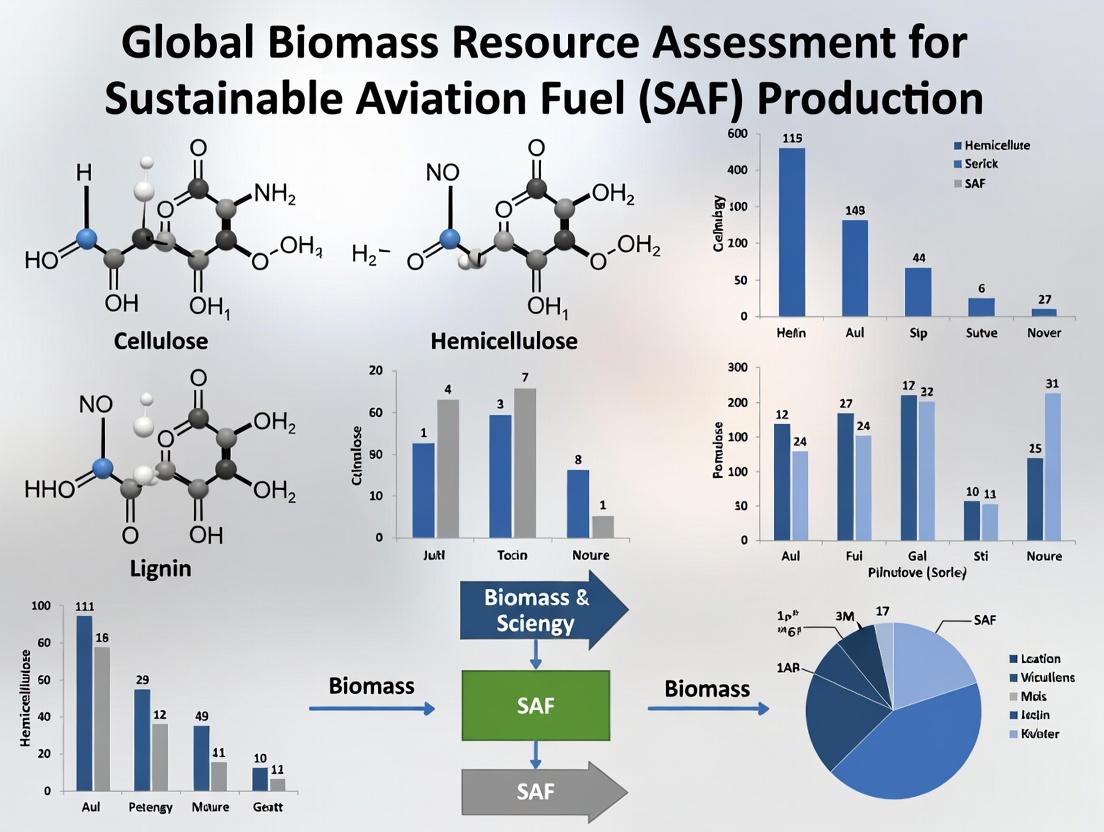
This article provides a systematic global assessment of biomass resources with potential for Sustainable Aviation Fuel (SAF) production.
Biofuel Feedstock Analysis: A Comprehensive Global Assessment of Biomass Resources for Sustainable Aviation Fuel (SAF) Production
Abstract
This article provides a systematic global assessment of biomass resources with potential for Sustainable Aviation Fuel (SAF) production. It explores the geographical distribution, availability, and inherent properties of key feedstocks, including agricultural residues, energy crops, forestry waste, and emerging sources like algae. The content details advanced methodologies for resource quantification, techno-economic analysis, and lifecycle assessment. It further addresses critical challenges in feedstock logistics, conversion compatibility, and sustainability optimization. By comparing regional potentials, technological pathways, and environmental impacts, this assessment offers researchers and biofuel developers a data-driven framework to identify viable, scalable, and sustainable feedstock strategies for decarbonizing the aviation sector.
Mapping the Global Feedstock Landscape: Available Biomass Resources for SAF
A comprehensive global biomass resource assessment for Sustainable Aviation Fuel (SAF) production is fundamental to de-risking the bioeconomy transition. Central to this assessment is the systematic categorization of feedstocks, which dictates the applicable conversion technologies, sustainability profile, economic viability, and scalability. This technical guide provides a definitive classification framework, moving from residual wastes to purpose-grown energy crops, detailing their characteristics, assessment protocols, and relevance to SAF synthesis pathways.
Biomass Feedstock Categorization and Quantitative Analysis
Feedstocks are classified by origin, availability, and compositional characteristics critical for thermochemical and biochemical conversion to SAF intermediates. The following table summarizes key quantitative metrics for primary categories.
Table 1: Comparative Analysis of Primary Biomass Feedstock Categories for SAF Production
| Category | Sub-Category & Examples | Avg. Dry Yield (ton/ha/yr) | Typical Lignocellulosic Composition (Cellulose/Hemicellulose/Lignin) | Key Advantages for SAF | Primary Technical Challenges |
|---|---|---|---|---|---|
| Residues & Wastes | Agricultural Residues (Corn stover, wheat straw) | 2-5 (straw) | 40/30/20 | Low/no cost, avoids land-use change, high GHG savings. | Dispersed availability, collection logistics, ash content. |
| Forestry Residues (Logging slash, thinnings) | 1-3 | 45/25/25 | Abundant in forested regions, improves forest health. | High moisture, transportation cost, variable quality. | |
| Waste Streams (MSW, waste fats/oils/greases) | Variable | N/A (Lipid-rich) | High conversion efficiency (HEFA pathway), waste diversion. | Contaminants, regulatory consistency, feedstock sorting. | |
| Dedicated Herbaceous Crops | Perennial Grasses (Miscanthus, Switchgrass) | 8-15 | 45/30/20 | High yield on marginal land, low fertilizer input, soil carbon sequestration. | Establishment period, harvest & storage logistics. |
| Annual Crops (Energy Sorghum, Forage Corn) | 10-20 | 40/30/20 | High annual biomass potential, compatible with existing farm infrastructure. | Higher agricultural inputs, annual planting. | |
| Dedicated Woody Crops | Short-Rotation Coppice (Willow, Poplar) | 6-12 (over rotation) | 45/25/25 | Multi-year harvests, high density, good storability. | Long establishment, harvest equipment specialization. |
| Aquatic Biomass | Macroalgae (Seaweed) | 20-50 (fresh weight) | Variable (low lignin) | Does not use arable land or freshwater, fast growth. | High moisture, offshore cultivation logistics, processing. |
Experimental Protocols for Feedstock Characterization
Robust characterization is critical for conversion process design and resource assessment.
Protocol 3.1: Determination of Proximate and Ultimate Analysis
- Objective: Quantify moisture, volatile matter, fixed carbon, ash (proximate), and elemental composition C, H, N, S, O (ultimate).
- Methodology:
- Sample Preparation: Mill biomass to <0.5 mm particle size. Dry at 105°C to constant weight for moisture content.
- Proximate Analysis (ASTM E870):
- Volatile Matter: Heat dried sample to 950±20°C in covered crucible for 7 min in muffle furnace.
- Ash Content: Heat residue from VM test to 750°C in open crucible for 6 hours.
- Fixed Carbon: Calculate by difference: FC = 100% - %Moisture - %VM - %Ash.
- Ultimate Analysis (ASTM D5373, D4239):
- Use CHNS/O elemental analyzer. Report carbon (C), hydrogen (H), nitrogen (N), and sulfur (S) weight percentages.
- Calculate oxygen (O) by difference: O% = 100% - (C% + H% + N% + S% + Ash%).
Protocol 3.2: Structural Carbohydrate and Lignin Analysis (NREL/TP-510-42618)
- Objective: Quantify glucan (cellulose), xylan/araban (hemicellulose), acid-insoluble lignin (AIL), and acid-soluble lignin (ASL).
- Methodology:
- Two-Stage Acid Hydrolysis: Treat 300 mg of extractives-free biomass with 72% w/w H₂SO₄ at 30°C for 60 min, followed by dilution to 4% w/w and autoclaving at 121°C for 60 min.
- Analysis of Hydrolysate:
- Monosaccharides: Analyze liquid fraction via HPLC (e.g., Aminex HPX-87P column) to quantify glucose, xylose, arabinose, etc. Convert to polysaccharide equivalents.
- Acid-Soluble Lignin: Measure absorbance of liquid fraction at 240 nm or 320 nm using UV-Vis spectrophotometry.
- Analysis of Residual Solid: Dry and weigh the solid residue to determine Acid-Insoluble Lignin (Klason Lignin). Ash-correct if necessary.
Visualizing the Biomass-to-SAF Pathway Decision Logic
The selection of a conversion pathway is intrinsically linked to feedstock category and composition.
Feedstock to SAF Pathway Selection
The Scientist's Toolkit: Key Research Reagent Solutions
Essential materials and reagents for feedstock characterization and conversion research.
Table 2: Essential Research Reagents and Materials for Biomass Feedstock Analysis
| Item | Function/Application | Example/Supplier |
|---|---|---|
| NIST Standard Reference Material (SRM) | Calibration and validation of analytical methods for biomass composition. | NIST SRM 8492 (Sugarcane Bagasse) |
| Certified CHNS/O Elemental Standards | Calibration of elemental analyzers for ultimate analysis. | Acetanilide, BBOT, Sulfanilamide |
| HPLC Columns for Sugar Analysis | Separation and quantification of monomeric sugars in hydrolysates. | Bio-Rad Aminex HPX-87P (for carbohydrates) |
| Enzyme Cocktails for Saccharification | Assessing biochemical conversion potential via enzymatic hydrolysis. | Cellic CTec3/HTec3 (Novozymes) |
| Certified Solvents for Extraction | Removal of extractives (fats, resins, non-structural compounds) prior to analysis. | Ethanol, Toluene (ACS grade) |
| Inert Gas (N₂, Ar) | Creating anaerobic atmosphere for thermochemical experiments (e.g., pyrolysis). | High-purity (>99.99%) gas cylinders |
| Catalyst Standards for Upgrading | Model catalysts for hydrodeoxygenation (HDO) of bio-oils. | Sulfided NiMo/Al₂O₃, Pt/Al₂O₃ |
| ICP-MS Standards | Quantification of inorganic elements (K, Na, Ca, etc.) affecting catalysis & ash behavior. | Multi-element calibration standard solutions |
This whitepaper provides a technical assessment of the global geographical distribution of key biomass resources, framed within a broader thesis on resource evaluation for sustainable aviation fuel (SAF) production. The analysis focuses on quantifying and mapping primary biomass feedstocks—including lignocellulosic, oil-based, and waste resources—critical for advanced biofuel pathways. The intended audience comprises researchers, scientists, and bioeconomy development professionals engaged in feedstock logistics and conversion technology scaling.
Global Distribution of Primary Biomass Categories
Current data indicates significant geographical heterogeneity in biomass availability, driven by climate, agricultural practices, and land-use patterns.
Table 1: Global Geographical Distribution of Key Biomass Resources (Annual Averages)
| Biomass Category | Key Feedstocks | Top-Generating Regions (Estimated Annual Yield) | Key Constraints & Notes |
|---|---|---|---|
| Lignocellulosic Biomass | Agricultural residues (straw, stover), dedicated energy crops (miscanthus, switchgrass), forest residues. | North America (≈ 500 M dry tons), Asia (≈ 450 M dry tons), Europe (≈ 200 M dry tons). | Availability contingent on primary food/fiber production; harvesting logistics cost-intensive. |
| Oilseed Crops | Soybean, rapeseed/canola, palm fruit, jatropha, carinata. | Southeast Asia (palm, ≈ 80 M tons oil), North & South America (soybean, ≈ 60 M tons oil), Europe (rapeseed, ≈ 20 M tons oil). | Direct competition with food/feed markets; land-use change emissions significant. |
| Waste & Residue Oils/Fats | Used cooking oil (UCO), animal fats (tallow), grease trap waste. | High-population regions: North America, Europe, China (Global UCO ≈ 20-25 M tons/year). | Collection and purification infrastructure varies; supply is inelastic. |
| Municipal Solid Waste (MSW) | Organic fraction of MSW. | Urban centers globally (Global organic MSW potential > 500 M tons/year). | Heterogeneous composition; requires extensive pre-processing. |
| Algal Biomass | Microalgae and macroalgae. | Coastal regions with suitable climate; R&D stage, not yet at commercial scale. | High water/nutrient demand; cultivation and harvesting costs are currently prohibitive. |
Methodological Framework for Resource Assessment
A standardized protocol is essential for cross-regional comparability and reliable SAF production potential modeling.
Protocol: Geospatial Biomass Potential Assessment
Objective: To quantify the spatially explicit technical potential of a target biomass resource within a defined geographical boundary. Materials & Software: GIS software (e.g., QGIS, ArcGIS), land cover/use datasets (e.g., MODIS, CORINE), soil and climate databases (e.g., WorldClim), agricultural/forestry production statistics, scripting tools (Python/R). Procedure:
- Define System Boundaries: Specify region, biomass type (e.g., corn stover), and key constraints (e.g., sustainability margins, technical recovery factors).
- Data Acquisition & Harmonization:
- Collect raster and vector data for relevant parameters: administrative boundaries, land cover class, crop/forest yield maps, soil type, slope.
- Acquire tabular production data from national/regional agricultural agencies (e.g., USDA FAS, EUROSTAT, FAOSTAT).
- Georeference and harmonize all datasets to a common coordinate system and resolution.
- Potential Calculation:
- Apply resource-specific equations. For crop residue (R):
R = ∑ (Crop Production * Residue-to-Production Ratio * Availability Factor)for each spatial unit. - The Availability Factor deducts residues required for soil conservation, fodder, and other competing uses.
- Apply resource-specific equations. For crop residue (R):
- Spatial Modeling & Mapping:
- Execute calculations within the GIS environment to generate a spatially explicit potential map.
- Apply masks to exclude protected areas, steep slopes, and unsuitable land covers.
- Uncertainty & Sensitivity Analysis:
- Perform Monte Carlo simulations on key parameters (e.g., yield variation, availability factor) to produce probability distributions of potential.
- Report results as mean ± standard deviation.
Protocol: Feedstock Characterization for Conversion Suitability
Objective: To determine the physicochemical properties of a biomass sample to evaluate its suitability for target conversion pathways (e.g., Fischer-Tropsch, HTL, pyrolysis). Materials: Bomb calorimeter, CHNS/O elemental analyzer, Thermogravimetric Analyzer (TGA), HPLC/GC-MS, muffle furnace, standardized biomass milling/sieving equipment. Procedure:
- Sample Preparation: Mill biomass to <2 mm particle size. Dry in an oven at 105°C to constant weight. Store in a desiccator.
- Proximate Analysis (ASTM E870):
- Moisture: Measure weight loss after drying.
- Volatile Matter: Heat dried sample to 950°C in covered crucible for 7 min in muffle furnace.
- Ash Content: Combust residue from volatile matter test at 750°C in open crucible to constant weight.
- Fixed Carbon: Calculate by difference: 100% - (%Moisture + %Volatile Matter + %Ash).
- Ultimate Analysis (CHNS/O):
- Use elemental analyzer to determine carbon, hydrogen, nitrogen, and sulfur content.
- Calculate oxygen content by difference: 100% - (%C + %H + %N + %S + %Ash).
- Calorific Value:
- Use a bomb calorimeter (ASTM D5865) to measure higher heating value (HHV) on dried samples.
- Structural Carbohydrate Analysis (NREL/TP-510-42618):
- Perform a two-step acid hydrolysis to quantify glucan (cellulose), xylan (hemicellulose), and acid-insoluble lignin (AIL).
Visualization of the SAF Feedstock Assessment Workflow
Diagram Title: SAF Feedstock Assessment Logic Flow
The Scientist's Toolkit: Key Research Reagent Solutions
Table 2: Essential Materials for Biomass Resource Assessment Experiments
| Item / Reagent | Function / Application | Key Considerations |
|---|---|---|
| NIST Standard Reference Materials (SRMs) | Calibration and validation of analytical instruments (e.g., CHNS analyzer, calorimeter) for biomass analysis. | Essential for ensuring data accuracy and inter-lab comparability. |
| Anhydrous Sugars & Lignin Standards | Quantification of structural carbohydrates and lignin via HPLC; used for creating calibration curves. | Purity >98% required. Include glucose, xylose, arabinose, and alkali lignin. |
| Sulfuric Acid (72% & 4% w/w) | Primary hydrolysis agent in the NREL two-step acid hydrolysis for carbohydrate analysis. | Must be prepared and handled with extreme care in a fume hood. |
| Inert Atmosphere (N2 or Ar) | Used in thermogravimetric analysis (TGA) and pyrolysis experiments to simulate oxygen-free thermal conversion. | High purity (>99.99%) to prevent oxidation during analysis. |
| Solid-Phase Extraction (SPE) Cartridges | Clean-up and fractionation of complex biomass-derived bio-oils or hydrolysates prior to GC-MS/FID analysis. | Select sorbent (e.g., silica, aminopropyl) based on target analyte polarity. |
| Internal Standards (d-Lactose, Sucrose-d8, etc.) | Added to biomass samples prior to analysis to correct for recovery losses during multi-step extraction/hydrolysis protocols. | Must be non-native to the sample and not co-elute with analytes. |
| Certified Reference Soils & Plant Tissue | Quality control for ash content analysis and elemental profiling, ensuring precision across batches. | Used to verify furnace temperature profiles and combustion completeness. |
This technical guide, framed within a thesis on global biomass resource assessment for Sustainable Aviation Fuel (SAF) production, provides a rigorous methodology for quantifying terrestrial and aquatic biomass potential. Accurate estimation is critical for informing sustainable feedstock supply chains and life-cycle analyses in SAF research and development.
Core Concepts and Definitions
- Biomass Potential: The maximum theoretical amount of biomass that can be sustainably produced annually, considering ecological and technical constraints.
- Theoretical Potential: The biological upper limit based on photosynthesis efficiency and available area.
- Technical Potential: The fraction of theoretical potential achievable with current or near-future technologies, excluding socio-economic constraints.
- Sustainable Potential: The subset of technical potential that can be procured without adverse impacts on biodiversity, soil, water, and food security.
- Yield: Biomass produced per unit area per unit time (e.g., tonnes dry matter/ha/year).
Methodological Framework for Global Assessment
A robust assessment follows a multi-tiered, spatially explicit approach integrating geospatial data, biophysical models, and sustainability filters.
Key Assessment Workflow
The logical flow for quantifying sustainable biomass potential is depicted below.
Diagram Title: Workflow for Estimating Sustainable Biomass Potential
- Land Cover/Land Use: ESA CCI Land Cover, MODIS Land Cover.
- Soil & Terrain: ISRIC SoilGrids, FAO Global Soil Database.
- Climate: WorldClim (precipitation, temperature), NASA POWER (solar radiation).
- Agricultural Statistics: FAO STAT (crop yields, residues).
- Ecological Constraints: IUCN Protected Areas, UNEP-WCMC Biodiversity maps.
- Biophysical Models: Global Agro-Ecological Zones (GAEZ) model, EPIC (Environmental Policy Integrated Climate), LPJmL (Lund-Potsdam-Jena managed Land).
Quantitative Global Estimates by Feedstock Category
Recent integrated assessments provide the following ranges for sustainable biomass potential, exclusive of areas needed for food production and protected ecosystems.
Table 1: Estimated Global Sustainable Biomass Potential (Annual)
| Feedstock Category | Sub-category | Estimated Global Potential (EJ/year)* | Key Determining Factors | Primary Geographic Regions of Potential |
|---|---|---|---|---|
| Agricultural Residues | Straw, Stover, etc. | 15 - 25 | Crop yields, residue-to-product ratio, soil conservation needs | North America, Eastern Europe, Asia, South America |
| Energy Crops | Perennial Grasses (Miscanthus, Switchgrass) | 40 - 70 | Availability of marginal/degraded land, water-use efficiency | Americas, Sub-Saharan Africa, Eastern Europe |
| Forestry Biomass | Logging residues, thinning wood | 10 - 20 | Sustainable harvest rates, forest management practices | Boreal & Temperate forests (North America, Russia, EU) |
| Wet & Waste Streams | Manure, MSW, Food Waste | 5 - 15 | Waste collection rates, alternative uses (e.g., biogas) | Global, concentrated in high-population/industrial areas |
| Aquatic Biomass | Microalgae, Macroalgae | 20 - 60 (long-term) | Photobioreactor/Pond efficiency, nutrient recycling, offshore cultivation potential | Coastal zones, arid non-arable land (for ponds) |
*1 Exajoule (EJ) ≈ 45 million tonnes of dry lignocellulosic biomass (avg. LHV).
Experimental Protocols for Yield Determination
Protocol: Field-Based Yield Measurement for Terrestrial Energy Crops
Objective: To empirically determine above-ground biomass yield (AGBY) for perennial grasses on marginal land.
Materials & Site:
- Site: Representative marginal agricultural land (low soil carbon, erosion-prone).
- Cultivar: Miscanthus x giganteus (clone) or Panicum virgatum (switchgrass, cv. ‘Alamo’).
- Plot Design: Randomized Complete Block Design (RCBD) with 4 replications. Plot size: 10m x 10m.
- Equipment: Quadrat (1m x 1m), drying oven, analytical balance, soil corer, GIS-grade GPS.
Procedure:
- Establishment: Plant rhizomes or seeds in Year 0. Allow full stand establishment (typically 2-3 years).
- Sampling Timing: At physiological maturity (post-anthesis, pre-senescence) in Year 3+.
- Harvest: a. Randomly place three 1m² quadrats within each plot, avoiding edge rows. b. Cut all standing biomass at 10 cm above soil surface. c. Weigh fresh mass immediately.
- Dry Matter Determination: Sub-sample fresh biomass (~500g). Dry in forced-air oven at 70°C to constant mass (≥48h). Calculate dry mass and dry matter fraction.
- Yield Calculation: AGBY (t DM/ha) = [(Avg. dry mass per quadrat (kg) / Quadrat area (m²))] * 10,000.
- Soil & Climate Logging: Concurrently measure soil moisture (TDR probe), precipitation, and temperature.
Protocol: Microalgae Biomass Productivity in Outdoor Raceway Ponds
Objective: To quantify areal biomass productivity of oleaginous microalgae strains under ambient conditions.
Materials:
- Strain: Nannochloropsis oceanica or Scenedesmus obliquus.
- Culture System: Outdoor raceway pond (100 m², depth 0.25 m), paddle wheel, CO2 bubbling system.
- Medium: Modified F/2 or BG-11 medium, supplemented with nitrogen and phosphorus.
- Monitoring: PAR sensor, pH probe, dissolved oxygen probe, spectrophotometer.
Procedure:
- Inoculation: Inoculate pond with axenic culture to an initial optical density (OD680) of ~0.1.
- Operation: Maintain culture at 25±5°C with continuous paddle wheel mixing (15-20 cm/s). Inject pure CO2 to maintain pH at 7.5-8.0.
- Daily Monitoring: a. Measure OD680 at the same time each day. b. Record PAR flux (mol photons/m²/day), temperature, pH.
- Biomass Harvest & Measurement: At mid-log phase (typically day 4-5): a. Collect a known volume (e.g., 1L) of culture, filter onto pre-weighed glass fiber filter (GF/C). b. Rinse with ammonium formate solution (0.5M) to remove salts. c. Dry filter at 105°C for 2h, desiccate, and weigh.
- Productivity Calculation: a. Biomass concentration (g/L) = (Dry filter mass - Tare mass) / Volume filtered. b. Areal Productivity (g/m²/day) = [Biomass concentration (g/L) * Pond volume (L)] / [Pond area (m²) * number of culture days]. c. Volumetric Productivity (mg/L/day) = (Final conc. - Initial conc.) / culture days.
Signaling Pathways in Biomass Yield Regulation
Key molecular pathways govern biomass accumulation in plants and microbes, targets for potential yield enhancement.
Central Carbon Metabolism & Biomass Accumulation in Plants
Diagram Title: Key Plant Pathways for Biomass Production
The Scientist's Toolkit: Research Reagent Solutions
Table 2: Essential Reagents & Materials for Biomass Yield Research
| Item | Function/Application | Example Product/Catalog |
|---|---|---|
| Neutral Detergent Fiber (NDF) Kit | Quantifies cell wall components (cellulose, hemicellulose, lignin) in lignocellulosic biomass via sequential fiber analysis. | ANKOM A200 Filter Bag System |
| Total Organic Carbon (TOC) Analyzer Consumables | Measures organic carbon in liquid samples (e.g., algal culture media, soil leachate). | Shimadzu TOC-L series vials & standards |
| RNA Extraction Kit (Plant/Fungi) | Isolates high-quality RNA for gene expression analysis of biomass-related pathways. | RNeasy Plant Mini Kit (Qiagen) |
| Cellulase & Xylanase Enzyme Cocktails | For standardized in vitro digestibility assays to predict biomass saccharification potential for biofuels. | Cellic CTec3 (Novozymes) |
| 13C-Labeled CO2 or Bicarbonate | Stable isotope tracer for elucidating carbon flux through photosynthetic and metabolic pathways. | Cambridge Isotope Laboratories (CLM-441-) |
| Chlorophyll Extraction Solvent & Fluorometer | Quantifies chlorophyll content as a proxy for photosynthetic capacity and plant/algal health. | DMSO solvent, Turner Designs Aquafluor |
| Nitrogen-Free Algal Culture Medium | Used in nitrogen-starvation experiments to induce lipid accumulation in microalgae for biodiesel analysis. | f/2-N Medium (UTEX Culture Collection) |
| Soil Nutrient Test Strips/Kits | Rapid field assessment of soil N, P, K to correlate with biomass yield. | Merck Spectroquant test kits |
This whitepaper provides an in-depth technical analysis of biomass inherent properties critical for Sustainable Aviation Fuel (SAF) production, framed within global biomass resource assessment research. It details the lignocellulosic composition, oil content, and corresponding suitability for biochemical and thermochemical conversion pathways, targeting researchers and scientists in bioenergy and biochemical development.
The systematic assessment of global biomass feedstocks for SAF requires a fundamental understanding of inherent physicochemical properties. Key parameters—lignocellulosic composition (cellulose, hemicellulose, lignin) and lipid/oil content—directly dictate the optimal conversion pathway (e.g., Hydroprocessed Esters and Fatty Acids [HEFA], Gasification-Fischer-Tropsch [G-FT], or Alcohol-to-Jet [AtJ]). This guide details analytical protocols and decision frameworks for feedstock categorization.
Quantitative Composition of Key Biomass Feedstocks
The following table summarizes typical compositional data for prominent biomass feedstocks, derived from recent literature and databases.
Table 1: Inherent Properties of Selected Biomass Feedstocks
| Feedstock Category | Feedstock Example | Cellulose (wt%) | Hemicellulose (wt%) | Lignin (wt%) | Oil/Lipid Content (wt%) | Ash (wt%) | Primary SAF Pathway Suitability |
|---|---|---|---|---|---|---|---|
| Oil Crops | Oilseed Rape | 20-30 | 15-25 | 15-20 | 40-45 (seed) | 3-5 | HEFA |
| Agricultural Residues | Corn Stover | 35-40 | 20-25 | 15-20 | <5 | 4-7 | G-FT, AtJ |
| Energy Grasses | Miscanthus | 40-50 | 20-30 | 15-20 | <3 | 2-4 | G-FT, AtJ |
| Forestry Residues | Pine Sawdust | 45-50 | 20-25 | 25-30 | <2 | <1 | G-FT |
| Aquatic Biomass | Nannochloropsis sp. (Microalgae) | - | - | - | 25-35 (of dry wt) | 5-15 | HEFA |
Experimental Protocols for Property Analysis
Lignocellulosic Composition: NREL/TP-510-42618 Analytical Procedure
Objective: Quantify structural carbohydrates and lignin in biomass. Materials: Milled biomass (40-60 mesh), 72% w/w sulfuric acid, 4% w/w sulfuric acid, autoclave, HPLC system with refractive index detector (for sugars), UV-Vis spectrophotometer (for lignin). Protocol Summary:
- Primary Hydrolysis: Treat 300 mg of dry biomass with 3.0 mL of 72% H₂SO₄ at 30°C for 60 min with frequent stirring.
- Secondary Hydrolysis: Dilute the acid to 4% w/w with deionized water and autoclave at 121°C for 1 hour.
- Analysis: Filter the hydrolysate.
- Sugars: Analyze the liquid fraction via HPLC (e.g., Aminex HPX-87P column) to quantify monomeric glucose, xylose, arabinose, etc.
- Acid-Soluble Lignin: Measure absorbance of the liquid at 240 nm.
- Acid-Insoluble Lignin: Dry and weigh the solid residue (Klason lignin), correcting for ash content.
Oil Content: Soxhlet Extraction (AOAC 920.39)
Objective: Determine total extractable lipids from oilseeds or algal biomass. Materials: Soxhlet extractor, thimbles, anhydrous diethyl ether or petroleum ether (bp 40-60°C), drying oven, rotary evaporator. Protocol Summary:
- Dry and finely grind the sample.
- Weigh 5-10 g of sample into a pre-dried and weighed cellulose thimble.
- Assemble the Soxhlet apparatus with a pre-weighed round-bottom flask. Add solvent.
- Extract for 6-8 hours (typically 20 cycles/hour).
- Evaporate the solvent using a rotary evaporator.
- Dry the flask containing the extracted oil at 105°C for 30 min, cool in a desiccator, and weigh.
- Calculate oil content as: (Weight of oil / Weight of dry sample) × 100.
Pathway Suitability Decision Logic
The selection of a conversion pathway is primarily driven by oil content and lignocellulosic composition.
Diagram 1: SAF pathway selection based on biomass properties.
Biochemical Conversion Pathway for Lignocellulosic Biomass
The conversion of lignocellulosic biomass to sugars and subsequently to SAF precursors involves multiple stages.
Diagram 2: Lignocellulosic biomass to Alcohol-to-Jet (AtJ) conversion workflow.
The Scientist's Toolkit: Key Research Reagent Solutions
Table 2: Essential Research Reagents and Materials for Biomass Analysis
| Item | Function in Analysis | Example Product/Specification |
|---|---|---|
| Sulfuric Acid, 72% w/w (ACS Grade) | Hydrolyzes glycosidic bonds in cellulose/hemicellulose during compositional analysis. | Sigma-Aldrich 339741 |
| HPLC Columns for Sugar Analysis | Separates and quantifies monomeric sugars (glucose, xylose) in hydrolysates. | Bio-Rad Aminex HPX-87P (for carbohydrates) |
| Cellulase Enzyme Cocktails | Hydrolyzes pretreated cellulose to glucose for fermentable sugar yield assays. | Novozymes Cellic CTec3 |
| Microcrystalline Cellulose (Avicel PH-101) | Positive control/substrate standard for enzymatic hydrolysis assays. | Sigma-Aldrich 11365 |
| Soxhlet Extraction Solvents | Non-polar solvents for total lipid extraction from solid biomass. | Petroleum Ether (bp 40-60°C), e.g., Merck 1.00741 |
| Internal Standards for GC/MS (Lipid Analysis) | Quantifies fatty acid methyl esters (FAMEs) during oil characterization. | C17:0 Triheptadecanoin (Nu-Chek Prep T-165) |
| Lignin Model Compounds | Standards for studying lignin depolymerization pathways (e.g., β-O-4 linkage). | Dehydrogenation polymer (DHP) or guaiacylglycerol-β-guaiacyl ether |
| Ashless Filter Papers | For gravimetric analysis of acid-insoluble lignin (Klason lignin). | Whatman Grade 541 |
Within the thesis on Global Biomass Resource Assessment for Sustainable Aviation Fuel (SAF) Production, the exploration of emerging, non-traditional feedstocks is critical to meeting future demand without exacerbating land-use conflicts. This technical guide provides an in-depth assessment of three pivotal emerging feedstock pathways: algae, municipal solid waste (MSW), and carbon capture and utilisation (CCU). The focus is on their technical viability, conversion methodologies, and integration into the SAF value chain for a research and scientific audience.
Algal Biomass for SAF
Resource Potential and Strains
Microalgae and macroalgae represent high-productivity biomass sources with minimal land footprint. Key strains for lipid (for Hydroprocessed Esters and Fatty Acids - HEFA) and carbohydrate (for alcohol-to-jet pathways) accumulation are under development.
Table 1: Productive Algal Strains for SAF Precursors
| Strain Type | Species Example | Key Product | Approximate Lipid/Carbohydrate Content (% Dry Weight) | Annual Biomass Productivity (tonnes/ha/yr) |
|---|---|---|---|---|
| Microalgae (Lipid-rich) | Nannochloropsis sp. | Triglycerides | 40-60% lipids | 20-30 (theoretical) |
| Microalgae (Carbohydrate-rich) | Chlorella vulgaris | Starch | 30-50% carbohydrates | 15-25 (theoretical) |
| Macroalgae (Seaweed) | Saccharina latifolia | Mannitol, Alginate | 50-70% carbohydrates | 10-20 (fresh weight) |
Experimental Protocol: Algal Lipid Extraction and Transesterification for FAME Analysis
Objective: To quantify and characterize fatty acid methyl esters (FAMEs) as precursors to HEFA-SAF from algal biomass.
Methodology:
- Biomass Harvesting & Drying: Culture Nannochloropsis oceanica in photobioreactors under nutrient stress. Harvest via centrifugation. Lyophilize biomass to constant weight.
- Cell Disruption: Use a bead-beater with 0.5mm zirconia beads in a 2:1 chloroform:methanol solvent mixture for 10 minutes.
- Total Lipid Extraction: Follow modified Bligh & Dyer method. Homogenize disrupted slurry with additional solvent. Separate organic phase via centrifugation (5000 x g, 10 min). Evaporate solvent under nitrogen.
- Transesterification: Weigh 50mg of extracted lipid. Add 2mL of 2% H₂SO₄ in methanol. Incubate at 80°C for 1 hour under reflux.
- FAME Recovery: Cool, add 1mL of hexane and 1mL of saturated NaCl solution. Vortex and centrifuge. Collect hexane (top) layer containing FAMEs.
- Analysis: Analyze FAME profile via Gas Chromatography-Flame Ionization Detector (GC-FID) with a DB-WAX column.
Algal-to-SAF Conversion Workflow
Diagram Title: Algal Biomass to SAF Conversion Pathway
Municipal Solid Waste (MSW) as a Feedstock
Composition and Availability
MSW is a heterogeneous feedstock containing biodegradable (e.g., food, paper), recyclable, and non-recyclable fractions. The organic fraction is suitable for thermochemical or biochemical conversion.
Table 2: Typical Composition of MSW for SAF Production
| MSW Component | Average Percentage (wt%) | Relevant Conversion Pathway | Key Challenges |
|---|---|---|---|
| Food Waste | 20-30% | Hydrothermal Liquefaction (HTL), Anaerobic Digestion (to Alcohol) | Moisture content, contamination |
| Waste Paper & Cardboard | 20-30% | Gasification-FT, Enzymatic Hydrolysis (to Sugar) | Ink/coating removal |
| Textiles (Natural) | 3-5% | Gasification-FT | Dye and additive contamination |
| Plastics (Non-recycled) | 10-15% | Gasification-FT, Pyrolysis | Heterogeneity, chlorine content |
Experimental Protocol: Gasification of MSW-Derived Feedstocks for Syngas Analysis
Objective: To produce and characterize syngas from refuse-derived fuel (RDF) for Fischer-Tropsch (FT) synthesis.
Methodology:
- Feedstock Preparation: Obtain RDF pellets (MSW processed to <2cm). Dry at 105°C for 24h. Determine ultimate (CHNS/O) and proximate (moisture, volatile, fixed carbon, ash) analysis.
- Gasifier Setup: Use a lab-scale fluidized bed gasifier (height: 1m, diam: 0.1m). Load 500g of calcined olivine as bed material. Preheat to 850°C under N₂ flow (5 L/min).
- Gasification: Introduce RDF pellets at a feed rate of 1kg/hr. Use steam as the gasifying agent (S/B ratio of 1.0). Maintain temperature at 850±20°C.
- Syngas Cleaning & Sampling: Pass raw syngas through a cyclone (remove particulates), then a water-cooled condenser. Sample cleaned gas using Tedlar bags at system equilibrium (after 30 min).
- Syngas Analysis: Quantify H₂, CO, CO₂, CH₄ using a gas chromatograph with Thermal Conductivity Detector (GC-TCD) and a Carboxen-1010 PLOT column. Calculate H₂/CO ratio.
MSW-to-SAF via Gasification and FT Synthesis
Diagram Title: MSW to SAF via Gasification-FT Pathway
Carbon Capture and Utilisation (CCU)
Pathways: Direct and Biological
CCU for SAF involves capturing point-source CO₂ and converting it to energy-dense hydrocarbons via catalytic (Power-to-Liquid, PtL) or biological (microbial) conversion.
Table 3: Comparison of CCU Pathways for SAF
| Pathway | CO₂ Source | Energy Input | Core Process | Typical Catalyst/Organism | Current TRL |
|---|---|---|---|---|---|
| Power-to-Liquid (PtL) | Flue gas, DAC* | Renewable electricity | Reverse Water-Gas Shift + FT | Fe- or Co-based FT catalyst | 6-7 |
| Microbial Electrosynthesis | Flue gas, bicarbonate | Electricity | Microbial CO₂ reduction | Clostridium ljungdahlii | 3-4 |
| Photocatalytic | Direct air | Solar | Photocatalytic reduction | TiO₂-based semiconductors | 2-3 |
*DAC = Direct Air Capture
Experimental Protocol: Integrated PtL Synthesis from Captured CO₂
Objective: To demonstrate the continuous catalytic conversion of CO₂ and green H₂ to FT hydrocarbons.
Methodology:
- Feedstock Supply: Use a certified 20% CO₂/80% N₂ mix to simulate captured flue gas. Generate H₂ via a PEM electrolyzer fed with deionized water.
- Reverse Water-Gas Shift (RWGS): Mix CO₂ and H₂ at a 1:3 molar ratio. Pass over a fixed-bed reactor with a Cu/ZnO/Al₂O₃ catalyst at 350°C and 25 bar. Monitor CO yield via online GC.
- Fischer-Tropsch Synthesis: Direct the RWGS effluent (after water removal) into a second fixed-bed reactor. Use a promoted Co/Al₂O₃ catalyst at 220°C and 20 bar.
- Product Collection: Use a hot trap (150°C) to collect waxes and a cold trap (0°C) to collect liquid hydrocarbons. Analyze liquid product composition using Simulated Distillation GC (SIMDIS-GC).
The Scientist's Toolkit: Key Research Reagent Solutions
Table 4: Essential Materials for Emerging Feedstock SAF Research
| Item Name | Function/Application | Example Supplier/Product Code |
|---|---|---|
| Algal Research | ||
| BG-11 Marine Medium | Standardized culture medium for marine microalgae | Sigma-Aldrich, 71781 |
| Zirconia/Silica Beads (0.5mm) | Mechanical cell disruption for lipid extraction | BioSpec Products, 11079105z |
| 37 Component FAME Mix | GC standard for algal lipid profile quantification | Supelco, 47885-U |
| MSW/Gasification Research | ||
| Refuse-Derived Fuel (RDF) Certified Reference | Standardized feedstock for gasification experiments | LGC Standards, ERM-EC591k |
| Carboxen-1010 PLOT GC Column | Separation of permanent gases (H₂, CO, CO₂, CH₄) | Supelco, 25469 |
| Calcined Olivine (Mg,Fe)₂SiO₄ | Bed material/catalyst for fluidized bed gasification | Sigma-Aldrich, 46330 |
| CCU/PtL Research | ||
| Cobalt on Alumina Catalyst (Co/Al₂O₃) | Standard FT catalyst for CO/CO₂ hydrogenation | Alfa Aesar, 45774 |
| Cu/ZnO/Al₂O₃ RWGS Catalyst | For catalytic conversion of CO₂ to CO | Sigma-Aldrich, 759833 |
| Certified CO₂ in N₂ Gas Standard | Simulate captured flue gas streams | Airgas, CD N57 |
| High-Pressure Parr Reactor System | Bench-scale catalytic testing (up to 100 bar) | Parr Instrument Co., Series 4560 |
The integration of algae, MSW, and CCU into the global biomass resource assessment for SAF reveals complementary roles. Algae offer high yields without arable land, MSW provides waste mitigation, and CCU enables a circular carbon economy. Technical readiness varies, with MSW gasification and algal HEFA being most proximate to commercialization, while CCU-PtL hinges on renewable energy cost reductions. For researchers, the critical path involves optimizing strain/productivity, standardizing heterogeneous MSW, and developing robust, low-energy catalysts for CO₂ conversion to close the carbon cycle for aviation.
From Assessment to Action: Methodologies for Quantifying and Utilizing Biomass for SAF
Geospatial Analysis (GIS) and Remote Sensing for Resource Mapping
This whitepaper details the application of geospatial technologies within a broader thesis on global biomass resource assessment for Sustainable Aviation Fuel (SAF) production. It provides researchers and scientists with a technical guide for mapping, quantifying, and monitoring biomass feedstocks at scale, a critical step in the SAF supply chain.
Accurate assessment of global biomass resources—including agricultural residues (e.g., corn stover, wheat straw), energy crops (e.g., switchgrass, miscanthus), and forestry residues—is foundational for viable SAF production. Geospatial Analysis (GIS) and Remote Sensing (RS) provide the only scalable, cost-effective methodologies for systematic resource mapping, yield prediction, and logistical planning. This guide outlines the core technical protocols and data synthesis required.
The integration of multi-source, multi-temporal data is essential for robust biomass estimation.
| Data Type | Source/Platform | Spatial Resolution | Key Utility for Biomass Assessment |
|---|---|---|---|
| Optical Imagery | Sentinel-2 (ESA), Landsat 8/9 (NASA/USGS) | 10m-30m | Land cover classification, vegetation indices (NDVI, EVI), crop type mapping. |
| Synthetic Aperture Radar (SAR) | Sentinel-1 (ESA), ALOS-2 (JAXA) | 10m-20m | Biomass estimation (penetrates canopy), structure data, all-weather imaging. |
| LiDAR | GEDI (NASA), Airborne platforms | 25m (GEDI) | Canopy height, vertical structure, above-ground biomass density. |
| Hyperspectral | PRISMA (ASI), EnMAP (DLR) | 30m | Species discrimination, biochemical property estimation (e.g., nitrogen). |
| Meteorological | MODIS (NASA), ERA5 (ECMWF) | 1km-11km | Soil moisture, temperature, precipitation for growth modeling. |
Preprocessing Workflow: Raw data must undergo a standardized preprocessing chain:
- Radiometric Correction: Conversion of digital numbers to surface reflectance (optical) or backscatter coefficient (SAR).
- Geometric Correction: Orthorectification and co-registration of all datasets to a common coordinate system (e.g., WGS84 UTM).
- Atmospheric Correction (for optical data): Application of models (e.g., SEN2COR for Sentinel-2) to remove aerosol and water vapor effects.
- Terrain Correction (for SAR data): Application of a Digital Elevation Model (DEM) to correct for topographic distortion.
- Cloud/Shadow Masking (for optical data): Utilization of algorithm-specific masks (e.g., FMASK for Landsat, s2cloudless for Sentinel-2).
Key Experimental Protocols for Biomass Estimation
Protocol: Above-Ground Biomass (AGB) Estimation using Multi-Sensor Data Fusion
Objective: To generate a high-resolution (10m) wall-to-wall AGB map for a target region (e.g., agricultural zone).
Materials & Methods:
- Field Data Collection (Ground Truth): Establish randomized sampling plots. Within each plot, measure destructively or use allometric equations to calculate precise AGB (tonnes/ha). Record GPS coordinates with sub-meter accuracy.
- Predictor Variable Extraction: For each plot location, extract values from processed satellite data:
- Optical: Sentinel-2-derived NDVI, Enhanced Vegetation Index (EVI), Leaf Area Index (LAI).
- SAR: Sentinel-1 VH and VV backscatter (dB) and their ratio.
- LiDAR: GEDI-derived canopy height metrics (e.g., RH98).
- Ancillary: Soil type, climate zone, topographic indices from DEM.
- Model Development: Employ a machine learning regression algorithm (e.g., Random Forest, Gradient Boosting) trained on the plot data (70%) with the extracted predictor variables as input features.
- Model Validation: Use the reserved 30% of field plots to validate. Calculate key metrics: R², Root Mean Square Error (RMSE), and Mean Absolute Error (MAE).
- Spatial Prediction: Apply the trained model to the full stack of predictor variable rasters to generate a continuous AGB map.
Protocol: Crop Residue Availability Mapping
Objective: To estimate post-harvest residue biomass (e.g., corn stover) available for SAF feedstock.
Materials & Methods:
- Crop Type Classification: Perform a supervised classification (e.g., Support Vector Machine) on multi-temporal Sentinel-2 imagery to create a crop type map.
- Harvest Date Detection: Use time-series analysis of NDVI to identify the sudden drop indicative of harvest.
- Residue-to-Product Ratio (RPR): Apply region-specific RPR coefficients (e.g., 1:1 for corn grain:stover) from agronomic literature.
- Yield Estimation: Utilize a crop growth model (e.g., calibrated with satellite LAI) or government yield statistics at the county/district level.
- Availability Calculation: Calculate residue biomass using:
Residue (t) = Crop Yield (t) * RPR * Harvested Area (ha) * Collection Efficiency Factor (e.g., 0.6). - Suitability Masking: Apply constraints (e.g., slope >15%, protected areas, soil erosion factors) via GIS overlay analysis to map economically and sustainably collectible residues.
Visualization of Methodologies
Diagram 1: Geospatial Biomass Mapping Workflow
Diagram 2: Crop Residue Feedstock Mapping Logic
The Scientist's Toolkit: Essential Research Reagents & Materials
Table 2: Key Research Reagent Solutions for Geospatial Biomass Assessment
| Item/Category | Function & Application | Example/Tool |
|---|---|---|
| Field Spectrometer | Measures in-situ hyperspectral reflectance for calibrating satellite data and developing spectral libraries. | ASD FieldSpec, Piccolo Doppio. |
| Differential GPS (DGPS) | Provides centimeter-to-meter accuracy geolocation for ground truth plots, critical for linking field and satellite data. | Trimble R series, Emlid Reach RS2+. |
| Allometric Equation Database | Converts non-destructive field measurements (DBH, height) to biomass estimates for model training. | Species-specific equations (e.g., Jenkins, Chojnacky). |
| Cloud Computing Platform | Processes petabyte-scale satellite imagery and performs large-scale geospatial analysis. | Google Earth Engine, NASA Earthdata Cloud, Microsoft Planetary Computer. |
| Geospatial Software Library | Provides open-source algorithms for image processing, machine learning, and GIS analysis. | geopandas, rasterio, scikit-learn in Python; terra, caret in R. |
| Crop Growth Model | Simulates biomass accumulation based on weather, soil, and management, integrable with RS data. | DSSAT, APSIM, PROMET. |
| Spectral Vegetation Indices | Mathematical combinations of spectral bands to quantify vegetation health, density, and productivity. | NDVI, EVI, Normalized Difference Water Index (NDWI). |
Integrating GIS and Remote Sensing provides an indispensable, data-driven framework for global biomass resource assessment. The protocols and tools outlined enable the precise, spatially explicit quantification of feedstock volumes, types, and sustainability constraints. This mapping forms the essential geospatial foundation for subsequent techno-economic analysis and supply chain optimization in SAF production research, directly contributing to the viability of the bio-based energy transition.
Techno-Economic Assessment (TEA) Frameworks for Feedstock Cost Analysis
A robust Techno-Economic Assessment (TEA) framework for feedstock cost analysis is a critical pillar in the global assessment of biomass resources for Sustainable Aviation Fuel (SAF) production. This guide details the core methodologies for quantifying and modeling the cost contributions of diverse biomass feedstocks—from lignocellulosic residues to oil crops and algae—within an integrated SAF biorefinery model. The analysis directly supports the broader thesis goal of identifying scalable, sustainable, and economically viable biomass pathways for decarbonizing aviation.
Core TEA Framework Components for Feedstock
A comprehensive feedstock TEA integrates technical and economic parameters across the supply chain.
Table 1: Key Feedstock Cost Drivers and Data Requirements
| Cost Driver Category | Specific Parameters | Data Source / Method |
|---|---|---|
| Agronomic/Collection | Yield (dry ton/acre/yr), Planting/Harvesting cost, Fertilizer/Input cost, Residue collection rate (%) | Field trials, Agricultural extension databases, Literature meta-analysis |
| Pre-processing | Moisture content (wt%), Bulk density (kg/m³), Grinding energy (kWh/ton), Fractionation efficiency | Laboratory ASTM standard tests (E871, E873), Pilot-scale equipment trials |
| Logistics | Transportation distance (km), Mode (truck, rail), Storage loss (%/mo), Terminal fee ($/ton) | GIS mapping, Logistics vendor quotes, Historical commodity data |
| Quality & Composition | Carbohydrate (glucan, xylan) content, Ash content, Inhibitor (e.g., alkali) potential | Laboratory NREL/TP-510-42618 analytical procedures, HPLC, GC-MS |
| Market & Sustainability | Baseline commodity price ($/ton), Price volatility index, Carbon footprint (gCO2e/MJ) | Historical market data, Life Cycle Assessment (LCA) models, Sustainability certifications |
Experimental Protocols for Critical Data Generation
Protocol 1: Field-to-Gate Feedstock Cost Modeling
- Objective: To establish a spatially explicit cost model for a target biomass feedstock.
- Methodology:
- Define System Boundaries: Gate at biorefinery receiving facility.
- Data Collection: Gather region-specific data on farm-gate production costs, expected yields, and harvest window durations.
- Logistics Modeling: Using GIS software, model centroid collection points and calculate weighted average transportation distance to a proposed biorefinery site. Apply freight rates ($/ton-mile).
- Storage Costing: Model storage requirements (e.g., covered bale storage, silo) based on harvest seasonality and annual throughput. Include capital and operating costs.
- Pre-processing Costing: Size and cost equipment (e.g., tub grinders, dryers) based on moisture reduction and particle size specifications. Calculate power and labor requirements.
- Sensitivity Analysis: Use Monte Carlo simulation (@RISK, Crystal Ball) to vary key inputs (yield, distance, fuel price) and determine cost probability distributions.
Protocol 2: Feedstock Compositional Analysis for Yield Prediction
- Objective: To determine theoretical conversion yields to SAF intermediates (e.g., sugars, pyrolysis oil) for TEA mass balance.
- Methodology (Based on NREL Laboratory Analytical Procedures - LAPs):
- Sample Preparation: Mill feedstock to pass a 2mm screen. Determine moisture content in triplicate via oven drying at 105°C until constant weight (ASTM E871).
- Extractives Removal: Perform Soxhlet extraction with water and then ethanol to remove non-structural components. Dry the extracted biomass.
- Structural Carbohydrate & Lignin Analysis: a. Perform a two-stage acid hydrolysis (72% H2SO4, then 4% dilution) on the extracted biomass. b. Quantify the monomeric sugars (glucose, xylose, etc.) in the hydrolysate via High-Performance Liquid Chromatography (HPLC) with a refractive index detector (NREL/TP-510-42623). c. Measure acid-insoluble residue (Klason Lignin) gravimetrically. d. Calculate theoretical sugar yields based on glucan and xylan content.
Visualization: Feedstock TEA Logical Framework
Diagram Title: Feedstock Cost Analysis Workflow for SAF TEA
The Scientist's Toolkit: Key Research Reagents & Materials
Table 2: Essential Reagents and Materials for Feedstock TEA Support
| Item | Function in Analysis |
|---|---|
| NREL Standard Biomass Analytical Procedures (LAPs) | Provides validated, peer-reviewed protocols for compositional analysis, ensuring data consistency and comparability across studies. |
| Certified Reference Materials (e.g., NIST bagasse, pine) | Used to calibrate and verify the accuracy of analytical equipment (HPLC, GC-MS) and wet chemistry methods. |
| Anhydrous Sugars (D-Glucose, D-Xylose, etc.) | HPLC standards for quantifying sugar monomers released during hydrolysis, critical for yield calculations. |
| Sulfuric Acid (72%, 4% w/w) | Primary reagent for the two-stage acid hydrolysis of lignocellulosic biomass to liberate structural carbohydrates. |
| GIS Software (e.g., ArcGIS, QGIS) | Essential for spatial resource assessment, logistics modeling, and calculating transportation distances and costs. |
| Process Modeling Software (e.g., Aspen Plus, SuperPro Designer) | Used to integrate feedstock properties into detailed process simulations for mass/energy balance and equipment sizing. |
| Monte Carlo Simulation Add-in (e.g., @RISK) | Enables probabilistic techno-economic analysis by modeling the impact of input parameter variability on feedstock cost. |
Lifecycle Assessment (LCA) Methodologies for Evaluating Environmental Impact
Within the context of a broader thesis on Global biomass resource assessment for Sustainable Aviation Fuel (SAF) production research, Lifecycle Assessment (LCA) is the critical methodological framework for quantifying and comparing the environmental impacts of different biomass feedstocks and conversion pathways. For researchers and drug development professionals engaged in bio-derived pharmaceutical feedstocks or analogous bioprocesses, a rigorous LCA is essential to validate environmental claims and guide sustainable process development.
LCA Methodological Framework: The Four ISO Phases
The International Organization for Standardization (ISO) standards 14040 and 14044 define four iterative phases for conducting an LCA.
Diagram 1: Core LCA Phases Workflow
Phase 1: Goal and Scope Definition
- Goal: Clearly state the intended application, reasons for the study, and intended audience (e.g., "To compare the Global Warming Potential of SAF from lignocellulosic biomass versus algal oil for research prioritization").
- Scope: Define the product system, its functional unit (e.g., "1 MJ of combusted fuel"), system boundaries (cradle-to-gate vs. cradle-to-grave), allocation procedures, impact categories, and data quality requirements.
Phase 2: Life Cycle Inventory (LCI) This phase involves the data-intensive compilation and quantification of all relevant inputs and outputs across the product system. For SAF from biomass, this includes:
- Inputs: Biomass cultivation (water, fertilizers, land use), feedstock transport, conversion process energy, catalysts, hydrogen.
- Outputs: The target fuel (SAF), emissions to air/water/soil (CO2, NOx, SOx, phosphorus), and co-products.
Phase 3: Life Cycle Impact Assessment (LCIA) Inventory flows are translated into potential environmental impacts using characterization models.
Table 1: Common LCIA Impact Categories for Biomass SAF
| Impact Category | Indicator | Typical Unit | Relevance to Biomass SAF |
|---|---|---|---|
| Global Warming | Global Warming Potential (GWP100) | kg CO2-equivalent | Carbon footprint of fuel lifecycle. |
| Eutrophication | Freshwater/Marine/Terrestrial | kg P-equivalent / kg N-equivalent | Runoff from fertilizer use in biomass cultivation. |
| Acidification | Accumulated Exceedance | mol H+-equivalent | Emissions of SO2 and NOx from processing. |
| Land Use | Soil Organic Matter | kg C deficit | Direct/indirect land use change (d/iLUC). |
| Water Use | User Deprivation Potential | m³ world-equivalent | Irrigation water for feedstock. |
Phase 4: Interpretation Systematically evaluate findings, check completeness, sensitivity, and consistency to draw robust, conclusion-based recommendations for the stated goal.
Advanced Methodologies & Critical Protocols
Handling Multifunctionality & Allocation
Biomass conversion (e.g., biorefineries) often yields multiple co-products (e.g., SAF, bio-naphtha, electricity). ISO hierarchy for handling this:
- Subdivision: Physically separating unit processes.
- System Expansion: Expanding the system to include the avoided production of the co-product by a conventional method (credited to the main system).
- Allocation: Partitioning inputs/outputs based on a physical (e.g., energy content, mass) or economic relationship.
Protocol 1: System Expansion for SAF Biorefinery LCA
- Objective: To avoid allocation by crediting the system for co-products.
- Procedure:
- Define the multifunctional system producing SAF (primary product) and bio-naphtha (co-product).
- Identify the "avoided product": Determine the conventional fossil-based naphtha that the bio-naphtha displaces.
- Create an "avoided system": Model the lifecycle inventory of producing 1 kg of conventional naphtha.
- Expand the system boundary: Subtract the inventory of the "avoided system" from the total biorefinery inventory.
- The resulting net inventory is allocated solely to the SAF.
- Data Requirement: High-quality LCI dataset for the displaced conventional product.
Land Use Change (LUC) Assessment
A critical element for biomass sustainability. Includes:
- Direct LUC (dLUC): Changing land use specifically for the feedstock (e.g., converting forest to cropland).
- Indirect LUC (iLUC): Market-mediated changes elsewhere due to displacement of previous activity.
Protocol 2: Integrating iLUC Modeling into LCA
- Objective: Estimate greenhouse gas emissions from indirect land use change.
- Methodology: Use economic equilibrium models (e.g., GTAP, CCLUB).
- Procedure:
- Define the region and scale of biomass feedstock expansion.
- Using the model, calculate the displacement of previous crops/activities.
- Model the expected land use change (e.g., deforestation) in other regions to compensate for lost production.
- Calculate the carbon stock change (emissions) from this predicted land conversion.
- Express the result as gCO2e per MJ of SAF and add it to the LCIA Global Warming Potential result.
- Note: iLUC factors are highly uncertain and context-specific.
Diagram 2: LUC Modeling Integration in LCA
Uncertainty and Sensitivity Analysis
Essential for robust interpretation, especially with novel biomass pathways.
Protocol 3: Monte Carlo Simulation for LCA Uncertainty
- Objective: Quantify uncertainty in final LCA results by propagating uncertainty in input data.
- Procedure:
- Assign Distributions: For key input parameters (e.g., fertilizer application rate, process yield, emission factor), assign probability distributions (normal, log-normal, uniform) based on data quality.
- Run Simulation: Use LCA software (e.g., openLCA, SimaPro) to perform Monte Carlo simulation (e.g., 10,000 iterations). Each iteration randomly samples from the defined input distributions and calculates the final impact score.
- Analyze Output: The output is a distribution of results. Report the mean/median result with a confidence interval (e.g., 95%).
- Tool Requirement: LCA software with Monte Carlo functionality.
The Scientist's Toolkit: Research Reagent Solutions
Table 2: Key Tools & Data for Conducting LCA on Biomass Pathways
| Item / Solution | Function in LCA | Example / Provider |
|---|---|---|
| LCA Software | Core platform for modeling, calculation, and analysis. | openLCA (open-source), SimaPro, GaBi. |
| Life Cycle Inventory (LCI) Database | Provides secondary data for background processes (energy, chemicals, transport). | Ecoinvent, U.S. LCI Database, GREET Model (ANL). |
| Biochemical Process Simulators | Generates primary mass/energy balance data for novel conversion pathways. | Aspen Plus, SuperPro Designer. |
| iLUC Modeling Tool | Estimates indirect land use change emissions. | GTAP-BIO model, CARB LCFS calculators. |
| Characterization Factor Libraries | Provides impact assessment methods (e.g., TRACI, ReCiPe, EF 3.0). | Embedded in LCA software; can be imported. |
| Statistical Software | For conducting sensitivity and uncertainty analysis. | R (with tidyverse), Python (with numpy, pandas), integrated in some LCA software. |
Data Synthesis: Quantitative Comparison
Table 3: Illustrative LCA Results for Different Biomass-to-SAF Pathways (Cradle-to-Grave)
Data is illustrative for methodological comparison; real values depend on specific conditions.
| Feedstock & Pathway | GWP100 (kg CO2e/MJ) | Fossil Energy Use (MJ/MJ) | Water Use (L/MJ) | Key Assumptions & Notes |
|---|---|---|---|---|
| Corn Stover(Fischer-Tropsch) | 15 - 25 | 0.1 - 0.3 | 5 - 15 | Includes iLUC credit. Allocation by energy content. Electricity co-product credited via system expansion. |
| Used Cooking Oil (UCO)(Hydroprocessed Esters and Fatty Acids, HEFA) | 10 - 20 | 0.05 - 0.2 | 1 - 5 | Waste/residue feedstock; no direct land use. Low burden from collection and pretreatment. |
| Microalgae (Open Pond)(HEFA) | 30 - 80* | 0.3 - 1.2* | 50 - 500* | High variability from cultivation energy, nutrient demand, and drying. Active research area for reduction. |
| Forest Residues(Pyrolysis & Upgrading) | 20 - 35 | 0.2 - 0.4 | 3 - 10 | Avoided decay emissions credited. Transport distance of feedstock is a key sensitivity. |
| Conventional Jet Fuel(Fossil Reference) | 85 - 95 | 1.2 - 1.4 | 0.1 - 0.5 | Baseline for comparison. Primarily from combustion and refining. |
- Indicates a high uncertainty range due to nascent technology status.
The sustainable production of Sustainable Aviation Fuel (SAF) from biomass is contingent on the efficient and economic mobilization of geographically dispersed feedstocks. This in-depth technical guide focuses on the critical upstream logistics—harvesting, collection, and pre-processing—framed within the broader thesis of Global Biomass Resource Assessment (GBRA). For researchers and scientists, optimizing these logistical components is fundamental to bridging the gap between theoretical biomass potential and viable, scalable SAF supply chains. Accurate modeling of these systems directly informs techno-economic analyses (TEA) and life cycle assessments (LCA) central to SAF research and development.
Core Quantitative Data from Current Literature
Table 1: Key Biomass Feedstock Characteristics for SAF Production
| Feedstock Type | Average Yield (Dry Mg/ha/yr) | Moisture Content at Harvest (%) | Bulk Density (kg/m³ loose) | Specific Energy Content (GJ/Mg, dry) | Key Harvesting Window |
|---|---|---|---|---|---|
| Agricultural Residues (e.g., Corn Stover) | 2.5 - 5.5 | 15 - 35 | 80 - 120 | 17 - 19 | Post-grain harvest (narrow) |
| Energy Crops (e.g., Switchgrass) | 10 - 15 | 12 - 25 | 120 - 180 | 18 - 19.5 | Full senescence (flexible) |
| Forest Residues | 2 - 8 (variable) | 30 - 60 | 180 - 250 (chipped) | 18 - 20 | Year-round (weather-dependent) |
| Short Rotation Coppice (e.g., Willow) | 8 - 12 (oven-dry) | 45 - 55 (fresh) | 300 - 400 (chipped) | 19 - 20 | Dormant season |
| Oilseed Crops (e.g., Camelina) | 1.2 - 2.0 (seed) | 8 - 12 (seed) | 650 - 750 (seed) | 25 - 28 (oil) | Seed maturity |
Table 2: Comparison of Harvesting & Collection System Efficiencies
| System | Typical Capacity (Dry Mg/day) | Field Efficiency (%) | Biomass Loss (%) | Fuel Consumption (L/Dry Mg) | Capital Cost Range (USD) |
|---|---|---|---|---|---|
| Multi-pass (Residues): Rake + Bale + Haul | 80 - 120 | 65 - 75 | 12 - 25 | 6.0 - 9.5 | 250,000 - 400,000 |
| Single-pass (Forage): Combine + Chopper + Cart | 150 - 220 | 75 - 85 | 8 - 15 | 4.5 - 7.0 | 500,000 - 750,000 |
| Cut-and-Chip (Forestry): Feller + Chipper + Van | 90 - 150 | 70 - 80 | 5 - 12 | 8.0 - 12.0 | 600,000 - 1,000,000 |
| Billet Harvesting (SRC): Harvester + Haul | 60 - 100 | 75 - 82 | 10 - 18 | 7.0 - 10.0 | 350,000 - 550,000 |
Experimental Protocols for Field and Logistics Research
Protocol 1: Field-Based Biomass Loss Assessment during Collection
- Objective: Quantify dry matter loss from residue dislodging, decomposition, and machine inefficiency.
- Materials: Sampling quadrats (1m x 1m), drying oven, analytical balance, GPS unit, collection machinery.
- Methodology:
- Pre-harvest, establish a 10x10 grid of sampling quadrats in a representative field plot.
- Manually collect, dry (at 105°C to constant weight), and weigh all biomass within each quadrat to establish baseline yield (Mg/ha).
- Conduct standard harvesting/collection operation over the plot.
- Immediately post-operation, re-establish the grid and collect all remaining biomass (post-harvest residue) from each quadrat, dry, and weigh.
- Calculate loss percentage:
[(Avg. Baseline Weight - Avg. Post-Harvest Weight) / Avg. Baseline Weight] * 100. - Repeat for different moisture contents and machinery settings.
Protocol 2: Densification Pre-processing and Quality Control
- Objective: Evaluate the effect of pre-processing (grinding, pelleting) on biomass physical properties and downstream conversion suitability.
- Materials: Raw biomass, rotary shear mill, ring-die pellet mill, calorimeter, durability tester, moisture analyzer.
- Methodology:
- Prepare biomass batches at uniform moisture content (e.g., 10%, 15%, 20% w.b.).
- Process each batch through a mill to achieve defined particle size distributions (e.g., 2mm, 4mm, 6mm screen).
- Densify a subsample of each milled batch using a pellet mill under constant pressure and temperature.
- Analyze products for: a) Bulk Density (ISO 17828), b) Durability Index (ISO 17831), c) Higher Heating Value (ASTM D5865), and d) Moisture Absorption (24-hr controlled exposure).
- Correlate pre-processing parameters with final quality metrics to optimize for transport stability and conversion reactor feeding.
Visualization of Supply Chain Logic and Workflows
Diagram 1: Biomass logistics workflow from GBRA to SAF.
Diagram 2: Spatial optimization model for biomass logistics.
The Scientist's Toolkit: Research Reagent Solutions & Essential Materials
Table 3: Essential Tools for Biomass Logistics and Pre-processing Research
| Item/Category | Function in Research | Example Product/Specification |
|---|---|---|
| Portable NIR Analyzer | Rapid, in-field determination of biomass moisture content and compositional analysis (e.g., cellulose, hemicellulose). | FOSS XDS Rapid Content Analyzer or similar. |
| Automated Soxhlet Extraction System | Quantification of extractives (oils, resins) in biomass samples, critical for understanding feedstock variability and pre-processing needs. | BUCHI Extraction System B-811. |
| Biomass Grinding Mill | Standardized sample size reduction for homogeneous compositional analysis and densification experiments. | Thomas-Wiley Model 4 Mill with 1-2mm screen. |
| Bulk Density Tester | Precise measurement of loose and tapped density of raw and pre-processed biomass to model transport volume. | ISO-compliant apparatus per ISO 17828. |
| Pellet Durability Tester | Measures the resistance of densified pellets to abrasion and breakage, simulating handling and transport stresses. | Tumbling box tester per ISO 17831-1. |
| GIS Software with Network Analyst | Platform for spatial data integration, least-cost pathway analysis, and optimal facility location modeling. | ArcGIS Pro, QGIS with GRASS/Python scripting. |
| Discrete Event Simulation (DES) Software | Modeling dynamic logistics systems to evaluate equipment utilization, bottlenecks, and system throughput. | AnyLogic, FlexSim, or Simio. |
| Lignocellulosic Reference Materials | Certified standards for calibrating analytical equipment used in feedstock quality validation. | NIST RM 8490 (Switchgrass) or similar. |
Integrating Biomass Assessment into SAF Production Pathway Selection (HEFA, FT, ATJ, etc.)
This technical guide situates itself within a broader thesis on Global Biomass Resource Assessment for Sustainable Aviation Fuel (SAF) Production. The selection of an optimal SAF production pathway—Hydroprocessed Esters and Fatty Acids (HEFA), Fischer-Tropsch (FT), Alcohol-to-Jet (ATJ), and others—is fundamentally constrained by the quantity, quality, and geographic availability of biomass feedstocks. This document provides a structured, technical framework for integrating rigorous biomass resource assessment into the early-stage decision-making process for SAF pathway deployment, aimed at researchers and biofuel development professionals.
Core Biomass Assessment Metrics for SAF Pathways
A comprehensive biomass assessment must evaluate feedstocks against the technical requirements of each conversion pathway. Key quantitative metrics are summarized below.
Table 1: Critical Biomass Characteristics for Primary SAF Pathways
| Assessment Metric | HEFA (e.g., oils, fats) | FT (e.g., lignocellulose, waste) | ATJ (e.g., sugars, starches, C5/C6) | Gasification + Catalytic Synthesis |
|---|---|---|---|---|
| Key Feedstock Examples | Soybean oil, UCO, tallow | Agricultural residues, energy crops, MSW | Corn starch, sugarcane, lignocellulosic sugars | Wet wastes, lignocellulose |
| Optimal Moisture Content (% wt) | < 0.5 (post-pretreatment) | < 15 (for gasification) | < 10 (for fermentation) | < 10 (dry) or >70 (wet gasification) |
| Critical Quality Parameter | FFA content, iodine value | Ash content & composition, particle size | Carbohydrate (C6/C5) concentration, inhibitors | Ash melting point, chlorine content |
| Typical Carbon Efficiency (Pathway %) | 75-85% | 35-50% | 40-45% (C6), ~30% (C5) | 25-40% |
| Minimum Feedstock Volume (kt/yr) for Economic Scale | ~100 | >500 | >250 | >200 |
| Land-Use Impact (ha/ton SAF) | 0.5-2.5 (energy crop-based) | 0.1-0.8 (residue-based) | 0.8-2.0 (crop-based) | 0 (waste-based) |
| Sulfur Tolerance | Low (poisons catalyst) | Moderate | N/A (fermentation) | Low (requires cleanup) |
Data synthesized from recent IEA Bioenergy, NREL, and EU RED II compliance reports (2023-2024). UCO: Used Cooking Oil; FFA: Free Fatty Acids; MSW: Municipal Solid Waste.
Experimental Protocols for Biomass Characterization
Integrating assessment requires standardized protocols to generate the data in Table 1.
Protocol 3.1: Determination of Carbohydrate and Inhibitor Profile for ATJ Pathway
- Objective: Quantify fermentable sugars (C6: glucose, mannose; C5: xylose, arabinose) and fermentation inhibitors (furfurals, HMF, phenolics) in lignocellulosic hydrolysates.
- Materials: Lyophilized biomass sample, 72% w/w sulfuric acid, HPLC system with refractive index (RI) and photodiode array (PDA) detectors, Aminex HPX-87H column, 0.2 μm syringe filters.
- Method:
- Perform a two-stage acid hydrolysis (NREL/TP-510-42618). First, digest 300 mg biomass in 3 mL 72% H₂SO₄ at 30°C for 1 hour. Second, dilute to 4% H₂SO₄ and autoclave at 121°C for 1 hour.
- Neutralize the hydrolysate with calcium carbonate.
- Filter through a 0.2 μm syringe filter.
- Inject 20 μL into HPLC. Use 5 mM H₂SO₄ as mobile phase at 0.6 mL/min, 60°C column temperature.
- Quantify sugars via RI detector against calibration standards. Quantify furfural, HMF, and phenolic compounds via PDA detector at 210 nm, 280 nm.
- Data Integration: High C5 sugar content may favor an ATJ pathway with a C5-fermenting microbe, while high inhibitor levels necessitate assessment of detoxification cost.
Protocol 3.2: Analysis of Lipid Profile for HEFA Pathway
- Objective: Determine fatty acid profile, Free Fatty Acid (FFA) content, and iodine value of potential oil/fat feedstocks.
- Materials: Oil sample, n-hexane, methanol, KOH, BF₃-methanol complex, GC-FID system, Wax column (e.g., DB-WAX).
- Method (FFA & Iodine Value):
- FFA as oleic acid (%): Titrate 1g oil in ethanol with 0.1N KOH using phenolphthalein (AOCS Ca 5a-40).
- Iodine Value (g I₂/100g): Apply Wijs method (AOCS Cd 1-25).
- Method (FAME Derivatization for GC):
- Transesterify 100 mg oil with 2 mL BF₃-methanol complex at 100°C for 60 min.
- Extract Fatty Acid Methyl Esters (FAMEs) with hexane.
- Analyze via GC-FID. Use a temperature ramp (e.g., 150°C to 240°C at 5°C/min).
- Identify peaks using FAME mix standards (C8-C24).
- Data Integration: High FFA (>5%) increases pretreatment cost for HEFA. Iodine value indicates saturation; highly unsaturated oils may require partial hydrogenation, affecting H₂ demand.
Decision Integration Workflow
The logical process for integrating biomass assessment data into pathway selection is depicted below.
Diagram 1: Biomass-Driven SAF Pathway Selection Logic
The Scientist's Toolkit: Key Research Reagent Solutions
Table 2: Essential Materials for Biomass-to-SAF Assessment Research
| Item | Function in Assessment | Example/Catalog |
|---|---|---|
| NREL LAPs Suite | Standardized laboratory analytical procedures for biomass composition (carbohydrates, lignin, ash). | NREL/TP-510-42618, -42619, -42622 |
| ANP HPLC Sugar Standards | Calibration for precise quantification of glucose, xylose, arabinose, etc., in hydrolysates. | Supeleo 47264 |
| BF₃-Methanol Complex | Derivatization agent for transesterification of triglycerides and FFAs to FAMEs for GC analysis. | Sigma-Aldrich 15716 |
| FAME Mix C8-C24 | GC calibration standard for identifying and quantifying individual fatty acids in oil feedstocks. | Supeleo 47885-U |
| Accelerated Solvent Extractor (ASE) | Automated, high-throughput extraction of lipids or valuable intermediates from solid biomass matrices. | Thermo Fisher Scientific Dionex ASE 350 |
| Simulated Distillation GC (SIMDIS) | Analyzes boiling point distribution of bio-crude or final SAF to meet ASTM D7566 specifications. | Agilent 7890B with SIMDIS column |
| Elemental Analyzer (CHNS/O) | Determines carbon, hydrogen, nitrogen, sulfur content critical for mass balance and catalyst poisoning risk. | Elementar vario EL cube |
| TGA-MS (Thermogravimetric Analyzer with Mass Spec) | Studies biomass pyrolysis/gasification behavior and real-time evolution of volatile compounds. | Netzsch STA 449 F5 Jupiter |
Selecting a SAF production pathway in isolation from a detailed biomass resource assessment leads to significant technical and economic risk. By employing the standardized characterization protocols, quantitative metrics, and integrated decision logic outlined in this guide, researchers and fuel developers can objectively match feedstock attributes—such as lipid content, carbohydrate profile, moisture, and ash behavior—to the most thermochemically and economically viable conversion pathway (HEFA, FT, ATJ). This integrated approach is a foundational pillar for robust global SAF production research and deployment.
Overcoming Hurdles: Challenges and Optimization Strategies in Biomass Utilization for SAF
Addressing Feedstock Seasonality, Variability, and Storage Challenges
The sustainable production of aviation fuel (SAF) from biomass is constrained by the inherent spatiotemporal heterogeneity of feedstocks. A comprehensive global biomass resource assessment must account for seasonality (cyclical availability), variability (chemical and physical property fluctuations), and storage-induced degradation. These factors directly impact supply chain resilience, conversion process efficiency, and final fuel yield. This technical guide details methodologies for quantifying these challenges and presents protocols for experimental assessment and mitigation, providing a framework for robust resource modeling.
Quantifying Seasonality & Variability: Key Metrics and Data
Effective assessment requires systematic measurement of critical parameters over time and across feedstock batches. The following tables summarize core quantitative data from recent studies on common SAF feedstocks.
Table 1: Seasonal Variation in Yield and Proximate Analysis of Select Feedstocks
| Feedstock Type | Geographic Region | Harvest Season | Average Yield (dry ton/ha) | Moisture Content (%) | Ash Content (% dry basis) | Volatile Matter (% dry basis) | Fixed Carbon (% dry basis) |
|---|---|---|---|---|---|---|---|
| Switchgrass | Midwestern US | Early Fall (Sep) | 8.5 | 12.3 | 4.8 | 78.5 | 16.7 |
| Late Fall (Nov) | 9.1 | 9.8 | 5.2 | 77.1 | 17.7 | ||
| Miscanthus | Western Europe | Autumn | 14.2 | 15.0 | 2.5 | 79.8 | 17.7 |
| Winter | 13.8 | 11.5 | 3.1 | 78.2 | 18.7 | ||
| Corn Stover | North China Plain | Immediate Post-Harvest | 6.0 | 25.5 | 8.2 | 72.1 | 19.7 |
| Delayed (4 weeks) | 5.8 | 16.0 | 9.5 | 70.5 | 20.0 | ||
| Forest Residues | Southeastern US | Year-Round | N/A | Summer: 35.0 | 1.2 | 75.0 | 23.8 |
| Winter: 25.0 | 1.5 | 74.5 | 24.0 |
Table 2: Biochemical Composition Variability Impacting Sugar Release
| Feedstock | Lignin (% dry basis) | Cellulose (% dry basis) | Hemicellulose (% dry basis) | Theoretical Sugar Yield (g/g biomass) | Enzymatic Hydrolysis Glucose Yield (%)* |
|---|---|---|---|---|---|
| Poplar (Spring Harvest) | 22.1 ± 1.5 | 41.5 ± 2.1 | 22.0 ± 1.8 | 0.58 | 78.2 ± 3.1 |
| Poplar (Autumn Harvest) | 25.3 ± 1.2 | 45.8 ± 1.9 | 19.5 ± 1.5 | 0.62 | 85.5 ± 2.4 |
| Wheat Straw (Variety A) | 18.5 ± 0.9 | 36.2 ± 1.5 | 28.1 ± 1.7 | 0.57 | 81.3 ± 4.0 |
| Wheat Straw (Variety B) | 16.8 ± 1.1 | 38.9 ± 1.8 | 30.5 ± 1.4 | 0.61 | 88.7 ± 3.2 |
*After standard pretreatment (dilute acid, 160°C, 10 min).
Experimental Protocols for Assessment
Protocol: Longitudinal Sampling for Seasonal Variability Analysis
Objective: To characterize temporal changes in biomass composition. Materials: Designated field plots, sampling tools, desiccator, grinders, sieves. Procedure:
- Establish permanent sampling quadrats (e.g., 1m x 1m) in triplicate per feedstock plot.
- At biweekly/monthly intervals, harvest biomass from quadrats at a standardized height.
- Immediately record fresh weight and determine field moisture via a moisture analyzer.
- Subsamples are oven-dried at 60°C to constant weight for dry matter yield.
- Mill dried samples to pass a 1-mm screen for compositional analysis.
- Analyze using standardized methods: NREL/TP-510-42618 for carbohydrates/lignin, ASTM E1755-01 for ash.
- Data normalized to dry weight and analyzed via ANOVA across time points.
Protocol: Simulated Storage and Degradation Study
Objective: To quantify losses and compositional shifts during storage. Materials: Biomass bales/batches, temperature & humidity loggers, insulated bins, respirometers. Procedure:
- Prepare uniform biomass batches (~100 kg dry weight equivalent) at target moisture contents (e.g., 15%, 25%, 35%).
- Store batches in controlled-environment bins simulating open-air, covered, and ensiled conditions. Log temperature and RH continuously.
- Monitor dry matter loss (DML) gravimetrically using core samplers at days 0, 30, 90, 180.
- Measure microbial activity via CO2 evolution rate using a closed-chamber respirometry method.
- Assess compositional changes (per 3.1) and calorific value (ASTM D5865) at each interval.
- Correlate DML with cumulative temperature-time indices (e.g., °C-days).
Visualization of Assessment & Mitigation Workflow
Diagram Title: Feedstock Challenge Assessment and Mitigation Pathway
The Scientist's Toolkit: Research Reagent Solutions
Table 3: Key Reagents and Materials for Feedstock Assessment Research
| Item Name | Function/Benefit | Key Application |
|---|---|---|
| NREL Standard Biomass Analytical Packages | Validated protocols and reagent sets for precise determination of structural carbohydrates, lignin, and ash. | Compositional analysis per Protocol 3.1. |
| Enzymatic Hydrolysis Kits (e.g., Cellic CTec3/HTec3) | Standardized cellulase/hemicellulase cocktails for replicable saccharification assays. | Assessing sugar release potential (Table 2). |
| Ankom Technology Gas Production System | Respiration chambers for measuring microbial CO2 production in stored biomass. | Quantifying microbial degradation in Protocol 3.2. |
| Stable Isotope-Labeled Lignin Monomers (e.g., 13C-SYR) | Tracers for elucidating lignin degradation pathways during storage. | Advanced studies on storage-induced chemical changes. |
| Thermogravimetric Analyzer (TGA) with Evolved Gas Analysis | Simultaneously measures mass loss and gas composition as a function of temperature. | Proximate analysis and thermal stability profiling. |
| Portable Near-Infrared (NIR) Spectrometer with PLS Calibration | Rapid, non-destructive field prediction of moisture, cellulose, and lignin content. | High-throughput screening of feedstock variability. |
| Fungal Growth Inhibitors (e.g., Propionic Acid, Sodium Benzoate) | Chemical additives to suppress microbial spoilage in storage experiments. | Testing preservation methods in Protocol 3.2. |
Optimizing Pre-treatment Processes for Diverse and Contaminated Feedstocks
Within the context of global biomass resource assessment for Sustainable Aviation Fuel (SAF) production, a critical technical bottleneck is the inherent variability and contamination of lignocellulosic feedstocks. These feedstocks, ranging from agricultural residues (e.g., corn stover, wheat straw) to energy crops (e.g., miscanthus) and forestry wastes, possess heterogeneous compositions of cellulose, hemicellulose, and lignin. Furthermore, they are contaminated with inorganic species (ash, alkali metals), extractives, and process-derived inhibitors. This variability severely impacts the efficiency and economics of downstream biochemical or thermochemical conversion to SAF intermediates. Optimized pre-treatment is therefore the essential gatekeeper process, designed to homogenize the feedstock, remove contaminants, and render carbohydrates accessible for conversion, while minimizing degradation and inhibitor formation.
Quantitative Analysis of Feedstock Variability
Effective pre-treatment design begins with a rigorous compositional analysis. The following table summarizes key contaminants and their typical ranges across major feedstock classes, based on recent assessments.
Table 1: Compositional Variability and Contaminant Levels in Primary SAF Feedstocks
| Feedstock Class | Cellulose (% Dry Basis) | Hemicellulose (% Dry Basis) | Lignin (% Dry Basis) | Ash (% Dry Basis) | Alkali Metals (ppm, K+Na) | Key Contaminants |
|---|---|---|---|---|---|---|
| Agricultural Residues (e.g., Corn Stover) | 35-45 | 20-30 | 15-20 | 5-15 | 1000-5000 | High silica, nitrogen, soil particles |
| Herbaceous Energy Crops (e.g., Switchgrass) | 30-40 | 25-35 | 15-20 | 3-8 | 800-3000 | Extractives (terpenes, phenolics) |
| Forestry Residues (e.g., Pine Bark) | 35-50 | 20-30 | 25-35 | 0.5-3 | 200-1500 | High lignin, extractives (fatty/resin acids) |
| Municipal Solid Waste (Paper/Cardboard) | 50-70 | 10-20 | 5-15 | 5-25 | 500-4000 | Heavy metals, plastics, inks, coatings |
Pre-treatment Optimization Strategies: Methodologies
Optimization targets the simultaneous goals of high carbohydrate availability, low inhibitor generation, and contaminant mitigation. The following experimental protocols detail key approaches.
3.1. Dilute Acid Pre-treatment for High-Hemicellulose Recovery
- Objective: To hydrolyze hemicellulose to soluble sugars (primarily xylose) while leaving cellulose in a digestible solid form and minimizing furfural (a degradation inhibitor) formation.
- Protocol:
- Feedstock Preparation: Mill feedstock to 2-5 mm particle size. Determine initial moisture content via oven drying at 105°C for 24h.
- Reaction Setup: Load 100g dry biomass equivalent into a pressurized reactor (e.g., Parr bomb). Add dilute sulfuric acid (H₂SO₄) solution (0.5-2.0% w/w) at a solid-to-liquid ratio of 1:10.
- Process Conditions: Heat reactor to target temperature (150-180°C) with continuous stirring (100-200 rpm). Maintain for a residence time of 10-40 minutes.
- Quenching & Separation: Rapidly cool reactor. Separate solids (cellulose-rich) from liquid (hemicellulose sugars) via filtration (Whatman GF/A filter).
- Analysis: Analyze liquid for sugars (HPLC-RID) and inhibitors (furfural, HMF via HPLC-UV). Analyze solid for cellulose/enzymatic digestibility (see protocol 3.3).
3.2. Alkaline Pre-treatment for High-Lignin Removal
- Objective: To solubilize lignin and acetyl groups, reduce cellulose crystallinity, and remove inorganic contaminants, enhancing cellulose digestibility.
- Protocol:
- Feedstock Preparation: As in 3.1.
- Reaction Setup: Load biomass with sodium hydroxide (NaOH, 1-10% w/w of dry biomass) or ammonia solution (5-15% w/w). Solid-to-liquid ratio of 1:10.
- Process Conditions: For NaOH, heat to 60-121°C for 30-90 minutes. For Ammonia Fiber Expansion (AFEX), use liquid ammonia (1:1 ratio) in a pressure vessel at 60-100°C for 5-30 minutes, then rapidly release pressure.
- Washing: Neutralize and wash solids extensively with deionized water to remove solubilized lignin and salts.
- Analysis: Measure Klason lignin content of solids (TAPPI T222). Analyze liquid for solubilized lignin (UV spectrophotometry at 280 nm). Assess contaminant removal via ICP-OES for ash/metals.
3.3. Enzymatic Hydrolysis Digestibility Assay
- Objective: To quantify the effectiveness of pre-treatment by measuring the yield of fermentable sugars from the pre-treated solid.
- Protocol:
- Substrate Preparation: Use the washed, pre-treated solid from 3.1 or 3.2. Adjust to pH 4.8-5.0 with citrate buffer.
- Enzyme Cocktail: Prepare a commercial cellulase/hemicellulase mix (e.g., Cellic CTec3) at a loading of 10-20 mg protein per g glucan.
- Hydrolysis: Incubate substrate at 2% (w/v) solids loading with enzyme cocktail in a shaker incubator at 50°C, 150 rpm for 72 hours.
- Sampling & Analysis: Take samples at 0, 6, 24, 48, and 72h. Quench enzymes at 95°C for 10 min. Centrifuge and analyze supernatant for glucose and xylose via HPLC-RID.
- Calculation: Calculate cellulose-to-glucose conversion yield (%).
Process Selection and Inhibitor Management Workflow
The optimal pre-treatment path depends on feedstock composition and contamination profile. The following diagram outlines the decision logic.
Diagram Title: Pre-treatment Selection & Decontamination Workflow
The Scientist's Toolkit: Key Research Reagent Solutions
Table 2: Essential Materials for Pre-treatment and Analysis
| Item | Function/Application | Example/Supplier |
|---|---|---|
| Commercial Cellulase Cocktail | Multi-enzyme blend for standardized enzymatic digestibility assays (Sec. 3.3). Provides benchmark performance. | Cellic CTec3 (Novozymes), Accellerase (DuPont). |
| Anion Exchange Cartridges | For post-hydrolysis sample clean-up prior to HPLC analysis, removing organic acids and inhibitors that interfere with sugar detection. | Dionex OnGuard II A, or equivalent. |
| Solid Phase Extraction (SPE) Columns (C18) | For concentrating and analyzing dilute pre-treatment inhibitors (furfural, HMF, phenolic compounds) via HPLC-UV/LC-MS. | Waters Oasis HLB, Agilent Bond Elut. |
| Inductively Coupled Plasma (ICP) Standards | Calibration standards for quantifying inorganic contaminant removal (e.g., K, Na, Ca, Mg, heavy metals) via ICP-OES. | Multi-element standard solutions (Merck, Inorganic Ventures). |
| Lignin Model Compounds | Used in mechanistic studies to understand lignin depolymerization and inhibitor formation during pre-treatment. | Dehydrogenation polymer (DHP), guaiacyl/syringyl monomers (Sigma-Aldrich). |
| Neutral Detergent Fiber (NDF) Assay Kit | For rapid, standardized estimation of cellulose, hemicellulose, and lignin (Van Soest method) in feedstock and pre-treated solids. | ANKOM Technology Fiber Analyzer system. |
This whitepaper provides an in-depth technical analysis of the competition for biomass resources between food, feed, and fuel applications, with a specific focus on the risks of Indirect Land-Use Change (ILUC) within the context of global biomass assessment for Sustainable Aviation Fuel (SAF) production. As global demand for decarbonized energy grows, the sustainable mobilization of biomass without compromising food security or causing detrimental environmental impacts through land-use change is a critical research frontier for scientists and bioeconomy professionals.
Quantitative Biomass Resource Assessment
The following tables summarize key data on global biomass potential and its allocation, essential for modeling SAF feedstock scenarios.
Table 1: Global Annual Biomass Production Potential (Excluding Food Crops)
| Biomass Category | Estimated Global Annual Potential (Dry Metric Tons) | Primary Geographic Regions of Abundance | Current Major Use |
|---|---|---|---|
| Agricultural Residues (e.g., straw, stover) | 3.7 - 5.0 billion | Asia, North America, Europe | Feed, soil amendment, burned |
| Forestry Residues & Waste | 1.3 - 2.0 billion | North America, Europe, CIS | Energy, pulp |
| Dedicated Energy Crops (on marginal land) | 1.0 - 2.5 billion | Americas, Asia-Pacific | Bioenergy (limited) |
| Organic Municipal Solid Waste | 0.6 - 1.2 billion | Urban centers globally | Disposal, landfill gas |
| Animal Manure | ~ 1.0 billion | Global livestock areas | Fertilizer, biogas |
Table 2: ILUC Risk Factor Comparison for Select Feedstocks
| Feedstock for Biofuels | Typical Land Type Used | ILUC Risk Category (Qualitative) | Estimated ILUC gCO2e/MJ (Range from Literature) |
|---|---|---|---|
| Corn (Maize) Grain | Arable, often productive | High | 12 - 28 |
| Sugarcane | Arable, often productive | Medium-High | 10 - 22 |
| Soybean Oil | Arable, often productive | Very High | 30 - 75 |
| Miscanthus (on marginal land) | Degraded/Marginal | Low | -5 - 5 |
| Forest Thinnings | Forest Land | Very Low | -15 - 2* |
| Agricultural Residues (e.g., corn stover) | N/A (Residue) | Negligible | -20 - 5* |
*Negative values indicate potential carbon sequestration benefits from improved land management.
Methodologies for Assessing ILUC and Biomass Availability
Experimental Protocol: Life Cycle Assessment (LCA) with ILUC Integration
Objective: Quantify the full lifecycle greenhouse gas (GHG) emissions of a biomass-derived fuel, including emissions from predicted land-use changes.
- Goal & Scope Definition: Define the functional unit (e.g., 1 MJ of SAF), system boundaries (well-to-wake), and the biomass feedstock system.
- Life Cycle Inventory (LCI):
- Collect data on direct inputs (fertilizer, water, energy for cultivation) and outputs (yield) for feedstock production.
- Model the conversion process (e.g., Hydroprocessed Esters and Fatty Acids - HEFA, Fischer-Tropsch) to SAF, including all energy and material flows.
- ILUC Modeling Module:
- Economic Equilibrium Modeling: Utilize computable general equilibrium (CGE) models (e.g., GTAP-BIO framework).
- Input: Projected demand for biofuel feedstock.
- Process: The model simulates global agricultural markets. Increased demand for biomass feedstock raises its price, causing economic actors to: a) Convert forests or grasslands to new cropland (extensive margin). b) Intensify production on existing land (intensive margin). c) Displace previous crop production to other regions.
- Output: Estimated area and type of land converted globally, and the associated carbon stock change (e.g., soil carbon loss, biomass combustion from deforestation).
- Economic Equilibrium Modeling: Utilize computable general equilibrium (CGE) models (e.g., GTAP-BIO framework).
- Impact Assessment: Convert carbon stock changes from the ILUC module into GHG emissions (gCO2e) and add them to the direct LCA results from Step 2.
- Interpretation: Analyze the contribution of ILUC to total emissions and perform sensitivity analyses on key parameters (yield improvement, co-product allocation).
Experimental Protocol: Geospatial Analysis of Marginal Land Availability
Objective: Identify and quantify areas of "low-ILUC-risk" land suitable for dedicated energy crop cultivation.
- Data Acquisition: Gather global, high-resolution geospatial datasets:
- Land Cover: ESA WorldCover, MODIS Land Cover.
- Soil Quality: FAO Digital Soil Map of the World (parameters: organic carbon, pH, drainage, salinity).
- Climate: WorldClim datasets (precipitation, temperature).
- Protected Areas: IUCN/WDPA database.
- Current Crop Yields: FAO/IIASA Global Agro-Ecological Zones (GAEZ).
- Exclusionary Masking: Using GIS software (e.g., QGIS, ArcGIS), sequentially exclude areas that are:
- Under forest, wetland, or urban cover.
- Classified as prime agricultural land (based on soil capability class or current high crop yields).
- Within legally protected areas (national parks, biodiversity hotspots).
- With extreme climatic constraints (e.g., <250mm annual rainfall).
- Suitability Modeling: For candidate perennial grasses (e.g., switchgrass, Miscanthus), apply a crop growth model or suitability algorithm based on remaining land parameters (soil depth, growing degree days).
- Yield and Biomass Potential Estimation: Assign low-input yield estimates (tonnes dry matter/ha/year) to different suitability classes. Calculate total theoretical biomass potential by aggregating area x yield.
- Uncertainty and Ground-Truthing: Validate model outputs with regional case studies and remote sensing imagery time-series analysis to confirm land status.
Visualization of Concepts and Workflows
Diagram 1: ILUC Modeling Pathway
Diagram 2: Marginal Land Assessment Workflow
The Scientist's Toolkit: Key Research Reagent Solutions
Table 3: Essential Materials for Biomass and ILUC Research
| Item / Reagent | Function in Research | Key Consideration |
|---|---|---|
| Cellulase & Hemicellulase Enzyme Cocktails | Enzymatic hydrolysis of lignocellulosic biomass (e.g., stover, energy grasses) into fermentable sugars for advanced biofuels. | Activity varies by feedstock pre-treatment method; requires optimization for specific biomass. |
| Stable Isotope-Labeled Substrates (¹³C-CO₂, ¹⁵N-NO₃) | Tracing carbon and nitrogen flow in soil-plant systems to quantify carbon sequestration and nitrogen use efficiency in energy crop cultivation. | Critical for minimizing ILUC impact studies. |
| GIS Software & Geospatial Datasets (e.g., QGIS, ArcGIS Pro, Earth Engine) | Mapping land-use change, identifying marginal land, and modeling biomass feedstock availability. | Resolution, temporal frequency, and classification accuracy of datasets are paramount. |
| Economic Equilibrium Model Frameworks (e.g., GTAP-BIO, GLOBIOM) | The primary tool for simulating market-mediated ILUC effects at a global scale. | Heavy dependency on baseline socio-economic projections and elasticity parameters. |
| Soil Organic Carbon (SOC) Assay Kits | Quantifying carbon stock changes in soils under different land-use regimes (e.g., grassland conversion). | Essential for ground-truthing LCA/ILUC model predictions. |
| Lignocellulosic Feedstock Standard Reference Materials (e.g., from NIST) | Calibrating analytical instruments for consistent measurement of carbohydrate, lignin, and ash content in diverse biomass samples. | Ensures reproducibility in feedstock quality assessment for conversion processes. |
| Life Cycle Inventory (LCI) Databases (e.g., ecoinvent, GREET) | Providing background data on material and energy inputs for LCA of feedstock production and fuel conversion. | Database choice and version significantly influence LCA results. |
Improving Supply Chain Efficiency and Reducing Logistics Costs
Within the context of global biomass resource assessment for Sustainable Aviation Fuel (SAF) production, optimizing supply chain logistics is a critical, non-biological engineering challenge. For researchers, scientists, and professionals engaged in biomass characterization and conversion pathway development, inefficient logistics directly inflate feedstock costs, introduce variability in experimental materials, and impede scalable biorefinery models. This technical guide details methodologies to de-risk biomass supply chains, presenting data and protocols relevant to R&D phases through to pilot-scale production.
Quantitative Assessment of Biomass Logistics Cost Drivers
The viability of regionally specific feedstocks (e.g., agricultural residues, energy crops, forestry waste) for SAF depends heavily on logistical parameters. The following table synthesizes current data on key cost components.
Table 1: Cost Breakdown for Biomass Feedstock Logistics (Per Dry Ton)
| Cost Component | Agricultural Residues (e.g., Corn Stover) | Dedicated Energy Crops (e.g., Switchgrass) | Forestry Residues | Notes for Research Planning |
|---|---|---|---|---|
| Collection / Harvesting | $15 - $25 | $20 - $35 | $10 - $20 | Highly equipment-dependent. Impacts initial biomass condition. |
| Pre-processing (Size Reduction) | $8 - $15 | $10 - $18 | $12 - $25 | Critical for consistent experimental samples; affects conversion yields. |
| Transportation (≤ 50 mi radius) | $12 - $20 | $12 - $20 | $15 - $30 | Distance is the primary variable. Use for pilot-scale feedstock sourcing. |
| Storage & Loss Mitigation | $5 - $12 | $8 - $15 | $5 - $10 | Includes dry matter loss (5-20%). Crucial for preserving feedstock quality for experiments. |
| Total Estimated Range | $40 - $72 | $50 - $88 | $42 - $85 | Feedstock cost at biorefinery gate. Represents major SAF production hurdle. |
Data synthesized from 2023-2024 analyses by U.S. Department of Energy Bioenergy Technologies Office (BETO), International Energy Agency (IEA) Bioenergy, and recent peer-reviewed techno-economic assessments.
Experimental Protocols for Biomass Logistics Analysis
Precise, reproducible measurement of logistical parameters is essential for robust biomass assessments.
Protocol 2.1: Field-to-Lab Biomass Sampling for Representative Analysis
- Objective: To collect geographically and temporally representative biomass samples that account for supply chain-induced variability.
- Materials: GPS unit, stainless steel sampling probes/corers, sealed plastic bags, desiccant packets, humidity data loggers, portable grinders (2mm sieve).
- Methodology:
- Stratified Random Sampling: Within a target feedstock catchment area, define strata based on soil type, slope, or harvest date. Randomly select ≥5 sub-locations per 100-acre stratum.
- Composite Sampling: At each sub-location, collect material from ≥10 points. For residues, sample from the windrow. For crops, sample whole plants from a 1m² quadrant.
- Conditioning & Logging: Immediately place subsamples in bags with desiccant. Record ambient humidity and temperature using a data logger placed with a sample subset.
- Pre-processing Simulation: Subject one composite sample to simulated commercial size reduction (e.g., hammer mill to 2mm). Keep a separate composite sample in its "as-collected" form.
- Transport Simulation: Transport samples under controlled conditions (e.g., insulated container) to the lab. Log vibration and temperature during transit.
- Analysis: Upon arrival, analyze paired samples (pre-processed vs. as-collected) for key properties: moisture content (ASTM E871), ash content (ASTM E1755), and carbohydrate profile (NREL/TP-510-42618).
Protocol 2.2: Quantifying Dry Matter Loss During Storage
- Objective: To model and quantify biomass degradation under different storage scenarios relevant to supply chain design.
- Materials: Laboratory-scale storage bins (∼50L), temperature/humidity-controlled chambers, biomass moisture meter, analytical balance, fungal/bacterial culture media (PDA, NA).
- Methodology:
- Experimental Setup: Prepare biomass (e.g., milled stover) at three target moisture contents (10%, 15%, 25% wet basis). Fill triplicate storage bins for each moisture level.
- Storage Conditions: Store bins under two regimes: Condition A (Ambient, cyclical 20-30°C) and Condition B (Controlled, stable 10°C, 60% RH).
- Monitoring: Weigh bins weekly. Measure internal temperature and relative humidity with probes. Sample biomass bi-weekly for:
- Dry Matter Loss: Dry subsample at 105°C to constant weight.
- Microbial Load: Perform serial dilutions and plate on Potato Dextrose Agar (fungi) and Nutrient Agar (bacteria).
- Compositional Change: Analyze stored vs. fresh biomass via fiber analysis (NDF/ADF) or near-infrared spectroscopy (NIRS).
- Data Modeling: Fit loss data to a first-order kinetic model:
L(t) = L0 * e^(-k*t), whereL(t)is dry mass at timet,L0is initial dry mass, andkis the degradation rate constant specific to moisture and temperature.
Visualizing the Integrated Biomass-to-SAF Supply Chain
Biomass to SAF Supply Chain and Research Loop
The Scientist's Toolkit: Key Research Reagent Solutions
Table 2: Essential Reagents & Materials for Biomass Logistics Research
| Item Name/Type | Function in Research | Example Application/Justification |
|---|---|---|
| NIST Standard Reference Materials (SRMs) | Calibrating analytical instruments for biomass composition. | Ensuring accuracy in lignin/carbohydrate analysis (e.g., NIST SRM 8492 - Sorghum Broomcorn) for comparing feedstocks. |
| Stable Isotope-Labeled Lignocellulose | Tracing conversion efficiency and metabolic pathways. | Using ¹³C-labeled biomass to quantify carbon flow during fermentation or pyrolysis in lab-scale experiments. |
| Custom Synthetic Oligosaccharides | Quantifying specific enzyme activities in pretreatment. | Measuring the release of xylose or cellobiose to optimize enzymatic hydrolysis conditions for novel feedstocks. |
| DNA/RNA Preservation Kits (for Metagenomics) | Profiling microbial consortia in stored biomass. | Studying microbiome changes during storage to develop targeted preservation strategies and mitigate dry matter loss. |
| High-Temperature/High-Pressure Reactors (Batch/Flow) | Simulating thermochemical conversion at bench scale. | Screening feedstock suitability for hydrothermal liquefaction (HTL) or pyrolysis across different supply chain conditioning steps. |
| Near-Infrared Spectroscopy (NIRS) Calibration Sets | Rapid, non-destructive feedstock quality assessment. | Building models to predict moisture, ash, and glucan content at the biorefinery receiving gate for quality control. |
| Lignin-Degrading Enzyme Cocktails | Studying biomass deconstruction efficiency. | Evaluating how storage-induced biomass modification affects enzymatic saccharification yields. |
Strategies for Enhancing Feedstock Consistency and Conversion Efficiency
Within the context of global biomass resource assessment for Sustainable Aviation Fuel (SAF) production, the variability of feedstocks presents a primary bottleneck. A comprehensive resource inventory identifies potential, but realization hinges on transforming heterogeneous biomass into a consistent, processable intermediate. This guide details technical strategies to mitigate feedstock inconsistency and maximize conversion yield, directly addressing the gap between assessment and scalable production.
Core Challenges: Feedstock Variability and Conversion Barriers
The biochemical and structural heterogeneity of biomass—spanning agricultural residues (e.g., corn stover, wheat straw), energy crops (e.g., miscanthus, switchgrass), and forestry wastes—directly impairs conversion efficiency. Key variability parameters include:
- Chemical Composition: Fluctuating ratios of cellulose, hemicellulose, lignin, and ash.
- Physical Properties: Particle size distribution, bulk density, and moisture content.
- Seasonal & Geographical Variance: Nutrient profiles and structural polymers differ based on growth conditions.
This inconsistency leads to suboptimal pretreatment, enzyme inhibition, catalytic poisoning, and unstable hydroprocessing, ultimately reducing fuel yield and increasing costs.
Strategies for Enhancing Feedstock Consistency
Pre-Processing and Blending Protocols
Homogenization begins at the feedstock preparation stage.
Methodology for Analytical Fast Pyrolysis (AFP): A standard protocol for rapid compositional analysis to inform blending.
- Sample Preparation: Mill feedstock to <2 mm and dry to <10% moisture content.
- Pyrolysis: Load 100 mg (±0.5 mg) into a micropyrolyzer (e.g., Frontier Labs Pyroprobe).
- Conditions: Heat to 500°C at 600°C/s, hold for 20 seconds. Vapors are directly transferred to a GC/MS/FID.
- Analysis: Quantify major lignin-derived phenols, sugar-derived furans, and light oxygenates. Calculate relative proportions of holocellulose and lignin.
Blending Strategy: Use AFP data to create Binary Mixture Tables targeting a consistent biochemical profile. For example, blend a high-lignin residue with a high-cellulose residue to achieve a target lignin content of 20% (±2%).
Table 1: Target Composition for Optimized Feedstock Blend
| Component | Target wt% | Acceptable Range | Typical Feedstock A (Corn Stover) | Typical Feedstock B (Poplar) |
|---|---|---|---|---|
| Cellulose (as Glucan) | 42% | ±3% | 38% | 48% |
| Hemicellulose (as Xylan) | 25% | ±3% | 26% | 18% |
| Acid-Insoluble Lignin | 20% | ±2% | 15% | 26% |
| Ash | <5% | - | 10% | <2% |
| Extractives | <8% | - | 12% | 6% |
Advanced Pretreatment for De-Risking Feedstock Variability
Pretreatment must be robust to compositional fluctuations.
- Methodology for Two-Stage Acid-Base Pretreatment:
- Stage 1 - Mild Acid Hydrolysis: Treat blended biomass (10 g dry weight) with 0.5% w/w H₂SO₄ at 150°C for 30 min. This hydrolyzes and removes a consistent portion of hemicellulose, reducing its variable inhibitory impact on downstream enzymes.
- Separation: Solid residue is washed to neutrality.
- Stage 2 - Alkaline Delignification: Treat acid-washed solids with 1% w/w NaOH at 160°C for 60 min. This removes lignin, improving cellulose accessibility. The severity can be adjusted ±10% based on the blend's initial lignin content (from Table 1).
Strategies for Maximizing Conversion Efficiency
Tailored Enzyme Cocktails and Kinetic Modeling
Replace standard cellulase mixes with tailored cocktails.
- Protocol for High-Throughput Enzyme Synergy Screening:
- Substrate: Use pretreated, blended biomass from Section 3.2.
- Enzymes: Create a matrix of core cellulases (CBH I, CBH II, EG I), hemicellulases (Xylanase, β-Xylosidase), and auxiliary enzymes (LPMO, Feruloyl Esterase).
- Reaction: Perform 96-well microplate assays at 50°C, pH 5.0, monitoring glucose/xylose release over 72h via HPLC.
- Modeling: Fit release kinetics to a modified Michaelis-Menten model incorporating substrate accessibility (Sa) and inhibition constant (Ki) for phenolics.
Table 2: Performance of Tailored vs. Standard Enzyme Cocktail
| Cocktail Type | Glucose Yield at 48h | Xylose Yield at 48h | Time to 90% Max Yield | Required Protein Loading |
|---|---|---|---|---|
| Standard Trichoderma reesei Mix | 68% | 45% | 60 h | 20 mg/g glucan |
| Tailored Cocktail (Based on Screening) | 92% | 78% | 36 h | 15 mg/g glucan |
| Tailored + LPMO Supplement | 95% | 80% | 30 h | 16 mg/g glucan |
Stabilized Catalytic Upgrading via Intermediate Conditioning
Conversion of bio-oils or sugars to hydrocarbons requires stable catalysts.
- Protocol for Bio-Oil Stabilization and Catalytic Hydrodeoxygenation (HDO):
- Stabilization: Subject fast pyrolysis oil to mild low-temperature (120°C) esterification using 10% wt ethanol over a solid acid catalyst (e.g., Amberlyst-15) for 2h. This reduces reactive carbonyls, mitigating coke formation.
- HDO Reaction: Process stabilized oil in a fixed-bed reactor with a bifunctional catalyst (Pt/SiO₂-Al₂O₃).
- Conditions: 300°C, 100 bar H₂, Weight Hourly Space Velocity (WHSV) = 1.0 h⁻¹.
- Analysis: Product analyzed by GC-MS for oxygen content and Simulated Distillation for fuel range hydrocarbons.
The Scientist's Toolkit: Key Research Reagent Solutions
Table 3: Essential Materials for Feedstock and Conversion Research
| Item | Function & Rationale |
|---|---|
| NREL Standard Biomass Analytical Procedures (LAPs) | Validated protocols for compositional analysis (e.g., LAP for structural carbohydrates and lignin), ensuring data comparability. |
| Customized Enzyme Cocktails (e.g., from Novozymes, DuPont) | Well-characterized, individual enzyme formulations for synergistic cocktail development, superior to crude extracts. |
| Solid Acid/Base Catalysts (e.g., Zeolite Y, SiO₂-Al₂O₃, Amberlyst Resins) | For controlled pretreatment and stabilization reactions; reusable and reduce wastewater. |
| Bifunctional Catalysts (e.g., Pt or Pd on Zeolite, Sulphided NiMo/Al₂O₃) | Essential for HDO and hydroprocessing, providing both hydrogenation and deoxygenation/ cracking sites. |
| Internal Standards for Analytics (e.g., ¹³C-Labeled Cellulose, Deuterated Lignin Monomers) | Enable precise quantification of conversion yields and pathway tracing in complex matrices. |
| High-Pressure Parr Reactor Systems | Enable safe, reproducible experimentation at the temperatures and pressures required for HDO and hydrothermal pretreatment. |
Visualized Workflows and Pathways
Benchmarking Sustainability: Comparative Analysis of Regional Feedstock Potentials and Impacts
This technical guide provides a comparative assessment of biomass feedstock potential for sustainable aviation fuel (SAF) production across four critical regions: North America, the European Union (EU), Southeast Asia, and Brazil. The analysis is framed within the global thesis of biomass resource assessment for scaling SAF to meet international decarbonization targets. The focus is on quantifying available biomass, characterizing feedstocks, and detailing standardized assessment methodologies for researchers and industrial professionals.
Regional Biomass Potential: Quantitative Comparison
Data on biomass availability, current usage, and SAF-potential surplus are derived from recent analyses (2023-2024) by the International Energy Agency (IEA), FAO, and regional bioenergy associations.
Table 1: Total Annual Biomass Availability by Feedstock Category (Million Tonnes Dry Matter per Year)
| Region | Agricultural Residues | Forestry Residues & By-products | Dedicated Energy Crops | Organic Wastes (MSW, Sludge) | Total Technical Potential |
|---|---|---|---|---|---|
| North America | 220-250 | 180-210 | 150-180 (Miscanthus, Switchgrass) | 80-100 | 630-740 |
| European Union | 140-160 | 120-140 | 90-110 (SRC Willow, Miscanthus) | 110-130 | 460-540 |
| Southeast Asia | 380-450 (Rice husk, bagasse) | 50-70 (Palm, wood residues) | 60-90 (Napier grass) | 40-60 | 530-670 |
| Brazil | 280-330 (Sugarcane bagasse/straw) | 120-150 (Forestry) | 200-250 (Sugarcane, Eucalyptus) | 20-30 | 620-760 |
Table 2: Estimated Surplus Biomass Available for SAF Production After Existing Uses
| Region | Technical Potential (Mt/yr) | Current Bioenergy Use (Mt/yr) | Other Competing Uses (Mt/yr) | Surplus for SAF (Mt/yr) | Estimated SAF Yield (Billion Liters/yr) |
|---|---|---|---|---|---|
| North America | 685 | 210 | 150 | 325 | 85-100 |
| European Union | 500 | 180 | 140 | 180 | 45-55 |
| Southeast Asia | 600 | 220 | 180 | 200 | 50-60 |
| Brazil | 690 | 300 | 150 | 240 | 65-75 |
Note: SAF yield estimates assume conversion via Fischer-Tropsch or Alcohol-to-Jet pathways. Competing uses include fodder, bedding, traditional bioenergy, and industrial material.
Experimental Protocols for Biomass Assessment
Protocol A: Geospatial Biomass Inventory using Remote Sensing
Objective: To quantify regional biomass availability spatially and temporally. Methodology:
- Data Acquisition: Source Sentinel-2 (10m resolution) and Landsat 8/9 (30m resolution) imagery for the target region over a 12-month cycle.
- Pre-processing: Perform atmospheric correction, cloud masking, and terrain normalization using software (e.g., Google Earth Engine, QGIS).
- Biomass Index Calculation: Compute indices like NDVI (Normalized Difference Vegetation Index) and NDRE (Normalized Difference Red Edge). Calibrate indices to above-ground biomass (AGB) using ground-truth data from Protocol B.
- Classification: Use Random Forest or SVM algorithms to classify land cover (crop, forest, grassland) and map residue-generating areas.
- Yield Estimation: Apply region-specific allometric equations or crop yield models to translate spectral data into dry matter biomass per hectare.
- Residue-to-Product Ratio (RPR): Multiply crop production data by standard RPRs (e.g., 1.0 for sugarcane bagasse, 1.5 for rice straw) to estimate residue availability.
Protocol B: Field Sampling for Feedstock Characterization
Objective: To determine critical physicochemical properties of biomass feedstocks for conversion suitability. Methodology:
- Sampling Design: Establish a stratified random sampling grid across the region's dominant biomass types. Collect minimum 5 samples per stratum.
- Sample Preparation: Air-dry samples to constant weight. Mill and sieve to a particle size of <2mm. Store in desiccators.
- Proximate Analysis (ASTM E870-82):
- Moisture: Measure weight loss after drying at 105°C for 24h.
- Ash Content: Measure residue weight after combustion in a muffle furnace at 575°C for 3h.
- Volatile Matter: Measure weight loss after heating at 950°C for 7min in a covered crucible.
- Fixed Carbon: Calculate by difference.
- Ultimate Analysis (CHNS-O):
- Use an elemental analyzer (e.g., Thermo Scientific Flash 2000) to determine carbon, hydrogen, nitrogen, and sulfur content. Oxygen calculated by difference.
- Calorific Value: Determine Higher Heating Value (HHV) using an isoperibol bomb calorimeter (ASTM D5865).
- Biochemical Composition (for lignocellulosics):
- Cellulose/Hemicellulose/Lignin: Perform Fiber Analysis using the Van Soest method or NREL/TP-510-42618 protocol.
Visualization of Assessment Workflow and Supply Chain
Diagram Title: Biomass Potential Assessment & SAF Supply Chain Workflow
Diagram Title: Biochemical Conversion Pathway from Biomass to SAF
The Scientist's Toolkit: Key Research Reagent Solutions
Table 3: Essential Materials for Biomass-to-SAF Research
| Item/Category | Function/Application | Example Product/Supplier |
|---|---|---|
| Lignocellulolytic Enzyme Cocktails | Hydrolyze cellulose/hemicellulose to fermentable sugars during biochemical conversion. | Cellic CTec3 (Novozymes), Accellerase DUET (DuPont). |
| Genetically Modified Fermentation Strains | Convert C5 & C6 sugars efficiently to target alcohols (isobutanol, ethanol) or lipids. | Saccharomyces cerevisiae (Lallemand Biofuels), Zymomonas mobilis (synthetic biology variants). |
| Heterogeneous Catalysts | Critical for thermochemical pathways (gasification-FT, pyrolysis-upgrading) and ATJ process steps. | Zeolite (ZSM-5) catalysts, Cobalt-based Fischer-Tropsch catalysts (Clariant, Johnson Matthey). |
| Analytical Standards for Fuel Testing | Qualify and quantify SAF components against ASTM D7566 specification. | Paraffins, isoparaffins, aromatics, and synthetic hydrocarbon standards (Sigma-Aldrich, Restek). |
| Stable Isotope-Labeled Tracers | Track carbon flow in metabolic engineering studies or process carbon lifecycle analysis (LCA). | 13C-labeled glucose, 2H-labeled water (Cambridge Isotope Laboratories). |
| High-Throughput Pretreatment Reactors | Screen biomass pretreatment conditions (temp, catalyst, time) at micro-scale. | HP-HTP Reactor System (Amar Equipments), Multi Reactor Array (Hel). |
This whitepaper provides an in-depth technical guide to the comparative life cycle assessment (LCA) of greenhouse gas (GHG) savings associated with different feedstock-to-Sustainable Aviation Fuel (SAF) pathways. This analysis is framed within the critical context of a broader thesis on Global Biomass Resource Assessment for SAF Production Research. The finite and geographically variable nature of biomass resources necessitates a rigorous, data-driven evaluation of which conversion pathways yield the highest GHG mitigation per unit of constrained biomass, informing optimal resource allocation within a future global SAF ecosystem.
Core LCA Methodological Framework
A harmonized LCA approach, following ISO 14040/14044 standards, is essential for credible comparison. The system boundary is cradle-to-wake, encompassing all stages from biomass cultivation or collection (cradle) through fuel combustion in the aircraft engine (wake).
Goal and Scope Definition
- Functional Unit: 1 Megajoule (MJ) of SAF delivered for combustion (Lower Heating Value basis).
- System Boundary: Includes feedstock production (including land-use change effects), feedstock transport, SAF conversion process, fuel distribution, and combustion.
- Allocation: For co-products (e.g., biochar, naphtha, electricity), system expansion via displacement is the preferred method to avoid arbitrary partitioning.
- Key Impact Category: Global Warming Potential (GWP100) in kg CO₂-equivalent per MJ SAF (kg CO₂e/MJ).
Experimental & Data Collection Protocols
Primary data should be sourced from peer-reviewed process models, pilot/demonstration plants, and commercial facility data where available.
Feedstock Production Inventory:
- Energy & Chemical Inputs: Quantify fertilizer, pesticide, diesel, and electricity use per ton of dry feedstock.
- Soil Carbon Flux: Use validated biogeochemical models (e.g., DAYCENT, RothC) calibrated with regional soil data.
- Direct Land-Use Change (dLUC): Apply IPCC GHG emission factors based on prior land cover.
- Indirect Land-Use Change (iLUC): Model using economic equilibrium models (e.g., GTAP); reported as a sensitivity analysis.
Conversion Process Inventory:
- Mass and Energy Balance: Construct detailed Aspen Plus or similar process simulation models for each pathway.
- Catalyst & Chemical Consumption: Track consumption rates and upstream production burdens.
- Utility Integration: Model steam, electricity, and hydrogen integration, crediting exported energy via system expansion.
- Carbon Distribution: Track fate of biogenic carbon (to fuel, CO₂ process emissions, co-products).
Life Cycle Inventory (LCI) Databases: Utilize recent, region-specific databases (e.g., Ecoinvent v3.9, USDA LCA Digital Commons, GREET 2023).
Key Feedstock-to-SAF Pathways: Technology & Data
Recent data (2022-2024) from literature and industry reports inform the following pathways.
Table 1: Key Feedstock-to-SAF Conversion Pathways
| Pathway Name | Primary Feedstock(s) | Core Conversion Technology | Key Intermediate Product | Final SAF Blendstock |
|---|---|---|---|---|
| HEFA-SPK | Waste Oils/Fats, Oilseeds | Hydroprocessed Esters and Fatty Acids | Hydroprocessed Renewable Jet (HRJ) | Paraffinic Kerosene (SPK) |
| FT-SPK/A | Lignocellulosics (e.g., ag residue), MSW | Gasification + Fischer-Tropsch Synthesis | Syncrude | Paraffinic Kerosene (SPK/A) |
| ATJ-SPK | Sugars/Starches, Lignocellulosics | Dehydration/Hydration, Oligomerization | Alcohol-to-Jet | Paraffinic Kerosene (SPK) |
| CH-SKA | Lignocellulosics | Catalytic Fast Pyrolysis, Hydrotreating | Bio-oil | Synthetic Kerosene with Aromatics (SKA) |
| PtL-SPK | CO₂ + Renewable H₂ | Electrolysis (H₂) + CO₂ Capture + FT/ Methanol Synthesis | Syncrude or Methanol | Paraffinic Kerosene (SPK) |
Table 2: Comparative Life Cycle GHG Savings (Cradle-to-Wake)
Data synthesized from recent LCA literature (GREET 2023, ICAO 2023, EU RED II Annex V, peer-reviewed studies). Values represent typical ranges relative to petroleum jet baseline (89 g CO₂e/MJ).
| Pathway | Feedstock Example | GHG Savings (%) | Net GHG (g CO₂e/MJ) | Critical Modeling Assumptions & Notes |
|---|---|---|---|---|
| HEFA-SPK | Used Cooking Oil | 80 - 95% | 4 - 18 | High savings hinge on waste feedstock with minimal upstream burden. Avoids iLUC. |
| FT-SPK/A | Forest Residues | 70 - 90% | 9 - 27 | Highly sensitive to gasifier efficiency and electricity source. Credits for biochar co-production can enhance savings. |
| ATJ-SPK | Corn Stover (via ethanol) | 60 - 80% | 18 - 36 | Sensitive to ethanol fermentation yield and lignin utilization. Lignocellulosic feedstock shows higher savings. |
| CH-SKA | Woody Biomass | 65 - 85% | 13 - 31 | Aromatics production avoids blend wall. Catalyst lifetime and hydrogen source are key parameters. |
| PtL-SPK | DAC CO₂ + Solar H₂ | 90 - >100% | (-10) - 9 | Dependent on carbon intensity of electricity. Negative emissions possible with direct air capture and ultra-low-carbon power. |
Visualizing System Boundaries and Pathways
The Scientist's Toolkit: Key Research Reagent Solutions
Table 3: Essential Materials and Tools for SAF Pathway LCA Research
| Item/Category | Function/Description | Example Application in SAF LCA |
|---|---|---|
| Process Simulation Software | Models mass/energy balances, optimizes process conditions. | Aspen Plus/HYSYS for rigorous modeling of FT synthesis or hydrotreating reactors. |
| LCA Software & Databases | Manages inventory data, performs impact calculations. | OpenLCA with Ecoinvent database for background system modeling; GREET for transportation-focused analysis. |
| Soil Carbon Model | Estimates soil organic carbon dynamics from feedstock cultivation. | DAYCENT model to calculate net GHG flux from switchgrass or crop residue removal. |
| Catalyst Libraries | Standardized catalysts for conversion step R&D. | Sulfided NiMo/Al₂O₃ catalysts for HEFA hydroprocessing; Zeolite (ZSM-5) for catalytic pyrolysis. |
| Standard LCI Datasets | Pre-compiled inventory data for common materials/energy. | Using the "US Electricity Grid Mix - 2023" dataset from USLCI to model process energy. |
| Reference Fuels & Standards | Certified materials for fuel property testing and validation. | ASTM D7566 Annex-defined synthetic hydrocarbons for blend property testing. |
| Isotopic Tracers (¹³C, ²H) | Trace carbon and hydrogen fate through conversion pathways. | Quantifying biogenic vs. fossil carbon in process CO₂ streams via ¹³C NMR or IRMS. |
Within the framework of a broader thesis on global biomass resource assessment for Sustainable Aviation Fuel (SAF) production, analyzing economic viability is paramount. This technical guide provides an in-depth comparison of key feedstock-to-SAF pathways, focusing on the critical metrics of feedstock cost per ton and the resultant cost per ton of produced SAF. For researchers and scientists, including those in bio-pharmaceutical development familiar with process economics, this analysis deconstructs the variables influencing scalability and commercial feasibility.
Core Pathways and Cost Structures
The economic viability of SAF is intrinsically linked to the conversion technology, feedstock availability, and logistical factors. The primary pathways under development include:
- Hydroprocessed Esters and Fatty Acids (HEFA): A commercially mature pathway using fats, oils, and greases (FOGs).
- Alcohol-to-Jet (ATJ): Converts alcohols (e.g., ethanol, isobutanol) from sugar, starch, or cellulosic biomass.
- Gasification + Fischer-Tropsch (G+FT): Thermochemical conversion of woody biomass or solid wastes to syngas, then to hydrocarbons.
- Pyrolysis + Hydroprocessing: Fast pyrolysis of biomass to produce bio-oil, which is then upgraded to hydrocarbons.
Quantitative Data Comparison
Table 1: Feedstock and Estimated SAF Cost Ranges (2023-2024)
| Feedstock Category | Example Feedstocks | Avg. Feedstock Cost ($/ton, dry basis) | Conversion Pathway | Estimated Min. SAF Selling Price ($/ton) | Key Cost Drivers |
|---|---|---|---|---|---|
| Oleochemicals | Used Cooking Oil, Tallow | $800 - $1,200 | HEFA | $1,800 - $2,400 | Feedstock price volatility, hydrogen cost. |
| Energy Crops | Camelina, Carinata | $350 - $600 | HEFA / ATJ | $1,500 - $2,200 | Agricultural inputs, yield per hectare. |
| Lignocellulosic | Corn Stover, Wheat Straw | $80 - $160 | ATJ / Pyrolysis | $1,400 - $2,000 | Collection & logistics, pretreatment severity. |
| Forestry Residues | Forest Thinnings, Slash | $60 - $120 | G+FT / Pyrolysis | $1,600 - $2,500 | Chipping/grinding cost, transport density. |
| Municipal Solid Waste | Sorted Organic Fraction | ($50) - $40* | G+FT | $1,200 - $1,800 | Gate fee (credit), sorting/pre-processing. |
| Sugar/Starch Crops | Sugarcane, Corn | $200 - $400 | ATJ | $1,600 - $2,300 | Food-fuel competition, fermentation yield. |
Note: Negative cost indicates a tipping fee credit received for waste acceptance. Data synthesized from recent IEA, USDA, and NREL reports, and industry disclosures. SAF prices are estimates for plant-gate production and are highly sensitive to scale, location, and hydrogen/energy pricing.
Table 2: Key Process Economics Parameters by Pathway
| Parameter | HEFA | ATJ (Cellulosic) | G+FT | Pyrolysis+Upgrading |
|---|---|---|---|---|
| Typical Feedstock-to-SAF Yield (wt%) | 65-80% | 25-35% | 15-25% | 20-30% |
| Capital Intensity (Est. $/annual gal) | $3 - $5 | $6 - $10 | $8 - $15 | $5 - $9 |
| Critical Utility/Input | Hydrogen | Enzyme/Yeast | Oxygen, Catalyst | Hydrogen, Catalyst |
| TRL (Technology Readiness Level) | 9 (Commercial) | 6-7 (Demo) | 7-8 (First Commercial) | 6-7 (Demo) |
Experimental Protocol for Techno-Economic Analysis (TEA)
A standardized TEA methodology is essential for cross-pathway comparison.
Protocol: Biomass Feedstock to SAF Process Modeling and TEA
1. Objective: To model the mass and energy balance of a specified biomass-to-SAF conversion pathway and calculate the minimum fuel selling price (MFSP).
2. Materials & Software:
- Process Simulation Software (e.g., Aspen Plus, ChemCAD)
- TEA Software (e.g., Microsoft Excel with custom models, PREEvision)
- Primary data: Feedstock ultimate/proximate analysis, catalyst performance data, reaction kinetics.
3. Procedure:
- Step 1: System Boundary Definition. Define the "nth plant" assumption, including feedstock handling, conversion, upgrading, hydrotreating, and product separation. Include all utilities.
- Step 2: Process Modeling. Develop a detailed process flow diagram (PFD). Model each unit operation (e.g., reactor, separator, compressor) based on established reaction yields, conversions, and separations efficiencies from peer-reviewed literature or pilot data.
- Step 3: Mass & Energy Balance. Execute the simulation to generate a converged mass and energy balance for the entire system. Determine key outputs: SAF yield (gal/dry ton), hydrogen consumption, steam, and power demands.
- Step 4: Capital Cost Estimation. Size all major equipment from the model. Use factored estimation methods (e.g., Guthrie method) or vendor quotes to calculate total installed capital cost (TICC).
- Step 5: Operating Cost Estimation. Calculate variable costs (feedstock, catalysts, utilities) and fixed costs (labor, maintenance, overhead) on an annual basis.
- Step 6: Financial Analysis. Apply a discounted cash flow rate of return (DCFROR) analysis over a 20-30 year plant life. Assume a defined equity/debt structure and internal rate of return (IRR, typically 10%). Solve for the MFSP in $/ton or $/gallon.
- Step 7: Sensitivity Analysis. Vary key parameters (feedstock cost, capital cost, co-product value) by ±20-30% to identify the greatest drivers of MFSP.
Pathway Decision Logic and Relationships
SAF Pathway Selection Logic Flow
The Scientist's Toolkit: Research Reagent Solutions
Table 3: Key Analytical Materials for Feedstock & SAF Characterization
| Item/Category | Example Product/Technique | Primary Function in SAF Research |
|---|---|---|
| Feedstock Analysis | NREL LAPs* / TAPPI Methods | Standardized protocols for determining carbohydrate, lignin, ash, and moisture content in biomass. |
| Catalyst | Sulfided NiMo/Al₂O₃, Zeolites (e.g., ZSM-5), Pt/Re | Hydrodeoxygenation, cracking, and isomerization of bio-intermediates during upgrading. |
| Analytical Standards | ASTM D7566 Annexes, n-Paraffin Mixtures, Squalane | Chromatography standards for quantifying SAF hydrocarbons and meeting ASTM specification compliance. |
| Process Solvents | Dichloromethane, Tetrahydrofuran | Extraction and dissolution of intermediates like bio-oil or lignin for analysis and fractionation. |
| Enzymatic Cocktails | Cellulase, Hemicellulase, Laccase (from Novozymes, Genencor) | Hydrolysis of lignocellulosic biomass to fermentable sugars in biochemical pathways (ATJ). |
| Engineered Microbes | S. cerevisiae (yeast), C. necator (bacteria) | Fermentation of sugars to alcohols (ethanol, isobutanol) or direct production of hydrocarbons. |
| Gas Calibration Mix | H₂, CO, CO₂, C₁-C₄ alkanes in N₂ | Calibration for gas analyzers (GC, MS) monitoring syngas composition in G+FT and pyrolysis. |
Note: LAPs = Laboratory Analytical Procedures.
Within the broader thesis on Global Biomass Resource Assessment for Sustainable Aviation Fuel (SAF) Production, this technical guide analyzes how heterogeneous policy and regulatory frameworks directly dictate the viability, scalability, and sustainability of biomass feedstock development. For researchers and drug development professionals engaged in biologics, the parallel lies in how regulatory pathways govern the development and approval of novel biological entities. This document provides a technical deconstruction of key regional frameworks, their quantifiable impacts, and associated research methodologies for assessment.
Regional Policy Analysis & Quantitative Impact
Policy mechanisms directly influence feedstock type, yield, and land-use patterns. The table below synthesizes core quantitative data from recent analyses (2023-2024).
Table 1: Regional Policy Drivers and Feedstock Development Metrics (2023-2024)
| Region | Key Policy/Regulation | Primary Target Feedstocks | Direct Impact (Quantified) | R&D Funding Focus (2023-24) |
|---|---|---|---|---|
| United States | Inflation Reduction Act (IRA), Renewable Fuel Standard (RFS) | Oilseeds (Canola, Soy), Agricultural Residues, Energy Crops | Tax credit of up to $1.75/gal for SAF with CI<50. Projects ~50% reduction in CI vs. petroleum. | $4.3B for bioenergy & SAF projects; Advanced feedstocks genetics. |
| European Union | ReFuelEU Aviation, Renewable Energy Directive III (RED III) | Advanced Waste (UCO, AFOs), Lignocellulosic Residues, Algae | Mandate: 6% SAF by 2030, with 1.2% sub-target for e-fuels. High sustainability threshold (65% GHG reduction). | €4.7B Innovation Fund; Focus on waste & residue supply chains. |
| Brazil | RenovaBio, National Biofuels Policy (PNB) | Sugarcane, Soybean Oil, Beef Tallow | 10% GHG reduction target in aviation by 2037. CBIOs tradable ~$20/ton CO2e avoided. | R&D on sugarcane genomics & integrated biorefineries. |
| Southeast Asia | National Biofuel Blending Mandates (e.g., Indonesia B35) | Palm Oil (Controversial), UCO, Forestry Residues | Indonesia's SAF roadmap targets 5% blend by 2025. Land-use change emissions heavily scrutinized. | Limited public R&D; Dominated by private plantation R&D. |
| Japan | Act on Promotion of Supply and Use of Sustainable Aviation Fuel | Municipal Waste, Microalgae, Imported Feedstocks | Target: 10% SAF by 2030. Strong emphasis on "Local Production for Local Consumption". | $2B Green Innovation Fund; Major focus on algae & gasification pathways. |
Experimental Protocols for Feedstock Assessment Under Regulatory Constraints
Research into feedstock development must incorporate policy-driven sustainability criteria. Below are key methodological protocols.
Protocol: Life Cycle Assessment (LCA) for Regulatory Compliance
Objective: Quantify Greenhouse Gas (GHG) emissions and environmental impacts of a feedstock pathway to verify compliance with regulations (e.g., RED III, IRA).
- Goal & Scope Definition: Align system boundaries with relevant regulation (e.g., well-to-wake for ReFuelEU). Declare functional unit (e.g., 1 MJ of SAF).
- Life Cycle Inventory (LCI):
- Collect data on feedstock cultivation: fertilizer/water inputs, land-use history (critical for ILUC).
- Quantify feedstock logistics: transport distance, mode, preprocessing energy.
- Model conversion process: mass/energy balances for the chosen conversion technology (e.g., HEFA, FT, ATJ).
- Life Cycle Impact Assessment (LCIA): Apply approved characterization factors (e.g., IPCC AR6 GWP100) to calculate total GHG emissions (gCO2e/MJ).
- Interpretation & Reporting: Compare result to regulatory threshold. Conduct sensitivity analysis on key parameters (e.g., N2O emission factors, electricity grid mix).
Protocol: High-Throughput Feedstock Screening for Compositional Quality
Objective: Rapidly phenotype novel or engineered biomass candidates for optimal conversion yields.
- Sample Preparation: Mill and homogenize biomass feedstock (e.g., energy crop tissue, residue sample).
- Compositional Analysis via NIR Spectroscopy:
- Calibrate NIR spectrometer using a validated set of samples analyzed via wet chemistry (e.g., NREL/TP-510-42618).
- Scan unknown samples (3 replicates). Measure absorbance spectra (800-2500 nm).
- Use multivariate calibration models to predict composition: glucan, xylan, lignin, ash, and extractives content.
- Micro-scale Hydrolysis & Fermentation Assay:
- Using 96-well plates, subject ~50 mg of biomass to enzymatic hydrolysis (commercial cellulase cocktail, 50°C, pH 4.8, 72h).
- Analyze sugar release via HPLC or colorimetric assay (DNS).
- For fermentable sugars, inoculate with engineered yeast (e.g., S. cerevisiae) and monitor ethanol/titer via GC/MS.
Visualizing the Policy-to-Feedstock Impact Pathway
Diagram Title: Policy Levers Driving Feedstock R&D
The Scientist's Toolkit: Research Reagent Solutions
Table 2: Essential Materials for Feedstock Development Research
| Item/Category | Function in Research | Example/Supplier |
|---|---|---|
| Standard Reference Biomass | Calibrate analytical equipment; provide benchmark for conversion yields. | NIST RM 8491 (Sugarcane Bagasse), NREL RAC (Corn Stover). |
| Certified LCA Databases | Provide life cycle inventory data for inputs (fertilizer, energy, transport) with regional specificity. | Ecoinvent v4, GREET Model (ANL), USDA LCA Digital Commons. |
| Enzymatic Hydrolysis Cocktail | Depolymerize cellulose/hemicellulose into fermentable sugars for yield assays. | CTec3/HTec3 (Novozymes), Accellerase TRIO (DuPont). |
| Engineered Microbial Strains | Convert mixed sugars (C5 & C6) or syngas to hydrocarbons or intermediates. | S. cerevisiae (C5/C6), C. necator (syngas), Y. lipolytica (lipids). |
| Isotopic Tracers (13C, 15N) | Quantify nutrient uptake efficiency and trace carbon flow in novel crops for sustainability metrics. | 13C-Labeled CO2, 15N-Ammonium Nitrate (Cambridge Isotopes). |
| Near-Infrared (NIR) Spectrometer | Rapid, non-destructive prediction of biomass composition (lignin, carbohydrate). | FOSS NIRS DS2500, ASD LabSpec 4. |
| Soil Carbon Analysis Kit | Measure soil organic carbon to assess land-use change (ILUC) impacts for regulatory reporting. | Dry combustion analyzer (LECO), Loss-on-Ignition oven. |
| Geographic Information System (GIS) Software | Model biomass supply curves, land availability, and logistics under sustainability constraints. | ArcGIS Pro, QGIS with GRASS. |
Within the framework of global biomass resource assessment for Sustainable Aviation Fuel (SAF) production, the operationalization of robust biomass supply chains is a critical research frontier. This technical guide examines validated commercial and pre-commercial scale case studies, extracting quantitative data, methodological protocols, and material solutions to inform research and development professionals.
Validated Case Studies: Data & Analysis
Table 1: Quantitative Summary of Operational SAF Biomass Supply Chains
| Case Study (Operator) | Feedstock Type | Scale (kTonnes Dry Biomass/Year) | Conversion Pathway | Reported Cost (USD/Tonne Feedstock) | Key Performance Metric (e.g., MJ/ha-yr) | Operational Duration (Years) |
|---|---|---|---|---|---|---|
| Red Rock Biofuels (USA) | Forest Residues | ~175 | Fischer-Tropsch (FT) | ~85 (delivered) | 85,000 (biomass yield) | 3 (operational from 2022) |
| Fulcrum BioEnergy (USA) | Municipal Solid Waste (MSW) | ~350 | FT / Gasification + FT | ~45 (tip fee credit) | N/A (waste diversion) | 2 (operational from 2023) |
| UPM Lappeenranta (Finland) | Tall Oil (Crude) | ~200 | Hydroprocessing (HEFA) | ~300 (feedstock cost) | N/A (by-product utilization) | 8+ (operational from 2015) |
| SG Preston/Project Liberty | Agricultural Residues (Corn Stover) | ~285 | Biochemical (Enzymatic Hydrolysis/Fermentation) | ~90 (baled, delivered) | ~8,500 (GJ/km²-yr) | Pilot/Pre-commercial |
Table 2: Common Supply Chain Challenges & Mitigation Strategies
| Challenge Category | Specific Issue | Documented Mitigation Strategy | Efficacy (% Improvement) |
|---|---|---|---|
| Logistics & Comm. | Seasonal Availability | Multi-feedstock preprocessing hubs | ~25% cap. utilization increase |
| Quality Control | Feedstock Contamination (e.g., soil, rocks) | Advanced NIR sorting at depot | ~90% purity achieved |
| Economic Viability | High Transport Cost | Preprocessing (torrefaction/densification) near source | ~30% transport cost reduction |
| Sustainability | Soil Carbon Depletion (residue removal) | Dynamic removal models (<25-30% residue) | SOC maintained within 10% baseline |
Experimental Protocols for Biomass Supply Chain Research
Protocol: Feedstock Quality & Suitability Analysis for Thermochemical Conversion
- Objective: To determine the suitability of a novel biomass feedstock for gasification/F-T processes.
- Materials: Milled biomass sample (≤2mm), CHNS/O analyzer, bomb calorimeter, TGA/DSC, ICP-MS for ash analysis.
- Procedure:
- Proximate Analysis (ASTM E870): Measure moisture, volatile matter, fixed carbon, and ash content via thermogravimetric analysis.
- Ultimate Analysis (ASTM D5373): Quantify carbon, hydrogen, nitrogen, sulfur, and oxygen content.
- Calorific Value (ASTM D5865): Determine higher heating value (HHV) using a bomb calorimeter.
- Ash Composition & Slagging Indices (ASTM D6349): Use ICP-MS to quantify alkali metals (K, Na), silicon, calcium. Calculate slagging indices (e.g., B/A ratio, Si/(Si+Ca+Mg)).
- Data Interpretation: Feedstocks with HHV >17 MJ/kg, ash content <5%, and low slagging indices (B/A <0.5) are preferred for robust gasifier operation.
Protocol: Lifecycle Assessment (LCA) of Supply Chain Logistics
- Objective: Quantify GHG emissions from feedstock harvest/collection to biorefinery gate.
- System Boundary: Cradle-to-gate (biomass production, harvest, storage, preprocessing, transport).
- Inventory Analysis:
- Collect primary data on diesel/fuel consumption for all machinery (harvesters, balers, tractors, trucks).
- Quantify emissions from soil N2O and carbon stock changes using IPCC models (for agricultural/forest residues).
- Model different logistics scenarios (e.g., direct haul vs. hub-and-spoke) using geospatial analysis (GIS) software.
- Impact Assessment: Calculate GHG emissions (kg CO2-eq) per tonne of dry biomass delivered using IPCC GWP 100a factors. Compare scenarios to identify emission hotspots.
Visualization of Key Concepts
Diagram 1: SAF Biomass Supply Chain Workflow
Diagram 2: Research Framework for Biomass Assessment
The Scientist's Toolkit: Research Reagent Solutions
Table 3: Essential Materials for Biomass Supply Chain Research
| Item / Reagent | Function in Research | Key Specification / Note |
|---|---|---|
| Near-Infrared (NIR) Spectrometer | Rapid, non-destructive analysis of biomass composition (moisture, lignin, cellulose). | Calibration with primary wet chemistry methods (e.g., NREL/TP-510-42618) is critical. |
| Standard Reference Biomass | Analytical control for feedstock characterization experiments (e.g., Proximate/Ultimate Analysis). | NIST RM 8490 (Poplar) or 8491 (Pine). Ensures inter-laboratory comparability. |
| Soil Organic Carbon (SOC) Assay Kit | Quantifies soil carbon changes from residue removal for sustainability assessments. | Uses Walkley-Black or dry combustion method (ISO 10694). |
| Geographic Info System (GIS) Software | Models optimal location for preprocessing hubs & transport routes using spatial data. | Requires layers for biomass yield, road networks, and biorefinery locations. |
| Torrefaction/Pelletization Bench Unit | Small-scale simulation of preprocessing to study densification impact on energy density. | Allows for parameter optimization (temp, residence time) for novel feedstocks. |
| ICP-MS Calibration Standards | Quantifies trace metals in biomass ash to predict slagging/fouling behavior in reactors. | Multi-element standard solutions for K, Na, Ca, Mg, Si, P, S. |
Conclusion
This comprehensive global assessment underscores that a diversified portfolio of regionally tailored biomass feedstocks is essential for scaling SAF production. While significant technical potential exists in agricultural and forestry residues, dedicated energy crops, and wastes, realizing this potential requires overcoming persistent logistical, economic, and sustainability challenges. Methodological rigor in TEA and LCA is non-negotiable for validating the true carbon savings and commercial viability of feedstock choices. The future of biomass for SAF lies in integrated systems—optimizing supply chains, advancing pre-treatment technologies, and implementing robust sustainability governance to mitigate ILUC risks. For researchers and developers, the priority must shift from pure resource quantification to creating resilient, sustainable, and economically integrated biomass ecosystems that can reliably feed the growing demand for low-carbon aviation fuels.