Beyond Food vs. Fuel: A Comprehensive Life Cycle Assessment of Advanced Biofuels from Non-Food Biomass
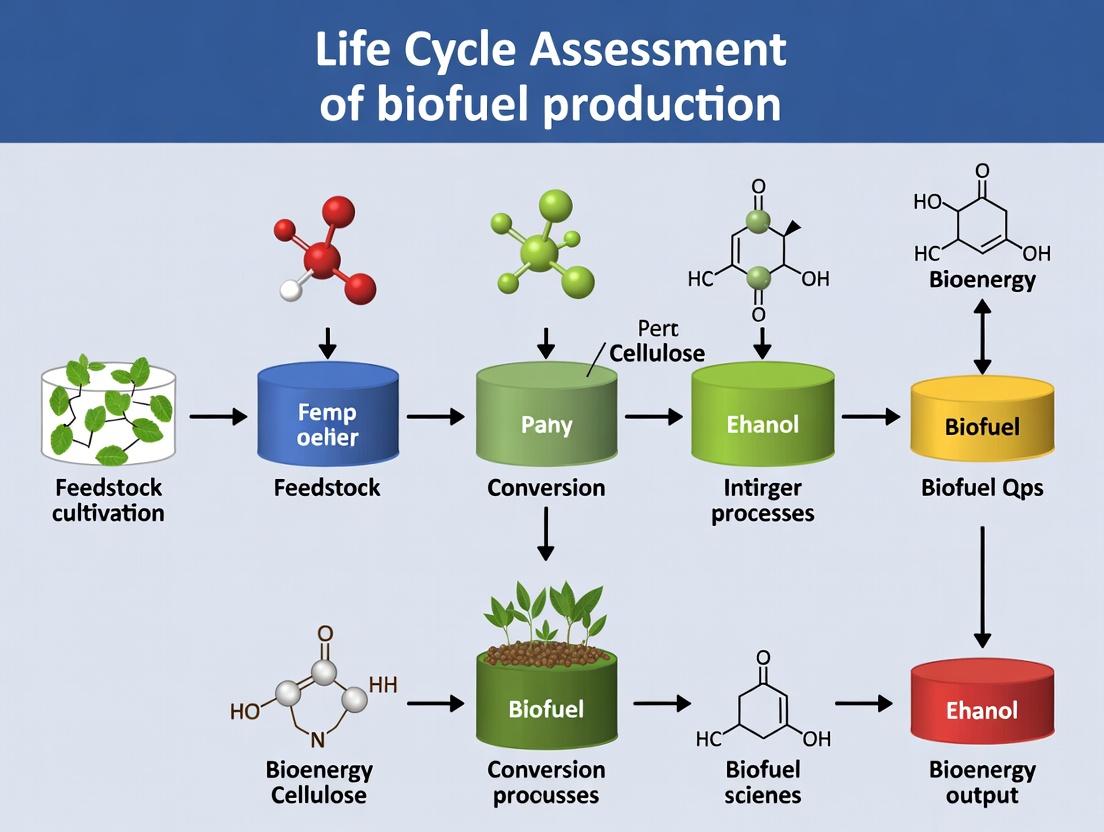
This article provides a systematic analysis of the life cycle environmental impacts of biofuel production from non-food feedstocks, targeting researchers and bioprocess development professionals.
Beyond Food vs. Fuel: A Comprehensive Life Cycle Assessment of Advanced Biofuels from Non-Food Biomass
Abstract
This article provides a systematic analysis of the life cycle environmental impacts of biofuel production from non-food feedstocks, targeting researchers and bioprocess development professionals. It explores the scientific rationale behind feedstock selection—including lignocellulosic biomass, algae, and waste streams—and establishes the foundational principles of Life Cycle Assessment (LCA). The article details advanced methodologies for inventory analysis and impact assessment, addresses key challenges in process scale-up and optimization, and critically compares the performance of different feedstocks and conversion pathways. By synthesizing current research, this review aims to guide sustainable biofuel development and inform strategic decisions in renewable energy and biorefinery design.
Why Non-Food Feedstocks? Defining the Scope and Principles of Biofuel LCA
This whitepaper serves as a technical guide within a broader thesis on the Life Cycle Assessment (LCA) of Biofuel Production from Non-Food Feedstocks. The primary imperative is to develop advanced biofuel pathways that utilize lignocellulosic, algal, and waste-derived feedstocks, thereby eliminating competition with food production and minimizing direct land-use change (dLUC) impacts. For researchers and scientists, the focus is on the core technical challenges: feedstock pretreatment, saccharification, and fermentation of C5/C6 sugars, and the downstream processing of intermediates like bio-oils and biogas.
Current Quantitative Landscape of Feedstock & Conversion Yields
The viability of non-food feedstocks is quantified by their composition and conversion efficiency. Key metrics include cellulose/hemicellulose content for lignocellulosics and lipid/carbohydrate content for algae.
Table 1: Composition and Theoretical Yield of Representative Non-Food Feedstocks
| Feedstock Type | Example | Cellulose (%) | Hemicellulose (%) | Lignin (%) | Lipids (%) | Carbohydrates (%) | Theoretical Ethanol Yield (L/dry tonne) | Key Challenge |
|---|---|---|---|---|---|---|---|---|
| Lignocellulosic | Corn Stover | 35-40 | 20-25 | 15-20 | - | - | 280-330 | Recalcitrance, Inhibitor formation |
| Lignocellulosic | Miscanthus | 40-45 | 20-25 | 20-25 | - | - | 300-350 | Harvest logistics |
| Algal | Chlorella vulgaris | - | - | - | 15-25 | 30-40 | ~150 (via fermentation) | Dewatering, scale-up |
| Waste Stream | Food Waste | - | - | - | Varies | 50-60 (starches/sugars) | 250-300 | Feedstock heterogeneity |
Table 2: Comparative Conversion Efficiencies of Primary Platforms (2023-2024 Data)
| Conversion Platform | Feedstock | Key Process | Sugar/Lipid to Fuel Conversion Efficiency (%) | TRL (1-9) | Net Energy Ratio (NER)* |
|---|---|---|---|---|---|
| Biochemical | Corn Stover | Enzymatic Hydrolysis & Fermentation | 75-80 (C6), 50-65 (C5) | 8 | 1.8 - 2.4 |
| Thermochemical | Forest Residues | Fast Pyrolysis & Hydrodeoxygenation | ~65 (Bio-oil to hydrocarbons) | 7 | 1.5 - 2.0 |
| Biochemical/CE | Microalgae | Lipid Extraction & Transesterification | >95 (Lipid to FAME) | 6-7 | 0.8 - 1.5 (highly variable) |
| Hybrid | Sewage Sludge | Anaerobic Digestion & Upgrading | 60-70 (Biogas to RNG) | 9 | 2.5 - 3.5 |
*NER = Energy Output / Fossil Energy Input; values are system-dependent.
Detailed Experimental Protocols
Protocol: Two-Stage Acid-Alkaline Pretreatment of Lignocellulosic Biomass
Objective: To effectively delignify and reduce cellulose crystallinity for enhanced enzymatic digestibility. Materials: Milled feedstock (2mm particle size), Dilute H₂SO₄ (1% v/v), NaOH (2% w/v), Autoclave, Vacuum filtration setup, pH meter. Procedure:
- Stage 1 - Acid Hydrolysis: Load 100g dry biomass into a reactor with 1L of 1% H₂SO₄. Autoclave at 121°C for 45 minutes. Cool and vacuum filter, retaining the solid fraction (hydrolyzed hemicellulose removed in liquid stream).
- Neutralization & Wash: Wash the solid residue with deionized water until pH neutral.
- Stage 2 - Alkaline Delignification: Resuspend the neutral solid in 1L of 2% NaOH. Autoclave at 121°C for 60 minutes.
- Final Recovery: Cool, filter, and wash the pretreated solid substrate thoroughly. Dry at 60°C to constant weight for subsequent enzymatic hydrolysis.
Protocol: Enzymatic Saccharification & Fermentation Monitoring (Separate Hydrolysis and Fermentation - SHF)
Objective: To quantify released sugars and ethanol titers from pretreated biomass. Materials: Pretreated biomass, Commercial cellulase cocktail (e.g., CTec3), S. cerevisiae or engineered Z. mobilis, HPLC system with RI/UV detector, Aminex HPX-87H column, YPD media. Procedure:
- Hydrolysis: Set up a 50ml reaction containing 5% (w/v) pretreated solids in 0.05M citrate buffer (pH 4.8) with an enzyme loading of 20 FPU/g glucan. Incubate at 50°C, 200 rpm for 72h.
- Sampling: Withdraw 1ml samples at 0, 3, 6, 12, 24, 48, 72h. Centrifuge (10,000g, 5 min) and filter supernatant (0.2µm) for HPLC analysis.
- HPLC Analysis: Inject 20µl onto HPX-87H column at 65°C with 5mM H₂SO₄ as mobile phase (0.6 ml/min). Quantify glucose, xylose, and inhibitors (furfural, HMF) against standards.
- Fermentation: Adjust pH of hydrolysate to 5.5, supplement with nutrients. Inoculate with 10% (v/v) actively growing yeast culture. Incubate at 30°C, 150 rpm for 48-72h. Monitor ethanol via HPLC.
Visualization of Key Pathways and Workflows
Diagram Title: Lignocellulosic Biofuel Biochemical Pathway
Diagram Title: Integrated LCA Experimental Workflow
The Scientist's Toolkit: Research Reagent Solutions
Table 3: Essential Reagents & Materials for Advanced Biofuel Research
| Item/Category | Example Product/Specification | Function in Research |
|---|---|---|
| Cellulolytic Enzyme Cocktail | CTec3, Cellic CTec3 (Novozymes) | Multi-enzyme blend for synergistic hydrolysis of cellulose and hemicellulose to fermentable sugars. |
| Engineered Microbial Strains | S. cerevisiae (C5 metabolizing), Y. lipolytica (lipid-accumulating) | Specialized chassis for fermenting mixed sugars (C6/C5) or converting sugars to lipids (ALDH pathway). |
| Analytical Standard for HPLC | Supeleo 47265: Glucose, Xylose, Arabinose, etc. | Quantitative calibration for sugar, acid, and inhibitor analysis in hydrolysates and fermentation broths. |
| Anaerobic Digestion Inoculum | Granular sludge from wastewater plant | Active microbial consortium for methane potential assays of waste feedstocks. |
| Algal Growth Media | BG-11 or F/2 Medium (Artificial Sea Water) | Standardized nutrient media for controlled cultivation of microalgae strains. |
| Lipid Extraction Solvent | Chloroform-Methanol (2:1 v/v) - Bligh & Dyer method | Efficient total lipid extraction from algal or oleaginous yeast biomass for quantification. |
| LCA Software & Database | SimaPro with Ecoinvent v3.8/AGRIBALYSE | Modeling environmental impacts (GWP, land use) across the full biofuel life cycle. |
| High-Solid Bioreactor | Sartorius Biostat B-DCU system with helical ribbon impeller | Enables simultaneous saccharification and fermentation (SSF) at high biomass loadings (>15% solids). |
This technical guide serves as a critical resource within a broader life cycle assessment (LCA) research framework on biofuel production from non-food feedstocks. The imperative to develop sustainable, low-carbon biofuels necessitates a departure from first-generation, food-based resources. This catalog details the primary non-food feedstock categories—lignocellulosic biomass, algal biomass, and waste-derived resources—providing researchers and industrial scientists with the technical data and methodologies essential for rigorous comparative analysis and LCA modeling.
Lignocellulosic Biomass
Lignocellulosic biomass is the structural material of plants, comprising cellulose, hemicellulose, and lignin. It represents the most abundant renewable carbon source on earth.
Key Feedstock Types & Composition
Lignocellulosic feedstocks are categorized based on origin. Their compositional variability significantly impacts pretreatment and conversion efficiency.
Table 1: Compositional Analysis of Representative Lignocellulosic Feedstocks (Dry Basis, % w/w)
| Feedstock Type | Example | Cellulose | Hemicellulose | Lignin | Ash | Reference |
|---|---|---|---|---|---|---|
| Agricultural Residue | Corn Stover | 35-40 | 20-25 | 15-20 | 4-6 | U.S. DOE, 2023 |
| Energy Crop | Switchgrass (Panicum virgatum) | 30-35 | 25-30 | 15-20 | 3-5 | NREL Data, 2024 |
| Forest Residue | Pine Sawdust | 40-45 | 20-25 | 25-30 | <1 | EUBIA, 2023 |
| Dedicated Perennial | Miscanthus x giganteus | 40-45 | 20-25 | 20-25 | 1-3 | EU Project Report, 2024 |
Key Experimental Protocol: Compositional Analysis (NREL/TP-510-42618)
A standard method for determining structural carbohydrates and lignin in biomass.
- Milling & Drying: Biomass is milled to pass a 20-mesh screen and dried at 45°C.
- Two-Stage Acid Hydrolysis: A two-step sulfuric acid hydrolysis solubilizes carbohydrates.
- Step 1: 72% (w/w) H₂SO₄ at 30°C for 1 hour.
- Step 2: Dilution to 4% (w/w) H₂SO₄ and autoclaving at 121°C for 1 hour.
- Analysis:
- Sugars: The hydrolysate is analyzed via High-Performance Liquid Chromatography (HPLC) with a refractive index (RI) or pulsed amperometric detector (PAD) to quantify monomeric sugars (glucose, xylose, arabinose, etc.).
- Acid-Insoluble Lignin: The solid residue post-hydrolysis is dried and weighed as Klason lignin.
- Ash: A separate sample is combusted at 575°C to determine ash content.
Algal Biomass
Algal biomass, from microalgae and macroalgae (seaweed), offers high growth rates, high lipid content, and does not compete for arable land.
Key Feedstock Types & Characteristics
Table 2: Comparative Profile of Promising Algal Feedstocks for Biofuels
| Species | Type | Key Advantage | Typical Lipid Content (% dwt) | Carbohydrate Content (% dwt) | Harvesting Challenge |
|---|---|---|---|---|---|
| Chlorella vulgaris | Microalgae (Freshwater) | High lipid productivity | 15-25 | 10-15 | High energy dewatering |
| Nannochloropsis sp. | Microalgae (Marine) | High TAG accumulation | 25-35 | 10-15 | Small cell size (~3 µm) |
| Scenedesmus obliquus | Microalgae | Wastewater remediation potential | 15-25 | 20-25 | Flocculation required |
| Saccharina latissima | Macroalgae (Brown) | No freshwater requirement | 1-3 | 50-65 | Seasonal variation |
Key Experimental Protocol: Total Lipid Extraction & Transesterification
A standard protocol for quantifying and converting algal lipids to Fatty Acid Methyl Esters (FAMEs) for analysis or biodiesel.
- Biomass Harvesting & Disruption: Cells are harvested by centrifugation, freeze-dried, and subjected to bead-beating or sonication in the presence of solvent.
- Bligh & Dyer Extraction: A chloroform:methanol (2:1 v/v) mixture is used to extract total lipids. The organic phase containing lipids is separated and evaporated under nitrogen.
- Transesterification: Extracted lipids are reacted with a methanolic solution (e.g., 2% H₂SO₄ in methanol) at 70-80°C for 1-2 hours to convert triglycerides to FAMEs.
- FAME Analysis: FAMEs are extracted in hexane and analyzed by Gas Chromatography-Flame Ionization Detection (GC-FID) for quantification and profiling.
This category includes organic fractions of municipal solid waste (OFMSW), waste cooking oil (WCO), sewage sludge, and industrial waste gases (e.g., syngas, CO₂).
Key Feedstock Types & Properties
Table 3: Characterization of Waste-Derived Feedstocks
| Feedstock | Source | Key Component(s) | Moisture Content | Contaminants of Concern |
|---|---|---|---|---|
| Waste Cooking Oil (WCO) | Food Industry | Triglycerides, Free Fatty Acids | <1% | Water, food particles, polymerized lipids |
| Organic Fraction of MSW | Municipal Waste | Carbohydrates, Lipids, Proteins | 50-70% | Plastics, heavy metals, pathogens |
| Sewage Sludge | Wastewater Treatment | Microbial Biomass, Lipids | 95-99% (raw) | Heavy metals, micropollutants, inert solids |
| Industrial Flue Gas | Cement/Steel Plants | CO₂ (10-25% v/v) | - | SOx, NOx, Particulates |
Key Experimental Protocol: Anaerobic Digestion (AD) of OFMSW for Biogas
A batch protocol to assess biomethane potential (BMP).
- Feedstock Preparation: OFMSW is sorted, shredded, and characterized for total solids (TS), volatile solids (VS), and C/N ratio.
- Inoculum Acclimation: Anaerobic digester sludge is used as inoculum and starved for 5-7 days to reduce background gas production.
- BMP Assay Setup: Triplicate serum bottles (e.g., 500 mL) are loaded with a substrate-to-inoculum ratio (e.g., 0.5 g VSsubstrate/g VSinoculum). Controls (inoculum only) are prepared. Bottles are flushed with N₂/CO₂, sealed, and incubated at mesophilic (35°C) temperature.
- Gas Monitoring: Biogas production volume is measured regularly by manometric or water displacement methods. Methane (CH₄) content is analyzed via GC with a thermal conductivity detector (TCD).
The Scientist's Toolkit: Research Reagent Solutions
Table 4: Essential Materials and Reagents for Feedstock Analysis
| Item | Function/Application | Example Product/Catalog |
|---|---|---|
| Sulfuric Acid (H₂SO₄), 72% w/w | Acid hydrolysis for lignocellulosic compositional analysis. | Sigma-Aldrich, 258105 |
| HPLC Column for Sugar Analysis | Separation of monomeric sugars (glucose, xylose, etc.). | Bio-Rad Aminex HPX-87P |
| Chloroform & Methanol (2:1) | Solvent mixture for total lipid extraction (Bligh & Dyer). | Fisher Chemical, C607SK & A456SK |
| FAME Mix Standard | Quantitative calibration for GC analysis of biodiesel/biolipids. | Supelco, CRM18918 |
| Anhydride Methanol, 2% H₂SO₄ | Transesterification reagent for converting lipids to FAMEs. | Prepared in-lab; Methanol (Sigma 34860) |
| Anaerobic Digester Inoculum | Active microbial consortium for BMP assays. | Sourced from operational wastewater treatment plant. |
| GC-TCD System | For analysis of biogas composition (CH₄, CO₂). | Agilent 7890B with Hayesep D column |
Visualized Pathways and Workflows
Diagram 1: Lignocellulosic Biofuel Production Pathway
Diagram 2: Algal Biomass Cultivation and Processing
Diagram 3: Waste-to-Energy via Anaerobic Digestion
Within the framework of a thesis on the life cycle assessment of biofuel production from non-food feedstocks, a rigorous understanding of the core LCA principles is paramount. This technical guide details the foundational phases of Goal and Scope Definition and Inventory Analysis, focusing on their application to advanced biofuel systems like those derived from agricultural residues (e.g., corn stover, wheat straw), dedicated energy crops (e.g., switchgrass, miscanthus), or algal biomass. These phases are critical for ensuring the study's relevance, credibility, and utility for researchers and industry professionals.
Goal Definition
The goal statement unambiguously defines the study's intent, driving all subsequent decisions.
- Intended Application: To compare the environmental footprint (e.g., GHG emissions, fossil energy demand) of bio-jet fuel from hydrothermal liquefaction of microalgae versus Fischer-Tropsch diesel from gasified forest residues, to inform R&D prioritization and policy.
- Reasons for Carrying Out the Study: To identify environmental hotspots in novel conversion pathways and assess potential trade-offs (e.g., reduced GHG emissions vs. increased water consumption) compared to fossil benchmarks.
- Intended Audience: Research consortium members, funding agencies (e.g., DOE, EU Horizon Europe), peer-reviewed journals, and policy analysts.
- Comparative Assertions and Public Disclosure: If results are intended for public comparative claims, adherence to ISO 14040/14044 standards and critical review by a panel of three independent experts is mandatory.
Scope Definition
The scope operationalizes the goal, defining the breadth, depth, and system parameters.
Product System and Function
- Function: To provide propulsion energy for transportation. For comparability, systems must be defined based on an equivalent Functional Unit (FU).
- Functional Unit: 1 Megajoule (MJ) of lower heating value (LHV) in the final fuel, delivered to the vehicle tank. This enables fair comparison between different fuel types and production routes.
System Boundaries
This defines the unit processes included. A cradle-to-gate or cradle-to-grave approach is typical. Key inclusion/exclusion decisions for non-feedstock biofuel LCAs are summarized below.
| System Boundary Segment | Key Processes to INCLUDE | Common EXCLUSIONS (with justification) |
|---|---|---|
| Feedstock Cultivation & Harvesting (Cradle) | Fertilizer/pesticide production, irrigation, field operations (tilling, harvesting), direct soil emissions (N2O), carbon stock changes from land-use change (critical for energy crops). | Production of capital goods (tractors, biorefinery buildings) due to negligible contribution per FU (must be justified via cutoff criteria). |
| Feedstock Logistics | Transportation (mode, distance), preprocessing (drying, size reduction, densification), storage losses (e.g., dry matter loss). | Infrastructure for transport (roads, trucks manufacturing). |
| Conversion & Upgrading | All energy/material inputs to the biorefinery (chemicals, catalysts, process water, heat, electricity), direct process emissions, co-product outputs (e.g., lignin, biogas). | Human labor, administrative overhead. |
| Fuel Distribution & Use (Grave) | Transportation to fueling station, combustion emissions in vehicle (often considered biogenic CO2 neutral, but other emissions like CH4, N2O are included). | Vehicle manufacturing and end-of-life. |
| Waste & Recycling | Wastewater treatment, solid waste disposal (landfill, incineration), recycling of process catalysts. | Emissions from the eventual degradation of long-lived carbon products (if any). |
Allocation Procedures
Non-food feedstock systems often generate multiple valuable products (e.g., biofuel, biochar, electricity). ISO standards prescribe the following hierarchy:
- Subdivision: Physically dividing unit processes to allocate only relevant flows to each product.
- System Expansion: Expanding the system to include the avoided burdens of displacing the co-product's conventional equivalent. This is often used for consequential LCA models.
- Allocation: Partitioning inputs/outputs based on a relevant physical (e.g., energy content, mass) or economic relationship.
For our thesis context, system expansion is often preferred for consequential assessments of policy-driven biofuel markets.
Impact Assessment & Data Quality
- Impact Categories: Global Warming Potential (GWP100), Fossil Resource Scarcity, Water Consumption, Land Use, and possibly Acidification/Eutrophication. Must be relevant to the geographical context of feedstock production.
- Data Requirements: Prefer primary, site-specific data for the core conversion process. Use validated, geographically relevant background databases (e.g., Ecoinvent, USDA LCA Commons) for upstream inputs like electricity grid mix or fertilizer production.
- Temporal & Geographical Scope: Study period of 20-30 years; specific regional data for feedstock cultivation (e.g., Midwestern US for corn stover, Southern EU for poplar).
Life Cycle Inventory (LCI) Analysis: Experimental & Data Collection Protocols
The LCI phase involves the meticulous collection and calculation of input/output data for all processes within the system boundaries.
Protocol 1: Primary Data Collection for Pilot-Scale Biorefinery
Objective: To quantify material and energy flows for the thermochemical conversion (e.g., pyrolysis) of miscanthus. Methodology:
- Feedstock Characterization: Determine the proximate (moisture, ash, volatile matter) and ultimate (C, H, O, N, S) analysis of a representative miscanthus sample (ISO 18122, ISO 18125).
- Mass Balance: Operate the continuous pyrolysis pilot plant at steady state for 72 hours. Continuously weigh all input streams (biomass, carrier gas) and output streams (bio-oil, biochar, syngas) using calibrated load cells and flow meters.
- Energy Balance: Install heat meters on all thermal oil lines and power meters on all major electrical consumers (pumps, grinders, reactors). Use gas chromatography (GC) to analyze syngas composition and calculate its calorific value.
- Chemical Inventory: Record all catalyst and solvent inputs. Sample wastewater streams for COD/BOD analysis and catalyst residues for heavy metal analysis.
- Data Aggregation: Normalize all flows per 1 kg of dry ash-free miscanthus input. Calculate yields (wt%) for bio-oil, biochar, and gas.
Protocol 2: Field-Level Data for Crop Cultivation
Objective: To determine fertilizer-induced N2O emissions and carbon stock changes for switchgrass. Methodology:
- Experimental Design: Establish replicate plots under different fertilization regimes (0, 50, 100 kg N/ha).
- Soil Emission Monitoring: Use static closed chambers deployed bi-weekly for 12 months. Collect gas samples and analyze N2O concentration via Gas Chromatography with an Electron Capture Detector (GC-ECD). Calculate fluxes using the linear rate of concentration change.
- Biomass & Soil Carbon Sampling: Annually, harvest above-ground biomass from defined areas to determine yield. Collect soil cores (0-30 cm depth) at establishment and Year 5 for analysis of soil organic carbon (SOC) via dry combustion (elemental analyzer).
- Calculation: Apply the IPCC Tier 2 methodology, using locally derived emission factors from chamber data, to calculate total N2O emissions. Estimate SOC change over the cultivation cycle.
Visualization of Core LCA Structure and Workflow
LCA Phases and Iterative Flow
Biofuel LCA System Boundary Diagram
The Scientist's Toolkit: Key Research Reagent Solutions
| Item/Category | Function in Biofuel LCA Research | Example Product/Source |
|---|---|---|
| Elemental Analyzer | Determines carbon, hydrogen, nitrogen, and sulfur content in feedstocks, biochars, and soils—critical for mass balance and emission factor calculation. | Thermo Scientific FLASH 2000, Vario EL Cube. |
| Gas Chromatograph (GC) | Quantifies gas composition (e.g., CH₄, CO, CO₂, N₂O) from process streams or soil flux chambers for energy content and emission calculations. | Agilent 8890 GC with TCD & ECD detectors. |
| Calorimeter | Measures the higher and lower heating value (HHV/LHV) of solid and liquid fuels to define the energy-based functional unit. | IKA C200 Oxygen Bomb Calorimeter. |
| LCI Database | Provides validated background life cycle inventory data for upstream processes (electricity, chemicals, transport). | Ecoinvent, USDA LCA Commons, GREET Model. |
| LCA Software | Models the product system, manages inventory data, performs calculations, and supports impact assessment. | openLCA, SimaPro, GaBi. |
| Soil Flux Chambers | Enables direct field measurement of greenhouse gas (N₂O, CH₄, CO₂) fluxes from soil under different agricultural management regimes. | LI-COR 8200-103 Survey Chamber. |
| Process Mass Spectrometer | For real-time, continuous monitoring of gas species in biorefinery pilot plants, enhancing accuracy of instantaneous mass/energy balances. | Extrel MAX300-LG. |
| Sustainable Catalysts | Heterogeneous catalysts (e.g., zeolites, supported metals) for hydrotreating bio-oil; their synthesis and recycling are key LCI data points. | Custom synthesized (e.g., NiMo/Al₂O₃). |
Defining Functional Units and Key Performance Indicators for Biofuel LCAs
Within the context of Life Cycle Assessment (LCA) of biofuel production from non-food feedstocks, the precise definition of Functional Units (FUs) and Key Performance Indicators (KPIs) is paramount. This technical guide details the core principles and current methodologies for establishing these fundamental elements, ensuring robust, comparable, and policy-relevant assessments for researchers and industry professionals.
Functional Units: The Basis for Comparison
The FU provides a quantified reference to which all inputs and outputs are normalized, enabling fair comparison between different biofuel systems.
Primary Functional Unit Categories
Table 1: Common Functional Units in Biofuel LCA
| Category | Specific Functional Unit | Typical Application Context | Key Advantage | Key Limitation |
|---|---|---|---|---|
| Energy Basis | 1 MJ of lower heating value (LHV) fuel | Comparing fuel energy content across pathways (e.g., algal biodiesel vs. cellulosic ethanol). | Direct comparison of energy delivery. | Ignores fuel quality (e.g., octane/cetane number) and performance in engines. |
| 1 km distance driven in a specific vehicle class | Well-to-Wheels (WTW) assessments. | Links fuel production to final service. | Requires specific vehicle efficiency data; can be complex. | |
| Volume/Mass Basis | 1 kg of dry fuel | Technical analysis of production process efficiency. | Simplifies mass balance calculations. | Does not account for energy density differences. |
| 1 liter of fuel | Compliance with volume-based policy mandates (e.g., RFS). | Aligns with regulatory frameworks. | Sensitive to temperature and fuel composition. | |
| Land Basis | 1 hectare-year of land use | Assessing land use efficiency of different feedstock systems. | Central for Land Use Change (LUC) impact calculations. | Disconnected from the final energy service provided. |
Data synthesized from recent LCA literature and ISO 14040/14044 guidelines.
Selection Protocol for Functional Units
Experimental Protocol: FU Definition and Normalization
- Define the Study's Objective: Determine if the goal is process optimization, policy support, or comparison to fossil fuels.
- Identify the Referenced Service: Define the primary service (e.g., "providing propulsion for a mid-size car").
- Quantify the FU: Select a measurable unit that represents this service (e.g., "1 km driven").
- Establish Reference Flows: Calculate all input and output flows in the system required to deliver one unit of the FU.
- Document and Justify: Provide a clear rationale for the chosen FU, acknowledging any limitations in the goal and scope definition.
Key Performance Indicators: Measuring Sustainability
KPIs are quantitative metrics derived from LCA results that track environmental, economic, and technical performance.
Core Environmental KPIs
Table 2: Mandatory and Advanced Environmental KPIs for Biofuel LCAs
| Impact Category | Key Performance Indicator | Common Units | Calculation Notes | Typical Range for Non-Food Biofuels* |
|---|---|---|---|---|
| Climate Change | Global Warming Potential (GWP100) | kg CO₂-eq / FU | Includes biogenic carbon, direct/indirect LUC, and process emissions. | -80% to +60% vs. fossil reference |
| Resource Use | Fossil Energy Demand | MJ primary / FU | Ratio of fossil energy input to fuel energy output (Energy Return on Investment). | 0.1 - 0.5 (FER>1) |
| Water Consumption | m³ / FU | Differentiate blue, green, grey water; critical for water-scarce regions. | 50 - 5000 L water / L fuel | |
| Ecosystem Impact | Agricultural Land Occupation | m²a crop eq / FU | Used in conjunction with yield data to assess efficiency. | 1 - 20 m²a / MJ |
| Acidification Potential | kg SO₂-eq / FU | Driven by fertilizer application and combustion emissions. | 0.001 - 0.01 kg SO₂-eq / MJ | |
| Eutrophication Potential | kg PO₄³⁻-eq / FU | Driven by nutrient runoff from feedstock cultivation. | 0.0001 - 0.005 kg PO₄-eq / MJ |
Data aggregated from recent LCAs on lignocellulosic ethanol, algal biofuels, and pyrolysis oils. Ranges are illustrative and highly feedstock/process dependent.
Technical and Economic KPIs
Table 3: Techno-Economic and Efficiency KPIs
| KPI Category | Specific Indicator | Formula | Interpretation | |
|---|---|---|---|---|
| Process Efficiency | Carbon Efficiency (%) | (C in fuel / C in feedstock) * 100 | Measures atomic conservation from feedstock to product. | |
| Energy Efficiency (%) | (LHV of fuel / Total process energy input) * 100 | Overall thermodynamic efficiency of the conversion pathway. | ||
| Economic | Minimum Fuel Selling Price (MFSP) | $ / liter or $ / GJ | The price at which the fuel must be sold to break even over plant lifetime. | |
| Value of Carbon Abatement | ($/t CO₂-eq abated) | (Cost of biofuel - Cost of fossil fuel) / (GWPfossil - GWPbiofuel) | Cost-effectiveness of emissions reduction. |
Experimental Protocols for KPI Data Generation
Protocol for Determining Net Energy Ratio (NER)
Title: Net Energy Ratio Calculation Workflow Method:
- System Boundary: Define a cradle-to-gate or well-to-wheels boundary.
- Inventory: Quantify all direct and indirect energy inputs (e.g., diesel for farming, natural gas for hydrothermal liquefaction, electricity for distillation) in MJ per FU.
- Energy Allocation: For co-products (e.g., lignin, glycerol), use energy-based allocation or system expansion.
- Calculation: NER = (Energy Content of Biofuel per FU) / (Total Fossil Energy Input per FU). An NER > 1 indicates a net energy gain.
Protocol for Integrating Direct Land Use Change (dLUC) Emissions
Title: dLUC Emission Factor Integration Method:
- Historical Land Use: Determine prior land use (e.g., forest, grassland) for the feedstock cultivation site over a 20-year period.
- Carbon Stock Data: Use IPCC Tier 1 or region-specific Tier 2 data for carbon stocks in above-ground biomass, below-ground biomass, dead organic matter, and soil organic carbon (SOC) for both prior and current land use.
- Emissions Factor: Calculate the carbon stock change per hectare.
- dLUC Emission Factor (kg C/ha) = Σ(Carbon Stockprior - Carbon Stockcurrent) for all pools.
- Allocate to FU: Allocate the total emissions from the converted area over a chosen amortization period (e.g., 20 years) to the annual feedstock yield, and subsequently to the FU.
Visualizing LCA Structure and KPI Relationships
The Scientist's Toolkit: Essential Reagents and Materials
Table 4: Research Reagent Solutions for Biofuel LCA Data Generation
| Item | Function in Biofuel LCA Research | Example / Specification |
|---|---|---|
| Feedstock Samples | Representative, characterized material for process experiments. | Cellulose-standard, algae slurry (known lipid content), pre-treated lignocellulosic biomass. |
| Catalysts & Enzymes | For catalytic conversion or enzymatic hydrolysis steps. | Zeolite catalysts (e.g., ZSM-5), cellulase enzyme cocktails (e.g., Cellic CTec3). |
| Solvents & Standards | For extraction, separation, and analytical quantification. | n-Hexane (for lipid extraction), HPLC standards for sugar/acid analysis, GC-MS standards for hydrocarbon identification. |
| Soil Carbon Kits | To determine soil organic carbon (SOC) for dLUC calculations. | Elemental Analyzer standards, loss-on-ignition oven equipment. |
| Process Modeling Software | To simulate mass/energy balances and scale-up data. | Aspen Plus, SuperPro Designer, open-source tools (e.g., BioSTEAM). |
| LCA Database & Software | To build inventory models and calculate impact indicators. | Ecoinvent or GREET database, SimaPro, openLCA, GaBi. |
| Anaerobic Digestion Assay Kits | To measure biochemical methane potential (BMP) of waste streams. | Manometric or volumetric BMP test systems with inoculum and nutrient media. |
| Elemental Analyzer | To determine ultimate analysis (C, H, N, S, O) of feedstocks and fuels. | CHNS/O analyzer for calculating heating values and carbon balances. |
Conducting a Robust LCA: From Inventory Analysis to Impact Assessment
Life Cycle Assessment (LCA) of biofuel production from non-food feedstocks, such as switchgrass (Panicum virgatum), miscanthus (Miscanthus × giganteus), or short-rotation coppice willow (Salix spp.), is critical for evaluating environmental sustainability. This whitepaper details the construction of a Life Cycle Inventory (LCI), the foundational data-collection phase of an LCA, focusing on the initial stages: Feedstock Cultivation, Harvesting, and Pre-treatment. Accurate LCI data for these upstream processes directly influences the assessment of greenhouse gas emissions, eutrophication potential, and energy balance of the final biofuel, providing researchers and policymakers with robust evidence for decision-making.
Data Collection Framework and Categorization
LCI data collection must be systematic, transparent, and representative. Data is categorized as primary (site-specific, measured) or secondary (literature, databases). The following table outlines the core data requirements.
Table 1: Core LCI Data Categories for Feedstock Systems
| Life Cycle Stage | Data Category | Specific Data Points | Unit | Data Quality Tier |
|---|---|---|---|---|
| Cultivation | Site & Soil Data | Geographic coordinates, soil type, pH, organic carbon content | kg C/kg soil | 1 (Primary) |
| Agronomic Inputs | Seeds/seedlings application rate; Synthetic N, P, K fertilizer application rate | kg/ha | 1 | |
| Pesticide & Herbicide active ingredient application rate | kg a.i./ha | 1 | ||
| Field Operations | Machinery type (e.g., tractor power), duration of operation, fuel type | hr/ha, L/ha | 1 | |
| Direct Emissions | Nitrous oxide (N₂O) from soil, Ammonia (NH₃) volatilization | kg N₂O-N/ha, kg NH₃-N/ha | 2 (Modeled/Secondary) | |
| Harvesting | Operations | Harvesting method (e.g., mowing, baling), machine specifications, fuel consumption | MJ/ha, L/ha | 1 |
| Yield & Moisture | Dry matter biomass yield at harvest, moisture content | Mg DM/ha, % | 1 | |
| Residue Management | Removal rate of harvest residues (e.g., stover) | % | 1 | |
| Pre-treatment | Transport | Biomass transport distance, mode (truck, rail), payload | tkm | 1 |
| Processing | Comminution (chipping, grinding) energy consumption | kWh/Mg DM | 1 | |
| Drying energy (if applicable), fuel/energy source | MJ/Mg H₂O evaporated | 1 | ||
| Pelletization or densification energy | kWh/Mg | 1 | ||
| Outputs | Pre-treated biomass mass and moisture content, mass loss | Mg DM out, % | 1 |
Experimental Protocols for Primary Data Collection
Protocol for In-Situ Soil N₂O Flux Measurement (Chamber Method)
Objective: Quantify direct nitrous oxide emissions from soil following fertilizer application. Reagents & Materials: Static chamber (base + removable lid), gas-tight syringes, evacuated vials, gas chromatograph (GC) with ECD detector. Methodology:
- Site Setup: Permanently install chamber bases (e.g., 30 cm diameter, 15 cm height) into the soil across representative plots (n≥4) 24 hours prior to first sampling.
- Gas Sampling: At time intervals (0, 15, 30, 45 min) after chamber lid closure, extract 30 mL of headspace gas using a syringe and inject into pre-evacuated 12 mL Exetainer vials.
- Sampling Frequency: Sample daily for the first week after fertilization, then bi-weekly. Include controls (unfertilized plots).
- Analysis: Analyze gas samples via GC-ECD. Calculate flux using the ideal gas law, accounting for chamber headspace volume, temperature, and pressure.
- Data Integration: Calculate cumulative seasonal emissions via linear interpolation between sampling points.
Protocol for Harvest Biomass Yield Measurement
Objective: Determine dry matter yield per hectare at harvest. Reagents & Materials: Quadrat frame (e.g., 1m x 1m), scales, drying oven, moisture analyzer, forage harvester. Methodology:
- Plot Selection: Establish random or systematic sampling points within a field.
- Fresh Weight Sampling: At each point, harvest all biomass within the quadrat using shears. Weigh immediately to obtain fresh weight (FW).
- Sub-sampling: Take a representative sub-sample (≥500g) from the harvested biomass.
- Moisture Determination: Weigh the sub-sample (wet weight), dry in an oven at 105°C until constant weight (≥48 hours), and reweigh (dry weight, DW).
- Calculation: Calculate dry matter yield: Yield (Mg DM/ha) = [(FW * (DWsub / FWsub)) / Quadrat Area] * 10,000.
The Scientist's Toolkit: Essential Research Reagent Solutions
Table 2: Key Reagents and Materials for LCI Field & Lab Work
| Item | Function/Application | Example Product/Specification |
|---|---|---|
| LI-850 CO₂/H₂O Analyzer | Measures real-time soil respiration and water vapor flux for carbon cycle modeling. | LI-COR Biosciences |
| Picarro G2508 Gas Analyzer | High-precision, simultaneous measurement of N₂O, CH₄, CO₂, and NH₃ for greenhouse gas flux studies. | Picarro Inc. |
| Evacuated Exetainer Vials | For precise, contamination-free storage of gas samples prior to GC analysis. | Labco Limited (12 mL) |
| Dell Latitude Rugged Laptop | Field data logging and equipment control in harsh environmental conditions. | Dell Technologies |
| ESRI ArcGIS Field Maps | Mobile GIS for geo-referencing sample locations, logging spatial data. | ESRI |
| SOPRA-SWA Spectral Reflectance Sensor | Non-destructive estimation of crop nitrogen status and biomass. | Sarl Sopra |
| Custom R/Python Scripts | For statistical analysis, temporal interpolation of flux data, and Monte Carlo uncertainty analysis. | Open-Source |
Workflow and System Diagrams
Title: LCI Data Collection Workflow for Biofuel Feedstock
Title: Material and Emission Flows in Feedstock LCI
Within the broader thesis on the Life Cycle Assessment (LCA) of biofuel production from non-food feedstocks, a critical technical comparison lies in the modeling of biochemical and thermochemical conversion pathways. These pathways represent fundamentally different approaches to deconstructing lignocellulosic biomass (e.g., agricultural residues, energy crops, forestry waste) into liquid fuels and chemicals. Accurate modeling of their efficiencies, inputs, and emissions is paramount for a consequential LCA that informs sustainable biorefinery development. This guide provides a technical deep-dive into the core processes, experimental protocols for key parameter derivation, and data structuring for LCA inventory compilation.
Pathway Fundamentals & LCA System Boundaries
Biochemical Conversion (BC)
Biochemical conversion primarily involves biological catalysts (enzymes) and microorganisms to break down carbohydrates in biomass into simple sugars, which are subsequently fermented into biofuels like ethanol or biogas. The dominant pathway is enzymatic hydrolysis followed by fermentation.
Typical System Boundaries for LCA:
- Cradle-to-Gate/Grave: Includes feedstock cultivation/harvesting, transportation, pretreatment, enzymatic hydrolysis, fermentation, product separation, wastewater treatment, and enzyme production.
- Key Co-product Allocation Issues: Often produces distiller's dried grains with solubles (DDGS) or lignin as co-products, requiring allocation (mass, energy, or economic) in LCA.
Thermochemical Conversion (TC)
Thermochemical conversion utilizes heat and chemical processes to convert entire biomass into an intermediate syngas (CO + H₂) or bio-oil, which is then catalytically upgraded to drop-in hydrocarbons (e.g., renewable diesel, jet fuel). The main pathways are gasification + Fischer-Tropsch synthesis and fast pyrolysis + hydroprocessing.
Typical System Boundaries for LCA:
- Cradle-to-Gate/Grave: Includes feedstock cultivation/harvesting, transportation, drying and size reduction, high-temperature conversion (gasifier/pyrolyzer), syngas cleaning/conditioning, catalytic synthesis, hydroprocessing, and heat/power integration.
- Key Co-product Allocation Issues: Can produce excess electricity, char, or chemicals, necessitating allocation.
Quantitative Process Data for LCA Inventory
The following tables summarize typical mass and energy flow data for modeling these pathways in an LCA inventory. Values are representative ranges based on current literature and are highly feedstock and process-configuration dependent.
Table 1: Key Mass Balance Parameters (per dry tonne of lignocellulosic biomass)
| Parameter | Biochemical Pathway (Ethanol) | Thermochemical Pathway (Gasification-FT) |
|---|---|---|
| Primary Product Output | 250 - 350 L EtOH | 120 - 180 L FT Diesel |
| By-product/Coproduct | 150 - 300 kg Lignin | 100 - 200 kg FT Naphtha |
| (Potential for combustion) | Excess Electricity: 200 - 500 kWh | |
| Major Process Inputs (besides biomass) | 10 - 20 kg Enzymes | Catalyst (Co, Fe-based): 0.1 - 0.5 kg |
| Chemicals (for pretreatment, pH adjustment): 20 - 50 kg | Hydrogen (for upgrading): 20 - 40 kg | |
| Water Consumption (Process) | 3,000 - 6,000 L | 500 - 2,000 L |
| Solid Residue (ash, etc.) | 50 - 100 kg | 20 - 60 kg |
Table 2: Energy Balance & Efficiency Indicators
| Indicator | Biochemical Pathway | Thermochemical Pathway |
|---|---|---|
| Total Process Energy Demand (GJ/tonne) | 6 - 10 | 8 - 12 (often self-supplied via residue combustion) |
| Net Energy Ratio (NER) | 1.5 - 2.5 | 2.0 - 3.5 |
| NER = (Energy in Fuel Output) / (Fossil Energy Input) | ||
| Carbon Efficiency (%) | 30 - 40% | 35 - 50% |
| % of feedstock carbon in final fuel product | ||
| Typical TRL (Technology Readiness Level) | 8-9 (Commercial) | 6-8 (Demo/Early Commercial) |
Experimental Protocols for Key Parameter Determination
Protocol for Determining Enzymatic Hydrolysis Yield (BC)
Objective: Quantify the glucose and xylose yield from pretreated biomass under standardized enzymatic conditions. This yield is a critical input parameter for LCA models of BC.
Methodology:
- Material: Pretreated lignocellulosic biomass (milled to <2mm), commercial cellulase cocktail (e.g., CTec3), buffer solutions.
- Hydrolysis: Load 1% (w/v) solids in 50mM sodium citrate buffer (pH 4.8) into a sealed bioreactor. Add enzyme loadings of 10-30 mg protein/g glucan.
- Conditions: Incubate at 50°C with constant agitation (150 rpm) for 72-120 hours.
- Sampling & Analysis: Withdraw samples at 0, 6, 24, 48, 72, 120h. Centrifuge, filter supernatant (0.2 µm). Analyze sugars via HPLC (Aminex HPX-87P column, 85°C, water eluent).
- Calculation:
Sugar Yield (%) = (Sugar Released (g) / Potential Sugar in Biomass (g)) * 100. Generate a time-yield curve. The 72h yield is commonly used as a model input.
Protocol for Determining Syngas Composition from Gasification (TC)
Objective: Characterize the raw syngas output from a bench-scale gasifier, essential for modeling downstream cleaning and FT synthesis efficiency.
Methodology:
- Material: Dried feedstock (<1mm), bench-scale fluidized bed gasifier, gas conditioning train.
- Gasification: Feed biomass at a steady rate (1-2 kg/hr) into the gasifier maintained at 800-900°C with steam/oxygen as the oxidizing agent.
- Gas Sampling: Draw a representative sample from the hot syngas stream using a heated probe and a conditioning system to remove tar and particulates.
- Analysis: Use online Micro-Gas Chromatograph (µGC) with thermal conductivity detectors (TCD). Common columns: Molsieve 5Å for H₂, O₂, N₂, CH₄, CO; PoraPLOT U for CO₂, C₂s.
- Data Normalization: Report dry, N₂-free molar percentages for H₂, CO, CO₂, CH₄, C₂H₄, C₂H₆. Calculate H₂/CO ratio, a critical parameter for FT catalyst selection.
Process Modeling & Signaling Pathways
Diagram Title: Biochemical Conversion Process Flow
Diagram Title: Thermochemical Conversion Process Flow
The Scientist's Toolkit: Research Reagent Solutions
Table 3: Essential Materials & Reagents for Conversion Research
| Item | Function in Research | Typical Example(s) |
|---|---|---|
| Commercial Cellulase Cocktail | Hydrolyzes cellulose to glucose for yield determination in BC. | CTec3, Cellic CTec2 (Novozymes) |
| Genetically Modified Fermentative Microbe | Ferments both C6 and C5 sugars to ethanol; critical for yield and titer. | Saccharomyces cerevisiae ( engineered for xylose uptake), Zymomonas mobilis |
| Lignocellulosic Biomass Reference Material | Provides a standardized, consistent feedstock for comparative experiments. | NIST RM 8491 (Switchgrass), NREL supplied feedstocks |
| Synthetic Gas Mixture (Syngas Simulant) | Calibration and testing of catalysts and sensors for TC pathways. | Certified cylinder gas: H₂/CO/CO₂/CH₄/N₂ in defined ratios |
| Fischer-Tropsch Catalyst | Converts syngas to liquid hydrocarbons; performance defines selectivity/yield. | Cobalt-based (e.g., Co/Al₂O₃, Co/SiO₂), Iron-based (Fe/K) |
| Ionic Liquids / Advanced Pretreatment Solvents | Efficiently deconstructs biomass lignin-carbohydrate matrix in BC. | 1-Ethyl-3-methylimidazolium acetate ([C₂C₁Im][OAc]) |
| Anaerobic Chamber / Bioreactor | Maintains strict anaerobic conditions necessary for specific fermentations. | Coy Laboratory Vinyl Glove Box, Sartorius Biostat B-DCU |
| Micro-Gas Chromatograph (µGC) | Rapid, online analysis of gas composition from gasifiers or fermentors. | Agilent 990 Micro-GC, INFICON 3000 Micro-GC |
| High-Performance Liquid Chromatograph (HPLC) | Quantifies sugars, organic acids, and inhibitors in liquid process streams. | Agilent 1260 Infinity II with RID/DA |
Within the life cycle assessment (LCA) framework for biofuel production from non-food feedstocks (e.g., Miscanthus, switchgrass, microalgae, forestry residues), impact assessment is a critical phase. It quantifies the potential environmental burdens associated with the entire value chain—from feedstock cultivation and logistics to conversion, distribution, and use. This guide details the core methodologies for measuring three pivotal impact categories: Greenhouse Gas (GHG) emissions, net energy balance (NEB), and water footprint (WF). Accurate measurement is essential for validating the sustainability claims of advanced biofuels and guiding research towards more efficient pathways.
Quantifying Greenhouse Gas (GHG) Emissions
GHG emissions are calculated as CO₂ equivalents (CO₂e) using global warming potential (GWP) factors over a specified timeframe (typically 100 years). The system boundary is cradle-to-grave, encompassing all direct and indirect emissions.
Key Calculation Protocol (ISO 14067):
- Inventory Compilation: Gather activity data (AD) for all unit processes (e.g., liters of diesel used in harvesting, kg of nitrogen fertilizer applied, kWh of grid electricity consumed at the biorefinery).
- Emission Factor Application: Multiply AD by corresponding emission factors (EF) from authoritative databases (e.g., Ecoinvent, GREET, IPCC). Formula: Emissions = AD × EF
- Biogenic Carbon Accounting: Track CO₂ uptake during feedstock growth and subsequent release during fuel combustion. Under a carbon neutrality assumption, this flux is often considered net-zero but must be reported separately. Soil organic carbon (SOC) changes from land-use change (LUC) are critical and require modeling (e.g., using the IPCC Tier 1 or 2 methodology).
- Co-product Handling: Use system expansion or allocation (mass, energy, or economic) to partition emissions between the main biofuel product and co-products (e.g., lignin, biogas).
- Summation & Reporting: Total all emissions, convert to CO₂e, and express per functional unit (e.g., MJ of lower heating value, km driven).
Table 1: Exemplary GHG Emission Factors for Key Inventory Items (Cradle-to-Gate)
| Inventory Item | Emission Factor (EF) | Unit | Source & Notes |
|---|---|---|---|
| Grid Electricity (EU Mix) | 0.276 | kg CO₂e/kWh | Ecoinvent 3.8, 2023 |
| Nitrogen Fertilizer (Urea) | 2.23 | kg CO₂e/kg N | IPCC (2006), production & application |
| Diesel (Combustion) | 2.67 | kg CO₂e/Liter | UK DEFRA (2023) |
| Direct Land Use Change (Grassland to Crop) | 54.6 | t CO₂e/ha | IPCC (2019) Tier 1, over 20 years |
| Miscanthus Biomass (at farm gate) | -60 to -30 | kg CO₂e/tonne dry matter | Literature range, includes C sequestration |
Determining Net Energy Balance (NEB) and Energy Return on Investment (EROI)
Energy balance evaluates the system's efficiency by comparing the energy content of the biofuel (output) to the non-renewable, fossil-based energy required to produce it (input).
Detailed Experimental/Calculation Protocol:
- Define Energy System Boundary: Typically "cradle-to-gate" (well-to-tank) or "cradle-to-grave" (well-to-wheel).
- Inventory Energy Inputs: Quantify all direct (diesel, natural gas) and indirect (embodied energy in fertilizers, machinery, chemicals) fossil energy inputs across the life cycle. Energy inputs are converted to a common unit (e.g., MJ).
- Quantity Energy Output: Determine the lower heating value (LHV) of the finished biofuel (e.g., ethanol, renewable diesel) per functional unit.
- Calculate Key Metrics:
- Net Energy Balance (NEB): NEB (MJ) = Energy Output (MJ) – Fossil Energy Input (MJ)
- Energy Return on Investment (EROI): EROI = Energy Output (MJ) / Fossil Energy Input (MJ)
- An EROI > 1 indicates a net energy gain.
Table 2: Comparative Energy Balance for Selected Non-Food Biofuel Pathways
| Feedstock | Conversion Route | Fossil Energy Input (MJ/GJ fuel) | NEB (MJ/GJ fuel) | EROI | System Boundary | Key Reference |
|---|---|---|---|---|---|---|
| Switchgrass | Biochemical (Ethanol) | 180 - 250 | 750 - 820 | 4.2 - 5.5 | Cradle-to-Gate | Wang et al. (2022) |
| Microalgae (PBR) | Transesterification (Biodiesel) | 450 - 700 | 300 - 550 | 1.4 - 1.8 | Cradle-to-Gate | Sorunmu et al. (2023) |
| Forest Residues | Thermochemical (Fischer-Tropsch Diesel) | 120 - 200 | 800 - 880 | 6.7 - 8.0 | Cradle-to-Gate | Muñoz et al. (2024) |
| Miscanthus | Gasification & Methanation (Bio-SNG) | 150 - 220 | 780 - 850 | 5.2 - 6.3 | Cradle-to-Gate | LCA Review (2023) |
Assessing Water Footprint (WF)
The water footprint assesses freshwater use and impact, differentiated into three components: green (rainwater), blue (surface/groundwater), and grey (water required to assimilate pollutants).
Standardized Assessment Protocol (WFN, ISO 14046):
- Goal & Scope: Define the functional unit and system boundary. Specify if assessing water consumption (blue+green) or degradation (grey).
- Water Inventory: Quantify water flows for each unit process.
- Green WF: Calculate evapotranspiration during crop growth using models (e.g., Penman-Monteith).
- Blue WF: Sum irrigation, process water, and cooling water withdrawals.
- Grey WF: Calculate based on nitrogen fertilizer leaching: Volume = (Applied N * Leaching Fraction) / (Cmax - Cnat), where Cmax is max acceptable concentration, Cnat is natural concentration.
- Impact Assessment (Optional): Characterize inventory results into potential environmental impacts using water scarcity indices (e.g., AWaRe model) at the watershed level.
- Interpretation: Report total WF and break down by component and hotspot process.
Table 3: Water Footprint Components for Non-Food Feedstock Cultivation
| Feedstock | Green WF (m³/GJ fuel) | Blue WF (Irrigation) (m³/GJ fuel) | Grey WF (N-based) (m³/GJ fuel) | Cultivation Region (Example) | Key Assumption |
|---|---|---|---|---|---|
| Switchgrass (Rainfed) | 45 - 60 | 0 - 5 | 8 - 15 | Midwest USA | Yield: 12-15 dry t/ha/yr |
| Microalgae (Raceway) | Negligible | 350 - 600 | 20 - 40 (P-based) | Arid Region | Pond evaporation, 25 g/m²/day |
| Miscanthus (Rainfed) | 40 - 55 | 0 - 2 | 5 - 10 | Western Europe | Low fertilizer input, perennial |
| Poplar (SRC) | 50 - 70 | 10 - 25 (if irrigated) | 10 - 20 | Southern USA | 6-year rotation |
The Scientist's Toolkit: Essential Research Reagent Solutions
Table 4: Key Materials & Analytical Tools for LCA Data Generation
| Item / Solution | Function in Impact Assessment Research | Example Product / Standard |
|---|---|---|
| Elemental Analyzer (CHNS/O) | Determines carbon and nitrogen content in feedstocks, soils, and residues. Critical for calculating biogenic carbon stocks and nitrogen flows for grey water footprint. | Thermo Scientific FLASH 2000; DIN 51732 |
| Bomb Calorimeter | Measures the higher heating value (HHV) of solid/liquid feedstocks and biofuels. Essential for calculating energy output in NEB/EROI. | IKA C200; ASTM D5865, D240 |
| GC-MS/FID with Autosampler | Quantifies fuel composition (e.g., ethanol, biodiesel FAME, hydrocarbon chains) and potential process contaminants. | Agilent 8890 GC System; EN 14103 (FAME) |
| ICP-OES/MS | Analyzes elemental composition in soils, water, and biomass (e.g., P, K, S, metals). Used for fertilizer impact modeling and pollution assessment. | PerkinElmer Avio 550 ICP; EPA Method 200.7 |
| Licor LI-7810 Trace Gas Analyzer | Precisely measures N₂O/CH₄/CO₂ fluxes from soil in real-time. Provides direct field data for GHG inventory, reducing reliance on IPCC default factors. | LI-COR Biosciences |
| LCA Software & Databases | Models complex life cycle inventories, applies impact assessment methods, and performs sensitivity analysis. | SimaPro (Ecoinvent DB), openLCA (Agribalyse DB), GREET Model |
| Soil Organic Carbon (SOC) Modeling Kit | Combines field sampling (soil cores) with software to model SOC changes from land use change, a major GHG factor. | IPCC Tier 2 Method, DayCent Model |
Within the context of a broader thesis on Life cycle assessment of biofuel production from non-food feedstocks, selecting appropriate software and databases is critical. This guide provides researchers with a technical overview of current tools, enabling robust, transparent, and reproducible LCA studies. The focus is on practical applications for modeling complex biofuel systems, such as those from algae, agricultural residues, or dedicated energy crops.
Core LCA Software for Biofuel Research
Modern LCA software facilitates modeling, calculation, and interpretation. Key platforms are summarized below.
Table 1: Comparison of Primary LCA Software Tools
| Software | License Type | Key Strengths for Biofuel LCA | Common Database Integration |
|---|---|---|---|
| OpenLCA | Open Source | High model flexibility; extensive plugin ecosystem (e.g., for uncertainty); supports complex system linking. | Ecoinvent, Agri-Footprint, USLCI, ELCD |
| SimaPro | Commercial | Well-established; robust parameterization and Monte Carlo analysis; large pre-loaded database. | Ecoinvent, Agri-Footprint, USLCI, USDA |
| GaBi | Commercial | Strong focus on process industries; detailed energy & chemical flow modeling; extensive regionalized data. | Ecoinvent, GaBi professional database, ILCD |
| Brightway2 | Open Source | Python-based; fully scriptable for advanced statistical analysis and high-throughput LCAs. | Ecoinvent, import from any matrix format |
Specialized Databases for Biofuel Feedstocks
Accurate inventory data is paramount. Key databases relevant to non-feedstock biofuel pathways are detailed.
Table 2: Key LCA Databases for Non-Food Feedstock Inventories
| Database | Primary Scope | Relevance to Non-Food Biofuels | Update Frequency (Approx.) |
|---|---|---|---|
| Ecoinvent | Comprehensive, global | Background data for energy, chemicals, transport. Crop production data. | Annual |
| Agri-Footprint | Agricultural & bio-based | Detailed data for energy crops (e.g., miscanthus, switchgrass), agro-residues. | Periodic (v5.0 in 2023) |
| USLCI | U.S. unit processes | U.S.-specific data for farming operations, electricity grid, waste management. | Irregular |
| USDA LCA Commons | U.S. agriculture | Toolkits and data for crop production (including residue removal models). | Ongoing additions |
| ELCD (European) | EU-focused processes | EU energy mixes, waste treatment, and core industrial processes. | Archived; integrated into other DBs |
Integrating Experimental Data: A Protocol
Primary data from lab or pilot-scale experiments must be integrated into LCA models. Below is a generalized protocol.
Experimental Protocol: Integrating Biomass Conversion Yield Data into LCA Software
- Goal: To incorporate primary experimental yield and input data for a novel enzymatic hydrolysis process of corn stover into a consequential LCA model.
- Materials & Data Collection:
- Input Masses: Pre-treated biomass (g), enzyme cocktail (mL), process water (L).
- Output Masses: Mass of fermentable sugars (glucose, xylose) in hydrolysate (g), residual solids (g).
- Energy & Utilities: Direct measurement of stir-plate/heating mantel energy use (kWh via power meter), chilled water for temperature control (L).
- Calculation & Allocation:
- Calculate the main product yield (e.g., g glucose per g dry biomass).
- Allocate input energy and enzyme load solely to the sugar product stream for gate-to-gate analysis.
- Convert all flows to a 1 kg sugar output functional unit basis.
- Software Integration (OpenLCA Example):
- Create a new Process named "Enzymatic Hydrolysis (Lab-Scale)."
- Under Inputs, add flows from linked databases (e.g., 'Electricity, low voltage {US}' from USLCI, 'Water, deionized' from Ecoinvent) and Elementary Flows for water consumption.
- Create a new Product Flow (e.g., 'Glucose, from corn stover hydrolysate').
- Enter your calculated amounts (e.g., 1 kg output, 0.05 kWh electricity input) and save.
- Link this new process to upstream (biomass pretreatment) and downstream (fermentation) processes to build the full system.
Diagram Title: Workflow for Integrating Experimental Data into LCA Model
The Scientist's Toolkit: Research Reagent Solutions
Table 3: Essential Materials and Tools for Biofuel LCA Research
| Item / Solution | Function in Biofuel LCA Context |
|---|---|
| Process Modeling Software (OpenLCA, SimaPro) | Core platform for constructing, calculating, and analyzing the life cycle system model. |
| Database Subscription (e.g., Ecoinvent, Agri-Footprint) | Provides verified, peer-reviewed background inventory data for supply chain inputs. |
| Statistical Software (R, Python with Brightway2) | For advanced uncertainty/sensitivity analysis, regionalized calculations, and result visualization. |
| Feedstock Composition Analyzer (e.g., NIR, HPLC) | Generates primary data on biomass carbohydrate/lignin content, critical for yield modeling. |
| Lab-scale Energy Meter | Measures direct electricity/heat input for unit operations, enabling primary energy inventory. |
| Chemical Engineering Simulation (Aspen Plus, SuperPro) | Models mass/energy balances of novel conversion processes for scalable inventory data. |
Advanced Analysis: Pathways and Workflows
Modeling complex biorefinery pathways requires clear mapping of decision points and flows.
Diagram Title: Decision Tree for Non-Food Feedstock Biofuel Pathways
Best Practices for Transparency and Reproducibility
- Document Data Sources: Clearly cite database versions (e.g., Ecoinvent 3.9.1 cutoff) and any modifications.
- Use Parameterization: Model key variables (e.g., crop yield, conversion efficiency) as parameters to facilitate sensitivity analysis.
- Archive and Share Models: Utilize native software export features (e.g., OpenLCA's .zolca package) to archive full project files. Consider repositories like
zenodo.org. - Report Completeness: Disclose any cut-off rules, allocation procedures (ISO 14044), and handling of multi-functionality (system expansion vs. partitioning).
Overcoming LCA Challenges and Optimizing Environmental Performance
Addressing Data Gaps and Uncertainty in Early-Stage Process LCAs
Life cycle assessment (LCA) of biofuel production from non-food feedstocks (e.g., agricultural residues, dedicated energy crops, algae) is critical for evaluating environmental sustainability. Early-stage process design LCA, conducted during laboratory or pilot-scale research, informs development decisions but is inherently plagued by data gaps and uncertainty. This technical guide details methodologies to systematically address these limitations, ensuring robust conclusions within the broader thesis on comparative sustainability pathways for advanced biofuels.
Uncertainty in early-stage biofuel LCA arises from multiple sources, categorized in Table 1.
Table 1: Sources of Uncertainty in Early-Stage Biofuel Process LCA
| Uncertainty Category | Source Examples in Biofuel LCA | Typical Magnitude (Early-Stage) |
|---|---|---|
| Parameter Uncertainty | Feedstock yield (ton/ha), conversion efficiency (%), catalyst lifetime, energy consumption in pretreatment | High (±20-50%) |
| Model Uncertainty | Allocation methods for co-products (e.g., lignin, biogas), choice of impact assessment model (e.g., TRACI vs. ReCiPe) | Scenario-dependent |
| Temporal Uncertainty | Future grid electricity mix, carbon sequestration rates in soil | Very High |
| Spatial Uncertainty | Regional variation in feedstock cultivation inputs, water stress indices | Moderate to High |
| Data Gap | Missing upstream data for novel catalysts, lack of long-term field trial data for feedstock N₂O emissions, unknown waste treatment pathways for novel solvents | Qualitative |
Methodological Framework for Addressing Gaps and Uncertainty
A structured, iterative protocol is essential.
Experimental Protocol for Primary Data Generation
When secondary data is insufficient, primary data generation is required.
Protocol 1: Laboratory-Scale Material and Energy Inventory for Novel Conversion Steps
- Objective: Quantify material inputs and energy flows for a novel enzymatic hydrolysis or catalytic upgrading step.
- Materials: Bench-scale reactor, precise mass balances, flow meters, gas chromatography (GC), high-performance liquid chromatography (HPLC), calorimeter.
- Procedure:
- Operate the conversion system at steady-state conditions (e.g., temperature, pressure, pH) for a duration ≥5 times the residence time.
- Record all mass inputs (feedstock, catalysts, solvents, water) and outputs (product, by-products, waste streams) with triplicate measurements.
- Measure direct energy inputs (electrical for stirring, heating, cooling) using inline watt-meters.
- Characterize output streams using GC/HPLC to determine composition and yield.
- Perform elemental analysis (CHNSO) on input and output streams to close mass balances (target closure >95%).
- Scale measured energy and material flows to a functional unit basis (e.g., per MJ of biofuel). Document all scaling assumptions explicitly.
Protocol for Data Estimation and Gap-Filling
When experiments are not feasible, systematic estimation is used.
Protocol 2: Tiered Data Estimation for Missing Upstream Inventory
- Objective: Estimate inventory data for a novel chemical input (e.g., a proprietary ionic liquid solvent).
- Procedure:
- Tier 1 (Process Chemistry): Deconstruct the chemical into known precursors using synthesis pathways. Use stoichiometry to estimate bulk material requirements.
- Tier 2 (Analog Analysis): Identify a chemical analog with known LCA inventory (e.g., a similar imidazolium-based ionic liquid). Apply correction factors based on molecular weight differences and known property-energy relationships.
- Tier 3: Use process simulation software (e.g., Aspen Plus) to model the synthesis from cradle-to-gate, using thermodynamic property estimates.
- Documentation: Record the tier used, all assumptions, analog references, and assign a qualitative uncertainty score (Low/Medium/High) to the estimate.
Uncertainty Quantification and Propagation
Monte Carlo simulation is the standard method for propagating parameter uncertainty through an LCA model.
Protocol 3: Implementing Monte Carlo Simulation for Biofuel LCA
- Objective: Quantify the uncertainty in the greenhouse gas (GHG) footprint of a biofuel pathway.
- Software: OpenLCA, Brightway2, or integrated spreadsheet tools with add-ons (@RISK, Crystal Ball).
- Procedure:
- Define probability distributions for key uncertain parameters (see Table 2 for examples).
- Run the LCA model iteratively (≥10,000 iterations), each time sampling a new value for each parameter from its defined distribution.
- Analyze the output distribution (e.g., GHG emissions per MJ) to determine statistics: mean, median, standard deviation, and 95% confidence interval.
- Perform global sensitivity analysis (e.g., Sobol indices) on the results to identify which input parameters contribute most to output variance.
Table 2: Example Probability Distributions for Key Biofuel Parameters
| Parameter | Suggested Distribution | Justification |
|---|---|---|
| Feedstock Yield (Cellulosic Biomass) | Normal (μ=15 dt/ha, σ=3 dt/ha) | Based on reported field trial data variability. |
| Biochemical Conversion Yield | Triangular (Min=70%, Mode=80%, Max=85%) | Based on lab-scale observed ranges. |
| N₂O Emission Factor from Cultivation | Lognormal (SF=1.5) | Recommended by IPCC for highly uncertain emissions. |
| Future Grid CI | Uniform (Min=0.2, Max=0.5 kg CO₂-eq/kWh) | Captures range of potential decarbonization scenarios. |
Visualization of Methodological Workflow
Title: Uncertainty-Aware LCA Workflow for Biofuels
Title: Tiered Data Gap-Filling Protocol
The Scientist's Toolkit: Research Reagent Solutions
Table 3: Essential Materials and Tools for Early-Stage Biofuel LCA Research
| Item / Reagent Solution | Function in Biofuel LCA Context |
|---|---|
| Process Simulation Software (Aspen Plus, SuperPro Designer) | Models mass/energy balances for novel processes, generating inventory data from first principles. |
| LCA Database Subscriptions (ecoinvent, GaBi, USLCI) | Provides background life cycle inventory data for common chemicals, materials, and energy. |
| Laboratory Analytics (GC-MS, HPLC, CHNS/O Analyzer) | Characterizes feedstock and product composition, enabling yield calculation and elemental balancing. |
| High-Precision Balances & Flow Meters | Provides accurate primary data for material and energy inputs in lab-scale experiments. |
| Uncertainty Analysis Software (@RISK, Brightway2, OpenLCA native tools) | Facilitates Monte Carlo simulation and sensitivity analysis for uncertainty quantification. |
| Biofuel-Relevant Impact Methods (ILCD, ReCiPe, GREET) | Provides characterization factors tailored for agricultural emissions, land use, and water consumption. |
Within the broader thesis on Life Cycle Assessment (LCA) of Biofuel Production from Non-Food Feedstocks, resolving the allocation problem is a critical methodological hurdle. A biorefinery, analogous to a petroleum refinery, converts biomass (e.g., lignocellulosic agricultural residues, dedicated energy crops like Miscanthus) into a spectrum of products: biofuels (ethanol, butanol), bioenergy (syngas, electricity), and high-value co-products (succinic acid, lignin-based polymers). Determining the appropriate portion of environmental burdens (e.g., GHG emissions, resource consumption) to assign to each product is the allocation problem. This technical guide details systematic approaches for defining multi-product system boundaries to ensure robust, decision-relevant LCA results for sustainable biofuel research.
Foundational Allocation Methods: A Comparative Framework
Allocation methods partition the total environmental impacts of a multi-output process among its products. The choice of method significantly influences LCA outcomes and policy recommendations.
Table 1: Core Allocation Methods for Biorefinery LCA
| Method | Core Principle | Application Context | Key Advantage | Key Limitation |
|---|---|---|---|---|
| System Expansion (Substitution) | Avoids allocation by expanding system boundary to include displaced conventional products. | When co-products credibly replace market commodities. | Reflects net consequences; ISO 14044 preferred. | Requires data on displaced product; sensitive to market assumptions. |
| Mass-Based Allocation | Allocates impacts based on the mass fraction of output products. | When products have similar economic value or function (e.g., intermediate chemicals). | Simple; data readily available. | May undervalue energy-intensive or high-value products. |
| Energy-Based Allocation | Allocates based on energy content (e.g., lower heating value) of products. | For energy-producing systems (e.g., biofuel + electricity). | Relevant for energy systems. | Less suitable for material products with low energy content. |
| Economic Allocation | Allocates based on the market value (economic revenue) of products. | When products are marketed for profit (default in many LCAs). | Reflects market drivers and value. | Sensitive to price volatility; can reward environmental inefficiency. |
| Causal Allocation | Allocates based on physical causality (e.g., exergy, chemical element flow). | When a clear physical relationship governs product formation. | Based on objective, physical rationale. | Complex to model; not always applicable. |
Recent research (2023-2024) emphasizes hybrid approaches and consequential LCA modeling, which increasingly employs system expansion to evaluate large-scale market shifts induced by biofuel policies.
Experimental Protocols for Allocation Parameter Determination
Accurate allocation requires precise experimental data on process outputs. Below are generalized protocols for key analyses.
Protocol 3.1: Product Yield and Characterization from a Lignocellulosic Biorefinery Pilot Plant
Objective: To quantify the mass, energy, and economic value of all output streams from an integrated biochemical conversion process. Feedstock: Pre-processed Miscanthus giganteus. Reagents: Cellulase enzymes, Saccharomyces cerevisiae yeast, fermentation nutrients, HPLC standards. Procedure:
- Pretreatment & Hydrolysis: Charge 1.0 kg dry biomass into reactor with dilute acid (1% H₂SO₄) at 160°C for 20 min. Neutralize to pH 5.0. Add cellulase cocktail (15 FPU/g cellulose). Incubate at 50°C for 72h. Sample for sugar (glucose, xylose) analysis via HPLC.
- Co-Fermentation: Transfer hydrolysate to fermenter. Inoculate with engineered S. cerevisiae. Monitor ethanol titer via GC until depletion (≈96h).
- Downstream Processing: Distill to recover hydrous ethanol. Centrifuge remaining whole slurry to separate solid residue (primarily lignin).
- Co-Product Recovery: Dry solid residue. A portion is combusted in a calorimeter for lignin heating value. Another portion is processed via catalytic depolymerization for phenolic compounds.
- Quantification: Record mass of all output streams: Fuel-Grade Ethanol, Wet Stillage (process water with solubles), Lignin-Rich Solid Residue. Analyze energy content (bomb calorimetry) and determine preliminary market value based on current bulk prices.
Protocol 3.2: Life Cycle Inventory (LCI) Compilation with Allocation
Objective: To construct an LCI table for a biorefinery process using different allocation methods. Data Source: Primary data from Protocol 3.1, complemented by background LCI databases (e.g., Ecoinvent v3.10, USDA). Procedure:
- Compile total input inventory: Biomass feedstock, chemicals, energy, water, and associated upstream burdens.
- Apply allocation factors calculated per Table 2 logic.
- Generate separate LCI tables for ethanol (the primary biofuel) under each allocation scenario.
- Perform impact assessment (e.g., IPCC GWP 100a) for each scenario to quantify variance in carbon intensity.
Quantitative Data Presentation: A Case Study
Data derived from a simulated lignocellulosic biorefinery based on recent pilot-scale studies (2024).
Table 2: Allocation Factor Calculation for a Representative Biorefinery Output per 1000 kg Dry Biomass
| Output Product | Mass (kg) | Lower Heating Value (MJ/kg) | Market Value (USD/kg, est.) | Mass Allocation Factor | Energy Allocation Factor | Economic Allocation Factor |
|---|---|---|---|---|---|---|
| Cellulosic Ethanol | 285 | 26.8 | 0.80 | 0.39 | 0.52 | 0.63 |
| Technical Lignin | 280 | 22.5 | 0.25 | 0.38 | 0.38 | 0.20 |
| Succinic Acid | 95 | 15.0 | 2.50 | 0.13 | 0.10 | 0.17 |
| Total | 660 | - | - | 1.00 | 1.00 | 1.00 |
Note: Outputs do not sum to input mass due to water formation, CO₂ release, etc. Allocation factors based on shown outputs only.
Visualizing Decision Pathways and System Boundaries
Title: Decision Tree for Biorefinery LCA Allocation Method Selection
Title: System Expansion with Substitution in Biorefinery LCA
The Scientist's Toolkit: Research Reagent Solutions
Table 3: Essential Materials for Biorefinery Process and LCA Research
| Item/Category | Example Product/Specification | Primary Function in Research |
|---|---|---|
| Lignocellulosic Feedstock Standards | NIST RM 8491 (Switchgrass), INRAE Poplar Samples | Provide consistent, characterized biomass for comparable pretreatment and conversion studies. |
| Hydrolytic Enzyme Cocktails | Cellic CTec3, Accellerase 1500 | Catalyze the breakdown of cellulose/hemicellulose to fermentable sugars; critical for yield determination. |
| Engineered Microbial Strains | S. cerevisiae (Ethanol), Y. lipolytica (Lipids), CRISPRI libraries | Enable co-fermentation of C5/C6 sugars or production of specialized co-products. |
| Analytical Standards for HPLC/GC | Succinic Acid, Furfural, HMF, Ethanol, Mixed Sugar Standards (Supelco) | Quantify product and inhibitor concentrations in process streams for yield and purity analysis. |
| LCA Software & Databases | OpenLCA, SimaPro, Ecoinvent v3.10, GREET Model | Model system boundaries, perform inventory analysis, and calculate environmental impacts. |
| High-Throughput Pretreatment Systems | Custom or commercial batch reactors (e.g., Parr Instruments) | Rapidly screen pretreatment conditions (temp, time, catalyst) for optimal sugar release. |
| Calorimetry Systems | IKA C2000 Bomb Calorimeter | Determine the higher heating value (HHV) of biomass, lignin, and other solid co-products for energy allocation. |
Sensitivity Analysis for Identifying Key Environmental Hotspots
Within the thesis context of Life cycle assessment (LCA) of biofuel production from non-food feedstocks, sensitivity analysis (SA) is a critical statistical tool for quantifying how uncertainty and variability in input parameters propagate to influence LCA results. It is essential for identifying key environmental hotspots—processes or parameters that disproportionately drive environmental impacts—thereby guiding research toward the most effective mitigation strategies. This guide provides a technical framework for conducting robust sensitivity analyses in biofuel LCA.
Theoretical Foundations and Methods
Sensitivity analysis in LCA evaluates the effect of changes in input data (e.g., fertilizer input, methane yield from anaerobic digestion, conversion efficiency) or characterization factors on output impact category results. The primary methods are:
- Local (One-at-a-Time - OAT) SA: Perturbs one parameter at a time while holding others constant. It is simple but cannot detect interactions between parameters.
- Global SA: Varies all input parameters simultaneously over their entire distribution. This approach captures interaction effects and is preferred for robust hotspot identification. Key techniques include:
- Morris Screening: A computationally efficient screening method to rank parameters by importance.
- Variance-Based Methods (Sobol' Indices): Decomposes the output variance into contributions from individual parameters and their interactions, providing first-order and total-order sensitivity indices.
Quantitative Data on Key Parameters in Biofuel LCA
The following table summarizes common high-impact parameters in non-food feedstock biofuel LCAs, their typical ranges, and primary sources of uncertainty.
Table 1: Key Parameters and Uncertainty Ranges for LCA of Biofuels from Non-Food Feedstocks
| Parameter Category | Specific Parameter | Typical Range/Variability | Key Source of Uncertainty |
|---|---|---|---|
| Feedstock Cultivation | Nitrogen Fertilizer Application Rate | 0 - 150 kg N/ha (for lignocellulosic crops) | Agricultural practice variability, soil type |
| Nitrous Oxide (N₂O) Emission Factor | 0.5% - 3% of applied N (IPCC tiers) | Soil chemistry, climate conditions | |
| Conversion Process | Biochemical Conversion Yield (e.g., Sugar to Ethanol) | 75% - 95% of theoretical max | Enzyme efficacy, feedstock recalcitrance |
| Anaerobic Digestion Methane Yield | 150 - 400 m³ CH₄/ton VS (for herbaceous biomass) | Feedstock composition, reactor design | |
| Co-product Management | Displacement Credit for Co-products (e.g., DDGS, electricity) | 0% - 100% substitution ratio | Market system boundaries, substitution method |
| Characterization | Global Warming Potential (GWP) of Methane (AR6) | 27.9 - 29.8 kg CO₂-eq/kg CH₄ (100-yr) | Scientific assessment updates |
Experimental Protocol for Global Sensitivity Analysis
Protocol: Conducting a Variance-Based Global Sensitivity Analysis using Sobol' Indices
1. Objective: To identify which input parameters and parameter interactions contribute most significantly to the variance in the Life Cycle Impact Assessment (LCIA) results for a given impact category (e.g., Global Warming Potential).
2. Prerequisite: A parameterized LCA model where key inputs are defined as probability distributions (e.g., uniform, normal, triangular) rather than single point values.
3. Materials/Software:
- LCA modeling software with API or scripting capability (e.g., brightway2, openLCA).
- Statistical programming environment (e.g., Python with SALib library, R).
- High-performance computing resources (for large models).
4. Procedure:
- Step 1 – Parameter Selection & Distribution Definition: Select n parameters for analysis (e.g., from Table 1). Assign each a probability distribution based on empirical data or literature ranges (e.g., Uniform(lower, upper)).
- Step 2 – Sample Matrix Generation: Using the Saltelli sampler from the SALib library, generate N samples of the input parameters, where N = n * (2^k + 2) and k is the base sample size (typically 1024-4096). This creates two sample matrices (A and B).
- Step 3 – Model Evaluation: Run the LCA model for each sample row in matrices A and B, recording the target output (e.g., GWP score). This results in N model evaluations.
- Step 4 – Index Calculation: Compute the first-order (S_i) and total-order (S_Ti) Sobol' indices using the model outputs. S_i measures the direct contribution of parameter i to the output variance. S_Ti measures the total contribution, including all interactions with other parameters.
- Step 5 – Interpretation: Rank parameters by S_Ti. Parameters with high S_Ti (>0.1) are key environmental hotspots. A large difference between S_Ti and S_i indicates significant interaction effects.
Signaling Pathways and Workflow Diagrams
Diagram 1: Core workflow for sensitivity analysis in LCA (49 chars)
Diagram 2: Parameter influence network on GWP for cultivation (65 chars)
The Scientist's Toolkit: Research Reagent Solutions
Table 2: Essential Tools for Sensitivity Analysis in Biofuel LCA Research
| Tool / Solution | Function / Purpose | Example/Note |
|---|---|---|
| LCA Software with Parameter Support | Enables defining inputs as variables and automated batch calculations. | brightway2 (Python), openLCA, SimaPro. |
| Sensitivity Analysis Library | Provides pre-built samplers and index calculators for robust global SA. | SALib (Python), sensitivity R package. |
| Uncertainty Database | Provides empirically-derived probability distributions for LCA inputs. | Ecoinvent v3+ (with uncertainty data), USLCI. |
| High-Performance Computing (HPC) Cluster | Facilitates the thousands of model runs required for global SA in large inventories. | Essential for complex supply chain models. |
| Statistical Visualization Package | Creates clear plots (e.g., tornado, scatter, Sobol' index bar charts) for result communication. | Matplotlib/Seaborn (Python), ggplot2 (R). |
| Monte Carlo Simulation Engine | The core computational method for propagating input uncertainty through the LCA model. | Integrated into modern LCA software or custom-coded. |
Within the life cycle assessment (LCA) framework for advanced biofuel production from non-food feedstocks (e.g., agricultural residues, dedicated energy crops, algae), optimization strategies are critical for improving environmental and economic viability. Co-product utilization, energy integration, and waste minimization are interdependent pillars that directly influence key LCA metrics: net energy ratio (NER), greenhouse gas (GHG) emissions, water footprint, and process profitability. This technical guide details methodologies for implementing these strategies, providing a pathway to enhance sustainability profiles in biorefinery designs.
Co-product Utilization: From Waste Streams to Value-Added Products
Co-product utilization transforms process residuals into revenue streams, improving the LCA by allocating environmental burdens across multiple outputs.
Key Co-Products from Non-Food Feedstock Biorefining
Table 1: Common Co-products and Their Applications
| Feedstock | Primary Biofuel | Major Co-Product Streams | Potential Applications | LCA Impact Reduction (Typical Range) |
|---|---|---|---|---|
| Lignocellulose (e.g., Corn Stover) | Cellulosic Ethanol | Lignin, Hemicellulose Sugars, Stillage | Lignin: Biopolymers, activated carbon, dispersants. Hemicellulose: Furfural, xylitol. Stillage: Animal feed, biogas. | GHG: 15-30% reduction. NER: Improvement of 0.5-1.5 points. |
| Microalgae | Biodiesel (FAME) or Hydrocarbons | Defatted Biomass (Algal Meal), Glycerin, Wastewater | Algal Meal: Animal/fish feed, biofertilizer, pyrolysis for bio-oil. Glycerin: Chemical feedstock, biogas. | GHG: 20-40% reduction. Water footprint: Up to 25% reduction via recycling. |
| Oilseed Crops (Non-food, e.g., Jatropha) | Biodiesel | Seed Cake, Glycerin, Plant Biomass | Detoxified Seed Cake: Animal feed, organic fertilizer. Biomass: Combustion for process heat. | Fossil energy demand: 20-35% reduction. |
Experimental Protocol: Valorization of Lignin via Hydrothermal Liquefaction (HTL)
Objective: Convert lignin-rich slurry from enzymatic hydrolysis into bio-crude oil. Materials:
- Lignin slurry (20% solids, from pilot-scale pretreatment/hydrolysis of switchgrass).
- Batch hydrothermal reactor (500 mL, Hastelloy C-276, equipped with temperature/pressure sensors).
- Carrier gas (N₂, 99.99% purity).
- Dichloromethane (DCM, ACS grade) for product recovery.
- Rotary evaporator.
Methodology:
- Feed Preparation: Adjust slurry pH to 5.0 using dilute H₂SO₄. Homogenize for 30 min.
- Reactor Loading: Charge 300 mL of slurry into the reactor. Purge the system with N₂ for 10 min at 50 bar to ensure an inert atmosphere.
- Reaction: Heat the reactor to target temperature (300°C, 350°C, 400°C) at a ramp rate of 10°C/min. Maintain setpoint for 60 min under continuous stirring (500 rpm). Record pressure.
- Quenching & Separation: Cool the reactor rapidly to 50°C using an internal cooling coil. Recover gaseous products in a gas bag. Separate the aqueous and solid phases via vacuum filtration. Wash solid residue with DCM.
- Bio-crude Recovery: Combine the organic layer (if any) with the DCM washings. Recover bio-crude by evaporating DCM in a rotary evaporator at 40°C.
- Analysis: Quantify yield (mass of bio-crude/mass of lignin fed). Characterize via GC-MS (for composition) and bomb calorimeter (for higher heating value, HHV).
Visualization: Co-product Valorization Pathways
Title: Co-product Valorization Pathways in a Biorefinery
Energy Integration: Pinch Analysis and Combined Heat & Power
Energy integration minimizes external utility demand, a major contributor to the life cycle fossil energy input.
Data on Energy Savings Potential
Table 2: Impact of Energy Integration Strategies
| Integration Strategy | Description | Typical Energy Savings | Effect on LCA NER |
|---|---|---|---|
| Pinch Analysis | Systematic method for designing heat exchanger networks (HEN) to recover heat between hot and cold streams. | Reduction in hot utility demand by 20-40%. Reduction in cold utility by 15-35%. | Improvement of 0.3-0.8. |
| Combined Heat & Power (CHP) | Utilize lignin or unconverted solids in a gasifier/boiler to generate steam and electricity on-site. | Can meet 80-100% of process heat and 50-100% of electricity demand. | Improvement of 1.0-2.5, crucial for positive NER. |
| Thermal Vapor Recompression (TVR) | Recompress low-pressure vapor for reuse in evaporation units (e.g., in distillation). | Reduces steam consumption in distillation by 20-50%. | Improvement of 0.2-0.5. |
Experimental Protocol: Pinch Analysis for a Pilot Biorefinery
Objective: Identify minimum hot and cold utility targets for a lignocellulosic ethanol process. Materials:
- Process flow diagram (PFD) with all stream data.
- Stream data table (from mass/energy balances).
- Pinch analysis software (e.g., Aspen Energy Analyzer, or spreadsheet-based method).
Methodology:
- Data Extraction: From the PFD, list all hot streams (need cooling) and cold streams (need heating). For each stream, identify:
- Supply Temperature (Ts, °C)
- Target Temperature (Tt, °C)
- Heat Capacity Flow Rate (CP, kW/°C) = mass flow rate * specific heat capacity.
- Temperature Interval Diagram: Shift cold streams by ΔTmin/2 (-) and hot streams by ΔTmin/2 (+). Assume a minimum approach temperature (ΔT_min) of 10°C.
- Cascade Analysis: Construct a table of temperature intervals. Calculate the net heat flow in each interval: ΣCPcold - ΣCPhot * ΔT_interval.
- Utility Targeting: The largest negative cumulative heat flow identifies the Pinch Point and the minimum hot utility requirement (Qh,min). The deficit at the start of the cascade is the minimum cold utility (Qc,min).
- Design Implications: The process is divided into two zones: above pinch (need heat only) and below pinch (need cooling only). Design heat exchanger network accordingly.
Waste Minimization: Process Water Recycling and Catalyst Recovery
Minimizing waste generation reduces downstream treatment burdens and raw material consumption.
Strategies and Quantitative Benefits
Table 3: Waste Minimization Techniques and Efficacy
| Waste Stream | Minimization Strategy | Implementation | Reduction Efficiency | LCA Benefit |
|---|---|---|---|---|
| Process Wastewater | Membrane Filtration & Recycling | Ultrafiltration (UF) followed by reverse osmosis (RO) of stillage. Permeate recycled to fermentation. | Water reuse: 60-80%. Nutrient recovery: >90% of P, N. | Water footprint: 40-60% reduction. Eutrophication potential: 30-50% reduction. |
| Spent Catalysts (e.g., Solid Acid) | Regeneration & Reuse | Thermal calcination (450°C, air) or solvent washing (e.g., ethanol) to remove coke/organics. | Activity recovery: 70-90% over 5 cycles. | Abiotic resource depletion: Significant reduction in metal demand. |
| Fermentation Off-gas (CO2) | Capture & Utilization | Scrubbing with amine solutions or conversion via microbial electrosynthesis. | CO2 capture rate: >85%. Can be used for algae cultivation. | Net GHG emissions: Can create negative emission potential. |
Experimental Protocol: Nanofiltration for Catalyst Recovery
Objective: Recover homogeneous catalyst (e.g., ionic liquid) from post-reaction hydrolysate. Materials:
- Post-pretreatment hydrolysate containing 5-10 wt% ionic liquid (e.g., [Emim][OAc]).
- Bench-scale nanofiltration (NF) unit with spiral-wound membrane (e.g., 200-400 Da MWCO).
- High-pressure pump.
- Conductivity meter, HPLC.
Methodology:
- Feed Pretreatment: Pre-filter hydrolysate through a 0.45 μm membrane to remove suspended solids.
- NF System Setup: Install the NF membrane. Conduct a pure water flux test at operating pressure (20 bar) to establish baseline.
- Filtration Experiment: Pump the pre-filtered hydrolysate through the NF system in cross-flow mode. Maintain constant pressure (20 bar) and temperature (40°C). Collect permeate and retentate streams separately.
- Monitoring: Measure permeate flux every 10 min. Sample permeate and retentate at 30 min intervals.
- Analysis: Analyze samples for sugar content (HPLC-RI) and ionic liquid concentration (conductivity calibration, or IC). Calculate rejection coefficient: R (%) = (1 - Cpermeate/Cfeed) * 100.
- Membrane Cleaning: After experiment, clean with DI water and 0.1M NaOH solution to restore flux.
The Scientist's Toolkit: Key Research Reagent Solutions
Table 4: Essential Materials for Biofuel Optimization Research
| Reagent/Material | Supplier Examples | Function in Optimization Research |
|---|---|---|
| Enzyme Cocktails (Cellic CTec3, HTec3) | Novozymes, Dupont Genencor | Hydrolyze pretreated lignocellulose to fermentable sugars; critical for yield optimization. |
| Genetically Modified Yeast (S. cerevisiae) Strains | ATCC, commercial labs | Engineered for co-utilization of C5 and C6 sugars and inhibitor tolerance, maximizing yield from hemicellulose. |
| Ionic Liquids (e.g., [Emim][OAc]) | Sigma-Aldrich, IoLiTec | Advanced pretreatment solvents offering high lignin solubility and recyclability, reducing waste. |
| Solid Acid Catalysts (Zeolites, e.g., HZSM-5) | Zeolyst International, ACS Material | Used for catalytic upgrading of pyrolysis oil or lignin depolymerization products; reusable, minimizing waste. |
| Anaerobic Digestion Inoculum | Standardized from wastewater plants | Essential for biogas yield experiments from wastewater/stillage to close the energy loop. |
| Membrane Filtration Units (UF, NF, RO) | Sterlitech, MilliporeSigma | For process water recycling and catalyst recovery studies, key to waste minimization. |
| LCA Software (SimaPro, openLCA) | PRé Sustainability, GreenDelta | To quantitatively assess the environmental impact of implemented optimization strategies. |
Visualization: Integrated Optimization Workflow for LCA
Title: LCA-Driven Biorefinery Optimization Workflow
Benchmarking Biofuel Pathways: Comparative LCA and Policy Implications
1.0 Introduction & Thesis Context
This technical whitepaper provides a systematic, experimental data-driven comparison of three principal non-food biofuel pathways: lignocellulosic ethanol, algal biodiesel, and pyrolysis bio-oil. The analysis is framed within the critical research imperative of conducting a rigorous Life Cycle Assessment (LCA) for biofuel production from non-food feedstocks. For LCA practitioners, researchers, and process developers, direct comparison of core conversion metrics, experimental protocols, and material inputs is essential to evaluate environmental burdens, technological readiness, and economic viability.
2.0 Quantitative Technical Comparison
The following tables consolidate key performance indicators (KPIs) from recent literature and experimental studies.
Table 1: Core Feedstock & Conversion Process Metrics
| Parameter | Lignocellulosic Ethanol | Algal Biodiesel (via Transesterification) | Fast Pyrolysis Bio-Oil |
|---|---|---|---|
| Primary Feedstock | Agricultural residues (e.g., corn stover), energy crops (e.g., switchgrass) | Microalgae (e.g., Chlorella vulgaris, Nannochloropsis sp.) | Woody biomass, agricultural wastes |
| Key Pretreatment Step | Dilute acid/alkali or steam explosion to degrade lignin & hydrolyze hemicellulose. | Dewatering & cell disruption (e.g., bead milling, ultrasonication). | Drying & comminution (< 2 mm particle size). |
| Core Conversion | Enzymatic saccharification & microbial fermentation (e.g., S. cerevisiae). | Lipid extraction (e.g., Hexane) & catalytic transesterification (KOH/MeOH). | Fast pyrolysis at ~500°C, short vapour residence time (~1-2s). |
| Typical Yield | 70-90 gal ethanol/dry ton biomass. | 2,000-5,000 gal biodiesel/acre-year (theoretical). | 60-75 wt.% liquid bio-oil. |
| Primary Fuel Product | Hydrous Ethanol (~95% purity). | Fatty Acid Methyl Esters (FAME). | Crude Bio-Oil (acidic, unstable, high O₂). |
| Major Co-products | Lignin (combusted for power), CO₂. | Algal biomass cake (for feed, anaerobic digestion), glycerol. | Bio-char, non-condensable gases. |
Table 2: Recent Experimental Fuel Quality & LCA-Relevant Data
| Parameter | Lignocellulosic Ethanol | Algal Biodiesel | Pyrolysis Bio-Oil |
|---|---|---|---|
| Energy Density (MJ/kg) | ~26.7 (Pure Ethanol) | ~37-41 | ~15-20 (Requires upgrading) |
| Water Content (wt.%) | ~5 (from distillation) | < 0.05 | 15-30 |
| Oxygen Content (wt.%) | ~34.7 (molecular) | ~11 | 35-40 |
| Reported NER (Net Energy Ratio) | 1.5 - 3.5 (System dependent) | 0.5 - 1.5 (Challenging) | 2.0 - 4.0 (With char credit) |
| Key LCA Burden Hotspot | Pretreatment chemicals, enzyme production. | Pond/Photobioreactor construction, dewatering energy. | Feedstock drying, bio-oil catalytic upgrading (H₂ demand). |
3.0 Detailed Experimental Protocols
3.1 Protocol: Enzymatic Hydrolysis & Fermentation of Pretreated Lignocellulosic Biomass
- Objective: Convert cellulose/hemicellulose in pretreated biomass to monomeric sugars and ferment to ethanol.
- Materials: Pretreated corn stover slurry, commercial cellulase/hemicellulase cocktail (e.g., CTec3), nutrient medium (yeast extract, peptone), fermenting microorganism (Saccharomyces cerevisiae D5A or engineered strain), pH meter, bioreactor.
- Method:
- Adjust pH of pretreated biomass slurry to 5.0 using NaOH or H₂SO₄.
- Load slurry into a sterilized bioreactor. Add cellulase enzyme at dosage of 20 mg protein/g glucan.
- Incubate at 50°C with agitation (150 rpm) for 72 hours for enzymatic hydrolysis.
- Cool hydrolysate to 30°C, inoculate with S. cerevisiae at 10% (v/v) inoculum density.
- Maintain anaerobic fermentation at 30°C, pH 5.5 for 48-72 hours.
- Sample for HPLC analysis (sugar consumption) and GC analysis (ethanol titer).
3.2 Protocol: Lipid Extraction & Transesterification from Microalgal Biomass
- Objective: Extract intracellular lipids and convert to Fatty Acid Methyl Esters (FAME).
- Materials: Dried microalgal powder (Nannochloropsis), bead beater, Bligh & Dyer solvent mix (Chloroform:MeOH, 2:1 v/v), rotary evaporator, 0.5M KOH in methanol, n-hexane, centrifuge.
- Method:
- Cell Disruption & Extraction: Suspend 5g dried algae in 50mL Bligh & Dyer solvent. Homogenize using bead beater (5x 1min cycles, ice cooling). Centrifuge at 5000xg for 10 min.
- Lipid Recovery: Collect organic (lower) phase. Wash with 0.9% KCl solution. Dry solvent under reduced pressure (rotary evaporator) to obtain crude lipid.
- Transesterification: React 1g crude lipid with 20mL 0.5M KOH/MeOH in a sealed vial at 60°C for 90 min with stirring.
- FAME Recovery: Cool reaction mix, add 10mL n-hexane and 10mL DI water. Vortex and separate phases. Collect hexane (upper) phase containing FAME. Analyze by GC-FID against FAME standards.
3.3 Protocol: Fast Pyrolysis Bio-Oil Production in a Fluidized Bed Reactor
- Objective: Produce crude bio-oil from woody biomass via fast pyrolysis.
- Materials: Ground pine wood (< 2mm), N₂ gas, quartz sand (bed material), fluidized bed reactor with electrical heaters, electrostatic precipitator (ESP) or condenser train, ice bath.
- Method:
- Load quartz sand into reactor. Preheat reactor to 500°C under N₂ fluidizing flow (5 L/min).
- Feed biomass powder at a controlled rate (e.g., 100 g/hr) using a screw feeder into the hot fluidized bed.
- Maintain vapour residence time at ~2 seconds. Pass hot vapours and aerosols through a cyclone to remove char particles.
- Condense vapours in a series of condensers maintained at 0-4°C (ice/water bath). Collect liquid bio-oil.
- Collect non-condensable gases in a gas bag for analysis (GC-TCD). Weigh collected bio-oil and char for mass balance.
4.0 Visualization of Pathways & Workflows
Diagram Title: LCA Framework for Non-Food Biofuel Pathways
Diagram Title: Three Non-Food Biofuel Conversion Pathways
5.0 The Scientist's Toolkit: Key Research Reagent Solutions
Table 3: Essential Materials & Reagents for Biofuel Pathway Research
| Reagent/Material | Primary Function | Example Application/Note |
|---|---|---|
| CTec3 / Cellic Enzymes | Multi-enzyme cocktail for hydrolysis of cellulose/hemicellulose to fermentable sugars. | Critical for lignocellulosic ethanol protocol; dosage directly impacts yield & cost. |
| S. cerevisiae D5A | Robust, ethanologenic yeast strain for hexose fermentation. | Baseline organism for lignocellulosic ethanol fermentation; often compared to engineered strains. |
| Bligh & Dyer Solvent Mix | Chloroform-Methanol-Water mixture for total lipid extraction from biological tissues. | Standard for quantifying total lipid content in microalgae for biodiesel potential. |
| Methanolic KOH (0.5M) | Base catalyst for the transesterification of triglycerides into Fatty Acid Methyl Esters (FAME). | Standard catalyst for converting algal lipids to biodiesel in lab-scale protocols. |
| FAME Mix Standard (C8-C24) | Qualitative & quantitative standard for Gas Chromatography calibration. | Essential for identifying and quantifying biodiesel composition from various feedstocks. |
| Quartz Sand (40-60 mesh) | Inert bed material for fluidization and heat transfer in lab-scale pyrolysis reactors. | Provides stable fluidization and uniform temperature in fast pyrolysis experiments. |
| N₂ Gas (High Purity) | Inert atmosphere to create an oxygen-free environment for pyrolysis or storage. | Prevents combustion during pyrolysis and oxidation of unstable bio-oil post-production. |
Life cycle assessment (LCA) is the cornerstone of evaluating the environmental sustainability of biofuel production from non-food feedstocks (e.g., agricultural residues, energy crops, algae). However, LCA results are subject to uncertainties from data variability, methodological choices, and modeling limitations. Validation—the process of checking LCA results against empirical or independent data—is critical for ensuring credibility, supporting policy decisions, and guiding research and development. This guide synthesizes current peer-reviewed findings and provides technical protocols for validating LCA outcomes in this specialized field.
Core Validation Approaches: Case Study Synthesis
Validation in LCA is multi-faceted. The table below summarizes primary approaches, their applications, and key challenges.
Table 1: Core LCA Validation Approaches and Applications
| Approach | Description | Typical Use Case in Biofuel LCA | Key Challenge |
|---|---|---|---|
| Iterative Sensitivity & Uncertainty Analysis | Quantifying how results vary with input uncertainty and modeling choices. | Identifying hotspots (e.g., N₂O emissions, energy inputs) where data quality most impacts GHG results. | Requires robust statistical data (e.g., probability distributions) for inputs. |
| Comparison with Independent LCAs | Benchmarking results against other published studies on similar systems. | Contextualizing GHG savings of switchgrass ethanol against literature ranges. | Harmonizing system boundaries, allocation methods, and background data is difficult. |
| Validation Against Experimental Inventories | Comparing LCA model input/output flows with data from controlled pilot-scale operations. | Verifying material/energy balances for a novel algae cultivation and harvesting process. | Pilot-scale data may not represent commercial-scale performance. |
| Macro-Scale Material Flow Analysis | Comparing aggregated LCA-predicted flows (e.g., national water use) with top-down statistical data. | Checking total water consumption estimated for a large-scale Miscanthus production scenario. | Spatial and temporal resolution mismatch between LCA and statistical data. |
Detailed Case Studies and Protocols
Case Study: Validating Soil Carbon Stock Change Models
A major uncertainty in agricultural feedstock LCA is soil organic carbon (SOC) change.
Experimental Protocol (as cited in recent literature):
- Site Selection: Establish long-term field trials (>10 years) comparing feedstock production systems (e.g., switchgrass, corn stover removal) against a baseline (e.g., conventional cropping).
- Sampling: Collect soil cores at 0-30 cm depth using a systematic grid design. Sample at time zero (T0) and at regular intervals (e.g., every 2-3 years). Process samples by air-drying, grinding, and sieving.
- Analysis: Determine SOC concentration via dry combustion using an elemental analyzer. Calculate SOC stock using measured bulk density.
- Model Validation: Input field management data (yield, inputs, tillage) into SOC models (e.g., IPCC Tier 2, DayCent, RothC). Run the model for the trial period and compare simulated SOC stocks against measured time-series data using statistical metrics (RMSE, R²).
Key Findings: Recent peer-reviewed studies indicate that default IPCC Tier 1 factors can over- or under-estimate SOC sequestration for perennial grasses by up to 50%. Validation against site-specific data is essential, leading to the use of Tier 2/3 methods in high-stakes LCAs.
Case Study: Algae Cultivation Energy Balance Validation
LCA models of algae biofuels often rely on theoretical or lab-scale energy inputs for cultivation and dewatering.
Experimental Protocol for Inventory Validation:
- Pilot System Instrumentation: A 0.1-ha open raceway pond or photobioreactor system is fully instrumented. Sensors measure direct energy inputs (pump kW-h for mixing, harvesting, CO₂ compression) and indirect energy proxies (e.g., fertilizer doses).
- Material Flow Tracking: All inputs (water, CO₂, nutrients) and outputs (biomass, water vapor, O₂) are mass-balanced over a continuous 6-month operational period.
- Data Reconciliation: The empirical energy input per kg of harvested algal biomass (MJ/kg) is calculated and compared to the value used in the LCA foreground model. Discrepancies >20% trigger a model revision.
Key Findings: A 2023 study validated that LCA models using literature values systematically underestimated pumping energy by ~35% due to real-world hydraulic losses, significantly altering the net energy ratio conclusion.
Visualizing Validation Workflows and Relationships
Diagram 1: LCA Results Validation Framework
Diagram 2: Hotspot Parameter Validation Process
The Scientist's Toolkit: Essential Research Reagents & Materials
Table 2: Key Reagent Solutions for LCA Validation Experiments
| Item/Category | Function in Validation | Example Application |
|---|---|---|
| Elemental Analyzer | Precisely determines carbon and nitrogen content in solid samples. | Quantifying soil organic carbon (SOC) or biomass composition for carbon flow validation. |
| Li-Cor LI-7810 N₂O/CO₂ Trace Gas Analyzer | High-precision, continuous measurement of N₂O and CO₂ fluxes from soil. | Directly validating N₂O emission factors used in agricultural feedstock LCA models. |
| Total Organic Carbon (TOC) Analyzer | Measures organic carbon content in liquid samples. | Validating wastewater treatment impacts and nutrient cycling in algae cultivation LCA. |
| Stable Isotope-Labeled Nutrients (¹⁵N, ¹³C) | Tracks the fate of specific nutrient atoms through a complex system. | Tracing nitrogen from fertilizer to N₂O emissions or into biomass, refining LCA inventory. |
| Process Mass Spectrometry (Gas Analysis) | Real-time analysis of gas streams (O₂, CO₂, CH₄) in bioreactors. | Validating gas exchange and carbon uptake models in fermentation or algae growth LCA stages. |
| Life Cycle Inventory (LCI) Databases (e.g., ecoinvent, GREET) | Provides validated background data for upstream/downstream processes. | Benchmarking foreground model data and ensuring system boundary completeness. |
| Sensitivity Analysis Software (e.g., brightway2, openLCA) | Performs Monte Carlo simulation and global sensitivity analysis. | Quantifying uncertainty and identifying parameters critical for validation. |
Validation transforms LCA from a static modeling exercise into a dynamic, scientifically robust tool. For biofuels from non-food feedstocks, where environmental promises must be rigorously proven, coupling LCA with empirical validation protocols—as demonstrated in contemporary case studies—is non-negotiable. It demands interdisciplinary collaboration, transparent reporting of methodologies, and a commitment to iteratively improving models with real-world data. This synergy is fundamental for advancing credible research and guiding sustainable biofuel development.
Comparing Non-Food Biofuels to Fossil Fuels and First-Generation Biofuels
This whitepaper presents an in-depth technical guide within the broader thesis context of Life cycle assessment of biofuel production from non-food feedstocks. The imperative to develop sustainable, low-carbon energy sources has intensified research into advanced biofuels derived from lignocellulosic biomass, algae, and other non-food resources. This analysis compares the technical, environmental, and economic parameters of non-food biofuels against fossil fuels and first-generation biofuels, focusing on data relevant to researchers and applied scientists in energy and biochemical development.
Feedstock and Production Pathways
Non-food biofuel feedstocks are categorized into:
- Lignocellulosic Biomass: Agricultural residues (corn stover, wheat straw), dedicated energy crops (switchgrass, miscanthus, short-rotation coppice), and forestry residues.
- Algal Biomass: Microalgae and macroalgae cultivated in open ponds or photobioreactors.
- Waste Resources: Municipal solid waste, industrial waste gases, and waste oils/fats.
Primary conversion pathways include:
- Biochemical Conversion: Enzymatic hydrolysis and fermentation of cellulose/hemicellulose to sugars, followed by fermentation to ethanol or other alcohols.
- Thermochemical Conversion: Gasification to syngas followed by Fischer-Tropsch synthesis to hydrocarbons, or pyrolysis to bio-oil with subsequent upgrading.
- Transesterification: For algal or waste oils to produce biodiesel (FAME/FAEE).
Comparative Life Cycle Assessment Data
The following tables summarize key quantitative metrics from recent LCA studies and techno-economic analyses.
Table 1: Well-to-Wheel Greenhouse Gas Emission Reductions Data presented as percentage reduction compared to baseline petroleum fuel.
| Biofuel Category & Example | Typical GHG Reduction (%) | Range (%) | Key Contributing Factors |
|---|---|---|---|
| First-Generation (Corn Ethanol) | ~20% | 10-40% | Fertilizer N2O, farming energy, co-product credit |
| First-Generation (Soy Biodiesel) | ~50% | 40-60% | Land use change, fertilizer, processing |
| Lignocellulosic Ethanol | ~80% | 70-95% | Low-input feedstock, lignin energy use, soil C |
| Fischer-Tropsch Diesel (from biomass) | ~70% | 60-85% | Gasification efficiency, electricity co-production |
| Hydrothermal Liquefaction (Algae) | ~60% | 50-80% | Algae cultivation energy, nutrient recycling |
Table 2: Key Resource Use and Efficiency Indicators
| Metric | Fossil Diesel | Corn Ethanol | Lignocellulosic Ethanol (Switchgrass) | Algal Biodiesel |
|---|---|---|---|---|
| Feedstock Yield (GJ/ha/yr) | N/A (extracted) | 50-80 | 120-180 | 120-300 (theoretical) |
| Water Consumption (L/L fuel) | 5-15 | 500-2500 | 40-130 | 500-3500 (open pond) |
| Net Energy Ratio (Output/Input) | 0.8-0.9 | 1.2-1.8 | 3.0-6.0 | 0.8-2.0 (current) |
| Land Use (m²yr/MJ) | ~0.05* | 0.2-0.5 | 0.05-0.15 | 0.02-0.12 |
Note: Fossil fuel land use is for extraction/refining infrastructure only.
Experimental Protocols for Key Analyses
Protocol 4.1: Laboratory-Scale Saccharification and Fermentation of Lignocellulosic Biomass Objective: To determine the fermentable sugar yield and subsequent ethanol titer from pretreated biomass.
- Feedstock Preparation: Mill biomass to 2mm particle size. Pretreat using a dilute acid (1% H2SO4, 160°C, 20 min) or alkaline (1% NaOH, 120°C, 60 min) method in a pressurized reactor. Neutralize and wash solids.
- Enzymatic Hydrolysis: Load pretreated biomass at 10% solids (w/v) in 50mM citrate buffer (pH 4.8). Add commercial cellulase cocktail (e.g., CTec3) at 20mg protein/g glucan. Incubate in orbital shaker at 50°C, 150 rpm for 72h.
- Sugar Analysis: Withdraw samples at 0, 6, 24, 48, 72h. Centrifuge, filter (0.2µm), and analyze glucose and xylose concentration via HPLC with refractive index detector (Aminex HPX-87H column, 65°C, 5mM H2SO4 mobile phase).
- Fermentation: Adjust hydrolysate pH to 5.5, supplement with nutrients. Inoculate with S. cerevisiae or engineered Z. mobilis at OD600 ~0.1. Incubate anaerobically at 30°C, 100 rpm for 48-96h. Monitor ethanol via HPLC.
Protocol 4.2: Analysis of Lipid Content and Profile for Algal Biofuel Feedstocks Objective: To quantify total lipid yield and fatty acid methyl ester (FAME) profile suitable for biodiesel.
- Lipid Extraction: Harvest algal biomass by centrifugation. Freeze-dry. Weigh 50mg of dry biomass. Perform modified Bligh & Dyer extraction using chloroform:methanol (2:1 v/v) with sonication for 15 min. Centrifuge, collect organic phase, and evaporate under nitrogen.
- Transesterification: Dissolve extracted lipid in 2ml toluene. Add 3ml of 1% H2SO4 in methanol. Incubate at 95°C for 2h. Cool, add 2ml of 0.9% NaCl and 2ml hexane. Vortex, centrifuge, collect hexane (FAME) layer.
- GC-FID Analysis: Analyze FAME sample via Gas Chromatography with Flame Ionization Detector (e.g., DB-WAX column). Use a temperature gradient. Identify and quantify peaks by comparison to Supelco 37 Component FAME Mix standard.
Visualization of Pathways and Workflows
Diagram Title: Biochemical Conversion of Lignocellulose to Ethanol
Diagram Title: LCA System Boundary and Workflow for Biofuels
The Scientist's Toolkit: Key Research Reagent Solutions
Table 3: Essential Materials and Reagents for Non-Food Biofuel Research
| Reagent/Material | Function/Application | Key Consideration for Research |
|---|---|---|
| Commercial Cellulase/Cellulolytic Cocktails (e.g., CTec3, HTec3) | Enzymatic hydrolysis of cellulose/hemicellulose to fermentable sugars. | Activity varies with feedstock; requires optimization of loading and temperature. |
| Genetically Modified Microorganisms (e.g., S. cerevisiae Y128, Z. mobilis AX101) | Co-fermentation of C5 and C6 sugars to ethanol. | Stability, inhibitor tolerance, and sugar consumption rates must be characterized. |
| Ionic Liquids (e.g., [C2mim][OAc]) | Pretreatment agents for lignocellulose; effectively disrupt biomass structure. | Cost, recyclability, and potential inhibitory effects on downstream enzymes/microbes. |
| Lipid Extraction Solvents (Chloroform, Methanol, Hexane) | For total lipid extraction from algal or oleaginous biomass via Bligh & Dyer method. | Toxicity; requires safe handling and disposal. Alternative green solvents are under research. |
| Analytical Standards (e.g., NIST SRM for biofuels, FAME Mixes) | Calibration for HPLC, GC-MS, GC-FID for quantifying sugars, organic acids, ethanol, FAME profiles. | Critical for accurate life cycle inventory data and process yield calculations. |
| Defined Media for Algal Cultivation (e.g., BG-11, f/2) | Standardized growth medium for photobioreactor experiments to ensure reproducibility. | Must be modified for wastewater or nutrient-recycling studies. |
| Solid Acid/Base Catalysts (e.g., Zeolites, MgO) | Heterogeneous catalysis for transesterification or pyrolysis vapor upgrading. | Characterize porosity, acid/base site density, and deactivation rates. |
The Role of LCA in Certification Schemes and Sustainability Policy (e.g., RED II)
This whitepaper examines the critical function of Life Cycle Assessment (LCA) as the scientific backbone for certification schemes and sustainability legislation, with a specific focus on the Renewable Energy Directive II (RED II) of the European Union. This discussion is framed within a broader doctoral thesis investigating the LCA of advanced biofuel production from non-food feedstocks (e.g., agricultural residues, dedicated energy crops like miscanthus, and algae). For researchers in this field, understanding the precise integration of LCA methodology into policy is paramount, as it directly dictates the experimental boundaries, data quality requirements, and impact assessment categories that must be addressed to prove compliance and commercial viability.
LCA as the Core Methodological Engine
LCA provides the standardized, systemic framework (ISO 14040/44) to quantify environmental impacts across the entire value chain—from feedstock cultivation or collection to biofuel end-use. In policy contexts, this is formalized into specific calculation rules and default values.
Key LCA Stages in RED II Compliance:
- Goal & Scope: Defined by the policy's unit of analysis (e.g., 1 MJ of fuel) and system boundaries (mandatory inclusion of carbon stock changes from indirect land-use change - ILUC).
- Life Cycle Inventory (LCI): Requires primary data for the core process (e.g., your conversion technology) and secondary data for background processes (e.g., fertilizer production, electricity grid mix). Data must meet specified quality thresholds.
- Life Cycle Impact Assessment (LCIA): RED II mandates calculation of Greenhouse Gas (GHG) emission savings relative to a fossil fuel comparator (94 g CO2-eq/MJ for transport). Other impact categories (e.g., eutrophication, acidification) are often required for comprehensive sustainability certification.
Quantitative Data: RED II GHG Savings Criteria & Typical LCA Results
Table 1: RED II Minimum GHG Savings Thresholds for Biofuels
| Biofuel Production Pathway | Minimum GHG Saving vs. Fossil Comparator | Applicable From |
|---|---|---|
| Installations in operation before October 2015 | 50% (reduced to 35% until end of 2023) | 1 January 2021 |
| New installations after October 2015 | 60% | 1 January 2021 |
| Electricity for Road Transport | 65% | 1 January 2021 |
| Advanced Biofuels (Annex IX Part A) | 65% | 1 January 2021 |
Table 2: Illustrative LCA GHG Results for Non-Food Feedstock Pathways (Thesis Research Scope)
| Feedstock | Conversion Pathway | Typical GHG Emission (g CO2-eq/MJ) * | Approx. GHG Saving * | Key Sensitivity Factors |
|---|---|---|---|---|
| Corn Stover | Biochemical (Enzymatic Hydrolysis & Fermentation) | 25 - 45 | 52% - 73% | Enzyme load, co-product allocation, fertilizer offset for residue removal. |
| Miscanthus | Thermochemical (Gasification & Fischer-Tropsch) | 15 - 35 | 63% - 84% | Nitrogen fertilizer input, soil carbon sequestration rate, gasification efficiency. |
| Microalgae (HTL) | Hydrothermal Liquefaction & Upgrading | 30 - 80 | 15% - 68% | Algae growth productivity, energy source for dewatering, nutrient recycling rate. |
| Used Cooking Oil | Esterification (HVO/HEFA) | 20 - 35 | 63% - 79% | Collection emissions, hydrogen source for hydrotreatment. |
- Ranges are illustrative, compiled from recent literature (2022-2024) and preliminary thesis data, highlighting system variability.
Experimental Protocols: Core LCA Methodology for Policy Compliance
For a thesis on non-food feedstock biofuel LCA, the following experimental and modeling protocols are essential.
Protocol 1: System Boundary Definition & Functional Unit
- Define Functional Unit: 1 Megajoule (MJ) of lower heating value (LHV) of final fuel (FAME, HVO, renewable diesel, etc.).
- Define System Boundaries: Apply a cradle-to-grave approach as per RED II Annex V.
- Include: Feedstock cultivation (including agrochemical production), feedstock transport, fuel production, fuel distribution, and combustion.
- Include: Emissions from carbon stock changes caused by indirect land-use change (iLUC). Use the EU's iLUC factors (e.g., 12 g CO2-eq/MJ for cereal straw).
- Handle Co-products: Apply the energy allocation method (as default under RED II) or substitution (system expansion) per specific rules. Document choice transparently.
Protocol 2: Life Cycle Inventory (LCI) Data Collection for a Novel Process
- Primary Data Collection (Lab/Pilot Scale):
- Material & Energy Balances: Precisely meter all inputs (feedstock mass, catalysts, chemicals, water) and outputs (fuel, co-products, waste streams) from bench or pilot-scale conversion experiments.
- Energy Consumption: Log direct electricity (kWh) and thermal energy (MJ from natural gas, steam) use per batch or continuous run.
- Chemical Analysis: Determine feedstock and product ultimate/proximate analysis (C, H, O, N, S, ash content) and heating value (Bomb calorimeter).
- Secondary Data Sourcing: For upstream (e.g., fertilizer production) and background processes (e.g., grid electricity), use recognized databases: ecoinvent v3.9+, AGRIBALYSE, or EU Recommended Default Values (RED II Annex V).
- Scale-up Modeling: Model full-scale plant performance using process simulation software (Aspen Plus, ChemCAD) based on experimental yields and kinetics to generate representative LCI data.
Protocol 3: GHG Emission Calculation (RED II Formula) [ \text{GHG saving} = (E{\text{fossil}} - E{\text{biofuel}}) / E{\text{fossil}} \times 100\% ] [ E{\text{biofuel}} = \frac{\sum \text{(Emissions across life cycle)} - \sum \text{(Carbon stock change from iLUC)}}{\text{Energy of the biofuel (MJ)}} ] Where (E_{\text{fossil}} = 94 \, \text{g CO2-eq/MJ}), and (E_{\text{biofuel}}) is calculated per the detailed rules in Annex V.
Visualizing the LCA-Policy Integration Workflow
Title: Integration of Thesis Research LCA with RED II Policy Compliance Workflow
The Scientist's Toolkit: Research Reagent Solutions for Biofuel LCA
Table 3: Essential Materials & Tools for Conducting Policy-Relevant Biofuel LCA Research
| Item / Solution | Function in Research | Example / Specification |
|---|---|---|
| Process Simulation Software | Scale-up laboratory data to industrial-scale process models for credible LCI. | Aspen Plus, ChemCAD, SuperPro Designer. |
| LCA Software | Model life cycle impacts, manage inventory data, and perform sensitivity analysis. | SimaPro, OpenLCA, GaBi. |
| LCI Databases | Provide validated secondary data for upstream/background processes. | ecoinvent, AGRIBALYSE, EU Default Values (RED II). |
| Bomb Calorimeter | Determine the higher heating value (HHV) of feedstock and biofuel for energy allocation. | IKA C200, Part 1356 adiabatic calorimeter. |
| Elemental Analyzer | Measure C, H, N, S, O content of biomass and intermediates for mass balance & emissions. | CHNS/O analyzer (e.g., Thermo Scientific FLASH 2000). |
| Standard Reference Materials | Calibrate analytical equipment to ensure data quality and reproducibility. | NIST biomass standards, certified chemical compounds. |
| iLUC Value Datasets | Account for indirect land-use change emissions as mandated by policy. | EU Commission delegated regulation values (Annex V). |
| Allocation & Uncertainty Tools | Implement policy-prescribed allocation methods and statistically validate results. | Monte Carlo simulation modules in LCA software. |
Conclusion
Life Cycle Assessment is an indispensable tool for quantifying the environmental sustainability of advanced biofuels from non-food feedstocks. This analysis demonstrates that while significant GHG savings are achievable compared to fossil fuels, performance is highly dependent on feedstock choice, conversion technology, and system design. Key takeaways include the critical importance of addressing land-use change, optimizing energy and water inputs, and developing robust allocation methods for biorefineries. For biomedical and clinical research professionals engaged in adjacent bioprocess development, the rigorous methodologies and systems-thinking approach of LCA offer a valuable framework for assessing the environmental footprint of novel biomanufacturing processes. Future research must focus on dynamic LCAs, integration of circular economy principles, and the development of standardized protocols to enable transparent comparison and guide investment towards truly sustainable bioenergy solutions.