BECCS Decoded: The Science of Bioenergy with Carbon Capture and Storage for Negative Emissions
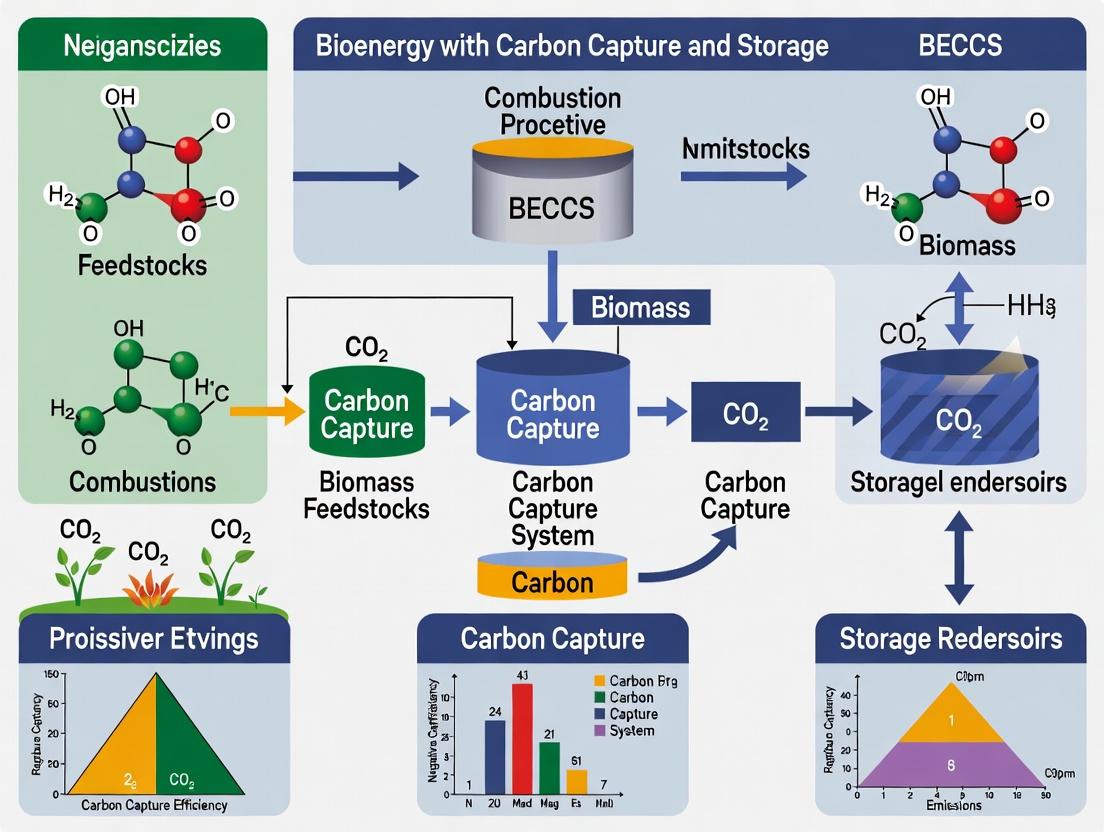
This article provides a comprehensive technical analysis of Bioenergy with Carbon Capture and Storage (BECCS), a leading carbon dioxide removal (CDR) technology.
BECCS Decoded: The Science of Bioenergy with Carbon Capture and Storage for Negative Emissions
Abstract
This article provides a comprehensive technical analysis of Bioenergy with Carbon Capture and Storage (BECCS), a leading carbon dioxide removal (CDR) technology. Aimed at researchers and drug development professionals, we explore the foundational science of BECCS, detailing its mechanism for achieving net-negative emissions. The scope covers the biological and engineering methodologies, from biomass cultivation to geological sequestration. We analyze current implementation challenges, optimization strategies for efficiency and scalability, and a critical validation of its lifecycle emissions and comparative role within the portfolio of climate solutions. The implications for biotech innovation and sustainability in the pharmaceutical sector are discussed throughout.
BECCS Fundamentals: Understanding the Core Negative Emissions Cycle
Defining Negative Emissions and the Critical Role of CDR Technologies
Within the critical discourse on climate change mitigation, Negative Emissions refer to the net removal of carbon dioxide (CO₂) from the atmosphere and its durable storage. This is achieved when the rate of CO₂ removal by anthropogenic activities exceeds the rate of anthropogenic emissions. Carbon Dioxide Removal (CDR) technologies are the suite of methods designed to achieve this net negative flow.
This whitepaper is framed within a broader research thesis investigating the Bioenergy with Carbon Capture and Storage (BECCS) mechanism, which serves as a primary archetype for engineered negative emissions. BECCS integrates biomass energy production with carbon capture and storage, aiming for net-negative carbon emissions when executed at scale.
Core CDR Technology Categories: Mechanisms and Quantitative Potential
The following table summarizes major CDR approaches, their mechanisms, and current quantitative estimates for technical sequestration potential and costs, based on recent literature and assessment reports.
Table 1: Summary of Key CDR Technologies and Quantitative Metrics
| Technology Category | Core Mechanism | Estimated Annual Sequestration Potential by 2050 (Gt CO₂/yr) | Estimated Cost Range (USD/t CO₂) | Storage Durability |
|---|---|---|---|---|
| BECCS | Biomass growth (photosynthesis), conversion to energy, capture & geologic storage of resulting CO₂. | 0.5 – 5.0 | 100 – 200 | Centuries to millennia (geologic) |
| Direct Air Capture (DAC) | Chemical sorbents capture CO₂ directly from ambient air; concentrated CO₂ is geologically stored. | 0.5 – 5.0 | 125 – 335 | Centuries to millennia (geologic) |
| Enhanced Weathering | Spread finely ground silicate minerals (e.g., basalt) to accelerate natural carbon sequestration via weathering. | 2.0 – 4.0 | 50 – 200 | Centuries to millennia |
| Afforestation/Reforestation | Increase photosynthetic carbon storage in terrestrial biomass and soils. | 0.5 – 3.6 | 5 – 50 | Decades to centuries (vulnerable) |
| Soil Carbon Sequestration | Modified agricultural practices (e.g., biochar, no-till) to increase soil organic carbon. | 2.0 – 5.0 | 0 – 100 | Decades to centuries |
Experimental Protocol: Laboratory-Scale BECCS Pathway Validation
A foundational experiment for BECCS research involves quantifying the net carbon flux of a integrated biomass conversion and capture system.
Title: Laboratory Measurement of Net Carbon Removal in a Micro-scale BECCS Prototype
Objective: To empirically determine the net CO₂ removal efficiency of a coupled biomass gasification and amine-based CO₂ capture system.
Materials & Methods:
- Feedstock Preparation: 100g of standardized, pre-dried miscanthus grass (Miscanthus × giganteus) is milled to ≤2mm particle size. Its biogenic carbon content is determined via elemental analyzer (∼48% carbon by mass).
- Gasification: Feedstock is fed into a controlled, fixed-bed gasifier operating at 800°C under a limited oxygen environment (equivalence ratio = 0.3). The syngas output (H₂, CO, CO₂, CH₄) is analyzed via online gas chromatography (GC).
- CO₂ Capture: The syngas stream is cooled, and H₂O is condensed out. It is then bubbled through a 30% (v/v) monoethanolamine (MEA) solution in a packed absorption column (25°C). The CO₂-rich solvent is transferred to a stripper column heated to 120°C to release a high-purity (>99%) CO₂ stream.
- Quantification:
- Input Carbon: Measured as biogenic carbon in the feedstock.
- Captured Carbon: The volume and purity of the CO₂ stream from the stripper are measured using a calibrated mass flow meter and nondispersive infrared (NDIR) sensor.
- System Emissions: All direct energy inputs (for heating, pumping) are metered, and their associated CO₂ emissions are calculated using a standardized grid emission factor.
- Calculation: Net CO₂ Removed = (Captured Biogenic Carbon) - (System Emission Carbon).
Visualizing the BECCS Negative Emissions Pathway
The Scientist's Toolkit: Key Research Reagent Solutions for BECCS Experiments
Table 2: Essential Research Reagents and Materials for BECCS Mechanism Studies
| Reagent/Material | Function/Application in Research |
|---|---|
| Standardized Biomass Feedstocks (e.g., Miscanthus, switchgrass, pine) | Provide consistent, well-characterized carbon input for conversion experiments; enable study of feedstock variability on yield and emissions. |
| Amino-Based Sorbents (e.g., Monoethanolamine - MEA, Piperazine) | Common liquid chemical absorbents for post-combustion CO₂ capture; used to study absorption kinetics, capacity, and degradation in syngas/flu gas conditions. |
| Solid Sorbents (e.g., Amine-functionalized silica, Metal-Organic Frameworks) | Investigated for lower-energy capture; used in experiments on adsorption/desorption cycling, stability, and gas selectivity. |
| Catalysts for Syngas Conditioning (e.g., Ni-based, Rh-based catalysts) | Used in water-gas shift or reforming reactors to optimize H₂:CO ratio and improve subsequent capture efficiency. |
| Stable Isotope Tracers (e.g., ¹³CO₂) | Allow precise tracking of carbon flow from atmosphere to biomass to final storage, distinguishing biogenic from process emissions. |
| GC-MS/TCD/FID Systems | Gas Chromatography with various detectors (Mass Spec, Thermal Conductivity, Flame Ionization) is essential for quantifying gas composition (CO₂, CO, CH₄, H₂) in syngas and process streams. |
| High-Pressure/Temperature Reactors | Enable simulation of geologic storage conditions (e.g., in saline aquifers) for studying CO₂-brine-rock interactions and storage integrity. |
Achieving climate stabilization targets now unequivocally requires the deployment of CDR technologies at scale to generate negative emissions. BECCS remains a prominently studied pathway due to its dual output of energy and negative emissions. However, significant research gaps persist in scaling, optimizing energy integration, ensuring sustainable biomass sourcing, and verifying long-term storage. For researchers and scientists, the focus must be on improving fundamental process efficiencies, reducing costs, developing robust monitoring, reporting, and verification (MRV) protocols, and conducting holistic life-cycle and techno-economic assessments to guide viable deployment.
Within the imperative framework of climate change mitigation, Bioenergy with Carbon Capture and Storage (BECCS) has emerged as a critical negative emissions technology (NET). This whitepaper explicates the BECCS principle, framed within a broader thesis on the BECCS negative emissions mechanism. The core thesis posits that BECCS achieves net atmospheric CO₂ removal by integrating the natural, cyclical carbon fixation of photosynthesis with engineered, permanent sequestration via carbon capture and storage (CCS). The mechanism's efficacy is not a simple sum of its parts but a synergistic engineered system whose net negative emissions are contingent upon rigorous lifecycle assessment and optimal integration.
Core Principle: Coupling Biological and Engineered Systems
The BECCS principle operates on a two-stage carbon transfer:
- Photosynthetic Carbon Fixation: Biomass feedstocks (e.g., perennial grasses, forestry residues, algae) absorb atmospheric CO₂, converting it into organic carbon compounds through photosynthesis. This creates a temporary, biogenic carbon stock.
- Engineered Carbon Sequestration: The biomass is utilized for energy production (e.g., combustion, gasification, fermentation). The resulting CO₂-rich flue gases or process streams are captured using engineered CCS technologies. The captured CO₂ is then compressed, transported, and injected into deep geological formations for permanent storage.
The net result is a flux of carbon from the atmosphere to geological reservoirs, creating a quantifiable carbon sink. The fundamental equation governing the net removal is:
Net CO₂ Removed = (Carbon Fixed by Biomass - Emissions from Supply Chain) - (Carbon Not Captured during Conversion)
Detailed Technical Pathways and Protocols
Biomass Cultivation & Carbon Fixation (The Photosynthetic Engine)
Protocol for Determining Net Biogenic Carbon Uptake:
- Objective: Quantify the net atmospheric CO₂ removal of a designated biomass cultivation system.
- Methodology:
- Site Selection & Baseline: Establish paired test plots. Measure initial soil organic carbon (SOC) and above-ground carbon stocks.
- Cultivation: Plant high-yield, low-input feedstock (e.g., Miscanthus x giganteus). Implement standard agronomic practices; document all inputs.
- Carbon Flux Monitoring: Use eddy covariance towers to continuously measure net ecosystem exchange (NEE) of CO₂ over a full cultivation cycle.
- Harvest Analysis: At maturity, harvest biomass from a known area. Determine dry weight and analyze carbon content via elemental analyzer (typically ~50% carbon by dry weight).
- Lifecycle Inventory (LCI): Catalog all fossil-based inputs (fertilizer, diesel for machinery) and associated emissions using standard databases (e.g., GREET).
- Calculation: Net Biogenic Carbon = (Total Carbon in Harvested Biomass + ΔSOC) - (Carbon Emitted from Cultivation Inputs).
Bioenergy Conversion with Carbon Capture
The choice of conversion technology dictates the capture method.
A. Post-Combustion Capture from a Biomass Power Plant
- Protocol (Bench-Scale Amine Scrubbing):
- Simulated Flue Gas Generation: Create a gas mixture of 10-15% CO₂, 5-10% O₂, balance N₂, saturated with H₂O, to mimic biomass flue gas.
- Absorption Column Operation: Pump a 30 wt% monoethanolamine (MEA) solution into a packed absorption column (height: 1m, packing: Mellapak 250Y). Flow simulated flue gas counter-currently at a gas-to-liquid ratio of 2.
- Rich-Lean Cycle: The "rich" amine (loaded with CO₂) is pumped to a stripping column (regenerator) heated to 120°C at 2 bar pressure to release high-purity CO₂.
- Measurement: Use inline NDIR CO₂ sensors at inlet and outlet streams to determine capture efficiency. Quantify energy penalty via heat input to the regenerator.
B. Pre-Combustion Capture via Biomass Gasification
- Workflow: Biomass is gasified in a limited oxygen environment to produce syngas (CO + H₂). The CO is shifted with steam to produce CO₂ and more H₂. The CO₂ is separated pre-combustion using physical solvents (e.g., Selexol), and the clean H₂ is combusted for power.
C. Biochemical Conversion (Bioethanol with Fermentation CO₂ Capture)
- Protocol: In ethanol fermentation, yeast metabolizes sugars to produce ethanol and nearly pure CO₂. This stream is dehydrated and compressed directly, requiring minimal separation energy. Capture rates can exceed 99%.
Data Presentation: Quantitative System Performance
Table 1: Comparative Performance of BECCS Pathways (Theoretical & Reported Ranges)
| Pathway | Typical Feedstock | Conversion Process | Capture Technology | Reported Capture Efficiency (%) | Estimated Net Negative Emissions (tCO₂eq/GJ) | Key Challenges |
|---|---|---|---|---|---|---|
| Combustion-Based | Wood chips, pellets | Pulverized fuel boiler | Post-combustion (Amine) | 85 - 95 | -0.15 to -0.60 | Low CO₂ flue concentration, high energy penalty |
| Gasification-Based | Agricultural residues | Integrated Gasification Combined Cycle (IGCC) | Pre-combustion (Physical absorption) | 85 - 90 | -0.20 to -0.70 | Syngas cleaning, process complexity, cost |
| Biochemical | Sugar cane, corn | Fermentation & Distillation | Fermentation off-gas (Direct) | >99 | -0.50 to -0.90 | Limited to fermentable feedstocks, land-use concerns |
Table 2: Lifecycle Assessment (LCA) Key Input Parameters for BECCS Modeling
| Parameter Category | Specific Parameter | Typical Value Range | Source/Measurement Method |
|---|---|---|---|
| Biomass Cultivation | Carbon Sequestration in Soil (ΔSOC) | -1 to +5 tCO₂/ha/yr | IPCC Tier 2/3 methodology, long-term field trials |
| N₂O Emissions from Fertilizer | 0.5 - 2.0% of applied N | Eddy covariance, chamber measurements | |
| Fossil Inputs (Diesel, etc.) | 0.5 - 2.0 GJ/ha | Farm machinery fuel logs | |
| Supply Chain | Biomass Transport Emissions | 5 - 15 kgCO₂/t-km | GREET model, transport mode specific |
| Drying & Pelletization Energy | 1 - 3 GJ/t dry matter | Industrial process data | |
| CCS Component | Capture Energy Penalty | 15 - 30% of plant output | Pilot plant data (e.g., DECC, 2019) |
| Capture Solvent Degradation Rate | 0.5 - 3.0 kg/ton CO₂ | Long-term solvent testing rigs | |
| Pipeline Transport & Injection | 5 - 15 kgCO₂/tCO₂ transported | NETL Baseline Studies |
Visualizing the BECCS Mechanism and Workflows
Diagram 1: The BECCS Principle: Integrating Natural and Engineered Systems (76 chars)
Diagram 2: End-to-End BECCS Project Workflow with MRV (71 chars)
The Scientist's Toolkit: Research Reagent Solutions
Table 3: Essential Materials and Reagents for BECCS Laboratory Research
| Item/Category | Function in BECCS Research | Example/Specification |
|---|---|---|
| Isotopic Tracers | To distinguish biogenic from fossil carbon and trace carbon flow through the system. | ¹³C-CO₂ for photosynthetic uptake studies; ¹⁴C (or surrogate) for mineralization studies in storage reservoirs. |
| Advanced Solvents | For testing and optimizing CO₂ capture efficiency and degradation rates. | 30 wt% Monoethanolamine (MEA), Piperazine (PZ), Ionic Liquids (e.g., [bmim][BF₄]), Chilled Ammonia. |
| Gas Standards & Analyzers | To calibrate sensors and verify CO₂ concentrations/purity at all stages. | Certified CO₂ in N₂ mix (e.g., 12% CO₂). NDIR Analyzers, Gas Chromatographs with TCD/FID. |
| Geochemical Reactors | To simulate CO₂-water-rock interactions in storage reservoirs under high pressure/temperature. | Batch or flow-through reactors (Hastelloy), equipped with pH, Eh sensors, and sampling ports. |
| Biomass Enzymes & Assay Kits | To analyze feedstock composition and conversion potential. | Cellulase/hemicellulase enzyme cocktails for saccharification assays. Lignin content determination kits. |
| Porous Media & Core Samples | To study CO₂ flow and trapping mechanisms in geological formations. | Berea sandstone cores, synthetic silica packs. Equipment for core flooding experiments. |
| Lifecycle Inventory (LCI) Databases | To model emissions from supply chains and calculate net carbon balance. | GREET Model, Ecoinvent, IPCC Emission Factor Database. |
Within the framework of a broader thesis on Bioenergy with Carbon Capture and Storage (BECCS) as a negative emissions technology (NET), this guide provides a detailed technical breakdown of the integrated process. BECCS represents a critical mechanism for achieving net-negative CO₂ emissions by coupling the renewable energy from biomass with permanent geological sequestration. This in-depth analysis targets researchers and scientists, dissecting the chain from photosynthetic carbon fixation to secure subsurface storage, with an emphasis on quantifiable data, experimental protocols, and essential research tools.
The BECCS mechanism can be deconstructed into four primary, interconnected stages: Biomass Cultivation, Feedstock Processing & Conversion, Carbon Capture, and Transport & Storage. Each stage involves distinct biological, thermochemical, and geochemical processes that collectively determine the net carbon removal efficiency.
Diagram Title: The Four-Stage BECCS Negative Emissions Chain
Stage 1: Biomass Cultivation & Carbon Uptake
This stage focuses on the biological fixation of atmospheric CO₂. Key metrics include the Net Primary Productivity (NPP) and the specific carbon content of the biomass.
Table 1: Carbon Sequestration Potential of Selected Biomass Feedstocks
| Feedstock Type | Average Growth Cycle | Approx. Dry Biomass Yield (t/ha/yr) | Average Carbon Content (% dry weight) | Approx. CO₂ Sequestration Potential (t CO₂/ha/yr)* |
|---|---|---|---|---|
| Miscanthus | Perennial (10-15 yrs) | 10 - 25 | ~48% | 18 - 44 |
| Switchgrass | Perennial (10 yrs) | 5 - 15 | ~47% | 9 - 25 |
| Short Rotation Coppice (Willow) | 3-5 years | 8 - 12 | ~49% | 14 - 21 |
| Fast-Growing Pine | 20-30 years | 4 - 10 | ~50% | 7 - 18 |
| Microalgae (PBR) | Continuous | 20 - 50 (ash-free) | ~50% | 36 - 90 |
*Calculated as: Biomass Yield × Carbon Content × (44/12). Values are indicative and highly site-dependent.
Experimental Protocol: Determining Biomass Carbon Content Title: Ultimate Analysis of Biomass via Dry Combustion (ASTM D5373) Principle: Complete combustion of a dried sample in an oxygen-rich environment, followed by quantitative measurement of the resulting CO₂. Methodology:
- Sample Preparation: Oven-dry biomass at 105°C to constant mass. Pulverize to pass a 250 µm sieve. Homogenize.
- Instrument Calibration: Calibrate the CHNS elemental analyzer using a certified standard (e.g., acetanilide).
- Combustion: Precisely weigh 2-3 mg of sample into a tin capsule. Introduce into a high-temperature combustion tube (≥950°C) with pure oxygen.
- Gas Separation & Detection: Pass combustion gases through reduction tubes and specific adsorbents. Measure evolved CO₂ via thermal conductivity detection (TCD) or infrared (IR) detection.
- Calculation: Carbon content (%) is calculated from the CO₂ signal relative to the calibration curve. Report result as mean of triplicate analyses.
Stage 2: Feedstock Processing & Conversion to Energy
This stage converts biomass into useful energy (heat/power) or intermediate carriers, producing a CO₂-rich gas stream.
Table 2: Key Conversion Pathways for BECCS
| Conversion Pathway | Primary Technology | Operating Temperature/Pressure | Output Stream for Capture | Typical CO₂ Concentration in Flue/Syngas |
|---|---|---|---|---|
| Combustion | Fixed bed, Fluidized Bed, Pulverized fuel boilers | 800-1200°C, 1 atm | Flue Gas | 8-15% (in air) |
| Gasification | Entrained flow, Fluidized bed gasifiers | 700-1500°C, 1-30 bar | Raw Syngas (primarily CO, H₂, CO₂) | 15-40% (pre-shift) |
| Anaerobic Digestion + Combustion | Digester + CHP engine | 35-55°C (digester) | Engine Exhaust | 5-10% |
| Bioethanol Fermentation + Distillation | Fermentation, Molecular Sieves | 30-35°C, 1 atm | Fermentation Off-Gas | ~100% (after dehydration) |
Diagram Title: Biomass Conversion Pathways and Output Streams
Stage 3: Carbon Capture from Process Streams
This is the core technological stage where CO₂ is separated from other gases. Post-combustion capture from flue gas is the most developed route for BECCS.
Experimental Protocol: Solvent-Based Post-Combustion Capture Screening Title: Gravimetric CO₂ Absorption Capacity Test for Amine Solvents Principle: Measuring the mass increase of a solvent sample upon exposure to a pure CO₂ atmosphere at controlled temperature. Methodology:
- Apparatus Setup: Calibrate a high-precision microbalance (0.01 mg resolution) inside a temperature-controlled chamber. Connect a gas delivery system (CO₂, N₂) with mass flow controllers.
- Baseline Measurement: Place 5-10 g of fresh solvent (e.g., 30 wt% MEA, or novel amino-siloxane) in an open tared vial on the balance. Flush chamber with N₂ at 40°C until solvent mass stabilizes. Record dry mass (m_dry).
- Absorption Cycle: Switch inlet gas to pure CO₂ at a fixed flow rate (e.g., 50 mL/min). Maintain constant temperature (typically 40°C). Record mass increase every minute until saturation (constant mass for >10 min). Record saturated mass (m_sat).
- Desorption Cycle: Switch back to N₂ and increase temperature to 80-100°C to strip CO₂. Record final stable mass (m_reg) to assess solvent regenerability.
- Calculation: CO₂ loading capacity (α) in mol CO₂/kg solvent is calculated as: α = [(msat - mdry) / MCO₂] / (mdry), where MCO₂ is the molar mass of CO₂. Cyclic capacity is αabsorption - α_desorption.
Table 3: Performance Metrics of Selected Capture Technologies
| Capture Technology | Typical Solvent/Sorbent | Regeneration Energy (GJ/t CO₂) | CO₂ Purity Achieved | Technology Readiness Level (TRL) |
|---|---|---|---|---|
| Post-combustion (Chemical Absorption) | Aqueous Amines (e.g., MEA) | 3.5 - 4.5 | >99% | 9 (Commercial) |
| Pre-combustion (Physical Absorption) | Selexol, Rectisol | 1.5 - 2.5 | >99% | 9 (Commercial) |
| Oxy-fuel Combustion | Cryogenic Air Separation | 0.8 - 1.2 (for O₂ production) | 80-98% (needs purification) | 7-8 (Demonstration) |
| Calcium Looping | CaO/CaCO₃ | 2.5 - 3.5 | >95% | 6-7 (Pilot) |
| Direct Air Capture (DAC) | Solid Amine Sorbents | 7 - 10+ | >99% | 6-8 (Pilot/Commercial) |
Stage 4: CO₂ Transport and Geological Storage
Captured CO₂ is compressed, transported, and injected into deep geological formations for permanent isolation.
Table 4: Geological Storage Reservoir Types and Characteristics
| Reservoir Type | Example Formations | Typical Depth (m) | Key Sealing Mechanism | Estimated Global Capacity (Gt CO₂) |
|---|---|---|---|---|
| Deep Saline Aquifers | North Sea Utsira Sandstone, Alberta Basin | >800 | Impermeable caprock (shale, salt) | 1,000 - 10,000 |
| Depleted Oil/Gas Fields | Sleipner (North Sea), Weyburn (Canada) | 1500 - 3000 | Original hydrocarbon seal | 100 - 1,000 |
| Unmineable Coal Seams | Alberta Deep Coal | >800 | Adsorption to coal matrix (with ECBM*) | 10 - 100 |
| Basalt Formations | Columbia River Basalt, Iceland | 500 - 2000 | Rapid mineral carbonation | Uncertain but large |
*ECBM: Enhanced Coal Bed Methane recovery.
Diagram Title: Geological Storage Integrity and Monitoring Techniques
The Scientist's Toolkit: Key Research Reagent Solutions
Table 5: Essential Materials and Reagents for BECCS Research
| Item/Category | Example Product/Supplier | Function in BECCS Research |
|---|---|---|
| Stable Isotope Tracers | ¹³C-CO₂ (Cambridge Isotopes), ¹⁴C-labeled biomass | Tracing carbon flow through biological and chemical systems; verifying biogenic origin of captured CO₂. |
| Advanced Solvents & Sorbents | Phase-change amines (e.g., DMX), MOFs (e.g., Mg-MOF-74), Ionic liquids | Screening for higher CO₂ capacity, lower regeneration energy, and degradation resistance in capture experiments. |
| Geochemical Brine Simulants | Synthetic formation brine kits (e.g., Corexport) | Studying CO₂-water-rock interactions (dissolution, precipitation) in reservoir conditions via batch/flow experiments. |
| Biomass Reference Standards | NIST SRM 8492 (Sugarcane Bagasse), 8493 (Switchgrass) | Calibrating analytical instruments (CHNS, ICP-MS) for precise biomass composition analysis. |
| High-Pressure/High-Temperature Reactors | Parr instruments, High-pressure view cells | Simulating gasification, supercritical CO₂ conditions, or sorbent regeneration kinetics. |
| Core Flooding Systems | Vinci Technologies, Core Lab systems | Evaluating CO₂ injectivity, relative permeability, and residual trapping in reservoir rock cores. |
| Numerical Simulation Software | TOUGH2/TOUGHREACT, CMG-GEM, ECLIPSE | Modeling subsurface CO₂ plume migration, pressure buildup, and long-term geochemical fate. |
Bioenergy with Carbon Capture and Storage (BECCS) is a critical negative emissions technology (NET) identified by the IPCC for achieving net-zero and net-negative CO₂ emissions. The efficacy of the entire BECCS value chain is fundamentally dependent on the sustainable supply and tailored properties of biomass feedstocks. This whitepaper provides a technical analysis of primary feedstock categories—dedicated energy crops, agricultural residues, and forestry residues—evaluating their characteristics, availability, and suitability for conversion pathways within integrated BECCS research frameworks aimed at atmospheric carbon dioxide removal (CDR).
Feedstock Categories & Quantitative Analysis
Table 1: Key Characteristics of Primary Biomass Feedstocks for BECCS
| Feedstock Category | Example Species/Type | Avg. Yield (Dry Mg/ha/yr) | Avg. Carbon Content (% Dry Weight) | Lignin Content (% Dry Weight) | Ash Content (% Dry Weight) | Key Advantages for BECCS | Key Challenges for BECCS |
|---|---|---|---|---|---|---|---|
| Herbaceous Energy Crops | Miscanthus x giganteus | 10-25 | 47-49 | 15-20 | 1.5-4.5 | High productivity, low fertilizer input, perennial growth | Land use competition, establishment cost |
| Short Rotation Woody Crops | Willow (Salix spp.), Poplar | 8-15 | 48-50 | 20-25 | 0.5-2.0 | High biomass density, coppicing regeneration, soil carbon sequestration | Longer establishment period, harvest logistics |
| Agricultural Residues | Corn Stover, Wheat Straw | 2-5 (residue-specific) | 45-47 | 16-21 | 4-10 | No direct land use change, widely available | Removal impacts soil health (C, nutrients), scattered distribution |
| Forestry Residues | Logging Slash, Thinnings | 1-3 (recoverable) | 49-52 | 25-30 | 0.5-3.0 | Utilizes waste streams, supports forest management | High collection cost, variable composition, transportation |
Table 2: Current and Projected Global Sustainable Supply Potential (Annual)
| Feedstock Category | Current Sustainable Supply (EJ/yr) | Projected 2050 Sustainable Supply (EJ/yr) | Associated Carbon Debt Risk | Key Sustainability Constraints |
|---|---|---|---|---|
| Dedicated Energy Crops | ~5-15 | 20-100 | Moderate to High (if on natural land) | Land availability, water use, biodiversity impact |
| Agricultural Residues | ~15-35 | 20-50 | Very Low | Soil organic carbon depletion, nutrient cycling, erosion |
| Forestry Residues | ~10-20 | 15-30 | Low | Forest ecosystem health, soil nutrient removal, economic viability |
Experimental Protocols for Feedstock Analysis in BECCS Research
Protocol 3.1: Determination of Biochemical Composition for Conversion Yield Prediction
Objective: Quantify cellulose, hemicellulose, lignin, and ash content to predict bioenergy yield and pre-treatment requirements.
- Milling: Reduce feedstock samples to particle size <0.5 mm using a laboratory mill.
- Extractives Removal: Use a Soxhlet apparatus with ethanol or water solvent for 6-8 hours.
- Structural Carbohydrate & Lignin Analysis: Perform according to NREL/TP-510-42618 (Slutter et al., 2008). a. Two-stage acid hydrolysis of extractive-free sample with 72% H₂SO₄ followed by 4% H₂SO₄. b. Quantify sugars in hydrolysate via HPLC (Aminex HPX-87P column). c. Acid-Insoluble Lignin (AIL) determined gravimetrically after filtration.
- Ash Content: Combust known mass of sample in a muffle furnace at 575±25°C for 4 hours (ASTM E1755-01).
Protocol 3.2: Feedstock Carbon Stock and Sequestration Potential Assessment
Objective: Measure total carbon in biomass and soil to calculate net carbon balance for BECCS lifecycle assessment.
- Biomass Carbon: a. Determine dry matter yield from field trials (quadrat sampling). b. Subsample for ultimate analysis (CHNS-O) using an elemental analyzer (e.g., Flash 2000). Multiply dry mass by %C.
- Soil Organic Carbon (SOC) Monitoring: a. Collect soil cores (0-30 cm depth) pre-establishment and annually post-harvest. b. Dry, grind, and analyze SOC via dry combustion (e.g., CN analyzer) or wet oxidation (Walkley-Black method). c. Calculate SOC stock (Mg C/ha) using bulk density.
Protocol 3.3: Thermogravimetric Analysis (TGA) for Pyrolysis/Gasification Behavior
Objective: Characterize thermal decomposition profiles to optimize thermochemical conversion parameters.
- Load 5-10 mg of milled sample into a platinum crucible.
- Operate TGA under inert (N₂) or reactive (CO₂, air) atmosphere.
- Apply a heating ramp (e.g., 10-50°C/min) from ambient to 900°C.
- Record mass loss (TG) and derivative mass loss (DTG) curves.
- Identify key temperature zones for hemicellulose (220-315°C), cellulose (315-400°C), and lignin (160-900°C) decomposition.
Visualizations
Feedstock to BECCS Analysis Workflow
BECCS Carbon Flow with Feedstock Pathways
The Scientist's Toolkit: Essential Research Reagent Solutions
Table 3: Key Research Reagents and Materials for Feedstock Analysis
| Item Name | Supplier Example (Catalogue Potential) | Function in Research | Critical Application |
|---|---|---|---|
| NREL Standard Biomass Analytical Procedures Kit | LAP Supplier | Provides standardized protocols and reference methods for compositional analysis. | Ensures reproducibility & comparability of lignin/carbohydrate data across labs. |
| Sulfuric Acid, 72% w/w (ACS Grade) | Sigma-Aldrich (339741) | Primary hydrolysis agent in the two-stage acid hydrolysis for structural carbohydrates. | Critical for accurate quantification of cellulose and hemicellulose. |
| Sugar Standard Kit for HPLC (Cellobiose, Glucose, Xylose, etc.) | Restek, Agilent | Calibration standards for High-Performance Liquid Chromatography (HPLC) analysis. | Essential for quantifying sugar monomers in hydrolysates. |
| Elemental Analysis Standards (e.g., BBOT) | Elemental Microanalysis | Calibration standard for CHNS-O elemental analyzers. | Required for precise measurement of carbon and nitrogen content in biomass and soil. |
| Soil Organic Carbon Standard (e.g., NIST SRM 2711a) | National Institute of Standards and Technology | Certified reference material for soil carbon analysis. | Validates accuracy of SOC measurements via combustion or chemical oxidation. |
| Inert Gas (Ultra-high purity N₂, Argon) | Local Gas Supplier | Creates inert atmosphere for TGA and other thermal analysis. | Prevents oxidation during pyrolysis studies, mimicking gasification conditions. |
| ASE (Accelerated Solvent Extraction) Cells & Solvents | Thermo Fisher Scientific | Enables high-throughput removal of extractives from biomass samples. | Prepares samples for compositional analysis, removing non-structural compounds. |
This whitepaper establishes the fundamental carbon accounting principles required to robustly assess and verify negative emissions technologies (NETs), with a specific focus on the Bioenergy with Carbon Capture and Storage (BECCS) mechanism. For researchers and scientists, precise lifecycle thinking is not ancillary but central to claiming net CO₂ removal. A BECCS system's efficacy is not a given; it is a net outcome derived from a full systemic analysis that must counterbalance emissions across the biomass supply chain, processing, and sequestration against the gross carbon captured. This document provides the technical foundation and methodologies for such an analysis.
Core Carbon Accounting Principles
The "Carbon Accounting Foundation" rests on two pillars:
- Net CO₂ Removal: The critical metric is the net change in atmospheric CO₂ over a defined temporal boundary (e.g., 100 years). It is calculated as: Gross Carbon Sequestrated minus Lifecycle Emissions plus any System-Induced Changes (e.g., land-use change emissions or altered albedo).
- Lifecycle Thinking: A systems approach mandating the compilation of an exhaustive greenhouse gas (GHG) inventory across all relevant stages, from biomass feedstock cultivation or sourcing to final geological storage integrity.
Quantifying BECCS: Key Data and System Boundaries
A credible BECCS assessment requires analysis of the following interconnected system. The quantitative ranges below are synthesized from recent literature and meta-analyses.
Table 1: BECCS System Component Analysis & Key Quantitative Ranges
| System Component | Key Processes | Critical Carbon Fluxes & Data Ranges | Primary Uncertainties |
|---|---|---|---|
| 1. Biomass Feedstock | Cultivation, Harvest, Transport | C Sequestration Rate: 0.5 - 10 t CO₂/ha/yr (species & region dependent).N₂O from Fertilizer: 0.5 - 2.5% of N applied emits as N₂O (GWP~265-298).Transport Emissions: 0.005 - 0.05 t CO₂/t biomass/100km. | Soil carbon stock change, indirect land-use change (iLUC) magnitude, fertilization efficiency. |
| 2. Biogenic Carbon | Photosynthesis, Combustion | Carbon Neutrality Assumption: Biogenic CO₂ emission at plant = 0 in LCA*, pending sustainable regrowth. | Temporal mismatch (decadal scale) between emission and re-sequestration. |
| 3. Power/Process Plant | Conversion, CCS Operation | Capture Rate: 85 - 95% of CO₂ in flue gas.Energy Penalty for CCS: 15 - 30% increased fuel demand.Fugitive Process Emissions: <1-5% of captured CO₂. | Long-term plant efficiency, parasitic load variability, solvent degradation emissions. |
| 4. CO₂ Transport & Storage | Compression, Pipeline, Injection | Compression/Pipeline Energy: 5 - 15 kWh/t CO₂ transported.Storage Site Leakage Rate: Modeled as <0.1% per annum for certified sites.Monitoring Verification (MRV) Baseline: Essential for quantifying net removal. | Geological integrity over millennial scales, verification of containment. |
| 5. Reference Systems | Counterfactual Land Use, Fossil Displacement | iLUC Emission Factor: Can range from -10 to +50 t CO₂/ha/yr if displacing natural ecosystems.Grid Displacement Effect: Varies by regional grid carbon intensity (e.g., 0.05 - 0.8 t CO₂/MWh). | Defining a plausible baseline scenario for land and energy systems. |
*Life Cycle Assessment
Experimental & Analytical Protocols for Verification
Protocol: Direct Measurement of Soil Carbon Stock Change (Feedstock Stage)
Objective: Quantify net carbon flux in biomass cultivation soils to validate sequestration claims. Methodology:
- Site Stratification: Divide feedstock plantation into homogeneous strata based on soil type, topography, and management history.
- Baseline Sampling: Prior to cultivation, collect soil cores (0-30cm and 30-100cm depths) using a standardized corer at georeferenced points (minimum 3 cores per stratum).
- Time-Series Sampling: Repeat sampling at defined intervals (e.g., 5-year cycles) at permanent plots adjacent to baseline points.
- Lab Analysis: Dry, grind, and analyze samples for % Organic Carbon via dry combustion (e.g., EA-IRMS). Calculate stock (t C/ha) using bulk density.
- Control Plot: Compare to an appropriate control (e.g., native vegetation or previous land use).
Protocol: MRV for Geologically Stored CO₂
Objective: Monitor, report, and verify the integrity of CO₂ containment in a storage reservoir. Methodology:
- Establish Baseline: Pre-injection, conduct 3D seismic survey and sample groundwater/soil gas for isotopic (δ¹³C-CO₂) and compositional baselines.
- Continuous Monitoring:
- Deep: Use 4D time-lapse seismic and downhole pressure/temperature sensors.
- Shallow: Deploy soil flux chambers and atmospheric tunable diode laser (TDL) sensors at the surface to detect anomalies.
- Tracer Injection: Co-inject a chemically inert, detectable tracer (e.g., SF₅CF₃, perfluorocarbons) with the CO₂ stream.
- Data Integration & Modeling: Feed monitoring data into coupled geochemical-reservoir models to quantify total stored mass and confirm containment. Any detected leakage must be subtracted from the net removal total.
The Scientist's Toolkit: Essential Research Reagents & Materials
Table 2: Key Research Reagent Solutions for BECCS Carbon Accounting
| Reagent / Material | Primary Function in Research Context |
|---|---|
| ¹³C-Labeled CO₂ Tracer | Isotopic tracer for distinguishing biogenic from geogenic CO₂ in storage MRV and leakage detection experiments. |
| Perfluorocarbon Tracers (PFTs: PTCH, PMCH) | Chemically inert, ultra-trace detectable gases co-injected with CO₂ for unique fingerprinting and plume migration tracking. |
| Li-Cor Soil Flux Chamber & LI-850 Analyzer | Portable, high-precision system for direct field measurement of CO₂ and CH₄ flux from soil (baseline & leakage monitoring). |
| Cavity Ring-Down Spectroscopy (CRDS) Analyzer | Lab/field instrument for high-frequency, precise measurement of CO₂, CH₄, and H₂O concentrations and isotopic ratios (δ¹³C). |
| Dry Combustion Elemental Analyzer | Standard lab instrument for determining total organic carbon and nitrogen content in soil and biomass samples. |
| Geochemical Reservoir Simulation Software (e.g., TOUGH2, GEM) | Numerical modeling platforms to simulate multi-phase CO₂ flow, reaction, and long-term fate in geological formations. |
| Life Cycle Assessment (LCA) Software (e.g., OpenLCA, SimaPro) | Databases and computational engines for structuring and calculating emissions inventories across the full supply chain. |
Asserting negative emissions via BECCS is a quantitatively rigorous claim contingent on comprehensive carbon accounting. It demands moving beyond simplified assumptions to embrace full lifecycle thinking, supported by direct measurement protocols and continuous MRV. For the research community, the challenge lies in reducing uncertainties within each system component—particularly iLUC and long-term storage integrity—and integrating these into a defensible, transparent net removal figure. This foundation is essential for scaling any negative emissions technology from a conceptual mechanism to a verifiable climate solution.
Implementing BECCS: From Biomass Selection to Geological Sequestration
This whitepaper details the sustainable cultivation and sourcing of biomass within the context of Bioenergy with Carbon Capture and Storage (BECCS). As a proposed negative emissions technology, BECCS relies on a robust, verifiably sustainable feedstock supply chain. This guide provides technical criteria and protocols for researchers, particularly those intersecting with bio-derived pharmaceutical feedstocks, to ensure biomass sustainability from cultivation to conversion.
Core Sustainability Criteria for BECCS Feedstock
Sustainable biomass for BECCS must mitigate lifecycle greenhouse gas (GHG) emissions while avoiding detrimental environmental and social impacts. The following criteria are derived from current certification schemes and life cycle assessment (LCA) literature.
Table 1: Core Sustainability Criteria and Quantitative Thresholds
| Criterion Category | Key Indicator | Quantitative Threshold / Requirement | Measurement Protocol |
|---|---|---|---|
| Greenhouse Gas (GHG) Savings | Lifecycle GHG emission savings vs. fossil comparator | ≥70% for installations starting operation from 2021 (EU RED II) | LCA per ISO 14040/44, IPCC guidelines. System boundary: Cradle-to-gate (to biomass) or cradle-to-stack (for full BECCS). |
| Carbon Stock & Land Use | No conversion of high-carbon-stock land (e.g., peatlands, primary forest). | Carbon stock loss from direct land-use change (dLUC) must be compensated within max. 10-15 years. | IPCC Tier 1 or 2 carbon stock assessment; remote sensing (LIDAR, SAR) for historical land-use verification. |
| Soil Health & Quality | Maintain or improve soil organic carbon (SOC). | SOC decline not >5% over 20-year period (voluntary schemes). | ISO 14239/16072 for SOC mineralization; routine analysis of bulk density, nutrients, and erosion rates. |
| Water Use & Quality | Water use efficiency; no eutrophication. | Nitrogen leaching <50 kg N/ha/yr; P Index maintained. | Soil water balance modeling (e.g., APSIM); water sampling for nitrate, phosphate, BOD. |
| Biodiversity | No conversion of high-biodiversity-value areas. | Maintain ≥10% of ecological focus area on farm (EU CAP). | Habitat suitability indices (HSI); species richness surveys per CBD Aichi Targets. |
| Productivity & Traceability | Yield improvement and chain of custody. | Full traceability from plot to plant via certified systems. | Georeferenced plot mapping; mass balance or segregation supply chain models. |
Experimental Protocols for Sustainability Verification
Protocol: Field-Level GHG Flux Measurement (Static Chamber Method)
Purpose: To quantify direct soil GHG fluxes (N₂O, CH₄) from biomass cultivation. Materials: Gas chromatograph (GC), static chambers (base + lid), septa, syringes, temperature probes, GPS. Procedure:
- Site Selection: Establish triplicate chambers per treatment/land type using a randomized block design.
- Sampling: Seal chamber lid onto permanently installed base at time (t=0). Extract 20 mL gas sample via syringe at t=0, 20, 40 min. Record soil temperature at 5 cm depth.
- Analysis: Inject gas samples into GC equipped with flame ionization (FID) and electron capture (ECD) detectors for CH₄ and N₂O.
- Calculation: Flux is calculated from linear concentration change over time, chamber volume, and soil area. Annual emissions are temporally integrated. Key Reagents: High-purity calibration gas standards (N₂O, CH₄, CO₂ in N₂ balance), carrier gases (He, N₂).
Protocol: Life Cycle Assessment (Cradle-to-Gate)
Purpose: To calculate the fossil GHG intensity of cultivated biomass (MJ/MJ or gCO₂e/MJ). Materials: LCA software (e.g., SimaPro, openLCA), background databases (ecoinvent, Agri-footprint), primary activity data. Procedure:
- Goal & Scope: Define functional unit (e.g., 1 MJ of oven-dry biomass). System boundaries include all inputs, field operations, and emissions from dLUC.
- Inventory (LCI): Collect primary data on fuel, fertilizer, pesticide use, irrigation, yields, and soil C flux. Use secondary data for upstream inputs.
- Impact Assessment (LCIA): Apply IPCC AR6 GWP100 factors to convert CH₄ and N₂O to CO₂-equivalents.
- Interpretation: Conduct sensitivity analysis on key parameters (yield, N₂O emission factor, soil C change). Key Reagents: Not applicable; this is a computational protocol.
Protocol: Soil Organic Carbon Stock Assessment
Purpose: To measure change in SOC over time under biomass cultivation. Materials: Soil auger (standardized volume), drying oven, elemental analyzer (CN), balance. Procedure:
- Sampling Design: Use a stratified random sampling scheme. Take soil cores at 0-30 cm depth at the same georeferenced points biennially.
- Sample Prep: Dry at 105°C to constant weight. Sieve (<2 mm), grind, and homogenize.
- Analysis: Weigh ~20 mg of soil into a tin capsule. Analyze via dry combustion on a CN elemental analyzer.
- Calculation: SOC stock (Mg C/ha) = [SOC concentration (%) × bulk density (g/cm³) × depth (cm) × 100] / 10. Correct for equivalent soil mass. Key Reagents: Acetanilide (standard for CN analyzer), high-purity O₂ and He gases.
The Scientist's Toolkit: Research Reagent Solutions
Table 2: Essential Materials for Sustainability Research
| Item | Function | Example/Supplier |
|---|---|---|
| High-Precision Gas Standards | Calibration of GC for accurate N₂O/CH₄/CO₂ quantification. | NIST-traceable custom mixes (e.g., Linde, Restek). |
| Elemental Analyzer Combustion Tubes | Facilitate high-temperature oxidation/reduction for CN analysis. | Packed columns with copper oxide, reduced copper (e.g., Costech). |
| Soil Reference Materials | Quality control for SOC and nutrient analysis. | Certified reference materials (e.g., NIST SRM 2709a). |
| Stable Isotope Tracers (¹³C, ¹⁵N) | Tracing C and N pathways in soil-plant systems for mechanistic studies. | ¹³C-cellulose, K¹⁵NO₃ (e.g., Cambridge Isotope Labs). |
| LiDAR/Satellite Imagery | Remote sensing for land-use change detection and biomass yield modeling. | Commercial providers (e.g., Planet, Sentinel Hub) or UAV-mounted sensors. |
| Chain-of-Custody Software | Digital traceability and mass balance tracking of biomass batches. | Blockchain or database solutions (e.g., SAP S/4HANA, trace:original). |
BECCS Biomass Supply Chain Logic
The integrity of BECCS as a negative emissions mechanism depends on a fully documented, low-leakage supply chain. The following diagram outlines the critical verification nodes.
BECCS Carbon Accounting Workflow
The credibility of negative emissions hinges on rigorous, transparent accounting that subtracts supply chain emissions from captured biogenic CO₂.
For BECCS to function as a verifiable negative emissions mechanism, the biomass feedstock must be sourced under stringent, measurable sustainability criteria. This requires the integration of field-level experimental monitoring, robust LCA, and transparent, auditable supply chains. The protocols and tools outlined here provide a foundational framework for researchers and industry professionals to quantify and validate the carbon negativity of BECCS pathways, ensuring environmental integrity and supporting its role in climate mitigation portfolios.
Within the strategic framework of Bioenergy with Carbon Capture and Storage (BECCS), the selection of biomass conversion technology is paramount. BECCS aims to generate energy while removing carbon dioxide from the atmosphere, creating a net-negative emissions system. This process hinges on the sustainable cultivation of biomass, which absorbs atmospheric CO₂, followed by its conversion to energy and the subsequent capture and permanent geological storage of the resulting CO₂. This whitepaper provides a technical analysis of three core conversion pathways—combustion, gasification, and fermentation—evaluating their engineering principles, efficiency, and suitability for integration within BECCS infrastructures to achieve scalable negative emissions.
Technical Pathways for Biomass Conversion
Combustion
Combustion is the direct exothermic oxidation of biomass with a stoichiometric or excess amount of oxygen, producing heat, flue gas (primarily CO₂ and H₂O), and ash. The heat is typically used to generate steam for electricity production via a Rankine cycle.
- Key Reaction: Biomass (CₓHᵧO₂) + O₂ → CO₂ + H₂O + Heat
- BECCS Integration: Post-combustion carbon capture technologies, such as amine-based scrubbing, are applied to the flue gas stream to isolate CO₂ for compression and storage.
Gasification
Gasification is a partial oxidation process conducted at elevated temperatures (700–1500°C) in a controlled, oxygen-limited environment. It converts solid biomass into a combustible synthesis gas ("syngas") consisting primarily of CO, H₂, CH₄, and CO₂.
- Key Process Steps: Drying → Pyrolysis → Oxidation → Reduction.
- Key Reactions:
- C + ½O₂ → CO (Partial Oxidation)
- C + H₂O → CO + H₂ (Water-Gas Reaction)
- C + CO₂ → 2CO (Boudouard Reaction)
- BECCS Integration: CO₂ can be captured from the syngas stream pre-combustion (via physical solvents like Selexol) at high partial pressure, often at a lower energy penalty than post-combustion capture. The cleaned syngas is then combusted for power or synthesized into biofuels.
Fermentation (Biochemical Conversion)
Fermentation employs microbial organisms (e.g., yeast, bacteria) to break down sugar, starch, or cellulose components of biomass into liquid fuels, primarily ethanol or butanol, and CO₂ as a byproduct.
- Key Reaction (Ethanol): C₆H₁₂O₆ (Glucose) → 2 C₂H₅OH + 2 CO₂
- BECCS Integration: The CO₂ produced is of high purity (nearly 100%) in the fermentation off-gas, significantly simplifying and reducing the cost of capture compared to more dilute streams. This presents a highly efficient point-source for CO₂ collection within the BECCS chain.
Quantitative Comparison of Pathways
The following table summarizes key performance metrics for the three conversion pathways, critical for BECCS system analysis.
Table 1: Comparative Analysis of Biomass Conversion Pathways for BECCS
| Parameter | Combustion | Gasification | Fermentation (for Ethanol) |
|---|---|---|---|
| Primary Product | Heat & Power | Syngas (for Power/Fuels) | Ethanol |
| Typical Efficiency (Energy Out/In) | 20-35% (Power only) | 35-50% (IGCC Power); Up to 60% (Fuels) | 35-45% (Fuel energy) |
| CO₂ Stream Concentration | 10-15% vol. (in flue gas) | 20-40% vol. (pre-cleanup); >95% (post-shift) | >99% vol. (fermentation off-gas) |
| CCS Integration Point | Post-combustion | Pre-combustion | During fermentation |
| CCS Energy Penalty | High (20-30% of plant output) | Moderate (15-25% of plant output) | Very Low (primarily compression) |
| Technology Readiness Level (TRL) | 9 (Commercial) | 7-8 (Demonstration/Commercial) | 9 (Commercial) |
| BECCS Suitability | High (retrofit potential) | Very High (efficient pre-combustion capture) | High (low-cost, pure CO₂ stream) |
Experimental Protocol: Gasification & Syngas Analysis for BECCS Research
Title: Bench-Scale Fluidized Bed Gasification and Syngas Composition Analysis.
Objective: To determine the yield and composition of syngas from a defined biomass feedstock under controlled gasification conditions, simulating a pre-combustion BECCS feedstock preparation step.
Materials & Methodology:
- Feedstock Preparation: 500g of milled and sieved (500-800 µm) woody biomass is dried to a constant weight (<10% moisture).
- Reactor System: A bench-scale, electrically heated fluidized bed gasifier (quartz reactor, 2" diameter) is used. The bed material is silica sand.
- Procedure: a. The reactor is heated to the target temperature (800°C) under an inert N₂ flow (1 L/min). b. The gasifying agent (steam or a defined O₂/N₂ mixture) is introduced at a set flow rate. c. The biomass feedstock is fed continuously via a screw feeder at a rate of 0.5-2 g/min. d. The produced syngas passes through a cyclonic separator (to remove particulates) and a series of condensers (to remove tar and water). e. Online Analysis: The dry, clean gas is analyzed in real-time using a non-dispersive infrared (NDIR) sensor for CO and CO₂, a thermal conductivity detector (TCD) for H₂, and a paramagnetic sensor for O₂. f. Gas Chromatography (GC) Validation: Periodically, gas samples are injected into a Gas Chromatograph equipped with a TCD and a Plot-Q column for precise quantification of H₂, CO, CO₂, CH₄, and N₂. g. Data on gas composition, yield (Nm³/kg biomass), and carbon conversion efficiency are recorded over a steady-state period of 60 minutes.
The Scientist's Toolkit: Key Research Reagent Solutions
Table 2: Essential Research Materials for Biomass Conversion Experiments
| Item | Function in Research |
|---|---|
| Lignocellulosic Biomass Standards | Certified, homogenized feedstock (e.g., NIST RM 8490 - Wheat Straw) for reproducible pyrolysis/gasification studies. |
| Custom Syngas Calibration Mixtures | Certified gas cylinders with precise blends of H₂, CO, CO₂, CH₄, and N₂ for calibrating analyzers and GCs. |
| Amino-Based Sorbent (e.g., MEA Solution) | 30% Monoethanolamine solution for bench-scale post-combustion CO₂ capture simulation studies. |
| Physical Sorbent (e.g., Selexol/ PEGDME) | Dimethyl ethers of polyethylene glycol for pre-combustion CO₂ absorption experiments on synthetic syngas. |
| Genetically Modified Saccharomyces cerevisiae | Engineered yeast strains for the co-fermentation of C5 and C6 sugars, enhancing ethanol yield from lignocellulose. |
| Cellulase & Hemicellulase Enzyme Cocktails | Standardized enzyme preparations for the controlled saccharification of biomass prior to fermentation studies. |
Process Visualization
Diagram 1: Biomass Conversion and CO₂ Capture Pathways in BECCS
Diagram 2: Bench-Scale Gasification Experiment Workflow
Within the framework of Bioenergy with Carbon Capture and Storage (BECCS) research, achieving verifiable negative emissions hinges on the effective integration of robust carbon capture technologies. This technical guide provides an in-depth analysis of the three primary capture methodologies—post-combustion, oxy-fuel, and pre-combustion—detailing their operational principles, experimental protocols, and quantitative performance within the context of BECCS optimization for climate-critical applications.
The selection of a carbon capture technique is determined by the process configuration, fuel type, and integration requirements for downstream carbon storage or utilization. The following table summarizes the core quantitative parameters of each method.
Table 1: Comparative Analysis of Carbon Capture Techniques for BECCS Integration
| Parameter | Post-Combustion | Oxy-Fuel Combustion | Pre-Combustion |
|---|---|---|---|
| Primary Process | Chemical absorption (e.g., amine scrubbing) of CO₂ from flue gas after combustion. | Combustion in high-purity O₂, producing a flue gas of mainly CO₂ and H₂O. | Fuel gasification to produce syngas (H₂ + CO), followed by water-gas shift and CO₂ separation. |
| Typical CO₂ Capture Efficiency | 85-90% | >90% (near-total capture possible) | 85-95% |
| CO₂ Purity in Product Stream | >99% (after compression/drying) | >95% (after dehydration) | >95-99% |
| Primary Energy Penalty | High (15-30% of plant output) | Moderate-High (20-25% for ASU + compression) | Moderate (15-20% for gasification & separation) |
| Key Advantage | Retrofit-ready to existing infrastructure. | High concentration stream simplifies purification. | High-pressure CO₂ stream reduces compression costs. |
| Key Challenge for BECCS | Low CO₂ partial pressure in flue gas reduces solvent efficiency. | High cost and energy demand of air separation unit (ASU). | Complex system integration; best for new build plants. |
| Integration with Bioenergy | Suitable for biomass-fired power plants (pulverized coal or fluidized bed). | Suitable for biomass boilers and circulating fluidized beds. | Ideal for biomass gasification plants producing biofuels or hydrogen. |
Detailed Methodologies & Experimental Protocols
Post-Combustion Capture via Amine Scrubbing
This protocol details a bench-scale experiment for evaluating amine-based solvent performance, critical for optimizing BECCS systems.
Experimental Protocol: Solvent Screening for Post-Combustion Capture
- Objective: To determine the CO₂ absorption capacity, kinetics, and regeneration energy of novel amine solvents.
- Materials: (See Scientist's Toolkit below).
- Procedure:
- Flue Gas Simulation: Prepare a simulated flue gas mixture (10-15% CO₂, balance N₂) using mass flow controllers.
- Absorption Phase: Circulate the gas mixture through a packed column absorber (maintained at 40-50°C) containing the aqueous amine solvent (e.g., 30 wt% MEA or proprietary blend). Monitor inlet/outlet CO₂ concentrations via NDIR analyzer.
- Data Collection: Record CO₂ breakthrough curves. Calculate dynamic absorption capacity (mol CO₂ / mol amine).
- Desorption/Regeneration: Transfer the rich solvent to a heated stripper column (100-120°C). Apply controlled heat to liberate CO₂. Capture and measure the desorbed CO₂ volume.
- Energy Analysis: Measure the total heat input required for solvent regeneration per mole of CO₂ captured.
Post-Combustion Amine Scrubbing Process Flow
Oxy-Fuel Combustion Capture
This protocol outlines a lab-scale oxy-fuel combustion experiment for characterizing burner stability and flue gas composition.
Experimental Protocol: Oxy-Fuel Burner Performance Analysis
- Objective: To assess combustion stability and flue gas composition under varying O₂/recycled flue gas (RFG) ratios.
- Materials: High-purity O₂ and N₂ cylinders, gaseous or atomized liquid biofuel burner, recycled flue gas simulation system, high-temperature probes, gas analyzers (O₂, CO₂, CO, NOx).
- Procedure:
- System Baseline: Establish stable air-fuel combustion. Analyze baseline flue gas.
- Oxy-Fuel Transition: Gradually replace N₂ in the oxidant stream with CO₂ to simulate RFG. Increase O₂ concentration to 21-30% by volume to maintain adiabatic flame temperature.
- Parameter Variation: Systematically vary the O₂/CO₂ ratio (e.g., 21/79, 25/75, 30/70). For each condition, allow the system to reach steady state.
- Data Collection: Record flame temperature (thermocouple), stability (visual/imaging), and detailed flue gas composition. Note any increase in radiative heat transfer or changes in pollutant formation (e.g., SOx, NOx).
- Condensation Analysis: Simulate downstream flue gas cooling to separate water, yielding a high-concentration CO₂ stream for analysis.
Oxy-Fuel Combustion System Configuration
Pre-Combustion Capture via Gasification & WGS
This protocol describes the steps for producing a separable CO₂ stream from syngas via the water-gas shift (WGS) reaction.
Experimental Protocol: Syngas Production and Shift Reaction
- Objective: To convert CO in syngas to CO₂ via catalytic WGS reaction, producing a high-pressure H₂/CO₂ mixture for separation.
- Materials: Lab-scale biomass gasifier, syngas cleanup system (filters, scrubbers), catalytic WGS reactor (Fe-Cr or Cu-Zn catalysts), mass flow controllers, steam generator, gas chromatograph.
- Procedure:
- Syngas Generation: Gasify biomass feedstock (e.g., wood pellets) in a fluidized bed gasifier using steam and/or O₂. Clean the raw syngas of tars and particulates.
- Shift Reaction Setup: Mix the cleaned syngas with superheated steam at a defined H₂O/CO ratio (typically 2:1 to 3:1). Preheat the mixture to the catalyst activation temperature (e.g., 300-350°C for high-temperature shift).
- Catalytic Conversion: Pass the mixture over the fixed-bed WGS catalyst. Monitor temperature profile along the reactor bed.
- Product Analysis: Analyze the effluent gas stream using GC to determine the final composition (%H₂, %CO₂, residual %CO). Calculate CO conversion efficiency.
- Separation Simulation: The resulting gas stream (now primarily H₂ and CO₂) is ready for physical solvent-based CO₂ separation (e.g., Selexol, Rectisol).
Pre-Combustion Gasification and Shift Pathway
The Scientist's Toolkit: Key Research Reagent Solutions
Table 2: Essential Materials for Carbon Capture Experimentation
| Item | Function in Research | Typical Example/Specification |
|---|---|---|
| Amine Solvents | Chemical absorbent for post-combustion CO₂ capture. Performance is measured by capacity, kinetics, and degradation rate. | Monoethanolamine (MEA, 30% aqueous), Piperazine (PZ), Methyldiethanolamine (MDEA), Novel blended amines. |
| Physical Solvents | For high-pressure, pre-combustion CO₂ separation via physical absorption. | Selexol (dimethyl ethers of polyethylene glycol), Rectisol (chilled methanol). |
| WGS Catalysts | Promotes the water-gas shift reaction to convert CO to CO₂ and additional H₂. | High-Temperature Shift (HTS): Fe₃O₄-Cr₂O₃. Low-Temperature Shift (LTS): Cu-ZnO-Al₂O₃. |
| Oxygen Sorbents | For advanced oxy-fuel processes (Chemical Looping Combustion). Materials that transport oxygen via redox cycles. | Calcium-based (CaO/CaCO₃), Metal oxides (NiO, Fe₂O₃, Mn₂O₃ on inert supports). |
| Gas Analyzers | Critical for quantifying inlet/outlet gas compositions to calculate capture efficiency. | NDIR for CO₂, Paramagnetic for O₂, FTIR or GC for multi-component analysis. |
| Structured Packing/Porous Sorbents | Provides high surface area for gas-liquid or gas-solid contact in absorption/adsorption columns. | Ceramic or metal structured packing, Zeolites (13X), Metal-Organic Frameworks (MOFs), Activated Carbon. |
The integration of post-combustion, oxy-fuel, or pre-combustion carbon capture is the pivotal engineering component that transforms a carbon-neutral bioenergy process into a carbon-negative BECCS system. The choice of technology dictates the overall system efficiency, cost, and feasibility of large-scale deployment. Continuous research and optimization of the described protocols and materials are essential to reduce energy penalties, improve integration, and scale these technologies to meet global negative emissions targets.
The efficacy of Bioenergy with Carbon Capture and Storage (BECCS) as a negative emissions technology (NET) hinges not only on biomass conversion and CO2 capture but on the secure, efficient, and reliable transport of captured CO2 to designated geological sequestration sites. This guide details the critical mid-stream component: the pipeline networks and compression systems that form the backbone of large-scale CO2 transport logistics, a pivotal element in realizing a closed carbon cycle for climate mitigation.
Pipeline Network Design & Engineering
Pipeline Specifications and Material Considerations
CO2 transport via pipeline is the most established method for large-volume, long-distance movement. The design must account for the unique thermophysical properties of dense-phase or supercritical CO2, including its corrosivity in the presence of impurities (e.g., H2O, H2S, SOx).
Table 1: Key Design Parameters for CO2 Transmission Pipelines
| Parameter | Typical Specification | Rationale & Impact |
|---|---|---|
| Operating Pressure | 8.6 - 15 MPa (1240 - 2175 psi) | Maintains CO2 in dense phase (liquid or supercritical) to minimize pressure drops and pumping power. |
| Operating Temperature | 20 - 40 °C | Optimized to balance viscosity, density, and material constraints. |
| Pipe Material | API 5L X65/X70 Carbon Steel, with internal corrosion allowance or cladding. | Standard high-strength steel; cladding (e.g., stainless) required if impurities exceed limits. |
| Diameter | 6" to 48" (150 - 1200 mm) | Determined by mass flow rate (1-20 MtCO2/yr). Larger diameters reduce pressure loss. |
| Depth of Burial | 0.9 - 1.2 meters | Provides mechanical protection and thermal insulation. |
| Impurity Limits (e.g., Sleipner project) | H2O < 50 ppm, O2 < 100 ppm, H2S < 200 ppm | Prevents corrosion, ensures pipeline integrity, and complies with storage site regulations. |
Hydraulic Modeling and Network Optimization
Steady-state and transient flow models are essential to predict pressure, temperature, and flow distribution. The governing equation is the modified isothermal or adiabatic flow equation, accounting for real-gas behavior via an Equation of State (EOS) like GERG-2008 or Peng-Robinson.
Experimental Protocol: Hydraulic Loop Testing for CO2-mixture Flow
- Objective: To validate pressure drop and heat transfer correlations for CO2 streams with realistic BECCS-derived impurities.
- Materials: High-pressure loop (stainless steel), reciprocating pump, pre-cooler, electric pre-heater, Coriolis mass flow meter, differential pressure transducers, thermocouples, gas chromatograph for composition.
- Methodology:
- Prepare a calibrated mixture of CO2, N2, O2, and Ar to simulate captured flue gas composition.
- Pressurize the loop to supercritical conditions (e.g., 10 MPa) using the pump.
- Circulate the mixture at a fixed mass flow rate. Maintain constant inlet temperature via the pre-cooler/heater.
- Record pressure drop across a test section of known length and roughness.
- Vary flow rate (Reynolds number) and inlet temperature in subsequent runs.
- Compare measured pressure gradients against computational fluid dynamics (CFD) and model predictions.
Diagram: CO2 Pipeline Network Flow Logic
Title: CO2 Pipeline Transport System Workflow
Compression & Pumping Technology
Thermodynamic Pathway to Dense Phase
Captured CO2 is typically at near-ambient pressure. Compression must elevate it to pipeline pressure while managing heat of compression and phase changes to maximize efficiency.
Table 2: Comparison of CO2 Compression & Pumping Technologies
| Technology | Typical Inlet State | Outlet State | Stages | Key Advantage | Key Disadvantage | Energy Penalty (Approx.) |
|---|---|---|---|---|---|---|
| Integrally Geared Centrifugal Compressor | Gas, ~0.1 MPa | Supercritical, ~15 MPa | 6-8 | High volumetric flow, proven technology. | Requires intercooling, sensitive to impurities. | 90-110 kWh/t CO2 |
| Reciprocating Compressor | Gas, ~0.1 MPa | Supercritical, ~15 MPa | 4-6 | High pressure ratio per stage, handles varying load. | Pulsating flow, more maintenance. | 95-115 kWh/t CO2 |
| Liquefaction + Pump | Gas, ~0.1 MPa | Liquid, ~0.7 MPa | 1 (Refrig.) + Pump | Pumping more efficient than gas compression. | Added complexity of refrigeration cycle. | 70-90 kWh/t CO2 (incl. refrigeration) |
| Supercritical CO2 Pump | Liquid/Dense, >7.4 MPa | Supercritical, ~15 MPa | 1 (or 2) | Very efficient for boosting pressure. | Requires dense phase inlet (pre-compression). | ~10-20 kWh/t CO2 |
Protocol: Optimizing Multi-Stage Compression with Intercooling
- Objective: To determine the optimal interstage pressure and cooling temperature to minimize total compression work for a given BECCS flue gas composition.
- Materials: Multi-stage test compressor rig with variable-speed drives, intercoolers (shell & tube), precise temperature controllers, pressure sensors, power meters, data acquisition system.
- Methodology:
- Set the final discharge pressure target (e.g., 15 MPa).
- For a 4-stage system, assume equal pressure ratios across stages as a baseline. Calculate interstage pressures.
- Operate the compressor at a fixed inlet mass flow rate. Cool the gas after each stage to a fixed temperature (e.g., 30°C). Measure shaft power for each stage.
- Vary the interstage cooling temperature in subsequent experiments (e.g., 25°C, 35°C).
- Employ an optimization algorithm (e.g., Lagrange multipliers with real-gas EOS) to calculate the theoretical interstage pressures that minimize total work.
- Adjust the compressor rig to the calculated optimal interstage pressures and measure the total power consumption. Compare with baseline.
Diagram: Multi-stage Compression Thermodynamic Pathway
Title: Four-Stage CO2 Compression with Intercooling
The Scientist's Toolkit: Research Reagent Solutions
Table 3: Essential Materials for CO2 Transport Research
| Item/Category | Function in Research | Specific Example & Notes |
|---|---|---|
| High-Pressure, High-Temperature (HPHT) Reactors / Flow Loops | Simulate pipeline conditions for corrosion, flow assurance, and chemical interaction studies. | Autoclave made of Hastelloy C276 or Super Duplex Stainless Steel, with sapphire windows for visualization. |
| Corrosion Inhibitors & Tracers | Study mitigation of internal pipeline corrosion and monitor fluid flow/leak detection. | Imidazoline-based inhibitors for carbon steel; Perfluorocarbon tracers (PFTs) or SF6 for leak detection. |
| Dehydration & Purification Media | Remove water and specific impurities from CO2 streams to meet pipeline specifications. | Molecular sieves (3Å or 4Å) for dehydration; activated carbon beds for VOC removal. |
| Advanced Equation of State (EOS) Software | Accurately predict thermophysical properties (density, viscosity) of impure CO2 mixtures. | Commercial packages with GERG-2008 or EOS-CG models (e.g., REFPROP, Multiflash, OLGA). |
| Pipeline Steel Coupon Samples | Perform standardized corrosion rate measurements under simulated transport conditions. | API 5L X65/X70, polished to specified finish, with precisely measured surface area. |
| Hydrate Inhibitors | Prevent formation of CO2 hydrates (clathrates) which can plug pipelines, especially in cold sections or with impurities. | Thermodynamic inhibitors (methanol, monoethylene glycol) or low-dose kinetic inhibitors. |
| Fiber Optic Sensing Systems | Enable distributed real-time monitoring of pipeline temperature and strain (for leak detection). | Distributed Temperature Sensing (DTS) and Distributed Acoustic Sensing (DAS) cables. |
Geological sequestration is the cornerstone subsurface component of Bioenergy with Carbon Capture and Storage (BECCS), a critical negative emissions technology (NET). BECCS generates energy from biomass while capturing the resulting CO₂, achieving net-negative emissions when the biomass is sustainably sourced. The permanent storage of this captured CO₂ in geological formations completes the carbon removal cycle. This whitepaper details the two primary geological sinks—depleted hydrocarbon reservoirs and saline aquifers—and the monitoring, measurement, and verification (MMV) protocols essential for validating long-term sequestration efficacy and safety.
Geological Sink Characterization & Comparative Analysis
Depleted Oil and Gas Reservoirs
These formations have proven capacity to trap hydrocarbons over geological timescales, defined by a structural or stratigraphic seal. Their advantages include well-characterized geology and existing infrastructure (wells, seismic data). Key risks involve potential leakage through legacy wells and the necessity of managing reservoir pressure post-production.
Saline Aquifers
Deep, porous, permeable sedimentary rock formations saturated with non-potable saline water offer the largest potential storage capacity globally. They lack commercial value, reducing conflict. Challenges include relative geological uncertainty and the need for extensive site characterization to predict CO₂ plume migration and pressure fronts.
Table 1: Comparative Analysis of Geological Sinks for CO₂ Sequestration
| Parameter | Depleted Reservoirs | Saline Aquifers |
|---|---|---|
| Proven Containment | High (known trap) | Variable (requires demonstration) |
| Storage Capacity | Moderate (limited by original pore volume) | Very High (largest potential) |
| Characterization Data | Extensive (from production history) | Limited (requires new baseline surveys) |
| Infrastructure Re-use | High (wells, pipelines, platforms) | Low (typically greenfield) |
| Key Risk | Legacy well integrity | Reservoir heterogeneity & plume prediction |
| Injection Pressure | Lower (due to prior depletion) | Higher (must overcome native pressure) |
| Regulatory Framework | More mature (linked to oil/gas) | Evolving |
Table 2: Quantitative Data for Representative Geological Sinks
| Project/Formation | Type | Estimated Capacity (Mt CO₂) | Depth (km) | Injectivity (Mt/yr/well) | Status |
|---|---|---|---|---|---|
| Sleipner (Utsira Fm.) | Saline Aquifer | 1000+ | ~0.8 | ~1 | Operational since 1996 |
| Weyburn-Midale | Depleted Oil Field | 50+ | ~1.5 | 1.5-3 | Operational (EOR) |
| Illinois Basin – Decatur | Saline Aquifer | ~300 | 2.1 | 1.0 | Operational |
| Alberta Carbon Trunk Line (ACTL) | Depleted Reservoirs | Variable | 1.5-3.0 | Up to 14.6 (collective) | Operational |
Monitoring, Measurement, and Verification (MMV) Protocols
MMV is a non-negotiable pillar of safe sequestration, ensuring conformance (plume behaves as predicted) and containment (no leakage to biosphere). Protocols are deployed across three domains: atmosphere, near-surface, and subsurface.
Subsurface Monitoring Protocols
Method 1: 4D (Time-Lapse) Seismic Surveys
- Objective: Track the spatial evolution of the CO₂ plume and monitor pressure changes in the reservoir.
- Protocol:
- Baseline Survey: Acquire high-resolution 3D seismic data prior to injection.
- Repeat Surveys: Conduct subsequent 3D surveys at scheduled intervals (e.g., annually).
- Processing: Subtract baseline seismic volume from repeat volumes to generate a "difference volume" highlighting changes due to CO₂ saturation (acoustic impedance contrast).
- Interpretation: Map plume geometry, migration pathways, and identify potential anomalies.
Method 2: Well-Based Logging and Sampling
- Objective: Obtain direct, high-resolution measurements of fluid composition and well integrity.
- Protocol:
- Installation: Deploy permanent downhole sensors (pressure, temperature, geophones) in injection and observation wells.
- Logging Campaigns: Periodically run wireline tools (e.g., pulsed neutron logs for saturation, cement bond logs).
- Fluid Sampling: Use downhole samplers to capture fluid for geochemical analysis (e.g., tracer detection, pH, ion composition).
- Data Integration: Correlate continuous sensor data with discrete logging measurements.
Near-Surface and Atmospheric Monitoring Protocols
Method 3: Soil Gas and Groundwater Geochemical Monitoring
- Objective: Detect any leakage of CO₂ into shallow groundwater or soil.
- Protocol:
- Network Installation: Establish a grid of soil gas flux chambers and shallow groundwater monitoring wells.
- Baseline Characterization: Sample over multiple seasons to establish natural background variability of CO₂ flux, soil gas composition (O₂, N₂, CO₂, CH₄), and groundwater chemistry.
- Routine Sampling: Collect samples at regular intervals (quarterly).
- Analysis: Analyze for CO₂ concentration, δ¹³C isotopic signature (to distinguish deep CO₂ from biogenic CO₂), and tracer elements (e.g., perfluorocarbon tracers injected with CO₂).
Method 4: Atmospheric Eddy Covariance Flux Towers
- Objective: Quantify net ecosystem exchange of CO₂ to detect surface leaks over large areas.
- Protocol:
- Tower Deployment: Install one or more towers instrumented with a 3D sonic anemometer and fast-response infrared gas analyzer.
- Continuous Measurement: Record high-frequency (10-20 Hz) wind velocity, direction, and CO₂ concentration.
- Data Processing: Compute turbulent fluxes of CO₂ using the eddy covariance method, averaging over 30-minute intervals.
- Background Correction: Compare fluxes to upwind background towers to isolate potential leak signal.
Diagram 1: Integrated MMV workflow for CO2 sequestration
Diagram 2: BECCS system role of geological sequestration
The Scientist's Toolkit: Key Research Reagent Solutions & Materials
Table 3: Essential Reagents and Materials for Sequestration Research & MMV
| Item | Function/Application |
|---|---|
| Perfluorocarbon Tracers (PFTs) | Chemically inert atmospheric and subsurface tracers injected with CO₂ to provide unambiguous leak detection. |
| Stable Isotopes (¹³C, ¹⁸O) | Used to label injected CO₂ or monitor water-rock interactions; critical for distinguishing sequestration CO₂ from natural background. |
| Resistivity & Acoustic Logging Tools | Wireline tools to measure formation properties and monitor changes in fluid saturation over time. |
| Fiber-Optic Distributed Temperature Sensing (DTS) | Provides continuous, high-resolution temperature profiling along a wellbore to monitor injection and flow. |
| Eddy Covariance Instrumentation | Sonic anemometer & IRGA for direct measurement of atmospheric CO₂ fluxes over the storage complex. |
| Geochemical Reservoir Simulators (e.g., TOUGH2, CMG-GEM) | Numerical modeling software to predict multiphase flow, plume migration, and geochemical reactions. |
| Cement & Casing Corrosion Inhibitors | Additives used in wellbore completion to ensure long-term zonal isolation and integrity. |
| Downhole Fluid Samplers | Pressurized vessels for capturing representative formation fluid samples for geochemical analysis. |
| Soil Gas Flux Chambers | Portable enclosures for measuring the rate of CO₂ exchange between soil and atmosphere. |
| Seismic Piezoelectric Sources & Receivers | Generate and record acoustic waves for 2D/3D/4D seismic imaging of the subsurface. |
Challenges and Optimization of BECCS for Scalability and Efficiency
Addressing Land-Use Conflict and Biodiversity Impacts
Bioenergy with Carbon Capture and Storage (BECCS) is a central negative emissions technology (NET) in many climate stabilization pathways, including those outlined by the IPCC. It involves cultivating biomass, converting it to energy, capturing the resultant CO₂, and storing it geologically. The scale of land required for biomass feedstock production in IPCC scenarios (e.g., up to 724 Mha by 2100 in some models) creates direct competition with other land uses, including food production, urban expansion, and—critically—the conservation of natural ecosystems and biodiversity. This guide examines the technical frameworks for assessing and mitigating these conflicts within BECCS research and deployment.
Quantifying the Conflict: Key Data and Metrics
The primary conflict arises from the direct and indirect land-use change (LUC/iLUC) triggered by large-scale biomass cultivation. The following table summarizes core quantitative impacts derived from recent literature and models.
Table 1: Projected Land-Use and Biodiversity Impacts of BECCS at Scale
| Metric | Low-Impact Scenario Estimate | High-Impact Scenario Estimate | Key Source/Model | Notes |
|---|---|---|---|---|
| Land Area Required (by 2100) | ~300 Mha | ~724 Mha | IPCC AR6 / IAMs | Highly dependent on climate target and energy mix. |
| Potential Biodiversity Loss (Species Richness) | 5-10% reduction in impacted regions | >25% reduction in high-risk ecoregions | Global biodiversity models (GLOBIO, PREDICTS) | Losses are non-linear and concentrated in biodiversity hotspots. |
| Carbon Debt Payback Time | 10-50 years | 100-1000+ years | Life Cycle Assessment (LCA) studies | Depends on prior land cover (e.g., grassland vs. forest). |
| Impact on Food Security (Crop Price Increase) | ~1-5% | ~20-80% | Agro-economic models (MAgPIE, IMAGE) | Linked to competition for arable land and water. |
| Nitrate Leaching & Eutrophication | 10-30% increase over baseline | 50-200% increase over baseline | Coupled biogeochemical models | Associated with intensive fertilizer use on energy crops. |
Methodologies for Assessing Biodiversity Impacts
Experimental Protocol: Biodiversity Baseline Assessment
Objective: To establish a pre-implementation baseline of species richness and abundance within a proposed BECCS feedstock cultivation zone.
- Site Stratification: Divide the target landscape into homogenous strata based on remote sensing data (e.g., soil type, existing vegetation class, topography).
- Plot Establishment: Randomly establish permanent monitoring plots within each stratum (minimum 10 plots/stratum, plot size following relevant habitat protocols).
- Taxon-Specific Sampling:
- Flora: Complete census of vascular plants within plots during peak growing season.
- Avifauna: Conduct point-count surveys at plot center using standardized timed counts.
- Soil Macrofauna: Extract soil cores (e.g., 25x25x10 cm) for hand-sorting and identification.
- Pollinators: Deploy pan traps and conduct transect walks for insect collection.
- Data Analysis: Calculate α-diversity (per plot), β-diversity (between plots/strata), and key ecological indices (Shannon, Simpson). All specimens are vouchered and cataloged.
Modeling Protocol: Integrated Assessment of LUC Impacts
Objective: To project the indirect land-use change and biodiversity consequences of BECCS deployment using coupled economic-ecological models.
- Scenario Input: Define BECCS deployment level, feedstock type (e.g., Miscanthus, switchgrass, short-rotation coppice), and primary cultivation region within an Integrated Assessment Model (IAM) like GCAM or REMIND.
- Economic-Land-Use Linkage: The IAM solves for optimal land allocation, generating global maps of projected land-use change (2020-2100) at a ~0.5° x 0.5° resolution.
- Downscaling: Use a land-use change model (e.g., CLUE-S) to downscale projections to a higher resolution (1 km²) relevant to ecological processes.
- Biodiversity Response Modeling: Apply a species-area relationship (SAR) model or a habitat-specific empirical response model (e.g., from the PREDICTS database) to the downscaled land-use maps.
- Validation & Uncertainty: Compare model outputs against historical data for similar transitions. Run Monte Carlo simulations to propagate parameter uncertainty through the modeling chain.
Visualization of Research Workflows and Pathways
Diagram 1: BECCS Land-Use Impact Assessment Workflow
Diagram 2: The Land-Use Conflict Feedback Loop
The Scientist's Toolkit: Essential Research Reagents and Materials
Table 2: Key Research Reagent Solutions for Field and Lab Analysis
| Item | Function in Research | Example Product/Catalog |
|---|---|---|
| DNA/RNA Preservation Buffer | Stabilizes genetic material from field-collected soil, plant, or insect samples for metabarcoding studies of biodiversity. | RNAlater, DNA/RNA Shield. |
| Standardized Passive Traps | For consistent collection of arthropods (key biodiversity indicators). | Yellow Pan Traps, Malaise Traps, Pitfall Traps. |
| Soil Nutrient & C Analysis Kit | Quantifies soil carbon (SOC) and key nutrients (N, P, K) before/after land conversion. | Loss-on-Ignition Oven, Elemental Analyzer (CNS), colorimetric test kits. |
| Vegetation Survey Quadrat | Standardized frame for consistent plant species identification and percent cover estimation. | 1m² collapsible quadrat with grid. |
| GIS & Remote Sensing Software | For analyzing land-use change, habitat fragmentation, and modeling species distributions. | ArcGIS, QGIS, Google Earth Engine. |
| Species Distribution Model (SDM) Package | Predicts potential habitat loss for individual species under LUC scenarios. | maxnet (R), MaxEnt, BIOMOD2. |
| Life Cycle Assessment (LCA) Database | Provides emission factors for calculating carbon payback times and full environmental footprint. | Ecoinvent, Agribalyse, GREET model. |
Optimizing Carbon Capture Efficiency and Energy Penalties
Bioenergy with Carbon Capture and Storage (BECCS) is a critical negative emissions technology (NET) central to most IPCC pathways limiting global warming to 1.5°C. The broader thesis of BECCS research posits that integrating sustainable biomass conversion with efficient carbon capture can generate net-negative carbon dioxide emissions. This whitepaper addresses the core technical challenge of this thesis: the inherent trade-off between the efficiency of CO₂ capture and the energy penalty imposed on the power or production process. Optimizing this balance is paramount for making BECCS energetically and economically viable at scale.
Core Principles: Capture Efficiency vs. Energy Penalty
Capture Efficiency (η_capture): The percentage of CO₂ in the flue gas that is successfully separated and prepared for storage. Energy Penalty: The reduction in net useful output (e.g., electricity, biofuel) due to the energy consumed by the capture, compression, and auxiliary processes.
The optimization problem is defined as maximizing η_capture while minimizing the fractional energy penalty. This penalty manifests as:
- Parasitic Load: Direct steam or electricity diversion for solvent regeneration, compression, and fan power.
- Efficiency Loss: Reduced net plant efficiency due to increased fuel demand for the same net output.
Technical Pathways for Optimization
Current research focuses on three primary capture pathways applicable to BECCS systems, each with distinct optimization levers.
Post-Combustion Capture with Amine Scrubbing
The most technologically mature pathway, involving chemical absorption of CO₂ from flue gas using aqueous amines (e.g., MEA).
Optimization Levers:
- Solvent Development: Designing amines with lower regeneration heat, higher CO₂ capacity, and greater resistance to degradation.
- Process Integration: Optimizing heat exchange networks (e.g., lean vapor compression) to recover low-grade heat.
- Flue Gas Conditioning: Pre-cooling and cleaning to improve absorption kinetics.
Oxy-Combustion Capture
Biomass is combusted in nearly pure oxygen, producing a flue gas primarily of CO₂ and H₂O, simplifying separation.
Optimization Levers:
- Air Separation Unit (ASU) Efficiency: Employing advanced membranes or optimized cryogenic distillation to reduce the energy cost of oxygen production.
- Boiler Design: Designing for optimal heat transfer in CO₂-rich atmospheres and minimizing oxygen excess.
Pre-Combustion Capture (Biomass Gasification)
Biomass is gasified to produce syngas (H₂ + CO), which is shifted to CO₂ and H₂. CO₂ is separated, and H₂ is used as a clean fuel.
Optimization Levers:
- Gasifier Optimization: Improving carbon conversion efficiency and syngas quality.
- Shift Reaction Management: Optimizing catalysts and conditions for complete CO conversion.
- H₂ Separation: Utilizing pressure swing adsorption (PSA) or membranes with high selectivity and flux.
Quantitative Data Comparison
Table 1: Performance Metrics of Primary Capture Pathways in BECCS Context
| Pathway | Typical Capture Efficiency (%) | Energy Penalty (%-points of net plant efficiency) | Key Energy Consumer | TRL |
|---|---|---|---|---|
| Post-Combustion (MEA) | 85 - 90 | 7 - 12 | Solvent Regeneration (Steam) | 8-9 (Commercial) |
| Oxy-Combustion | >90 | 8 - 12 | Air Separation Unit (Electricity) | 6-7 (Demo) |
| Pre-Combustion (IGCC) | 85 - 95 | 6 - 10 | ASU + Shift + Separation | 6-7 (Demo) |
| Chemical Looping | >95 | 4 - 8* | Oxygen Carrier Circulation | 5-6 (Pilot) |
*Theoretical estimates; highly dependent on carrier material and design.
Table 2: Advanced Solvent Performance Data (Recent Bench-Scale Studies)
| Solvent Class | Example | Regeneration Energy (GJ/t CO₂) | CO₂ Capacity (mol/kg) | Degradation Rate | Relative Cost Index |
|---|---|---|---|---|---|
| Conventional Amine | 30 wt% MEA | 3.7 - 4.0 | 2.5 - 2.8 | High | 1.0 (Baseline) |
| Advanced Amine Blend | CESAR1 / 5M DEEA/2M MAPA | 2.5 - 3.0 | 3.0 - 3.5 | Moderate | 1.2 - 1.5 |
| Biphasic Solvent | DMX-1 | 2.2 - 2.7 | 3.2 - 3.8 | Low-Moderate | 1.3 - 1.6 |
| Water-Lean Solvent | 2M 2-EEMPA | 2.1 - 2.5 | 3.5 - 4.0 | Low | 2.0+ |
Experimental Protocols for Key Research Areas
Protocol 1: Evaluating Novel Solvent Kinetics & Capacity Objective: Determine the CO₂ absorption rate, loading capacity, and regeneration energy of a novel solvent.
- Apparatus: Set up a stirred-cell reactor with gas feed (simulated flue gas: 12% CO₂, 88% N₂), temperature control, and online gas analyzer (NDIR).
- Absorption: Charge reactor with 500 mL of solvent. Sparge gas at 1 L/min, 40°C. Monitor CO₂ concentration in outlet gas until saturation.
- Analysis: Calculate mass of CO₂ absorbed. Determine cyclic capacity (difference between rich and lean loadings via titration).
- Regeneration: Heat rich solvent to 110-120°C under reflux for 30 min while purging with N₂. Measure heat input precisely via calorimetry.
- Degradation: Repeat absorption/desorption cycles (50-100). Analyze solvent composition via GC-MS and ionic chromatography to quantify degradation products.
Protocol 2: Characterizing Oxygen Carrier Performance for Chemical Looping Objective: Assess the reactivity, stability, and oxygen transport capacity of a metal oxide-based oxygen carrier.
- Material Synthesis: Prepare carrier (e.g., NiO/Al₂O�, Fe₂O₃/TiO₂) via wet impregnation or mechanical mixing. Calcinate at high temperature.
- TPO/TPR: Perform Temperature Programmed Oxidation/Reduction in a microreactor to identify redox temperatures.
- Fluidized Bed Testing: Load 50g of carrier into a bench-scale fluidized bed reactor.
- Reduction Cycle: Expose carrier to fuel (e.g., CH₄, syngas) at 900°C for 2 minutes. Analyze outlet gas via mass spectrometry for CO₂, H₂O, and unburnt fuel.
- Oxidation Cycle: Switch inlet to air (or steam) for 5 minutes. Measure O₂ consumption.
- Cycling: Repeat reduction/oxidation for 100+ cycles. Sieve material to measure attrition loss. Use XRD/SEM to analyze structural changes.
Visualizations
Diagram 1: BECCS Capture Pathways & Energy Penalty
Diagram 2: Amine Scrubbing Energy Penalty Focus
The Scientist's Toolkit: Research Reagent Solutions
Table 3: Essential Materials for Carbon Capture Research
| Item/Category | Example(s) | Function in Research |
|---|---|---|
| Benchmark Solvents | 30wt% Monoethanolamine (MEA), Potassium Carbonate | Baseline for comparing absorption performance, kinetics, and energy demand of novel solvents. |
| Advanced Amines | PZ (Piperazine), AMP (2-Amino-2-methyl-1-propanol), MDEA | Used in formulated blends to lower regeneration energy, increase absorption rate, or reduce degradation. |
| Biphasic Solvents | DMX-1, TBS-1 | Solvents that separate into CO2-rich and lean phases upon absorption, potentially lowering regeneration heat. |
| Water-Lean Solvents | 2-EEMPA, PCAPs (Polyethylenimine) | Low-volatility solvents with high capacity, aiming to reduce sensible heating loss in stripper. |
| Oxygen Carriers | NiO/NiAl2O4, Fe2O3/support, CuO/support | Metal oxides for chemical looping; transfer oxygen from air to fuel, avoiding gas separation. |
| Gas Sorbents | Zeolite 13X, MOFs (e.g., Mg-MOF-74), Activated Carbon | Solid adsorbents for pressure/temperature swing adsorption (PSA/TSA) processes. |
| Membrane Materials | Polymeric (PIM-1), Mixed Matrix (ZIF-8/ polymer), Facilitated Transport | Selectively separate CO2 from gas mixtures (H2, N2) based on solubility-diffusion or carrier mechanisms. |
| Analytical Standards | Certified CO2/N2 gas mixtures, Ionic chromatography standards for anions (formate, acetate, nitrate) | Calibrating gas analyzers and quantifying solvent degradation products for stability studies. |
Techno-economic analysis (TEA) is a cornerstone methodology for assessing the viability of emerging climate technologies. Within the broader thesis on Bioenergy with Carbon Capture and Storage (BECCS) as a negative emissions mechanism, TEA provides the critical framework to quantify costs, identify key cost drivers, and evaluate pathways to commercialization. BECCS integrates biomass energy conversion with permanent geological CO₂ sequestration, promising net negative emissions. However, its deployment at scale is hindered by high capital and operational expenditures. This guide details a rigorous TEA methodology tailored for BECCS, providing researchers and process development professionals with the tools to systematically reduce costs and improve economic feasibility.
Core TEA Methodology for BECCS
A robust TEA follows a structured workflow, integrating process modeling, economic evaluation, and sensitivity analysis.
Diagram Title: TEA Workflow for BECCS Project Evaluation
2.1 Process Modeling & Simulation
- Objective: Establish a detailed Aspen Plus/HYSYS or similar model of the integrated BECCS value chain.
- Protocol:
- Feedstock Preparation: Model drying, sizing, and pretreatment of biomass (e.g., wood chips, energy grass).
- Conversion: Model the core conversion process (e.g., fluidized bed gasifier, oxy-combustion boiler). Define operating parameters (temperature, pressure, equivalence ratio).
- Carbon Capture: Integrate the capture unit (e.g., amine scrubbing, calcium looping). Specify solvent type, regeneration energy, and capture rate (≥90%).
- CO₂ Processing & Transport: Model compression, dehydration, and pipeline transport to storage site.
- Energy Balance: Calculate net power output and parasitic loads (especially for capture and compression).
- Key Output: Stream tables, energy requirements, major equipment lists.
2.2 Cost Estimation Framework Costs are categorized as Capital Expenditures (CAPEX) and Annual Operating Expenditures (OPEX).
Table 1: BECCS Cost Estimation Framework
| Cost Category | Key Components | Estimation Method | Notes |
|---|---|---|---|
| Total Capital Investment (CAPEX) | Direct Costs (DC): Equipment, installation, piping, instrumentation, buildings. Indirect Costs (IC): Engineering, construction, contingency. | Factored estimation from equipment costs. Use Nth-plant assumption for learning effects. | Contingency typically 10-20% for novel tech. |
| Annual Operating Costs (OPEX) | Fixed OPEX: Labor, maintenance, insurance. Variable OPEX: Biomass feedstock, consumables (solvent, water), waste disposal, electricity import. | Biomass cost is largest variable. Maintenance as % of CAPEX (2-4%). Solvent makeup based on model degradation rates. | Highly sensitive to feedstock logistics and scale. |
| Financial Parameters | Discount rate, plant lifetime, capacity factor, financing structure. | Discount rate: 7-10% for private projects, 3-5% for social cost assessment. Capacity factor: 85% for baseload. | Critical for Levelized Cost calculations. |
2.3 Key Performance and Economic Metrics
- Levelized Cost of Electricity (LCOE): $/MWh of net electricity generated.
- Cost of CO₂ Removal (COR): $/tonne of net CO₂ sequestered (accounts for emissions from supply chain). This is the primary metric for negative emissions.
- Protocol for COR Calculation:
COR = [Annualized CAPEX + Annual OPEX] / [Annual Net CO₂ Sequestered], where Annual Net CO₂ Sequestered = (Biogenic CO₂ Captured) - (Lifecycle Emissions from Supply Chain).
Experimental & Modeling Protocols for Cost Reduction
3.1 Protocol: Solvent Degradation & Reclaiming Study
- Goal: Reduce OPEX from solvent (e.g., MEA) consumption in amine scrubbing.
- Methodology:
- Set up a bench-scale continuous absorption/desorption unit.
- Operate with flue gas containing typical impurities (O₂, SOₓ, NOₓ).
- Periodically sample solvent to measure concentration (via titration), heat-stable salts (via ion chromatography), and viscosity.
- Test reclaiming processes (e.g., ion exchange, electrodialysis) on degraded samples.
- Model the impact of reduced makeup solvent and reclaiming energy on overall plant OPEX.
- Key Data: Degradation rate (kg solvent/tonne CO₂), reclaiming efficiency, cost/energy penalty of reclaiming.
3.2 Protocol: Integration of Low-Cost Biomass Feedstocks
- Goal: Assess the trade-off between low-cost, heterogeneous feedstocks (agricultural residues) and process efficiency.
- Methodology:
- Characterize feedstock properties: proximate/ultimate analysis, ash content/composition, moisture.
- Conduct lab-scale gasification/combustion tests to measure conversion efficiency, slagging/fouling propensity, and pollutant formation.
- Model the impact of lower conversion efficiency and added preprocessing costs on overall system mass/energy balance.
- Perform a spatial TEA integrating feedstock logistics cost models.
Sensitivity & Scenario Analysis: Identifying Cost Drivers
A Monte Carlo analysis is essential to understand uncertainty.
Table 2: Key Input Variables for Sensitivity Analysis
| Variable | Baseline Value | Plausible Range | Impact on COR |
|---|---|---|---|
| Biomass Feedstock Cost | $50/tonne | $20 - $100/tonne | High |
| Plant Capacity (Biomass Input) | 1000 MWth | 250 - 2000 MWth | High (Economies of Scale) |
| CAPEX for Capture Unit | $1500/kW | $1200 - $2000/kW | High |
| Discount Rate | 8% | 5% - 12% | High |
| CO₂ Capture Rate | 90% | 85% - 95% | Medium |
| Solvent Degradation Rate | 1.2 kg/tonne CO₂ | 0.8 - 2.0 kg/tonne CO₂ | Medium |
| Biomass Transport Distance | 50 km | 20 - 150 km | Medium |
Diagram Title: Primary Pathways to Reduce BECCS Cost of Removal
The Scientist's Toolkit: Key Research Reagent Solutions
Table 3: Essential Materials for BECCS TEA & Supporting Experiments
| Item / Solution | Function in Research | Technical Note |
|---|---|---|
| Process Simulation Software (Aspen Plus, gPROMS) | Rigorous process modeling for mass/energy balance, equipment sizing, and thermodynamic analysis. | Essential for integrated BECCS plant modeling. Use specialized property packages for amines and biomass. |
| Techno-economic Modeling Platform (Python/R with custom libraries, Excel) | Financial modeling, sensitivity analysis, Monte Carlo simulation, and data visualization. | Enables automation of TEA workflows and stochastic analysis. |
| Lab-Scale Gasifier/Combustor Reactor | Experimental testing of novel biomass feedstocks and conversion conditions. | Provides critical data on conversion efficiency and gas composition for process model validation. |
| Amine Solvents (e.g., MEA, MDEA, novel blends) | Testing capture efficiency, degradation rates, and reclaiming processes. | Baseline for performance comparison. Novel solvents aim for lower regeneration energy and degradation. |
| Analytical Equipment: IC, TOC, Titration Setup | Quantifying solvent degradation products (heat-stable salts, organics), and solvent concentration. | Critical for monitoring solvent health and calculating OPEX for makeup solvent. |
| High-Pressure Thermogravimetric Analyzer (TGA) | Studying sorbent kinetics for novel solid adsorption (e.g., calcium looping) or biomass characterization. | Provides data on CO₂ capture capacity and sorbent cycling stability over time. |
| Geospatial Data Analysis Tools (GIS) | Modeling feedstock supply chains, including logistics cost and land-use impact. | Informs optimal plant siting and biomass sourcing strategy to minimize cost. |
Supply Chain and Logistical Hurdles in Biomass and CO2 Management
1. Introduction This whitepaper provides a technical analysis of the supply chain and logistical hurdles critical to the deployment of Bioenergy with Carbon Capture and Storage (BECCS), a core negative emissions technology. For researchers, particularly those in drug development engaging with carbon accounting or life-cycle analysis, understanding these physical constraints is essential for evaluating the real-world viability of BECCS within climate models.
2. Core Logistical Hurdles: A Quantitative Analysis The BECCS value chain bifurcates into biomass and CO2 logistics, each presenting distinct challenges summarized in the tables below.
Table 1: Biomass Supply Chain Hurdles & Quantitative Parameters
| Hurdle Category | Key Parameter | Typical Range/Value | Impact on Cost & Efficiency |
|---|---|---|---|
| Density & Transport | Bulk Density (Loose straw) | 40-80 kg/m³ | High transport volume, ~70-80% of feedstock cost is logistics. |
| Bulk Density (Wood pellets) | 600-750 kg/m³ | Significantly improved, enabling long-distance shipping. | |
| Seasonality & Storage | Dry Matter Loss (Open-air pile) | 1-2% per month | Loss of combustibles, risk of spontaneous combustion. |
| Moisture Content (Harvest) | 30-60% (herbaceous) | Requires drying or pre-processing to <15% for pelleting. | |
| Sourcing & Sustainability | Collection Radius (Economic) | ~50-100 km (herbaceous) | Larger radii increase cost, land-use competition. |
| Ash Content (Agricultural residue) | 5-15% | Can cause slagging/fouling in boilers, requiring additives. |
Table 2: Captured CO2 Transport & Storage Logistical Hurdles
| Hurdle Category | Key Parameter | Typical Range/Value | Implications |
|---|---|---|---|
| Pipeline Transport | Cost (Onshore) | $2-15 per ton-CO2 per 250 km | High upfront CAPEX, requires right-of-way, public acceptance. |
| Minimum Pressure | >85 bar (supercritical phase) | Requires significant compression energy at capture site. | |
| Ship Transport | Cost (Long-distance) | $30-50 per ton-CO2 (5000 km) | Lower CAPEX, viable for offshore storage, requires liquefaction (-50°C). |
| Storage Site Logistics | Injection Rate per Well | 0.5-1 Mt-CO2/year | Requires multiple wells for large-scale BECCS projects. |
| Monitoring Requirement | Continuous (seismic, wells) | Long-term liability and operational cost post-injection. |
3. Experimental Protocol: Analyzing Biomass Pre-Processing Efficiency A standard methodology for evaluating biomass for thermochemical conversion in BECCS.
Title: Protocol for Biomass Suitability Assessment via Proximate & Ultimate Analysis Objective: To determine the calorific value, ash behavior, and elemental composition of a biomass feedstock to predict its performance and pre-processing needs in a BECCS supply chain.
Materials & Reagents:
- Representative Biomass Sample: Minimum 10 kg, obtained via coning and quartering from a defined batch.
- Analytical Mill: For grinding sample to <0.5 mm particle size.
- Proximate Analyzer (TGA): Thermogravimetric analyzer with controlled atmosphere (N2, air).
- Bomb Calorimeter: For measuring Higher Heating Value (HHV).
- CHNS/O Elemental Analyzer: For ultimate analysis.
- X-Ray Fluorescence (XRF) Spectrometer: For ash composition analysis.
- Desiccator & Moisture Analyzer: For standardized drying.
Procedure:
- Sample Preparation: Dry a sub-sample at 105°C until constant mass to determine initial moisture content. Mill the dried sample and homogenize.
- Proximate Analysis (via TGA): a. Weigh ~10 mg of milled sample into a TGA crucible. b. Heat to 105°C under N2 (50 mL/min), hold for 10 min to measure residual moisture. c. Heat to 900°C at 20°C/min under N2, hold for 7 min to measure volatile matter (mass loss). d. Switch atmosphere to air, hold at 900°C for 10 min to measure fixed carbon (mass loss) and ash (residual mass).
- Calorific Value: a. Pelletize ~1 g of dried, milled biomass in a bomb calorimeter press. b. Follow ASTM D5868 standard to determine the Higher Heating Value (HHV).
- Ultimate Analysis: a. Weigh 2-3 mg of sample into a tin capsule for CHNS analysis. b. Analyze using dynamic flash combustion (at ~1800°C) with helium carrier gas and detection by thermal conductivity.
- Ash Analysis: a. Ash the sample from proximate analysis in a muffle furnace at 575°C for 3 hours. b. Analyze the cooled ash using XRF to determine SiO2, K2O, CaO, etc., to predict slagging/fouling indices.
4. The Scientist's Toolkit: Key Research Reagent Solutions
Table 3: Essential Materials for BECCS Logistical & Analytical Research
| Item/Category | Function & Relevance to BECCS Hurdles |
|---|---|
| Standard Reference Biomaterials (NIST SRM) | e.g., NIST SRM 8492 (Sugarcane Bagasse) & 8493 (Pine Wood). Certified for calorific value and composition. Essential for calibrating analytical equipment and benchmarking new feedstocks. |
| Gas Adsorbents (Zeolites, MOFs) | Used in experimental setups for CO2 capture purity analysis and for studying contamination effects (e.g., SOx, NOx) on transport infrastructure. |
| Corrosion Inhibitor Compounds | Used in laboratory-scale flow loop experiments to simulate and test the effects of wet, impure CO2 on pipeline steels, a key transport risk. |
| Tracers (Perfluorocarbons, SF6) | Injected at minute quantities in field-scale CO2 storage experiments to monitor plume migration and verify containment, addressing storage verification hurdles. |
| Lignocellulolytic Enzyme Cocktails | Used in pretreatment efficiency studies to assess biological vs. thermochemical pathways for biomass densification. |
| High-Pressure Reactors (Parr Autoclaves) | For simulating biomass torrefaction/pelletization conditions or CO2 phase behavior under transport pressures. |
5. System Visualization
Diagram 1: BECCS Supply Chain Hurdles Overview (94 chars)
Diagram 2: Biomass Analysis Experimental Workflow (72 chars)
Policy and Incentive Frameworks for Deployment and Investment
Bioenergy with Carbon Capture and Storage (BECCS) is a critical negative emissions technology (NET) for achieving global climate targets. This guide examines the policy and financial mechanisms essential for scaling BECCS from pilot projects to gigatonne-scale deployment, contextualized within a broader research thesis on BECCS mechanisms. Effective frameworks must address the dual challenge of incentivizing bioenergy systems and integrating carbon capture, transport, and storage infrastructure.
Current Policy Instruments & Quantitative Impact Analysis
Live search data (2024-2025) reveals a evolving policy mix. The following table summarizes key instruments and their quantified impacts or values.
Table 1: Key Policy Instruments for BECCS Deployment
| Instrument Type | Specific Mechanism | Example Jurisdiction/Program | Quantitative Impact/Value (Recent Data) |
|---|---|---|---|
| Carbon Pricing | Emissions Trading System (ETS) | UK ETS, EU ETS | UK ETS price: ~£45-55/tCO₂ (2024 avg); EU ETS: ~€80-90/tCO₂ (2024 avg). Provides direct revenue for avoided emissions. |
| Tax Credits | Performance-based Credit | US 45Q Tax Credit | Enhanced value: $85/tCO₂ for geologic storage, $60/tCO₂ for utilized CO₂ (post-Inflation Reduction Act). |
| Contracts for Difference | Carbon Price Guarantee | UK Power BECCS Programme | Under negotiation; aims to provide long-term revenue certainty by hedging against future carbon price volatility. |
| Low-Carbon Fuel Standards | Credit Generation for Negative Emissions | California LCFS (US), Renewable Transport Fuel Obligation (UK) | California LCFS credit price: ~$75-$90/metric ton CO₂e (2024). Can generate revenue for carbon-negative fuels. |
| Grants & Subsidies | Capital & Operational Expenditure Support | EU Innovation Fund, US DOE Carbon Negative Shot | EU Innovation Fund granted €1.8B to BECCS and clean tech in 2023. Supports front-end engineering and design (FEED). |
| Mandates & Targets | Net-Zero Legislation & Carbon Removal Procurement | Sweden, UK Net-Zero Targets, Frontier Advance Market Commitment | Sweden targets BECCS 1.8 MtCO₂/yr by 2030. Frontier has committed ~$1B for CDR purchases by 2030. |
Investment Risk Mitigation & Financing Mechanisms
Investor confidence requires de-risking across the technology and project lifecycle.
Table 2: Financial De-risking Mechanisms for BECCS Projects
| Risk Category | Mitigation Tool | Function | Example/Current Status |
|---|---|---|---|
| Technology Risk | Public-Private R&D Funding | Funds pilot/demonstration plants to prove integrated system efficacy. | US Bipartisan Infrastructure Law: ~$6.5B for carbon management pilot/demo projects. |
| Revenue Risk | Carbon Removal Offtake Agreements | Long-term contracts guaranteeing future purchase of verified removals. | Microsoft, Stripe, Airbus pre-purchasing CDR credits from BECCS developers like Ørsted. |
| Policy Risk | Carbon Contract for Difference (CCfD) | Government top-up payment if market carbon price falls below an agreed strike price. | Under active development in the UK and EU as a core tool for industrial decarbonization. |
| Infrastructure Risk | Common Carrier CO2 Transport & Storage Networks | State-led development of T&S hubs to avoid individual project liability. | Norway's Longship project, UK's East Coast Cluster providing regulated T&S access. |
| Credit Risk | Sovereign Guarantees & Loan Guarantees | Government backs project debt to lower cost of capital and attract private lenders. | Used in major infrastructure projects; proposed for first-of-a-kind NET facilities. |
Experimental & Monitoring Protocols for Verification
Robust monitoring, reporting, and verification (MRV) is the foundation for incentive claims. Key methodologies include:
Protocol 4.1: Carbon Stock Assessment in Sustainable Biomass Feedstocks
- Objective: Quantify net biogenic carbon uptake in biomass cultivation.
- Methodology: Apply IPCC Tier 2/3 methods combining remote sensing (LiDAR, satellite imagery) with ground-truthing via destructive sampling and allometric equations. Establish dynamic baseline for soil organic carbon (SOC) using the RothC or CENTURY model. Compare against regional reference scenarios.
- Key Measurement: Mg C per hectare per year, net of emissions from land-use change and management.
Protocol 4.2: Stack Emission & Capture Efficiency Measurement
- Objective: Continuously measure CO2 concentration pre- and post-capture system.
- Methodology: Install calibrated non-dispersive infrared (NDIR) or tunable diode laser absorption spectroscopy (TDLAS) analyzers at inlet and outlet of capture unit. Follow ASTM D7036-16 for continuous emission monitoring. Calculate dynamic capture rate (%):
[CO2_in - CO2_out] / CO2_in * 100. - Calibration: Use NIST-traceable calibration gases quarterly.
Protocol 4.3: Geologic Storage Site Integrity Monitoring
- Objective: Verify permanent containment of injected CO2.
- Methodology: Implement a combination of:
- 4D Seismic Surveys: Conduct baseline survey pre-injection and repeat at regular intervals to image the CO2 plume.
- Pressure & Temperature Monitoring: Use downhole gauges in injection and observation wells.
- Soil Gas & Groundwater Sampling: Deploy network of sensors and conduct periodic sampling (e.g., using cavity ring-down spectroscopy) to detect potential near-surface leakage.
- Tracer Injection: Introduce chemical or isotopic tracers (e.g., perfluorocarbons, SF6, 14C) to uniquely tag injected CO2 for attribution.
Visualization: BECCS Policy & MRV Pathways
Title: BECCS Policy Incentives and Project Flow
Title: BECCS MRV Experimental Workflow
The Scientist's Toolkit: Key Research Reagent Solutions
Table 3: Essential Materials for BECCS Mechanism Research
| Reagent/Material | Supplier Examples | Function in BECCS Research |
|---|---|---|
| 13C or 14C Isotopic Tracer CO2 | Cambridge Isotope Laboratories, Sigma-Aldrich | Tags CO2 for precise tracking in carbon capture efficiency experiments and soil/plant studies to differentiate fossil from biogenic carbon. |
| NDIR & TDLAS Gas Analyzers | Vaisala, LI-COR Biosciences, Siemens | Continuous, real-time measurement of CO2, CH4, and H2O concentrations in stack gases and ambient air for MRV. |
| Perfluorocarbon Tracers (PFTs) | National Physical Laboratory (NPL) custom mixes | Highly detectable, inert tracers injected with CO2 for leak detection and attribution in storage integrity studies. |
| Soil Organic Carbon (SOC) Reference Materials | International Humic Substances Society, LGC Standards | Certified reference materials for calibrating instruments (e.g., elemental analyzers) used in biomass and soil carbon stock assessment. |
| Amine-Based Sorbent Materials | Sigma-Aldrich (MEA, PZ), Research-grade sorbents (e.g., MOFs) from Fraunhofer, academic labs | Bench-scale testing of novel capture solvents or solid sorbents for efficiency, degradation, and regeneration cycles. |
| Geochemical Reservoir Brines | Synthetic brines per USGS or formation-specific recipes (e.g., from Core Laboratories) | Simulate subsurface conditions for laboratory experiments on CO2-brine-rock interactions, mineralization, and wellbore integrity. |
| NIST-Traceable Calibration Gas Standards | Airgas, Linde, Scotty Gases | Certified mixtures of CO2 in N2 or air for calibrating analytical instruments, ensuring MRV data accuracy and regulatory compliance. |
Validating BECCS: Lifecycle Assessment and Its Role in the CDR Portfolio
This whitepaper, framed within a broader thesis on BECCS negative emissions mechanism research, provides an in-depth technical guide to conducting a rigorous Life Cycle Assessment (LCA) for Bioenergy with Carbon Capture and Storage (BECCS). The core objective is to establish a standardized methodological framework to evaluate the true net-negative potential of BECCS systems, ensuring robust and comparable results for researchers and industrial stakeholders, including those in bio-derived pharmaceutical development.
Core LCA Framework for BECCS
A comprehensive LCA for BECCS must account for all greenhouse gas (GHG) fluxes across the entire value chain, from biomass cultivation to long-term carbon storage. The net-negative potential is realized only when the biogenic carbon sequestered exceeds the sum of all emissions from the system.
Key Functional Unit: 1 Megajoule (MJ) of net delivered energy (e.g., electricity, heat) OR 1 tonne of CO₂ equivalent (CO₂e) permanently removed from the atmosphere.
System Boundaries: A cradle-to-grave + cradle-to-gate approach is required, encompassing:
- Biomass Supply Chain: Land use changes (direct and indirect), cultivation, harvesting, processing, and transportation.
- Bioenergy Conversion: Combustion/gasification/fermentation at a power plant or biorefinery.
- Carbon Capture: Capture process (e.g., amine scrubbing, oxy-fuel).
- Carbon Transport & Storage (CTS): Compression, pipeline transport, injection, and long-term geological monitoring.
- Co-product Handling: Using substitution (system expansion) or allocation methods for any co-products (e.g., ash, excess heat).
Recent meta-analyses and system models provide key data ranges. The following tables summarize critical quantitative parameters for a robust BECCS LCA.
Table 1: Carbon Balance Parameters for Key Biomass Feedstocks
| Feedstock | Typical Yield (dry t/ha/yr) | Typical Carbon Content (%) | Fossil GHG Footprint* (kg CO₂e/GJ) | Biogenic Carbon Capture Potential (t CO₂/t biomass) | Key LCA Considerations |
|---|---|---|---|---|---|
| Miscanthus | 10-15 | ~48% | 5-15 | 1.6-1.8 | Low fertilizer input, perennial crop, positive soil carbon impact. |
| Switchgrass | 8-12 | ~47% | 7-20 | 1.5-1.7 | Native species benefits, moderate input requirements. |
| Short-Rotation Coppice (Willow) | 8-12 | ~49% | 3-12 | 1.7-1.9 | High land-use efficiency, long-term soil C sequestration. |
| Forest Residues | N/A | ~50% | 2-10 (transport) | 1.7-1.85 | Avoided decay emissions, minimal direct land use change. |
| Agricultural Residues (e.g., Corn Stover) | N/A | ~45% | 5-25 (including soil C loss) | 1.5-1.65 | Critical to model soil organic carbon depletion and nutrient replacement. |
*Includes emissions from cultivation, fertilization, harvesting, and transport.
Table 2: Performance Parameters of Carbon Capture Technologies in Bioenergy Context
| Capture Technology | Typical Capture Rate (% of CO₂ in flue gas) | Energy Penalty (% of plant output) | Estimated Cost (USD/t CO₂ captured) | Key LCA Considerations |
|---|---|---|---|---|
| Post-Combustion (Amine-based) | 85-95% | 15-30% | 50-100 | Emissions from solvent degradation and regeneration energy dominate footprint. |
| Oxy-Combustion | >90% | 20-35% | 60-110 | High purity CO₂ stream; footprint from air separation unit (ASU). |
| Pre-Combustion (IGCC + Shift) | 85-90% | 20-25% | 40-90 | Applied to gasified biomass; complex system with multiple unit operations. |
| Chemical Looping | >95% | 10-20 (theoretical) | N/A (R&D) | Lower intrinsic energy penalty; carrier material lifecycle is crucial. |
Table 3: Net Emissions Balance for a Representative BECCS System (Per MWh electricity generated, with 90% capture rate and geological storage)
| Process Stage | GHG Emissions (kg CO₂e/MWh) | Carbon Sequestered (kg CO₂/MWh) | Net Contribution (kg CO₂e/MWh) |
|---|---|---|---|
| Biomass Supply Chain | 150 - 400 | 0 | +150 to +400 |
| Power Plant Operation (excl. capture) | 50 - 100 | 0 | +50 to +100 |
| Carbon Capture Process | 100 - 200 | 0 | +100 to +200 |
| CTS & Storage | 5 - 50 | 0 | +5 to +50 |
| Biogenic Carbon Captured | 0 | 900 - 1100 | -900 to -1100 |
| TOTAL (NET) | -595 to +150 |
Note: The wide range in net result underscores the criticality of feedstock choice, supply chain management, and technology efficiency.
Detailed Methodological Protocols for Key Analyses
Protocol 1: Assessing Soil Carbon Stock Changes (via Dynamic LCA)
- Objective: Quantify changes in soil organic carbon (SOC) due to biomass cultivation.
- Method: Use a process-based model (e.g., DayCent, RothC) or IPCC Tier 2/3 methodology.
- Procedure: a. Establish baseline SOC for the reference land use (e.g., native forest, pasture). b. Input site-specific data: climate, soil texture, initial SOC, management practices (tillage, fertilization, residue removal rate). c. Model SOC evolution over a 20-100 year period for the biomass cropping system. d. Calculate the annualized SOC stock change difference (ΔC) between the biomass and reference scenario. e. Convert ΔC to CO₂e and include as an emission (if loss) or removal (if gain) in the LCA inventory.
Protocol 2: Lifecycle Inventory (LCI) for Amine-Based Capture at a Biopower Plant
- Objective: Compile emission and resource use data for the capture unit.
- System Boundary: Includes production of amine solvent (e.g., MEA), steam extraction for regeneration, electricity for CO₂ compression, and emissions of solvent degradation products (e.g., nitrosamines, ammonia).
- Data Collection: a. Primary Data: Plant-specific steam consumption (kg steam/kg CO₂ captured), solvent make-up rate (kg MEA/kg CO₂ captured), electricity for compression (kWh/kg CO₂). b. Secondary Data: Use commercial LCI databases (e.g., Ecoinvent, GaBi) for upstream burdens of MEA production and steam generation. c. Fugitive Emissions: Estimate based on solvent volatility and degradation rates from pilot studies.
- Allocation: If the plant produces both electricity and captured CO₂, use system expansion by crediting the avoided emissions from the equivalent conventional CCS process.
Protocol 3: Monte Carlo Analysis for Uncertainty Propagation
- Objective: Quantify uncertainty in the final net GHG balance.
- Method: Define probability distributions (e.g., normal, log-normal, uniform) for key input parameters (e.g., biomass yield, N₂O emission factor, capture rate, transport distance).
- Procedure: a. Use LCA software (e.g., openLCA, SimaPro) with uncertainty plugins or a custom script. b. Perform >10,000 iterations, randomly sampling from input distributions in each run. c. Analyze the output distribution of the net GHG balance (kg CO₂e/MWh). d. Report results as a mean/median value with confidence intervals (e.g., 95%) and perform sensitivity analysis (e.g., Spearman rank correlation) to identify the most influential parameters.
Visualization of BECCS LCA System & Critical Pathways
Title: BECCS LCA System Boundary and GHG Flow Diagram
Title: BECCS Net GHG Balance Calculation Framework
The Scientist's Toolkit: Key Research Reagent Solutions & Materials
Table 4: Essential Materials and Tools for BECCS LCA Research
| Item / Solution | Function in BECCS Research | Example / Specification |
|---|---|---|
| Process Simulation Software | Modeling mass/energy balances of integrated BECCS plants to generate LCI data. | Aspen Plus, ChemCAD, gPROMS. |
| Life Cycle Assessment Software | Structuring the LCA model, managing inventory data, and performing impact assessment. | openLCA (open-source), SimaPro, GaBi. |
| Land Use Change Modeling Suite | Quantifying direct and indirect land use change emissions (dLUC/iLUC). | Global Trade Analysis Project (GTAP) model, CLUE, LandSHIFT. |
| Soil Carbon Model | Predicting changes in soil organic carbon under different biomass cropping scenarios. | DayCent, RothC, IPCC Tier 1/2/3 methodologies. |
| GHG Flux Measurement System | Primary data collection for field-level emissions (N₂O, CH₄, CO₂) from biomass plots. | Portable FTIR gas analyzer, static chambers connected to a gas chromatograph. |
| Geochemical Reactive Transport Code | Assessing long-term stability of stored CO₂ in geological formations. | TOUGHREACT, PHREEQC, GEM. |
| Stable Isotope Tracers (¹³C, ¹⁸O) | Differentiating between biogenic and geogenic/atmospheric CO₂ in storage monitoring. | ¹³C-labeled CO₂ for injection tracing; isotope ratio mass spectrometry (IRMS). |
| Solvent Degradation Analysis Kit | Quantifying emissions and degradation products from amine-based capture processes. | IC for amine/nitrate/nitrite; GC-MS for nitrosamines; titration for alkalinity. |
Monitoring, Reporting, and Verification (MRV) for Carbon Credibility
This whitepaper details the technical protocols for robust Monitoring, Reporting, and Verification (MRV) systems, a foundational pillar for establishing credibility in carbon markets. It is framed within a broader thesis on Bioenergy with Carbon Capture and Storage (BECCS) as a negative emissions mechanism. The integrity of BECCS—and its claimed net removal of atmospheric CO₂—is entirely contingent upon a rigorous, transparent, and scientifically defensible MRV framework that quantifies net carbon flux across the entire chain: from biomass cultivation to permanent geological sequestration.
The credibility of carbon credits, particularly from BECCS, relies on key quantitative metrics. The following table summarizes the core principles and associated data requirements.
Table 1: Core MRV Principles & Quantitative Benchmarks
| Principle | Description | Key Quantitative Metrics & Targets |
|---|---|---|
| Accuracy | Minimizing systematic error and bias in measurements. | Measurement Uncertainty < ±5-10% for CO₂ flux; < ±1% for pure CO₂ stream composition. |
| Completeness | Accounting for all emissions and removals within the project boundary. | 100% of emission sources (e.g., fuel for harvesting, processing energy) and sinks (biomass stock, stored CO₂) inventoried. |
| Conservativeness | Using assumptions that avoid over-estimation of net removals. | Applying lower-bound biomass growth models; assuming 99% permanence for geological storage unless verified otherwise. |
| Transparency | Full disclosure of methods, data, and assumptions. | All data, including uncertainty ranges, publicly accessible. Methodology aligned with IPCC 2006 Guidelines & ISO 14064-2. |
| Permanence | Ensuring stored carbon is not re-released to the atmosphere. | Geological storage site must demonstrate >99% retention probability over 1000 years (e.g., per DNV GL RP J203). |
Detailed Methodologies for Key Experimental Protocols
Protocol for Biomass Carbon Stock Measurement (Tier 3 Method)
Objective: To accurately quantify carbon sequestration in above-ground biomass within BECCS feedstock supply zones.
- Stratification & Plot Design: Divide project area into homogeneous strata (e.g., by species, age class). Establish permanent sample plots using randomized systematic design.
- Field Measurement: For each tree within a plot, measure Diameter at Breast Height (DBH). For a sub-sample, measure height (H) and harvest for destructive sampling.
- Allometric Equation Development: From destructively sampled trees, determine dry biomass of components (stem, branches, leaves). Develop site/species-specific allometric equations (Biomass = a * (DBH^b) * (H^c)).
- Carbon Calculation: Apply biomass expansion factors to account for below-ground biomass. Multiply total biomass by a default (e.g., 0.50) or measured carbon fraction to determine carbon stock.
- Uncertainty Analysis: Calculate 95% confidence intervals using standard error from plot measurements and allometric model error propagation.
Protocol for Continuous CO₂ Injection Monitoring
Objective: To verify the mass of CO₂ delivered and injected into a designated geological reservoir.
- Mass Flow Metering: Install custody transfer Coriolis mass flow meters at the injection wellhead. Meters must be calibrated quarterly against a traceable standard.
- Composition Analysis: Use a continuous inline gas analyzer (NDIR for CO₂, GC for impurities like CH₄, N₂, H₂S) to measure CO₂ purity. Purity must be >95% for pipeline-quality CO₂.
- Data Acquisition: Log mass flow, pressure, temperature, and composition data at a minimum 1-minute frequency. Use a Data Acquisition and Handling System (DAHS) with secure, time-stamped records.
- Mass Balance Calculation: Calculate total injected CO₂ mass (M) over period T: M = ∫ ρ * Q dt, where ρ is density (from equation of state using P, T, composition) and Q is volumetric flow rate.
Protocol for Geological Storage Site Verification
Objective: To demonstrate containment and conformance of the injected CO₂ plume.
- Baseline Characterization: Prior to injection, conduct 3D seismic survey and establish baseline for groundwater chemistry, soil gas composition, and ground deformation (InSAR).
- Active Monitoring: Perform time-lapse (4D) seismic surveys annually to image plume migration. Monitor above-zone pressure gauges in verification wells.
- Atmospheric Monitoring: Deploy eddy covariance towers or laser-based open-path sensors around the storage complex to detect surface leaks (>0.1% of stored volume/year).
- Conformance & Containment Analysis: Compare observed plume migration (from seismic) and pressure data with pre-injection numerical reservoir simulation predictions. Any significant deviation triggers a corrective action plan.
Visualization of MRV Logical Framework & Workflows
Title: The Sequential MRV Process for Credit Generation
Title: Integrated BECCS MRV System Components
The Scientist's Toolkit: Key Research Reagent Solutions
Table 2: Essential Materials & Analytical Tools for MRV Research
| Item / Solution | Function in MRV Research | Key Specification / Note |
|---|---|---|
| Li-Cor Li-7810 Trace Gas Analyzer | High-precision, continuous measurement of CO₂, CH₄, and H₂O fluxes via eddy covariance for atmospheric leak detection. | Precision: <0.1 ppm for CO₂ at 1 Hz. Critical for surface monitoring. |
| Picarro G2201-i Isotope Analyzer | Measures δ¹³C in CO₂ to fingerprint biogenic vs. fossil-fuel derived CO₂ and detect leakage from storage. | Distinguishes BECCS CO₂ signature from background. |
| Elemental Combustion System (e.g., Costech ECS 4010) | Determines carbon fraction in biomass and soil samples via dynamic flash combustion and GC detection. | Provides empirical carbon content data for allometric models. |
| 3D/4D Seismic Survey Services | Creates baseline and time-lapse images of subsurface geology to monitor CO₂ plume migration and containment. | Primary tool for geological conformance verification. |
| Coriolis Mass Flow Meter (e.g., Emerson Micro Motion) | Provides direct, high-accuracy measurement of mass flow rate of CO₂ injected into the storage reservoir. | Accuracy ±0.1% of rate. Foundation for mass accounting. |
| Geochemical Tracer Compounds (e.g., Perfluorocarbons, SF₆) | Injected with CO₂ stream to provide a unique chemical signature for unambiguous leak attribution. | Used in controlled release experiments and advanced monitoring. |
| Reservoir Simulation Software (e.g., GEM, Eclipse) | Models multiphase flow of CO₂ in the subsurface to predict plume behavior and assess conformance. | Used for site selection, predicting monitoring targets, and risk assessment. |
This whitepaper serves as an in-depth technical guide to two leading technological Carbon Dioxide Removal (CDR) approaches: Bioenergy with Carbon Capture and Storage (BECCS) and Direct Air Carbon Capture and Storage (DACCS). The analysis is framed within the context of a broader thesis on the BECCS negative emissions mechanism explained, which posits that BECCS provides a uniquely integrated, biomass-mediated pathway for achieving net-negative emissions, but its scalability and sustainability are contingent on intricate bio-geochemical coupling and land-system feedbacks. We compare this mechanism to the more direct, engineering-focused approach of DACCS.
Core Technology and Mechanisms
BECCS Negative Emissions Mechanism Explained: BECCS operates on a closed carbon cycle principle enhanced with capture. Biomass (e.g., energy crops, forestry residues) grows via photosynthesis, sequestering atmospheric CO₂. This biomass is then combusted or gasified for energy (bioenergy), and the resulting, relatively concentrated CO₂ flue gas is captured using post-combustion, pre-combustion, or oxy-fuel technologies. The captured CO₂ is compressed, transported, and stored in deep geological formations. The net result is negative emissions because the CO₂ originally absorbed from the atmosphere is not returned to it, while energy is produced.
DACCS Mechanism: DACCS uses engineered systems to capture CO₂ directly from the ambient air (~415 ppm). Two primary chemical pathways exist:
- Solid Sorbent (Temperature-Vacuum Swing Adsorption): Air contacts a solid sorbent filter with high surface area functionalized with amine groups that bind CO₂. The filter is then heated (to ~80-100°C) under vacuum to release a pure CO₂ stream.
- Liquid Solvent (Aqueous Hydroxide Solution): Air is passed through a contactor where CO₂ reacts with a basic aqueous solution (e.g., KOH) to form carbonate salts. These salts are then processed in a high-temperature (~900°C) calciner to regenerate the solvent and release pure CO₂ for storage.
Quantitative Comparative Analysis
Data sourced from recent literature (2022-2024) and industry reports.
Table 1: Core Performance and Resource Metrics
| Parameter | BECCS | DACCS (Solid Sorbent) | DACCS (Liquid Solvent) |
|---|---|---|---|
| Current Cost per ton CO₂ | $100 - $200 | $600 - $1000 | $400 - $700 |
| Projected Cost (2030-2050) | $50 - $100 | $150 - $300 | $100 - $250 |
| Energy Requirement (GJ/tCO₂) | 2 - 6 (for capture only) | 5 - 10 (thermal/electrical) | 8 - 15 (primarily high-temp heat) |
| Land Use (ha/ktCO₂/yr) | 400 - 1000 (for biomass) | 0.1 - 1 (facility footprint) | 0.1 - 1 (facility footprint) |
| Water Use (t/tCO₂) | 100 - 1000 (biomass irrigation) | 1 - 10 (for sorbent moisture) | 5 - 15 (evaporative loss) |
| Technology Readiness Level | 7-8 (First commercial plants) | 6-7 (Pilot to first plants) | 6-7 (Pilot to first plants) |
| Permanence of Storage | 1000+ years (geological) | 1000+ years (geological) | 1000+ years (geological) |
Table 2: Key Advantages and Challenges
| Aspect | BECCS | DACCS |
|---|---|---|
| Primary Advantages | Co-produces energy; utilizes existing supply chains; higher CO₂ concentration simplifies capture. | Location-independent; minimal land footprint; highly scalable in principle; precise measurement. |
| Primary Challenges | Large-scale land/water use; risk of indirect land-use change; competition with food; biomass sustainability. | Very high energy demand; high capital/operational costs; reliance on low-carbon energy/heat source. |
Experimental Protocols for Key Research Areas
Protocol 1: Life Cycle Assessment (LCA) for BECCS Sustainability
- Objective: Quantify the net-negative emissions potential and environmental impacts of a specific BECCS value chain.
- Methodology:
- Goal & Scope: Define functional unit (e.g., 1 MWh electricity + CO₂ removed), system boundaries (cradle-to-grave), and impact categories (GWP, land use, eutrophication).
- Inventory Analysis: Collect data on biomass cultivation (yield, fertilizers, fuel), transport, conversion efficiency, capture rate (e.g., 90%), CO₂ transport/storage, and infrastructure.
- Impact Assessment: Apply characterization factors (e.g., IPCC AR6 GWP100) to calculate net CO₂e removed and other impacts.
- Interpretation: Conduct sensitivity analysis on key parameters (biomass yield, capture rate, transport distance).
Protocol 2: Solid Sorbent Performance and Degradation Testing
- Objective: Evaluate the CO₂ capture capacity, kinetics, and long-term stability of an amine-functionalized solid sorbent for DAC.
- Methodology:
- Setup: Use a fixed-bed reactor coupled with a mass spectrometer or CO₂ analyzer.
- Adsorption Cycle: Expose a known mass of sorbent to a simulated air stream (410 ppm CO₂, balance N₂/O₂) at specified temperature and humidity until breakthrough.
- Desorption Cycle: Flush reactor with inert gas and apply heat (80-120°C) and/or vacuum to regenerate sorbent, collecting eluted CO₂.
- Cycling: Repeat adsorption/desorption cycles (100s-1000s).
- Analysis: Measure CO₂ uptake per cycle, sorbent degradation via FTIR/TGA, and assess the impact of airborne contaminants (SOx, NOx).
Visualizations
BECCS Negative Emissions Workflow
Solid Sorbent DACCS (TVS) Cycle
The Scientist's Toolkit: Research Reagent Solutions
Table 3: Essential Materials for CDR Technology Research
| Item | Function | Example/Supplier (Illustrative) |
|---|---|---|
| Amine-Functionalized Sorbents | Solid-phase adsorbent for DAC; research focuses on capacity, kinetics, stability. | Lewatit VP OC 1065 (BASF), Monoethanolamine (MEA)-grafted silica, Metal-Organic Frameworks (MOFs). |
| Aqueous Hydroxide Solutions | Liquid solvent for DAC; high reactivity with atmospheric CO₂. | Potassium Hydroxide (KOH), Sodium Hydroxide (NaOH) solutions. |
| Carbon Capture Reference Solvents | Benchmark for post-combustion capture studies relevant to BECCS. | 30 wt% Monoethanolamine (MEA), Piperazine-promoted Potassium Carbonate. |
| Stable Isotope Gasses | Tracer studies for carbon flow, leakage detection, and process verification. | ¹³CO₂ (Cambridge Isotope Laboratories), SF₆ (tracer for atmospheric dispersion). |
| Geochemical Brine Simulants | For studying CO₂-water-rock interactions in storage reservoirs. | Synthetic brines with defined ion concentrations (Na⁺, K⁺, Ca²⁺, Mg²⁺, Cl⁻, SO₄²⁻). |
| Cellulase & Ligninolytic Enzyme Cocktails | For pre-treatment and enzymatic hydrolysis studies in advanced biomass conversion for BECCS. | Cellic CTec3 (Novozymes), Laccase from Trametes versicolor (Sigma-Aldrich). |
| High-Temperature Alloys | Materials for reactor/calciner construction in DAC and biomass gasification. | Inconel 600/625 (high-temperature corrosion resistance). |
This whitepaper examines two principal pathways for achieving negative emissions within the broader research thesis on the Bioenergy with Carbon Capture and Storage (BECCS) mechanism. While the thesis centrally posits BECCS as a technologically-driven, engineered solution for generating verifiable negative emissions, it is imperative to contextualize its potential, costs, and scalability against established Natural Climate Solutions (NCS)—specifically, enhanced carbon sequestration in forests and soils. This analysis provides a technical comparison of efficacy, methodologies, and research protocols for these critical carbon dioxide removal (CDR) approaches.
Technical Comparison of CDR Pathways
Core Mechanisms
BECCS (Bioenergy with Carbon Capture and Storage): An integrated process where biomass is cultivated, harvested, and combusted for energy (bioenergy), and the resulting CO₂ emissions are captured at the point source, transported, and stored in geological formations. The net effect is negative emissions, as the biomass growth removes CO₂ from the atmosphere, and the permanent geological storage prevents its return.
Natural Climate Solutions (Forests & Soils):
- Forest Carbon Sequestration: Enhances carbon removal through afforestation (planting new forests), reforestation (restoring degraded forests), improved forest management, and avoided deforestation. Carbon is stored in live biomass (trunks, branches, leaves), dead organic matter, and soil.
- Soil Carbon Sequestration: Involves land management practices that increase the soil organic carbon (SOC) pool. This includes regenerative agriculture, cover cropping, no-till farming, biochar application, and restoration of degraded lands.
Table 1: Global Potential and Key Metrics (Estimates from Recent Literature)
| Parameter | BECCS | Forest Sequestration | Soil Carbon Sequestration |
|---|---|---|---|
| Technical CDR Potential (Gt CO₂/yr) | 0.5 – 5.0 | 1.5 – 10.0 (Afforestation/Reforestation) | 2.0 – 5.0 (Agricultural soils) |
| Permanence (Timescale) | Centuries to millennia (geological) | Decades to centuries (vulnerable to disturbance) | Decades to centuries (subject to reversal) |
| Current Readiness Level | Pilot/demonstration phase | Commercially deployable | Commercially deployable |
| Estimated Cost (USD/t CO₂) | $100 – $250 | $5 – $50 | $10 – $100 (highly practice-dependent) |
| Primary Monitoring Method | Engineering mass balance, MMV* | Remote sensing (LIDAR, satellite), field plots | Soil core sampling, spectroscopic analysis |
| Land Footprint (m²/yr/t CO₂) | ~100 – 600 (for biomass feedstock) | ~200 – 900 | N/A (integrated into agricultural land) |
| Major Co-benefits | Energy production | Biodiversity, water regulation, local livelihoods | Soil health, water retention, crop yield |
*MMV: Measurement, Monitoring, and Verification.
Table 2: Key Biochemical/Physical Properties for Research
| Property | BECCS (Biomass Feedstock) | Forest Ecosystems | Agricultural Soils |
|---|---|---|---|
| Key Carbon Pools | Cellulose, Hemi-cellulose, Lignin | Above/Belowground Biomass, Litter, SOC | Particulate Organic Matter, Mineral-Associated Organic Matter |
| Sequestration Rate | High during growth, then harvest | 1 – 10 t CO₂/ha/yr (highly variable) | 0.1 – 1.0 t CO₂/ha/yr |
| Key Vulnerability | Feedstock sustainability, leakage | Fire, pests, drought, future land-use change | Temperature rise, tillage, land-use change |
| Saturation Time | N/A (cyclic) | ~20-100 years (site-specific) | Decades (can approach new equilibrium) |
Experimental Protocols for Key Measurements
Protocol for BECCS Carbon Accounting (Plant-level)
Title: Mass Balance and Life Cycle Assessment of a BECCS Pilot Facility. Objective: To quantify the net-negative emissions of a BECCS system by measuring all carbon inflows and outflows. Methodology:
- Feedstock Carbon (C_in): Measure the dry mass and carbon content (via elemental analyzer, e.g., CHNS-O) of all biomass entering the gasifier/boiler.
- Process Emissions (C_out):
- Stack CO₂: Continuously monitor CO₂ concentration and flue gas flow rate to calculate captured vs. escaped CO₂.
- Fugitive Emissions: Estimate CH₄ and CO₂ from feedstock supply chain using standard LCA databases.
- Stored Carbon (C_stored): Measure mass and purity of the compressed CO₂ stream injected into the storage reservoir. Use tracer technologies (e.g., perfluorocarbons) for subsurface monitoring.
- Net Carbon Balance: Calculate as: Net CDR = (Cin from sustainable biomass) - (Cout, fugitive) - (Cout, uncaptured) - (Cembodied energy). A positive value indicates negative emissions.
Protocol for Forest Carbon Stock Measurement
Title: Plot-Based Inventory of Forest Aboveground Biomass (AGB). Objective: To determine the carbon sequestration rate in a forest stand through repeated, ground-truthed measurements. Methodology:
- Establish Permanent Sample Plots (PSPs): Randomly or systematically locate circular or rectangular plots (e.g., 0.1 ha) within the forest area.
- Tree Census: Identify, tag, and measure the diameter at breast height (DBH, 1.3m) of all trees >10 cm DBH within the plot. Record species.
- Biomass Estimation: Apply allometric equations (species- or region-specific) that convert DBH (and sometimes height) to estimates of AGB (kg dry mass).
- Carbon Calculation: Multiply total AGB by a carbon conversion factor (typically 0.47–0.50 g C/g dry mass).
- Soil & Litter Sampling: Collect soil cores (e.g., 0-30 cm depth) and litter from sub-plots for organic carbon analysis (see Protocol 3.3).
- Temporal Monitoring: Repeat census at 3-5 year intervals. The change in total carbon stock (AGB + soil) over time equals the sequestration rate.
Protocol for Soil Organic Carbon (SOC) Stock Measurement
Title: Paired-Site or Chronosequence Analysis of SOC Dynamics. Objective: To quantify changes in SOC stocks in response to a management practice (e.g., no-till vs. conventional till). Methodology:
- Experimental Design: Identify paired sites (same soil type, climate, history) under different management or a chronosequence of sites with known time since practice implementation.
- Soil Sampling: Use a soil corer to collect samples at fixed depth increments (e.g., 0-10, 10-30, 30-50 cm). A minimum of 5-10 cores per treatment are composited by depth.
- Sample Processing: Air-dry, sieve (<2mm), and grind samples. Remove visible root fragments.
- SOC Analysis:
- Dry Combustion: The gold standard. Use an elemental analyzer to directly measure carbon content.
- Loss-on-Ignition (LOI): A cheaper proxy. Measure mass loss after combustion at 400-550°C.
- Bulk Density Measurement: Collect undisturbed core samples at the same depths to calculate soil mass per unit area.
- Stock Calculation: SOC Stock (Mg C/ha) = SOC concentration (g C/g soil) × Bulk Density (g/cm³) × Depth (cm) × 100. Correct for equivalent soil mass if bulk densities differ significantly.
Visualizations
Diagram 1: BECCS System Boundary & Carbon Flow
Diagram 2: Forest Carbon Pool Dynamics & Measurement
*GPP: Gross Primary Production
The Scientist's Toolkit: Research Reagent Solutions
Table 3: Essential Materials and Reagents for CDR Research
| Item/Category | Function in Research | Example/Notes |
|---|---|---|
| Elemental Analyzer (CHNS-O) | Precisely measures carbon, hydrogen, nitrogen, sulfur, and oxygen content in solid samples (biomass, soil, biochar). Critical for carbon mass balance. | Costech, Elementar, Thermo Scientific models. Requires high-purity helium, oxygen, and calibration standards (e.g., acetamilide). |
| Cavity Ring-Down Spectroscopy (CRDS) Analyzer | High-precision, real-time measurement of CO₂, CH₄, and isotopic ratios (δ¹³C) in gas streams. Used for flux measurements and tracer studies. | Picarro, Los Gatos Research models. Essential for BECCS stack monitoring and soil respiration chambers. |
| Soil Core Sampler | Extracts undisturbed soil cores for bulk density determination and stratified SOC analysis. | Dutch auger, slide hammer corer, or hydraulic probe. Tube material (stainless steel, acrylic) depends on analysis. |
| Allometric Equation Database | Mathematical models to convert field measurements (DBH, height) to tree biomass without destructive harvesting. | Published databases (e.g., GlobAllomeTree, IPCC Guidelines). Must be species- and region-specific. |
| Chemical Reagents for SOC Analysis | Used in wet chemistry methods for SOC determination (e.g., Walkley-Black method). | Potassium dichromate (K₂Cr₂O₇), sulfuric acid (H₂SO₄), ferrous ammonium sulfate for titration. |
| Stable Isotope Tracers (¹³C, ¹⁴C) | Track the fate of newly sequestered carbon through plant-soil systems or verify the fossil origin of captured CO₂. | ¹³C-labeled CO₂ or plant litter; ¹⁴C dating for SOC turnover. Requires accelerator mass spectrometry (AMS). |
| Biochar Feedstocks | Standardized materials for soil amendment experiments to quantify SOC stabilization and crop yield effects. | Produced from specific biomass (e.g., pine, switchgrass) at defined pyrolysis temperatures (400-700°C). |
| Geochemical Tracer Gases | Used in Geological Storage MMV to detect potential leakage and track plume movement in the subsurface. | Perfluorocarbons (PFCs), sulfur hexafluoride (SF₆), or noble gases. Injected in trace amounts with CO₂ stream. |
Integrating BECCS into IPCC Pathways and National Net-Zero Strategies
Within the broader thesis on the BECCS negative emissions mechanism, this document provides a technical guide for integrating Bioenergy with Carbon Capture and Storage (BECCS) into climate mitigation pathways. BECCS is a critical Negative Emissions Technology (NET) that combines sustainable biomass conversion for energy with permanent geological CO₂ sequestration, generating net-negative emissions essential for achieving Paris Agreement targets.
BECCS in IPCC Mitigation Pathways: A Quantitative Analysis
The Intergovernmental Panel on Climate Change (IPCC) Sixth Assessment Report (AR6) and integrated assessment models (IAMs) consistently deploy BECCS to offset residual emissions in hard-to-abate sectors. The required scale varies significantly by pathway.
Table 1: BECCS Deployment in Key IPCC AR6 Illustrative Mitigation Pathways (IMPs)
| IMP Scenario | 2050 CO₂ Removal (Gt CO₂/yr) | 2100 Cumulative CO₂ Removal (Gt CO₂) | Primary Biomass Feedstock | Key Sector for Deployment |
|---|---|---|---|---|
| SSP1-1.9 (Below 1.5°C) | 2.8 - 4.5 | 350 - 480 | Energy Crops, Forestry Residues | Power Generation, Industry |
| SSP2-4.5 (~2.7°C) | 1.0 - 2.5 | 150 - 300 | Agricultural Residues, MSW | Power Generation |
| SSP5-8.5 (Wide Overshoot) | 5.0 - 10.0 | 800 - 1200 | Dedicated Crops, Algae | Hydrogen Production, Industry |
| SSP1-2.6 (~2.0°C) | 1.5 - 3.5 | 250 - 400 | Forestry, Residues | Combined Heat & Power |
Core BECCS Mechanism: From Biomass to Sequestration
The negative emissions potential hinges on the carbon cycle: biomass absorbs atmospheric CO₂ during growth; when converted to energy with CCS, the net flow is CO₂ from the atmosphere to geological storage.
Diagram Title: BECCS Carbon Cycle and Negative Emissions Mechanism
Experimental Protocol: Quantifying BECCS Lifecycle Carbon Balance
This protocol outlines a methodology for determining the net-negative efficacy of a BECCS value chain.
Title: Methodology for Lifecycle Assessment (LCA) of a BECCS Pilot System
Objective: To measure the net atmospheric CO₂ removal of a specified BECCS process through a cradle-to-grave analysis.
Materials & Equipment:
- Biomass sampling and elemental analysis tools.
- Pilot-scale biomass gasifier or boiler with flue gas analyzer.
- Pilot/post-combustion CO₂ capture unit (e.g., amine scrubbing, calcium looping).
- Gas chromatograph (GC) and Total Organic Carbon (TOC) analyzer.
- Geological site monitoring equipment (seismic, pressure, fluid sampling).
Procedure:
- Feedstock Carbon Accounting:
- Establish biomass plantation on a delineated plot. Continuously monitor soil carbon (via core sampling and TOC analysis) and above-ground biomass growth.
- Calculate total carbon stock change in the biosphere system (∆Cbio) over a defined period (e.g., one rotation).
- Account for all upstream emissions (Eup) from cultivation, fertilization, harvesting, and transport using standard LCA databases.
Conversion & Capture Phase:
- Process a known mass of biomass (M_bio) in the conversion unit. Measure the total carbon in input biomass via ultimate analysis.
- Continuously monitor the flue gas composition (CO₂, CO, CH₄) to determine the carbon output in gases (C_gas).
- Direct the flue gas through the capture system. Measure the mass (MCO2captured) and purity of the captured CO₂ stream.
- Calculate the capture rate (ηcapture) = (MCO2captured / Cgas).
- Quantify energy penalty and direct emissions from the capture process (E_cap).
Transport & Storage:
- Compress and transport the CO₂ to a monitored geological site. Measure emissions from transport (E_trans).
- Inject CO₂ into the storage formation. Conduct baseline and post-injection monitoring via 4D seismic surveys, downhole pressure gauges, and tracer studies to verify containment.
- Model long-term immobilization mechanisms (structural, residual, solubility, mineral trapping).
Net Carbon Balance Calculation:
- Calculate Net CO₂ Removed = [∆Cbio - Eup] - [Econversion + (1 - ηcapture)*Cgas + Ecap + E_trans]
- A positive value indicates net-negative emissions. Express result in kg CO₂e per MWh of energy produced or per tonne of dry biomass.
The Scientist's Toolkit: Key Research Reagent Solutions for BECCS
Table 2: Essential Materials and Reagents for BECCS Mechanism Research
| Item/Category | Function in BECCS Research | Example/Specification |
|---|---|---|
| Biomass Feedstock Standards | Provide consistent, characterized material for conversion experiments. | NIST RM 8490 (Switchgrass), ENplus wood pellets certified standards. |
| CO₂ Capture Solvents | Enable study of absorption kinetics, capacity, and degradation in flue gas. | 30 wt% Monoethanolamine (MEA) solution, 2-Amino-2-methyl-1-propanol (AMP), novel water-lean solvents (e.g., GVL). |
| Solid Sorbents | Used in adsorption-based capture research (pressure/temperature swing). | Amine-functionalized silica, Metal-Organic Frameworks (MOFs: e.g., Mg-MOF-74), activated carbon. |
| Isotopic Tracers | Critical for tracking carbon flow and verifying geological storage. | ¹³C-labeled CO₂, ¹⁴C (for ultra-trace monitoring), geochemical tracers (e.g., SF₆, perfluorocarbons). |
| Geological Core Samples | Used in lab experiments to study CO₂-brine-rock interactions. | Sandstone and saline aquifer cores from target storage formations. |
| Catalysts for Biofuel Synthesis | Enable research on integrated BECCS-to-fuels pathways (e.g., BECCS + Fischer-Tropsch). | Ni-based, Ru-based catalysts for methanation; Zeolite catalysts for methanol-to-gasoline. |
| LCA Software & Databases | Quantify net emissions across the full value chain. | SimaPro, GaBi, Ecoinvent database, IPCC GWP factors. |
Integration into National Net-Zero Strategies: A Framework
National strategies must address technical, economic, and sustainability dimensions.
Diagram Title: Framework for National BECCS Strategy Integration
Quantitative Challenges and Synergies
Table 3: Key Quantitative Parameters and Trade-offs in BECCS Integration
| Parameter | Typical Range/Value | Impact on Net Removal | Key Challenge/Synergy |
|---|---|---|---|
| Biomass Carbon Payback Time | 1-50+ years (forests) | Longer time reduces near-term efficacy. | Must align with climate timelines; use waste/residues for quicker payback. |
| Capture Rate (η) | 90% - 99%+ | Directly linear impact on removal volume. | Higher rates increase cost and energy penalty (~15-25% of plant output). |
| Storage Security | >99% over 1000 years (modeled) | Leakage >0.1%/yr undermines benefits. | Synergy with enhanced oil recovery (EOR) for early scale-up but requires careful accounting. |
| Cost Range | $50 - $250 /t CO₂ removed | High cost limits deployment speed. | Synergy with carbon pricing; cost reduction via learning in CCS and bioenergy. |
| Land Requirement | ~0.4 - 2.0 Gha globally in 1.5°C pathways | Competes with food, biodiversity. | Synergy with restoration on degraded land; stringent sustainability governance required. |
The integration of BECCS into IPCC pathways and national strategies is technically complex but indispensable for achieving net-zero and net-negative targets. Successful integration hinges on rigorous, science-driven protocols for quantifying net removal, transparent sustainability frameworks, and strategic policy support that accelerates deployment while managing risks. This guide provides the foundational technical and methodological knowledge required for researchers and policymakers to advance this critical negative emissions mechanism.
Conclusion
BECCS represents a critical, though complex, engineered pathway for achieving net-negative emissions by integrating the biological carbon cycle with industrial carbon management. For biomedical researchers, understanding this mechanism highlights the intersection of biotech—in areas like advanced biofuels or algae cultivation—with climate stability, a determinant of global health. Key takeaways confirm its potential but underscore that sustainability hinges on rigorous lifecycle accounting, responsible biomass sourcing, and significant optimization in capture efficiency and cost. Its validation as a credible CDR tool depends on robust MRV frameworks. Future directions must involve interdisciplinary research, including bioprospecting for high-yield, low-impact feedstocks and exploring biogenic carbon utilization in pharmaceutical precursors. Successfully scaling BECCS, as part of a diverse CDR portfolio, is imperative not only for climate mitigation but also for fostering a sustainable foundation for long-term biomedical innovation and public health resilience.