BECCS and the Carbon Neutrality Clock: A Critical Analysis of Payback Periods for Sustainable Research
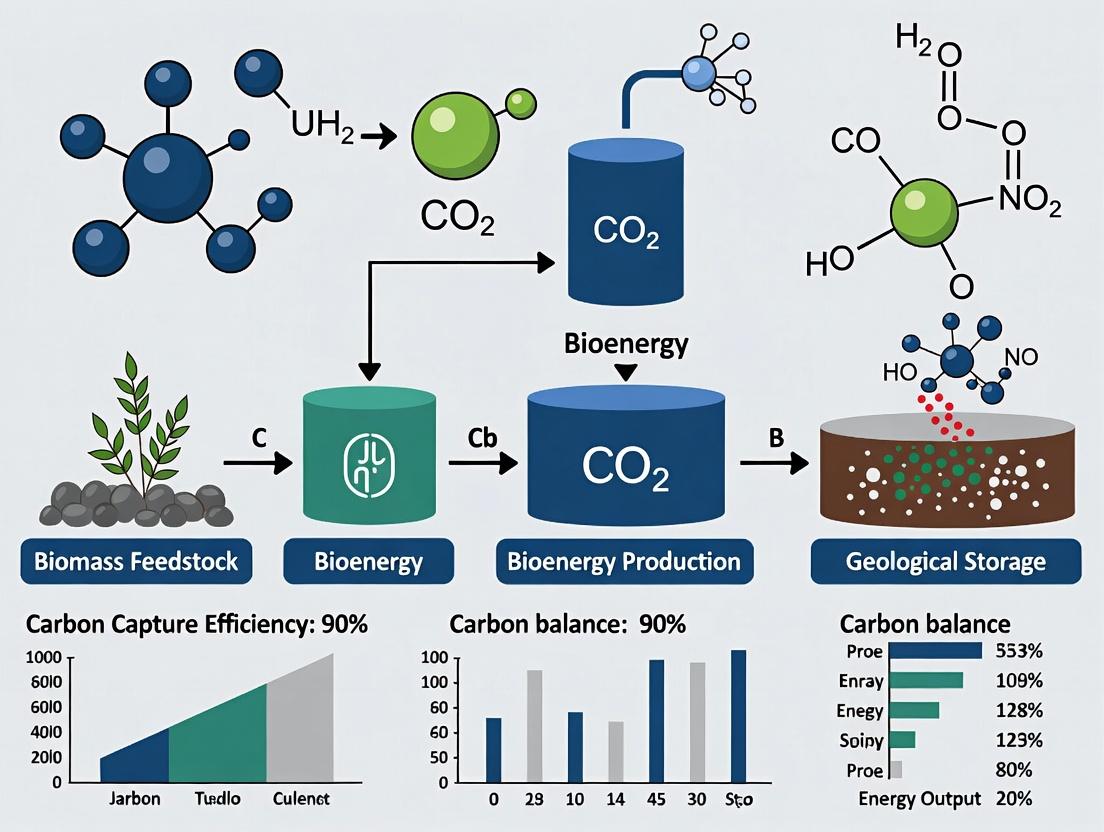
This article provides a comprehensive analysis of Bioenergy with Carbon Capture and Storage (BECCS) as a pathway to carbon neutrality for energy-intensive research and pharmaceutical development.
BECCS and the Carbon Neutrality Clock: A Critical Analysis of Payback Periods for Sustainable Research
Abstract
This article provides a comprehensive analysis of Bioenergy with Carbon Capture and Storage (BECCS) as a pathway to carbon neutrality for energy-intensive research and pharmaceutical development. We explore the foundational science of BECCS, detail methodologies for calculating its carbon payback period, address key challenges in implementation and optimization, and validate its efficacy through comparative life-cycle assessment. Tailored for researchers and industry professionals, this analysis offers a roadmap for integrating BECCS into sustainability strategies to achieve net-negative emissions while supporting critical scientific work.
Understanding BECCS: The Science of Carbon-Negative Energy for Labs and Facilities
This technical guide serves as a foundational component for a broader thesis investigating the carbon neutrality and payback period dynamics of Bioenergy with Carbon Capture and Storage (BECCS). A precise, system-level definition is critical for modeling the temporal fluxes of biogenic and fossil carbon, which directly influence net carbon removal calculations and the ultimate assessment of BECCS as a negative emissions technology (NET). This whitepaper deconstructs the BECCS value chain to establish the technical parameters essential for rigorous life-cycle and techno-economic analysis.
System Definition and Core Components
BECCS is an integrated process that combines biomass conversion to energy (bioenergy) with the capture and permanent geological storage of the resulting CO₂. The theoretical net removal occurs because the biomass, during growth, absorbs atmospheric CO₂ via photosynthesis. When its carbon is captured and stored geologically, it is not returned to the atmosphere, creating a net flux from the atmosphere to the lithosphere. The integrity of this chain is paramount; inefficiencies or emissions at any stage erode the net negative balance.
Biomass Feedstock Systems
Feedstock choice dictates the initial carbon debt, supply chain emissions, and scalability. Key categories include:
- Dedicated Energy Crops: Perennial grasses (e.g., Miscanthus, switchgrass) and fast-growing trees (e.g., willow, poplar). They offer high yields on marginal lands but require careful land-use change (LUC) analysis.
- Agricultural & Forestry Residues: Straw, corn stover, forest slash, and sawmill residues. Using wastes minimizes direct LUC impacts but must account for nutrient recycling and soil carbon stock implications.
- Processed Waste Streams: Municipal solid waste (MSW), wastewater sludge, and industrial organic wastes. Addresses waste management issues but involves heterogeneous composition.
Table 1: Comparative Analysis of Primary Biomass Feedstocks for BECCS
| Feedstock Category | Typical Dry Yield (ton/ha/yr) | Approximate Carbon Content (% dry weight) | Key Sustainability Considerations | Scale Potential (Gt CO₂/yr removal) |
|---|---|---|---|---|
| Dedicated Lignocellulosic Crops | 10-20 | ~48% | Direct/Indirect LUC, water use, biodiversity. | 0.5 - 3.5* |
| Agricultural Residues | 2-5 (straw) | ~45% | Soil health, erosion, nutrient removal. | 0.5 - 1.5* |
| Forestry Residues | 1-3 (slash) | ~50% | Soil biodiversity, long-term forest productivity. | 0.5 - 2.0* |
| Municipal Solid Waste (Biogenic Fraction) | Variable | 25-40% | Contamination, collection efficiency, competing uses. | 0.2 - 0.8* |
*Estimated technical potential ranges from literature; high uncertainty due to sustainability constraints and economic factors.
Protocol 3.1: Feedstock Carbon Content Analysis (Ultimate Analysis) Objective: Determine the carbon, hydrogen, nitrogen, and sulfur content of a biomass sample for combustion and LCA calculations. Method: ASTM D5373 / ISO 29541. A dried, homogenized sample is combusted in a high-temperature (≥950°C) furnace in an oxygenated environment. The resulting combustion gases (CO₂, H₂O, N₂, SO₂) are separated and measured quantitatively using thermal conductivity or infrared detection. Results are reported as weight percent of the dry sample.
Bioenergy Conversion & Capture Technologies
The conversion pathway determines the form of energy output (power, heat, fuel) and the suitability of capture methods.
- Combustion (Oxy-fuel or Post-Combustion): Biomass is burned with air (or oxygen in oxy-fuel) to produce steam for turbines. Post-combustion capture (PCC) uses chemical solvents (e.g., amine-based) to scrub CO₂ from flue gas.
- Gasification (Pre-Combustion): Biomass is converted to syngas (CO + H₂) at high temperature with limited oxygen. The CO is shifted to CO₂ and H₂, allowing for high-pressure, high-concentration CO₂ capture prior to combustion of the H₂.
- Fermentation (Bioprocessing): For biomass-to-ethanol plants, fermentation produces high-purity CO₂ as a by-product, requiring only dehydration and compression.
Table 2: Performance Parameters of Primary BECCS Conversion & Capture Pathways
| Conversion Pathway | Capture Technology | Typical CO₂ Capture Rate (%) | CO₂ Purity in Capture Stream | Primary Energy Penalty Estimate | Technology Readiness Level (TRL) |
|---|---|---|---|---|---|
| Pulverized Fuel Combustion | Post-Combustion (Amine Scrubbing) | 85 - 95 | >99% | 20-30% of plant output | 7-8 (Demonstration) |
| Biomass Gasification | Pre-Combustion (Physical Solvent, e.g., Selexol) | 90 - 99 | >95% | 15-25% | 6-7 (Pilot/Demo) |
| Biorefinery (Ethanol) | By-Product Separation (Dehydration) | ~100 | >99% | <5% | 9 (Commercial) |
| Anaerobic Digestion (Biogas) | Post-Combustion or Biogas Upgrading | 85 - 90 | >95% | 10-20% | 8 (Commercial) |
Protocol 4.1: Solvent-Based Post-Combustion CO₂ Capture Pilot Testing Objective: Determine the capture efficiency, energy requirement, and solvent degradation rate for a novel amine solvent. Method: A slipstream of real flue gas from a biomass boiler is fed to a bench-scale absorption/desorption column system. The gas flow rate, temperature, and CO₂ concentration are monitored pre- and post-absorption via NDIR analyzers. The rich solvent is pumped to a stripper column operated at 100-120°C. The thermal energy input for solvent regeneration is precisely measured via steam condensate flow and temperature. Solvent samples are taken weekly and analyzed by ion chromatography and total alkalinity titration to track degradation.
Transportation and Permanent Geological Storage
Captured CO₂ must be transported, typically via pipeline, and injected into deep geological formations for permanent isolation.
- Transport: Requires compression to a supercritical state (>73.8 bar, >31°C) to increase density and reduce transport costs.
- Storage Formations:
- Saline Aquifers: Deep, porous rock saturated with non-potable brine. Highest global capacity.
- Depleted Oil/Gas Reservoirs: Well-characterized geology with proven seal integrity. Can offer enhanced oil recovery (EOR) co-benefits but complicates carbon accounting.
- Trapping Mechanisms: Structural/stratigraphic trapping (immediate), residual trapping (capillary forces), solubility trapping (dissolution into brine), and mineral trapping (long-term conversion to carbonate minerals).
Title: CO2 Transport and Geological Trapping Mechanisms Timeline
Protocol 5.1: Reservoir Characterization for Storage Site Selection Objective: Assess the capacity, injectivity, and containment security of a candidate saline aquifer. Method: Integrate 3D seismic reflection surveys to map structure and faults. Analyze core samples from exploration wells for porosity, permeability, and mineralogy. Perform well tests (e.g., pressure transient analysis) to determine in-situ hydraulic properties. Use legacy data and stratigraphic models to define the geometry and thickness of the target formation and the overlying caprock (seal). Geochemical modeling of the formation brine and host rock is conducted to predict long-term reactivity with injected CO₂.
The Scientist's Toolkit: BECCS Research Reagent Solutions
Table 3: Key Research Reagents and Materials for BECCS Experimental Analysis
| Reagent / Material | Primary Function / Application | Key Consideration for BECCS Research |
|---|---|---|
| Monoethanolamine (MEA) / Novel Solvents (e.g., KS-1, AMP) | CO₂ Capture: Acts as a chemical absorbent in post-combustion capture systems. Bonds with CO₂ in the absorber, releases it in the stripper. | Degradation rate in presence of biomass flue gas impurities (SOx, NOx, O₂) is a critical research variable for cost and environmental impact. |
| Stable Isotope ¹³C-Labeled CO₂ | Carbon Tracing: Allows differentiation of biomass-derived CO₂ from fossil or background CO₂ in process streams, storage plumes, and potential leakage. | Essential for field-scale verification of storage permanence and attribution in BECCS monitoring, reporting, and verification (MRV). |
| Lignocellulose Reference Materials (NIST) | Feedstock Analysis: Certified materials for calibrating instruments analyzing cellulose, hemicellulose, and lignin content. | Ensures accuracy in feedstock characterization, which directly impacts conversion efficiency and life-cycle carbon accounting. |
| Porous Media Simulants (e.g., Berea Sandstone cores) | Geological Storage Lab Studies: Physical models of reservoir rock for core flooding experiments. | Used to study CO₂-brine-rock interactions, relative permeability, and capillary trapping efficiency under simulated reservoir conditions. |
| Fluorescent Microspheres or DNA Tracers | Subsurface Flow & Leakage Pathways: Biologically and chemically inert tracers to monitor fluid movement in complex media. | Can be used in field pilots to validate reservoir flow models and detect potential leakage with high sensitivity. |
The Carbon Neutrality Imperative in Research and Pharmaceutical Industries
The pursuit of carbon neutrality within the research and pharmaceutical industries represents a critical convergence of environmental stewardship and operational necessity. This whitepates the broader scientific and economic analysis of Bioenergy with Carbon Capture and Storage (BECCS) payback periods. The sector, characterized by energy-intensive laboratories, complex global supply chains, and high-value, low-volume products, faces unique decarbonization challenges. Achieving net-zero emissions is not merely a corporate social responsibility goal but an imperative for sustainable innovation, regulatory compliance, and long-term resilience. This guide provides a technical framework for integrating carbon neutrality into core research and development operations.
The Carbon Footprint of Pharma & Research: A Data-Driven Analysis
The pharmaceutical industry's carbon intensity is significantly higher than that of the automotive sector, with an estimated emission factor of 48.55 tonnes of CO2e per $1 million in revenue compared to 31.4 tonnes for automakers (Belkhir & Elmeligi, 2019). The majority of emissions (Scope 3) originate from the supply chain and product use phases. Research facilities contribute substantially through direct (Scope 1) and energy-related (Scope 2) emissions.
Table 1: Estimated Carbon Footprint of Key Research & Pharmaceutical Operations
| Operation / Activity | Average Annual CO2e (tonnes) | Primary Emission Scope | Key Contributing Factors |
|---|---|---|---|
| Ultra-Low Temperature (ULT) Freezer (-80°C) | 5-10 per unit | Scope 2 | Energy consumption (8,000-16,000 kWh/yr), refrigerants. |
| Fume Hood (Constant Flow) | 5-15 per unit | Scope 2 | HVAC load to condition exhaust air (≈3.5x lab ACH). |
| Multi-day Chromatography Run (HPLC/UPLC) | 0.05-0.2 per run | Scope 2 | Instrument power, solvent production & waste. |
| Animal Research Facility (per 100 cages) | 15-30 | Scopes 1 & 2 | HVAC, lighting, feed supply chain, waste management. |
| Single Clinical Trial (Phase III) | 100 - 1,000+ | Scope 3 | Patient travel, site operations, data centers, material transport. |
Integrating BECCS Payback Period Analysis into Sector Strategy
The thesis context of BECCS carbon neutrality and payback period analysis is directly applicable. The "carbon payback period" – the time required for an intervention to offset the carbon emitted during its implementation – is a crucial metric for capital investments in green labs and renewable energy.
Table 2: Payback Period Analysis for Common Decarbonization Interventions
| Intervention | Estimated Upfront Carbon Cost (tCO2e) | Annual Carbon Abatement (tCO2e/yr) | Estimated Carbon Payback Period (Years) | Financial ROI Notes |
|---|---|---|---|---|
| Retrofitting ULT Freezers to -70°C & Optimal Maintenance | 0.5 (manufacturing) | 1.5-2.5 per unit | <0.5 | High, with 20-30% energy savings. |
| Replacing Constant Flow Fume Hoods with High-Efficiency VAV | 1.0 (manufacturing) | 3-6 per unit | 0.3-0.5 | Very high, 50-70% energy reduction. |
| On-site Solar PV Installation (100 kW system) | 80-100 (production & installation) | 60-80 | ~1.5 | Moderate, subject to incentives and energy prices. |
| Transition to Green Chemistry Solvents (Bioprocess) | Low (R&D) | Varies; 0.1-10 per process | Immediate (operational) | Variable; may reduce purification costs. |
| Procurement of BECCS-generated Negative Emission Credits | N/A | User-defined offset | Immediate (compensatory) | Purely a cost; supports emerging technology. |
Technical Protocols for Carbon Accounting & Reduction in Labs
Protocol 4.1: Comprehensive Carbon Footprint Assessment for a Research Group
Objective: To quantify Scopes 1, 2, and relevant Scope 3 emissions for a discrete research unit. Materials: Utility bills, procurement records, lab equipment logs, travel records, waste manifests. Methodology:
- Define Organizational Boundary: Use operational control approach.
- Collect Activity Data: Gather 12 months of data for:
- Energy: Electricity (kWh), natural gas (therms), steam.
- Mobile Combustion: Fleet and researcher-owned vehicle fuel for work.
- Refrigerants: Purchases and leaks of F-gases.
- Purchased Goods: High-impact items (chemicals, single-use plastics, cryogens, cell culture media).
- Travel & Commuting: Air, rail, rental car mileage.
- Waste Generated: Hazardous, biological, solid waste weight.
- Apply Emission Factors: Use latest IPCC, DEFRA, or EPA GHG Emission Factors Hub factors. For chemicals, use cradle-to-gate life cycle assessment (LCA) data from suppliers or databases like Ecoinvent.
- Calculate:
Emissions = Activity Data × Emission Factor. - Normalize: Express data per FTE researcher, per $ research spend, or per experimental output unit.
Protocol 4.2: Experimental Life Cycle Assessment (LCA) for a Drug Discovery Assay
Objective: To compare the environmental impact of a traditional assay vs. a miniaturized or in silico alternative. Materials: LCA software (e.g., OpenLCA), detailed process maps for each assay version. Methodology:
- Goal & Scope: Define functional unit (e.g., "screening of 10,000 compounds at a single concentration").
- Inventory Analysis: Map all inputs/outputs for each step: compound synthesis/sourcing, plate manufacturing, reagent use (volumes, types), instrument energy consumption (qPCR, plate reader), plasticware (tip boxes, plates), waste treatment.
- Impact Assessment: Calculate climate change impact (kg CO2e) using relevant databases. Include midpoint indicators like water use and ecotoxicity.
- Interpretation: Identify hotspots (e.g., acetonitrile in HPLC, disposable pipette tips) and quantify percentage reduction offered by the greener alternative.
Diagram 1: Experimental LCA Workflow
The Scientist's Toolkit: Essential Reagents & Solutions for Sustainable Research
Table 3: Research Reagent Solutions for Carbon Reduction
| Item / Solution | Function / Application | Sustainability Rationale & Impact |
|---|---|---|
| Bio-based & Renewable Solvents (e.g., Cyrene from cellulose, 2-MeTHF) | Replacement for DMF, DMSO, NMP, and traditional THF in synthesis & purification. | Lower cradle-to-gate carbon footprint, reduced toxicity, often biodegradable. |
| Enzyme & Biocatalysts | For asymmetric synthesis, hydrolysis, and bond formation in API manufacturing. | Enable milder reaction conditions (lower T/P), reduce metal catalyst use, improve selectivity reducing waste. |
| Continuous Flow Reactors | Small-scale, continuous chemical synthesis. | Drastically reduces solvent and energy use vs. batch processes, enhances safety, improves yields. |
| High-Throughput & Microscale Chemistry | Screening and synthesis using mg-scale reagents in 96/384-well plates. | Reduces reagent consumption by >90%, minimizes hazardous waste generation. |
| Predictive In Silico ADMET/Tox Platforms | Computer models predicting compound properties and toxicity. | Prioritizes synthesis for only the most promising candidates, avoiding wasted resources on failed leads. |
| Reusable Labware (Glass cell culture flasks, sterilizable pipettes) | Replacement for single-use plastic consumables in routine processes. | Reduces plastic waste and the embodied carbon from manufacturing and disposal. |
| Green Energy-Powered Cold Storage | ULT freezers connected to renewable energy sources or retrofitted for higher efficiency. | Directly cuts Scope 2 emissions; using certified renewable energy can reduce footprint to near-zero for operation. |
Achieving carbon neutrality requires a multi-faceted strategy: 1) Avoid unnecessary emissions through experimental design (Green Chemistry principles, in silico methods); 2) Reduce through efficiency (equipment upgrades, virtualization); 3) Substitute with green energy and sustainable materials; and 4) Compensate for residual emissions through high-quality, verified carbon removal projects like BECCS, aligning with the thesis on durable carbon payback.
The integration of carbon accounting and LCA into the scientific method itself is the next frontier. By quantifying the environmental cost of research choices, scientists and drug developers can drive innovation that benefits both human and planetary health, ensuring the industry's social license to operate and its long-term viability in a carbon-constrained world.
Diagram 2: Decarbonization Strategy Hierarchy
This whitepaper elucidates the core technical principle enabling Bioenergy with Carbon Capture and Storage (BECCS) to achieve net-negative emissions. The analysis is framed within a broader research thesis focused on quantifying the carbon neutrality and payback period of BECCS deployment. For researchers, understanding this principle is fundamental to modeling the system's lifecycle carbon accounting, which determines the temporal dynamics of atmospheric CO₂ drawdown and the critical point at which net negativity is achieved.
The Fundamental Principle: Coupling Biogenic Carbon Cycles with Geologic Sequestration
BECCS achieves net-negative emissions by integrating two distinct processes: the closed-loop cycling of biogenic carbon and the permanent, one-way storage of fossil-origin carbon. The core principle rests on the sequential capture of carbon that was recently in the atmosphere (via biomass growth) and preventing its return to the atmosphere by coupling it with geological carbon capture and storage (CCS). This creates a one-way flow of carbon from the atmosphere to a geological sink.
Logical Process Diagram:
Diagram 1: The BECCS net-negativity principle
Detailed Technical Analysis of the Carbon Flows
The net negativity is quantified by the equation: Net CO₂ = (CO₂ₐₜₘ – CO₂b) – (Eᵥ + Eᵣ + Eₜ + Eᵢ), where:
- CO₂ₐₜₘ = CO₂ removed from atmosphere during biomass growth.
- CO₂b = CO₂ emitted back to atmosphere from biomass processing/combustion (now captured).
- Eᵥ, Eᵣ, Eₜ, Eᵢ = Lifecycle emissions from cultivation, transport, processing, and injection (typically fossil-based).
When (CO₂ₐₜₘ – CO₂b) > Σ(Eᵥ + Eᵣ + Eₜ + Eᵢ), the system is net-negative. The carbon payback period, a key thesis variable, is the time from system initiation until this inequality becomes permanently true, accounting for all upfront carbon costs.
Quantitative Data Table: Carbon Balance for Representative BECCS Pathways
| Pathway | Feedstock | Scale | Atmospheric CO₂ Captured by Biomass (tCO₂/TJ) | Fossil Lifecycle Emissions (tCO₂/TJ) | Net Atmospheric Removal (tCO₂/TJ) | Key Determining Factors |
|---|---|---|---|---|---|---|
| Power Generation | Woody Biomass (SRC) | 100 MWe | 101.5 | 14.2 (cultivation, transport, CCS energy) | +87.3 | Biomass yield, transport distance, capture rate (90-95%) |
| Ethanol Production | Corn Stover | 100 ML/yr | 89.7 | 23.8 (fertilizer residue, processing, transport) | +65.9 | Soil carbon loss (from residue removal), capture efficiency |
| Biogas Upgrade | Energy Crops | 50 MWth | 76.4 | 11.5 (cultivation, digestate management) | +64.9 | Methane slip avoidance, pipeline injection energy |
| Pulp & Paper Mill | Black Liquor | Industrial | 0 (waste stream) | 5.8 (incremental capture energy) | -5.8 (Net-positive without offset) | Baseline emissions, capture process efficiency |
Data synthesized from recent IEA (2023), IPCC AR6 (2022), and peer-reviewed LCA literature. Values are illustrative medians; ranges can vary ±40%.
Experimental Protocols for Key BECCS Research Parameters
Accurate payback period analysis requires empirical data from controlled experiments. Below are detailed protocols for key measurements.
Protocol: Measuring Soil Carbon Stock Change (ΔCₛ) from Feedstock Cultivation
Objective: Quantify the carbon debt or credit from land-use for biomass feedstock, a major variable in the payback period.
- Site Selection & Setup: Establish paired plots: (a) BECCS feedstock (e.g., switchgrass, willow), (b) Control (previous land use). Minimum triplicate plots of 10m x 10m.
- Soil Core Sampling: Use a stainless steel core sampler (3 cm diameter). Sample at 0-15, 15-30, and 30-60 cm depths at 5 random points per plot at time T₀ (establishment) and annually at T₁, T₂,...Tₙ.
- Sample Processing: Air-dry, remove visible roots and stones, grind to pass a 2mm sieve. Subsample for analysis.
- Carbon Content Analysis: Use dry combustion method (e.g., Elemental Analyzer). Weigh ~20mg of homogenized soil into a tin capsule. Measure total carbon (TC) and inorganic carbon (IC). Soil organic carbon (SOC) = TC – IC.
- Bulk Density Measurement: Collect intact core samples at each depth for bulk density calculation (oven-dry weight/known volume). Correct SOC stock for bulk density changes.
- Calculation: ΔCₛ (Mg C ha⁻¹ yr⁻¹) = (SOCₜ × BDₜ × Depth) – (SOCₜ₋₁ × BDₜ₋₁ × Depth) / Time.
Protocol: Laboratory-Scale Amine Scrubbing for Biogenic CO₂ Capture Efficiency
Objective: Determine the maximum capture rate (η) and solvent degradation profile for bio-flue gas contaminants.
- Apparatus Setup: Configure a bench-scale absorber-stripper column system. Absorber: packed column, 1m height, maintained at 40°C. Stripper: similar column, maintained at 120°C. Use 30% w/w Monoethanolamine (MEA) solution as base solvent.
- Gas Mix Preparation: Simulate bio-flue gas: 12% CO₂ (biogenic isotope signature), 6% O₂, balance N₂. Introduce controlled impurities: 50 ppm SO₂, 30 ppm NO₂.
- Absorption Cycle: Pump solvent (1 L/min) to absorber top. Introduce simulated flue gas (5 L/min) at bottom. Measure CO₂ concentration at inlet and outlet via NDIR analyzer continuously for 6 hours.
- Regeneration Cycle: Direct rich solvent to stripper. Apply steam heating (120°C). Measure CO₂ purity of the desorbed stream.
- Efficiency & Degradation Analysis: Calculate η = (CO₂ᵢₙ – CO₂ₒᵤₜ)/CO₂ᵢₙ. Daily, take 10mL solvent samples. Analyze for heat-stable salts (ion chromatography) and solvent concentration (titration). Correlate η decline with contaminant accumulation.
Key Signaling Pathways and System Interactions Diagram
Biomass-to-Storage System Integration:
Diagram 2: BECCS integration and feedback for payback analysis
The Scientist's Toolkit: Research Reagent Solutions & Essential Materials
| Item / Reagent | Function in BECCS Research | Key Consideration for Experimental Design |
|---|---|---|
| ¹³C-Depleted Biomass Standard | Isotopic tracer to distinguish biogenic CO₂ from fossil/geologic CO₂ in capture streams and storage monitoring. | Ensures measurement accuracy in MRV (Measurement, Reporting, Verification) protocols. Critical for attribution. |
| Stable Amine Solvents (e.g., Piperazine) | Advanced solvents for absorption with higher oxidative stability against bio-flue gas O₂, reducing degradation. | Lower regeneration energy and longer lifespan improve net-negative balance in LCA models. |
| Porous Media Reactors | Bench-scale models of geological reservoirs (e.g., packed sandstone columns) for CO₂-brine-rock interaction studies. | Used to simulate injection, plume migration, and mineralization rates for storage safety and capacity estimates. |
| Eddy Covariance Flux Towers | Micrometeorological systems to directly measure net ecosystem exchange (NEE) of CO₂ over feedstock plantations. | Provides real-world data on the "CO₂ₐₜₘ" term in the net negativity equation, reducing uncertainty. |
| Resistivity Tomography Array | Geophysical electrodes for laboratory and field-scale monitoring of CO₂ plume geometry in saline aquifers. | Non-invasive method to verify containment and calculate stored volume, a key input for payback calculations. |
| Life Cycle Inventory (LCI) Database | Curated datasets (e.g., Ecoinvent, GREET) for upstream emissions of fertilizers, diesel, steel, etc. | Essential for calculating the fossil emissions (Eᵥ, Eᵣ, Eₜ, Eᵢ) component. Must be spatially explicit. |
This technical guide details the core components essential for analyzing the carbon neutrality and payback period of Bioenergy with Carbon Capture and Storage (BECCS). The efficacy of BECCS as a negative emissions technology hinges on the integrated performance of sustainable biomass sourcing, efficient conversion, and reliable carbon capture and storage (CCS). This document provides researchers, particularly those in analytical fields like drug development, with the technical frameworks and methodologies to quantify and model these systems.
Sustainable Biomass: Feedstock Characterization & Sustainability Criteria
Sustainable biomass is the foundational element, determining the initial carbon debt and lifecycle emissions. Key metrics include specific yield, carbon content, and biochemical composition.
Table 1: Comparative Analysis of Biomass Feedstocks for BECCS
| Feedstock Type | Avg. Yield (ton dry/ha/yr) | Avg. Carbon Content (% dry weight) | Lignin Content (% dry weight) | Key Sustainability Indicators (Metrics) |
|---|---|---|---|---|
| Miscanthus | 10-25 | ~48% | 10-20% | Carbon Payback Period (CPP): 0-1 yr; Soil Organic Carbon (SOC) change |
| Switchgrass | 8-15 | ~47% | 12-20% | CPP: 1-3 yr; Water Use Efficiency (L/kg biomass) |
| Short Rotation Coppice (Willow) | 8-12 | ~49% | 20-25% | CPP: 2-4 yr; Biodiversity Impact Score |
| Agricultural Residues (Corn Stover) | 2-4 | ~45% | 15-20% | Indirect Land Use Change (iLUC) risk; Soil erosion mitigation |
| Forestry Residues | Varies | ~50% | 25-30% | Harvesting residue retention rate (>30% recommended) |
Experimental Protocol: Biomass Carbon Content Analysis (Elemental Analyzer)
- Sample Preparation: Dry biomass feedstock at 105°C to constant mass. Pulverize to a homogeneous fine powder (< 0.2 mm particle size).
- Calibration: Use acetanilide or a similar certified standard to calibrate the elemental analyzer (CHNS/O mode).
- Combustion & Measurement: Weigh 2-3 mg of sample into a tin capsule. Introduce into the combustion reactor at ~1000°C in a pure oxygen environment. The resulting gases (CO2, H2O, N2) are separated via gas chromatography.
- Detection & Calculation: CO2 is detected by a thermal conductivity detector (TCD). Carbon content percentage is calculated from the CO2 signal relative to the calibration curve and sample mass.
- Replication: Perform in triplicate. Report mean ± standard deviation.
Conversion Technologies: Efficiency and Syngas Composition
Biomass conversion technology dictates the form and concentration of CO2 for capture. Major pathways include biochemical (e.g., fermentation) and thermochemical (e.g., gasification).
Table 2: Performance Metrics of Biomass Conversion Technologies
| Conversion Technology | Typical Efficiency (η %) | Syngas/Output CO2 Concentration (%) | Primary Output | Suitability for CCS Integration |
|---|---|---|---|---|
| Anaerobic Digestion | 35-50% (Biogas) | 30-45% (CO2 in Biogas) | CH4, CO2 | Post-combustion capture from biogas upgrading |
| Gasification | 60-75% (Cold Gas) | 15-25% (Raw Syngas) | CO, H2, CO2 | Pre-combustion capture; high-pressure advantage |
| Fast Pyrolysis | 60-70% (Liquid) | 10-20% (Process gas) | Bio-oil, Char | Capture from process gas or bio-oil combustion |
| Direct Combustion (CFB) | 25-35% (Power) | 10-15% (Flue Gas) | Heat, Power | Post-combustion capture (standard flue gas) |
| Hydrothermal Liquefaction | 70-85% (Biorude) | 5-15% (Aqueous phase) | Biorude | Capture from aqueous phase or subsequent processing |
Experimental Protocol: Bench-Scale Gasification & Syngas Analysis
- Reactor Setup: Configure a fluidized-bed or downdraft gasifier. Ensure all gas lines are leak-tested and purged with inert gas (N2).
- Feedstock Introduction: Load dried, sized biomass (1-2 mm pellets). Set a controlled feed rate (e.g., 1 kg/hr).
- Gasification: Initiate with a start-up heater. Introduce a controlled flow of air/steam/O2 as the gasifying agent. Maintain reactor temperature at 750-900°C using external heaters and monitored by thermocouples.
- Syngas Sampling & Cleanup: Pass raw syngas through a series of coolers, condensers (to remove tars), and particulate filters. Use a heated line to prevent condensation before analysis.
- Online Gas Analysis: Connect cleaned syngas stream to a gas analyzer (NDIR for CO2, CO; TCD for H2; Paramagnetic for O2). Record composition data at steady-state conditions (minimum 30 mins).
- Data Calculation: Calculate cold gas efficiency: η = (LHVsyngas * mass flow ratesyngas) / (LHVbiomass * mass flow ratebiomass) * 100.
CCS Integration: Capture Efficiency and Energy Penalty
The integration point and capture method significantly impact the overall net efficiency and cost of BECCS.
Table 3: Carbon Capture Technologies for BECCS Integration
| Capture Type | Typical Integration Point | Capture Efficiency (%) | Energy Penalty (% of plant output) | Key Solvent/Material |
|---|---|---|---|---|
| Post-Combustion (Amine Scrubbing) | After combustion boiler | 85-90% | 20-30% | Monoethanolamine (MEA) |
| Pre-Combustion (Physical Absorption) | After gasifier & water-gas shift | 90-95% | 15-25% | Selexol, Rectisol |
| Oxy-Combustion | Combustion with pure O2 | >95% | 20-35% | Cryogenic Air Separation Unit |
| Calcium Looping | Post-combustion or sorbent cycling | 90-95% | 10-20% | CaO (Lime) |
| Direct Air Capture (DAC) | Ambient air (theoretical) | N/A | High | Solid Sorbents (e.g., MOFs) |
Experimental Protocol: Amine-Based CO2 Capture Efficiency Test
- Apparatus Setup: Assemble a packed absorption column and a stripping column with reboiler. Install liquid and gas flow controllers, CO2 sensors at inlet and outlet, and temperature/pressure gauges.
- Solution Preparation: Prepare a 30 wt.% aqueous solution of Monoethanolamine (MEA). Degas the solution by sparging with N2.
- Absorption Cycle: Pump the MEA solution to the top of the absorption column. Introduce a simulated flue gas (10-15% CO2, balanced N2) at the bottom. Operate in counter-current flow at ambient pressure and 40°C.
- Stripping/Regeneration Cycle: Route the CO2-rich MEA solution to the stripper. Heat the reboiler to 100-120°C to break the carbamate bond and release high-purity CO2. The lean MEA is recycled.
- Measurement: Use inline NDIR CO2 sensors to measure concentrations at the gas inlet (Cin) and outlet (Cout) of the absorber.
- Calculation: Capture Efficiency (%) = [(Cin - Cout) / C_in] * 100. Measure steam/energy input to the reboiler to calculate the specific regeneration energy (GJ/tonne CO2).
The Scientist's Toolkit: Research Reagent Solutions
Table 4: Essential Research Materials for BECCS Component Analysis
| Item/Category | Example Product/Reagent | Primary Function in Research |
|---|---|---|
| Biomass Composition | NREL LAP Standards (e.g., Corn Stover RM 8494) | Certified reference material for validating lignin, sugar, and ash analysis methods. |
| Elemental Analysis | Acetanilide (C8H9NO), Sulfanilamide | Calibration standards for CHNS/O elemental analyzers to determine carbon content. |
| Gas Calibration | Certified Gas Mixtures (e.g., 15% CO2, 20% H2, 10% CO in N2) | Calibrating GC-TCD, NDIR analyzers for accurate syngas/biogas composition. |
| Capture Solvents | Monoethanolamine (MEA), 2-Amino-2-methyl-1-propanol (AMP) | Benchmark solvents for testing post-combustion CO2 absorption kinetics and capacity. |
| Sorbent Materials | Zeolite 13X, Amine-functionalized Silica (TRI-PE-MCM-41) | Solid sorbents for evaluating adsorption/desorption cycles in capture processes. |
| Catalysts | Nickel-based Catalyst (Ni/Al2O3), Ru/TiO2 | For studying tar reforming in gasification or the water-gas shift reaction. |
| Isotope Tracers | 13C-Labeled CO2, 14C-Labeled Biomass | Tracing carbon flow through the entire BECCS chain for LCA and carbon accounting. |
| pH/Conductivity | Certified Buffer Solutions (pH 4, 7, 10), KCl Conductivity Standard | Monitoring solvent degradation and ion formation in capture process streams. |
Within the context of a broader thesis on Bioenergy with Carbon Capture and Storage (BECCS) carbon neutrality and payback period analysis research, the Carbon Payback Period (CPP) emerges as a central, non-negotiable metric for techno-economic and environmental feasibility. It quantifies the time required for a carbon-negative technology, such as BECCS, to offset the upfront greenhouse gas (GHG) emissions generated from its construction, feedstock supply chain, and operation. For researchers and drug development professionals, the CPP provides a robust, temporal framework analogous to pharmacokinetic models, assessing the "net carbon debt" of a system. This whitepaper serves as an in-depth technical guide to its calculation, application, and the experimental protocols underpinning its critical variables.
Core Concept and Mathematical Formalism
The Carbon Payback Period (CPP) is defined as the time ( t ) at which cumulative net carbon sequestration equals cumulative upfront and operational carbon emissions. The fundamental equation is:
[ CPP = \frac{E{upfront} + E{operational} - S{operational} \times t}{S{operational} - E_{operational_rate}} ]
Where:
- ( E_{upfront} ): Total upfront emissions (biomass cultivation, facility construction, equipment manufacturing).
- ( E_{operational} ): Annual operational emissions (energy input, chemicals, transport).
- ( S_{operational} ): Annual net carbon sequestration rate (CO₂ captured and stored minus supply chain emissions).
- ( E_{operational_rate} ): Rate of change of operational emissions (often assumed zero for simplicity).
A more common simplified form for a system with constant annual net sequestration is:
[ CPP = \frac{E{upfront}}{S{net}} ]
Where ( S{net} ) is the annual net carbon sequestration (( S{operational} - E_{operational} )).
Key Data Inputs and Life Cycle Assessment (LCA) Protocols
Accurate CPP calculation is contingent on rigorous Life Cycle Assessment (LCA). Key data categories and their associated experimental or analytical methodologies are summarized below.
Table 1: Core Data Inputs for CPP Calculation in BECCS Systems
| Data Category | Specific Parameter | Typical Measurement Units | Primary Methodology |
|---|---|---|---|
| Upfront Emissions (E_upfront) | Biomass cultivation (N₂O from fertilizer, diesel) | kg CO₂-eq / ha | IPCC Tier 1/2 methodologies; soil flux chambers. |
| Biomass transportation | kg CO₂-eq / ton-km | Fuel consumption models; vehicle emission factors. | |
| Facility & infrastructure construction | kg CO₂-eq / MW | Economic Input-Output LCA (EIO-LCA); material inventories. | |
| Operational Emissions (E_operational) | Process energy consumption | kg CO₂-eq / MWh | Continuous emission monitoring systems (CEMS). |
| Solvent production & degradation (e.g., MEA) | kg CO₂-eq / kg solvent | Chemical synthesis LCA; solvent degradation rate analysis. | |
| Sequestration Potential (S_operational) | CO₂ capture efficiency | % | Gas chromatography (GC) or FTIR analysis of inlet/outlet flue gas. |
| CO₂ purity for storage | % CO₂ | GC-TCD (Thermal Conductivity Detector). | |
| Geological storage integrity | % leakage / year | Seismic monitoring; tracer tests; pressure monitoring. |
Detailed Experimental Protocol: Soil GHG Flux Measurement for Biomass Feedstock
Objective: Quantify direct soil-derived N₂O and CH₄ emissions from biomass cultivation for inclusion in ( E_{upfront} ).
Protocol:
- Site Selection: Establish static chambers in triplicate across representative plots (control, fertilized).
- Sampling: Use non-steady-state static chambers. Gas samples are extracted from chamber headspace at time intervals (0, 15, 30, 45 mins) post-deployment using gas-tight syringes.
- Analysis: Analyze gas samples via Gas Chromatograph (GC) equipped with an Electron Capture Detector (ECD) for N₂O and a Flame Ionization Detector (FID) for CH₄.
- Calculation: Flux is calculated from the linear change in gas concentration over time, adjusted for chamber volume, area, and environmental conditions.
- Upscaling: Daily fluxes are interpolated and summed with modeled CO₂ emissions from farm machinery to generate annual per-hectare emission factors.
Signaling Pathway: The CPP Decision Framework
The CPP is integrated into a larger decision-support framework for evaluating BECCS projects, interacting with economic and policy variables.
Diagram Title: BECCS Project Feasibility Decision Framework
The Scientist's Toolkit: Key Research Reagent Solutions
Table 2: Essential Materials for CPP-Related Research
| Item | Function in CPP Analysis | Example/Supplier (Illustrative) |
|---|---|---|
| Gas Standards | Calibration of GC for precise N₂O, CH₄, CO₂ quantification. | Certified CRM (e.g., 1.0 ppm N₂O in N₂ balance, Scott Specialty Gases). |
| Isotopic Tracers | Tracing carbon flow in BECCS systems; verifying biogenic CO₂. | ¹³C-labeled CO₂ or biomass (e.g., Cambridge Isotope Laboratories). |
| Amine Solvents | Benchmarking capture efficiency & degradation rates for LCA. | Monoethanolamine (MEA), Piperazine (PZ) (e.g., Sigma-Aldrich). |
| Soil Flux Chambers | Direct field measurement of agricultural GHG emissions. | Non-steady-state static chambers (e.g., LI-COR 8100A chamber). |
| LCA Software | Modeling upstream emissions and compiling inventory data. | SimaPro, OpenLCA, GREET model. |
| Geochemical Models | Predicting long-term mineral trapping of stored CO₂. | PHREEQC, TOUGHREACT. |
Critical Pathways and System Dynamics
The CPP is not static. It is influenced by interconnected system pathways, most critically the biomass supply chain and the carbon capture process.
Diagram Title: BECCS System Pathways Impacting Carbon Payback
The Carbon Payback Period is the definitive metric for establishing the temporal viability of carbon-removal technologies. For BECCS, a CPP exceeding policy-relevant timeframes (e.g., less than 30 years for 2°C targets) negates its climate mitigation value. This guide underscores that precise CPP determination relies on standardized, transparent LCA protocols and continuous monitoring of system components. Future research must focus on integrating dynamic life-cycle inventories and probabilistic models to account for spatial and temporal variability in feedstock emissions and capture performance, thereby refining CPP accuracy for robust feasibility analysis.
This technical guide examines the deployment of Bioenergy with Carbon Capture and Storage (BECCS) within energy-intensive research campuses. The analysis is framed within a broader thesis investigating the carbon neutrality timelines and dynamic payback periods of BECCS infrastructure. For research institutions—particularly those with high-energy facilities like particle accelerators, supercomputers, and pharmaceutical cleanrooms—BECCS represents a critical pathway to mitigate operational emissions while providing a platform for applied climate research.
Case Study Data & Comparative Analysis
Current deployments are in pilot or early operational phases, primarily integrated with campus Combined Heat and Power (CHP) or waste management systems.
Table 1: BECCS Deployment Case Studies on Research Campuses
| Campus / Project Name | BECCS Configuration | Annual CO₂ Capture Capacity (Metric Tons) | Feedstock Source | CO₂ Storage/Sink | Primary Research Focus |
|---|---|---|---|---|---|
| University of Illinois Urbana-Champaign (UIUC) – CCS from Biomass Boiler | Post-combustion capture (solvent-based) on biomass boiler. | Pilot Scale: ~1,500 | Miscanthus grass, forest residue. | Geologic storage in Illinois Basin. | Integration with agricultural supply chains, monitoring/verification. |
| Princeton University – Pilot Plant | Modular, containerized post-combustion unit. | Pilot Scale: ~50 | Waste biomass, renewable natural gas. | Not yet at scale; research on utilization. | System optimization, catalyst & solvent testing for flue gas variability. |
| UK Bioenergy Research Center (UKBRC) Campuses | Coupled gasification & pyrolysis with CCS. | Lab/Pilot Scale: Variable. | Energy crops, waste wood. | Research on mineralization. | Fundamental process engineering, life-cycle assessment (LCA). |
| Chalmers University of Technology – Gothenburg | Waste-to-Energy CHP with amine scrubbing. | Demonstration: ~10,000+ (full plant) | Municipal & industrial waste. | Geologic storage in North Sea. | System integration, cost analysis, policy frameworks. |
Table 2: Key Performance Indicators (KPIs) & Payback Analysis Framework
| KPI Category | Metric | Typical Range (Current Pilots) | Relevance to Payback Thesis |
|---|---|---|---|
| Technical | Capture Rate (% of flue gas CO₂) | 85-95% | Directly impacts carbon negativity rate. |
| Energetic | Energy Penalty (% of plant output) | 15-30% | Critical for net energy balance of campus. |
| Economic | Levelized Cost of CO₂ Captured ($/ton) | $80 - $200 | Drives financial payback period analysis. |
| Carbon | Net Negative Emissions (tons CO₂e/year) | Site-specific. | Core to calculating carbon payback period. |
Experimental Protocols & Methodologies
Protocol for Solvent-Based Capture Efficiency Testing (Post-Combustion)
Objective: Determine the CO₂ absorption efficiency and degradation rate of amine-based solvents under simulated campus boiler flue gas conditions.
- Setup: A bench-scale absorption column is fitted with gas analyzers (NDIR for CO₂) at inlet and outlet. The solvent (e.g., 30wt% Monoethanolamine - MEA) is circulated at a controlled temperature (40-45°C).
- Gas Simulation: A synthetic flue gas mix (12% CO₂, 5% O₂, balance N₂, with optional SOx/NOx traces) is prepared using mass flow controllers.
- Absorption Run: Gas is bubbled through the solvent at a defined gas-liquid ratio. Outlet CO₂ concentration is logged continuously until saturation.
- Regeneration: The rich solvent is transferred to a stripper column and heated to 100-120°C to release captured CO₂. Energy input is measured precisely.
- Analysis: Capture efficiency = [(CO₂in - CO₂out)/CO₂_in] * 100. Solvent samples are analyzed weekly via titration and ICP-MS to track degradation and metal contamination.
Protocol for Life-Cycle Assessment (LCA) for Campus BECCS
Objective: Quantify the net carbon negative potential and environmental payback period.
- System Boundaries: Cradle-to-grave: includes biomass cultivation/transport, conversion, capture, compression, transport, and permanent storage.
- Inventory Analysis: Collect primary data from campus operations (fuel use, electricity, chemicals) and secondary data from databases (Ecoinvent, GREET) for upstream processes.
- Allocation: Use system expansion to handle co-products (e.g., district heat).
- Impact Assessment: Calculate Global Warming Potential (GWP) over 100 years using IPCC factors. Net GWP = (Emissions from supply chain + operations) - (CO₂ sequestered).
- Payback Calculation: Dynamic carbon payback period is calculated by comparing the cumulative radiative forcing of the BECCS system against a reference fossil system over time.
Visualizations
Diagram 1: BECCS System Integration on a Research Campus (92 chars)
Diagram 2: Dynamic Carbon Payback Period Analysis Workflow (80 chars)
The Scientist's Toolkit: Research Reagent Solutions
Table 3: Key Research Reagents & Materials for BECCS Laboratory Studies
| Item / Reagent | Function in BECCS Research | Example & Notes |
|---|---|---|
| Amine Solvents (e.g., MEA, PZ, AMP) | CO₂ absorption in post-combustion capture. Benchmark for performance and degradation studies. | 30wt% MEA solution. Must be monitored for oxidative degradation (formation of nitrosamines, heat-stable salts). |
| Solid Sorbents (e.g., MOFs, Zeolites, Activated Carbon) | Adsorptive capture; research focuses on selectivity, capacity, and regeneration energy. | Metal-Organic Frameworks (MOFs) like Mg-MOF-74 offer high CO₂ affinity at low partial pressures. |
| Biomass Feedstock Standards | Provide consistent material for gasification/pyrolysis experiments and LCA. | NIST reference materials (e.g., pine wood, corn stover) for ultimate/proximate analysis and kinetic studies. |
| Gas Calibration Standards | Calibrate analyzers (GC, NDIR) for accurate CO₂, CH₄, CO, SO₂ measurement. | Certified gas mixtures in N₂ balance (e.g., 12% CO₂, 100ppm SO₂) simulating flue gas composition. |
| Tracers for Monitoring & Verification (M&V) | Tag captured CO₂ for safe storage verification and leak detection. | Perfluorocarbon tracers (PFTs) or SF₆ (with caution) injected into CO₂ stream pre-injection. |
| Catalysts for Gasification/Syngas Cleaning | Promote tar reforming and optimize H₂:CO ratio in biomass gasification pathways. | Nickel-based catalysts on Al₂O₃ support; researched for resistance to coking and sulfur poisoning. |
Calculating the Payback: Methodologies for BECCS Lifecycle Assessment (LCA) in Research Settings
Within the broader thesis research on Bioenergy with Carbon Capture and Storage (BECCS) carbon neutrality and payback period analysis, establishing precise system boundaries is paramount. This technical guide delineates the functional unit, spatial, and temporal boundaries for a comprehensive Life Cycle Assessment (LCA) of BECCS, from biomass cultivation to permanent geological sequestration. Accurate boundary definition is critical for determining the true net negative emissions potential and the temporal dynamics of the carbon debt payback period.
Defining the Core System Boundary
The primary system encompasses all processes directly involved in the BECCS value chain. The functional unit is defined as 1 Megajoule (MJ) of net usable energy delivered, coupled with the net CO₂ sequestered (kg CO₂e).
Table 1: Core System Boundary Components
| Stage | Included Processes | Key Inputs/Outputs |
|---|---|---|
| 1. Biomass Cultivation & Harvesting | Land preparation, sowing, fertilization, irrigation, pesticide application, harvesting, chipping. | Inputs: Diesel, fertilizers, pesticides, water, land. Outputs: Biomass feedstock, soil N₂O emissions, biogenic carbon stock changes. |
| 2. Biomass Transport | Road, rail, or barge transport of biomass from field to processing/conversion facility. | Inputs: Diesel/electricity. Outputs: CO₂, CH₄, NOx from fuel combustion. |
| 3. Bioenergy Conversion | Gasification/Combustion, coupled with power/heat generation or biofuel production. | Inputs: Biomass, chemicals (e.g., for gas cleaning), water. Outputs: Electricity/heat/biofuel, flue gas, ash. |
| 4. Carbon Capture | Post-combustion (amine scrubbing), oxy-fuel, or pre-combustion capture applied to flue gas. | Inputs: Flue gas, solvent/energy for regeneration. Outputs: High-purity CO₂ stream, waste heat, degraded solvent. |
| 5. CO₂ Compression & Transport | Drying, compression to supercritical state, pipeline/infrastructure transport to storage site. | Inputs: Electricity/energy for compression. Outputs: Compressed, pipeline-ready CO₂, fugitive emissions. |
| 6. Carbon Sequestration | Geological injection, monitoring, measurement, and verification (MMV) over mandated period. | Inputs: Compressed CO₂, water/brine (for enhanced recovery). Outputs: Sequestered CO₂, potential induced seismicity, brine displacement. |
Critical Boundary Decisions & Methodologies
Temporal Boundaries
- Biogenic Carbon Cycle: The growth period of biomass (1-20 years) must be temporally aligned with the instantaneous emissions from processing and the long-term storage (≥1000 years). Dynamic LCA or time-adjusted global warming potential (GWP) metrics are recommended for payback period analysis.
- Technological Lifetime: The assessment should cover a typical plant lifetime of 20-30 years, including decommissioning.
- Monitoring Period: Post-injection MMV is typically required for 20-50 years by regulation, but modeling of permanence must extend centuries.
Spatial & Market Boundaries
- Geographical Specificity: Biomass yield, soil carbon, and grid electricity carbon intensity are highly region-specific. Data must be location-attributed.
- Land Use Change (LUC): Direct LUC (dLUC) and Indirect LUC (iLUC) must be accounted for if biomass cultivation displaces previous land use (e.g., forest, food crops), significantly impacting the carbon payback period. iLUC assessment requires economic equilibrium modeling.
Protocol 1: Dynamic Life-Cycle Assessment for Carbon Payback
- Model Carbon Flows: Quantify all carbon fluxes (biogenic uptake, fossil emissions, sequestration) as a time-series.
- Apply Time-Discounting: Use a chosen climate metric (e.g., GWP, GTP) with dynamic characterization factors or apply a radiative forcing model.
- Calculate Cumulative Climate Impact: Plot the cumulative radiative forcing over time (e.g., 100 years).
- Determine Payback Point: Identify the time (t) at which the cumulative forcing of the BECCS system falls below that of a reference fossil system. This is the carbon payback period.
Upstream & Downstream Boundaries
- Included Upstream: Production of capital goods (machinery, buildings), extraction and production of all inputs (fertilizers, diesel, chemicals, solvents).
- Excluded Downstream: Use phase of the produced energy (e.g., electricity in an electric vehicle), except as it defines the functional unit.
- Allocation: For multi-product processes (e.g., biorefinery producing fuel and chemicals), use system expansion (avoided burden) or energy/mass-based allocation consistently.
Key Experimental & Analytical Protocols
Protocol 2: Soil Organic Carbon (SOC) Stock Measurement (via Dry Combustion)
- Objective: Quantify baseline and changes in SOC due to biomass cultivation.
- Materials: Soil auger, core sampler, aluminum tins, oven, desiccator, ball mill, elemental analyzer (CNHS).
- Method:
- Collect soil cores (0-30 cm, 30-60 cm) from multiple random plots in the field using a standardized corer.
- Dry samples at 105°C to constant weight. Determine bulk density.
- Homogenize, grind, and sieve (2mm) the dried soil.
- Weigh ~20 mg of finely ground soil into a tin capsule.
- Analyze using a CHNS elemental combustor. SOC is derived from the measured carbon content, assuming inorganic carbon is negligible or separately removed.
- Calculate SOC stock (Mg C/ha) = SOC concentration * bulk density * layer depth * (1 - fragment content).
Protocol 3: Amine-Based CO₂ Capture Efficiency & Solvent Degradation
- Objective: Determine CO₂ capture rate and solvent degradation products in a pilot-scale absorber-stripper unit.
- Materials: Simulated flue gas (CO₂/N₂/O₂), 30 wt% Monoethanolamine (MEA) solution, absorber column, stripper column with reboiler, condenser, gas analyzers (NDIR for CO₂), HPLC for solvent analysis.
- Method:
- Circulate MEA solvent at a fixed flow rate (L/min).
- Introduce simulated flue gas (12-15% CO₂) counter-currently into the absorber at a set temperature (40-50°C).
- Measure CO₂ concentration at inlet and outlet of absorber using NDIR analyzers to calculate capture efficiency: Efficiency (%) = [(CO₂in - CO₂out)/CO₂_in] * 100.
- Pump rich solvent to stripper. Apply steam via reboiler (120°C) to release CO₂.
- Periodically sample lean solvent. Analyze via HPLC for thermal degradation products (e.g., oxazolidinone, HEI, HEP) and via IC for heat-stable salts (formate, acetate, sulfate).
- Correlate degradation rates with capture efficiency drop over time.
Visualization of System Boundaries & Carbon Flow
Title: BECCS System Boundary Diagram with Carbon Flow
Title: Conceptual Model of Carbon Payback Period Dynamics
The Scientist's Toolkit: Key Research Reagent Solutions
Table 2: Essential Research Materials for BECCS Boundary Analysis
| Item/Category | Example Product/Specification | Primary Function in Research |
|---|---|---|
| Soil Carbon Analysis | LECO TruMac CN Combustion Analyzer | Precisely measures total carbon and nitrogen content in soil and biomass samples for SOC and yield calculations. |
| Greenhouse Gas Flux | Picarro G2508 Gas Concentration Analyzer | High-precision, in-situ measurement of N₂O, CH₄, CO₂, NH₃, and H₂O fluxes from soil in cultivation studies. |
| CO₂ Capture Solvent | 30 wt% Monoethanolamine (MEA), High Purity (≥99%) | Benchmark solvent for post-combustion capture experiments; used to establish baseline efficiency and degradation rates. |
| Solvent Degradation Analysis | Agilent 1260 Infinity II HPLC with DAD/ELSD | Separates and quantifies MEA and its degradation products (e.g., HEIA, OZD, HEPO) in liquid samples. |
| Ion Chromatography (IC) | Thermo Scientific Dionex ICS-6000 HPIC | Quantifies heat-stable salts (anions like formate, acetate, oxalate, sulfate) in degraded amine solvents. |
| Flue Gas Simulant | Custom N₂/CO₂/O₂/SO₂/NOx calibration gas mixtures | Provides a consistent, adjustable synthetic flue gas for bench- and pilot-scale carbon capture unit testing. |
| Geochemical Modeling | PHREEQC or TOUGHREACT software | Simulates water-rock-CO₂ interactions in the storage formation to assess long-term mineralization and leakage risks. |
| LCA Software | SimaPro, OpenLCA, GaBi | Provides databases and modeling frameworks to implement system boundaries and calculate lifecycle impacts. |
1. Introduction Within the critical research framework of Bioenergy with Carbon Capture and Storage (BECCS) carbon neutrality and payback period analysis, the precise quantification of upfront "carbon debt" is paramount. This technical guide provides a structured methodology for researchers to inventory and apportion greenhouse gas (GHG) emissions accrued before the operational carbon-negative phase of a BECCS facility. This debt, comprising embedded emissions from the supply chain, construction, and commissioning, directly defines the temporal offset to net carbon negativity—the carbon payback period.
2. System Boundary & Life Cycle Stages for Carbon Debt Accounting The carbon debt is defined within a cradle-to-gate system boundary, preceding biogenic carbon sequestration. The following stages are considered:
- A1-A3: Supply Chain & Material Production: Extraction, processing, and transport of all raw materials (steel, concrete, chemicals, membranes, solvents).
- A4-A5: Construction & Installation: Transportation to site, on-site construction, assembly, and commissioning.
- B6: Operational Energy (Initial): Emissions from grid energy or auxiliary fuels used during start-up and initial ramp-up, prior to sustainable biomass fuel autonomy.
Table 1: Carbon Debt Inventory Categories and Examples
| Life Cycle Stage | Category | Emission Source Examples | Primary GHG |
|---|---|---|---|
| A1-A3: Supply Chain | Material Production | Cement clinker production, steel manufacturing, amine solvent synthesis | CO₂, N₂O |
| Material Transport | Freight (maritime, rail, road) of processed materials to fabrication site | CO₂ | |
| A4-A5: Construction | On-site Activities | Diesel combustion in construction equipment, on-site electricity generation | CO₂, CH₄ |
| Installation & Commissioning | Fugitive emissions from pressure testing, system purging (e.g., with natural gas) | CO₂, CH₄ | |
| B6: Initial Operation | Energy Consumption | Grid electricity for pumps/compressors before bio-energy self-sufficiency | CO₂ |
3. Methodological Protocols for Emission Quantification
3.1. Tiered Hybrid Life Cycle Assessment (LCA) Protocol
- Objective: To calculate embedded emissions for major capital components.
- Procedure:
- Bill of Materials (BoM) Inventory: Create a detailed BoM for key components (e.g., boiler, capture tower, compressor, CO₂ storage tanks).
- Process-Based LCA (Tier 1): For core materials (>80% mass), use primary data with background databases (e.g., Ecoinvent, GREET). Apply formula:
E_material = Σ(Mass_i × EF_production_i) + Σ(Mass_i × Distance_ij × EF_transport_ij). - Economic Input-Output LCA (Tier 2): For specialized, low-mass/high-cost components (e.g., control systems, specialized alloys), use EEIO models (e.g., USEEIO) to estimate broader supply chain emissions:
E_component = Cost_component × EEIO_Sector_Coefficient. - Aggregation & Uncertainty: Sum Tier 1 and Tier 2 results. Perform Monte Carlo simulation (≥10,000 iterations) to propagate uncertainty in emission factors and cost data.
3.2. On-site Construction Activity Monitoring Protocol
- Objective: To directly measure fuel- and energy-use emissions during construction.
- Procedure:
- Fuel Reconciliation: Install fuel tracking for all major equipment. Record daily/weekly fuel logs (type, volume).
- Emissions Calculation: Use standard emission factors (e.g., EPA EF for diesel).
E_construction = Σ(Fuel_Volume_k × EF_k × GWP_k). - Grid Electricity Apportionment: Sub-meter temporary site power. Use real-time or regional grid emission factors.
4. Visualization of Carbon Debt in BECCS Payback Analysis
5. The Scientist's Toolkit: Key Research Reagent Solutions
Table 2: Essential Materials and Tools for Carbon Debt Analysis
| Item / Solution | Function in Research | Technical Specification / Example |
|---|---|---|
| Life Cycle Inventory (LCI) Database | Provides emission factors for materials and energy processes. | Ecoinvent 3.8, US Life Cycle Inventory (USLCI) Database, GREET Model. |
| Economic Input-Output (EEIO) Model | Estimates economy-wide supply chain emissions for financial data. | USEEIO model (US EPA), EXIOBASE. |
| Process Simulation Software | Models energy and mass balances for technology-specific emission factors. | Aspen Plus, Aspen HYSYS, for capture solvent regeneration energy. |
| High-Purity Reference Gases | Calibration of GHG analyzers for direct on-site emission measurement. | NIST-traceable CO₂, CH₄, N₂O in balance air or nitrogen. |
| Carbon Accounting Software | Integrates LCA, EEIO, and primary data for final carbon debt calculation. | openLCA, SimaPro, GaBi LCA software. |
| Uncertainty Analysis Tool | Quantifies variance in final carbon debt figure. | Monte Carlo simulation packages (@Risk, Oracle Crystal Ball) or mc2d in R. |
6. Data Synthesis and Payback Calculation The carbon payback period (CPP) is calculated by integrating the quantified carbon debt with the projected net-negative sequestration rate of the operational BECCS plant.
Table 3: Payback Period Calculation Inputs
| Parameter | Symbol | Unit | Data Source |
|---|---|---|---|
| Total Carbon Debt | CD | t CO₂e | Sum of Tables 1 & 2 outputs. |
| Annual Operational Sequestration | AS | t CO₂e/yr | Process model of BECCS plant at nameplate capacity. |
| Annual Residual Operational Emissions | AE | t CO₂e/yr | LCA of biomass supply chain, solvent degradation, fugitive CO₂. |
| Net Annual Sequestration | NS = AS - AE | t CO₂e/yr | Derived value. |
| Carbon Payback Period | CPP = CD / NS | Years | Key Result. |
7. Conclusion A rigorous, staged quantification of carbon debt from supply chain, construction, and early operation is non-negotiable for validating the carbon neutrality thesis of BECCS. The methodologies and tools outlined herein enable researchers to establish a robust baseline, against which the efficacy of carbon removal and the duration of the carbon payback period can be accurately assessed. This forms the critical foundation for credible net-negative carbon accounting.
This whitepaper, framed within a broader thesis on Bioenergy with Carbon Capture and Storage (BECCS) carbon neutrality and payback period analysis, provides a technical guide for modeling the annual net sequestration rates of BECCS systems. BECCS is a critical negative emissions technology (NET) for achieving climate targets, integrating biomass energy conversion with permanent geological CO₂ storage. Accurate modeling of its net sequestration rate—the net CO₂ removed from the atmosphere per year—is essential for assessing its role in mitigation pathways and its economic viability.
Core Conceptual Model
The annual net sequestration (ANS) of a BECCS system is the net flux of CO₂ from the atmosphere to geological storage. It is calculated by accounting for all carbon flows and emissions associated with the full lifecycle of the system.
ANS (t CO₂/yr) = Carbon Captured & Stored - (Supply Chain Emissions + Capture Process Emissions + Leakage)
A positive ANS indicates net atmospheric removal.
Key Model Parameters & Quantitative Data
Modeling requires integrating data from agronomy, process engineering, and geology. The following tables summarize critical parameters and typical ranges based on current literature and pilot projects.
Table 1: Biomass Supply Chain Parameters
| Parameter | Symbol | Typical Range | Unit | Notes |
|---|---|---|---|---|
| Biomass Yield | Y_b | 5 - 20 | t DM/ha/yr | Highly crop & location dependent. |
| Carbon Content | C_frac | 0.45 - 0.50 | t C/t DM | For woody biomass. Herbaceous may be lower. |
| Supply Chain Emissions | E_sc | 0.1 - 0.3 | t CO₂e/t DM | Includes cultivation, harvest, transport, processing. |
| Indirect Land Use Change (iLUC) | E_iLUC | 0 - >1 | t CO₂e/t DM | High uncertainty; can negate sequestration if significant. |
Table 2: BECCS Plant Performance Parameters
| Parameter | Symbol | Typical Range | Unit | Notes |
|---|---|---|---|---|
| Plant Capacity | P | 1 - 1000 | MW_th | Thermal input from biomass. |
| Biomass-to-Energy Efficiency | η | 0.25 - 0.40 | MWe/MW_th | Lower for oxy-combustion, higher for BIGCC. |
| Capture Rate | CR | 0.80 - 0.95 | t CO₂ captured / t CO₂ produced | Fraction of process CO₂ captured. |
| Specific Capture Energy Penalty | EP | 0.2 - 0.4 | MJe / kg CO₂ | Energy for solvent regen/compression reduces net output. |
| Process Emissions Factor | E_proc | 0.05 - 0.15 | t CO₂e / t biomass | Non-capturable emissions from plant operations. |
Table 3: Storage & Monitoring Parameters
| Parameter | Symbol | Typical Value/Range | Unit | Notes |
|---|---|---|---|---|
| Storage Site Leakage Rate | L | < 0.001 - 0.01 | % / yr | Regulatory targets are <0.1%/yr. |
| Monitoring, Measurement & Verification (MMV) Costs | C_MMV | 0.5 - 2.0 | $ / t CO₂ stored | Ongoing cost for liability management. |
Experimental & Methodological Protocols
Protocol for Life Cycle Assessment (LCA) of a BECCS Value Chain
Objective: To determine the net carbon balance and ANS of a specific BECCS project. Methodology:
- Goal & Scope: Define functional unit (e.g., 1 MWh net electricity delivered, 1 t CO₂ stored). Set system boundaries (cradle-to-grave).
- Inventory Analysis (LCI):
- Biomass Cultivation: Collect data on fertilizer use, fuel for machinery, N₂O emissions, and changes in soil carbon stocks.
- Biomass Transport: Log distances, modes (truck, ship), and fuel types.
- Conversion & Capture: Use mass and energy balances from process simulation software (e.g., Aspen Plus) to determine key flows: biomass input, net power output, captured CO₂ stream, solvent/amine demands, and ancillary emissions.
- CO₂ Transport & Storage: Model compression energy, pipeline transport emissions, and injection energy. Include site characterization emissions.
- Impact Assessment (LCIA): Apply the Global Warming Potential (GWP-100) indicator. Sum all CO₂e emissions (positive) and subtract the biogenic CO₂ that is captured and stored (negative). The net result is the ANS per functional unit.
- Sensitivity & Uncertainty Analysis: Use Monte Carlo simulation to propagate uncertainty in key parameters (e.g., iLUC, soil carbon, capture rate).
Protocol for Laboratory-Scale Capture Efficiency Testing
Objective: To empirically determine the capture rate (CR) and energy penalty (EP) for a novel solvent under flue gas conditions simulating biomass combustion. Methodology:
- Apparatus Setup: Construct a bench-scale absorber-stripper unit. Install online gas analyzers (NDIR for CO₂) at absorber inlet, outlet, and stripper outlet. Precisely control gas flow, temperature, and solvent circulation rates.
- Simulated Flue Gas Preparation: Mix gases to match the composition of biomass-derived flue gas (~12-15% CO₂, balanced with N₂, O₂, and trace SOx/NOx).
- Baseline Operation: Use a standard solvent (e.g., 30 wt% MEA) to establish baseline performance. Measure CO₂ concentration in and out of the absorber to calculate baseline capture rate. Measure thermal energy input to the reboiler.
- Novel Solvent Testing: Repeat with the novel solvent under identical conditions.
- Data Calculation:
- Capture Rate: CR = (CO₂in - CO₂out) / CO₂_in.
- Specific Reboiler Duty: SRD = Qreboiler / mCO₂ captured.
- Compare SRD between solvents to determine relative energy penalty.
Diagram Title: LCA Workflow for BECCS Net Sequestration
Diagram Title: Bench-Scale Carbon Capture Unit Flow
The Scientist's Toolkit: Research Reagent Solutions & Key Materials
Table 4: Essential Materials for BECCS Research
| Item | Function in Research | Example/Note |
|---|---|---|
| Process Simulation Software | Modeling mass/energy balances, optimizing plant design, and estimating performance parameters. | Aspen Plus, gPROMS, DWSIM. |
| Life Cycle Inventory Database | Providing background emissions data for supply chain components (e.g., fertilizers, diesel, electricity). | Ecoinvent, GREET, GaBi databases. |
| Lab-Scale Absorber-Stripper Rig | Empirically testing novel solvents or adsorbents for capture efficiency and energy penalty. | Custom-built or commercially available bench-scale units. |
| Online Gas Analyzers | Precisely measuring CO₂ concentrations in gas streams for capture rate calculations. | NDIR (Non-Dispersive Infrared) analyzers. |
| Novel Solvents/Sorbents | Researching materials with lower energy penalties and degradation rates than standard amines. | Ionic liquids, phase-change solvents, metal-organic frameworks (MOFs). |
| Soil Carbon Modeling Tools | Estimating changes in soil organic carbon (SOC) from biomass cultivation, critical for net carbon accounting. | IPCC Tier 1/2 methods, process-based models like DayCent or RothC. |
| Geological Reservoir Simulators | Modeling the fate of injected CO₂, predicting plume migration, and assessing leakage risks. | TOUGH2, Eclipse, CMG-GEM. |
The financial and environmental viability of Bioenergy with Carbon Capture and Storage (BECCS) is critical to its deployment as a carbon-negative technology. A core component of this assessment is the Payback Period (PBP), which determines the time required to recoup an initial investment. This technical guide details the static and dynamic calculation models for PBP, framing them within the broader thesis of evaluating when a BECCS project achieves its "carbon investment" payback—the point at which net carbon removal begins after accounting for the embedded emissions of construction and operation.
Core Formulae and Calculation Models
Static (Non-Discounted) Payback Period
The static model calculates PBP without considering the time value of money or discount rates. It is simpler but less accurate for long-term projects like BECCS.
Formula:
Static PBP = Initial Investment / Annual Net Cash Flow
- Initial Investment: Total capital expenditure (CAPEX) for the BECCS facility.
- Annual Net Cash Flow: Annual revenue (from energy sales, carbon credits) minus annual operating costs (OPEX).
Table 1: Example Static PBP Calculation for a Hypothetical BECCS Pilot
| Parameter | Value | Unit | Notes |
|---|---|---|---|
| Total Initial Investment (CAPEX) | 25,000,000 | USD | Includes capture unit, storage, biomass preprocessing. |
| Annual Revenue | 5,500,000 | USD/yr | From electricity and carbon removal credits. |
| Annual Operating Cost (OPEX) | 3,000,000 | USD/yr | Biomass fuel, maintenance, labor. |
| Annual Net Cash Flow | 2,500,000 | USD/yr | Revenue - OPEX. |
| Static Payback Period | 10.0 | years | 25,000,000 / 2,500,000. |
Dynamic (Discounted) Payback Period
The dynamic model incorporates the time value of money by discounting future cash flows back to their present value. This is essential for BECCS, where cash flows and carbon benefits occur over decades.
Formula:
The dynamic PBP is the time (t) at which the cumulative discounted cash flows equal the initial investment.
Σ [Net Cash Flow_t / (1 + r)^t] = Initial Investment
Where r is the discount rate and t is the time period.
Table 2: Dynamic PBP Calculation (Discount Rate = 5%)
| Year | Annual Net Cash Flow (USD) | Discount Factor (1/(1+0.05)^t) | Discounted Cash Flow (USD) | Cumulative Discounted Cash Flow (USD) |
|---|---|---|---|---|
| 0 | -25,000,000 | 1.0000 | -25,000,000 | -25,000,000 |
| 1 | 2,500,000 | 0.9524 | 2,381,000 | -22,619,000 |
| 2 | 2,500,000 | 0.9070 | 2,267,500 | -20,351,500 |
| ... | ... | ... | ... | ... |
| 13 | 2,500,000 | 0.5303 | 1,325,750 | -1,045,825 |
| 14 | 2,500,000 | 0.5051 | 1,262,750 | 216,925 |
Dynamic Payback Period: Approximately 13.8 years (interpolated from Year 13 and 14 data).
Table 3: Comparison of Payback Models
| Feature | Static Payback Period | Dynamic Payback Period |
|---|---|---|
| Time Value of Money | Ignored. | Incorporated via discount rate. |
| Accuracy for Long-Term Projects (e.g., BECCS) | Low. Overestimates financial attractiveness. | High. Provides a more conservative, realistic view. |
| Calculation Complexity | Simple, single formula. | Requires iterative calculation or financial modeling. |
| Sensitivity | Insensitive to financing costs. | Highly sensitive to the chosen discount rate. |
| Primary Use | Quick, preliminary screening. | Detailed project feasibility and investment analysis. |
Experimental Protocol: Integrating Carbon Payback Analysis
A comprehensive BECCS analysis requires integrating the financial PBP with a carbon PBP—the time to recoup embedded carbon emissions.
Title: Protocol for Coupled Financial and Carbon Payback Analysis of BECCS
Methodology:
- Life Cycle Assessment (LCA) Inventory:
- Quantify the total embedded CO₂-equivalent emissions (kg CO₂e) from the BECCS plant's construction and ongoing operations (Scope 1-3).
- Annual Net Carbon Removal Calculation:
- Measure:
Annual Net CO₂ Removal = (Biogenic CO₂ Captured & Stored) - (Life Cycle Emissions from Operations & Feedstock) - This requires precise monitoring of captured CO₂ and a full LCA for annual inputs.
- Measure:
- Carbon Payback Period Calculation:
Carbon PBP = Total Embedded Emissions (from LCA) / Annual Net Carbon Removal
- Coupled Sensitivity Analysis:
- Model both financial and carbon PBP under varying key parameters (discount rate, carbon credit price, biomass feedstock carbon intensity, plant efficiency).
Diagram: BECCS Payback Period Analysis Workflow
The Scientist's Toolkit: Key Research Reagent Solutions
Table 4: Essential Materials & Tools for BECCS Payback Research
| Item / Solution | Function in Analysis | Technical Specification / Example |
|---|---|---|
| Life Cycle Inventory (LCI) Database | Provides emission factors for materials, energy, and processes to calculate embedded carbon. | Ecoinvent, GaBi Databases, or region-specific government LCI data. |
| Process Modeling Software | Models BECCS plant efficiency, energy output, and capture rates for cash flow and carbon removal projections. | Aspen Plus, gPROMS, or open-source tools like DWSIM. |
| Financial Modeling Platform | Performs dynamic discounted cash flow analysis and sensitivity testing. | Microsoft Excel with precision add-ins, Python (Pandas, NumPy), or specialized software like @RISK. |
| Carbon Accounting Protocol | Standardized method for calculating net carbon removal, ensuring credibility. | IPCC Guidelines for National Greenhouse Gas Inventories, ISO 14064, or the GHG Protocol. |
| Sensitivity & Monte Carlo Analysis Tool | Quantifies uncertainty in PBP outcomes by varying multiple input parameters simultaneously. | Integrated in @RISK, Palisade DecisionTools, or programmed in R/Python. |
| Geospatial Analysis Data | Assesses feedstock supply chain emissions and transportation costs, critical for accurate OPEX and carbon LCA. | GIS data on biomass availability, road/rail networks, and soil carbon stocks. |
This whitepaper, framed within a broader thesis on BECCS carbon neutrality and payback period analysis, provides a technical guide for integrating Bioenergy with Carbon Capture and Storage (BECCS) into the energy-intensive operations of research laboratories, particularly those involved in pharmaceutical development. It addresses the tripartite energy demand—heat, power, and process steam—common in such facilities and evaluates BECCS as a pathway to achieve negative emissions while meeting rigorous operational requirements.
Laboratories, especially in drug discovery and life sciences, are energy-intensive per unit area. Autoclaves, glassware washers, environmental chambers, and distillation columns create significant baseload demands for process steam and heat, alongside stable electrical power for sensitive instrumentation. Integrating BECCS involves using sustainably sourced biomass (e.g., wood chips, energy crops, agricultural residues) in a combined heat and power (CHP) or boiler system, with post-combustion carbon capture, to meet these profiles. This synergy can transform labs from net carbon sources to net carbon sinks, a critical consideration for research institutions committing to carbon neutrality.
Quantifying Laboratory Energy Profiles
A laboratory's energy profile must be characterized before BECCS integration. Key demands are summarized below.
Table 1: Typical Energy Demand Profile for a Mid-Scale Pharmaceutical Research Laboratory
| Energy Vector | Primary Uses in Lab | Typical Demand (kWh/m²/yr)* | Load Characteristics |
|---|---|---|---|
| Heat (Low-Temp) | Space heating, water heating, incubators | 300 - 500 | Seasonal, steady baseload |
| Process Steam | Autoclaves, sterilizers, glassware washers, reactors | 200 - 400 | Intermittent, high-grade (120-150°C) |
| Electrical Power | Fume hoods, HVAC, analytical instruments (HPLC, MS), computing | 500 - 800 | Constant, high-quality, reliable |
*Data synthesized from recent analyses of high-performance lab buildings and industry benchmarks.
BECCS System Configurations for Labs
Two primary configurations are applicable for lab integration:
- BECCS-CHP (Combined Heat & Power): A biomass gasifier or boiler drives a steam turbine or Stirling engine, generating electricity. Waste heat is recovered for space heating and to raise process steam. Flue gas is routed to the capture unit.
- Biomass Boiler with Capture: A dedicated biomass boiler produces high-pressure steam. This steam can be used directly for process needs, for heating via heat exchangers, or to drive a turbine for power. Capture is applied to the boiler exhaust.
The choice depends on the ratio of power to heat/steam demand, space constraints, and capital availability.
Carbon Capture Integration: Amine Scrubbing for Lab-Scale BECCS
Post-combustion capture using amine-based solvents is the most readily deployable technology for integration with a lab biomass system.
Experimental Protocol: Pilot-Scale Amine Scrubbing for Simulated Lab Boiler Flue Gas
Objective: To determine the capture efficiency and energy penalty of a 30% w/w Monoethanolamine (MEA) solution when applied to a simulated, oxygen-rich biomass flue gas stream.
Materials & Apparatus:
- Biomass combustion simulator (natural gas burner with CO₂ injection to mimic ~12% CO₂ in flue gas).
- Packed absorption column (height: 2m, diameter: 0.15m, packing: Berl Saddles).
- Desorption/regeneration column with reboiler.
- MEA solvent storage and circulation pump.
- Condenser and gas-liquid separator.
- Flue gas analyzer (for CO₂, O₂, SO₂).
- Flow meters, temperature, and pressure sensors.
Procedure:
- Flue Gas Simulation: Start the burner and adjust CO₂ injection to maintain a stable flue gas composition of 12% CO₂, 8% O₂, and balance N₂, at 120°C.
- Solvent Circulation: Begin circulating the 30% MEA solution at a predetermined liquid-to-gas (L/G) ratio of 3.5.
- Absorption: Direct the simulated flue gas into the bottom of the absorption column. The gas contacts the counter-flowing MEA, which absorbs CO₂. Treated gas exits the top.
- Regeneration: The rich MEA (loaded with CO₂) is pumped to the desorption column. It is heated to 105-120°C in the reboiler, releasing high-purity CO₂ for compression.
- Data Collection: Over a 6-hour steady-state run, record:
- Inlet and outlet flue gas CO₂ concentrations.
- Solvent flow rates and temperatures at key points.
- Reboiler thermal energy input.
- Pressure drop across the columns.
- Analysis: Calculate capture efficiency (% CO₂ removed), specific reboiler duty (GJ/tonne CO₂ captured), and solvent loss rate.
Diagram: BECCS-CHP Integration with Amine Capture for a Lab
Title: BECCS-CHP and Amine Capture System for Laboratory
The Scientist's Toolkit: Research Reagent Solutions for BECCS Analysis
Table 2: Essential Materials for BECCS Integration Research & Analysis
| Item | Function in BECCS Research | Example/Notes |
|---|---|---|
| Amine Solvents (MEA, PZ, AMP) | CO₂ capture reagents in post-combustion systems. Their kinetics, capacity, and degradation rates are critical. | 30% MEA is the baseline. Piperazine (PZ) is studied for faster kinetics. |
| Corrosion Inhibitors | Added to amine solutions to protect carbon steel piping and columns from degradation. | Sodium metavanadate, copper carbonate. |
| Oxygen Scavengers | Mitigate amine oxidative degradation in oxygen-rich biomass flue gas. | Hydrazine, carbohydrazide (used cautiously). |
| Analytical Standards | For quantifying amine degradation products (e.g., glycolate, formate, acetate) and solvent concentration. | IC, HPLC, and GC-MS standards. |
| Gas Calibration Mixtures | For calibrating flue gas analyzers (CO₂, O₂, SO₂, NOx). | Critical for calculating mass balance and capture efficiency. |
| Stable Isotope Tracers (¹³CO₂) | To study carbon flow and potential fugitive emissions in a pilot-scale system. | Used in advanced verification protocols. |
| High-Temperature Alloys | For constructing or lining reboilers and hot sections prone to amine corrosion. | Alloy 625, 316L stainless steel. |
Payback Period & Carbon Neutrality Analysis Framework
The thesis context requires a dual analysis: Carbon Payback (time to offset supply chain emissions) and Economic Payback.
Experimental Protocol: Life Cycle Assessment (LCA) for Carbon Payback
Objective: To calculate the carbon payback period for a lab-scale BECCS system.
Methodology:
- System Boundaries: Cradle-to-gate for biomass, equipment manufacture, operation, and carbon transport/storage.
- Inventory Analysis:
- Collect data on biomass cultivation, harvest, and transport (kg CO₂e/dry tonne).
- Model the BECCS plant construction (using Ecoinvent DB data).
- Measure operational emissions from capture unit energy penalty and solvent production/replacement.
- Estimate downstream leakage rates for CO₂ transport and storage (0.5-1%).
- Carbon Balance Calculation:
- Gross Negative Emissions: = (Biomass CO₂ sequestered at growth) - (Supply chain emissions) - (Capture/Storage chain emissions).
- Counterfactual Emissions: = Emissions from the conventional natural gas system the BECCS unit replaces.
- Net Avoided Emissions/Year: = (Counterfactual emissions) + (Gross Negative Emissions).
- Payback Calculation:
- Carbon Debt: Initial emissions from plant construction and biomass supply chain.
- Carbon Payback Period (years): = Carbon Debt / Net Avoided Emissions per Year.
Table 3: Simplified Payback Analysis for a Notional Lab BECCS System
| Metric | Value | Unit | Notes |
|---|---|---|---|
| System Capacity | 1 | MWth | Thermal input from biomass |
| Annual CO₂ Captured | 3,200 | tonnes/yr | Based on 85% capture efficiency |
| Construction Carbon Cost | 400 | tonnes CO₂e | One-time cost |
| Annual O&M Carbon Cost | 200 | tonnes CO₂e/yr | Includes solvent, energy penalty |
| Annual Net Negative Emissions | 3,000 | tonnes CO₂e/yr | Captured minus O&M |
| Replaced Gas Boiler Emissions | 600 | tonnes CO₂e/yr | Avoided fossil emissions |
| Total Annual Net Benefit | 3,600 | tonnes CO₂e/yr | |
| Carbon Payback Period | ~0.11 | years (~40 days) | Construction Debt / Annual Benefit |
Diagram: Carbon Payback Period Analysis Workflow
Title: BECCS Carbon Payback Period Calculation Workflow
Integrating BECCS with the specific heat, power, and process steam profiles of research laboratories is a technically viable strategy for achieving deep decarbonization and negative emissions. Key challenges remain in minimizing the energy penalty of capture, managing solvent degradation, and integrating intermittent renewable power to offset parasitic loads. Future research should focus on novel capture sorbents with lower regeneration energy, advanced biomass gasification techniques for syngas quality improvement, and dynamic modeling to optimize BECCS operation in sync with highly variable lab energy demands. This integration represents a critical test bed for scaling negative emission technologies in the innovation sector.
This technical whitepaper, framed within the broader research thesis on BECCS (Bioenergy with Carbon Capture and Storage) carbon neutrality and payback period analysis, examines the critical variables influencing the temporal dynamics of carbon debt repayment. The payback time—the period required for a BECCS system to offset its initial carbon footprint and achieve net negative emissions—is highly sensitive to specific operational and biophysical parameters. This guide provides a rigorous, data-driven sensitivity analysis for researchers and scientists, with a focus on experimental and modeling methodologies applicable across fields, including analogous life-cycle assessment in pharmaceutical development.
The payback period (PBP) for a BECCS project is a function of the system's initial carbon debt and its annual net carbon removal rate. The sensitivity of PBP to three key variables—Biomass Type, Transport Distance, and Capture Rate—is quantified below.
Table 1: Key Variable Impact on BECCS Payback Period (Sensitivity Baseline)
| Variable | Baseline Value | Typical Range | Impact on Payback Time (Direction) | Key Mechanism |
|---|---|---|---|---|
| Biomass Type | Short-Rotation Coppice (SRC) Willow | Herbaceous (e.g., Miscanthus) to Forest Residues | -40% to +100% | Determines initial carbon debt (from cultivation/harvest) and annual yield. |
| Transport Distance | 50 km (one-way) | 20 - 200 km | +5% to +40% (per 50km increase) | Increases fossil fuel consumption for logistics, adding to initial debt. |
| Carbon Capture Rate | 90% (of CO2 in flue gas) | 70% - 95%+ | -15% to -50% (vs. 70% baseline) | Directly scales the annual net removal rate; diminishing returns at high rates. |
| Biomass Yield | 10 odt/ha/yr | 6 - 14 odt/ha/yr | High negative correlation | Higher yield amortizes initial debt faster and provides more capture feedstock. |
Table 2: Exemplar Payback Time Calculations for Variable Combinations
| Scenario | Biomass Type | Transport Distance | Capture Rate | Estimated Payback Time (Years) | Notes |
|---|---|---|---|---|---|
| Baseline | SRC Willow | 50 km | 90% | 8.2 | Reference case for analysis. |
| Optimal | Forest Residues | 20 km | 95% | 3.5 | Low initial debt (waste feedstock), high capture. |
| Suboptimal | Herbaceous Grass | 200 km | 70% | 18.6 | High cultivation debt, long transport, lower capture. |
| High-Impact Tech | SRC Willow | 50 km | 99% (Direct Air Capture) | 12.5* | *Longer PBP due to high DAC energy penalty, despite high rate. |
Experimental Protocols and Methodologies
Protocol for Life Cycle Assessment (LCA) of Biomass Type Impact
Objective: To quantify the "cradle-to-gate" carbon footprint of different biomass feedstocks for BECCS. Methodology:
- System Boundary Definition: Establish boundaries (e.g., Cradle-to-Biorefinery Gate). Include land use change (LUC), cultivation (fertilizer, fuel), harvesting, and pre-processing.
- Inventory Analysis (LCI):
- Data Collection: Gather primary data for agricultural inputs (type/quantity of fertilizers, pesticides, diesel for machinery) and yields for each biomass type (e.g., Miscanthus x giganteus, Populus spp., forest thinning residues).
- Secondary Data: Use databases (e.g., Ecoinvent, GREET) for upstream emissions of inputs.
- Soil Carbon Modeling: Apply models like RothC or CENTURY to estimate soil organic carbon (SOC) flux over 30 years for perennial crops vs. reference land use.
- Impact Assessment (LCIA): Calculate Global Warming Potential (GWP) in kg CO2-eq per MJ of biomass or per odt. The net carbon debt is the GWP minus any SOC sequestration credited during cultivation.
- Sensitivity Testing: Vary key parameters (yield, fertilizer efficiency, N2O emission factors) via Monte Carlo simulation (±20%) to determine uncertainty.
Protocol for Modeling Transport Distance Sensitivity
Objective: To isolate and model the linear and non-linear effects of biomass transport on system carbon debt. Methodology:
- Transport Model Setup: Assume a hub-and-spoke model. Define vehicle types (e.g., 40-tonne diesel truck, capacity 25 odt).
- Emission Factor Calculation: Use the formula:
Transport Emissions (kg CO2/odt) = (2 * Distance / Fuel Efficiency) * Emission Factorwhere Distance is in km, Fuel Efficiency in km/l diesel, and Emission Factor in kg CO2/l diesel. - Integration with LCA: Add transport emissions as a module in the cradle-to-gate LCA. Run iterative calculations for distances from 20km to 200km.
- Logistics Optimization Analysis: Evaluate trade-offs between centralized large-scale processing (longer transport) and decentralized smaller units (shorter transport, higher unit costs).
Protocol for Capture Rate Performance Validation
Objective: To empirically measure the CO2 capture efficiency of a solvent-based absorption system under varied flue gas conditions. Methodology:
- Experimental Setup: A bench-scale absorption column packed with structured packing. Use a 30 wt% Monoethanolamine (MEA) solution as a baseline solvent.
- Flue Gas Simulation: Synthesize a representative flue gas (12% CO2, 5% O2, balance N2) from calibrated gas cylinders.
- Procedure: a. Condition the solvent and set flow rates (flue gas: 1 L/min; solvent: 0.1 L/min). b. Operate the column at 40°C (absorber) and 120°C (regenerator). c. Use Non-Dispersive Infrared (NDIR) CO2 sensors at inlet and outlet streams.
- Measurement: Capture Rate (CR) is calculated as:
CR (%) = [(CO2_in - CO2_out) / CO2_in] * 100 - Parameter Variation: Repeat experiments varying solvent concentration (20-40% MEA), liquid-to-gas ratio, and flue gas CO2 concentration (8-15%). Measure energy penalty (kJ/kg CO2 captured) via regenerator heat input.
Visualizations
Diagram 1: BECCS Payback Time Sensitivity Pathways
Diagram 2: LCA Workflow for Biomass Variable Analysis
The Scientist's Toolkit: Research Reagent Solutions
Table 3: Essential Materials and Analytical Tools for BECCS Payback Research
| Item / Reagent | Function in Research | Typical Specification / Notes |
|---|---|---|
| Life Cycle Inventory (LCI) Database | Provides background emission factors for upstream processes (e.g., fertilizer production, diesel combustion). | Ecoinvent 3.0 or GREET Model; essential for standardized, reproducible LCA. |
| Soil Carbon Model | Simulates dynamic changes in soil organic carbon (SOC) under different biomass cultivation regimes. | RothC or CENTURY model; requires site-specific climate and soil texture data. |
| Process Simulation Software | Models mass and energy balances of the integrated BECCS system (biomass conversion + CCS). | Aspen Plus, gPROMS; used to optimize capture rate vs. energy penalty. |
| Non-Dispersive Infrared (NDIR) Sensor | Precisely measures CO2 concentration in gas streams for capture efficiency validation. | Range 0-20% CO2, ±50 ppm accuracy; critical for bench-scale capture experiments. |
| Monoethanolamine (MEA) Solution | Benchmark chemical solvent for post-combustion CO2 capture experiments. | 30 wt% aqueous solution; allows comparison of capture rates across studies. |
| Geographic Information System (GIS) | Analyzes spatial variables (biomass yield, transport network distances) for supply chain modeling. | ArcGIS, QGIS; integrates land use, road networks, and facility location data. |
| Monte Carlo Simulation Add-in | Performs probabilistic sensitivity analysis by varying multiple input parameters simultaneously. | @RISK for Excel, Python (SALib library); quantifies uncertainty in payback time outputs. |
Shortening the Clock: Strategies to Optimize BECCS Efficiency and Payback Time
The deployment of Bioenergy with Carbon Capture and Storage (BECCS) as a negative emissions technology hinges on achieving genuine net carbon dioxide removal from the atmosphere. A critical, often underestimated, factor is the "upstream" greenhouse gas (GHG) emissions from biomass feedstock cultivation, harvesting, processing, and transport. These emissions, if excessive, can erode or even negate the carbon sequestration benefits of BECCS. This technical guide, framed within a broader thesis analyzing BECCS carbon payback periods, details the scientific methodology for selecting biomass feedstocks that minimize upstream emissions while ensuring sustainability, thereby optimizing the system's overall carbon balance.
Quantifying Upstream Emissions: Core Data and Life Cycle Assessment (LCA) Framework
A rigorous, cradle-to-gate Life Cycle Assessment (LCA) is the principal tool for quantifying upstream emissions. Key emission sources include land-use change (direct and indirect), agricultural inputs (fertilizer production and application), fuel for farm machinery and transport, and processing energy. The table below summarizes recent LCA data for candidate feedstocks, highlighting the variability based on cultivation practices and geography.
Table 1: Comparative Upstream GHG Emissions of Selected Biomass Feedstocks
| Feedstock Category | Example Feedstock | Typical Upstream GHG Emissions (kg CO₂-eq/GJ) * | Key Emission Drivers & Notes |
|---|---|---|---|
| Herbaceous Energy Crops | Miscanthus (Switchgrass) | 3 - 12 (8 - 20) | N₂O from fertilizer application, fuel for harvesting. Low-input perennial crops show lower range. |
| Short Rotation Woody Crops | Willow, Poplar | 2 - 10 | Diesel for harvesting/chip. Can be very low on marginal lands with minimal inputs. |
| Agricultural Residues | Corn Stover, Wheat Straw | 5 - 15 (attributed) | Allocation of emissions from primary crop; collection intensity impacts soil carbon. |
| Forestry Residues | Logging Slash, Thinnings | 1 - 8 | Transport distance; low if from sustainable management with no indirect land-use change. |
| Algal Biomass | Microalgae (PBR) | 15 - 50+ | High energy for nutrient supply, circulation, and dewatering. Active research area for reduction. |
*Ranges synthesized from recent literature (2020-2024), including searches for "biomass LCA upstream emissions 2023," "sustainable feedstock carbon footprint." Values are indicative and system-specific.
Experimental Protocols for Feedstock Sustainability Verification
Beyond LCA averages, empirical verification is required for specific feedstock supply chains. The following protocols are essential for research-grade validation.
Protocol: In-Field Measurement of Soil Carbon Flux and N₂O Emissions
Objective: To directly measure GHG fluxes from soil under candidate feedstock cultivation. Materials: Automated soil GHG chamber system (e.g., LI-COR 7810 or 8100A), gas chromatograph or laser-based analyzer for N₂O/CH₄, soil moisture & temperature probes, GPS. Methodology:
- Site Selection: Establish permanent measurement plots within feedstock plots and a reference (e.g., prior land use) plot.
- Chamber Deployment: Anchor non-perturbative soil collars. Use an automated system to measure CO₂, CH₄, and N₂O fluxes at high temporal resolution (e.g., every 3-6 hours) over multiple years.
- Ancillary Data: Concurrently log soil temperature, moisture, and fertilizer application events.
- Data Integration: Calculate annual cumulative fluxes. Compare feedstock plots against baseline to determine net impact.
Protocol: Radiocarbon (¹⁴C) Analysis for Biogenic Carbon Verification
Objective: To unequivocally distinguish biogenic carbon in flue gas from fossil carbon contaminants, ensuring BECCS credit integrity. Materials: Flue gas sampling train with CO₂ purification line, Accelerator Mass Spectrometer (AMS). Methodology:
- Sampling: Collect integrated flue gas samples from the BECCS facility during steady-state operation using a cryogenic trapping system to isolate CO₂.
- Purification: Purify the captured CO₂ via vacuum-line processing (e.g., removal of SOx, NOx, noble gases).
- Graphitization: Convert the purified CO₂ to elemental graphite catalytically.
- AMS Analysis: Measure the ¹⁴C/¹²C ratio of the graphite target. A modern ¹⁴C signature confirms the carbon is from contemporary biomass. A depleted signal indicates fossil fuel admixture.
Visualizing the Selection and Analysis Workflow
Diagram Title: Biomass Feedstock Selection and Validation Workflow
Diagram Title: Upstream Emissions Impact on BECCS Carbon Flow
The Scientist's Toolkit: Key Research Reagent Solutions
Table 2: Essential Materials and Reagents for Feedstock Sustainability Research
| Item / Solution | Function in Research | Technical Specification / Example |
|---|---|---|
| LI-COR 7810 Trace Gas Analyzer | High-precision, simultaneous field measurement of CO₂, CH₄, and N₂O fluxes from soil. | Integrated with automated soil chambers for long-term, unattended monitoring. |
| Picarro G2508 Gas Concentration Analyzer | Cavity ring-down spectroscopy for precise N₂O, CH₄, CO₂, NH₃, and H₂O measurement from gas samples. | Used for lab analysis of gas vials collected in the field. |
| ¹⁴C Graphitization System (e.g., AGE-3) | Prepares purified CO₂ samples as graphite targets for Accelerator Mass Spectrometer (AMS) analysis. | Essential for definitive biogenic vs. fossil carbon differentiation. |
| Elemental Analyzer-Isotope Ratio Mass Spectrometer (EA-IRMS) | Measures stable carbon isotope ratios (δ¹³C) and total carbon/nitrogen content in biomass and soil. | Tracks carbon pathways and assesses soil health. |
| Life Cycle Assessment Software (OpenLCA, SimaPro, GaBi) | Models upstream emissions and other environmental impacts across the feedstock supply chain. | Requires region-specific inventory data (e.g., Ecoinvent database). |
| DNA/RNA Extraction Kits for Soil Microbiome (e.g., DNeasy PowerSoil Pro) | Extracts high-quality genetic material from soil samples to analyze microbial community changes. | Assesses impact of feedstock cultivation on soil ecology and N-cycling microbes. |
This technical guide explores optimization strategies for key carbon capture technologies, with a specific focus on their integration into Bioenergy with Carbon Capture and Storage (BECCS) systems. The primary thesis context is that optimizing the capture rate and efficiency of the capture unit is the most critical lever for improving the overall carbon negativity of a BECCS value chain and achieving a shorter environmental payback period. For researchers, particularly in life sciences, this parallels the optimization of a high-throughput assay: every percentage point increase in capture efficiency directly reduces the "time to result" for net carbon drawdown.
Core Capture Technologies: Mechanisms and Optimization Levers
This section details the two most prominent capture pathways, with optimization parameters critical for system integration.
Post-Combustion Chemical Absorption (Amine-Based)
- Mechanism: Flue gas (CO₂ in N₂) contacts a liquid solvent, typically an amine (e.g., MEA, PZ), in an absorber column. CO₂ reacts reversibly with the amine to form a carbamate. The "rich" solvent is then heated in a stripper/regenerator column (~100-140°C) to reverse the reaction, releasing high-purity CO₂ and regenerating the "lean" solvent.
- Optimization Leagues:
- Solvent Formulation: Development of advanced amines (e.g., CESAR1, KS-1) or biphasic solvents to lower regeneration energy.
- Process Integration: Utilizing low-grade steam from the biopower plant for regeneration, optimizing heat exchanger networks.
- Operational Parameters: Fine-tuning the gas-liquid ratio, absorber/stripper pressure and temperature, and solvent concentration to maximize CO₂ loading.
Direct Air Capture (DAC): Solid Sorbent (Temperature-Vacuum Swing Adsorption)
- Mechanism: Ambient air is passed over a solid chemisorbent (e.g., functionalized anion-exchange resin, amine-grafted silica). CO₂ binds to active sites. Once saturated, the contactor is closed and heated (80-100°C) under vacuum to desorb concentrated CO₂.
- Optimization Leagues:
- Sorbent Material: Engineering for high CO₂ capacity, fast adsorption kinetics, and stability under cycling (resistance to oxidation, humidity).
- Contactor Design: Maximizing surface area and air flow while minimizing pressure drop (e.g., monolithic structures, structured fiber beds).
- Cycle Management: Optimizing the duration of adsorption and desorption cycles to maximize throughput and minimize energy per ton of CO₂ captured.
Table 1: Comparative Performance Metrics of Optimized Capture Systems
| Parameter | Post-Combustion (Advanced Amine) | DAC (Solid Sorbent TVSA) | Notes |
|---|---|---|---|
| Capture Rate (%) | 90-95+ | ~90+ (per unit) | Dependent on flow, solvent/sorbent. |
| Purity of Output CO₂ (%) | > 99.5 | > 99 | Suitable for geological storage. |
| Primary Energy Penalty | 2.4 - 3.2 GJ/tCO₂ (reboiler heat) | 5.0 - 8.0 GJ/tCO₂ (thermal + electrical) | Largest optimization target. |
| Technology Readiness (TRL) | 9 (Commercial) | 6-7 (Demonstration) | |
| Key Optimization Focus | Solvent kinetics, heat integration | Sorbent capacity, contactor design |
Experimental Protocols for System Evaluation
Protocol: Small-Scale Sorbent/Solvent Kinetic Performance Test
Objective: To determine the CO₂ adsorption/absorption capacity and rate under controlled conditions. Materials: See "Research Reagent Solutions" below. Methodology:
- Loading: Place a precise mass (~1.0 g) of solid sorbent or volume of solvent in a fixed-bed reactor or gas-washing bottle.
- Conditioning: Flush system with inert gas (N₂) at 25°C to remove ambient CO₂.
- Adsorption/Absorption: Expose sample to a simulated flue gas (12% CO₂, 88% N₂) or ambient air (400 ppm CO₂) at a controlled flow rate (100-500 mL/min). Monitor outlet gas concentration via NDIR CO₂ analyzer.
- Breakthrough Analysis: Record the time until CO₂ is detected in the outlet ("breakthrough time"). Integrate data to calculate dynamic capacity.
- Regeneration/Desorption: Switch to temperature/vacuum (for sorbent) or heat (for solvent) regime. Quantify desorbed CO₂ via mass flow meter.
- Cycling: Repeat steps 3-5 for ≥100 cycles to assess degradation.
Protocol: Integrated BECCS Pilot-Scale Mass & Energy Balance
Objective: To measure the net carbon removal and efficiency penalty of an integrated capture system. Methodology:
- Baseline: Operate the biomass conversion system (e.g., boiler, gasifier) without capture. Measure all input (biomass feed, power) and output (flue gas composition, power export) streams for 24 hours.
- Integrated Operation: Engage the carbon capture unit. Measure all input streams (including additional steam, power for compressors) and output (captured CO₂ volume/purity, altered flue gas).
- Calculation: Compute key metrics:
- Carbon Capture Rate (%) = (Mass CO₂ captured / Mass CO₂ in flue gas inlet) x 100.
- Energy Penalty (GJ/tCO₂) = (Additional energy input for capture) / (Mass CO₂ captured).
- Net System Efficiency Drop (%) = [(Baseline Efficiency - Integrated Efficiency) / Baseline Efficiency] x 100.
Visualizations: Workflows and Pathways
The Scientist's Toolkit: Research Reagent Solutions
Table 2: Essential Research Materials for Capture Technology Evaluation
| Item | Function & Relevance | Example/Specification |
|---|---|---|
| Amine Solvents (Liquid) | Reactive absorbent for post-combustion capture. Key variable in optimization. | Monoethanolamine (MEA), Piperazine (PZ), proprietary blends (e.g., CESAR1). |
| Functionalized Sorbents (Solid) | High-surface-area porous material with active amine sites for DAC or low-pressure capture. | Amine-grafted SiO₂ or Al₂O₃, Amino-polymer resins (e.g., Lewatit VP OC 1065). |
| NDIR CO₂ Analyzer | Precisely measures CO₂ concentration in gas streams for breakthrough analysis and mass balance. | Range: 0-5000 ppm or 0-100%; High temporal resolution (< 1 sec). |
| Bench-Scale Fixed-Bed Reactor | Controlled environment for testing sorbent/solvent kinetics under variable T, P, and gas composition. | Quartz/Stainless steel tube with heating jacket and gas dosing system. |
| Thermogravimetric Analyzer (TGA) | Measures precise changes in sorbent mass during adsorption/desorption to determine capacity and kinetics. | Coupled with mass spectrometer (TGA-MS) for evolved gas analysis. |
| Simulated Gas Mixtures | Provides consistent, controlled feed gas for reproducible experiments. | N₂/CO₂ mixes for post-combustion (10-15% CO₂); Air/CO₂ for DAC (400 ppm CO₂). |
Optimizing carbon capture technology is a multivariate problem focusing on maximizing rate and minimizing energy penalty. For BECCS, the output of this optimization—expressed as a higher capture percentage and lower GJ/tCO₂—is the primary input for calculating the system's carbon neutrality and payback period. Efficient capture transforms BECCS from a low-efficiency energy system into a high-efficiency carbon removal system, mirroring the drug development process where lead compound optimization is essential for achieving clinical efficacy.
This technical guide examines the critical logistics and siting parameters for Bioenergy with Carbon Capture and Storage (BECCS) networks, framed within a broader thesis analyzing BECCS carbon neutrality and payback periods. Optimizing biomass feedstock transport and strategically siting conversion facilities relative to geological storage reservoirs are primary levers for reducing the total lifecycle emissions and energy penalty of BECCS, thereby shortening the carbon payback period and enhancing net sequestration efficacy.
Core Data: Transportation Emissions & Storage Site Proximity
The following tables summarize key quantitative data influencing logistics and siting decisions.
Table 1: Comparative GHG Emission Factors for Biomass Transportation Modes (g CO₂e/tonne-km)
| Transport Mode | Average Emission Factor | Range (Low-High) | Key Variables & Notes |
|---|---|---|---|
| Heavy-Duty Truck (Diesel) | 62.1 | 50.0 - 85.0 | Load factor, road grade, empty return trips. Dominant for short-haul. |
| Railway (Diesel-Electric) | 21.8 | 15.0 - 30.0 | High efficiency for long distances, dependent on grid mix for electric. |
| Inland Barge | 14.2 | 10.0 - 20.0 | Dependent on waterway availability and fuel type. Lowest cost per ton-km. |
| Ocean Freighter (Panamax) | 8.5 | 5.0 - 12.0 | For international biomass trade; includes port handling emissions. |
Source: Compiled from recent life cycle assessment (LCA) databases and IEA transport reports (2023-2024).
Table 2: Characterization of Candidate Geological Storage Reservoirs
| Reservoir Type | Typical Depth (m) | Capacity Range (Mt CO₂) | Proximity to Biomass Sources (Median Distance) | Key Siting Consideration |
|---|---|---|---|---|
| Depleted Oil/Gas Fields | 1500 - 3000 | 10 - 500 | Often >500 km | Well-characterized geology, existing infrastructure (pipelines). |
| Deep Saline Formations | 800 - 2500 | 100 - 10,000 | Variable, can be <100 km | Largest capacity, but characterization and injectivity require appraisal. |
| Unmineable Coal Seams | 300 - 1000 | 2 - 50 | Often <200 km | Potential for enhanced methane recovery, limited capacity. |
Source: Analysis of Global CCS Institute database and regional storage atlases (2024).
Table 3: Payback Period Impact of Logistics Optimization
| Scenario Description | Baseline Net CO₂e Removed (Mt/yr) | Optimized Logistics Net CO₂e Removed (Mt/yr) | Estimated Payback Period Reduction |
|---|---|---|---|
| Centralized BECCS, truck-only feedstock (100km avg.) | 1.00 | 1.00 (Baseline) | 0 years (Baseline) |
| Hub-and-spoke with rail (50km truck, 200km rail) | 1.00 | 1.15 | ~18% reduction |
| Co-located with storage (<50km total transport) | 1.00 | 1.25 | ~25% reduction |
Note: Payback period defined as time to offset initial supply chain and facility emissions. Calculations assume a 500 MW BECCS plant and region-specific storage injectivity.
Experimental & Methodological Protocols
Protocol for Modeling Optimal BECCS Facility Siting
Objective: To determine the geographically optimal location for a BECCS facility that minimizes total system emissions, integrating biomass supply chains and CO₂ transport to storage.
Methodology:
- Data Layer Compilation: Gather geospatial data for:
- Biomass feedstock locations, types, and annual yields (e.g., agricultural residues, forestry biomass).
- Transportation networks (road, rail, waterway) with associated cost and emission factors (Table 1).
- Candidate geological storage sites with capacity, injectivity, and readiness level (Table 2).
- Existing energy infrastructure (grid connections, potential heat offtake).
- Emission Cost Function Definition: For each potential facility coordinate (i), calculate the total emission penalty E_total(i): E_total(i) = Σ (Feedstock Mass_j * Distance_ij * Emission Factor_ij) + (Captured CO₂ Mass * Distance_i_storage * CO₂ Transport Emission Factor) + (Fixed Facility Emissions)
- Constrained Optimization: Run a mixed-integer linear programming (MILP) model to minimize E_total subject to constraints:
- Feedstock availability limits.
- Maximum practical transport distances per biomass type.
- Storage site annual injection limits.
- Facility capacity constraints.
- Sensitivity Analysis: Vary key parameters (e.g., fuel price, emission factors, storage site permitting risk) to generate a set of Pareto-optimal solutions trading cost against emission minimization.
Protocol for Life Cycle Assessment (LCA) of BECCS Logistics Chains
Objective: To quantify and compare the cradle-to-grave GHG emissions of different BECCS logistics configurations.
Methodology:
- Goal and Scope: Define functional unit (e.g., 1 MWh of net negative electricity delivered or 1 tonne of CO₂ sequestered). Set system boundaries to include biomass cultivation/harvesting, pre-processing, transport (to facility and to storage), conversion, capture, compression, transport, injection, and monitoring.
- Life Cycle Inventory (LCI): For each logistics chain scenario, collect primary data from pilot facilities or use robust secondary data (e.g., from the ecoinvent database v3.9+). Critical flows include:
- Diesel, electricity, and natural gas consumption.
- Biomass losses during handling and transport.
- CO₂ capture rate (typically 90-95%) and energy penalty.
- CO₂ leakage rates during transport and injection (IPCC default factors).
- Impact Assessment: Calculate global warming potential (GWP100) using the latest IPCC characterization factors (AR6).
- Interpretation: Identify "hot spots" in the logistics chain. Compare net negative emissions across scenarios, directly informing payback period calculations.
Visualization: Decision Logic and System Workflow
Diagram 1: BECCS Facility Siting Optimization Workflow
Diagram 2: BECCS System Emission Flows & Net Accounting
The Scientist's Toolkit: Research Reagent Solutions
Table 4: Essential Tools and Data Sources for BECCS Logistics Research
| Item / Solution | Function in Research | Example / Source |
|---|---|---|
| Geospatial Analysis Software | To process and visualize biomass availability, transport networks, and storage sites for optimal siting. | ArcGIS Pro, QGIS, GRASS GIS with network analysis modules. |
| Life Cycle Inventory (LCI) Database | Provides validated secondary data on emission factors for fuels, materials, and processes in the supply chain. | ecoinvent v3.9+, U.S. LCI Database, GREET Model (Argonne National Lab). |
| Process Optimization Modeling Platform | Enables the formulation and solving of mixed-integer linear programming (MILP) models for system optimization. | GAMS, AMPL, Python (with Pyomo or PuLP libraries), MATLAB. |
| Geological Storage Atlas | Provides critical data on potential storage site location, depth, capacity, and injectivity for proximity analysis. | USGS Carbon Storage Atlas, EU GeoCapacity database, national CCS surveys. |
| Biomass Supply Modeling Tools | Estimates sustainable biomass feedstock yields and collection radii under different land-use scenarios. | BSM (Biomass Supply Model), POLYSYS, integrated assessment models (e.g., GCAM). |
| GHG Accounting Protocol | Standardized methodology for calculating and reporting net GHG removal, ensuring comparability. | IPCC 2006 Guidelines & 2019 Refinement for National Inventories, GHG Protocol. |
This whitepaper provides a technical guide for integrating co-generation (Combined Heat and Power, CHP) and waste heat recovery (WHR) systems within laboratory facilities, framed within the critical research context of Bioenergy with Carbon Capture and Storage (BECCS) carbon neutrality and payback period analysis. For research institutions targeting net-zero operations, mitigating the "energy penalty" associated with carbon capture and advanced experimental processes is paramount. Strategic implementation of CHP and WHR directly reduces grid dependency, lowers operational carbon emissions, and improves the economic viability of BECCS pathways by shortening carbon payback periods.
Laboratories are energy-intensive environments, often consuming 5-10 times more energy per square foot than typical office spaces. This demand is driven by constant ventilation (fume hoods), specialized equipment (autoclaves, bioreactors, -80°C freezers), and 24/7 operational schedules. The "energy penalty" refers to the substantial incremental energy required to operate carbon capture systems or energy-intensive research processes, which can undermine overall carbon reduction goals. Co-generation and waste heat utilization present a direct method to recapture this penalty, enhancing efficiency from ~33% (typical grid generation) to over 80% on-site.
Co-generation (CHP) System Configurations for Labs
CHP systems simultaneously produce electricity and useful thermal energy from a single fuel source. For lab settings, prime movers must be matched to thermal and electrical load profiles.
| Prime Mover Type | Typical Capacity Range | Electrical Efficiency (%) | Overall Efficiency (CHP) (%) | Optimal Thermal Output | Suitability for Lab Facilities |
|---|---|---|---|---|---|
| Reciprocating Engine | 50 kW – 10 MW | 33 – 42% | 75 – 85% | Low-grade heat (85-120°C), hot water | High for campuses with constant baseload; good for space heating & domestic hot water. |
| Microturbine | 30 kW – 1 MW | 25 – 33% | 70 – 80% | High-grade heat (200-300°C) in exhaust | Excellent for standalone lab buildings; exhaust can drive absorption chillers for cooling. |
| Fuel Cell (Molten Carbonate) | 300 kW – 3 MW | 40 – 55% | 80 – 90% | Medium-grade heat (400-600°C) | Ideal for high-power quality needs; very low emissions; high capital cost. |
| Gas Turbine | 1 MW – 300 MW | 25 – 40% | 65 – 80% | High-grade heat (450-550°C) in exhaust | Suitable for large research campuses; exhaust for steam generation for sterilization. |
Waste Heat Utilization Pathways
Lab equipment generates significant waste heat, which can be harvested for other uses.
| Waste Heat Source | Temperature Range | Potential Recovery Technology | Application in Lab Context |
|---|---|---|---|
| CHP Exhaust Gases | 250°C – 600°C | Heat Recovery Steam Generator (HRSG), Regenerative Heat Exchanger | Generate steam for autoclaves, glassware washers, or drive absorption chillers. |
| Facility HVAC Exhaust | 20°C – 25°C (low grade) | Run-around coils, Heat Pump Integration | Pre-heat incoming ventilation air, a major load in labs with high air-change rates. |
| Equipment Cooling Loops | 30°C – 40°C | Plate heat exchangers | Transfer heat to pre-heat domestic hot water for sanitization or process water. |
| Freezer/Refrigerator Condensers | 35°C – 50°C | Dedicated heat recovery condensers | Space heating in adjacent offices or corridors. |
Integration within BECCS Carbon Neutrality & Payback Analysis
The adoption of CHP/WHR must be evaluated within the broader carbon accounting framework of BECCS research. The primary metrics are Carbon Payback Period (CPP) and Net Carbon Balance.
Key Calculation Framework:
- System Boundary: Include embodied carbon of CHP equipment, operational fuel carbon intensity (e.g., natural gas, renewable biogas), and displaced grid electricity carbon intensity.
- Net Carbon Balance (NCB) for Lab with CHP+BECCS:
NCB = (E_grid * CI_grid) + (F_CHP * CI_fuel) - (E_CHP * CI_grid) - (H_recovered * CF_heat) - C_stored - C_embodiedWhere: E=Energy, CI=Carbon Intensity, F=Fuel, CF=Carbon Factor for displaced heat, Cstored=CO2 sequestered via BECCS, Cembodied=Embodied carbon of infrastructure. - Carbon Payback Period (CPP):
CPP (years) = C_embodied / [Annual (C_displaced + C_stored - C_operational)]
Quantitative Impact Data:
| Scenario | Annual Energy Cost Savings | Annual CO2e Reduction vs. Grid | Estimated Capital Cost Premium | Simple Payback (Years) | Impact on BECCS Carbon Payback |
|---|---|---|---|---|---|
| Baseline (Grid + Boiler) | - | - | - | - | Baseline for comparison |
| Natural Gas CHP Only | 25-35% | 15-25% | $1,500 - $3,000/kW | 5-8 | Reduces CPP by improving operational carbon balance. |
| CHP + Waste Heat Recovery | 30-40% | 25-40% | +$200 - $500/kW (to CHP) | 4-7 | Further reduces CPP. |
| CHP + WHR + Renewable Biogas | 40-50%* | 70-90%* | +$ Fuel premium | 6-10* | Can approach carbon-negative operations, drastically shortening BECCS system CPP. |
Note: Savings dependent on biogas pricing and subsidies. Payback may lengthen but carbon benefit is maximized.
Experimental Protocol: Measuring Waste Heat Potential in a Lab Facility
Title: Protocol for Laboratory Waste Heat Audit and Recovery Potential Assessment
Objective: To quantify the magnitude, grade (temperature), and temporal profile of waste heat streams within a research laboratory building to evaluate WHR feasibility.
Materials & Methodology:
Pre-Audit Data Collection:
- Collect one year of utility data (electricity, gas, steam, chilled water).
- Obtain building mechanical plans to identify major HVAC systems and exhaust points.
- Catalog major heat-generating equipment (e.g., GC-MS, NMR, autoclaves, bioreactors, freezers).
In-Situ Thermal Mapping:
- Instrumentation: Deploy wireless temperature loggers and clamp-on ultrasonic flow meters on key supply and return lines for HVAC, process cooling, and domestic hot water.
- Duration: Conduct measurements for a minimum 2-week period covering typical work cycles.
- Procedure: Measure temperature differential (ΔT) and flow rate (ṁ) at identified points. Calculate thermal power:
P_thermal = ṁ * Cp * ΔT, where Cp is the specific heat capacity of the fluid (water/air).
Load Profile Analysis:
- Correlate thermal and electrical load profiles with lab occupancy and equipment use schedules.
- Identify baseload vs. variable heat sources.
Recovery Feasibility Assessment:
- Map temperature levels of waste streams against potential thermal demands (space heating, water pre-heating, absorption cooling).
- Model integration using pinch analysis techniques to determine optimal heat exchange network.
System Integration & Signaling Workflow
Title: CHP-WHR-BECCS Integration & Carbon Payback Data Flow
The Scientist's Toolkit: Research Reagent Solutions for Energy Analysis
| Reagent / Material | Supplier Examples | Function in Energy Analysis Research |
|---|---|---|
| Wireless Temperature & Humidity Data Loggers | HOBO (Onset), Lascar Electronics | Long-term, in-situ monitoring of thermal conditions in ductwork, labs, and plant rooms without intrusive wiring. |
| Clamp-On Ultrasonic Flow Meters | Siemens, Flexim, Omega Engineering | Non-invasive measurement of flow rates in existing pipes (chilled water, hot water) to calculate thermal energy transfer. |
| Flue Gas Analyzers (Portable) | Testo, Kane International | Measures O2, CO, NOx, and efficiency of combustion sources (boilers, CHP engines) for performance tuning. |
| Thermal Imaging (IR) Cameras | FLIR Systems, Teledyne FLIR | Identifies heat leaks, poor insulation, overheated electrical components, and validates thermal distribution. |
| Energy Management Software (EMS) | SkySpark, Trend, GridPoint | Platform for aggregating meter data, performing load shape analysis, and modeling savings from proposed interventions. |
| Life Cycle Assessment (LCA) Software | SimaPro, GaBi, openLCA | Quantifies the embodied carbon of equipment and full life-cycle carbon footprint for payback period calculations. |
For research facilities committed to carbon neutrality, particularly those investigating BECCS technologies, addressing the inherent energy penalty is non-negotiable. Implementing co-generation and waste heat recovery transforms lab facilities from passive energy consumers into active, efficient energy hubs. This strategy provides a dual benefit: it offers immediate operational savings and carbon reductions, while also improving the carbon accounting metrics—specifically shortening the carbon payback period—of the core BECCS research conducted within. The technical pathways outlined here provide a roadmap for researchers and facility managers to initiate this critical integration.
This whitepaper details the technical and policy integration of carbon credit mechanisms and targeted research funding to accelerate Bioenergy with Carbon Capture and Storage (BECCS) deployment. Framed within a broader thesis on BECCS carbon neutrality and dynamic payback period analysis, this guide provides a framework for researchers to quantify and leverage these financial instruments to de-risk and fund experimental work, particularly in bioenergy feedstock engineering and solvent development for carbon capture.
The Carbon Credit Ecosystem for BECCS Research
Carbon credits represent a verified metric ton of CO₂ equivalent (tCO₂e) removed or avoided. For BECCS, credits are generated post-sequestration. Emerging methodologies now allow for crediting during the research and development (R&D) phase through pilot-scale verification.
Table 1: Current Carbon Credit Methodologies Relevant to BECCS R&D
| Methodology Standard | Applicable BECCS Phase | Credit Type | Key Monitoring, Reporting, & Verification (MRV) Requirement |
|---|---|---|---|
| American Carbon Registry (ACR) - Methodology for Biomass Carbon Removal and Storage | Pilot to Full-scale | Removal | Continuous monitoring of injected CO₂ mass, feedstock carbon lifecycle analysis. |
| Verra (VCS) - Methodology for Bioenergy with Carbon Capture and Storage | Demonstration & Full-scale | Removal | Requires >90% capture efficiency; geochemical monitoring of storage site. |
| Puro.earth - Geologically Stored Carbon Method | Pilot-scale injection projects | Removal | CO₂ must be of biogenic origin; detailed risk assessment of storage site. |
| Emerging Protocol: CarbonFuture's Core Principles | Early-stage R&D for novel feedstocks/solvents | Pre-certification/Forward Credits | Rigorous lab-scale carbon balance and life cycle assessment (LCA) models. |
Integrating Green Research Funding with Credit Monetization
Strategic grants (e.g., from DOE, EU Horizon Europe) can fund the capital-intensive early stages. The future revenue stream from carbon credits can improve project financial viability and attract private co-investment.
Table 2: Funding-to-Credit Pathway for a BECCS Solvent Development Project
| Project Phase | Primary Funding Source | Key Deliverable | Carbon Credit Pre-Requisite Achieved |
|---|---|---|---|
| Lab-Scale Synthesis & Testing | NSF/DOE Research Grant | Novel amine solvent with 40% lower regeneration energy | LCA model showing net-negative potential. |
| Bench-Scale Prototype | SBIR/STTR Grant | Continuous capture unit data (≥100 hrs) | Third-party validation of capture efficiency and energy penalty. |
| Pilot Integration | ARPA-E or Strategic Investor | Integrated pilot with biomass boiler (0.5 MWth) | Formal project registration under a carbon standard; initiation of MRV. |
| Demonstration Scale | Project Finance + Carbon Forward Stream | Full BECCS chain (10 MWth), injection started | Issuance of first verified credits; revenue generation begins. |
Experimental Protocol: Quantifying Carbon Payback for Novel Feedstocks
This protocol is essential for supporting LCA models used in carbon credit applications.
Title: Life Cycle Carbon Balance and Payback Period of Genetically Modified *Miscanthus for BECCS*
Objective: To determine the greenhouse gas (GHG) payback period of a novel high-yield, low-input energy crop within a modeled BECCS system.
Materials:
- Miscanthus x giganteus (wild-type control)
- Genetically modified (GM) Miscanthus line (e.g., overexpressing a drought-tolerance gene)
- Standardized growth plots (replicated, randomized block design)
- Portable photosynthesis system (e.g., LI-6800)
- Soil carbon probes
- Bomb calorimeter
- Elemental analyzer (for C, H, N, S)
Methodology:
- Cultivation Phase (3 Years): a. Measure input carbon costs: fuel for machinery, embedded carbon in fertilizers/pesticides, irrigation energy. b. Annually measure soil respiration (via probes), above-ground biomass yield, and below-ground root biomass. c. Analyze biomass composition: lignin, cellulose, hemicellulose content (via NIR or wet chemistry); higher-order heating value (via bomb calorimeter).
Conversion & Capture Phase (Modeling): a. Using laboratory gasification/combustion data, model the facility's efficiency (biomass to energy). b. Apply a standard 90% carbon capture rate using amine scrubbing, with energy penalty derived from pilot data. c. Model permanent geological storage with a 0.1% annual leakage risk.
Carbon Accounting: a. Calculate Carbon Debt: Sum of all input emissions from cultivation, feedstock transport, and facility construction (kg CO₂e per hectare). b. Calculate Carbon Removal: Net CO₂ sequestered at storage reservoir after accounting for supply chain emissions, capture energy penalty, and estimated leakage. c. Calculate Dynamic Payback Period: Using a time-dependent model, find the year (t) when cumulative carbon removal exceeds cumulative carbon debt. Model equation: ∑(Removalₜ - Debtₜ) = 0.
Data Analysis: Perform Monte Carlo simulations to incorporate uncertainty in yield, soil carbon flux, and capture efficiency, reporting the mean and 90% confidence interval for the payback period.
The Scientist's Toolkit: Key Research Reagent Solutions
Table 3: Essential Materials for BECCS Laboratory Research
| Reagent/Material | Function in BECCS Research | Example/Supplier |
|---|---|---|
| Sterile Agrobacterium Strain | For stable genetic transformation of perennial grass feedstocks to improve yield or stress tolerance. | A. tumefaciens EHA105, GV3101. |
| Custom Sorbents & Solvents | Novel materials for CO₂ capture with high selectivity and low regeneration energy. | Amino-functionalized MOFs (e.g., Mg-MOF-74), phase-change ionic liquids. |
| ¹³C-Labeled CO₂ | Tracer for studying carbon uptake, transport, and sequestration pathways in plants and soils. | 99 atom % ¹³C, Sigma-Aldrich. |
| Geochemical Tracers (e.g., Perfluorocarbons) | Used in pilot-scale injections to monitor CO₂ plume migration and verify storage integrity. | PTFE (Teflon) microsphere tracers. |
| LC-MS/MS Systems | For metabolomic profiling of engineered feedstocks and degradation product analysis of capture solvents. | Sciex Triple Quad 6500+, Thermo Q Exactive. |
Visualizing the Policy-Incentive-Research Nexus
Title: BECCS R&D Funding and Carbon Credit Cycle
Title: Dynamic Carbon Payback Period Analysis Timeline
This whitepaper, framed within broader thesis research on Bioenergy with Carbon Capture and Storage (BECCS) carbon neutrality and payback period analysis, provides a technical guide to hybrid carbon removal systems. Integrating BECCS with Direct Air Capture (DAC) or renewable energy sources represents a frontier in engineered climate solutions, aiming to enhance system efficiency, improve carbon accounting, and accelerate the achievement of net-negative emissions. For researchers and scientists, understanding the synergies, technical interfaces, and combined performance metrics of these systems is critical for advancing credible pathways to climate stabilization.
System Architectures and Synergies
BECCS-DAC Hybridization
A BECCS-DAC hybrid system leverages shared infrastructure and thermodynamic synergies. The primary integration points are:
- Heat Integration: Low-grade waste heat from BECCS power generation or biomass processing can be supplied to temperature-swing DAC systems, significantly reducing DAC's parasitic energy load.
- Capture Solvent/ Sorbent Management: Centralized handling and regeneration facilities for amines or other sorbents can serve both point-source (BECCS) and atmospheric (DAC) capture streams.
- Shared Transportation & Storage: Combined CO₂ streams from both systems can utilize common compression, pipeline, and geological storage networks, improving economies of scale.
BECCS-Renewable Energy Hybridization
Coupling BECCS with intermittent renewables (solar PV, wind) addresses key challenges:
- Energy Balancing: Renewable electricity can power the parasitic loads of the carbon capture process, moving BECCS from a base-load generator to a flexible, carbon-negative load-following asset.
- Grid Decarbonization: The system provides firm, dispatchable low-carbon biopower to backstop renewable intermittency while simultaneously removing CO₂.
- System Efficiency: Excess renewable energy can be used to produce green hydrogen, which can be used for biomass pretreatment or to upgrade biogenic CO₂ into synthetic fuels.
Quantitative Performance Data
Table 1: Comparative Performance Metrics of Standalone vs. Hybrid Systems
| Metric | Standalone BECCS | Standalone DAC (Liquid Solvent) | BECCS-DAC Hybrid | BECCS + Renewable Hybrid |
|---|---|---|---|---|
| Net CO₂ Removal (tCO₂/GWh) | ~600 - 800 | N/A (Energy Consumer) | Estimated +20-30% vs BECCS alone | ~600 - 800 (but enables higher CF) |
| Energy Penalty (% of output) | 15-30% for capture | 2000-3000 kWh/tCO₂ (thermal+elec.) | Reduced DAC energy by up to 50% | Capture penalty supplied by renewables |
| Levelized Cost (USD/tCO₂) | $100 - $200 | $400 - $600 (current) | Potential 10-20% cost reduction for DAC component | Higher capex, reduced operational risk |
| Land Use (km²/MtCO₂/yr) | 400 - 1000 (for biomass) | ~1 - 10 (plant footprint) | Similar to BECCS, more efficient per area | Depends on renewable footprint |
| Key Synergy | N/A | N/A | Waste heat utilization, shared storage | Grid stability, renewable utilization |
Table 2: Sample Payback Period Analysis Input Parameters (Hypothetical Hybrid Plant)
| Parameter | Value | Source / Note |
|---|---|---|
| BECCS Capacity (Biomass) | 100 MW (net) | Typical pilot scale |
| Integrated DAC Capacity | 10,000 tCO₂/yr | Using low-grade heat from BECCS |
| Renewable Coupling | 50 MW Solar PV | To offset capture parasitic load |
| Total System Capex | $550 million | BECCS: $400M, DAC: $100M, PV: $50M |
| Hybrid System Removal Rate | 650,000 tCO₂/yr | BECCS: 600k, DAC: 50k |
| Estimated LCOD (Levelized Cost of Removal) | $175/tCO₂ | Integrated design reduces DAC cost |
| Carbon Payback Period | ~2-3 years | Time to offset embedded construction emissions |
| Energy Payback Period | ~1-2 years | Time for system to generate energy equal to embedded energy |
Experimental Protocol for Hybrid System Lifecycle Assessment (LCA)
Objective: To empirically determine the carbon payback period and net removal efficiency of a lab-scale integrated BECCS-DAC system.
Methodology:
- System Setup: A fluidized-bed biomass gasifier (500 kWth) is coupled with an amine-based CO₂ scrubbing unit (for BECCS). A temperature-swing solid sorbent DAC unit (1 tCO₂/yr capacity) is installed adjacent to the gasifier exhaust.
- Heat Integration: A heat exchanger network is designed to divert waste heat from the gasifier syngas cooling stage (~120-150°C) to the DAC unit's sorbent regeneration chamber.
- Instrumentation & Data Acquisition:
- CO₂ concentration analyzers at BECCS inlet, BECCS outlet, DAC inlet, and final combined stream.
- Coriolis flow meters for biomass input, solvent flows, and captured CO₂.
- Thermocouples across all heat integration points.
- A full electricity and thermal energy metering system.
- Experimental Run: The system is operated for 500 hours under steady-state conditions. Biomass feedstock (wood pellets) is characterized for ultimate/proximate analysis and biogenic carbon content.
- Data Analysis:
- Net CO₂ Removal: BECCS Capture + DAC Capture - (Fossil Emissions from Process + Construction).
- Energy Penalty: Measured parasitic load / (Gross Energy Output).
- Carbon Payback Calculation: Total cradle-to-gate emissions of system components (steel, concrete, chemicals) are divided by the measured net removal rate during the experiment, extrapolated to annualized values.
System Integration Diagrams
Diagram 1 Title: Hybrid BECCS-DAC-Renewable System Integration Map
Diagram 2 Title: Research Workflow for Hybrid System Payback Analysis
The Scientist's Toolkit: Key Research Reagent Solutions & Materials
Table 3: Essential Materials for Hybrid System Research
| Item / Reagent | Function in Research | Key Consideration for Hybrid Systems |
|---|---|---|
| Amine-based Solvents (e.g., MEA, KS-1) | CO₂ capture in liquid-phase BECCS and DAC systems. | Test degradation under flue gas + air capture混合 conditions. |
| Solid Sorbents (e.g., Aminated Silica, MOFs) | For temperature-swing DAC and advanced capture. | Evaluate performance when regenerated with BECCS waste heat. |
| Stable Isotope Tracers (¹³CO₂) | To distinguish biogenic (BECCS) from atmospheric (DAC) CO₂ in combined streams. | Critical for accurate carbon accounting in hybrids. |
| Life Cycle Inventory (LCI) Database | Provides embedded carbon & energy data for equipment. | Use to calculate upfront "carbon debt" for payback analysis. |
| Process Modeling Software (Aspen Plus, gPROMS) | Steady-state & dynamic simulation of integrated plants. | Model energy and mass integration between subsystems. |
| High-Temperature Thermocouples & Heat Flux Sensors | Measure waste heat quality/quantity from BECCS for DAC. | Essential for quantifying the heat integration synergy. |
| Biomass Feedstock Standards | Consistent, characterized biomass (e.g., ENplus pellets). | Reduces uncertainty in biogenic carbon input calculation. |
| CO₂ Gas Analyzers (NDIR, Laser) | Precise measurement of CO₂ concentrations at multiple points. | Required for system mass balance and efficiency validation. |
BECCS in Context: Comparative Analysis and Validation Against Alternative Decarbonization Paths
The integration of Bioenergy with Carbon Capture and Storage (BECCS) into climate mitigation portfolios hinges on its claimed ability to generate net-negative emissions—removing more CO₂ from the atmosphere than it emits. This claim stands in contrast to conventional bioenergy systems, which are often considered carbon-neutral over long timeframes but rarely net-negative. This whitepaper, situated within a broader thesis analyzing the carbon neutrality and temporal payback periods of BECCS, provides a technical guide for validating the net-negative claim. It focuses on the critical comparative analysis of system boundaries, carbon accounting methodologies, and experimental protocols essential for researchers, particularly those in fields like drug development who require rigorous, quantifiable environmental impact assessments for sustainable practices.
Core Conceptual Difference & System Boundary Definition
The fundamental divergence lies in system completeness. Conventional bioenergy typically accounts for carbon flows from biomass combustion (considered biogenic) and fossil fuel use in the supply chain. BECCS adds the critical component of capturing the biogenic CO₂ at the point of emission and sequestering it geologically.
Key System Boundaries for Analysis:
- Biomass Supply Chain: Cultivation, harvest, transport, and processing.
- Conversion Facility: Power/heat generation or biofuel production.
- Carbon Capture Unit: Absorption, adsorption, or membrane-based capture.
- Transport & Storage: CO₂ compression, pipeline transport, and geological injection.
- Reference Systems: The fossil fuel system displaced and the alternative land use (e.g., forest left unharvested).
Diagram 1: BECCS vs. Conventional Bioenergy Carbon Flow
Quantitative Data Comparison: Key Parameters
Table 1: Comparative Carbon Accounting Metrics
| Metric | Conventional Bioenergy (Typical Range) | BECCS (Typical Range) | Critical Determining Factors |
|---|---|---|---|
| Net System Efficiency | 20-40% (Power) | 15-35% (Power) | Energy penalty of capture unit (15-30% of output). |
| Biomass Carbon Intensity (gCO₂e/MJ) | 5-30 (net biogenic) | 5-30 (same upstream) | Land-use change, fertilizer use, transport distance. |
| Capture Rate at Stack | 0% | 85-95% | Technology (amine scrubbers, oxyfuel), flue gas purity. |
| Avoided Fossil Emissions (gCO₂e/MJ) | 70-90 (vs. coal) | 70-90 (same displacement) | Fossil fuel reference (coal vs. natural gas). |
| Geological Storage Losses | 0% | 0.1-1% per millennium | Reservoir geology, well integrity, monitoring. |
| Typical Net Emission (gCO₂e/MJ) | ~0 to +30 (Temporal) | -20 to -70 | The sum of all above factors. Negative values indicate net removal. |
Table 2: Payback Period Analysis (Illustrative Data for a Forestry Case)
| Scenario | Cumulative CO₂ (tonnes/ha) at Year 0 | Year of Carbon Parity (Payback) | Cumulative CO₂ at Year 50 | Key Assumption |
|---|---|---|---|---|
| Mature Forest (No Harvest) | 200 (standing stock) | N/A (baseline) | 220 (continued growth) | Baseline carbon stock. |
| Conventional Bioenergy (Harvest for coal displacement) | -180 (from harvest loss) | 40-100 years | +10 to +50 | Slow forest re-growth; fossil displacement credit. |
| BECCS (Harvest with CCS) | -180 (from harvest loss) | 10-20 years | -100 to -150 | Same re-growth, plus permanent sequestration of biogenic CO₂. |
Experimental & Analytical Protocols for Validation
Protocol: Life Cycle Assessment (LCA) for System-Wide Carbon Balance
Objective: Quantify net greenhouse gas emissions over the entire biomass-to-energy chain.
- Goal & Scope Definition: Define functional unit (e.g., 1 MJ electricity), system boundaries (cradle-to-grave), and temporal horizon (e.g., 100 years).
- Inventory Analysis (LCI):
- Biomass Production: Collect data on fertilizer application, fuel for machinery, N₂O soil emissions, and pre-harvest biomass carbon stocks.
- Logistics: Model transport emissions (distance, mode, load).
- Conversion & Capture: Obtain plant-specific data on efficiency, fuel use, and chemical consumption (e.g., amine for capture). The capture rate must be physically measured (see Protocol 4.2).
- Storage: Model emissions from injection infrastructure and estimate long-term leakage using site-specific reservoir simulations.
- Impact Assessment (LCIA): Apply global warming potential (GWP) factors (IPCC AR6) to all GHG flows. The critical calculation is: Net CO₂e = (Biogenic CO₂ Captured & Stored) - (Supply Chain Fossil Emissions + Land-Use Change Emissions + Uncaptured Biogenic Emissions + Displaced Fossil Fuel Emissions).
- Interpretation & Sensitivity Analysis: Test sensitivity to key parameters: biomass growth rate, capture rate, reference land use, and storage leakage.
Protocol: Measuring On-Site Capture Rate
Objective: Empirically determine the fraction of carbon in the feedstock that is captured for storage.
- Sampling Points: Install continuous emissions monitoring systems (CEMS) at the flue gas inlet and outlet of the capture unit.
- Measurement: Use non-dispersive infrared (NDIR) sensors to measure CO₂ concentration. Simultaneously, use pitot tubes to measure flue gas volumetric flow rate.
- Mass Balance Calculation: Calculate the mass flow of carbon at the inlet (
ṁ_in) and outlet (ṁ_out). Capture Rate (%) = [ (ṁin - ṁout) / ṁ_in ] * 100. - Calibration & Uncertainty: Calibrate CEMS daily with standard gas mixtures. Report uncertainty intervals (± 1-2% typical).
Protocol: Temporal Carbon Payback Modeling
Objective: Model the time-dependent carbon flux of a BECCS project compared to a baseline.
- Establish Baseline Carbon Stock Curve: Model carbon accumulation in vegetation and soils for the land without the bioenergy project.
- Model Project Carbon Flux:
- Year 0: Apply a carbon debt from harvest.
- Years 1-N: Model re-growth of biomass. In parallel, add an annual carbon credit from fossil fuel displacement and a permanent annual carbon removal credit equal to the mass of CO₂ sequestered from the captured biogenic emissions.
- Calculate Payback Point: Find the year when the cumulative carbon stock in the project scenario equals and then exceeds the baseline scenario. This is the "carbon payback period."
Diagram 2: Carbon Payback Period Modeling Workflow
The Scientist's Toolkit: Essential Research Reagents & Materials
Table 3: Key Reagents and Materials for BECCS Validation Research
| Item | Function in Research | Typical Specification / Notes |
|---|---|---|
| Standard Calibration Gases | Calibrating CO₂, CH₄, N₂O analyzers for precise emissions measurement. | Certified mixtures in N₂ balance (e.g., 500 ppm CO₂, 2 ppm CH₄). Traceable to NIST standards. |
| Amine-Based Solvents (e.g., MEA) | Benchmark solvent for post-combustion CO₂ capture experiments. Used to establish baseline capture efficiency and energy penalty. | 30% w/w Monoethanolamine solution. Requires handling for corrosion and degradation studies. |
| Soil & Biomass CN Analyzers | Quantifying carbon and nitrogen content in feedstock and soils for LCA inventory. | Uses dry combustion method. Essential for calculating biogenic carbon flow. |
| Porous Media Simulants | Modeling geological CO₂ storage in lab-scale experiments. | Berea sandstone cores or synthetic silica packs. Used in core-flooding apparatus. |
| Stable Isotope Tracers (¹³CO₂) | Tracing the fate of captured CO₂ in storage reservoirs or monitoring potential leakage. | Enriched ¹³CO₂ gas. Allows differentiation between injected carbon and background soil/atmospheric carbon. |
| Life Cycle Inventory (LCI) Databases | Providing secondary data for supply chain inputs (fertilizer, diesel, electricity grid mix). | Ecoinvent, GREET, or EPA databases. Critical for comprehensive LCA when primary data is lacking. |
| Geochemical Modeling Software (e.g., PHREEQC, TOUGHREACT) | Predicting long-term interactions between stored CO₂, brine, and caprock. | Essential for assessing storage integrity and mineralization potential. |
This whitepaper presents a comparative life cycle assessment (LCA) of the carbon payback periods for Bioenergy with Carbon Capture and Storage (BECCS) and variable renewable energy (VRE) systems—specifically solar photovoltaic (PV) and wind power coupled with lithium-ion battery storage. The analysis is framed within the critical research thesis on verifying BECCS's claimed carbon neutrality and quantifying its temporal carbon dynamics against rapidly decarbonizing benchmarks. The core finding is that while BECCS can achieve net-negative emissions, its payback period—the time required to compensate for its upfront carbon debt—is significantly longer and more variable than the rapidly shortening payback periods of VRE+storage systems.
The premise of BECCS as a carbon-negative technology rests on a simple mass balance: biogenic CO₂ from sustainably sourced biomass is captured and sequestered, removing atmospheric CO₂. However, this overlooks a critical temporal component: the substantial "carbon debt" incurred from supply chain emissions (e.g., biomass cultivation, transport, plant construction). The payback period—the time until net carbon removal begins—is a decisive metric. Concurrently, VRE systems also have an initial carbon footprint but operate at near-zero emissions thereafter. This analysis tests the thesis that the carbon payback period of BECCS is often underestimated and may be less favorable than deploying VRE+storage for achieving near-term climate targets, despite BECCS's long-term negative emissions potential.
Methodology & Experimental Protocols
Life Cycle Assessment (LCA) Framework
- Standard: ISO 14040/14044.
- System Boundaries: Cradle-to-grave, including infrastructure, manufacturing, fuel/feedstock supply chain, operation, and decommissioning.
- Functional Unit: 1 MWh of net electricity delivered to the grid.
- Key Performance Indicator (KPI): Carbon Payback Period (CPP). Calculated as:
CPP (years) = (Initial Carbon Debt [tCO₂eq]) / (Annual Carbon Avoidance/Renewal Rate [tCO₂eq/yr])- For BECCS: Initial debt includes plant construction and biomass supply chain. Annual rate combines avoided grid emissions and CO₂ sequestered.
- For VRE+Storage: Initial debt includes PV/wind turbine and battery manufacturing. Annual rate is based on displaced grid emissions.
Data Acquisition & Modeling Protocols
- Inventory Analysis: Data sourced from recent (>2018) peer-reviewed LCA databases (Ecoinvent v3.8+, GREET), IPCC reports, and technology-specific literature.
- Grid Displacement Modeling: Uses a marginal emissions factor approach. A declining grid carbon intensity forecast (aligned with IEA NZE 2050) is applied dynamically over project lifetime.
- Biomass Modeling for BECCS: Differentiates between biomass types (herbaceous, woody, waste). Includes land-use change (LUC) emissions (direct and indirect) as a high-impact sensitivity variable. Carbon neutrality of biomass is not assumed; biogenic carbon flows are tracked separately.
- Storage Integration Modeling: Battery storage is sized to provide 4-10 hours of duration to match firm capacity profiles. Cycling behavior and efficiency losses are incorporated. Battery degradation and replacement schedules are included.
Table 1: Core LCA Input Parameters & Assumptions
| Parameter | BECCS (Biomass IGCC with CCS) | Solar PV (Utility) | Onshore Wind | Li-ion Battery (NMC-811) |
|---|---|---|---|---|
| Lifetime (years) | 30 | 30 | 30 | 15 (cell), 30 (system) |
| Capacity Factor | 85% | 25% | 45% | N/A |
| Net Efficiency (HHV) | 35% (with ~90% capture) | N/A | N/A | Round-trip: 90% |
| Infrastructure Carbon (gCO₂eq/kWh) | 120 - 180 | 20 - 40 | 8 - 15 | 80 - 120 (per kWh capacity) |
| Fuel/Resource Carbon | Variable: -600* (sequestered) + 80-240 (supply chain) | 0 (operation) | 0 (operation) | N/A |
| Sensitivity Drivers | Biomass type, Transport distance, LUC, Capture rate | Insolation, Manufacturing location | Wind profile, Manufacturing location | Cycle life, Chemistry, Grid carbon for manufacturing |
*Negative value represents sequestered biogenic CO₂.
Table 2: Calculated Carbon Payback Periods (Years)
| Scenario | Initial Carbon Debt (tCO₂eq/MW-cap) | Annual Net Carbon Avoidance (tCO₂eq/MW-yr)* | Carbon Payback Period (Years) |
|---|---|---|---|
| BECCS (Best Case: Waste Biomass, no LUC) | ~1,800 | ~6,500 | ~0.3 |
| BECCS (Typical Case: Woody Biomass) | ~3,500 | ~5,800 | ~0.6 |
| BECCS (Worst Case: Herbaceous, with iLUC) | ~7,000+ | ~4,500 | ~1.6+ |
| Solar PV (Current Grid Mix) | ~300 | ~600 | ~0.5 |
| Wind (Current Grid Mix) | ~150 | ~1,300 | ~0.1 |
| Solar PV + 4-hr Storage (Current Grid) | ~600 | ~600 | ~1.0 |
| Wind + 4-hr Storage (Current Grid) | ~450 | ~1,300 | ~0.3 |
| VRE+Storage (Future Low-Carbon Grid) | (Same as above) | Lower Avoidance | Longer CPP |
*Avoidance based on displacing a 450 gCO₂/kWh grid intensity, declining 2%/yr. For BECCS, includes sequestered CO₂.
Visual Analysis: System Pathways & Comparison
Diagram 1: Comparative Carbon Flows: BECCS vs VRE+Storage
Diagram 2: Payback Period Timeline Comparison
The Scientist's Toolkit: Research Reagent Solutions
Table 3: Essential Tools for Carbon Payback Research
| Item / "Reagent" | Function in Analysis | Key Considerations |
|---|---|---|
| LCA Software (e.g., OpenLCA, SimaPro) | Models material/energy flows and calculates environmental impacts. | Critical for building transparent, reproducible system models. Database choice is paramount. |
| Marginal Emissions Data | Defines the carbon intensity of displaced grid electricity. | Temporal and spatial granularity (e.g., hourly, regional) dramatically affects VRE payback. |
| Biomass Carbon Models (e.g., GREET, CCLUB) | Quantifies emissions from biomass supply chains, including LUC. | The largest source of uncertainty in BECCS analysis. Must account for foregone sequestration. |
| Battery Degradation Models | Predicts storage capacity fade and performance over time. | Essential for realistic modeling of storage contribution and replacement needs. |
| Geologic Sequestration Efficiency Data | Estimates the fraction of captured CO₂ permanently stored. | Not 100%; requires monitoring, verification, and accounting (MVA) data. |
| Sensitivity & Monte Carlo Analysis Tools | Quantifies uncertainty and identifies high-impact parameters. | Crucial for presenting payback periods as probabilistic ranges, not single values. |
The comparative LCA reveals a fundamental tension between carbon negativity and carbon velocity. BECCS offers a definitive net-negative endpoint but carries a longer, more uncertain payback period (0.3 to >1.6 years in this analysis), heavily contingent on biomass sustainability. In contrast, modern VRE+storage systems achieve rapid payback (0.1-1.0 years), swiftly contributing to near-term decarbonization, though they plateau at net-zero or net-positive carbon balance.
This supports the thesis that BECCS's role must be carefully contextualized. For rapid mitigation this decade, VRE+storage offers superior carbon velocity. BECCS may be strategically deployed later to offset residual emissions and achieve net-negative goals. Policymakers and researchers must prioritize stringent biomass sustainability criteria and continue driving down embedded emissions in VRE and storage technologies. The carbon payback period should be a mandatory metric in technology assessment and climate policy planning.
Within the broader thesis on BECCS carbon neutrality and payback period analysis, theoretical models require empirical validation. This technical review synthesizes performance data from operational Bioenergy with Carbon Capture and Storage (BECCS) facilities, providing a crucial reality check for lifecycle assessments and net carbon removal calculations. For researchers, especially those in applied sciences and drug development where rigorous validation is paramount, this analysis offers a template for assessing real-world biochemical system performance against design specifications.
Operational BECCS Projects: Performance Data Synthesis
Live search data (current as of 2024) identifies a limited set of operational, industrial-scale BECCS facilities. Performance is highly variable, dependent on feedstock, capture technology, and storage methodology.
Table 1: Summary of Operational BECCS Project Performance Data
| Project Name (Location) | Primary Feedstock | Capture Technology | Capture Capacity (tCO₂/yr) | Reported Capture Rate | Status & Key Findings |
|---|---|---|---|---|---|
| Illinois Industrial CCS (Decatur, IL, USA) | Corn (Bioethanol) | Amine-based Scrubbing | ~1,000,000 | >90% | Operational since 2017. Demonstrates secure geological storage in the Mt. Simon Sandstone. Real-world energy penalty for capture is ~20-25% of plant output. |
| Örnsköldsvik BECCS (Sweden) | Forestry Residues (CHP Plant) | Amine-based Scrubbing | ~ 200,000 (est.) | ~85% | Operational since 2022. Provides district heating. Highlights supply chain complexities for sustainable woody biomass. |
| Drax BECCS Pilot (North Yorkshire, UK) | Wood Pellets (Power) | Advanced Solvent (C-Capture Ltd) | ~ 300 (pilot) | Up to 95% (pilot) | Pilot concluded. Demonstrated novel solvent efficiency but scaling challenges remain. Full-scale project in development. |
| K5-M BECCS (Netherlands) | Waste Cooking Oil (Sustainable Aviation Fuel) | Shell's ADIP Ultra Solvent | ~ 100,000 (planned) | 95% (design) | Under construction. Will integrate with off-shore storage. Key for validating waste-feedstock pathways. |
Table 2: Carbon Payback Period Analysis Indicators from Real-World Data
| Performance Metric | Range from Projects | Impact on Carbon Payback Period |
|---|---|---|
| Net Capture Efficiency | 85% - 95% | Lower efficiency lengthens payback period, requiring more biomass growth to offset supply chain emissions. |
| Biomass Supply Chain Emissions | 10 - 40 gCO₂e/MJ | A dominant variable. Higher values significantly extend theoretical carbon payback period. |
| Parasitic Energy Load | 20% - 30% of plant output | Reduces net energy product, affecting system economics and indirect emissions. |
| Annual Availability/Capacity Factor | 60% - 90% | Affects annual net removal rate, influencing time to neutralize upfront project emissions. |
Experimental Protocols for BECCS Performance Validation
For scientists, the validation of BECCS claims relies on replicable, auditable measurement protocols.
Protocol 3.1: Continuous Flue Gas CO₂ Concentration Measurement (CEMS)
- Objective: To determine the real-time capture rate of the CCS system.
- Methodology:
- Sampling: Install heated sampling lines at two points: (A) inlet to the capture unit, (B) treated gas outlet (stack).
- Analysis: Employ Non-Dispersive Infrared (NDIR) analyzers calibrated with certified standard gases at three concentration points (e.g., 0%, 10%, 15% CO₂).
- Data Calculation: Capture Rate (%) = [1 - ( [CO₂]{Outlet} / [CO₂]{Inlet} )] * 100. Data logged at ≤1-minute intervals, averaged hourly.
- QA/QC: Daily span check, quarterly third-party audit with portable analyzers.
Protocol 3.2: Lifecycle Assessment (LCA) of Biomass Feedstock
- Objective: To quantify carbon intensity (gCO₂e/MJ) of the biomass supply chain.
- Methodology (Process-Based LCA):
- System Boundaries: Cradle-to-gate (includes cultivation/harvest, transport, processing, pelletization).
- Inventory Analysis: Collect primary data on: diesel use in harvesting, electricity/fuel for processing, transport distances and modes, fertilizer inputs (if applicable).
- Carbon Stock Modeling: Apply IPCC Tier 2 or 3 methods for modeling changes in forest carbon stocks for woody biomass, using region-specific growth tables.
- Allocation: Use energy-based allocation for multi-product biorefineries.
- Calculation: Sum all emissions and convert to CO₂-equivalent per unit energy of delivered biomass.
The Scientist's Toolkit: Research Reagent Solutions
Table 3: Essential Materials for BECCS Pathway Analysis
| Item / Reagent | Function / Application |
|---|---|
| Certified Calibration Gas Standards (e.g., 5%, 12%, 15% CO₂ in N₂ balance) | Calibration of NDIR and gas chromatograph systems for accurate flue gas composition analysis. |
| Stable Carbon-13 Isotope Tracers (¹³CO₂) | Tracer studies to track the fate of captured carbon in geological formations or monitor potential leakage. |
| Advanced Solvent Formulations (e.g., proprietary amine blends, chilled ammonia) | Research into next-generation capture media with lower regeneration energy and degradation rates. |
| Lignocellulosic Enzyme Cocktails (Cellulases, Hemicellulases) | For pre-treatment and hydrolysis studies of advanced non-food biomass feedstocks. |
| Geochemical Rock Core Samples (e.g., Mount Simon Sandstone, Basalt) | Laboratory experiments on carbon mineralization rates and fluid-rock interactions for storage integrity. |
| Lifecycle Inventory Databases (e.g., Ecoinvent, GREET) | Background data for supply chain emission modeling and comparative LCA. |
Visualization of BECCS System Performance Validation Workflow
Title: BECCS Performance Validation and Analysis Workflow
Title: BECCS Carbon Flow and Key Validation Points
Real-world data confirms BECCS as a technically feasible carbon removal pathway but reveals performance gaps against idealized models. The validation protocols and metrics reviewed here are critical for accurately calculating the carbon neutrality point and payback period. For the research thesis, this underscores the necessity of integrating operational variance, supply chain emissions, and temporal availability into models to produce credible net CDR estimates essential for robust climate policy and investment decisions.
This whitepaper provides a technical cost-benefit analysis of carbon dioxide removal (CDR) technologies, framed within a broader research thesis on Bioenergy with Carbon Capture and Storage (BECCS) carbon neutrality and payback period analysis. For researchers and scientists, understanding the comparative abatement costs and technical protocols is critical for prioritizing R&D and deployment pathways in climate mitigation.
Current CDR Technology Landscape & Cost Benchmarks
Data synthesized from recent literature and industry reports (2023-2024) indicates a wide range of abatement costs and maturity levels across CDR approaches.
Table 1: Comparative Abatement Costs & Key Metrics of CDR Technologies
| Technology | Maturity (TRL) | Estimated Abatement Cost (USD/tCO₂) | Potential Scale (GtCO₂/yr) | Key Cost Drivers | Permanent Storage? |
|---|---|---|---|---|---|
| Afforestation/Reforestation | 9 | 5 - 50 | 0.5 - 3.6 | Land cost, opportunity cost, maintenance | No (reversible) |
| Soil Carbon Sequestration | 8-9 | 10 - 100 | 2 - 5 | Soil amendments, monitoring/verification costs | No (reversible) |
| BECCS | 6-7 (biopower), 4-5 (biofuels) | 100 - 300 | 0.5 - 5.0 | Biomass feedstock cost, CAPEX for CCS, energy penalty | Yes |
| Direct Air Capture (DAC) | 6-8 (varies by system) | 300 - 1000+ | 5 - 30 (theoretical) | Energy input (heat/electricity), sorbent/material cost, CAPEX | Yes |
| Enhanced Weathering | 4-6 | 50 - 200 | 2 - 4 | Rock mining/grinding, transportation, application | Yes (long-term) |
| Ocean Alkalinity Enhancement | 2-4 | 50 - 150 (highly uncertain) | 1 - 100 (theoretical) | Material cost, logistics, monitoring/verification | Yes |
| Biochar | 7-8 | 40 - 200 | 0.5 - 2.0 | Feedstock cost, pyrolysis unit CAPEX, application | Yes (centuries) |
Sources: IPCC AR6 (2022), National Academies of Sciences, Engineering, and Medicine (2022), IEA (2023), Rhodium Group (2023), industry reports.
Detailed Methodologies & Experimental Protocols
This section outlines core experimental and analytical protocols for evaluating CDR technologies, with a focus on BECCS.
Protocol for BECCS Carbon Neutrality & Payback Period Analysis
Objective: To determine the temporal dynamics of net carbon removal for a BECCS system, calculating the carbon payback period (CPP) and system neutrality point.
Workflow:
- System Boundary Definition: Define cradle-to-grave boundary: biomass cultivation, transport, conversion (e.g., fermentation, gasification, combustion), CO₂ capture, transport, and permanent geological storage.
- Life Cycle Inventory (LCI):
- Collect data on all material/energy inputs (fertilizer, diesel, electricity, natural gas).
- Quantify direct and indirect GHG emissions (CO₂, CH₄, N₂O) in CO₂-equivalents.
- Measure or use literature values for biogenic CO₂ captured and sequestered.
- Account for land-use change emissions (if applicable).
- Dynamic Life Cycle Assessment (dLCA) Modeling:
- Model carbon flows as a time-explicit function, typically using annual time steps.
- Input: Annualized emissions from LCI.
- Input: Annualized carbon sequestration (biogenic CO₂ captured).
- Incorporate atmospheric decay of non-CO₂ GHGs (e.g., CH₄).
- Carbon Payback Period Calculation:
- Plot cumulative net GHG balance over time.
- CPP: The time (in years) from system commencement until the cumulative net GHG balance transitions from positive (net source) to zero. This repays the initial "carbon debt."
- Carbon Neutrality Point: The time when the cumulative balance becomes negative, indicating net removal has offset all past and ongoing operational emissions.
- Sensitivity Analysis: Vary key parameters: biomass yield, capture rate (90-99%), energy source for capture process, transport distance, to determine impact on CPP.
Diagram 1: BECCS Carbon Payback Analysis Workflow (82 chars)
Protocol for Techno-Economic Assessment (TEA) of CDR
Objective: To calculate the Levelized Cost of Carbon Abatement (LCCA) or Removal (LCCR) for consistent cross-technology comparison.
Workflow:
- Process Design & Mass/Energy Balance: Develop a detailed engineering model for the CDR system (e.g., DAC contactor & regeneration cycle, biochar pyrolysis reactor).
- Capital Expenditure (CAPEX) Estimation: Use equipment factoring or detailed quotes. Include costs for capture, processing, compression, and injection/storage infrastructure.
- Operating Expenditure (OPEX) Estimation: Include:
- Variable costs (energy, chemicals, feedstock, waste disposal).
- Fixed costs (labor, maintenance, insurance).
- Monitoring, Reporting, and Verification (MRV) costs.
- Financial Modeling:
- Assume a project lifetime (e.g., 20-30 years) and discount rate (e.g., 5-10%).
- Calculate annualized CAPEX.
- Calculate annual net operating cost (OPEX - any by-product revenue).
- Levelized Cost Calculation:
- LCCR (USD/tCO₂): = (Annualized CAPEX + Annual Net OPEX) / (Annual CO₂ Removal Mass, verified).
- Ensure removal is net of life-cycle emissions (from Protocol 3.1).
- Uncertainty & Scenario Analysis: Use Monte Carlo simulation to propagate uncertainties in key cost and performance parameters.
Comparative Analysis Framework & Decision Pathways
A logical framework for selecting and prioritizing CDR technologies based on cost, readiness, and scalability.
Diagram 2: CDR Technology Selection Framework (80 chars)
The Scientist's Toolkit: Essential Research Reagents & Materials
Table 2: Key Reagent Solutions for CDR Laboratory Research
| Item/Category | Function in Research | Example/Note |
|---|---|---|
| Stable Isotope Tracers | To trace carbon flow in biological/geochemical CDR systems and verify sequestration. | ¹³C-labeled CO₂ (for DAC, BECCS studies); ¹³C or ¹⁴C in organic compounds (for soil/biochar studies). |
| Sorbent/Adsorbent Materials | Core materials for capture processes in DAC and point-source CCS. | Amine-functionalized sorbents (e.g., PEI-silica), Metal-Organic Frameworks (MOFs), Activated Carbon, Zeolites. |
| Catalysts | To enhance reaction kinetics in conversion or mineralization processes. | Ni-based catalysts for biomass gasification; Anhydrase enzymes for mineralization acceleration. |
| pH & Alkalinity Buffers/Probes | Critical for ocean alkalinity and enhanced weathering experiments. | High-precision pH meters, spectrophotometric alkalinity kits, HCl/NaOH standards for titration. |
| Biomass Feedstock Standards | For consistent BECCS and biochar experiments. | Standardized lignocellulosic biomass (e.g., corn stover, switchgrass), algae cultures with known growth rates. |
| Soil/Biochar Incubation Columns | To study sequestration stability and soil interactions. | Controlled-environment columns with gas sampling ports for measuring CO₂, CH₄ fluxes over time. |
| MRV (Monitoring) Sensor Suites | To verify carbon removal and storage integrity. | Cavity Ring-Down Spectroscopy (CRDS) for atmospheric CO₂, Soil GHG flux chambers, Down-hole pressure sensors for geological storage. |
This whitepaper frames the scalability of Bioenergy with Carbon Capture and Storage (BECCS) within a broader thesis on achieving carbon neutrality and optimizing payback periods. For researchers and drug development professionals, the land-use and resource efficiency paradigms in BECCS offer analogies to scalable, high-throughput experimental design, where optimal resource allocation is critical for viable outcomes.
Core Quantitative Data: Comparative Analysis
The following tables synthesize current data on land, water, and nutrient requirements for prominent BECCS feedstocks, directly impacting scalability and carbon payback periods.
Table 1: Land-Use Efficiency and Carbon Sequestration Potential
| Feedstock Type | Avg. Yield (dry t/ha/yr) | Avg. Carbon Sequestration Potential (tCO₂e/ha/yr)* | Estimated Land Area for 1 GtCO₂/yr Removal (Mha) | Primary Suitable Biomes |
|---|---|---|---|---|
| Miscanthus | 10-15 | 15-20 | 50 - 66.7 | Temperate grasslands |
| Switchgrass | 8-12 | 10-15 | 66.7 - 100 | Prairies, marginal lands |
| Short Rotation Coppice (Willow) | 8-10 | 12-18 | 55.6 - 83.3 | Boreal/Temperate |
| Poplar SRC | 9-14 | 14-22 | 45.5 - 71.4 | Temperate |
| Data compiled from recent literature (2023-2024). Sequestration potential includes captured carbon from energy generation minus supply chain emissions. |
Table 2: Critical Resource Inputs per Tonne of Biomass
| Resource | Miscanthus | Switchgrass | SRC Willow | Units |
|---|---|---|---|---|
| Water Demand | 400-600 | 500-800 | 500-700 | m³/t dry biomass |
| Nitrogen (N) Fertilizer | 0-20 | 40-80 | 60-100 | kg N/t dry biomass |
| Phosphorus (P) Fertilizer | 3-5 | 8-15 | 10-18 | kg P₂O₅/t dry biomass |
| Harvest Cycle | Annual | Annual | 3-4 years | - |
Experimental Protocols for Key Analyses
Methodologies for deriving critical BECCS scalability data.
Protocol 3.1: Life Cycle Assessment (LCA) for Net Carbon Payback Objective: Quantify the time required for a BECCS project to offset its initial carbon debt.
- System Boundary Definition: Establish "cradle-to-grave" boundaries, including feedstock cultivation, transport, conversion (IGCC or biomass boiler), CO₂ capture (amine-based), transport, and geological storage.
- Inventory Analysis (LCI): Collect data on all material/energy inputs and emission outputs within the boundary. Use controlled test plots for feedstock inputs (Table 2).
- Impact Assessment (LCIA): Calculate Global Warming Potential (GWP) in tCO₂e using IPCC factors. Separate biogenic and fossil carbon flows.
- Payback Period Calculation:
- Carbon Debt (CD): Sum of all upstream GHG emissions from project initiation.
- Annual Carbon Removal (ACR): Captured CO₂ from biomass combustion minus annualized upstream emissions.
- Payback Period (years) = CD / ACR.
Protocol 3.2: Land-Use Change (LUC) Carbon Flux Measurement Objective: Measure soil organic carbon (SOC) changes upon conversion to BECCS feedstock cultivation.
- Site Selection: Paired sites (native ecosystem vs. BECCS feedstock).
- Soil Sampling: Collect soil cores (0-30 cm, 30-100 cm) using a standardized auger at 20 random points per site at time T0 (pre-conversion) and annually for 20 years (T1...T20).
- SOC Analysis: Dry, sieve, and grind samples. Analyze carbon content via dry combustion using an elemental analyzer (e.g., Costech ECS 4010).
- SOC Stock Calculation:
SOC stock (Mg/ha) = C% * Bulk Density * Volume * (1 - Fragment%). Model flux over time.
Visualizations
BECCS Carbon Payback Analysis Workflow
Soil Organic Carbon (SOC) Flux Measurement Protocol
The Scientist's Toolkit: Research Reagent Solutions
Essential materials and tools for conducting BECCS scalability research.
| Item/Category | Function in Research | Example/Specification |
|---|---|---|
| Elemental Analyzer | Quantifies total carbon and nitrogen content in soil and biomass samples. Essential for SOC and LCA calculations. | Costech ECS 4010, vario MICRO cube. |
| Soil Coring Apparatus | Extracts undisturbed soil cores for depth-specific SOC analysis. | Standard hydraulic probe (0-100cm), split-tube cores. |
| Biomass Drying Oven | Removes moisture to determine dry biomass yield (t/ha), a critical productivity metric. | Forced-air oven, ±1°C accuracy, 105°C. |
| Life Cycle Inventory (LCI) Database | Provides validated emission factors for inputs (fertilizer, diesel) in LCA. | Ecoinvent v3.9, GREET Model (ANL). |
| Geographic Information System (GIS) Software | Analyzes land suitability, yield potential, and resource mapping for scalability assessments. | ArcGIS Pro, QGIS with spatial analytics. |
| Process Simulation Software | Models technical performance and mass/energy balances of biomass conversion and carbon capture units. | Aspen Plus, gPROMS. |
This whitepaper provides a technical assessment of permanence and monitoring uncertainties for carbon sequestration options, framed within a broader thesis analyzing the carbon neutrality and payback period of Bioenergy with Carbon Capture and Storage (BECCS). For BECCS to achieve genuine carbon negativity, the captured CO₂ must be sequestered with high confidence in its long-term, stable storage. This analysis is critical for researchers, scientists, and drug development professionals involved in lifecycle assessment and carbon accounting for sustainable biomaterials and pharmaceutical feedstocks.
Sequestration Options & Permanence Risk Profiles
Permanence refers to the duration carbon remains isolated from the atmosphere. Key risks include physical leakage, chemical reversal, and human disruption.
Table 1: Permanence Risk Profiles by Sequestration Option
| Sequestration Option | Estimated Scale (Gt CO₂/yr potential) | Primary Permanence Mechanisms | Key Risk Factors | Typical Guarantee/Insurance Frameworks |
|---|---|---|---|---|
| Geological (Saline Aquifers) | 1,000 - 20,000 Gt capacity | Structural/stratigraphic trapping, solubility trapping, mineral trapping. | Fault reactivation, well integrity failure, pressure-induced fracturing. | MMV plans, financial assurance mechanisms (e.g., bonds). |
| Geological (Depleted O&G Fields) | 675 - 900 Gt capacity | Structural trapping enhanced by existing seals. | Legacy wellbore leakage, reservoir integrity post-extraction. | Leveraged existing site knowledge, enhanced well plugging. |
| Ocean Alkalinity Enhancement | ~0.1-1 Gt CO₂/yr (near-term) | Chemical conversion to bicarbonate ions (dissolved inorganic carbon). | Re-equilibration with atmosphere, ecological impacts altering efficacy. | Largely unregulated; permanence tied to ocean mixing timescales (∼10³ yrs). |
| Terrestrial Biomass (Forests) | ~1-5 Gt CO₂/yr (net) | Biological storage in plant biomass and soil organic matter. | Wildfire, pest outbreaks, land-use change, climate change itself. | Project-based credits with buffer pools for reversals. |
| Biochar (Soil Application) | 0.5-2 Gt CO₂/yr potential | Chemical recalcitrance of aromatic carbon structures. | Oxidation in soils, transport losses, variable feedstock stability. | Stability classification based on H/Corg ratio; estimated half-life >500 yrs. |
| Mineral Carbonation | Vast theoretical capacity | Formation of stable carbonate minerals (e.g., magnesite, calcite). | Slow reaction kinetics, energy-intensive processing, feedstock availability. | Considered permanent; risk is failure to carbonate. |
Monitoring, Reporting, and Verification (MRV) Uncertainties
MRV is essential for quantifying stored carbon and detecting leakage. Uncertainties propagate from measurement error, model limitations, and spatial/temporal sampling gaps.
Table 2: MRV Methodologies, Uncertainties, and Protocols
| Sequestration Option | Primary MRV Methods | Quantitative Uncertainty Range | Key Experimental/Field Protocols |
|---|---|---|---|
| Geological Storage | Seismic imaging, pressure monitoring, soil gas/flux, atmospheric lidar, tracers. | Subsurface mass balance: ±10-20%. Atmospheric inversion: ±25-50% for site-level. | Deep Well Injection & Monitoring: 1. Establish pre-injection baselines for soil CO₂ flux, groundwater chemistry, and atmospheric background. 2. Inject CO₂ with perfluorocarbon or SF₆ tracers. 3. Conduct time-lapse 3D seismic surveys at 6-12 month intervals. 4. Perform continuous downhole pressure/temperature monitoring. 5. Model plume migration using TOUGH2 or Eclipse, calibrating with seismic data. |
| Ocean Alkalinity | Ship-based water sampling, buoy sensors, satellite ocean color (for ecology). | Carbon uptake: ±15-30% due to biological feedbacks and mixing heterogeneity. | Ocean Carbon Sink Assessment: 1. Deploy Lagrangian buoys with pH, pCO₂, and alkalinity sensors in amendment plume. 2. Collect discrete water column profiles (Niskin bottles) at control and impact sites pre- and post-deployment. 3. Analyze for total dissolved inorganic carbon (DIC) and isotopic (δ¹³C) signature. 4. Use coupled physical-biogeochemical models (e.g., MITgcm) to extrapolate. |
| Forest Carbon | LiDAR, aerial photogrammetry, field plots, soil cores, eddy covariance towers. | Biomass stocks: ±5-10% (plot-based) to ±20-50% (remote sensing). Flux towers: ±10-20% for net exchange. | Forest Inventory & Allometry: 1. Establish permanent sample plots using stratified random design. 2. Measure DBH and height of all trees >10cm DBH. 3. Extract tree cores for dendrochronology and biomass accumulation history. 4. Use species-specific allometric equations (e.g., Chave et al. 2014) to convert to biomass. 5. Collect and analyze soil cores (0-30cm, 30-100cm) for bulk density and % organic carbon via dry combustion. |
| Biochar in Soils | Elemental analysis, thermal oxidation, isotopic labeling, long-term incubation. | Stability half-life estimates: ±30-50% due to environmental variability. | Biochar Stability Incubation: 1. Produce ¹³C-enriched biochar from labeled feedstock. 2. Mix biochar with diverse soil types in controlled microcosms. 3. Incubate at constant temperature and moisture (e.g., 25°C, 60% WHC). 4. Periodically measure evolved CO₂ and its ¹³C signature via Isotope Ratio Mass Spectrometry (IRMS). 5. Fit multi-pool exponential decay models to derive mean residence times. |
Conceptual Framework for Risk Integration in BECCS Payback Analysis
The payback period for BECCS is the time required to offset the emissions from its supply chain and temporary carbon debt from biomass growth. Uncertain sequestration permanence directly lengthens the calculated payback period.
Diagram 1: Sequestration Risk in BECCS Payback
The Scientist's Toolkit: Key Research Reagent Solutions
Table 3: Essential Materials & Reagents for Sequestration Research
| Item | Function in Research | Example Application |
|---|---|---|
| ¹³C-Labeled CO₂ or Biomass | Tracer for carbon fate in biological and geochemical systems. | Quantifying mineralization rates in soils or ocean carbon uptake. |
| Perfluorocarbon Tracers (PFTs) | Atmospheric and subsurface tracers for leak detection. | Sensitive detection of potential leakage from geological storage sites. |
| LI-850 CO₂/H₂O Analyzer | High-speed, precise measurement of gas concentrations. | Eddy covariance flux towers for ecosystem-scale net exchange. |
| Picarro G2201-i Isotope Analyzer | Cavity ring-down spectroscopy for δ¹³C in CO₂ and CH₄. | Attributing detected atmospheric CO₂ to sequestration site vs. biogenic sources. |
| ThermoFisher ESCALAB Xi+ XPS | Surface chemical analysis of mineral and biochar samples. | Studying chemical bonding and oxidation states post-carbonation or aging. |
| Elementar vario PYRO cube | Elemental (CHNS) analysis for solid samples. | Determining carbon content and H/C ratios for biochar stability classification. |
| Pressure-Temperature (P/T) Sensors | Downhole monitoring of reservoir conditions. | Real-time integrity monitoring in geological storage wells. |
| Sea-Bird Scientific SBE 911+ CTD | Ocean conductivity, temperature, depth profiling. | Characterizing water column properties for ocean carbon sequestration studies. |
Conclusion
Achieving carbon neutrality in research and drug development requires innovative, scalable solutions. BECCS presents a viable, albeit complex, pathway to net-negative emissions, with its feasibility hinging on a critically analyzed payback period. A robust LCA methodology is essential to account for upstream carbon debts, while optimization strategies focused on feedstock, efficiency, and siting can significantly shorten this timeline. When validated against alternatives, BECCS offers unique value for baseload, carbon-negative energy but must be deployed as part of a diversified portfolio including efficiency gains and renewables. Future directions must prioritize integrated system designs tailored to the energy profiles of research facilities, coupled with policy frameworks that de-risk investment. For the biomedical field, pioneering such advanced carbon management not only mitigates operational impact but also aligns scientific innovation with global climate imperatives, securing a sustainable foundation for future discovery.