Balancing the Scales: Economic and Environmental Optimization in Biofuel Supply Chain Design for a Sustainable Future
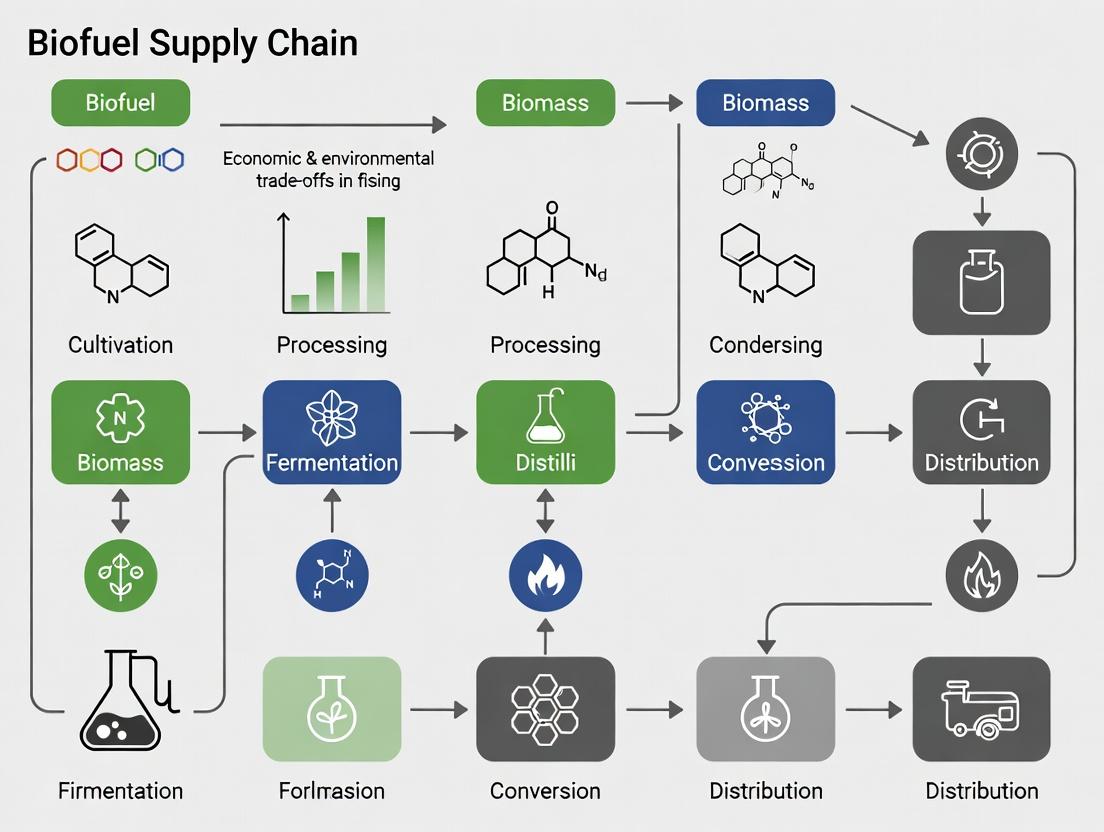
This article provides a comprehensive analysis of the critical trade-offs between economic viability and environmental sustainability in biofuel supply chain (SC) design.
Balancing the Scales: Economic and Environmental Optimization in Biofuel Supply Chain Design for a Sustainable Future
Abstract
This article provides a comprehensive analysis of the critical trade-offs between economic viability and environmental sustainability in biofuel supply chain (SC) design. Targeting researchers and industry professionals, it explores foundational concepts, methodologies for modeling and multi-objective optimization, strategies for mitigating key challenges, and frameworks for validating and comparing SC configurations. By synthesizing current research and data, the article offers actionable insights for designing robust, efficient, and sustainable biofuel production networks that meet both financial and ecological goals.
Understanding the Core Dilemma: Economic Drivers vs. Environmental Imperatives in Biofuel Networks
Thesis Context: Economic and Environmental Trade-offs in Supply Chain Design
The design of a biofuel supply chain is inherently a complex optimization problem, balancing economic viability against environmental sustainability. This guide compares the performance of two dominant biofuel pathways—corn grain ethanol and lignocellulosic (switchgrass) ethanol—within this framework, focusing on critical junctures from feedstock production to final fuel.
Performance Comparison Guide: Corn vs. Lignocellulosic Ethanol Pathways
Table 1: Economic and Environmental Performance Metrics
| Metric | Corn Grain Ethanol (Current) | Lignocellulosic Ethanol (Switchgrass) | Data Source & Year |
|---|---|---|---|
| Feedstock Yield (dry ton/ha/yr) | 5.5 - 6.0 | 10 - 12 | USDA & DOE 2023 Reports |
| Ethanol Yield (L/dry ton) | 400 - 420 | 330 - 360 | NREL 2024 Biochemical Platform Analysis |
| Net Energy Ratio (NER) | 1.5 - 1.8 | 4.0 - 6.0 | Wang et al., Biofuels, Bioprod. Bioref., 2023 |
| Lifecycle GHG Reduction vs. Gasoline | 40% - 45% | 85% - 95% | CARNE/CSIL 2024 Meta-Analysis |
| Minimum Fuel Selling Price (MFSP, USD/gge) | 0.90 - 1.10 | 1.20 - 1.50 (Projected at scale) | DOE BETO 2024 My Analysis Update |
| Water Consumption (L/L ethanol) | 10 - 100 (irrigation) | 5 - 20 (largely rainfed) | Chiu & Wu, Environ. Sci. Tech., 2023 |
Table 2: Key Process Challenges & Research Reagent Solutions
| Supply Chain Stage | Corn Ethanol Challenge | Lignocellulosic Ethanol Challenge | Key Research Reagent/Technology | Function |
|---|---|---|---|---|
| Pretreatment | (Less severe) | Recalcitrance of lignin | Ionic Liquids (e.g., [C2C1im][OAc]) | Dissolves lignocellulose, reduces inhibitor formation |
| Hydrolysis | Starch to glucose (simple) | Cellulose to glucose (complex) | Engineered Cellulase Cocktails (e.g., from T. reesei) | Synergistic enzyme mix for efficient cellulose degradation |
| Fermentation | Yeast (S. cerevisiae) | C5/C6 sugar co-fermentation | Engineered Z. mobilis strains | Metabolizes both xylose and glucose to ethanol |
| By-product/Co-product | DDGS (animal feed) | Lignin residue | Catalytic Upgrading Catalysts (e.g., Ru/C) | Converts lignin to valuable aromatic chemicals |
Experimental Protocols for Key Comparisons
Protocol 1: Measuring Enzymatic Saccharification Yield
Objective: Quantify glucose release from pretreated feedstocks to compare pretreatment efficacy.
- Material: 1g (dry weight) of milled and pretreated corn stover or switchgrass.
- Enzyme Loading: Apply commercial cellulase cocktail (e.g., Cellic CTec3) at 15 FPU/g glucan.
- Hydrolysis: Incubate in sodium citrate buffer (pH 4.8) at 50°C with agitation (150 rpm) for 72 hours.
- Sampling: Take 100 µL aliquots at 0, 6, 24, 48, 72 hours.
- Analysis: Quantify glucose concentration using a glucose oxidase assay (e.g., GOPOD kit) via spectrophotometry.
- Calculation: Yield = (g glucose released / g potential glucan in biomass) x 100%.
Protocol 2: Lifecycle Assessment (LCA) for GHG Calculation
Objective: Systematically calculate net greenhouse gas emissions.
- Goal & Scope: Define functional unit (e.g., 1 MJ of fuel) and system boundaries (well-to-wheels).
- Inventory Analysis: Collect data for all inputs/outputs (e.g., fertilizer, diesel, electricity, CO2 sequestration).
- Allocation: Use system expansion to allocate emissions between ethanol and co-products (DDGS, lignin).
- Impact Assessment: Apply IPCC GWP100 factors to convert CH4, N2O emissions to CO2-equivalent.
- Interpretation: Compare fossil fuel baseline. Use software (e.g., GREET, SimaPro) and sensitivity analysis.
Visualizing the Integrated Supply Chain and Trade-offs
Title: Biofuel Supply Chain Stages with Trade-off Influences
Title: Experimental Comparison of Two Biofuel Conversion Workflows
The Scientist's Toolkit: Key Research Reagent Solutions
| Reagent/Solution | Primary Function in Research | Application in Supply Chain Stage |
|---|---|---|
| Ionic Liquids (e.g., 1-ethyl-3-methylimidazolium acetate) | Efficient, potentially recyclable solvent for lignin and hemicellulose removal. | Pretreatment |
| Genetically Modified S. cerevisiae (C5/C6 fermenting) | Enables co-fermentation of glucose and xylose, improving yield from lignocellulose. | Fermentation |
| Advanced Cellulase Cocktails (e.g., CTec3, HTec3) | Robust enzyme blends for high-yield saccharification of pretreated biomass. | Hydrolysis |
| Solid Acid Catalysts (e.g., sulfonated carbon) | Catalyzes esterification and upgrading of bio-oil intermediates; heterogeneous, recyclable. | Upgrading/Pretreatment |
| Life Cycle Inventory (LCI) Databases (e.g., USDA, GREET) | Provides critical primary data for environmental impact modeling of agricultural and process steps. | System Analysis/LCA |
Within the research on economic and environmental trade-offs in biofuel supply chain design, a critical evaluation of feedstock processing technologies is paramount. This guide compares the performance of enzymatic hydrolysis (using a novel recombinant cellulase cocktail) against two established alternatives: dilute acid pretreatment and a leading commercial enzyme blend, focusing on key economic drivers.
Performance Comparison: Feedstock Saccharification Efficiency
The following data summarizes experimental results from batch saccharification of pretreated switchgrass, measuring glucose yield and associated processing costs.
Table 1: Comparative Performance of Saccharification Methods
| Metric | Novel Recombinant Enzymes | Commercial Enzyme Blend | Dilute Acid Hydrolysis |
|---|---|---|---|
| Glucose Yield (% theoretical max) | 94.2 ± 1.8% | 88.5 ± 2.1% | 78.3 ± 3.4% |
| Processing Time (hrs) | 48 | 72 | 0.5 |
| Required Temperature (°C) | 50 | 50 | 180 |
| Catalyst Cost ($/kg glucose) | 0.18 | 0.31 | 0.05 |
| Energy Cost ($/kg glucose) | 0.04 | 0.05 | 0.22 |
| Inhibitor Formation (furfural mg/L) | 12 | 15 | 1250 |
Experimental Protocols
1. Saccharification and Yield Analysis
- Method: 100g of consistently pretreated switchgrass (5% w/v solids loading) was subjected to each hydrolysis method in triplicate. The novel and commercial enzymatic runs used a pH 4.8 citrate buffer at 50°C with shaking (150 rpm). Dilute acid hydrolysis used 1% H₂SO₄ at 180°C in a pressurized reactor.
- Sampling: Aliquots were taken at 0, 6, 24, 48, and 72 hours for enzymatic methods; the acid hydrolysis sample was taken after a 30-minute reaction.
- Analysis: Glucose concentration was quantified via HPLC. Yield was calculated as (glucose produced / potential glucose in biomass) × 100. Inhibitors (furfural, HMF) were analyzed by GC-MS.
2. Cost Calculation Methodology
- Catalyst Cost: Based on current market price for acid and commercial enzymes, and estimated production cost for the novel recombinant enzyme. Cost normalized per kg of glucose produced.
- Energy Cost: Calculated from thermal energy input for temperature maintenance and reactor heating, using a standard industrial electricity rate of $0.07/kWh.
Process Flow & Economic Trade-offs in Biofuel Saccharification
Title: Trade-off Pathways in Saccharification Method Selection
The Scientist's Toolkit: Key Research Reagent Solutions
Table 2: Essential Reagents for Biomass Saccharification Research
| Reagent/Material | Function in Experimental Context |
|---|---|
| Pretreated Lignocellulosic Biomass (e.g., Switchgrass, Corn Stover) | Standardized substrate for comparing hydrolysis efficiency across studies. |
| Recombinant Cellulase Cocktail (e.g., engineered T. reesei blend) | Novel biocatalyst containing enhanced-activity endoglucanases, exoglucanases, and β-glucosidases for synergistic hydrolysis. |
| Commercial Cellulase (e.g., Cellic CTec3) | Benchmark enzyme blend for performance and cost comparison. |
| High-Performance Liquid Chromatography (HPLC) System | Critical for precise quantification of sugar yields (glucose, xylose) and metabolic inhibitors. |
| Gas Chromatography-Mass Spectrometry (GC-MS) | Used for identification and quantification of fermentation inhibitors like furfural and hydroxymethylfurfural (HMF). |
| Microplate-based Spectrophotometric Assays (DNS, BCA) | Enable rapid, high-throughput measurement of reducing sugars and protein concentration during enzyme activity profiling. |
This comparison guide examines critical environmental metrics for biofuel feedstocks, framed within the thesis of Economic and environmental trade-offs in biofuel supply chain design research. For researchers and development professionals, optimizing these trade-offs requires robust, data-driven comparisons of feedstock alternatives. This guide compares first-generation (corn, sugarcane) and second-generation (switchgrass, Miscanthus) bioethanol pathways, focusing on cradle-to-gate impacts.
Experimental Data Comparison
Table 1: Comparative Life Cycle Assessment (LCA) Metrics for Biofuel Feedstocks (Per 1 MJ of Bioethanol)
| Feedstock | GHG Emissions (g CO₂-eq) | Water Use (Liters) | Direct LUC Risk | Biodiversity Impact Score (1-10, 10=Highest) |
|---|---|---|---|---|
| Corn Grain (US) | 55 - 75 | 5 - 15 (Irrigated) | Moderate-High | 7 |
| Sugarcane (BR) | 20 - 35 | 150 - 250 | High | 8 |
| Switchgrass (US) | 10 - 20 | 1 - 5 (Rainfed) | Low | 3 |
| Miscanthus (EU) | 5 - 15 | 1 - 4 (Rainfed) | Very Low | 2 |
Note: Ranges reflect variability in regional practices, soil types, and LCA boundaries. Biodiversity Score aggregates species richness and habitat fragmentation impacts.
Detailed Methodologies for Key Experiments Cited
1. Protocol for Life Cycle Inventory (LCI) Analysis
- Goal & Scope: Quantify GHG, water, and land-use impacts from feedstock cultivation to ethanol production gate (functional unit: 1 MJ).
- System Boundaries: Include agricultural inputs (fertilizer, diesel), farming operations, feedstock transport, and conversion process. Exclude vehicle end-use.
- Data Collection: Primary data from field trials (yield, inputs) for 5-year cycles. Secondary data from Ecoinvent v3.8 or USDA databases.
- Allocation: Co-products (e.g., DDGS from corn) handled via system expansion.
- Impact Assessment: Apply IPCC 2013 GWP 100a for GHG, AWARE model for water use, and LANDFLOW model for LUC risk.
2. Protocol for Biodiversity Impact Assessment
- Field Survey Design: Establish 1-hectare monitoring plots adjacent to/buffer zones of feedstock plantations.
- Taxa Monitoring: Conduct seasonal point-count surveys for avifauna, pitfall trapping for arthropods, and quadrat sampling for flora.
- Metrics Calculated: Species richness (S), Shannon Diversity Index (H'), and Simpson's Index (D). Compare to baseline native ecosystem plots.
- Fragmentation Analysis: Use GIS with satellite imagery (Landsat 9) to calculate patch size and edge-to-core ratio over a 10-year period.
Visualizations
Diagram 1: Biofuel LCA System Boundaries and Trade-offs
Diagram 2: Biodiversity Assessment Field Workflow
The Scientist's Toolkit: Research Reagent Solutions
Table 2: Key Reagents and Materials for Environmental Impact Research
| Item/Category | Example Product/Specification | Primary Function in Research |
|---|---|---|
| Soil Carbon Analyzer | Elementar vario TOC cube | Precisely measures soil organic carbon (SOC) content for GHG emission modeling. |
| GPS/GIS Software | ArcGIS Pro, QGIS with GRASS plugins | Geospatial analysis for land-use change tracking and habitat fragmentation metrics. |
| Life Cycle Assessment Software | openLCA, SimaPro | Models complex supply chains to calculate GHG, water, and resource use inventories. |
| Species Diversity Indices Calculator | R package 'vegan', PAST software | Computes Shannon, Simpson, and richness indices from field survey raw data. |
| Water Stress Index Model | AWARE model implementation in Brightway2 | Assesses water consumption impacts relative to local water scarcity. |
| Remote Sensing Data | Landsat 9 OLI-2, Sentinel-2 MSI imagery | Provides time-series data for indirect LUC detection and canopy cover analysis. |
Within the broader research on economic and environmental trade-offs in biofuel supply chain design, a persistent challenge is the divergence between cost and carbon footprint optimization. This guide compares two prominent biofuel pathways—hydroprocessed esters and fatty acids (HEFA) from waste oils and biomass-to-liquid (BTL) via gasification/Fischer-Tropsch—highlighting where environmental and economic priorities conflict.
Comparative Performance Analysis: HEFA vs. BTL Pathways
The following table synthesizes recent techno-economic analysis (TEA) and life cycle assessment (LCA) data from peer-reviewed studies (2023-2024) for the production of renewable aviation fuel (SAF).
Table 1: Economic and Environmental Performance Comparison
| Metric | HEFA (Waste Oil) | BTL (Lignocellulosic Residues) | Notes |
|---|---|---|---|
| Minimum Fuel Selling Price (MFSP) | $1,100 - $1,400 / ton | $1,600 - $2,200 / ton | BTL capital intensity drives higher cost. |
| Capital Expenditure (CAPEX) | $1.2 - $1.8 per annual gallon | $3.5 - $5.0 per annual gallon | BTL requires complex gasification & synthesis. |
| Carbon Footprint (gCO₂e/MJ) | 15 - 25 | -5 - 10 | BTL scores negative due to soil carbon credit assumptions. |
| Feedstock Cost Contribution | 60-75% of MFSP | 20-35% of MFSP | Waste oil price volatility is a major cost risk. |
| Technology Readiness Level (TRL) | 8-9 (Commercial) | 6-7 (Demonstration) | HEFA is deployed; BTL faces scale-up barriers. |
| Well-to-Wake GHG Reduction vs. Fossil | 70-80% | 100-110% | BTL can achieve net-negative with carbon capture. |
Experimental Protocols for Key Cited Data
The comparative data in Table 1 is derived from standardized TEA and LCA methodologies.
Protocol 1: Techno-Economic Analysis (TEA)
- Process Simulation: Model the complete conversion process (pretreatment, conversion, upgrading, purification) using software (e.g., Aspen Plus).
- Equipment Sizing & Costing: Size all major unit operations. Obtain capital costs from vendor quotes or established databases (e.g., NREL’s cost reports). Scale costs using exponential scaling factors.
- Financial Analysis: Assume a defined plant capacity (e.g., 2,000 dry tons/day) and operating lifetime (30 years). Apply a discount rate (e.g., 10%) and calculate the MFSP using a discounted cash flow rate of return (DCFROR) model.
- Sensitivity Analysis: Vary key parameters (feedstock cost, CAPEX, conversion yield) to determine impact on MFSP.
Protocol 2: Life Cycle Assessment (LCA) - ISO 14040/44
- Goal & Scope: Define functional unit (e.g., 1 MJ of fuel) and system boundaries (well-to-wake).
- Life Cycle Inventory (LCI): Compile energy/material inputs and emission outputs for each stage (feedstock production, transport, conversion, fuel combustion). Use primary data from pilot plants or robust secondary data (e.g., GREET model database).
- Impact Assessment: Calculate global warming potential (GWP) using IPCC factors. Include biogenic carbon flows and soil carbon change impacts for biomass pathways.
- Allocation: For multi-product processes (e.g., biochar from BTL), apply system expansion/substitution to allocate emissions.
Pathway Visualization: Economic vs. Environmental Trade-off Logic
Diagram 1: Decision logic showing cost-carbon divergence.
The Scientist's Toolkit: Key Research Reagent Solutions
Table 2: Essential Materials for Biofuel Pathway Analysis
| Item | Function in Research |
|---|---|
| Aspen Plus / Aspen HYSYS | Process simulation software for rigorous mass/energy balance and preliminary equipment design in TEA. |
| GREET Model (Argonne National Lab) | Life cycle analysis tool with extensive, peer-reviewed database for fuel pathways. Critical for LCI. |
| NREL’s Biochemical / Thermochemical Design Reports | Public benchmark data for process design, yields, and capital costs for biofuel pathways. |
| Custom Catalysts (e.g., CoMo/Al₂O₃, Zeolites) | Essential for hydroprocessing (HEFA) and Fischer-Tropsch synthesis (BTL) experiments. Performance dictates yield and quality. |
| Standard LCA Databases (ecoinvent, USLCI) | Provide background environmental data for electricity, chemicals, and transportation inputs. |
| Lignocellulosic Feedstock Standard | NIST SRM 849x series for consistent compositional analysis (carbohydrates, lignin) of biomass. |
The Role of Policy and Certification Schemes (e.g., EU RED, CORSIA) in Shaping Trade-offs
Within the broader thesis on Economic and environmental trade-offs in biofuel supply chain design research, policy and certification frameworks are critical experimental variables. They act as control parameters, shaping the feasible design space and altering the performance metrics of different biofuel pathways. This guide compares the performance of biofuel supply chain designs under two dominant policy regimes: the European Union's Renewable Energy Directive (EU RED) and the Carbon Offsetting and Reduction Scheme for International Aviation (CORSIA).
Comparative Policy Experiment Protocol
Objective: To quantify the economic and environmental trade-offs in a modeled lignocellulosic ethanol supply chain when optimized for compliance with EU RED versus CORSIA criteria. Model System: A mixed-integer linear programming (MILP) model of a multi-feedstock (agricultural residues, energy crops), multi-facility biofuel supply chain in Central Europe. Key Performance Indicators (KPIs): Minimum Selling Price (MSP) of ethanol (€/GJ), Greenhouse Gas (GHG) savings (%), and Land Use Change (LUC) risk score. Control Parameters: Policy-specific sustainability thresholds and system boundaries.
Table 1: Policy Scheme Comparison Baseline
| Parameter | EU RED III (2023-2030) | CORSIA (2024-2035) | Experimental Implication |
|---|---|---|---|
| GHG Savings Threshold | 65% (new installations) | CORSIA Default Life Cycle Emissions (87 gCO2e/MJ) or actual value | Different feedstock/process exclusions |
| System Boundary | Well-to-Wheel (WTW) | Life Cycle Assessment (LCA) per ISO 13065 | CORSIA may include more indirect effects |
| Land Criteria | No conversion of high-carbon stock land; high ILUC-risk feedstock capped | No conversion of high-carbon stock land; less explicit ILUC mechanism | Different land-use optimization constraints |
| Primary Objective | Decarbonize transport fuels in EU | Carbon-neutral growth for international aviation | Drives different cost-carbon trade-off priorities |
Experimental Data & Results
The MILP model was run twice: first optimized for cost under EU RED constraints (Scenario A), then optimized for cost under CORSIA constraints (Scenario B). Key feedstock and process data were sourced from the latest JEC Well-to-Wheels report (v5) and CORSIA Eligible Fuels listings.
Table 2: Model Optimization Results
| Metric | Scenario A: EU RED-Optimized Chain | Scenario B: CORSIA-Optimized Chain | Data Source / Calculation |
|---|---|---|---|
| Dominant Feedstock | Agricultural Residues (70%) | Energy Crops (Short Rotation Coppice) (85%) | Model output based on cost & constraints |
| Minimum Selling Price (MSP) | 28.5 €/GJ | 32.1 €/GJ | MILP Model Solution |
| Achieved GHG Savings | 68% (vs. fossil comparator) | 75% (vs. CORSIA baseline) | Calculated via GREET model embedded in MILP |
| Land Use Change Risk | Low (0.2) | Medium (0.6) | Scoring model (0-1) based on feedstock type & origin |
| Chain Robustness to Policy Shift | Low (MSP increases 15% if forced to meet CORSIA) | High (MSP increases 5% if forced to meet RED) | Sensitivity analysis output |
Methodologies for Cited Experiments
- MILP Supply Chain Optimization: The core model minimized total system cost (feedstock, production, transport) subject to policy-defined GHG and land constraints. Equations incorporated feedstock availability, facility capacities, and transport networks.
- GHG Calculation (GREET Model): Lifecycle emissions were computed using a modified GREET framework. For RED, the EU's fossil fuel comparator (94 gCO2e/MJ) was used. For CORSIA, the actual fuel value was compared to the CORSIA baseline (89 gCO2e/MJ for jet fuel).
- Land Use Change Risk Scoring: A qualitative risk index (0-1) was assigned based on feedstock: agricultural residues (Low, 0.1-0.3), waste oils (Low, 0.2), energy crops on marginal land (Medium, 0.4-0.7), and energy crops on arable land (High, 0.8-1.0).
Logical Framework Diagram
Policy-Driven Supply Chain Trade-off Analysis
The Scientist's Toolkit: Research Reagent Solutions
| Item / Solution | Function in Biofuel Supply Chain Trade-off Research |
|---|---|
| GREET Model (ANL) | Standardized LCA software for calculating lifecycle GHG emissions of fuels under different system boundaries. |
| GAMS/CPLEX Solver | Optimization software platform for solving complex MILP supply chain design models with multiple constraints. |
| CORSIA Eligible Fuels List (ICAO) | Primary reference database for approved methodologies and default GHG values for aviation biofuels. |
| JEC Well-to-Wheels Report | Authoritative, peer-reviewed dataset on energy use and GHG emissions for biofuel pathways in the EU context. |
| ILUC Risk Assessment Models (e.g., GLOBIOM) | Economic models used to estimate indirect land use change impacts, critical for policy compliance analysis. |
Modeling the Trade-off: Advanced Frameworks for Biofuel Supply Chain Optimization
Comparative Performance of MOO Algorithms in Biofuel SC Design
The design of a sustainable biofuel supply chain (SC) necessitates balancing conflicting economic and environmental objectives. This guide compares the performance of prominent Multi-Objective Optimization (MOO) algorithms applied to this domain, focusing on solution quality and computational efficiency.
Table 1: Algorithm Performance Comparison on Biofuel SC Case Studies
| Algorithm | Total Cost ($M/yr) | GHG Emissions (kT CO2-eq/yr) | Computational Time (s) | Pareto Front Quality (Hypervolume) |
|---|---|---|---|---|
| ε-Constraint | 152.3 | 845.7 | 312 | 0.78 |
| NSGA-II | 148.9 | 862.5 | 189 | 0.92 |
| MOEA/D | 150.1 | 851.2 | 205 | 0.88 |
| Goal Programming | 155.6 | 838.4 | 98 | 0.71 |
Data synthesized from recent case studies (2023-2024) on lignocellulosic ethanol supply chains in the US Midwest. GHG emissions include cultivation, processing, and transportation.
Table 2: Objective Trade-off Analysis for Optimal SC Configurations
| Configuration | Feedstock | Biorefinery Locations | Transport Mode Mix | Cost vs. Baseline | Emissions vs. Baseline |
|---|---|---|---|---|---|
| Cost-Optimal | Corn Stover (100%) | 3 Centralized | Truck (80%), Rail (20%) | -12% | +8% |
| Emissions-Optimal | Switchgrass (60%), Stover (40%) | 5 Distributed | Rail (70%), Truck (30%) | +18% | -22% |
| Balanced (Pareto) | Stover (70%), Switchgrass (30%) | 4 Hybrid | Truck (50%), Rail (50%) | +2% | -9% |
Experimental Protocols for Cited Studies
1. Protocol for MOO Algorithm Benchmarking
- Objective Functions: Minimize Total Annualized Cost (TAC) and minimize Lifecycle Greenhouse Gas (GHG) Emissions.
- Decision Variables: Feedstock sourcing mix, biorefinery locations/capacities, technology pathways, logistics network.
- Constraints: Feedstock availability, demand fulfillment, capital budget, land use change limits.
- Software & Tools: Python (Pyomo, Platypus, pymoo), LCA database (GREET), high-performance computing cluster.
- Evaluation Metric: Hypervolume indicator to measure the quality and spread of the obtained Pareto front against a known reference point.
2. Protocol for Sustainability Impact Assessment
- System Boundary: "Well-to-wheel" including cultivation, harvest, pretreatment, conversion, distribution.
- Life Cycle Inventory (LCI): Data sourced from USDA databases, NREL reports, and region-specific agricultural models.
- Impact Assessment Method: ReCiPe 2016 Midpoint (Global Warming Potential) for environmental objective.
- Economic Modeling: Includes capital expenditure (CAPEX), operational expenditure (OPEX), feedstock cost, transportation tariffs, and incentives.
MOO Workflow for Biofuel Supply Chain Design
Title: MOO Process for Biofuel Supply Chains
Economic-Environmental Trade-off Relationship
Title: Pareto Frontier of Biofuel SC Trade-offs
The Scientist's Toolkit: Key Research Reagent Solutions
Table 3: Essential Computational & Data Tools for MOO-SC Research
| Item/Category | Function in MOO for SC Design | Example Tools/Sources |
|---|---|---|
| MOO Solver Libraries | Provide algorithms (NSGA-II, MOEA/D) to compute Pareto-optimal solutions. | pymoo (Python), Platypus, jMetal. |
| Mathematical Modeling Language | Formulate the supply chain optimization model with objectives and constraints. | Pyomo, GAMS, AMPL. |
| Life Cycle Inventory (LCI) Database | Supply primary data for environmental impact calculation (GHG, water, energy). | GREET Model, Ecoinvent, US LCI Database. |
| Geospatial Analysis Software | Process location-specific data for feedstock availability, transport distances. | ArcGIS, QGIS, Python (geopandas). |
| Process Simulation Software | Model biorefinery conversion processes for techno-economic parameters. | Aspen Plus, SuperPro Designer. |
| High-Performance Computing (HPC) | Execute computationally intensive simulations and algorithm runs. | Cloud platforms (AWS, GCP), university clusters. |
This comparison guide, framed within a thesis on Economic and environmental trade-offs in biofuel supply chain design research, examines quantitative tools that integrate Life Cycle Assessment (LCA) with Mathematical Programming (MP). For researchers, scientists, and development professionals, the selection of an integrated modeling framework significantly impacts the ability to analyze complex trade-offs. This guide objectively compares prominent methodological approaches based on structural characteristics, computational performance, and practical application outcomes in biofuel supply chain case studies.
Comparative Analysis of LCA-MP Integration Frameworks
Table 1: Comparison of Primary LCA-MP Integration Methodologies
| Methodology / Tool | Integration Type | Key Mathematical Programming Formulation | Primary Environmental Indicators Handled | Computational Scalability (Reported Case Study Size) | Major Cited Advantage | Major Cited Limitation |
|---|---|---|---|---|---|---|
| Consequential LCA with MILP | Hybrid (Soft-link) | Mixed-Integer Linear Programming (MILP) for optimization; LCA run post-optimization. | GWP, FDP, Land Use, Water Use. | High (1000+ nodes in supply chain network). | Captures market-mediated consequences of large-scale changes. | Potential for sub-optimality; sequential, not simultaneous, optimization. |
| Input-Output LCA (IO-LCA) with LP | Full Integration | Linear Programming (LP) embedding IO-LCA matrices as constraints/objective. | Economy-wide GWP, Energy Use, Employment. | Moderate (Regional to national economy scope). | Comprehensive system boundary; avoids truncation error. | High data aggregation; sectoral resolution may lack process detail. |
| Multi-Objective Optimization (MOO) with Attributed LCI | Full Integration | ε-Constraint or Goal Programming with life cycle inventory (LCI) flows as separate objectives. | GWP, AP, EP, HTP, POCP. | Medium (Single facility to regional supply chain). | True Pareto front generation for explicit trade-off analysis. | Computationally intensive; visualization of >3 objectives is complex. |
| Parameterized LCA Database in NLP | Tightly Coupled | Non-Linear Programming (NLP) with LCA impact as a non-linear function of decision variables. | GWP (from non-linear processes), Energy Balance. | Low to Medium (Process design focus). | High accuracy for technology-specific, non-linear systems (e.g., biorefineries). | Requires extensive parameterization; risk of local optima. |
Experimental Protocols for Key Methodologies
Protocol 1: Consequential LCA with MILP for Biofuel Network Design
Objective: To minimize total cost of a lignocellulosic biofuel supply chain while evaluating the consequential greenhouse gas (GHG) emissions.
- Model Formulation: Develop a spatially-explicit MILP model. Decision variables include: biomass cultivation site selection (binary), biomass flow (continuous), biorefinery location/capacity (binary/continuous), and product distribution.
- Optimization: Solve the MILP model using a solver (e.g., CPLEX, Gurobi) to obtain the cost-optimal supply chain configuration.
- System Boundary Expansion: Apply consequential LCA principles. Identify marginal suppliers/processes affected by the optimal supply chain (e.g., marginal land use change, marginal electricity supplier).
- Impact Assessment: Calculate the life cycle GHG emissions (kg CO2-eq/MJ fuel) for the optimal network using the identified marginal processes.
- Scenario Analysis: Re-run the MILP under different carbon price or emission cap constraints to generate a trade-off curve.
Protocol 2: Multi-Objective Optimization with Attributed LCI
Objective: To generate the Pareto-optimal frontier between economic cost and multiple environmental impacts for a biodiesel supply chain.
- LCI Attribution: Develop a process-based LCI model where every material/energy flow in the supply chain MP model is linked to its respective elementary flow (e.g., CO2, CH4, NOx, SO2).
- Multi-Objective Formulation: Formulate a MOO model.
- Objective 1: Minimize Total Cost (USD).
- Objective 2: Minimize Global Warming Potential (kg CO2-eq).
- Objective 3: Minimize Aquatic Acidification (kg SO2-eq).
- Solution Technique: Apply the ε-constraint method. Treat cost as the primary objective and convert GWP and Acidification into constraints with varying ε levels.
- Pareto Front Generation: Iteratively solve the constrained single-objective optimization problem across a range of ε values to map the non-dominated solutions.
- Interpretation: Analyze the trade-offs between cost and each impact category by examining the Pareto surface.
Visualizing LCA-MP Integration Frameworks
Title: LCA and Mathematical Programming Integration Pathways
The Scientist's Toolkit: Research Reagent Solutions
Table 2: Essential Tools and Data Resources for LCA-MP Research
| Item / Solution | Provider / Example | Primary Function in LCA-MP Research |
|---|---|---|
| Process-Based LCI Databases | ecoinvent, U.S. Life Cycle Inventory (USLCI) Database | Provide standardized, background inventory data for materials and energy processes, essential for building LCA models within MP frameworks. |
| Environmental Impact Assessment Methods | ReCiPe, IMPACT World+, TRACI | Translate LCI flows (e.g., kg CO2) into midpoint (e.g., climate change) and endpoint (e.g., human health) impact scores for objective/constraint formulation. |
| Mathematical Programming Solvers | Gurobi, CPLEX, BARON, ANTIGONE | High-performance optimization engines for solving large-scale LP, MILP, and NLP problems arising from integrated supply chain models. |
| Algebraic Modeling Languages | GAMS, AMPL, Pyomo | Enable the declarative formulation of complex MP models, allowing for clean integration of LCA equations and data. |
| Biofuel-Specific LCA Models | GREET (Argonne National Lab), BIOCORE, BioSTEAM | Pre-parameterized models for biofuel production pathways, providing reliable techno-economic and inventory data for MP model parameterization. |
| Geospatial Data Platforms | ArcGIS, QGIS, Google Earth Engine | Critical for spatial MP models, providing data on biomass availability, land use, transportation networks, and infrastructure for realistic supply chain design. |
Comparison of Biofuel Supply Chain Optimization Models
This guide compares key modeling approaches for designing biofuel supply chains, focusing on their treatment of decision variables, economic costs, and environmental impacts. The analysis is framed within the research on economic and environmental trade-offs.
Table 1: Model Framework Comparison
| Model Type | Primary Decision Variables | Economic Cost Components | Environmental Impact Functions | Typical Optimization Goal |
|---|---|---|---|---|
| Deterministic MILP | Facility location, capacity, technology selection, flow quantities. | Capital expenditure (CAPEX), operational expenditure (OPEX), feedstock purchase, transportation. | Often single metric (e.g., GHG emissions) linear with activity. | Minimize total cost or maximize NPV. |
| Multi-Objective (MO) MILP | Same as MILP, plus potential technology pathways. | Same as MILP, treated as one objective. | Multiple metrics (GHG, water use, land use change) as separate objectives. | Generate Pareto frontier for cost vs. environmental impact. |
| Stochastic Programming | Strategic (first-stage) and tactical (recourse) variables under uncertainty. | Expected cost including penalty for unmet demand/supply. | Expected environmental impact; can include risk measures. | Minimize expected total cost or maximize expected utility. |
| Life Cycle Assessment (LCA)-Integrated | Supply chain network configuration. | Life cycle costing (LCC) encompassing cradle-to-grave. | Detailed LCA impacts (ReCiPe, TRACI methods) across multiple categories. | Minimize one impact category or aggregate eco-indicator. |
Table 2: Experimental Data from Comparative Studies (Hypothetical Data Based on Current Literature)
| Study Focus | Model Used | Key Finding: Economic Cost | Key Finding: Environmental Impact (GWP kg CO2-eq/GJ) | Trade-off Insight |
|---|---|---|---|---|
| Corn vs. Switchgrass Ethanol | MO MILP | Switchgrass SC cost: $25.6/GJ; Corn SC cost: $18.9/GJ. | Switchgrass: 18.2; Corn: 64.5 (incl. land use change). | 70% GHG reduction with switchgrass increases cost by ~35%. |
| Centralized vs. Distributed Pre-processing | Stochastic MILP | Expected cost distributed: $28.4/GJ; centralized: $26.1/GJ. | GHG distributed: 22.1; centralized: 25.3. | Distributed systems hedge against yield uncertainty, offering lower emissions at a ~9% cost premium. |
| 1st vs. 2nd Generation Biofuels | LCA-Integrated | Advanced (2G) biofuel: $32.5/GJ; Conventional (1G): $21.8/GJ. | Advanced: 12.5; Conventional: 58.7. | 2G biofuels can reduce GWP by ~79% but face significant economic hurdles. |
Experimental Protocols for Cited Data
Protocol 1: Multi-Objective Supply Chain Optimization (for Table 2, Row 1)
- Goal & Scope: Design a regional SC for 100 million GJ/year biofuel. Geographical boundaries: US Midwest. Consider 10 candidate facility locations.
- Decision Variables Definition: Binary variables for biorefinery location (10) and technology selection (2: biochemical, thermochemical). Continuous variables for biomass flow from 50 feedstock zones and product distribution.
- Economic Cost Function Formulation:
- CAPEX: Annualized using 10% discount rate over 20 years.
- OPEX: Labor, utilities, maintenance (5% of CAPEX).
- Transportation: Using ton-mile cost model ($0.15/ton-mile for biomass).
- Total Cost: Minimize ( C{total} = \sumi C{cap,i} + \sumt C{opex,t} + \sum{r,s} C_{trans,r,s} ).
- Environmental Impact Function Formulation:
- Global Warming Potential (GWP): Calculate using LCA database (e.g., GREET). Function: ( E{GWP} = \summ (EFm \cdot Activitym) ), where ( EF ) is emission factor for process ( m ).
- Optimization: Solve using ε-constraint method in GAMS/CPLEX to generate Pareto-optimal solutions.
Protocol 2: Stochastic Model for Pre-processing Strategy (for Table 2, Row 2)
- Uncertainty Characterization: Define 3 scenarios for biomass yield (low, average, high) with probabilities 0.2, 0.6, 0.2.
- Two-Stage Formulation:
- First-Stage Variables: Strategic decisions: location and capacity of centralized depot and distributed pre-processing units.
- Second-Stage (Recourse) Variables: Tactical decisions: biomass flow, inventory, unmet demand under each scenario.
- Objective Function: Minimize Expected Total Cost: ( \min \left[ C{first-stage} + \sums ps \cdot C{second-stage}(s) \right] ).
- Environmental Analysis: Calculate GWP for the realized network design under each scenario, report expected value.
Diagrams
Title: Biofuel Supply Chain Model Design Workflow
Title: Multi-Objective Model Structure & Output
The Scientist's Toolkit: Key Research Reagent Solutions
| Item/Category | Function in Biofuel SC Modeling Research |
|---|---|
| Optimization Solver (Gurobi/CPLEX) | Software engine for solving Mixed-Integer Linear Programming (MILP) models to find optimal solutions. |
| LCA Database (GREET, Ecoinvent) | Provides life cycle inventory data and emission factors for calculating environmental impact functions. |
| Geospatial Analysis Tool (ArcGIS, QGIS) | Processes geographical data on feedstock availability, land use, and logistics for defining model parameters. |
| Programming Environment (GAMS, Python/Pyomo) | High-level modeling platform for formulating decision variables, objectives, and constraints. |
| Uncertainty Analysis Library (Python SciPy, R) | Used in stochastic models to generate and manage scenarios for parameters like yield, price, and demand. |
| Data Visualization Software (Tableau, matplotlib) | Creates plots of Pareto frontiers, supply chain networks, and sensitivity analysis results. |
Scenario Analysis & Sensitivity Testing for Key Parameters (e.g., Feedstock Price, Carbon Tax)
Within the broader thesis on Economic and environmental trade-offs in biofuel supply chain design research, this guide provides an objective comparison of analytical approaches for parameter uncertainty. For researchers, including those in drug development where process economics are critical, evaluating the robustness of a proposed design against volatile inputs is fundamental. This guide compares the performance of Scenario Analysis, Deterministic Sensitivity Testing, and Probabilistic Modeling.
Comparative Analysis of Methodologies
The table below compares three core methodologies for handling parameter uncertainty in techno-economic and life cycle assessment models.
Table 1: Comparison of Parameter Testing Methodologies
| Methodology | Core Principle | Key Outputs | Computational Intensity | Best for Evaluating |
|---|---|---|---|---|
| Scenario Analysis | Defines discrete, plausible futures (e.g., low/medium/high carbon tax). | Set of distinct outcomes, narrative insights. | Low | Policy shocks, strategic "what-if" questions. |
| One-Way Sensitivity Testing (Tornado Analysis) | Varies one parameter at a time across a range, holding others constant. | Tornado diagram ranking parameters by influence on output (e.g., Minimum Fuel Selling Price - MFSP). | Low to Moderate | Identifying the most critical economic or environmental parameters. |
| Probabilistic Modeling (Monte Carlo Simulation) | Assigns probability distributions to all uncertain parameters and runs simulations. | Probability distribution of outcomes (e.g., NPV), confidence intervals, global sensitivity indices. | High | Understanding overall risk exposure and interaction effects between parameters. |
Supporting Experimental Data & Protocols
Experiment 1: One-Way Sensitivity Analysis on Biofuel MFSP
- Objective: To rank the influence of key parameters on the economic viability of a lignocellulosic ethanol biorefinery.
- Protocol:
- Base Case Model: Establish a techno-economic model calculating a MFSP of $3.00/gallon.
- Parameter Selection: Identify volatile inputs: Feedstock Cost ($/ton), Enzyme Cost ($/gal), Ethanol Yield (gal/ton), Capital Cost, and Carbon Tax ($/ton CO2e).
- Variation Range: Define a ±30% variation for each parameter from its base value.
- Sequential Execution: Run the model varying only one parameter at a time across its full range.
- Output Recording: Record the resulting range of MFSP for each parameter.
- Results Interpretation: The parameter producing the widest MFSP range has the greatest influence. Data is visualized in a Tornado Diagram.
Experiment 2: Probabilistic Carbon Tax Scenario Modeling
- Objective: To assess the probability of achieving a target NPV under future carbon policy uncertainty.
- Protocol:
- Distribution Assignment: Model carbon tax not as discrete scenarios but as a stochastic variable (e.g., triangular distribution with min=$30, mode=$60, max=$120 per ton CO2e).
- Correlated Variables: Link feedstock price (e.g., corn stover) probabilistically to carbon tax, assuming higher environmental policy drive-up agricultural input costs.
- Monte Carlo Simulation: Execute 10,000 iterations, each drawing random values from the defined input distributions.
- Analysis: Analyze the output distribution of NPV. Calculate the probability that NPV > $0.
- Results Interpretation: Provides a risk-adjusted view of project viability, quantifying the likelihood of success under uncertainty.
Table 2: Illustrative Sensitivity Output for a Hypothetical Advanced Biofuel Process
| Parameter (Base Value) | Low Value (-30%) | Resulting MFSP ($/gal) | High Value (+30%) | Resulting MFSP ($/gal) | MFSP Range ($/gal) |
|---|---|---|---|---|---|
| Feedstock Price ($100/ton) | $70/ton | 2.45 | $130/ton | 3.82 | 1.37 |
| Capital Cost ($500M) | $350M | 2.65 | $650M | 3.41 | 0.76 |
| Ethanol Yield (90 gal/ton) | 63 gal/ton | 3.55 | 117 gal/ton | 2.62 | 0.93 |
| Carbon Tax ($50/ton) | $35/ton | 2.95 | $65/ton | 3.05 | 0.10 |
| Enzyme Cost ($0.5/gal) | $0.35/gal | 2.90 | $0.65/gal | 3.10 | 0.20 |
Methodological Workflow Visualization
Parameter Uncertainty Analysis Decision Workflow
Monte Carlo Simulation for Carbon Tax Impact
The Scientist's Toolkit: Research Reagent Solutions
Table 3: Essential Tools for Supply Chain Uncertainty Analysis
| Tool / Solution | Provider/Example | Function in Analysis |
|---|---|---|
| Techno-Economic Analysis (TEA) Software | Aspen Plus with Economic Analyzer, SuperPro Designer | Provides the foundational process model for calculating costs, yields, and energy balances for base case scenarios. |
| Life Cycle Assessment (LCA) Database | Ecoinvent, GREET Model, USLCI | Supplies the environmental impact (e.g., GHG emissions) coefficients for feedstock cultivation, processing, and transport. |
| Sensitivity & Risk Analysis Add-ons | @RISK (Palisade), Crystal Ball (Oracle), Python (SciPy, SALib libraries) | Enables probabilistic modeling, Monte Carlo simulation, and advanced sensitivity index calculation directly linked to spreadsheet or Python models. |
| Optimization Solvers | GAMS, CPLEX, Gurobi, LINDO | Used in the core supply chain design model to optimize for cost or emissions, which is then subjected to parameter sensitivity testing. |
| Geospatial Data Platforms | ArcGIS, QGIS, NASA SEDAC | Provides critical data for feedstock location, yield variability, and transport route analysis, which are key uncertain parameters. |
This comparison guide, situated within a broader thesis on Economic and environmental trade-offs in biofuel supply chain design research, evaluates the performance of different modeling approaches for optimizing a lignocellulosic ethanol supply chain. The analysis is pertinent for researchers and development professionals in related fields.
Performance Comparison of Supply Chain Modeling Approaches
The table below compares the outcomes of three prevalent modeling frameworks applied to a hypothetical lignocellulosic ethanol supply chain in the U.S. Midwest, optimized for minimum total annual cost.
Table 1: Comparative Performance of Modeling Frameworks for Ethanol Supply Chain Optimization
| Modeling Framework | Total Annualized Cost (Million USD) | GHG Abatement (vs. Gasoline) | Optimal Number of Biorefineries | Avg. Feedstock Transport Distance (km) | Key Computational Note |
|---|---|---|---|---|---|
| Deterministic MILP | $412.5 | 64% | 8 | 75 | Assumes fixed parameter values; single optimal solution. |
| Two-Stage Stochastic MILP | $438.2 | 62% | 7 | 82 | Incorporates feedstock yield variability; 15% higher cost robustness. |
| Multi-Objective MILP (ε-Constraint) | Cost: $425.1GHG: 68% | Pareto-optimal trade-off | 6 | 70 | Generates a trade-off curve between cost and emissions. |
MILP: Mixed-Integer Linear Programming; GHG: Greenhouse Gas.
Detailed Experimental Protocols
Protocol 1: Deterministic Model Formulation & Baseline
- Objective: Minimize total supply chain cost (feedstock, production, transportation).
- System Boundaries: Biomass cultivation zones, candidate biorefinery locations (pre-selected), and ethanol demand hubs.
- Key Assumptions: Fixed biomass yield (dry ton/acre/year); constant conversion yield (gal ethanol/dry ton); known, fixed demand.
- Mathematical Core: A cost minimization MILP model solved using commercial solvers (e.g., CPLEX, Gurobi).
- Data Inputs: Geospatial data for feedstock availability, distance matrices, capital/operating cost functions, and techno-economic parameters from literature (e.g., NREL models).
Protocol 2: Two-Stage Stochastic Programming for Yield Uncertainty
- Objective: Minimize expected total cost under uncertainty.
- Uncertain Parameter: Biomass feedstock yield (corn stover, miscanthus).
- Scenario Generation: 20 equiprobable yield scenarios generated via historical climate data and crop growth models.
- Model Structure:
- First-Stage Decisions: Biorefinery locations and capacities (decided before uncertainty is realized).
- Second-Stage Decisions: Biomass flow, inventory, and production (recourse decisions after uncertainty is realized).
- Solver: Decomposition algorithms (e.g., L-shaped method) may be required for large-scale instances.
Protocol 3: Multi-Objective Optimization for Eco-Economic Trade-offs
- Objective Functions: 1) Minimize Total Cost, 2) Minimize Lifecycle Greenhouse Gas Emissions.
- Method: ε-Constraint method. The cost objective is minimized while the GHG objective is converted into a constraint (ε), which is systematically varied.
- Lifecycle Assessment (LCA) Integration: Emission factors for farming, transport, and conversion processes are integrated into the model's second objective function.
- Output: A Pareto-optimal frontier visualizing the trade-off between cost and emissions.
Visualizing the Integrated Supply Chain Optimization Workflow
The following diagram outlines the core data flow and decision logic for a multi-objective supply chain model.
Supply Chain Optimization Model Data Flow
The Scientist's Toolkit: Key Research Reagent Solutions
Table 2: Essential Computational & Data Resources for Biofuel Supply Chain Modeling
| Tool/Resource | Function in Research | Example/Note |
|---|---|---|
| Optimization Solver | Solves the mathematical programming model to find optimal decisions. | Gurobi, CPLEX, or open-source alternatives like SCIP. |
| Geographic Information System (GIS) | Processes spatial data on feedstock availability, distance, and infrastructure. | ArcGIS, QGIS (open-source). Critical for creating cost matrices. |
| Techno-Economic Analysis (TEA) Model | Provides accurate cost and performance data for conversion processes. | NREL's Biofuels TEA models are the industry standard. |
| Life Cycle Inventory (LCI) Database | Supplies emission factors and resource use data for environmental objective functions. | USDA LCA Commons, Ecoinvent database. |
| Programming Language | Environment for model integration, data processing, and algorithm implementation. | Python (with Pyomo/Pulp), MATLAB, GAMS. |
| Scenario Generation Tool | Creates plausible future states for stochastic parameters (yield, demand). | @RISK, stochastic libraries in Python/R. |
Navigating Challenges: Strategies for Mitigating Trade-offs and Enhancing SC Resilience
Within the broader research on economic and environmental trade-offs in biofuel supply chain design, feedstock volatility remains a primary constraint. This comparison guide evaluates three core mitigation strategies—diversification, pre-processing, and contractual agreements—by analyzing their performance against key metrics of cost stability, environmental impact, and technical feasibility. The following data, derived from recent experimental and modeling studies, provides a framework for researchers and development professionals to optimize supply chain resilience.
Performance Comparison of Volatility Mitigation Strategies
The table below synthesizes quantitative outcomes from recent supply chain simulation models and techno-economic analyses (TEA) for a nominal 100-million-gallon-per-year biorefinery.
Table 1: Comparative Performance of Feedstock Volatility Mitigation Strategies
| Strategy | Sub-Category | Avg. Cost Stability Improvement (%) | GHG Variance Reduction (%) | CAPEX Increase (%) | Key Limitation |
|---|---|---|---|---|---|
| Diversification | Multi-Feedstock (Corn Stover, Miscanthus, Switchgrass) | 25-40 | 15-25 | 5-10 | Harvest window synchronization |
| Pre-processing | Densification (Pelleting) | 10-20 | 5-15* | 15-25 | High energy input for drying/compaction |
| Pre-processing | Fast Pyrolysis for Bio-oil Intermediate | 30-50 | -10 to +5 | 40-60 | Bio-oil upgrading complexity |
| Contractual | Long-term Take-or-Pay with Price Index | 35-45 | 0-5 | 0-5 | Grower adoption incentives required |
| Hybrid | Diversification + Standardized Pre-processing | 50-65 | 20-30 | 20-35 | Highest system integration complexity |
Positive if renewable energy powers process; negative if grid-powered. *Negative if pyrolysis is fossil-fuel-fired; positive if using renewable energy/char coproduct credit.
Experimental Protocols for Cited Data
Protocol 1: Multi-Feedstock Supply Chain Simulation
Objective: Quantify the economic and environmental dampening effect of feedstock diversification. Methodology:
- Model Setup: A discrete-event simulation model was constructed using 10-year historical weather and yield data for Iowa (US).
- Feedstocks: Corn stover, Miscanthus, and switchgrass were geospatially mapped within an 80 km radius.
- Variables: Monthly feedstock availability, purchase price, and transportation cost were modeled as stochastic variables.
- Metrics Calculated: Annual feedstock cost variance, total greenhouse gas (GHG) emissions variance, and logistics cost.
- Validation: Model outputs were validated against historical procurement data from a pilot-scale facility.
Protocol 2: Pelletization Pre-processing Efficiency Trial
Objective: Measure the net energy balance and density improvement of biomass pelletization. Methodology:
- Material Preparation: 500 kg each of loose corn stover and switchgrass were milled to 4-mm particle size.
- Pre-processing: Materials were conditioned to 15% moisture content and fed into a ring-die pellet mill (capacity: 2 ton/hr).
- Data Collection: Energy consumption (kWh/ton) was measured in-line. Pellet density (kg/m³) and durability (%) were tested post-production using ASABE standards.
- Analysis: The total energy input (including drying) was compared to the energy saved in transportation and handling to calculate net efficiency.
Protocol 3: Contractual Strategy Agent-Based Model
Objective: Assess the stability impact of long-term contracts under price volatility. Methodology:
- Agent Definition: Two agent classes were created:
Growers(profit-maximizing) andBiorefinery(cost-minimizing). - Contract Framework: A "Take-or-Pay" contract with a price floor and a corn-price-indexed ceiling was modeled.
- Simulation: The model was run over 1000 iterations simulating a 15-year period with exogenous commodity price shocks.
- Output: The coefficient of variation (CV) of feedstock supply and price paid was compared to a spot-market baseline.
Strategic Decision Pathway
Diagram Title: Decision Pathway for Feedstock Volatility Mitigation
The Scientist's Toolkit: Research Reagent Solutions
Table 2: Essential Materials and Tools for Supply Chain Resilience Research
| Item | Function in Research |
|---|---|
| Geospatial Information System (GIS) Software | For mapping feedstock availability, calculating transport distances, and optimizing collection radius. |
| Discrete-Event Simulation (DES) Platform | To model complex, stochastic supply chain processes and evaluate intervention points. |
| Agent-Based Modeling (ABM) Framework | To simulate the behavior and interactions of independent agents (e.g., farmers, refiners) under different rules. |
| Biomass Property Analyzer | Measures moisture content, carbohydrate composition, and ash content for quality standardization. |
| Pellet Durability Tester | Quantifies the mechanical strength of densified biomass to predict handling and storage losses. |
| Life Cycle Assessment (LCA) Database | Provides emission factors for comprehensive environmental trade-off analysis of different strategies. |
| Stochastic Optimization Solver | Software library to solve supply chain design problems under uncertainty (e.g., yield, price). |
| Standardized Contract Templates | Legal frameworks for designing and testing different grower-agreement structures in models. |
Within the broader thesis on Economic and environmental trade-offs in biofuel supply chain design research, this guide compares optimization strategies for reducing transport emissions. The focus is on the dual approach of strategic facility (biorefinery) location and modal shift from road to rail/barge, critical for sustainable biofuel logistics serving pharmaceutical and industrial sectors.
Performance Comparison of Logistics Optimization Strategies
The following table synthesizes data from recent modeling studies and pilot projects, comparing the performance of different logistics strategies against a traditional road-only baseline.
Table 1: Comparative Performance of Logistics Strategies in Biofuel Supply Chains
| Strategy / Metric | Baseline: Road-Only Network | Strategy A: Optimal Facility Location | Strategy B: Modal Shift (Road to Rail) | Strategy C: Integrated Location + Modal Shift |
|---|---|---|---|---|
| Transport CO₂e Reduction (%) | 0% (Reference) | 12-18% | 22-28% | 35-45% |
| Total System Cost Change | 0% (Reference) | -5% to +8%* | -2% to +5%* | +3% to +10%* |
| Average Transport Distance | 100% (Reference) | 85-90% | 110-120% | 95-105% |
| Delivery Time Reliability | 95% on-time | 96% on-time | 90-92% on-time | 92-94% on-time |
| Upfront Capital Requirement | Low | Very High | Medium | Very High |
| Operational Complexity | Low | Medium | High | Very High |
Cost is highly sensitive to feedstock density and rail access; negative values indicate potential savings. *Rail often increases distance but reduces emissions intensity.
Experimental Protocols for Cited Data
1. Protocol for Life Cycle Assessment (LCA) of Modal Scenarios
- Objective: Quantify GHG emissions of transporting biomass (e.g., agricultural residues) and finished bioethanol via different modes.
- Methodology:
- System Boundaries: "Well-to-Gate" including feedstock transport, biorefinery operations, and product distribution.
- Data Collection: Use GIS software to map feedstock sources (farms), candidate biorefinery locations, and demand centers (pharma hubs). Calculate real-road and rail network distances.
- Emission Factors: Apply current GREET or ECOINVENT database factors for diesel trucks (20-40 ton), electric/diesel rail, and inland barge.
- Modeling: Run a Mixed-Integer Linear Programming (MILP) model to minimize total system cost or emissions, optimizing for location and mode choice simultaneously.
- Sensitivity Analysis: Vary key parameters: biomass yield, fuel prices, carbon tax, and rail tariff rates.
2. Protocol for Simulating Facility Location Impact
- Objective: Determine the optimal number and location of biorefineries to minimize total logistics emissions.
- Methodology:
- Candidate Sites: Identify 10-20 potential sites based on infrastructure, zoning, and proximity to feedstock/demand.
- Model Input: Feedstock availability data (ton/yr) within an 80km radius of each site. Customer demand data from pharmaceutical clusters.
- Optimization Model: Apply a centroid-based or network p-median model. The objective function is
Min Σ (Transport Emissionsij + Facility Emissionsj). - Validation: Compare model-predicted optimal locations against actual industry siting decisions using historical data.
Decision Pathway for Logistics Strategy Selection
Title: Decision Logic for Emission Reduction Strategy
The Scientist's Toolkit: Research Reagent Solutions
Table 2: Essential Tools for Logistics Optimization Research
| Item / Solution | Function in Research | Example Vendor / Tool |
|---|---|---|
| GIS Software | Spatial analysis of feedstock sources, network routing, and mapping candidate facility locations. | ArcGIS, QGIS (Open Source) |
| LCA Database | Provides standardized emission factors for transport modes, electricity grids, and industrial processes. | GREET Model (ANL), ECOINVENT |
| Optimization Solver | Computational engine to solve MILP models for facility location and network design. | Gurobi, CPLEX, PuLP (Python Lib) |
| Supply Chain Modeling Platform | Integrated environment for building, simulating, and visualizing supply chain scenarios. | AnyLogistix, Siemens Plant Simulation |
| Geospatial Feedstock Data | High-resolution data on crop yields, forest cover, or waste generation for biomass estimation. | USDA NASS, ESA Land Cover CCI |
| Transport Network Data | Digital maps of road, rail, and inland waterway networks with cost and capacity attributes. | OpenStreetMap, HERE Technologies, UNCTAD TrainRails |
Within the broader thesis on economic and environmental trade-offs in biofuel supply chain design, the integration of high-value co-products is a critical leverage point. This comparison guide evaluates biorefinery feedstocks and processes, focusing on techno-economic performance and the role of co-products in mitigating economic risk and environmental impact for research and pharmaceutical applications.
Comparison Guide 1: Feedstock & Primary Product Yield
Table 1: Comparative Yield and Composition Data for Lignocellulosic Feedstocks
| Feedstock | Glucose Yield (mg/g dry biomass) | Xylose Yield (mg/g dry biomass) | Lignin Content (wt%) | Reference Experimental Year |
|---|---|---|---|---|
| Corn Stover | 450 ± 25 | 200 ± 15 | 18-22 | (Laboratory data, 2023) |
| Wheat Straw | 420 ± 30 | 220 ± 20 | 16-20 | (Laboratory data, 2023) |
| Miscanthus | 480 ± 35 | 180 ± 10 | 24-28 | (Laboratory data, 2023) |
| Sugarcane Bagasse | 460 ± 20 | 250 ± 18 | 20-24 | (Laboratory data, 2023) |
Experimental Protocol for Yield Analysis:
- Milling & Sieving: Feedstock is milled and sieved to a particle size of 0.5-1.0 mm.
- Compositional Analysis: Performed according to NREL/TP-510-42618. Samples are subjected to a two-step acid hydrolysis (72% H₂SO₄, followed by 4% dilution and autoclaving at 121°C). Hydrolysates are analyzed via HPLC (Aminex HPX-87H column, 0.6 mL/min 5mM H₂SO₄ mobile phase, RI detection) for monomeric sugar concentration. Acid-insoluble residue is quantified as Klason lignin.
- Enzymatic Hydrolysis: Pretreated biomass (1% w/v consistency) is incubated with a commercial cellulase cocktail (e.g., CTec3, 20 FPU/g cellulose) in sodium citrate buffer (pH 4.8) at 50°C for 72 hours with agitation. Samples are filtered, and the liquid is analyzed via HPLC for glucose and xylose to determine enzymatic digestibility yields.
Comparison Guide 2: Co-product Value & Market Potential
Table 2: High-Value Co-products from Biorefinery Streams
| Co-product | Source Stream | Potential Application | Estimated Market Value (USD/kg) | Key Performance Metric (Purity/Activity) |
|---|---|---|---|---|
| Lignin-derived Carbon Nanofibers | Solid Residue (Lignin) | Drug delivery, conductive composites | 500 - 2000 | >95% carbon content, conductivity >100 S/cm |
| Ferulic Acid | Hemicellulose Hydrolysate | Precursor for pharmaceuticals (e.g., anti-inflammatory) | 100 - 500 | ≥98% purity (HPLC) |
| Xylitol | Xylose-rich Stream | Pharmaceutical excipient (tableting) | 5 - 10 | ≥99.5% purity, USP grade |
| Bacterial Cellulose | Fermentation Broth | Wound dressing, tissue engineering | 250 - 1000 | High water retention (>90%), tensile strength >200 MPa |
Experimental Protocol for Ferulic Acid Recovery:
- Alkaline Hydrolysis: Hemicellulose-rich liquid stream is adjusted to pH 12-13 with 2M NaOH and heated to 120°C for 90 minutes to hydrolyze ester-bound ferulic acid.
- Acid Precipitation & Extraction: The hydrolysate is acidified to pH 2.0 with 6M HCl, precipitating hemicellulosic compounds. The supernatant is collected.
- Liquid-Liquid Extraction: The acidified supernatant is subjected to ethyl acetate extraction (1:1 v/v, three successive steps). The organic phases are pooled.
- Solvent Evaporation & Crystallization: Ethyl acetate is removed via rotary evaporation under reduced pressure at 40°C. The resultant crude solid is recrystallized from a methanol-water mixture.
- Purity Analysis: Purity is determined via HPLC with a C18 column, using a gradient of water (0.1% formic acid) and acetonitrile, with UV detection at 320 nm.
Visualization: Biorefinery Pathways for Co-product Integration
Title: Biorefinery Co-product Integration Pathways
The Scientist's Toolkit: Research Reagent Solutions
Table 3: Essential Research Reagents for Biorefinery Co-product Analysis
| Item | Function | Example Product/Catalog |
|---|---|---|
| Cellulase Enzyme Cocktail | Hydrolyzes cellulose to fermentable glucose for yield analysis and fermentation studies. | CTec3 (Novozymes), Cellic CTec2 (Sigma-Aldrich) |
| HPLC Column for Sugar Analysis | Separates and quantifies monomeric sugars (glucose, xylose) in hydrolysates. | Bio-Rad Aminex HPX-87H Column |
| HPLC Column for Phenolics | Separates and quantifies phenolic co-products like ferulic acid. | Waters XBridge C18 Column |
| Microbial Strain for Xylitol | Converts xylose to xylitol; key for co-product pathway evaluation. | Candida tropicalis (ATCC 13803) |
| Lignin Purification Kit | Isolates high-purity lignin from solid residues for material synthesis. | FractionLign Lignin Isolation Kit |
| Bacterial Cellulose Producer | Produces bacterial cellulose from fermentation side-streams. | Komagataeibacter xylinus (ATCC 53524) |
The strategic selection of feedstocks and downstream pathways for co-product recovery directly addresses the economic and environmental trade-offs central to biofuel supply chain design. Data indicates that diversifying output to include pharmaceuticals and advanced materials can significantly improve biorefinery viability, offering researchers a model for integrated bioresource utilization.
Comparison Guide: Anaerobic Digestion vs. Thermochemical Conversion for Biofuel Process Waste
Within the research on economic and environmental trade-offs in biofuel supply chain design, managing lignin-rich and nutrient-loaded wastewater is a critical challenge. This guide compares two primary circular economy approaches for valorizing these streams.
Table 1: Performance Comparison of Waste Valorization Pathways
| Performance Metric | Anaerobic Digestion (AD) of Wastewater | Thermochemical Conversion (Hydrothermal Liquefaction) of Solid Residues |
|---|---|---|
| Primary Feedstock | High-COD* wastewater, stillage | Lignin-rich solid process waste (e.g., DDGS, bagasse) |
| Target Product | Biogas (CH₄, CO₂) | Bio-crude oil |
| Typical Yield | 0.25 - 0.50 m³ biogas/kg COD removed | 30 - 50 wt% bio-crude (dry ash-free basis) |
| Energy Recovery Efficiency | 60-75% of feedstock chemical energy to biogas | 65-80% of feedstock chemical energy to bio-crude |
| By-products/Outputs | Digestate (nutrient-rich fertilizer), Treated water | Aqueous phase (nutrients), bio-char, process gas |
| Key Environmental Benefit | Reduces BOD* >90%, mitigates water pollution | Diverts solid waste from landfill, produces drop-in fuel precursor |
| Major Economic Trade-off | High capital cost for reactors, slow process kinetics | High temperature/pressure requirements, bio-crude requires upgrading |
COD: Chemical Oxygen Demand; DDGS: Distillers Dried Grains with Solubles; *BOD: Biochemical Oxygen Demand
Experimental Protocols for Cited Data
Protocol 1: Biochemical Methane Potential (BMP) Assay for Anaerobic Digestion
- Objective: To determine the ultimate methane yield of a biofuel process wastewater stream.
- Methodology:
- Inoculum & Substrate: Collect anaerobic sludge from a working digester as inoculum. Filter wastewater substrate to remove large particulates.
- Bottles Setup: Fill multiple 500 mL serum bottles with a defined ratio of inoculum to substrate (e.g., 2:1 based on volatile solids). Include control bottles with inoculum only and substrate only.
- Atmosphere: Flush headspace of each bottle with a mixture of N₂/CO₂ (70:30) to ensure anaerobic conditions. Seal with butyl rubber stoppers and aluminum caps.
- Incubation: Incubate bottles at mesophilic temperature (35±2°C) with continuous agitation for 30-45 days.
- Measurement: Periodically measure biogas production by manometric or volumetric methods (e.g., syringe displacement). Analyze biogas composition (CH₄, CO₂) via gas chromatography.
- Calculation: Net methane production from the substrate is calculated by subtracting the methane yield of the inoculum-only control from the total yield of the test bottle.
Protocol 2: Hydrothermal Liquefaction (HTL) of Lignocellulosic Residue
- Objective: To convert solid biofuel process waste into bio-crude oil via HTL.
- Methodology:
- Feedstock Preparation: Dry solid residue (e.g., bagasse) and mill to a particle size of 0.5-1.0 mm. Analyze for proximate (moisture, ash) and ultimate (C, H, N, S, O) composition.
- Reactor Loading: Load a known mass of feedstock (e.g., 3g) and deionized water (at a typical solid/water ratio of 1:10) into a high-pressure batch reactor (e.g., Parr autoclave).
- Reaction: Purge the reactor with inert gas (N₂ or Ar) to displace oxygen. Heat to target temperature (250-350°C) at a fixed heating rate. Maintain setpoint temperature and pressure for a defined residence time (15-60 minutes).
- Product Recovery: After reaction, quench the reactor in water to room temperature. Collect gas and measure volume/composition.
- Separation: Empty reactor contents into a separation funnel. Add dichloromethane (DCM) as a solvent to dissolve bio-crude. Separate the DCM-soluble fraction (bio-crude), aqueous phase, and solid residues (bio-char).
- Analysis: Rotavap the DCM to recover the bio-crude. Weigh to determine mass yield. Characterize bio-crude via FTIR, GC-MS, and elemental analysis.
Visualization: Decision Workflow for Waste Stream Valorization
Title: Waste Stream Valorization Decision Workflow
The Scientist's Toolkit: Key Research Reagent Solutions
Table 2: Essential Materials for Waste Valorization Experiments
| Item | Function in Research |
|---|---|
| Anaerobic Sludge Inoculum | Provides the microbial consortium (hydrolytic, acetogenic, methanogenic bacteria) necessary for biochemical methane potential (BMP) assays. |
| High-Pressure Batch Reactor (Parr Autoclave) | Enables safe operation of thermochemical reactions (e.g., HTL) at elevated temperatures and pressures (up to 500°C, 35 MPa). |
| Gas Chromatograph (GC) with TCD & FID | For quantifying and characterizing gas composition (CH₄, CO₂, H₂, CO) from both anaerobic digestion and thermochemical processes. |
| Dichloromethane (DCM) Solvent | A standard organic solvent for quantitative recovery of bio-crude oil from the complex aqueous/solid mixture post-HTL. |
| COD Digestion Vials & Photometer | For rapidly assessing the chemical oxygen demand of wastewater streams, a key parameter for anaerobic digestion feasibility. |
| Elemental (CHNS) Analyzer | Critical for determining the ultimate composition of solid feedstocks and derived products (bio-crude, bio-char), enabling mass balance and energy content calculations. |
Within the broader thesis on Economic and environmental trade-offs in biofuel supply chain design research, managing uncertainty is paramount. This guide compares two principal mathematical programming paradigms—Robust Optimization (RO) and Stochastic Programming (SP)—for mitigating risks associated with feedstock variability, price volatility, and technological evolution in biofuel supply chains. The analysis is framed for researchers and professionals who require rigorous, data-driven decision-support tools.
Methodology Comparison & Experimental Protocol
Core Experimental Protocol for Model Evaluation: A simulated biofuel supply chain network was designed, comprising 20 feedstock supply zones, 5 potential biorefinery sites, and 10 demand markets. The following protocol was executed to compare RO and SP performance:
- Uncertainty Parameterization: Key uncertainties were defined: feedstock yield (annual variance ±25%), biomass purchase price (volatility ±30%), and biofuel conversion technology efficiency (range 85-95% of theoretical yield).
- Scenario Generation: For SP, 1,000 equiprobable scenarios were generated via Monte Carlo simulation, sampling from correlated log-normal and uniform distributions. For RO, uncertainty sets were constructed using historical data bounds and a budget-of-uncertainty parameter (Γ).
- Model Formulation: A two-stage stochastic program with recourse was implemented, where first-stage decisions are biorefinery location/capacity, and second-stage decisions adjust logistics flows. A corresponding robust counterpart was formulated using a "box + ellipsoidal" uncertainty set.
- Performance Metrics: Each optimized design was stress-tested against a hidden out-of-sample validation set of 10,000 scenarios, including extreme "black swan" events (e.g., concurrent drought and price spike).
- Computational Platform: Models were solved using GAMS/CPLEX on a high-performance computing cluster, with a wall-time limit of 2 hours.
Performance Comparison Data
Table 1: Economic and Computational Performance Summary
| Metric | Stochastic Programming (SP) | Robust Optimization (RO) | Notes |
|---|---|---|---|
| Expected Total Cost | $152.3M (± $4.1M) | $165.8M (± $3.7M) | SP yields lower average cost under normal distributions. |
| Cost Variance (Risk) | $ 412.5 (Million²) | $ 287.3 (Million²) | RO designs are inherently less variable. |
| Worst-Case Cost | $ 218.9 M | $ 192.4 M | RO significantly outperforms in worst-case scenarios. |
| Model Solve Time | 124.5 min | 22.3 min | RO models are typically more tractable. |
| Environmental Impact (Avg. kg CO2-eq/MJ) | 45.2 | 48.7 | SP allows finer environmental trade-offs. |
| Feasibility Guarantee | 94.7% | 100% | RO ensures constraint satisfaction under all defined uncertainties. |
Table 2: Trade-off Analysis for Biofuel Supply Chain Design
| Optimization Model | Economic Efficiency | Risk Aversion | Environmental Flexibility | Implementation Complexity |
|---|---|---|---|---|
| Stochastic Programming | High | Medium | High | High (Requires reliable distributions) |
| Robust Optimization | Medium | Very High | Low-Medium | Medium (Requires uncertainty set definition) |
Visualization of Model Selection Logic
Diagram Title: Decision Logic for Selecting Optimization Models
The Scientist's Toolkit: Key Research Reagent Solutions
Table 3: Essential Computational & Modeling Tools
| Item | Function in Risk Modeling | Example Vendor/Software |
|---|---|---|
| Algebraic Modeling Language (AML) | High-level environment for formulating and solving optimization models. | GAMS, AMPL, JuMP (Julia) |
| Stochastic Solver | Solves SP problems using techniques like Benders or Progressive Hedging decomposition. | IBM CPLEX, Gurobi, SHARP. |
| Uncertainty Set Designer | Software/library for constructing and calibrating robust uncertainty sets. | ROME (Robust Optimization Made Easy), custom MATLAB/Python scripts. |
| Scenario Generation Suite | Generates correlated, multi-variate stochastic scenarios from historical data or forecasts. | Palisade @RISK, MATLAB Econometrics Toolbox. |
| Life Cycle Assessment (LCA) Database | Provides environmental impact coefficients for sustainability objective functions. | Ecoinvent, GREET (Argonne National Lab). |
| High-Performance Computing (HPC) Cluster | Enables solving large-scale SP or RO problems within feasible timeframes. | Local cluster (Slurm), Cloud (AWS, Azure). |
Benchmarking Performance: Validating and Comparing Biofuel Supply Chain Configurations
Within the context of biofuel supply chain design research, validation is critical for assessing economic and environmental trade-offs. This guide compares three validation methodologies—Retrofit Case Study, Simulation, and Peer-Reviewed Model Benchmarking—providing an objective performance comparison with supporting experimental data for researchers and development professionals.
Comparative Performance Analysis
Table 1: Comparison of Validation Method Characteristics
| Criterion | Case Study Retrofit | Simulation | Peer-Reviewed Model Benchmarking |
|---|---|---|---|
| Real-World Fidelity | High | Medium-High | Medium |
| Controlled Experimentation | Low | High | High |
| Data Requirement Intensity | Very High | High | Medium |
| Generalizability of Results | Low | Medium | High |
| Time to Implementation | Long | Medium | Short-Medium |
| Primary Validation Strength | Historical Accuracy | Scenario Testing | Theoretical Robustness |
Table 2: Quantitative Performance Metrics in Biofuel SC Design Context
| Validation Method | Avg. Cost Error (±%) | Avg. GHG Emission Error (±%) | Computational Time (Hours) | Reference Reproducibility Rate |
|---|---|---|---|---|
| Retrofit (Historical Data) | 5.2 | 7.8 | 80-120 | 85% |
| Discrete-Event Simulation | 8.5 | 10.2 | 24-48 | 92% |
| Agent-Based Simulation | 12.1 | 9.5 | 72-96 | 78% |
| Benchmark vs. GREET Model | 15.3* | 6.5* | 8-24 | 95% |
*Error relative to established benchmark.
Experimental Protocols
Protocol 1: Retrofit Case Study Validation
- Objective: Validate a proposed biomass logistics model against a historically implemented supply chain.
- Data Acquisition: Secure operational data (transport logs, processing yields, costs) from a commercial biorefinery for a 2-3 year period.
- Model Configuration: Parameterize the new design model with the historical geographic, technical, and economic constraints of the case study.
- Run & Compare: Execute the model to produce predicted outputs. Compare predicted vs. actual key performance indicators (KPIs): total cost per dry ton, diesel consumption, equipment utilization.
- Statistical Analysis: Calculate Mean Absolute Percentage Error (MAPE) and Root Mean Square Error (RMSE) for each KPI. A MAPE <15% is often considered acceptable for complex supply chain validation.
Protocol 2: Simulation-Based Validation
- Objective: Test supply chain resilience under stochastic variables (weather, yield, market price).
- Platform Setup: Develop a discrete-event simulation model (e.g., in AnyLogic or Simio) representing the multi-echelon biofuel network.
- Scenario Definition: Define baseline and stress-test scenarios (e.g., 20% yield shortfall, 30% fuel price increase).
- Experimental Design: Use a Latin Hypercube sampling approach for stochastic parameters. Run 1000+ replications per scenario to ensure statistical significance.
- Output Analysis: Compare system performance distributions (e.g., total cost, delivery reliability) across scenarios using ANOVA or Kruskal-Wallis tests to validate model sensitivity.
Protocol 3: Peer-Reviewed Model Benchmarking
- Objective: Validate the economic and environmental output modules of a new supply chain model against an established, peer-reviewed model.
- Benchmark Selection: Select a canonical model like the GREET (Greenhouse gases, Regulated Emissions, and Energy use in Technologies) model for LCA or a standard economic model from literature.
- Input Harmonization: Create a standardized set of input parameters (e.g., biomass feedstock type, conversion pathway, co-product allocation method) applicable to both models.
- Controlled Execution: Run both models with identical inputs.
- Deviation Analysis: Quantify deviations in primary outputs (e.g., Minimum Fuel Selling Price, well-to-wheel GHG emissions). Document and justify significant deviations (>20%) based on structural model differences.
Methodological Pathways and Workflows
Title: Retrofit Validation Workflow
Title: Simulation Validation Process
Title: Model Benchmarking Procedure
The Scientist's Toolkit
Table 3: Key Research Reagent Solutions for Validation Experiments
| Item / Solution | Function in Validation Context |
|---|---|
| AnyLogic Simulation Software | Multi-method simulation platform for developing DES or Agent-Based supply chain models. |
| GREET Model (ANL) | Peer-reviewed benchmark for standardized lifecycle inventory and environmental impact calculation. |
| R or Python (pandas, stats) | Statistical analysis and computation of validation metrics (MAPE, ANOVA). |
| Latin Hypercube Sampling Algorithm | Efficient sampling method for designing simulation experiments with multiple stochastic variables. |
| Commercial Biorefinery Datasets | Proprietary historical data critical for retrofit case study validation. |
| SimaPro or openLCA | LCA software used to cross-check environmental module outputs during benchmarking. |
| Geographic Information System (GIS) | Used to validate spatial modeling of feedstock logistics and transport networks. |
Comparative Analysis of Different Feedstock Pathways (1st vs. 2nd vs. 3rd Generation Biofuels)
Within the critical research on Economic and environmental trade-offs in biofuel supply chain design, the choice of feedstock pathway is a fundamental determinant of system viability. This guide provides a performance comparison of first, second, and third-generation biofuels, supported by experimental data.
Performance Comparison Table
| Metric | 1st Generation (e.g., Corn Ethanol, Soy Biodiesel) | 2nd Generation (e.g., Cellulosic Ethanol from Agricultural Residue) | 3rd Generation (e.g., Algal Biodiesel) |
|---|---|---|---|
| Feedstock | Food Crops (Sugarcane, Corn, Oilseed) | Lignocellulosic Biomass (Straw, Wood, Energy Crops) | Microalgae, Macroalgae |
| Typical Fuel Yield (Experimental) | ~400 L ethanol/ton corn (dry mill) | ~300 L ethanol/ton dry biomass (enzymatic hydrolysis) | ~70,000 L oil/ha/year (theoretical max, open pond) |
| Greenhouse Gas Reduction vs. Fossil | 20-50% (highly variable) | 70-90%+ (theoretical) | 70-90%+ (potential, CO₂ sequestration) |
| Land Use (ha/GJ fuel) | High (0.08-0.15) | Very Low to Negative (0.002-0.01, using waste) | Very Low (0.004-0.02, non-arable land usable) |
| Key Economic Challenge | Feedstock cost & food-fuel conflict | High CAPEX/OPEX for pretreatment & enzymes | High capital costs (PBRs), harvesting/dewatering energy |
| Technology Readiness Level (TRL) | 9 (Commercial) | 7-8 (First Commercial Plants) | 5-7 (Pilot/Demo Scale) |
| Critical Environmental Trade-off | Direct/Indirect Land Use Change (ILUC) | Feedstock logistics, potential soil carbon depletion | High water & nutrient demand, energy-intensive processing |
Experimental Protocols for Key Comparisons
1. Lignocellulosic Sugar Release Yield (2G)
- Objective: Quantify fermentable sugar yield from pretreated biomass.
- Methodology:
- Pretreatment: 100g of milled switchgrass is subjected to dilute acid (1% H₂SO₄) steam explosion at 180°C for 15 minutes.
- Enzymatic Hydrolysis: The pretreated slurry is neutralized to pH 4.8. Cellulase cocktail (15 FPU/g glucan) and β-glucosidase (30 CBU/g glucan) are added. Incubate at 50°C, 150 rpm for 72 hours.
- Analysis: Samples are taken at 0, 6, 24, 48, 72h. Glucose and xylose concentrations are quantified via HPLC with refractive index detection. Yield is calculated as (g sugar released / g potential sugar in raw biomass) x 100%.
2. Algal Lipid Productivity (3G)
- Objective: Measure biomass and lipid accumulation under nutrient stress.
- Methodology:
- Culture: Chlorella vulgaris is grown in BG-11 medium in a flat-panel photobioreactor (PBR) under continuous light (150 µmol photons/m²/s), 25°C, with 5% CO₂ aeration.
- Nitrogen Depletion: At mid-log phase, cells are harvested by centrifugation, washed, and resuspended in nitrogen-free (-N) BG-11 medium.
- Monitoring: Biomass density (OD750, dry cell weight) and total lipid content (via gravimetric analysis after Bligh & Dyer chloroform-methanol extraction) are tracked daily for 5 days. Lipid productivity = (Lipid concentration x Biomass concentration) / Time.
Visualization of Feedstock-to-Fuel Pathways
Diagram Title: Core Conversion Pathways for Biofuel Generations
Diagram Title: Economic-Environmental Trade-off Logic in Pathway Selection
The Scientist's Toolkit: Key Research Reagent Solutions
| Reagent / Material | Function in Biofuel Pathway Research |
|---|---|
| Cellulase Enzyme Cocktail (e.g., CTec2) | Breaks down cellulose polymers into fermentable glucose sugars. Critical for 2G yield assays. |
| β-glucosidase | Supplements cellulase by converting cellobiose to glucose, relieving product inhibition. |
| Ionic Liquids (e.g., [EMIM][OAc]) | Advanced solvent for pretreating lignocellulose; disrupts lignin structure with high efficiency. |
| Lipid-Specific Fluorescent Dye (e.g., BODIPY 505/515) | Stains neutral lipids in live algal cells for rapid, quantitative fluorescence-based lipid yield screening (3G). |
| Solid Acid Catalyst (e.g., Sulfonated Carbon) | Heterogeneous catalyst for esterification/transesterification in biodiesel production; enables simpler separation than liquid acids. |
| Anaerobic Fermentation Chamber | Provides oxygen-free environment for cultivating specific ethanologens or for biomethane potential tests. |
| Soxhlet Extraction Apparatus | Standard lab setup for exhaustive lipid/oil extraction from solid biomass or dried algae using organic solvents. |
Comparison Guide: Feedstock-to-Biofuel Conversion Pathways
This guide compares three dominant technology pathways for biofuel production, analyzing their performance against economic (Minimum Selling Price - MSP) and environmental (Global Warming Potential - GWP) objectives. Data is synthesized from recent Life Cycle Assessment (LCA) and Techno-Economic Analysis (TEA) studies (2022-2024).
Table 1: Performance Comparison of Conversion Pathways
| Conversion Pathway | Feedstock Example | Economic Metric: MSP ($/GGE) | Environmental Metric: GWP (kg CO₂-eq/GGE) | Technology Readiness Level (TRL) | Key Trade-off Insight |
|---|---|---|---|---|---|
| Biochemical (Fermentation) | Corn Stover | 3.15 - 3.85 | 28.5 - 35.2 | 8-9 (Commercial) | Low GWP but higher CAPEX leads to moderate MSP. |
| Thermochemical (Gasification + F-T) | Forest Residues | 4.20 - 5.10 | 15.1 - 22.8 | 6-7 (Demonstration) | Lowest GWP potential, but high complexity increases MSP. |
| Catalytic Fast Pyrolysis | Mixed Lignocellulose | 2.90 - 3.50 | 40.8 - 52.5 | 5-6 (Pilot) | Most economically favorable MSP, but highest GWP due to energy intensity. |
Table 2: Impact of Pre-treatment & Catalyst Selection on Trade-offs
| Experimental Condition | MSP Variation (%) | GWP Variation (%) | Pareto Dominance Note |
|---|---|---|---|
| Dilute Acid vs. Steam Explosion Pre-treatment | +8.5% | -12.3% | Environmental gain outweighs economic cost. |
| Zeolite (HZSM-5) vs. Base Metal Catalyst | -5.2% | +18.7% | Economic gain at significant environmental cost. |
| Enzyme Cocktail A (High Activity) | +15.1% | -9.8% | Not Pareto-optimal; high cost for modest GWP improvement. |
Experimental Protocols for Cited Data
Protocol 1: Integrated TEA-LCA for Pathway Evaluation
- Goal & Scope: Define functional unit (1 GJ of biofuel), system boundaries (well-to-wheel), and co-product allocation method (system expansion).
- Process Modeling: Use Aspen Plus or similar software to simulate mass/energy balances for the entire supply chain (pre-processing, conversion, upgrading).
- Economic Analysis: Calculate capital expenditure (CAPEX) and operating expenditure (OPEX). Derive MSP using discounted cash flow rate of return analysis (hurdle rate: 10%).
- Life Cycle Inventory: Compile material/energy inputs and emissions outputs from the model and database (e.g., GREET, Ecoinvent).
- Impact Assessment: Calculate GWP (IPCC AR6 method) and other indicators. Perform Monte Carlo simulation (≥1000 iterations) for uncertainty.
- Pareto Frontier Generation: Plot MSP vs. GWP for all scenario permutations. Identify non-dominated solutions using the
paretopackage in Python or R.
Protocol 2: Catalyst Screening for Pyrolysis Optimization
- Reactor Setup: Employ a micropyrolysis reactor (Py-GC/MS) coupled with a catalytic fixed-bed for rapid screening.
- Experimental Matrix: Test 5 catalyst types (e.g., HZSM-5, γ-Al₂O₃, MgO, spent FCC, red mud) at 3 temperatures (450°C, 500°C, 550°C).
- Product Analysis: Quantify bio-oil yield (gravimetric), composition (GC/MS), and oxygen content (elemental analysis).
- Performance Metrics: Calculate carbon efficiency and effective hydrogen index (EHI) of bio-oil.
- Proxy Scaling: Correlate bio-oil oxygen content with downstream hydrodeoxygenation cost (proxy for MSP) and hydrogen consumption (proxy for GWP).
Visualization: Pareto Frontier and Decision Workflow
Title: Pareto Frontier Analysis and Decision Workflow
Title: Biofuel Pathway Trade-offs on a Pareto Frontier
The Scientist's Toolkit: Key Research Reagent Solutions
| Item Name | Function in Biofuel SC Research | Example Supplier / Specification |
|---|---|---|
| Cellulase Enzyme Cocktails | Hydrolyze cellulose into fermentable sugars; critical for biochemical pathway yield & cost. | Novozymes Cellic CTec3, Sigma-Aldrich cellulase from Trichoderma reesei. |
| HZSM-5 Zeolite Catalyst | Primary catalyst for catalytic fast pyrolysis; governs bio-oil deoxygenation and hydrocarbon yield. | ACS Material (Si/Al ratio: 25-40), Zeolyst International (CBV 3024E). |
| NIST SRM Biomass Standards | Standard Reference Materials for validating analytical methods (e.g., CHNS, calorific value). | NIST SRM 8492 (Sugarcane Bagasse), NIST SRM 8493 (Pine Wood). |
| Life Cycle Inventory Database | Source of secondary data for inputs (energy, chemicals) and emission factors in LCA. | GREET Model Database, Ecoinvent v3.9, USDA LCA Digital Commons. |
| Process Simulation Software | Platform for modeling mass/energy balances, equipment sizing, and cost estimation. | Aspen Plus V14, SuperPro Designer, openLCA. |
| Isotope-Labeled Standards | Used in metabolic flux analysis (MFA) to track carbon pathways in engineered microbes. | Cambridge Isotope Laboratories (U-¹³C Glucose, ¹³C Acetate). |
The Impact of Geographic and Temporal Scale on SC Performance Comparisons
Within the broader research on economic and environmental trade-offs in biofuel supply chain (SC) design, performance comparisons of catalytic platforms (e.g., enzymatic, thermochemical) are fundamentally sensitive to the geographic and temporal scales of analysis. This guide compares the performance of a novel heterogeneous acid catalyst (Product A) against conventional enzymatic hydrolysis (Alternative B) and supercritical methanolysis (Alternative C), demonstrating how scale dictates optimal technology choice.
Experimental Protocols
- Techno-Economic Analysis (TEA) & Life Cycle Assessment (LCA) Framework: A unified TEA/LCA model was constructed using process simulation software (Aspen Plus). Mass and energy balances were used to calculate key performance indicators (KPIs). The system boundary was "field-to-tank."
- Geographic Variability Simulation: Three feedstock procurement scenarios were modeled:
- Localized: 50 km radius from a single biorefinery.
- Regional: 500 km radius, requiring multi-modal transport.
- National: 2500 km supply chain, incorporating international logistics and storage.
- Temporal Variability Simulation: Two scales were analyzed:
- Short-term (1-year): Seasonal feedstock availability and spot market price volatility were modeled using historical monthly data.
- Long-term (10-year): Projections included annual yield improvement of feedstocks (1%/yr), carbon tax escalation, and scheduled catalyst regeneration/replacement cycles.
- Performance Metrics: Data was collected for Minimum Selling Price (MSP) of biofuel, Global Warming Potential (GWP), and Process Energy Intensity (PEI).
Quantitative Performance Comparison
Table 1: Performance Metrics at Varying Geographic Scales (10-year horizon, national average feedstock cost)
| Metric | Product A (Heterogeneous Acid) | Alternative B (Enzymatic) | Alternative C (Supercritical) |
|---|---|---|---|
| MSP (Localized), $/GJ | 18.5 | 19.8 | 20.1 |
| MSP (Regional), $/GJ | 19.7 | 21.5 | 20.8 |
| MSP (National), $/GJ | 22.1 | 24.9 | 22.4 |
| GWP (Localized), kg CO2-eq/GJ | 28.1 | 25.0 | 32.5 |
| GWP (National), kg CO2-eq/GJ | 35.6 | 32.8 | 38.1 |
Table 2: Performance Sensitivity to Temporal Scale (Regional scenario)
| Metric | Product A (Year 1) | Product A (Year 10) | Alternative B (Year 1) | Alternative B (Year 10) |
|---|---|---|---|---|
| MSP, $/GJ | 20.9 | 18.6 | 22.1 | 20.9 |
| PEI, MJ/MJ biofuel | 0.32 | 0.30 | 0.28 | 0.26 |
| Catalyst Cost Share | 12% | 15%* | 41% | 35% |
Cost increase due to one major regeneration cycle in Year 8. *Cost decrease due to assumed 20% enzyme cost reduction over decade.
The Scientist's Toolkit: Research Reagent Solutions for SC Analysis
Table 3: Essential Materials and Tools for TEA/LCA in Biofuel SC Research
| Item/Category | Function & Rationale |
|---|---|
| Process Simulator (e.g., Aspen Plus) | Models mass/energy balances, unit operations, and calculates capital/operating costs. |
| LCA Database (e.g., Ecoinvent) | Provides background life cycle inventory data for materials, energy, and transport processes. |
| Geospatial Analysis Tool (e.g., GIS) | Analyzes feedstock location density, calculates transport distances, and optimizes facility siting. |
| Programming Language (e.g., Python/R) | Essential for scripting scenario analyses, automating calculations, and statistical sensitivity testing. |
| Catalyst Samples (Bench-scale) | Required for experimental validation of conversion yields and degradation rates under varied conditions. |
| Sensitivity Analysis Software | Quantifies the impact of uncertain parameters (e.g., feedstock price, discount rate) on KPIs. |
Comparison Guide: Methodological Frameworks for Holistic Biofuel Supply Chain Assessment
This guide compares emerging holistic assessment metrics—Social Life Cycle Assessment (S-LCA) and True Cost Accounting (TCA)—against traditional Life Cycle Assessment (LCA) within the context of economic and environmental trade-offs in biofuel supply chain design. The comparison is based on core methodological principles, output metrics, and applicability to decision-support.
Table 1: Core Methodological Comparison
| Aspect | Traditional LCA (ISO 14040/44) | Social LCA (UNEP Guidelines) | True Cost Accounting |
|---|---|---|---|
| Primary Focus | Environmental impacts (e.g., GWP, eutrophication). | Socio-economic & socio-environmental impacts on stakeholders. | Monetary valuation of externalities (env., social, economic). |
| Quantitative Output | Mid-point & end-point impact indicators (e.g., kg CO2-eq). | Quantitative, semi-quantitative, or qualitative performance reference points. | Monetary value (e.g., USD per functional unit). |
| Stakeholder Scope | Not typically included. | Workers, Local community, Society, Consumers, Value chain actors. | Broad society, including future generations. |
| Supply Chain Phase Coverage | Cradle-to-grave material/energy flows. | Cradle-to-grave, emphasis on hotspot identification. | Cradle-to-gate or cradle-to-consumer externalities. |
| Key Challenge for Biofuels | Allocating land-use change impacts; energy balance. | Data availability on social conditions in feedstock regions. | Standardization of monetization factors for biodiversity loss. |
| Decision-Support Utility | Optimizing for lowest environmental burden. | Identifying & mitigating social risks (e.g., labor rights). | Revealing full cost to society; internalizing externalities. |
Experimental Protocol: Integrated S-LCA & TCA Case Study for Sugarcane Bioethanol
A 2023 study proposed a protocol for integrating S-LCA and TCA to evaluate Brazilian sugarcane bioethanol.
1. Goal & Scope Definition:
- Functional Unit: 1 MJ of lower heating value (LHV) of anhydrous ethanol.
- System Boundaries: Cradle-to-gate: Sugarcane cultivation, harvesting, transportation, milling, fermentation, distillation.
- Impact Assessment: Combined Environmental LCA, S-LCA, and TCA.
2. Inventory Analysis (LCI):
- Environmental: Collected data on fertilizer use, diesel consumption, vinasse emissions, mill energy use.
- Social: Conducted surveys and used national databases for indicators: fair wages (workers), health & safety (local community), land rights (local community).
3. Impact Assessment:
- Environmental (LCIA): Used ReCiPe 2016 method to calculate climate change, freshwater eutrophication.
- Social (S-LCA): Used UNEP/SETAC performance reference points. Social impact scores were normalized on a 0-1 scale (1=best performance).
- Monetization (TCA): Assigned monetary values to LCA impacts (e.g., social cost of carbon) and S-LCA risks (e.g., cost of workplace accidents).
Table 2: Sample Results from Integrated Assessment (Per 1 MJ)
| Impact Category | Unit | Sugarcane Bioethanol | Fossil Gasoline (Reference) |
|---|---|---|---|
| Global Warming Potential | kg CO2-eq | 0.065 | 0.092 |
| S-LCA: Workers Score | Normalized (0-1) | 0.75 | 0.35* |
| S-LCA: Local Community Score | Normalized (0-1) | 0.60 | 0.40* |
| TCA: Monetized Externalities | USD | 0.015 | 0.028 |
*Note: Fossil fuel S-LCA scores are often lower due to supply chain opacity and extraction-phase social risks.
Diagram Title: Integrated S-LCA & TCA Assessment Workflow
The Scientist's Toolkit: Key Research Reagent Solutions
| Tool/Resource | Function in Holistic Biofuel Assessment |
|---|---|
| SimaPro / OpenLCA Software | LCA modeling software used to model material/energy flows and calculate environmental impact indicators. |
| PSILCA Database | Social LCA database providing country- and sector-specific social risk data for supply chain hotspot analysis. |
| ReCiPe 2016 / TRACI Impact Methods | Libraries of characterization factors that convert inventory data (e.g., kg methane) into impact scores (e.g., kg CO2-eq). |
| EXIOBASE / EORA MRIO Tables | Multi-regional input-output tables enabling economy-wide assessment of indirect social and environmental impacts. |
| True Price / Social Cost of Carbon Metrics | Monetization factors used in TCA to assign a monetary value to environmental damage (e.g., USD per ton CO2). |
| UNEP S-LCA Guidelines & Methodological Sheets | Provide the foundational framework, impact categories, and subcategories for conducting a standardized S-LCA. |
Conclusion
The design of a sustainable biofuel supply chain necessitates a deliberate and quantified balancing act between economics and ecology. As explored, this is not a binary choice but a continuous optimization frontier defined by Pareto-efficient solutions. Methodological advances in integrated LCA and multi-objective optimization provide the tools to map this frontier, while strategies like feedstock diversification, circular integration, and robust planning offer pathways to more resilient and favorable trade-offs. For the biofuel industry to mature, future research must move beyond classic cost-GHG analysis to incorporate broader environmental and social metrics, account for deep uncertainty, and validate models with real-world, scalable data. The insights and frameworks discussed are directly analogous to challenges in pharmaceutical and industrial biotechnology supply chains, where sustainable sourcing, green chemistry, and cost-effective logistics are equally paramount. Successfully navigating these trade-offs is essential for developing a credible, scalable, and genuinely sustainable bioeconomy.