Strategic Pathways to Reduce Biomass Supply Chain Costs for a Sustainable Bioeconomy
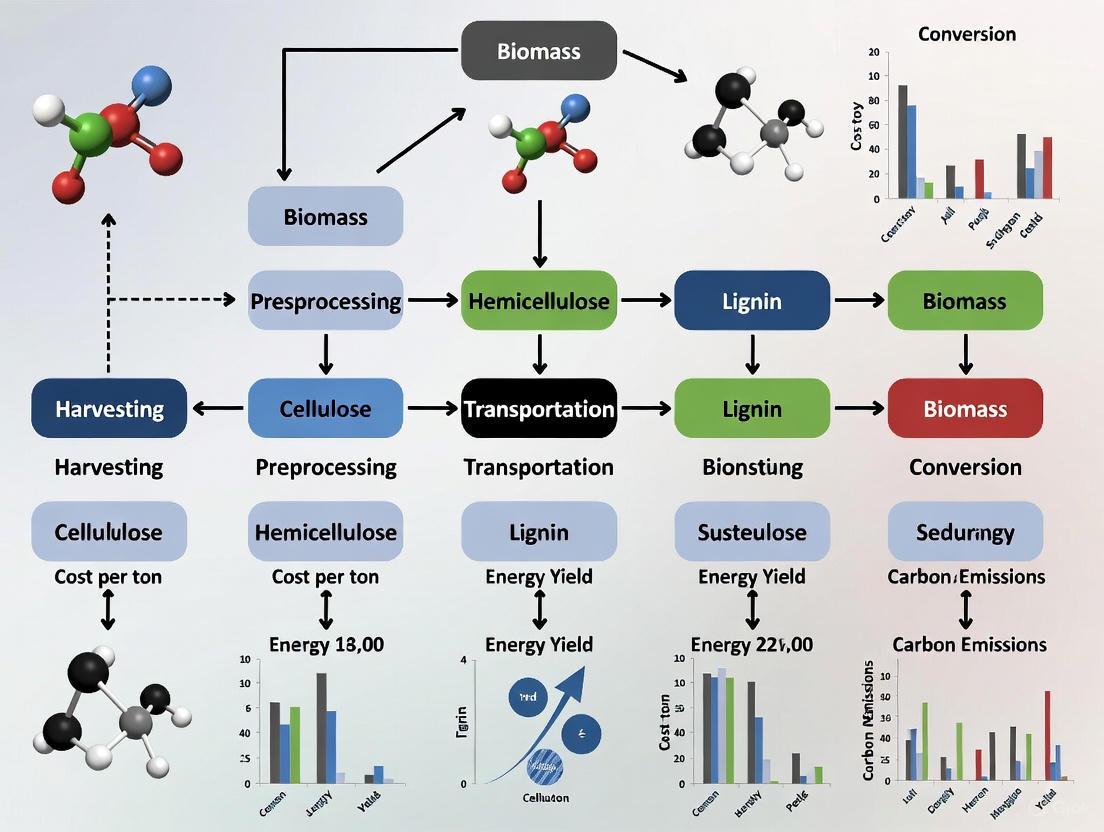
This article provides a comprehensive analysis of strategies to reduce costs and enhance the economic viability of biomass supply chains (BSCs).
Strategic Pathways to Reduce Biomass Supply Chain Costs for a Sustainable Bioeconomy
Abstract
This article provides a comprehensive analysis of strategies to reduce costs and enhance the economic viability of biomass supply chains (BSCs). It explores the fundamental structure and economic challenges of BSCs, presents advanced methodological approaches like computer simulation and digital solutions for cost optimization, and addresses key troubleshooting areas such as feedstock degradation and logistical bottlenecks. The content also examines the validation of strategies through global case studies and policy frameworks, with critical insights for researchers, scientists, and professionals engaged in developing sustainable biomass-derived products and energy.
Understanding Biomass Supply Chains: Structure, Cost Drivers, and Economic Challenges
Frequently Asked Questions (FAQs)
1. What are the most common operational challenges in a biomass supply chain? The biomass supply chain faces several recurrent operational hurdles that can impact cost and reliability. A primary issue is feedstock variability, where differences in moisture content, particle size, and chemical composition lead to feeding and handling problems, causing stoppages and reduced conversion efficiency [1] [2]. Furthermore, the low bulk density of many biomass feedstocks makes transportation inefficient and increases costs [3]. During storage, biomass is susceptible to degradation and self-heating, resulting in dry matter loss and potential spoilage [2]. Finally, handling cohesive and interlocking materials often leads to flow obstructions in hoppers and feeders, creating bottlenecks in the process [4] [3].
2. How does feedstock quality impact biorefinery operations? Inconsistent feedstock quality directly affects a biorefinery's ability to operate at its designed capacity. Variations can cause feeding system blockages, erratic flow, and equipment wear, which force unplanned downtime and increase maintenance costs [2] [4]. For conversion processes, inconsistent particle size or moisture content can lead to incomplete reactions, reduced yields of biofuels or chemicals, and challenges in meeting final product specifications [1] [4]. A shift toward a "quality-by-design" approach in the supply chain, which may include fractionation and targeted preprocessing, is seen as key to stabilizing feedstock quality and improving overall biorefinery performance [2].
3. What strategies can reduce costs across the biomass supply chain? Cost reduction requires an integrated, optimized approach. Key strategies include logistics optimization, such as the strategic siting of preprocessing depots to minimize transportation distances [1] [5]. Advanced preprocessing techniques, like torrefaction or pelletization, increase the energy density of biomass, thereby lowering transportation costs and improving handling properties [1] [5]. Implementing a multi-product biorefinery model that valorizes all biomass fractions (e.g., converting lignin into co-products alongside biofuels) significantly improves economic viability [6]. Finally, employing systematic modeling and multi-objective optimization during supply chain design helps balance economic, environmental, and operational goals [1].
Troubleshooting Guides
Guide 1: Addressing Biomass Flowability and Bridging in Hoppers
Problem: Biomass feedstock fails to flow consistently from storage hoppers or silos, forming stable arches (bridges) or rat holes that obstruct discharge and disrupt continuous operation [4] [3].
Investigation & Diagnosis:
- Step 1: Visual Inspection. Safely observe the flow pattern during discharge. A "rat hole" is indicated if material empties only directly above the outlet, leaving a cylindrical channel, while a "bridge" is a stable arch of material over the outlet [4].
- Step 2: Material Property Analysis. Measure the key flow properties of your biomass feedstock, including:
- Cohesive Strength: The internal strength of the biomass material.
- Wall Friction Angle: The friction between the biomass and the hopper wall surface.
- Moisture Content: High moisture often increases cohesion [4].
- Step 3: Hopper Design Review. Compare the hopper's outlet size and wall slope (angle) against the flow properties measured in Step 2. The design is likely insufficient if the outlet is smaller than the critical "no-flow" dimension derived from cohesive strength tests [4].
Solutions:
- Short-Term Fixes:
- Long-Term & Design Solutions:
- Retrofit the Hopper: Modify the hopper to have a steeper wall slope and a larger outlet size based on the measured flow properties of the biomass [3].
- Use a Liner: Install a low-friction liner on the hopper walls to reduce wall friction and promote mass flow (where all material moves downward together) [4].
- Control Feedstock Properties: Implement preprocessing steps, such as drying or size reduction, to reduce the feedstock's cohesiveness and improve its inherent flowability [2] [4].
Table: Key Properties Affecting Biomass Flowability [4]
| Property | Description | Impact on Flow |
|---|---|---|
| Cohesive Strength | Internal shear strength of the biomass mass. | Higher cohesion promotes bridging and rat-holing. |
| Moisture Content | Amount of water present in the biomass. | Increased moisture generally increases cohesion. |
| Particle Size & Shape | Distribution and geometry of biomass particles. | Stringy, elongated particles can interlock; fines can increase cohesion. |
| Wall Friction | Friction between biomass and hopper wall material. | High friction encourages funnel flow and stagnant zones. |
| Bulk Density | Mass per unit volume of the bulk material. | Low density can correlate with poor flow and handling challenges. |
Guide 2: Mitigating Feedstock Quality Degradation During Storage
Problem: Biomass loses dry matter, self-heats, or experiences chemical changes during storage, leading to reduced mass yield, lower energy content, and potential conversion inhibitors [2] [5].
Investigation & Diagnosis:
- Step 1: Monitor Storage Conditions. Track temperature profiles within storage piles or bales using temperature probes. A rising temperature indicates active microbial respiration or chemical oxidation [2].
- Step 2: Pre- and Post-Storage Analysis. Collect representative samples of biomass upon entry to and exit from storage. Analyze key parameters, including:
- Dry Matter Mass: To quantify total mass loss.
- Moisture Content: To assess drying or rewetting.
- Sugar Content (for biochemical conversion): To measure the loss of fermentable sugars [2].
- Step 3: Identify Contamination. Check for visible mold growth or a musty odor, which signal microbial spoilage [2].
Solutions:
- Pre-Storage Preparation:
- Storage Management:
- Implement Covering: Use tarps or breathable membranes to protect biomass from precipitation while allowing some moisture release.
- Manage Stock Rotation: Adopt a first-in, first-out (FIFO) inventory system to minimize storage duration [5].
- Consider Advanced Storage Formats: Explore compacted, oxygen-limited storage systems designed to stabilize biomass and preserve quality [2].
Guide 3: Managing Feedstock Variability for Consistent Conversion
Problem: Incoming biomass feedstock has high variability in physical and chemical properties, causing fluctuations in conversion process efficiency, yield, and product quality [1] [2].
Investigation & Diagnosis:
- Step 1: Establish a Quality Dashboard. Implement a rapid characterization protocol for incoming feedstock loads. Key metrics should include particle size distribution, moisture content, and ash content [2].
- Step 2: Correlate with Performance. Use statistical process control to link variations in feedstock quality metrics with key performance indicators (KPIs) of the conversion process, such as reaction yield, throughput, or catalyst life [1].
- Step 3: Source Analysis. Track quality data back to specific suppliers, harvest dates, or geographic regions to identify the root causes of variability [1].
Solutions:
- Feedstock Blending: Mix different lots of feedstock in a controlled manner to create a more consistent and homogeneous blend for the conversion process [5].
- Advanced Preprocessing: Invest in preprocessing facilities that can actively control and adjust feedstock properties. A "quality-by-design" approach using fractionation can separate biomass into more uniform streams tailored for specific conversion pathways or products [2] [6].
- Supplier Contracts & Specifications: Develop and enforce clear feedstock quality specifications in supplier agreements, with incentives for consistent quality delivery [5].
Experimental Protocols for Supply Chain Research
Protocol 1: Quantifying Biomass Flow Properties Using a Ring Shear Tester
Objective: To determine the cohesive strength and wall friction properties of a biomass feedstock for the purpose of designing reliable hoppers and feeders [4].
Materials:
- Ring Shear Tester (e.g., Jenike shear cell)
- Biomass sample (representative of feedstock, preconditioned to target moisture content)
- Hopper wall material sample (e.g., stainless steel, carbon steel)
- Laboratory balance
- Drying oven
Methodology:
- Sample Preparation: Prepare the biomass sample according to your standard preprocessing protocol. Determine the initial moisture content using a drying oven. The test can be repeated at different moisture levels to understand its impact.
- Cell Filling: Fill the shear cell with the biomass sample in a standardized, consistent manner to ensure a uniform initial bulk density.
- Consolidation: Apply a series of predetermined normal loads (stresses) to the sample to simulate the consolidation pressures experienced in a full-scale hopper.
- Shearing: For each consolidation stress, shear the sample to failure to measure the shear stress required. This data is used to establish the Yield Locus, which defines the material's flow function.
- Wall Friction Test: Repeat the shearing procedure with the wall material sample placed in the base of the shear cell. This determines the wall friction angle.
- Data Analysis: Using the yield locus data, calculate the unconfined yield strength (fc) and major principal stress (σ1) at various consolidation levels. The flow function is a plot of fc vs. σ1. A lower f_c indicates a more free-flowing material.
Application: The resulting flow function and wall friction data are used in established hopper design calculations (e.g., Jenike method) to determine the minimum outlet size and hopper slope angles required to prevent arching and ensure reliable flow [4].
Protocol 2: Techno-Economic Analysis (TEA) of a Novel Preprocessing Pathway
Objective: To evaluate the economic viability and identify major cost drivers of integrating a new preprocessing technology (e.g., torrefaction, CELF pretreatment) into a biomass supply chain [6] [7].
Materials:
- Process modeling software (e.g., Aspen Plus, SuperPro Designer)
- Cost data for equipment, feedstock, utilities, and labor
- Operational data (yields, energy consumption, throughput)
Methodology:
- Process Simulation: Develop a detailed model of the integrated supply chain and conversion process, including the new preprocessing unit. The model should be based on mass and energy balances.
- Capital Cost Estimation (CAPEX): Estimate the total installed cost of all new equipment, including the preprocessing unit, storage, and handling systems.
- Operating Cost Estimation (OPEX): Estimate annual costs for feedstock, utilities, labor, maintenance, and overhead.
- Revenue Estimation: Project revenue from the sale of all main products and co-products (e.g., biofuels, chemicals, power). For novel co-products, market research may be required.
- Financial Modeling: Calculate key economic indicators such as Minimum Fuel Selling Price (MFSP), Net Present Value (NPV), and Internal Rate of Return (IRR) [6] [7].
- Sensitivity Analysis: Identify which parameters (e.g., feedstock cost, conversion yield, product price) have the greatest impact on the project's economics by varying them within a plausible range.
Application: This protocol allows for the quantitative comparison of different supply chain configurations. For instance, it can demonstrate whether a more expensive preprocessing step that improves feedstock quality and conversion yield ultimately leads to a lower overall biofuel cost, as seen in CELF biorefinery models [6].
The Scientist's Toolkit: Key Research Reagent Solutions
Table: Essential Materials and Analytical Methods for Biomass Supply Chain Research
| Item / Solution | Function in Research |
|---|---|
| Ring Shear Tester | Measures fundamental powder flow properties (cohesive strength, internal friction) critical for designing storage and handling equipment to prevent flow stoppages [4]. |
| Torrefaction Reactor | A laboratory-scale reactor used to study the effects of mild pyrolysis on biomass, improving its grindability, hydrophobicity, and energy density for more efficient transport and storage [5]. |
| Mechanical Preprocessing Unit (e.g., Knife Mill, Hammer Mill) | Used to standardize and study the effect of particle size and shape distribution on downstream handling, flowability, and conversion efficiency [2] [4]. |
| Process Modeling Software (e.g., Aspen Plus) | Enables the simulation of integrated biomass supply chains and conversion processes for techno-economic analysis (TEA) and life cycle assessment (LCA) before pilot-scale implementation [1] [7]. |
| Near-Infrared (NIR) Spectrometer | Provides rapid, non-destructive analysis of biomass properties (e.g., moisture, lignin, cellulose content) for real-time quality control and feedstock blending optimization [2]. |
The core components of a biomass supply chain form an integrated system to move organic material from its origin to a biorefinery. The diagram below illustrates the key stages and the critical material flow and information feedback required for optimization. A central tenet of modern supply chain strategy is the move from simple, uniform-format feedstocks to a "quality-by-design" system that uses fractionation and multiple pathways to maximize value and ensure consistency for the biorefinery [1] [2].
Frequently Asked Questions
FAQ 1: What are the most significant capital costs when establishing a biomass energy facility? The initial capital investment for a biomass power plant is substantial. For a standard 50-megawatt (MW) plant, total startup costs typically range from $236.5 million to $364 million [8]. The largest cost components are plant construction and engineering ($125-$175 million) and biomass conversion technology and equipment ($100-$140 million) [8]. These figures do not include operational costs or working capital, though initial project financing must account for them. Leveraging government subsidies, such as the Investment Tax Credit (ITC), can offset up to 30% of these initial capital expenditures [8].
FAQ 2: How do feedstock costs impact overall project viability? Feedstock expenses represent 40% to 60% of the total operating budget for a typical biomass plant, translating to annual fuel expenditures of $15 million to $25 million for a 50 MW facility [8]. This volatility directly affects profitability; a 10% increase in feedstock cost can reduce a project's internal rate of return (IRR) by 15-25 percentage points [8]. Securing stable, low-cost feedstock supply chains is therefore critical for financial viability. Creative sourcing strategies, such as utilizing waste algae from wastewater treatment plants, can provide feedstock for free or even at negative cost (e.g., being paid $341 per ton to haul it away) [9].
FAQ 3: What logistical factors most significantly influence biomass transportation costs? Transportation constitutes a substantial portion of total delivered feedstock cost, particularly for low-cost or residue-based biomass [10]. Machine learning analyses identify vehicle type (31% impact), transport distance (25% impact), and load factor (12% impact) as the most significant predictors of final transportation cost [10]. Unlike conventional wisdom, the impact of distance alone was found to be minimal compared to these other factors. Optimization of these parameters through advanced algorithms can significantly reduce overall biofuel production expenses [10].
FAQ 4: What strategies can mitigate seasonal variations in biomass supply? Seasonality directly affects biomass supply chain cost and efficacy [11]. Effective management requires:
- Strategic storage planning to balance supply and demand fluctuations
- Supply chain coordination across collection, transportation, storage, and processing operations
- Advanced optimization techniques including linear programming, genetic algorithms, and tabu search to manage seasonal inventory [11] These approaches help maintain consistent biomass quality and availability despite seasonal variations in feedstock production.
FAQ 5: How can facility location decisions reduce production costs and emissions? Strategic facility siting offers significant cost and emission reduction opportunities. Building biocrude facilities next to existing refineries instead of closer to biomass sources can lower emissions by up to 150% through shared infrastructure [9]. Co-location enables:
- Utilization of byproducts (heat, steam) locally, replacing fossil fuels
- Collection and use of low-emission hydrogen released during biomass conversion
- Reduced transportation needs for intermediate products [9] These design decisions yield substantial energy savings and corresponding emission reductions.
Table 1: Biomass Facility Capital Investment Breakdown (50 MW Plant)
| Cost Component | Minimum Estimate | Maximum Estimate |
|---|---|---|
| Plant Construction & Engineering | $125 million | $175 million |
| Biomass Conversion Technology & Equipment | $100 million | $140 million |
| Land Securement & Site Preparation | $1 million | $5 million |
| Grid Interconnection & Transmission Upgrades | $2 million | $15 million |
| Long-term Fuel Supply Contracts | $2 million | $10 million |
| Permitting, Licensing & Legal Fees | $1.5 million | $4 million |
| Initial Working Capital | $5 million | $15 million |
| Total Startup Costs | $236.5 million | $364 million |
Table 2: Financial Performance Metrics for Biomass Energy Production
| Metric | Typical Range | Key Influencing Factors |
|---|---|---|
| EBITDA Margin | 20% - 40% | Feedstock costs, electricity pricing, operational efficiency |
| Levelized Cost of Energy (LCOE) | $0.08 - $0.12 per kWh | Technology choice, feedstock cost, facility scale |
| Feedstock Cost Share of Operating Budget | 40% - 60% | Feedstock type, sourcing strategy, transportation distance |
| Impact of 10% Feedstock Cost Increase on IRR | 15-25 percentage point reduction | Project leverage, PPA terms, operational flexibility |
Table 3: Feedstock Sourcing Cost Comparisons
| Feedstock Source | Cost per Ton | Notes & Context |
|---|---|---|
| Lignocellulosic Biomass | Baseline | Conventional biomass reference point |
| Algal Biomass (traditional) | Up to 9x lignocellulosic | Requires dedicated algae farms |
| Wastewater Treatment Algae | -$341 (negative cost) | Facilities may pay for removal |
| Harmful Algae Blooms | $21 (with credits) | With government environmental credits |
Experimental Protocols & Methodologies
Protocol 1: Techno-Economic Analysis (TEA) for Biofuel Projects
Purpose: To evaluate the fiscal viability of biomass energy projects by integrating process engineering with economic analysis.
Methodology:
- Process Modeling: Develop detailed process flow diagrams capturing all conversion steps from feedstock to final product
- Capital Cost Estimation: Calculate equipment costs using factored estimation methods (±30% accuracy) for preliminary assessment
- Operating Cost Estimation: Quantify fixed and variable costs, with particular emphasis on feedstock logistics
- Financial Modeling: Compute key performance indicators including Internal Rate of Return (IRR), Net Present Value (NPV), and Minimum Selling Price
Key Parameters:
- Plant capacity and availability (typically ≥90% for bioenergy)
- Feedstock composition, cost, and seasonal variability
- Conversion process yields and efficiencies
- Co-product credits and values
- Financing structure (debt/equity ratio, interest rates, loan term)
Application: TEA helps identify cost bottlenecks, particularly in the supply chain, and enables comparison of technology alternatives [9].
Protocol 2: Machine Learning-Based Transportation Cost Optimization
Purpose: To accurately predict and optimize biomass transportation costs using advanced algorithms.
Methodology:
- Data Collection: Compile historical data on biomass transportation across fifteen independent variables including vehicle type, distance, and load factor
- Model Selection: Compare multiple linear regression, random forests, and artificial neural networks for predictive accuracy
- Model Training: Implement k-fold cross-validation to prevent overfitting
- Feature Importance Analysis: Quantify the relative contribution of each variable to total transportation cost
Expected Outcomes:
- Random forest models typically achieve R-squared values of 97.4% with root mean square error of 165
- Identification of vehicle type (31% impact), distance (25% impact), and load factor (12% impact) as primary cost drivers [10]
Protocol 3: Supply Chain Resilience Testing
Purpose: To evaluate biomass supply chain robustness under disruptive scenarios such as feedstock shortages, price volatility, and transportation disruptions.
Methodology:
- Scenario Development: Create plausible disruption scenarios including seasonal availability fluctuations, supplier failures, and demand spikes
- Model Implementation: Apply linear programming, genetic algorithms, or tabu search optimization techniques
- Resilience Metric Calculation: Quantify performance using cost-to-serve, service level, and inventory turnover metrics
- Mitigation Strategy Evaluation: Test interventions including diversified sourcing, strategic storage, and flexible transportation modes
Key Considerations:
- Account for biomass quality degradation during storage
- Model multi-modal transportation options
- Evaluate impact of regional biomass availability constraints [11]
Visualization: Biomass Supply Chain Cost Optimization Framework
Biomass Supply Chain Cost Framework
The Scientist's Toolkit: Research Reagent Solutions
Table 4: Essential Analytical Tools for Biomass Supply Chain Research
| Tool/Model | Primary Function | Application Context |
|---|---|---|
| POLYSYS Modeling Framework | Generates biomass supply curves with price as a function of availability and demand over time | National-level biomass assessment excluding soy and corn; projects supply to 2030 [12] |
| Techno-Economic Analysis (TEA) | Integrates process engineering with economic analysis to evaluate project viability | Assessing fiscal returns of biofuel ventures; identifying cost bottlenecks [9] |
| Life Cycle Assessment (LCA) | Quantifies environmental impacts across the entire biomass value chain | Evaluating net carbon emissions of biofuel production and use [9] |
| Random Forest Algorithm | Machine learning approach for predicting transportation costs with high accuracy | Transportation logistics optimization; achieves R-squared values of 97.4% [10] |
| Stochastic Energy Deployment System (SEDS) | Models biomass price as a function of demand across multiple sectors (electricity, biofuels, hydrogen) | Estimating maximum biomass supply at various price points; sectoral allocation [12] |
| Genetic Algorithms (GA) | Optimization technique for complex logistical problems with multiple constraints | Solving supply chain network design; route optimization [11] |
The Critical Challenge of Economic Viability in Bioenergy Projects
Frequently Asked Questions
What are the primary cost drivers in a biomass supply chain? The primary costs are associated with feedstock procurement, transportation, storage, and pre-processing. Transportation is particularly dynamic and costly due to factors like fuel prices, distance, and road conditions. Storage losses and feedstock degradation also significantly impact final costs [13] [5].
How can I reduce the risk of costly errors when modifying my supply chain? Computer simulation is a low-risk method to test different supply chain configurations. It allows for modeling an entire supply chain—from raw material supply to distribution—to see the impact of changes on cost and operational efficiency before implementing them in the real world [14].
My project uses agricultural residue. How can I ensure consistent feedstock quality? Inconsistent quality from agricultural residues can be tackled through pre-processing steps like torrefaction, which improves energy density and storage properties. Implementing feedstock blending strategies at the biorefinery can also help manage variability [5] [15].
Are there tools to help select the most cost-effective biomass suppliers? Yes, Artificial Intelligence (AI) and Artificial Neural Network (ANN)-based models are now being developed to optimize supplier selection. These tools integrate economic, technical, and geographic data to recommend suppliers that meet cost and quality requirements, even with incomplete market data [13].
Troubleshooting Guides
Problem: High Feedstock Logistics Costs
Issue: The cost of transporting biomass from the field or forest to the conversion facility is making the project economically unviable.
Diagnosis & Solutions:
- Diagnosis 1: Inefficient transport routes and logistics.
- Solution: Implement an AI-based Biomass Delivery Management (BDM) model.
- Experimental Protocol:
- Data Collection: Gather historical data on biomass type, supplier locations, unit prices, transport distances, and fuel consumption [13].
- Model Development: Develop a modular Artificial Neural Network (ANN) model. This model should learn the complex, non-linear relationships between the input variables (e.g., distance, feedstock type) and output costs [13].
- Model Validation: Evaluate the model's predictive accuracy using metrics like Mean Absolute Error (MAE) and Mean Squared Error (MSE). A validated model from a case study achieved an MAE of 0.16 and an R² value of 0.99 [13].
- Deployment: Use the model to simulate different procurement strategies, optimize transport routes in real-time, and inform fuel blending strategies to reduce overall costs [13].
- Diagnosis 2: High costs due to low energy density of raw biomass.
- Solution: Integrate pre-processing technologies to upgrade biomass.
- Experimental Protocol:
- Technology Selection: Evaluate technologies like pelleting, briquetting, or torrefaction. Torrefaction, a mild pyrolysis process, is particularly effective as it produces a coal-like material with higher energy density and better water resistance [16] [15].
- Supply Chain Integration: Establish "conceptual depots" where raw biomass can be converted into a stable, high-energy-density bioenergy carrier [5].
- Logistics Optimization: Leverage existing infrastructure (e.g., coal handling systems) for transporting the upgraded biomass, significantly reducing transport costs per unit of energy [5].
Problem: Low Economic Resilience to Market Fluctuations
Issue: Project economics are sensitive to changes in feedstock prices, policy adjustments, or energy market prices.
Diagnosis & Solutions:
- Diagnosis: Over-reliance on a single feedstock or operational configuration.
- Solution: Use discrete-event simulation to model and enhance supply chain flexibility.
- Experimental Protocol:
- System Mapping: Create a computational model of your entire supply chain, including procurement, transportation, storage, production, and distribution. Incorporate key variables like time, cost, and resource constraints [14].
- Scenario Testing: Run multiple "what-if" scenarios in the simulation environment. Examples include:
- Switching the fuel used in drying processes (e.g., from sawdust to bark, which achieved a 1.5% cost reduction in a case study) [14].
- Testing different feedstock blends (e.g., blending 10% bark for lower-quality pellets, which yielded 4.75% raw material savings) [14].
- Modeling the impact of changes in policy mandates or feedstock availability.
- Analysis and Implementation: Identify the scenarios that most improve cost-efficiency and operational resilience. Implement these changes in the actual supply chain, monitoring key performance indicators to validate the model's predictions [14].
Data Presentation
| Metric | 2023/2024 Status | 2034 Projection & Key Trends | Data Source |
|---|---|---|---|
| Liquid Biofuel Production | 175.2 billion litres (2023) | Projected to grow at 0.9% p.a.; significant growth in India, Indonesia, and Brazil. | [17] [18] |
| Sustainable Aviation Fuel (SAF) Production | 1.8 billion litres (2024) | Rapid growth sector (200% increase from 2023); driven by new mandates in India, South Korea, and Indonesia. | [17] |
| Global Biopower Capacity | 150.8 GW (2024) | Steady growth, with a record increase of 4.6 GW in 2024. Key growth in China and France. | [17] |
| Biomass Power Generation Market Value | US$90.8 Billion (2024) | Projected to reach US$116.6 Billion by 2030, a CAGR of 4.3%. | [16] |
| EU Solid Biomass Electricity | 78.4 TWh (2023) | Down 11.3%; a continuing trend of decline in several EU nations. | [17] |
| Strategy | Experimental Methodology | Key Quantitative Outcome | Data Source |
|---|---|---|---|
| AI/ANN Supply Chain Optimization | Develop a modular ANN model to optimize supplier selection, transport routes, and blending. | High predictive accuracy (MAE = 0.16, R² = 0.99); potential for 20-30% reduction in transport costs. | [13] |
| Computer Simulation & Scenario Testing | Discrete-event simulation of the entire supply chain to test operational changes virtually. | 1.5% cost reduction by changing drying fuel; 4.75% raw material savings from feedstock blending. | [14] |
| Feedstock Pre-processing (Torrefaction) | Thermal treatment to improve biomass properties. Enables use of existing coal infrastructure. | Increases energy density, reduces degradation, and lowers transport costs per unit of energy. | [16] [5] |
The Scientist's Toolkit: Research Reagent Solutions
| Item | Function in Bioenergy Research |
|---|---|
| Artificial Neural Network (ANN) Models | A computational tool used to model complex, non-linear biomass supply chains, predict costs, and optimize logistics based on historical data [13]. |
| Discrete-Event Simulation Software | Software that creates a virtual model of a biomass supply chain to test different operational scenarios and quantify their impact on cost and efficiency without real-world risk [14]. |
| Torrefaction Reactor | A device for the mild pyrolysis of biomass, which produces a dry, hydrophobic, and energy-dense solid biofuel that is more suitable for storage and long-distance transport [16] [15]. |
| Geographic Information System (GIS) | A system that integrates spatial data (e.g., supplier locations, road networks) to analyze and optimize transport routes and biomass procurement strategies [13]. |
Experimental Workflow and Strategic Pathways
The following diagram illustrates the interconnected strategies for diagnosing and improving the economic viability of bioenergy projects, from initial data collection to implementation and monitoring.
Global Market Dynamics and Growth Projections for Biomass Industrial Fuels
The global biomass industrial fuel market is a cornerstone of the renewable energy sector, experiencing significant growth driven by the worldwide shift towards sustainable energy. Biomass industrial fuel refers to renewable energy sources derived from organic materials such as wood, agricultural residues, palm kernel shells, and rice husks [19]. These combustible solid fuels serve as sustainable alternatives to fossil fuels like coal and are primarily used in industrial boilers, kilns, and steam generators [19]. The adoption of biomass fuels supports carbon neutrality goals because they release only the CO₂ absorbed during plant growth, creating a closed carbon cycle, and further promote circular economy principles by converting waste into valuable energy resources [19].
Table 1: Global Biomass Market Size and Growth Projections
| Market Segment | 2024/2025 Base Value | 2031/2035 Projected Value | CAGR (Compound Annual Growth Rate) | Source / Scope |
|---|---|---|---|---|
| Biomass Industrial Fuel Market | USD 1,856 million (2025) [19] | USD 3,316 million (2031) [19] | 10.3% (2025-2031) [19] | Intel Market Research |
| Overall Biomass Fuel Market | USD 51.65 Billion (2025) [20] | USD 78.18 Billion (2032) [19] | 6.1% (2025-2032) [20] | Coherent Market Insights |
| Overall Biomass Market | USD 79.26 Billion (2025) [21] | USD 157.38 Billion (2035) [21] | 7.1% (2026-2035) [21] | Research Nester |
| Biomass Energy Market | USD 99 Billion (2024) [22] | USD 160 Billion (2035) [22] | 4.46% (2025-2035) [22] | Spherical Insights |
The market expansion is propelled by a confluence of factors, including tightening environmental regulations, corporate sustainability initiatives, and technological advancements in fuel processing [19]. Supportive government policies, such as subsidies, tax incentives, and renewable portfolio standards, are primary catalysts for growth, compelling a transition away from fossil fuels [23]. Furthermore, the increasing demand for sustainable waste management solutions positions biomass as an attractive option for converting organic waste into valuable energy, thereby addressing waste disposal challenges and contributing to a circular bioeconomy [21] [22].
Regional Market Dynamics
The global biomass market exhibits distinct regional characteristics shaped by local feedstock availability, policy landscapes, and energy demands.
Table 2: Regional Market Share and Growth Drivers
| Region | Projected Market Share (2025) | Key Growth Drivers | Leading Countries/Notes |
|---|---|---|---|
| Asia-Pacific | 44.5% [20] | Escalating energy demand, abundant agricultural residues, supportive government policies for waste-to-energy initiatives. [20] [23] | China (leads in APAC), India, Japan. Rapid industrialization and urbanization. [20] |
| Europe | 27.69% [23] | Stringent carbon emission regulations, EU Green Deal, ambitious renewable energy targets (e.g., RED II). [20] [23] | Germany, United Kingdom, France. Leader in adoption due to stringent emission norms. [19] [23] |
| North America | 22.8% [20] | Strong governmental support (e.g., U.S. Renewable Fuel Standard), abundant natural resources, well-established energy grid. [20] | United States (market leader), Canada. The fastest-growing region. [20] |
| South America | 8.07% [23] | Vast and productive agricultural sector providing ample feedstock (e.g., sugarcane bagasse). [23] | Brazil (dominates the region), Argentina. [23] |
| Africa | 6.37% [23] | Urgent need for decentralized and off-grid energy solutions to improve energy access. [23] | Nigeria, South Africa. Characterized by traditional biomass use and emerging modern projects. [23] |
Key Application Segments and Feedstock
The application of biomass fuels spans multiple sectors, with power generation, residential heating, and industrial uses being the most prominent. The primary feedstock includes wood and agricultural residues, which dominate due to their widespread availability and cost-effectiveness [20].
- Power Generation: This segment is projected to hold a 37.8% share of the biomass fuel market in 2025 [20]. The growth is driven by the global demand for clean and renewable electricity. Biomass power plants offer a key advantage by providing dispatchable electricity, which can operate continuously unlike intermittent sources like solar and wind, thereby ensuring grid stability [20].
- Residential Heating: The residential segment is expected to account for a 39.8% share in 2025 [20]. This is driven by the escalating demand for sustainable and economical heating options, particularly in rural and peri-urban areas. Homeowners are increasingly turning to biomass boilers and stoves as cost-effective and eco-friendly alternatives to volatile traditional heating fuels [20] [21].
- Wood and Agricultural Residues: This feedstock segment is expected to account for 42.7% of the market share in 2025 [20]. These residues represent a vast portion of biomass resources, stemming from forestry operations and agricultural harvests. Their abundance ensures a reliable and continuous feedstock supply, while their utilization provides an effective means of waste management [20].
Technical Support: Troubleshooting Supply Chain Challenges
Efficient supply chain management is critical for reducing costs and ensuring the reliability of biomass industrial fuels. Below are common challenges and research-supported mitigation strategies presented in a troubleshooting format.
Frequently Asked Questions (FAQs)
FAQ 1: What are the most significant challenges in the biomass supply chain? The primary challenges involve inherent uncertainties and variability. These include fluctuations in the quantity and quality of raw materials at supply nodes, seasonal availability of feedstock, geographical dispersion of resources, and susceptibility to disruptive events like wildfires [24]. Additionally, logistics related to collecting, transporting, and storing bulky biomass can be complex and costly, representing a significant portion of the total supply chain cost [24] [23].
FAQ 2: How can the cost of biomass feedstock production be reduced? Research indicates that optimization of machinery fleet management and advanced harvesting techniques can lead to substantial cost reductions. For instance, studies on corn stover production have demonstrated a 40% reduction in production costs compared to initial benchmarks through improved logistics and machinery efficiency [25]. Furthermore, optimizing transportation routes and scheduling can lower operational costs associated with vehicle idle time [24].
FAQ 3: How can biomass quality and year-round supply be ensured for a biorefinery? Developing best management practices for biomass storage is crucial to maximize long-term quality and ensure year-round operation of conversion facilities [25]. Implementing a decision support system (DSS) that combines simulation and optimization can help plan and replan operations under disruptive scenarios, ensuring a consistent feedstock supply to the plant gate [24] [25].
Experimental Protocols for Supply Chain Optimization
Protocol 1: Simulation-Optimization Framework for Resilient Supply Chain Design
This methodology supports decision-making for efficient operations management and enhances the design process of a biomass supply chain under uncertainty [24].
- System Definition and Data Collection: Map the entire biomass supply chain architecture, including key stages: feedstock production, harvesting, transportation, storage at intermediate terminals, processing (e.g., chipping), and final delivery to the energy plant [24]. Collect data on biomass availability, costs, transportation modes, and facility capacities.
- Develop an Optimization Model: Formulate a resource allocation optimization model (mixed-integer linear programming is common). This model should generate initial plans to minimize total cost or maximize efficiency by deciding on optimal transportation routes, feedstock sourcing, and storage terminal utilization [24].
- Build a Simulation Model: Create a discrete-event simulation (DES) model that replicates the operations and dynamic flows of the physical supply chain. This model incorporates the variability and uncertainties identified in Step 1, such as fluctuations in raw material quantity and disruptive events like wildfires [24].
- Scenario Generation and Analysis: Generate different disruptive scenarios (e.g., 10%, 50%, 80% loss of biomass at a key supply node) to test the resilience of the initial optimization plan [24]. Run these scenarios through the simulation model.
- Re-planning and Evaluation: Use the optimization model as a re-planning tool to devise new operational plans that mitigate the impacts of the disruption simulated in Step 4. Evaluate the performance using Key Performance Indicators (KPIs) such as total cost, demand fulfillment rate, and resource utilization [24].
- Validation and Implementation: Validate the simulation-optimization framework against historical data if available. The final output is a Decision Support System (DSS) that allows planners to anticipate impacts and make more informed, resilient decisions [24].
Protocol 2: Best Management Practices for Biomass Storage and Quality Preservation
This protocol aims to maintain biomass quality between harvest and conversion, which is critical for energy yield and operational continuity.
- Feedstock Characterization: Analyze the initial moisture content, particle size, and chemical composition of the biomass feedstock (e.g., corn stover, wood chips) [25].
- Storage Method Selection: Establish different storage testing facilities, including open-air piles, covered storage, and enclosed silos, to compare efficacy [25].
- Monitoring: Instrument the storage facilities to monitor internal temperature, moisture levels, and relative humidity over a defined period (e.g., 6-12 months) [25].
- Quality Assessment: At regular intervals, take core samples from the storage piles. Analyze the samples for key quality metrics, including dry matter loss, changes in moisture content, and ash content. A key research goal is to reduce ash content, as a 35% reduction has been achieved through machinery development [25].
- Data Analysis and Protocol Development: Correlate the storage conditions with the quality metrics to identify best practices that maximize quality preservation. Document these as best management practices for specific feedstock types [25].
Research Reagent Solutions: Essential Tools for Supply Chain Research
Table 3: Key Analytical Tools and Solutions for Biomass Supply Chain Research
| Tool / Solution | Function in Research | Application Example |
|---|---|---|
| Discrete-Event Simulation (DES) Software | Models the operation of a real-world system as a discrete sequence of events over time, allowing "what-if" analysis of supply chain dynamics. [24] | Simulating the impact of a truck breakdown or a wildfire on the daily feedstock delivery to a biorefinery. [24] |
| Resource Allocation Optimization Model | A mathematical model (e.g., Mixed-Integer Linear Programming) that generates plans to minimize cost or maximize efficiency by allocating limited resources. [24] | Determining the optimal number of trucks, chipping schedules, and which feedstock sites to use to meet weekly demand. [24] |
| High-Capacity Biomass Analysis Lab | Provides instrumentation for analyzing the chemical and physical properties of biomass feedstocks. [25] | Measuring moisture content, calorific value, and ash composition of stored wood pellets to ensure quality standards. [25] |
| Industrial-Quality Storage-Testing Facilities | Controlled environments to test and validate different biomass storage techniques. [25] | Comparing dry matter loss in corn stover stored under tarps versus in an open-air pile over a 9-month period. [25] |
| Data Analytics and GIS Tools | Platforms for analyzing large datasets and visualizing the geographical dispersion of biomass resources. [25] [26] | Mapping the spatial distribution of agricultural residues to determine the optimal location for a new pellet plant. [26] |
Biomass Supply Chain Decision Support Workflow
The following diagram illustrates the integrated simulation-optimization framework for managing the biomass supply chain and mitigating disruptions, as described in the experimental protocols.
The Impact of Seasonal Variability and Feedstock Geodistribution on Costs
Troubleshooting Guide: Seasonal and Geographical Feedstock Challenges
This guide addresses common experimental and operational challenges related to seasonal variability and feedstock geodistribution in biomass supply chains for biofuel and biopower production.
FAQ 1: How does seasonal weather variability impact feedstock quality and subsequent conversion efficiency in our laboratory experiments?
- Problem: Inconsistent experimental results in biochemical conversion pathways between batches.
- Diagnosis: Seasonal weather conditions during biomass growth (e.g., drought, excessive rainfall) can alter the structural composition of feedstocks, such as the lignin-to-cellulose ratio, directly impacting enzymatic hydrolysis efficiency and fermentation yields in biochemical processes like fermentation and hydrolysis [27] [28].
- Solution:
- Pre-Screening: Implement a rigorous feedstock pre-screening protocol using the Vegetation Health Index (VHI) or similar remote sensing data to identify and exclude batches from growing seasons with anomalous weather [27].
- Compositional Analysis: Perform standard compositional analysis (e.g., using NREL laboratory analytical procedures) on every received batch to establish a baseline.
- Blending: Strategically blend feedstock batches from different seasons or regions to achieve a more consistent compositional profile for your experiments [5].
FAQ 2: Our supply chain cost models are highly sensitive to feedstock price volatility. What is the primary driver of this, and how can we account for it?
- Problem: Unpredictable spikes in model input costs, leading to unreliable techno-economic analysis (TEA).
- Diagnosis: Price volatility is intrinsically linked to growing-season weather across major global production regions. Poor weather conditions, indicated by low VHI, can create anticipations of reduced future supply, affecting not only the primary crop market but also the prices of substitute feedstocks [27]. Furthermore, policy changes, such as carbon intensity standards, can suddenly alter demand for certain feedstocks, exacerbating price swings [29].
- Solution: Integrate long-term weather and climate data (e.g., VHI historical data) and policy monitoring into your TEA models. Employ econometric frameworks like GARCH (Generalized Autoregressive Conditional Heteroskedasticity) to model and forecast this volatility, providing a more robust range of cost scenarios [27].
FAQ 3: Why does the geographical source of our feedstock significantly impact our sustainability metrics and compliance with regulations like the EU's Deforestation-free Regulation?
- Problem: The same feedstock type from different regions yields vastly different carbon intensity (CI) scores and sustainability certifications.
- Diagnosis: The geodistribution of feedstock production is directly tied to its environmental footprint. Land-use changes, agricultural practices, and transportation logistics vary significantly by region. For instance, EU imports of commodities like soy and palm oil are linked to deforestation, drastically increasing their CI score [30]. Regional ecosystem health also affects sustainability; over half of the EU's agricultural ecosystems are not in good condition, impacting long-term viability [30].
- Solution:
- Provenance Tracking: Implement a robust system for tracking feedstock provenance.
- Certification Schemes: Prioritize feedstocks certified under recognized sustainability schemes that verify sustainable land management and low CI [5] [30].
- Regional Selection: Favor feedstocks from regions with policies that maintain ecosystem health, such as those promoting regenerative agricultural practices or sustainable forest management [30].
FAQ 4: We are experiencing unpredictable feedstock degradation and quality inconsistencies during storage, affecting experimental reproducibility. How can this be mitigated?
- Problem: Biomass degrades between harvest and use, leading to losses and inconsistent quality.
- Diagnosis: This is a common issue in supply chains where a time lag exists between harvest and processing. Factors like moisture content, microbial activity, and storage conditions cause degradation [5].
- Solution:
- Pre-processing: Utilize in-field pre-processing steps like torrefaction, which creates a more stable, water-resistant bioenergy carrier that is less prone to degradation and easier to store and transport [5] [16].
- Advanced Storage: Investigate alternate storage designs (e.g., controlled atmosphere) to minimize biological activity.
- Stabilization: For lipid-rich feedstocks like UCO and animal fats, assess stabilization methods to prevent oxidation and acidification during storage.
Quantitative Data on Biomass and Bio-Feedstock Markets
Table 1: Global Market Overview for Biomass Power and Bio-Feedstocks
| Market Segment | Market Size (2024) | Projected Market Size (2030/2035) | Projected CAGR | Key Feedstocks |
|---|---|---|---|---|
| Biomass Power Generation [16] | US$90.8 Billion | US$116.6 Billion (2030) | 4.3% | Forest waste, agricultural residue, municipal solid waste |
| Biomass Power Generation Fuel [31] | USD 1.01 Billion | USD 2.04 Billion (2031) | 10.7% | Wood chips, agricultural residues, palm kernel shells |
| Bio-Feedstock (General) [28] | USD 115.0 Billion | USD 224.9 Billion (2035) | 6.3% | Agricultural residues, waste oils, energy crops |
Table 2: Impact of Policy and Region on Feedstock Selection and Cost
| Factor | Impact on Feedstock Market | Example / Effect on Cost |
|---|---|---|
| US Clean Fuel Production Credit (CFPC) [29] | Shifts demand towards low-CI feedstocks. Feedstocks with CI >50 kg CO2/MMBtu (e.g., soybean oil) do not qualify. | Increases competition and cost for eligible waste oils (UCO, tallow). |
| EU Deforestation-free Regulation [30] | Restricts imports of commodities linked to deforestation (e.g., soy, palm oil). | Increases due diligence costs and may limit supply sources, potentially increasing prices for compliant feedstocks. |
| Regional Ecosystem Health [30] | Poor ecosystem conditions (23% of EU agricultural land is in poor condition) threaten long-term biomass viability. | Necessitates investment in regenerative practices, which may increase short-term costs but ensure long-term supply. |
| Tariffs and Trade Policy [29] | Can redirect global flows of feedstocks (e.g., potential US tariffs on Chinese UCO). | Creates regional price disparities and supply chain reconfiguration costs. |
Detailed Experimental Protocols for Cost Reduction Research
Protocol 1: Assessing the Impact of Seasonal Weather on Feedstock Quality and Conversion Yield
Objective: To quantitatively link seasonal growing conditions to feedstock compositional properties and biochemical conversion efficiency.
Methodology:
- Feedstock Sourcing & Weather Data Correlation: Source multiple batches of a single feedstock type (e.g., corn stover) from the same geographical region but from harvests following different growing seasons (e.g., drought year vs. typical year). Obtain historical weather data and Vegetation Health Index (VHI) data for the growing season for each batch [27].
- Compositional Analysis: For each batch, perform a standard compositional analysis to determine the percentages of cellulose, hemicellulose, lignin, and ash [28].
- Biochemical Conversion: Subject each batch to standardized laboratory-scale biochemical conversion, including:
- Pre-treatment: Apply a consistent dilute-acid pre-treatment protocol.
- Enzymatic Hydrolysis: Use a standard enzyme cocktail and measure sugar release over time.
- Fermentation: Ferment the hydrolysate using a standard strain of S. cerevisiae and measure ethanol yield (or other relevant product) [28].
- Data Analysis: Correlate the VHI data and specific weather variables with compositional data and final product yield using statistical regression analysis. This will quantify the impact of seasonal variability on process efficiency.
Protocol 2: Modeling the Effect of Geodistribution on Supply Chain Costs and Carbon Intensity
Objective: To develop a geospatial model that optimizes feedstock sourcing based on total cost and CI.
Methodology:
- Define System Boundaries: Define the scope of the supply chain from the field to the biorefinery "throat" [5].
- GIS Data Collection: Collect geospatial data for potential feedstock sources, including:
- Yield: Average annual feedstock yield.
- Logistics Cost: Cost of collection, pre-processing (e.g., torrefaction), and transportation to a central hub or biorefinery. Note that transport costs can be "very significant" for remote resources [5].
- Sustainability Metrics: CI score associated with production in that region, leveraging tools for supply chain GHG emission calculations [5]. Include data on ecosystem status (e.g., from JRC reports) [30].
- Policy Factors: Note regional policies (e.g., deforestation-free status, carbon farming schemes) [30].
- Model Formulation: Build a mixed-integer linear programming (MILP) model to minimize total cost or CI. The model should include constraints for biorefinery demand, feedstock availability, and sustainability criteria.
- Scenario Analysis: Run the model under different scenarios (e.g., with/without a CI constraint, changes in transportation fuel costs) to identify robust sourcing strategies and key cost drivers.
Visualized Workflows and Relationships
Feedstock Supply Chain Cost Optimization
Weather Impact on Biofuel Markets
The Scientist's Toolkit: Research Reagent Solutions
Table 3: Essential Materials and Tools for Biomass Supply Chain Research
| Item / Tool | Function / Application | Relevance to Thesis Context |
|---|---|---|
| Vegetation Health Index (VHI) | A remote sensing indicator used to assess crop health and anticipate future supply shocks based on growing-season weather [27]. | A critical data input for modeling the impact of seasonal variability on feedstock availability and price volatility. |
| GARCH-MIDAS-DCC Framework | An advanced econometric modeling framework. Isolates the impact of slow-moving variables (e.g., annual VHI) on daily price volatilities and correlations between commodities [27]. | Essential for developing sophisticated, predictive cost models that incorporate long-term climate and supply trends. |
| Torrefaction Reactor | A pre-processing unit that thermally converts biomass into a coal-like, water-resistant material with higher energy density and improved stability [5] [16]. | Key experimental apparatus for studying solutions to feedstock degradation during storage and for reducing transport costs. |
| Supply Chain GHG Emission Calculator | A tool (often software-based) to calculate the carbon intensity of a fuel pathway from feedstock origin to final use, complying with sustainability criteria [5]. | Required for quantifying the "geodistribution" cost in terms of sustainability and for compliance with regulations like CFPC. |
| Sustainability Certification Standards | Schemes (e.g., RSB, ISCC) that provide verified, audited assurances that feedstocks are produced sustainably, addressing issues like deforestation [5] [30]. | Provides a binary (certified/uncertified) variable for sourcing models to ensure compliance with environmental goals and regulations. |
Advanced Methodologies for Cost Modeling and Supply Chain Optimization
Leveraging Computer Simulation to Model and De-risk Supply Chain Configurations
Frequently Asked Questions (FAQs)
FAQ 1: What are the primary computer simulation methodologies used for biomass supply chain modeling? The primary methodologies are multimethod simulation modeling, which combines discrete-event, agent-based, and system dynamics modeling to overcome the limitations of single-method approaches [32]. For optimization, techniques like Multi-Objective Arithmetic Optimization Algorithm (MOAOA), Mixed Integer Linear Programming (MILP), and other multi-criteria decision-making (MCDM) methods are prevalent [33]. These help balance competing objectives such as cost and carbon emissions.
FAQ 2: How can real-time data be integrated into a simulation model for a more accurate digital twin? Efficient real-time data exchange is achieved using lightweight communication protocols like Message Queuing Telemetry Transport (MQTT) [32]. This protocol is ideal for streaming live data from IoT sensors and machines directly into the simulation environment, allowing the digital twin to sync with real-world assets and respond instantly to changing conditions [32].
FAQ 3: What are the best practices for validating and maintaining a supply chain simulation model? Validation requires a multi-layered approach: checking input data for outliers, running sensitivity analysis, and testing model results against known historical periods [34]. Maintenance is an ongoing process due to model drift. It's essential to have monitoring systems that track performance over time, use version control for model updates, and maintain clear communication protocols when models change [34].
FAQ 4: What common data quality issues disrupt simulation accuracy, and how can they be mitigated? Common issues include using over-aggregated data from standard reports, which loses the variability crucial for simulations, and failing to account for external factors like weather or seasonal adjustments [34]. Mitigation involves using raw transactional data from data lakes, performing rigorous data validation checks, and incorporating a wide range of influencing variables [34].
FAQ 5: How can cloud computing enhance simulation capabilities? Cloud-based solutions, such as AnyLogic Cloud, eliminate hardware constraints by providing scalable computing power [32]. They enable efficient running of complex models, facilitate multi-user access and real-time collaboration, and allow teams to build, edit, and run models directly from a web browser [32].
Troubleshooting Guides
Issue 1: Model Produces Unrealistic or Highly Variable Outcomes
Problem: The simulation outputs are erratic, do not align with known historical results, or show extreme sensitivity to minor input changes.
Solution:
- Check Input Data Fidelity: Ensure the model uses granular, raw data instead of aggregated reports. Verify for missing values, outliers, or changes in data distribution over time [34].
- Perform Sensitivity Analysis: Systematically measure how changes in key inputs (e.g., customer demand, supplier lead times) alter the outputs. This helps identify which variables have an disproportionate impact and require more accurate calibration [34].
- Validate Against History: Compare the simulation's results for a specific historical period against the actual, known outcomes from that period to validate the underlying model logic [34].
- Review Model Scope and Assumptions: Confirm that the model includes all critical stages of your specific biomass supply chain (e.g., collection, transportation, preprocessing) and that the assumptions (e.g., transportation modes, emission factors) are correctly documented and applied [33].
Issue 2: Inability to Balance Economic and Environmental Objectives
Problem: The optimization process consistently favors cost reduction at the expense of carbon emissions, or vice versa, failing to find a balanced solution.
Solution:
- Implement a Multi-Objective Optimization Algorithm: Use a dedicated multi-objective algorithm like MOAOA, MOPSO, or NSGA-II. These are specifically designed to find a Pareto front of optimal solutions that represent the best possible trade-offs between conflicting goals like cost and emissions [33].
- Formulate a Clear Dual-Objective Model: Ensure your mathematical model explicitly includes both objectives. For example:
- Conduct Scenario Analysis: Run the optimization under different scenarios (e.g., varying carbon tax rates, different fuel prices) to understand the interplay between economic and environmental factors and to identify robust solutions [33].
Issue 3: Simulation Model Suffers from Long Run Times and Poor Performance
Problem: The model takes too long to execute, making it unsuitable for interactive analysis or frequent decision-making.
Solution:
- Leverage Cloud Auto-Scaling: Utilize cloud-based computing resources that can automatically scale up during simulation runs and scale back down upon completion, providing substantial computational power without maintaining expensive permanent infrastructure [32] [34].
- Use Approximation Methods or Pre-Computed Results: For frequent, interactive use, consider developing simplified models or pre-computing a library of common scenarios to speed up delivery of results [34].
- Optimize Model Complexity: Evaluate the level of detail in your model. A sweet spot exists between accuracy and computational speed. For many strategic decisions, a less granular model may be sufficient and much faster [34].
- Modular Design: Build your supply chain simulation in modular components. This allows you to run simplified, high-level models for strategic planning and more detailed modules only for specific operational analyses [34].
Data Presentation
Table 1: Comparison of Multi-Objective Optimization Algorithm Performance in a Biomass Supply Chain Case Study [33]
| Algorithm | Total Economic Cost (Million USD) | Total Carbon Emissions (Tons CO₂-eq) | Key Strength |
|---|---|---|---|
| MOAOA (Multi-Objective Arithmetic Optimization Algorithm) | 3.21 | 185,400 | Best overall performance in reducing both cost and emissions |
| MOPSO (Multi-Objective Particle Swarm Optimization) | 3.45 | 192,100 | Effective search capability in complex spaces |
| NSGA-II (Non-dominated Sorting Genetic Algorithm II) | 3.58 | 201,300 | Well-established and provides a good spread of solutions |
Table 2: Impact of Logistics Strategies on Biomass Supply Chain KPIs [33] [35]
| Strategy / Configuration | Estimated Cost Reduction | Estimated Emission Reduction | Implementation Context |
|---|---|---|---|
| Integrating Portable Preprocessing Depots (PDs) | Up to 26.94% | Significant secondary benefit | Forest residue supply; reduces transport distance from collection points [35] |
| Strategic Allocation of Storage Point Supply Quantities | Quantified reduction vs. baseline | Quantified reduction vs. baseline | Agricultural biomass (e.g., corn straw) in a three-stage supply chain [33] |
| Synchromodal Transportation | Mitigates disruption costs | Potential through optimized routing | Freight industry; relies on real-time data on cost, time, and emissions [36] |
Experimental Protocols
Protocol 1: Multi-Objective Optimization of Agricultural Biomass Supply
Objective: To determine the optimal supply quantities at centralized storage points to simultaneously minimize total economic cost and total carbon emissions.
Methodology:
- System Definition: Model the biomass supply chain as a three-stage process:
- Stage 1: Collection and transport from fields to storage points using small agricultural tractors.
- Stage 2: Transport from storage points to preprocessing densification facilities using heavy trucks.
- Stage 3: Transport of solid biofuel from preprocessing facilities to conversion plants using heavy trucks [33].
- Model Formulation: Develop a mathematical model with two objective functions.
- Objective 1 (Cost):
Minimize Z1 = C_transport (Stage1 + Stage2 + Stage3) + C_processing + C_facility - Objective 2 (Emissions):
Minimize Z2 = E_transport (Stage1 + Stage2 + Stage3) + E_processing[33]
- Objective 1 (Cost):
- Algorithm Execution: Implement a Multi-Objective Arithmetic Optimization Algorithm (MOAOA) using Python programming. The algorithm should be run for a sufficient number of iterations to achieve a stable Pareto front [33].
- Validation: Compare the results obtained from MOAOA against those from other established algorithms like MOPSO and NSGA-II to verify performance [33].
Protocol 2: Developing a Digital Twin with Real-Time Data Integration
Objective: To create a live, simulation-based digital twin of a biomass supply chain that updates based on real-time IoT data.
Methodology:
- Data Source Identification: Equip key assets (e.g., transportation vehicles, storage silos, processing equipment) with IoT sensors to collect data on location, capacity, temperature, and operational status [32].
- Communication Protocol Setup: Implement an MQTT broker (e.g., Eclipse Mosquitto) to handle the lightweight, real-time data streaming from the IoT devices to the simulation model [32].
- Model Integration: Configure the simulation software (e.g., AnyLogic) to subscribe to the MQTT data streams. Map the incoming live data to the corresponding parameters and variables within the simulation model [32].
- Live Synchronization: Run the digital twin in a live operational mode, where the state of the simulated entities (e.g., truck positions, inventory levels) is continuously updated by the incoming MQTT messages, providing a real-time representation of the physical system [32].
Diagrams
Simulation-Based Digital Twin Workflow
Biomass Supply Chain Optimization Logic
The Scientist's Toolkit: Research Reagent Solutions
Table 3: Essential Components for Biomass Supply Chain Simulation Modeling
| Item / Solution | Function in Research |
|---|---|
| Multimethod Simulation Software (e.g., AnyLogic) | Provides a flexible modeling environment that supports discrete-event, agent-based, and system dynamics paradigms, either alone or combined, to accurately represent complex biomass systems [32]. |
| Multi-Objective Optimization Algorithm (e.g., MOAOA, NSGA-II) | Computational core for solving problems with conflicting objectives; identifies the set of non-dominated solutions (Pareto front) to facilitate trade-off analysis between cost and emissions [33]. |
| Cloud Computing Platform (e.g., AnyLogic Cloud) | Offers scalable computational resources to run complex, resource-intensive simulation models without hardware constraints, enabling collaboration and web-based access [32]. |
| MQTT Broker (e.g., Eclipse Mosquitto) | Enables the integration of real-time data from IoT sensors into the simulation model, a critical component for building and operating a live, accurate digital twin [32]. |
| Digital Twin Framework | A digital replica of the physical biomass supply chain used for analysis, monitoring, and predictive simulation to de-risk configurations and improve decision-making [32] [36]. |
Implementing Digital Solutions and Business Models for Enhanced Transparency and Efficiency
The escalating climate crisis necessitates an urgent shift towards sustainable business models, with the bioeconomy offering a promising alternative through its "Biomass-to-X" strategy for converting biological resources into value-added products [37]. However, the adoption of this approach remains scarce, highlighting the critical need to leverage digital technologies to enhance its feasibility and address persistent cost challenges [37]. Biomass supply chains face significant logistical expenses that often render recovery operations unprofitable, particularly due to lack of coordination and transparency between stakeholders [38] [5]. For researchers and scientists focused on supply chain cost reduction, implementing digital solutions becomes not merely an option but a fundamental requirement for achieving economic viability alongside sustainability goals. This technical support center provides essential guidance for navigating the digital implementation challenges within biomass research contexts, offering troubleshooting and methodological support to accelerate your experimental workflows.
Troubleshooting Guides: Common Digital Implementation Issues
Data Integration and System Performance
Q: Our biomass tracking system is experiencing slow performance when processing real-time sensor data from multiple feedstock sources. What troubleshooting steps should we follow?
A: Slow system performance during multi-source data integration commonly stems from insufficient computational resources or inefficient data handling protocols [39].
- Verify Resource Allocation: Check whether your system meets the minimum computational requirements for handling IoT sensor data streams. Inadequate RAM or storage capacity frequently causes bottlenecks when processing real-time biomass quality metrics (moisture content, composition analysis) [39].
- Optimize Data Processing: Implement data filtering at the collection point to reduce network load. For biomass quality monitoring, configure sensors to transmit only exception data (readings outside predetermined parameters) rather than continuous streams [40].
- Update Integration Protocols: Ensure middleware connecting laboratory instruments, field sensors, and blockchain platforms is running the latest versions. Outdated drivers between analytical equipment and data platforms create performance degradation [39].
Table: Technical Specifications for Biomass Data Integration Platforms
| Component | Minimum Specification | Recommended Specification | Key Biomass Application |
|---|---|---|---|
| RAM | 8GB | 16GB or higher | Real-time processing of feedstock quality data |
| Storage | 256GB SSD | 1TB NVMe SSD | Storage of historical biomass provenance records |
| Processor | Intel i5 or equivalent | Intel i7/Ryzen 7 or higher | Running blockchain consensus algorithms |
| Network Interface | 1Gbps Ethernet | 10Gbps Ethernet or higher | Handling multiple IoT sensor data streams |
| OS Compatibility | Windows 10/Linux | Windows 11/Linux LTS | Support for biomass management platforms |
Blockchain and Traceability Implementation
Q: We're encountering connectivity issues between IoT devices on biomass containers and our blockchain ledger. How can we diagnose and resolve these problems?
A: Connectivity failures in blockchain-based traceability systems typically originate from either network issues or device configuration problems [40].
- Verify Network Infrastructure: Ensure continuous network coverage along the biomass supply chain route, especially in remote agricultural or forest areas where signal loss may occur [39]. Implement network boosters or satellite backups for critical tracking points.
- Check Device Configuration: Confirm that IoT sensors are properly configured to communicate with your blockchain infrastructure. Update device firmware to ensure compatibility with distributed ledger protocols [40].
- Validate Smart Contracts: Test smart contracts with sample biomass shipment data to identify potential execution failures before full deployment. Ensure contracts properly execute when predefined conditions (e.g., temperature, humidity thresholds) are met [40].
Q: How can we resolve synchronization delays in our distributed ledger for international biomass shipments?
A: Ledger synchronization issues in international biomass supply chains often relate to latency across geographical nodes and consensus mechanism inefficiencies.
- Node Optimization: Position validation nodes at strategic points along major biomass shipping routes to reduce latency [5] [40].
- Consensus Configuration: Adjust consensus parameters (e.g., proof-of-work difficulty) to balance security needs with transaction speed for time-sensitive biomass quality data [40].
- Data Prioritization: Implement a tiered data recording system where critical biomass quality parameters receive blockchain confirmation priority over less time-sensitive information.
Sensor and Peripheral Device Issues
Q: Our biomass quality sensors (moisture, composition) are not being recognized by the data collection system. What steps should we take?
A: Unrecognized sensors severely impact biomass quality monitoring and require systematic troubleshooting [39].
- Inspect Physical Connections: Check USB ports and cables for damage, especially in field deployment environments where equipment faces weather exposure [39].
- Update Device Drivers: Ensure compatible drivers are installed for your specific sensor models. Contact sensor manufacturers for specialized drivers tailored to biomass measurement applications.
- Test on Alternate Systems: Verify sensor functionality on different devices to isolate whether the issue originates from the sensors themselves or the host data collection system [39].
Essential Experimental Protocols for Digital Solution Testing
Protocol 1: Blockchain Transparency Implementation
Objective: To quantitatively assess the impact of blockchain implementation on supply chain transparency metrics in biomass-to-energy pathways.
Materials:
- Distributed ledger platform (e.g., Hyperledger Fabric, Ethereum)
- IoT sensors for biomass quality parameters (moisture, composition)
- Data analytics software (Python/R with appropriate libraries)
- Biomass samples from multiple feedstock sources
Methodology:
- System Configuration: Deploy a permissioned blockchain network with nodes representing key stakeholders (farmers, processors, transporters) [40].
- Data Integration: Configure API connections between existing biomass tracking systems and the blockchain infrastructure [40].
- Smart Contract Development: Code and deploy smart contracts that automatically execute upon verification of predefined biomass quality parameters [40].
- Testing Protocol: Introduce simulated biomass shipments with varying quality parameters and track transparency metrics.
- Data Collection: Record transaction transparency scores, data immutability verification times, and stakeholder access patterns.
Validation Metrics:
- Time to trace biomass origin
- Reduction in documentation errors
- Stakeholder transparency satisfaction scores
Protocol 2: Digital Tool Integration for Fire Risk Mitigation
Objective: To evaluate the effectiveness of a digital coordination platform in reducing wildfire risk through improved biomass recovery rates.
Materials:
- Digital biomass mapping platform
- GIS software and satellite imagery
- Residual biomass availability datasets
- Fire risk assessment models
Methodology:
- Baseline Assessment: Map current residual biomass accumulation in high-fire-risk areas using satellite data and field verification [38].
- Platform Deployment: Implement a digital tool connecting biomass producers, collectors, and end-users to facilitate coordination [38].
- Monitoring Framework: Track biomass recovery rates before and after platform implementation across selected test regions.
- Fire Risk Analysis: Calculate changes in fire risk indices based on reduced biomass fuel loads using standardized fire risk models [38].
- Economic Assessment: Document cost reductions achieved through improved logistics coordination and reduced fire management expenses.
Digital Protocol for Fire Risk Mitigation
The Researcher's Toolkit: Essential Digital Infrastructure
Table: Key Research Reagent Solutions for Digital Biomass Research
| Tool/Category | Specific Examples | Research Application | Technical Function |
|---|---|---|---|
| Blockchain Platforms | Hyperledger Fabric, Ethereum, Corda | Supply chain transparency | Creates immutable records of biomass transactions and quality data [40] |
| IoT Sensors | Moisture meters, GPS trackers, Composition analyzers | Real-time biomass monitoring | Collects field data on biomass location, quality parameters, and environmental conditions [40] [38] |
| Data Analytics | Python (Pandas, NumPy), R, TensorFlow | Biomass pattern analysis | Processes large datasets to identify optimization opportunities in supply chains [37] |
| Digital Twins | 3D biomass process modeling, Simulation software | System optimization testing | Creates virtual replicas of physical biomass supply chains for risk-free experimentation [37] |
| Remote Support Tools | Remote desktop software, VPN systems | Technical troubleshooting | Enables remote diagnosis and resolution of technical issues across distributed research teams [39] |
Advanced Technical Support: Specialized Research Scenarios
Interoperability Framework Development
Q: How can we establish seamless data exchange between legacy laboratory equipment and new blockchain platforms without compromising security?
A: Creating interoperability between legacy systems and modern platforms requires a layered security approach.
- API Gateway Implementation: Develop RESTful APIs with robust authentication protocols to bridge equipment data formats with blockchain requirements [40].
- Data Standardization: Convert diverse biomass measurement outputs (from various analytical instruments) into standardized formats (e.g., JSON-LD) for consistent blockchain recording [37] [40].
- Progressive Migration Path: Implement a phased integration strategy that allows parallel operation of old and new systems during transition periods, ensuring research continuity.
Data Visualization and Accessibility Compliance
Q: Our biomass tracking dashboard fails accessibility contrast requirements when visualizing multiple feedstock streams. How can we resolve this while maintaining data richness?
A: Data visualization accessibility is critical for collaborative research environments and can be achieved without sacrificing analytical depth [41] [42].
- Color Palette Optimization: Utilize the approved accessibility palette while implementing additional non-color discriminators (patterns, labels, hover-text) to distinguish biomass streams [42].
- Hierarchical Data Presentation: Implement progressive disclosure techniques that show high-level trends first, with drill-down capabilities for detailed biomass parameters.
- Multi-modal Output: Ensure all visual biomass data can be exported to accessible formats (structured data tables, audio summaries) to accommodate diverse research needs [42].
Data Integration and Visualization Workflow
Frequently Asked Questions (FAQs)
Q: What specific cost reduction benefits have been documented from implementing digital solutions in biomass supply chains? A: Research indicates that blockchain implementation can reduce administrative costs by up to 30% through automated documentation and streamlined compliance processes [40]. Additional savings come from optimized logistics, reduced biomass spoilage, and minimized disputes through immutable record-keeping [40].
Q: How can we ensure our digital infrastructure remains adaptable to emerging biomass conversion technologies? A: Implement modular architecture with well-defined APIs that allow seamless integration of new analytical instruments and monitoring technologies [37] [38]. Regular technology assessment cycles (every 6-12 months) help identify compatible innovations in biomass characterization and processing.
Q: What are the most common pitfalls when implementing blockchain for biomass certification and how can we avoid them? A: Common pitfalls include inadequate stakeholder training, insufficient data standardization, and underestimating integration complexity [40]. Mitigation strategies include phased implementation starting with pilot projects, developing clear data protocols, and allocating sufficient resources for change management [40].
Q: How can we quantitatively measure the transparency improvements from digital solution implementation? A: Key metrics include time reduction for traceability requests, decreased documentation error rates, improved audit efficiency, and increased stakeholder trust scores through standardized surveys [40]. Establish baseline measurements before implementation for accurate comparison.
Q: What cybersecurity measures are essential for protecting sensitive biomass research data in digital platforms? A: Essential measures include encrypted data transmission, multi-factor authentication, regular security audits, permissioned access controls, and secure blockchain consensus mechanisms tailored to research collaboration needs [40].
The Role of Pre-processing Technologies (Torrefaction, Pelletizing) in Reducing Logistics Costs
Technical Support Center: FAQs and Troubleshooting Guides
Frequently Asked Questions (FAQs)
Q1: How does torrefaction specifically lead to reduced transportation costs per unit of energy?
Torrefaction significantly improves the energy density of biomass, which is the key factor reducing transport costs per unit of energy delivered. The process drives off moisture and volatile compounds, resulting in a mass loss that is proportionally greater than the energy loss. This means you are transporting more energy in less mass. Furthermore, torrefaction increases the bulk density of the resulting pellets, allowing more tons of material to be transported per volume unit of a shipping container or truck [43]. A comparative logistics cost analysis demonstrated that these enhanced properties—higher energy per ton and more tons per volume unit—directly lead to a lower transportation cost per gigajoule of energy delivered compared to conventional wood pellets [43].
Q2: What are the primary quality control issues when producing torrefied pellets, and how can they be mitigated?
Common quality issues and their mitigation strategies are summarized in the table below.
| Quality Issue | Root Cause | Mitigation Strategies |
|---|---|---|
| Inconsistent Carbonization | Uneven heating during torrefaction [44]. | Pre-dry biomass to uniform moisture; ensure precise temperature control (200-300°C) and residence time; use inert atmosphere [45] [44]. |
| High Ash Content | Poor-quality feedstock with soil contamination or high inherent mineral content [44] [46]. | Implement feedstock washing or sorting; use cleaner feedstocks like wood residues instead of agricultural wastes [46]. |
| Low Mechanical Durability & Binding Issues | Loss of natural binders (lignin & hemicellulose) due to excessive torrefaction severity [45] [46]. | Optimize torrefaction severity (temp & time); use compatible biomass blends (e.g., red pine sawdust); add starch binders (e.g., 4%) [46]. |
| Hydrophobicity Loss | Insufficient torrefaction severity fails to remove enough hydroxyl groups [46]. | Calibrate torrefaction process to ensure adequate temperature and duration; verify hydrophobic nature via water uptake tests [45] [46]. |
Q3: Why is the hydrophobicity of torrefied biomass critical for supply chain logistics?
The hydrophobic nature, or water resistance, of torrefied biomass is crucial for long-term storage and transport stability. Raw biomass is hygroscopic and can re-absorb significant amounts of water during storage in open yards or damp environments, leading to three major problems:
- Weight Increase: Transporting water weight increases freight costs without adding energy value.
- Biological Degradation: Moisture promotes microbial growth (rotting), causing dry matter loss and a decrease in the fuel's calorific value [47].
- Handling and Safety Risks: Wet biomass is more prone to freezing and bridging in handling equipment [45]. Torrefaction decomposes hemicellulose and removes hydroxyl groups, which drastically reduces the material's capacity to form hydrogen bonds with water. This results in equilibrium moisture content as low as 1-5%, making the pellets stable for outdoor storage and resistant to decay, thereby preserving quality throughout the supply chain [45] [44] [46].
Q4: What are the key logistical advantages of pelletizing biomass before long-distance transport?
Pelletizing biomass addresses several inherent drawbacks of raw biomass, fundamentally transforming its logistical feasibility.
- Increased Bulk Density: Loose, bulky biomass like straw or sawdust is densified into a uniform shape, dramatically reducing the volume required for transport and storage. This leads to fewer trips and lower transport costs [45].
- Improved Flowability and Handling: The uniform size and shape of pellets allow for automated handling using standard equipment like conveyor belts and hoppers, similar to grain. This reduces labor costs and loading/unloading times [47].
- Enhanced Energy Density: While torrefaction further boosts it, even conventional pelletizing increases energy per cubic meter, making transport more efficient [45].
- Reduced Dust and Losses: Dense pellets generate less dust during handling, minimizing material loss and reducing explosion and health risks [45].
Troubleshooting Common Experimental and Operational Challenges
Problem: Excessive Fines and Low Mechanical Durability (DU) in Torrefied Pellets
- Symptoms: High percentage of broken pellets and dust after tumbling; DU below target specifications (e.g., ISO 17831-1).
- Potential Causes and Solutions:
- Cause 1: Over-Torrefaction. Excessive temperature or residence time degrades lignin, a natural binder.
- Cause 2: Inadequate Particle Size or Moisture. Poor preparation of feedstock before densification.
- Solution: Ensure consistent grinding of raw biomass to a target particle size (e.g., 2.0 mm) and optimize moisture content (around 50% for pelletizing, followed by drying) [46].
- Cause 3: Lack of Binder.
- Solution: Introduce a binding agent. Experimental studies have successfully used starch at a rate of 4% to significantly improve pellet strength and durability [46].
Problem: Inconsistent Fuel Quality and Energy Output from Torrefied Pellets
- Symptoms: Fluctuations in measured Higher Heating Value (HHV); varying ash content.
- Potential Causes and Solutions:
- Cause 1: Inhomogeneous Feedstock.
- Cause 2: Variable Torrefaction Conditions.
- Cause 3: Contamination from Feedstock.
- Solution: For agricultural residues, implement cleaning steps to remove soil and grit, which are primary contributors to high ash content [44].
Problem: High Logistics Costs Despite Using Pellets
- Symptoms: Transportation costs remain a dominant fraction of the total delivered cost.
- Potential Causes and Solutions:
- Cause 1: Low Energy Density of Conventional Pellets.
- Cause 2: Suboptimal Supply Chain Network Design.
- Solution: Employ logistics optimization modeling. Consider establishing intermediate pre-processing depots (for torrefaction/pelletizing) closer to biomass sources to reduce the transport volume of raw biomass. Multi-modal transport (truck-ship) can be more cost-effective for long-distance export [48] [5].
Quantitative Data and Experimental Protocols
Table 1: Comparison of Key Properties for Different Biomass Forms
| Property | Raw Biomass (Pine Sawdust) | Conventional Wood Pellets | Torrefied Biomass Pellets | Test Method |
|---|---|---|---|---|
| Moisture Content (% wt) | 20-50% [45] | ~10% [45] | 1-5% [45] [44] | NBR 14929 (2003) |
| Higher Heating Value (MJ/kg) | ~18 | ~18.5 [45] | 18-22 [44] | NBR 8633 (1984) / Isothermal Calorimeter |
| Bulk Density (kg/m³) | Low, variable | ~600 [45] | 600-750 [44] | ISO 17828 (2015) |
| Fixed Carbon (% wt) | ~15-20 | ~18 [45] | 50-70 [44] | NBR 8112 (1986) |
| Volatile Matter (% wt) | ~70-80 | ~78 [45] | 10-15 [44] | NBR 8112 (1986) |
| Hydrophobicity | Hygroscopic | Hygroscopic | Highly Hydrophobic [45] [46] | Water immersion tests |
Table 2: Economic and Logistics Impact of Torrefaction (Example Case Study: Portugal to N. Europe)
| Metric | Wood Pellets (WP) | Torrefied Biomass Pellets (TBP) | Impact |
|---|---|---|---|
| Mass Loss | Baseline | 20-25% [46] | Lower tonnage to transport |
| Energy Density | Baseline | ~25-30% increase [46] | More energy per ton |
| Bulk Density | Baseline | Higher [43] | More tons per ship hold |
| Transport Cost per Energy Unit | Baseline | Reduced [43] | Improved cost-competitiveness |
Detailed Experimental Protocol: Torrefaction Optimization and Pellet Quality Analysis
This protocol outlines a standard methodology for evaluating the effect of torrefaction parameters on pellet quality, based on experimental procedures from the literature [45] [46].
1.0 Objective: To determine the optimal torrefaction temperature and holding time for a given biomass feedstock to produce high-quality pellets with superior fuel properties and enhanced resistance to degradation.
2.0 Materials and Equipment:
- Feedstock: Prepared biomass (e.g., pine sawdust, elephant grass), air-dried to ~15% moisture and ground to pass a 2.0 mm sieve [45].
- Primary Equipment:
- Torrefaction reactor (operating in an inert atmosphere, e.g., with N₂)
- Laboratory pellet mill
- Isothermal Calorimeter (for HHV)
- Oven (for moisture and proximate analysis)
- Mechanical Durability Tester (per ISO 17831-1)
- Analytical balance
3.0 Experimental Workflow:
4.0 Key Analyses and Calculations:
- Higher Heating Value (HHV): Measure using an isothermal calorimeter following standardization with a relevant standard (e.g., NBR 8633) [45].
- Mechanical Durability (DU): Perform according to ISO 17831-1. Rotate a 500g sample of pellets in a durability tester at 50 rpm for 10 minutes. Calculate DU as the percentage of retained mass on a specified sieve after tumbling [45].
- Bulk Density (BD): Determine using a cylindrical container of known volume (e.g., 5L per ISO 17828). Calculate as the mass of pellets divided by the volume they occupy [45].
- Energy Density (ED): Calculate using the formula: ED (GJ/m³) = HHV (MJ/kg) * BD (kg/m³) / 1000.
- Hydrophobicity Test: Immerse a pellet sample in water for a set period (e.g., 30 minutes), then re-weigh to determine water uptake [46].
Visualization of Key Processes and Relationships
Biomass Pre-processing Supply Chain Logic
The Scientist's Toolkit: Essential Research Reagents and Materials
Table 3: Key Materials and Equipment for Biomass Pre-processing Research
| Item | Function / Relevance in Research | Example / Specification |
|---|---|---|
| Laboratory Torrefaction Reactor | Provides controlled thermal treatment in an inert environment for process optimization studies. | Fixed-bed or rotating reactor capable of 200-300°C with N₂ or argon gas supply [45] [46]. |
| Pellet Mill | Densifies powdered biomass into pellets for testing durability, density, and handling properties. | Single-die or flat-die laboratory-scale pellet mill [46]. |
| Isothermal Calorimeter | Measures the Higher Heating Value (HHV), a critical parameter for calculating energy density gains [45]. | IKA C-5000 or equivalent [45]. |
| Mechanical Durability Tester | Quantifies the resistance of pellets to abrasion and breakage during handling, a key quality metric. | Device compliant with ISO 17831-1 standard (50 rpm for 10 min) [45]. |
| Binding Agents | Used to improve the cohesion and mechanical strength of pellets, especially for torrefied materials. | Starches (e.g., 4% addition) [46]. |
| Standardized Sieves | Ensures uniform particle size distribution of biomass before torrefaction and pelletizing, critical for reproducible results. | 40 and 60 mesh sieves (approx. 0.4-0.25 mm) [45]. |
Innovative Feedstock Procurement and Blending Strategies for Raw Material Savings
Frequently Asked Questions
FAQ 1: What are the most effective strategies for managing feedstock quality and cost? Effective strategies include implementing a diversified supplier portfolio and using advanced computational models for supplier selection and order allocation. This approach balances cost, quality, and reliability, moving beyond reliance on "gut instinct" to a systematic methodology that can lower costs and reduce variances in feedstock quality [49]. Blending different types of biomass, such as lower-cost waste materials with higher-quality energy crops, can also meet specific quality specifications (like carbohydrate content) at a lower overall cost [50].
FAQ 2: How can a biorefinery secure a reliable supply of feedstock? Securing a reliable supply involves designing a resilient supply chain network that incorporates distributed preprocessing depots. These depots, located near biomass resources, allow for a larger supply radius, access to a greater volume and variety of biomass, and more flexible blending options. This model has been shown to be more economical and robust than relying solely on a single, centralized depot at the biorefinery, as it mitigates supply uncertainty and can reduce overall delivered feedstock costs [50].
FAQ 3: What are the key challenges in sourcing sustainable biomass? Key challenges include ensuring long-term ecosystem viability and adhering to ecological limits. In the EU, for example, over 70% of agricultural ecosystems are not in good condition, and increasing wood demand could outstrip sustainable domestic supply by 6% by 2050, negatively impacting the forest carbon sink [30]. Other major challenges are limited feedstock availability due to seasonal and regional variations, and inconsistent supply chains, which can lead to procurement delays, material degradation, and high transportation costs [51].
FAQ 4: How do international sustainability regulations impact feedstock procurement? Regulations like the EU Regulation on Deforestation-free products require stringent supply chain due diligence. This aims to stop deforestation linked to consumed commodities, pushing companies to enhance transparency and verify the sustainability of their imported biomass. Such regulations are crucial as the EU's biomass footprint from imports is linked to significant deforestation, equivalent to nearly half the size of Spain [30].
FAQ 5: What logistical models optimize feedstock delivery costs? Research indicates that a distributed depot-based supply chain can be more economical than a centralized model. A mixed-integer linear programming (MILP) model can simultaneously optimize feedstock sourcing, depot locations, and depot sizes. This model demonstrates that distributed depots increase the supply area and volume without increasing costs, making the supply chain more resilient and cost-effective for meeting biorefinery demand [50].
Experimental Protocols & Technical Guides
Protocol 1: Optimizing Supplier Selection and Order Allocation Using AHP-QFD and Chance-Constrained Programming
- Objective: To select a mix of biomass suppliers and allocate orders in a way that optimally balances delivered feedstock cost, physical/chemical quality, and supply reliability.
- Background: Procurement decisions based solely on cost or manager instinct often lead to sub-optimal outcomes in quality and reliability. This advanced methodology provides a systematic, computer-based decision support system [49].
- Materials & Methodology:
- Data Collection: For each potential supplier, gather data on:
- Contract price per unit of biomass.
- Available quantity.
- Key quality parameters (e.g., moisture content, carbohydrate content, ash content).
- Historical reliability data (probability of on-time, in-full delivery).
- AHP-QFD Analysis:
- Use the Analytic Hierarchy Process (AHP) to assign relative weights to the critical criteria: cost, quality, and reliability.
- Use Quality Function Deployment (QFD) to rate each supplier against these weighted criteria.
- Optimization Modeling:
- Input the supplier ratings and data into a chance-constrained programming model.
- The model's objective is to minimize total delivered cost while meeting constraints on total demand, quality specifications, and a minimum required probability of reliable supply.
- Validation:
- Validate the model's recommended supplier mix and order allocation using Monte Carlo simulation to assess the impact of supply uncertainty and variability on the portfolio's performance [49].
- Data Collection: For each potential supplier, gather data on:
- Expected Outcome: A quantified, optimal blend of suppliers that delivers the best balance of low cost, consistent quality, and high reliability, providing an accurate delivered price and risk profile.
Protocol 2: Designing a Cost-Optimal, Multi-Feedstock Supply Chain with Distributed Depots
- Objective: To determine the least-cost mix of multiple feedstocks (e.g., agricultural residue, energy crops, municipal solid waste) and the optimal locations for preprocessing depots to meet a biorefinery's annual demand and quality specifications.
- Background: Feedstock cost can constitute up to 44% of biofuel selling price. Utilizing a wider variety of biomass through a strategically designed supply chain is key to cost reduction [50].
- Materials & Methodology:
- Define System Parameters:
- Fix the biorefinery's annual feedstock demand and key quality specifications (e.g., in-feed carbohydrate content).
- Map the supply shed, identifying the location, availability, and cost structure (production, harvest, storage) for each type of biomass.
- Model Formulation:
- Develop a Mixed-Integer Linear Programming (MILP) model. The objective function is to minimize total system cost.
- Key decision variables include: which feedstocks to use, which depot locations to activate, the size of each depot, and the flow of each biomass type from fields to depots and finally to the biorefinery.
- Model Constraints:
- Demand: Total feedstock to biorefinery must meet annual demand.
- Quality: Blended feedstock must meet average quality specs (e.g., carbohydrate content).
- Supply: Biomass used cannot exceed availability at each location.
- Logic: Depot activity and flow constraints.
- Scenario Analysis:
- Run the model to compare a distributed depot network (multiple smaller depots in the supply shed) against a centralized depot (single, large depot at the biorefinery) [50].
- Define System Parameters:
- Expected Outcome: Identification of the most economical supply chain configuration, including the optimal feedstock blend, the number and location of preprocessing depots, and a significant reduction in delivered feedstock cost through increased supply area and volume.
Data Presentation
Table 1: Global Biomass Power Generation Market Forecast (2024-2032)
| Metric | Value in 2024 | Projected Value in 2032 | Compound Annual Growth Rate (CAGR) | Key Driver |
|---|---|---|---|---|
| Market Size | USD 90.8 Billion [52] | USD 116.6 Billion [52] | 4.3% [52] | Decarbonization policies & renewable energy investments [52] |
| Wood Pellets Segment Share | 85.80% [51] | - | - | Widespread use in power generation and residential heating [51] |
| Direct Combustion Method Share | 56.68% [51] | - | - | High energy efficiency and established technology [51] |
Table 2: Key Biomass Feedstock Categories and Sustainability Considerations
| Feedstock Category | Examples | Key Opportunities | Sustainability Challenges & Considerations |
|---|---|---|---|
| Agricultural Biomass | Crop residues (e.g., corn stover), straw | High availability; uses waste streams [50] | In EU, 76% of agricultural ecosystems are in moderate or poor condition; requires regenerative practices [30] |
| Forest Biomass | Roundwood, forest residues [52] | Major existing resource | In EU, demand may exceed sustainable supply by 2050; forest carbon sink is declining; needs extended harvest cycles [30] |
| Energy Crops | Switchgrass, Miscanthus | High quality, dedicated supply [50] | Competes for land with food production and natural ecosystems [30] [51] |
| Municipal Solid Waste (MSW) | Paper waste, grass clippings [50] | Waste-to-energy; landfill diversion [52] [53] | Requires rigorous sorting and quality control; potential contaminants [53] |
The Scientist's Toolkit: Research Reagent Solutions
Table 3: Essential Computational and Analytical Tools for Biomass Supply Chain Research
| Tool / Solution | Function in Research | Application Context |
|---|---|---|
| Mixed-Integer Linear Programming (MILP) | Models complex decisions (yes/no) and continuous values to find the lowest-cost system design under constraints. | Optimizing the location of depots and flow of multiple feedstocks in a supply chain network [50]. |
| AHP-QFD Integrated Framework | Systematically ranks suppliers by weighing and scoring multiple, often conflicting, criteria like cost, quality, and risk. | Creating a transparent and optimal supplier selection and order allocation strategy [49]. |
| Monte Carlo Simulation | Assesses risk and uncertainty by running thousands of simulations with random variables to predict a range of possible outcomes. | Validating the robustness of a proposed feedstock procurement plan against supply disruptions or price volatility [49]. |
| Chance-Constrained Programming | A type of mathematical optimization that allows for constraints to be violated with a small, pre-defined probability. | Ensuring a high likelihood of meeting feedstock demand despite uncertainties in supplier reliability [49]. |
Strategic Workflow Visualizations
Diagram 1: Optimal Supplier Selection Workflow
Diagram 2: Distributed Depot Supply Chain Model
Developing Integrated Supply Chain Models that Balance Cost and Sustainability
Frequently Asked Questions (FAQs)
FAQ 1: What is an integrated supply chain, and why is it crucial for sustainable biomass? An integrated supply chain is a network of companies that operate as a cohesive unit, sharing information, data, and processes in real-time to create a more resilient, efficient, and agile system [54]. For biomass supply chains, this is crucial because it synchronizes activities from feedstock producers to energy plants, enabling better control over sustainability metrics (like ecosystem health [30]) and operational costs simultaneously [55].
FAQ 2: What are the primary types of supply chain integration? There are two primary types of integration [54] [55]:
- Internal Integration: This involves breaking down silos within your own organization, aligning departments like finance, sales, production, and procurement through shared information and a unified view of operations.
- External Integration: This extends the collaboration beyond company walls to include external stakeholders such as feedstock suppliers, logistics providers (3PLs), and customers. The goal is to share critical data across the entire chain without compromising sensitive information.
FAQ 3: How can integration help reduce costs in the biomass supply chain? Integration drives cost reduction by [55]:
- Eliminating Manual Processes: Automating data flows reduces human error and associated labor costs.
- Optimizing Inventory: Real-time visibility into feedstock and product levels helps avoid costly overstocking or production-halting stockouts.
- Improving Logistics: Coordinated transportation and warehouse management lowers logistics expenses.
- Enhancing Supplier Negotiations: Access to historical data on order volumes and performance strengthens bargaining power with suppliers.
FAQ 4: What are the key technological components for building an integrated biomass supply chain? Successful integration relies on a stack of digital tools [55]:
- Core Systems: Enterprise Resource Planning (ERP), Advanced Planning Systems (e.g., o9, Kinaxis), Transportation Management Systems (TMS), and Warehouse Management Systems (WMS).
- Integration Enablers: Electronic Data Interchange (EDI) for standardized document sharing, and cloud computing for centralized data access.
- Next-Generation Tools: Internet of Things (IoT) devices for real-time tracking of feedstock quality and location, and blockchain for enhanced transparency and traceability.
FAQ 5: How can we ensure our biomass supply chain is truly sustainable and not just cost-effective? True sustainability requires aligning production with ecological limits [30]. Key strategies include:
- Adopting Regenerative Practices: In agriculture, this means practices that restore ecological functions while maintaining productivity [30].
- Improving Forest Management: Extending forest rotation periods and planting diverse tree species to enhance ecosystem resilience and maintain the carbon sink [30].
- Ensuring Traceability: Using integrated systems to verify that imported biomass commodities comply with regulations like the EU Regulation on Deforestation-free products, preventing the externalization of environmental damage [30].
Technical Troubleshooting Guides
Issue 1: Inefficient Feedstock Sourcing and High Initial Cost
Problem: Inability to reliably source sustainable biomass feedstock at a stable cost, leading to budget overruns and supply risks.
Diagnosis:
| Potential Cause | How to Verify |
|---|---|
| Fragmented Supplier Network | Map all suppliers and check for inconsistent data exchange (e.g., reliance on emails, spreadsheets). |
| Poor Visibility into Feedstock Quality | Audit records for unexpected quality variations upon delivery that disrupt production. |
| Lack of Sustainability Certification Tracking | Check if supplier certifications (e.g., for sustainable forestry) are manually tracked and not integrated into ordering systems. |
Solution: Implementing Externally Integrated Sourcing
- Supplier Onboarding: Integrate key suppliers into a centralized portal for real-time communication.
- Data Standardization: Implement EDI or API-based data exchange for purchase orders, advanced shipment notices, and invoices to reduce manual entry [55].
- Sustainability Dashboard: Create a dashboard that tracks key supplier sustainability metrics alongside cost data, allowing for holistic decision-making.
Experimental Protocol: Assessing Supplier Sustainability
- Objective: To quantitatively evaluate and select biomass suppliers based on a balanced cost-sustainability index.
- Methodology:
- Define Key Indicators: For each supplier, collect data on Cost (price, transportation cost), Operational Performance (on-time delivery rate, quality compliance), and Sustainability (certification status, land use practices, carbon footprint) [30].
- Assign Weights: Assign a percentage weight to each category based on organizational priorities (e.g., Cost 40%, Performance 30%, Sustainability 30%).
- Calculate Score: Normalize the data for each indicator and calculate a weighted total score for each supplier.
- Benchmark & Select: Rank suppliers by their total score to identify optimal partners.
Issue 2: Logistics Disruptions and Elevated Transportation Emissions
Problem: Unpredictable delays, inefficient routing, and poor fleet utilization inflate costs and the carbon footprint of biomass transport.
Diagnosis:
| Potential Cause | How to Verify |
|---|---|
| Disconnected Logistics Systems | Check if the Warehouse Management System (WMS) and Transportation Management System (TMS) are not integrated, creating data gaps. |
| Static, Inefficient Routes | Analyze historical route data and fuel consumption reports for consistent inefficiencies. |
| Lack of Real-Time Visibility | Determine if there is no live tracking of in-transit shipments for proactive exception management. |
Solution: Deploying an Integrated Logistics Management System
- System Integration: Integrate WMS and TMS with the core ERP to enable seamless data flow from order to delivery [55].
- Dynamic Routing: Utilize the TMS to plan and optimize routes based on real-time factors like traffic, weather, and vehicle load, reducing fuel consumption and emissions.
- Real-Time Tracking: Implement IoT sensors on shipments to provide live location and condition (e.g., moisture content) data, enabling quick rerouting in case of disruptions.
Experimental Protocol: Analyzing Logistics Carbon Footprint
- Objective: To measure and compare the greenhouse gas emissions of different transportation modes and routes for biomass logistics.
- Methodology:
- Data Collection: For a set period, gather data on Shipment Weight, Distance Traveled, and Fuel Consumption for each logistics leg.
- Emission Calculation: Use a standard emissions factor (e.g., kg CO2 per liter of diesel) to calculate the total carbon footprint for each shipment.
- Mode Comparison: Aggregate data by transportation mode (e.g., truck, rail, barge) to identify the least emissions-intensive option for your context.
- Route Optimization Analysis: Compare the emissions of different routing scenarios generated by the TMS to select the most efficient path.
Data Presentation
Table 1: Quantitative Analysis of the Global Biomass Power Generation Market
This table summarizes projected market growth and key feedstock segments, providing a macro-level context for cost and volume planning [56].
| Metric | Value in 2024 | Projected Value in 2030 | Compound Annual Growth Rate (CAGR) |
|---|---|---|---|
| Global Market Value | US$90.8 Billion | US$116.6 Billion | 4.3% |
| Forest Waste Feedstock Segment | - | US$51.0 Billion (by 2030) | 3.7% |
| Agriculture Waste Feedstock Segment | - | - | 4.7% |
Table 2: Sustainability Indicators for Biomass Sourcing
This table outlines critical sustainability metrics to monitor within an integrated supply chain, based on EU JRC findings [30].
| Biomass Category | Key Sustainability Indicator | Current Status (EU Example) | Target/Goal |
|---|---|---|---|
| Agriculture | Ecosystem Condition | 24% in good condition | Increase via regenerative practices |
| Forestry | Forest Carbon Sink Capacity | Declining (projected -37% by 2050 vs 2020) | Improve through sustainable management |
| General | Link to Deforestation (from imports) | Addressed by EU Regulation | Ensure 100% deforestation-free supply |
The Scientist's Toolkit: Research Reagent Solutions
The following tools and concepts are essential for "experimenting" with and building integrated supply chain models.
| Item/Concept | Function in Supply Chain Research |
|---|---|
| Supply Chain Integration (SCI) Strategy | The overarching blueprint for aligning and synchronizing all components of the supply chain through seamless information flow [55]. |
| Process Blueprinting | The method of mapping "as-is" processes and designing "to-be" processes to identify inefficiencies and guide the integration journey [55]. |
| Electronic Data Interchange (EDI) | A technology for the standardized, computer-to-computer exchange of business documents (e.g., orders, invoices), crucial for error-free external integration [55]. |
| Advanced Planning System (APS) | Software (e.g., o9, Kinaxis) that uses algorithms to optimize production schedules, inventory levels, and demand forecasts across an integrated network [55]. |
| IoT (Internet of Things) Sensors | Devices attached to assets (e.g., trucks, biomass bales) that provide real-time data on location, temperature, and humidity, enabling end-to-end visibility [55]. |
Integrated Supply Chain Workflow and Relationships
Addressing Critical Bottlenecks: Feedstock Degradation, Logistics, and Sustainability
Mitigating Feedstock Degradation and Quality Loss During Storage
Feedstock degradation during storage presents a major challenge to the economic viability and environmental sustainability of the biomass supply chain. Uncontrolled dry matter losses directly increase effective feedstock costs and can disrupt biorefinery operations due to inconsistent quality [57]. This technical support guide addresses the key mechanisms of biomass degradation and provides evidence-based mitigation strategies, framed within the broader context of supply chain cost reduction. Implementing proper storage protocols is essential for minimizing losses, preserving feedstock quality, and achieving a reliable year-round biomass supply [58].
Frequently Asked Questions (FAQs)
Q1: What are the primary causes of dry matter loss during biomass storage? The main cause is biological degradation through microbial activity (fungi and bacteria). This process consumes the biomass, leading to a direct reduction in recoverable dry matter and energy content [59] [60]. Factors that accelerate this include high moisture content, small particle size, large pile size, and exposure to precipitation [60].
Q2: How significantly can degradation impact my biomass supply costs? Dry matter losses directly increase the effective cost of feedstock. For instance, if a storage method results in a 15% dry matter loss, you need to procure and handle nearly 18% more biomass initially to deliver a target amount, significantly impacting logistics and procurement costs [57]. Furthermore, quality degradation can disrupt conversion processes, leading to lower yields and higher operational costs at the biorefinery [57].
Q3: What is the most effective single intervention to reduce storage losses? Using protective coverings, such as semi-permeable fleece or tarps, is one of the most effective and manageable interventions. Research on olive tree pruning storage showed that covered piles had significantly lower dry matter losses (18.1%) compared to uncovered piles (29.2%) over five months [60]. Covering prevents rewetting from rain while allowing moisture vapor to escape.
Q4: Does biomass type influence the optimal storage strategy? Yes, different biomass types have varying susceptibilities to degradation. For example, monthly dry matter losses can range from 0.3% to 5.5% for coniferous wood chips and 0.8% to 6.5% for short-rotation coppice chips like poplar and willow [60]. The optimal moisture content, pile size, and storage duration should be tailored to the specific feedstock.
Troubleshooting Guides
Problem: High Dry Matter Losses in Storage Piles
Symptoms:
- Noticeable temperature increase within the pile.
- Visible fungal growth or musty odor.
- Measured dry mass is significantly lower than initial mass after storage.
Solutions:
- Implement Pile Covering: Cover piles with a semi-permeable fabric (fleece) to prevent rewetting from precipitation. This simple step can reduce dry matter losses by over a third compared to uncovered storage [60].
- Manage Moisture Content: If possible, allow biomass to dry in the field before baling and stacking to achieve a lower initial moisture content, making it less susceptible to microbial attack [58].
- Reduce Fine Particle Content: A high content of sawdust and fines limits air passage, leading to higher temperatures and degradation. Where feasible, screen or process biomass to reduce the proportion of fine particles [60].
- Optimize Storage Time: Minimize the duration of storage, especially for more susceptible feedstocks. Develop a "first-in, first-out" inventory system to ensure no feedstock remains in storage for excessively long periods.
Problem: Inconsistent Feedstock Quality Disrupting Biorefinery Operations
Symptoms:
- Fluctuating moisture and ash content in delivered feedstock.
- Variable conversion yields and processing performance.
Solutions:
- Adopt Blending Strategies: Blend feedstock from different storage lots or sources to average out quality variations and achieve a more consistent feedstock stream for the biorefinery [5].
- Implement Pre-processing at Depots: Utilize centralized depots to pre-process biomass (e.g., into torrefied pellets or chips) which are more uniform, stable, and resistant to degradation during storage and transport [5] [35].
- Enhance Quality Monitoring: Establish a rigorous testing protocol for key quality parameters (moisture, ash, carbohydrate content) upon receipt at the storage site and again before shipment to the biorefinery.
Quantitative Data on Storage Losses
The following table summarizes dry matter losses reported for different biomass types and storage conditions, providing a benchmark for expected losses.
Table 1: Documented Dry Matter Losses Across Biomass Types and Storage Conditions
| Biomass Type | Storage Conditions | Storage Duration | Dry Matter Loss (%) | Source |
|---|---|---|---|---|
| Olive Tree Prunings (hog fuel) | Covered (fleece) | 5 months | 18.1% | [60] |
| Olive Tree Prunings (hog fuel) | Uncovered | 5 months | 29.2% | [60] |
| Coniferous Wood Chips | Various (e.g., piles) | Per Month | 0.3% - 5.5% | [60] |
| SRC Chips (Poplar, Willow) | Various (e.g., piles) | Per Month | 0.8% - 6.5% | [60] |
Experimental Protocols for Monitoring Storage Stability
Protocol for Assessing Dry Matter Loss in Storage Piles
Objective: To quantitatively determine the dry matter losses incurred during bulk storage of biomass.
Materials:
- Mesh sample bags (e.g., nylon mesh)
- Heat-sealable plastic bags
- Marking tags
- Scale (for weighing)
- Drying oven
- Muffle furnace (for ash content analysis)
- Thermocouples (for temperature monitoring)
Methodology:
- Initial Sampling: Before building the storage pile, take representative samples of the biomass. Fill pre-weighed mesh bags with a known mass of biomass (e.g., 1-2 kg). Record the fresh weight.
- Sample Placement: Securely place these sample bags at predetermined locations within the pile (e.g., core, mid-height, surface) before it reaches its full size. Attach thermocouples next to the sample bags to monitor temperature.
- Storage Period: Maintain the pile for the intended storage duration (e.g., 160 days [60]).
- Final Sampling: Upon dismantling the pile, retrieve all sample bags and immediately weigh them to determine the fresh weight after storage.
- Laboratory Analysis:
- Moisture Content: Dry a sub-sample of the stored biomass in an oven at 105°C until constant weight to determine moisture content.
- Dry Mass Calculation: Calculate the initial and final dry mass of the samples using the respective moisture content data.
- Dry Matter Loss (DML): Calculate DML using the formula:
DML (%) = [(Initial Dry Mass - Final Dry Mass) / Initial Dry Mass] * 100 - Ash Content: Determine the ash content of initial and final samples by combustion in a muffle furnace at 575±25°C [60].
Protocol for Evaluating the Impact of Storage on Biochemical Conversion
Objective: To assess how storage-induced degradation affects the saccharification yield of lignocellulosic biomass.
Materials:
- Biomass samples (pre- and post-storage)
- Laboratory mill
- Enzymatic cocktail (e.g., cellulases, hemicellulases)
- Buffer solutions (e.g., citrate buffer)
- Water bath or incubator
- HPLC system (for sugar analysis)
Methodology:
- Sample Preparation: Mill the pre- and post-storage biomass samples to a fine, consistent particle size.
- Compositional Analysis: Determine the initial structural carbohydrate (glucan, xylan) composition of both samples using standard laboratory analytical procedures (e.g., NREL LAPs).
- Enzymatic Hydrolysis: Perform enzymatic hydrolysis on duplicate samples of both pre- and post-storage biomass. A typical reaction mixture may contain 1% (w/v) solids in a citrate buffer with a defined loading of cellulase and β-glucosidase enzymes.
- Incubation: Incubate the hydrolysis mixture at 50°C with agitation for a set period (e.g., 72-144 hours).
- Analysis: Analyze the hydrolysate for glucose and xylose content using HPLC.
- Data Calculation: Calculate the sugar yield based on the theoretical maximum from the compositional analysis. A significant drop in the sugar yield of the post-storage sample indicates that degradation has negatively impacted biomass digestibility [58] [57].
Essential Research Reagent Solutions
Table 2: Key Materials and Reagents for Feedstock Storage Research
| Item Name | Function/Application | Technical Specification Notes |
|---|---|---|
| Semi-Permeable Covering Fabric | Protects biomass from rain while allowing moisture vapor to escape, reducing dry matter losses. | Look for durable, UV-resistant fleece or tarps designed for outdoor biomass storage [60]. |
| Mesh Sample Bags | Holds biomass samples within storage piles for longitudinal tracking of weight and quality loss. | Nylon mesh with a fine enough weave to contain biomass particles but allow air exchange [60]. |
| Data Logging Thermocouples | Monitors temperature profiles inside storage piles, identifying microbial hot spots and fire risks. | Should be robust, weatherproof, and capable of long-term continuous logging [60]. |
| Enzymatic Hydrolysis Cocktail | Used in saccharification assays to evaluate the impact of storage on biomass digestibility and conversion yield. | Typically a mixture of cellulases and β-glucosidases with defined activity (e.g., FPU/mL) [58]. |
| Portable Moisture Meter | Provides rapid, on-site measurement of biomass moisture content, a key factor in degradation risk. | Calibrated for biomass; penetration probes are ideal for bales and piles. |
Visual Workflows for Storage Optimization
Biomass Storage Optimization and Monitoring Workflow
The following diagram outlines a systematic workflow for planning, monitoring, and mitigating losses during biomass storage, integrating the strategies and protocols discussed.
Diagram Title: Biomass Storage Optimization Workflow
Decision Process for Storage Strategy Based on Cost and Quality
This diagram illustrates the logical decision process for choosing a storage strategy, balancing the trade-offs between initial cost, potential dry matter losses, and final feedstock quality.
Diagram Title: Storage Strategy Decision Process
Optimizing Transportation Logistics and Infrastructure to Lower Costs
Technical Support Center
Frequently Asked Questions (FAQs)
1. What are the most cost-effective biomass preprocessing technologies for long-distance transportation?
Densification through pelletizing or briquetting is often the most cost-effective approach for long-distance transport, as it increases biomass density, reducing volume and transportation costs [61]. However, the optimal technology depends on the specific supply chain. For long-distance routes (e.g., Illinois to California), using pellets can lead to lower overall biofuel production costs. In contrast, for short-distance movement, the high capital and processing costs of pelleting may make it less economical than simpler grinding or even no preprocessing [61]. Enabling the use of existing infrastructure, such as the coal chain for torrefied biomass, also significantly reduces investment needs and increases transport efficiency [5].
2. How can I mitigate feedstock quality issues during storage and transportation?
Biomass degradation during the time lag between harvest and use is a common challenge, leading to yield inconsistencies at the biorefinery [5]. Mitigation strategies include [5]:
- In-field preprocessing: Reducing moisture content and particle size early can improve stability.
- Alternate storage designs: Implementing covered storage or specific stacking methods to protect biomass from the elements.
- Feedstock blending: Mixing different batches of biomass can create a more consistent and uniform quality feedstock for the biorefinery.
- Advanced pre-processing: Technologies like torrefaction can produce a more stable, water-resistant bioenergy carrier that is less prone to degradation [5].
3. What logistical factors contribute most to total biomass supply chain costs?
Transportation is consistently identified as the major cost component, often constituting the majority of supply chain costs for energy production [11]. This is exacerbated by the bulky and dispersed nature of biomass. Key factors include:
- Transport Mode and Distance: Shipping large quantities along main routes is cost-effective, but transporting smaller quantities off main routes or from remote areas makes the share of transport costs "very significant" [5]. Rail transport is often more economical than trucking for long distances [61].
- Feedstock Density: Low-density raw biomass leads to high transport costs per energy unit, highlighting the importance of densification [61] [11].
- Collection Route Efficiency: The dispersed nature of collection sites contributes to high costs, making the minimization of transportation distance and efficient route planning critical [11].
4. What computational methods are available for optimizing biomass collection and transportation logistics?
Several optimization models and techniques can be applied to solve complex logistical problems, including [11]:
- Linear Programming Models: Effective for defining supply chain characteristics and constraints in a simplified manner.
- Genetic Algorithms (GA): A heuristic technique inspired by natural selection, useful for finding near-optimal solutions to complex, non-linear problems.
- Tabu Search (TS): Another heuristic method that uses memory structures to avoid revisiting recent solutions, helping to escape local optima and explore the solution space more effectively. The choice of technique depends on the problem's specific characteristics, including the number of variables and constraints.
5. How can supply chain risks be systematically assessed to secure project financing?
The Biomass Supply Chain Risk (BSCR) Standards provide a validated protocol for this purpose. They help capital markets quantify feedstock risk by evaluating six key risk categories [62]:
- Supplier Risk: Reliability and financial health of biomass suppliers.
- Competitor Risk: Local competition for the same biomass resources.
- Supply Chain Risk: Efficiency and reliability of the entire logistics network.
- Feedstock Quality Risk: Consistency and specification adherence of the biomass.
- Feedstock Scale-Up Risk: Challenges associated with increasing supply volume.
- Internal Organizational Risk: The project developer's own capability to manage the supply chain. Using this standard allows for a consistent, empirical demonstration of risk, which is crucial for attracting financing [62].
Troubleshooting Guides
Problem: High Transportation Costs from Geographically Dispersed Biomass Sources
| Symptom | Possible Cause | Solution | Verification Method |
|---|---|---|---|
| Transportation costs consume a disproportionate share of the final biofuel cost. | Biomass sources are spread over a wide area, leading to long and inefficient collection routes. | Implement a Traveling Salesman Problem (TSP) algorithmic approach to determine the most efficient sequence for visiting and collecting from all locations in a single tour, minimizing total distance traveled [63]. | Calculate total route distance and fuel consumption before and after optimization using route simulation software. |
| Lack of preprocessing near the source, resulting in shipping low-density, bulky raw biomass. | Establish Centralized Storage and Preprocessing (CSP) depots to densify biomass (e.g., into pellets or briquettes) before long-haul transport [61]. | Compare transportation cost per gigajoule for raw biomass versus densified formats. | |
| Reliance on trucking for long-distance transport. | For distances over ~100 km, model the cost-effectiveness of shifting from truck to rail transport, which has lower per-tonne-kilometer costs [61]. | Conduct a total logistics cost analysis comparing multi-modal (truck+rail) versus truck-only scenarios. |
Problem: Inconsistent Feedstock Quality Upon Delivery at Biorefinery
| Symptom | Possible Cause | Solution | Verification Method |
|---|---|---|---|
| High moisture content variation between batches. | Exposure to rain and snow during open-air storage. | Implement covered storage or use tarps to protect biomass from precipitation [5]. | Regularly sample and test moisture content from storage piles over time. |
| Microbial degradation causing dry matter loss. | Long storage times without proper aeration or preservatives. | Apply chemical preservatives (e.g., organic acids) or use aerobic compaction techniques to limit microbial activity [5]. | Measure temperature rise within storage piles and calculate dry matter loss after a storage period. |
| Inconsistent particle size and contamination. | Lack of standardized preprocessing and quality control at the source or CSP. | Install standardized grinding and screening equipment at CSP depots. Implement a Feedstock Quality Risk management plan as outlined in the BSCR Standards [62]. | Sieve analysis and visual inspection of feedstock samples against a defined quality specification sheet. |
Experimental Protocols
Protocol 1: Evaluating Preprocessing Technologies for Logistics Cost Reduction
Objective: To quantitatively compare the impact of different biomass preprocessing methods on total supply chain costs.
Methodology:
- Feedstock Preparation: Procure a uniform batch of raw biomass (e.g., corn stover or woody residues). Divide into three representative lots.
- Preprocessing Application:
- Lot 1 (Control): Subject to coarse grinding only.
- Lot 2 (Briquetting): Process through a briquetting machine to form dense blocks.
- Lot 3 (Pelletizing): Process through a pellet mill to create standard-sized pellets.
- Data Collection:
- Measure the bulk density of each processed format.
- Calculate the energy consumption of each preprocessing operation per ton of biomass.
- Conduct a durability test (e.g., ASTM Tumbling Box) to simulate handling and transport degradation.
- Logistics Modeling: Input the density, durability, and processing cost data into a BioScope optimization model or similar supply chain model [61]. The model should be configured to calculate total costs from biomass origin to the biorefinery throat for a defined transport distance.
Key Parameters to Measure:
- Bulk Density (kg/m³)
- Preprocessing Energy (kWh/ton)
- Durability/Handling Loss (%)
- Total Supply Chain Cost ($/gallon of ethanol equivalent)
Protocol 2: Computer Simulation for Supply Chain Configuration Testing
Objective: To identify cost-saving opportunities and assess risks within a complex biomass supply chain using discrete-event simulation, without committing to costly physical changes [14].
Methodology:
- System Boundary Definition: Map the entire supply chain, including biomass procurement, transportation, storage, preprocessing, conversion (e.g., pelletization), and product distribution.
- Model Development: Develop a computer simulation model (using software like AnyLogic, Simul8, or a custom Python program) that incorporates:
- Resource constraints (equipment, labor).
- Uncertainties (biomass moisture variation, equipment downtime, transport delays).
- Interdependencies between stages.
- Scenario-Based Analysis: Run the simulation for a full operational year (e.g., 8,760 hours) under different scenarios. Examples include [14]:
- Changing the type of fuel used in a drying process (e.g., sawdust vs. bark).
- Altering the blend of raw materials in the final product.
- Modifying the number and location of storage facilities.
- Output Analysis: Compare key performance indicators (KPIs) across scenarios, including:
- Total production cost per ton.
- Throughput and utilization of key equipment.
- Supply chain resilience to disruptions.
Data Presentation
Table 1: Comparative Analysis of Biomass Preprocessing and Transportation Scenarios [61]
| Supply Chain Scenario | Preprocessing Technology | Transport Mode | Total Biofuel Production Cost | Key Cost Drivers & Notes |
|---|---|---|---|---|
| Illinois to California | Pelletizing | Rail | +$0.08/gal (vs. IL-IL baseline) | High capital & processing costs for pellets offset by efficient long-distance rail transport [61]. |
| Illinois to California | Grinding | Truck + Rail | +$0.32/gal (vs. IL-IL baseline) | Moving raw biomass over long distances is less economical than moving densified biomass or finished ethanol [61]. |
| Local (Illinois demand) | Pelletizing | Truck | Higher than local grinding | High pelleting costs not justified for short transport distances [61]. |
| Local (Illinois demand) | Grinding | Truck | Baseline (lowest cost) | Most economical for short supply chains; avoids densification costs [61]. |
| General International | Torrefaction | Ship (using coal infrastructure) | Significant cost reduction vs. raw biomass | Leveraging existing infrastructure reduces investment and improves transport efficiency [5]. |
Table 2: Biomass Supply Chain Risk (BSCR) Categories and Mitigation Strategies [62]
| Risk Category | Description | Example Mitigation Tools & Methods |
|---|---|---|
| Supplier Risk | Risks related to the reliability and financial health of biomass suppliers. | Long-term supply contracts; supplier diversification; financial health checks. |
| Competitor Risk | Local competition for the same biomass resources from other industries. | Resource mapping; strategic siting of facilities away from competitor clusters; vertical integration. |
| Supply Chain Risk | Risks in the logistics network, including transportation and storage. | Redundant logistics routes; predictive maintenance on equipment; optimized routing algorithms. |
| Feedstock Quality Risk | Inconsistencies in biomass specification (moisture, ash, chemistry). | Preprocessing and blending protocols; quality-based pricing; at-source quality verification. |
| Feedstock Scale-Up Risk | Challenges in ramping up supply volume to meet growing demand. | Phased procurement plans; investment in yield improvement programs; multi-sourcing. |
| Internal Organizational Risk | The project developer's internal capability to manage the supply chain. | Hiring experienced supply chain managers; implementing enterprise resource planning (ERP) systems. |
Diagrams
Biomass Logistics Optimization
Supply Chain Relationships
The Scientist's Toolkit: Research Reagent Solutions
| Tool / Solution | Function in Biomass Logistics Research |
|---|---|
| Supply Chain Optimization Models (e.g., BioScope) | Mathematical models to evaluate and minimize total costs in multi-stage biomass-biofuel supply chains, accounting for preprocessing, transport, and facility location [61]. |
| Biomass Supply Chain Risk (BSCR) Standards | A standardized protocol for assessing feedstock risk across six categories (Supplier, Competitor, Supply Chain, Quality, Scale-Up, Organizational), enabling empirical risk demonstration to financiers [62]. |
| Traveling Salesman Problem (TSP) Algorithms | Computational methods (exact, heuristic, branch and bound) to solve for the most efficient collection route visiting multiple dispersed biomass sources, minimizing travel distance and cost [63] [11]. |
| Discrete-Event Simulation Software | Computer simulation tools (e.g., AnyLogic, Python) to model complex, stochastic supply chains in a virtual environment, allowing for low-risk testing of different configurations and policies [14]. |
| Geographic Information Systems (GIS) | Software (e.g., QGIS, GeoDA) for spatial analysis and visualization of biomass sources, logistics routes, and optimal facility siting within supply chain networks [64]. |
| Linear Programming & Genetic Algorithms | Optimization techniques used to solve complex logistical problems with multiple constraints, such as minimizing total system cost for biomass collection, transport, and storage [11]. |
Frequently Asked Questions (FAQs)
FAQ 1: What are the most critical sustainability constraints to consider when sourcing biomass? The most critical constraints involve ensuring that biomass sourcing does not lead to biodiversity loss, deforestation, or soil degradation [65] [66]. A robust sustainability framework must also account for carbon emissions across the entire supply chain and potential impacts on water and land use [5]. Implementing and verifying certified sustainability schemes is vital for addressing these constraints [5].
FAQ 2: How can I reduce the risk of feedstock degradation and quality loss during storage? Feedstock degradation is a common issue between harvest and use [5]. To mitigate this:
- Implement Pre-processing: Technologies like torrefaction (a thermal treatment process) can enhance the biomass's energy density and storage stability, making it more resistant to degradation [16] [5].
- Optimize Storage Designs: Investigate alternate storage methods, such as covered storage or anaerobic conditions, to protect biomass from weather elements.
- Utilize Feedstock Blending: Blend different batches of feedstock to achieve a more consistent and higher average quality for processing [5].
FAQ 3: What strategies can improve the cost-competitiveness of sustainable biomass supply chains? Cost reduction relies on optimizing the entire supply chain:
- Enhance Transport Efficiency: Design logistics to utilize main shipping routes where specific transport costs are lower. Processing biomass into water-resistant solid or liquid bioenergy carriers can enable the use of existing infrastructure, like the coal chain, reducing investment needs [5].
- Increase Conversion Efficiency: Adopt advanced conversion technologies like gasification and combined heat and power (CHP) systems to improve the energy yield from each unit of biomass [16].
- Improve Feedstock Consistency: Invest in pre-processing to create a more uniform, conversion-ready feedstock, which increases throughput and yield at the biorefinery, thereby lowering costs [5].
FAQ 4: How can the biodiversity impact of dedicated energy crops be assessed and minimized? Biodiversity impact is a key ecosystem health consideration [66].
- Assessment: Conduct thorough land-use change analyses and life cycle assessments (LCAs) that include biodiversity metrics. The Kunming-Montreal Global Biodiversity Framework provides a reference for conservation goals [66].
- Minimization: Promote regional and circular bioeconomy models where biomass is sourced and processed locally [67]. Align biomass crop cultivation with regenerative farming practices that support climate and biodiversity goals, rather than converting natural ecosystems [67].
FAQ 5: What are the key policy drivers supporting sustainable biomass in major markets? Policy support is crucial for market growth. Key drivers include:
- Renewable Fuel Standards: Programs like the U.S. Renewable Fuel Standard (RFS) set volume targets for advanced biofuels and biomass-based diesel, creating market demand [68].
- Carbon Pricing Mechanisms: Carbon taxes or emissions trading schemes make low-carbon biomass energy more competitive against fossil fuels [16] [65].
- Government Incentives: Feed-in tariffs, renewable energy credits, and tax incentives for bio-based products de-risk investment and support the expansion of biomass projects [16] [67].
Troubleshooting Guides
Problem 1: Inconsistent Feedstock Quality
Symptoms: Variable conversion yields, process bottlenecks, and final product inconsistencies.
Diagnosis and Solutions:
| Step | Action | Reference Methodology |
|---|---|---|
| 1. Characterize | Perform proximate and ultimate analysis (moisture, ash, volatile matter, fixed carbon) on incoming feedstock batches to identify the quality variance. | Standard methods from Biomass & Bioenergy journal guides [69]. |
| 2. Pre-process | Implement in-field or centralized pre-processing. Torrefaction is a key technology to create a more homogeneous, stable, and energy-dense solid fuel [16] [5]. | Torrefaction Protocol: Grind biomass to a consistent size. Heat to 200-300°C in an inert atmosphere for a defined residence time (e.g., 30-60 minutes). Cool and pelletize if required. |
| 3. Blend | Develop a feedstock blending protocol based on characterization data. Blend high- and low-quality batches to achieve a consistent specification for the biorefinery throat. | Use a mechanical mixer for solid feedstocks. Establish a recipe based on key parameters like moisture and ash content to create a uniform blend [5]. |
Visual Guide: Optimizing Feedstock Quality The diagram below outlines a logical workflow for managing feedstock quality from source to conversion.
Problem 2: High Supply Chain Greenhouse Gas (GHG) Emissions
Symptoms: The overall carbon footprint of the biomass fuel or product is high, jeopardizing compliance with sustainability criteria and climate goals [5].
Diagnosis and Solutions:
| Step | Action | Reference Methodology |
|---|---|---|
| 1. Map Emissions | Conduct a full life cycle assessment (LCA) of the supply chain to identify the largest sources of GHG emissions (e.g., transport, fertilizer use, conversion energy). | Follow ISO 14044 standards for LCA. Use tools like the GREET model for biofuel pathways. |
| 2. Optimize Logistics | Re-design supply chains to minimize transport distance. For international markets, prioritize large-scale shipping on main routes to reduce specific transport costs and emissions [5]. | Transport Optimization Model: Use geospatial analysis to locate preprocessing depots and biorefineries optimally, minimizing total ton-miles traveled. |
| 3. Integrate Carbon Capture | Explore integrating Carbon Capture and Storage (CCS) technologies with biomass conversion processes. This can create carbon-negative energy, strongly mitigating overall emissions [16]. | CCS Feasibility Study: Assess the technical and economic feasibility of capturing CO2 from biomass power plant flue gases and sequestering it geologically. |
Quantitative Data for Strategic Planning
Table 1: Global Biomass Power Generation Market Outlook
This data provides a macro-level context for understanding market growth and key regional drivers [16].
| Metric | Value / Forecast | Notes / Context |
|---|---|---|
| Global Market Value (2024) | US$90.8 Billion | Base year for projection. |
| Projected Market Value (2030) | US$116.6 Billion | Target year for projection. |
| CAGR (2024-2030) | 4.3% | Compound Annual Growth Rate. |
| Key Growth Regions | Europe, North America, Asia-Pacific | Driven by policies, decarbonization, and energy demand [16]. |
| Key Growth Driver | Waste-to-Energy (WTE) initiatives | Aligns with circular economy and waste management goals [16]. |
Table 2: U.S. Renewable Fuel Standard (RFS) Volume Targets (Billion Gallons)
These mandated volumes are a critical policy driver for advanced biofuels and biomass-based diesel, influencing demand and investment [68].
| Fuel Category | 2023 | 2024 | 2025 |
|---|---|---|---|
| Cellulosic Biofuel | 0.84 | 1.09 | 1.38 |
| Biomass-Based Diesel (BBD) | 2.82 | 3.04 | 3.35 |
| Advanced Biofuel | 5.94 | 6.54 | 7.33 |
| Total Renewable Fuel | 20.94 | 21.54 | 22.33 |
| Supplemental Standard | 0.25 | n/a | n/a |
The Scientist's Toolkit: Essential Research Reagents & Materials
Table 3: Key Reagents and Materials for Biomass Supply Chain Research This table details essential tools for conducting experiments in biomass characterization, conversion, and sustainability assessment.
| Item | Function / Application in Research |
|---|---|
| Torrefaction Reactor | A laboratory-scale reactor to study the effects of mild pyrolysis on biomass, improving its grindability, energy density, and storage stability [16] [5]. |
| Gasification/Pyrolysis System | A bench-top unit to convert solid biomass into syngas (for power/fuel) or bio-oil, allowing for the optimization of thermal conversion processes [16] [69]. |
| Anaerobic Digester | A system to break down organic material (e.g., agricultural waste) in the absence of oxygen, producing biogas (methane/CO2) for energy and digestate as fertilizer [69]. |
| Life Cycle Assessment (LCA) Software | Software tools (e.g., openLCA, SimaPro) to model and quantify the environmental impacts of biomass supply chains, including GHG emissions, water use, and biodiversity effects [5]. |
| Sustainability Certification Standards | Documentation and audit protocols for standards like ISCC or RSB. Used to design experiments that ensure compliance with ecological and social sustainability criteria [5]. |
Visual Guide: Sustainable Biomass Supply Chain Framework This diagram illustrates the core logical relationship between biomass demand and the essential sustainability constraints that must be managed to protect ecosystem health.
Strategies for Co-firing Biomass with Coal to Utilize Existing Infrastructure
Co-firing biomass with coal represents a critical transitional strategy for reducing carbon emissions from existing power infrastructure while maintaining energy reliability. This approach allows power plants to lower their carbon footprint without complete overhaul of existing infrastructure, leveraging the renewable nature of biomass which is considered carbon-neutral due to the CO₂ absorbed during plant growth [70]. The success of this strategy fundamentally depends on overcoming significant biomass supply chain challenges, particularly those related to cost optimization, feedstock variability, and supply chain complexity.
Recent research demonstrates that strategic design and optimization of biomass supply chains can substantially reduce delivered feedstock costs, which can constitute up to 44% of the overall biofuel selling price [50]. This technical support center provides targeted guidance for researchers and professionals implementing co-firing operations, with specific methodologies for supply chain optimization, troubleshooting for common operational challenges, and data-driven approaches for maximizing both economic and environmental benefits of co-firing systems.
Key Performance Data: Quantitative Analysis of Biomass Supply Chain Operations
Understanding the quantitative relationships within biomass supply chains is essential for effective experimental design and operational planning. The following tables summarize critical performance metrics from recent research on biomass supply chain configurations and their impacts on co-firing systems.
Table 1: Impact of Supply Chain Configuration on Key Performance Indicators
| Supply Chain Configuration | Feedstock Cost Reduction | Supply Radius Increase | Carbon Emission Reduction | Key Enabling Technology |
|---|---|---|---|---|
| Distributed Depots [50] | 4.75% (with 10% bark blending) | Significant | Not Specified | Mixed-integer linear programming (MILP) optimization |
| Centralized Depots [50] | Economies of scale benefit | Limited | Not Specified | Traditional logistics optimization |
| Multi-objective Optimization [33] | 12.4% (total cost) | Not Specified | 18.9% (total emissions) | Multi-Objective Arithmetic Optimization Algorithm (MOAOA) |
| Computer Simulation Modeling [14] | 1.5% (fuel switching) | Not Specified | Not Specified | Discrete-event simulation |
Table 2: Biomass Preprocessing and Quality Management Strategies
| Strategy | Implementation Method | Impact on Supply Chain | Research Context |
|---|---|---|---|
| Feedstock Blending [50] | Mixing lower-cost waste materials with higher-quality feedstocks | Reduces feedstock costs while maintaining quality specifications | Biochemical conversion processes |
| Torrefaction [5] | Thermal pretreatment to improve biomass properties | Enhances water resistance, enables use of existing coal infrastructure | International biomass trade |
| Pelletization [50] | Densification of raw biomass into uniform pellets | Improves storage stability, transport efficiency, and blending capability | Distributed depot operations |
| In-field Preprocessing [5] | Initial size reduction or drying at collection sites | Reduces transportation costs and quality degradation | Agricultural residue management |
Experimental Protocols: Methodologies for Supply Chain Optimization
Multi-Objective Optimization for Biomass Supply Allocation
Purpose: To simultaneously minimize economic costs and carbon emissions in agricultural biomass supply chains through optimal allocation of storage point supply quantities [33].
Methodology:
- System Modeling: Develop a three-stage mathematical model representing (1) biomass collection and transport to storage points, (2) storage and processing, and (3) transport of solid fuel to conversion plants.
- Objective Function Formulation: Define two primary objective functions:
- Total economic cost (harvesting, transportation, storage, processing)
- Total carbon emissions (from all supply chain activities)
- Algorithm Selection: Implement Multi-Objective Arithmetic Optimization Algorithm (MOAOA) to solve the optimization problem, with comparison against MOPSO and NSGA-II algorithms for validation.
- Data Collection: Gather field survey data including:
- Biomass availability across collection points
- Transportation distances and modalities
- Storage facility capacities and costs
- Processing conversion efficiencies
- Sensitivity Analysis: Evaluate impact of key parameters (e.g., transportation distance, storage capacity) on optimal solutions through systematic variation.
Output Analysis: The algorithm generates Pareto-optimal solutions balancing cost and emission objectives, allowing decision-makers to select appropriate supply allocations based on regional priorities [33].
Computer Simulation for Supply Chain Configuration Testing
Purpose: To identify cost reduction opportunities in biomass supply chains through virtual testing of different operational configurations without capital investment [14].
Methodology:
- System Mapping: Document all supply chain components including procurement, transportation, storage, production, and distribution.
- Parameter Quantification: Estimate time, cost, emissions, and energy consumption for each activity.
- Model Development: Create discrete-event simulation model incorporating:
- Uncertainties in feedstock supply and quality
- Interdependencies between supply chain stages
- Resource constraints (equipment, labor, storage)
- Scenario Testing: Run multiple simulation scenarios including:
- Alternative fuel sources for drying processes
- Feedstock blending ratios (e.g., 10% bark content)
- Transportation mode modifications
- Processing technology changes
- Validation: Compare model predictions with actual operational data from existing facilities.
Output Analysis: The simulation identifies specific configuration changes that reduce costs while maintaining supply reliability, with results typically showing 1.5-4.75% cost reduction through optimized operations [14].
Technical Support: FAQs and Troubleshooting Guides
Frequently Asked Questions
Q1: What is the most effective strategy for reducing biomass feedstock costs without compromising quality for co-firing? A: Research indicates that implementing distributed depot networks with optimized feedstock blending provides the most significant cost reduction (up to 4.75%) while maintaining quality specifications. This approach combines the transportation efficiency of high-density pellets with the ability to blend lower-cost, lower-quality materials with higher-quality feedstocks to achieve consistent conversion specifications [50].
Q2: How can researchers accurately model the trade-offs between economic costs and environmental benefits in biomass supply chains? A: Multi-objective optimization algorithms, particularly the Multi-Objective Arithmetic Optimization Algorithm (MOAOA), have demonstrated superior performance in simultaneously minimizing both total economic cost and carbon emissions. This method effectively generates Pareto-optimal solutions that clearly illustrate the trade-offs between these competing objectives [33].
Q3: What approaches can mitigate feedstock variability issues that impact combustion efficiency in co-firing systems? A: Key strategies include:
- Implementing preprocessing technologies like torrefaction to create more uniform energy carriers [5]
- Developing advanced feedstock blending protocols to maintain consistent quality [50]
- Establishing quality-based pricing and sorting mechanisms at collection points [70]
Q4: How significant are transportation costs in biomass supply chains, and what strategies can reduce their impact? A: Transportation represents a substantial portion of total biomass costs, particularly for low-density materials. Effective strategies include:
- Implementing distributed preprocessing depots to increase density before long-distance transport [50]
- Developing local biomass sourcing networks to reduce transport distances [70]
- Utilizing transportation optimization models to minimize empty backhauls and improve load efficiency [33]
Q5: What policy changes are affecting the long-term viability of co-firing as a transition strategy? A: Recent policy developments include:
- RE100's updated technical criteria (2025) prohibiting members from claiming renewable electricity from co-firing involving coal, effective for 2027 reporting [71]
- Mandates such as India's requirement for minimum 5% co-firing in coal-based power plants [70]
- Increasing focus on carbon intensity metrics in transportation fuel policies [5]
Troubleshooting Guide
Table 3: Common Co-firing Implementation Challenges and Solutions
| Problem | Potential Causes | Recommended Solutions | Research Support |
|---|---|---|---|
| Inconsistent feedstock quality | Variable moisture content, heterogeneous biomass sources | Implement torrefaction preprocessing; Establish quality-based blending protocols | [5] |
| High feedstock costs | Inefficient logistics, low biomass density | Deploy distributed depot network; Optimize supply chain with MILP models | [50] |
| Supply chain disruptions | Seasonal availability, perishable biomass | Develop strategic storage infrastructure; Diversify feedstock sources | [5] [70] |
| Combustion inefficiencies | Inconsistent feedstock characteristics | Retrofit boilers for biomass variability; Implement real-time monitoring systems | [70] |
| Higher-than-expected emissions | Incomplete combustion due to variable quality | Optimize blending ratios; Adjust combustion parameters for biomass mix | [33] [70] |
| Transportation bottlenecks | Low energy density of raw biomass | Implement preprocessing depots to increase density; Optimize routing with simulation | [14] [50] |
Biomass Supply Chain Optimization Workflow
The following diagram illustrates the integrated optimization approach for biomass supply chains supporting co-firing operations, synthesizing methodologies from multiple research studies:
This workflow demonstrates the decision process for selecting appropriate optimization methodologies based on research objectives, whether focused on dual objectives of cost and emissions reduction, scenario testing for risk mitigation, or facility location and blending optimization.
The Researcher's Toolkit: Essential Methods and Solutions
Table 4: Key Research Reagent Solutions for Biomass Supply Chain Optimization
| Tool Category | Specific Method/Technology | Research Application | Implementation Considerations |
|---|---|---|---|
| Optimization Algorithms | Multi-Objective Arithmetic Optimization Algorithm (MOAOA) [33] | Simultaneous cost and emission reduction in supply allocation | Requires precise parameter tuning; Superior to MOPSO and NSGA-II for biomass applications |
| Simulation Platforms | Discrete-event simulation modeling [14] | Testing supply chain configurations without capital investment | Enables rapid scenario analysis; Particularly valuable for risk assessment |
| Mathematical Programming | Mixed-Integer Linear Programming (MILP) [50] | Facility location, capacity planning, and feedstock blending | Effective for distributed vs. centralized depot comparisons |
| Preprocessing Technologies | Torrefaction systems [5] | Biomass quality improvement and stabilization | Enhances water resistance; Enables use of existing coal infrastructure |
| Densification Equipment | Pelletization presses [50] | Biomass density increase for transportation efficiency | Facilitates blending; Improves storage stability |
| Quality Assessment Tools | Near-infrared spectroscopy and compositional analysis [50] | Feedstock characterization and blending optimization | Essential for maintaining conversion process specifications |
Overcoming Data Gaps and Inconsistent Feedstock Supply for Reliable Operations
Troubleshooting Guides
Guide 1: Resolving Acute Feedstock Flow Interruptions
Problem: Operations are halted due to bridging, ratholing, or segregation of biomass in handling equipment [72].
| Step | Action | Technical Rationale | Key Parameters to Monitor |
|---|---|---|---|
| 1 | Immediate Safety & Assessment | Secures personnel and identifies the specific flow obstruction type (e.g., stable rathole vs. bridge) [72]. | Plant downtime duration, location of blockage. |
| 2 | Execute Pre-Programmed Intervention | Prevents equipment damage. Using flow promotion devices (e.g., vibrators, air blasters) is a controlled first response [72]. | Hopper discharge pressure, motor current on conveyors. |
| 3 | Material Characterization Analysis | Determines the root cause, often linked to a deviation in feedstock physical properties [72]. | Moisture content (target <15%), particle size distribution, bulk density [72]. |
| 4 | Adjust Pre-Processing Parameters | Corrects the underlying material issue to prevent immediate recurrence [72]. | Dryer output temperature, grinder screen size setting. |
| 5 | Verify & Restart System | Ensures consistent flow is re-established before resuming full-scale operation [72]. | Feed rate (kg/hr), stability over 30-minute observation. |
Guide 2: Addressing Chronic Data Gaps in Feedstock Supply
Problem: Inability to reliably plan operations due to unknown or highly variable feedstock quantity, quality, or location [73] [67].
| Step | Action | Technical Rationale | Key Data to Collect |
|---|---|---|---|
| 1 | Define Feedstock Hierarchy | Prioritizes effort on the most critical and available feedstock types for your region and process [67]. | Agricultural residues, forestry by-products, dedicated energy crops, municipal waste [67]. |
| 2 | Initiate Regional Biomass Mapping | Creates a visual and quantitative database of potential feedstock, identifying gaps [67]. | Geospatial data on supplier locations, seasonal availability, and estimated volumes [73]. |
| 3 | Establish Standardized Characterization | Enables comparison of different feedstock sources and predicts their processing behavior [72] [5]. | Proximate analysis (moisture, ash, volatiles), calorific value, chemical composition [74]. |
| 4 | Develop a Collaborative Network | Builds a resilient supply chain through direct partnerships with growers, aggregators, and logistics providers [67]. | Contracts with stipulated volumes, quality specifications, and delivery schedules. |
| 5 | Implement a Digital Tracking System | Provides real-time data on feedstock inventory, quality, and movement, enabling proactive adjustments [75]. | Inventory levels across storage sites, inbound logistics data, quality assurance certificates. |
Frequently Asked Questions (FAQs)
FAQ 1: What are the most effective strategies to reduce feedstock quality variability before it reaches our facility?
A multi-pronged approach focusing on pre-processing and standardization is most effective.
- In-Field Pre-Processing: Techniques like in-field chopping, drying, or baling can standardize the initial form of agricultural residues [5].
- Feedstock Blending: Mixing different batches or types of feedstock (e.g., different moisture contents) is a practical method to achieve a more consistent average quality for the conversion process [5].
- Advanced Pre-Processing: Technologies like torrefaction (a thermal treatment process) create a more uniform, stable, and energy-dense solid biofuel that is water-resistant and easier to handle, significantly reducing quality fluctuations [16] [5].
FAQ 2: How can we design experiments to accurately model and optimize our biomass supply chain for cost reduction?
Your experimental design should integrate logistics, economics, and sustainability.
- Employ Mathematical Optimization: Use Mixed-Integer Linear Programming (MILP) models to define your supply chain's objective function (e.g., minimize total cost) and constraints (e.g., feedstock availability, storage capacity) [74].
- Map the Entire Chain: Model all stages from feedstock origin to the plant throat, including harvesting, collection, storage, transportation, and pre-processing [74] [5].
- Incorporate Sustainability Metrics: Beyond cost, include key performance indicators (KPIs) for Greenhouse Gas (GHG) emissions and other environmental impacts to avoid sub-optimal solutions that are cheap but unsustainable [74].
- Conduct Sensitivity Analysis: Test how your model's optimal solution changes with variations in critical parameters like feedstock cost, transportation distance, and conversion yield. This identifies the biggest cost drivers and potential risks [74].
FAQ 3: Our facility experiences frequent bridging of biomass in storage silos. What are the root causes and engineered solutions?
Bridging is a common flow issue caused by the cohesive strength and physical interlocking of biomass particles.
- Root Causes: The primary factors are high moisture content, which increases cohesion; a wide range of particle sizes, which promotes interlocking; and inadequate silo/hopper design that allows for stagnant zones [72].
- Engineered Solutions:
- Pre-Processing: Reduce moisture and homogenize particle size through drying and grinding [72].
- Equipment Redesign: Invest in storage systems designed for mass flow, which ensures the entire contents of the silo are in motion during discharge, preventing the formation of bridges and ratholes [72].
- Flow-Aid Devices: Install pneumatic or vibrational devices that can disrupt the formation of stable arches [72].
FAQ 4: What key data is needed to build a reliable assessment of locally available biomass feedstock?
A robust assessment requires quantitative, geospatial, and temporal data.
- Volume & Location: Data on annual yield, collection radius, and precise geographic locations of sources (farms, forests, waste facilities) [73] [67].
- Physical & Chemical Properties: Key characteristics include moisture content, particle size distribution, bulk density, and calorific value [72].
- Temporal Availability: Understanding seasonality and ensuring year-round availability, often requiring a mix of feedstocks [5].
- Cost Structure: Information on grower payments, harvesting, collection, and transportation costs [74].
Experimental Protocols for Supply Chain Resilience
Protocol 1: Quantitative Assessment of Biomass Flowability
Objective: To determine the flow properties of a given biomass feedstock sample and identify risks of bridging or ratholing.
Methodology:
- Sample Preparation: Prepare a representative sample of the biomass feedstock. For high-moisture samples, create sub-samples with varying moisture levels (e.g., 10%, 15%, 20%) using drying ovens.
- Shear Testing: Use a direct shear tester (e.g., Jenike shear cell) to measure the cohesive strength and internal friction of the biomass sample under different consolidation stresses.
- Data Analysis: Calculate the Flow Function by plotting the major principal stress against the unconfined yield strength. A lower Flow Function value indicates poorer flowability. Compare the results to Jenike's established criteria for silo design to predict flow patterns (mass flow vs. funnel flow) and the potential for arching [72].
Protocol 2: Modeling the Impact of Policy Changes on Feedstock Economics
Objective: To quantify how regulatory changes (e.g., GHG emissions standards, tax credits) impact the optimal configuration of a biomass supply chain.
Methodology:
- Scenario Definition: Define policy scenarios to model. For example, Scenario A: a carbon tax of \$50/ton CO2e; Scenario B: a renewable fuel tax credit (e.g., the U.S. RFS "D4 RIN" for biomass-based diesel) [76].
- Model Integration: Integrate these policy levers as new parameters in an existing supply chain optimization model (e.g., a MILP model). The tax becomes a cost, and the credit becomes a revenue stream within the objective function [74].
- Optimization & Sensitivity Analysis: Run the optimization for each scenario. Perform a sensitivity analysis on the policy parameter (e.g., tax value from \$25-\$100) to determine the threshold at which the supply chain structure changes (e.g., switching feedstocks or pre-processing technologies) [74].
The Scientist's Toolkit: Research Reagent Solutions
| Item | Function in Research | Application Example |
|---|---|---|
| Direct Shear Tester | Measures cohesive strength and internal friction of bulk solids to quantify flowability and design storage equipment [72]. | Determining the critical hopper outlet width to prevent arching for a new type of agricultural residue. |
| MILP Solver Software | Computes optimal solutions for complex supply chain models with discrete and continuous variables, subject to constraints [74]. | Identifying the number, location, and capacity of biorefineries and storage depots to minimize total system cost. |
| Torrefaction Reactor | A laboratory-scale reactor that thermally treats biomass in an inert atmosphere to improve its fuel properties and homogeneity [16]. | Producing standardized, high-energy-density fuel samples for conversion efficiency and logistics cost studies. |
| Geographic Information System (GIS) | Captures, manages, and analyzes geospatial data related to feedstock availability and logistics [73] [67]. | Mapping all potential suppliers within a 100km radius and calculating transport costs based on terrain and infrastructure. |
| Life Cycle Assessment (LCA) Software | Models the environmental impacts of a product or system throughout its entire life cycle, from raw material to end-of-life [5]. | Calculating and comparing the GHG emissions of different feedstock supply pathways to comply with sustainability criteria. |
Process Visualization for Biomass Supply Chain Optimization
This workflow outlines the core methodology for building a resilient biomass supply chain, from initial problem identification to continuous optimization.
Biomass Supply Chain Optimization Workflow
The following diagram illustrates the technical challenges and engineered solutions at critical points in the biomass feedstock handling process.
Feedstock Handling Challenges and Solutions
Validating Strategies: Policy Impacts, Global Case Studies, and Cost-Benefit Analysis
The Impact of Government Policies, Incentives, and Carbon Pricing on BSC Economics
Troubleshooting Guide: Policy & Economic Modeling
Q1: My model shows slow or incomplete convergence of stakeholder strategies when simulating incentive policies. What could be wrong?
- Problem: Agri-food enterprises (AFEs) or farmers in your evolutionary game model do not stabilize at collaborative strategies.
- Solution: Check if your reward-penalty mechanism parameters meet threshold constraints.
- Diagnostic Steps:
- Calculate if the reward amount covers collaborative costs for all parties.
- Verify reward allocation ratios between farmers and AFEs are balanced.
- Implement a dynamic parameter configuration if static parameters show path-dependent lock-in.
- Advanced Fix: For significant lock-in effects, transition from static to dynamic reward-penalty allocation. This reshapes convergence at the cost of slightly delayed regulatory efficiency [77].
- Diagnostic Steps:
Q2: How can I model the impact of a new carbon pricing mechanism on biomass project financing?
- Problem: Uncertainty in projecting how carbon credit revenue stacks with existing incentives.
- Solution: Structure your financial model to account for policy stacking and phase-out.
- Diagnostic Steps:
- Map all available incentives (tax credits, renewable credits, carbon markets).
- Model the cost gap between your project and competing technologies over time.
- Incorporate a long-term, fast-activating regulatory driver (e.g., removal trading system) to replace stacked incentives as the project commercializes [78].
- Example Protocol: Use the Innovation Technology Framework to stage policy support from R&D through Commercialization, aligning mechanisms with technology readiness levels [78].
- Diagnostic Steps:
Q3: My biomass supply chain cost analysis does not adequately reflect feedstock logistics expenses. How can I improve it?
- Problem: Underestimated costs for harvesting, collection, preprocessing, storage, and transport of bulky biomass.
- Solution: Incorporate DOE-developed feedstock logistics systems into your model.
- Diagnostic Steps:
- Differentiate costs by feedstock type (agricultural residues, energy crops, waste streams).
- Factor in preprocessing costs to create a consistent, handleable commodity.
- Include storage and degradation losses, especially for wet feedstocks [79].
- Experimental Protocol: Use the Bioenergy Knowledge Discovery Framework to access latest research on feedstock optimization and logistics cost data [79].
- Diagnostic Steps:
Quantitative Data Tables
Table 1: Sustainable U.S. Biomass Production Potential by 2030 (at $60/dry ton)
| Biomass Source Category | Million Dry Tons/Year (Base-Case) | Million Dry Tons/Year (High-Yield) |
|---|---|---|
| Forest Resources (Current Use) | 154 | 154 |
| Additional Forest Potential | 87 | 87 |
| Agricultural Resources (Current Use) | 144 | 144 |
| Additional Agricultural Residues | 174 | 174 |
| Energy Crops | 380 | 642 |
| Total Annual Potential | 991 | 1,147 |
Table 2: Projected U.S. Biofuel Production Potential from Biomass
| Metric | Projection by 2030 |
|---|---|
| Total Biomass Potential (million dry tons/year) | 991 - 1,147 |
| Assumed Biofuel Yield (gallons/ton) | 85 |
| Total Annual Biofuel Potential (billion gallons) | 84 - 97 |
| Equivalent to 2015 U.S. Gasoline Consumption | ~60% - 69% |
Table 3: U.S. Waste Stream Biomass Potential for Energy Production
| Waste Stream Category | Million Dry Tons/Year | Energy Potential (trillion Btu) |
|---|---|---|
| Wet Wastes (Total Potential) | 77 | 1,079 |
| - Already Used Resources | 68 | - |
| - Additional Available Resources | 137 | - |
| Gaseous Waste Streams + Other Feedstocks | Not applicable (dry tons) | 1,260 |
| Total Waste-Derived Energy Potential | - | >2,300 |
| Comparison: 2015 U.S. Primary Energy Consumption | - | 97,700 |
Experimental Protocols
Protocol 1: Quadripartite Evolutionary Game Analysis for Incentive Effectiveness
Objective: Analyze strategic interactions among government, information service platforms, farmers, and agri-food enterprises in biomass supply chains.
Methodology:
- Stakeholder Identification: Define the four player roles and their strategic choices (e.g., Government: incentive/no incentive; Farmers: collaborate/not collaborate).
- Payoff Matrix Construction: Quantify costs, benefits, and incentives for all strategy combinations.
- Replication Dynamics Equations: Formulate differential equations representing strategy evolution over time.
- System Dynamics Modeling: Implement the game structure in a system dynamics environment.
- Parameter Sensitivity Analysis: Test reward values, penalty intensities, and allocation ratios.
- Equilibrium Stability Analysis: Identify evolutionarily stable strategies (ESS) under different parameter sets.
Key Parameters to Monitor:
- Reward amount thresholds for collaboration
- Reward allocation ratios between farmers and AFEs
- Path-dependent lock-in effects in strategy convergence
- Transition points from static to dynamic parameter effectiveness [77]
Protocol 2: Policy Stacking Analysis for Biomass Project Finance
Objective: Evaluate how multiple policy incentives combine to impact biomass project economics.
Methodology:
- Policy Inventory: Catalog all available incentives (tax credits, renewable energy certificates, feed-in tariffs, carbon pricing).
- Revenue Stack Modeling: Project cash flows from each policy mechanism over project lifetime.
- Cost Gap Analysis: Compare leveled cost of energy with and without policy support.
- Technology Learning Curves: Incorporate cost reduction projections based on deployment experience.
- Policy Transition Modeling: Phase out early-stage incentives as commercial maturity is achieved.
Application Note: Particularly relevant for carbon dioxide removal (CDR) projects where high costs require multiple revenue streams in early development stages [78].
Strategic Relationship Visualization
Policy Mechanism Impact Pathways
The Scientist's Toolkit: Research Reagent Solutions
Table 4: Essential Analytical Tools for Biomass Supply Chain Economic Research
| Tool/Platform | Function | Application Context |
|---|---|---|
| System Dynamics Software (e.g., Vensim, Stella) | Models dynamic feedback systems and time delays | Simulating policy impacts on stakeholder decision-making over time [77] |
| Evolutionary Game Theory Framework | Analyzes strategic interactions among multiple stakeholders | Modeling adoption of collaborative practices in agri-food supply chains [77] |
| Bioenergy Knowledge Discovery Framework | Data collaboration toolkit for bioenergy research | Accessing and sharing latest results on feedstock optimization and logistics [79] |
| Innovation Technology Framework (CATF) | Evaluates policy levers across technology readiness levels | Structuring policy support from R&D through commercialization of biomass technologies [78] |
| Financial Modeling Platforms with Monte Carlo Capability | Assesses project economics under uncertainty | Evaluating biomass project viability under various policy scenarios and carbon prices [78] |
| Biomass Assessment Tools (e.g., Billion-Ton Report Data) | Quantifies sustainable biomass availability | Forecasting long-term feedstock costs and availability for bioenergy projects [79] |
Reward-penalty mechanisms must meet threshold constraints to effectively drive collaboration in biomass supply chains, with dynamic parameter configuration often needed to overcome path-dependent lock-in effects [77].
Policy stacking is essential in early project phases, but should transition toward simpler, fast-activating regulatory drivers as technologies commercialize [78].
Feedstock logistics represent a critical cost component, with specialized systems required for different biomass types to ensure economical and reliable supply [79].
The U.S. biomass potential of 991-1,147 million dry tons annually by 2030 could produce 84-97 billion gallons of biofuels, representing a substantial portion of current transportation fuel consumption [79].
Frequently Asked Questions (FAQs)
FAQ 1: What are the most significant operational bottlenecks in biomass supply chains, and how can they be mitigated?
Operational bottlenecks often stem from low energy density and seasonal availability of biomass, which lead to high storage and transportation costs [80]. Mitigation strategies include:
- Pretreatment and Densification: Processes like chipping and pelletization significantly increase energy density, improving transportation efficiency and reducing costs per unit of energy [80].
- Blending Feedstocks: Combining different types of biomass (e.g., wood with agricultural residues) can create a more consistent and suitable average composition, mitigating issues related to the lower quality of individual feedstocks [80].
FAQ 2: Our biomass project faces high financing barriers. What strategies can improve its bankability?
A key challenge is that risks associated with biomass supply chains are not well understood by financiers, leading to unreliable risk assessments and high capital costs [62]. To address this:
- Adopt Standardized Risk Protocols: Utilize frameworks like the Biomass Supply Chain Risk (BSCR) Standards, which provide a common validated approach for quantifying risks across categories such as Supplier, Feedstock Quality, and Supply Chain logistics. This demonstrates empirical risk assessment to investors and lenders [62].
- Secure Long-Term Contracts: Establish long-term contracts for consistent feedstock supply to reduce market risk and improve project financial projections [80].
FAQ 3: How can we effectively model and optimize a complex biomass supply chain to minimize costs?
Biomass supply chain optimization is a complex problem with various supply and demand constraints [11]. Successful modeling involves:
- Applying Advanced Algorithms: Use techniques like Genetic Algorithms (GA) and Simulated Annealing (SA) to solve complex, multi-variable optimization problems. One study found GA provided better solutions, with a 2.9% deviation from optimality in a supply chain network design [81].
- Integrated Cost Modeling: Develop mathematical models that account for all logistical operations—collection, transportation, storage, and processing—as transportation alone often constitutes the majority of supply chain costs [11].
FAQ 4: What are the top priorities for ensuring the sustainability of a biomass supply chain?
A study of 122 international experts identified two main priority groups, but consensus exists on key sub-criteria [82].
- Environmental Priorities: The majority of experts weight environmental criteria most highly. The most critical factors are GHG emission reductions and protecting ecosystems and biodiversity [30] [82].
- Socio-Economic Priorities: A smaller but significant group of experts prioritizes economic sustainability. Key agreed-upon social sub-criteria include efficient use of local resources and revitalizing rural areas [82].
Troubleshooting Guides
Issue 1: Rapidly Escalating Logistics Costs
Problem: Transportation and storage costs are making the project economically unviable.
| Troubleshooting Step | Description & Reference |
|---|---|
| 1. Analyze Cost Structure | Model all logistical costs. Transportation is often the largest cost component and should be the primary focus for optimization [11]. |
| 2. Optimize Transportation Network | Use linear programming or genetic algorithms to minimize transportation distances and optimize collection routes, considering the dispersed nature of biomass sites [11] [81]. |
| 3. Improve Biomass Density | Implement pretreatment (e.g., producing agropellets) to reduce moisture content and increase energy density. This lowers transport costs per energy unit and prevents biodegradation during storage [80]. |
Issue 2: Inconsistent or Poor-Quality Feedstock Supply
Problem: The biomass feedstock delivered to the conversion facility is inconsistent in type, quality, or moisture content, causing operational inefficiencies.
| Troubleshooting Step | Description & Reference |
|---|---|
| 1. Assess Supplier Risk | Use the BSCR Standards to evaluate Supplier Risk and Feedstock Quality Risk. This helps in selecting reliable partners and establishing quality control protocols [62]. |
| 2. Implement Blending Strategy | Blend different biomass feedstocks (e.g., woody and agricultural residues) to achieve a more consistent and suitable average composition for your conversion technology [80]. |
| 3. Establish Clear Contracts | Develop long-term contracts with suppliers that specify quality parameters, including moisture content, contamination limits, and allowable feedstock types [80]. |
Issue 3: Supply Chain Disruptions
Problem: The supply chain is vulnerable to disruptions from weather, supplier failures, or equipment breakdowns.
| Troubleshooting Step | Description & Reference |
|---|---|
| 1. Design a Resilient Network | Incorporate risk reduction strategies into the supply chain network design, such as having multiple feedstock suppliers or cross-connections between key facilities to maintain flow during a disruption [81]. |
| 2. Model Disruption Scenarios | Use multi-stage stochastic programming models to plan for uncertainties, integrating both strategic and tactical decisions to build a cost-effective, resilient supply chain [81]. |
| 3. Build Strategic Storage Capacity | Establish sufficient storage capacity at strategic locations to act as a buffer, smoothing out supply fluctuations caused by seasonality or short-term disruptions [80] [11]. |
Experimental Protocols & Methodologies
Protocol 1: Modeling and Optimizing a Biomass Supply Chain for Cost Reduction
Objective: To design a minimum-cost supply chain network for the collection and transport of residual woody biomass.
Workflow:
Methodology Details:
- Define Costing Parameters: Identify all cost contributors: harvesting, chipping, transportation (dependent on distance and biomass density), storage, and pre-processing [11].
- Establish Detailed Criteria: Factor in biomass-specific variables such as regional and seasonal availability, quality variations (e.g., micro-elements like K, Ca, Mg), and initial moisture content [80] [11].
- Develop a Mixed-Integer Linear Programming (MILP) Model: This model should define the objective function (e.g., minimize total cost) and constraints (e.g., biomass availability, reactor capacity, demand fulfillment) [81] [83].
- Apply Optimization Algorithm:
- For complex, large-scale problems, use a Genetic Algorithm (GA) or Simulated Annealing (SA). A 2024 study found GA achieved better results, with a 2.9% deviation from optimality in a supply chain network design [81].
- The algorithm solves the model to determine optimal locations for storage hubs, processing facilities, and transportation routes.
- Validation and Implementation: Validate the model's output with a pilot study or historical data. Subsequently, implement the optimized supply chain design and continuously monitor for deviations [11].
Protocol 2: Assessing Sustainability and Risk in a Biomass Supply Chain
Objective: To empirically evaluate the sustainability profile and risk exposure of a biomass supply chain to inform investors and ensure long-term viability.
Workflow:
Methodology Details:
- Apply BSCR Framework: Use the Biomass Supply Chain Risk (BSCR) Standards to assess six risk categories: Supplier, Competitor, Supply Chain, Feedstock Quality, Feedstock Scale-Up, and Internal Organizational Risk. This provides a standardized risk assessment for financiers [62].
- Weigh Sustainability Criteria: Use the Analytic Hierarchy Process (AHP) to assign weights to sustainability criteria. A 2024 study showed experts primarily prioritize environmental criteria (e.g., GHG reductions, biodiversity protection) over economic and social criteria, though revitalizing rural areas is a key social goal [82].
- Calculate GHG Balance and Ecosystem Impact: Quantify the greenhouse gas emissions savings compared to fossil fuels. Assess impacts on local ecosystems, prioritizing feedstocks that do not lead to a loss of biodiversity or cause soil degradation [30] [82].
- Synthesize and Report: Combine the risk and sustainability assessments into a comprehensive report for decision-makers and investors, highlighting major risk factors and the overall sustainability profile [62] [82].
The Scientist's Toolkit: Research Reagent Solutions
| Tool / Solution | Function in Biomass Supply Chain Research |
|---|---|
| Mixed-Integer Linear Programming (MILP) | A mathematical modeling technique used for optimizing the design of the supply chain network, such as determining the optimal number, location, and size of facilities [81] [83]. |
| Genetic Algorithm (GA) | A metaheuristic optimization technique inspired by natural selection, used to find near-optimal solutions for complex logistical problems that are difficult to solve with exact methods [11] [81]. |
| Biomass Supply Chain Risk (BSCR) Standards | A standardized protocol for assessing feedstock risk, enabling developers and financiers to empirically quantify and mitigate risks across six key categories [62]. |
| Analytic Hierarchy Process (AHP) | A structured technique for organizing and analyzing complex decisions, used to weigh and prioritize the economic, environmental, and social criteria of biomass sustainability [82]. |
| Geographic Information System (GIS) | A system for capturing and analyzing geographic data, crucial for mapping biomass availability, planning efficient collection routes, and selecting optimal sites for processing plants. |
This technical support center resource provides a comparative analysis of major biomass feedstock categories—solid biofuels, agricultural residues, and waste streams—within the overarching research context of biomass supply chain cost reduction strategies. Designed for researchers, scientists, and drug development professionals engaged in bioenergy and bio-based product development, this guide synthesizes current data, experimental protocols, and troubleshooting frameworks to optimize feedstock selection and processing. The analysis confirms that while conventional feedstocks like starch and oil crops currently dominate industrial production, the scalability of advanced biofuels and bio-products hinges on overcoming significant technical and economic barriers associated with agricultural residues and waste streams. Key challenges include feedstock quality inconsistency, logistical complexities, and high pretreatment costs. The following sections provide detailed quantitative comparisons, standardized methodologies for feedstock assessment, and practical solutions to common experimental and operational problems, all aimed at enhancing the reliability and cost-effectiveness of biomass supply chains for the research community [18] [5].
Feedstock Classification and Quantitative Analysis
A thorough understanding of feedstock characteristics is fundamental to selecting the appropriate material for specific research applications and downstream processes. The tables below provide a consolidated comparison of key attributes and current market shares.
Table 1: Comparative Analysis of Primary Biomass Feedstock Categories
| Feature | Solid Biofuels (Conventional) | Agricultural Residues | Waste Streams |
|---|---|---|---|
| Example Materials | Wood chips, wood pellets, dedicated energy crops (e.g., miscanthus) [84]. | Straw, husks, stalks, tops, branches, leaves [85]. | Used Cooking Oil (UCO), tallow, food waste, industrial processing waste [18]. |
| Typical Moisture Content | Variable; requires strict control for optimal combustion (e.g., wood pellets) [84]. | Highly variable, dependent on crop type and harvest time [5]. | Variable, often requires pre-processing to reduce moisture [5]. |
| Energy Density | Lower than fossil fuels; affects logistics and storage requirements [84]. | Generally low; impacts transportation economy [5]. | Varies widely; UCO and tallow have higher energy density for biodiesel production [18]. |
| Key Advantages | Established supply chains, standardized specifications (e.g., for pellets) [18]. | Low direct cost, high availability, does not compete with food production directly [5]. | Very low feedstock cost, waste valorization, reduced ILUC risks [18] [85]. |
| Primary Challenges | Competition with food/feed, price volatility, sustainability concerns (ILUC) [18] [30]. | Seasonal availability, dispersed collection, quality inconsistency, high pretreatment cost [5]. | Logistical collection, quality heterogeneity, potential contaminants [18] [5]. |
Table 2: Global Biofuel Feedstock Utilization (Base Period 2024) and Projections
| Feedstock Category | Ethanol Production Share | Biomass-based Diesel Production Share | Notes and Projections |
|---|---|---|---|
| Conventional / Solid Biofuels | Maize (60%), Sugarcane (22%), Molasses (6%), Wheat (2%) [18] | Vegetable Oils (70%) (e.g., Soybean, Rapeseed, Palm oil) [18] | Dominant currently; EU policies (RED III) are limiting food-crop-based biofuels [18]. |
| Waste & Residue Streams | Assorted grains, cassava, sugar beets (~10%) [18] | Used Cooking Oils & Tallow (24%), Non-edible oils & other waste (6%) [18] | Share is growing; UCO/tallow use in biodiesel projected to increase in the EU [18]. |
| Advanced / Lignocellulosic | Minimal commercial share | Minimal commercial share | Not expected to substantially increase market share in the next decade without significant policy or tech breakthroughs [18]. |
Troubleshooting Guides and FAQs
This section addresses common technical and operational challenges encountered during biomass feedstock handling, storage, and processing.
Feedstock Quality and Handling
FAQ 1: How can inconsistent feedstock quality be mitigated to ensure stable bioreactor operation?
- Problem: Variations in particle size, moisture content, and composition lead to inefficient combustion, gasification, or enzymatic hydrolysis, causing system shutdowns and yield fluctuations [84] [5].
- Solution A (Source Control): Partner with reliable suppliers and establish strict feedstock specifications for moisture and size [84].
- Solution B (Pre-processing): Implement in-field or centralized pre-processing steps like drying, shredding, and torrefaction to create a more uniform and stable feedstock [5].
- Solution C (Blending): Develop protocols for blending different batches of feedstock to achieve a consistent average quality before introduction to the reactor [5].
FAQ 2: What are the primary methods for managing the degradation of biomaterials during storage?
- Problem: Biomass degrades over time due to microbial activity, leading to dry matter loss, energy value reduction, and potential self-ignition [5].
- Solution A (In-field Pre-processing): Chopping or pelleting biomass in the field can reduce degradation rates [5].
- Solution B (Storage Design): Utilize storage systems that control moisture and temperature, such as covered and ventilated stacks [5].
- Solution C (Scheduling): Optimize supply chain logistics to minimize the time between harvest and use [5].
Process and System Failures
FAQ 3: What are the primary causes of ignition failure in a biomass combustion system?
- Problem: The boiler fails to ignite, producing no heat [86].
- Diagnostic Steps:
- Verify Fuel Supply: Ensure the hopper/auger is not empty or blocked. Check that fuel is dry and not overly dusty [86].
- Check Air Supply: Listen for and ensure combustion fans are running. Verify that air intake vents are not obstructed [86].
- Inspect Igniter: The hot-air ignition gun (e.g., Leister type) is a common point of failure. Carefully check if the igniter nozzle is heating up during the ignition sequence [86].
FAQ 4: What should be checked if the biomass boiler is producing less heat than usual?
- Problem: System underperformance and low heat output.
- Diagnostic Steps:
- Check Fuel Quality: Inconsistent or poor-quality fuel (e.g., high moisture, wrong size) is a leading cause of inefficient combustion and reduced heat [84].
- Inspect for Ash Buildup: Ash accumulation on heat exchanger surfaces acts as an insulator, drastically reducing thermal efficiency. A regular cleaning schedule is essential [84].
- Examine Burner Grate: A worn or damaged burner grate can allow unburned fuel to fall through, reducing combustion efficiency. Grates may require replacement every 6-18 months depending on use [86].
FAQ 5: What steps should be taken for a "Vacuum System Timed Out" or "No Fuel" alarm?
- Problem: The vacuum system that transports fuel (e.g., pellets) from the storage bin to the boiler has failed.
- Diagnostic Steps:
- Check Bin and Motor: Ensure the fuel hopper is full. Listen to see if the vacuum motor is running [86].
- Clear Blockages: If the motor runs but no fuel flows, agitate the hopper. If the vacuum pipe is blocked, disconnect and clear it [86].
- Inspect for Wear: Vacuum pipes, especially at bends, can wear out and develop leaks over time, leading to a loss of suction [86].
Experimental Protocols for Feedstock Analysis
Protocol: Assessment of Feedstock Quality Consistency
1.0 Objective: To quantify the variability in key physical and chemical properties of a biomass feedstock batch, providing critical data for pretreatment strategy and process optimization [5].
2.0 Materials:
- Analytical Balance
- Forced-Air Oven
- Calorimeter (for Higher Heating Value analysis)
- Grinder and Sieve Stack
- Desiccator
- Representative Feedstock Samples (multiple samples from different locations in the batch)
3.0 Methodology:
- 3.1 Sampling: Collect a minimum of 10 representative samples from various locations and depths within the feedstock batch (e.g., truckload, storage pile).
- 3.2 Moisture Content: Weigh samples, dry in an oven at 105°C until constant weight, and re-weigh. Calculate moisture content (wet basis) for each sample.
- 3.3 Particle Size Distribution: For solid fuels, grind a sub-sample and pass it through a series of sieves. Weigh the mass retained on each sieve to determine the distribution.
- 3.4 Gross Calorific Value: Prepare dried and powdered samples according to standard methods (e.g., ASTM D5865) and determine the Higher Heating Value using a bomb calorimeter.
4.0 Data Analysis:
- Calculate the mean, standard deviation, and coefficient of variation (CV) for moisture content and calorific value.
- A high CV (>10%) indicates significant heterogeneity, necessitating blending or more aggressive pre-processing.
Protocol: Evaluating the Impact of Pre-processing on Feedstock Stability
1.0 Objective: To determine the efficacy of pre-processing techniques (e.g., torrefaction, pelletization) in reducing biomass degradation during storage and improving its conversion efficiency [5].
2.0 Materials:
- Raw Feedstock (e.g., wood chips, straw)
- Pre-processing Equipment (e.g., torrefaction reactor, pellet mill)
- Controlled Environment Chambers (for simulated storage)
- Standardized Enzymatic Hydrolysis or Gasification Setup
3.0 Methodology:
- 3.1 Sample Preparation: Split a homogenized feedstock batch into three groups: (i) raw, (ii) torrefied, (iii) pelleted.
- 3.2 Simulated Storage: Subject all samples to controlled storage conditions (e.g., 30°C, 80% relative humidity) for 0, 30, and 60 days.
- 3.3 Post-Storage Analysis: After each storage period, analyze samples for:
- Dry Matter Loss: Measure mass change.
- Calorific Value: As per Protocol 4.1.
- Conversion Yield: Subject samples to a standardized enzymatic hydrolysis (for sugars) or gasification process and measure the yield of target products.
4.0 Data Analysis:
- Compare the dry matter loss and change in conversion yield over time between raw and pre-processed samples.
- Pre-processed feedstocks with superior performance (less degradation, stable yield) are better suited for long supply chains.
Signaling Pathways and Workflow Visualizations
The following diagrams map the critical decision points and relationships in feedstock selection and problem-solving.
Feedstock Selection Logic
Troubleshooting Ignition Failure
The Scientist's Toolkit: Research Reagent Solutions
Table 3: Essential Materials and Reagents for Biomass Feedstock Research
| Reagent / Material | Function / Application in Research |
|---|---|
| Standardized Biomass Pellets | Used as a consistent baseline material for comparing the performance of novel or variable feedstocks in conversion processes [84]. |
| Enzymatic Cocktails (Cellulases, Hemicellulases) | Critical for saccharification experiments to break down lignocellulosic biomass (e.g., residues) into fermentable sugars [5]. |
| Inert Atmosphere Glove Box | Essential for the preparation and handling of air-sensitive catalysts used in transesterification (for biodiesel) or thermochemical conversion processes. |
| Torrefaction Reactor | A key pre-processing tool for upgrading raw biomass (especially residues) to a more stable, energy-dense, and hydrophobic material, mimicking industrial treatment [5]. |
| Bomb Calorimeter | The standard instrument for determining the Higher Heating Value (HHV) of a feedstock, a primary metric for energy content [84]. |
| Gas Chromatograph-Mass Spectrometer (GC-MS) | Used for detailed analysis of bio-oils, biogas, and other complex product streams from pyrolysis, gasification, or fermentation processes. |
Conducting Rigorous Cost-Benefit Analyses for Biomass Project Investment
This technical support center provides targeted guidance for researchers and professionals conducting cost-benefit analyses for biomass project investments. The following FAQs and troubleshooting guides address common analytical challenges within the broader context of biomass supply chain cost reduction strategies.
Frequently Asked Questions: Analytical Frameworks
What are the primary cost components in a biomass supply chain? A comprehensive cost-benefit analysis must account for the entire biomass value chain. The key cost components can be broadly categorized as follows [87] [80]:
| Cost Category | Specific Examples |
|---|---|
| Capital Costs (CapEx) | Land acquisition, plant setup, machinery (e.g., preprocessing, conversion technologies), infrastructure development [87]. |
| Operating Costs (OpEx) | Feedstock acquisition, transportation, utility costs, human resources, maintenance [87]. |
| Supply Chain Logistics | Biomass collection, transportation, storage, pre-processing (e.g., drying, densification), and handling [33] [80]. |
| Hidden Economic Challenges | High investment costs, limited financing channels, poor profitability, and costs from flow problems like bridging and ratholing that cause downtime [80] [88]. |
How can I quantitatively model and optimize for both cost and environmental goals? Modern analyses often use multi-objective optimization models to balance economic and environmental performance. The following table summarizes a proven methodological approach, based on a study optimizing agricultural biomass supply [33]:
| Modeling Aspect | Specification for Dual Cost-Carbon Reduction |
|---|---|
| Core Objective | Minimize total economic cost and total carbon emissions simultaneously [33]. |
| Algorithm Selection | Multi-Objective Arithmetic Optimization Algorithm (MOAOA), which has demonstrated superior performance in reducing both objectives compared to alternatives like MOPSO and NSGA-II [33]. |
| Key Model Inputs | Field survey data, including distances, transportation modes (small tractors vs. heavy trucks), and fuel types [33]. |
| Sensitivity Analysis | Evaluate the impact of critical parameters (e.g., transportation distance, fuel price) on the model's outcomes to identify risk and optimize performance [33]. |
What are common data sources and tools for building a cost model? Leveraging existing, validated tools and data can significantly improve the rigor of your analysis.
- Logistics Cost Optimization: The Stochastic Techno-Economic Model (STEM) is a specialized tool designed to estimate biomass feedstock logistics costs while incorporating uncertainty. It calculates costs per dry metric ton and helps identify high-risk components in the supply chain [89].
- Resource and Policy Assessment: The Bioenergy Scenario Model (BSM) integrates resource availability, policy feasibility, and constraints. The JEDI (Jobs and Economic Development Impact) models estimate the local and state-level economic impacts of constructing and operating biofuel plants [90].
- Comprehensive Value Chain Analysis: The Biomass Value Chain Model (BVCM) is a flexible toolkit for whole-system analysis. It is a mixed-integer linear programming (MILP) model that optimizes the end-to-end system, from land use and transport to conversion technologies, based on objectives like minimum cost or maximum profit [91].
Troubleshooting Guides: Addressing Common Scenarios
Problem: Model results show profitability, but real-world operational costs are consistently over budget.
- Potential Cause: Inefficient feedstock logistics and unaccounted-for operational disruptions. The biomass supply chain is prone to specific flow problems like bridging (arch formation over outlets), ratholing (formation of stable flow channels), and segregation (particle separation), which lead to downtime, manual intervention costs, and inconsistent feed rates [88].
- Solution Strategy:
- Conduct Material Characterization: Analyze the specific biomass feedstock's properties, including moisture content, particle size distribution, and density, to understand its flow behavior [88].
- Model Pre-processing Costs: Explicitly include costs for pre-processing steps like drying, size reduction (chipping), and homogenization in your analysis. Densification (e.g., agropellets production) can drastically improve energy density, reduce transportation costs, and mitigate degradation during storage [80].
- Invest in Equipment Design: Factor in potential investments in specialized equipment, such as mass flow hoppers, which are designed to prevent bridging and ratholing, thereby reducing operational disruptions [88].
Problem: The analysis fails to justify the investment compared to conventional energy, or cannot secure funding.
- Potential Cause: The analysis may be overlooking critical value streams and policy incentives, while overestimating feedstock costs.
- Solution Strategy:
- Quantify Co-product Values: Explore and assign economic value to co-products beyond the primary energy output. This includes ash for soil amendment or captured carbon dioxide for utilization [91].
- Incorporate Policy Incentives: Integrate government subsidies, feed-in tariffs, renewable energy credits, and carbon pricing mechanisms into the revenue model. Green bonds are also an emerging funding source for biomass infrastructure [16].
- Optimize Feedstock Sourcing: Model the use of lower-cost agricultural residues (e.g., straw, husks) instead of dedicated, higher-quality wood. Blending different feedstocks can create a suitable, cost-effective average composition [80]. A multi-period synthesis of the supply network can ensure long-term, cost-stable feedstock contracts [91].
Experimental Protocol: Multi-Objective Supply Chain Optimization
This protocol provides a step-by-step methodology for implementing the dual cost-carbon reduction model referenced in the FAQs [33].
Objective: To determine the optimal allocation of biomass supply quantities across multiple storage points to minimize total economic cost and total carbon emissions.
Workflow Diagram: The following diagram visualizes the three-stage biomass supply process and the optimization feedback loop.
Methodology:
- Problem Formulation: Define the three-stage supply chain network, including all collection points, potential storage locations, and the conversion plant.
- Data Collection: Gather field data for all model parameters.
- Economic Data: Fuel prices, labor costs, costs of pre-processing equipment and operation, toll fees.
- Environmental Data: Carbon emission factors for different transportation modes (small tractors vs. heavy trucks) and fuel types.
- Operational Data: Biomass availability at collection points, distances between all network nodes, transportation speeds, vehicle load capacities.
- Model Development: Formulate the mathematical model with two objective functions.
- Objective 1: Minimize Total Economic Cost = (Transportation Cost + Pre-processing Cost)
- Objective 2: Minimize Total Carbon Emissions = Σ (Transport Distance × Emission Factor)
- Algorithm Implementation: Code the Multi-Objective Arithmetic Optimization Algorithm (MOAOA) in a suitable programming environment (e.g., Python) to solve the model.
- Sensitivity Analysis: Run the model multiple times while varying key parameters (e.g., ±20% change in diesel price) to assess the robustness of the optimal solution and identify critical cost and emission drivers.
The Scientist's Toolkit: Key Research Reagent Solutions
The following tools are essential for constructing a robust and defensible cost-benefit analysis.
| Tool / Solution Name | Function in Analysis |
|---|---|
| STEM (Stochastic Techno-Economic Model) | Estimates biomass logistics costs and incorporates uncertainty to quantify risk, helping to identify the highest-risk components of the supply chain [89]. |
| BVCM (Biomass Value Chain Model) | A comprehensive Mixed-Integer Linear Programming (MILP) toolkit for whole-system optimization, from land use to end-product, supporting decisions on minimum cost or maximum profit pathways [91]. |
| BSM (Bioenergy Scenario Model) | Models policy issues, feasibility, and potential side effects of biofuels, integrating resource availability and behavioral constraints [90]. |
| JEDI (Jobs & Economic Development Impact) Models | Estimates the economic impacts of constructing and operating biofuel plants at the local and state level, which is crucial for justifying public investment and policy support [90]. |
| Multi-Objective Arithmetic Optimization Algorithm (MOAOA) | A computational algorithm used to solve complex optimization problems with competing objectives, such as simultaneously minimizing cost and carbon emissions in a biomass supply chain [33]. |
Fundamental Principles of Biomass Carbon Accounting
Current UNFCCC Framework and Its Challenges
Q: How are CO₂ emissions from biomass combustion currently accounted for under international climate frameworks?
A: Under the United Nations Framework Convention on Climate Change (UNFCCC) guidelines, CO₂ emissions from biomass combustion are not added to national total emissions in the energy sector. Instead, the carbon dioxide released when biomass is burned is accounted for in the land-use sector of the country where the biomass was harvested. This approach assumes these emissions reverse recent CO₂ removals from the atmosphere during photosynthetic growth of the biomass. The biomass carbon harvested in a specific year is balanced against biomass carbon oxidation processes addressed in the energy and waste sectors of greenhouse gas inventories [92].
This methodology creates significant challenges in modern bioeconomy contexts:
- Attribution Problem: When biomass is traded internationally, the importing country does not report emissions from burning biomass fuels, while the producing country accounts for the carbon in its land-use sector. This means the "wrong country" is penalized for increased use of bioenergy [93].
- Timing Mismatch: The approach assumes biomass emissions occur in the year and country of harvest, regardless of when and where combustion actually occurs [92].
- Carbon Neutrality Assumption: Many policies treat biomass as carbon-neutral, creating a perception of zero emissions compared to fossil fuels, despite actual CO₂ emissions at the point of combustion [93].
Q: What specific problems emerge from this accounting framework in global supply chains?
A: The current framework creates three critical problems:
- Incorrect attribution of CO₂ emissions within National GHG Inventories when biomass is traded [93]
- Incongruity between GHG reporting methods for biomass versus all other fuels [93]
- Climate colonialism, where developed countries importing and burning biomass escape responsibility for emissions, while developing countries in the supply chain bear accounting responsibility for energy they never created or used [93]
Emerging Carbon Accounting Research Methods
Q: What advanced research methodologies are being developed to better track emissions in global bioeconomy supply chains?
A: Researchers are employing several sophisticated approaches to address accounting gaps:
Multi-Regional Input-Output (MRIO) Analysis: This method examines linkages between economic activities and their environmental implications across countries. MRIO databases like Resolved EXIOBASE (REX3) delineate between 189 countries and 163 sectors, allowing assessment of GHG emissions embodied in international trade [94].
Global Land-Use Change Integration: Studies now integrate Land Use, Land Use Change, and Forestry (LULUCF) emissions from models like the Bookkeeping of Land Use Emissions (BLUE) with traditional economic data to create more comprehensive carbon footprints [94].
Marginal Allocation Approach: This technique examines how specific changes over time affect emissions relative to a baseline year, providing better understanding of drivers behind increases and decreases in GHGs [94].
Table: Advanced Research Methods for Biomass Carbon Accounting
| Methodology | Primary Application | Data Requirements | Key Limitations |
|---|---|---|---|
| Multi-Regional Input-Output (MRIO) Analysis | Tracking emissions embodied in international trade | Economic input-output tables, sectoral emission factors | Limited spatial resolution for specific supply chains |
| Land-Use Change Modeling (e.g., BLUE model) | Quantifying emissions from land conversion | Historical land-use data, carbon stock estimates | Uncertainty in baseline scenarios and counterfactuals |
| Life Cycle Assessment (LCA) | Cradle-to-grave emission profiling | Process-specific energy and material flows | System boundary definition affects comparability |
| Marginal Allocation Approach | Understanding drivers of emission changes | Time-series data on production and consumption | Requires establishing accurate baseline emissions |
Biomass Sustainability Certification Schemes
Certification Criteria and Compliance Standards
Q: What are the core elements typically evaluated in biomass sustainability certification schemes?
A: While search results don't detail specific certification programs, they reveal critical sustainability criteria that certification schemes must address:
Carbon Stock Protection: Certification must ensure biomass sourcing doesn't reduce forest carbon pools. Research shows the Southeast U.S. supply area has maintained stable or increasing carbon stocks despite biomass harvesting [95].
Supply Chain Emissions Tracking: Certification requires comprehensive lifecycle accounting. One analysis found supply chain emissions of 26 gCO₂e per MJ of power from wood pellets, with pelletizing (51%) and transportation (32%) as major contributors [95].
Land Use Change Impacts: Certification must address direct and indirect land use changes. Studies show tropical land-use change for feedstock cultivation significantly increases carbon footprints, particularly for biochemicals [94].
Q: How do certification schemes address supply chain risk management?
A: The Biomass Supply Chain Risk (BSCR) Standards provide a framework for evaluating feedstock supply chain risks that certification schemes should incorporate [96]. Key risk factors include:
- Feedstock Quality Risk: Variations in biomass characteristics affecting energy production [96]
- Geographic and Climate Variability: Differences in resources across regions [96]
- Logistical Complexities: Harvesting, storage, size reduction practices, and transportation [96]
Implementation Challenges and Verification Protocols
Q: What operational challenges do researchers face when implementing sustainability certification in biomass supply chains?
A: Key implementation challenges include:
Feedstock Consistency: Ensuring consistent biomass volumes, quality, and cost despite geographic, climatic, and seasonal variations [96]
Storage and Preservation: Maintaining biomass quality through storage to ensure year-round biorefinery operation [25]
Monitoring and Verification: Tracking sustainability metrics across dispersed, multi-tiered supply chains with limited transparency
Q: What experimental protocols exist for verifying emission reductions from certified biomass?
A: Research institutions have developed several verification methodologies:
Integrated Life Cycle Assessment: Combining LCA with footprint methods to quantify direct and indirect impacts of carbon emissions across different links, crops, and regions in circular agricultural systems [97]
Carbon Flux Measurement: Tracking carbon stock changes in sourcing regions using the "Seeing the Forest" methodology that monitors forest carbon dynamics [95]
Supply Chain Emission Factor Development: Creating transparent calculation platforms like the Drax Biomass Carbon Calculator that estimate emissions associated with each supply chain step [95]
Methodological Frameworks for Emission Accounting
Life Cycle Assessment Protocols
Q: What is the complete experimental protocol for conducting life cycle assessment of biomass energy systems?
A: The technical protocol for biomass LCA involves these critical stages, as demonstrated in crop residue energy studies [97]:
System Boundary Definition: Establish cradle-to-grave boundaries encompassing:
- Agricultural production inputs (fertilizers, pesticides, agricultural films, diesel, irrigation electricity)
- Crop cultivation and management (planting labor, crops themselves, cultivated land, farm equipment)
- Crop harvesting and handling (straw pyrolysis, anaerobic fermentation, incineration, carbon sequestration from straw return)
Inventory Data Collection: Gather primary data for all material and energy flows within system boundaries, including:
- Direct field measurements of fuel, electricity, and input consumption
- Emission factor databases for background processes
- Site-specific soil carbon flux measurements
Impact Assessment Implementation: Apply characterization factors to convert inventory data to environmental impacts, particularly:
- Global Warming Potential (GWP) using IPCC factors
- Other relevant impact categories (eutrophication, acidification, etc.)
Interpretation and Sensitivity Analysis: Evaluate results, conduct uncertainty analysis, and test sensitivity to key assumptions
Q: How do researchers handle carbon stock changes in biomass LCA studies?
A: Carbon stock changes are incorporated through several mechanisms:
- Dynamic Accounting: Tracking carbon pool changes over time rather than assuming instantaneous carbon neutrality [92]
- Spatial Explicit Modeling: Using GIS methods to simulate spatial distribution of crops in different regions after harvesting [97]
- Counterfactual Scenarios: Comparing actual land use against reference scenarios to determine net emissions [94]
Supply Chain Emission Factor Development
Q: What methodologies exist for developing accurate emission factors for biomass supply chains?
A: Emission factor development employs both empirical measurement and modeling approaches:
Component-Based Analysis: Breaking supply chains into discrete steps with individual emission factors:
Integrated Assessment: Combining process data with economic input-output analysis through hybrid LCA [94]
Regional Differentiation: Developing geographically-specific emission factors that account for:
- Grid electricity carbon intensity (e.g., coal-heavy Southeast U.S. grid) [95]
- Transportation distances and modalities
- Local agricultural practices and inputs
Table: Biomass Supply Chain Emission Factors (gCO₂e/MJ)
| Supply Chain Component | Typical Emission Range | Key Driving Variables | Data Sources |
|---|---|---|---|
| Feedstock Production | 2-15 gCO₂e/MJ | Fertilizer inputs, soil N₂O, diesel use | Field trials, agricultural statistics |
| Harvesting & Collection | 0.5-5 gCO₂e/MJ | Machinery efficiency, yield, field conditions | Equipment manufacturers, operational data |
| Processing & Conversion | 5-25 gCO₂e/MJ | Grid electricity, natural gas, process heat | Facility monitoring, engineering calculations |
| Transportation | 3-20 gCO₂e/MJ | Distance, modality, load factors | Logistics data, emission factor databases |
| Combustion (Non-CO₂) | 1-5 gCO₂e/MJ | Technology, emission controls | Stack testing, manufacturer specifications |
Troubleshooting Common Research Challenges
Data Quality and Availability Issues
Q: How can researchers address data gaps and uncertainties in biomass carbon accounting?
A: Several approaches can mitigate data limitations:
Tiered Methodologies: Apply IPCC-recommended tiered approaches, using higher-tier methods where data quality justifies them and lower-tier defaults where data is limited
Data Fusion Techniques: Combine field surveys, statistical almanacs, and spatial modeling to overcome redundancy and processing limitations of single data sources [97]
Uncertainty Propagation: Quantify and propagate uncertainties through Monte Carlo analysis or analytical methods to communicate result reliability
Q: What solutions exist for handling allocation problems in multi-product biomass systems?
A: Allocation challenges can be addressed through:
- System Expansion: Expanding system boundaries to avoid allocation by including additional functions
- Marginal Allocation: Applying marginal rather than average allocation to understand how specific changes affect emissions [94]
- Physical Causality Basis: Using physical relationships (mass, energy content) rather than economic value for partitioning
Methodological Consistency Challenges
Q: How can researchers ensure comparability between different biomass accounting studies?
A: To enhance comparability:
- Apply Standardized Methodologies: Follow established LCA standards (ISO 14040/14044) and IPCC guidelines
- Document Critical Assumptions: Explicitly state and justify system boundaries, temporal boundaries, and allocation methods
- Conduct Sensitivity Analysis: Test how results change with alternative methodological choices
- Use Harmonization Protocols: Apply alignment techniques to reconcile differing approaches in existing literature
Q: What protocols help resolve disputes over temporal accounting approaches?
A: Temporal issues can be addressed through:
- Time Horizon Specification: Explicitly stating the time horizon over which emissions are assessed (20-year vs. 100-year GWP)
- Dynamic LCA: Implementing time-explicit modeling that tracks emission flows over continuous time rather than aggregating into single points
- Discount Rate Justification: Clearly explaining any temporal discounting of emissions and testing sensitivity to discount rate choices
Key Analytical Tools and Databases
Q: What essential tools and databases support robust biomass sustainability assessment?
A: Researchers should be familiar with these critical resources:
Table: Essential Research Tools for Biomass Sustainability Assessment
| Tool/Database | Primary Function | Application Context | Access Considerations |
|---|---|---|---|
| REX3 MRIO Database | Multi-regional input-output analysis | Tracking emissions embodied in international trade | Commercial license required |
| BLUE Model | Land-use emission bookkeeping | Quantifying emissions from land conversion | Research collaboration access |
| Drax Biomass Carbon Calculator | Supply chain emission calculation | Estimating emissions for wood pellet supply chains | Publicly available platform |
| IPCC Emission Factor Database | Standardized emission factors | GHG inventory compilation | Publicly available |
| GREET Model | Transportation fuel LCA | Biofuel pathway assessment | Publicly available |
Experimental and Field Measurement Equipment
Q: What field measurement equipment is essential for primary data collection in biomass studies?
A: While search results don't specify particular equipment brands, they indicate several essential measurement categories:
- Biomass Analysis Laboratory Equipment: High-capacity instrumentation for biomass composition analysis [25]
- Storage Testing Facilities: Industrial-quality facilities for biomass storage and quality preservation research [25]
- Instrumented Machinery: Harvesting and processing equipment with sensors for analyzing biomass production operations [25]
- Soil Carbon Flux Chambers: For direct field measurements of greenhouse gas fluxes from agricultural soils
- Mobile Emissions Analyzers: For real-time measurement of combustion emissions from biomass energy systems
Frequently Asked Questions
Q: Why does current carbon accounting treat biomass emissions differently than fossil fuel emissions?
A: The differentiation originated in the 1990s when UNFCCC guidelines were developed. At that time, biomass energy was mostly from local wood stoves or timber processing waste with limited international trade. The approach avoided double counting between energy and land-use sectors by assigning emissions to the harvesting country's land-use sector. This made sense when biomass use was small and local but creates problems with modern international biomass trade [93].
Q: What is the single most significant driver of increased emissions in global biomass supply chains?
A: International trade is the dominant driver, responsible for 80% of the 3.3 Gt CO₂-eq increase in the global biomass carbon footprint from 1995-2022. This trade-driven increase is primarily fueled by beef and biochemicals (biofuels, bioplastics, rubber), with biochemicals showing the largest relative increase [94].
Q: Can biomass energy truly achieve 85-91% emission reductions compared to fossil fuels as sometimes claimed?
A: Such reductions are theoretically possible but highly dependent on specific supply chain conditions. One study reported 91% lower emissions than coal and 85% lower than natural gas, but this assumes sustainable sourcing from regions with stable or increasing carbon stocks and depends on minimizing supply chain emissions from pelletizing (51% of supply chain emissions) and transportation (32%) [95]. These reductions don't account for potential carbon debt from harvesting.
Q: What percentage of global greenhouse gas emissions does the bioeconomy represent?
A: The bioeconomy contributes significantly to global emissions, with a carbon footprint of 17 Gt CO₂-eq in 2022, representing almost 30% of global GHGs. This includes emissions from agriculture, forestry, land use, and energy used in biomass cultivation, processing, and transportation [94].
Q: How can researchers accurately account for land-use change emissions in biomass certification?
A: Accurate land-use change accounting requires integration of spatial explicit modeling (e.g., GIS methods to simulate crop distribution), historical land-use data analysis, and counterfactual scenario development. The BLUE model provides a standardized approach for bookkeeping of land-use emissions that can be integrated with LCA studies [94] [97].
Conclusion
Reducing biomass supply chain costs is not a singular task but requires an integrated approach combining technological innovation, strategic planning, and robust policy support. Key takeaways include the proven value of computer simulation for de-risking operational changes, the cost-reduction potential of advanced preprocessing like torrefaction, and the critical need to align biomass production with ecological boundaries for long-term viability. Successful cost reduction hinges on developing resilient, transparent, and digitally-enabled supply chains. Future efforts must focus on standardizing sustainability metrics, fostering cross-sector collaboration, and directing investment towards decentralized, community-scale projects that can build a credible and equitable bioeconomy foundation. For biomedical and clinical research, these optimized BSCs promise a more reliable and cost-effective pathway to sourcing biomass for pharmaceutical precursors and bio-based materials, ultimately supporting the development of sustainable healthcare solutions.
References
- 1. Biomass Supply Chain - an overview [https://www.sciencedirect.com/topics/engineering/biomass-supply-chain]
- 2. Text Version: Biomass Feedstock Supply Challenges and ... [https://www.energy.gov/eere/bioenergy/text-version-biomass-feedstock-supply-challenges-and-solutions-idaho-national]
- 3. Biomass & MSW - Waste Feedstock Flow Testing [https://jenike.com/industries/biomass-and-msw/]
- 4. Biomass Handling and Feeding [https://www.intechopen.com/chapters/59560]
- 5. Sustainable biomass supply chains for international markets [https://www.ieabioenergy.com/blog/publications/sustainable-biomass-supply-chains-for-international-markets/]
- 6. Biorefinery Model Points to Better Method at Producing Co- ... [https://www.nrel.gov/news/detail/program/2024/biorefinery-model-points-to-a-better-method-at-producing-co-products]
- 7. Biorefinery [https://en.wikipedia.org/wiki/Biorefinery]
- 8. What are Startup Costs for Biomass Power Plant? [https://startupfinancialprojection.com/blogs/capex/biomass-power-plant]
- 9. Analyses Reveal Hidden Opportunities for Lower Cost ... [https://www.energy.gov/eere/bioenergy/articles/analyses-reveal-hidden-opportunities-lower-cost-lower-emissions-biofuels]
- 10. Predicting biomass transportation costs: A machine ... [https://www.sciencedirect.com/science/article/pii/S2772390925000514]
- 11. Optimization of the Residual Biomass Supply Chain [https://www.mdpi.com/2305-6290/7/3/48]
- 12. Biomass Supply Module | SEDS: Stochastic Energy ... [https://www.nrel.gov/analysis/seds/biomass-supply-module]
- 13. Optimization of Biomass Delivery Through Artificial ... [https://www.mdpi.com/1996-1073/18/18/5028]
- 14. Simulating your Biomass Supply Chain to find ... [https://bdozone.org/simulating-biomass-supply-chain-find-opportunities-reduce-cost-risk/]
- 15. A comprehensive review of advances in bioenergy ... [https://link.springer.com/article/10.1007/s43937-025-00095-3]
- 16. Why Biomass Power Generation Can be a Game Changer ... [https://au.finance.yahoo.com/news/biomass-power-generation-strategic-business-090400921.html]
- 17. GSR 2025 | Bioenergy [https://www.ren21.net/gsr-2025/technologies/bioenergy/]
- 18. Biofuels: OECD-FAO Agricultural Outlook 2025-2034 [https://www.oecd.org/en/publications/2025/07/oecd-fao-agricultural-outlook-2025-2034_3eb15914/full-report/biofuels_6d29857a.html]
- 19. Biomass Industrial Fuel Market Outlook 2025-2032 [https://www.intelmarketresearch.com/biomass-industrial-fuel-2025-2032-637-4783]
- 20. Biomass Fuel Market Size &YoY Growth Rate, 2025-2032 [https://www.coherentmarketinsights.com/industry-reports/biomass-fuel-market]
- 21. Biomass Market Size, Share & Growth Trends Report 2026 ... [https://www.researchnester.com/reports/biomass-market/1355]
- 22. World's Top 40 Companies in Biomass Energy Market 2025 [https://www.sphericalinsights.com/blogs/world-s-top-40-companies-in-biomass-energy-market-2025-watchlist-statistical-report-2024-2035]
- 23. Biomass Market Report 2025 (Global Edition) [https://www.cognitivemarketresearch.com/biomass-market-report]
- 24. Managing Disruptions in a Biomass Supply Chain [https://www.mdpi.com/2071-1050/15/9/7650]
- 25. Biomass Supply Chain Management [https://www.biocenturyresearchfarm.iastate.edu/project/biomass-supply-chain-management]
- 26. Biomass Supply Chain and Energy Production [https://www.nature.com/research-intelligence/nri-topic-summaries/biomass-supply-chain-and-energy-production-micro-5977]
- 27. Effects of growing-season weather on the dynamic price ... [https://www.sciencedirect.com/science/article/pii/S0140988325004050]
- 28. Bio-Feedstock Market Outlook (2025 to 2035) [https://advancedbiofuelsusa.info/bio-feedstock-market-outlook-2025-to-2035]
- 29. COMMODITIES 2025: US biomass-based diesel market ... [https://www.spglobal.com/commodity-insights/en/news-research/latest-news/agriculture/123024-commodities-2025-us-biomass-based-diesel-market-faces-cost-regulatory-challenges]
- 30. Healthy production systems are key to sustainable biomass ... [https://joint-research-centre.ec.europa.eu/jrc-news-and-updates/healthy-production-systems-are-key-sustainable-biomass-supply-2025-06-24_en]
- 31. Biomass Power Generation Fuel Market Outlook 2025-2032 [https://www.intelmarketresearch.com/biomass-power-generation-fuel-market-4788]
- 32. Simulation modeling trends to follow in 2025 [https://www.anylogic.com/blog/simulation-modeling-trends-to-follow-in-2025/]
- 33. Optimization of agricultural biomass Supply: Dual reduction ... [https://www.sciencedirect.com/science/article/abs/pii/S0959652625010200]
- 34. Best practices for using simulation models in business [https://www.techtarget.com/searchbusinessanalytics/tip/Best-practices-for-using-simulation-models-in-business]
- 35. Biomass supply chain network design: Integrating fixed ... [https://ui.adsabs.harvard.edu/abs/2025ApEn..38925757B/abstract]
- 36. Supply chain best practices in 2025 - Explained [https://www.tredence.com/blog/supply-chain-management-futureproofing-todays-practices]
- 37. Frontier of digitalization in Biomass-to-X supply chain [https://www.sciencedirect.com/science/article/pii/S2369969823000191]
- 38. Smart Residual Biomass Supply Chain: A Digital Tool to ... [https://www.mdpi.com/2071-1050/17/17/7863]
- 39. IT Help Desk Troubleshooting Guide - 13 Common Solutions [https://www.suptask.com/blog/help-desk-troubleshooting-guide]
- 40. Blockchain Technology Makes Your Bioenergy Supply Chain ... [https://biomassproducer.com.au/technical-innovation-and-integration/blockchain-technology-makes-your-bioenergy-supply-chain-transparent-and-why-that-matters/]
- 41. Text has enhanced contrast | ACT Rule | WAI [https://www.w3.org/WAI/standards-guidelines/act/rules/09o5cg/]
- 42. Data visualisation: colours - Government Analysis Function [https://analysisfunction.civilservice.gov.uk/policy-store/data-visualisation-colours-in-charts/]
- 43. Potential exportation of wood pellets and torrefied biomass ... [https://www.aimspress.com/article/id/658c0c1bba35de4cce31c98a]
- 44. Technical Specification of Torrefied Biomass Pellets [https://gattuwala.com/technical-specification-of-torrefied-biomass-pellets/?srsltid=AfmBOoowL2UDz0Q1tv3hN4EPSN2Edjd2Qh53jceGA4H-wS4RngH8EXBg]
- 45. Comparative energy properties of torrefied pellets in relation ... [https://bioresources.cnr.ncsu.edu/resources/comparative-energy-properties-of-torrefied-pellets-in-relation-to-pine-and-elephant-grass-pellets/]
- 46. Effect of torrefaction on fuel properties of biopellets - PMC [https://pmc.ncbi.nlm.nih.gov/articles/PMC10827685/]
- 47. Biomass supply chain logistics [https://www.ars.usda.gov/research/publications/publication/?seqNo115=409356]
- 48. Biomass logistics: A review of important features ... [https://www.sciencedirect.com/science/article/abs/pii/S136403211830488X]
- 49. How To Ensure the Optimal Supplier Mix for Feedstock Cost ... [https://ecostrat.com/ensure-optimal-supplier-mix-feedstock-cost-quality-reliability/]
- 50. Distributed biomass supply chain cost optimization to ... [https://www.sciencedirect.com/science/article/abs/pii/S0306261919313479]
- 51. Biomass Fuel (Wood Pellets and Palm Kernel Shell (PKS)) ... [https://www.fortunebusinessinsights.com/biomass-fuel-wood-pellets-and-palm-kernel-shell-pks-market-114073]
- 52. Why Biomass Power Generation Can be a Game Changer ... [https://ca.finance.yahoo.com/news/biomass-power-generation-strategic-business-090400921.html]
- 53. Synergizing Feedstock Procurement Strategies with Fuel ... [https://www.energycentral.com/energy-biz/post/synergizing-feedstock-procurement-strategies-fuel-quality-standards-YtQAt2zoy12EW53]
- 54. What Is Integrated Supply Chain Management? [https://supplychainmanagementedu.org/faq/what-is-integrated-supply-chain-management/]
- 55. 5 Powerful Facts About Supply Chain Integration You ... [https://info.c3solutions.com/blog-c3/understanding-supply-chain-integration-what-it-is-and-why-it-matters]
- 56. Biomass Power Generation Strategic Business Report [https://www.globenewswire.com/news-release/2025/11/20/3191643/0/en/Biomass-Power-Generation-Strategic-Business-Report-2025-2030-Why-Biomass-Power-Generation-Can-be-a-Game-Changer-in-Climate-Conversations.html]
- 57. Feedstock Variability: Causes, Consequences and ... [https://inl.elsevierpure.com/en/publications/feedstock-variability-causes-consequences-and-mitigation-of-biolo]
- 58. Review on Bioenergy Storage Systems for Preserving and ... [https://pmc.ncbi.nlm.nih.gov/articles/PMC7198811/]
- 59. New Publication – Dry matter losses during biomass storage [https://www.ieabioenergy.com/blog/publications/new-publication-dry-matter-losses-during-biomass-storage-measures-to-minimize-feedstock-degradation/]
- 60. Monitoring feedstock losses over five months storage of ... [https://www.sciencedirect.com/science/article/abs/pii/S0961953421002646]
- 61. Biomass feedstock preprocessing and long‐distance ... [https://lab.igb.illinois.edu/long/publications/biomass-feedstock-preprocessing-and-long-distance-transportation-logistics]
- 62. Biomass Supply Chain Risk (BSCR) Standards [https://bioenergylibrary.inl.gov/BSCR/Home.aspx]
- 63. Traveling salesman problem applied to logistics [https://www.interlakemecalux.com/blog/traveling-salesman-problem]
- 64. Optimization Problems in Transportation and Logistics [https://www.mdpi.com/books/monograph/9240-optimization-problems-in-transportation-and-logistics-a-practical-guide]
- 65. 15 Biggest Environmental Problems of 2025 [https://earth.org/the-biggest-environmental-problems-of-our-lifetime/]
- 66. Climate and health strategies must address the biodiversity ... [https://www.statnews.com/2025/10/20/biodiversity-loss-health-climate-change-policy/]
- 67. Strengthening Bio-Based Supply Chains: 2025 Workshop ... [https://www.biomassconnect.org/news/strengthening-bio-based-supply-chains-2025-workshop-highlights-for-biomass-stakeholders/]
- 68. Final Renewable Fuels Standards Rule for 2023, 2024 ... [https://www.epa.gov/renewable-fuel-standard/final-renewable-fuels-standards-rule-2023-2024-and-2025]
- 69. Guide for authors - Biomass and Bioenergy [https://www.sciencedirect.com/journal/biomass-and-bioenergy/publish/guide-for-authors]
- 70. Co-firing of Biomass in Power Plants: Challenges and ... [https://www.biofuelcircle.com/blog/co-firing-of-biomass-in-power-plants-challenges-and-benefits/]
- 71. Co-firing Q&As: RE100's technical criteria update 2025 [https://www.there100.org/our-work/news/co-firing-qas-re100s-technical-criteria-update-2025]
- 72. Overcoming Biomass Flow Problems in Waste-to-Energy ... [https://www.azocleantech.com/article.aspx?ArticleID=1932]
- 73. Progress and Challenges in Assessing Biomass Availability [https://www.ieabioenergy.com/blog/ieaevent/progress-and-challenges-in-assessing-biomass-availability/]
- 74. A comprehensive review on biomass energy system ... [https://www.sciencedirect.com/science/article/abs/pii/S0360319925005932]
- 75. How Biomass Power Works — In One Simple Flow (2025) [https://www.linkedin.com/pulse/how-biomass-power-works-one-simple-flow-2025-ygvzf/]
- 76. The Impact of Recent EPA Decisions on 2023-2027 RVOs for ... [https://farmdocdaily.illinois.edu/2025/10/rewriting-the-rfs-playbook-the-impact-of-recent-epa-decisions-on-2023-2027-rvos-for-biomass-based-diesel.html]
- 77. Incentive Mechanisms for Information Collaboration in Agri ... [https://www.mdpi.com/2079-8954/13/5/318]
- 78. A Policy Framework for Scaling Up Permanent Carbon ... [https://www.catf.us/resource/policy-framework-scaling-permanent-carbon-dioxide-removal-united-states/]
- 79. Bioenergy Frequently Asked Questions [https://www.energy.gov/eere/bioenergy/bioenergy-frequently-asked-questions]
- 80. Challenges related to biomass [https://www.eubia.org/cms/wiki-biomass/biomass-resources/challenges-related-to-biomass/]
- 81. Design of a sustainable supply chain network of biomass renewable energy in the case of disruption | Scientific Reports [https://www.nature.com/articles/s41598-024-64341-9]
- 82. Priorities for the sustainability criteria of biomass supply ... [https://www.ieabioenergy.com/blog/publications/priorities-for-the-sustainability-criteria-of-biomass-supply-chains-for-energy/]
- 83. Modeling and optimization of biomass supply chains [https://www.sciencedirect.com/science/article/pii/S2405896316310230]
- 84. The Common Problems With Biomass Fired Boilers- ... [https://www.epcbboiler.com/the-common-problems-with-biomass-fired-boilers.html]
- 85. Frequently Asked Questions (FAQ) on the study “The use of ... [https://knowledge4policy.ec.europa.eu/bioeconomy/faq-study-use-woody-biomass-energy-production-eu_en]
- 86. Biomass Boiler Common Faults & Essential Information ... [https://abenergycentre.co.uk/biomass-boiler-common-faults/]
- 87. Biomass Power Plant Project Report 2025: Setup Cost [https://www.imarcgroup.com/biomass-power-plant-project-report]
- 88. How Biomass Flow Problems Hinder Waste-to-Energy ... [https://jenike.com/how-biomass-flow-problems-hinder-waste-to-energy-processes/]
- 89. Biomass Feedstock Logistics and Cost Optimization Tool [https://inl.elsevierpure.com/en/publications/stem-biomass-feedstock-logistics-and-cost-optimization-tool/]
- 90. Data and Tools | Bioenergy and Bioeconomy [https://www.nrel.gov/bioenergy/data-tools]
- 91. BVCM: A comprehensive and flexible toolkit for whole ... [https://www.sciencedirect.com/science/article/abs/pii/S0306261915001142]
- 92. CO2 emissions from biomass combustion - accounting ... [https://ghginstitute.org/2022/11/02/co2-emissions-from-biomass-combustion-accounting-under-the-unfccc/]
- 93. Biomass carbon accounting is no longer fit for purpose and ... [https://environmentalpaper.org/2023/05/biomass-carbon-accounting-is-no-longer-fit-for-purpose-and-must-be-fixed-demand-biomass-campaigners-ahead-of-bonn-climate-conference/]
- 94. Rising greenhouse gas emissions embodied in the global ... [https://www.nature.com/articles/s43247-025-02144-0]
- 95. The Voyage from Low-Value Wood to Low-Carbon Bioenergy [https://www.envivabiomass.com/envivas-sustainable-supply-chain-the-voyage-from-low-value-wood-to-low-carbon-bioenergy/]
- 96. Biomass supply chain risk: Towards a better understanding ... [https://inl.elsevierpure.com/en/publications/biomass-supply-chain-risk-towards-a-better-understanding-of-feeds/]
- 97. Effect of greenhouse gas emissions on the life cycle ... [https://www.sciencedirect.com/science/article/abs/pii/S0013935123019886]