Biomass vs. Fossil Fuels: A Comparative Life-Cycle Analysis of Environmental Impact
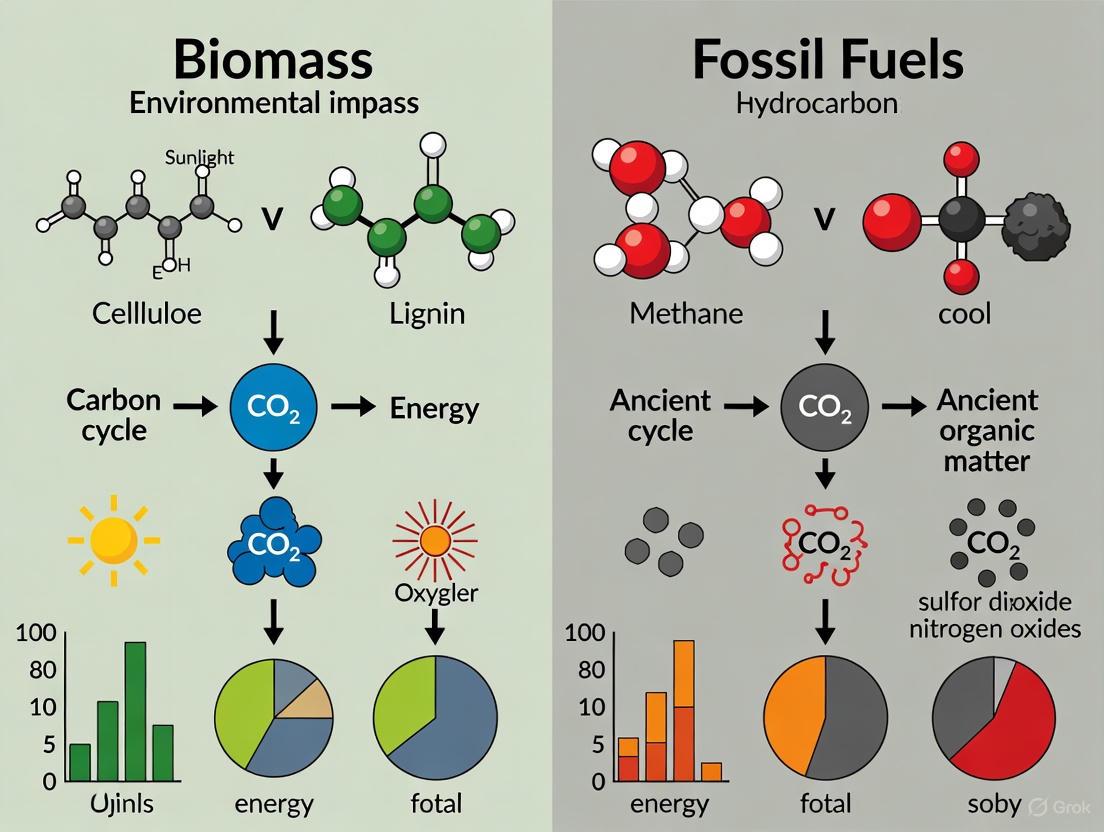
This article provides a systematic, evidence-based comparison of the environmental impacts of biomass and fossil fuels, tailored for researchers and scientific professionals.
Biomass vs. Fossil Fuels: A Comparative Life-Cycle Analysis of Environmental Impact
Abstract
This article provides a systematic, evidence-based comparison of the environmental impacts of biomass and fossil fuels, tailored for researchers and scientific professionals. It examines the foundational science of carbon cycles, methodologies for assessing emissions, solutions to key environmental trade-offs, and a validated comparative analysis. The synthesis offers critical insights for informing sustainable energy decisions in research and industrial applications, framing the discussion within the urgent context of climate change mitigation.
The Fundamental Science: Contrasting Carbon Cycles of Biomass and Fossil Fuels
The global energy landscape and strategies for mitigating climate change are fundamentally shaped by the sources of our fuels. This guide provides a comparative analysis of two distinct energy sources: renewable organic matter (biomass) and ancient geological deposits (fossil fuels). Understanding their origins, properties, and environmental impacts is crucial for researchers, scientists, and policymakers engaged in energy transition planning.
Biomass consists of organic material from living or recently living organisms, such as plants, agricultural residues, and organic waste [1]. It is part of a rapid carbon cycle, where carbon is continuously absorbed and released. In contrast, fossil fuels—including coal, crude oil, and natural gas—are derived from the decomposed remains of ancient plants and animals that have been subjected to heat and pressure deep within the Earth's crust over millions of years [2] [3]. These fuels represent a carbon sequestered in a long-term geological cycle, now being released rapidly through human extraction and combustion.
The formation pathways for these two resource types operate on vastly different timescales and involve distinct geological and biological processes.
Renewable Organic Matter (Biomass)
Biomass is a renewable energy source derived from organic materials. Its key characteristic is its participation in a short-term carbon cycle.
- Sources: Primary sources include wood, agricultural waste (e.g., crop residues), energy crops (plants grown specifically for energy), municipal solid waste, and algae [1] [4].
- Formation Process: Biomass is formed through photosynthesis in a cycle that takes place over months to years. Plants absorb CO₂ from the atmosphere, using solar energy to convert it into organic compounds. When this biomass is used for energy, the carbon is released back into the atmosphere, completing the cycle [1].
Ancient Geological Deposits (Fossil Fuels)
Fossil fuels are non-renewable resources that formed from ancient organic matter over geological timescales.
- Sources: The primary types are coal, petroleum (crude oil), and natural gas [2] [3].
- Formation Process: This process occurs over millions of years [2]:
- Coal: Originated from ancient plant matter in swamps, which was buried under layers of sediment and transformed by heat and pressure [3].
- Petroleum and Natural Gas: Formed from the remains of marine microorganisms (plankton) that settled on the ocean floor. Over time, they were buried under sedimentary layers, and the resulting heat and pressure converted the organic matter into hydrocarbons [2] [3]. These fuels are often found trapped in underground reservoirs by non-porous rock layers [3].
Table 1: Fundamental Characteristics of Energy Sources
| Characteristic | Renewable Organic Matter (Biomass) | Ancient Geological Deposits (Fossil Fuels) |
|---|---|---|
| Primary Sources | Wood, agricultural waste, energy crops, algae [1] | Coal, crude oil, natural gas [2] |
| Formation Process | Photosynthesis (biological) | Geochemical transformation under heat and pressure |
| Formation Timescale | Months to years (short-term cycle) | Millions of years (long-term cycle) [2] |
| Inherent Renewability | Renewable; can be replenished within a human lifetime [1] | Non-renewable; finite within human time frames [2] [5] |
| Key Chemical Elements | Carbon, hydrogen, oxygen | Carbon, hydrogen [2] |
Comparative Environmental Impact Analysis
A critical component of the biomass vs. fossil fuels debate is a quantitative assessment of their environmental footprints, particularly regarding carbon emissions and land use.
Carbon Emissions and Climate Impact
The core difference in climate impact lies in the origin of the carbon emissions.
- Fossil Fuels: Burning fossil fuels releases "new" carbon that has been sequestered from the atmosphere for millions of years. This process directly increases the concentration of CO₂ in the atmosphere, contributing significantly to the greenhouse effect and global warming [2] [6]. The power sector, largely reliant on fossil fuels, was the largest source of global greenhouse gas emissions in 2023 [6].
- Biomass: When managed sustainably, biomass is often considered carbon-neutral over its lifecycle. The CO₂ released during combustion is approximately equal to the CO₂ absorbed by the plants during their growth [1]. However, this neutrality depends on sustainable harvesting and regrowth rates. Furthermore, some studies question this balance when accounting for supply chain emissions and the immediate carbon debt created by harvesting [7].
Land Use and Ecosystem Impacts
The extraction and cultivation of both energy sources have significant land-use implications.
- Fossil Fuel Extraction: Mining and drilling operations directly disturb land. A 2025 study on nickel mining (a critical metal for low-carbon energy technologies) revealed that land transformation factors for mining are often 4 to 500 times greater than previously reported, leading to substantial biomass carbon losses that are rarely accounted for [8]. This highlights that the environmental impact of extracting resources for energy systems extends beyond direct fuel use.
- Biomass Cultivation: Growing dedicated energy crops requires large areas of arable land. This can lead to direct and indirect land-use change, including deforestation, loss of biodiversity, and competition with food production [1] [7]. Converting natural landscapes for biofuel farms releases stored soil and plant carbon, potentially negating the climate benefits for decades [7].
Air Pollution and Public Health
Both fuel types produce air pollutants upon combustion, with serious health consequences.
- Fossil Fuels: The burning of coal, oil, and gas is a major source of fine particulate matter (PM2.5), nitrogen dioxide (NO₂), and sulfur oxides. According to the World Health Organization, 99% of the global population breathes air exceeding air quality limits, largely due to fossil fuel combustion, resulting in an estimated 7 million premature deaths annually [6].
- Biomass: Burning biomass also produces air pollutants, including tiny toxic particles, ozone, and nitrogen dioxide, which can cause respiratory irritation, asthma attacks, and other serious health issues [7]. The location of biomass processing facilities can exacerbate existing air pollution burdens on low-income communities and communities of color [7].
Table 2: Quantitative Comparison of Environmental Impacts
| Impact Parameter | Renewable Organic Matter (Biomass) | Ancient Geological Deposits (Fossil Fuels) |
|---|---|---|
| Core Climate Mechanism | Releases biogenic CO₂ (part of active cycle) | Releases fossil CO₂ (new to atmosphere) |
| Representative Land Use (per tonne of resource) | Varies by crop; can drive deforestation | Nickel mining: 4 - 398 m²/t (sulfide median: 30 m²/t) [8] |
| Key Air Pollutants | Particulate matter, nitrogen dioxide [7] | Particulate matter, nitrogen dioxide, sulfur oxides [6] |
| Public Health Burden | Respiratory illness, asthma attacks [7] | ~7 million premature deaths/year linked to air pollution [6] |
| Water & Soil Impact | Potential for soil erosion and water pollution from agrochemicals [7] | Water contamination risks from extraction (e.g., fracking), oil spills |
Experimental Protocols for Impact Assessment
To generate the data required for a comparative guide, researchers employ standardized analytical protocols. Two key methodologies are detailed below.
Life Cycle Assessment (LCA) Protocol
Objective: To quantify the cumulative environmental impacts of a fuel or product from raw material extraction ("cradle") to end-of-life ("grave").
Methodology:
- Goal and Scope Definition: Define the purpose, functional unit (e.g., 1 MJ of energy), and system boundaries.
- Life Cycle Inventory (LCI): Compile an inventory of all energy and material inputs (e.g., water, fertilizer, diesel) and environmental releases (e.g., CO₂, CH₄, NOₓ, wastewater) for each process stage.
- Life Cycle Impact Assessment (LCIA): Translate inventory data into impact category results, such as Global Warming Potential (GWP), acidification, eutrophication, and land use.
- Interpretation: Analyze results to draw conclusions, identify significant issues, and provide recommendations.
Key Considerations for Fuels:
- For fossil fuels, the LCA must include exploration, extraction, transport, refining, combustion, and any upstream emissions from infrastructure.
- For biomass, the LCA must include crop cultivation (including fertilizer and pesticide production), harvest, transport, conversion to biofuel, combustion, and crucially, land-use change emissions.
Biomass Carbon Stock Assessment Protocol
Objective: To quantify the carbon dioxide emissions resulting from vegetation clearance for resource extraction, such as mining or land conversion for energy crops. This protocol is based on methodologies used in recent studies of mining impacts [8].
Methodology:
- Site Delineation: Map the land footprint of the operation (e.g., mine site, new agricultural land) using satellite imagery or site plans.
- Land Transformation Factor Calculation: Calculate the land area disturbed per unit of resource produced (e.g., m² per tonne of nickel or per GJ of biofuel).
- Biomass Carbon Density Estimation:
- Use a globally harmonized biomass dataset (e.g., Spawn et al., 2020) to estimate aboveground and belowground biomass carbon density [8].
- Determine the baseline carbon stock by averaging biomass densities in undisturbed vegetation surrounding the site.
- Carbon Emission Calculation: Multiply the land transformation factor by the baseline biomass carbon density to estimate total CO₂ emissions from vegetation loss.
This methodology revealed that biomass carbon emissions from nickel mining are significant and often excluded from corporate sustainability reports, leading to a substantial underestimation of their environmental impact [8].
The Scientist's Toolkit: Key Reagents and Materials
Research into fuel properties and environmental impacts relies on a suite of analytical tools and reagents.
Table 3: Essential Research Reagents and Materials
| Tool/Reagent | Function/Application |
|---|---|
| Elemental Analyzer | Determines the carbon, hydrogen, nitrogen, and sulfur content of solid and liquid fuel samples, critical for calculating energy content and emission factors. |
| Gas Chromatograph-Mass Spectrometer (GC-MS) | Separates, identifies, and quantifies complex mixtures of volatile compounds, such as those in crude oil, biofuels, or engine emissions. |
| Isotope-Labeled Tracers (e.g., ¹³CO₂) | Tracks the fate of specific carbon atoms through biological and chemical systems (e.g., in soil or combustion plumes) to study biogeochemical cycles. |
| Life Cycle Inventory (LCI) Database | Provides standardized, peer-reviewed data on the energy and material inputs for common processes (e.g., Ecoinvent), ensuring consistency in LCA studies. |
| Global Biomass Carbon Datasets | Provides spatially explicit estimates of vegetation carbon stocks, used for assessing land-use change emissions from agriculture and mining [8]. |
The comparative analysis reveals a fundamental trade-off. Fossil fuels offer high energy density but are inextricably linked to long-term geological carbon release, severe air pollution, and significant, often underreported, ecosystem impacts from extraction [2] [8] [6]. Biomass, as a renewable resource, participates in an active carbon cycle and can reduce dependence on fossil fuels [1]. However, its sustainability is conditional on responsible cultivation that avoids detrimental land-use change, air pollution from combustion, and competition with food security [7].
For researchers and policymakers, the choice is not simplistic. The transition to a sustainable energy system requires a nuanced understanding of these trade-offs. Prioritizing the reduction of fossil fuel consumption remains paramount [6]. The role of biomass should be strategically limited to hard-to-electrify sectors and must be governed by robust sustainability criteria that safeguard ecosystems, the climate, and public health.
The concept of a closed-loop carbon cycle is central to understanding the potential climate benefits of biomass energy. In theory, the biogenic carbon cycle represents a balanced, circular system where carbon dioxide (CO₂) absorbed from the atmosphere by plants during growth is eventually released back through processes like decomposition or combustion, resulting in net-zero new atmospheric carbon over the cycle period [9]. This stands in stark contrast to the one-way flow of carbon from fossil fuels, where carbon stored for millions of years in geological reserves is permanently added to the active atmosphere [10].
This guide objectively compares the environmental performance of biomass and fossil fuels, focusing on the theory and practice of carbon cycling. The core thesis is that while the biogenic carbon cycle functions as a closed-loop system under ideal conditions of sustainable management, its real-world climate impact is determined by complex factors including temporal scale, land-use practices, and system boundary definitions in lifecycle assessment [11]. For researchers and scientists, accurately quantifying these factors is critical for validating the role of biomass in a low-carbon future.
Quantitative Comparison: Biomass vs. Fossil Fuels
Empirical data and lifecycle assessments provide a quantitative basis for comparing the climate impacts of biomass and fossil fuels. The following tables summarize key comparative data on emissions and carbon stocks.
Table 1: Comparative Lifecycle CO₂ Emissions and Reductions
| Fuel Type | Estimated CO₂ Emissions per Liter (kg) | Renewability | Estimated Emission Reduction vs. Fossil Fuels | Key Sources / Feedstocks |
|---|---|---|---|---|
| Biofuels | 0.8 – 1.3 [12] | Renewable [12] | 50–70% [12] | Crops (e.g., corn, sugarcane, soybean), agricultural residues, forestry by-products [12] |
| Fossil Fuels | 2.5 – 3.2 [12] | Non-renewable [12] | Baseline | Crude oil, coal, natural gas [12] |
Table 2: Global Carbon Pools and Fluxes (Select Data)
| Pool or Flux | Quantity | Notes |
|---|---|---|
| Average Global Above-Ground Biomass Carbon Stock | 378 PgC (1993-2020) [13] | Estimated from satellite radar data; shows slight gross increase of 1.18 PgC over the period [13]. |
| Atmospheric CO₂ Concentration (2025) | 425.7 ppm [14] | 52% above pre-industrial levels [14]. |
| Global Fossil CO₂ Emissions (2025) | 38.1 billion tonnes [14] | Projected record high; 1.1% rise from 2024 [15]. |
| Land & Ocean Sink Proportion | ~55% of total CO₂ emissions [16] | Historically, land (~25%) and ocean (~30%) sinks absorbed over half of human emissions [16]. |
Core Concepts and Methodologies
Conceptual Framework: The Green Carbon Cycle
In academic research, the subsystem of the global carbon cycle most relevant to biomass is often termed the "Green Carbon Cycle" (GCC) [11]. This framework encompasses the exchange of carbon between the atmosphere, the terrestrial biosphere (plants and soil), and the ocean over relatively short time scales (days to centuries) through the fundamental processes of photosynthesis, respiration, decomposition, and combustion [9].
The core of the theoretical closed loop is a mass balance: carbon released at end-of-life (e.g., from combustion) is assumed to be re-sequestered by new plant growth, creating a net-neutral flow over the harvest rotation period. The critical academic distinction lies between this fast, biological cycle and the slow, geological cycle of fossil fuels. Burning fossil carbon represents a net addition to the atmospheric pool, while burning biomass, in theory, only recycles carbon already part of the active, terrestrial-atmospheric system [10] [9].
Key Life Cycle Assessment (LCA) Methodologies
Life Cycle Assessment is the standard tool for quantifying and comparing the environmental impacts of products and fuels. Several methodological approaches have been developed to model biogenic carbon flows, each with distinct strengths and weaknesses [11].
- The
-1/+1Method: This common method, endorsed by standards like PAS 2050 and ISO 14067, tracks biogenic carbon flows across the product lifecycle. A-1is assigned when carbon is removed from the atmosphere (sequestration during growth), and a+1is assigned when it is released back (combustion/decomposition). If the system is balanced, the sum is zero, indicating carbon neutrality [11]. - Dynamic LCA: This approach incorporates the timing of carbon emissions and removals, providing a more realistic climate impact profile over time. It is particularly useful for evaluating "carbon debt" – the temporary increase in atmospheric CO₂ that occurs when biomass is harvested and burned before regrowth has occurred [11].
- GWPbio: This metric aims to better represent the actual global warming potential (GWP) of biogenic CO₂ fluxes by accounting for the dynamic response of the global carbon cycle to a pulse emission of biogenic CO₂, often using a different characterization factor than fossil CO₂ [11].
Table 3: Comparison of Key LCA Methods for Biogenic Carbon
| Method | Core Principle | Handling of Time | Primary Application |
|---|---|---|---|
-1/+1 Method |
Mass balance of carbon flows | Static; timing of flows is ignored | Compliance with carbon accounting standards; simplified assessments [11]. |
| Dynamic LCA | Models the atmospheric decay of CO₂ and regrowth of biomass | Explicitly accounts for the temporal profile of emissions and removals | Research to understand short-to-medium-term climate impacts and carbon debt [11]. |
| GWPbio | Applies a specific characterization factor for biogenic CO₂ | Incorporates time by modeling the perturbation to the global carbon cycle over a chosen timeframe (e.g., 100 years) | Research comparing the integrated radiative forcing of different bioenergy systems [11]. |
Experimental Protocols for Biomass Carbon Analysis
Research into biomass carbon stocks and fluxes relies on rigorous experimental and observational protocols.
Protocol 1: Satellite-Based Above-Ground Biomass Carbon Mapping
- Objective: To generate long-term, global datasets of Above-Ground Biomass Carbon (AGC) to understand carbon dynamics under climate change and land-use shifts [13].
- Methodology: AGC is estimated using satellite radar backscatter data (e.g., from 1993-2020). This data is integrated with ancillary information such as vegetation metrics (tree cover, tree density) and climate data to enhance mapping accuracy. The radar signal interacts with vegetation volume and structure, which can be correlated to AGC through models. The resulting global datasets are produced at resolutions such as 8 km and validated against ground measurements [13].
- Output: A spatially and temporally continuous AGC dataset quantifying stocks and changes, enabling identification of carbon gains (e.g., in boreal forests) and losses (e.g., in tropical forests) [13].
Protocol 2: Life Cycle Assessment (LCA) of Biofuel Pathways
- Objective: To quantify the lifecycle greenhouse gas (GHG) emissions of a biofuel, from feedstock production to end-use (well-to-wheels), and compare it to a fossil fuel baseline [12].
- Methodology:
- Goal and Scope Definition: Define the functional unit (e.g., 1 MJ of energy) and system boundaries.
- Life Cycle Inventory (LCI): Collect data on all material and energy inputs/outputs for each stage:
- Feedstock Cultivation: Inputs of fertilizers, pesticides, fuel for machinery.
- Processing: Energy for fermentation, transesterification, distillation.
- Transportation: Fuel for moving feedstock and final fuel.
- Combustion: Direct emissions from burning the fuel.
- Biogenic Carbon Accounting: Apply a chosen method (e.g.,
-1/+1, dynamic LCA) to model CO₂ flows from biomass growth and combustion. - Life Cycle Impact Assessment (LCIA): Calculate the total global warming potential, typically in kg CO₂-equivalent per functional unit [12] [11].
- Output: A comprehensive emissions profile supporting claims of emission reductions (e.g., "biofuels can cut agricultural carbon emissions by up to 70%") [12].
Research Tools and Visualization
Table 4: Essential Research Tools for Biogenic Carbon Cycle Analysis
| Tool / Resource | Category | Function / Application |
|---|---|---|
| Global Carbon Budget Annual Report [14] | Data Resource | Provides the latest authoritative data on global fossil and land-use CO₂ emissions, sinks, and atmospheric concentrations. Critical for contextualizing research. |
| Life Cycle Assessment (LCA) Software (e.g., openLCA, SimaPro) | Analytical Software | Enables modeling of complex product systems, including biogenic carbon flows, to calculate environmental impacts using various methods. |
| Bookkeeping Models (e.g., as used in GCB) [15] | Analytical Model | Tracks carbon stocks and fluxes from land-use and land-use change over time, helping attribute emissions to specific activities. |
| Biogenic Carbon Project Guidance [17] | Methodological Framework | Aims to provide harmonized recommendations for modeling biogenic carbon in LCA, bringing stability and credibility to results. |
| Satellite Radar Backscatter Data [13] | Remote Sensing Data | Used to derive large-scale, long-term estimates of above-ground biomass, crucial for verifying carbon stock changes and model outputs. |
Visualizing the Carbon Cycles
The following diagram illustrates the fundamental difference between the theoretical closed loop of the biogenic carbon cycle and the linear, additive nature of the fossil fuel carbon cycle.
Carbon Cycle Theory: Closed Loop vs. Linear Flow
Critical Analysis and Research Gaps
The idealized model of a closed loop faces significant challenges in practice. A primary complication is the carbon debt incurred when biomass is harvested. The immediate release of CO₂ from combustion is only re-sequestered over the years or decades required for regrowth, creating a temporal imbalance with near-term climate consequences [9]. The "time to carbon parity" – the period needed for the carbon savings from bioenergy to offset this initial debt – is a critical metric that varies significantly based on feedstock and supply chain [11].
Furthermore, the assumption of carbon neutrality often ignores system-level effects. These include:
- Indirect Land-Use Change (ILUC): Clearing land for biomass production can displace existing activities, potentially causing deforestation and releasing large soil carbon stocks elsewhere [11].
- Albedo Effects: Changes in surface reflectivity from land-cover change (e.g., replacing a dark forest with a lighter-colored crop) can introduce non-carbon warming or cooling effects, complicating the simple carbon balance [11].
- Non-Biogenic Emissions: The lifecycle of biofuels includes fossil carbon emissions from equipment used in farming, transportation, and processing, which can erode the net climate benefit [12] [9].
Ongoing research efforts, such as the Biogenic Carbon Project by the Life Cycle Initiative, aim to harmonize assessment methods and address these complexities to provide more stable and credible guidance for policymakers and researchers [17]. As of 2025, this project is developing a consensus on best practices for modeling biogenic carbon in LCA [17].
The fossil carbon cycle describes the anthropogenic process of transferring carbon that was sequestered over geological timescales—millions of years—into the atmosphere over an extremely short period—decades. This represents a fundamental alteration of the natural carbon cycle, where carbon slowly moved between atmosphere, oceans, biosphere, and geological reservoirs. In the contemporary cycle, human activities, primarily fossil fuel combustion and cement production, create a dominant, unidirectional flow of carbon from geological storage to the atmospheric pool [18]. This transfer is the primary driver of the rapid increase in atmospheric CO₂ concentration, which is projected to reach 425.7 parts per million (ppm) in 2025, 52% above pre-industrial levels [14] [19].
Understanding the mechanisms, rates, and impacts of this transfer is crucial for climate change mitigation. This guide objectively compares the central "performance" of this process—its quantitative contribution to atmospheric change—against the backdrop of natural carbon cycles and alternative systems like biomass energy, providing researchers with structured data and methodologies for environmental impact assessment.
Quantitative Analysis of Fossil Carbon Transfer
The transfer of sequestered carbon is quantified through annual emissions inventories. The following tables summarize the latest global and regional data on these fluxes.
Table 1: Global Carbon Budget (2025 Projections) [14] [15] [19]
| Budget Component | 2025 Projected Value | Annual Change | Key Drivers |
|---|---|---|---|
| Fossil CO₂ Emissions | 38.1 billion tonnes CO₂ | +1.1% | Growth in coal (+0.8%), oil (+1%), and natural gas (+1.3%) use. |
| Land-Use Change Emissions | 4.1 billion tonnes CO₂ | -9.8% | Reduced deforestation in South America; sensitive to fires. |
| Atmospheric CO₂ Concentration | 425.7 ppm | +2.3 ppm | Result of total emissions minus sink uptake; 52% above pre-industrial. |
| Remaining 1.5°C Carbon Budget | 170 billion tonnes CO₂ | ~4 years at current emissions | Virtually exhausted; necessitates immediate, rapid emission reductions. |
Table 2: National and Regional Contributions to Fossil CO₂ Emissions (2025 Projections) [14] [15] [20]
| Country/Region | Projected Emission Change | Share of Global Emissions | Primary Contributing Factors |
|---|---|---|---|
| China | +0.4% | 32% | Moderate energy demand growth offset by extraordinary renewable energy expansion. |
| United States | +1.9% | 13% | Colder weather conditions and higher energy consumption. |
| European Union | +0.4% | ~8% | Reversal of previous declining trends due to weather and consumption factors. |
| India | +1.4% | ~8% | Slower growth due to strong renewables growth and an early monsoon reducing cooling demand. |
| Rest of World | +1.1% | ~39% | Persistent global dependence on all fossil fuel types. |
Table 3: Sector-Specific Contributions to the Fossil Carbon Transfer [14] [19]
| Sector | Contribution | Trend & Notes |
|---|---|---|
| International Aviation | 6.8% increase in emissions | Now exceeds pre-COVID pandemic levels. |
| International Shipping | Emissions remain flat | - |
| Cement Production | Included in fossil CO₂ totals | The cement carbonation sink is accounted for in the overall budget. |
Methodologies for Quantifying Carbon Flows
Accurately tracking the fossil carbon cycle requires robust, multi-faceted experimental and observational protocols. The scientific community relies on several key methodologies, synthesized by the Global Carbon Project and other institutions.
Experimental Protocols for Key Measurements
1. Protocol for Estimating Fossil CO₂ Emissions (EFOS)
- Primary Data Sources: National energy statistics from entities like the International Energy Agency (IEA), data on cement production, and data on gas flaring [21].
- Methodology: A mass-energy balance approach. Fuel production data (e.g., tons of coal, barrels of oil) are combined with fuel-specific carbon content and oxidation factors to calculate the total carbon dioxide released upon combustion. Cement production emissions are calculated based on the stoichiometry of the calcination process [21].
- Uncertainty Handling: Uncertainties are quantified using country- and fuel-specific emission factor uncertainties and energy data uncertainties, typically reported as ±1σ [21].
2. Protocol for Measuring Atmospheric CO₂ Growth Rate (GATM)
- Primary Data Sources: Direct, high-precision measurements of atmospheric CO₂ concentration from a global network of surface stations (e.g., Mauna Loa Observatory, NOAA's Global Monitoring Laboratory) [21].
- Methodology: The global growth rate is computed from the annual change in the globally averaged CO₂ concentration. The global average is calculated by carefully weighting the measurements from different stations to represent the entire atmosphere [21].
- Uncertainty Handling: Uncertainty is small relative to other budget terms, estimated at ±0.2 GtC yr⁻¹ (±0.1 ppm yr⁻¹) [21].
3. Protocol for Estimating Ocean Carbon Sink (SOCEAN)
- Primary Data Sources: Surface ocean CO₂ partial pressure (pCO₂) measurements from the Surface Ocean CO₂ Atlas (SOCAT) and ocean biogeochemistry models [21].
- Methodology:
- Observation-based: Uses over 40 million surface ocean pCO₂ measurements to compute global air-sea CO₂ fluxes.
- Model-based: Global ocean biogeochemistry models (GOBMs) are forced by atmospheric reanalysis data to simulate the ocean's physical and biological processes that govern CO₂ uptake.
- Uncertainty Handling: The uncertainty range is determined from the spread across multiple models and methods [21].
4. Protocol for Estimating Land Carbon Sink (SLAND)
- Primary Data Sources: Dynamic Global Vegetation Models (DGVMs), atmospheric inversions, and forest inventory data [14] [21].
- Methodology:
- DGVM Approach: Process-based models simulate vegetation and soil carbon dynamics in response to environmental drivers like atmospheric CO₂, climate, and land-use change.
- Atmospheric Inversion: Uses atmospheric transport models and CO₂ concentration measurements to infer the location and magnitude of surface CO₂ fluxes.
- Uncertainty Handling: The land sink has the largest uncertainty among budget components (±1.1 GtC yr⁻¹), derived from the spread across multiple DGVMs and comparison with inversions [21].
The Scientist's Toolkit: Key Research Reagents & Materials
Table 4: Essential Materials and Data Sources for Carbon Cycle Research
| Item/Resource | Function in Research |
|---|---|
| Global Carbon Project (GCP) Data | The primary synthesized dataset for the global carbon budget, providing harmonized emissions and sink data [14] [21]. |
| Energy Statistics (IEA, EIA) | Foundational data on fossil fuel production, consumption, and trade, used as input for emission calculations. |
| Surface Ocean CO₂ Atlas (SOCAT) | A publicly available, quality-controlled database of surface ocean pCO₂ measurements, essential for quantifying the ocean sink [21]. |
| Atmospheric CO₂ Observatories | A global network (e.g., Mauna Loa, Barrow, South Pole) providing the fundamental time-series data for atmospheric CO₂ growth [21]. |
| Dynamic Global Vegetation Models (DGVMs) | Process-based computational models (e.g., ORCHIDEE, JULES) used to simulate the terrestrial carbon cycle and estimate the land sink [22] [21]. |
| Earth System Models (ESMs) | Complex coupled models (e.g., IPSL-CM6A-LR) that simulate the full climate system and carbon cycle, used for projecting future changes and understanding feedbacks [22]. |
| Satellite Data (e.g., for Land-Use Change) | Provides spatial data on deforestation, fire activity, and vegetation health to constrain land-use emission estimates. |
Comparative Pathways: Fossil vs. Biogenic Carbon Transfer
The critical distinction in environmental impact lies in the timescale and net effect of transferring carbon to the atmosphere. The following diagram illustrates the fundamental difference between the fossil carbon cycle and a sustainable biogenic carbon cycle.
Climate Feedback Mechanisms Intensified by Fossil Transfer
The massive and rapid CO₂ release from the fossil carbon cycle triggers feedback mechanisms that further amplify climate change. A key finding from recent research is that climate change itself is weakening the planet's natural carbon sinks. Approximately 8% of the rise in atmospheric CO₂ concentration since 1960 is attributed to this weakening, creating a dangerous positive feedback loop [14] [20]. Furthermore, non-CO₂ greenhouse gases like methane (CH₄) and nitrous oxide (N₂O), also released from fossil fuel systems, contribute to a carbon-climate feedback that further reduces the efficiency of land and ocean sinks [22].
The diagram below maps these critical feedback processes initiated by the fossil carbon transfer.
The fossil carbon cycle represents a high-impact, one-way transfer of sequestered carbon that is overwhelming the planet's natural regulatory systems. The quantitative data presented confirms this transfer is accelerating, with record-high emissions projected for 2025 driving atmospheric CO₂ to levels 52% above pre-industrial concentrations [14] [20]. The resultant climate change is now actively weakening the land and ocean sinks, creating a positive feedback that compounds the problem [14] [22]. The remaining carbon budget for limiting warming to 1.5°C is virtually exhausted, equivalent to just four years of current emissions [14] [15]. This analysis underscores that disrupting the slow geological carbon cycle through fossil fuel combustion is the dominant factor in anthropogenic climate change, and halting this transfer is the most urgent priority for climate mitigation.
Within climate change research, understanding the distinct profiles of key greenhouse gases (GHGs)—carbon dioxide (CO₂), methane (CH₄), and nitrous oxide (N₂O)—is fundamental. For investigators comparing the environmental impact of biomass versus fossil fuels, these profiles provide the critical metrics for objective assessment. Greenhouse gases differ significantly in their atmospheric lifetime, heat-trapping potential, and primary sources, factors that determine their overall contribution to global warming. This guide provides a structured comparison of these three principal gases, presenting standardized data and methodologies essential for rigorous environmental impact research.
The framing is particularly crucial for the bioenergy sector, where the classification of carbon emissions—as either part of the rapid biogenic carbon cycle or the slow geological carbon cycle—defines their net impact on the atmosphere [23]. The data and protocols that follow equip researchers with the tools to conduct precise, comparable analyses of energy systems and their climatic effects.
Gas Profiles and Comparative Analysis
The following profiles detail the characteristics of each greenhouse gas, with quantitative data structured for direct comparison. The accompanying table synthesizes these attributes, providing a clear reference for their relative impacts.
Carbon Dioxide (CO₂)
- Primary Sources: The dominant source of anthropogenic CO₂ is the combustion of fossil fuels (coal, oil, natural gas) for energy, heat, and transportation [24]. Additional significant sources include industrial processes (e.g., cement production) and land-use changes such as deforestation and soil degradation [24].
- Global Warming Potential (GWP): The baseline value of 1 over a 100-year timescale (GWP₁₀₀) [25].
- Atmospheric Lifetime: Ranges from centuries to thousands of years, making its impact on the climate exceptionally long-lived [25].
- Contribution to Global GHG Emissions: As the most abundant anthropogenic GHG, fossil CO₂ alone accounted for 74.5% of global emissions in 2024 [26].
Methane (CH₄)
- Primary Sources: The main sources are agriculture (enteric fermentation from livestock and rice cultivation), fossil fuel production (fugitive emissions from oil and gas extraction), waste management (landfills), and biomass burning [25].
- Global Warming Potential (GWP): A value of 28-34 over a 100-year timescale (GWP₁₀₀). This means one tonne of methane generates 28-34 times the warming of one tonne of CO₂ over a century [25].
- Atmospheric Lifetime: Approximately 12 years, making it a relatively short-lived climate pollutant [25].
- Contribution to Global GHG Emissions: Accounted for 17.9% of global GHG emissions in 2024 [26].
Nitrous Oxide (N₂O)
- Primary Sources: Overwhelmingly from agriculture, specifically the application of synthetic and organic nitrogen fertilizers to soils, which stimulates microbial processes that produce N₂O [25] [27]. Other sources include industrial activities and fossil fuel combustion.
- Global Warming Potential (GWP): A value of 265-273 over a 100-year timescale (GWP₁₀₀), making it an extremely potent greenhouse gas [25] [27].
- Atmospheric Lifetime: Approximately 121 years [25].
- Contribution to Global GHG Emissions: Accounted for 4.8% of global GHG emissions in 2024 [26]. Despite its relatively small share of total emissions, its high GWP and long lifetime make it a critical target for mitigation. As of 2025, atmospheric concentrations reached a record 338.42 parts per billion [27].
Table 1: Comparative Profiles of Key Greenhouse Gases
| Characteristic | Carbon Dioxide (CO₂) | Methane (CH₄) | Nitrous Oxide (N₂O) |
|---|---|---|---|
| Chemical Formula | CO₂ | CH₄ | N₂O |
| Primary Anthropogenic Sources | Fossil fuel combustion, industrial processes, land-use change | Agriculture, fossil fuel extraction, waste, biomass burning | Agricultural soil management, industrial activities |
| 100-Year Global Warming Potential (GWP₁₀₀) | 1 (Baseline) | 28-34 [25] | 265-273 [25] [27] |
| Atmospheric Lifetime | Centuries to millennia | ~12 years [25] | ~121 years [25] |
| Contribution to 2024 Global GHG Emissions | 74.5% (Fossil CO₂) [26] | 17.9% [26] | 4.8% [26] |
Experimental Protocols for Emission Measurement
Accurately quantifying greenhouse gas emissions and their climatic impact requires standardized methodologies. The following protocols are foundational for both inventory reporting and primary research.
Methodology for National GHG Inventories
- Purpose: To provide a consistent, transparent framework for countries to estimate and report their anthropogenic GHG emissions to the UNFCCC [26] [25].
- Protocol:
- Activity Data Collection: Gather nationwide data on the scale of human activities (e.g., tons of coal burned, number of livestock, hectares of fertilized cropland) [26].
- Emission Factor Application: Multiply the activity data by standardized emission factors (e.g., kg of CO₂ emitted per ton of coal burned). These factors are established by the IPCC [25].
- CO₂-Equivalent Calculation: Convert the mass of non-CO₂ gases (CH₄, N₂O) into CO₂-equivalents (CO₂e) using their respective 100-year Global Warming Potential (GWP) values, enabling the summation of total GHG impact [25].
- Data Application: This methodology is used to compile international datasets, such as the European Commission's EDGAR database, which reported 2024 global GHG emissions of 53.2 gigatonnes of CO₂ equivalent [26].
Protocol for Biomass Carbon Cycle Analysis
- Purpose: To determine the net carbon balance of using biomass for energy, a critical comparison in the "biomass vs. fossil fuels" debate [23].
- Protocol:
- System Boundary Definition: Define the spatial and temporal boundaries of the analysis, including the entire supply chain (cultivation, harvest, transport, processing, combustion).
- Biogenic Carbon Tracking: Model the flows of biogenic carbon, accounting for CO₂ uptake during plant growth and its release upon combustion [23].
- Reference Scenario Comparison: Compare the emissions from the bioenergy system against a reference scenario (e.g., continued use of fossil fuels), while also modeling the biogenic carbon flows in the absence of the bioenergy system [23].
- Timeframe Specification: Explicitly state the analysis timeframe, as net carbon benefits from bioenergy may only materialize over decades due to the time required for regrowth to re-absorb emitted carbon [28].
Methodology for Agricultural N₂O Flux Measurement
- Purpose: To directly measure nitrous oxide emissions from soils following fertilizer application, which is vital for refining emission factors and testing mitigation strategies [27].
- Protocol:
- Chamber Deployment: Place non-flow-through, non-steady-state chambers (closed chambers) on the soil surface in experimental plots.
- Gas Sampling: At regular intervals (e.g., pre-application, and daily/weekly post-application), use a syringe to collect air samples from the chamber headspace [27].
- Gas Chromatography Analysis: Analyze the concentration of N₂O in the gas samples using a gas chromatograph equipped with an electron capture detector (ECD).
- Flux Calculation: Calculate the N₂O flux rate based on the change in concentration inside the chamber over time, the chamber volume, and the surface area covered.
Experimental N₂O Workflow
The Researcher's Toolkit
This section outlines key reagents, tools, and methodologies essential for research in greenhouse gas emissions and climate science.
Table 2: Essential Research Reagents and Tools
| Reagent/Tool | Primary Function in Research |
|---|---|
| Gas Chromatograph with ECD | Essential for precise measurement of nitrous oxide (N₂O) concentrations in air samples due to high sensitivity [27]. |
| Standardized Emission Factors (IPCC) | Pre-calculated coefficients used to estimate GHG emissions from activity data, ensuring consistency in inventory compilation [26] [25]. |
| Carbon Dioxide Equivalents (CO₂e) | A standardized metric that allows for the comparison of the climate impact of different GHGs by converting them to the equivalent amount of CO₂ with the same warming potential [25]. |
| Static Chamber Systems | A common field apparatus for collecting gas samples from soil or water surfaces to measure the flux of GHGs like CH₄ and N₂O [27]. |
| Global Warming Potential (GWP) | A dimensionless index representing the relative radiative forcing of a unit mass of a GHG compared to CO₂ over a chosen time horizon (e.g., 100 years) [25]. |
This guide has provided a comparative profile of CO₂, CH₄, and N₂O, detailing their sources, potency, and measurement. For researchers evaluating biomass against fossil fuels, these profiles underscore a critical distinction: while fossil fuel combustion moves carbon from the slow geological cycle to the atmosphere, biomass systems operate within the faster biogenic carbon cycle [23]. This framework, combined with the standardized data and experimental protocols presented, provides a solid foundation for conducting objective, data-driven assessments of energy technologies and their true impact on global climate.
The quantification of global warming contributions from major energy sources is a critical endeavor in climate science. This guide provides a comparative analysis of the environmental impacts of fossil fuels and biomass energy systems, two dominant contributors to global carbon dioxide emissions. Framed within a broader thesis on comparative environmental impact research, this article synthesizes the most current data on emission factors, carbon neutrality claims, and atmospheric effects. For researchers and scientists engaged in climate impact studies, this analysis offers a rigorous, data-driven comparison of these energy pathways, highlighting the significant differences in their influence on the global carbon budget and climate system.
The fundamental challenge in assessing these energy sources lies in accurately quantifying their complete climate impacts across different timescales and system boundaries. While fossil fuel emissions are relatively straightforward to measure, biomass emissions involve complex biogenic carbon cycles that require careful accounting methodologies. Understanding these distinctions is essential for developing effective climate mitigation strategies and energy policies.
Quantitative Comparison of Emissions and Impacts
Global Emission Profiles and Carbon Budget Status
Table 1: Comparative Global Warming Contributions of Fossil Fuels and Biomass
| Parameter | Fossil Fuels | Biomass (Wood) | Measurement Context |
|---|---|---|---|
| CO2 Emissions per Energy Unit | Coal: 205.3 lb CO2/MMBtu [28] | 213 lb CO2/MMBtu (bone dry) [28] | Direct combustion emissions |
| Efficiency of Power Generation | Coal: 33% (avg); Natural Gas: 43% [28] | ~24% (utility-scale biomass boiler) [28] | Average conversion efficiency |
| Actual CO2 per MWh | Natural gas: 510 lb/MWh [28] | 3,120 lb/MWh (Domtar plant example) [28] | Measured at power plant level |
| Carbon Neutrality Timeframe | Centuries to millennia (geologic timescale) | Decades to centuries (biogenic timescale) [28] | Time to re-sequester emitted CO2 |
| Atmospheric CO2 Contribution | 38.1 billion tonnes in 2025 (record high) [15] | Contributes to immediate atmospheric CO2 pulse [28] | Annual global emissions |
Table 2: Global Carbon Budget and Climate Impacts
| Metric | Current Status | Implications |
|---|---|---|
| Fossil CO2 Emissions (2025) | 38.1 GtCO2 (record high) [15] | 1.1% increase from 2024 [14] |
| Remaining 1.5°C Carbon Budget | 170 GtCO2 (4 years at current emissions) [15] | Virtually exhausted [14] |
| Atmospheric CO2 Concentration | 425.7 ppm (2025 projection) [15] | 52% above pre-industrial levels [14] |
| Historical Emission Growth | 0.3% per year (2014-2025) vs 1.9% (2004-2013) [15] | Progress in deceleration, but insufficient |
Regional and National Contributions
Table 3: National and Regional Emission Profiles (2025 Projections)
| Region | Share of Global Emissions | 2025 Projected Change | Key Contributing Factors |
|---|---|---|---|
| China | 32% [15] | +0.4% [14] | Moderate energy growth with strong renewable expansion |
| United States | 13% [15] | +1.9% [14] | Colder weather increasing energy demand |
| European Union | ~8% | +0.4% [14] | Varied progress in decarbonization across member states |
| India | ~8% | +1.4% [14] | Early monsoon reduced cooling demand, strong renewable growth |
| Rest of World | ~39% | +1.1% [14] | Collective growth across developing economies |
Experimental Protocols for Emission Quantification
Global Carbon Budget Assessment Methodology
The Global Carbon Project employs a comprehensive methodology to quantify emissions and sinks across the global carbon cycle. The protocol integrates multiple data sources and modeling approaches to generate annual carbon budgets with uncertainty ranges [15].
Data Collection and Integration:
- National emission inventories from member countries
- Satellite observations of atmospheric CO2 concentrations
- Direct atmospheric measurements from ground stations
- Economic activity data correlated with emission factors
- Land-use change monitoring via remote sensing
Analytical Framework:
- Bottom-up inventories combined with top-down atmospheric constraints
- Multiple bookkeeping models for land-use change emissions
- Ocean and terrestrial biogeochemical models for sink quantification
- Statistical projections for current-year estimates based on energy data
Uncertainty Quantification:
- Multi-model ensembles to capture structural uncertainties
- Statistical analysis of inventory discrepancies
- Propagation of measurement errors through calculation chains
- Transparent reporting of confidence intervals for all estimates
Biomass Carbon Accounting Protocol
The Manomet Study approach provides a comprehensive framework for assessing biomass emissions across full lifecycle and temporal dimensions [28]. This methodology addresses the critical time-dependent factors in biomass carbon neutrality.
Temporal Accounting Framework:
- Establishment of baseline carbon stocks in biomass feedstocks
- Tracking of carbon flows through harvest, transport, and combustion
- Modeling of regrowth trajectories for different biomass sources
- Comparison against reference scenarios (fossil fuels and natural decay)
Key Experimental Metrics:
- Immediate combustion emissions versus natural decomposition rates
- Carbon debt calculation: time to achieve net emission reductions
- Albedo changes and other non-CO2 climate impacts
- Market-mediated impacts on land use and forest management
System Boundary Considerations:
- Direct land-use change emissions from biomass cultivation
- Indirect impacts on agricultural expansion and deforestation
- Fossil fuel inputs for harvesting, processing, and transportation
- Changes in soil carbon stocks from biomass removal
Visualization of Carbon Flow Pathways
Carbon Flow Pathways Comparison This diagram illustrates the fundamental differences between fossil fuel and biomass carbon pathways. The fossil fuel pathway represents a linear, one-way flow of geologically sequestered carbon to the atmosphere, creating a net addition to atmospheric CO2. In contrast, the biomass pathway operates as a cyclic system where carbon circulates between the atmosphere and biosphere, with the critical factor being the timescale of resequestration versus emissions.
Research Reagent Solutions for Emission Analysis
Table 4: Essential Research Tools for Emission Quantification Studies
| Research Tool | Function | Application Context |
|---|---|---|
| Atmospheric CO2 Analyzers | Precisely measure CO2 concentrations in air samples | Monitoring atmospheric composition trends; validation of emission inventories [15] |
| Isotope Ratio Mass Spectrometers | Distinguish fossil vs biogenic CO2 using carbon-14 dating | Attribution of emission sources; verification of biomass carbon claims [28] |
| Eddy Covariance Flux Towers | Measure net ecosystem exchange of CO2 | Quantifying land carbon sinks; validating terrestrial carbon models [15] |
| Remote Sensing Platforms | Monitor deforestation and land-use change | Tracking emissions from land-use change; assessing biomass feedstock impacts [15] |
| Life Cycle Assessment Software | Model cradle-to-grave environmental impacts | Comprehensive comparison of energy systems; policy decision support [29] |
| Global Climate Models | Project long-term climate responses to emissions | Assessing climate impacts of emission pathways; carbon budget calculations [15] |
Critical Analysis of Carbon Neutrality and Time Factors
The assumption of biomass carbon neutrality represents one of the most contentious issues in climate policy. Current evidence suggests this neutrality is conditional and time-dependent, with critical implications for climate mitigation strategies [28].
Timescale Considerations:
- Immediate emissions: Biomass combustion releases CO2 instantaneously, while natural decomposition occurs over years to decades
- Carbon debt period: The time required for regenerating biomass to resequester emitted carbon creates a temporary warming impact
- Climate urgency: Decades-long carbon debts conflict with immediate emission reduction needs to meet Paris Agreement goals
Systemic Impacts:
- Forest carbon stocks: Harvesting for biomass reduces standing carbon stocks that would otherwise continue sequestering carbon
- Efficiency disparities: Lower conversion efficiency of biomass systems compared to fossil alternatives increases overall emissions per unit energy
- Alternative scenarios: The critical comparison is between biomass emissions and the counterfactual of fossil fuel use plus forest conservation
The empirical data reveals that substituting biomass for fossil fuels typically increases atmospheric CO2 for extended periods, ranging from decades to centuries, depending on feedstock type and forest dynamics. This temporal mismatch between emission pulses and resequestration creates substantial carbon debts that may not be repaid within relevant climate policy timeframes.
The quantitative comparison of fossil fuel and biomass energy systems reveals complex tradeoffs in their global warming contributions. Fossil fuels continue to dominate global emissions, with record highs projected for 2025, while biomass energy systems present their own challenges through potential carbon debts and efficiency limitations. The most critical finding is that both energy sources contribute significantly to atmospheric CO2, albeit through different mechanisms and timescales.
For researchers and policymakers, this analysis underscores the importance of comprehensive carbon accounting that includes temporal dimensions, system efficiency, and alternative land-use scenarios. Meeting climate targets requires not only accelerating the transition from fossil fuels but also ensuring that alternative energy sources like biomass provide genuine emission reductions within relevant climate timeframes. The scientific tools and methodologies outlined here provide a foundation for more accurate assessment and comparison of energy technologies as part of a broader strategy to mitigate global warming.
Measuring Environmental Impact: Methodologies for Life-Cycle Assessment and Emissions Accounting
Life-Cycle Assessment (LCA) provides a systematic methodology for evaluating the environmental impacts of energy systems from raw material extraction through final energy conversion. For biomass and fossil fuel systems, this "cradle-to-grave" approach is particularly critical for generating comparable environmental impact data. LCA evaluates all greenhouse gas (GHG) emissions—including carbon dioxide (CO₂), methane (CH₄), and nitrous oxide (N₂O)—across the entire lifespan, converting them into carbon dioxide equivalents (CO₂eq) using Global Warming Potential values for standardized comparison [30]. The standard functional unit for electricity generation is grams of CO₂eq per kilowatt-hour (gCO₂eq/kWh), enabling objective comparison across diverse energy technologies [30].
The application of LCA to biomass energy systems has revealed significant complexities that require careful methodological consideration. Current decision-making largely depends on regional feedstock availability and economic factors, but comprehensive environmental assessments are playing an increasingly critical role in policy and technology development [31]. For biomass systems, LCA must account for diverse factors including feedstock type (agricultural residues, forest residues, energy crops, municipal solid waste), conversion pathways (pyrolysis, gasification, anaerobic digestion), and system boundaries that may include carbon sequestration in soils [31] [32]. When properly harmonized, LCA results provide invaluable insights for policymakers, researchers, and energy professionals seeking to understand the true environmental costs and benefits of energy alternatives.
LCA Methodology and Framework
Standardized LCA Framework Components
The International Organization for Standardization (ISO) outlines four distinct phases for conducting life-cycle assessments, ensuring comprehensive and comparable results across studies. The goal and scope definition phase establishes system boundaries, functional units, and impact categories, while the life cycle inventory phase quantifies energy and material inputs and environmental releases [32]. The life cycle impact assessment phase evaluates potential environmental consequences, and the interpretation phase summarizes findings and provides recommendations [32].
For energy systems, LCA encompasses three primary lifecycle stages: upstream processes (resource extraction, feedstock cultivation, and transportation), core conversion processes (combustion, pyrolysis, or other conversion technologies), and downstream processes (waste management, decommissioning, and disposal) [30]. A particular challenge in LCA studies is the variation in methodological choices, which can significantly impact results. Recent harmonization efforts by organizations like the National Renewable Energy Laboratory (NREL) have worked to reduce variability in published LCA results by adjusting estimates to consistent sets of methods and assumptions specific to each technology [33].
Critical Methodological Considerations
Several methodological aspects require careful attention in comparative LCAs of biomass and fossil fuels. The treatment of biogenic carbon remains contentious, with debates centering on whether carbon emitted during biomass combustion should be considered carbon-neutral or if timing and sequestration factors should be incorporated [31]. Land use changes—both direct and indirect—can significantly impact carbon stocks and biodiversity, particularly for biomass systems dedicated to energy crops [31]. System boundary delimitation must consistently address by-products, waste streams, and multi-functional processes across all compared systems [32].
Recent research has highlighted the limitations of focusing exclusively on global warming potential (GWP) in LCA studies. A comprehensive review of biomass energy systems identified numerous additional environmental impact categories that must be considered, including acidification potential, eutrophication potential, ozone depletion potential, human toxicity potential, water consumption, and ecotoxicity potential [31]. Standardized LCA frameworks such as ReCiPe and TRACI provide methodologies for evaluating these broader environmental impacts, enabling more holistic comparisons between energy systems [31].
Quantitative Comparison of Biomass and Fossil Fuel Systems
Lifecycle Greenhouse Gas Emissions
Comprehensive LCA data reveals significant differences in greenhouse gas emissions between energy sources. The following table summarizes harmonized lifecycle GHG emissions for major electricity generation technologies:
Table 1: Lifecycle Greenhouse Gas Emissions for Electricity Generation Technologies
| Energy Technology | Median GHG Emissions (gCO₂eq/kWh) | Key Emission Sources |
|---|---|---|
| Coal | 1001 [30] | Mining, processing, transportation, combustion |
| Natural Gas | 486 [30] | Extraction, processing, transportation, combustion, methane leakage |
| Oil/Petroleum | 840 [30] | Extraction, refining, transportation, combustion |
| Biomass | Varies significantly by feedstock and technology | Feedstock cultivation, processing, conversion, potential soil C sequestration |
| Nuclear | 13 [30] | Uranium mining, enrichment, plant construction/decommissioning |
| Hydropower | 20-24 [30] | Construction, reservoir emissions (site-dependent) |
| Solar PV | 28-43 [30] | Silicon purification, module manufacturing |
| Wind | 10-14 [30] | Blade, tower, and nacelle production |
Biomass systems demonstrate highly variable emissions profiles depending on multiple factors. NREL's harmonization efforts found that while renewable technologies generally show lower lifecycle GHG emissions than fossil fuels, the central tendencies of all renewable technologies are between 400 and 1,000 g CO₂eq/kWh lower than their fossil-fueled counterparts without carbon capture and sequestration [33].
Comprehensive Environmental Impact Assessment
Beyond greenhouse gas emissions, LCA evaluates multiple environmental impact categories that reveal important trade-offs between energy systems. The following table synthesizes findings across these categories for biomass and fossil fuel systems:
Table 2: Comparative Environmental Impact Profiles Across Multiple LCA Categories
| Impact Category | Fossil Fuel Systems | Biomass Energy Systems |
|---|---|---|
| Global Warming Potential | Consistently high across all fossil fuels [30] | Highly variable; can be net-negative with BECCS [31] |
| Acidification Potential | Significant, primarily from sulfur and nitrogen oxides | Can be elevated from fertilizer use in feedstock cultivation [31] [34] |
| Eutrophication Potential | Generally lower than biomass systems | Often significant due to agricultural runoff [31] [34] |
| Water Consumption | High for cooling in thermoelectric plants | Highly variable; irrigation requirements for energy crops [31] |
| Land Use | Primarily for extraction infrastructure | Significant for feedstock cultivation; potential competition with food crops [31] |
| Human Toxicity | Emissions of heavy metals, particulates | Potential pesticide exposure, combustion emissions [31] |
Recent research emphasizes that overemphasizing GWP as the primary impact category risks obscuring significant trade-offs in other environmental areas such as water use, ecotoxicity, and human health [31]. Comprehensive LCA frameworks address these multiple impact categories to provide a more complete picture of environmental performance.
Experimental Protocols for LCA in Energy Research
Standardized LCA Methodology
The experimental protocol for conducting life-cycle assessments of energy systems follows internationally recognized standards with specific adaptations for energy technologies. The goal and scope definition must explicitly state the study's purpose, intended audience, system boundaries, and functional unit—typically 1 kWh of electricity delivered to the grid [32]. The life cycle inventory phase involves collecting quantitative data on all energy and material inputs (feedstock, fuels, electricity, water, fertilizers) and environmental outputs (air emissions, water discharges, solid waste) for every process within the system boundaries [32].
For the life cycle impact assessment, researchers apply characterization factors to convert inventory data into impact category indicators using standardized methods such as TRACI or ReCiPe [31]. The interpretation phase involves evaluating results through sensitivity analysis, uncertainty analysis, and hotspot identification to draw robust conclusions and recommendations [32]. For comparative analyses, all systems must be evaluated using consistent methodological choices, including equivalent system boundaries, impact assessment methods, data quality, and allocation procedures.
Biomass-Specific Methodological Considerations
Experimental protocols for biomass LCA require special considerations beyond standard methodology. Feedstock-specific variations must be accounted for, as agricultural residues, forest residues, energy crops, and algal biomass have distinct environmental profiles [31] [32]. The treatment of soil carbon dynamics significantly influences results, particularly for no-tillage practices that enhance carbon sequestration [34]. Temporal considerations are crucial, as the timing of emissions and sequestration varies across biomass systems, potentially impacting climate change metrics [31].
For biomass conversion technologies, LCA must account for process-specific factors including conversion efficiency, by-product generation, and energy integration [32]. Pyrolysis systems, for instance, produce biochar that may sequester carbon in soils, requiring careful allocation of emissions between multiple products [32]. Technological maturity also influences performance data, with pilot-scale facilities typically showing different environmental profiles than commercial-scale operations.
Diagram: LCA Workflow for Energy Systems
LCA Methodology Workflow - The iterative process of life-cycle assessment follows international standards with feedback loops for refinement.
Biomass Conversion Pathways and Technologies
Major Biomass Conversion Technologies
Biomass can be converted to energy through multiple technological pathways, each with distinct environmental profiles. Thermochemical conversion processes include combustion for heat and power, pyrolysis for bio-oil and biochar production, and gasification for syngas generation [31]. Biochemical conversion pathways utilize anaerobic digestion for biogas production and fermentation for bioethanol generation [31]. Chemical conversion methods include transesterification for biodiesel production from vegetable oils and animal fats [31].
Different conversion technologies yield diverse energy carriers with varying applications. Biomass combustion directly produces heat and electricity, while advanced biofuels like sustainable aviation fuel (SAF) and renewable natural gas (RNG) can displace fossil fuels in hard-to-electrify sectors like aviation and heavy transport [31]. Bioenergy with carbon capture and storage (BECCS) generates negative emissions by combining bioenergy with geological carbon sequestration [31]. The environmental performance of each pathway depends on factors including feedstock type, conversion efficiency, scale of operation, and energy integration.
Diagram: Biomass Conversion Pathways
Biomass Conversion Technology Pathways - Diverse technological routes transform biomass into various energy carriers and products with distinct applications.
Agricultural Management and LCA
Agricultural practices significantly influence the LCA results of biomass energy systems. Research has demonstrated that tillage practices substantially impact environmental outcomes, with reduced tillage and no-tillage systems generally showing better environmental performance due to lower diesel fuel consumption and enhanced carbon sequestration in soils [34]. Fertilizer application represents a major environmental hotspot in biomass production, contributing to eutrophication, acidification, and global warming through nitrous oxide emissions [34].
Studies comparing different cropping systems have found that double cropping systems (two crops per year) can demonstrate better environmental performance for certain impact categories despite more frequent field operations, due to higher total yield and potentially reduced fertilizer requirements [34]. The integration of legume crops in rotations can reduce synthetic nitrogen fertilizer needs, thereby lowering eutrophication and global warming impacts [34]. These agricultural factors must be carefully considered when evaluating the complete lifecycle of biomass energy systems.
Research Reagent Solutions and Essential Materials
Table 3: Essential Research Tools and Materials for Energy LCA Studies
| Research Tool/Material | Function in LCA Research | Application Context |
|---|---|---|
| LCA Software (OpenLCA, SimaPro, GaBi) | Models inventory data and calculates environmental impacts | All LCA phases; provides standardized impact assessment methods [31] |
| Environmental Databases (Ecoinvent, EDGAR) | Provides secondary data for background processes | Inventory phase; supplies emission factors and resource use data [35] |
| Soil Carbon Models | Quantifies carbon sequestration in agricultural systems | Biomass LCAs; estimates soil organic carbon dynamics [34] |
| Gas Chromatographs | Measures methane and nitrous oxide emissions from soils | Experimental validation; field measurements for agricultural stages [34] |
| Elemental Analyzers | Determines carbon, hydrogen, nitrogen content in feedstocks | Feedstock characterization; essential for combustion calculations [32] |
| Bioassay Kits | Assesses ecotoxicity potential of emissions and wastes | Impact assessment; measures human and ecological toxicity [31] |
The selection of appropriate research tools and materials is critical for generating reliable LCA results. LCA software platforms enable researchers to model complex energy systems, apply standardized impact assessment methods, and conduct sensitivity analyses [31]. Environmental databases provide essential background data for electricity mixes, material production, and transportation systems, ensuring consistent inventory development [35]. For biomass-specific studies, agricultural monitoring equipment is necessary to collect primary data on soil emissions and nutrient cycling, reducing reliance on generic emission factors [34].
Specialized analytical equipment supports the characterization of biomass feedstocks and conversion products. Elemental analyzers quantify carbon, hydrogen, nitrogen, and oxygen content, enabling accurate heating value determinations and combustion calculations [32]. Gas chromatographs with appropriate detectors measure methane and nitrous oxide fluxes from agricultural soils, providing critical primary data for global warming impact assessments [34]. Bioassay kits help evaluate ecotoxicity potential, addressing an impact category that has often been neglected in earlier LCA studies of energy systems [31].
Life-Cycle Assessment provides an indispensable framework for objectively comparing the environmental performance of biomass and fossil fuel energy systems. The standardized methodology of LCA—encompassing goal and scope definition, inventory analysis, impact assessment, and interpretation—enables comprehensive evaluation of multiple environmental impact categories beyond global warming potential [31] [32]. Current research indicates that while biomass energy systems generally offer advantages over fossil fuels in terms of greenhouse gas emissions, they often involve trade-offs in other impact categories such as eutrophication, acidification, and land use [31] [34].
Methodological harmonization efforts have reduced variability in LCA results, enabling more reliable comparisons across technologies [33]. Nevertheless, important challenges remain in addressing spatial and temporal variations, accounting for soil carbon dynamics, and evaluating the circular economy potential of biomass systems [31]. Future research directions should prioritize the development of standardized methodologies for emerging technologies like BECCS, expand assessment to include a broader range of environmental impact categories, and improve integration of spatial and temporal considerations in LCA models [31]. As the global community strives to address climate change while meeting growing energy demands, LCA will continue to provide critical insights for evidence-based energy policy and technology development.
The classification of biomass as "carbon neutral" is a foundational concept in climate policy and life cycle assessment (LCA), often justifying the substitution of fossil fuels with bio-based energy sources. However, this classification frequently overlooks a critical scientific nuance: the time dependency of carbon neutrality. The common assumption that bioenergy inherently achieves net-zero emissions simplistically compares it to fossil fuels, which introduce new carbon into the atmospheric cycle. In reality, the climate impact of biogenic carbon is governed by the dynamic interplay between the timing of carbon dioxide (CO₂) emissions from biofuel combustion and the timing of its re-sequestration through subsequent plant growth [11]. This temporal discrepancy can lead to a period of increased atmospheric CO₂ concentration, a "carbon debt," which may persist for years to decades depending on the biomass source and regeneration cycle [36]. Framing this within comparative environmental impact research of biomass versus fossil fuels reveals that the critical distinction is not merely the source of carbon, but the timescales over which carbon cycles between the atmosphere and the biosphere. This guide objectively compares the performance of biogenic and fossil carbon systems, highlighting the methodological frameworks and quantitative data essential for rigorous research.
Methodological Frameworks for Biogenic Carbon Accounting
Accounting for biogenic carbon in Life Cycle Assessment (LCA) requires specific methodologies to track carbon flows accurately. Researchers have developed several approaches, each with distinct strengths and applications for handling the temporal aspect of biogenic carbon.
Common Accounting Methodologies
0/0 Approach (Carbon Neutrality Approach): This method operates on the default assumption that the amount of CO₂ absorbed during biomass growth is equivalent to the amount released at end-of-life (e.g., through decomposition or combustion), resulting in a net-zero balance. It is simple to apply but ignores the timing of emissions and sequestration, effectively assuming instantaneous carbon cycling [37]. This approach is often embedded in policy frameworks but is increasingly criticized for its oversimplification.
-1/+1 Approach (Flows Accounting): This method meticulously tracks all biogenic carbon flows throughout a product's life cycle. Carbon uptake during biomass growth is recorded as a negative emission (-1), while carbon release at end-of-life is recorded as a positive emission (+1) [37]. This provides a more complete inventory of carbon flows and avoids the potential for misleading results if only the uptake phase is considered. It is widely embraced by standards such as the ILCD handbook, PAS 2050, and ISO 14067 [11].
Dynamic LCA: This approach explicitly accounts for the timing of greenhouse gas emissions and removals. Instead of aggregating emissions over a fixed period (like 100 years), it models the atmospheric decay and impact of emissions over time, providing a more realistic representation of the global temperature response [11]. This is particularly important for systems with long rotation periods, such as forestry.
GWPbio Method: This method, related to Dynamic LCA, incorporates the specific rotation period of the biomass into the characterization factor for biogenic CO₂ emissions. It adjusts the Global Warming Potential (GWP) metric to reflect the fact that the emission of one tonne of biogenic CO₂ has a different impact than one tonne of fossil CO₂, depending on the growth and harvest cycle of the feedstock [11].
Table 1: Comparison of Key Biogenic Carbon Accounting Methodologies
| Methodology | Core Principle | Handling of Time | Primary Application Context | Key Advantage | Key Limitation |
|---|---|---|---|---|---|
| 0/0 Approach | Assumes net-zero balance between uptake and release. | Static; time is ignored. | Policy frameworks, simplified screenings. | Simplicity and ease of application. | Fails to represent real-world climate impacts over time. |
| -1/+1 Approach | Tracks all biogenic carbon inflows and outflows. | Static inventory; timing is not modeled. | Compliance with EN 15804, PAS 2050, ISO 14067. | Completeness and transparency of carbon flows. | Does not differentiate between short and long-term carbon storage. |
| Dynamic LCA | Models the atmospheric load of GHGs over time. | Explicitly dynamic; time is a central variable. | Research on forestry products, long-lived biomaterials. | Most accurate representation of temporal climate impact. | High data intensity and computational complexity. |
| GWPbio | Adjusts the GWP factor based on biomass rotation period. | Semi-dynamic; incorporates growth cycle duration. | Comparative assessment of different biomass feedstocks. | Improves accuracy over static methods with less complexity than full Dynamic LCA. | Still a simplified model of a complex biogeochemical system. |
Reporting Standards and Guidelines
Reporting frameworks have evolved to demand greater transparency in biogenic carbon accounting. The revised EN 15804+A2 standard, a core reference for Environmental Product Declarations (EPDs), now requires that the Global Warming Potential (GWP) is reported in disaggregated categories: GWP-fossil, GWP-biogenic, and GWP from land use change (luluc) [37]. This separation prevents the netting-out of biogenic flows from fossil emissions, allowing researchers to assess their impacts independently. Furthermore, major reporting protocols like the Greenhouse Gas Protocol (GHGP) and the Corporate Sustainability Reporting Directive (CSRD) require organizations to disclose biogenic emissions separately, often "outside of scopes," to provide a complete picture of a company's carbon footprint and its dependence on biomass [38].
Quantitative Comparison: Biomass vs. Fossil Fuels
A rigorous comparison requires examining quantitative data on emissions, resource use, and environmental impact across the entire life cycle.
Lifecycle Emissions and Carbon Cycle Dynamics
The fundamental difference between biomass and fossil fuels lies in their participation in the carbon cycle. Fossil fuel combustion releases geologically ancient carbon that has been sequestered for millions of years, representing a net addition of CO₂ to the atmosphere [12] [39]. In contrast, biofuels are part of a faster, "green carbon cycle" where carbon is continuously cycled between the atmosphere and the biosphere [11]. When sourced and managed sustainably, biofuels can offer significant emission reductions.
Lifecycle assessments indicate that sustainably produced biofuels can reduce greenhouse gas emissions by 50% to 70% compared to conventional fossil fuels [12]. For instance, sugarcane ethanol, particularly from Brazil, shows some of the highest emission reductions due to its efficient growth profile [12]. However, these benefits are contingent on sustainable land-use practices. Conversely, the U.S. EPA notes that depending on the feedstock and production process, biofuels can sometimes emit more GHGs than fossil fuels on an energy-equivalent basis, particularly if their production induces land-use change [40].
Table 2: Comparative Lifecycle Analysis: Biofuels vs. Fossil Fuels
| Characteristic | Biofuels (e.g., Ethanol, Biodiesel) | Fossil Fuels (e.g., Gasoline, Diesel) |
|---|---|---|
| Carbon Cycle | Part of a rapid, modern biogenic cycle (years to decades) [37]. | Introduces ancient, geologically stored carbon (millions of years) [12]. |
| Renewability | Renewable; feedstocks can be replenished within human timescales [41]. | Non-renewable; finite resources depleted by extraction [39]. |
| Estimated CO₂ Emissions per Liter (kg) | 0.8 – 1.3 [12] | 2.5 – 3.2 [12] |
| Typical Lifecycle GHG Reduction | 50% - 70% compared to fossil fuels [12]. | Baseline (0% reduction). |
| Air Pollutants | Generally produces lower amounts of harmful pollutants like SO₂ and particulate matter [12]. | Emits harmful gases and particles that can damage ecosystems and human health [41]. |
| Impact on Soil | Can promote soil carbon storage if residues are managed sustainably; risk of depletion with intensive monoculture [12]. | No direct benefit; extraction and spills can lead to degradation and contamination. |
| Primary Feedstocks | Corn, sugarcane, soybean, rapeseed, agricultural residues, forestry waste [12]. | Crude oil, coal, natural gas [41]. |
Experimental Protocols for Carbon Accounting
To generate the data required for the comparisons above, researchers employ a suite of experimental and analytical protocols.
Life Cycle Assessment (LCA) and Carbon Footprinting
Purpose: To quantify the total environmental impact of a product or system, from raw material extraction ("cradle") to end-of-life ("grave"), including biogenic carbon flows [36].
Workflow:
- Goal and Scope Definition: Define the study's purpose, system boundaries (e.g., cradle-to-gate, cradle-to-grave), and functional unit (e.g., 1 MJ of energy).
- Life Cycle Inventory (LCI): Collect data on all energy and material inputs and environmental releases (including biogenic carbon uptake and emissions) for each process within the system boundaries.
- Life Cycle Impact Assessment (LCIA): Translate inventory data into potential environmental impacts, such as Global Warming Potential. At this stage, a specific methodology (e.g., -1/+1, Dynamic LCA) is applied to handle biogenic carbon.
- Interpretation: Analyze results to draw conclusions, check sensitivity, and make recommendations. A critical step is to verify the completeness of the biogenic carbon balance, ensuring that uptake and subsequent releases are fully accounted for to avoid biased conclusions [36].
Carbon-14 Isotope Testing
Purpose: To accurately distinguish between biogenic CO₂ and fossil CO₂ in emissions streams, which is critical for monitoring and verification in projects like Bioenergy with Carbon Capture and Storage (BECCS) [42].
Protocol:
- Sampling: Collect flue gas or atmospheric samples from the emission source using standardized gas sampling containers.
- Analysis: Analyze the sample using Accelerator Mass Spectrometry (AMS) to measure the ratio of Carbon-14 (¹⁴C) to Carbon-12 (¹²C).
- Interpretation: Since ¹⁴C is present in living biomass but has decayed in fossil fuels, a high ¹⁴C signature indicates biogenic origin, while its absence points to fossil sources. This allows for the precise verification of the biogenic fraction of CO₂ emissions, which is a mandatory requirement for high-quality carbon dioxide removal (CDR) projects [42].
Visualizing the Carbon Accounting Landscape
The following diagram illustrates the logical relationship between the core scientific concepts, the methodologies used to study them, and the resultant insights relevant to the biomass vs. fossil fuel debate.
Diagram 1: Biogenic Carbon Accounting Logic Map. This map shows how core scientific concepts drive the development of accounting methodologies, which in turn generate critical insights for comparative research and policy.
The Scientist's Toolkit: Essential Reagents and Materials
This table details key solutions, tools, and materials essential for conducting rigorous research in biogenic carbon accounting and comparative fuel analysis.
Table 3: Essential Research Tools for Carbon Accounting and Fuel Analysis
| Tool/Solution | Function/Description | Application Example |
|---|---|---|
| Carbon-14 (¹⁴C) Isotope Standard | A reference material with a known ¹⁴C/¹²C ratio used for calibrating Accelerator Mass Spectrometry (AMS). | Calibrating AMS equipment to ensure accurate differentiation between biogenic and fossil CO₂ in emission samples [42]. |
| Life Cycle Inventory (LCI) Database | A comprehensive database (e.g., Ecoinvent, USDA LCA Commons) containing data on energy, material inputs, and emissions for common processes. | Compiling the inventory of inputs and outputs for constructing a life cycle model of biofuel production [36]. |
| Gas Chromatograph-Mass Spectrometer (GC-MS) | An analytical instrument that separates and identifies different compounds in a gas sample. | Quantifying methane (CH₄) and nitrous oxide (N₂O) emissions from biofuel combustion, which are reported in Scope 1 emissions [38]. |
| Environmental Product Declaration (EPD) | A standardized document that transparently reports life cycle environmental data based on LCA and ISO standards. | Sourcing verified, disaggregated data on GWP-fossil and GWP-biogenic for bio-based construction materials [37]. |
| Soil Organic Carbon (SOC) Model | A computational model (e.g., Yasso, CENTURY) that simulates the dynamics of carbon turnover in soils. | Estimating changes in soil carbon stocks resulting from the cultivation of biofuel feedstocks or the application of biochar [36] [42]. |
The comparative environmental impact of energy systems is a critical area of research, particularly concerning air pollutants that have significant consequences for public health and ecosystems. While carbon dioxide (CO₂) emissions often dominate climate discussions, non-CO₂ pollutants including particulate matter (PM), nitrogen oxides (NOₓ), and sulfur dioxide (SO₂) warrant detailed investigation due to their direct health impacts and role in atmospheric chemistry [43]. This guide provides a quantitative comparison of these pollutants from biomass versus fossil fuel combustion, supporting informed decision-making in energy policy and technology development.
Biomass is frequently categorized as a renewable and potentially carbon-neutral energy source, but its combustion releases complex mixtures of pollutants that differ substantially from those emitted by fossil fuels [44] [45]. The emission profiles are influenced by multiple variables including fuel composition, combustion technology, and pollution control systems [46]. This analysis examines experimental data and emission factors to objectively compare the environmental performance of these fuel types, providing researchers with evidence-based insights for environmental impact assessment.
Pollutant Profiles and Health Impacts
Understanding the characteristics and health consequences of major non-CO₂ pollutants is essential for contextualizing their emission data.
Particulate Matter (PM2.5): These inhalable particles with diameters ≤2.5 microns penetrate deep into lung tissue and enter the bloodstream, causing cardiovascular impairment, respiratory diseases, and premature mortality [43]. The World Health Organization (WHO) sets an annual mean guideline of 5 μg/m³ to mitigate these health risks [43].
Nitrogen Oxides (NOₓ): Primarily generated from high-temperature combustion, NOₓ irritates airways and aggravates respiratory diseases. It also serves as a key precursor to ozone and secondary particulate formation in the atmosphere [43] [47].
Sulfur Dioxide (SO₂): This corrosive gas primarily originates from burning sulfur-containing fossil fuels and smelting ores. Exposure causes breathing difficulties and contributes to acid rain formation and secondary particulate matter [43] [47].
The global health burden from these pollutants is substantial, with ambient air pollution from fossil fuels alone causing approximately 2.09 million premature deaths annually [48].
Quantitative Emissions Comparison
Experimental data reveals significant differences in emission profiles between biomass and fossil fuels, influenced by both fuel characteristics and combustion conditions.
Comparative Emission Factors
Table 1: Emission factors across different fuel and technology types
| Fuel & Technology Type | PM2.5 (mg/MJ) | NOₓ (mg/MJ) | SO₂ (mg/MJ) | Key Conditions & Notes |
|---|---|---|---|---|
| Modern Biomass Boiler | Low (< 50) [46] | Variable [46] | Low [44] [46] | Advanced combustion + flue gas cleaning |
| Traditional Biomass | Very High [46] | N/A | N/A | Obsolete technologies; incomplete combustion |
| Hard Coal (Air) | Baseline [49] | ~300 [49] | ~1400 [49] | Conventional pulverized coal combustion |
| Hard Coal (Oxy-fuel) | Similar to air [49] | ~150 (50% reduction) [49] | ~400 (70% reduction) [49] | Oxy-fuel combustion with flue gas recirculation |
| Brown Coal (Air) | Baseline [49] | ~250 [49] | ~1100 [49] | Conventional combustion |
| Brown Coal (Oxy-fuel) | Similar to air [49] | ~100 (60% reduction) [49] | ~200 (80% reduction) [49] | Oxy-fuel combustion with flue gas recirculation |
| Biomass Blend (Oxy-fuel) | Similar to coal [49] | Significant reduction [49] | Significant reduction [49] | Co-combustion with coal in modified atmosphere |
Greenhouse Gas Emissions Context
While focusing on non-CO₂ pollutants, it's noteworthy that biofuels from corn biomass can offer a 52% reduction in greenhouse gas emissions, with cellulosic ethanol achieving up to 86% reduction compared to fossil fuels [44]. However, the system perspective is crucial, as biomass growth captures CO₂ and reactive nitrogen during the growth phase, with well-designed combustion systems releasing only 10-25% of the absorbed reactive nitrogen [46].
Experimental Protocols for Emissions Quantification
Standardized methodologies are essential for generating comparable data on fuel combustion emissions.
Entrained Flow Reactor Methodology
Research published in Atmospheric Environment utilized an Entrained Flow Reactor to quantify NOₓ and SO₂ emissions under controlled conditions [49].
- Apparatus Specifications: The reactor consists of a 3000 mm length × 150 mm diameter reaction zone, electrically heated to a maximum temperature of 1100°C, with preheated gases introduced through flow straighteners [49].
- Fuel Preparation: Fuel samples were pulverized to particles <0.2 mm to ensure uniform combustion characteristics [49].
- Experimental Conditions: Fuels were combusted in both conventional air atmospheres and various oxy-fuel atmospheres ( O₂/CO₂ mixtures including 21%/79%, 25%/75%, and 30%/70%) to simulate different combustion technologies [49].
- Gas Analysis: Emissions were continuously monitored using FTIR (Fourier Transform Infrared Spectroscopy) and NDIR (Non-Dispersive Infrared) analyzers for precise quantification of NOₓ and SO₂ concentrations [49].
- Data Normalization: Emission values were normalized by energy input to the combustion chamber (mg/MJ) to enable cross-fuel comparisons [49].
Sentinel-5P Satellite Monitoring
For regional-scale pollution assessment, methodologies employing Copernicus Sentinel-5 Precursor satellite data enable analysis of spatio-temporal patterns for formaldehyde (HCHO), carbon monoxide (CO), nitrogen dioxide (NO₂), sulfur dioxide (SO₂), and tropospheric ozone (O₃) [50].
- Zonal Analysis: Designated 3.2 km zones around industrial establishments cluster similar activities for source attribution [50].
- Temporal Forecasting: The Exponential Smoothing Model (ESM) utilizes weighted averages of past observations to predict future concentration trends, particularly valuable with limited temporal data coverage [50].
Signaling Pathways and System Workflows
The relationship between combustion conditions and pollutant formation follows predictable chemical pathways that can be visualized to enhance understanding.
Pollutant Formation Pathways
Diagram 1: Pollutant formation pathways.
Experimental Measurement Workflow
The experimental process for quantifying emissions follows a systematic workflow from fuel preparation to data analysis.
Diagram 2: Experimental measurement workflow.
The Researcher's Toolkit
Table 2: Essential reagents and equipment for combustion emissions research
| Tool/Reagent | Function/Application | Technical Specifications |
|---|---|---|
| Entrained Flow Reactor | Controlled combustion environment for fundamental studies | 3000 mm length × 150 mm diameter; up to 1100°C [49] |
| FTIR Analyzer | Precise quantification of gaseous pollutants | Fourier Transform Infrared Spectroscopy for molecular identification [49] |
| NDIR Analyzer | Carbon monoxide and dioxide measurement | Non-Dispersive Infrared detection for specific gases [49] |
| Sentinel-5P Data | Regional pollution monitoring and trend analysis | Vertical column density data for multiple pollutants [50] |
| Exponential Smoothing Model | Forecasting future pollution trends | Weighted averages of past observations for prediction [50] |
| Oxy-fuel Combustion System | CO₂ capture-ready research configuration | O₂/CO₂ mixtures (21-30% O₂) replacing air [49] |
Discussion and Future Directions
The experimental data indicates that advanced biomass combustion with proper pollution controls can achieve substantially lower emissions of SO₂ and some reduction in NOₓ compared to conventional coal combustion [44] [46]. However, PM emissions from biomass remain a significant concern, particularly from smaller-scale and residential applications [45] [46].
The choice of energy system decarbonization pathway has crucial implications for future air pollution. Modeling studies indicate that scenarios emphasizing electrification exhibit 40% lower NOₓ emissions in 2050 compared to hydrogen-based scenarios, resulting in 36% and 15% lower population exposure to NOₓ and PM₂.₅ respectively [51]. This highlights the importance of integrating air quality considerations into climate policy planning.
Future research should address emerging technologies including BIOCCS (bioenergy with carbon capture and storage) for negative emissions and advanced pollution control systems that can further reduce non-CO₂ pollutant emissions across both biomass and fossil energy systems [46]. Standardized monitoring and reporting of emission factors will remain essential for validating the environmental performance of these evolving technologies.
The transition from fossil-based to biomass-derived energy sources is often promoted as a key strategy for climate change mitigation. While the carbon benefits of biofuels are frequently compared, a comprehensive environmental assessment demands a broader perspective that includes critical ecosystem pressures. This guide objectively compares the environmental performance of biomass and fossil fuels by examining their impacts on land use, water scarcity, and biodiversity—three interconnected pillars of ecosystem health. Life Cycle Assessment (LCA) serves as the foundational methodology for this comparison, quantifying resource use and environmental consequences across the entire value chain. Recent research emphasizes that moving beyond a narrow focus on greenhouse gas emissions is essential to avoid unintended ecological trade-offs and to guide truly sustainable energy policy [52] [53] [54].
Quantitative Ecosystem Impact Comparison
The following tables synthesize key quantitative findings from recent life-cycle studies, providing a data-driven comparison of the ecosystem impacts associated with biomass and fossil fuel systems.
Table 1: Land Use and Carbon Impact Profile
| Impact Indicator | Biomass / Biofuels | Fossil Fuels | Key Contextual Factors |
|---|---|---|---|
| Land Use Intensity | High (Direct land use for feedstock production) [54] | Lower (but includes extraction & infrastructure footprint) [52] | Biomass land use can compete with food production and natural ecosystems [54]. |
| Land-Use Change (LUC) Carbon Loss | Can be significant if linked to deforestation or ecosystem conversion [54] | Not directly applicable in same manner | LUC emissions for biofuels can exceed GHG reductions from fossil fuel displacement [52]. |
| Carbon Neutrality | Often considered ~carbon neutral due to photosynthetic CO₂ uptake [41] [12] | Not carbon neutral; adds new CO₂ to atmosphere [41] [14] | Carbon neutrality assumption is contested; overlooks supply chain emissions and timing of carbon cycles [12]. |
| Lifecycle GHG Emission Reduction | 50-70% compared to fossil fuels [12] | Baseline (0% reduction) | Reduction percentage is highly dependent on feedstock and production process [12]. |
Table 2: Water and Biodiversity Impact Profile
| Impact Indicator | Biomass / Biofuels | Fossil Fuels | Key Contextual Factors |
|---|---|---|---|
| Water Footprint | High agricultural water demand for irrigation [54] | Lower direct water use, but high for extraction (e.g., fracking) | Biomass is a major driver of global water stress, responsible for ~90% of impacts in some regions [54]. |
| Impact on Biodiversity | Major driver of biodiversity loss via habitat conversion [54] | Significant impacts from exploration, extraction, and pollution | Energy infrastructure (for both sources) destroys habitat and creates fragmentation [52] [53]. |
| Ecosystem Carbon Sink Disruption | Loss of additional carbon sink capacity from vegetation/soil removal [52] | Site-level destruction during infrastructure development [52] | The loss of future carbon sequestration is a hidden cost often undercounted in LCAs [52]. |
Experimental and Methodological Protocols
A rigorous, standardized methodology is crucial for generating comparable data on ecosystem impacts. The following section outlines the core experimental protocols used in the field.
Life Cycle Assessment (LCA) Framework
LCA is the cornerstone methodology for quantifying the environmental impacts of products and services, from raw material extraction ("cradle") to end-of-life ("grave").
Step 1: Goal and Scope Definition The process begins by defining the study's purpose, system boundaries (e.g., cradle-to-grave), and functional unit (e.g., 1 kWh of electricity). This ensures the assessment answers a specific, relevant question and that comparisons are made on an equivalent basis [52].
Step 2: Life Cycle Inventory (LCI) This involves compiling a quantitative inventory of all energy and material inputs (e.g., water, fertilizer, diesel) and environmental releases (e.g., CO₂, nutrient run-off) throughout the product's life cycle. Data is collected for all processes within the defined system boundaries [52] [54].
Step 3: Life Cycle Impact Assessment (LCIA) The LCI data is translated into potential environmental impacts using categorized models. Key impact categories for ecosystem assessment include:
- Land Use: Measured in area-time (e.g., m²-year), accounting for occupation and transformation.
- Water Scarcity: Assessed using models like the AWARE model, which quantifies the relative available water remaining per area after meeting demand from humans and aquatic ecosystems [54].
- Climate Change: Calculated as CO₂-equivalent emissions using global warming potential factors.
- Biodiversity Loss: Often modeled as potential species loss per unit of land use or emissions, integrating spatial data on ecosystem vulnerability [52] [54].
Step 4: Interpretation Results are evaluated to check consistency, significance, and sensitivity. Conclusions are drawn, limitations are identified, and recommendations are provided. This is an iterative process that may require refining the goal and scope [52].
Integrating Spatial Analysis for Land-Use Change
Conventional LCA often lacks spatial specificity, which is critical for accurately assessing land-use impacts. Integrated methodologies combine LCA with Geographic Information Systems (GIS) and trade models.
Protocol for Assessing Land-Use Change Impacts:
- Spatial Mapping: Use satellite data (e.g., remote sensing) to map the pre-conversion ecosystem (forest, grassland, etc.) and quantify biomass carbon stocks and soil organic carbon [52].
- Carbon Stock Accounting: Calculate carbon losses from biomass removal and soil disturbance due to land conversion for energy feedstock cultivation or fossil fuel infrastructure [52].
- Carbon Sink Capacity Loss: Model the loss of additional carbon sink capacity (LASC)—the future carbon sequestration that would have occurred had the land not been converted. This is a critical but often overlooked component [52].
- Multi-Regional Input-Output (MRIO) Modeling: Link the spatially explicit land use to global consumption. MRIO models track biomass and embedded environmental pressures through international supply chains, allocating impacts to the final consumer region (the "footprint") [54].
Ecosystem Impact Pathways and Frameworks
Understanding the causal pathways through which energy systems affect the environment is key to mitigating their impacts. The following diagram and framework illustrate these relationships.
Impact Pathway Analysis
- Driver: Expansion of biofuel feedstock agriculture; Construction of wind farms or fossil fuel extraction sites [52] [53].
- Pressure: Land conversion and vegetation/soil removal; Road sprawl and infrastructure construction; Water extraction for irrigation; Emission of pollutants [52] [55] [54].
- State: Habitat loss and fragmentation; Reduced carbon sink capacity; Soil degradation; Altered water cycles; Increased greenhouse gas concentrations [52] [56] [55].
- Impact: Biodiversity loss (e.g., species extinction); Accelerated climate change; Water scarcity; Food insecurity [56] [53] [55].
- Response: Implementation of sustainable land-use policies; Development of advanced biofuels from waste/residues; Adoption of circular economy principles [53] [54].
The Six-Footprint Framework for Bioeconomy Monitoring
A comprehensive monitoring system for the bioeconomy should employ a family of environmental footprints to capture the main sustainability challenges. This framework links pressure and impact indicators [54]:
- Pressure Footprints (Measure resource flows):
- Agricultural Biomass Footprint: Tracks the global appropriation of biomass for consumption.
- Forest Biomass Footprint: Monitors the consumption of wood and forest products.
- Agricultural Land Footprint: Measures the area of land used to produce consumed goods.
- Carbon Footprint: Accounts for greenhouse gas emissions from consumption.
- Spatially-Explicit Impact Footprints (Measure localized effects):
- Water Scarcity Footprint: Assesses the impact of water consumption on local water scarcity.
- Biodiversity Footprint: Evaluates the impact of land use and other pressures on potential species loss.
Integrating these footprints with MRIO modeling and benchmarks for sustainable consumption levels (e.g., per-capita planetary boundaries) provides a powerful tool for assessing the sustainability of a national or regional bioeconomy strategy [54].
Table 3: Essential Reagents and Tools for Ecosystem Impact Research
| Tool / Resource | Function / Application | Relevance to Ecosystem Impact Assessment |
|---|---|---|
| Multi-Regional Input-Output (MRIO) Models | Trace the flow of embedded resources (e.g., biomass, water) and environmental pressures through global supply chains. | Critical for calculating consumption-based footprints (land, water, carbon) of a product or region, avoiding impact displacement [54]. |
| Spatial Land Use & Carbon Models | Integrate geospatial data to map land cover, carbon stocks in vegetation/soil, and model land-use change scenarios. | Essential for quantifying carbon losses from LUC and the loss of additional carbon sink capacity, moving beyond aggregate LCA [52]. |
| Life Cycle Inventory (LCI) Databases | Provide standardized, background data on resource inputs and emissions for common processes (e.g., fertilizer production, transportation). | The foundational data source for conducting a Life Cycle Assessment, ensuring consistency and comparability between studies [52]. |
| Species-Area Relationship (SAR) Models | Estimate potential species loss based on the amount and quality of habitat area lost or degraded. | Used to quantify impacts on biodiversity in Life Cycle Impact Assessment, translating land use into a metric of ecosystem damage [54]. |
| Water Scarcity Impact Models (e.g., AWARE) | Assess the relative potential of water consumption to deprive other users and ecosystems, based on local water availability. | Calculates the water scarcity footprint, recognizing that a cubic meter of water used in an arid region has a higher impact than in a water-rich one [54]. |
Carbon pricing has emerged as a cornerstone policy instrument for mitigating climate change by creating economic incentives for emissions reduction. Within this framework, the structural design of carbon taxes and associated emissions reporting standards creates significantly different outcomes for various energy sources, particularly biomass versus fossil fuels. For researchers and scientists analyzing comparative environmental impacts, understanding these policy architectures is crucial, as they directly influence the calculated carbon footprint of energy systems. The fundamental distinction in policy treatment stems from the biogenic carbon cycle associated with biomass versus the geologic carbon cycle associated with fossil fuels [23].
Current global carbon pricing initiatives continue to expand in scope and complexity. According to recent OECD data, carbon pricing instruments, including carbon taxes and emissions trading systems (ETS), now cover 44% of greenhouse gas emissions across 79 countries representing 82% of global emissions [57]. This represents a significant increase from 33% coverage in 2018, demonstrating the growing policy relevance of carbon accounting frameworks. Meanwhile, the Global Carbon Project reports that fossil fuel CO₂ emissions reached a record 38.1 billion tonnes in 2025, highlighting the urgent need for effective carbon accounting and mitigation policies [15] [14].
Carbon Tax Structures: Global Frameworks and Efficiency Metrics
Current Global Carbon Tax Landscape
Carbon taxes vary substantially in their design, coverage, and effectiveness across jurisdictions. The structural differences in how these taxes account for biomass versus fossil fuel emissions create important implications for research on comparative environmental impact.
Table 1: Selected Carbon Tax Structures and Key Features (2025)
| Jurisdiction | Tax Rate (USD/tCO₂e) | Sector Coverage | Biomass Treatment | Revenue Efficiency Ratio |
|---|---|---|---|---|
| Canada (BC) | ~$40-50 | Economy-wide | Generally exempt | 0.6-0.7 |
| Japan | ~$20-30 | Limited sectors | Case-by-case | ~0.6 |
| Luxembourg | ~$40-50 | Transportation, heating | Often exempt | ~0.6 |
| EU Member States | Varies | Non-ETS sectors | Typically exempt | 0.2-0.4 (avg) |
| Global Range | $0.1 - $158.8 | 0-100% of emissions | Varies | 0.24 (weighted avg) |
Source: World Bank Carbon Pricing Dashboard [58] and Tax Foundation Analysis [59]
The structural variation in carbon tax designs leads to significant differences in their effectiveness. The c-efficiency ratio – which measures actual revenue collected as a proportion of potential revenue if all emissions were taxed at the standard rate – provides a key metric for evaluating carbon tax performance. According to recent analysis, the weighted average c-efficiency ratio across jurisdictions is approximately 0.24, with a simple average of 0.29 [59]. This indicates that most carbon taxes capture less than one-third of their potential theoretical tax base due to sectoral exemptions, reduced rates, and compliance gaps.
Sectoral Coverage and Biomass-Specific Provisions
The treatment of biomass within carbon tax structures typically follows one of three approaches:
Full Exemption: Most jurisdictions exempt biomass combustion from carbon taxes, based on the theoretical carbon neutrality of biogenic carbon emissions [23]. This approach treats biomass as part of the natural carbon cycle where emissions are offset by prior carbon uptake during plant growth.
Partial Taxation: Some frameworks tax biomass emissions but at reduced rates compared to fossil fuels, recognizing but discounting the biogenic carbon argument.
Lifecycle Assessment: Emerging approaches consider the full lifecycle emissions of biomass, including supply chain impacts and temporal factors in carbon re-sequestration [28].
The sectoral application of carbon taxes further influences their impact on biomass versus fossil fuel use. Carbon taxes predominantly cover emissions from buildings and transport, while ETS systems more frequently target electricity generation and industry [57]. This bifurcated approach creates different incentives for biomass adoption across sectors.
Emissions Reporting Standards: Methodological Frameworks
Fundamental Accounting Methodologies
Emissions reporting standards employ distinct methodological approaches for quantifying and attributing carbon emissions from biomass versus fossil fuels, with significant implications for comparative environmental impact assessment.
Table 2: Emissions Reporting Standards for Biomass vs. Fossil Fuels
| Reporting Aspect | Fossil Fuel Methodology | Biomass Methodology | Key Distinctions |
|---|---|---|---|
| Carbon Classification | Geologic (slow domain) | Biogenic (fast domain) | IPCC categorization between carbon cycles [23] |
| Default Emission Factors | Fixed by fuel type (e.g., 2.5-3.2 kg CO₂/L gasoline) | Variable by feedstock (e.g., 0.8-1.3 kg CO₂/L ethanol) | Fuel-specific versus feedstock-specific factors |
| Temporal Framework | Instantaneous liability | Delayed/neutral accounting | Treatment of timing in emissions and sequestration |
| Land Use Considerations | Typically excluded | Increasingly included (e.g., LULUCF) | Indirect land use change emissions |
| Scope Boundary | Point-of-combustion focus | Full lifecycle assessment | Inclusion of supply chain emissions |
The foundational distinction in emissions reporting lies in the classification of carbon sources. The IPCC distinguishes between the slow domain of the carbon cycle (with turnover times exceeding 10,000 years) and the fast domain (atmosphere, ocean, vegetation, and soil) [23]. Fossil fuel use transfers carbon from the slow to fast domain, increasing total atmospheric carbon, while bioenergy systems operate within the fast domain. This theoretical distinction underpins the different accounting treatments, though its practical application remains methodologically challenging.
Experimental Protocols for Emissions Quantification
Direct Emissions Measurement Protocol
For comparative analysis of biomass versus fossil fuel emissions, researchers employ standardized measurement protocols:
Sample Preparation: Fuel samples are dried to consistent moisture content (typically <10% for biomass) and homogenized to ensure representative analysis.
Calorimetric Analysis: Gross calorific value is determined using bomb calorimetry following ASTM D5865-19 standards, establishing energy content per mass unit.
Emission Factor Determination: Carbon content is analyzed through:
- Ultimate analysis (CHNS/O elemental analyzers) for direct carbon quantification
- Continuous emission monitoring systems (CEMS) for stack gas measurements
- Fuel-specific default factors from IPCC guidelines when direct measurement is impractical
Conversion Calculation: Emissions are calculated using the formula:
CO₂ emissions = Fuel consumption × Emission factor × (44/12) × Oxidation factor
This protocol typically shows that wood biomass emits approximately 213 lb CO₂/MMBtu compared to 205.3 lb CO₂/MMBtu for bituminous coal and 117.8 lb CO₂/MMBtu for natural gas on a direct combustion basis [28].
Lifecycle Assessment (LCA) Protocol
Comprehensive comparative assessment requires full lifecycle analysis:
Goal and Scope Definition: System boundaries are established using "cradle-to-grave" or "cradle-to-gate" frameworks, with functional unit standardization (e.g., per MWh electricity or GJ heat).
Inventory Analysis: All material and energy flows are quantified across:
- Feedstock production and extraction
- Processing and transportation
- Conversion and combustion
- End-of-life considerations
Carbon Stock Accounting: For biomass systems, changes in carbon stocks are assessed across:
- Above-ground biomass
- Below-ground biomass
- Soil organic carbon
- Harvested wood products
Impact Assessment: Results are calculated for global warming potential (GWP) using characterization factors from IPCC AR6, typically over 20- and 100-year time horizons.
Interpretation and Uncertainty Analysis: Sensitivity analyses are conducted for critical parameters, particularly temporal factors in carbon debt repayment for biomass systems.
Diagram 1: Lifecycle Assessment Workflow for Fuel Comparison
Comparative Emissions Data and Policy Implications
Quantitative Emissions Comparison
The application of different carbon accounting frameworks yields substantially different results for biomass versus fossil fuels, depending on system boundaries and temporal considerations.
Table 3: Comparative Emissions Data: Biomass vs. Fossil Fuels
| Fuel Type | Direct Combustion Emissions (kg CO₂e/GJ) | Lifecycle Emissions (kg CO₂e/GJ) | Carbon Tax Liability (at $50/tCO₂) | Typical Reporting Treatment |
|---|---|---|---|---|
| Coal | 205-215 | 220-250 | $11.00-$12.50 | Full taxation |
| Natural Gas | 117-125 | 130-150 | $6.50-$7.50 | Full taxation |
| Gasoline | 225-235 | 240-260 | $12.00-$13.00 | Full taxation |
| Wood Biomass | 210-220 | 5-70 (short-term) | $0.25-$3.50 | Typically exempt |
| Sugarcane Ethanol | 155-165 | 20-40 | $1.00-$2.00 | Often exempt |
| Agricultural Residues | 200-210 | 10-30 | $0.50-$1.50 | Typically exempt |
Source: IEA Bioenergy [23], PFPI [28], and Farmonaut Analysis [12]
The emissions comparison reveals a critical divergence between direct combustion measurements and full lifecycle assessments. While direct combustion shows similar or even higher emissions for biomass compared to fossil fuels, lifecycle analysis can show significant reductions – typically 50-70% for sustainably sourced biomass [12]. This discrepancy underscores the importance of accounting methodology in policy design and environmental impact assessment.
Temporal Considerations in Carbon Accounting
The time horizon over which emissions are accounted for creates significant implications for biomass policy:
Diagram 2: Temporal Framework of Biomass Carbon Debt and Repayment
The temporal dimension of carbon accounting reveals that biomass combustion typically creates an initial "carbon debt" followed by gradual repayment as regrowth occurs. The duration of this repayment period varies significantly by:
- Feedstock type: Annual crops (1-2 years) vs. forest biomass (decades to centuries)
- Forest management practices: Sustainable harvest regimes vs. clearcutting
- Alternative baseline scenarios: What would have occurred without biomass harvesting
Research indicates that when forest biomass replaces fossil fuels, the carbon debt repayment period typically ranges from decades to centuries, depending on these factors [28]. This creates tension between short-term climate goals and long-term carbon neutrality assumptions embedded in many carbon accounting frameworks.
Research Reagents and Methodological Tools
For researchers conducting comparative analysis of carbon emissions from biomass versus fossil fuels, specific methodological tools and reference materials are essential.
Table 4: Essential Research Reagents and Tools for Carbon Accounting
| Tool/Resource | Function | Application Context | Key Providers |
|---|---|---|---|
| IPCC Emission Factor Database | Default conversion factors | Standardized emissions calculations | IPCC, National Inventories |
| Bomb Calorimeters | Calorific value measurement | Energy content determination | Laboratory equipment suppliers |
| Elemental Analyzers | Carbon content quantification | Direct fuel analysis | Laboratory instrument manufacturers |
| Lifecycle Assessment Software | Modeling cradle-to-grave impacts | Comprehensive emissions accounting | Commercial and open-source platforms |
| Carbon Accounting Standards | Methodological frameworks | Reporting consistency | GHG Protocol, ISO 14064 |
| Remote Sensing Platforms | Land use change monitoring | Biomass feedstock sustainability | Satellite data providers (e.g., Farmonaut [12]) |
These research tools enable the precise quantification and standardized reporting necessary for comparative analysis. The integration of technological solutions such as satellite monitoring and blockchain traceability are increasingly important for verifying sustainable sourcing of biomass feedstocks [12], addressing concerns about indirect land use change and deforestation impacts.
Carbon tax structures and emissions reporting standards fundamentally shape the perceived environmental impact of biomass relative to fossil fuels. The current policy landscape, characterized by widespread exemptions for biogenic carbon and varying c-efficiency ratios across jurisdictions [59], creates a preferential framework for biomass that is not always aligned with scientific evidence regarding temporal dynamics and full lifecycle impacts.
For researchers and scientists, critical consideration of system boundaries, temporal horizons, and supply chain impacts is essential when applying these policy frameworks to comparative environmental assessment. Emerging innovations in biomass conversion technologies, particularly carbon capture and storage integration [60], may further alter this comparative landscape. Ultimately, effective climate policy requires carbon accounting frameworks that accurately reflect atmospheric impacts across all time horizons, rather than relying on simplistic theoretical distinctions between biogenic and fossil carbon.
Addressing Environmental Trade-Offs: Strategies for Sustainable Biomass and Cleaner Fossil Operations
The imperative to transition from fossil fuels to renewable energy sources has positioned biomass as a significant component of the global energy strategy. However, its environmental credentials remain contingent on implementing stringent sustainability protocols that prevent deforestation and mitigate land-use conflicts. Framed within a broader thesis on the comparative environmental impact of biomass versus fossil fuels, this analysis examines the experimental evidence and methodological approaches for optimizing biomass sustainability. For the research community, particularly those in scientific and development fields, this guide provides a critical comparison of performance metrics and the technical pathways to ensure biomass energy contributes genuinely to climate mitigation goals.
Comparative Environmental Impact: Biomass vs. Fossil Fuels
A life-cycle assessment (LCA) approach is fundamental for a rigorous comparison of the environmental impact between biomass and fossil fuels. This methodology accounts for all emissions from cultivation, processing, transportation, and final combustion.
Greenhouse Gas Emissions
Table 1: Comparative Life-Cycle Greenhouse Gas Emissions
| Fuel Type | Estimated CO2 Emissions per Liter (kg) | Estimated GHG Reduction vs. Fossil Fuels | Key Study Findings |
|---|---|---|---|
| Fossil Fuels (Diesel) | 2.5–3.2 [12] | Baseline | Releases fossil carbon, adding "new" CO2 to the atmosphere [12]. |
| Bioethanol (Corn) | Not Specified | ~52% [44] | Reductions are highly dependent on feedstock and farming practices. |
| Cellulosic Ethanol | Not Specified | Up to 86% [44] | Produced from non-food biomass (e.g., agricultural residues), offering higher reductions. |
| Biomass Trigeneration | Not Specified | 20-35% [61] | System efficiency from combined cooling, heat, and power reduces total emissions. |
Biofuels are part of a closed carbon cycle; the CO2 released during combustion is partially offset by the CO2 absorbed by plants during growth. While not carbon-neutral due to emissions from processing and transport, this cycle typically results in a significantly lower carbon footprint than fossil fuels [12]. One LCA study of a small-scale biomass trigeneration plant in Southern Italy demonstrated that such systems can reduce emissions by 20-35% compared to conventional separate production methods [61].
Air Pollutants and Ecosystem Impacts
Beyond greenhouse gases, the combustion profile of biomass differs from fossil fuels. Biofuels generally produce lower amounts of harmful air pollutants like particulate matter, sulfur dioxide, and nitrogen oxides, leading to improved air quality [12] [44].
However, the sustainability of biomass is critically dependent on sourcing. Unsustainable biomass production can lead to biodiversity loss, soil degradation, and increased water consumption and pollution from agricultural runoff [12] [44]. The central challenge lies in managing these trade-offs through sustainable practices and robust certification.
Experimental Protocols for Biomass Sustainability Research
Researchers employ specific experimental protocols to quantify the performance and environmental impact of biomass energy systems.
Life Cycle Assessment (LCA)
Protocol Overview: LCA is a standardized methodology (ISO 14040:2006) used to evaluate the environmental impacts associated with all stages of a product's life, from raw material extraction to disposal [61].
Key Methodological Steps:
- Goal and Scope Definition: The system boundary for a biomass LCA typically includes feedstock cultivation, harvesting, transportation, processing, combustion, and end-of-life. The functional unit (e.g., 1 kWh of electricity) is defined for comparison.
- Life Cycle Inventory (LCI): This involves collecting data on all energy and material inputs and environmental releases for each process within the system boundary. Primary data from specific plants or secondary data from databases are used [61].
- Life Cycle Impact Assessment (LCIA): The inventory data is translated into potential environmental impacts, such as global warming potential, using methods like ReCiPe 2016 [61].
- Interpretation: Results are analyzed to identify significant issues, assess sensitivity, and draw conclusions.
Experimental Combustion and Engine Analysis
Protocol Overview: This involves bench-scale and pilot-scale testing of biomass fuels in combustion chambers or internal combustion engines to measure performance and real-time emissions [62].
Key Methodological Steps:
- Fuel Preparation and Blending: Biomass feedstocks (e.g., animal fats, vegetable oils) are often preheated and blended with diesel fuel to create homogenous mixtures for testing [62].
- Engine Instrumentation: A test engine is outfitted with precision instruments, including:
- In-cylinder pressure transducers (e.g., AVL) to monitor combustion characteristics.
- Angle encoders (e.g., Kubler) for precise crank angle resolution.
- Thermo-resistances and thermocouples to monitor temperatures of coolant, air, and exhaust gases [62].
- Data Acquisition and Emissions Analysis: A real-time data acquisition system (e.g., AVL Indimodul) records in-cylinder data. Exhaust gases are analyzed for pollutants (CO2, NOx, particulate matter) using a gas analyzer and smoke meter [62].
- Parameter Variation: Experiments are conducted under varying parameters, such as injection timing and fuel blend ratios, to optimize performance and minimize emissions [62].
Visualization of Research Workflows
The following diagrams outline the core logical and experimental pathways in biomass sustainability research.
Biomass Sustainability Assessment Framework
Life Cycle Assessment Workflow
The Scientist's Toolkit: Key Research Reagent Solutions
Table 2: Essential Materials and Equipment for Biomass Energy Research
| Reagent / Equipment | Function in Research | Specific Example |
|---|---|---|
| Gas Analyzer | Measures the concentration of specific gases (e.g., CO2, NOx, CO) in exhaust streams to quantify emissions. | AVL gas analyzer [62]. |
| Smoke Meter | Quantifies the particulate matter or smoke opacity in the exhaust gases from combustion. | AVL smoke meter for diesel engines [62]. |
| In-Cylinder Pressure Transducer | Monitors real-time pressure changes within an engine's cylinder during combustion, critical for analyzing combustion performance. | AVL pressure transducer line [62]. |
| Angle Encoder | Provides high-resolution crank angle data, synchronizing pressure data with the engine's piston position. | Kubler encoder with 0.05 °CA resolution [62]. |
| Data Acquisition System | Records and processes high-speed, real-time data from multiple sensors and instruments during experiments. | AVL Indimodul system [62]. |
| Thermocouples / Thermo-resistances | Monitor temperatures of various systems, including inlet air, cooling liquids, lubricants, and exhaust gases. | Pt100 TTR thermo-resistances, TTC Chromel-Alumel thermocouples [62]. |
The comparative analysis confirms that sustainably optimized biomass presents a viable pathway for reducing greenhouse gas emissions and fossil fuel dependence. However, its superior environmental performance is not a given; it is critically dependent on rigorous sourcing protocols, advanced conversion technologies, and comprehensive life-cycle assessment. For the research community, the imperative is to continue refining experimental methods and developing innovative solutions that prevent deforestation, resolve land-use conflicts, and enhance the efficiency of biomass energy systems. By adhering to stringent sustainability frameworks, biomass can transition from a controversial energy source to a cornerstone of a genuinely low-carbon and circular bioeconomy.
The comparative environmental impact of biomass versus fossil fuels is a critical area of modern energy research, with particulate matter (PM) emissions representing a significant pollutant of concern for human health and climate. Effective emission control technologies are essential for mitigating these impacts. This guide provides an objective, data-driven comparison of advanced emission control solutions, detailing their performance, underlying experimental methodologies, and practical research tools for scientists and industry professionals engaged in fuel technology and drug development, where aerosol exposure studies are relevant.
Particulate Matter Emission Profiles: A Comparative Analysis
Particulate Matter (PM) is a complex mixture of solid particles and liquid droplets suspended in the air. PM2.5, particles with diameters generally 2.5 micrometers and smaller, poses the greatest health risk as these fine particles can penetrate deep into the lungs and even enter the bloodstream [63]. PM10, which includes inhalable particles up to 10 micrometers in diameter, also presents significant health hazards [63]. The emission profiles of PM are highly dependent on the fuel source and combustion technology.
Biomass combustion, particularly of agricultural residues, is a major source of particulate emissions. The chemical composition of this PM is diverse, containing elements like organic carbon (OC), elemental carbon (EC), and heavy metals (HMs) such as lead (Pb), cadmium (Cd), and chromium (Cr), which pose long-term health risks [64]. Research in the Yangtze River Delta, China, showed that PM from open burning of crop straws like rice and wheat is predominantly concentrated as fine particles in the 1.1–3.3 μm size range [64]. The distribution of chemical components across different particle sizes directly influences their health risks, as it affects which organs in the human respiratory system are targeted [64].
Table 1: Comparative Emission Factors for Particulate Matter from Different Fuels and Combustion Scenarios
| Fuel Type | Combustion Technology | Emission Factor (Mass) | Emission Factor (Particle Number) | Predominant PM Size | Key Chemical Components |
|---|---|---|---|---|---|
| Rice Husk | Fixed-Bed Combustor [65] | 1.58–3.26 g/kg~fuel~ (PM~10~) | 3.52×10^9^–2.26×10^10^ particles/kg~fuel~ | 0.07 μm (Number); 3.07-8.09 μm (Mass) [65] | Carbon, Silicon, Calcium [65] |
| Bagasse | Fixed-Bed Combustor [65] | 0.53–3.37 g/kg~fuel~ (PM~10~) | 1.88–5.65×10^10^ particles/kg~fuel~ | 0.07 μm [65] | Calcium, Silicon [65] |
| Wood Pellet | Residential Burner [66] | ~88.85 mg/m³ [66] | Information Missing | Information Missing | Information Missing |
| Various Crop Straws | Open Burning (Lab Simulation) [64] | Varies by straw type & size fraction | Information Missing | 1.1-3.3 μm (Fine Particles) [64] | Water-soluble ions, OC, EC, Heavy Metals [64] |
Fossil fuel combustion, while not the primary focus of the provided data, remains a dominant source of global particulate pollution and other emissions that form secondary PM. The Global Carbon Project reported that fossil fuel CO~2~ emissions hit a record high in 2025, with projections of 38.1 billion tonnes [14]. These emissions contribute to a complex atmospheric chemistry that generates secondary particulate matter. The harmful effects of PM are well-established, with the World Health Organization (WHO) linking ambient air pollution to an estimated 4.2 million premature deaths globally in 2019, primarily from cardiovascular and respiratory diseases and cancers [67].
Experimental Protocols for PM Characterization
A critical evaluation of emission control technologies relies on robust, standardized experimental methods for sampling and analyzing particulate matter. The following protocols are commonly employed in the field.
Protocol A: Fixed-Bed Combustion and PM Sampling
This methodology is designed to simulate controlled combustion conditions, such as those in specialized boilers, to collect PM for detailed physicochemical analysis [65].
- Fuel Preparation and Characterization: Air-dry biomass feedstocks (e.g., rice husk, bagasse) to a stable moisture content. Conduct proximate analysis (moisture, volatile matter, fixed carbon, ash) and ultimate analysis (carbon, hydrogen, oxygen, nitrogen, sulfur) to determine fuel properties. The high heating value (HHV) should also be measured [65].
- Combustion Apparatus: Utilize a lab-scale fixed-bed combustor, typically a vertically aligned cylindrical reactor insulated with refractory material and rock wool. The system should be equipped with a grate at the base and multiple thermocouples (e.g., Type K) to monitor temperature profiles throughout the bed and the freeboard area [65].
- PM Sampling and Dilution: Conduct isokinetic sampling from the flue gas stream. The sample should be immediately diluted with clean, dry air using a porous tube diluter to prevent condensation and particle coagulation, which preserves the original particle size distribution [65].
- Particle Measurement:
- Number Concentration & Size Distribution: Use a Scanning Mobility Particle Sizer (SMPS) to measure the number concentration and size distribution of particles in the range of 0.01-0.5 μm. An Optical Particle Sizer (OPS) can be used for particles in the 0.3-10 μm range [65].
- Mass Concentration: Collect PM on pre-weired filters (e.g., Teflon-coated glass fiber filters) from the diluted gas stream. The mass concentration is determined by gravimetric analysis, which involves weighing the filters post-sampling under controlled humidity and temperature conditions [65].
- Morphological and Compositional Analysis: Analyze the collected particles using Scanning Electron Microscopy with Energy Dispersive X-ray Spectroscopy (SEM-EDX) to determine particle morphology (e.g., spherical, irregular) and their elemental composition [65].
Protocol B: Laboratory Simulation of Open Biomass Burning
This protocol is tailored for studying the emission characteristics of open burning, a common practice in agricultural regions that significantly contributes to regional air pollution [64].
- Biomass Selection and Preparation: Collect typical regional crop straws (e.g., rice, wheat, corn). Air-dry the samples to achieve natural dryness and then shred them to standardize the fuel form [64].
- Combustion and Sampling Setup: Perform combustion simulations in a laboratory fume hood or dedicated combustion chamber. Use a low-volume sampler equipped with a cascade impactor that can separate particulate matter into multiple size fractions (e.g., 9 stages from <0.43 μm to >9.0 μm) [64].
- Chemical Speciation Analysis:
- Water-Soluble Ions (WSIs): Extract the collected PM samples with deionized water and analyze the extracts using Ion Chromatography (IC) to quantify anions (e.g., sulfate, nitrate) and cations (e.g., ammonium) [64].
- Organic and Elemental Carbon (OC/EC): Analyze a punch of the filter sample using a Thermal-Optical Carbon Analyzer following a standard protocol (e.g., IMPROVE_A). This method thermally desorbs and oxidizes carbon in progressively increasing temperatures in inert and oxygenated atmospheres to distinguish between OC and EC [64].
- Heavy Metals (HMs): Digest the PM samples with a mixture of high-purity nitric acid and hydrogen peroxide in a microwave digestion system. The resulting solutions are then analyzed using Inductively Coupled Plasma Mass Spectrometry (ICP-MS) to quantify trace metals [64].
- Emission Inventory Calculation: Calculate the emission factor for each pollutant (in mg/kg of fuel burned) based on the measured mass concentration, the sampled gas volume, and the total mass of fuel consumed. These factors are used to build regional emission inventories [64].
The workflow for these analytical approaches, from experiment design to data synthesis, is visualized below.
The Scientist's Toolkit: Essential Research Reagents & Materials
Successful characterization of particulate matter emissions requires a suite of specialized reagents, analytical standards, and materials. The following table details key items and their functions in the described experimental protocols.
Table 2: Essential Research Reagents and Materials for PM Emission Analysis
| Item Name | Function/Application | Experimental Protocol |
|---|---|---|
| Teflon-coated Glass Fiber Filters | Collection of particulate matter from flue gas streams for gravimetric and compositional analysis. Their low hygroscopicity ensures stable mass measurements. | A [65] |
| Certified Ion Chromatography (IC) Standards | Calibration and quantification of water-soluble ions (e.g., sulfate, nitrate, ammonium) in PM samples. Essential for understanding secondary aerosol formation. | B [64] |
| OC/EC Calibration Standards | Standardization of thermal-optical carbon analyzers to ensure accurate differentiation between organic and elemental carbon, which have different sources and health impacts. | B [64] |
| ICP-MS Multi-Element Standard Solution | Quantification of trace heavy metals (e.g., Pb, Cd, Cr) in digested PM samples. Critical for assessing toxicity and health risks. | B [64] |
| High-Purity Nitric Acid & Hydrogen Peroxide | Used in microwave-assisted digestion to completely dissolve the metallic fraction of PM samples into a liquid matrix suitable for ICP-MS analysis. | B [64] |
| Cascade Impactor | A multi-stage impactor that physically separates particles by their aerodynamic diameter, allowing for size-resolved chemical analysis of PM. | B [64] |
| Porous Tube Diluter | Dilutes hot, concentrated flue gas with clean, dry air before sampling. This prevents condensation and particle coagulation, preserving the true particle size distribution for accurate measurement. | A [65] |
Advanced emission control strategies must be informed by precise and comprehensive data on particulate matter. The experimental data and protocols presented herein reveal that emissions are intrinsically linked to both fuel composition—with high-ash biomass like rice husk producing more PM—and combustion technology, where controlled systems like fixed-bed combustors allow for optimization (e.g., via air staging). While biomass is often promoted as a renewable and lower-carbon alternative to fossil fuels, this comparison underscores that its particulate emissions can be significant and chemically complex, necessitating robust control technologies and precise characterization methods. The choice of experimental protocol, whether for controlled combustion simulation or open burning, directly shapes the resulting emission data and its applicability. For researchers, selecting the appropriate tools and methodologies is paramount for accurately assessing environmental impact and developing effective mitigation strategies for both the energy and health sciences.
The transition from fossil fuels to sustainable energy systems is a critical pillar of global climate change mitigation strategies. Within this transition, biomass energy technologies offer a pathway to generate renewable energy while managing organic waste. Two leading technologies, anaerobic digestion (AD) and gasification, are at the forefront of converting biomass into useful energy carriers. Framed within a broader thesis on the comparative environmental impact of biomass versus fossil fuels, this guide provides an objective comparison of these technologies. It is designed for researchers and scientists, focusing on their operational principles, environmental performance based on Life Cycle Assessment (LCA), and the experimental protocols used to evaluate them. The analysis synthesizes the most current research data to offer a rigorous, evidence-based comparison.
Anaerobic digestion and gasification are distinct processes that transform organic matter into energy through different conversion routes and are suited to different feedstock profiles.
Anaerobic Digestion is a biochemical process where microorganisms break down biodegradable material in the absence of oxygen. The process occurs in four stages: hydrolysis, acidogenesis, acetogenesis, and methanogenesis [68]. The primary output is biogas, a mixture of methane (CH₄) and carbon dioxide (CO₂), and a nutrient-rich digestate that can be used as fertilizer [68] [69]. AD operates at mesophilic (30-40 °C) or thermophilic (50-60 °C) temperatures and is highly effective for wet organic waste, such as food waste, agricultural residues, and sewage sludge [68].
Gasification is a thermochemical process that converts carbonaceous materials into a synthetic gas, or syngas, by reacting the feedstock at high temperatures (typically 800-1100 °C for the reduction phase) with a controlled amount of oxygen and/or steam [68] [70]. The process involves several stages: drying, pyrolysis, oxidation, and reduction [70]. The resulting syngas is primarily composed of hydrogen (H₂), carbon monoxide (CO), CH₄, and CO₂ [70]. Gasification is more suitable for drier feedstocks with low water content, such as wood, agricultural residues, and even municipal solid waste, including non-renewable organics like plastics [68].
The following diagram illustrates the core pathways and outputs of each technology.
Table 1: Fundamental Comparison of Core Technologies
| Feature | Anaerobic Digestion | Gasification |
|---|---|---|
| Process Type | Biochemical | Thermochemical |
| Operating Temperature | 30-60 °C (Mesophilic/Thermophilic) [68] | 800-1100 °C (Reduction stage) [70] |
| Primary Reactants | Microorganisms, Wet Organic Matter | Controlled Oxidant (e.g., steam, O₂), Dry Carbonaceous Matter |
| Primary Product | Biogas (CH₄, CO₂) [68] | Syngas (H₂, CO, CH₄, CO₂) [70] |
| Solid Co-product | Digestate (Biofertilizer) [68] | Biochar (Fuel, Absorbent, Soil Amendment) [70] |
| Typical Feedstock | Food waste, manure, sewage sludge [68] | Wood, agricultural residues, MSW [68] |
Environmental Impact: A Life Cycle Assessment Perspective
Life Cycle Assessment (LCA) is a standardized methodology (ISO 14040) for evaluating the environmental impacts of a product or system across its entire life cycle, from raw material extraction to end-of-life disposal [31] [71]. For energy technologies, LCA provides a robust framework to quantify and compare environmental footprints, moving beyond direct emissions to account for upstream and downstream processes.
Key LCA Impact Categories for Biomass Energy
A comprehensive LCA for biomass energy should extend beyond Global Warming Potential (GWP) to include a wider set of impact categories [31]. Key categories include:
- Global Warming Potential (GWP): Measures greenhouse gas emissions, contributing to climate change.
- Abiotic Depletion Potential (ADP): Assesses the depletion of non-living (abiotic) resources like fossil fuels and minerals.
- Human Toxicity Potential (HTP) & Ecotoxicity Potential: Evaluates impacts on human health and ecosystems from toxic substances.
- Acidification Potential (AP) & Eutrophication Potential (EP): Related to the release of substances that acidify or over-fertilize land and water systems.
- Water Consumption (WCP): Quantifies the volume of freshwater used [31] [72].
Comparative LCA Data for Hydrogen Production
Hydrogen production serves as an excellent case study for comparing the environmental performance of AD and gasification. The following table summarizes LCA results for producing 1 kg of hydrogen via biogas reforming (from AD) and agricultural residue gasification.
Table 2: LCA Comparison for Hydrogen Production (Functional Unit: 1 kg H₂) [72]
| Impact Category | Unit | Biogas Reforming (from AD) | Agricultural Residue Gasification |
|---|---|---|---|
| Global Warming Potential (GWP) | kg CO₂-eq | 5.047 | 1.30 |
| Fossil Resource Scarcity (ADP-fossil) | kg oil-eq | 10.42 | 3.20 |
| Human Carcinogenic Toxicity | kg 1,4-DCB-eq | 23.28 | 1.51 |
| Water Consumption | m³ | 0.041 | 5.37 |
The data reveals a clear trend: gasification from agricultural residues demonstrates superior performance in GWP, fossil resource consumption, and human toxicity. This is largely because it utilizes waste biomass and avoids the methane leakage potential associated with AD systems [72]. However, gasification has a significantly higher water consumption footprint, a critical factor for sustainability planning in water-scarce regions [72].
Further LCA studies on biomass gasification using different agents (steam, oxygen, air) consistently rank steam gasification as having the lowest environmental impact across most categories, including GWP [71].
LCA of an Integrated Anaerobic Digestion System
An LCA of an integrated system for treating rural organic solid waste through anaerobic digestion combined with aerobic composting (AD-AC) provides insights into the impact profile of AD. The study evaluated multiple impact categories, with key results for the AD-AC system including a GWP of 21.55 kg CO₂-eq and fine particulate matter formation (PMFP) of 0.0756 kg PM2.5-eq per functional unit [73]. This highlights that while AD avoids fossil emissions, its overall environmental footprint is influenced by factors like energy consumption for operation and digestate management.
Experimental Protocols and Modeling Approaches
Robust experimental and modeling frameworks are essential for analyzing and optimizing these technologies.
Life Cycle Assessment (LCA) Methodology
The LCA studies cited follow the ISO 14040 standard, which consists of four phases [71]:
- Goal and Scope Definition: The research objective and system boundaries are defined. A Functional Unit (FU), such as "1 kg of hydrogen produced" or "treatment of a specific amount of waste," is established to enable fair comparisons [72] [71].
- Life Cycle Inventory (LCI): This phase involves data collection on all energy and material inputs and environmental releases for every process within the system boundaries. Data can be sourced from operational plants, laboratory experiments, or process simulation software like Aspen Plus [71].
- Life Cycle Impact Assessment (LCIA): The inventory data is translated into potential environmental impacts using characterization models and methods (e.g., ReCiPe, TRACI) [31] [72].
- Interpretation: Results are analyzed, and conclusions are drawn. This often includes uncertainty and sensitivity analysis to test the reliability of the data and identify the most influential parameters [71].
Modeling Approaches for Gasification
Gasification research employs various modeling techniques to predict outcomes and optimize processes:
- Thermodynamic Equilibrium Models: These are the most common (used in ~60% of studies) and predict syngas composition based on equilibrium constraints, but may lack detail on reaction kinetics [70].
- Computational Fluid Dynamics (CFD) Models: CFD uses numerical analysis to simulate fluid flow, heat transfer, and chemical reactions within the gasifier, providing deep insights into reactor design and performance [70].
- Data-Driven Models (Machine Learning/ANN): Artificial Neural Networks (ANN) and other ML models are increasingly used to predict syngas composition and process efficiency based on historical data, offering high accuracy for specific systems [70] [74].
Protocol for Biological Pretreatment in Gasification
An advanced experimental protocol involves the biological pretreatment of biomass to enhance gasification efficiency.
- Objective: To deconstruct lignocellulosic structures in agricultural residues, reducing tar formation and increasing syngas yield [74].
- Method: Biomass (e.g., corn straw) is subjected to a microbial consortium, often derived from biogas slurry or through anaerobic digestion, for a defined period (e.g., 14 days) [74].
- Outcome: This pretreatment can reduce tar formation by 21-35% and increase the lower heating value of the syngas, while also improving the overall carbon conversion efficiency [74].
The workflow for this integrated process is shown below.
The Researcher's Toolkit: Essential Reagents and Materials
This section details key reagents, catalysts, and materials used in experimental research on these technologies.
Table 3: Essential Research Reagents and Materials
| Item Name | Function/Application | Specific Example & Notes |
|---|---|---|
| Nickel-Based Catalysts | Catalytic gasification to improve hydrogen yield and reduce tar formation. | Ni/CeO₂–ZrO₂ catalyst shows superior hydrogen selectivity and activity due to fine nickel crystal distribution [74]. |
| Biochar | Serves as a catalyst, soil amendment, or filter material. | Can be used as a catalyst in gasification (e.g., from straw) or produced as a co-product for soil enhancement [70] [74]. |
| Gasifying Agents | Medium for the thermochemical conversion in gasifiers. | Steam, air, oxygen, or CO₂. The choice of agent directly impacts syngas composition and heating value (e.g., steam enriches H₂) [70] [71]. |
| Microbial Consortia | Biological pretreatment of biomass and core agent in anaerobic digestion. | Used to break down complex organic matter. Sources include biogas slurry or specialized anaerobic digesters [74]. |
| Aspen Plus Software | Process simulation for modeling and techno-economic analysis. | Widely used to simulate biomass gasification and other conversion processes, providing data for LCA and feasibility studies [74] [71]. |
Anaerobic digestion and gasification are both capable technologies for converting biomass into energy, but they serve different niches and have distinct environmental profiles. AD is a mature technology ideal for managing wet organic waste, producing renewable methane, and recycling nutrients via digestate. In contrast, gasification offers flexibility for drier feedstocks and is highly effective for producing syngas for power or hydrogen, with recent LCA studies indicating a lower carbon and toxicity footprint for specific applications like hydrogen production from agricultural residues.
The choice between them depends on the specific context: feedstock availability, desired energy carrier, and local environmental priorities, particularly regarding water use. Future research should continue to refine LCA methodologies to fully capture all environmental trade-offs and explore the synergies of hybrid systems that integrate both biochemical and thermochemical processes for maximum efficiency and sustainability.
Carbon Capture and Storage (CCS) and methane leak prevention represent two critical technological pathways for mitigating the environmental impact of fossil fuels. Within the broader context of comparative biomass versus fossil fuels research, these technologies address the direct emissions from the incumbent energy system. CCS aims to capture carbon dioxide (CO₂) from point sources like power plants and industrial facilities, preventing its release into the atmosphere. Concurrently, methane leak prevention targets the reduction of unintended emissions of methane (CH₄), a potent greenhouse gas (GHG), across the natural gas supply chain. This guide provides an objective, data-driven comparison of CCS performance against alternative decarbonization strategies, such as hydrogen and bioenergy, drawing on the latest project data and life-cycle assessment studies to inform researchers and scientists.
Technology Performance Comparison: CCS, Hydrogen, and Biofuels
A comparative analysis of key mitigation technologies reveals significant differences in their operational scale, technological maturity, and emission reduction potential. The table below summarizes the quantitative performance data for CCS, hydrogen applications, and biofuels, providing a basis for objective comparison.
Table 1: Comparative Performance of Fossil Fuel Mitigation Technologies
| Technology | Typical Scale/Capacity | TRL | CO₂ Reduction Potential | Key Applications | Notable Projects/Cases |
|---|---|---|---|---|---|
| CCS | Dozens of projects; capture capacity of ~64 MtCO₂/yr from 77 operating facilities [75]. | 8-9 | Captures ~90% of CO₂ from point sources; Net storage depends on energy penalty [76]. | Power generation, cement, steel, ammonia, waste-to-energy [75]. | Norcem Brevik (cement), Mosusol netCO₂ (cement), Alberta Carbon Trunk Line [75]. |
| Low-Carbon Hydrogen | Planned projects could generate 110 MtH₂/yr by 2043 [77]. | 6-8 | Varies by source and application. Can reduce net life cycle GHG by 0.2–1.1 GtCO₂e/yr by 2043 [77]. | Steel-making, ammonia synthesis, biofuels production [77]. | Global analysis of ~2,000 operational and planned projects [77]. |
| Biofuels | Global adoption could lower CO₂ emissions by ~2 billion metric tons by 2025 [12]. | 9 | 50-70% lifecycle GHG reduction compared to fossil fuels [12]. | Road transportation, agriculture, aviation [12]. | Sugarcane ethanol (Brazil), Corn ethanol (USA), Biodiesel from Soybean/Rapeseed [12]. |
Table 2: Qualitative Comparison of Mitigation Technology Attributes
| Attribute | CCS | Low-Carbon Hydrogen | Biofuels |
|---|---|---|---|
| Primary Function | Point-source emission reduction and atmospheric carbon removal [76]. | Fossil fuel replacement in hard-to-abate sectors [77]. | Fossil fuel replacement, especially in transport [12]. |
| Key Advantage | Applicable to existing infrastructure and industrial processes [76]. | High versatility as a fuel and chemical feedstock [77]. | Renewable and part of a closed carbon cycle [12]. |
| Key Challenge | High cost for climate-driven projects; requires supportive policy [76]. | High energy intensity of low-carbon production; need for application prioritization [77]. | Land-use competition and sustainability concerns [12]. |
| Research Focus | Reducing energy penalty, cost, and improving integration [76]. | Scaling up electrolysis and reducing production cost [77]. | Developing advanced biofuels from non-food feedstocks [12]. |
Experimental Protocols and Methodologies
Life-Cycle Assessment (LCA) for Technology Comparison
Objective: To quantify and compare the net greenhouse gas (GHG) emission impacts of CCS, hydrogen, and biofuel systems from a cradle-to-grave perspective.
Methodology:
- Goal and Scope Definition: The system boundary is defined to include all supply chain activities, from resource extraction (e.g., natural gas for hydrogen, biomass for biofuels) to the final service provided (e.g., kWh of electricity, tonne of steel) [77].
- Life Cycle Inventory (LCI): Material and energy flows are compiled for all processes within the system boundary. For hydrogen projects, this involves facility-specific data matched with location-specific conditions, such as the capacity factors for solar PV and wind power used in electrolysis [77].
- Prospective LCA Modeling: For assessing future technologies, background systems (e.g., electricity grids) are modified using Integrated Assessment Model (IAM) scenarios, such as the REMIND v.3.3 2°C scenario, to reflect a decarbonized future economy [77].
- Impact Assessment: The climate change impact is calculated, summing all GHG emissions expressed in CO₂ equivalents (CO₂e).
- Emission Reduction Calculation: The GHG intensity of the hydrogen or biofuel application is compared with a reference system providing an equivalent service. This involves two common reference cases:
Carbon Capture Performance Monitoring
Objective: To verify the volume and permanence of CO₂ stored in geological formations.
Methodology:
- Baseline Characterization: Pre-injection assessment of the subsurface geology using seismic surveys and well logs to model the storage complex [76].
- Injection Monitoring: CO₂ injection rates, volumes, and pressures are continuously monitored at the wellhead [76].
- Subsurface Verification: Time-lapse (4D) seismic surveying is deployed to track the CO₂ plume's movement within the storage reservoir and confirm it is conforming to predictive models. Projects like Sleipner and Quest have demonstrated this methodology [76].
- Atmospheric and Near-Surface Monitoring: Surface and atmospheric sensors are used to detect any potential surface leaks, ensuring the integrity of the storage site [76].
- Post-Injection Stewardship: Monitoring continues after injection activities cease to ensure long-term containment.
Technology Workflows and Signaling Pathways
The following diagrams illustrate the core workflows for carbon capture and storage and the production pathways for low-carbon hydrogen, two central technologies in the mitigation landscape.
Diagram 1: Carbon Capture and Storage (CCS) Workflow. This diagram outlines the primary stages of the CCS process, from capturing CO₂ at an industrial source to its permanent geological storage and subsequent monitoring.
Diagram 2: Low-Carbon Hydrogen Production Pathways. This chart visualizes the primary production methods for low-carbon hydrogen and ranks its end-use applications based on their climate-effectiveness, as identified in large-scale studies.
The Scientist's Toolkit: Research Reagent Solutions
For researchers investigating and developing CCS, bioenergy, and related mitigation technologies, the following table details key materials, reagents, and their functional roles in experimental protocols.
Table 3: Key Research Reagents and Materials for Mitigation Technology Research
| Reagent/Material | Function in Research | Application Context |
|---|---|---|
| Amine Solvents (e.g., MEA, MDEA) | Chemically absorbs CO₂ from flue gas streams in absorption/desorption capture processes [76]. | CCS - Post-combustion capture. |
| Solid Sorbents (e.g., Zeolites, Activated Carbon) | Physically adsorbs CO₂ onto a high-surface-area material; can be energy-efficient for specific gas streams [75]. | CCS - Capture process development. |
| Membranes (Polymeric, Ceramic) | Separates CO₂ from other gases based on differences in permeability and selectivity [75]. | CCS - Capture process development. |
| Stable Isotopes (e.g., ¹³CO₂) | Tracers for monitoring the migration, fate, and potential leakage of injected CO₂ in geological formations. | CCS - Storage integrity and monitoring studies. |
| Cellulolytic Enzymes | Hydrolyzes cellulose and hemicellulose from biomass into fermentable sugars for biofuel production [12]. | Biofuels - Advanced (2nd gen) biofuel research. |
| Metal-Organic Frameworks (MOFs) | High-surface-area, tunable porous materials for gas separation (CO₂/N₂) and storage [76]. | CCS - Novel capture material development. |
| Methane Oxidation Catalysts | Promotes the chemical conversion of methane to CO₂ (a less potent GHG) in emission control systems. | Methane Leak Prevention - Catalytic mitigation. |
The comparative data indicates that CCS, methane prevention, hydrogen, and biofuels are not mutually exclusive but are complementary technologies within a portfolio required for deep decarbonization. The choice between them is not a simple question of superiority but depends heavily on the specific application, local resources, and technological maturity. CCS presents a critical tool for mitigating emissions from existing industrial infrastructure and fossil-based power generation, with demonstrated technical success in several large-scale projects [76]. However, its current scale is far below the billion-tonne annual capacity required in 1.5°C pathways [76]. Meanwhile, low-carbon hydrogen and biofuels are essential for decarbonizing sectors that are difficult to electrify directly, though their climate benefit is maximized only when prioritized for specific applications like steel-making, ammonia production, and aviation [77] [12]. For researchers, the focus must remain on improving the efficiency, reducing the costs, and ensuring the sustainability of all these mitigation pathways to bridge the gap between current project pipelines and climate-driven deployment targets.
The global energy landscape is at a critical juncture. Analysis of current trends indicates that fossil-fuel CO₂ emissions are projected to rise by 1.1% in 2025, reaching a record 38.1 billion tonnes [78]. This continued reliance on fossil fuels exacerbates climate change and contributes to deteriorating air quality through particulate matter (PM2.5) emissions [79]. Within this context, waste-to-energy (WtE) technologies present a dual-value proposition: they address the growing challenge of waste management while simultaneously generating energy from renewable resources, thereby reducing our dependence on fossil fuels.
The scale of the waste problem is substantial. Globally, municipal solid waste (MSW) production is predicted to reach 2.59 billion tons by 2030 and 3.4 billion tons by 2050 [80]. Parallel to this, agricultural activities generate enormous quantities of organic by-products estimated to have an energy potential equivalent to 50 billion tons of oil [81]. Currently, most of this potential remains untapped, with improper disposal causing environmental pollution and greenhouse gas emissions.
Framed within the comparative environmental impact research of biomass versus fossil fuels, this review objectively evaluates the performance of leading WtE conversion technologies for agricultural and municipal waste streams. By synthesizing experimental data on energy recovery efficiency, emissions reduction potential, and economic feasibility, this guide provides researchers and scientists with a comprehensive evidence base for technology selection and optimization.
Waste Stream Characterization and Energy Potential
The efficacy of waste-to-energy conversion is fundamentally governed by the composition and characteristics of the feedstock. Municipal solid waste typically consists of 54.1% organic content on average, with a per capita generation rate of 0.49–0.57 kg/capita/day [82]. Thermo-physical characterization of MSW from Skopje reveals a high gross calorific value, with approximately 79.42% volatile matter and low ash content (7.76%), indicating excellent combustibility [83]. Ultimate analysis shows high carbon (53.12%) and hydrogen (7.69%) content supporting high energy value, while low nitrogen (0.84%) and sulfur (0.26%) levels ensure minimal NOx and SOx emissions during combustion [83].
Agricultural wastes encompass all organic by-products from crop and animal farming systems, categorized as primary (field residues like straw and stalks), secondary (processing residues like husks and bagasse), and tertiary (post-consumer residues) [81]. The specific properties of these residues determine their suitability for different conversion technologies. Moisture content is a critical parameter: substrates with high moisture content (>60%), such as fruit peels and animal manure, are suitable for biological digestion, while those with lower moisture content (<10-15%) are more appropriate for thermal processes [81].
Table 1: Energy Potential of Different Waste Streams
| Waste Stream | Calorific Value/Energy Potential | Key Characteristics | Optimal Conversion Pathways |
|---|---|---|---|
| Municipal Solid Waste | High gross calorific value (varies by composition) [83] | 79.42% volatile matter, 7.76% ash content [83]; 54.1% organic content [82] | Incineration, Gasification, Anaerobic Digestion |
| Agricultural Crop Residues | Higher Heating Value (HHV) of 20.19-22.21 MJ/kg for RDF [84] | Variable moisture content; lignocellulosic structure | Direct combustion, Refuse-Derived Fuel (RDF), Gasification |
| Animal Manure & Wet Agricultural Waste | Biogas yield: 15-33.4 MW/day from methane [82] | High moisture content (>60%); rich in nutrients | Anaerobic Digestion |
Comparative Analysis of Waste-to-Energy Technologies
Technology Performance Metrics
A Multi-criteria Decision Analysis (MCDA) study evaluating WtE technologies across economic, technological, socio-cultural, and environmental parameters identified anaerobic digestion as the most suitable technology, followed by hydrothermal carbonization (HTC), incineration, and pyrolysis, with priority vectors of 0.348, 0.201, 0.162, and 0.148, respectively [85]. Environmental factors were prioritized with a weight of 0.56 in this evaluation, reflecting the importance of environmental impact in technology selection [85].
Table 2: Comparative Performance of Waste-to-Energy Technologies
| Technology | Energy Recovery Efficiency | Waste Volume Reduction | GHG Emission Reduction | Key Applications |
|---|---|---|---|---|
| Incineration | 20-30% (electricity); 60-85% (heat) [86] | 90-95% [86] | 30-87% [86]; prevents methane from landfills [86] | Large-scale MSW treatment; electricity and heat generation |
| Anaerobic Digestion | Varies by feedstock; produces biogas (methane) [80] | Reduces organic waste volume | High GHG reduction via methane capture [80] | Wet agricultural waste; organic fraction of MSW; animal manure |
| Gasification | Comparable to incineration | Significant volume reduction | Lower emissions than incineration | MSW; dry agricultural residues |
| Pyrolysis | Liquid bio-oil, syngas, and biochar production | Significant volume reduction | Carbon sequestration in biochar | Diverse waste streams including plastics |
| Hydrothermal Carbonization (HTC) | Emerging technology; solid biofuel production | Volume reduction through densification | -- | High-moisture waste streams |
Environmental Impact Comparison: Biomass vs. Fossil Fuels
Lifecycle assessments reveal that biofuels derived from waste streams can reduce agricultural carbon emissions by up to 70% compared to traditional fossil fuels [12]. The closed carbon cycle of biofuels—whereby plants absorb CO₂ during growth that is then emitted when the fuel is burned—generally results in a significantly lower carbon footprint than continuing with fossil fuels, which release carbon stored underground for millions of years [12]. In the UK context, energy from waste (EFW) is considered partially renewable, as it involves the incineration of a mixture of waste, some of which is biodegradable while other components (e.g., plastics) are non-biodegradable and could be carbon-intensive [79].
The air quality implications of different energy sources are particularly noteworthy. While biomass and waste-to-energy systems generally produce lower greenhouse gas emissions than fossil fuels, they can contribute to particulate matter (PM2.5) concentrations. In 2021, combustion of biomass for domestic and industrial uses accounted for 18% and 21% of PM2.5 emissions, respectively, in the UK [79]. Modern WtE facilities with advanced emissions control systems can significantly mitigate these impacts compared to uncontrolled burning of agricultural residues in open fields.
Experimental Protocols and Methodologies
Waste Characterization Methodology
Comprehensive waste characterization is a prerequisite for optimizing WtE processes. Standardized protocols include:
Proximate Analysis: Determines moisture content, volatile matter, ash content, and fixed carbon using thermogravimetric methods. In one study, researchers used a Thermo-Gravimetric Analyzer (TGA) to estimate Higher Heating Value (HHV) of refuse-derived fuel from agricultural waste [84].
Ultimate Analysis: Quantifies elemental composition (carbon, hydrogen, nitrogen, sulfur, oxygen) following standardized methods. For MSW analysis in Skopje, samples were prepared by removing inert materials, shredding to reduce particle size (<2mm and <30mm fractions), and drying to lower moisture content before analysis [83].
Calorific Value Determination: Measures higher heating value (HHV) using bomb calorimetry, with values for agricultural waste RDF ranging from 20.19-22.21 MJ/kg depending on composition and moisture content [84].
Refuse-Derived Fuel (RDF) Formulation Protocol
Optimizing RDF from agricultural waste involves systematic mixture design:
Feedstock Selection and Preparation: Common agricultural residues include empty fruit bunch (EFB), coconut shell (CS), coconut husk (CH), and palm kernel shell (PKS) [84]. Feedstocks are dried to achieve moisture content of 5-8%.
Experimental Design: A D-optimal mixture design with 20 combinations, varying components from 10% to 50% in the blend [84].
Statistical Modeling: Experimental data are fitted into a linear polynomial model using specialized software (e.g., Design Expert Software V7) to enhance statistical significance. The model achieved an R² of 0.95 with prediction error below 3% [84].
Performance Validation: The optimized RDF formulation is validated through proximate analysis and calorific value determination to confirm predicted performance.
Anaerobic Digestion System Monitoring
Protocol for evaluating anaerobic digestion performance includes:
Feedstock Characterization: Analysis of organic content, carbon-to-nitrogen ratio, and potential inhibitors.
Biogas Yield Measurement: Quantification of methane production using water displacement or gas metering systems. Studies project methane generation from landfilled MSW with energy values increasing from 15 MW/day to 33.4 MW/day by 2035 [82].
Digestate Analysis: Evaluation of nutrient content and stability for potential use as fertilizer.
Technology Selection Framework
The optimal waste-to-energy technology selection depends on multiple factors, including waste composition, scale of operation, energy output requirements, and environmental considerations. The following decision pathway provides a systematic approach for researchers and technology developers:
Waste to Energy Technology Selection - This diagram illustrates a systematic decision pathway for selecting optimal waste-to-energy conversion technologies based on waste stream characteristics.
Economic Feasibility and Sustainability Considerations
Economic assessments reveal that landfill gas technology has a levelized cost of approximately $0.04/kilowatt-hour with a payback time of 0.73-1.86 years, while anaerobic digestion systems have a levelized cost of about $0.07/kilowatt-hour with a payback time of 1.17-2.37 years [80]. These economic metrics make WtE technologies increasingly competitive with conventional energy sources.
The sustainability of WtE systems must account for competing uses of waste materials. Agricultural residues, for instance, are often used as fertilizer to maintain soil carbon content and fertility, and in developing countries, they serve as animal fodder [81]. Environmentally sustainable biomass operations must determine what quantity of residues must remain on fields to preserve nutrient cycles—commonly recommended at 30% of agricultural crop residue [81].
Integration of eco-innovation technologies, particularly carbon capture and storage (CCS) and bioenergy with carbon capture and storage (BECCS), can further enhance the environmental performance of WtE systems. The UK is investing significantly in BECCS, which is expected to deliver negative emissions and accelerate progress toward net-zero goals [79].
The Researcher's Toolkit: Essential Reagents and Materials
Table 3: Essential Research Reagents and Equipment for Waste-to-Energy Studies
| Item | Function | Application Example |
|---|---|---|
| Thermo-Gravimetric Analyzer (TGA) | Determines thermal stability and composition | Proximate analysis of waste samples [84] |
| Bomb Calorimeter | Measures higher heating value (HHV) | Calorific value determination of RDF [84] |
| Gas Pycnometer | Determines density of solid samples | MSW density measurement using helium displacement [83] |
| Anaerobic Digestion Reactors | Biogas production through microbial decomposition | Methane potential tests from organic waste [80] |
| Knife Mill/Shredder | Particle size reduction of waste samples | Preparation of MSW fractions (<2mm and <30mm) [83] |
| Muffle Furnace | High-temperature thermal processing | Volatile matter and ash content determination [83] |
| Design Expert Software | Statistical analysis and experimental design | Optimization of RDF formulations [84] |
| Multi-criteria Decision Analysis (MCDA) Tools | Technology selection based on multiple parameters | Comparative evaluation of WtE technologies [85] |
Waste-to-energy technologies represent a promising pathway for addressing dual challenges of waste management and renewable energy generation. The experimental data compiled in this review demonstrates that optimized WtE systems can achieve energy recovery efficiencies of 30-92.75%, waste volume reductions of 90-95%, and greenhouse gas emission reductions of 30-87% compared to conventional waste disposal methods [86].
Within the broader context of biomass versus fossil fuels research, waste-derived energy systems offer significant environmental advantages, including up to 70% reduction in carbon emissions compared to traditional fossil fuels [12]. However, important research gaps remain, particularly in optimizing technology integration for mixed waste streams, improving economic viability at smaller scales, and developing more comprehensive lifecycle assessments that account for all sustainability dimensions.
Future research should focus on advancing emerging technologies like hydrothermal carbonization, which shows promise as the second most suitable WtE technology in recent evaluations [85], and integrating artificial intelligence for real-time process optimization. Additionally, greater attention to the circular economy aspects—such as nutrient recovery from digestion processes and material reuse from incineration residues—will enhance the overall sustainability of WtE systems.
For researchers and scientists in drug development and related fields, the principles and methodologies outlined provide a framework for evaluating waste-to-energy technologies not just as waste management solutions, but as significant contributors to sustainable energy portfolios and climate change mitigation strategies.
A Validated Comparison: Synthesizing Data on Emissions, Efficiency, and Total Environmental Cost
The debate on how to mitigate climate change often centers on replacing fossil fuels with alternative energy sources like biomass. However, the comparison of their net carbon dioxide (CO2) emissions is complex, with studies yielding conflicting results. This guide objectively compares the net CO2 emissions per unit of energy from fossil fuels and biomass/Biofuels by synthesizing current data and experimental findings. It details the methodologies behind these findings to provide researchers, scientists, and policy makers with a clear, evidence-based framework for evaluation.
The core contention lies in the fundamental difference between the carbon cycles of the two fuel types. Fossil fuel combustion transfers carbon stored for millions of years in the geological reservoir into the atmosphere, resulting in a net increase in atmospheric CO2 [23]. In contrast, biomass and biofuel combustion is part of the biogenic carbon cycle, where carbon is recently absorbed from the atmosphere during plant growth. In theory, this can be carbon neutral over the plant's growth cycle, but in practice, net emissions are highly dependent on supply chains, land-use changes, and the time frame of analysis [12] [28] [23].
Alarming recent data indicates that global fossil fuel CO2 emissions are projected to rise by 1.1% in 2025, hitting a record high of 38.1 billion tonnes [15] [14]. Concurrently, a 2025 analysis suggests that crop-based biofuels, on average, emit 16% more CO2 than the fossil fuels they replace, primarily due to the indirect impacts of farming and deforestation [87].
Quantitative Data Comparison
The following tables summarize key quantitative data for comparing the carbon footprint of different fuel types. The values, especially for biomass/biofuels, can vary significantly based on feedstock, technology, and system boundaries.
Table 1: Direct CO2 Emissions per Unit of Energy at Point of Combustion This table compares the immediate CO2 released when burning different fuels, a primary data point from air permit reviews and energy information administrations [28].
| Fuel Type | CO2 Emissions (lb CO2/mmbtu) | Notes |
|---|---|---|
| Natural Gas | 117.8 | - |
| Bituminous Coal | 205.3 | - |
| Wood (Bone Dry) | 213.0 | Inherently higher carbon content per unit of energy than coal [28]. |
| Typical Wood (45-50% Moisture) | ~106.5 (effective) | Effective emissions are high as energy is used to evaporate water, reducing net energy output [28]. |
Table 2: Lifecycle Greenhouse Gas (GHG) Emissions and Broader Impacts This table incorporates a lifecycle analysis (LCA), which is crucial for evaluating the total climate impact of biofuels versus fossil fuels [12] [87].
| Fuel Type | Estimated Lifecycle GHG Reduction (vs. Fossil Fuels) | Key Factors & Feedstocks | Land Use (2025 Estimate) |
|---|---|---|---|
| Fossil Fuels | Baseline (Net Add) | Releases geologically sequestered carbon; net addition to atmospheric CO2 [23]. | - |
| Biofuels (Theoretical Potential) | Up to 70% [12] | Achieved under optimal conditions with sustainable feedstocks (e.g., sugarcane ethanol, agricultural residues). | - |
| Biofuels (Global Average) | -16% (i.e., 16% worse) [87] | Driven by crop-based feedstocks (90% of global production), indirect land-use change, and deforestation. | 32 million hectares (size of Italy) [87]. |
Table 3: Power Plant Efficiency and Carbon Intensity The overall efficiency of energy conversion is a critical factor in determining final emissions per unit of electricity generated [28].
| Plant Type | Average Efficiency | CO2 Emissions (lb/MWh) | Contextual Data |
|---|---|---|---|
| Utility-Scale Biomass Boiler | 24% [28] | 3,120 (example from Domtar plant) [28] | Lower efficiency significantly increases carbon intensity per megawatt-hour. |
| Average US Coal Fleet | 33% [28] | - | Higher efficiency than typical biomass boilers. |
| Average Gas Plant | 43% [28] | 510 (example from Domtar plant) [28] | High efficiency and lower carbon fuel result in far lower emissions. |
Experimental Protocols for Emissions Assessment
The conflicting results in the data above stem from different experimental protocols and system boundaries used in research. The two primary methodologies are outlined below.
Protocol 1: Point-in-Stack Measurement
This protocol measures the CO2 emitted directly from the combustion process.
- 1.1. Objective: To determine the immediate, direct CO2 emissions per unit of energy produced (e.g., lb CO2/mmbtu) or per unit of electricity generated (e.g., lb CO2/MWh).
- 1.2. Methodology:
- Sample Preparation: Fuel samples (coal, natural gas, wood chips, etc.) are prepared and characterized (e.g., moisture content, chemical composition).
- Combustion & Gas Analysis: Fuel is combusted in a controlled boiler. The flue gas is continuously sampled and analyzed using non-dispersive infrared (NDIR) sensors to measure CO2 concentration.
- Energy Calculation: The total energy output (in Btu or MWh) from the combustion process is simultaneously measured.
- Data Normalization: The mass of CO2 emitted is calculated and normalized against the energy output.
- 1.3. Key Findings: This method consistently shows that burning biomass, especially wood, emits more CO2 per unit of energy at the stack than burning fossil fuels like coal [28].
Protocol 2: Lifecycle Analysis (LCA)
This is the comprehensive standard for evaluating the net climate impact of an energy source, accounting for all emissions from cradle to grave.
- 2.1. Objective: To quantify the total greenhouse gas emissions associated with all stages of a fuel's life, from feedstock production to end-use.
- 2.2. Methodology:
- Goal and Scope Definition: The system boundary is defined (e.g., "well-to-wheels" for transport fuels). A functional unit is established (e.g., 1 MJ of energy, 1 km driven).
- Inventory Analysis (LCI): All material and energy inputs/outputs are quantified. For biofuels, this includes:
- Cultivation: CO2 from soil tillage, N2O from fertilizer use, and CO2 from farm machinery.
- Processing: Energy for fermentation, transesterification, or pelletization.
- Transportation: Emissions from moving feedstock and final fuel.
- Combustion: Direct stack emissions (as in Protocol 1).
- Carbon Stock Change: This is critical and contentious. It assesses changes in carbon stored in soils and biomass due to land-use change (e.g., deforestation for crop farming). Indirect Land Use Change (iLUC), where biofuel production displaces food crops to new areas, causing deforestation elsewhere, is a major factor in some LCAs [87].
- Biogenic Carbon Accounting: For biomass, the CO2 absorbed during plant growth is recorded as a negative emission, which is then balanced against the emissions upon combustion over a defined time frame [23].
- Impact Assessment: The LCI data is translated into climate impact, typically as kg CO2-equivalent per functional unit.
- Interpretation: Results are analyzed, considering uncertainties, particularly in land-use change and time horizons.
- 2.3. Key Findings: LCA results are highly variable. When iLUC and other factors are included, crop-based biofuels can show higher net emissions than fossil fuels [87]. When sustainable feedstocks (e.g., agricultural residues) are used and iLUC is excluded, significant emission reductions are possible [12].
Carbon Flow Pathways: This diagram contrasts the fundamental carbon cycles of fossil fuels and biomass, highlighting how land-use change can disrupt the theoretical neutrality of biofuels.
The Scientist's Toolkit: Research Reagent Solutions
This table details key materials and tools essential for conducting research in this field.
Table 4: Essential Research Reagents and Materials
| Item | Function in Research |
|---|---|
| Non-Dispersive Infrared (NDIR) Sensor | The core analytical instrument for the precise, continuous measurement of CO2 concentration in flue gas streams during combustion experiments (Protocol 1) [28]. |
| Calibration Gas Standards | Certified gas mixtures with known CO2 concentrations are required to calibrate NDIR sensors, ensuring measurement accuracy and data validity. |
| Lifecycle Inventory (LCI) Database | A specialized database (e.g., Ecoinvent, GREET model) containing pre-calculated environmental impact data for common materials, energy, and processes, which is essential for conducting a Lifecycle Analysis (Protocol 2). |
| Soil & Biomass Carbon Analysis Kits | Kits for field sampling and laboratory analysis (e.g., using elemental analyzers) to measure the carbon content in soil and plant matter. This is critical for quantifying carbon stock changes in LCA studies. |
| Sustainable Feedstock Certification Standards | Reference materials and documented standards (e.g., RSB, ISCC) used to verify the sustainable origin of biomass feedstocks and ensure they do not contribute to deforestation, a key variable in LCA. |
The data and methodologies presented reveal a clear, multi-faceted conclusion. While fossil fuels consistently add new carbon to the atmosphere and their emissions continue to reach record highs [15] [14], not all alternatives are equal.
The classification of biomass and biofuels as "carbon neutral" is a dangerous oversimplification. Their net CO2 emissions per unit of energy are not an intrinsic property but a consequence of the entire production system. The promise of up to 70% emission reductions is contingent on using advanced, non-food feedstocks and adhering to stringent sustainability safeguards that prevent deforestation and soil carbon loss [12]. The current reality, however, where 90% of biofuels are derived from food crops, often results in a "solution" that is worse for the climate than the fossil fuels it aims to replace [87].
For researchers and policymakers, this underscores the critical importance of using comprehensive Lifecycle Analyses that include land-use change effects. The choice is not merely between fossil fuels and biomass, but between a system that unequivocally damages the climate and one that has the potential to be sustainable only under rigorously defined and enforced conditions.
The combustion of energy sources for electricity, heat, and transportation is a primary contributor to ambient air pollution, posing a significant global public health risk [88]. While a transition away from coal is underway, understanding the full environmental impact of its alternatives is crucial. This guide provides a objective, data-driven comparison of health-damaging pollutants from fossil fuels and biomass, framing them within the broader energy landscape. Biomass is often considered a renewable alternative, but its combustion emits complex mixtures of pollutants whose health impacts require rigorous comparison with traditional fossil fuels like coal and natural gas [89]. This analysis synthesizes current research and empirical data on pollutant emissions, their health effects, and the methodologies used to quantify them, offering researchers a clear framework for evaluating the comparative environmental impact of these energy sources.
Pollutant Profiles and Health Impact Mechanisms
The health impacts of fuel combustion are primarily driven by the release of fine particulate matter (PM2.5) and gaseous precursors that form secondary particulate matter. PM2.5, defined as particles with a diameter of 2.5 micrometers or smaller, poses the greatest risk because these particles can penetrate deep into the lungs and enter the bloodstream, causing systemic damage [90] [63]. The chemical composition of this PM2.5 varies significantly between fuel types, influencing its toxicity and health outcomes.
- Fossil Fuels (Coal, Natural Gas): Coal combustion is a major source of sulfur dioxide (SO2) and nitrogen oxides (NOx), which undergo complex atmospheric reactions to form secondary sulfate and nitrate particles [88]. It also releases hazardous heavy metals like mercury. Natural gas combustion, while often resulting in lower CO2 emissions, primarily emits NOx, which can form secondary nitrate particles and contribute to ground-level ozone (smog) formation. Furthermore, emissions from the entire supply chain, including production and compression, can include air toxics such as benzene and toluene [89].
- Biomass/Wood: The burning of biomass and wood directly emits primary organic particles and carbonaceous aerosols. It also releases volatile organic compounds (VOCs) that oxidize in the atmosphere to form secondary organic aerosol (SOA). The specific health impacts of biomass combustion are linked to this complex mixture of organic compounds and black carbon [89].
The following diagram illustrates the pathways through which these pollutants impact human health.
Quantitative Data Comparison
The health burden of different fuel sources can be quantified through emissions of specific pollutants and associated premature mortality. The following tables summarize key comparative data, drawing from national inventories and research studies.
Table 1: Comparative Average Emission Factors for Stationary Combustion (lbs/MWh)
| Fuel Type | CO2 | SO2 | NOx | PM2.5 |
|---|---|---|---|---|
| Coal | 2,000-2,200 | ~5-10 | ~1-3 | ~0.5-2 |
| Natural Gas | 900-1,000 | Negligible | ~0.7-2 | ~0.1-0.3 |
| Biomass/Wood | ~1,800-2,000 (net) | Varies | ~1-4 | ~1-5 (primary) |
Sources: Data synthesized from [91] [89]. Note: Emissions can vary significantly based on technology and fuel composition. Biomass CO2 is considered biogenic but emissions include other warming agents like black carbon.
Table 2: Comparative Public Health Burden from Stationary Sources in the U.S. (2017)
| Fuel Type | Estimated Premature Deaths (2017) | Share of Total Deaths from Stationary Sources (2008) | Share of Total Deaths from Stationary Sources (2017) | Key Contributing Pollutants |
|---|---|---|---|---|
| Coal | ~14,000-16,000 | Dominant Share | ~23-30% | SO2, NOx, Primary PM2.5, Mercury |
| Natural Gas | ~10,000-14,500 | ~11-14% | ~21% | NOx (forming secondary PM2.5) |
| Biomass & Wood | ~18,000-32,000 | ~14-17% | ~39-47% | Primary PM2.5, VOCs, Carbonaceous Aerosols |
Source: Data adapted from Buonocore et al., 2021. "A decade of the U.S. energy mix transitioning away from coal..." [89]. Estimates account for primary and secondary PM2.5 from outdoor combustion at stationary sources.
The trend data shows a significant shift in the public health burden. While coal's impact has decreased, the combined share of premature deaths from gas, biomass, and wood rose to an estimated 70-77% of the total from stationary sources by 2017 [89]. As of 2017, natural gas emissions were responsible for more premature deaths than coal in at least 19 states and the District of Columbia, including New York, Illinois, and California [89].
Key Experimental Protocols for Impact Assessment
Quantifying the air quality impact of different fuels relies on a multi-step methodology that combines emissions measurement, atmospheric modeling, and health impact assessment. The following workflow outlines the standard protocol for a comparative life-cycle impact study.
Detailed Methodologies
Source Sampling and Emissions Testing: This initial phase involves direct measurement of pollutants emitted from combustion stacks or controlled laboratory burns. The standard method for PM2.5 collection uses isokinetic sampling, where exhaust gases are drawn through a filter at the same velocity as the stack flow, ensuring a representative sample. Filters are typically weighed pre- and post-sampling under controlled humidity and temperature to determine mass concentration. Gaseous pollutants like SO2 and NOx are measured using continuous emission monitoring systems (CEMS) based on techniques like ultraviolet absorption or chemiluminescence [63]. For biomass, a key analytical challenge is characterizing the complex mixture of organic carbon compounds, which often requires advanced techniques like gas chromatography-mass spectrometry (GC-MS).
Dispersion and Atmospheric Modeling: Measured emissions are used as inputs for chemical transport models such as the Community Multiscale Air Quality (CMAQ) model. These models simulate how pollutants are transported by wind, chemically transformed in the atmosphere (e.g., the conversion of SO2 to sulfate particles), and eventually deposited. This step is critical for quantifying the contribution of primary emissions to downwind secondary particulate matter formation. Modeling allows researchers to create spatial concentration fields of PM2.5 and ozone, attributing ambient levels to specific source types [89].
Health Impact Quantification: The final step uses the modeled pollutant concentrations to estimate population health impacts. This is typically done by applying concentration-response functions from epidemiological studies to population data. For example, the function may describe the increased risk of premature mortality per microgram per cubic meter (μg/m³) increase in long-term PM2.5 exposure. The calculation often uses the following core formula: Incidence = Population × Baseline Incidence Rate × Concentration Response Coefficient × ΔPollutant Concentration. Health impacts are often expressed in terms of premature mortality or disability-adjusted life years (DALYs), allowing for comparison across different health outcomes and fuels [88] [89].
The Scientist's Toolkit: Research Reagent Solutions
This section details essential materials, tools, and datasets used in the experimental protocols for comparing fuel combustion impacts.
Table 3: Essential Research Tools for Air Quality Impact Studies
| Tool / Material | Function / Application |
|---|---|
| Federal Reference Method (FRM) Samplers | Certified, standardized equipment for regulatory-grade monitoring of ambient PM2.5 and PM10 concentrations [63]. |
| Continuous Emission Monitoring Systems (CEMS) | Real-time measurement of gaseous pollutant concentrations (e.g., SO2, NOx, CO2) in stack emissions [63]. |
| Chemical Transport Models (e.g., CMAQ) | Simulate the fate, transport, and chemical transformation of pollutants in the atmosphere, linking emissions to ambient concentrations [89]. |
| Health Impact Assessment (HIA) Software (e.g., BenMAP) | Open-source tool that uses concentration-response functions and population data to estimate the health and economic impacts of air pollution changes [89]. |
| EPA's National Emissions Inventory (NEI) | A comprehensive, publicly available database of air emissions of criteria pollutants and precursors from various sources, fundamental for inventory reconstruction [89]. |
| High-Volume Air Samplers | Collect large volumes of ambient air for detailed chemical speciation of PM2.5, enabling source apportionment through techniques like chemical mass balance modeling. |
| Gas Chromatograph-Mass Spectrometer (GC-MS) | Used in detailed laboratory analysis to identify and quantify specific volatile organic compounds (VOCs) and organic molecular markers in emissions from different fuel types. |
The direct comparison of health-damaging pollutants reveals a complex and evolving public health landscape. The data indicates a significant shift: while the health burden from coal combustion is decreasing, the combined impacts from natural gas and biomass/wood are rising rapidly and now account for the majority of premature deaths from stationary fuel combustion sources in the United States [89]. This underscores that simply replacing one combustible fuel with another does not fully resolve the public health crisis associated with air pollution. The most significant reductions in both health impacts and greenhouse gas emissions are achieved by transitioning to non-combusting renewable energy sources like wind and solar, which eliminate point-source emissions of harmful pollutants [88] [89]. For researchers and policymakers, this highlights the critical need to consider the full lifecycle and outdoor air quality impacts of all energy sources, including alternatives marketed as "clean" or "renewable," to ensure that climate mitigation strategies yield concurrent and substantial health co-benefits.
The global energy landscape is defined by a fundamental contest between two paradigms: the established reliance on finite fossil fuel reserves and the emerging potential of renewable biomass resources. This competition is critical not only for meeting future energy demands but also for achieving long-term environmental and economic sustainability. Fossil fuels, including coal, oil, and natural gas, are the legacy energy sources that powered industrialization and continue to dominate the global energy mix, accounting for around four-fifths of global primary energy [92]. In contrast, bioenergy derived from organic materials—such as agricultural residues, energy crops, and forestry waste—represents a renewable pathway that is integral to decarbonization strategies [93] [41]. Framing this comparison within the context of resource renewability versus finite reserves provides researchers and policymakers with a critical framework for projecting energy security and environmental impact through the 21st century. This analysis objectively compares these resources based on reserve longevity, environmental footprint, technological viability, and scalability, providing a scientific basis for strategic energy planning in research and industrial applications.
Quantitative Reserves and Longevity Projections
Fossil Fuels: A Finite Timeline
Fossil fuel reserves, formed over millions of years, are fundamentally finite. Current consumption rates project a definitive depletion horizon for these resources, creating inherent long-term energy security risks.
Table 1: Projected Depletion Timelines for Fossil Fuels at Current Consumption Rates
| Fuel Type | Estimated Years Remaining | Key Constraints |
|---|---|---|
| Oil | 47 - 56 years | Geopolitical instability, diminishing extraction returns [94] |
| Natural Gas | ~50 years | Geopolitical instability, infrastructure requirements [94] |
| Coal | 70 - 100 years | Environmental regulations, carbon pricing, social opposition [94] |
These projections assume no major new discoveries or radical extraction improvements. However, market and policy factors are likely to precipitate a decline in demand long before physical depletion occurs, particularly for coal, due to environmental regulations and the falling costs of renewables [94] [92].
Biomass: The Renewable Cycle
Biomass resources are defined by their renewability, with availability constrained not by physical depletion but by sustainable management of land, water, and agricultural systems. The U.S. Department of Energy's 2023 Billion-Ton Report indicates a significant potential for expansion, finding that the United States could sustainably triple its production of biomass to over 1 billion tons per year [95]. This scale of production could satisfy over 100% of the projected domestic demand for airplane fuel, demonstrating the substantial capacity of biomass to decarbonize hard-to-electrify sectors [95]. This potential is driven by multiple feedstock sources, including unused agricultural and forestry residues, purpose-grown energy crops, and the novel utilization of macroalgae and winter oilseed crops [95].
Comparative Environmental Impact Analysis
A Life Cycle Assessment (LCA) perspective is essential for a rigorous comparison of the environmental footprints of fossil fuels and biomass, accounting for emissions and impacts from extraction/production through to end-use.
Greenhouse Gas Emissions
The core environmental distinction lies in the carbon cycle. Fossil fuel combustion releases carbon that was sequestered underground for millions of years, adding "new" carbon dioxide (CO₂) to the atmosphere and driving climate change [12] [96]. In contrast, biofuels are part of a biological carbon cycle where the CO₂ released during combustion is approximately offset by the CO₂ absorbed by the biomass during growth, leading to significantly lower net emissions [12] [39].
Table 2: Life Cycle Greenhouse Gas Emission Profile Comparison
| Fuel Type | CO₂ Emissions per Liter (kg) | Lifecycle GHG Reduction vs. Fossil Fuels | Key Factors Influencing Impact |
|---|---|---|---|
| Biofuels | 0.8 - 1.3 [12] | 50% - 70% [12] | Feedstock type, land-use changes, agricultural practices, processing energy |
| Fossil Fuels | 2.5 - 3.2 [12] | Baseline | Fuel type (coal > oil > gas), extraction method, refining efficiency |
Advanced systems can further enhance these benefits. For instance, a small-scale biomass trigeneration plant demonstrated a 20-35% reduction in emissions compared to conventional systems producing the same energy outputs separately [61]. With carbon capture and storage (CCS), bioenergy can potentially achieve carbon-negative outcomes [93].
Broader Environmental and Health Impacts
Beyond climate change, the impacts diverge significantly:
- Air Pollution and Public Health: Fossil fuel combustion is a major source of harmful local air pollutants, linked to millions of premature deaths annually from asthma, cancer, and heart disease [96]. In the U.S. alone, the annual health cost of fossil fuel-generated electricity is estimated at up to $886.5 billion [96]. These impacts disproportionately harm communities of color and low-income areas [96].
- Land and Water Use: Biomass production must be managed carefully to avoid negative impacts such as soil degradation, water consumption, and competition with food crops [12] [97]. However, multifunctional production systems that integrate perennial crops can actually reduce existing environmental problems like nitrogen leakage and wind erosion while producing biomass [97].
- Waste Management: Biomass energy provides a valorization pathway for agricultural, forestry, and municipal solid waste, reducing landfill burdens and creating a circular economy [41].
Experimental Protocols in Bioenergy Research
Life Cycle Assessment (LCA) Methodology
LCA is the standardized methodology for quantifying the environmental impacts of energy systems from "cradle to grave."
Protocol Details:
- Goal and Scope Definition: The system boundary must be clearly defined. For biomass power generation, this typically encompasses feedstock cultivation/harvesting, transportation, processing (e.g., gasification), combustion, and waste management [61].
- Functional Unit: A quantitative measure of the system's performance is established to enable fair comparisons (e.g., "1 kilowatt-hour of electricity delivered to the grid").
- Life Cycle Inventory (LCI): This involves creating a detailed inventory of all energy and material inputs (e.g., water, fertilizer, diesel) and environmental outputs (e.g., CO₂, NOₓ, particulate matter) across the entire system boundary. Data can be primary (from direct measurement) or secondary (from databases) [61].
- Life Cycle Impact Assessment (LCIA): The inventory data is translated into potential environmental impact categories (e.g., global warming potential, acidification, eutrophication). Methodologies like ReCiPe 2016 are commonly used to quantify impacts on human health, ecosystems, and resource scarcity [61].
- Interpretation: Results are evaluated to identify significant issues, assess sensitivity, and provide conclusions and recommendations.
Biomass Gasification and Trigeneration Analysis
A cited LCA study of a pilot-scale biomass trigeneration plant in Italy provides a model for experimental assessment [61].
Workflow Overview:
Figure 1: Experimental workflow for assessing a biomass trigeneration system, from feedstock to impact assessment.
Key Experimental Findings:
- The study utilized primary industrial data to model a real-world plant providing power, heating, and cooling to a municipal building [61].
- The LCA highlighted that the environmental impacts of construction and operation were outweighed by the benefits of displacing fossil fuels, with significant reductions in GHG emissions [61].
- Such analyses are critical for identifying environmental trade-offs (e.g., resource consumption vs. emission savings) and optimizing system design for sustainability [61].
Essential Research Reagents and Materials
Research and development in bioenergy rely on a suite of specialized reagents, materials, and analytical tools.
Table 3: Key Research Reagent Solutions for Biofuel Analysis
| Reagent / Material | Function in Research & Development |
|---|---|
| Enzymes (Cellulases, Hemicellulases) | Catalyze the breakdown of complex lignocellulosic biomass into fermentable sugars for advanced bioethanol production. |
| Heterogeneous Catalysts (e.g., Zeolites) | Facilitate transesterification in biodiesel production and catalytic upgrading of bio-oils from pyrolysis into stable hydrocarbons. |
| Anaerobic Digestion Consortia | Complex microbial cultures used to break down organic waste (e.g., manure, MSW) into biogas (methane/CO₂ mixture) in controlled digesters. |
| Gas Chromatography-Mass Spectrometry (GC-MS) | Essential analytical instrument for characterizing the chemical composition of bio-oils, syngas, and upgraded fuel products. |
| Soil Nutrient Testing Kits | Monitor soil health and sustainability impacts of biomass feedstock cultivation, measuring nitrogen, phosphorus, potassium, and carbon levels. |
The long-term sustainability projections for fossil fuels and biomass are clear and divergent. Fossil fuels are defined by their finite nature, with depletion timelines projected within a century at current consumption rates. Their continued use incurs profound environmental health costs and is the primary driver of climate change. Biomass, as a renewable resource, offers a path toward a closed carbon cycle and significant lifecycle emission reductions of 50-70% [12]. With the potential to sustainably triple production [95], its scalability is proven. The critical challenge for biomass is not reserve size but implementing sustainable land-use management and advanced conversion technologies like gasification and trigeneration to maximize carbon benefits while minimizing local environmental impacts. For researchers and policymakers, the evidence indicates that a strategic transition from finite fossil reserves to renewable biomass systems is not merely an alternative but a fundamental prerequisite for long-term energy and environmental security.
The transition to sustainable energy systems necessitates a thorough understanding of all environmental trade-offs, extending beyond greenhouse gas emissions to encompass resource consumption, particularly land and water. With the global energy demand continuously rising, evaluating the resource intensity of different energy pathways becomes crucial for designing truly sustainable energy systems. Biomass energy, derived from organic materials, is often presented as a carbon-neutral alternative to fossil fuels, but its sustainability claims warrant careful examination when viewed through the lens of land and water footprints [41].
This analysis moves beyond conventional emission-centric evaluations to provide a systematic comparison of the land and water toll associated with biomass versus fossil fuel energy systems. The assessment employs life cycle assessment methodologies and water footprint analyses to quantify resource use across the entire supply chain—from feedstock cultivation and fuel extraction through processing and final energy conversion [98] [99]. Such comprehensive accounting is essential for researchers and policymakers navigating the complex trade-offs in energy system design and climate mitigation planning.
Quantitative Comparison of Land and Water Use
Water Consumption Across Energy Technologies
Water intensity varies dramatically across energy technologies, influenced by feedstock type, cultivation practices, conversion technologies, and regional factors. The table below summarizes key findings from life cycle assessment studies, providing a quantitative basis for comparison.
Table 1: Water Consumption Intensity Across Energy Technologies
| Energy Technology | Water Consumption Intensity | Key Contributors | Source |
|---|---|---|---|
| Biomass Direct-Combustion Power | 11.7 L/MJ (4.18×10⁶ m³/yr) | Agricultural process (99.4%), primarily irrigation | [98] |
| Biomass Pyrolysis Polygeneration | 3.89 L/MJ (1.73×10⁶ m³/yr) | Biomass production & harvesting (89.6%) | [99] |
| First-Generation Bioethanol | 5–2138 L/L ethanol (corn-based) | Crop cultivation (up to 99%), irrigation practices | [98] |
| Fossil Fuel Power Generation | Varies by cooling system; significantly lower than biomass | Power plant cooling systems | [98] [100] |
The data reveals that biomass energy systems generally exhibit substantially higher water consumption than fossil fuel alternatives, with the agricultural phase dominating the water footprint. The variation within bioenergy systems highlights the importance of feedstock selection, with agricultural residue-based systems demonstrating lower water intensity than dedicated irrigated energy crops [99].
Land Use and Ecosystem Impacts
Land use represents another critical dimension of resource intensity, with significant implications for ecosystems, food security, and carbon cycles.
Table 2: Land Use Characteristics and Impacts
| Parameter | Fossil Fuels | Biomass Energy |
|---|---|---|
| Primary Land Impact | Land disruption from extraction (mines, drills); infrastructure footprint | Direct competition for agricultural land; habitat conversion |
| Carbon Cycle Effect | Releases sequestered geologic carbon, increasing atmospheric CO₂ | Biogenic carbon cycle; can be carbon neutral if managed sustainably [41] |
| Scale Considerations | Relatively small land footprint per energy unit | Large land areas required for feedstock cultivation [44] |
| Biodiversity Impact | Local habitat destruction from extraction activities | Potential widespread habitat loss and ecosystem fragmentation |
The land-use change associated with expanding bioenergy production can trigger significant carbon debt and biodiversity loss, particularly when natural ecosystems are converted to monoculture energy plantations. Conversely, using waste biomass (agricultural residues, forestry wastes) avoids these land-use conflicts and represents a more sustainable pathway [41]. Recent data indicates that land-use emissions have decreased by nearly 10% in 2025, driven by reduced deforestation, demonstrating the potential for improved land management practices [15].
Methodological Approaches for Resource Accounting
Experimental Protocols for Life Cycle Assessment
Life Cycle Assessment provides a standardized methodology for quantifying environmental impacts across the entire value chain. The International Organization for Standardization (ISO) 14040 series establishes the principles and framework for conducting LCA studies.
Table 3: Key Phases of Life Cycle Assessment According to ISO 14040
| Phase | Description | Application to Resource Intensity |
|---|---|---|
| Goal and Scope Definition | Defines purpose, system boundaries, and functional unit | Critical to set consistent boundaries (cradle-to-grave) and functional unit (e.g., per MJ of energy) for fair comparison. |
| Life Cycle Inventory | Quantifies relevant inputs and outputs | Collects data on water withdrawal, land use, energy inputs, and emissions across all processes. |
| Life Cycle Impact Assessment | Evaluates potential environmental impacts | Translates inventory data into impact categories (e.g., water scarcity, land use). |
| Interpretation | Analyzes results, checks sensitivity, and draws conclusions | Identifies hotspots and evaluates trade-offs between biomass and fossil systems. |
For water-specific accounting, the Water Footprint Assessment methodology, developed by the Water Footprint Network, complements LCA by providing a detailed geographic and temporal dimension to water use analysis, differentiating between green (rainwater), blue (surface/groundwater), and gray (pollution) water footprints [98].
Analytical Framework for Resource Flows
The diagram below illustrates the comparative life cycle stages of biomass and fossil fuel systems, highlighting critical resource assessment points where data must be collected for comprehensive accounting.
Diagram: Comparative Life Cycle Stages of Biomass and Fossil Fuel Systems
This systematic framework enables researchers to identify resource hotspots where interventions can most effectively reduce environmental impacts. For biomass systems, the diagram highlights the agricultural phase as the dominant contributor to water consumption, while for fossil fuels, the conversion phase (power plant cooling) represents the primary water use [98] [100].
The Researcher's Toolkit: Key Methods and Reagents
Table 4: Essential Analytical Tools for Resource Intensity Research
| Tool/Method | Primary Function | Application Context |
|---|---|---|
| Life Cycle Assessment (LCA) | Quantifies environmental impacts across the entire life cycle | Core framework for comparative analysis of energy systems [98] |
| Water Footprint Assessment | Evaluates water consumption and pollution by source type | Differentiates green, blue, and gray water impacts [98] |
| Geographic Information Systems | Spatial analysis of land use change and water availability | Assesses regional variations in resource impacts |
| Process-Based Modeling | Simulates energy conversion processes and efficiency | Calculates resource needs for specific technologies |
| Economic Input-Output LCA | Captures economy-wide indirect effects | Complements process LCA for comprehensive accounting [99] |
Discussion: Interconnections and Implications for Sustainable Energy Policy
The relationship between energy systems and resource consumption reveals complex interdependencies that demand integrated policy approaches. The diagram below illustrates these key interconnections and the potential feedback loops within the energy-water-land nexus.
Diagram: Interconnections in the Energy-Water-Land Nexus
This systems perspective reveals that climate policy promoting bioenergy without considering resource constraints can create negative feedback loops, where increased biomass production exacerbates water scarcity and ecosystem degradation, which in turn limits sustainable bioenergy potential [98]. The continuing rise in fossil CO₂ emissions, which hit a record high of 38.1 billion tonnes in 2025, underscores the urgency of addressing these interconnections in climate policy [14] [15].
This analysis demonstrates that the resource intensity of biomass and fossil fuels presents complex trade-offs that extend beyond carbon emissions. While biomass offers renewable potential, its substantial water and land demands—particularly when derived from irrigated dedicated crops—can undermine its sustainability benefits [98] [44]. Fossil fuels, while more water-efficient in consumption, continue to drive climate change through record-high emissions, which reached 38.1 billion tonnes CO₂ in 2025 [14].
Strategic priorities for researchers and policymakers should include:
- Prioritizing agricultural residues and waste streams over dedicated energy crops to minimize water and land impacts [99]
- Developing integrated assessment frameworks that simultaneously evaluate carbon, water, and land footprints
- Advancing water-efficient conversion technologies and cooling systems to reduce the resource toll of both biomass and fossil systems
The path forward requires a nuanced, systems-level approach that acknowledges these resource trade-offs and prioritizes energy pathways that minimize the collective toll on planetary boundaries while meeting climate objectives.
The global energy landscape is at a pivotal juncture. With fossil fuel carbon dioxide (CO2) emissions projected to reach a record high of 38.1 billion tonnes in 2025 [14] and the carbon budget for limiting warming to 1.5°C virtually exhausted [14], the transition to sustainable energy sources has never been more urgent. Within this context, biomass-derived energy has emerged as a potential alternative to fossil fuels, promising reduced carbon emissions and enhanced sustainability. However, its environmental credentials are nuanced and heavily dependent on production practices and methodologies [101] [102].
This scorecard provides a comprehensive, data-driven framework for researchers, scientists, and policy professionals to evaluate the comparative environmental impact of biomass versus fossil fuels. Moving beyond simplistic carbon-centric metrics, we integrate multidimensional performance indicators—from greenhouse gas emissions and air quality to land-use efficiency and economic viability—to enable more holistic energy decision-making aligned with global climate targets.
Quantitative Environmental Impact Assessment
Emissions Profile: Carbon and Beyond
The environmental performance of energy sources must be assessed through their complete lifecycle, from feedstock acquisition to combustion. The table below provides a comparative overview of key environmental indicators for biomass and fossil fuels.
Table 1: Holistic Environmental Scorecard for Biomass vs. Fossil Fuels
| Environmental Indicator | Biomass/Biofuels | Fossil Fuels | Data Source/Context |
|---|---|---|---|
| Lifecycle GHG Reduction | 50-70% reduction compared to fossil fuels [12] | Baseline | Highly feedstock-dependent [12] |
| Global Fossil CO2 Emissions (2025) | Not applicable | 38.1 billion tonnes (record high) [14] | Primary driver of climate change [14] |
| Air Quality Impact (PM2.5) | Significant emissions from combustion; 18% of UK domestic PM2.5 in 2021 [79] | Lower than biomass for power generation in some analyses [79] | Critical for human health ecosystems [79] |
| Carbon Cycle | Closed-loop (theoretical) [12] [39] | Linear (adds "new" carbon) [12] | Fossil fuels release sequestered carbon [12] |
| Land Use Impact | High land footprint; risk of indirect land use change [102] | Minimal direct land use for extraction | 100M+ acres potential US biomass demand by 2050 [102] |
| Feedstock Renewability | Renewable (annual to decadal cycles) [39] | Non-renewable (million-year formation) [39] | Biomass requires sustainable management [102] |
| Technological Mitigation Potential | BECCS for negative emissions [79] | CCS in development | Bioenergy with Carbon Capture Storage [79] |
Economic and Operational Considerations
Beyond direct environmental impacts, operational and economic factors critically influence the feasibility and ultimate sustainability of energy sources.
Table 2: Operational and Economic Comparison
| Operational Factor | Biomass/Biofuels | Fossil Fuels |
|---|---|---|
| Fuel Cost Volatility | Low (based on local waste biomass) [103] | High (tied to global markets) [103] |
| Industrial Fuel Cost Savings | 30-50% lower than diesel/furnace oil [103] | Baseline |
| Return on Investment (ROI) Timeline | 12-18 months (average for industrial heating) [103] | 3-5 years [103] |
| Maintenance Needs | Minimal (cleaner combustion) [103] | Frequent (residue buildup) [103] |
| Energy Density | Lower | High (efficient for transport) [39] |
| Existing Infrastructure | Developing | Extensive and entrenched [39] |
Methodological Protocols for Impact Assessment
Lifecycle Assessment (LCA) Protocol
Lifecycle assessment provides the foundational methodology for quantifying the environmental impacts of energy systems from cradle to grave.
Objective: To quantify the total environmental impact of a fuel source across its entire value chain, including resource extraction, processing, transportation, and end-use.
Experimental Workflow:
- Goal and Scope Definition: Define functional unit (e.g., 1 GJ of energy), system boundaries, and impact categories (Global Warming Potential, Particulate Matter Formation).
- Lifecycle Inventory (LCI): Collect data on all energy and material inputs and environmental releases for each process stage. For biomass, this includes agricultural inputs (fertilizer, water), harvesting, transport, conversion (e.g., gasification), and combustion.
- Lifecycle Impact Assessment (LCIA): Translate inventory data into impact category indicators using models (e.g., for climate change, use IPCC factors to convert GHG emissions to CO2-equivalent).
- Interpretation: Analyze results to identify significant issues, assess data quality, and provide conclusions. For biofuels, a critical step is modeling indirect land-use change (iLUC) emissions, which can dominate the carbon footprint if food-crop feedstocks displace agriculture into carbon-rich ecosystems [102].
Key Methodological Considerations:
- Temporal Boundary: Biomass carbon neutrality is time-dependent. LCAs must account for the carbon debt incurred at combustion and the regrowth period required for re-sequestration [79] [102].
- Spatial Specificity: Impact varies significantly by feedstock type (e.g., corn vs. sugarcane), agricultural practices, and transportation logistics. Regionalized LCAs are essential for accurate comparisons [12] [101].
- Co-product Allocation: When multiple products emerge (e.g., biodiesel and glycerol), use system expansion or allocation methods to partition impacts accurately.
Sustainable Biomass Sourcing Assessment
The sustainability of biomass is entirely contingent on feedstock choice and management. The following protocol, based on World Resources Institute research, provides a framework for responsible sourcing [102].
Objective: To evaluate biomass feedstocks based on their potential to provide genuine carbon mitigation without adverse ecological or social consequences.
Experimental/Screening Workflow:
- Prioritize Wastes and Residues: Identify feedstocks from unused plant or animal materials (e.g., corn stover, forestry residues, municipal organic waste). These sources utilize carbon already within the active biogenic cycle and avoid dedicated land use [102].
- Assess Land Use Impacts: Screen out feedstocks that make dedicated use of land, particularly those competing with food production (e.g., corn, soybeans for fuel). Model iLUC emissions if land-use change is probable [102].
- Evaluate Ecological Management: For forestry residues, verify they originate from ecologically managed forests. Removal practices should increase forest resilience and health, not deplete carbon stocks or habitats [102].
- Conformity Check: Ensure feedstocks are not grown on prime farmland, natural lands, or high conservation value lands, the conversion of which causes a drastic decrease in carbon storage [102].
The diagram below visualizes this hierarchical screening protocol.
Advanced Biomass Conversion Technologies
The environmental impact of biomass is profoundly shaped by conversion technology. First-generation technologies focused on sugar fermentation (bioethanol) and transesterification (biodiesel). Advanced pathways offer greater emission reductions and co-benefits.
Table 3: Biomass Conversion Technologies and Methodologies
| Technology | Process Description | Primary Outputs | Environmental Advantage | Experimental Context |
|---|---|---|---|---|
| Gasification | High-temperature conversion with controlled oxygen to produce syngas [60] [102]. | Syngas (for power, liquid fuels, hydrogen) [60]. | Up to 100% of process carbon can be captured (BECCS) [102]. | Key for carbon-negative energy when paired with CCS. |
| Pyrolysis | Thermal decomposition in absence of oxygen [102]. | Bio-oil, biochar, syngas [102]. | Biochar sequesters carbon in soil for centuries; bio-oil can be stored [102]. | Creates stable carbon sinks. Scalability is a key research focus. |
| Fermentation | Microbial conversion of sugars to alcohols [39]. | Bioethanol, bioproducts. | Lower lifecycle emissions than gasoline (feedstock dependent) [12] [39]. | Cellulosic fermentation from wastes is more sustainable than food crops [102]. |
| Anaerobic Digestion | Microbial breakdown without oxygen [60]. | Biogas (methane, CO2), digestate. | Utilizes wet waste streams; captures methane for energy [60]. | Common for manure and food waste; reduces landfill methane. |
The following diagram illustrates the workflow of two key carbon-sequestering pathways: Gasification with Carbon Capture and Storage (CCS) and Pyrolysis.
The Researcher's Toolkit: Essential Analytical Frameworks
For scientists and analysts quantifying the environmental impact of energy systems, the following frameworks and data sources are indispensable.
Table 4: Essential Resources for Energy and Environmental Impact Research
| Tool/Resource | Function | Application in Energy Research |
|---|---|---|
| Global Carbon Budget Report | Provides annual peer-reviewed update of global carbon sources and sinks [14]. | Establishes baseline fossil emission trends; quantifies remaining carbon budget [14]. |
| Climate TRACE Database | Tracks GHG emissions from individual industrial facilities using AI and satellite data [104]. | Enables facility-level verification of emissions; tracks progress in specific sectors (e.g., power, manufacturing) [104]. |
| Lifecycle Assessment (LCA) Software | Models complex value chains to calculate environmental impacts (e.g., OpenLCA). | Core methodology for calculating cradle-to-grave carbon footprint of biofuels and fossil fuels. |
| Indirect Land-Use Change (iLUC) Models | Simulates economic-driven land conversion resulting from biomass feedstock demand [102]. | Critical for accurate carbon accounting of crop-based biofuels; reveals potential hidden emissions [102]. |
| Bioenergy with Carbon Capture and Storage (BECCS) | Technology pathway integrating bioenergy production with geological carbon sequestration [79]. | Framework for developing carbon-negative energy systems; key for net-zero scenarios [79]. |
The data presented in this scorecard reveals a complex environmental landscape. Fossil fuels are the unequivocal primary driver of climate change, with emissions still rising and their phase-out is non-negotiable for climate stability [14]. Biomass and biofuels present a viable alternative but with critical caveats; their potential to reduce carbon emissions by 50-70% is contingent on sustainable sourcing and advanced conversion technologies [12] [102].
The most significant trade-off emerges between carbon mitigation and land use. Purpose-grown energy crops on a large scale are counterproductive, potentially converting natural ecosystems and displacing food production [102]. The optimal pathway restricts biomass feedstocks primarily to wastes, residues, and by-products, and employs BiCRS technologies like gasification and pyrolysis to maximize carbon removal [102]. Furthermore, the impact on air quality cannot be overlooked, as biomass combustion is a notable source of PM2.5, requiring stringent emissions control technology to mitigate health impacts [79].
For researchers and policymakers, this scorecard underscores that there is no single "best" energy source, but rather a spectrum of options requiring rigorous, context-specific evaluation. Decision-making must be guided by robust lifecycle assessments, prioritize sustainable biomass feedstocks, and integrate externalities from air pollution to land-use change. By applying the holistic frameworks and methodologies outlined herein, the scientific community can better navigate the transition to a truly sustainable and low-carbon energy system.
Conclusion
The comparative analysis unequivocally demonstrates that sustainably managed biomass energy systems offer a distinct environmental advantage over fossil fuels by operating within the modern carbon cycle, thereby avoiding the net addition of atmospheric CO2. However, this benefit is contingent on rigorous sustainability practices to prevent deforestation, minimize land-use competition, and employ advanced emission controls. In contrast, fossil fuels are the dominant driver of climate change and present an unsustainable long-term path due to their finite nature and profound pollution burden. The future energy landscape requires a nuanced strategy: a rapid phase-down of fossil fuels complemented by the responsible and optimized deployment of biomass as a transitional, renewable energy source. For the scientific community, this underscores the critical need for continued research into next-generation bioenergy technologies, refined LCA methodologies, and robust sustainability certifications to guide evidence-based policy and industrial practice.
References
- 1. Biomass and Biofuels: Renewable Energy from Organic ... [https://cicgroup.com/nooter/2023/04/05/biomass-and-biofuels-renewable-energy-from-organic-materials/]
- 2. Fossil fuel: types, uses, and environmental impact [https://group.met.com/en/media/energy-insight/fossil-fuels/]
- 3. Distribution of Natural Energy Resources: A Review [https://www.albert.io/blog/distribution-of-natural-energy-resources-a-review/]
- 4. Biomass Energy and Biofuels: Perspective, Potentials, and ... [https://www.mdpi.com/2071-1050/16/16/7036]
- 5. 16 Energy and Mineral Resources [https://slcc.pressbooks.pub/introgeology/chapter/16-energy-and-mineral-resources/]
- 6. Renewable energy – powering a safer future [https://www.un.org/en/climatechange/raising-ambition/renewable-energy]
- 7. The Truth about Biofuels [https://www.clf.org/blog/the-truth-about-biofuels/]
- 8. Biomass carbon emissions from nickel mining have ... [https://www.nature.com/articles/s41467-024-55703-y]
- 9. Biogenic Carbon Cycle → Term [https://lifestyle.sustainability-directory.com/term/biogenic-carbon-cycle/]
- 10. Carbon cycle [https://en.wikipedia.org/wiki/Carbon_cycle]
- 11. Biogenic carbon within life cycle assessment [https://link.springer.com/article/10.1007/s11367-025-02469-0]
- 12. Biofuels vs Fossil Fuels: Cutting Carbon Emissions 2025 [https://farmonaut.com/blogs/biofuels-vs-fossil-fuels-cutting-carbon-emissions-2025]
- 13. A High-Resolution, Long-Term Global Radar-Based Above ... [https://essd.copernicus.org/preprints/essd-2025-330/]
- 14. Fossil fuel CO 2 emissions hit record high in 2025 [https://globalcarbonbudget.org/fossil-fuel-co2-emissions-hit-record-high-in-2025/]
- 15. Analysis: Fossil-fuel CO2 emissions to set new record in ... [https://www.carbonbrief.org/analysis-fossil-fuel-co2-emissions-to-set-new-record-in-2025-as-land-sink-recovers/]
- 16. DOE Explains...the Carbon Cycle [https://www.energy.gov/science/doe-explainsthe-carbon-cycle]
- 17. Biogenic Carbon Project [https://www.lifecycleinitiative.org/activities/life-cycle-assessment-data-and-methods/biogenic-carbon/]
- 18. Bioenergy, the carbon cycle and climate change mitigation [https://www.ieabioenergy.com/blog/publications/bioenergy-the-carbon-cycle-and-climate-change-mitigation-2/]
- 19. Fossil Fuel CO2 Emissions Hit Record High in 2025 [https://www.geog.umd.edu/featured-content/fossil-fuel-co2-emissions-hit-record-high-2025]
- 20. Fossil Fuel CO2 Emissions Set to Hit Record High in 2025 [https://time.com/7333440/2025-carbon-emission-record-high/]
- 21. ESSDD - Global Carbon Budget 2025 [https://essd.copernicus.org/preprints/essd-2025-659/]
- 22. Carbon cycle and climate feedbacks under CO 2 and non-CO ... [https://esd.copernicus.org/articles/16/257/2025/]
- 23. Fossil vs biogenic CO2 emissions [https://www.ieabioenergy.com/iea-publications/faq/woodybiomass/biogenic-co2/]
- 24. Global Greenhouse Gas Overview | US EPA [https://www.epa.gov/ghgemissions/global-greenhouse-gas-overview]
- 25. Greenhouse gas emissions [https://ourworldindata.org/greenhouse-gas-emissions]
- 26. EDGAR - The Emissions Database for Global Atmospheric Research [https://edgar.jrc.ec.europa.eu/report_2025]
- 27. How Does Nitrous Oxide Harm the Environment in 2025? [https://thevillatreatmentcenter.com/nitrous-oxide-harm-environment/]
- 28. Carbon Emissions from Burning Biomass for Energy [https://www.pfpi.net/carbon-emissions/]
- 29. Comprehensive analysis of life cycle energy consumption ... [https://www.sciencedirect.com/science/article/abs/pii/S0360544225016184]
- 30. Energy's Environmental Impact [https://www.arbor.eco/blog/energy-environmental-impact]
- 31. Environmental impacts of biomass energy: A life cycle ... [https://www.sciencedirect.com/science/article/abs/pii/S1364032125010366]
- 32. Review in life cycle assessment of biomass conversion ... [https://www.sciencedirect.com/science/article/pii/S266695282200067X]
- 33. Life Cycle Assessment Harmonization [https://www.nrel.gov/analysis/life-cycle-assessment]
- 34. A Life Cycle Assessment of Biomass Production from ... [https://www.mdpi.com/2071-1050/12/17/6978]
- 35. Global Greenhouse Gas Emissions [https://edgar.jrc.ec.europa.eu/dataset_ghg2025]
- 36. Biogenic carbon accounting in LCA (response to Silva et al ... [https://link.springer.com/article/10.1007/s11367-025-02547-3]
- 37. Biogenic Carbon — What it is and how is it accounted [https://2050-materials.com/blog/biogenic-carbon-what-it-is-and-how-is-it-accounted/]
- 38. Biogenic CO2 and accounting concepts [https://www.climatiq.io/docs/guides/understanding/biogenic_co2]
- 39. How biofuels compare to fossil fuels. [https://www.rentechinc.com/2025/02/22/how-biofuels-compare-to-fossil-fuels/]
- 40. Biofuels and the Environment | US EPA [https://www.epa.gov/risk/biofuels-and-environment]
- 41. Biomass vs Fossil Fuels: Advantages & Future Opportunities [https://www.ecostan.com/blog/biomass-as-an-alternative-to-fossil-fuels-advantages-and-future-opportunities]
- 42. Biomass-based CDR | 2025 Criteria for High-Quality ... [https://www.carbon-direct.com/criteria/2025-edition/biomass-carbon-removal-and-storage]
- 43. Air pollution is responsible for 6.7 million premature deaths ... [https://www.who.int/teams/environment-climate-change-and-health/air-quality-and-health/health-impacts/types-of-pollutants]
- 44. Key Differences in Sustainability: Biofuels vs Fossil Fuels [https://nwbiofuel.com/comparing-biofuels-vs-fossil-fuels-exploring-key-differences-in-sustainability/]
- 45. Air Pollution from Biomass Energy [https://www.pfpi.net/air-pollution-2/]
- 46. Emissions from Biomass Combustion [https://www.ieabioenergy.com/blog/publications/emissions-from-biomass-combustion/]
- 47. Understanding the major non-GHG air pollutants [https://climatetrace.org/news/understanding-the-major-non-ghg-air-pollutants]
- 48. Air Pollution and Health [https://lancetcountdown.org/air-pollution-and-health/]
- 49. NOx and SO2 emissions of coals, biomass and their blends ... [https://www.sciencedirect.com/science/article/abs/pii/S1352231015301540]
- 50. Air pollution in industrial clusters: A comprehensive ... [https://www.sciencedirect.com/science/article/pii/S1574954124000463]
- 51. Impacts of energy system decarbonisation strategies on ... [https://www.sciencedirect.com/science/article/pii/S0959652625008480]
- 52. Land use impacts the environmental benefits of wind ... [https://www.nature.com/articles/s43247-025-02833-w]
- 53. Impacts of Climate Change Interventions on Biodiversity ... [https://pmc.ncbi.nlm.nih.gov/articles/PMC12400271/]
- 54. Six footprints to monitor the bioeconomy into a safe and ... [https://www.frontiersin.org/journals/environmental-science/articles/10.3389/fenvs.2025.1563666/full]
- 55. 10 of the biggest environmental issues of 2025 [https://concernusa.org/news/environmental-issues-in-the-world/]
- 56. 15 Biggest Environmental Problems of 2025 [https://earth.org/the-biggest-environmental-problems-of-our-lifetime/]
- 57. Effective Carbon Rates 2025 [https://www.oecd.org/en/publications/effective-carbon-rates-2025_a5a5d71f-en.html]
- 58. State and Trends of Carbon Pricing Dashboard [https://carbonpricingdashboard.worldbank.org/compliance/price]
- 59. Carbon Tax Rankings: Matching Their Promise [https://taxfoundation.org/research/all/federal/carbon-tax-rankings/]
- 60. Biomass Power Generation Strategic Business Report [https://www.globenewswire.com/news-release/2025/11/20/3191643/0/en/Biomass-Power-Generation-Strategic-Business-Report-2025-2030-Why-Biomass-Power-Generation-Can-be-a-Game-Changer-in-Climate-Conversations.html]
- 61. Experimental study and Life Cycle Assessment of biomass ... [https://www.sciencedirect.com/science/article/abs/pii/S095965262103420X]
- 62. Experimental Investigations of Innovative Biomass Energy ... [https://www.mdpi.com/1996-1073/11/12/3469]
- 63. Particulate Matter (PM) Basics [https://www.epa.gov/pm-pollution/particulate-matter-pm-basics]
- 64. Emission characteristics and size distribution of aerosols ... [https://www.sciencedirect.com/science/article/abs/pii/S1309104225004313]
- 65. Particulate matter characterization of the combustion ... [https://pmc.ncbi.nlm.nih.gov/articles/PMC9449565/]
- 66. Particulate Matter Emission Factors for Biomass Combustion [https://www.mdpi.com/2073-4433/7/11/141]
- 67. Ambient (outdoor) air pollution [https://www.who.int/news-room/fact-sheets/detail/ambient-(outdoor)-air-quality-and-health]
- 68. Anaerobic Digestion vs Gasification Comparison: Benefits ... [https://blog.anaerobic-digestion.com/anaerobic-digestion-vs-gasification-comparison-benefits-differences/]
- 69. Anaerobic digestion of agricultural waste for biogas ... [https://link.springer.com/article/10.1007/s10311-024-01789-1]
- 70. Advancements in gasification technologies: insights into ... [https://pubs.rsc.org/en/content/articlehtml/2025/se/d5se00504c]
- 71. Environmental life cycle assessment, uncertainty, and ... [https://www.sciencedirect.com/science/article/abs/pii/S0957582025014107]
- 72. Comparative Life Cycle Assessment of Hydrogen ... [https://www.mdpi.com/2076-3417/15/9/5029]
- 73. Life cycle assessment of the integrating system ... [https://www.sciencedirect.com/science/article/pii/S2352186425004730]
- 74. Advancing Green GasificationA Review on Biological ... [https://pmc.ncbi.nlm.nih.gov/articles/PMC12547527/]
- 75. The top 10 (+1) carbon capture projects in 2025 [https://www.prescouter.com/report/the-top-10-carbon-capture-projects-in-2025/]
- 76. Carbon capture and storage: What can we learn from the ... [https://www.catf.us/resource/carbon-capture-storage-what-can-learn-from-project-track-record/]
- 77. Global greenhouse gas emissions mitigation potential of ... [https://www.nature.com/articles/s41560-025-01892-9]
- 78. Analysis: Fossil-fuel CO2 emissions to set new record in ... [https://www.eco-business.com/news/analysis-fossil-fuel-co2-emissions-to-set-new-record-in-2025-as-land-sink-recovers/]
- 79. The impact of natural gas, biomass, and energy from waste ... [https://www.sciencedirect.com/science/article/abs/pii/S0960148125008948]
- 80. Recycling municipal, agricultural and industrial waste into energy, fertilizers, food and construction materials, and economic feasibility: a review | Environmental Chemistry Letters [https://link.springer.com/article/10.1007/s10311-022-01551-5]
- 81. Agricultural wastes | Research Starters [https://www.ebsco.com/research-starters/agriculture-and-agribusiness/agricultural-wastes]
- 82. Proximate analysis of waste-to-energy potential ... [https://www.sciencedirect.com/science/article/pii/S2090447923002460]
- 83. Characterization of Municipal Solid Waste as Potential Fuel ... [https://pmc.ncbi.nlm.nih.gov/articles/PMC12072742/]
- 84. Sustainable fuel from agricultural waste: Mixture design ... [https://www.sciencedirect.com/science/article/pii/S2949823625000996]
- 85. Current and emerging waste-to-energy technologies [https://www.sciencedirect.com/science/article/pii/S2666955224000273]
- 86. Systematic Evaluation of Potential and Efficiency of Waste ... [https://www.mdpi.com/2813-0391/3/4/39]
- 87. T&E Report: Biofuels Globally Emit More CO2 Than the ... [https://finance.yahoo.com/news/t-e-report-biofuels-globally-054200174.html]
- 88. Burning Fossil Fuels Worsens Air Quality [https://www.climatecentral.org/climate-matters/air-quality-2025]
- 89. Negative impacts of burning natural gas and biomass have ... [https://hsph.harvard.edu/climate-health-c-change/news/negative-impacts-of-burning-natural-gas-and-biomass-have-surpassed-coal-generation-in-many-states/]
- 90. Health and Environmental Effects of Particulate Matter (PM) [https://www.epa.gov/pm-pollution/health-and-environmental-effects-particulate-matter-pm]
- 91. Renewable vs Non-Renewable Energy [https://www.ecoflow.com/us/blog/renewable-energy-vs-non-renewable-energy]
- 92. Fossil fuels [https://ourworldindata.org/fossil-fuels]
- 93. Why Biomass Power Generation Can be a Game Changer ... [https://ca.finance.yahoo.com/news/biomass-power-generation-strategic-business-090400921.html]
- 94. When Will Fossil Fuels Run Out? [https://infinity-renewables.com/when-will-fossil-fuels-run-out/]
- 95. DOE Releases Report Outlining How America Can ... [https://www.energy.gov/articles/doe-releases-report-outlining-how-america-can-sustainably-produce-more-one-billion-tons]
- 96. Climate, Environmental, and Health Impacts of Fossil Fuels ... [https://www.eesi.org/papers/view/fact-sheet-climate-environmental-and-health-impacts-of-fossil-fuels-2021]
- 97. More biomass and less negative environmental impact [https://www.ieabioenergy.com/blog/publications/press-release-more-biomass-and-less-negative-environmental-impact/]
- 98. Water use of a biomass direct-combustion power ... [https://www.sciencedirect.com/science/article/abs/pii/S1364032119306045]
- 99. Life cycle water use of a biomass-based pyrolysis ... [https://www.sciencedirect.com/science/article/abs/pii/S0306261918307025]
- 100. What methods of electricity generation use the most water? [https://visualizingenergy.org/what-methods-of-electricity-generation-use-the-most-water/]
- 101. Biomass to biofuel: Impacts and mitigation of ... [https://www.sciencedirect.com/science/article/pii/S2590174525000212]
- 102. Biomass for Carbon Removal, Explained [https://www.wri.org/insights/sustainable-biomass-carbon-removal]
- 103. Biomass Energy vs. Fossil Fuels: Which Industrial ... [https://innovativebioenergy.com/biomass-energy-vs-fossil-fuels-which-industrial-fuel-saves-you-more-money/]
- 104. Climate TRACE Releases April 2025 Emissions Data [https://climatetrace.org/news/climate-trace-releases-april-2025-emissions-data]