Biomass Gasification and Pyrolysis: Principles, Optimization, and Advanced Applications for Sustainable Energy
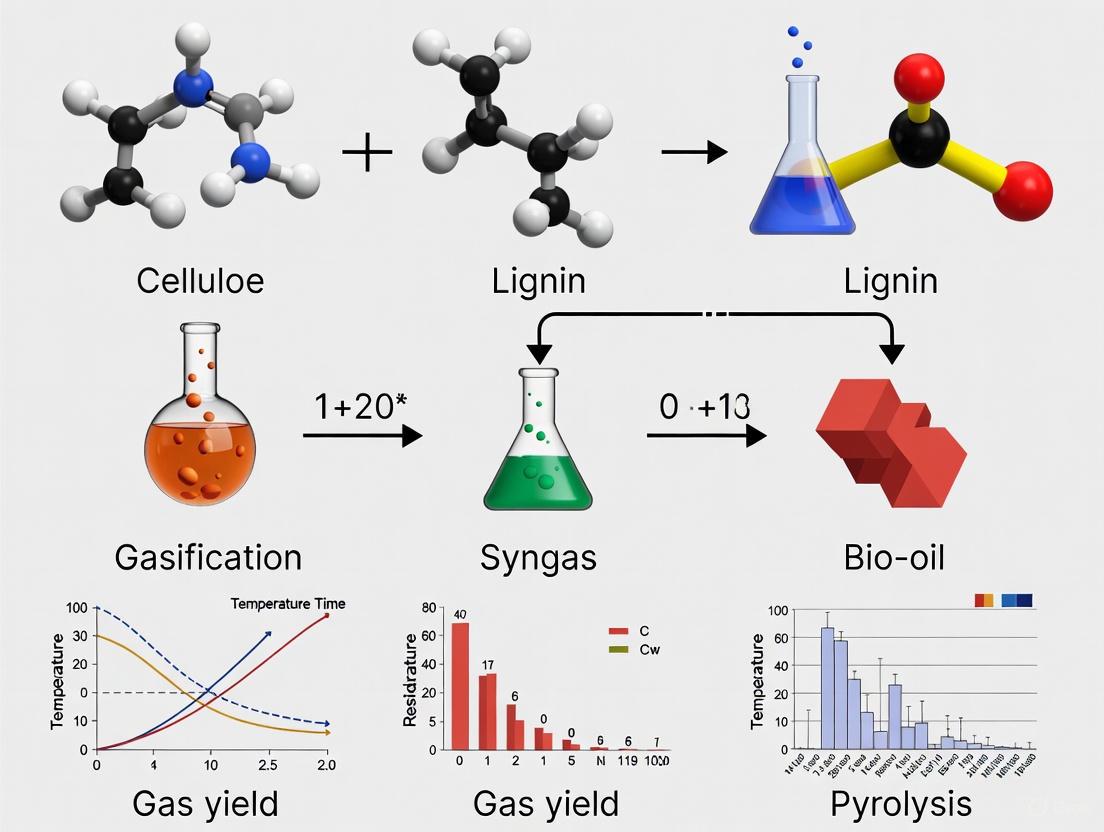
This article provides a comprehensive analysis of biomass thermochemical conversion, focusing on gasification and pyrolysis.
Biomass Gasification and Pyrolysis: Principles, Optimization, and Advanced Applications for Sustainable Energy
Abstract
This article provides a comprehensive analysis of biomass thermochemical conversion, focusing on gasification and pyrolysis. Tailored for researchers and scientists, it explores the fundamental mechanisms, operational methodologies, and optimization strategies for these processes. The content covers foundational principles, reactor design, key operational parameters, and advanced approaches like catalytic applications and feedstock co-processing. It further examines current research trends, including kinetic studies and synergistic effects, offering a critical perspective on technology validation and comparative performance for producing hydrogen-rich syngas and high-value biofuels.
Understanding Thermochemical Conversion: The Science Behind Biomass Pyrolysis and Gasification
Biomass pyrolysis and gasification are two pivotal thermochemical conversion processes at the forefront of renewable energy and sustainable fuel research. As the global community intensifies its search for alternatives to fossil fuels, understanding the core principles, operational parameters, and distinct outputs of these technologies becomes paramount for researchers, scientists, and industry professionals [1]. These processes enable the conversion of abundant, renewable organic materials—from agricultural residues to municipal solid waste—into valuable energy carriers, biofuels, and chemicals, thereby supporting decarbonization strategies and circular economy models [2] [3].
Framed within a broader thesis on biomass conversion research, this guide provides a detailed technical examination of pyrolysis and gasification. It delves beyond superficial descriptions to explore fundamental reaction mechanisms, quantitative process parameters, and advanced experimental methodologies. The content is structured to serve as a comprehensive reference, equipping professionals with the knowledge needed to navigate the technical complexities and research challenges inherent in these technologies, from laboratory-scale investigations to industrial-scale implementation [2] [4].
Core Principles and Process Fundamentals
Defining Pyrolysis: Mechanism and Products
Pyrolysis is the thermal decomposition of carbon-based biomass occurring in the complete absence of an oxidizing agent (oxygen) [5] [6]. The process relies on external heating to break down the complex polymeric structure of biomass—primarily cellulose, hemicellulose, and lignin—into smaller molecules across a temperature range typically between 250°C and 700°C [2] [7]. The fundamental objective is to maximize the yield of desired products—bio-oil, biochar, and syngas—by carefully controlling operational parameters.
The chemistry of pyrolysis involves a series of simultaneous and sequential reactions, including dehydration, depolymerization, fragmentation, and secondary cracking. The relative yields of the three main product fractions are highly dependent on the process conditions, particularly heating rate and temperature [3]. For instance, high heating rates and moderate temperatures favor liquid bio-oil, while slower heating rates and lower temperatures maximize solid biochar production. The gaseous product, or syngas, primarily consists of hydrogen (H₂), carbon monoxide (CO), carbon dioxide (CO₂), and light hydrocarbons like methane (CH₄) [7].
Defining Gasification: Mechanism and Products
Gasification transforms carbonaceous feedstock into a combustible gaseous mixture known as synthesis gas (syngas) through partial oxidation with a controlled, limited amount of an oxidizing agent, such as oxygen, air, or steam [5] [2]. It is not a single-step process but rather a sequence of interconnected thermochemical stages that occur as the biomass travels through the gasifier. The core purpose of gasification is to maximize the yield and quality of syngas, which serves as a versatile platform for power generation, fuel synthesis, and chemical production [7].
The gasification process encompasses four distinct stages [2] [7]:
- Drying (below 150°C to ~250°C): Evaporates residual moisture from the feedstock.
- Pyrolysis (250°C to 700°C): Devolatilizes the dry biomass into char, tar, and pyrolysis gases. This step underscores that pyrolysis is an integral, inseparable sub-process within gasification.
- Oxidation (700°C to 1500°C): Exothermic reactions between the volatiles and the supplied oxidant release the heat necessary to drive the subsequent endothermic reactions.
- Reduction (800°C to 1100°C): The key syngas-producing stage where the hot char reacts with CO₂ and steam to form CO and H₂ via the Boudouard and water-gas reactions, respectively.
The final syngas is primarily composed of H₂, CO, CH₄, and CO₂, with its specific composition and heating value heavily influenced by the gasifying agent used [2]. For example, using oxygen or steam yields a medium-heating-value syngas (10-18 MJ/Nm³), whereas air gasification produces a low-heating-value gas (4-7 MJ/Nm³) due to nitrogen dilution [2].
Key Differences and Comparative Analysis
The primary distinction between pyrolysis and gasification lies in the oxygen environment and the consequent primary products [5] [6]. Pyrolysis occurs in a strictly oxygen-free environment, while gasification intentionally introduces a limited, sub-stoichiometric amount of an oxidant. This fundamental difference dictates the reaction pathways, energy balance, and final output of each process.
Table 1: Fundamental Comparison of Biomass Pyrolysis and Gasification
| Feature | Pyrolysis | Gasification |
|---|---|---|
| Oxygen Presence | Complete absence [5] | Limited, controlled amount (partial oxidation) [5] |
| Primary Objective | Produce bio-oil, biochar, and syngas [6] | Maximize syngas production [5] [7] |
| Main Products | Bio-oil, biochar, syngas [5] | Syngas (H₂, CO, CO₂, CH₄), with smaller amounts of char and ash [5] [2] |
| Typical Operating Temperature | 250°C - 700°C [2] [7] | 800°C - 1100°C (Reduction zone) [2] |
| Energy Requirement | Endothermic (requires external heat) | Autothermal (heat from partial oxidation drives the process) |
| Key Applications | Bio-oil for fuel; biochar for soil amendment, industry; syngas for energy [3] [6] | Power generation, H₂ production, chemical synthesis (e.g., BioSNG, ammonia) [2] [7] |
It is crucial to recognize that the boundary between pyrolysis and gasification is not always absolute. Research indicates a seamless transition, as oxygen-containing species generated during pyrolysis (like H₂O and CO₂) can act as oxidizing agents in subsequent reactions, especially at higher temperatures [4]. Furthermore, gasification can only proceed after pyrolysis has occurred, highlighting their intrinsic linkage [4].
Table 2: Quantitative Product Yields and Efficiencies
| Parameter | Pyrolysis | Gasification |
|---|---|---|
| Syngas Yield | Lower | High; up to ~90% at elevated temperatures [2] |
| Syngas Heating Value | Varies with process | 4-7 MJ/Nm³ (air), 10-18 MJ/Nm³ (O₂/steam) [2] |
| Cold Gas Efficiency (CGE) | Not typically used as a metric | Typically 63-66%; up to 76.5% reported for specific feedstocks [2] |
| Char/Biochar Yield | Can be the primary product (e.g., 49% yield from rice husks [3]) | Smaller byproduct [5] |
| Mass/Volume Reduction of MSW | Not the primary focus | 70-80% mass reduction; 80-90% volume reduction [2] |
Experimental Protocols and Methodologies
A Standard Fixed-Bed Pyrolysis Protocol for Biochar Production
The following protocol, adapted from recent research, outlines a method for producing and characterizing biochar in a laboratory-scale fixed-bed reactor [3].
Objective: To convert a specified biomass feedstock (e.g., rice husks, woody biomass) into biochar and characterize the resulting products' yield and properties.
Materials and Equipment:
- Feedstock: Pre-dried and milled biomass (particle size 0.5-2.0 mm).
- Reactor: Tubular fixed-bed reactor (e.g., quartz or stainless steel).
- Furnace: Electric furnace with precise temperature controller (±5°C).
- Gas Supply: High-purity nitrogen (N₂) cylinder (>99.99%) with mass flow controller.
- Condensation System: Series of condensers maintained at low temperature (e.g., 0-4°C) to collect bio-oil.
- Gas Collection: Gas bags or a gasometer for non-condensable syngas collection.
- Analytical Instruments: Syringe for gas sampling, Gas Chromatograph (GC) with TCD/FID detectors, Surface Area and Porosity Analyzer (BET method), Ultimate Analyzer (CHNS/O).
Procedure:
- Feedstock Preparation: Dry the biomass at 105°C for 24 hours to determine baseline moisture content. Sieve to obtain the desired particle size fraction.
- Reactor Loading: Place a known mass of dried biomass (e.g., 20.0 g) into the reactor tube.
- System Purging: Seal the reactor and initiate a flow of N₂ (e.g., 0.5 L/min) for at least 30 minutes to ensure a complete inert atmosphere.
- Pyrolysis: Ramp the furnace temperature to the target set point (e.g., 500°C) at a defined heating rate (e.g., 10°C/min). Maintain the final temperature for a specified residence time (e.g., 30 minutes).
- Product Collection:
- Syngas: Collect the non-condensable gas in gas bags at regular intervals (e.g., every 5 minutes) for compositional analysis via GC.
- Bio-oil: The volatile vapors are passed through the condensation train where the condensable fraction (bio-oil) is collected. Weigh the total bio-oil collected after the experiment.
- Biochar: After the experiment, cool the reactor to room temperature under a continuous N₂ flow. Carefully remove and weigh the solid residue (biochar).
- Product Characterization:
- Calculate the product yields on a mass basis.
- Analyze the biochar for specific surface area (BET), pore volume, and elemental composition (Ultimate Analysis).
The Scientist's Toolkit: Key Research Reagent Solutions
Table 3: Essential Materials and Reagents for Pyrolysis Experiments
| Item | Function / Explanation |
|---|---|
| High-Purity Nitrogen (N₂) Gas | Creates and maintains an inert (oxygen-free) atmosphere inside the reactor, which is the defining condition for pyrolysis. |
| Biomass Feedstock | The raw material for conversion. Characterized by Proximate and Ultimate Analysis to understand its behavior during thermal decomposition. |
| Fixed-Bed or Fluidized-Bed Reactor | The core vessel where the thermal decomposition takes place. The design impacts heat transfer, residence time, and product spectrum. |
| Condensation Train | A series of cooled vessels that rapidly quench hot vapors to separate and collect the liquid bio-oil product. |
| Gas Chromatograph (GC) | Essential analytical equipment for separating and quantifying the components of the non-condensable syngas (e.g., H₂, CO, CO₂, CH₄). |
| Catalysts (e.g., Ni-based, Zeolites) | Used in catalytic pyrolysis to lower activation energies, alter reaction pathways, and improve the quality/yield of desired products like bio-oil. |
A Protocol for Analyzing Operational Variables via Multivariate Regression
A recent study employed Multivariate Regression Analysis (MRA) to quantitatively rank the impact of various operational parameters on pyrolysis and gasification outputs [4]. This methodology provides a powerful, data-driven approach for process optimization.
Objective: To quantitatively determine which operational variable (e.g., temperature, catalyst, carrier gas type) has the most significant effect on a specific process output (e.g., H₂ yield, bio-oil yield).
Data Collection and Preprocessing:
- Data Sourcing: Collect a large dataset (e.g., 387 data points from literature) from peer-reviewed publications on biomass pyrolysis and gasification [4].
- Variable Definition: Independent variables include both continuous (e.g., temperature, H/C ratio) and categorical data (e.g., catalyst type: Ni-based, dolomite, none; carrier gas: N₂, CO₂, steam).
- Data Transformation: For a fair comparison, continuous variables are binned into categorical ranges (e.g., temperature ranges: <500°C, 500-700°C, >700°C).
Multivariate Regression Analysis (MRA):
- Model Formulation: The MRA model is structured as:
Output = β₀ + β₁(Var₁) + β₂(Var₂) + ... + βₙ(Varₙ), where β represents the regression coefficient. - Coefficient Interpretation: A positive β indicates a promoting effect on the output, while a negative β indicates an inhibitory effect. The magnitude of β reflects the strength of the influence.
- Statistical Validation: The p-value for each variable is calculated to determine the statistical significance of its impact (typically p < 0.05 is considered significant).
Key Findings from MRA: The analysis revealed that temperature is the most dominant and statistically significant parameter for increasing gas yield and H₂ concentration in syngas. The use of specific catalysts (e.g., Ni-based) and certain carrier gases (e.g., steam) also showed strong, positive effects, but their impact was generally secondary to temperature [4].
Process Visualization and Workflows
The following diagrams illustrate the logical sequence of stages within a gasification reactor and the experimental workflow for the data-driven analysis of operational parameters.
Gasification Process Stages
Experimental Analysis Workflow
Pyrolysis and gasification represent two distinct yet intrinsically linked pathways for the thermochemical valorization of biomass. The definitive factor differentiating them is the oxygen environment, which directly governs the chemical reactions, energy balance, and final product slate. Pyrolysis, an endothermic process occurring in an oxygen-free environment, is optimized for producing a trio of outputs: bio-oil, biochar, and syngas. In contrast, gasification, which is partially oxidative and often autothermal, is primarily engineered to maximize the yield of syngas for applications in power generation, hydrogen production, and chemical synthesis [5] [2] [6].
For researchers and engineers, the choice between these technologies is not merely academic but has profound practical implications. Process optimization hinges on a deep understanding of the influential parameters. Quantitative analyses consistently identify temperature as the most critical variable for controlling gas yield and composition, followed by the use of catalysts and the selection of the gasifying medium [4]. The ongoing advancement of these technologies is being accelerated by sophisticated modeling approaches, including computational fluid dynamics (CFD) and data-driven machine learning (ML) and artificial intelligence (AI) techniques, which enhance predictive accuracy and operational control [2] [8] [9].
Despite the maturity of the underlying science, challenges in scaling and commercialization persist. Issues such as tar formation and management in gasification, the need for consistent feedstock quality, and achieving economic viability at scale remain active areas of research and development [2] [1] [10]. As global efforts to transition toward a circular, low-carbon economy intensify, pyrolysis and gasification are poised to play an increasingly critical role. They offer a technologically robust means of transforming abundant biomass and waste streams into clean, sustainable energy and valuable chemical precursors, thereby contributing significantly to energy security and environmental sustainability [3] [7].
Biomass conversion technologies represent a critical pathway for sustainable energy production and chemical synthesis in the context of global efforts to achieve carbon neutrality. Thermochemical processes, including drying, pyrolysis, and gasification, enable the transformation of diverse biomass feedstocks into valuable products such as biofuels, biochar, and syngas. These sequential stages form the foundational framework for biomass valorization, each contributing distinct chemical and physical transformations that ultimately determine the quality and application of the final products [11] [2]. Understanding the intricacies of these stages is essential for researchers and engineers working to optimize conversion efficiency, product yield, and economic viability.
The interdependence of these stages creates a complex system where operational parameters in one stage significantly influence downstream processes and outcomes. Within the broader context of biomass gasification and pyrolysis research, elucidating these sequential stages provides critical insights for reactor design, process optimization, and catalyst development [12] [11]. This technical guide examines the fundamental mechanisms, experimental methodologies, and technical parameters governing each conversion stage, providing a comprehensive reference for research and development in advanced biomass conversion systems.
The Fundamental Stages of Biomass Conversion
Biomass thermochemical conversion proceeds through three primary sequential stages: drying, pyrolysis, and gasification. Each stage occurs under specific temperature ranges and operational conditions that drive distinct physical and chemical transformations. The progression between stages involves complex heat and mass transfer phenomena that ultimately determine conversion efficiency and product distribution.
The following diagram illustrates the sequential relationship between these stages and their primary outputs:
Table 1: Operational Temperature Ranges for Biomass Conversion Stages
| Conversion Stage | Temperature Range | Primary Process | Atmosphere |
|---|---|---|---|
| Drying | <150°C - 250°C | Moisture evaporation | Inert or air |
| Pyrolysis | 250°C - 700°C | Devolatilization | Absence of oxygen |
| Gasification | 700°C - 1500°C | Partial oxidation | Controlled oxygen/steam |
The sequential nature of these processes is particularly evident in gasification systems, where drying and pyrolysis stages precede the final gasification reactions [2]. In integrated gasification systems, all three stages occur within a single reactor vessel, with temperature zones established to facilitate each transformation stage. The products from earlier stages undergo significant morphological and chemical changes as they progress through increasing temperature regimes, ultimately resulting in the synthesis gas characteristic of complete gasification [13] [2].
Stage 1: Drying
Process Mechanisms
The drying stage represents the initial thermal treatment of biomass, occurring at temperatures below 150°C to 250°C, during which moisture evaporates from the biomass structure [2]. This endothermic process removes both surface moisture (free water) and inherent moisture (bound water) through heat transfer mechanisms that supply the latent heat of vaporization. Efficient moisture removal is critical for subsequent thermochemical processes, as residual moisture negatively impacts energy efficiency by requiring additional thermal input during pyrolysis and gasification stages [13].
The drying kinetics are influenced by multiple factors including biomass particle size, porosity, initial moisture content, and the thermal properties of the specific biomass feedstock. The rate of moisture migration from the biomass interior to the surface, and subsequent evaporation from the surface, governs the overall drying efficiency. For biomass with high moisture content, such as sewage sludge (which can contain up to 98% water), pre-drying is essential to reduce moisture to below 15% for thermal processes [13].
Experimental Protocols
Thermogravimetric Analysis (TGA) for Drying Kinetics:
- Sample Preparation: Commence with biomass comminution to specific particle sizes (typically 0.5-2.0 mm). Precisely measure initial mass and moisture content.
- Instrument Setup: Utilize a thermogravimetric analyzer with precise temperature control. Employ inert purge gas (N₂) at 100 mL/min flow rate.
- Temperature Program: Implement a dynamic heating regime from ambient temperature to 250°C at rates of 10-50°C/min.
- Data Collection: Continuously monitor mass loss with temperature increase. Determine moisture content from mass differential between initial and post-drying samples.
- Kinetic Analysis: Apply thin-layer drying models to describe drying behavior and calculate effective moisture diffusion coefficients.
Stage 2: Pyrolysis
Process Mechanisms
Pyrolysis involves the thermal decomposition of biomass in the complete absence of oxygen at temperatures ranging from 250°C to 700°C [14] [2]. During this stage, complex organic polymers in biomass—cellulose, hemicellulose, and lignin—undergo irreversible thermochemical degradation through cleavage of chemical bonds, resulting in the production of solid (biochar), liquid (bio-oil), and gaseous products [14] [13]. The process consists of multiple simultaneous and consecutive reactions including dehydration, depolymerization, isomerization, aromatization, and decarboxylation [13].
The distribution of pyrolysis products depends significantly on process parameters, particularly temperature and heating rate. Cellulose decomposition occurs between 315-400°C, hemicellulose degrades at 220-315°C, while lignin—the most stable biomass component—decomposes across a broad temperature range from 160°C to 900°C [13]. Biochar production increases with higher lignin content, while cellulose and hemicellulose contribute more significantly to bio-oil yields [13]. At higher temperatures (600-900°C), biochar yield decreases to approximately 19% due to enhanced devolatilization, while surface area and carbon content increase [15].
Experimental Protocols
Kinetic Analysis of Biomass Pyrolysis:
- Reactor System: Employ a stainless steel semi-batch reactor with controlled atmosphere capability.
- Process Parameters: Set temperatures between 400-900°C, heating rate of 10°C/min, holding time of 45 minutes, and N₂ flow rate of 100 mL/min [15].
- Product Collection: Condense bio-oil using a condensation train maintained at 0-4°C. Collect non-condensable gases in gas bags or specialized containers.
- Characterization Techniques:
- Biochar: Conduct proximate analysis, ultimate analysis, heating value determination, BET surface area analysis, TGA, FTIR, and FE-SEM [15].
- Bio-oil: Analyze composition using GC-MS, determine water content via Karl Fischer titration, and measure viscosity and pH.
- Gas: Quantify composition using GC-TCD/FID.
Table 2: Pyrolysis Product Distribution vs. Temperature
| Temperature | Biochar Yield | Bio-Oil Yield | Gas Yield | Key Characteristics |
|---|---|---|---|---|
| 400°C | High (~35%) | Moderate | Low | Biochar suitable for soil amendment [15] |
| 600°C | Moderate (~25%) | High | Moderate | Enhanced bio-oil production [14] |
| 900°C | Low (~19%) | Low | High | Biochar with high carbon content (76.02 wt.%), surface area, and HHV (36.97 MJ/kg) [15] |
The Scientist's Toolkit: Pyrolysis Research Reagents
Table 3: Essential Research Reagents for Pyrolysis Studies
| Reagent/Material | Function | Application Context |
|---|---|---|
| Nitrogen (N₂) Gas | Creates inert atmosphere | Prevents oxidative degradation during pyrolysis |
| Calcined Dolomite (CaMg(CO₃)₂) | Tar cracking catalyst | Reduces tar content in pyrolysis vapors [12] |
| Ni-Based Catalysts | Tar reforming catalyst | Enhances gas yield and quality through catalytic tar decomposition [12] |
| Alkali Metal Carbonates | Catalytic pyrolysis | Lowers tar yield and modifies product distribution [12] |
| Quartz Sand | Fluidizing medium | Provides heat transfer in fluidized bed reactors |
Stage 3: Gasification
Process Mechanisms
Gasification constitutes the final stage in the biomass conversion sequence, occurring at temperatures between 700°C and 1500°C through the partial oxidation of pyrolysis products with a controlled supply of oxygen, air, steam, or their mixtures [14] [2]. This complex process transforms the solid carbonaceous materials from pyrolysis into a combustible synthesis gas (syngas) primarily composed of carbon monoxide (CO), hydrogen (H₂), carbon dioxide (CO₂), and methane (CH₄) [14] [11]. Unlike pyrolysis, which occurs in the absence of oxygen, gasification involves controlled oxidation reactions that provide the necessary thermal energy for endothermic gasification reactions [14].
The gasification stage encompasses multiple heterogeneous and homogeneous reactions, including the Boudouard reaction (C + CO₂ 2CO), water-gas reaction (C + H₂O CO + H₂), water-gas shift reaction (CO + H₂O CO₂ + H₂), and methane reforming (CH₄ + H₂O CO + 3H₂) [11]. The composition of the resulting syngas depends on operational parameters including temperature, pressure, equivalence ratio (ER), gasifying agent, and catalyst presence. Gasification typically achieves 70-80% reduction in mass and 80-90% reduction in volume of the original feedstock [2].
Tar Formation and Catalytic Cracking
A significant challenge in biomass gasification is tar formation—complex hydrocarbons that condense at lower temperatures, causing operational problems in downstream equipment [12]. Tar content in syngas can vary from 0.5 to 100 g/m³, while most applications require tar levels below 0.05 g/m³ [12]. Catalytic tar cracking represents a crucial technology for addressing this challenge, with several catalyst classes demonstrating effectiveness:
Ni-Based Catalysts: Extensive application in tar reforming due to high activity in breaking C-C and C-H bonds. Commercial Ni-catalysts are available but susceptible to deactivation by sulfur compounds and carbon deposition [12].
Dolomite Catalysts: Natural calcium-magnesium ore (CaMg(CO₃)₂) that shows high efficiency for tar removal when calcined. Cost-effective but exhibits mechanical fragility [12].
Alkali Metal Catalysts: Carbonates, oxides, and hydroxides of alkali metals effectively decompose tar during catalytic gasification [12].
Novel Metal Catalysts: Rhodium, palladium, platinum, and ruthenium demonstrate high tar conversion rates and resistance to deactivation, though cost presents a limitation [12].
The following diagram illustrates the primary gasification reactor configurations and their operational principles:
Experimental Protocols
Catalytic Gasification with Tar Analysis:
- Reactor Configuration: Employ a fluidized bed gasification system with catalytic reformer unit.
- Process Parameters: Maintain temperature between 800-900°C for gasification zone and 700-900°C for catalytic reformer.
- Catalyst Preparation: Synthesize or procure catalysts (Ni-based, dolomite, etc.). Activate under specified conditions (e.g., reduction for Ni-catalysts, calcination for dolomite).
- Tar Sampling: Implement solid phase adsorption (SPA) method or tar protocol for representative sampling.
- Analytical Methods:
- Syngas Composition: Analyze using GC-TCD for permanent gases and GC-FID for hydrocarbons.
- Tar Characterization: Employ GC-MS for qualitative and quantitative analysis of tar compounds.
- Catalyst Characterization: Conduct BET surface area, XRD, SEM/EDS, and TPR/TPO analyses to assess catalyst properties and deactivation.
Integrated Process Analysis
The sequential stages of biomass conversion function as an integrated system where operational parameters in each stage significantly influence overall process efficiency and product distribution. The interconnection between pyrolysis and gasification is particularly critical, as the products from pyrolysis (char, vapors, and gases) become the feedstock for subsequent gasification reactions [13] [2]. Optimizing the complete sequence requires careful consideration of heat and mass transfer between stages, as well as the potential for catalytic interactions between biomass components and minerals present in the feedstock.
Advanced gasification systems often integrate all three stages within a single reactor with distinct temperature zones, while other configurations may employ separate reactors for pyrolysis and gasification to allow for independent optimization of each stage [2]. The choice between integrated and separated configurations depends on factors including feedstock characteristics, scale of operation, desired products, and economic considerations. Future research directions focus on enhancing process integration, developing multifunctional catalysts that operate across multiple stages, and implementing advanced process control strategies to optimize the entire conversion sequence [11] [2].
Primary Reactions and Chemical Mechanisms Governing Product Output
Biomass pyrolysis and gasification are thermochemical conversion processes that transform carbon-based feedstocks into valuable energy products through controlled heating in oxygen-limited environments. Within the broader context of biomass conversion research, understanding the primary reactions and chemical mechanisms is fundamental to optimizing product output, whether the target is syngas, bio-oil, or biochar. These processes involve a complex sequence of interrelated chemical reactions, largely governed by feedstock composition and operational parameters, which dictate the yield, composition, and quality of the final products. This technical guide provides an in-depth analysis of these core mechanisms, offering researchers and scientists a detailed framework for experimental design and process optimization. By systematically examining biomass composition, degradation pathways, staged process mechanisms, and critical reaction kinetics, this review establishes the scientific foundation necessary for advancing process efficiency and product valorization in renewable energy systems.
Biomass Composition and Degradation Pathways
Biomass is not a homogeneous substance but a complex composite of structural components and organic polymers, each with distinct thermal degradation behaviors. The six primary biomass components undergo characteristic reactions during thermal conversion, including dehydration, depolymerization, and decarboxylation, which collectively influence pyrolysis product yields and composition [16]. The proportional composition of these components varies significantly across different biomass feedstocks, directly impacting their thermal degradation kinetics and product distribution.
Table 1: Primary Biomass Components and Their Characteristic Degradation Reactions
| Biomass Component | Primary Degradation Reactions | Key Products Formed | Temperature Range (°C) |
|---|---|---|---|
| Cellulose | Depolymerization, dehydration, decarboxylation | Levoglucosan, hydroxyacetaldehyde, CO, CO₂ | 300-400 |
| Hemicellulose | Deacetylation, depolymerization | Acetic acid, furfural, CO, CO₂ | 200-300 |
| Lignin | Demethoxylation, side-chain cleavage, dehydrogenation | Phenols, catechols, guaiacols, char | 250-500 |
| Extractives | Volatilization, fragmentation | Terpenes, fatty acids, sterols | Varies widely |
| Minerals (Ash) | Catalytic effects on other reactions | Inorganic residues | >500 |
The thermal decomposition of cellulose, a linear polymer of glucose, primarily proceeds through depolymerization to form levoglucosan, followed by secondary cracking reactions that produce lighter oxygenates and gases. Hemicellulose, a heterogeneous branched polymer, decomposes at lower temperatures due to its amorphous structure, predominantly yielding acetic acid through deacetylation. Lignin, a complex phenolic macromolecule, undergoes radical-driven decomposition across a broad temperature range, producing a wide spectrum of phenolic compounds and contributing significantly to char formation due to its aromatic structure. The distinct thermal stability and decomposition pathways of these components result in characteristic product signatures that can be targeted through controlled process conditions [16].
Staged Process Mechanisms
The thermochemical conversion of biomass proceeds through a series of sequential yet often overlapping stages. The complete process, from initial heating to final gasification, can be visualized as the following interconnected stages:
Biomass Conversion Stages
Drying and Pyrolysis
The initial drying stage occurs at temperatures below 150°C and completes around 250°C, physically removing moisture content from the biomass without significant chemical decomposition [2]. This endothemic process consumes substantial energy but is crucial for ensuring efficient subsequent thermochemical reactions.
The pyrolysis (devolatilization) stage follows, occurring between 250°C and 700°C, where the fundamental chemical transformation of dry biomass begins through heat-induced bond scission in the absence of oxygen [17] [2]. This complex network of parallel and consecutive reactions includes:
Primary Pyrolysis: The initial thermal breakdown of biomass polymers (cellulose, hemicellulose, lignin) into smaller fragments, producing primarily:
- Primary volatiles (condensable and non-condensable)
- Solid char (carbon-rich residue)
Secondary Reactions: The further cracking and reforming of primary volatiles either in the gas phase or through interactions with the hot char surface, significantly influencing the final product distribution.
The relative yields of gas, liquid (bio-oil), and solid (char) products are highly dependent on the heating rate, final temperature, and vapor residence time. Slow pyrolysis with low heating rates and long residence times maximizes char yield (10-35%), while fast pyrolysis at moderate temperatures (around 500°C), high heating rates, and short vapor residence times maximizes liquid bio-oil yield [17].
Gasification Stages
Gasification extends pyrolysis by introducing a controlled amount of oxidizing agent (air, oxygen, or steam), leading to subsequent oxidation and reduction stages that convert pyrolysis products into a combustible synthesis gas (syngas) [2].
The oxidation stage occurs between 700°C and 1500°C, where a portion of the volatile products and char from pyrolysis undergoes exothermic combustion with the supplied oxidant. Key oxidation reactions include:
These reactions release substantial heat that drives the overall endothermic gasification process. The reduction stage then follows at temperatures typically ranging from 800°C to 1100°C, where the primary gasification reactions occur in the absence of oxygen, converting the remaining carbonaceous material and combustion products into the final syngas [2]. The critical heterogeneous and homogeneous reactions governing this stage are detailed in Section 4.
Critical Gasification Reactions and Kinetics
Following pyrolysis, the resulting char and volatiles undergo further transformation through gasification reactions, which are critical for determining the final syngas composition and quality. These reactions occur primarily during the reduction stage and can be categorized as heterogeneous (gas-solid) or homogeneous (gas-gas).
Table 2: Primary Gasification Reactions and Their Thermodynamic Characteristics
| Reaction Name | Chemical Equation | ΔH (kJ/mol) | Key Influencing Factors |
|---|---|---|---|
| Boudouard Reaction | C + CO₂ ⇌ 2CO | +172 | High temperature (>800°C) favors CO production |
| Water-Gas Reaction | C + H₂O ⇌ CO + H₂ | +131 | Steam-to-carbon ratio, temperature |
| Methanation | C + 2H₂ ⇌ CH₄ | -75 | Favored at high pressure, low temperature |
| Water-Gas Shift | CO + H₂O ⇌ CO₂ + H₂ | -41 | Temperature, catalyst presence |
| Steam-Methane Reforming | CH₄ + H₂O ⇌ CO + 3H₂ | +206 | High temperature, steam concentration |
The Boudouard reaction (C + CO₂ 2CO) is a key endothermic pathway for CO production, becoming thermodynamically favorable above approximately 800°C. The water-gas reaction (C + H₂O CO + H₂) is equally critical, consuming steam to produce syngas with a high hydrogen content. The rate of these heterogeneous char gasification reactions is influenced by intrinsic carbon reactivity, ash catalytic effects, and pore diffusion limitations [17].
Homogeneous gas-phase reactions, particularly the water-gas shift reaction (CO + H₂O CO₂ + H₂), play a vital role in determining the final H₂/CO ratio in the syngas, which is crucial for downstream synthesis applications. Simultaneously, steam-methane reforming (CH₄ + H₂O CO + 3H₂) works to reduce tar and methane concentrations while increasing hydrogen yield, especially at temperatures exceeding 800°C [17] [2].
The overall gasification process efficiency and syngas composition are heavily influenced by operational parameters. Temperature is the dominant factor, with increased temperature generally enhancing reaction rates and gas yield while reducing tar and char formation. The choice of gasifying agent also significantly impacts the syngas heating value: air gasification produces low-calorific gas (4-7 MJ/Nm³), oxygen gasification yields medium-calorific gas (10-12 MJ/Nm³), while steam gasification can produce higher quality gas (15-20 MJ/Nm³) [17] [2].
Experimental Methodologies for Mechanism Investigation
Reactor Configurations and Experimental Setups
Investigating primary reactions requires carefully designed experimental systems that enable control over key parameters and accurate product characterization. Different reactor configurations are employed based on the specific research objectives:
- Fixed-Bed Reactors: Ideal for fundamental kinetic studies of reaction mechanisms due to well-defined flow patterns and simpler modeling. Configurations include updraft, downdraft, and cross-draft, differing in the direction of fuel and gas flows [2].
- Fluidized-Bed Reactors: Provide excellent heat and mass transfer, enabling nearly isothermal conditions and better temperature control, which is crucial for studying intrinsic kinetics [17].
- Entrained-Flow Reactors: Feature very short residence times (seconds), suitable for studying primary pyrolysis reactions and fast kinetics at high temperatures [2].
A representative experimental setup for pyro-gasification studies, as described in the MR system, typically includes several key components: a feeding system, a main reactor (e.g., a rotary pyro-gasifier), a methane combustor for external heating, a secondary combustion chamber for tar/syngas combustion, and an exhaust gas treatment unit [18]. The system processes solid waste with a residence time of 30-40 minutes, enabled by an internal spiral transport mechanism.
Analytical Techniques and Product Characterization
Comprehensive analysis of reaction products is essential for understanding governing mechanisms:
- Gas Analysis: Gas chromatography (GC) with thermal conductivity (TCD) and flame ionization (FID) detectors provides quantitative composition data (H₂, CO, CO₂, CH₄, C₂-C₃ hydrocarbons) of the syngas, enabling calculation of lower heating values (LHV) [18].
- Tar Characterization: Tar sampling followed by GC-MS analysis identifies heavy hydrocarbon compounds, which is critical for understanding secondary reaction pathways and optimizing tar reduction strategies [17].
- Char Analysis: Proximate and ultimate analysis of solid residue determines fixed carbon, volatile matter, and ash content, while surface area analyzers (BET) characterize pore structure development during gasification [17].
Advanced experimental approaches combine thermochemical modeling with experimental validation. For instance, vector optimization methodologies can calibrate numerical models against experimental data to estimate unknown feedstock compositions and identify optimal process conditions, reducing the need for extensive experimental trials [18].
The Scientist's Toolkit: Research Reagent Solutions
Table 3: Essential Research Reagents and Materials for Biomass Conversion Studies
| Reagent/Material | Function/Application | Technical Specifications |
|---|---|---|
| Gasifying Agents | Reactants for gasification; determine syngas composition & heating value | Air (for 4-7 MJ/Nm³ gas), O₂ (for 10-12 MJ/Nm³ gas), Steam (for 15-20 MJ/Nm³ gas) [17] |
| Biomass Reference Materials | Standardized feedstocks for comparative studies | Cellulose, lignin, xylan; characterized by proximate/ultimate analysis [16] |
| Catalytic Materials | Tar cracking, syngas reforming, reaction rate enhancement | Dolomite, Ni-based catalysts, alkali metals (K, Na), char itself [17] |
| Calibration Gas Standards | GC calibration for quantitative syngas analysis | Certified mixtures of H₂, CO, CO₂, CH₄, C₂H₄, C₂H₆ in N₂ balance |
| Sorbent Materials | In-situ contaminant removal (H₂S, HCl, NH₃) | ZnO, CaO, dolomite for acid gas capture [18] |
Beyond the reagents listed, sophisticated modeling approaches represent crucial analytical "tools" for modern researchers. Thermodynamic equilibrium models (comprising ~60% of studies, with 72.5% using non-stoichiometric approaches) predict maximum achievable yields under ideal conditions. Kinetic models incorporate reaction rates and residence times for more realistic predictions, while computational fluid dynamics (CFD) models simulate complex multiphase flows, heat transfer, and chemical reactions within reactors. Recently, data-driven models using artificial neural networks (ANN) have demonstrated high accuracy in predicting syngas composition from operational parameters [2].
Effective experimental design in this field requires careful consideration of multiple interrelated parameters: feedstock selection (composition, particle size, ash content), gasifying agent type and flow rate, reaction temperature profile, heating rate, pressure, and catalyst presence. The complex interactions between these parameters necessitate systematic experimental designs such as response surface methodology (RSM) to elucidate their effects on reaction mechanisms and product distributions [17].
Biomass gasification and pyrolysis are pivotal thermochemical conversion processes that transform renewable biomass into valuable energy products and chemical feedstocks. These technologies support the transition toward a circular bioeconomy by converting agricultural residues, energy crops, and organic waste into syngas, bio-oil, and biochar. The composition and properties of these products are highly influenced by feedstock characteristics and process parameters, necessitating advanced analytical techniques for precise characterization. This technical guide provides researchers and scientists with comprehensive methodologies for analyzing the complex chemical compositions of gasification and pyrolysis products, enabling optimization of conversion processes and downstream applications.
Analytical Techniques for Product Characterization
Syngas Composition Analysis
Syngas, primarily composed of H₂, CO, CO₂, CH₄, and N₂, requires precise monitoring for process optimization and quality control. Advanced spectroscopic and mass spectrometric techniques enable real-time quantitative analysis of these multicomponent gas mixtures.
Raman Spectroscopy has emerged as a powerful tool for rapid analysis of syngas composition. The technique utilizes contour fit methodology where experimental Raman spectra of gas mixtures are compared with synthetically calculated spectra for component quantification. This approach allows simultaneous determination of multiple gas components (CO, H₂, CH₄, CO₂, N₂) in syngas mixtures. Research indicates that pressure variations and environmental effects on band contours can introduce measurement errors significantly higher than those caused by signal intensity deviations [19]. The method offers advantages for continuous process monitoring without requiring complex sample preparation.
Process Mass Spectrometry provides an alternative approach for syngas characterization. The Extrel MAX300-RTG quadrupole mass spectrometer, for instance, demonstrates capability for quantitative analysis of syngas components across concentration ranges from 100% down to 10 ppb. This technology enables rapid measurement cycles (under 0.4 seconds per analysis) and automated monitoring of multiple sample points throughout gasification systems. The sensitivity to trace components at ppm levels and ability to analyze complete syngas arrays makes mass spectrometry suitable for replacing complicated multi-instrument analysis systems [20].
Table 1: Analytical Techniques for Syngas Composition Analysis
| Technique | Detection Range | Key Measured Components | Analysis Speed | Notable Features |
|---|---|---|---|---|
| Raman Spectroscopy | Major components | CO, H₂, CH₄, CO₂, N₂ | Fast | Contour fit method; affected by pressure changes |
| Process Mass Spectrometry | 100% to 10 ppb | H₂, CO, CO₂, CH₄, trace contaminants | <0.4 seconds per measurement | ppm-level trace detection; multi-point automation |
Bio-oil Chemical Characterization
Bio-oil produced from biomass pyrolysis represents a highly complex mixture containing hundreds of organic compounds across various chemical classes. Comprehensive characterization requires complementary analytical techniques to overcome the limitations of individual methods.
Chromatographic and Spectroscopic Techniques provide orthogonal information for bio-oil composition analysis. Gas Chromatography (GC) enables separation and quantification of volatile and semi-volatile components, while High-Resolution Mass Spectrometry (HRMS) resolves thousands of compounds based on exact mass measurements. Fourier Transform Infrared (FTIR) Spectroscopy identifies functional groups and chemical bonds through characteristic absorption frequencies, providing information about carbonyl, hydroxyl, and aromatic compounds. Nuclear Magnetic Resonance (NMR) Spectroscopy, particularly ¹H and ¹³C NMR, offers quantitative information about carbon distribution and functional groups without requiring component separation [21].
The complexity of bio-oil necessitates this multi-technique approach, as no single method can comprehensively characterize the complete spectrum of components ranging from non-polar hydrocarbons to highly polar oxygenated compounds such as carboxylic acids, alcohols, aldehydes, ketones, esters, furfurals, phenolic compounds, sugar-like material, and lignin-derived compounds [21].
Biochar Surface and Structural Analysis
Biochar properties vary significantly based on feedstock and pyrolysis conditions, requiring sophisticated analytical approaches to characterize surface functionality, carbon stability, and structural attributes.
Diffuse Reflection Infrared Fourier Transform Spectroscopy (DRIFTS) enables investigation of biochar surface functional groups. Statistical analysis of DRIFTS spectra through multiple regression models and Principal Component Analysis (PCA) reveals relationships between biochar characteristics and functional group presence. Research demonstrates that pyrolysis temperature represents the dominant parameter affecting functional groups, followed by H/C ratio, specific surface area, and ash content. Regression models can explain 60-90% of data variance for specific infrared spectral peaks. Studies of 92 different biochars reveal that functional groups in biochars from lignin-rich feedstock exhibit higher temperature resistance, with pyrolysis at 300°C and 450°C producing similar infrared spectra, while temperatures of 600°C lead to partial and 750°C to nearly complete loss of surface functional groups [22].
FTIR-Microscopy with Confocal Laser Scanning Microscopy provides insights into carbon stabilization mechanisms in biochar-amended soils. This combined approach reveals the spatial reorganization of carbon within soil particles following biochar application. Research shows accumulation of aromatic-C in discrete spots within microaggregates and its co-localization with clay minerals. Biochar application consistently reduces the co-localization of aromatic-C with polysaccharides-C, suggesting reduced carbon metabolism as a crucial mechanism for carbon stabilization in biochar-amended soils. Fluorescence analysis of dissolved organic matter further indicates that biochar application increases a humic-like fluorescent component associated with biochar-C in solution [23].
Table 2: Analytical Techniques for Bio-oil and Biochar Characterization
| Material | Primary Techniques | Key Information Obtained | Statistical Methods | Technical Insights |
|---|---|---|---|---|
| Bio-oil | GC, HRMS, FTIR, NMR | Molecular speciation, functional groups, compound classes | - | Complementary techniques needed for comprehensive characterization |
| Biochar | DRIFTS, FTIR-Microscopy, CLSM | Surface functional groups, carbon distribution, spatial organization | Multiple regression, PCA | Pyrolysis temperature > H/C ratio > surface area > ash content |
Experimental Methodologies
Raman Spectroscopy for Syngas Analysis Protocol
Sample Introduction System: Utilize a gas-tight sampling cell with controlled temperature and pressure capabilities. Implement pressure regulation to maintain consistent measurement conditions, as pressure variations significantly impact measurement accuracy.
Instrument Calibration: Establish reference spectra for pure components (H₂, CO, CO₂, CH₄, N₂) under identical instrument configurations. Develop a synthetic spectrum library covering expected concentration ranges and mixture ratios.
Spectral Acquisition: Employ laser excitation sources appropriate for Raman scattering cross-sections of syngas components. Optimize exposure times to balance signal-to-noise ratio with measurement frequency requirements.
Data Analysis: Apply contour fit algorithms to compare experimental spectra with synthetic references. Quantify components based on characteristic peak intensities and shapes after background subtraction and normalization.
Quality Control: Implement periodic validation with certified standard gas mixtures. Monitor system performance through control charts for key component measurements.
Biochar Functional Group Analysis Protocol
Sample Preparation: Grind biochar samples to consistent particle size (typically <100 μm) to ensure representative sampling and spectral reproducibility. Dry samples at 105°C to remove moisture interference.
DRIFTS Measurement: Acquire infrared spectra in diffuse reflection mode across 4000-400 cm⁻¹ range. Co-add multiple scans to improve signal-to-noise ratio. Use potassium bromide (KBr) as background reference material.
Spectral Processing: Apply Kubelka-Munk transformation to reflectance data. Perform baseline correction and vector normalization to enable quantitative comparisons between samples.
Multivariate Analysis: Execute Principal Component Analysis (PCA) to identify dominant factors influencing spectral variance. Develop multiple linear regression models correlating spectral features with biochar properties (pyrolysis temperature, elemental composition, surface area).
Validation: Employ cross-validation techniques to assess model robustness. Verify predictions against independent characterization data (elemental analysis, surface area measurements).
Research Reagent Solutions Toolkit
Table 3: Essential Research Reagents and Materials for Biomass Conversion Product Analysis
| Reagent/Material | Application | Function/Purpose |
|---|---|---|
| Certified Standard Gas Mixtures | Syngas analysis | Calibration and validation of analytical instruments |
| Potassium Bromide (KBr) | DRIFTS analysis | IR-transparent matrix for biochar analysis |
| Deuterated Solvents (CDCl₃, DMSO-d₆) | NMR spectroscopy | Solvent for bio-oil analysis without proton interference |
| Derivatization Reagents | GC analysis of bio-oil | Enhance volatility and detectability of polar compounds |
| Reference Biochars | Method validation | Certified materials for quality control in biochar analysis |
| Solid Phase Extraction Cartridges | Bio-oil fractionation | Separate compound classes for simplified analysis |
Analytical Workflow Visualization
Biomass Product Analysis Workflow
Biochar Functional Group Analysis Protocol
Advanced analytical techniques are indispensable for elucidating the complex compositions of syngas, bio-oil, and biochar derived from biomass gasification and pyrolysis. Raman spectroscopy and process mass spectrometry enable precise, real-time monitoring of syngas components, essential for process optimization. Bio-oil characterization requires complementary techniques including GC, FTIR, NMR, and HRMS to resolve its complex mixture of oxygenated compounds. Biochar analysis benefits from DRIFTS with multivariate statistics to correlate surface functionality with production parameters and application performance. The integrated analytical workflows presented in this guide provide researchers with robust methodologies for comprehensive product characterization, supporting advancements in biomass conversion technologies and sustainable biorefinery development.
Reactor Technologies and Process Design for Efficient Biomass Conversion
Biomass gasification, a thermochemical conversion process, has emerged as a pivotal technology in the global transition to renewable energy and decarbonization. It provides a pathway for converting diverse biomass feedstocks into syngas—a mixture primarily of hydrogen, carbon monoxide, and methane—which can be utilized for power generation, chemical synthesis, and the production of liquid fuels [2] [7]. Within the broader context of biomass gasification and pyrolysis research, the selection of gasifier technology fundamentally influences process efficiency, syngas composition, economic viability, and environmental impact. This whitepaper provides an in-depth technical analysis and comparison of the three principal gasifier types: Fixed Bed, Fluidized Bed, and Entrained Flow [2] [24]. Aimed at researchers and scientists, this guide synthesizes current operational data, experimental methodologies, and technical criteria to support informed decision-making in research and development projects.
Core Gasification Technologies
The gasification process involves several sequential stages—drying, pyrolysis, oxidation, and reduction—that occur within a reactor vessel. The design of this vessel, dictating the flow dynamics of the solid feedstock and gaseous agents, is the primary differentiator between gasifier types [7].
- Fixed Bed Gasifiers: Characterized by a relatively stationary bed of biomass, these gasifiers are traditionally classified into updraft, downdraft, and cross-draft configurations based on the flow direction of the gasifying agent [24]. The reaction rate is slower, and the temperature distribution can be uneven, but their simple structure allows for robust operation [24].
- Fluidized Bed Gasifiers: These suspend feedstock particles in an oxygen-rich gas, causing the bed to behave like a fluid. This ensures excellent mixing, uniform temperature distribution, and high heat transfer rates [25]. They are particularly suited for reactive, low-rank fuels like biomass [25].
- Entrained Flow Gasifiers: Operating at very high temperatures and velocities, these gasifiers process finely ground feedstock that is entrained with the gas flow. They are known for high carbon conversion, very low tar production, and a compact design, but require significant feedstock pretreatment [26] [27].
The following diagram illustrates the fundamental workflow and logical decision points for selecting and operating a biomass gasification system, from feedstock to final application.
Technical Comparison and Quantitative Data
A critical evaluation of technical parameters is essential for selecting the appropriate gasifier technology for a specific research or commercial application. The following tables summarize key performance indicators, operational characteristics, and economic factors.
Table 1: Performance and Operational Parameters of Gasifier Types
| Parameter | Fixed Bed | Fluidized Bed | Entrained Flow |
|---|---|---|---|
| Typical Scale | Small to Medium [24] | Medium to Large [24] | Large (≥100 MWth) [26] |
| Operating Temperature | ~1000 °C [24] | Moderate (Below ash fusion point) [25] | High (>1200 °C) [26] [27] |
| Cold Gas Efficiency (CGE) | ~66-81% (for fluidized bed, as reference) [26] | 66% - 81% [26] | 77% - 82% [26] |
| Carbon Conversion | 90% - 99% [24] | ~90% - 95% [24] [25] | Very High (>99%) [26] [27] |
| Syngas Tar Content | High (Updraft: up to 100 g/Nm³; Downdraft: ~1 g/Nm³) [10] | Lower than fixed bed [24] | Very low [26] [27] |
| Feedstock Flexibility | Low; requires uniform shape/size [24] | High; accepts diverse materials [24] [25] | Low; requires fine, pulverized feed [26] |
| Gas & Solid Residence Time | Long solids, short gas [24] | Short for both [24] | Very short for both |
Table 2: Economic and Application-Based Analysis
| Criteria | Fixed Bed | Fluidized Bed | Entrained Flow |
|---|---|---|---|
| Capital Cost | Low (simple structure) [24] | High (complex system) [24] | Very High (high-pressure design, feed systems) [26] |
| Operational Flexibility | High (20-110% of design load) [24] | Moderate (50-120% of design load) [24] | Low, best at base load |
| Key Applications | Small-scale power, heat [24] [10] | Power, BioSNG, chemicals [26] [7] | Large-scale liquid fuels (e.g., SAF), chemicals [26] [27] |
| Environmental Impact | Low fly ash in gas [24] | High fly ash in gas, requires cleaning [24] | Slagging ash, potentially easier disposal |
Experimental Protocols for Gasification Research
For researchers investigating gasifier performance, standardized experimental protocols are crucial for generating comparable and reproducible data. Below are detailed methodologies for key areas of gasification research.
Protocol for Assessing Feedstock Suitability and Pretreatment
Objective: To evaluate the gasification reactivity of a biomass feedstock and determine the necessary pretreatment steps. Background: Biomass variability significantly impacts syngas yield and quality. Pretreatment like torrefaction can improve grindability and energy density for entrained flow systems [26]. Materials:
- Biomass sample (e.g., wood chips, agricultural residue)
- Jaw crusher, hammer mill, and sieve shaker
- Drying oven
- Torrefaction reactor (for advanced pretreatment)
- Calorimeter (for LHV/HHV analysis)
- Proximate and ultimate analyzers
Procedure:
- Sample Preparation: Reduce the biomass sample to a particle size of <2 mm for analysis using a jaw crusher and hammer mill. Use a sieve shaker to ensure uniformity.
- Proximate & Ultimate Analysis: Determine the moisture, volatile matter, fixed carbon, and ash content (proximate) as well as the carbon, hydrogen, nitrogen, sulfur, and oxygen content (ultimate) of the prepared sample.
- Drying: Dry a separate, larger batch of feedstock in an oven at 105°C until constant weight is achieved to reduce moisture to 10-20% [7].
- Size Reduction for Specific Gasifiers:
- Fixed Bed: Process to a uniform, coarse size (e.g., 10-50 mm) [24].
- Fluidized Bed: Process to a smaller particle size (<6 mm) [25].
- Entrained Flow: Pulverize the dried feedstock to <1 mm. Optionally, conduct torrefaction (heating to 200-300°C in an inert atmosphere) to improve grindability and hydrophobicity [26].
- Analysis of Treated Feedstock: Re-analyze the calorific value and chemical composition of the pretreated feedstock to quantify the impact of pretreatment.
Protocol for Determining Cold Gas Efficiency and Syngas Composition
Objective: To measure the performance of a gasifier by calculating its Cold Gas Efficiency (CGE) and analyzing the composition of the produced syngas. Background: CGE is a key performance indicator, defined as the ratio of the chemical energy in the syngas to the chemical energy in the input fuel [26]. Materials:
- Bench-scale or pilot-scale gasifier unit
- Gasifying agent supply (air, O₂, steam)
- Syngas sampling and conditioning system
- Online Gas Chromatograph (GC) or mass spectrometer
- Gas flow meters
- Data acquisition system
Procedure:
- System Calibration: Calibrate all sensors, including temperature, pressure, and gas flow meters. Calibrate the GC using standard gas mixtures.
- Reactor Startup: Heat the gasifier to the target operating temperature under an inert gas flow. For fluidized beds, this requires pre-heating the bed material [25].
- Steady-State Operation: Feed the pretreated biomass into the reactor at a constant, predetermined rate. Introduce the gasifying agent (e.g., air, oxygen, steam) at the desired flow rate. Maintain operational parameters (temperature, pressure) until steady state is achieved (typically indicated by stable temperature and gas composition readings for >30 minutes).
- Data Collection: Once at steady state, record the mass flow rate of the biomass feedstock and the gasifying agent. Simultaneously, collect syngas samples for immediate analysis via GC. Record the volumetric flow rate and temperature of the product syngas.
- Calculation:
- Cold Gas Efficiency (CGE): Calculate using the formula:
η_CGE = (ṁ_syngas × LHV_syngas) / (ṁ_biomass × LHV_biomass) × 100%[26] whereṁis mass flow rate andLHVis the lower heating value. - Composition: Report the molar or volumetric fractions of H₂, CO, CO₂, CH₄, and N₂ from the GC data.
- Cold Gas Efficiency (CGE): Calculate using the formula:
Protocol for Tar Measurement and Analysis
Objective: To quantify and characterize the tar content in the raw syngas produced by a gasifier. Background: Tar is a complex mixture of condensable hydrocarbons that can clog and damage downstream equipment. Its concentration is highly dependent on the gasifier type and operating conditions [10]. Materials:
- Tar sampling train (e.g., based on CEN/TS 15439: a series of impinger bottles kept in an isothermal bath)
- Solvent (e.g., acetone, isopropanol)
- Gas meter
- Vacuum pump
- Rotary evaporator
- Analytical balance
- GC-MS (for tar speciation)
Procedure:
- Sampling Train Setup: Cool the impinger bottles in an ice bath. Fill several bottles with a known volume of solvent. Connect the sampling train to the syngas line, ensuring a leak-free setup.
- Isokinetic Sampling: Draw a known volume of syngas through the train at a controlled, isokinetic rate using a vacuum pump and gas meter. The tars and other condensables will be trapped in the solvent.
- Sample Recovery: After sampling, carefully recover the solvent from all impingers and rinse them thoroughly. Combine all washes into a single container.
- Gravimetric Analysis: Evaporate the solvent from an aliquot of the sample using a rotary evaporator. Dry the residual tar to a constant weight in a desiccator. Weigh the mass of the tar.
- Calculation & Speciation:
- Tar Concentration: Calculate as
Tar (g/Nm³) = (Mass of Tar / Sampled Gas Volume)[10]. - Speciation (Optional): Dissolve the residual tar in a suitable solvent and analyze it via GC-MS to identify the specific tar compounds present.
- Tar Concentration: Calculate as
The Scientist's Toolkit: Essential Research Reagents and Materials
Table 3: Key Reagents and Materials for Gasification Research
| Reagent/Material | Function in Research | Application Context |
|---|---|---|
| Biomass Feedstocks (Wood, agricultural residues, MSW) | Primary reactant for syngas production. Variability in composition (H/C, O/C ratios) directly influences syngas yield and quality [7]. | Used across all gasifier types; pretreatment requirements vary significantly [26] [24]. |
| Gasifying Agents (Air, O₂, Steam, CO₂) | Medium for partial oxidation and gasification reactions. The choice of agent defines the oxidant-to-fuel ratio, process thermodynamics, and final syngas composition (e.g., H₂/CO ratio) [2] [7]. | Air is common for simple systems; O₂/steam blends are used for high-quality, N₂-free syngas in synthesis applications [26]. |
| Bed Material (Silica sand, Olivine, Dolomite) | In fluidized bed gasifiers, provides a heat transfer medium and a stable fluidized bed. Certain materials (e.g., Olivine, Dolomite) can act as in-situ catalysts for tar cracking [25]. | Exclusive to fluidized bed gasifiers. Selection is critical for achieving desired tar reduction and operational stability. |
| Catalysts (Ni-based, Zeolites) | Used in downstream catalytic reactors (e.g., reformers) to convert tars and light hydrocarbons into additional syngas (H₂ and CO), thereby improving gas quality and efficiency [26]. | Essential for advanced gas cleaning trains, particularly when targeting synthesis applications like BioSNG or Fischer-Tropsch fuels. |
| Solvents (Acetone, Isopropanol) | Used in tar sampling trains to absorb and dissolve tars from the hot syngas for subsequent gravimetric and chemical analysis [10]. | Critical for quantitative tar measurement protocols in experimental setups. |
The comparative analysis presented in this whitepaper underscores that there is no universally superior gasifier type. The optimal selection is a complex function of project-specific constraints and objectives, including scale, feedstock characteristics, desired syngas application, and economic considerations.
- Fixed-bed gasifiers offer simplicity and reliability for small-to-medium-scale applications but are constrained by feedstock requirements and syngas quality, particularly tar content [24] [10].
- Fluidized-bed gasifiers provide an excellent balance of feedstock flexibility, good efficiency, and reasonable syngas quality, making them a prominent choice for medium-to-large-scale power and BioSNG production [26] [24] [7].
- Entrained-flow gasifiers, while capital-intensive and requiring extensive feedstock pretreatment, deliver the highest quality, tar-free syngas and are the benchmark for large-scale biomass-to-liquid fuel projects, such as Sustainable Aviation Fuel (SAF) production [26] [27].
Future research directions will likely focus on integrating advanced modeling techniques like machine learning and computational fluid dynamics to optimize gasifier design and operation [2], developing more robust and cheaper tar-cracking catalysts, and creating innovative gasification systems such as hybrid solar-biomass reactors to improve sustainability and efficiency. For scientists and engineers, the choice of gasifier remains a foundational decision that dictates the trajectory of research and development in the pursuit of decarbonizing the energy and chemical sectors.
Within the broader research on biomass gasification and pyrolysis, pyrolysis stands out as a versatile thermochemical conversion process for transforming diverse biomass feedstocks into valuable biofuels, namely bio-oil, biochar, and syngas [28] [29]. The strategic selection and optimization of reactor configurations are paramount, as they directly influence the complex interplay of heat and mass transfer, reaction kinetics, and ultimately, the yield and quality of the target products [28]. This guide provides an in-depth technical analysis of pyrolysis reactor technologies, focusing on the engineering principles and operational parameters that enable researchers to direct product distribution towards maximizing the yield of bio-oil, gas, or char, thereby supporting advanced biofuel production and sustainable resource recovery.
Pyrolysis Process Fundamentals and Product Spectrum
Pyrolysis involves the thermal decomposition of biomass in an inert atmosphere at temperatures typically ranging from 300°C to 900°C [30] [31]. The process leads to the production of three primary products: a solid (biochar), a liquid (bio-oil), and a gaseous phase (syngas) [28]. The distribution of these products is predominantly governed by the process conditions, particularly temperature, heating rate, and vapor residence time [29].
Bio-oil is a complex emulsion of oxygenated hydrocarbons, water, and various other compounds. It can be upgraded into transportation fuels or used as a source of chemicals [30] [29]. Biochar is a carbon-rich solid with applications as a soil amendment, for carbon sequestration, and as an industrial adsorbent [2] [32]. Its quality and properties are highly dependent on the pyrolysis temperature [29]. Syngas is a mixture of non-condensable gases, including hydrogen (H2), carbon monoxide (CO), carbon dioxide (CO2), and methane (CH4), which can be utilized for heat and power generation or further synthesized into fuels like methane and ammonia [2] [33].
Table 1: Influence of Key Pyrolysis Parameters on Product Yields
| Parameter | Bio-oil Yield | Biochar Yield | Syngas Yield |
|---|---|---|---|
| Increasing Temperature | Increases to an optimum (typically 450-550°C), then decreases [29] [32] | Consistently decreases [29] | Consistently increases [29] |
| Faster Heating Rate | Favors higher yield [28] [29] | Reduces yield [28] | Favors higher yield [28] |
| Shorter Vapor Residence Time | Favors higher yield by minimizing secondary cracking [28] | Minimal direct effect | Reduces yield by limiting gas-phase reactions [28] |
Reactor Configurations for Targeted Product Yields
The design of the pyrolysis reactor is the critical engineering element that controls the core process parameters. Different reactor types are engineered to create specific thermal environments that favor the formation of a desired product.
Fluidized Bed Reactors
Fluidized bed reactors, including bubbling and circulating fluidized beds, are highly effective for high-yield bio-oil production due to excellent heat transfer and rapid heating rates [28].
- Operating Principle: A bed of inert material (e.g., sand) is fluidized by a preheated gas, creating a violently mixed, isothermal environment. Biomass feedstock, finely ground and rapidly injected, undergoes very fast pyrolysis.
- Maximizing Bio-oil Yield: The high heating rates (100-1000 °C/s) and short vapor residence times (0.5-2 s) are key to maximizing liquid yield by rapidly quenching the primary pyrolysis vapors before they crack into gaseous products [28]. These reactors are well-suited for catalytic pyrolysis, where the bed material can be replaced with a catalyst (e.g., zeolites) to improve bio-oil quality and selectivity towards specific fuels like hydrogen [31].
- Typical Yields: Bio-oil yields can reach 60-75 wt% under optimal conditions [28].
Fixed Bed Reactors
Fixed bed reactors, also known as packed bed reactors, are a simpler technology often employed for slow pyrolysis, making them ideal for maximizing biochar production [28] [29].
- Operating Principle: Biomass is packed into a static bed, and heat is supplied externally. The design promotes longer solid and vapor residence times.
- Maximizing Biochar Yield: The slow heating rates (0.1-1 °C/s) and long residence times (minutes to hours) allow for extensive secondary char-forming reactions through repolymerization of intermediate vapors [29]. A study on the slow pyrolysis of Prosopis juliflora demonstrated that biochar yield decreases with increasing temperature (from 300°C to 600°C), but its fixed carbon content and heating value improve [29].
- Typical Yields: Slow pyrolysis in fixed beds can achieve biochar yields of 30-35 wt% [34] [29].
Auger (Screw) Reactors
Auger reactors provide a continuous process that can be tuned for various product slates, often offering a balance between bio-oil and biochar production [28].
- Operating Principle: Biomass is transported through a heated tube by a screw, with heat transferred through the reactor wall. The residence time is controlled by the screw speed.
- Maximizing Versatility: This configuration can be operated for intermediate pyrolysis, which offers flexibility in product distribution. It is particularly suitable for feedstocks with a tendency to slag, such as sewage sludge, and for co-pyrolysis applications [28]. The use of an internally heated screw, where a heat carrier like steel balls is mixed with the biomass, can significantly improve heat transfer efficiency.
Entrained Flow and Spouted Bed Reactors
These reactors are designed for very high reaction rates and are suitable for maximizing gas yield or for fast pyrolysis of challenging feedstocks.
- Entrained Flow Reactors: Biomass particles are entrained in a hot gas stream and undergo rapid pyrolysis during their short transit. This design is characterized by very short residence times (<1 s) and is effective for maximizing bio-oil yield from fine particles [2] [28].
- Conical Spouted Bed Reactors: Particularly effective for processing irregular, sticky, or coarse particles that are difficult to fluidize. The unique gas-spouting pattern ensures excellent particle mixing and heat transfer, minimizing char agglomeration and making them suitable for the catalytic pyrolysis of plastic wastes for hydrogen production [31].
Advanced and Hybrid Reactor Systems
- Microwave Reactors: Utilize microwave radiation for volumetric heating, which can lead to faster and more selective heating compared to conventional methods, potentially improving bio-oil quality and process efficiency [29].
- Plasma Reactors: Use thermal plasma torches to achieve extremely high temperatures (>>1000°C), designed primarily for complete gasification of feedstock into syngas with high hydrogen and carbon monoxide content, and for waste treatment [2] [29].
Table 2: Comparative Summary of Pyrolysis Reactors for Yield Maximization
| Reactor Type | Target Product | Heating Rate | Residence Time | Key Advantages | Technological Readiness |
|---|---|---|---|---|---|
| Fluidized Bed | Bio-oil | Very High | Short (0.5-2 s) | Excellent heat transfer, high bio-oil yield, continuous operation | High (Commercial) [28] |
| Fixed Bed | Biochar | Slow | Long (10-100 min) | Simple design, high char yield, easy operation | High (Pilot/Commercial) [28] [29] |
| Auger / Screw | Bio-oil / Biochar | Moderate | Medium | Handles heterogeneous feedstocks, good for co-pyrolysis, continuous | Medium to High [28] |
| Entrained Flow | Bio-oil | Very High | Very Short (<1 s) | Simple design, rapid heating | Medium [2] |
| Microwave | Bio-oil / Biochar | Very High | Variable | Selective heating, rapid startup, improved oil quality | Low to Medium (R&D) [29] |
| Plasma | Syngas | Extreme | Short | Very high temperatures, high syngas purity, handles hazardous waste | Medium (Niche applications) [2] |
Experimental Protocols for Reactor Performance Evaluation
Protocol: Thermogravimetric Analysis (TGA) for Kinetic Studies
Thermogravimetric analysis is a fundamental tool for understanding biomass decomposition kinetics and designing larger-scale reactors [35].
- Sample Preparation: Dry and mill the biomass feedstock to a fine particle size (< 200 µm) to minimize heat and mass transfer limitations [35].
- Experimental Setup: Load a small sample (5-20 mg) into a TGA crucible. Purge the system with an inert gas (N₂) at a constant flow rate (e.g., 100 mL/min) to maintain an oxygen-free environment.
- Temperature Program: Subject the sample to a predefined temperature program. This can be:
- Dynamic/Non-Isothermal: Heat at a constant rate (e.g., 10, 20, 30 K/min) from ambient to a final temperature (e.g., 900°C).
- Isothermal: Rapidly heat to a set of target temperatures (e.g., 400, 500, 600°C) and hold for a duration.
- Data Analysis: Record mass loss (TG) and mass loss rate (DTG) as a function of time and temperature. Model the data using kinetic models like the Random Pore Model (RPM) to determine apparent activation energy and pre-exponential factors, which are crucial for reactor scale-up [35].
Protocol: Catalytic Pyrolysis for Enhanced Bio-Oil or Hydrogen Yield
This protocol outlines the steps for integrating a catalyst into the pyrolysis process to improve fuel quality and selectivity [31].
- Catalyst Selection and Preparation: Choose a catalyst based on the target product (e.g., Zeolites (ZSM-5) for deoxygenation of bio-oil; Ni-based catalysts for hydrogen-rich gas production). The catalyst can be used in-situ (mixed with biomass) or ex-situ (in a secondary reactor bed) [31].
- Reactor Configuration: Set up a two-stage reactor system. The first stage is a typical pyrolysis reactor (e.g., fluidized bed). The second stage is a fixed-bed catalytic reactor placed immediately downstream to treat the hot vapors/gases.
- Experimental Procedure:
- Pre-heat both reactors to the desired temperatures (e.g., Pyrolysis: 500°C; Catalysis: 600°C).
- Feed biomass into the first reactor at a controlled rate.
- Direct the produced vapors and gases through the catalytic bed.
- Maintain an inert atmosphere throughout the system.
- Product Collection and Analysis: Condense the vapors after the catalytic reactor to collect liquid product. Use an online gas analyzer or gas chromatography (GC) to quantify the composition and yield of non-condensable gases (H₂, CO, CO₂, CH₄) [35] [31]. Analyze the bio-oil for oxygen content and chemical composition using GC-MS.
Protocol: Co-Pyrolysis for Synergistic Yield Enhancement
Co-pyrolysis of two or more feedstocks can improve overall conversion and product quality through synergistic interactions [32].
- Feedstock Blending: Select and characterize the primary and secondary feedstocks (e.g., Sewage Sludge (SS) and Sugarcane Residue (SR)). Blend them at different mass ratios (e.g., 90:10, 70:30, 50:50 SS:SR) [32].
- Reactor Operation: Use a fixed-bed or fluidized bed reactor. Conduct pyrolysis experiments at a set temperature (e.g., 500°C) for each blend ratio.
- Synergy Quantification: Precisely measure the yields of oil, char, and gas for each experiment. Compare the experimental yields with the calculated weighted average of the individual feedstock yields. A positive deviation indicates a synergistic effect [32].
- Product Characterization: Perform ultimate and proximate analysis on the biochar. Determine the Higher Heating Value (HHV) of both biochar and bio-oil to assess the improvement in fuel quality due to blending [32].
The Scientist's Toolkit: Essential Research Reagents and Materials
Table 3: Key Reagents and Materials for Pyrolysis Research
| Item | Function / Application | Example Specifications |
|---|---|---|
| Biomass Feedstocks | Primary raw material for conversion. | Agricultural residues (e.g., sugarcane bagasse [32], orange peel [30]), forestry waste, sewage sludge [32]. Characterized by proximate and ultimate analysis. |
| Catalysts | To enhance reaction rate, improve product selectivity, and deoxygenate bio-oil. | Zeolites (ZSM-5): For aromatic hydrocarbon production [31]. Ni-based catalysts: For steam reforming and H₂ production [31]. CaO: Used as a catalyst or sorbent to capture CO₂ [34]. |
| Fluidizing Media | Creates the fluidized bed in relevant reactors. | Inert, high-temperature resistant materials like silica sand. |
| Inert Gas | Creates and maintains an oxygen-free pyrolysis environment. | High-purity Nitrogen (N₂) or Argon, with flow rate controlled by mass flow controllers [35]. |
| Quenching Fluid | Rapidly cools pyrolysis vapors to condense bio-oil. | Cryogenic liquids (e.g., liquid nitrogen) in condenser traps, or isopropanol in ice-water baths [29]. |
| Gas Standards | Calibration of analytical equipment for gas product analysis. | Certified calibration gas mixtures of H₂, CO, CO₂, CH₄ in a balance gas (e.g., N₂). |
Research Workflow and Data Interpretation
The following diagram illustrates the standard experimental workflow for investigating and optimizing a pyrolysis process, from feedstock preparation to data interpretation.
The strategic selection and optimization of pyrolysis reactor configurations is a cornerstone of efficient biomass valorization. As evidenced, a direct correlation exists between reactor design, operational parameters, and the ultimate yield of bio-oil, biochar, or syngas. Fluidized bed reactors, with their superior heat transfer, are the benchmark for bio-oil production, whereas fixed bed systems reliably maximize biochar yield. The integration of catalysts and co-pyrolysis strategies introduces a powerful lever for enhancing product quality and creating synergistic effects. Future research in biomass pyrolysis and gasification will likely focus on advancing reactor designs for improved heat integration, developing more robust and selective catalysts, and creating sophisticated multi-scale models to optimize these complex systems further. This progression is essential for scaling up pyrolysis technology, improving its economic viability, and solidifying its role in the portfolio of renewable energy technologies.
Biomass gasification is a thermochemical conversion process that transforms carbon-based solid materials into a mixture of gases known as producer gas or syngas, primarily containing hydrogen (H2), carbon monoxide (CO), carbon dioxide (CO2), and methane (CH4) [2] [36]. This process occurs at high temperatures (typically above 700°C) with a controlled supply of an oxidant, referred to as the gasifying agent [37]. The choice of gasifying agent is a critical operational parameter that profoundly influences the reaction chemistry, the composition and heating value of the resulting syngas, and the overall efficiency and economic viability of the process [37] [2].
Overcoming the limitations of conventional air gasification has driven research into alternative agents like oxygen and steam. This review provides a technical analysis of how air, oxygen, and steam function as gasifying agents, detailing their impact on syngas composition, heating value, and process efficiency, supported by experimental data and methodologies relevant to ongoing biomass pyrolysis and gasification research.
Fundamental Gasification Reactions and Processes
The gasification process consists of four sequential stages: drying (removing moisture at 100-200°C), pyrolysis (thermal decomposition in the absence of air at 250-700°C), oxidation (exothermic reactions providing process heat at 700-1500°C), and reduction (endothermic reactions forming the final syngas at 800-1100°C) [2] [36]. The core reactions during the oxidation and reduction stages are driven by the introduced gasifying agent and are summarized in Table 1.
Table 1: Key Gasification Reactions and Their Thermal Characteristics [37] [36]
| Reaction Name | Chemical Equation | Enthalpy (ΔH°) | Primary Influencing Agent |
|---|---|---|---|
| Combustion | C + O₂ → CO₂ | -406 kJ/mol | Air, Oxygen |
| Partial Combustion | 2C + O₂ → 2CO | -123 kJ/mol | Air, Oxygen |
| Boudouard | C + CO₂ 2CO | +172 kJ/mol | CO₂ (indirectly) |
| Water-Gas | C + H₂O CO + H₂ | +131 kJ/mol | Steam |
| Water-Gas Shift | CO + H₂O CO₂ + H₂ | -41 kJ/mol | Steam |
| Methanation | C + 2H₂ CH₄ | -75 kJ/mol | All agents |
The following diagram illustrates the general workflow of a biomass gasification process, highlighting the key stages and the point of gasifying agent introduction.
Comparative Analysis of Gasifying Agents
Air as a Gasifying Agent
Air is the most common gasifying agent due to its wide availability and low cost [37]. Its primary function is to supply oxygen for exothermic combustion reactions, which generate the heat required to drive the endothermic gasification reactions. However, because air is approximately 79% nitrogen by volume, its use significantly dilutes the resulting syngas.
Impact on Syngas Quality:
- Lower Heating Value (LHV): The high concentration of inert nitrogen in air leads to a syngas with a low LHV, typically around 5 MJ·Nm⁻³ [37].
- Hydrogen Concentration: Hydrogen production is limited, often around 8% by volume (dry gas) [37].
- H₂:CO Ratio: The H₂:CO molar ratio is typically low, ranging from 0.3 to 0.8, which is suboptimal for synthesizing liquid fuels [37].
Oxygen as a Gasifying Agent
Using pure or enriched oxygen instead of air eliminates nitrogen dilution. This can be achieved by using an air separation unit or blending oxygen with air to create O₂-enriched air [37].
Impact on Syngas Quality:
- Lower Heating Value (LHV): The LHV increases substantially, reaching 10-15 MJ·Nm⁻³ due to the higher concentration of combustible gases [37] [2].
- Combustible Species: Concentrations of CO, H₂, and CH₄ all increase with the O₂ level in the gasifying agent [37]. One study showed that increasing O₂ concentration from 20% to 40% led to a 57% increase in LHV, reaching 7.5 MJ·Nm⁻³[dry gas] [37].
- Process Temperature: Oxygen enrichment increases the oxidation reaction rate, leading to higher operating temperatures, which requires careful process control [37].
Steam as a Gasifying Agent
Steam (H₂O) acts as a reactant that directly participates in key endothermic gasification reactions, most notably the water-gas reaction, which produces hydrogen and carbon monoxide [36].
Impact on Syngas Quality:
- Hydrogen Concentration: Steam gasification produces a H₂-rich syngas, with concentrations typically between 40 and 60% by volume (dry gas) [37].
- H₂:CO Ratio: The H₂:CO molar ratio is significantly enhanced, reaching values as high as 8 mol·mol⁻¹, making it highly suitable for synthesis processes like Fischer-Tropsch or methanol production [37].
- Lower Heating Value (LHV): The LHV is high, typically 9-15 MJ·Nm⁻³ [37].
- Energy Demand: The key drawback is the endothermic nature of steam gasification reactions, which requires an external heat source, increasing operational complexity and cost [37].
Table 2: Comparative Performance of Different Gasifying Agents [37] [2]
| Parameter | Air | Oxygen / O₂-Enriched Air | Steam |
|---|---|---|---|
| Typical LHV (MJ·Nm⁻³) | ~5 | 10 - 15 | 9 - 15 |
| H₂ Concentration (%vol., dry) | ~8 | Up to ~40 | 40 - 60 |
| CO Concentration | Variable, often medium | Increases with O₂% | Decreases with steam |
| H₂:CO Molar Ratio | 0.3 - 0.8 | >0.8, improves with O₂ | Up to 8 |
| N₂ Dilution | High | Low / None | None |
| Energy Regime | Autothermal (self-sustaining) | Autothermal | Allothermal (requires external heat) |
| Relative Cost | Very Low | Medium (O₂ production cost) | High (External heating) |
Advanced Configurations and Experimental Insights
Hybrid Gasification Agents
To balance the strengths and weaknesses of individual agents, hybrid approaches like air-steam and O₂-enriched air-steam mixtures are employed [37] [36]. These combinations help control reactor temperature (by mitigating the peak temperatures from pure O₂) while enhancing hydrogen yield.
Experimental Findings on Hybrid Agents:
- Air-Steam Mixtures: Introducing steam to air gasification generally increases H₂ and CO₂ concentrations while decreasing CO and CH₄. The H₂:CO ratio can be improved to values up to 1.6 mol·mol⁻¹ [37].
- O₂-Steam Mixtures: Using a steam/O₂ mixture as the gasification agent can increase the cold gas efficiency of syngas from 50% to 70% [36]. A kinetic model simulation confirmed that using O₂ with steam increases H₂ production more than using O₂ alone, by favoring the water-gas shift reaction [36].
Solar-Driven Gasification
An innovative approach to providing the external energy for steam gasification is the use of concentrated solar energy [35]. This method uses solar radiation as the high-temperature heat source for the endothermic reactions, creating a pathway for storing solar energy as chemical fuel (syngas).
Experimental Protocol and Findings:
- Setup: A solar-driven gasification experimental platform integrated with a thermogravimetric analyzer (TG) and a simulated solar light source (xenon lamp, 3.2–5.2 kW) is used [35].
- Material: Biomass pyrolysis semi-coke (PC) is often the feedstock, as it mitigates issues like tar production that can foul reactor windows [35].
- Procedure: The biomass PC sample is placed in the reactor, which is then purged with an inert gas. The simulated solar source is activated, and the gasifying agent (e.g., CO₂) is introduced at a controlled flow rate. The mass loss is monitored by the TG, and the product gas composition is analyzed in real-time by an online gas analyzer [35].
- Outcome: This system demonstrates the feasibility of converting solar energy into chemical energy. One study reported an energy upgrade factor (the ratio of the heating value of the syngas to the biomass feedstock) of up to 1.38 and a solar-to-fuel efficiency of 20% [35].
The logical relationship between the choice of gasifying agent and the resulting syngas quality and application is summarized below.
The Researcher's Toolkit: Key Reagents and Materials
Table 3: Essential Reagents and Materials for Gasification Research
| Reagent / Material | Function in Gasification Research |
|---|---|
| Biomass Feedstocks (e.g., Wood Chips, Agricultural Residues, Pyrolysis Semi-Coke) | The primary carbonaceous raw material. Properties like moisture, ash content, and particle size significantly influence reactivity and syngas yield [35] [2]. |
| Gasifying Agents (Air, O₂, Steam, CO₂) | The core reactants that determine the reaction pathways, syngas composition, and heating value. Purity and flow rate are critical controlled variables [37]. |
| Catalysts (e.g., Dolomite, Ni-based catalysts) | Used in-bed or downstream to crack complex tars into simpler gases, thereby increasing gas yield and reducing equipment fouling [35] [2]. |
| Fluidized Bed Material (e.g., Silica Sand, Olivine) | In fluidized bed reactors, this material facilitates heat transfer and can act as a catalytic surface for reactions [2]. |
The selection of a gasifying agent is a fundamental decision in the design and operation of a biomass gasification system, presenting a clear techno-economic trade-off. Air offers the lowest operating cost but produces a low-quality, nitrogen-diluted syngas suitable primarily for direct heat and power applications. Oxygen eliminates dilution and yields a medium-LHV syngas suitable for a wider range of applications, including some synthesis pathways, at the cost of oxygen production. Steam produces a high-quality, hydrogen-rich syngas ideal for chemical synthesis but requires an external energy source, increasing capital and operational expenses.
The future of gasification research is moving toward hybrid systems that optimize these trade-offs, such as O₂-steam blends, and the integration of renewable energy sources like concentrated solar power to drive the process. These advanced configurations, coupled with improved catalysts and sophisticated modeling techniques like machine learning, are pivotal for enhancing the efficiency, economic viability, and sustainability of biomass gasification as a key technology in the renewable energy landscape.
Within the broader research scope of biomass gasification and pyrolysis, understanding the influence of core operational parameters is fundamental to optimizing process efficiency and product yields. Thermochemical conversion methods, including pyrolysis and gasification, are pivotal for generating renewable energy and value-added products from biomass, contributing to waste-to-energy strategies and the reduction of fossil fuel dependence [38] [2] [39]. These processes are highly sensitive to operational conditions. Temperature, heating rate, and residence time are three critical parameters that directly control reaction pathways, kinetics, and the final distribution of solid (biochar), liquid (bio-oil), and gaseous products (syngas) [40] [41] [39]. This technical guide provides an in-depth analysis of these parameters, offering structured data, experimental protocols, and visual tools to aid researchers and scientists in the systematic design and optimization of biomass conversion processes.
The Role of Critical Parameters in Conversion Processes
The interplay between temperature, heating rate, and residence time dictates the fundamental nature of the thermochemical conversion process, influencing whether the outcome favors biochar, bio-oil, or syngas.
Temperature
Temperature is the most dominant parameter, directly affecting reaction kinetics and thermodynamics. During pyrolysis, increasing temperature generally promotes the decomposition of biomass, leading to a higher yield of gaseous and liquid products at the expense of solid biochar [41] [39]. For instance, in the pyrolysis of orange peel waste, the optimal temperature for balancing the yields of pyro-char, pyro-oil, and pyro-gas was identified at 873 K (600 °C) [41]. In gasification, which occurs at higher temperatures than pyrolysis, the operating temperature is crucial for syngas quality and composition. Elevated temperatures (typically 800–1500 °C) favor endothermic gasification reactions, such as the Boudouard reaction, leading to increased carbon monoxide (CO) production and higher carbon conversion efficiency [38] [2]. Furthermore, the use of CO2 as a gasifying agent in biomass char gasification is enhanced at higher temperatures, which improves the CO2 conversion rate [38] [42].
Heating Rate
The heating rate significantly influences the reaction pathway and product distribution, primarily by determining whether the process is slow or fast pyrolysis. A slow heating rate (typically 0.1–10 °C/min) allows for secondary cracking reactions of volatile matter, favoring the formation of solid biochar [39]. In contrast, a fast heating rate (can exceed 1000 °C/s in some advanced systems) rapidly heats the biomass, minimizing secondary reactions and maximizing the yield of condensable vapors (bio-oil) [40]. Microwave-Assisted Pyrolysis (MAP) exemplifies a technology that provides very rapid, volumetric heating, which has been shown to reduce reaction time and improve the quality of value-added products compared to conventional heating [39]. For orange peel waste pyrolysis, a heating rate of 20 K/min was identified as optimal within the studied range [41].
Residence Time
Residence time refers to the duration for which the biomass or its volatile products are subjected to the process temperature. A long residence time for vapors allows for secondary cracking reactions, converting condensable tars into non-condensable gases, thereby increasing gas yield [2] [39]. Conversely, a short vapor residence time (often less than 2 seconds) is essential in fast pyrolysis to rapidly quench the vapors, preventing their decomposition and maximizing bio-oil yield [40]. In gasification, the residence time of the solid char in the reaction zone is critical for achieving high carbon conversion efficiency [2].
Table 1: Comparative Influence of Critical Parameters on Pyrolysis and Gasification Products
| Parameter | Pyrolysis Process & Product Yield | Gasification Process & Outcomes |
|---|---|---|
| Temperature | Low (300–500°C): Favors biochar.Moderate (~500°C): Maximizes bio-oil.High (>700°C): Favors syngas. [41] [39] | High (>800°C): Enhances syngas yield and quality, promotes tar cracking, improves CO production via Boudouard reaction. [38] [2] |
| Heating Rate | Slow: Favors biochar production.Fast: Maximizes bio-oil yield. [40] [39] | Less directly studied for solid feed, but critical for the subsequent reforming of volatiles and tars. |
| Residence Time | Long (vapor): Promotes gas production.Short (vapor): Maximizes bio-oil yield. [40] | Long (solid): Essential for high carbon conversion efficiency. [2] |
Experimental Protocols for Parameter Analysis
To ensure reproducible and reliable research, standardized experimental methodologies are crucial for investigating these parameters.
Thermogravimetric Analysis (TGA) for Kinetic Studies
Thermogravimetric Analysis is a fundamental technique for studying the devolatilization behavior and kinetics of biomass under controlled conditions [38].
- Objective: To determine the mass loss profile of a biomass sample as a function of temperature or time, enabling kinetic analysis.
- Materials: Fine biomass powder (particle size < 1 mm), inert gas (N₂ for pyrolysis, CO₂ for gasification studies), TGA apparatus.
- Methodology:
- Sample Preparation: Prepare biomass samples according to standards like ISO 14780:2017 by grinding and drying [40].
- Proximate Analysis: Using TGA, sequentially measure moisture, volatile matter, ash, and fixed carbon content [38] [40].
- Non-Isothermal Experiment: Heat a small sample (5–20 mg) at a constant heating rate (e.g., 10–30 K/min) from ambient temperature to ~900 °C under an inert (pyrolysis) or reactive (gasification) atmosphere [38].
- Isothermal Experiment (for gasification): Rapidly heat the sample to a target temperature (e.g., 800 °C) and hold it isothermally in a reactive gas (e.g., CO₂) to study char gasification kinetics [38].
- Data Analysis: Model-free (isoconversional) methods, such as the Flynn-Wall-Ozawa method, are recommended for calculating the apparent activation energy to avoid uncertainties associated with model-fitting methods [38].
Fixed-Bed Pyrolysis for Product Yield Analysis
Fixed-bed reactors are widely used for detailed product distribution analysis at the bench scale [40].
- Objective: To quantify and analyze the solid, liquid, and gaseous products from biomass pyrolysis at a predetermined temperature.
- Materials: Biomass feedstock (e.g., cereal straw, furniture waste), fixed-bed reactor system, gas collection bags, condensers for bio-oil, inert gas (N₂) [40].
- Methodology:
- Reactor Setup: Load a known mass of biomass (1–3 kg) into the reactor [41].
- Process Conditions: Purge the system with an inert gas to ensure an oxygen-free environment. Apply a controlled heating rate (e.g., 20 K/min) to a target temperature (e.g., 600 °C) and maintain it for a defined residence time [40] [41].
- Product Collection: Collect and weigh the solid residue (biochar). Condense the volatile vapors in a series of condensers to obtain bio-oil. Collect non-condensable gases in gas bags or gas-tight syringes for subsequent analysis [40].
- Product Analysis:
Microwave-Assisted Pyrolysis (MAP)
MAP is an advanced alternative to conventional heating, offering rapid and efficient processing [39].
- Objective: To utilize microwave radiation for the rapid thermal conversion of biomass, often resulting in improved product quality and reduced processing time.
- Materials: Biomass feedstock, microwave reactor, microwave absorber (e.g., carbon, silicon carbide) if the biomass has low dielectric loss.
- Methodology:
- Sample Preparation: Mix the biomass feedstock with a microwave absorber if necessary to ensure efficient heating [39].
- Process Operation: Place the sample in the microwave reactor and irradiate at a specific power level to achieve the desired temperature. The residence time and power are key controlling parameters [39].
- Data Collection: Monitor temperature in real-time, which can be challenging in a microwave environment. Collect and analyze products as in the fixed-bed protocol [39].
The following workflow diagram illustrates the logical sequence and decision points in a typical biomass pyrolysis experimental study.
The Scientist's Toolkit: Essential Research Reagents and Materials
Successful experimentation in biomass gasification and pyrolysis requires specific reagents and materials. The following table details key items and their functions.
Table 2: Key Research Reagent Solutions and Essential Materials
| Item | Function/Application | Specific Example / Rationale |
|---|---|---|
| Biomass Feedstocks | Serves as the primary carbon source for conversion. | Forestry biomass (e.g., Bamboo-willow, Pine), agricultural residues (e.g., wheat straw, tobacco waste), municipal solid waste. Different feedstocks have varying reactivity due to differences in volatile matter and ash content [38] [40]. |
| Inert Gases (N₂, Ar) | Creates an oxygen-free environment essential for pyrolysis to prevent combustion. | Used as a purge and carrier gas in TGA and fixed-bed reactors [40] [39]. |
| Gasifying Agents (CO₂, Steam, O₂) | Reacts with biomass char to produce syngas during the gasification stage. | CO2 promotes the Boudouard reaction (CO2 + C → 2CO). Steam enhances H2 production via water-gas shift reaction [38] [2] [42]. |
| Microwave Absorbers | Enhances heating efficiency in Microwave-Assisted Pyrolysis (MAP) for low-dielectric biomass. | Materials like carbon or silicon carbide are mixed with biomass to initiate pyrolysis by effectively absorbing microwave energy [39]. |
| Analytical Standards | Enables calibration and quantification during product analysis. | Pure compound standards for GC-MS (e.g., phenols, furans) and calibration gases for GC-TCD (e.g., H2, CO, CO2, CH4) are essential for accurate product characterization [40]. |
Interrelationship of Parameters and Process Optimization
The critical parameters do not operate in isolation but interact in a complex manner. The following diagram visualizes the combined effect of temperature and heating rate on the primary product of pyrolysis, which is central to process design.
Achieving process optimization requires a balanced approach. For example, to maximize bio-oil production, a combination of moderate temperature (~500 °C), fast heating rate, and short vapor residence time is required [40] [41]. In contrast, for gasification or high syngas yield from pyrolysis, high temperatures and long residence times are necessary to ensure complete conversion of the solid carbon and cracking of tars [2]. Integrating these parameters effectively, such as by using a multistage process that combines fast pyrolysis for bio-oil followed by high-temperature char gasification, can maximize the total energy recovery from the biomass feedstock [38]. Furthermore, techno-economic analyses indicate that optimizing these parameters can lead to significantly shorter payback periods for the technology, enhancing its commercial viability [41].
Strategies for Enhancing Efficiency and Overcoming Operational Challenges
Optimizing Key Parameters for Hydrogen and Syngas Ratio (H2/CO) Enhancement
Biomass gasification stands as a pivotal thermochemical technology for producing renewable syngas, a mixture primarily composed of hydrogen (H₂) and carbon monoxide (CO) [2]. The H₂/CO ratio of this syngas is a critical quality parameter, determining its suitability for downstream applications such as Fischer-Tropsch synthesis, methanol production, or hydrogen fuel cells [43] [44]. However, the inherent low hydrogen-to-carbon (H/C) and high oxygen-to-carbon (O/C) ratios of biomass feedstocks often result in a syngas with a low H₂/CO ratio and significant tar formation, limiting its economic viability and application potential [44]. This technical guide synthesizes current research to provide a detailed framework for optimizing key operational parameters to enhance hydrogen yield and the H₂/CO ratio within the broader context of biomass gasification and pyrolysis research. The optimization strategies discussed herein are essential for advancing the efficiency and commercial feasibility of biomass-to-energy conversion pathways.
Core Principles and Influencing Parameters
The gasification process involves the thermochemical conversion of carbonaceous materials into syngas at high temperatures (typically 700–1200 °C) in a controlled-oxygen environment [2] [45]. The final syngas composition is governed by a complex network of competing reactions, including the water-gas shift reaction, Boudouard reaction, steam methane reforming, and methanation [44]. The equilibrium of these reactions is highly sensitive to operational parameters.
Table 1: Key Gasification Reactions and Their Effects on Syngas Composition
| Reaction Name | Chemical Equation | Effect on H₂/CO | Dominant Temperature Range |
|---|---|---|---|
| Water-Gas Shift | CO + H₂O ⇌ CO₂ + H₂ | Increases H₂/CO | Broad range |
| Boudouard | 2CO ⇌ C(s) + CO₂ | Decreases CO, indirect effect | >700 °C |
| Steam Reforming | CH₄ + H₂O ⇌ CO + 3H₂ | Increases H₂/CO | >700 °C |
| Methanation | CO + 3H₂ ⇌ CH₄ + H₂O | Decreases H₂/CO | Lower temperatures |
| Water-Gas | C(s) + H₂O ⇌ CO + H₂ | Increases both H₂ and CO | >800 °C |
The following diagram illustrates the logical relationship between key operational parameters and their primary effects on the gasification process leading to syngas output.
Figure 1. Logical relationships between key operational parameters and their primary effects on the gasification process. Parameter nodes (yellow, green, red, blue) influence process reactions (white), which ultimately determine the syngas output characteristics.
Quantitative Analysis of Key Parameters
Optimization of the gasification process requires a detailed understanding of how each parameter quantitatively affects the product distribution, hydrogen yield, and H₂/CO ratio. The following tables consolidate data from thermodynamic analyses, kinetic models, and experimental studies.
Temperature and Gasifying Agent
Temperature is the most critical parameter, as it directly controls the endothermic reforming and cracking reactions. The gasifying agent selectively promotes specific reaction pathways.
Table 2: Effect of Temperature and Gasifying Agent on Syngas Output
| Parameter | Condition | H₂ Yield | CO Yield | H₂/CO Ratio | Key Observations | Source |
|---|---|---|---|---|---|---|
| Temperature | 700°C | Low | Low | Low | Methanation & carbon deposition favored. | [44] |
| 1200°C | 119.69 mol/kg (Cellulose) | 30.65 mol/kg (Cellulose) | 3.90 (Cellulose) | Cracking/reforming dominate; high-purity syngas. | [44] | |
| Gasifying Agent | Air | Low | - | Low | Low heating value (4-7 MJ/Nm³), high N₂ dilution. | [2] |
| Oxygen + Steam | High | - | Medium | Higher heating value (10-18 MJ/Nm³). | [2] | |
| Steam | High | Medium | High | Promotes water-gas shift reaction. | [43] |
Feedstock Composition and Catalyst Use
The introduction of hydrogen-rich co-reactants and catalysts can fundamentally shift the thermodynamic equilibrium and reaction kinetics to favor hydrogen production.
Table 3: Effect of Feedstock and Catalysts on Process Performance
| Factor | Condition | H₂ Yield / H₂/CO | Tar Formation | Key Observations | Source |
|---|---|---|---|---|---|
| Methane Co-feeding | 1:1 CH₄/Biomass at 1200°C | H₂/CO: 6.15 (Lignin) | Not Specified | Shifts pathway to increased reduction; enhances carbon & H₂ yields. | [44] |
| Catalyst Type | No Catalyst | Baseline | High | Baseline performance. | [43] |
| Impregnated Catalysts | High | Low | Pronounced effect on water-gas shift reaction; improves gas yields. | [43] | |
| Refuse-Derived Fuel (RDF) | Higher RDF in Biomass blend | Increased H₂ content | Reduced | Higher RDF content improves producer gas quality. | [45] |
Advanced Optimization and Modeling Methodologies
Integrated Process Optimization with External Hydrogen
A leading-edge strategy involves the integration of external low-carbon hydrogen into the biomass gasification process. This approach not only maximizes carbon utilization but also significantly reduces CO₂ emissions [46]. Techno-economic analyses indicate that integrating hydrogen from natural gas pyrolysis (NG-PS) with biomass gasification can achieve methanol production costs in the range of ∼$440–$470 per tonne [46]. A crucial feature of this strategy is the strategic harnessing of thermal energy generated by the gasifier to supply heat for the NG-PS process, thereby enhancing overall system efficiency [46].
Data-Driven Modeling and Multi-Objective Optimization
Machine Learning (ML) has emerged as a powerful tool for modeling the complex, non-linear relationships in gasification systems. Recent studies have successfully developed Artificial Neural Networks (ANN), Random Forest, and CatBoost models to predict syngas composition and yield from process inputs [47].
The Scientist's Toolkit: Essential Reagents and Materials for Gasification Research
| Item Name | Function/Explanation | Relevance to H₂/CO Optimization |
|---|---|---|
| Model Biomass Compounds | Pure cellulose and lignin used for controlled studies of gasification chemistry without interference from heteroatoms or minerals. | Provides a foundational understanding of reaction mechanisms for different biomass components [44]. |
| Impregnated Catalysts | Catalysts (e.g., metal-based) incorporated into the biomass structure or reactor bed to catalyze specific reactions. | Promotes tar cracking and the water-gas shift reaction, directly leading to increased H₂ yield and a higher H₂/CO ratio [43]. |
| Molten Salt/Solid Media | Acts as a heat transfer medium, catalyst, or both in pyrolysis/gasification reactors (e.g., molten bubble column reactors). | Enhances heat efficiency and methane conversion for hydrogen production, improving process economics [46]. |
| Palladium-Based Membranes | Used for high-purity hydrogen separation from syngas post-gasification (e.g., PdAg membranes). | Achieves hydrogen purity up to 99.99%, enabling the production of a high-value end-product from optimized syngas [48]. |
| Gasifying Agents (Steam, O₂) | Reactants that determine the chemical environment and reaction pathways during gasification. | Steam directly promotes the hydrogen-enhancing water-gas shift reaction [2] [43]. |
| Refuse-Derived Fuel (RDF) | A processed fraction of municipal solid waste with higher calorific value and lower moisture than raw MSW. | Co-gasification with biomass can enhance syngas production and reduce tar formation, improving overall process sustainability and output [45]. |
These ML models can be integrated into a multi-objective optimization framework using tools like the Optimization & Machine Learning Toolkit (OMLT). This allows for the simultaneous maximization of competing objectives, such as maximizing the H₂/CO ratio and maximizing total syngas yield [47]. The trade-off between these objectives is visualized through a Pareto frontier, which identifies optimal operating points for different priority weightings [47]. For interpretability, SHapley Additive exPlanations (SHAP) analysis can be applied, revealing that parameters like the equivalence ratio (ER), steam-to-biomass ratio, and feedstock lower heating value are typically the most influential factors on syngas outputs [47].
The workflow for this data-driven optimization approach is outlined below.
Figure 2. A data-driven workflow for multi-objective optimization of syngas production, combining machine learning (ML) modeling with mathematical optimization to identify the best operational parameters.
Experimental Protocols and Methodologies
ASPEN Plus Kinetic Modeling for Co-gasification
Objective: To develop a robust kinetic model for simulating the co-gasification of biomass and refuse-derived fuel (RDF) to predict gas composition and tar yield, and to analyze the effects of equivalence ratio (ER), temperature, and feedstock blending ratio [45].
Methodology:
- Feedstock Characterization: Define the proximate and ultimate analysis (composition of carbon, hydrogen, oxygen, nitrogen, sulfur, moisture, volatile matter, fixed carbon, and ash) for the biomass (e.g., straw) and RDF.
- Model Setup in ASPEN Plus:
- The process is simulated using key operational blocks (e.g., RYield for decomposition, RGibbs for equilibrium, RCSTR for kinetic reactions).
- Decomposition: The biomass and RDF feedstocks are decomposed into their constituent elements (C, H₂, O₂, N₂, S) and water based on their ultimate analysis.
- Gasification Phase: The gaseous products from decomposition are processed in a Gibbs reactor to simulate the gasification reactions at a specified temperature and pressure.
- Tar Representation: Tar is represented as a single model compound (e.g., benzene, C₆H₆) within the kinetic framework.
- Key Assumptions:
- The process is steady-state and isothermal.
- The gasifier is modeled as a zero-dimensional reactor.
- Char is considered to be pure carbon.
- Pressure drops across the reactor are negligible.
- Analysis: The validated model is used to perform sensitivity analyses by varying:
- Equivalence Ratio (ER): Typically from 0.1 to 0.4.
- Gasifier Temperature: Across a range of 700–900°C.
- RDF Percentage (RP): The mass fraction of RDF in the biomass-RDF blend.
Thermodynamic Equilibrium Analysis via HSC Chemistry
Objective: To determine the equilibrium composition of products from biomass-methane co-pyrolysis and identify the temperature thresholds for dominant reaction pathways using Gibbs free energy minimization [44].
Methodology:
- Component Definition: Define the reactants, typically using model biomass compounds like cellulose (C₆H₁₀O₅) and lignin (C₁₁H₁₂O₄) alongside methane (CH₄).
- Product Spectrum Specification: Specify the possible products in the system, which must include C(s), H₂O(g), CH₄(g), H₂(g), CO₂(g), CO(g), and a representative tar compound like benzene (C₆H₆).
- Software Execution:
- Use the "Equilibrium Compositions" module in HSC Chemistry 6.0 software.
- Input the temperature range of interest (e.g., 100–1200 °C) and the pressure (e.g., 1 atm).
- Define a series of biomass-to-methane mass ratios (e.g., 1:0, 1:1, 0:1).
- Data Analysis: The software calculates the equilibrium moles of each product component. Analyze the results to:
- Identify the critical temperature (e.g., ~700°C) where the system shifts from methanation to cracking/reforming dominance.
- Calculate carbon yields, hydrogen yields, and the H₂/CO ratio.
- Assess the impact of methane addition on product distribution and energy content.
The enhancement of hydrogen production and the H₂/CO ratio in biomass gasification is a multi-faceted challenge that requires a systematic approach to parameter optimization. As this guide has detailed, key levers include operating at elevated temperatures (>700°C), using steam as a gasifying agent, employing impregnated catalysts, and considering hydrogen-rich co-reactants like methane or externally sourced hydrogen. Advanced strategies, such as integrating machine learning for model prediction and multi-objective optimization, provide a powerful, data-driven framework for navigating the complex trade-offs between syngas quality and quantity. By adopting these optimized parameters and advanced methodologies, researchers and engineers can significantly improve the efficiency and economic feasibility of biomass gasification processes, thereby strengthening the role of biomass in the future sustainable energy landscape.
Catalyst Applications for Tar Cracking and Product Upgrading
Biomass gasification and pyrolysis are pivotal thermochemical conversion processes that transform renewable biomass into syngas, bio-oil, and biochar. However, the formation of tar—a complex mixture of heavy hydrocarbons—poses a significant challenge to the commercial viability of these technologies. Tar condensation can block and foul downstream equipment, catalysts, and engines, leading to operational inefficiencies and increased maintenance costs [49]. Within the broader context of biomass conversion research, effective tar management is not merely a technical obstacle but a critical determinant for achieving economic feasibility and environmental sustainability. Catalytic tar cracking has emerged as the most promising solution, enabling the conversion of problematic tar into valuable permanent gases such as H₂, CO, and CH₄, thereby simultaneously enhancing gas yield and eliminating the tar problem [50] [49]. This whitepaper provides an in-depth technical guide to catalyst development, application, and testing for researchers and scientists dedicated to advancing biomass conversion technologies.
Catalyst Classification and Performance Analysis
Catalysts for tar cracking are broadly categorized based on their material composition and mode of action. The selection of a catalyst is governed by its activity, stability, resistance to deactivation (coking, sintering, and poisoning), and cost-effectiveness.
Nickel-Based Catalysts
Nickel-based catalysts are the most extensively studied and commercially applied catalysts for tar reforming due to their high activity for C-C bond cleavage and effectiveness in steam reforming and dry reforming reactions.
- Supported Ni Catalysts: Conventional supports include γ-Al₂O₃, mesoporous silica (e.g., SBA-15), and zeolites (e.g., ZSM-5). The dispersion of Ni particles on high-surface-area supports is crucial for activity. A novel Ni/SBA-15 catalyst, synthesized into pellets using a colloidal silica binder, demonstrated 100% tar conversion in a dried sewage sludge pyrolysis pilot plant. The catalyst exhibited remarkable resistance to sintering and carbon deposition, maintaining high activity even in the presence of sulfur in the feed stream [51].
- Char-Supported Ni Catalysts: Utilizing char from biomass or coal as a support offers advantages of low cost, inherent porosity, and the presence of alkali metals that can catalyze tar cracking. A char-supported NiFe-NiFe₂O₄ catalyst achieved a tar conversion of 92.54% at 600°C [50].
- Encapsulated Ni Catalysts: To address issues of metal sintering and coke-induced deactivation, a hollow ZSM-5 zeolite with encapsulated Ni (Ni@HZSM-5) was developed. This unique structure confines active Ni particles within a hollow cavity surrounded by a microporous shell, which enhances molecular diffusion and protects the metal from sintering and coking. This catalyst achieved a 92.2% tar conversion at 750°C, outperforming both pure ZSM-5 and impregnated Ni/ZSM-5, and demonstrated superior stability [49].
Non-Nickel and Char-Based Catalysts
Researchers are also exploring cost-effective alternatives to nickel-based catalysts, particularly for in-situ applications where catalyst recovery is challenging.
- Transition Metal Catalysts: Fe, Co, and Zn-based catalysts show significant promise. For instance, a bauxite residue catalyst, rich in metallic iron, was effective in enhancing naphthalene (a tar model compound) decomposition [50]. A Zn-char catalyst was found to be particularly effective for cracking nitrogen-containing tar compounds like pyridine [50].
- Natural and Waste-Derived Catalysts: Dolomite, olivine, and coal pyrolysis char are widely investigated due to their low cost and availability. While their catalytic activity is generally lower than that of engineered metal catalysts, they offer a viable option for primary tar cracking [50] [49].
- Char as a Catalyst: The inherent porosity and catalytic minerals (e.g., K, Ca) in biomass char itself confer tar cracking activity. The catalytic performance is closely related to its pore size, specific surface area, and ash content [49].
Table 1: Performance Comparison of Different Catalysts for Tar Cracking
| Catalyst Type | Example | Reaction Conditions | Tar Conversion | Key Findings | Reference |
|---|---|---|---|---|---|
| Nickel-based | Ni/SBA-15 Pellets | Pyrolysis pilot plant | ~100% | High resistance to sintering & carbon deposition. | [51] |
| Nickel-based | Ni@HZSM-5 | 750°C, fixed-bed | 92.2% | Hollow structure enhances stability & diffusion. | [49] |
| Char-supported | NiFe-NiFe₂O₄/Char | 600°C | 92.54% | Low-cost support with high activity. | [50] |
| Natural/Mineral | Fe/CaO-CA | Lab-scale reactor | High H₂ yield | High CO₂ adsorption, low coke deposition. | [50] |
Experimental Methodologies in Catalytic Tar Cracking
Robust experimental protocols are essential for the accurate evaluation and development of tar cracking catalysts. The following section details standard methodologies employed in the field.
Catalyst Preparation Protocols
Protocol 1: Preparation of Char-Supported Metal Catalysts via Impregnation [50]
- Char Support Preparation: Pyrolyze raw feedstock (e.g., Inner Mongolian lignite, rice husk) in a fixed-bed reactor under an inert nitrogen atmosphere. A typical protocol involves heating to 800°C at a defined rate and holding for 1 hour.
- Crushing and Sieving: Crush the resulting char and sieve it to a specific particle size range (e.g., 0.4–1.0 mm).
- Wet Impregnation: Disperse the sieved char into an aqueous solution containing the metal precursor (e.g., Zn(NO₃)₂, Ni(NO₃)₂) to achieve the desired metal loading.
- Dispersion Enhancement: Treat the slurry in an ultrasonicator at 50°C for 12 hours to ensure uniform dispersion of the metal species on the char support.
- Drying and Calcination: Dry the impregnated catalyst overnight, followed by calcination in a muffle furnace at a specified temperature (e.g., 500°C) to decompose the metal salts and form metal oxides.
Protocol 2: Synthesis of Hollow Zeolite-Encapsulated Ni Catalyst (Ni@HZSM-5) [49]
- Desilication and Recrystallization: Treat solid ZSM-5 zeolite with an alkaline solution (e.g., NaOH) under controlled conditions to selectively extract silicon and create mesopores.
- Ni Incorporation: Introduce nickel species into the desilicated zeolite framework.
- Acid Treatment: Subject the material to an acid treatment to remove residual extra-framework aluminum and further define the hollow structure.
- Thermal Stability: The final catalyst is calcined at high temperature (e.g., 550°C) to ensure structural integrity and form the active metal sites.
Catalytic Performance Testing
Experimental Setup: A typical lab-scale setup consists of a biomass pyrolysis unit coupled with a fixed-bed catalytic reactor, as illustrated in the workflow below.
Procedure:
- Biomass Preparation: Dry the biomass feedstock (e.g., rice husk) at 105°C for 12 hours and sieve to a particle size of 0.15–0.38 mm [49].
- Baseline Tar Yield: In a bypass experiment, direct the pyrolysis vapors to a condenser system (using solvents like dichloromethane) to collect and quantify the tar yield without a catalyst.
- Catalytic Testing: Load a specific mass of catalyst (e.g., 2.0 g) into the fixed-bed catalytic reactor. Initiate biomass pyrolysis in the upstream unit and pass the resulting vapors through the catalytic bed maintained at the target temperature (e.g., 600–800°C).
- Product Analysis:
- Gas Analysis: Use an online gas analyzer or micro-gas chromatograph (GC) to quantify the composition (H₂, CO, CO₂, CH₄) of the product gas at steady state [35] [49].
- Tar Conversion Calculation: Determine tar conversion efficiency by comparing the tar concentration in the product gas with the baseline yield, or by measuring the mass of tar collected after the catalytic reactor. Tar conversion is calculated as: ( \text{Tar Conversion (\%)} = (1 - \frac{\text{Tar}{out}}{\text{Tar}{in}}) \times 100 )
Catalyst Characterization Techniques
Post-reaction characterization is critical for understanding catalyst deactivation.
- Thermogravimetric Analysis (TGA): Used to quantify the amount of coke deposited on the spent catalyst by measuring weight loss in an air or oxygen atmosphere as the temperature is increased [51].
- X-ray Diffraction (XRD): Identifies the crystalline phases of the active metals and supports, and can detect sintering by measuring changes in metal crystallite size [50].
- Electron Microscopy (SEM/TEM): Visualizes the catalyst's morphology, pore structure, distribution of active metals, and the presence of carbon filaments or other deposits. TEM was crucial for confirming the hollow structure of Ni@HZSM-5 [51] [49].
The Scientist's Toolkit: Essential Research Reagents and Materials
Table 2: Key Reagents and Materials for Catalytic Tar Cracking Research
| Item | Function/Description | Example Use Case |
|---|---|---|
| Biomass Feedstocks | Raw material for pyrolysis/gasification. Properties (e.g., ash content) influence tar composition. | Rice husk, pine sawdust, sewage sludge. [50] [49] |
| Tar Model Compounds | Simulate specific components of complex biomass tar for controlled studies. | Toluene (aromatics), n-Heptane (alkanes), Pyridine (N-containing). [50] |
| Metal Salt Precursors | Source of active catalytic metals for catalyst synthesis via impregnation. | Ni(NO₃)₂, Zn(NO₃)₂, FeCl₃. [50] |
| Catalyst Supports | High-surface-area materials that disperse and stabilize active metal particles. | SBA-15 mesoporous silica, ZSM-5 zeolite, coal/biomass char. [50] [51] |
| Catalyst Binders | Additives that provide mechanical strength to shaped catalysts (pellets, extrudates). | Colloidal silica (36% found optimal for Ni/SBA-15 pellets). [51] |
| Solvents for Tar Collection | Used in condenser systems to physically capture and quantify tar from vapor streams. | Dichloromethane (DCM). [49] |
Integrated Systems and Advanced Concepts
The integration of catalytic tar cracking with novel gasification systems represents the frontier of research. Solar-driven gasification, which uses concentrated solar energy as the source of process heat, is particularly promising. This method offers superior energy efficiency and lower CO₂ emissions compared to autothermal gasification [35]. In such systems, catalytic tar cracking is vital for ensuring the quality of the syngas produced. The hierarchy of catalyst irradiation configurations and their relation to process efficiency is summarized below.
Furthermore, the concept of coupling pyrolysis and gasification is gaining traction. Biomass is first converted to pyrolysis semi-coke (PC), which mitigates challenges associated with raw biomass (low energy density, tar production). The semi-coke is then gasified in a solar-driven process, creating an efficient, carbon-neutral system where heat is recovered from high-temperature product gases [35].
Catalytic tar cracking is a cornerstone technology for unlocking the full potential of biomass gasification and pyrolysis. The ongoing development of highly active, stable, and cost-effective catalysts—from advanced nickel-based formulations to novel char-supported and structured materials—is crucial for overcoming the persistent challenge of tar. Future research must focus on enhancing catalyst durability against deactivation, optimizing catalyst integration with next-generation reactor designs like solar-driven gasifiers, and scaling up successful laboratory catalysts to commercially viable products. By addressing these challenges, the scientific community can significantly advance the role of biomass in a sustainable and renewable energy future.
The global challenges of solid waste management and the urgent need for renewable energy sources have converged to create a compelling case for synergistic co-processing of biomass and plastic waste [52]. This integrated thermochemical approach transforms two problematic waste streams into valuable biofuels and chemicals, offering a dual-pronged solution to environmental pollution and energy security [53]. The fundamental synergy arises from the complementary chemical characteristics of these feedstocks: biomass, typically rich in oxygen with low hydrogen content, and plastics, characterized by high hydrogen-to-carbon ratios and minimal oxygen [52] [54]. This chemical contrast creates an ideal reactive partnership where plastics can act as hydrogen donors to stabilize the oxygen-rich radicals generated during biomass decomposition, thereby reducing undesirable oxygenated compounds in the final product and enhancing both yield and quality [53] [54].
Research consistently demonstrates that co-pyrolysis and co-gasification of biomass-plastic blends achieve performance superior to the separate processing of either feedstock [52] [53]. These synergistic interactions mitigate common issues associated with individual feedstock processing, such as the high oxygen content of biomass-derived bio-oil and the operational difficulties of melting plastics [52]. By exploiting these interactions, co-processing enables more efficient resource utilization, reduces reaction energy requirements, and improves the economic viability of waste-to-energy technologies [32]. The following sections provide a technical examination of the underlying mechanisms, optimized experimental protocols, and quantitative evidence supporting this promising integrated waste valorization strategy.
Mechanisms and Synergistic Pathways
Chemical Interaction Mechanisms
The synergistic effects observed during co-processing stem from well-defined chemical interaction mechanisms that occur primarily in the vapor phase during thermal decomposition. The hydrogen-deficient nature of biomass pyrolysis vapors meets the hydrogen-rich environment provided by decomposing plastics, creating optimal conditions for mutual stabilization [54]. Polyolefin plastics, in particular, serve as effective hydrogen donors, quenching reactive oxygenated fragments from biomass and converting them into more stable hydrocarbons [54]. This cross-reaction significantly reduces the formation of undesirable oxygenated compounds, such as acids and aldehydes, which are responsible for the corrosive nature and low stability of conventional bio-oils [53].
Simultaneously, the free radicals generated from lignin and other biomass components can initiate and accelerate the cracking of larger plastic polymer chains, facilitating their conversion into valuable liquid fuels [53]. This radical-initiated breakdown is particularly effective with polyethylene and polypropylene. Furthermore, the inherent alkali and alkaline earth metals (AAEMs) present in biomass ash can exert a catalytic effect, promoting cracking and reforming reactions that further enhance product quality [55]. These intertwined mechanisms—hydrogen transfer, radical interactions, and catalytic effects—collectively contribute to the observed synergy, leading to increased yields of high-quality liquid fuels and reduced char formation compared to theoretical predictions based on individual feedstock behavior [52] [54].
Visualizing Synergistic Pathways and Workflows
The complex interactions between biomass and plastic during co-processing can be effectively visualized through two key diagrams: one illustrating the core chemical synergy and another outlining a standard experimental workflow.
Figure 1: The core chemical synergy in biomass-plastic co-processing, highlighting the hydrogen transfer mechanism that transforms oxygenated biomass fragments into stable hydrocarbons.
Figure 2: Standard experimental workflow for co-processing research, covering feedstock preparation, thermochemical conversion, and comprehensive product analysis.
Experimental Protocols and Methodologies
Feedstock Preparation and Characterization
Standardized feedstock preparation is crucial for obtaining reproducible and comparable experimental results in co-processing research. Biomass feedstocks, such as wheat straw, sugarcane residue, sawdust, or wood, should be dried, ground, and sieved to achieve a consistent particle size range of 180-250 μm [53] [55]. Similarly, plastic wastes require shredding or pelletizing to ensure uniform size distribution. Common plastic types investigated include polyethylene (PE), polypropylene (PP), and polyethylene terephthalate (PET) [52] [53].
Comprehensive characterization of individual feedstocks and their blends forms the foundation of synergistic effect analysis. Proximate analysis determines moisture, ash, volatile matter, and fixed carbon content according to standardized methods (e.g., GB/T 30732-2014 for biomass, GB/T 212-2008 for coal/plastics) [55]. Ultimate analysis quantifies elemental composition (C, H, O, N, S) using elemental analyzers, enabling calculation of critical ratios like H/C and O/C that predict synergistic potential [55]. Advanced techniques, including X-ray fluorescence (XRF) spectrometry, identify catalytic alkali and alkaline earth metals (AAEMs) in biomass that enhance thermal decomposition [55]. Thermogravimetric analysis (TGA) under inert atmosphere characterizes thermal degradation behavior and kinetics at various heating rates (typically 5-20°C/min) [55].
Reactor Configurations and Operational Parameters
Co-processing experiments employ various reactor configurations, each offering distinct advantages for specific research objectives. Fixed-bed reactors provide simple, batch-mode operation suitable for fundamental studies of synergy mechanisms [53]. Fluidized-bed reactors enable better heat and mass transfer, supporting continuous operation and improved process control [2]. Advanced systems, such as concentrated solar-driven reactors, offer high-temperature processing with renewable energy input, achieving carbon conversion efficiencies up to 97% [35].
Critical operational parameters requiring systematic optimization include:
- Temperature: Typically ranges from 400-600°C for pyrolysis and 700-900°C for gasification, with optimal ranges depending on feedstock blend [53] [2]
- Blending Ratio: Biomass-to-plastic ratios significantly impact synergy, with common optimal blends including 70:30 and 60:40 [53] [54]
- Heating Rate: Ranges from slow (5-20°C/min) in TGA studies to rapid heating (>100°C/s) in fast pyrolysis setups [55] [56]
- Reaction Atmosphere: Nitrogen is standard for pyrolysis, while steam, CO₂, or their mixtures serve as gasifying agents [35] [2]
- Catalyst Application: Heterogeneous catalysts (e.g., zeolites, AAEMs) significantly improve deoxygenation and hydrocarbon selectivity when integrated into the reactor system [54]
Product Collection and Analytical Methods
Comprehensive product analysis is essential for quantifying synergistic effects and evaluating process performance. The three product phases (solid, liquid, gas) require separate collection and characterization protocols. Biochar yield is determined gravimetrically after reactor cooling, with subsequent analysis of heating value, surface area, and carbon content [32]. Condensable vapors are collected using condensers maintained at low temperatures (typically 0-4°C) to recover bio-oil, with yield calculated based on condensed mass [53]. Non-condensable gases are collected in gas bags or analyzed online, with composition determined by gas chromatography [55].
Advanced analytical techniques characterize product quality and composition. Gas chromatography-mass spectrometry (GC-MS) identifies and quantifies chemical compounds in bio-oils, revealing hydrocarbon content and oxygenate reduction [53]. Fourier transform infrared spectroscopy (FT-IR) analyzes functional groups, confirming chemical interactions between biomass and plastic derivatives [53]. Heating values are determined using bomb calorimetry, while elemental analysis tracks compositional changes in all products [32]. Synergistic effects are quantified by comparing experimental yields with theoretical values calculated from individual feedstock performance, with positive deviation indicating synergy [53] [55].
Quantitative Data and Synergistic Performance
Product Yields and Synergy Rates
Extensive experimental studies provide quantitative evidence of synergistic effects across different biomass-plastic combinations and processing conditions. The following table summarizes key findings from recent research:
Table 1: Synergistic effects on product yields during co-processing of various biomass-plastic blends
| Biomass Type | Plastic Type | Blend Ratio (B:P) | Optimal Temperature (°C) | Oil Yield Increase | Synergy Rate | Key Observations | Citation |
|---|---|---|---|---|---|---|---|
| Wheat Straw | PET | 60:40 | 500 | +7.78% | Positive | Maximum synergy at intermediate blend ratio | [53] |
| Prosopis Wood | Polyolefin | 70:30 | 500-600 | +8.0% (57.3 wt%) | Positive | Significant char suppression | [54] |
| Sewage Sludge | Sugarcane Residue | 70:30 | 500 | N/A | Positive | Max heating value improvement | [32] |
| Coal | Biomass | 75:25 | 250-550 | N/A | Positive (Stage III) | Negative synergy at 50:50 blend | [55] |
| Sewage Sludge | Polyethylene Terephthalate | Various | 500 | Char yield ↑ 30% | Positive | 43.62x surface area increase | [32] |
The data demonstrates that blend ratio critically influences synergy manifestation, with intermediate ratios (typically 25-40% plastic) yielding optimal results [53] [55]. Excessive plastic content can lead to negative synergy in certain systems, particularly during specific reaction stages [55]. Temperature optimization remains system-dependent, with most co-pyrolysis processes achieving maximum synergy around 500°C [53] [32].
Fuel Quality and Economic Indicators
Beyond quantitative yield improvements, co-processing significantly enhances fuel quality and process economics. The incorporation of hydrogen-rich plastics dramatically improves the hydrocarbon content and heating value of bio-oils while reducing problematic oxygenated compounds.
Table 2: Fuel quality and economic indicators for co-processing compared to biomass alone
| Parameter | Biomass Alone | Biomass-Plastic Blend | Improvement | Significance | Citation |
|---|---|---|---|---|---|
| Heating Value (MJ/kg) | 16.45-21.0 | 28.64 | Up to 36.5% | Enhanced fuel quality for energy applications | [53] |
| Hydrocarbon Content | Varies by feedstock | 59.0% (with catalyst) | Dramatic increase | Near-drop-in fuel quality | [54] |
| Oxygenated Compounds | High | Significantly reduced | Elimination of acids, amides | Improved stability, corrosivity | [54] |
| Process Energy (MJ/kg) | 1.29 (biomass) 2.07 (plastic) | 1.43-1.84 | Reduced energy requirement | Improved process economics | [52] |
| Carbon Conversion | Varies by system | Up to 97% | Significant increase | Enhanced resource utilization | [35] |
Catalytic co-processing demonstrates particularly impressive results, achieving 59.0% hydrocarbon content in bio-oil with near-complete elimination of undesirable amides and acids [54]. The heating value of co-processed oils can reach 28.64 MJ/kg, approaching that of conventional transportation fuels and representing an improvement of up to 36.5% compared to biomass-derived bio-oils [53]. These quality enhancements, combined with reduced process energy requirements (1.43-1.84 MJ/kg for blends compared to 2.07 MJ/kg for plastics alone), significantly improve the economic viability of waste-to-fuel technologies [52].
The Researcher's Toolkit: Essential Materials and Reagents
Successful investigation of biomass-plastic co-processing requires specific materials, analytical tools, and experimental systems. The following toolkit outlines essential components for designing and conducting co-processing research.
Table 3: Essential research reagents and equipment for co-processing studies
| Category | Item/Technique | Specification/Purpose | Research Function | Citation |
|---|---|---|---|---|
| Feedstocks | Lignocellulosic Biomass | Wheat straw, sugarcane residue, wood, sewage sludge | Primary oxygen-rich component, provides cellulose/hemicellulose/lignin | [53] [32] |
| Waste Plastics | PET, PE, PP, polyolefins | Hydrogen donor, improves hydrocarbon yield | [52] [53] | |
| Reactor Systems | Fixed-Bed Reactor | Batch operation, simple design | Fundamental synergy studies | [53] [32] |
| Fluidized-Bed Reactor | Continuous operation, better heat transfer | Process scalability studies | [2] | |
| Thermogravimetric Analyzer (TGA) | Controlled heating, mass tracking | Kinetic studies, degradation behavior | [55] | |
| Analytical Instruments | Gas Chromatography-Mass Spectrometry (GC-MS) | Compound separation and identification | Bio-oil composition analysis | [53] |
| Fourier Transform Infrared Spectroscopy (FT-IR) | Functional group analysis | Chemical bond characterization | [53] | |
| Elemental Analyzer | CHNS/O composition | Ultimate analysis, H/C and O/C ratios | [55] | |
| Bomb Calorimeter | Heating value measurement | Fuel quality assessment | [53] [32] | |
| Catalysts & Additives | Zeolites (ZSM-5) | Acidic catalyst, shape-selective pores | Deoxygenation, aromatic production | [54] |
| Alkali & Alkaline Earth Metals (AAEMs) | Natural catalysts in biomass ash | Cracking, reforming reactions | [55] |
This toolkit provides the foundation for establishing a comprehensive co-processing research capability. The selection of specific components should align with research objectives, whether focused on fundamental mechanism studies (utilizing TGA and fixed-bed systems) or process development (employing fluidized-bed reactors and catalytic upgrading). Advanced analytical instrumentation is indispensable for quantifying synergistic effects and characterizing product quality improvements essential for assessing the commercial potential of co-processing technologies.
The integration of biomass with plastic waste through co-processing represents a technologically promising and environmentally beneficial approach to sustainable fuel and chemical production. The documented synergistic effects—including enhanced bio-oil yields, improved hydrocarbon content, reduced oxygenated compounds, and superior heating values—demonstrate clear advantages over single-feedstock processing [53] [54]. The hydrogen-donating capability of plastics effectively stabilizes oxygen-rich radicals from biomass decomposition, while biomass-derived radicals facilitate plastic cracking, creating a mutually beneficial chemical environment [52] [54].
Future research should prioritize several key areas to advance this technology toward commercial implementation. Reaction mechanism elucidation through advanced in-situ analytical techniques will deepen understanding of synergistic interactions at molecular levels [53]. Catalyst development for targeted product selectivity remains crucial for maximizing hydrocarbon yields and minimizing undesirable byproducts [54]. Process intensification through innovative reactor designs, such as solar-driven systems that achieve carbon conversion efficiencies up to 97%, offers exciting pathways for improving energy efficiency and scalability [35]. Additionally, comprehensive techno-economic analysis and life cycle assessment will be essential for validating the economic viability and environmental benefits of co-processing technologies at commercial scales [2].
By transforming two challenging waste streams into valuable energy resources, synergistic co-processing represents a circular economy approach that simultaneously addresses waste management and renewable energy production. As research advances to overcome current limitations and optimize process parameters, this integrated technology holds significant potential to contribute to a more sustainable and resource-efficient bioeconomy.
This technical guide provides an in-depth examination of two advanced thermochemical conversion technologies: Supercritical Water Gasification (SCWG) and Microwave-Assisted Pyrolysis (MAP). Within the broader context of biomass gasification and pyrolysis research, these techniques represent innovative approaches for converting diverse feedstocks into valuable energy carriers and chemicals. SCWG utilizes the unique properties of supercritical water to process high-moisture biomass, while MAP employs electromagnetic irradiation for efficient and selective thermal decomposition. This whitepaper details core principles, reaction mechanisms, experimental protocols, and technical considerations to support researchers and scientists in advancing these technologies toward commercial implementation.
The global energy landscape is undergoing a significant transformation driven by concerns over fossil fuel depletion, energy security, and climate change. Biomass, as a renewable and carbon-neutral resource, has emerged as a crucial alternative for sustainable energy production and chemical synthesis [39]. Traditional thermochemical conversion methods, including conventional pyrolysis and gasification, face limitations in energy efficiency, feedstock flexibility, and product quality.
Supercritical Water Gasification (SCWG) and Microwave-Assisted Pyrolysis (MAP) represent technological advancements that address specific challenges associated with conventional approaches. SCWG is particularly suited for wet feedstocks, eliminating the energy-intensive drying step required by other processes [57] [58]. Meanwhile, MAP offers superior heating control and selectivity compared to conventional thermal treatment [59] [39]. Both technologies enable the conversion of various biomass and waste materials into higher-value products, including hydrogen-rich syngas, biofuels, and biochar, supporting the transition toward a circular bioeconomy. Their development is essential for expanding the portfolio of commercially viable biorefinery operations.
Supercritical Water Gasification (SCWG)
Fundamental Principles and Reaction Mechanisms
Supercritical Water Gasification is a thermochemical process that converts organic materials into combustible gases in an aqueous environment at temperatures and pressures exceeding the critical point of water (374°C and 22.1 MPa) [57] [60]. Under these conditions, water transforms into a unique state with properties distinct from either liquid or steam, exhibiting low viscosity, high diffusivity, and tunable solvation characteristics that make it an excellent medium for organic reactions [58].
The core reaction involves the gasification of biomass in an aqueous environment at supercritical conditions, which allows for the transformation of wet biomass into a clean fuel gas rich in hydrogen and methane [60]. The process facilitates efficient energy conversion and comprehensive resource utilization by gasifying organic molecules under these high-temperature and high-pressure settings [57]. A generalized reaction network begins with the hydrolysis and thermal decomposition of complex organic molecules into smaller intermediates, which subsequently undergo steam reforming, water-gas shift, methanation, and other reactions to produce a gas mixture primarily composed of H₂, CO, CO₂, and CH₄ [58]. The gasification pathway is influenced by operating conditions, catalyst presence, and feedstock composition.
SCWG Reaction Pathway
Key Operational Parameters and Experimental Design
Designing an effective SCWG process requires careful consideration of multiple operational parameters that significantly influence gasification efficiency, product distribution, and process economics.
Table 1: Key Operational Parameters in SCWG
| Parameter | Typical Range | Impact on Process | Research Significance |
|---|---|---|---|
| Temperature | 374-700°C | Higher temperatures favor hydrogen production via endothermic reactions | Critical for reaction kinetics and pathways [58] |
| Pressure | 22-30 MPa | Must maintain supercritical conditions; affects density and solvation properties | Influences phase behavior and reaction rates [57] |
| Feedstock Concentration | 5-20% dry solids | Lower concentrations generally improve gasification efficiency | Impacts energy balance and process economics [58] |
| Residence Time | Seconds to minutes | Longer times improve carbon gasification efficiency | Must be optimized with temperature for economic viability [57] |
| Catalyst Type | Ni-based, Ru, Rh, K₂CO₃ | Enhances reaction rates and hydrogen selectivity | Reduces operating temperature and suppresses char formation [61] [57] |
A standard laboratory-scale continuous SCWG reactor system comprises several integrated subsystems: a feedstock delivery system, high-pressure pump, preheater, main reactor, pressure let-down system, and product collection units [58]. The reactor itself can vary in configuration from simple tubular designs to more complex fluidized or transpiring wall systems aimed at addressing challenges like salt precipitation and corrosion [57]. Materials selection is critical, with nickel-based alloys like Inconel 625 commonly employed for their corrosion resistance at high temperatures and pressures, though corrosion remains a significant challenge, particularly with heteroatoms and salts present in the feedstock [58].
Microwave-Assisted Pyrolysis (MAP)
Fundamental Principles and Reaction Mechanisms
Microwave-Assisted Pyrolysis is a thermochemical conversion process that utilizes microwave dielectric heating to decompose organic materials in an oxygen-free environment. Unlike conventional pyrolysis that relies on conductive or convective heat transfer, MAP generates heat volumetrically within the material through dipole rotation and ionic conduction mechanisms [59]. This fundamental difference in heating mechanism results in several distinctive characteristics, including rapid heating rates, selective heating, and reversed temperature gradients compared to conventional methods [59] [39].
During microwave-assisted pyrolysis, heat is generated by dipole rotation and ionic conduction, which greatly increases the particle temperature that in turn uniformly distributes throughout the sample [59]. This "in-core" heating mechanism allows for faster initiation of pyrolysis reactions and can process larger biomass particles without the need for size reduction [39]. The principal components of biomass (hemicellulose, cellulose, and lignin) are activated at different temperatures under microwave irradiation, creating opportunities for selective pyrolysis toward targeted chemicals or fractions [62]. This selective activation enables in-situ separation of valuable oxygen-containing chemicals that are difficult to isolate through conventional methods [62].
MAP Heating and Reaction Mechanism
Key Operational Parameters and Experimental Design
The efficiency and product distribution of MAP are governed by several critical parameters that interact in complex ways, requiring systematic optimization for different feedstocks and desired products.
Table 2: Key Operational Parameters in MAP
| Parameter | Typical Range | Impact on Process | Research Significance |
|---|---|---|---|
| Microwave Power | 500-2250 W | Higher power increases heating rates and final temperature | Affects reaction kinetics and product distribution [59] |
| Microwave Absorber | Activated carbon, biochar, SiC | Essential for materials with poor dielectric properties | Enables pyrolysis of microwave-transparent materials [63] [39] |
| Feedstock Moisture | Variable (often 10-30%) | Affects dielectric properties and heating efficiency | Optimal moisture enhances microwave absorption [59] [39] |
| Residence Time | Minutes to hours | Longer times may favor secondary cracking reactions | Shorter than conventional pyrolysis due to faster heating [39] |
| Catalyst | Zeolites, activated carbon, metal oxides | Improves product selectivity and quality | Reduces oxygen content in bio-oil; enhances aromatics [59] [63] |
A typical laboratory-scale MAP system consists of a microwave generator (magnetron), waveguide, resonant cavity, quartz or ceramic reactor, temperature measurement system, inert gas supply, and vapor condensation/collection system [59] [62]. Temperature monitoring presents particular challenges in microwave environments due to potential electromagnetic interference, often requiring specialized fiber-optic or infrared pyrometry solutions [39]. The selection of microwave absorbers is critical, especially for feedstocks with low dielectric loss factors; common absorbers include activated carbon, biochar, and silicon carbide, which help initiate the pyrolysis process and maintain reaction temperatures [63] [39].
Comparative Analysis and Applications
Technical and Economic Comparison
SCWG and MAP represent distinct technological approaches with unique advantages and limitations, making them suitable for different application scenarios within the broader biomass conversion landscape.
Table 3: Comparative Analysis of SCWG and MAP Technologies
| Characteristic | Supercritical Water Gasification | Microwave-Assisted Pyrolysis |
|---|---|---|
| Optimal Feedstock | High-moisture biomass (>80% water), sewage sludge, organic wastes | Various biomass, plastics, sewage sludge, agricultural residues [63] [39] |
| Primary Products | H₂, CH₄, CO₂-rich syngas [60] | Bio-oil, syngas, biochar [39] |
| Key Advantages | No drying required; direct processing of wet feedstocks [57] | Rapid, selective, volumetric heating [59] |
| High-pressure hydrogen production reduces compression energy [57] | Lower reaction temperatures (by ~80°C) reduce secondary reactions [62] | |
| Reduced tar and coke formation [57] | Superior biochar quality with higher surface area [59] | |
| Technical Challenges | Severe corrosion, salt precipitation, reactor clogging [57] [58] | Hot spot formation, limited microwave penetration depth [59] [39] |
| High capital cost, high-pressure operation | Catalyst deactivation, microwave absorber requirement [63] | |
| Technology Readiness | Pilot-scale demonstration [64] [60] | Primarily laboratory-scale with some pilot systems [39] |
| Economic Considerations | >20% solid content needed for cost-effectiveness [58] | Potential for cost reduction by eliminating shredding [39] |
Current Applications and Future Outlook
SCWG has found application niches in treating high-moisture waste streams from food processing, wastewater treatment (sewage sludge), and agricultural operations [60]. Recent demonstrations include the ECLOSION project in Salamanca, which aims to transform urban and agro-industrial waste into renewable energy carriers such as green hydrogen and biomethane [60]. MAP has shown promising results in processing diverse feedstocks including plastics, sewage sludge, algae, and agricultural residues to produce higher-quality bio-oils and biochars compared to conventional methods [63] [39].
Future development of SCWG focuses on addressing corrosion and clogging challenges through advanced materials and reactor designs, improving catalysts for higher hydrogen selectivity, enhancing energy integration, and reducing operational costs to enable commercial competitiveness [57]. Research priorities for MAP include scaling up challenges related to microwave penetration depth, developing continuous processing systems, optimizing catalytic processes for product upgrading, and improving process control to mitigate hot spot formation [63] [39]. Integration with other processes, such as combining MAP with gasification or developing multi-stage SCWG systems, represents promising directions for enhancing overall process efficiency and product versatility [63] [57].
Experimental Protocols and Methodologies
Standard SCWG Experimental Protocol
Title: Continuous-Flow Supercritical Water Gasification of Biomass for Hydrogen Production
Objective: To determine the hydrogen production potential and gasification efficiency of biomass feedstocks under supercritical water conditions.
Materials and Equipment:
- High-pressure HPLC pump for water delivery
- Slurry pump for biomass feedstock (if solid)
- Preheater system (electrical or fluidized sand bath)
- Main reactor (tubular or fluidized bed, Inconel 625)
- Pressure regulation system (back-pressure regulator)
- Gas-liquid separator
- Gas collection bags (Tedlar)
- Online gas analyzer (GC-TCD)
Procedure:
- Feedstock Preparation: Prepare biomass slurry with particle size <500 μm at desired concentration (5-20 wt%).
- System Startup: Pressurize system with deionized water to desired pressure (25-30 MPa) using HPLC pump.
- Heating: Activate preheater and reactor heaters to achieve target temperature (400-600°C).
- Feed Introduction: Introduce biomass slurry once system reaches stable supercritical conditions.
- Steady-State Operation: Maintain conditions for residence time of 5-30 minutes.
- Product Collection: Separate gaseous and aqueous products in gas-liquid separator.
- Analysis: Quantify gas composition using GC-TCD; analyze aqueous phase for TOC.
- System Shutdown: Flush system with deionized water before depressurization and cooling.
Data Analysis:
- Calculate gas yield: ( Y{gas} = \frac{m{gas}}{m_{biomass,db}} )
- Determine carbon gasification efficiency: ( CGE = \frac{C{gas}}{C{biomass}} \times 100\% )
- Evaluate hydrogen selectivity: ( H2 selectivity = \frac{H2 yield}{Theoretical H_2 yield} \times 100\% )
Standard MAP Experimental Protocol
Title: Microwave-Assisted Pyrolysis of Biomass for Bio-Oil and Biochar Production
Objective: To optimize bio-oil yield and quality from biomass feedstocks using microwave pyrolysis.
Materials and Equipment:
- Microwave reactor with adjustable power (500-1500W)
- Quartz or ceramic reactor vessel
- Temperature monitoring system (fiber optic or IR pyrometer)
- Inert gas supply (N₂ or Ar)
- Condensation system (condensers, ice bath)
- Bio-oil collection vessels
- Gas sampling system
Procedure:
- Feedstock Preparation: Dry biomass to appropriate moisture content (<15%) and mix with microwave absorber (e.g., 10-20% activated carbon).
- Reactor Loading: Place feedstock mixture in reactor vessel and purge with inert gas (200-500 mL/min).
- Microwave Pyrolysis: Apply microwave power at predetermined level (e.g., 750W for 5-20 minutes).
- Temperature Monitoring: Record temperature profile throughout reaction.
- Vapor Collection: Direct volatile products through condensation system.
- Product Separation: Collect bio-oil in condensers, biochar from reactor, and non-condensable gases in sampling bags.
- Product Analysis: Characterize bio-oil (GC-MS, elemental analysis), biochar (BET, proximate analysis), and gas (GC).
Data Analysis:
- Calculate product yields: ( Yield = \frac{m{product}}{m{biomass,db}} \times 100\% )
- Evaluate bio-oil quality: Oxygen content, heating value, chemical composition
- Assess biochar properties: Surface area, pore volume, functional groups
The Scientist's Toolkit: Research Reagent Solutions
Table 4: Essential Research Reagents and Materials
| Reagent/Material | Function | Application Notes |
|---|---|---|
| Nickel-based catalysts (Ni/Al₂O₃, Ni/SiO₂) | Enhance hydrogen yield and gasification rates in SCWG | Prone to sintering and sulfur poisoning; requires regeneration [61] [57] |
| Ruthenium and Rhodium catalysts | Highly active for C-C bond cleavage in SCWG | Expensive but highly effective for model compound studies [58] |
| Activated Carbon | Microwave absorber and catalyst in MAP | Improves heating efficiency and bio-oil quality [63] [39] |
| ZSM-5 Zeolite | Catalytic upgrading of pyrolysis vapors in MAP | Enhances aromatics production; reduces oxygen content [63] |
| Inconel 625/718 | Reactor construction material for SCWG | Resists corrosion in supercritical water environments [58] |
| Potassium Carbonate (K₂CO₃) | Alkali catalyst for SCWG | Promotes water-gas shift reaction; increases H₂ yield [57] |
| Silicon Carbide (SiC) | Microwave susceptor | Chemically inert; provides uniform heating in MAP [39] |
| Quartz Reactors | Transparent to microwave irradiation | Allows direct radiation absorption by materials in MAP [59] |
Supercritical Water Gasification and Microwave-Assisted Pyrolysis represent advanced technological pathways for sustainable biomass conversion with complementary strengths and applications. SCWG offers distinct advantages for processing high-moisture feedstocks without energy-intensive drying, producing hydrogen-rich syngas directly at high pressure. MAP provides exceptional control over pyrolysis reactions through selective, volumetric heating, yielding high-quality bio-oils and biochars with unique properties. Both technologies face scale-up challenges—SCWG with materials durability and process intensification, MAP with energy efficiency and reactor design—but continued research and development are rapidly addressing these limitations. As the global bioeconomy expands, these advanced thermochemical conversion processes are poised to play increasingly important roles in sustainable energy and chemical production systems.
Evaluating Performance, Economic Viability, and Future Research Directions
Kinetic analysis is fundamental to the advancement of biomass gasification and pyrolysis research, providing critical insights into reaction mechanisms, rates, and energy barriers that govern these thermochemical conversion processes. The complex nature of biomass—composed of hemicellulose, cellulose, and lignin with distinct decomposition behaviors—necessitates sophisticated kinetic models that can accurately describe devolatilization processes [65]. Among the various approaches available, the Friedman (FR), Flynn-Wall-Ozawa (FWO), Kissinger-Akahira-Sunose (KAS), and Distributed Activation Energy Model (DAEM) methods have emerged as powerful tools for determining kinetic parameters without prior knowledge of reaction mechanisms [66]. These isoconversional and model-fitting methods enable researchers to predict material behavior under different thermal conditions, optimize reactor design, and enhance process efficiency in biomass conversion systems [67] [65]. The reliability of these methods has been demonstrated across various biomass feedstocks, including agricultural residues, wood processing byproducts, and dedicated energy crops, making them indispensable for developing sustainable bioenergy technologies [65] [66].
Theoretical Foundations of Kinetic Methods
Fundamental Kinetic Principles
The kinetics of solid-state reactions, including biomass pyrolysis, are commonly described by the fundamental rate equation:
[ \frac{d\alpha}{dt} = k(T)f(\alpha) = A e^{(-E/RT)} f(\alpha) ]
where α represents the conversion degree, t is time, T is absolute temperature, A is the pre-exponential factor, E is the activation energy, R is the universal gas constant, and f(α) is the reaction model [66]. The conversion degree α is defined as α = (m₀ - mₜ)/(m₀ - m∞), where m₀, mₜ, and m∞ represent the initial, current, and final mass of the sample, respectively [65]. Thermogravimetric analysis (TGA), which measures mass change as a function of temperature or time under controlled atmospheres, provides the primary experimental data for determining these kinetic parameters [67] [65].
Kinetic methods are broadly categorized into isoconversional (model-free) and model-fitting approaches [66]. Isoconversional methods calculate activation energy without assuming a specific reaction mechanism, making them particularly suitable for complex processes like biomass decomposition [65]. The model-fitting approach, exemplified by DAEM, assumes a specific reaction model and is valuable for describing multi-component systems with parallel reactions [68] [65].
Method Classifications and Applications
Table 1: Classification of Kinetic Analysis Methods
| Method Category | Specific Methods | Key Characteristics | Applicability to Biomass |
|---|---|---|---|
| Isoconversional (Differential) | Friedman (FR) | Direct differential method; uses instantaneous reaction rates | High; suitable for complex multi-step decompositions [65] [66] |
| Isoconversional (Integral) | FWO, KAS | Integral methods; approximate temperature integrals | High; widely used for biomass pyrolysis kinetics [67] [66] |
| Model-Fitting | DAEM | Assumes infinite parallel reactions with activation energy distribution | Excellent; accurately describes biomass devolatilization [65] [66] |
| Isothermal | - | Constant temperature measurements | Limited; requires rapid heating to target temperature [66] |
Methodological Approaches
Isoconversional Methods
Friedman (FR) Method
The Friedman method is a differential isoconversional technique that uses the instantaneous reaction rate at a constant degree of conversion for determining activation energy. The method employs the following equation [65] [66]:
[ \ln\left(\frac{d\alpha}{dt}\right){\alpha,i} = \ln\left[\betai\left(\frac{d\alpha}{dT}\right)\right] = \ln[A\alpha f(\alpha)] - \frac{E\alpha}{RT_{\alpha,i}} ]
where β = dT/dt represents the heating rate, and the subscript i denotes different heating rates used in experiments. The activation energy (Eα) at each conversion level (α) is determined from the slope of the plot of ln(dα/dt)α,i versus 1/Tα,i [66]. The Friedman method is particularly effective for detecting multi-step processes and complexities in reaction mechanisms, as it does not involve mathematical approximations [65].
Flynn-Wall-Ozawa (FWO) Method
The FWO method is an integral isoconversional approach that uses Doyle's approximation of the temperature integral, expressed as [67] [66]:
[ \log\beta = \log\left(\frac{A\alpha E\alpha}{R g(\alpha)}\right) - 2.315 - 0.4567\frac{E_\alpha}{RT} ]
where g(α) is the integral form of the reaction model. At constant α, the plot of logβ versus 1/T yields a straight line with slope -0.4567(Eα/R), from which Eα can be determined without knowledge of the reaction mechanism [67] [66]. This method is widely applied in biomass kinetic studies due to its simplicity and avoidance of approximations that could introduce errors [67].
Kissinger-Akahira-Sunose (KAS) Method
The KAS method is another integral isoconversional technique that employs a different approximation of the temperature integral [67] [66]:
[ \ln\left(\frac{\beta}{T^2}\right) = \ln\left[\frac{A\alpha R}{E\alpha g(\alpha)}\right] - \frac{E_\alpha}{RT} ]
For constant conversion values, the activation energy is obtained from the slope of the line generated by plotting ln(β/T²) against 1/T [67]. Research has demonstrated that the FWO and KAS methods yield similar activation energy values for various biomass types, confirming their reliability for biomass pyrolysis studies [67] [66].
Distributed Activation Energy Model (DAEM)
The DAEM approach represents a fundamentally different methodology from isoconversional techniques, as it assumes that biomass pyrolysis consists of numerous independent, parallel reactions with different activation energies, which can be described by a continuous distribution function [68] [65] [66]. The model is expressed as [65]:
[ 1 - \alpha = \int0^\infty \exp\left(-\int0^t A e^{-E/RT} dt\right) f(E) dE ]
where f(E) represents the distribution of activation energies, typically described by Gaussian, Weibull, or Gamma distributions [65]. The Gaussian distribution is most commonly applied and can be represented as [65]:
[ f(E) = \frac{1}{\sigma\sqrt{2\pi}} \exp\left[-\frac{(E - E_0)^2}{2\sigma^2}\right] ]
where E₀ is the mean activation energy and σ is the standard deviation of the distribution. The DAEM is particularly well-suited for biomass pyrolysis because it effectively captures the chemical and physical heterogeneity of biomass components, each with distinct thermal decomposition behaviors [65] [66]. Várhegyi et al. noted that DAEM represents the best available model for mathematically representing the heterogeneity of biomass during devolatilization processes [66].
Experimental Protocols and Workflows
Biomass Sample Preparation
Proper sample preparation is essential for obtaining reliable kinetic data. The following protocol, adapted from standard methodologies, ensures consistent results [65]:
Collection and Storage: Collect biomass samples from representative sources (e.g., agricultural fields, processing facilities). For the study comparing land and coastal biomass, corn stalks were obtained from rural areas in Shandong Province, pine sawdust from a wood processing plant, and reed and Jerusalem artichoke stalks from coastal wetlands in the Yellow River Delta, China [66].
Drying: Place samples in an oven at 378 K (105°C) for 2 hours to determine residual moisture content according to standard EN ISO 18134 [65].
Equilibration: Transfer dried samples to laboratory conditions and allow them to reach moisture equilibrium with the atmosphere for 24 hours [65].
Size Reduction: Reduce particle size using a cutting mill and sieve to obtain a uniform particle size ≤ 180 μm [65] [66].
Portioning: Divide the processed sample into multiple test portions for replicate experiments to ensure statistical reliability [65].
Thermogravimetric Analysis (TGA)
Thermogravimetric analysis serves as the primary experimental technique for obtaining kinetic data. The standard procedure involves [65] [66]:
Instrument Calibration: Calibrate the TGA instrument for temperature and mass measurements according to manufacturer specifications.
Atmosphere Control: Purge the system with an inert gas (typically nitrogen) at a flow rate of 20-100 mL/min to maintain oxygen-free conditions [66].
Sample Loading: Place 5-15 mg of prepared biomass sample in the TGA crucible to minimize heat and mass transfer limitations [65].
Temperature Programming: Apply multiple heating rates (typically 5-100°C/min) across a temperature range of 25-900°C to generate data for isoconversional analysis [67] [66].
Data Recording: Continuously record mass (TG) and mass derivative (DTG) data throughout the temperature program for subsequent kinetic analysis.
Figure 1: Experimental Workflow for Biomass Kinetic Analysis
Research Reagent Solutions and Essential Materials
Table 2: Essential Materials for Kinetic Analysis of Biomass Pyrolysis
| Material/Equipment | Specifications | Function/Application |
|---|---|---|
| Biomass Samples | Particle size ≤ 180 μm; various types (corn stalks, pine sawdust, wheat straw, hazelnut shells) | Representative feedstocks for pyrolysis studies [65] [66] |
| Thermogravimetric Analyzer | Simultaneous TG-DTA/DSC; temperature range 25-900°C; controlled atmosphere | Primary instrument for monitoring mass changes during pyrolysis [65] |
| Inert Gas Supply | High-purity nitrogen (≥99.99%); flow rate 20-100 mL/min | Creates oxygen-free environment for pyrolysis experiments [66] |
| Calibration Standards | Certified reference materials for temperature and mass | Ensures accuracy of TGA measurements [65] |
| Sample Preparation Equipment | Cutting mill, sieves (180 μm), drying oven, desiccator | Prepares homogeneous, representative samples [65] [66] |
Comparative Analysis of Kinetic Methods
Methodological Comparison
Table 3: Comparative Analysis of Friedman, FWO, KAS, and DAEM Methods
| Parameter | Friedman (FR) | FWO | KAS | DAEM |
|---|---|---|---|---|
| Method Type | Differential isoconversional [66] | Integral isoconversional [66] | Integral isoconversional [66] | Model-fitting with distribution [65] |
| Mathematical Basis | Direct differentiation of rate equation [65] | Doyle's approximation of temperature integral [67] | Different approximation of temperature integral [67] | Gaussian distribution of activation energies [65] |
| Activation Energy Calculation | Slope of ln(dα/dt) vs. 1/T [66] | Slope of logβ vs. 1/T [67] | Slope of ln(β/T²) vs. 1/T [67] | From distribution function f(E) [65] |
| Heating Rates Required | Multiple (typically 3-5) [65] | Multiple (typically 3-5) [67] | Multiple (typically 3-5) [67] | Multiple (typically 3-5) [65] |
| Handling of Complex Reactions | Excellent - detects multi-step processes [65] | Good [66] | Good [66] | Excellent - inherently designed for complex systems [65] [66] |
| Reported Accuracy for Biomass | High [65] [66] | High [67] [66] | High [67] [66] | Highest - best for biomass devolatilization [65] [66] |
Kinetic Parameters for Various Biomass Types
Research applying these methods to diverse biomass feedstocks has revealed characteristic activation energy ranges and decomposition behaviors:
Table 4: Typical Activation Energy Ranges for Various Biomass Types
| Biomass Type | Activation Energy Range (kJ/mol) | Method(s) | Notes |
|---|---|---|---|
| Corn Stalks | 160-350 [66] | FR, FWO, KAS, DAEM | Fluctuation indicates multi-component decomposition [66] |
| Pine Sawdust | 160-350 [66] | FR, FWO, KAS, DAEM | Similar range to corn stalks but different product distribution [66] |
| Jerusalem Artichoke Stalks | 160-350 [66] | FR, FWO, KAS, DAEM | Coastal biomass with higher mean Ea than land biomass [66] |
| Reed | 160-350 [66] | FR, FWO, KAS, DAEM | Coastal biomass with high ash content (12.32%) [66] |
| Various Agricultural and Wood By-products | Similar ranges reported | DAEM | Gaussian distribution effectively describes decomposition [65] |
Studies have demonstrated that the mean activation energies of coastal biomass (reed and Jerusalem artichoke stalks) tend to be higher than those of land biomass (corn stalks and pine sawdust) across the 10-90% conversion range [66]. The DAEM model has shown particularly good linear relationships between lnA and Eα for corn stalks and Jerusalem artichoke stalks during the main pyrolysis stage, indicating a kinetic compensation effect [66].
Figure 2: Kinetic Analysis Pathways and Applications
Applications in Biomass Gasification and Pyrolysis Research
The application of Friedman, FWO, KAS, and DAEM methods extends beyond fundamental kinetic parameter determination to practical applications in biomass conversion research and technology development. These kinetic analyses provide critical insights for:
Pyrolysis Reactor Design and Optimization: Kinetic parameters enable prediction of biomass behavior under different thermal conditions, facilitating the design of efficient pyrolysis reactors [65] [66]. For fluidized bed gasifiers operating at high temperatures (700-900°C) and heating rates (1000°C/s), kinetic data guides optimization of residence time and temperature profiles to maximize desired product yields [66].
Product Distribution Prediction: Understanding decomposition kinetics allows researchers to predict and control product distributions (gas, bio-oil, and biochar) from pyrolysis processes [66]. Studies using Py-GC-MS have confirmed that kinetic parameters correlate with product compositions, including phenols, hydrocarbons, PAHs, and oxygen heterocycle compounds [66].
Process Integration and Scale-up: Kinetic models provide essential data for integrating pyrolysis units with broader biorefining operations and scaling up laboratory findings to industrial applications [65]. The DAEM approach has proven particularly valuable for predicting behavior at high heating rates relevant to industrial operations based on low heating rate TGA data [65].
Feedstock Selection and Blending: Comparative kinetic studies enable informed selection of biomass feedstocks based on their decomposition characteristics and reaction energies [65] [66]. This information guides blending strategies to achieve consistent feed material for industrial-scale operations.
The Friedman, FWO, KAS, and DAEM methods represent powerful, complementary approaches for kinetic analysis of biomass pyrolysis and gasification. While isoconversional methods (Friedman, FWO, KAS) provide mechanism-independent activation energy values and detect complex reaction pathways, the DAEM approach offers a physically realistic representation of biomass as a multi-component system with distributed reactivity [65] [66]. The consistent application of these methods across diverse biomass types has revealed characteristic activation energy ranges (160-350 kJ/mol) and decomposition behaviors that inform reactor design, process optimization, and feedstock selection in biomass conversion systems [66]. As research advances, these kinetic分析方法 continue to evolve, incorporating more sophisticated distribution functions in DAEM and combining multiple isoconversional approaches to address the complex nature of biomass thermochemical conversion, ultimately supporting the development of efficient, sustainable bioenergy technologies.
Techno-economic and Environmental Impact Assessments
Techno-economic and environmental impact assessments are critical analytical frameworks used to evaluate the viability, cost, and ecological consequences of biomass conversion technologies such as gasification and pyrolysis. These assessments provide researchers, policymakers, and industry professionals with essential data for comparing technological pathways, optimizing process configurations, and guiding investment decisions toward a sustainable bioeconomy. Within biomass gasification and pyrolysis research, these analyses quantify key performance indicators including conversion efficiency, capital and operational expenditures, greenhouse gas emissions, and broader environmental impacts across the entire lifecycle of the process.
The global momentum behind renewable energy is significantly driving the adoption of these assessment methodologies. Biomass power generation is projected to grow from US$90.8 billion in 2024 to US$116.6 billion by 2030, reflecting a compound annual growth rate (CAGR) of 4.3% [69]. Concurrently, the biomass gasification market specifically is expected to expand from $117.04 billion in 2024 to $176.79 billion by 2029 at a CAGR of 8.4% [70]. This growth is largely propelled by policies supporting renewable energy adoption, the rapid depletion of fossil fuels, and increasing emphasis on clean energy sources to combat climate change [70]. Techno-economic and environmental assessments provide the foundational evidence required to justify continued investment and innovation in these fields.
Core Methodological Approaches
Techno-Economic Assessment (TEA) Methodology
Techno-economic assessment systematically evaluates the technical feasibility and economic profitability of biomass conversion processes. The methodology typically follows a structured approach beginning with process modeling and simulation, followed by economic analysis and profitability evaluation.
Process Modeling and Simulation: Researchers develop detailed process models using software tools like Aspen Plus to simulate mass and energy balances, equilibrium compositions, and system efficiency under various operating conditions. For instance, studies on CO2/air gasification in entrained-flow gasifiers model parameters such as the CO2/C ratio (0 to 1.0), temperature (700°C to 1100°C), and biomass type to determine optimal conditions for maximizing syngas quality and yield [71]. Non-stoichiometric equilibrium models dominate approximately 72.5% of gasification modeling studies due to their effectiveness in predicting system behavior without detailed kinetic data [2].
Economic Analysis and Profitability Metrics: The economic analysis component quantifies capital expenditures (CAPEX), operating expenditures (OPEX), and key profitability indicators. Critical metrics include minimum selling price (MSP) for products like biofuels, net present value (NPV), internal rate of return (IRR), and payback period. For example, research on biomass gasification integrated with natural gas pyrolysis has reported methanol production costs in the range of $440-$470 per tonne [46]. Sensitivity analysis identifies parameters with the greatest impact on economic outcomes, such as feedstock costs, plant capacity, and conversion efficiency.
Life Cycle Assessment (LCA) Methodology
Life cycle assessment systematically evaluates the environmental impacts of biomass conversion technologies from feedstock acquisition to end-of-life disposal, following ISO 14040/14044 standards. The methodology comprises four interdependent phases.
Goal and Scope Definition: This initial phase establishes the assessment's purpose, system boundaries, and functional unit. For biomass gasification studies, the system boundary often follows a "cradle-to-gate" or "cradle-to-grave" approach, with a functional unit typically defined as 1 MJ of energy output or 1 kg of biofuel produced.
Life Cycle Inventory (LCI) Analysis: The LCI phase involves compiling and quantifying energy, water, and material inputs, as well as emission outputs throughout the product's life cycle. For biomass technologies, this includes data on feedstock production, transportation, preprocessing, conversion process emissions, and waste management. Advanced studies employ detailed inventory data; for instance, cradle-to-gate greenhouse gas emissions for hydrogen production via natural gas pyrolysis have been computed at between 1.8 and 4.6 kg CO2 equivalent per kg of H2 [46].
Life Cycle Impact Assessment (LCIA): The LCIA phase translates inventory data into potential environmental impacts using categories such as global warming potential (GWP), acidification potential, eutrophication potential, and water depletion. Research indicates that thermochemical conversion pathways typically yield higher energy output (0.1–15.8 MJ/kg) but incur greater GHG emissions (0.003–1.2 kg CO2/MJ) compared to biochemical pathways [72].
Interpretation: The final phase involves analyzing results, evaluating uncertainties, and providing conclusions and recommendations to minimize environmental impacts. For example, assessments might reveal that utilizing waste biomass feedstocks or implementing carbon capture can significantly reduce the carbon footprint of gasification processes.
Quantitative Assessment Data and Performance Metrics
Technical Performance Indicators Across Conversion Technologies
Technical performance indicators provide crucial data for comparing the efficiency and output of different biomass conversion technologies. The table below summarizes key metrics from recent research:
Table 1: Technical Performance Indicators for Biomass Conversion Technologies
| Technology Type | Key Performance Indicators | Optimal Values/Results | Research Source |
|---|---|---|---|
| CO₂/Air Gasification (Entrained-Flow) | Cold Gas Efficiency (CGE) | Pine sawdust: 87.06% at CO₂/C=0.25; Rice straw: 73.35% at CO₂/C=0.50 | [71] |
| Natural Gas Pyrolysis Integration | Methanol Production Cost | \$440-\$470 per tonne | [46] |
| Natural Gas Pyrolysis | Hydrogen Production Cost | \$1.7/kg H₂ (competitive with SMR) | [46] |
| Thermochemical Pathways (General) | Energy Output Range | 0.1–15.8 MJ/kg of biomass | [72] |
| Thermochemical Pathways (General) | GHG Emission Range | 0.003–1.2 kg CO₂/MJ | [72] |
| Gasification Technologies | Maximum Reported Efficiency | Coal: 68.5%; Pine needles: 76.0%; Plywood: 76.5%; Lignite: 74.0% | [2] |
Economic and Environmental Impact Indicators
Economic viability and environmental sustainability are equally critical in assessment frameworks. The following table compiles key economic and environmental metrics from recent studies:
Table 2: Economic and Environmental Impact Indicators
| Assessment Category | Specific Metric | Values/Findings | Contextual Factors | |
|---|---|---|---|---|
| Market Growth | Biomass Gasification Market CAGR (2024-2029) | 8.4% (from \$128B to \$177B) | Driven by fossil fuel depletion, GHG emission concerns | [70] |
| Carbon Emissions | Cradle-to-Gate GHG for Pyrolytic H₂ | 1.8 - 4.6 kg CO₂eq/kg H₂ | Lower than conventional steam methane reforming | [46] |
| Policy Targets | Biomass Waste-Based Energy Potential (2050) | 42.9 EJ, reducing fossil dependency by ~30% | Requires 11.8 Gt GHG emissions and \$1985B cost | [72] |
| Technology Cost | Waste-to-Energy Conversion Cost | 0.01–0.1 USD/MJ | Several times higher than non-biomass renewables | [72] |
Experimental Protocols and Modeling Approaches
Protocol for Integrated Gasification and Pyrolysis Assessment
A comprehensive experimental protocol for assessing integrated biomass gasification with natural gas pyrolysis systems involves multiple stages, from feedstock preparation to data collection and analysis. The following workflow illustrates this multi-stage experimental design:
Feedstock Preparation and Characterization: The protocol begins with comprehensive biomass characterization through proximate analysis (moisture, volatile matter, fixed carbon, ash content) and ultimate analysis (C, H, O, N, S content) [71]. For example, in CO2/air gasification studies, pine sawdust and rice straw are pulverized and sieved to particle sizes below 0.3 mm to ensure consistent reactivity [71]. Simultaneously, natural gas feedstock undergoes purity verification to prevent catalyst contamination in pyrolysis units.
Process Configuration and Integration Strategies: Researchers then configure the integrated system, typically employing a bench-scale entrained-flow gasifier with a reaction tube (e.g., 600 mm height, 48 mm inner diameter) heated by external elements [71]. The protocol assesses multiple integration strategies, particularly focusing on harnessing thermal energy from the gasifier to supply heat for the natural gas pyrolysis reactor, thereby reducing auxiliary energy requirements [46]. Temperature control systems maintain precise operational conditions, while preheaters raise gasifying agents to specified temperatures (e.g., 500°C).
Operational Parameters and Data Collection: The system operates across varied parameters, including CO2/C ratios (0 to 1.0), temperatures (700°C to 1100°C), and equivalence ratios (e.g., ER=0.25) [71]. During operation, syngas composition is analyzed using gas chromatography systems (e.g., GC-9160) to detect concentrations of CO, H2, CO2, CH4, and lighter hydrocarbons [71]. Tar yields are quantified using cold trapping methods with collection hoppers maintained above 220°C to prevent condensation [71]. Carbon conversion efficiency (ηc) is calculated to assess process effectiveness.
Analytical and Modeling Phase: Collected data feeds into mass and energy balance calculations, followed by comprehensive techno-economic analysis to determine production costs and profitability. Life cycle assessment quantifies environmental impacts, particularly greenhouse gas emissions. Finally, advanced multi-objective optimization using algorithms like Hybrid PSO-GA-WSA identifies optimal trade-offs between economic and environmental objectives [46].
Computational Modeling Approaches
Computational models play a vital role in assessing biomass conversion technologies, particularly when experimental data is limited or cost-prohibitive to obtain. The following diagram illustrates the hierarchical relationship between different modeling approaches used in the field:
Process-Scale Modeling: Thermodynamic equilibrium models, particularly non-stoichiometric approaches, dominate approximately 72.5% of gasification modeling studies due to their computational efficiency and reasonable accuracy in predicting syngas composition without detailed kinetic data [2]. These models are frequently implemented in process simulation software like Aspen Plus to analyze integrated systems and perform mass and energy balances. For example, Aspen Plus models of carbonized biomass gasification help researchers optimize reactor configurations and operating parameters before experimental implementation [73].
Reactor-Scale Modeling: Computational Fluid Dynamics (CFD) models provide detailed insights into fluid dynamics, heat transfer, and chemical reactions within gasifiers by solving conservation equations for mass, momentum, and energy [2]. These models typically employ Eulerian formulations (e.g., two-fluid models) or Lagrangian formulations (e.g., discrete element method, multiphase particle-in-cell method) to simulate multiphase flows comprising biomass particles and reacting gases [2]. CFD simulations help optimize gasifier geometry, feeding systems, and temperature profiles to maximize syngas yield and minimize tar formation.
Data-Driven Modeling: Machine learning approaches, particularly artificial neural networks (ANN), have demonstrated excellent accuracy in predicting syngas production and composition from fixed-bed gasifiers [2]. Explainable AI techniques like SHAP (Shapley Additive exPlanations) analysis identify the most influential process variables; for instance, revealing that lower temperatures produce higher biochar yields from biomass with low volatile matter and high ash content [74]. Association rule mining discovers optimal condition combinations, such as finding that biomass with larger particles (>6.5 mm) cannot be converted into bio-oil efficiently [74]. These data-driven methods are particularly valuable for optimizing complex, multi-variable processes like pyrolysis and gasification.
Essential Research Reagents and Materials
Successful experimental assessment of biomass gasification and pyrolysis requires specific reagents, catalysts, and analytical materials. The following table details key research solutions and their functions:
Table 3: Essential Research Reagent Solutions for Biomass Conversion Experiments
| Reagent/Material | Function in Research | Application Example | Technical Specifications | |
|---|---|---|---|---|
| Gasifying Agents | React with biomass at high temperatures to produce syngas | CO₂/air mixture in entrained-flow gasifier | CO₂/C ratio: 0-1.0; Preheated to 500°C | [71] |
| Molten Salt Catalysts | Catalyze methane decomposition in natural gas pyrolysis | Liquid metal catalytic media for NG pyrolysis | Enables lower-temperature operation; enhances H₂ yield | [46] |
| Biomass Feedstocks | Primary raw material for conversion processes | Pine sawdust, rice straw, agricultural residues | Particle size <0.3mm; characterized by proximate/ultimate analysis | [71] |
| Natural Gas Feedstock | Source of hydrogen through pyrolysis process | Integration with biomass gasification for H₂ addition | High purity required to prevent catalyst contamination | [46] |
| Chromatography Standards | Calibration and quantification of syngas composition | GC analysis of CO, H₂, CO₂, CH₄, C₂ hydrocarbons | Certified standard mixtures with known concentrations | [71] |
| Tar Collection Solvents | Absorption and quantification of tar byproducts | Cold trapping method for tar measurement | Typically organic solvents like dichloromethane | [71] |
Emerging Trends and Future Research Directions
The field of techno-economic and environmental assessments for biomass conversion is rapidly evolving, with several emerging trends shaping future research directions. Artificial intelligence and machine learning are increasingly being integrated with traditional assessment methodologies to accelerate process optimization and prediction. The Indian Institute of Technology Madras, for example, has utilized recurrent neural networks to study reactions during biomass conversion to syngas, significantly expediting predictions of biofuel composition based on reactor residence time [70].
Strategic partnerships and collaborations are expanding assessment boundaries to include more integrated systems. For instance, the partnership between Lahti Energia Oy and Nordic Ren-Gas Oy on a Power-to-Gas project valued at EUR 250 million aims to combine biomass gasification with green hydrogen production and renewable methane synthesis, creating more complex systems requiring comprehensive assessment [70]. Similarly, research on integrating natural gas pyrolysis with biomass gasification demonstrates how combining these pathways can essentially double methanol production from the same biomass input while reducing process CO2 emissions [46].
Digital twin technology and advanced process controls are creating new assessment paradigms that enable real-time optimization and predictive maintenance of biomass conversion facilities [75]. These digital layers enhance monitoring capabilities, optimize feedstock blending strategies, and minimize downtime, thereby improving the accuracy of techno-economic assessments and lifecycle analyses through more reliable operational data.
Finally, assessments increasingly incorporate circular economy principles and carbon-negative technologies. The integration of carbon capture and storage with biomass gasification, combined with biochar production modules, is generating additional revenue streams and carbon credit opportunities that significantly improve project economics while achieving negative emissions [75]. These evolving assessment frameworks are crucial for positioning biomass conversion technologies as cornerstone solutions in the global sustainable energy transition.
Biomass gasification and pyrolysis represent pivotal thermochemical conversion pathways for transforming renewable organic materials into sustainable energy and fuels. Within this research domain, the choice of feedstock—whether derived from terrestrial or coastal ecosystems—profoundly influences process efficiency, product yield, and environmental impact. Land-based biomass, including agricultural residues and dedicated energy crops, has been extensively studied for its conversion characteristics. In parallel, coastal biomass, encompassing macroalgae and marine residues, presents a largely untapped resource with distinct compositional profiles.
This technical guide provides a comparative analysis of these feedstock categories, examining their respective behaviors under gasification and pyrolysis conditions. The research is contextualized within the broader pursuit of optimizing biomass conversion systems, a field increasingly focused on integrating diverse feedstocks to enhance hydrogen production and maximize carbon utilization [46]. The analysis presented herein is designed to inform researchers, scientists, and process development professionals engaged in renewable energy technology development.
Feedstock Characteristics and Composition
The inherent properties of biomass feedstocks directly dictate their performance in thermochemical conversion processes. Land and coastal biomass exhibit fundamental differences in their biochemical and structural composition, which in turn affect their energy density, ash behavior, and conversion kinetics.
2.1 Land-Based Biomass Terrestrial biomass primarily includes agricultural residues (e.g., straw, husks), forest residues (e.g., wood chips, bark), and dedicated energy crops (e.g., switchgrass). These lignocellulosic materials are characterized by their rigid structural composition of cellulose (30-50%), hemicellulose (15-35%), and lignin (10-30%) [2]. This complex polymeric structure necessitates higher activation energies for decomposition during thermal conversion. Agricultural residues often exhibit higher ash content and lower energy density compared to woody biomass, which can impact overall conversion efficiency and slagging behavior [76].
2.2 Coastal Biomass Coastal and marine biomass, primarily macroalgae (seaweed), possesses a significantly different compositional profile compared to terrestrial feedstocks. These materials typically contain lower lignin content, making them more amenable to thermal decomposition but potentially resulting in higher tar formation during gasification. Their mineral composition is notably distinct, with higher concentrations of alkali metals and halides, which can catalyze certain gasification reactions while potentially leading to corrosion and fouling issues [76]. The high moisture content of freshly harvested coastal biomass (often exceeding 80-90%) presents substantial preprocessing challenges but may be leveraged in supercritical water gasification processes.
Table 1: Comparative Analysis of Land vs. Coastal Biomass Properties
| Property | Land-Based Biomass | Coastal Biomass | Impact on Conversion |
|---|---|---|---|
| Lignin Content | 10-30% [2] | <5% (typically) | Affects decomposition kinetics and product distribution |
| Ash Content | Highly variable (0.5-20%) | Generally high (15-40% dry basis) | Influences slagging, fouling, and catalytic effects |
| Alkali Metal Content | Moderate | High | Can catalyze gasification reactions but promotes corrosion |
| Halogen Content | Low | High (especially Cl, I) | Increases corrosion potential and affects emissions |
| Heating Value (MJ/kg) | 15-20 [2] | 10-15 (dry basis) | Impacts energy density and process economics |
| Moisture Content (fresh) | 15-60% | 80-90% | Affects energy balance and preprocessing requirements |
Conversion Technologies and Process Parameters
Thermochemical conversion of biomass encompasses multiple technology pathways, each with distinct operational parameters and mechanistic pathways. Understanding these processes is essential for evaluating feedstock-dependent performance.
3.1 Gasification Systems Gasification converts biomass into a combustible syngas (primarily CO, H₂, CH₄) through partial oxidation at elevated temperatures (700-1500°C) [2]. The process occurs in four stages: drying, pyrolysis (devolatilization), oxidation, and reduction. Reactor configurations significantly impact conversion efficiency and include fixed-bed, fluidized-bed, and entrained-flow gasifiers, with advanced systems like plasma and supercritical water gasifiers emerging for challenging feedstocks [2].
For land biomass, fluidized-bed gasifiers are particularly effective due to excellent heat transfer and tolerance for particle size variations. Coastal biomass, with its high alkali content, may benefit from lower temperature gasification (700-900°C) to minimize ash-related issues, though this must be balanced against potential tar formation. The use of catalytic bed materials (e.g., dolomite, olivine) can enhance tar reforming, particularly important for high-volatility coastal feedstocks [46].
3.2 Pyrolysis Processes Pyrolysis involves thermal decomposition of biomass in the absence of oxygen at temperatures typically ranging from 400-700°C [2]. Process parameters—particularly temperature, heating rate, and vapor residence time—determine the distribution of solid (biochar), liquid (bio-oil), and gaseous products.
Land biomass with higher lignin content typically yields more biochar, while the polysaccharide-rich coastal biomass favors bio-oil production. Fast pyrolysis of coastal biomass is challenging due to high inherent moisture and salt content, often requiring extensive pretreatment. Catalytic pyrolysis, employing zeolite or other acidic catalysts, can improve bio-oil quality from both feedstock types by promoting deoxygenation reactions [46].
Experimental Protocols for Efficiency Assessment
Standardized experimental methodologies are essential for generating comparable data on feedstock conversion performance. The following protocols outline key procedures for assessing gasification and pyrolysis efficiency.
4.1 Thermogravimetric Analysis (TGA) Protocol Objective: Determine thermal decomposition behavior and kinetics of biomass feedstocks. Procedure:
- Prepare feedstock samples ground to 150-250 μm particle size
- Load 5-10 mg sample into platinum crucible
- Heat from ambient to 900°C at controlled heating rates (5-50°C/min)
- Maintain inert atmosphere (N₂) for pyrolysis or reactive atmosphere (CO₂, steam) for gasification studies
- Monitor mass loss continuously while recording derivative thermogravimetric (DTG) curve Data Analysis: Calculate kinetic parameters (activation energy, pre-exponential factor) using model-free methods (e.g., Friedman, Flynn-Wall-Ozawa) and model-fitting approaches [2]
4.2 Bench-Scale Fluidized-Bed Gasification Protocol Objective: Evaluate syngas composition and carbon conversion efficiency under controlled conditions. Reactor System: Bubbling or circulating fluidized-bed reactor (2-5 cm diameter, 30-100 cm height) Procedure:
- Prepare feedstock with moisture content <10% (dried) and particle size 0.5-2 mm
- Load bed material (silica sand, olivine, or alumina) with particle diameter 200-400 μm
- Heat reactor to target temperature (750-900°C) under inert gas flow
- Introduce gasifying agent (air, O₂, steam, or combinations) at predetermined equivalence ratio (0.2-0.4)
- Feed biomass continuously at controlled rate (0.5-2 kg/h)
- Monitor pressure, temperature at multiple axial positions
- Sample product gas at reactor outlet after particle removal
- Analyze gas composition via GC-TCD/FID and tar content by standard tar protocol Calculations:
- Cold Gas Efficiency (%) = (Heating value of gas × Gas flow rate) / (Heating value of biomass × Biomass feed rate) × 100
- Carbon Conversion (%) = (Carbon in gas products / Carbon in biomass feed) × 100 [46]
4.3 Analytical Methods for Product Characterization Syngas Analysis: Gas chromatography with TCD for permanent gases (H₂, CO, CO₂, CH₄, O₂, N₂) and FID for light hydrocarbons Tar Analysis: Solid Phase Adsorption (SPA) method or GC-MS for tar quantification and speciation Bio-oil Analysis: Karl Fischer titration (moisture), GC-MS (volatiles), GPC (molecular weight), ¹³C NMR (functional groups) Biochar Analysis: Elemental analyzer (C, H, N, O), BET surface area, SEM/EDS (morphology and inorganic distribution)
Comparative Performance Metrics
Quantitative assessment of conversion efficiency reveals significant differences between land and coastal biomass performance across various process configurations.
Table 2: Conversion Efficiency Metrics for Different Biomass Types
| Performance Metric | Land Biomass (Woody) | Land Biomass (Agricultural) | Coastal Biomass (Macroalgae) | Optimal Conditions |
|---|---|---|---|---|
| Gasification Cold Gas Efficiency (%) | 68-76% [2] | 63-70% | 55-65% | Fluidized-bed, 800-850°C |
| H₂ in Syngas (vol%) | 15-25% [46] | 12-20% | 20-30% | Steam gasification, 800°C |
| Syngas LHV (MJ/Nm³) | 4-7 (air), 10-18 (O₂) [2] | 4-6 (air), 8-15 (O₂) | 3-5 (air), 7-12 (O₂) | Oxygen-blown, >800°C |
| Bio-oil Yield (wt%) | 60-75 (fast pyrolysis) | 55-70 (fast pyrolysis) | 40-60 (fast pyrolysis) | 500°C, short vapor residence |
| Biochar Yield (wt%) | 15-25 (slow pyrolysis) | 20-30 (slow pyrolysis) | 10-20 (slow pyrolysis) | 400°C, slow heating rate |
| Carbon Conversion (%) | 85-95% [2] | 80-92% | 75-88% | >800°C, sufficient residence |
The data indicate that woody land biomass generally achieves higher cold gas efficiency, attributable to its favorable structural properties and lower ash content. However, coastal biomass demonstrates superior hydrogen production potential under optimized conditions, likely due to its catalytic alkali content and different volatile composition. Agricultural residues typically show intermediate behavior, with performance highly dependent on specific feedstock characteristics and ash composition.
Integrated Systems and Hybrid Approaches
Recent research emphasizes integrated biorefining concepts that leverage the complementary attributes of diverse biomass feedstocks. Co-gasification of land and coastal biomass presents opportunities to synergistically enhance process performance, where the higher alkali content of marine biomass can catalyze the conversion of terrestrial feedstocks [46].
The integration of external hydrogen sources, particularly from natural gas pyrolysis, represents another promising approach to improve biomass conversion efficiency. This strategy addresses the inherent low hydrogen content of biomass, which often limits carbon utilization and liquid fuel yields [46]. Such integrated systems can increase methanol production from biomass by approximately 100% while reducing process CO₂ emissions.
Advanced concepts combining solar thermal energy with biomass gasification are being explored to provide process heat, reducing the parasitic energy load and improving overall system efficiency. These hybrid renewable systems leverage the dispatchable nature of biomass to compensate for solar intermittency while utilizing solar heat to drive endothermic gasification reactions [76].
Research Reagents and Materials
Table 3: Essential Research Reagents for Biomass Conversion Studies
| Reagent/Material | Function | Application Examples |
|---|---|---|
| Olivine | Natural catalyst for tar reforming | Bed material in fluidized-bed gasifiers |
| Dolomite | Cheap natural catalyst for tar cracking | In-bed or secondary bed catalyst |
| Zeolite ZSM-5 | Acidic catalyst for bio-oil upgrading | Catalytic fast pyrolysis, deoxygenation |
| Nickel-Based Catalysts | Steam reforming of tars and light hydrocarbons | Fixed-bed secondary reformer |
| Silica Sand | Inert bed material | Heat transfer medium in fluidized beds |
| High-Temperature Alloys | Reactor construction materials | Resistance to alkali-induced corrosion |
| Molecular Sieves | Gas drying and purification | Syngas conditioning before analysis |
| Tar Standard Mixtures | Analytical calibration | Quantification of tar compounds by GC |
| Internal Standards (e.g., deuterated compounds) | Quantitative analysis | GC-MS quantification of complex mixtures |
This comparative analysis demonstrates that both land and coastal biomass present distinctive advantages and challenges for thermochemical conversion processes. Land biomass, particularly woody varieties, typically offers higher cold gas efficiency and carbon conversion, while coastal biomass shows promise for enhanced hydrogen production despite challenges associated with its high inorganic content.
The optimal selection and potential blending of these feedstock categories should be guided by specific process objectives, whether maximizing syngas quality, bio-oil yield, or hydrogen production. Future research directions should emphasize integrated biorefining approaches, advanced catalytic systems tailored to specific feedstock characteristics, and hybrid renewable energy concepts that leverage the complementary attributes of diverse biomass resources. Such multifaceted strategies will be essential for advancing biomass conversion technologies toward commercial viability and significant contribution to global renewable energy portfolios.
The urgency of climate change has catalyzed the search for advanced energy solutions that not only reduce new carbon emissions but also remove existing atmospheric CO₂. Biomass gasification and pyrolysis represent cornerstone technologies in this endeavor, capable of producing renewable biofuels and hydrogen. Their potential is dramatically enhanced through strategic integration with hydrogen enrichment and Bioenergy with Carbon Capture and Storage (BECCS), creating systems with net-negative emissions [77]. This whitepaper examines the emerging trend of coupling hydrogen enhancement, particularly from low-carbon sources like natural gas pyrolysis, with biomass gasification within a BECCS framework. Aimed at researchers and scientists, this guide provides a detailed technical overview, quantitative performance data, and standardized experimental methodologies central to contemporary research in sustainable energy systems.
Core Technological Concepts and Integration Strategies
Biomass Gasification and Pyrolysis Fundamentals
Biomass gasification is a thermochemical process that converts carbonaceous biomass into a mixture of gases known as syngas (primarily H₂, CO, CO₂, and CH₄) by reacting the material at high temperatures (>700 °C) with a controlled amount of oxygen and/or steam [2]. Pyrolysis, in contrast, is the thermal decomposition of biomass in the complete absence of oxygen, yielding bio-oil, syngas, and biochar [78]. The unique advantage of biomass as a feedstock lies in its carbon-neutral nature; the CO₂ released during conversion was previously absorbed from the atmosphere during the biomass growth phase [79]. When carbon capture is applied to these processes, the overall system becomes a net sink for atmospheric CO₂, a concept central to BECCS [78] [77].
The Role of Hydrogen Enhancement
A key limitation of biomass-derived syngas is its relatively low hydrogen content, which constrains the efficiency and yield of subsequent biofuel synthesis processes (e.g., methanol, Fischer-Tropsch fuels) [46]. Hydrogen enhancement addresses this by introducing externally produced hydrogen into the gasification or synthesis pathway. This addition shifts the chemical equilibrium of key reactions like the Water-Gas Shift (WGS), maximizes carbon utilization from the biomass, and can significantly increase the final fuel yield [46]. The source of this hydrogen is critical for the overall lifecycle emissions of the process.
- Low-Carbon Hydrogen Sources: While electrolysis using renewable electricity is one pathway, natural gas pyrolysis (NG-PS) is gaining research attention as a viable alternative. NG-PS decomposes methane (CH₄) into hydrogen and solid carbon, without producing CO₂ during the reaction, resulting in lower greenhouse gas emissions compared to conventional steam methane reforming [46].
- System Integration: The strategic integration involves harnessing the thermal energy from the biomass gasifier to supply heat for the natural gas pyrolysis reactor. This synergy enhances the total system efficiency and improves economic viability [46].
Bioenergy with Carbon Capture and Storage (BECCS)
BECCS is a carbon-negative emission technology that combines the use of bioenergy with the capture and permanent geological storage of CO₂ [80] [77]. In the context of biomass gasification, CO₂ can be captured from the syngas stream before or after the fuel synthesis step. As the biomass grows, it absorbs CO₂ from the atmosphere. When the carbon from the biomass is then captured and stored permanently, the net effect is the removal of CO₂ from the atmosphere [81] [77]. This makes BECCS a critical technology for achieving net-negative emissions and offsetting residual emissions from hard-to-abate sectors [77].
Table 1: Quantitative Performance Indicators of Integrated BECCS and Hydrogen Enhancement Pathways
| Technology Pathway / Metric | Hydrogen Production Cost ($/kg H₂) | Carbon Abatement Potential (kg CO₂-eq/kg H₂) | Energy Conversion Efficiency | Technology Readiness Level (TRL) |
|---|---|---|---|---|
| Biomass Gasification with BECCS [79] | 1.52 - 3.50 | -14.6 to -21.8* | 55 - 65% (Two-stage fixed bed) | 7-9 |
| Natural Gas Pyrolysis (NG-PS) [46] | ~1.70 | 1.8 - 4.6 (cradle-to-gate) | High (when process heat integrated) | 5-7 |
| NG-PS integrated with Biomass-to-Methanol [46] | - | Significantly reduces process CO₂ | Methanol cost: $440-$470/tonne | 4-6 |
| Two-Stage Fixed Bed Gasifier (10 MWₜₕ) [79] | 1.59 - 2.92 (with CCS) | -13.1 to -18.8 (Well-to-Gate) | ~61% (H₂ LHV efficiency with CCS) | 8 |
*Negative values indicate net carbon removal from the atmosphere [79].
Experimental Protocols and Methodologies
For researchers developing and validating these integrated systems, standardized experimental protocols are essential for cross-comparison and performance validation.
Protocol for Techno-Economic Analysis (TEA) of Integrated Systems
Objective: To quantitatively assess the economic viability and process performance of a biomass gasification system integrated with hydrogen enhancement and carbon capture.
- System Definition and Boundary Setting: Clearly define the integrated process flow diagram (e.g., biomass feeding, gasification, syngas cleaning, H₂ addition from NG-PS, fuel synthesis, and CO₂ capture unit). Set the system boundary for analysis [46].
- Process Simulation and Mass/Energy Balance: Utilize process simulation software (e.g., Aspen Plus) to model the entire system. Employ validated kinetic models for the gasifier and pyrolysis reactor, and thermodynamic equilibrium models for other units to establish mass and energy balances [46] [79] [2].
- Capital Cost (CAPEX) Estimation: Estimate equipment costs based on scaling laws and vendor quotes. The total installed cost can be calculated using the module costing technique, applying appropriate factors for direct and indirect costs [79].
- Operating Cost (OPEX) Estimation: Account for feedstock costs (biomass, natural gas), utilities, labor, maintenance, and costs associated with CO₂ transport and storage [46] [79].
- Financial Modeling: Calculate key economic indicators like the Levelized Cost of Hydrogen (LCOH) or Minimum Selling Price of the biofuel. Apply a discount rate and assume a project lifetime (e.g., 20-30 years) [79]. Sensitivity analysis should be performed on critical parameters like feedstock cost and capacity factor.
Protocol for Life Cycle Assessment (LCA) of BECCS Pathways
Objective: To evaluate the net environmental impact, particularly the global warming potential (GWP), of the integrated bioenergy system.
- Goal and Scope Definition: Define the functional unit (e.g., 1 kg of hydrogen or 1 MJ of biofuel) and system boundaries (cradle-to-gate or cradle-to-grave) [79].
- Life Cycle Inventory (LCI): Compile an inventory of all energy and material inputs (biomass cultivation, natural gas, electricity) and emissions/outputs across the entire lifecycle. Data should be sourced from process simulation, industry data, and databases like Ecoinvent [46] [79].
- Life Cycle Impact Assessment (LCIA): Calculate the environmental impacts using a recognized method (e.g., ReCiPe or CML). The core focus is on GWP (kg CO₂-eq). For BECCS, the biogenic carbon model must be correctly applied to account for atmospheric CO₂ removal [79] [77].
- Interpretation: Report the net GWP. A negative value confirms a carbon-negative pathway, meaning the system removes more CO₂ from the atmosphere than it emits. The results should include a contribution analysis to identify hotspots and a sensitivity analysis on key parameters [79].
Protocol for Multi-objective Optimization of Process Parameters
Objective: To identify optimal operating conditions that balance competing objectives like cost minimization and emission reduction.
- Decision Variable Selection: Identify key independent variables (e.g., gasification temperature, steam-to-biomass ratio, H₂-to-CO₂ ratio in synthesis, NG-PS reactor temperature) [46].
- Objective Function Formulation: Define the objective functions, typically minimizing the Levelized Cost of Energy (LCOE) and minimizing lifecycle GHG emissions [46].
- Algorithm Selection and Execution: Employ a robust metaheuristic optimization algorithm such as a Hybrid Particle Swarm Optimization-Genetic Algorithm (PSO-GA) to navigate the complex solution space. The algorithm is run for a sufficient number of generations to achieve convergence [46].
- Pareto Front Analysis: Analyze the resulting Pareto front, which represents the set of non-dominated optimal solutions, to understand the trade-offs between economic and environmental performance [46].
Visualization of Integrated Process Flows and Strategies
The following diagram illustrates the logical flow and key integration points for a system combining biomass gasification with hydrogen enhancement via natural gas pyrolysis, within a BECCS framework.
The Scientist's Toolkit: Essential Research Reagents and Materials
Table 2: Key Research Reagents and Materials for Experimental Investigation
| Reagent/Material | Function in Research Context | Key Characteristics & Considerations |
|---|---|---|
| Lignocellulosic Biomass | Primary carbon-neutral feedstock. | Standardized samples (e.g., pine wood chips, agricultural residues); characterized by proximate/ultimate analysis, particle size distribution. |
| Catalytic Molten Media | Medium for catalytic natural gas pyrolysis. | Molten salts (e.g., Ni-Bi) for efficient methane decomposition and high-purity carbon production [46]. |
| Water-Gas Shift (WGS) Catalysts | Enhances H₂ yield in syngas by reacting CO with steam. | Commercial iron-chromium (Fe-Cr) or cobalt-molybdenum (Co-Mo) catalysts; testing for sulfur tolerance is critical. |
| Amine-based Sorbents | Captures CO₂ from syngas or flue gas streams. | Monoethanolamine (MEA) is a benchmark; research focuses on advanced amines with lower regeneration energy. |
| Oxygen Carriers | Enables chemical looping gasification/combustion. | Metal oxides (e.g., Fe₂O₃, NiO) on inert supports; selected for redox stability and oxygen capacity [78]. |
| Synthesis Catalysts | Converts syngas to target fuels (e.g., methanol, hydrocarbons). | Cu/ZnO/Al₂O₃ for methanol synthesis; Co or Fe-based for Fischer-Tropsch; selectivity and lifetime are key metrics. |
The integration of hydrogen enhancement and BECCS with biomass gasification and pyrolysis represents a frontier in carbon-negative energy technology. This whitepaper has outlined the core technical principles, provided quantitative performance benchmarks, detailed critical experimental methodologies, and visualized the system integration. Research indicates that these hybrid systems can achieve significant fuel yield improvements and deep carbon reductions, with lifecycle emissions as low as -18.8 kg CO₂-eq/kg H₂ [79]. For scientists and engineers, the path forward involves refining system integration, optimizing process parameters through advanced modeling, developing more robust and cost-effective materials and catalysts, and validating these systems at pilot and demonstration scales to bridge the gap toward widespread commercial deployment.
Conclusion
Biomass gasification and pyrolysis represent pivotal technologies for transitioning to a sustainable, low-carbon energy future. The foundational science is well-established, with advanced reactor designs and optimization strategies significantly improving the efficiency and quality of syngas and bio-oil production. Critical operational parameters—such as temperature, gasifying agent, and catalysts—have been identified as key levers for enhancing hydrogen yield and reducing tar. Emerging approaches, including the co-processing of biomass with plastic waste and the integration of carbon capture, demonstrate substantial potential for improving economic viability and environmental performance. Future research should focus on standardizing kinetic models for diverse feedstocks, developing more robust and cost-effective catalysts, and scaling integrated processes for commercial deployment. For the research community, these advancements open pathways for producing not only energy but also valuable chemical precursors and materials, contributing to a circular bioeconomy and supporting global carbon neutrality goals.
References
- 1. Renewable energy integrated pyrolysis/gasification ... [https://www.sciencedirect.com/science/article/abs/pii/S2451904925007541]
- 2. Advancements in gasification technologies: insights into ... [https://pubs.rsc.org/en/content/articlehtml/2025/se/d5se00504c]
- 3. Recent Progress in Biomass Pyrolysis and High Value ... [https://www.mdpi.com/1996-1073/18/15/3919]
- 4. what operational variable is the most effective to improve ... [https://www.sciencedirect.com/science/article/abs/pii/S0196890425006211]
- 5. What Is the Difference between Biomass Gasification and ... [https://energy.sustainability-directory.com/learn/what-is-the-difference-between-biomass-gasification-and-pyrolysis/]
- 6. What Is the Difference between Gasification and Pyrolysis? [https://energy.sustainability-directory.com/learn/what-is-the-difference-between-gasification-and-pyrolysis/]
- 7. Review of Biomass Gasifiers: A Multi-Criteria Approach [https://www.mdpi.com/2673-5628/5/4/22]
- 8. Data-driven modeling of bio-oil yield in agricultural ... [https://www.sciencedirect.com/science/article/abs/pii/S0360319924040047]
- 9. Biomass Gasification Global Market Report 2025 [https://www.thebusinessresearchcompany.com/report/biomass-gasification-global-market-report]
- 10. Biomass Gasification Technology Market Growth Rate, ... [https://www.datamintelligence.com/research-report/biomass-gasification-technology-market]
- 11. Critical review on catalytic biomass gasification: State-of- ... [https://www.sciencedirect.com/science/article/pii/S0959652623013823]
- 12. The reduction and control technology of tar during biomass ... [https://www.sciencedirect.com/science/article/pii/S1364032106001146]
- 13. An Extensive Review and Comparison of Modern Biomass ... [https://www.mdpi.com/1996-1073/16/5/2212]
- 14. Biomass Gasification Vs. Pyrolysis | Earth - Vocal Media [https://vocal.media/earth/biomass-gasification-vs-pyrolysis]
- 15. Biomass pyrolysis for biochar production: Study of kinetics ... [https://www.sciencedirect.com/science/article/pii/S2590123024019224]
- 16. Global Insights into Biomass Pyrolysis Mechanisms [https://www.sciencedirect.com/science/article/pii/S2590123025031780]
- 17. Current Status of the Pyrolysis and Gasification Mechanism ... [https://www.mdpi.com/1996-1073/14/22/7541]
- 18. Experimental and Numerical Analysis of a Low ... [https://www.mdpi.com/2227-9717/9/1/35]
- 19. Application of Raman Spectroscopy for Determination ... [https://pubmed.ncbi.nlm.nih.gov/32186201/]
- 20. Monitoring Gasification with a Mass Spec Gas Analyzer [https://www.process-insights.com/monitoring-gasification-with-a-mass-spec-gas-analyzer-2/]
- 21. Analytical strategies for chemical characterization of bio-oil [https://pubmed.ncbi.nlm.nih.gov/31769601/]
- 22. Biochar surface functional groups as affected by biomass ... [https://www.sciencedirect.com/science/article/pii/S2588913321000119]
- 23. Biochar affects carbon composition and stability in soil [https://www.nature.com/articles/srep25127]
- 24. Comparison of Fixed Bed Gasifier and Fluidized Bed Gasifier [https://gasificationplant.com/biomass-energy/fixed-bed-and-fluidized-bed-gasifier-comparison/]
- 25. 5.2.3. Fluidized Bed Gasifiers [https://www.netl.doe.gov/research/coal/energy-systems/gasification/gasifipedia/fluidizedbed]
- 26. Performance of entrained flow and fluidised bed biomass ... [https://www.sciencedirect.com/science/article/abs/pii/S0196890413000794]
- 27. An entrained flow biomass gasification technology with the ... [https://www.sciencedirect.com/science/article/pii/S2666352X24000475]
- 28. Biomass Pyrolysis Pathways for Renewable Energy and ... [https://www.mdpi.com/2071-1050/17/17/7806]
- 29. Pyrolysis Process, Reactors, Products, and Applications [https://www.mdpi.com/1996-1073/18/11/2979]
- 30. Pyrolysis of orange peel waste to pyrofuels and pyrochar [https://pubs.rsc.org/en/content/articlehtml/2025/su/d5su00575b]
- 31. Recent developments in catalytic materials and reactors for ... [https://pubs.rsc.org/en/content/articlehtml/2025/ra/d5ra03170b]
- 32. Synergistic effects on biofuel yields and heating value ... [https://www.nature.com/articles/s41598-025-16018-0]
- 33. Integration of two trickle-bed reactors in series for ... [https://chemrxiv.org/engage/chemrxiv/article-details/688d10f2fc5f0acb52505bac]
- 34. Design, fabrication, and performance evaluation of a ... [https://www.sciencedirect.com/science/article/pii/S2590123025034346]
- 35. Experimental study on the gasification characteristics of ... [https://www.sciencedirect.com/science/article/abs/pii/S1385894725090643]
- 36. Techno-economic evaluation of hydrogen production via ... [https://www.sciencedirect.com/science/article/abs/pii/S0360319925051377]
- 37. Influence of Oxygen/Steam Addition on the Quality ... [https://www.mdpi.com/1996-1073/16/5/2427]
- 38. Comparative study on pyrolysis and gasification within CO ... [https://www.sciencedirect.com/science/article/abs/pii/S0016236122013898]
- 39. A Systematic Review on Biomass Treatment Using... [https://pmc.ncbi.nlm.nih.gov/articles/PMC10385455/]
- 40. A Comparative Analysis of Waste Biomass Pyrolysis in Py- ... [https://www.mdpi.com/1996-1073/16/8/3528]
- 41. of orange peel waste to pyrofuels and pyrochar: optimization... Pyrolysis [https://pubs.rsc.org/en/content/articlelanding/2025/su/d5su00575b]
- 42. Process improvement analysis of pyrolysis/gasification ... [https://www.sciencedirect.com/science/article/pii/S001623612201420X]
- 43. Recent approaches on the optimization of biomass ... [https://ui.adsabs.harvard.edu/abs/2025EDSus..2722605S/abstract]
- 44. Production of Hydrogen-Rich Syngas via Biomass ... [https://pmc.ncbi.nlm.nih.gov/articles/PMC12526537/]
- 45. Numerical simulation of hydrogen production from co ... [https://www.sciencedirect.com/science/article/abs/pii/S036031992503928X]
- 46. Optimizing integration strategies for biomass gasification ... [https://www.sciencedirect.com/science/article/abs/pii/S0009250925004774]
- 47. Biomass Gasification for Waste-to-Energy Conversion [https://www.mdpi.com/2079-9276/14/10/157]
- 48. Hydrogen production from plastic waste pyrolysis syngas [https://www.sciencedirect.com/science/article/pii/S0360319925035116]
- 49. Enhancing the tar removal efficiency and gas production ... [https://www.sciencedirect.com/science/article/abs/pii/S1743967124003921]
- 50. Catalytic cracking of tar model compounds over char ... [https://www.sciencedirect.com/science/article/abs/pii/S1743967125000455]
- 51. Novel Ni/SBA-15 Catalyst Pellets for Tar Catalytic Cracking ... [https://www.mdpi.com/2073-4344/15/2/142]
- 52. Co-pyrolysis of waste plastic and solid biomass for ... [https://www.sciencedirect.com/science/article/abs/pii/S036012852030109X]
- 53. Pyrolysis behaviour and synergistic effect in co- ... [https://pmc.ncbi.nlm.nih.gov/articles/PMC11408041/]
- 54. Catalytic Co-Pyrolysis for Premium Hydrocarbon-Rich Bio-Oil [https://sciety-labs.elifesciences.org/articles/by?article_doi=10.21203/rs.3.rs-8050681/v1]
- 55. Co-pyrolysis Behavior of Coal and Biomass: Synergistic Effect ... [https://pmc.ncbi.nlm.nih.gov/articles/PMC11270712/]
- 56. Biomass pyrolysis: Hot topic - literally - the focus of a new ... [https://www.nexanteca.com/blog/biomass-pyrolysis-hot-topic-literally-is-the-focus-of-a-new-bi-report]
- 57. Review of the supercritical water gasification system [https://www.sciencedirect.com/science/article/abs/pii/S0196890424011105]
- 58. Supercritical water gasification: practical design strategies ... [https://pmc.ncbi.nlm.nih.gov/articles/PMC6393695/]
- 59. Microwave-Assisted Pyrolysis - an overview [https://www.sciencedirect.com/topics/engineering/microwave-assisted-pyrolysis]
- 60. Ongoing SCWG Super Critical Water Gasification [https://scwg.es/en/biomass-gasification-in-supercritical/]
- 61. Recent research progress in supercritical water gasification ... [https://pubs.rsc.org/en/content/articlelanding/2025/cc/d5cc05003k]
- 62. Microwave Assisted Pyrolysis [https://www.sairem.com/solutions-for-research-and-development-laboratories/microwave-assisted-pyrolysis/]
- 63. Review article Microwave-Assisted pyrolysis of waste plastics [https://www.sciencedirect.com/science/article/pii/S259012302501641X]
- 64. Zero Discharge Solution | Supercritical Water Gasification [https://scwg.es/en/]
- 65. Comparative pyrolysis kinetics of various biomasses based on ... [https://pmc.ncbi.nlm.nih.gov/articles/PMC6209342/]
- 66. Comparative Study on Pyrolysis Kinetics Behavior and ... [https://pmc.ncbi.nlm.nih.gov/articles/PMC8973058/]
- 67. Study on thermochemical characteristics properties and ... [https://www.sciencedirect.com/science/article/abs/pii/S0960852420319349]
- 68. Application of the distributed activation energy model to ... [https://www.sciencedirect.com/science/article/abs/pii/S1385894708000673]
- 69. A $116.6 Billion Market by 2030 - Biomass Conversion ... [https://www.businesswire.com/news/home/20251121409427/en/Biomass-Power-Generation-Strategic-Business-Report-2025-A-%24116.6-Billion-Market-by-2030---Biomass-Conversion-Innovations-Expedite-Transition-towards-Greener-Future---ResearchAndMarkets.com]
- 70. Biomass Gasification Market Report 2025 [https://www.researchandmarkets.com/reports/5939196/biomass-gasification-market-report?srsltid=AfmBOopEONjqM7PLGDTmGILtWBbSEultdotwT1GuxeHyVn5WiOBXjUKb]
- 71. Experimental study on the gasification characteristics of ... [https://bioresources.cnr.ncsu.edu/resources/experimental-study-on-the-gasification-characteristics-of-biomass-with-co2air-in-an-entrained-flow-gasifier/]
- 72. Assessment of waste-to-energy conversion technologies ... [https://www.sciencedirect.com/science/article/pii/S3050745625000203]
- 73. Experimental and numerical modeling of carbonized ... [https://www.sciencedirect.com/science/article/pii/S2950155524000363]
- 74. Exploring the Critical Factors of Biomass Pyrolysis for ... [https://www.mdpi.com/2071-1050/15/20/14884]
- 75. Biomass Gasification Market Size & Share 2025-2032 [https://www.360iresearch.com/library/intelligence/biomass-gasification]
- 76. The emerging role of biomass in complementing a ... [https://bioresources.cnr.ncsu.edu/resources/the-emerging-role-of-biomass-in-complementing-a-renewable-energy-portfolio-a-review/]
- 77. Negative emission technologies: a way forward? [https://pubs.rsc.org/en/content/articlehtml/2025/su/d5su00162e]
- 78. Enhancing carbon-negative emission technologies through ... [https://www.sciencedirect.com/science/article/pii/S2666675825002826]
- 79. A new hydrogen production route through biomass ... [https://www.sciencedirect.com/science/article/abs/pii/S0360319925015939]
- 80. The Benefits of Innovation: An Assessment of the Economic ... [https://rhg.com/research/the-benefits-of-innovation-an-assessment-of-the-economic-opportunities-of-highly-durable-carbon-dioxide-removal/]
- 81. Stockholm world's first city to start capture and remove ... [https://www.ieabioenergy.com/blog/publications/stockholm-worlds-first-city-to-start-capture-and-remove-biogenic-co2-from-the-atmosphere/]