BECCS: The Promise and Challenges of Bioenergy with Carbon Capture and Storage for a Net-Zero Future
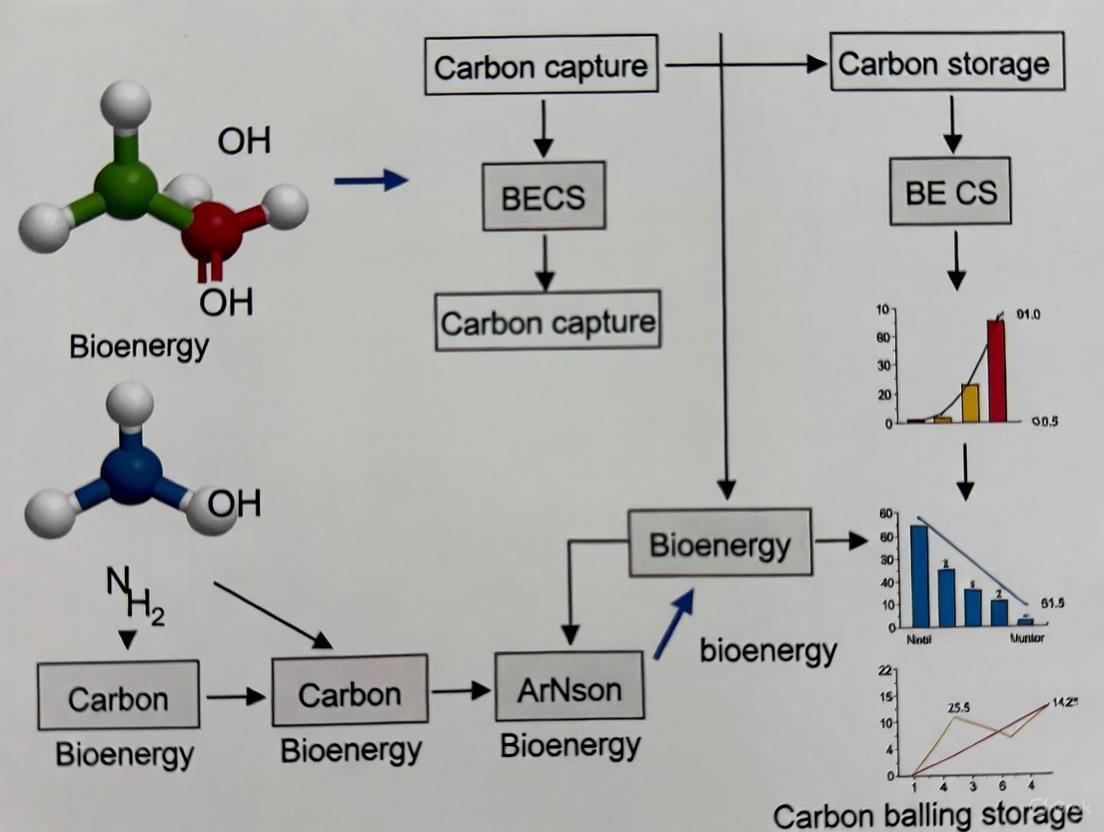
This article provides a comprehensive analysis of Bioenergy with Carbon Capture and Storage (BECCS), a critical negative emissions technology.
BECCS: The Promise and Challenges of Bioenergy with Carbon Capture and Storage for a Net-Zero Future
Abstract
This article provides a comprehensive analysis of Bioenergy with Carbon Capture and Storage (BECCS), a critical negative emissions technology. It explores the foundational science behind BECCS, detailing its processes and theoretical potential to achieve net-negative emissions. The review covers the methodological spectrum of BECCS technologies—from post-combustion to oxy-fuel capture—and their application across industries like power generation and bioethanol production, illustrated by real-world projects in Stockholm and Illinois. A critical troubleshooting section addresses significant sustainability challenges, including land-use conflicts, carbon accounting complexities, and impacts on biodiversity. Finally, the article offers a validation of BECCS by comparing it with alternative carbon dioxide removal (CDR) strategies and assessing its projected role in meeting international climate targets, providing researchers and scientists with a balanced perspective on its viability and integration into climate mitigation portfolios.
Understanding BECCS: The Science and Theory of Negative Emissions
Bioenergy with Carbon Capture and Storage (BECCS) represents a pivotal technological approach within climate change mitigation portfolios, transforming carbon-neutral bioenergy into a carbon-negative system capable of actively removing atmospheric CO₂. This whitepaper provides a comprehensive technical analysis of BECCS fundamentals, system components, and methodological frameworks for assessment. By integrating the latest research findings and quantitative data, we examine BECCS implementation pathways, technical requirements, and economic viability. The analysis underscores BECCS's dual role in delivering renewable energy while generating net-negative emissions, positioning it as an essential component for achieving long-term climate targets as outlined by the IPCC. For researchers and scientists engaged in climate solution development, this work offers both foundational knowledge and advanced technical guidance for evaluating BECCS systems within integrated decarbonization strategies.
Bioenergy with Carbon Capture and Storage (BECCS) is an integrated climate mitigation technology that combines bioenergy production from biomass with carbon capture and storage processes. The fundamental innovation of BECCS lies in its capacity to generate net-negative carbon emissions—removing more CO₂ from the atmosphere than it releases—when implemented with sustainable biomass sourcing and permanent geological storage [1] [2]. This transformative potential positions BECCS as a critical technology for achieving the temperature goals established in the Paris Agreement, particularly for offsetting residual emissions from hard-to-abate sectors like aviation and heavy industry [3].
The core principle enabling BECCS's negative emissions capability resides in the natural carbon cycle of biomass. During growth, biomass feedstocks photosynthetically absorb atmospheric CO₂, creating a temporary carbon sink. When this biomass is converted to energy, the carbon is released but can be captured before reaching the atmosphere through various technological means. The captured carbon is then permanently sequestered in geological formations, effectively creating a one-way transfer of carbon from the atmosphere to underground storage [1] [4]. This process differentiates BECCS from fossil-based CCS, which merely reduces additional carbon emissions but does not provide atmospheric carbon drawdown.
The Intergovernmental Panel on Climate Change (IPCC) has identified BECCS as a key component in most climate mitigation pathways limiting warming to 1.5°C above pre-industrial levels. Modeled scenarios that limit warming to 1.5°C with no or limited overshoot typically require cumulative BECCS deployment removing 30-780 gigatonnes of CO₂ globally between 2020-2100 [5]. This substantial range reflects uncertainties in future policy environments, technological advancement rates, and sustainable biomass availability. Current deployment remains limited, with fewer than 20 facilities in planning phases globally and less than 2 million tonnes of CO₂ removed annually—far below the scale required to meet climate targets [5].
Technical Components of BECCS Systems
Biomass Feedstock Production and Specification
The foundation of any BECCS system lies in its biomass feedstock, which determines both the technical design parameters and overall carbon balance. Biomass sources for BECCS applications fall into three primary categories, each with distinct characteristics and sustainability considerations, as detailed in Table 1.
Table 1: Biomass Feedstock Classification for BECCS Applications
| Feedstock Category | Examples | Carbon Intensity | Technical Considerations | Sustainability Factors |
|---|---|---|---|---|
| Dedicated Energy Crops | Miscanthus, switchgrass, short-rotation forestry | Low to Moderate | High yield potential; consistent quality | Land-use competition; water requirements; biodiversity impacts |
| Agricultural Residues | Straw, corn stover, rice husks | Very Low | Dispersed availability; collection logistics | Soil health maintenance; nutrient cycling |
| Forestry Residues | Thinnings, bark, sawdust, wood chips | Low | Established supply chains; heterogeneous composition | Sustainable harvest rates; forest ecosystem integrity |
| Organic Waste Streams | Municipal solid waste, food processing waste, algae | Variable | Contaminant removal; preprocessing requirements | Waste management synergies; emission avoidance |
Sustainable biomass sourcing represents a critical determinant of BECCS's net carbon negativity. Lifecycle assessments must account for direct and indirect land-use changes, as converting natural forests or grasslands to energy crop plantations can release stored terrestrial carbon, potentially negating the carbon removal benefits of BECCS [6] [2]. Additionally, sustainable practices must address biodiversity impacts, water resource management, and soil health preservation. Responsible sourcing decisions should be science-based and ensure that forests continue to grow and maintain or increase their carbon storage capacity over time [1].
Energy Conversion Technologies
Biomass conversion processes transform raw feedstock into usable energy forms (electricity, heat, or biofuels) while producing a concentrated CO₂ stream amenable to capture. The selection of conversion technology significantly influences overall system efficiency, capture readiness, and economic viability, with the primary options characterized in Table 2.
Table 2: Energy Conversion Technologies for BECCS Applications
| Conversion Technology | Process Description | Energy Outputs | TRL | Carbon Capture Compatibility |
|---|---|---|---|---|
| Combustion | Direct burning of biomass in boilers or furnaces to produce high-pressure steam | Electricity, heat | 9 (Mature) | Post-combustion capture; oxy-fuel combustion |
| Gasification | Thermal conversion of biomass to synthetic gas (syngas) at high temperatures with limited oxygen | Electricity, biofuels, chemical feedstocks | 7-8 (Demonstration) | Pre-combustion capture |
| Pyrolysis | Thermal decomposition in absence of oxygen to produce bio-oil, biochar, and syngas | Bio-oil, biofuels, biochar | 6-7 (Pilot/Demo) | Post-combustion capture from flue gases |
| Anaerobic Digestion | Biological breakdown of wet biomass by microorganisms in oxygen-free environment | Biogas (methane), heat | 9 (Mature) | Post-combustion capture |
Combustion-based systems represent the most mature conversion pathway, with applications ranging from combined heat and power (CHP) facilities to utility-scale power generation. Modern biomass power plants can achieve electrical efficiencies of 30-40% for dedicated biomass facilities, with CHP configurations reaching overall efficiencies of 80-90% through thermal energy utilization [7]. Gasification and pyrolysis technologies offer potential efficiency advantages and product flexibility but face greater technological and economic barriers to commercial deployment at scale. The integration of carbon capture systems typically reduces net electrical efficiency by 7-12 percentage points due to energy requirements for capture processes, though configuration optimization can mitigate these penalties [7].
Carbon Capture Methodologies
Carbon capture technologies for BECCS applications separate CO₂ from process gas streams, creating a concentrated product suitable for transport and storage. The dominant capture approaches include post-combustion, pre-combustion, and oxy-fuel combustion systems, each with distinct operational principles and technical considerations.
Post-combustion capture represents the most readily deployable option for existing bioenergy facilities, as it can be retrofitted to conventional combustion systems. This approach employs chemical solvents, typically amine-based compounds, to selectively absorb CO₂ from flue gases after combustion. The solvent is subsequently regenerated through heating, releasing a high-purity CO₂ stream while the solvent is recycled [1] [2]. Current amine-based systems can achieve 85-95% capture rates with CO₂ purity exceeding 99% [7]. The primary technical challenge involves the significant energy penalty for solvent regeneration, which typically consumes 15-30% of a plant's energy output.
Pre-combustion capture operates upstream of the energy conversion process, typically following biomass gasification. The resulting syngas (primarily CO and H₂) undergoes a water-gas shift reaction to convert CO to CO₂, which is then separated using physical solvents or adsorbents at elevated pressures [2]. This approach generally offers higher capture efficiencies and lower energy penalties compared to post-combustion systems but requires more complex and capital-intensive integrated gasification combined cycle (IGCC) infrastructure.
Oxy-fuel combustion utilizes nearly pure oxygen instead of air for biomass combustion, producing a flue gas consisting primarily of CO₂ and water vapor, which simplifies subsequent separation. This approach requires an air separation unit to produce oxygen, introducing significant energy demands and capital costs [2]. While offering theoretical advantages in capture efficiency, oxy-fuel systems remain at earlier stages of commercial development for biomass applications.
Carbon Transport and Geological Storage
Captured CO₂ must be transported to suitable geological formations for permanent sequestration. Transportation typically occurs via pipeline in a dense-phase supercritical state, optimizing volume efficiency and flow characteristics [1]. For regional BECCS deployment, transport infrastructure development represents a significant logistical and economic consideration, often requiring coordinated development of CO₂ pipeline networks.
Geological storage involves injecting CO₂ into deep subsurface formations at depths typically exceeding 800 meters, where conditions maintain CO₂ in a supercritical state with high density. Suitable geological formations include depleted oil and gas reservoirs, unmineable coal seams, and deep saline aquifers—porous rock formations saturated with saltwater [1] [2]. The United Kingdom alone possesses an estimated 70 billion tonnes of potential CO₂ storage capacity, far exceeding anticipated domestic requirements [1].
Multiple trapping mechanisms ensure long-term storage security. Initially, structural trapping occurs when impermeable caprock (such as shale or clay) forms a physical barrier preventing upward CO₂ migration. Over time, residual trapping immobilizes CO₂ within pore spaces by capillary forces, while solubility trapping dissolves CO₂ into formation waters. On millennial timescales, mineral trapping progressively converts dissolved CO₂ into stable carbonate minerals through geochemical reactions with host rocks [3]. Current scientific consensus indicates that appropriately selected and managed geological reservoirs can permanently isolate >99% of injected CO₂ over millennium timescales [5].
BECCS Process Flow and System Integration
The integration of BECCS components into a coherent system enables the transformation of carbon-neutral bioenergy into a carbon-negative technology. The logical progression from biomass cultivation to permanent carbon storage encompasses multiple stages that must be optimized collectively to maximize system performance and carbon removal efficiency.
Diagram 1: BECCS System Integration and Carbon Flow. The process illustrates the transformation of atmospheric CO₂ into geologically stored carbon through integrated bioenergy and carbon capture systems.
The BECCS value chain begins with biomass production, where photosynthetic CO₂ absorption from the atmosphere establishes the foundation for negative emissions. Sustainable management of biomass resources is essential to maintain the carbon neutrality of this initial stage [2]. Following feedstock preparation and transport, energy conversion processes transform the chemical energy stored in biomass into usable energy carriers while releasing biogenic carbon in a form amenable to capture.
Carbon capture unit operation determines the fraction of process emissions diverted from the atmosphere, with modern systems typically capturing 85-95% of the carbon in biomass feedstocks [7]. The captured CO₂ undergoes compression and purification before pipeline transport to geological storage sites, where injection operations and monitoring programs ensure permanent sequestration. System-wide carbon accounting must address residual emissions across the value chain, including those from biomass cultivation, transport, and processing, to accurately quantify net carbon removal [6].
Experimental and Assessment Methodologies
Techno-Economic Assessment Framework
Techno-Economic Assessment (TEA) provides a systematic methodology for evaluating the financial viability and resource requirements of BECCS systems. Conventional TEA approaches typically demonstrate challenging economics for BECCS, with one study of a wheat-straw-fuelled CHP BECCS facility showing negative net present value (NPV = -$460 million) under standard financial assumptions [7]. This analysis revealed that carbon credit prices must exceed $240/tCO₂ for BECCS electricity to achieve cost parity with conventional renewable energy sources.
Emerging assessment frameworks incorporate broader societal benefits through Techno-Socio-Economic Assessment (TSEA), which monetizes indirect emission displacement and job creation through the social cost of carbon and opportunity cost of labor [7]. Applying this methodology to the same case study transformed the economic outlook, with the electricity-maximizing operational mode achieving a positive NPV of $2.28 billion. This dramatic shift underscores the importance of assessment methodology selection when evaluating BECCS projects.
Sensitivity analyses consistently identify carbon pricing, biomass feedstock costs, and capital investment requirements as the primary determinants of financial viability. The strong dependence on assumed social cost of carbon values highlights the policy-sensitive nature of BECCS economics and the need for compensation mechanisms that recognize the full societal value delivered by these systems [7].
Lifecycle Assessment Protocol
Robust lifecycle assessment (LCA) represents a critical methodology for quantifying the net climate impact of BECCS systems, requiring comprehensive accounting of all greenhouse gas flows across the value chain. The International Energy Agency's methodology provides guidance for key methodological choices, including reference land use, spatial and temporal system boundaries, co-product handling, and climate forcers considered [6].
Table 3: Critical Lifecycle Assessment Considerations for BECCS
| Assessment Element | Methodological Options | Recommendation |
|---|---|---|
| Reference System | Alternative land use without bioenergy; conventional energy displacement | Select reference consistent with study objectives; account for indirect land use changes |
| System Boundaries | Cradle-to-gate; cradle-to-grave; spatial boundaries for land use impacts | Include all significant life cycle stages; ensure temporal consistency |
| Time Horizon | 20-year; 100-year; multi-decadal carbon debt analysis | Align with policy context; consider timing of emissions and removals |
| Co-product Handling | Mass allocation; economic allocation; system expansion | Apply consistent method; sensitivity analysis with different approaches |
| Climate Forcers | CO₂ only; multiple greenhouse gases with global warming potentials | Include all significant climate forcers; use latest characterization factors |
A critical LCA consideration involves the timing of carbon flows, as biomass growth occurs over years to decades while combustion and capture happen instantaneously. This temporal mismatch can create temporary carbon debts that must be accounted for in comprehensive assessments [6]. Additionally, indirect land-use change (iLUC) effects—where biomass cultivation displaces previous land uses to new locations—can introduce significant emissions not captured in direct process-based accounting. Advanced LCA methodologies incorporate iLUC factors based on economic modeling of agricultural and forestry market dynamics.
Research Reagent Solutions for BECCS Investigation
Experimental research on BECCS component technologies requires specialized materials and analytical approaches. The following reagent solutions represent essential methodologies for advancing BECCS development across multiple research domains.
Table 4: Essential Research Reagent Solutions for BECCS Development
| Research Domain | Reagent/Methodology | Function/Application |
|---|---|---|
| Solvent Development | Amine-based solvents (e.g., MEA, MDEA, AMP) | CO₂ chemisorption in post-combustion capture; benchmark for novel solvent evaluation |
| Advanced Sorbents | Metal-organic frameworks (MOFs); porous polymer networks | Selective CO₂ adsorption with lower regeneration energy requirements |
| Biomass Characterization | Thermogravimetric analysis (TGA); proximate/ultimate analysis | Quantification of biomass composition; prediction of conversion behavior |
| Catalyst Systems | Zeolite catalysts; nickel-based reforming catalysts | Tar reforming in gasification; optimization of syngas composition |
| Monitoring Solutions | Stable carbon isotopes (¹³C); tracers (e.g., perfluorocarbons) | Verification of stored CO₂ origin; leakage detection in geological formations |
| Biomass Processing | Enzymatic hydrolysis cocktails; fermentation microorganisms | Biochemical conversion of lignocellulosic biomass to advanced biofuels |
Innovative solvent systems represent a particularly active research domain, with advanced amine blends, ionic liquids, and phase-change solvents demonstrating potential for reduced energy penalties compared to conventional monoethanolamine (MEA) benchmarks. Simultaneously, solid sorbents based on metal-organic frameworks (MOFs) and porous carbon materials offer alternative capture pathways with distinct regeneration characteristics. For biological conversion pathways, specialized enzyme cocktails enable efficient deconstruction of recalcitrant lignocellulosic biomass into fermentable sugars, while engineered microorganisms expand the range of available biofuel products.
Economic Viability and Policy Frameworks
The economic competitiveness of BECCS remains challenged under conventional financial metrics, but evolving policy frameworks and comprehensive valuation approaches demonstrate improving viability. Current economic assessments highlight several interconnected factors influencing investment attractiveness.
Financial incentives significantly impact BECCS deployment economics. The U.S. Inflation Reduction Act enhanced the Section 45Q tax credit to $85/tonne of CO₂ permanently stored, substantially improving project economics [8]. Similarly, the European Union's emissions trading system and innovation fund provide financial support mechanisms. However, analyses indicate that even enhanced credit levels may remain insufficient, with breakeven carbon prices estimated at $240/tCO₂ for certain BECCS configurations [7].
A holistic policy blueprint for responsible BECCS development encompasses eight key elements: national policy planning with BECCS targets; financial incentives beyond current tax credits; sustainable feedstock provisions in farm legislation; wildfire mitigation integration; rural community development; greenhouse gas accounting standards; environmental justice safeguards; and targeted innovation programs [8]. This comprehensive approach addresses both deployment barriers and sustainability concerns while maximizing socio-economic co-benefits.
The manufacturing and research sectors require specialized materials and analytical systems to advance BECCS technologies. High-performance solvent systems for carbon capture include advanced amine blends and ionic liquids that reduce regeneration energy requirements compared to conventional monoethanolamine. Solid sorbents based on metal-organic frameworks (MOFs) offer potential for lower energy penalties through pressure-swing adsorption cycles. For biomass conversion research, specialized enzyme cocktails enable efficient breakdown of lignocellulosic feedstocks, while catalyst systems optimize biofuel production pathways. Advanced monitoring solutions utilizing stable carbon isotopes (¹³C) provide verification of carbon storage integrity and origin.
BECCS represents a critical technological pathway for achieving climate stabilization targets, transforming carbon-neutral bioenergy into a carbon-negative system through integrated capture and geological storage. The technology's unique capacity to deliver both renewable energy and atmospheric carbon removal positions it as an essential component of comprehensive climate mitigation strategies, particularly for offsetting residual emissions from hard-to-abate sectors.
Significant challenges remain in scaling BECCS deployment to climate-relevant levels, including economic competitiveness, sustainable biomass availability, and infrastructure development. However, evolving policy frameworks, technological innovations, and comprehensive assessment methodologies that recognize BECCS's full societal value are progressively addressing these barriers. For researchers and scientific professionals, advancing BECCS implementation requires continued refinement of conversion efficiencies, capture technologies, and monitoring protocols while maintaining rigorous sustainability safeguards.
As global emissions reduction efforts intensify, BECCS stands ready to contribute to deep decarbonization pathways. With coordinated policy support, scientific innovation, and responsible deployment practices, BECCS can fulfill its potential as a scalable carbon dioxide removal technology, supporting transition to a net-negative carbon economy and climate stabilization.
The pursuit of climate change mitigation has catalyzed the development of advanced technologies designed to achieve net-negative carbon emissions. Among the most promising is Bioenergy with Carbon Capture and Storage (BECCS), which integrates the natural carbon-sequestering power of photosynthesis with engineered geological storage to create a closed carbon loop. This whitepaper delineates the core principles of BECCS, detailing how biomass converts atmospheric CO₂ into usable energy while the resulting carbon emissions are captured and sequestered underground. We provide a technical analysis of the biological, industrial, and geological processes involved, supported by quantitative data, experimental methodologies, and visualizations of key pathways. The synthesis presented herein is intended to equip researchers and scientists with a comprehensive understanding of BECCS concepts, its potential, and its constraints within the broader climate solution portfolio.
The Earth's carbon cycle consists of two primary domains: the fast, or active, domain and the slow, or geologic, domain [9]. The fast domain involves the continuous exchange of carbon between the atmosphere, oceans, and biosphere—a cycle measured in years to centuries. In contrast, the geologic domain, where carbon is stored in rocks and fossil fuels, operates over tens to hundreds of thousands of years. The combustion of fossil fuels disrupts this natural balance by transferring vast quantities of geologic carbon into the atmosphere, leading to a net increase in atmospheric CO₂ concentrations [9].
Bioenergy with Carbon Capture and Storage (BECCS) presents a framework for reversing this flow. It leverages the fast carbon cycle, wherein photosynthesis in biomass removes CO₂ from the atmosphere, and combines it with carbon capture and storage (CCS) technology to divert the carbon into long-term geologic storage. When managed effectively, this process can create a closed-loop system: carbon is cycled from the atmosphere to biomass, converted into energy, and the emissions are returned to the geologic domain from which fossil fuels were originally extracted [9]. The overall impact on atmospheric CO₂ levels depends on three factors: the extent of fossil fuel displacement, the effect of bioenergy systems on carbon storage in the fast domain, and the proportion of biogenic CO₂ that is captured and stored [9].
The Photosynthetic Engine: Biological Carbon Capture
The initial phase of the BECCS loop is biological carbon fixation via photosynthesis. Plants absorb atmospheric CO₂ and, using solar energy, convert it into organic biomass. The stoichiometric equation of photosynthesis and cellulose biosynthesis indicates that for every 44 grams of CO₂ fixed, approximately 27 grams of dry biomass are produced [10]. The natural global capacity for this process is immense, with estimates suggesting photosynthesis in forests fixes over 50 to 100 billion tonnes of CO₂ annually [10].
Enhancing Natural Photosynthesis
A major focus of contemporary research is improving the efficiency of this biological capture, as natural photosynthesis is constrained by processes like photorespiration that re-release CO₂ [11]. A breakthrough in synthetic biology, published in Science in September 2025, demonstrates a pathway to significantly higher efficiency. Researchers at Academia Sinica successfully engineered a synthetic carbon fixation cycle, the Malyl-CoA glycerate (McG) cycle, into the model plant Arabidopsis thaliana [11].
This novel cycle functions alongside the native Calvin–Benson–Bassham (CBB) cycle, creating a dual-cycle carbon fixation system that reduces carbon loss from photorespiration and lipid synthesis. The resulting "synthetic C2 plants" exhibited a 50% increase in carbon fixation efficiency, accelerated growth, and biomass increases of two to three times compared to wild-type plants [11]. This enhancement not only boosts the carbon input for BECCS but also offers co-benefits for food security and sustainable biofuel feedstocks.
Table 1: Quantitative Overview of Global Carbon Flows and Storage
| Parameter | Value | Context / Source |
|---|---|---|
| Annual Global Industrial CO₂ Emissions (c. 2020) | 35 billion tonnes | [10] |
| Estimated Annual CO₂ Fixation by Forests | 50-100 billion tonnes | [10] |
| Global Prudent Geologic CO₂ Storage Limit | 1,460 Gt (1,290-2,710 Gt range) | Risk-based assessment [12] [13] |
| Reported Global Technical Storage Potential | 8,000-55,000 Gt | Older, less constrained estimates [13] |
| Maximum Potential Temperature Reduction from Full Geologic Storage Use | 0.7 °C (0.35–1.2 °C range) | Based on prudent storage limit [12] [13] |
Experimental Protocol: Engineering Synthetic Carbon Fixation
The following methodology summarizes the key experimental workflow used to create and validate the synthetic C2 plants, as detailed by Academia Sinica [11].
1. Cycle Design and In Vitro Testing:
- The Malyl-CoA glycerate (McG) cycle was designed in silico to metabolically bypass photorespiratory CO₂ release.
- The cycle was first constructed and tested in a bacterial model system to confirm its functionality and kinetic properties.
2. Plant Transformation and Generation:
- Genes encoding the key enzymes of the McG cycle were cloned into plant expression vectors.
- Arabidopsis thaliana was transformed using the floral dip method with Agrobacterium tumefaciens harboring the recombinant vectors.
- Transgenic plants were selected using antibiotic resistance, and homozygous lines (T3 generation) were established for phenotyping.
3. Physiological and Metabolic Phenotyping:
- Growth Analysis: Wild-type and transgenic plants were grown under controlled conditions. Biomass was measured as dry weight after 4-6 weeks of growth.
- Gas Exchange Measurements: Net photosynthetic rate and the rate of photorespiration were quantified using an infrared gas analyzer (IRGA) system.
- Metabolomic Profiling: Liquid Chromatography-Mass Spectrometry (LC-MS) was used to profile intermediate metabolites of both the CBB and McG cycles, confirming the in vivo operation of the synthetic pathway.
- Lipid Analysis: Total lipids were extracted from plant tissues and quantified gravimetrically after solvent evaporation.
4. Validation and Microscopy:
- Electron Microscopy: Leaf ultrastructure was examined using transmission electron microscopy (TEM) to observe any morphological changes in chloroplasts or other organelles.
- Genetic Stability: The stability of the introduced traits was monitored over multiple generations.
The Engineering Bridge: From Biomass to Captured Carbon
Once biomass is produced, it can be processed in bioenergy facilities to generate electricity, heat, or liquid biofuels. The critical second step in BECCS is capturing the CO₂ released during this conversion process. Unlike fossil fuel emissions, which represent a net addition of carbon to the atmosphere, CO₂ from biomass combustion is biogenic—it is part of the active carbon cycle [9]. Capturing it effectively withdraws it from the active cycle.
Carbon capture technologies, typically employing amine-based solvents or other sorbents to separate CO₂ from the flue gas stream, are deployed at the bioenergy facility. The captured, high-purity CO₂ is then compressed for transport. Two primary configurations exist:
- Bioenergy with Carbon Capture and Storage (BECCS): The captured CO₂ is injected into deep geological formations for permanent isolation [9].
- Bioenergy with Carbon Capture and Utilization (BECCU): The captured CO₂ is used as a feedstock for producing goods such as synthetic fuels or building materials, which delays its return to the atmosphere [9].
An alternative pathway involves producing biochar alongside bioenergy. When applied to soils, biochar sequesters carbon for decades to centuries while potentially improving soil health [9].
The Geological Anchor: Long-Term Carbon Storage
The final, anchoring component of the closed loop is the durable storage of captured CO₂. Suitable geological formations include depleted oil and gas reservoirs and deep saline aquifers, typically located 1 to 2.5 kilometers below the surface [12]. At these depths, high pressure and temperature maintain CO₂ in a supercritical state, increasing storage density and stability.
A pivotal 2025 study in Nature established a prudent planetary limit for geologic carbon storage of approximately 1,460 Gt of CO₂ (with a range of 1,290–2,710 Gt) [12] [13]. This risk-based, spatially explicit analysis excluded areas with high potential for seismic activity, those within a 25 km buffer of human settlements to mitigate leakage risks, sensitive environmental zones, and regions with policy restrictions on CCS [12]. This limit is drastically lower than previous technical estimates of 8,000–55,000 GtCO₂ [13], indicating that geologic storage is a valuable and finite resource. The study concluded that fully utilizing this prudent storage capacity could reduce global temperatures by a maximum of about 0.7 °C [13].
Table 2: Key Geological Formations for CO₂ Storage and Their Characteristics
| Formation Type | Key Characteristics | Considerations & Risks |
|---|---|---|
| Depleted Oil & Gas Reservoirs | Well-understood geology and sealing capacity; potential use of existing infrastructure. | Finite capacity linked to extracted resource volumes; potential for well-integrity issues. |
| Deep Saline Aquifers | Very large theoretical storage capacity; widespread global distribution. | Less characterized than hydrocarbon fields; requires careful site selection and monitoring. |
| Basalt Formations | CO₂ can react with minerals to form stable carbonates, offering potentially permanent fixation. | Technology is less mature; injection rates and long-term reaction kinetics are areas of active research. |
Integrated Pathways and System Trade-offs
The effectiveness of BECCS is not measured by its individual components but by their integration into a cohesive system that results in net atmospheric CO₂ removal. The following diagram illustrates the core closed-loop logic of the BECCS process.
However, the deployment of BECCS is not without significant trade-offs, primarily concerning land and resource use. Integrated assessment models reveal a clear inverse relationship between the scale of BECCS deployment and afforestation/reforestation (A/R) [14]. Large-scale cultivation of bioenergy crops can compete directly with land needed for food production or for natural forests that act as carbon sinks themselves. One analysis found that in a 2°C scenario with no specific land mitigation policy, BECCS could provide 540 GtCO₂ of removal, but the land use sector could become a net source of 230 GtCO₂ emissions. Conversely, with a strong land mitigation policy, BECCS removal was 360 GtCO₂, complemented by 150 GtCO₂ of removal from A/R [14]. This underscores the critical need for integrated policy that manages these trade-offs.
The Researcher's Toolkit
The following table details key reagents, materials, and tools essential for research in the fields of enhanced photosynthesis and BECCS.
Table 3: Research Reagent Solutions for Enhanced Photosynthesis & BECCS Research
| Item/Category | Function/Application | Specific Example / Note |
|---|---|---|
| Plant Transformation Vectors | Delivery of synthetic pathway genes into the plant genome. | pCAMBIA, pGreen series with tissue-specific promoters. |
| Agrobacterium tumefaciens | A biological vector for stable plant transformation. | Strain GV3101 for Arabidopsis transformation. |
| Gas Exchange System | Precise measurement of photosynthetic and photorespiratory rates. | Infrared Gas Analyzer (IRGA) systems (e.g., LI-COR 6800). |
| Liquid Chromatography-Mass Spectrometry (LC-MS) | Identification and quantification of metabolic intermediates. | Used for metabolomic profiling to validate synthetic cycle flux. |
| Amino-based Sorbents | Chemical capture of CO₂ from flue gas streams in lab-scale CCS. | Monoethanolamine (MEA) is a common benchmark solvent. |
| Geological Core Samples | Experimental analysis of CO₂-brine-rock interactions and injectivity. | Sandstone or basalt cores for laboratory sequestration experiments. |
| Stable Isotope ¹³CO₂ | Tracing the fate of fixed carbon through metabolic pathways and ecosystems. | Essential for validating the novel carbon flux in synthetic C2 plants. |
The core principle of BECCS—creating a closed carbon loop through the synergy of photosynthesis and geological storage—offers a scientifically-grounded pathway for achieving net-negative emissions. The system's efficacy is contingent upon continuous innovation across its constituent domains: enhancing the carbon fixation efficiency of biomass, optimizing carbon capture processes, and prudently managing the finite resource of geologic storage space. Recent advances in synthetic biology, such as the development of dual-cycle carbon fixation plants, demonstrate a significant potential to amplify the input to this loop [11]. Simultaneously, a more realistic and risk-aware understanding of geologic storage capacity underscores that it is a precious, limited resource that must be strategically allocated [12] [13]. For the research community, the path forward requires an integrated, interdisciplinary approach that addresses the critical technical and socio-ecological trade-offs, particularly around land use, to responsibly unlock the potential of BECCS within the global portfolio of climate solutions.
The Critical Role of BECCS in IPCC Climate Models and 1.5°C Scenarios
Most Integrated Assessment Models (IAMs) used by the Intergovernmental Panel on Climate Change (IPCC) to project pathways that limit warming to 1.5°C rely heavily on Carbon Dioxide Removal (CDR) technologies [15] [16]. Among these, Bioenergy with Carbon Capture and Storage (BECCS) represents a pivotal negative emission technology that combines bioenergy production with permanent geological carbon storage [17] [18]. BECCS is strategically important because it offers the dual capability of supplying energy while simultaneously removing CO₂ from the atmosphere, effectively creating a carbon-negative system [18]. When biomass grows, it absorbs atmospheric CO₂ through photosynthesis; when this biomass is converted to energy and the resulting emissions are captured and stored geologically, the net effect is a reduction in atmospheric carbon levels [17]. This technical brief examines the foundational role of BECCS within climate mitigation scenarios, the quantitative demands placed upon it, the methodological frameworks for its assessment, and the critical research gaps that must be addressed to realize its potential.
BECCS in IPCC Climate Pathways: A Quantitative Analysis
Integration in Climate Categories
IPCC mitigation pathways are categorized based on their 21st-century warming outcomes, with BECCS deployment varying significantly across these categories [15]. The table below summarizes key characteristics of these climate categories and the role of CDR, establishing the context for BECCS demand.
Table 1: IPCC Climate Pathway Categories and Carbon Dioxide Removal Context
| Category | Description | 2100 Warming (°C) | Net-Zero CO₂ Year (Median) | Cumulative Net-Negative Emissions (GtCO₂, Median) |
|---|---|---|---|---|
| C1 | Below 1.5°C with no or limited overshoot | 1.3 (1.1 to 1.5) | 2050-2055 | -220 |
| C2 | Below 1.5°C with high overshoot | 1.4 (1.2 to 1.5) | 2055-2060 | -360 |
| C3 | Likely below 2°C | 1.6 (1.5 to 1.8) | 2070-2075 | -40 |
| C4 | Below 2°C | 1.8 (1.5 to 2.0) | 2080-2085 | -30 |
Scenarios that limit warming to 1.5°C, particularly those with high overshoot (C2), involve substantial cumulative net-negative emissions over the 21st century, achieved primarily through CDR technologies like BECCS [15]. These pathways require net-zero CO₂ emissions to be achieved by the early 2050s, creating a narrow window for deployment.
Projected Deployment Scale and Feasibility Constraints
The scale of BECCS envisioned in many IPCC pathways presents significant feasibility challenges, as analyzed against historical technology deployment rates [19].
Table 2: BECCS Deployment Scale and Feasibility Analysis
| Metric | IPCC 1.5°C Pathways (Median) | Current Deployment (2024) | Feasibility Constraints from Historical Analogues |
|---|---|---|---|
| Annual CDR by 2030 | 0.9 GtCO₂ (IQR 0.4-1.5) | ~0.002 GtCO₂ [17] | Upper feasible bound for all CCS (including BECCS): 0.37 GtCO₂/yr [19] |
| Global Removal Potential by 2050 | 0.5 to 5.0 GtCO₂ per year [17] | ||
| Cumulative CO₂ Captured by 2100 | Up to 700 GtCO₂ by 2070; 1,400 GtCO₂ by 2100 in some pathways [19] | Only 10% of IPCC pathways meet tri-phase feasibility constraints, depicting <600 GtCO₂ by 2100 [19] |
A 2024 feasibility study found that only 10% of mitigation pathways (IPCC categories C1-C4) depict CCS (including BECCS) capacity growth compatible with optimistic assumptions, requiring plans to double by 2025 with failure rates cut by half, followed by accelerated growth [19]. This highlights a significant feasibility gap between modelled pathways and practical deployment potential.
Technical Workflow and System Components of BECCS
End-to-End BECCS Process Diagram
The following diagram illustrates the complete technical workflow for BECCS, from biomass growth to carbon storage, highlighting the integration points for research reagent solutions.
Diagram 1: BECCS Technical Workflow
The Scientist's Toolkit: Key Research Reagent Solutions
Research and development of BECCS technologies requires specialized materials and analytical tools. The following table details essential research reagents and their functions in experimental BECCS research.
Table 3: Essential Research Reagents and Materials for BECCS Investigation
| Research Reagent/Material | Technical Function | Application Context |
|---|---|---|
| Biomass Feedstock Samples | Variable carbon content, growth rate, and chemical composition for process optimization | Feedstock selection studies; determining optimal biomass characteristics for different conversion pathways |
| Chemical Solvents (e.g., Amines) | Selective absorption of CO₂ from flue gas streams in post-combustion capture | Capture efficiency testing; solvent degradation and regeneration cycle analysis |
| Solid Sorbents | Physical or chemical adsorption of CO₂; often metal-organic frameworks (MOFs) or zeolites | Development of lower-energy capture systems; capacity and longevity testing |
| Catalysts | Accelerate specific biochemical or thermochemical reactions during conversion | Gasification process optimization; biofuel synthesis; tar reforming |
| Tracers (e.g., perfluorocarbons, isotopic labels) | Monitor and verify the movement and containment of stored CO₂ | Geophysical monitoring at storage sites; detection of potential leakage |
| Culture Media for Microbial Consortia | Support growth of engineered microorganisms for enhanced fermentation processes | Bioethanol production optimization; conversion yield improvement |
Methodological Framework for BECCS Research and Assessment
Experimental Protocol for BECCS Lifecycle Assessment
A robust Lifecycle Assessment (LCA) is fundamental to validating the carbon negativity of BECCS systems. The following protocol provides a standardized methodology:
System Boundary Definition: Establish a cradle-to-grave boundary encompassing biomass cultivation (including land-use change emissions), feedstock transport, energy conversion, CO₂ capture, transport, and permanent geological storage [16].
Data Inventory Collection:
- Biomass Production: Quantify inputs (fertilizers, water, energy) and direct emissions from agricultural operations.
- Conversion Process: Measure energy output and capture efficiency of the CO₂ capture technology.
- Carbon Transport & Storage: Account for energy use for compression, pipeline transport, and injection.
Carbon Balance Calculation: Calculate the net carbon removal using the formula: Net CO₂ Removal = (Biogenic CO₂ Captured and Stored) - (Lifecycle Emissions from Supply Chain). A system is carbon-negative only when the result is positive.
Spatially Explicit Modeling: Implement high-resolution spatial analysis to account for regional variations in biomass yield, soil carbon, transportation networks, and proximity to suitable storage sites, which are critical for accurate capacity estimates [16].
Uncertainty and Sensitivity Analysis: Perform Monte Carlo simulations to assess the impact of key variables (e.g., biomass yield, capture rate, transport distance) on the net carbon balance.
Integrated Assessment Modeling Logic
The following diagram outlines the logical structure for integrating BECCS into IAMs to project climate pathways, highlighting critical data inputs and feedback loops.
Diagram 2: IAM Integration Logic
Critical Challenges and Research Frontiers
Despite its projected importance, the large-scale deployment of BECCS faces significant challenges that constitute active research frontiers:
Sustainability of Biomass Supply: The potential competition for land between energy crops and food production poses risks to food security and can induce indirect land-use change (ILUC) that may release large quantities of stored carbon [20] [16]. Research focuses on sustainable residue use and regenerative agriculture.
Techno-Economic Uncertainty: Current models show high uncertainty in estimating BECCS costs, with projections often failing to fully account for biomass and CO₂ transportation logistics and complete lifecycle emissions [16].
Geological Storage Capacity and Infrastructure: The feasibility of BECCS is contingent upon the availability of suitable geological formations and the development of extensive CO₂ transport infrastructure [19] [16]. This requires significant investment and social license.
Feasibility-Implementation Gap: Analysis indicates that over 90% of IPCC 1.5°C pathways depict CCS (including BECCS) growth that exceeds even optimistic historical analogues for technology deployment, suggesting a significant feasibility gap between modelled pathways and real-world implementation potential [19].
BECCS occupies a critical, though contentious, position in the portfolio of climate mitigation strategies assessed by the IPCC. It is a key technology enabling pathways that limit warming to 1.5°C, particularly those that temporarily overshoot this target [15] [16]. However, the scale of deployment envisioned in many IAMs presents profound technical, economic, and sustainability challenges [19] [16]. Closing the gap between the modelled demand for BECCS and its feasible potential requires concerted innovation in biomass supply chains, carbon capture efficiency, transport infrastructure, and robust policy frameworks. For the research community, priorities include refining spatially explicit lifecycle assessments, reducing cost uncertainties, and developing sustainable biomass management protocols to ensure that BECCS can fulfill its theorized role as a cornerstone of deep decarbonization without incurring unacceptable environmental or social costs.
Bioenergy with Carbon Capture and Storage (BECCS) represents a critical technological pathway for achieving gigatonne-scale carbon dioxide removal (CDR), playing an indispensable role in global climate mitigation strategies. As a negative emissions technology, BECCS combines sustainable bioenergy production with carbon capture and storage processes to permanently remove atmospheric CO₂ while simultaneously generating usable energy [7] [17]. The integrated system operates through a fundamental natural-technological synergy: biomass feedstocks absorb CO₂ from the atmosphere through photosynthesis during growth, and this carbon is subsequently captured during energy conversion processes before being stored securely in geological formations [17] [21]. This creates a closed-loop carbon cycle that results in net-negative emissions when implemented effectively [17].
The technology's dual capacity to deliver renewable energy provision and atmospheric carbon drawdown makes it particularly valuable for decarbonizing hard-to-abate sectors such as heavy industry, long-distance transportation, and aviation, where direct electrification remains technologically challenging or economically prohibitive [22]. Current applications span multiple industries including bioenergy production, bioethanol processing, waste-to-energy facilities, and pulp and paper manufacturing [17]. Within climate modeling scenarios aiming to limit global warming to 1.5-2°C above pre-industrial levels, BECCS features prominently as the most promising carbon dioxide removal technology for counterbalancing residual emissions from sectors where complete decarbonization is technically unfeasible [23]. Its capacity to provide firm, dispatchable power further enhances grid stability alongside variable renewable sources like solar and wind [23].
Global Carbon Removal Potential: Quantitative Assessment
The carbon removal potential of BECCS operates at a scale that justifies its central position in climate mitigation pathways. Current global deployment remains at approximately 2 megatonnes of CO₂ removal per year according to International Energy Agency data [17]. However, projections indicate significant scalability, with estimates suggesting BECCS could remove between 0.5 to 5 gigatonnes of CO₂ annually by 2050 [17]. This represents a potential thousand-fold increase in deployment capacity over the next quarter-century, positioning BECCS as a cornerstone technology for achieving net-negative emissions in the second half of the 21st century.
Table 1: Global Carbon Removal Potential of BECCS
| Metric | Current Deployment | 2050 Potential | Key Determinants |
|---|---|---|---|
| Annual Removal Capacity | 2 MtCO₂/year [17] | 0.5-5 GtCO₂/year [17] | Policy support, biomass sustainability, infrastructure development |
| Cumulative Potential (2100) | - | <600 GtCO₂ (feasible constraint) [19] | Growth rates, failure rates of planned projects |
| Market Position | Leading durable CDR method by volume sold (2024) [17] | 60% of total CDR credits transacted to date [24] | Corporate procurement, carbon credit pricing |
The feasibility of reaching BECCS's upper potential range depends critically on overcoming current deployment barriers. Historical analysis of technology analogies suggests that for CCS technologies overall, only 10% of climate mitigation pathways depict growth compatible with optimistic assumptions [19]. To remain on-track for 2°C climate targets, CCS (including BECCS) would need to accelerate at least as fast as wind power did in the 2000s during 2030-2040, and then grow faster than nuclear power did in the 1970s-1980s after 2040 [19]. Under these feasibility constraints, virtually all compatible pathways depict less than 600 GtCO₂ captured and stored by 2100 across all CCS technologies, with BECCS expected to constitute a substantial portion given its negative emissions potential [19].
Technical Methodology: BECCS Implementation Framework
Core Technological Process
The BECCS technological chain comprises four integrated subsystems that transform biomass into energy while delivering permanent carbon sequestration:
Biomass Production and Sourcing: Biomass feedstocks absorb atmospheric CO₂ through photosynthesis during growth, creating a biogenic carbon reservoir. Sustainable sourcing is critical and includes agricultural residues (rice straw, sugarcane waste), energy crops (fast-growing tree species like willows), algae, and municipal solid waste [22].
Bioenergy Conversion with Carbon Capture: Biomass undergoes thermochemical (combustion, gasification) or biochemical (fermentation, anaerobic digestion) conversion to produce energy in the form of electricity, heat, or biofuels. Point-source carbon capture technologies intercept CO₂ emissions before atmospheric release. Capture rates can reach 90% of contained carbon, as demonstrated by the Stockholm Exergi project [21].
Carbon Transportation and Compression: Captured CO₂ is purified, compressed into a dense supercritical fluid, and transported via pipeline or ship to suitable geological storage sites. Shipping provides economically efficient transport alternatives for dispersed coastal facilities, as planned in Swedish BECCS projects [21].
Geological Sequestration: Compressed CO₂ is injected into deep geological formations (>800 meters underground) such as depleted oil and gas reservoirs or deep saline aquifers capped by impermeable rock layers. Over time, the CO₂ undergoes mineral trapping or structural immobilization, enabling permanent storage [17] [21].
Figure 1: BECCS Technical Process Flow - This diagram illustrates the integrated carbon removal and energy production pathway, from atmospheric CO₂ absorption to permanent geological sequestration.
Assessment Methodologies
Techno-Economic Assessment (TEA) Framework
Traditional Techno-Economic Assessments evaluate BECCS viability through standard financial metrics including Net Present Value, Levelized Cost of Electricity, and internal rate of return. Conventional TEA approaches typically show poor financial attractiveness for BECCS systems, with one case study revealing negative profitability (NPV = -$460 million) without accounting for broader societal benefits [7]. These analyses indicate that carbon credit prices must exceed $240/tCO₂ for BECCS electricity to reach cost parity with conventional renewable energy sources [7].
Techno-Socio-Economic Assessment (TSEA) Framework
The emerging TSEA framework addresses limitations of conventional TEAs by integrating and monetizing societal co-benefits through established economic valuation methods. Key integrated factors include:
- Indirect Emission Displacement: Monetized using the social cost of carbon to quantify avoided climate damages from fossil fuel replacement [7].
- Employment Creation: Valued through the opportunity cost of labour to quantify economic benefits from job generation across the biomass supply chain, conversion facilities, and carbon management infrastructure [7].
- Energy Security Enhancement: Qualitative assessment of diversification benefits and reduced price volatility exposure.
- Air Quality Improvements: Health cost avoidance from reduced conventional pollutant emissions.
Application of TSEA demonstrates dramatic improvements in BECCS viability, with one analysis showing a shift from negative NPV (-$460 million) under conventional TEA to strongly positive NPV ($2.28 billion) under TSEA for electricity-maximizing operational modes [7].
Economic Viability and Market Dynamics
BECCS economics have improved substantially through policy support mechanisms and emerging carbon markets, though significant variability exists across project configurations and regional contexts.
Table 2: BECCS Economic Indicators and Market Dynamics
| Economic Factor | Current Value/Range | Context & Determinants |
|---|---|---|
| Carbon Credit Price | Average $387/tonne CDR credit [24] | Voluntary carbon market transactions, typically ~500,000 tonnes per deal |
| Policy Support (US 45Q) | $85/tonne tax credit [24] | Stackable with REC markets and CDR credits, unique US advantage |
| Capital Investment | €455 million (Stockholm Exergi project) [21] | Scale-dependent, higher for greenfield vs. retrofit applications |
| Subsidized LCOE | As low as -$57.82/MWh [24] | With stacked incentives (45Q, RECs, CDR credits) at plant level |
| EU Innovation Funding | €180 million (Stockholm Exergi project) [21] | Competitive allocation, covers ~40% of capital expenditure |
The voluntary carbon market has demonstrated particularly strong growth for BECCS, experiencing an 84% volume increase and 156% transaction growth year-over-year in 2024 [25]. BECCS currently dominates the engineered carbon removal segment, comprising 60% of total CDR credits transacted to date [24]. Corporate procurement led by technology firms has driven this expansion, with Microsoft executing the largest CDR purchase of all time at 6.75 million tons from a BECCS project [25]. The overall CDR market has experienced a remarkable 688% compound annual growth rate since 2019, reflecting accelerating corporate climate commitments and anticipated regulatory developments [24].
Economic analyses reveal that BECCS opportunities are particularly lucrative in the United States, where the 45Q tax credit can be stacked alongside renewable energy credits and carbon dioxide removal credits [24]. This policy configuration creates a capacity-weighted average benefit of $13.34/MWh across existing biomass power plants in the Lower 48 states, potentially facilitating CCS commercialization at scale [24]. Projected load growth driven by data center demand (3.7-4.4 GW by 2035) positions the Southeastern and MISO regions as particularly favorable for greenfield BECCS deployment [24].
Implementation Barriers and Sustainability Considerations
Despite promising economics under supportive policy environments, BECCS deployment faces significant implementation barriers spanning technical, environmental, and social dimensions.
Technical and Economic Challenges
High Capital and Operational Costs: Carbon capture infrastructure remains complex and energy-intensive, with estimated costs ranging from €86 to €172 per tonne of CO₂, making BECCS economically challenging without substantial public subsidies or carbon credit revenues [22].
Energy Penalty: CCS processes consume significant additional energy, though leading projects like Stockholm Exergi have reduced this to approximately 2% through integration with district heating networks that utilize excess heat [21].
Infrastructure Requirements: BECCS implementation requires integrated infrastructure spanning biomass supply chains, conversion facilities, and CO₂ transport networks to suitable geological storage sites [25].
Environmental and Social Considerations
Land Use Impacts: Meeting climate targets with BECCS could require land areas potentially up to twice the size of India for dedicated energy crops, creating competition with food production and elevating food security risks [22].
Biomass Sustainability: Emissions from land-use change, fertilizer application, harvesting, processing, and transportation must be accounted for in lifecycle assessments to ensure net-negative emissions [22]. Monoculture energy plantations can reduce ecosystem diversity and cause habitat destruction [22].
Community Engagement: Project development requires early and meaningful community engagement to ensure equitable benefit sharing and avoid land rights conflicts, particularly in vulnerable or marginalized communities [25] [22].
Permanence and Leakage Risks: Potential leakage from underground storage reservoirs, while rare, could pose public health risks or trigger seismic activity near injection sites [22].
Policy Framework and Future Development Pathways
Supportive policy environments emerge as critical enablers for BECCS deployment at climate-relevant scales. Multiple governance levels play complementary roles in creating favorable investment conditions and addressing implementation risks.
Current Policy Mechanisms
Carbon Pricing Instruments: Carbon credits averaging $387/tonne for BECCS projects provide essential revenue streams, though prices must exceed $240/tCO₂ for conventional renewable energy parity [7] [24].
Tax Incentives: The US 45Q tax credit of $85/tonne represents a particularly effective policy mechanism that can be stacked with additional revenue streams to dramatically improve project economics [24].
Direct Funding Programs: The EU Innovation Fund provides substantial capital grants, covering approximately 40% of the €455 million capital expenditure for the Stockholm Exergi project [21].
Regulatory Frameworks: The European Union's carbon removal and carbon farming regulation creates standardized accounting methodologies, while Verra's release of methodology VMD0059 specifically supports carbon accounting and verification for BECCS initiatives [22] [21].
Research and Development Priorities
Advancing BECCS to gigatonne-scale deployment requires strategic research investments across multiple technology domains:
Table 3: Essential Research Reagents and Methodological Solutions
| Research Domain | Key Reagents/Solutions | Function/Application |
|---|---|---|
| Biomass Characterization | Sustainable biomass certification standards | Traceability and verification of carbon-negative feedstocks |
| Capture Process Optimization | Non-toxic chemical absorbents (e.g., amine alternatives) | High-performance CO₂ capture with reduced environmental impact |
| Geological Storage Assessment | Advanced seismic monitoring technologies | Pre-injection site characterization and post-injection leakage monitoring |
| Lifecycle Analysis | Integrated sustainability assessment frameworks | Comprehensive carbon accounting across biomass and capture value chains |
| Policy Design | Techno-socio-economic assessment (TSEA) models | Monetization of societal co-benefits in project evaluation |
Future policy development must establish mechanisms that ensure stakeholders are fairly compensated for the broader social benefits delivered by BECCS, including indirect emission displacement and job creation [7]. Additionally, robust international coordination is needed to harmonize carbon accounting methodologies, particularly regarding the co-claimability of carbon removals between host countries (claiming against Nationally Determined Contributions) and corporate purchasers (claiming against corporate emissions footprints) [25].
BECCS stands at a critical inflection point, with demonstrated technical feasibility and improving economics but significant deployment barriers remaining. The technology's potential to deliver gigatonne-scale carbon removal by mid-century depends on strategic policy support, sustainable biomass sourcing, and continued technological innovation. Current market signals are increasingly positive, with BECCS dominating the engineered carbon removal segment and major corporate offtake agreements validating the technology pathway.
Future development should prioritize several key areas: advancing carbon capture efficiency while reducing costs, establishing robust sustainability certifications for biomass feedstocks, developing integrated infrastructure for CO₂ transport and storage, and implementing equitable benefit-sharing mechanisms for host communities. With comprehensive policy frameworks and strategic public-private partnerships, BECCS can fulfill its potential as a cornerstone technology in the global portfolio of climate solutions, enabling the achievement of net-negative emissions essential for climate stabilization.
In the face of escalating climate change, Bioenergy with Carbon Capture and Storage (BECCS) has emerged as a critical technology for achieving global climate targets. Its prominence in climate models developed by the Intergovernmental Panel on Climate Change (IPCC) underscores its potential role in offsetting residual emissions from hard-to-decarbonize sectors and removing historical carbon dioxide from the atmosphere [3]. For researchers and scientists engaged in climate intervention technologies, a precise understanding of three fundamental concepts is essential: biogenic CO₂, negative emissions, and Technology Readiness Levels (TRLs). This guide provides an in-depth technical examination of these core concepts, framing them within the context of BECCS research and development to establish a common foundation for scientific discourse and innovation.
Core Terminology
Biogenic CO₂: Carbon Cycling within the Biosphere
Biogenic carbon dioxide (CO₂) emissions originate from the combustion, decomposition, or processing of biologically based materials, as opposed to fossil fuels [26] [27]. This distinction is fundamental to assessing the climate impact of bioenergy systems.
- Origin and Cycle: Plants remove CO₂ from the atmosphere through photosynthesis, storing it as carbon. When this biomass is combusted for energy, the stored carbon is re-released as CO₂ [28] [27]. This process operates within the Earth's natural, or "fast," carbon cycle, where carbon circulates between the atmosphere, vegetation, and soils over relatively short timescales (years to centuries) [29] [28].
- Contrast with Fossil CO₂: The critical difference lies in the carbon's origin. Burning fossil fuels transfers carbon that was locked away in geologic reservoirs (the "slow" carbon cycle) for millions of years into the atmosphere, resulting in a net increase of carbon in the atmosphere-biosphere system. In contrast, biogenic CO₂ emissions simply recycle carbon that was already part of this active system [28].
- Accounting and Reporting: Leading frameworks like the Greenhouse Gas Protocol require organizations to report biogenic CO₂ emissions separately from scope 1 emissions [27]. This is because the net addition of CO₂ to the atmosphere from sustainable bioenergy is considered zero over the harvest-regrowth cycle, although the timing of sequestration and emission can create temporary carbon debts. Completing this picture requires separate reporting of biogenic flows to understand a company's true dependence on biomass and the sustainability of its feedstock sources [27].
Negative Emissions: Achieving Net Carbon Removal
Negative emissions, also referred to as carbon dioxide removal (CDR), are achieved when a process or technology results in the net removal of CO₂ from the atmosphere and its subsequent durable storage [29] [3].
The following diagram illustrates the fundamental difference between carbon-neutral systems and a negative emissions system like BECCS.
The concept of negative emission technologies (NETs) represents a paradigm shift in climate mitigation, moving beyond merely reducing the rate of CO₂ emissions to actively decreasing the atmospheric CO₂ concentration [3]. BECCS achieves this by integrating the natural carbon cycle of biomass with technological carbon capture and storage. The biomass feedstock absorbs atmospheric CO₂ as it grows. When this biomass is converted to energy, the resulting biogenic CO₂ emissions are captured, transported, and injected into secure geologic formations for permanent storage, thereby creating a net flux of carbon out of the atmosphere [29].
Technology Readiness Levels (TRL): A Metric for Maturity
Technology Readiness Levels (TRL) are a systematic metric used to assess the maturity of a particular technology, from basic principles to proven operation. The scale ranges from 1 to 9, with 9 being the most mature [30] [31]. This framework enables consistent communication of technical maturity across different types of technology and among researchers, funding agencies, and policymakers.
Table 1: Technology Readiness Levels (TRL) Definitions
| TRL | Description (NASA) | Description (European Union) |
|---|---|---|
| 1 | Basic principles observed and reported | Basic principles observed |
| 2 | Technology concept and/or application formulated | Technology concept formulated |
| 3 | Analytical and experimental critical function and/or characteristic proof-of-concept | Experimental proof of concept |
| 4 | Component and/or breadboard validation in laboratory environment | Technology validated in lab |
| 5 | Component and/or breadboard validation in relevant environment | Technology validated in relevant environment |
| 6 | System/subsystem model or prototype demonstration in a relevant environment | Technology demonstrated in relevant environment |
| 7 | System prototype demonstration in a space environment | System prototype demonstration in operational environment |
| 8 | Actual system completed and "flight qualified" through test and demonstration | System complete and qualified |
| 9 | Actual system "flight proven" through successful mission operations | Actual system proven in operational environment |
The progression of a technology through these levels is not merely linear but involves complex development pathways. The following workflow visualizes the key stages and decision points in the technology maturation process.
Integrated Analysis within the BECCS Context
The Convergence of Concepts in BECCS
BECCS is the operational integration of biogenic CO₂ and negative emissions at a technological scale. It combines bioenergy production (which operates within the biogenic carbon cycle) with carbon capture and storage (a technological process) to create a system that can generate energy while removing CO₂ from the atmosphere [29]. The carbon negativity of the entire system is contingent upon sustainable biomass management; the biomass must regrow to re-absorb the CO₂ emitted during the process's supply chain, and the captured biogenic CO₂ must be permanently isolated from the atmosphere [29] [32].
TRL Assessment of BECCS and Competing NETs
The maturity of BECCS and other Negative Emission Technologies (NETs) varies significantly. A comparative assessment of their TRLs, scalability, and costs is essential for research prioritization and policy development.
Table 2: Comparative Analysis of Negative Emission Technologies (NETs)
| Technology | Estimated TRL | Scalability (GtCO₂/year) | Estimated Costs (USD/tCO₂) | Key Challenges |
|---|---|---|---|---|
| BECCS | 5-7 [33] [32] | 0.5 - 11 [32] | $40 - $400 [33] [32] | Land-use competition, sustainable biomass supply, high initial costs [32] |
| Direct Air Capture (DAC) | 5-6 [3] | Not specified | >$120 [33] | High energy demands, cost efficiency [3] |
| Afforestation/Reforestation | 9 (mature) | 0.5 - 10 [3] | Lower cost | Saturation, reversibility, land use [3] |
| Biochar | 5-6 [3] | 0.5 - 6 [3] | $15 - $120 [3] | Feedstock availability, application logistics [3] |
| Enhanced Weathering | 3-4 [3] | 2 - 4 [3] | $50 - $500 [3] | Mining energy, slow verification [3] |
BECCS is currently positioned at a TRL of 5-7, indicating it has been validated in a relevant environment and is at the stage of system prototype demonstration in an operational environment [33] [32]. Specifically, oxy-fuel combustion (OFC) configurations in fluidized bed systems have achieved CO₂ recovery rates of up to 96.24% in research settings [33]. There are an estimated 20 BECCS projects globally spanning various methods and fuels, confirming its progression beyond pure laboratory validation [33].
Experimental Protocols & Research Toolkit
Key Experimental Methodology: Oxy-Fuel Combustion for BECCS
Oxy-fuel combustion is a leading carbon capture pathway for BECCS. The following protocol details a methodology for investigating this process in a fluidized bed system, a common technology for biomass conversion [33].
Objective: To determine the CO₂ recovery rate and characterize pollutant emissions (NOₓ, SOₓ, particulate matter) from biomass combustion under oxy-fuel conditions.
Materials and Setup:
- Fluidized Bed Combustor: A laboratory-scale or pilot-scale fluidized bed reactor equipped with controlled feeding systems for biomass and sorbents (e.g., limestone for desulfurization).
- Gas Supply System: Precise control systems for oxygen (O₂), and a flue gas recirculation loop to create the oxy-fuel atmosphere (typically ~70% recirculated flue gas).
- Biomass Feedstock: Prepared and characterized biomass (e.g., waste residues from forestry, agriculture, or dedicated energy crops), pulverized to a consistent particle size.
- Analytical Instrumentation:
- Online Gas Analyzers: For continuous measurement of O₂, CO, CO₂, NOₓ, and SO₂ concentrations in the flue gas.
- Particulate Matter (PM) Sampling System: A cascade impactor or similar device to collect and size-fractionate PM (e.g., PM₁ and PM₁₀).
- Elemental Analysis: Inductively Coupled Plasma (ICP) or X-ray Fluorescence (XRF) for analyzing the elemental composition of fly ash and captured PM.
Procedure:
- System Pre-Test: Calibrate all gas analyzers and establish baseline operation with air combustion.
- Oxy-Fuel Transition: Initiate the oxy-fuel mode by introducing a mixture of high-purity oxygen (~30%) and recirculated flue gas (~70%) to the combustor, maintaining a stable temperature.
- Combustion and Data Acquisition:
- Conduct a series of tests with varying biomass feed rates and oxygen concentrations.
- Continuously monitor and record the concentrations of CO₂, CO, NOₓ, and SO₂ in the exhaust.
- Collect PM samples for subsequent mass and compositional analysis.
- Emission Control Strategies:
- Implement gas and oxygen staging to assess its impact on NOₓ reduction.
- Inject limestone (e.g., CaCO₃) as a sorbent to evaluate in-situ SOₓ capture efficiency.
- Data Analysis:
- Calculate the CO₂ recovery rate based on the concentration and volume of the captured flue gas stream.
- Correlate operational parameters (O₂ concentration, temperature) with the production of CO and other pollutants.
- Analyze the composition of PM and ash to understand the fate of alkali metals (K, Na), heavy metals, and other inorganics.
The Scientist's Toolkit: Essential Reagents and Materials
Research and development in BECCS, particularly in optimizing combustion and capture processes, rely on a suite of specialized reagents and materials.
Table 3: Key Research Reagent Solutions for BECCS Experimentation
| Reagent/Material | Function | Application Example |
|---|---|---|
| Biomass Feedstocks (e.g., forestry residues, agricultural waste, energy crops) | The primary source of biogenic carbon; its composition dictates combustion behavior and flue gas profile. | Served as the fuel in fluidized bed combustion experiments; variability in composition (e.g., K, Cl, S content) is a key research variable [33]. |
| High-Purity Oxygen (O₂) | Creates the oxy-fuel combustion environment by replacing air, resulting in a flue gas rich in CO₂ and H₂O. | Used in the oxy-fuel combustion protocol to establish an atmosphere conducive to efficient CO₂ capture [33]. |
| Limestone (CaCO₃) | A sulfur sorbent used for in-situ desulfurization during combustion. | Injected into the fluidized bed to react with SO₂ and form solid calcium sulfate, reducing SOₓ emissions [33]. |
| Ammonium Chloride-Modified Biomass Char (NH₄Cl) | A sorbent for mercury (Hg) removal from flue gas. | Used in fixed-bed or injected sorbent systems to capture and immobilize volatile heavy metals like mercury, addressing a key pollutant [33]. |
| Gas Mixture Standards (e.g., calibrated CO₂, NO, SO₂ in N₂) | Calibration of online gas analyzers for accurate and quantitative gas concentration measurements. | Essential for the initial calibration and periodic validation of all gas analysis equipment in the experimental setup. |
The precise differentiation of biogenic CO₂ from fossil CO₂, a clear understanding of the mechanics behind negative emissions, and a rigorous application of the TRL scale are indispensable for advancing BECCS from a promising concept to a deployable climate solution. BECCS represents the synergistic combination of these three concepts: it leverages the biogenic carbon cycle, engineered to achieve net-negative emissions, and is currently at a maturity level where real-world demonstration and system integration are critical. As of 2025, significant challenges in scaling BECCS remain, particularly concerning sustainable biomass supply chains, economic viability, and the development of robust policy and financing frameworks to support its deployment [34] [32]. Future research must focus on optimizing the entire BECCS value chain—from sustainable biomass production and efficient gas separation to secure geological storage—while refining TRL assessments and life-cycle analyses to ensure that this technology can fulfill its potential role in achieving global climate targets.
BECCS in Practice: Technologies, Systems, and Real-World Deployment
Carbon Capture, Utilization, and Storage (CCUS) technologies are critical components in the global effort to mitigate climate change and achieve net-zero emissions. These technologies are particularly vital within the context of Bioenergy with Carbon Capture and Storage (BECCS), which offers the dual benefit of producing energy while generating negative emissions. For researchers and scientists working on BECCS concepts, understanding the fundamental capture pathways is essential for system integration and optimization. This technical guide provides a comprehensive analysis of the three primary carbon capture approaches—post-combustion, pre-combustion, and oxy-fuel combustion—focusing on their operational principles, technological maturity, and application within BECCS frameworks. The growing importance of these technologies is reflected in market activity, with tech-based carbon removal credit retirements surging to 57,417 metric tons in September 2025, predominantly driven by BECCS projects which comprised 86% of this volume [35].
The following table summarizes the key characteristics, advantages, and challenges of the three main carbon capture pathways:
| Parameter | Post-Combustion Capture | Pre-Combustion Capture | Oxy-Fuel Combustion |
|---|---|---|---|
| Process Description | Separates CO₂ from flue gases after fuel combustion [36] | Converts fuel to syngas (H₂ + CO) before combustion; CO₂ is separated after water-gas shift reaction [37] | Fuel combustion in pure oxygen instead of air, producing flue gas mainly of CO₂ and H₂O [38] |
| CO₂ Concentration | Dilute: 3-15% [36] [39] | High: 15-50% [37] | Very High: >80% (after water condensation) [38] |
| Operating Pressure | Low (near atmospheric) [39] | High [37] [39] | Low to Medium [38] |
| Primary Separation Methods | Chemical solvents (e.g., amines), adsorption, membranes [36] | Physical solvents (e.g., Selexol), sorbents, membranes [39] | Cryogenic air separation, chemical looping combustion [38] |
| Technology Readiness | High (commercially deployed) [36] | Medium to High (demonstrated at pilot scale) [37] | Medium (under development for power plants) [38] |
| Key Advantages | Retrofit potential to existing plants [36] | High efficiency due to higher CO₂ pressure/concentration [37] | High purity CO₂ stream; low NOx emissions [38] |
| Major Challenges | Large equipment size; high energy penalty for solvent regeneration [36] [39] | High capital cost; requires complex gasification process [37] | High energy cost for oxygen production [38] |
BECCS Integration Potential
- Post-combustion BECCS: This approach can be directly applied to biomass-fired power plants or waste-to-energy facilities, similar to retrofitting fossil fuel plants. The captured CO₂ is biogenic, resulting in net-negative emissions [35].
- Pre-combustion BECCS: This pathway is highly suitable for biomass gasification plants. The syngas produced from biomass can be processed to separate CO₂, and the resulting hydrogen serves as a clean energy carrier [37] [40].
- Oxy-fuel BECCS: Combusting biomass in oxygen enhances combustion efficiency and produces a highly concentrated CO₂ stream that is easily captured, making it a promising option for carbon-negative energy systems [38].
The viability of BECCS is increasingly recognized. Traditional techno-economic analyses often show poor financial competitiveness, but frameworks incorporating societal benefits like indirect emission displacement and job creation reveal significantly improved profitability, underscoring its broader value [7].
Detailed Analysis of Capture Pathways
Post-Combustion Carbon Capture
Post-combustion capture (PCC) is defined by the separation of CO₂ from the flue gas produced by fuel combustion in air [36] [41]. This method is particularly valuable because it allows for retrofitting existing industrial plants and power stations [36].
3.1.1 Operational Principle and Techno-Economics In a typical PCC system, flue gas containing dilute CO₂ (13-15% for coal plants; 3-4% for natural gas plants) is treated to separate and concentrate the CO₂ [39]. The current benchmark technology is chemical absorption using amine-based solvents (e.g., MEA). The process involves passing the flue gas through an absorption column where the solvent chemically binds with CO₂. The rich solvent is then pumped to a stripper column where heat is applied (typically 120-150°C) to break the chemical bond and release a high-purity CO₂ stream. The regenerated lean solvent is recycled back to the absorber [36]. The major energy penalty for PCC comes from this solvent regeneration step, with thermal energy requirements typically around 3.5-4.0 GJ/t CO₂ [36]. The U.S. National Energy Technology Laboratory (NETL) estimates that adding a PCC system using an amine-based process to a new supercritical pulverized coal plant can increase the levelized cost of electricity by approximately 66% [39].
3.1.2 Experimental Protocols and RD&D Focus A standard protocol for testing novel solvents or processes involves a continuous flow pilot plant. A representative setup, as used in the European CASTOR project, treats a 5000 Nm³/h slipstream of real flue gas after desulfurization [36]. Key experimental steps include:
- Flue Gas Conditioning: The flue gas is cooled and scrubbed to remove residual particulates and SO₂, which can degrade solvents.
- Absorption: The gas is introduced into the bottom of an absorber column, where it counter-currently contacts the solvent. CO₂ loading in the solvent is monitored.
- Solvent Regeneration: The CO₂-rich solvent is heated in a stripper/regenerator column using steam. The released CO₂ is cooled and compressed.
- Solvent Reclamation: A side-stream of the solvent is often treated to remove heat-stable salts and degradation products to maintain performance.
Recent RD&D, as seen in projects like CASTOR and CESAR, focuses on developing novel solvents (e.g., phase-change solvents) to lower the energy penalty to below 2 GJ/t CO₂, improving process integration to reduce costs, and developing more compact equipment designs like rotating packed beds for offshore applications [36].
Pre-Combustion Carbon Capture
Pre-combustion capture involves removing CO₂ from a fuel stream before it is combusted [37] [41]. This pathway is inherently linked to gasification or reforming processes.
3.2.1 Operational Principle and Techno-Economics The process begins with the gasification or reforming of a carbon-based fuel (coal, biomass, or natural gas) with steam and oxygen at high pressure, producing synthesis gas (syngas) composed primarily of carbon monoxide (CO) and hydrogen (H₂) [37] [40]. This syngas then enters a catalytic Water-Gas Shift (WGS) reactor, where CO reacts with steam (H₂O) to produce CO₂ and more H₂ [37]. The resulting gas stream contains a high concentration of CO₂ (15-50%) at high pressure, creating a strong driving force for separation [37] [39]. The state-of-the-art technology for this separation is physical absorption using solvents like Selexol, which operates on the principle of Henry's Law—CO₂ is more soluble in the solvent at high pressure and less soluble when the pressure is reduced. After separation, the high-pressure CO₂ is ready for compression and storage, while the H₂-rich stream is used for power generation in a gas turbine or as a clean fuel [39]. The U.S. Department of Energy notes that commercially available pre-combustion technologies cost around $60/tonne of CO₂, with a target to reduce this to $30/tonne [37]. NETL analysis indicates a 37% increase in the cost of electricity for an IGCC plant with pre-combustion capture [39].
3.2.2 Experimental Protocols and RD&D Focus Research and pilot-scale testing, such as the work at the ELCOGAS and Buggenum IGCC plants, focuses on optimizing the pre-combustion chain [40]. A typical protocol involves:
- Gasification/Syngas Generation: A controlled gasifier produces a steady stream of syngas.
- Water-Gas Shift Reaction: The syngas is fed to a catalytic WGS reactor. Research focuses on catalysts that require less steam.
- CO₂/H₂ Separation: The shifted syngas is cooled and directed to a separation unit. Besides physical solvents, research units test advanced membranes and sorbents, such as the Sorption-Enhanced Water-Gas Shift (SEWGS) process which combines the shift reaction and CO₂ separation in a single unit using a solid sorbent [40].
- Hydrogen Combustion: The hydrogen-rich stream is combusted in a test turbine to study flame stability and NOx formation.
The primary RD&D goal is to reduce the energy penalty of the WGS reaction and develop more efficient and cheaper separation technologies like membranes and advanced sorbents [40]. The CAESAR project, for example, developed a hydrotalcite-based sorbent (ALKASORB+) that significantly reduced the energy penalty compared to physical solvents [40].
Oxy-Fuel Combustion Capture
Oxy-fuel combustion capture modifies the combustion process itself by using pure oxygen (>95%) instead of air for combustion [38] [41].
3.3.1 Operational Principle and Techno-Economics In an oxy-fuel system, a cryogenic Air Separation Unit (ASU) provides a high-purity oxygen stream. This oxygen is diluted with recycled flue gas (primarily CO₂ and H₂O) to control the adiabatic flame temperature, which would be excessively high in a pure oxygen environment [38]. The products of combustion are thus mainly CO₂ and water vapor. After combustion, the flue gas is cooled to condense the water vapor, resulting in a high-concentration CO₂ stream (often exceeding 80% by volume) that can be purified and compressed [38]. This process avoids the large energy penalty associated with separating CO₂ from nitrogen in post-combustion flue gas, but incurs a significant energy cost for the oxygen production, which can consume 15-25% of a power plant's output [38]. The technology also offers co-benefits, including a 60-70% reduction in NOx emissions due to the absence of nitrogen in the combustion air [39].
3.3.2 Experimental Protocols and RD&D Focus Pilot-scale testing of oxy-fuel combustion involves integrated system studies. Key experimental components include:
- Oxygen Supply: A cryogenic ASU or, in research settings, a smaller-scale oxygen generation unit supplies O₂.
- Combustor/Burner Testing: A specially designed burner combusts the fuel with the O₂/recirculated flue gas mixture. Experiments focus on flame stability, heat transfer profiles, and pollutant formation.
- Flue Gas Recycling (FGR): A portion of the flue gas is recycled back to the combustor. The optimal recycle ratio and its impact on boiler efficiency and corrosion are key study areas.
- CO₂ Purification: The flue gas is passed through a condensation unit to remove water, and then a purification unit to remove non-condensable gases (like O₂ and N₂) if a higher CO₂ purity is required for transport and storage.
Major RD&D efforts are directed towards reducing the cost and energy consumption of oxygen production. This includes developing Ion Transport Membranes (ITMs) and Chemical Looping Combustion (CLC), a variant where a metal oxide provides the oxygen for combustion, eliminating the need for a separate ASU [38].
Visualization of Carbon Capture Pathways
The following diagrams illustrate the logical workflow and key components of each carbon capture technology.
Post-Combustion Capture Process
Post-combustion capture process workflow. This diagram illustrates the flue gas treatment path where CO₂ is separated after combustion using a chemical solvent, which is then regenerated to release a pure CO₂ stream [36] [39].
Pre-Combustion Capture Process
Pre-combustion capture process workflow. This diagram shows the conversion of fuel into syngas, followed by a water-gas shift reaction and subsequent separation of CO₂ to produce a hydrogen-rich fuel [37] [39] [40].
Oxy-Fuel Combustion Process
Oxy-fuel combustion capture process workflow. This diagram illustrates combustion in pure oxygen with flue gas recirculation, resulting in a exhaust stream composed mainly of CO₂ and water, which are easily separated [38] [39].
The Researcher's Toolkit: Key Reagents and Materials
The following table catalogs essential reagents, solvents, and materials used in carbon capture research and development, providing a reference for scientists designing experiments.
| Research Reagent/Material | Primary Function | Application Context |
|---|---|---|
| Monoethanolamine (MEA) | Chemical solvent; reacts with CO₂ to form a carbamate. | Benchmark solvent in post-combustion capture [36]. |
| Selexol (Glycol-based solvent) | Physical solvent; absorbs CO₂ at high pressure via Henry's Law. | Pre-combustion capture in IGCC plants [39]. |
| Chilled Ammonia | Chemical solvent; absorbs CO₂ to form ammonium bicarbonate. | Post-combustion capture; lower energy requirement than MEA [36]. |
| Hydrotalcite-based Sorbents (e.g., ALKASORB+) | Solid adsorbent; captures CO₂ in pressure/temperature swing cycles. | Sorption-Enhanced Water-Gas Shift (SEWGS) for pre-combustion [40]. |
| Ion Transport Membranes (ITMs) | Ceramic membranes that separate oxygen from air at high temperature. | Oxygen production for oxy-fuel combustion [38]. |
| Metal Oxides (e.g., NiO, CuO) | Oxygen Carrier; transports oxygen from air to fuel in a redox cycle. | Chemical Looping Combustion (CLC), a variant of oxy-fuel [38]. |
| Zeolites & Activated Carbon | Solid adsorbents; separate CO₂ from gas streams via adsorption. | Post-combustion and pre-combustion capture R&D [36]. |
| Polymeric Membranes | Separate gases based on differences in permeability and solubility. | Post-combustion and pre-combustion capture [36]. |
Post-combustion, pre-combustion, and oxy-fuel combustion represent three technologically distinct yet complementary pathways for capturing carbon dioxide from industrial and energy processes. For BECCS, each pathway offers a unique integration point to convert biomass energy into carbon-negative power. The choice of technology depends on specific factors such as the nature of the plant (new build vs. retrofit), fuel type, required CO₂ purity, and economic constraints. Continued RD&D is crucial to drive down costs and energy penalties, particularly in scaling up novel solvents, sorbents, and membranes. As BECCS garners more policy and market support—evidenced by its growing dominance in the carbon removal credit market—advancements in these core capture technologies will be fundamental to deploying this essential negative emissions technology at a climate-relevant scale [35] [7].
Bioenergy with Carbon Capture and Storage (BECCS) represents a critical negative emissions technology in global climate mitigation strategies. This process combines the production of energy from biomass with the capture and long-term geological storage of carbon dioxide (CO₂) [22]. The system operates on a fundamental principle: biomass absorbs atmospheric CO₂ during growth via photosynthesis. When this biomass is converted to energy, the resulting carbon emissions are captured before they can re-enter the atmosphere, resulting in a net removal of CO₂ [22]. The efficacy and sustainability of a BECCS system are intrinsically linked to the choice of biomass feedstock, which directly impacts carbon accounting, land-use patterns, and overall system viability.
Feedstocks that avoid competition with food production and utilize marginal resources are particularly advantageous for sustainable BECCS deployment. These include agricultural residues like corn stover and wheat straw, forestry residues from sustainable operations, and dedicated non-food energy crops grown on marginal land unsuitable for conventional agriculture [42]. Municipal solid waste and algae cultivated in non-arable areas using non-potable water also present promising pathways that circumvent the "food versus fuel" dilemma [42]. This analysis provides a technical examination of three primary feedstock categories—agricultural residues, forestry waste, and dedicated energy crops—within the context of advancing BECCS concepts for carbon dioxide removal.
Feedstock Classification and Characteristics
Biomass feedstocks are commonly categorized based on their origin and production pathways. Agricultural residues are the non-primary products remaining after harvest, such as stalks and leaves [43]. Forestry residues include the woody debris left after logging timber (limbs, tops, culled trees) or whole-tree biomass harvested explicitly for energy [43]. Dedicated energy crops are non-food crops grown specifically for biomass production on marginal land, comprising both herbaceous perennial grasses and short-rotation woody crops [43].
The sustainability profile of each feedstock type varies significantly. Agricultural and forestry residues typically offer the lowest indirect land-use change impacts since they utilize existing waste streams [42]. Dedicated energy crops, while requiring land allocation, can provide ecosystem benefits such as improved soil and water quality, enhanced wildlife habitat, and diversification of income sources for land managers, particularly when established on marginal or degraded lands [43].
Table 1: Fundamental Characteristics of Primary Biomass Feedstock Categories
| Characteristic | Agricultural Residues | Forestry Residues | Dedicated Energy Crops |
|---|---|---|---|
| Primary Examples | Corn stover, wheat straw, rice straw, sorghum stubble [43] | Logging residues (limbs, tops), culled trees, thinned biomass [43] | Switchgrass, miscanthus, hybrid poplar, hybrid willow [43] |
| Land Requirement | No additional land; utilizes existing agricultural land [42] | No additional land; utilizes existing forest land [43] | Requires land allocation, often on marginal lands [43] [42] |
| Food Security Impact | Low (when managed sustainably) [42] | Negligible [42] | Low to Moderate (if grown on marginal land) [42] |
| Key Sustainability Considerations | Removal rate must maintain soil carbon and health [43] | Sufficient residue must remain for habitat and nutrient cycling [43] | Can improve soil/water quality on marginal land; biodiversity concerns with monocultures [43] [22] |
Quantitative Feedstock Analysis
The quantitative assessment of biomass feedstocks is essential for determining their viability in BECCS value chains. Key parameters include biomass yield, energy content, and overall carbon intensity, which collectively influence the net carbon removal potential of a BECCS facility.
Agricultural residues are often quantified by their residue-to-crop ratio. Sustainable removal rates are critical to prevent soil carbon depletion and erosion, typically requiring a portion of residues to remain on fields. Forestry residues are quantified by volume per unit area (e.g., tons/acre) and their collection must be balanced against the need to leave enough woody debris to maintain forest health, provide habitat, and preserve nutrient cycles [43]. Dedicated energy crops offer higher yields but require longer establishment periods; herbaceous grasses may take 2-3 years to reach full productivity, while woody crops are typically harvested within 5-8 years of planting [43].
Recent market data indicates growing interest in the carbon credit potential of BECCS pathways. As of October 2025, BECCS credit prices from U.S. ethanol-based projects were indicatively valued at $200-$220 per metric ton of CO₂ equivalent (mtCO₂e), a increase from $150-$200/mtCO₂e earlier in the year [35]. A price differential exists based on the feedstock generation, with credits from second-generation processes (using agricultural residues) potentially commanding a premium over first-generation processes (using food crops) [35].
Table 2: Comparative Technical and Economic Analysis of Biomass Feedstocks
| Analysis Parameter | Agricultural Residues | Forestry Residues | Dedicated Energy Crops |
|---|---|---|---|
| Typical Annual Yield (dry tons/acre) | Varies by crop & region (e.g., ~1-2 tons/acre for corn stover) | Varies by forest type & management | 2-8+ tons/acre (grasses); 4-10 dry tons/acre (woody crops) [43] |
| Energy Content (GJ/ton) | ~15-17 | ~18-20 | ~17-19 |
| Carbon Content (% dry basis) | ~45-50% | ~48-55% | ~47-52% |
| Estimated Feedstock Cost ($/dry ton) | ~40-80 | ~50-90 | ~60-100 |
| BECCS Credit Price (USD/mtCO₂e) | Potential premium for 2nd-gen [35] | Data limited, varies by project | Data limited, varies by project |
| Key Cost Drivers | Collection, transportation, soil nutrient replacement | Harvesting, chipping, transport from remote areas | Land cost, establishment, fertilization, harvest frequency |
Experimental Protocols for Feedstock Analysis
Proximate and Ultimate Analysis
Objective: To determine the fundamental chemical and physical properties of biomass feedstocks for conversion suitability and carbon accounting.
Materials and Reagents:
- Analytical Balance: (±0.0001 g accuracy) for precise mass measurement.
- Muffle Furnace: capable of maintaining temperatures up to 1000°C for ash content and volatile matter analysis.
- Elemental Analyzer: for ultimate analysis (CHNS/O).
- Desiccator: containing anhydrous silica gel for cooling samples in a moisture-free environment.
- Crucibles: (porcelain or quartz) for sample holding during thermal analysis.
- High-Purity Gases: oxygen (O₂), nitrogen (N₂), and helium (He) for creating controlled atmospheres.
Methodology:
- Sample Preparation: Biomass samples are air-dried, followed by grinding in a knife mill to pass through a <1 mm sieve. Homogenize the powdered sample thoroughly.
- Moisture Content: Weigh 1.0000 g of sample (W₁) in a pre-weighed dry crucible. Dry in an oven at 105°C for 2 hours. Cool in a desiccator and reweigh (W₂). Moisture (%) = [(W₁ - W₂) / W₁] × 100.
- Volatile Matter: Place the dried sample from Step 2 into a muffle furnace at 900°C for 7 minutes in an inert atmosphere (N₂). Cool in a desiccator and reweigh (W₃). Volatile Matter (%) = [(W₂ - W₃) / W₂] × 100.
- Ash Content: Heat the residue from Step 3 in the muffle furnace at 750°C for 4-6 hours in an oxidizing atmosphere (air) until constant weight. Cool in a desiccator and reweigh (W₄). Ash Content (%) = (W₄ / W₁) × 100.
- Fixed Carbon: Calculate by difference: Fixed Carbon (%) = 100% - (Moisture% + Volatile Matter% + Ash%).
- Ultimate Analysis: Use an elemental analyzer to determine the weight percentages of Carbon, Hydrogen, Nitrogen, and Sulfur. Oxygen content is typically calculated by difference.
Feedstock Logistics and Pre-processing Protocol
Objective: To establish a standardized methodology for assessing the efficiency and mass losses associated with the harvest, collection, and storage of biomass feedstocks.
Materials and Reagents:
- Field Balances/Scaled Equipment: for in-field weighing of collected biomass.
- Moisture Meter: for rapid on-site determination of moisture content.
- Chipper/Grinder: for size reduction to a uniform chip or particle size.
- Forced-Air Oven: for determining dry mass of samples.
- Storage Bins or Piles: for simulating different storage conditions (e.g., covered, uncovered).
- Temperature Probes: for monitoring self-heating in stored biomass piles.
Methodology:
- In-field Mass Determination: Weigh biomass (e.g., bales of residue, piles of forestry chips) immediately after collection and processing. Record the "as-received" mass.
- Sub-sampling for Moisture: Collect representative sub-samples (≥ 3 per batch) in airtight bags. Weigh sub-samples immediately, then dry in an oven at 105°C until constant mass to determine dry weight and initial moisture content.
- Storage Trial: Place a known dry mass of biomass into a designated storage system. Monitor pile temperature and relative humidity regularly.
- Mass Loss Assessment: After a pre-defined storage period (e.g., 30, 90, 180 days), re-weigh the entire stored biomass. Collect new sub-samples for final moisture content analysis.
- Calculation of Dry Matter Loss: Calculate the total dry mass before and after storage. Dry Matter Loss (%) = [(Initial Dry Mass - Final Dry Mass) / Initial Dry Mass] × 100.
BECCS Integration and Carbon Accounting
Integrating biomass feedstocks into a BECCS framework requires a systematic workflow, from cultivation to permanent carbon storage, with rigorous monitoring at each stage. The following diagram illustrates the complete BECCS pathway for different feedstocks, highlighting the critical carbon accounting points.
BECCS Carbon Pathway Diagram
The carbon accounting for BECCS must be holistic, considering the entire lifecycle. Key emissions sources include those from land-use change, fertilizer production and application, harvesting operations, transportation, and the energy penalty of the carbon capture process itself [22]. The net carbon removal is calculated as: Net CO₂ Removed = (Biogenic CO₂ Captured & Stored) - (Lifecycle Emissions). A positive value indicates net removal. The carbon capture efficiency—the percentage of CO₂ in the conversion process stream that is successfully captured—is a critical technological parameter influencing overall system performance.
New methodologies, such as Verra's VMD0059 released in April 2025, are being established to standardize carbon accounting and verification for BECCS initiatives, ensuring the integrity of generated carbon credits [22].
Research Tools and Reagents
Successful experimental research in biomass feedstock analysis requires specific tools and reagents. The following table details essential items for a research laboratory engaged in this field.
Table 3: Essential Research Reagents and Materials for Biomass Feedstock Analysis
| Reagent/Material | Function/Application | Technical Specifications |
|---|---|---|
| Anhydrous Silica Gel | Desiccant for cooling samples in a moisture-free environment after heating steps. | Indicator (blue/orange) or non-indicating; 3-6 mm beads. |
| High-Purity Carrier Gases | Create controlled atmospheres for thermal analysis (e.g., N₂ for inert, O₂ for oxidative). | Nitrogen (N₂), Oxygen (O₂), Helium (He); purity ≥ 99.995%. |
| Elemental Standards | Calibration of elemental analyzers for CHNS/O determination. | Certified Reference Materials (e.g., sulfanilamide, BBOT). |
| Quartz/Ceramic Crucibles | Hold samples during high-temperature analysis in muffle furnaces. | High-temperature resistant (>1000°C); pre-cleaned. |
| Solvents for Extraction | Remove extractives from biomass prior to analysis to prevent interference. | Toluene, Ethanol, Acetone; ACS reagent grade or higher. |
| Catalysts for Analysis | Used in elemental analyzers to ensure complete combustion of samples. | Tungsten trioxide (WO₃), cobaltous oxide (Co₃O₄). |
| Certified Reference Biomass | Quality control and method validation for analytical procedures. | NIST-traceable standards with certified property values. |
Agricultural residues, forestry waste, and dedicated energy crops each present a distinct profile of advantages and challenges for BECCS applications. Agricultural and forestry residues offer low lifecycle impacts and avoid land competition but require sustainable management to ensure soil and forest health. Dedicated energy crops provide high, reliable yields and ecosystem benefits on marginal land but face challenges related to land requirements and potential biodiversity impacts from monocultures [43] [42] [22].
The viability of BECCS as a carbon removal strategy hinges on the careful selection and management of these feedstocks, coupled with robust carbon accounting that encompasses the full lifecycle. Ongoing research and standardized protocols, such as the newly developed Verra methodology [22], are crucial for validating the carbon removal claims of BECCS projects. As the market for tech-based carbon removals grows, evidenced by the recent surge in BECCS credit activity [35], the precise characterization and sustainable integration of these biomass resources will be paramount in realizing the potential of BECCS to contribute to global climate targets.
Within the portfolio of strategies for climate change mitigation, Bioenergy with Carbon Capture and Storage (BECCS) has emerged as a critical technology for achieving negative emissions by drawing carbon dioxide from the atmosphere and permanently storing it [33]. The safe and permanent geological storage of captured CO₂ is a cornerstone of this process. Since 1996, the scientific community has explored storing carbon dioxide in deep underground formations as a way to combat climate change [44]. Among the most promising geological storage options are depleted oil and gas fields and deep saline aquifers [44] [45]. This whitepaper provides an in-depth technical comparison of these two reservoir types, detailing their characteristics, trapping mechanisms, and operational considerations to inform researchers and scientists working on BECCS concepts and broader carbon management strategies.
Geological storage, or geo-sequestration, involves injecting carbon dioxide into deep underground rock formations. The CO₂ is first converted into a high-pressure, liquid-like form known as supercritical CO₂, which behaves like a runny fluid and is injected directly into sedimentary rocks [45]. Both depleted hydrocarbon reservoirs and saline aquifers are considered viable for this purpose, but they originate from different geological contexts.
Depleted oil and gas fields are reservoirs that have been largely emptied of their commercially extractable hydrocarbons after decades of production. Their geology is exceptionally well-understood due to extensive data gathered during exploration and production phases [44]. Deep saline aquifers, in contrast, are porous and permeable rock formations saturated with brine (salty water) that is unfit for human consumption or agricultural use [45]. These formations are far more widespread than hydrocarbon fields but are generally less characterized, as they have not been the primary target of industrial activity [44].
The choice between these storage types influences project risk, cost, and monitoring requirements. The Intergovernmental Panel on Climate Change (IPCC) states that for well-selected, well-designed, and well-managed geological storage sites, CO₂ could be trapped for millions of years, with sites likely to retain over 99% of the injected CO₂ over a 1,000-year period [45].
Comparative Analysis: Key Technical Differences
The following sections and comparative tables break down the fundamental differences between these two storage options from a technical and operational perspective.
Reservoir Characteristics and Data Availability
Table 1: Comparison of Reservoir Characteristics
| Characteristic | Depleted Oil & Gas Fields | Deep Saline Aquifers |
|---|---|---|
| Available Data & Characterization | Extensively studied during hydrocarbon production; clear picture of reservoir rock, caprock, internal structure, and fluid flow [44]. | Relatively little known compared to oil fields; requires significant new baseline site characterization [44] [45]. |
| Initial Reservoir Pressure | Often at lower pressure than the original state due to hydrocarbon extraction [44]. | At original, virgin pressure conditions. |
| Storage Capacity & Efficiency | High storage efficiency; can hold up to 80% of the pore volume because existing, lower-pressure methane is easily displaced [44]. | Limited space due to buoyancy and viscosity differences; lower storage efficiency, typically around 2-20% [44]. |
| By-product Potential | Potential for Enhanced Oil Recovery (EOR) or Enhanced Gas Recovery (EGR), which can offset costs [45]. | No useful by-product to offset storage costs [45]. |
Trapping Mechanisms and Risk Profile
The physical and chemical processes that immobilize CO₂ (trapping mechanisms) and the associated risks differ significantly between the two options.
Trapping Mechanisms: In saline aquifers, buoyancy is a key initial driver, as the injected CO₂, being lighter than the brine, rises until it is trapped by an impermeable seal [44]. Over time, other mechanisms become dominant, including capillary trapping (where CO₂ is immobilized in pore spaces), solubility trapping (where CO₂ dissolves in the brine), and mineral trapping (where dissolved CO₂ reacts with rock minerals to form stable carbonate minerals) [46]. In depleted gas fields, the behavior can be different; the CO₂ may form a sinking pool that pushes down on the remaining methane gas, creating a cushion and leading to a different displacement dynamic [44].
Leakage Risks: Depleted gas fields generally present a higher number of potential leakage points due to the legacy of wells drilled for exploration and production [44]. Furthermore, their pressure history and changes in rock properties caused by depletion can create unique leakage risks. While saline aquifers have fewer man-made penetrations, the integrity of their single, natural caprock seal is paramount and must be thoroughly verified.
Chemical Reactions: Saline aquifers, containing a lot of water, pose a higher risk of CO₂ reacting with minerals to form scale, which could potentially affect injectivity or well integrity [44]. This is less of a concern in depleted gas fields, which contain far less water [44].
Table 2: Comparison of Trapping Mechanisms and Risks
| Aspect | Depleted Oil & Gas Fields | Deep Saline Aquifers |
|---|---|---|
| Primary Trapping Mechanisms | Structural trapping by known seal, hydrodynamic trapping, solubility trapping. | Buoyancy, capillary, solubility, and mineral trapping [46] [44]. |
| Chemical Risk | Lower risk of scale formation due to less water [44]. | Higher risk of CO₂ reacting with salt minerals, forming scale [44]. |
| Leakage Risk Profile | More potential leakage points from legacy wells; risks from pressure history and rock property changes [44]. | Fewer man-made leakage points; risk primarily dependent on the integrity of the natural caprock. |
| Monitoring Focus | Well integrity, reservoir pressure rebound, fluid displacement. | CO₂ plume migration, caprock integrity, dissolution rates. |
Experimental and Field Methodologies
A robust experimental and monitoring protocol is essential for ensuring the safety and efficacy of any geological storage project, particularly for BECCS where the goal is verifiable, permanent storage.
Site Characterization and Injection Protocol
1. Baseline Site Characterization: Before any injection, a comprehensive geological model is built. For depleted fields, this involves re-analyzing existing seismic, well log, and production data [44]. For saline aquifers, new seismic surveys and exploration wells are typically required to map the structure, porosity, permeability, and caprock integrity [45]. This baseline is crucial for predicting plume behavior and selecting monitoring technologies.
2. Injection Well Completions: Wells are completed with corrosion-resistant materials to handle supercritical CO₂ and are designed with multiple layers of casing and cement to ensure zonal isolation and prevent leakage into overlying aquifers.
3. Injection Process: Supercritical CO₂ is injected at pressures carefully managed to fracture the reservoir rock. In depleted fields, initial injection rates may be higher due to the lower initial pressure, potentially starting with a gaseous form of CO₂ [44].
4. Fluid Sampling and Analysis: During injection, fluid samples from observation wells are analyzed for chemical composition to track the dissolution of CO₂ into the brine and monitor for any geochemical reactions.
Monitoring, Measurement, and Verification (MMV) Framework
A successful MMV plan uses a combination of deep and shallow monitoring techniques throughout the project lifecycle [45].
Deep-Focused Monitoring: This aims to track the CO₂ within the storage reservoir.
- Surface Seismic (2D, 3D, 4D Time-Lapse): Repeated seismic surveys are the primary tool for imaging the CO₂ plume's location, migration, and conformance to model predictions.
- Well-Bore Logging and Pressure/Temperature Measurement: Downhole sensors provide continuous data on pressure buildup and temperature, critical for assessing reservoir integrity and constraining the reservoir model.
Shallow-Focused Monitoring: This detects any potential leakage of CO₂ into shallower formations or the atmosphere.
- Atmospheric and Soil Gas Surveys: Measure CO₂ concentrations at the surface to distinguish potential leakage from natural biological background levels.
- Shallow Well-Bore Geochemical Sampling: Monitor groundwater quality in overlying aquifers for signs of CO₂ intrusion or mobilization of trace metals.
- Satellite Interferometry (InSAR): Detects minute ground surface deformations that could indicate subsurface fluid movement or fault reactivation.
The following workflow diagram illustrates the integrated experimental and monitoring process for a geological storage site, from characterization to long-term stewardship.
The Researcher's Toolkit for Geological Storage
Research and development into geological storage, particularly its integration with BECCS, relies on a suite of specialized reagents, materials, and technologies. The following table details key solutions and their applications in experimental and field settings.
Table 3: Key Research Reagent Solutions and Materials
| Research Reagent / Material | Function & Application |
|---|---|
| Ammonium Chloride-Modified Biomass Char | A research material used for effective removal of mercury from flue gases, relevant for cleaning gas streams in BECCS processes [33]. |
| Oxy-fuel Combustion Configuration | An experimental protocol where combustion occurs in oxygen instead of air, resulting in a flue gas of mostly CO₂ and water, achieving recovery rates up to 96.24% [33]. |
| Geochemical Tracers | Chemical compounds (e.g., perfluorocarbons, noble gases) injected with CO₂ to uniquely fingerprint the plume and track its migration and dilution in the subsurface. |
| Corrosion-Resistant Alloys | High-grade steels and alloys used in well completion and pipeline construction to withstand the corrosive nature of supercritical CO₂, especially when impurities like water or SOₓ are present. |
| Limestone & Other Sorbents | Used in fluidized bed configurations for in-situ desulfurization, helping to reduce SOₓ emissions during combustion and prevent downstream complications [33]. |
| Reservoir Simulator Software | Numerical modeling tools (e.g., CMG-GEM, Eclipse, TOUGH2) used to simulate multi-phase flow, geochemical reactions, and mechanical changes in the reservoir over centuries. |
Both depleted oil and gas fields and deep saline aquifers offer viable pathways for the permanent geological storage of CO₂, a critical component of BECCS and overall CCS strategies. The choice between them is not a matter of superiority but of strategic alignment with project goals and constraints. Depleted fields offer lower characterization uncertainty and potential for cost-offsetting through EOR, but come with a more complex leakage risk profile from legacy wells. Saline aquifers offer vast, widespread storage potential but require significant upfront investment in characterization and present different geochemical and plume management challenges.
For the BECCS research community, understanding these nuances is essential. The success of BECCS in delivering verifiable negative emissions hinges on the permanence and safety of the storage component. Future research should focus on optimizing storage efficiency in saline aquifers, developing advanced materials and protocols for mitigating wellbore leakage risks in depleted fields, and refining MMV technologies to lower the cost and increase the reliability of long-term stewardship. By advancing the science behind both storage types, researchers and scientists can significantly contribute to making BECCS a scalable and dependable solution in the global effort to achieve climate targets.
The global imperative to limit warming to 1.5°C above pre-industrial levels has necessitated not only drastic emission reductions but also the large-scale removal of carbon dioxide from the atmosphere. Bioenergy with Carbon Capture and Storage (BECCS) has been identified by the IPCC as a critical technology for achieving these "negative emissions" [47]. While prevalent in climate mitigation scenarios, the transition from theoretical models to operational, large-scale BECCS facilities has been slow. The Stockholm Exergi BECCS project represents a pioneering effort to bridge this implementation gap. This case study examines the Stockholm Exergi project as a blueprint for deploying large-scale BECCS, detailing its technical design, funding mechanisms, and operational protocols. It serves as a critical real-world reference for researchers and policymakers navigating the multi-dimensional challenges of carbon dioxide removal.
The Beccs Stockholm project involves the integration of carbon capture technology into the Värtan combined heat and power (CHP) plant, a biomass-fired facility in Stockholm, Sweden. The project is being developed by Stockholm Exergi, the city's primary energy utility, and has made a Final Investment Decision (FID) as of March 2025, with operations scheduled to commence in 2028 [48] [49].
Upon completion, it will be one of the world's first large-scale BECCS facilities, designed to capture and permanently store 800,000 tonnes of biogenic CO₂ annually [50] [47] [51]. This volume exceeds the total annual emissions from all road traffic in Stockholm, effectively making the city's district heating system a significant carbon sink [47] [52]. The project's significance is multi-faceted, combining technological innovation, a novel business model, and strategic policy support to create a replicable model for negative emissions.
Table 1: Key Project Metrics for Beccs Stockholm
| Metric | Value | Source |
|---|---|---|
| Annual CO₂ Capture Capacity | 800,000 tonnes | [50] [47] [51] |
| Operational Start Date | 2028 | [51] [53] [48] |
| CO₂ Removed in First Decade | 7.83 million tonnes of CO₂e | [54] [52] |
| Total Project Investment | SEK 13 billion (approx. EUR 1.1-1.2bn) | [52] |
| Capture Technology | Capsol's Hot Potassium Carbonate (HPC) | [48] [49] |
Technical Design and Experimental Protocols
The Stockholm Exergi BECCS project employs a meticulously designed technical process that transforms flue gas from biomass combustion into permanently stored carbon.
Core BECCS Process Workflow
The entire chain, from biomass to geological storage, can be visualized as a sequential workflow. The diagram below illustrates the logical flow and the key system components involved in creating negative emissions.
Carbon Capture Technology: The HPC Protocol
The core of the project's carbon capture utilizes the Hot Potassium Carbonate (HPC) method, licensed from Capsol Technologies [48] [49]. This is a well-proven, safe solvent technology that has been used since the 1950s in various industrial applications [55] [52]. The detailed experimental and operational protocol for carbon capture is as follows:
- Flue Gas Conditioning: Flue gas from the biomass combustion process is directed to the capture plant. The initial temperature of the gas is approximately 50°C [55].
- Absorption: The flue gas is pressurized and its temperature is raised to about 120°C to accelerate the chemical reaction [52]. It is then introduced into an absorber tower, where it comes into contact with a circulating solvent primarily composed of aqueous potassium carbonate (K₂CO₃) [55]. The solvent reacts with CO₂ and H₂O in the flue gas to form potassium bicarbonate (KHCO₃).
- Chemical Reaction (Absorption):
K₂CO₃ + CO₂ + H₂O → 2 KHCO₃
- Chemical Reaction (Absorption):
- Desorption/Regeneration: The CO₂-rich solvent (now KHCO₃) is then transferred to a separate unit called a desorber (or stripper) [52]. Here, the pressure is lowered, and heat is applied. This reverses the chemical reaction, releasing a high-purity stream of CO₂ and H₂O while regenerating the original K₂CO₃ solvent for reuse [55].
- Chemical Reaction (Desorption):
2 KHCO₃ → K₂CO₃ + CO₂ + H₂O
- Chemical Reaction (Desorption):
- Solvent Optimization: In a collaborative effort to enhance performance, Stockholm Exergi and partners are developing a bio-based solvent additive for use during the operational phase [48] [49].
A key advantage of the CapsolEoP HPC technology is its integrated heat recovery, which results in a 20-60% lower levelized capture cost compared to amine-based solutions and allows excess heat from the capture process to be fed into Stockholm's district heating network [53] [48].
CO₂ Transportation and Storage Protocol
After capture, the CO₂ undergoes permanent isolation via a secure geological storage protocol:
- Purification and Liquefaction: The captured CO₂ gas is purified and then cooled to approximately -50°C and pressurized to about 7 bar, converting it into a liquid state. This liquefaction reduces its volume dramatically, making transportation efficient [55].
- Intermediate Storage: The liquefied CO₂ is temporarily held in insulated buffer tanks at the Värtan plant before shipment [55].
- Transport: The liquid CO₂ is shipped from a reconstructed quay at the Värtan plant [52]. Stockholm Exergi has an agreement with the Northern Lights project—a joint venture by Equinor, Shell, and TotalEnergies—which manages the transportation and final storage logistics [51] [49].
- Geological Storage: The CO₂ is transported by ship to Norway and injected for permanent storage more than 800 meters below the seabed of the North Sea [51] [52]. The storage site is a sub-water sedimentary bedrock (saline aquifer) chosen for its specific criteria [55]:
- Porosity and Permeability: Sufficient pore space and interconnection for the CO₂ to fill the rock formation.
- Caprock: A layer of dense, impermeable rock acting as a seal to prevent upward migration.
- Geological Stability: Located in a tectonically stable area to ensure long-term integrity. The stored CO₂ is expected to mineralize over time, becoming part of the bedrock [47]. The IPCC has concluded that geologically stored CO₂ has a >99% probability of remaining sequestered after 1,000 years [55].
The Scientist's Toolkit: Research Reagent Solutions
For researchers replicating or studying solvent-based carbon capture, understanding the core materials is essential. The following table details the key reagents and components central to the HPC process employed at Stockholm Exergi.
Table 2: Key Research Reagents and Materials for HPC-based Carbon Capture
| Reagent/Material | Function in the Experimental/Operational Process | Specific Example/Note |
|---|---|---|
| Potassium Carbonate (K₂CO₃) | The primary solvent. Reacts with CO₂ and water in the flue gas to form potassium bicarbonate in the absorber unit. | A harmless ionic salt also used as a pH adjuster in food products [55]. |
| Boric Acid / Vanadium Oxide | Additives used to enhance the performance and efficiency of the chemical reaction within the closed-loop system [52]. | Acts as a performance catalyst [52]. |
| Bio-based Solvent Additive | An additive under development to optimize solvent performance and capture efficiency during the operational phase. | Part of a collaborative R&D project initiated in Q4 2024 [48] [49]. |
| Forest Residuals Biomass | The feedstock. Branches, tops, and chips from forestry operations. Its biogenic origin is key to achieving net atmospheric carbon removal. | Source: Sustainable forestry practices in Sweden [53] [52]. |
Funding, Economics, and Business Model
The Stockholm Exergi project employs a innovative tripartite financing model that de-risks the substantial initial investment and ensures long-term viability. This model is a critical component of the project's blueprint, demonstrating how to commercialize negative emissions.
Table 3: Tripartite Financing Structure of the Stockholm Exergi BECCS Project
| Funding Source | Contribution Value | Role and Context |
|---|---|---|
| Government Support | SEK 20 billion (approx. €1.7bn) | Awarded by the Swedish Energy Agency via a reverse auction mechanism. Paid out over 15 years starting from the initiation of geological storage [47] [54] [49]. |
| EU Funding | €180 million | Grant from the EU Innovation Fund, selected for its potential to transform Europe's energy sector and mitigate climate change [47] [53] [48]. |
| Voluntary Carbon Market | Majority of future revenue | Revenue from sales of carbon removal credits to corporations. Includes a record agreement with Microsoft for 3.33 million tonnes of removals and a deal with the Frontier Group [47] [51] [52]. |
Research into the investment decision for this project, applying Dynamic Adaptive Planning and Robust Decision Making frameworks, concluded that investing in BECCS is a robust strategy across a wide range of future scenarios [56]. The study found that not investing could miss out on up to €3.8 billion in Net Present Value. It highlighted that the critical factor for BECCS viability is not facility-level cost reductions, but regulatory certainty for operating revenues, particularly through the development of negative emissions markets [56].
The Stockholm Exergi BECCS project provides a tangible, operational blueprint for the global scale-up of carbon dioxide removal. Its significance extends beyond its 800,000-tonne annual capacity; it demonstrates a viable, integrated model encompassing proven HPC capture technology, a secure geological storage protocol, and a tripartite financing model that blends public and private capital. For the research community, the project offers a real-world validation platform for BECCS techno-economics, system integration, and sustainability assessments.
The project's success in securing a Final Investment Decision underscores that the primary barriers to BECCS deployment are no longer solely technological but are increasingly financial and regulatory. As called for in the research, establishing reliable negative emission trading mechanisms under frameworks like the Paris Agreement's Article 6 is paramount to catalyzing further investment [56]. By serving as an operational first mover, the Stockholm Exergi project de-risks the BECCS value chain for subsequent projects, providing critical data, validating business models, and stimulating market development for high-quality carbon removals. It stands as a foundational case study, proving that large-scale BECCS is not merely a scenario in climate models but an achievable reality.
- Introduction and Background: Overview of the Illinois Basin projects and their significance in CCS research, using a table to compare project parameters.
- Technical Methodology: Detailed explanation of site characterization, monitoring technologies, and machine learning applications, with a DOT language diagram for the workflow.
- Quantitative Performance Analysis: Data on CO₂ storage capacity, saturation estimates, and economic costs, presented in tables.
- BECCS Integration Framework: Discussion on transitioning to BECCS, including technical pathways and policy sequencing, with a DOT language diagram for the integration strategy.
- Research Toolkit: Table of key research reagents, materials, and computational tools for CCS research.
- Conclusions and Forward Outlook: Summary of operational lessons and recommendations for future research.
Case Study: The Illinois Industrial CCS Project – Lessons from a Decade of Operation
The Illinois Industrial Carbon Capture and Storage (ICCS) Project, alongside the earlier Illinois Basin - Decatur Project (IBDP), represents one of the North America's most significant large-scale carbon capture and storage initiatives in deep saline formations. This technical analysis examines the operational legacy of these projects, drawing critical insights from extensive monitoring, verification, and accounting (MVA) data collected over a decade of continuous operation. Situated at the Archer Daniels Midland (ADM) biofuel facility in Decatur, Illinois, these projects have demonstrated the technical feasibility of safe, permanent geological CO₂ storage at commercial scales. By examining the comprehensive well-logging datasets, advanced machine learning interpretations, and economic challenges revealed through this pioneering endeavor, this white paper establishes a foundational framework for the future integration of bioenergy with carbon capture and storage (BECCS) systems—a critical technology for achieving global net-negative emissions targets.
The Illinois Basin geological carbon storage complex has served as a living laboratory for CCS technology since the IBDP initiation, creating an unparalleled repository of technical knowledge for the global research community. These projects strategically leveraged the unique advantages of the Mt. Simon Sandstone formation, characterized by its exceptional porosity, permeability, and colossal storage capacity, overlain by multiple, regionally continuous sealing formations that ensure containment integrity [57]. The industrial context of these projects—directly interfacing with ADM's ethanol production facility—provides a critical conceptual bridge to bioenergy with carbon capture and storage (BECCS), demonstrating the practical implementation of capture technology at a biomass-processing source. This geographical and technical synergy offers invaluable insights for future BECCS deployments seeking to combine sustainable bioenergy production with permanent geological carbon sequestration.
The strategic evolution from the IBDP pilot to the larger-scale ICCS project exemplifies a deliberate, scientifically-grounded approach to commercializing CCS technology. This sequential implementation allowed researchers and engineers to validate predictive models, refine injection strategies, and optimize monitoring protocols at escalating volumes, substantially de-risking subsequent commercial deployments. Recent commercial interest in this proven location further underscores its technical validation, with Google announcing in 2024 its first corporate agreement to support a gas power plant with carbon capture and storage at the Broadwing Energy project, similarly located at the ADM Decatur facility with planned operation commencement in early 2030 [58]. This continuing private sector investment demonstrates the growing confidence in the region's geological suitability and the operational precedents established by the earlier projects.
Table: Key Parameters of Illinois Basin CCS Projects
| Project Feature | Illinois Basin - Decatur Project (IBDP) | Industrial CCS (ICCS) | Broadwing Energy Project |
|---|---|---|---|
| Project Type | Large-scale pilot | Commercial-scale | Commercial power with CCS |
| Primary Target Formation | Mt. Simon Sandstone | Mt. Simon Sandstone | Mt. Simon Sandstone |
| CO₂ Source | Ethanol Production | Ethanol Production | Natural Gas Power Generation |
| Injection Volume | 1 million metric tons | Multiple million metric tons | N/A (Power Plant) |
| Storage Depth | > 1 mile underground | > 1 mile underground | > 1 mile underground |
| Key Monitoring Technologies | Conventional well logging, seismic monitoring | Advanced pulsed neutron logging, ML interpretation | CCS-specific Energy Attribute Certificates |
| Primary Research Focus | Proof of concept, basic plume behavior | Commercial deployment, optimization | Economics, grid integration |
Technical Methodology
Site Characterization and Selection
The foundational element underpinning the success of the Illinois Basin projects was the rigorous, multi-faceted approach to site characterization, which established a comprehensive understanding of the subsurface environment prior to injection operations. The Mt. Simon Sandstone was systematically evaluated through an integrated methodology combining conventional well-logging tools—including resistivity, gamma ray, spontaneous potential, and acoustic measurements—with advanced petrophysical analysis and core sampling from the drilling operations [57]. This multi-lateral assessment confirmed the formation's exceptional porosity and permeability characteristics, essential for accommodating target injection volumes without inducing fracturing pressures, while simultaneously identifying the overlying Eau Claire shale formation as an effective primary seal due to its regionally extensive, low-permeability properties. The systematic characterization extended to the detailed mapping of structural features and fault systems to ensure injection would not compromise seal integrity, with the Archer Daniels Midland (ADM) facility's nearly a decade of prior experience in safely storing CO₂ from ethanol production providing additional operational confidence in the local geology [58].
Monitoring Technologies and Protocols
The comprehensive monitoring framework implemented across the Illinois projects established new standards for measurement, verification, and accounting (MVA) in geological carbon storage, employing a diverse suite of surveillance technologies to track CO₂ behavior within the subsurface. Time-lapse pulsed neutron logging (PNL) emerged as particularly instrumental among these tools, with the latest-generation tools from industry leaders (Halliburton, Baker Hughes, Schlumberger) enabling precise saturation estimation in both open-hole and cased-hole conditions, thereby providing continuous monitoring capability throughout the project lifecycle [57]. These advanced PNL tools proved especially effective in saline formation contexts because their measurement principles are highly sensitive to variations in gas volume within pore spaces, allowing researchers to distinguish between formation brine and injected CO₂ with remarkable resolution. The integration of these indirect logging measurements with direct physical sampling through core-flooding experiments and X-ray diffraction (XRD) analysis created a robust validation loop, wherein the continuous spatial coverage of well-logging data could be calibrated against the precise, point-in-time physical properties revealed through laboratory core analysis, thus mitigating the inherent limitations of each method when used in isolation.
Machine Learning Integration for Data Interpretation
The computational interpretation of the extensive, multi-year datasets generated by the Illinois projects represented a paradigm shift in petrophysical analysis, with researchers successfully deploying multiple machine learning (ML) and deep learning (DL) models to extract nuanced insights that would have remained obscured through conventional analytical methods. In a landmark case study from the Illinois Basin, researchers applied five supervised learning models—ridge regression (RR), gradient boosting regression (GBR), random forest (RF), support vector regression (SVR), and artificial neural networks (ANN)—to simultaneously interpret mineral compositions from conventional logging data and estimate CO₂ saturation from advanced pulsed neutron measurements [57]. Each algorithm was systematically optimized through hyperparameter tuning using the simulated annealing algorithm and grid search strategies, with performance evaluated against rigorous metrics including root mean square error (RMSE) and coefficient of determination (R²). The resulting models demonstrated superior predictive accuracy compared to traditional methods, with the random forest and gradient boosting models particularly excelling at capturing the complex, non-linear relationships between logging measurements and subsurface properties, thereby enabling more precise forecasting of plume migration and long-term containment security.
Quantitative Performance Analysis
CO₂ Storage Capacity and Saturation Estimates
The quantitative assessment of CO₂ behavior within the Mt. Simon Sandstone formation revealed critical insights into storage efficiency and plume dynamics, with advanced interpretation of pulsed neutron logging data enabling precise estimation of saturation levels across the injection horizon. Research demonstrated that machine learning algorithms, particularly random forest and gradient boosting models, achieved remarkable accuracy in predicting CO₂ saturation from well-log data, with coefficient of determination (R²) values exceeding 0.85 when properly trained on the extensive Illinois Basin dataset [57]. These saturation estimates proved fundamental to validating pre-injection capacity models and confirming the conformance of actual plume migration with predictive simulations. The analysis further revealed that the anisotropic nature of the formation—with varying porosity, permeability, and mineralogical composition across different strata—created complex saturation heterogeneity patterns that directly influenced both the injectivity and ultimate distribution of CO₂ within the storage complex. This nuanced understanding of in-situ saturation dynamics provides invaluable data for optimizing future BECCS injection strategies to maximize storage efficiency while maintaining containment security.
Economic and Policy Assessment
The economic viability of carbon capture and storage, particularly within the BECCS context, remains a significant deployment barrier, with traditional techno-economic assessments (TEA) frequently revealing negative net present values for such projects. A conventional TEA of a wheat-straw-fuelled BECCS facility demonstrated negative profitability (NPV = -$460 million), indicating that carbon credit prices would need to exceed $240/tCO₂ for the levelized cost of electricity to reach parity with conventional renewable energies [7]. However, when applying a techno-socio-economic assessment (TSEA) framework that monetizes frequently overlooked societal benefits—including indirect emission displacement and job creation through the social cost of carbon and opportunity cost of labor—all configurations become profitable, with the electricity-maximizing mode achieving a substantially improved NPV of $2.28 billion [7]. This profound economic divergence underscores the critical importance of policy mechanisms in bridging the financial gap for BECCS deployment, with sensitivity analysis confirming that project profitability maintains strong dependence on the assumed social cost of carbon, thereby highlighting both the uncertainty and policy sensitivity inherent to BECCS economics.
Table: Economic Comparison of BECCS Assessment Frameworks
| Economic Metric | Traditional Techno-Economic Assessment (TEA) | Techno-Socio-Economic Assessment (TSEA) |
|---|---|---|
| Net Present Value | -$460 million | +$2.28 billion (electricity-maximizing mode) |
| Breakeven Carbon Price | >$240/tCO₂ | Substantially lower with monetized social benefits |
| Considered Benefits | Direct revenues from energy and carbon credits | Adds social cost of carbon and job creation value |
| Competitiveness with Renewables | Poor without high carbon prices | Improved competitiveness |
| Policy Dependence | High dependence on carbon credit markets | High dependence on social cost calculations |
| Investment Attractiveness | Low without subsidies | Significantly improved |
BECCS Integration Framework
Technical Pathways for Bioenergy Integration
The technological transition from conventional CCS to full BECCS implementation requires systematic integration of carbon-negative feedstocks with the capture and storage infrastructure validated at the Illinois Basin site. The Decatur projects established a critical foundation for this evolution by demonstrating continuous capture from ethanol production—a bioenergy source—though the conceptual framework extends considerably further to encompass dedicated energy crops, agricultural residues, and forest-derived biomass that collectively enable net-negative emissions at the systems level. The integration pathway necessitates substantial modifications to both upstream and downstream processes, beginning with the sustainable sourcing and preprocessing of biomass feedstocks to ensure carbon neutrality prior to conversion, followed by adaptation of combustion or fermentation processes to optimize CO₂ stream purity for geological storage. The Illinois case study provides particularly valuable insights regarding gas stream composition management, as the ethanol production process yielded a relatively pure CO₂ stream that required less extensive separation than would be necessary for flue gases from biomass combustion, thereby highlighting a crucial technical consideration for future BECCS designs seeking to maximize efficiency while minimizing parasitic energy loads for capture and compression.
Policy Sequencing and Implementation Framework
The effective deployment of BECCS technology extends beyond technical considerations to encompass carefully sequenced policy mechanisms that collectively address both economic barriers and societal value propositions. Research emphasizes that policy sequencing matters, with expert opinions consistently highlighting the need for staged implementation of complementary instruments that evolve in complexity and specificity as the technology matures from demonstration to widespread commercialization [59]. An optimal sequencing strategy typically begins with government-funded research and development support alongside targeted tax incentives to stimulate initial private investment in pilot-scale projects, subsequently transitioning to more sophisticated market-based mechanisms such as carbon contracts for differences and results-based financing frameworks as operational experience accumulates and technological risks diminish. This deliberate progression mirrors the technical de-risking approach demonstrated so effectively by the Illinois Basin projects, where the step-wise transition from IBDP to ICCS established both technical and regulatory precedents in a controlled, iterative manner. The ultimate policy objective remains the creation of a self-sustaining value chain wherein the full societal benefits of BECCS—including climate change mitigation, rural employment opportunities, and energy security enhancements—are adequately compensated through mechanisms that ensure project bankability while safeguarding public interests.
The Scientist's Toolkit: Research Reagent Solutions
Table: Essential Research Materials and Computational Tools for CCS Research
| Tool/Category | Specific Examples | Research Function | Application in Illinois Basin Studies |
|---|---|---|---|
| Well-Logging Tools | Resistivity, Gamma Ray, Acoustic, Pulsed Neutron Logging | Subsurface formation characterization, CO₂ plume monitoring | Provided continuous mineralogy and saturation data; PNL enabled cased-hole monitoring [57] |
| Laboratory Analysis | X-ray diffraction (XRD), Core-flooding experiments | Direct measurement of rock properties, validation of indirect methods | Calibrated well-log interpretations; validated mineral composition predictions [57] |
| Machine Learning Algorithms | Random Forest, Gradient Boosting, Neural Networks | Interpretation of complex petrophysical relationships, prediction of reservoir properties | Achieved high-accuracy mineralogy interpretation and CO₂ saturation estimation [57] |
| Social Cost Metrics | Social Cost of Carbon (SC), Opportunity Cost of Labour | Monetization of societal benefits in economic assessments | Transformed BECCS project economics from negative to positive NPV in TSEA [7] |
| Monitoring Verification Technologies | Time-lapse seismic, Pressure monitoring, Soil gas sampling | Containment verification, leakage detection, regulatory compliance | Provided comprehensive MMV dataset for regulatory approval and public assurance |
The decade-long operational legacy of the Illinois Industrial Carbon Capture and Storage Project provides an indispensable knowledge foundation for the global scientific community, establishing both technical benchmarks and implementation frameworks essential for scaling carbon dioxide removal technologies. The comprehensive monitoring data systematically collected throughout the project lifecycle—encompassing geophysical, geochemical, and performance metrics—has yielded unprecedented insights into CO₂ behavior in deep saline formations, thereby substantially de-risking future storage projects through validated predictive models and operational protocols. Particularly significant for the BECCS research community is the demonstrated integration of industrial bioenergy production with geological storage infrastructure, creating a tangible reference point for evaluating the technical and economic feasibility of net-negative emission systems at commercial scales. The Illinois case study unequivocally confirms that while safe, permanent geological storage is technically achievable, its economic viability—especially within the BECCS context—remains intimately connected to policy frameworks that appropriately recognize and compensate for the full societal value proposition of carbon dioxide removal.
The forward trajectory for BECCS development must focus on strategic knowledge transfer from these pioneering storage projects to the broader bioenergy sector, emphasizing the adaptation of capture technologies to diverse biomass conversion pathways and the optimization of storage efficiency across varied geological settings. Critical research priorities emerging from the Illinois experience include the refinement of machine learning applications for predictive storage management, the development of standardized monitoring, verification, and accounting (MVA) protocols specifically tailored to BECCS projects, and the establishment of equitable policy mechanisms that bridge the economic gap between traditional energy systems and negative emission technologies. As the global community intensifies its efforts to achieve net-zero emissions targets, the operational lessons from the Illinois Basin projects will undoubtedly serve as both an inspirational template and practical guide for the next generation of BECCS facilities worldwide, accelerating the deployment of this essential climate solution through shared knowledge, validated methodologies, and evidence-based policy recommendations.
Bioenergy with Carbon Capture and Storage (BECCS) represents a critical nexus of energy production and climate mitigation technologies with the potential to generate carbon-negative emissions. This technology integration is particularly viable in industrial sectors that already utilize biomass as a primary feedstock, such as bioethanol production, pulp and paper manufacturing, and waste-to-energy conversion. The fundamental principle of BECCS leverages the natural photosynthetic process where biomass absorbs atmospheric CO₂ during growth. When this biomass is converted to energy or products, the resulting carbon emissions are captured and permanently stored underground instead of being released back into the atmosphere [22]. This process transforms traditional carbon-neutral bioenergy systems into carbon-negative technologies that actively remove CO₂ from the carbon cycle [60].
For researchers and scientists exploring climate mitigation technologies, BECCS offers a multifaceted solution that simultaneously addresses energy production and carbon removal. The integration of BECCS within established industrial processes provides a pragmatic pathway to deployment, utilizing existing infrastructure and biomass supply chains. This whitepaper examines the technical specifications, implementation methodologies, and research frameworks for BECCS integration across three key industrial sectors, providing a comprehensive guide for advancing research and deployment in line with global decarbonization objectives.
Technical Integration in Bioethanol Production
Bioethanol production, while producing a renewable fuel, remains a carbon-intensive process primarily due to emissions from fermentation and cogeneration activities [61]. The fermentation process alone generates highly concentrated CO₂ streams, making it particularly amenable to carbon capture implementation. A comprehensive decarbonization approach involves integrating process optimization, carbon capture and utilization (CCU), and carbon capture and storage (CCS) within a unified framework that can potentially transform bioethanol production from a low-carbon operation into a negative-emission technology [61].
The bioethanol production process releases biogenic CO₂ at two primary points: fermentation and thermal processing. Fermentation generates nearly pure CO₂ as a byproduct, which presents an optimal capture opportunity with minimal separation energy requirements. Cogeneration units, typically powered by biomass or fossil fuels, produce more dilute CO₂ streams that require more extensive capture systems. Strategic integration of BECCS in bioethanol facilities must address both point sources to achieve comprehensive carbon negativity.
Table 1: Key CO2 Emission Sources in Bioethanol Production and Capture Potential
| Process Unit | CO₂ Concentration | Capture Readiness | Decarbonization Approach |
|---|---|---|---|
| Fermentation Tank | High (~99%) | Immediate | Direct capture and compression |
| Cogeneration Unit | Low-Medium (5-15%) | Moderate | Advanced separation technologies |
| Distillation | Variable | Low | Process optimization and electrification |
Experimental Protocol for BECCS Integration in Bioethanol Facilities
Objective: Implement and validate carbon capture technologies at bioethanol production facilities to achieve carbon-negative operations.
Materials and Methods:
- Source Characterization: Quantify CO₂ volume and purity from fermentation processes using gas chromatography. Fermentation typically produces 0.5-1 kg CO₂ per liter of ethanol, at approximately 99% purity [61].
- Capture System Integration: Install amine-based absorption systems or membrane separation units at fermentation exhaust streams. For cogeneration units, employ chemical looping or calcium looping technologies suited for lower concentration streams.
- Compression and Dehydration: Compress captured CO₂ to supercritical conditions (≥1,100 psi) using multi-stage compressors with intercooling. Remove residual water using triethylene glycol (TEG) dehydration units to prevent corrosion and hydrate formation.
- Transport and Injection: Utilize existing pipeline infrastructure where available, or implement truck transport for smaller volumes. Inject CO₂ into deep geological formations (≥2,500 meters) with appropriate caprock seals.
- Monitoring and Verification: Implement surface and subsurface monitoring including soil gas sampling, groundwater analysis, and 4D seismic imaging to ensure storage integrity.
Data Analysis: Calculate net carbon negativity using life cycle assessment (LCA) methodology that accounts for all emissions from feedstock cultivation, processing, transportation, and capture operations. Compare against baseline bioethanol production without CCS.
Technical Integration in Pulp and Paper Mills
Decarbonization Pathways for Mill Operations
The pulp and paper industry represents a particularly promising sector for BECCS deployment due to its existing extensive use of biomass for energy generation. Many mills already utilize wood waste and black liquor as primary fuel sources, creating a foundation for carbon-negative operations through the addition of carbon capture technologies [62]. The industry accounts for approximately 9% of total United States industrial energy consumption and 2.5% of U.S. industrial greenhouse gas emissions, presenting a significant opportunity for emissions reduction [63].
Research indicates distinct decarbonization pathways varying by mill configuration. Virgin integrated mills (creating pulp and paper from fresh wood on-site) account for 30% of annual U.S. paper production and 33 percent of the industry's greenhouse gas emissions [64]. These facilities generate 80-90% of their energy using on-site waste wood, with natural gas typically supplying the remainder. Non-integrated mills, which use pulp produced off-site, rely more heavily on purchased electricity and natural gas [64] [65]. A comprehensive study modeling four mill categories (virgin integrated, non-integrated, recycle integrated, and virgin-recycle integrated) identified three primary decarbonization strategies with varying effectiveness across mill types:
Table 2: Decarbonization Strategy Effectiveness by Pulp and Paper Mill Type
| Mill Configuration | Electrification Impact | Biomass Fuel Switching | Energy Efficiency Measures |
|---|---|---|---|
| Virgin Integrated | 52% emission reduction | 48% emission reduction | 3% efficiency gain per 1% water removed |
| Non-Integrated | 61% emission reduction | 38% emission reduction | Higher relative impact due to baseline efficiency |
| Recycle Integrated | 45-55% emission reduction | 24-30% emission reduction | Moderate impact potential |
| Virgin-Recycle Integrated | 50-58% emission reduction | 40-45% emission reduction | Varies by specific process |
BECCS Implementation Framework for Pulp and Paper Mills
The following diagram illustrates the carbon flow and BECCS integration points in a typical pulp and paper mill:
Carbon Flow and BECCS Integration in Pulp and Paper Mills
Protocol for BECCS Deployment in Pulp and Paper Mills:
Mill Characterization Phase:
- Energy Audit: Conduct comprehensive energy and mass balance assessment to identify emission hotspots across Scope 1 (direct), Scope 2 (purchased electricity), and Scope 3 (external operations) emissions [64].
- Biomass Availability Analysis: Quantify available wood waste, bark, and other byproducts available for energy generation. The average facility may have carbon removal potential between 400,000-1,000,000 tonnes/year with BECCS technology [62].
- Capture Technology Selection: Evaluate appropriate capture methods based on flue gas characteristics. For new installations, consider oxy-fuel combustion to produce concentrated CO₂ streams. For retrofits, assess amine-based absorption for lower concentration streams.
Implementation Phase:
- Boiler System Modification: For integrated mills, transition from natural gas to electric-powered boilers or biomass-fired systems. This switch alone can reduce emissions by up to 61% when combined with a decarbonized grid [64] [65].
- Energy Efficiency Enhancement: Implement advanced dewatering methods including enzymatic treatments and mechanical presses to remove excess water before thermal drying. Each 1% of water removed before drying translates to a 3% increase in total energy efficiency for the papermaking process [64].
- Capture System Installation: Deploy carbon capture technology on combustion exhaust streams. For pulp mills, consider capturing CO₂ from chemical recovery boilers processing black liquor.
Carbon Management Phase:
- Compression and Transport: Pressurize captured CO₂ to supercritical state for efficient transport via pipeline, truck, or ship to suitable geological formations [62].
- Injection and Monitoring: Inject CO₂ into porous geological reservoirs at depths ≥800 meters with confining impermeable layers. Implement comprehensive monitoring including pressure observation, seismic monitoring, and surface leakage detection.
Waste-to-Energy Integration with BECCS
Feedstock Diversity and Carbon Negative Potential
Waste-to-energy systems integrated with BECCS technology can utilize diverse biomass feedstocks including agricultural residues (rice straw, sugarcane waste), energy crops (fast-growing tree species like willows), algae, and municipal solid waste [22]. These feedstocks represent varying degrees of carbon sequestration potential and technological readiness for BECCS implementation. The carbon-negative potential of waste-to-energy BECCS systems depends critically on feedstock selection, conversion technology, and the overall energy balance of the integrated system.
Agricultural residues offer particularly promising feedstock options due to their abundant availability and the avoidance of land-use change emissions associated with dedicated energy crops. Municipal solid waste presents both opportunities and challenges due to its heterogeneous composition and potential contaminants. The diagram below illustrates the workflow for BECCS implementation using diverse waste feedstocks:
Waste-to-Energy BECCS Feedstock and Process Flow
Conversion Technologies for Waste-to-Energy BECCS
Various conversion technologies can be applied to waste feedstocks in BECCS systems, each with distinct carbon capture considerations:
Thermochemical Conversion:
- Combustion: Direct burning of biomass to produce steam for electricity generation. Produces dilute CO₂ streams (5-15% CO₂) requiring post-combustion capture technologies.
- Gasification: Converts biomass to syngas (CO + H₂) at high temperatures with limited oxygen. Enables pre-combustion capture through water-gas shift reaction and CO₂ separation.
- Pyrolysis: Thermal decomposition in absence of oxygen to produce bio-oil, syngas, and biochar. Carbon negative in principle as carbon is converted to stable solid materials [60].
Biochemical Conversion:
- Anaerobic Digestion: Produces biogas (CH₄ + CO₂) from wet feedstocks. Enables CO₂ separation after methane combustion or from biogas upstream of utilization.
- Fermentation: Converts biomass to biofuels (e.g., ethanol) and co-products. Captures concentrated CO₂ from fermentation processes.
Table 3: Waste-to-Energy Conversion Technologies for BECCS Implementation
| Conversion Technology | Feedstock Suitability | CO₂ Capture Point | Capture Readiness |
|---|---|---|---|
| Direct Combustion | Multiple feedstocks | Post-combustion (dilute stream) | Moderate |
| Gasification | Higher quality biomass | Pre-combustion (concentrated) | High |
| Pyrolysis | Lignocellulosic biomass | Biochar carbon sequestration | High |
| Anaerobic Digestion | Wet waste streams | Post-combustion or biogas upgrading | Variable |
| Fermentation | Sugar-rich feedstocks | During fermentation (high purity) | Very High |
Technical Challenges and Research Directions
Key Implementation Barriers
Despite the significant potential of BECCS across industrial sectors, numerous technical, economic, and social challenges must be addressed to enable widespread deployment:
Technical Hurdles:
- Energy Penalty: Carbon capture systems typically impose a 15-30% energy penalty on industrial processes, reducing overall system efficiency and increasing operational costs [22].
- System Integration: Retrofitting carbon capture to existing industrial facilities presents engineering challenges related to space constraints, heat integration, and process control.
- Storage Verification: Ensuring permanent CO₂ containment requires sophisticated monitoring technologies and liability frameworks for long-term stewardship.
Economic Barriers:
- High Capital Costs: BECCS infrastructure requires significant upfront investment, with estimated costs ranging from €86 to €172 per tonne of CO₂ [22].
- Funding Mechanisms: Most projects remain heavily reliant on public funding or carbon credit revenues, creating financial uncertainty [22].
Sustainability Concerns:
- Land Use: Large-scale biomass production for BECCS could require enormous land areas—potentially up to twice the size of India—competing with food production and natural ecosystems [22].
- Biodiversity Impact: Expansion of monoculture bioenergy plantations can destroy natural habitats and reduce ecosystem diversity [22].
Research Reagent Solutions for BECCS Development
Table 4: Essential Research Reagents and Materials for BECCS Investigation
| Reagent/Material | Function | Application Context |
|---|---|---|
| Amine-based Solvents (e.g., MEA, MDEA) | CO₂ absorption from flue gas streams | Post-combustion capture systems |
| Calcium Oxide Sorbents | CO₂ capture through carbonation-calcination cycles | Calcium looping systems |
| Metal-Organic Frameworks (MOFs) | Selective CO₂ adsorption from gas mixtures | Advanced separation processes |
| Oxygen Carriers (e.g., Fe₂O₃, NiO) | Oxygen transport in chemical looping combustion | Chemical looping systems |
| Enzymatic Cocktails | Biomass pretreatment and degradation | Enhanced biogas production |
| Stable Isotopes (¹³CO₂) | Tracing carbon flow in experimental systems | Process verification and monitoring |
The integration of BECCS technologies within bioethanol production, pulp and paper manufacturing, and waste-to-energy systems represents a technically viable pathway to achieve carbon-negative emissions in industrial operations. Each sector offers distinct advantages for BECCS deployment, with pulp and paper mills particularly promising due to their existing biomass infrastructure and energy self-sufficiency. The methodologies and technical frameworks presented in this whitepaper provide researchers with comprehensive protocols for advancing BECCS implementation across these industrial domains.
For the scientific community, critical research priorities include developing more efficient capture technologies with reduced energy penalties, establishing robust monitoring and verification protocols for carbon storage, and creating sustainable biomass supply chains that avoid conflicts with food security and biodiversity. As these technologies mature, BECCS stands to play an indispensable role in global decarbonization strategies, particularly for hard-to-abate industrial sectors where alternative mitigation options remain limited.
Navigating the Challenges: Sustainability, Efficiency, and Economic Hurdles
Bioenergy with Carbon Capture and Storage (BECCS) has emerged as a cornerstone technology in many climate mitigation pathways, offering the dual promise of generating energy while removing carbon dioxide from the atmosphere [66]. The fundamental principle of BECCS involves cultivating biomass that absorbs atmospheric CO₂ through photosynthesis, converting this biomass to energy, and capturing and storing the resulting emissions underground [22]. However, the large-scale deployment of BECCS depends on extensive land resources for biomass cultivation, creating a critical trilemma between energy production, food security, and biodiversity conservation [67]. This land-use dilemma represents one of the most significant challenges in sustainable climate change mitigation, requiring careful quantification, strategic management, and innovative solutions to navigate the competing demands for global land resources.
Quantifying the Land-Use Challenge
Projected Land Requirements for Climate Mitigation
The land footprint required for ambitious climate stabilization scenarios is substantial, creating direct competition between various land-based mitigation strategies and traditional uses. Research indicates that achieving 1.5°C climate stabilization would require significant land allocations for both energy production and natural carbon sinks while maintaining agricultural land for food production [68].
Table 1: Projected Land Requirements for 1.5°C Climate Stabilization
| Land Use Category | Projected Area (Billion Hectares) | Primary Function | Key Outputs |
|---|---|---|---|
| Nature-Based Solutions (NBS) | 2.5-3.5 Gha | Carbon Sequestration | 3-6 GtCO₂/year sink [68] |
| Bioenergy Production | 0.2-0.3 Gha | Energy Generation | 50-65 EJ/year bioenergy [68] |
| Renewable Energy Infrastructure | 0.2-0.35 Gha | Clean Energy Generation | 300-600 EJ/year wind and solar [68] |
| Agricultural Land | ~5 Gha (current) | Food Production | Global food supply [68] |
Biodiversity Impacts of Land Conversion
The conversion of natural land for biomass cultivation poses severe threats to global biodiversity. Studies quantifying the relationship between BECCS deployment and species loss reveal alarming patterns, with the scale of impact varying based on implementation timeframes and land allocation strategies.
Table 2: Biodiversity Impacts of Crop-Based BECCS Deployment
| BECCS Deployment Scale | Land Requirement | Projected Vertebrate Species Loss | Key Determining Factors |
|---|---|---|---|
| 0.5-5 GtCO₂/year sequestration | Hundreds of Mha | Tens of species committed to extinction [69] | Land conversion, habitat destruction |
| Short-term (30-year evaluation) | Variable | Impacts likely outweigh climate benefits [69] | Immediate habitat loss dominates |
| Long-term (80-year evaluation) | Variable | Climate benefits may outweigh LUC impacts [69] | Avoided climate damage accumulates |
| Optimal land allocation | Minimized | Reduced species loss per unit negative emission [69] | Prioritizing low-biodimpact locations |
Experimental Frameworks and Analytical Methodologies
Assessing Biodiversity Impacts Using Species-Area Relationships
The quantitative assessment of BECCS impacts on terrestrial vertebrate species richness employs sophisticated modeling approaches that combine spatially explicit life cycle assessment with biodiversity impact metrics [69].
Methodology Overview:
- Spatial Analysis: Derive annual negative emission potentials (t CO₂-eq/ha/year) for 0.5° × 0.5° grid cells based on full life cycle assessment, incorporating land-use change emissions, crop yields, and supply chain emissions [69].
- Biodiversity Metrics: Calculate global-equivalent biodiversity loss factors using species-area relationships (SARs) that link local land-use change to global vertebrate species richness [69].
- Impact Comparison: Contrast land-use change impacts against prevented climate change effects on biodiversity using climate response relationships and species distribution modeling [69].
- Temporal Analysis: Evaluate impacts across different timeframes (30-year vs. 80-year evaluation periods) to account for temporal dynamics in carbon cycling and biodiversity responses [69].
Integrated Economic and Land System Modeling
The MIT Economic Projection and Policy Analysis (EPPA) model provides a comprehensive framework for analyzing the economic dimensions of BECCS deployment, incorporating complex interactions between energy systems, land use, and economic factors [70].
Key Model Components:
- Multi-Region, Multi-Sector Dynamics: Captures linkages between economic sectors and regions with detailed representation of energy and land systems [70].
- Endogenous Land Use Change: Explicitly represents land use decisions, constraints on land availability, and transition costs associated with land conversion [70].
- Technology Representation: Incorporates detailed BECCS processes including crop production, biomass transport, conversion to electricity, carbon capture, and geological storage [70].
- Economic Feedback Loops: Accounts for policy impacts on GDP, price effects on consumption patterns, and competition with other low-carbon technologies [70].
Research Reagent Solutions: Analytical Tools for Land-Use Assessment
Table 3: Essential Methodologies and Tools for BECCS Land-Use Research
| Research Tool/Methodology | Primary Application | Key Function | Implementation Considerations |
|---|---|---|---|
| Species-Area Relationship (SAR) Modeling | Biodiversity Impact Assessment | Estimates species extinction commitments from habitat loss [69] | Sensitivity to parameter assumptions, scale dependencies |
| Spatially Explicit Life Cycle Assessment | Environmental Impact Quantification | Calculates net carbon balance and other impacts across locations [69] | Data intensity, uncertainty in indirect land use change |
| Integrated Assessment Models (IAMs) | Scenario Analysis and Projection | Explores energy-land-economy interactions under climate policies [70] | Structural uncertainty, technological representation limitations |
| Economic Equilibrium Models | Market Impact Analysis | Projects commodity price impacts and economic distribution effects [70] | Behavioral assumption sensitivity, market structure simplifications |
| Remote Sensing & GIS | Land Use Change Monitoring | Tactual land conversion and biomass productivity monitoring [69] | Resolution limitations, classification accuracy challenges |
Pathways Toward Sustainable Integration
Technological and Management Strategies
Several promising approaches have been identified to mitigate the land-use competition associated with BECCS deployment, focusing on improving efficiency and reducing direct competition with food production and natural ecosystems.
Advanced Feedstock Options:
- Agricultural and Forestry Residues: Utilizing waste streams from existing agricultural and forestry operations reduces direct land competition and provides additional revenue streams for rural communities [71]. Sustainable harvest rates must be maintained to prevent soil nutrient depletion and erosion [72].
- Marginal Land Cultivation: Growing dedicated energy crops on degraded or abandoned agricultural lands minimizes competition with food production, though productivity challenges and potential ecosystem impacts require careful management [69].
- Multi-Functional Land Use Systems: Agroforestry approaches that integrate biomass production with food crops or conservation values can enhance overall land productivity while maintaining ecosystem functions [66].
Policy and Governance Frameworks
Effective governance structures are essential to guide BECCS development along sustainable pathways that balance climate mitigation with food security and biodiversity conservation.
Key Policy Mechanisms:
- Sustainability Certification: Robust certification systems that account for direct and indirect land-use change emissions, biodiversity impacts, and food security implications [67].
- Strategic Land-Use Zoning: Identification and protection of high conservation value areas while directing biomass cultivation to locations with lowest biodiversity and food production impacts [69].
- International Cooperation Mechanisms: Development of equitable frameworks for sharing both the burdens and benefits of carbon dioxide removal across nations with different land resources and development priorities [67].
- Technology-Neutral Incentives: Carbon pricing and removal credits that reward verifiable carbon sequestration without privileging particular technological approaches over sustainable outcomes [71].
The land-use dilemma presented by BECCS deployment represents a critical challenge in climate change mitigation efforts. The competition between biomass production, food security, and biodiversity conservation requires sophisticated analytical frameworks, careful quantification of trade-offs, and innovative management solutions. Current evidence suggests that while significant sustainable potential exists for BECCS, realizing this potential requires prioritizing low-impact feedstocks, implementing optimal land allocation strategies, developing robust governance frameworks, and maintaining realistic expectations about the scale of possible deployment without unacceptable environmental and social costs. Future research should focus on improving spatially explicit assessments of land availability, developing more integrated models that better capture ecological and social dimensions, and advancing monitoring technologies to verify sustainability outcomes. Navigating this complex trilemma successfully will require interdisciplinary collaboration and careful consideration of the multiple values provided by global land resources.
The integration of bioenergy with carbon capture and storage (BECCS) is projected as a pivotal negative emissions technology in global climate mitigation pathways. This whitepaper examines the critical carbon debt and payback period concerns associated with BECCS deployment through a systematic analysis of lifecycle assessment (LCA) methodologies, quantitative emission factors, and technical variables. For researchers and scientists engaged in climate solution development, we provide comprehensive technical protocols for evaluating carbon neutrality claims, structured data on emission trade-offs, and a strategic framework for optimizing BECCS configurations to minimize atmospheric carbon debt duration. Evidence suggests that while BECCS offers theoretical negative emissions potential, its actual carbon balance and payback timeline are highly dependent on biomass feedstock selection, supply chain configurations, and technology integration—factors that must be rigorously quantified to validate its climate mitigation efficacy.
The concept of carbon debt arises when biomass harvesting and combustion for energy instantly releases biogenic carbon that took decades or centuries to accumulate, creating an initial carbon footprint that must later be "repaid" through subsequent carbon sequestration in regrowing biomass and permanent geological storage [73] [74]. The payback period represents the time required for this carbon debt to be fully compensated through net carbon removal from the atmosphere [74]. Understanding these temporal dynamics is crucial for evaluating BECCS as a legitimate negative emission technology, particularly within hard-to-abate sectors where immediate decarbonization remains challenging [75].
BECCS technology represents a integration of conventional carbon capture and storage approaches with bioenergy production, applicable across various industrial sectors [73]. The theoretical promise of BECCS lies in its potential to generate negative emissions—actively removing CO₂ from the atmosphere through the combination of biomass growth and carbon capture during energy conversion [73]. According to IPCC mitigation scenarios, BECCS could potentially remove between 0.5 and 5 gigatons of CO₂ annually by 2050, representing significant decarbonization potential compared to other negative emissions technologies [76].
However, the carbon neutrality assumption often applied to biomass energy requires critical examination. The claim that biomass burning is inherently carbon neutral ignores crucial temporal dimensions and system boundaries [74]. Scientific analysis reveals that burning biomass for energy typically emits more CO₂ per unit of energy produced than fossil fuels—150% the CO₂ of coal and 300-400% the CO₂ of natural gas—creating a substantial carbon debt at the point of combustion [74]. Whether this debt can be repaid within climate-relevant timeframes constitutes the central research question addressed in this technical guide.
Quantitative Analysis of BECCS Emissions and Payback Periods
Carbon Emission Factors Across Fuel Types
Table 1: Comparative Carbon Emission Factors for Power Generation
| Fuel Type | CO₂ Emission Rate (lb/mmBtu) | Typical Plant Efficiency | Net CO₂ Emissions (lb/MWh) |
|---|---|---|---|
| Natural Gas | 117.8 | 43% | 510 |
| Bituminous Coal | 205.3 | 33% | ~1,800 (estimated) |
| Wood (Bone Dry) | 213 | 24% | 3,120 |
| Wood (45-50% Moisture) | ~426 (effective) | 24% | ~6,240 (effective) |
Source: Data compiled from air permit reviews and Energy Information Administration [74]
The fundamental challenge for BECCS emerges from the inherent carbon intensity of biomass combustion. As illustrated in Table 1, bone dry wood emits 213 lb CO₂/mmBtu, higher than bituminous coal at 205.3 lb CO₂/mmBtu [74]. When accounting for typical moisture content of 45-50% in industrial biomass applications, the effective emission rate approximately doubles due to reduced heating value and energy required to evaporate water content. Compounding this issue, biomass boilers typically operate at lower efficiencies (24%) compared to coal (33%) or natural gas (43%) plants, further increasing net CO₂ emissions per unit of electricity generated to 3,120 lb/MWh—approximately six times higher than natural gas alternatives [74].
BECCS System Performance and Cost Metrics
Table 2: BECCS Technical and Economic Parameters
| Parameter | Range/Value | Context |
|---|---|---|
| Global BECCS Potential by 2050 | 0.5-5 GtCO₂/year | Maximum theoretical removal capacity [76] |
| China's BECCS Potential by 2060 | 300-600 MtCO₂/year | Contribution to carbon neutrality target [73] |
| CO₂ Avoidance Cost - Biomass Combustion + CCS | $88-288/tCO₂ | Highest cost configuration [75] |
| CO₂ Avoidance Cost - Biomass-to-Ethanol + CCS | $20-175/tCO₂ | Moderate cost configuration [75] |
| CO₂ Avoidance Cost - Coal-Biomass Cofiring + CCS | Lower than biomass-only | Most cost-effective approach [75] |
| Energy Consumption of Capture Technologies | 2.5-8 GJ/tCO₂ | Varies by capture method [77] [75] |
| Estimated Contribution to 2070 Emissions Reduction | 25.4% | IEA Sustainable Development Scenario [73] |
The economic viability of BECCS systems varies significantly based on configuration, with coal-biomass cofiring with CCS presenting the most cost-effective pathway by leveraging existing infrastructure while reducing overall carbon avoidance costs [75]. The energy intensity of carbon capture processes represents another critical factor, with current technologies requiring between 2.5-8 GJ per ton of CO₂ captured, creating a substantial energy penalty that affects overall system efficiency and net carbon balance [77] [75].
Payback Period Variables
Table 3: Factors Influencing Carbon Debt Payback Periods
| Factor | Impact on Payback Period | Evidence |
|---|---|---|
| Feedstock Type | Trees: decades to centuries; Energy crops: shorter periods | Biomass lifecycle duration determines resequestration rate [74] |
| Forest Growth Assumptions | Overestimation shortens apparent payback; realistic assessment extends it | Actual forest carbon accumulation rates often overestimated [74] |
| Supply Chain Emissions | Longer supply chains increase payback period | Transportation, processing, and preparation emissions [76] |
| Land Use Changes | Conversion of natural forests dramatically extends payback | Initial carbon pulse from ecosystem conversion [74] |
| Capture Efficiency | Higher capture rates shorten payback period | Technology maturity impacts net carbon removal [73] |
| Biomass Moisture Content | Higher moisture extends payback period | Reduces combustion efficiency and increases emissions [74] |
The carbon payback period for BECCS systems exhibits extreme variability based on multiple technical and ecological factors. Utilizing whole trees from natural forests typically creates carbon debts requiring decades to centuries to repay, while dedicated energy crops with shorter rotation periods offer potentially faster carbon cycling [74]. The methodology used to account for forest growth significantly influences calculated payback periods, with some models incorrectly attributing existing forest carbon sequestration to offset emissions from harvested biomass rather than recognizing this as foregone sequestration [74].
Methodological Framework for Carbon Debt Analysis
Life Cycle Assessment Protocols
Life Cycle Assessment (LCA) represents the methodological foundation for evaluating carbon debt and payback periods in BECCS systems. The standardized LCA approach for BECCS encompasses four critical phases:
Goal and Scope Definition: Clearly define system boundaries, including spatial dimensions (local, regional, or global), temporal horizons, and specific BECCS configurations (power generation, industrial heat, or biofuel production) [76]. The functional unit should be standardized (e.g., per MWh electricity or per GJ heat) to enable cross-study comparability.
Life Cycle Inventory (LCI): Compile energy and material inputs and emissions across the entire value chain, including:
- Biomass cultivation/harvesting (fertilizer inputs, equipment fuel use)
- Biomass transportation (distance and mode-specific emissions)
- Processing and preparation (drying, pelletization energy requirements)
- Combustion/conversion (direct emissions, efficiency factors)
- Carbon capture (chemical inputs, energy penalties)
- Transport and injection of CO₂ (compression, pipeline requirements)
- Geological monitoring (long-term verification activities) [76]
Life Cycle Impact Assessment (LCIA): Convert inventory data into environmental impact indicators, with Global Warming Potential (GWP) as the primary metric for carbon debt calculations. Methodological choices for handling biogenic carbon and timing emissions critically influence results [76].
Interpretation: Conduct sensitivity and uncertainty analyses to identify key variables affecting carbon payback periods and evaluate result robustness against alternative assumptions and methodological choices [76].
Figure 1: LCA Methodology for BECCS Carbon Debt Analysis
Consequential vs. Attributional LCA Approaches
The choice between consequential and attributional LCA modeling paradigms significantly influences carbon debt calculations:
Attributional LCA (ALCA) employs static, average data to describe the environmental impacts of a product system, typically using allocation methods to partition burdens between co-products. This approach is most appropriate for carbon accounting of existing BECCS facilities with established supply chains [78].
Consequential LCA (CLCA) utilizes marginal data and market analysis to model how environmental impacts change in response to decisions, making it particularly valuable for assessing the system-wide carbon effects of deploying new BECCS capacity, including indirect land use changes (ILUC) and market-mediated effects [78].
For comprehensive carbon debt assessment, a hybrid approach integrating both ALCA and CLCA elements provides the most robust understanding of payback periods, particularly when evaluating large-scale BECCS deployment scenarios [76] [78].
Technical Pathways for Optimizing BECCS Carbon Balance
Biomass Feedstock Selection and Management
Feedstock choice represents the primary determinant of initial carbon debt magnitude. Technical strategies for optimization include:
Residual Biomass Utilization: Prioritize genuine waste and residue streams (agricultural residues, sawdust, mill ends) that do not directly drive additional harvesting and have short decomposition timelines, minimizing baseline carbon debt [74]. Implementation requires rigorous verification of residue classification and availability.
Dedicated Energy Crops: Implement fast-rotation perennial crops (e.g., switchgrass, miscanthus) on marginal lands to minimize land use change impacts and reduce carbon payback periods to potentially manageable timeframes [74]. Monitoring must ensure no displacement of food production or natural ecosystems.
Multi-Tiered Integration: Develop cascading biomass utilization systems that extract maximum value prior to energy conversion, improving overall system efficiency and carbon balance through sequential material and energy recovery [76].
Technology Configuration Optimization
Figure 2: BECCS Configuration Decision Pathways
Technical configuration significantly influences the energy penalty and efficiency of BECCS systems, directly impacting carbon payback periods:
Co-firing Strategies: Integrating biomass with existing coal-fired power infrastructure coupled with CCS represents a transitional pathway that reduces initial capital requirements and carbon avoidance costs while demonstrating capture technology efficacy [75]. Implementation requires modification of fuel handling systems and potential boiler adjustments to accommodate biomass mixtures.
Capture Technology Selection: Deploy capture methods aligned with specific conversion technologies and CO₂ concentration profiles. Post-combustion chemical absorption suits retrofit applications, while pre-combustion capture may offer efficiency advantages for newly constructed facilities [73] [75]. Advanced solvents and sorbents under development promise reduced energy penalties.
System Integration and Efficiency: Maximize overall energy efficiency through combined heat and power (CHP) configurations, waste heat recovery, and system optimization to minimize the carbon debt associated with energy penalties from capture processes [76].
The Researcher's Toolkit: Essential Analytical Frameworks
Research Reagent Solutions for BECCS Investigation
Table 4: Essential Analytical Tools for BECCS Carbon Debt Research
| Research Tool | Function | Application Context |
|---|---|---|
| LCA Software (OpenLCA, SimaPro) | Models material/energy flows | System-level carbon accounting |
| GIS Platforms (ArcGIS, QGIS) | Spatial analysis of biomass availability | Supply chain optimization |
| Chemical Absorption Solvents (MEA, AMP) | CO₂ capture simulation | Capture efficiency testing |
| Biomass Composition Analyzers | Determines carbon content | Feedstock characterization |
| Carbon Tracking Isotopes (¹³C, ¹⁴C) | Differentiates biogenic/fossil carbon | Emission source attribution |
| Reservoir Simulation Software | Models geological storage | CO₂ sequestration verification |
| Biogenic Carbon Models (DLCM) | Dynamic life cycle modeling | Time-adjusted payback calculation |
Experimental Protocol: Carbon Payback Period Calculation
For researchers quantifying carbon payback periods, the following standardized protocol provides a replicable methodology:
Establish Baseline Carbon Debt:
- Quantify direct emissions from biomass combustion using higher heating value and facility-specific efficiency data
- Calculate supply chain emissions from harvesting, transportation, and processing
- Assess land use change emissions using IPCC-tiered methodologies
- Sum components to determine total initial carbon debt (t CO₂e/TJ)
Model Carbon Sequestration Trajectory:
- Determine biomass regrowth rates using species-specific allometric equations or empirical yield tables
- Calculate annual carbon accumulation in regenerating biomass
- Apply appropriate carbon loss factors for disturbance and processing
Incorporate BECCS Components:
- Apply capture efficiency factor (typically 85-95% for modern systems)
- Deduct captured carbon destined for permanent storage
- Account for energy penalty emissions from capture processes
Calculate Net Atmospheric Carbon:
- Plot cumulative net carbon flux over time (years)
- Identify point where curve crosses from positive to negative values
- Determine payback period as time to carbon neutrality
- Continue modeling to quantify negative emissions potential
This protocol enables standardized comparison across different BECCS configurations and biomass feedstocks, providing critical data for technology prioritization and policy development.
The carbon debt associated with BECCS implementation presents a complex technical challenge with significant implications for climate mitigation strategy. Current evidence indicates that payback periods range from climate-relevant timeframes for optimal configurations utilizing genuine waste residues, to multi-decadal or century-scale for systems dependent on whole-tree harvesting from natural forests. The credibility of BECCS as a negative emissions technology therefore hinges on rigorous, transparent accounting of full lifecycle emissions and the implementation of optimized system configurations that minimize initial carbon debt while maximizing permanent sequestration.
For researchers and technology developers, prioritizing sustainable biomass sourcing, advancing capture efficiency, and reducing energy penalties represent critical pathways toward viable BECCS deployment. Future research should focus on dynamic carbon accounting methodologies, improved spatial modeling of biomass availability, and integrated assessment of broader environmental impacts beyond climate change. Through methodical attention to carbon debt dynamics and payback period optimization, BECCS may yet fulfill its theoretical potential as a meaningful component of the climate solution portfolio.
For researchers and scientists focused on bioenergy carbon capture and storage (BECCS), the integrity of the biomass supply chain is not merely a logistical concern but a fundamental determinant of carbon accounting accuracy and negative emission potential. BECCS represents a critical carbon dioxide removal (CDR) technology that combines bioenergy production with carbon capture and storage. [79] Its capacity to generate negative emissions hinges on a critical premise: that the biomass feedstock is sustainably sourced, ensuring the carbon released during energy production was previously absorbed from the atmosphere, thus creating a closed loop. [79] Robust sustainability criteria and verifiable traceability are the scientific and regulatory underpinnings that validate this premise, transforming theoretical carbon negativity into measurable climate mitigation.
The global push for BECCS aligns with international climate goals, as it is considered a principal component of the mitigation strategies agreed upon in the Paris climate change agreement. [80] However, its efficacy is contingent upon sustainable biomass supply chains. Without stringent safeguards, unsustainable biomass production can lead to deforestation, soil degradation, and indirect land-use change, which ultimately releases stored carbon and undermines the core climate benefit of BECCS. [79] [81] For the scientific community, establishing defensible, data-driven protocols for biomass verification is therefore synonymous with ensuring the credibility of BECCS as a climate solution.
Establishing Effective Sustainability Criteria
Sustainability criteria are the set of principles and indicators used to ensure that biomass production protects ecological and socio-economic values. While frameworks like the European Union's Renewable Energy Directive Recast (RED II) establish a baseline, research indicates they are insufficient alone. [81]
Gaps in Current Frameworks and Enhanced Criteria
Analysis shows that the RED II "still entails sustainability risks in forest management and lacks clarifications and criteria for imported biomass feedstocks." [81] To address these gaps, a more comprehensive set of criteria is required. The table below summarizes core criteria and their research applications for ensuring biomass sustainability in a BECCS context.
Table 1: Key Sustainability Criteria for BECCS Biomass Sourcing
| Criterion Category | Specific Research Metrics & Indicators | Application in BECCS Carbon Accounting |
|---|---|---|
| Greenhouse Gas Emissions | Full lifecycle analysis (LCA), including direct land-use change (dLUC) and indirect land-use change (iLUC) emissions. | Calculates net carbon negativity of the BECCS value chain; essential for carbon credit integrity. [81] |
| Sustainable Forest Management | Biomass absorption rate vs. harvest rate, biodiversity impact assessments, soil health metrics (carbon content, nutrients). | Ensures forest carbon stocks are maintained or increased, validating the "carbon neutral" premise of biogenic emissions. [79] [81] |
| Ecosystem & Biodiversity Protection | Maps of high conservation value areas (HCVAs), species richness surveys. | Prevents sourcing from sensitive ecosystems, mitigating reputational and ecological risks. [81] |
| Soil & Water Health | Erosion rates, water quality testing, agrochemical usage logs. | Guarantees long-term productivity of biomass resources and minimizes negative environmental externalities. |
| Socio-Economic Rights | Documentation of free, prior, and informed consent (FPIC), worker safety standards, fair wage audits. | Addresses the social license to operate and ensures ethical supply chains. [81] |
Experimental Protocol for Sustainability Validation
For researchers validating biomass sustainability, a multi-stage due diligence process is recommended. This protocol can be adapted for site-specific assessments or for auditing supplier documentation.
- Desktop Review of Legal and Certification Status: Collect all relevant documentation, including land tenure maps, harvesting permits, and certificates from recognized voluntary schemes (e.g., FSC, SFI). [82] [81]
- Geospatial Analysis for Land-Use Change: Utilize satellite imagery (e.g., Landsat, Sentinel) and GIS tools to analyze historical land use for the past 20 years. The objective is to identify and quantify any deforestation or conversion of natural ecosystems that occurred after a cut-off date (e.g., 2008, per RED II). The primary outcome is a verified map and a qualitative determination of the risk of iLUC. [82]
- Field-Based Ecological Assessment: Conduct on-site surveys to measure biodiversity indicators (e.g., plant species richness, presence of keystone species) and soil core sampling to establish baseline soil organic carbon levels. This ground-truths the geospatial analysis and provides direct measurements of ecosystem health.
- Lifecycle Assessment (LCA) Modeling: Using standardized LCA software (e.g., GREET, SimaPro) and region-specific data, model the greenhouse gas emissions of the entire biomass supply chain, from cultivation to transport. This quantitative output is critical for determining the net carbon benefit of the BECCS pathway. [80]
Figure 1: Biomass sustainability validation protocol workflow.
Implementing Digital Traceability Systems
Traceability provides the evidentiary chain that connects raw biomass material to the final energy product, verifying compliance with sustainability criteria. For BECCS research, this is the data backbone that ensures the integrity of the carbon removal claim.
Core Components of a Traceability Framework
Modern digital traceability systems, often driven by regulations like the European Deforestation Regulation (EUDR), rely on several key data pillars that are directly relevant to research verifiability [82]:
- Geolocation Data: Precise geographic coordinates (e.g., from GPS) of the biomass harvest origin. This is the foundational layer for verifying that biomass did not originate from protected or high-carbon-stock areas. [82]
- Chain-of-Custody Documentation: A secure, tamper-evident log that tracks every change of ownership and location of the biomass from forest to final conversion facility. This is critical for maintaining the integrity of the sustainability claim throughout a complex supply chain. [82]
- Risk Assessment Verification: Documentation that a due diligence exercise has been performed to assess and mitigate the risk of unsustainable sourcing in the region of origin. [82]
- Automated Data Capture & Integration: The use of platforms like Forest Trackt to automate data collection and integrate with existing certification systems (e.g., SFI/FSC) creates an audit-ready record that is efficient and reliable. [82]
Quantitative Data from Traceability Systems
The implementation of traceability tools generates critical quantitative data for research modeling and carbon accounting.
Table 2: Traceability-Generated Data for BECCS Research
| Data Point | Measurement Method | Utility in BECCS Workflow |
|---|---|---|
| Preliminary CO2 Emissions | Calculated by traceability platforms based on transport distance and biomass type. [83] | Provides initial data for lifecycle assessment and supply chain optimization. |
| Biomass Quantity & Type | Mass balance tracked through the chain-of-custody; raw material type declared by seller. [83] | Enables accurate calculation of biogenic carbon input and potential energy output. |
| Sustainable Certification Status | Digital attachment of relevant certificates (e.g., FSC, SBP) to the traded lot. [83] | Serves as a proxy for compliance with a set of sustainability criteria, streamlining audits. |
Tools like the one launched by BALTPOOL demonstrate this in practice, requiring sellers to provide "the exact location from where the biomass will be transported... the quantity of the supplied biomass, and the raw materials that were used to produce it," with all data visible to the buyer. [83]
The Strategic Convergence: Compliance Enabling BECCS Value
The infrastructure built for sustainability compliance is not a cost center but a strategic asset that directly enables participation in high-value markets tied to BECCS. The same traceability data required by the EUDR is precisely what buyers of carbon credits and sustainable aviation fuel (SAF) feedstocks demand. [82]
Figure 2: Strategic value of sustainability and traceability systems.
This convergence is powerful. A pulp mill equipped with digital traceability can simultaneously prove EUDR compliance, provide the verified data needed to generate high-integrity carbon removal credits for its BECCS operation, and supply certified feedstocks for the booming SAF market. [82] This is because markets for wood pellets & bioenergy, crude tall oil (CTO) biofuels, and carbon credits & sequestration projects all require verifiable, geolocated, and audit-ready data on par with EUDR standards. [82] Thus, the investment in traceability directly "powers new revenue in carbon and bioenergy markets." [82]
The Scientist's Toolkit: Essential Research Reagents & Solutions
For researchers designing experiments or validation studies in biomass sustainability and BECCS, the following tools and platforms are essential.
Table 3: Key Research Reagents and Solutions for Biomass Sourcing Research
| Tool / Solution Category | Specific Example(s) | Function in Research Context |
|---|---|---|
| Digital Traceability Platforms | Forest Trackt, BALTPOOL Traceability Tool [82] [83] | Provides automated geolocation data, chain-of-custody tracking, and audit-ready documentation for biomass feedstocks. |
| Voluntary Certification Schemes | FSC (Forest Stewardship Council), SFI (Sustainable Forestry Initiative) [82] [81] | Offers a pre-verified framework of sustainability standards, simplifying due diligence and risk assessment. |
| Life Cycle Assessment (LCA) Software | GREET Model, SimaPro, OpenLCA [80] | Enables quantitative modeling of the greenhouse gas balance and environmental impacts of biomass supply chains. |
| Geospatial Analysis Tools | GIS Software (e.g., QGIS, ArcGIS), Satellite Imagery (e.g., Landsat, Sentinel) [82] | Allows for historical land-use change analysis and verification of biomass origin claims. |
| Carbon Accounting Protocols | Alberta's Emission Offset Protocol for Carbon Storage, IPCC Guidelines [79] | Provides the regulatory and methodological framework for quantifying and claiming carbon removals from BECCS. |
For the research community, robust sustainability criteria and verifiable traceability are not peripheral administrative tasks but are central to the scientific and commercial credibility of BECCS. They provide the critical link between theoretical models of negative emissions and real-world, measurable carbon removal. As global markets for carbon credits and sustainable biofuels mature, the demand for irrefutable proof of sustainable sourcing will only intensify. [82] Researchers and industry stakeholders who proactively integrate these principles into their BECCS projects will not only mitigate regulatory and reputational risk but will also be strategically positioned to lead in the development of a verifiably sustainable, low-carbon economy.
Bioenergy with Carbon Capture and Storage (BECCS) is widely recognized as a crucial technology for achieving net-zero emissions, capable of delivering net-negative emissions while producing usable energy. However, its large-scale deployment remains constrained by significant technical and economic challenges [7]. The integration of carbon capture technology with biomass power plants presents a fundamental technological barrier, as the capture processes are inherently energy-intensive and can substantially reduce a plant's net power output [84]. Economically, BECCS requires high upfront capital investment for the capture, transport, and long-term geological storage of CO₂, while often lacking direct financial compensation mechanisms without significant government subsidies or sufficiently high carbon prices [84]. This in-depth technical guide examines these core barriers within the context of BECCS development, providing researchers and scientists with a comprehensive analysis of the field's current limitations and potential pathways forward.
Technical Barriers: The Energy Penalty Challenge
System Integration Complexities
The primary technological barrier to large-scale BECCS implementation is the integration of carbon capture systems with biomass power generation facilities. This integration creates a substantial "energy penalty" – the significant reduction in net power output resulting from the energy-intensive carbon capture process [84]. The capture unit requires considerable energy for operation, particularly for solvent regeneration in amine-based systems and for gas compression, which directly diverts energy from power generation and reduces overall plant efficiency.
This energy penalty manifests differently depending on the configuration and technology used. In post-combustion capture systems, which are commonly retrofitted to existing plants, the energy requirement for solvent regeneration can consume 15-30% of a plant's total energy output [85]. For pre-combustion and oxy-fuel systems, the energy demands involve air separation units and additional gas processing equipment, creating different but equally challenging efficiency trade-offs.
Quantifying the Energy Penalty
Table 1: Energy Penalty Comparisons Across Carbon Capture Technologies
| Technology Type | Energy Consumption (GJ/t CO₂) | Key Energy Intensive Processes | Impact on Net Plant Efficiency |
|---|---|---|---|
| Chemical Absorption | 2.0–5.9 GJ/t [75] | Solvent regeneration, compression | 15-30% reduction [85] |
| Membrane Separation | 2.0–6.9 GJ/t [75] | Gas compression, pressure maintenance | Varies with feed pressure requirements |
| Direct Air Capture (DAC) | Significantly higher than point-source | Air contactor fans, sorbent regeneration | N/A (standalone system) |
| BECCS (Biomass-fired) | Varies by configuration [85] | Feed processing, capture, compression | Highly dependent on feedstock and design |
The energy penalty directly impacts the economic viability of BECCS facilities. Case studies from first-of-a-kind (FOAK) projects demonstrate the severity of this challenge. The Boundary Dam Unit 3 retrofit, while not a BECCS facility, illustrates the energy penalty phenomenon in carbon capture systems – the CCS process reduced net output by approximately 45 MW (about 30%) from the 150 MW unit [85]. This substantial energy penalty represents both a technical and economic hurdle that must be addressed through technological innovation.
Economic Barriers: Capital and Operational Costs
Capital Investment Requirements
BECCS faces substantial economic barriers centered around high capital expenditure (CAPEX) requirements and operational costs without adequate revenue streams. The upfront investment encompasses not only the capture technology but also CO₂ transport infrastructure and long-term geological storage facilities [84]. Traditional Techno-Economic Assessments (TEA) demonstrate that BECCS systems lack financial competitiveness with conventional or renewable energy sources even when accounting for carbon credit revenues [7].
The capital costs vary significantly based on plant scale, technology selection, and whether the facility is new-build or a retrofit application. For power generation facilities with carbon capture, capital intensity can increase dramatically – from $746/kW to $1,470/kW for natural gas combined cycle plants, and from $3,668/kW to $4,530/kW for supercritical pulverized coal plants when adding 90% capture capability [85]. While BECCS-specific values differ, these figures illustrate the magnitude of additional capital investment required for carbon capture integration.
Operational Economics and Carbon Pricing
Table 2: BECCS Economic Performance Indicators and Carbon Credit Comparisons
| Economic Factor | Value/Range | Context & Implications |
|---|---|---|
| BECCS Carbon Credit Price | $200–$400/tCO₂e [35] | Varies by region and ethanol generation type |
| Required Carbon Price for Parity | >$240/tCO₂ [7] | For levelized cost parity with renewable energies |
| Biochar Credit Price | $150–$177/tCO₂e [86] [35] | More established technological pathway |
| DAC Credit Price | >$500/tCO₂e [86] | Upper bound of carbon removal technologies |
| BECCS Project Cost Range | $60–$250/t CO₂ [85] | Highly dependent on configuration and feedstock |
Operational economics present further challenges, with traditional TEA showing negative profitability for BECCS facilities. One study of a wheat-straw-fuelled combined heat and power BECCS facility demonstrated negative net present value (NPV = -$460 million) under conventional assessment [7]. This analysis revealed that carbon credit prices must exceed $240/tCO₂ for the levelized cost of electricity to reach parity with renewable energies – substantially higher than current carbon credit prices in most markets [7] [86].
The capital-intensive nature of BECCS projects drives developers to seek offtake contracts to finance the carbon management side of operations [35]. This creates a dependency on stable carbon markets and policy support mechanisms. The variation in BECCS credit prices based on ethanol generation type (first-generation vs. second-generation) further complicates project economics, with premium prices commanded by projects with superior carbon footprints [35].
Experimental Protocols for BECCS Assessment
Techno-Economic Assessment (TEA) Methodology
Objective: Quantify the financial viability of BECCS configurations through detailed cost and revenue analysis.
Procedure:
- System Boundary Definition: Define the complete BECCS value chain – biomass feedstock collection and transport, bioenergy conversion process, CO₂ capture unit, compression, transportation, and geological storage.
- Capital Cost Estimation: Itemize equipment costs (reactors, capture units, compressors), engineering expenses, construction costs, and contingencies. Use established costing tools and adjust for FOAK premiums.
- Operational Cost Calculation: Account for biomass feedstock, solvents/catalysts, maintenance, labor, waste management, and energy penalties.
- Revenue Stream Modeling: Project income from energy sales (electricity/heat), carbon credits (voluntary/compliance markets), and by-products.
- Financial Metric Calculation: Compute Net Present Value (NPV), Internal Rate of Return (IRR), and Levelized Cost of Electricity (LCOE) using appropriate discount rates (typically 7-10%) [85].
Key Parameters: Plant capacity (MWth/MWe), capacity factor (%), biomass feedstock cost ($/ton), capture rate (%), carbon credit price ($/tCO₂), energy selling price ($/MWh), project lifetime (20-30 years).
Techno-Socio-Economic Assessment (TSEA) Framework
Objective: Expand traditional TEA by incorporating monetized societal benefits to present a comprehensive value proposition.
Procedure:
- Conventional TEA Implementation: Conduct standard techno-economic analysis as detailed in Protocol 4.1.
- Societal Benefit Identification: Quantify indirect benefits including:
- Indirect emission displacement through renewable energy generation
- Job creation throughout the supply chain
- Air quality improvements from reduced fossil fuel combustion
- Energy security enhancements from domestic renewable resources
- Benefit Monetization: Apply established monetization methodologies:
- Social Cost of Carbon (SC-CO₂) to value emissions reductions
- Opportunity cost of labor to quantify employment benefits
- Health economic valuations for air quality improvements
- Integrated Analysis: Combine traditional financial metrics with monetized societal benefits to calculate comprehensive socioeconomic NPV [7].
Application Notes: TSEA implementation in a wheat-straw-fuelled CHP BECCS case study transformed project NPV from -$460 million (conventional TEA) to +$2.28 billion (electricity-maximizing mode), demonstrating the critical importance of societal benefits in BECCS valuation [7].
Visualization of BECCS Barriers and Assessment Frameworks
BECCS Technical and Economic Barrier Relationships
The Researcher's Toolkit: Essential Reagents and Materials
Table 3: Key Research Reagent Solutions for BECCS Investigation
| Reagent/Material | Function in BECCS Research | Application Context |
|---|---|---|
| Amine-based Solvents | CO₂ absorption in post-combustion capture | Chemical absorption research, solvent efficiency testing |
| Biomass Feedstocks | Bioenergy source for BECCS processes | Feedstock performance analysis (e.g., wheat straw, energy crops) |
| Sorbent Materials | CO₂ adsorption in capture processes | Development of alternative capture technologies |
| Catalysts | Enhance conversion processes in biomass treatment | Pretreatment, gasification, and reforming process optimization |
| Analytical Standards | Quantify CO₂ capture efficiency and purity | Gas chromatography, mass spectrometry calibration |
| Sensor Arrays | Monitor CO₂ concentration and process parameters | Pilot plant operation and control system development |
| Geological Formations | CO₂ storage integrity assessment | Storage security, leakage monitoring, and reservoir modeling |
Addressing the technical and economic barriers of BECCS requires integrated innovation across technology development, policy frameworks, and business models. Technologically, focus must remain on reducing the energy penalty through more efficient capture processes and optimized system integration. Economically, mechanisms that recognize the full societal value of BECCS – including carbon credits, tax incentives like 45Q, and monetized social benefits – are essential to bridge the viability gap [7] [35]. The continued scaling of carbon markets, with BECCS credit prices reaching $200-400/tCO₂e, demonstrates progress in valuing carbon removal [35]. For researchers, priorities include developing next-generation capture technologies with reduced energy requirements, optimizing biomass supply chains, and advancing integrated assessment frameworks that comprehensively quantify BECCS value in climate mitigation pathways.
Bioenergy with Carbon Capture and Storage (BECCS) is a critical climate mitigation technology that combines biomass energy production with carbon capture and storage to achieve net-negative emissions [22]. The technology enables simultaneous energy generation and removal of atmospheric CO2 by capturing biogenic carbon dioxide during biomass processing and storing it permanently in geological formations [87]. While significant attention is often directed toward biomass sourcing and conversion technologies, the infrastructure for CO2 transport and the characterization of storage sites represent equally vital components that determine the overall efficacy, efficiency, and safety of BECCS systems [87] [88].
The permanent geological storage of CO2 distinguishes BECCS from other carbon reduction strategies, making the integrated transport and storage network a fundamental pillar of its climate mitigation potential [89]. Current climate models indicate that limiting global temperature rise to 1.5°C will require massive scale-up of CO2 geological storage (CGS), with projected needs between 7.5–10 GtCO2 per year by mid-century [88]. This scale represents a dramatic increase from current operational capture capacity of approximately 49 MtCO2 per year in 2023 [88], necessitating rapid development of integrated CO2 transport and storage infrastructure optimized for BECCS applications.
This technical guide examines the core components of CO2 transport networks and storage site characterization within the context of BECCS deployment, providing researchers and practitioners with methodologies, data frameworks, and technical protocols for infrastructure development. The spatial explicit supply chain emissions, which include transportation of both biomass and captured CO2, can vary significantly based on facility siting, with studies indicating that a 10 km shift in BECCS facility location can result in an 8.6–13.1% change in supply chain emissions [87].
CO2 Transportation Infrastructure
Transportation Modes and Technical Specifications
CO2 transportation for BECCS applications primarily utilizes pipeline systems, with ship-based transport emerging as a complementary solution for offshore storage sites and international CO2 trade [90]. Pipeline transport operates with CO2 in a dense-phase or supercritical state, typically requiring compression to pressures above 8.7 MPa and maintenance within specific temperature ranges to ensure optimal flow properties and prevent phase transitions [89]. These operational parameters demand specialized compressors and pressure maintenance systems along the pipeline route, particularly for long-distance transportation.
Table 1: Comparative Analysis of CO2 Transportation Modes
| Transport Mode | Current Global Capacity | Technical Requirements | Cost Factors | Optimal Application Context |
|---|---|---|---|---|
| Pipeline Network | >8,500 km operational in US alone [89] | Supercritical state (>8.7 MPa, 31+°C); corrosion inhibitors; monitoring systems | Capital-intensive infrastructure; cost decreases with scale | Large-volume, continuous CO2 streams; distances <1,500 km; onshore storage |
| Maritime Shipping | Emerging capacity, primarily in demonstration phase | Cryogenic conditions (-50°C at 0.7 MPa); specialized containment; loading/unloading infrastructure | High vessel capital costs; lower per-distance cost than pipelines for long distances | Offshore storage; international transport; distributed source collection; intermittent operations |
| Rail/Truck Transport | Limited application for small-scale demonstrations | Similar cryogenic conditions to shipping; smaller-scale containment | Prohibitive for large volumes; feasible for pilot projects | Small-volume demonstrations; temporary operations; remote locations without infrastructure |
For pipeline transportation, technical challenges include managing impurities in the CO2 stream that can affect phase behavior and material compatibility, requiring careful consideration of stream composition from BECCS facilities [89]. Material selection must account for potential corrosion, particularly in the presence of water or other contaminants, often necessitating corrosion-resistant alloys or implementation of effective dehydration systems. Monitoring technology integration, including inline inspection tools and distributed acoustic sensing, enables leak detection and integrity management across the pipeline network.
Network Optimization and Spatial Planning
The deployment of CO2 transport infrastructure requires sophisticated spatial planning to minimize both economic costs and carbon footprint associated with transportation. Research indicates that BECCS facilities producing low purity CO2 at high yields have lower spatial emissions when located within industrial clusters, while those producing high purity CO2 at low yields perform better outside clusters [87]. This distinction highlights the importance of integrating capture technology characteristics with transport logistics in facility siting decisions.
Advanced modeling approaches, such as the Carbon Navigation System (CNS) described by Freer et al., provide frameworks for simulating and optimizing BECCS supply chains [87]. This digital twin technology enables carbon-optimal routing by automatically switching between truck, rail, shipping, and pipeline transportation modes to minimize CO2 emissions across the integrated supply chain. The model incorporates real-world constraints including existing infrastructure, topography, and regulatory considerations to identify optimal pathways for CO2 transport from BECCS facilities to appropriate storage sites.
Geological Storage Site Characterization
Storage Reservoir Types and Properties
Geological storage of CO2 utilizes subsurface formations with specific characteristics that ensure secure containment over millennial timescales. The primary storage reservoirs include depleted oil and gas reservoirs, deep saline aquifers, and unmineable coal seams, typically at depths exceeding 800 meters where CO2 remains in a supercritical state [90]. Each reservoir type presents distinct advantages and challenges for BECCS applications, requiring tailored characterization approaches.
Table 2: Geological Storage Reservoir Characteristics
| Reservoir Type | Global Storage Potential (GtCO2) | Key Advantages | Characterization Challenges | Monitoring Requirements |
|---|---|---|---|---|
| Deep Saline Aquifers | Highest potential (estimated 10,000+ GtCO2 globally) | Extensive distribution; large capacity; minimal resource conflict | Limited pre-existing data; heterogeneous porosity/permeability | Pressure buildup; plume migration; brine displacement |
| Depleted Oil/Gas Reservoirs | Significant (regionally variable) | Well-characterized geology; existing infrastructure reuse; proven seal integrity | Legacy well integrity concerns; reservoir compartmentalization | Wellbore integrity; pressure maintenance; caprock integrity |
| Unmineable Coal Seams | Limited and regionally specific | Potential enhanced methane recovery; adsorption mechanism | Swelling/permability reduction; limited injectivity | Gas composition monitoring; adsorption capacity |
Deep saline aquifers represent the largest potential storage capacity globally and are particularly important for BECCS deployment due to their widespread distribution and minimal conflict with other subsurface resources [88]. These formations contain brine in their pore spaces and typically lack economic value, making them ideal candidates for dedicated CO2 storage. The characterization of saline aquifers requires comprehensive assessment of porosity, permeability, heterogeneity, and geochemical properties to predict CO2 behavior over time.
Site Characterization Methodologies
Seismic Imaging and Interpretation
Seismic imaging represents the cornerstone of subsurface characterization for CO2 storage sites, providing high-resolution data on structural geometry, stratigraphic relationships, and fluid contacts. The standard methodology involves:
2D/3D Seismic Acquisition: Deployment of surface seismic arrays using vibroseis trucks or explosive sources in land environments, and airgun arrays in marine environments, to generate acoustic waves that penetrate subsurface formations. Modern practice favors full-azimuth, high-fold 3D seismic surveys for detailed structural mapping.
Seismic Processing and Attribute Analysis: Application of processing algorithms including migration, stacking, and amplitude-versus-offset (AVO) analysis to enhance signal-to-noise ratio and extract quantitative rock properties. Specialized attributes such as coherence, curvature, and spectral decomposition help identify faults, fractures, and stratigraphic features that may influence CO2 migration.
4D (Time-Lapse) Seismic Monitoring: Implementation of repeated seismic surveys over time to track CO2 plume evolution and containment. This method leverages acoustic impedance contrasts between injected CO2 and formation brines to visualize plume migration and identify potential leakage pathways.
The successful application of seismic characterization is demonstrated at the Sleipner Field in Norway, where time-lapse seismic monitoring has tracked the CO2 plume for over two decades, confirming containment within the targeted Utsira Formation [89].
Well-Based Characterization Techniques
Direct measurement through drilling and coring provides essential ground-truth data for calibrating seismic interpretations and determining reservoir properties:
Core Analysis: Retrieval of subsurface rock samples using conventional or sidewall coring tools, followed by laboratory analysis including:
- Routine Core Analysis: Measurement of porosity, permeability, and fluid saturation under reservoir conditions.
- Special Core Analysis (SCAL): Determination of capillary pressure, relative permeability, and geomechanical properties specific to CO2-brine-rock systems.
Wireline Logging Suite: Deployment of comprehensive logging tools to measure formation properties in situ, including:
- Resistivity logs for fluid saturation determination.
- Nuclear magnetic resonance (NMR) for porosity and permeability estimation.
- Elemental capture spectroscopy (ECS) for geochemical characterization.
- Dipole sonic logs for geomechanical properties.
Formation Pressure Testing: Use of modular formation dynamics testers (MDT) to measure formation pressure, collect fluid samples, and determine vertical pressure communication between reservoir intervals.
These direct measurement techniques provide critical parameters for reservoir modeling and prediction of CO2 injectivity, capacity, and containment.
Figure 1: Geological Storage Site Characterization Workflow
Dynamic Modeling and Risk Assessment
Integrated reservoir modeling combines characterization data to predict CO2 behavior throughout the injection and post-injection periods:
Static Geological Modeling: Development of three-dimensional geocellular models incorporating structural framework, stratigraphic layering, and property distribution (porosity, permeability, saturation) based on seismic and well data.
Flow Simulation: Implementation of compositional reservoir simulators that account for CO2 phase behavior, dissolution, geochemical reactions, and geomechanical effects. These models predict plume migration, pressure evolution, and trapping mechanism development over time.
Risk Assessment Framework: Systematic evaluation of potential leakage pathways including fault reactivation, caprock failure, and wellbore integrity using probabilistic methods. This includes assessment of induced seismicity potential and development of mitigation strategies.
The dynamic modeling process is iterative, with models continuously updated as new monitoring data becomes available during project operation.
Integrated BECCS Infrastructure Planning
Spatial Optimization for BECCS Networks
The integration of CO2 transport and storage infrastructure with biomass supply chains requires sophisticated spatial optimization to maximize net carbon removal while minimizing costs and environmental impacts. Research demonstrates that BECCS facility siting must consider both biomass availability and proximity to transport corridors and storage sites, as supply chain emissions are highly sensitive to location [87]. The Carbon Navigation System model provides a methodology for evaluating these tradeoffs, generating high-resolution carbon performance heatmaps that identify optimal locations for BECCS deployment [87].
Industrial clusters offer significant advantages for BECCS infrastructure through shared transport and storage networks that reduce unit costs through economies of scale. These clusters enable multiple BECCS facilities to utilize common CO2 transport pipelines and access shared storage resources, significantly reducing the infrastructure burden for individual projects. Current analysis identifies five key industrial carbon capture clusters in the UK that provide optimal frameworks for initial BECCS deployment [87].
Regulatory Framework and Monitoring Protocols
The regulatory landscape for CO2 geological storage is evolving rapidly, with a third of countries now including CGS in their long-term emission reduction strategies submitted under the Paris Agreement [88]. However, significant inequalities exist in CGS development, with high-income countries with historic oil and gas production demonstrating the firmest commitment and greatest capacity for implementation [88]. These disparities highlight the need for international frameworks that support equitable development of storage resources.
Monitoring, Reporting, and Verification (MRV) protocols for BECCS projects must address both the biogenic carbon accounting and the permanent storage components. Key monitoring requirements include:
Atmospheric Monitoring: Direct measurement of CO2 fluxes above storage formations to detect potential leakage, utilizing eddy covariance towers, laser-based open-path sensors, and aircraft-based sampling.
Subsurface Monitoring: Continuous pressure and temperature monitoring in injection and observation wells, complemented by geophysical methods including seismic, electrical, and gravity surveys.
Surface Environment Monitoring: Groundwater sampling, soil gas measurements, and ecological surveys to ensure environmental integrity.
Biomass Carbon Accounting: Tracking of biogenic carbon from biomass growth through conversion to final storage, ensuring accurate net carbon balance calculations.
Verra's recently released methodology (VMD0059) provides a standardized framework for carbon accounting and verification specifically tailored to BECCS initiatives [22], while the Committee on Climate Change has developed classifications for different BECCS applications including BECCS-Power, BECCS-Waste-to-Energy, and BECCS-Hydrogen [87].
Research Reagents and Materials Toolkit
Table 3: Essential Research Materials for CO2 Transport and Storage Experiments
| Category | Specific Reagents/Materials | Research Application | Technical Specifications |
|---|---|---|---|
| Geochemical Tracers | Perfluorocarbon compounds (PFTs); Stable isotopes (13C, 18O); Noble gases (He, Kr) | Field-scale tracing of CO2 migration; leakage detection; fluid origin identification | Chemical inertness; detectability at low concentrations; distinct from background signals |
| Reservoir Analog Materials | Berea sandstone; Bentheimer sandstone; Carbonate cores; Synthetic porous media | Laboratory simulation of reservoir conditions; core flooding experiments | Standardized porosity/permeability; geochemical homogeneity; reproducible properties |
| CO2-Responsive Materials | pH-sensitive dyes; Reactive nanoparticles; Shape memory polymers | Wellbore integrity monitoring; smart fluid development; self-healing cement systems | Stability at reservoir conditions; specific response to CO2 presence; measurable signal output |
| Corrosion Inhibitors | Imidazolines; Amines; Phosphonates; Green inhibitors (plant extracts) | Material compatibility testing; pipeline integrity management | Effectiveness in supercritical CO2 with impurities; environmental compatibility; thermal stability |
| Sealant Materials | Microfine cement; Polymer gels; Biofilms; Swelling polymers | Wellbore remediation; fracture sealing; containment assurance | Injectability; setting control; long-term stability; chemical compatibility with formation |
| Sensor Materials | Fiber Bragg gratings; Piezoelectric crystals; Metal-oxide semiconductors; Quantum dot films | Downhole monitoring; leakage detection; condition assessment | High sensitivity/precision; durability in harsh conditions; minimal drift; fast response time |
The development of robust CO2 transport networks and thoroughly characterized storage sites represents a critical pathway for realizing the climate mitigation potential of BECCS technologies. Current research demonstrates that integrated infrastructure planning, which simultaneously considers biomass supply chains, conversion facility locations, transport options, and storage resources, can significantly enhance the carbon efficiency of BECCS systems [87]. The spatial explicit nature of supply chain emissions underscores the importance of optimal facility siting within the broader context of carbon management infrastructure.
While technical challenges remain in scaling CO2 transport and storage to climate-relevant levels, existing projects such as Sleipner, Quest, and the Alberta Carbon Trunk Line demonstrate that current technology can achieve high levels of technical performance [89]. The continued refinement of characterization methodologies, monitoring technologies, and regulatory frameworks will support the sustainable expansion of BECCS deployment globally. However, addressing the current inequalities in CGS development capacity between nations will require intentional policy design and climate finance mechanisms to ensure equitable access to storage resources [88].
For researchers and practitioners in the BECCS field, attention to the integrated nature of the complete value chain—from biomass cultivation to permanent carbon storage—remains essential for maximizing the climate benefit of deployment decisions. The methodologies and frameworks presented in this technical guide provide a foundation for developing the infrastructure and logistics capabilities necessary to support BECCS at climate-relevant scales.
BECCS in Context: Comparative Analysis and Validation Against Climate Goals
Achieving global climate targets, particularly the goal of limiting warming to 1.5 °C above pre-industrial levels, necessitates not only deep decarbonization but also large-scale carbon dioxide removal (CDR). Negative Emission Technologies (NETs) have consequently gained prominence in climate mitigation pathways outlined by the Intergovernmental Panel on Climate Change (IPCC) [3]. Among the most prominent NETs are Bioenergy with Carbon Capture and Storage (BECCS), Direct Air Carbon Capture and Storage (DACCS), and afforestation. These technologies actively remove CO₂ from the atmosphere and store it over various timescales, offering a potential solution for addressing both ongoing emissions from hard-to-abate sectors and the cumulative impacts of historical emissions [3]. This technical review provides a comparative analysis of BECCS, DACCS, and afforestation, examining their technological principles, scalability, resource requirements, and economic viability to inform researchers and policymakers.
Bioenergy with Carbon Capture and Storage (BECCS)
BECCS combines biomass energy production with carbon capture and storage, creating a net-negative emissions system. The process leverages photosynthesis, where plants absorb CO₂, with subsequent carbon capture during biomass conversion to energy [91].
Experimental Protocol & Workflow: The BECCS process involves four main stages [91]:
- Feedstock Cultivation & Collection: Biomass feedstocks (woody biomass, agricultural residues, forestry waste, manure) are cultivated and harvested. The chloroplasts in plant cells perform photosynthesis, using ATP and NADPH to power the Calvin cycle that converts CO₂ into glucose [91].
- Feedstock Transport: Processed biomass is transported via truck (shorter distances), rail (moderate distances), or ship (long distances) to conversion facilities [91].
- Bioenergy Conversion & CO₂ Capture: Biomass is combusted or gasified for energy. In specific configurations like oxy-fuel combustion in a fluidized bed, CO₂-rich flue gas is generated. This technology can achieve CO₂ recovery rates of up to 96.24% [33]. Capture involves binding CO₂ from the flue gas using liquid or solid sorbents.
- CO₂ Transportation & Storage: Captured CO₂ is compressed, transported via pipeline or ship, and injected into geological formations (saline aquifers, depleted oil/gas reservoirs) for long-term storage. Mineralization in basaltic rocks is also a storage option [92].
Direct Air Carbon Capture and Storage (DACCS)
DACCS directly removes CO₂ from ambient air, an energy-intensive process due to the low atmospheric concentration of CO₂ (~0.04%) [91]. The two leading commercial sorbent pathways are liquid absorption (e.g., KOH) and solid adsorption (e.g., amine-functionalized materials).
Experimental Protocol & Workflow: The universal DAC process involves three core stages [91]:
- Capture & Air Contact: Large volumes of air are moved via fans through a contactor system. CO₂ binds to a sorbent.
- Liquid Absorption (KOH pathway): Air is bubbled through an aqueous potassium hydroxide (KOH) solution, forming potassium carbonate (K₂CO₃). This then reacts with calcium hydroxide (Ca(OH)₂) in a pellet reactor to form solid calcium carbonate (CaCO₃) pellets [91].
- Solid Adsorption (Amine-functionalized solids): Air passes over a solid filter functionalized with amine groups (-NH₂) that chemically bind CO₂ [91].
- Regeneration: CO₂ is released from the sorbent in a high-purity stream.
- KOH pathway: CaCO₃ pellets are heated in a calciner to ~900°C, releasing CO₂ and producing calcium oxide (CaO). The CaO is hydrated in a slaker to regenerate Ca(OH)₂ [91].
- Amine pathway: The solid filter is heated to 80-120°C under a vacuum (Temperature Vacuum Swing Adsorption - TVSA) to release the bound CO₂ [91].
- Conditioning: The released CO₂ is compressed, purified, and prepared for transport and storage, similar to the BECCS pathway [92] [91].
Afforestation and Reforestation
Afforestation (planting new forests) and reforestation (replanting former forests) enhance natural terrestrial carbon sinks. The core methodology involves strategic tree planting to maximize biomass carbon sequestration.
Experimental Protocol & Workflow: A machine learning framework for assessing potential involves [93]:
- Tree Growth Suitability (TGS) Assessment: Integrates environmental covariates (climate, soil, topography) with historical forest distribution data to calculate a TGS score (0-1) for a given area, indicating its environmental carrying capacity for trees [93].
- Potential Analysis: The relationship between TGS scores and existing tree density data is analyzed for different forest types (deciduous broadleaf/needleleaf, evergreen broadleaf/needleleaf). Empirical cumulative distribution functions (CDFs) for tree quantities are evaluated for narrow TGS score bins [93].
- Scenario Planning: Afforestation and densification (increasing tree density in existing sparse forests) potentials are mapped under different quantile scenarios (e.g., increasing tree numbers to the 25th, 50th, or 75th quantile of the CDF for each TGS score bin). This identifies optimal locations and strategies [93].
- Carbon Sequestration Quantification: A quantitative relationship between tree numbers and aboveground/belowground forest biomass carbon stocks (AGFBC/BGFBC) is applied to compute potential carbon sequestration and economic costs [93].
Comparative Performance and Scalability Analysis
Quantitative Performance Metrics
Table 1: Comparative Technical and Economic Metrics of BECCS, DACCS, and Afforestation
| Metric | BECCS | DACCS | Afforestation/Reforestation |
|---|---|---|---|
| Technological Readiness Level (TRL) | TRL 7 (Demonstration) [33] | Pilot/Demonstration (27 plants operational) [92] | Mature (deployment challenges) [93] |
| CO₂ Capture Concentration | ~10-20% (flue gas) [91] | 0.04% (ambient air) [91] | Ambient air (via biomass) |
| CO₂ Recovery/Capture Rate | Up to 96.24% (oxy-fuel) [33] | Varies by sorbent/process [91] | N/A (sequestration is growth-dependent) |
| Current Cost (per tCO₂) | $40 - $120 [33] | Highly energy-dependent [91] | Lower cost, but high economic viability variance [94] |
| Energy Consumption | Can generate net energy [92] | ~1,289 kWh/tCO₂ (electrical & thermal) [92] | Solar (photosynthesis) |
| Water Consumption | Substantial for biomass cultivation [92] | ~2 tons H₂O / ton CO₂ [92] | Significant constraint, can reduce potential by 30-50% [94] |
| Land Requirement | Very high (biomass cultivation) [92] | Small physical footprint [92] | Massive land requirement, competes with other uses [93] |
| Primary Scalability Constraint | Sustainable feedstock availability & land use [91] | High energy demand & cost [3] [91] | Limited suitable land, water costs, food security [94] [93] |
Scalability and Environmental Co-Impacts
- BECCS scalability is constrained by the sustainable availability of biomass feedstocks and vast land requirements, which can compete with food production and biodiversity [3] [91]. It can generate energy, but water usage for biomass cultivation is significant [92].
- DACCS has a minimal land footprint but faces major scalability challenges from its high energy demands (both electrical and thermal) [3] [92]. Its water consumption is also non-trivial [92]. Its key advantage is location flexibility, allowing for colocation with low-carbon energy and storage sites [91].
- Afforestation is a mature nature-based solution but faces severe scalability limits from land and water availability. In China, water resource costs can reduce ecologically viable afforestation area and carbon sequestration potential by approximately 50% and 30%, respectively [94]. Reforestation (replanting former forests) and tree densification within existing forests often present a more cost-effective and water-efficient strategy than afforestation on new land [93]. Failed projects due to unsuitable locations also undermine carbon benefits and cause adverse environmental effects like aggravated drought [93].
Research and Implementation Tools
The Scientist's Toolkit: Key Research Reagents & Materials
Table 2: Essential Materials and Reagents in NETs Research
| Item | Primary Function in Research/Implementation |
|---|---|
| Potassium Hydroxide (KOH) | A strong alkali absorbent in liquid DAC systems. Reacts with atmospheric CO₂ to form potassium carbonate (K₂CO₃), initiating the capture process [91]. |
| Amine-Functionalized Sorbents | Solid porous materials (e.g., silica or polymer-based) with grafted amine groups (-NH₂) that selectively bind CO₂ from air in adsorption-based DAC processes [91]. |
| Calcium Hydroxide (Ca(OH)₂) | Used in the pellet reactor of the KOH-DAC cycle to react with K₂CO₃, forming solid calcium carbonate (CaCO₃) pellets for subsequent regeneration [91]. |
| Biomass Feedstocks | Woody biomass, agricultural residues (e.g., straw), forestry waste, and dedicated energy crops (e.g., switchgrass). Serve as the renewable carbon source in BECCS [91]. |
| GIS & Remote Sensing Data | Critical for afforestation planning. Used to map tree growth suitability (TGS) by integrating climate, soil, and topography data, preventing planting in unsuitable areas [93]. |
Policy and Modeling Context
Integrated Assessment Models (IAMs) used by the IPCC have historically shaped climate policy by relying heavily on a limited subset of NETs. The IPCC's Sixth Assessment Report (AR6) showed that of the scenarios aligned with "well below 2°C" pathways, 120 out of 121 deployed BECCS, while only 28 included DACCS. Novel approaches like biochar and enhanced weathering were not represented [95]. This over-reliance on BECCS in models risks distorting climate pathways and underprepares policymakers for a diversified CDR portfolio. Most current Nationally Determined Contributions (NDCs) vaguely reference removals, focusing on emission reductions or nature-based solutions without specifying novel CDR technologies [95].
BECCS, DACCS, and afforestation each present a distinct profile of advantages and challenges, making them suited to different roles in a comprehensive climate strategy. No single technology is a panacea; their deployment will be context-dependent, influenced by regional resources, energy availability, and land-use priorities.
- BECCS offers the co-benefit of energy production but faces significant constraints related to sustainable biomass supply and land use.
- DACCS provides location-independent, highly scalable potential but currently at a high energy and financial cost.
- Afforestation/Reforestation is a readily available, cost-effective natural solution but is ultimately limited by land and water availability, with densification often being a more viable strategy than expansion.
Future research and policy must focus on improving the efficiency and reducing the costs of these technologies, particularly DACCS and BECCS. Furthermore, critical work is needed to better represent the full spectrum of CDR options within climate models and national policies to ensure robust, realistic, and diversified pathways to achieving net-negative emissions.
Bioenergy with Carbon Capture and Storage (BECCS) represents a critical negative emissions technology for achieving climate targets, yet validating its net-negative potential requires sophisticated accounting methodologies. This technical guide examines the comprehensive validation framework necessary to ensure BECCS projects deliver verifiable net-negative emissions. We analyze monitoring, reporting, and verification (MRV) protocols, identify critical accounting challenges, and provide experimental methodologies for quantifying carbon fluxes across the entire BECCS value chain. For researchers and scientists pursuing climate solutions, this whitepaper establishes rigorous technical standards for validating carbon accounting in BECCS deployment, with particular relevance for organizations operating within regulated emissions frameworks.
Bioenergy with Carbon Capture and Storage (BECCS) combines biomass energy production with carbon capture and storage technologies to potentially remove carbon dioxide from the atmosphere. The theoretical carbon negativity of BECCS stems from the photosynthetic capture of atmospheric CO₂ during biomass growth, followed by combustion for energy production with subsequent capture and permanent geological storage of the resulting emissions [22]. This process ostensibly creates a net transfer of carbon from the atmosphere to geological reservoirs.
However, the validation of net-negative emissions requires accounting for the entire carbon lifecycle and energy inputs across the BECCS value chain. Carbon accounting for BECCS must comprehensively quantify all emissions from feedstock cultivation, harvesting, processing, transportation, conversion, and carbon capture operations, then subtract these from the gross carbon sequestration potential [96] [22]. Achieving verifiable net-negative emissions depends on robust methodological frameworks that address systemic challenges in boundary establishment, baseline determination, and leakage accounting.
The integration of BECCS into climate mitigation strategies reflects its prominent role in IPCC scenarios limiting warming to 1.5-2°C [19]. Major technology corporations are increasingly investing in BECCS through advance carbon credit purchases, driving urgency for standardized validation protocols [22]. Recent methodology developments, including Verra's VMD0059 and Puro.earth's integration of CCS+ Initiative frameworks, represent significant progress toward standardized carbon accounting [97] [22].
Critical Challenges in Validating Net-Negative Emissions
System Boundary Definition and Carbon Neutrality Assumption
The fundamental challenge in BECCS validation lies in disproving the default assumption of biomass carbon neutrality. Simplified assessments often ignore emissions across the biomass lifecycle, potentially overestimating carbon removal [98]. Comprehensive system boundaries must encompass direct and indirect land use changes, fertilizer production and application, harvesting operations, processing emissions, transportation logistics, and carbon capture energy penalties [96] [22].
- Temporal boundaries must account for carbon debt issues where immediate emissions from biomass combustion precede eventual carbon sequestration through regrowth, creating a temporal mismatch in carbon accounting
- Spatial boundaries must include international supply chains where biomass grown in one region is processed and stored in another, creating jurisdictional accounting challenges
- Market-level boundaries must consider how biomass demand shifts agricultural and forestry practices globally, creating indirect emissions through market-mediated effects
Feedstock Sustainability and Additionality
Validating the carbon benefits of feedstock sources presents significant methodological challenges. Additionally determinations must establish that carbon sequestration would not have occurred without the BECCS project intervention [96]. Key validation challenges include:
- Waste vs. dedicated crops: Determining whether biomass feedstocks constitute genuine waste products or would have alternative uses that maintain carbon stocks
- Indirect land use change (ILUC): Quantifying how biomass cultivation displaces other land uses, potentially driving deforestation or conversion of natural ecosystems elsewhere
- Soil carbon impacts: Measuring changes in soil carbon stocks resulting from biomass harvesting practices, which often require sophisticated modeling and direct measurement
Table 1: Feedstock Validation Challenges and Methodological Approaches
| Validation Challenge | Common Methodological Gaps | Advanced Validation Approaches |
|---|---|---|
| Feedstock additionality | Assumption of waste status without verification | Counterfactual analysis of alternative disposal pathways |
| Land use change emissions | Use of generic regional averages rather than project-specific data | Spatially explicit modeling integrated with satellite monitoring |
| Soil carbon impacts | Exclusion from accounting boundaries | Direct measurement with control plots and process-based modeling |
Permanence and Leakage Risks
Carbon permanence refers to the durable storage of captured carbon in geological formations for climatically relevant timescales (typically 100+ years) [97]. Validation challenges include:
- Geological storage integrity: Assessing potential leakage pathways from storage reservoirs through abandoned wells, fault systems, or imperfect caprocks
- Monitoring requirements: Establishing long-term monitoring protocols to detect and quantify potential leakage events over decadal timescales
- Liability frameworks: Creating financial mechanisms to address reversal events and ensure continued monitoring beyond project lifetimes
Leakage occurs when emissions reduction in one location indirectly causes increased emissions elsewhere [96]. For BECCS, common leakage pathways include:
- Market-level leakage: Increased biomass demand raising agricultural commodity prices and incentivizing land conversion outside project boundaries
- Activity-shifting leakage: Displacement of existing agricultural activities to new locations with higher carbon stock ecosystems
- Lifecycle leakage: Emissions from energy inputs and infrastructure development supporting BECCS operations
Methodological Framework for Carbon Accounting
Establishing the Carbon Balance Equation
The net carbon balance of a BECCS system can be represented through a comprehensive accounting equation:
Net CO₂e Removed = (Carbon Captured and Stored) - (Supply Chain Emissions + Land Use Change Emissions + Capture Energy Penalty + Processing Emissions + Transportation Emissions + Leakage Emissions)
Each component requires specific methodological approaches for quantification:
- Carbon captured and stored: Direct measurement through mass flow meters at capture facilities and storage site injection monitoring
- Supply chain emissions: Lifecycle assessment of all material inputs including fertilizers, chemicals, and process materials
- Land use change emissions: Spatially explicit modeling of carbon stock changes based on land use history and remote sensing data
- Capture energy penalty: Quantification of additional energy required for carbon capture processes and associated emissions
- Processing emissions: Direct measurement of emissions from biomass preprocessing, handling, and conversion facilities
- Transportation emissions: Fuel-based accounting for all biomass and material transportation logistics
- Leakage emissions: Economy-wide modeling to estimate market-mediated emissions impacts
Monitoring, Reporting and Verification (MRV) Protocols
Robust MRV systems form the foundation of credible carbon accounting. The integrated workflow for BECCS carbon accounting spans the complete value chain, as illustrated below:
Advanced MRV protocols incorporate multiple validation tiers:
- Tier 1 (Default Values): Use of standardized emission factors and default parameters
- Tier 2 (Project-Specific Data): Implementation of project-specific monitoring for key parameters
- Tier 3 (High-Resolution Modeling): Integration of direct measurement, modeling, and remote sensing for comprehensive accounting
Table 2: MRV Protocol Specifications for BECCS Accounting
| Accounting Component | Tier 1 Approach | Tier 2 Approach | Tier 3 Approach |
|---|---|---|---|
| Feedstock Carbon Content | Default biomass carbon fractions | Project-specific sampling and analysis | Continuous monitoring with NIR spectroscopy |
| Capture Efficiency | Assumed capture rate (85%) | Continuous emissions monitoring | Real-time capture measurement with mass balance |
| Storage Verification | Default leakage rates | Periodic wellhead monitoring | Continuous seismic monitoring with atmospheric sensing |
| Land Use Change | Regional default values | Satellite-based land classification | High-resolution satellite analysis with ground truthing |
Experimental Protocols for Carbon Validation
Feedstock Carbon Content Analysis
Objective: Quantify the biogenic carbon content of biomass feedstocks through direct measurement.
Materials:
- Representative biomass samples (minimum 10 samples per batch)
- Elemental analyzer (CHNS/O configuration)
- Sample preparation equipment (mill, sieve, desiccator)
- Certified reference materials (acetanilide, aspartic acid)
Methodology:
- Sample Preparation: Homogenize biomass samples using a cutting mill to pass through a 0.5mm sieve. Dry at 45°C until constant weight in a desiccator.
- Instrument Calibration: Calibrate the elemental analyzer using certified reference materials across the expected carbon range (35-55% for biomass).
- Combustion Analysis: Weigh 2-3mg of prepared sample into tin capsules. Analyze using dynamic flash combustion at 1800°C with chromatographic separation.
- Data Validation: Include quality control samples every 10 measurements. Accept results with relative standard deviation <2% between replicates.
Calculations:
- Carbon Content (%) = (Detected Carbon Mass / Sample Mass) × 100
- Uncertainty = Standard deviation of replicates × t-value (95% confidence)
Carbon Capture Efficiency Verification
Objective: Directly measure the carbon capture rate at conversion facilities.
Materials:
- Continuous emissions monitoring system (CEMS)
- CO₂ concentration sensors (pre- and post-capture)
- Gas flow meters
- Reference method sampling equipment (Method 3A, 4, 5)
Methodology:
- Installation: Position CEMS at both inlet (pre-capture) and outlet (post-capture) streams following EPA performance specifications.
- Parallel Testing: Conduct simultaneous reference method testing (Method 3A for CO₂, Method 4 for moisture) quarterly.
- Data Collection: Record CO₂ concentrations and gas flow rates at minimum 15-minute intervals.
- Relative Accuracy Test Audit (RATA): Perform RATA annually to verify CEMS accuracy.
Calculations:
- Capture Efficiency (%) = [(CO₂in - CO₂out) / CO₂_in] × 100
- Carbon Captured (tCO₂/h) = (CO₂in - CO₂out) × Flow Rate × Molecular Weight Conversion
Carbon Accounting Validation Pathways
The validation of BECCS carbon accounting requires integration of multiple data streams and verification techniques. The system encompasses both technological and natural carbon cycles that must be rigorously quantified, as shown in the comprehensive carbon accounting framework below:
Integration of Technological and Natural Carbon Cycles
The BECCS carbon accounting framework must reconcile technological measurement with biospheric carbon cycling:
- Technological carbon flows are characterized by point-source measurements at facilities with well-defined boundaries and high accuracy
- Biospheric carbon flows involve distributed processes with inherent spatial heterogeneity and measurement challenges
- Temporal alignment requires synchronizing instantaneous technological measurements with seasonal and interannual biospheric carbon fluxes
Uncertainty Propagation and Analysis
Comprehensive uncertainty analysis must quantify error propagation across the entire accounting system:
- Measurement uncertainties from instrumental precision and accuracy limitations
- Sampling uncertainties from spatial and temporal variability in measured parameters
- Model uncertainties from simplified representations of complex biogeochemical processes
- System boundary uncertainties from excluded emissions sources or incomplete accounting
Uncertainty analysis should follow established error propagation methods, with Monte Carlo simulation recommended for complex, non-linear systems.
Economic and Policy Considerations
Financial Viability and Carbon Credit Markets
BECCS projects face significant economic challenges without appropriate carbon pricing mechanisms. Traditional Techno-Economic Assessments (TEA) show negative profitability, with carbon credit prices needing to exceed $240/tCO₂ for BECCS to reach parity with renewable energy sources [7]. When broader societal benefits are incorporated through Techno-Socio-Economic Assessment (TSEA), including the social cost of carbon and job creation, BECCS configurations can become profitable, with electricity-maximizing modes reaching NPV of $2.28 billion [7].
Carbon credit certification through frameworks like Puro.earth's CORCs (CO₂ Removal Certificates) provides monetization pathways for BECCS projects [97]. Recent integration between Puro.earth and the CCS+ Initiative creates a unified certification framework that maintains rigorous standards while offering project developers methodological flexibility [97].
Policy Frameworks and Regulatory Compliance
Effective BECCS validation must align with emerging compliance frameworks:
- EU Carbon Removal Certification Framework (CRCF): Establishing standards for carbon removal verification
- Paris Agreement Article 6: Creating international accounting rules for transferred mitigation outcomes
- National climate policies: Integrating BECCS into nationally determined contributions (NDCs)
Validation protocols must demonstrate compatibility with these frameworks through transparent accounting, third-party verification, and environmental safeguards.
Research Reagent Solutions for Carbon Validation
Table 3: Essential Research Materials and Analytical Tools for BECCS Carbon Accounting
| Research Reagent/Tool | Technical Specification | Application in BECCS Validation |
|---|---|---|
| Elemental Analyzer | CHNS/O configuration with thermal conductivity detection | Quantification of biogenic carbon content in biomass feedstocks |
| Continuous Emissions Monitoring System (CEMS) | NDIR CO₂ sensors with pre- and post-capture measurement | Direct monitoring of carbon capture efficiency at conversion facilities |
| Satellite Imaging Systems | Multispectral sensors with 10-30m resolution (Sentinel-2, Landsat 8) | Land use change detection and biomass stock assessment |
| Soil Carbon Analyzers | Dry combustion method with temperature control | Baseline soil carbon measurement and monitoring of carbon stock changes |
| Geophysical Monitoring Tools | 4D seismic imaging and pressure monitoring systems | Verification of geological storage integrity and leak detection |
| Reference Materials | Certified elemental standards (acetanilide, soil standards) | Quality control for analytical measurements and method validation |
| Lifecycle Assessment Software | GREET, OpenLCA, or SimaPro with customized databases | System-level carbon accounting across BECCS value chains |
Validating net-negative emissions from BECCS requires integrated accounting across biospheric and technological systems. Robust carbon accounting must address critical challenges in system boundary definition, feedstock additionality, carbon permanence, and leakage assessment. Advanced MRV protocols incorporating direct measurement, modeling, and remote sensing provide the methodological foundation for credible validation.
The economic viability of BECCS depends on carbon pricing mechanisms that reflect its full societal value, with current thresholds exceeding $240/tCO₂ for parity with renewables. Evolving certification frameworks like Puro.earth's integration with CCS+ Initiative methodologies offer pathways to standardized carbon credit generation while maintaining environmental integrity.
For researchers and implementation partners, successful BECCS validation requires interdisciplinary approaches spanning biogeochemistry, engineering, economics, and policy. The experimental protocols and methodological frameworks presented herein provide a foundation for developing verification systems capable of ensuring genuine net-negative emissions from BECCS deployment.
Bioenergy with Carbon Capture and Storage (BECCS) represents a critical climate solution that delivers net-negative emissions while generating usable energy. This technical guide provides researchers and scientists with a comprehensive analysis of BECCS's current market position, deployment scale, and projected growth trajectories. By synthesizing the latest data from industry reports, peer-reviewed research, and market analytics, this whitepaper establishes BECCS as the dominant engineered carbon removal solution by transaction volume, with significant expansion potential driven by policy incentives, technological advancements, and growing corporate carbon management strategies. The analysis projects that BECCS capacity must scale dramatically to fulfill its potential in global decarbonization pathways, presenting substantial research and implementation opportunities for the scientific community.
BECCS is a carbon dioxide removal (CDR) technology that integrates biomass conversion to energy with carbon capture and permanent geological storage. The process creates a net-negative emissions system through two sequential mechanisms: first, biomass feedstocks absorb atmospheric CO₂ through photosynthesis during growth; second, carbon capture technologies prevent the biogenic CO₂ from being released back into the atmosphere when the biomass is processed for energy. The captured CO₂ is then compressed and transported for permanent geological storage or utilization in durable products [17]. This dual functionality positions BECCS uniquely within the portfolio of climate solutions—simultaneously addressing energy production needs while actively removing historical carbon emissions from the atmosphere.
The technology's significance stems from its dual role in decarbonization efforts: it provides dispatchable renewable energy while delivering durable carbon removal. According to the Intergovernmental Panel on Climate Change (IPCC) and the International Energy Agency (IEA) scenarios, negative emission technologies like BECCS are essential compensators for residual emissions from hard-to-abate sectors to achieve net-zero targets. BECCS can be deployed across various industrial applications, including bioenergy production, bioethanol facilities, waste-to-energy plants, and pulp and paper processing, leveraging existing infrastructure in these sectors for relatively rapid scaling compared to novel technologies [17].
Current Market Position and Deployment Statistics
Operational Scale and Market Leadership
BECCS has established a commanding market position in the engineered carbon removal sector. As of 2025, global operational BECCS facilities currently remove approximately 2 megatonnes of CO₂ annually [17]. Despite this relatively modest absolute capacity, BECCS dominates carbon dioxide removal credit transactions, comprising 60% of all CDR credits transacted to date [24]. This market leadership is particularly evident in the voluntary carbon market, where BECCS accounted for the highest volume of carbon removal credits sold in 2024 [17].
The corporate procurement landscape has been heavily influenced by technology companies, with Microsoft accounting for approximately 95% of BECCS credit purchases to date [24]. This concentrated demand reflects the technology sector's early adoption of ambitious carbon negative commitments and the preference for durable, measurable removal solutions over avoidance-based credits. BECCS credit transactions typically occur in substantial volumes, averaging 500,000 tonnes per deal at an average price of $387.49 per tonne [24]. This price point positions BECCS as a mid-range carbon removal solution—significantly less expensive than Direct Air Capture (DAC) credits, which are approximately three times more expensive and trade at much lower volumes averaging just 9,318 tonnes per deal [24].
Regional Deployment Hotspots
Current BECCS deployment is concentrated in regions with supportive policy frameworks and existing biomass infrastructure. The United States represents a particularly favorable environment due to the stackability of financial incentives including the 45Q tax credit ($85/tonne), renewable energy credits (RECs), and carbon dioxide removal credits [24]. This policy environment has catalyzed project development around the existing 9 GW of operating biomass power plants in the Lower 48 states [24].
Europe is emerging as another significant deployment region, with Germany making substantial policy advances through a €6 billion (US$7 billion) program to help heavy industries slash emissions, representing Europe's first national climate contract framework to formally include CCS [99]. Meanwhile, Australia, despite its vast geological storage potential and the landmark Moomba CCS project, risks losing momentum due to the absence of a coordinated national strategy [99].
Table 1: Current Global BECCS Deployment Status (2025)
| Metric | Current Status | Data Source |
|---|---|---|
| Annual CO₂ Removal Capacity | 2 MtCO₂/year | [17] |
| CDR Market Share | 60% of transacted volume | [24] |
| Average Credit Price | $387.49/tonne | [24] |
| Typical Transaction Volume | 500,000 tonnes/deal | [24] |
| Leading Corporate Buyer | Microsoft (95% of purchases) | [24] |
| U.S. Biomass Power Base | 9 GW operational capacity | [24] |
Technical Implementation and Methodologies
BECCS Process Workflow
The following diagram illustrates the complete BECCS workflow from biomass production to carbon storage, highlighting the integration points where carbon capture technologies are deployed:
Carbon Capture Methodologies for BECCS
Several carbon capture methodologies can be integrated with bioenergy processes, each with distinct technical characteristics and implementation requirements:
Oxy-fuel Combustion (OFC) achieves CO₂ recovery rates of up to 96.24% by utilizing oxygen instead of air for biomass combustion, producing a highly concentrated CO₂ flue gas that requires minimal separation [33]. This process typically recirculates approximately 70% of flue gas following biomass combustion to control combustion temperatures. Under oxy-fuel conditions, NOx and SOx emissions are significantly reduced through implementation of strategies like gas and oxygen staging and limestone injection for desulfurization [33]. The technology has reached Technology Readiness Level (TRL) 7 in industrial applications, with capture costs ranging from $40 to $120 per ton of CO₂ [33].
Post-combustion Capture employing amine-based solvents represents a more mature approach that can be retrofitted to existing biomass power facilities. These systems typically consume 15-30% of plant output as an energy penalty for capture operations [85]. First-of-a-kind (FOAK) projects like Boundary Dam Unit 3 demonstrated substantial retrofit challenges, with the project requiring roughly $1.3 billion in capital investment and experiencing approximately 30% reduction in net output due to the energy penalty [85].
Pre-combustion Capture is particularly suitable for bioethanol production facilities, where fermentation releases large volumes of high-purity biogenic CO₂ that can be captured efficiently with relatively low cost and energy input [17]. This application represents the most cost-effective implementation pathway for BECCS, with capture costs significantly lower than post-combustion approaches.
Research Reagent Solutions for BECCS Implementation
Table 2: Essential Research Reagents and Materials for BECCS Experimental Protocols
| Reagent/Material | Function/Application | Technical Specifications |
|---|---|---|
| Ammonium Chloride-Modified Biomass Char | Mercury removal from flue gas | 1% modification effectively captures mercury emissions [33] |
| Calcium-Based Sorbents | In-furnace desulfurization | Limestone injection reduces SOx emissions under oxy-fuel conditions [33] |
| Advanced Amine Solvents | Post-combustion CO₂ capture | Proprietary formulations with reduced degradation and energy penalty [85] |
| Oxygen Separation Membranes | Oxy-fuel combustion enablement | Ceramic membranes for high-purity oxygen production [33] |
| Biomass Feedstock Varieties | Process optimization testing | Characterization of ash composition (K, Cl, P, S, Na in PM1) [33] |
Growth Projections and Future Trajectories
Capacity Expansion Forecasts
The BECCS sector is poised for substantial growth through 2035 and beyond, with multiple market indicators projecting significant expansion. The carbon dioxide removal market overall has experienced a compound annual growth rate (CAGR) of 688% since 2019, with BECCS credits comprising the majority of this transaction volume [24]. In the United States, projected load growth in regions with existing biomass power plants is expected to reach 3.7-4.4 GW by 2035, driven largely by increasing electricity demands from data centers and other large loads [24]. The Southeastern and Midcontinent Independent System Operator (MISO) regions are particularly well-positioned for greenfield BECCS deployment due to this projected load growth and favorable resource conditions.
Looking further toward 2050, Wood Mackenzie's analysis identifies CCUS technologies (including BECCS) as representing a $1.2 trillion investment opportunity [100]. Their projections indicate engineered carbon removals (primarily DACCS and BECCS) will grow to comprise approximately 15% of total CCUS deployment by 2050 [100]. More specifically, the global carbon removal potential for BECCS is estimated to reach 0.5 to 5 gigatonnes of CO₂ per year by 2050, representing a scale-up of several orders of magnitude from current deployment levels [17].
Economic Outlook and Cost Reduction Trajectories
Current BECCS implementation costs range widely from $60-250/tCO₂ depending on feedstock price, plant scale, and whether facilities are new-build or retrofits [85]. The levelized cost of electricity for BECCS facilities can reach profoundly competitive levels when incentives are stacked effectively. Enverus Intelligence Research calculates a capacity-weighted average of $13.34/MWh across the Lower 48 states, with subsidized levelized cost of energy at the plant level potentially reaching as low as -$57.82/MWh when leveraging 45Q tax credits, RECs, and CDR incentives [24].
Future cost reductions are expected through several mechanisms: technological learning effects, modularization, larger project scales, and optimized biomass supply chains. Conservative projections suggest BECCS costs could decline from a mid-range of $150/tCO₂ in 2024 to approximately $120/tCO₂ by 2035 as these improvements materialize [85]. The techno-economic analysis indicates that carbon credit prices must exceed $240/tCO₂ for BECCS to reach parity with conventional renewable energy sources without additional incentives [7].
Table 3: BECCS Growth Projections and Economic Outlook
| Projection Metric | Current Status (2024-2025) | Projected (2035) | Long-term (2050) |
|---|---|---|---|
| Global Annual Removal Capacity | 2 MtCO₂/year [17] | Significant expansion | 0.5-5 GtCO₂/year [17] |
| BECCS Implementation Cost | $60-250/tCO₂ [85] | ~$120/tCO₂ (mid-range) [85] | Further reductions expected |
| U.S. Load Growth in Key Regions | 9 GW baseline [24] | +3.7-4.4 GW [24] | Continued growth |
| Market Investment Opportunity | Early commercial stage | Accelerating investment | $1.2T total CCUS opportunity [100] |
| Share of Engineered CDR | 60% of current CDR market [24] | Maintaining dominance | ~15% of total CCUS market [100] |
Research Implications and Future Directions
The accelerating deployment of BECCS technologies presents numerous research challenges and opportunities for the scientific community. Key priority areas include:
Biomass Supply Chain Optimization: Research is needed to develop sustainable biomass feedstock systems that maximize carbon sequestration potential while minimizing land use impacts and lifecycle emissions. This includes advanced energy crops, agricultural residue management strategies, and integrated assessment modeling of biomass resource allocation.
Capture Process Intensification: Significant opportunities exist to reduce the energy penalty and capital costs of carbon capture systems through novel solvents, sorbents, membranes, and process designs tailored specifically for biomass-derived flue gases, which have distinct composition characteristics compared to fossil fuel emissions.
System Integration and Hybridization: Research should explore optimal integration of BECCS with other low-carbon energy systems, including hybrid solar-biomass configurations, bioenergy integration with hydrogen production, and flexible operation strategies to maximize grid value while maintaining carbon removal efficacy.
The maturation of BECCS as a climate solution will require continued techno-economic innovation, supportive policy frameworks, and rigorous monitoring and verification protocols to ensure permanent carbon sequestration. With its unique ability to deliver carbon-negative energy, BECCS is positioned to transition from its current niche deployment to a material climate solution over the coming decades, provided the research community addresses these critical challenges.
Bioenergy with Carbon Capture and Storage (BECCS) represents a pivotal carbon dioxide removal (CDR) technology that combines bioenergy production with the capture and permanent storage of carbon dioxide. Its significance stems from its dual role in producing energy while generating negative emissions—a capability critical for compensating for hard-to-abate emissions in sectors like aviation and heavy industry to meet ambitious climate targets [22]. The European Union has positioned BECCS as a cornerstone of its decarbonization strategy, integrating it within major policy frameworks such as the Carbon Removals Certification Framework (CRCF), the Renewable Energy Directive (RED), and the EU Emissions Trading System (EU ETS) [101]. This whitepaper provides an in-depth analysis of the policy frameworks and market incentives, notably the EU Innovation Fund and carbon trading mechanisms, that are accelerating the deployment of BECCS technologies within the EU. Aimed at researchers and scientists, this guide synthesizes current policies, quantitative funding data, and technical methodologies shaping the European BECCS landscape.
EU Policy Frameworks for BECCS
The deployment of BECCS in the European Union is underpinned by a sophisticated and interlocking set of policy instruments. These frameworks are designed to address the technical, financial, and regulatory challenges associated with scaling up this technology.
Carbon Removals Certification Framework (CRCF): Established by Regulation (EU) 2024/3012, the CRCF provides the foundational EU-wide system for certifying carbon removals, including those achieved through BECCS [102]. Its purpose is to ensure the environmental integrity, transparency, and credibility of carbon removal units. The recently adopted Implementation Regulation further defines the roles of certification bodies and sets stringent audit requirements to prevent fraud and "scheme hopping" by operators [102]. Certified BECCS units under CRCF are poised to become a trusted commodity in both regulatory and voluntary carbon markets.
Renewable Energy Directive (RED) and EU ETS: The RED promotes the use of energy from renewable biomass, creating a supportive foundation for the bioenergy component of BECCS [101]. Concurrently, the EU Emissions Trading System (EU ETS), which makes polluters pay for their greenhouse gas emissions, creates a direct financial incentive for decarbonization. The revenues generated from the EU ETS are directly reinvested into funding programs like the Innovation Fund, creating a powerful feedback loop that finances innovative low-carbon technologies such as BECCS [103].
Strategic Alignment: The development of BECCS is recognized as a crucial priority for achieving the EU's 2050 climate objectives in a cost-effective manner [104]. This strategic importance is reflected in the European Green Deal and the subsequent proposals to increase 2030 climate targets, where BECCS is expected to play a significant role in the bloc's decarbonization effort, particularly for energy-intensive industries with inherent process emissions [101] [104].
The EU Innovation Fund as a Catalytic Financing Instrument
The EU Innovation Fund is one of the world's largest funding programs for demonstrating innovative low-carbon technologies, financed by revenues from the EU ETS [103]. It serves as a primary catalyst for BECCS projects by de-risking the high initial capital expenditure and bridging the gap towards commercial viability.
Quantitative Analysis of Funded Projects
The table below summarizes a selection of BECCS-relevant projects recently invited for grant agreement preparation under the Innovation Fund's 2024 calls, illustrating the scope and focus of current EU investments.
Table 1: Selected BECCS and Carbon Management Projects in the EU Innovation Fund Pipeline
| Project Name | Location | Sector | Technology Pathway | Funding Status |
|---|---|---|---|---|
| BECCS Stockholm [105] | Sweden | Energy (Biopower) | Bioenergy with Carbon Capture for Storage | Awarded €180 million |
| ANTHÉMIS [103] | Belgium | Cement & Lime | Carbon Capture for Storage | Invited to grant agreement |
| DREAM [103] | Italy | Cement & Lime | Carbon Capture for Storage | Invited to grant agreement |
| VAIA [103] | France | Cement & Lime | Carbon Capture for Storage | Invited to grant agreement |
| APOLLOCO2-LT [103] | Greece | Industrial Carbon Management | Carbon Capture for Storage | Invited to grant agreement |
| HuCCSar [103] | Poland | Industrial Carbon Management | Carbon Transport and Storage | Invited to grant agreement |
Case Study: BECCS Stockholm
The BECCS Stockholm project is a paradigm of how the Innovation Fund synergizes with national support and carbon credit revenues. This facility, integrated with a biopower plant in Värtan, is designed to capture up to 800,000 tons of biogenic CO₂ annually from 2028, effectively making Stockholm one of the first cities to deploy large-scale carbon removal [105]. Its funding structure is multi-layered:
- EU Innovation Fund Contribution: €180 million [105].
- National Government Support: Over SEK 20 billion (approx. €1.7 billion) from the Swedish Energy Agency via a reverse auction mechanism, disbursed over 15 years [105].
- Future Carbon Credit Revenue: The project will further bolster its financial viability through the sale of carbon removal credits [105].
This case demonstrates a successful blueprint for funding large-scale BECCS, combining EU, national, and market-based financing.
Carbon Trading and Market-Based Incentives
Carbon trading mechanisms provide a vital revenue stream that enhances the business case for BECCS, complementing direct grant funding.
Voluntary Carbon Markets (VCM): BECCS projects can generate high-value carbon dioxide removal credits (CDR) in the voluntary market. According to market analysis, BECCS credits have averaged $387 per tonne and constitute about 60% of all transacted CDR credits to date [24]. Major corporations, with Microsoft leading as a buyer of 95% of these credits, are actively using advance purchase agreements to secure future BECCS credits, providing project developers with crucial upfront capital [22] [24].
Regulatory Compliance and Certification: The EU's CRCF is critical for integrating BECCS removals into regulated markets. It ensures that certified units represent real, verifiable, and permanent carbon removal. Projects like the Danube CCS venture in Hungary are being developed specifically to produce CRCF-compliant credits, which will be eligible for the VCM and potentially future compliance schemes [106]. This certification is fundamental for preventing double counting and ensuring that each credit represents a genuine tonne of CO₂ permanently removed from the atmosphere [102].
Economic Viability: When carbon credit revenues are stacked with other incentives, such as the U.S. 45Q tax credit, the subsidized cost of energy from a BECCS plant can become negative, as low as -$57.82/MWh, demonstrating a highly lucrative opportunity for operators [24]. While the 45Q is a U.S. mechanism, it illustrates the powerful economic potential that the EU can unlock through a combination of its Innovation Fund and a robust carbon trading environment.
Technical Methodologies and Experimental Protocols
For researchers and scientists developing BECCS technologies, understanding the certification and validation workflows is as crucial as the core capture technology. The following diagram and table outline the key procedural frameworks.
Diagram: CRCF Certification Workflow for BECCS Projects.
Key Research Reagents and Materials Toolkit
For experimental research in BECCS, specific materials and analytical tools are essential. The following table details a core "research toolkit" for lab and pilot-scale investigations.
Table 2: Essential Research Reagents and Materials for BECCS Experimentation
| Item/Reagent | Function/Explanation | Research Application Example |
|---|---|---|
| Amine-Based Solvents (e.g., MEA, MDEA) | Chemical absorbent for post-combustion CO₂ capture; selectively bonds with CO₂ in flue gas. | Testing capture efficiency, solvent degradation rates, and energy requirement for regeneration in a bench-scale absorber column. |
| Biomass Feedstocks (e.g., wood chips, agricultural residues) | Sustainable source of biogenic carbon; the fundamental fuel for the BECCS process. | Characterizing gasification/combustion profiles and flue gas composition for different feedstock blends. |
| Porous Solid Sorbents (e.g., Zeolites, Activated Carbon) | Physical adsorption of CO₂ molecules onto a high-surface-area material. | Evaluating cyclic capacity and stability under realistic temperature and pressure swing adsorption (TSA/PSA) conditions. |
| Geological Core Samples | Representative rock specimens from potential storage formations (e.g., saline aquifers). | Conducting core flooding experiments to assess CO₂ injectivity, trapping mechanisms, and mineralogical reactions. |
| Gas Chromatography (GC) System | Analytical instrument for precise quantification of gas composition, including CO₂ purity. | Verifying the captured CO₂ stream purity and monitoring for potential contaminant gases. |
| Stable Isotope Tracers (e.g., ¹³CO₂) | Labeled carbon molecules to track the pathway and fate of carbon through the entire system. | Tracing the biogenic carbon from biomass through conversion, capture, and simulated storage to validate carbon accounting. |
Challenges and Research Directions
Despite strong policy support, the widespread deployment of BECCS faces significant hurdles that present key research directions for the scientific community.
Technical and Infrastructure Limitations: The high cost of capture technology, estimated between €86 and €172 per tonne of CO₂, remains a barrier [22]. Research into novel, lower-cost capture materials (e.g., advanced solvents and sorbents) and the development of open-access CO₂ transport and storage networks are critical priorities [101] [22].
Sustainability and Land-Use Concerns: Large-scale deployment of BECCS relies on sustainable biomass feedstock. The potential competition with food production, biodiversity loss from monoculture energy crops, and the non-carbon neutrality of biomass supply chains are major concerns [22]. Research must focus on developing sustainability criteria for feedstocks, promoting the use of residues and wastes, and assessing the full life-cycle emissions of BECCS systems.
Regulatory and Financial Hurdles: A clear and stable long-term policy signal is needed to incentivize private investment. Further development of the CRCF methodology delegated acts, harmonization of CCS regulations across member states, and the potential integration of CRCF-certified removals into the EU ETS are key areas for policy refinement that require robust scientific input [101] [102].
BECCS represents a critical technological pathway for the European Union to achieve its ambitious climate targets. The synergy between robust policy frameworks like the CRCF, direct funding mechanisms like the Innovation Fund, and market-based incentives from carbon trading is creating a fertile ground for its development. For the research community, this moment presents a clear opportunity. Focus must be directed toward overcoming technical and sustainability challenges through innovation in capture materials, system integration, and rigorous lifecycle analysis. By aligning scientific inquiry with the policy and market structures detailed in this whitepaper, researchers and scientists can play a pivotal role in scaling BECCS from a promising concept to a cornerstone of Europe's net-zero future.
This technical assessment evaluates the role of Bioenergy with Carbon Capture and Storage (BECCS) within least-cost decarbonization pathways for the North Sea Region. As a pivotal area for Europe's energy transition, the North Sea offers significant opportunities for integrated offshore energy systems and CO₂ storage. This whitepaper synthesizes current research to project BECCS deployment trajectories, quantify its contribution to negative emissions, and analyze the technological, economic, and policy frameworks required for cost-optimal implementation. The analysis focuses on system-level integration, quantifying BECCS potential alongside complementary technologies like offshore wind and hydrogen production to provide researchers and policymakers with actionable insights for strategic planning.
The North Sea region, located in North-western Europe, is undergoing a fundamental energy system transformation with most surrounding countries committing to net-zero pledges by 2050 [107]. Within this context, BECCS has emerged as a critical negative emissions technology that can offset emissions from hard-to-abate sectors and correct potential carbon budget overshoots [108]. The region's unique combination of extensive CO₂ storage capacity beneath the seabed, existing energy infrastructure, and developing offshore renewable energy resources positions it as an ideal testbed for large-scale BECCS deployment [108] [109].
Research indicates that "substantial amounts of negative emissions – essentially, the removal of carbon dioxide from the atmosphere – will likely be required if global climate change is to be limited to 2°C above pre-industrial levels" [110]. Among negative emissions options, BECCS is arguably one of the most commonly discussed in climate policy debates due to its dual function of producing energy while removing atmospheric CO₂ [110]. This whitepaper examines BECCS deployment through the lens of cost-optimization models that seek to achieve North Sea region climate targets most efficiently, analyzing technological pathways, system integration benefits, and policy requirements.
BECCS in the North Sea Energy System Context
Integrated North Sea Energy Vision
The North Sea is transitioning toward becoming Europe's integrated energy heart, combining offshore wind, hydrogen production, CO₂ storage, and increasingly, phaseout of natural gas assets [109]. This integrated vision leverages complementarities between different energy technologies to achieve system-wide cost reductions. Research from the North Sea Energy (NSE) programme indicates that offshore wind and CO₂ storage represent particularly strategic priorities that can form the foundation of a cost-effective decarbonization strategy [109].
Spatial constraints represent a significant challenge, with analyses indicating that offshore wind deployment alone could cover 5-8% of all North Sea space, and 13-22% of space not claimed by other activities [107]. This creates competition for marine resources and underscores the importance of multiple-use spatial planning strategies, which modeling suggests could provide savings of up to 100 billion € (1.5%) in system costs compared to single-use approaches [107]. BECCS facilities, particularly those located offshore or in coastal areas, must therefore be strategically situated within this crowded maritime landscape.
Carbon Management Infrastructure Development
The development of CO₂ transport and storage infrastructure is advancing rapidly in the North Sea region. Currently, Europe has two operational CCS sites in Norway (Sleipner and Snøhvit), which collectively store 1.7 Mtpa of CO₂ [108]. An additional 10 large-scale CCS facilities are in various development stages (6 in the UK, 2 in the Netherlands, 1 in Norway, and 1 in Ireland), which are expected to capture 20.8 Mtpa when operational [108].
The Northern Lights project represents a particularly significant cross-border initiative that, from 2025 onwards, will store 0.8 Mtpa captured at the Yara Sluiskil ammonia production plant, shipping CO₂ in liquid form for offshore storage in the Norwegian subsurface [108]. This infrastructure will eventually be shared across multiple carbon capture applications, including BECCS, improving economic viability through economies of scale.
Table 1: Projected CO₂ Storage Capacity in the North Sea Region
| Year | Projected Annual Storage Capacity (Mt CO₂) | Cumulative Storage by 2050 (Gt CO₂) | Key Contributing Sources |
|---|---|---|---|
| 2030 | 33-158 [108] | - | Early CCS projects, initial BECCS demonstrations |
| 2050 | 170 [108] | 2.5 [108] | Mature BECCS, industrial CCS, fossil with CCS |
Quantitative Projections for BECCS Deployment
BECCS in Least-Cost Modeling Scenarios
Energy system modeling for the North Sea region indicates that BECCS becomes increasingly important in cost-optimal pathways toward 2050. The IEA Net Zero 2050 scenario suggests that BECCS coupled with geological storage will be needed to capture and store 1.9 Gt CO₂ globally by 2050 [108]. For the North Sea specifically, modeling indicates that from 2040 onwards, "CO₂ captured from biogenic sources or directly from the air supports further decarbonisation of the North Sea region (by 2050 this is 20% of cumulatively stored CO₂)" [108].
The cost competitiveness of BECCS is enhanced by its relatively low estimated costs of about USD 25/tCO₂, positioning it as the anticipated key technology for negative emissions capture [108]. This compares favorably with Direct Air Capture (DAC), which faces economic challenges due to lower concentrations of CO₂ in ambient air compared with industrial flue gases [108].
Table 2: BECCS Cost and Performance Projections in North Sea Models
| Parameter | Current/Near-term (2025-2035) | Long-term (2040-2050) | Data Source |
|---|---|---|---|
| BECCS Cost (per tCO₂) | ~USD 25/tCO₂ [108] | Expected reduction with technology learning | IEA Scenario |
| Negative Emissions Share | Initial demonstrations | 20% of cumulatively stored CO₂ [108] | North Sea Energy Roadmap |
| Key Applications | Bioethanol, pulp/paper, waste-to-energy [110] | Power stations, industrial heat, hydrogen [108] | IEA Bioenergy |
Sectoral Deployment Pathways
The deployment of BECCS is expected to follow a specific trajectory across different industrial sectors, with some applications offering earlier adoption potential:
- Bioethanol Production: Identified as a "particularly low-hanging fruit" due to the high concentrations of CO₂ available for capture [110].
- Pulp and Paper Mills: Show significant promise thanks to substantial CO₂ concentrations and availability of excess heat that can be used in the capture processes [110].
- Power Stations: Pilot and demonstration projects using wood pellets are under development [110].
- Waste-to-Energy Facilities: Several BECCS pilot projects are being developed in this sector [110].
The sequential deployment across sectors allows for knowledge transfer and cost reduction through technological learning, making later deployments in more challenging sectors increasingly economically viable.
Technological Pathways and Methodological Frameworks
BECCS Value Chain Configuration
The implementation of BECCS requires the integration of multiple technological components into a coherent value chain. The schematic below illustrates the primary pathways for carbon dioxide in different bioenergy utilization routes combined with carbon capture:
BECCS Experimental and Pilot Implementation Framework
For researchers developing BECCS technologies, particularly those focused on the North Sea context, the following methodological framework provides a structured approach for experimental design and implementation:
Research Reagents and Essential Materials
For experimental research and pilot deployment of BECCS technologies, the following research reagents and materials are essential components:
Table 3: Essential Research Reagents and Materials for BECCS Investigation
| Research Reagent/Material | Function in BECCS Research | Application Context |
|---|---|---|
| Amine-based Solvents | Chemical absorption of CO₂ from flue gas streams | Post-combustion capture systems at bioenergy facilities |
| Calcium/Oxygen Sorbents | CO₂ adsorption in looping cycles | High-temperature conversion processes |
| Biomass Feedstocks | Sustainable carbon source for energy production | Wood pellets, agricultural residues, energy crops |
| Membrane Materials | Selective CO₂ separation from gas mixtures | Advanced capture technology development |
| Pipeline/Transport Corrosion Inhibitors | Maintain integrity of CO₂ transport infrastructure | Shared CCS infrastructure development |
| Reservoir Characterization Tools | Assess geological storage capacity and integrity | North Sea saline aquifers and depleted gas fields |
Policy and Business Model Frameworks
Policy Interventions for BECCS Deployment
The effective deployment of BECCS at scale requires targeted policy interventions at multiple levels:
- Financing Mechanisms: Public financing is needed to de-risk and/or co-finance industrial investments in large-scale demonstration facilities [110].
- Negative Emissions Rewards: Policy mechanisms must be established that properly value and reward verified negative emissions [110].
- Infrastructure Development: Support for shared CO₂ transport and storage infrastructure that can be utilized by multiple BECCS and CCS facilities [108] [110].
- International Coordination: European coordination of infrastructure, investments, and regulations to create cohesive North Sea-wide BECCS deployment [109].
Current analyses conclude that while "technological obstacles to near to medium-term deployment of BECCS systems are likely not prohibitive... the policy measures required to incentivize the demonstration, deployment and operation of BECCS value chains are currently largely absent" [110].
Business Models and Value Chain Integration
Successful BECCS business models in the North Sea context will likely emerge through several complementary approaches:
- CCUS Hubs: The rise of CCUS hubs is accelerating large-scale carbon capture efforts by integrating industries, infrastructure, and storage solutions in key regions [111].
- Hybrid Business Models: Combining revenue from energy production with carbon removal credits and potentially utilization products [110].
- Infrastructure Sharing: Transportation and storage infrastructure will "most likely be shared among CCS systems irrespective of whether the source of CO₂ is fossil or biogenic" [110], improving economies of scale.
- Carbon Credits Integration: Leveraging growing voluntary and compliance carbon markets to monetize negative emissions [111].
The global CCUS market is projected to grow from $3.4 billion in 2024 to $9.6 billion by 2029, at a compound annual growth rate of 23.1% [111], indicating significant market momentum that could support BECCS business model development.
BECCS represents an essential component of least-cost decarbonization pathways for the North Sea region, with projections indicating substantial deployment from 2040 onward contributing up to 20% of cumulatively stored CO₂ by 2050 [108]. The technology's competitiveness is enhanced by its relatively low cost estimates compared to other negative emissions technologies and its ability to leverage shared CO₂ transport and storage infrastructure developed for conventional CCS applications.
For researchers and industry professionals, priority investigation areas should include: (1) optimization of BECCS integration with offshore renewable energy systems; (2) development of efficient capture technologies for different biomass conversion pathways; (3) demonstration of safe and permanent CO₂ storage in North Sea geological formations; and (4) design of robust policy frameworks that properly value negative emissions. The North Sea's unique combination of energy resources, storage capacity, and cross-border cooperation frameworks positions it as an ideal testing ground for BECCS technologies that could subsequently be deployed globally.
As the region transforms into Europe's integrated energy heart, BECCS will play an increasingly important role in achieving climate targets, particularly in offsetting emissions from hard-to-abate sectors and correcting potential carbon budget overshoots. Strategic investment in BECCS research, development, and demonstration today is essential to realizing this future potential in a cost-optimal manner.
Conclusion
BECCS stands as a technologically viable pathway for large-scale, durable carbon removal, with a foundational role in many climate stabilization models. However, its successful and ethical deployment is contingent upon overcoming significant challenges. Key takeaways indicate that while the technology is proven, its net climate benefit is not automatic but depends on meticulous management of biomass supply chains to prevent adverse land-use change and accurate full-lifecycle carbon accounting. When compared to other Carbon Dioxide Removal (CDR) methods, BECCS offers the advantage of simultaneous energy production, but its scalability is ultimately constrained by sustainable biomass availability. For researchers and policymakers, the future imperative is clear: prioritize the development of robust sustainability certifications, invest in R&D to improve capture efficiency and reduce costs, and integrate BECCS into a diverse portfolio of mitigation strategies that includes other negative emissions technologies and profound emissions reductions at source. The journey from a promising concept to a cornerstone of a net-zero future hinges on responsible innovation and integrated policy support.
References
- 1. What is bioenergy with carbon capture and storage ... [https://www.drax.com/carbon-capture/what-is-bioenergy-with-carbon-capture-and-storage-beccs/]
- 2. BECCS → Term [https://energy.sustainability-directory.com/term/beccs/]
- 3. Negative emission technologies: a way forward? [https://pubs.rsc.org/en/content/articlehtml/2025/su/d5su00162e]
- 4. What is Bioenergy With Carbon Capture And Storage ... [https://greenly.earth/en-us/blog/company-guide/what-is-bioenergy-with-carbon-capture-and-storage-beccs]
- 5. BECCS Requirements Outlined by the IPCC [https://www.biorecro.com/beccs-requirements-outlined-by-the-ipcc/]
- 6. Quantifying Climate Change Effects of Bioenergy and BECCS [https://research-hub.nrel.gov/en/publications/quantifying-climate-change-effects-of-bioenergy-and-beccs-critica/]
- 7. Unlocking BECCS viability through monetizing societal ... [https://www.sciencedirect.com/science/article/pii/S2352550925001721]
- 8. Taking Root: A Policy Blueprint for Responsible BECCS ... [https://efifoundation.org/topics/carbon-management/taking-root-a-policy-blueprint-for-responsible-beccs-development-in-the-united-states/]
- 9. Bioenergy, the carbon cycle and climate change mitigation [https://www.ieabioenergy.com/blog/publications/bioenergy-the-carbon-cycle-and-climate-change-mitigation-2/]
- 10. Global warming, carbon cycles, forests and photosynthesis [https://www.frontiersin.org/journals/earth-science/articles/10.3389/feart.2025.1554362/full]
- 11. Academia Sinica Builds First Dual Carbon Fixation System ... [https://www.sinica.edu.tw/en/news_content/55/3304]
- 12. A prudent planetary limit for geologic carbon storage [https://www.nature.com/articles/s41586-025-09423-y]
- 13. Global CO2 storage capacity may be drastically overstated, ... [https://news.mongabay.com/2025/09/global-co2-storage-capacity-may-be-drastically-overstated-study-finds/]
- 14. Trade-offs in land-based carbon removal measures under ... [https://www.nature.com/articles/s41467-024-46575-3]
- 15. Analysis: What the new IPCC report says about how to limit ... [https://www.carbonbrief.org/analysis-what-the-new-ipcc-report-says-about-how-to-limit-warming-to-1-5c-or-2c/]
- 16. A review of influencing factors for policy interventions in the ... [https://www.sciencedirect.com/science/article/pii/S2949823624000175]
- 17. Bioenergy with Carbon Capture and Storage (BECCS) [https://www.carbonfuture.earth/cdr-technology/bioenergy-with-carbon-capture-and-storage]
- 18. Bioenergy with Carbon Capture and Storage as a Tool for ... [https://www.catf.us/resource/bioenergy-carbon-capture-storage-tool-climate-change-mitigation/]
- 19. Feasible deployment of carbon capture and storage ... [https://www.nature.com/articles/s41558-024-02104-0]
- 20. Special Report on Climate Change and Land — IPCC site [https://www.ipcc.ch/srccl/]
- 21. BECCS: New development opportunities for the Polish ... [https://www.catf.us/2025/02/beccs-new-development-opportunities-polish-biomass-industry/]
- 22. Understanding BECCS: Benefits, Challenges, and Carbon ... [https://www.fairatmos.com/blog/understanding-beccs-benefits-challenges-and-carbon-credit-potential--fairatmos-insights/]
- 23. A Firm Energy Option for Carbon Neutrality [https://www.sciencedirect.com/science/article/pii/S2369969825000428]
- 24. BECCS is taking off and creating overlooked, lucrative ... [https://www.enverus.com/newsroom/wood-you-believe-it-beccs-is-taking-off-and-creating-overlooked-lucrative-opportunities/]
- 25. Building on BECCS – The Blueprint for a Gigaton-Scale ... [https://carbon-pulse.com/401222/]
- 26. Carbon Dioxide Emissions Associated with Bioenergy and ... [https://19january2017snapshot.epa.gov/climatechange/carbon-dioxide-emissions-associated-bioenergy-and-other-biogenic-sources_.html]
- 27. Biogenic CO2 and accounting concepts [https://www.climatiq.io/docs/guides/understanding/biogenic_co2]
- 28. Fossil vs biogenic CO2 emissions [https://www.ieabioenergy.com/iea-publications/faq/woodybiomass/biogenic-co2/]
- 29. The Difference Between CCS, Bioenergy, and BECCS [https://www.biorecro.com/the-difference-between-ccs-bioenergy-and-beccs/]
- 30. Technology Readiness Levels [https://www.nasa.gov/directorates/somd/space-communications-navigation-program/technology-readiness-levels/]
- 31. Technology readiness level [https://en.wikipedia.org/wiki/Technology_readiness_level]
- 32. Bio-energy with carbon storage BECCS [https://climateinterventions.org/interventions/bio-energy-with-carbon-storage-beccs/]
- 33. Bioenergy with carbon capture and storage technology to ... [https://www.sciencedirect.com/science/article/pii/S1364032124009559]
- 34. Project explores expansion of negative emissions ... [https://www.ivl.se/english/ivl/press/news/2025-11-19-project-explores-expansion-of-negative-emissions-technologies.html]
- 35. Tech-based carbon removal credit activity surges in ... [https://www.spglobal.com/commodity-insights/en/news-research/latest-news/electric-power/101325-tech-based-carbon-removal-credit-activity-surges-in-september-on-beccs-growth]
- 36. Post-Combustion Capture - an overview [https://www.sciencedirect.com/topics/engineering/post-combustion-capture]
- 37. Pre-Combustion Carbon Capture Research [https://www.energy.gov/fecm/pre-combustion-carbon-capture-research]
- 38. Oxy-Fuel Combustion Capture - an overview [https://www.sciencedirect.com/topics/engineering/oxy-fuel-combustion-capture]
- 39. 9.2. Carbon Dioxide Capture Approaches [https://netl.doe.gov/research/carbon-management/energy-systems/gasification/gasifipedia/capture-approaches]
- 40. Pre-Combustion Capture - an overview [https://www.sciencedirect.com/topics/engineering/pre-combustion-capture]
- 41. The 4 Major Carbon Capture Technologies Explained [https://www.capturemap.no/carbon-capture-technologies/]
- 42. Which Types of Biomass Feedstock Have the Least Impact ... [https://energy.sustainability-directory.com/learn/which-types-of-biomass-feedstock-have-the-least-impact-on-food-security/]
- 43. Biomass Resources [https://www.energy.gov/eere/bioenergy/biomass-resources]
- 44. New Paper Highlights Differences In Underground CO2 ... [https://carbonherald.com/new-paper-highlights-differences-in-underground-co2-storage-reservoirs/]
- 45. Understanding carbon capture and storage [https://www.bgs.ac.uk/discovering-geology/climate-change/carbon-capture-and-storage/]
- 46. Comprehensive review of CO2 geological storage [https://www.sciencedirect.com/science/article/pii/S0012825223003616]
- 47. About Beccs Stockholm [https://www.stockholmexergi.se/en/bio-ccs/]
- 48. world's first Stockholm - Exergi to use... large scale BECCS [https://bioenergyinternational.com/stockholm-exergi-worlds-first-large-scale-beccs-to-use-capsols-carbon-capture-tech/]
- 49. Final Investment Decision - Stockholm ... — TradingView News Exergi [https://www.tradingview.com/news/reuters.com,2025-03-27:newsml_Wkr63n3k7:0-final-investment-decision-stockholm-exergi-moves-ahead-with-world-s-first-large-scale-beccs-using-capsol-s-carbon-capture-technology/]
- 50. - BECCS Beccs Stockholm [https://beccs.se/]
- 51. Sweden: EIB finances ground-breaking carbon plant in... capture [https://www.eib.org/en/press/all/2025-172-eib-finances-ground-breaking-carbon-capture-plant-in-stockholm]
- 52. Stockholm Exergi: Where carbon turns to stone [https://www.nib.int/articles/stockholm-exergi-where-carbon-turns-to-stone]
- 53. Beccs Stockholm: delivering net carbon removals with clean ... [https://cinea.ec.europa.eu/featured-projects/beccs-stockholm-delivering-net-carbon-removals-clean-energy_en]
- 54. About Beccs Stockholm [https://beccs.se/about-beccs-stockholm/]
- 55. How BECCS works [https://beccs.se/cdr-carbon-dioxide-removal/how-beccs-works/]
- 56. A robust investment decision to deploy bioenergy carbon ... [https://www.frontiersin.org/journals/energy-research/articles/10.3389/fenrg.2023.1250537/full]
- 57. Machine learning and deep learning for mineralogy ... [https://www.sciencedirect.com/science/article/abs/pii/S0016236123032003]
- 58. Google moves on carbon capture with Illinois project | CCS [https://www.gasworld.com/story/google-moves-on-carbon-capture-with-illinois-project/2167647.article/]
- 59. The sequence matters: Expert opinions on policy ... [https://www.sciencedirect.com/science/article/pii/S221462962300275X]
- 60. Enhancing carbon-negative emission technologies through ... [https://www.sciencedirect.com/science/article/pii/S2666675825002826]
- 61. A Review on Comprehensive Strategies for Decarbonizing ... [https://www.sciencedirect.com/science/article/pii/S2949720525000402]
- 62. Pulp and Paper Mills as Hubs for Carbon Removal [https://www.biorecro.com/pulp-paper-mills-as-hubs-for-carbon-removal/]
- 63. The role of the pulp and paper industry in achieving net ... [https://www.pnnl.gov/publications/role-pulp-and-paper-industry-achieving-net-zero-us-co2-emissions-2050]
- 64. Electric power could bring paper mills to net zero emissions [https://news.ncsu.edu/2025/10/electric-power-could-bring-paper-mills-to-net-zero-emissions/]
- 65. Biomass and electricity could help paper mills achieve net ... [https://www.bioenergy-news.com/news/biomass-and-electricity-could-help-paper-mills-achieve-net-zero-study-finds/]
- 66. Beccs and Food Security Nexus Future Pathways [https://prism.sustainability-directory.com/scenario/beccs-and-food-security-nexus-future-pathways/]
- 67. The new competition for land: Food, energy, and climate ... [https://www.sciencedirect.com/science/article/abs/pii/S0306919210001235]
- 68. Land-use competition in 1.5°C climate stabilization [https://www.frontiersin.org/journals/environmental-science/articles/10.3389/fenvs.2024.1393327/full]
- 69. Global implications of crop‐based bioenergy with carbon ... [https://pmc.ncbi.nlm.nih.gov/articles/PMC9299942/]
- 70. The economics of bioenergy with carbon capture and ... [https://www.sciencedirect.com/science/article/abs/pii/S0959378021000418]
- 71. Biomass and Land Use in a Decarbonizing US Economy [https://www.wri.org/research/biomass-and-land-use-decarbonizing-us-economy]
- 72. BECCS and Land Use Competition: Food Vs. Fuel. [https://prism.sustainability-directory.com/scenario/beccs-and-land-use-competition-food-vs-fuel/]
- 73. Exploring the development path of bioenergy carbon ... [https://www.sciencedirect.com/science/article/abs/pii/S1364032125003582]
- 74. Carbon Emissions from Burning Biomass for Energy [https://www.pfpi.net/carbon-emissions/]
- 75. Prospects of CCUS technology under resource utilization ... [https://pmc.ncbi.nlm.nih.gov/articles/PMC12538103/]
- 76. Life cycle assessment of bioenergy with carbon capture ... [https://www.sciencedirect.com/science/article/abs/pii/S1364032124001813]
- 77. Carbon capture and storage: An evidence-based review of ... [https://www.sciencedirect.com/science/article/pii/S2096249525000973]
- 78. Climate change impacts of bioenergy technologies [https://www.sciencedirect.com/science/article/pii/S0048969724038075]
- 79. BECCS 101: Turning Biomass and Waste into Clean Energy [https://ccsknowledge.com/insight-accelerator/beccs-101/]
- 80. A comprehensive review of biomass based ... [https://www.sciencedirect.com/science/article/pii/S0921344921003438]
- 81. Effective sustainability criteria for bioenergy: Towards the ... [https://www.sciencedirect.com/science/article/pii/S1364032120309291]
- 82. How EUDR Traceability Powers New Revenue in Carbon ... [https://www.resourcewise.com/blog/how-eudr-traceability-powers-new-revenue-in-carbon-and-bioenergy-markets]
- 83. Baltpool launches biomass traceability tool [https://www.bioenergy-news.com/news/baltpool-launches-biomass-traceability-tool/]
- 84. What Are the Main Technological and Economic Barriers ... [https://energy.sustainability-directory.com/learn/what-are-the-main-technological-and-economic-barriers-to-implementing-beccs-on-a-large-scale/]
- 85. Carbon Capture Cost Trends and Projections Through 2035 [https://malotastudio.net/carbon-capture-cost-trends-and-projections-through-2035/]
- 86. Carbon Offset Pricing Trends: What Buyers Should Budget ... [https://www.sylvera.com/blog/carbon-offset-price]
- 87. Putting Bioenergy With Carbon Capture and Storage in a ... [https://www.frontiersin.org/journals/climate/articles/10.3389/fclim.2022.826982/full]
- 88. National climate strategies show inequalities in global ... [https://www.nature.com/articles/s43247-025-02043-4]
- 89. Carbon capture and storage: What can we learn from the ... [https://www.catf.us/resource/carbon-capture-storage-what-can-learn-from-project-track-record/]
- 90. Carbon Emissions Technology: Complete 2025 Guide To CO2 ... [https://solartechonline.com/blog/carbon-emissions-technology-guide-2025/]
- 91. DACCS vs BECCS: A Real-World Comparison of Negative ... [https://medium.com/@lucindapeng21/daccs-vs-beccs-a-real-world-comparison-of-negative-emission-pathways-54d09faa7bee]
- 92. CO₂ Removal: DAC, BECCS & Ocean-Based NETs ... [https://dacma.com/insights/negative-emissions-technologies-comparing-co%E2%82%82-removal-strategies/]
- 93. Carbon sequestration potential of tree planting in China - PMC [https://pmc.ncbi.nlm.nih.gov/articles/PMC11437143/]
- 94. 基于水资源成本约束视角的中国造林增汇研究 [https://www.ecologica.cn/stxb/article/abstract/stxb202405201156]
- 95. The role of integrated assessment models in ... [https://www.carbon-direct.com/insights/the-role-of-integrated-assessment-models-in-carbon-removal-policy]
- 96. Why Biomass Carbon Removal and Storage Need Better ... [https://www.sylvera.com/blog/biomass-carbon-capture]
- 97. Puro.earth integrates CCS+ Initiative Carbon Removal ... [https://puro.earth/our-blog/345-puro-earth-integrates-ccs-initiative-carbon-removal-methodologies]
- 98. The problem with Big Tech's favorite carbon removal tech [https://www.technologyreview.com/2025/10/16/1125794/carbon-removal-beccs-problems/]
- 99. Global Status Of CCS 2025: Industry Stays The Course ... [https://carbonherald.com/global-status-of-ccs-2025-industry-stays-the-course-toward-gigaton-scale/]
- 100. The forces shaping the future of carbon management [https://www.woodmac.com/news/opinion/the-forces-shaping-the-future-of-carbon-management/]
- 101. Policy Brief: Bioenergy with Carbon Capture and Storage ... [https://ercst.org/policy-brief-bioenergy-with-carbon-capture-and-storage-in-the-eu-challenges-and-opportunities/]
- 102. EU Adopts First Legislation Towards The CRCF Regulation [https://carbonherald.com/eu-adopts-first-legislation-towards-the-crcf-regulation/]
- 103. Innovation Fund projects - EU Climate Action - European Union [https://climate.ec.europa.eu/eu-action/eu-funding-climate-action/innovation-fund/innovation-fund-projects_en]
- 104. Carbon capture, utilisation and storage - EU Science Hub [https://joint-research-centre.ec.europa.eu/projects-and-activities/carbon-capture-utilisation-and-storage_en]
- 105. Stockholm world's first city to start capture and remove ... [https://www.ieabioenergy.com/blog/publications/stockholm-worlds-first-city-to-start-capture-and-remove-biogenic-co2-from-the-atmosphere/]
- 106. EU Innovation Fund Backs Largest CCS Facility In Europe [https://carbonherald.com/eu-innovation-fund-backs-largest-ccs-facility-in-europe/]
- 107. Decarbonisation pathways towards a net-zero North Sea ... [https://www.sciencedirect.com/science/article/pii/S0960148125009486]
- 108. CO₂ Capture, Transport and Storage (CCS) - North Sea Energy [https://northseaenergyroadmap.nl/co2-capture-transport-and-storage]
- 109. The North Sea as Europe's energy heart requires smart ... [https://www.tno.nl/en/newsroom/2025/06/north-sea-europe-energy-heart/]
- 110. New Publication – Deployment of BECCS/U value chains – Technological pathways, policy options and business models – Bioenergy [https://www.ieabioenergy.com/blog/publications/new-publication-deployment-of-beccs-u-value-chains-technological-pathways-policy-options-and-business-models/]
- 111. Carbon Capture and Storage market [https://www.bccresearch.com/pressroom/egy/carbon-capture-and-storage-market?srsltid=AfmBOorBVbeY6arqodmIcG3w76jJOvHR8d2InssxvZMAlkcRtev1-fzM]